I Jealously “Shake my Fist” at Somnath Basu PhD

On CFP® Mis [Trust] – One Doctor’s Painful Personal Experience

[“So Sorry to Say it … but I Told You So”]

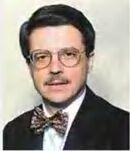
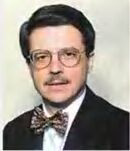
By: Dr David Edward Marcinko; FACFAS, MBA, CMP™

[Publisher-in-Chief]dem21

According to Somnath Basu, writing on April 6, 2009 in Financial Advisor a trade magazine, the painful truth is that many financial practitioners are merely sales people masquerading, as financial planners [FPs] and/or financial advisors [FAs] in an industry whose ethical practices have a shameful track record. Well, I agree, and completely. This includes some who hold the Certified Financial Planner® designation, as well as the more than 98 other lesser related organizations, logo marks and credentialing agencies [none of which demand ERISA-like fiduciary responsibility]. For more on this topic, the ME-P went right to the source last month, in an exclusive interview with Ben Aiken; AIF® of Fi360.com  

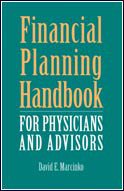
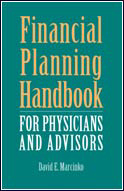
fp-book4

The CFP® Credential – What Credential?

Basu further writes that stockbrokers and insurance agents who earn commissions from buying and selling stocks, insurance and other financial products realize that a Certified Financial Planner® credential will help grow the volume of their business or branch them into other related and lucrative products and services. After all, there are more than 55,000 of these “credentialed” folks. And, this marketing designation seems to have won the cultural wars in the hearts and minds of an unsuspecting – i.e., duped public; probably because of sheer numbers. Didn’t a CFP Board CEO state that its’ primary goal was growth, a few years ago? Can you say “masses of asses”, as the oft quoted Bill Gates of Microsoft used to say when only 2,000 micro-softies defeated 400,000 IBMers during the PC operating system wars of the early 1980’s. Quantity, and marketing money, can trump quality in the public-relations business; ya’ know … if you repeat the lie often enough … yada … yada … yada! Yet, as the so-called leading industry designation, the CFP® entry-barrier standard is woefully low. Moreover, the SEC’s [FINRA] Series #7 general securities licensure sales examination is not worth much more than a weekend’s study attention, even to the uninitiated.

insurance-book2

Easy In – Worth Less Out

In our experience, we agree with Basu and others who suggest that scores of lightly educated, and sometimes wholly in-articulate and impatient individuals are zipping through the CFP® Board of Standards approved curriculum in three to six months of online, on-ground, or “self-study”. But, that some can do so without a bachelor’s degree when they join wire-houses and financial institutions, which cannot be trusted to adequately train them, is an abomination. And, even more sadly, some of these CFP™ mark-holders, and other folks, believe they have actually received an “education” from same. Of course, their writing skills are often non-existent and I have cringed when told that, in their opinion, advertiser-driven trade magazines constitute “peer-reviewed” and academic publications. Incidentally, have you noticed how thin these trade-rags are getting lately? Much like the print newspaper industry, are they becoming dinosaurs? One agent even told me, point-blank, that his CLU designation was the equivalent of an “academic PhD in insurance.” This was at an industry seminar, where he thought I was a lay insurance prospect.

THINK: No critical thinking skills.

biz-book4

Education

There is another sentiment that may be applied in many of these cases; “hubris.” I mean, these CFP® people … just don’t know – how much they don’t know.”  The very real difference between training versus education is unknown to many wire-houses and FAs, isn’t it? And, please don’t get me started on the differences in pedagogy, heutagogy and androgogy. Moreover, it’s sad when we see truly educated youngsters become goaded by wire-houses into thinking that these practices are de-rigor for the industry. One such applicant to our Certified Medical Planner™ program, for example, had both an undergraduate degree in finance and a graduate degree in economics from the prestigious Johns Hopkins University – in my home town of Baltimore, MD [name available upon request]. He was told, in his Smith Barney wire-house training program, to eschew CMP™ accountability and RIA fiduciary responsibility, when working with potential physician and lay clients; but to get his CFP® designation to gather more clients. To mimic my now 12 year-old daughter; it seems that: SEC Suitability Rules – and – Fiduciary Accountability Drools. And, to quote Hollywood’s “Mr. T”; I pity the fools, er-a, I mean clients. But, T was an actor, and this is serious business.

cmp-logo1

Of CEU Credits and Ethics

Beside trade-marks and logos, we are all aware that continuing education, and a code of ethics, is another important marketing and advertising component of state insurance agents and CFP licensees. It’s that old “be” – or “pretend to be” – a trusted advisor clap-trap. Well, I say horse-feathers for two reasons. First, both my insurance and CFP® Continuing Educational Unit [CEU] requirements were completed by my daughter [while age 7-10], by filling in the sequentially identical and bubble-coded, multiple-choice, answer-blanks each year. Second, this included the mandatory “ethics” portions of each test. When I complained to my CEU vendor, and state insurance department, I was told to “enjoy-the-break.”  My daughter even got fatigued after the third of fourth time she took the “home-based tests” for me.  After I opened my big mouth, the exact order of questions was changed to increase acuity, but remained essentially the same, nevertheless. My daughter got bored, and quit taking the tests for me, shortly thereafter. She always “passed.”dhimc-book3

Thus, like Basu, I also find that far too many financial advisors are unwilling to devote the time necessary to achieve a sound education that will help attain their goals, and would rather sell variable or whole life products than simple term life, even when the suitability argument overwhelmingly suggests so, for a higher payday. We not only have met sale folks without undergraduate degrees, but also too many of those with only a HS diploma, or GED. Perhaps this is why a popular business truism suggests that the quickest way for the uneducated/under educated class to make big bucks, is in sales. Just note the many classified ads for financial advisors placed in the newspaper job-section, under the heading “sales.” Or, in more youthful cultural terms, “fake it – until you make it.”

Of the iMBA, Inc Experience

According to Executive Director Ann Miller RN MHA, and my experience at the Institute of Medical Business Advisors, Inc:

“Far too many financial advisors who contact us about matriculation in our online Certified Medical Planner™ program – in health economics and management for medical professionals – don’t even know what a Curriculum Vitae [CV] is? Instead, they send in Million Dollar Roundtable awards, Million Dollar Producer awards, or similar sales accomplishments as resume’ boosters. It is also not unusual for them to list some sort of college participation on their resumes, and websites, but no school affiliation or dates of graduation, etc. And, they become furious to learn that we require a college degree for our fiduciary focused CMP™ program, and not from an online institution, either. The onslaught of follow-up nasty phone-calls; faxes and emails are laughable [frightening] too.”  

www.MedicalBusinessAdvisors.com

Assessment

More often than not, it is the financial institutions that FAs and CFP™ certificants’ work for that reward sales behavior with higher commissions, rather than salaries; which encourage such behavior and create the vicious cycles that are now the norm.

THINK: ML, AIG, Citi, WAMU, Wachovia, Hartford, Prudential, etc.

Note: Original author of Restoring Trust in the CFP Mark, Somnath Basu PhD, is program director of the California Institute of Finance in the School of Business at California Lutheran University where he’s also a professor of finance. He can be reached at (805) 493 3980 or basu@callutheran.edu. We have asked him to respond further.

My Story: I am a retired surgeon and former Certified Financial Planner® who resigned my “marketing trademark” over the long-standing fiduciary flap. I watched this chicanery for more than a decade after protesting to magazines like Investment Advisor, Financial Advisor, Registered Rep, Financial Planner, the FPA, etc; up to, and even including the CFP® Board of Standards; to no avail. Feel free to contact me for a copy of a 43 page fax, and other supportive documentation from the CFP® Board of Standards – and their outsourced intellectual property attorneys – over a Federal trademark infringement lawsuit they tried to institute against me for innocent website errors placed by a visually impaired intern. Obviously, they disliked the launch of our CMP™ program. As a health economist and devotee of Ken Arrow PhD, I polity resigned my license, as holding no utility for me, to the shocked CFP Board. They later offered to consider re-instatement for a mere $600 fee with letter of explanation, to which I politely declined. Of course, my first thought after living in the streets of South Philadelphia while in medical school, during the pre-Rocky era, was to say f*** off – but I didn’t. Nevertheless, I still seem to be on their mailing list, years later. No doubt, the list is sold, and re-sold, to various advertisers for much geld. And, why shouldn’t they; an extra bachelor, master and medical degree holder on their PR roster looks pretty good. I distrust the CFP® Board almost as much as I distrust the AMA, and its parsed and disastrous big-pharma funding policies. Right is right – wrong is wrong – and you can’t fool all of the people, all of the time, especially in this age of internet transparency.

Shaking my Fist at Somnath … in Envy

And so, why do I shake my fist at Somnath Basu? It’s admittedly with congratulations, and a bit of schadenfreude, because he wrote an article more eloquently than I ever could, and will likely receive much more publicity [good or slings-arrows] for doing so. You know, it’s very true that one is never a prophet in his own tribe. Oh well, Mazel Tov anyway for stating the obvious, Somnath. The financial services industry – and more specifically – the CFP® emperor have no clothes! Duh!

ho-journal5

Good Guys and White Hats

Now that Basu’s article has appeared in Financial Advisor News e-magazine, the other industry trade magazines are sure to follow the CFP® certification denigration reportage, in copy-cat fashion. And, the fiduciary flap is just getting started. This is indeed unfortunate, because I do know many fine CFP® certificants, and non-CFP® certified financial advisors, who are well-educated, honest and work very diligently on behalf of their clients. It’s just a shame the public has no way of knowing about them – there is no white hat imprimatur or designation for same – most of whom are Registered Investment Advisors [RIAs] or RIA reps. For example, we know great folks like Douglas B. Sherlock MBA, CFA; Robert James Cimasi MHA, AVA, CMP™; J. Wayne Firebaugh, Jr CPA, CFP®, CMP™; Lawrence E. Howes MBA, CFP®; Pati Trites PhD; Gary A. Cook MSFS, CFP®, CLU; Tom Muldowney MSFS, CLU, CFP®, CMP™;  Jeffrey S. Coons PhD, CFP®; Alex Kimura MBA, CFP®; Ken Shubin-Stein MD, CFA; and Hope Hetico RN, MHA, CMP™; etc. And, to use a medical term, there are TNTC [too many, to count] more … thankfully!

Conclusion

Your thoughts and comments on this ME-P are appreciated. Feel free to review our top-left column, and top-right sidebar materials, links, URLs and related websites, too. Then, subscribe to the ME-P. It is fast, free and secure.

Speaker: If you need a moderator or speaker for an upcoming event, Dr. David E. Marcinko; MBA – Publisher-in-Chief of the Medical Executive-Post – is available for seminar or speaking engagements. Contact: MarcinkoAdvisors@msn.com

OUR OTHER PRINT BOOKS AND RELATED INFORMATION SOURCES:

Product DetailsProduct DetailsProduct Details

  Product DetailsProduct Details

Product Details

More JAMA [Hypocritical] Censorship on Big-Pharma Funding

Join Our Mailing List

Janus-Like Opposing Views Becoming Contentious

[By Staff Reporters]

mac-runningAccording to Tracy Staton, the Journal of the American Medical Association may be fighting to keep long-running internal arguments over conflicts-of-interest with big pharma a secret. But, in public, it’s advocating strict limits on industry funding for medical associations.

JAMA Proposals

A set of proposals published recently in JAMA, calls for associations such as the American Society of Clinical Oncologists, to refuse general budget support from drug and device companies. Currently, many specialty physicians’ groups are partly funded by industry. Companies also sponsor conferences, physician fellowships and buy ads in the societies’ journals. The proposed guidelines would allow associations to continue to accept industry advertising and to allow industry-sponsored booths at conferences.

Distinction

The key distinction, the article’s lead author said, is that ads and booths are clearly presenting a company’s point of view. “You can read the ads, skip the ads, but there’s nothing hidden,” David J. Rothman, a professor at the College of Physicians and Surgeons at Columbia University, told the Wall Street Journal. “What I don’t like is when I can’t tell if what I’m hearing is science, or marketing in the guise of science.”

Opposing Viewpoints

But others disagree. For example, the American College of Cardiology’s chief allegedly told the paper that industry funding has “zero impact on the content of any program here.” And PhRMA said that the guidelines could limit the information doctors receive. “It’s important to realize that [doctors] have their own sense of integrity,” a PhRMA spokeswoman.

Assessment

ME-P publisher, Dr. David Edward Marcinko, on the other hand, believes that Columbia University’s torturous verbal parsing is

“merely a distinction with little substantive difference.”

Link:http://online.wsj.com/article/SB123854648226076095.html

Conclusion

And so, your thoughts and comments on this Medical Executive-Post are appreciated? Do you agree with the current – but aging medical establishment – or the emerging generation of young and idealistic medical students and physicians who increasingly abhor the big-pharma practices? Is this another example of tawdry JAMA censorship? Is the AMA running away from its moral ethos of professional integrity?

Link: http://feeds.feedburner.com/HealthcareFinancialsthePostForcxos

Speaker: If you need a moderator or speaker for an upcoming event, Dr. David E. Marcinko; MBA – Publisher-in-Chief of the Medical Executive-Post – is available for seminar or speaking engagements. Contact: MarcinkoAdvisors@msn.com  

Our Other Print Books and Related Information Sources:

Practice Management: http://www.springerpub.com/prod.aspx?prod_id=23759

Physician Financial Planning: http://www.jbpub.com/catalog/0763745790

Medical Risk Management: http://www.jbpub.com/catalog/9780763733421

Subscribe Now:Did you like this Medical Executive-Post, or find it helpful, interesting and informative? Want to get the latest ME-Ps delivered to your email box each morning? Just subscribe using the link below. You can unsubscribe at any time. Security is assured.

Link: http://feeds.feedburner.com/HealthcareFinancialsthePostForcxos

Product DetailsProduct DetailsProduct Details

Impact of Performance Fees on Mutual Funds and Physician Portfolios

Join Our Mailing List

More Complex than Realized by Some Doctors

[By Dr. David Edward Marcinko; FACFAS, MBA, CMP™]

[By Professor Hope Rachel Hetico; RN, MHA, CMP™]dave-and-hope4

Physician-investors may find themselves paying advisory fees, brokerage commissions, and other sales charges and expenses. All of these layers of expense can reduce or eliminate the advantage of professional management, if not monitored carefully. Also, fees can have a major impact on investment results. As a percentage of the portfolio, they normally range from low of 15–30 basis points (or .15% to .30%, a basis point is one one-hundredth of one percent) to a high of 300–400 basis points or even higher.

Charges are Universal

All portfolio managers, mutual funds, and investment advisors charge fees in one form or another. Ultimately, they must justify their fees by creating value added, or they would not be in business. Value added includes tangibles, such as greater investment return, as well as intangibles, such as assurance that the investment plan is successfully implemented and monitored, investor convenience, and professional service.

Comparisons Required

Always compare investment performance of funds or managed accounts after fees are deducted; only then can adequate comparisons be made. Also, compare fees within asset classes. Management fees and expenses of investing in bonds or bond funds are much different than the fees of investing in, for example, small companies or emerging market stocks. Whereas 100–200 basis points of fees may be appropriate for an equity portfolio or fund, similar charges may offset the advantages of a managed bond portfolio. With managed bond portfolios, real bond returns have limited long-term potential, because returns are ultimately based on interest rates. For example, if a 3% real (i.e., after inflation) return is expected, 200 basis points in fees may produce a negative after-tax result: 3% real return minus 2% fees minus 10% taxes equals a negative 9% total return.fp-book22

Sales Charges

Mutual funds (and some private portfolio managers) charge sales charges to sell or “distribute” the product. Investors who buy funds through the advice of brokers or “commission based” financial planners will pay a sales load. The many combinations of sales charges fall into three basic categories: front-end, deferred (or back-end), and continuous.

Front-End Fees

Front-end fees are a direct assessment against the initial investment and are limited to a maximum of 8.5%. They usually are stated either as a percentage of the investment or as a percentage of the investment, net of sales charges. For example, a 6% charge on a $10,000 investment is really a $600 charge to invest $9,400 or a real charge of 6.4%. Many low-load funds charge in the range of 1% to 3%. Rather than pay brokers or other purveyors, these fund companies or sponsors use the charges to offset selling or distribution costs. Although rare, some funds charge a load against reinvested dividends.

Deferred Charges

Deferred charges (or back-end loads, or redemption fees) come in many forms. Often, the longer the investor stays with the fund the smaller the charge is upon fund redemption. A typical sliding scale used for deferred charges may be 5-4-3-2-1, where redemption in year 1 is charged 5%, and redemption in year 5 is charged 1%; after year 5, there are no sales charges. Sometimes deferred charges are combined with front-end charges.

Redemption Fees

Certain quoted redemption fees may not apply after a period, such as one year. Funds often use such fees to discourage the trading of funds. Frequently, these charges are paid to the fund itself rather than to the fund management company; or broker. Long-term physician investors actually benefit from this fee structure; short-term shareholders who redeem shares bear the additional liquidation costs to satisfy redemption requests.

Continuous Charges

Continuous sales charges, known as 12b-1 fees for the SEC rule governing such charges, represent ongoing charges to pay distribution costs, including those of brokers who sell and maintain accounts, in which case they are known as “trail commissions.” The fund company may be reimbursed for distribution costs as well. In the prospectus, funds quote 12b-1 charges in the form of a maximum charge. This does not mean that the full charge is incurred, however. For example, a fund with a .75% 12b-1 approved plan may actually incur much lower expenses than .75%. Compared to front-end charges, a .75% per year sales charge of this type could be more costly to investment performance, given enough time.

Sales Loads

Portfolio managers can charge sales loads as well, usually in the form of a traditional WRAP fee arrangement (the investor pays a broker an all-inclusive fee that covers portfolio manager fees and transactions costs). No-load funds can be purchased through brokers or discount brokerage firms. The broker charges a commission for such purchases or sales.

Management Advisory Fees

Private account managers and mutual funds charge a fee for managing the portfolio. These fees typically range between 25 and 150 basis points. Bond funds tend to charge in the range of 25 to 100 basis points, and equity funds charge 75 to 150 basis points. Fees charged by private account managers usually are higher because of the direct attention given to a single doctor client. These managers do not pass along additional administrative costs, however, because they pay them out of the management fee. These management fees come in many forms. Tiered fees can charge smaller accounts a higher fee than larger accounts. Mutual funds often charge “group fees”: a fund family may tier its fee structure to encompass all funds offered by the fund family or by a group of similar funds (such as all international equity funds). Performance fees, although subject to SEC regulations, may be charged as well. A performance fee may be charged if the manager exceeds a certain return or outperforms a particular index or benchmark portfolio.

Administrative Expenses and Expense Ratios

Most private managers are compensated with higher management fees, as mentioned above. Therefore, many private accounts usually do not incur separate administrative expenses. Some management firms charge custodial fees or similar account maintenance fees. Mutual funds incur a number of administrative expenses, including shareholder servicing, prospectuses, reporting, legal and auditing costs, and registration and custodial costs. Mutual funds report these expenses and management fees as an expense ratio—the ratio of expenses to the average net assets of the fund. Expense ratios also include distribution costs or 12b-1 charges.insurance-book10 

Brokerage Commissions

Almost all buyers and sellers of securities incur brokerage commissions. Private “wealth managers” usually provide commission schedules to prospective physician-investors or current clients. Some private managers charge higher management fees and a discounted commission schedule, while others charge lower fees and higher commissions. These combinations of management and commission fees make comparison of prospective managers’ cost structures a difficult task. Most portfolio managers obtain research from brokerage firms, which can affect the commission relationship between broker and manager. Reduced commission schedules exchanged for information are known as “soft dollar costs.” Mutual funds may negotiate similar reduced commission schedules. In this regard, more-competitive brokerage firms can charge lower fees to investors. Commissions are not part of the expense ratio, because they are a part of the security cost basis. Firms with higher portfolio turnover are more likely to have higher commission costs than those with low turnover. Asset class impacts such costs as well. For example, small-cap stocks may be more expensive than large-cap stocks, or foreign bonds may be more expensive than domestic bonds.

Total Cost Approach

To arrive at a relevant comparison of fees among funds and managers, and to see what the total effect of fees on investment performance is, analyze the various charges on a net present value basis. Begin with a given investment amount (e.g., $10,000) and factor in fees over time to arrive at the present value of those fees. Present the comparisons in an easy-to-use table.

Sources of Fee Information

Consult the mutual fund prospectus for fee information. The prospectus has a fund expenses section that summarizes sales charges, expense ratios, and management fees; it does not cover commissions, however. Expense ratios usually are reported for the past 10 years. Commission or brokerage fees are more difficult to find. The statement of additional information and often the annual report disclose the annual amounts paid for commissions. When the total commission paid is divided by average asset values a sense of commission costs can be determined. Private wealth managers disclose fee structures in the ADV I filed with the SEC. Managers must disclose these fees to potential and current clients by providing either ADV Part II or equivalent form to the investor.

Reporting Services

Reporting services, such as Morningstar and Lipper, provide similar information from their own research of mutual funds. These services can be extremely beneficial, because fee information is summarized and often accounted for in the reports’ investment return calculations. This helps the investor and planner make good comparisons of funds. Information services that cover private managers provide information, primarily about management fees.

Assessment

To the extent that online trading, deep discount brokerages, lack of SEC and FINRA oversight, and the recent financial, insurance and banking meltdown has affected the above, it is left up to your discretion and personal situation. Generally, all fess are, and should be, negotiable.

Disclaimer: Both contributors are former licensed insurance agents and financial advisors.

Conclusion

Your thoughts and comments on this ME-P are appreciated. Feel free to review our top-left column, and top-right sidebar materials, links, URLs and related websites, too. Then, subscribe to the ME-P. It is fast, free and secure.

Link: http://feeds.feedburner.com/HealthcareFinancialsthePostForcxos

Speaker: If you need a moderator or speaker for an upcoming event, Dr. David E. Marcinko; MBA – Publisher-in-Chief of the Medical Executive-Post – is available for seminar or speaking engagements. Contact: MarcinkoAdvisors@msn.com

OUR OTHER PRINT BOOKS AND RELATED INFORMATION SOURCES:

Comprehensive Financial Planning Strategies for Doctors and Advisors: Best Practices from Leading Consultants and Certified Medical Planners™

***

Direct Reimbursement [DR] and RiskManagers.Us

Join Our Mailing List

Transparent Dental Benefits versus Confusion

[By Darrell K. Pruitt; DDS]

pruitt

“If you are not a part of the solution, there is good money to be made prolonging the problem.” 

Company slogan- www.riskmanagers.us

Meet Mr. William Rusteberg

Today, I met William Rusteberg on the PennWell forum when he replied to the thread, “Why the long NPI, BCBS-TX?” which I copied below, along with my response which includes a plug for Direct Reimbursement [DR].

http://community.pennwelldentalgroup.com/forum/topics/why-the-long-npi-bcbstx?page=1&commentId=2013420%3AComment%3A26976&x=1#2013420Comment26976

Mr. Rusteberg represents a company called RiskManagers.Us, whose specialty involves the benefits market, yet it is not exactly an insurance company – just like there is no such thing as true dental insurance.  RiskManagers.us is a firm that works directly with businesses to identify and develop cost-effective benefits packages – emphasizing transparency and fairness.  Now that is refreshing, friends! 

Defining RiskManagers.Us 

Here is how RiskManagers.us describes itself: 

“We do not work for an insurance company, we work for you. As an independent brokerage, and consulting firm we can represent any licensed insurance company in Texas, Colorado, Mississippi, Louisiana, Alabama, Illinois & Florida.”

If one visits the Web site’s “Reference Library,” here are some of the topics offered:

·         Self Funding – Need a second opinion?

·         Texas leads in transparency issues

·         Can’t get claim information? HB 2015 May Solve Your Problem

·         Medical Stop Loss Through a Captive

·         PPO Discounts – Games People Play

·         PPO Networks – Shell Game

·         Can Hospitals waive Deductibles in Texas?

“What is a NPI number?” 

Mr. Rusteberg’s initial question on the PennWell forum simply asked, “What is a NPI number?”  Following my explanation, he wrote: 

 “It seems that many of those in your profession would do well in accepting cash only, or directly working with employer groups who sponsor dental/medical plans on a direct pay basis. We have had good success in doing this for our clients – we have one employer in San Antonio who pays medical care providers directly and quickly – providers like it and the plan pays a fair and reasonable rate, not relying on a PPO network to “re-price” claims. We have done the same on dental plans, eliminating the insurance company, PPO network and paying dental care providers submitted charges directly and quickly. We see little or no trend increases on dental charges using this method. In my view, insurance companies interfere in patient – provider relationships in a financially detrimental way.”

Thanks for your reply.

My Response:

I like you, William; 

What you describe sounds like my all-time, personal favorite dental benefits plan. It is called Direct Reimbursement {DR}, and it not only gives the employer the unlimited capability to design a plan which reflects the level of commitment desired by the company, but most importantly, it naturally preserves quality of care by allowing employees unlimited freedom of choice in dentists.  And that’s as good as the market gets. 

http://www.directreimbursement.com/

In addition, since there are no NPI requirements for DR, employees are also permitted see dentists who decline NPI numbers for ethical reasons. That increases employees’ choice by 50% over BCBS-TX clients, according to recent information provided by the Healthcare IT Transition Group.

http://www.npidentify.com/stats.htm#states

Little Management Needed

Just like the benefits plans you mention, with DR, very little money is spent on management because such policies are so simple and transparent that there is no room for profit-enhancing (wasteful) confusion used by unethical companies like BCBSTX, Aetna, Cigna, UnitedHealth, Delta Dental, United Concordia, and so many other members of the National Association of Dental Plans (NADP).

Assessment

Without transparency and the invisible hand of freedom-of-choice, free-market competition for healthcare dollars disappears as fast as executive bonuses rise. We’ll see where it goes from here. It would sure be swell if a Direct Reimbursement representative takes interest in the conversation; anyone home? 

Conclusion

Your thoughts and comments on this ME-P are appreciated. Feel free to review our top-left column, and top-right sidebar materials, links, URLs and related websites, too. Then, subscribe to the ME-P. It is fast, free and secure.

Speaker: If you need a moderator or speaker for an upcoming event, Dr. David E. Marcinko; MBA – Publisher-in-Chief of the Medical Executive-Post – is available for seminar or speaking engagements. Contact: MarcinkoAdvisors@msn.com

OUR OTHER PRINT BOOKS AND RELATED INFORMATION SOURCES:

Product DetailsProduct Details

The Gay Doctor Dilemma

Join Our Mailing List

Understanding Domestic Partnership Problems

[By Staff Reporters]fp-book16

Legal Strangers

In spite of many changes to state laws and with a few exceptions, for all intents and purposes, unmarried physician couples are still considered strangers to one another. The unmarried partner has no right to make health care decisions, no right to Social Security survivor benefits, and no inheritance rights without proper documentation. An unmarried partner generally has no standing to seek damages for the “wrongful death” of a spouse, nor any standing for any other contractual rights.

Tax Treatment

Unmarried couples do not get the same tax treatment—such as the ability to file a joint tax return—as do married couples. While this may not necessarily mean higher taxes for married couples, it can make deductions difficult to determine for unmarried couples. Nor can an unmarried couple use the spousal Individual Retirement Account deductions for a nonworking spouse. An unmarried couple may not use a family partnership for tax purposes.

Non-Tax Benefits

Unmarried partners do not have the benefits that spouses have when a relationship ends or one partner dies. Domestic partners may not receive alimony or child support, except in special cases. A partner may not receive pension rights, and generally will not receive employer benefits, except in certain companies and municipalities. One partner who is forced to quit practice when the other partner is transferred may not receive unemployment benefits, while a spouse can. Unmarried partners may not qualify to get residency status for a non-citizen partner to avoid deportation.

Estates and Gift Problems

Estate tax law allows married couples an unlimited deduction for estate and gift tax purposes. Unmarried couples do not get this benefit, and may be taxed on what would otherwise be a tax-free transfer. If one partner dies intestate (without a will) the couple’s joint property would not necessarily go to the survivor. A married couple can give away $26,000 per recipient each year without gift tax consequences, but an unmarried individual with a high income is limited to $13,000, per recipient per year, even when living with a partner.

Personal Benefits

Domestic partners may be kept from visiting a partner in a prison or in the hospital or any other place restricted to “immediate family” members. Without specific legal permission, such as a durable power of attorney, the blood relatives of the partner who is ill can keep the domestic partner from seeing his or her mate. Except in a few municipalities and companies, domestic partners may not be eligible for bereavement leave when one partner dies.

Conclusion

Your thoughts and comments on this ME-P are appreciated. Feel free to review our top-left column, and top-right sidebar materials, links, URLs and related websites, too. Then, subscribe to the ME-P. It is fast, free and secure.

Link: http://feeds.feedburner.com/HealthcareFinancialsthePostForcxos

Speaker: If you need a moderator or speaker for an upcoming event, Dr. David E. Marcinko; MBA – Publisher-in-Chief of the Medical Executive-Post – is available for seminar or speaking engagements. Contact: MarcinkoAdvisors@msn.com

OUR OTHER PRINT BOOKS AND RELATED INFORMATION SOURCES:

DICTIONARIES: http://www.springerpub.com/Search/marcinko
PHYSICIANS: www.MedicalBusinessAdvisors.com
PRACTICES: www.BusinessofMedicalPractice.com
HOSPITALS: http://www.crcpress.com/product/isbn/9781466558731
CLINICS: http://www.crcpress.com/product/isbn/9781439879900
ADVISORS: www.CertifiedMedicalPlanner.org
PODIATRISTS: www.PodiatryPrep.com
BLOG: www.MedicalExecutivePost.com
FINANCE: Financial Planning for Physicians and Advisors
INSURANCE: Risk Management and Insurance Strategies for Physicians and Advisors

Product Details  Product Details

Risk Management, Liability Insurance, and Asset Protection Strategies for Doctors and Advisors: Best Practices from Leading Consultants and Certified Medical Planners™8Comprehensive Financial Planning Strategies for Doctors and Advisors: Best Practices from Leading Consultants and Certified Medical Planners™

Is JAMA Censoring Physician Dissent?

Allegedly Stoops to “Name-Calling”

By Dr. David Edward Marcinko; MBA, CMP™dem24

According to the Wall Street Journal Health Blog, Jonathan Leo, a professor of neuro-anatomy from a small university in Tennessee, critiqued a study published in the Journal of the America Medical Association [JAMA], and pointed out an association between the study’s author and a pharmaceutical company. He posted his thoughts on the website of the British Medical Journal [BMJ].

JAMA Responds

According to the report, a none-too-happy Leo then received calls from JAMA’s executive deputy editor, one Mr. Phil Fontanarosa. And surprisingly, Editor-in-Chief Dr. Catherine DeAngelis, MD got involved by asking Leo’s superiors to retract his post from the BMJ’s site. Sound familiar ME-P readers? According to Keven Pho MD, the WSJ called Dr. DeAngelis for comment, and this is how the interview allegedly went:

“This guy is a nobody and a nothing.”

She said of Leo.

“He is trying to make a name for himself. Please call me about something important.”

She added that Leo

“Should be spending time with his students instead of doing this.”

When asked if she called his superiors and what she said to them, DeAngelis supposedly said,

“It is none of your business.”

Environmental Scanning

One can only wonder if the AMA has adopted the strategy of former CDC Director Julie Gerberding, of Atlanta, GA. Local gossip suggests that one initiative under her noxious leadership was her so-called policy on “environment-scanning” or, monitoring the news-media, internet space, blogs, wikis and other venues to identify “emerging threats to the agencies” reputation.” WOWSA!

Link: https://healthcarefinancials.wordpress.com/2009/02/05/goodbye-julie-gerberding-md/

An Alternative Theory

My alternative opinion is the AMA might be taking censorship lessons from Blue Cross and Blue Shield of New Mexico [BCBSNM], and its’ public-relations representative and former reporter, Ross Blackstone of the Health Care Service Corporation [Blue Cross and Blue Shield of Illinois, New Mexico, Oklahoma and Texas].

Monitoring the ME-P?

Or, perhaps they are reading [Think: monitoring] this Medical Executive-Post itself? They may even be teaming up with Becky Kenny [media relations specialist with Blue Cross and Blue Shield of New Mexico] who goaded [threatened?] the trade magazine ModernHealthcare. As ME-P readers know, ModernHealthcare is an advertiser-driven media outlet that removed a perfectly acceptable post of diverging eHR opinion from its blogsite?

Industry Shame

Such acquiescence is both a sign of shameful health insurance industry [BCBSNM] heavy-handedness, and poor journalistic ethos from ModernHealthcare’s leadership. The BCBSNM public relations hacks, and media representatives, also appear as clueless shills who are no-doubt glad they are employed in these troubling economic times.

In other words, do they do what they are told? Jump Rover! Fetch Fido; etc! Or; are they more like the innocent child who spills grape juice on a white carpet? Let’s simply forgive them for their brainless duplicity. Yet, MH capitulated; how unfortunate!

Link: https://healthcarefinancials.wordpress.com/2009/03/04/don%e2%80%99t-rush-ehrs/

Doctors Censoring Patients [The Retro-Evolution]

By the way:

“What’s up with all this censoring?

The Internet has been publically available to the masses since 1995, and I was using electronic bulletin boards [eBBs] years before then. The next thing you know, doctors will start trying to censor the opinion of their patients, much like customers rate restaurants.

Ops! My bad! This has already occurred. Sorry!

The ironic thing here is that patients don’t know about quality care. But, they do know if they’ve been kept too long in the waiting room; or, if the doctor’s office staff was surly; or, if the doctor had a miserable bedside manner. So, the doctors are really being rated on their personality; not their medical acumen. I pity the fools. These medical guys, and healthcare guru gals, just don’t seem to realize that “perception is reality.”  But, they sure feign outrage at poor patient reviews.

Link: https://healthcarefinancials.wordpress.com/2009/03/02/doctors-censoring-patients/

Assessment

From my perspective, this is another public-relations disaster for JAMA, and especially Dr. DeAngelis, who must have known she was on the record with a national newspaper. After all, she is the editor of JAMA. Maybe not however, as we have previously opined that professional experts are not necessarily professional journalists.

Link: https://healthcarefinancials.wordpress.com/2009/03/09/healthcare-experts-versus-health-journalists

Of Cover-Ups and Crimes

“But, one must still wonder aloud; is this cover-up becoming worse than the proverbial crime?”

Resorting to personal attacks is somewhat unbecoming of the editor-in-chief of a prestigious medical journal, and reflects poorly on JAMA; don’t you think? Then again, JAMA and the AMA itself, is not as prestigious as it once was; is it?

In fact, when I asked ME-P managing-editor and Professor of Health Administration, Hope Rachel Hetico; RN, MHA, CMP™ to opine on admitted third-party limited information; she graciously replied with the utmost gentleness:

“With less than 25% of the nation’s MDs in the AMA; JAMA is probably still somewhat prestigious to those who don’t know any better; but many of us do know better. The older generation just needs some-time to catch up to modernity, and transparency – or resign. The top-down and command-control model of leadership is long gone – please be patient with them.”

Link: www.CertifiedMedicalPlanner.com

Link: www.MedicalBusinessAdvisors.com

Conclusion

And so, your thoughts and comments on this Medical Executive-Post are appreciated. Should Catherine DeAngelis MD resign over this incident? Please criticize or defend her actions. Is healthcare industry censorship on the rise – or is the industry just following-the-money? What do you think of ModernHealthcare or BCBSNM?

Is personal integrity – or scrutiny – the reason Joseph Biederman MD [Harvard’s controversial chief of pediatric psychopharmacology] ended his ties to the pharmaceutical industry recently for diagnosing bipolar disorder in children [as well as for the nature of big-pharma’s support behind his research]? Please opine.

Industry Indignation Index: 63

Disclaimer: I am not a member of the AMA. But, for a decade I was on the editorial staff of both a leading national medical, and surgical journal, back-in-the-day. I am currently the Editor-in-Chief of Healthcare Organizations [Financial Management Strategies] a 1,200 page, quarterly premium print-journal, available on a subscription basis.

Link: www.HealthcareFinancials.com

Speaker: If you need a moderator or speaker for an upcoming event, Dr. David E. Marcinko; MBA – Publisher-in-Chief of the Executive-Post – is available for seminar or speaking engagements. Contact: MarcinkoAdvisors@msn.com  or Bio: www.stpub.com/pubs/authors/MARCINKO.htm

Get our Widget: Get this widget!

Our Other Print Books and Related Information Sources:

Practice Management: http://www.springerpub.com/prod.aspx?prod_id=23759

Physician Financial Planning: http://www.jbpub.com/catalog/0763745790

Medical Risk Management: http://www.jbpub.com/catalog/9780763733421

Healthcare Organizations: www.HealthcareFinancials.com

Health Administration Terms: www.HealthDictionarySeries.com

Physician Advisors: www.CertifiedMedicalPlanner.com

Subscribe Now: Did you like this Medical Executive-Post, or find it helpful, interesting and informative? Want to get the latest E-Ps delivered to your email box each morning? Just subscribe using the link below. You can unsubscribe at any time. Security is assured.

Link: http://feeds.feedburner.com/HealthcareFinancialsthePostForcxos

Say it Ain’t So Kathy Sebelius

More HHS Nominee Tax Problems

[By Staff Reporters]56359795

Although it’s sounding more and more like comedian Bill Murray’s movie “Ground Hog Day”, according to Tracy Staton, Health and Human Services department secretary-nominee Kathleen Sebelius, became the second appointee for the agency to admit underpaying her taxes.

Unintentional Problems

Sebelilus fixed three years’ worth of returns due to “unintentional” problems, and paid almost $8,000 in back taxes and interest. The snafu may not be serious enough to jeopardize her nomination, however. Senate Finance Chair Max Baucus issued a statement saying the errors were “minor” and accidental, and that he supported her confirmation (The committee’s ranking Republican Charles Grassley is reserving judgment until after her confirmation hearing).

A Daschle “Do-Over”

We all know that Senator Tom Daschle’s nomination to head up HHS hit the wall after a tax review found he owed some $140,000 in back taxes and interest. Is this a similar KS do-over; aka “mulligan”?

Industry Indignation Index: 45

Assessment

More importantly, are these so-called healthcare demagogues and gurus aware that “perception is reality”; especially in the healthcare space where integrity and trust matters most? Or, as ME-P Publisher Dr. David Edward Marcinko wondered aloud,

“Do politicians and/or those of us in healthcare really believe we are above it all?

Link: http://blogs.wsj.com/health/2009/04/01/sebelius-runs-into-tax-problems-but-daschles-were-bigger

Conclusion

Your thoughts and comments on this ME-P are appreciated. Feel free to review our top-left column, and top-right sidebar materials, links, URLs and related websites, too. Then, subscribe to the ME-P. It is fast, free and secure.

Link: http://feeds.feedburner.com/HealthcareFinancialsthePostForcxos

Speaker: If you need a moderator or speaker for an upcoming event, Dr. David E. Marcinko; MBA – Publisher-in-Chief of the Medical Executive-Post – is available for seminar or speaking engagements. Contact: MarcinkoAdvisors@msn.com

OUR OTHER PRINT BOOKS AND RELATED INFORMATION SOURCES:

LEXICONS: http://www.springerpub.com/Search/marcinko
PHYSICIANS: www.MedicalBusinessAdvisors.com
PRACTICES: www.BusinessofMedicalPractice.com
HOSPITALS: http://www.crcpress.com/product/isbn/9781466558731
CLINICS: http://www.crcpress.com/product/isbn/9781439879900
ADVISORS: www.CertifiedMedicalPlanner.org
BLOG: www.MedicalExecutivePost.com

Product DetailsProduct Details

Product Details

On Drug Reps as Future Dinosaurs

Join Our Mailing List

More Doctors Closing Office Doors to Drug Salesmen

[By Staff Reporters]

56359286

According to Kevin B. O’Reilly, of the AMNews on 3/23/09, drug reps may soon become dinosaurs-of-sorts. And, the relationship between doctors and drug reps is cloudy, darkening and may never be the same again.

Changing Relationships

Pharmaceutical companies, battered by sluggish drug pipelines, the looming loss of blockbuster patented drugs, an economy in recession and scrutiny of their relationships with physicians; are re-examining the value of sending drug reps into doctors’ offices. Detailers are struggling to grab a shrinking slice of physicians’ valuable time, and attention, while adjusting to new drug industry rules banning freebies such as pens and notepads.

Declining Reputations

While most physicians still have positive views of detailers and drug-makers, those sentiments are cooling. And, the next-generation of medical students and future physicians may be another driver of this wave. About one in four physician’s works in a practice that refuses to see drug reps. Of doctors who do see reps, about 40% will meet with detailers only with scheduled appointments. The by-appointment-only figure jumped 23% during the last six months of 2008, according to a survey of more than 227,000 medical practices representing 640,000 physicians that was released in February.

***

 despair

***

Assessment

What is your practice policy on this issue? Are drug reps being replaced by webcasts, podcasts, IMs, text-messages, cell phone advertisements, direct-to-doctor [D2D] communications and/or some other new-wave social media or rich e-format? 

Channel Surfing the ME-P

Have you visited our other topic channels? Established to facilitate idea exchange and link our community together, the value of these topics is dependent upon your input. Please take a minute to visit. And, to prevent that annoying spam, we ask that you register. It is fast, free and secure.

Conclusion

Your thoughts and comments on this ME-P are appreciated. Feel free to review our top-left column, and top-right sidebar materials, links, URLs and related websites, too. Then, subscribe to the ME-P. It is fast, free and secure.

Speaker: If you need a moderator or speaker for an upcoming event, Dr. David E. Marcinko; MBA – Publisher-in-Chief of the Medical Executive-Post – is available for seminar or speaking engagements. Contact: MarcinkoAdvisors@msn.com

OUR OTHER PRINT BOOKS AND RELATED INFORMATION SOURCES:

Product DetailsProduct DetailsProduct Details

Usual and Customary UnitedHealthcare?

Join Our Mailing List

More on “Sleazy” Healthcare Stakeholders

1-darrellpruitt

[By Darrell K. Pruitt; DDS]

If the leaders of the American Dental Association have the power and stoic determination to casually sweep aside trouble-making members who might tarnish their image, one would think that they could certainly avoid associating with sleazy healthcare stakeholders; such as UnitedHealthcare.

The Insurance Giants 

Have you ever suspected that insurance giants like UnitedHealthcare, WellPoint, Aetna and Cigna (and other members of the National Association of Dental Plans) lie to patients when the say a dentist’s fees are above “usual, customary and reasonable” levels?  You could be correct.  NY Attorney General Andrew Cuomo says UnitedHealthcare, WellPoint, Aetna and Cigna lie to physicians’ patients – understating New York state physician’s fees up to 28 percent.  Why would the crooks treat dentists’ patients any differently?

Employing Tapeworms to Control Fat

Cuomo caught UHC and others cheating their customers with smoke, mirrors and Ingenix – its wholly-owned data mining and consulting subsidiary.  Who would have guessed that UHC would tweak Ingenix to manipulate claims data to favor UHC and other insurance companies who subscribe to their services?  These are the same parasites who want to run the nation’s Pay-For-Performance (P4P) mandate – a cornerstone of President Bush’s healthcare reform ideas.  They want to tweak professional reputations for healthcare reform and the common good. 

And of Ingenix 

Ingenix is a full-service consulting business for insurers, backed with the credibility of 14 years of accumulated health claims it is privy to.  The “friend in the business” not only cooks the data to produce profit-enhancing Usual, Customary and Reasonable (UCR) fee schedules, Ingenix is also active in “pay-for-performance program assessment, strategy, planning, design, implementation, evaluation and improvement.” 

http://www.ingenixconsulting.com/about_history.html

So if you like the way UnitedHealthcare dental consultants treat you now, just wait until they are given authority to determine your worth to society using Ingenix leveraging tools.

P-4-P 

I first read about pay-for-performance [P4P] in dentistry in February 2006 in an email from Patrick Cannady who is an employee in the ADA Department of Dental Informatics.  He told me that nation-wide quality control in dentistry is an important benefit of having a HIPAA-compliant, paperless dental practice – and that the Department of Dental Informatics is very excited about the opportunity to help prepare US dentists for the future.  A month or so later, I learned that the NPI number the ADA still pushes on membership is the crucial legal link to government-approved P4P data-mills like Ingenix – a wholly-owned UnitedHealthcare profit center.  Do you think it is odd that the NPI is “voluntary,” yet irreversible?

AMA’s Award 

In January, the AMA was awarded $350 million in a lawsuit against UnitedHealthcare and Ingenix on behalf of physicians, and they plan to sue other major insurance companies as well.  So what has the ADA done to discourage UnitedHealthcare’s and other NADP members’ atrocious behavior that undeniably harms dental patients?  You won’t believe it when I tell you. Here’s more:  In a recent Associated Press interview, Sen. Jay Rockefeller, chairman of the Senate Commerce, Science and Transportation Committee, said UnitedHealthcare is nothing but a company of cheats.  He says, “They’re lowballing deliberately. They deliberately cut the numbers so the consumer has to pay more of the cost.”

http://www.google.com/hostednews/ap/article/ALeqM5gL4XFckx9sah3eFEMuHYD3V2WGhQD97763800

So if Cannady’s department is all for P4P and other benefits from interoperable digital records, the question on most ADA members’ minds should be:  What does the ADA think of UnitedHealthcare?

ADA News Online

Two weeks ago the ADA News Online posted an advertisement that looks like an article (with no byline) for the spring meeting of the American Association of Dental Consultants (AADC) on May 7-9 in Scottsdale, Arizona.

http://www.ada.org/prof/resources/pubs/adanews/adanewsarticle.asp?articleid=3493

Since it is so well known that UnitedHealthcare is the major funding sponsor of the AADC, the word in the neighborhood says AADC, like Ingenix, is another UnitedHealthcare profit center awaiting the wrecking-ball.

Link: http://www.google.com/hostednews/ap/article/ALeqM5gL4XFckx9sah3eFEMuHYD3V2WGhQD97763800

Assessment

Last year’s annual meeting of the dental consultants – who deny dental claims to protect the ethics in dentistry – featured ADA Senior Vice-President Dr. John Luther as a guest speaker.  Dr. Luther is Cannady’s boss.  He oversees the Department of Dental Informatics.  Yep.  The ADA is tight with UnitedHealthcare. One can tell a person’s character by the company he or she keeps. 

Conclusion

Your thoughts and comments on this ME-P are appreciated. Feel free to review our top-left column, and top-right sidebar materials, links, URLs and related websites, too. Then, subscribe to the ME-P. It is fast, free and secure.

Speaker: If you need a moderator or speaker for an upcoming event, Dr. David E. Marcinko; MBA – Publisher-in-Chief of the Medical Executive-Post – is available for seminar or speaking engagements. Contact: MarcinkoAdvisors@msn.com

OUR OTHER PRINT BOOKS AND RELATED INFORMATION SOURCES:

Product DetailsProduct DetailsProduct Details      

I Shake my Fist at Pfizer, Inc.

Join Our Mailing List

And, Laugh out Loud over D2D Marketing

By Dr. David Edward Marcinko; FACFAS, MBA, CMP™

[Publisher-in-Chiefdem22]

We all know how intrusive direct-to-consumer [D2C] marketing by the pharmaceutical industry has become. Especially for those male “enhancement” type drugs that seem to be a ubiquitous feature on TV, the print media and internet, etc.

No, I’m not talking about sildenafil citrate or minoxidil; although I do recall seeing them on TV for the last decade, or so; maybe more. The target audience for both keeps getting younger and younger; or am I getting older and older? Still, allow me to assure all ME-P readers that the problems they reportedly treat are not my own.

Gotcha!

For this post however, I am talking about antibiotics.

Pfizer Seriously

Seriously, we are all aware that D2C marketing, and patients, goad doctors into “action” during an office visit [i.e., prescribe], when perhaps they ought not to. A follow-up office visit is often able to be scheduled, too.

Think: the antibiotic drug resistance epidemic.

Therefore, I was so righteously upset recently that I had to go out for a premature hour-long run, as I have been doing almost daily for thirty years, just to cool off.

Why?

It’s because I received the email copied verbatim, below.

Doctor [my name was not used, but my personal email address was correct],

For decades, azithromycin has been proven clinically effective to fight infections in your patients. With Zmax, azithromycin is reformulated to provide the same powerful efficacy against infection in a single, well-tolerated, liquid dose.

Zmax — the novel one-dose formulation of azithromycin
Zmax is indicated for community-acquired pneumonia (CAP) in pediatric patients and adults and acute bacterial sinusitis (ABS) in adults. Zmax uses extended-release microspheres to deliver one well-tolerated, front-loaded dose.

Zmax is not to be confused with Zithromax®, Z-Pak®, or Tri-Pak®

By delivering 100% compliance with just one dose, Zmax is the only formulation of azithromycin that avoids the complexities of multiple-day dosing for your patients.3-5

Prescribe Zmax and save with the “Never Pay More Than $20” coupon
Prescribe Zmax as your antibiotic-of-choice for your patients with CAP and ABS.
Zmax guarantees that your patients never pay more than $20 with the cost-saving Zmax coupon. For more information, please visit
www.ZmaxInfo.com or www.PfizerPro.com/Zmax

Sincerely,
Raymond W. Urbanski; MD, PhD

Vice President
Clinical Development and Medical Affairs
Established Products Business Unit
Pfizer, Inc.

Now, I have prescribed Zithromax® in the past, and will probably do so again in the future. I have lectured for several big-pharma companies throughout the years, and have written a textbook on bone and soft tissue extremity infections, and their diagnosis and treatment. I have served, and still serve, as a medical expert witness in malpractice cases involving infectious diseases, etc. But, I do not, repeat, do not need to be reminded by personal email about this anti-microbial, or any other drug. Being spammed in the office is one thing; but please not at home. I “reply-cancelled” the email; I think. Will let you know, down-line.

Of Podcasts and Webcasts

Recently, I was asked to make several new-wave podcast and modern webcast presentations for physician distribution by third-party vendors of the pharmaceutical industry. From what I could gather, this sort of “product information” distribution has not been eagerly embraced by the profession to-date, and so they are searching for industry recognized “names” to do their bidding. And so, as an educator, I acquiesced regarding same. But, I do pine for the attractive female pharma-rep visits back-in-the-day; replete with food for “lunch and learn” office presentations [mea culpa].

Think: Sermo, if you want a medical opinion.     

Assessment

Poor Dr. Urbanski, by the looks of his sur-name, I bet he’s Polish like me. I also bet that he gets more than a few emails, cards, faxes and letters like this post.

So, here’s where you need to imagine me shaking my fist at Pfizer, Inc.

I also laugh mockingly, as well.

Click to play :

PS: Ray, call me; let’s do lunch.

Conclusion

Your thoughts and comments on this ME-P are appreciated. Feel free to review our top-left column, and top-right sidebar materials, links, URLs and related websites, too. Then, subscribe to the ME-P. It is fast, free and secure.

Link: http://feeds.feedburner.com/HealthcareFinancialsthePostForcxos

Speaker: If you need a moderator or speaker for an upcoming event, Dr. David E. Marcinko; MBA – Publisher-in-Chief of the Medical Executive-Post – is available for seminar or speaking engagements. Contact: MarcinkoAdvisors@msn.com

OUR OTHER PRINT BOOKS AND RELATED INFORMATION SOURCES:

DICTIONARIES: http://www.springerpub.com/Search/marcinko
PHYSICIANS: www.MedicalBusinessAdvisors.com
PRACTICES: www.BusinessofMedicalPractice.com
HOSPITALS: http://www.crcpress.com/product/isbn/9781466558731
CLINICS: http://www.crcpress.com/product/isbn/9781439879900
BLOG: www.MedicalExecutivePost.com
FINANCE: Financial Planning for Physicians and Advisors
INSURANCE: Risk Management and Insurance Strategies for Physicians and Advisors

Product DetailsProduct DetailsProduct Details    

Asset Allocation Methods for Physician-Investors

What’s Old … is New Again?

By Dr. David Edward Marcinko; MBA, CMP™

Publisher-in-Chiefdem23

Asset allocation policies, incorporating the risk/return fundamental equation, have traditionally been classified under the following approaches: Principal Stability and Income, Income, Income-Oriented, Balanced, Growth, and Aggressive Growth.

Traditional Concepts

In all forms of traditional asset allocation and diversification policy approaches, the physician-investor is presumed to diversify within the chosen asset class in order to reduce the potential for specific or unsystematic risk.

Principal stability and income approach

Objective: Income, liquidity, and stability of principal.

Investment: Shorter-term fixed income securities with a large concentration in money market exposure to enhance liquidity and price stability. Accounts tend to maintain cash equivalent reserve balance of 30–50% of the portfolio.

Income approach

Objective: Maximum income.

Investment: 100% fixed income exposure.

Income portfolios arise from the traditional notion that an investor should spend only income and reinvest capital gains. Sometimes this is a legal requirement, as in a trust that has an income beneficiary distinct from the principal beneficiary.

Income-oriented approach

Objective: Income and some capital growth.

Investment: Accounts tend to maintain 15–35% in equity investments; balance of investment in fixed income.

Income and growth approach

Objective: Capital growth and income using a balanced approach to limit volatility.

Investment:  Accounts tend to maintain 45–65% equity exposure; balance of investment in fixed income.

Income and growth portfolio policies generally refer to both the fixed income and equity portions of the portfolios. Because of the income bias, the overall stock portion of the portfolio will usually have a dividend yield greater than the market yield. This method allows the portfolio manager to invest in some no- or low-dividend yielding issues.

Growth approach

Objective: Capital growth with income as a secondary objective.

Investment: Accounts tend to maintain between 65%–85% equity exposure; balance of investment in fixed income, usually cash reserves.

Aggressive growth approach

Objective: Long-term capital growth.

Investment: Accounts maintain 100% equity exposure. Exposure to variety of equity types normal (small capitalization, international, emerging markets, etc).

fp-book15

Assessment Of course, the above is much more accurate during stable economic times, than it is today; don’t you think? Are newer concepts required today … or is past … prologue.

Link: https://healthcarefinancials.wordpress.com/2008/10/25/new-wave-thoughts-on-investing/

Conclusion

And so, your thoughts and comments on this Medical Executive-Post are appreciated.

Speaker: If you need a moderator or speaker for an upcoming event, Dr. David E. Marcinko; MBA – Publisher-in-Chief of the Executive-Post – is available for seminar or speaking engagements. Contact: MarcinkoAdvisors@msn.com  or Bio: www.stpub.com/pubs/authors/MARCINKO.htm

Get our Widget: Get this widget!

Our Other Print Books and Related Information Sources:

Practice Management: http://www.springerpub.com/prod.aspx?prod_id=23759

Physician Financial Planning: http://www.jbpub.com/catalog/0763745790

Medical Risk Management: http://www.jbpub.com/catalog/9780763733421

Healthcare Organizations: www.HealthcareFinancials.com

Health Administration Terms: www.HealthDictionarySeries.com

Physician Advisors: www.CertifiedMedicalPlanner.com

Subscribe Now: Did you like this Medical Executive-Post, or find it helpful, interesting and informative? Want to get the latest E-Ps delivered to your email box each morning? Just subscribe using the link below. You can unsubscribe at any time. Security is assured.

Link: http://feeds.feedburner.com/HealthcareFinancialsthePostForcxos

Reflections on Evidence Based Dentistry

Join Our Mailing List

My Search for Truth – 2009

[By Darrell Kellus Pruitt; DDS]pruitt4

Do the leaders of the American Dental Association [ADA] encourage critical thinking by membership?  Or; do they fear my opinion of what appears to be destructive and self-serving institutional bias in my ADA that favors businesses peripheral to the care of dental patients, and at patients’ expense?  I think it is clear that there are a few good ol’ boys imbedded in the fat ADA who prefer to hide behind a comfortable, but obsolete command-and-control ADA business model.  The mighty ostrich stuck its head in the sand. Then along came a noisy, gasoline-powered weed-whacker. Never saw it coming.

Evidence-Based Dentistry Champion Conference

On May 29-30, the First Annual “Evidence-Based Dentistry (EBD) Champion Conference” will be convened in ADA Headquarters in Chicago.  Just like last year, the meeting with a brand-new name is sponsored by Procter & Gamble and The Journal of Evidence-Based Dental Practice with Dr. Michael G. Newman as its Editor and Chief.  Even though this effort is enthusiastically supported by large corporations with products to sell, like P&G, managed care insurance companies such as Delta Dental, and electronic health records vendors such as Allscripts, the power of the reclusive stakeholders is further amplified by bureaucrats inside and outside the ADA – siphoning off my professional organization’s credibility.  That is my opinion based on actual contact with a few characters in this group. 

Evidence-Based Dentistry: 3rd International Conference

I attended the meeting last year when it was called “Evidence-Based Dentistry: 3rd International Conference” – I assume that in the last year, it lost its “international” status, and now caters only to “EBD Champions” (cheerleaders).  Last year, they were also looking for Champions for their EBD ideas, but the bias was better concealed.  I reported on the meeting in an article called “Evidence-Based Dentistry – My search for truth.”

http://community.pennwelldentalgroup.com/forum/topics/evidencebased-dentistry-my

Shortly into the meeting on May 4, 2008, I could tell by a show of hands from attendees that as a dentist who actually puts his hands in patients’ mouths as a regular part of his job; I was virtually alone in the auditorium.  This was confirmed by the volume of “Boo” directed at me later that day.  The Champions who had been selected months before the conference had already met that week and they were pumped. One could smell the zeal for EBD – whatever it means. 

Journal of Evidence-Based Dental Practice

In his introduction to last year’s conference, Dr. Michael G. Newman, Editor in Chief of the Journal of Evidence-Based Dental Practice, told attendees that P&G is providing all the information about EBD to all the dental schools in the nation. I will be honest with you.  Being booed last year for addressing what I think is the inferior quality of managed care dentistry during the final discussion period may have affected my attitude about EBD. In addition, being subsequently blocked from responding to a hurt and angry managed care discount dentistry broker by an ADA employee named Dr. Ron Zentz also disappointed me in my ADA.  Dr. Zentz told me “This is not the place for this” as he stood between me and the microphone. Later I could not get Zentz to concede the indisputable fact that quality is proportional to reward. When I pressed him for an answer to the managed care question, he stoically repeated exactly what the insurance representative said: “Whether the dentistry is managed care or not, it makes no difference in the quality of care.”  Here is something cute:  The event was an “Evidence-Based” conference on the second floor of the Headquarters of the ADA, and Dr. Zentz is employed in the ADA’s “unbiased” science department.  Get it?  Now that’s funny!

Trouble-Makers Don’t Get Invited Back

My bad behavior last year may have something to do with why I was not invited to attend this year, even though I worked hard on the prerequisite essays which I will share with you later.  Nevertheless, I have to warn that ADA-approved propaganda from P&G doesn’t strengthen this dentist’s confidence that our leaders are protecting the future of dentistry, friends. Take a look at what healthcare parasites have quietly done over the last decade or so to physicians’ practices with the blessing of the AMA, and counter to the interests of patients.  Those same parasites were in ADA Headquarters on May 4, 2008.  Our house at 211 East Chicago Avenue reeked. 

EDB Vagueness

Like the HIPAA Rule on which Newman’s favorite interpretation of EBD leans hard, the beauty of EBD is in its vagueness. Both HIPAA and EBD can mean damn well anything one needs them to mean, and stakeholders with lots of influence have their fingerprints and drool all over the plans.  For example, Dr. Robert Ahlstrom, a stakeholder and one of the speakers at last year’s conference uses HIPAA to support EBD and vice-versa according to closed-circuit, cause-I-said-so science that he evidently makes up as he goes.  It is difficult for me to imagine that Ahlstrom’s eleven reasons that HIPAA benefit dentistry – which he presented as testimony for HHS Secretary Michael Leavitt over a year ago – were approved by a committee. I think Ahlstrom made up his reasons while waiting in the hall for the NCVHS meeting to begin. If the reasons were indeed approved by an ADA committee, I extend my sympathy. It must be difficult for challenged people like that to safely find their way home from work every day. 

(See “HIPAA and Dentistry – About Ahlstrom’s Controversial HIPAA Testimony”) 

https://healthcarefinancials.wordpress.com/2009/01/08/hipaa-and-dentistry/

Where is the Evidence?

A few hours before Dr. Ahlstrom, an ADA NHII (National Health Information Infrastructure) Task Force member, took the podium, Dr. Newman pleaded with dentists to always ask, “Where is the evidence?”  I know Dr. Ahlstrom heard Dr. Newman’s words because Ahlstrom was sitting on the first row, next to ADA Senior VP Dr. John Luther, who is in charge of the ADA Department of Dental Informatics – a major beneficiary of EBD and HIPAA.

***

dental

***

Buzzwords 

I have come to the conclusion that EBD is a buzzword for a scheme supported by avaricious stakeholders who seek to regulate dentistry using healthcare IT.  I assume it will be left to Dr. Robert Ahlstrom to present the plan to the next administration in his special, fanciful way.  It is clear to me that the ADA is using Ahlstrom to lead American dentists down a computerized, cook-book path initially promoted several years ago at ADA Headquarters by none other than Newt Gingrich.  The path ends with the NPI, NPPES and Ingenix-style Pay-for-Performance instead of free-market competition and consumers’ desires.  Like Ahlstrom, EBD is little more than a tool.

Living with Rejection

I learned a couple of days ago that my application for this year’s conference was rejected.  A PDF letter signed by Dr. Michael Newman, Editor and Chief of the Journal of Evidence-Based Dental Practice stated that the competition for seats was intense this year, and that I just didn’t have what the selection committee was looking for in a “champion” – even though one can see by their essay questions that the EBD stakeholders desire dentists who can draw audiences. 

My Responses 

Below are my responses to this year’s questions that I posted on September 23, even before I hooked up with PennWell, and the ME-P.  I’m even more widely read now. 

Q: Are you involved in the treatment of populations with limited access to care?

Counseling people who have big problems and little money is part of the job. Almost every day I help patients make hard decisions that affect their appearance as well as health. Compromises are always difficult, especially when it involves children. I do my best to provide my patients with the information they need concerning their specific problems in a personal manner. In that respect, I am no different than almost all other dentists I know.

Q: Given the opportunity, how do you plan to disseminate the information and knowledge of EBD?

For dentistry-related news, I am arguably the most popular commentator on the Internet. If I am convinced that EBD is in patients’ best interest, I can promote the concept to a wider audience than anyone else in dentistry and it will not cost a thing. I can use any number of websites in addition to a private network of colleagues that has been in place for almost three years.  

If I leave the conference suspecting that stakeholders ambushed EBD to manipulate dentist-patient relationships for selfish reasons, I will work even more effectively to undermine it. Fair is fair.

Q: Are there any specific examples that demonstrate your ability to be a good disseminator?

Apart from having an increasingly popular column about healthcare matters on this ME-P https://healthcarefinancials.wordpress.com/?s=darrell+pruitt+dds ), I am always seeking new and innovative ways to attract attention to dentistry. I am very good at what I do.

Here is a simple demonstration of my talent: Googlesearch “Darrell Pruitt DDS.” You will discover that I’ve got what they call “googlejuice.” I create interesting content. People you need to reach read me.

The question is; does the ADA have the confidence to subject EBD to my critique? On the other hand, does the ADA have the courage not to?

Since I will not be allowed to keep colleagues in my neighborhood as informed in real-time and in detail as they should be, I invite one or more “EBD Champions” to describe what they learned following the Conference in May right here on this ME-P and PennWell forums.  And as always, I invite Dr. Robert Ahlstrom to discuss what he plans to do with my dental practice. 

Assessment

Tomorrow, as part of “Transparency and the ADA – a dissecting experiment,” I intend to post another question on the EBD link following my weekly report.  I will ask if Dr. Robert H. Ahlstrom will be addressing the audience before having my name put on a short-call list to replace late-cancellations.  Depending on the answer, I may go camping instead.

Channel Surfing the ME-P

Have you visited our other topic channels? Established to facilitate idea exchange and link our community together, the value of these topics is dependent upon your input. Please take a minute to visit. And, to prevent that annoying spam, we ask that you register. It is fast, free and secure.

Conclusion

Your thoughts and comments on this ME-P are appreciated. Feel free to review our top-left column, and top-right sidebar materials, links, URLs and related websites, too. Then, subscribe to the ME-P. It is fast, free and secure.

Speaker: If you need a moderator or speaker for an upcoming event, Dr. David E. Marcinko; MBA – Publisher-in-Chief of the Medical Executive-Post – is available for seminar or speaking engagements. Contact: MarcinkoAdvisors@msn.com

OUR OTHER PRINT BOOKS AND RELATED INFORMATION SOURCES:

Product DetailsProduct DetailsProduct Details

Apply to our Financial Advisor Consultant Listing Service

We’re collecting information on financial advisors, financial planners, accountants, attorneys and/or related folks in the Health 2.0 space who have a particular affinity or expertise advising doctors, nurses, medical professionals, and related others. And, we have been for some time, now.

New Channel Development for Medically Focused Financial Advisors and Management Consultants*

Beta-in-Progress

By Ann Miller; RN, MHA

[Executive Director]solo-consultant3     

A New Approach

Unfortunately, this usually means that some really interesting and smart folks, who purchase our books, dictionaries, print-journal, blog or email us; may get lost in the confusion. The result is that too many great medically focused consultants that we’d love to hear about are getting lost in the shuffle. And so, we’re trying something else instead.

Tell us about your Practice

Tell us about your financial advisory practice, and you may end up being mentioned in dispatches, or featured on a separate channel that we are developing. Selection and inclusion criteria include but are not limited to the following credentials:

  • Undergraduate or Graduate degree
  • Industry acknowledged certification or designation
  • Clean CRD record
  • Clean criminal record
  • Insurance agents need not apply
  • Stock brokers need not apply
  • Fiduciaries are encouraged
  • RIAs and independent advisors are encouraged
  • Published authors or educators are encouraged
  • Mission statement on physician niche focus required.

Assessment

So, if you want our readers to pay attention to your financial advisory practice or firm, this will get it into a systematic review process starring our crack staff.  Otherwise you may face the peril of lost notoriety to other non-specific niches; or referral sources.

Publisher’s Note: The inclusion or rejection decision is final; but not set in stone and our terms and conditions may change without notice; the beta project may also be cancelled at any time. We reserve the right to reject anyone, at any time, for any reason or no reason at all. This is a beta project-in-development. The advisors listed are not affiliated or endorsed by iMBA Inc., in any way. This is an advertisement opportunity only.

*NOTE: There is a $120 annual fee for this listing service. It is waived for subscribers of our two volume companion print journal, upon request. www.HealthcareFinancials.com

List Link: https://healthcarefinancials.wordpress.com/schedule-a-consultation/financial-advisor-listings/list-of-advisor-consultants/?preview=true&preview_id=8633&preview_nonce=a3203ab9f9

Conclusion

And so, your thoughts and comments on this Medical Executive-Post are appreciated. What do you think about this idea to develop a new promotional channel for truly physician focused financial advisors?

Speaker: If you need a moderator or speaker for an upcoming event, Dr. David E. Marcinko; MBA – Publisher-in-Chief of the Executive-Post – is available for seminar or speaking engagements. Contact: MarcinkoAdvisors@msn.com  or Bio: www.stpub.com/pubs/authors/MARCINKO.htm

Get our Widget: Get this widget!

Our Other Print Books and Related Information Sources:

Practice Management: http://www.springerpub.com/prod.aspx?prod_id=23759

Physician Financial Planning: http://www.jbpub.com/catalog/0763745790

Medical Risk Management: http://www.jbpub.com/catalog/9780763733421

Healthcare Organizations: www.HealthcareFinancials.com

Health Administration Terms: www.HealthDictionarySeries.com

Physician Advisors: www.CertifiedMedicalPlanner.com

Subscribe Now: Did you like this Medical Executive-Post, or find it helpful, interesting and informative? Want to get the latest E-Ps delivered to your email box each morning? Just subscribe using the link below. You can unsubscribe at any time. Security is assured.

Link: http://feeds.feedburner.com/HealthcareFinancialsthePostForcxos


Advetising in “Worth” and “Bloomberg” Magazines

Advertisers – Give Me a Break!

By Dr. David Edward Marcinko; MBA, CMP™dr-david-marcinko16

Did you know that financial advisor Judith Zabalaoui, age 71, considered a pioneer of the fee-only business-model of financial services sales, pleaded guilty to using a Ponzi scheme to embezzle more than $3 million from her New Orleans area clients between 1993 and 2007? Yep, it’s true, but this is not really noteworthy to many pundits considering the current financial meltdown on Wall Street. But, do you know … the rest of the story?

Resource Management Inc.

Most of Zabalaoui’s clients came from Resource Management Inc. in Metairie, La., which she founded in 1974, according to the Times Picayune. Apparently, she became a Certified Financial Planner® in 1979, but the certification expired in 1999.

Link: http://www.nola.com/business/t-p/index.ssf?/base/money-1/1233728420253000.xml&coll=1

Assessment

So, here’s the rub. According to reports, Resource Management Inc. was the only firm in the country where each of the principals were allegedly “selected” by Worth [1996 to present], Money [1987] and/or both magazines as one of the top financial consultants in the country. The company also made Bloomberg Wealth Manager’s list of top wealth managers in 2004.

Industry Indignation Index: 55

Now, with all due respect and humility, I have been asked several times by Worth and Bloomberg to “promote yourself” in their “advertiser-driven” publications as a top financial consultant; but never Money magazine. I have always refused their selection charges for same of $12-18,000.

Full disclosure: I am the Founder of www.CertifiedMedicalPlanner.com and a reformed insurance agent, registered investment advisor and Certified Financial Planner™.

Conclusion

And so, your thoughts and comments on this Medical Executive-Post are appreciated. Was Judith Zabalaoui a fiduciary and what about these magazine “best-of” awards? Are they worthwhile monikers or worthless sales advertisements? What about all the so-called financial certifications, designations and charters; meaningful or meaningless? What is your opinion?

Speaker: If you need a moderator or speaker for an upcoming event, Dr. David E. Marcinko; MBA – Publisher-in-Chief of the Executive-Post – is available for seminar or speaking engagements. Contact: MarcinkoAdvisors@msn.com  or Bio: www.stpub.com/pubs/authors/MARCINKO.htm

Our Other Print Books and Related Information Sources:

Practice Management: http://www.springerpub.com/prod.aspx?prod_id=23759

Physician Financial Planning: http://www.jbpub.com/catalog/0763745790

Medical Risk Management: http://www.jbpub.com/catalog/9780763733421

Healthcare Organizations: www.HealthcareFinancials.com

Health Administration Terms: www.HealthDictionarySeries.com

Physician Advisors: www.CertifiedMedicalPlanner.com

Subscribe Now: Did you like this Medical Executive-Post, or find it helpful, interesting and informative? Want to get the latest E-Ps delivered to your email box each morning? Just subscribe using the link below. You can unsubscribe at any time. Security is assured.

Link: http://feeds.feedburner.com/HealthcareFinancialsthePostForcxos

Understanding Life Insurance Sales Compensation

Join Our Mailing List

How Agents and Brokers are Paid for Selling Policies

By Dr. David Edward Marcinko; MBA, CMP™

By Hope Rachel Hetico; RN, MHA, CMP™

[ME-P Publisher-in-Chief and Managing Editor]dave-and-hope1

The recent AIG, and related insurance debacles, have prompted several of our cost-conscience doctor clients to rethink insurance agent sales commissions and related perks.  We trust this brief review is helpful to all concerned.

Life insurance company agents

Life insurance agents are appointed by the insurer with the authorization to solicit and deliver contracts of insurance. The agent’s power under life insurance is more limited than that of a property and casualty agent because an agent cannot bind a life insurance carrier to an individual risk, as opposed to a property and casualty agent who can bind his or her insurance company.

Agent Commissions

Agents are compensated primarily on a commission basis from the insurance company they represent. Compensation is higher for the first year a policy is in force. Thereafter, the agent may receive compensation for renewal—a percentage of the annual premiums—and much smaller compensation during subsequent years. If the agent achieves a certain level of production, the agent may receive additional bonuses or other types of compensation. Think: Million Dollar Round Table; or Million Dollar Club Producer.

Commission Rates

Commissions for agents typically run 50% to 55% on cash value products and 40% on term products. Agents’ commissions generally are lower than brokers because they are housed by the insurer, and therefore most of the agents’ expenses are reimbursed or paid by the insurance company.

The Fringe Benefits

The agent also receives fringe benefits from the company, such as health insurance, life insurance, disability insurance, a retirement plan, or a cafeteria-type plan. Usually, agents must maintain a specified level of first-year commissions in order to continue employment with the company.

fp-book6

Life Insurance Brokers

A broker represents the client directly and can show illustrations from many different companies because theoretically there is no allegiance to any one particular company.

Dual Agent-Managers

Some brokers who may act both as general agents and agency managers (individuals who oversee an office of insurance representatives) usually earn commissions as stated above and overrides on first-year premiums to as much as 40%. There is a separate scale on renewals from the sales staff. These overrides are in addition to basic commissions earned either through the broker selling a product on his or her own or as manager of the office. In addition, brokers may earn subsidies for their office and production bonuses.

insurance-book4

Assessment

One advantage that life insurance agents have is that some direct writing companies employ only agents to represent them and sell their products. A broker may not have access to sell certain lines of companies that an agent does.

Disclaimer: Both contributors are former licensed insurance agents and financial advisors.

Conclusion

Your thoughts and comments on this ME-P are appreciated. Feel free to review our top-left column, and top-right sidebar materials, links, URLs and related websites, too. Then, subscribe to the ME-P. It is fast, free and secure.

Speaker: If you need a moderator or speaker for an upcoming event, Dr. David E. Marcinko; MBA – Publisher-in-Chief of the Medical Executive-Post – is available for seminar or speaking engagements. Contact: MarcinkoAdvisors@msn.com

OUR OTHER PRINT BOOKS AND RELATED INFORMATION SOURCES:

Risk Management, Liability Insurance, and Asset Protection Strategies for Doctors and Advisors: Best Practices from Leading Consultants and Certified Medical Planners™8Comprehensive Financial Planning Strategies for Doctors and Advisors: Best Practices from Leading Consultants and Certified Medical Planners™

RIP Retail Financial Services Industry

Demise Predicted for Many Financial Advisors

[Greed Induced and Wholly Self Inflicted]

By Dr. David Edward Marcinko; FACFAS, MBA, CMP™

Publisher-in-Chief

[Founder, CEO, Managing Partner and Editor-in-Chief]dr-david-marcinko2

www.HealthcareFinancials.com

www.MedicalBusinessAdvisors.com

www.HealthDictionarySeries.com

www.CertifiedMedicalPlanner.com

MADOFF PLEADS GUILTY [March 12, 2009] NOW IN JAIL

Stock brokers, financial advisors, investment advisors, Certified Financial Planners®, Wall Street broker-dealers, wealth management firms and their related practitioners and business models are obsolete and physicians investors, like everyone else, must finally wake up to the fact that these entities have incentives to sell financial products to benefit the seller; not the buyer.

Paretto’s Rule

OK; to not sound harsh, let’s use the 80/20 rule of Paretto; 80% of financial “advisors” seek self-interest over investor interest, despite industry ethical protests otherwise. And, I don’t want to indict everyone as there are some decidedly good folks out there; just not very many [<20%] – apparently. But first, a bit of history!

Brief Historical Review

In the 1970s, full-service brokers were compensated largely by steep commissions. This ended with the May Day decision of 1975 to allow market competition and transparency [Think Charles Schwab]. In the 1980s, mutual funds were all the rage, complete with their sales charges [loads] and fees, etc. When no-load companies began taking market share later that decade, Wall Street firms and big banks looked towards more creative offerings like private equity, gas and oil limited partnership, all sorts of commodities, annuities and closed-end funds. By the late 1990s, financial advisors marched their clients like lemmings into the tech craze. Every mature doctor remembers the physician practice management corporation [PPMC] aggregator, and practice roll-up model of 2000, as well. For their best customers – renamed and repositioned financial salesman – would offer a few shares of the latest hot IPO that could be flipped for a hefty profit in matter of days, or hours or minutes [Think PhyCor]. fp-book

The Flawed AUM Compensation Model

Throughout, the asset under management [AUM] compensation model evolved, as well. Of course, this was simply a cheaper marketing and sales derivation [1% versus 3%] of the older “wrap-fee” stock-broker discretionary commission model; now renamed “advisory-fees under management”. Yet, money is money, “juice is juice”, and fee commission slippage is just that – slippage. Others may wax more eloquently on this evolution than me, but you get the idea.

Products Sold; Not Purchased – That’s Why It’s a Retail Business

Retail financial products are sold, not purchased. These retail sales folks get paid. This is their job and source of making a living. They are not charity minded; they are not saints. They do not work for you. Financial advisors and Wall Street [like domestic healthcare] is conflicted, biased, and often not to be trusted. The SEC, FINRA-NASD, State and Federal agencies; certification firms and various SROs have been proven impotent, sleeping or incompetent in their protection of the individual investor. And, the current economic meltdown in virtually all asset sectors and classes worldwide, finally suggests same to even the most dimwitted among us.  

Doomsday Scenario of Modernity

I believe the retail financial sales industry as we know it, is doomed. Firms are collapsing as FAs leave the business for other [sales] sectors. Can retail sales be replaced; sure? Should it be replaced; only if there is a better model out there; otherwise dis-intermediate, or DIY and fergetaboutit!  In fact, according to outspoken Jim Rogers, of the legendary Quantum Fund and now based in Singapore;

“Stockbrokers will be driving taxis. The smart ones will learn to drive tractors, because they’ll be working for the farmers.” 

Source: BusinessWeek

March 9, 2009.

My Triad of Recommendationsbiz-book

And so, these three simple, but not so easy to implement steps, would go a long way to restoring confidence in the retail financial services industry. Older miscreants are purged, and new entrants raise the bar; evolution at its best:

1. Define the term “financial advisor”. Make them possess at least a college degree; in some field. Although there is nothing magically intrinsic to a BA/BS degree, most suggest it signifies a certain ability to evaluate information properly and to think and critically analyze, rather than blindly accepting the “recommendations” of corporate sales managers, BD firms, OSJs, Wall Street and their employers. Independent thinkers tend to be less like lemmings, than not; more like leaders, than followers, etc. IOW: They may actually start working more for the client-investor.

2. Make financial advisors accept fiduciary accountability in the ERISA sense. No opt-out clauses, no BD exemptions or brokerage arbitration clauses; etc. No more word-games, definitional parsing or related shenanigans. Allow clients to sue financial advisor personally; not just the company. End the agency relationship model.

3. Eliminate or modify AUM and all compensation schemes. For example, why should investors give “advisors” cash to manage, and then pay some percentage of it to them in a negative interest rate environment; or trading discretion during a crashing stock market? The risk-tolerance flaws in this system are well known. And, higher net worth clients with more AUMs, do not mean more work, time or effort for the FAs; nor should there always be higher fees. Remember, the average FA has 78 clients; so you are not a special client. As flailing financial advisors exit the business, let’s replace the AUM compensation model with flat engagement fees, retainers, hourly fees, hybrid or composite fees, and/or claw-back AUM hurdles.

End the Long-Term Investing Marketing Hypeinsurance-book

The long-term marketing hype goes something like this, “if you make money, I make money” relative to most compensation arguments which are simply unidirectional shams. As is this emotional inflation argument for long-tem investing; “What keeps me up at night is that you will outlive your assets”. Which really translates to; “I hope you live long and prosper so that I don’t loose your cash flows, commissions and/or revenue streams.”  PS: Wanna buy a variable annuity? Well, the outrageous incentive fees paid to those financial advisors who levered client portfolios 20 to 1 in the past, or brokers who bought/sold furiously when things were good, got blown up in 2008 and will not soon be the same.

Assessment

To most laymen, the implication in the retail financial services industry was that its’ purveyors “added-value” to client relationships and somehow helped investors fundamentally, technically or through timing machinations that beat the market. Or, that a FA “seer” with strategic alliance partners would somehow help clients ascertain when to jump between stocks, bonds, cash or the dozens of other asset class tranches – and new fangled products – based on some superior knowledge, analysis or insight; OR, because of  what they see – or can’t see – in their crystal balls. Yet, even the blind now know that the advisor-emperor has no clothes and the seer’s crystal ball has gone dark. Sales, not counsel, ruled the day. But, hopefully not any more; at least not for medical professionals, colleagues and those of us in the healthcare space! We know better; or should!

Conclusion

And so, your thoughts and comments on this Medical Executive-Post are appreciated. How can we reform the retail financial services sales industry; or should we? IOW: How do we make the financial advisor “earn his money every time” – just like the medical professionals they often try to portray; but can not. Is this the end for retail financial advisors – or another new beginning?

Full disclosure: I am a former insurance agent, registered investment advisor; board certified surgeon and Certified Financial Planner™. I am also the founder of www.CertifiedMedicalPlanner.com, the only educational certification agency that requires a college degree, fiduciary accountability and peer-reviewed publishing for licensure. Talk to me, today!   

Speaker:If you need a moderator or speaker for an upcoming event, Dr. David E. Marcinko; MBA – Publisher-in-Chief of the Medical Executive-Post – is available for seminar or speaking engagements. Contact: MarcinkoAdvisors@msn.com 

Our Other Print Books and Related Information Sources:

Practice Management: http://www.springerpub.com/prod.aspx?prod_id=23759

Physician Financial Planning: http://www.jbpub.com/catalog/0763745790

Medical Risk Management: http://www.jbpub.com/catalog/9780763733421

Healthcare Organizations: www.HealthcareFinancials.com

Health Administration Terms: www.HealthDictionarySeries.com

Physician Advisors: www.CertifiedMedicalPlanner.com

Subscribe Now:Did you like this Medical Executive-Post, or find it helpful, interesting and informative? Want to get the latest ME-Ps delivered to your email box each morning? Just subscribe using the link below. You can unsubscribe at any time. Security is assured.

Link: http://feeds.feedburner.com/HealthcareFinancialsthePostForcxos

Product DetailsProduct DetailsProduct Details

Product Details  Product Details

Product Details

Frank Gehry, Health Reform and the Cleveland Clinic

Join Our Mailing List

Las Vegas Hospital Uses Celebrity Architecture to Fight Disease?

By Dr. David Edward Marcinko; MBA, CMP

[Publisher-in-Chief]

dr-david-marcinko6According to the Las Vegas Sun Newspaper on March 2, 2009, the Cleveland Clinic is the newest top-tier player in Sin-City with an emerging health care system that will shake up the status quo, supposedly creating a multitude of direct and residual benefits for patients throughout the region.

Lou Ruvo Center for Brain Health

In its role as partner with the Cleveland Clinic’s Lou Ruvo Center for Brain Health, the hospital — ranked fourth best nationally by U.S. News & World Report — is projected to influence medical care in Nevada on the strength of its immense organization. And, it is being designed by, none other than esteemed architect, Frank Gehry.

A Huge Project

And, if you believe numerous websites, the behemoth project will include office towers, a park, a 60-story tower for jewelry trading, a hotel conceived by celebrity chef Charlie Palmer, thousands of apartments and a $360 million performing arts center. Of course, in typically flamboyant Gehry fashion, the highly embellished main facility is said to model curvy metallic shapes and “folds of the brain.” Other nescient drawings of the Ruvo Center show it divided in two sections. Offices and examination rooms will be housed in stacked rectangular blocks set slightly off kilter, like a fortress wall built by children.

The Architect

Gehry used this method to design his world famous Guggenheim Museum in Bilbao, Spain (1997) and his Peter B. Lewis Building for the Weatherhead School of Management at Case Western Reserve University in 2002. His style is well known.

Misplaced Priorities

But, with an estimated 40 million uninsured citizens, one only can wonder if this facility could have been built more cost effectively and/or more utilitarian?

Assessment

Moreover, some Clevelanders are grumbling about the clinic’s involvement in such a glamorous project far away, and imagine that the project will drain local resources just as sun-parched Western states have fantasized about tapping the Great Lakes.

Industry Indignation Index: 70

Conclusion

Your thoughts and comments on this ME-P are appreciated. Feel free to review our top-left column, and top-right sidebar materials, links, URLs and related websites, too. Then, subscribe to the ME-P. It is fast, free and secure.

Link: http://feeds.feedburner.com/HealthcareFinancialsthePostForcxos

Speaker: If you need a moderator or speaker for an upcoming event, Dr. David E. Marcinko; MBA – Publisher-in-Chief of the Medical Executive-Post – is available for seminar or speaking engagements. Contact: MarcinkoAdvisors@msn.com

OUR OTHER PRINT BOOKS AND RELATED INFORMATION SOURCES:

Product DetailsProduct DetailsProduct Details

Product Details  Product Details

Product DetailsProduct Details

Healthcare Experts versus Health Journalists

Appreciating the Distinction

By Dr. David Edward Marcinko; MBA

Publisher-in-Chiefdr-david-marcinko2

As the healthcare reform, and eMR controversy unfolds, I am struck by the more-than-linguistic distinction between the terms “healthcare expert” and “health journalist.”

Link: www.HealthDictionarySeries.com

Historical Perspectives

Historically, as a peer-reviewed writer, editor, medical expert witness and now electronic publisher for almost four decades, I always sought the journalist’s title. I think the longing began in my formative years when I read that after the French Revolution, Sir Edmund Burke, looked up at the Press Gallery of the House of Commons, and said, ‘”Yonder sits the Fourth Estate, and they are more important than them all.”

Link: www.MedicalBusinessAdvisors.com

Expert versus Reporter

However, I no longer covet this title. Why? I’ve finally realized that it is far better to be a real subject-matter expert, than a journalist [read reporter]. The former creates news through knowledge, informed deeds and thought-leadership; while the later simply writes about various topics without same.

Link: www.HealthcareFinancials.com

Assessment

And so, in light of the eHR controversy, perhaps a word to the “wise” AMA, ADA, APMA, AOA and CCHIT leadership is sufficient; with apologies to Sir Edmund? Regardless of specialty, our guiding medical principles should always be; Omnia pro Aegroto [all for the patient].

Link: https://healthcarefinancials.wordpress.com/2009/01/31/about-the-ahcj/

Conclusion

And so, your thoughts and comments on this Medical Executive-Post are appreciated.

Speaker: If you need a moderator or speaker for an upcoming event, Dr. David E. Marcinko; MBA – Publisher-in-Chief of the Executive-Post – is available for seminar or speaking engagements. Contact: MarcinkoAdvisors@msn.com  or Bio: www.stpub.com/pubs/authors/MARCINKO.htm

Our Other Print Books and Related Information Sources:

Practice Management: http://www.springerpub.com/prod.aspx?prod_id=23759

Physician Financial Planning: http://www.jbpub.com/catalog/0763745790

Medical Risk Management: http://www.jbpub.com/catalog/9780763733421

Healthcare Organizations: www.HealthcareFinancials.com

Health Administration Terms: www.HealthDictionarySeries.com

Physician Advisors: www.CertifiedMedicalPlanner.com

Subscribe Now: Did you like this Medical Executive-Post, or find it helpful, interesting and informative? Want to get the latest E-Ps delivered to your email box each morning? Just subscribe using the link below. You can unsubscribe at any time. Security is assured.

Link: http://feeds.feedburner.com/HealthcareFinancialsthePostForcxos

Doctors Censoring Patients

Join Our Mailing List

Another Emerging Ethical Dilemma

[By Hope Rachel Hetico; RN, MHA, CMP™]hetico6

Much has been said, and much has been written, about the various healthcare 2.0 initiatives and the new-wave patient collaborative schemes among medical stakeholders. Even our federal government, vis-a-vie, the American Recovery and Reinvestment Act [ARRA], of 2009 [“stimulus”] has increased funding related to health information technology [HIT] for physicians, hospitals and healthcare organizations; hopefully to benefit us all.

Information Technology Money

In fact, according to Steve Lieber, President of the Health Information Management Systems Society [HIMSS], about $20 billion will be investment into health information technology [HIT] at one time. Some money will flow into the current calendar year, some dollars will flow in subsequent years, and some funding will be available until spent.

Consumer-Oriented Websites

And so, it comes with surprise and dismay to me that some doctors may be telling their patients to censor themselves – or find another physician. This, of course, is anathema to consumer oriented websites like RateMDs and Vitals.com, etc. These sites give internet users the chance to recommend and review physicians and hospitals nationwide.

Unethical Behavior

But, some ethicists believe that such self-interested behavior is not professional and when a doctor acts primarily out of self-interest, it is ethically suspect. For example, according to Fox News on February 19, 2009, among groups spearheading the move to censor is a company called Medical Justice® which says it’s only helping protect doctors from online libel as an “emerging threat” within the medical profession. Founder Dr. Jeffrey Segal, a former neurosurgeon robustly supports the consumer rating sites in theory, but in practice they aren’t properly monitored and can do irreparable harm to a doctor’s reputation – especially when people pretending to be former patients write phony reviews.

Assessment

Medical Justice® has been mentioned on this forum before, and according to its website

Medical Justice® creates a practice infrastructure to prevent, deter, and respond to frivolous medical malpractice suits.  A membership-based organization, Medical Justice® is relentlessly committed to protecting physicians’ reputations and practices.

Link: http://www.medicaljustice.com

The Center for Peer Review Justice is also a related group of physicians, podiatrists, dentists and osteopaths who have witnessed the perversion of medical peer review by malice and bad faith.

Link: https://healthcarefinancials.wordpress.com/2008/04/17/physician-peer-review

Industry Indignation Index: 65

Channel Surfing the ME-P

Have you visited our other topic channels? Established to facilitate idea exchange and link our community together, the value of these topics is dependent upon your input. Please take a minute to visit. And, to prevent that annoying spam, we ask that you register. It is fast, free and secure.

Conclusion

Your thoughts and comments on this ME-P are appreciated. Feel free to review our top-left column, and top-right sidebar materials, links, URLs and related websites, too. Then, subscribe to the ME-P. It is fast, free and secure.

Speaker: If you need a moderator or speaker for an upcoming event, Dr. David E. Marcinko; MBA – Publisher-in-Chief of the Medical Executive-Post – is available for seminar or speaking engagements. Contact: MarcinkoAdvisors@msn.com

OUR OTHER PRINT BOOKS AND RELATED INFORMATION SOURCES:

Product DetailsProduct DetailsProduct Details

New-Wave Medical Quality Resources

Beyond Traditional Administrative Databases

Staff Reporters

ho-journal15Physician blogger, and Harvard University CTO, John Halamka MD recently opined about some emerging new medical quality data sources for the industry.

Traditional Sources

As all ME-P subscribers know, traditional data sources are derived from, and usually include, administrative claims data information aggregated from many sources and silos.

www.HealthcareFinancials.com

Emerging Sources

But, newer sources of data for medical quality analysis go beyond administrative data and includes electronic repositories like eHRs, PHRs, eMRs and Healthcare Information Exchange [HIE] resources, where available.

www.HealthDictionarySeries.com

Assessment

For a few more examples:

Link: http://www.thehealthcareblog.com/the_health_care_blog/2009/02/index.html

Conclusion

And so, your thoughts and comments on this Medical Executive-Post, and original post, are appreciated.

Are these database silos secure, and do patients know that, or how, their hopefully blinded information is redacted and used?  Will the health insurance industry use this information to further “slice and dice” ratings levels for their insured’s? Will it then be securitized, re-aggregated and resold again for non-healthcare related purposes like home, auto or life insurance; or other yet to be developed risk-management products and services?

Is this transparent and fair to patients? What are the legal and ethical implications, if any? Thought leaders please opine?

Speaker: If you need a moderator or speaker for an upcoming event, Dr. David E. Marcinko; MBA – Publisher-in-Chief of the Executive-Post – is available for seminar or speaking engagements. Contact: MarcinkoAdvisors@msn.com  or Bio: www.stpub.com/pubs/authors/MARCINKO.htm

Get our Widget: Get this widget!

Our Other Print Books and Related Information Sources:

Practice Management: http://www.springerpub.com/prod.aspx?prod_id=23759

Physician Financial Planning: http://www.jbpub.com/catalog/0763745790

Medical Risk Management: http://www.jbpub.com/catalog/9780763733421

Healthcare Organizations: www.HealthcareFinancials.com

Health Administration Terms: www.HealthDictionarySeries.com

Physician Advisors: www.CertifiedMedicalPlanner.com

Get our Widget: Get this widget!

Subscribe Now: Did you like this Medical Executive-Post, or find it helpful, interesting and informative? Want to get the latest E-Ps delivered to your email box each morning? Just subscribe using the link below. You can unsubscribe at any time. Security is assured.

Link: http://feeds.feedburner.com/HealthcareFinancialsthePostForcxos

Collaborative Dental Health 2.0 [Part One of a Three Part Series]

Consumerism is the Hippocratic Way

By Darrell K. Pruitt; DDSpruitt1

The Appearance of DR. Oogle

By September of 2005, when I finally worked up enough courage to ask a patient to post a review for me on DR. Oogle (doctoroogle.com) – a web-based patient referral site – my dental practice had been invisible and struggling for a few years and was still disappearing.  It was the most discouraging period in my career. 

Following the Golden Rule 

In spite of my efforts to always treat my patients like I would want to be treated myself, I was headed for either managed care, which I consider to be an unethical model for dentistry, or bankruptcy. The progressive betrayal of my profession and my patients by leaders in dentistry spawned bitterness and high blood pressure that I still suffer today – even though my practice has fully recovered. My hygienist and I are currently booked almost solid for the next two weeks. I know also that in the next three, misfortune could arise. I have no idea what is in store for dentistry in tomorrow’s economy. If I was in the business of selling advice, or DR. Oogle, I would probably be tempted to radiate much more confidence than I truly feel.

Back in the Day 

When I graduated from dental school in 1982, I was reassured by dentists I respected that one’s practice location is not important if one works hard to consistently provide patients with one’s best efforts.  Dr. Earl Estep, a practice development guru from Athens, Texas, taught me decades ago that word-of-mouth is much more effective for attracting patients who are ready to spend money than advertisements provide, and that one should never forget to ask for referrals, even if it feels “unprofessional.”  This is still solid advice.  For example, two days ago, in a special marketing feature on Jim Du Molin’s The Wealthy Dentist Blog, Chris Barnard suggested,

“Enlist your existing patients in your practice success. Actively seek those all-important word of mouth referrals from your patients.”

Link: http://www.thewealthydentist.com/blog/727/practice-marketing-in-down-times

Even though Barnard doesn’t mention patient referral sites such as DR. Oogle, his other ideas which may or may not fit one’s practice image include quarterly letters, $10 gas cards and iPod raffles in order to

“… Let them know who you are beyond that white lab coat …!”

Just Do it … and Ask

I personally think it is much less complicated, as well as much cheaper, to simply select a recently satisfied patient, look the person in the eye and ask,

“Would you mind putting in a good word for me on this website?” 

Handing a patient a business card with the website handwritten on it becomes easier to do after the first dozen or so, but don’t expect immediate results. My success rate was around 45% when I was actively pursuing favors. When I reached 90 reviews after around nine months, I quit pestering my patients with requests for reviews. Active participation in a patient referral site also provides the incentive to improve one’s practice by motivating both dentists and staff to become wrapped up in treating each patient with extra-special care in the hopes of a nice review. Before anyone knows it, personalized, attentive care becomes a habit, I have found. Other than those who sell ads and party favors, everyone wins.

Enter Dr. Oogle 

I came across DR. Oogle in March 2005. The open-source patient satisfaction measurement application was born in San Francisco at the very end of the .com bust, and had been actively gathering word-of-mouth data about dentists for over two years when I began observing its progress.  By then, DR. Oogle had already accumulated an impressive amount of information concerning patient satisfaction with many of nation’s dentists. I suspect that today, Dr. Oogle’s volume of data is insurmountable by potential competitors. 

Akin to Wikipedia 

I found DR Oogle’s revolutionary marketing concept fascinating simply because like Wikipedia, it is not supported by advertising – thus avoiding a tremendous built-in and transparent bias. The company’s profits are derived solely from dentists like me who agree to pay reasonable monthly fees for the opportunity to participate in the application by displaying their customers’ opinions for public scrutiny. It is what I call playing to win rather than playing not to lose. Five months before I purchased the service, I published an article about DR. Oogle in The Twelfth Night, the monthly newsletter of my local dental society. I believe mine was the first mention of such web-based patient referral sites in any dental publication. Here is the article:

Patient Driven Referral Services

[From: “The Twelfth Night” April, 2005]

In a small community people as a general rule know a lot more about their neighbors than do people in a city.  They also know a lot more about the doctors and dentists in town since there are only a few.  It is fairly common to talk to neighbors and friends to get opinions on who is the best dentist, who to avoid, who is the cheapest, who has the most up to date equipment. 

In a small community, as well as in a city, even a neighbor’s recommendation carries more weight than a dentist’s paid advertisement.  I would imagine that sales of 1 800 Dentist subscriptions are significantly lower in rural Texas than in the metropolitan areas on a per capita basis.  The dentists in small communities know that they are far too easy to find to need to spend money for a referral service or for much advertisement at all. 

Well, Fort Worth and cities across the nation are becoming smaller dental communities because of the internet.  If any of you have googled your name, you may have picked up a hit by one or more patient driven referral services (PDRS). And, if you have not done this lately, you should.  There is a good possibility that the information about your practice location may contain errors.  But more importantly, you may read something pleasingly flattering or terribly humbling about your practice written by a patient you saw last week.

Dr. Oogle is presently the most popular PDRS. A patient’s comments about his or her dentist is posted only after the patient accepts the terms of the agreement; which are that the patient is neither a relative nor an employee of the dentist and that the patient is not otherwise being compensated for the review. The website also requires an authentic e-mail address and other personal information for verification purposes.

There is a filtering system in place in which employees of Dr. Oogle reject (at their discretion) comments which are too good or too bad to be credible.  And there are other ways in which dentists can handle bad reviews and are described on their website. There is, I suppose, always room for an attorney or two if the other attempts at removing a bad review fail.

But, if the PDRS’s survive the lawsuits, and if the first review which comes up under your name happens to be a real stinker written by an easily disgruntled and fervently vindictive patient (I think his name is Fred. You probably know him as he changes dentists often), and if you cannot get it otherwise removed, perhaps you should bury it under as many good reviews as you can encourage your patients to submit. This reaction, not surprisingly, is the reaction recommended by Dr. Oogle.  In fact, they also recommend that we routinely ask our patients to submit reviews to them.  I imagine that there are already dentists who have had cards printed for this purpose. 

Like it or not, our patients are being given more power in the marketing of our practices and their influence is growing. Dr. Oogle’s first reviews of dentists in the greater Ft. Worth area occurred in September of ’04. By the first of February, 5½ months later, there were only 18 dentists who had been reviewed by at least one patient.  As of today, one month later (March 7), there are 16 more. By the time this is published the number could be close to 50. Who knows how many reviews will be posted a year from now if the public perceives value in this kind of information. Many more of us will be listed as either good or bad dentists; legitimately or not. 

Regardless of the outcome of Dr. Oogle’s venture into dentistry, the fact that the public has a thirst for “unbiased” sources of information concerning our practices tells us that more than ever before we have to treat each patient as our most important source of new business or a disappointed patient could soon become a significant obstacle for growth.

Another good thing is that a patient who has to choose a dentist from a list at least soon may have some guidance; other than the fact that his insurance company thinks they are all equally swell.

Darrell K. Pruitt; DDS

[April 2005]

Investigative Reporting 

Since writing the unprecedented article, I have performed numerous simple investigations comparing DR. Oogle’s ratings to dentists’ names on preferred provider lists for various cities.  Invariably, the vast majority of the dentists who sign managed care contracts are found in the bottom 50% of the ratings. Sorry if I hurt some colleagues’ feelings, but that is cold fact. Anyone with a preferred provider list can confirm it. I suspect it has been done thousands of times by many anxious people holding new annual lists of strangers’ names in just the last year. Alert dentists should note that humans are choosy when it comes to trusting someone to use sharp, rotating instruments in their mouths. Dentistry is not like buying a can of beans as discount brokers would have their naïve and trusting clients believe, and most importantly, ethics are not for free.

Apart from the common sense rule that a purchaser of intricate handwork to exacting tolerances generally gets what the dental patient pays for, what else causes fee-for-service dentists to be generally favored over preferred providers?  I think it has to do with hunger.  If one’s meals arrive daily without effort, one forgets how to fish.

Managed care and preferred provider lists protect contract dentists from the naturally cleansing free-market principles taught by economist Adam Smith centuries ago. The beauty of competition in the marketplace occurs every time a dis-satisfied patient shops for a new dentist. When reliable information about patient satisfaction is available, quality is rewarded and encouraged in the neighborhood. Free-market capitalism works as reliably as classical operant conditioning in the best of possible worlds.

Assessment 

It is my opinion that there has always been something dishonest and un-American about discount dentistry with no quality control. I think we need to expose the unfair and unethical managed care business model to free-market forces even if it involves the calculated promotion of a simple, foolproof scheme for dentists interested in graduating from preferred provider lists. Those who feel trapped can begin their escape immediately by preparing some business cards for their managed care dental patients who by now are easily impressed by compassion. I’ll share more in Part 2.

Conclusion

And so, your thoughts and comments on this Medical Executive-Post are appreciated. If US dental patients are lucky, Web 2.0 transparency arrived just in time. Consumerism rules naturally.

Speaker: If you need a moderator or speaker for an upcoming event, Dr. David E. Marcinko; MBA – Publisher-in-Chief of the Executive-Post – is available for seminar or speaking engagements. Contact: MarcinkoAdvisors@msn.com  or Bio: www.stpub.com/pubs/authors/MARCINKO.htm

Our Other Print Books and Related Information Sources:

Practice Management: http://www.springerpub.com/prod.aspx?prod_id=23759

Physician Financial Planning: http://www.jbpub.com/catalog/0763745790

Medical Risk Management: http://www.jbpub.com/catalog/9780763733421

Healthcare Organizations: www.HealthcareFinancials.com

Health Administration Terms: www.HealthDictionarySeries.com

Physician Advisors: www.CertifiedMedicalPlanner.com

Subscribe Now: Did you like this Medical Executive-Post, or find it helpful, interesting and informative? Want to get the latest E-Ps delivered to your email box each morning? Just subscribe using the link below. You can unsubscribe at any time. Security is assured.

Link: http://feeds.feedburner.com/HealthcareFinancialsthePostForcxos

Economics of Medical Fraud

Join Our Mailing List

Healthcare Leads the Pack

[By Staff Reporters]mardi-gra-skulls

All Medical Executive-Post readers and subscribers are aware of the Federal False Claims Act. Since 1986, False Claims Act [FCA] judgments and settlements totaled over $20 billion dollars. 

Of Miscreants and Feasors

According to outside unverified resources, below are the top 20 alleged FCA recoveries to date. Notice that all twenty, of the top 20, are healthcare and big Pharma related.

The Top 20

  1. Tenet Heath Care – $900,000,000
  2. HCA – $731,400,000
  3. Merck – $650,000
  4. HCA – $631,000,000
  5. Serono – $567,000,000
  6. Taketa Abbott Pharmaceutical Products Inc – $559,483,560
  7. Schering Plough – $255,000,000
  8. Abbott Labs – $400,000,000
  9. Fresenius Medical Care (National Medical Care) – $385,000,000
  10. Cephalon – $375,000,000
  11. Bristol Myers Squib – $328,000,000
  12. SmithKline Beecham [DBA] GlaxoSmith Kline – $325,000,000
  13. HealthSouth – $325,000,000
  14. National Medical Enterprises – $324,200,000
  15. Gambro Healthcare – $310,000,000
  16. Schering-Plough – $292,969,482
  17. AstraZeneca Pharmaceuticals – $266,127,844
  18. St. Barnabas Hospitals – $265,000,000
  19. Bayer Corporation – $257,200,000
  20. Schering Plough – $255,000,000

More: You can read all the details regarding these fraud judgments & settlements here 

Assessment

The above are the very companies that doctors, patients and many stakeholders rely upon. They bombard us every hour with TV advertisements and information on the latest drugs and newest procedures. They often promote cures for the exaggerated illnesses and nebulous ailments they seek to treat. Is this expense model just business-as-usual; or the cost-of-doing business?

Link: http://www.taf.org 

Channel Surfing the ME-P

Have you visited our other topic channels? Established to facilitate idea exchange and link our community together, the value of these topics is dependent upon your input. Please take a minute to visit. And, to prevent that annoying spam, we ask that you register. It is fast, free and secure.

Conclusion

Your thoughts and comments on this ME-P are appreciated. Feel free to review our top-left column, and top-right sidebar materials, links, URLs and related websites, too. Then, subscribe to the ME-P. It is fast, free and secure.

Speaker: If you need a moderator or speaker for an upcoming event, Dr. David E. Marcinko; MBA – Publisher-in-Chief of the Medical Executive-Post – is available for seminar or speaking engagements. Contact: MarcinkoAdvisors@msn.com

OUR OTHER PRINT BOOKS AND RELATED INFORMATION SOURCES:

Product DetailsProduct Details

WellCare Medicare-Advantage Scandal

Company “Misled and Confused Medicare Beneficiaries”?

By Dr. David Edward Marcinko; FACFAS, MBA, CMP™dr-david-marcinko20

According to Jacob Goldstein, of the WSJ, on February 20, 2009, WellCare the publicly traded company that some folks “love-to-hate”, and manages health coverage for Medicare and Medicaid beneficiaries, is in trouble again. In a recent letter, the Feds ordered the company to stop enrolling new Medicare beneficiaries, effective March 7, 2009. The sanction will be in effect until the Centers for Medicare and Medicaid Services [CMS] is satisfied that the company has corrected the alleged deficiencies.

Letter from the Feds

Adjusted for enrollment, the rate of complaints about WellCare’s marketing of Medicare Advantage plans are three times the national average, the letter says. The letter goes on to allege that the company “misled and confused Medicare beneficiaries” and “engaged in unauthorized door-to-door solicitation.” CMS also accuses WellCare’s agents of “misleading beneficiaries and misrepresenting WellCare plans at sales events in December 2008″ and failing to “discover forged applications through its own monitoring systems.” Of course, the company said it would continue to work with independent third-parties to ensure that it is compliant with CMS.

Click here to read the letter.

Oh Regina – Say it Ain’t So!

Finally, and perhaps the most personally distasteful for me in this whole sordid affair is not the fact that WellCare allegedly tried to rip off old folks. It’s just that Dr. Regina Herzlinger, the Harvard Business School professor – mother of a physician herself and proponent of healthcare competition and Consumer Directed Health Care Plans [CDHCPs] and a WellCare BOD member – apparently sold $2.3 million worth of stock in Wellcare three months before the FBI arrived.

Assessmentbiz-book5

 I first became aware of Regina Herzlinger’s work while in business school [not HBS] in the early 1990s. I recall calling her office for advice and referencing her several times in both editions of my best-selling book, the Business of Medical Practice [Profit Maximizing Techniques for Savvy Doctors]. She even came to Piedmont Hospital, here in Atlanta, last year on a healthcare speaking tour promoted in the local newspapers. What a shame. All co-incidence; ask Regina? Link: www.MedicalBusinessAdvisors.com

Industry Indignation Index: 35

Full disclosure: I am the founder of www.CertifiedMedicalPlanner.com and a reformed insurance agent, registered investment advisor and Certified Financial Planner™

Conclusion

And so, your thoughts and comments on this Medical Executive-Post are appreciated. Do you think WellCare “Misled and Confused Medicare Beneficiaries?” You may opine and decide.

Speaker: If you need a moderator or speaker for an upcoming event, Dr. David E. Marcinko; MBA – Publisher-in-Chief of the Executive-Post – is available for seminar or speaking engagements. Contact: MarcinkoAdvisors@msn.com  or Bio: www.stpub.com/pubs/authors/MARCINKO.htm

Our Other Print Books and Related Information Sources:

Practice Management: http://www.springerpub.com/prod.aspx?prod_id=23759

Physician Financial Planning: http://www.jbpub.com/catalog/0763745790

Medical Risk Management: http://www.jbpub.com/catalog/9780763733421

Healthcare Organizations: www.HealthcareFinancials.com

Health Administration Terms: www.HealthDictionarySeries.com

Physician Advisors: www.CertifiedMedicalPlanner.com

Subscribe Now: Did you like this Medical Executive-Post, or find it helpful, interesting and informative? Want to get the latest E-Ps delivered to your email box each morning? Just subscribe using the link below. You can unsubscribe at any time. Security is assured.

Link: http://feeds.feedburner.com/HealthcareFinancialsthePostForcxos

Product DetailsProduct DetailsProduct Details   

About Fi360.com

Education for Financial Fiduciaries

Staff Reportersnyse1

According to the firm and website, www.Fi360.com offers a full circle approach to investment fiduciary education, practice management and support that has established it as the go-to source for investment fiduciary insights.


The Term “Fiduciary” Defined?

And, Fi360 defines an investment “Fiduciary” as:

“Someone who is managing the assets of another person and stands in a special relationship of trust, confidence, and/or legal responsibility”

Related definitional info: www.HealthDictionarySeries.com

Practitioner Based

With substantiated best-practices as a foundation, the firm offers training, tools and resources that are essential for fiduciaries and those who provide services to fiduciaries to effectively and successfully manage their roles and responsibilities. Fi360 say it is committed to assisting those who rely on their education programs, Web-based analytical software and resources to achieve success.

Training

Fi360 offers both AIF® and AIFA® training curriculums. The AIF® curriculum instructs investment fiduciaries on how to fulfill their duties to a defined standard of care. The AIFA® curriculum instructs participants on how to assess the conformance of investment fiduciaries to a Global Fiduciary Standard of Excellence [GFSE] using an ISO-like assessment process. These training curriculums are available in both classroom and Web-based settings; customized program are also available. Participants who successfully complete the programs, submit dues, agree to a code of ethics and meet other prerequisites may earn the AIF® or AIFA® designations, respectively.

Goals and Objectives

The goal of Fi360 is to help investment fiduciaries manage their responsibilities. But, according to Bennet Aiken AIF®, Fi360 Communications Coordinator, it is important to realize that AIF® / AIFA® designees are not required to be fiduciaries. While these designations are symbolic of training, knowledge and ongoing fiduciary development, they do not mean certification holders will always be acting as a fiduciary.

Assessment

Publications, blogs, articles, national conferences, assessments and more material for the collective and ongoing support of the fiduciary community are available; many for free and/or for the general public.

Conclusion

And so, your thoughts and comments on this Medical Executive-Post are appreciated. But, why would a healthcare institution, medical practice, clinic or individual physician-investor hire anyone who will not act as a fiduciary and put their interests first; especially an AIF®/AIFA certification holder?

Note: Beginning today, and for the entire month of March 2009, we will be posting an exclusive interview with Bennett Aikin AIF®, the Communications Coordinator for fi360.com. Our topic will be on the rules, regulations and very definition of the modern financial fiduciary. Perhaps he can explain it all? Don’t miss it!

Speaker: If you need a moderator or speaker for an upcoming event, Dr. David E. Marcinko; MBA – Publisher-in-Chief of the Executive-Post – is available for seminar or speaking engagements. Contact: MarcinkoAdvisors@msn.com  or Bio: www.stpub.com/pubs/authors/MARCINKO.htm

Our Other Print Books and Related Information Sources:

Practice Management: http://www.springerpub.com/prod.aspx?prod_id=23759

Physician Financial Planning: http://www.jbpub.com/catalog/0763745790

Medical Risk Management: http://www.jbpub.com/catalog/9780763733421

Healthcare Organizations: www.HealthcareFinancials.com

Health Administration Terms: www.HealthDictionarySeries.com

Physician Advisors: www.CertifiedMedicalPlanner.com

Subscribe Now: Did you like this Medical Executive-Post, or find it helpful, interesting and informative? Want to get the latest E-Ps delivered to your email box each morning? Just subscribe using the link below. You can unsubscribe at any time. Security is assured.

Link: http://feeds.feedburner.com/HealthcareFinancialsthePostForcxos


Dismal World Video-View of American Healthcare

BBC Documentary Takes on Obama’s Plan

Staff ReportersUS Capitol 

Did you know that a new British Broadcasting Corporation [BBC] documentary takes on newly elected President Barack S. Obama’s plans for American health care system?

Emotional Pleas Tug at Citizenry Heart Strings

According to Nick Cargo – of the BBC on January 25 – a January 19th episode of BBC’s One’s Panorama, the world’s longest running television documentary show, tackles the dismal state of health care in the United States. Of course, it emotionally parses on the lengths to which our estimated [high-side] 45 million uninsured citizens [only 8 million remain uninsured for 2 years, or more] go in pursuit of care, the pharmaceutical industry’s rigged pricing against the American patient, and the insurance industry’s efforts to deny care whenever possible.

About Health Care for America Now

According to documentary comments regarding freedom-of-choice in our medical care; “It’s really a system of legalized bribery,” said Richard Kirsch of Healthcare for America Now. “As one congressman says, we’re the only people in the world who are expected to take money from strangers and provide nothing in return.”

Health Care for America Now is a national grassroots campaign organizing millions of Americans to win a guarantee of quality, affordable health care for all. Their goal is to create organizations that can mobilize people at work, at home, in their neighborhoods, and online www.healthcareforamericanow.org

Assessment

Due to licensing restrictions, the Panorama episode, “What Now, Mr. President?” is not for domestic consumption and is only officially available to view online from connections within the United Kingdom. However, it has also been uploaded to YouTube, where it appears in three parts below.

Video: http://rawstory.com/news/2008/BBC_documentary_takes_on_Obamas_plans_0125.html

Conclusion

And so, your thoughts and comments on this Medical Executive-Post are appreciated. Watch the video and decide for yourself; then opine here. Is the BBC view equal to the world view of US healthcare modernity?

Speaker: If you need a moderator or speaker for an upcoming event, Dr. David E. Marcinko; MBA – Publisher-in-Chief of the Executive-Post – is available for seminar or speaking engagements. Contact: MarcinkoAdvisors@msn.com  or Bio: www.stpub.com/pubs/authors/MARCINKO.htm

Our Other Print Books and Related Information Sources:

Practice Management: http://www.springerpub.com/prod.aspx?prod_id=23759

Physician Financial Planning: http://www.jbpub.com/catalog/0763745790

Medical Risk Management: http://www.jbpub.com/catalog/9780763733421

Healthcare Organizations: www.HealthcareFinancials.com

Health Administration Terms: www.HealthDictionarySeries.com

Physician Advisors: www.CertifiedMedicalPlanner.com

Subscribe Now: Did you like this Medical Executive-Post, or find it helpful, interesting and informative? Want to get the latest E-Ps delivered to your email box each morning? Just subscribe using the link below. You can unsubscribe at any time. Security is assured.

Link: http://feeds.feedburner.com/HealthcareFinancialsthePostForcxos

Collaborative Dental Health 2.0 [Upcoming Three Part Series]

Hippocratic Dental Consumerism

By Darrell K. Pruitt; DDSpruitt

Even before the downturn in the economy sent dentists scrambling for new sources of patients, these were already times of revolutionary changes in the marketing of dental care. To those who are alert, the Internet-enabled chaos signals a rare opportunity if one sides with consumers rather than tradition. It takes confidence to welcome transparency, and it looks increasingly bad when dentists resist accountability in traditional ways – like suing. Yelp; because of a bad review that was posted on the patient referral site. That is the second stupidest thing one can do. Being perhaps a geeky student of the Internet, and sort of nosey, I have been tracking the popularity of dentists’ comments on a few Internet venues for quite a while, because of my own curiosity.  I also get ornery enjoyment from reporting to my friends my opinion of what is really happening in my profession that nobody else talks about. My hobby could be called fuzzy data mining based on a platform of precise subjectivity. 

For more intricate and dependable real-time information, I choose the surveys reported on The Wealthy Dentist Blog, hosted by Jim Du Molin. They are the best around.

Link: http://www.thewealthydentist.com/blog/

American Dental Association

The ADA also provides nice, formal presentations of even more accurate information, but it is often dated and not ground-level relevant like Du Molin’s studies. Until the Internet came along, gathering useful information about dentists’ prevailing attitudes outside one’s professional circle was virtually impossible, and dentists are well aware that even within these circles, colleagues’ opinions at dental meetings are sometimes intentionally misleading – perhaps mine are less reliable as well at social gatherings. I never talk this frankly in real life. 

Dental Information Silos 

Talk about information silos!  No less that 85% of dentists in the nation are owners of solo private practices (ADA News), and only 2% have bubbly personalities (my guess). Dentists’ quiet isolation, which is arguably favored by what I would guess would be around 85% of dentists in the nation, is a unique characteristic in modern healthcare that is part of a unique labor-intensive art – performed to exacting tolerances in an unpredictable environment – intricate work that most consumers know little about. Yet the ultra-personal accountability welcomed by almost all solo dentists is the way even neighborhood physicians once practiced their trade for thousands of years before modern stakeholders became involved. 

Hippocratic Oath

Is working alone with one’s chosen staff the most efficient way to provide dental care?  No way.  But for me personally, maintaining complete control of the care I provide from start-to-finish for those who depend on me is safer for them and a better business model for me than any alternative I have seen yet.  In my opinion, there is no room in the Hippocratic Oath for less than 100% devotion to the patients’ interests. More than two thousand years later, it is called consumerism, and it is 180 degrees counter to stakeholders’ interests, preferred provider lists and universal healthcare. And, it probably comes as no surprise that last October I observed that the most popular comments that were posted shifted from news about the benefits of high-tech inventions in dentistry to advice for how to survive in a tough economy. The whole nation is concerned about finances, and getting one’s teeth cleaned is commonly sacrificed when things get tough. Don’t even mention implants and crowns.

2009 Recession 

At the risk of sounding ostentatious as well as pedantic, I will offer that (for the time being) my practice is not suffering from a downturn that many of my local colleagues are enduring. In fact, I am actually busier than I was this time last year – and I made more profit in 2008 than ever before in 26 years of practice. I am also discovering that patients I lost long ago are returning now that they no longer have provider lists. They are also finding that my prices are not so high after all (in fairness, I should add that it has been longer than usual since I have raised fees – except for full gold restorations, of course). Since I am not in the business of selling advice, I am not afraid to also admit that my practice still experienced a couple of slow periods in the late fall – directly attributable to the initial shock of the downturn.  But I cannot say that the slowdown was any worse than other times in the last few years, and it certainly hasn’t been as bad as what dentists in Michigan must endure. My sympathy and best wishes go out to my colleagues up north. Things could all turn for the worse for me tomorrow, but for right now, I’m somewhere between surviving and thriving, for what that is worth; nothing spectacular, but solid.

Three Part Series 

This posting, which I hope some readers find useful, will be a multi-part series. I haven’t worked everything out yet, and my outline is subject to change, but here is what I have in mind.

In Part One, I’ll describe how my active participation in DR. Oogle (doctoroogle.com) has not only kept my name off of preferred provider lists, but it has also improved the quality of care my staff and I provide, as well as improved the working atmosphere in the office. Transparency will do that.

Then, in Part Two, I will offer my suggestion how one can use DR. Oogle or similar patient referral site to “graduate” from managed care into fee-for-service dentistry without losing patients or profit. As a naughty teaser, let me hint that over three years ago, I offered the idea as an article for the monthly newsletter of my local dental society, only to be refused publication for the first time in over two decades of submissions. I was told that an official nixed it as a transparent “scheme” to harm managed care dental companies, and was therefore below the standards of ADA publications.

“Image is everything”

-ADA/Intelligent Dental Marketing

Finally, in Part Three, I’ll describe how a good offense is also a handy defense – perhaps even in defense against malpractice litigation. Hopefully, a few sincere readers will consider playing to win rather than playing not to lose. And, for those who still don’t see my point, I will reveal how to play not to lose. Fair is fair.  It costs from $625 to $1995 per year, and in my opinion, is the stupidest thing one can do. Hope you enjoy this three part series. 

Assessment

Editor’s Note: This post was first published on PennWell. Dr. Pruitt blogs here and at others sites. His insights are applicable to most all medical specialties.

Conclusion

And so, your thoughts and comments on this Medical Executive-Post are appreciated.

Speaker: If you need a moderator or speaker for an upcoming event, Dr. David E. Marcinko; MBA – Publisher-in-Chief of the Executive-Post – is available for seminar or speaking engagements. Contact: MarcinkoAdvisors@msn.com  or Bio: www.stpub.com/pubs/authors/MARCINKO.htm

Our Other Print Books and Related Information Sources:

Practice Management: http://www.springerpub.com/prod.aspx?prod_id=23759

Physician Financial Planning: http://www.jbpub.com/catalog/0763745790

Medical Risk Management: http://www.jbpub.com/catalog/9780763733421

Healthcare Organizations: www.HealthcareFinancials.com

Health Administration Terms: www.HealthDictionarySeries.com

Physician Advisors: www.CertifiedMedicalPlanner.com

Subscribe Now: Did you like this Medical Executive-Post, or find it helpful, interesting and informative? Want to get the latest E-Ps delivered to your email box each morning? Just subscribe using the link below. You can unsubscribe at any time. Security is assured.

Link: http://feeds.feedburner.com/HealthcareFinancialsthePostForcxos

Reflections on Legionellosis and the Sweet-Science

Beleaguered Grady Memorial Hospital in the News

By Dr. David Edward Marcinko; MBA, CMP™dr-david-marcinko14

The economically dreadful status of Grady Memorial Hospital Corporation [GMHC], here in Atlanta Georgia, is well known to those in the industry. We personally wish its new CEO, Michael A. Young, of the hospital’s recently privatized BOD much professional success. As the region’s only level-two trauma center – an important public service is provided to us all.

Current Development at GMHC

And now, tests of water samples from varied hospital locations at GMHC have focused a Legionella Pneumonia investigation on upper parts of Water Tower A.

Link: http://www.ajc.com/gwinnett/content/metro/atlanta/stories/2009/02/12/legionnaires_disease_grady.html

As originally suspected, the water source on units 11-A and 12-A tested positive for Legionella bacteria, and were treated with hot water [284 degrees] and heated hyper-chlorination, as inpatients centered on the 11th and 12th floors were temporarily unable use their shower facilities as a precaution.

Link: http://www.gradyhealthsystem.org/lpneu.asp

First Anecdote

I initially learned of Legionnaires’ disease while a medical student at Temple University, in Philadelphia. The community paranoia and patient deaths surprised us all back then, as well as the ultimate general simplicity of treatment with the antibiotic erythromycin. In fact, two incidents quickly come to mind as this story unfolds.

First, I returned to the same hotel about a decade after the incident while serving on the residency selection committee for a local hospital. I was astonished to learn how few of our interviewees knew about the condition; not medically of course, but its rich history in the very same hotel accommodations where we stayed. While having dinner one evening in the hotel’s restaurant, I met former heavy weight boxing champion, Smok’in Joe Frazier, who invited me to his table for a drink. Even he recalled the original Legionnaire’s incident, and hotel venue, just as he regaled me with his nascent training escapades at the Center City Athletic Association on North Broad Street. I regaled him in-turn, with stories of my own dad, an amateur fly-weight Baltimore City boxing champion circa 1945; and stories of my services as boxing-ring physician’s assistant at the old Philadelphia Spectrum. He was a gracious and charming champion, indeed. My dad was thrilled when I recounted this story.

About Legionnaires‘ Disease

Legionnaires’ disease got its name in 1976, when an outbreak occurred in the Bellevue-Stratford, a land-mark Philadelphia hotel during an American Legion convention. Pneumonia-like symptoms include fever, chills, cough, muscle aches and headaches. Chest X-rays, and other tests can be done on sputum, as well as blood or urine to find evidence of the bacteria. The bacteria grows best in warm water, like the kind found in hot tubs, saunas, cooling towers, hot water tanks, large plumbing systems, or parts of the air-conditioning systems of large buildings. Transmission is through mist or vapor-like steam from sources not been properly cleaned and disinfected. The bacteria are not spread from one person to another person. Outbreaks occur when two or more people become ill in the same place at about the same time, such as patients in hospitals. Hospital buildings have complex water systems and many people in hospitals already immune compromised and have illnesses that increase their risk for Legionella infection. Other outbreaks have been linked to aerosol sources in the community, on cruise ships etc, with the most likely sources being whirlpool spas, cooling towers and water used for drinking and bathing.

Unfortunately, Legionnaires’ disease can be very serious and can cause death in up to 5% to 30% of cases. Most cases are successfully treated with antibiotics and healthy folks usually recover from infection. Current antibiotic treatments are with quinolones and macrolides. Those used most frequently are levofloxacin and azithromycin. Macrolides are used in all age groups while tetracyclines are prescribed for children above the age of 12, and quinolones above the age of 18. These antibiotics are effective because they have excellent intracellular penetration and Legionella infects cells.

Second Anecdote

The second incident that comes to mind is my recollection of Dr. Leonard Bachman, the former Pennsylvania Commonwealth Health Secretary at the time of the first Legionaire’s crisis, thirty-three years ago. Dr. Bachman is a former Commanding Officer of the US Public Health Service’s Disaster Response Team, Director of Health Services for the National Oceanic and Atmospheric Administration, and Director of the Public Health Service. During his long and distinguished career, he assisted with the establishment of the National Disaster Medical System (NDMS), coordinated the original investigation into the initial outbreak of Legionnaire’s Disease in Philadelphia, and was responsible for the medical response to Hurricane Andrew. Today, although semi-retired, Dr. Bachman provides consultancy services to the US Marshall Service and numerous other organizations. So, imagine how shocked I was to see him interviewed on TV a few weeks ago! Now, at Emory University, his advice and experience was again sought during the current GMHC incident. What a blast from the past!

Assessment

GMHC is a downtown Atlanta public facility with 950 beds. It normally sees about 2-3 cases of Legionaiire’s disease each year.

Proper antibiotic use: http://www.tufts.edu/med/apua/mrsa/mrsa.html

Conclusion

And so, your thoughts and comments on this Medical Executive-Post are appreciated. Please opine on GMHC, the sweet-science, or related topics of interest. Is this outbreak, for example, related to the Peanut Corporation of America salmonella outbreak in Blakely, GA, in any systemic way? Or, does this state simply lack governmental oversight in multiple areas?

Speaker: If you need a moderator or speaker for an upcoming event, Dr. David E. Marcinko; MBA – Publisher-in-Chief of the Executive-Post – is available for seminar or speaking engagements. Contact: MarcinkoAdvisors@msn.com  or Bio: www.stpub.com/pubs/authors/MARCINKO.htm

Subscribe Now: Did you like this Medical Executive-Post, or find it helpful, interesting and informative? Want to get the latest E-Ps delivered to your email box each morning? Just subscribe using the link below. You can unsubscribe at any time. Security is assured.

Link: http://feeds.feedburner.com/HealthcareFinancialsthePostForcxos

Some Insight on Medicare Advantage Plans

Join Our Mailing List

Enter the Bounty Hunter Insurance Agents

dem21

[By Dr. David Edward Marcinko; MBA]

[Publisher-in-Chief]

As a health insurance agent and industry insider for more than a decade, I know first hand that the agents and brokers who enroll senior citizens in Medicare Advantage (MA) plans often make more on those members than the health plans themselves. 

Example:

For example, up to $400-600 can be spent on an insurance agent/broker fee by the health plan, contributing to a total member acquisition cost that can exceed 10% of the premium dollar. And, this commission fee or bounty on “grandma” – much like a bulls-eye target on her back – was much higher back in the day. Hence, all the “free” seminars, luncheons, trinkets and other senior citizen freebies cloaked as information dissemination.

Acquisition Costs High

Even if Medicare Advantage plans could deliver the actual health care benefits at a considerably lower cost than traditional Medicare Fee for Service (FFS); it is very possible that the entire savings could be consumed by member acquisition costs.

Assessment

Now, as a doctor, insurance agent, financial advisor, health economist and future MC patient, I believe that traditional Medicare is a very tough act to follow; and is still the best deal around, by far. Now, try to convince my dad.

Conclusion

Your thoughts and comments on this ME-P are appreciated. Feel free to review our top-left column, and top-right sidebar materials, links, URLs and related websites, too. Then, subscribe to the ME-P. It is fast, free and secure.

Link: http://feeds.feedburner.com/HealthcareFinancialsthePostForcxos

Speaker: If you need a moderator or speaker for an upcoming event, Dr. David E. Marcinko; MBA – Publisher-in-Chief of the Medical Executive-Post – is available for seminar or speaking engagements. Contact: MarcinkoAdvisors@msn.com

OUR OTHER PRINT BOOKS AND RELATED INFORMATION SOURCES:

DICTIONARIES: http://www.springerpub.com/Search/marcinko
PHYSICIANS: www.MedicalBusinessAdvisors.com
PRACTICES: www.BusinessofMedicalPractice.com
HOSPITALS: http://www.crcpress.com/product/isbn/9781466558731
CLINICS: http://www.crcpress.com/product/isbn/9781439879900
BLOG: www.MedicalExecutivePost.com
FINANCE: Financial Planning for Physicians and Advisors
INSURANCE: Risk Management and Insurance Strategies for Physicians and Advisors

Product DetailsProduct DetailsProduct Details

Product Details  Product Details

Illuminating the Congressional Federal Health Board

Join Our Mailing List

A Next-Gen -or- Last-Gen National Model  

[By Dr. David Edward Marcinko; MBA, CMP™]

[By Staff Reporters]


Beware; all Medicare and other private health insurance recipients.

Why?

On December 4, 2008, and according to Robert E. Moffit PhD, the Director of the Center for Health Policy Studies [CHPS] at The Heritage Foundation, Presidential Obama proposed the creation of an institute that would judge the “comparative effectiveness” of medical treatments, procedures, and therapies, as well as drugs, devices, and technologies.

Congressional FRB Model

This Congressional Federal Health Board [FHB] would be modeled on the Federal Reserve Board [FRB] with a governing body of politically appointed experts, but “insulated from politics” and  possess many powers similar to the proposed National Health Board [NHB], a key feature of the ill-fated Health Security Act [HSA] of 1993.

New Health Board

This new health board would also:

  • Set the rules for health insurers who would participate in a national health insurance exchange and recommend benefits coverage, including drugs and medical procedures backed by “solid evidence”;
  • “Rank” therapies and medical services based on their cost effectiveness;
  • Suggest priorities for medical research; and
  • “Align incentives with the provision of quality care,” as defined by the health board, through Medicare-style “pay for performance” rules for doctors and other medical professionals who comply with government practice guidelines.

Assessment

For ordinary Americans unsatisfied with the new Federal Health Board, there would be little recourse since it would likely be independent of Congress and the White House. For medical providers, according to Hope Hetico; RN, MHA of this Medical Executive-Post, it would be an operational nightmare that makes the managed care logistical problems of condition coverage, pre-certifications and pre-treatment authorizations, etc., seem a non-issue.

In other words, is this new FHB really the next-generation of medical collaboration and communication vis-a-vie health 2.0; or just another bloated last-generation command control model?   

Link: http://www.heritage.org/research/healthcare/wm2155.cfm

Conclusion

Your thoughts and comments on this ME-P are appreciated. Feel free to review our top-left column, and top-right sidebar materials, links, URLs and related websites, too. Then, subscribe to the ME-P. It is fast, free and secure.

Speaker: If you need a moderator or speaker for an upcoming event, Dr. David E. Marcinko; MBA – Publisher-in-Chief of the Medical Executive-Post – is available for seminar or speaking engagements. Contact: MarcinkoAdvisors@msn.com

OUR OTHER PRINT BOOKS AND RELATED INFORMATION SOURCES:

Product DetailsProduct DetailsProduct Details

A Due-Diligence ‘Condom’ for Physician Investors

Join Our Mailing List

Using Financial Advisors with Increased Safety

[By Dr. David Edward Marcinko; MBA, CMP™]dr-david-marcinko8

Following the Bernie Madoff investment scheme, and related financial industry scandals, here are seven “red-flags” that should have alerted physician-investors to proceed with extreme caution. Always consider them before making an investment with any financial advisor [FA], registered representative [RR] or financial advisory firm, regardless of reputation, size, referral recommendation or so-called industry certifications and designations. In other words, according to Robert James Cimasi; MHA, AVA, and a Certified Medical Planner™ from Health Capital Consultants LLC, of St. Louis, MO;” trust no one and paddle your own canoe.”

Red Flags of Cautious Investing

As a former insurance agent, financial advisor, registered representative, investment advisor and Certified Financial Planner™ for more than a decade, the existence of any one of the following items may be a “red-flag” of caution to any investor:

  • Acting as its’ own custodian, clearance firm or broker-dealer, etc.
  • Lack of a well-known accounting firm review with regular reporting.
  • Unreliable or sporadic written performance reports.
  • Rates-of-return that don’t seem to track industry benchmarks.
  • Seeming avoidance of regulatory oversight, transparency or review.
  • Lack of recognized written fiduciary accountability in favor of lower brokerage “sales suitability” standards.
  • No Investment Policy Statement [IPS]. 

Assessment

Let a word to the wise be sufficient going forward. But, in hindsight, a healthy dose of skepticism might have prevented this situation in the first place. As is the usual case, fear and greed often seem to rule the day. Just as there is no such thing as safe sex – just safer sex – there is no thing as safe intermediary investing. But, exercising some common sense will surely make investing with any financial advisor much safer. It’s like a condom for your money. 

For more information on the topic of fiduciary standards – which we have championed for the last ten years in our books, texts, white-papers, journal and online educational Certified Medical Planner™ program for FAs – watch out for our exclusive Medical Executive-Post interview with Bennett Aikin AIF®, Communications Coordinator of www.fi360.com coming in March. Ben, an Accredited Investment Fiduciary® did a great job with the tough questions submitted by our own Ann Miller; RN, MHA and Hope Hetico; RN, MHA, CMP™. Don’t miss it!

Disclaimer

I am the Managing Partner for http://www.CertifiedMedicalPlanner.org and I agree with this message.

Conclusion

Your thoughts and comments on this ME-P are appreciated. Feel free to review our top-left column, and top-right sidebar materials, links, URLs and related websites, too. Then, subscribe to the ME-P. It is fast, free and secure.

Speaker: If you need a moderator or speaker for an upcoming event, Dr. David E. Marcinko; MBA – Publisher-in-Chief of the Medical Executive-Post – is available for seminar or speaking engagements. Contact: MarcinkoAdvisors@msn.com

OUR OTHER PRINT BOOKS AND RELATED INFORMATION SOURCES:

Product Details

***

Tragedy at William Beaumont Army Medical Center

Join Our Mailing List
Thousands at Risk from Needle Contamination

[By Staff Reporters]

56372274

According to Derek Shore of Veterans Today, on February 7, 2009, the Army Medical Center announced that 2,114 diabetic patients treated at the hospital may be at risk for contracting blood-borne illnesses.

Improper Insulin Injections

Hospital administrators reported to local station, KFOX, that diabetic patients at the hospital were being injected with insulin improperly. A medical injection pen was being used on more than one patient. Even though the needle was changed with each patient, there are fears the insulin reservoir may have contained diseases from past patients, which has sparked the fear of contamination.

Assessment

Doctors said the patients could be at risk of being given blood-borne diseases from August 2007 until Friday, February 6, 2009.

William Beaumont Army Medical Center has set up a toll-free hotline at 1-866-770-0194.

Link: http://www.veteranstoday.com/modules.php?name=News&file=article&sid=4726

Channel Surfing the ME-P

Have you visited our other topic channels? Established to facilitate idea exchange and link our community together, the value of these topics is dependent upon your input. Please take a minute to visit. And, to prevent that annoying spam, we ask that you register. It is fast, free and secure.

Conclusion

Your thoughts and comments on this ME-P are appreciated. Feel free to review our top-left column, and top-right sidebar materials, links, URLs and related websites, too. Then, subscribe to the ME-P. It is fast, free and secure.

Speaker: If you need a moderator or speaker for an upcoming event, Dr. David E. Marcinko; MBA – Publisher-in-Chief of the Medical Executive-Post – is available for seminar or speaking engagements. Contact: MarcinkoAdvisors@msn.com

OUR OTHER PRINT BOOKS AND RELATED INFORMATION SOURCES:

Product Details  Product Details

Call for Resignation of GDA’s Tommy Irvin

GDA and the National Salmonella Scandal

By Dr. David Edward Marcinko; MBA, CMP™dr-david-marcinko5

[Editor-in-Chief]

Tommy Irvin is the longest serving statewide official in Georgia, as well as in the United States.  Since 1969, he has served as Georgia’s Agriculture Commissioner. He was elected to his 10th four-year term this past November 2006. And, according to the Georgia Department of Agriculture’s website,

Pride and integrity run deep in Georgia. Our fruit, vegetable and nut growers strive to bring you the very best in quality, variety, dependability, and value.

The site states that Commissioner Irvin was recognized nationally for his service as an agriculture leader with broad experiences and keen insights. He continues to be sought after on the local, state and regional levels not only for his knowledge and experience but also for his political acumen in working with diverse groups and individuals.

Oh, really! What about the Peanut Corporation of American [PCA] salmonella incident that is now unfolding in the small town of Blakely, in South Georgia and nationally? 

About the GDA

Georgia Department of Agriculture [GDA] was established in 1874. While it is the oldest state department of agriculture in the US; Irvin is not quite as old. And, it is not a branch of USDA; but maybe it should be?

The department’s mission is to provide excellence in services and regulatory functions, to protect and promote agriculture and consumer interests, and to ensure an abundance of safe food and fiber for Georgia, America, and the world by using state-of-the-art technology and a professional workforce. The department has 696 employees under the leadership of Commissioner of Agriculture Tommy Irvin.

But, according to current news reports, the GDA has only 16 peanut plant inspectors and is spread far too thin.

GDA Units

Units within the department include: Administration, Animal Industry, Consumer Protection, Plant Industry and Marketing. The Georgia Department of Agriculture regulates, monitors, or assists with the following areas: grocery stores, convenience stores, food warehouses, bottling plants, food processing plants, pet dealers and breeders, animal health, gasoline quality and pump calibration, antifreeze, weights and measures, marketing of Georgia agricultural products domestically and internationally, pesticides, structural pest control, meat processing plants, seed quality, Vidalia onions, state farmers markets, plant diseases, nurseries and garden centers, fertilizer and lime, potting soil; feed, boll weevil eradication, apiaries, Humane Care for Equines Act, bottled water, peanuts and other responsibilities.

The Salmonella Peanut Butter Incident

As of Friday, January 23, 2009, Irvin is alerting consumers to the recall of more products that may contain peanut ingredients, supplied by Peanut Corporation of America, which is the subject of an FDA investigation concerning recent Salmonella outbreaks.

Death Toll

For a complete list of recalled products, see http://www.fda.gov/opacom/7alerts.html
 

The following companies are recalling products:

Aspen Hills, Inc of Garner, Iowa is recalling of some cookie dough products. The products are sold nationwide in 3 lb. pails, and 3 lb. corrugated boxes to distributors who are involved in fund raising.

The following products are recalled:

Baker Jo’s Peanut Butter, Peanut Butter Chocolate Chunk, and Monster 3 lb. pails – Date codes: 08273, 08281
Ovens of Ashley Monster 3 lb. pails – Date code: 08273
Gourmet Cookie Dough Peanut Butter, and Peanut Butter Chocolate Chunk 3 lb. pails – Date code: 08273
Gigi’s Peanut Butter 3 lb. pail – Date code: 08281 Gigi’s Peanut Butter 3 lb. corrugated box – Date code: 08277
Arizona Gold Peanut Butter, and I love Peanut Butter 3 lb. pails – Date code: 08281
ABC Dough Peanut Butter 3 lb. pails – Date codes: 08261, 08263, 08268, 08277, 08288, 08297  

No other Aspen Hills products are included in the recall. Consumers who have purchased the recalled products should dispose of them. Those with questions can contact Aspen Hills at 888-273-0302.
 

South Bend Chocolate Company

The South Bend Chocolate Company of South Bend, Ind. is recalling the following candies sold under the company brand name:

Assorted chocolates in 5 ounce (Products with labels reading 121 and 121R,UPC #4482300121 are under recall), 8 ounce (Products with labels reading 122, 122DK and 122R, UPC #4482300122 are under recall), 12 ounce (Products with labels reading 123 and 123DK, UPC #4482300123 are under recall) and 26 ounce (Product 124, UPC #4482300124 is under recall) boxes. [Note: the sugar free assorted chocolates are not affected, and are not part of the recall].

Hoosiers in 1.5 ounce (Product 010, UPC# 4482300011) and 3.0 ounce (Product 011, UPC# 4482300010.  [Note:  These are corrected sizes].
Valentine Heart, 14 ounces (Products with labels reading 1020 and 1020R, UPC #4482310201 are under recall).

Additionally Christmas gift boxes (CC, CCLG, CCXL and CCXXL) and any other gift baskets may have included the assorted chocolate boxes.

The following products are also being recalled and are sold to retail stores in bulk for sales of smaller quantities to their customers: 

4.5lb Peanut Butter Fudge, Product 228, UPC #4482300228
4 lb. Hoosiers, Product 410, UPC #4482300410
5 lb. Peanut Butter Meltaway, Milk Chocolate, Product 204, UPC #4482300204
5 lb. Peanut Butter Meltaways-Dark Chocolate, Product 204D, UPC #4482302044
4.5lb Peanut Butter Chocolate Fudge, Product 229, UPC #4482300229

Replacement products that are not under recall can be distinguished from recalled products by the presence of a round gold sticker, which are placed on the bottom of the boxes and/or baskets of replacement products that are not being recalled.

Consumers who have purchased the recalled products should discard them or return them to the place of purchase. Those with questions may contact the South Bend Chocolate Company at 574-233-2577.

Rain Creek Baking Company

The Rain Creek Baking Corporation of Madera, Calif. is recalling of Sinbad and Rain Creek Baking Company branded dessert products produced with peanut butter. The products will be marked with an “exp” (as in expiration date), “best before” date or a lot code. The expiration date or the best before date will read July 22, 2009 and prior. Lot numbers are 08182 sequentially through 08366 and 09001 sequentially through 09022. These lot numbers can be found on the bottom label next to the ingredient statement:

SinbadSweets.com 12pc Peanut Butter Princess     
0 38105 10304 3
Sinbad® Special Baklava Assortment
0 38105 10933 0
19 pc Bakery and Sweets
0 38105 10985 4
Sinbad® Sweets Enrobed Peanut Butter Princesses
0 38105 10996 0
Sinbad® Sweets Enrobed Peanut Butter Baskets
0 77589 37133 0
Rain Creek Baking Company® Peanut Butter Princesses
0 38105 20013 1
Rain Creek Baking Company® Peanut Butter Turtles
0 38105 20026 1
Rain Creek Baking Company® Peanut Butter Turtle Shells
0 38105 20031 5
Sinbad® Baklava & Sweets
0 38105 20101 5
Sinbad® Baklava & Sweets
0 38105 20102 2
Sinbad® Baklava & Sweets
0 38105 20103 9
Sinbad® Galleta estilo Baklava
0 38105 20106 0
Sinbad® Baklava & Sweets
0 38105 20117 6
Sinbad® Baklava & Sweets
0 38105 20120 6
Sinbad® Baklava & Sweets
0 38105 20124 2
Sinbad® Baklava & Sweets
0 38105 20127 5
Sinbad® Sweets Peanut Butter Princess Baklava
0 38105 20128 2
Sinbad® Baklava & Sweets
0 38105 20129 9
Sinbad® Baklava & Sweets
0 38105 20130 5
Sinbad® Galletas estilo Baklava
0 38105 20180 0
Rain Creek Baking Company® Baklava Assortment *
0 38105 20211 1
Rain Creek Baking Company® Baklava Assortment
0 38105 20213 5
Sinbad® Baklava & Sweets
0 38105 21335 3
Sinbad® Sweets European Baklava Assortment *
0 38105 21339 1
Sinbad® Sweets Baklava & Sweets
0 38105 21375 9
Sinbad® Sweets Baklava & Sweets
0 38105 21382 7
Sinbad® Sweets Caffe Sweets
0 38105 22143 3
Rain Creek Baking Corporation® Baklava Assortment *
0 38105 22280 5
Michael’s Baklava Assortment
0 38105 22297 3
Rain Creek Baking Corporation® Hand Crafted Baklava
0 38105 22306 2
Items with an asterisk (*) are the only 2009 produced items (when looking for lot numbers). Consumers who have purchased the following products with the expiration dates listed should dispose of the products or return them to the place of purchase for a full refund.

Chef Jay’s Food Products

Chef Jay’s Food Products of Las Vegas, Nev. is recalling some peanut butter-related products. The following products, in all sizes and packages, with the “Best By” dates ranging from 06/Sept/09 thru 16/Jan/10 are included in the recall: 

Peanut Butter Tri-O-Plex Duo Bar (100 gram)
Peanut Butter Tri-O-Plex Cookie (85 gram)
Peanut Butter Chocolate Chip Tri-O-Plex Cookie (85 gram)
Peanut Butter Chocolate Chip Tri-O-Plex Lite Bites Cookie (57 gram)
Peanut Butter Tri-O-Plex Brownie (85 gram)

Consumers who have purchased the recalled products are urged to dispose of them immediately but may retain the package with the “Best By” dates ranging 06/Sept/09 thru 16/Jan/10 in order to receive replacement product.

Those with questions regarding product replacement can find these details at www.chefjays.com, by emailing customerservice@chefjays.com or calling 702-450-7711. 

Arbonne International

Arbonne International, LLC, Irvine, Calif. is recalling certain lots of Arbonne Figure 8 Chews because the products contain peanut butter. The recall includes only the Arbonne Figure 8 Chews with the following lot numbers (with shipping dates ranging from October 27, 2008 to January 19, 2009):

A8296-8291 / EXPIRATION DATE 10/2009
A8331-8291 / EXPIRATION DATE 10/2009
A8331-8309 / EXPIRATION DATE 11/2009
B8331-8309 / EXPIRATION DATE 11/2009
C8331-8309 / EXPIRATION DATE 11/2009
A8336-8291 / EXPIRATION DATE 10/2009

The chews were sold in individual packages and as a component of the Go Figure 8 30-Day Program Set and the Figure 8 Ready, Set, Go! Vanilla product bundles. The lot number for Arbonne Figure 8 Peanut Butter Chews may be found on the lower left back panel of the bag.

Arbonne will replace the product with Arbonne Figure 8 Chocolate Chews or refund the money paid for the recalled product. In order to exchange the product or receive a refund, the consumer must provide the lot number of the recalled product. If Arbonne consumers are unsure if they have the recalled product, they are requested to contact the Arbonne Customer Service Center. Requests for refunds, product exchanges or other questions should be addressed to Arbonne’s Customer Service Center at 1-800-ARBONNE.

Parker Products, Inc.

Parker Products, Inc., Fort Worth, Texas has announced the recall of the following products. The products are sold nationwide in bulk pack cases as an ingredient to manufacturers and companies for private label.  
None of these products are sold directly to consumers.

Chocolate Peanut Butter Cup 1442
Manufactured on 11/6/08, lot code 08296, 30 pound case.
Peanut Butter Cookies & Crème Organic Bark 2348
Manufactured on 10/3/08, lot code 08277, 10 pound case.
Peanut Butter Milk Blend 2310
Manufactured on 07/31/08, lot code 08184, 30 pound case.
Consumers who have purchase the recalled products should dispose of them. Those with questions regarding this recall may contact Parker Products at 800-433-5749.

General Nutrition Centers, Inc.

General Nutrition Centers, Inc. (GNC), Pittsburgh, Pa, is issuing a voluntary recall of some Peanut Butter Soft Chews.

The recall involves only GNC Triflex Peanut Butter Soft Chews with lot numbers ending in 8275 and 8255. The product’s ten digit lot number can be found on the bottom of the product’s package. No other GNC brand products have been impacted by the recall. Those who have purchased the recalled product should discard it. Consumers with questions or who would like a refund may contact GNC’s Customer Service at 888-462-2548.

Jimmy’s Chocolate Chip Cookies, Inc.

Jimmy’s Chocolate Chip Cookies, Inc., Fair Lawn, N.J. is recalling certain packages of cookies that have peanut butter as an ingredient. The products subject to recall include Jimmy’s Cookies and One Smart Cookie Peanut Butter Chocolate Chunk cookies in retail pack sizes 4 oz, 12.5 oz, and 18 oz. and cookie dough in 15 lb, 20 lb and 25 lb foodservice pack sizes with pack dates 12/4/08 – 1/14/09. No other Jimmy’s Cookies or One Smart Cookie retail packages are included in this recall. Jimmy’s Cookies and One Smart Cookie brands are distributed in most Eastern, Southern and Midwestern states through supermarket in store bakeries, convenience stores and lunch trucks.  The packaging is clear plastic, round, rectangular, or octagonal, with a label bearing the brand name. Consumers who have purchased the recalled cookies should either discard or return them to the place of purchase for a full refund. Questions may be directed to the company at 800-937-5050.

Trader Joe’s

Trader Joe’s of Monrovia, Calif. is recalling three peanut butter-related products. The recalled products include private label Peanut Butter Chewy Coated & Drizzled Granola Bars, 7.4-ounce (UPC 88713), Nutty Chocolate Chewy Coated & Drizzled Granola Bars 7.4-ounce (UPC 88721) and Sutter’s Formula Cookies, 16-ounce (SKU 00176).

The affected Sutter’s Formula Cookies were sold only in Trader Joe’s stores located in Southern California, Arizona, New Mexico and Nevada. The Peanut Butter Chewy Coated & Drizzled Granola Bars and Nutty Chocolate Chewy Coated & Drizzled Granola Bars were sold at Trader Joe’s stores nationwide.

Consumers who have purchased these items (any date code) are urged to return them to any Trader Joe’s for a full refund.  Those with questions may contact Trader Joe’s Customer Service at 626-599-3817.

As of Jan 24, 2009 – The peanut butter salmonella outbreak has now killed at least eight people, and sickened 550 others in 43 states. A Minnesota woman in her eighties is the latest victim. Enough is enough!

Assessment

I studied, if you can call it that, almost 15 years ago for my Georgia State insurance license. Then, as is now, there was only one question about the GDA. The answer was always the same; Irvin. He was one powerful dude in the sticks of South Georgia and usually ran unopposed for his position [think Boss Hogg in the “Dukes of Hazard”]. But now, we ask that you call and demand the resignation of Tommy Irvin. After 40 years, he deserves the rest; and so do we. We sure don’t need any more RIPs.

Georgia Department of Agriculture
19 Martin Luther King, Jr. Dr, SW
Atlanta, Georgia  30334

Tele: (404) 656-3645
Toll Free: (800) 282-5852
TTY: (404) 657-8387

Furthermore, if you call the Georgia Department of Agriculture during regular business hours, 8 a.m. to 4:30 p.m., you will always be greeted by a person, not a machine:

“We believe when you contact your Department of Agriculture, you should be able to talk directly to a person who can give you the individual attention that you deserve and expect.”

Industry Index Indignation Rating: 90

Conclusion

And so, your thoughts and comments on this Medical Executive-Post are appreciated. Tell the live-person at the GDA that “Irvin must go”; or leave a message on their new machine. Of course, defenders of Irvin are also asked to opine, and defend him, in good-faith. Perhaps former President Jimmy Carter will chime-in on the Irvin controversy?

Subscribe Now: Did you like this Medical Executive-Post, or find it helpful, interesting and informative? Want to get the latest E-Ps delivered to your email box each morning? Just subscribe using the link below. You can unsubscribe at any time. Security is assured.

Link: http://feeds.feedburner.com/HealthcareFinancialsthePostForcxos 

Goodbye Julie Gerberding MD

CDC Accused of Information Stone-Walling

By Dr. David Edward Marcinko; MBA, CMP™dr-david-marcinko3

Julie Louise Gerberding; MD, MPH [born August 22, 1955, Estelline, South Dakota] is an infectious disease expert who was the former Director of the Centers for Disease Control and Prevention [CDC], and administrator for the Agency for Toxic Substances and Disease Registry [ATSDR] here in Atlanta, Georgia.

Allegedly never held in much esteem by the local medical community and her employees, it is with some insider schadenfreude that she announced her resignation – from a leadership position that began in 2002 – effective January 20, 2009.

Controversial Stewardship

Soon after her arrival at the CDC, Gerberding began an overhaul of the agency’s organizational structure. Since then, several senior scientists either left or announced plans to do so. She is regarded as having been a highly controversial director, whose stewardship was inculcated in several noxious healthcare incidents, such as:


  • Terrorism and Counter-Terrorism
  • Hurricane Karina
  • Autism Vaccine Controversy
  • AIDS and Retroviruses
  • Tuberculosis [MDR-TB and XDR-TB]

Freedom of Information Act

The FOIA presumes that federal records belong to citizens and puts the onus on government to justify why they should be blinded; with proprietary trade-secrets, medical privacy issues or national security as reasonable exemptions. The law is intended to allow citizens to hold government accountable.

CDC Obfuscation

However, it is because of alleged FOIA obfuscations that we believe Gerberding’s resignation, at the Obama Administration’s request, was a correct one.

For example, although the law requires a response within 20 days, a breaking local report in the Atlanta-Journal-Constitution newspaper [February 1, 2009: by Alison Young, CDC Can be Slow to Release Documentation] documents that information requests have been pending for more than 12 months, with some more than two years.    

Environmental Scanning

Perhaps, the most noxious initiative, under Gerberding’s tenure however, was the so-called policy on “environment-scanning” or, monitoring the news-media, internet space, blogs and other venues to identify “emerging threats to the agencies’ reputation.”   

Assessment

The acting CDC director is non-physician Richard Besser.

Additional Information Sources:


NOTE: If you have a tip or experience regarding governmental healthcare, economics or financial information stonewalling, we want to hear from you.

Conclusion

And so, your thoughts and comments on this Medical Executive-Post are appreciated. Are you saddened or delighted to see the departure of Dr. Julie Gerberding from the CDC?

Speaker: If you need a moderator or speaker for an upcoming event, Dr. David E. Marcinko; MBA – Publisher-in-Chief of the Executive-Post – is available for seminar or speaking engagements. Contact: MarcinkoAdvisors@msn.com  or Bio: www.stpub.com/pubs/authors/MARCINKO.htm

Subscribe Now: Did you like this Medical Executive-Post, or find it helpful, interesting and informative? Want to get the latest E-Ps delivered to your email box each morning? Just subscribe using the link below. You can unsubscribe at any time. Security is assured.

Link: http://feeds.feedburner.com/HealthcareFinancialsthePostForcxos

At-Home or Nursing-Home for Long Term Care [Part III]

Cost and Duration of Long-Term Care at Home

By Dr. David Edward Marcinko; FACFAS, M.B.A., CPHQ™, CMP™

By Thomas A. Muldowney; M.S.F.S., CLU, ChFC, CFP® CMP™

By Hope Rachel Hetico; R.N., M.H.A., CPHQ™, CMPdr-david-marcinko1

This is the third post, in an exclusive four part series for the ME-P titled: At-Home or Nursing Home Care for Long-Term.”

Average Nursing Home Stays

It is generally agreed that if short, recuperative stays are excluded, the average stay in a nursing home is about 21/2 years. Nursing home studies show that residents experience four types of stay before death: 12 percent remain for less than 90 days; 21 percent stay between 91 and 365 days; 43 percent stay for up to five years; and 24 percent stay longer than five years. It is not possible to know in advance which type of stay you or your family may experience. But, put in another way, two-thirds stay more than one year and one-quarter stay more than five years. Most seniors also have home care services before entering a nursing home.

Custodial Services 

Custodial nursing home services are paid from the elder’s savings or by Medicaid. The current estimated annual cost for a nursing home resident is about $35-40,000. However, the annual cost for a nursing home in metropolitan areas may be at least twice as much.

Assessment

In the past decade, nursing home charges increased 8 percent a year. At a minimum, these costs may be expected to climb at a 5 percent annual rate in the future.

Conclusion

Your thoughts and comments on this ME-P are appreciated. Feel free to review our top-left column, and top-right sidebar materials, links, URLs and related websites, too. Then, subscribe to the ME-P. It is fast, free and secure.

Link: http://feeds.feedburner.com/HealthcareFinancialsthePostForcxos

Speaker: If you need a moderator or speaker for an upcoming event, Dr. David E. Marcinko; MBA – Publisher-in-Chief of the Medical Executive-Post – is available for seminar or speaking engagements. Contact: MarcinkoAdvisors@msn.com

OUR OTHER PRINT BOOKS AND RELATED INFORMATION SOURCES:

DICTIONARIES: http://www.springerpub.com/Search/marcinko
PHYSICIANS: www.MedicalBusinessAdvisors.com
PRACTICES: www.BusinessofMedicalPractice.com
HOSPITALS: http://www.crcpress.com/product/isbn/9781466558731
CLINICS: http://www.crcpress.com/product/isbn/9781439879900
BLOG: www.MedicalExecutivePost.com
FINANCE: Financial Planning for Physicians and Advisors
INSURANCE: Risk Management and Insurance Strategies for Physicians and Advisors

Product DetailsProduct DetailsProduct Details

Product Details  Product Details

On Ingenix and Delta Dental

Or, Birds of a Feather; etc. etc

By Darrell K. Pruitt; DDS

pruitt10

Introduction

Just a quick note while I’m working on other material. As anyone can see from reading Rabia Mughal’s DrBicuspid article, “Dentists or patients: Who should get the insurance check?” Delta Dental is simply a sleazy company that dentists should shun to protect their patients’ welfare.

http://www.drbicuspid.com/index.aspx?sec=sup&sub=pmt&pag=dis&ItemID=301436&wf=34

It is unethical to sign a contract with Delta Dental, and I will help Delta show you why. Here is a sample of Delta sleaze I intend to present:

Arlene Furlong on Delta Dental

On September 17, 2008, Arlene Furlong posted an article about Delta Dental on ADA News Online titled “Delta caps rates nationally for two networks.”

http://www.ada.org/prof/resources/pubs/adanews/adanewsarticle.asp?articleid=3218

Furlong writes:

“A contract provision that holds dentists to Delta’s maximum allowed fee for non-covered services will affect all of Delta’s Premier and Preferred Provider Organization participating dentists throughout the country by January 2011.″.

The Upshot 

This means that if a Delta preferred provider wishes to make up for the profit lost from providing Delta customers 25% discounts on dentistry, which works out to over half the dentist’s pay after expenses are deducted, doing more cosmetic dentistry will no longer help keep the doors open.  Delta, like a sleazy dentistry broker, is telling its providers that it will demand discounts on everything for its customers. Think about it. It is beyond unfair business practice. It is tyranny.

Invading the Dental Homes 

And now, Mughal tells us that Delta Dental intends to break up dental homes – where patients enjoy the benefits of continuity of care from dentists they prefer.  Why does Delta harm their clients like that? 

Ari Adler, the communications administrator at Delta Dental of Indiana says it is a matter of dentists stealing something from the network:

“Direct reimbursement to out-of-network dentists is a problem because it allows them to enjoy the benefits provided by the network without following cost guidelines and quality control measures of the network”, [Adler] added.

Quality control; you mean like UnitedHealthcare’s Ingenix? 

When one thinks about it, since dentists will only be paid half of what they are paid today, no matter what they do for dental patients, quality control could indeed become a new issue, just like the appearance of black-market dentistry. 

My Beat 

I will be covering quality control by dental consultants soon. Did you know that they have their own national organization? It is called the American Association of Dental Consultants (AADC). I bet you didn’t know this: Less than a year ago, Dr. Gordon Christiansen as well as Dr. John Luther, Senior Vice-President of the ADA, spoke at their annual convention in Scottsdale, Arizona. Delta Dental was Dr. John Luther’s employer before he came to work for the ADA. Hmm, I wonder?

Wait, there’s more:  the AADC’s largest sustaining sponsor is UnitedHealthcare Dental. http://aadc.org/site/sponsors.php

The Ingenix Scandal

Have you heard of UnitedHealthcare’s company called Ingenix?  New York Attorney General Andrew Cuomo caught Ingenix being creative with physicians’ FOIA-disclosable data for cost-control purposes (profit), and calling it quality control.  Ingenix was marketing its professional number-cooking scheme to insurers across the nation before Cuomo saw through their deceit and recently demanded Ingenix to be dissolved. 

Transparent Feudal Mechanisms 

One can see that incest probably worked well for royalty in Europe until literacy and the free-market brought transparency to their self-perpetuating feudal machinations. I will be watching for a name and email address of an appropriate Delta Dental official to contact about Delta’s sleazy business practices.  At some point in this thread (which I can keep active for years), I intend to make someone from Delta Internet-famous among dentists, just like Trajan King, CEO of Intelligent Dental Marketing. Suggestions from readers and subscribers are always appreciated.  Please, no in-laws.

Assessment 

It is time to come out and defend yourself in front of a hostile audience, you good ol’ boys from Delta Dental … or not.  Your old command-and-control tricks don’t stand a chance in a transparent marketplace, and I will show you that silence is lame defense as well. Someone on your team is trapped. Please, let’s talk sooner than later.

Conclusion

Your thoughts and comments on this ME-P are appreciated. Feel free to review our top-left column, and top-right sidebar materials, links, URLs and related websites, too. Then, subscribe to the ME-P. It is fast, free and secure.

Link: http://feeds.feedburner.com/HealthcareFinancialsthePostForcxos

Speaker: If you need a moderator or speaker for an upcoming event, Dr. David E. Marcinko; MBA – Publisher-in-Chief of the Medical Executive-Post – is available for seminar or speaking engagements. Contact: MarcinkoAdvisors@msn.com

OUR OTHER PRINT BOOKS AND RELATED INFORMATION SOURCES:

DICTIONARIES: http://www.springerpub.com/Search/marcinko
PHYSICIANS: www.MedicalBusinessAdvisors.com
PRACTICES: www.BusinessofMedicalPractice.com
HOSPITALS: http://www.crcpress.com/product/isbn/9781466558731
CLINICS: http://www.crcpress.com/product/isbn/9781439879900
BLOG: www.MedicalExecutivePost.com
FINANCE: Financial Planning for Physicians and Advisors
INSURANCE: Risk Management and Insurance Strategies for Physicians and Advisors

Product DetailsProduct DetailsProduct Details

America’s Safest Hospitals

Join Our Mailing List

[Behind the Numbers]

[By Staff Reporters]56382989

Did you know that at Missouri Baptist Medical Center in St. Louis, it only takes 90 seconds to save a life? While all hospitals keep staff on-call for emergencies, Missouri Baptist has implemented a rapid response program through which anyone, even family members, can call a team of clinicians to the bedside of a distressed patient within 90 seconds.

An Idea from Down-Under

As seen in Forbes, January 27, 2009, Missouri Baptist imported the idea from Australia, with an overall emphasis on safety that is evident not only in its innovative programs, but also in its numbers.

The Internal Data

According to reported internal data, only 48% of patients die as would be expected given their diagnoses. With outcomes like these, it’s no surprise that Missouri Baptist was designated by HealthGrades, a private hospital rating company in Golden, Colo., as one of the safest in the country. In its seventh annual study of “quality and clinical excellence”, known as Behind the Numbers, HealthGrades identified 270 hospitals out of 5,000 that collectively had a 28% lower mortality rate and 8% lower complication rate than the national average. The list reflects the top 5% of hospitals nationwide.

About HealthGrades

The HealthGrades [NASDAQ: HGRD] site promotes the firm as a leading healthcare ratings organization, providing ranking and profiles of hospitals, nursing homes and physicians to consumers, corporations, health plans and other hospitals. Millions of consumers and hundreds of the nation’s largest employers, health plans and hospitals rely on HealthGrades’ independent ratings, consulting and products to make healthcare decisions based on the quality of care. Founded in 1999, the firm has over 160 employees www.HealthGrades.com

Assessment

Now, what ever happened to governmental reporting, the Joint Commission, etc? Of course, after the IOM Report on Crossing the Quality Chasm in 2001, this type of service may be more important than ever.

Link: quality-chasm3

Conclusion

Your thoughts and comments on this ME-P are appreciated. Feel free to review our top-left column, and top-right sidebar materials, links, URLs and related websites, too. Then, subscribe to the ME-P. It is fast, free and secure.

Link: http://feeds.feedburner.com/HealthcareFinancialsthePostForcxos

Speaker: If you need a moderator or speaker for an upcoming event, Dr. David E. Marcinko; MBA – Publisher-in-Chief of the Medical Executive-Post – is available for seminar or speaking engagements. Contact: MarcinkoAdvisors@msn.com

OUR OTHER PRINT BOOKS AND RELATED INFORMATION SOURCES:

LEXICONS: http://www.springerpub.com/Search/marcinko
PHYSICIANS: www.MedicalBusinessAdvisors.com
PRACTICES: www.BusinessofMedicalPractice.com
HOSPITALS: http://www.crcpress.com/product/isbn/9781466558731
CLINICS: http://www.crcpress.com/product/isbn/9781439879900
ADVISORS: www.CertifiedMedicalPlanner.org
BLOG: www.MedicalExecutivePost.com

Product DetailsProduct Details

Teaching Bedside Manners

Join Our Mailing List

Notes on Learning Ethics and Compassion

[By Staff Reporters]red-appple

According to a report cited by the New York Times, January 29th 2009, the journal Academic Medicine [AM] published its findings on medical ethics and professional compassion in the academic teaching environment.

Traditional [Last-Gen] Mindset

Unfortunately, it often seems a negative truism that good doctor bedside manner is something you are born with, rather than a learned behavior.  Think Gregory House; MD.

The Academic Medicine Report

However, a new study published in this month’s issue of Academic Medicine seems to prove that effort does matter, and that compassionate learning is possible. Even established physicians and clinicians can be re-inspired to adopt new humanistic skills, becoming better teachers and role models in the process.

Assessment

Will increased transparency in medicine and emerging collaborative health 2.0 initiatives change this traditional point-of-view?

Conclusion

Your thoughts and comments on this ME-P are appreciated. Feel free to review our top-left column, and top-right sidebar materials, links, URLs and related websites, too. Then, subscribe to the ME-P. It is fast, free and secure.

Speaker: If you need a moderator or speaker for an upcoming event, Dr. David E. Marcinko; MBA – Publisher-in-Chief of the Medical Executive-Post – is available for seminar or speaking engagements. Contact: MarcinkoAdvisors@msn.com

OUR OTHER PRINT BOOKS AND RELATED INFORMATION SOURCES:

Product DetailsProduct Details

Ban on Referenced Based Drug Pricing

Join Our Mailing List

A Medicare and CMS Three-Sixty

[By Staff Reporters]rboa_16

According to Jane Zhang and Vanessa Fuhrmans of the Wall Street Journal, on January 10, 2009, the last days of the Bush administration saw a proposed ban that allows private insurers to charge Medicare beneficiaries stiff penalties if they choose brand-name drugs instead of cheaper generic drugs.

Referenced Based Pricing

Under reference-based drug pricing, the penalty for insisting on a brand-name drug often amounts to the price difference between the drug and the generic version, plus a copayment. In some cases, that leaves patients paying the full price of the brand-name drug. In contrast, buyers of brand-name drugs when there is no generic equivalent are charged just a copayment. Nearly 10% of drug plans used the pricing technique to steer beneficiaries to lower-cost generics www.HealthDictionarySeries.com 

CMS Announcement

Of course, the announcement from the Centers for Medicare and Medicaid Services came after lawmakers and patient advocates protested that reference-based pricing made it difficult for consumers to calculate drug costs.

CMS Renouncement

But, the agency reversed itself 360 degrees this week, proposing to ban such pricing for the 2010 drug plans. The WSJ reported that complicated formulas made it “very difficult to accurately convey the extent of expected out-of-pocket spending” for prescription drugs. And, “The basis for this decision is our belief that reference-based pricing may be inherently misleading to beneficiaries and inconsistent with our goal of improving transparency.”

The Pfizer-Wyeth Drug Deal

Following the ban, investors appeared skeptical about the just announced Pfizer-Wyeth drug deal. Pfizer will pay $68 billion for Wyeth, which is the biggest in the drug sector since 2000. The merger comes as Pfizer faces the difficult hurdle of dealing with patent expirations for some of its biggest drugs, including its cholesterol-lowering Lipitor, which makes up about 25% of the company’s overall sales.

Assessment

The ban is part of CMS’s criteria for prescription-drug plans that insurers will offer for 2010. The criteria won’t be final until March, leaving a narrow window for the Obama administration to change them.

Conclusion

Your thoughts and comments on this ME-P are appreciated. Feel free to review our top-left column, and top-right sidebar materials, links, URLs and related websites, too. Then, subscribe to the ME-P. It is fast, free and secure.

Speaker: If you need a moderator or speaker for an upcoming event, Dr. David E. Marcinko; MBA – Publisher-in-Chief of the Medical Executive-Post – is available for seminar or speaking engagements. Contact: MarcinkoAdvisors@msn.com

OUR OTHER PRINT BOOKS AND RELATED INFORMATION SOURCES:

Product DetailsProduct DetailsProduct Details

***

What’s Up with Plaid Management?

Join Our Mailing List

A “Cold-Call” Cowboy for Financial Advisors

[By An Anonymous Subscriber]gears

We have been getting annoying cold robo-calls, monthly for about a year now, from one Tim Smith. It seems as though Mr. Smith is a financial services matchmaker from Plaid Management, who brokers deals between clients and those in the financial services [sales] industry desperate for them. His firm may also do this with patients and medical professionals too; but, at what cost?

Our Internet Search

So, as a financial advisory firm, we did a web search for his company in Houston. Of course, you can too. According to the site, Smith founded The Plaid Group as a resource to help companies improve financial performance by simplifying and stabilizing their business operations. So, he is not working for the client prospect or patient-consumer; at all. But, he does seem to have a marketing history that includes a Fortune 500 Diversified Financial Services Corporation; and in a gamut of industries that include CPAs, IT, law, training, employee assessment folks, and marketing firms. Yet we know nothing else about him, good or bad, sans his cheesy and automated cold-call techniques.

Why Plaid?

Plaid is a fabric with a consistent, repeatable, and predictable pattern. Like Tim, we’ve taken that idea and applied it to his constant gear-like marketing activities.

Assessment

In other words, we have placed his firm on our Do Not Call list; with email message block. If inclined, you can too; or not! The decision is your own; but caveat emptor. Here is the contact info:

The Plaid Group
PO Box 25247
Houston, TX 77265-5247
713-627-3569 info@plaidgroup.com

Channel Surfing the ME-P

Have you visited our other topic channels? Established to facilitate idea exchange and link our community together, the value of these topics is dependent upon your input. Please take a minute to visit. And, to prevent that annoying spam, we ask that you register. It is fast, free and secure.

Conclusion

Your thoughts and comments on this ME-P are appreciated. Feel free to review our top-left column, and top-right sidebar materials, links, URLs and related websites, too. Then, subscribe to the ME-P. It is fast, free and secure.

Speaker: If you need a moderator or speaker for an upcoming event, Dr. David E. Marcinko; MBA – Publisher-in-Chief of the Medical Executive-Post – is available for seminar or speaking engagements. Contact: MarcinkoAdvisors@msn.com

OUR OTHER PRINT BOOKS AND RELATED INFORMATION SOURCES:

About National Compliance Services, Inc.

Want, Need or Risk Reduction Mechanism?
Staff Reporters

cmp-logo6

As readers and subscribers to the Medical Executive Post, and our related print periodicals, dictionaries and books are aware, choosing the right financial consulting firm, or consultant, is always a challenging task www.HealthCareFinancials.com Today, this is true more than ever, given the financial meltdown and the all too obvious shenanigans of Wall Street www.HealthDictionarySeries.com Lay and physician investors alike are affected; along with related financial advisors of all stripes, degrees and designations [spurious or more credible] www.MedicalBusinessAdvisors.com

National Compliance Services

According to the National Compliance Services, Inc. [NCS] website, an experienced team of customer-oriented professionals is in place that strives to meet personal and corporate compliance needs so that clients can focus on areas of expertise www.NCSonline.com

A Protean Focus

NCS operates in the financial compliance and regulatory services industry. Its strength may be in providing efficient, and reasonably priced products and services for many different sub-arenas, such as: investment and financial advisors, hedge and mutual funds, stock-brokers and broker-dealers. Their customized services are designed to structure a compliance program that is appropriate for any individual, or firm’s unique regulatory needs. NCS works to ensure compliance with applicable federal and/or state rules and regulations.

Range of Products and Services

NCS has offered its personalized services to more than 6,000 clients, both domestically and internationally. Their consultants include former regulatory examiners, accountants, attorneys, and other individuals with extensive hands-on industry experience.

Verification Services

NCS also offers a standard or customized line of verification services to Mutual Funds, Hedge Funds, Custodians, Broker-Dealers, Investment Advisers, and Third-Party Vendors. Verification services can be customized to include any or all of the following:

  • Firm Registration/Notice Filing with the Proper Jurisdiction(s)
  • Adviser Representative Registration(s)
  • Adviser Representative Degree(s) or Professional Designation(s)
  • Firm Reported Disciplinary History
  • Adviser Representative Reported Disciplinary History
  • Proper Registration of Solicitors
  • Proper Registration of Wholesalers and Third-Party Vendors
  • Bank Background and Activity Reports, and
  • OFAC Checks, etc.

Assessment

Moreover, claims of verification for over 15,000 Registered Investment Advisers, and Investment Adviser Representatives, seem plausible. For example, NCS recently contacted www.CertifiMedicalPlanner.com to verify the good-standing of a member and charter-holder.

Contact Info:

For further information, please contact:

Alex Aghyarian
National Compliance Services, Inc
Verification Technician
Phone: 561.330.7645 ext 302 and Fax: 561.330.7044
aaghyarian@ncsonline.com

Conclusion

And so, your thoughts and comments on this Medical Executive-Post are appreciated. Verification in most any space is worthwhile of course; but is membership in a vague or nebulous organization helpful or harmful to the uninitiated?

Speaker: If you need a moderator or speaker for an upcoming event, Dr. David E. Marcinko; MBA – Publisher-in-Chief of the Executive-Post – is available for seminar or speaking engagements. Contact: MarcinkoAdvisors@msn.com  or Bio: www.stpub.com/pubs/authors/MARCINKO.htm

Our Other Print Books and Related Information Sources:

Practice Management: http://www.springerpub.com/prod.aspx?prod_id=23759

Physician Financial Planning: http://www.jbpub.com/catalog/0763745790

Medical Risk Management: http://www.jbpub.com/catalog/9780763733421

Healthcare Organizations: www.HealthcareFinancials.com

Health Administration Terms: www.HealthDictionarySeries.com

Physician Advisors: www.CertifiedMedicalPlanner.com

Subscribe Now: Did you like this Medical Executive-Post, or find it helpful, interesting and informative? Want to get the latest E-Ps delivered to your email box each morning? Just subscribe using the link below. You can unsubscribe at any time. Security is assured.

Link: http://feeds.feedburner.com/HealthcareFinancialsthePostForcxos

Protecting Your Pension

A Book Report for “Dummies”

Staff Reportersnyse

According to one review, this aptly-titled book Protecting Your Pension for Dummies [Wiley-July 2007, 978-0-470-10213] has proven to be prophetic in its early warnings against money-hungry financial advisors [FAs].

Watch the “Advisors”

The text, written by pension litigators Robert D. Gary and Jori Bloom Naegele, cautioned about hidden fees for financial advisors, lack of benchmarks for financial performance, inappropriate and risky investments, and heavily weighted distribution of plan investments in shaky company stock; etc. In other words, the traditional industry “bar of suitability”, is both ethically and legally low.

Assessment

For example, did you know that the financial services [read “sales”] industry has no definition for the term “financial advisor?”  According to one source, it can be a “butcher, baker or candle-stick maker.” Of course, there are many fine financial services salesmen and consultants “out-there”. But, finding one may be difficult. And, does it not seem that an increasingly number of pundits, like the authors of this book, and others, suggest their numbers are fewer and farther between than the industry itself suggests?

Terms: www.HealthDictionarySeries.com

Conclusion

And so, your thoughts and comments on this Medical Executive-Post are appreciated. Are medical professionals, and the lay public, finally realizing that far too many of these FAs [read stock-brokers] are not fiduciaries working on your behalf; do not have to disclose conflicts of interest, and do not put client interests first?

Speaker: If you need a moderator or speaker for an upcoming event, Dr. David E. Marcinko; MBA – Publisher-in-Chief of the Executive-Post – is available for seminar or speaking engagements. Contact: MarcinkoAdvisors@msn.com  or Bio: www.stpub.com/pubs/authors/MARCINKO.htm

Our Other Print Books and Related Information Sources:

Practice Management: http://www.springerpub.com/prod.aspx?prod_id=23759

Physician Financial Planning: http://www.jbpub.com/catalog/0763745790

Medical Risk Management: http://www.jbpub.com/catalog/9780763733421

Healthcare Organizations: www.HealthcareFinancials.com

Health Administration Terms: www.HealthDictionarySeries.com

Physician Advisors: www.CertifiedMedicalPlanner.com

Subscribe Now: Did you like this Medical Executive-Post, or find it helpful, interesting and informative? Want to get the latest E-Ps delivered to your email box each morning? Just subscribe using the link below. You can unsubscribe at any time. Security is assured.

Link: http://feeds.feedburner.com/HealthcareFinancialsthePostForcxos

Discount Dentistry Brokers

Join Our Mailing List

More … on Sleazy Defenseless Companies

By Darrell K. Pruitt; DDS

I just came across a deceptive advertisement for a discount dentistry broker.

Yea, I know! What’s new? 

Why do we as healthcare providers silently allow naïve consumers to be so brazenly misled by sleazy businesses like Universal Benefit Plans and Universal Dental Plan, when we know they cheat their clients out of healthcare dollars?

Massachusetts Non-Profits

In a press release that announces their joint outreach initiative to aid Massachusetts nonprofits, it says Universal Dental Plan provides “… guaranteed rate discounts of 20-50% on all procedures.”

http://news.prnewswire.com/DisplayReleaseContent.aspx?ACCT=104&STORY=/www/story/01-06-2009/0004949991&EDATE=

Off the Top 

Just think – 20-50% off what – a super-inflated “retail” price? Dentists’ overhead easily tops 60%. If a dentist is losing 10% of his or her retirement just to do an intricate procedure for a gullible and trusting consumer who has no idea what is happening, how well do you think that work of art will chew? 

A Madoff Investment

Universal Dental Plan sounds almost as good as a Bernard L Madoff Investment, except that Ponzi tycoon Madoff accidentally promised quality before the wheels fell off. Universal Benefit Plans and Universal Dental Plan are sleazy companies who will never attempt to defend themselves on the Internet. They know better.

Assessment

This has been fun. Let’s do it again. And, if sleazy attorneys don’t like what I have to say about these two sleazy clients, come and get me.  But you better bring a ladder and a sack lunch. I’m not worried. I’ve said the same thing about Delta Dental, and they haven’t the guts to face me either [“Such a ‘Sleazy’ Company” on this Medical Executive-Post].

https://healthcarefinancials.wordpress.com/2008/09/19/%E2%80%9Csuch-a-sleazy-company%E2%80%9D/

Note: Dr. Pruitt blogs at PenWell and other dental sites, where this post first appeared.

Channel Surfing the ME-P

Have you visited our other topic channels? Established to facilitate idea exchange and link our community together, the value of these topics is dependent upon your input. Please take a minute to visit. And, to prevent that annoying spam, we ask that you register. It is fast, free and secure.

Conclusion

Your thoughts and comments on this ME-P are appreciated. Feel free to review our top-left column, and top-right sidebar materials, links, URLs and related websites, too. Then, subscribe to the ME-P. It is fast, free and secure.

Speaker: If you need a moderator or speaker for an upcoming event, Dr. David E. Marcinko; MBA – Publisher-in-Chief of the Medical Executive-Post – is available for seminar or speaking engagements. Contact: MarcinkoAdvisors@msn.com

OUR OTHER PRINT BOOKS AND RELATED INFORMATION SOURCES:

Product DetailsProduct DetailsProduct Details

Defining Medical Sentinel-Events

Join Our Mailing List

Shedding Light on Unexpected Occurrences

[By Staff Writers]lighthouse2

According to the Joint Commission on the Accreditation of Healthcare Organizations [JCAHO]:

“A sentinel event is an unexpected occurrence involving death or serious physical or psychological injury, or the risk thereof.  Serious injury specifically includes loss of limb or function. The phrase, “or the risk thereof” includes any process variation for which a recurrence would carry a significant chance of a serious adverse outcome. Such events are called “sentinel” because they signal the need for immediate investigation and response.”

About The Joint Commission

The Joint Commission on the Accreditation of Healthcare Organizations is an independent, not-for-profit organization. The Joint Commission accredits and certifies more than 15,000 health care organizations and programs in the United States. Joint Commission accreditation and certification is recognized nationwide as a symbol of quality that reflects an organization’s commitment to meeting certain performance standards.

Mission 

In support of its mission to improve the quality of health care provided to the public, the Joint Commission includes the review of organizations’ activities in response to sentinel events in its accreditation process, including all full accreditation surveys and random unannounced surveys.

Sentinel Event Glossary of Terms

Link: http://www.jointcommission.org/SentinelEvents/se_glossary.htm

Assessment

Of course, there are other accrediting organizations besides the JCAHO. These include DNV Healthcare Inc., a division of the Norwegian company Det Norske Veritas [DNV]. DNV has recently been charged with immediately determining if hospitals are in compliance with the Medicare Conditions of Participation [COP]. The company’s authority to accredit hospitals runs through September 26, 2012. DNV joins the American Osteopathic Association [AOA] as the only other national hospital accrediting agency approved by the Centers for Medicare and Medicaid Services [CMS].

Conclusion

Your thoughts and comments on this ME-P are appreciated. Feel free to review our top-left column, and top-right sidebar materials, links, URLs and related websites, too. Then, subscribe to the ME-P. It is fast, free and secure.

Link: http://feeds.feedburner.com/HealthcareFinancialsthePostForcxos

Speaker: If you need a moderator or speaker for an upcoming event, Dr. David E. Marcinko; MBA – Publisher-in-Chief of the Medical Executive-Post – is available for seminar or speaking engagements. Contact: MarcinkoAdvisors@msn.com

OUR OTHER PRINT BOOKS AND RELATED INFORMATION SOURCES:

DICTIONARIES: http://www.springerpub.com/Search/marcinko
PHYSICIANS: www.MedicalBusinessAdvisors.com
PRACTICES: www.BusinessofMedicalPractice.com
HOSPITALS: http://www.crcpress.com/product/isbn/9781466558731
CLINICS: http://www.crcpress.com/product/isbn/9781439879900
BLOG: www.MedicalExecutivePost.com
FINANCE: Financial Planning for Physicians and Advisors
INSURANCE: Risk Management and Insurance Strategies for Physicians and Advisors

Product DetailsProduct DetailsProduct Details

HIT and Privacy Issues

Join Our Mailing List

Complications Retard Links to Medical Data

[By Staff Reporters]56371998

According to the New York Times, January 18, 2009, President-elect Barack Obama’s plan to link up doctors and hospitals with new information technology, as part of an ambitious job-creation program, is imperiled by a bitter and seemingly intractable dispute over how to protect the privacy of electronic medical records [eMRs and eHRs].

Health Law Policy and Administration

Lawmakers, caught in a cross-fire of lobbying by the health care industry and consumer groups, have thus far been unable to agree on privacy safeguards that would allow patients to control the use of their medical records.

Congress Steps-In

Congressional leaders plan to provide $20 billion for such technology in an economic stimulus bill whose cost could top $825 billion. The Times reported in a speech outlining his economic recovery plan, that Mr. Obama said, “We will make the immediate investments necessary to ensure that within five years all of America’s medical records are computerized.”

Assessment

Digital medical records could prevent medical errors, save lives and create hundreds of thousands of jobs, as Mr. Obama has said in the past. But, can they really? Many posts and comments on this blog suggest otherwise. 

Channel Surfing the ME-P

Have you visited our other topic channels? Established to facilitate idea exchange and link our community together, the value of these topics is dependent upon your input. Please take a minute to visit. And, to prevent that annoying spam, we ask that you register. It is fast, free and secure.

Conclusion

Your thoughts and comments on this ME-P are appreciated. Feel free to review our top-left column, and top-right sidebar materials, links, URLs and related websites, too. Then, subscribe to the ME-P. It is fast, free and secure.

Speaker: If you need a moderator or speaker for an upcoming event, Dr. David E. Marcinko; MBA – Publisher-in-Chief of the Medical Executive-Post – is available for seminar or speaking engagements. Contact: MarcinkoAdvisors@msn.com

OUR OTHER PRINT BOOKS AND RELATED INFORMATION SOURCES:

Product DetailsProduct DetailsProduct Details

[Un] Predictable HIM Behavior

Predictable Reaction – Unknown Results

By Darrell K. Pruitt; DDSpruitt8

I posted this on the PennWell forum, and notified Lisa A. Algeo, editor of Advance for Health Information Professionals website, that I intend to adjust her reputation. 

http://community.pennwelldentalgroup.com/forum/topics/itching-to-start-something-in?page=1&commentId=2013420%3AComment%3A23719&x=1#2013420Comment23719

A few weeks ago, on December 15, when I posted “Itching to Start Something in HIM’s neighborhood,” I think we all suspected that my Advance website project would not end well for Advance. 

http://community.pennwelldentalgroup.com/forum/topics/itching-to-start-something-in

This is how I closed the initial comment of the doomed conversation:  “If I get any action, I’ll post it here on this thread. If there are no responses from the stakeholders, we’ll have some fun with the website itself.”

Time to Have Fun 

You knew it would happen. I consider it my civic duty to make an example of the Advance website and its archaic, slow-moving editorial policies.  I intend to make it clear to impressionable good ol’ boys that these days, customers should never be taken for granted.  Any one of us can reach out and grab you.  And now, the time has come to publicly adjust the reputation of an editor to show you how it is done.

Advance for Health Information Professionals

It looks like the information management specialists at the Advance for Health Information Professionals website cannot manage this provider’s information. That is regrettable, but it is as predictable as human nature in the absence of competition. The leaders of the Advance website, which caters to healthcare IT vendors, forgot that providers like me are the market.  That is a predictable poor business habit that reliably develops when there is lack of accountability in the marketplace.  It was this mentality produced the 1975 East-German Trabant automobile – the worst car ever.  Four years later, similar market protectionism in the US spawned the 1979 Ford Pinto – the second worst car ever.  Now we have eMRs that are so poor that they require Medicare kick-backs to entice doctors to even try them. 

History to Decide

In a few years, history could easily show that value and safety in healthcare didn’t matter as much to the Obama administration as preserving American jobs in the healthcare IT industry. That would be a harmful and avoidable waste.  As far as I can tell, it is up to me to stop healthcare IT before it gets to dentistry, any way I can.  If it becomes entertainment, so be it. Up until today, I had been graciously allowed to post occasional comments following the inviting Advance article “Help Write the History of HIM (Health Information Management).”  (no byline)

http://community.pennwelldentalgroup.com/forum/topics/will-pawlenty-drive-dentistry

Medical Executive-Post

Over the last month, I provided the website some of my best (polite) work.  Versions of the several of the pieces I posted on the Advance website went on to become fairly popular with Medical Executive-Post’s audience.

https://healthcarefinancials.wordpress.com/?s=darrell+pruitt+dds

Creative Disagreements 

Even though I was admittedly looking for a [polite] fight going into this adventure, I still thought there was a chance that information professionals, of all people, would be interested in an accurate history of HIM – including the perspective of a provider who is on the business end of their expensive and dangerous products.  As incredible as it sounds, it turns out that some information professionals don’t want truth at all. Creative history is not beyond the ethics of this type of ambitious, mandate-hugging collection of entrepreneurs.

Many of you who should know better; still cite a widely discredited 2005 Rand study that estimates that $77 billion will be saved in healthcare if providers will just go ahead and purchase expensive IT products. It makes no difference to this crowd that the study – funded by healthcare IT interests – was transparently one sided in favor of those who purchased the results as a business investment.

Advance Editor Responds 

Yesterday, shortly after submitting “Will Pawlenty drive dentistry out of Minnesota?” to the Advance website, I received the following email from Lisa A. Algeo, editor of Advance for Health Information Professionals (except dentists).

Hi Mr. Pruitt;

“I’m going to stop posting your comments, as they really aren’t relevant toward the article you’re posting on. Our audience does not consist of dentists.”

Sincerely,

Lisa A. Algeo

Editor

LAlgeo@advanceweb.com

Assessment

It is my opinion that Lisa A. Algeo and Advance for Health Information Professionals are irrelevant.  Now let’s see if I can make my opinion stick on Google, just like I did for another Advance contributor, Mark Rempe, vice president of Iron Mountain Health Information Services. 

Reference: (See “Bad move, Mark Rempe”) http://community.pennwelldentalgroup.com/forum/topics/itching-to-start-something-in?page=1&commentId=2013420%3AComment%3A22893&x=1#2013420Comment22893

Or; just googlesearch his name – my comment will return to his first page soon. Information is the product and digitalization the tool. Not the other way around. 

Conclusion

And so, your thoughts and comments on this Medical Executive-Post are appreciated. Was this predictable HIM behavior from Advance? 

Note: Dr. Pruitt blogs at PenWell and others sites, where this post first appeared.

Speaker: If you need a moderator or speaker for an upcoming event, Dr. David E. Marcinko; MBA – Publisher-in-Chief of the Executive-Post – is available for seminar or speaking engagements. Contact: MarcinkoAdvisors@msn.com  or Bio: www.stpub.com/pubs/authors/MARCINKO.htm

Our Other Print Books and Related Information Sources:

Practice Management: http://www.springerpub.com/prod.aspx?prod_id=23759

Physician Financial Planning: http://www.jbpub.com/catalog/0763745790

Medical Risk Management: http://www.jbpub.com/catalog/9780763733421

Healthcare Organizations: www.HealthcareFinancials.com

Health Administration Terms: www.HealthDictionarySeries.com

Physician Advisors: www.CertifiedMedicalPlanner.com

Subscribe Now: Did you like this Medical Executive-Post, or find it helpful, interesting and informative? Want to get the latest E-Ps delivered to your email box each morning? Just subscribe using the link below. You can unsubscribe at any time. Security is assured.

Link: http://feeds.feedburner.com/HealthcareFinancialsthePostForcxos