BOARD CERTIFICATION EXAM STUDY GUIDES Lower Extremity Trauma
[Click on Image to Enlarge]
ME-P Free Advertising Consultation
The “Medical Executive-Post” is about connecting doctors, health care executives and modern consulting advisors. It’s about free-enterprise, business, practice, policy, personal financial planning and wealth building capitalism. We have an attitude that’s independent, outspoken, intelligent and so Next-Gen; often edgy, usually controversial. And, our consultants “got fly”, just like U. Read it! Write it! Post it! “Medical Executive-Post”. Call or email us for your FREE advertising and sales consultation TODAY [678.779.8597] Email: MarcinkoAdvisors@outlook.com
Medical & Surgical e-Consent Forms
ePodiatryConsentForms.com
iMBA Inc., OFFICES
Suite #5901 Wilbanks Drive, Norcross, Georgia, 30092 USA [1.678.779.8597]. Our location is real and we are now virtually enabled to assist new long distance clients and out-of-town colleagues.
ME-P Publishing
SEEKING INDUSTRY INFO PARTNERS?
If you want the opportunity to work with leading health care industry insiders, innovators and watchers, the “ME-P” may be right for you? We are unbiased and operate at the nexus of theoretical and applied R&D. Collaborate with us and you’ll put your brand in front of a smart & tightly focused demographic; one at the forefront of our emerging healthcare free marketplace of informed and professional “movers and shakers.” Our Ad Rate Card is available upon request [678-779-8597].
Posted on October 27, 2022 by Dr. David Edward Marcinko MBA MEd CMP™
By Staff Reporters
Hospitals this year are seeing more red than black as growing financial challenges, like spiked labor costs and inflation on medical supplies, puts them on pace to have the worst financial performance into the pandemic thus far.
More than half of hospitals (53% of more than 900 sampled) are projected to have negative margins by the end of the year, compared to 39% in 2019, according to a September report from management consulting firm Kaufman Hall, on behalf of AHA. The firm put the median operating margin for hospitals at about -1%, which could mean service cuts, and for more vulnerable hospitals, including rural ones, closing their doors.
But why is the financial outlook so bleak for hospitals? A few factors are conspiring:
Labor costs: The top reasons hospitals are struggling financially in 2022 are “labor, labor, and labor,” said Kevin Holloran, senior director at Fitch Ratings. The healthcare labor shortage doesn’t just extend to nurses, but across the board.
Rising supply prices: Blame inflation. AHA reported that the “costs for energy, resins, cotton, and most metals surged in excess of 30%” between fall 2020 and early 2022.
Sicker patients, longer stays: Intensive care units across the country were overwhelmed with Covid-19 patients at the outset of the pandemic, but more recently hospitals have been caring for sicker non-Covid patients, said Aaron Wesolowski, AHA’s vice president for policy research and analytics
Posted on October 23, 2022 by Dr. David Edward Marcinko MBA MEd CMP™
By Staff Reporters
***
***
The IRS just said that the maximum contribution that an individual can make in 2023 to a 401(k), 403(b) and most 457 plans will be $22,500. That’s up from $20,500 this year.
People aged 50 and over, which have the option to make additional “catch-up” contributions to 401(k) and similar plans, will be able to contribute up to $7,500 next year, up from $6,500 this year. That’s means a 401(k) saver who is 50 or older can contribute a maximum of $30,000 to their retirement plan in 2023.
The IRS also raised the 2023 annual contribution limits on individual retirement arrangements, or IRAs, to $6,500, up from $6,000 this year. The IRA “catch-up” contribution limit remains at $1,000, as it’s not subject to an annual cost of living adjustment, the IRS said.
Posted on October 19, 2022 by Dr. David Edward Marcinko MBA MEd CMP™
By Staff Reporters
***
***
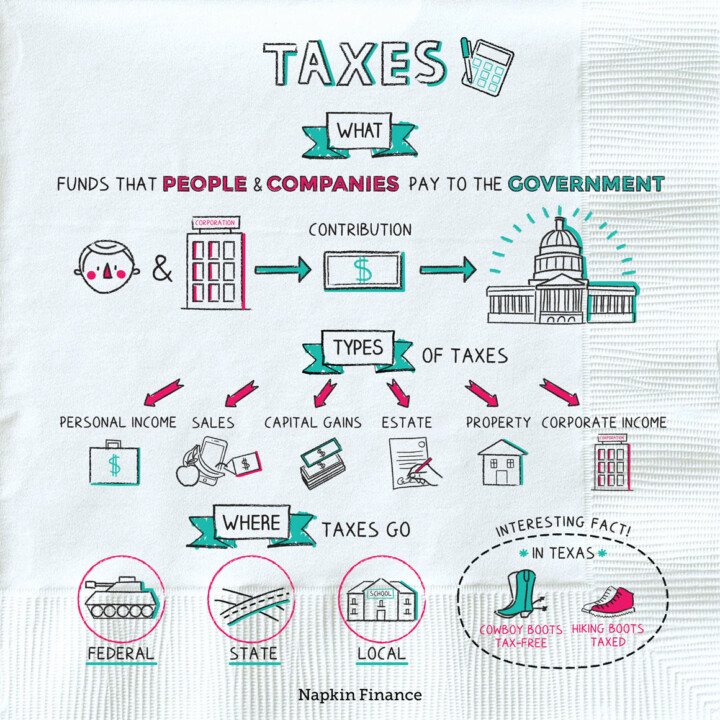
The IRS just released inflation-adjusted marginal rates and brackets for 2023 on Tuesday, and many workers will see higher take-home pay in the new year as less tax is withheld from their paychecks.
Additionally, the agency released the standard deduction for next year. It is increasing by $900 to $13,850 for single taxpayers, and by $1,800 for married couples, to $27,700. For heads of household, the 2023 standard deduction will be $20,800. That’s an increase of $1,400.
Here are the marginal rates for for tax year 2023, depending on your tax status.
Single filers
10%: income of $11,000 or less
12%: income between $11,000 to $44,725
22%: income between $44,725 to $95,375
24%: income between $95,375 to $182,100
32%: income between $182,100 to $231,250
35% income between $231,250 to $578,125
37%: income greater than $578,125
Married filing jointly
10%: income of $22,000 or less
12%: income between $22,000 to $89,450
22%: income between $89,450 to $190,750
24%: income between $190,750 to $364,200
32%: income between $364,200 to $462,500
35% income between $462,500 to $693,750
37%: income greater than $693,750
Additionally, the maximum Earned Income Tax Credit for 2023 is $7,430 for those who have three or more qualifying children. The maximum contribution to a healthcare flexible spending account is also increasing, from $2,850 to $3,050.
Wealthy Americans will also be able to exclude significantly more assets from the estate tax in 2023. Individuals will be able to transfer up to $12.92 million tax-free to their descendants, up from just over $12 million in 2022. A married couple can pass on double that. And the annual exclusion for gifts increases to $17,000.
Posted on October 17, 2022 by Dr. David Edward Marcinko MBA MEd CMP™
By Staff Reporters
***
Earnings: Earnings season goes from a trot to a canter this week when some heavy-hitters will give business updates, including Netflix, Tesla, IBM, Goldman Sachs, and P&G.
In their reports last week, bank execs said that consumers were still in pretty good shape, despite the gloomy economic outlook.
Posted on October 16, 2022 by Dr. David Edward Marcinko MBA MEd CMP™
By Staff Reporters
***
***
“Increases in the shelter, food, and medical care indexes were the largest of many contributors to the monthly seasonally adjusted all items increase.”—Bureau of Labor Statistics’s Consumer Price Index Summary
According to Betterment, one of the world’s largest robo-advisors, whose consumer-facing investment offerings make virtually no use of machine learning. [Emerging Tech]
Posted on October 15, 2022 by Dr. David Edward Marcinko MBA MEd CMP™
By Staff Reporters
***
***
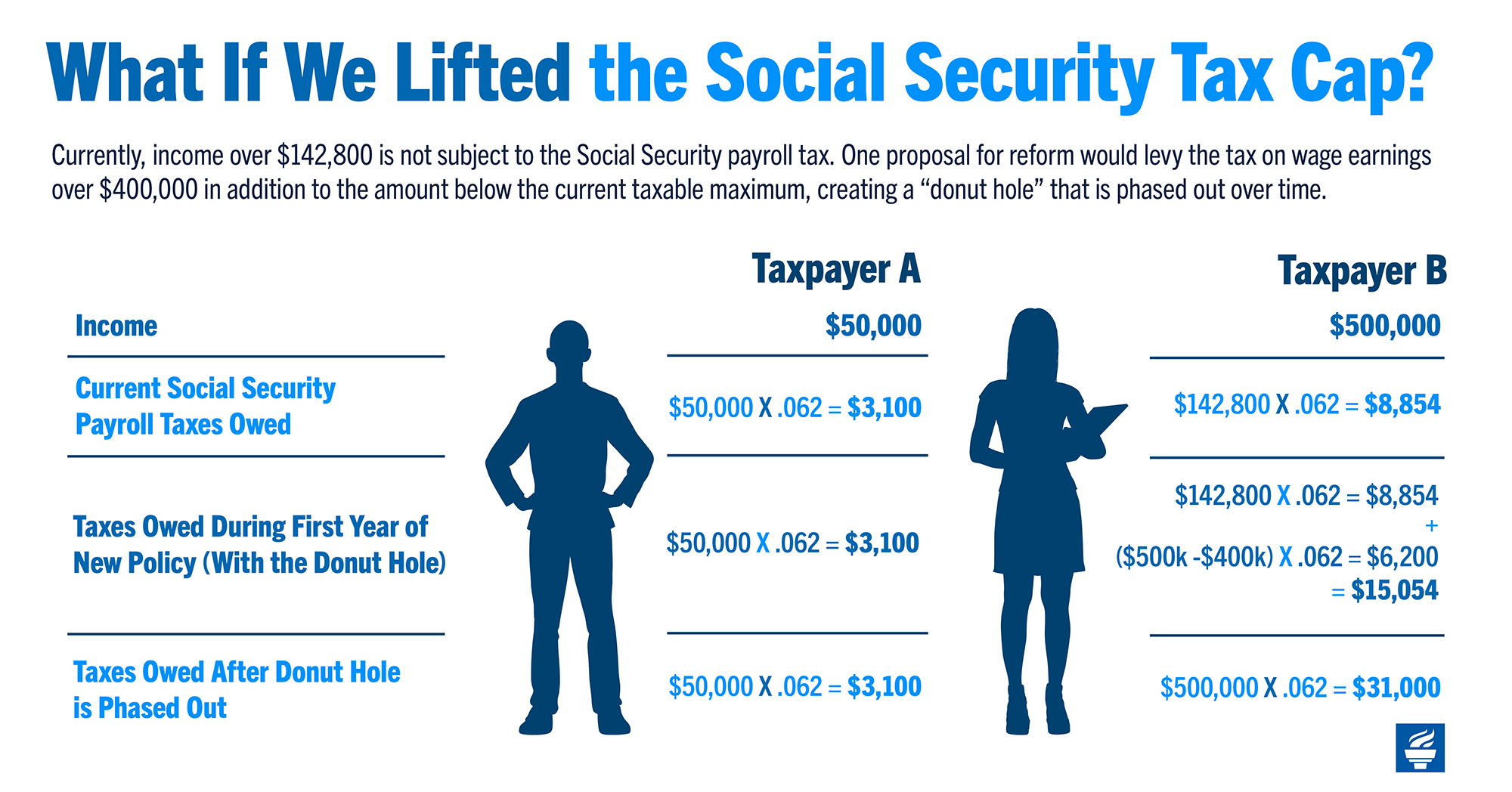
Social Security’s payroll tax cap was raised nearly 9% for 2023, meaning more income will face Social Security taxes next year, but the rise is unlikely to affect the solvency of the trusts underpinning the system.
Citing the increase in average wages, the Social Security Administration said the maximum amount of earnings subject to the Social Security tax (taxable maximum) will increase to $160,200 from $147,000 starting in January. The announcement was part of the release of the cost-of-living adjustment, or COLA. The taxable maximum for 2021 was $142,800.
Citing the increase in average wages, the Social Security Administration said the maximum amount of earnings subject to the Social Security tax (taxable maximum) will increase to $160,200 from $147,000 starting in January.
Posted on October 15, 2022 by Dr. David Edward Marcinko MBA MEd CMP™
By Staff Reporters
***
***
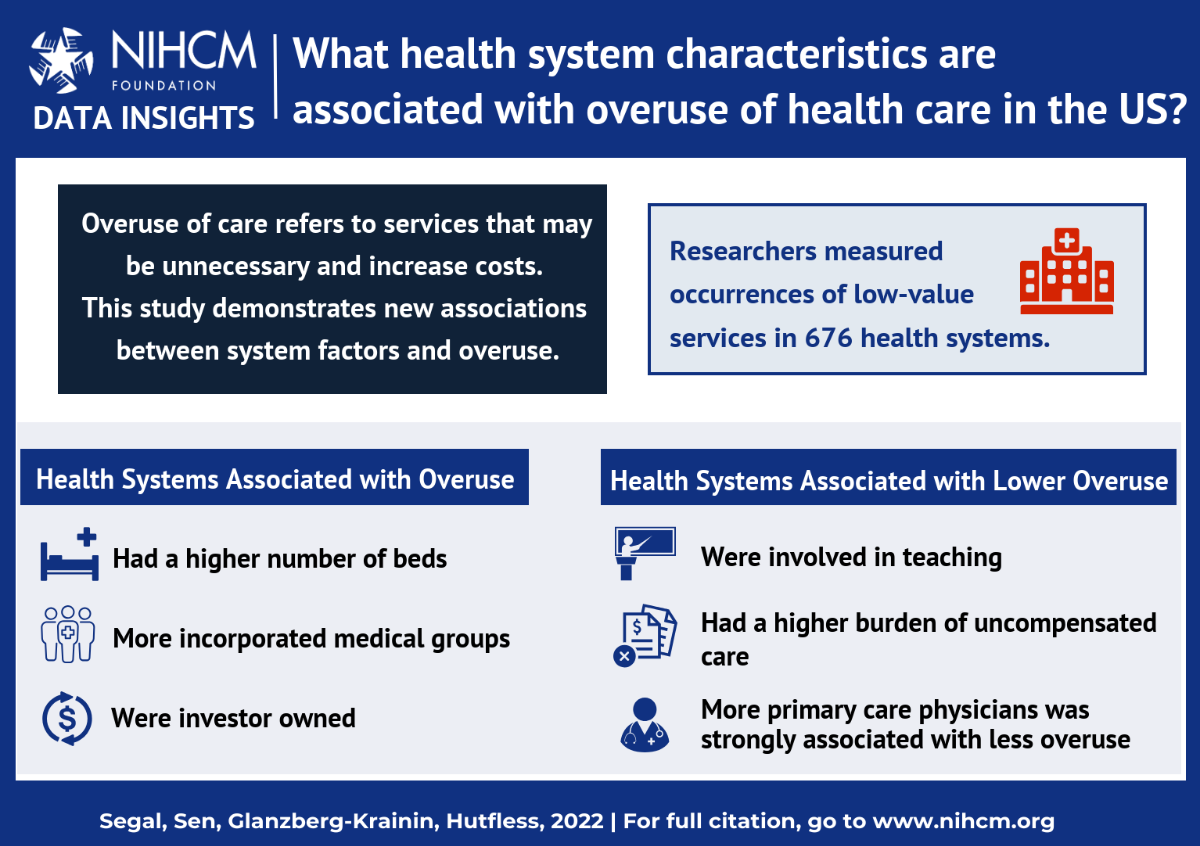
The high cost of health care in the United States is partially driven by an over-emphasis on low-value health care that is potentially harmful and offers little benefit to most patients.
New research by Jodi Segal, MD, and colleagues, advances efforts to solve the low-value care problem by placing a spotlight on health care system factors that likely contribute to an overuse of care. The work is analyzed in the latest NIHCM Research Insights. Key findings include:
Systems that are investor-owned, or have fewer primary care physicians, are more likely to be associated with the overuse of care.
Systems that have major teaching hospitals are less likely to overuse care.
To continue investigating, evaluating, and addressing the drivers of overuse, the research team updated their Overuse Index tool. This Index may be especially useful for health systems seeking to monitor care use performance over time. This study’s findings may support future research and interventions to increase the use of high-value care.
Posted on October 13, 2022 by Dr. David Edward Marcinko MBA MEd CMP™
By Staff Reporters
***
***
Economy: Yesterday brought more sinister inflation news when the September producer price index, which measures wholesale prices, came in higher than expected.
But the headliner is today when the consumer price index appears. Economists predict core inflation will hit a 40-year high, according to Bloomberg, so none of this is likely to get the Fed to chill on rate hikes.
Posted on October 9, 2022 by Dr. David Edward Marcinko MBA MEd CMP™
By Steve Febus
***
***
Hospital Finance 101: Understanding the Cost of Full-Service Healthcare in Pullman, WA Program by: Steve Febus, Pullman Regional Hospital Chief Financial Officer.
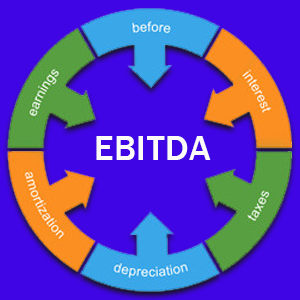
What Is Earnings Before Interest, Taxes, Depreciation, and Amortization (EBITDA)?
***
EBITDA, or earnings before interest, taxes, depreciation, and amortization, is a measure of a company’s overall financial performance and is used as an alternative to net income in some circumstances. EBITDA, however, can be misleading because it strips out the cost of capital investments like property, plant, and equipment.
This metric also excludes expenses associated with debt by adding back interest expense and taxes to earnings. Nonetheless, it is a more precise measure of corporate performance since it is able to show earnings before the influence of accounting and financial deductions.
Simply put, EBITDA is a measure of profitability. While there is no legal requirement for companies to disclose their EBITDA, according to the U.S. generally accepted accounting principles (GAAP), it can be worked out and reported using the information found in a company’s financial statements.
The earnings, tax, and interest figures are found on the income statement, while the depreciation and amortization figures are normally found in the notes to operating profit or on the cash flow statement. The usual shortcut to calculate EBITDA is to start with operating profit, also called earnings before interest and tax (EBIT) then add back depreciation and amortization.
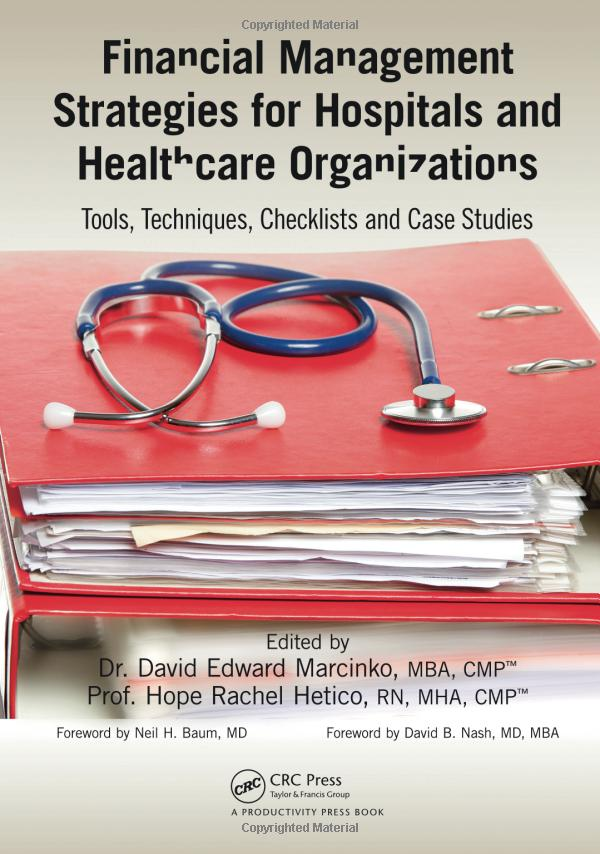
Navigating a course where sound organizational management is intertwined with financial acumen requires a strategy designed by subject-matter experts. Fortunately, Financial Management Strategies for Hospital and Healthcare Organizations: Tools, Techniques, Checklists and Case Studies provides that blueprint. ―David B. Nash, MD, MBA, Jefferson Medical College, Thomas Jefferson University
It is fitting that Dr. David Edward Marcinko, MBA, CMP™ and his fellow experts have laid out a plan of action in Financial Management Strategies for Hospital and Healthcare Organizations that physicians, nurse-executives, administrators, institutional CEOs, CFOs, MBAs, lawyers, and healthcare accountants can follow to help move healthcare financial fitness forward in these uncharted waters. ―Neil H. Baum, MD, Tulane Medical School
Posted on September 26, 2022 by Dr. David Edward Marcinko MBA MEd CMP™
Belgium’s Society for Worldwide InterBank Financial Telecommunications
A TIMELY FINANCIAL TOPIC
***
By Staff Reporters
***
Belgium’s Society for Worldwide Interbank Financial Telecommunications (SWIFT) runs a messaging service that facilitates transactions across 11,000+ financial institutions globally. Think of it as the “Gmail of global banking.”
Entities in every country except North Korea use SWIFT to shuffle trillions of dollars’ worth of funds across borders. And Russia is a SWIFT power user—as a major supplier of energy and other goods, it ranks sixth globally for payment messages sent on SWIFT. So if Russia were cut off from SWIFT, “the nation would essentially be severed from much of the global financial system,” the NYT wrote.
Posted on September 23, 2022 by Dr. David Edward Marcinko MBA MEd CMP™
***
By Staff Reporters
***
***
Marking to Market (MTM) means valuing the security at the current trading price. Therefore, it results in the traders’ daily settlement of profits and losses due to the changes in its market value.
Suppose on a particular trading day, the value of the security rises. In that case, the trader taking a long position (buyer) will collect the money equal to the security’s change in value from the trader holding the short position (seller).
On the other hand, if the security value falls, the selling trader will collect money from the buyer. The money is equal to the change in the value of the security. It should be noted that the value at maturity does not change much. However, the parties involved in the contract pay gains and losses to each other at the end of every trading day.
***
Examples of Mark to Market
An exchange marks traders’ accounts to their market values daily by settling the gains and losses that result due to changes in the value of the security. There are two counterparties on either side of a futures contract—a long trader and a short trader. The trader who holds the long position in the futures contract is usually bullish, while the trader shorting the contract is considered bearish.
If at the end of the day, the futures contract entered into goes down in value, the long margin account will be decreased and the short margin account increased to reflect the change in the value of the derivative.
An increase in value results in an increase in the margin account holding the long position and a decrease in the short futures account.
According to investopedia, for example, to hedge against falling commodity prices, a wheat farmer takes a short position in 10 wheat futures contracts on November 21st. Since each contract represents 5,000 bushels, the farmer is hedging against a price decline on 50,000 bushels of wheat. If the price of one contract is $4.50 on Nov. 21st. the wheat farmer’s account will be recorded as $4.50 x 50,000 bushels = $225,000.
Day
Futures Price
Change in Value
Gain/Loss
Cumulative Gain/Loss
Account Balance
1
$4.50
225,000
2
$4.55
+0.05
-2,500
-2,500
222,500
3
$4.53
-0.02
+1,000
-1,500
223,500
4
$4.46
-0.07
+3,500
+2,000
227,000
5
$4.39
-0.07
+3,500
+5,500
230,500
Because the farmer has a short position in wheat futures, a fall in the value of the contract will result in an increase in their account. Likewise, an increase in value will result in a decrease in account value. For example, on Day 2, wheat futures increased by $4.55 – $4.50 = $0.05, resulting in a loss for the day of $0.05 x 50,000 bushels = $2,500. While this amount is subtracted from the farmer’s account balance, the exact amount will be added to the account of the trader on the other end of the transaction holding a long position on wheat futures.
The daily mark to market settlements will continue until the expiration date of the futures contract or until the farmer closes out his position by going long on a contract with the same maturity.
Posted on September 21, 2022 by Dr. David Edward Marcinko MBA MEd CMP™
By Staff Reporters
***
***
Chamath Palihapitiya, the billionaire investor who once claimed to be the next Warren Buffett, is winding down two of his special purpose acquisition companies (SPACs) and returning $1.5 billion to investors. It marks the symbolic end to the SPAC bubble that Palihapitiya is credited with instigating.
***
Markets: Investors pre-gamed the Fed’s big interest rate decision coming this afternoon by sending stocks lower and Treasury yields higher; they’re sweating what’s expected to be the central bank’s third 75-basis-point hike in a row to tamp down inflation. Speaking of inflation, Ford’s stock had its worst day in 11 years after warning of $1 billion in extra supplier costs.
***
Finally, the Justice Department charged 47 people for allegedly carrying out the single largest Covid relief fraud scheme to date. Feds say that by exploiting a program meant to feed needy Minnesota children, the defendants stole $250 million. Prosecutors say the fraud was committed by a network of individuals connected to the nonprofit Feeding Our Future and was overseen by the nonprofit’s founder, Aimee Bock. Feeding Our Future was one of a handful of organizations Minnesota trusted to oversee the distribution of meals to children in low-income families during the pandemic. Instead, prosecutors allege, the organization operated a “pay-to-play scheme” in which individuals submitted fake meal sites and children’s names, raking in government money with fraudulent invoices.
Posted on September 15, 2022 by Dr. David Edward Marcinko MBA MEd CMP™
By Staff Reporters
***
***
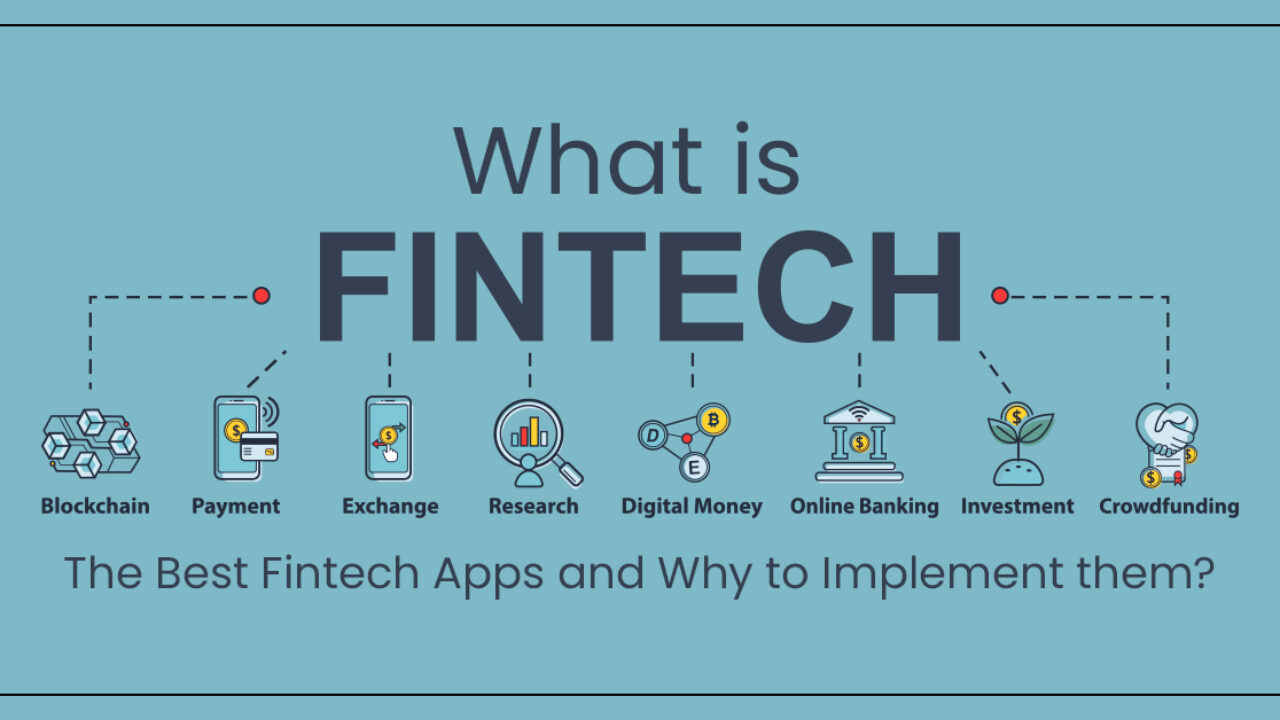
DEFINITION: Financial technology (abbreviated fintech or FinTech) is the technology and innovation that aims to compete with traditional financial methods in the delivery of financial services. Artificial intelligence, Blockchain, Cloud computing, and big Data are regarded as the “ABCD” (four key areas) of FinTech. The Fintech industry is an emerging industry that uses technology to improve activities in finance. The use of smartphones for mobile banking, investing, borrowing services,and cryptocurrency are examples of technologies aiming to make financial services more accessible to the general public.
Financial technology companies consist of both startups and established financial institutions and technology companies trying to replace or enhance the usage of financial services provided by existing financial companies.
Posted on September 14, 2022 by Dr. David Edward Marcinko MBA MEd CMP™
By Dan McCarthy
***
***
Like everyone’s desire to work, venture funding sank to a new low during the dog days of summer. In August, global venture funding fell to $25.2 billion, per Crunchbase, less than half of the ~$53 billion invested one year prior, and the lowest monthly venture-funding total in two years. It’s down ~10% from the previous month.
Even so…The ongoing pullback didn’t stop several companies—including Adam Neumann’s, uh, controversial, comeback project Flow—from locking down significant investment rounds in August. Here are three rounds that stood out to us…all of which happen to play in the clean-energy space:
Terrapower, a nuclear tech developer founded by Bill Gates,raised $750 million. Gates co-led the round with SK Group, which plowed $250 million into the company. In addition to nuclear power generation, the company is also researching nuclear medicine techniques.
Longroad Energy, a renewable energy developer based in Boston, raised $500 million. The company said that the funding would catalyze a shift toward an owned-and-operated business model and enable it to grow the capacity of its wind, solar, and storage assets from 1.5 gigawatts (GW) to 8.5 GW in the next five years.
Lunar, a home-electrification startup founded by a former Tesla Energy exec, debuted with $300 million in funding, with residential solar bigwig Sunrun and SK Group (hello again) as investors. Later this year, Lunar plans to begin releasing hardware and software products that make it easier for homes to generate, use, and store carbon-free energy.
Monthly venture funding has been trending down since it hit a record high of $69.4 billion last November, as rising rates, inflation, and general economic uncertainty have turned the investing temperature from “deep summer” to “that first really cold day of winter where you neglect to wear a proper coat.” But it’s time for two of our most common refrains on this subject: 1) $25 billion in monthly VC funding is still a lot of money 2) VCs are sitting on a record high of more than half a trillion dollars in dry powder. Those reserves are unlikely to be emptied in 2022, but there is a lot of committed capital on hand for startups to vie for.
Posted on September 10, 2022 by Dr. David Edward Marcinko MBA MEd CMP™
By Jessie Hellmann
***
***
Doctors are again ramping up what has become a perennial lobbying campaign to urge Congress to increase Medicare payments in order to offset cuts scheduled to go into effect Jan. 1. The cuts, the result of a 2020 Centers for Medicare and Medicaid Services decision to increase payments for underpaid services like primary care and maternal health, are meant to offset the costs of increasing payments for those services.
Without action from Congress, the Medicare conversion factor, which is used to calculate billing codes into payment rates, would see a 4.5 percent cut, amounting to about $3 billion or $4 billion less for providers paid under the Medicare Physician Fee Schedule. As in past years, more expensive specialties like radiology, surgery, and podiatry are estimated to see the largest cuts, ranging from 4 to 7 percent.
Posted on September 8, 2022 by Dr. David Edward Marcinko MBA MEd CMP™
Welcome to The Common Bridge
By Richard Helppie
***
Hello, welcome to the Common Bridge.
We’ve got a great topic for you today. It’s all about taxes and the IRS and with us today, two experts from Plante Moran. Welcome, Rachel Keller and Brett Bissonnette, welcome to the Common Bridge. The Common Bridge, of course, is available@substack.com. Please go to substack.com. Enter the Common Bridge in your search engine. Subscribe if you wish, either a paid subscription or a free subscription.
Of course, the Common Bridge is available on all of your podcast outlets. Look for us there and on YouTube TV. And of course, with our friends over at Mission Control radio on your radio garden app. We all listen to debates and commentary about law and policy and especially taxes. And every law, every policy and of course tax regulation require mechanisms to ensure compliance.
Well, our President Joseph R. Biden has stated that the IRS needs to be properly funded in order to carry out its mission on our very complex tax code. Taxpayers have been puzzled by missing records, slow refund late fees for things they paid and other matters including slowness in the support that they get directly from the IRS. So today, we’re going to chat with these two experts who are in the field today actively advising people from all stripes about tax law and tax regulation. They spent a lot of their time interacting with the IRS and making sure that their clients are in compliance with the tax law. So we anticipate some education and maybe some policy ideas.
From Plante Moran, we welcome Rachel Keller and Brett Bissonnette — Welcome to the Common Bridge.
-Richard Helppie
EDITOR’S NOTE: Richard D. Helppie Former: CEO and Founder Superior Consultant Company, Inc. [SUPC-NASD]
The U.S. government is the largest payor of medical costs, through Medicare and Medicaid, and has a strong influence on physician reimbursement. In 2020, Medicare and Medicaid accounted for an estimated $829.5 billion and $671.2 billion in healthcare spending, respectively.
The prevalence of these public payors in the healthcare marketplace often results in their acting as a price setter, and being used as a benchmark for private reimbursement rates. (Read more…)
Posted on August 31, 2022 by Dr. David Edward Marcinko MBA MEd CMP™
***
By Staff Reporters
***
***
According to the USBLS, the number of open Job positions ticked up unexpectedly in July, with around 11.2 million jobs available, slightly higher than June’s revised total of 11 million openings, according to the latest Job Openings and Labor Turnover Survey (JOLTS). Economists had expected there to be about 10.5 million jobs added, according to estimates from Refinitiv. The June total was revised up by about 300,000 positions.
Oil closed down almost $6 a barrel with global crude benchmark Brent falling beneath key $100 pricing, after a pro-Tehran television station out of London reported that Iran and the United States have reached a deal to revive a nuclear deal that could legitimately put the Islamic Republic’s oil back on the export market.
Stocks fell again on Wall Street, posting their third loss in a row as traders worry that high interest rates are here to stay for a while. The S&P 500 fell 1.1% bringing its loss in the past three days to 5.1%. The Dow Jones Industrial Average and the NASDAQ also fell. Energy companies fell along with sliding crude oil prices. Technology stocks and industrial companies were also weak. The yield on the 10-year Treasury held steady.
Posted on August 20, 2022 by Dr. David Edward Marcinko MBA MEd CMP™
How Much?
By Staff Reporters
***
Grant Cardone is a self-made millionaire, author and sales training expert. He recommends hitting a lofty savings goal — $100,000 — and then investing any money earned after you hit that amount. “You need to prove to yourself that you can go out and get money,” he wrote in a 2018 post for CNBC. “Saving $100,000 shows that you have an ability to make money and then to keep it. Most people can’t do either of those things. Once you can earn and save, then you can start building wealth.”
Posted on August 15, 2022 by Dr. David Edward Marcinko MBA MEd CMP™
By Stephen Kelley, CSA
***
***
As a Registered Investment Adviser (RIA) with a Series #65 securities license, we hold a fiduciary duty to you. This means that we are legally bound to put your interests above those of anyone else, including ourselves.
Now you might reasonably think that anyone offering financial advice or services to clients is required to be a fiduciary. Sadly, if you thought that, you’d be wrong. Some estimates claim that only 15 percent of advisors have a fiduciary duty to their clients. The Paladin Registry puts the number even lower, estimating that just one in 12 (8.3 percent) advisors have a fiduciary responsibility.
For the most part, stockbrokers (also called “Registered Representatives,” “Account Executives,” “Financial Advisors,” or “Wealth Managers”) are not fiduciaries, even though they are allowed to portray themselves as full-service investment advisors. If your stockbroker/registered representative/account executive/financial advisor/wealth manager holds a series seven [#7] securities license, then it’s probable that they aren’t a fiduciary.
This was made amply clear in the movie, “The Wolf of Wall Street,” a biopic about Jordan Belfort, a stockbroker who made his fortune selling junk stocks and bonds to middle-class investors: in other words, by cheating them. Much of it was perfectly legal. The SEC went after Belfort’s company, Stratton Oakmont, for nearly a decade before it was able to shut it down. The point being that even in the face of egregious wrongdoing, theft, fraud and a virtual sea of drugs and blatant hedonism, the securities laws in this country are so loose that it took billions in theft and a decade of suspected and known fraud to step in and stop the abuse. And this movie was based on a true story.
That’s why a fiduciary duty is so important to a client. Being a fiduciary is a legal distinction. A Registered Investment Advisor (RIA) or Investment Advisor Representative (IAR) who holds a Series #65 securities license, subject to the Investment Advisers Act of 1940, is a fiduciary. The legal investment advising standards that govern a non-fiduciary stockbroker and a fiduciary Registered Investment Advisor are very different.
A Registered Investment Advisor is legally required to follow the “trust” standard — the highest known in law — which requires it to place the interests of its clients ahead of its own and fulfill critical fiduciary duties of trust and confidence. Under the fiduciary trust standard, a Registered Investment Advisor must provide its “best advice” to a client. A non-fiduciary stockbroker (like the coveted Series #7 of “The Wolf of Wall Street”) follows only the “suitability” standard, which doesn’t require a stockbroker to place the interests of his clients ahead of its own. Under the non-fiduciary suitability standard, a stockbroker need provide only “suitable advice” to his clients — even if the stockbroker knows that the advice is not the best advice for the client.
***
The table below helps summarize which professionals are fiduciaries.
Posted on August 10, 2022 by Dr. David Edward Marcinko MBA MEd CMP™
By Charles Schwab
***
***
Stay alert for investment scams involving cryptocurrency
At Schwab, we’re committed to helping you protect your assets. One way we do that is by raising awareness of the increase in fraudulent investment schemes (“scams”) involving cryptocurrencies and digital assets. While investing involves taking some risks, being scammed shouldn’t be one of them.
What do scams look like? Investment scams target investors by promising quick, guaranteed returns. Although “investment pitches” vary, using fraudulent cryptocurrency investment opportunities to entice targets is a common approach.
Once targeted investors indicate interest, they are often instructed to wire funds abroad or to a third party’s personal account, or to transfer cryptocurrency. Fake websites and/or applications often create the illusion of a legitimate trading or investment platform and gain trust. However, once funds have been transferred, they are difficult to trace and retrieve.
5 Investment Scam Red Flags
• Guaranteed” high investment returns, supposedly with little or no risk, and sounding too good to be true. • Unlicensed or unregistered sellers. Use Investor.gov to check out the background of anyone offering you an investment in securities. • Skyrocketing account values. Investments that appear to rapidly increase in value are often fake. • Fake testimonials. Scammers often pay people to provide fake reviews, so never rely solely on testimonials in making an investment decision. • Fake contacts. Take caution if someone approaches you through social media with an investment opportunity. Pretending to be a friend or to have a mutual acquaintance is a common tactic used to gain trust.
Posted on August 10, 2022 by Dr. David Edward Marcinko MBA MEd CMP™
By Staff Reporters
***
***
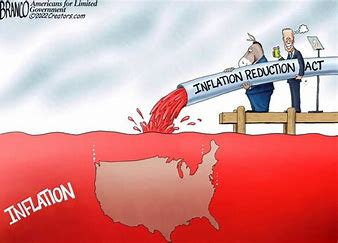
The US Senate passed their climate, health and tax package, including nearly $80 billion in funding for the IRS.
The Inflation Reduction Act allocates $79.6 billion to the agency over the next 10 years, with more than half of the money going to enforcement, with the IRS aiming to collect more from corporate and high-net-worth tax dodgers.
The remainder of the funding is earmarked for operations, taxpayer services, technology, development of a direct free e-file system and more. Collectively, those improvements are projected to bring in $203.7 billion in revenue from 2022 to 2031, according to recent estimates from the Congressional Budget Office.
The biggest revenue-raiser of the IRA is a 15% minimum tax on corporations with profits of $1 billion or more, which is expected to generate $258 billion over 10 years. This addresses the problem of the rampant tax dodging among large companies that has mostly benefited wealthy shareholders and executives. The bill includes a 1% excise tax on companies’ stock buybacks, raising an estimated additional $74 billion. This will discourage corporations from siphoning resources into share repurchases that largely benefit shareholders and executives with stock-based pay. Those resources could instead go toward worker wages or other productive investments. And the bill would boost IRS enforcement to ensure the ultra-rich pay.
Finally, the Inflation Reduction Act would also extend a tax limitation on pass-through businesses for two more years. The limitation on how businesses can use losses to reduce taxes is supposed to expire at the start of 2027. A pass-through or flow-through business is one that reports its income on the tax returns of its owners. That income is taxed at their individual income tax rates. Examples of pass-throughs include sole proprietorships, some limited liability companies, partnerships and S-corporations.
On July 7, 2022, the Centers for Medicare & Medicaid Services (CMS) released its proposed Medicare Physician Fee Schedule (MPFS) for calendar year (CY) 2023. Arguably the most noteworthy provision in the proposed rule is the agency’s suggested cut to physician payments. However, the rule also includes a number of other policy proposals, including changes to Medicare accountable care organizations (ACOs), behavioral health care, cancer screening, and dental care. (Read more…)
Posted on August 3, 2022 by Dr. David Edward Marcinko MBA MEd CMP™
By Claire
***
***
While the Inflation Reduction Act of 2022 looks good on paper, it will actually do more harm than good if it passes. The plan would hurt working-class taxpayers and small business owners across the country.
Posted on August 3, 2022 by Dr. David Edward Marcinko MBA MEd CMP™
By Staff Reporters
***
***
The dollar sank to a one-month low after data last week showed the US is technically in recession.
It reflects a “sell-the-fact” reaction in markets as investors expect milder Fed rate hikes.
A weak Chinese economy is also affecting the performance of the greenback on demand concerns.
The US dollar index, which measures the greenback’s performance against six other currencies including the Japanese yen, slipped 0.52% to trade at $105.35 – its lowest since July 5th. The safe-haven currency has endured sharp sell-offs in recent weeks, only rising on two days since mid-July as a “sell-the-fact” reaction hits markets over expectations that the Fed will become less aggressive in its monetary policy after data showed US GDP contracted for two straight quarters – the technical definition of a recession.
London-based BP earnings tripled and underlying replacement cost profit, which excludes one-time items and fluctuations in the value of inventories, jumped to $8.45 billion from $2.80 billion in the same period a year earlier. The soaring earnings allowed BP to return billions of dollars to shareholders, with the company boosting its dividend by 10% and announcing that it would buy back $3.5 billion in shares. BP said it expects to increase dividends by about 4% annually through 2025.
Moreover, job openings in the U.S. fell to 10.7 million in June to mark the lowest level since last fall, signaling that a red-hot labor market is cooling off a bit as the economy slows. Job openings slipped from 11.3 million in May. They have dropped three months in a row after peaking in the early spring at a record 11.9 million.The last time job openings dipped below 11 million was in November last year. The number of people who quit jobs in June, meanwhile, only fell slightly to 4.23 million, the Labor Department said Tuesday. Quits topped 4 million one year ago for the first time ever, part of a pandemic-era trend that’s become known as “the great resignation.” Before the pandemic, the number of people quitting jobs averaged fewer than 3 million a month.The high number of people quitting jobs suggests the labor market is still quite robust, though. Most people who quit usually find a better job. Layoff also stayed at historically very low levels. Big picture: The economy is cooling off — and so is a sizzling labor market.
Finally, semi-conductor stocks plunged. For example, shares of Taiwan Semiconductor Manufacturing Company (TSMC)—the world’s biggest and most valuable semiconductor manufacturer valued at $440 billion—fell 2.4%. Its Taiwanese peers United Microelectronics and MediaTek dipped 3% and 1.6%, respectively. Meanwhile, U.S. chip-maker Intel stock dropped 1.5% on the same day.
Sooner or later – as a practicing physician – you will want to ascertain and then demonstrate the cost effectiveness of your medical care. By using the process of Activity Based Cost (ABC) Management, you will be able to do so.
ALAS: But, if you’re using a traditional accounting system – like most all hospitals today that use the fictional “average wholesale cost” method – you won’t know a thing about your medical practice or clinic activity costs. Hence, again like most all hospitals, fees become simply vacuous.
Posted on July 31, 2022 by Dr. David Edward Marcinko MBA MEd CMP™
By Staff Reporters
***
***
Although the future of Social Security remains in doubt, some congressional lawmakers are ensuring that most Social Security recipients get their money and then some. Sen. Bernie Sanders (I-Vt.) introduced the Social Security Expansion Act (SSEA) in June. The bill would allot $200 more per month for each Social Security recipient — a 12% boost in money, according to CBS News.
So who will receive these Social Security increases?
The people who are currently eligible for Social Security or anyone who turns 62 in 2023, which is the earliest age to collect Social Security, will be eligible to receive the extra $200 a month with their benefits.
***
Now, at present for Social Security, 12.4% is taken out of each paycheck for people earning up to $147,000, with half paid by the employer and half paid by the worker. So, if you make $147,000 or less, you are paying 6.2% into Social Security. If you make, say, $1.47 million, you only pay 0.6% of your income to Social Security.
If the pending new SS bill is approved, the same rate would be taxed on individuals making $250,000 or more. Those making $147,000 or less would continue to pay the same rate as well, with a do-nut hole between the $147,000 and $250,000 — although that $147,000 typically goes up each year, as it is based on average income.
The increased funding — along with a change in the cost-of-living-adjustments (COLA) to the Consumer Price Index for the Elderly (CPI-E) — would help to increase benefits by an estimated $200 per month, or $2,400 per year, which bears out, according to an analysis by the Social Security Administration (SSA).
Posted on July 28, 2022 by Dr. David Edward Marcinko MBA MEd CMP™
By Eric Bricker MD
Healthcare Stock and IPO Investing Can Be Confusing. The Story of Privia Health is a Good Case Study in Understanding the Underlying Economics in Healthcare Investing:
Posted on July 26, 2022 by Dr. David Edward Marcinko MBA MEd CMP™
***
By Staff Reporters
***
***
The $7.25 federal minimum wage is now 13 years old after last being raised in July 2009. The value of the minimum wage has fallen by 40% since the 1960s. And, $7.25 in July 2009 would be worth around $10 now after adjusting for inflation.
In the next jobs report, Turn predicted that the unemployment rate will fall to a seasonal low of 3.5% due to a 64.7% increase in hiring in June, a trend that could continue through July. Turn predicted a significant shift away from filling hourly, pandemic-related jobs, such as warehouse positions, after hiring for traditional economic roles likes retail workers and janitorial services surged 210% in June. Turn also predicted a rise in hiring for semi-skilled hourly and salaried jobs in July such as mechanics and nurses. While hiring for these positions accounted for just 11.5% of monthly jobs over the past 12 months, Turn predicted that these jobs will make up 22% of all new hires in July.
AT&T Inc. and Verizon Communications Inc. shocked investors with their second-quarter results last week — the former warning about the high cost of phone giveaways and the latter failing to meet growth targets. The news sparked a sell-off that erased some $40 billion in market value from the three industry leaders. Now T-Mobile US Inc. is cast as the potential Goldilocks in this drama — if its second-quarter results are just right. T-Mobile reports financial results tomorrow before markets open. Investors will be eager to see if the wireless industry is starting to see a slowdown in consumer spending due to decade-high inflation, or if some of the troubles might be more self inflicted.
Posted on July 25, 2022 by Dr. David Edward Marcinko MBA MEd CMP™
By Staff Reporters
***
***
An important week of the summer” for Wall Street, thanks to a deluge of earnings, economic data, and Fed action. For example:
Fed meeting: After the Fed wraps up its meeting on Wednesday, it’s expected to announce another interest rate hike to tame inflation. Central bank officials have signaled that they’ll boost rates by 75 basis points, the same as last month’s increase. That was the biggest rate hike in almost three decades.
Earnings: More than a third of S&P 500 companies will report this week, including tech behemoths Microsoft, Apple, Meta, Amazon, and Alphabet.
Economic growth: Q2 GDP will be released on Thursday, and it could show that the US economy shrunk for two straight quarters.
Finally, former Treasury Secretary Lawrence Summers said Federal Reserve [FMOC] officials need to stay the course to quell inflation that’s proving persistent at a four-decade high. “We do need strong action from our central bank,” he said on CNN’s “Fareed Zakaria GPS”. While Summers said he’s “encouraged” by the Fed’s commitment to bring down inflation, he cast doubt on the likelihood of a soft landing for the US economy, saying it’s “very unlikely.”
Posted on July 24, 2022 by Dr. David Edward Marcinko MBA MEd CMP™
By Staff Reporters
***
***
The World Health Organization declared the outbreak of monkeypox to be a public health emergency of international concern. “The global monkeypox outbreak represents a public health emergency of international concern,” WHO Director-General Dr. Tedros Adhanom Ghebreyesus said during a briefing in Geneva. At the virtual press conference, Ghebreyesus also said that the outbreak has spread around the world “rapidly” and that officials understand “too little” about the disease.
And, the U.S. Dollar had an incredible run throughout 2022, appreciating against most major currencies as the world’s central banks continue to combat rising inflation. This year alone, the dollar is up 15% against the Japanese yen, 10% against the British pound, and 5% compared to China’s Renminbi. The Wall Street Journal’s Dollar Index, which measures the dollar against 16 other major currencies, has also had its best first half performance since 2010 this year, rising more than 10% year-to-date. And for the lucky Americans who could find cheap airfare to Europe (and made it through with all their luggage), the dollar even reached equal standing with the euro for the first time in two decades earlier this month.
Posted on July 22, 2022 by Dr. David Edward Marcinko MBA MEd CMP™
***
By Staff Reporters
President Biden tested positive for the coronavirus, raising health concerns for the 79-year-old president and underscoring how the virus remains a persistent, if muted, threat in a country trying to put the pandemic in the past.
U.S. Indices
Change
Close
Dow Jones
+162.06
32036.90
NASDAQ
+161.96
12059.61
S&P500
+39.05
3998.95
SCHWAB1000
+129.50
13230.70
Senator Elizabeth Warren along with 22 more Democratic lawmakers are pushing the IRS to create its own free tax filing service. The bill also aims to allow eligible taxpayers to choose a “return-free option,” providing a pre-populated filing. “The average American spends 13 hours and $240 every year to file their taxes — that’s too much time and too much money,” Warren said in a press release. But some tax professionals say it’s not a realistic plan for the overburdened agency.
A case of polio has been identified in an un-vaccinated adult in Rockland County, according to a news release from the New York State Department of Health. The agency confirmed that the infection was transmitted from someone who received the oral polio vaccine, which has not been administered in the United States since 2000. Officials believe the virus may have originated outside the United States, where the oral vaccine is still administered.
he New York Times opinion columnist Paul Krugman published a mea culpa in column form flat out admitting he was wrong for thinking inflation wouldn’t be that bad. In his piece, titled, “I Was Wrong About Inflation,” the economics professor noted that he was on “Team Relaxed” when it came to fears of inflation and acknowledged that was a “very bad call.” Krugman began by recounting the “intense debate among economists about the likely consequences of the American Rescue Plan, the $1.9 trillion package enacted by a new Democratic president and a (barely) Democratic Congress.” He mentioned how he originally didn’t see the massive government spending bill as that dangerous for the economy. “Some warned that the package would be dangerously inflationary; others were fairly relaxed. I was Team Relaxed. As it turned out, of course, that was a very bad call,” he confessed.
Posted on July 18, 2022 by Dr. David Edward Marcinko MBA MEd CMP™
By Staff Reporters
***
***
5 Conditions Total 50% of Healthcare Costs
• Cancer makes up nearly 15% of all healthcare spending with employers in the study paying $533 million for nearly 103,000 cancer claims. • Musculoskeletal conditions (including joint wear, knee injuries, hip pain, etc.) makes up 13% of healthcare spending with employers spending $477 million for 317,000 musculoskeletal claims. • Cardiovascular conditions (including heart rhythm issues, stroke, heart attack, and heart failure) makes up 9% of healthcare spending with employers paying $357 million towards 169,000 claims. • Gastrointestinal conditions (including colitis, irritable bowel system, celiac disease, etc.) makes up 7% of healthcare spending with employers paying $284 million for 136,000 claims. • Neurological conditions (including Parkinson’s disease, migraines, epilepsy, etc.) makes up 6% of total health care spending with employers paying $225 million for 240,000 claims.







 Support our online development, and advance our onground research initiatives in free market economics, as we seek to showcase the brightest Next-Gen minds.
THE ME-P DISCLAIMER: Posts, comments and opinions do not necessarily represent iMBA, Inc., but become our property after submission. Copyright © 2006 to-date. iMBA, Inc allows colleges, universities, medical and financial professionals and related clinics, hospitals and non-profit healthcare organizations to distribute our proprietary essays, photos, videos, audios and other documents; etc. However, please review copyright and usage information for each individual asset before submission to us, and/or placement on your publication or web site. Attestation references, citations and/or back-links are required. All other assets are property of the individual copyright holder.
Support our online development, and advance our onground research initiatives in free market economics, as we seek to showcase the brightest Next-Gen minds.
THE ME-P DISCLAIMER: Posts, comments and opinions do not necessarily represent iMBA, Inc., but become our property after submission. Copyright © 2006 to-date. iMBA, Inc allows colleges, universities, medical and financial professionals and related clinics, hospitals and non-profit healthcare organizations to distribute our proprietary essays, photos, videos, audios and other documents; etc. However, please review copyright and usage information for each individual asset before submission to us, and/or placement on your publication or web site. Attestation references, citations and/or back-links are required. All other assets are property of the individual copyright holder.

































































 The Leading Business Education Network for Doctors, Financial Advisors and Health Industry Consultants