The Hemline Stock Market Index

What’s Up?

[By staff reporters]

According to Wikipedia, the hemline index is a theory presented by economist George Taylor in 1926. The theory suggests that hemlines on women’s dresses rise along with stock prices.

In good economies, we get such results as miniskirts (as seen in the 1920s and the 1960s), or in poor economic times, as shown by the 1929 Wall Street Crash, hems can drop almost overnight.

Non-peer-reviewed research in 2010 supported the correlation, suggesting that “the economic cycle leads the hemline with about three years”.

***

***

Conclusion

Your thoughts and comments on this ME-P are appreciated. Feel free to review our top-left column, and top-right sidebar materials, links, URLs and related websites, too. Then, subscribe to the ME-P. It is fast, free and secure.

Speaker: If you need a moderator or speaker for an upcoming event, Dr. David E. Marcinko; MBA – Publisher-in-Chief of the Medical Executive-Post – is available for seminar or speaking engagements. Contact: MarcinkoAdvisors@msn.com

***

Risk Management, Liability Insurance, and Asset Protection Strategies for Doctors and Advisors: Best Practices from Leading Consultants and Certified Medical Planners™8Comprehensive Financial Planning Strategies for Doctors and Advisors: Best Practices from Leading Consultants and Certified Medical Planners™

***

DAILY UPDATE: Hospital Charges, Cannabis and Stocks as Markets Slump

MEDICAL EXECUTIVE-POST TODAY’S NEWSLETTER BRIEFING

***

Essays, Opinions and Curated News in Health Economics, Investing, Business, Management and Financial Planning for Physician Entrepreneurs and their Savvy Advisors and Consultants

Serving Almost One Million Doctors, Financial Advisors and Medical Management Consultants Daily

A Partner of the Institute of Medical Business Advisors , Inc.

http://www.MedicalBusinessAdvisors.com

SPONSORED BY: Marcinko & Associates, Inc.

***

http://www.MarcinkoAssociates.com

Daily Update Provided By Staff Reporters Since 2007.
How May We Serve You?
© Copyright Institute of Medical Business Advisors, Inc. All rights reserved. 2024

REFER A COLLEAGUE: MarcinkoAdvisors@msn.com

SPONSORSHIPS AVAILABLE: https://medicalexecutivepost.com/sponsors/

ADVERTISE ON THE ME-P: https://tinyurl.com/ytb5955z

***

The prices hospitals charge for their services have long been opaque, but thanks to a 2021 hospital price transparency law, the picture is starting to come slightly into focus. And it turns out, there are some huge disparities in the prices hospitals charge that can’t be attributed to quality of care, according to a recent study from research institute Rand Corporation.

CITE: https://www.r2library.com/Resource

🟢 What’s up

What’s down

  • Salesforce is down 19.73% after the cloud computing company missed revenue estimates for the first time since 2006 and projected slower sales in the coming quarter. Turns out not even commercials featuring hunky Matthew McConaughey could save the company’s quarter.
  • UIPath shares plummeted 34.06% after announcing disappointing results and lower forward guidance, and to add insult to injury got hit with an analyst downgrade from Bank of America.
  • Build-A-Bear Workshop got the stuffing knocked out of it, dropping 13.92% after it missed estimates on both the top and bottom lines.
  • Hormel sank 9.69% after missing earnings thanks to slower retail sales offsetting higher meat prices, leaving shareholders stuck eating bologna sandwiches for lunch.
  • Kohl’s dropped 22.88% in its worst day ever after the company announced a terrible quarter and forecast more issues ahead due to customers contending with inflation.

Here’s where the major benchmarks ended:

  • The S&P 500® index (SPX) fell 31.47 points (0.6%) to 5,235.48; the Dow Jones Industrial Averagedropped 330.06 points (0.9%) to 38,111.48; the NASDAQ Composite® ($COMP) declined 183.50 points (1.1%) to 16,737.08.
  • The 10-year Treasury note yield (TNX) lost more than 7 basis points to 4.548%.
  • The CBOE Volatility Index® (VIX) rose 0.19 to 14.47.

Interest-rate-sensitive sectors including banks and utilities were among the stronger performers Thursday, boosted by a pullback in Treasury yields from four-week highs posted earlier in the week. Stocks are still heading for a down week, with the S&P 500 on track for its first weekly decline out of the past six.

CITE: https://tinyurl.com/2h47urt5

Legal cannabis is a booming industry: An estimated $38.4 billion in medical and recreational cannabis was sold in the US in 2023, and that figure is projected to rise to $56.9 billion by 2028. The industry has grown an average of 29.1% per year between 2018 and 2023, according to IBISWorld.

CITE: https://tinyurl.com/tj8smmes

COMMENTS APPRECIATED

PLEASE SUBSCRIBE: MarcinkoAdvisors@msns.com

Thank You

***

***

***

***

EDUCATIONAL TEXTBOOKS: https://tinyurl.com/4zdxuuwf

***

Basel AML Index: Money Laundering

By Staff Reporters

***

***

The Basel AML Index, an annual survey published by the International Centre for Asset Recovery (ICAR) at the Basel Institute of Governance, found that countries are not keeping up with “the evolving financial crimes risk of new technologies,” especially crypto and other digital assets.

Citing Financial Action Task Force (FATF) data covering six years from 2017 to 2023, the report found that only 43% of global jurisdictions surveyed are in technical compliance with international standards for crypto anti-money laundering (AML) measures.

COMMENTS APPRECIATED

Thank You

***

***

OMAHA: Breakfast Meeting 2024

By Vitaliy Kensenelson CFA

***

***

Breakfast in Omaha Meeting 2024 – Session One
While I was in Omaha attending the BRK annual meeting, I hosted Q&A sessions for my readers. Due to high reader interest, what started out as a simple breakfast get-together turned into two breakfast sessions and an afternoon session. We had so much interest that we were still unable to accommodate all of our readers – we had 200 folks on the waiting list.

I was exhausted, but I really enjoyed answering questions and meeting readers. The upside of this is that we have three video recordings.

Over the next three weeks, I will share the videos from each session. For those who prefer to read, I will also include a lightly edited full transcript.

For those who don’t have the time to read 15 pages or watch an hour-long video, I’ll include my favorite excerpts from each session.

COMMENTS APPRECIATED

Thank You

***

***

What is the “DeMark” Investing Indicator?

A TECHNICAL ANALYSIS STOCK TRADING SIGNAL?

By Dr. David Edward Marcinko MBA, MEd CMP

***

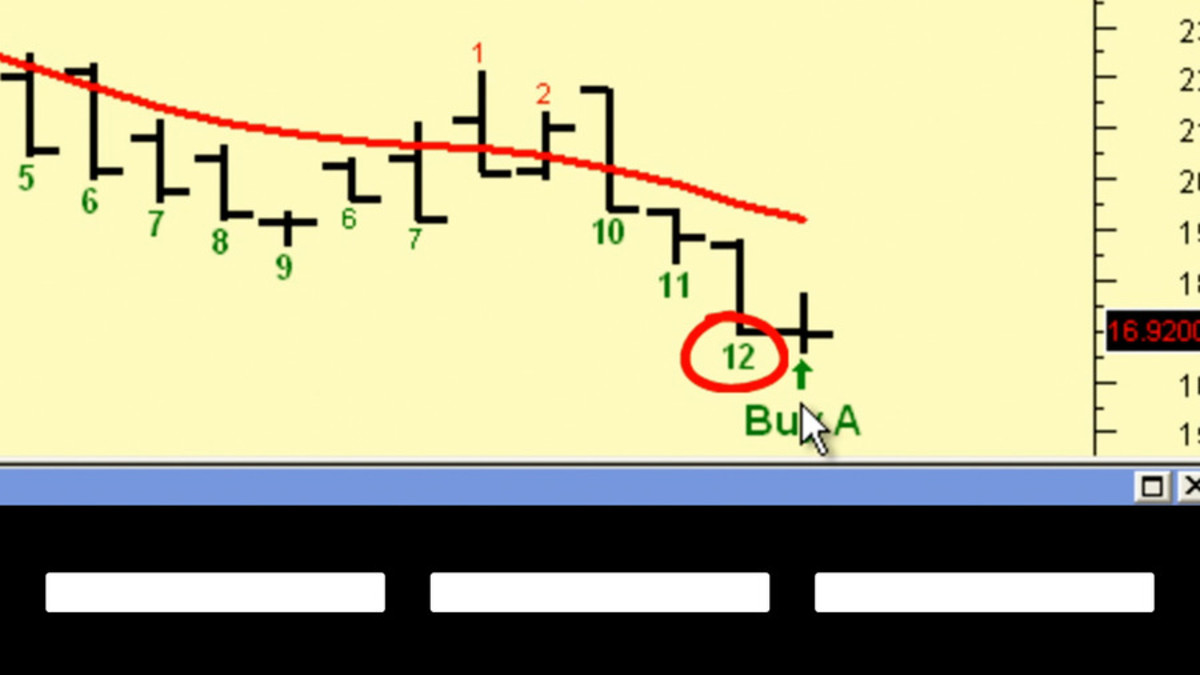
DEFINITION: The DeMark indicator (DeM) is a technical analysis oscillator that compares the most recent and previous prices of an asset to measure the demand and the directional trend of the market. It is based on principles promoted by technical analyst Thomas DeMark, who developed it over his nearly 50-year career. It aims to identify potential price reversals and inflection points before the market responds. It can be applied to any asset class, region, time interval, and data set.

CITE: https://www.r2library.com/Resource

***

***

See the source image

READ: https://www.tradingview.com/scripts/demark/

TECHNICAL ANALYSIS: https://medicalexecutivepost.com/2007/12/03/the-technicians/

YOUR THOUGHTS ARE APPRECIATED.

Thank You

FINANCE: https://www.amazon.com/Comprehensive-Financial-Planning-Strategies-Advisors/dp/1482240289/ref=sr_1_1?ie=UTF8&qid=1418580820&sr=8-1&keywords=david+marcinko

***

What is VIX Stock Market Volatility?

What it is – How it works
[Courtesy Wikipedia and staff reporters]

AKA “The Fear Gauge”

The CBOE Volatility Index, known by its ticker symbol VIX, is a popular measure of the stock market’s expectation of volatility implied by S&P 500 index options, calculated and published by the Chicago Board Options Exchange (CBOE). It is colloquially referred to as the fear index or the fear gauge.

******

According to Wikipedia, the formulation of a volatility index, and financial instruments based on such an index, were developed by Menachem Brenner and Dan Galai in 1986 and described in academic papers. The authors stated the “volatility index, to be named Sigma Index, would be updated frequently and used as the underlying asset for futures and options. … A volatility index would play the same role as the market index play for options and futures on the index.”

In 1986, Brenner and Galai proposed to the American Stock Exchange the creation of a series of volatility indices, beginning with an index on stock market volatility, and moving to interest rate and foreign exchange rate volatility. In 1987, Brenner and Galai met with Joseph Levine and Deborah Clayworth at the Chicago Board of Options Exchange to propose various structures for a tradeable index on volatility; those discussions continued until 1991.

The current VIX concept formulates a theoretical expectation of stock market volatility in the near future. The current VIX index value quotes the expected annualized change in the S&P 500 index over the next 30 days, as computed from the options-based theory and current options-market data.

MORE: https://www.amazon.com/Comprehensive-Financial-Planning-Strategies-Advisors/dp/1482240289/ref=sr_1_1?ie=UTF8&qid=1418580820&sr=8-1&keywords=david+marcinko

Assessment

The CBOE retained consultant Robert Whaley in 1992 to develop a tradable volatility instrument based on index option prices.[4] Since 1993, CBOE has published VIX real-time data. Based on historical index option prices, Whaley has computed a data series of retrospective daily VIX levels from January 1986 onward.

Conclusion

Your thoughts and comments on this ME-P are appreciated. Feel free to review our top-left column, and top-right sidebar materials, links, URLs and related websites, too. Then, subscribe to the ME-P. It is fast, free and secure.

Speaker: If you need a moderator or speaker for an upcoming event, Dr. David E. Marcinko; MBA – Publisher-in-Chief of the Medical Executive-Post – is available for seminar or speaking engagements.

Book Marcinko: https://medicalexecutivepost.com/dr-david-marcinkos-bookings

Subscribe: MEDICAL EXECUTIVE POST for curated news, essays, opinions and analysis from the public health, economics, finance, marketing, IT, business and policy management ecosystem.

***

Invite Dr. Marcinko

PODCAST: The Buridan’s Ass Paradox

Analysis of Paralysis

[By Staff reporters]

Buridan’s ass is an illustration of a paradox in philosophy in the conception of free will. It refers to a hypothetical situation wherein a donkey that is equally hungry and thirsty is placed precisely midway between a stack of hay and a pail of water. Since the paradox assumes the ass will always go to whichever is closer, it dies of both hunger and thirst since it cannot make any rational decision between the hay and water. A common variant of the paradox substitutes two identical piles of hay for the hay and water; the ass, unable to choose between the two, dies of hunger.

The paradox is named after the 14th-century French philosopher Jean Buridan, whose philosophy of moral determinism it satirizes. Although the illustration is named after Buridan, philosophers have discussed the concept before him, notably Aristotle who used the example of a man equally hungry and thirsty, and Al-Ghazali who used a man faced with the choice of equally good dates.

***

***

A version of this situation appears as metastability in digital electronics, when a circuit must decide between two states based on an input that is in itself undefined (neither zero nor one). Metastability becomes a problem if the circuit spends more time than it should in this “undecided” state, which is usually set by the speed of the clock the system is running at.

LINK: https://en.wikipedia.org/wiki/Buridan%27s_ass

Assessment: Your thoughts are appreciated.

***

Risk Management, Liability Insurance, and Asset Protection Strategies for Doctors and Advisors: Best Practices from Leading Consultants and Certified Medical Planners™8Comprehensive Financial Planning Strategies for Doctors and Advisors: Best Practices from Leading Consultants and Certified Medical Planners™

[Dr. Cappiello PhD MBA] *** [Foreword Dr. Krieger MD MBA]

Front Matter with Foreword by Jason Dyken MD MBA

Book of Month

DAILY UPDATE: Physician Salary, Consumer Confidence, Company Stocks and Slumping Markets

MEDICAL EXECUTIVE-POST TODAY’S NEWSLETTER BRIEFING

***

Essays, Opinions and Curated News in Health Economics, Investing, Business, Management and Financial Planning for Physician Entrepreneurs and their Savvy Advisors and Consultants

Serving Almost One Million Doctors, Financial Advisors and Medical Management Consultants Daily

A Partner of the Institute of Medical Business Advisors , Inc.

http://www.MedicalBusinessAdvisors.com

SPONSORED BY: Marcinko & Associates, Inc.

***

http://www.MarcinkoAssociates.com

Daily Update Provided By Staff Reporters Since 2007.
How May We Serve You?
© Copyright Institute of Medical Business Advisors, Inc. All rights reserved. 2024

REFER A COLLEAGUE: MarcinkoAdvisors@msn.com

SPONSORSHIPS AVAILABLE: https://medicalexecutivepost.com/sponsors/

ADVERTISE ON THE ME-P: https://tinyurl.com/ytb5955z

***

Doctors Saw a 6% Boost in Pay in 2023

After several years of modest or declining growth, the average pay for doctors jumped 5.9% in 2023, rebounding from a decline of 2.4% in 2022. Most medical specialties experienced positive growth in 2023, with the top 10 seeing annual growth rates exceeding 7%, according to the 2024 Physician Compensation Report from professional medical network Doximity.

However, inflationary pressures continue to impact physicians’ real income. According to the American Medical Association, when adjusted for inflation, Medicare physician payment has dropped 26% since 2001. Doximity’s compensation data draw from nearly 150,000 survey responses over five years, including responses from more than 33,000 U.S. physicians in 2023 alone.

Source: Heather Landi, Fierce Healthcare [5/23/24]

Economic Summary

  • The S&P 500 has risen 23 of the last 30 weeks, according to Deutsche Bank, and rose slightly today as well. Meanwhile, the NASDAQ closed at a record high yesterday after tech companies across the board rose, while the Dow dropped over 200 points.
  • Treasury prices fell and yields rose after two weaker-than-expected auctions saw soft sales of 2-year and 5-year bonds.
  • Gold prices slipped 5% last week after falling four days in a row, but the key commodity kicked off this week with a win. With key PCE data coming out on Friday that could send the market soaring or tanking, investors are hedging their bets with the shiny yellow metal.
  • Bitcoin fell as Mt. Gox made good with its creditors a decade after being hacked, while ethereum sank as traders continued to lock in gains from the SEC’s dramatic ruling last week.
  • The S&P 500® index (SPX) fell 39.09 points (0.7%) to 5,266.95; the Dow Jones Industrial Average lost 411.32 points (1.1%) to 38,441.54; the NASDAQ Composite® ($COMP) shed 99.30 points (0.6%) to 16,920.58.
  • The 10-year Treasury note yield climbed more than 7 basis points to 4.614%.
  • The CBOE Volatility Index® (VIX) rose 1.38 to 14.30.

CITE: https://www.r2library.com/Resource

Consumer confidence rose for the first time in four months

Americans are unexpectedly feeling better about the economy this month: Per the Conference Board’s monthly index, US consumer sentiment rose from 97.5 in April to 102 in May, smashing economists’ estimates. Meanwhile, the expectations index, which measures the short-term outlook for income and other labor market conditions, increased the most since July. However, the report showed that Americans remain worried about inflation and interest rates. Despite their mixed feelings about the economy, Americans continue to spend vigorously on travel. The TSA set a record for most travelers screened in a single day last Friday.

CITE: https://tinyurl.com/2h47urt5

STOCKS UP:

Dick’s Sporting Goods rose 15.86% to a new all-time high today after the company reported impressive earnings and a strong outlook.

STOCKS DOWN:

American Airlines shares fell 13.54% after the company cut its guidance for the second quarter. Southwest Airlines fell 3.83%, and Delta Air Lines fell 0.74%.

CITE: https://tinyurl.com/tj8smmes

COMMENTS APPRECIATED

PLEASE SUBSCRIBE: MarcinkoAdvisors@msns.com

Thank You

***

***

***

***

EDUCATIONAL TEXTBOOKS: https://tinyurl.com/4zdxuuwf

***

The Medicare Cost Control Paradox?

WHAT IS THE “MEDICARE COST CONTROL EFFICIENCY” PARADOX?

The 800 Pound Gorilla in the Medical Treatment Room

By Staff Reporters

Blogger Ezra Klein opined more than a decade ago that one of the dirty little secrets of the health-care system is that Medicare has done a much better job controlling costs than private health insurers. It is a paradox!

DEFINITION: A paradox is a seemingly absurd or self-contradictory statement or proposition that when investigated may prove to be well founded or true.

***

***

QUERY:  But, what about Medicare, cost control efficiency, today?

Medicare Will Not Cover These 6 Medical Costs

LINK: https://tinyurl.com/2s38xwff

Your thoughts are appreciated.

THANK YOU
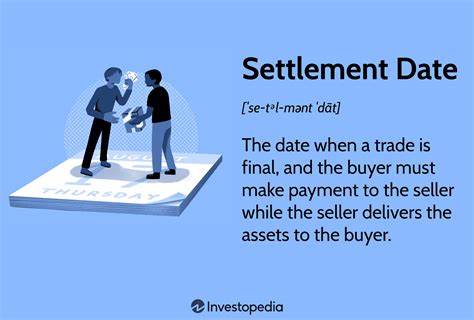
***

***

***

FTC: Finalizes Ban on Non-Compete Agreements

By Health Capital Consultants, LLC

***

***

On April 23rd, 2024, the Federal Trade Commission (FTC) issued a final rule that would ban employers from imposing non-competes on their employees. The FTC asserts that this exploitative practice keeps wages low, and suppresses new ideas. Notably, while the final rule will affect all industries, not just healthcare, this proposal comes at a time when healthcare employers across the U.S. are struggling with staffing shortages. 

CITE: https://www.r2library.com/Resource

This Health Capital Topics article will discuss the final rule, reactions from healthcare industry stakeholders, and potential implications for healthcare valuations (both business and compensation valuations). (Read more…)

COMMENTS APPRECIATED

Thank You
***

***

More on Cognitive Bias

In the “Mind of the Beholder”

By Dr. David Edward Marcinko MBA MEd CMP™

http://www.HealthDictionarySeries.org

Definition

A cognitive bias refers to a systematic pattern of deviation from norm or rationality in judgment, whereby inferences about other people and situations may be drawn in an illogical fashion. Individuals create their own “subjective social reality” from their perception of the input.
***
It is a  re-emerging topic in investing and financial planning, today! Here are some examples.
***

Conclusion

Your thoughts and comments on this ME-P are appreciated. Feel free to review our top-left column, and top-right sidebar materials, links, URLs and related websites, too. Then, subscribe to the ME-P. It is fast, free and secure. 

Speaker: If you need a moderator or speaker for an upcoming event, Dr. David E. Marcinko; MBA – Publisher-in-Chief of the Medical Executive-Post – is available for seminar or speaking engagements. https://medicalexecutivepost.com/dr-david-marcinkos-bookings/ 

Contact: MarcinkoAdvisors@msn.com

***

Risk Management, Liability Insurance, and Asset Protection Strategies for Doctors and Advisors: Best Practices from Leading Consultants and Certified Medical Planners™8Comprehensive Financial Planning Strategies for Doctors and Advisors: Best Practices from Leading Consultants and Certified Medical Planners™

DAILY UPDATE: Citigroup, CBO, CFPB, Spiked Treasury Yields and the Mixed Stock Markets

MEDICAL EXECUTIVE-POST TODAY’S NEWSLETTER BRIEFING

***

Essays, Opinions and Curated News in Health Economics, Investing, Business, Management and Financial Planning for Physician Entrepreneurs and their Savvy Advisors and Consultants

Serving Almost One Million Doctors, Financial Advisors and Medical Management Consultants Daily

A Partner of the Institute of Medical Business Advisors , Inc.

http://www.MedicalBusinessAdvisors.com

SPONSORED BY: Marcinko & Associates, Inc.

***

http://www.MarcinkoAssociates.com

Daily Update Provided By Staff Reporters Since 2007.
How May We Serve You?
© Copyright Institute of Medical Business Advisors, Inc. All rights reserved. 2024

REFER A COLLEAGUE: MarcinkoAdvisors@msn.com

SPONSORSHIPS AVAILABLE: https://medicalexecutivepost.com/sponsors/

ADVERTISE ON THE ME-P: https://tinyurl.com/ytb5955z

***

Stat: $78 million. That’s the fine levied against Citigroup for an accidental, “fat finger” trade that momentarily erased $322 billion in market value in the European stock markets. (Business Insider)

Quote: “The CFPB wants to make sure that these new competitive offerings are not gaining an advantage by sidestepping the rights and responsibilities enshrined under the law.”Rohit Chopra, director of the Consumer Financial Protection Bureau, on the CFPB’s decision to treat “buy now, pay later” apps as credit cards.

CITE: https://www.r2library.com/Resource

Here’s where the major benchmarks ended yesterday:

  • The S&P 500® index (SPX) rose 1.32 points (0.02%) to 5,306.04; the Dow Jones Industrial Average® ($DJI) lost 216.73 points (0.6%) to 38,852.86; the NASDAQ Composite gained 99.09 points (0.6%) to 17,019.88.
  • The 10-year Treasury note yield jumped almost 7 basis points to 4.54%.
  • The CBOE Volatility Index® (VIX) rose 0.55 to 12.91.

Financial shares were among Tuesday’s weakest performers, reflecting ideas elevated interest rates could burden bank margins. The KBW Regional Bank Index (KRX) sank 1% to its lowest close since April 30. Biotechnology and health care sectors were also under pressure.

In other markets, WTI Crude Oil (/CL) futures jumped more than 3% and ended at a four-week high above $80 per barrel ahead of next weekend’s OPEC meeting, which is expected to end with no change to the cartel’s production levels.

CITE: https://tinyurl.com/2h47urt5

House Committee Chair Jodey Arrington (R-Texas) said that site-neutral payment policy is the “most obvious” solution amid supportive testimonies from partisan think-tanks, the Congressional Budget Office and a practicing independent physician. 

CITE: https://tinyurl.com/tj8smmes

COMMENTS APPRECIATED

PLEASE SUBSCRIBE: MarcinkoAdvisors@msns.com

Thank You

***

***

***

***

EDUCATIONAL TEXTBOOKS: https://tinyurl.com/4zdxuuwf

***

UPMC: Settles Stark Law Case

By Health Capital Consultants, LLC

***

***

On May 9th, 2024, the University of Pittsburgh Medical Center (UPMC), a large nonprofit healthcare system that owns a number of hospitals, medical practices, and other subsidiaries, announced that they would pay $38 million to settle a longstanding Stark Law case which had triggered a violation of the False Claims Act (FCA). The lawsuit claimed that several of UPMC’s surgeons ordered complex and unnecessary procedures to increase their earnings. 

CITE: https://www.r2library.com/Resource

This Health Capital Topics article will discuss the UPMC settlement and the allegations underlying the case. (Read more…) 

COMMENTS APPRECIATED

Thank You

***

***

What is OBSERVATIONAL BIAS?

EVIDENCE BASED MEDICINE

By Staff Reporters

***

Observer bias occurs in research when the beliefs or expectations of an observer (or investigator) can influence the data that’s collected in a study.

Cite: https://www.amazon.com/Dictionary-Health-Information-Technology-Security/dp/0826149952/ref=sr_1_5?ie=UTF8&s=books&qid=1254413315&sr=1-5

***

Supporting Teachers: Reducing Observational Bias - TeacherToolkit

This causes the results of a study to be unreliable and hard to reproduce in other research settings.

READ HERE IN MEDICINE: https://www.ebmconsult.com/articles/observational-bias-statistical-analysis

***

***

RISK MANAGEMENT: https://www.routledge.com/Risk-Management-Liability-Insurance-and-Asset-Protection-Strategies-for/Marcinko-Hetico/p/book/9781498725989

***

YOUR COMMENTS ARE APPRECIATED

BUSINESS MEDICINE: https://www.amazon.com/Business-Medical-Practice-Transformational-Doctors/dp/0826105750/ref=sr_1_9?ie=UTF8&qid=1448163039&sr=8-9&keywords=david+marcinko

Thank You

***

DAILY UPDATE: Post Memorial Day Tuesday

MEDICAL EXECUTIVE-POST TODAY’S NEWSLETTER BRIEFING

***

Essays, Opinions and Curated News in Health Economics, Investing, Business, Management and Financial Planning for Physician Entrepreneurs and their Savvy Advisors and Consultants

Serving Almost One Million Doctors, Financial Advisors and Medical Management Consultants Daily

A Partner of the Institute of Medical Business Advisors , Inc.

http://www.MedicalBusinessAdvisors.com

SPONSORED BY: Marcinko & Associates, Inc.

***

http://www.MarcinkoAssociates.com

Daily Update Provided By Staff Reporters Since 2007.
How May We Serve You?
© Copyright Institute of Medical Business Advisors, Inc. All rights reserved. 2024

REFER A COLLEAGUE: MarcinkoAdvisors@msn.com

SPONSORSHIPS AVAILABLE: https://medicalexecutivepost.com/sponsors/

ADVERTISE ON THE ME-P: https://tinyurl.com/ytb5955z

***

CITE: https://www.r2library.com/Resource

US markets were closed for Memorial Day in what will be a quiet few days until the latter half of the week, when a slew of economic reports get filed. The highlights include the Fed’s Beige Book on Wednesday, initial jobless claims and Q1 GDP on Thursday, and both the April personal income & spending report and the all-important PCE read on Friday.

PCE, or the Personal Consumption Expenditures Price Index, will dictate market moves more than any of the other readings next week, since the Fed places a lot of importance on the measure—particularly core PCE, which excludes ever-changing food and gas prices. April’s CPI report was better than expected, but recent FOMC minutes revealed the Fed is still hesitant to cut interest rates without more data—which makes this PCE reading all the more significant.

And don’t forget, the US isn’t the only country fending off high inflation. Germany reports preliminary May CPI on Wednesday, while readings for France, Italy, and the entire Eurozone will be released on Friday. Tokyo CPI, economic activity, and job market data will also come out on Friday, in what is turning out to be a key day in determining where markets are heading as the second half of the year kicks off.

CITE: https://tinyurl.com/2h47urt5

  • Stock spotlight: One to watch this week is Dell, which reports its quarterly earnings on Thursday. Investors will be seeking news on its AI-server business. The company hit a record high last week as Nvidia’s red-hot revenue numbers boosted AI-related stocks.

COMMENTS APPRECIATED

PLEASE SUBSCRIBE: MarcinkoAdvisors@msns.com

Thank You

***

***

***

***

EDUCATIONAL TEXTBOOKS: https://tinyurl.com/4zdxuuwf

***

Select and Check Your Stock Broker and Financial Advisor?

Shopping Suggestions

Rick Kahler MS CFP

By Rick Kahler MS CFP®

Shopping for a financial adviser you can trust has never been easy. The Department of Labor [DOL] rule requiring brokers to act in a fiduciary capacity when dealing with retirement plan assets has not made it any easier. The government’s intent was to help consumers clearly distinguish when financial professionals can be relied upon to give unbiased financial advice or when they are acting in their own interests to sell a financial product. Unfortunately, the rule has only exacerbated the confusion.

When shopping for financial advisers, you need to investigate their education, niche, process, compensation structure, and experience to see whether they are a good fit for your needs. Equally important, it’s up to you to do a background check and determine whose interest the adviser is looking out for. No one else will do it for you.

Two-Steps

Here are two important steps you can take to greatly increase your chances of getting someone who will truly be looking out for you.

First, ask any adviser you deal with to sign a statement affirming they will act in the capacity of a fiduciary to you, meaning you will be a client, not a customer. A copy of this form can be found at www.advisorperspectives.com. Advisers unwilling to sign the Form Adv are not likely to be fiduciaries who will put your interests first.

Second, check the adviser’s background. If advisers receive any type of fee, they are held to a fiduciary standard automatically by the SEC. Still, it’s wise to check their background for any misconduct, which you can do at www.adviserinfo.sec.gov. If advisers sell securities, mutual funds, private REITs, or limited partnerships and receive any type of commission, they will be regulated by FINRA. You can go to BrokerCheck.finra.org to view their records for misconduct.

It’s important to check an adviser’s background because being found guilty of misconduct doesn’t mean they can’t actively be selling financial products.

For example, in a March 7 article at kitces.com, financial planner and writer Michael Kitces points out that over 73% of FINRA-registered brokers who FINRA lists as having a misconduct “are still employed a year later, despite the fact that such brokers are a whopping 5x more likely to engage in misconduct again in the future.”

Kitces explains that while just 7.3% of all FINRA brokers have some type of misconduct on their records, only about half of them actually lose their jobs and about half of those find employment with another firm. Additionally, it seems some firms have more of a culture of employing brokers with misconduct.

***

Wall Street

***

The top five brokerage firms with the highest (15% or more) concentration of brokers with misconduct are Oppenhiemer & Co, First Allied Securities, Wells Fargo Advisers Financial Network, UBS Financial Services, and Cetera Advisers. This is according to a working paper, “The Market for Financial Adviser Misconduct,” by Mark Egan, Gregor Matvos, and Amit Seru, business school professors at the University of Chicago and University of Minnesota. Geographic location also makes a big difference with the states of California, Florida, and New York having counties with much higher concentrations of brokers guilty of misconduct (15 – 30%) than states like Pennsylvania, Kansas, Iowa, Kentucky, and Vermont with the counties having the lowest concentration (2 – 3%).

Kitces reminds us that the “single greatest predictor of whether a broker will engage in misconduct is whether he/she has engaged in any prior misconduct.”

Assessment

For this reason, it’s crucial to make FINRA’s Broker Check part of your research before hiring a financial adviser. Before trusting any adviser to put your interests first, look out for your own interests by investigating the adviser’s history.

Conclusion

Your thoughts and comments on this ME-P are appreciated. Feel free to review our top-left column, and top-right sidebar materials, links, URLs and related websites, too. Then, subscribe to the ME-P. It is fast, free and secure.

Speaker: If you need a moderator or speaker for an upcoming event, Dr. David E. Marcinko; MBA – Publisher-in-Chief of the Medical Executive-Post – is available for seminar or speaking engagements. Contact: MarcinkoAdvisors@msn.com

OUR OTHER PRINT BOOKS AND RELATED INFORMATION SOURCES:

Comprehensive Financial Planning Strategies for Doctors and Advisors: Best Practices from Leading Consultants and Certified Medical Planners™

***

What is Stock Brokerage Company “Payment For Order Flow”?

By Staff Reporters

***

Payment for order flow, or PFOF, is a tactic some brokerages use to rake in piles of cash. Payment for order flow (PFOF) is a form of compensation, usually in terms of fractions of a penny per share, that a brokerage firm receives for directing orders for trade execution to a particular market maker or exchange. Payment for order flow is common in options markets, and is increasingly found in equity (stock market) transactions.

CITE: https://www.r2library.com/Resource/Title/082610254

***

How does it impact everyday investors?

The “P” in PFOF stands for “payment.” That’s because PFOF gets stock brokers paid. It starts when brokers direct trade orders to a particular e-trading firm (like Mountain Securities, for example) instead of routing the trades straight to exchanges. At that point, the e-trading firm may be able to collect the difference between the bid and the ask price, and the brokerages get a cut of that profit. It’s the proverbial “You scratch your broker’s back through their bespoke Ermenegildo Zegna suit, and they’ll scratch yours.”

According to Lillian Stone, some industry experts argue that PFOF is a conflict of interest. (The practice came under scrutiny last year when US brokers made billions on meme stock trading.) You want your broker to get you the best possible prices during a trade, right? Well, if your broker is incentivized to work with one specific e-trading firm, there’s a chance you may not get the sweetest deal—but they’ll line their pockets all the same.

***

COMMENTS APPRECIATED

Thank You

***

ORDER: https://www.routledge.com/Comprehensive-Financial-Planning-Strategies-for-Doctors-and-Advisors-Best/Marcinko-Hetico/p/book/9781482240283

***

DAILY UPDATE: Memorial Day as Stocks Recover

MEDICAL EXECUTIVE-POST TODAY’S NEWSLETTER BRIEFING

***

Essays, Opinions and Curated News in Health Economics, Investing, Business, Management and Financial Planning for Physician Entrepreneurs and their Savvy Advisors and Consultants

Serving Almost One Million Doctors, Financial Advisors and Medical Management Consultants Daily

A Partner of the Institute of Medical Business Advisors , Inc.

http://www.MedicalBusinessAdvisors.com

SPONSORED BY: Marcinko & Associates, Inc.

***

http://www.MarcinkoAssociates.com

Daily Update Provided By Staff Reporters Since 2007.
How May We Serve You?
© Copyright Institute of Medical Business Advisors, Inc. All rights reserved. 2024

REFER A COLLEAGUE: MarcinkoAdvisors@msn.com

SPONSORSHIPS AVAILABLE: https://medicalexecutivepost.com/sponsors/

ADVERTISE ON THE ME-P: https://tinyurl.com/ytb5955z

***

CITE: https://www.r2library.com/Resource

Here’s where the major stock market benchmarks ended:

  • The S&P 500 index added 36.9 points (0.7%) to 5,304.72, basically flat on the week; the Dow Jones Industrial Average gained 4.3 points (0.0%) to 39,069.59, down 2.3% for the week; the NASDAQ Composite® ($COMP) rallied 184.8 points (1.1%) to 16,920.79, up 1.4% for the week.
  • The 10-year Treasury note yield (TNX) was little changed at 4.46%, up about four basis points for the week.
  • The CBOE Volatility Index® (VIX) fell 0.86 to 11.91 and finished a roller-coaster week roughly where it started.

Some of the mega cap names saw notable strength Friday. Nvidia added another 2.6% to Thursday’s 9.3% post-earnings rally. Apple (AAPL) gained 1.7%, Meta Platforms (META) added 2.7%, and Tesla (TSLA) rose 3.2%

The small cap Russell 2000® Index (RUT) also outperformed, gaining nearly 1% Friday. However, for the week, the index lost 1.3%.

CITE: https://tinyurl.com/2h47urt5

COMMENTS APPRECIATED

PLEASE SUBSCRIBE: MarcinkoAdvisors@msns.com

Thank You

***

***

***

***

EDUCATIONAL TEXTBOOKS: https://tinyurl.com/4zdxuuwf

***

Craig Venter Unveils Synthetic Life

Some Positive News on Memorial Weekend 2024

By Dr. David Edward Marcinko; MBA, MEd, CMP™

Was Artificial Life Created A Decade Ago?

According to Craig Venter “synthetic life” was created. Venter is the American biologist and entrepreneur most famous for his role in being one of the first to sequence the human genome. He has now reportedly synthesized the first artificial cell.

I don’t know about you, but this is huge news – regardless of whether you call it “life” or not.

An Arm Chair Philosopher

Now, I am not speaking as a doctor or scientist; but rather as an armchair economist and philosopher recalling my undergraduate days at Loyola University Maryland, under the tutelage of the late Aldo Tassi PhD. So, I repeat, this was huge news and an interesting piece of science. It is historic, and has large implications for the future and even the economy. Why?

The Invisible Hand

Much of our time here at the ME-P is spent integrating the hard and soft sciences of practice management, economics and financial planning for a medical audience. But occasionally, negative situations, political cycles and pessimistic opinions on our topic channels are expressed. These disparaging political remarks even indirectly target the USA and our very survival as a free nation and self-governing people.

IOW: Contrary to innovations, and innovators, like Craig Venter.

Nevertheless, there an “invisible hand” – call it economics or capitalism – that keeps us moving in the direction of survival. And, we are conscious beings capable of controlling the rate of that progression in all fields of human endeavor.

What it Is

A chromosome was designed in digital code on a computer and then transplanted into a bacterial cell, transforming that cell into a new bacterial species. Apart from the usual blueprint for proteins, the DNA also carried the names of the key contributors and even its own email address.

How it Works

As reported according to Venter, “This is the first self-replicating species on the planet, whose parent is a computer.”

And, he has already mentioned some potential practical applications for his discovery: a vaccine for HIV and a new strain of algae that can significantly decrease CO2-levels and provide a source for gasoline.

Assessment

And so, on this Memorial Weekend – a day for remembering death and sacrifice – let us celebrate life and achievement instead by stating that we are not apologists for the USA.

As the last best hope for this planet, we are not always right or politically correct, but this country offers the greatest opportunity on earth for human advancement, capitalism and success through conscientious work effort.

We do not believe America has seen better days. Those who fought did not die in vain. Better days are still in our future. We are optimistic about the long-term future of our country when looking at our progression to ameliorate the planet’s ills, to-date. We have come out of hard times before – like the current recession – by taking innovative steps forwards, not backwards. While we are likely to go through a period of adjustment in the near-term, the end result will be further individual, national and private progress in the USA. God Bless America.

Rest assured, we will continue to lead and create the world, much like Crag Venter created artificial life. Candor – Intelligence – Goodwill to all

Conclusion

And so, your thoughts and comments on this ME-P are appreciated. What do you think of this development? What economic discoveries, medical cures, life enhancing inventions and/or break-thru innovations will this creation open up?

Feel free to review our top-left column, and top-right sidebar materials, links, URLs and related websites, too. Then, be sure to subscribe. It is fast, free and secure.

Channel Surfing the ME-P

Have you visited our other topic channels? Established to facilitate idea exchange and link our community together, the value of these topics is dependent upon your input. Please take a minute to visit. And, to prevent that annoying spam, we ask that you register. It is fast, free and secure.

Conclusion

Your thoughts and comments on this ME-P are appreciated. Feel free to review our top-left column, and top-right sidebar materials, links, URLs and related websites, too. Then, subscribe to the ME-P. It is fast, free and secure.

Speaker: If you need a moderator or speaker for an upcoming event, Dr. David E. Marcinko; MBA – Publisher-in-Chief of the Medical Executive-Post – is available for seminar or speaking engagements. Contact: MarcinkoAdvisors@msn.com

OUR OTHER PRINT BOOKS AND RELATED INFORMATION SOURCES:

Product DetailsProduct Details

INVITE: Professor Marcinko to Your Next Seminar or Event

See You Soon

CMP logo

SPONSOR: http://www.CertifiedMedicalPlanner.org

Colleagues know that I enjoy personal coaching and public speaking and give as many talks each year as possible, at a variety of medical society and financial services conferences around the country and world. All in a Corona safe environment.

Avatar of Dr. Marcinko Speaking as MSL

MARCINKO in the METAVERSE

These include lectures and visiting professorships at major academic centers, keynote lectures for hospitals, economic seminars and health systems, end-note lectures at city and statewide financial coalitions, and annual lectures for a variety of internal yearly meetings.

LIVE or PODCAST enabled, as well.

Topics Link: imba-inc-firm-services

Teleconference: https://medicalexecutivepost.com/2020/10/14/me-marcinko-and-my-avatar/

My Fond Farewell to Tuskegee University

And so, we appreciate your consideration.

Invite Dr. Marcinko

CONTACT: ANN MILLER RN MHA CMP®

[ME-P Executive-Director]

PH: 770-448-0769

EM: MarcinkoAdvisors@msn.com

THANK YOU

***

PODCAST: Health Insurance Denials Contradict DEI, ESG and Fairness Initiatives

By Eric Bricker MD

***

***

CITE: https://www.r2library.com/Resource/Title/0826102549

***

ORDER: https://www.amazon.com/Dictionary-Health-Insurance-Managed-Care/dp/0826149944/ref=sr_1_4?ie=UTF8&s=books&qid=1275315485&sr=1-4

***

COMMENTS APPRECIATED

Thank You

***

PODCAST: How to Select a Physician?

By Eric Bricker MD

***

***
COMMENTS APPRECIATED

Thank You

***

***

DAILY UPDATE: Sunday Stock Market Weekend Recap

MEDICAL EXECUTIVE-POST TODAY’S NEWSLETTER BRIEFING

***

Essays, Opinions and Curated News in Health Economics, Investing, Business, Management and Financial Planning for Physician Entrepreneurs and their Savvy Advisors and Consultants

Serving Almost One Million Doctors, Financial Advisors and Medical Management Consultants Daily

A Partner of the Institute of Medical Business Advisors , Inc.

http://www.MedicalBusinessAdvisors.com

SPONSORED BY: Marcinko & Associates, Inc.

***

http://www.MarcinkoAssociates.com

Daily Update Provided By Staff Reporters Since 2007.
How May We Serve You?
© Copyright Institute of Medical Business Advisors, Inc. All rights reserved. 2024

REFER A COLLEAGUE: MarcinkoAdvisors@msn.com

SPONSORSHIPS AVAILABLE: https://medicalexecutivepost.com/sponsors/

ADVERTISE ON THE ME-P: https://tinyurl.com/ytb5955z

***

CITE: https://www.r2library.com/Resource

  • A tough week just ended with the Dow Jones just barely in the green, though the index snapped its 5-week winning streak thanks in large part to its worst day of trading this year on Thursday. The NASDAQ hit a new all-time high on the back of Nvidia’s strong earnings, while the S&P 500 rose but ended the week flat.
  • Bond yields rose this week as investors came to terms with the idea that the Federal Reserve may not cut rates more than once in 2024, fleeing to the safety of Treasuries. Gold ended the week down overall.
  • The market turned on copper selling off for a third straight day. And oil finally snapped its losing streak, rising on the hopes of a travel-heavy Memorial Day weekend, though crude still ended the week lower than where it started.
  • The big winner was ethereum thanks to the approval of a spot ethereum ETF by the SEC.

CITE: https://tinyurl.com/2h47urt5

The U.S. Markets were closed on Monday, May 27th, 2024. Please be aware that, transactions made after 4 p.m. EST on Friday, May 24th, 2024, will receive the closing price as of Tuesday, May 28th, 2024.

CITE: https://tinyurl.com/tj8smmes

COMMENTS APPRECIATED

PLEASE SUBSCRIBE: MarcinkoAdvisors@msns.com

Thank You

***

***

***

***

EDUCATIONAL TEXTBOOKS: https://tinyurl.com/4zdxuuwf

***

More on “Money Psychology” for Doctors

By Rick Kahler MS CFP® ChFC CCIM http://www.KahlerFinancial.com

Rick Kahler CFPAnyone who sent a check to the IRS last month certainly doesn’t need to be convinced that there is a relationship between money and feelings. I can personally attest that paying a hefty tax brings up a great deal of painful emotion.

Unification

The case for the union of money and psychology is overwhelming. Almost everyone experiences fear, sadness, grief, anger, or happiness around money events. Large life events like divorce, death, bankruptcy, losing a job, and selling a home clearly involve money and evoke emotions.

We may be less likely to notice the psychological aspects of smaller money events. Yet even acts like paying monthly bills, buying birthday gifts, or shopping for groceries have an emotional component.

The Research

Researchers like psychologist Daniel Kahneman PhD (who won the Nobel prize in economics) find that 90% of all financial decisions are made emotionally, not logically. Even the seemingly cold and calculating world of investing is driven by emotions. Economic theory is being set on its head as economist are slowly coming to realize that, regarding money, consumers often don’t make rational decisions that are in their best interests.

Yet decades after a small group of pioneering financial planners and therapists first met to explore the relationship of emotions and money, the field of financial psychology is still in its infancy. It’s really no wonder.

The Money Side

On the money side of the equation, we have institutions like large brokerage houses, insurance companies, and banks. Like all businesses, they need to be profitable. Any concern these institutions may have about the union of finance and psychology is likely to focus on ways to manipulate customers’ emotions in order to sell more of their goods and services.

The Emotional Side

On the emotional side, psychologists and therapists rarely mention money issues. When they do talk about money, it’s often in the context of their own fees. Their training doesn’t address the idea that both they and their clients may have emotional issues or beliefs around money that could be destructive.

Tax

The Gap

This leaves a big gap. In the middle of it are consumers who don’t know how to develop healthier patterns of behavior around money. They may overspend to relieve stress, feel overwhelmed by credit card debt, be unreasonably fearful about financial security, be overly trusting or overly suspicious, or give or lend too much to family members.

Some of these consumers have at least some idea that their destructive financial patterns are psychological. They may realize they need more than financial facts to change those patterns. Yet they may have no idea where to find the help they need.

More:

The Financial Planners

The one group of professionals that is moving to fill that need is client-focused financial planners. Unlike advisors who sell financial products, client-focused financial planners receive no commissions but charge fees for their advice. By law, they must act as fiduciaries and advocates for their clients.

Historically, financial planners have not embraced the notion of money psychology. Obtaining the Certified Financial Planner® designation still requires no formal training even in client communications or conflict resolution. Yet a small but growing group of client-centered financial planners is seeking out training in psychology and communication. A few even partner with financial therapists.

Assessment

The challenge for consumers is how to find these professionals. One source is the Financial Therapy Association, which has a list on its website at http://www.financialtherapyassociation.org.

Gradually, more consumers as well as professionals are realizing that it’s possible to combine financial knowledge and psychology to create more balanced relationships with money. This awareness is sure to increase the demand for financial psychology services. It will be exciting to watch this infant profession as it grows.

COACHING: https://medicalexecutivepost.com/coach/

Conclusion

Your thoughts and comments on this ME-P are appreciated. Feel free to review our top-left column, and top-right sidebar materials, links, URLs and related websites, too. Then, subscribe to the ME-P. It is fast, free and secure.

Speaker: If you need a moderator or speaker for an upcoming event, Dr. David E. Marcinko; MBA – Publisher-in-Chief of the Medical Executive-Post – is available for seminar or speaking engagements. Contact: MarcinkoAdvisors@msn.com

***

Risk Management, Liability Insurance, and Asset Protection Strategies for Doctors and Advisors: Best Practices from Leading Consultants and Certified Medical Planners™8Comprehensive Financial Planning Strategies for Doctors and Advisors: Best Practices from Leading Consultants and Certified Medical Planners™


***

PHYSIOLOGY v. PSYCHOLOGY: The Financial Planning Divide

THE PHYSIOLOGIC v. PSYCHOLOGICAL FINANCIAL PLANNING DIVIDE

[Holistic Life Planning, Behavioral Economics & Trading Addiction]

READ HERE: Psychology Behavioral Economics Finance

***

***
By Dr. David Edward Marcinko MBA MEd CMP

COMMENTS APPRECIATED

THANK YOU
***

***

Activity-Based-Medical-Cost Accounting and Management

A Non-Traditional Accounting System

[By Dr. David Marcinko MBA MEd CMP]CPA

Sooner or later you will want to ascertain and then demonstrate the cost effectiveness of your medical care. By using the process of Activity Based Cost (ABC) management, you will be able to do so.  But, if you’re using a traditional accounting system, you won’t know a thing about your activity costs. Here’s how. 

Traditional Cost Accounting Methods 

In a traditional medical practice cost accounting system, costs are assigned to different procedures and services based on volume.  In others words, office costs are spread over the entire office’s product line and you may not know the true profitability of any single medical activity. So, if the office is doing more “procedures” than general medicine, for example, more indirect office overhead costs will be allocated to the procedural portion of the practice. 

ABC management, on the other hand, determines the actual costs of the resources that each service consumes. Because general medicine requires more human resources than “technical procedures,” ABC management will assign more costs to the general medical portion of the practice. 

Accordingly, most physicians, office managers, and their accountants are surprised that a prior notion of office profitability is different than previously thought. ABC management is just more accurate in measuring medical service profitability than traditional accounting methods. 

Medical Activity Cost Drivers 

Examples of medical activities that are office cost drivers include such items as monitoring vital signs, taking radiographic images, removing dressings or casts, performing laboratory tests or veni-punctures, surgical set-ups or operative procedures; etc.  

However, in the office setting, the most economically important activities are listed as specific CPT codes for each medical specialty.  The most important end result of ABC management is the shift of general overhead costs to low volume services from high volume services. These effects are not symmetrical as there is a bigger dollar effect on the per-unit costs of the low volume service.  

ABC Managerial Accounting Improvements 

ABC management improves office managerial cost accounting systems in three ways: 

  1. It increases the number of cost pools used to accumulate general overhead office costs. Rather than accumulate overhead costs in a single office-wide pool, costs are accumulated by activity, service or procedure.
  2. It changes the base used to assign general overhead costs to services or patients. Rather than assigning costs on the basis of a measure of volume (employee or doctor hours), costs are assigned on the basis of medical services or activities that generated those costs.
  3. It changes the nature of many overhead costs in that those formerly considered indirect, are now traced to specific activities or services. The office service mix may then be adjusted accordingly, for additional profit.   

Methodology 

In order to perform an ABC analysis for your medical office, calculate the cost of delivering a single unit of medical or surgical activity using only the work component of the resource based relative value scale (RBRVS).

Do this by adding up your office’s average variable expenses for the prior 1-3 years.  Now, count the number of work resource based relative value units (RBRVUs) delivered for each CPT code for the same time period, using the latest edition of the Federal Register to obtain the latest list of RVUs by CPT code. Then divide total variable expenses by the total number of work RVUs in order to arrive at the marginal cost of a single unit of service for the time period being evaluated.

For example, if your office had variable expenses of $480,000, and produced 80,000 work RVUs last year, it cost $6, on top of the office’s fixed expenses, to deliver one unit of work product. So, if an HMO plan offers to reimburse you at a rate of $11 per member, per month, and you can expect to reasonably deliver on average of one RVU pm/pm, you’ll earn enough on the contract to cover your marginal costs and some of your fixed and direct expenses. 

CASE MODELs: CVPA 4 and CVPA 3
dhimc-bookAssessment

Remember, this method assumes that you have the excess operating capacity and time slots, available and unused, to see the additional patients of the new plan without adding extra overhead expenses to service the contract.

If not, or if you plan for capitation to become a major portion of your practice, you might want the capitated contract(s) to cover all your office expenses, so be sure to include both the fixed and other direct costs to your variable cost calculations. ABC determines the actual costs of resources rendered for each activity and represents a real measure of practice profitability. Office service mix can then be changed to either maximize revenues or better suit your practice personality.

A Caveat

Suppose however, that a medical service is competitively priced but still shows that the CPT code is unprofitable. For example, the costs of special requests can adversely affect office profits. Yet, special patient requests are one of the biggest reasons that a CPT code or procedure isn’t profitable.

In this case, look closely at activity costs and determine which ones are being performed inefficiently. Improving the efficiency of those kinds of medical services, or referring them out or abandoning them all together, will increase office profitability.

MORE: ABCM

Conclusion

Your thoughts and comments on this ME-P are appreciated. Feel free to review our top-left column, and top-right sidebar materials, links, URLs and related websites, too. Then, subscribe to the ME-P. It is fast, free and secure.

Speaker: If you need a moderator or speaker for an upcoming event, Dr. David E. Marcinko; MBA – Publisher-in-Chief of the Medical Executive-Post – is available for seminar or speaking engagements. Contact: MarcinkoAdvisors@msn.com

OUR OTHER PRINT BOOKS AND RELATED INFORMATION SOURCES:

PHYSICIANS: www.MedicalBusinessAdvisors.com
HOSPITALS: http://www.crcpress.com/product/isbn/9781466558731
CLINICS: http://www.crcpress.com/product/isbn/9781439879900
BLOG: www.MedicalExecutivePost.com
FINANCE: Financial Planning for Physicians and Advisors
INSURANCE: Risk Management and Insurance Strategies for Physicians and Advisors

***

Product DetailsProduct DetailsProduct Details     

Product DetailsProduct Details

***

MEMORIAL DAY: Weekend Origination Thoughts 2024

“Decoration Day”

By Dr. David E. Marcinko MBA MEd CMP

”Memorial Day (Decoration Day) is a federal holiday in the United States for honoring and mourning the military personnel who died while serving in the United States Armed Forces.

The holiday is now observed on the last Monday of May, having been observed on May 30th from 1868 to 1970.

***

***

DAILY UPDATE: Friday Before Memorial Day Weekend and the Stock Market Collapse

MEDICAL EXECUTIVE-POST TODAY’S NEWSLETTER BRIEFING

***

Essays, Opinions and Curated News in Health Economics, Investing, Business, Management and Financial Planning for Physician Entrepreneurs and their Savvy Advisors and Consultants

Serving Almost One Million Doctors, Financial Advisors and Medical Management Consultants Daily

A Partner of the Institute of Medical Business Advisors , Inc.

http://www.MedicalBusinessAdvisors.com

SPONSORED BY: Marcinko & Associates, Inc.

***

http://www.MarcinkoAssociates.com

Daily Update Provided By Staff Reporters Since 2007.
How May We Serve You?
© Copyright Institute of Medical Business Advisors, Inc. All rights reserved. 2024

REFER A COLLEAGUE: MarcinkoAdvisors@msn.com

SPONSORSHIPS AVAILABLE: https://medicalexecutivepost.com/sponsors/

ADVERTISE ON THE ME-P: https://tinyurl.com/ytb5955z

***

The Friday before Memorial Day is never action packed, and this year is no exception as earnings season begins to wrap up and economic readings slow down. Two reports to watch for tomorrow: April Durable Goods Orders and University of Michigan’s May sentiment report.

Durable Goods Orders are big-ticket items with a shelf life of three or more years—think appliances and furniture for consumers, or machinery, equipment, and vehicles for businesses. More durable goods orders indicate a healthy economy, as consumers and companies alike wouldn’t spend as much if they weren’t confident they could afford it, and also provides insight into how strong the manufacturing industry is.

The University of Michigan’s consumer sentiment index is a survey of consumers via telephone to better understand how they feel about the economy, what they’re spending their money on, etc. The preliminary findings earlier this month weren’t great thanks to sticky inflation, and tomorrow’s finalized readings won’t change much. But with the latest CPI reading indicating inflation might yet be tamed, next month’s report could be much more illuminating.

CITE: https://www.r2library.com/Resource

Here’s where the major benchmarks ended:

  • The S&P 500® index (SPX) fell 39.17 points (0.7%) to 5,267.84; the Dow Jones Industrial Average lost 605.78 points (1.5%) to 39,065.26; the NASDAQ Composite® ($COMP) shed 65.51 points (0.4%) to 16,736.03.
  • The 10-year Treasury note yield rose more than 4 basis points to 4.479%.
  • The CBOE Volatility Index® (VIX) rose 0.48 to 12.77.

Financial shares were among Thursday’s weakest performers amid ideas a “higher-for-longer” Fed rate outlook could pressure bank margins. The KBW Regional Bank Index (KRX) dropped almost 3% to a three-week low. Other interest-rate-sensitive sectors, including real estate and utilities, took pressure.

In other markets, WTI Crude Oil (/CL) futures fell for the fourth straight trading day and closed at a three-month low under $76 per barrel.

CITE: https://tinyurl.com/2h47urt5

Spot Ethereum ETFs were approved by the SEC in another big win for crypto, following the approval of spot bitcoin ETFs earlier this year.

CITE: https://tinyurl.com/tj8smmes

COMMENTS APPRECIATED

PLEASE SUBSCRIBE: MarcinkoAdvisors@msns.com

Thank You

***

***

***

***

EDUCATIONAL TEXTBOOKS: https://tinyurl.com/4zdxuuwf

***

On Death Talk, Risk Management and Financial Planning

A financial planning challenge

Rick Kahler MS CFP

By Rick Kahler MS CFP®

One of the challenges in financial planning is the strong taboo in our society against talking about money. Another powerful taboo is talking about death when someone has a serious illness.

When someone is diagnosed with cancer, for example, the focus is almost always on treatment and recovery. Rarely is there any discussion of what happens if the treatment doesn’t work. There seems to be an unspoken belief that if we don’t talk about it, it won’t happen.

Not talking about death isn’t limited to family and friends, according to Dr. Carol McClanahan CFP®

For example, in a recent presentation to financial advisors at the Insiders Forum in Phoenix, she pointed out that many doctors shy away from talking about dying until the very end.

Given this strong reluctance to talk about both money and dying, how can you work with a financial advisor to deal with the financial and emotional issues that go along with a family member’s serious illness?

Here are some suggestions based on Dr. McClanahan’s talk:

Don’t expect someone facing a serious illness to give you an accurate prognosis of their disease, as they are often in denial. McClanahan suggests turning to “Dr. Google” for accurate information. Specifically, she recommends the National Institutes of Health (www.nih.gov), which has statistics on every disease imaginable.

  1. Learn to interpret what doctors say. For example, when a cancer patient is told chemotherapy has a 25% chance of working, the average patient hears “working” as “being cured.” “Working” actually means there is a 25% chance of the tumor shrinking. Often the chances of being cured are far less than 25%, and the physical effects of chemotherapy can be devastating to one’s remaining quality of life. McClanahan says, “Most of what we do to people at the end of life is unnecessary torture.”
  2. Find out early about options for palliative care. This is multidisciplinary care focused on treating the symptoms of treatment, relieving suffering, and improving the quality of life. Because of denial and unwillingness to talk about what happens if they don’t get better, many patients never get into palliative care or get into it way too late. Similarly, most patients wait too long to get into hospice care. The average time in hospice care, according to McClanahan, is just 19 days.
  3. Share your money concerns with the advisor. McClanahan says that anxiety over having enough money to pay for their care and the resulting effect on the family finances are two of the top concerns patients have. Interestingly, most financial advisors focus instead on whether advance directives, estate documents, and funeral plans are in place.
  4. Call the advisor’s attention to signs that a person’s illness is advancing. These can include a shortened attention span, not remembering details of conversations, word-finding difficulties, inability to multitask, mental fuzziness, and depression. Ask advisors to deal with these symptoms: meet early in the day, address the most important issues first, keep meetings short, include family members as appropriate, and put action items in writing.
  5. Realize that sharing your emotions is part of financial planning. Serious illness affects people in many different ways, but the underlying concerns are always emotional. Discuss those concerns with the advisor, and work together to create a comprehensive plan addressing both death and recovery. Remember that, as McClanahan put it, “preparation for a negative outcome does not reduce the risk of cure.”

***

halloween

***

The role of the financial planner

The role of a financial planner is to help clients prepare for the future, including the end of life. When that future becomes “now,” don’t hesitate to ask for the planner’s emotional support as well as financial advice. 

Conclusion

Your thoughts and comments on this ME-P are appreciated. Feel free to review our top-left column, and top-right sidebar materials, links, URLs and related websites, too. Then, subscribe to the ME-P. It is fast, free and secure.

Speaker: If you need a moderator or speaker for an upcoming event, Dr. David E. Marcinko; MBA – Publisher-in-Chief of the Medical Executive-Post – is available for seminar or speaking engagements. Contact: MarcinkoAdvisors@msn.com

OUR OTHER PRINT BOOKS AND RELATED INFORMATION SOURCES:

***

[PHYSICIAN FOCUSED FINANCIAL PLANNING AND RISK MANAGEMENT COMPANION TEXTBOOK SET]

 Risk Management, Liability Insurance, and Asset Protection Strategies for Doctors and Advisors: Best Practices from Leading Consultants and Certified Medical Planners™  Comprehensive Financial Planning Strategies for Doctors and Advisors: Best Practices from Leading Consultants and Certified Medical Planners™

***

PHYSICIAN OUT-PATIENT AMBULATORY CENTERS: Consulting on ASCs and More!

SPONSOR: http://www.MARCINKOASSOCIATES.com

START TO FINISH CYCLE

***

Our Process

***

READ HERE: https://marcinkoassociates.com/asc/

COMMENTS APPRECIATED

Thank You

***

***

***

ASSET PROTECTION: Fundamentals for Physicians

Don’t Leave Yourself Unprotected

By Nicholas Efthemis CFP®

The largest concern facing physicians today is how to protect their wealth against the proliferation of malpractice claims and extraordinarily high jury verdicts. Malpractice insurance has become so expensive that physicians are greatly reducing their coverage.

Even worse, some carriers are dropping physicians that have poor claims history. When meeting with physicians my message is a simple one. Take action and do so now. Constructing a complete asset protection plan is the single most critical step towards attaining financial freedom. Physicians work hard and long hours to create wealth, and are potentially one medical malpractice claim or general negligence claim away from financial catastrophe. Detailing every asset protection strategy is beyond the scope of this article, however I will review some important concepts you should know.

Good asset protection will prevent lawsuits. Conversely, the more personal assets that remain unprotected the more likely an attorney is willing to go after you. In fact, a physician with very high malpractice coverage and unprotected assets has a target on his back. This can be avoided through lower policy limits and a complete Asset Protection Plan.

What is the Best Asset Protection Plan?

The best Asset Protection Plan for a physician or any high net worth client removes all assets from the client’s name. The worst plan has all the assets in the client’s name. You will need to work with a specialized attorney to find the ideal plan for you. In many cases your largest asset are the funds in your retirement plan or IRA. The good news is that creditors cannot reach ERISA qualified plan assets. Common ERISA plans include:

1. 401(k) 403(b) Plan

2. Profit Purchase Plan

3. Money Purchase Plan

4. New Comparability Plans

5. Defined Benefit Plan

Keep in mind IRAs are not considered ERISA qualified plans and have no federal protection from creditors. Many individual states have protected IRAs in part or in full. In my state, New York, IRAs are fully protected. If you live in a state where they are not you should seriously consider moving the money into an ERISA qualified plan. This can be accomplished even if you are retired.

What about my house?

It is never a good idea, from an asset protection standpoint to own property in just your name. If you get sued the property is almost entirely at risk. Owning the marital home jointly with your spouse can be effective. You will protect the home from each other’s individual creditors (though not joint creditors). You should not title many assets as tenants by the entirety for several reasons. Physicians suffer a higher divorce rate than the already high national average of fifty percent. Should a divorce occur you will have ensured the spouse will receive half of that asset. Also, you do nothing to protect the asset against joint creditors.

How should my other assets be held?

You will need to consult a specialized asset protection attorney. Most effective plans involve the use of a corporate structure, limited liability company, or family limited partnership. Keep in mind that the entity you choose will have its own unique asset protection and tax consequences.

  • Sole proprietorships and partnerships are the worst way to own a business. If a sole proprietor is found negligent in his duties for the business that injures a third person, the sole proprietor is personally liable. If a product or employee harm a third person or someone is harmed on the premises, the sole proprietor is personally liable. With a partnership you have all of the above risks coupled with a partner who can cause you even more liability.
  • Limited Liability Companies (LLCs), Family Limited Liability Companies (FLLCs) and Family Limited Partnerships (FLPs) are the most commonly used tools by asset protection specialists today. A creditor attempting to obtain assets of a debtor when the assets are in a LLC will likely have very limited success. In fact, a charging order is the only remedy a court can give a creditor. A charging order does not allow creditors to sell assets of the LLC or force distributions of income. It also cannot transfer interest in the LLC to the creditor. A creditor who obtains a charging order against an LLC may in fact receive a K-1 for income they never did and may never receive.

What should I consider holding in an LLC?

I advise my physician clients to consider holding rental real estate, after tax investment accounts, planes, boats and any personal assets of value in an LLC. Unless you are single and your home is titled in your name alone, the marital home may not be a good candidate for transfer to an LLC. By doing so, you forego the capital gains exemption of $250,000 per spouse. Brokerage accounts can be owned by an LLC, and when constructed correctly you will have full ability to invest as you desire. The investments within the account would then be protected. Assets such as planes and boats may be best held in their own LLCs to protect the rest of your estate from their unique risk profiles.

Example:

  • Personal Residence $750,000 Tenants by the entirety
  • Vacation Property $300,000 LLC #1
  • Investment Account $900,000 LLC #1
  • 401 (k) 2,400,000 ERISA plans are federally protected
  • Boat $55,000 LLC #2

Assessment

The topic of asset protection is vast and complicated, but I hope to break out additional topics such as off-shoring, accounts receivable leveraging, fiduciary duties, and insurance in subsequent articles. My hope is that I have given you enough ideas and motivation to act now. You cannot wait until there is an issue. It is critical that your financial planner, attorney and accountant are all very knowledgeable on asset protection. Do not rely on a generalist to navigate such a complex yet critical issue.

About the Author:

Nicholas Efthemis is a Certified Financial Planner™ who helps physicians plan wisely and live fully by creating a financial plan that helps them focus on their medical practice and live a better life.

Conclusion

Your thoughts and comments on this ME-P are appreciated. Feel free to review our top-left column, and top-right sidebar materials, links, URLs and related websites, too. Then, subscribe to the ME-P. It is fast, free and secure.

Speaker: If you need a moderator or speaker for an upcoming event, Dr. David E. Marcinko; MBA – Publisher-in-Chief of the Medical Executive-Post – is available for seminar or speaking engagements. Contact: MarcinkoAdvisors@msn.com

***

***

OUR OTHER PRINT BOOKS AND RELATED INFORMATION SOURCES:

NVIDIA: Booming Artificial Intelligence & Stock!

SPLITS STOCK 10:1 ANNOUNCED

By Staff Reporters

***

***

Nvidia sales rose 262% as AI keeps booming

The company whose chips are powering the Artificial Intelligence revolution saw an even bigger jump in sales last quarter than analysts had expected: to $26 billion.

CITE: https://www.r2library.com/Resource/Title/082610254

That’s a good sign for the future of AI and probably for the entire stock market, on which Nvidia has an outsized influence. CEO Jensen Huang declared “the next industrial revolution has begun,” as Nvidia predicted $28 billion in sales this quarter. The company also announced plans to split its stock 10-for-1 next

Stock Splits: https://medicalexecutivepost.com/2023/08/14/stock-splits-a-vital-equity-investing-concept-for-physician-investors/

AI: https://www.sas.com/en_us/insights/analytics/what-is-artificial-intelligence.html

COMMENTS APPRECIATED

Thank You

***

***

DAILY UPDATE: Uber Health, Lyft Healthcare, HHS Cyber Attacks as Markets Swoon

MEDICAL EXECUTIVE-POST TODAY’S NEWSLETTER BRIEFING

***

Essays, Opinions and Curated News in Health Economics, Investing, Business, Management and Financial Planning for Physician Entrepreneurs and their Savvy Advisors and Consultants

Serving Almost One Million Doctors, Financial Advisors and Medical Management Consultants Daily

A Partner of the Institute of Medical Business Advisors , Inc.

http://www.MedicalBusinessAdvisors.com

SPONSORED BY: Marcinko & Associates, Inc.

***

http://www.MarcinkoAssociates.com

Daily Update Provided By Staff Reporters Since 2007.
How May We Serve You?
© Copyright Institute of Medical Business Advisors, Inc. All rights reserved. 2024

REFER A COLLEAGUE: MarcinkoAdvisors@msn.com

Your referral Count -0-

SPONSORSHIPS AVAILABLE: https://medicalexecutivepost.com/sponsors/

ADVERTISE ON THE ME-P: https://tinyurl.com/ytb5955z

***

Here’s where the major benchmarks ended:

  • The S&P 500 index lost 14.40 points (0.3%) to 5,307.01; the Dow Jones Industrial Average® ($DJI) declined 201.95 points (0.5%) to 39,671.04; the NASDAQ Composite® ($COMP) slipped 31.08 points (0.2%) to 16,801.54.
  • The 10-year Treasury note yield (TNX) rose more than 1 basis point to 4.426%.
  • The CBOE Volatility Index® (VIX) increased 0.43 to 12.29.

Retailer shares were among the market’s weakest performers after Target’s (TGT) quarterly results, released before Wednesday’s open, fell short of expectations. Target shares tumbled 8% after the company reported revenue fell 3% in the first quarter from the year-earlier period. During the company’s earnings call, Target CEO Brian Cornell noted “continued soft trends in discretionary categories” contributed to the revenue decline.

Energy companies were also under pressure after WTI Crude Oil (/CL) futures closed at a three-month low just above $77 per barrel.

CITE: https://www.r2library.com/Resource

Following a series of high-profileand costlycyberattacks against the healthcare industry, the federal government is stepping in with a $50+ million initiative intended to boost hospital cybersecurity, a division of the Department of Health and Human Services (HHS) announced on May 20th.

CITE: https://tinyurl.com/2h47urt5

Uber Health will begin rolling out a new solution designed for caregivers this summer, allowing individuals to add a caregiver to their Uber profile. That caregiver can then see and spend that person’s health benefits on eligible services, request rides to doctors’ appointments or order groceries. In the coming months, Uber Health will be working with Medicare Advantage, Medicaid and commercial plans to offer the solution.


U.S. Sens. Sheldon Whitehouse and Bill Cassidy, M.D., want to reform how primary care providers get paid through Medicare, and they also want to hear from the healthcare industry about the best way to do it. Together, they introduced a bipartisan bill, the Pay PCPs Act (S. 4338), last week to better support and improve pay for high-quality primary care providers. 


And… digital maternal health company Babyscripts announced a partnership with Lyft Healthcare to offer sponsored rides for people who are pregnant or postpartum and face barriers to transportation. The Lyft partnership will identify transportation-insecure patients and offer free rides to in-person appointments in traditional care settings and community-based healthcare services and programs.

CITE: https://tinyurl.com/tj8smmes

COMMENTS APPRECIATED

PLEASE SUBSCRIBE: MarcinkoAdvisors@msns.com

Thank You

***

***

***

***

EDUCATIONAL TEXTBOOKS: https://tinyurl.com/4zdxuuwf

***

METAVERSE MEDICINE: Doctor, Patient Avatars Ahead?

By WebMD

In what some are calling the next iteration of the internet, the metaverse is an unfamiliar digital world where you could be an avatar navigating computer-generated places and interacting with others in real time. In this space, the constraints of our physical, bricks and mortar world and travel habits fade. And new opportunities and challenges emerge.

***


***

READ HERE: https://www.webmd.com/a-to-z-guides/news/20220812/metaverse-medicine-doctor-patient-avatars-ahead

Cite: https://www.amazon.com/Dictionary-Health-Information-Technology-Security/dp/0826149952/ref=sr_1_5?ie=UTF8&s=books&qid=1254413315&sr=1-5

***

COMMENTS APPRECIATED

Thank You

***

PODCAST: Medicare Value Based Payments Explained

By Eric Bricker MD

***

***

COMMENTS APPRECIATED

Thank You

***

***

***

PHYSICIAN’S BEWARE: Psychological “INVESTING MIND TRAPS”

By Dr. David Edward Marcinko MBA MEd CMP

SPONSOR: http://www.MarcinkoAssociates.com

As, as human beings, our brains are booby-trapped with psychological barriers that stand between making smart financial decisions and making dumb ones. The good news is that once you realize your own mental weaknesses, it’s not impossible to overcome them. 

CITE: https://www.r2library.com/Resource

In fact, psychiatrist and medical colleague Wes Boyd MD PhD MA related the following mind-traps and investing impediments that have yet to be appreciated by the financial planning community writ-large:

  • Anchoring happens when we place too much emphasis on the first piece of information we receive regarding a given subject. For instance, when shopping for a wedding ring a salesman might tell us to spend three months’ salary. After hearing this, we may feel like we are doing something wrong if we stray from this advice, even though the guideline provided may cause us to spend more or less than we can afford. Ditto for buy / sell stock recommendations without our own due diligence.
  • Myopia makes it hard for us to imagine what our lives might be like in the future. For example, because we are young, healthy, and in our prime medical practice earning years now, it may be hard for us to picture what life will be like when our health depletes and we know longer have the earnings necessary to support our standard of living. This short sighted thinking makes it hard to save adequately when we are young, when saving does the most good.
  • Gambler’s fallacy occurs when we subconsciously believe we can use past events to predict the future. It is common for the hottest sector during one calendar year to attract the most doctor investors the following year. Of course, just because an investment did well last year doesn’t mean it will continue to do well this year. In fact, it is more likely to lag the market.
  • Avoidance is simply procrastination. Even though you may only have the opportunity to adjust your health care plan through your employer once per year, researching alternative health plans is too much work and too boring for us to get around to it. Consequently, we stick with a plan that may not be best for us.
  • Loss aversion affected many investors during the stock market crash of 2008. During the crash, many doctors decided they couldn’t afford to lose more and sold their investments. Of course, this caused the investors to sell at market troughs and miss the quick, dramatic recovery.
  • Overconfident investing happens when we believe we can out-smart other investors via market timing or through quick, frequent trading. Data convincingly shows that people who trade most often under-perform the market by a significant margin over time.
  • Mental accounting takes place when we assign different values to money depending on where we get it from. For instance, even though we may have an aggressive saving goal for the year, it is likely easier for us to save money that we worked for than money that was given to us as a gift.
  • Herd mentality makes it very hard for humans to not take action when everyone around us does. For example, we may hear stories of people making significant profits buying, fixing up, and flipping homes and have the desire to get in on the action, even though we have no experience in real estate.

CMP: http://www.CertifiedMedicalPlanner.org

COMMENTS APPRECIATED

Thank You

***

***

DAILY UPDATE: Hims & Hers, MSFT-AI, Neuralink, FDIC and New Market Highs

MEDICAL EXECUTIVE-POST TODAY’S NEWSLETTER BRIEFING

***

Essays, Opinions and Curated News in Health Economics, Investing, Business, Management and Financial Planning for Physician Entrepreneurs and their Savvy Advisors and Consultants

Serving Almost One Million Doctors, Financial Advisors and Medical Management Consultants Daily

A Partner of the Institute of Medical Business Advisors , Inc.

http://www.MedicalBusinessAdvisors.com

SPONSORED BY: Marcinko & Associates, Inc.

***

http://www.MarcinkoAssociates.com

Daily Update Provided By Staff Reporters Since 2007.
How May We Serve You?
© Copyright Institute of Medical Business Advisors, Inc. All rights reserved. 2024

REFER A COLLEAGUE: MarcinkoAdvisors@msn.com

SPONSORSHIPS AVAILABLE: https://medicalexecutivepost.com/sponsors/

ADVERTISE ON THE ME-P: https://tinyurl.com/ytb5955z

***

Microsoft unveiled new PCs with AI-powered features.

CITE: https://www.r2library.com/Resource

Hims & Hers stock soared as much as 38% on the news that it’ll provide GLP-1 injections with the same active ingredient as Ozempic or Wegovy for just $199/month—an 85% discount compared to Wegovy’s ~$1,350 monthly price tag (without insurance).

***

FDIC Chair Martin Gruenberg will resign after an investigation found widespread sexual harassment at the agency. But he won’t step down until a successor is named.

CITE: https://tinyurl.com/2h47urt5

The FDA granted Elon Musk’s neurotech company Neuralink, approval to place its brain chip into a second human test subject using a new method designed to correct issues that arose after its inaugural insertion in January, per the Wall Street Journal.

And, Optum Rx is shaking up its pharmacy model. The business says it will make drug costs more predictable and transparent for clients.

CITE: https://tinyurl.com/tj8smmes

  • All three indexes ended the day higher after Fed Governor Christopher Waller stopped by CNBC and mentioned he doesn’t think raising interest rates is in the cards, even if the Fed is waiting for more data before making cuts. The NASDAQ continued to hit new all-time highs today as investors place their bets before Nvidia’s earnings announcement tomorrow afternoon, and the S&P 500 hit yet another record.
  • Copper continued to rise as the market comes to terms with the metal’s importance, while oil fell on the news that the Biden administration will release 1 million barrels of gasoline this summer from the Northeast reserve. Meanwhile, ethereum continued to climb on the news that a new ETF may be joining the fray.

Here’s where the major benchmarks ended:

  • The S&P 500 index rose 13.28 points (0.3%) to 5,321.41; the Dow Jones Industrial Average® ($DJI) gained 66.22 points (0.2%) to 39,872.99; the NASDAQ Composite advanced 37.75 points (0.2%) to 16,832.62.
  • The 10-year Treasury note yield (TNX) lost more than 2 basis points to 4.414%.
  • The CBOE Volatility Index® (VIX) fell 0.29 to 11.86.

Banking and consumer staples were among the market’s strongest performers Tuesday, while utility shares extended a sharp upswing over the past month. The Dow Jones Utility Average® ($DJU) added 0.5% and closed at a 12-month high. Transportation companies were among the weakest performers.

In other markets, Gold (/GC) futures slipped from Monday’s record high above $2,454 per ounce, while Silver (/SI) futures ended near a 12-year high around $32.21. Gold futures are still up 17% this year due to several factors, including reports of China’s central bank buying actual gold as well as escalating conflict in the Middle East. Gold is viewed by some as a safe-haven asset during periods of heightened geopolitical tension.

COMMENTS APPRECIATED

PLEASE SUBSCRIBE: MarcinkoAdvisors@msns.com

Thank You

***

***

***

***

EDUCATIONAL TEXTBOOKS: https://tinyurl.com/4zdxuuwf

***

PHYSICIANS & DENTISTS: Financial Consulting & Planning

Sponsored by: http://www.MARCINKOASSOCIATES.com

START TO FINISH CYCLE

***

Our Process

***

READ HERE: https://marcinkoassociates.com/financial-planning/

RELATED: https://medicalexecutivepost.com/2023/12/15/doctor-are-you-a-financial-advisors-customer-or-client/

COMMENTS APPRECIATED

Thank You

***

***

PHYSICIANS ONLY: Hedge Funds and Venture Capitalists

SPONSORED: http://www.MARCINKOASSOCIATES.com

START TO FINISH CYCLE

***

Our Process

***

READ HERE: https://marcinkoassociates.com/hedge-funds/

MORE: https://medicalexecutivepost.com/2023/02/19/what-is-an-unregistered-security/

COMMENTS APPRECIATED

Thank You

***

***

EXPLAINED: Medical “Bottle Neck” Accounting

VARIANCE AND BOTTLE-NECK ACCOUNTING

DR. DAVID E. MARCINKO MBA MEd CMP

Any healthcare organization usually has several processes involved in the utilization of its patient services. Unfortunately, bottlenecks may arise which constrain the amount of services any given healthcare entity can deliver. 

Accounting Definition 

An accounting “bottleneck” is a process that has a low output and limits total healthcare entity revenues. If a medical business entity wants to increase sales or revenues, it has to solve its bottleneck [ie., access management] problems. 

Traditional Variance Analysis Dilemma 

With traditional variance analysis [VA], managers and administrators analyze the difference between budgeted patient revenues and actual revenues. Typically, differences between budgeted revenues and actual revenues are analyzed as seen in the example below.

Initially postulated by Horngren and Foster for manufacturing processes, VA can now be modified for medical business entity use. 

Example: 

  Patient Service Units   Contract/UCR Fee    
Budgeted sales revenues 10,000,000 * 1,23 = $ 12,300,000
Actual sales revenues 9,000,000 * 1,21 = $ 10,890,000
          -/- —————-
Total variance         $ 1,410,000
Traditional Assessment
Actual patient revenues were lower than budgeted; and the unfavorable patient sales volume variance was (9,000,000 – 10,000,000) * $ 1,23 = – $ 1,230,000. 


The actual patient revenue price was lower than budgeted as the unfavorable price variance was: ($ 1,21 – $ 1,23) * 9,000,000 = – 180,000.

Traditional variance analysis however does not point out which of the processes were bottlenecks, which caused the negative volume variance.Thus, a normal variance analysis can’t be used to solve bottlenecks in a clinic, hospital or medical practice.

Enter B-N Accounting

In bottleneck accounting however, managers and healthcare administrators determine the bottlenecks in a medical organization.And, a bottleneck accounting report shows which process were bottlenecks occur and how much money is lost in each bottleneck.

Example:

Bottleneck Patient Sales Revenues $ 800,000
Bottleneck Dep. II $ 350,000
Other Bottlenecks $ 80,000
  + —————-
Total Volume Variance $ 1,230,000

Conclusion: 

The managerial accounting modification for “bottlenecks” not only points out the bottlenecks to solve, it also shows which bottleneck is to be handled first.

And so, what are your thoughts on this accounting machination? Please comment.

References: Horngren, C. T. and G. Foster, ‘Cost Accounting, A Managerial Emphasis’, Prentice-Hall, Inc. 1987. 

Speaker: If you need a moderator or speaker for an upcoming event, Dr. David E. Marcinko; MBA – Publisher-in-Chief of the Medical Executive-Post – is available for seminar or speaking engagements. Contact: MarcinkoAdvisors@msn.com 

Subscribe Now: Security is assured.

***

***

***

PSYCHOLOGICAL “TRAPS” of Investing

MIND TRAPS PHYSICIAN INVESTORS MUST REDUCE AND AVOID AT ALL COSTS

See the source image

By Dr. David E. Marcinko MBA MEd CMP®

SPONSOR: http://MarcinkoAssociates.com

CMP logo

SPONSOR: http://www.CertifiedMedicalPlanner.org

As human beings, our brains are booby-trapped with psychological barriers that stand between making smart financial decisions and making dumb ones. The good news is that once you realize your own mental weaknesses, it’s not impossible to overcome them.

CITE: https://www.r2library.com/Resource/Title/0826102549

In fact, Mandi Woodruff, a financial reporter whose work has appeared in Yahoo! Finance, Daily Finance, The Wall Street Journal, The Fiscal Times and the Financial Times among others; related the following mind-traps in a September 2013 essay for the finance vertical Business Insider; as these impediments are now entering the lay-public zeitgeist.

***

8 Psychological Traps All Stock Investors Should Avoid - YouTube

 Anchoring happens when we place too much emphasis on the first piece of information we receive regarding a given subject. For instance, when shopping for a wedding ring a salesman might tell us to spend three months’ salary. After hearing this, we may feel like we are doing something wrong if we stray from this advice, even though the guideline provided may cause us to spend more than we can afford.

 Myopia makes it hard for us to imagine what our lives might be like in the future. For example, because we are young, healthy, and in our prime earning years now, it may be hard for us to picture what life will be like when our health depletes and we know longer have the earnings necessary to support our standard of living. This short-sightedness makes it hard to save adequately when we are young, when saving does the most good.

 Gambler’s fallacy occurs when we subconsciously believe we can use past events to predict the future. It is common for the hottest sector during one calendar year to attract the most investors the following year. Of course, just because an investment did well last year doesn’t mean it will continue to do well this year. In fact, it is more likely to lag the market.

 Avoidance is simply procrastination. Even though you may only have the opportunity to adjust your health care plan through your employer once per year, researching alternative health plans is too much work and too boring for us to get around to it. Consequently, we stick with a plan that may not be best for us.

 Loss aversion affected many investors during the stock market crash of 2008. During the crash, many people decided they couldn’t afford to lose more and sold their investments. Of course, this caused the investors to sell at market troughs and miss the quick, dramatic recovery.

 Overconfident investing happens when we believe we can out-smart other investors via market timing or through quick, frequent trading. Data convincingly shows that people who trade most often underperform the market by a significant margin over time.

 Mental accounting takes place when we assign different values to money depending on where we get it from. For instance, even though we may have an aggressive saving goal for the year, it is likely easier for us to save money that we worked for than money that was given to us as a gift.

MORE: https://medicalexecutivepost.com/2021/09/04/more-on-money-psychology/

RELATED: https://medicalexecutivepost.com/2014/12/15/on-internet-investing-psychology/

 Herd mentality makes it very hard for humans to not take action when everyone around us does. For example, we may hear stories of people making significant profits buying, fixing up, and flipping homes and have the desire to get in on the action, even though we have no experience in real estate.

YOUR COMMENTS ARE APPRECIATED.

Thank You

***

RISK MANAGEMENT: https://www.routledge.com/Risk-Management-Liability-Insurance-and-Asset-Protection-Strategies-for/Marcinko-Hetico/p/book/9781498725989

Risk Management, Liability Insurance, and Asset Protection Strategies for Doctors and Advisors : Best Practices from Leading Consultants and Certified Medical Planners™ book cover

***

“ACTIVE” INVESTMENT STRATEGIES: For Physicians

And … why doctors are different?

By Dr. David Edward Marcinko MBA MEd CMP

SPONSOR: http://www.MarcinkoAssociates.com

By Dr. David Edward Marcinko MBA CMP

There are two distinct forms of financial analysis investment strategies often used by medical colleague investors who desire to pursue an active investment strategy.

Technical Analysis: Technical analysts, sometimes referred to as chartists, use historical price data and transaction volume data to identify mis-priced securities. A key belief shared by technical analysts is that stock prices follow recurring patterns and that once these historical patterns are identified, they can be used to identify future security prices. The heart of technical analysis is identifying significant shifts in the macro/micro economic supply and demand factors for a particular securities investment.

Skeptics of technical analysis generally subscribe to the notion that the markets efficiently and accurately price securities. In fact, the weak form of the Efficient Market Hypothesis [EMH] is based on the view that investors cannot consistently earn superior returns using historical data and technical analysis alone.

Fundamental Analysis: In contrast to technical analysis – which relies on historical market returns / transactions data – fundamental analysis focuses on the underlying company’s assets, earnings, risks, dividends and intrinsic security factors to identify mis-priced securities.

Furthermore, investors using fundamental analysis can use either a top-down or bottom-up approach:

  • The top-down investor starts with global economics, including both international and national economic indicators. These may include GDP growth rates, inflation, interest rates, exchange rates, productivity and energy prices. They subsequently narrow their search to regional / industry analysis of total sales, price levels, the effects of competing products, foreign competition and entry or exit from the industry. Often they refine their search to the best business in the area being studied.

  • The bottom-up investor starts with specific businesses, regardless of their industry / region, and proceeds in reverse of the top-down approach. Bottom-up investing is an approach that focuses on analyzing individual stocks and de-emphasizes the significance of macroeconomic and market cycles. In other words, bottom-up investing typically involves focusing on a specific company’s fundamentals, such as revenue or earnings, versus the industry or the overall economy. The bottom-up investing approach assumes individual companies can perform well even in an industry that is under performing, at least on a relative basis.

And so, a medical professional utilizing fundamental analysis is attempting to find securities that are trading at market prices below their intrinsic value. Skeptics suggest this is difficult or almost impossible to achieve.

Thus, while technical analysis focuses on market price history, a security’s intrinsic fundamental analysis is determined independent of the security’s market value. Of course, a combination of both fundamental and technical analysis can also be considered.

DOCTORS ARE DIFFERENT: https://marcinkoassociates.com/doctors-unique/

CMP: http://www.CertifiedMedicalPlanner.org

COMMENTS APPRECIATED

Thank You

***

***

DAILY UPDATE: Abbvie, Treasuries, Gold, Copper and the NASDAQ Rally

MEDICAL EXECUTIVE-POST TODAY’S NEWSLETTER BRIEFING

***

Essays, Opinions and Curated News in Health Economics, Investing, Business, Management and Financial Planning for Physician Entrepreneurs and their Savvy Advisors and Consultants

Serving Almost One Million Doctors, Financial Advisors and Medical Management Consultants Daily

A Partner of the Institute of Medical Business Advisors , Inc.

http://www.MedicalBusinessAdvisors.com

SPONSORED BY: Marcinko & Associates, Inc.

***

http://www.MarcinkoAssociates.com

Daily Update Provided By Staff Reporters Since 2007.
How May We Serve You?
© Copyright Institute of Medical Business Advisors, Inc. All rights reserved. 2024

REFER A COLLEAGUE: MarcinkoAdvisors@msn.com

SPONSORSHIPS AVAILABLE: https://medicalexecutivepost.com/sponsors/

ADVERTISE ON THE ME-P: https://tinyurl.com/ytb5955z

***

The yield on the 10-year Treasury rose as investors wait for word from the FOMC on Wednesday, while oil initially rose on the news of the death of the president of Iran, though it fell back down to end the day lower after succession of the presidency was settled. But investors were clearly still feeling jittery as gold hit new highs on the back of geopolitical concerns. Copper also rose to a new all-time high.

Here’s where the major benchmarks ended:

  • The S&P 500 index gained 4.86 points (0.1%) to 5,308.13; the Dow Jones Industrial Average® ($DJI) lost 196.82 points (0.5%) to 39,806.77; the NASDAQ Composite rallied 108.91 points (0.7%) to 16,794.87.
  • The 10-year Treasury note yield (TNX) increased more than 2 basis points to 4.443%.
  • The CBOE Volatility Index® (VIX) rose 0.15 to 12.14.

Nvidia’s gain helped push the PHLX Semiconductor Index (SOX) more than 2% to a two-and-a-half-month high and just under a record close posted in early March. The small-cap Russell 2000® Index (RUT) added 0.3% and ended slightly below a six-week high posted last Wednesday. 

CITE: https://www.r2library.com/Resource

JPMorgan shares fell 4.5% as investors realized that they won’t have Jamie Dimon around forever—he told shareholders at a meeting today that his 5-year timetable for leaving the company no longer applies.

CITE: https://tinyurl.com/2h47urt5

After AbbVie’s Humira, the best-selling drug in the world, lost patent exclusivity in 2023, company executives placed their bets on two other AbbVie drugs, Skyrizi and Rinvoq, to make up for an anticipated steep decline in revenue.

CITE: https://tinyurl.com/tj8smmes

COMMENTS APPRECIATED

PLEASE SUBSCRIBE: MarcinkoAdvisors@msns.com

Thank You

***

***

***

***

EDUCATIONAL TEXTBOOKS: https://tinyurl.com/4zdxuuwf

***

15 YEAR JOURNEY: From Active to Passive Investing?

By Staff Reporters

***

***

Historical Review

As can now be discerned 15 years later, two trends emerged from the aftermath of the 2008 financial crisis. One was a new type of investment that concentrated capital among a small number of firms. The other was left-wing activism in the style of Occupy Wall Street. Combined, these trends helped empower Wall Street behemoths to push much of the corporate wokeness that is so common today. The financial meltdown precipitated a transition from active to passive investment.

Definitions

Active investment is what one typically thinks of as investing — making risky stock purchases in an attempt to beat the market in the short-term.

More: https://medicalexecutivepost.com/2023/03/06/understanding-active-asset-allocation/

Passive investment, on the other hand, requires much less effort. According to Investopedia, it is a long-term strategy where investors try to “replicate market performance by constructing well-diversified portfolios” (e.g. mutual funds) typically based on a “representative benchmark” like the S&P 500 index.  In other words, it bets on the market rather than against it.

More: https://medicalexecutivepost.com/2015/03/19/more-on-passive-investing-for-physicians/

Dichotomy

Passive investing took off after the financial crisis when investors realized it wasn’t worth trying to beat the market. Why pay a broker a one to two percent fee every year to actively manage your assets, especially when the downturn revealed they often under-performed the regular market returns? Many opted for passive asset management that cost a fraction of a brokerage fee.

More: https://medicalexecutivepost.com/2022/03/09/active-or-passive-investing-pursuits/

Today

In fact, one study found that between 2008 and 2015, active funds lost $800 billion while passive funds gained over $1 trillion in new investment. As of 2019, more money is now invested in passive than in active funds.

Cite: https://www.cambridge.org/core/journals/business-and-politics/article/hidden-power-of-the-big-three-passive-index-funds-reconcentration-of-corporate-ownership-and-new-financial-risk/30AD689509AAD62F5B677E916C28C4B6

***

***

COMMENTS APPRECIATED

Thank You

***

What’s Your Business [Medical Practice] Start Up Style?

Entrepreneurs, their Styles and the Drive Behind Them!

[By staff reporters]

SPONSOR: http://www.MarcinkoAssociates.com

It goes without saying that it takes a special kind of person to become a doctor, and an entrepreneur.

Driven, motivated, innovative – these are just a few of the many ways to describe individuals who risk everything to transform their vision into reality; or to save lives.

We created this infographic to celebrate the entrepreneur, not only for their individual, quirky styles, but also for their contributions to the global economy.

Source: bizsugar.com

How it Works

***

***

Assessment

Are medical professionals the same or different today -OR- in the health 2.0 future?

MUCH MORE FOR DOCTORS: https://marcinkoassociates.com/welcome-medical-colleagues/

Conclusion

Your thoughts and comments on this ME-P are appreciated. Feel free to review our top-left column, and top-right sidebar materials, links, URLs and related websites, too. Then, subscribe to the ME-P. It is fast, free and secure.

Speaker: If you need a moderator or speaker for an upcoming event, Dr. David E. Marcinko; MBA – Publisher-in-Chief of the Medical Executive-Post – is available for seminar or speaking engagements. Contact: MarcinkoAdvisors@msn.com

OUR OTHER PRINT BOOKS AND RELATED INFORMATION SOURCES:

Product Details

 ***

DAILY UPDATE: Fiduciary Rule with Stock Market Earnings Week

MEDICAL EXECUTIVE-POST TODAY’S NEWSLETTER BRIEFING

***

Essays, Opinions and Curated News in Health Economics, Investing, Business, Management and Financial Planning for Physician Entrepreneurs and their Savvy Advisors and Consultants

Serving Almost One Million Doctors, Financial Advisors and Medical Management Consultants Daily

A Partner of the Institute of Medical Business Advisors , Inc.

http://www.MedicalBusinessAdvisors.com

SPONSORED BY: Marcinko & Associates, Inc.

***

http://www.MarcinkoAssociates.com

Daily Update Provided By Staff Reporters Since 2007.
How May We Serve You?
© Copyright Institute of Medical Business Advisors, Inc. All rights reserved. 2024

REFER A COLLEAGUE: MarcinkoAdvisors@msn.com

SPONSORSHIPS AVAILABLE: https://medicalexecutivepost.com/sponsors/

ADVERTISE ON THE ME-P: https://tinyurl.com/ytb5955z

***

For last the week, the NASDAQ Composite (^IXIC) rose more than 2% while the S&P 500 (^GSPC) popped more than 1.5%. The Dow Jones Industrial Average (^DJI) rose more than 1%, closing above 40,000 for the first time ever on Friday.

In the week ahead, highly anticipated earnings results from Nvidia (NVDA) are expected to be the key catalyst for markets. Results from Target (TGT), Palo Alto Networks (PANW), and Lowe’s (LOW) will also be closely tracked by investors.

The week is also expected to be quieter on the economic front, with updates on activity in the manufacturing and services sectors as well as the final reading of consumer sentiment for May on tap. Minutes from the Fed’s May meeting are also expected on Wednesday afternoon.

CITE: https://www.r2library.com/Resource

The rule, finalized last month by the Labor Department, requires investment advisers to provide “prudent, loyal, honest advice free from overcharges” and avoid recommendations that favor their interests at the expense of their clients. It also updates the definition of an investment advice fiduciary under the Employee Retirement Income Security Act (ERISA) and Internal Revenue Code. 

Under the new definition, a fiduciary includes any financial services provider who offers investment advice to a retirement investor for a fee and who claims to be acting as a fiduciary or who a reasonable investor understands to be a trusted adviser acting in their best interest. The update removes the requirement that fiduciaries provide advice on a regular basis, bringing one-time advice under the rule. The Biden administration has argued that the previous definition, which was written in 1975, is outdated and has not kept pace with changes to the retirement landscape. 

CITE: https://tinyurl.com/2h47urt5

And, confidence in the U.S. dollar has waned, as forecasts suggest that a dip in inflation might allow the Federal Reserve to slash interest rates. With a notable 5% climb earlier this year, the dollar is now bracing for its first loss of 2024, triggered by a promising inflation report.

CITE: https://tinyurl.com/tj8smmes

Finally, fourteen of the world’s 20 largest stock markets have hit all-time highs recently, including England, Japan, Brazil, India, and Canada, according to Bloomberg. In the USA, the S&P 500 (also at a record) hasn’t dropped more than 2% in a trading session in 311 days, the longest streak in five years.

COMMENTS APPRECIATED

PLEASE SUBSCRIBE: MarcinkoAdvisors@msns.com

Thank You

***

***

***

***

EDUCATIONAL TEXTBOOKS: https://tinyurl.com/4zdxuuwf

***

PODCAST: Medicare Launched the First VBC Initiative 40 Years Ago!

****

See the source image

BY DR. ERIC BRICKER MD

***

Value-Based Care Happened 40 Years

Why Was Medicare Able to Bring About So Much Value-Based Payment Change in 3 Years (’83-’86) Compared to the Relatively Little Change That Has Occurred in the 11 Years Since the Affordable Care Act?

Watch the Video to Find Out.

YOUR COMMENTS ARE APPRECIATED.

Thank You

***