BOARD CERTIFICATION EXAM STUDY GUIDES Lower Extremity Trauma
[Click on Image to Enlarge]
ME-P Free Advertising Consultation
The “Medical Executive-Post” is about connecting doctors, health care executives and modern consulting advisors. It’s about free-enterprise, business, practice, policy, personal financial planning and wealth building capitalism. We have an attitude that’s independent, outspoken, intelligent and so Next-Gen; often edgy, usually controversial. And, our consultants “got fly”, just like U. Read it! Write it! Post it! “Medical Executive-Post”. Call or email us for your FREE advertising and sales consultation TODAY [678.779.8597] Email: MarcinkoAdvisors@outlook.com
Medical & Surgical e-Consent Forms
ePodiatryConsentForms.com
iMBA Inc., OFFICES
Suite #5901 Wilbanks Drive, Norcross, Georgia, 30092 USA [1.678.779.8597]. Our location is real and we are now virtually enabled to assist new long distance clients and out-of-town colleagues.
ME-P Publishing
SEEKING INDUSTRY INFO PARTNERS?
If you want the opportunity to work with leading health care industry insiders, innovators and watchers, the “ME-P” may be right for you? We are unbiased and operate at the nexus of theoretical and applied R&D. Collaborate with us and you’ll put your brand in front of a smart & tightly focused demographic; one at the forefront of our emerging healthcare free marketplace of informed and professional “movers and shakers.” Our Ad Rate Card is available upon request [678-779-8597].
Posted on October 31, 2025 by Dr. David Edward Marcinko MBA MEd CMP™
By Vitaliy Katsenelsen CFA
***
***
One of the biggest hazards of being a professional money manager is that you are expected to behave in a certain way.
One of the biggest hazards of being a professional money manager is that you are expected to behave in a certain way: You have to come to the office every day, work long hours, slog through countless emails, be on top of your portfolio (that is, check performance of your securities minute by minute), watch business TV and consume news continuously, and dress well and conservatively, wearing a rope around the only part of your body that lets air get to your brain. Our colleagues judge us on how early we arrive at work and how late we stay. We do these things because society expects us to, not because they make us better investors or do any good for our clients.
Somehow we let the mindless, Henry Ford–assembly-line, 8:00 a.m. to 5:00 p.m., widgets-per-hour mentality dictate how we conduct our business thinking. Though car production benefits from rigid rules, uniforms, automation and strict working hours, in investing — the business of thinking — the assembly-line culture is counterproductive. Our clients and employers would be better off if we designed our workdays to let us perform our best.
Investing is not an idea-per-hour profession; it more likely results in a few ideas per year. A traditional, structured working environment creates pressure to produce an output — an idea, even a forced idea. Warren Buffett once said at a Berkshire Hathaway annual meeting: “We don’t get paid for activity; we get paid for being right. As to how long we’ll wait, we’ll wait indefinitely.”
How you get ideas is up to you. I am not a professional writer, but as a professional money manager, I learn and think best through writing. I put on my headphones, turn on opera and stare at my computer screen for hours, pecking away at the keyboard — that is how I think. You may do better by walking in the park or sitting with your legs up on the desk, staring at the ceiling.
I do my best thinking in the morning. At 3:00 in the afternoon, my brain shuts off; that is when I read my emails. We are all different. My best friend is a brunch person; he needs to consume six cups of coffee in the morning just to get his brain going. To be most productive, he shouldn’t go to work before 11:00 a.m.
And then there’s the business news. Serious business news that lacked sensationalism, and thus ratings, has been replaced by a new genre: business entertainment (of course, investors did not get the memo). These shows do a terrific job of filling our need to have explanations for everything, even random events that require no explanation (like daily stock movements). Most information on the business entertainment channels — Bloomberg Television, CNBC, Fox Business — has as much value for investors as daily weather forecasts have for travelers who don’t intend to go anywhere for a year.
Yet many managers have CNBC, Fox or Bloomberg TV/Internet streaming on while they work.
Posted on May 7, 2025 by Dr. David Edward Marcinko MBA MEd CMP™
By Vitaliy Katsenelson CFA
***
***
Today, we’re diving into two thought-provoking questions:
What’s a famous investment rule I don’t agree with? Which key characteristics should a good investor have? Again:
What’s a famous investment rule I don’t agree with?
Which key characteristics should a good investor have?
A Famous Investment Rule I Don’t Agree With: “Buy and Hold”
Buy and hold becomes a religion during bull markets. Then, holding a stock because you bought it is often rewarded through higher and higher valuations. There’s a Pavlovian bull market reinforcement – every time you don’t sell (hold) a stock, it goes higher.
Buying is a decision. So is holding, but it should not be a religion but a decision. The value of any company is the present value of its cash flows. When the present value of cash flows (per share) is less than the price of the stock, the stock should not be “held” but sold.
WarrenBuffett is looked upon as the deity of buy and hold.
Look at Coca Cola when it hit $40 in 1999. Its earnings power at the time was about $0.80. It was trading at 50 times earnings. It was significantly overvalued, considering that most of the growth for this company was in the past.
Fast-forward almost a quarter of a century – literally a generation. Today the stock is at $60. It took more than a decade to reclaim its 1999 high. Today, Coke’s earnings power is around $1.50–1.90. Earnings have stagnated for over a decade. If you did not sell the stock in 1999, you collected some dividends, not a lot but some. The stock is still trading at 30–40x earnings. Unless they discover that Coke cures diabetes (not causes it), its earnings will not move much. It’s a mature business with significant health headwinds against it.
“Long-term” and “buy-and-hold” investing are often confused.
People should not own stocks unless they have a long-term time horizon. Long-term investing is an attitude, an analytical approach. When you build a discounted cash flow model, you are looking decades ahead. However, this doesn’t mean that you should stop analyzing the company’s valuation and fundamentals after you buy the stock, as they may change and affect your expected return. After you put in a lot of analytical work and buy the stock, you should not simply switch off your brain and become a mindless buy-and-hold investor.
This doesn’t mean you shouldn’t be patient, but holding, not selling, a stock is a decision.
Posted on May 6, 2025 by Dr. David Edward Marcinko MBA MEd CMP™
By Vitaliy Katsenelson CFA
***
***
The technology at the core of the mania is different every time. What doesn’t change over time is human emotion – the fear of missing out and then the fear of loss.
AI has a feel of “this time is different.” Optimism rarely erupts about the same technology twice; this is why history doesn’t repeat but rhymes. The technology at the core of the mania is different every time. What doesn’t change over time is human emotion – the fear of missing out and then the fear of loss, in that order.
Humans are an optimistic bunch. We need it; it’s essential to our survival and progress; but eventually, we take our optimism too far. The graveyard of financial ruins is full of these stories.
I have beat the dotcoms and Nifty Fifties to death, so let’s go to back another century. My friend the brilliant Edward Chancellor wrote about the railroad boom and bust in England in the 1800s. Here he is, edited for brevity:
The first railway to use steam locomotives opened in 1825 and was designed to carry coal, not passengers. Railway promoters simply did not appreciate the potential demand for high-speed travel. The successful launch of the Liverpool and Manchester Railway in 1830, however, demonstrated the commercial viability of passenger travel. By the early 1840s, Britain’s railway network stretched to more than 2,000 miles. Railway companies were delivering acceptable, if not spectacular, returns for investors.
Then railway fever suddenly gripped the nation. Enthusiasts touted rail transport not just for its economic benefits, but for its benign effects on human civilization. One journal envisaged a day when the “whole world will have become one great family speaking one language, governed in unity by like laws, and adoring one God.” In the two years after 1843, the index of rail stocks doubled.
Investment peaked at around 7% of Britain’s national income. Railway enthusiasts predicted that rail would soon replace all the country’s roads and that “horse and foot transit shall be nearly extinct.”
In 1845, Britain’s railways carried nearly 34 million passengers. If the 8,000 miles of newly authorized railways were to deliver their expected 10% return, then the industry’s total revenue and passenger traffic would have to climb five fold or more – all within the space of just five years. “This should have alarmed observers by itself … But they were deluded by the collective psychology of the Mania”, writes Odlyzko.
In 1847 a severe financial crisis broke out, induced in part by the diversion of large amounts of capital into unprofitable railway schemes. It turned out that the revenue projections provided by so-called “traffic takers” were wildly overoptimistic. Railway engineers underestimated costs. The vogue for constructing direct lines between large urban centers proved mistaken, as most traffic turned out to be local. As a result, Britain’s rail network was plagued with overcapacity. By the end of the decade, the index of railway stocks was down 65% from its 1845 peak.
The railroad bubble in England is just one example; there are hundreds of similar stories across market history. They all share this theme:
A new technology appears on the horizon. In the early stages, investment is rational, but then at some point excitement, imagination, and optimism take over, leading to overinvestment (usually creating a financial bubble). Investors make a lot of money until most lose it all. When the dust settles, only a few companies survive.
This AI boom reminds me of the telecom sector in the 1990s. The internet was going to change the world, and it did, but first we had tremendous overcapacity in global fiber and telecom equipment.
One could say that telecommunications companies overestimated demand for broadband and underestimated changes in technology, and that would be true. But there was a more nuanced dynamic at play, what economists call the fallacy of composition.
What’s true for one participant isn’t necessarily true for the group.
Posted on May 5, 2025 by Dr. David Edward Marcinko MBA MEd CMP™
By Vitaliy Katsenelson CFA
***
***
“Any time you make a bet with the best of it, where the odds are in your favor, you have earned something on that bet, whether you actually win or lose the bet. By the same token, when you make a bet with the worst of it, where the odds are not in your favor, you have lost something, whether you actually win or lose the bet.”
– David Sklansky, The Theory of Poker
Over a lifetime, active investors will make hundreds, often thousands of investment decisions. Not all of those decisions will work out for the better. Some will lose and some will make us money. As humans we tend to focus on the outcome of the decision rather than on the process.
On a behavioral level, this makes sense. The outcome is binary to us – good or bad, we can observe with ease. But the process is more complex and is often hidden from us.
One of two things (sometimes a bit of both) can unite great investors: process and randomness (luck). Unfortunately, there is not much we can learn from randomness, as it has no predictive power. But the process we should study and learn from. To be a successful investor, all you need is a successful process and the ability (or mental strength) to stick to it.
Several years ago, I was on a business trip. I had some time to kill so I went to a casino to play blackjack. Aware that the odds were stacked against me, I set a $40 limit on how much I was willing to lose in the game.
I figured a couple hours of entertainment, plus the free drinks provided by the casino, were worth it. I was never a big gambler (as I never won much). However, several days before the trip I had picked up a book on blackjack on the deep discount rack in a local bookstore. All the dos and don’ts from the book were still fresh in my head. I figured if I played my cards right I would minimize the house advantage from 2-3 per cent to 0.5 per cent.
Wanting to get as much mileage out of my $40 as possible, I found a table with the smallest minimum bet requirement. My thinking was that the smaller the hands I played, the more time it would take for the casino’s advantage to catch up with me and take my money.
I joined a table that was dominated by a rowdy, half-drunken blue-collar worker who told me several times that it was his payday (literally: he was holding a stack of $100 bills in his hand) and that he was winning. I played by the book. But it did not matter. Luck was not on my side and my $40 was thinning with every hand.
Meanwhile, the rowdy guy was making every wrong move. He would ask for an extra card when he had a hard 18 while the dealer showed 6. The next card he drew would be a 3, giving him 21. Then the dealer would get a 10 and then a 2 (on top of the 6 that already showed), leaving him with 18. The rowdy guy barely paid attention to the cards.
Posted on April 25, 2025 by Dr. David Edward Marcinko MBA MEd CMP™
By Vitaliy Katsenelson CFA
***
***
Tesla market value of $780 billion mostly reflects Elon’s future dreams, not car sales. The reality? Only $100-180 billion tied to the actual vehicle business.
***
Tesla has a market capitalization as of this writing of $780 billion. It made around $14 billion of profit in 2023 and $7 billion in 2024. A good chunk of profit comes not from selling cars but from regulatory credits. It sold fewer cars in 2024 than in 2023. Unless we see a significant shift change in battery capacity, speed of charging, and improved quality and availability of charging infrastructure, we have reached peak EV penetration (I wrote about this earlier).
However, today Tesla is not trading based on car sales but on future dreams of self-driving robo-taxis, robots, semis, and whatever else Elon dreams up. The car company may be worth $100–180 billion; the rest is what investors are willing to pay for Elon’s dreams.
Quick thoughts on each dream:
Self-driving: I would not trust my life or my kids’ lives to a car company that only uses cameras. They are passive sensors that have limited range and are easily impacted by bad weather. I’ve used Tesla self-driving software – it is great most of the time, except when it’s not – and then it might kill you or others.
Robo-taxis: They may work in geo-fenced areas, but they pose a huge reputational risk to Tesla. One death and this business is done. That’s what happened to Uber’s self-driving business, and why Google’s Waymo has taken a much more conservative route. It uses radar/lidar and launched the service in geo-fenced areas first.
Semis: They were announced in 2017 and were going to hit the road the next year. They are still not out there. I suspect Elon is waiting for a breakthrough in battery technology.
Robots: Exciting, huge market, but this will be a crowded field.
New competition: There are lots of Chinese EVs invading Europe and the rest of the world. BYD looks like a real competitor.
China looked like a great opportunity for Tesla, but may turn into a liability if the trade war intensifies.
Finally, though at times he seems superhuman, Musk is constrained by the number of hours in the day. As of today he is running Tesla, SpaceX, Twitter (x.com), xAI (the maker of Grok – a ChatGPT competitor), The Boring Company, Neuralink, and oh, yes, DOGE. The EV market is getting more, not less, competitive.
Your knee hurts, so you pay a visit to your favorite orthopedist. He smiles, maybe even gives you a hug, and then tells you: “I feel your pain. Really, I do. But I don’t treat left knees, only right ones. I find I am so much better with the right ones. Last time I worked on a left knee, I didn’t do so well.”
Though many professionals — doctors as well as lawyers, architects and engineers — get to choose their specializations, they rarely get to choose the problems they solve. Problems choose them. Investors enjoy the unique luxury of choosing problems that let them maximize the use of not just their IQ but also their EQ — emotional intelligence.
Let’s start with IQ. Our intellectual capacity to analyze problems will vary with the problem in front of us. Just as we breezed through some subjects in college and struggled with others, our ability to understand the current and future dynamics of various companies and industries will fluctuate as well. This is why we buy stocks that fall within our sphere of competence. We tend to stick with ones where our IQ is the highest.
Though we usually think about our capacity to analyze problems as being dependable and stable over time, it isn’t. It might be if we were characters from Star Trek, with complete control over our emotions, like Mr. Spock, or who lacked emotions, like Lieutenant Commander Data. This is where our EQ comes in.
I am not a licensed psychologist, but I have huge experience treating a very difficult patient: me. And what I have found is that emotions have two troublesome effects on me. First, they distort probabilities; so even if my intellectual capacity to analyze a problem is not impacted, my brain may be solving a distorted problem. Second, my IQ is not constant, and my ability to process information effectively declines under stress. I either lose the big picture or overlook important details. This dilemma is not unique to me; I’m sure it affects all of us to various degrees.
The higher my EQ with regard to a particular company, the more likely that my IQ will not degrade when things go wrong (or even when they go right). There is a good reason why doctors don’t treat their own children: Their ability to be rational (properly weighing probabilities) may be severely compromised by their emotions.
A friend of mine who is a terrific investor, and who will remain nameless though his name is George, once told me that he never invests in grocery store stocks because he can’t be rational when he holds them. If we spent some Freudian time with him, we’d probably discover that he had a traumatic childhood event at the grocery store (he may have been caught shoplifting a candy bar when he was eight), or he may have had a bad experience with a grocery stock early in his career. The reason for his problem is irrelevant; what is important is that he has realized that his high IQ will be impaired by his low EQ if he owns grocery stocks.
There is no cure for emotions, but we can dramatically minimize the impact they have on us as investors by adjusting our investment process. First and foremost, investors have the incredible advantage of picking domains where they can remain rational.
To be a successful investor, you don’t need Albert Einstein’s IQ (though sometimes I wish I had Spock’s EQ). Warren Buffett undoubtedly has a very high IQ, but even the Oracle of Omaha chooses carefully his battles; for instance, he doesn’t invest in technology stocks.
Investors have the luxury of investing only in stocks for which both their IQ and EQ are maximized, because there are tens of thousands of stocks out there to choose from, and they need just a few dozen.
Meanwhile, I hope when I go see the doctor, he will tell me, “I don’t do left knees,” because the best result will come from a doctor who while treating me will utilize both IQ and EQ.
Posted on March 16, 2025 by Dr. David Edward Marcinko MBA MEd CMP™
By Vitaliy Katsenelson CFA
***
***
Today, I’m going to share stories about my best and worst investment decisions. But don’t worry, this isn’t just a brag-and-cringe session about making or losing money. These stories are about the valuable lessons learned, and how these adventures in investing helped shape my current approach.
The Best Investment Decision
In investing, you don’t get extra points for creativity or difficulty. A million dollars earned while you are smiling buys as many potatoes as a million dollars that cost you your marriage and hair.
However, from a personal, creative satisfaction perspective, our investment in Uber was one of our best. That’s not to say that it has been the most successful decision from a financial perspective, at least not yet.
Uber doesn’t fit into the traditional value stock category. Until 2023, the third year of our ownership, it never made money. It was a stock everyone hated. After we bought it, I had clients reach out to me asking if I had been kidnapped and someone else was making these purchases of Uber.
We bought more shares very opportunistically during and after the pandemic. I wrote a long research report on it, which you can read here.
On one hand, Uber’s switchboard is a digital business, but the company also has a physical presence in thousands of cities, which incurs costs (the analog side of the business). Additionally, the availability of cheap money caused the ride-share market to go crazy and act rationally irrational, as competitors jostled in a land grab.
My thesis consisted of several insights:
Unlike traditional-tech, digital-only companies, Uber is a hybrid, both digital and analog. Thus, its cost structure is much higher than that of other companies. This, in part, explains the higher losses.
It has a strong brand; its name has become a verb.
The rideshare market is inevitable and will only continue to grow. Uber is not just in competition with taxis, second cars, or seldomly used cars; it is also in competition with the favors we ask of friends and relatives, such as dropping us off at the mechanic or picking us up from the doctor’s office.
Uber has global scale, which its competitors lack, allowing it to spread R&D across more markets.
As its revenue grows, each incremental dollar comes with a very high margin, which directly drops to the bottom line. Therefore, at some point, its earnings will explode to the upside as fixed costs stop growing, allowing it to scale.
The Uber story is not over; we still own the stock. I don’t want to do a celebratory dance. But this idea came with a lot of creative satisfaction. There is another point of pride here. Despite our very tumultuous ownership of this stock, we remained rational (I have written about that here). We bought more when it became extremely undervalued, and I would be lying if I said that was psychologically easy – it was not, but we followed our research and process.
The Worst Investment Decision
My worst investments that resulted in losses had several things in common: They were low-quality companies; their financials were complex and not transparent (for instance, one-time items were labeled as “one-time” every quarter); and they had questionable management.
However, they were all considered “cheap”… until they were not. Now, I hope you see why I am dogmatic about quality.
However.
When you are wrong on an investment and you lose money, the most you can lose is 100%. I have learned a lot from those. But they were not my worst investments. Those were the ones where I left 300–400% on the table when I sold too soon. Let me detail two examples.
EA – Electronic Arts
We bought EA in the early 2010s. I wrote about it – you can read my investment case for it here. To sum up, games were moving from being sold in stores to being digital downloads, which would lead to higher margins (don’t have to pay for packaging and Best Buy to sell them). The market for games was exploding, as every adult and teenager had a gaming device in their hands – a smartphone. The market for video games was going to be much larger. EA was the largest player in that space, with great franchises.
The following two years of ownership were very painful. EA had a few big game flops, and the market did not care about improving fundamentals. The stock kept declining. We continued to buy more. Every time we bought more shares, the stock fell further. Fast-forward a year or two. The stock doubled from our original purchase, but I was mentally exhausted. I did a celebratory dance and sold the stock. The stock then went up another 4x within a few years after we sold it. It went up for the right reasons – its earnings exploded to the upside, in line with my original thesis.
The sale was a mistake, not because the price went up but because I let frustration over the stock-price decline (volatility) get to me. Investing is a mental game. I learned from this adventure that it is important to zoom out and not obsess over individual stocks in the portfolio. This is why we have a portfolio. It was a very costly but educational mistake. Our ownership of Uber was not a walk in the park, either – just look at the stock price over the last few years. But I had learned my lesson from EA and was able to do the analysis, update our model, and zoom out.
In investing, there is a big difference between intellectual and tactile knowledge. I am going to go PG-13 on you for a second and quote the irascible Charlie Munger: “Learning about investing through a model portfolio is like learning about sex through romantic novels.” A big part of investing is observing yourself as an investor – your thoughts and emotions as you ride the actual rollercoaster of owning a stock.
I also made an important modification to our process.
We always value every company in the portfolio on earnings (free cash flows) at least four years out. Why four years? Three seems too short. There is no magic in this number, other than it being longer than most analyst estimates. We do this for all stocks in the portfolio, and then the total return for each is calculated and annualized. If a company has strong growth potential, it may appear to be expensive based on current earnings; but in reality, it may actually be cheap based on earnings projected four years from now.
On the other side of the spectrum, a company that has no growth or dividends may seem “cheap” based on its current earnings multiple, but this cheapness may quickly dissipate once a total return is calculated using future earnings. Time is on the side of growing businesses and the enemy of the ones that stand still. Therefore, a non-growing or slow-growing business needs a much greater discount (margin of safety) to secure a spot in our portfolio.
I want to stress another point. We sometimes sell a stock and then it goes higher. If we sold it for the right fundamental reasons, this doesn’t bother me. There is very little to learn.
Twilio
I’ll give you another crazy example. We bought Twilio at $25 in 2017 or so. Our thesis was that they had built the largest digital telecommunications network, which gave them a brief competitive advantage. They were also spending 5x more on R&D than competitors to build applications around this network, which would give them long-term advantages.
The stock price went up to $60 in a few months without anything significantly changing, so we sold a third of our position. Then it went up to $90, and we sold some more. To our disbelief, we sold the rest at around $120, a bit before the pandemic.
During the pandemic, Twilio’s price hit $400. I had zero regret about not holding on to the shares. Absolutely none. Twilio’s profitability did not match the stock market’s opinion of its price. Twilio’s stock price was as crazy to me at $250 as it was at $300 or $400. After reviewing our models, we concluded that even $120 was at the extreme end of our optimistic assumptions. Fast-forward to today, where the stock is at $60 or so. We are currently sharpening our pencils, but we have not bought the stock – yet.
Selling EA was a mistake; selling Twilio was not.
***
Key takeaways
My “best investment decision” with Uber wasn’t just about financial gains, but the creative satisfaction it brought. It taught me the value of sticking to our research and process, even when it’s psychologically challenging.
The worst investments often share common traits: low-quality companies, complex financials, questionable management, and the illusion of being “cheap.” This reinforces my dogmatic stance on prioritizing quality.
Sometimes, the costliest mistakes aren’t the ones where you lose money, but those where you leave significant gains on the table by selling too soon. My experience with EA taught me this lesson the hard way.
There’s a crucial difference between intellectual and tactile knowledge in investing. Actually owning stocks and experiencing the emotional roller coaster is invaluable for developing as an investor.
Selling a stock that later increases in value isn’t always a mistake if the decision was based on sound fundamental reasons. My experience with Twilio illustrates this point – sometimes it’s right to sell even if the price continues to climb.
NOTE:Please read the following important disclosure here.
I was having lunch with a close friend of mine. He mentioned that he had accumulated a significant sum of money and did not know what to do with it. It was sitting in bonds, and inflation was eating its purchasing power at a very rapid rate.
He is a dentist and had originally thought about expanding his business, but a shortage of labor and surging wages turned expanding into a risky and low-return investment. He complained that the stock market was extremely expensive. I agreed.*
He said that the only thing left was residential real estate. I pushed back. “What do you think will happen to the affordability of houses if – and most likely when – interest rates go up? Inflation is now 6%. I don’t know where it will be in a year or two, but what if it becomes a staple of the economy? Interest rates will not be where they are today. Even at 5% interest rates [I know, a number unimaginable today] houses become unaffordable to a significant portion of the population. Yes, borrowers’ incomes will be higher in nominal terms, but the impact of the doubling of interest rates on the cost of mortgages will be devastating to affordability.”
He rejoined, “But look at what happened to housing over the last twenty years. Housing prices have consistently increased, even despite the financial crisis.”
I agreed, but I qualified his statement: “Over the past twenty, actually thirty, years interest rates declined. I honestly don’t know where interest rates will be in the future. But probabilistically, knowing what we know now, the chances that they are going to be higher, much higher, are more likely than their staying low. Especially if you think that inflation will persist.”
We quickly shifted our conversation toward more meaningful topics, like kids.
It seems that every year I think we have finally reached the peak of crazy, only to be proven wrong the next year. The stock market and thus index funds, just like real estate, have only gone one way – up. Index funds became the blunt instrument of choice in an always-rising market. So far, this choice has paid off nicely.
The market is the most expensive it has ever been, and thus future returns of the market and index funds will be unexciting. (I am being gentle here.)
You don’t have to be a stock market junkie to notice the pervasive feeling of euphoria. But euphoria is a temporary, not a permanent emotion; and at least when it comes to the stock market, it is usually supplanted by despair. Market appreciation that was driven by expanding valuations was not a gift but a loan – the type of loan that must always be paid back with a high rate of interest.
I don’t know what straw will break the feeble back of this market or what will cause the music to stop (there, you got two analogies for the price of none). We are in an environment where there are very few good options. If you do nothing, your savings will be eaten away by inflation. If you do something, you find that most assets, including the stock market as a whole, are incredibly overvalued.
We are doing the only sensible thing that you can do today. We spend very little time thinking about straws or what will cause the music to stop or how overvalued the market is. We are focusing all our energy on patiently building a portfolio of high-quality, cash-generative, significantly undervalued businesses that have pricing power.
This has admittedly been less rewarding than taking risky bets on unimaginably expensive assets. It may lack the excitement of sinking money into the darlings you see in the news every day, but we hope that our stocks will look like rare gems when the euphoria condenses into despair. As we keep repeating in every letter, the market is insanely overvalued. Our portfolio is anything but – we don’t own “the market”.
*A question may arise:Why did I not tell my dentist friend to pick individual stocks? He runs a busy dental practice and wouldn’t have the time or the training to pick stocks.
Why didn’t I offer him our services? IMA manages all my and my family’s liquid assets, but I have a rule that I never (ever!) break – I don’t manage my friends’ money. I’ll help them as much as possible with free advice but will never have a professional relationship with them. I intentionally create a separation between my personal and professional lives. After a difficult day in the market, I want to be able to go for beers with friends and leave the market at the office.
Also, this simplifies my relationships with my friends. There is no ambiguity in our friendship.
You can also listen to a professional narration of this article on iTunes & online.
ENCORE: March 22, 2004
A basic property of religion is that the believer takes a leap of faith: to believe without expecting proof. Often you find this property of religion in other, unexpected places – for example, in the stock market. It takes a while for a company to develop a “religious” following: only a few high-quality, well-respected companies with long track records ever become worshipped by millions of investors. My partner, Michael Conn, calls these “religion stocks.” The stock has to make a lot of shareholders happy for a long period of time to form this psychological link.
The stories (which are often true) of relatives or friends buying few hundred shares of the company and becoming millionaires have to fester a while for a stock to become a religion. Little by little, the past success of the company turns into an absolute – and eternal – truth. Investors’ belief becomes set: the past success paints a clear picture of the future.
Gradually, investors turn from cautious shareholders into loud cheerleaders. Management is praised as visionary. The stock becomes a one-decision stock: buy. This euphoria is not created overnight. It takes a long time to build it, and a lot of healthy pessimists have to become converted into believers before a stock becomes a “religion.”
Once a stock is lifted up to “religion” status, beware: Logic is out the window. Analysts start using T-bills to discount the company’s cash flows in order to justify extraordinary valuations. Why, they ask, would you use any other discount rate if there is no risk? When a T-bill doesn’t do the trick, suddenly new and “more appropriate” valuation metrics are discovered.
Other investors don’t even try to justify the valuation – the stock did well for me in the past, why would it stop working in the future? Faith has taken over the stock. Fundamentals became a casualty of “stock religion.” These stocks are widely held. The common perception is that they are not risky.
The general public loves these companies because they can relate to the companies’ brands. A dying husband would tell his wife, “Never sell _______ (fill in the blank with the company name).” Whenever a problem surfaces at a “religion stock,” it is brushed away with the comment that “it’s not like the company is going to go out of business.” True, a “religion stock” company is a solid leader in almost every market segment where it competes and the company’s products carry a strong brand name. However, one should always remember to distinguish between good companies and good stocks.
Coca-Cola is a classic example of a “religion stock.” There are very few companies that have delivered such consistent performance for so long and have such a strong international brand name as Coca-Cola. It is hard not to admire the company.
But admiration of Coca-Cola achieved an unbelievable level in the late nineties. In the ten years leading up to 1999, Coca-Cola grew earnings at 14.5% a year, very impressive for a 103-year-old company. It had very little debt, great cash flow and a top-tier management. This admiration came at a steep price: Coca-Cola commanded a P/E of 47.5. That P/E was 2.7 times the market P/E. Even after T-bills could no longer justify Coke’s valuation, analysts started to price “hidden” assets – Coke’s worldwide brand. No money manager ever got fired for owning Coca-Cola.
The company may not have had a lot of business risk. But in 1999, the high valuation was pricing in expectations that were impossible for any mature company to meet. “The future ain’t what it used to be” – Yogi Berra never lets us down. Success over a prolonged period of time brings a problem to any company – the law of large numbers.
Enormous domestic and international market share, combined with maturity of the soft drink market, has made it very difficult for Coca-Cola to grow earnings and sales at rates comparable to the pre-1999 years. In the past five years, earnings and sales have grown 2.5% and 1.5% respectively. After Roberto C. Goizueta’s death, Coke struggled to find a good replacement – which it acutely needed.
Old age and arthritis eventually catch up with “religion stocks.” No company can grow at a fast pace forever. Growth in earnings and sales eventually decelerates. That leads to a gradual deflation of the “religion” premium. For Coke, the descent from its “religious” status resulted in a drop of nearly 20% in the share price – versus an increase of 65% in the broad market over the same time. And at current prices, the stock still is not cheap by any means. It trades at 25 times December 2004 earnings, despite expectations for sales growth in the mid single digits and EPS growth in the low double digits.
It takes a while for the religion premium to be totally deflated because faith is a very strong emotion. A lot of frustration with sub-par performance has to come to the surface.
Disappointment chips away at faith one day at a time. “Religion” stocks are not safe stocks. The leap of faith and perception of safety come at a large cost: the hidden risk of reduction in the “religion premium.” The risk is hidden because it never showed itself in the past. “Religion” stocks by definition have had an incredibly consistent track record. Risk was rarely observed.
However, this hidden risk is unique because it is not a question of if it will show up but a question of when. It is very hard to predict how far the premium will inflate before it deflates – but it will deflate eventually. When it does, the damage to the portfolio can be huge.
Religion stocks generally have a disproportionate weight in portfolios because they are never sold – exposing the trying-to-be-cautious investor to even greater risks. Coca-Cola is not alone in this exclusive club. General Electric, Gillette, Berkshire Hathaway are all proud members of the “religion stock” club as well. Past members would include: Polaroid – bankrupt; Eastman Kodak – in a major restructuring; AT&T – struggling to keep its head above water. That stock is down from over $80 in 1999 to $18 today.
Emotions have no place in investing. Faith, love, hate, and disgust should be left for other aspects of our life. More often than not, emotions guide us to do the opposite of what we need to do to be successful. Investors need to be agnostic towards “religion stocks.” The comfort and false sense of certainty that those stocks bring to the portfolio come at a huge cost: prolonged under performance.
My thoughts today (20+ years later)
This is one of the first investment articles I ever wrote. I had just started writing for TheStreet.com. It’s interesting to read this article more than 20 years later. I am surprised my writing was not as bad as I had feared (though in many cases it was worse than I feared when I read my other early articles).
So much has happened since then – I am a different person today than I was back then. I have two more kids; I have written three more books and a thousand articles. The last two decades were my formative years as an investor and adult.
The goal of the article was not to make predictions but to warn readers that the long-term success of certain companies creates a cult-like following and deforms thinking. In fact, my original article – the one I submitted to TheStreet.com – did not mention any companies other than Coke. The editors wanted me to include more names so that the article would show up on more pages of Yahoo! Finance.
With the exception of Berkshire Hathaway, all of these companies have produced mediocre or horrible returns. In the best case, their fundamental returns in their old age were only a fraction of what they were when these companies were younger and the world was their oyster.
To my surprise, Coke’s stock is still trading at a high valuation. Its business has performed like the old-timer it is, with revenue and earnings growing by only 3–4% a year. The days of double-digit revenue and earnings growth were left in the 80s and 90s, though the high valuation remained.
A century ago, one fifth of the country was involved in agriculture. Due to the transformation of farming technology, only 1% of the country is now involved in farming, while our supermarkets are flooded with cheap food. I could be wrong, but I don’t see the 19% of the country who used to farm wandering around unemployed. They have retrained to do other things.
Innovation disrupts, but it also creates new jobs and improves the standard of living of society. A century ago, you could not have imagined most of the jobs we have today. I’m not just talking about social media celebrities; think about software engineers, data scientists, cybersecurity experts, etc. In fact, most white-collar jobs you see today did not exist 100 years ago. Yes, if you specialized in driving horse-powered carriages, you had to acquire new skills.
AI will displace many jobs, but it will also empower people with new productivity tools. Microsoft Excel replaced jobs that required people to add up rows of numbers with calculators, but it created many more. In the 1960s, corporations had departments filled with typists. A photocopier and then the personal computer put these hardworking folks out of a job, but they retrained to do other things.
If we have a victim mentality, AI will run us over; if we embrace it and adapt it to our lives, it may become our best friend to do the jobs we are doing, while our soon-to-be-unemployed coworkers complain about AI.
AI may have a similar impact on our lives as electricity did. Unless it becomes sentient and just like the Terminator, it turns against us (smarter people than me cannot agree on this, especially on a reasonable time frame, so I withhold my opinion on it), it will likely improve our lives significantly. One industry that immediately comes to mind is healthcare – we need major disruption in that sector.
AI may disrupt and completely reshuffle the power dynamics in some industries. Travel, for example, comes to mind; we may start looking for trips and booking tickets with the help of our AI assistant without going to the travel websites. Some companies will adapt and become winners, while others won’t and will become market-share donors.
As I am typing this, I realize (again, something I do daily now) how important management is. In our analysis, we should pay close attention to how companies are embracing AI. Are they giving it lip service or are they really adopting it and changing the business to take advantage of it?
ChatGPT is a statistical representation of things found on the web, which will increasingly include ITS OWN output (directly and secondhand). You post something picked up from it and it will use it to reinforce its own knowledge. Progressively a self-licking lollipop.
If you want to see ChatGPT creating art, for the fun of it, spend some time on myfavoriteclassical.com, where I post music articles. Every single picture there is created by AI. I love impressionist artists, and thus I love these little AI creations. However, if you zoom in closer, you’ll find violinists playing with toothpicks, pianists with three hands and cellists with multiple arms and legs.
This self-licking lollipop is impressive, but it still has a lot to learn. (By the way, if you have not signed up to receive my classical music-only articles, you have an opportunity to do it here).
Finally, the more we rely on AI and the more content it creates, the less creative it and we become.
Over the last few years, our portfolio has skewed more international, and this is the topic I want to address today. The US is a wonderful country and has many significant competitive advantages over the rest of the world. Despite all of its flaws, it has the most stable political system. It has great geography: It’s bordered by friendly neighbors to the north and south, and by mostly friendly oceans to the east and west. It has an abundance of natural resources. It is one of the largest democracies and has the right amount of capitalism (though we’ve been slipping in this department). We have the best capital markets, and the US is the best place in the world to start a new business, take risks and innovate. These factors led to the coronation of the US dollar as the world’s reserve currency.Ideally, in a perfect world, we’d want to have a portfolio of only US companies. Not because we are patriots, but because our life at IMA would be so much easier. Let me explain all the extra headaches we incur when we own foreign stocks. European markets open 7–8 hours earlier than ours; Japan is 16 hours ahead.
Thus, we have to place orders early in the morning, sometimes in the middle of the night. Our trading system, which links directly to US exchanges, allows us to buy or sell any US stock electronically, directly through our software. It is not linked to foreign exchanges, thus foreign trading comes with significantly more friction and consumes more time. Foreign stocks have multiple tickers, which constantly confuse our clients – this means we receive more inbound inquiries on them. US trading comes with zero commissions, allowing us to accumulate a position slowly, in tiny increments, with little effort. Brokers charge commissions on foreign stocks, so we have to be sensitive to how we are accumulating or disposing of a stock. I am sure I am missing half a dozen other headaches.
Yes, foreign stocks are a big headache for the IMA team. We are not a masochistic bunch, so let me explain why we go through this brain and time damage.Over the last decade the US has attracted the bulk of the capital flows, and the US stock market is trading at one of the highest valuations in US history. Historically, returns that followed such sky-high valuations have been mediocre at best. I wrote two books on this subject. How much you pay for a business, even if it is a great one, is important, as it is one of the key inputs determining your future returns. When we look for stocks, our searches are global. We look at the US and at foreign markets that have the rule of law. But our goal is to buy the stock that offers the highest risk-adjusted returns. For us to buy a foreign stock, it has to compensate us for the extra time and trouble involved – in other words it has to be a super-attractive investment.
Let me give you a few examples.
When we looked at defense companies, we examined all of them, in the US and internationally. We bought a few in the US but found that European defense companies were a more compelling proposition. First of all, Europe has been sipping Chianti, Bordeaux, Riesling, and Earl Grey for the last thirty years while collecting peace dividends and significantly underinvesting in defense. The US, to a large degree, became NATO.We have more enemies today than at any time in my lifetime, and they are stronger (China has a bigger manufacturing base than the US) and aligning with each other. There is an unthinkable war in Europe, where one country attacked another to steal its territory. China is contemplating invading Taiwan – a tiny island that produces the bulk of the world’s semiconductors. The Middle East is on fire. Rebels most of us didn’t even know existed are making the Red Sea unnavigable.
And from the European perspective, the US is becoming a fickle friend. Europe is racing to create a $500 billion defense fund, per the FT:Trump’s threat to withdraw US security guarantees from underspending Nato allies has spurred European capitals to explore more radical defense funding options, including joint borrowing that has traditionally been ruled out by fiscal hawks in Germany, the Netherlands and Denmark.
European defense spending is going up and will continue to go up, no matter who is in power and regardless of deficits. Thus, when we looked at defense companies, American counterparts were more expensive and had relatively shorter (though increasing) growth runways. We bought European defense stocks, and so far, it looks like we made the right bet.
On the surface, one of the main risks of buying foreign stocks is that we are making a bet against the US dollar. As you’ll see, this is a bit more nuanced than simply where stocks are listed.I don’t know where the dollar will be over the next five or ten years. Nobody does. Currencies are priced relative to one another. Thus, to forecast the US dollar versus the euro, I’d need two crystal balls – one for the US and another for the EU. I don’t have even one.There are a lot of policies the new administration wants to implement that may cause the dollar to appreciate. For instance, less regulation – if Musk succeeds – would be a huge positive for US economic growth. We need a lot more pragmatism in Washington, DC, something we’ve lost over the years.
But then, the US government embracing Bitcoin is probably one of the most idiotic policy ideas I’ve ever seen come from a politician (though there are contenders). It’s especially baffling when you consider that the only reason we’re not dealing with 20% mortgage rates and 30% car loans – despite our $36 trillion (and growing) debt – is that the US dollar remains the world’s reserve currency. The US dollar doesn’t have good contenders, and this is why the US government watering the seeds of one makes little sense to me. (I wrote about the problems with Bitcoin here).
Also, often foreign stocks are only foreign in name. This is where things get nuanced fast. Philip Morris International (PM) is listed on the NYSE but today gets most of its sales from outside the US. British American Tobacco (BTI), listed in London and also trading as an ADR (American depositary receipt) in the US – despite having “British” in its name – gets half of its sales from the US and half from the rest of the world. We own Swedish and Canadian oil companies. When it comes to oil companies, the location of their assets matter far more than where the companies themselves are listed. Most of the oil assets that these companies hold are in Canada. We chose these companies not only because they’re significantly undervalued and have strong balance sheets, but also because they’re led by exceptional management teams who excel at running the business and at capital allocation – an uncommon trait in the commodity space.
Also, oil is a global commodity, and while many factors affect its price, it’s also indirectly a bet on a weakening US dollar, since oil is priced in US dollars. We have to take this into account when constructing our portfolio.Then we have a UK company that makes components for the aerospace industry.
However, aerospace is a global industry, and over the longer term, the company’s stock performance will be tied entirely to what the aerospace industry as a whole is doing. Its performance will be indifferent to where it’s listed. We bought it at a fraction of the valuation of its American counterparts.We pay close attention to our concentration in a particular country, as well as to our exposure to specific currencies and industries. But as you can see, it’s a lot more nuanced and intricate than simply looking at where a company is traded. Our default choice it to buy American companies; but at the end of the day, our goal is to grow your wealth while keeping the volatility of your blood pressure low, so that you don’t have to worry about the markets. Today the average US stock is trading at a nosebleed valuation. High-quality, undervalued, well-managed foreign-listed stocks are where we’re finding opportunities to hopefully achieve this goal, even if it means more headaches for the IMA team. One more thought: In the late 1990s, value investors experienced both paradise and hell. As tech and dotcom stocks soared higher, there were many cheap stocks to choose from that were neglected by the inflating bubble. That was the paradise part – an abundance of undervalued companies to pick from while the crowd stampeded into the bubble. The hell, of course, was the pain of being left behind while the crowd uncorked champagne.Today, if you only invest in the US, you’re experiencing two hells. Your stocks are underperforming, and even inexpensive stocks are expensive.
Yes, welcome to double hell. European stocks, however, offer paradise today. True, Europe is not the place it used to be a few decades ago – which is precisely why nuance and stock picking are so important. Value stocks always look less exciting than the ones everyone is talking about.
I’d love to hear your thoughts, so please leave your comment and feedback here. Also, if you missed my previous article “Embracing Stock Market Stoicism”, you can read it and leave a comment here.
I’ve received emails from readers asking my thoughts on DeepSeek. I need to start with two warnings. First, the usual one: I’m a generalist value investor, not a technology specialist (last week I was analyzing a bank and an oil company), so my knowledge of AI models is superficial. Second, and more unusually, we don’t have all the facts yet.
But this story could represent a major step change in both AI and geopolitics. Here’s what we know: DeepSeek—a year-old startup in China that spun out of a hedge fund—has built a fully functioning large language model (LLM) that performs on par with the latest AI models. This part of the story has been verified by the industry: DeepSeek has been tested and compared to other top LLMs. I’ve personally been playing with DeepSeek over the last few days, and the results it spit out were very similar to those produced by ChatGPT and Perplexity—only faster.
This alone is impressive, especially considering that just six months ago, Eric Schmidt (former Google CEO, and certainly no generalist) suggested China was two to three years behind the U.S. in AI. But here’s the truly shocking—and unverified—part: DeepSeek claims they trained their model for only $5.6 million, while U.S. counterparts have reportedly spent hundreds of millions or even billions of dollars. That’s 20 to 200 times less.
The implications, if true, are stunning. Despite the U.S. government’s export controls on AI chips to China, DeepSeek allegedly trained its LLM on older-generation chips, using a small fraction of the computing power and electricity that its Western competitors have. While everyone assumed that AI’s future lay in faster, better chips—where the only real choice is Nvidia or Nvidia—this previously unknown company has achieved near parity with its American counterparts swimming in cash and datacenters full of the latest Nvidia chips. DeepSeek (allegedly) had huge compute constraints and thus had to use different logic, becoming more efficient with subpar hardware to achieve a similar result. In other words, this scrappy startup, in its quest to create a better AI “brain,” used brains where everyone else was focusing on brawn—it literally taught AI how to reason.
Enter the Hot Dog Contest
Americans love (junk) food and sports, so let me explain with a food-sport analogy. Nathan’s Famous International Hot Dog Eating Contest claims 1916 as its origin (though this might be partly legend). By the 1970s, when official records began, winning competitors averaged around 15 hot dogs. That gradually increased to about 25—until Takeru Kobayashi arrived from Japan in 2001 and shattered the paradigm by consuming 50 hot dogs, something widely deemed impossible. His secret wasn’t a prodigious appetite but rather his unique methodology; He separated hot dogs from buns and dunked the buns in water, completely reimagining the approach.
Then a few years later came Joey Chestnut, who built on Kobayashi’s innovation to push the record well beyond 70 hot dogs and up to 83. Once Kobayashi broke the paradigm, the perceived limits vanished, forcing everyone to rethink their methods. Joey Chestnut capitalized on it.
DeepSeek may be the Kobayashi of AI, propelling the whole industry into a “Joey Chestnut” era of innovation. If the claims about using older chips and spending drastically less are accurate, we might see AI companies pivot away from single-mindedly chasing bigger compute capacity and toward improved model design.
I never thought I’d be quoting Stoics to explain future GPU chip demand, but Epictetus said, “Happiness comes not from wanting more, but from wanting what you have.” Two millennia ago, he was certainly not talking about GPUs, but he may as well have been. ChatGPT, Perplexity, and Google’s Gemini will have to rethink their hunger for more compute and see if they can achieve more with wanting (using) what they have.
If they don’t, they’ll be eaten by hundreds of new startups, corporations, and likely governments entering the space. When you start spelling billions with an “M,” you dramatically lower the barriers to entry.
Until DeepSeek, AI was supposed to be in reach for only a few extremely well-funded companies, (the “Magnificent Ones”) armed with the latest Nvidia chips. DeepSeek may have broken that paradigm too.
The Nvidia Conundrum
The impact on Nvidia is unclear. On one hand, DeepSeek’s success could decrease demand for its chips and bring its margins back to earth, as companies realize that a brighter AI future might lie not in simply connecting more Nvidia processors but in making models run more efficiently. DeepSeek may have reduced the urgency to build more data centers and thus cut demand for Nvidia chips.
On the other hand (I’m being a two-armed economist here), lower barriers to entry will lead to more entrants and higher overall demand for GPUs. Also, DeepSeek claims that because its model is more efficient, the cost of inference (running the model) is a fraction of the cost of running ChatGPT and requires a lot less memory—potentially accelerating AI adoption and thus driving more demand for GPUs. So this could be good news for Nvidia, depending on how it shakes out.
My thinking on Nvidia hasn’t materially changed—it’s only a matter of time before Meta, Google, Tesla, Microsoft, and a slew of startups commoditize GPUs and drive down prices.
Likewise, more competition means LLMs themselves are likely to become commoditized—that’s what competition does—and ChatGPT’s valuation could be an obvious casualty.
Geopolitical Shockwaves
The geopolitical consequences are enormous. Export controls may have inadvertently spurred fresh innovation, and they might not be as effective going forward. The U.S. might not have the control of AI that many believed it did, and countries that don’t like us very much will have their own AI.
We’ve long comforted ourselves, after offshoring manufacturing to China, by saying that we’re the cradle of innovation—but AI could tip the scales in a direction that doesn’t favor us. Let me give you an example. In a recent
interview with the Wall Street Journal, OpenAI’s product chief revealed that various versions of ChatGPT were entered into programming competitions anonymously. Out of roughly 28 million programmers worldwide, these early models ranked in the top 2–3%. ChatGPT-o1 (the latest public release) placed among the top 1,000, and ChatGPT-o3 (due out in a few months) is in the top 175. That’s the top 0.000625%! If it were a composer, ChatGPT-o3 would be Mozart.
I’ve heard that a great developer is 10x more valuable than a good one—maybe even 100x more valuable than an average one. I’m aiming to be roughly right here. A 19-year-old in Bangalore or Iowa who discovered programming a few months ago can now code like Mozart using the latest ChatGPT. Imagine every young kid, after a few YouTube videos, coding at this level. The knowledge and experience gap is being flattened fast.
I am quite aware that I am drastically generalizing (I cannot stress this enough), and but the point stands: The journey from learning to code to becoming the “Mozart of programming” has shrunk from decades to months, and the pool of Mozarts has grown exponentially. If I owned software companies, I’d become a bit more nervous—the moat for many of them has been filled with AI.
Adapting, changing your mind, and holding ideas as theses to be validated or invalidated—not as part of your identity—are incredibly important in investing (and in life in general). They become even more crucial in an age of AI, as we find ourselves stepping into a sci-fi reality faster than we ever imagined. DeepSeek may be that catalyst, forcing investors and technologists alike to question long-held assumptions and reevaluate the competitive landscape in real time.
I’d love to hear your thoughts, so please leave your comment and feedback here. Also, if you missed my previous article “Escaping Stock Market Double Hell”, you can read it and leave a comment here.
Posted on January 19, 2025 by Dr. David Edward Marcinko MBA MEd CMP™
By Vitaliy Katsenelson CFA
***
***
Embracing Stock Market Stoicism
2024 brought me back to a core Stoic principle that I hold close to my heart: the dichotomy of control. Here’s the gist: Some things are within our power—our values, our character, our decisions—and some aren’t—like your brother-in-law’s random (and possibly dumb) comment, your spouse’s mood, or the fact that every traffic light turns red right as you pull up.
In investing, it’s the same. We can control:
The quality of our research—being logical and thorough in our research
Our decisions and discipline—systematically following our research
Our reactions—how we react to the news and external environmental pressure (I will discuss this at the end of the letter)
The market can price our stocks however it pleases on a month-to-month—or even year-to-year—basis. That’s the part we can’t control. We have to remember that these market prices are merely opinions, not final verdicts. The Stoics teach us to focus our energy on what we can influence (our process) and accept what we can’t (the market’s whims).
This probably sounds straightforward, but there’s a twist that makes it harder for you, the client, to see how this all plays out in real time. You can easily check the portfolio’s value—my decisions, not so much. In theory, I could make subpar investments and hide behind fancy Stoic talk.
That’s exactly the why of these very detailed letters: to show you our thinking, walk you through our individual decisions. I write, you read—that’s our agreement. You’re the judge of whether my process makes sense. But I can’t do that part for you.
You can listen to a professional narration of this article on iTunes & online.
I have a problem with both growth and value demagogues.
Growth demagogues will argue that valuation is irrelevant for high-growth companies because the price you pay for growth doesn’t matter. They usually say this after a very extended move in growth stocks, where these investors look like gods that walk on water. They call value investors “accountants.”
The price you pay matters (this is not a new message). As we’ve discussed in the past, if you bought great, high-growth companies near the end of the Nifty Fifty bubble in the 1960s or near the end of the dotcom bubble in the 1990s, it took more than a decade to break even (after first struggling through double-digit losses).
Posted on November 29, 2024 by Dr. David Edward Marcinko MBA MEd CMP™
By Viataliy Katsenelson CFA
***
***
I’m embarking on something I’ve never done before—I’ve enlisted AI to inform, educate, and maybe even entertain you. I took several essays I wrote and asked my bestie AI to transform them into a radio show-style conversation between two hosts. (The AI tool I used is Notebook LM, a product created by Google.) I didn’t write the scripts myself.
Here were my instructions to the AI: “Here’s my essay. I’m taking a break from writing. Educate, inform and entertain my readers.” That’s it. If what you hear doesn’t surprise you—or even shock you to your socks—I don’t know what will. The future is here.
These essays are just as relevant today as when I first wrote them this summer. You can read the original of the first essay here. Be sure to leave your comments about the conversation you’re about to hear, and feel free to share it with friends, enemies, or even random strangers.
In this episode, my AI friends will discuss stock market math, sideways markets, the role of P/E in market cycles, impact of interest rates on P/E, economic analysis, Magnificent Seven stocks, NVIDIA, and a lot more.
Posted on November 18, 2024 by Dr. David Edward Marcinko MBA MEd CMP™
By Vitaliy Katsenelson CFA
For a while in the value investing community the number of positions you held was akin to bragging on your manhood– the fewer positions you owned the more macho an investor you were.
I remember meeting two investors at a value conference. At the time they had both had “walk on water” streaks of returns. One had a seven-stock portfolio, the other held three stocks. Sadly, the financial crisis humbled both – the three-stock guy suffered irreparable losses and went out of business (losing most of his clients’ money). The other, after living through a few incredibly difficult years and an investor exodus, is running a more diversified portfolio today.
Under-diversification is dangerous, because a few mistakes or a visit from Bad Luck may prove to be fatal to the portfolio.
On the other extreme, you have a mutual fund industry where it is common to see portfolios with hundreds of stocks (I am generalizing). There are many reasons for that. Mutual funds have an army of analysts who need to be kept busy; their voices need to be heard; and thus their stock picks need to find their way into the portfolio (there are a lot of internal politics in this portfolio).
These portfolios are run against benchmarks; thus their construction starts to resemble Noah’s Ark, bringing on board a few animals (stocks) from each industry. Also, the size of the fund may limit its ability to buy large positions in small companies.
There are several problems with this approach. First, and this is the important one, it breeds indifference: If a 0.5% position doubles or gets halved, it will have little impact on the portfolio. The second problem is that it is difficult to maintain research on all these positions. Yes, a mutual fund will have an army of analysts following each industry, but the portfolio manager is the one making the final buy and sell decisions. Third, the 75th idea is probably not as good as the 30th, especially in an overvalued market where good ideas are scarce.
Then you have index funds. On the surface they are over-diversified, but they don’t suffer from the over-diversification headaches of managed funds. In fact, index funds are both over-diversified and under-diversified. Let’s take the S&P 500 – the most popular of the bunch. It owns the 500 largest companies in the US. You’d think it was a diversified portfolio, right? Well, kind of. The top eight companies account for more than 25% of the index. Also, the construction of the index favors stocks that are usually more expensive or that have recently appreciated (it is market-cap-weighted); thus you are “diversified” across a lot of overvalued stocks.
If you own hundreds of securities that are exposed to the same idiosyncratic risk, then are you really diversified?
Our portfolio construction process is built from a first-principles perspective. If a Martian visited Earth and decided to try his hand at value investing, knowing nothing about common (usually academic) conventions, how would he construct a portfolio?
We want to have a portfolio where we own not too many stocks, so that every decision we make matters – we have both skin and soul in the game in each decision. But we don’t want to own so few that a small number of stocks slipping on a banana will send us into financial ruin.
In our portfolio construction, we are trying to maximize both our IQ and our EQ (emotional quotient). Too few stocks will decapitate our EQ – we won’t be able to sleep well at night, as the relatively large impact of a low-probability risk could have a devastating impact on the portfolio. I wrote about the importance of good sleep before (link here). It’s something we take seriously at IMA.
Holding too many stocks will result in both a low EQ and low IQ. It is very difficult to follow and understand the drivers of the business of hundreds of stocks, therefore a low IQ about individual positions will eventually lead to lower portfolio EQ. When things turn bad, a constant in investing, you won’t intimately know your portfolio – you’ll be surrounded by a lot of (tiny-position) strangers.
Portfolio construction is a very intimate process. It is unique to one’s EQ and IQ. Our typical portfolios have 20–30 stocks. Our “focused” portfolios have 12–15 stocks (they are designed for clients where we represent only a small part of their total wealth). There is nothing magical about these numbers – they are just the Goldilocks levels for us, for our team and our clients. They allow room for bad luck, but at the same time every decision we make matters.
Now let’s discuss position sizing. We determine position sizing through a well-defined quantitative process. The goals of this process are to achieve the following: Shift the portfolio towards higher-quality companies with higher returns. Take emotion out of the portfolio construction process. And finally, insure healthy diversification.
Our research process is very qualitative: We read annual reports, talk to competitors and ex-employees, build financial models, and debate stocks among ourselves and our research network. In our valuation analysis we try to kill the business – come up with worst-case fair value (where a company slips on multiple bananas) and reasonable fair value.
We also assign a quality rating to each company in the portfolio. Quality is absolute for us – we don’t allow low-quality companies in, no matter how attractive the valuation is (though that doesn’t mean we don’t occasionally misjudge a company’s quality).
The same company, at different stock prices, will merit a higher or lower position size. In other words, if company A is worth (fair value) $100, at $60 it will be a 3% position and at $40 it will be a 5% position. Company B, of a lower quality than A but also worth $100, will be a 2% position at $60 and a 4% position at $40 (I just made up these numbers for illustration purposes).
In other words, if there are two companies that have similar expected returns, but one is of higher quality than the other, our system will automatically allocate a larger percentage of the portfolio to the higher-quality company. If you repeat this exercise on a large number of stocks, you cannot but help to shift your portfolio to higher-quality, higher-return stocks. It’s a system of meritocracy where we marry quality and return.
Let’s talk about diversification. We don’t go out of our way to diversify the portfolio. At least, not in a traditional sense. We are not going to allocate 7% to mining stocks because that is the allocation in the index or they are negatively correlated to soft drink companies. (We don’t own either and are not sure if the above statement is even true, but you get the point.)
We try to assemble a portfolio of high-quality companies that are attractively priced, whose businesses march to different drummers and are not impacted by the same risks. Just as bank robbers rob banks because that is where the money is, value investors gravitate towards sectors where the value is. To keep our excitement (our emotions) in check, and to make sure we are not overexposed to a single industry, we set hard limits of industry exposure. These limits range from 10%–20%. We also set limits of country exposure, ranging from 7%–30% (ex-US).
In portfolio construction, our goal is not to limit the volatility of the portfolio but to reduce true risk – the permanent loss of capital. We are constantly thinking about the types of risks we are taking. Do we have too much exposure to a weaker or stronger dollar? To higher or lower interest rates? Do we have too much exposure to federal government spending? I know, risk is a four-letter word that has lost its meaning. But not to us. Low interest rates may have time-shifted risk into the future, but they haven’t cured it.
Posted on October 27, 2024 by Dr. David Edward Marcinko MBA MEd CMP™
By Vitaliy Katenselson CFA
***
***
Today, we’re diving into two thought-provoking questions:
1. What’s a famous investment rule I don’t agree with? 2. Which key characteristics should a good investor have?
1. A Famous Investment Rule I Don’t Agree With: “Buy and Hold”
Buy and hold becomes a religion during bull markets. Then, holding a stock because you bought it is often rewarded through higher and higher valuations. There’s a Pavlovian bull market reinforcement – every time you don’t sell (hold) a stock, it goes higher.
Buying is a decision. So is holding, but it should not be a religion but a decision. The value of any company is the present value of its cash flows. When the present value of cash flows (per share) is less than the price of the stock, the stock should not be “held” but sold.
WarrenBuffett is looked upon as the deity of buy and hold.
Look at Coca Cola when it hit $40 in 1999. Its earnings power at the time was about $0.80. It was trading at 50 times earnings. It was significantly overvalued, considering that most of the growth for this company was in the past.
Fast-forward almost a quarter of a century – literally a generation. Today the stock is at $60. It took more than a decade to reclaim its 1999 high. Today, Coke’s earnings power is around $1.50–1.90. Earnings have stagnated for over a decade. If you did not sell the stock in 1999, you collected some dividends, not a lot but some. The stock is still trading at 30–40x earnings. Unless they discover that Coke cures diabetes (not causes it), its earnings will not move much. It’s a mature business with significant health headwinds against it.
“Long-term” and “buy-and-hold” investing are often confused.
People should not own stocks unless they have a long-term time horizon. Long-term investing is an attitude, an analytical approach. When you build a discounted cash flow model, you are looking decades ahead. However, this doesn’t mean that you should stop analyzing the company’s valuation and fundamentals after you buy the stock, as they may change and affect your expected return. After you put in a lot of analytical work and buy the stock, you should not simply switch off your brain and become a mindless buy-and-hold investor.
This doesn’t mean you shouldn’t be patient, which I’ll discuss next; but holding, not selling, a stock is a decision.
2. Key Characteristics of a Good Investor
I’m going to sound a bit more preachy than usual, but it’s very difficult to answer this question in any other way.
You need three Ps – passion, patience, process.
Passion
Investing is not a 9-to-5 job; it’s a 24/7 adventure. Unlike flipping burgers or processing insurance claims, where you can clock in at 9 AM, fall into a stupor, and then reawaken at 5 PM when you clock out.
This should be your test: If you catch yourself treating investing as a 9-to-5 job, then you have little passion for it.
If this is the case, don’t do it (this probably applies to any choice of a profession). You don’t stand a chance against people for whom investing is a never-ending puzzle to be solved on their life’s journey. All of my investment friends are dripping with passion for investing; they are obsessed with it. None of them are in it only for the money.
You won’t last long in this profession if you’re not passionate about stocks. Patience
Investing is like real life – the connection between effort and result is nonlinear. It is very loose.
You may be making all of the right rational decisions: You are buying stocks that lie within your EQ/IQ spectrum, and they are significantly undervalued, but the market simply doesn’t care. It just keeps sending your stocks down. To make things even more frustrating, while your stocks are declining, speculators who treat the stock market as a craps table at Caesars Palace are killing it, making money hand over fist. It’s painful. It is excruciatingly painful if you have the wrong client base.
This is where patience comes in. My father told me this story, which happened right before I was born.
My family lived in Murmansk, a city 125 miles north of the Arctic Circle in northwest Russia. My mom went to give birth to my brothers and me in Saratov, a city in central Russia, about 1200 miles from Murmansk. She wanted to be closer to her parents. My father could not leave work, so he stayed in Murmansk.
A few weeks before I was born, he went to visit his best friend, Alexander. He told him that he was worried about my mom and the birth. His friend told him something that I remember to this day (with a chuckle): “Naum, you did your part; you cannot go back and correct what you did. Now you just have to wait.”
Investing is patience punctuated by decisions.
As the French mathematician Blaise Pascal said, “All of humanity’s problems stem from man’s inability to sit quietly in a room alone.”
One more thought here: I try to take the temperature of my emotions and the mental activity of my brain. When I find myself overheating, with the stock market occupying my entire brain, I forcibly disconnect and unplug myself from it. The quality of my thoughts and decisions when my brain is overheating is likely to be low. So, I go for a walk in the park, read a fiction book, go see a movie, or visit an art museum. Process
Managing someone else’s money is an incredible responsibility, which you may not fully appreciate during bull markets. But sideways and bear markets will remind you quickly.
I don’t want to over-glorify what we do – we are not curing cancer or saving people from burning buildings. But IMA clients entrust us with their life savings and tell me, “Vitaliy, please don’t screw it up.”
My decisions may determine whether our clients get to retire, pay for their medical expenses, or help their kids buy houses.
Staying rational when the world around you is melting up with greed or melting down in fear isn’t a capacity that one accidentally stumbles upon. You engineer it through a series of small, repeatable decisions – your investment process.
Posted on October 6, 2024 by Dr. David Edward Marcinko MBA MEd CMP™
By Vitaliy Katsenelson, CFA
***
CABLE COMPANIES
CHTR, just like Comcast, showed only a very slight decline in broadband customers in the last quarter. Most of the decline came from the US government removing subsidies for rural customers. Overall, the business is doing very well.
I want to remind you that broadband is not a secularly challenged business, but an advantaged business that we believe will resume growth soon.
Cable companies continue to offer a great product on the market, which is actually improving in quality as I type this because they are upgrading their networks to be as fast as fiber. They should be done with their full network upgrade in a year or so.
Also, cable companies have shown that they are very good at attracting wireless customers from wireless carriers. (They have grown their wireless business by 25% in 2024). The more we analyzed this industry. the more bearish we became on AT&T and Verizon.
Though owning cable stocks has not been rewarding (I’m being very gentle to myself), the more research we’ve done into the industry, the more convinced we’ve become that once the dust settles, their market share will not decrease but likely increase. Fixed wireless has taken all the share it will take and will start donating share to cable companies as customers get frustrated with intermittency of the service and usage caps.
The industry is moving towards the bundle – one bill for broadband and wireless (and maybe TV service, though that has been marginalized by streamers). It’s a lot easier for cable companies to add wireless customers than for wireless companies to add wired broadband customers.
This point is paramount!
It costs very little for a cable company to add a wireless subscriber, as 80-90% of a subscriber’s data is traveling on Wi-Fi (i.e., the cable network is already there).
Meanwhile, the cost of building out broadband is pushing into uneconomical territory, for several reasons. First of all, all the low-hanging fruit has already been picked. It costs, let’s say, $50-100 thousand dollars to lay a mile of fiber, whether that covers one or a thousand homes. High-density areas already have cable or fiber service. With the latest upgrades the cable industry is doing, both their upload and download speeds are on par with fiber. Second, labor costs have gone up significantly over the last few years.
Verizon just announced buying Frontier Communications for $20 billion. Frontier has 2.2 million fiber subscribers. With this purchase, Verizon is paying $9,000 per fiber subscriber.
Let’s examine the economics of this transaction:
Frontier gets about $800 a year of revenues from these broadband customers (on a par with Charter and Comcast). Let’s say they achieve a 23% margin (Frontier is barely a profitable business, so I’m using Charter’s margins). Thus, each customer will generate $184 of profit for them. So Verizon is paying $9,000 for $184 of profit, and it will take Verizon 49 years to break even on this transaction.
As you can see, these economics make no sense. Verizon and AT&T are horrible at capital allocation, and this deal is a sign of supreme desperation. The market has been slow to see what we see in Charter and Comcast, and this is always our goal – we want the market to agree with us, later.
Our very conservative estimate of Charter’s 2028 free cash flow per share is $48-60. In this estimate we are assuming no customer growth in broadband and 2% price increases a year. At 13-15 times free cash flows, we get a price of around $630-900 in 2028. Charter is trading at about $320 as I write this.
We really like Charter’s management. We heard an anecdote about Charter CEO Chris Winfrey that warmed our soul. A week after he became CEO, Charter announced a huge, multibillion-dollar upgrade for its broadband network. This news sent the stock down 15%. (I wrote about it; we thought it was a great idea.) Anyway, someone met Chris at a party and told him, “That’s the right move, but very gutsy.” Chris said, “We build the company for our grandchildren.” This is what we want to see from our CEOs. They’re willing to sacrifice short-term profitability to improve the business’s moat.
Often, the idea of “creating shareholder value” is misunderstood. Paying employees poorly, abusing suppliers, and trying to rip off your customers is not going to create long-term (key term) shareholder value. It may bring short-term profits and boost the stock price, but it shortens the company’s growth runway and erodes its moat.
I don’t want to get off topic, but I’ve been thinking a lot about this. We’ve spent a lot of time studying the aircraft industry; our focus was Airbus, and thus we spent a lot of time looking at Boeing.
Boeing, under previous management, focused on “shareholder value creation.” It cut costs, laid off a lot of workers, including many quality control folks. Its “shareholder value creation” didn’t stop there; it willingly lied to regulators and took shortcuts in safety. Specifically, Boeing made critical design changes to its 737 MAX aircraft without fully informing regulators or pilots, and pushed for reduced pilot training requirements to save costs. These decisions directly contributed to two fatal crashes in 2018 and 2019, resulting in 346 deaths and the worldwide grounding of the 737 MAX for nearly two years.
Did its management actions maximize shareholder value? Well, it depends on the time frame. It boosted short-term earnings and drove the stock price higher. It may have made its CEO rich beyond belief.
But.
Over a longer time frame, these decisions have destroyed shareholder value. People used to say, “If it’s not Boeing, I’m not going.” Today, I become slightly more religious when I board a Boeing plane. The company has incurred over $20 billion in direct costs related to the 737 MAX crisis, including compensation to airlines and families of crash victims, and increased production costs.
This doesn’t account for the incalculable damage to Boeing’s reputation and loss of market share. It gave Airbus an opening to produce more planes and take market share, with Airbus surpassing Boeing in deliveries and orders in recent years, particularly in the crucial narrow-body market.
We want to own companies that aim to maximize long-term shareholder value by treating all their stakeholders fairly. We want our companies to play the infinite game. What does “fairly” mean in this context? I’ll borrow from US Supreme Court Justice Potter Stewart, who famously dodged defining pornography by saying, “I know it when I see it.”
Update: After I wrote the above, Charter proposed to buy Liberty through a merger. We don’t own Charter directly, but rather through Liberty Broadband, which holds a 25% stake in Charter. Liberty was trading at a significant discount (around 30%) to the value of its Charter shares. Liberty agreed, but at a higher price. Our estimate of Liberty’s net asset value is about $88. The shares are trading at $75 as of this writing (up from $60). If the deal goes through we’ll end up owning shares of Charter at a significant discount.
Posted on September 25, 2024 by Dr. David Edward Marcinko MBA MEd CMP™
By Vitaliy Katsenelson CFA
***
INTRODUCTION
STOCK MARKET FAITH
A basic property of religion is that the believer takes a leap of faith: to believe without expecting proof. Often you find this property of religion in other, unexpected places – for example, in the stock market. It takes a while for a company to develop a “religious” following: only a few high-quality, well-respected companies with long track records ever become worshiped by millions of investors.
My partner, Michael Conn, calls these “religion stocks.” The stock has to make a lot of shareholders happy for a long period of time to form this psychological link.
You can also listen to a professional narration of this article on iTunes & online.
Despite the S&P 500 showing gains in the mid-teens, the average stock on the market is either up slightly or flat for the year. Most of the gains in the index came from the Magnificent 7 stocks, which constitute 35% of the index! The equal-weighted index, where the Magnicent 7 have only a 1.4% weight, is up only about 4% this year (as of this writing).
The Magnificent 7 are starting to look like the Nifty Fifty stocks from the 1970s (Kodak, Polaroid, Avon, Xerox, and others) – stocks you “had to own” or you were left behind – until all your gains were taken away or you faced a decade or two of no returns. Forty years later, it’s easy to dismiss these companies as has-beens. They’ve all either gone bankrupt or become irrelevant.
But back then, they were the stars of corporate America, just like the Magnificent 7 are today. As an investor, it’s crucial to know which games you play and which ones you don’t.
Posted on July 25, 2024 by Dr. David Edward Marcinko MBA MEd CMP™
By Vitaliy Katsenelson, CFA
***
DEFINITION: What Is a Brokerage Account?
A brokerage account is an investment account held at a licensed brokerage firm. An investor deposits funds into their brokerage account and the brokerage firm transacts orders for investments such as stocks, bonds, mutual funds, and exchange-traded-funds (ETFs) on their behalf. The assets in investment accounts belong to the investors, who normally must report as taxable the income derived from the account.
Posted on July 22, 2024 by Dr. David Edward Marcinko MBA MEd CMP™
By Vitaliy Katsenelson CFA
***
***
Interest rates that stay low and actually keep declining for almost a quarter of a century slowly propagate deep into the fabric of the economy.
***
Interest rates went up and refused to decline. They are high in relation to where they came from, but they look reasonable in relation to inflation, which is running about 3%.
Bulls argue that current interest rates only appear to be high in relation to the last 20 years, and they are actually low if you look at the 30 years before the turn of the century. This argument is historically accurate, but it is missing a very important point – interest rates that stay low and actually keep declining for almost a quarter of a century slowly propagate deep into the fabric of the economy.
Posted on July 5, 2024 by Dr. David Edward Marcinko MBA MEd CMP™
By Vitaliy Katsenelson CFA
***
*** Today I am sharing with you an excerpt from a letter I wrote to IMA clients in the winter of 2023.
I discussed my condensed views on the stock market, economy, and our investment strategy. I think it is a good overview of where we are still today, almost a year and a half later. If you’ve read it before, skip to the end, where I share my updated thoughts on the Magnificent Seven and Nvidia.
Posted on April 29, 2024 by Dr. David Edward Marcinko MBA MEd CMP™
A SPECIAL REPORT
By Vitaliy N. Katsenelson CFA
***
Uber’s business is doing extremely well. It has reached escape velocity – the company’s expenses have grown at a slow rate while its revenues are growing at 22% a year. This caused profit margins to expand and earnings and free cash flows to skyrocket. Our investment in Uber was based on the assumption that its services would become a utility – just like water and electricity. The company’s name is synonymous with ride sharing.
I must confess that the biggest risk to our investment in Uber is me. Yes, you read that right. Uber has an incredible growth runway. It is not just going after ride sharing and food delivery, where it still has plenty of room to grow, it is also making serious inroads into the grocery market. It has terrific management that is putting a lot of daylight between Uber and its competitors.
Posted on April 9, 2024 by Dr. David Edward Marcinko MBA MEd CMP™
By Vitaliy Katsenelson, CFA ***
***
Something weird happened to me on Twitter a few months ago. A “follower” started lashing out at me about a stock we own. When people attack me for my views it doesn’t bother me (I wrote several chapters in Soul in the Game on this topic). I don’t let personal attacks get to me, unless people start attaching bricks to their 280 characters.
This person’s lambasting of me was different. He was upset about the decline of a stock I had never publicly discussed in any of my newsletters or talks. This person was not a client. I didn’t know who he was; I had never met him. I was really confused why a stock my clients and I personally owned was so important to him. It’s like someone being upset about the color my wife chose to paint our kitchen.
Once gently confronted, he apologized, said he was a big fan, and explained that he had read my 13F (a form we have to file with the SEC 45 days after the quarter end, where we have to report our holdings in US stocks). He saw that the stock was one of our top holdings, and he bought it. Because I owned it, he made it a disproportionately large position.
I was truly upset about this incident. One of my principles in life is to have a net positive impact on the people I touch. If every single stock I discussed only went straight up, I wouldn’t have to worry about it. But this is not how life works.
Posted on March 24, 2024 by Dr. David Edward Marcinko MBA MEd CMP™
By Vitaliy Katsenelson CFA
***
***
Over the last few months, electric car sales seem to have gone from hot to cold. Hertz is dumping 20% of its 100,000 Tesla fleet, and Ford is cutting production of its F-150 Lightning. Tesla has gone from raising prices to cutting them. In fact, Tesla is reducing prices so much that the CEO of Stellantis (a merger between Fiat and Peugeot) has expressed concern that if other automakers join Tesla CEO Elon Musk in implementing similar cuts, it will result in a bloodbath for the industry.
And so, are electric cars a fad, like beanie babies, pet rocks, or fidget spinners? The short answer is no. The full answer comes with a lot of nuance. READ HERE:
Posted on March 23, 2024 by Dr. David Edward Marcinko MBA MEd CMP™
By Vitaliy Katsenelson CFA
***
***
You don’t have to worry about the market and its crazy valuations. That’s your neighbor’s problem, not yours. In building your portfolio, we are aiming for resilience.
Posted on May 30, 2023 by Dr. David Edward Marcinko MBA MEd CMP™
By Vitaliy N. Katsenelson CFA
***
***
You can also listen to a professional narration of this article on iTunes, Google & online.
CHARTER COMMUNICATIONS: Why we’re confident in our investment
December 12, 2022
When my wife Rachel and I were getting married, the preparations for the wedding were stressful. It was the usual stuff – finding caterers, picking a wedding dress and invitations, shrinking the enormous guest list, and making a lot of other (in hindsight), unimportant decisions. (My advice to my kids: Have a destination wedding in Hawaii on the beach; this will shrink your guest list by 90%, leaving only those who really care about you. This way, you’ll be planning a small party, not orchestrating a giant brawl.)
I remember the preparations for the wedding being unnecessarily frustrating. My bride and I thought once we got married and the wedding was behind us, life would get easier. My father made an important observation: “Do you think all your problems will go away once you get married? This is when a different, often more difficult, chapter of your life begins – you’ll be facing different, more important, problems.”
He was so right.
This applies to investing as well. Researching companies is preparation for the wedding. But after we buy a stock – “get married” – is when the real research begins, because life happens to companies. I have to admit, this wedding analogy is imperfect on many levels: Selling stocks is not as traumatic as getting divorced (our stocks don’t know we own them). We are not really married to our stocks; we would love to own them for a long time but will sell them with ease if new information starts hinting that our initial thesis was wrong.
I did not enjoy the preparations for my wedding, but I actually love doing research. Most of our research doesn’t turn into weddings – we buy only a few companies a year but research hundreds.
If this analogy is so bad, why keep it? It highlights what investing is and, as importantly, what it is not. Plus, I sank an hour into it, which I’ll never get back.
We had done a tremendous amount of research before we bought Charter Communications (CHTR). It seems like we have done twice as much research since we bought CHTR (“got married to it“) and have been kicked in the face by the declining stock price. However, we are convinced that our initial decision, although in hindsight it was imperfectly timed (an understatement), was the correct one.
The market’s concerns about the competitive threat to cable operators from fiber and fixed wireless drove all cable stocks down, creating an opportunity (more on that later). The more work we have done, the more we are convinced that this threat, though it may shave off a few percent from revenue growth in the short run, will have little impact on cable operators’ cash flows in the long term.
This is what I wrote about wireless competition: Let’s start with 5G. It is exponentially better than 4G. It is faster, has less latency, and drains batteries less. But it is still constrained by the scarcity of wireless spectrum – the “air pipe.” This is why wireless providers usually limit how much you can download on your device. Typical wireless providers put a cap of 50GB a month of downloads per household. The average cable customer consumes 400GB of data if they have TV service and 700GB if they don’t. (Remember, if you don’t have TV, you stream it over the internet, and thus consume more data.) Our internet data consumption is only moving in one direction, at a very fast pace, indefinitely: up! This will put further stress on the finite 5G spectrum, whereas broadband’s upward bound is virtually unlimited.
5G wireless customers will pay as much as Charter cable customers but will get 10-15x less data and slower speeds. If each 5G customer used as much internet as broadband customers, wireless providers would either go broke (they’d have to be spending hundreds of billions of dollars on new spectrum) or download speeds would slow to a crawl.The observation above is partially correct. T-Mobile, after merging with Sprint, has more spectrum than AT&T and Verizon and has been offering unlimited broadband, at very fast download speeds, for only $30 a month.
Brendan Snow (IMA analyst) and I went to the T-Mobile store to check it out. T-Mobile offered broadband in Brendan’s neighborhood but not in mine. I live in a very average suburban neighborhood, but despite owning more spectrum than its rivals, T-Mobile doesn’t have enough spectrum capacity to offer its service to me. Remember, broadband users consume 50–70 times more broadband than traditional wireless consumers.
Also, this offer is only available to customers who have wireless service with T-Mobile. I have read reviews of T-Mobile’s broadband service, and they all mention one thing in common: Service is intermittent and speed fluctuates a lot depending on the time of day. Bottom line: This service will take some market share from cable providers in areas with low population density, where cable companies have limited presence anyway.
Fiber is another threat that drove cable stocks down. “Fiber to the home providers” offer 1 gigabit speed on both downloads and uploads. Both Charter and Comcast have announced they will be upgrading their networks to DOCSIS 4.0, a new technology which, at a relatively small cost (less than $200 per customer), will put cable data speeds at parity with fiber. Comcast announced that they will roll out the technology everywhere by 2025, while Charter said they will focus on markets where they face the most competition from fiber. DOCSIS 4.0 will turn cable networks from smart to “brilliant” (this is how one cable executive described this technology), promising to increase uptime and reduce maintenance capital expenditures.
Our thinking on the wireless offerings by Charter and Comcast has changed. Initially, we thought it was a defensive move to compete with wireless providers, with the ultimate goal of bundling it with internet service and reducing churn. We assumed it would produce a limited stream of cash flows.
We changed our thinking here.
Cable companies have a structural cost advantage in offering wireless service, as consumers have been trained to connect their phones to Wi-Fi. This means that when we are on our mobile phones, we offload 90–95% of our data to wired networks, where cable companies have virtually unlimited capacity.
Wireless companies have to spend a tremendous amount of money on building and maintaining wireless networks, and pay tens of billions of dollars for spectrum. Cable companies, however, are able to shortcut this expense by buying buckets of data from wireless companies (AT&T and Verizon). As a result, both Charter and Comcast are offering wireless service at a significant discount to their wireless competitors.
The wireless business is growing at a rate of 30–40% a year, requiring minimal investment from cable companies. In a few years, once it reaches scale, it will become a significant contributor to earnings.
December 18th, 2022
Just as we were ready to send out this letter, right after I wrote the above, Charter held an investor day on December 13th. Management said they would roll out DOCSIS 4.0 across their full footprint in three years. The cost per customer is going to be $100, not the $200 that we, and everyone else, had expected. This was great news! $100 is less than two months of internet subscription.
Charter has 55 million customers, so additional investment (capital expenditure) over the next three years will total $5.5 billion. Charter will pay for it from its abundant cash flows. This new technology will allow customers to download and upload at 1 gigabit per second (with potential to take it up to 10 gigabits per second), putting cable technology completely on par with fiber.
In addition to increasing the company’s competitive advantage and pricing power (its product is priced lower than the fiber competition), management said that this investment in DOCSIS 4.0 will reduce its maintenance capital expenditures by $600 million to $1 billion a year.
The stock declined by 20% in response to the news. We laughed!
The market did not appreciate this investment, as it meant that Charter would have to reduce the amount of money it spends on buying back its own stock by the increase in capital expenditures. This is one of the best examples of time arbitrage we have ever seen. The market is not looking past its nose. Charter’s management’s time horizon is years into the future, as it should be.
The value of any asset, be it a company, cow, or bond, is the present value of its future cash flows. We put the new assumptions into our Charter discounted cash flow model: We reduced its cash flows by $5.5 billion over the next three years, and then increased them by $800 million after that (a midpoint number in the company’s guidance). Cost savings alone, ignoring the improved ability to raise prices and grow market share, increase Charter’s value (the present value of cash flows) by about 10%.
Paraphrasing Ben Graham, in the short term the market is a speculative casino but in the long term it is an Excel spreadsheet running discounted cash flows.
All cable stocks have declined, so we did some minor reshuffling of the portfolio. In taxable accounts we sold all of Charter, took a short-term loss, and bought Comcast. In nontaxable accounts we reduced our position in Charter and bought Comcast. We also bought Liberty Broadband in almost all accounts. Liberty Broadband is a company controlled by John Malone that owns about 30% of Charter. The Liberty discount for Charter has widened to about 25%, giving us the opportunity to buy Charter at a significant discount. Though this number may vary by portfolio, our exposure to the cable industry is now about 5%.
Charter and Comcast are like two first cousins who share the same grandparent – John Malone. A large part of Comcast is TCI, a company started by Malone. Today, Malone personally owns roughly 2% of Charter through his Liberty Broadband holding.
Cable is a much better business than wireless, for one reason: It has much less competition. Charter and Comcast compete with wireless carriers and phone companies, but they don’t compete against each other. Their footprints don’t overlap and will never overlap. In fact, they have joint ventures together. Charter’s and Comcast’s cable businesses are of a similar size. Charter has a laser focus on the cable business, whereas Comcast also has a media business (it owns NBC, Sky, and other media properties). Charter is more leveraged than Comcast, but its stock is cheaper. We like the management of both companies.
Posted on April 7, 2023 by Dr. David Edward Marcinko MBA MEd CMP™
By Vitaliy Katsenelson, CFA
***
This is part one of the post winter seasonal letter I wrote to IMA clients, sharing my thoughts about the economy and the market. I tried something I’ve never done before. Instead of conveying my message through storytelling, I tried to compress my thoughts into short sentences. I summarized some 50,000 words into about 1,000 (a compression ratio of 50 to 1!).
Over the past decade, the Federal Reserve has manipulated asset prices by interfering with free markets by deciding what both short-term and long-term interest rates should be. This resulted in an increase in risk-taking behavior among investors.
Risk became a four-letter word uttered only by curmudgeons; the only thing investors feared was being left out. The more risk you took, the more money you made – until you lost it all.
Posted on March 21, 2023 by Dr. David Edward Marcinko MBA MEd CMP™
By Vitaliy Katsenelson CFA
Crypto currency was touted as antidote to central banking.
But with its own flaws, is the system itself to blame for this crypto market crash?
***
Cryptocurrencies were supposed to offer a new, virtual alternative to the current, mundane, “corrupt” system, in which a few dozen bureaucrats in conference rooms around the world – central bankers – manipulate the most important commodity of all – interest rates – the price of money.
The collapse of FTX (a cryptocurrency exchange that was valued at $30 billion just a few months ago) and the subsequent bankruptcies revealed what may have started as a kernel of sincere libertarian ideas to stand up to endless money printing and debt creation in our financial system, has been hijacked by what appears to be an immutable flaw of the human condition: our greed and desire to get rich fast.
Posted on March 5, 2023 by Dr. David Edward Marcinko MBA MEd CMP™
[By Vitaliy Katsenelson CFA]
One of the biggest hazards of being a professional money manager is that you are expected to behave in a certain way: You have to come to the office every day, work long hours, slog through countless e-mails, be on top of your portfolio (that is, check performance of your securities minute by minute), watch business TV and consume news continuously, and dress well and conservatively, wearing a rope around the only part of your body that lets air get to your brain. Our colleagues judge us on how early we arrive at work and how late we stay. We do these things because society expects us to, not because they make us better investors or do any good for our clients.
Somehow we let the mindless, Henry Ford–assembly-line, 8:00 a.m. to 5:00 p.m., widgets-per-hour mentality dictate how we conduct our business thinking. Though car production benefits from rigid rules, uniforms, automation and strict working hours, in investing — the business of thinking — the assembly-line culture is counterproductive. Our clients and employers would be better off if we designed our workdays to let us perform our best.
Investing
Investing is not an idea-per-hour profession; it more likely results in a few ideas per year. A traditional, structured working environment creates pressure to produce an output — an idea, even a forced idea. Warren Buffett once said at a Berkshire Hathaway annual meeting: “We don’t get paid for activity; we get paid for being right. As to how long we’ll wait, we’ll wait indefinitely.”
***
***
How you get ideas is up to you. I am not a professional writer, but as a professional money manager, I learn and think best through writing. I put on my headphones, turn on opera and stare at my computer screen for hours, pecking away at the keyboard — that is how I think. You may do better by walking in the park or sitting with your legs up on the desk, staring at the ceiling.
I do my best thinking in the morning. At 3:00 in the afternoon, my brain shuts off; that is when I read my e-mails. We are all different. My best friend is a brunch person; he needs to consume six cups of coffee in the morning just to get his brain going. To be most productive, he shouldn’t go to work before 11:00 a.m.
And then there’s the business news. Serious business news that lacked sensationalism, and thus ratings, has been replaced by a new genre: business entertainment (of course, investors did not get the memo). These shows do a terrific job of filling our need to have explanations for everything, even random events that require no explanation (like daily stock movements). Most information on the business entertainment channels — Bloomberg Television, CNBC, Fox Business — has as much value for investors as daily weather forecasts have for travelers who don’t intend to go anywhere for a year. Yet many managers have CNBC, Fox or Bloomberg on while they work.
Filters
You may think you’re able to filter the noise. You cannot; it overwhelms you. So don’t fight the noise — block it. Leave the television off while the markets are open, and at the end of the day, check the business channel websites to see if there were interviews or news events that are worth watching.
Don’t check your stock quotes continuously; doing so shrinks your time horizon. As a long-term investor, you analyze a company and value the business over the next decade, but daily stock volatility will negate all that and turn you into a trader. There is nothing wrong with trading, but investors are rarely good traders.
***
***
Numerous studies have found that humans are terrible at multitasking. We have a hard time ignoring irrelevant information and are too sensitive to new information. Focus is the antithesis of multitasking. I find that I’m most productive on an airplane. I put on my headphones and focus on reading or writing. There are no distractions — no e-mails, no Twitter, no Facebook, no instant messages, no phone calls. I get more done in the course of a four-hour flight than in two days at the office. But you don’t need to rack up frequent-flier miles to focus; just go into “off mode” a few hours a day: Kill your Internet, turn off your phone, and do what you need to do.
I bet if most of us really focused, we could cut down our workweek from five days to two. Performance would improve, our personal lives would get better, and those eventual heart attacks would be pushed back a decade or two.
Assessment
Take the rope off your neck and wear comfortable clothes to work (I often opt for jeans and a “Life is good” T-shirt). Pause and ask yourself a question: If I was not bound by the obsolete routines of the dinosaur age of assembly-line manufacturing, how would I structure my work to be the best investor I could be? Print this article, take it to your boss and tell him or her, “This is what I need to do to be the most productive
ABOUT
Vitaliy N. Katsenelson, CFA, is Chief Investment Officer at Investment Management Associates in Denver, Colo. He is the author of Active Value Investing (Wiley 2007) and The Little Book of Sideways Markets (Wiley, 2010). His books have been translated into eight languages. Forbes called him – the new Benjamin Graham.
Conclusion
Your thoughts and comments on this ME-P are appreciated. Feel free to review our top-left column, and top-right sidebar materials, links, URLs and related websites, too. Then, subscribe to the ME-P. It is fast, free and secure.
Speaker: If you need a moderator or speaker for an upcoming event, Dr. David E. Marcinko; MBA – Publisher-in-Chief of the Medical Executive-Post – is available for seminar or speaking engagements. Contact: MarcinkoAdvisors@msn.com
OUR OTHER PRINT BOOKS AND RELATED INFORMATION SOURCES:
Posted on December 22, 2022 by Dr. David Edward Marcinko MBA MEd CMP™
By Vitaliy Katsenelson CFA
***
***
The stock market bubble that I’ve been writing about for the last few years is finally bursting. For the first time in almost a decade, it feels like common sense has stopped being a painful headwind and is turning into a tailwind.
Paying any price for the stocks of companies that were growing revenues but had no hint of profitability and were diluting shareholders by giving away 10% of shares in stock-based compensation every year is an approach that has stopped working.
Investors are discovering that the price you pay matters, eventually. Many of these companies are down 70-80% from their highs and are still expensive.
Rising interest rates are making value investing great again!
I enjoy writing about taxes as much as I enjoy going to the dentist. But I feel what I am about to say is important. We – including yours truly – have been mindlessly conditioned to do tax selling at the end of every year to reduce our tax bills. On the surface it makes sense. There are realized gains – why don’t we create some tax losses to offset them?
Here is the problem. With a few exceptions, which I’ll address at the end, tax-loss selling makes no logical sense. Let me give you an example.
Let’s say there is a stock, XYZ. We bought it for $50; we think it is worth $100. Fourteen months later we got lucky and it declined to $25. Assuming our estimate of its fair value hasn’t changed, we get to buy $1 of XYZ now for 25 cents instead of 50 cents.
But as of this moment we also have a $25 paper loss. The tax-loss selling thinking goes like this: Sell it today, realize the $25 loss, and then buy it in 31 days. (This is tax law; if we buy it back sooner the tax loss will be disqualified.) This $25 loss offsets the gains we took for the year. Everybody but Uncle Sam is happy.
Since I am writing about this and I’ve mentioned above I’d rather be having a root canal, you already suspect that my retort to the above thinking is a great big NO!
In the first place, we are taking the risk that XYZ’s price may go up during our 31-day wait. We really have no idea and rarely have insights as to what stocks will do in the short term. Maybe we’ll get lucky again and the price will fall further. But we’re selling something that is down, so risk in the long run is tilted against us. Also, other investors are doing tax selling at the same time we are, which puts additional pressure on the stock.
Secondly – and this is the most important point – all we are doing is pushing our taxes from this year to future years. Let’s say that six months from now the stock goes up to $100. We sell it, and… now we originate a $75, not a $50, gain. Our cost basis was reduced by the sale and consequent purchase to $25 from $50. This is what tax loss selling is – shifting the tax burden from this year to next year. Unless you have an insight into what capital gains taxes are going to be in the future, all you are doing is shifting your current tax burden into the future.
Thirdly, in our first example we owned the stock for 14 months and thus took a long-term capital loss. We sold it, waited 31 days, and bought it back. Let’s say the market comes back to its senses and the price goes up to $100 three months after we buy it back. If we sell it now, that $75 gain is a short-term gain. Short-term gains are taxed at your ordinary income tax bracket, which for most clients is higher than their capital gain tax rate. You may argue that we should wait nine months till this gain goes from short-term to long-term. We can do that, but there are costs: First, we don’t know where the stock price will be in nine months. And second, there is an opportunity cost – we cannot sell a fully priced $1 to buy another $1 that is on fire sale.
Final point. Suppose we bought a stock, the price of which has declined in concert with a decrease of its fair value; in other words, the loss is not temporary but permanent. In this case, yes, we should sell the stock and realize the loss.
We are focused on the long-term compounding of your wealth. Thus our strategy has a relatively low portfolio turnover. However, we always keep tax considerations in mind when making investment decisions, and try to generate long-term gains (which are more tax efficient) than short term gains.
We understand that each client has their unique tax circumstances. For instance, your income may decline in future years and thus your tax rate, too. Or higher capital gains may put you in a different income bracket and thus disqualify you from some government healthcare program.
We are here to serve you, and we’ll do as much or as little tax-loss selling as you instruct us to do. We just want you to be aware that with few exceptions tax-loss selling does more harm than good.
Posted on October 4, 2022 by Dr. David Edward Marcinko MBA MEd CMP™
AN AUDIO PRESENTATION
By Vitaliy Katsenelson CFA
***
Corporate acquisitions often fail for one simple reason: the buyer pays too much. An old Wall Street adage comes to mind: Price is what you pay, value is what you get.
It all starts with a control premium
When we purchase shares of a stock, we pay a price that is within pennies of the last trade. When a company is acquired, the purchase price is negotiated during long dinners at fine restaurants and comes with a control premium that is higher than the latest stock quotation.
The Roman philosopher, playwright, statesman and occasional satirist Lucius Annaeus Seneca wasn’t talking about the stock market when he wrote that “time discovers truth,” but he could have been. In the long run a stock price will reflect a company’s (true) intrinsic value. In the short run the pricing is basically random.
Here are two real-life examples:
Let’s say you had the smarts to buy Microsoft in November 1992. It would have been a brilliant decision in the long run — the software giant’s stock has gone up manyfold since. But nine months later, in August 1993, that call did not look so brilliant: Microsoft shares had declined 25 percent in less than a year. In fact, it would have taken you 18 months, until May 1994, for this purchase to break even. Eighteen months of dumbness?
In the early ’90s the PC industry was still in its infancy. Microsoft’s DOS and Windows operating systems were de facto standards. Outside of Macs and a tiny fraction of IBM computers, every computer came preinstalled with DOS and Windows. Microsoft had a pristine balance sheet and a brilliant co-founder and CEO who would turn mountains upside down to make sure the company succeeded. The above sentence is infested with hindsight — after all, that was almost 30 years ago. But Microsoft clearly had an incredible moat, which became wider with every new PC sold and every new software program written to run on Windows.
Here is another example. GoPro is a maker of video cameras used by surfers, skiers and other extreme sports enthusiasts. If you had bought the stock soon after it went public, in 2014, you would have paid $40 a share for a $5.5 billion–market-cap company earning about $100 million a year — a price-earnings ratio of about 55. Your impatience would, however, have been rewarded: The stock more than doubled in just a few short months, hitting $90.
Would it have been a good decision to buy GoPro? The company makes a great product — I own one. But GoPro has no moat. None. Most components that go into its cameras are commodities. There are no barriers to entry into the specialized video camera segment. Most important, there are no switching costs for consumers. Investors who bought GoPro after its IPO paid a huge premium for the promise of much higher earnings from a company that might or might not be around five years later.
***
What is even more interesting is that some of those buyers were then selling to even bigger fools who bought at double the price a few months later. GoPro was a momentum stock that was riding a wave about to break. Fast-forward a year and GoPro sales are collapsing, so now the stock is trading in the low teens ($11.65 as of this writing).
These two examples bring us to the nontrivial topics of complex systems and nonlinearity. My favorite thinker, Nassim Taleb, wrote the following in his book Antifragile: Things That Gain from Disorder: “Complex systems are full of interdependencies — hard to detect — and nonlinear responses. ‘Nonlinear’ means that when you double the dose of, say, a medication, or when you double the number of employees in a factory, you don’t get twice the initial effect, but rather a lot more or a lot less.”
The stock market is a complex system where in the short term there are few if any interdependencies between decisions and outcomes. In the short run stock prices are driven by thousands of random variables. Stock market participants have different risk tolerances and emotional aptitudes, and diverse time horizons ranging from milliseconds (for high-speed traders) to years (for long-term investors).
Assessment
In other words, predicting where a stock price will be in a day, a month or even a year is not much different from prognosticating whether the ball on a roulette wheel will land on red or black. In the longer run, however, good decisions should pay off because fundamentals will shine through — just as was the case with buying Microsoft in 1992 and not buying GoPro in 2014. But in the short run there is no correlation between good decisions and results. None!
Whenever you look at your portfolio, think of the Microsoft and GoPro examples above. The performance of your stocks in the short run tells you absolutely nothing about what you own or about the quality of your decisions. You may own a portfolio of Microsofts, and its value is still going down because at this juncture the market doesn’t care about Microsofts. Or maybe you stuffed your retirement fund with overpriced fads that may not be around a year from now. But in the longer run, which always lies out there past the short run, time discovers truth, as Seneca said.
Conclusion
Your thoughts and comments on this ME-P are appreciated. Feel free to review our top-left column, and top-right sidebar materials, links, URLs and related websites, too. Then, subscribe to the ME-P. It is fast, free and secure.
Speaker: If you need a moderator or speaker for an upcoming event, Dr. David E. Marcinko; MBA – Publisher-in-Chief of the Medical Executive-Post – is available for seminar or speaking engagements.
Subscribe: MEDICAL EXECUTIVE POST for curated news, essays, opinions and analysis from the public health, economics, finance, marketing, IT, business and policy management ecosystem.
Your thoughts and comments on this ME-P are appreciated. Feel free to review our top-left column, and top-right sidebar materials, links, URLs and related websites, too. Then, subscribe to the ME-P. It is fast, free and secure.
Speaker: If you need a moderator or speaker for an upcoming event, Dr. David E. Marcinko; MBA – Publisher-in-Chief of the Medical Executive-Post – is available for seminar or speaking engagements.
Subscribe: MEDICAL EXECUTIVE POST for curated news, essays, opinions and analysis from the public health, economics, finance, marketing, IT, business and policy management ecosystem.
Posted on August 6, 2022 by Dr. David Edward Marcinko MBA MEd CMP™
Dividends bring tangible and intangible benefits
By Vitaliy Katsenelson CFA
You can also listen to the article here, or by clicking on the buttons below:
Like many professional investors, I love companies that pay dividends. Dividends bring tangible and intangible benefits: Over the last hundred years, half of total stock returns came from dividends.
In a world where earnings often represent the creative output of CFOs’ imaginations, dividends are paid out of cash flows, and thus are proof that a company’s earnings are real.
Finally, a company that pays out a significant dividend has to have much greater discipline in managing the business, because a significant dividend creates another cash cost, so management has less cash to burn in empire-building acquisitions.
Posted on July 1, 2022 by Dr. David Edward Marcinko MBA MEd CMP™
By Vitaliy Katsenelson CFA
***
Charter Communications (CHTR) is a significantly undervalued stock today. But are competition, 5G, and satellite internet significant threats to its business? How does its management compare to AT&T and Verizon? Read and/or listen to the analysis below.
Answer For a while in the value investing community the number of positions you held was akin to bragging on your manhood– the fewer positions you owned the more macho an investor you were. I remember meeting two investors at a value conference. At the time they had both had “walk on water” streaks of returns. One had a seven-stock portfolio, the other held three stocks. Sadly, the financial crisis humbled both – the three-stock guy suffered irreparable losses and went out of business (losing most of his clients’ money). The other, after living through a few incredibly difficult years and an investor exodus, is running a more diversified portfolio today.
Under-diversification: Is dangerous, because a few mistakes or a visit from Bad Luck may prove to be fatal to the portfolio.
On the other extreme, you have a mutual fund industry where it is common to see portfolios with hundreds of stocks (I am generalizing). There are many reasons for that. Mutual funds have an army of analysts who need to be kept busy; their voices need to be heard; and thus their stock picks need to find their way into the portfolio (there are a lot of internal politics in this portfolio). These portfolios are run against benchmarks; thus their construction starts to resemble Noah’s Ark, bringing on board a few animals (stocks) from each industry. Also, the size of the fund may limit its ability to buy large positions in small companies.
There are several problems with this approach. First, and this is the important one, it breeds indifference: If a 0.5% position doubles or gets halved, it will have little impact on the portfolio. The second problem is that it is difficult to maintain research on all these positions. Yes, a mutual fund will have an army of analysts following each industry, but the portfolio manager is the one making the final buy and sell decisions. Third, the 75th idea is probably not as good as the 30th, especially in an overvalued market where good ideas are scarce.
Then you have index funds. On the surface they are over-diversified, but they don’t suffer from the over-diversification headaches of managed funds. In fact, index funds are both over-diversified and under-diversified. Let’s take the S&P 500 – the most popular of the bunch. It owns the 500 largest companies in the US. You’d think it was a diversified portfolio, right? Well, kind of. The top eight companies account for more than 25% of the index. Also, the construction of the index favors stocks that are usually more expensive or that have recently appreciated (it is market-cap-weighted); thus you are “diversified” across a lot of overvalued stocks.
If you own hundreds of securities that are exposed to the same idiosyncratic risk, then are you really diversified?
Our portfolio construction process is built from a first-principles perspective. If a Martian visited Earth and decided to try his hand at value investing, knowing nothing about common (usually academic) conventions, how would he construct a portfolio?
We want to have a portfolio where we own nottoo many stocks, so that every decision we make matters – we have both skin and soul in the game in each decision. But we don’t want to own so few that a small number of stocks slipping on a banana will send us into financial ruin.
In our portfolio construction, we are trying to maximize both our IQ and our EQ (emotional quotient). Too few stocks will decapitate our EQ – we won’t be able to sleep well at night, as the relatively large impact of a low-probability risk could have a devastating impact on the portfolio. I wrote about the importance of good sleep before (link here). It’s something we take seriously at IMA.
Holding too many stocks will result in both a low EQ and low IQ. It is very difficult to follow and understand the drivers of the business of hundreds of stocks, therefore a low IQ about individual positions will eventually lead to lower portfolio EQ. When things turn bad, a constant in investing, you won’t intimately know your portfolio – you’ll be surrounded by a lot of (tiny-position) strangers.
Portfolio construction is a very intimate process. It is unique to one’s EQ and IQ. Our typical portfolios have 20–30 stocks. Our “focused” portfolios have 12–15 stocks (they are designed for clients where we represent only a small part of their total wealth). There is nothing magical about these numbers – they are just the Goldilocks levels for us, for our team and our clients. They allow room for bad luck, but at the same time every decision we make matters.
Now let’s discuss position sizing. We determine position sizing through a well-defined quantitative process. The goals of this process are to achieve the following: Shift the portfolio towards higher-quality companies with higher returns. Take emotion out of the portfolio construction process. And finally, insure healthy diversification.
Our research process is very qualitative: We read annual reports, talk to competitors and ex-employees, build financial models, and debate stocks among ourselves and our research network. In our valuation analysis we try to kill the business – come up with worst-case fair value (where a company slips on multiple bananas) and reasonable fair value. We also assign a quality rating to each company in the portfolio. Quality is absolute for us – we don’t allow low-quality companies in, no matter how attractive the valuation is (though that doesn’t mean we don’t occasionally misjudge a company’s quality).
The same company, at different stock prices, will merit a higher or lower position size. In other words, if company A is worth (fair value) $100, at $60 it will be a 3% position and at $40 it will be a 5% position. Company B, of a lower quality than A but also worth $100, will be a 2% position at $60 and a 4% position at $40 (I just made up these numbers for illustration purposes). In other words, if there are two companies that have similar expected returns, but one is of higher quality than the other, our system will automatically allocate a larger percentage of the portfolio to the higher-quality company. If you repeat this exercise on a large number of stocks, you cannot but help to shift your portfolio to higher-quality, higher-return stocks. It’s a system of meritocracy where we marry quality and return.
Let’s talk about diversification. We don’t go out of our way to diversify the portfolio. At least, not in a traditional sense. We are not going to allocate 7% to mining stocks because that is the allocation in the index or they are negatively correlated to soft drink companies. (We don’t own either and are not sure if the above statement is even true, but you get the point.) We try to assemble a portfolio of high-quality companies that are attractively priced, whose businesses march to different drummers and are not impacted by the same risks. Just as bank robbers rob banks because that is where the money is, value investors gravitate towards sectors where the value is. To keep our excitement (our emotions) in check, and to make sure we are not overexposed to a single industry, we set hard limits of industry exposure. These limits range from 10%–20%. We also set limits of country exposure, ranging from 7%–30% (ex-US).
CONCLUSION
In portfolio construction, our goal is not to limit the volatility of the portfolio but to reduce true risk – the permanent loss of capital. We are constantly thinking about the types of risks we are taking. Do we have too much exposure to a weaker or stronger dollar? To higher or lower interest rates? Do we have too much exposure to federal government spending? I know, risk is a four-letter word that has lost its meaning. But not to us. Low interest rates may have time-shifted risk into the future, but they haven’t cured it.
Posted on April 28, 2022 by Dr. David Edward Marcinko MBA MEd CMP™
A PODCAST
By Vitaliy Katsenelson CFA
One of the best wedding gifts I received was lunch with my friend, Mark. Here, I reflect on the financial advice Mark gave me then, and how it could help young people like my son Jonah settle into adulthood with a lot more forward-thinking.
I was recently interviewed by Millennial Investors podcast. They sent me questions ahead of time that they wanted to ask me “on the air”. I found some of the questions very interesting and wanted to explore deeper. Thus, I ended up writing answers to them (I think through writing). You can listen to the podcast here.
By the way, I often get asked how I find time to write. Do I even do investment research? Considering how much content I’ve been spewing out lately, I can understand these questions. In short – I write two hours a day, early in the morning (usually from 5–7am), every single day. I don’t have time-draining hobbies like golf. I rarely watch sports. I have a great team at IMA, and I delegate a lot. I spend the bulk of my day on research because I love doing it.
This is not the first time I was asked these questions. If you’d like to adapt some of my daily hacks in your life, read this essay.
A client recently asked me whether there is a difference in our sell discipline between high and low growth companies.
Selling is one of the hardest parts of investing. I wrote a lot on the subject in the past, but let’s zoom in on how our selling practice differs between high-growth companies with long runways for compounding and slow-growth companies.
EDITOR’S NOTE: It has been a few years since I spoke with my colleague Vitaliy. But, I read his newsletters and blog regularly and suggest all ME-P readers do the same.
Posted on March 12, 2022 by Dr. David Edward Marcinko MBA MEd CMP™
***
6. In the long run, stocks revert to their fair value
***
***
EDITOR’S NOTE: Although it has been some time since speaking live with busy colleague Vitaliy Katsenelson CFA, I review his internet material frequently and appreciate this ME-P series contribution. I encourage all ME-P readers to do the same and consider his value investing insights carefully.
By Vitaliy Katsenelson, CFA
***
6. In the long run, stocks revert to their fair value
Reversion to fair value is not a pie-in-the-sky concept. If a stock is significantly undervalued for a long time, then this undervaluation gets cured, eventually. That can happen through share buybacks – the company can basically buy all of its shares and take itself private.
Or it can happen by the company’s paying out its earnings in dividends, thus creating yields that the market will not be able to ignore. Or the company’s competitors will realize that it is cheaper for them to buy the company than to replicate its assets on their own. Either way, undervaluation gets cured.
This faith that undervaluation will not last forever is paramount to value investing. But this is not your regular faith, which requires belief without proof. This is evidence-supported faith with hundreds of years of data to back it. Just look at the US stock market: it has gone through cycles when it was incredibly cheap and others when it was incredibly expensive. At some points in its journey from one extreme to the other, it touched its fair value, even if it was transitory.
Historically, value investing (owning undervalued companies) has done significantly better than other strategies. Paradoxically, the reason it has done well in the long run is because it did not work consistently in the short run. If something works consistently (keyword), everybody piles into it and it stops working.
These aforementioned cycles of temporary brilliance and dumbness are not just common to us mere mortals. Even Warren Buffett’s Berkshire Hathaway goes through them. As just one example, in 1999, when the stock market went up 21%, Berkshire Hathaway stock declined 19%. In 1999, the financial press was writing obituaries for Buffett’s investment prowess.
Suddenly, in 1999, Buffett’s IQ was lagging the market by 40%. At the time, investors were infatuated with internet stocks that were not making money but that were supposed to have a bright future. Investors were selling unsexy “old economy” stocks that Buffett owned in order to buy the “new economy” ones.
If at the end of 1999, you were to sell Berkshire Hathaway and buy the S&P 500 instead, you would have done the easy thing, but it would have been a large (though very common) mistake. Over the next three years Berkshire Hathaway gained over 30% while the S&P declined over 40%. During the year 1999, Buffett’s IQ did not change much; in fact, the (book) value of businesses Berkshire Hathaway owned went up by 0.5% that year. But in 1999, the market’s attention was somewhere else and it chose to price Berkshire Hathaway 19% lower.
As a value investor, if you do a reasonable job estimating what the business is worth, then at some point the stock market will price it accordingly. You need to have faith. I am acutely aware how wishful this statement sounds. But this faith, the belief in mean reversion, has to be deeply ingrained in our psyche. It will allow us to remain rational when people around us are not.
Posted on March 10, 2022 by Dr. David Edward Marcinko MBA MEd CMP™
***
***
EDITOR’S NOTE: Although it has been some time since speaking live with busy colleague Vitaliy Katsenelson CFA, I review his internet material frequently and appreciate this ME-P series contribution. I encourage all ME-P readers to do the same and consider his value investing insights carefully.
By Vitaliy Katsenelson, CFA
***
4. Margin of safety – leave room in your buy price for being wrong
Margin of safety is a function of two dimensions: a company’s quality and its growth.
I am generalizing here, but exogenous events have a greater impact on a lower-quality business than a higher-quality one. Thus a high-quality company needs a lower margin of safety than a lower-quality one.
A company that is growing earnings and paying dividends has time on its side and thus may not need as much margin of safety as a lower-growing one.
We quantify both a company’s quality and growth, and thus margin of safety is deeply embedded in our investment operating system.
The larger discount to the stock’s fair value (the $1) the less clairvoyance you need to have about the future of the business. For instance, in 2013, when Apple stock was trading at $400 (pre-split) we didn’t have to have a very clear crystal ball about Apple’s future; Apple just had to be able to barely fog the mirror.
In later years, at $900, we need to have a lot more precision in our analysis of Apple’s future.







 Support our online development, and advance our onground research initiatives in free market economics, as we seek to showcase the brightest Next-Gen minds.
THE ME-P DISCLAIMER: Posts, comments and opinions do not necessarily represent iMBA, Inc., but become our property after submission. Copyright © 2006 to-date. iMBA, Inc allows colleges, universities, medical and financial professionals and related clinics, hospitals and non-profit healthcare organizations to distribute our proprietary essays, photos, videos, audios and other documents; etc. However, please review copyright and usage information for each individual asset before submission to us, and/or placement on your publication or web site. Attestation references, citations and/or back-links are required. All other assets are property of the individual copyright holder.
Support our online development, and advance our onground research initiatives in free market economics, as we seek to showcase the brightest Next-Gen minds.
THE ME-P DISCLAIMER: Posts, comments and opinions do not necessarily represent iMBA, Inc., but become our property after submission. Copyright © 2006 to-date. iMBA, Inc allows colleges, universities, medical and financial professionals and related clinics, hospitals and non-profit healthcare organizations to distribute our proprietary essays, photos, videos, audios and other documents; etc. However, please review copyright and usage information for each individual asset before submission to us, and/or placement on your publication or web site. Attestation references, citations and/or back-links are required. All other assets are property of the individual copyright holder.



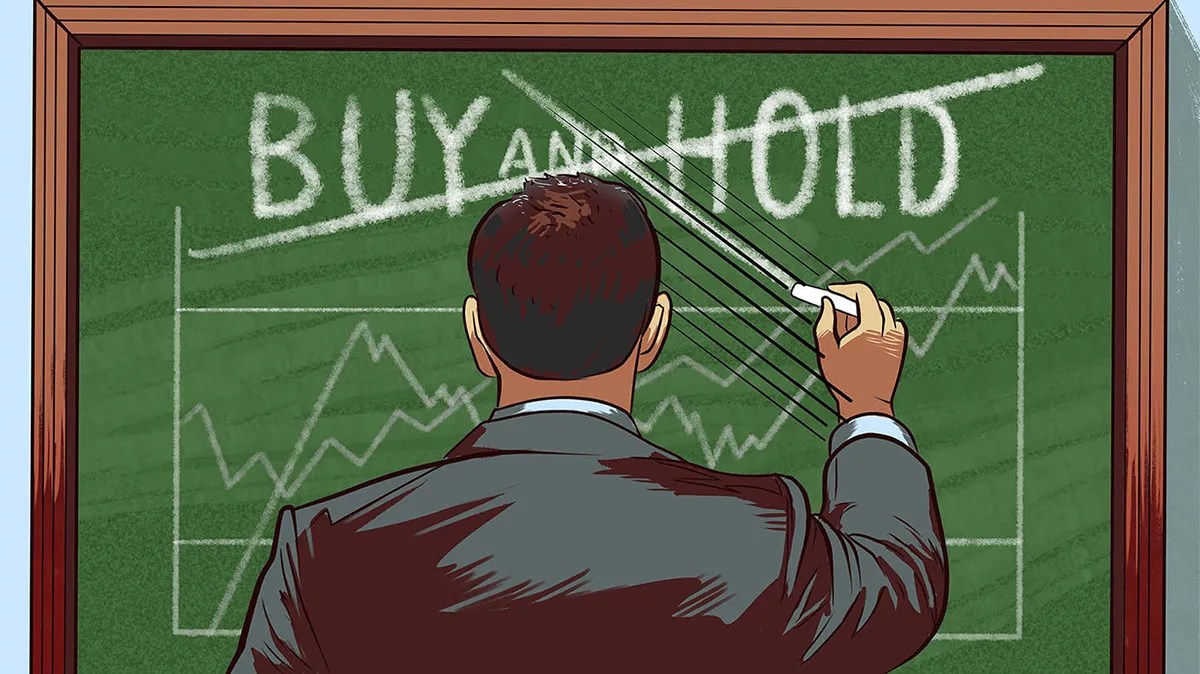










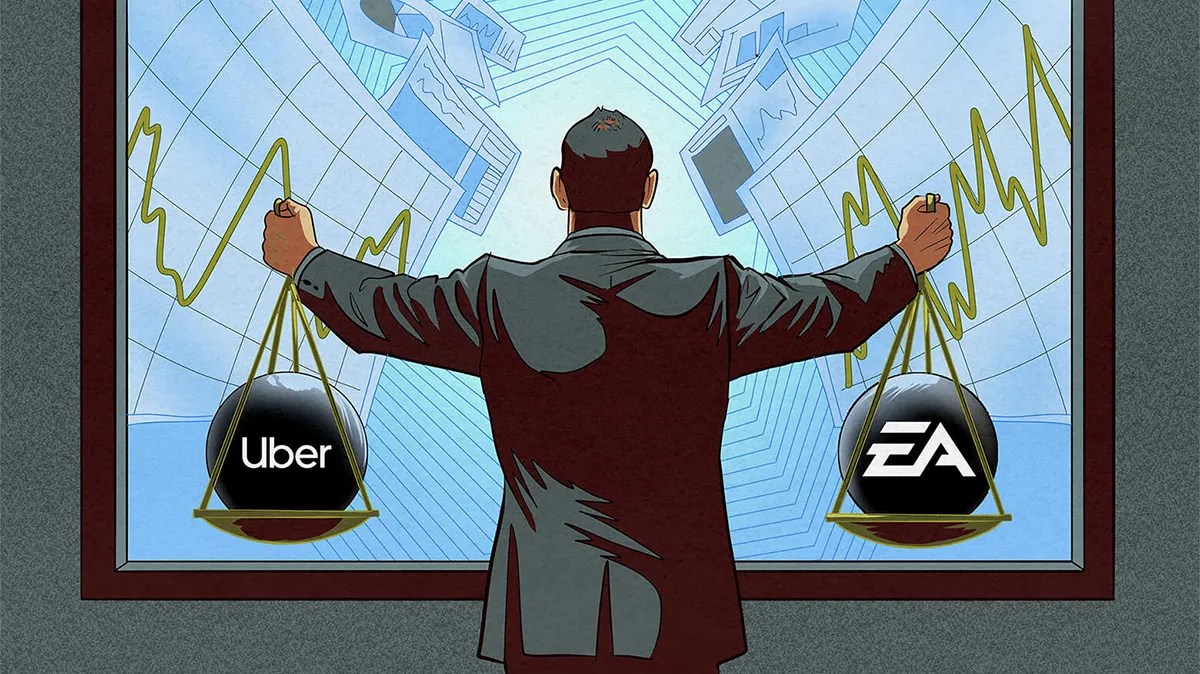


















































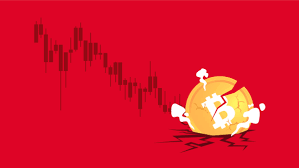





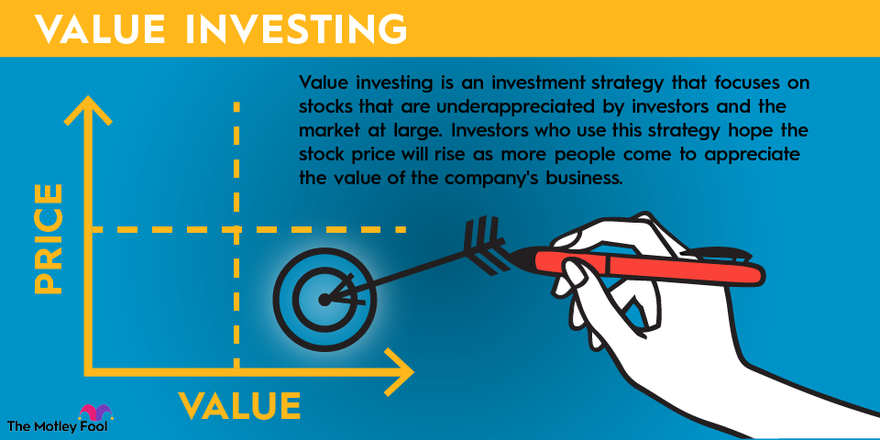




















 The Leading Business Education Network for Doctors, Financial Advisors and Health Industry Consultants