MICRO: Credentials and Certifications

PROFESSIONAL GROWTH

MARCINKO ASSOCIATES, Inc.

http://www.MARCINKOASSOCIATES.com

***

DEFINITION: One way to accelerate and support learning is with continuous up-skilling. A key component is micro-certification and credentialing, which is best thought of as learning that happens in smaller “chunks” — such as boot-camp training, an online course from a university or other provider, or even an apprenticeship.

When competency in a specific knowledge area or skill is demonstrated, a micro-certification is issued, which can be listed on a resume or displayed as a “badge” or a mastery credit on an online profile.

Over time, individuals can amass portfolios of competencies that characterize their capabilities in a way that is much more relevant to their professional lives than relying solely on academic credentials.

***

So – Do you ever wish you could acquire specific information or subject matter expertise for your career activities without having to complete a college or university Master’s Degree in Business or finish our entire online Certified Medical Planner™ professional certification and designation program?

CMP: http://www.CertifiedMedicalPlanner.org

Topics include: economics, finance, investing, marketing, advertising, sales, start-ups, business plan creation, financial planning and entrepreneurship, etc.

Well, Micro-Certifications and Credentials from the Institute of Medical Business Advisors, Inc., might be an alternative knowledge pursuit.

***

READ MORE: https://marcinkoassociates.com/micro-credentials/

***

***

CAREER: Physician Coaching and Development

MARCINKO ASSOCIATES, Inc.

SPONSOR: http://www.MarcinkoAssociates.com

***

***

Did you Know?

Experts estimate that it can cost more than $1 million to recruit and train a replacement for a doctor who leaves the profession because of burnout. But, as no broad calculation of burnout costs exists, Dr. Tait Shanafelt [Mayo Clinic researcher and Stanford Medicine’s first Chief Physician Wellness Officer] said Stanford, Harvard Business School, Mayo Clinic and the American Medical Association (AMA) are further cost estimating the issue. Nevertheless, Shanafelt and other researchers have shown that burnout erodes job performance, increases medical errors, and leads doctors to leave a profession they once loved.

CITE: https://www.r2library.com/Resource

Fortunately, we can help. From formal coaching to second career opinions, mentoring and advising, we can help with our remediation executive career programs. Regardless of what is happening in your life, it is wonderful to have a non-partial, confidential and informed career coach and sounding board on your side.

CITE: JAMA Internal Medicine [Effect of a Professional Coaching Intervention on the Well-Being and Distress of Physicians].

NCBI: https://www.ncbi.nlm.nih.gov/pmc/articles/PMC6686971/

THANK YOU

CONTACT US: https://marcinkoassociates.com/process-what-we-do/

***

SEC: Money Market Fund Reforms

RICHARD CAYNE

By Staff Reporters

***

***

  • SEC money market fund reforms: On July 12, 2023 the SEC released new rules intended to decrease the risk of runs on money market funds (MMFs). MMFs must charge liquidity fees if their daily net redemptions exceed 5% of their net assets, or if their boards deem it necessary, and must maintain a liquidity buffer of at least 25% of their total daily assets and at least 50% of their weekly assets. MMFs are also no longer allowed to use “gates” to temporarily suspend redemption!
  • CITE: https://www.r2library.com/Resource

    Goes into effect:
    60 days after the rule is published in the Federal Register.

***

COMMENTS APPRECIATED

Thank You

***

***

BEHAVIORAL FINANCE: Cash is Still “King”

TREATING YOURSELF WITH CASH

By Staff Reporters

http://www.MarcinkoAssociates.com

***

***

Folks are more likely to reach for dollar bills than credit cards when making a guilty pleasure purchase, according to new Stanford research.

MORE: https://medicalexecutivepost.com/2022/06/22/behavioral-finance-for-doctors/

In more than 118,000 real transactions at the university bookstore, buyers tended to slap their plastic on the counter for school supplies but pay with cash for “harder-to-justify” items like a stuffed plush mascot. And when asked how they’d pay for a hypothetical Reiki session, participants leaned toward credit card when the treatment was described as doctor-recommended but toward cash when they were told it was just an impulse purchase.

RELATED: https://medicalexecutivepost.com/2023/02/28/dr-richard-h-thaler-and-behavioral-economics/

***

COMMENTS APPRECIATED

Thank You

***

***

CAREER: Physician Coaching and Development

MARCINKO ASSOCIATES, Inc.

SPONSOR: http://www.MarcinkoAssociates.com

***

***

Did you Know?

Experts estimate that it can cost more than $1 million to recruit and train a replacement for a doctor who leaves the profession because of burnout. But, as no broad calculation of burnout costs exists, Dr. Tait Shanafelt [Mayo Clinic researcher and Stanford Medicine’s first Chief Physician Wellness Officer] said Stanford, Harvard Business School, Mayo Clinic and the American Medical Association (AMA) are further cost estimating the issue. Nevertheless, Shanafelt and other researchers have shown that burnout erodes job performance, increases medical errors, and leads doctors to leave a profession they once loved.

CITE: https://www.r2library.com/Resource

Fortunately, we can help. From formal coaching to second career opinions, mentoring and advising, we can help with our remediation executive career programs. Regardless of what is happening in your life, it is wonderful to have a non-partial, confidential and informed career coach and sounding board on your side.

CITE: JAMA Internal Medicine [Effect of a Professional Coaching Intervention on the Well-Being and Distress of Physicians].

NCBI: https://www.ncbi.nlm.nih.gov/pmc/articles/PMC6686971/

THANK YOU

CONTACT US: https://marcinkoassociates.com/process-what-we-do/

***

BEYOND: Advance Care Planning for Financial Advisors & Lawyers from Doctors on April 16-17th.

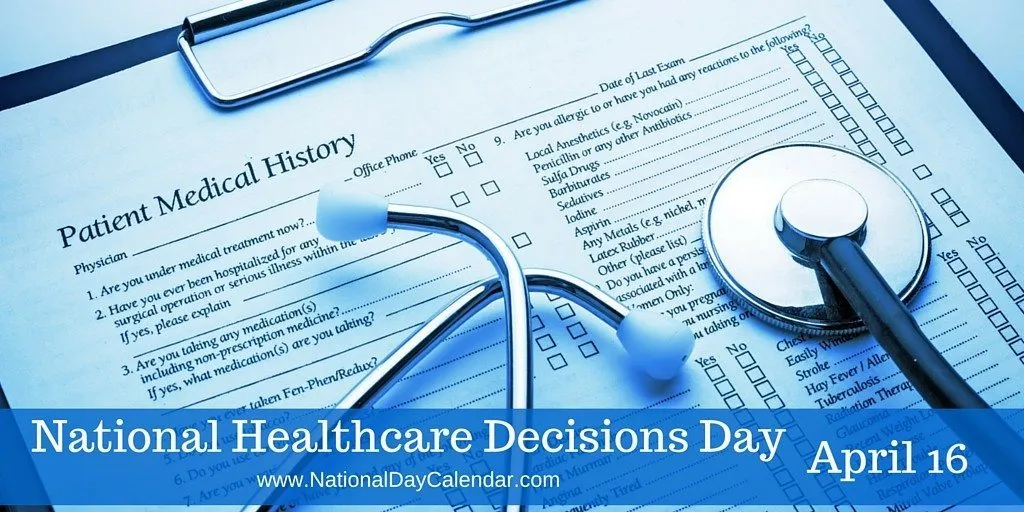
APRIL 17th. IS NATIONAL HEALTHCARE DECISION DAY 2023

By Dr. David Edward Marcinko MBA CMP

SPONSOR: http://www.CertifiedMedicalPlanner.org

Staff Reporters via National Institute of Health

***

National Healthcare Decisions Day (NHDD) exists to inspire, educate and empower the public and providers about the importance of advance care planning. NHDD is an initiative to encourage patients to express their wishes regarding healthcare and for providers and facilities to respect those wishes, whatever they may be.

NHDD was founded in 2008 by Nathan Kottkamp, a Virginia-based health care lawyer, to provide clear, concise, and consistent information on healthcare decision-making to both the public and providers/facilities through the widespread availability and dissemination of simple, free, and uniform tools (not just forms) to guide the process.

NHDD is a series of independent events held across the country, supported by a national media and public education campaign. In all respects, NHDD is inclusive and brings a variety of players in the larger healthcare, legal, and religious community together to work on a common project, to the benefit of patients, families, and providers. A key goal of NHDD is to demystify healthcare decision-making and make the topic of advance care planning inescapable. Among other things, NHDD helps people understand that advance healthcare decision-making includes much more than living wills; it is a process that should focus first on conversation and choosing an agent.

As of June 2016, The Conversation Project has been responsible for the management, finances, and structure of NHDD.  NHDD’s founder, Nathan Kottkamp, continues to be involved in NHDD and provides leadership by ensuring the maintenance of NHDD’s high quality resources and support for the community.

Read more about NHDD’s founding: https://theconversationproject.org/nhdd/origins/

***

***

DEFINITION: What is advance care planning for financial advisors and lawyers?

Advance care planning involves discussing and preparing for future decisions about your medical care if you become seriously ill or unable to communicate your wishes with your estate planning attorney or financial advisor. Having meaningful conversations with your loved ones is the most important part of advance care planning. Many people also choose to put their preferences in writing by completing legal documents called advance directives.

What are advance directives?

Advance directives are legal documents that provide instructions for medical care and only go into effect if you cannot communicate your own wishes.

The two most common advance directives for health care are the living will and the durable power of attorney for health care.

  • Living will: A living will is a legal document that tells doctors how you want to be treated if you cannot make your own decisions about emergency treatment. In a living will, you can say which common medical treatments or care you would want, which ones you would want to avoid, and under which conditions each of your choices applies. Learn more about preparing a living will.
  • Durable power of attorney for health care: A durable power of attorney for health care is a legal document that names your health care proxy, a person who can make health care decisions for you if you are unable to communicate these yourself. Your proxy, also known as a representative, surrogate, or agent, should be familiar with your values and wishes. A proxy can be chosen in addition to or instead of a living will. Having a health care proxy helps you plan for situations that cannot be foreseen, such as a serious car accident or stroke. Learn more about choosing a health care proxy.

Think of your advance directives as living documents that you review at least once each year and update if a major life event occurs such as retirement, moving out of state, or a significant change in your health.

CITE: https://www.r2library.com/Resource

Who needs an advance care plan?

Advance care planning is not just for people who are very old or ill. At any age, a medical crisis could leave you unable to communicate your own health care decisions. Planning now for your future health care can help ensure you get the medical care you want and that someone you trust will be there to make decisions for you.

  • Advance care planning for people with dementia. Many people do not realize that Alzheimer’s disease and related dementias are terminal conditions and ultimately result in death. People in the later stages of dementia often lose their ability to do the simplest tasks. If you have dementia, advance care planning can give you a sense of control over an uncertain future and enable you to participate directly in decision-making about your future care. If you are a loved one of someone with dementia, encourage these discussions as early as possible. In the later stages of dementia, you may wish to discuss decisions with other family members, your loved one’s health care provider, or a trusted friend to feel more supported when deciding the types of care and treatments the person would want.

What happens if you do not have an advance directive?

If you do not have an advance directive and you are unable to make decisions on your own, the state laws where you live will determine who may make medical decisions on your behalf. This is typically your spouse, your parents if they are available, or your children if they are adults. If you are unmarried and have not named your partner as your proxy, it’s possible they could be excluded from decision-making. If you have no family members, some states allow a close friend who is familiar with your values to help. Or they may assign a physician to represent your best interests. To find out the laws in your state, contact your state legal aid office or state bar association.

Will an advance directive guarantee your wishes are followed?

An advance directive is legally recognized but not legally binding. This means that your health care provider and proxy will do their best to respect your advance directives, but there may be circumstances in which they cannot follow your wishes exactly. For example, you may be in a complex medical situation where it is unclear what you would want. This is another key reason why having conversations about your preferences is so important. Talking with your loved ones ahead of time may help them better navigate unanticipated issues.

There is the possibility that a health care provider refuses to follow your advance directives. This might happen if the decision goes against:

  • The health care provider’s conscience
  • The health care institution’s policy
  • Accepted health care standards

In these situations, the health care provider must inform your health care proxy immediately and consider transferring your care to another provider.

Other advance care planning forms and orders from doctors

You might want to prepare documents to express your wishes about a single medical issue or something else not already covered in your advance directives, such as an emergency. For these types of situations, you can talk with a doctor about establishing the following orders:

  • Do not resuscitate (DNR) order: A DNR becomes part of your medical chart to inform medical staff in a hospital or nursing facility that you do not want CPR or other life-support measures to be attempted if your heartbeat and breathing stop. Sometimes this document is referred to as a do not attempt resuscitation (DNR) order or an allow natural death (AND) order. Even though a living will might state that CPR is not wanted, it is helpful to have a DNR order as part of your medical file if you go to a hospital. Posting a DNR next to your hospital bed might avoid confusion in an emergency. Without a DNR order, medical staff will attempt every effort to restore your breathing and the normal rhythm of your heart.
  • Do not intubate (DNI) order: A similar document, a DNI informs medical staff in a hospital or nursing facility that you do not want to be on a ventilator.
  • Do not hospitalize (DNH) order: A DNH indicates to long-term care providers, such as nursing home staff, that you prefer not to be sent to a hospital for treatment at the end of life.
  • Out-of-hospital DNR order: An out-of-hospital DNR alerts emergency medical personnel to your wishes regarding measures to restore your heartbeat or breathing if you are not in a hospital.
  • Physician orders for life-sustaining treatment (POLST) and medical orders for life-sustaining treatment (MOLST) forms:These forms provide guidance about your medical care that health care professionals can act on immediately in an emergency. They serve as a medical order in addition to your advance directive. Typically, you create a POLST or MOLST when you are near the end of life or critically ill and understand the specific decisions that might need to be made on your behalf. These forms may also be called portable medical orders or physician orders for scope of treatment (POST). Check with your state department of health to find out if these forms are available where you live.
  • MORE: https://www.kevinmd.com/2023/04/april-16th-is-national-healthcare-decisions-day-plan-for-your-end-of-life-care-now.html

Medicare Enrollment at CMS?

At enrollment, Medicare in the future could offer three advance directives with goals of care: Directive A: CONSENT to treat — inpatient medical treatment Directive B: CONSENT to comfort — home bound holistic care Directive C: CHOOSE against medical advice — outpatient palliative resources.

CITE: https://www.kevinmd.com/2023/04/the-heartbreaking-story-of-jimmy-carter-a-call-for-medicare-reform-in-end-of-life-care.html

You may also want to document your wishes about organ and tissue donation and brain donation. As well, learning about care options such as palliative care and hospice care can help you plan ahead.

***

COMMENTS APPRECIATED

Thank You

***

PHYSICIAN SALARY: Pay Gap

By Staff Reporters

***

***

A 2020 analysis of Doximity’s physician compensation data found that men physicians make an estimated $2 million more than women over the course of their careers.

LINK: https://www.statnews.com/2021/12/06/male-female-physician-salaries-gap-2-million-lifetime-earnings/#:~:text=A%20persistent%2025%25%20pay%20gap%20between%20female%20and,for%20specialty%2C%20hours%2C%20location%2C%20and%20years%20of%20experience.

Other findings:

  • Men physicians outearned women physicians by at least 10% across all specialties, except pediatric cardiology (9.2%) and nuclear medicine (3%).
  • Specialties with the largest gender pay gaps were: oral and maxillofacial surgery ($568,789 vs. $395,687), pediatric pulmonology ($282,272 vs. $227,958), allergy and immunology ($329,634 vs. $268,938), urology ($515,850 vs. $424,733), and ophthalmology ($468,515 vs. $387,295).
  • Specialities with the smallest gender pay gaps were: nuclear medicine ($394,231 vs. $382,431), pediatric cardiology ($334,384 vs. $303,622), pediatric gastroenterology ($293,771 vs. $264,135) hematology ($358,736 vs. $320,938), and medicine/pediatrics ($283,034 vs. $253,019).
  • CITE: https://www.r2library.com/Resource/Title/0826102549

***

RELATED: https://medicalexecutivepost.com/2022/01/21/personal-budgeting-for-physician-executives/

CAREERS: https://medicalexecutivepost.com/2022/10/01/careers-and-net-worth/

***
COMMENTS APPRECIATED

Thank You

***

***

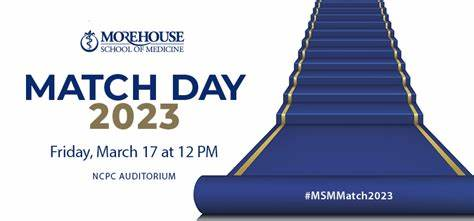
MEDICAL RESIDENCY “MATCH” DAY: 2023

By Dr. David Edward Marcinko MBA

SPONSOR: http://www.CertifiedMedicalPlanner.org

***

***

Each year in the middle of March, tens of thousands of graduating American medical students find out where they are going for their residency — and whether they will be whisked away from their families, friends, and romantic partners.

For many relationships in which one or both people are in medical school, residency “Match Day” — which falls today, on March 17th this year — can be the end of another match. This mass breakup and match happened to many of my own classmates, and to students at medical schools all around the country. But, fortunately not to me years ago.

And, it all ultimately ended well.

***

READ: https://www.nydailynews.com/opinion/ny-oped-the-residency-match-is-a-match-breaker-too-20230312-5e4hg25ki5g63mdgxhkvfppxvm-story.html?utm_campaign=hcb&utm_medium=newsletter&utm_source=morning_brew

***

COMMENTS APPRECIATED

Thank You

***

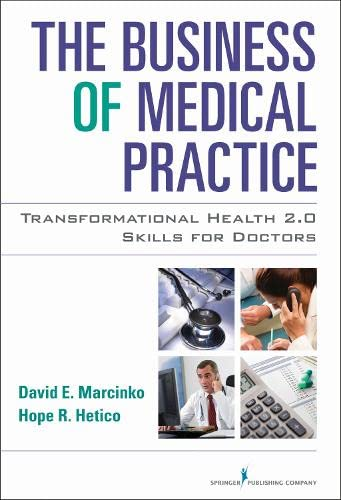
ORDER: https://www.amazon.com/Business-Medical-Practice-Transformational-Doctors/dp/0826105750/ref=sr_1_9?ie=UTF8&qid=1448163039&sr=8-9&keywords=david+marcinko

***

INTERNATIONAL WOMEN’S DAY 2023

Maritime Medicine

By Dr. David Edward Marcinko MBA

***

***

***

Did you know that on this day in 1945, Phyllis Mae Dailey became the first Black nurse sworn in to serve the US Navy?

READ: https://blackdoctor.org/phyllis-mae-dailey/

And on this day in 1950, Bernice Walters became the first female doctor for the US Navy.

READ: https://www.history.navy.mil/browse-by-topic/people/trailblazers/bernice-walters.html

READ: US Comfort Ship: https://medicalexecutivepost.com/2010/01/18/us-navy-ship-comfort-heads-to-haiti/

So, you might say it’s a big day for maritime medicine.

***

COMMENTS APPRECIATED

Thank You

***

ORDER: https://www.amazon.com/Dictionary-Health-Insurance-Managed-Care/dp/0826149944/ref=sr_1_4?ie=UTF8&s=books&qid=1275315485&sr=1-4

***

Top 100 Economics Blogs for 2023

“BEST of the BEST”

[By Dr. David E. Marcinko MBA]

If you’re looking for practical, insightful and educational economics blogs, you’ve come to the right place. Here are the 100 best economics blogs online, listed in no particular order.

Today, as you know, there’s no shortage of high-quality economics blogs on the web. But, we decided to separate the wheat from the chaff and give you the absolute cream of the crop. Whether you’re new to economics, or have an interest in a range of economics topics like econometrics and macroeconomics, or simply want to keep up with global economics, these economics blogs give you the rundown, insights and explanations you need to get a good understanding of economics.

***

blpgs

LINK: http://ritholtz.com/2016/05/top-100-economics-blogs/

2023 UPDATE: https://www.intelligenteconomist.com/economics-blogs/

***

Conclusion

Your thoughts and comments on this ME-P are appreciated. Feel free to review our top-left column, and top-right sidebar materials, links, URLs and related websites, too. Then, subscribe to the ME-P. It is fast, free and secure.

Speaker: If you need a moderator or speaker for an upcoming event, Dr. David E. Marcinko; MBA – Publisher-in-Chief of the Medical Executive-Post – is available for seminar or speaking engagements. Contact: MarcinkoAdvisors@msn.com

OUR OTHER PRINT BOOKS AND RELATED INFORMATION SOURCES:

Product DetailsProduct DetailsProduct Details

***

VIDEO TELECONFERENCE: How to Prepare?

By Coach: Dr. David Edward Marcinko MBA

***

***

PHYSICIANS AND ADVISORS

TIPS TO PREPARE FOR A VIDEO INTERVIEW

Practice with someone to become comfortable with the process.

Background/Staging:


• Pay attention to the background, what will be seen around and behind you. Get rid of
clutter – it affects “your presentation.” Make sure there is nothing in the background you
don’t want anyone to see including personal pictures, etc.


• Conduct the test in the same location you plan to conduct the video interview.
• Adjust lighting to highlight your face. Do not let light wash out your facial features.


• Have back-up equipment nearby (extra laptop, phones, cables).
Clothing


• Dress in professional, conservative, non-fussy clothing as though you were going to be
with the committee in person. Wear a jacket.


• Wear a solid/bold color. Stay away from dark colors.


• Stay away from prints (e.g. herringbone) which, depending upon the design, lighting and
camera pixels, can make your outfit “vibrate” on screen.


• Dress knowing that the committee will see you “closer up” than you will see them.
Eye Contact/Body Language/Clear Communications


• Be sure to look at the camera not at the image of the committee on the screen;
otherwise you do not appear to be “looking them in the eye” or will appear nervous.


• It is hard to read committee body language without typical in-person conversation cues,
so watch the time and limit each answer to 3-4 minutes. Be attuned to a timer.


• Be attentive to your body language — leaning back in your chair is a no-no; lean forward
to convey interest in the position and the committee. Don’t rock back and forth.


• Place support things out of camera range (glass of water, a timer, notes, notepad, pen,
list of committee members) so your eyes go to the side and not up/down to these items.


• Don’t be afraid to ask to have questions repeated, either because the question was long
and complex or because of audio problems. Jot notes on complex questions.

COACH: https://medicalexecutivepost.com/2023/01/08/personal-coaching-dr-marcinko-at-your-service/


Sound Amplification and Noise Control:


• Microphones magnify noises and can be distracting to the committee. Avoid ruffling
papers and jangling jewelry. In the same vein, speak up clearly and enunciate your
words.


• Place a “do not disturb/do not enter” sign on the door of your space. Turn off running
programs (like your email) to eliminate beeps when new emails arrive.

• Silence all other technology EXCEPT if there should be technical issues, turn your
phone back on to receive a call from your Greenwood/Asher consultant for
troubleshooting.


• Ask family and colleagues to be quiet during the interview. If a family member or
colleague is your resident IT expert, have that person close-at-hand but out-of-sight
during the call.


• Be prepared to switch to a landline or cell speaker phone for the audio portion since
audio with Skype/Zoom is not always great. If you do use this option, mute your
computer microphone to eliminate conflicting noise.

SECOND OPINIONS: https://medicalexecutivepost.com/2023/01/10/physician-coaching-second-opinions

PODCAST: https://www.youtube.com/watch?v=n7bYGhEVjd8

***

COMMENTS APPRECIATED

Thank You

***

MERRY CHRISTMAS 2023

An iMBA Inc., MERRY CHRISTMAS 2023

Happy Holidays from Marcinko Associates, Inc

1jojfvdomkx9wytexe43d6kh.oipbzgnbjfwxs1m3emoajtlikqhvbu9-3

SPONSOR: http://www.MARCINKOASSOCIATES.com

Happy Holidays from the Institute of Medical Business Advisors, Inc

imba inc

At this special time of year, we give thanks for our clients and our employees, as well as all essential workers in hospitals, health centers and medical practices across the country.

May the holiday spirit be with you and your family throughout the season and everyday We look forward to serving you in 2024.

http://www.MedicalExecutivePost.com

Thank You

***

My Pragmatic Philosophy of Education

It is NOT the Boyer Model

[By Dr. David E. Marcinko MBA]

The Boyer Model of Education and Scholarship

OK – I may subscribe to the Boyer Model but with several specific personal variations which I will keep propriety and not disclose here. But, I will discuss my teaching pragmatism, below.

Definition

Boyer’s Model of scholarship and education is an academic model advocating expansion of the traditional definition of scholarship and research into four types of scholarship. It was introduced in 1990 by Ernest Boyer.

According to Boyer, traditional research, or the scholarship of discovery, had been the center of academic life and crucial to an institution’s advancement but it needed to be broadened and made more flexible to include not only the new social and environmental challenges beyond the campus but also the reality of contemporary life.

His vision was to change the research mission of universities by introducing the idea that scholarship needed to be redefined.

MORE: https://en.wikipedia.org/wiki/Boyer%27s_model_of_scholarship

ME: Dr. Marcinko Teaching Philosophy

ENTER MY PRAGMATISM

***

DEAN: Dean 3.0 Philosophy

Assessment

So, what do you think?

Conclusion

Your thoughts and comments on this ME-P are appreciated. Feel free to review our top-left column, and top-right sidebar materials, links, URLs and related websites, too. Then, subscribe to the ME-P. It is fast, free and secure.

Speaker: If you need a moderator or speaker for an upcoming event, Dr. David E. Marcinko; MBA – Publisher-in-Chief of the Medical Executive-Post – is available for seminar or speaking engagements.

Book Marcinko: https://medicalexecutivepost.com/dr-david-marcinkos-bookings/

Subscribe: MEDICAL EXECUTIVE POST for curated news, essays, opinions and analysis from the public health, economics, finance, marketing, IT, business and policy management ecosystem.

DOCTORS:

“Insurance & Risk Management Strategies for Doctors” https://tinyurl.com/ydx9kd93

“Fiduciary Financial Planning for Physicians” https://tinyurl.com/y7f5pnox

“Business of Medical Practice 2.0” https://tinyurl.com/yb3x6wr8

***

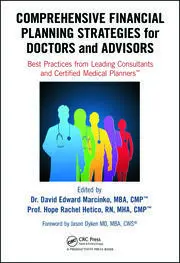
Risk Management, Liability Insurance, and Asset Protection Strategies for Doctors and Advisors: Best Practices from Leading Consultants and Certified Medical Planners™8Comprehensive Financial Planning Strategies for Doctors and Advisors: Best Practices from Leading Consultants and Certified Medical Planners™

The Three [3] Types of Banks

Join Our Mailing List Understanding Differences

[By Dr. David Edward Marcinko MBA CMP™]

SPONSOR: http://www.CertifiedMedicalPlanner.org

CMP logo

***

dem-thinkingThere are several different kinds of banks.

A general understanding of these types is suggested for any medical professional prior to launching a self-directed [ME, Inc], or even a guided investment strategy or wealth building portfolio effort with a financial advisor [FA], stock broker or wealth manager, etc.

This banking information is usually not included in any text on financial planning, or related, until now.

CITE: https://www.r2library.com/Resource/Title/082610254

Definition of Retail Bank

A retail bank is a typical small mass-market financial institution in which individual customers use local branches; usually of larger commercial banks. Services offered include savings and checking accounts, mortgages, personal loans, debit/credit cards and certificates of deposit (CDs).

Definition of Commercial Bank

A financial institution that provides services, such as accepting deposits, giving business loans and auto loans, mortgage lending, and basic investment products like savings accounts and certificates of deposit. The traditional commercial bank is a brick and mortar institution with tellers, safe deposit boxes, vaults and ATMs.

However, some commercial banks do not have any physical branches and require consumers to complete all transactions by phone or Internet. In exchange, they generally pay higher interest rates on investments and deposits, and charge lower fees.

Definition of Investment Bank

Investment banking activities are different than those of retail and commercial banking and include underwriting securities, acting as an intermediary between an issuer of securities and the investing public, facilitating mergers and other corporate reorganizations, and also acting as a broker for institutional clients.

***

Bankers

***

Assessment

This brief review provides a retrospective on implications for modernity.

More:

Conclusion

Your thoughts and comments on this ME-P are appreciated. Feel free to review our top-left column, and top-right sidebar materials, links, URLs and related websites, too. Then, subscribe to the ME-P. It is fast, free and secure.

Speaker: If you need a moderator or speaker for an upcoming event, Dr. David E. Marcinko; MBA – Publisher-in-Chief of the Medical Executive-Post – is available for seminar or speaking engagements. Contact: MarcinkoAdvisors@msn.com

OUR OTHER PRINT BOOKS AND RELATED INFORMATION SOURCES:

***

Dr. Dave Marcinko at YOUR Service in 2022

Join Our Mailing List

Book Marcinko for your Next Financial Planning Seminar, Meeting or Medical Business Event 

By Ann Miller RN MHA

Professor and physician executive David Edward Marcinko MBBS DPM MBA MEd BSc CMP® is originally from Loyola University MD, Temple University in Philadelphia and the Milton S. Hershey Medical Center in PA; Oglethorpe University, and Atlanta Hospital & Medical Center in GA; and the Aachen City University Hospital, Koln-Germany. He is one of the most innovative global thought leaders in health care business and entrepreneurship today.

Dr. Marcinko is a multi-degreed educator, board certified physician, surgical fellow, hospital medical staff President, Chief Education Officer and philanthropist with more than 400 published papers; 5,150 op-ed pieces and over 125+ international presentations to his credit; including the top 10 biggest pharmaceutical companies and financial services firms in the nation. He is also a best-selling Amazon author with 30 published text books in four languages [National Institute of Health, Library of Congress and Library of Medicine].

Dr. Marcinko is past Editor-in-Chief of the prestigious “Journal of Health Care Finance”, and a former Certified Financial Planner®, who was named “Health Economist of the Year” in 2001. He is a Federal and State court approved expert witness featured in hundreds of peer reviewed medical, business, management and trade publications [AMA, ADA, APMA, AAOS, Physicians Practice, Investment Advisor, Physician’s Money Digest and MD News].

As a licensed insurance agent, RIA and SEC registered endowment fund manager, Dr. Marcinko is Founding Dean of the fiduciary focused CERTIFIED MEDICAL PLANNER® chartered designation education program; as well as Chief Editor of the HEALTH DICTIONARY SERIES® Wiki Project. His professional memberships include: ASHE, AHIMA, ACHE, ACME, ACPE, MGMA, FMMA and HIMSS.

Dr. Marcinko is a MSFT Beta tester, Google Scholar, “H” Index favorite and one of LinkedIn’s “Top Cited Voices”.

Book Marcinko

David Edward Marcinko (2)

Join Our Mailing List

On the Society of Physician Entrepreneurs

Join Our Mailing List

About the SoPE

***

See the source image

***

By Dr. David Edward Marcinko MBA

The Society of Physician Entrepreneurs (SoPE) was established as a community of interest in 2008 by several members of the American Academy of Otolaryngology-Head and Neck Surgery (AAO-HNS), including Dr. Arlen Meyers, the President & CEO. SoPE became a separate and independent legal entity; incorporating in Washington, D.C. in January 2011.

It is a 501 (c) 6 member organization with the stated purpose of providing support; idea stage through funding, for physician entrepreneurs with ideas on how to improve healthcare. Currently there are over 1,000 members included in their LinkedIn site.

Vision

SoPE’s vision is to accelerate physician originated biomedical innovation.

Mission

The mission of SoPE is to foster scholarship in biomedical entrepreneurship and provide education, training and support; idea stage through funding, to primarily community-based physician entrepreneurs in the interest of better healthcare.

Membership

SoPE membership is open to all physicians and also accepts individuals as associate members; representatives of medical device, legal, venture capital, and other firms with an interest in serving and/or supporting physician entrepreneurs.

Assessment

www.sopenet.org

Conclusion

Your thoughts and comments on this ME-P are appreciated. Feel free to review our top-left column, and top-right sidebar materials, links, URLs and related websites, too. Then, subscribe to the ME-P. It is fast, free and secure.

Speaker: If you need a moderator or speaker for an upcoming event, Dr. David E. Marcinko; MBA – Publisher-in-Chief of the Medical Executive-Post – is available for seminar or speaking engagements. Contact: MarcinkoAdvisors@msn.com

OUR OTHER PRINT BOOKS AND RELATED INFORMATION SOURCES:

Product Details

MENTAL HEALTH Action Day 2022

By Staff Reporters

***

As part of its Mental Health initiative, MTV’s second-annual Mental Health Action Day – an open-source movement of brands, organizations, government agencies, and cultural leaders to drive culture of mental health from awareness to action – will bring together more than 1,600 organizations in cities across the country to encourage and empower people to take action for mental health on Thursday, May 19, 2022.

***

***

LINK: https://www.mentalhealthactionday.art/

COACHING: From Chaos to Calm: https://medicalexecutivepost.com/coach/
***

COMMENTS APPRECIATED

Thank You

***

***

R.I.P. Paul Edward Farmer MD PhD

***

By Dr. David Edward Marcinko MBA

[Editor-in-Chief]

***

Paul Edward Farmer MD PhD

***

Paul Edward Farmer (October 26, 1959 – February 21, 2022) was an American medical anthropologist and physician. Farmer held an MD and PhD from Harvard University, where he was the Kolokotrones University Professor and the chair of the Department of Global Health and Social Medicine at Harvard Medical School. He was the co-founder and chief strategist of Partners In Health (PIH), an international non-profit organization that since 1987 has provided direct health care services and undertaken research and advocacy activities on behalf of those who are sick and living in poverty. He was professor of medicine and chief of the Division of Global Health Equity at Brigham and Women’s Hospital.

Paul and his colleagues in the U.S. and abroad have pioneered novel community-based treatment strategies that demonstrate the delivery of high-quality health care in resource-poor settings in the U.S. and abroad. Their work is documented in the Bulletin of the World Health Organization, The Lancet, The New England Journal of Medicine, Clinical Infectious Diseases, British Medical Journal, and Social Science and Medicine.

Dr. Farmer had written extensively on health and human rights, the role of social inequalities in the distribution and outcome of infectious diseases, and global health.

He was known as “the man who would cure the world,” as described in the book Mountains Beyond Mountains by Tracy Kidder. The story of Partners In Health is also told in the 2017 documentary Bending the Arc. He was a proponent of liberation theology.

***

MORE: https://www.msn.com/en-us/news/world/paul-farmer-global-health-care-pioneer-dies-at-62/ar-AAU8wJj?li=BBnb7Kz

HARVARD: https://ghsm.hms.harvard.edu/faculty-staff/paul-farmer

***

Rest in Peace

***

MY R&D GOALS FOR 2021

Research Statement

Health Economics, Finance, Policy, Management and Administration

A SYNOPSIS OF MY ADVISORY FEES & BUSINESS MODEL

A SYNOPSIS OF MY ADVISORY FEES & CONSULTING BUSINESS MODEL

Courtesy: https://lnkd.in/eVGcji5

[Authentic Consulting for Physicians & Medical Colleagues]

My fee is $250 per hour prorated, so you only pay for the time used. This fee covers almost any medical practice management, insurance and risk management, personal financial planning or investment related topic, including document review, phone or Skype® consultation, research and/or written investment strategies.

MODEL: https://lnkd.in/eVWcyaq

IOW: No high water marks, no claw-back fees, sales or commissions, front or back end loads, 12[b]-1 fees or Assets Under Management [AUM] charges; etc. “Pay-as-you-Go”; period! Client Centricity.

TOPICS: https://lnkd.in/e7WrDj9

2nd OPINIONS: https://lnkd.in/dw7FHyP

INVITE: https://lnkd.in/e3-SFmb Your thoughts are appreciated.

CONTACT: Ann Miller RN MHA CMP® PHONE: 770-448-0769

EMAIL: MarcinkoAdvisors@msn.com

BUSINESS, FINANCE, INVESTING & INSURANCE TEXTS FOR DOCTORS:

1 – https://lnkd.in/ebWtzGg

2 – https://lnkd.in/ezkQMfR

3 – https://lnkd.in/ewJPTJs

THANK YOU

Product DetailsProduct Details

***

Royal College of General Practitioners Recommend: “Risk Management, Liability Insurance and Asset Protection Strategies for Doctors and Advisors”

Join Our Mailing List

rcgp-logo

RECOMMENDATION

***

Risk Management Liability Insurance and Asset Protection Strategies for Doctors and Advisors

It is not uncommon for practicing physicians to have more than a dozen separate insurance policies to protect their medical practice and personal assets. Yet, most doctors understand very little about their policies.

The book RISK MANAGEMENT, LIABILITY INSURANCE AND ASSET PROTECTION STRATEGIES for DOCTORS and ADVISORS [Best Practices from Leading Consultants and Certified Medical Planners™] explains to physicians and insurance professionals the background, theory, and practicalities of medical risk management, asset protection methods, and insurance planning.

The text presents information in a manner that is convenient and highly useful for busy medical practitioners. It discusses the medical records revolution and addresses concerns regarding cloud computing, data security, and technological threats.

The book covers modern health law and policy, including fraud and abuse, workplace-violence, Medicare compliance, HIPAA regulations, AR protection strategies with internal controls, P4P and value based care, insurance and reputation management, and how the ARA legislation is impacting physician practices.

It also includes case models and examples that provide you with a real-world understanding of how to recognize and reduce personal and medical practice risks.

With time at a premium for all, and so much information packed into one well-organized resource, this book is a must-read for every physician and financial advisor that serves the health care sector. The book will help physicians make better decisions about the risks they face and will help financial advisors improve the value they provide to their clients who are doctors.

http://www.CertifiedMedicalPlanner.org

DR. DAVID EDWARD MARCINKO MBS CMP®

ISBN Number: 9781498725989

Number of pages: 748

Publisher: CRC Press

Published: 2018

Dr. Boyd MD PhD MA for Dr. Marcinko

 Risk Management, Liability Insurance, and Asset Protection Strategies for Doctors and Advisors: Best Practices from Leading Consultants and Certified Medical Planners™8Comprehensive Financial Planning Strategies for Doctors and Advisors: Best Practices from Leading Consultants and Certified Medical Planners™

Risk Management Liability Insurance and Asset Protection Strategies for Doctors and Advisors

reward

AWARDS

Invite Dr. Marcinko

***

HISTORIC PURPOSE OF MEDICAL RECORDS and S.E.S.

 Join Our Mailing List

An iMBA Inc., Review

***

DEM white shirt

[By Dr. David Edward Marcinko CMP® MBA]

***

As little as a hundred years ago, detailed medical records were likely to have been compiled by medical researchers such as Charcot and Hughlings-Jackson. The medical record was an aide memoire for detecting changes in patients’ conditions over time, solely for the benefit of the physician in treating the patient.

As health care became more institutionalized, medical records became a communications device among health care providers.  Doctors made progress notes and gave orders.  Nurses carried them out and kept a record of patient responses.  A centralized record, theoretically, allowed all to know what each was doing.  The ideal was that if the doctor were unable to care for the patient, another physician could stand in his or her shoes and assume the patient’s care.

***

stack_of_file_12

***

Enter Third Parties 

Then pressures from third party payers occurred. As insurance and then government programs became larger players in the compensation game, they wanted to know if the care they were paying for was being delivered efficiently.

  • Why were these tests ordered?
  • Why weren’t these studies done?
  • Why had the patient remained hospitalized after his temperature had returned to normal for so many hours and no pain medications had been required?
  • Why couldn’t this pre-operative work be done on an outpatient basis?

Though the real push behind these questions was the desire to save money, utilization review also directly contributed to better patient care. A patient who was being given inefficient care was getting substandard care as well. Utilization review was mainly retrospective; denial of compensation was rarely imposed, and suasion by peers was the main effector of change.  Though “economic credentialing” was shouted about, it rarely showed itself in public.

PP-ACA

Even health reform which openly admitted economic incentives as one of its motivators preferred to find some other reason for deciding not to reimburse, or admit Dr. Jones to its narrow panel of ACA, or other “skinny” network providers, or not renewing Dr. Smith’s contract an HMO. The medical record remained essentially a record of patient care which was good or not, efficient or not.  If the record wasn’t complete, the doctor could always supplement it with an affidavit, use information from somewhere else, or provide explanations.

***

 train station

***

Socio Economic Status

Today, the concept known as Socio Economic Status [S.E.S.] is conceptualized as the social standing, or class of an individual or group. It is often measured as a combination of education, income and occupation. Examinations of socioeconomic status often reveal inequities in access to medical resources, plus issues related to privilege, power and control. SES is increasingly being considered as another payment component [CPT® codes] to medical providers, as reflected in the paper medical record, EMR and elsewhere. 

Assessment

Have you encountered any Socio Economic Status initiative in your clinic, hospital or other medical institution?

Conclusion

Your thoughts and comments on this ME-P are appreciated. Feel free to review our top-left column, and top-right sidebar materials, links, URLs and related websites, too. Then, subscribe to the ME-P. It is fast, free and secure.

Speaker: If you need a moderator or speaker for an upcoming event, Dr. David E. Marcinko; MBA – Publisher-in-Chief of the Medical Executive-Post – is available for seminar or speaking engagements. Contact: MarcinkoAdvisors@msn.com

OUR OTHER PRINT BOOKS AND RELATED INFORMATION SOURCES:

***

[PHYSICIAN FOCUSED FINANCIAL PLANNING AND RISK MANAGEMENT COMPANION TEXTBOOK SET]

  Risk Management, Liability Insurance, and Asset Protection Strategies for Doctors and Advisors: Best Practices from Leading Consultants and Certified Medical Planners™  Comprehensive Financial Planning Strategies for Doctors and Advisors: Best Practices from Leading Consultants and Certified Medical Planners™

[Dr. Cappiello PhD MBA] *** [Foreword Dr. Krieger MD MBA]

***

The Doctor’s Path to Wealth?

And … for us all

By Rick Kahler CFP® http://www.KahlerFinancial.com

Rick Kahler CFPAfter three decades as a financial planner, working with successful wealth-builders, you’d think I would have a clear idea of the right path for creating wealth.

Instead, what I’ve learned is that there is no such thing. Here are just a few of the paths that aren’t the sure routes to wealth they might seem to be:

Several Paths

1. Education and career choices. Going into a field like law or medicine might seem to guarantee financial success. Not necessarily. I’ve seen many physicians, for example, who have accumulated significant wealth. I’ve seen just as many who live paycheck to paycheck.

2. High earnings. Again, this isn’t the reliable predictor of wealth it would seem to be. True, someone who spends decades in low-wage jobs is unlikely to be able to accumulate much financial security. But a person earning $1 million a year will not necessarily have a larger net worth than someone earning $75,000. I’ve seen people who worked as janitors, nurses, and mechanics become millionaires. I’ve worked with others, earning a hundred times more in careers like sales or entertainment, who reach retirement age with absolutely nothing.

3. Owning your own business. Many hard-working, creative entrepreneurs build successful businesses that provide wealth, not just for themselves, but for their children and grandchildren. Others might see a business or even a series of businesses fail. Still others might work hard all their lives but never achieve more than the equivalent of an average salary in their field.

4. Investment choices. Some people have had great success investing in various types of real estate, businesses, and commodities. Others have lost everything they ever owned investing in those same vehicles.

Some Commonalities

So, sorry, I can’t give you a simple list of the top ways to build wealth. There’s little commonality in how my successful clients have made their money. What I can suggest are a few ways to help you find your own path to accumulating wealth.

1. Define “wealth” in your own way. Maybe you’re willing to live frugally in order to accumulate enough money to feel secure that your needs will be met even if you live to be 100. Maybe wealth to you is living a lavish lifestyle and being willing to work hard to pay for it. You might see wealth as the satisfaction and responsibility of having your own business. Maybe it means being able to give generously. Or perhaps you define wealth as the freedom of owning little and traveling around the world on a bicycle.

2. Know what you are willing to sacrifice—and what you are not—in order to accumulate wealth. There’s nothing wrong with earning a high salary doing work you hate for a time, as part of an overall strategy to get you to doing something you love. But doing so for a lifetime is hardly the road to either happiness or wealth.

3. Think long term. The most reliable way to build lifetime wealth, with the lowest risk, is through a long-term commitment to diversified investing. Yet even those who are successful on riskier paths to wealth take the long view. Business owners may fail more than once before they succeed. And those who have made fortunes in high-risk investments have also lost fortunes. They understand that success is about taking calculated risks.

4. Learn to make conscious financial decisions. I’ve seen many intelligent, capable people stuck in financial chaos and poverty because of emotional pain and dysfunction. Emotional health may not be essential for building financial wealth. It is, however, essential if you want to use that wealth to support a rich and satisfying life.

###

Stock Market

More:

Conclusion

Your thoughts and comments on this ME-P are appreciated. Feel free to review our top-left column, and top-right sidebar materials, links, URLs and related websites, too. Then, subscribe to the ME-P. It is fast, free and secure.

Speaker: If you need a moderator or speaker for an upcoming event, Dr. David E. Marcinko; MBA – Publisher-in-Chief of the Medical Executive-Post – is available for seminar or speaking engagements. Contact: MarcinkoAdvisors@msn.com

OUR OTHER PRINT BOOKS AND RELATED INFORMATION SOURCES:

***

  Risk Management, Liability Insurance, and Asset Protection Strategies for Doctors and Advisors: Best Practices from Leading Consultants and Certified Medical Planners™8Comprehensive Financial Planning Strategies for Doctors and Advisors: Best Practices from Leading Consultants and Certified Medical Planners™

***

Invite Dr. Marcinko

***

Are Doctors Unique -OR- New Members of the Working Class hoi-polloi?

Join Our Mailing List

United We Stand – Divided We Fall?

By Dr. David Edward Marcinko MBA

BC Dr. MarcinkoPhysician blogger Kent Bottles MD recently asked if doctors are really different; a special class of folks?

And, some colleagues are shocked when an authority like Uwe Reinhardt PhD, of Princeton University, points out that collectively many MDs act just like any other worker in the domestic economy.

LinkAre physicians really that special?

In fact, the classic 1986 letters between the Princeton professor, and former New England Journal of Medicine editor Arnold Relman MD, highlight the tension between how we think of ourselves and how we act.

Medical Labor Unions

Now, also recall that healthcare journalist William F. Shea, opined more than a decade ago, that there were numerous psychological barriers against the formation of physician unions [personal communication].

Barriers

These included (1) the public perception of doctor’s as a “cut above” ordinary workers; (2) doctor’s attempts to wrap collective bargaining in a mantle of patient’s rights that lacked credibility; and (3) the highly educated physician’s ability to re-engineer and seek alternate employment opportunities rather than accept the salary scale or lack of autonomy present in restrictive managed care entities.

Professional Wake Up Call

Tincture of Time

Time has proven Shea both correct and incorrect, as MD resignation through individual re-deployment and/or innovation has been more effective than any “union strike” if called by one practitioner at a time.

On the other hand, more than 40% of all physicians are now collective employees … So, what gives?

Link: Legal Strategies for Doctors Sheltering Employment Income

Assessment

And so, are doctors really different than the man-in-the-street; or more like union workers and the OWStreeters? Did we stand united, or have we fallen individually since the comments of Shea, Reinhardt and Relman?

Conclusion

Your thoughts and comments on this ME-P are appreciated. Feel free to review our top-left column, and top-right sidebar materials, links, URLs and related websites, too. Then, subscribe to the ME-P. It is fast, free and secure.

Speaker: If you need a moderator or speaker for an upcoming event, Dr. David E. Marcinko; MBA – Publisher-in-Chief of the Medical Executive-Post – is available for seminar or speaking engagements. Contact: MarcinkoAdvisors@msn.com

OUR OTHER PRINT BOOKS AND RELATED INFORMATION SOURCES:


Product DetailsProduct DetailsProduct Details

Product Details  Product Details

Product DetailsProduct Details

ME-P Sponsor Appreciation Post

Outstanding ME-P Support Provided By These Firms and Companies:

Interested in website sponsorship, speaking or exhibit opportunities?
Please contact Ann Miller RN MHA
770-448-0769 or email: MarcinkoAdvisors@msn.com

Speaker: If you need a moderator or speaker for an upcoming event, Dr. David E. Marcinko; MBA – Publisher-in-Chief of the Medical Executive-Post – is available for seminar or speaking engagements. Contact: MarcinkoAdvisors@msn.com and http://www.springerpub.com/Search/marcinko

Get our Widget: Get this widget!

Our Other Print Books and Related Information Sources:

Health Dictionary Series: http://www.springerpub.com/Search/marcinko 

Practice Management: http://www.springerpub.com/product/9780826105752

Physician Financial Planning: http://www.jbpub.com/catalog/0763745790

Medical Risk Management: http://www.jbpub.com/catalog/9780763733421

Healthcare Organizations: www.HealthcareFinancials.com

Physician Advisors: www.CertifiedMedicalPlanner.com

Questioning [Physician’s] Upward Social Mobility and the State of the Union Address

Broad Consensus Seems Impossible for Medical Professionals – and Everyman

By Dr. David Edward Marcinko; MBA, CMP™

[Publisher-in-Chief]

While an undergraduate student at Loyola University in Maryland, I learned from my Jesuit teachers and philosophers that a couple of centuries ago, the decider of all matters of importance in Jerusalem was the Great Sanhedrin, or a council of 71 judges. The council met most every day except on festivals and the Sabbath. It functioned as sort of a combination of the Supreme Court, Congress and a political debate boiler room.

Incorrect Unanimity

As one might imagine, the Sanhedrin’s members normally disagreed as they hammered out their daily opinions; much like today’s political debates over healthcare reform. But occasionally they came to a unanimous decision, and they had an amazing and very wise rule when that occurred: The decision was immediately overturned because the sages believed that a unanimous conclusion among so many individuals just had to be wrong.

THINK: The US Senate and Congress

Rules for Upward Mobility

Anyway, I was thinking about the Sanhedrin’s rule after last night’s 2010 State of the Union address by President Barrack H. Obama while I was considering the current state of the economic union for doctors – specifically. The translation is easy for non-physicians [everyman] as well; so bear with me.

Anyway, I was struck by the fact that if there was one grand unified theory which gets at least 90-100% agreement from current generations of America’s medical and lay punditocracy – it is the rules for upward [medical professional] mobility.

These rules, especially for second generation Americans like me, were:

  • A medical degree [college education] leads to a lucrative profession [job] and a satisfying lifestyle.
  • [Working hard], or practicing long hours, means your income will grow.
  • Devotion to medicine, or your job, will produce a comfortable retirement.
  • Your children will follow your career path [job] and create a lasting legacy

The Paradigm Shift

Today, with a national unemployment rate hovering around 10%, doctors and everyman may need to reconsider the above unwritten rules that have governed our upward mobility since the end of World War II. As the son of a GM auto worker – I did decades ago – and still do.

For example, from 1945 to 2000, various private and public health insurance mechanisms were developed, along with the idea that health insurance was a fringe benefit in lieu of the wage and price controls instituted after the war. Today it is even considered a “right” by some.

Nevertheless, the doctor-class was a surrogate for the affluent American upper middle class lifestyle, and a type of perpetual prosperity machine that created wealth.

There were periodic general economic dislocations of course, like the recessions of the mid-1970s and early 1980s, and the rise of managed care in the early 1990s. But, wealth seemed to compound for physicians, and progress always resumed its upward trajectory. This was especially true for all medical professional during the “golden age of medicine” [circa 1965-1990, approx].

After all, wasn’t [isn’t] healthcare considered a recession proof business? Perhaps no more!

The Physician Net-Worth Numbers

Then: I was involved in study a few years ago [September 16, 2008] which determined that the average 47 year-old physician, earning $180,000 annually, needed to amass a net-worth of about $5.5-M in order to maintain the same lifestyle throughout retirement at age 65.

Link: http://www.hcplive.com/finance/publications/pmd/2005/92/3951

Link: www.CertifiedMedicalPlanner.com

Now: Today, with the DJIA down about 30% from its’ October 2008 high, is this retirement / employment scenario still possible? Are our opinions Sanhedrin-like?

And remember, the estate tax laws sunset back to their original rates in 2011. Moreover, many financial advisors, like me, believe income tax rates and brackets will increase going forward; along with increasingly onerous regulations for small businessmen and women like physicians and private medical practitioners. New business innovations of all stripes will also be adversely affected.

Full Disclosure: I am founder of the Certified Medical Planner™ online education program for financial advisors and medical management consultants.

 Join Our Mailing List

Assessment

And so, I ask, do the rules of upward mobility for physicians or everyman still apply; or have they changed?  Why or why not? If so, is the change permanent or temporary, and is it for the positive or negative. Please consider financial, societal and/or generational implications.

IOW: Is President Barack H. Obama correct?

Conclusion

Your thoughts and comments on this ME-P are appreciated. Feel free to review our top-left column, and top-right sidebar materials, links, URLs and related websites, too. Then, subscribe to the ME-P. It is fast, free and secure.

Link: http://feeds.feedburner.com/HealthcareFinancialsthePostForcxos

Speaker: If you need a moderator or speaker for an upcoming event, Dr. David E. Marcinko; MBA – Publisher-in-Chief of the Medical Executive-Post – is available for seminar or speaking engagements. Contact: MarcinkoAdvisors@msn.com

OUR OTHER PRINT BOOKS AND RELATED INFORMATION SOURCES:

Product Details  Product Details

The Future of Hospitals

Between a “Rock and Hard Place”

By Dr. David Edward Marcinko; MBA, CMP™

By Hope Rachel Hetico; RN, MHA, CMP™rock-and-hard-place

A recent white paper by the Joint Commission suggests that hospitals must respond in new ways to meet the increasing complexity of patient care and to address rising health care costs. Duh! What an insight. Why did it take so long for them to declare same?


The Hospital Accreditation Competition Heats-Up

Was it because of competition from DNV Healthcare Inc? Was it their new ability to determine if hospitals are in compliance with Medicare Conditions of Participation [COP]? DNV joins the Joint Commission on the Accreditation of Healthcare Organizations [JCAHO], and the American Osteopathic Association [AOA], as the only national hospital accrediting agency approved by the Centers for Medicare and Medicaid Services [CMS].

Link: https://healthcarefinancials.wordpress.com/2008/10/03/hospital-accreditation

Recommendations

Nevertheless, the JCAHO report recommends action in five areas:

  • Economic viability and ROI
  • Technology adoption and use
  • Patient-centered collaborative care
  • Medical and human resources staffing
  • Hospital architectural design

Patient Centered-Philosophy

Of course, it is no surprise that patient-centered care should be philosophically at the core of any partnership between a patient and his/her hospital and medical providers. Yet, just think of the last time you saw your HMO doctor and tried to engage in a collaborative health 2.0 discussion with him/her? Na-da!

Health Information Technology

The Joint Commission, despite the interoperable eHR controversy often presented on this blog, suggests that technology adoption can play a major role in improving patient care, safety and quality.

Link: https://healthcarefinancials.wordpress.com/2008/12/19/the-case-against-inter-operable-ehrs

This transformation from paper to electronic records, according to the report, will involve:

  • Making the business case for ROI and funding
  • Redesigning business processes with HIT implementation
  • Extending the digital footprint to the “medical-home”
  • Engaging IT leaders for guidance on prior mistakes 
  • Improve workflow – minimize labor intensive activities

Of Hospital “Insider” Administrators

One local hospital administrator insider, here in Atlanta, confidentially tells us that a single hospital bed is currently worth about a million bucks a year to the institution; private or public. And, the mantra of most hospital CEOs to staff doctors, is: “fill the beds”; “schedule the procedures”; and/or “book the operating rooms.”  So, the priorities outlined in the report really don’t seem appropriate; do they?

IOW: Put the hospital first; not the patient? And, this echoed our experience in hospital administration two decades ago. Has anything changed?

Assessment

Nevertheless, it may be refreshing to see an approach to healthcare technology implementation that seems to leverage the experience and knowledge of other industries. Privacy concerns however, are the biggest obstacle to HIT and true inter-operable eMRs, in our opinion. Yet, it doesn’t need to be. Who cares if grandma has a bunion, or dad had his cataracts repaired. They aren’t running for public office; are they?

The road to the Hospital of the Future will be bumpy, but we are hopeful enough to trust the benefits will be great once we arrive.

Full report: hosptals-future 

Conclusion

And so, your thoughts and comments on this Medical Executive-Post are appreciated. Are hospitals today “between a rock and hard place?” Is technology and business process reorganization being offered as a substitute for critical thinking and true collaborative medicine? Especially, in light of the healthcare capitalistic thrust to: “do more – in order to earn more.”

Speaker: If you need a moderator or speaker for an upcoming event, Dr. David E. Marcinko; MBA – Publisher-in-Chief of the Executive-Post – is available for seminar or speaking engagements. Contact: MarcinkoAdvisors@msn.com  or Bio: www.stpub.com/pubs/authors/MARCINKO.htm

Our Other Print Books and Related Information Sources:

Practice Management: http://www.springerpub.com/prod.aspx?prod_id=23759

Physician Financial Planning: http://www.jbpub.com/catalog/0763745790

Medical Risk Management: http://www.jbpub.com/catalog/9780763733421

Healthcare Organizations: www.HealthcareFinancials.com

Health Administration Terms: www.HealthDictionarySeries.com

Physician Advisors: www.CertifiedMedicalPlanner.com

Subscribe Now: Did you like this Medical Executive-Post, or find it helpful, interesting and informative? Want to get the latest E-Ps delivered to your email box each morning? Just subscribe using the link below. You can unsubscribe at any time. Security is assured.

Link: http://feeds.feedburner.com/HealthcareFinancialsthePostForcxos

About the AHCJ

Advancing Public Understanding of Healthcare Issues

Staff Reportersmedfrd1210

According to its website, the Association of Health Care Journalists [AHCJ] is an independent, nonprofit organization dedicated to advancing public understanding of health care issues. 

Currently, there are more than 1,000 members in the AHCJ www.HealthJournalism.org

History

The idea for an Association of Health Care Journalists was born at a conference of health care reporters in Bloomington, Ind., in March of 1997. As it happened, several journalists, who had felt the need for such a group, crossed paths at that conference, which was sponsored by the Henry J. Kaiser Family Foundation. J. Duncan Moore, a reporter for Modern Healthcare magazine, and Melinda Voss, then a health reporter for the Des Moines Register, organized the initial meeting.

Mission

The mission of the Association of Health Care Journalists is to improve the quality, accuracy and visibility of health care reporting, writing and editing. AHCJ is classified as a 501(c) (6), a nonprofit professional trade association.

Goals

  1. To support the highest standards of reporting, writing, editing, and broadcasting in health care journalism for the general public and trade publications.
  2. To develop a strong and vibrant community of journalists concerned with all forms of health care journalism.
  3. To raise the stature of health care journalism in newsrooms, the industry, and the public, as a whole.
  4. To promote understanding between journalists and sources of news about how each can best serve the public.
  5. To advocate for the free flow of information to the public.
  6. To advocate for the improvement of professional development opportunities for journalists who cover any aspect of health and health care.

Assessment

For membership and contact information:

Association of Health Care Journalists
Missouri School of Journalism
10 Neff Hall –
Columbia, MO 65211 USA

Conclusion

And so, your thoughts and comments on this Medical Executive-Post are appreciated. Do we need more journalists reporting on the status of the healthcare industrial complex; or do we need real subject matter experts? Nevertheless, we are supporters of healthcare journalistic transparency.

Speaker: If you need a moderator or speaker for an upcoming event, Dr. David E. Marcinko; MBA – Publisher-in-Chief of the Executive-Post – is available for seminar or speaking engagements. Contact: MarcinkoAdvisors@msn.com  or Bio: www.stpub.com/pubs/authors/MARCINKO.htm

Subscribe Now: Did you like this Medical Executive-Post, or find it helpful, interesting and informative? Want to get the latest E-Ps delivered to your email box each morning? Just subscribe using the link below. You can unsubscribe at any time. Security is assured. 

Link: http://feeds.feedburner.com/HealthcareFinancialsthePostForcxos

Healthcare and the Recession

Join Our Mailing List

Physician and Hospital Pricing Pressure

[By Staff Reporters]life-preserver

As reported in Modern Physician Online, by Dan Bowman, new metadata coming from the federal government suggests that the current financial meltdown and domestic recession has impacted hospital and physician charges, as implicated by their revenues.

USBLS on Physician Charges

According to data from the US Bureau of Labor Statistics [USBLS], retail prices charged by doctors rose 2.9 percent in 2008, compared with 4.1 percent the year before. Wholesale prices for physicians were up 1.2 percent last year, compared with 4 percent in 2007.

USBLS on Hospital Charges

Hospitals meanwhile, were up 5.9 percent in 2008, compared with 8.3 percent the year before. Wholesale prices for hospital services, for their part, were up 1.5 percent last year, falling from a 3.8 percent increase in 2007.

Assessment

Link: www.ModernHealthcare.com

Conclusion

Your thoughts and comments on this ME-P are appreciated. Feel free to review our top-left column, and top-right sidebar materials, links, URLs and related websites, too. Then, subscribe to the ME-P. It is fast, free and secure.

Link: http://feeds.feedburner.com/HealthcareFinancialsthePostForcxos

Speaker: If you need a moderator or speaker for an upcoming event, Dr. David E. Marcinko; MBA – Publisher-in-Chief of the Medical Executive-Post – is available for seminar or speaking engagements. Contact: MarcinkoAdvisors@msn.com

OUR OTHER PRINT BOOKS AND RELATED INFORMATION SOURCES:

DICTIONARIES: http://www.springerpub.com/Search/marcinko
PHYSICIANS: www.MedicalBusinessAdvisors.com
PRACTICES: www.BusinessofMedicalPractice.com
HOSPITALS: http://www.crcpress.com/product/isbn/9781466558731
CLINICS: http://www.crcpress.com/product/isbn/9781439879900
BLOG: www.MedicalExecutivePost.com
FINANCE: Financial Planning for Physicians and Advisors
INSURANCE: Risk Management and Insurance Strategies for Physicians and Advisors

Product Details  Product Details

RIA Merger Mania and the Medical PPMC Fiasco

What is Old is New Again -or- Lessons Learned

By Dr. David Edward Marcinko; MBA, CMP™

 dr-david-marcinko9According to the article Great Expectations-Disappointing Realities that recently appeared in Registered Representative, a trade magazine for the financial services industry, by John Churchill, the booming stock market of the last five years saw many Registered Investment Advisory [RIA] firms sell a portion of their future cash flows in return for cash and stock in an acquiring consolidating firm. This is known as a roll-up, or consolidator, business model. I am quite familiar with it, as both a doctor and financial advisor. I believe my dual perspective of both camps is somewhat unique, as well.

The NYSE Collapse

As the stock market collapsed in 2008-09, many RIAs who previously sold stakes to these “roll-up” consolidator firms began scrambling to pay quarterly preferred disbursements.  What gives, many implored? As a reformed Certified Financial Planner™, RIA representative, financial advisor and insurance agent, I can draw many parallels from these present day RIA consolidators to the similar Physician Practice Management Corporation roll-up fiasco of 1999-2000? Indeed, I can, and will [www.HealthcareFinancials.com]

My Experience with Medical Practice Consolidators

As a clinician and surgeon, I was the past president of a privately held regional Physician Practice Management Corporation [PPMC] in the Midwest. I assumed this route about a decade ago, by happenstance and background, when I helped consolidate 95 solo medical practices with about $50 million in revenues. But, our small company’s IPO roll-up attempt was aborted due to adverse market conditions, in 1999. Fortunately, a conservative business model based on debt, not the equity which was all the rage at the time, saved us right before the crash of 2000. So, we harvested fiscally conservative physicians who lost only a few operational start-up bucks; but no significant dollars.

On the other hand, those PPMCs roll-ups based on equity lost much more. In fact, according to the Cain Brothers index of public PPMCs, more than 95% of all equity value was lost by doctor-investors hoping to cash in on Wall Street’s riches they did not rightly deserve; not by practicing medicine but by betting on rising stock prices. So, projecting a repeat disaster from medicine, to the contemporary RIA consolidator business model, was not a great leap for me. And unfortunately, this was one of the few times I was all too correct in my prognostications.

PPMC’s Today

The type of medical consolidator or roll-up, formally called the Physician Practice Management Corporation [PPMC], was left for dead by the year 1999. Even survivors like Pediatrix Medical Group saw its stock drop precipitously. And, more than a few private medical practices had to be bought back by the same physicians that sold out to the PPMCs originally.

RIA Example

I sure hope this does not occur with FAs, as well. But, if an entity is being bought back and accounts receivables are being purchased, FAs should be careful not to pick this item up as income twice. The costs can be immense to the RIA practice, as later clients of mine learned the hard way.

Buy-Backs

For example, let’s say a family practice [or RIA?] purchased itself back from a PPMC, or RIA consolidator. Part of the mandatory purchase price, approximately $200,000 (the approximate net realizable value of the accounts receivable), was paid to the PPMC to buy back accounts receivable [ARs] generated by the physicians buying back their practice. Now, if an office administrator unknowingly begins recording the cash receipts specifically attributable to the purchased accounts receivable as patient fee income; trouble begins to brew. If left uncorrected, this error can incorrectly added $200,000 in income to this practice and cost it (a C Corporation) approximately $70,000 in additional income tax ($200,000 in fees x 35% tax rate). The error in the above example is that the PPMC [or RIA consolidator] must record the portion of the purchase price it received for the accounts receivable as patient [advisory] fee income. The buyer practice has merely traded one asset – cash – for another asset, the accounts receivable [ARs].  When the practice collects these particular receivables, the credit is applied against the purchased accounts receivable (an asset), rather than to patient [RIA] fees.  

RIA Revolution Follows PPMC Evolution

Today, surviving medical PPMCs are evolving from first generation multi-specialty national concerns, to second generation regional single specialty groups [my type], to third generation regional concerns, and finally to fourth generation Internet enabled service companies providing both business to business [B2B] solutions to affiliated medical practices, as well as business like consumer health solutions to plan members [healthcare 2.0]. I trust this sort of positive morphing will occur, over time, with the RIA consolidators. Perhaps yes, or no [www.HealthDictionarySeries.com]

RIA Consolidators

Among the most distressed RIA roll-up entities today may be the publically traded National Financial Partners and its more than 180 acquired firms, with more than 320 members in 41 states and Puerto Rico. NFP specializes in life insurance and wealth transfers, corporate and executive benefits, and financial planning and investment advisory services. Jessica M. Bibliowicz has been NFP’s President and CEO since inception in 1999. She is the daughter of Sandy Weill, and a member of the Board of Overseers for the Weill Medical College and Graduate School of Medical Sciences of Cornell University. NFP’s stock has declined from a high of $56 more than a year ago, to a current trading range of $3-4.           

And the Question Is?

And so, the question that MDs and RIAs should have asked when contemplating this business model was simply this: would I but the stock of an acquiring roll-up company if I were not part of the deal?

Valuable Consideration

Why? When MDs and RIAs sell to a consolidator, part of their “valuable consideration” is stock equity, so confidence and a conscientious work ethic is important. But, these “‘sell-out” entities are not retirement vehicles according to former financial advisor Hope Rachel Hetico; RN, MHA, CMP™ – a nurse executive and managing partner for www.MedicalBusinessAdvisors.com. Hope is also managing editor of this blog forum.

Assessment

More pointedly, according to one seller mentioned in the Churchill article,

“the whole [consolidator] pyramid is built on cash flows based on incremental growth and hugely optimistic projections of that growth”.  

Conclusion

Rest assured, the consolidator business model can be very successful; just think H. Wayne Huizenga’s Blockbuster Video and Waste Management, Inc. And so, your thoughts and comments on this Medical Executive-Post are appreciated? Why didn’t consolidation work in medicine, or with the RIAs? Or, reframed, why did consolidation work in the garbage collections industry and video store space? Can the fiercely independent RIA space learn something from the fiercely independent medical space?

Speaker: If you need a moderator or speaker for an upcoming event, Dr. David E. Marcinko; MBA – Publisher-in-Chief of the Executive-Post – is available for seminar or speaking engagements. Contact: MarcinkoAdvisors@msn.com  or Bio: www.stpub.com/pubs/authors/MARCINKO.htm

Our Other Print Books and Related Information Sources:

Practice Management: http://www.springerpub.com/prod.aspx?prod_id=23759

Physician Financial Planning: http://www.jbpub.com/catalog/0763745790

Medical Risk Management: http://www.jbpub.com/catalog/9780763733421

Healthcare Organizations: www.HealthcareFinancials.com

Health Administration Terms: www.HealthDictionarySeries.com

Physician Advisors: www.CertifiedMedicalPlanner.com

Subscribe Now: Did you like this Medical Executive-Post, or find it helpful, interesting and informative? Want to get the latest E-Ps delivered to your email box each morning? Just subscribe using the link below. You can unsubscribe at any time. Security is assured.

Link: http://feeds.feedburner.com/HealthcareFinancialsthePostForcxos


Medical Tourism and Values Based Health Insurance

Join Our Mailing List

Two Emerging Medical Business Models

[By Dr. David Edward Marcinko; MBA, CMP™]dr-david-marcinko10

Last year, nurse-executive Hope Hetico; RN, MHA from www.MedicalBusinessAdvisors.com and I wrote a chapter on physician compensation for the book Practicing Medicine in the 21st Century. The book was edited by David B. Nash; MD, MBA of Jefferson Medical College, in Philadelphia. One of us [DEM] attended medical school at Temple University, so David clearly does not hold a grudge against us. Nevertheless, in the publication, we identified these two emerging trends that have grown even stronger with the passage of time:

Values Based Health Insurance Model

According to Mark Fendrick, MD and Michael E. Chernew, PhD, instead of the one size fits all approach of traditional health insurance, a “clinically-sensitive” cost-sharing system that supports co-payments related to evidence-based value for targeted patients seems plausible.

In this model, out-of-pocket costs are based on price and a cost/quality tradeoff in clinical circumstances: low co-payments for interventions of highest value, and higher co-payments for interventions with little proven health benefit. Smarter benefit packages are designed to combine disease management with cost sharing to address spending growth.

Medical Tourism and the Global Healthcare Model

American businesses are extending their cost-cutting initiatives to include offshore employee medical benefits, and facilities like the Bumrungrad Hospital in Bangkok Thailand (cosmetic surgery), and the Apollo Hospital in New Delhi India (cardiac and orthopedic surgery) which are premier examples for surgical care. Both are internationally recognized institutions that resemble five-star hotels equipped with the latest medical technology. Countries such as Finland, England and Canada are also catering to the English-speaking crowd, while dentistry is especially popular in Mexico and Costa Rica.

Although this is still considered “medical tourism,” Mercer Health and Benefits was recently retained by three Fortune 500 companies interested in contracting with offshore hospitals and JCAHO has accredited 88 foreign hospitals through a joint international commission. To be sure, when India can discount costs up to 80%, the effects on domestic hospital reimbursement and physician compensation may be assumed to increase downward compensation pressures.

Assessment

Another commentator on this topic is hospitalist Robert Wachter, MD; a blogger at Wachter’s World.

Channel Surfing the ME-P

Have you visited our other topic channels? Established to facilitate idea exchange and link our community together, the value of these topics is dependent upon your input. Please take a minute to visit. And, to prevent that annoying spam, we ask that you register. It is fast, free and secure.

Conclusion

Your thoughts and comments on this ME-P are appreciated. Feel free to review our top-left column, and top-right sidebar materials, links, URLs and related websites, too. Then, subscribe to the ME-P. It is fast, free and secure.

Speaker: If you need a moderator or speaker for an upcoming event, Dr. David E. Marcinko; MBA – Publisher-in-Chief of the Medical Executive-Post – is available for seminar or speaking engagements. Contact: MarcinkoAdvisors@msn.com

OUR OTHER PRINT BOOKS AND RELATED INFORMATION SOURCES:

Product DetailsProduct Details

The Employed Physician Business Model

Employed Doctors Enjoy Several Compensation Options

By Dr. David Edward Marcinko; MBA, CMP™
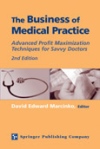
biz-book1According to corporate medical recruiter Kris Barlow RN MBA, physicians can select from various employment models that may include fringe benefit packages (life, health, dental, disability insurance; medical society and hospital dues, journals, vacations, auto, and CEUs, etc.) equal to 25-40% of salary [personal communication]. 

And, this medical business model is fast growing as the various types below demonstrate. 

Independent Contractor or Employee 

A payer has the right to control or direct only the result of the work done by an independent contractor, and not the means or methods of accomplishing the result.

By contrast, anyone who performs services for another is an employee if he or she can control what will be done and how it will be done. Employed physicians are usually not compensated as independent contractors. 

New Practitioner Salaries: 

Published annually for new practitioners by The Health Care Group®, the Physician Starting Salary Survey collects and collates nationwide data on new physician employment compensation.

The guide reports first, second and third year of starting physicians’ salary and incentives, but with large high-low spreads. It also includes information about co-ownership provisions, benefits and restrictive covenants.

The survey is categorized by specialty and results are based on information provided by medical practices, health care advisors, physicians, and health care consultants across the country. The figures represent basic elements of the bid/ask process for establishing optimal salary and benefit amounts for new physicians entering private practice.

Available for no charge from the Health Care Group (800.473.0030 or www.HealthCareGroup.com) 

Public Equity Relationships 

The public equity roll-up model of medical partnerships in the late 1990s offered employed physicians experience within a large group whose decisions were made by managers.  Compensation was controlled and replaced with the stress of investor expectations, as Physician Practice Management Corporations (PPMCs) needed to grow revenues by 10-15% annually to maintain price-to-earnings ratios. If stock was held in a growing PPMC, physician employees shared in both practice and corporate compensation

But, by 2007, a survey of the Cain Brothers Physician Practice Management Corporation Index of public PPMCs, revealed a market capitalization loss of more than 95% since inception.

Newer Healthcare Delivery and Physician Compensation Models

Today, whether independent or employed, physicians can pursue several creative compensation models not available a decade ago:

MSO Contracting: 

According to consultant Jeffrey Peters, physicians maintain private practice in this model, but contract with a management services organization to relieve administrative burdens. Physicians maintain control with less stress, but, as MSO contracts are expensive (18-45% revenue), compensation diminishes, and rests on MSO competence.

Locum Tenens Practitioner:

Locum Tenens (LT) is an alternative to full-time employment for most specialties. Some younger physicians enjoy the travel, while mature physicians like to practice at their leisure.

Employment factors to consider include: firm reputation, malpractice insurance, credentialing, travel and relocation expenses (which are negotiable).  However, a LT firm typically will not cover taxes. 

Cash Based Compensation:  

A Cash Based Compensation (CBC) model attracts patients who pay cash for desirable services, such as surgeons who dispense scar reducers or in areas such as pain relief, weight loss, aesthetic procedures, and natural health.  

Any well-rounded CBC program should include: patient demand; low entry cost; little marketing costs; existing employees to administer the program; and an operational plan. With time and effort, profit for physician compensation may increase 10-20% annually.

Values Based Health Insurance Model:

According to some pundits,instead of the one size fits all approach of traditional health insurance, a “clinically-sensitive” cost-sharing system that supports co-payments related to evidence-based value for targeted patients seems plausible. 

In this model, out-of-pocket costs are based on price and a cost/quality tradeoff in clinical circumstances: low co-payments for interventions of highest value, and higher co-payments for interventions with little proven health benefit. Smarter benefit packages are designed to combine disease management with cost sharing to address spending growth.

Global Healthcare Model: 

American businesses are extending their cost-cutting initiatives to include offshore employee medical benefits, and facilities like the Bumrungrad Hospital in Bangkok, Thailand (cosmetic surgery), the Apollo Hospital in New Delhi, India (cardiac and orthopedic surgery) are premier examples for surgical care. Both are internationally recognized institutions that resemble five-star hotels equipped with the latest medical technology.  

Countries such as Finland, England and Canada are also catering to the English-speaking crowd, while dentistry is especially popular in Mexico and Costa Rica. Although this is still considered “medical tourism,” Mercer Health and Benefits was recently retained by three Fortune 500 companies interested in contracting with offshore hospitals and JCAHO has accredited 88 foreign hospitals through a joint international commission.  

To be sure, when India can discount costs up to 80%, the effects on domestic hospital reimbursement and physician compensation may be assumed to increase downward compensation pressures.
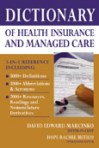
dhimc-book1Conclusion

Regardless of the salaried compensation model, its review and understanding is vital for long-term success.

How have the above compensation models affected your medical practice business model, and salary, if any?

Speaker: If you need a moderator or a speaker for an upcoming event, Dr. David Edward Marcinko; MBA is available for speaking engagements. Contact him at: MarcinkoAdvisors@msn.com

Product Details