Understanding Dow Jones Weighting of Stocks

By Staff Reporters

SPONSOR: http://www.MarcinkoAssociates.com

***

***

Dow Jones Companies

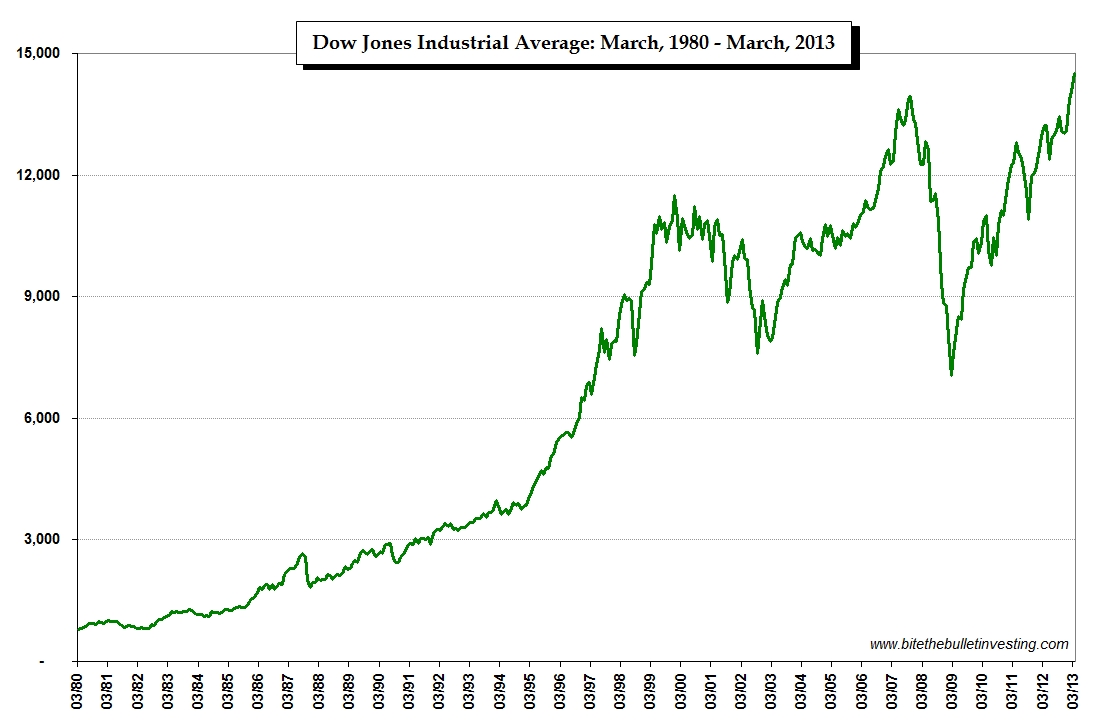
The thirty companies included in the Dow Jones Industrial Average are listed in the updated chart below.

The list is sorted by each component’s weight in the index. The weight of each company is determined by the price of the stock. A $100 stock will be weighted more than a $30 stock. If a stock splits its corresponding weighting in the Dow Jones will be reduced as its price will be about half of what it was prior to the split.

CHART: https://www.slickcharts.com/dowjones

***

COMMENTS APPRECIATED

THANK YOU
***

PHYSICIANS ONLY: Career Coaching and Development

MARCINKO ASSOCIATES, Inc.

SPONSOR: http://www.MarcinkoAssociates.com

***

***

Did you Know?

Experts estimate that it can cost more than $1 million to recruit and train a replacement for a doctor who leaves the profession because of burnout. But, as no broad calculation of burnout costs exists, Dr. Tait Shanafelt [Mayo Clinic researcher and Stanford Medicine’s first Chief Physician Wellness Officer] said Stanford, Harvard Business School, Mayo Clinic and the American Medical Association (AMA) are further cost estimating the issue. Nevertheless, Shanafelt and other researchers have shown that burnout erodes job performance, increases medical errors, and leads doctors to leave a profession they once loved.

Fortunately, we can help. From formal coaching to second career opinions, mentoring and advising, we can help with our remediation executive career programs. Regardless of what is happening in your life, it is wonderful to have a non-partial, confidential and informed career coach and sounding board on your side.

CITE: JAMA Internal Medicine [Effect of a Professional Coaching Intervention on the Well-Being and Distress of Physicians].

NCBI: https://www.ncbi.nlm.nih.gov/pmc/articles/PMC6686971/

THANK YOU

CONTACT US: https://marcinkoassociates.com/process-what-we-do/

***

EDUCATION: Books

SPEAKING: Dr. Marcinko will be speaking and lecturing, signing and opining, teaching and preaching, storming and performing at many locations throughout the USA this year! His tour of witty and serious pontifications may be scheduled on a planned or ad-hoc basis; for public or private meetings and gatherings; formally, informally, or over lunch or dinner. All medical societies, financial advisory firms or Broker-Dealers are encouraged to submit an RFP for speaking engagements: CONTACT: Ann Miller RN MHA at MarcinkoAdvisors@outlook.com 

ABOUT: Marcinko Associates; Inc.

By Dr. David Edward Marcinko; MBA MEd CMP

PRACTICE MANAGEMENT AND FINANCIAL PLANNING ADVICE FOR MEDICAL PROFESSIONALS

***

***

At http://www.MarcinkoAssociates.com, we follow Fiduciary Standards for your protection:

Embrace the legal fiduciary obligation to place Medical colleague clients’ interests first

Deliver comprehensive financial planning and practice management advice for medical professionals

Provide fee-only advice; not fee-based advice

Do not accept commissions or assets under management

Be transparent on client costs, fees, and terms at all times

Provide transparency on portfolios and investment suggestions

Remain independent from any bank, broker dealer, insurance provider, RIA or custodian

Measure client performance returns using independent third parties

Do not create products to sell or price any public securities

Do not physically hold or possess any client assets, securities, or money for management

Investment and financial planning advice only!

OUR EDUCATION: Books

SPEAKING: Dr. Marcinko will be speaking and lecturing, signing and opining, teaching and preaching, storming and performing at many locations throughout the USA this year! His tour of witty and serious pontifications may be scheduled on a planned or ad-hoc basis; for public or private meetings and gatherings; formally, informally, or over lunch or dinner. All medical societies, financial advisory firms or Broker-Dealers are encouraged to submit a RFP for speaking engagements: MarcinkoAdvisors@outlook.com 

COMMENTS APPRECIATED

Read, Like, Refer and Subscribe

***

***

OBTAIN: An Unbiased Second Financial Planning Opinion

By Ann Miller RN MHA CPHQ CMP

***

***

Finally … Fiduciary second investing and financial planning opinions right here!

Telephonic or electronic advice for medical professionals that is:

  • Objective, affordable, medically focused and financially personalized
  • Rendered by a pre-screened financial consultant for doctors and medical professionals
  • Offered on a pay-as-you-go basis, by phone or secure e-mail transmission

The iMBA Discussion Forum™ is a physician-to-financial advisor telephone or e-mail portal that connects independent financial professionals to doctors, nurses or healthcare executives desiring affordable and unbiased financial planning advice.

Medical professionals and healthcare executives can now receive direct access to pre-screened iMBA professionals in the areas of Investing, Financial Planning, Asset Allocation, Portfolio Management, Insurance, Mortgage and Lending, Human Resources, Retirement Planning and Employee Benefits. To assist our medical professional and healthcare executive members, we can be contracted with per-minute or per-project fees, and contacted by client phone, email or secure instant messaging.

***

http://www.MARCINKOASSOCIATES.com

E-mail CONTACT: MarcinkoAdvisors@outlook.com

***

***

Thank You

REQUEST “PROFESSIONAL PORTFOLIO CONSTRUCTION” For Physicians [The Doctor Effect]

A FREE WHITE PAPER UPON E-MAIL REQUEST

SPONSOR: http://www.MarcinkoAssociates.com

***

***
Several years ago we noted that far too many mid-career, mature and physician clients using traditional stock brokers, management consultants and “financial advisors”, seemed to be less successful than those who went it alone. These Do-it-Yourselfers [DIYs] had setbacks and made mistakes, for sure. But, the ME Inc,. doctors seemed to learn from their mistakes and did not incur the high management and service fees demanded from general or retail one-size-fits-all “advisors.”

In fact, an informal inverse related relationship was noted, and dubbed the “Doctor Effect.” In other words, the more consultants an individual doctor retained; the less well they did in all disciplines of the financial planning, professional portfolio and investing continuum.

Of course, the reason for this discrepancy eluded many of them as Wall Street brokerages and wire-houses flooded the media with messages, infomercials, print, radio, TV, texts, tweets, and internet ads to the contrary. Rather than self-learn the basics, the prevailing sentiment seemed to purse the holy grail of finding the “perfect financial advisor.” This realization was a confirmation of the industry culture which seemed to be: Bread for the advisor – Crumbs for the client!

And so, we at the the Institute of Medical Business Advisors Inc. (iMBA), and this Medical Executive-Post, formed a cadre’ of technology focused and highly educated doctors, financial advisors, attorneys, accountants, psychologists and educational visionaries who decided there must be a better way for their healthcare colleagues to receive financial planning advice, products and related management services within a culture of fiduciary responsibility.

We trust you agree with this ME Inc philosophy as illustrated in this free white paper available upon request.

PROFESSIONAL PORTFOLIO CONSTRUCTION [Investing Assets and their Management]
Subscribe, Read, Like and Refer

Email whiote paper request here: MarcinkoAdvisors@outlook.com

***

***

PHYSICIAN ENTREPRENEURS: Rising Again!

By Dr. David Edward Marcinko MBA MEd

SPONSOR: http://www.MarcinkoAssociates.com

***

***

Marcinko Associates is a financial guide. We help answer your questions in an empowering way. We educate and empower medical colleagues to understand their financial picture and to make better financial decisions. We strive to simplify everything, clear up confusion, and address specific needs and goals.

Whatever your financial situation, we do not shame, criticize, or sell. We enrich, educate and empower. We work with medical colleagues at every stage of their financial journey, through big life personal changes to annual employment reviews, in order to help them understand, invest, and protect their money and autonomy.

And, like the famed ‘Tibetan Sherpas“, we guide physician entrepreneurs from medical practice business plan creation, funding, start-up operations and strategic management improvement to maximize profits and stream-line patient care quality initiatives.

READ: https://marcinkoassociates.com/welcome-medical-colleagues/

REQUEST FREE BUSINESS PLAN WHITE PAPER

EDUCATION: Books

SPEAKING: Dr. Marcinko will be speaking and lecturing, signing and opining, teaching and preaching, storming and performing at many locations throughout the USA this year! His tour of witty and serious pontifications may be scheduled on a planned or ad-hoc basis; for public or private meetings and gatherings; formally, informally, or over lunch or dinner. All medical societies, financial advisory firms or Broker-Dealers are encouraged to submit a RFP for speaking engagements: MarcinkoAdvisors@outlook.com 

Just email: MarcinkoAdvisors@outlook.com

Thank You

***

***

FINANCIAL PLANNING: Specifically for Physicians and Medical Professionals

By http://www.MarcinkoAssociates.com

***

***

(“Informed Voice of a New Generation of Fiduciary Advisors for Healthcare”)

For most lay folks, personal financial planning typically involves creating a personal budget, planning for taxes, setting up a savings account and developing a debt management, retirement and insurance recovery plan. Medicare, Social Security and Required Minimal Distribution [RMD] analysis is typical for lay retirement. Of course, we can assist in all of these activities, but lay individuals can also create and establish their own financial plan to reach short and long-term savings and investment goals.

But, as fellow doctors, we understand better than most the more complex financial challenges doctors can face when it comes to their financial planning. Of course, most physicians ultimately make a good income, but it is the saving, asset and risk management tolerance and investing part that many of our colleagues’ struggle with. Far too often physicians receive terrible guidance, have no time to properly manage their own investments and set goals for that day when they no longer wish to practice medicine.

For the average doctor or healthcare professional, the feelings of pride and achievement at finally graduating are typically paired with the heavy burden of hundreds of thousands of dollars in student loan debt.

You dedicated countless hours to learning, studying, and training in your field. You missed birthdays and holidays, time with your families, and sacrificed vacations to provide compassionate and excellent care for your patients. Amidst all of that, there was no time to give your finances even a second thought.

Between undergraduate, medical school, and then internship and residency, most young physicians do not begin saving for retirement until late into their 20s, if not their 30s. You’ve missed an entire decade or more of allowing your money and investments to compound and work for you. When it comes to addressing your financial health and security, there’s no time to waste.

And you may be misled by unscrupulous “advisors”.

MORE: https://marcinkoassociates.com/financial-planning/

***

***

OPEN LETTER: MARCINKO Associates, Inc.

MISSION STATEMENT

Open Letter from the CEO

Dr. David Edward Marcinko MBA CMP™

http://www.MarcinkoAssociates.com

ALL MEDICAL AND HEALTHCARE COLLEAGUES

Did you know that at MARCINKO & Associates, all medical colleagues throughout the United States may contact us when they are considering the sale, purchase, strategic operating improvement, merger, acquisition and/or other financial business or related personal financial planning transaction?

MORE: https://marcinkoassociates.com/welcome-medical-colleagues/

***

Our difference is “hard” knowledge and insider financial guidance that helps medical colleagues, nurses, private practitioners, clinics, ambulatory surgery, radiology and outpatient wound care centers realize their ultimate economic goals. This typically includes managerial and cost accounting, financial ratio analysis, fair market valuation business appraisals, business plan creation and personal financial planning.

MORE: https://marcinkoassociates.com/fmv-appraisals/

Our “expert witness” business litigation support service and divorce mediation, arbitration, asset division, settlement and second opinion offerings are always available, as well.

MORE: https://marcinkoassociates.com/expert-witness/

And, our “soft” skill professional career guidance and mentoring center includes executive coaching, consulting and mentoring advisory programs for stressed, conflicted or burned-out physicians and medical practitioners.

Most importantly, our professional fees are reasonable and always transparent.

MARCINKO & Associates also serves universities, medical, business, graduate and nursing schools; physicians, dentists, podiatrists, optometrists and legal societies. This includes accountants, financial service providers, wealth and hedge fund managers, emerging entities, hospitals, CEOs and their BODs, the press, media and related organizations.

MORE: https://marcinkoassociates.com/speaking-seminars/

Contact us for an educational white-paper on most any topic.

MORE: https://marcinkoassociates.com/case-studies/

***

Now, please review our website to learn more.

And, always retain us when needed.

How May We Serve You?

DAVID EDWARD MARCINKO

email: MarcinkoAdvisors@msn.com

© Copyright: Institute of Medical Business Advisors, Inc. All rights reserved, USA. Present to 2024.

BACKFIRE: Mind Effect

By Staff Reporters

SPONSOR: http://www.MarcinkoAssociates.com

***

***

The Backfire Effect refers to the strengthening of a belief even after it has been challenged.

Cook and Lewandowsky (2011) explain it very well in the context of changing people’s minds in their Debunking Handbook. The backfire effect may work based on the same foundation as Declinism, in that we do not like change. It is also similar to negativity bias, in that we wish to avoid losing and other negative outcomes—in this case, one’s idea is being challenged or rejected (i.e. perceived as being made out to be “wrong”) and thus, they may hold on tighter to the idea than they had before.

However, according to colleague Dan Ariely PhD, there are caveats to the backfire effect—for example, we also tend to abandon a belief if there’s enough evidence against it with regard to specific facts.

***

COMMENTS APPRECIATED

Subscribe and Refer

***

MARCINKO ASSOCIATES: Physician Wealth Advisors and Practice Management Consultants

FIDUCIARY MEDICAL COLLEAGUES – FEE ONLY – NO PRODUCT OR SALES COMMISSIONS

SPONSOR: http://www.MarcinkoAssociates.com

***

***

DEAR MEDICAL COLLEAGUES

Achieving your financial, wealth and medical practice management goals is important, but handling everything on your own can be overwhelming. That’s where we come in. At D. E. Marcinko & Associates, our team of dual degree experienced physician advisors and medical consultants is here to guide you every step of the way. We believe in providing unbiased, high-quality financial and business advice.

For example, we offer a one-time written financial plan with oral evaluation for a flat fee with no ongoing sales or assets under management fees or commissions. Together, we can create a personalized financial plan tailored to your unique goals, empowering you to make confident, informed decisions as you navigate your financial future.

Other Services Include:

  • Estate Planning We have a network of qualified legal professionals that we can refer you to for state specific estate planning needs.
  • Tax Strategy We can work alongside your CPA for tax planning purposes. If needed, we can refer you to a qualified tax professional.
  • Investment Analysis If you have investments, we review your accounts to make sure they are aligned with your long-term goals.
  • 401-k Allocations We evaluate your 401(k) allocations and provide recommendations that align with your goals.
  • Education Savings We help you explore the various ways to plan and save for education expenses.
  • Insurance & Risk Management We assess your insurance coverage to ensure it adequately protects you against potential risks; as well as evaluate and provide expert litigation witnesses, as needed.
  • Medical Practice Management We evaluate your current or potential medical practice to determine value and/or private equity offers or physician practice management formats [PPMC] for new, mid-career or retiring physicians, nurses and dentists.   

D. E. Marcinko & Associates is unique and fully committed to all phases of a medical professionals personal and business life cycle. We are at your service 24/7: Email MarcinkoAdvisors@outlook.com

ANN MILLER RN MHA CMP

***

Thank You

***

***

GIBSON’S PARADOX: Inaccurate Economic Observations

Why were interest rates and prices correlated?

By Staff Reporters

SPONSOR: http://www.MarcinkoAssociates.com

***

***

Gibson’s paradox is based on an economic observation made by British economist Alfred Herbert Gibson regarding the positive correlation between interest rates and wholesale price levels. John Maynard Keynes later called this relationship a paradox because he claimed that it could not be explained by existing economic theories.

CITE: https://www.r2library.com/Resource/Title/0826102549

There have been possible explanations raised by economists to solve Gibson’s paradox over the decades. But as long as the relationship between interest rates and prices remains artificially de-linked, there may not be enough interest by today’s macro-economists to pursue it any further.

In the end, Gibson’s paradox was neither Gibson’s (having been previously discovered by others) nor a true paradox (as plausible explanations already existed at the time of Keynes’s writing and more have been explored since) and is of little interest beyond being a historical footnote to the gold standard era.

COMMENTS APPRECIATED

Thank You

***

***

PODCAST: What is SMART BETA?

***

***

REALLY SMART -OR- NOT REALLY

BY: DR. DAVID EDWARD MARCINKO MBA MEd CMP®

SPONSOR: http://www.MarcinkoAssociates.com

CMP logo

SPONSOR: http://www.CertifiedMedicalPlanner.org

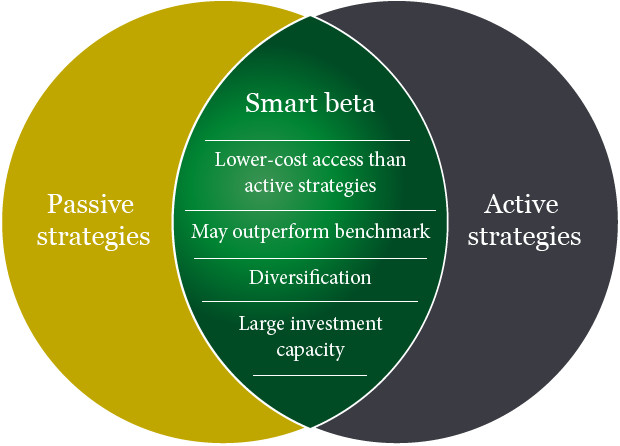
Smart beta investment portfolios offer the benefits of passive strategies combined with some of the advantages of active ones, placing it at the intersection of efficient-market hypothesis and factor investing.

Offering a blend of active and passive styles of management, a smart beta portfolio is low cost due to the systematic nature of its core philosophy – achieving efficiency by way of tracking an underlying index (e.g., MSCI World Ex US). Combining with optimization techniques traditionally used by active managers, the strategy aims at risk/return potentials that are more attractive than a plain vanilla active or passive product.

CITATION: https://www.r2library.com/Resource/Title/0826102549

Originally theorized by Harry Markowitz in his work on Modern Portfolio Theory (MPT), smart beta is a response to a question that forms the basis of MPT – how to best construct the optimally diversified portfolio. Smart beta answers this by allowing a portfolio to expand on the efficient frontier (post-cost) of active and passive. As a typical investor owns both the active and index fund, most would benefit from adding smart beta exposure to their portfolio in addition to their existing allocations.

Financial beta: https://medicalexecutivepost.com/2021/05/12/so-what-is-financial-beta-granularly/

Assessment: The smart beta approach is an arguably perfect intersection between traditional value investing and the efficient market hypothesis. But, is it worth the cost?

More: https://www.bloomberg.com/opinion/articles/2018-06-08/smart-beta-performance-isn-t-worth-the-cost

ALPHA versus BETA Podcast: https://youtu.be/dP_23vKJ3HQ

***

INVITE DR. MARCINKO: https://medicalexecutivepost.com/dr-david-marcinkos-

***

***

Medical Practice Valuation Blunders

 Top Ten Appraisal Blunders to Avoid

By Dr. David Edward Marcinko; MBA, MEd, CMP™

MARCINKO & ASSOCIATES: https://marcinkoassociates.com/

Top Ten Appraisal Blunders to Avoid

The science of the modern medical practice valuation can be traced to the Estate of Edgar A. Berg v. Commissioner (T. C. Memo 1991-279). In this case, the Court criticized CPAs as not being qualified to perform business valuations, failing to provide analysis of an appropriate discount rates, and making only general references to justify their   “Opinion of Value.”

In rejecting accountants, the Court accepted IRS economists because of background, education and training, as well as discount rate calculations and reproducible evidence applied to the assets being examined. This marked the beginning of the Tax Court leaning toward the side with the most comprehensive appraisal. Previously, it had a tendency to “split the difference.” Now, some feel the Berg case launched the valuation profession; especially for contemporaneous health economists.

But, it was not until after 1995 that the IRS issued guidelines for the valuation of physician practices. As a result, the Uniform Standards of Professional Appraisal Practice [USPAP] requires that a blended constellation of three recognized valuation approaches (income, market, and cost approaches) be considered when estimating fair market value.

Operative Valuation Definitions

When pursuing any discussion of medical practice worth, two key elements must be understood: (1) the valuation process, and (2) fair market value.  According to the Dictionary of Health Economics and Finance

  1. Practice valuation is the “the formal process of determining the worth of a healthcare or other medical business entity, at a specific point in time, and the act or process of determining fair market value.”
  2. Fair market value [FMV] is “a legal term generally meaning the price at which a willing buyer will buy, and a willing seller will sell an asset in an open free market with full disclosure.”  IRS Revenue Ruling 59-60 clearly states that FMV “is essentially a future prophesy and must be based on facts available at the required date of appraisal”

Unfortunately, the value of a medical practice cannot be directly observed by activity in thinly traded private markets. Perhaps this is why we continually observe the following valuation blunders? They are committed by both sellers and buyers who are pursuing opposite objectives; sale price maximization versus price minimization?

Top 10 Blunders:

Not Understanding What a Medical Practice Valuation Is and Is Not

  • Valuations are not source document fraud audits.
  • Valuations are material representations providing a range of transferable worth.
  • Valuations are reproducible estimates based on economic assumptions.
  • Valuations are not “back-of-the envelope multiples” using specious benchmarks.
  • Valuations are defensible and “signed-off” attesting to USPAP/IRS formats.
  • Financial accounting value [book-value] is not fair market value.
  • Professional valuators represent only one party at arm’s length; not both sides.
  • Engagement solicitor and/or valuation payer is the client.
  • Unbiased valuators do not provide financing or equity-participation schemes. Although not standardized, the Institute of Medical Business Advisors, Inc uses the following three levels that approximate engagement types for the industry.

2. A Limited Valuation lacks additional suggested USPAP procedures.  It is considered an “agreed-upon-procedure”, used in circumstances where the client is the only user [i.e., updating a buy-sell agreement, or practice buy-in for a valued associate] and not for external purposes. No onsite visit is needed. A formal Opinion of Value is not rendered.

3. Not Observing Industry Standards, Rules and Regulations

Specifically, in USPAP transactions involving physician practices, the IRS implied:

  • Ad-Hoc Valuation is low level engagement that provides a gross and non-specific approximation of value based on limited meters by involved parties. Neither a written report, nor an Opinion of Value is rendered. It is often used periodically as an internal organic growth / decline gauge.
  • A Comprehensive Valuation is an extensive service designed to provide an unambiguous Opinion of Value range. It is supported by all procedures that valuators deem relevant with mandatory onsite review. This “gold-standard” is suitable for contentious situations like divorce, partnership dissolution, estate planning and gifting, etc. The written Opinion of Value is applicable for litigation support activities like depositions and trial. It is also useful for external reporting to bankers, investors, the public and IRS, etc.

4. Not Understanding Engagement Types and Levels

  • Discounted cash flow (DCF) analysis is the most relevant income approach and must be done on an “after-tax” basis.
  • Practice collections must be projected based on reasonable assumptions for the practice and market; etc.
  • Physician compensation must be based on market rates consistent with age, experience and productivity.
  • Majority premiums and minority discounts are to be considered.Goodwill represents the difference between practice purchase price and the value of the net assets.  Personal goodwill results from the charisma, skills and reputation of a specific doctor. Its attributes accrue solely to the individual, are not transferable and can’t be sold. It has little or no economic value as it “goes to the grave” with the doctor.  Transferable medical practice goodwill has value, may be transferred, and is defined as the unidentified residual attributes that contribute to the propensity of patients and managed care contracts (and their revenue streams) to return in the future (Schilbach v. Commissioner, T.C. Memo 1991-556).  And so, one must also appreciate the: (i) impact of a changing environment; (ii) practice transfer in a local market which can augment or blunt goodwill value; and the (iii) determination of whether patients or HMOs return because of true goodwill, or are mandated by contractual obligations; among many other multi-variable determinants.
  • Even the Goodwill Registry however, a classic source used to determine the average percentage of revenue contributed to practice goodwill, may be dated for some specialties leading to abnormally high values.

5. Not Understanding the Value of Practice Goodwill: Unlimited life span.

6. Not Understanding the Value of Personal Goodwill: Limited life span.

Now, to further confuse the issue, how each kind of goodwill is allocated in situations like divorce depends on state law. For example, some courts include both kinds of goodwill to be apportioned – some exclude both – and others pursue a case-by-case approach.

7. Not Understanding “Excess Earnings Capitalization”

Another way to determine goodwill value is through “excess earnings capitalization.” This economic method looks at the difference between salary, and what you’d have to pay a comparable doctor replacement.

As an example, when you subtract the numbers, and divide the result by 20%, an important percentage referred to as the Capitalization Rate emerges. The final number gives a dollar value for practice goodwill. Courts seem to prefer this method in divorces because it tends to reflect a practice’s current value.

8. Not Understanding the Present Compensation versus Future Value Paradox

Regardless of practice business model, physician compensation is inversely related to practice value. In other words, the more a doctor takes home in above-average salary, the less the practice is generally worth, and vice versa; ceteris paribus

9. Substituting Benchmarks and Formulas for Practice Specificity

In the stable economic past, industry benchmarks might have been used as quick and inexpensive substitutes for professionally prepared valuations.  Muck like preparing one’s own income tax return today – while legal – it is a fraught with peril if challenged. The Courts seem to frown on this simplistic and dated methodology.

Moreover, generic benchmark formulas assume a financial statement reporting standard that just does not exist in public accounting.

Therefore, most every competitive issue that impacts value should be addressed with each practice engagement. This includes, but is not limited to contemporary dislocations by third parties, Medicare and commercial payers; retail clinics and changes in supply/demand and specialty trends; rise of ambulatory surgery centers and specialty hospitals; outsourced care and medical tourism, alterations in resource based-relative value units, APCs, DRGs and newer MS-DRGs; the Medicare Modernization Act, HIPAA, OSHA, EEOC, Sarbanes-Oxley and US Patriot Acts, PP-CA, and ACOs; among other regulations.

Current employee trends to high-deductible health care plans [HD-HCPs] and private concierge medicine must also be considered, as well as demographic and employer shifts to defined contribution plans – from defined benefits plans – to name just a few more complicating issues.

10. Not Aggregating or “Normalizing” Financial Information

Employees may be interviewed and financial information must be gathered before a medical practice can be properly valued. The following data, for the most recent three year period, serves as a starting point:

  • Practice (corporate) tax returns.
  • Equipment / automobile leasing and/or tax depreciation schedules.
  • Accounts Receivable aging-schedule.
  • Practice consolidated financial statements (P&L, Cash Flow, Balance Sheet and Retained Earnings).
  • Prior Buy-Sell and/or non-compete agreements, and;
  • Sample medical record chart review is increasingly being demanded.
  • It is especially important to eliminate one-time, non-recurring practice expenses. These are adjusted for excessive or below normal expenses on the profit and loss statement. Such “normalization” can produce a big surprise for benchmark proponents and formula-driven advocates when a selling doctor runs personal expenditures through the practice that a buyer [or Court] wouldn’t consider legitimate.  Of course, such shenanigans are less noted using professional USPAP/IRS guidelines. Conversely, you may have to defend legitimate business expenses that an appraiser may seek to normalize. For example, doctors may pay for a vehicle through their practice, but if used to travel between multiple offices and hospitals, the expense may be legitimate.  Of course, normalization is a sophisticated and time-intensive process. But, it is where the expert earns his/her professional fee, and defends the resulting valuation range when challenged.The most important credential to look for is fiduciary experience, specificity and independence. Some doctors mistakenly turn to those who may have never appraised a practice before. And, just because an appraiser has initials behind his name, doesn’t mean he understands the peculiarities of medical specialties, especially podiatry. We believe that only an independent health economist, who will be your advocate under Securities Exchange Commission [SEC] fiduciary [not lower “suitability”] guidelines, should be selected. Of course, it is almost impossible to answer concerns regarding fees without specific information. The cost of a valuation can range from $0 (benchmarks-rule of thumb) to $50,000 for an onsite team of experts for behemoth practices and ambulatory surgery centers. Keep in mind that in most cases you want to ensure the value determination will stand up to IRS scrutiny, so the $0 rule-of-thumb is not an optionExternal appraisals, or poorly aggregated financial information, onsite reviews and litigation support services incur additional costs; yet most doctors find the money well spent. Expect to pay a retainer and sign a formal professional engagement letter.

Assessment

Don’t be surprised if a sales-broker does not consider the above issues as the modern health era emerges. Most agent-appraisers are predominantly concerned with earning commissions by working both transaction parties, and may not represent your best interests. And, they are usually not obliged to disclose conflicts-of-interest and don’t provide legal testimony.

As a result, a good medical practice is no longer necessarily a good business; and retiring doctors can no longer automatically expect to extract premium sales prices. Moreover, uninformed young physicians should not be goaded to over-pay. Regardless of your dismay – or delight – in the changing healthcare milieu, always be foreword thinking and remember the admonition, Trust-but Verify, for any business transaction. 

But, it is a fait accompli that medical practice worth is presently deteriorating. As the population ages and third-party reimbursements plummet, doctors are commoditized and traditional retail medicine is replaced by more efficient wholesale business models like workplace health clinics. The recent sub-prime mortgage de-fault fiasco, potential tax-reform law expiration and the political specter of a nationalized healthcare system, only adds fuel to the macro-economic fires of uncertainly.

Finally, once practice price is mutually agreed upon, sales contract terms and agreements present a plethora of financing challenges for both involved parties to consider [bank loan payment rates and length, personal promissory guarantees, down-payment offsets, earn-out arrangements, Uniform Commercial Codes-1 asset guarantees, etc] in their due-diligence efforts.

However, most reputable firms use a blended fee-schedule of fixed and hourly rates (plus expenses). So, doctors should expect to spend approximately $5,000-15,000 for an average sized – limited appraisal – that is completely suitable for most internal activities.

Moreover, look-out if the valuation not done at an-arm’s-length and independent manner; or worse still, if it is performed for both parties simultaneously.

 Selecting the Wrong Valuator and Not Understanding Professional Fees

  • Realize too, that the appraiser may also add expenses that have not been incurred; like an office manager’s salary if your spouse is in that role for free. This produces a lower appraised value and is common in small medical practices. Honoraria are another example that does not figure into value calculations.
  • For example, we recall one doctor who painted his personal residence and wrote it-off as a valid business expense. Deleting other major expenses such as country club memberships, make a practice look more profitable—good news if you’re selling it, bad news if you’re getting a divorce.

Conclusion

Your thoughts and comments on this ME-P are appreciated. Feel free to review our top-left column, and top-right sidebar materials, links, URLs and related websites, too. Then, subscribe to the ME-P. It is fast, free and secure.

Speaker: If you need a moderator or speaker for an upcoming event, Dr. David E. Marcinko; MBA – Publisher-in-Chief of the Medical Executive-Post – is available for seminar or speaking engagements. Contact: MarcinkoAdvisors@msn.com

 ***

Risk Management, Liability Insurance, and Asset Protection Strategies for Doctors and Advisors: Best Practices from Leading Consultants and Certified Medical Planners™8Comprehensive Financial Planning Strategies for Doctors and Advisors: Best Practices from Leading Consultants and Certified Medical Planners™

[Dr. Cappiello PhD MBA] *** [Foreword Dr. Krieger MD MBA]

Front Matter with Foreword by Jason Dyken MD MBA

Invite Dr. Marcinko

***

***


MARCINKO & ASSOCIATES: Financial Planning and Business Management Education for Physicians

By Dr. David Edward Marcinko MBA MEd CMP

CONSULTING ADVICE – NOT SALES

“AT YOUR SERVICE”

E-mail: MarcinkoAdvisors@msn.com

SPONSOR: http://www.MarcinkoAssociates.com

Marcinko & Associates is financial guide. We help answer your questions in an empowering way. We educate and guide medical colleagues to understand their financial picture and to make better financial decisions. We strive to simplify everything, clear up confusion, and address specific needs and goals.

Simply put, we’re a financial services company on a mission to empower financial freedom for all healthcare professionals; only. We work with doctors, nurses, medical providers, individuals and all sizes of organizations to offer investment, wealth management and retirement solutions so everyone can have a clear and simple understanding of where their finances and career is today and where it is headed tomorrow.

Whatever your financial situation, we do not shame, criticize, or sell. We enrich, educate and empower. We work only with medical colleagues at every stage of their financial journey [students, interns, residents, practitioners, mid-career and mature physicians], through big life personal changes to annual employment reviews, in order to help them understand, invest, and protect their money and lifestyle.

CITE: https://www.r2library.com/Resource

For example, the following are current issues of review need for each Fall and Winter:

  • Financial planning reviews: 401-k, insurance, budget plans, investing, debt and savings, etc
  • Assess, develop, and align financial retirement and estate planning goals
  • Risk Management: Malpractice, home, life, medical, auto and personal indemnity
  • Life Insurance Need Reviews: whole, universal and term  
  • Business, operations, HR, employment negotiations and medical practice management
  • Annuity Need Reviews: Indexed and Fixed [Pros and Cons].

***

***

At Marcinko & Associates we discuss specific needs and answer specific questions. We educate and make personalized recommendations that you are free to use, incorporate or disregard. Referrals to trusted specialists and strategic alliance partners then occur if – and as – needed [pro re nata].

SPONSOR: http://www.CertifiedMedicalPlanner.org

***


PHYSICIAN NET WORTH: Personalized Projections

HOW DO YOU RANK – DOCTOR?

By Dr. David Edward Marcinko MBA MEd CMP

***

SPONSOR: http://www.MarcinkoAssociates.com

***

Once the value of all personal assets and liabilities is known, net worth can be determined with the following formula: Net worth = assets minus liabilities. Obviously, higher is better.

CITE: https://www.r2library.com/Resource

In The Millionaire Next Door, Thomas H. Stanley, PhD, and William H. Danko give the following benchmark for net worth accumulation. Although conservative for physicians of a past generation, it may be more applicable in the future because of current managed care environment. Here is the guide: Multiple your age by your annual pre-tax income from all sources; except inheritances, and then divide by ten.

Example:

As an HMO pediatrician, Dr. Curtis earned $ 90,000 last year. So, if she is 35, her net worth should be at least $ 315,000.

How do you get to that point? In a word, consume less and save more. Stanley and Danko found that the typical millionaire set aside 15 percent of earned income annually and has enough invested to survive 10 years, at current income levels if he stopped working.

Question: If Dr. Curtis lost her job tomorrow, how long could she pay herself the same salary? Could you?

COMMENTS APPRECIATED

Thank You

***

***

DE MARCINKO & ASSOCIATES: Financial, Business & Management Education and Advisory Opinions for Physicians

By Dr. David Edward Marcinko MBA MEd CMP

“AT YOUR SERVICE”

E-mail: MarcinkoAdvisors@msn.com

SPONSOR: http://www.MarcinkoAssociates.com

Marcinko & Associates is financial guide. We help answer your questions in an empowering way. We educate and guide medical colleagues to understand their financial picture and to make better financial decisions. We strive to simplify everything, clear up confusion, and address specific needs and goals.

Simply put, we’re a financial services company on a mission to empower financial freedom for all healthcare professionals; only. We work with doctors, nurses, medical providers, individuals and all sizes of organizations to offer investment, wealth management and retirement solutions so everyone can have a clear and simple understanding of where their finances and career is today and where it is headed tomorrow.

Whatever your financial situation, we do not shame, criticize, or sell. We enrich, educate and empower. We work only with medical colleagues at every stage of their financial journey [students, interns, residents, practitioners, mid-career and mature physicians], through big life personal changes to annual employment reviews, in order to help them understand, invest, and protect their money and lifestyle.

CITE: https://www.r2library.com/Resource

For example, the following are current issues of review need for each Fall and Winter:

  • Financial planning reviews: 401-k, insurance, budget plans, investing, debt and savings, etc
  • Assess, develop, and align financial retirement and estate planning goals
  • Risk Management: Malpractice, home, life, medical, auto and personal indemnity
  • Life Insurance Need Reviews: whole, universal and term  
  • Business, operations, HR, employment negotiations and medical practice management
  • Annuity Need Reviews: Indexed and Fixed [Pros and Cons].

***

***

At Marcinko & Associates we discuss specific needs and answer specific questions. We educate and make personalized recommendations that you are free to use, incorporate or disregard. Referrals to trusted specialists and strategic alliance partners then occur if – and as – needed [pro re nata].

SPONSOR: http://www.CertifiedMedicalPlanner.org

***


CAREER: Physician Coaching and Development

MARCINKO ASSOCIATES, Inc.

SPONSOR: http://www.MarcinkoAssociates.com

***

***

Did you Know?

Experts estimate that it can cost more than $1 million to recruit and train a replacement for a doctor who leaves the profession because of burnout. But, as no broad calculation of burnout costs exists, Dr. Tait Shanafelt [Mayo Clinic researcher and Stanford Medicine’s first Chief Physician Wellness Officer] said Stanford, Harvard Business School, Mayo Clinic and the American Medical Association (AMA) are further cost estimating the issue. Nevertheless, Shanafelt and other researchers have shown that burnout erodes job performance, increases medical errors, and leads doctors to leave a profession they once loved.

CITE: https://www.r2library.com/Resource

Fortunately, we can help. From formal coaching to second career opinions, mentoring and advising, we can help with our remediation executive career programs. Regardless of what is happening in your life, it is wonderful to have a non-partial, confidential and informed career coach and sounding board on your side.

CITE: JAMA Internal Medicine [Effect of a Professional Coaching Intervention on the Well-Being and Distress of Physicians].

NCBI: https://www.ncbi.nlm.nih.gov/pmc/articles/PMC6686971/

THANK YOU

CONTACT US: https://marcinkoassociates.com/process-what-we-do/

***

PHYSICIAN FINANCIAL & BUSINESS ADVICE ONLY – Not Sales!

MISSION STATEMENT

Open Letter from the CEO

Dr. David Edward Marcinko MBA CMP™

http://www.MarcinkoAssociates.com

ALL MEDICAL AND HEALTHCARE COLLEAGUES

Did you know that at MARCINKO & Associates, all medical colleagues throughout the United States may contact us when they are considering the sale, purchase, strategic operating improvement, merger, acquisition and/or other financial business or related personal financial planning transaction?

MORE: https://marcinkoassociates.com/welcome-medical-colleagues/

***

Our difference is “hard” knowledge and insider financial guidance that helps medical colleagues, nurses, private practitioners, clinics, ambulatory surgery, radiology and outpatient wound care centers realize their ultimate economic goals. This typically includes managerial and cost accounting, financial ratio analysis, fair market valuation business appraisals, business plan creation and personal financial planning.

MORE: https://marcinkoassociates.com/fmv-appraisals/

Our “expert witness” business litigation support service and divorce mediation, arbitration, asset division, settlement and second opinion offerings are always available, as well.

MORE: https://marcinkoassociates.com/expert-witness/

And, our “soft” skill professional career guidance and mentoring center includes executive coaching, consulting and mentoring advisory programs for stressed, conflicted or burned-out physicians and medical practitioners.

Most importantly, our professional fees are reasonable and always transparent.

MARCINKO & Associates also serves universities, medical, business, graduate and nursing schools; physicians, dentists, podiatrists, optometrists and legal societies. This includes accountants, financial service providers, wealth and hedge fund managers, emerging entities, hospitals, CEOs and their BODs, the press, media and related organizations.

MORE: https://marcinkoassociates.com/speaking-seminars/

Contact us for an educational white-paper on most any topic.

MORE: https://marcinkoassociates.com/case-studies/

***

Now, please review our website to learn more.

And, always retain us when needed.

How May We Serve You?

DAVID EDWARD MARCINKO

email: MarcinkoAdvisors@msn.com

***

© Copyright: Institute of Medical Business Advisors, Inc. All rights reserved, USA. Present to 2024.

FAIR MARKET VALUATION DETERMINATION: Medical Practices or Clinics

MEDICAL PRACTICE OR AMBULATORY SURGERY CENTER

MARCINKO ASSOCIATES, Inc.

http://www.MARCINKOASSOCIATES.com

***

FAIR MARKET VALUATION DETERMINATION

There are a Myriad of Reasons for Obtaining a Medical Practice Valuation and Appraisal Engagement:

  • Outright selling-buying
  • Partnership and Associate buy-in / buy-out
  • Mergers and Acquisitions
  • Organic growth tracking
  • Hospital integrations
  • Private and public reporting
  • Financing and Venture Capital
  • Estate and tax planning

Our Capability

We have the ability to provide extensive analysis of value components in healthcare practices and provide appraisals based on business, economic, and market conditions. This involves detailed examination of financials and clinical data in the context of numerous factors including medical specialty, physician supply and demand, payer mix, regulatory environment, regional dynamics, and risk premium.

CITE: https://www.r2library.com/Resource

***

READ MORE: https://marcinkoassociates.com/welcome-medical-colleagues/

THANK YOU

***

***

***

What is the Investing “EFFICIENT MARKET ” Hypothesis?

By Dr. David Edward Marcinko MBA MEd CMP

SPONSOR: http://www.MarcinkoAssociates.com

According to colleagues Jeffrey S. Coons PhD CFA, the Efficient Market Hypothesis (EMH) states that securities are fairly priced based on information about their underlying cash flows and that physician investors should not expect to consistently outperform the market over the long-term. 

There are three distinct forms of EMH that vary by the type of information that is reflected in a security’s price:

Weak Form: This form holds that investors will not be able to use historical data to earn superior returns on a consistent basis.  In other words, the financial markets price securities in a manner that fully reflects all information contained in past prices.

Semi-Strong Form: This form asserts that security prices fully reflect all publicly available information. Therefore, investors cannot consistently earn above normal returns based solely on publicly available information, such as earnings, dividend, and sales data.

Strong Form: This form states that the financial markets price securities such that, all information (public and non-public) is fully reflected in the securities price; investors should not expect to earn superior returns on a consistent basis, no matter what insight or research they may bring to the table. 

While a rich literature has been established for doctors regarding to test whether EMH actually applies in any of its three forms in real world markets – probably the most difficult evidence to overcome for backers of EMH is the existence of a vibrant money management and mutual fund industry charging value-added fees for their services. 

In fact, no less than Warren Buffett has suggested that the markets are decidedly not efficient. 

COMMENTS APPRECIATED

Thank You

***

***

The Long and Short of Portfolio Construction

Long-Short Portfolio Construction vs. Long-Only

SPONSOR: http://www.MarcinkoAssociates.com

best-dem-1

[By Dr. David Edward Marcinko MBA MEd CMP™]

SPONSOR: http://www.CertifiedMedicalPlanner.org

Long-Short is an active portfolio construction discipline that balances long positions in high expected return securities and short positions in low expected return securities of approximately equal value and market sensitivity. This type of portfolio is “neutralized” or immunized against changes in value of the underlying market and, therefore, has zero systematic (beta) risk. If the selected securities perform as expected, the long-short positions will provide a positive return, whether the market rises or falls.

Misconceptions

While long-short portfolios are often perceived and portrayed as much costlier and much riskier than long-only, it is inherently neither. Much of the incremental cost and risk is either largely dependent on the amount of leverage employed or controllable via optimization. Those costs and risks that are not controllable—financial intermediation costs of borrowing shares to short, the trading costs incurred to meet long-short balancing, margin requirements, uptick rules, and the risks of unlimited losses on short positions—do not invalidate the viability of long-short strategies.

Long-Short Advantages

Compared with long-only portfolios, long-short portfolios offer enhanced flexibility not only in the control of risk and pursuit of return, but also in asset allocation. Basic market-neutral portfolios achieve a return consisting of three components: (1) interest on funds held as a liquidity buffer, (2) interest on the short sale proceeds maintained with the broker, and (3) the return spread between the aggregate long and aggregate short positions in the portfolios.

Disadvantages

Share borrow-ability and uptick rules make short-selling more difficult and costly than going long. Also, it may be legally or contractually restricted for some investors, such as mutual funds. Inefficiencies may be concentrated in overpriced stocks and, accordingly, short sales of the most overpriced stocks may offer higher positive returns than long purchases of underpriced stocks.

Assessment

Long-only portfolios are confined to altering the weighting of securities within an index in order to realize an excess return. Long-short portfolios are not constrained by index weights and, because they can short securities, they can “underweight” a security by as much as investment insights and risk considerations dictate. Long-short portfolios can be enhanced by “equitizing” them using stock index futures.

Note: “The Long and Short on Long-Short” by Bruce I. Jacobs and Kenneth N. Levy, The Journal of Investing, Spring 1997, pp. 73–86, Institutional Investor, Inc.

Conclusion

Your thoughts and comments on this ME-P are appreciated. Feel free to review our top-left column, and top-right sidebar materials, links, URLs and related websites, too. Then, subscribe to the ME-P. It is fast, free and secure.

Speaker: If you need a moderator or speaker for an upcoming event, Dr. David E. Marcinko; MBA – Publisher-in-Chief of the Medical Executive-Post – is available for seminar or speaking engagements. Contact: MarcinkoAdvisors@msn.com

OUR OTHER PRINT BOOKS AND RELATED INFORMATION SOURCES:

Product DetailsProduct DetailsProduct Details***

RSI: Relative Strength Index [Stock Markets]

By Staff Reporters

http://www.MARCINKOAssociates.com

***

***

The relative strength index (RSI) is a technical indicator used in the analysis of financial markets. It is intended to chart the current and historical strength or weakness of a stock or market based on the closing prices of a recent trading period. The indicator should not be confused with relative strength.

The RSI is classified as a momentum oscillator, measuring the velocity and magnitude of price movements. Momentum is the rate of the rise or fall in price. The relative strength RS is given as the ratio of higher closes to lower closes. Concretely, one computes two averages of absolute values of closing price changes, i.e. two sums involving the sizes of candles in a candle chart. The RSI computes momentum as the ratio of higher closes to overall closes: stocks which have had more or stronger positive changes have a higher RSI than stocks which have had more or stronger negative changes.

The RSI is most typically used on a 14-day time frame, measured on a scale from 0 to 100, with high and low levels marked at 70 and 30, respectively. Short or longer time frames are used for alternately shorter or longer outlooks. High and low levels—80 and 20, or 90 and 10—occur less frequently but indicate stronger momentum.

The relative strength index was developed by J. Welles Wilder and published in a 1978 book, New Concepts in Technical Trading Systems, and in Commodities magazine (now Modern Trader magazine) in the June 1978 issue. It has become one of the most popular oscillator indices.

The RSI provides signals that tell investors to buy when the security or currency is oversold and to sell when it is overbought.

RSI with recommended parameters and its day-to-day optimization was tested and compared with other strategies in Marek and Šedivá (2017). The testing was randomized in time and companies and showed that RSI can still produce good results; however, in longer time it is usually overcome by the simple buy-and-hold strategy.

***

***

COMMENTS APPRECIATED

Thank You

***

Medical Franchises, MLM and In-Office Dispensation

BY Dr. DAVID EDWARD MARCINKO MBA MEd CMP

http://www.MARCINKOASSOCIATES.com

***

***
Healthcare Business and Medical Franchises

The International Franchise Association (IFA) estimates that that about $1 trillion in sales, or 40% of all retail sales, were made through franchised establishment last decade. On the positive side, franchises offer a branded practice concept with management training and access to proprietary methods, marketing and advertising campaigns and a host of support. Moreover, there are franchises available for virtually every healthcare product or service, including: diet, weight loss and fitness; vein care and laser surgery; vitamins, nutriceuticals and pharmaceuticals; plastic and cosmetic surgery; dermatology, tanning and skin care; home healthcare and extended, etc.

CITE: https://www.r2library.com/Resource

Some well know established healthcare and medical franchises are: Doctors Express, Being There Senior Care, Home Care Assistance, Personal Training Institute, Inches-A-Weigh, Remedy Intelligent Staffing, Visiting Angels, Unlimited MedSearch, prnYourHealth and Any Lab Test Now.

On the downside, franchises incur high start-up costs, rules and obligations, payment of franchise percentages and many contractual obligations.

Questions to consider when contemplating this business entity include:

 Franchise stability, track record, licensing and costs.
 Training, support and proximity of other franchises.
 Independence, ownership laws, contracts and dispute resolutions,
 Screening methods, market size and potential market share.
 Replacement cost and transferability?

For more information on Uniform Franchise Offerings Circulars (UFOCs) contact:

Frandata
1130 Connecticut Avenue, NW
Washington DC 20036
202.659.8640

International Franchise Association7
1350 New York Avenue, NW
Washington, DC 20005
202.628.800

Multi-Level Marketing and In-Office Dispensation


A multi-level marketing (MLM) business delivers products or services through a chain of independent distributors rather than traditional retail business outlets. Existing medical practices not only pursue income ancillary, but it is not unusual for beginning practitioners to plan for and include it in their start-up models and business plans.

The first layer is usually the distributor who must sell products/services and recruit additional members to produce a hierarchical organization with many employees. Each distributor profits from direct sales, and from a varying commission stream down-line. It may be best to investigate before you leap into these situations since some may be fraudulent pyramid schemes that sell no useful product or service, and requires only recruiting others into the scheme. Be sure to obtain a Dunn & Bradstreet or TRW credit
report about any MLM company and inquire about current litigation. Most authorities agree that it take 3-5 years before serious money is made in the MLM business.

Moreover, care must be taken with this model. According to colleague Stephen Barrett MD, writing on the Mirage of Multilevel Marketing: “Many any physicians are selling health-related multi-level products to patients in their offices. The companies most involved have included Amway (now doing business as Quixtar), Body Wise, Nu Skin (Interior Design), Rexall, and Juice Plus+. Doctors are typically recruited with promises that the extra income will replace income lost to managed-care.

Back, in December 1997, the AMA Council on Ethical and Judicial Affairs (CEJA) advised against profiting from the sale of “non- health-related products” to their patients. Although CEJA’s policy statement does
not mention products sold through multilevel marketing, CEJA’s chairman said the statement was triggered by the growing number of physicians who had added an Amway distributorship to their practice.”

COMMENTS APPRECIATED

Thank You

***

***

PHYSICIANS BEWARE: Financial “Advice”

BEWARE THE “DOCTOR EFFECT”

Bread for the advisor – Crumbs for the client

By Dr. David Edward Marcinko MBA CMP

SPONSOR: http://www.MarcinkoAssociates.com

Several years ago a group of highly trusted and deeply experienced financial services professionals and estate planners noted that far too many of their physician clients, using traditional stock brokers, management consultants and financial advisors, seemed to be less successful than those who went it alone. These Do-it-Yourselfers [DIYs] had setbacks and made mistakes, for sure. But, the ME Inc. doctors seemed to learn from their mistakes and did not incur the high management and service fees demanded from general or retail one-size-fits-all “advisors.

”In fact, an informal inverse relationship was noted, and dubbed the “Doctor Effect.” In others words, the more consultants an individual doctor retained; the less well they did in all disciplines of the financial planning and medical practice management, continuum.

Of course, the reason for this discrepancy eluded many of them as Wall Street brokerages and wire-houses flooded the media with messages, infomercials, print, radio, TV, texts, tweets, and internet ads to the contrary. Rather than self-learn the basics, the prevailing sentiment seemed to purse the holy grail of finding the “perfect financial advisor.” This realization was a confirmation of the industry culture which seemed to be: Bread for the advisor – Crumbs for the client!

And so, at D.E. Marcinko & Associates, our informed cadre’ of technology focused and highly educated doctors, nurses, financial advisors, attorneys, accountants, psychologists and educational visionaries decided there must be a better way for their healthcare colleagues to receive financial planning advice and related management services within a culture of fiduciary responsibility.

CMP: http://www.CertifiedMedicalPlanner.org

COMMENTS APPRECIATED

Thank You

***

***

RISK MANAGEMENT: https://www.routledge.com/Comprehensive-Financial-Planning-Strategies-for-Doctors-and-Advisors-Best/Marcinko-Hetico/p/book/9781482240283

***

BANKS: Eight Types; plus 1

DOCTORS NEED TO KNOW

SPONSOR: https://marcinkoassociates.com/

By Dr. David Edward Marcinko MBA MEd CMP

A general understanding of these bank types is suggested for any medical professional prior to launching a self-directed [ME, Inc] medical practice, clinic, guided investment strategy, personal financial plan or wealth building portfolio effort; etc.

READ HERE: https://marcinkoassociates.com/bank-types/

COMMENTS APPRECIATED

Thank You

***

***

POPULATION HEALTH: Management?

By Dr. David Edward Marcinko MBA CMP

SPONSOR: http://www.MarcinkoAssociates.com

What is population health management?

The Care Continuum Alliance, an alliance of stakeholders across the continuum of care, is working precisely toward the goal of improving the health of populations. They espouse a detailed set of principles and a model of “population health management.” It can be summed up, in the broadest sense, as the care provider community, in partnership with patients and their families, conducting proactive and collective monitoring of the patient’s healthcare quality, adherence, access, and outcomes with the goal of improving the health of an entire patient population.

As such, population health management stresses wellness and prevention through lifestyle and disease management and complex case management to remove the gap between zero care and costly chronic or emergency care. It emphasizes the full spectrum of needs from prevention and wellness to keeping healthy people and at-risk people healthy, to better manage the care of those with chronic conditions, and to still be ready to provide emergent or acute care services. In most cases, it also includes the involved providers taking on accountability for the financial risk and quality of care provided.

We have been working with administrative and physician leaders across the country to grapple with what it will mean to actually foster valuable population health management in the different communities they serve. It is clear that this is a whole new paradigm and that the years of experience and training that have brought them to where they are today may not have sufficiently prepared them for what is to come. It requires a well-coordinated and complete continuum of care, with new metrics and advanced analytics. As one might expect,while clusters of resistance to the idea remain, most have flung themselves into learning mode and are beginning to “act their way into new thinking.”

However, we also see a big risk in powering ahead without revisiting the role of a key stakeholder group—patients and their families, whose experience and perspective are often left behind, but whose actions will have a profound effect on the future success of population health management efforts.

CITE: https://www.r2library.com/Resource

***

***

***

Its earnings season once again and CVS Health beat Wall Street estimates with $2.3 billion in profit during Q3. Humana raised its Medicare Advantage enrollment projections again.

And, population management telehealth giant Amwell inked a major federal contract but has seen its losses balloon in 2023.

SUBSCRIBE AND COMMENT TODAY

Thank You

***

***

***

DOCTOR: What is Your Investment Philosophy for [Second-Half] 2024?

HERE IS MINE IN BRIEF

DR. DAVID EDWARD MARCINKO MBA MEd CMP

***

SPONSOR: https://marcinkoassociates.com/

***

We have produced Investment Policy Statements of a hundred pages or more for our esteemed physician clients and colleagues. Or, others were just a few pages or a conversation.

ISP: https://medicalexecutivepost.com/2023/03/02/selecting-money-managers/

But, before deciding on any investment direction and philosophy in brief, however, we typically first focus on how much medical clients need to live on. For the income part of a client’s portfolio, that entails locking in rates of at least 4-5%, whether through municipal and corporate bonds, certificates of deposits, Treasury ladders, utilities or conservative dividend producing equities or ETFs, etc.

CITE: https://www.r2library.com/Resource

Once income requirements are fulfilled, whatever money is left over gets diversified into a portfolio of growth and value stocks—with some alternative investments. We limit making tactical shifts like putting money into cash when markets fell last year, or more recently, buying CDs and Treasuries as rates went up.  But, we do re-direct cash income, rather than sell assets in real time, as our philosophy trends to a “Buy and Hold” strategy.

Currently, we’re sitting on the sidelines with cash, some of which we are getting ready to deploy into the market as we position for any pullbacks later this 2024 year.

So, what is your investing philosophy for today, and or, tomorrow?

COMMENTS APPRECIATED

Thank You

***

***

What is “Shelf Registration” for Securities?

What is “Shelf Registration” for Securities?

Dr. David E. Marcinko MBA CMP

http://www.MARCINKOASSOCIATES.com

SPONSOR: http://www.CertifiedMedicalPlanner.org

A relatively new method of registration under the Act of ’33 is known as shelf registration.

Under this rule, an issuer may register any amount of securities that, at the time the registration statement becomes effective, is reasonably expected to be offered and sold within two years of the initial effective date of the registration.

Once registered, the securities may be sold continuously or periodically within 2 years without any waiting period for a registration to clear issuers generally like shelf registration because of the flexibility it gives them to take advantage of changing market conditions.

LINK: https://www.crcpress.com/Comprehensive-Financial-Planning-Strategies-for-Doctors-and-Advisors-Best/Marcinko-Hetico/p/book/9781482240283

In addition, the legal, accounting, and printing costs involved in issuance are reduced, since a single registration statement suffices for multiple offerings within the 2 year period. In effect, what the issuer does is register securities that will meet its financing needs for the next 2 years.

It issues what it needs at the current time, and puts the balance on the “shelf” to be taken off the shelf as needed.

Conclusion:

Your thoughts and comments on this ME-P are appreciated. Feel free to review our top-left column, and top-right sidebar materials, links, urls and related websites, too. Then, subscribe to the ME-P. It is fast, free and secure.

Speaker: If you need a moderator or speaker for an upcoming event, Dr. David E. Marcinko; MBA – Publisher-in-Chief of the Medical Executive-Post – is available for seminar or speaking engagements.

Contact: MarcinkoAdvisors@msn.com

Subscribe: MEDICAL EXECUTIVE POST for curated news, essays, opinions and analysis from the public health, economics, finance, marketing, I.T, business and policy management ecosystem.

**

Risk Management, Liability Insurance, and Asset Protection Strategies for Doctors and Advisors: Best Practices from Leading Consultants and Certified Medical Planners™8Comprehensive Financial Planning Strategies for Doctors and Advisors: Best Practices from Leading Consultants and Certified Medical Planners™

Invite Dr. Marcinko

***

VENTURE CAPITAL: In the Digital Health Care Space

Dr. David Edward Marcinko MBA CMP

SPONSOR: http://www.MarcinkoAssociates.com

***

***

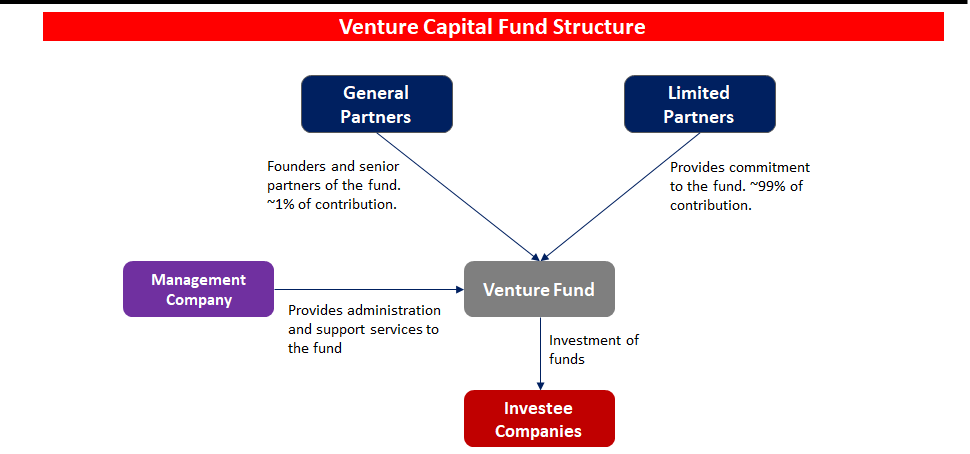
At Marcinko & Associates, we appreciate that Venture Capital funding for entrepreneurs in the digital health space cooled a bit in 2020-22 following a red-hot 2018-20. And, overall, digital health companies raised $15.3 billion last year, down from the $29.1 billion raised in 2021—but still above the $14.1 billion raised in 2020, according to Rock Health a seed fund that supports digital health startups.

CITE: https://www.r2library.com/Resource

Nevertheless, other analysts predict VC investors and Investment Bankers will still put a good amount of money into digital health in 2024 thru 2027, especially in alternative care, drug development, health information technology, artificial intelligence, EMRs and software that reduces physician workload.

An essential first part of attracting VC interest and IB money is the crafting and presentation of your formal business plan [“elevator pitch”]; as well as the needed technical and managerial experience. This too is crucial for success and exactly where we can assist.

Of course, companies focused on scaling and growing will have different needs across the business lifecycle.

And so, no matter where you are in your journey—from seeking early funding to making final preparations for your IPO—we have equity and insightful administration solutions for you and can assist at any stage of your growth spectrum.

MORE: https://marcinkoassociates.com/fmv-appraisals/

CONTACT US TODAY – RETAIN US TOMORROW

How May We Serve You?

E-mail: MarcinkoAdvisors@msn.com

Thank You

***

***

SPEAKING: MARCINKO Associates, Inc.

CAREER DEVELOPMENT

By: http://www.MarcinkoAssociates.com

***

***

As CEO and favorite on the lecture circuit, medical and entrepreneurial futurist Dr. David Edward Marcinko MBA MEd CMP™ enjoys public speaking and gives many talks each year to a variety of conferences around the country, Asia and Europe. He is often quoted in the media, with speaking engagements to more than 135 financial, educational and state medical societies and business groups in an entertaining and witty fashion.

These include seminar speaking engagements and interviews for TV, radio, news and trade magazines, podcasts, blogs and vlogs, and Key-note speeches for colleges, universities, hospitals, business schools or commencement exercises; End-note lectures at city, state, regional or national coalitions on capitalism and free-markets; and annual Break-out sessions for a variety of public and population healthcare policy, management and administration colloquia and meetings.

Past sponsors include Medical Pharmaceutical Companies [Pfizer, Glaxo, Smith-Klein-Fujisawa, Novartis, Shering, Terumo, Sunoviom, Schering-Plough, Sepracor and Aventis, etc]; and Financial Services Corporations [First Global Financial Advisors, Merrill Lynch, Sun-Trust, The Principal, and Pacific Life Insurance Company, etc].

SEMINARS: https://marcinkoassociates.com/speaking-seminars/

CONTACT: Ann Miller RN MHA for public speaking and interview information, professional fees and related engagement details: MarcinkoAdvisors@msn.com

THANK YOU

***

Our iMBA e-Book Sales and Service

The Institute of Medical Business Advisors is a leading national scope provider of healthcare economics, finance, investing, managerial accounting, policy, management and business administration education and medical practice management textbooks, reports, hand-books, dictionaries, journals, white-papers, fair-market valuations [FMV] and legal advisory opinions using multi-platform and traditional seminars and channels of knowledge distribution. iMBA helps the nation’s financial, healthcare and education professionals make decisive improvements in their direction and performance by empowering them through unbiased information, consultants and proprietary tools, books, templates and B-school styled case models.A virtuous “win-win” situation for all concerned.

Link: https://medicalexecutivepost.com/me-pr-a-new-feature/

The firm serves universities, medical, business, graduate and nursing schools; physicians, dentists, attorneys and legal societies – accountants, financial service providers, stock brokers, RIAs, wealth and hedge fund managers – emerging entities, hospitals, clinics, outpatient centers, CXOs and their BODs – the press, media and related academic entities.

Link: http://www.MarcinkoAssociates.com

***

AT YOUR SERVICE

***

PHYSICIAN’S BEWARE: Psychological “INVESTING MIND TRAPS”

By Dr. David Edward Marcinko MBA MEd CMP

SPONSOR: http://www.MarcinkoAssociates.com

As, as human beings, our brains are booby-trapped with psychological barriers that stand between making smart financial decisions and making dumb ones. The good news is that once you realize your own mental weaknesses, it’s not impossible to overcome them. 

CITE: https://www.r2library.com/Resource

In fact, psychiatrist and medical colleague Wes Boyd MD PhD MA related the following mind-traps and investing impediments that have yet to be appreciated by the financial planning community writ-large:

  • Anchoring happens when we place too much emphasis on the first piece of information we receive regarding a given subject. For instance, when shopping for a wedding ring a salesman might tell us to spend three months’ salary. After hearing this, we may feel like we are doing something wrong if we stray from this advice, even though the guideline provided may cause us to spend more or less than we can afford. Ditto for buy / sell stock recommendations without our own due diligence.
  • Myopia makes it hard for us to imagine what our lives might be like in the future. For example, because we are young, healthy, and in our prime medical practice earning years now, it may be hard for us to picture what life will be like when our health depletes and we know longer have the earnings necessary to support our standard of living. This short sighted thinking makes it hard to save adequately when we are young, when saving does the most good.
  • Gambler’s fallacy occurs when we subconsciously believe we can use past events to predict the future. It is common for the hottest sector during one calendar year to attract the most doctor investors the following year. Of course, just because an investment did well last year doesn’t mean it will continue to do well this year. In fact, it is more likely to lag the market.
  • Avoidance is simply procrastination. Even though you may only have the opportunity to adjust your health care plan through your employer once per year, researching alternative health plans is too much work and too boring for us to get around to it. Consequently, we stick with a plan that may not be best for us.
  • Loss aversion affected many investors during the stock market crash of 2008. During the crash, many doctors decided they couldn’t afford to lose more and sold their investments. Of course, this caused the investors to sell at market troughs and miss the quick, dramatic recovery.
  • Overconfident investing happens when we believe we can out-smart other investors via market timing or through quick, frequent trading. Data convincingly shows that people who trade most often under-perform the market by a significant margin over time.
  • Mental accounting takes place when we assign different values to money depending on where we get it from. For instance, even though we may have an aggressive saving goal for the year, it is likely easier for us to save money that we worked for than money that was given to us as a gift.
  • Herd mentality makes it very hard for humans to not take action when everyone around us does. For example, we may hear stories of people making significant profits buying, fixing up, and flipping homes and have the desire to get in on the action, even though we have no experience in real estate.

CMP: http://www.CertifiedMedicalPlanner.org

COMMENTS APPRECIATED

Thank You

***

***

HEDGE FUNDS: A Brief Review for Physicians

By Christopher J. Cummings CFA CFP™

By Dr. David Edward Marcinko MBA MEd CMP™

SPONSOR: http://www.CertifiedMedicalPlanner.org

***

***

A hedge fund in the United States is generally a limited partnership providing a limited number of qualified investors with access to general partner investment decisions with little restriction in the type of investments or use of leverage. While the flexibility available to a hedge fund from a regulatory standpoint implies a high degree of potential risk, there is a wide range of investment philosophies, strategies, security types and objectives captured under the broad title of hedge fund.

Thus, generalizations regarding the characteristics of hedge funds are even less appropriate than with mutual funds, and evaluation of the investment characteristics and merits of a hedge fund strategy must be on a case-by-case basis. Likewise, the cost structure of a hedge fund often includes a base management fee to the general partner plus a performance-based fee or percentage of the profits, and must be evaluated on a case-by-case basis.

Several different investment vehicles operate under the oversight of varying regulatory bodies which provide access to an investment-managers’ discretionary decisions. While each approach generally represents ownership of an underlying pool of securities, there is usually a great deal of flexibility for the manager to deviate from a specific asset class or investment approach. Also, the fee structure of each vehicle can vary greatly and be quite large once distribution fees and sales charges are taken into account.

CITE: https://www.r2library.com/Resource

Thus, it is important for a medical professional to remember the following:

1. Evaluate the features and costs of an investment vehicle carefully;

2. Consider the cash flows and valuations of the securities that the manager or management approach will focus on as if the investments were being made directly, and above all;

3. Read the prospectus or agreement carefully before making any investment.

4. Visit: http://www.MarcinkoAssociates.com

COMMENTS APPRECIATED

Thank You.

***

***

DOCTORS & DENTISTS: Obtain a Financial Planning and Economic Education Consultation

You’ve Earned a Reduced Rate Second-Opinion in 2024

***

SPONSOR: http://www.CertifiedMedicalPlanner.org

SPONSOR: http://www.MARCINKOASSOCIATES.com

***

We have partnered with fiduciary focused financial advisors and fee-only financial consultants who understand the needs of doctors, dentists and medical professionals. More importantly, they understand how the healthcare industrial complex is currently in flux.

READ: https://marcinkoassociates.com/financial-planning/

INVITATION: So, If you are a colleague, schedule a conversation with one of them to review your goals to see if they can help.

ANN MILLER RN MHA CMP

Please email us at: MarcinkoAdvisors@msn.com

***

***

DOCTORS FEELING WEALTHY: How Much is [Really] Enough?

By Staff Reporters

SPONSOR: http://www.MARCINKOASSOCIATES.com

***

***

What does wealth mean to you?

In a recent survey by Edelman Financial Engines, 57% of respondents said they’d feel wealthy if they had $1 million in the bank. But for many people, like doctors, that may not be enough.

Among those with $500,000 and $3 million in assets, 53% said it would take over $3 million in the bank for them to feel wealthy, and 33% said it would take over $5 million. Given that these are amounts some people will never even come close to amassing in their lifetimes, it may be hard to wrap your head around these answers.

***

***

COMMENTS APPRECIATED

Thank You

***

Why Some Career Doctors Still DO NOT Get Rich?

SOME DIFFERENT REASONS WHY DOCTORS DON’T GET RICH

“Physicians have a significantly low propensity to accumulate substantial wealth.”

Thomas Stanley – Author “The Millionaire Next Door”

[New York Times]

How come doctors fail to get rich? Re-read the above!

http://www.MarcinkoAssociates.com

By Dr. David Edward Marcinko MBA CMP®

CMP logo

SPONSOR: http://www.CertifiedMedicalPlanner.org

The Institute of Medical Business Advisors Inc identified several reasons based on observations working with medical professional and physician clients over the years.

A late start

By the time doctors finish medical school and residency they’re typically in their middle or late thirties. Many have families to feed, and substantial student loans to pay off. It will be years before they can even start accumulating wealth. Consider that physicians typically enter careers at later ages, often with larger debts from training. Some specialties may not lead a case until 10 years of practice, and many specialties have limited longevity. Peak earning years may also be shorter for health care providers than other professionals. Financial survival skills are paramount for converting the limited earnings time period to personal financial security.

Challenging socio-political environment

It is increasingly challenging to practice medicine. With the Medicare Trust Fund slated to go bust in 2019, the Center for Medicare and Medicare Service (CMS) is increasingly resorting to cutting physician reimbursements and implementing capitation and bundled value based medical payments models. The medical reimbursement effects of the PP-ACA are not yet fully discerned; but appear to continue the decline in compensation. And to illustrate this potential governmental control, in what other industry can participants debate the simple question, “who is the customer?”

Lifestyle expectations

Society expects a doctor to live like a doctor, dress like a doctor, and drive like a doctor. Meeting social expectations can be quite expensive.

Time and energy

A doctor can’t be just a doctor any more. S/he also has to deal with ever increasing regulatory mandates, paperwork requirements by state and federal agencies and capricious insurance companies. It is estimated that for every hour spent on patient care, and additional half-hour is spent on paperwork. To-date, the use of electronic medical records has exacerbated; not ameliorated this problem. The demand on their time is mind-boggling. A typical doctor works a ten- to twelve-hour day. After work and family, they simply don’t have time and energy left to do comprehensive financial planning.

Financially naïve

Doctors are smart. They’re highly trained in their area of expertise. But, that doesn’t translate into understanding about finance or economics. Because they are smart, it’s easy for them to think they can easily master and execute concepts of personal financial planning, as well. Often, they don’t.

Lack of trust and delegation

Many doctors don’t trust financial advisors working for major Wall Street banks. They have the good instinct to realize that their interests are not aligned. Not knowing there are independent advisors out there who observe a strict fiduciary standard, they tend to do everything by themselves.

In fact, Paul Larson CFP®, President-CEO of the firm LARSON Financial Group LLC, noted a disquieting trend among physician client in his firm [personal communication]. Almost 90% of them fail to take care of their own family finances in a comprehensive manner; while only 10% are succeeding.  The strategies in this chapter and book are common to their success.

Too Trusting

Another aspect of naivety, many physicians do not realize that the financial advisory industry lacks the same discipline and regulation that the average physician operates in. A primary care doctor would never even attempt a complicated surgery on a patient, but is trained to refer such patients to a specialist in the field with the proper training and experience. Financial Advisors often come from a sales background and are trained to keep a client in house even if the advisor is lacking in expertise. Also, many physicians are not trained to discern a qualified financial advisor from a sales person dressed up like a financial advisor. It is illegal to call yourself a physician in the United States unless you have the credentials to back it up; yet, anyone in the US can legally call themselves a financial advisor or a financial planner.

Your thoughts are appreciated.

Comprehensive Financial Planning Strategies for Doctors and Advisors : Best Practices from Leading Consultants and Certified Medical Planners™ book cover

SECOND OPINIONS: https://medicalexecutivepost.com/schedule-a-consultation/

INVITE DR. MARCINKO: https://medicalexecutivepost.com/dr-david-marcinkos-bookings/

DOCTORS ARE VERY DIFFERENT: https://marcinkoassociates.com/doctors-unique/

DIY Textbook Order: https://www.amazon.com/Comprehensive-Financial-Planning-Strategies-Advisors/dp/1482240289/ref=sr_1_1?ie=UTF8&qid=1418580820&sr=8-1&keywords=david+marcinko

THANK YOU

***

MEDICAL SCHOOLS: Why They Don’t Teach Business and How it’s Costing Doctors?

SPONSOR: http://www.MarcinkoAssociates.com

[THE MILLION DOLLAR MISTAKE]

By Curtis G. Graham MD

***

The fact that every physician in private medical practice, without a business education, leaves approximately a million dollars on the table and is unaware of it is well known to business experts who work with medical doctors experiencing financial difficulties.

Business experts such as Dan S. Kennedy, Peter Drucker, Michael Gerber, Maxwell Maltz, Neil Baum, William Hanson, Huss and Coleman, Steven Hacker, Thomas Stanley, Chris Hurn, Napoleon Hill, and Dave Ramsey, among others, understand the financial problems faced by medical practices and how to solve them.

READ HERE: https://www.kevinmd.com/2023/01/the-million-dollar-mistake-why-medical-schools-dont-teach-business-and-how-its-costing-physicians.html

***

COMMENTS APPRECIATED

Thank You

***

***

ORDER: https://www.amazon.com/Business-Medical-Practice-Transformational-Doctors/dp/0826105750/ref=sr_1_9?ie=UTF8&qid=1448163039&sr=8-9&keywords=david+marcinko

***

ORDER: https://www.routledge.com/Comprehensive-Financial-Planning-Strategies-for-Doctors-and-Advisors-Best/Marcinko-Hetico/p/book/9781482240283

***

ORDER: https://www.routledge.com/Risk-Management-Liability-Insurance-and-Asset-Protection-Strategies-for/Marcinko-Hetico/p/book/9781498725989

***

Health Care Entity: Venture Capital Funding

http://www.MARCINKOASSOCIATES.com

***

***

Venture capital funding in the digital health space cooled a bit in 2022 following a red-hot 2021. Overall, digital health companies raised $15.3 billion last year, down from the $29.1 billion raised in 2021—but still above the $14.1 billion raised in 2020, according to Rock Health a seed fund that supports digital health startups.

MORE: https://marcinkoassociates.com/fmv-appraisals/

Nevertheless, analysts predict VC investors and bankers will still put a good amount of money into digital health in 2024 and 2025, especially in alternative care, drug development, health information technology technology, EMRs and software that reduces physician workload.

CITE: https://www.r2library.com/Resource

Of course. an essential first part of attracting VC interest and money is the crafting and presentation of your formal business plan [“elevator pitch”]; as well as the needed technical and managerial experience. This is crucial for success and exactly where we can assist.

***

READ MORE: https://marcinkoassociates.com/welcome-medical-colleagues/

CONTACT: MarcinkoAdvisors@msn.com

***

***

FINANCIAL PLANNING: Next Generation for Physicians Only

By Dr. David Edward Marcinko MBA CMP™

SPONSOR: http://www.MARCINKOASSOCIATES.com

***

SPONSOR: http://www.CertifiedMedicalPlanner.org

(“Informed Voice of a New Generation of Fiduciary Advisors for Healthcare”)

For most lay folks, personal financial planning typically involves creating a personal budget, planning for taxes, setting up a savings account and developing a debt management, retirement and insurance recovery plan. Medicare, Social Security and Required Minimal Distribution [RMD] analysis is typical for lay retirement. Of course, we can assist in all of these activities, but lay individuals can also create and establish their own financial plan to reach short and long-term savings and investment goals.

But, as fellow doctors, we understand better than most the more complex financial challenges doctors can face when it comes to their financial planning. Of course, most physicians ultimately make a good income, but it is the saving, asset and risk management tolerance and investing part that many of our colleagues’ struggle with. Far too often physicians receive terrible guidance, have no time to properly manage their own investments and set goals for that day when they no longer wish to practice medicine.

For the average doctor or healthcare professional, the feelings of pride and achievement at finally graduating are typically paired with the heavy burden of hundreds of thousands of dollars in student loan debt.

CITE: https://www.r2library.com/Resource

You dedicated countless hours to learning, studying, and training in your field. You missed birthdays and holidays, time with your families, and sacrificed vacations to provide compassionate and excellent care for your patients. Amidst all of that, there was no time to give your finances even a second thought.

Between undergraduate, medical school, and then internship and residency, most young physicians do not begin saving for retirement until late into their 20s, if not their 30s. You’ve missed an entire decade or more of allowing your money and investments to compound and work for you. When it comes to addressing your financial health and security, there’s no time to waste.

And you may be misled by unscrupulous “advisors”.

READ HERE: https://marcinkoassociates.com/financial-planning/

RELATED: https://medicalexecutivepost.com/2023/12/15/doctor-are-you-a-financial-advisors-customer-or-client/

COMMENTS APPRECIATED

Thank You

***

***

FINANCIAL PLANNING: Physician and Fiduciary Focused

(“Informed Voice of a New Generation of Fiduciary Advisors for Healthcare”)

By Dr. David Edward Marcinko MBA CMP

http://www.MarcinkoAssociates.com

As fellow doctors, we understand better than most the more complex financial challenges physicians can face when it comes to their financial planning. Of course, most physicians ultimately make a good income, but it is the saving, asset and risk management tolerance and investing part that many of our colleagues’ struggle with. Far too often physicians receive terrible guidance, have no time to properly manage their own investments and set goals for that day when they no longer wish to practice medicine.

For the average doctor or healthcare professional, the feelings of pride and achievement at finally graduating are typically paired with the heavy burden of hundreds of thousands of dollars in student loan debt.

You dedicated countless hours to learning, studying, and training in your field. You missed birthdays and holidays, time with your families, and sacrificed vacations to provide compassionate and excellent care for your patients. Amidst all of that, there was no time to give your finances even a second thought.

Between undergraduate, medical school, and then internship and residency, most young physicians do not begin saving for retirement until late into their 20s, if not their 30s. You’ve missed an entire decade or more of allowing your money and investments to compound and work for you. When it comes to addressing your financial health and security, there’s no time to waste.

And you may be misled by unscrupulous “advisors”.

For example:

Question: Do you know the difference between a “Fee-Only” and a “Fee-Based financial advisor? Not knowing may cost you tens of thousands of dollars, or more, in excessive advisory fees.

MORE: https://marcinkoassociates.com/financial-planning/

Of course, all of this compound’s physician stress and burnout related issues, as well.

MORE: https://marcinkoassociates.com/process-what-we-do/

COMMENTS APPRECIATED

Thank You

***

***

BUSINESS SCHOOL: Case Studies for Physicians and Healthcare CXOs

MARCINKO ASSOCIATES, Inc.

http://www.MarcinkoAssociates.com

***

***

READ – STUDY – LEARN – PROSPER

The Marcinko & Associates case study and white-paper compendium is a teaching vehicle that presents potential clients with a critical management issue that serves as a spring board to lively debate in which participants present and defend their analysis and prescriptions. The average case is 2 to 100 pages long (prose, tables, graphs, charts, spread sheets and figures, etc).

CASE MODEL Sample Privatization: https://tinyurl.com/3af5nf7s

Our two main types of cases are actual “field cases” based on onsite research, and “library cases”, written from public reference sources. We also write “Marcinko & Associates “armchair cases” based entirely on our general knowledge and subject matter experience.

PURCHASE: $99 PURCHASE “CASE MODELS IN HEALTHCARE: https://tinyurl.com/26ke3n9w

Unfortunately and regardless of specialty, most doctors quickly realize there are few case model guidelines available to steer them through the day-to-day management maze. One solution is to discuss best-of-breed practices with leading practitioners in order to discern what successful doctors are doing [coaching concept].

READ MORE: https://marcinkoassociates.com/case-studies/

***

Can this Doctor RETIRE?

AFFORDABILITY IN 2024

By Staff Reporters

SPONSOR: http://www.MARCINKOASSOCIATES.com

***

***

CAN THIS DOCTOR RETIRE – HE ASKS?

I’m a late career entry and 55 year old burned out doctor who wants out. Can I retire in 2 years with a pension of $6,100 a month (net). I have $825,000 in my 401(k) and 457 plan and a mortgage of $95,000 at 5.30%. I am not planning to move and will retire in place.

SOME THOUGHTS AND ANSWERS?

Congratulations on you solid retirement fund on top of a pending pension. 

The first step you should take is to create a detailed budget for your retirement years. Consider expected living costs, healthcare expenses, travel and any other major expenses. Many folks make the mistake of setting up a monthly budget, but keep out significant milestones that are often costly, such as paying for a child’s college education or wedding.

Next, you should figure out your plan for housing. Mortgage payments, upkeep and taxes are important considerations. There was no mention of mortgage equity. 

Another factor to take into account is state and Federal tax projections. If the 401(k) funds are all pre-tax dollars, any distributions will be taxable and there may be penalties if funds are withdrawn prior to 59 ½ years old. That will impact your retirement plan if you’re preparing to retire at 57-58.

It also sounds like you haven’t taken into account your Social Security allowance. It’s possible that your pension is one that comes with a government pension offset which would explain why you didn’t include it. On the other hand, maybe you’re thinking it’s far out enough that it doesn’t factor into your calculations?

Finally, you may want to look for a fee-only financial advisor that is paid directly by the client and doesn’t receive commissions for recommending financial products. So, advice is less biased. And get a fiduciary advisor which means they are required to put your best interests ahead of their own. 

Also, someone with medical niche specificity. Good Luck!

***

NOTE: This is not an offer to buy or sell any security or interest. All investing involves risk, including loss of principal. Working with an adviser may come with potential downsides such as payment of fees (which will reduce returns). There are no guarantees that working with an adviser will yield positive returns. The existence of a fiduciary duty does not prevent the rise of potential conflicts of interest.

Refer a Colleague: MarcinkoAdvisors@msn.com

***

COMMENTS APPRECIATED

Thank You

***

***

DOWN: Digital Health Care Funding

By Dr. David Edward Marciniko MBA CMP

SPONSOR: http://www.MarcinkoAssociates.com

***

***

DEFINITION: According to the Food and Drug Administration [FDA], the broad scope of digital health includes categories such as mobile health (mHealth), health information technology (IT), wearable devices, tele-health and tele-medicine, and personalized medicine. From mobile medical apps and software that support the clinical decisions doctors make every day to artificial intelligence and machine learning, digital technology has been driving a revolution in health care. Digital health tools have the vast potential to improve our ability to accurately diagnose and treat disease and to enhance the delivery of health care for the individual. Digital health technologies use computing platforms, connectivity, software, and sensors for health care and related uses. These technologies span a wide range of uses, from applications in general wellness to applications as a medical device. They include technologies intended for use as a medical product, in a medical product, as companion diagnostics, or as an adjunct to other medical products (devices, drugs, and biologics). They may also be used to develop or study medical products.

Cite: http://tinyurl.com/2jbafuc7

***

As many investors predicted, digital health funding took a dive in 2023, according to Rock Health’s year-end funding report. Startups got creative to stay afloat but many digital health founders will have to “face the music” in 2024, the VC firm’s analysts say.

CITE: https://www.r2library.com/Resource

Editor’s Note: I am on the Advisory Board of Medblob™a start-up based in Boston, MA. The digital mission of Medblob™ is to improve community and national health by allowing patients to better manage their health, providers to better treat their patients, and researchers to have the best information to discover cures to the most prevalent and pernicious diseases.

COMMENTS APPRECIATED

Thank You

***

***

DEAR COLLEAGUES: Are You a Financial Advisor’s “Customer” or “Client”?

By Dr. David Edward Marcinko MBA CMP

SPONSOR: http://www.MarcinkoAssociates.com

First – a little “insider expert” background on the confusion. It exists largely because of the influence that large financial institutions (who earn revenue through the sale of financial products) have on legislators.

The Investment Advisors Act of 1940 requires that anyone giving investment advice must be acting in a fiduciary capacity. The intent was to separate the financial salespeople, who had significant conflicts of interest, from the investment advisors, who had few to none. If you know very little about financial products, would you rather be educated as the customer of a commissioned salesperson or the client of a fee-for-service advisor? Hands down, you’d want the fee-for-service advisor.

Of course, the financial institutions selling products understood this. They were able to influence the drafting of the 1940 Investment Advisors Act, to exclude “any broker or dealer whose performance of such [advisory] services is solely incidental to the conduct of his business as a broker or dealer.” So if salespeople just happen to give some financial advice that is “incidental” to the sale of a product, they and their companies are not held to the fiduciary standard. Our U.S. Congress allows financial companies to advertise as if they are fiduciaries while their sales forces are not held to a fiduciary standard.

Now, according to Rick Kahler CFP®, the same conflict arises in some professional designations, like the Certified Financial Planner® designation conferred by the CFP® Board. The designation initially certified the completion of training in financial planning. In 2008 the Board added a fiduciary requirement to the designation.

However, CFP®’s are only held to a fiduciary requirement when they are doing what the CFP® Board defines as financial planning. If a CFP® professional is giving advice to a client, the fiduciary standard applies. Yet the same professional can sell the same client an annuity with high fees and high commissions, even if the product may not be in the client’s best interest, as long as no “financial planning” is part of the transaction. The result is significant confusion for consumers.

The bottom line is this: when you look for financial advice or financial products, don’t assume the advisor is looking out for you. It’s your responsibility to find out whether any financial professional owes you a fiduciary duty.

So, I suggest you ask directly, “Am I a customer or a client?” The answer is almost always “a client,” as most financial services salespeople honestly don’t know the difference. After you explain that difference, ask them to verify their fiduciary duty in writing. That five-minute solution may have a lasting impact on your financial well-being.

Better yet, consider speaking to your fiduciary focused and fee-only Certified Medical Planner® professional colleagues at D.E. Marcinko & Associates.

“By Doctors – For Doctors”

CMP: http://www.CertifiedMedicalPlanner.org***

COMMENTS APPRECIATED

Thank You

***

***

CAREER: Physician Coaching and Development in 2024

MARCINKO ASSOCIATES, Inc.

SPONSOR: http://www.MarcinkoAssociates.com

***

***

Did you Know?

Experts estimate that it can cost more than $1 million to recruit and train a replacement for a doctor who leaves the profession because of burnout. But, as no broad calculation of burnout costs exists, Dr. Tait Shanafelt [Mayo Clinic researcher and Stanford Medicine’s first Chief Physician Wellness Officer] said Stanford, Harvard Business School, Mayo Clinic and the American Medical Association (AMA) are further cost estimating the issue. Nevertheless, Shanafelt and other researchers have shown that burnout erodes job performance, increases medical errors, and leads doctors to leave a profession they once loved.

CITE: https://www.r2library.com/Resource

Fortunately, we can help. From formal coaching to second career opinions, mentoring and advising, we can help with our remediation executive career programs. Regardless of what is happening in your life, it is wonderful to have a non-partial, confidential and informed career coach and sounding board on your side.

CITE: JAMA Internal Medicine [Effect of a Professional Coaching Intervention on the Well-Being and Distress of Physicians].

NCBI: https://www.ncbi.nlm.nih.gov/pmc/articles/PMC6686971/

THANK YOU

COACH: https://marcinkoassociates.com/process-what-we-do/

CONTACT US: https://marcinkoassociates.com/process-what-we-do/

***

MARCINKO & Associates, Inc.

WHAT WE DO AND HOW WE ASSIST MEDICAL COLLEAGUES

Hard Business Advice AND Personal Lifestyle Coaching

http://www.MARCINKOASSOCIATES.com

By Ann Miller RN MHA CMP™

At Marcinko & Associates our clients traditionally include physicians [MD, MBBS and DO], dentists [DDS and DMD], podiatrists [DPM], Registered Nurses [RNs], Certified Registered Nurse Anesthetists [CRNA], Physician Assistants [PA] and Nurse Practitioners [NP]. A growing cohort of clients include medical technologists, physical, speech and occupational therapists, etc.

The above are naturally segregated into three career tranches: 1. New practitioners, 2] Mid-Career practitioners and 3] Mature practitioners. We serve them all and are fully prepared for any special needs situation that may arise in any tranche [death, divorce, adverse risk event and/or bankruptcy, etc].

Marcinko & Associates understands the complexity of financial and non-financial deal terms because we are also doctors. Our “hard” knowledge of your business comes from being actual healthcare facility owners, operators and medical practitioners [with additional professional licenses and expertise] enabling us to effectively analyze your business, take corrective measures and present your healthcare entity in the best possible and accurate light.

***

But, if you’re looking at this website, chances are you are fed up, burned out, seeking practice management techniques or a better work-life balance. Or, you are looking for a new non-clinical career, thinking of finance, investing, retirement, or all of the above. Perhaps you are just looking to regain the joy and meaning in your medical or professional career? This is known as “soft” psychology, coaching, personal consulting or fraternal advice.

***

Regardless, of your “soft” personal or “hard” corporate needs, our transparent Fees for Service [FFS] model is moderated for all colleagues based on the acuity and urgency of their engagements. Reduced rates and/or limited charity work may also be possible.

***

http://www.DavidEdwardMarcinko.com

CONTACT US TODAYTHRIVE TOMORROW!

Suite #5901 Wilbanks Drive

Norcross, Georgia USA 30092-1141

email: MarcinkoAdvisors@msn.com

***

***

MARCINKO & Associates, Inc.

WHAT WE DO AND HOW WE ASSIST MEDICAL COLLEAGUES

Hard Business – Financial Advice AND Personal Lifestyle Coaching

http://www.MARCINKOASSOCIATES.com

***

By Ann Miller RN MHA CMP™

At Marcinko & Associates our clients traditionally include physicians [MD, MBBS and DO], dentists [DDS and DMD], podiatrists [DPM], Registered Nurses [RNs], Certified Registered Nurse Anesthetists [CRNA], Physician Assistants [PA] and Nurse Practitioners [NP]. A growing cohort of clients include medical technologists, physical, speech and occupational therapists, etc.

The above are naturally segregated into three career tranches: 1. New practitioners, 2] Mid-Career practitioners and 3] Mature practitioners. We serve them all and are fully prepared for any special needs situation that may arise in any tranche [death, divorce, adverse risk event and/or bankruptcy, etc].

Marcinko & Associates understands the complexity of financial and non-financial deal terms because we are also doctors. Our “hard” knowledge of your business comes from being actual healthcare facility owners, operators and medical practitioners [with additional professional licenses and expertise] enabling us to effectively analyze your business, take corrective measures and present your healthcare entity in the best possible and accurate light.

***

But, if you’re looking at this website, chances are you are fed up, burned out, seeking practice management techniques or a better work-life balance. Or, you are looking for a new non-clinical career, thinking of finance, investing, retirement, or all of the above. Perhaps you are just looking to regain the joy and meaning in your medical or professional career? This is known as “soft” psychology, coaching, personal consulting or fraternal advice.

***

Regardless, of your “soft” personal or “hard” corporate needs, our transparent Fees for Service [FFS] model is moderated for all colleagues based on the acuity and urgency of their engagements. Reduced rates and/or limited charity work may also be possible.

***

***

CONTACT US TODAYTHRIVE TOMORROW!

Suite #5901 Wilbanks Drive

Norcross, Georgia USA 30092-1141

email: MarcinkoAdvisors@msn.com

***

***

CAREER: Executive Physician Coaching

MARCINKO ASSOCIATES, Inc.

SPONSOR: http://www.MarcinkoAssociates.com

***

***

Did you Know?

Experts estimate that it can cost more than $1 million to recruit and train a replacement for a doctor who leaves the profession because of burnout. But, as no broad calculation of burnout costs exists, Dr. Tait Shanafelt [Mayo Clinic researcher and Stanford Medicine’s first Chief Physician Wellness Officer] said Stanford, Harvard Business School, Mayo Clinic and the American Medical Association (AMA) are further cost estimating the issue. Nevertheless, Shanafelt and other researchers have shown that burnout erodes job performance, increases medical errors, and leads doctors to leave a profession they once loved.

CITE: https://www.r2library.com/Resource

Fortunately, we can help. From formal coaching to second career opinions, mentoring and advising, we can help with our remediation executive career programs. Regardless of what is happening in your life, it is wonderful to have a non-partial, confidential and informed career coach and sounding board on your side.

CITE: JAMA Internal Medicine [Effect of a Professional Coaching Intervention on the Well-Being and Distress of Physicians].

NCBI: https://www.ncbi.nlm.nih.gov/pmc/articles/PMC6686971/

THANK YOU

CONTACT US: https://marcinkoassociates.com/process-what-we-do/

***

Our iMBA e-Book Sales and Service

The Institute of Medical Business Advisors is a leading national scope provider of healthcare economics, finance, investing, managerial accounting, policy, management and business administration education and medical practice management textbooks, reports, hand-books, dictionaries, journals, white-papers, fair-market valuations [FMV] and legal advisory opinions using multi-platform and traditional seminars and channels of knowledge distribution. iMBA helps the nation’s financial, healthcare and education professionals make decisive improvements in their direction and performance by empowering them through unbiased information, consultants and proprietary tools, books, templates and B-school styled case models.A virtuous “win-win” situation for all concerned.

Link: https://medicalexecutivepost.com/me-pr-a-new-feature/

The firm serves universities, medical, business, graduate and nursing schools; physicians, dentists, attorneys and legal societies – accountants, financial service providers, stock brokers, RIAs, wealth and hedge fund managers – emerging entities, hospitals, clinics, outpatient centers, CXOs and their BODs – the press, media and related academic entities.

Link: http://www.MarcinkoAssociates.com

***

AT YOUR SERVICE

***