DAILY UPDATE: 2022 IRA/HSA Contribution Deadline Monday with 2023 Tax Filing Day Tuesday

A LAST MINUTE REMINDER

By Staff Reporters

***

***

Tax Day arrives Tuesday, April 18, 2023 as America’s small businesses are worried their own government will treat them like suspected criminals, even as they hire workers, raise wages and strengthen their communities. And, do not forget that Monday the 17th is the last day deadline for 2022 IRA and HSA contributions.

***

G-7 holds its annual summit in Japan. Ministers from the Group of Seven countries have arrived at a Japanese hot spring resort town for a rejuvenating soak and to discuss the world’s most pressing geopolitical challenges, such as China’s aggression toward Taiwan, the war in Ukraine, and climate change. Japan has ramped up security after an apparent smoke bomb was thrown at the prime minister on Saturday.

More companies report earnings. Investors will be poring over reports from Tesla, Netflix, Bank of America, Goldman Sachs, American Express, and dozens of other firms this week for clues on how corporate America is faring in these confusing economic times.

CITE: https://www.r2library.com/Resource

***

***

CITE: https://www.amazon.com/Dictionary-Health-Information-Technology-Security/dp/0826149952/ref=sr_1_5?ie=UTF8&s=books&qid=1254413315&sr=1-5

***

ORDER: https://www.routledge.com/Comprehensive-Financial-Planning-Strategies-for-Doctors-and-Advisors-Best/Marcinko-Hetico/p/book/9781482240283

***

COMMENTS APPRECIATED

Thank You

***

More on Medical Practice Business Costs for Entrepreneurial Physicians

Unknown and Under-Appreciated by Many

By Rick Kahler CFP®

I recently talked with an administrator of a private medical practice about some of the financial challenges she faces in dealing with the medical system, insurers, and patients.

Some of the insights she gave me into the realities that private physicians face in providing medical care were rather disturbing.

***

Here are a few of them.

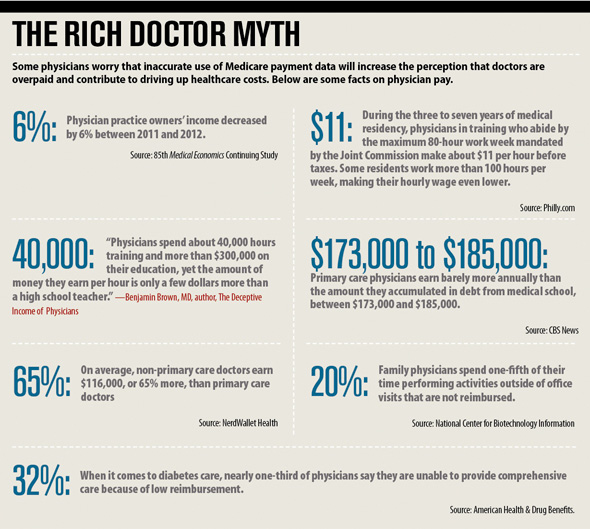
Let’s start with the insurers who account for the bulk of their revenue. Many payments for procedures from insurance companies (including Medicare) are below the cost of providing the service. This forces physicians to make up the difference on other procedures or find other sources of income to sustain the profitability of the practice.

Conversely, in markets that have just one hospital, the insurance companies have no leverage. If the insurers won’t pay what the hospitals demand, the hospitals can threaten to drop out of the network, leaving the insurers with nowhere to send their insureds in those markets. The insurers end up agreeing to pay the hospitals more.

Charges for services provided in-house at the hospital can end up being substantially higher than those same services done by outside providers.

Example:

She gave me an example of a lab test that cost $1,500 to $2,000 at the hospital lab but $35 to $80 at an independent lab. Patients do have the option to direct the hospital to use an independent lab. But, how many people know that and will have the presence of mind to make the request? While it makes financial sense to price-shop if you have a high deductible HSA plan, there isn’t much incentive if your plan has low deductibles.

Collections

Another challenge is collecting from patients. She says a surprising percentage of Americans maintain checking accounts with no money or keep checks from accounts which have long been closed. While writing bad checks is a crime, those who game the system know they can probably get by with writing a low-dollar check because the cost of pursuing justice is much more than the check is worth.

Most companies would never do business with such a person again. Healthcare professionals tend to have a bias toward giving everyone services, so these same people do return requesting care. She said she and her physician employer have had huge internal arguments about this. Her position is that these people take advantage of the physician in a premeditated fashion and don’t deserve to be extended services. The physician argues that everyone, even deadbeats, deserves healthcare. Since the practice doesn’t provide life-and-death services, she was able to get the physician to agree that if someone has an outstanding bill they need to settle it upfront, in cash, before any new services are provided.

Then there are those who use credit cards and then fraudulently dispute the charges. Some providers let this go because of the difficulty of proving that the charge is legitimate. It requires photographs of customers during the transaction, copies of driver’s licenses, customers’ signatures on the paperwork, and notarized statements from the provider verifying that this was the person who received services and presented the credit card.

***

http://www.CertifiedMedicalPlanner.org

***

SSNs

A final interesting point concerned patients’ Social Security numbers. She said the only time these are ever needed is when an outstanding bill is sent for collection. Otherwise, they are never accessed or used.

Assessment

Finally, she was quick to add that only a small fraction of their patients premeditate stealing from them. She also stressed that not all insurance companies or hospitals behave unethically, and some do wonderful, humane acts of kindness. Nevertheless, the lack of integrity that does occur on both sides is infuriating and adds to the cost of health services.

Conclusion

Your thoughts and comments on this ME-P are appreciated. Feel free to review our top-left column, and top-right sidebar materials, links, urls and related websites, too. Then, subscribe to the ME-P. It is fast, free and secure.

Speaker: If you need a moderator or speaker for an upcoming event, Dr. David E. Marcinko; MBA – Publisher-in-Chief of the Medical Executive-Post – is available for seminar or speaking engagements.

Contact: MarcinkoAdvisors@msn.com

Subscribe: MEDICAL EXECUTIVE POST for curated news, essays, opinions and analysis from the public health, economics, finance, marketing, I.T, business and policy management ecosystem.

Product Details

***

Invite Dr. Marcinko

***

2021 TAXES: 8 Things All Physicians Must Know

By Staff Reporters

CITE: https://www.r2library.com/Resource/Title/082610254

***

Here are eight things to keep in mind as you prepare to file your 2021 taxes.

1. Income tax brackets have shifted a bit

There are still seven tax rates, but the income ranges (tax brackets) for each rate have shifted slightly to account for inflation. For 2021, the following rates and income ranges apply:

Tax rateTaxable income brackets: Single filersTaxable income brackets: Married couples filing jointly (and qualifying widows or widowers) 
10%$0 to $9,950$0 to $19,900
12%$9,951 to $40,525$19,901 to $81,050
22%$40,526 to $86,375$81,051 to $172,750
24%$86,376 to $164,925$172,751 to $329,850
32%$164,926 to $209,425$329,851 to $418,850
35%$209,426 to $523,600$418,851 to $628,300
37%$523,601 or more$628,301 or more

Source: Internal Revenue Service

2. The standard deduction has increased slightly

After an inflation adjustment, the 2021 standard deduction has increased slightly to $12,550 for single filers and married couples filing separately and $18,800 for single heads of household, who are generally unmarried with one or more dependents. For married couples filing jointly, the standard deduction has risen to $25,100.

3. Itemized deductions remain the same

For most filers, taking the higher standard deduction is more practical and saves the hassle of keeping track of receipts. But if you have enough tax-deductible expenses, you might benefit from itemizing.

The following rules for itemized deductions haven’t changed much for 2021, but they’re still worth pointing out.

  • State and local taxes: The deduction for state and local income taxes, property taxes, and real estate taxes is capped at $10,000. 
  • Mortgage interest deduction: The mortgage interest deduction is limited to $750,000 of indebtedness. But people who had $1,000,000 of home mortgage debt before December 16, 2017, will still be able to deduct the interest on that loan. 
  • Medical expenses: Only medical expenses that exceed 7.5% of adjusted gross income (AGI) can be deducted in 2021. 
  • Charitable donations: The cash donation limit of 100% of AGI remains in place for 2021, if donations were made to operating charities.1
  • Miscellaneous deductions: No miscellaneous itemized deductions are allowed. 
     

4. IRA and 401(k) contribution limits remain the same 

The traditional IRA and Roth contribution limits in 2021 remain the same as in 2020. Individuals can contribute up to $6,000 to an IRA, and those age 50 and older also qualify to make an additional $1,000 catch-up contribution. If you’re able to max out your IRA, consider doing so—you may qualify to deduct some or all of your contribution.

The 2021 contribution limit for 401(k) accounts also stays at $19,500. If you’re age 50 or older, you qualify to make an additional $6,500 catch-up contribution as well.

5. You can save a bit more in your health savings account (HSA) 

For 2021, the max you can contribute into an HSA is $3,600 for an individual (up $50 from 2020) and $7,200 for a family (up $100). People age 55 and older can contribute an extra $1,000 catch-up contribution.

To be eligible for an HSA, you must be enrolled in a high-deductible health plan (which usually has lower premiums as well). Learn more about the benefits of an HSA

6. The Child Tax Credit has been expanded 

For 2021, the American Rescue Plan Act (ARPA) has temporarily modified the Child Tax Credit requirements and amounts for household incomes below $75,000 for single filers and $150,000 for married filing jointly. 

First, the ARPA has raised the age limit for dependents from 16 to 17. In addition, the child tax credit has increased from $2,000 to $3,000 for children age 6 through 17 and up to $3,600 for children under 6. If your income exceeded the above limits but was below $200,000 for single filers or $400,000 for joint filers, you’ll receive the standard child tax credit of $2,000 per child. 

The IRS began sending monthly advance Child Tax Credit payments to eligible families in July and sent its last advance in December. If your dependent didn’t qualify for the child tax credit, you may still qualify for up to $500 of tax credits under the “credit for other dependents” (see IRS Publication 972 for more details). Tax credits, which reduce the tax you owe dollar for dollar, are generally better than deductions, which reduce your taxable income. 

7. The alternative minimum tax (AMT) exemption has gone up

Until the AMT exemption enacted by the Tax Cuts and Jobs Act expires in 2025, the AMT will continue to affect mostly households with incomes over $500,000. Still, the AMT has investment implications for some high earners. 

For 2021, the AMT exemptions are $73,600 for single filers and $114,600 for married taxpayers filing jointly. The phase-out thresholds are $1,047,200 for married taxpayers filing a joint return and $523,600 for all other taxpayers.  

8. The estate tax exemption is even higher

The estate and gift tax exemption, which is indexed to inflation, has risen to $11.7 million for 2021. But the now-higher exemption is set to expire at the end of 2025, meaning it could be essentially cut in half at that time if Congress doesn’t act. 

The annual gift exclusion, which allows you to give money to your loved ones each year without incurring any tax liability or using up any of your lifetime estate and gift tax exemption, stays at $15,000 per recipient.

Don’t get caught off guard

As you prepare to file your taxes for 2021, here are a few additional items to consider. 

  • If you’re not retired, the 10% early withdrawal penalty that was waived for retirement account distributions in 2020 has been reinstated for 2021.
  • If you’re age 72 or older, make sure you’ve taken your required minimum distribution (RMD) from your retirement accounts or else you face a 50% penalty on any undistributed funds (unless it’s your first RMD, in which case, you can wait until April 1, 2022).

If you haven’t contributed to your retirement accounts already, now is the time. Review your earnings for the year and take advantage of any deductions that can lower your tax bill. Also, keep an eye on Washington for any last-minute tax changes that could affect your return before you file. Tax season will be here before you know it, and it’s never too early to start preparing.

1Operating charities, or qualifying public charities, are defined by Internal Revenue Code section 170(b)(1)(A). You can use the Tax Exempt Organization Search tool on IRS.gov to check an organization’s eligibility.

***

MORE: https://www.msn.com/en-us/money/taxes/a-historically-underfunded-irs-is-preparing-for-a-rough-tax-season-and-only-has-1-person-for-every-16000-calls-it-gets/ar-AASFVds?li=BBnb7Kz

***

COMMENTS APPRECIATED.

Thank You

Subscribe to the Medical Executive-Post

***

***

31% of Americans Don’t Know How They’d Pay for Severe Illness

By Staff Reporters

***

31% of Americans Don’t Know How They’d Pay for Severe Illness

A recent survey by HealthcareInsider that polled 1,062 adults aged 18 and up asked, “If you were to experience a severe illness how would you pay for treatment?”

 •  Don’t know: 31%
 •  Credit card: 26%
 •  Non-retirement savings: 17%
 •  Borrow money from family: 16%
 •  Retirement savings: 11%
 •  Health Savings Account: 9%
 •  Borrow from a finance institution: 8%
 •  Crowdfund online: 6%

Source: HealthCareInsider, December 2nd, 2021COMMENTS APPRECIATED.

Thank You

Subscribe to the Medical Executive-Post

***

***

***

PODCAST: Health Insurance for H.I. Company Employees

What Health Insurance Do Health Insurance Companies Give Their Own Employees?

By Eric Bricker MD

***

***

***

***

YOUR COMMENTS ARE APPRECIATED.

Thank You

***

Coronavirus Aid, Relief, and Economic Security (CARES) Act

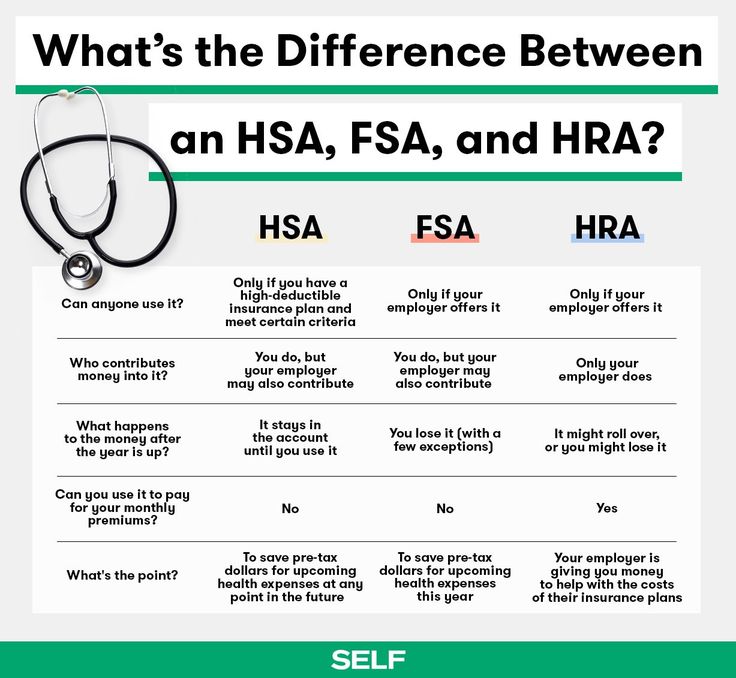
The CARES Act and HSAs, HRAs and FSAs, etc
[By Staff reporters]

The Coronavirus Aid, Relief, and Economic Security (CARES) Act, signed into law March 27, 2020, contains important updates on the use of health savings accounts (HSAs), flexible spending accounts (FSAs) and health reimbursement accounts (HRAs).

***

***

So, we wanted to inform you of the below changes that expand qualified medical expenses and access to remote care:

Telehealth services
High-deductible health plans (HDHPs) with an HSA may provide pre-deductible coverage for telehealth and other remote care services. This provision will last until December 31, 2021 (plan year must begin prior to this date).
Certain over-the-counter (OTC) drugs and medications as qualified medical expenses
The CARES Act restores the ability to use HSAs, FSAs and HRAs to purchase certain OTC drugs and medications, like aspirin and other pain medications, allergy medication, etc., without a doctor’s prescription.
For the first time, menstrual care products are considered qualified medical expenses for payment or reimbursement with an HSA, FSA or HRA.
Both provisions for OTC and menstrual products apply to amounts paid or expenses incurred on or after January 1, 2020, and are ongoing without an expiration date.
Important note for FSAs and HRAs:
You can use your account funds to purchase these products starting today. However, be sure individual merchants, like pharmacies and convenience stores,  update their point of sale (POS) system to now recognize these products as qualified medical expenses for FSA and HRA.
Use your payment card as you normally would for these purchases, and if the sale will not process, you can pay out of pocket with the option to reimburse yourself with account funds. As a reminder, keep your itemized receipt or explanations of benefits, which are needed to verify each purchase so you can be reimbursed.
For HSAs, you may use your debit card as you normally would since no claim reimbursement process is required. Please retain copies of your receipts as needed for tax purposes.
Please visit the US Federal  website for the latest developments and regulation changes related to COVID-19 and your health account(s), such as the CARES Act.

***

***

Assessment: Your thoughts are appreciated

Risk Management, Liability Insurance, and Asset Protection Strategies for Doctors and Advisors: Best Practices from Leading Consultants and Certified Medical Planners™ Risk Management, Liability Insurance, and Asset Protection Strategies for Doctors and Advisors: Best Practices from Leading Consultants and Certified Medical Planners™

***


2018 – 2021 HSA Contribution Limits

Inflation Adjustments for the Tax Cuts and Jobs Act

By Dr. David Edward Marcinko MBA

http://www.CertifiedMedicalPlanner.org

On March 5, 2018, the IRS released Revenue Procedure 2018-18 (as part of Bulletin 2018-10). Due to changes made in the Tax Cuts and Jobs Act, certain adjustments needed to be made to inflation amounts.

The includes a reduction in the maximum family HSA contribution for those with family coverage under an HDHP from $6,900 to a new limit of $6,850 for calendar year 2018. The single contribution limit remains unchanged at $3,450 per year.

This reduction affects employees participating in an HSA Plan who have elected to contribute more than $6,850 for family coverage in 2018.

***

***

Comprehensive Financial Planning Strategies for Doctors and Advisors: Best Practices from Leading Consultants and Certified Medical Planners™

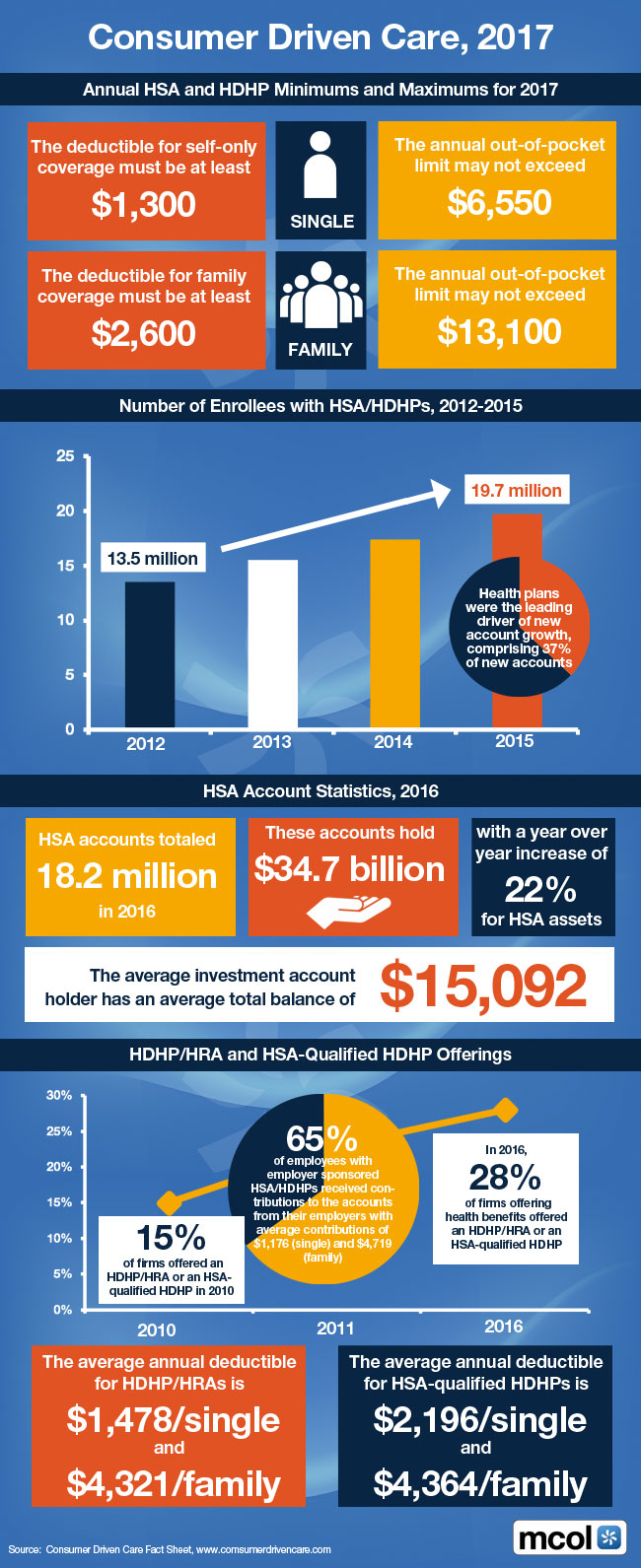
Financial Update on Consumer Driven Healthcare for 2017

Join Our Mailing List

By http://www.MCOL.com

HSA-HDHPs Minimums / Maximums for 2017

***

***

Conclusion

Your thoughts and comments on this ME-P are appreciated. Feel free to review our top-left column, and top-right sidebar materials, links, URLs and related websites, too. Then, subscribe to the ME-P. It is fast, free and secure.

Speaker: If you need a moderator or speaker for an upcoming event, Dr. David E. Marcinko; MBA – Publisher-in-Chief of the Medical Executive-Post – is available for seminar or speaking engagements. Contact: MarcinkoAdvisors@msn.com

OUR OTHER PRINT BOOKS AND RELATED INFORMATION SOURCES:

Product DetailsProduct Details

***

Year End MEGA Tax Planning “Tips” for Physicians

Join Our Mailing List 

For Medical Professionals … and Us All

[By PERRY D’ALESSIO CPA] http://www.dalecpa.com

A SPECIAL ME-P REPORT

perry-dalessio-cpaYear-end tax planning is especially challenging this year, for EVERYONE, because Congress has yet to act on a host of tax breaks that expired at the end of 2013. Some of these tax breaks may be retroactively reinstated and extended, but Congress may not decide the fate of these tax breaks until the very end of this year (and, possibly, not until next year).

For Individuals

These breaks include, for individuals: the option to deduct state and local sales and use taxes instead of state and local income taxes; the above-the-line-deduction for qualified higher education expenses; tax-free IRA distributions for charitable purposes by those age 70- 1/2 or older; and the exclusion for up-to-$2 million of mortgage debt forgiveness on a principal residence.

For Businesses

For businesses, tax breaks that expired at the end of last year and may be retroactively reinstated and extended include: 50% bonus first year depreciation for most new machinery, equipment and software; the $500,000 annual expensing limitation; the research tax credit; and the 15-year write-off for qualified leasehold improvement property, qualified restaurant property, and qualified retail improvement property.

Bigger Earners

Higher-income-earners, like some doctors, have unique concerns to address when mapping out year-end plans. They must be wary of the 3.8% surtax on certain unearned income and the additional 0.9% Medicare (hospital insurance, or HI) tax that applies to individuals receiving wages with respect to employment in excess of $200,000 ($250,000 for married couples filing jointly and $125,000 for married couples filing separately).

The surtax is 3.8% of the lesser of: (1) net investment income (NII), or (2) the excess of modified adjusted gross income (MAGI) over an un-indexed threshold amount ($250,000 for joint filers or surviving spouses, $125,000 for a married individual filing a separate return, and $200,000 in any other case). As year-end nears; a taxpayer’s approach to minimizing or eliminating the 3.8% surtax will depend on his estimated MAGI and net investment income (NII) for the year. Some taxpayers should consider ways to minimize (e.g., through deferral) additional NII for the balance of the year, others should try to see if they can reduce MAGI other than NII, and other individuals will need to consider ways to minimize both NII and other types of MAGI.

The additional Medicare tax may require year-end actions. Employers must withhold the additional Medicare tax from wages in excess of $200,000 regardless of filing status or other income. Self-employed persons must take it into account in figuring estimated tax. There could be situations where an employee may need to have more withheld toward year end to cover the tax.

For example, an individual earns $200,000 from one employer during the first half of the year and a like amount from another employer during the balance of the year. He would owe the additional Medicare tax, but there would be no withholding by either employer for the additional Medicare tax since wages from each employer don’t exceed $200,000.

Also, in determining whether they may need to make adjustments to avoid a penalty for underpayment of estimated tax, individuals also should be mindful that the additional Medicare tax may be over-withheld. This could occur, for example, where only one of two married spouses works and reaches the threshold for the employer to withhold, but the couple’s income won’t be high enough to actually cause the tax to be owed.

The Checklist[s]

I’ve have compiled a checklist of additional actions, for ME-P readers, based on current tax rules that may help you save tax dollars if you act before year-end. Not all actions will apply in your particular situation, but you (or a family member) will likely benefit from many of them.

***

Next-Gen Physicians

[Future High Income-Earners?]

***

Year-End Tax Planning Moves for Individual Medical Providers 

Realize losses on stock while substantially preserving your investment position. There are several ways this can be done.

For example, you can sell the original holding, then buy back the same securities at least 31 days later. It may be advisable for us to meet to discuss year-end trades you should consider making.

Let’s consider the following:

  • Postpone income until 2015 and accelerate deductions into 2014 to lower your 2014 tax bill. This strategy may enable you to claim larger deductions, credits, and other tax breaks for 2014 that are phased out over varying levels of adjusted gross income (AGI). These include child tax credits, higher education tax credits, and deductions for student loan interest. Postponing income also is desirable for those taxpayers who anticipate being in a lower tax bracket next year due to changed financial circumstances. Note, however, that in some cases, it may pay to actually accelerate income into 2014. For example, this may be the case where a person’s marginal tax rate is much lower this year than it will be next year or where lower income in 2015 will result in a higher tax credit for an individual who plans to purchase health insurance on a health exchange and is eligible for a premium assistance credit.
  • If you believe a Roth IRA is better than a traditional IRA, and want to remain in the market for the long term, consider converting traditional-IRA money invested in beaten-down stocks (or mutual funds) into a Roth IRA if eligible to do so. Keep in mind, however, that such a conversion will increase your adjusted gross income for 2014. If you converted assets in a traditional IRA to a Roth IRA earlier in the year, the assets in the Roth IRA account may have declined in value, and if you leave things as is, you will wind up paying a higher tax than is necessary. You can back out of the transaction by re-characterizing the conversion, that is, by transferring the converted amount (plus earnings, or minus losses) from the Roth IRA back to a traditional IRA via a trustee-to-trustee transfer. You can later reconvert to a Roth IRA, if doing so proves advantageous.
  • It may be advantageous to try to arrange with your PHO, medical group, clinic, hospital or employer to defer a bonus that may be coming your way until 2015.
  • Consider using a credit card to pay deductible expenses before the end of the year. Doing so will increase your 2014 deductions even if you don’t pay your credit card bill until after the end of the year.
  • If you expect to owe state and local income taxes when you file your return next year, consider asking your employer to increase withholding of state and local taxes (or pay estimated tax payments of state and local taxes) before year-end to pull the deduction of those taxes into 2014 if doing so won’t create an alternative minimum tax (AMT) problem.
  • Take an eligible rollover distribution from a qualified retirement plan before the end of 2014 if you are facing a penalty for underpayment of estimated tax and having your employer increase your withholding isn’t viable or won’t sufficiently address the problem. Income tax will be withheld from the distribution and will be applied toward the taxes owed for 2014. You can then timely roll over the gross amount of the distribution, i.e., the net amount you received plus the amount of withheld tax, to a traditional IRA. No part of the distribution will be includible in income for 2014, but the withheld tax will be applied pro rata over the full 2014 tax year to reduce previous underpayments of estimated tax.
  • Estimate the effect of any year-end planning moves on the alternative minimum tax (AMT) for 2014, keeping in mind that many tax breaks allowed for purposes of calculating regular taxes are disallowed for AMT purposes. These include the deduction for state property taxes on your residence, state income taxes, miscellaneous itemized deductions, and personal exemption deductions. Other deductions, such as for medical expenses, are calculated in a more restrictive way for AMT purposes than for regular tax purposes in the case of a taxpayer who is over age 65 or whose spouse is over age 65 as of the close of the tax year. As a result, in some cases, deductions should not be accelerated.
  • You may be able to save taxes this year and next by applying a bunching strategy to “miscellaneous” itemized deductions (i.e., certain deductions that are allowed only to the extent they exceed 2% of adjusted gross income), medical expenses and other itemized deductions.
  • You may want to pay contested taxes to be able to deduct them this year while continuing to contest them next year.
  • You may want to settle an insurance or damage claim in order to maximize your casualty loss deduction this year.
  • Take required minimum distributions (RMDs) from your IRA or 401(k) plan (or other employer-sponsored retired plan) if you have reached age 70- 1/2. Failure to take a required withdrawal can result in a penalty of 50% of the amount of the RMD not withdrawn. If you turned age 70- 1/2 in 2014, you can delay the first required distribution to 2015, but if you do, you will have to take a double distribution in 2015-the amount required for 2014 plus the amount required for 2015. Think twice before delaying 2014 distributions to 2015-bunching income into 2015 might push you into a higher tax bracket or have a detrimental impact on various income tax deductions that are reduced at higher income levels. However, it could be beneficial to take both distributions in 2015 if you will be in a substantially lower bracket that year.
  • Increase the amount you set aside for next year in your employer’s health flexible spending account (FSA) if you set aside too little for this year.
  • If you are eligible to make health savings account (HSA) contributions in December of this year, you can make a full year’s worth of deductible HSA contributions for 2014. This is so even if you first became eligible on Dec. 1st, 2014.
  • Make gifts sheltered by the annual gift tax exclusion before the end of the year and thereby save gift and estate taxes. You can give $14,000 in 2014 to each of an unlimited number of individuals but you can’t carry over unused exclusions from one year to the next. The transfers also may save family income taxes where income-earning property is given to family members in lower income tax brackets who are not subject to the kiddie tax.

***

Target MD

[Future IRS Targets?]

***

Year-End Tax-Planning Moves for Medical Practices & Physician Executives 

  • Medical practices, clinics and businesses should buy machinery and equipment before year end and, under the generally applicable “half-year convention,” thereby secure a half-year’s worth of depreciation deductions for the first ownership year.
  • Although the business property expensing option is greatly reduced in 2014 (unless legislation changes this option for 2014), don’t neglect to make expenditures that qualify for this option. For tax years beginning in 2014, the expensing limit is $25,000, and the investment-based reduction in the dollar limitation starts to take effect when property placed in service in the tax year exceeds $200,000.
  • Businesses may be able to take advantage of the “de minimis safe harbor election” (also known as the book-tax conformity election) to expense the costs of inexpensive assets and materials and supplies, assuming the costs don’t have to be capitalized under the Code Sec. 263A uniform capitalization (UNICAP) rules. To qualify for the election, the cost of a unit-of-property can’t exceed $5,000 if the taxpayer has an applicable financial statement (AFS; e.g., a certified audited financial statement along with an independent CPA’s report). If there’s no AFS, the cost of a unit of property can’t exceed $500. Where the UNICAP rules aren’t an issue, purchase such qualifying items before the end of 2014.
  • A corporation should consider accelerating income from 2015 to 2014 where doing so will prevent the corporation from moving into a higher bracket next year. Conversely, it should consider deferring income until 2015 where doing so will prevent the corporation from moving into a higher bracket this year.
  • A corporation should consider deferring income until next year if doing so will preserve the corporation’s qualification for the small corporation alternative minimum tax (AMT) exemption for 2014. Note that there is never a reason to accelerate income for purposes of the small corporation AMT exemption because if a corporation doesn’t qualify for the exemption for any given tax year, it will not qualify for the exemption for any later tax year.
  • A corporation (other than a “large” corporation) that anticipates a small net operating loss (NOL) for 2014 (and substantial net income in 2015) may find it worthwhile to accelerate just enough of its 2015 income (or to defer just enough of its 2014 deductions) to create a small amount of net income for 2014. This will permit the corporation to base its 2015 estimated tax installments on the relatively small amount of income shown on its 2014 return, rather than having to pay estimated taxes based on 100% of its much larger 2015 taxable income.
  • If your business qualifies for the domestic production activities deduction for its 2014 tax year, consider whether the 50%-of-W-2 wages limitation on that deduction applies. If it does, consider ways to increase 2014 W-2 income, e.g., by bonuses to owner-shareholders whose compensation is allocable to domestic production gross receipts. Note that the limitation applies to amounts paid with respect to employment in calendar year 2014, even if the business has a fiscal year.
  • To reduce 2014 taxable income, consider disposing of a passive activity in 2014 if doing so will allow you to deduct suspended passive activity losses. If you own an interest in a partnership or S corporation consider whether you need to increase your basis in the entity so you can deduct a loss from it for this year.

Assessment

These are just some of the year-end steps that you can take to save taxes. So, contact your CPA to tailor a particular plan that will work best for you. We also will need to stay in close touch in the event Congress revives expired tax breaks, to assure that you don’t miss out on any resuscitated tax saving opportunities.

Conclusion

Your thoughts and comments on this ME-P are appreciated. Feel free to review our top-left column, and top-right sidebar materials, links, URLs and related websites, too. Then, subscribe to the ME-P. It is fast, free and secure.

Speaker: If you need a moderator or speaker for an upcoming event, Dr. David E. Marcinko; MBA – Publisher-in-Chief of the Medical Executive-Post – is available for seminar or speaking engagements. Contact: MarcinkoAdvisors@msn.com

OUR OTHER PRINT BOOKS AND RELATED INFORMATION SOURCES:

Financial Planning MDs 2015

Comprehensive Financial Planning Strategies for Doctors and Advisors: Best Practices from Leading Consultants

Physician Creditor Protection for IRAs, Annuities and Insurance for 2014-15

Join Our Mailing List

A SPECIAL ME-P REPORT

###

Asset Protection Planning for Qualified and Non-Qualified Retirement Plans, IRAs, 403(b)s, Education IRAs (Coverdell ESAs), 529 Plans, UTMA Accounts, Health/Medical Savings Accounts (MSA/HSAs), Qualified and Non-Qualified Annuities, Long-Term Care Insurance, Disability Insurance and Group, Individual and Business Life Insurance [Ohio Focus]

By Edwin P. Morrow III; JD LLM MBA CFP® RFC®

[©2007-12-14. All rights reserved. USA]

EDITOR’S NOTE:

Hi Ann,

A couple years ago you posted an earlier version of the attached Asset Protection Outline. I updated it to include quite a bit more discussion of different protection levels for various kinds of accounts, and included more discussion of states other than Ohio, including a 50 state chart with IRA/403b protections.

So please delete the old one and replace with this one which contains more topics, including some substantial discussion of issues regarding current class action litigation jeopardizing asset protection for Schwab and Merrill Lynch IRAs.

Regards
Ed

###

The Importance of Asset Protection as Part of Financial and Estate Planning for Doctor’s and Medical Professionals

Asset Protection has become a ubiquitous buzz-word in the legal and financial community. It often means different things to different people. It may encompass anything from buying umbrella liability insurance to funding offshore trusts.

What is most likely to wipe out a client’s entire net worth? An investment scam, investment losses, a lawsuit, divorce or long-term health care expenses? “Asset Protection” may be construed to address all of these scenarios, but this outline will cover risk from non-spousal creditors as opposed to risk from bad investments, divorce, medical bills or excessive spending. Prudent business practice and limited liability entity use (LP, LLP, LLC, Corporation, etc) is the first line of defense against such risks. Similarly, good liability insurance and umbrella insurance coverage is paramount.

However, there is a palpable fear among many of frivolous lawsuits and rogue juries [especially among physicians and medical professionals]. Damages may exceed coverage limits. Moreover, insurance policies often have large gaps in coverage (e.g. intentional torts, “gross” negligence, asbestos or mold claims, sexual harassment).

As many doctors in Ohio know all too well, malpractice insurance companies can fail, too. Just as we advise clients regarding legal ways to legitimately avoid income and estate taxes or qualify for benefits, so we advise how to protect family assets from creditors. Ask your clients, “What level of asset protection do you want for yourself?

For the inheritance you leave to your family?” Do any clients answer “none” or “low”? Trusts that are mere beneficiary designation form or POD/TOD substitutes are going out of style in favor of “beneficiary-controlled trusts”, “inheritance trusts” and the like.

Table of Contents

While effort is made to ensure the material is accurate, this material is not intended as legal advice and no one may rely on it as such. Sections II(d), II(i), V, VI and XI were updated Feb 2012, but much of the material and citations have not been verified since 2010. Permission to reprint and share with fellow bar members is granted, but please contact author for updates if more than a year old.

T.O.C. [Page Number]

I. Importance of Asset Protection 2

II. State and Federal Protections Outside ERISA or Bankruptcy 4

a. Non-ERISA Qualified Plans: SEP, SIMPLE IRAs 5

b. Traditional and Roth IRAs, “Deemed IRAs” 7

c. Life Insurance 9

d. Long-Term Care, Accident/Disability Insurance 13

e. Non-Qualified Annuities 13

f. Education IRAs (now Coverdell ESAs) 16

g. 529 Plans 17

h. Miscellaneous State and Federal Benefits 18

i. HSAs, MSAs, FSAs, HRAs 18

III. Federal ERISA Protection Outside Bankruptcy 20

IV. Federal Bankruptcy Scheme of Creditor Protection 26

V. Non-Qualified Deferred Comp – Defying Easy Categorization 30

VI. Breaking the Plan – How Owners Can Lose Protection 32

(incl Prohibited Transactions and Schwab/Merrill Lynch IRA problems) 35

VII. Post-Mortem – Protections for a Decedent’s Estate 51

VIII. Post-Mortem – State Law Protections for Beneficiaries 52

IX. Post-Mortem – Bankruptcy Protections for Beneficiaries 54

X. Dangers and Advantages of Inheriting Through Trusts 56

XI. Piercing UTMA/UGMA and Other Third Party Created Trusts 59

XII. Exceptions for Spouses, Ex-Spouses and Dependents 61

XIII. Exceptions when the Federal Government (IRS) is Creditor 62

XIV. Fraudulent Transfer (UFTA) and Other Exceptions 68

XV. Disclaimer Issues – Why Ohio is Unique 69

XVI. Medicaid/Government Benefit Issues 71

XVII. Liability for Advisors 72

XVIII. Conflicts of Law – Multistate Issues 73

XIX. Conclusions 75

Appendices

A. Ohio exemptions – R.C. §2329.66 (excerpt), §3911.10, §3923.19 78

B. Bankruptcy exemptions – 11 U.S.C. § 522 excerpts 80

C. Florida IRA exemption – Fla Stat. § 222.21 (note-may be outdated) 85

D. Sal LaMendola’s Inherited IRA Win/Loss Case Chart 86

E. Multistate Statutory Debtor Exemption Chart 88

###

Assessment

This outline will discuss the sometimes substantial difference in legal treatment and protection for various investment vehicles and retirement accounts, with some further discussion of important issues to consider when trusts receive such assets.

Beware of general observations like: “retirement plans, insurance, IRAs and annuities are protected assets” – that may often be true, but Murphy’s law will make your client the exception to the general rules. The better part of this outline is pointing out those exceptions.

2012 WHITE PAPER LINK:

Creditor Protection for IRAs Annuities Insurance Nov 19 2010 WC CLE Feb 2012 update

***

2014 WHITE PAPER LINK UPDATE:

Optimal Basis Increase Trust Aug 2014

***

ABOUT THE AUTHOR:

Mr. Edwin P. Morrow III, a friend of the Medical Executive-Post, is a Wealth Specialist and Manager, Wealth Strategies Communications Ohio State Bar Association Certified Specialist, Estate Planning, Probate and Trust Law Key Private Bank Wealth Advisory Services. 10 W. Second St., 27th Floor Dayton, OH 45402. He is an ME-P “thought leader”.

Constructive criticism or other comments welcome.

Conclusion

Your thoughts and comments on this ME-P are appreciated. Feel free to review our top-left column, and top-right sidebar materials, links, URLs and related websites, too. Then, subscribe to the ME-P. It is fast, free and secure.

Speaker: If you need a moderator or speaker for an upcoming event, Dr. David E. Marcinko; MBA – Publisher-in-Chief of the Medical Executive-Post – is available for seminar or speaking engagements. Contact: MarcinkoAdvisors@msn.com

OUR OTHER PRINT BOOKS AND RELATED INFORMATION SOURCES:

Product Details  Product Details

The New “Patient Centered Health Plan” Video

Join Our Mailing List 

An Alternative to Obamacare?

[By Staff Reporters]

Did you know that Tennessee’s US senatorial candidate, Dr. George Flinn, just announced his Patient Centered Health Plan as a sustainable alternative to Obamacare?

“This country needs a strong, positive alternative,” said Flinn. “We need to unite behind a solid proposal now because the longer Obamacare is in place, the harder it will be to repeal.”

The PCHP [Patient Centered Health Plan]

The Patient Centered Health Plan advocates a quality, affordable system promoting principles such as portability, competition across state lines, and the expansion of health savings accounts (HSA).

Flinn stated that his plan aims to end the assault Obamacare has created on our liberty and free enterprise in this country.

From massive job loss, decreased quality of care, doctor shortages, layoffs in health services, and millions still uninsured, Obamacare is doing the opposite of what it was made to do.

***

GF

***

The Plan Link

The plan is available in detail at www.patientcenteredhealthplan.com

Selected Lists On Health Savings Accounts:

Assessment

Both parties criticize one another for different aspects of Obamacare. The only consensus is its inability to effectively function. For the betterment of the United States, party lines need to be overlooked in order to find a solution.

Patient Centered Health may be the answer.

Conclusion

Your thoughts and comments on this ME-P are appreciated. Feel free to review our top-left column, and top-right sidebar materials, links, URLs and related websites, too. Then, subscribe to the ME-P. It is fast, free and secure.

Link: http://feeds.feedburner.com/HealthcareFinancialsthePostForcxos

Speaker: If you need a moderator or speaker for an upcoming event, Dr. David E. Marcinko; MBA – Publisher-in-Chief of the Medical Executive-Post – is available for seminar or speaking engagements. Contact: MarcinkoAdvisors@msn.com

OUR OTHER PRINT BOOKS AND RELATED INFORMATION SOURCES:

Product DetailsProduct Details

Product Details

  •  

How to Transition into Medicare?

Join Our Mailing List

The Timing, Costs, and Factors to Know

By Lon Jefferies MBA CFP® http://www.NewWorthAdvice.com

Lon JeffriesDid you know that the choices you make during your first year of Medicare eligibility will have long-term financial consequences? Yes, it is true!

And unfortunately, most people and even medical professionals have to make these decisions at a time when they are only beginning to familiarize themselves with a complex program.

The Rules

If you don’t follow Medicare’s enrollment rules, you may pay lifelong penalties for coverage. You have a seven-month window to enroll in Medicare as you turn 65. This window begins three months before the month of your birthday, includes the month of your birthday, and continues for the following three months.

The Parts

Part A

In most cases, you should sign up for Medicare Part A, which covers hospital stays, when you turn 65, even if you have other health insurance coverage. There is no cost for this coverage as long as you have 40 quarters of work in which you paid FICA taxes.

However, be aware that you are not allowed to contribute to a health savings account (HSA) if you are receiving benefits from Medicare. Thus, you may want to defer beginning Part A to continue building up your HSA balance to help offset future healthcare costs not covered by Medicare.

Part B

Medicare Part B covers services and supplies that are needed to diagnose or treat medical conditions, and health care to prevent illness. The standard monthly premium for Part B in 2013 is $104.90, but individuals with a modified adjusted gross income (MAGI) more than $85,000 and couples with a MAGI more than $170,000 pay more.

The premium ranges from $146.90 to $335.70 for those with incomes above the thresholds. If you have group health insurance through your own or a spouse’s employer, you may want to delay beginning Part B.

However, for this to be done without penalty, be sure to enroll in Part B coverage within eight months of the time your employment ceases. Otherwise, for every 12-month period that you could have been enrolled in Medicare Part B but were not, you will pay a 10 percent penalty on your Part B premium for life.

Part D

Medicare Part D covers prescription drugs. This coverage is usually purchased at the same time as Part B.  Part D monthly premiums vary by plan. However, higher-income beneficiaries (singles with a MAGI over $85,000 and couples with a MAGI over $170,000) pay from $11.60 to $66.60 more each month.

There is also a late enrollment penalty for Part D that is one percent of the “national base beneficiary premium” ($31.17 in 2013) multiplied by the number of full months you went without drug coverage.

Part C

Note that Medicare Part C is not a separate benefit. Part C, sometimes referred to as a Medicare Advantage Plan [MAP], is the portion of Medicare that allows private health insurance companies to provide Medicare benefits.

Part C is an alternative method for obtaining the same coverage that Part A and Part B provide, but do so through private insurance providers with different rules, costs and coverage restrictions. You can also get Part D as part of the benefits package if you choose. Although significant research is required, determining whether Part C is a viable option for you is simply a matter of considering your health, the medical services you use regularly, your prescription drug medications, and your budget.

medicare

Assessment

Medicare is a complex program. Enrolling on time and making informed decisions about coverage can save you thousands of dollars each year during retirement.

Conclusion

Your thoughts and comments on this ME-P are appreciated. Feel free to review our top-left column, and top-right sidebar materials, links, URLs and related websites, too. Then, subscribe to the ME-P. It is fast, free and secure.

Link: http://feeds.feedburner.com/HealthcareFinancialsthePostForcxos

Speaker: If you need a moderator or speaker for an upcoming event, Dr. David E. Marcinko; MBA – Publisher-in-Chief of the Medical Executive-Post – is available for seminar or speaking engagements. Contact: MarcinkoAdvisors@msn.com

OUR OTHER PRINT BOOKS AND RELATED INFORMATION SOURCES:

DICTIONARIES: http://www.springerpub.com/Search/marcinko
PHYSICIANS: www.MedicalBusinessAdvisors.com
PRACTICES: www.BusinessofMedicalPractice.com
HOSPITALS: http://www.crcpress.com/product/isbn/9781466558731
CLINICS: http://www.crcpress.com/product/isbn/9781439879900
BLOG: www.MedicalExecutivePost.com
FINANCE: Financial Planning for Physicians and Advisors
INSURANCE: Risk Management and Insurance Strategies for Physicians and Advisors

Product DetailsProduct DetailsProduct Details

Product Details  Product Details

Should Health Insurance Pay for Patient Exercise Programs?

Or – Enough with the “Benefits” Already!

By Dr. David Edward Marcinko MBA, CMP™

[Former Licensed Insurance Agent]

[ME-P Editor-in-Chief]

An editorial just published in the Journal of the American Medical Association says research supports consideration of a wider policy of reimbursing for structured exercise programs, particularly in high-risk groups, such as diabetics.

Link: http://jama.ama-assn.org/content/305/17/1808.full

Present Status

Currently, health-insurance plans don’t treat exercise as medicine; only some plans offer a fitness benefit, usually a partial reimbursement for gym membership.

Link: http://blogs.wsj.com/health/2011/05/04/reader-consult-should-insurance-reimburse-for-exercise-programs/

Yet, the push for this benefit does seem to be growing.

My Opinion

And yes, as a doctor and surgeon who treated diabetic bone and soft tissue infections, ulcers and related necrotic gangrene for two decades, there’s something to this philosophy in-theory. But, this “theory” is not grounded in risk-management principles or economic sense; and it does seem counter-intuitive to most insurance models that I know.

Note: Most adult diabetics are Type II, maturity onset and controllable.

Examples

For example, auto insurance does not pay for routine car maintenance, nor does home owner’s insurance or most other standard insurance policy types.

Question: Why should health insurance be any different?

Answer: Because it is a public good.

Oh, come on now!  Obeying moral codes and legal boundaries is also a public good for civility; but we don’t mitigate the risk of breaking them with insurance policies; do we?

Why? They would be too expensive. Believe me, if insurance companies thought they could make a buck this way, they surely would!

Assessment

Aren’t these types of benefits already in place in some Flexible Spending Accounts, High Deductible Medical [Health] Savings Accounts , and employee cafeteria plans, etc.

Moreover, don’t we all know that we aren’t supposed to smoke, use street drugs, drink excessively, pig-out, or have promiscuous sex? Yet – we still do – like the diabetic who excessively indulges.

If you want to get-or-stay healthy[ier]; exercise more and eat less. A simple – understandable – and free healthcare Rx; but no best selling book, “breaking news” or JAMA report, here.

Conclusion

And so, your thoughts and comments on this ME-P are appreciated. Should health insurance pay for exercise programs? Feel free to review our top-left column, and top-right sidebar materials, links, URLs and related websites, too. Then, subscribe to the ME-P. It is fast, free and secure.

Link: http://feeds.feedburner.com/HealthcareFinancialsthePostForcxos

Speaker: If you need a moderator or speaker for an upcoming event, Dr. David E. Marcinko; MBA – Publisher-in-Chief of the Medical Executive-Post – is available for seminar or speaking engagements. Contact: MarcinkoAdvisors@msn.com

Our Other Print Books and Related Information Sources:

Health Dictionary Series: http://www.springerpub.com/Search/marcinko

Practice Management: http://www.springerpub.com/product/9780826105752

Physician Financial Planning: http://www.jbpub.com/catalog/0763745790

Medical Risk Management: http://www.jbpub.com/catalog/9780763733421

Healthcare Organizations: www.HealthcareFinancials.com

Physician Advisors: www.CertifiedMedicalPlanner.com

Subscribe Now: Did you like this Medical Executive-Post, or find it helpful, interesting and informative? Want to get the latest ME-Ps delivered to your email box each morning? Just subscribe using the link below. You can unsubscribe at any time. Security is assured.

Link: http://feeds.feedburner.com/HealthcareFinancialsthePostForcxos

Sponsors Welcomed: And, credible sponsors and like-minded advertisers are always welcomed.

Link: https://healthcarefinancials.wordpress.com/2007/11/11/advertise

Product DetailsProduct DetailsProduct Details       

Product Details  Product Details

   Product Details 

Off Road Touring in Boston with Dr. Marcinko

How Doctors Get Paid

By Dr. David Edward Marcinko; MBA, CMP™

[Publisher-in-Chief]

Just before the Christmas Holidays, I flew up to Boston at the invitation of a pharmaceutical company to lead a managerial workshop entitled: “How Doctors Get Paid” [Treatment is only the beginning in the Changing Billing and Medical Reimbursement Climate].

Our goal was to inform drug representatives, and their regional managers, what value added information physician offices might expect from the pharmaceutical industry of the future.  

Topics of Discussion

The two hour interactive workshop included team projects, flip chart exercises, a mock role-playing session and the customary [hopefully energetic] ppt presentation. Other topics of discussion included:  

  • Health insurance payment evolution
  • Collapse of Medicare
  • Rise of managed care
  • Medical records documentation
  • ICD-9 and 10, HCPCS, DRGs and CPT® coding
  • ABNs, super-bills and HCFA 150 forms
  • Billing methodologies
  • Healthcare fraud, abuse and related policies
  • Capitation, HSAs, concierge medicine and RACs
  • Futuristic health 2.0 payment mechanisms, and more.

Assessment

Rest assured; these folks were a very knowledgeable and aggressive group; not like your father’s “detail men” of yore! They seek to … talk the talk, and walk the walk, of the Health 2.0 era.

Many thanks again to Helen, and Jon D, for the invite.

Channel Surfing

Have you visited our other topic channels? Established to facilitate idea exchange and link our community together, the value of these topics is dependent upon your input. Please take a minute to visit. And, to prevent that annoying spam, we ask that you register. 

Link: http://feeds.feedburner.com/HealthcareFinancialsthePostForcxos

Speaker: If you need a moderator or speaker for an upcoming event, Dr. David E. Marcinko; MBA – Publisher-in-Chief of the Executive-Post – is available for seminar or speaking engagements. Contact: MarcinkoAdvisors@msn.com 

Get our Widget: Get this widget!

Our Other Print Books and Related Information Sources:

Practice Management: http://www.springerpub.com/prod.aspx?prod_id=23759

Physician Financial Planning: http://www.jbpub.com/catalog/0763745790

Medical Risk Management: http://www.jbpub.com/catalog/9780763733421

Healthcare Organizations: www.HealthcareFinancials.com

Health Administration Terms: www.HealthDictionarySeries.com

Physician Advisors: www.CertifiedMedicalPlanner.com

Subscribe Now: Did you like this Medical Executive-Post, or find it helpful, interesting and informative? Want to get the latest ME-Ps delivered to your email box each morning? Just subscribe using the link below. You can unsubscribe at any time. Security is assured.

Link: http://feeds.feedburner.com/HealthcareFinancialsthePostForcxos

Sponsors Welcomed

And, credible sponsors and like-minded advertisers are always welcomed.

Link: https://healthcarefinancials.wordpress.com/2007/11/11/advertise

Product DetailsProduct DetailsProduct Details       

Product Details  Product Details

   Product Details 

HMO Physician Office Visit Co-Payment Creep

Patients Showing Doctors the Money [1999–2008]

By Staff Reporters

56371606

Copayment

2008

1999

$5

6%

23%

$10

16%

60%

$15

29%

12%

$20

30%

1%

Other

19%

3%

Source: Kaiser/HRETHRET Survey of Employer-Sponsored Health Benefits

www.kff.org

Assessment

Considering the “down and dirty” interest rate “rule of 72”, a twice doubling of copayments from $5 to $20, and a Hewlett-Packard 12-C hand-held financial calculator; allow us to suggest an annual copayment rise of 15% percent for the decade.

Conclusion

Your thoughts and comments on this ME-P are appreciated. Feel free to review our top-left column, and top-right sidebar materials, links, URLs and related websites, too. Then, subscribe to the ME-P. It is fast, free and secure.

Speaker: If you need a moderator or speaker for an upcoming event, Dr. David E. Marcinko; MBA – Publisher-in-Chief of the Medical Executive-Post – is available for seminar or speaking engagements. Contact: MarcinkoAdvisors@msn.com

OUR OTHER PRINT BOOKS AND RELATED INFORMATION SOURCES:

Product DetailsProduct DetailsProduct Details

***

New Health Insurance Compliance Issues

Implications of US Patriot and Bank Secrecy Acts on Hospitals

By Dr. David E. Marcinko; MBA, CMP™

By Hope R. Hetico; RN, MHA, CMP™  dave-and-hope4

With the recent popularity and growth of personal health insurance plans (PHIPs), health savings accounts (HSAs) and / or medical savings accounts (MSAs), compliance with the USA PATRIOT Act has become an important issue for these new health insurance products.  

These insurance plans place financial services organizations into relationships with shared information institutions like hospitals, healthcare organizations, medical clinics and patient clients.

The Online Connection 

This happens because many, perhaps even the majority of health insurance plans are opened online as patients and insurance company clients use Internet search engines to find the “best” policy type to meet their needs.  

Appropriately, banks, healthcare entities, and hospitals are working with insurance companies, trust companies, banks and broker-dealers to offer identity-compliant and integrated insurance plan products. 

Verifications that these clients are who they say they are, is as paramount as monitoring their activity. 

Example:  

Section 314(b) of the US Patriot Act permits financial institutions and health insurance companies – upon providing notice to the United States Department of the Treasury – to share patient and related information with one another in order to identify and report to the federal government activities that may involve money laundering or terrorist activity.  

The US Patriot Act 

The US Patriot Act aims to partially accomplish this through three critical goals:  

  1. First, it gives investigators familiar tools to use against a new threat.
  2. Second, it breaks down a wall that has prevented information sharing between agencies.
  3. Third, it updates U.S. laws to respond to the current Internet environment.  

Bank Secrecy Act, PHIPs, MSAs and HSAs 

For additional compliance security, The USA Patriot Act also amended the Bank Secrecy Act [BSA] to give the federal government enhanced authority to identify, deter and punish money laundering and related terrorist financing activities.  

Assessment 

Whatever the financial outlays required for insurance/financial organizational compliance, it may result in very large savings later if affected hospital assets and patient health insurance information is safeguarded against attacks of virtual or real assets. 

Conclusion 

And so, what is your opinion on the above health law and policy? 

Institutional information: www.HealthcareFinancials.com 

Terminology: www.HealthDictionarySeries.com 

Related reference: Marc B. Royo and David B. Nash.Sarbanes-Oxley and Not-for-Profit Hospitals: Current Issues and Future Prospects.” American Journal of Medical Quality: Vol. 23, No. 1, 70-72, February 2008.

Product DetailsProduct DetailsProduct Details