BENEFICIARY: TODs & PODs

By AI

***

***

A POD (Payable on Death) or TOD (Transfer on Death) account is a type of bank account where the account owner names a beneficiary to receive the account assets when the owner dies.

Key points about these accounts include:

  • Beneficiaries can be anyone, including minors, non-U.S. citizens, and organizations.
  • The beneficiary needs to provide a certified copy of the deceased’s death certificate to the bank or brokerage firm.
  • The assets are transferred immediately upon the account owner’s death.

***

Pros

  • Probate avoidance: By sidestepping probate, POD and TOD accounts streamline the distribution of assets post-death, allowing beneficiaries to gain access to these funds with greater speed.
  • Simplicity: Setting up these accounts is generally straightforward, often requiring just the completion of a form at the bank or brokerage firm.
  • No additional cost: There’s usually no cost to establish these accounts, aligning with the needs of individuals seeking a cost-effective method of transferring assets.

Cons

  • Joint ownership complexity. When an account is jointly owned, the beneficiary of the account won’t receive the assets until the surviving owner(s) die. The same applies to accounts owned in states with tenancy by the entirety for married couples.
  • Naming alternative beneficiaries: These accounts do not allow for the nomination of alternative beneficiaries if the primary beneficiary or beneficiaries predecease the account owner. This could lead to the assets being subjected to probate if the primary beneficiary is no longer alive at the time of the account holder’s death.
  • Transfers only happen after death: These accounts stipulate that the person must pass away before the beneficiary can access the funds – a restriction that could prove troublesome if the beneficiary requires access to these assets during the account holder’s life or if the account owner becomes incapacitated during their lifetime.

ESTATE PLANNING: https://medicalexecutivepost.com/2025/03/23/estate-plans-when-physicians-should-review/

COMMENTS APPRECIATED

Like and Refer

***

***

DONOR ADVISED FUND: Defined

WHAT IS A DONOR ADVISED FUND?

Sponsor: http://www.CertifiedMedicalPlanner.org

***

***
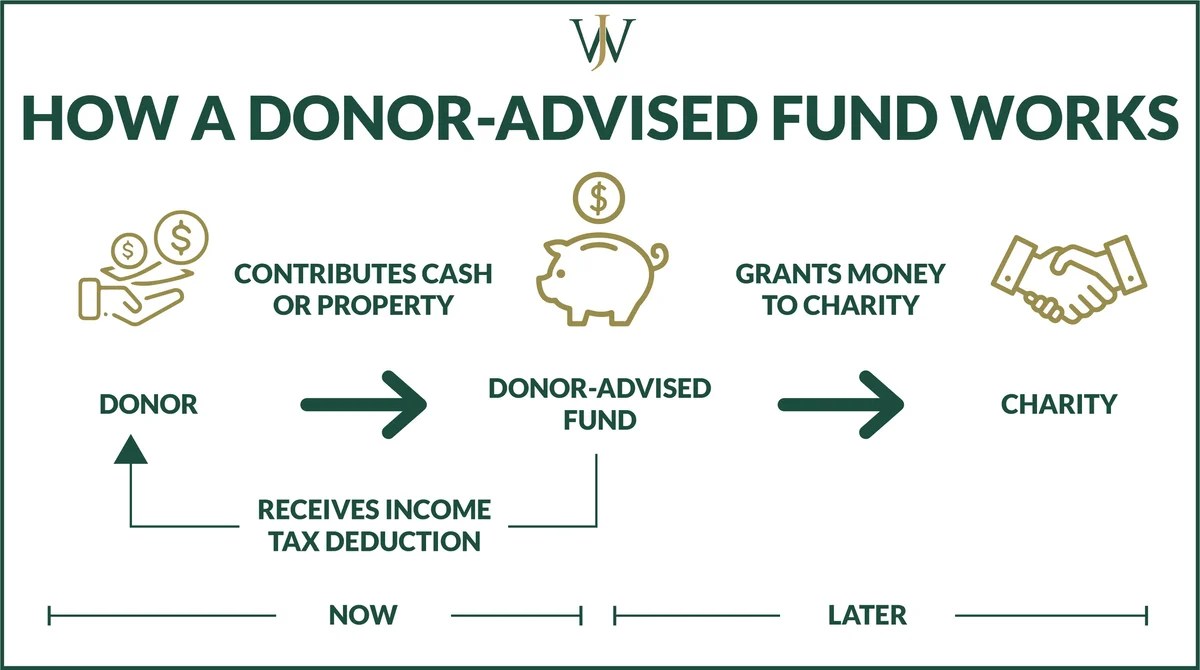
A donor-advised fund is a private account created to manage and distribute charitable donations on behalf of an organization, family, or individual. Donor-advised funds can democratize philanthropy by aggregating the contributions of multiple donors, thus multiplying their impact on worthy causes. Donor-advised funds also have abundant tax advantages.

DONOR DEPENDENCY: https://medicalexecutivepost.com/2025/01/02/culture-donation-dependency/

Donor-advised funds have become increasingly popular, as they offer the donor greater ease of administration while still allowing them to maintain significant control over the placement and distribution of charitable gifts. But, unlike private foundations, donor-advised fund holders enjoy a federal income tax deduction of up to 60% of adjusted gross income (AGI) for cash contributions and up to 30% of AGI for the appreciated securities they donate. Donors to these funds can contribute cash, stock shares, and other assets. When they transfer assets such as limited-partnership interests, they can avoid capital gains taxes and receive immediate fair market value tax deductions.

MEDICAL ETHICS: https://medicalexecutivepost.com/2024/06/20/medical-ethics-physician-and-financial-organizations/

According to the National Philanthropic Trust’s 2023 Donor-Advised Fund Report, these funds have continued to grow in recent years, despite some headwinds including the Covid-19 pandemic and occasional stock market setbacks. Total grants awarded by donor-advised funds in 2022 increased by 9% to $52.16 billion, while total contributions rose by 9% to $85.5 billion.

Many donor-advised funds accept non-cash assets—such as checks, wire transfers, and cash positions from a brokerage account—in addition to cash and cash equivalents.

Donating non-cash assets may be more beneficial for individuals and businesses, leading to bigger tax bigger write-offs.

PHILANTHROPY: https://medicalexecutivepost.com/2021/11/15/national-philanthropy-day-2021/

COMMENTS APPRECIATED

Like and Refer

***

***

GIVING CIRCLES: Defined

By Staff Reporters

SPONSOR: http://www.CertifiedMedicalPlanner.org

***

***

Giving circles are kick starting a new era of philanthropy where individuals give together to make social change happen.

A giving circle brings a group of people with shared values together to collectively discuss and decide where to make a pooled gift.

Philanthropy: https://medicalexecutivepost.com/2021/11/15/national-philanthropy-day-2021/

Giving circles support with their dollars, but also build awareness, volunteer, become board members and more. Individuals multiply their impact and knowledge, have fun, and connect with their local community.

Ethics: https://medicalexecutivepost.com/2024/06/22/medical-ethics-managing-risk-is-a-component-of-caring/

People are coming together around the world to create the change they want to see in the world. Giving circles are a growing global movement with more than 2,500 active circles around the world giving intentionally and thoughtfully.

Donor Advised Funds: https://medicalexecutivepost.com/2024/11/27/a-thanksgiving-donation-in-name-only/

Giving circles are a modern form of collective giving with roots in cultures across the globe for many decades!

EDUCATION: Books

Cite: https://johnsoncenter.org/2023-us-collective-giving-research-initiative/

Visit WhatIsAGivingCircle.com for more on this collective giving model and why people-centered philanthropy is so powerful.

COMMENTS APPRECIATED

Like and Subscribe

***

***

BENEFICIARY DESIGNATIONS: Top 10 Tips for Medical Professionals

By Staff Reporters

***

***

Beneficiary designations can provide a relatively easy way to transfer an account or insurance policy upon your death. However, if you’re not careful, missing or outdated beneficiary designations can easily cause your estate plan to go awry.

Where you can find them

Here’s a sampling of where you’ll find beneficiary designations:

  • Employer-sponsored retirement plans [401(k), 403(b), etc.]
  • IRAs
  • Life insurance policies
  • Annuities
  • Transfer-on-death (TOD) investment accounts
  • Pay-on-death (POD) bank accounts
  • Stock options and restricted stock
  • Executive deferred compensation plans
  • In several states, so-called “lady bird” deeds for real estate

***

***

10 tips about beneficiary designations

Because beneficiary designations are so important, keep these things in mind in your estate planning:

  1. Remember to name beneficiaries. If you don’t name a beneficiary, one of the following could occur:
    • The account or policy may have to go through probate. This process often results in unnecessary delays, additional costs, and unfavorable income tax treatment.
    • The agreement that controls the account or policy may provide for “default” beneficiaries. This could be helpful, but it’s possible the default beneficiaries may not be whom you intended.
  2. Name both primary and contingent beneficiaries. It’s a good practice to name a “back up” or contingent beneficiary in case the primary beneficiary dies before you. Depending on your situation, you may have only a primary beneficiary. In that case, consider whether it may make sense to name a charity (or charities) as the contingent beneficiary.
  3. Update for life events. Review your beneficiary designations regularly and update them as needed based on major life events, such as births, deaths, marriages, and divorces.
  4. Read the instructions. Beneficiary designation forms are not all alike. Don’t just fill in names — be sure to read the form carefully. If necessary, you can draft your own customized beneficiary designation, but you should do this only with the guidance of an experienced attorney or tax advisor.
  5. Coordinate with your will and trust. Whenever you change your will or trust, be sure to talk with your attorney about your beneficiary designations. Because these designations operate independently of your other estate planning documents, it’s important to understand how the different parts of your plan work as a whole.
  6. Think twice before naming individual beneficiaries for particular assets. For example, you may establish three accounts of equal value initially and name a different child as beneficiary of each account. Over the years, the accounts may grow or be depleted unevenly, so the three children end up receiving different amounts — which is not what you originally intended.
  7. Avoid naming your estate as beneficiary. If you designate a beneficiary on your 401(k), for example, it won’t have to go through probate court to be distributed to the beneficiary. If you name your estate as beneficiary, the account will have to go through probate. For IRAs and qualified retirement plans, there may also be unfavorable income tax consequences.
  8. Use caution when naming a trust as beneficiary. Consult your attorney or CPA before naming a trust as beneficiary for IRAs, qualified retirement plans, or annuities. There are situations where it makes sense to name a trust — for example if:
    • Your beneficiaries are minor children
    • You’re in a second marriage
    • You want to control access to funds
  9. Be aware of tax consequences. Many assets that transfer by beneficiary designation come with special tax consequences. It’s helpful to work with an experienced tax advisor to help provide planning ideas for your particular situation.
  10. Use disclaimers when necessary — but be careful. Sometimes a beneficiary may actually want to decline (disclaim) assets on which they’re designated as beneficiary. Keep in mind that disclaimers involve complex legal and tax issues and require careful consultation with your attorney and CPA.

COMMENTS APPRECIATED

Refer and Subscribe

***

***

OBTAIN: An Unbiased Second Financial Planning Opinion

By Ann Miller RN MHA CPHQ CMP

***

***

Finally … Fiduciary second investing and financial planning opinions right here!

Telephonic or electronic advice for medical professionals that is:

  • Objective, affordable, medically focused and financially personalized
  • Rendered by a pre-screened financial consultant for doctors and medical professionals
  • Offered on a pay-as-you-go basis, by phone or secure e-mail transmission

The iMBA Discussion Forum™ is a physician-to-financial advisor telephone or e-mail portal that connects independent financial professionals to doctors, nurses or healthcare executives desiring affordable and unbiased financial planning advice.

Medical professionals and healthcare executives can now receive direct access to pre-screened iMBA professionals in the areas of Investing, Financial Planning, Asset Allocation, Portfolio Management, Insurance, Mortgage and Lending, Human Resources, Retirement Planning and Employee Benefits. To assist our medical professional and healthcare executive members, we can be contracted with per-minute or per-project fees, and contacted by client phone, email or secure instant messaging.

***

http://www.MARCINKOASSOCIATES.com

E-mail CONTACT: MarcinkoAdvisors@outlook.com

***

***

Thank You

ESTATE PLANS: When Physicians Should Review

By J. Chris Miller JD

***

***

Your personal and financial life is constantly changing.  Significant changes always necessitate the need to review your life.  However, a few key events trigger the need to review your estate plan.  If any of the events below have occurred since you reviewed your estate plan, see a competent adviser to help you achieve your goals.

  1. Birth of a child or grandchild. 
  2. Death of a spouse, beneficiary, guardian, trustee or personal representative. 
  3. Marriage of you or your children.
  4. Divorce.  (Review beneficiary designations and asset titling)
  5. Move out of state.  An estate is settled under the laws of the state in which the decedent resided.  Certain provisions of a will that are valid in one state may not be in another.
  6. Change in estate value.  A large increase or decrease in the size of an estate may greatly affect some of the strategies that were implemented.
  7. Changes in business.  Starting, buying or selling a medical practice or other business has an impact on your estate. The addition or death of a business owner will cause a review.
  8. Tax law changes.  EGTRRA has dramatically changed the way we plan for estate taxes.  It is important to note that only planning for estate taxes has been effected.  Estate planning involves much more than just the motivation to reduce or eliminate taxes.  Assuring that your family is financially taken care of, that children have the opportunity to go to college, that your debts are paid, that charitable desires are achieved, provisions for a needy child, proper selection of a guardian, the list goes on.  Please do not use the new law as an excuse to not plan your estate.

***

OVERHEARD IN THE FINANCIAL ADVISOR’S LOUNGE

From my perspective, estate planning is a team sport, and lawyers rely on financial advisers all the time to spot issues for clients. We do not share the opinion that non-lawyers are incapable of giving good advice. 

-J. Chris Miller JD

COMMENTS APPRECIATED

Subscribe, Read and Refer

EDUCATION: Books

***

***

POA: Power of Attorney Mistakes

The Power of Attorney Mistake That Could Cost You Everything

By Rick Kahler CFP®

***

***

Recently, reading a training manual on elder abuse, I was reminded of a financial risk that is often overlooked. One of the fastest and easiest ways to unravel your financial security is to have the wrong person gain control of your money.

The example in the manual mirrored a heartbreaking situation I once experienced with a long-term client. As her mental and physical health declined, this single woman moved into assisted living. Her newly designated power of attorney, a relative from out of town, took control of her financial affairs.

Almost immediately, without consulting us, the relative began making large withdrawals, closed her accounts, and transferred funds elsewhere. They challenged the financial plan, investments, and strategies we had established to safeguard the client’s financial security and provide for her long-term care. Even though their actions threatened the client’s wellbeing, we were powerless to stop them. Our only recourse was to report the behavior to the authorities.

This heartbreaking and frustrating experience underscored just how critical it is to be mindful when executing a Power of Attorney. Besides designating someone you trust, it is wise to build in safeguards to prevent even a well-meaning relative from inadvertently derailing a carefully constructed financial plan.

***

***

One such safeguard is to include a financial advisor in your POA—as long as that person is a fee-only, fiduciary advisor with an obligation to act in your best interests. In many cases, advisors are hesitant to suggest this option because they are sensitive to the potential conflict of interest and do not want to appear self-serving. An unfortunate reality is that you should be cautious if an advisor, particularly one who sells products on commission, seems eager to be added to your POA.

Including your financial advisor in your POA does not mean you designate them as your agent to manage your affairs. Instead, you include a clause naming them as the professional of record you want your designated agent to continue working with. This creates continuity and accountability. It prevents your agent from replacing your advisor with someone who may be unfamiliar with your needs and goals, unqualified, or untrustworthy.

Your advisor might also recommend adding a secondary safeguard, such as naming an attorney or accountant to oversee the selection of a successor advisor in case your current advisor is unable to continue. This additional layer of protection ensures that the financial professionals guiding your portfolio remain aligned with your best interests. Taking these extra steps can save you—and your loved ones—from significant financial stress down the road.

Including safeguards in your POA is not about mistrusting your loved ones, but about equipping them with the right resources and support to act in your best interest. Financial management is complex, and it requires expertise that most people, even those with the best intentions, may not possess.

One of the hardest parts about planning for diminished financial capacity is the emotional aspect. No one likes to imagine a time when they might not be able to manage their own money. But in reality, taking steps now to protect your financial future is the ultimate act of control. It can help ensure that your wishes are respected and the financial foundation you’ve worked so hard to build remains intact.

Remember, too, that avoiding conversations often increases financial vulnerability. If you don’t have a POA or aren’t comfortable with what you do have, now is the time to bring it up with your advisor, attorney, or a trusted family member. These safeguards are about protecting yourself. They also support those you will rely on to care for you and your financial legacy,

COMMENTS APPRECIATED

Refer, Subscribe and Like

***

***
PHYSICIAN ESTATE PLANNING: Choosing a Personal Representative or Executor for Your Last Will and Testament

By Dr. David Edward Marcinko MBA MEd CMP®

***

***

Your Executor or personal representative is named in your Will and is responsible for management of assets subject to probate. A basic checklist of the duties of the personal representative looks like this:

  1. Gather all estate assets;
  2. Collect all amounts owed the decedent;
  3. Notify creditors and paying all valid debts;
  4. Selling assets as needed to pay expenses or as directed by the Will;
  5. Distribute assets to beneficiaries;
  6. File decedents final federal income tax return;
  7. File an estate tax return if the estate is large enough; and
  8. File inventories and annual returns with the probate court, if required.

The position requires a lot of responsibility and involves many duties and a considerable commitment of time. The personal representative must petition the probate court for formal appointment.

Selection of your personal representative should not be made lightly, or as a favor to a friend.  It requires a lot of work and very often for little or no pay.  Friends and family typically will not charge the estate for their time and work.  Outside advisers like attorneys and accountants will not hesitate to bill for their work effort.  A few items for your selection criteria should be:

  1. Longevity – the person should have a likelihood of being able to serve after your death;
  2. Skill in managing legal and financial affairs;
  3. Familiarity with your estate and wishes;
  4. Integrity and loyalty; and
  5. Impartiality and absence of conflicts of interest.

Alternatives to family or friends might be a corporate executor, such as a bank, an attorney, or other adviser.  Similar criteria should be used in the selection of a trustee.

EDUCATION: Books

SPEAKING: Dr. Marcinko will be speaking and lecturing, signing and opining, teaching and preaching, storming and performing at many locations throughout the USA this year! His tour of witty and serious pontifications may be scheduled on a planned or ad-hoc basis; for public or private meetings and gatherings; formally, informally, or over lunch or dinner. All medical societies, financial advisory firms or Broker-Dealers are encouraged to submit a RFP for speaking engagements: MarcinkoAdvisors@outlook.com 

COMMENTS APPRECIATED

Refer, Like and Subscribe

***

***
INHERITANCE: Disclaimers

DEFINITION

“Show Me the Money”

By Staff Reporters

***

***

In some situations, an inheritance might complicate an estate and add to the estate tax burden.  If there are sufficient assets and income to accomplish financial goals, more assets are not needed. A disclaimer may be useful.  This is an unqualified refusal to accept a gift or inheritance, that is, when you “just say no”.  You have decided not to accept a sizable gift made under a will, trust or other document. 

When you disclaim the property, certain requirements must be met:

  • The disclaimer must be irrevocable;
  • The refusal must be in writing;
  • The refusal must be received within nine months;
  • You must not have accepted any interest in the property; and
  • As a result of the refusal, the property will pass to someone else.

The property passes under the terms of the decedents will, as if you had predeceased the decedent. If the filer of the disclaimer has control, the property will be included in the disclaimant’s estate and can only be passed to another as a gift for as an inheritance. The intent of the disclaimer is to renounce and never take control of the property.

EDUCATION: Books

COMMENTS APPRECIATED

Refer, Like and Subscribe

***

***

About EngagewithGrace.org

Contemplating End-of-Life Dignity

[By Staff Reporters] 

SPONSOR: http://www.MarcinkoAssociates.com

According to the website, Engage with Grace, we make choices throughout our lives — where we want to live, what types of activities will fill our days, and with whom we spend our time, etc. These choices are often a balance between our desires and our means, but at the end of the day, they are decisions made with intent.

Somehow when we get close to death, however, we stop making decisions. We get frozen in our tracks and can’t talk about our preferences for end of life care. 


Death Studies

Studies loom out there — 73% of Americans would prefer to die at home, but anywhere between 20-50% of Americans die in hospital settings. More than 80% of Californians say their loved ones “know exactly” or have a “good idea” of what their wishes would be if they were in a persistent coma, but only 50% say they’ve talked to them about their preferences.

But, end of life experience is about a lot more than statistics. It’s about all of us.

Genesis and Epiphany

In the summer of 2008, Matt Holt (Founder of Health2.0) and Alexandra Drane (President of Eliza) met with some friends for dinner. Over their second cocktail, they got deep into conversation about these very topics. Many of us live with such intent — why do we put the end of our lives in someone else’s control?  Why isn’t this topic a conversation that people are having? How could we help start it? And it hit them — What if we could work together to start a viral movement — a movement focused on improving the end of life experience?  What if we took responsibility for starting a national (even global) discussion that, until now, most of us haven’t had?

Engage With Grace

The One Slide Project was designed with one simple goal: to help get the conversation about end of life experience started. The idea is simple: Create a tool to help get people talking. One Slide, with just five questions on it.  Five questions designed to help get us talking with each other, with our loved ones, about our preferences. And we’re asking people to share this One Slide — wherever and whenever they can… at a presentation, at dinner, at their book club. Just One Slide with five questions to help get all of us talking about death. Just One Slide that we as a community could collectively rally around sharing — in meetings, at a conference, or over a drink.

This is the link to the slide, and this is what we are asking you to do …

Download the One Slidehttp://engagewithgrace.org/about/

Share it any time you can — at the end of presentations, at dinner, or at your book club. Think of the slide as currency and donate just two minutes whenever you can. Commit to being able to answer these five questions about end of life experience for yourself and for your loved ones. Then commit to helping others do the same. Get this conversation started.

Assessment

Let’s start a viral movement driven by the change we as individuals can affect …and the incredibly positive impact we could have collectively. Donate just two minutes to adding just this One Slide to the end of your presentations. Get others involved. Help ensure that all of us — and the people we care for — can end our lives in the same purposeful way we live them.

Just One Slide, just one goal. Think of the enormous difference we can make together.

Conclusion

Your thoughts and comments on this ME-P are appreciated. Feel free to review our top

-left column, and top-right sidebar materials, links, URLs and related websites, too. Then, subscribe to the ME-P. It is fast, free and secure.

Speaker: If you need a moderator or speaker for an upcoming event, Dr. David E. Marcinko; MBA – Publisher-in-Chief of the Medical Executive-Post – is available for seminar or speaking engagements. Contact: MarcinkoAdvisors@msn.com

OUR OTHER PRINT BOOKS AND RELATED INFORMATION SOURCES:

Product DetailsProduct DetailsProduct Details    

Product DetailsProduct Details

Traditional Reasons for a Medical Practice Financial Valuation

Some economic reasons for a medical practice valuation 

http://www.MarcinkoAssociates.com

By Dr. David Edward Marcinko MBA MEd CMP™

http://www.CertifiedMedicalPlanner.org

The decision to sell, buy or merge a medical practice, while often financially driven, and is inherently an emotional one for these impact investors who went into the profession largely because of a deep seated zeal to help others.

Still, beyond impact investing musings, there are other economic reasons for a practice valuation that include changes in ownership, determining insurance coverage for a practice buy-sell agreement or upon a physician-owner’s death, organic growth meter, establishing stock options, or bringing in a new partner; etc.

Practice appraisals are also used for legal reasons such as divorce, bankruptcy, breach of contract and minority shareholder complaints. In 2002, the Financial Accounting Standards Board (FASB) issued rules that required certain intangible assets to be valued, such as goodwill. This may be important for practices seeking start-up, service segmentation extensions, or operational funding. Some other reasons for a medical practice appraisal, and the considerations that go along with them, are discussed here.

MORE: https://www.crcpress.com/Risk-Management-Liability-Insurance-and-Asset-Protection-Strategies-for/Marcinko-Hetico/p/book/9781498725989

Estate Planning

Medical practice valuation may be required for estate planning purposes. For a decedent physician with a gross estate of more than current in-place tax limits, his or her assets must be reported at fair market value on an estate tax return. If lifetime gifts of a medial practice business interest are made, it is generally wise to obtain an appraisal and attach it to the gift tax return.

Note that when a “closely-held” level of value (in contrast to “freely traded,” “marketable,” or “publicly traded” level) is sought, the valuation consultant may need to make adjustments to the results. There are inherent risks relative to the liquidity of investments in closely held, non-public companies (e.g., medical group practice) that are not relevant to the investment in companies whose shares are publicly traded (freely-traded). Investors in closely-held companies do not have the ability to dispose of an invested interest quickly if the situation is called for, and this relative lack of liquidity of ownership in a closely held company is accompanied by risks and costs associated with the selling of an interest said company (i.e., locating a buyer, negotiation of terms, advisor/broker fees, risk of exposure to the market, etc.). Conversely, investors in the stock market are most often able to sell their interest in a publicly traded company within hours and receive cash proceeds in a few days. Accordingly, a discount may be applicable to the value of a closely held company due to the inherent illiquidity of the investment. Such a discount is commonly referred to as a “discount for lack of marketability.”

Discount for lack of marketability is typically discussed in three categories: (1) transactions involving restricted stock of publicly traded companies; (2) private transactions of companies prior to their initial public offering (IPO); and, (3) an analysis and comparison of the price to earnings (P/E) ratios of acquisitions of public and private companies respectively published in the “Mergerstat Review Study.”\

With a non-controlling interest, in which the holder cannot solely authorize and cannot solely prevent corporate actions (in contrast to a controlling interest), a “discount for lack of control,” (DLOC), may be appropriate. In contrast, a control premium may be applicable to a controlling interest. A control premium is an increase to the pro rata share of the value of the business that reflects the impact on value inherent in the management and financial power that can be exercised by the holders of a control interest of the business (usually the majority holders). Conversely, a discount for lack of control or minority discount is the reduction from the pro rata share of the value of the business as a whole that reflects the impact on value of the absence or diminution of control that can be exercised by the holders of a subject interest.

LINK: https://www.amazon.com/Comprehensive-Financial-Planning-Strategies-Advisors/dp/1482240289/ref=sr_1_1?ie=UTF8&qid=1418580820&sr=8-1&keywords=david+marcinko

Several empirical studies have been done to attempt to quantify DLOC from its antithesis, control premiums. The studies include the Mergerstat Review, an annual series study of the premium paid by investors for controlling interest in publicly traded stock, and the Control Premium Study, a quarterly series study that compiles control premiums of publicly traded stocks by attempting to eliminate the possible distortion caused by speculation of a deal.

Buy-Sell Agreements

The ideal situation is for physician partners to put in place a buy-sell agreement when practice relationships are amicable. This establishes the terms for departure before they are required, and is akin to a prenuptial agreement in the marriage contract. Disagreements most often occur when a doctor leaves the group, often acrimoniously. Business operations of the practice decline, employee and partner morale suffers, feuding factions develop spilling over into the office, and the practice begins to implode creating a downward valuation spiral. And so, valuations should be done every 2-3 years, or as the economic circumstances of the practice change. Independence and credibility are provided, and emotional overtones are purged from the transaction.

Physician Partnership Disputes

Medical practice appraisals are often used in partnership disputes, such as breach-of-contract or departure issues. Obvious revenue declinations are not difficult to quantify. But, revenues may not immediately fall since certain Current Procedural Terminology [CPT®] code reimbursements may actually increase. Upon verification however, lost business may be camouflaged as the number of procedures performed, or number of patients decrease after partner departure.

MORE: https://www.crcpress.com/Risk-Management-Liability-Insurance-and-Asset-Protection-Strategies-for/Marcinko-Hetico/p/book/9781498725989

Divorce

Physicians getting divorced should get a practice appraisal, and either side may hire the appraiser, although occasionally the court will order an expert to provide a neutral valuation. Such valuations should be done in light of both court discovery rules and IRS requirements for closely held businesses. Generally, this requires the consideration of eight elements:

• Practice specialty and operating history
• Economic and healthcare industry condition
• Estimates of practice risks and future returns
• Book value and financial condition of the practice
• Practice future earning capacity
• Physician bonuses, dividends and distributions
• Intangible assets
• Comparable practice sales

LINK: https://www.crcpress.com/Risk-Management-Liability-Insurance-and-Asset-Protection-Strategies-for/Marcinko-Hetico/p/book/9781498725989

Assessment

Sometimes, the non-physician spouse may even desire a lifestyle analysis to evaluate the potential for under reported income, by a forensic accountant, or appraiser. A family law judge is often the final arbiter of different valuations, and because of varying state laws there may be 50 different nuances of what the practice is really worth.

MORE: Valuation

Conclusion

Your thoughts and comments on this ME-P are appreciated. Feel free to review our top-left column, and top-right sidebar materials, links, urls and related websites, too. Then, subscribe to the ME-P. It is fast, free and secure.

Speaker: If you need a moderator or speaker for an upcoming event, Dr. David E. Marcinko; MBA – Publisher-in-Chief of the Medical Executive-Post – is available for seminar or speaking engagements.

Contact: MarcinkoAdvisors@msn.com

***

ESTATE Planning Basics

Rick Kahler MS CFP

By Rick Kahler MS CFP®

Supposedly, the most frightening words one spouse can hear from the other are, “Honey, we need to talk.” Even more frightening, however, is, “Honey, we need to talk about estate planning.”

What can you do if you want to get serious about estate planning, but your spouse doesn’t?

Here are a few suggestions:

  1. Consider ways to persuade a reluctant spouse to participate

First, give up nagging. In my years of financial planning, I’ve seen how ineffective it is from either an advisor or a spouse.

Instead, it might be worthwhile to do some research and show your spouse some of the specific consequences of not planning. Depending on the complexity of your circumstances, you may find it worthwhile to consult an attorney, accountant, or financial advisor. You can also find a great deal of helpful information, such as state probate and intestacy laws, online.

If you have no wills, find out how your state laws distribute assets when someone dies without a will. Show your spouse how that distribution would affect your family. In many cases, intestacy laws are still designed around a traditional one-marriage-with-children family structure. They may fail to provide for members of families that don’t fit that mold—for example, by disregarding stepchildren and step grandchildren.

If you have wills but made them years ago, take a close look at their provisions. Show your spouse—with numbers, if you can—exactly who would benefit and who would not. Your spouse may be persuaded to take action if he or she sees the specific ways that yesterday’s wills don’t provide for today’s family. Even if this accomplishes nothing beyond convincing your spouse to destroy an outdated will, it may be worthwhile. An outdated will, in some cases, can be worse than none at all.

It’s quite likely that neither of these approaches will succeed. This leaves you with the next-best option.

  1. Do what you can on your own

With your own separate property, you can do any estate planning you want, including executing a will and setting up a living trust. I would also strongly encourage you to execute powers of attorney for financial and health decisions.

However, you might be surprised at the limits on estate planning for assets you consider yours. One important provision is that married people cannot name anyone except each other as beneficiaries on retirement plans without the spouse’s permission. Suppose, for example, you would like to name your children from a previous marriage as beneficiaries on a retirement account as a way of providing fairly for them if your spouse died intestate. You would need your spouse’s consent to do so.

Also, a will executed by one spouse does not affect assets held jointly or in trust, annuities, retirement plans, or individually held bank or brokerage accounts that have a TOD (transfer on death) provision.

Assuming you cannot persuade your spouse to participate in estate planning, and assuming you have done whatever individual planning you can, there’s one more step you can take.

  1. Educate yourself.

Do your best to create and maintain a complete inventory of assets you and your spouse hold jointly, as well as your separate retirement accounts, insurance policies, and other individual assets. Include account locations, approximate balances, and access information. Having this information will be invaluable if you end up as the administrator of your spouse’s estate.

Ironically, the person who benefits most from your separate estate planning may be your non-planning spouse. Yet doing whatever you can-will also help you be prepared, just in case you need to deal with the consequences of your spouse’s lack of planning.

***

death

***

Assessment

Some basic; but important thoughts.

Conclusion

Your thoughts and comments on this ME-P are appreciated. Feel free to review our top-left column, and top-right sidebar materials, links, URLs and related websites, too. Then, subscribe to the ME-P. It is fast, free and secure.

Speaker: If you need a moderator or speaker for an upcoming event, Dr. David E. Marcinko; MBA – Publisher-in-Chief of the Medical Executive-Post – is available for seminar or speaking engagements. Contact: MarcinkoAdvisors@msn.com

OUR OTHER PRINT BOOKS AND RELATED INFORMATION SOURCES:

Risk Management, Liability Insurance, and Asset Protection Strategies for Doctors and Advisors: Best Practices from Leading Consultants and Certified Medical Planners™8Comprehensive Financial Planning Strategies for Doctors and Advisors: Best Practices from Leading Consultants and Certified Medical Planners™

***

About Digital Estate Assets

[By Staff Reporters]

Digital Messages for Loved Ones From Beyond the Grave

***

No one wants to die. Even people who want to go to heaven don’t want to die to get there.
And yet death is the destination we all share. No one has ever escaped it. And that is as it should be, because death is very likely the single best invention of life.
It is life’s change agent. It clears out the old to make way for the new. Right now the new is you, but someday not too long from now, you will gradually become the old and be cleared away.
Sorry to be so dramatic, but it is quite true.
[Steve Jobs]
***

skeleton-jpeg

[What it is –  How it works?]

Life Continues when you pass away

> Ensure your presence – be there when it counts
> Leave messages for your loved ones – for FREE !
> Store for FREE digital assets in designated safes

Learn more: Death in the Digital Age

***

[PHYSICIAN FOCUSED FINANCIAL PLANNING, INSURANCE AND RISK MANAGEMENT COMPANION TEXTBOOK SET]

  Risk Management, Liability Insurance, and Asset Protection Strategies for Doctors and Advisors: Best Practices from Leading Consultants and Certified Medical Planners™ Comprehensive Financial Planning Strategies for Doctors and Advisors: Best Practices from Leading Consultants and Certified Medical Planners™

***

Treating Children “Equally” in Estate Planning

 “Equal” isn’t necessarily “Fair”

By Rick Kahler MS CFP® http://www.KahlerFinancial.com

Rick Kahler CFPIn estate planning, “equal” isn’t necessarily the same as “fair”. I rarely see an estate plan that does not treat children equally. When I do see inequality, it’s usually because a parent is estranged from one child and leaves him or her nothing. So, “equal” isn’t necessarily “fair”.

Some call this the “placebo of estate planning equality”.

Psychologists

Many experts on the psychology of estate planning recommend that parents divide their estates equally among children. The main reason is to help enhance sibling relationships after the parents’ deaths. The goal is to eliminate the potential for hurt feelings and perceived injustice if parents favor one sibling over another financially.

Estate Division

Dividing an estate into equal shares for each child might seem to be the obvious way to treat children fairly. However, that usually only works if you’ve treated them equally during your lifetime. If you have given more to one child during life, it’s usually smart to level the playing field at death.

The Financial Samurai

I was reminded of this principle late last year in a post by a blogger who goes by the name Financial Samurai, who tells this story:

He perceived that his parents couldn’t afford to send him to a private college. To help them financially, he chose to go to a public university. His younger sister chose a private university costing eight times as much. After graduating, he worked hard to save enough to repay his parents. When he offered them the money, ten years after graduation, he was shocked when they declined it. Only then did he learn they had saved equal amounts for his and his sister’s educations. When he chose the less expensive school, they transferred what they saved on his tuition to help pay for his sister’s more expensive private education.

While he tries his best in the balance of the article to take the high road, assuring readers this injustice really doesn’t bother him, it’s clear that it does, a lot.

“No-Talk” Rules

The amazing thing about this story is that this family never discussed the financial aspects of college. The parents never told their son they were saving for his college education or communicated their intent to pay for it. He never asked, assuming that paying for college was his responsibility. The unspoken “no-talk” rule around money that so many families follow was rigidly in place.

College funding is far from the only way parents treat children differently. Another common one is bailing out one child who has financial struggles, either self-inflicted or caused by outside circumstances. Parents may also lend or give one child some money to start a business. Or they may feel they owe more to a child who has been the one to take care of them in old age.

Many of these inequalities can be compensated for in estate planning. One strategy is to subtract any excess paid to one child from his or her portion of the inheritance. It’s important here to provide for inflation, such as adjusting the amount paid to the child upward by the cumulative increase in the Consumer Price Index (CPI) from the date of the payment to the date of death.

placebo-pill

[The “Placebo” of Equality]

Assessment

If parents feel it’s fair to leave more to a child who has cared for them, it’s best to establish that amount carefully, based both on tangible factors like the market value of the care and on intangibles like the relationships among the siblings.

So, no matter what adjustments you make in your estate plan to equalize what children may have received during your lifetime, it’s crucial to talk about those adjustments. Clear communication about what is “fair” goes a long way to maintain strong sibling relationships long beyond the parents’ lives.

Conclusion

Your thoughts and comments on this ME-P are appreciated. Feel free to review our top-left column, and top-right sidebar materials, links, URLs and related websites, too. Then, subscribe to the ME-P. It is fast, free and secure.

Speaker: If you need a moderator or speaker for an upcoming event, Dr. David E. Marcinko; MBA – Publisher-in-Chief of the Medical Executive-Post – is available for seminar or speaking engagements. Contact: MarcinkoAdvisors@msn.com

OUR OTHER PRINT BOOKS AND RELATED INFORMATION SOURCES:

Product Details  Product Details

Safeguard Your Digital Estate

On Digital Assets

[By staff reporters]

If you died, what would happen to your email archives, social profiles and online accounts?

***

Have you made a plan to protect your digital assets after you die?

MORE: https://medicalexecutivepost.com/2015/10/29/157123/

MORE: https://medicalexecutivepost.com/2015/04/23/death-in-the-digital-age/

Assessment: Without your passwords, your loved ones may be unable to shut down your Facebook page, access your accounts, and protect your personal correspondence.

And so, your thoughts are appreciated.

***

Risk Management, Liability Insurance, and Asset Protection Strategies for Doctors and Advisors: Best Practices from Leading Consultants and Certified Medical Planners™8Comprehensive Financial Planning Strategies for Doctors and Advisors: Best Practices from Leading Consultants and Certified Medical Planners™

***


PHYSICIANS: Is $2.5 Million “Really” Enough to Retire at Age 65?

By Staff Reporters

SPONSOR: http://www.MarcinkoAssociates.com

DOCTORS ARE DIFFERENT: https://marcinkoassociates.com/doctors-unique/

***

***

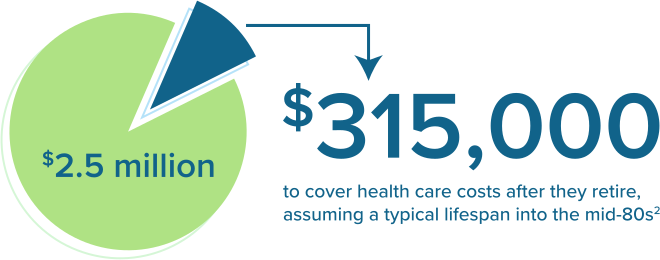
Is $2.5 Million Really Enough to Retire?

A retirement nest egg of $2.5 million can likely produce an annual income of $100,000 for as long as you are likely to live. This is using the 4% withdrawal rate many financial advisors consider standard. After starting with the first withdrawal of 4% of the total, the annual withdrawal will adjust for inflation. For example, if inflation runs at the target 2% rate of federal policymakers, during retirement the retiree will withdraw:

$100,000

in the first year

$102,000

in the second year

$104,040

in the third year and so on …

According to this model and conventional wisdom, a 4% withdrawal rate will allow a portfolio to last for at least 30 years. This would permit a 65-year-old retiree to maintain consistent purchasing power until age 95 and beyond.

For most retirees, this will likely be adequate to maintain a satisfying standard of living. Only about 3% of 2,000 retirees surveyed by the Employee Benefit Research Institute in 2022 spent $7,000 or more per month, equivalent to $84,000 in annual spending.

This model does not include a number of other factors. For instance, nearly all retirees are eligible for Social Security. For 2023, the maximum monthly Social Security benefit for people who claim benefits at full retirement age is $3,627. That’s equal to more than half the spending of the top 3% of retirees surveyed by EBRI. And, like the standard withdrawal rate, Social Security benefits are indexed to inflation.

5 Variables for Retiring With $2.5 Million at Age 65

While $2.5 million could seem like enough to retire at 65, many factors could change the outlook.

1. Unexpected Healthcare Costs

The Fidelity Retiree Health Care Cost Estimate suggests an average 65-year-old couple could need (approximate, after taxes):Unexpected Healthcare Costs

This assumes both spouses are enrolled in traditional Medicare, which between Medicare Part A and Part B covers expenses such as hospital stays, doctor visits and services, physical therapy, lab tests and more, and in Medicare Part D, which covers prescription drugs.

This figure does not include long-term care (“custodial care”), most dental care, eye exams and more, so your estimated healthcare costs in retirement could be considerably more.

2. Inflation

Inflation can powerfully influence retirees’ financial well-being. When inflation occurs, it reduces the purchasing power of money withdrawn from your retirement account. You can increase withdrawals to maintain purchasing power, but this risks more quickly depleting your savings.

3. Market Downturns

Inflation isn’t the only cause of market downturns. Business cycles and financial crises can exaggerate normal fluctuations in stock market valuations. If you’re selling investments to generate income for living expenses, you may want to sell more if valuations are down.

4. Longevity

While living a long life is positive, you could outlive the money you’ve saved for retirement. Many financial planners use life expectancy to age 95 or 100 when developing plans for funding retirement.

The Social Security Administration says an average 65-year-old male can live to age 83, while the average woman can live to age 86. However, people in their 80s and 90s also generally reduce their spending, with the exception of healthcare costs.

5. Estate Planning

Retiring at 65 with $2.5 million likely involved generating high income and savings, so there’s a chance you could have assets to pass on. With estate planning, adding members of your family as beneficiaries for homes you paid off with a mortgage may have long-term positives.

You may also want to think about any additional income streams. For example, if you own a medical practice or business, you may want to add your family as a beneficiary so they can decide to keep the business running or sell it.

CITE: https://www.r2library.com/Resource

COMMENTS APPRECIATED

Thank You

***

***

***
On Death Talk, Risk Management and Financial Planning

A financial planning challenge

Rick Kahler MS CFP

By Rick Kahler MS CFP®

One of the challenges in financial planning is the strong taboo in our society against talking about money. Another powerful taboo is talking about death when someone has a serious illness.

When someone is diagnosed with cancer, for example, the focus is almost always on treatment and recovery. Rarely is there any discussion of what happens if the treatment doesn’t work. There seems to be an unspoken belief that if we don’t talk about it, it won’t happen.

Not talking about death isn’t limited to family and friends, according to Dr. Carol McClanahan CFP®

For example, in a recent presentation to financial advisors at the Insiders Forum in Phoenix, she pointed out that many doctors shy away from talking about dying until the very end.

Given this strong reluctance to talk about both money and dying, how can you work with a financial advisor to deal with the financial and emotional issues that go along with a family member’s serious illness?

Here are some suggestions based on Dr. McClanahan’s talk:

Don’t expect someone facing a serious illness to give you an accurate prognosis of their disease, as they are often in denial. McClanahan suggests turning to “Dr. Google” for accurate information. Specifically, she recommends the National Institutes of Health (www.nih.gov), which has statistics on every disease imaginable.

  1. Learn to interpret what doctors say. For example, when a cancer patient is told chemotherapy has a 25% chance of working, the average patient hears “working” as “being cured.” “Working” actually means there is a 25% chance of the tumor shrinking. Often the chances of being cured are far less than 25%, and the physical effects of chemotherapy can be devastating to one’s remaining quality of life. McClanahan says, “Most of what we do to people at the end of life is unnecessary torture.”
  2. Find out early about options for palliative care. This is multidisciplinary care focused on treating the symptoms of treatment, relieving suffering, and improving the quality of life. Because of denial and unwillingness to talk about what happens if they don’t get better, many patients never get into palliative care or get into it way too late. Similarly, most patients wait too long to get into hospice care. The average time in hospice care, according to McClanahan, is just 19 days.
  3. Share your money concerns with the advisor. McClanahan says that anxiety over having enough money to pay for their care and the resulting effect on the family finances are two of the top concerns patients have. Interestingly, most financial advisors focus instead on whether advance directives, estate documents, and funeral plans are in place.
  4. Call the advisor’s attention to signs that a person’s illness is advancing. These can include a shortened attention span, not remembering details of conversations, word-finding difficulties, inability to multitask, mental fuzziness, and depression. Ask advisors to deal with these symptoms: meet early in the day, address the most important issues first, keep meetings short, include family members as appropriate, and put action items in writing.
  5. Realize that sharing your emotions is part of financial planning. Serious illness affects people in many different ways, but the underlying concerns are always emotional. Discuss those concerns with the advisor, and work together to create a comprehensive plan addressing both death and recovery. Remember that, as McClanahan put it, “preparation for a negative outcome does not reduce the risk of cure.”

***

halloween

***

The role of the financial planner

The role of a financial planner is to help clients prepare for the future, including the end of life. When that future becomes “now,” don’t hesitate to ask for the planner’s emotional support as well as financial advice. 

Conclusion

Your thoughts and comments on this ME-P are appreciated. Feel free to review our top-left column, and top-right sidebar materials, links, URLs and related websites, too. Then, subscribe to the ME-P. It is fast, free and secure.

Speaker: If you need a moderator or speaker for an upcoming event, Dr. David E. Marcinko; MBA – Publisher-in-Chief of the Medical Executive-Post – is available for seminar or speaking engagements. Contact: MarcinkoAdvisors@msn.com

OUR OTHER PRINT BOOKS AND RELATED INFORMATION SOURCES:

***

[PHYSICIAN FOCUSED FINANCIAL PLANNING AND RISK MANAGEMENT COMPANION TEXTBOOK SET]

 Risk Management, Liability Insurance, and Asset Protection Strategies for Doctors and Advisors: Best Practices from Leading Consultants and Certified Medical Planners™  Comprehensive Financial Planning Strategies for Doctors and Advisors: Best Practices from Leading Consultants and Certified Medical Planners™

***

RETIREMENT: Can Doctors Afford It?

By Staff Reporters

SPONSOR: http://www.MarcinkoAssociates.com

***

***

You’ve got a sense of your ideal retirement age. And you’ve probably made certain plans based on that timeline. But what if you’re forced to retire sooner than you expect? Aging baby-boomers, corporate medicine, the medical practice great resignation and/or the pandemic, etc?

RESIGNATION: https://medicalexecutivepost.com/2021/12/12/healthcare-industry-hit-with-the-great-resignation-retirement/

Early retirement is nothing new, but it’s clear how much the COVID-19 pandemic has affected an aging workforce. Whether due to downsizing, objections to vaccine mandates, concerns about exposure risks, other health issues, or the desire for more leisure time, the retired general population grew by 3.5 million over the past two years—compared to an annual average of 1 million between 2008 and 2019—according to the Pew Research Center.1 At the same time, a survey conducted by the National Institute on Retirement Security revealed that more than half of Americans are concerned that the COVID-19 pandemic has impacted their ability to achieve a secure retirement.2

***

***

There’s no need to panic, but those numbers make one thing clear, says Rob Williams, managing director of financial planning, retirement income, and wealth management for the Schwab Center for Financial Research. Flexible and personalized financial planning that addresses how you’d cope if you had to retire early can help you make the best use of all your resources. 

So – Here are six steps to follow. We’ll use as an example a person who’s seeing if they could retire five years early, but the steps remain the same regardless of your individual time frame.

Step 1: Think strategically about pension and Social Security benefits

For most retirees, Social Security and (to a lesser degree) pensions are the two primary sources of regular income in retirement. You usually can collect these payments early—at age 62 for Social Security and sometimes as early as age 55 with a pension. However, taking benefits early will mean that you get smaller monthly benefits for the rest of your life. That can matter to your bottom line, even if you expect Social Security to be merely the icing on your retirement cake.

On the Social Security website, you can find a projection of what your benefits would be if you were pushed to claim them several years early. But if you’re part of a two-income couple, you may want to make an appointment at a Social Security office or with a financial professional to weigh the potential options.

For example, when you die, your spouse is eligible to receive your monthly benefit if it’s higher than his or her own. But if you claim your benefits early, thus receiving a reduced amount, you’re likewise limiting your spouse’s potential survivor benefit.

If you have a pension, your employer’s pension administrator can help estimate your monthly pension payments at various ages. Once you have these estimates, you’ll have a good idea of how much monthly income you can count on at any given point in time.

***

Step 2: Pressure-test your 401(k)

In addition to weighing different strategies to maximize your Social Security and/or pension, evaluate how much income you could potentially derive from your personal retirement savings—and there’s a silver lining here if you’re forced to retire early. 

Rule of 55

Let’s say you leave your job at any time during or after the calendar year you turn 55 (or age 50 if you’re a public safety employee with a government defined-benefit plan). Under a little-known separation-of-service provision, often referred to as the “rule of 55,” you may be able take distributions (though some plans may allow only one lump-sum withdrawal) from your 401(k), 403(b), or other qualified retirement plan free of the usual 10% early-withdrawal penalties. However, be aware that you’ll still owe ordinary income taxes on the amount distributed. 

This exception applies only to the plan (including any consolidated accounts) that you were contributing to when you separated from service. It does not extend to IRAs. 

4% rule

There’s also a simple rule of thumb suggesting that if you spend 4% or less of your savings in your first year of retirement and then adjust for inflation each year following, your savings are likely to last for at least 30 years—given that you make no other changes to your withdrawals, such as a lump sum withdrawal for a one-time expense or a slight reduction in withdrawals during a down market. 

To see how much monthly income you could count on if you retired as expected in five years, multiply your current savings by 4% and divide by 12. For example, $1 million x .04 = $40,000. Divide that by 12 to get $3,333 per month in year one of retirement. (Again, you could increase that amount with inflation each year thereafter.) Then do the same calculation based on your current savings to see how much you’d have to live on if you retired today. Keep in mind that your money will have to last five years longer in this instance.

Knowing the monthly amount your current savings can generate will give you a clearer sense of whether you’ll have a shortfall—and how large or small it might be. Use our retirement savings calculator to test different saving amounts and time frames.

Step 3: Don’t forget about health insurance, doctor!

Nobody wants to spend down a big chunk of their retirement savings on unanticipated healthcare costs in the years between early retirement and Medicare eligibility at age 65. If you lose your employer-sponsored health insurance, you’ll want to find some coverage until you can apply for Medicare. 

Your options may include continuing employer-sponsored coverage through COBRA, insurance enrollment through the Health Insurance Marketplace at HealthCare.gov, or joining your spouse’s health insurance plan. You may also find discounted coverage through organizations you belong to—for example, the AARP. 

Step 4: Create a post-retirement budget

To make sure your retirement savings will cover your expenses, add up the monthly income you could get from pensions, Social Security, and your savings. Then, compare the total to your anticipated monthly expenses (including income taxes) if you were to retire five years early and are eligible, and choose to file, for Social Security and pension benefits earlier. 

Take into account various life events and expenditures you may encounter. You may not pay off your mortgage by the date you’d planned. Your spouse might still be working (which can add income but also prolong certain expenses). Or your children might not be out of college yet. 

You’re probably fine if you anticipate that your monthly expenses will be lower than your income. But if you think your expenses would be higher than your early-retirement income, some suggest that you take one or more of these measures:

  • Retire later; practice longer.
  • Save more now to fill some of the potential gap.
  • Trim your budget so there’s less of a gap down the road.
  • Consider options for medical consulting or part-time work—and begin to explore some of those opportunities now.

To the last point, finding a physician job later in life can be challenging, but certain employment agencies specialize in this area. If you can find work you like that covers a portion of your expenses, you’ll have the option of delaying Social Security and your company pension to get higher payments later—and you can avoid dipping into your retirement savings prematurely. 

***

Risk Management, Liability Insurance, and Asset Protection Strategies for Doctors and Advisors: Best Practices from Leading Consultants and Certified Medical Planners™

ORDER: https://www.routledge.com/Risk-Management-Liability-Insurance-and-Asset-Protection-Strategies-for/Marcinko-Hetico/p/book/9781498725989

***

Step 5: Protect your portfolio

When you retire early, you have to walk a fine line with your portfolio’s asset allocation—investing aggressively enough that your money has the potential to grow over a long retirement, but also conservatively enough to minimize the chance of big losses, particularly at the outset.

“Risk management is especially important during the first few years of retirement or if you retire early,” Rob notes, because it can be difficult to bounce back from a loss when you’re drawing down income from your portfolio and reducing the overall number of shares you own.  

To strike a balance between growth and security, start by making sure you have enough money stashed in relatively liquid, relatively stable investments—such as money market accounts, CDs, or high-quality short-term bonds—to cover at least a year or two of living expenses. Divide the rest of your portfolio among stocks, bonds, and other fixed-income investments. And don’t hesitate to seek professional help to arrive at the right mix. 

***

CMP logo

SPONSOR: http://www.CertifiedMedicalPlanner.org

Many people are unaccustomed to thinking about their expenses because they simply spend what they make when working, Rob says. But one of the most valuable decisions you can make about your life in retirement is to reevaluate where your money is going now.

This serves two aims. First, it’s a reality check on the spending plan you’ve envisioned for retirement, which may be idealized (e.g., “I’ll do all the home maintenance and repairs!”). Second, it enables you to adjust your spending habits ahead of schedule—whichever schedule you end up following. This gives you more control and potentially more income. 

Step 6: Reevaluate your current spending

For example, if you’re not averse to downsizing, moving to a less expensive home could reduce your monthly mortgage, property tax, and insurance payments while freeing up equity that could also be invested to provide additional monthly income.

“When you are saving for retirement, time is on your side”. You lose that advantage when you’re forced to retire early, but having a backup plan that anticipates the possibility of an early retirement can make the unknowns you face a lot less daunting.

CITE: https://www.r2library.com/Resource/Title/082610254

References:

1Richard Fry, “Amid the Pandemic, A Rising Share Of Older U.S. Adults Are Now Retired”, Pew Research Center, 11/04/2021, https://www.pewresearch.org/fact-tank/2021/11/04/amid-the-pandemic-a-rising-share-of-older-u-s-adults-are-now-retired/.

2Tyler Bond, Don Doonan and Kelly Kenneally, “Retirement Insecurity 2021: Americans’ Views of Retirement”, Nirsonline.Org, 02/2021, https://www.nirsonline.org/wp-content/uploads/2021/02/FINAL-Retirement-Insecurity-2021-.pdf.

COMMENTS APPRECIATED.

Thank You

Subscribe to the Medical Executive-Post

***

***

16th NATIONAL: Healthcare Decision Day 2024

By Staff Reporters

***

National Healthcare Decisions Day (NHDD) is an annual initiative celebrated on April 16th. Its purpose is to inspire, educate, and empower the public and healthcare providers about the importance of advance care planningNHDD encourages individuals to express their wishes regarding healthcare, and it emphasizes that providers and facilities should respect those wishes, whatever they may be.

Here are some key points about NHDD:

Let’s continue spreading awareness about advance care planning and making informed decisions about our health and well-being.

COMMENTS APPRECIATED

Subscribe Today

***

***

IRS Inheritance Rule Change and the “Delta Dental” Data Breach

By Staff Reporters

SPONSOR: http://www.MarcinkoAssociates.com

***

The IRS is demanding billions from small business who took this credit ...

***

The IRS Quietly Changed the Rules on Children’s Inheritance

The IRS just issued Revenue Ruling 2023-2, which had a substantial impact on estate planning, particularly where an irrevocable trust is involved.

In the last decade or so, more families have begun utilizing irrevocable trusts to protect their assets from spend-down in order to qualify for government benefits, such as Medicaid and VA Aid and Attendance. Prior to the issuance of this ruling, it was unclear whether assets passing to beneficiaries through an irrevocable trust would receive a step-up in basis, thereby eliminating any capital gains taxes that would otherwise be owed.

Historically, assets that are disposed of during an individual’s lifetime are subject to capital gains taxes on the increase in value of that asset over time. The amount of capital gains owed is determined largely by the difference between the value at the time of purchase and the value at the time of transfer.

***

Delta Dental of California data breach exposed info of 7 million people

“Delta Dental of California and its affiliates are warning almost seven million patients that they suffered a data breach after personal data was exposed in a MOVEit Transfer software breach.Delta Dental of California provides 24 months of free credit monitoring and identity theft protection services to impacted patients to mitigate the risk of their exposed data.”

LINK: https://tinyurl.com/bp4u2chv

COMMENTS APPRECIATED

Refer a Colleague: MarcinkoAdvisors@msn.com

Your referral Count: 0

Thank You

***

***

TRANSFER ON DEATH: TOD Deeds

By Staff Reporters

SPONSOR: http://www.MarcinkoAdvisors@msn.com

***

***

What Is a Transfer on Death (TOD) Deed?

TOD deeds are legal documents that can be filed in local land records offices, and do not require the notice of the beneficiary, though it’s probably a good idea to inform them. Each state has its own requirements as to what the deed entails. TOD deeds are offered in 27 states (and D.C.).

These deeds are revocable once filed. Beneficiaries have no ownership claim to your property while you’re still alive. You maintain full control of the property, including responsibility for any mortgage debt, taxes, liens and the like. Once you pass away, the property will transfer to your named beneficiary, along with any debts attached to it.

CITE: https://www.r2library.com/Resource

Pros and Cons of a Transfer on Death Deed

Before signing a transfer on death deed, there are a few things to keep in mind.

Pros

  • You retain ownership while you’re still alive. Your beneficiary only takes over once you pass away; until then, you make all decisions about your property, and can even sell it if you choose. This makes a TOD deed a better choice than, say, adding someone as a joint owner on your property. (In that case, you would need their permission before selling, refinancing, mortgaging or even improving the home.)
  • It is revocable. If you choose to withdraw or revoke your transfer on death deed, you can do so at any time. You can also replace an existing TOD deed with a new one, if desired.
  • It’s simple. Establishing a transfer on death deed is easy. It just requires signing the document and filing with your county land records office. You don’t even need to let the beneficiary know you’ve done it. 
  • Anyone can be named you beneficiary. You can use a transfer on death deed to pass property to anyone when you die. This includes family members, friends, other loved ones or even charitable causes.

Cons

  • Joint ownership takes precedence. If the property is jointly owned with someone else, that ownership supersedes a TOD deed. The property will instead transfer to the other owner if you pass away. Once they also pass away, the TOD deed will go into effect (if still valid).
  • If your beneficiary dies first, your property goes to probate anyway. If you pass away along with or after your beneficiary, and don’t have a backup beneficiary named, your property will go through probate with the rest of your estate. 

COMMENTS APPRECIATED

Thank You

***

***

RISK MANAGEMENT: https://www.routledge.com/Risk-Management-Liability-Insurance-and-Asset-Protection-Strategies-for/Marcinko-Hetico/p/book/9781498725989

***

BEYOND: Advance Care Planning for Financial Advisors & Lawyers from Doctors on April 16-17th.

APRIL 17th. IS NATIONAL HEALTHCARE DECISION DAY 2023

By Dr. David Edward Marcinko MBA CMP

SPONSOR: http://www.CertifiedMedicalPlanner.org

Staff Reporters via National Institute of Health

***

National Healthcare Decisions Day (NHDD) exists to inspire, educate and empower the public and providers about the importance of advance care planning. NHDD is an initiative to encourage patients to express their wishes regarding healthcare and for providers and facilities to respect those wishes, whatever they may be.

NHDD was founded in 2008 by Nathan Kottkamp, a Virginia-based health care lawyer, to provide clear, concise, and consistent information on healthcare decision-making to both the public and providers/facilities through the widespread availability and dissemination of simple, free, and uniform tools (not just forms) to guide the process.

NHDD is a series of independent events held across the country, supported by a national media and public education campaign. In all respects, NHDD is inclusive and brings a variety of players in the larger healthcare, legal, and religious community together to work on a common project, to the benefit of patients, families, and providers. A key goal of NHDD is to demystify healthcare decision-making and make the topic of advance care planning inescapable. Among other things, NHDD helps people understand that advance healthcare decision-making includes much more than living wills; it is a process that should focus first on conversation and choosing an agent.

As of June 2016, The Conversation Project has been responsible for the management, finances, and structure of NHDD.  NHDD’s founder, Nathan Kottkamp, continues to be involved in NHDD and provides leadership by ensuring the maintenance of NHDD’s high quality resources and support for the community.

Read more about NHDD’s founding: https://theconversationproject.org/nhdd/origins/

***

***

DEFINITION: What is advance care planning for financial advisors and lawyers?

Advance care planning involves discussing and preparing for future decisions about your medical care if you become seriously ill or unable to communicate your wishes with your estate planning attorney or financial advisor. Having meaningful conversations with your loved ones is the most important part of advance care planning. Many people also choose to put their preferences in writing by completing legal documents called advance directives.

What are advance directives?

Advance directives are legal documents that provide instructions for medical care and only go into effect if you cannot communicate your own wishes.

The two most common advance directives for health care are the living will and the durable power of attorney for health care.

  • Living will: A living will is a legal document that tells doctors how you want to be treated if you cannot make your own decisions about emergency treatment. In a living will, you can say which common medical treatments or care you would want, which ones you would want to avoid, and under which conditions each of your choices applies. Learn more about preparing a living will.
  • Durable power of attorney for health care: A durable power of attorney for health care is a legal document that names your health care proxy, a person who can make health care decisions for you if you are unable to communicate these yourself. Your proxy, also known as a representative, surrogate, or agent, should be familiar with your values and wishes. A proxy can be chosen in addition to or instead of a living will. Having a health care proxy helps you plan for situations that cannot be foreseen, such as a serious car accident or stroke. Learn more about choosing a health care proxy.

Think of your advance directives as living documents that you review at least once each year and update if a major life event occurs such as retirement, moving out of state, or a significant change in your health.

CITE: https://www.r2library.com/Resource

Who needs an advance care plan?

Advance care planning is not just for people who are very old or ill. At any age, a medical crisis could leave you unable to communicate your own health care decisions. Planning now for your future health care can help ensure you get the medical care you want and that someone you trust will be there to make decisions for you.

  • Advance care planning for people with dementia. Many people do not realize that Alzheimer’s disease and related dementias are terminal conditions and ultimately result in death. People in the later stages of dementia often lose their ability to do the simplest tasks. If you have dementia, advance care planning can give you a sense of control over an uncertain future and enable you to participate directly in decision-making about your future care. If you are a loved one of someone with dementia, encourage these discussions as early as possible. In the later stages of dementia, you may wish to discuss decisions with other family members, your loved one’s health care provider, or a trusted friend to feel more supported when deciding the types of care and treatments the person would want.

What happens if you do not have an advance directive?

If you do not have an advance directive and you are unable to make decisions on your own, the state laws where you live will determine who may make medical decisions on your behalf. This is typically your spouse, your parents if they are available, or your children if they are adults. If you are unmarried and have not named your partner as your proxy, it’s possible they could be excluded from decision-making. If you have no family members, some states allow a close friend who is familiar with your values to help. Or they may assign a physician to represent your best interests. To find out the laws in your state, contact your state legal aid office or state bar association.

Will an advance directive guarantee your wishes are followed?

An advance directive is legally recognized but not legally binding. This means that your health care provider and proxy will do their best to respect your advance directives, but there may be circumstances in which they cannot follow your wishes exactly. For example, you may be in a complex medical situation where it is unclear what you would want. This is another key reason why having conversations about your preferences is so important. Talking with your loved ones ahead of time may help them better navigate unanticipated issues.

There is the possibility that a health care provider refuses to follow your advance directives. This might happen if the decision goes against:

  • The health care provider’s conscience
  • The health care institution’s policy
  • Accepted health care standards

In these situations, the health care provider must inform your health care proxy immediately and consider transferring your care to another provider.

Other advance care planning forms and orders from doctors

You might want to prepare documents to express your wishes about a single medical issue or something else not already covered in your advance directives, such as an emergency. For these types of situations, you can talk with a doctor about establishing the following orders:

  • Do not resuscitate (DNR) order: A DNR becomes part of your medical chart to inform medical staff in a hospital or nursing facility that you do not want CPR or other life-support measures to be attempted if your heartbeat and breathing stop. Sometimes this document is referred to as a do not attempt resuscitation (DNR) order or an allow natural death (AND) order. Even though a living will might state that CPR is not wanted, it is helpful to have a DNR order as part of your medical file if you go to a hospital. Posting a DNR next to your hospital bed might avoid confusion in an emergency. Without a DNR order, medical staff will attempt every effort to restore your breathing and the normal rhythm of your heart.
  • Do not intubate (DNI) order: A similar document, a DNI informs medical staff in a hospital or nursing facility that you do not want to be on a ventilator.
  • Do not hospitalize (DNH) order: A DNH indicates to long-term care providers, such as nursing home staff, that you prefer not to be sent to a hospital for treatment at the end of life.
  • Out-of-hospital DNR order: An out-of-hospital DNR alerts emergency medical personnel to your wishes regarding measures to restore your heartbeat or breathing if you are not in a hospital.
  • Physician orders for life-sustaining treatment (POLST) and medical orders for life-sustaining treatment (MOLST) forms:These forms provide guidance about your medical care that health care professionals can act on immediately in an emergency. They serve as a medical order in addition to your advance directive. Typically, you create a POLST or MOLST when you are near the end of life or critically ill and understand the specific decisions that might need to be made on your behalf. These forms may also be called portable medical orders or physician orders for scope of treatment (POST). Check with your state department of health to find out if these forms are available where you live.
  • MORE: https://www.kevinmd.com/2023/04/april-16th-is-national-healthcare-decisions-day-plan-for-your-end-of-life-care-now.html

Medicare Enrollment at CMS?

At enrollment, Medicare in the future could offer three advance directives with goals of care: Directive A: CONSENT to treat — inpatient medical treatment Directive B: CONSENT to comfort — home bound holistic care Directive C: CHOOSE against medical advice — outpatient palliative resources.

CITE: https://www.kevinmd.com/2023/04/the-heartbreaking-story-of-jimmy-carter-a-call-for-medicare-reform-in-end-of-life-care.html

You may also want to document your wishes about organ and tissue donation and brain donation. As well, learning about care options such as palliative care and hospice care can help you plan ahead.

***

COMMENTS APPRECIATED

Thank You

***

RISK MANAGEMENT & LIABILITY PROTECTION FOR PHYSICIANS

And … Their Insurance Agents and Financial Advisors

INVITE DR. MARCINKO: https://medicalexecutivepost.com/dr-david-marcinkos-

DEM avatar

By DR. DAVID EDWARD MARCINKO MBA CMP®

CMP logo

SPONSOR: http://www.CertifiedMedicalPlanner.org

***

https://images.routledge.com/common/jackets/amazon/978149872/9781498725989.jpg

***

BOOK REVIEW

It is not uncommon for practicing physicians to have more than a dozen separate insurance policies to protect their medical practice and personal assets. Yet, most doctors understand very little about their policies.BOOK REVIR

Risk Management, Liability Insurance, and Asset Protection Strategies for Doctors and Advisors: Best Practices from Leading Consultants and Certified Medical Planners™explains to physicians and insurance professionals the background, theory, and practicalities of medical risk management, asset protection methods, and insurance planning.

The book presents information in a manner that is convenient and highly useful for busy medical practitioners. It discusses the medical records revolution and addresses concerns regarding cloud computing, data security, and technological threats.

The book covers modern health law and policy, including fraud and abuse, workplace-violence, Medicare compliance, HIPAA regulations, AR protection strategies with internal controls, P4P and value based care, insurance and reputation management, and how the ARA legislation is impacting physician practices. It also includes case models and examples that provide you with a real-world understanding of how to recognize and reduce personal and medical practice risks.

With time at a premium for all, and so much information packed into one well-organized resource, this book is a must-read for every physician and financial advisor that serves the health care sector. The book will help physicians make better decisions about the risks they face and will help financial advisors improve the value they provide to their clients who are doctors.

MORE = ORDER HERE: https://www.routledge.com/Risk-Management-Liability-Insurance-and-Asset-Protection-Strategies-for/Marcinko-Hetico/p/book/9781498725989

THANK YOU

***

PODCAST: Will Your Health Care Directives Protect You?

By Rick Kahler CFP

PODCAST: https://kahlerfinancial.com/financial-awakenings/estate-planning/will-your-health-care-directives-protect-you

***

***

MORE: https://www.nia.nih.gov/health/advance-care-planning-health-care-directives

CITE: https://www.r2library.com/Resource/Title/0826102549

***

***

Risk Management: https://www.routledge.com/Risk-Management-Liability-Insurance-and-Asset-Protection-Strategies-for/Marcinko-Hetico/p/book/9781498725989

***

***
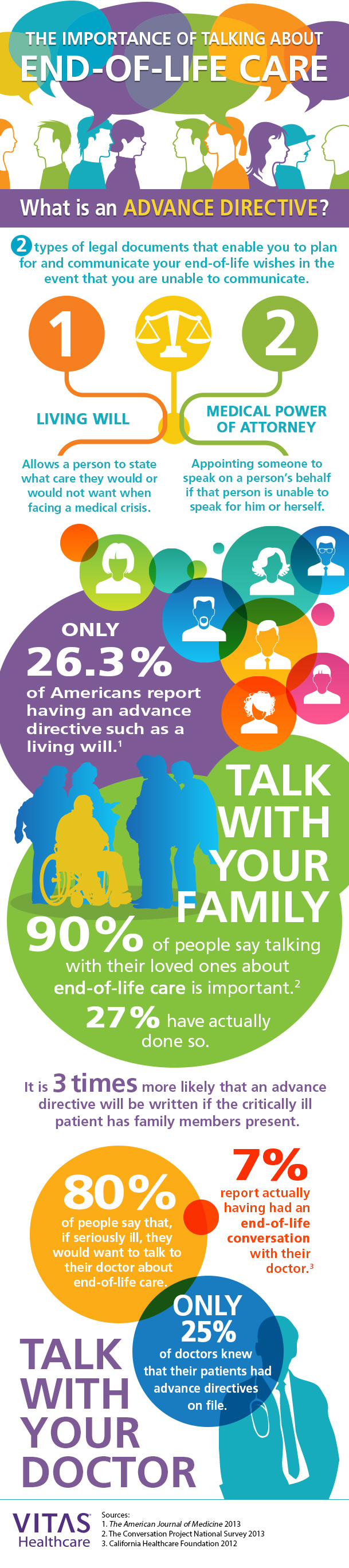
COMMENTS APPRECIATED

Thank You

Subscribe to the Medical Executive-Post

***

Keep Medical Directives Up to Date

On Medical Directives

By Rick Kahler CFP®

One important component of estate planning is a document, usually called a medical directive, which can include a living will, that sets out your wishes for end-of-life care and a health care power of attorney that designates someone to make medical decisions if you are unable to do so. A medical directive addresses important issues that are inevitable, but that most of us don’t want to think about or talk about. Consequently, many people leave their family members and medical providers with no guidance.

If you have not executed a medical directive, I strongly recommend doing so. If you do have a living will, I suggest you review your document periodically to be sure it still provides the best options for carrying out your wishes.

Example:

Recently I’ve encountered two situations where medical directives that had been perfectly valid and appropriate at the time they were executed had become potentially useless. In both cases, a family member designated to make end-of-life decisions had subsequently developed dementia that affected their competency to make those decisions.

This possibility is one reason why, if your medical directive designates your spouse, it’s wise to name an alternate as well. Your spouse, aging along with you, may not be the most capable person to make hard decisions when the time comes.

It’s also a good idea to communicate your specific wishes to both your primary and alternate designees. Discuss with them, as well, whether they believe they will actually be able to carry out your wishes. Unfortunately, I have seen cases where family members, with the most loving of intentions, were so hesitant to make decisions that their inaction violated their loved ones’ last wishes.

These conversations are not easy. Yet they are essential. One of my clients recently was faced with the possibility of making end-of-life decisions for her father. Several years earlier, he had executed a medical power of attorney and living will document naming her as his designated agent. At that time, the two of them had talked about his wishes, so she knew the choices he would want her to make.

***

***

For now, my client was spared the necessity of making these difficult decisions because her father recovered. But, faced with the reality of “someday” contingencies becoming “right now” hard choices, she felt capable of doing what had to be done. She told me that what gave her the strength she needed was not the responsibility of being designated in the living will document. It was the conversations she and her father had had, both at the time he signed the document and during his recent illness.

“I made him a solemn promise that I would make the choices he needed and wanted me to make,” she said. “It felt like a vow that I couldn’t ever go back on.”

It may not be especially difficult for a family member to agree to become the designated representative in a medical directive. If the agent named in a healthcare power of attorney is in good health, the need to make hard decisions is somewhere in the future and can feel theoretical.

But at the time of a medical emergency or a draining final illness, a family member who is frightened, grieving, and exhausted may find actually making those decisions to be the hardest thing they’ve ever had to do.

Assessment

Giving your family members the clarity and direction to make end-of-life decisions for you requires more than putting their name into a document. It requires choosing someone who is willing to carry out your wishes, communicating your wishes to them through conversations, and checking periodically to make sure they are still willing and able to carry out the solemn promise that a living will entails. 

Conclusion

Your thoughts and comments on this ME-P are appreciated. Feel free to review our top-left column, and top-right sidebar materials, links, URLs and related websites, too. Then, subscribe to the ME-P. It is fast, free and secure.

Speaker: If you need a moderator or speaker for an upcoming event, Dr. David E. Marcinko; MBA – Publisher-in-Chief of the Medical Executive-Post – is available for seminar or speaking engagements.

Book Marcinko: https://medicalexecutivepost.com/dr-david-marcinkos-bookings/

Subscribe: MEDICAL EXECUTIVE POST for curated news, essays, opinions and analysis from the public health, economics, finance, marketing, IT, business and policy management ecosystem.

DOCTORS:

“Insurance & Risk Management Strategies for Doctors” https://tinyurl.com/ydx9kd93

“Fiduciary Financial Planning for Physicians” https://tinyurl.com/y7f5pnox

“Business of Medical Practice 2.0” https://tinyurl.com/yb3x6wr8

HOSPITALS:

“Financial Management Strategies for Hospitals” https://tinyurl.com/yagu567d

“Operational Strategies for Clinics and Hospitals” https://tinyurl.com/y9avbrq5

***

Risk Management, Liability Insurance, and Asset Protection Strategies for Doctors and Advisors: Best Practices from Leading Consultants and Certified Medical Planners™8Comprehensive Financial Planning Strategies for Doctors and Advisors: Best Practices from Leading Consultants and Certified Medical Planners™

On Living Wills

Death is Inevitable

By Rick Kahler CFP®

As inevitable as death is, given the way we avoid planning for it we seem to believe we will evade it if we don’t talk about it. Two-thirds of Americans don’t have a will or a health care advanced directive.

Financial planners like myself often preach that everyone must have both. However, there are exceptions to most rules, as well as times that the best preparation in the world goes awry.

No will

Here are some scenarios where you may not need a will.

First, you have no minor children and you don’t own anything of value or that you want to bequeath to someone.

Second, you do have assets, but all of them are transferable without a will. These include retirement accounts, annuities, assets like homes or bank accounts that are owned jointly, and assets like brokerage accounts or real estate that will Transfer on Death (TOD) to a named beneficiary.

Health care advanced directives

What about a health care advanced directive (HCAD)? This is any document that gives instructions or appoints someone to give direction about your health care. Living wills and Health Care Durable Powers of Attorney are two of the most popular HCADs.

Many people think you must use a state-provided form for a HCAD to be effective. According to the Commission of Law & Aging, most states do not require a form but do require your HCAD to be properly signed and witnessed. It’s best to have your directive drawn by an attorney, as most forms are too general or include generic options that may not apply to your needs or wishes.

Another myth is the notion that HCADs are legally binding on health care providers and their institutions. They are not. An advanced directive just gives healthcare providers immunity if they follow your instructions. The healthcare providers can refuse to comply with your directive. This is especially true in an emergency situation where the attending EMS must attempt to resuscitate you and get you to a hospital. In some states, if you and your doctor have signed a special form and you wear a special identification bracelet the attending EMS may choose not to resuscitate you.

Also, just giving your directive to your doctor is no guarantee that the directive will show up in your medical records. You, or your proxy, must check with each institution you visit or are transferred to and be sure it’s on file.

Some people fear that naming a health care agent means that you give up your right to make health care decisions. That is not true. A person retains the right to make all their own healthcare decisions unless they become incompetent.

Many people don’t do directives because they think they must understand all the choices and be crystal clear about their wishes. This is not necessarily the case. If nothing else, a directive appoints a person you trust to make decisions. And as with any legal document, you may always change your directive when you wish.

If all your relatives who can legally make healthcare decisions for you agree, you may not need an HCAD to stop treatment near the end of life. Still, a living will can make the decision less difficult. It becomes very important in the event your closest relatives disagree on what is best for you.

***

Not today – DEATH!

***
Like any good estate planning, the best strategy for both wills and HCADs is to focus on what you would like to happen today, rather than anticipating events and circumstances into the future. Then, as well as communicating your wishes verbally, put your thoughts in writing and provide copies to your doctors and loved ones. 

Conclusion

Your thoughts and comments on this ME-P are appreciated. Feel free to review our top-left column, and top-right sidebar materials, links, urls and related websites, too. Then, subscribe to the ME-P. It is fast, free and secure.

Speaker: If you need a moderator or speaker for an upcoming event, Dr. David E. Marcinko; MBA – Publisher-in-Chief of the Medical Executive-Post – is available for seminar or speaking engagements. Contact: MarcinkoAdvisors@msn.com

OUR OTHER PRINT BOOKS AND RELATED INFORMATION SOURCES:

Risk Management, Liability Insurance, and Asset Protection Strategies for Doctors and Advisors: Best Practices from Leading Consultants and Certified Medical Planners™8Comprehensive Financial Planning Strategies for Doctors and Advisors: Best Practices from Leading Consultants and Certified Medical Planners™

***

On Naming Beneficiaries

Estate  Planning

By Jason Dyken, MD MBA

[Dyken Wealth Strategies]

Dear David,

It’s not uncommon for people to assume that having a will in place is enough to ensure their assets will pass to their named beneficiaries in the manner they desire. However, certain financial assets, including 401(k) and IRA retirement accounts, as well as life insurance policies bypass a will or trust.

One benefit is that when the account owner dies, the assets go directly to the beneficiaries named on the accounts, bypassing the probate process. However, because these beneficiary designations override your will, they need to be carefully coordinated with your overall estate plan.

Some of the most common mistakes people make in regard to beneficiary designations include:

  • Forgetting to update named beneficiaries in the event of divorce. If your previous spouse is still listed as the beneficiary on your retirement account or life insurance policy at the time of your death, the assets will go to your ex, regardless of whether he or she is a named beneficiary in your will.
  • Naming minor children as beneficiaries or contingent beneficiaries. In the event you and your spouse predecease your children, they could directly inherit large sums of money from retirement accounts or life insurance policies—assets that are not governed by stipulations you may have included in your will or trust documents. Avoid leaving assets to minors outright. If you do, a court will appoint someone to look after the funds which can be a time consuming and expensive process.
  • Using beneficiary forms that don’t allow your assets to pass “per stirpes,” or equally among the branches of a family. For example, let’s say you name your three adult children as the beneficiaries of your IRA. If one of them predeceases you, you might want that child’s share to go to his or her children. However, many standard beneficiary forms don’t include per stirpes provisions and only allow per capita provisions where your two remaining adult children would share the assets. In certain cases, you can ask to include non-standard language to the beneficiary form, but make sure the financial services company actually has the capabilities in place to manage per stirpes distributions first.

***

***

Assessment

An estate planning attorney or financial advisor with experience in estate and legacy planning can help ensure your beneficiary designations are up-to-date and aligned with your wishes and preferences.

Conclusion

Your thoughts and comments on this ME-P are appreciated. Feel free to review our top-left column, and top-right sidebar materials, links, urls and related websites, too. Then, subscribe to the ME-P. It is fast, free and secure.

Speaker: If you need a moderator or speaker for an upcoming event, Dr. David E. Marcinko; MBA – Publisher-in-Chief of the Medical Executive-Post – is available for seminar or speaking engagements. Contact: MarcinkoAdvisors@msn.com

OUR OTHER PRINT BOOKS AND RELATED INFORMATION SOURCES:

Comprehensive Financial Planning Strategies for Doctors and Advisors: Best Practices from Leading Consultants and Certified Medical Planners™

***

Talking about End-of-Life Care

Join Our Mailing List

The Importance of … EOL Care

[By Samantha Wanner]

***

It’s not easy, but the medical treatments you would want near the end of life need to be discussed with others. If you never bring up the topic and you were unexpectedly incapacitated and unable to speak for yourself, your medical wishes would never be known.

***

***

Important Topic

Despite the topic’s importance, only 27% of Americans report having talked with their families about end-of-life care. The best way to make your medical wishes known is to create an advance directive and share it with your family and your doctor.

An advance directive is actually two legal documents that enable you to plan and communicate your end-of-life wishes.  When you create your advance directive, you are being proactive about your medical care and sparing your loved ones from having to make difficult medical decisions in a time of crisis.

Don’t wait for a crisis. Create your advance directive, share copies with your loved ones and doctor and keep your copy in an accessible location others can find.

***

end_of_life_infographic

***

Channel Surfing

Have you visited our other topic channels? Established to facilitate idea exchange and link our community together, the value of these topics is dependent upon your input. Please take a minute to visit. And, to prevent that annoying spam, we ask that you register.

Link: http://feeds.feedburner.com/HealthcareFinancialsthePostForcxos

Give your loved ones peace of mind.

Would they know what you want if you couldn’t talk? Do you know what you would want near the end of life? Find your own answers. Then open the conversation with the people you love. You are giving everyone a priceless gift.

More About End of Life Planning

Conclusion

Your thoughts and comments on this ME-P are appreciated. Feel free to review our top-left column, and top-right sidebar materials, links, URLs and related websites, too. Then, subscribe to the ME-P. It is fast, free and secure.

Speaker: If you need a moderator or speaker for an upcoming event, Dr. David E. Marcinko; MBA – Publisher-in-Chief of the Medical Executive-Post – is available for seminar or speaking engagements. Contact: MarcinkoAdvisors@msn.com

OUR OTHER PRINT BOOKS AND RELATED INFORMATION SOURCES:

Risk Management, Liability Insurance, and Asset Protection Strategies for Doctors and Advisors: Best Practices from Leading Consultants and Certified Medical Planners™8Comprehensive Financial Planning Strategies for Doctors and Advisors: Best Practices from Leading Consultants and Certified Medical Planners™

BOOK REVIEW

Physicians have more complex liability challenges to overcome in their lifetime, and less time to do it, than other professionals. Combined with a focus on practicing their discipline, many sadly fail to plan for their own future. They need trustworthy advice on how to effectively protect themselves, families and practice, from the many overt and covert risks that could potentially disrupt years of hard work.

 Fortunately, this advice is contained within RISK MANAGEMENT, LIABILITY INSURANCE, AND ASSET PROTECTION STRATEGIES FOR DOCTORS AND ADVISORS [BEST PRACTICES FROM LEADING CONSULTANTS AND CERTIFIED MEDICAL PLANNERS™]. Written by Dr. David Edward Marcinko, Nurse Hope Rachel Hetico and their team of risk managers, accountants, insurance agents, attorneys and physicians, it is uniquely positioned as an integration of applied, academic and peer-reviewed strategies and research, with case studies, from top consultants and Certified Medical Planners. It contains the latest principles of risk management and asset protection strategies for the specific challenges of modern physicians. My belief is that any doctor who reads and applies even just a portion of this collective wisdom will be fiscally rewarded. The Institute of Medical Business Advisors has produced another outstanding reference for physicians that provide peace of mind in this unique marketplace! In my opinion, it is a mandatory read for all medical professionals.

DAVID K. LUKE; MS-PFP, MIM, CMP™

[Net Worth Advisory Group, Inc – Sandy, Utah]

On Children’s Inheritance

Join Our Mailing List 

In Estate Planning

By Rick Kahler MS CFP®  http://www.KahlerFinancial.com

Rick Kahler MS CFPEstate planning can be one of the most emotionally difficult aspects of financial planning. One often-overlooked aspect of estate planning is talking with your heirs about your legacy plans.

While most of us probably accept in theory that these conversations are important, actually carrying them out can be terribly difficult.

Suggestions

Here are a few suggestions that may help.

  1. Communicate your values about money in a larger context with both words and behavior. Our estate plans often reflect lifelong values such as a commitment to charitable giving or a wish to provide first for our families. If children are familiar with your values, chances are they will have a good idea of what to expect from your estate.
  2. Evaluate your children’s money skills. Just because kids grow up in the same family doesn’t mean they will have the same knowledge and attitudes about money. Especially if children will inherit significant amounts, conversations about estate planning can become part of larger conversations designed to help teach them how to manage and become comfortable with their legacies.
  3. If your estate plan does not treat children “equally,” for whatever reasons, it’s best to share that information well in advance and to communicate it privately to each child. There are many reasons why treating children differently in an estate plan can be the fairest thing to do, but that doesn’t mean it’s wise to let them learn the specifics when a will is read. If parents and individual children can discuss these provisions and the reasons for them ahead of time, there is less likelihood of conflict between siblings after the parents are gone.
  4. Don’t allow children to assume they are inheriting more than is the case. If most of your estate will go to charity, don’t keep it a secret. Not telling the kids may avoid conflict now, but it will sow seeds for deeper conflict and resentment after your death.
  5. Prepare children for large or unexpected inheritances. I’ve worked with heirs who were stunned to receive legacies much larger than their parents’ lifestyles had led them to expect. If you have a substantial net worth that’s “below the radar,” perhaps in the form of land or business ownership, your children may be totally unprepared for what they will inherit. Find ways to help them learn more about both the financial and the emotional aspects of managing inherited wealth. You might also consider options, such as giving more to the children during their lifetime, to help reduce the impact of a sudden inheritance.
  6. Acknowledge your own fears. Although it is seldom expressed, perhaps the strongest reason for not discussing estate plans with family members is fear. It’s natural for parents to be afraid that children will be angry or disappointed, will build too much on their expectations for an inheritance, or will be resentful of other heirs.

***

Currency

***

Communications

Talking to family members about estate planning and legacies can be difficult and even painful. Those discussions, however, will almost certainly be less painful in the long run than the stories children may make up about your decisions after you are gone.

Role of Planners and Coaches

Financial planners and financial coaches can play an important role that goes beyond providing financial advice. They may also be helpful in facilitating the family conversations. In especially difficult circumstances, the help of a financial therapist can also be invaluable.

Assessment

Using the available resources to help you discuss your wishes with family members can be an important aspect of estate planning. Having those difficult conversations is one way to enhance the legacy you want to pass on to your family.

Conclusion

Your thoughts and comments on this ME-P are appreciated. Feel free to review our top-left column, and top-right sidebar materials, links, URLs and related websites, too. Then, subscribe to the ME-P. It is fast, free and secure.

Speaker: If you need a moderator or speaker for an upcoming event, Dr. David E. Marcinko; MBA – Publisher-in-Chief of the Medical Executive-Post – is available for seminar or speaking engagements. Contact: MarcinkoAdvisors@msn.com

OUR OTHER PRINT BOOKS AND RELATED INFORMATION SOURCES:

Product Details  Product Details

Physician Creditor Protection for IRAs, Annuities and Insurance for 2014-15

Join Our Mailing List

A SPECIAL ME-P REPORT

###

Asset Protection Planning for Qualified and Non-Qualified Retirement Plans, IRAs, 403(b)s, Education IRAs (Coverdell ESAs), 529 Plans, UTMA Accounts, Health/Medical Savings Accounts (MSA/HSAs), Qualified and Non-Qualified Annuities, Long-Term Care Insurance, Disability Insurance and Group, Individual and Business Life Insurance [Ohio Focus]

By Edwin P. Morrow III; JD LLM MBA CFP® RFC®

[©2007-12-14. All rights reserved. USA]

EDITOR’S NOTE:

Hi Ann,

A couple years ago you posted an earlier version of the attached Asset Protection Outline. I updated it to include quite a bit more discussion of different protection levels for various kinds of accounts, and included more discussion of states other than Ohio, including a 50 state chart with IRA/403b protections.

So please delete the old one and replace with this one which contains more topics, including some substantial discussion of issues regarding current class action litigation jeopardizing asset protection for Schwab and Merrill Lynch IRAs.

Regards
Ed

###

The Importance of Asset Protection as Part of Financial and Estate Planning for Doctor’s and Medical Professionals

Asset Protection has become a ubiquitous buzz-word in the legal and financial community. It often means different things to different people. It may encompass anything from buying umbrella liability insurance to funding offshore trusts.

What is most likely to wipe out a client’s entire net worth? An investment scam, investment losses, a lawsuit, divorce or long-term health care expenses? “Asset Protection” may be construed to address all of these scenarios, but this outline will cover risk from non-spousal creditors as opposed to risk from bad investments, divorce, medical bills or excessive spending. Prudent business practice and limited liability entity use (LP, LLP, LLC, Corporation, etc) is the first line of defense against such risks. Similarly, good liability insurance and umbrella insurance coverage is paramount.

However, there is a palpable fear among many of frivolous lawsuits and rogue juries [especially among physicians and medical professionals]. Damages may exceed coverage limits. Moreover, insurance policies often have large gaps in coverage (e.g. intentional torts, “gross” negligence, asbestos or mold claims, sexual harassment).

As many doctors in Ohio know all too well, malpractice insurance companies can fail, too. Just as we advise clients regarding legal ways to legitimately avoid income and estate taxes or qualify for benefits, so we advise how to protect family assets from creditors. Ask your clients, “What level of asset protection do you want for yourself?

For the inheritance you leave to your family?” Do any clients answer “none” or “low”? Trusts that are mere beneficiary designation form or POD/TOD substitutes are going out of style in favor of “beneficiary-controlled trusts”, “inheritance trusts” and the like.

Table of Contents

While effort is made to ensure the material is accurate, this material is not intended as legal advice and no one may rely on it as such. Sections II(d), II(i), V, VI and XI were updated Feb 2012, but much of the material and citations have not been verified since 2010. Permission to reprint and share with fellow bar members is granted, but please contact author for updates if more than a year old.

T.O.C. [Page Number]

I. Importance of Asset Protection 2

II. State and Federal Protections Outside ERISA or Bankruptcy 4

a. Non-ERISA Qualified Plans: SEP, SIMPLE IRAs 5

b. Traditional and Roth IRAs, “Deemed IRAs” 7

c. Life Insurance 9

d. Long-Term Care, Accident/Disability Insurance 13

e. Non-Qualified Annuities 13

f. Education IRAs (now Coverdell ESAs) 16

g. 529 Plans 17

h. Miscellaneous State and Federal Benefits 18

i. HSAs, MSAs, FSAs, HRAs 18

III. Federal ERISA Protection Outside Bankruptcy 20

IV. Federal Bankruptcy Scheme of Creditor Protection 26

V. Non-Qualified Deferred Comp – Defying Easy Categorization 30

VI. Breaking the Plan – How Owners Can Lose Protection 32

(incl Prohibited Transactions and Schwab/Merrill Lynch IRA problems) 35

VII. Post-Mortem – Protections for a Decedent’s Estate 51

VIII. Post-Mortem – State Law Protections for Beneficiaries 52

IX. Post-Mortem – Bankruptcy Protections for Beneficiaries 54

X. Dangers and Advantages of Inheriting Through Trusts 56

XI. Piercing UTMA/UGMA and Other Third Party Created Trusts 59

XII. Exceptions for Spouses, Ex-Spouses and Dependents 61

XIII. Exceptions when the Federal Government (IRS) is Creditor 62

XIV. Fraudulent Transfer (UFTA) and Other Exceptions 68

XV. Disclaimer Issues – Why Ohio is Unique 69

XVI. Medicaid/Government Benefit Issues 71

XVII. Liability for Advisors 72

XVIII. Conflicts of Law – Multistate Issues 73

XIX. Conclusions 75

Appendices

A. Ohio exemptions – R.C. §2329.66 (excerpt), §3911.10, §3923.19 78

B. Bankruptcy exemptions – 11 U.S.C. § 522 excerpts 80

C. Florida IRA exemption – Fla Stat. § 222.21 (note-may be outdated) 85

D. Sal LaMendola’s Inherited IRA Win/Loss Case Chart 86

E. Multistate Statutory Debtor Exemption Chart 88

###

Assessment

This outline will discuss the sometimes substantial difference in legal treatment and protection for various investment vehicles and retirement accounts, with some further discussion of important issues to consider when trusts receive such assets.

Beware of general observations like: “retirement plans, insurance, IRAs and annuities are protected assets” – that may often be true, but Murphy’s law will make your client the exception to the general rules. The better part of this outline is pointing out those exceptions.

2012 WHITE PAPER LINK:

Creditor Protection for IRAs Annuities Insurance Nov 19 2010 WC CLE Feb 2012 update

***

2014 WHITE PAPER LINK UPDATE:

Optimal Basis Increase Trust Aug 2014

***

ABOUT THE AUTHOR:

Mr. Edwin P. Morrow III, a friend of the Medical Executive-Post, is a Wealth Specialist and Manager, Wealth Strategies Communications Ohio State Bar Association Certified Specialist, Estate Planning, Probate and Trust Law Key Private Bank Wealth Advisory Services. 10 W. Second St., 27th Floor Dayton, OH 45402. He is an ME-P “thought leader”.

Constructive criticism or other comments welcome.

Conclusion

Your thoughts and comments on this ME-P are appreciated. Feel free to review our top-left column, and top-right sidebar materials, links, URLs and related websites, too. Then, subscribe to the ME-P. It is fast, free and secure.

Speaker: If you need a moderator or speaker for an upcoming event, Dr. David E. Marcinko; MBA – Publisher-in-Chief of the Medical Executive-Post – is available for seminar or speaking engagements. Contact: MarcinkoAdvisors@msn.com

OUR OTHER PRINT BOOKS AND RELATED INFORMATION SOURCES:

Product Details  Product Details

When Financial Assets Get a ½ Step-Up in Cost Basis

Join Our Mailing List 

Unique to Spouses

By Lon Jefferies MBA CFP®

Lon JeffriesMany doctors are aware that when the owner of a taxable asset passes away, the party that inherits that asset does so at a stepped-up cost basis.

For example, suppose a husband owns a stock in a taxable investment account that he purchased for $100,000 but is now worth $150,000. If the husband sells the stock, there will be taxes due on the $50,000 of growth, or the difference between the current value and the cost basis.

However, if the husband passes away and a wife inherits the stock, the wife’s cost basis gets increased to the full $150,000, the value of the account on the date the husband passed away. This enables the wife to sell the stock and keep the full $150,000 of value without paying taxes.

Jointly Owned with Rights of Survivorship

However, what happens to assets that are owned jointly with a right of survivorship when one spouse passes away? Did you know in this scenario, it is possible for assets to receive a ½ step-up in basis? The formula looks like this:

(Date-of-death fair market value + Old basis) / 2 = New Basis

In a practical example, suppose John contributes $10,000 to a joint account with a right of survivorship and Jane contributed $5,000 to the same account. When John passes, the account is valued at $20,000. This will cause Jane to get a step-up in basis to $17,500 on the taxable account.

($20,000 + $15,000) / 2 = $17,500

Jane receives a ½ step-up in basis on each position within the investment account. She is unable to claim a full-step up on one stock within the account and no step-up on other assets.

Unique to Spouse

Notice that even though the spouse’s contributed different amounts to the account, they each share a full 50% share of the property for inclusion in their estates. However, this is unique to spouses with right of survivorship and the issue is more complex if the parties involved are not married.

Spouses

Assessment

To be clear, this step-up only occurs on taxable assets like physical property or taxable investment accounts. A step-up does not occur on tax-deferred investments like IRAs or 401(k)s.

Conclusion

Your thoughts and comments on this ME-P are appreciated. Feel free to review our top-left column, and top-right sidebar materials, links, URLs and related websites, too. Then, subscribe to the ME-P. It is fast, free and secure.

Speaker: If you need a moderator or speaker for an upcoming event, Dr. David E. Marcinko; MBA – Publisher-in-Chief of the Medical Executive-Post – is available for seminar or speaking engagements. Contact: MarcinkoAdvisors@msn.com

OUR OTHER PRINT BOOKS AND RELATED INFORMATION SOURCES:

Product DetailsProduct DetailsProduct Details

Product Details  Product Details

Planning for the Special Needs Child

Join Our Mailing List 

The Heart of Estate Planning

By Rick Kahler MS CFP® http://www.KahlerFinancial.com

Rick Kahler CFPThe heart of estate planning, for many of us, comes down to one issue: taking care of family. We do our best to make decisions that we hope will be right for surviving spouses and children.

Such decisions are especially challenging for parents of children with special needs. The question of “Who will take care of this child after we’re gone?” can be heart-wrenching. There are financial planners who specialize in this area, and the best option for many families might be to ask a generalist planner like me for a referral to one of them.

The following suggestions, then, are intended as starting points or a very general framework on which to build.

The Framework

A fundamental tool in providing for a special-needs child is a trust. My suggestion is to have this trust handled by a trust company that does not manage money, rather than a bank. It will charge a flat fee for its service, typically in the range of $3,500 to $10,000, and the trust need not be in the millions of dollars. The parents can empower the trust company to hire an appropriate investment advisor to manage the money. I suggest the trust require using an advisor who is a fiduciary to the trust and is compensated by fees rather than commissions. This, along with the trustee looking over the advisor’s shoulder, provides a good system of checks and balances.

Then, the parents can appoint an advocate for the beneficiary who serves as a co-trustee. This person does not manage the money, but is the trustee’s eyes and ears to make sure the trust is meeting the beneficiary’s specific needs. When the advocate can no longer serve, the corporate trustee can appoint a new advocate.

Example:

Advocates might be family members or representatives from an agency that provides care to the beneficiary. In Rapid City, for example, a nonprofit organization called Black Hills Works serves people with a variety of special needs. Many of its clients receive services throughout their lifetimes, and some of them are supported by trusts. An agency like this will not serve as a trustee for clients’ funds, which would be a conflict of interest, but it can serve as an advocate for a client who is the beneficiary of a trust.

Separation of Responsibilities

The basic approach I’m suggesting is to separate the responsibilities of caring for a special-needs child among several professionals, family members, or friends, according to their competencies and the child’s needs. A corporate trustee, not an individual, coordinates their functions. This goes a long way toward assuring consistent and coordinated support throughout the beneficiary’s lifetime.

Estate Planning

I also suggest not thinking of this approach only in terms of estate planning, but also to provide for a child as the parents age. As they become unable to provide care or manage funds themselves, they can turn responsibilities over to the corporate trustee, advisor, and advocate.

Making sure a handicapped child is taken care of may take all the parents’ assets, which could raise the question of fairness to other children. While the issue of what is fair depends on each family’s situation, my observation is that it isn’t necessarily a problem. Many siblings, rather than feeling deprived, are pleased to know the special-needs child is provided for. As with other estate planning concerns, clear communication about the parents’ intentions is crucial.

***

Molecular Thoughts

***

Assessment

My final suggestion regarding a trust is to make sure you design it to allow the beneficiary as much flexibility and participation in decisions as is appropriate for his or her abilities. Ideally, the trust will not limit the beneficiary’s independence, but will support it.

Conclusion

Your thoughts and comments on this ME-P are appreciated. Feel free to review our top-left column, and top-right sidebar materials, links, URLs and related websites, too. Then, subscribe to the ME-P. It is fast, free and secure.

Link: http://feeds.feedburner.com/HealthcareFinancialsthePostForcxos

Speaker: If you need a moderator or speaker for an upcoming event, Dr. David E. Marcinko; MBA – Publisher-in-Chief of the Medical Executive-Post – is available for seminar or speaking engagements. Contact: MarcinkoAdvisors@msn.com

OUR OTHER PRINT BOOKS AND RELATED INFORMATION SOURCES:

Product Details  Product Details

On “Ethical Wills”

Join Our Mailing List

AKA Heritage or Legacy Wills [An Ash Wednesday Tribute]

By Dr. David Edward Marcinko MBA CMP™

www.CertifiedMedicalPlanner.org

Dr. DEM

An ethical will is a document designed to pass ethical values from one generation to the next.

It was first postulated in 1998 by Barry K. Baines MD in his Ethical Will Resource Kit.

He then founded the www.EthicalWill.com website, now known as www.CelebrationsofLife.net His hospice care experience provided the impetus for developing resources to help people write and preserve their legacy of values at any stage of life [personal communication].

By 2005, Andrew Weil MD promoted ethic wills as a “‘gift of spiritual health”’ to leave family members. The goal is to link a person to both their family and cultural history, clarify ethical and spiritual values, and communicate a legacy to future generations.

Today, ethical wills are written by both men and women of every age, ethnicity, faith tradition, economic circumstance, and educational level. For FAs, an ethical will can open the door to start a bigger conversation about estate planning. Susan Turnbull, a principal with Personal Legacy Advisors in New Hampshire is author of The Wealth of Your Life: A Step By Step Guide for Creating Your Ethical Will, a document that some financial advisors offer their clients as a template for creating them.

###

ethical-exercises

###

Assessment

In recent years, the practice has been increasingly used by the general lay public and medical professionals. In fact, the American Bar Association [ABA] described it as an aid to estate planning in health care and hospice and as a spiritual healing tool.

More:

Conclusion

Your thoughts and comments on this ME-P are appreciated. Feel free to review our top-left column, and top-right sidebar materials, links, URLs and related websites, too. Then, subscribe to the ME-P. It is fast, free and secure.

Link: http://feeds.feedburner.com/HealthcareFinancialsthePostForcxos

Speaker: If you need a moderator or speaker for an upcoming event, Dr. David E. Marcinko; MBA – Publisher-in-Chief of the Medical Executive-Post – is available for seminar or speaking engagements. Contact: MarcinkoAdvisors@msn.com

OUR OTHER PRINT BOOKS AND RELATED INFORMATION SOURCES:

DICTIONARIES: http://www.springerpub.com/Search/marcinko
PHYSICIANS: www.MedicalBusinessAdvisors.com
PRACTICES: www.BusinessofMedicalPractice.com
HOSPITALS: http://www.crcpress.com/product/isbn/9781466558731
CLINICS: http://www.crcpress.com/product/isbn/9781439879900
BLOG: www.MedicalExecutivePost.com
FINANCE: Financial Planning for Physicians and Advisors
INSURANCE: Risk Management and Insurance Strategies for Physicians and Advisors

Product Details  Product Details

The “Die-Brokers”

Join Our Mailing List

Results of an HBSC Survey

By Rick Kahler CFP® http://www.KahlerFinancial.com

Rick Kahler CFP

In recent ME-P columns I reported on a survey done by the financial services company HBSC that found only 59% of US parents intend to leave their children an inheritance, the lowest of the 15 nations in the survey. The fact the US is last came as no surprise to me. What did surprise me was that 59% seemed high.

My Average Clients

My average client is someone who has saved over one million dollars. I am guessing that less than 2% of them have any intention or goal of constraining their current lifestyle in order to maximize their kids’ inheritance. Consuming their last penny of savings about the time they take that last breath is their spending plan of choice. There is even a name for these folks: “Die Brokers.”

If they did a good job of planning for retirement, however, most Die Brokers will leave something behind. Almost all of these I work with intend to divide what remains equally among their children. The point is that leaving an inheritance just isn’t a priority or a goal that constrains their current spending. As a side note, I rarely see any intention to leave any significant portion of their estate to charity.

The Survey

Why did the survey find such a high number of parents who intend on leaving their kids an inheritance, as compared to my observations that almost none intend to? My experience is that most people have a money script of, “Good parents should leave something to their children.” It is similar to another money script of, “Good parents should pay for their children’s college education.” These are seen as things “good” parents do. My hunch is that when most respondents answered the survey question, they let their money script do the talking, rather than their true intention.

The Explanation

Still, this does not explain why US parents intend to leave their children less than parents in any other country. One reason could be that more parents in other countries have money scripts that it’s necessary to leave their kids an inheritance.

One of the most common themes among my affluent clients is a desire to see their children “make it on their own.” Over 90 percent of these clients are first-generation wealth builders, meaning they didn’t inherit their money but accumulated it from saving, investing, or building a business. They value hard work and frugality and feel leaving a large inheritance to a child is more hurtful than helpful.

First Generation Millionaires

Many of these first-generation millionaires also feel accumulating wealth in the US is very attainable with hard work, discipline, and frugality. This is not the case worldwide. In many countries, it doesn’t matter how hard you work or how frugal you are, confiscatory taxes and oppressive regulations insure that those people not fortunate enough to be born into money will never have a chance to become affluent. The only way to have a comfortable net worth in many countries is to either inherit it or work for the government.

Sadly, the US is closer to adopting a model that makes accumulating wealth increasingly difficult. I can’t name a politician currently campaigning who advocates lowering income taxes on wealth builders. Yet I can name scores who are running on increasing taxes on “the rich.”

staitns572x0

Assessment

Affluent parents in the US may soon begin to feel that, without an inheritance, their children may never have the means to get ahead. If more US parents begin believing this, we will probably see increasing numbers intending to leave money to their kids. The money script of “Good parents should leave something to their children” might become the truth.

More:

Conclusion

Your thoughts and comments on this ME-P are appreciated. Feel free to review our top-left column, and top-right sidebar materials, links, URLs and related websites, too. Then, subscribe to the ME-P. It is fast, free and secure.

Link: http://feeds.feedburner.com/HealthcareFinancialsthePostForcxos

Speaker: If you need a moderator or speaker for an upcoming event, Dr. David E. Marcinko; MBA – Publisher-in-Chief of the Medical Executive-Post – is available for seminar or speaking engagements. Contact: MarcinkoAdvisors@msn.com

OUR OTHER PRINT BOOKS AND RELATED INFORMATION SOURCES:

DICTIONARIES: http://www.springerpub.com/Search/marcinko
PHYSICIANS: www.MedicalBusinessAdvisors.com
PRACTICES: www.BusinessofMedicalPractice.com
HOSPITALS: http://www.crcpress.com/product/isbn/9781466558731
CLINICS: http://www.crcpress.com/product/isbn/9781439879900
BLOG: www.MedicalExecutivePost.com
FINANCE: Financial Planning for Physicians and Advisors
INSURANCE: Risk Management and Insurance Strategies for Physicians and Advisors

Product Details  Product Details

On Parents’ Inheritance Excuses

Join Our Mailing List 

An Estate Planning Follow-Up Discussion

By Rick Kahler CFP® http://www.KahlerFinancial.com

Rick Kahler CFPPreviously on this ME-P, we explored three fears that stop adult children from talking with parents about their estate plans, even though such conversations could greatly benefit both generations.

These are: “It’s none of my business,” “I don’t want them to think I am greedy,” and, “It will ruin our relationship.”

Parents Fear, Too!

Children aren’t alone in their fear of approaching this topic. Most parents are just as reluctant—and for the same basic reasons. In my experience, parents’ biggest reasons for not talking with kids about legacy intentions are: “It’s none of their business,” “If I share financial information, they will take advantage of me,” and “Talking about money will hurt our relationship.”

Let’s look at each of these:

“It’s none of their business.” This is certainly true, unless you’ve made it their business. If you name a child as an executor of a will, a successor trustee of a trust, or an agent in a Durable Power of Attorney, you have made it that child’s business to know your business.

Shared Decision Making  

To throw a child into suddenly having to make financial decisions in your best interest without knowing what they must manage, where assets are held, and what your wishes are is unfair to both you and your child. Any time you put someone in a position of authority in any of your estate documents, it’s essential to carefully go through the document with them and to disclose details of the assets they will make decisions on. Start with showing them your financial statements, the contact information of your trusted advisors, and a listing of where you hold all your accounts.

If you feel you can’t trust a child with such information today, then why do you feel you can trust them as your agent or executor tomorrow? If you don’t trust a child, you’re better off to name a bank trust office or trust company to these positions.

Bank

“If I share financial information, they will take advantage of me.” This fear may be justified if your child has a history of taking advantage of you. If not, they probably aren’t going to start now. Preparing a child for an inheritance is not only prudent, it’s also a loving act of kindness you can give your child.

Sudden Money

I have worked with several families where children had no idea of their parents’ net worth. In every case, it was much higher than the kids ever imagined. Suddenly, they learned they were about to inherit hundreds of thousands or millions of dollars in various investments they knew nothing about. I witnessed these heirs try to cope with a plethora of emotions and money scripts, in addition to needing to learn the mechanics of managing a portfolio of investments. Without proper preparation, it’s not uncommon for what parents intended as a loving gift of wealth to turn into a destructive force of misery.

“Talking about money will hurt our relationship.” Parents are just as terrified to have money conversations with their kids as kids are afraid to talk with them. And no wonder—it’s parents who teach kids the no-talk rule in the first place.

Parental Wisdom

As parents, you can exercise the wisdom of age and begin the family money conversations. It may be helpful to have the first meeting with your financial planner or estate attorney, or engage the help of a financial therapist. You might be amazed to find that talking with your kids about money in a straightforward and healthy way can actually help your relationships.

Assessment

Do your kids a favor and break the no-talk rule. It’s a gift to both generations.

Conclusion

Your thoughts and comments on this ME-P are appreciated. Feel free to review our top-left column, and top-right sidebar materials, links, URLs and related websites, too. Then, subscribe to the ME-P. It is fast, free and secure.

Link: http://feeds.feedburner.com/HealthcareFinancialsthePostForcxos

Speaker: If you need a moderator or speaker for an upcoming event, Dr. David E. Marcinko; MBA – Publisher-in-Chief of the Medical Executive-Post – is available for seminar or speaking engagements. Contact: MarcinkoAdvisors@msn.com

OUR OTHER PRINT BOOKS AND RELATED INFORMATION SOURCES:

DICTIONARIES: http://www.springerpub.com/Search/marcinko
PHYSICIANS: www.MedicalBusinessAdvisors.com
PRACTICES: www.BusinessofMedicalPractice.com
HOSPITALS: http://www.crcpress.com/product/isbn/9781466558731
CLINICS: http://www.crcpress.com/product/isbn/9781439879900
BLOG: www.MedicalExecutivePost.com
FINANCE: Financial Planning for Physicians and Advisors
INSURANCE: Risk Management and Insurance Strategies for Physicians and Advisors

Product Details  Product Details

Children and Inheritances

Join Our Mailing List

The Last Money Taboo?

By Rick Kahler CFP® http://www.KahlerFinancial.com

Rick Kahler CFPTalking about money is taboo in the US. If you don’t believe me, next time you’re at a social gathering ask everyone these two questions:

1. “What was your taxable income last year?”

2. “What is your net worth?”

Well, it’s not a recommended way to make new friends.

The Money Taboo

The taboo on money conversations can cause real difficulties when it extends to families. My experience as a financial planner suggests most families in the US have a “no-talk” rule around money. While a lot of family members know each other’s earnings, fewer know family members’ net worth. Even fewer have asked about their parents’ estate planning.

Many don’t intend to ever ask.  A blogger who calls himself the Financial Samurai wrote: “I never want to have the inheritance talk with my parents unless they initiate the conversation.”

Based on the responses to his article, he isn’t the only person holding this opinion. Most children recoil at even the thought of asking their parents about the particulars of their estate plans.

None of My Business

In my experience, the most common reasons for not talking to parents about their inheritance plans are these:  “It’s none of my business,” “I don’t want them to think I am greedy,” and, “It will ruin our relationship.”

Why Not Ask?

Let’s look at each of these reasons:

1. “It’s none of my business.” It’s true that parents have no obligation to disclose their finances and estate plan to their children. Yet it could quickly become your business if you are named as an executor in their wills, a successor trustee in a trust, or an agent in their powers of attorney. Asking whether you are designated as any of these roles is totally reasonable. If you are, then knowing the particulars of their estate plan and finances would be helpful for you to know. It is such a reasonable request that, if your parents are not willing to discuss the details, you may be best served asking them to name someone else.

2. “I don’t want them to think I am greedy.” If you’ve had your hand out to your parents most of your life, asking them how much you’re going to get when they kick off may not evoke a loving response. However; if you have never asked your parents for money – or – if you have asked for money and have paid them back; then you probably don’t have much to worry about! If you approach the topic from the standpoint of wanting to be fully prepared to carry out any duties bestowed upon you, I seriously doubt your parents will suddenly think you’ve morphed into a greedy, money-sucking leach.

3. “It will ruin our relationship.” One of the strongest money scripts around talking about money is that doing so will permanently harm a relationship. The Financial Samurai wrote, “I hate thinking about money and family because so often money tears relationships apart.” While money issues can certainly tear apart a relationship, so can abusing alcohol, sex, drugs, work, power, and a host of other things.

Mature Woman

Assessment

What I’ve seen is that keeping secrets about money is more harmful to relationships than talking about money. When the no-talk rule is in effect, family members make up their own stories about what is real. Those stories are rarely true, and the assumptions around them can cause misunderstanding and mistrust.

Being the first to break a family’s “no money talk” rule isn’t easy. Yet having the courage to start money conversations can be a service to the whole family. In my experience, it ultimately leads to better estate plans, more trust, and stronger relationships.

Conclusion

Your thoughts and comments on this ME-P are appreciated. Feel free to review our top-left column, and top-right sidebar materials, links, URLs and related websites, too. Then, subscribe to the ME-P. It is fast, free and secure.

Link: http://feeds.feedburner.com/HealthcareFinancialsthePostForcxos

Speaker: If you need a moderator or speaker for an upcoming event, Dr. David E. Marcinko; MBA – Publisher-in-Chief of the Medical Executive-Post – is available for seminar or speaking engagements. Contact: MarcinkoAdvisors@msn.com

OUR OTHER PRINT BOOKS AND RELATED INFORMATION SOURCES:

DICTIONARIES: http://www.springerpub.com/Search/marcinko
PHYSICIANS: www.MedicalBusinessAdvisors.com
PRACTICES: www.BusinessofMedicalPractice.com
HOSPITALS: http://www.crcpress.com/product/isbn/9781466558731
CLINICS: http://www.crcpress.com/product/isbn/9781439879900
BLOG: www.MedicalExecutivePost.com
FINANCE: Financial Planning for Physicians and Advisors
INSURANCE: Risk Management and Insurance Strategies for Physicians and Advisors

Product Details  Product Details

On Inheritances by Country

Join Our Mailing List 

Spending an Inheritance

By Rick Kahler CFP® www.KahlerFinancial.comRick Kahler CFP

Stroll through a retirement camping resort or pass an RV on the highway, and you might see this bumper sticker:

“We’re spending our children’s inheritance”

No Joke

Apparently, this isn’t a joke. A December 13, 2013, article in CNN Money reported on a recent survey by the British-based international financial services company HSBC which asked more than 16,000 people in 15 countries about their estate plans. The US ranks last in the percentage of retired parents (56%) that intend to leave money to their kids. This is significantly below the 15-country average of 69% and far below the leading percentage of 86% in India.

US Rank

The US also ranks sixth in the amount of money ($177,000) that parents expect to pass on. This is behind Australia ($501,000), Singapore ($371,000), the UK ($234,185), France ($233,699), and Taiwan ($191,039).

No doubt there are many reasons for the country-by-country differences in what parents expect to leave their children. These may include differences in cultures, beliefs about family responsibilities, and attitudes toward charitable giving.

Contributing Factors

Other contributing factors, however, are differences in countries’ economic strength and tax laws. In a December 13 interview with The Australian, Graham Heunis, the head of retail banking and wealth management for HSBC Australia, credited some of the large inheritances there to the country’s unbroken 22 recent years of economic prosperity. Australian household wealth grew 7.6 per cent a year over the past decade, making it one of the richest nations per capita in the world.

Heunis also said, “In markets like the UK and US, inheritance and estate tax may cost heirs upwards of 40 per cent of an inheritance. With no inheritance tax in Australia, it’s no surprise the value and proportion of inheritance among Australian retirees is exponentially higher than the rest of the world.”

A Good Thing

It’s refreshing to see that accumulating and keeping wealth is still looked upon as a good thing in some countries. I doubt it’s a coincidence that most of those countries have strong economies, similar to what the US enjoyed in the past.

According to the 2013 Index of Economic Freedom, Singapore and Australia, the top two countries for inheritances, are two of the only three countries considered to have “free economies.” (The third is Hong Kong, where the average amount parents expect to pass on to kids is $145,943.) The US, considered the third top “free economy” in 2000, now sits at tenth as a “mostly free economy.”

Survey

This survey is not good news for baby boomers hoping to retire on inheritances from their parents. According to CNN Money, “About two-thirds of U.S. respondents said the inheritances they receive will at least partly fund their retirement, and 10% said they will rely on their inheritance completely to retire.”

If two-thirds of middle-aged Americans expect substantial inheritances, but only about half of elderly retired parents expect to leave inheritances, somebody is going to be disappointed.

Still, for those, like the majority of baby boomers, who are unprepared for retirement, every little bit helps. While an inheritance of $177,000 won’t put anyone on Easy Street in retirement, it could pay off a home mortgage or, if invested wisely, generate a monthly income of $450 for life.

inheritance

Another Problem

One last problem for potential heirs, of course, is that just because parents expect to leave an inheritance doesn’t mean they will be able to do so. Medical expenses or other unanticipated costs might well eat up parents’ resources during their lifetimes.

Assessment

Ultimately, relying on an inheritance for your retirement is never a wise move. It’s far wiser to use your own resources, start retirement planning early, and build your own financial security.

Conclusion

Your thoughts and comments on this ME-P are appreciated. Feel free to review our top-left column, and top-right sidebar materials, links, URLs and related websites, too. Then, subscribe to the ME-P. It is fast, free and secure.

Link: http://feeds.feedburner.com/HealthcareFinancialsthePostForcxos

Speaker: If you need a moderator or speaker for an upcoming event, Dr. David E. Marcinko; MBA – Publisher-in-Chief of the Medical Executive-Post – is available for seminar or speaking engagements. Contact: MarcinkoAdvisors@msn.com

OUR OTHER PRINT BOOKS AND RELATED INFORMATION SOURCES:

DICTIONARIES: http://www.springerpub.com/Search/marcinko
PHYSICIANS: www.MedicalBusinessAdvisors.com
PRACTICES: www.BusinessofMedicalPractice.com
HOSPITALS: http://www.crcpress.com/product/isbn/9781466558731
CLINICS: http://www.crcpress.com/product/isbn/9781439879900
BLOG: www.MedicalExecutivePost.com
FINANCE: Financial Planning for Physicians and Advisors
INSURANCE: Risk Management and Insurance Strategies for Physicians and Advisors

Product Details  Product Details

On Doctors Passing Wealth to Children

Join Our Mailing List 

Limiting your kid’s ability to tap principal

By Rick Kahler CFP® http://www.KahlerFinancial.com

Rick Kahler CFPWhen passing wealth to your kids, some medical professionals should consider creating a trust to limit the later generation’s ability to tap into the principal. Several astute readers suggested this strategy after my recent column citing research that shows 90% of inherited wealth is gone by the third generation.

Preserving Wealth

There is no question that a trust, done correctly, can go a long way to preserve wealth after the death of the wealth accumulator. Let’s explore what “done correctly” means.

1. Trust law is complex. Engage an accountant and attorney with strong skills and expertise in trusts.

2. Be sure the assets you intend to go into the trust will actually transfer.

Retirement plans like IRA’s, 401(k)’s, and profit sharing plans will pass to whomever you listed as the beneficiary. This must be the trust. In addition, the trust must include a number of special provisions in order for a retirement plan to be distributed according to your wishes and not as a fully taxable lump sum.

Annuities, insurance policies, and accounts with a TOD (transfer on death) clause will also pass to the named beneficiary.

Assets held in joint tenancy will not pass to the trust. Many married couples jointly own most of their major assets, such as the family home, investment real estate, brokerage accounts, or bank accounts.

3. Be sure there are enough assets in the trust to justify the trustee fees. Most professional corporate trustees charge $3,500 to $10,000 annually, or up to 1% of the trust assets. If a trust with $100,000 incurs an annual fee of $3,500, your hard-earned estate will benefit the trustee as much as your heirs. A trust probably doesn’t make financial sense if the total fees will exceed 2%.

4. If a trust still seems like a good strategy after the above caveats, the next question is how much to limit heirs’ ability to withdraw money. From an actuarial standpoint it’s fairly simple. If you limit annual withdrawals to 3% of the principal, there’s a strong probability of the money lasting several generations with its buying power intact. Provided, that is, the trustees pay close attention to the next point.

5. To generate sufficient returns to pay out up to 3% annually to heirs and also keep up with inflation, the majority of the portfolio must be invested in assets that will grow over time, such as stocks, real estate, and commodities. It needs to be broadly diversified among many asset classes and countries. The trustees must also limit the fees paid to manage the investments. Many corporate trustees have an inherent incentive to use their own bank’s mutual funds, which can have annual fees as high as 1.5%. One way to avoid this conflict of interest is to instruct the trustee to place the funds with a fee-only investment advisor who has a largely passive approach to managing money. This could cut the portfolio fees by 50% or more.

6. Finally, before setting up any trust, pay close attention to taxes. Congress recently increased the top income tax bracket to 39.6% on wealthy taxpayers. Any trust which keeps more than $11,950 of annual income is considered “wealthy.” So here is the problem. If the trust retains enough earnings to increase the principal to offset inflation, it will have to pay substantial income tax and will probably need to restrict withdrawals to 1 or 2%. All of a sudden a multi-million dollar inheritance becomes simply a source of secondary income similar to Social Security.

###

Tax and Financial Strategy 2012

Assessment

Trusts are valuable estate planning tools. But like any other powerful tools, they are best employed by someone with the skills to use them well.

More:

Conclusion

Your thoughts and comments on this ME-P are appreciated. Feel free to review our top-left column, and top-right sidebar materials, links, URLs and related websites, too. Then, subscribe to the ME-P. It is fast, free and secure.

Link: http://feeds.feedburner.com/HealthcareFinancialsthePostForcxos

Speaker: If you need a moderator or speaker for an upcoming event, Dr. David E. Marcinko; MBA – Publisher-in-Chief of the Medical Executive-Post – is available for seminar or speaking engagements. Contact: MarcinkoAdvisors@msn.com

OUR OTHER PRINT BOOKS AND RELATED INFORMATION SOURCES:

DICTIONARIES: http://www.springerpub.com/Search/marcinko
PHYSICIANS: www.MedicalBusinessAdvisors.com
PRACTICES: www.BusinessofMedicalPractice.com
HOSPITALS: http://www.crcpress.com/product/isbn/9781466558731
CLINICS: http://www.crcpress.com/product/isbn/9781439879900
BLOG: www.MedicalExecutivePost.com
FINANCE: Financial Planning for Physicians and Advisors
INSURANCE: Risk Management and Insurance Strategies for Physicians and Advisors

Product Details  Product Details

An Rx for Physician’s Financial Health

Join Our Mailing List

Fundamental Principles for all Medical Professionals

Donald M. Roy CFP® CFS www.newealthadvisors.com

SPONSOR: www.PhysicianNexus.com

The demands on medical practitioners today can seem overwhelming. It’s no secret that health-care delivery is changing, and those changes are reflected in the financial issues that health-care professionals face every day. You must continually educate yourself about new research in your chosen specialty, stay current on the latest technology that is transforming health care, and pay attention to business considerations, including ever-changing state and federal insurance regulations.

Like many, you may have transitioned from medical school and residency to being on your own with little formal preparation for the substantial financial issues you now face. Even the day-to-day concerns that affect most people–paying college tuition bills or student loans, planning for retirement, buying a home, insuring yourself and your business–may be complicated by the challenges and rewards of a medical practice. It’s no wonder that many medical practitioners look forward to the day when they can relax and enjoy the fruits of their labors.

Unfortunately, substantial demands on your time can make it difficult for you to accurately evaluate your financial plan, or monitor changes that can affect it. That’s especially true given ongoing health care reform efforts that will affect the future of the industry as a whole. Just as patients need periodic checkups, you may need to work with a financial professional to make sure your finances receive the proper care.

Maximizing your personal assets

Much like medicine, the field of finance has been the subject of much scientific research and data, and should be approached with the same level of discipline and thoughtfulness. Making the most of your earning years requires a plan for addressing the following issues.

Retirement

Your years of advanced training and perhaps the additional costs of launching and building a practice may have put you behind your peers outside the health-care field by a decade or more in starting to save and invest for retirement. You may have found yourself struggling with debt from years of college, internship, and residency; later, there’s the ongoing juggling act between making mortgage payments, caring for your parents, paying for weddings and tuition for your children, and maybe trying to squeeze in a vacation here and there. Because starting to save early is such a powerful ally when it comes to building a nest egg, you may face a real challenge in assuring your own retirement. A solid financial plan can help.

Investments

Getting a late start on saving for retirement can create other problems.

For example, you might be tempted to try to make up for lost time by making investment choices that carry an inappropriate level or type of risk for you. Speculating with money you will need in the next year or two could leave you short when you need that money. And once your earnings improve, you may be tempted to overspend on luxuries you were denied during the lean years. One of the benefits of a long-range financial plan is that it can help you protect your assets–and your future–from inappropriate choices.

Tuition

Many medical professionals not only must pay off student loans, but also have a strong desire to help their children with college costs, precisely because they began their own careers saddled with large debts.

Tax considerations

Once the lean years are behind you, your success means you probably need to pay more attention to tax-aware investing strategies that help you keep more of what you earn.

Using preventive care

The nature of your profession requires that you pay special attention to making sure you are protected both personally and professionally from the financial consequences of legal action, a medical emergency of your own, and business difficulties. Having a well-defined protection plan can give you confidence that you can practice your chosen profession without putting your family or future in jeopardy.

Liability insurance

Medical professionals are caught financially between rising premiums for malpractice insurance and fixed reimbursements from managed-care programs and you may find yourself evaluating a variety of approaches to providing that protection. Some physicians also carry insurance that protects them against unintentional billing errors or omissions.

Remember that in addition to potential malpractice claims, you also face the same potential liabilities as other business owners. You might consider an umbrella policy as well as coverage that protects against business-related exposures such as fire, theft, employee dishonesty, or business interruption.

Disability insurance

Your income depends on your ability to function, especially if you’re a solo practitioner, and you may have fixed overhead costs that would need to be covered if your ability to work were impaired. One choice you’ll face is how early in your career to purchase disability insurance. Age plays a role in determining premiums, and you may qualify for lower premiums if you are relatively young. When evaluating disability income policies, medical professionals should pay special attention to how the policy defines disability. Look for a liberal definition such as “own occupation,” which can help ensure that you’re covered in case you can’t practice in your chosen specialty.

To protect your business if you become disabled, consider business overhead expense insurance that will cover routine expenses such as payroll, utilities, and equipment rental. An insurance professional can help evaluate your needs.

Practice management and business planning

Is a group practice more advantageous than operating solo, taking in a junior colleague, or working for a managed-care network? If you have an independent practice, should you own or rent your office space? What are the pros and cons of taking over an existing practice compared to starting one from scratch? If you’re part of a group practice, is the practice structured financially to accommodate the needs of all partners? Does running a “concierge” or retainer practice appeal to you? If you’re considering expansion, how should you finance it?

Questions like these are rarely simple and should be done in the context of an overall financial plan that takes into account both your personal and professional goals.

Many physicians have created processes and products for their own practices, and have then licensed their creations to a corporation. If you are among them, you may need help with legal and financial concerns related to patents, royalties, and the like. And if you have your own practice, you may find that cash flow management, maximizing return on working capital, hiring and managing employees, and financing equipment purchases and maintenance become increasingly complex issues as your practice develops.

Practice valuation

You may have to make tradeoffs between maximizing current income from your practice and maximizing its value as an asset for eventual sale. Also, timing the sale of a practice and minimizing taxes on its proceeds can be complex. If you’re planning a business succession, or considering changing practices or even careers, you might benefit from help with evaluating the financial consequences of those decisions.

Estate planning

Estate planning, which can both minimize taxes and further your personal and philanthropic goals, probably will become important to you at some point. Options you might consider include:

  • Life insurance
  • Buy-sell agreements for your practice
  • Charitable trusts

You’ve spent a long time acquiring and maintaining expertise in your field, and your patients rely on your specialized knowledge. Doesn’t it make sense to treat your finances with the same level of care?

Channel Surfing the ME-P

Have you visited our other topic channels? Established to facilitate idea exchange and link our community together, the value of these topics is dependent upon your input. Please take a minute to visit. And, to prevent that annoying spam, we ask that you register. It is fast, free and secure.

Conclusion

Your thoughts and comments on this ME-P are appreciated. Feel free to review our top-left column, and top-right sidebar materials, links, URLs and related websites, too. Then, subscribe to the ME-P. It is fast, free and secure.

Speaker: If you need a moderator or speaker for an upcoming event, Dr. David E. Marcinko; MBA – Publisher-in-Chief of the Medical Executive-Post – is available for seminar or speaking engagements. Contact: MarcinkoAdvisors@msn.com

OUR OTHER PRINT BOOKS AND RELATED INFORMATION SOURCES:

Dictionary of Health Insurance and Managed Care

Product DetailsProduct DetailsProduct Details

Product Details  Product Details

Product Details

Helping Physicians Find a Trustworthy Trustee

Join Our Mailing List

Estate Planning Basics

By Rick Kahler MS CFP® ChFC CCIM

www.KahlerFinancial.com

Trusts are effective financial planning tools based on a structure that is simpler than it may seem. The creator of the trust [doctor-layman, etc] contributes something of value into the trust and creates instructions as to how it will be managed and eventually disbursed. The trustee [third party] is responsible for keeping the property safe and managing and distributing it according to the instructions. The beneficiary [spouse-children, etc ] is the person or entity that eventually will get the property in the trust.

Trusts may be useful in estate planning, asset protection, and providing for elderly parents or other family members who may be unable to manage their own affairs.

Establishing a trust isn’t especially difficult, but it’s not a do-it-yourself project. It’s important to work with an attorney to be sure the trust complies with legal requirements and will actually carry out its intended purpose.

Trustee Selection

What may be the hardest part of setting up a trust is choosing the trustee. Here are a few suggestions that may help. Some of them come from information provided by the Financial Planning Association [FPA]:

1. Be sure you as the creator of the trust understand the trustee’s role. Ideally, trustees will have some expertise in legal matters, taxes, and investments. The specific knowledge needed will vary, depending on the scope and purpose of the trust. It’s important to discuss that purpose in detail with any potential trustees to be sure they have the necessary skills and are comfortable taking on the responsibilities.

2. Consider the pros and cons of choosing a personal or a professional trustee. Generally your choice will come from one of three categories: A personal trustee who is a close friend or family member, a personal trustee who is a professional advisor, or a corporate trustee such as a bank’s trust department.

A family member or close friend may already have inside knowledge of your circumstances, as well as having personal relationships with the beneficiaries of the trust and a personal commitment to carrying out your wishes. The possible downside is that the trustee may have conflicts of interest or find it difficult to enforce some trust provisions.

Professional advisors such as attorneys or accountants will have specialized knowledge that may be important. Even advisors who have worked closely with you will have a level of professional detachment that may make it easier to carry out your wishes, especially any that involve saying “no.”

With a corporate trustee, the relationship is with the firm rather than an individual, which provides continuity and protects the trust even if the original trustee is unable to continue serving. The downside is the lack of detailed personal knowledge and involvement.

3. Evaluate costs. Professional or corporate trustees will, of course, charge for their services. Friends or family members may not charge fees but really should be compensated appropriately. State laws govern the maximum fees trustees can charge and the specific services provided.

4. A commitment to take on the responsibilities of the trust and to carry out your wishes with integrity may be the most important quality for a trustee. Someone without financial and legal knowledge can always get help from professional advisors.

Assessment

Finally, remember doctor, the word “trustee” isn’t used by accident or coincidence. The trustee’s role is to act in your stead when you are unable to, managing the assets of the trust with the same care you would use and making the decisions you would make in the best interests of the beneficiary of the trust. The most essential factor in choosing a trustee is finding someone you can rely on to act on your behalf.

Who is, in short, trustworthy?

Conclusion

Your thoughts and comments on this ME-P are appreciated. Feel free to review our top-left column, and top-right sidebar materials, links, URLs and related websites, too. Then, subscribe to the ME-P. It is fast, free and secure.

Link: http://feeds.feedburner.com/HealthcareFinancialsthePostForcxos

Speaker: If you need a moderator or speaker for an upcoming event, Dr. David E. Marcinko; MBA – Publisher-in-Chief of the Medical Executive-Post – is available for seminar or speaking engagements. Contact: MarcinkoAdvisors@msn.com

Our Other Print Books and Related Information Sources:

Health Dictionary Series: http://www.springerpub.com/Search/marcinko

Practice Management: http://www.springerpub.com/product/9780826105752

Physician Financial Planning: http://www.jbpub.com/catalog/0763745790

Medical Risk Management: http://www.jbpub.com/catalog/9780763733421

Hospitals: http://www.crcpress.com/product/isbn/9781439879900

Physician Advisors: www.CertifiedMedicalPlanner.org

Product Details  Product Details

Today’s Video for National Healthcare Decisions Day [NHDD]

Join Our Mailing List

Goals and Objectives

By Staff Reporters

www.CertifiedMedicalPlanner.org

Today is the 5th Annual NHDD, April 16th, 2012. The purpose of this day is to inspire, educate & empower the public, estate attorneys, financial advisors & medical providers about the importance of advanced medical care planning. It is a rally for our loved ones and ourselves.

Video Link: http://www.nhdd.org

Conclusion

Your thoughts and comments on this ME-P are appreciated. Feel free to review our top-left column, and top-right sidebar materials, links, URLs and related websites, too. Then, subscribe to the ME-P. It is fast, free and secure.

Link: http://feeds.feedburner.com/HealthcareFinancialsthePostForcxos

Speaker: If you need a moderator or speaker for an upcoming event, Dr. David E. Marcinko; MBA – Publisher-in-Chief of the Medical Executive-Post – is available for seminar or speaking engagements. Contact: MarcinkoAdvisors@msn.com

Our Other Print Books and Related Information Sources:

Health Dictionary Series: http://www.springerpub.com/Search/marcinko

Practice Management: http://www.springerpub.com/product/9780826105752

Physician Financial Planning: http://www.jbpub.com/catalog/0763745790

Medical Risk Management: http://www.jbpub.com/catalog/9780763733421

Hospitals: http://www.crcpress.com/product/isbn/9781439879900

Physician Advisors: www.CertifiedMedicalPlanner.org

Financial Planning Handbook for Physicians and Advisors

Financial Planning Handbook for Physicians and Advisors

Buy from Amazon

How a Charity Accept Gifts of Copyrights and Related Intangibles?

Join Our Mailing List

Estate Planning Information for Doctor-Donors

[By Children’s Home Society of Florida]

Doctors and other medical professionals are brights folks. Some even have additional degrees and designations like MBA, PhD, CFA, CPA, CFP, CMP, etc. Others hold copyrights, trademarks, servicemarks and patents, etc. Innovators and entrepreneurs, indeed!

So, donors may be surprised to learn that gifts of intellectual property such as copyrights [©], while less common than tangible assets, may nevertheless be valuable and can make wonderful gifts to charity. And, there are some specific considerations that doctors, and other donors and charities should understand when dealing with gifts of copyrights and related intangibles.

For more copyright information, go to http://www.copyright.gov

What is a Copyright?

A copyright is an intangible property right that protects an original artistic or literary work. The protection of copyrights is rooted in the United States Constitution and is among the enumerated powers granted to Congress

Trade Marks and Service Marks

  • A trademark is a word, phrase, symbol or design, or a combination of words, phrases, symbols or designs, that identifies and distinguishes the source of the goods of one party from those of others.
  • A service mark is the same as a trademark, except that it identifies and distinguishes the source of a service rather than a product.


Do Trademarks, Copyrights and Patents Protect the Same Things?

No! Trademarks, copyrights and patents all differ. A copyright protects an original artistic or literary work; a patent protects an invention.

For more patent information, go to http://www.uspto.gov/main/patents.htm

Assessment

Link: Click Here

Conclusion

Your thoughts and comments on this ME-P are appreciated. Feel free to review our top-left column, and top-right sidebar materials, links, URLs and related websites, too. Then, subscribe to the ME-P. It is fast, free and secure.

Speaker: If you need a moderator or speaker for an upcoming event, Dr. David E. Marcinko; MBA – Publisher-in-Chief of the Medical Executive-Post – is available for seminar or speaking engagements. Contact: MarcinkoAdvisors@msn.com

OUR OTHER PRINT BOOKS AND RELATED INFORMATION SOURCES:

Product DetailsProduct DetailsProduct Details

Managing and Mitigating a Doctor’s Risky Life

Insurance and Risk Management Strategies for Doctors

and their Advisors

Book Preview 

http://www.amazon.com/Insurance-Management-Strategies-Physicians-Advisors/dp/0763733423/ref=sr_1_4?s=books&ie=UTF8&qid=1328701489&sr=1-4

ORDER HERE

http://www.jblearning.com/catalog/9780763733421/

Financial Planning for Physicians

A Handbook for Doctors and their Financial Advisors

ADVERTISEMENT

Financial Planning Handbook for Physicians and Advisors

Book Review and Summary

Financial Planning for Physicians and Advisors describes a personal financial planning program to help doctors avoid the perils of harsh economic sacrifice.

It outlines how to select a knowledgeable financial advisor and develop a comprehensive personal financial plan, and includes important sections on: insurance and risk management, asset diversification and modern portfolio construction, income tax and retirement planning, and medical practice succession and estate planning, etc.

When fully implemented with a professional’s assistance, this book will help physicians and their financial advisors develop an effective long-term financial plan.

Order now: http://www.jblearning.com/catalog/0763745790/

Speaker: If you need a moderator or speaker for an upcoming event, Dr. David E. Marcinko; MBA – Publisher-in-Chief of the Medical Executive-Post – is available for seminar or speaking engagements. Contact: MarcinkoAdvisors@msn.com

###

Update on Estate and Gift Taxes for 2012

On IRS Publication 950

By Children’s Home Society of Florida Foundation

Join Our Mailing List 

The IRS recently released Publication 950, Introduction to Estate Gift Taxes. It provides a very general overview for the public, doctors and many professional financial advisors with respect to estate and gift taxes. The publication is a useful and concise description of the changes that apply in 2012.

1. Unified Credit – The unified credit on the basic exclusion for 2012 will be $1,772,800. This will exempt an estate of $5,120,000 from tax.

2. DSUE Amount – Under the principal of marital portability, the basic exclusion amount of $1,772,800 may be augmented by the unused exclusion amount of the last deceased spouse who passes away in 2011 or 2012.

3. Gift Annual Exclusion – The annual exclusion for present interest gifts for 2012 will be $13,000. The exclusion will not apply for gifts of a future interest.

4. Permitted Gifts – There are several categories of gifts that are permitted without payment of gift tax. These include an unlimited transfer for outright gifts to spouse, gifts to a qualified charitable organization, payments of tuition to an educational institution, or payments of qualified medical expenses to a hospital or other medical institution.

5. Gift Splitting – If one spouse of a married couple makes a gift to an individual, the two may file an IRS Form 709 Gift Tax Return and report one-half of the gift.

6. Gift Tax Unified Credit – The gift tax return will require determining taxable gifts and then a reduction by the unified credit. After adding up the amount of the gifts and reducing the amount by a marital deduction, charitable deductions, educational exclusions or medical exclusions, the $13,000 annual exclusion is applied first. This is a per-donor, per-donee exclusion. The remaining amount will be covered by the unified credit. If the full amount of unified credit is exceeded, then gift tax at a rate of 35% will be applicable on the excess.

7. Gift Tax Return Filing – The gift tax return is generally required if there are gifts to a non-spouse that are over the annual exclusion, a married couple are splitting gifts, there is a gift of a future interest or there is a gift to a spouse of an interest in property that will be ended by a future event.

8. Gross Estate – The gross estate generally includes all probate and non-probate assets owned at death. Life insurance payable to the estate or owned by the decedent is included. Most annuities and some property transferred within three years of death are also included.

9. Estate Deductions – On the estate tax return, the executor may deduct funeral expenses, last medical expenses, debts, the marital and charitable deduction and the state death tax deduction. The balance will be subject to the unified credit for the applicable exclusion amount. Any excess estate value over the applicable $5.12 million exclusion in 2012 may be subject to tax at 35%.

10. Filing IRS Form 706 – An estate tax return will be required if the estate exceeds the applicable exclusion amount of $5,120,000 in 2012. It also is required in order to preserve a deceased spousal unused exclusion amount. Therefore, many married couples with fairly modest estates may choose to file IRS Form 706 when the first spouse passes away.

11. Generation Skipping Transfer Tax (GSTT) – An additional transfer tax may be applicable for distributions to a person who is two or more generations below the generation of the donor. A grandchild or great-grandchild is a typical skip person for GSTT purposes. The GSTT of 35% may be applicable if a direct skip, taxable distribution or taxable termination is in excess of the applicable exclusion amount.

12. Income Taxes on an Estate – If an estate has $600 or more of gross income or a beneficiary who is a nonresident alien, then an IRS Form 1041 income tax return is required. In addition, the estate must send Schedule K-1 (Form 1041) to beneficiaries of the estate. These beneficiaries may be required to include income, deductions and credits in their personal IRS Form 1040 Tax Return.

Conclusion

Your thoughts and comments on this ME-P are appreciated. Feel free to review our top-left column, and top-right sidebar materials, links, URLs and related websites, too. Then, subscribe to the ME-P. It is fast, free and secure.

Link: http://feeds.feedburner.com/HealthcareFinancialsthePostForcxos

Speaker: If you need a moderator or speaker for an upcoming event, Dr. David E. Marcinko; MBA – Publisher-in-Chief of the Medical Executive-Post – is available for seminar or speaking engagements. Contact: MarcinkoAdvisors@msn.com

OUR OTHER PRINT BOOKS AND RELATED INFORMATION SOURCES:

DICTIONARIES: http://www.springerpub.com/Search/marcinko
PHYSICIANS: www.MedicalBusinessAdvisors.com
PRACTICES: www.BusinessofMedicalPractice.com
HOSPITALS: http://www.crcpress.com/product/isbn/9781466558731
CLINICS: http://www.crcpress.com/product/isbn/9781439879900
BLOG: www.MedicalExecutivePost.com
FINANCE: Financial Planning for Physicians and Advisors
INSURANCE: Risk Management and Insurance Strategies for Physicians and Advisors

Product Details  Product Details

Things You Didn’t Know About Death

Not a Unique Experience

Join Our Mailing List 

Death is an experience that we’re all going to have at one point or another. Why not take a few minutes to learn some interesting and some truly bizarre facts about death, dying, and the dead? Brought to you by medicalinsurance.org

Conclusion

Your thoughts and comments on this ME-P are appreciated. Feel free to review our top-left column, and top-right sidebar materials, links, URLs and related websites, too. Then, subscribe to the ME-P. It is fast, free and secure.

Speaker: If you need a moderator or speaker for an upcoming event, Dr. David E. Marcinko; MBA – Publisher-in-Chief of the Medical Executive-Post – is available for seminar or speaking engagements. Contact: MarcinkoAdvisors@msn.com

OUR OTHER PRINT BOOKS AND RELATED INFORMATION SOURCES:

Product Details  Product Details

Financial Planning and Risk Management Strategies for Physicians

Financial Planning Handbook for Physicians and Advisors

Product Details

 • http://www.jblearning.com/catalog/9780763745790/

Insurance Planning and Risk Management Strategies for Physicians and Advisors

Product Details

http://www.jblearning.com/catalog/9780763733421/

ADVERTISEMENT

Speaker: If you need a moderator or speaker for an upcoming event, Dr. David E. Marcinko; MBA – Publisher-in-Chief of the Medical Executive-Post – is available for seminar or speaking engagements. Contact: MarcinkoAdvisors@msn.com and http://www.springerpub.com/Search/marcinko

How Doctors Divvy Up the Estate Money [New Spouse v. Kids]

Join Our Mailing List

The Kids of a New Spouse

Dr. David Edward Marcinko MBA CMP™

[Publisher-in-Chief]

Multiple marriages entail interesting estate planning moves. Why? In these days of multiple marriages, doctor clients and others often can get caught between wanting to provide for their children from a previous marriage and their spouse’s statutory inheritance rights. Depending on the state of residence, the surviving spouse may have a statutory right to a specific share of his or her spouse’s estate. But, states define what constitutes the “augmented estate” in different ways. Some fairly sophisticated estate planning may be appropriate.

States Right’s

Inasmuch as spousal rights of election were codified many decades ago when divorce was not a common occurrence, many states’ statutes do not fairly recognize the economics and family dynamics of married individuals who have children from a prior marriage. In some states, a spousal right of election is limited to those assets that pass through probate. In other states, the right of election is enforceable against not only probate assets but certain assets, such as jointly held property that would otherwise pass via title to the co-owner, gifts the decedent made within a certain time period prior to death, and life insurance benefits. This expanded pool of assets against which the right of election may be assessed is typically referred to as the “augmented estate.” Most states provide that the right of election is charged ratably against the beneficiaries under the decedent’s will and the beneficiaries of any testamentary substitutes.

The UPC

In many states, the same percentage would apply regardless of the length of the marriage. In 1990, the model Uniform Probate Code (UPC) was amended to provide a scaled right of election based on the length of the marriage. It ranges from a minimum of 12% up to a maximum of 50% for marriages of 15 years or more. Only a handful of states have adopted it. Even though the UPC includes pension and profit sharing plan benefits in the augmented estate, the sliding scale is subordinate to federal pension legislation which can result in an inequity in the case of a short-term marriage.

Assessment

While both pre- and post-nuptial agreements can help, life insurance is favored, particularly in the majority of states where it is excluded from the augmented estate. And, in states where life insurance is part of the augmented estate, it could be used to provide the surviving spouse with his or her share, particularly when a closely held business is passed on to children of a prior marriage. Financial planners, doctors and advisors need to be familiar with this area to effectively serve clients.

Note: “Providing for Children from a Prior Marriage: An Estate Planning Entry Point,” George B. Kozol, Journal of the American Society of CLU & ChFC, January 1997, pp. 52–57, American College.

Conclusion

Your thoughts and comments on this ME-P are appreciated. Feel free to review our top-left column, and top-right sidebar materials, links, URLs and related websites, too. Then, subscribe to the ME-P. It is fast, free and secure.

Speaker: If you need a moderator or speaker for an upcoming event, Dr. David E. Marcinko; MBA – Publisher-in-Chief of the Medical Executive-Post – is available for seminar or speaking engagements. Contact: MarcinkoAdvisors@msn.com

OUR OTHER PRINT BOOKS AND RELATED INFORMATION SOURCES:

Product DetailsProduct DetailsProduct Details

Product Details  Product Details

   Product Details 

The Testamentary Letter?

More Emotional than a Will or Trust

By Staff Reporters

Join Our Mailing List 

Many doctors and medical professionals, on drafting their wills or trust documents, feel that these legal documents do not adequately convey the emotional qualities that may be important when assets are passed after death. A testamentary letter can be used to convey such concerns, as they are impacted by the passage of assets. When unequal distributions of estate assets are given to children, a testamentary letter can outline the reasons.

Example:

The oldest daughter may be an established attorney who does not have the financial need for a large bequest, whereas the youngest son is a struggling artist. A testamentary letter might convey a parent’s wishes that the children use a portion of the assets received to continue the charitable giving programs that the parent has started—a desire that may not be a legally enforceable condition through the will.

Conclusion

And so, your thoughts and comments on this ME-P are appreciated. Feel free to review our top-left column, and top-right sidebar materials, links, URLs and related websites, too. Then, subscribe to the ME-P. It is fast, free and secure.

Speaker: If you need a moderator or speaker for an upcoming event, Dr. David E. Marcinko; MBA – Publisher-in-Chief of the Medical Executive-Post – is available for seminar or speaking engagements. Contact: MarcinkoAdvisors@msn.com and http://www.springerpub.com/Search/marcinko

Get our Widget: Get this widget!

Our Other Print Books and Related Information Sources:

Health Dictionary Series: http://www.springerpub.com/Search/marcinko

Practice Management: http://www.springerpub.com/product/9780826105752

Physician Financial Planning: http://www.jbpub.com/catalog/0763745790

Medical Risk Management: http://www.jbpub.com/catalog/9780763733421

Healthcare Organizations: www.HealthcareFinancials.com

Physician Advisors: www.CertifiedMedicalPlanner.com

Subscribe Now: Did you like this Medical Executive-Post, or find it helpful, interesting and informative? Want to get the latest ME-Ps delivered to your email box each morning? Just subscribe using the link below. You can unsubscribe at any time. Security is assured.

Link: http://feeds.feedburner.com/HealthcareFinancialsthePostForcxos

Sponsors Welcomed: And, credible sponsors and like-minded advertisers are always welcomed.

Link: https://healthcarefinancials.wordpress.com/2007/11/11/advertise

Product Details  Product Details