Understanding Medical Office Cancellation Fees

By Dr. David Edward Marcinko MBA MEd

***

***

Can a physician medical provider charge an office cancellation fee?

According to the American Medical Association’s Code of Medical Ethics, physicians can charge fees for “missed appointments or appointments not cancelled in advance in keeping with the published policy of the practice”, and they should “clearly notify patients in advance of fees charge” (Opinion 11.3. 2) [28].

And so, if you miss a doctor’s appointment these days, you could get hit with a “no-show” fee of up to $150 — or more for some specialties.

Is it legal for an insurance company to charge a cancellation fee?

These practices are typically legal. They help businesses ensure they can recoup the lost revenue due to no-shows or last-minute cancellations.

Cancellation fees are permitted, but seldom collected absent unusual circumstances, such as a great deal of work having been provided.

QUESTION: As a doctor [MD, DO, DPM or DDS], do you charge an office cancellation fee? If so, how much is it?

COMMENTS APPRECIATED

EDUCATION: Books

Like, Refer and Subscribe

***

***

CAPITATION REIMBURSEMENT: A Historical Economic Review

***

By Dr. David Edward Marcinko MBA MEd CMP

SPONSOR: http://www.CertifiedMedicalPlanner.org

***

***

DEFINITION

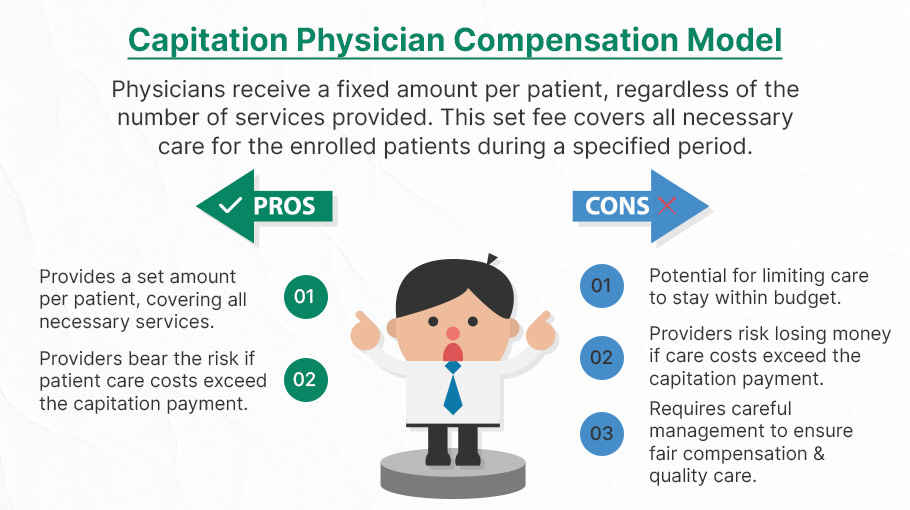
Capitation is a type of healthcare payment system in which a physician or hospital is paid a fixed amount of money per patient for a prescribed period by an insurer or physician association. The cost is based on the expected healthcare utilization costs for a group of patients for that year.

With capitation, the physician—otherwise known as the primary care physician— is paid a set amount for each enrolled patient whether a patient seeks care or not. The PCP is usually contracted with an HMO whose role it is to recruit patients.

ACOs: https://medicalexecutivepost.com/2024/12/01/record-breaking-savings-for-acos-in-2023/

***

***

CAPITATION REIMBURSEMENT HISTORY

According to Richard Eskow, CEO of Health Knowledge Systems of Los Angeles, capitated medical reimbursement has been used in one form or another, in every attempt at healthcare reform since the Norman Conquest. Some even say an earlier variant existed in ancient China [personal communication]. 

Initially, when Henry I assumed the throne of the newly combined kingdoms of England and Normandy, he initiated a sweeping set of healthcare reforms. Historical documents, though muddled, indicate that soon thereafter at least one “physician,” John of Essex, received a flat payment honorarium of one penny per day for his efforts. Historian Edward J. Kealey opined that sum was roughly equal to that paid to a foot-soldier or a blind person. Clearer historical evidence suggests that American doctors in the mid-19th century were receiving capitation-like payments. No less an authoritative figure than Mark Twain, in fact, is on record as saying that during his boyhood in Hannibal, MO his parents paid the local doctor $25/year for taking care of the entire family regardless of their state of health.

Later, Sidney Garfield MD [1905-1984] is noted as one of the great under-appreciated geniuses of 20th century American medicine stood in the shadow cast by his more celebrated partner, Henry J. Kaiser. Garfield was not the first physician to embrace the notion of prepayment capitation, nor was he the first to understand that physicians working together in multi-specialty groups could, through collaboration and continuity of care, outperform their solo practice colleagues in almost every measure of quality and efficiency. The Mayo brothers, of course, had prior claim to that distinction. What Garfield did, was marry prepayment to group practice, providing aligned financial incentives across every physician and specialty in his medical group, as well as a culture of group accountability for the care of every member of the affiliated health plan. He called it “the new economics of medicine,” and at its heart was a fundamentally new paradigm of care that emphasized – prevention before treatment – and health before sickness.  Under his model: the fewer the sick – the greater the remuneration. And: the less serious the illness, the better off the patient and the doctors.

VBC: https://medicalexecutivepost.com/2018/12/07/the-state-of-value-based-care-vbc/

***

***

Such ideas were heresy to the reigning fee-for-service, solo practice, ideologues of the mainstream medical establishment of the 1940s and ‘50s, of course. Throughout the period, Garfield and his group physicians were routinely castigated by leaders of the AMA and county medical associations as socialistic and unethical. The local medical associations in Garfield’s expanding service areas – the San Francisco Bay Area, Los Angeles, and Portland, Oregon – blocked group practice physicians from association membership, effectively shutting them out of local hospitals, denying them patient referrals or specialty society accreditation. Twice in the 1940s, formal medical association charges were brought against Garfield personally, at one time temporarily succeeding in suspending his license to practice medicine.

Of course, capitation payments made a comeback in the first cost-cutting managed care era of the 1980-90s because fee-for-service medicine created perverse incentives for physicians by paying more for treating illnesses and injuries than it does for preventing them — or even for diagnosing them early and reducing the need for intensive treatment later. Nevertheless, the modern managed care industry’s experience with capitation wasn’t initially a good one. The 1980-90s saw a number of HMOs attempt to put independent physicians, especially primary care doctors, into a capitation reimbursement model. The result was often negative for patients, who found that their doctors were far less willing to see them — and saw them for briefer visits — when they were receiving no additional income for their effort. Attempts were also made to aggregate various types of health providers — including hospitals and physicians in multiple specialties — into “capitation groups” that were collectively responsible for delivering care to a defined patient group. These included healthcare facilities and medical providers of all types: physicians, osteopaths, podiatrists, dentists, optometrists, pharmacies, physical therapists, hospitals and skilled nursing homes, etc.

However, the healthcare industry isn’t collective by nature, and these efforts tended to be too complicated to succeed. One lesson that these experiments taught is that provider behavior is difficult to change unless the relationship between that behavior and its consequences is fairly direct and easy to understand.

MORE: https://medicalexecutivepost.com/wp-content/uploads/2008/11/capitation-actuarial-medical-econometrics.pdf

Today, the concept of prepayment and medical capitation is to uncouple compensation from the actual number of patients seen, or treatments and interventions performed. This is akin to a fixed price restaurant menu, as opposed to an àla carte eatery.

COMMENTS APPRECIATED

EDUCATION: Books

SPEAKING: Dr. Marcinko will be speaking and lecturing, signing and opining, teaching and preaching, storming and performing at many locations throughout the USA this year! His tour of witty and serious pontifications may be scheduled on a planned or ad-hoc basis; for public or private meetings and gatherings; formally, informally, or over lunch or dinner. All medical societies, financial advisory firms or Broker-Dealers are encouraged to submit an RFP for speaking engagements: CONTACT: Ann Miller RN MHA at MarcinkoAdvisors@outlook.com -OR- http://www.MarcinkoAssociates.com

Like, Refer and Subscribe

***

***

NEW AMA PRESIDENT: Robert Mukkamala MD

By Staff Reporters

NEWS UPDATE!

***

***

On June 10th, Bobby Mukkamala was inaugurated as the 180th president of the American Medical Association (AMA).

An otolaryngologist from Flint, Michigan, Mukkamal chairs the organization’s substance use and pain care task force, won the AMA Foundation’s Excellence in Medicine Leadership Award last June, and served on the AMA board of trustees in 2017 and 2021.

COMMENTS APPRECIATED

EDUCATION: Books

Like and Subscribe

***

***

***

DAILY UPDATE: Health Care is Wealth Care as Stock Markets Close Mixed

MEDICAL EXECUTIVE-POST TODAY’S NEWSLETTER BRIEFING

***

Essays, Opinions and Curated News in Health Economics, Investing, Business, Management and Financial Planning for Physician Entrepreneurs and their Savvy Advisors and Consultants

Serving Almost One Million Doctors, Financial Advisors and Medical Management Consultants Daily

A Partner of the Institute of Medical Business Advisors , Inc.

http://www.MedicalBusinessAdvisors.com

SPONSORED BY: Marcinko & Associates, Inc.

***

http://www.MarcinkoAssociates.com

Daily Update Provided By Staff Reporters Since 2007.
How May We Serve You?
© Copyright Institute of Medical Business Advisors, Inc. All rights reserved. 2025

REFER A COLLEAGUE: MarcinkoAdvisors@outlook.com

SPONSORSHIPS AVAILABLE: https://medicalexecutivepost.com/sponsors/

ADVERTISE ON THE ME-P: https://tinyurl.com/ytb5955z

Your Referral Count -0-

CITE: https://www.r2library.com/Resource

In great news for investors, a new study found that major healthcare companies have paid out $2.6 trillion to shareholders over the past 20 years in the form of dividends and share buybacks, and those payments are increasing. Bad news for patients: Some of that money could’ve been spent on, well, healthcare. The study, published Februrary 10th in JAMA, found that publicly traded S&P 500 healthcare companies paid shareholders a total of $170.2 billion in 2022, up 315% from payouts of just $54 billion in 2001.

CITE: https://tinyurl.com/2h47urt5

The S&P 500 fell 0.5%. The NASDAQ 100 slid 1.2%. A gauge of the “Magnificent Seven” mega-caps sank 2.2%. Nvidia Corp.’s shares slid 2.8% on the eve of the company’s results, while Tesla slumped 8.4% to fall below $1 trillion in market value. The DJIA was up.

CITE: https://tinyurl.com/tj8smmes

The yield on 10-year Treasuries sank 11 basis points, while its Australian counterpart fell four points in early trading on Wednesday.

COMMENTS APPRECIATED

PLEASE SUBSCRIBE: MarcinkoAdvisors@outlook.com

Thank You

***

***

***

***

EDUCATIONAL TEXTBOOKS: https://tinyurl.com/4zdxuuwf

***

FLEXNER REPORT: Medical Education

By Staff Reporters

***

***

According to Wikipedia, the Flexner Report was a book-length landmark report of medical education in the United States and Canada, written by Abraham Flexner and published in 1910 under the aegis of the Carnegie Foundation. Flexner not only described the state of medical education in North America, but he also gave detailed descriptions of the medical schools that were operating at the time. He provided both criticisms and recommendations for improvements of medical education in the United States.

Many aspects of the present-day American medical profession stem from the Flexner Report and its aftermath. While it had many positive impacts on American medical education, the Flexner report has been criticized for introducing policies that encouraged systemic racism and sexism.

The Report, also called Carnegie Foundation Bulletin Number Four, called on American medical schools to enact higher admission and graduation standards, and to adhere strictly to the protocols of mainstream science principles in their teaching and research. The report talked about the need for revamping and centralizing medical institutions. Many American medical schools fell short of the standard advocated in the Flexner Report and, subsequent to its publication, nearly half of such schools merged or were closed outright.

Colleges for the education of the various forms of alternative medicine, such as electro-therapy were closed. Homeopathy, traditional osteopathy, eclectic medicine, and physiomedicalism (botanical therapies that had not been tested scientifically) were derided.

The Report also concluded that there were too many medical schools in the United States, and that too many doctors were being trained. A repercussion of the Flexner Report, resulting from the closure or consolidation of university training, was the closure of all but two black medical schools and the reversion of American universities to male-only admittance programs to accommodate a smaller admission pool.

In Chapter 11, Flexner stressed that the success of medical education reform and the professionalization of medicine relied heavily on the effective legal and ethical functioning of state medical boards. However, he noted that these boards were failing in their mission, stalling progress and allowing substandard medical practices to continue, thereby jeopardizing public health. This problem persists as a significant issue in the current practice of medicine in the United States.

Subscribe and Refer

COMMENTS APPRECIATED

***

***

AMA: 41 Senators Sign Letter to Stop Medicare Cuts

By Staff Reporters

***

***

In a sign of legislative momentum, 41 senators are supporting efforts to prevent a pending 2.8 percent cut in Medicare physician payments that will go into effect January 1st. The bipartisan letter led by Sens. John Boozman, R-Ark., and Peter Welch, D-Vt., to Senate leaders says the cuts would interfere with the ability of physicians to provide high-quality care. “These continued payment cuts undermine the ability of independent clinical practices – especially in rural and under served areas – to care for their communities,” the letter said.

The Senate letter follows one from the American Medical Association (AMA) and 127 other state medical associations and national medical societies asking Congress to use these last few congressional days to prevent the scheduled cuts. The letter to congressional leaders also urges Congress to provide a positive payment update for 2025. All 50 state medical societies – and DC— as well as 77 national medical societies signed.

Source: AMA

CITE: https://www.r2library.com/Resource/Title/0826102549

COMMENTS APPRECIATED

Subscribe Today!

***

***

AMA: Bye-Bye Medicare Billing Codes?

By Staff Reporters

***

***

Robert F Kennedy Jr, who was selected by Donald Trump to run the U.S. health and human services department, is working on plans to rid the American Medical Association from its role in drawing up Medicare’s billing codes, which sets doctors’ fees for more than 10,000 procedures, Oliver Barnes of The Financial Times reports.

The plan would result in an upheaval of a system that has been in place for decades. Publicly traded companies in the healthcare space include CVS Health (CVS), Centene (CNC), Cigna (CI), Elevance Health (ELV), Humana (HUM), Molina Healthcare (MOH) and UnitedHealth (UNH).

COMMENTS APPRECIATED

Subscribe, Reply and Refer!

***

***

DAILY UPDATE: Healthcare Private Equity Prominent as Stocks Go Down

MEDICAL EXECUTIVE-POST TODAY’S NEWSLETTER BRIEFING

***

Essays, Opinions and Curated News in Health Economics, Investing, Business, Management and Financial Planning for Physician Entrepreneurs and their Savvy Advisors and Consultants

Serving Almost One Million Doctors, Financial Advisors and Medical Management Consultants Daily

A Partner of the Institute of Medical Business Advisors , Inc.

http://www.MedicalBusinessAdvisors.com

SPONSORED BY: Marcinko & Associates, Inc.

***

http://www.MarcinkoAssociates.com

Daily Update Provided By Staff Reporters Since 2007.
How May We Serve You?
© Copyright Institute of Medical Business Advisors, Inc. All rights reserved. 2024

REFER A COLLEAGUE: MarcinkoAdvisors@msn.com

SPONSORSHIPS AVAILABLE: https://medicalexecutivepost.com/sponsors/

ADVERTISE ON THE ME-P: https://tinyurl.com/ytb5955z

Your Referral Count -0-

Private equity (PE) dollars have become prominent in the US healthcare industry in recent decades, with PE firms now owning roughly 8% of all private hospitals in the country, according to nonprofit Private Equity Stakeholder Project. But studies have illustrated the financial model’s potential adverse effects, such one published in JAMA in December 2023 that found PE-owned hospitals are 25.4% more likely to report patient complications. Others have found that PE-owned healthcare companies represented more than one-fifth of healthcare company bankruptcies in 2023 and that PE-owned hospitals see their assets drop an average of 24% following an acquisition.

CITE: https://www.r2library.com/Resource

STOCKS UP

Tapestry, parent company of luxury brands like Coach and Kate Spade, and Capri, parent company of luxury brands like Versace and Jimmy Choo, have announced they will mutually terminate their planned merger. Tapestry popped 12.80%, while Capri rose 4.43%.
  • Speaking of luxury brands, Burberry soared 18.04% after its CEO announced a turnaround plan designed to halt the company’s recent decline.
  • Semiconductor maker ASML plummeted last month on a profit warning, but rose 2.90% today on reassurances that it’s still on track to meet its 2030 revenue forecasts.

STOCKS DOWN

  • Super Micro Computer fell yet another 11.41% as it nears the November 16 deadline to report fiscal year earnings or be delisted from the Nasdaq.
  • Trump Media & Technology Group dropped 6.71% as investors digested news that company insiders are shedding shares, as well as in reaction to a number of President-elect Trump’s cabinet appointments.
  • Hims & Hers Health tumbled 24.46% on the news that Amazon is getting into the telehealth game, offering Prime members fixed prices on treatments for hair loss and erectile dysfunction.
  • Ibotta is a cashback rewards company, but its shareholders may want their cash back. The company beat on top and bottom line estimates last quarter, but the win wasn’t good enough, and shares sank 12.55%.

CITE: https://tinyurl.com/2h47urt5

Here’s where the major benchmarks ended:

  • The S&P 500® index (SPX) fell 36.21 points (–0.60%) to 5,949.17; the Dow Jones Industrial Average® ($DJI) lost 207.33 points (–0.47%) to 43,750.86; and the NASDAQ Composite® ($COMP) dropped 123.07 points (–0.64%) to 19,107.65. 
  • The 10-year Treasury note yield fell three basis points to 4.42%.
  • The CBOE Volatility Index® (VIX) edged up to 14.17.

CITE: https://tinyurl.com/tj8smmes

Visualize: How private equity tangled banks in a web of debt, from the Financial Times.

COMMENTS APPRECIATED

PLEASE SUBSCRIBE: MarcinkoAdvisors@msn.com

Thank You

***

***

***

***

EDUCATIONAL TEXTBOOKS: https://tinyurl.com/4zdxuuwf

***

PHYSICIAN: Pay Cuts in 2025

By Staff Reporters

***

***

Doctors, Facing Another Pay Cut, Call for Permanent Medicare Payment Reform

The Centers for Medicare and Medicaid Services (CMS) is moving forward with a 2.9% cut to physician payments in 2025 despite protest from major industry groups. CMS has finalized the calendar year 2025 Medicare Physician Fee Schedule rule that sets payment rates for next year and also outlines new policies focused on primary care, preserved telehealth flexibilities, and a strengthened Medicare Shared Savings Program (MSSP). 

But, provider groups were quick to condemn CMS’ decision to go ahead with the pay cut, which was proposed in the draft rule released in July. In a statement, Bruce Scott, MD, president of the American Medical Association (AMA), pointed out that that while physicians are receiving a 2.8% payment cut next year, medical practice costs for physicians will increase by 3.5% in 2025. After adjusted for inflation, Medicare reimbursement to physicians has decreased 29% since 2001, the AMA says.

Source: Heather Landi, Fierce Healthcare [11/2/24]

COMMENTS APPRECIATED

Thank You

***

***

PHYSICIAN PERSONAL COACHING: Financial Planning and Retirement Consulting

SPONSORED BY: http://www.MarcinkoAssociates.com

***

***

Most doctors report feeling overworked and are considering a change in career, according to a new poll.

Doximity, a virtual network for physicians, found that 81% doctors surveyed last fall said they felt overworked—a slight decline from 86% who reported burnout in 2022 but still up from 73% in 2021. Meanwhile, about three in five doctors said they were considering early retirement (30%), looking for another employer (15%), or leaving the profession altogether (14%), the poll found.

The findings, released last year, come amid reports of rising rates of physician burnout and dissatisfaction since after the Covid-19 pandemic.

LEARN MORE: https://tinyurl.com/y3j2t3ab

COMMENTS APPRECIATED

Thank You

***

***

AMA: Calls Out Skinny Health Insurance Networks!

By Staff Reporters

***

***

Patients aren’t the only ones voicing concerns over the state of the US health insurance industry. The American Medical Association’s (AMA) policy making arm just called for new oversight and standards that ensure health plans don’t improperly limit patient access to in-network care.

The AMA House of Delegates voted to establish and enforce health insurance network adequacy standards as it met in National Harbor, Maryland, last year. The body adopted the proposal—along with several others—as part of the AMA’s continued efforts to ensure health plans meet patient needs and are held accountable for narrow networks.

The association said inadequate networks can create difficulties for patients in need of new or continued care. They can further limit patient choice when it comes to who is able to treat them and where they can be treated.

COMMENTS APPRECIATED

Thank You

***

***

DAILY UPDATE: Hospital Private Equity and AI with Upbeat DJIA

MEDICAL EXECUTIVE-POST TODAY’S NEWSLETTER BRIEFING

***

Essays, Opinions and Curated News in Health Economics, Investing, Business, Management and Financial Planning for Physician Entrepreneurs and their Savvy Advisors and Consultants

Serving Almost One Million Doctors, Financial Advisors and Medical Management Consultants Daily

A Partner of the Institute of Medical Business Advisors , Inc.

http://www.MedicalBusinessAdvisors.com

SPONSORED BY: Marcinko & Associates, Inc.

***

http://www.MarcinkoAssociates.com

Daily Update Provided By Staff Reporters Since 2007.
How May We Serve You?
© Copyright Institute of Medical Business Advisors, Inc. All rights reserved. 2024

REFER A COLLEAGUE: MarcinkoAdvisors@msn.com

SPONSORSHIPS AVAILABLE: https://medicalexecutivepost.com/sponsors/

ADVERTISE ON THE ME-P: https://tinyurl.com/ytb5955z

Your Referral Count -0-

Private equity (PE) firms might make it rain cash for investors, but hospitals under their ownership are facing an asset drought, according to a research letter published in JAMA on July 30th. While fans of PE argue it can bring much-needed financial resources to struggling hospitals, the data disagrees. “Private equity acquisitions appear to have depleted, rather than augmented, hospital assets,” the authors, a group of physicians from medical institutions across the US, wrote.

CITE: https://www.r2library.com/Resource

What’s up

What’s down

  • Peloton Interactive stumbled 4.64% on the news of a deal allowing Google’s Fitbit users to have access to Peloton classes.
  • Brinker International sank 10.51% after the parent company of Chili’s announced lower-than-expected earnings last quarter.
  • Ouster plummeted 27.44% after the lidar manufacturer reported disappointing revenue last quarter and forecast for worse to come next quarter.
  • Starbucks fell 2.09% as investors took some profits after yesterday’s gigantic pop.

CITE: https://tinyurl.com/2h47urt5

Here’s where the major benchmarks ended:

  • The S&P 500 rose 20.78 points (0.38%) to 5,455.21; the Dow Jones Industrial Average® ($DJI) added 242.75 points (0.61%) to 40,008.39; the NASDAQ Composite®($COMP) squeaked out a slight gain of 4.99points (0.03%) to 17,192.60.
  • The 10-year Treasury note yield (TNX) dropped three basis points to 3.82%, the lowest close in more than a week.
  • The Cboe Volatility Index® (VIX) fell to 16.22, the lowest since July 23.

CITE: https://tinyurl.com/tj8smmes

Stat: 21%. That’s the percentage of US physicians who are still paying off student loan debt. (Becker’s Hospital Review)

Quote: “The federal government is particularly ineffective and slow these days.”—Rep. Brianna Titone, a Colorado Democrat, on why states need to “step up” and make their own laws regulating the use of artificial intelligence in healthcare (Axios)

Read: A US Olympic athlete is taking advantage of free healthcare to catch up on preventive care while in Paris. (the Washington Post)

Visualize: How private equity tangled banks in a web of debt, from the Financial Times.

COMMENTS APPRECIATED

PLEASE SUBSCRIBE: MarcinkoAdvisors@msn.com

Thank You

***

***

***

***

EDUCATIONAL TEXTBOOKS: https://tinyurl.com/4zdxuuwf

***

DAILY UPDATE: Turn Key Health, Intel, Coke and Eli Lilly

MEDICAL EXECUTIVE-POST TODAY’S NEWSLETTER BRIEFING

***

Essays, Opinions and Curated News in Health Economics, Investing, Business, Management and Financial Planning for Physician Entrepreneurs and their Savvy Advisors and Consultants

Serving Almost One Million Doctors, Financial Advisors and Medical Management Consultants Daily

A Partner of the Institute of Medical Business Advisors , Inc.

http://www.MedicalBusinessAdvisors.com

SPONSORED BY: Marcinko & Associates, Inc.

***

http://www.MarcinkoAssociates.com

Daily Update Provided By Staff Reporters Since 2007.
How May We Serve You?
© Copyright Institute of Medical Business Advisors, Inc. All rights reserved. 2024

REFER A COLLEAGUE: MarcinkoAdvisors@msn.com

SPONSORSHIPS AVAILABLE: https://medicalexecutivepost.com/sponsors/

ADVERTISE ON THE ME-P: https://tinyurl.com/ytb5955z

Your Referral Count -0-

The FDA said shortages of Eli Lilly’s popular weight loss and diabetes drugs are over.

Coca-Cola must pay $6 billion in back taxes and interest to the Internal Revenue Service, a federal tax court ruled. Coke is appealing but will pay the bill for now.

CITE: https://www.r2library.com/Resource

Stat: 40.1%. That’s the percentage of people in the US who said they had “a lot of trust” in physicians and hospitals in January 2024, down from 71.5% in April 2020. (JAMA Network Open)

Quote: “We can usher people here and they can get the help that they need because the hospitals are clearly overwhelmed.”—Yolanda Gales, a program director with a Maryland County mobile crisis response team, on the opening of the county’s first 24/7 mental health centers (the Washington Post)

Read: One report says that dozens of incarcerated patients died while under the care of Turn Key Health Clinics. (the Marshall Project)

Careers in care: Indeed has a dedicated job board for healthcare pros. It features employers with top company ratings for your perusing pleasure. Check it out.*

CITE: https://tinyurl.com/2h47urt5

Stocks plunged Friday as an unexpectedly bleak jobs report had investors second-guessing the Fed’s decision to wait until September to cut interest rates. Intel suffered its worst drop in 50 years and traded at its lowest price since 2013 after it missed on earnings, announced major layoffs, and suspended its dividend.

CITE: https://tinyurl.com/tj8smmes

Visualize: How private equity tangled banks in a web of debt, from the Financial Times.

COMMENTS APPRECIATED

PLEASE SUBSCRIBE: MarcinkoAdvisors@msn.com

Thank You

***

***

***

***

EDUCATIONAL TEXTBOOKS: https://tinyurl.com/4zdxuuwf

***

DAILY UPDATE: UnitedHealth, Aetna, Long Covid and Physician Burnout as NASDAQ Collapses

as MEDICAL EXECUTIVE-POST TODAY’S NEWSLETTER BRIEFING

***

Essays, Opinions and Curated News in Health Economics, Investing, Business, Management and Financial Planning for Physician Entrepreneurs and their Savvy Advisors and Consultants

Serving Almost One Million Doctors, Financial Advisors and Medical Management Consultants Daily

A Partner of the Institute of Medical Business Advisors , Inc.

http://www.MedicalBusinessAdvisors.com

SPONSORED BY: Marcinko & Associates, Inc.

***

http://www.MarcinkoAssociates.com

Daily Update Provided By Staff Reporters Since 2007.
How May We Serve You?
© Copyright Institute of Medical Business Advisors, Inc. All rights reserved. 2024

REFER A COLLEAGUE: MarcinkoAdvisors@msn.com

SPONSORSHIPS AVAILABLE: https://medicalexecutivepost.com/sponsors/

ADVERTISE ON THE ME-P: https://tinyurl.com/ytb5955z

***

The Dow surged another 240 points as the cyclical rotation continues, sending the index to its 22nd record closing high of the year. The S&P 500 had its worst day since late April, while the NASDAQ slumped to its worst finish since December 2022. The last time the Dow rose on the same day the S&P 500 fell by more than 1% was all the way back in 1999. Gold hit a record high yesterday on hopes of a rate cut, not a hike. Oil bubbled up thanks to an Energy Information Administration report highlighting higher demand and lower crude inventories. Bond yields stayed steady throughout the trading session before sinking slightly 20-year Treasury bond auction.

CITE: https://www.r2library.com/Resource

Here’s where the major benchmarks ended:

  • The S&P 500® index (SPX) fell 78.93 points (–1.39%) to 5,588.27; the Dow Jones Industrial Average added 243.6 points (0.59%) to 41,198.08; the NASDAQ Composite plunged 512.41 points (–2.77%) to 17,996.92.
  • The 10-year Treasury note yield (TNX) dropped just below 4.15%.
  • The CBOE Volatility Index jumped sharply to 14.48.

What’s up

  • VF Corp. rose 13.64% on the news that it is selling its Supreme brand to EssilorLuxottica for $1.5 billion.
  • Roche soared 7.55% after the Swiss pharmaceutical company announced it has made strides in developing a weight-loss and diabetes treatment that uses a pill rather than an injection. Competitors sank on the news, with Eli Lilly declining 3.78% and Novo Nordisk falling 3.87%.
  • GitLab popped 9.34% on a report that the software developer is exploring a sale, potentially to cloud company Datadog, whose shares fell 7.35%.
  • Johnson & Johnson rose a tepid 3.67% thanks to a mixed earnings announcement that included beating expectations this quarter but warning of lower profits ahead.

What’s down

  • Spirit Airlines descended 10.76% to a new all-time low after warning that both earnings and revenue will come in lower than expected this coming quarter.
  • Five Below plummeted 25.05% after its CEO, who has helmed the company for over a decade, announced his departure smack in the middle of a very difficult year.
  • J.B. Hunt tanked 6.88% thanks to a poor second-quarter earnings report in which earnings and revenue came in well below analyst expectations.
  • Charles Schwab fell yet another 5.34% as the hits keep coming. Today, the culprit was a price target downgrade from Bank of America analysts.
  • Elevance Health slipped 5.96% despite beating analyst expectations this quarter, but warning that Medicaid membership declined.

CITE: https://tinyurl.com/2h47urt5

UnitedHealth Group has bounced back in the second quarter, reaffirming its guidance for the year as it posts a profit of $4.2 billion


An audit of Aetna Health of Texas found significant errors in how the health plan calculated the qualifying payment amount for air ambulance services, raising more questions over broader noncompliance in the industry for the No Surprises Act.


And … clinical decision software company Regard pocketed $61 million in series B funding to scale its reach in healthcare as investors have a growing appetite for AI-powered startups.

CITE: https://tinyurl.com/tj8smmes

A study published in JAMA this month found that nearly 7% of the US population (or roughly 18 million people) have had long Covid. Symptoms of the condition vary widely, but often include fatigue, brain fog, and post-exertional malaise (meaning symptoms worsen after minimal exertion), according to the CDC. Booster shots may help protect against long Covid, the JAMA study suggested.

And, President Joe Biden tested positive for COVID-19 while campaigning in Las Vegas with ‘mild symptoms’.

Physician burnout is on the decline after spiking to unprecedented levels during the Covid-19 pandemic, according to a survey from professional group the American Medical Association (AMA).

COMMENTS APPRECIATED

PLEASE SUBSCRIBE: MarcinkoAdvisors@msn.com

Thank You

***

***

***

***

EDUCATIONAL TEXTBOOKS: https://tinyurl.com/4zdxuuwf

***

Medical Franchises, MLM and In-Office Dispensation

BY Dr. DAVID EDWARD MARCINKO MBA MEd CMP

http://www.MARCINKOASSOCIATES.com

***

***
Healthcare Business and Medical Franchises

The International Franchise Association (IFA) estimates that that about $1 trillion in sales, or 40% of all retail sales, were made through franchised establishment last decade. On the positive side, franchises offer a branded practice concept with management training and access to proprietary methods, marketing and advertising campaigns and a host of support. Moreover, there are franchises available for virtually every healthcare product or service, including: diet, weight loss and fitness; vein care and laser surgery; vitamins, nutriceuticals and pharmaceuticals; plastic and cosmetic surgery; dermatology, tanning and skin care; home healthcare and extended, etc.

CITE: https://www.r2library.com/Resource

Some well know established healthcare and medical franchises are: Doctors Express, Being There Senior Care, Home Care Assistance, Personal Training Institute, Inches-A-Weigh, Remedy Intelligent Staffing, Visiting Angels, Unlimited MedSearch, prnYourHealth and Any Lab Test Now.

On the downside, franchises incur high start-up costs, rules and obligations, payment of franchise percentages and many contractual obligations.

Questions to consider when contemplating this business entity include:

 Franchise stability, track record, licensing and costs.
 Training, support and proximity of other franchises.
 Independence, ownership laws, contracts and dispute resolutions,
 Screening methods, market size and potential market share.
 Replacement cost and transferability?

For more information on Uniform Franchise Offerings Circulars (UFOCs) contact:

Frandata
1130 Connecticut Avenue, NW
Washington DC 20036
202.659.8640

International Franchise Association7
1350 New York Avenue, NW
Washington, DC 20005
202.628.800

Multi-Level Marketing and In-Office Dispensation


A multi-level marketing (MLM) business delivers products or services through a chain of independent distributors rather than traditional retail business outlets. Existing medical practices not only pursue income ancillary, but it is not unusual for beginning practitioners to plan for and include it in their start-up models and business plans.

The first layer is usually the distributor who must sell products/services and recruit additional members to produce a hierarchical organization with many employees. Each distributor profits from direct sales, and from a varying commission stream down-line. It may be best to investigate before you leap into these situations since some may be fraudulent pyramid schemes that sell no useful product or service, and requires only recruiting others into the scheme. Be sure to obtain a Dunn & Bradstreet or TRW credit
report about any MLM company and inquire about current litigation. Most authorities agree that it take 3-5 years before serious money is made in the MLM business.

Moreover, care must be taken with this model. According to colleague Stephen Barrett MD, writing on the Mirage of Multilevel Marketing: “Many any physicians are selling health-related multi-level products to patients in their offices. The companies most involved have included Amway (now doing business as Quixtar), Body Wise, Nu Skin (Interior Design), Rexall, and Juice Plus+. Doctors are typically recruited with promises that the extra income will replace income lost to managed-care.

Back, in December 1997, the AMA Council on Ethical and Judicial Affairs (CEJA) advised against profiting from the sale of “non- health-related products” to their patients. Although CEJA’s policy statement does
not mention products sold through multilevel marketing, CEJA’s chairman said the statement was triggered by the growing number of physicians who had added an Amway distributorship to their practice.”

COMMENTS APPRECIATED

Thank You

***

***

MEDICAL ETHICS: Physician and Financial Organizations

Demanding High Professional Moral Standards of Self and Financing Organizations

By Dr. David Edward Marcinko MBA MEd

By Render Davis MBA

***

***

It has been argued that physicians have abdicated the “moral high ground” in health care by their interest in seeking protection for their high incomes, their highly publicized self-referral arrangements, and their historical opposition toward reform efforts that jeopardized their clinical autonomy.

In his book Medicine at the Crossroads, Emory University professor Melvin Konnor, M.D., noted that “throughout its history, organized medicine has represented, first and foremost, the pecuniary interests of doctors.” He goes on to lay significant blame for the present problems in health care at the doorstep of both insurers and doctors, stating that “the system’s ills are pervasive and all its participants are responsible.” In order to reclaim their once esteemed moral position, physicians must actively reaffirm their commitment to the highest standards of the medical profession and call on other participants in the health care delivery system also to elevate their values and standards to the highest level.

In the evolutionary shifts in models for care, physicians have been asked to embrace business values of efficiency and cost effectiveness, sometimes at the expense of their professional judgment and personal values. While some of these changes have been inevitable as our society sought to rein in out-of-control costs, it is not unreasonable for physicians to call on payers, regulators and other parties to the health care delivery system to raise their ethical bar.

Harvard University physician-ethicist Linda Emmanuel noted that “health professionals are now accountable to business values (such as efficiency and cost effectiveness), so business persons should be accountable to professional values including kindness and compassion.

”Within the framework of ethical principles, John La Puma, M.D., wrote in Managed Care Ethics, that “business’s ethical obligations are integrity and honesty. Medicine’s are those plus altruism, beneficence, nonmaleficence, respect, and fairness.”

Incumbent in these activities is the expectation that the forces that control our health care delivery system, the payers, the regulators, and the providers will reach out to the larger community, working to eliminate the inequities that have left so many Americans with limited access to even basic health care. Charles Dougherty clarified this obligation in Back to Reform, when he noted that “behind the daunting social reality stands a simple moral value that motivates the entire enterprise. Health care is grounded in caring. It arises from a sympathetic response to the suffering of others.”

MORE: https://medicalexecutivepost.com/2017/02/23/healthcare-policy-on-health-and-ethics/

AMA:  Ethics this discussion

COMMENTS APPRECIATED
Thank You

***

***

Physician Electronic-Mail Bills

MY CHART”

By AMANDA SEITZ

***

***

E-Mailing your Physician may Cost You like Your Attorneys!

***

WASHINGTON (AP) — The next time you message your doctor to ask about a pesky cough or an itchy rash, you may want to check your bank account first — you could get a bill for the question.

Hospital systems around the country are rolling out fees for some messages that patients send to physicians, who they say are spending an increasing amount of time poring over online queries, some so complex that they require the level of medical expertise normally dispensed during an office visit. Patient advocates, however, worry these new fees may deter people from reaching out to their doctor and that they add another layer of complexity to the U.S. health care system’s already opaque billing process.

“This is a barrier that denies access and will result in hesitancy or fear to communicate and potentially harm patients with lower quality of care and outcomes at a much higher cost,” said Cynthia Fisher, the founder of Patient Rights Advocate, a Massachusetts-based nonprofit that pushes for hospital price transparency.

CITE: https://www.r2library.com/Resource/Title/082610254

The explosion of telehealth over the last three years — driven by the COVID-19 outbreak and relaxed federal regulations for online care — prompted many doctors to adopt more robust telecommunication with their patients. Consultations that once happened in an office were converted to computer or smart phone visits. And health care systems invited patients to use new online portals to message their doctors with a question at any time, American Medical Association president Jack Resneck Jr. told The Associated Press.

“When people figured out this is cool and could improve care, you saw hospitals and practice groups saying to patients, welcome to your portal … you can ping your physician with questions if you want,” Resneck said. “We found ourselves as physicians getting dozens and dozens of these a day and not having time built in to do that work.”

The charges vary for each patient and hospital system, with messages costing as little as $3 for Medicare patients to as much $160 for the uninsured. In some cases, the final bill depends on how much time the doctor spends responding.

READ HERE: https://my.clevelandclinic.org/online-services/mychart/messaging#msdynttrid=bAU8cKe-602S6wFIwSYop1KQswRcT2b2F5mRJ-92OEc

***

COMMENTS APPRECIATED

Thank You

***

ORDER: https://www.amazon.com/Dictionary-Health-Information-Technology-Security/dp/0826149952/ref=sr_1_5?ie=UTF8&s=books&qid=1254413315&sr=1-5

***

ORDER: https://www.amazon.com/Dictionary-Health-Insurance-Managed-Care/dp/0826149944/ref=sr_1_4?ie=UTF8&s=books&qid=1275315485&sr=1-4

***

HISTORY: Medical Education and Practice in the USA

Domestic Medical SCHOOL Education

Robert James Cimasi

Todd A. Zigrang

Health Capital Consultants - Healthcare Valuation

U.S. medical education began in the late eighteenth century as an apprenticeship program in which physicians taught their trade to a few pupils, a pedagogical learning style which relied heavily upon the capacity, skills, and knowledge of the individual physician.[1] However, as learning newly discovered information and utilizing new technologies became more necessary to the industry’s practice, many physicians found the apprenticeship system no longer adequate as a manner of educating the next generation of physicians.[2] As a result, the conventional concept of medical education that originated in the U.S. in the 1750s was manifested through informal courses and demonstrations by private individuals or for-profit institutions. Those individuals who were not satisfied with a typical U.S. medical education, consisting of two identical 16-week lecture terms, might venture to Europe for a more formalized and detailed manner of learning.[3]

One of these students who studied in Europe was William Shippen, who began teaching an informal course on midwifery when he returned to the American colonies in 1762.[4] He later addressed the limitations of what might be taught in one informal course when he began teaching a lecture series on anatomy to help educate those who wished to be a physician, but could not travel abroad. John Morgan, a classmate of Shippen, noticed the potential of his friend’s endeavor and proposed the idea to create a professorship for the practice of medicine to the board of trustees of the College of Philadelphia.[5] Just across town, Thomas Bond, who conceived the idea of, and successfully established, the Pennsylvania Hospital with Benjamin Franklin, recognized the value to allowing medical students to participate in bedside training.[6] When Bond agreed to a partnership with the College of Philadelphia, the University of Pennsylvania became home to America’s first medical school.[7]

In 1893, Johns Hopkins University also made history by housing the first medical school that was able to operate out of a university-owned hospital.[8] The medical school not only encouraged clinical research to be performed by every member of their faculty, but the program also included a clinical research clerkship for every student during their rotation.[9] This program quickly became the model to which schools aspired and set the foundation for national medical education by connecting science and medical research with clinical medicine.[10]

With these early examples of medical schools, America’s field of medical education and clinical medicine made monumental strides. However, the societal pressures, caused by the U.S.’s population growth and demand for educated physicians,[11] did not allow many other universities to build on Johns Hopkins’ or the University of Pennsylvania’s foundation model, and led to the development of medical schools that had their own unique set of entrance and graduation requirements. While some focused entirely on medicine, other schools (termed Studia Generalia) also incorporated law, theology, and philosophy in their curricula.[12] In an attempt to both understand and make uniform the field of medical education, the American Medical Association (AMA) founded the Council on Medical Education (CME) in 1904.[13] The CME created minimum national educational standards for training physicians, and subsequently found that many schools did not meet these established standards.[14] However, the CME did not share the ratings of any of these medical schools “outside the medical fraternity.”[15]

In 1910, the AMA commissioned the Carnegie Foundation for Advancement of Teaching to conduct a study of medical education and schools.[16] Abraham Flexner conducted the inquiry and detailed his findings in what became known as The Flexner Report.[17] In his review of the U.S. medical education system, Flexner found that many of the proprietary medical schools met the AMA’s educational goals, but an imbalance existed between the pursuit of science and medical education.[18]  Professors were focused solely on student throughput, and did not ensure a high level of medical training that reflected the developments in the medical industry.[19] As aptly noted by Dr. John Roberts in his book entitled The Doctor’s Duty to the State, “[m]any of you remember the struggle to wrest from medical teachers the power to create medical practitioners with almost no real knowledge of medicine. The medical schools of that day were, in many instances, conducted merely as money-makers for the professors.”[20] As the AMA gained more influence over the provision of healthcare in the U.S., the value and power of medical education also gained recognition. Notably, teaching hospitals had the power to influence the development of their disciplines through their research initiatives, the quality of care they provided, and their ability to operate as an economy of scale, allowing them to dictate the evolution of medical education.[21]

Since the establishment of the first medical school in the U.S., medical education has been the foundation for shaping standards of care in the practice of medicine and defining medical errors as deviations from the norms of clinical care.[22] When Thomas Bond helped establish the University of Pennsylvania medical school, he envisioned a normal day where the physician:

…meets his pupils at stated times in the Hospital, and when a case presents adapted to his purpose, he asks all those Questions which lead to a certain knowledge of the Disease and parts affected; and if the Disease baffles the power of Art and the Patient falls a Sacrifice to it, he then brings his Knowledge to the Test, and fixes Honour [sic] or discredit on his Reputation by exposing all the Morbid parts to View, and Demonstrates by what means it produced Death, and if perchance he finds something unexpected, which Betrays an Error in Judgement [sic], he like a great and good man immediately acknowledges the mistake, and, for the benefit of survivors, points out other methods by which it might have been more happily treated.[23]

Originally, students were to study and learn from medical errors and adverse events through medical education as a means of improving the quality of care. However, it is difficult to effectively implement any significant advancement learned through the research and investigation of prior errors in a timely and cost-effective manner. Additionally, physician supply shortages have only increased the amount of patients that a physician must see daily, while simultaneously decreasing the amount of time they can spend with each patient. Although medical education continues to be one of the central underpinnings to the development of the medical industry, outside pressures that shape the clinical practice of physicians continue to limit physician effectiveness in providing quality care to patients.[24]

While improving the quality and rigor of medical education has been a constant focus throughout the history of U.S. medical education, the challenges of replicating it on a scale that produces enough qualified physicians to meet the growing demands of the U.S. population, with constantly changing technologies, has consistently been a central issue. Notably, in the 13 years preceding 1980, the ratio of actively practicing physicians to patients increased by 50%.[25] This increased physician-to-patient ratio led to concerns over quality of care and cost-effectiveness, which in turn caused the creation of a government committee to evaluate physician manpower allocation and distribution. The Graduate Medical Education National Advisory Committee (GMENAC) was first chartered in April 1976, and later extended through September 1980.[26] Its purpose was to “analyze the distribution among specialties of physicians and medical students and to evaluate alternative approaches to ensure an appropriate balance,”as well as to“encourage bodies controlling the number, types, and geographic location of graduate training positions to provide leadership in achieving the recommended balance.”[27] GMENAC produced seven volumes of recommendations regarding physician manpower supply,[28]  through the development of several models by which to determine the projected number of physicians that would be needed in the future by different subspecialties to achieve “a better balance of physicians.”[29] Ignoring critics of the report, U.S. medical schools adjusted their enrollment numbers in response to the GMENAC’s recommendations, causing a significant decrease in the supply of new physicians going into the 21st century.

***

History of Conventional Medicine - 24 Hour Translation ...

[1]       “Healthcare Valuation: The Four Pillars of Healthcare Value,” Volume 1, Robert James Cimasi, MHA, ASA, FRRICS, MCBA, CVA, CM&AA, John Wiley & Sons, Hoboken, NJ: 2014, p. 22-23.RR

[2]       “Before There Was Flexner,” American Medical Student Association, 2014,

         http://www.amsa.org/AMSA/Homepage/MemberCenter/Premeds/edRx/Before.aspx (Accessed 1/7/15).

[3]       “Time to Heal: American Medical Education from the Turn of the Century to the Era of Managed Care,” By Kenneth M. Ludmerer, New York, NY:

          Oxford University Press, 1999, p. 4.

[4]       “The Flexner Report on Medical Education in the United States and Canada in 1910,” By Abraham Flexner, Bethesda, MD: Science and Health

         Publications, Inc., p. 3-5.

[5]       “The Flexner Report on Medical Education in the United States and Canada in 1910,” By Abraham Flexner, Bethesda, MD: Science and Health

         Publications, Inc., p. 3-5.

[6]       “The Flexner Report on Medical Education in the United States and Canada in 1910,” By Abraham Flexner, Bethesda, MD: Science and Health

         Publications, Inc., p. 3-5.

[7]       “Before There Was Flexner,” American Medical Student Association, 2014,

         http://www.amsa.org/AMSA/Homepage/MemberCenter/Premeds/edRx/Before.aspx (Accessed 1/7/15).

[8]       “Time to Heal: American Medical Education from the Turn of the Century to the Era of Managed Care,” By Kenneth M. Ludmerer, New York, NY:

          Oxford University Press, 1999, p. 18-19.

[9]       “Time to Heal: American Medical Education from the Turn of the Century to the Era of Managed Care,” By Kenneth M. Ludmerer, New York, NY:

          Oxford University Press, 1999, p. 18-19.

[10]     “Science and Social Work:  A Critical Appraisal,” By Stuart A. Kirk, and William James Reid, New York, NY: Columbia University Press, 2002, Chapter 1, p. 2-3.

[11]     “The Flexner Report on Medical Education in the United States and Canada in 1910,” By Abraham Flexner, Bethesda, MD: Science and Health

          Publications, Inc., p. 6-7.

[12]     “Western Medicine: An Illustrated History,” By Irvine Loudon, New York, NY: Oxford University Press, 1997, p. 58.

[13]     “Western Medicine: An Illustrated History,” By Irvine Loudon, New York, NY: Oxford University Press, 1997, p. 58.

[14]     “Western Medicine: An Illustrated History,” By Irvine Loudon, New York, NY: Oxford University Press, 1997, p. 58.

[15]     “Western Medicine: An Illustrated History,” By Irvine Loudon, New York, NY: Oxford University Press, 1997, p. 58.

[16]     “U.S. Health Policy and Politics: A Documentary History,” By Kevin Hillstrom, Thousand Oaks, CA: CQ Press, 2012, p. 141.

[17]     “The Flexner Report on Medical Education in the United States and Canada in 1910,” By Abraham Flexner, Bethesda, MD: Science and Health

         Publications, Inc., p. 3-19.

[18]     “The Flexner Report on Medical Education in the United States and Canada in 1910,” By Abraham Flexner, Bethesda, MD: Science and Health

         Publications, Inc., p. 3-19.

[19]     “The Flexner Report on Medical Education in the United States and Canada in 1910,” By Abraham Flexner, Bethesda, MD: Science and Health

         Publications, Inc., p. 3-19.

[20]     “The Doctor’s Duty to the State: Essays on The Public Relations of Physicians,” By John B. Roberts, AM, MD, Chicago, IL: American Medical Association Press, 1908, p. 23.

[21]     “Time to Heal: American Medical Education from the Turn of the Century to the Era of Managed Care,” By Kenneth M. Ludmerer, New York, NY:

          Oxford University Press, 1999, p. 19.

[22]     “Science and Social Work:  A Critical Appraisal,” By Stuart A. Kirk, and William James Reid, New York: Columbia University Press, 2002, Chapter 1, p. 2-3.

[23]     “Dr. Thomas Bond’s Essay on the Utility of Clinical Lectures,” By Carl Bridenbaugh, Journal of the History of Medicine (Winter 1947), p. 14; “The Flexner Report on Medical Education in the United States and Canada in 1910,” By Abraham Flexner, Bethesda, MD: Science and Health

         Publications, Inc., p. 4.

[24]     “Time to Heal: American Medical Education from the Turn of the Century to the Era of Managed Care,” By Kenneth M. Ludmerer, New York, NY:

          Oxford University Press, 1999, p. xxi.

[25]     “How many doctors are enough?” By J.E. Harris, Health Affairs, Vol. 5, No. 4 (1986), p.74.

[26]   “Report of the Graduate Medical Education National Advisory Committee to the Secretary, Department of Health and Human Services – Volume VII,” Graduate Medical Education National Advisory Committee, Washington, DC: U.S. Government Printing Office, 1981, p. 5, 16.

[27]     “Report of the Graduate Medical Education National Advisory Committee to the Secretary, Department of Health and Human Services – Volume VII,” Graduate Medical Education National Advisory Committee, Washington, DC: U.S. Government Printing Office, 1981, p. 73.

[28]     “Report of the Graduate Medical Education National Advisory Committee to the Secretary, Department of Health and Human Services – Volume VII,” Graduate Medical Education National Advisory Committee, Washington, DC: U.S. Government Printing Office, 1981, p. 5-6.

[29]     “GMENAC: Its Manpower Forecasting Framework,” By D.R. McNutt, American Journal of Public Health, Vol. 71, No. 10 (October 1981), p. 1119.

[30]     “Crossing the Quality Chasm: A New Health System for the 21st Century,” Institute of Medicine, National Academy of Sciences, 2001, front matter.

[31]     “Overview of Medical Errors and Adverse Events,” By Maité Garrouste-Orgeas, et al., Annals of Intensive Care, Vol. 2, No. 2 (2012), p. 6.

Your thoughts are appreciated.

Risk Management, Liability Insurance, and Asset Protection Strategies for Doctors and Advisors: Best Practices from Leading Consultants and Certified Medical Planners™

ORDER TEXTBOOK: https://www.routledge.com/Risk-Management-Liability-Insurance-and-Asset-Protection-Strategies-for/Marcinko-Hetico/p/book/9781498725989

THANK YOU

***

DAILY UPDATE: Mike Burry MD, Private Equity in Health Systems, Drug Shortages, United Health Stock Sale and the Change Healthcare Hack as the Stock Markets Re-Collapse!

MEDICAL EXECUTIVE-POST TODAY’S NEWSLETTER BRIEFING

***

Essays, Opinions and Curated News in Health Economics, Investing, Business, Management and Financial Planning for Physician Entrepreneurs and their Savvy Advisors and Consultants

Serving Almost One Million Doctors, Financial Advisors and Medical Management Consultants Daily

A Partner of the Institute of Medical Business Advisors , Inc.

http://www.MedicalBusinessAdvisors.com

SPONSORED BY: Marcinko & Associates, Inc.

***

http://www.MarcinkoAssociates.com

Daily Update Provided By Staff Reporters Since 2007.
How May We Serve You?
© Copyright Institute of Medical Business Advisors, Inc. All rights reserved. 20224

REFER A COLLEAGUE: MarcinkoAdvisors@msn.com

SPONSORSHIPS AVAILABLE: https://medicalexecutivepost.com/sponsors/

ADVERTISE ON THE ME-P: https://tinyurl.com/ytb5955z

***

  • Medical colleague and our financial planning for physicians textbook contributor Michael Burry MD predicted a second inflation surge, and price growth re-accelerated in March,. 2024.
  • The “Big Short” investor first warned of inflation in April 2020, over two years before it peaked.
  • Burry expected a recession, rate cuts, and stimulus spending to reignite inflation.

CITE: https://www.r2library.com/Resource

A growing number of drugs are in short supply around the U.S., according to pharmacists. 

In the first three months of the year, there were 323 active medication shortages, surpassing the previous high of 320 shortages in 2014, according to a survey by the American Society of Health-System Pharmacists (ASHP) and Utah Drug Information Service. It also amounts to the most shortages since the trade group started keeping track in 2001. “All drug classes are vulnerable to shortages. Some of the most worrying shortages involve generic sterile injectable medications, including cancer chemotherapy drugs and emergency medications stored in hospital crash carts and procedural areas,” ASHP said in a statement

CITE: https://tinyurl.com/2h47urt5

Scheduling an appointment with a primary care doctor who belongs to a large health system might cause an increase in health care spending, according to a recent study. Such physicians tend to make more referrals to specialists, and emergency room visits and hospitalizations sometimes increase, according to the research out of Harvard T.H. Chan School of Public Health.

In short, physicians who work for health care systems like hospitals are more likely to recommend that patients use other services within those systems, compared with independent physicians. For the study — which was published in JAMA Health Forum, a journal of the American Medical Association — researchers analyzed the experiences of more than 4 million patients in Massachusetts.

CITE: https://tinyurl.com/tj8smmes

UnitedHealth Chairman Stephen Hemsley and other executives sold $102 million in company stock months before a federal antitrust probe became public, Bloomberg reported.

***

Small physician practices are still struggling in the wake of February’s Change Healthcare cyberattack, according to an American Medical Association (AMA) survey released Wednesday.

More than half of ~1,400 respondents (55%) reported that they’ve had to use personal funds to cover their practice’s expenses due to the cyberattack’s effects on cash flow. Practices across the country have been unable to fill prescriptions or process insurance claims as Change Healthcare systems went offline, Healthcare Brew previously reported. About two-thirds of respondents said they’ve experienced restrictions to core functions, such as suspending claim payments (36%), not being able to submit claims (32%), and not being able to obtain electronic remittance advice (39%), according to the survey.

CITE: https://tinyurl.com/2h47urt5

Here’s where the major benchmarks ended:

  • The S&P 500 index fell 75.65 points (1.5%) to 5,123.41, down 1.6% for the week; the Dow Jones Industrial Averagelost 475.84 points (1.2%) to 37,983.24, down 2.4% for the week; the NASDAQ Composite® ($COMP) dropped 267.10 points (1.6%) to 16,175.09, down 0.5% for the week.
  • The 10-year Treasury note yield (TNX) fell more than 5 basis points to 4.52%, still up about 12 basis points for the week.
  • The CBOE Volatility Index® (VIX) rose 2.38 to 17.30.

Semiconductor shares were also among the weakest performers Friday as chip makers reversed Thursday’s sharp gains. The Philadelphia Semiconductor Index (SOX) dropped more than 3% and ended with its third straight weekly decline. Energy companies were also under pressure after crude oil prices retreated from the morning rally. Oil futures are still up 20% this year. The small-cap Russell 2000® Index (RUT) lost 1.9% and posted a 2.9% drop for the week.

In other markets, the U.S. dollar index (DXY) strengthened to a five-month high and gained 1.7% this week, reflecting beliefs the hotter-than-expected inflation readings earlier this week will keep interest rates elevated. Volatility based on the VIX jumped to its highest level since late October.

COMMENTS APPRECIATED

PLEASE SUBSCRIBE: MarcinkoAdvisors@msns.com

Thank You

***

***

***

***

EDUCATIONAL TEXTBOOKS: https://tinyurl.com/4zdxuuwf

***

PHYSICIAN PAYMENTS: Drug and Device Makers

By Staff Reporters

***

***

Physicians Received $12 Billion from Drug & Device Makers in Less Than 10 Years

A review of the federal Open Payments database found that the pharmaceutical and medical device industry paid physicians $12.1 billion over nearly a decade. Almost two thirds of eligible physicians — 826,313 doctors — received a payment from a drug or device maker from 2013 to 2022, according to a study published online in JAMA on March 28th. Overall, the median payment was $48 per physician.

CITE: https://www.r2library.com/Resource

Orthopedists received the largest amount of payments in aggregate, $1.3 billion, followed by neurologists and psychiatrists at $1.2 billion, and cardiologists at $1.29 billion. To find out what any physician was paid, click here.

Source: Alicia Ault, MD Edge [4/3/24]

COMMENTS APPRECIATED

Subscribe Today

***

***

AUGMENTED INTELLIGENCE: In Medicine Today

THE AMA A.U.I. REPORT

***

By Staff Reporters

Doctors are excited—yet cautious—about the role augmented intelligence (AUI) could play in the future of healthcare. That’s the takeaway from an American Medical Association (AMA) survey released last month.

About two-thirds (65%) of 1,000+ physicians that the AMA surveyed in August 2023 agreed that there was at least some advantage to using AUI-powered tools, particularly when it comes to diagnostic ability (72%), work efficiency (69%), and clinical outcomes (61%). More than half (56%) of doctors said AUI tools could best help address administrative burdens.

COMMENTS APPRECIATED

Thank You

***

***

HOSPITALS: Private Equity Ownership Quality?

PATIENT COMPLICATION RATES

By Staff Reporters

***

***

Hospitals under private equity (PE) ownership reported higher rates of patient complications when compared to other facilities, according to a recent JAMA study—raising questions about how the business model might affect staffing and subsequent quality of care.

The surveyed Medicare beneficiaries saw a 25.4% increase in “hospital-acquired conditions,” which the Centers for Medicare and Medicaid Services defines as falls, infections, and other adverse events, when they received treatment at a PE-acquired hospital compared to those run under other forms of ownership.

On the whole, the study found that Medicare enrollees at hospitals under PE control were not only younger and less likely to additionally qualify for Medicaid but also more likely to experience complications.

COMMENTS APPRECIATED

Thank You

***

***

***

PRIVATE EQUITY: Hospitals Experience Adverse Patient Outcomes

By Health Capital Consultants, LLC

***

***

On December 26, 2023, a study published in the Journal of the American Medical Association (JAMA) found concerning changes in patient outcomes and hospital adverse events associated with private equity (PE) acquisition and ownership of hospitals. Over the past ten years, PE firms have set their sights on hospitals as a lucrative investment opportunity, spending nearly $1 trillion to finance healthcare acquisitions, and purchasing more than 200 hospitals from non-PE owners.

CITE: https://www.r2library.com/Resource

This Health Capital Topics article reviews the JAMA study and the impact of PE ownership on the healthcare industry. (Read more…)

COMMENTS APPRECIATED

Thank You

***

***

PODCAST: AMA to Teach Medical Students Health Economics?

AMA TO TEACH MEDICAL STUDENTS ABOUT HEALTH ECONOMICS?

CMP logo

Dr. David Edward Marcinko MBA

Courtesy: www.CertifiedMedicalPlanner.org

DICTIONARY: https://medicalexecutivepost.com/2009/06/08/dictionary-of-health-economics-and-finance/

Did you know that the American Medical Association is calling on medical schools and residency programs to include specific information about healthcare economics and financing in their curricula.

But, is health economics heterodoxic, or not? And; what about demand-derived economics in medicine?

***

economic freedom

LINKS

ESSAY: https://medicalexecutivepost.com/2019/08/31/is-health-economics-heterodoxic-or-not/

ESSAY: https://www.modernhealthcare.com/education/ama-adopts-new-policy-training-physicians-healthcare-economics

MORE: https://medicalexecutivepost.com/2019/11/10/ricardian-derived-demand-economics-in-medicine/

MORE: https://medicalexecutivepost.com/2014/08/27/financial-and-health-economics-benchmarking/

MORE: https://medicalexecutivepost.com/wp-content/uploads/2019/01/big-data.pdf

PODCAST: https://vimeo.com/ihe

Your thoughts are appreciated.

BUSINESS, FINANCE, INVESTING AND INSURANCE TEXTS FOR DOCTORS:

***

INVITE DR. MARCINKO: https://medicalexecutivepost.com/dr-david-marcinkos-

***

VALUE BASED CARE: Guidelines and Best Practices?

http://www.MarcinkoAssociates.com

***

***

Three healthcare industry groups—America’s Health Insurance Plans (AHIP), the American Medical Association (AMA), and the National Association of Accountable Care Organizations (NAACOS)—released the 36-page playbook on July 25th, 2023. Adoption of the best practices in the playbook is voluntary; the playbook is intended to encourage the adoption of value-based care arrangements in the private sector, according to a news release from the three groups.

CITE: https://www.r2library.com/Resource

Under a value-based care model, providers are reimbursed based on patient outcomes rather than the quantity of services provided like in the traditional fee-for-service model. The value-based care model has been around since the late 1960s. But, widespread adoption has been slow—less than half of the primary care physicians said in a 2022 survey from the Commonwealth Fund that they had received any value-based payments.

***

COMMENTS APPRECIATED

Thank You

***

***

***

Physician Payments in 2025

By Staff Reporters

***

***

American Medical Association (AMA) leaders lauded the Medicare Payment Advisory Commission (MedPAC) this month for backing increased physician payment rates for 2025.

CITE: https://www.r2library.com/Resource

AMA President Jesse Ehrenfeld praised MedPAC, a nonpartisan independent legislative agency that advises Congress on the Medicare program, for endorsing a draft recommendation that urges lawmakers to increase physician payment rates to reflect inflation. He cast the move as “a critical first step toward the necessary work of reforming the broken Medicare payment system.”

“Long-term reforms from Congress are overdue to close the unsustainable gap between what Medicare pays physicians and the actual costs of delivering high-quality care. When adjusted for inflation in practice costs, Medicare physician pay declined 26% from 2001 to 2023,” he said in a statement.

COMMENTS APPRECIATED

Thank You

***

***

DOCTORS Getting OUT of Medical Practice!

By Staff Reporters

SPONSOR: http://www.MARCINKOASSOCIATES.com

***

Why are doctors leaving practice?

For many physicians it’s about demographics. Just like the rest of us, doctors are aging too. Already the average physician age is about 53 years old. The Association of American Medical Colleges reports that about half of doctors are over the age of 55. Over the next decade, an estimated 40% of physicians will be over 65 years old. This means more than two of every five active physicians will reach age 65 within the next 10 years.

***

***

Moreover, compared with their boomer colleagues who were more likely to work past retirement, a robust 60% of younger Generation X doctors are reporting that they plan to retire by age 60.

Doctors cite poor quality of life and stress as reasons for their early departure. The pandemic certainly crushed many providers and has led to burnout. Generation X physicians in their 40s and early 50s were more likely than boomers to report that their current work life was not making the grade. In short, 43% of middle-aged doctors, compared with 31% of doctors over age 55, were reporting lower levels of professional fulfillment. Moreover, 47% of mostly Gen X doctors indicated dissatisfaction with their level of personal fulfillment compared with 36% of practicing boomer physicians.

COACHING: https://marcinkoassociates.com/process-what-we-do/

That dissatisfaction is translating into action and the pandemic is not the only reason for discontent. One survey of physicians in Massachusetts indicated that one in four doctors plans to leave medicine in the next two years and that staffing shortages and related administrative demands, e.g., hospital system metrics, paperwork, eMRs and meeting insurance requirements, were the most cited source of workplace stress. 

RISK MANAGEMENT: https://www.routledge.com/Risk-Management-Liability-Insurance-and-Asset-Protection-Strategies-for/Marcinko-Hetico/p/book/9781498725989

PHYSICIAN COMMENTS APPRECIATED

Thank You

***

***

PHYSICIANS: Leaving Medical Practice

By Staff Reporters

***

***

QUESTION: Why are doctors leaving their practices?

For many it’s about demographics. Just like the rest of us, doctors are aging too. Already the average physician age is about 53 years old. The Association of American Medical Colleges reports that about half of doctors are over the age of 55. Over the next decade, an estimated 40% of physicians will be over 65 years old. This means more than two of every five active physicians will reach age 65 within the next 10 years.

Moreover, compared with their boomer colleagues who were more likely to work past retirement, a robust 60% of younger Generation X doctors are reporting that they plan to retire by age 60.

***

***

Doctors cite poor quality of life and stress as reasons for their early departure. The pandemic certainly crushed many providers and has led to burnout. Generation X physicians in their 40s and early 50s were more likely than boomers to report that their current work life was not making the grade. In short, 43% of middle-aged doctors, compared with 31% of doctors over age 55, were reporting lower levels of professional fulfillment. Moreover, 47% of mostly Gen X doctors indicated dissatisfaction with their level of personal fulfillment compared with 36% of practicing boomer physicians.

COMMENTS APPRECIATED

Thank You

***

***

RUDE PATIENTS: To Laboring Physicians?

By Staff Reporters

***

***

A spike in rude behavior emerged as one of the pandemic’s many societal consequences and has not receded alongside the public health crisis. The uptick in poor behavior is likely driven by increased stress and isolation from society, The Atlantic’s Olga Khazan reported in 2022. In many cases, these stressors mean people are easily set off when encountering innocuous requests, Keith Humphreys, PhD, a psychiatry professor at Stanford University, told The Atlantic

The trend has hit healthcare hard. Hospitals and health systems nationwide have reported an uptick in disrespectful, discriminatory, or violent behaviors from patients since the pandemic. Nearly 24 percent of physicians reported experiencing workplace mistreatment in 2020, including verbal mistreatment or abuse, according to a study published in JAMA Network Open. 

Source: Mackenzie Bean, Becker’s Hospital Review

MORE: https://medicalexecutivepost.com/2023/08/07/medical-workplace-violence-prevention-guidelines/

***

COMMENTS APPRECIATED

Thank You

***

HOSPITALS: Price Discrepancies Exposed!

By Health Capital Consultants, LLC

***

***

On September 18, 2023, the Journal of the American Medical Association (JAMA) published a study comparing online hospital pricing and pricing given over the telephone for shoppable hospital services. Hospitals in the U.S. are required to post pricing online for specified services, but it was unknown whether or not hospitals quoted the same prices to telephone callers as they posted online.

This Health Capital Topics article will discuss the topic of price discrepancy and the difficulties with cost comparison. (Read more…) 

COMMENTS APPRECIATED

Thank You

***

***

***

RUDE PATIENTS: To Laboring Physicians?

By Staff Reporters

***

***

A spike in rude behavior emerged as one of the pandemic’s many societal consequences and has not receded alongside the public health crisis. The uptick in poor behavior is likely driven by increased stress and isolation from society, The Atlantic’s Olga Khazan reported in 2022. In many cases, these stressors mean people are easily set off when encountering innocuous requests, Keith Humphreys, PhD, a psychiatry professor at Stanford University, told The Atlantic

The trend has hit healthcare hard. Hospitals and health systems nationwide have reported an uptick in disrespectful, discriminatory, or violent behaviors from patients since the pandemic. Nearly 24 percent of physicians reported experiencing workplace mistreatment in 2020, including verbal mistreatment or abuse, according to a study published in JAMA Network Open. 

Source: Mackenzie Bean, Becker’s Hospital Review

MORE: https://medicalexecutivepost.com/2023/08/07/medical-workplace-violence-prevention-guidelines/

***

COMMENTS APPRECIATED

Thank You

***

CMS: Proposes Fee Schedule Payment Cuts to Doctors

By Staff Reporters

SPONSOR: http://www.CertifiedMedicalPlanner.org

***

***

According to Paige Minemyer of Fierce Healthcare, the Joe Biden administration is proposing cuts to physician payments in its annual fee schedule, and doctors are not happy. Major industry groups have roundly called for Congress to step in to prevent the Medicare reimbursement changes from going through. Last week, the Centers for Medicare & Medicaid Services (CMS) proposed a 3.34% cut to the fee schedule’s conversion factor, which is used to calculate Medicare payouts to docs.

More: https://www.ama-assn.org/practice-management/medicare-medicaid/proposed-336-medicare-pay-cut-shows-why-overhaul-badly-needed

In a statement, the American Medical Group Association (AMGA) said that Medicare payments already fail to keep up with “the increasing cost of delivering healthcare,” and further cuts would only exacerbate that problem. “AMGA members cannot absorb this proposed payment cut,” said AMGA President and CEO Jerry Penso, MD.

BIO: https://www.amga.org/about-amga/amga-difference/board-of-directors/penso/

“Their expenses are continuing to increase, and Congress needs to act to ensure Medicare’s reimbursement reflects the cost of delivering high-quality care to patients.” 

CITE: https://www.r2library.com/Resource

Source: Paige Minemyer, Fierce Healthcare [7/17/23]

***

COMMENTS APPRECIATED

Thank You

***

***

***

DAILY UPDATE: Deutsche Bank, YouTube Health Initiative and the Markets

By Staff Reporters

***

***

Regulators fined Deutsche Bank $186 million for not fixing anti-money laundering, due diligence, and sanctions controls. This is the third time since 2015 that the Federal Reserve has fined the troubled bank for internal control failures. (CNN Business)

***

Under the YouTube Health Initiative, the company partnered with several healthcare organizations, including traditional health systems like Cleveland Clinic in Ohio and Mass General Brigham in Boston, as well as online health education platforms like Osmosis and Psych Hub. Other partners include the medical journal the New England Journal of Medicine, the World Health Organization, and the American Public Health Association.

These health organizations created videos on a range of health topics, which YouTube curates in what it calls “carousels” and labels to indicate that the information comes from reputable sources. If someone searches for information on diabetes, for example, they’ll get a carousel of videos from the health partners on diabetes.

***

***

Here is where the major benchmarks ended yesterday and for the week:

  • The S&P 500 Index was up 1.47 points at 4,536.34, up 0.7% for the week and the benchmark’s eighth weekly gain in the past 10; the Dow Jones industrial average was up 2.51 points at 35,227.69, up 2.1% for the week; the NASDAQ Composite was down 30.50 points (0.2%) at 14,032.81, down 0.6% for the week.
  • The 10-year Treasury note yield (TNX) was down about 2 basis points at 3.837%.
  • CBOE’s Volatility Index (VIX) was down 0.39 at 13.60.

Utility and health care shares were among the strongest performers Friday, which may reflect investors rotating into more “defensive” sectors, which haven’t participated as much in this year’s rally and may be seen as a “relative value” or “catch-up” play.

Energy stocks were also strong as crude oil futures jumped over 2% and posted a fourth straight weekly gain. Regional banks and communication services were among the weakest sectors, while the small-cap-focused Russell 2000 (RUT) fell slightly.

***

ORDER: https://www.routledge.com/Comprehensive-Financial-Planning-Strategies-for-Doctors-and-Advisors-Best/Marcinko-Hetico/p/book/9781482240283

***

COMMENTS APPRECIATED

Thank You

***

AMA PROPOSAL: Regulating Misleading A.I. Generated Advice to Patients

By Staff Reporters

***

***

Referral Change Was Resolution 504
AMERICAN MEDICAL ASSOCIATION HOUSE OF DELEGATES
Resolution: 256 (A-23)
Introduced by: American Society for Surgery of the Hand, American Association
of Hand Surgery

Subject: Regulating Misleading AI Generated Advice to Patients
Referred to: Reference Committee

The American Medical Association (AMA) just voted to adopt a proposal to help protect patients against false or misleading medical information from artificial intelligence (AI) tools such as generative pre-trained transformers (GPT), etc.

***

COMMENTS APPRECIATED Thank You

***

The MD versus DO Degree

Battle of the Allopathic Vs. Osteopathic Physicians

By Dr. David Edward Marcinko MBA

***

***

What’s the difference between an MD and a DO?

An MD is a Doctor of Medicine, while a DO is a Doctor of Osteopathic Medicine. The bottom line? They do the same job, have similar schooling, can prescribe medication and can practice all over the U.S.

“In general, DOs practice a more holistic, whole-person type of care,” explains Dr. Vyas. “MDs take a more allopathic, or illness-based, approach.”

Allopathic and osteopathic medicine differ in several ways:

  • Allopathic medicine uses medication, surgery and other interventions to treat illnesses.
  • Osteopathic medicine emphasizes the relationship between the mind, body and spirit. It focuses on treating the person as a whole and improving wellness through education and prevention. DOs also receive extra training in osteopathic manipulative medicine (OMM), a hands-on method for diagnosing and treating patients.

But these philosophical differences don’t necessarily define the way DOs and MDs practice medicine. For example, DOs use all types of modern medical treatments, and MDs provide whole-person and preventive care.

***

***

What’s in a Medical Degree?

Allopathic and Osteopathic medical schools have similar curriculum structures. Students spend 12–24 months of their program in the classroom and then continue training in clinical settings, according to the American Medical Association (AMA).

***


RELATED: https://www.amazon.com/Hospitals-Healthcare-Organizations-Management-Operational/dp/1439879907/ref=sr_1_4?s=books&ie=UTF8&qid=1334193619&sr=1-4

COMMENTS APPRECIATED

Thank You

***

MEDICAL MALPRACTICE : Update on Physician Rates of Liability

By Staff Reporters

***

***

About one in three physicians reported that they’ve been sued for medical malpractice during their career, a new study from the American Medical Association (AMA) found.

The study analyzed 14,000 responses from AMA Physician Practice Benchmark Surveys between 2016 and 2022. The longer a physician works in the industry, the higher their risk of getting a malpractice claim.

In summary, almost half of physicians over the age of 54 have been sued in their career, versus 9.5% of physicians younger than 40 years old. Specialty and gender influenced the likelihood of being sued. For example, general surgeons and ob-gyns, as well as men physicians, had the highest risk, per the AMA report.

***

This is exactly why we produced a major 800 page textbook for all our medical colleagues: Risk Management, Liability Insurance, and Asset Protection Strategies for Doctors and Advisors Best Practices from Leading Consultants and Certified Medical Planners

ORDER HERE: https://www.routledge.com/Risk-Management-Liability-Insurance-and-Asset-Protection-Strategies-for/Marcinko-Hetico/p/book/9781498725989

COMMENTS APPRECIATED

Thank You

***

***

PODCAST: How Doctors are Really Paid?

Learn the Incentives in Physician Compensation

BY ERIC BRICKER MD

RAND and Harvard University Researchers Recently Published a Study in the Journal of the American Medical Association Examining How Doctors are Paid by Hospital System-Owned Practices. The Study Found that only 9% of Primary Care Physician Compensation was Based on Value (Quality and Cost-Effectiveness) and only 5.3% of Specialist Compensation was Based on Value.

The Study Concluded: “The results of this cross-sectional study suggest that PCPs and specialists despite receiving value-based reimbursement incentives from payers, the compensation of health system PCPs and specialists was dominated by volume-based incentives designed to maximize health systems revenue.”

***

***

MORE: https://medicalexecutivepost.com/2020/09/19/what-doctors-must-do-to-file-an-aetna-claim-to-get-paid/?preview_id=237387&preview_nonce=44f9028974&preview=true

RELATED: https://medicalexecutivepost.com/2008/09/12/how-doctors-get-paid/

***

BUSINESS MEDICINE: https://www.amazon.com/Business-Medical-Practice-Transformational-Doctors/dp/0826105750/ref=sr_1_9?ie=UTF8&qid=1448163039&sr=8-9&keywords=david+marcinko

***

HOSPITALS: https://www.amazon.com/Financial-Management-Strategies-Healthcare-Organizations/dp/1466558733/ref=sr_1_3?ie=UTF8&qid=1380743521&sr=8-3&keywords=david+marcinko

****

COMMENTS APPRECIATED

Subscribe to the Medical Executive-Post

Thank You

***

AMA Joins Class-Action Suit Against CIGNA

By Paige Minemyer

***

***

The AMA and 2 State Medical Societies Join Class-Action Suit Against CIGNA

The American Medical Association (AMA) has joined a class-action lawsuit against Cigna, alleging the insurer underpaid for claims filed by providers in the contracted MultiPlan network. MultiPlan is the country’s largest third-party network, and Cigna contracts with it to access providers. According to the lawsuit, which was initially filed in June, Cigna reimbursed for claims from providers in MultiPlan’s network at its non-participating providers rate rather than at the rate expected for a MultiPlan contract.

As such, the insurer “significantly underpaid claims, and put patients at risk of balance billing,” the plaintiffs claim. “It also breached its fiduciary duties, including its duty to honor written plan terms and its duty of loyalty, because its conduct serves Cigna’s own economic self-interest and elevates Cigna’s interests above the interests of plan member patients,” according to the lawsuit.

Paige Minemyer, Fierce Healthcare [9/13/22]

***
COMMENTS APPRECIATED

Thank You

***

BUSINESS MEDICINE: https://www.amazon.com/Business-Medical-Practice-Transformational-Doctors/dp/0826105750/ref=sr_1_9?ie=UTF8&qid=1448163039&sr=8-9&keywords=david+marcinko

***

SURVEY: Artificial Intelligence [A.I.] in Health Care

By AMA and MCOL

***

****

JAMA: Public Views About Artificial Intelligence in Health Care

A recent JAMA survey asked “Overall, in the next 5 years, do you think AI will make health care in the United States?” The survey results were as follows:

 •  Much better: 10.9%
 •  Somewhat better: 44.5%
 •  Minimal change: 19.3%
 •  Somewhat worse: 4.3%
 •  Much worse: 1.9%
 •  Don’t know: 19%

Source: JAMA Network, May 4, 2022

***

COMMENTS APPRECIATED

Thank You

DICTIONARY: https://www.amazon.com/Dictionary-Health-Information-Technology-Security/dp/0826149952/ref=sr_1_5?ie=UTF8&s=books&qid=1254413315&sr=1-5

***

AMA: Doctors Committed to Tele-Health

By AMA / MCOL

***

***

AMA: Doctors Committed to Tele-Health

 •  More than 80% said patients have better access to care since using telehealth.
 •  62% believe patients have higher satisfaction since offering telehealth.
 •  60% agreed telehealth enabled them to provide high-quality care.
 •  56% are motivated to increase telehealth use in their practices.
 •  44% indicated that telehealth decreased the costs of care.

Source: AMA, April 1, 2022

***
COMMENTS APPRECIATED

Thank You

***

***

***

A Doctor – Economist’s Solution for Health Reform

My Laundry Wish List for all US Healthcare Stakeholders

By Dr. David Edward Marcinko; MBA, CMP™

[Publisher-in-Chief]Fox News

As President Obama spoke, prodded and cajoled for Congress to pass HR 3200-3400 in 2008, I believe that for any healthcare reform effort to work successfully for the American people – for the long term – we need to consider the following in no particular prioritized order:

  • Insurance portability uncoupled from patient employment
  • Health insurance regional exchanges with inter-state purchase competition
  • Doctor, drug, DME and hospital pricing and payment transparency for HSAs, and all of us
  • Modifying or eliminating AMA owned CPT Codes®; a huge money maker for them
  • Abandoning ala’ carte medicine for values-based outcomes
  • Reduce JCAHO influence; encourage competition from Norwegian Det Norske Veritas [DNV]
  • Reduce big-pharma influence thru-out the entire medical education, career and care pipeline
  • End DTC advertising from big-pharma
  • Promote wholesale drug purchase competition, MC bidding and generic drugs
  • Encourage evidence-based medicine, not expert-based medicine
  • Less pay for medical specialists with a  re-evaluation of the hospitalist concept
  • Advance the dying art of physical diagnosis, teach and embrace Paretto’s 80/20 rule for clinic issues
  • Reduce lab test, diagnostic imaging and testing
  • Encourage private 24/7/365 medical offices and clinics; and on-site and retail clinics
  • Abandon P4P, medical homes and disease management ideas
  • Give more economic skin-in-game to patients relative to health benchmarks
  • Concretize the “never-event” prohibitions and include a list of patient health responsibilities
  • More pay for primary care docs and internists
  • Adopt digital records and cloud computing for patients
  • Phase in true eHRs incrementally; and abandon CCHIT for open source SaaS
  • Promote Health 2.0 social media.
  • Augmented scope of practice, numbers and pay for NPs and DNPs, etc
  • Reduce pay for CRNAs and increase it for staff RNs
  • Develop step down triage and treatment units to reduce the number of full service ERs
  • Increase medical, osteopathic, dental, optometric and podiatric medical school classes
  • Increased practice scope for dentists, podiatrists and optometrists
  • Make some sort of catastrophic HI mandatory, much like auto insurance for all
  • End pre-existing conditon health insurance contract clauses
  • More choice  and end of life control for the terminally ill patient
  • Increase marketplace competition with fewer political and financial “externalities”.
  • Teach basic healthcare topics in school and encourage physical exercise
  • Health and insurance education should be, but is not, the “answer” for Americans
  • Protect borders and discourage undocumented illegals
  • Adopt medical malpractice tort reform
  • Make all stakeholders fiduciaries
  • No public “option” unless you like food stamps, Section 8 housing, public transportation and schools
  • Budget deficit neutrality
  • Slow down!

Assessment

Recently, while in the Baltimore/Washing area, I was asked by several reporters to opine on the healthcare debate; which I did so freely having never been known as the shy type. And, regular readers will note that many of these items have been used as posts or comments on this ME-P. Unfortunately, my “laundry list” interview was pre-empted by two local but boisterous town-hall meetings with respective passionate politicians. It was redacted no doubt, but never broadcast. Thus, I missed the potential for my “five minutes” of fame. C’est la vive!

Conclusion

There you have it; direct and straight forward. And so, your thoughts and comments on this Medical Executive-Post are appreciated. Feel free to review our top-left column, and top-right sidebar materials, links, URLs and related websites, too. Then, be sure to subscribe to the ME-P. It is fast, free and secure.

Link: http://feeds.feedburner.com/HealthcareFinancialsthePostForcxos

Speaker: If you need a moderator or speaker for an upcoming event, Dr. David E. Marcinko; MBA – Publisher-in-Chief of the Executive-Post – is available for seminar or speaking engagements. Contact: MarcinkoAdvisors@msn.com

Our Other Print Books and Related Information Sources:

Practice Management: http://www.springerpub.com/prod.aspx?prod_id=23759

Physician Financial Planning: http://www.jbpub.com/catalog/0763745790

Medical Risk Management: http://www.jbpub.com/catalog/9780763733421

Healthcare Organizations: www.HealthcareFinancials.com

Health Administration Terms: www.HealthDictionarySeries.com

Physician Advisors: www.CertifiedMedicalPlanner.com

THANK YOU

PODCASTS: Health Economics and the AMA

By Professor Jon

***

***

PODCAST: https://www.youtube.com/watch?v=fwYYae_U1OI

PODCAST: https://medicalexecutivepost.com/2022/05/30/ama-to-teach-medical-students-about-health-economics/

***

***

***

***

COMMENTS APPRECIATED

Thank You

***

Hospital Employment Declining

ARE WE SURPRISED?

By Staff Reporters

***

***

Hospital Employment Declined 2.5% in 2020-Q2

 •  Health care employment levels declined from 22.2 million in 2019 to 21.1 million in 2020
 •  Health care employment levels rebounded to 21.8 million in 2021-Q2
 •  Dentist offices employment declined 10% in 2020-Q2
 •  Skilled nursing facility employment declined 8.4% in 2020-Q2
 •  Hospital employment declined 2.5% in 2020-Q2

Source: JAMA Health Forum, “US Health Care Workforce Changes During the First and Second Years of the COVID-19 Pandemic,” February 25, 2022

***

COMMENTS APPRECIATED

Thank You

Subscribe to the Medical Executive-Post

***

***

***

PODCAST: Dysfunctional Employee Healthcare Benefits

By Eric Bricker MD

Article in the Journal of the American Medical Association

***

***

COMMENTS APPRECIATED

Thank You

Subscribe to the Medical Executive-Post

***

***

***

Most Physician Compensation Plans Still Productivity-Based

By Health Capital Consultants, LLC

***

Study: Most Physician Compensation Plans Still Productivity-Based

A study conducted by the RAND Corporation and published in the January 2022 issue of the Journal of the American Medical Association (JAMA) seeking to determine whether health systems primarily incentivize volume or value in their physician compensation models found that almost all physicians are still compensated through a volume-based model that rewards productivity over the value of care provided.

CITE: https://www.r2library.com/Resource/Title/0826102549

These study results are in direct contradiction to the longstanding narrative that the U.S. healthcare delivery system is shifting away from volume-based reimbursement and toward VBR. (Read more…) 

***

***

COMMENTS APPRECIATED

Thank You

Subscribe to the Medical Executive-Post

***

***

***

***

AMA: Prior Authorization and Patient Harm?

By Staff Reporters

***

***

Prior Authorization and Patient Harm

 •  34% of physicians report that PA has led to a serious adverse event for a patient in their care.
 •  24% of physicians report that PA has led to a patient’s hospitalization.
 •  18% of physicians report that PA has led to a life-threatening event or required intervention to prevent  permanent impairment or damage.
 •  8% of physicians report that PA has led to a patient’s disability/permanent bodily damage, congenital anomaly/birth defect or death.

Source: AMA, “2021 AMA prior authorization (PA) physician survey,” February 2022

***

COMMENTS APPRECIATED

Thank You

Subscribe to the Medical Executive-Post.com

***

***

***

PODCAST: Hospital “Out-Patient” Department Pricing Explained

***

Hospitals Are Paid More for SAME SERVICE in Outpatient Department Than Doctors Are Paid in Office.

For Example, the SAME Echocardiogram Costs $600 in a Hospital Outpatient Department and $250 in a Doctor’s Office.

By Dr. Eric Bricker MD

***

***

COMMENTS APPRECIATED

Thank You

Subscribe to the Medical Executive-Post

***

***

***

PODCAST: Health Insurance Costs Have Risen 55% in the Last Decade

***

By Eric Bricker MD

***

Health Insurance Cost Has Risen 55% in the last 10 Years. The Annual Health Insurance Cost for Family Coverage is Now $21,000 Per Year

***

Dysfunctional Employee Benefits Article in Journal of the American Medical Association

***

***

COMMENTS APPRECIATED

Thank You

Subscribe to the Medical Executive-Post

***

***

***

CITE: https://www.r2library.com/Resource/Title/082610254

***