More about Healthcare Organizations [Financial Management Strategies]

Our Print-Journal Preface

By Hope Rachel Hetico; RN, MHA, CMP™hetico1

As Managing Editor of a two volume – 1,200 pages – premium quarterly print journal, I am often asked about our Preface.

A Two-Volume Guide

As so, our hope is that Healthcare Organizations: [Financial Management Strategies] will shape the hospital management landscape by following three important principles.

What it is – How it works

1. First, we have assembled a world-class editorial advisory board and independent team of contributors and asked them to draw on their experience in economic thought leadership and managerial decision making in the healthcare industrial complex. Like many readers, each struggles mightily with the decreasing revenues, increasing costs, and high consumer expectations in today’s competitive healthcare marketplace. Yet, their practical experience and applied operating vision is a source of objective information, informed opinion, and crucial information for this manual and its quarterly updates.

2. Second, our writing style allows us to condense a great deal of information into each quarterly issue.  We integrate prose, applications and regulatory perspectives with real-world case models, as well as charts, tables, diagrams, sample contracts, and checklists.  The result is a comprehensive oeuvre of financial management and operation strategies, vital to all healthcare facility administrators, comptrollers, physician-executives, and consulting business advisors.

3. Third, as editors, we prefer engaged readers who demand compelling content. According to conventional wisdom, printed manuals like this one should be a relic of the past, from an era before instant messaging and high-speed connectivity. Our experience shows just the opposite.  Applied healthcare economics and management literature has grown exponentially in the past decade and the plethora of Internet information makes updates that sort through the clutter and provide strategic analysis all the more valuable. Oh, it should provide some personality and wit, too! Don’t forget, beneath the spreadsheets, profit and loss statements, and financial models are patients, colleagues and investors who depend on you.ho-journal9

www.HealthcareFinancials.com

Assessment

Rest assured, Healthcare Organizations: [Financial Management Strategies] will become an important peer-reviewed vehicle for the advancement of working knowledge and the dissemination of research information and best practices in our field. In the years ahead, we trust these principles will enhance utility and add value to your subscription. Most importantly, we hope to increase your return on investment [ROI] in some small increment.

Visit and Order Now

Specialty Technical Publishers

8 – 14th Street

Blaine, WA 98230

1-800-251-0381

orders@stpub.com

http://www.stpub.com/pubs/ho.htm

TOC: http://www.stpub.com/pdfs/toc_ho.pdf

Conclusion

And so, your thoughts and comments on this Medical Executive-Post, complimentary e-companion are appreciated. If you would like to contribute material or suggest topics for a future update, please contact me. Subscribers, have we attained our goals and objectives, as a work-in-progress in this preface statement?

Link: http://feeds.feedburner.com/HealthcareFinancialsthePostForcxos

Speaker: If you need a moderator or speaker for an upcoming event, Dr. David E. Marcinko; MBA – Publisher-in-Chief of the Executive-Post – is available for seminar or speaking engagements. Contact: MarcinkoAdvisors@msn.com  or Bio: www.stpub.com/pubs/authors/MARCINKO.htm

Get our Widget: Get this widget!

Our Other Print Books and Related Information Sources:

Practice Management: http://www.springerpub.com/prod.aspx?prod_id=23759

Physician Financial Planning: http://www.jbpub.com/catalog/0763745790

Medical Risk Management: http://www.jbpub.com/catalog/9780763733421

Healthcare Organizations: www.HealthcareFinancials.com

Health Administration Terms: www.HealthDictionarySeries.com

Physician Advisors: www.CertifiedMedicalPlanner.com

Subscribe Now: Did you like this Medical Executive-Post, or find it helpful, interesting and informative? Want to get the latest E-Ps delivered to your email box each morning? Just subscribe using the link below. You can unsubscribe at any time. Security is assured.

Link: http://feeds.feedburner.com/HealthcareFinancialsthePostForcxos

What HMO’s Seek in Private Managed Care Contracts

Join Our Mailing List

Whole Sale – Not Retail – Medicine is Growing

By Dr. David Edward Marcinko; MBA, CPHQ, CMP™

[Publisher-in-Chief]dem22

The conversion to managed healthcare, and capitation financing, is a significant marketing force and not merely a temporary business trend. More than 60% of all physicians (MD/DO) in the country are now employees of a MCO, HMO, PHO, etc. Those that embrace these forces will thrive, while those opposed will not.

Achieve Geographic Desirability

After you have evaluated the HMOs in your geographic area, you must then make your practice more attractive to them, since there are far too many physicians in most regions today. The following issues are considered by most MCO financial managers and business experts, as they decide whether or not to include you in their network.

General Standards:

1. Is there a local or community need for your practice, with a sound patient base that is not too small or large? Remember,  practices that already have a significant number of patients have some form of leverage since MCOs know  that patients do not like swithcing their primary care doctors or pediatrician, and women do not want to be forced to change their Ob/Gyn specialist. If the group leaves the plan, members may complain to their employers and  give a negative impression of the plan.   

2. A positive Return on Investment (ROI) from your economically sound practice is important to MCO’s because they wish to continue their relationship with you. Often, this means it is difficult for younger practitioners to enter a plan, since plan actuaries realize that there is a high attrition rate among new practitioners. On the other hand, they also realize that more established practices have high overhead costs and may tend to enter into less lucrative contract offerings just to pay the bills.

3. A merger or acquisition is a strategy for the MCO internal business plan that affords a seamless union should a practice decide to sell out or consolidate at a later date. Therefore, such as strategy should include things as: strong managerial and cost accounting principals, a group identity rather than individual mindset, profitability, transferable systems and processes, corporatized form of business, and a vertically integrated organization if a multi-specialty group.

4. Human resources, capital and IT service to synergism with existing MIS framework? This is often difficult for the solo or small group practice and may portend the need to consolidate with similar groups to achieve needed economies of scale and capital, especially in areas of high MCO penetration.

5. Consolidated financial statements conforming to GAAP (Generally Accepted Accounting Principals), IRC (Internal Revenue Code), OIJ (Office of the Inspector General), and other appraisal standards.

6. Strong and respected MD leadership in the medical and business community? MCO’s prefer to deal with physician executives with advanced degrees. You may not need a MBA or CPA, but you should be familiar with basic business, managerial and financial principals. This includes a conceptual understanding of horizontal and vertical integration, cost principals, cost volume analysis, financial ratio analysis and cost behavior? 

7. Be willing to treat all conditions and types of patients. The adage,”more risk equates to more reward” is still applicable and most groups should take all the full risk contracting they can handle, providing they are not pooled contracts.

8. Are you a team player or solo act? The former personality type might do better in a group or MCO driven practice, while a fee for service market is still possible and may be better suited to the latter personality type.

9. Valid license, DEA narcotics license, CME, adequate malpractice insurance, board qualification/certification, hospital privileges, agree with the managed care philosophy, and have partners in a group practice that meet all the same participation criteria.  Be available for periodic MCO review by a company representative.

Specific Medical Office Standards MCOs Desire

·         Clean, presentable with a professional appearance.

·         Readily accessible with barrier free design (OSHA).

·         Appropriate medical emergency and resuscitation equipment.

·         Waiting room to accommodate 5-7 patients with private changing areas.

·         Adequate capacity (i.e., 5,000-10,000 member minimum), BP and office assistants for the plan.

·         Office hour minimum (i.e., 20 hours/week)

·         24/7 on-call coverage with electronic tracking.

·         MCO approved sub-contractors.

Assessment

Always remember, in the game of negotiations, today’s enemy – may be tomorrow’s ally.

Conclusion

Your thoughts and comments on this ME-P are appreciated. Feel free to review our top-left column, and top-right sidebar materials, links, URLs and related websites, too. Then, subscribe to the ME-P. It is fast, free and secure.

Speaker: If you need a moderator or speaker for an upcoming event, Dr. David E. Marcinko; MBA – Publisher-in-Chief of the Medical Executive-Post – is available for seminar or speaking engagements. Contact: MarcinkoAdvisors@msn.com

OUR OTHER PRINT BOOKS AND RELATED INFORMATION SOURCES:

Product Details

About: Healthcare Organizations [Financial Management Strategies]

Our Print Mission Statement

[By Dr. David Edward Marcinko; MBA, CMP™]

Publisher-in-Chief

dem25As Editor-in-Chief of a two volume – 1,200 pages – premium quarterly print journal, I am often asked about our mission statement; or the journal’s raison d’etra.

A Two-Volume Guide

As so, Healthcare Organizations: [Financial Management Strategies], with its quarterly updates, will promote and integrate academic and applied research, and serve as a multi-disciplined communications forum for the dissemination of financial, managerial, business and related economic information to decision makers in hospitals, outpatient centers, clinics, medical practices and all mature and emerging healthcare organizations. 

Target Market and Ideal Reader

Healthcare Organizations [Financial Management Strategies] and its quarterly updates should be in the hands of all:

* CFOs, CEOs, COOs, CTOs, VPs and CIOs from every type of hospital and healthcare organization including: public, federal, state, Veteran’s Administration and Indian Health Services hospitals; district, rural, long-term care and community hospitals; specialty, children’s and rehabilitation hospitals; diagnostic imaging centers and laboratories; private, religious-sponsored, and psychiatric institutions.

*  Physician Hospital Organizations, Management Services Organizations (MSOs), Independent Practice Associations (IPAs), Group Practices Without Walls (GPWWs), Integrated Delivery Systems (IDSs) and their administrators, comptrollers, cost accountants, budget directors, cash managers, auditors, healthcare attorneys and consultants,  and actuaries, and all endowment fund directors, executives, consultants and strategic financial managers.

*  Ambulatory care centers, hospices, and outpatient clinics; skilled nursing facilities, integrated networks and group practices; academic medical centers, nurses and physician executives; business school and health administration students, and all economic decision-makers and directors of allopathic, dental, podiatric and osteopathic healthcare organizations.

Assessment

After publication, my suggestion is to read, study and act upon the guide in this way:

1. First, browse through the entire text.

2. Next, slowly read those chapters and sections that are of specific interest to your professional efforts.

3. Then, extrapolate portions that can be implemented in specific strategies helpful to your healthcare setting.

4. Finally, use its’ ME-P updates as a reference manual to return to time and time again; and enjoy!

Conclusion

Your thoughts and comments on this ME-P are appreciated. Feel free to review our top-left column, and top-right sidebar materials, links, URLs and related websites, too. Then, subscribe to the ME-P. It is fast, free and secure.

Speaker: If you need a moderator or speaker for an upcoming event, Dr. David E. Marcinko; MBA – Publisher-in-Chief of the Medical Executive-Post – is available for seminar or speaking engagements. Contact: MarcinkoAdvisors@msn.com

OUR OTHER PRINT BOOKS AND RELATED INFORMATION SOURCES:

Product DetailsProduct Details

I Jealously “Shake my Fist” at Somnath Basu PhD

On CFP® Mis [Trust] – One Doctor’s Painful Personal Experience

[“So Sorry to Say it … but I Told You So”]

By: Dr David Edward Marcinko; FACFAS, MBA, CMP™

[Publisher-in-Chief]dem21

According to Somnath Basu, writing on April 6, 2009 in Financial Advisor a trade magazine, the painful truth is that many financial practitioners are merely sales people masquerading, as financial planners [FPs] and/or financial advisors [FAs] in an industry whose ethical practices have a shameful track record. Well, I agree, and completely. This includes some who hold the Certified Financial Planner® designation, as well as the more than 98 other lesser related organizations, logo marks and credentialing agencies [none of which demand ERISA-like fiduciary responsibility]. For more on this topic, the ME-P went right to the source last month, in an exclusive interview with Ben Aiken; AIF® of Fi360.com  

fp-book4

The CFP® Credential – What Credential?

Basu further writes that stockbrokers and insurance agents who earn commissions from buying and selling stocks, insurance and other financial products realize that a Certified Financial Planner® credential will help grow the volume of their business or branch them into other related and lucrative products and services. After all, there are more than 55,000 of these “credentialed” folks. And, this marketing designation seems to have won the cultural wars in the hearts and minds of an unsuspecting – i.e., duped public; probably because of sheer numbers. Didn’t a CFP Board CEO state that its’ primary goal was growth, a few years ago? Can you say “masses of asses”, as the oft quoted Bill Gates of Microsoft used to say when only 2,000 micro-softies defeated 400,000 IBMers during the PC operating system wars of the early 1980’s. Quantity, and marketing money, can trump quality in the public-relations business; ya’ know … if you repeat the lie often enough … yada … yada … yada! Yet, as the so-called leading industry designation, the CFP® entry-barrier standard is woefully low. Moreover, the SEC’s [FINRA] Series #7 general securities licensure sales examination is not worth much more than a weekend’s study attention, even to the uninitiated.

insurance-book2

Easy In – Worth Less Out

In our experience, we agree with Basu and others who suggest that scores of lightly educated, and sometimes wholly in-articulate and impatient individuals are zipping through the CFP® Board of Standards approved curriculum in three to six months of online, on-ground, or “self-study”. But, that some can do so without a bachelor’s degree when they join wire-houses and financial institutions, which cannot be trusted to adequately train them, is an abomination. And, even more sadly, some of these CFP™ mark-holders, and other folks, believe they have actually received an “education” from same. Of course, their writing skills are often non-existent and I have cringed when told that, in their opinion, advertiser-driven trade magazines constitute “peer-reviewed” and academic publications. Incidentally, have you noticed how thin these trade-rags are getting lately? Much like the print newspaper industry, are they becoming dinosaurs? One agent even told me, point-blank, that his CLU designation was the equivalent of an “academic PhD in insurance.” This was at an industry seminar, where he thought I was a lay insurance prospect.

THINK: No critical thinking skills.

biz-book4

Education

There is another sentiment that may be applied in many of these cases; “hubris.” I mean, these CFP® people … just don’t know – how much they don’t know.”  The very real difference between training versus education is unknown to many wire-houses and FAs, isn’t it? And, please don’t get me started on the differences in pedagogy, heutagogy and androgogy. Moreover, it’s sad when we see truly educated youngsters become goaded by wire-houses into thinking that these practices are de-rigor for the industry. One such applicant to our Certified Medical Planner™ program, for example, had both an undergraduate degree in finance and a graduate degree in economics from the prestigious Johns Hopkins University – in my home town of Baltimore, MD [name available upon request]. He was told, in his Smith Barney wire-house training program, to eschew CMP™ accountability and RIA fiduciary responsibility, when working with potential physician and lay clients; but to get his CFP® designation to gather more clients. To mimic my now 12 year-old daughter; it seems that: SEC Suitability Rules – and – Fiduciary Accountability Drools. And, to quote Hollywood’s “Mr. T”; I pity the fools, er-a, I mean clients. But, T was an actor, and this is serious business.

cmp-logo1

Of CEU Credits and Ethics

Beside trade-marks and logos, we are all aware that continuing education, and a code of ethics, is another important marketing and advertising component of state insurance agents and CFP licensees. It’s that old “be” – or “pretend to be” – a trusted advisor clap-trap. Well, I say horse-feathers for two reasons. First, both my insurance and CFP® Continuing Educational Unit [CEU] requirements were completed by my daughter [while age 7-10], by filling in the sequentially identical and bubble-coded, multiple-choice, answer-blanks each year. Second, this included the mandatory “ethics” portions of each test. When I complained to my CEU vendor, and state insurance department, I was told to “enjoy-the-break.”  My daughter even got fatigued after the third of fourth time she took the “home-based tests” for me.  After I opened my big mouth, the exact order of questions was changed to increase acuity, but remained essentially the same, nevertheless. My daughter got bored, and quit taking the tests for me, shortly thereafter. She always “passed.”dhimc-book3

Thus, like Basu, I also find that far too many financial advisors are unwilling to devote the time necessary to achieve a sound education that will help attain their goals, and would rather sell variable or whole life products than simple term life, even when the suitability argument overwhelmingly suggests so, for a higher payday. We not only have met sale folks without undergraduate degrees, but also too many of those with only a HS diploma, or GED. Perhaps this is why a popular business truism suggests that the quickest way for the uneducated/under educated class to make big bucks, is in sales. Just note the many classified ads for financial advisors placed in the newspaper job-section, under the heading “sales.” Or, in more youthful cultural terms, “fake it – until you make it.”

Of the iMBA, Inc Experience

According to Executive Director Ann Miller RN MHA, and my experience at the Institute of Medical Business Advisors, Inc:

“Far too many financial advisors who contact us about matriculation in our online Certified Medical Planner™ program – in health economics and management for medical professionals – don’t even know what a Curriculum Vitae [CV] is? Instead, they send in Million Dollar Roundtable awards, Million Dollar Producer awards, or similar sales accomplishments as resume’ boosters. It is also not unusual for them to list some sort of college participation on their resumes, and websites, but no school affiliation or dates of graduation, etc. And, they become furious to learn that we require a college degree for our fiduciary focused CMP™ program, and not from an online institution, either. The onslaught of follow-up nasty phone-calls; faxes and emails are laughable [frightening] too.”  

www.MedicalBusinessAdvisors.com

Assessment

More often than not, it is the financial institutions that FAs and CFP™ certificants’ work for that reward sales behavior with higher commissions, rather than salaries; which encourage such behavior and create the vicious cycles that are now the norm.

THINK: ML, AIG, Citi, WAMU, Wachovia, Hartford, Prudential, etc.

Note: Original author of Restoring Trust in the CFP Mark, Somnath Basu PhD, is program director of the California Institute of Finance in the School of Business at California Lutheran University where he’s also a professor of finance. He can be reached at (805) 493 3980 or basu@callutheran.edu. We have asked him to respond further.

My Story: I am a retired surgeon and former Certified Financial Planner® who resigned my “marketing trademark” over the long-standing fiduciary flap. I watched this chicanery for more than a decade after protesting to magazines like Investment Advisor, Financial Advisor, Registered Rep, Financial Planner, the FPA, etc; up to, and even including the CFP® Board of Standards; to no avail. Feel free to contact me for a copy of a 43 page fax, and other supportive documentation from the CFP® Board of Standards – and their outsourced intellectual property attorneys – over a Federal trademark infringement lawsuit they tried to institute against me for innocent website errors placed by a visually impaired intern. Obviously, they disliked the launch of our CMP™ program. As a health economist and devotee of Ken Arrow PhD, I polity resigned my license, as holding no utility for me, to the shocked CFP Board. They later offered to consider re-instatement for a mere $600 fee with letter of explanation, to which I politely declined. Of course, my first thought after living in the streets of South Philadelphia while in medical school, during the pre-Rocky era, was to say f*** off – but I didn’t. Nevertheless, I still seem to be on their mailing list, years later. No doubt, the list is sold, and re-sold, to various advertisers for much geld. And, why shouldn’t they; an extra bachelor, master and medical degree holder on their PR roster looks pretty good. I distrust the CFP® Board almost as much as I distrust the AMA, and its parsed and disastrous big-pharma funding policies. Right is right – wrong is wrong – and you can’t fool all of the people, all of the time, especially in this age of internet transparency.

Shaking my Fist at Somnath … in Envy

And so, why do I shake my fist at Somnath Basu? It’s admittedly with congratulations, and a bit of schadenfreude, because he wrote an article more eloquently than I ever could, and will likely receive much more publicity [good or slings-arrows] for doing so. You know, it’s very true that one is never a prophet in his own tribe. Oh well, Mazel Tov anyway for stating the obvious, Somnath. The financial services industry – and more specifically – the CFP® emperor have no clothes! Duh!

ho-journal5

Good Guys and White Hats

Now that Basu’s article has appeared in Financial Advisor News e-magazine, the other industry trade magazines are sure to follow the CFP® certification denigration reportage, in copy-cat fashion. And, the fiduciary flap is just getting started. This is indeed unfortunate, because I do know many fine CFP® certificants, and non-CFP® certified financial advisors, who are well-educated, honest and work very diligently on behalf of their clients. It’s just a shame the public has no way of knowing about them – there is no white hat imprimatur or designation for same – most of whom are Registered Investment Advisors [RIAs] or RIA reps. For example, we know great folks like Douglas B. Sherlock MBA, CFA; Robert James Cimasi MHA, AVA, CMP™; J. Wayne Firebaugh, Jr CPA, CFP®, CMP™; Lawrence E. Howes MBA, CFP®; Pati Trites PhD; Gary A. Cook MSFS, CFP®, CLU; Tom Muldowney MSFS, CLU, CFP®, CMP™;  Jeffrey S. Coons PhD, CFP®; Alex Kimura MBA, CFP®; Ken Shubin-Stein MD, CFA; and Hope Hetico RN, MHA, CMP™; etc. And, to use a medical term, there are TNTC [too many, to count] more … thankfully!

Conclusion

Your thoughts and comments on this ME-P are appreciated. Feel free to review our top-left column, and top-right sidebar materials, links, URLs and related websites, too. Then, subscribe to the ME-P. It is fast, free and secure.

Speaker: If you need a moderator or speaker for an upcoming event, Dr. David E. Marcinko; MBA – Publisher-in-Chief of the Medical Executive-Post – is available for seminar or speaking engagements. Contact: MarcinkoAdvisors@msn.com

OUR OTHER PRINT BOOKS AND RELATED INFORMATION SOURCES:

Product DetailsProduct DetailsProduct Details

  Product DetailsProduct Details

Product Details

Social Media in Health 2.0

Join Our Mailing List

Emerging Collaborative Trends

[By Staff Reporters]

stk166326rkeAll readers of the ME-P are aware that social media is going to play a significant role in health 2.0 initiatives going forward.

Social Media Use Growing

According to Dan Bowman of FierceHealthIT, on April 3, 2009, whether we want it to happen or not, social media – much like mobile technology – is going to play a big role in the future of healthcare. From professional networks, to collaborative consumer media and doctor rating websites, healthcare professionals across the nation are jumping on the bandwagon. And, with the federal government pushing physicians’ offices to utilize electronic medical records, it is only a matter of time before healthcare make a concerted push into social media, as well.

Publishers and Editors

“As a medical, practice management and health economics writer for almost four decades, I appreciated how electronic connectivity and social media facilitates communication in a quick and effective manner, and allows broadcast to large groups of people”

Dr. David Edward Marcinko; MBA

[ME-P Publisher-in-Chief]

The Research

A Manhattan Research survey found that 60 million US healthcare consumers use social media to find healthcare information online. A similar survey found that 60 percent of physicians are interested in, or are already using physician social networks. That same study concluded that “physicians who are currently participating in online physician communities and social networks write a mean of 24 more prescriptions a week than” their more old-fashioned counterparts.

Assessment

Of course, more Rxs – or more medical care for that matter – is not a quality indicator at all. Nevertheless, social media is not to be taken lightly.

Link: http://www.fiercehealthit.com/tags/ozmosis?utm_medium=nl&utm_source=internal&cmp-id=EMC-NL-FHI&dest=FHI

Conclusion

Your thoughts and comments on this ME-P are appreciated. Feel free to review our top-left column, and top-right sidebar materials, links, URLs and related websites, too. Then, subscribe to the ME-P. It is fast, free and secure.

Speaker: If you need a moderator or speaker for an upcoming event, Dr. David E. Marcinko; MBA – Publisher-in-Chief of the Medical Executive-Post – is available for seminar or speaking engagements. Contact: MarcinkoAdvisors@msn.com

OUR OTHER PRINT BOOKS AND RELATED INFORMATION SOURCES:

Product Details

*** 

Doctors Preventing Medical Identity Theft

Join Our Mailing List

More on the “Red Flag” Rules

[Staff Reporters]

According to MedicalNews, Inc and Lynne Jeter, the Medicare “Red-Flag” rules are set to take affect on May 1, 2009.

Three Categories

And, according to David Williams, CPA, FHFMA, a healthcare partner for HORNE in Jackson, Mississippi, the Red Flag guidelines for hospitals, clinics and medical practices can be broken down into three categories.


1. Red Flags that definitely apply to healthcare:

  • Documents provided for identification appear altered or forged.
  • Photographs or a physical description on file are not consistent with the appearance of the patient.
  • Other inconsistent information identifies the patient.
  • Inconsistent signatures are on file.
  • Patient forms or applications appear forged, altered, or destroyed and re-assembled.

2. Red Flags that may apply to healthcare:

  • Statements sent to the patient – or guarantor – that is returned as un-deliverable despite ongoing transactions on active records.

3. Red Flags that most likely do not apply to healthcare:

  • A fraud alert is included with a consumer report.
  • A consumer reporting agency provides notice of a credit freeze in response to a request for a consumer report, a notice of address discrepancy, and/or unusual credit activity.
  • Financial institutions and creditors use challenge questions that the person opening the covered account cannot answer with readily available information.
  • A request is made for new, additional or replacement cards or the addition of authorized users on the account shortly after a change of address request.
  • A new revolving credit account is used in a manner commonly associated with known patterns of fraud patterns.
  • The use of a covered account is inconsistent with established patterns of activity on the account.
  • There is unexplained usage of a covered account that has been inactive for a reasonably lengthy period of time.

Assessment

Link: http://www.medicalnewsinc.com/news.php?viewStory=222

Conclusion

Your thoughts and comments on this ME-P are appreciated. Feel free to review our top-left column, and top-right sidebar materials, links, URLs and related websites, too. Then, subscribe to the ME-P. It is fast, free and secure.

Link: http://feeds.feedburner.com/HealthcareFinancialsthePostForcxos

Speaker: If you need a moderator or speaker for an upcoming event, Dr. David E. Marcinko; MBA – Publisher-in-Chief of the Medical Executive-Post – is available for seminar or speaking engagements. Contact: MarcinkoAdvisors@msn.com

OUR OTHER PRINT BOOKS AND RELATED INFORMATION SOURCES:

DICTIONARIES: http://www.springerpub.com/Search/marcinko
PHYSICIANS: www.MedicalBusinessAdvisors.com
PRACTICES: www.BusinessofMedicalPractice.com
HOSPITALS: http://www.crcpress.com/product/isbn/9781466558731
CLINICS: http://www.crcpress.com/product/isbn/9781439879900
BLOG: www.MedicalExecutivePost.com
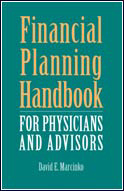
FINANCE: Financial Planning for Physicians and Advisors
INSURANCE: Risk Management and Insurance Strategies for Physicians and Advisors

Product DetailsProduct DetailsProduct Details

Direct Reimbursement [DR] and RiskManagers.Us

Join Our Mailing List

Transparent Dental Benefits versus Confusion

[By Darrell K. Pruitt; DDS]

pruitt

“If you are not a part of the solution, there is good money to be made prolonging the problem.” 

Company slogan- www.riskmanagers.us

Meet Mr. William Rusteberg

Today, I met William Rusteberg on the PennWell forum when he replied to the thread, “Why the long NPI, BCBS-TX?” which I copied below, along with my response which includes a plug for Direct Reimbursement [DR].

http://community.pennwelldentalgroup.com/forum/topics/why-the-long-npi-bcbstx?page=1&commentId=2013420%3AComment%3A26976&x=1#2013420Comment26976

Mr. Rusteberg represents a company called RiskManagers.Us, whose specialty involves the benefits market, yet it is not exactly an insurance company – just like there is no such thing as true dental insurance.  RiskManagers.us is a firm that works directly with businesses to identify and develop cost-effective benefits packages – emphasizing transparency and fairness.  Now that is refreshing, friends! 

Defining RiskManagers.Us 

Here is how RiskManagers.us describes itself: 

“We do not work for an insurance company, we work for you. As an independent brokerage, and consulting firm we can represent any licensed insurance company in Texas, Colorado, Mississippi, Louisiana, Alabama, Illinois & Florida.”

If one visits the Web site’s “Reference Library,” here are some of the topics offered:

·         Self Funding – Need a second opinion?

·         Texas leads in transparency issues

·         Can’t get claim information? HB 2015 May Solve Your Problem

·         Medical Stop Loss Through a Captive

·         PPO Discounts – Games People Play

·         PPO Networks – Shell Game

·         Can Hospitals waive Deductibles in Texas?

“What is a NPI number?” 

Mr. Rusteberg’s initial question on the PennWell forum simply asked, “What is a NPI number?”  Following my explanation, he wrote: 

 “It seems that many of those in your profession would do well in accepting cash only, or directly working with employer groups who sponsor dental/medical plans on a direct pay basis. We have had good success in doing this for our clients – we have one employer in San Antonio who pays medical care providers directly and quickly – providers like it and the plan pays a fair and reasonable rate, not relying on a PPO network to “re-price” claims. We have done the same on dental plans, eliminating the insurance company, PPO network and paying dental care providers submitted charges directly and quickly. We see little or no trend increases on dental charges using this method. In my view, insurance companies interfere in patient – provider relationships in a financially detrimental way.”

Thanks for your reply.

My Response:

I like you, William; 

What you describe sounds like my all-time, personal favorite dental benefits plan. It is called Direct Reimbursement {DR}, and it not only gives the employer the unlimited capability to design a plan which reflects the level of commitment desired by the company, but most importantly, it naturally preserves quality of care by allowing employees unlimited freedom of choice in dentists.  And that’s as good as the market gets. 

http://www.directreimbursement.com/

In addition, since there are no NPI requirements for DR, employees are also permitted see dentists who decline NPI numbers for ethical reasons. That increases employees’ choice by 50% over BCBS-TX clients, according to recent information provided by the Healthcare IT Transition Group.

http://www.npidentify.com/stats.htm#states

Little Management Needed

Just like the benefits plans you mention, with DR, very little money is spent on management because such policies are so simple and transparent that there is no room for profit-enhancing (wasteful) confusion used by unethical companies like BCBSTX, Aetna, Cigna, UnitedHealth, Delta Dental, United Concordia, and so many other members of the National Association of Dental Plans (NADP).

Assessment

Without transparency and the invisible hand of freedom-of-choice, free-market competition for healthcare dollars disappears as fast as executive bonuses rise. We’ll see where it goes from here. It would sure be swell if a Direct Reimbursement representative takes interest in the conversation; anyone home? 

Conclusion

Your thoughts and comments on this ME-P are appreciated. Feel free to review our top-left column, and top-right sidebar materials, links, URLs and related websites, too. Then, subscribe to the ME-P. It is fast, free and secure.

Speaker: If you need a moderator or speaker for an upcoming event, Dr. David E. Marcinko; MBA – Publisher-in-Chief of the Medical Executive-Post – is available for seminar or speaking engagements. Contact: MarcinkoAdvisors@msn.com

OUR OTHER PRINT BOOKS AND RELATED INFORMATION SOURCES:

Product DetailsProduct Details

Defining Current Dental Terminology [CDT®] Codes

What they Are – How they Work

By Staff Reportersdhimc-book1

OMAP Unique Procedure Codes*

The HHS [Health and Human Services] Office of Medical Assistance Program’s [OMAP] unique procedure codes were originally listed in the appropriate service guides. The maintenance of these codes was the responsibility of OMAP. These procedure codes were reviewed as needed and deleted either when a program no longer exists or when other Healthcare Common Procedure Coding System [HCPCS] codes are created which fully describe the service. Most of the unique codes were created to meet the needs of specialized services or programs. OMAP’s unique procedure codes were all five character configurations with the following alpha/numeric combinations: four numeric/one alpha (e.g., 7300Y); three numeric, two alpha (e.g., 206EP); two alpha/three numeric (e.g., BA311); or three alpha/two numeric (e.g., VIS01).

Current Dental Terminology (CDT procedure codes)

The American Dental Association’s (ADA) Code on Dental Procedures and Nomenclature is contained in the CDT-3 user guide. The maintenance of these codes is the responsibility of the Council on Dental Benefit Programs with consultation from: Blue Cross and Blue Shield Association, the Health Insurance Association of America, the Health Care Financing Association, National Electronic Information Corporation, and the American Dental Association recognized dental specialty organizations. The ADA updates the user guide approximately every five years. CDT codes are five-character, alpha-numeric configurations (e.g., D2110). Contact the American Dental Association to obtain a current copy of the CDT-3 Users Manual.

* Note: Due to HIPAA (Health Insurance Portability and Accountability Act) requirements, Medicare Local codes and OMAP Unique codes were replaced with national standard procedure codes. 

www.HealthcareFinancials.com

ho-journal8

Assessment

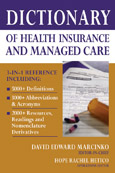
For more terminology information, please refer to the Dictionary of Health Economics and Finance.

www.HealthDictionarySeries.com

Conclusion

And so, your thoughts and comments on this Medical Executive-Post are appreciated?

Link: http://feeds.feedburner.com/HealthcareFinancialsthePostForcxos

Speaker: If you need a moderator or speaker for an upcoming event, Dr. David E. Marcinko; MBA – Publisher-in-Chief of the Executive-Post – is available for seminar or speaking engagements. Contact: MarcinkoAdvisors@msn.com  or Bio: www.stpub.com/pubs/authors/MARCINKO.htm

Get our Widget: Get this widget!

Our Other Print Books and Related Information Sources:

Practice Management: http://www.springerpub.com/prod.aspx?prod_id=23759

Physician Financial Planning: http://www.jbpub.com/catalog/0763745790

Medical Risk Management: http://www.jbpub.com/catalog/9780763733421

Healthcare Organizations: www.HealthcareFinancials.com

Health Administration Terms: www.HealthDictionarySeries.com

Physician Advisors: www.CertifiedMedicalPlanner.com

Subscribe Now: Did you like this Medical Executive-Post, or find it helpful, interesting and informative? Want to get the latest ME-Ps delivered to your email box each morning? Just subscribe using the link below. You can unsubscribe at any time. Security is assured.

Link: http://feeds.feedburner.com/HealthcareFinancialsthePostForcxos

Product DetailsProduct DetailsProduct Details

Inspect our 2-Volume Hospital Print Guide [for Free]

ADVETISEMENT

Evaluate “Healthcare Organizations” [Financial Management Strategies] AND Order Now!

By Dr. David Edward Marcinko; MBA

By Professor Hope Rachel Hetico; RN, MHA

[Editor and Managing Editor]ho-journal10

As healthcare continues to evolve, leaders and executives have the formidable and immediate challenge of creating both short-term and long-term financial strategies. Given that today’s knowledge-base is different from that of even six-months ago, and the need is for solutions to tomorrow’s economic problems, success seems always just beyond your grasp!

Why Subscribe?

But fortunately, you can be ready; Healthcare Organizations: [Financial Management Strategies] is your blueprint for success. To ensure your organization’s competitive edge and perhaps even its survival, you must quickly gain the financial management tools and techniques necessary to lead in the 21st century. What you learn and implement using this Guide enables you to respond proactively to the rapidly changing healthcare environment. Your subscription to Healthcare Organizations: [Financial Management Strategies] not only helps you lead, it brings together healthcare executives and visionary thought leaders to help you develop essential models and successful financial management strategies, going forward.

www.HealthcareFinancials.com

Subscription Support

Specialty Technical Publishers is pleased to provide customer information and support services for Healthcare Organizations: [Financial Management Strategies] by phone, fax, or e-mail. Customer information services hours are between 7 am and 5 pm Pacific Standard Time; or http://www.stpub.com/pubs/custinfo.htm
Testimonials

“This well-organized financial management guide is easy to use and perfect for the healthcare organization, hospital or clinic manager; CFO, CEO, administrator or comptroller; CNO, CMO or physician-executive  who is tasked with developing, implementing and extending a comprehensive (and integrated) financial, accounting, health economics and enterprise-wide business management program.”

Operating Room Supervisor

Hospital Administrator

Baltimore, Maryland

Assessment 

For today … for tomorrow … for all healthcare organizations … for you! Remember, the Guide is available on a 30-day, risk-free trial. You may contact http://www.STPub.com at (604) 983-3434, fax (604) 983-3445, or e-mail at custinfo@stpub.com to place an order, or ask questions regarding pricing and/or availability. All shipments arrive within 5 to 10 days. Prepayment is required for all international shipments and a courier charge will be added to the subscription price. After hours, we suggest you review the STP website FAQs section for answer to your inquiry: www.stpub.com/pubs/custinfo.htm

Specialty Technical Publishers

8 – 14th Street

Blaine, WA 98230

1-800-251-0381 

orders@stpub.com

http://www.stpub.com/pubs/ho.htm

TOC: http://www.stpub.com/pdfs/toc_ho.pdf

Speaker: If you need a moderator or speaker for an upcoming event, Dr. David E. Marcinko; MBA – Publisher-in-Chief of the Executive-Post – is available for seminar or speaking engagements. Contact: MarcinkoAdvisors@msn.com  or Bio: www.stpub.com/pubs/authors/MARCINKO.htm

Get our Widget: Get this widget!

Subscribe Now: Did you like this Medical Executive-Post, or find it helpful, interesting and informative? Want to get the latest E-Ps delivered to your email box each morning? Just subscribe using the link below. You can unsubscribe at any time. Security is assured.

Link: http://feeds.feedburner.com/HealthcareFinancialsthePostForcxos

Opinion Poll on eMRs

SPONSORED ADVERTISEMENT

www.MedicalBusinessAdvisors.com

Please Vote

Defining Current Procedural Terminology [CPT®] Codes

What they are – How they work

By Staff Reportersdhimc-book

The American Medical Association’s Physicians’ Current Procedural Terminology® is contained in the CPT user guide. The maintenance of these codes is the responsibility of the American Medical Association with consultation from the AMA CPT Editorial Panel, Advisory Committee, and the AMA CPT Health Care Professionals Advisory Committee. Procedure codes in the CPT user guide are reviewed and revised annually. The Health Care Financing Administration’s – now CMS – Common Procedure Coding System [HCPCS] lists three levels:  

Level I National Codes

CPT codes are five-character, all numeric configurations (e.g., 99215). Contact the American Medical Association to obtain a current copy of the CPT® Users Manual.

Level II National Codes

The HCPCS Level II National codes are contained in the HCPCS user’s guide and are published in the Federal Register. The maintenance of these codes is the responsibility of the Health Care Financing Administration [CMS]. Procedure codes in the HCPCS user guide are reviewed and revised annually. HCPCS codes are five characters with one alpha and four numeric configurations (e.g., A0042). Contact any publishing company that provides medical coding reference books to obtain a current copy of the current HCPCS User Manual.

Level III Medicare Local Codes*

Historically, local Medicare carriers developed local procedure codes which were published in the local Medicare Newsletters. The maintenance of these codes was the responsibility of the local Medicare carrier. Medicare local procedure codes were all five-character configurations with the following alpha/numeric configuration: one alpha, (W, X, Y or Z) with four numeric configurations (e.g., Y5523); and two alphas, (W, X, Y or Z) same character with three numeric identifiers (e.g., XX001). Contact your local Medicare carriers to obtain their Medicare Newsletters.

* Note: Due to HIPAA (Health Insurance Portability and Accountability Act) requirements, Medicare Local codes and the Office of Medicare Assistance Program Unique [OMAPU] codes were replaced with national standard procedure codes. 

Assessment

For more terminology information, please refer to the Dictionary of Health Economics and Finance.

Conclusion

And so, your thoughts and comments on this Medical Executive-Post are appreciated?

Link: http://feeds.feedburner.com/HealthcareFinancialsthePostForcxos

Speaker: If you need a moderator or speaker for an upcoming event, Dr. David E. Marcinko; MBA – Publisher-in-Chief of the Medical Executive-Post – is available for seminar or speaking engagements. Contact: MarcinkoAdvisors@msn.com  or Bio: www.stpub.com/pubs/authors/MARCINKO.htm

Get our Widget: Get this widget!

Our Other Print Books and Related Information Sources:

Practice Management: http://www.springerpub.com/prod.aspx?prod_id=23759

Physician Financial Planning: http://www.jbpub.com/catalog/0763745790

Medical Risk Management: http://www.jbpub.com/catalog/9780763733421

Healthcare Organizations: www.HealthcareFinancials.com

Physician Advisors: www.CertifiedMedicalPlanner.com

Subscribe Now: Did you like this Medical Executive-Post, or find it helpful, interesting and informative? Want to get the latest ME-Ps delivered to your email box each morning? Just subscribe using the link below. You can unsubscribe at any time. Security is assured.

Link: http://feeds.feedburner.com/HealthcareFinancialsthePostForcxos

Product DetailsProduct DetailsProduct Details     

Evaluate our 2-Volume Institutional Print Guide

Healthcare Organizations [Financial Management Strategies]

ADVERTISEMENTho-journal2

www.HealthcareFinancials.com

Our 1,200 pages, 2-volume, quarterly institutional print guide Healthcare Organizations [Financial Management Strategies] is available on a 30-day, risk-free trial.

You may contact http://www.STPub.com at (604) 983-3434, fax (604) 983-3445, or e-mail at custinfo@stpub.com to place an order, or ask questions regarding pricing and/or availability.

All shipments arrive within 5 to 10 days. Prepayment is required for all international shipments and a small courier charge will be added to the subscription price.

After hours, we suggest you review the STP website FAQs section for answer to your inquiry: www.stpub.com/pubs/custinfo.htm

Assessment

Rest assured, Healthcare Organizations: [Financial Management Strategies] will become an important peer-reviewed vehicle for the advancement of working knowledge and the dissemination of research information and best practices in our field. In the years ahead, we trust these principles will enhance utility and add value to your subscription. Most importantly, we hope to increase your return on investment [ROI] by some small increment.

Review and Ordering Information:

Specialty Technical Publishers

8 – 14th Street

Blaine, WA 98230

1-800-251-0381

orders@stpub.com

http://www.stpub.com/pubs/ho.htm

TOC: http://www.stpub.com/pdfs/toc_ho.pdfcmp-logo

Note: The guide is sponsored by www.MedicalBusinessAdvisors.com with contributions from www.CertifiedMedicalPlanner.com and is edited by ME-P’s Dr. David E. Marcinko and Professor Hope R. Hetico; RN, MHA. Definitions and terms supplied by www.HealthDictionarySeries.com

Conclusion

And so, your thoughts and comments on this Medical Executive-Post are appreciated? Reviews from current journal-guide subscribers are encouraged and appreciated.

Speaker: If you need a moderator or speaker for an upcoming event, Dr. David E. Marcinko; MBA – Publisher-in-Chief of the Executive-Post – is available for seminar or speaking engagements. Contact: MarcinkoAdvisors@msn.com  or Bio: www.stpub.com/pubs/authors/MARCINKO.htm

Get our Widget: Get this widget!

Subscribe Now: Did you like this Medical Executive-Post, or find it helpful, interesting and informative? Want to get the latest E-Ps delivered to your email box each morning? Just subscribe using the link below. You can unsubscribe at any time. Security is assured.

Link: http://feeds.feedburner.com/HealthcareFinancialsthePostForcxos

On Drug Reps as Future Dinosaurs

Join Our Mailing List

More Doctors Closing Office Doors to Drug Salesmen

[By Staff Reporters]

56359286

According to Kevin B. O’Reilly, of the AMNews on 3/23/09, drug reps may soon become dinosaurs-of-sorts. And, the relationship between doctors and drug reps is cloudy, darkening and may never be the same again.

Changing Relationships

Pharmaceutical companies, battered by sluggish drug pipelines, the looming loss of blockbuster patented drugs, an economy in recession and scrutiny of their relationships with physicians; are re-examining the value of sending drug reps into doctors’ offices. Detailers are struggling to grab a shrinking slice of physicians’ valuable time, and attention, while adjusting to new drug industry rules banning freebies such as pens and notepads.

Declining Reputations

While most physicians still have positive views of detailers and drug-makers, those sentiments are cooling. And, the next-generation of medical students and future physicians may be another driver of this wave. About one in four physician’s works in a practice that refuses to see drug reps. Of doctors who do see reps, about 40% will meet with detailers only with scheduled appointments. The by-appointment-only figure jumped 23% during the last six months of 2008, according to a survey of more than 227,000 medical practices representing 640,000 physicians that was released in February.

***

 despair

***

Assessment

What is your practice policy on this issue? Are drug reps being replaced by webcasts, podcasts, IMs, text-messages, cell phone advertisements, direct-to-doctor [D2D] communications and/or some other new-wave social media or rich e-format? 

Channel Surfing the ME-P

Have you visited our other topic channels? Established to facilitate idea exchange and link our community together, the value of these topics is dependent upon your input. Please take a minute to visit. And, to prevent that annoying spam, we ask that you register. It is fast, free and secure.

Conclusion

Your thoughts and comments on this ME-P are appreciated. Feel free to review our top-left column, and top-right sidebar materials, links, URLs and related websites, too. Then, subscribe to the ME-P. It is fast, free and secure.

Speaker: If you need a moderator or speaker for an upcoming event, Dr. David E. Marcinko; MBA – Publisher-in-Chief of the Medical Executive-Post – is available for seminar or speaking engagements. Contact: MarcinkoAdvisors@msn.com

OUR OTHER PRINT BOOKS AND RELATED INFORMATION SOURCES:

Product DetailsProduct DetailsProduct Details

Future of Health Publishing and Business Journalism

Good Content and “Fly” Beats the Competition

By Dr. David Edward Marcinko; MBA, CMP™

[Publisher-in-Chief]dr-david-marcinko7

Last month, Steve Brawner [Steve Brawner Communications, a free-lance journalist for the Medical Business News, Inc., and the publisher of Medical News of Arkansas] contacted me to talk about hospitals, healthcare economics and the current financial dilemma in medical care. The interview will appear, as a special report, in April

But, after discussing answers to his top ten questions, we at the Institute of Medical Business Advisors, Inc www.MedicalBusinessAdvisors.com posited another interesting query. It was not on any particular subject area of our expertise, but aimed at us as electronic-publishers, reporters and health journalists.biz-book3 

The Future of Journalism

In other words, the question was:

“What do we think is the future business model for health journalism?”

Now, we’ve been mulling this thought over some time now, and our opinion goes something like this:

“We don’t – the old media is collapsing.”

And, while I don’t pity the likes of Chicago billionaire Sam Zell [the so-called “grave-dancer” for his penchant to buy distressed companies on the cheap and revitalize them for profit] – poor Sam – he was a very successful real-estate entrepreneur and the Chairman of Equity Group Investments. He thought this knowledge or luck was transferrable to the publishing industry, it wasn’t.

But, I do feel for distressed print newspapers like the Seattle Post Intelligencer, Chicago Tribune and especially the Baltimore Sun; as a native Balti-moron. I have both a favorite uncle, and older cousin, whose entire careers were spent in the print and ink business, there.

Link: https://healthcarefinancials.wordpress.com/2009/03/09/healthcare-experts-versus-health-journalists/

New Media “Fly”

How has this happened? Well, Google destroyed the advertising model for most media, and blogs and social networks have democratized the commentary / opinion playing field to some greater / lesser extent. Think: Mark Zuckerberg [Facebook] of Harvard, whose parents are both physicians – incidentally Mark’s got “fly” – Zell does not. We got the electrons at the ME-P, but little cash.

The Problem

The problem is that not many “new” media outlets, like the Medical Executive-Post, can afford to take on the interesting part of publishing; which is paying real investigative journalists. Think: The Huffington Post. Something I would love to be able to do; as there’s lots of muck to be raked in health economics, finance, administration, health IT; as well as medically focused financial planning, Wall Street and related personal investing activities for doctors – an integrated oeuvre of topics to say the least.

www.HealthDictionarySeries.comdhimc-book1

Our Own Investigative Reporter

About the closest we have to a true investigative reporter is Darrel K. Pruitt; DDS. And, although he is no Bob Woodward or Carl Bernstein; he does occasionally do a good job. Think: William Mark Felt as FBI agent “deep-throat”.

Of course, as regular readers of the ME-P are aware, Darrell broke the dental profession’s [allegedly dufus] conspiracy with CCHIT [allegedly faux], and regularly reports on the folly of eHRs, eDRs, NPIs and eMRs. Think: citizen doctor journalist.  

Link: https://healthcarefinancials.wordpress.com/2009/03/02/cchit-is-prejudiced-and-lacks-diversity-%e2%80%93-an-indictment/

Link: https://healthcarefinancials.wordpress.com/2009/03/02/avi-baumstein-and-hipaa-compliancy/

Link: https://healthcarefinancials.wordpress.com/2009/03/04/don%e2%80%99t-rush-ehrs/

Assessment

But, when the ME-P gets financially solid enough to hire others, and put them into the mix of expertise, commentary and free-labor entrepreneur punditry we now have on the site; then there’ll be no need for the current newspapers [at least insofar as our covered topic channels are concerned]. Until then; we don’t know what the answer is, but it, like the economy, doesn’t look good for the print media space.

Link: http://www.shirky.com/weblog/2009/03/newspapers-and-thinking-the-unthinkable

Disclaimer about HealthcareFinancials.com ho-journal1

As Editor-in-Chief of the premium subscription, two volume, 1,200 pages, institutional print-guide Healthcare Organizations [Financial Management Strategies], we prefer engaged readers who demand compelling content; old or new media.

www.HealthcareFinancials.com

According to the conventional wisdom expressed above, this printed guide should be a relic of the past, from an era before instant messaging and high-speed connectivity. But, our experience shows just the opposite. Applied healthcare economics and financial management literature has grown exponentially in the past decade and the plethora of internet information makes updates that sort through the clutter and provide strategic analysis all the more valuable.

Info: http://www.stpub.com/pubs/ho.htm

TOC: http://www.stpub.com/pdfs/toc_ho.pdf

Purchase: Call 1-800-251-0381 or email orders@stpub.com

Conclusion

And so, your thoughts and comments on this Medical Executive-Post are appreciated. What is our best-of-breed business model for print and the internet? Should we charge for our electronic content – and if so – how much? OR, shall it remain an informal and complimentary companion to the $535 annual print guide? Please opine. 

And, please subscribe to the ME-P here; it’s fast, free and secure:

Link: http://feeds.feedburner.com/HealthcareFinancialsthePostForcxos

Speaker: If you need a moderator or speaker for an upcoming event, Dr. David E. Marcinko; MBA – Publisher-in-Chief of the Executive-Post – is available for seminar or speaking engagements. Contact: MarcinkoAdvisors@msn.com  or Bio: www.stpub.com/pubs/authors/MARCINKO.htm

Get our Widget: Get this widget!

Our Other Print Books and Related Information Sources:

Practice Management: http://www.springerpub.com/prod.aspx?prod_id=23759

Physician Financial Planning: http://www.jbpub.com/catalog/0763745790

Medical Risk Management: http://www.jbpub.com/catalog/9780763733421

Healthcare Organizations: www.HealthcareFinancials.com

Health Administration Terms: www.HealthDictionarySeries.com

Physician Advisors: www.CertifiedMedicalPlanner.com

Subscribe Now: Did you like this Medical Executive-Post, or find it helpful, interesting and informative? Want to get the latest E-Ps delivered to your email box each morning? Just subscribe using the link below. You can unsubscribe at any time. Security is assured.

Link: http://feeds.feedburner.com/HealthcareFinancialsthePostForcxos

HMO Physician Office Visit Co-Payment Creep

Patients Showing Doctors the Money [1999–2008]

By Staff Reporters

56371606

Copayment

2008

1999

$5

6%

23%

$10

16%

60%

$15

29%

12%

$20

30%

1%

Other

19%

3%

Source: Kaiser/HRETHRET Survey of Employer-Sponsored Health Benefits

www.kff.org

Assessment

Considering the “down and dirty” interest rate “rule of 72”, a twice doubling of copayments from $5 to $20, and a Hewlett-Packard 12-C hand-held financial calculator; allow us to suggest an annual copayment rise of 15% percent for the decade.

Conclusion

Your thoughts and comments on this ME-P are appreciated. Feel free to review our top-left column, and top-right sidebar materials, links, URLs and related websites, too. Then, subscribe to the ME-P. It is fast, free and secure.

Speaker: If you need a moderator or speaker for an upcoming event, Dr. David E. Marcinko; MBA – Publisher-in-Chief of the Medical Executive-Post – is available for seminar or speaking engagements. Contact: MarcinkoAdvisors@msn.com

OUR OTHER PRINT BOOKS AND RELATED INFORMATION SOURCES:

Product DetailsProduct DetailsProduct Details

***

Medical Real Estate Investments

Join Our Mailing List

Physician’s Need to Understand Compensation Methods

[By Staff Reporters]

Property Managers

Medical property managers are compensated for their services on an hourly or fee basis. In addition, they may be reimbursed for expenses related to the maintenance of the property, such as materials, and they may also pay for expenses incurred by subcontractors.

Fees

Fees usually are based on a percentage of gross collected rents, but are negotiable. Property managers of larger medical complexes may receive higher fees than managers of small complexes because of the details involved in managing larger properties. Fees also are affected by the total pro-forma income stream. In general, the better a manager enhances the property’s performance, the more the manager is paid.

Barter

Some owners pay fees and provide rent-free units for resident medical managers to handle on-site leasing; or for offices for managers to take care of buildings warranting on-site property management. Bartered phantom income may be reportable to the IRS.

fp-book11

Real Estate Brokers

Each state has specific requirements regarding the sales and leasing of medical, commercial and other real estate. Every state, however, has the clear and mandatory requirement that no commission or fee can be paid to anyone who is not licensed in that state as a real estate broker, an associate broker, or sales agent if the person represents or works on behalf of another. All fees and commissions must be paid to the company employing the broker, associate broker, or sales agent. Violation of these laws can have serious consequences to both the principal and the real estate broker.

Hybrid Compensation

A medical real estate broker is usually compensated by either a negotiated fee or a negotiated commission; or hybrid of both methods. Neither fees for work or commissions earned are set or standardized in any way. The amount earned or the amount paid is the result of an agreement. The agreement or contract must be in writing, under the Statute of Frauds, just as all real estate offers and contracts must be in writing sales or on leases of more than one year.

Commissions

If a broker is working on commission, h/she is paid only when she is successful and the sales transaction closes and title is passed to the buyer. Sales commission is established either in a Listing Agreement or a Buyers Brokerage Agreement. No fee is due if the sale does not occur. Rates of commission vary widely by city, region, and state. The amount of commission usually is a percentage of the sales price or a set amount. The percentage of commission is dependent on competition; effort required; to some degree, the size of the transaction; and market activity. For example, the sale of a large regional shopping center might be a 3% commission whereas the sale of a small retail building under $1 million might warrant a 7% commission.

Lease Execution Warrants Payment

Leasing commissions are based on gross rental income over the term of the lease, are due when the lease is executed by both landlord and tenant, and can be paid at one of the following times:

  1. On execution of the lease.
  2. Partly on lease execution and partly on occupancy; or
  3. On occupancy, depending on the landlord’s written agreement with the broker.

Leasing commissions usually are a negotiated percentage of gross rents, with the percentage varying dependent on type of lease. For example, the percentage rate of commission might be more on a net lease, in which the tenant pays all expenses, than if the same lease were structured on a gross or fully serviced basis; or in which the landlord provides services within the rents due. Commission on ground leases might range up to 10% and office space might range from 4% to 6%.

Example:

Term: 5 years (60 months)         

Monthly rental rate: $1,000 per month     

Gross rental income under the lease: $1,000 x 60 = $60,000        

Commission calculation (using a 6% rate): $60,000 x 6% = $3,600           

The fees paid under sales and leases are usually split between the colleague brokers working on the transaction and are shared between the listing agent and the selling or leasing agent under a co-brokerage agreement between the brokers. This too is a negotiated percentage. It is common for commissions to be split on a 50/50 basis, but it is not the rule. How the commission is divided between brokers depends on the transaction. The commission is often shared evenly between cooperating brokers, but the split ultimately is the seller and listing agent’s decision.

Hard-to-Move Properties

On extremely difficult medical real estate properties [as is seen in many parts of the country today], incentive splits may be offered. Incentive splits offer the selling or leasing agent a greater share of the commission if he or she is successful. Under commission agreements between a seller and a broker, or a buyer and a broker, in which the broker is representing a buyer, nothing is earned until the transaction is complete and the broker has added value, unless spelled out to the contrary in the agreement or the broker is working on a fee basis. On a typical sale, commissions are paid through escrow at closing. Leasing commissions are usually, but not always, paid upon lease execution.

Other forms of payment for property managers and real estate brokers

It has become increasingly common for medical property managers and real estate brokers, particularly when representing a buyer or a tenant, to work on a contractual basis. In these instances, the parties are paid on an hourly or set-fee basis, regardless of whether the transaction is completed. In some cases, a principal may decide he wants only some of the services offered, such as a lease review, and those are also paid on a negotiated basis for the service provided.

Assessment

Combinations of fixed fees and commission incentives also are common, but in most all cases there is not a set amount or standard fee charged by all brokers.

Conclusion

Your thoughts and comments on this ME-P are appreciated. Feel free to review our top-left column, and top-right sidebar materials, links, URLs and related websites, too. Then, subscribe to the ME-P. It is fast, free and secure.

Link: http://feeds.feedburner.com/HealthcareFinancialsthePostForcxos

Speaker: If you need a moderator or speaker for an upcoming event, Dr. David E. Marcinko; MBA – Publisher-in-Chief of the Medical Executive-Post – is available for seminar or speaking engagements. Contact: MarcinkoAdvisors@msn.com

OUR OTHER PRINT BOOKS AND RELATED INFORMATION SOURCES:

LEXICONS: http://www.springerpub.com/Search/marcinko
PHYSICIANS: www.MedicalBusinessAdvisors.com
PRACTICES: www.BusinessofMedicalPractice.com
HOSPITALS: http://www.crcpress.com/product/isbn/9781466558731
CLINICS: http://www.crcpress.com/product/isbn/9781439879900
ADVISORS: www.CertifiedMedicalPlanner.org
BLOG: www.MedicalExecutivePost.com

Product Details  Product Details

Independent Medical Practitioner as Solo Primary Care Surrogate

Join Our Mailing List

Doctors Facing a Bleak Future Business and Financial Planning Model

By Dr. David Edward Marcinko; MBA, CMP™

[Publisher-in-Chief]dem2

According to Physicians News, on March 19, 2009, the demand for family physicians is growing. Proposals for health system reform focus on increasing the number of primary care physicians in America. Yet, despite these trends, the number of future physicians who chose family medicine dipped this year, according to the 2009 National Resident Matching Program. What gives?

NRMP

The National Resident Matching Program [NRMP] recently announced that a total of 2,329 graduating medical students matched to family medicine training programs. This is a decrease in total student matches from 2008, when 2,404 family medicine residency positions were filled.

Primary Care Demand Explodes

Meanwhile, demand for primary care physicians continues to skyrocket. For example, in its most recent recruitment survey, Merritt Hawkins, a national physician recruiting company, reported primary care physician search assignments had more than doubled from 341 in 2003 to 848 last year. 

The Decline of Solo Medical Practitioners

Regular readers and subscribers to this Medical Executive- Post are aware of the declining number of solo medical practitioners; we have been sounding the alarm here, in our books, journal, speaking engagements and elsewhere for years now.dhimc-book4

In fact, the statistic that we often cite is that more than 40% of the nation’s physicians are employed doctors; not employers as in the past. This business model shift has occurred over the past decade or so, and has accelerated of late. The decline in solo and independent doctors has occurred elsewhere as well, but much more slowly [i.e., dentistry, podiatry and osteopathy] as these specialties have been somewhat isolated from the traditional allopathic mainstream.

Going forward, this solitary model seems to be a good thing, and a fortunate result of the un-intended consequence of previously keeping these folks out of the healthcare mainstream.

The Decline of Independent Medical Practitioners

Now, in the March 2009 issue of Healthcare Finance News, we learn that the number of hospital owned physician practices has been climbing over the last four years, according to the Medical Group Management Association [MGMA]. Think: PHOs back-in-the-day. ho-journal3

And, while this trend only marginally affects patients and patient care, it is quite disruptive to physicians, their families, personal wealth accumulation, retirement and estate planning endeavors.

For example, according to Professor Hope Rachel Hetico, RN, MHA, CMP™ of our firm www.MedicalBusinessAdvisors.com

“The professional good-will valuation component of a medical practice is being decimated. Today, some practices are being bought and sold for tangible asset value, only.

Assessment

Therefore, allow me to identify this emerging trend which suggests independent medical practice as reflective of solo primary medical care. In other words, as independence goes the way of the “dodo-bird”, so goes primary care practitioners precisely at a time when the later is needed more than the former.

Why? Employed doctors stay that way by making money for their employer and hospital-bosses. Specialists make more money than primary care doctors. So, if you want to stay an employed doctor; which specialty would you pursue?

Answer: The NRMP class this year spoke out loud and clear. Any specialty but primary care!

Channel Surfing the ME-P

Have you visited our other topic channels? Established to facilitate idea exchange and link our community together, the value of these topics is dependent upon your input. Please take a minute to visit. And, to prevent that annoying spam, we ask that you register. It is fast, free and secure.

Conclusion

Your thoughts and comments on this ME-P are appreciated. Feel free to review our top-left column, and top-right sidebar materials, links, URLs and related websites, too. Then, subscribe to the ME-P. It is fast, free and secure.

Speaker: If you need a moderator or speaker for an upcoming event, Dr. David E. Marcinko; MBA – Publisher-in-Chief of the Medical Executive-Post – is available for seminar or speaking engagements. Contact: MarcinkoAdvisors@msn.com

OUR OTHER PRINT BOOKS AND RELATED INFORMATION SOURCES:

Product DetailsProduct Details

Product Details 

Medical Practice Financial Statement Valuation Adjustments

Why Benchmarks are Out – and Scrutiny is In

By Dr. David Edward Marcinko; MBA, CMP™

Publisher-in-Chief

CEO: www.MedicalBusinessAdvisors.comdr-david-marcinko11

As discussed elsewhere on this ME-P, the medical practice appraiser’s primary goal is to determine the value of the business based on its expected earnings or cash flow. To accomplish this, the medical practice appraiser looks to the company’s historical financial statements to see how it has been reporting its earnings. Because of differences in accounting practices across organizations, the appraiser must analyze how the medical practice’s financial statements differ from those of other practices and how those differences might have an effect on the practice’s value. This is particularly true when the appraiser is comparing the performance of the medical practice company being valued with those of so-called industry benchmarks. In all instances, it is important that the appraiser compare numbers that have been accounted for in the same way. Below is a discussion of the most common adjustments.biz-book4

Nonrecurring or Extraordinary Items

Nonrecurring or extraordinary items of income or expense reported by the practice will be eliminated from the profit and loss statement. These include the following:

• Insurance settlements (income or expense) or life insurance proceeds on the death of the key physician-partner.

• Large payments in settlement of lawsuits (either as income or as expense).

• The gain or loss on the sale of certain assets or portions of the practice which are not likely to be repeated.

• Expenses related to the start-up or discontinuance of a new or old segment of the practice.

• Moving and related expenses.

• Expenses relating to fire or flood damage not covered by insurance.

• Adjustments to prior years’ financial statements when the practice discontinued an employee benefit (such as eliminating the company’s pension or profit-sharing plan).

• Adjustments for income and/or expenses related to non-operating assets, such as a portfolio of marketable securities not used in the practice or medical real estate held for investment purposes.fp-book12

Valuation Calculations

The appraiser needs to gather the following facts regarding the financial statements of the practice and may need to make adjustments to account for these differences. The information will give the appraiser an understanding of the company’s normalized earnings and will be used to make valuation calculations.

• How does a specialty practice [such as physiatry’s DME] value its inventory—LIFO or FIFO? In certain specialties, inventory is accounted for on the LIFO or “last-in, first-out” basis. When prices are rising, profits are reduced because the DME items being sold are presumably bought most recently at higher prices. The “old” or lower-cost inventory is held in reserve while the higher-cost inventory is sold off. This situation may reverse in times of recession and low or no inflation. At that point, profits will be distorted by the low-cost items. Recognizing these facts, practice owners have more commonly used FIFO or “first-in, first-out,” inventory accounting to value their inventory.

• What kind of reserves has the practice been taking for doubtful accounts receivable? Some doctors will not – or very slowly – write off bad debts or take reserves for them, and thus the income is improperly overstated. The appraiser will look at the actual bad debt expenses relative to the doubtful accounts receivable booked to determine if the practice’s adjustments are reasonable.

• How does the practice depreciate its hard assets? A variety of approved methods are used to depreciate assets over their useful lives. It is important for the appraiser to recognize the impact these methods have on corporate earnings. Some assets can be depreciated over a short time frame, which will mean higher annual write-offs; others, such as real estate, must be depreciated over a much longer period and thus will have a smaller impact on annual expenses.insurance-book6

Asset-Related Issues

The appraiser must address asset-related issues, such as:

• Has the practice’s assets been valued recently? If not, will current appraisals be required?

• Are any non-operating assets carried on the books of the practice? These assets may have to be valued separately and added to the operating value of the business.

Assessment

In our experience valuating medical practices, adjustments made for excess compensation and perquisites paid to the physician-owner and other family members, are the most common items of contention between buyer and seller.

For example, above average physician income usually equates to lower medical practice transferrable enterprise value; and vice versa.

Link: https://healthcarefinancials.wordpress.com/2007/11/30/90

Channel Surfing the ME-P

Have you visited our other topic channels? Established to facilitate idea exchange and link our community together, the value of these topics is dependent upon your input. Please take a minute to visit. And, to prevent that annoying spam, we ask that you register. It is fast, free and secure.

Conclusion

Your thoughts and comments on this ME-P are appreciated. Feel free to review our top-left column, and top-right sidebar materials, links, URLs and related websites, too. Then, subscribe to the ME-P. It is fast, free and secure.

Speaker: If you need a moderator or speaker for an upcoming event, Dr. David E. Marcinko; MBA – Publisher-in-Chief of the Medical Executive-Post – is available for seminar or speaking engagements. Contact: MarcinkoAdvisors@msn.com

OUR OTHER PRINT BOOKS AND RELATED INFORMATION SOURCES:

Product DetailsProduct Details

Avoiding an IRS Appraisal Audit

Valued Friends and Colleagues

By Linda Trugman; CPA, CVAtrugman-logo

We hope this e-mail post finds you well. We have attached our most recent newsletter “Valuation Trends” for your perusal and hope you find something of interest in it; especially “20 Ways to Avoid an IRS Appraisal Audit.”

Link: trugman-valuation

Assessment

As a reminder, our updated website at www.trugmanvaluation.com includes a resource center which provides additional information that might be useful to you including sample reports, various conference presentations and podcasts.

Conclusion

We are available to assist you, and your clients, with your valuation and litigation support needs and look forward to hearing from you. And so, your thoughts and comments on this Medical Executive-Post are appreciated.

Speaker: If you need a moderator or speaker for an upcoming event, Dr. David E. Marcinko; MBA – Publisher-in-Chief of the Executive-Post – is available for seminar or speaking engagements. Contact: MarcinkoAdvisors@msn.com  or Bio: www.stpub.com/pubs/authors/MARCINKO.htm

Get our Widget: Get this widget!

Our Other Print Books and Related Information Sources:

Practice Management: http://www.springerpub.com/prod.aspx?prod_id=23759

Physician Financial Planning: http://www.jbpub.com/catalog/0763745790

Medical Risk Management: http://www.jbpub.com/catalog/9780763733421

Healthcare Organizations: www.HealthcareFinancials.com

Health Administration Terms: www.HealthDictionarySeries.com

Physician Advisors: www.CertifiedMedicalPlanner.com

Subscribe Now: Did you like this Medical Executive-Post, or find it helpful, interesting and informative? Want to get the latest E-Ps delivered to your email box each morning? Just subscribe using the link below. You can unsubscribe at any time. Security is assured.

Link: http://feeds.feedburner.com/HealthcareFinancialsthePostForcxos

About the Convenient Care Association

Developing Best Medical Practices and Retail Operating Standards

By Staff Reporters

horizontal-nurses2The Convenient Care Association [CCA] is comprised of companies, medical providers and healthcare systems that provide patients and consumers with accessible, affordable and quality healthcare in retail-based locations. The CCA works primarily to enhance and sustain the growth of the convenient care industry through sharing of best practices and common standards of operation. It was founded in October 2006.

About CCA

According to their website, the first Convenient Care Clinics [CCCs] opened in 2000, and the industry grew quickly since then. Today there are approximately 1,060 clinics in operation, and CCA member clinics represent more than 95% of the industry. To date, CCCs have served more than 3.5 million patients with its nurse practitioners [NPs] and physician assistants [PAs].

Link: http://www.ccaclinics.org/index.php?option=com_content&view=article&id=4&Itemid=11

Growth and Expansion

With this rapid expansion, and projected continued growth, it quickly became clear that the shared concerns and needs of both providers and patients could best be served through an association that allowed for: 

  • Sharing best practices, common standards of operation, experiences and ideas.
  • Developing common standards of operation to ensure the highest quality of care.
  • A united voice to advance the needs of CCCs and their customers
  • A unified effort to promote the concept of CCCs, and to respond to questions about this evolving industry.
  • Reaching out to the existing medical community and creating new partnerships.
  • Building synergies with traditional medical service providers.

Assessment

The Public Health Management Corporation [PHMC], a nonprofit public health institute, provides executive management and administrative support for the Convenient Care Association. For more information, contact Tine Hansen-Turton at (215) 731-7140.

Conclusion

And so, your thoughts and comments on this Medical Executive-Post are appreciated. Have you ever used a retail medical clinic and what was your experience? Will this business model save primary care medicine?

Speaker: If you need a moderator or speaker for an upcoming event, Dr. David E. Marcinko; MBA – Publisher-in-Chief of the Executive-Post – is available for seminar or speaking engagements. Contact: MarcinkoAdvisors@msn.com  or Bio: www.stpub.com/pubs/authors/MARCINKO.htm

Get our Widget: Get this widget!

Our Other Print Books and Related Information Sources:

Practice Management: http://www.springerpub.com/prod.aspx?prod_id=23759

Physician Financial Planning: http://www.jbpub.com/catalog/0763745790

Medical Risk Management: http://www.jbpub.com/catalog/9780763733421

Healthcare Organizations: www.HealthcareFinancials.com

Health Administration Terms: www.HealthDictionarySeries.com

Physician Advisors: www.CertifiedMedicalPlanner.com

Subscribe Now: Did you like this Medical Executive-Post, or find it helpful, interesting and informative? Want to get the latest E-Ps delivered to your email box each morning? Just subscribe using the link below. You can unsubscribe at any time. Security is assured.

Link: http://feeds.feedburner.com/HealthcareFinancialsthePostForcxos

Wal-Mart’s Health Information Technolgy Game Plan

CCHIT Meet Sam Walton

By Darrell K. Pruitt; DDSpruitt3

Dana Blankenhorn posted an article recently on zdnet titled “Wal-Mart Selling Windows Health Records.”

Link: http://healthcare.zdnet.com/?p=1966

After reading it, I opened a good, cost-effective fortified breakfast wine and began hammering out my comment that I copied below, long before the sun came up.  Hope you enjoy it.  I’m going to get some sleep. 

Looks Like Rein

Coach Glen Tullman’s traditionally favored and tough Allscripts-Misys team originating in CCHIT meets Walton’s consumer-supported, nimble team from Arkansas in front of Sam’s home town crowd. As a sports fan and occasional off-color commentator standing on the sidelines, Dana, I think this ball game could get exciting. The weather is perfect for sloppy, poor conditions and heaven knows that these two ideologies share history.

Wal-Mart HIT 

Some odds-makers say Wal-mart’s success in selling healthcare IT at Sam’s Club prices and quality is likely to take off in their patented free-market style in the next few months. 

The big question is; could this threaten federally-favored Allscripts’ early advantage? 

For example; if things get competitive, and the value of MDRX starts to falter under natural pressure, will Trustee Tullman call on the reserve strength of his exclusive Club CCHIT to out-flank the quick and slippery Sam’s Club wide-ended attorneys?  Some say that if CCHIT suddenly selects surprising, deceptive and occasionally lame applications for certification requirements – that happen to already reflect Allscripts pre-determined game plan – it is a cinch to give Tullman’s team a head start around their strong side with a pulling guard or three from the right (weak side) to lead interference.

Assessment 

Will Sam protest such a rule? You bet. It could get messy. Snot could fly. 

Here is the question on this reporter’s mind. If close calls are occasionally ruled in the home team’s favor, will Tullman move on down the road? I like to watch the cheerleaders.

Conclusion

And so, your thoughts and comments on this Medical Executive-Post are appreciated.

Speaker: If you need a moderator or speaker for an upcoming event, Dr. David E. Marcinko; MBA – Publisher-in-Chief of the Medical Executive-Post – is available for seminar or speaking engagements. Contact: MarcinkoAdvisors@msn.com  or Bio: www.stpub.com/pubs/authors/MARCINKO.htm

Get our Widget: Get this widget!

Our Other Print Books and Related Information Sources:

Practice Management: http://www.springerpub.com/prod.aspx?prod_id=23759

Physician Financial Planning: http://www.jbpub.com/catalog/0763745790

Medical Risk Management: http://www.jbpub.com/catalog/9780763733421

Healthcare Organizations: www.HealthcareFinancials.com

Health Administration Terms: www.HealthDictionarySeries.com

Physician Advisors: www.CertifiedMedicalPlanner.com

Subscribe Now:Did you like this Medical Executive-Post, or find it helpful, interesting and informative? Want to get the latest ME-Ps delivered to your email box each morning? Just subscribe using the link below. You can unsubscribe at any time. Security is assured.

Link: http://feeds.feedburner.com/HealthcareFinancialsthePostForcxos


Product DetailsProduct DetailsProduct Details       


Collaborative Dental Health 2.0 [Part One of a Three Part Series]

Consumerism is the Hippocratic Way

By Darrell K. Pruitt; DDSpruitt1

The Appearance of DR. Oogle

By September of 2005, when I finally worked up enough courage to ask a patient to post a review for me on DR. Oogle (doctoroogle.com) – a web-based patient referral site – my dental practice had been invisible and struggling for a few years and was still disappearing.  It was the most discouraging period in my career. 

Following the Golden Rule 

In spite of my efforts to always treat my patients like I would want to be treated myself, I was headed for either managed care, which I consider to be an unethical model for dentistry, or bankruptcy. The progressive betrayal of my profession and my patients by leaders in dentistry spawned bitterness and high blood pressure that I still suffer today – even though my practice has fully recovered. My hygienist and I are currently booked almost solid for the next two weeks. I know also that in the next three, misfortune could arise. I have no idea what is in store for dentistry in tomorrow’s economy. If I was in the business of selling advice, or DR. Oogle, I would probably be tempted to radiate much more confidence than I truly feel.

Back in the Day 

When I graduated from dental school in 1982, I was reassured by dentists I respected that one’s practice location is not important if one works hard to consistently provide patients with one’s best efforts.  Dr. Earl Estep, a practice development guru from Athens, Texas, taught me decades ago that word-of-mouth is much more effective for attracting patients who are ready to spend money than advertisements provide, and that one should never forget to ask for referrals, even if it feels “unprofessional.”  This is still solid advice.  For example, two days ago, in a special marketing feature on Jim Du Molin’s The Wealthy Dentist Blog, Chris Barnard suggested,

“Enlist your existing patients in your practice success. Actively seek those all-important word of mouth referrals from your patients.”

Link: http://www.thewealthydentist.com/blog/727/practice-marketing-in-down-times

Even though Barnard doesn’t mention patient referral sites such as DR. Oogle, his other ideas which may or may not fit one’s practice image include quarterly letters, $10 gas cards and iPod raffles in order to

“… Let them know who you are beyond that white lab coat …!”

Just Do it … and Ask

I personally think it is much less complicated, as well as much cheaper, to simply select a recently satisfied patient, look the person in the eye and ask,

“Would you mind putting in a good word for me on this website?” 

Handing a patient a business card with the website handwritten on it becomes easier to do after the first dozen or so, but don’t expect immediate results. My success rate was around 45% when I was actively pursuing favors. When I reached 90 reviews after around nine months, I quit pestering my patients with requests for reviews. Active participation in a patient referral site also provides the incentive to improve one’s practice by motivating both dentists and staff to become wrapped up in treating each patient with extra-special care in the hopes of a nice review. Before anyone knows it, personalized, attentive care becomes a habit, I have found. Other than those who sell ads and party favors, everyone wins.

Enter Dr. Oogle 

I came across DR. Oogle in March 2005. The open-source patient satisfaction measurement application was born in San Francisco at the very end of the .com bust, and had been actively gathering word-of-mouth data about dentists for over two years when I began observing its progress.  By then, DR. Oogle had already accumulated an impressive amount of information concerning patient satisfaction with many of nation’s dentists. I suspect that today, Dr. Oogle’s volume of data is insurmountable by potential competitors. 

Akin to Wikipedia 

I found DR Oogle’s revolutionary marketing concept fascinating simply because like Wikipedia, it is not supported by advertising – thus avoiding a tremendous built-in and transparent bias. The company’s profits are derived solely from dentists like me who agree to pay reasonable monthly fees for the opportunity to participate in the application by displaying their customers’ opinions for public scrutiny. It is what I call playing to win rather than playing not to lose. Five months before I purchased the service, I published an article about DR. Oogle in The Twelfth Night, the monthly newsletter of my local dental society. I believe mine was the first mention of such web-based patient referral sites in any dental publication. Here is the article:

Patient Driven Referral Services

[From: “The Twelfth Night” April, 2005]

In a small community people as a general rule know a lot more about their neighbors than do people in a city.  They also know a lot more about the doctors and dentists in town since there are only a few.  It is fairly common to talk to neighbors and friends to get opinions on who is the best dentist, who to avoid, who is the cheapest, who has the most up to date equipment. 

In a small community, as well as in a city, even a neighbor’s recommendation carries more weight than a dentist’s paid advertisement.  I would imagine that sales of 1 800 Dentist subscriptions are significantly lower in rural Texas than in the metropolitan areas on a per capita basis.  The dentists in small communities know that they are far too easy to find to need to spend money for a referral service or for much advertisement at all. 

Well, Fort Worth and cities across the nation are becoming smaller dental communities because of the internet.  If any of you have googled your name, you may have picked up a hit by one or more patient driven referral services (PDRS). And, if you have not done this lately, you should.  There is a good possibility that the information about your practice location may contain errors.  But more importantly, you may read something pleasingly flattering or terribly humbling about your practice written by a patient you saw last week.

Dr. Oogle is presently the most popular PDRS. A patient’s comments about his or her dentist is posted only after the patient accepts the terms of the agreement; which are that the patient is neither a relative nor an employee of the dentist and that the patient is not otherwise being compensated for the review. The website also requires an authentic e-mail address and other personal information for verification purposes.

There is a filtering system in place in which employees of Dr. Oogle reject (at their discretion) comments which are too good or too bad to be credible.  And there are other ways in which dentists can handle bad reviews and are described on their website. There is, I suppose, always room for an attorney or two if the other attempts at removing a bad review fail.

But, if the PDRS’s survive the lawsuits, and if the first review which comes up under your name happens to be a real stinker written by an easily disgruntled and fervently vindictive patient (I think his name is Fred. You probably know him as he changes dentists often), and if you cannot get it otherwise removed, perhaps you should bury it under as many good reviews as you can encourage your patients to submit. This reaction, not surprisingly, is the reaction recommended by Dr. Oogle.  In fact, they also recommend that we routinely ask our patients to submit reviews to them.  I imagine that there are already dentists who have had cards printed for this purpose. 

Like it or not, our patients are being given more power in the marketing of our practices and their influence is growing. Dr. Oogle’s first reviews of dentists in the greater Ft. Worth area occurred in September of ’04. By the first of February, 5½ months later, there were only 18 dentists who had been reviewed by at least one patient.  As of today, one month later (March 7), there are 16 more. By the time this is published the number could be close to 50. Who knows how many reviews will be posted a year from now if the public perceives value in this kind of information. Many more of us will be listed as either good or bad dentists; legitimately or not. 

Regardless of the outcome of Dr. Oogle’s venture into dentistry, the fact that the public has a thirst for “unbiased” sources of information concerning our practices tells us that more than ever before we have to treat each patient as our most important source of new business or a disappointed patient could soon become a significant obstacle for growth.

Another good thing is that a patient who has to choose a dentist from a list at least soon may have some guidance; other than the fact that his insurance company thinks they are all equally swell.

Darrell K. Pruitt; DDS

[April 2005]

Investigative Reporting 

Since writing the unprecedented article, I have performed numerous simple investigations comparing DR. Oogle’s ratings to dentists’ names on preferred provider lists for various cities.  Invariably, the vast majority of the dentists who sign managed care contracts are found in the bottom 50% of the ratings. Sorry if I hurt some colleagues’ feelings, but that is cold fact. Anyone with a preferred provider list can confirm it. I suspect it has been done thousands of times by many anxious people holding new annual lists of strangers’ names in just the last year. Alert dentists should note that humans are choosy when it comes to trusting someone to use sharp, rotating instruments in their mouths. Dentistry is not like buying a can of beans as discount brokers would have their naïve and trusting clients believe, and most importantly, ethics are not for free.

Apart from the common sense rule that a purchaser of intricate handwork to exacting tolerances generally gets what the dental patient pays for, what else causes fee-for-service dentists to be generally favored over preferred providers?  I think it has to do with hunger.  If one’s meals arrive daily without effort, one forgets how to fish.

Managed care and preferred provider lists protect contract dentists from the naturally cleansing free-market principles taught by economist Adam Smith centuries ago. The beauty of competition in the marketplace occurs every time a dis-satisfied patient shops for a new dentist. When reliable information about patient satisfaction is available, quality is rewarded and encouraged in the neighborhood. Free-market capitalism works as reliably as classical operant conditioning in the best of possible worlds.

Assessment 

It is my opinion that there has always been something dishonest and un-American about discount dentistry with no quality control. I think we need to expose the unfair and unethical managed care business model to free-market forces even if it involves the calculated promotion of a simple, foolproof scheme for dentists interested in graduating from preferred provider lists. Those who feel trapped can begin their escape immediately by preparing some business cards for their managed care dental patients who by now are easily impressed by compassion. I’ll share more in Part 2.

Conclusion

And so, your thoughts and comments on this Medical Executive-Post are appreciated. If US dental patients are lucky, Web 2.0 transparency arrived just in time. Consumerism rules naturally.

Speaker: If you need a moderator or speaker for an upcoming event, Dr. David E. Marcinko; MBA – Publisher-in-Chief of the Executive-Post – is available for seminar or speaking engagements. Contact: MarcinkoAdvisors@msn.com  or Bio: www.stpub.com/pubs/authors/MARCINKO.htm

Our Other Print Books and Related Information Sources:

Practice Management: http://www.springerpub.com/prod.aspx?prod_id=23759

Physician Financial Planning: http://www.jbpub.com/catalog/0763745790

Medical Risk Management: http://www.jbpub.com/catalog/9780763733421

Healthcare Organizations: www.HealthcareFinancials.com

Health Administration Terms: www.HealthDictionarySeries.com

Physician Advisors: www.CertifiedMedicalPlanner.com

Subscribe Now: Did you like this Medical Executive-Post, or find it helpful, interesting and informative? Want to get the latest E-Ps delivered to your email box each morning? Just subscribe using the link below. You can unsubscribe at any time. Security is assured.

Link: http://feeds.feedburner.com/HealthcareFinancialsthePostForcxos

WellCare Medicare-Advantage Scandal

Company “Misled and Confused Medicare Beneficiaries”?

By Dr. David Edward Marcinko; FACFAS, MBA, CMP™dr-david-marcinko20

According to Jacob Goldstein, of the WSJ, on February 20, 2009, WellCare the publicly traded company that some folks “love-to-hate”, and manages health coverage for Medicare and Medicaid beneficiaries, is in trouble again. In a recent letter, the Feds ordered the company to stop enrolling new Medicare beneficiaries, effective March 7, 2009. The sanction will be in effect until the Centers for Medicare and Medicaid Services [CMS] is satisfied that the company has corrected the alleged deficiencies.

Letter from the Feds

Adjusted for enrollment, the rate of complaints about WellCare’s marketing of Medicare Advantage plans are three times the national average, the letter says. The letter goes on to allege that the company “misled and confused Medicare beneficiaries” and “engaged in unauthorized door-to-door solicitation.” CMS also accuses WellCare’s agents of “misleading beneficiaries and misrepresenting WellCare plans at sales events in December 2008″ and failing to “discover forged applications through its own monitoring systems.” Of course, the company said it would continue to work with independent third-parties to ensure that it is compliant with CMS.

Click here to read the letter.

Oh Regina – Say it Ain’t So!

Finally, and perhaps the most personally distasteful for me in this whole sordid affair is not the fact that WellCare allegedly tried to rip off old folks. It’s just that Dr. Regina Herzlinger, the Harvard Business School professor – mother of a physician herself and proponent of healthcare competition and Consumer Directed Health Care Plans [CDHCPs] and a WellCare BOD member – apparently sold $2.3 million worth of stock in Wellcare three months before the FBI arrived.

Assessmentbiz-book5

 I first became aware of Regina Herzlinger’s work while in business school [not HBS] in the early 1990s. I recall calling her office for advice and referencing her several times in both editions of my best-selling book, the Business of Medical Practice [Profit Maximizing Techniques for Savvy Doctors]. She even came to Piedmont Hospital, here in Atlanta, last year on a healthcare speaking tour promoted in the local newspapers. What a shame. All co-incidence; ask Regina? Link: www.MedicalBusinessAdvisors.com

Industry Indignation Index: 35

Full disclosure: I am the founder of www.CertifiedMedicalPlanner.com and a reformed insurance agent, registered investment advisor and Certified Financial Planner™

Conclusion

And so, your thoughts and comments on this Medical Executive-Post are appreciated. Do you think WellCare “Misled and Confused Medicare Beneficiaries?” You may opine and decide.

Speaker: If you need a moderator or speaker for an upcoming event, Dr. David E. Marcinko; MBA – Publisher-in-Chief of the Executive-Post – is available for seminar or speaking engagements. Contact: MarcinkoAdvisors@msn.com  or Bio: www.stpub.com/pubs/authors/MARCINKO.htm

Our Other Print Books and Related Information Sources:

Practice Management: http://www.springerpub.com/prod.aspx?prod_id=23759

Physician Financial Planning: http://www.jbpub.com/catalog/0763745790

Medical Risk Management: http://www.jbpub.com/catalog/9780763733421

Healthcare Organizations: www.HealthcareFinancials.com

Health Administration Terms: www.HealthDictionarySeries.com

Physician Advisors: www.CertifiedMedicalPlanner.com

Subscribe Now: Did you like this Medical Executive-Post, or find it helpful, interesting and informative? Want to get the latest E-Ps delivered to your email box each morning? Just subscribe using the link below. You can unsubscribe at any time. Security is assured.

Link: http://feeds.feedburner.com/HealthcareFinancialsthePostForcxos

Product DetailsProduct DetailsProduct Details   

About In-Situ Medical Practitioners

Searching for Definitional Clarity

Staff Reporters

solo-consultant2Apparently, there is a growing trend toward so called “in-situ medical practitioners”. In this model, specialists like internists or diabetologists, add a certain medical expertise to address a large number of patients with specific needs in a general or primary care practice. 

Link: www.HealthDictionarySeries.com

Business Savvy

This clearly indicates that physicians are becoming more business savvy, are becoming more sophisticated in driving the growth of their practice, and better understand the structure and needs of their local health care market. 

Assessment

Regardless, the basic principles of relationship building and relationship management apply – treating each party with mutual respect and engaging in open and honest dialogue. Of course, we seek input form readers and subscribers to further define this emerging trend; if not merely a group of isolated incidents made known to us.

Conclusion

And so, your thoughts and comments on this Medical Executive-Post are appreciated.

Speaker: If you need a moderator or speaker for an upcoming event, Dr. David E. Marcinko; MBA – Publisher-in-Chief of the Executive-Post – is available for seminar or speaking engagements. Contact: MarcinkoAdvisors@msn.com  or Bio: www.stpub.com/pubs/authors/MARCINKO.htm

Subscribe Now: Did you like this Medical Executive-Post, or find it helpful, interesting and informative? Want to get the latest E-Ps delivered to your email box each morning? Just subscribe using the link below. You can unsubscribe at any time. Security is assured.

Link: http://feeds.feedburner.com/HealthcareFinancialsthePostForcxos

Big Blue and UHG’s New Health Plan Model

Innovative Model -or- Just another Paradigm Shift

By Staff Reporters56372274

According to Reed Abelson, and David Kadlubowski of the electronic New York Times [NYT].com edition, on February 6, 2009, a new medical practice business plan and health care insurance reimbursement model could allow family physicians to practice medicine the way they used to practice. How so?

Exit UHG

The giant insurer UnitedHealth Group is testing a new model of health care that some policy experts say holds great promise, but has yet to prove itself. An earlier trial of the model by UnitedHealth, in Florida, never got off the ground because doctors refused to participate.

Enter IBM

This time however, the insurer is teaming up with seven doctors’ groups to make another attempt, in Arizona, at the prodding of one of the state’s big employers, and IBM. UnitedHealth will try giving doctors more authority and money than usual in return for closely monitoring their patients’ progress, even when patients go to specialists or require hospitalization.

Link: http://www.nytimes.com/2009/02/07/business/07medhome.html?_r=3&ref=health

Moving toward Value-Added Models and Episodes of Care

The insurer will also move away from paying doctors solely on the basis of how many services they provide via CPT® codes and will start rewarding them more for overall quality of patient care [value added and/or episodes of care model].

Link: https://healthcarefinancials.wordpress.com/2009/01/28/a-medical-payment-paradigm-shift

Assessment

One comment heard through the grapevine was “caveat and vendor emptor”; while another sarcastic observer wondered if this was the same “Useless Healthcare Group that we all despise?” And, who is to define the term “medical quality -or- value added care”?

Conclusion

And so, your thoughts and comments on this Medical Executive-Post are appreciated. Early-adopter insight and reports from Arizona participating practitioners is appreciated.

Speaker: If you need a moderator or speaker for an upcoming event, Dr. David E. Marcinko; MBA – Publisher-in-Chief of the Executive-Post – is available for seminar or speaking engagements. Contact: MarcinkoAdvisors@msn.com  or Bio: www.stpub.com/pubs/authors/MARCINKO.htm

Our Other Print Books and Related Information Sources:

Practice Management: http://www.springerpub.com/prod.aspx?prod_id=23759

Physician Financial Planning: http://www.jbpub.com/catalog/0763745790

Medical Risk Management: http://www.jbpub.com/catalog/9780763733421

Healthcare Organizations: www.HealthcareFinancials.com

Health Administration Terms: www.HealthDictionarySeries.com

Physician Advisors: www.CertifiedMedicalPlanner.com

Subscribe Now: Did you like this Medical Executive-Post, or find it helpful, interesting and informative? Want to get the latest E-Ps delivered to your email box each morning? Just subscribe using the link below. You can unsubscribe at any time. Security is assured.

Link: http://feeds.feedburner.com/HealthcareFinancialsthePostForcxos

Internal Healthcare Marketing and Patient Satisfaction

Managing Expectations and Perceptions

By Dr. David Edward Marcinko; MBA, CMP™

By Dr. Gary L. Bode; MSA, CPA, CMP™ (Hon)gary-bode

Patient satisfaction occurs when patient perceptions exceed their expectations. They get an intangible “something extra” from the visit, above what they, or their TPA / health plan / Medicare / Medicaid plan, paid for. 

Managing Perceptions

We’ll concentrate on managing patient perceptions. Note that when patient expectations match their perceptions, mutual obligations are fulfilled, making both practitioner and patient “even”.

Clinical Outcomes

The clinical result, within a relevant range, is only part of the patient’s perceptions. Numerous unconscious impressions comprise the remainder.

We’ve all had patients love us despite a less than optimal result. And, we’ve all had patients angrily leave the practice over some non-clinical matter like a trivial billing dispute.

A patient’s perception of any health care service is colored by a vast array of prior experiences that set up current expectations. The patient is pleased to the extent that his current perceptions exceed his pre-existing expectations. This encompasses far more than the clinical result (within a relevant range), and includes such non-treatment issues as the demeanor of the staff, condition of the physical premises, psychological comfort during the visit, etc.

Patients Talk

Remember, all patients talk about you anyway.

A happy patient tells four others about what a nice doctor you are.

They are more likely to complete treatment and follow instructions, thus obtaining a better medical outcome, and, generating additional fees for the practice.

They pay quicker, cause less bad-debt and help create a pleasant environment for us to work in.

An unhappy patient vehemently tells nine others what a nasty rip off artist you are. Sad, but true!  They are not as likely to complete treatment, thus incurring a less than optimal result, and generate fewer fees. They pay slower, if at all, create a stressed environment and detrimentally affect the attitude of other patients in the office.

Soft Managerial Science

Try to eliminate problems that might cause negative perceptions (i.e., a filthy restroom) and implement controls that help assure positive perceptions.

Patient satisfaction is a soft managerial science. It is a numbers game. Most patients don’t pre-define what would be “acceptable” from this encounter, but have vaguely defined ranges of prior expectations anyway, gleaned from a lifetime of health care related experience. Any variance between these this “acceptable” range of expectations and each trivial encounter invokes some degree positive or negative feeling in the patient.

The total perception of the office experience is an aggregate of multiple trivial, often subliminal, observations. Patient satisfaction is an intangible and amorphous process complicated by: 

  • Inter patient variables: Significant differences between patients in their “expectations”. 
  • Intra patient variables: A single patient can perceive the same thing or situation differently at different times, depending on uncontrollable variables like mood, or, context of occurrence which may (sometimes and/or partially) be controllable by the practice.
  • Luck of the draw” in physical variables: Does Sally or Mary escort the patient to the exam room?  Was it the blue or green exam room: Did the last patient to use the rest room, five minutes ago, leave a disgusting mess?
  • Heterogeneous staff variables: Even with appropriate training, people are not machines and have their own quirks.

By proactively anticipating the entire visit, from the patient’s perspective, the medical practitioner can structure and arrange things so that most patients have, generally positive perceptions, most of the time. This can be done despite all the potential heterogeneity of the above factors. Patient satisfaction can be improved in any office, and can be done by anyone.

Assessment

Because patient satisfaction is a multi-faceted amorphous subject, there are multiple correct approaches to the subject and no “cook book” recipe on how to proceed. Try and get the big picture: 

  • Identify the worst areas and fix them.
  • Identify the best areas and reinforce them.
  • Proceed slowly.

It can be done one facet at a time. Adapt things to your own managerial style and personality. Be completely open to new suggestions, innovation and change.

Conclusion

How do you mange patient expectations, as an increasingly vital concept for CDHCPs, concierge medicine, retail and onsite medical practices and clinics? Please comment.

Related Information Sources:

Medical Practice Management: http://www.springerpub.com/prod.aspx?prod_id=23759

Physician Financial Planning: http://www.jbpub.com/catalog/0763745790

Medical Risk Management: http://www.jbpub.com/catalog/9780763733421

Healthcare Organizations: www.HealthcareFinancials.com

Health Administration Terms: www.HealthDictionarySeries.com

Physician Advisors: www.CertifiedMedicalPlanner.com

Speaker: If you need a moderator or speaker for an upcoming event, Dr. David E. Marcinko; MBA – Publisher-in-Chief of the Executive-Post – is available for seminar or speaking engagements. Contact him at: MarcinkoAdvisors@msn.com  or Bio: http://www.stpub.com/pubs/authors/MARCINKO.htm

Subscribe Now: Did you like this Executive-Post, or find it helpful, interesting and informative? Want to get the latest E-Ps delivered to your email box each morning? Just subscribe using the link below. You can unsubscribe at any time. Security is assured.

Link: http://feeds.feedburner.com/HealthcareFinancialsthePostForcxos

About Phreesia Practice Access Management

Join Our Mailing List

What it is – How it Works

[By Staff Reporters]horizontal-nurses

Phreesia is an intentional misspelling of a flower (Freesia) and is a medical office access management product that replaces a physician’s traditional patient data-gathering clipboard with a free easy-to-use wireless touch-screen device called a PhreesiaPad. Everything else required [absent the broadband internet connection], including a wireless network, is supplied by the company

www.Phreesia.com

Customizable

Patient interviews can be as short or as long as desired by the physician. On average, a patient interview will take anywhere from 2 to 6 minutes. The PhreesiaPads come with a built-in tracking device as well as multiple anti-theft warning signs to prevent theft. The PhreesiaPad does not operate outside a physician’s office. They are reportedly very durable and rugged. However, if one does happen to break, it is replaced free of charge

Benefits

  • Capture optimized and comprehensive patient information.
  • Enable patients to verify, rather than re-enter, previously recorded information.
  • Conduct pre-visit personalized interactive patient interviews in the waiting room.
  • Completed interviews automatically printed as a report for physician review.
  • Engage patients while they wait.
  • Offer up-to-date health education relevant to patient medical concerns.
  • Provide patients with practical information for healthy living. 
  • Display custom messages about the medical practice.
  • Better prepare patients for office appointments.
  • Ensure important information is acquired.
  • Automate current HIPAA, Medicare and patient payment agreements.

Assessment

Phreesia is not a substitute for clinician-patient dialogue. However, patients often find it easier to confide sensitive information to a computer than directly to a clinician (i.e. alcohol use, drug use, psychiatric evaluation, depression, etc.). Additionally, Phreesia encourages a more structured, meaningful clinician-patient conversation by better preparing providers and better informing patients in advance of every visit.

More Info

110 East 23rd Street
Suite 400
New York, NY 10010
Phone: 888-654-7473

Fax: 646-607-1776
info@phreesia.com

Conclusion

And so, your thoughts and comments on this Medical Executive-Post are appreciated. One comment was that this device resembled the Amazon Kindle electronic reader. Early-adopter insight is appreciated.

Feel free to review our top-left column, and top-right sidebar materials, links, URLs and related websites, too. Then, subscribe to the ME-P. It is fast, free and secure.

Speaker: If you need a moderator or speaker for an upcoming event, Dr. David E. Marcinko; MBA – Publisher-in-Chief of the Medical Executive-Post – is available for seminar or speaking engagements. Contact: MarcinkoAdvisors@msn.com

OUR OTHER PRINT BOOKS AND RELATED INFORMATION SOURCES:


Product DetailsProduct DetailsProduct Details   

Collaborative Dental Health 2.0 [Upcoming Three Part Series]

Hippocratic Dental Consumerism

By Darrell K. Pruitt; DDSpruitt

Even before the downturn in the economy sent dentists scrambling for new sources of patients, these were already times of revolutionary changes in the marketing of dental care. To those who are alert, the Internet-enabled chaos signals a rare opportunity if one sides with consumers rather than tradition. It takes confidence to welcome transparency, and it looks increasingly bad when dentists resist accountability in traditional ways – like suing. Yelp; because of a bad review that was posted on the patient referral site. That is the second stupidest thing one can do. Being perhaps a geeky student of the Internet, and sort of nosey, I have been tracking the popularity of dentists’ comments on a few Internet venues for quite a while, because of my own curiosity.  I also get ornery enjoyment from reporting to my friends my opinion of what is really happening in my profession that nobody else talks about. My hobby could be called fuzzy data mining based on a platform of precise subjectivity. 

For more intricate and dependable real-time information, I choose the surveys reported on The Wealthy Dentist Blog, hosted by Jim Du Molin. They are the best around.

Link: http://www.thewealthydentist.com/blog/

American Dental Association

The ADA also provides nice, formal presentations of even more accurate information, but it is often dated and not ground-level relevant like Du Molin’s studies. Until the Internet came along, gathering useful information about dentists’ prevailing attitudes outside one’s professional circle was virtually impossible, and dentists are well aware that even within these circles, colleagues’ opinions at dental meetings are sometimes intentionally misleading – perhaps mine are less reliable as well at social gatherings. I never talk this frankly in real life. 

Dental Information Silos 

Talk about information silos!  No less that 85% of dentists in the nation are owners of solo private practices (ADA News), and only 2% have bubbly personalities (my guess). Dentists’ quiet isolation, which is arguably favored by what I would guess would be around 85% of dentists in the nation, is a unique characteristic in modern healthcare that is part of a unique labor-intensive art – performed to exacting tolerances in an unpredictable environment – intricate work that most consumers know little about. Yet the ultra-personal accountability welcomed by almost all solo dentists is the way even neighborhood physicians once practiced their trade for thousands of years before modern stakeholders became involved. 

Hippocratic Oath

Is working alone with one’s chosen staff the most efficient way to provide dental care?  No way.  But for me personally, maintaining complete control of the care I provide from start-to-finish for those who depend on me is safer for them and a better business model for me than any alternative I have seen yet.  In my opinion, there is no room in the Hippocratic Oath for less than 100% devotion to the patients’ interests. More than two thousand years later, it is called consumerism, and it is 180 degrees counter to stakeholders’ interests, preferred provider lists and universal healthcare. And, it probably comes as no surprise that last October I observed that the most popular comments that were posted shifted from news about the benefits of high-tech inventions in dentistry to advice for how to survive in a tough economy. The whole nation is concerned about finances, and getting one’s teeth cleaned is commonly sacrificed when things get tough. Don’t even mention implants and crowns.

2009 Recession 

At the risk of sounding ostentatious as well as pedantic, I will offer that (for the time being) my practice is not suffering from a downturn that many of my local colleagues are enduring. In fact, I am actually busier than I was this time last year – and I made more profit in 2008 than ever before in 26 years of practice. I am also discovering that patients I lost long ago are returning now that they no longer have provider lists. They are also finding that my prices are not so high after all (in fairness, I should add that it has been longer than usual since I have raised fees – except for full gold restorations, of course). Since I am not in the business of selling advice, I am not afraid to also admit that my practice still experienced a couple of slow periods in the late fall – directly attributable to the initial shock of the downturn.  But I cannot say that the slowdown was any worse than other times in the last few years, and it certainly hasn’t been as bad as what dentists in Michigan must endure. My sympathy and best wishes go out to my colleagues up north. Things could all turn for the worse for me tomorrow, but for right now, I’m somewhere between surviving and thriving, for what that is worth; nothing spectacular, but solid.

Three Part Series 

This posting, which I hope some readers find useful, will be a multi-part series. I haven’t worked everything out yet, and my outline is subject to change, but here is what I have in mind.

In Part One, I’ll describe how my active participation in DR. Oogle (doctoroogle.com) has not only kept my name off of preferred provider lists, but it has also improved the quality of care my staff and I provide, as well as improved the working atmosphere in the office. Transparency will do that.

Then, in Part Two, I will offer my suggestion how one can use DR. Oogle or similar patient referral site to “graduate” from managed care into fee-for-service dentistry without losing patients or profit. As a naughty teaser, let me hint that over three years ago, I offered the idea as an article for the monthly newsletter of my local dental society, only to be refused publication for the first time in over two decades of submissions. I was told that an official nixed it as a transparent “scheme” to harm managed care dental companies, and was therefore below the standards of ADA publications.

“Image is everything”

-ADA/Intelligent Dental Marketing

Finally, in Part Three, I’ll describe how a good offense is also a handy defense – perhaps even in defense against malpractice litigation. Hopefully, a few sincere readers will consider playing to win rather than playing not to lose. And, for those who still don’t see my point, I will reveal how to play not to lose. Fair is fair.  It costs from $625 to $1995 per year, and in my opinion, is the stupidest thing one can do. Hope you enjoy this three part series. 

Assessment

Editor’s Note: This post was first published on PennWell. Dr. Pruitt blogs here and at others sites. His insights are applicable to most all medical specialties.

Conclusion

And so, your thoughts and comments on this Medical Executive-Post are appreciated.

Speaker: If you need a moderator or speaker for an upcoming event, Dr. David E. Marcinko; MBA – Publisher-in-Chief of the Executive-Post – is available for seminar or speaking engagements. Contact: MarcinkoAdvisors@msn.com  or Bio: www.stpub.com/pubs/authors/MARCINKO.htm

Our Other Print Books and Related Information Sources:

Practice Management: http://www.springerpub.com/prod.aspx?prod_id=23759

Physician Financial Planning: http://www.jbpub.com/catalog/0763745790

Medical Risk Management: http://www.jbpub.com/catalog/9780763733421

Healthcare Organizations: www.HealthcareFinancials.com

Health Administration Terms: www.HealthDictionarySeries.com

Physician Advisors: www.CertifiedMedicalPlanner.com

Subscribe Now: Did you like this Medical Executive-Post, or find it helpful, interesting and informative? Want to get the latest E-Ps delivered to your email box each morning? Just subscribe using the link below. You can unsubscribe at any time. Security is assured.

Link: http://feeds.feedburner.com/HealthcareFinancialsthePostForcxos

Hospital Cafeteria Plan Elections

Join Our Mailing List

On Health and Dependent Care

By Dr. David Edward Marcinko; MBA, CMP™

[Publisher-in-Chief]

DEM 2013

I wrote a bit about hospital cafeteria plans in an earlier blog post.

Link: https://healthcarefinancials.wordpress.com/2008/04/02/hospital-cafeteria-plans/

Now, any hospital, or other employee given the opportunity to participate in a cafeteria plan should consider the following important two elections; health and dependent care.

Healthcare [Working Spouse]

If the employee is married and has a spouse who also works, and the employer-provided health benefits are better under the spouse’s plan, then the employee should elect to be covered by the spouse’s plan and choose another nontaxable benefit or a cash benefit that would be taxable under his or her own cafeteria plan, such as dependent-care coverage or group term insurance coverage. Switching health insurance requires planning to eliminate potential gaps in coverage created by insurance enrollment criteria. If the employee does not need the salary or cafeteria-plan benefits to meet current expenses, he or she should consider contributing the cash to a 401(k) plan and defer the tax liability.

Healthcare [Non-Working Souse]

If the employee has no working spouse and the employee’s plan is the only source for certain health benefits, the employee should consider what type of benefits he or she really needs for his or her family. In other words, can the employee get the necessary benefits under the company plan cheaper than he or she could individually, after taking into account that individual coverage will be paid with after-tax dollars, whereas under a cafeteria plan such benefits can be paid with before-tax dollars?

For example, if an employee who is in the 30% tax bracket is provided a $6,000 plan by her employer. He or she would have to be able to get a comparable plan independently for only  $3,741 to be in the same position on an after-tax basis. ($6,000 minus income taxes of $1,800 = $4,200, $4,200  minus $459 of avoided FICA

Dependent-Care

An employee who has a choice of including dependent-care costs may be entitled to an income-tax credit for such expenses if, the employer does not reimburse them. Thus, if a credit is worth the same or more than the payment under the cafeteria plan, the employee may choose to contribute those dollars toward additional health or life insurance.

Assessment

There is no doubt why healthcare and dependent care are the two most important cafeteria plan election determinants that clients seek in our advisory practice. The issues are that vital to all employees.

Conclusion

Your thoughts and comments on this ME-P are appreciated. Feel free to review our top-left column, and top-right sidebar materials, links, URLs and related websites, too. Then, subscribe to the ME-P. It is fast, free and secure.

Speaker: If you need a moderator or speaker for an upcoming event, Dr. David E. Marcinko; MBA – Publisher-in-Chief of the Medical Executive-Post – is available for seminar or speaking engagements. Contact: MarcinkoAdvisors@msn.com

OUR OTHER PRINT BOOKS AND RELATED INFORMATION SOURCES:

Product Details  Product Details

Product Details

AMA Sues to Keeps Medicare Claims Data Private

Join Our Mailing List

AMA Wins Appeal to Blind Consumers’ Checkbook

[By Dr. David Edward Marcinko; MBA]human-drones

The Centers for Medicare and Medicaid Services [CMS] does not have to turn over physician-specific Medicare claims data requested by not-for-profit Consumers’ Checkbook under the Freedom of Information Act, the U.S. Circuit Court of Appeals for the District of Columbia ruled in an opinion delivered January 30th.

AMA and DHHS

According to Gregg Blesch of Modern Healthcare, on 2/2/09, the American Medical Association [AMA] joined the Department of Health and Human Services [DHHS] in appealing a 2007 decision that the data should be subject to disclosure, but the appeals court concluded the physicians’ privacy interest outweighs the consumer group’s assertions that the data would be used in the public interest.

Three Decade DHHS Legal Conundrum

DHHS, meanwhile, was not concerned so much with privacy as with its own legal conundrum involving a 1979 federal injunction barring the release of Medicare data that identifies individual physicians. A 2008 statement explaining the decision to appeal said the department “recognizes and shares the goals of Consumers’ Checkbook” and was seeking a legal way for the government to share Medicare claims data as part of its own quality initiatives.

Link: http://www.ama-assn.org

About Consumer’s Checkbook

Consumers’ Checkbook/The Center for the Study of Services is an independent, nonprofit consumer organization founded in 1974 with the help of funding from the U.S. Office of Consumer Affairs. Its’ purpose is to provide consumers information to help them get high quality services and products at the best possible prices. The organization is supported entirely by subscription payments and donations from individual consumers who subscribe to its magazines, and by fees for surveys, and information services and books. They do not accept donations from businesses and their publications carry no advertising.

Link: http://www.checkbook.org

About the AMA

The home page of the AMA website states the organization is “helping doctors help patients.”  Is this really the case; or mere rhetoric? Is it true that less than 20% of the nations MDs are members?

Assessment

Consumers’ Checkbook said it would use the data to show the frequency with which physicians performed certain procedures; expose how much Medicare pays physicians who have disciplinary histories or poor evaluations; and determine whether they were fulfilling standards of recommended care. The court found each argument wanting.

Industry Indignation Index Rating: 85

Conclusion

Your thoughts and comments on this ME-P are appreciated. Feel free to review our top-left column, and top-right sidebar materials, links, URLs and related websites, too. Then, subscribe to the ME-P. It is fast, free and secure.

Link: http://feeds.feedburner.com/HealthcareFinancialsthePostForcxos

Speaker: If you need a moderator or speaker for an upcoming event, Dr. David E. Marcinko; MBA – Publisher-in-Chief of the Medical Executive-Post – is available for seminar or speaking engagements. Contact: MarcinkoAdvisors@msn.com

OUR OTHER PRINT BOOKS AND RELATED INFORMATION SOURCES:

DICTIONARIES: http://www.springerpub.com/Search/marcinko
PHYSICIANS: www.MedicalBusinessAdvisors.com
PRACTICES: www.BusinessofMedicalPractice.com
HOSPITALS: http://www.crcpress.com/product/isbn/9781466558731
CLINICS: http://www.crcpress.com/product/isbn/9781439879900
BLOG: www.MedicalExecutivePost.com
FINANCE: Financial Planning for Physicians and Advisors
INSURANCE: Risk Management and Insurance Strategies for Physicians and Advisors

Product DetailsProduct DetailsProduct Details

Hospital Financial Capital Capacity

An Economic Risk Measurement

By Calvin Weise; MBA, CPAho-journal5

Hospital capital capacity is all about risk.

A Risk Measurement

Since capital investments have risks associated with them, capital capacity is a measurement of how much risk a hospital can bear. Capital capacity is not simple to determine. Capital investments introduce varying levels of risk, depending on the relative uncertainty of the benefits to be derived.

For example, one million dollars invested in an MRI at a hospital that has a two-month backlog for scheduling MRIs has much lower risk than $1 million invested in a new service like a PET scanner.

Profit Margins

Profit margins affect capital capacity. Larger profit margins create larger capacity for uncertainty which implies more risk and that means more capital capacity. Higher liquidity means more capital capacity. Lower debt leverage means more capital capacity. Liquidity and leverage are balance sheet ratios. Both imply capacity to absorb uncertain outcomes; both affect capital capacity.

Capital Determinations

Determining capital capacity is more art than science because of the variability in risk presented by various capital investments and the subjectivity associated with trying to measure that uncertainty.

That having been said, it is important to build models that estimate capital capacity. Most capital capacity models ignore the variability in risk presented by capital investments. They are typically built from published rating agency financial ratio medians. These models are based on the view that financial ratios of similar rating categories represent equivalent risks.

Of course, this is a simplistic view as it suggests that credit analysts simply categorize risk on the basis of financial ratios. It is not the case as the recent financial meltdown has demonstrated. Even the major credit rating agencies have been implicated as suspect; of late

Assessment

Published medians are the result of credit analysis, not the basis for credit analysis. Importantly, what is not usually published is the range or distribution around these medians. Models that estimate risk need to differentiate among risks presented by capital investments. Capital investments with little risk should consume less capital capacity than capital investments with a lot of risk.

Link: www.HealthcareFinancials.com

Conclusion

And so, your thoughts and comments on this Medical Executive-Post are appreciated. How does your practice, medical clinic or hospital measure and report capital risk; does it?

Speaker: If you need a moderator or speaker for an upcoming event, Dr. David E. Marcinko; MBA – Publisher-in-Chief of the Executive-Post – is available for seminar or speaking engagements. Contact: MarcinkoAdvisors@msn.com  or Bio: www.stpub.com/pubs/authors/MARCINKO.htm

Our Other Print Books and Related Information Sources:

Practice Management: http://www.springerpub.com/prod.aspx?prod_id=23759

Physician Financial Planning: http://www.jbpub.com/catalog/0763745790

Medical Risk Management: http://www.jbpub.com/catalog/9780763733421

Healthcare Organizations: www.HealthcareFinancials.com

Health Administration Terms: www.HealthDictionarySeries.com

Physician Advisors: www.CertifiedMedicalPlanner.com

Subscribe Now: Did you like this Medical Executive-Post, or find it helpful, interesting and informative? Want to get the latest E-Ps delivered to your email box each morning? Just subscribe using the link below. You can unsubscribe at any time. Security is assured.

Link: http://feeds.feedburner.com/HealthcareFinancialsthePostForcxos

Product DetailsProduct DetailsProduct Details       

Wi-Max 2 the Medical-Max

An HIT Report from the Inner City Trenches

By Dr. David Edward Marcinko; MBA, CMP™

[Publisher-in-Chief]dr-david-marcinko4

While not an IT guru by any means, I am a prudent fan of health IT where appropriate, and have always been a bit on the curious side.

A Bit about Me

OK; I am a member of the American Health Information Management Association (AHIMA) and the Healthcare Information and Management Systems Society (HIMSS). I am also a beta-tester for the Microsoft Corporation, a member of the Microsoft Health User’s Group (MS-HUG) and the Sun Executive Boardroom program sponsored by CEO Jonathan Schwartz; as well as SUNSHINE [Solutions for Healthcare Information, Networking and Education [NASD/FINRA-JAVA]. I also was fortunate to just finish editing the Dictionary of Health Information Technology and Security, with Foreword by Chief Medical Information Officer Richard J. Mata; MD MS MS-CIS of Johns Hopkins University.

And, I was incredibly lucky to have  my colleague Ahmad Hashem; MD PhD, who was the Global Productivity Manager for the Microsoft Healthcare Solutions Group at the time, to pen the Foreword to the second edition of my book, the Business of Medical Practice

And so, it was with the pleasure of potential intellectual satiety that goaded me into testing the airwaves, so to speak, on my recent visit to my home town of Bal’more. Thus, this exclusive ME-P report follows.

Location … Location … Location

If you lived in San Francisco a few years ago, during the ill-fated and costly WiFi experiment, you have my sincere condolences. If you live in Baltimore however, and want to have fast, wireless Internet speeds, then congratulations because you’ve chosen your place of residence wisely. Me, I’m an ex-patriot who was ecstatic when Sprint announced in October 2008, that Baltimore would be the first US city to have access to its new Wi-Max mobile data network; known as Xohm. I visit my home town 3-4 times, annually.

About the Wireless Xohm Data Network

Xohm is a wireless data service which, thanks to its WiMax capability, reportedly provides broadband-like speeds on a wireless PC. With this, as long as you have a WiMAX adapter and can pay for the service, the Internet should be available anywhere within the city. For home use, service for WiMAX costs $25 per month for six months, and $35 per month after that. Laptop access was to be $30 per month for the first six months. If you’re just visiting the city, single day access will cost $10, which is a bit steep, but not bad compared to the price of Wi-Fi access in some airports. Or, their unsecure networks were purported free; anywhere in the city. This was the object of my informal beta-testing activities.

computer-hardware2

City of Baltimore

My neighborhood, in Baltimore, is known as the historic Fell’s Point District. It was founded in 1670 by William Cole who bought 550 acres on the Inner Harbor, downtown. English Quaker, William Fell then bought land he named “Fell’s Prospect”. The land was also known as “Long Island Point” and “Copus Harbor”.

This area was the ideal hostile site for the Wi-Max experiment. The surrounding neighborhoods are composed of many dense, old-brick and stone-masonry buildings, with abundant large expanses of Chesapeake Bay with its related estuaries and inlets. Local gossip about the experiment suggested that if it was successful in this hostile Baltimore environment, it would like be successful in more modern American cities.

Link: http://www.fellspoint.us/history.html

Test-Laptop Specifications

I used my daughter’s [age 12, eighth-grade] Dell Latitude D600 laptop PC, running a Windows XP professional downgrade, with an Intel® P4 micro-processor [1.4 GHZ, 512 MB, 30 GIG CD with 24X CD-RW/DVD] for data only. It was originally purchased used – not new – for a few hundred bucks and badly in need of some upgrades. For the test, we added 512 MB LT DDR PC-3200, and a wireless LINKSYS PCMCIA card [WPC54GX].

Network Results

First, set up was a snap. While the network is expansive, it was not exactly blazingly fast, at least not for unsecure roaming access. The network can provide “download speeds of 2 to 4 megabits per second“. While, it is faster than most cellular networks, the service is nothing compared to some home internet connections. Although, the option to use it on a laptop is useful, the 4 Mbps is good enough for checking email or other smaller, lower bandwidth internet surfing usages. It’s hard to say if these estimates actually hold up with a lot of people using the network at once, especially if you are far from a broadcast tower – or in a funky part of the city – which is everywhere. But, they seemed to work quite well. My daughter, wife and I were suitably impressed.

Of Medical PACS

Of course, we also talked to local town folk about their free unsecured use. All were pleased with the Baltimore experience. We found business, law, nursing and graduate school students who were ferocious users. We even found medical students using open network wireless PCAS. To the uninitiated, picture archiving and communication systems (PACS) are computers or networks dedicated to the storage, retrieval, distribution and presentation of digital radiology images. The medical images are stored in an independent format. The most common format for image storage is Digital Imaging and Communications in Medicine [DICOM].

Roll-Put in Other Cities

Apparently, Sprint plans on releasing Xohm WiMAX networks in Chicago and Washington DC, this year.  While they are both major cities, it is hard to speak for just how well the WiMAX works when you’re sitting in Atlanta, GA. Should these networks actually get some decent use, perhaps the service will be released in more markets. I just don’t know.

About NETGEAR

Local Baltimore provider NETGEAR has been a worldwide leader of technologically advanced, branded networking products since 1996. Their mission is to be the preferred customer-driven provider of innovative networking solutions for small businesses and homes.

Link: federal@netgear.com

Assessment

As an old city, Baltimore has a rich medical heritage. There is the University of Maryland School of Medicine, Dentistry, Nursing and Pharmacy. Up the street from the Inner Harbor are the famed Johns Hospital School of Medicine and the Kennedy School of Public Health. It is here where I played stickball, as a child, in the parking lot. Nevertheless, given the high demands of business networking security and emerging network management in the local, State and Federal space today, NETGEAR is reported to have an end-to-end solution to meet most agency needs. This did seem to be the case in my ad-hoc experiment. We always found an open channel, and dropped links were few and far between; usually while mobile or riding in an automobile, bus, train or high-rail transportation system.

Link: http://www.freewimaxservice.net

Conclusion

Your thoughts and comments on this ME-P are appreciated. Feel free to review our top-left column, and top-right sidebar materials, links, URLs and related websites, too. Then, subscribe to the ME-P. It is fast, free and secure.

Link: http://feeds.feedburner.com/HealthcareFinancialsthePostForcxos

Speaker: If you need a moderator or speaker for an upcoming event, Dr. David E. Marcinko; MBA – Publisher-in-Chief of the Medical Executive-Post – is available for seminar or speaking engagements. Contact: MarcinkoAdvisors@msn.com

OUR OTHER PRINT BOOKS AND RELATED INFORMATION SOURCES:

DICTIONARIES: http://www.springerpub.com/Search/marcinko
PHYSICIANS: www.MedicalBusinessAdvisors.com
PRACTICES: www.BusinessofMedicalPractice.com
HOSPITALS: http://www.crcpress.com/product/isbn/9781466558731
CLINICS: http://www.crcpress.com/product/isbn/9781439879900
BLOG: www.MedicalExecutivePost.com
FINANCE: Financial Planning for Physicians and Advisors
INSURANCE: Risk Management and Insurance Strategies for Physicians and Advisors

Product DetailsProduct Details

Kahn-Bahn and Patient Focused Healthcare

What it is – How it works?

Staff Writersaward-cup1


One competitive trend currently emerging is patient-focused healthcare, which focuses on patient needs and attempts to humanize patient care. Patient-focused healthcare therefore incorporates the following:

· patient education;

· active participation of the patient;

· involvement of the family;

· nutrition;

· art; and

· music. 

Improving Patients Outcomes

The above, of course, are thought to improve patient outcomes. Furthermore, some think that patients will benefit from learning how to cope with healthcare processes before they enter into those processes and that this knowledge will result in better outcomes.

An example of this would be classes to prepare couples for childbirth. These classes teach prospective parents the different stages of labor and strategies for dealing with the challenges associated with each stage. They cover options for pain management such as breathing and relaxation techniques and/or analgesics. The classes also provide education about clinical options such as induced labor and caesarian sections, and they cover practical issues such as what to wear and what kind of car seat to buy to transport the newborn home.

***

0kkkk

Business Processes Re-Engineering

As a result of this movement, some healthcare organizations have tried to re-engineer the processes by which care is delivered in order to make it more patient focused. This is accomplished, in large part, by bringing the therapy to the patient rather than bringing the patient to the therapy.

For example, storing more supplies and equipment in the patient’s hospital room means that more services can be performed in the room. Obviously, this trend has significant implications for the operations management function in healthcare organizations in the areas of layout and human resources management. Supplies and equipment may be arranged differently to facilitate patient-focused care. Considerable staffing changes and cross training may be in order, to provide this type of service. Changes in facility layout to implement patient-focused care and reduce nonproductive movement of patients and personnel should be considered, especially when a facility is contemplating expansion or renovation of facilities.

Assessment

Kanban (kahnbahn) is the Japanese word that when translated literally means “visible record” or “visible part”. In general context, it refers to a signal of some kind.  Thus, in the business process manufacturing and re-engineering environment, kanbans are signals used to replenish the inventory of items used repetitively within a facility. The kanban system is based on a customer of a part pulling the part from the supplier of that part. The customer of the part can be an actual consumer of a finished product (external) or the production personnel at the succeeding station in a manufacturing facility (internal). Likewise, the supplier could be the person at the preceding station in a manufacturing facility. The premise of kanbans is that material will not be produced or moved until a customer sends the signal to do so.

The leap to hospital and healthcare organization re-engineering is thus not a great one.

Conclusion

And so, your thoughts and comments on this Medical Executive-Post are appreciated.

Speaker:If you need a moderator or speaker for an upcoming event, Dr. David E. Marcinko; MBA – Publisher-in-Chief of the Medical Executive-Post – is available for seminar or speaking engagements. Contact: MarcinkoAdvisors@msn.com  or

Our Other Print Books and Related Information Sources:

Practice Management: http://www.springerpub.com/prod.aspx?prod_id=23759

Physician Financial Planning: http://www.jbpub.com/catalog/0763745790

Medical Risk Management: http://www.jbpub.com/catalog/9780763733421

Physician Advisors: www.CertifiedMedicalPlanner.org

Subscribe Now:Did you like this Medical Executive-Post, or find it helpful, interesting and informative? Want to get the latest ME-Ps delivered to your email box each morning? Just subscribe using the link below. You can unsubscribe at any time. Security is assured.

Link: http://feeds.feedburner.com/HealthcareFinancialsthePostForcxos

Product Details

About Healthcare Financials.com

Healthcare Organizations [Financial Management Strategies]

By Hope Rachel Hetico; RN, MHA
Managing Editor
hetico3

This 2-volume, quarterly subscription print publication will reshape the hospital management landscape by following three important principles www.HealthcareFinancials.com

1. World Class Advisory Board

First, we have assembled a world-class editorial advisory board and independent team of contributors and asked them to draw on their experience in economic thought leadership and managerial decision making in the healthcare industrial complex. Like many readers, each struggles mightily with the decreasing revenues, increasing costs, and high consumer expectations in today’s competitive healthcare marketplace.  Yet, their practical experience and applied operating vision is a source of objective information, informed opinion, and crucial information for this manual and its quarterly updates.

2. Writing Style

Second, our writing style allows us to condense a great deal of information into each quarterly issue.  We integrate prose, applications and regulatory perspectives with real-world case models, as well as charts, tables, diagrams, sample contracts, and checklists.  The result is a comprehensive oeuvre of financial management and operation strategies, vital to all healthcare facility administrators, comptrollers, physician-executives, and consulting business advisors.

3. Compelling Content

Third, as editors, we prefer engaged readers who demand compelling content. According to conventional wisdom, printed manuals like this one should be a relic of the past, from an era before instant messaging and high-speed connectivity. Our experience shows just the opposite. Applied healthcare economics and management literature has grown exponentially in the past decade and the plethora of Internet information makes updates that sort through the clutter and provide strategic analysis all the more valuable. Oh, it should provide some personality and wit, too! Don’t forget, beneath the spreadsheets, profit and loss statements, and financial models are patients, colleagues and investors who depend on you.

Assessment

ho-journal1

Rest assured, Healthcare Organizations [Financial Management Strategies] will become an important peer-reviewed vehicle for the advancement of working knowledge and the dissemination of research information and best practices in our field. In the years ahead, we trust these principles will enhance utility and add value to both your print and this e-companion subscription.

Conclusion

Most importantly, we hope to increase your return on investment. If you have any comments or would like to contribute material or suggest topics for a future update, please contact us.

Speaker: If you need a moderator or speaker for an upcoming event, Dr. David E. Marcinko; MBA – Publisher-in-Chief of the Executive-Post – is available for seminar or speaking engagements. Contact: MarcinkoAdvisors@msn.com  or Bio: www.stpub.com/pubs/authors/MARCINKO.htm

Subscribe Now: Did you like this Medical Executive-Post, or find it helpful, interesting and informative? Want to get the latest E-Ps delivered to your email box each morning? Just subscribe using the link below. You can unsubscribe at any time. Security is assured.

Link: http://feeds.feedburner.com/HealthcareFinancialsthePostForcxos

Enhancing Revenue Cycles with Recondo

About SurePayHealthPayment Processing

Staff Reporters

stk305087rknConsumer-driven health care [CDHC], high-deductible health plans [HDHPs], medical and health savings accounts [MSAs/HSAs] are changing the rules of revenue cycle management for medical practices, clinics, retail facilities and hospitals. In fact, compared to other industry segments, health care payment processing remains extremely inefficient; for example, the retail segment settles payments for less than two percent of revenue, and financial services settles payments for less than one percent. Some health economists even estimate that if health care could settle payments even for 10 percent of revenue, savings would exceed $100 billion.

Graphs: http://www.recondotech.com/pdf/HSA-AHIP-January-2008.pdf

About Recondo Technolgy

According to the website, Recondo Technology was formed by a veteran team of experienced software developers with a singular goal: to build tools that help hospitals, offices and medical clinics accelerate patient payments and streamline claims to payers; especially in the emerging Consumer Directed Health Care model of US health care.

Product Offerings

Recondo is an early pioneer in verifying patient information, financially approving and clearing patients, predicting payment accurately, and automating the Medicaid/charity approval process. Recondo offers: 

· Real-time access to information that ensures payment sources for services are properly identified prior to, during, and after care delivery.

· Statement processing that handles approximately 300 million patient documents annually for healthcare providers throughout the country. 

Link: http://www.recondotech.com

Assessment

Accelerating the healthcare cash conversion cycle is a desirable business goal, especially if collection occurs at the point-of-contact. Nevertheless, all medical professionals should realize that their guiding principle should always be: Omnia pro Aegroto [all for the patient].   

Conclusion

And so, your thoughts and comments on this Medical Executive-Post are appreciated; especially from our retail and concierge medical practitioners and subscribers.

Speaker: If you need a moderator or speaker for an upcoming event, Dr. David E. Marcinko; MBA – Publisher-in-Chief of the Executive-Post – is available for seminar or speaking engagements. Contact: MarcinkoAdvisors@msn.com  or Bio: www.stpub.com/pubs/authors/MARCINKO.htm

Subscribe Now: Did you like this Medical Executive-Post, or find it helpful, interesting and informative? Want to get the latest E-Ps delivered to your email box each morning? Just subscribe using the link below. You can unsubscribe at any time. Security is assured.

Link: http://feeds.feedburner.com/HealthcareFinancialsthePostForcxos

On Physician Leadership Today

Past versus Present in the Health 2.0 Era

By Susan Bock; MAOM, SPHRmedfrd1210

If you don’t know where you’re going, any road can take you there.

Hundreds, if not thousands, of books, articles and training materials have been published on leadership skills; far fewer for physicians of course; but the basics remain the same.

Self Help Proliferation

Why is there such a proliferation of paper devoted to this subject? Perhaps, it is due to the fact that business leadership today is ever so different from leadership of yesterday. Every aspect of leadership has been under intense scrutiny, by employees, industry experts, physician-executives and business gurus. Much like healthcare today, the very form of leadership is in a state of evolution – changing, modifying and redefining its core values. A multitude of leadership theories or models have been developed, revised, reviewed and assessed by the experts. What is needed, therefore, is an integration of several models specifically appropriate for today’s healthcare business environment and modern healthcare executive.  

Yesterday’s Death Knoll for Medicine

Replication of the leadership skills of yesterday is the death knoll for business today; especially for the business of healthcare. Leadership is no longer based on managing, directing, or supervising [top-down or command and control model].  As stated by James S. Doyle in his book The Business Coach [A Game Plan for the New Work Environment],

 “Today’s employees … do not respond well to bosses. Quite simply, they have plenty of other options where they will be treated as full members of a team.” 

Societal norms, generational beliefs and expanding diversity in healthcare are, in part, contributing to the new business environment. Likewise, medical leaders are required to respond, react and re-direct in the moment.

What Makes a Leader?

In a recent Harvard Business Review publication, What Makes a Leader”, author Daniel Goleman says that the desired traits most often sited were intelligence, toughness, determination, and vision.  A sufficient level of technical and analytical ability is even more essential now that we have moved into the new millennium. 

However, the leadership skills of this era are placing much more emphasis on the so-called ‘soft skills’ or ‘emotional intelligence’ and this may very well be the key attribute that distinguishes outstanding healthcare leaders from those who are merely adequate.

Multi Generations

It is common to have three generations represented in any organization. We have the Baby-boomers, Gen X and now, Gen Y. The Baby Boomer generation is saying with some sadness, “It sure isn’t want it used to be!”, while Generation Xers are saying “It’s about time things changed!” and the latest generation to enter the medical workforce, Gen Y’s, are saying “Ready or not, we’re here”. 

Each generation is extraordinarily complex, bringing various skills, expertise and expectations to the work environment. Determining the best methods to unite such diverse thinking is one of the many challenges faced by business leaders.

Assessment

Is it any wonder that many leaders in the Baby Boomer generation find themselves at a loss? The days of functional leadership are gone and suddenly, no one cares about the expertise of the Baby Boomers or how they climbed the corporate ladder, in medicine or elsewhere. The concept of ‘paying your dues’ is as foreign to the younger generations as is life without email, wikis or social networks. Still not convinced? Just think about the election of Barack Obama as 44th president of these United States. Leadership in the era of Health 2.0 is no longer about controlling or dictating with intense focus on the bottom line; it is about collaboration, empowerment and communication. 

Conclusion

And so, your thoughts and comments on this Medical Executive-Post are appreciated. How does the digital generation change the leadership equation in healthcare today?

Speaker: If you need a moderator or speaker for an upcoming event, Dr. David E. Marcinko; MBA – Publisher-in-Chief of the Executive-Post – is available for seminar or speaking engagements. Contact: MarcinkoAdvisors@msn.com  or Bio: www.stpub.com/pubs/authors/MARCINKO.htm

Our Other Print Books and Related Information Sources:

Practice Management: http://www.springerpub.com/prod.aspx?prod_id=23759

Physician Financial Planning: http://www.jbpub.com/catalog/0763745790

Medical Risk Management: http://www.jbpub.com/catalog/9780763733421

Healthcare Organizations: www.HealthcareFinancials.com

Health Administration Terms: www.HealthDictionarySeries.com

Physician Advisors: www.CertifiedMedicalPlanner.com

Subscribe Now: Did you like this Medical Executive-Post, or find it helpful, interesting and informative? Want to get the latest E-Ps delivered to your email box each morning? Just subscribe using the link below. You can unsubscribe at any time. Security is assured.

Link: http://feeds.feedburner.com/HealthcareFinancialsthePostForcxos

Myths and Solutions for Healthcare Reform

Enter the Primary Care Docs, NPs, PAs and DNPs

Staff Reportersidea

Conclusion

And so, your thoughts and comments on this Medical Executive-Post are appreciated. Would more family practitioners, and professional medical care extenders, help or hinder true healthcare reform?  

Speaker: If you need a moderator or speaker for an upcoming event, Dr. David E. Marcinko; MBA – Publisher-in-Chief of the Executive-Post – is available for seminar or speaking engagements. Contact: MarcinkoAdvisors@msn.com  or Bio: www.stpub.com/pubs/authors/MARCINKO.htm

Our Other Print Books and Related Information Sources:

Practice Management: http://www.springerpub.com/prod.aspx?prod_id=23759

Physician Financial Planning: http://www.jbpub.com/catalog/0763745790

Medical Risk Management: http://www.jbpub.com/catalog/9780763733421

Healthcare Organizations: www.HealthcareFinancials.com

Health Administration Terms: www.HealthDictionarySeries.com

Physician Advisors: www.CertifiedMedicalPlanner.com

Subscribe Now: Did you like this Medical Executive-Post, or find it helpful, interesting and informative? Want to get the latest E-Ps delivered to your email box each morning? Just subscribe using the link below. You can unsubscribe at any time. Security is assured.

Link: http://feeds.feedburner.com/HealthcareFinancialsthePostForcxos

On Ingenix and Delta Dental

Or, Birds of a Feather; etc. etc

By Darrell K. Pruitt; DDS

pruitt10

Introduction

Just a quick note while I’m working on other material. As anyone can see from reading Rabia Mughal’s DrBicuspid article, “Dentists or patients: Who should get the insurance check?” Delta Dental is simply a sleazy company that dentists should shun to protect their patients’ welfare.

http://www.drbicuspid.com/index.aspx?sec=sup&sub=pmt&pag=dis&ItemID=301436&wf=34

It is unethical to sign a contract with Delta Dental, and I will help Delta show you why. Here is a sample of Delta sleaze I intend to present:

Arlene Furlong on Delta Dental

On September 17, 2008, Arlene Furlong posted an article about Delta Dental on ADA News Online titled “Delta caps rates nationally for two networks.”

http://www.ada.org/prof/resources/pubs/adanews/adanewsarticle.asp?articleid=3218

Furlong writes:

“A contract provision that holds dentists to Delta’s maximum allowed fee for non-covered services will affect all of Delta’s Premier and Preferred Provider Organization participating dentists throughout the country by January 2011.″.

The Upshot 

This means that if a Delta preferred provider wishes to make up for the profit lost from providing Delta customers 25% discounts on dentistry, which works out to over half the dentist’s pay after expenses are deducted, doing more cosmetic dentistry will no longer help keep the doors open.  Delta, like a sleazy dentistry broker, is telling its providers that it will demand discounts on everything for its customers. Think about it. It is beyond unfair business practice. It is tyranny.

Invading the Dental Homes 

And now, Mughal tells us that Delta Dental intends to break up dental homes – where patients enjoy the benefits of continuity of care from dentists they prefer.  Why does Delta harm their clients like that? 

Ari Adler, the communications administrator at Delta Dental of Indiana says it is a matter of dentists stealing something from the network:

“Direct reimbursement to out-of-network dentists is a problem because it allows them to enjoy the benefits provided by the network without following cost guidelines and quality control measures of the network”, [Adler] added.

Quality control; you mean like UnitedHealthcare’s Ingenix? 

When one thinks about it, since dentists will only be paid half of what they are paid today, no matter what they do for dental patients, quality control could indeed become a new issue, just like the appearance of black-market dentistry. 

My Beat 

I will be covering quality control by dental consultants soon. Did you know that they have their own national organization? It is called the American Association of Dental Consultants (AADC). I bet you didn’t know this: Less than a year ago, Dr. Gordon Christiansen as well as Dr. John Luther, Senior Vice-President of the ADA, spoke at their annual convention in Scottsdale, Arizona. Delta Dental was Dr. John Luther’s employer before he came to work for the ADA. Hmm, I wonder?

Wait, there’s more:  the AADC’s largest sustaining sponsor is UnitedHealthcare Dental. http://aadc.org/site/sponsors.php

The Ingenix Scandal

Have you heard of UnitedHealthcare’s company called Ingenix?  New York Attorney General Andrew Cuomo caught Ingenix being creative with physicians’ FOIA-disclosable data for cost-control purposes (profit), and calling it quality control.  Ingenix was marketing its professional number-cooking scheme to insurers across the nation before Cuomo saw through their deceit and recently demanded Ingenix to be dissolved. 

Transparent Feudal Mechanisms 

One can see that incest probably worked well for royalty in Europe until literacy and the free-market brought transparency to their self-perpetuating feudal machinations. I will be watching for a name and email address of an appropriate Delta Dental official to contact about Delta’s sleazy business practices.  At some point in this thread (which I can keep active for years), I intend to make someone from Delta Internet-famous among dentists, just like Trajan King, CEO of Intelligent Dental Marketing. Suggestions from readers and subscribers are always appreciated.  Please, no in-laws.

Assessment 

It is time to come out and defend yourself in front of a hostile audience, you good ol’ boys from Delta Dental … or not.  Your old command-and-control tricks don’t stand a chance in a transparent marketplace, and I will show you that silence is lame defense as well. Someone on your team is trapped. Please, let’s talk sooner than later.

Conclusion

Your thoughts and comments on this ME-P are appreciated. Feel free to review our top-left column, and top-right sidebar materials, links, URLs and related websites, too. Then, subscribe to the ME-P. It is fast, free and secure.

Link: http://feeds.feedburner.com/HealthcareFinancialsthePostForcxos

Speaker: If you need a moderator or speaker for an upcoming event, Dr. David E. Marcinko; MBA – Publisher-in-Chief of the Medical Executive-Post – is available for seminar or speaking engagements. Contact: MarcinkoAdvisors@msn.com

OUR OTHER PRINT BOOKS AND RELATED INFORMATION SOURCES:

DICTIONARIES: http://www.springerpub.com/Search/marcinko
PHYSICIANS: www.MedicalBusinessAdvisors.com
PRACTICES: www.BusinessofMedicalPractice.com
HOSPITALS: http://www.crcpress.com/product/isbn/9781466558731
CLINICS: http://www.crcpress.com/product/isbn/9781439879900
BLOG: www.MedicalExecutivePost.com
FINANCE: Financial Planning for Physicians and Advisors
INSURANCE: Risk Management and Insurance Strategies for Physicians and Advisors

Product DetailsProduct DetailsProduct Details

Teaching Bedside Manners

Join Our Mailing List

Notes on Learning Ethics and Compassion

[By Staff Reporters]red-appple

According to a report cited by the New York Times, January 29th 2009, the journal Academic Medicine [AM] published its findings on medical ethics and professional compassion in the academic teaching environment.

Traditional [Last-Gen] Mindset

Unfortunately, it often seems a negative truism that good doctor bedside manner is something you are born with, rather than a learned behavior.  Think Gregory House; MD.

The Academic Medicine Report

However, a new study published in this month’s issue of Academic Medicine seems to prove that effort does matter, and that compassionate learning is possible. Even established physicians and clinicians can be re-inspired to adopt new humanistic skills, becoming better teachers and role models in the process.

Assessment

Will increased transparency in medicine and emerging collaborative health 2.0 initiatives change this traditional point-of-view?

Conclusion

Your thoughts and comments on this ME-P are appreciated. Feel free to review our top-left column, and top-right sidebar materials, links, URLs and related websites, too. Then, subscribe to the ME-P. It is fast, free and secure.

Speaker: If you need a moderator or speaker for an upcoming event, Dr. David E. Marcinko; MBA – Publisher-in-Chief of the Medical Executive-Post – is available for seminar or speaking engagements. Contact: MarcinkoAdvisors@msn.com

OUR OTHER PRINT BOOKS AND RELATED INFORMATION SOURCES:

Product DetailsProduct Details

About the AHCJ

Advancing Public Understanding of Healthcare Issues

Staff Reportersmedfrd1210

According to its website, the Association of Health Care Journalists [AHCJ] is an independent, nonprofit organization dedicated to advancing public understanding of health care issues. 

Currently, there are more than 1,000 members in the AHCJ www.HealthJournalism.org

History

The idea for an Association of Health Care Journalists was born at a conference of health care reporters in Bloomington, Ind., in March of 1997. As it happened, several journalists, who had felt the need for such a group, crossed paths at that conference, which was sponsored by the Henry J. Kaiser Family Foundation. J. Duncan Moore, a reporter for Modern Healthcare magazine, and Melinda Voss, then a health reporter for the Des Moines Register, organized the initial meeting.

Mission

The mission of the Association of Health Care Journalists is to improve the quality, accuracy and visibility of health care reporting, writing and editing. AHCJ is classified as a 501(c) (6), a nonprofit professional trade association.

Goals

  1. To support the highest standards of reporting, writing, editing, and broadcasting in health care journalism for the general public and trade publications.
  2. To develop a strong and vibrant community of journalists concerned with all forms of health care journalism.
  3. To raise the stature of health care journalism in newsrooms, the industry, and the public, as a whole.
  4. To promote understanding between journalists and sources of news about how each can best serve the public.
  5. To advocate for the free flow of information to the public.
  6. To advocate for the improvement of professional development opportunities for journalists who cover any aspect of health and health care.

Assessment

For membership and contact information:

Association of Health Care Journalists
Missouri School of Journalism
10 Neff Hall –
Columbia, MO 65211 USA

Conclusion

And so, your thoughts and comments on this Medical Executive-Post are appreciated. Do we need more journalists reporting on the status of the healthcare industrial complex; or do we need real subject matter experts? Nevertheless, we are supporters of healthcare journalistic transparency.

Speaker: If you need a moderator or speaker for an upcoming event, Dr. David E. Marcinko; MBA – Publisher-in-Chief of the Executive-Post – is available for seminar or speaking engagements. Contact: MarcinkoAdvisors@msn.com  or Bio: www.stpub.com/pubs/authors/MARCINKO.htm

Subscribe Now: Did you like this Medical Executive-Post, or find it helpful, interesting and informative? Want to get the latest E-Ps delivered to your email box each morning? Just subscribe using the link below. You can unsubscribe at any time. Security is assured. 

Link: http://feeds.feedburner.com/HealthcareFinancialsthePostForcxos

About Hiperwall.com

Cool New Video Wall Creations – for Medicine?

Staff Reporters56371220

Hiperwall software enables anyone to build a scalable, high performance video wall from ordinary computers, monitors and an ethernet network.

Many Content Types

Hiperwall allows viewing in any combination of content types:


  • Ordinary graphic images
  • Extremely large graphic images, up to 1 gigabyte or larger
  • Digital movies, including standard and HDTV format
  • Streaming content from cameras and other live sources
  • Live “sender” feeds that let a room full of people view the constantly changing screen displays of one or more computers

Hiperwall has the ability to resize and relocate each content object anywhere on the video wall, within a single monitor or across multiple monitors. It is as easy as moving and resizing windows on the desktop of your personal computer. Hiperwall also provides advanced capabilities like zoom, rotation, shading and transparency, enabling users to examine content with increased flexibility and effectiveness. It is based on technology originally developed by researchers from the University of California at Irvine, and is now available for use by anyone www.Hiperwall.com

Assessment

Now, what does this all have to do with healthcare? Well, think digital radiology, cardiology, PET, CT and MRI scans, and others graphically intensive specialties? For example, an early client was Stanford University Medical School and Samsung Electronics. Still, with few other clients and only a hand-full of employees, consider overall costs, viability and follow-up support. Nevertheless, on January 24, 2009 – Information Week named the company as the “Startup-of-the-Week.”

Conclusion

And so, your thoughts and comments on this Medical Executive-Post are appreciated; especially from you daring early-adopters, out there! Think PACS [picture archiving and communication systems].

Speaker: If you need a moderator or speaker for an upcoming event, Dr. David E. Marcinko; MBA – Publisher-in-Chief of the Executive-Post – is available for seminar or speaking engagements. Contact: MarcinkoAdvisors@msn.com  or Bio: www.stpub.com/pubs/authors/MARCINKO.htm

Subscribe Now: Did you like this Medical Executive-Post, or find it helpful, interesting and informative? Want to get the latest E-Ps delivered to your email box each morning? Just subscribe using the link below. You can unsubscribe at any time. Security is assured.

Link: http://feeds.feedburner.com/HealthcareFinancialsthePostForcxos

Healthcare and the Recession

Join Our Mailing List

Physician and Hospital Pricing Pressure

[By Staff Reporters]life-preserver

As reported in Modern Physician Online, by Dan Bowman, new metadata coming from the federal government suggests that the current financial meltdown and domestic recession has impacted hospital and physician charges, as implicated by their revenues.

USBLS on Physician Charges

According to data from the US Bureau of Labor Statistics [USBLS], retail prices charged by doctors rose 2.9 percent in 2008, compared with 4.1 percent the year before. Wholesale prices for physicians were up 1.2 percent last year, compared with 4 percent in 2007.

USBLS on Hospital Charges

Hospitals meanwhile, were up 5.9 percent in 2008, compared with 8.3 percent the year before. Wholesale prices for hospital services, for their part, were up 1.5 percent last year, falling from a 3.8 percent increase in 2007.

Assessment

Link: www.ModernHealthcare.com

Conclusion

Your thoughts and comments on this ME-P are appreciated. Feel free to review our top-left column, and top-right sidebar materials, links, URLs and related websites, too. Then, subscribe to the ME-P. It is fast, free and secure.

Link: http://feeds.feedburner.com/HealthcareFinancialsthePostForcxos

Speaker: If you need a moderator or speaker for an upcoming event, Dr. David E. Marcinko; MBA – Publisher-in-Chief of the Medical Executive-Post – is available for seminar or speaking engagements. Contact: MarcinkoAdvisors@msn.com

OUR OTHER PRINT BOOKS AND RELATED INFORMATION SOURCES:

DICTIONARIES: http://www.springerpub.com/Search/marcinko
PHYSICIANS: www.MedicalBusinessAdvisors.com
PRACTICES: www.BusinessofMedicalPractice.com
HOSPITALS: http://www.crcpress.com/product/isbn/9781466558731
CLINICS: http://www.crcpress.com/product/isbn/9781439879900
BLOG: www.MedicalExecutivePost.com
FINANCE: Financial Planning for Physicians and Advisors
INSURANCE: Risk Management and Insurance Strategies for Physicians and Advisors

Product Details  Product Details

On Episodes of Medical Care

Join Our Mailing List

Another Medical Payment Paradigm Shift

einstein

[By Ann Miller; RN, MHA]

 “Any intelligent fool can make things bigger, more complex, and more violent. It takes a touch of genius — and a lot of courage — to move in the opposite direction.”

Currently, the Centers for Medicare and Medicaid Services [CMS] pay hospitals a single prospectively determined amount under the inpatient prospective payment system [IPPS] for all care given to an inpatient. Physicians who provide other care to patients are paid separately – accordingly to a Medicare physician fee schedule – for each service they perform http://www.HealthDictionarySeries.org

The ACE Project

A newer project, called the Acute Care Episode demonstration, will soon test whether a global payment will better align the incentives for both types of providers leading to better quality and greater efficiency; beginning in January 2009 www.HealthcareFinancials.com.

Bundled Payment Advocates

Like Einstein’s statement on simplicity, we are believers in bundling payments for medical providers. If done correctly, episodic medical care bundling may be an acceptable compromise for all. The current Medicare payment system treats physicians like virtual offending criminals. Every potential health claim is fraud; although this situation probably wouldn’t change. Any formula that buries E&M coding is a system worth evaluating. Many docs easily double the number of patients seen if paperwork and documentation was not so onerous. Not sure this is always a good thing; however. Bundling forces physicians to reevaluate, what is necessary and what isn’t. There is a much unnecessary productivity in medical care. “Too much friction – not enough movement” 

Assessment

Fee-for-service medicine has a way of creating business that need not be created. Will less be done under bundled care – will diagnostic care be upgraded for increased reimbursements?  Will episodic coding consultants come out of the wood-work? Maybe! And, can we can look at the DRG and MS-DRG experience as a potential harbinger of the future?

Conclusion

Your thoughts and comments on this ME-P are appreciated. Feel free to review our top-left column, and top-right sidebar materials, links, URLs and related websites, too. Then, subscribe to the ME-P. It is fast, free and secure.

Speaker: If you need a moderator or speaker for an upcoming event, Dr. David E. Marcinko; MBA – Publisher-in-Chief of the Medical Executive-Post – is available for seminar or speaking engagements. Contact: MarcinkoAdvisors@msn.com

OUR OTHER PRINT BOOKS AND RELATED INFORMATION SOURCES:

Product DetailsProduct DetailsProduct Details

RIA Merger Mania and the Medical PPMC Fiasco

What is Old is New Again -or- Lessons Learned

By Dr. David Edward Marcinko; MBA, CMP™

 dr-david-marcinko9According to the article Great Expectations-Disappointing Realities that recently appeared in Registered Representative, a trade magazine for the financial services industry, by John Churchill, the booming stock market of the last five years saw many Registered Investment Advisory [RIA] firms sell a portion of their future cash flows in return for cash and stock in an acquiring consolidating firm. This is known as a roll-up, or consolidator, business model. I am quite familiar with it, as both a doctor and financial advisor. I believe my dual perspective of both camps is somewhat unique, as well.

The NYSE Collapse

As the stock market collapsed in 2008-09, many RIAs who previously sold stakes to these “roll-up” consolidator firms began scrambling to pay quarterly preferred disbursements.  What gives, many implored? As a reformed Certified Financial Planner™, RIA representative, financial advisor and insurance agent, I can draw many parallels from these present day RIA consolidators to the similar Physician Practice Management Corporation roll-up fiasco of 1999-2000? Indeed, I can, and will [www.HealthcareFinancials.com]

My Experience with Medical Practice Consolidators

As a clinician and surgeon, I was the past president of a privately held regional Physician Practice Management Corporation [PPMC] in the Midwest. I assumed this route about a decade ago, by happenstance and background, when I helped consolidate 95 solo medical practices with about $50 million in revenues. But, our small company’s IPO roll-up attempt was aborted due to adverse market conditions, in 1999. Fortunately, a conservative business model based on debt, not the equity which was all the rage at the time, saved us right before the crash of 2000. So, we harvested fiscally conservative physicians who lost only a few operational start-up bucks; but no significant dollars.

On the other hand, those PPMCs roll-ups based on equity lost much more. In fact, according to the Cain Brothers index of public PPMCs, more than 95% of all equity value was lost by doctor-investors hoping to cash in on Wall Street’s riches they did not rightly deserve; not by practicing medicine but by betting on rising stock prices. So, projecting a repeat disaster from medicine, to the contemporary RIA consolidator business model, was not a great leap for me. And unfortunately, this was one of the few times I was all too correct in my prognostications.

PPMC’s Today

The type of medical consolidator or roll-up, formally called the Physician Practice Management Corporation [PPMC], was left for dead by the year 1999. Even survivors like Pediatrix Medical Group saw its stock drop precipitously. And, more than a few private medical practices had to be bought back by the same physicians that sold out to the PPMCs originally.

RIA Example

I sure hope this does not occur with FAs, as well. But, if an entity is being bought back and accounts receivables are being purchased, FAs should be careful not to pick this item up as income twice. The costs can be immense to the RIA practice, as later clients of mine learned the hard way.

Buy-Backs

For example, let’s say a family practice [or RIA?] purchased itself back from a PPMC, or RIA consolidator. Part of the mandatory purchase price, approximately $200,000 (the approximate net realizable value of the accounts receivable), was paid to the PPMC to buy back accounts receivable [ARs] generated by the physicians buying back their practice. Now, if an office administrator unknowingly begins recording the cash receipts specifically attributable to the purchased accounts receivable as patient fee income; trouble begins to brew. If left uncorrected, this error can incorrectly added $200,000 in income to this practice and cost it (a C Corporation) approximately $70,000 in additional income tax ($200,000 in fees x 35% tax rate). The error in the above example is that the PPMC [or RIA consolidator] must record the portion of the purchase price it received for the accounts receivable as patient [advisory] fee income. The buyer practice has merely traded one asset – cash – for another asset, the accounts receivable [ARs].  When the practice collects these particular receivables, the credit is applied against the purchased accounts receivable (an asset), rather than to patient [RIA] fees.  

RIA Revolution Follows PPMC Evolution

Today, surviving medical PPMCs are evolving from first generation multi-specialty national concerns, to second generation regional single specialty groups [my type], to third generation regional concerns, and finally to fourth generation Internet enabled service companies providing both business to business [B2B] solutions to affiliated medical practices, as well as business like consumer health solutions to plan members [healthcare 2.0]. I trust this sort of positive morphing will occur, over time, with the RIA consolidators. Perhaps yes, or no [www.HealthDictionarySeries.com]

RIA Consolidators

Among the most distressed RIA roll-up entities today may be the publically traded National Financial Partners and its more than 180 acquired firms, with more than 320 members in 41 states and Puerto Rico. NFP specializes in life insurance and wealth transfers, corporate and executive benefits, and financial planning and investment advisory services. Jessica M. Bibliowicz has been NFP’s President and CEO since inception in 1999. She is the daughter of Sandy Weill, and a member of the Board of Overseers for the Weill Medical College and Graduate School of Medical Sciences of Cornell University. NFP’s stock has declined from a high of $56 more than a year ago, to a current trading range of $3-4.           

And the Question Is?

And so, the question that MDs and RIAs should have asked when contemplating this business model was simply this: would I but the stock of an acquiring roll-up company if I were not part of the deal?

Valuable Consideration

Why? When MDs and RIAs sell to a consolidator, part of their “valuable consideration” is stock equity, so confidence and a conscientious work ethic is important. But, these “‘sell-out” entities are not retirement vehicles according to former financial advisor Hope Rachel Hetico; RN, MHA, CMP™ – a nurse executive and managing partner for www.MedicalBusinessAdvisors.com. Hope is also managing editor of this blog forum.

Assessment

More pointedly, according to one seller mentioned in the Churchill article,

“the whole [consolidator] pyramid is built on cash flows based on incremental growth and hugely optimistic projections of that growth”.  

Conclusion

Rest assured, the consolidator business model can be very successful; just think H. Wayne Huizenga’s Blockbuster Video and Waste Management, Inc. And so, your thoughts and comments on this Medical Executive-Post are appreciated? Why didn’t consolidation work in medicine, or with the RIAs? Or, reframed, why did consolidation work in the garbage collections industry and video store space? Can the fiercely independent RIA space learn something from the fiercely independent medical space?

Speaker: If you need a moderator or speaker for an upcoming event, Dr. David E. Marcinko; MBA – Publisher-in-Chief of the Executive-Post – is available for seminar or speaking engagements. Contact: MarcinkoAdvisors@msn.com  or Bio: www.stpub.com/pubs/authors/MARCINKO.htm

Our Other Print Books and Related Information Sources:

Practice Management: http://www.springerpub.com/prod.aspx?prod_id=23759

Physician Financial Planning: http://www.jbpub.com/catalog/0763745790

Medical Risk Management: http://www.jbpub.com/catalog/9780763733421

Healthcare Organizations: www.HealthcareFinancials.com

Health Administration Terms: www.HealthDictionarySeries.com

Physician Advisors: www.CertifiedMedicalPlanner.com

Subscribe Now: Did you like this Medical Executive-Post, or find it helpful, interesting and informative? Want to get the latest E-Ps delivered to your email box each morning? Just subscribe using the link below. You can unsubscribe at any time. Security is assured.

Link: http://feeds.feedburner.com/HealthcareFinancialsthePostForcxos


ADA Mission Creep

Will that Be “Paper” or “Electrons?”pruitt1

[By Darrell K. Pruitt; DDS]

What is the mission of the American Dental Association? Is it the ADA’s obligation to keep failing dental insurance companies afloat – regardless of how much it raises the cost of providing dental care in the nation? Even necessary fee increases limit access. And so, what can the ADA possibly be thinking?

ADA News Online 

Recently, an article written by Arlene Furlong was posted on the ADA News Online with the title, “ADA studies scanning – Paper claim filers may benefit from sending scanned, printed radiographic images.”

http://www.ada.org/prof/resources/pubs/adanews/adanewsarticle.asp?articleid=3319

Of Possible Benefit 

The title promises that paper claim filers may benefit from scanned radiographic images. Do you know who definitely will benefit if radiographs don’t have to be returned to dentists? Two Dental insurance companies who were quoted in the article: American Health Insurance Plans [AHIP] and Delta Dental Plans Association [DDPA]. See: “Such a ‘Sleazy’ Company”.

https://healthcarefinancials.wordpress.com/2008/09/19/%E2%80%9Csuch-a-sleazy-company%E2%80%9D/

Outline of Arlene Furlong’s Article:

THE PROBLEM

“Dentists and their office staff report frustration in trying to keep track of varying policies.”

THE CAUSE

“Third-party payers continue to use different criteria to determine when images are needed to support claims adjudication, and if and how those radiographs will be returned to dentists.”

THE QUALIFIED SOLUTION

“Dentists who use digital radiography and file electronic claims can easily submit images electronically.”

THE COST

“Standard images, including single periapical films, panorex films and full-mouth films were scanned on four different scanners priced between $99 and $299.”

In addition, in order for a dentist to legally transmit digital patient information contained in one scanned periapical radiograph, one must be a HIPAA-covered entity. Furlong failed to mention the HIPAA liability that is not a problem with paper. It happens often when she writes articles as a favor to eHR stakeholders.

ADA CONCLUSION

Dr. Jeffrey Sameroff, a member of the ADA Councils on Dental Practice and Dental Benefit Programs (CDP) says:

“We still recommend dentists file electronic claims, but this option might be the next best thing for dentists who still submit on paper.”

THE QUALIFICATION

“Delta Dental Plans Association [DDPA} members told the councils that printed images from scanned radiographs would be adequate for initial claim review.”

Blue Cross Blue Shield Association and the National Association of Dental Plans [NADP] did not respond.

Ambiguous

The ambiguity and non-committal is obviously the reason that in spite of Dr. Sameroff’s enthusiasm, Furlong can only promise that it may or may not benefit ADA members to follow the advice in her article – but that we should nevertheless do it anyway just to get along with everyone. [The issue of whether the method of sending insurance companies radiographs affects dental care for patients is not addressed].

My Critique

This means that even after buying a scanner, Delta Dental can capriciously make the dentist still send the originals anyway. How good is that investment? Does it provide hope of a return, or does it encourage stakeholders to delay payments to dentists and pocket the interest? When insurance consultants question my ability to properly diagnose dental problems without actually meeting my patients, I will always mail them original radiographs that I expect to be returned because I think it should cost the insurance company a token amount of money to demand information from me.  Who cares if the US Post Office pockets some profit.  Postal workers need jobs too.

Unfettered

Without some sort of restraint, why should Delta Dental stop second-guessing me if delaying payment costs them nothing – even when I am expected to provide for free whatever they request to help their clients receive the benefit that Delta owes them?

What exactly is the mission of the ADA?

I would be a very foolish businessman to fall for this transparent trick – perpetrated by the ADA Councils on Dental Practice and Dental Benefit Programs (CDP). Of course, I’m not new in the neighborhood. I recall a similar article from May 9, 2006 by Arlene Furlong that most ADA members either never read or don’t remember. Its optimistic title is “It’s time to apply for a national provider identifier.” http://www.ada.org/prof/resources/topics/npi.asp

Selling Points

In order to persuade members to “volunteer” for the NPI, Furlong provided three selling points. As you can see for yourself, they are as laughable as Dr. Jeffrey Sameroff’s comments:

1. Providers, including dentists, will not have to maintain multiple, arbitrary identifiers required by dental plans, nor remember which number to use with which plan.

2. Electronic claims function more efficiently by introducing another element of standardization to processing.

3. It contains no vital intelligence about the provider’s name, location, specialty, patients or qualifications.

Rationalization

And so, to think that the best of Furlong’s three rationalizations – for “volunteering” – for an NPI number! The very best reason she gives for ADA members to trustingly expose their businesses’ proprietary information as FOIA – disclosable data – data which would otherwise be considered Constitutionally-protected private business information – is so that dental office managers will not have to remember numerous numbers.

DDPA 

What will sleazy dental insurance companies like Delta Dental do with the FOIA-disclosable information that ADA members are tricked into allowing them to manipulate?  Delta Dental, with the help of Arlene Furlong and the CDP, will determine American dentists’ reputations and pay scales according to their proprietary algorithms which will always seem to favor Delta Dental’s profitability and not their clients’ welfare.  It is called “P4P,” or Pay-for-Performance and it is part of George Bush’s mandate for healthcare reform.

Assessment

The CDP, a rogue collection of ambitious stakeholders, not practicing dentists, has expensive solutions that are desperately reaching for non-problems to solve. For every dollar I must raise my fees for even good ideas, a child in my neighborhood goes to bed with a toothache. Shouldn’t the ADA be more concerned about access to care than insurance companies’ postage expense?

Conclusion

Your thoughts and comments on this ME-P are appreciated. Feel free to review our top-left column, and top-right sidebar materials, links, URLs and related websites, too. Then, subscribe to the ME-P. It is fast, free and secure.

Speaker: If you need a moderator or speaker for an upcoming event, Dr. David E. Marcinko; MBA – Publisher-in-Chief of the Medical Executive-Post – is available for seminar or speaking engagements. Contact: MarcinkoAdvisors@msn.com

OUR OTHER PRINT BOOKS AND RELATED INFORMATION SOURCES:


Product DetailsProduct Details

Market Driven Healthcare

Keep Practicing Medicine

By Dr. David Edward Marcinko; MBA, CMP™

By Hope Rachel Hetico; RN, MHA, CMP™biz-book2

In the second edition our book, the Business of Medical Practice, we cite Regina E. Herzlinger, PhD, the Nancy R. McPherson professor of business administration and chair at Harvard Business School, and mother of a physician-daughter. Regina was a guest lecturer at Piedmont Hospital, here in Atlanta, GA last year, as we were fortunate to heed her advice decades ago.

Herzlinger Speaks

In her musings, Regina opines that there is little wonder that some physicians become depressed and want to give up their careers entirely when pondering the future of medicine, managed care and related compensation issues?

Healthcare Update

In fact, the newest Medicare Trustees Report projects a 4.7% reduction in physician reimbursements in 2009 and 37% in cumulative cuts over the next nine years. It notes that each year for the next decade will feature a roughly 5% cut in doctors’ pay – unless Congress steps in – while the costs to physicians of providing care increase by more than 2%. Trustees also noted that spending on Medicare Part B continues to rise at alarming levels and puts growing strain on beneficiary and government pocketbooks.

In response, the Bush administration repeated its call for nearly $36 billion in Medicare reductions over five years to hospitals and non-physicians, and pushed again for a physician quality reporting program that would lead to reimbursements based on individual performance against predetermined standards. What path the new Obama Administration will pursue is still not known?

Market Driven Healthcare

Nevertheless, Herzlinger implores in her book, Market Driven Healthcare, “don’t give up practice, yet.” Pragmatically, the future is bright and offers great opportunity to early adaptors who have the foresight to change medicine for the better and be handsomely compensated, too! But, physicians’ inability to deal with competitive market forces is well known and many are loath to deal with them.

Assessmentcmp-logo4

And so, one way is to seek a strategic competitive advantage is with additional education through a traditional Master’s Degree in Business Administration (MBA); or a new-wave online distance-education resource like the Certified Medical Planner program in health economics and medical management for financial advisors and healthcare consultants (CMP™). Tuition, textbooks and fees may be tax deductible. In this way, doctors may maintain their place as salary and compensation leaders in the U.S. labor force www.CertifiedMedicalPlanner.com

Conclusion

And so, your thoughts and comments on this Medical Executive-Post are appreciated.

Speaker: If you need a moderator or speaker for an upcoming event, Dr. David E. Marcinko; MBA – Publisher-in-Chief of the Executive-Post – is available for seminar or speaking engagements. Contact: MarcinkoAdvisors@msn.com  or Bio: www.stpub.com/pubs/authors/MARCINKO.htm

Our Other Print Books and Related Information Sources:

Practice Management: http://www.springerpub.com/prod.aspx?prod_id=23759

Physician Financial Planning: http://www.jbpub.com/catalog/0763745790

Medical Risk Management: http://www.jbpub.com/catalog/9780763733421

Healthcare Organizations: www.HealthcareFinancials.com

Health Administration Terms: www.HealthDictionarySeries.com

Physician Advisors: www.CertifiedMedicalPlanner.com

Subscribe Now: Did you like this Medical Executive-Post, or find it helpful, interesting and informative? Want to get the latest E-Ps delivered to your email box each morning? Just subscribe using the link below. You can unsubscribe at any time. Security is assured.

Link: http://feeds.feedburner.com/HealthcareFinancialsthePostForcxos

Medical Tourism and Values Based Health Insurance

Join Our Mailing List

Two Emerging Medical Business Models

[By Dr. David Edward Marcinko; MBA, CMP™]dr-david-marcinko10

Last year, nurse-executive Hope Hetico; RN, MHA from www.MedicalBusinessAdvisors.com and I wrote a chapter on physician compensation for the book Practicing Medicine in the 21st Century. The book was edited by David B. Nash; MD, MBA of Jefferson Medical College, in Philadelphia. One of us [DEM] attended medical school at Temple University, so David clearly does not hold a grudge against us. Nevertheless, in the publication, we identified these two emerging trends that have grown even stronger with the passage of time:

Values Based Health Insurance Model

According to Mark Fendrick, MD and Michael E. Chernew, PhD, instead of the one size fits all approach of traditional health insurance, a “clinically-sensitive” cost-sharing system that supports co-payments related to evidence-based value for targeted patients seems plausible.

In this model, out-of-pocket costs are based on price and a cost/quality tradeoff in clinical circumstances: low co-payments for interventions of highest value, and higher co-payments for interventions with little proven health benefit. Smarter benefit packages are designed to combine disease management with cost sharing to address spending growth.

Medical Tourism and the Global Healthcare Model

American businesses are extending their cost-cutting initiatives to include offshore employee medical benefits, and facilities like the Bumrungrad Hospital in Bangkok Thailand (cosmetic surgery), and the Apollo Hospital in New Delhi India (cardiac and orthopedic surgery) which are premier examples for surgical care. Both are internationally recognized institutions that resemble five-star hotels equipped with the latest medical technology. Countries such as Finland, England and Canada are also catering to the English-speaking crowd, while dentistry is especially popular in Mexico and Costa Rica.

Although this is still considered “medical tourism,” Mercer Health and Benefits was recently retained by three Fortune 500 companies interested in contracting with offshore hospitals and JCAHO has accredited 88 foreign hospitals through a joint international commission. To be sure, when India can discount costs up to 80%, the effects on domestic hospital reimbursement and physician compensation may be assumed to increase downward compensation pressures.

Assessment

Another commentator on this topic is hospitalist Robert Wachter, MD; a blogger at Wachter’s World.

Channel Surfing the ME-P

Have you visited our other topic channels? Established to facilitate idea exchange and link our community together, the value of these topics is dependent upon your input. Please take a minute to visit. And, to prevent that annoying spam, we ask that you register. It is fast, free and secure.

Conclusion

Your thoughts and comments on this ME-P are appreciated. Feel free to review our top-left column, and top-right sidebar materials, links, URLs and related websites, too. Then, subscribe to the ME-P. It is fast, free and secure.

Speaker: If you need a moderator or speaker for an upcoming event, Dr. David E. Marcinko; MBA – Publisher-in-Chief of the Medical Executive-Post – is available for seminar or speaking engagements. Contact: MarcinkoAdvisors@msn.com

OUR OTHER PRINT BOOKS AND RELATED INFORMATION SOURCES:

Product DetailsProduct Details

UnitedHealth Group Shenanigans

Join Our Mailing List

Ingenix’s Lack of Independence Cited

[By Dr. David Edward Marcinko; MBA]

dem2

According to Melissa Dahl, Jeff Rossen and Robert Powell of msnbc.com on Jan. 13th, 2009, UnitedHealth Group agreed to pay $50 million in a settlement after being accused of over charging millions of Americans for health care.

The Investigation

An investigation was launched after receiving hundreds of complaints about Oxford Insurance and its parent company, which claims to rely on “independent research from across the health care industry” to determine reimbursement rates.

Faux Independence

In actuality though, it relies on the well known firm, Ingenix, a research arm owned by UnitedHealth Group. The allegations are that Ingenix has been manipulating the numbers so insurance companies pay less.

Other Insurers under Investigation

Although UnitedHealth Group and Oxford Insurance were the only entities investigated, other major insurers use Ingenix, including Aetna, CIGNA and WellPoint/Empire BlueCross BlueShield.

CEO Bill McGuire

The $50 million UnitedHealth Group will pay as the settlement will be used to create a nonprofit organization that will determine reimbursement rates for patients. William W. McGuire MD was the CEO of United from 1992 until his ignominious resignation in 2006, because of his involvement in an employee stock options scandal. Hence, rise of the insider moniker; “Useless Healthcare.”

Assessment

According to blogger Robert Laszewski,

“The big losers here are the docs. The result is going to be about the same and their medical societies will now have less reason to challenge the customary and reasonable system than they did before.”

As a medical practitioner, I eschewed contracts with this company a decade ago. Relative to peers, I was never so happy! Some companies just can’t seem to learn, or change their culture. But, the more important question to ask: is this indicative of an isolated rogue company, or the entire health insurance industry?

Conclusion

Your thoughts and comments on this ME-P are appreciated. Feel free to review our top-left column, and top-right sidebar materials, links, URLs and related websites, too. Then, subscribe to the ME-P. It is fast, free and secure.

Speaker: If you need a moderator or speaker for an upcoming event, Dr. David E. Marcinko; MBA – Publisher-in-Chief of the Medical Executive-Post – is available for seminar or speaking engagements. Contact: MarcinkoAdvisors@msn.com

OUR OTHER PRINT BOOKS AND RELATED INFORMATION SOURCES:

Product Details  Product DetailsProduct Details