Clinic ‘Charged Patient $40 for Crying’

By Staff Reporters

***

***

***

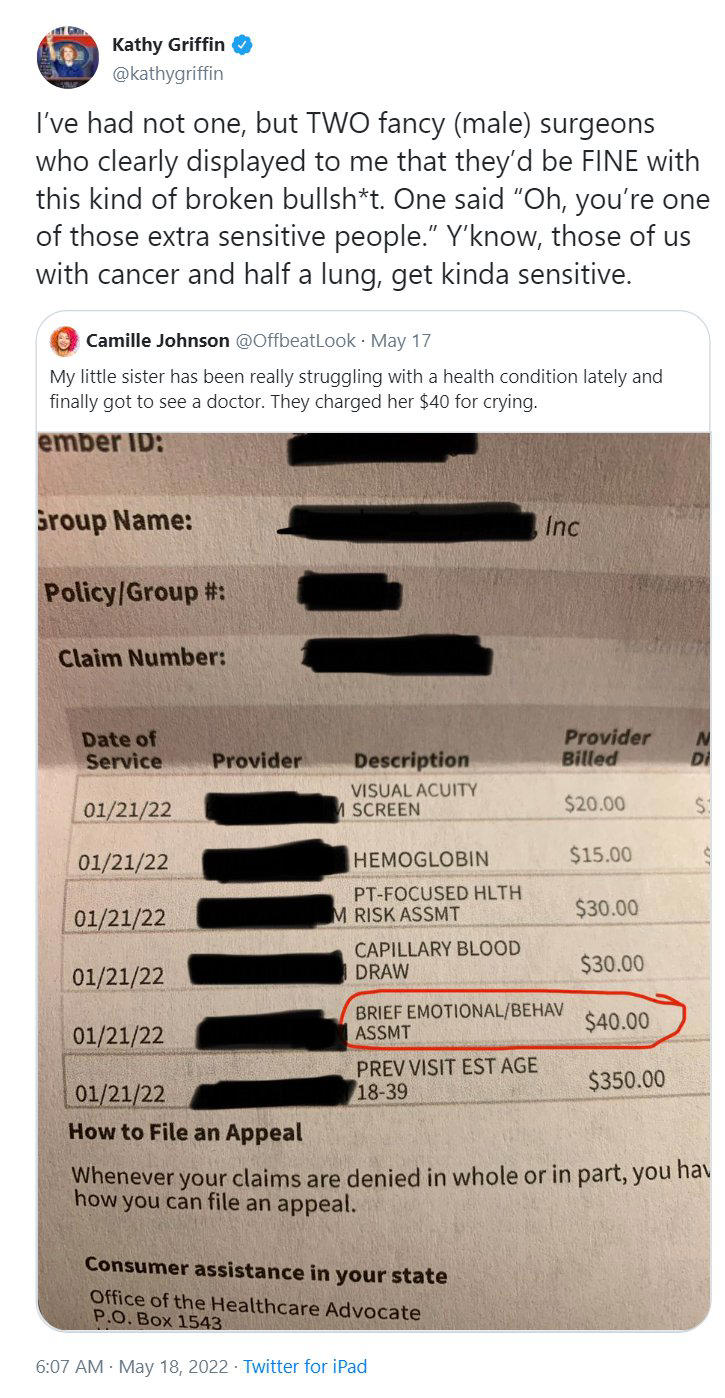
FULL REPRINT: A woman who visited doctors in the US was charged for an ’emotional and behavioral assessment’ simply for shedding a tear.

LINK: https://7news.com.au/news/world/us-patient-charged-extra-for-crying-during-doctors-appointment-c-6867615

***

COMMENTS APPRECIATED

Thank You

***

***

***

The BUSINESS of Medical Practice

“NO MARGIN – NO MISSION”

Within Reason

***

BY DR. DAVID E. MARCINKO MBA CMP®

SPONSOR: http://www.CertifiedMedicalPlanner.org

CMP logo

INVITE DR. MARCINKO: https://medicalexecutivepost.com/dr-david-marcinkos-

Your thoughts are appreciated.

THANK YOU

***

SURVEY on COVID-19’s Impact On Physician Practices and Employment

***

By Staff Reporters

***

***

• 108,700 additional physicians became employees of hospitals or other corporate entities – 83,000 of that shift occurred after the onset of COVID-19.
• Hospital and other corporate entities acquired 36,200 additional physician practices over the three-year period, resulting in a 38% increase in the percentage of corporate owned practices.
• 58,200 additional physicians become hospital employees – 51,000 of that shift occurred after the onset of COVID-19.
• 50,500 additional physicians became employees of corporate entities – 32,000 of that shift occurred after the onset of COVID-19.

Source: Physicians Advocacy Institute, April 2022

***

Great Resignation: https://medicalexecutivepost.com/2022/03/08/healthcare-industry-hit-with-the-great-resignation-retirement/

***

***

****

PODCAST: Economic Cycles in Healthcare

By Eric Bricker MD

***

***

COMMENTS APPRECIATED

Thank You

***

****

Types of Care Medical Providers Deliver Via Tele-Health

By Staff Reporters

***

***
1
.   Conduct primary care visits (75%)
2.  
Conduct chronic care visits (72%)
3.   Order prescription refills (64%)
4.   Conduct COVID-19 screenings (39%)
5.   Conduct urgent care visits (38%)
6.  
Address mental health concerns (36%)
7.   Conduct follow-up after a procedure or surgery care (28%)

Source: Optum Via UnitedHealth Group, March 15, 2022

***

COMMENTS APPRECIATED

Thank You

Subscribe to the Medical Executive-Post

***

***

***

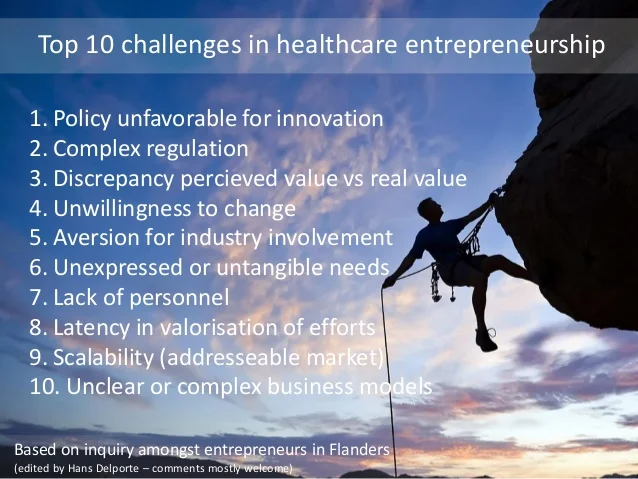
HEALTHCARE ENTREPRENEURS: “Top 10” Challenges

By Staff Reporters

***

***

COMMENTS APPRECIATED

Thank You

Subscribe to the Medical Executive-Post

***

***

***

PODCAST: Medical Supply Chain Management?

Our broken healthcare supply chain – what can be done

By Dr. Marion Mass MD

Dr. Marion Mass graduated from Medical School at Duke University. She completed internship and residency at Northwestern University’s Robert Lurie Children’s Hospital in Chicago. Dr. Mass has worked in the Philadelphia area as a pediatrician for 21 years.

Fixing Common Medical Device Supply Chain Break Points - # ...

PODCAST: https://www.youtube.com/watch?v=-BZEVnkkRAE

MARCINKO on SCM: https://medicalexecutivepost.com/2011/06/09/supply-chain-management-in-healthcare/

Your comments are appreciated.

THANK YOU

BUSINESS: https://www.amazon.com/Business-Medical-Practice-Transformational-Doctors/dp/0826105750/ref=sr_1_9?ie=UTF8&qid=1448163039&sr=8-9&keywords=david+marcinko

***

HIT: https://www.amazon.com/Dictionary-Health-Information-Technology-Security/dp/0826149952/ref=sr_1_5?ie=UTF8&s=books&qid=1254413315&sr=1-5

***

BALANCE BILLING: The Emerging “No Surprise” Act

Balance Medical Billing

By Dr. David E. Marcinko MBA CMP®

CMP logo

The No Surprises Act is looking to make the practice of out of network balance billing a thing of the past.

CITE: https://www.r2library.com/Resource/Title/0826102549

***

No Surprises Act: New Law to Protect Against Surprise ...

***

Beginning in 2022, there will be few situations in which a patient can receive a bill for out-of-network care they believed would be covered by their insurance company. This new rule should especially benefit patients in emergency situations who don’t have the time or luxury to dig up the details on every provider they encounter.

CONGRESS: https://www.congress.gov/bill/116th-congress/house-bill/3630/

The No Surprises Act also requires insurance companies to provide patients with at least 90 days of coverage if an in-network provider moves out of network. That way, patients aren’t forced to switch providers immediately if such a move happens while they’re in the middle of a treatment plan.

DOCTORS: https://www.elixirehr.com/what-the-no-surprises-act-means-for-healthcare-providers/

Now, the No Surprises Act does have its limitations. Patients can still get a bill for out-of-network care if they visit an urgent care clinic for non-emergency purposes. Also, if consumers are informed that the care they’re about to receive is out of network and they give written consent to move forward, then they may get billed for that care even once the new rule takes effect.

CMS: https://www.cms.gov/nosurprises

YOUR COMMENTS ARE APPRECIATED.

***

***

Thank You

***

***

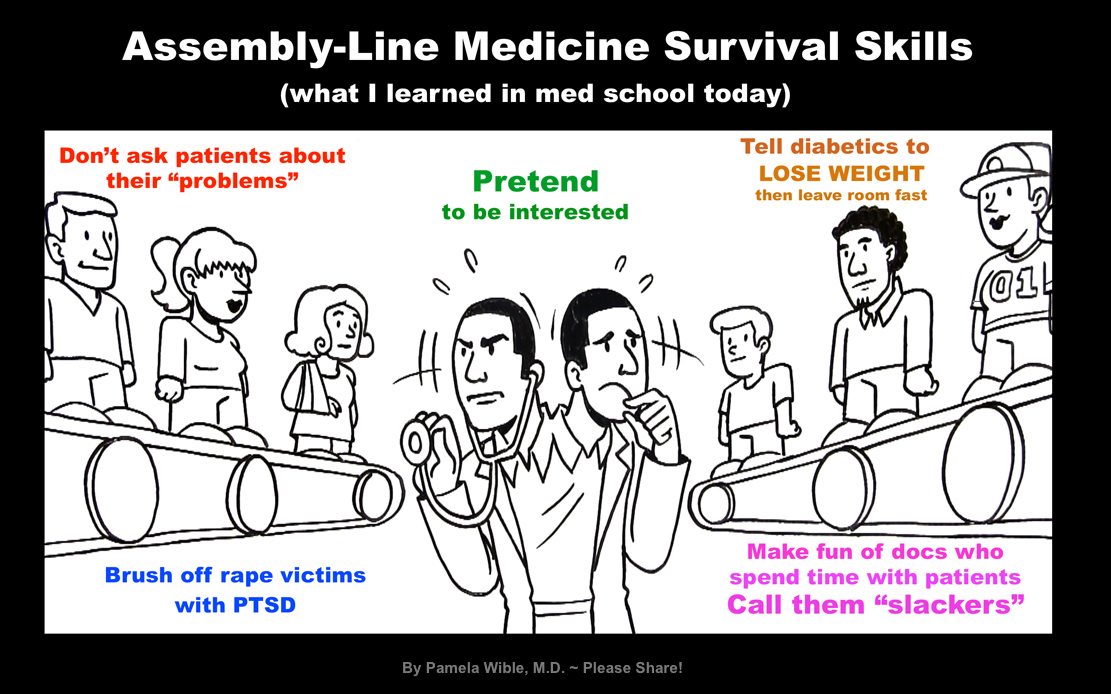
Assembly Line Medicine Survival Skills

WHAT I LEARNED IN MEDICAL SCHOOL TODAY

By Pamela Wible MD

***

***

COMMENTS APPRECIATED

Thank You

Subscribe to the Medical Executive-Post

***

***

***

PODCAST: Patient “Steerage” Explained

***

Insurance Carriers Are Contractually Obligated to Include ALL Doctors and Facilities as In-Network When They Negotiate with a Hospital System

By Eric Bricker MD

***

***

COMMENTS APPRECIATED

Thank You

Subscribe to the Medical Executive-Post

***

MORE: https://medicalexecutivepost.com/2021/12/06/what-is-health-insurance-network-steerage/

NAIC: https://content.naic.org/cipr_topics/topic_network_adequacy.htm

MICRO HEALTHCARE GRIDS: https://thehealthcareblog.com/blog/2022/02/22/get-ready-for-healthcare-microgrids/

***

***

***

***

PODCAST: The No Surprises [Medical Billing] Act

Surprise Medical Bills Outlawed?

By Eric Bricker MD

****

***

https://medicalexecutivepost.com/2021/11/03/balance-billing-the-emerging-no-surprise-act/

QPA DEFINITION: The qualifying payment amount is generally the median of contracted rates for a specific service in the same geographic region within the same insurance market as of January 31, 2019. The rate will be adjusted per the Consumer Price Index for All Urban Consumers (CPI-U).

MORE: https://medicalexecutivepost.com/2017/01/07/a-small-step-forward-on-surprise-medical-care-balance-billing/

CITE: https://www.r2library.com/Resource/Title/0826102549

***

COMMENTS APPRECIATED

Thank You

Subscribe to the Medical Executive-Post

***

BUSINESS MEDICINE: https://www.amazon.com/Business-Medical-Practice-Transformational-Doctors/dp/0826105750/ref=sr_1_9?ie=UTF8&qid=1448163039&sr=8-9&keywords=david+marcinko

***

DHIMC: https://www.amazon.com/Dictionary-Health-Insurance-Managed-Care/dp/0826149944/ref=sr_1_4?ie=UTF8&s=books&qid=1275315485&sr=1-4

***

PODCAST: Medicare Payment Bureaucracy Uncertainty

***

Dr. Eric Bricker Explains How Medicare Can Take Money Back from Hospitals if it Wants. If the Hospital Thinks Medicare is Being Unfair, the Appeals Process Takes 3 Years!

***

BY ERIC BRICKER MD

***

****

***

***

***

Related: On Medicare Bureaucratization

COMMENTS APPRECIATED

Thank You

Subscribe to the Medical Executive-Post

***

HEALTHCARE: 2021 M&A in Review

Indications for 2022

BY HEALTH CAPITAL CONSULTANTS, LLC

***

2021 M&A in Review: Indications for 2022

After an understandable slowdown in 2020, due to the onset of the COVID-19 pandemic, merger & acquisition (M&A) activity in the healthcare industry accelerated in 2021, and the industry is expected to continue the high number of deals and high deal volume in 2022.

***

***

This Health Capital Topics article will review the U.S. healthcare industry’s M&A activity in 2021, and discuss what these trends may mean for 2022. (Read more…)

***

CITE: https://www.r2library.com/Resource/Title/0826102549

COMMENTS APPRECIATED

Thank You

Subscribe to the Medical Executive-Post

***

***

***

Hospital Revenue Cycle Recruitment Survey

By Staff Reporters

***

Entry-level Revenue Cycle Recruitment Takes 84 Days on Average

A recent AKASA survey of 514 chief financial officers and revenue cycle leaders at hospitals and health systems in the U.S. found:

 •  Entry-level revenue cycle talent (0-5 years): On average, costs $2,167 for recruitment and takes 84 days to fill vacant roles.
 •  Mid-level revenue cycle talent (6-10 years): On average, costs $3,581 for recruitment and takes 153 days to fill vacant roles.
 •  Senior-level revenue cycle talent (10+ years): On average, costs $5,699 for recruitment and takes 207 days to fill vacant roles.

Source: AKASA via PR Newswire, “Survey: Recruitment Costs, Long Hiring Timelines Negatively Impact Healthcare Finance Teams”, January 26, 2022

***

***

***

What is a DAO [not DOA] in Health Care?

Decentralized Autonomous Organizations in Health Care?

By Staff Reporters

****

DEFINITION: A decentralized autonomous organization (DAO), sometimes called a decentralized autonomous corporation (DAC), is an organization represented by rules encoded as a computer program that is transparent, controlled by the organization members and not influenced by a central government. A DAO’s financial transaction record and program rules are maintained on a blockchain.

CITE: https://www.r2library.com/Resource/Title/082610254

****

Overview of Decentralized Autonomous Organization (DAO) | by IOSG | IOSG  Ventures | Medium

BLOCKCHAIN HEALTH: https://medicalexecutivepost.com/2018/11/02/on-blockchain-in-healthcare/

The precise legal status of this type of business organization is unclear. But, in healthcare, today?

DAOs in HEALTH CARE: https://thehealthcareblog.com/blog/2022/01/19/daos-may-rescue-healthcare/?utm_campaign=THCB%20Reader&utm_medium=email&utm_source=Revue%20newsletter

***
COMMENTS APPRECIATED

Thank You

Subscribe to the Medical Executive-Post

***

***

***

PODCAST: Healthcare Challenges Post Pandemic?

***

By Richard Helppie

***

We’re posting this episode of The Common Bridge, with Henry Ford Health System President and CEO, Wright Lassiter, III complete with written transcript, along with the podcast and video links because there were technical difficulties with Mr. Lassiter’s audio. This way, you can read along, or refer back to us.

***

PODCAST: https://www.youtube.com/watch?v=bKC5k7qrfDk

COMMENTS APPRECIATED

Thank You

***

***

***

PODCAST: Ochsner Value Based Care Saves $100-M

BY ERIC BRICKER MD

***

Ochsner Health in New Orleans and Its EVP of Value-Based Care, Dr. David Carmouche, Have Had REAL Success with REAL Value-Based Care.

***

***

COMMENTS APPRECIATED.

CITE: https://www.r2library.com/Resource/Title/082610254

Subscribe to the Medical Executive-Post

****

***

***

***

PODCAST: Hospital Innovation Will Happen

By Eric Bricker MD

****

1. 18% of Healthcare Workers have left their job since 2020.

2. 66% of ICU and Acute Care Nurses have considered leaving.

3. ICUs are so short staffed that they have had to run at 4:1 patient to nurse ratios… the normal is 2:1.

4. A Florida hospital spent $24 Million in 2021 on temporary workers to cover for labor shortages… normally they spend $1 Million per year.

5. Nurses average age is 52 and 19% of nurses are over 65 … the nursing workforce is older because younger people do not want the job.

Why?

COMMENTS APPRECIATED

Thank You

Subscribe to the Medical Executive-Post

***

***

***

***

PODCAST: Pharma Rebates to PBMs

Pharma ‘Rebate’ Payments to PBMs No Longer Protected by Federal ‘Safe Harbor’

BY DR. ERIC BRICKER MD

***

***

YOUR COMMENTS ARE APPRECIATED.

HEALTH ECONOMICS CITE: https://www.r2library.com/Resource/Title/0826102549

Thank You

***

***

***

Financial Management Strategies for Hospitals and Healthcare Organizations

SPONSOR: http://www.CertifiedMedicalPlanner.org

CMP logo

TEXTBOOK ORDER: https://www.amazon.com/Financial-Management-Strategies-Healthcare-Organizations/dp/1466558733/ref=sr_1_3?ie=UTF8&qid=1380743521&sr=8-3&keywords=david+marcinko

SECOND OPINIONS: https://medicalexecutivepost.com/schedule-a-consultation/

INVITE DR. MARCINKO: https://medicalexecutivepost.com/dr-david-marcinkos-bookings/

THANK YOU

***

Medical FINANCIAL PLANNING “Holistic” STRATEGIES

BY AND FOR PHYSICIANS AND THEIR ADVISORS

INVITE DR. MARCINKO: https://medicalexecutivepost.com/dr-david-marcinkos-

***

SPONSOR: http://www.CertifiedMedicalPlanner.org

CMP logo

***

PODCAST: Healthcare Re-Imagined

COMMON BRIDGE” WITH RICH HELPPIE

Richard Helppie's Common Bridge

Colleague Richard Helppie interviews Dean Clancy

Dean Clancy is a senior health care policy fellow at Americans for Prosperity and a nationally known health care freedom advocate and domestic policy expert with more than twenty years’ high-level policy experience in Congress, the White House, and the U.S. health care industry.

EDITOR’S NOTE: I first met Rich in B-school, when I was a student, back in the day. He was the Founder and CEO of Superior Consultant Holdings Corp. Rich graciously wrote the Foreword to one of my first textbooks on financial planning for physicians and healthcare professionals. Today, Rich is a successful entrepreneur in the technology, health and finance space.

-Dr. David E. Marcinko MBA CMP®

***

PODCAST: https://richardhelppie.com/dean-clancy/

ASSESSMENT: Your thoughts are appreciated.

***

THANK YOU

***

18% of Patients Surveyed Skipped Prescriptions to Save Money

By Staff Reporters

****

18% Surveyed Skipped Prescriptions to Save Money

A recent Gallup survey asked “Thinking about the last 12 months, have you or a family member skipped a prescribed pill, dose, or other type of medication in order to save money?”. The amount of prescriptions in the household of those who answered yes varied as follows:

 •  8+: 25%
 •  5-7: 22%
 •  1-4: 17%
 •  0: 8%
 •  Total that answered yes: 18%

Source: West Health-Gallup 2021 Healthcare in America Report, December 2021

CITE: https://www.r2library.com/Resource/Title/082610254

COMMENTS APPRECIATED.

Subscribe to the Medical Executive-Post

THANK YOU

***

****

Personal Financial Planning for Physicians and Medical Colleagues

ME Inc = Going it Alone but with a Team

BY DR. DAVID EDWARD MARCINKO MBA CMP®

CMP logo

SPONSOR: http://www.CertifiedMedicalPlanner.org

The physician, nurse, or other medical professional should easily recognize that there are a vast array of opportunities, obstacles, and pitfalls when it comes to managing one’s finances.  Still, with some modicum of effort, the basic aspects of insurance, investments, taxes, accounting, portfolio management, retirement and estate planning, debt reduction, asset protection and practice management can be largely self-taught. Yet, it is realized that nuances and subtleties can make a well-intentioned financial plan fall short.  The devil truly is in the details.  Moreover, none of these areas can be addressed in isolation. It is common for a solution in one area to cause a new set of problems in another. 

Accordingly, most health care practitioners would be well served to hire [independent, hourly compensated and prn] financial help. Unlike some medical problems, financial issues may not cause any “pain” or other obvious symptoms.  Medical professionals tend to have far more complex financial situations than most lay people. Despite the complexities of the new world of health reform, far too many either do nothing; or give up all control totally, to an external advisor. This either/or mistake can be costly in many ways, and should be avoided. 

In reality, and at various time in their careers, the medical professional needs a team comprised of at least a financial analyst, lawyer, management consultant, risk manager [actuary, mathematician or insurance counselor] and accountant. At various points in time, each member of the team, or significant others, will properly assume a role of more or less importance, but the doctor must usually remain the “quarterback” or leader; in the absence of a truly informed other, or Certified Medical Planner™.

This is necessary because only the doctor has the personal self-mandate with skin in the game, to take a big picture view.  And, rightly or wrongly, investments dominate the information available regarding personal finance and the attention of most physicians.  One is much more likely to need or want to discuss the financial markets with their financial advisor than private letter rulings by the IRS, or with their estate planning attorney or tax accountant. While hiring for expertise is a good idea, there is sinister way advisors goad doctors into using all their retail services; all of the time. That artifice is – the value of time. 

True integrated physician focused and financial planning is at its core a service business, not a product or sales endeavor. And, increasingly money is more likely to be at the top of the list for providers as the healthcare environment is contracting.

So, eschewing the quarterback model of advice, and choosing to self-educate thru this book and elsewhere, may be one of the best efforts a smart physician can make.

ASSESSMENT: Your thoughts are appreciated.

Comprehensive Financial Planning Strategies for Doctors and Advisors: Best Practices from Leading Consultants and Certified Medical Planners™

ORDER TEXTBOOK: https://www.routledge.com/Comprehensive-Financial-Planning-Strategies-for-Doctors-and-Advisors-Best/Marcinko-Hetico/p/book/9781482240283

RELATED TEXTS: https://medicalexecutivepost.com/2021/04/29/why-are-certified-medical-planner-textbooks-so-darn-popular/

INVITE DR. MARCINKO: https://medicalexecutivepost.com/dr-david-marcinkos-

THANK YOU!

*****

66% of Nurses Expressed Consideration to Leave The Profession

By staff reporters

***

66% of Nurses Expressed Consideration to Leave The Profession

A survey of 570 nurses between May and June 2021 found:

 •  66% of nurses expressed some level of consideration to leave the profession.
 •  97% of polled participants agree, that increases to pay rates and other incentives would attract and retain nurses.
 •  58% agree that tele-health should be a cornerstone of care delivery.
 •  85% believe that we must improve cross training to adapt to crisis events.
 •  85% strongly believe national licensure would have greatly benefited the country during the pandemic.

Source: Cross Country Healthcare via Businesswire, December 1, 2021

COMMENTS APPRECIATED.

Thank You

***

***

***

***

UPDATE: Markets, Money and Covid

***

  • Markets: Down big one day, up big the next—that’s the Omicron-era stock market for you. Stocks surged yesterday following a 3-day losing streak, with travel companies leading the way.
  • Covid: The FDA is set to authorize Covid pills from Pfizer and Merck this week, Bloomberg reports. These treatments, which are intended to be taken by vulnerable people shortly after they are infected, could significantly reduce the burden on strained hospitals. Experts say the pills are a pandemic medical milestone second only to vaccines.
  • CITE: https://www.r2library.com/Resource/Title/082610254

***

***

COMMENTS APPRECIATED.

Thank You

***

PODCAST: Healthcare Costs Rising

Doctors, Hospitals, Pharma and DMEs

BY ERIC BRICKER MD

****

***

Your comments are appreciated.

THANK YOU

***

***

***

PODCAST: Value-Based Care

Ochsner Health Has Real Hospital Success

By Dr. Eric Bricker MD

***

***
YOUR COMMENTS ARE APPRECIATED.

***

Thank You

***

PODCAST: Ascension Non-Profit Hospital System

THE LARGEST IN THE USA

BY DR. ERIC BRICKER MD

***

***
YOUR COMMENTS ARE APPRECIATED.

***

***

Thank You

***

PODCAST: The RAND Corporation Found that Commercial Health Insurance Plans Pay Hospitals 241% What Medicare Pays

The RAND Corporation Found that Commercial Health Insurance Plans Pay Hospitals 241% What Medicare Pays.

But Also That It Varies from 150% to 400%.

Dr. Boram (Kim) Park, MD - Dallas, TX | Internal Medicine

BY ERIC BRICKER MD

Health Insurance Companies Paid for Hospital Outpatient Services at an Even Higher Average Rate of 293% of Medicare.

A Detailed Look at the RAND Analysis Reveals that the ‘Basket’ of Services at Each Hospital Had Very Little Data.

For Example, the RAND Study’s Data for the Baylor Scott & White Hospital System in Dallas – Fort Worth Represented Only 0.4% of the Hospital’s Total Revenue.

For the Texas Health Hospital System Also in Dallas – Fort Worth, the RAND Study’s Data Only Represented 0.96% of the Hospital’s Total Revenue.

That Sample Size Is Likely Too Small to Make Accurate Comparisons from One Hospital System to Another Regarding their Commercial Insurance Prices Relative to Medicare.

ASSESSMENT: Your thoughts and comments are appreciated.

THANK YOU

***

PODCAST: Warren Buffett’s Thoughts on Healthcare

BY ERIC BRICKER MD

CITE: https://www.r2library.com/Resource/Title/0826102549

****

***

In Response to a Question Regarding the Ending of Haven Healthcare–the Joint Venture Among Berkshire Hathaway, JP Morgan Chase and Amazon to Improve Healthcare for their Employee Health Plan Members–Warren Buffett Made the Following Statement:

“Healthcare is the Tapeworm of the US Economy and the TAPEWORM WON.”

Additionally, Warren Buffett Goes on to Say that ‘Prestigious‘ People in the Community Run Hospital Boards and These People Are ‘Fairly Happy‘ with the Healthcare System the Way It Currently Is.

It is Likely that Warren Buffett Formed Some of This Opinion in Speaking About Healthcare with the Vice Chairman of Berkshire Hathaway, Charlie Munger, and Berkshire Board Member and Famous CEO, Tom Murphy.

Charlie Munger Has Served on the Board of a Los Angeles Hospital for 31 Years and Tom Murphy Currently Serves on the NYU Langone Hospital System Board of Directors.

The Support of the Status Quo by ‘Prestigious,’ ‘Fairly Happy’ Hospital Board Members Cannot Be Understated… It Blocks Change and Warren Buffett Appears to Think Similarly.

***

YOUR COMMENTS ARE APPRECIATED.

Thank You

***

***

PODCAST: Medicare and Nursing Home / Long Term Care

By CMS

CITE: https://www.r2library.com/Resource/Title/0826102549

****

***

YOUR COMMENTS ARE APPRECIATED.

Thank You

***

PODCASTS: More Dialysis Center Investigative Reporting

DaVITA and FRESENIUS

By Eric Bricker MD

****

***

Your comments are appreciated.

CITE: https://www.r2library.com/Resource/Title/0826102549

MORE

***

PODCASTS: Surgery Safety Checklists

ATUL GAWANDE MD

Medical Culture

BY ERIC BRICKER MD

***

***

***

YOUR COMMENTS ARE APPRECIATED.

***

***

RISK MANAGEMENT TEXTBOOK: https://www.routledge.com/Risk-Management-Liability-Insurance-and-Asset-Protection-Strategies-for/Marcinko-Hetico/p/book/9781498725989

Thank You

***

PODCAST: How Medical Prior-Authorization Really Works

Pre-Certification Works OR Doesn’t Work

BY ERIC BRICKER MD

***

***

YOUR COMMENTS ARE APPRECIATED.

Thank You

***

***

The “BUSINESS” of Transformational Medical Practice Skills

[3rd] THIRD EDITION

INVITE DR. MARCINKO: https://medicalexecutivepost.com/dr-david-marcinkos-bookings/

THANK YOU

***

PODCAST: On Digital Health Start-Ups

On Medical Entrepreneurs

****

BY ERIC BRICKER MD

Your comments are appreciated.

THANK YOU

***

Management Strategies, Operational Techniques, Tools, Templates and Case Studies

FOR HOSPITALS AND HEALTHCARE ORGANIZATIONS

***

BY DR. DAVID E. MARCINKO MBA

INVITE DR. MARCINKO: https://medicalexecutivepost.com/dr-david-marcinkos-bookings/

THANK YOU

***

PODCAST: Physician Specialties with Hospital System Bargaining Power

***

Certain Doctor Specialties Have Great Power within Hospital Systems Because They Generate High-Margin Patient Volume.

By Eric Bricker MD

YOUR THOUGHTS ARE APPRECIATED.

Thank You

***

Hospitals and Healthcare Organizations

INVITE DR. MARCINKO: https://medicalexecutivepost.com/dr-david-marcinkos-bookings/

Thank You

***

HOSPITALS: Management Strategies, Operational Techniques, Tools, Templates and Case Studies

***

TEXTBOOK REVIEW

Drawing on the expertise of decision-making professionals, leaders, and managers in health care organizations, Hospitals & Health Care Organizations: Management Strategies, Operational Techniques, Tools, Templates, and Case Studies addresses decreasing revenues, increasing costs, and growing consumer expectations in today’s increasingly competitive health care market.

Offering practical experience and applied operating vision, the authors integrate Lean managerial applications, and regulatory perspectives with real-world case studies, models, reports, charts, tables, diagrams, and sample contracts. The result is an integration of post PP-ACA market competition insight with Lean management and operational strategies vital to all health care administrators, comptrollers, and physician executives. The text is divided into three sections:

  1. Managerial Fundamentals
  2. Policy and Procedures
  3. Strategies and Execution

Using an engaging style, the book is filled with authoritative guidance, practical health care–centered discussions, templates, checklists, and clinical examples to provide you with the tools to build a clinically efficient system. Its wide-ranging coverage includes hard-to-find topics such as hospital inventory management, capital formation, and revenue cycle enhancement. Health care leadership, governance, and compliance practices like OSHA, HIPAA, Sarbanes–Oxley, and emerging ACO model policies are included. Health 2.0 information technologies, EMRs, CPOEs, and social media collaboration are also covered, as are 5S, Six Sigma, and other logistical enhancing flow-through principles. The result is a must-have, “how-to” book for all industry participants.

***

NVITE DR. MARCINKO: https://medicalexecutivepost.com/dr-david-marcinkos-bookings/

Thank You

***

YOUR THOUGHTS are appreciated.

DICTIONARY: Health Insurance and Managed Care

BOOK REVIEW

“The Dictionary of Health Insurance and Managed Care lifts the fog of confusion surrounding the most contentious topic in the health care industrial complex today. My suggestion therefore is to ‘read it, refer to it, recommend it, and reap’.”


Michael J. Stahl, PhD, Physician Executive MBA Program [William B. Stokely Distinguished Professor of Business]

The University of Tennessee, College of Business Administration

***

INVITE DR. MARCINKO: https://medicalexecutivepost.com/dr-david-marcinkos-bookings/

THANK YOU

***

FINANCIAL PLANNING: Strategies for Physicians and their Advisors

A Textbook Review

SECOND OPINIONS: https://medicalexecutivepost.com/schedule-a-consultation/

INVITE DR. MARCINKO: https://medicalexecutivepost.com/dr-david-marcinkos-bookings/

SPONSOR: http://www.CertifiedMedicalPlanner.org

CMP logo

THANK YOU

***

Are Today’s Doctors Desperate?

Emotions Rise with Healthcare Reform

By Dr. David Edward Marcinko; MBA, CMP™

[Publisher-in-Chief]

NOTE:  I penned this essay more than a decade ago.dem2

Managed care is a prospective payment method where medical care is delivered regardless of the quantity or frequency of service, for a fixed payment, in the aggregate. It is not traditional fee-for-service medicine or the individual personal care of the past, but is essentially utilitarian in nature and collective in intent. Will new-age healthcare reform be even more draconian?

Unhappy Physicians

There are many reasons why doctors are professionally and financially unhappy, some might even say desperate, because of managed care; not to mention the specter of healthcare reform from the Obama administration. For example:

  • A staggering medical student loan debt burden of $100,000-250,000 is not unusual for new practitioners. The federal Health Education Assistance Loan (HEAL) program reported that for the Year 2000, it squeezed significant repayment settlements from its Top 5 list of deadbeat doctor debtors. This included a $303,000 settlement from a New York dentist, $186,000 from a Florida osteopath, $158,000 from a New Jersey podiatrist, $128,000 from a Virginia podiatrist, and $120,000 from a Virginia dentist. The agency also excluded 303 practitioners from Medicare, Medicaid, and other federal healthcare programs and had their cases referred for nonpayment of debt.
  • Because of the flagging economy, medical school applications nationwide have risen. “Previously, there were a lot of different opportunities out there for young bright people”; according to Rachel Pentin-Maki; RN, MHA”; not so today. In fact, Physicians Practice Digest recently stated, “Medicine is fast becoming a job in which you work like a slave, eke out a middle class existence, and have patients, malpractice insurers, and payers questioning your motives.” Remarkably, the Cornell University School of Continuing Education has designed a program to give prospective medical school students a real-world peek, both good and bad.

The Ripple Effects of Managed Care and Reform

“Many people who are currently making a great effort and investment to become doctors may be heading for a role and a way of life that are fundamentally different from what they expect and desire,” according to Stephen Scheidt, MD, director of the $1,000 Cornell fee program; why?

  • Fewer fee-for-service patients and more discounted patients.
  • More paperwork and scrutiny of decisions with lost independence and morale.
  • Reputation equivalency (i.e., all doctors in the plan must be good), or commoditization (i.e., a doctor is a doctor is a doctor).
  • The provider is at risk for (a) utilization and acuity, (b) actuarial accuracy, (c) cost of delivering medical care, and (d) adverse patient selection.
  • Practice costs are increasing beyond the core rate of inflation.
  • Medicare reimbursements are continually cut.

Mad Obama

Early Opinions

Richard Corlin MD, opined back in 2002 that “these are circumstances that cannot continue because we are going to see medical groups disappearing.” Furthermore, he stated, “This is an emergency that lawmakers have to address.” Such cuts also stand to hurt physicians with private payers since commercial insurers often tie their reimbursement schedules to Medicare’s resources. “That’s the ripple effect here,” says Anders Gilberg, the Washington lobbyist for the Medical Group Management Associations (MGMA).

Assessment

And so, some desperate doctors are pursing these sources of relief, among many others:

  • A growing number of doctors are abandoning traditional medicine to start “boutique” practices that are restricted to patients who pay an annual retainer of $1,500 and up for preferred services and special attention. Franchises for the model are also available.
  • Regardless of location, the profession of medicine is no longer ego-enhancing or satisfying; some MDs retire early or leave the profession all together. Few recommend it, as a career anymore.

Assessment

To compound the situation, it is well known that doctors are notoriously poor investors and do not attend to their own personal financial well being, as they expertly minister to their patients’ physical illnesses.

Conclusion

And so, your thoughts and comments on this Medical Executive-Post are appreciated. Tell us what you think? Are you a desperate doctor? Feel free to review our top-left column, and top-right sidebar materials, links, URLs and related websites, too. Then, be sure to subscribe to the ME-P. It is fast, free and secure.

Link: http://feeds.feedburner.com/HealthcareFinancialsthePostForcxos 

References:

  1. www.managedcaremagazine.com/archives/9809/9809/.qna_dickey.shtml
  2. www.hrsa.dhhs.gov/news-pa/heal.htm
  3. www.bhpr.hrsa.gov/dsa/sfag/health-professions/bk1prt4.htm
  4. Pamela L. Moore, “Can We All Just Get Along: Bridging the Generation Gap, Physicians Practice Digest (May/June 2001).

Risk Management, Liability Insurance, and Asset Protection Strategies for Doctors and Advisors: Best Practices from Leading Consultants and Certified Medical Planners™8Comprehensive Financial Planning Strategies for Doctors and Advisors: Best Practices from Leading Consultants and Certified Medical Planners™

Hospitals and Health Care Organizations

MANAGEMENT STRATEGIES, OPERATIONAL TECHNIQUES, TOOLS, TEMPLATES AND CASE STUDIES

TEXTBOOK REVIEWS:

Hospitals and Health Care Organizations is a must-read for any physician and other health care provider to understand the multiple, and increasingly complex, interlocking components of the U.S. health care delivery system, whether they are employed by a hospital system, or manage their own private practices.

The operational principles, methods, and examples in this book provide a framework applicable on both the large organizational and smaller private practice levels and will result in better patient care. Physicians today know they need to better understand business principles and this book by Dr. David E. Marcinko and Professor Hope Rachel Hetico provides an excellent framework and foundation to learn important principles all doctors need to know.
―Richard Berning, MD, Pediatric Cardiology

… Dr. David Edward Marcinko and Professor Hope Rachel Hetico bring their vast health care experience along with additional national experts to provide a health care model-based framework to allow health care professionals to utilize the checklists and templates to evaluate their own systems, recognize where the weak links in the system are, and, by applying the well-illustrated principles, improve the efficiency of the system without sacrificing quality patient care. … The health care delivery system is not an assembly line, but with persistence and time following the guidelines offered in this book, quality patient care can be delivered efficiently and affordably while maintaining the financial viability of institutions and practices.
―James Winston Phillips, MD, MBA, JD, LLM

Risk Management, Liability Insurance, and Asset Protection Strategies for Doctors and Advisors : Best Practices from Leading Consultants and Certified Medical Planners™ book cover

ORDER HERE: https://www.amazon.com/Hospitals-Health-Care-Organizations-Operational-ebook/dp/B0091ICH30/ref=sr_1_8?dchild=1&keywords=david+marcinko&qid=1626110965&sr=8-8

ASSESSMENT: Your comments and thoughts are appreciated.

INVITATIONS: https://medicalexecutivepost.com/dr-david-marcinkos-bookings/

CONTACT: Ann Miller RN MHA

MarcinkoAdvisors@msn.com

Ph: 770-448-0769

Second Opinions: https://medicalexecutivepost.com/schedule-a-consultation/

THANK YOU

***

ON THE ROAD AGAIN: Public Speaking, Opining and Assigning

Dr. David Edward Marcinko is Speaking Up

Dr. David Edward Marcinko MBA CMP® enjoys personal coaching and public speaking and gives as many talks each year as possible, at a variety of medical society and financial services conferences around the country and world.

These have included lectures and visiting professorships at major academic centers, keynote lectures for hospitals, economic seminars and health systems, keynote lectures at city and statewide financial coalitions, and annual keynote lectures for a variety of internal yearly meetings.

His talks tend to be engaging, iconoclastic, and humorous. His most popular presentations include a diverse variety of topics and typically include those in all iMBA, Inc’s textbooks, handbooks, white-papers and most topics covered on this blog.

***

Recognizing the Differences between Healthcare and Other ...

INVITATIONS: https://medicalexecutivepost.com/dr-david-marcinkos-bookings/

CONTACT: Ann Miller RN MHA

MarcinkoAdvisors@msn.com

Ph: 770-448-0769

Second Opinions: https://medicalexecutivepost.com/schedule-a-consultation/

DIY Textbooks: https://medicalexecutivepost.com/2021/04/29/why-are-certified-medical-planner-textbooks-so-darn-popular/

THANK YOU

***

PODCAST: A Three Decade Long History of Employer-Sponsored Healthcare Costs

The History of Employer-Sponsored Healthcare Costs in the Last 30 Years Can Be Broken Down Into 3 Segments:

THREE VITAL SEGMENTS

Image result for eric bricker

BY ERIC BRICKER MD

1) The 90s HMOs: Lower Premiums, Lower Out-of-Pocket Costs, Many Many Rules Restricting Care.

2) The 2000s PPOs: High and Even Higher Premiums, Lower Out-of-Pocket Costs, Fewer Rules Restricting Care.

3) The 2010s CDHPs: Lower Premiums, HIGH Out-of-Pocket Costs, Fewer Rules Restricting Care.

The Last 30 Years Have Taught Us that Employer-Sponsored Health Plans CANNOT Have All 3–Low Premiums, Low Out-of-Pocket Costs and Few Care Restrictions.

In the 2020s, Employers Are Moving More of Their Employee Healthcare OUTSIDE of the Traditional Healthcare and Health Insurance System with On-Site Clinics, Near-Site Clinics, Virtual Urgent Care, Virtual Primary Care and Bundled-Payment Centers-of-Excellence.

***

Citation: https://www.r2library.com/Resource/Title/0826102549

MANAGED CARE HISTORY: https://medicalexecutivepost.com/2014/11/19/a-brief-history-of-managed-care/

YOUR THOUGHTS ARE APPRECIATED

THANK YOU

***

PODCAST: Drs. Vivian Lee, Marty Makary, Atul Gawande and Robert Pearl Blame Physician Culture for the Poor State of US Healthcare

At Least in Part ACCORDING TO THESE BOOKS

Texas CEO Magazine Eric Bricker 1 - SO 14 - Texas CEO Magazine

BY ERIC BRICKER MD

Understandably, Many Doctors Take Issue with This Accusation and Say They Treat Their Patients with Integrity and Accountability. Both Statements May Be TRUE … How is That Possible?

Because of Bad Apples.’

While the Majority of Physicians May Put Their Patients First, There Are a Minority of Physicians that Put Money, Power, Prestige and Promotions Ahead of Patients. It’s These Bad Apples That Ruin Physician Culture.

Problem: Fee-for-Service Rewards Bad Apple Physicians, While Paying the High-Integrity Doctors as Well.

Assessment: If Doctors Want to Keep Fee-for-Service, Then the Bad Apples Must Be Reduced Through 1) Increased Transparency, 2) Greater Doctor Self-Regulation, 3) More Federal Oversight and 4) Increased Employer Investigation.

Many of the Books by Drs. Vivian Lee, Marty Makary, Atul Gawande and Robert Pearl Blame Physician Culture in Part for the Poor State of US Healthcare

Your thoughts are appreciated.

THANK YOU

***