BOARD CERTIFICATION EXAM STUDY GUIDES Lower Extremity Trauma
[Click on Image to Enlarge]
ME-P Free Advertising Consultation
The “Medical Executive-Post” is about connecting doctors, health care executives and modern consulting advisors. It’s about free-enterprise, business, practice, policy, personal financial planning and wealth building capitalism. We have an attitude that’s independent, outspoken, intelligent and so Next-Gen; often edgy, usually controversial. And, our consultants “got fly”, just like U. Read it! Write it! Post it! “Medical Executive-Post”. Call or email us for your FREE advertising and sales consultation TODAY [678.779.8597] Email: MarcinkoAdvisors@outlook.com
Medical & Surgical e-Consent Forms
ePodiatryConsentForms.com
iMBA Inc., OFFICES
Suite #5901 Wilbanks Drive, Norcross, Georgia, 30092 USA [1.678.779.8597]. Our location is real and we are now virtually enabled to assist new long distance clients and out-of-town colleagues.
ME-P Publishing
SEEKING INDUSTRY INFO PARTNERS?
If you want the opportunity to work with leading health care industry insiders, innovators and watchers, the “ME-P” may be right for you? We are unbiased and operate at the nexus of theoretical and applied R&D. Collaborate with us and you’ll put your brand in front of a smart & tightly focused demographic; one at the forefront of our emerging healthcare free marketplace of informed and professional “movers and shakers.” Our Ad Rate Card is available upon request [678-779-8597].
Did you know that at MARCINKO & Associates, all medical colleagues throughout the United States may contact us when they are considering the sale, purchase, strategic operating improvement, merger, acquisition and/or other financial business or related personal financial planning transaction?
Our difference is “hard” knowledge and insider financial guidance that helps medical colleagues, nurses, private practitioners, clinics, ambulatory surgery, radiology and outpatient wound care centers realize their ultimate economic goals. This typically includes managerial and cost accounting, financial ratio analysis, fair market valuation business appraisals, business plan creation and personal financial planning.
Our “expert witness” business litigation support service and divorce mediation, arbitration, asset division, settlement and second opinion offerings are always available, as well.
And, our “soft” skill professional career guidance and mentoring center includes executive coaching, consulting and mentoring advisory programs for stressed, conflicted or burned-out physicians and medical practitioners.
Most importantly, our professional fees are reasonable and always transparent.
MARCINKO & Associates also serves universities, medical, business, graduate and nursing schools; physicians, dentists, podiatrists, optometrists and legal societies. This includes accountants, financial service providers, wealth and hedge fund managers, emerging entities, hospitals, CEOs and their BODs, the press, media and related organizations.
Posted on September 8, 2024 by Dr. David Edward Marcinko MBA MEd CMP™
INFLATION ADJUSTED FEE SCHEDULE PAYMENTS
By Anonymous
The Triple Aim framework serves as the foundation for optimizing health for individuals and populations by simultaneously improving the patient experience of care (including quality and satisfaction), improving the health of the population, and reducing per capita cost of care for the benefit of communities.
***
In a value-based care model, physicians and medical providers would work with patients to determine a treatment plan, then measure the relevant clinical results over the course of the patient’s treatment.
Physicians and medical scientists have intervened in the three revolutions in triple aim since the rise of American dominance in medical training, orthopedic technology, and Nobel Prizes. So, how has value based care rewarded them?
As an example: the open treatment of broken thigh bone paid 85% higher in 1849 than today when adjusted for inflation.
Join our movement for technology that works every physician every patient every time.
Posted on September 7, 2024 by Dr. David Edward Marcinko MBA MEd CMP™
By Staff Reporters
***
***
Cyberattacks are causing issues across all sorts of industries, from Microsoft to AT&T to Ascension. But it looks like the healthcare industry is getting hit the hardest—financially, at least.
The 2024 Cost of a Data BreachReport from IBM and think tank Ponemon Institute found that the global average cost of a data breach rose 10% between March 2023 and February 2024, reaching a total average cost of $4.88 million in that period. Costs for disruptions to business processes and post-breach customer support and remediation were the largest drivers behind the increase.
However, of the 17 industries studied, healthcare had the most expensive data breaches, with an average cost of $9.77 million during that same period. In fact, healthcare has held the No. 1 spot for costliest breaches since 2011, according to the study.
For comparison, the next highest average cost was in finance, at $6.08 million.
Posted on September 6, 2024 by Dr. David Edward Marcinko MBA MEd CMP™
By Health Capital Consultants, LLC
***
On July 26, 2024, the U.S. Department of Justice (DOJ) filed a complaint in intervention against Murphy Medical Center, doing business as Erlanger Western Carolina Hospital, and Chattanooga-Hamilton County Hospital Authority, doing business as the Erlanger Health System and Erlanger Medical Center. The government’s complaint, filed in the U.S. District Court for the Western District of North Carolina, alleges that Erlanger violated the Stark Law, and subsequently submitted false claims to the Medicare program in violation of the False Claims Act (FCA).
Financial advisors don’t ascribe to the Hippocratic Oath. People don’t go to work on “Wall Street” for the same reasons other people become firemen and teachers. There are no essays where they attempt to come up with a new way to say, “I just want to help people.”
Financial Advisor’s are Not Doctors
Some financial advisors and insurance agents like to compare themselves to CPAs, attorneys and physicians who spend years in training and pass difficult tests to get advanced degrees and certifications. We call these steps: barriers-to-entry. Most agents, financial product representatives and advisors, if they took a test at all, take one that requires little training and even less experience. There are few BTEs in the financial services industry.
For example, most insurance agent licensing tests are thirty minutes in length. The Series #7 exam for stock brokers is about 2 hours; and the formerly exalted CFP® test is about only about six [and now recently abbreviated]. All are multiple-choice [guess] and computerized. An aptitude for psychometric savvy is often as important as real knowledge; and the most rigorous of these examinations can best be compared to a college freshman biology or chemistry test in difficulty.
Yet, financial product salesman, advisors and stock-brokers still use lines such as; “You wouldn’t let just anyone operate on you, would you?” or “I’m like your family physician for your finances. I might send you to a specialist for a few things, but I’m the one coordinating it all.” These lines are designed to make us feel good about trusting them with our hard-earned dollars and, more importantly, to think of personal finance and investing as something that “only a professional can do.”
Unfortunately, believing those lines can cost you hundreds of thousands of dollars and years of retirement.
***
***
Suitability Rule
A National Association of Securities Dealers [NASD] / Financial Industry Regulatory Authority [FINRA] guideline that require stock-brokers, financial product salesman and brokerages to have reasonable grounds for believing a recommendation fits the investment needs of a client. This is a low standard of care for commissioned transactions without relationships; and for those “financial advisors” not interested in engaging clients with advice on a continuous and ongoing basis. It is governed by rules in as much as a Series #7 licensee is a Registered Representative [RR] of a broker-dealer. S/he represents best-interests of the firm; not the client.
And, a year or so ago there we two pieces of legislation for independent broker-dealers-Rule 2111 on suitability guidelines and Rule 408(b)2 on ERISA. These required a change in processes and procedures, as well as mindset change.
Note: ERISA = The Employee Retirement Income Security Act of 1974 (ERISA) codified in part a federal law that established minimum standards for pension plans in private industry and provides for extensive rules on the federal income tax effects of transactions associated with employee benefit plans. ERISA was enacted to protect the interests of employee benefit plan participants and their beneficiaries by:
Requiring the disclosure of financial and other information concerning the plan to beneficiaries;
Establishing standards of conduct for plan fiduciaries ;
Providing for appropriate remedies and access to the federal courts.
ERISA is sometimes used to refer to the full body of laws regulating employee benefit plans, which are found mainly in the Internal Revenue Code and ERISA itself. Responsibility for the interpretation and enforcement of ERISA is divided among the Department Labor, Treasury, IRS and the Pension Benefit Guarantee Corporation.
Yet, there is still room for commissioned based FAs. For example, some smaller physician clients might have limited funds [say under $100,000-$250,000], but still need some counsel, insight or advice.
Or, they may need some investing start up service from time to time; rather than ongoing advice on an annual basis. Thus, for new doctors, a commission based financial advisor may make some sense.
Prudent Man Rule
This is a federal and state regulation requiring trustees, financial advisors and portfolio managers to make decisions in the manner of a prudent man – that is – with intelligence and discretion. The prudent man rule requires care in the selection of investments but does not limit investment alternatives. This standard of care is a bit higher than mere suitability for one who wants to broaden and deepen client relationships.
***
***
Prudent Investor Rule
The Uniform Prudent Investor Act (UPIA), adopted in 1992 by the American Law Institute’s Third Restatement of the Law of Trusts, reflects a modern portfolio theory [MPT] and total investment return approach to the exercise of fiduciary investment discretion. This approach allows fiduciary advisors to utilize modern portfolio theory to guide investment decisions and requires risk versus return analysis. Therefore, a fiduciary’s performance is measured on the performance of the entire portfolio, rather than individual investments
Fiduciary Rule
The legal duty of a fiduciary is to act in the best interests of the client or beneficiary. A fiduciary is governed by regulations and is expected to judge wisely and objectively. This is true for Investment Advisors [IAs] and RIAs; but not necessarily stock-brokers, commission salesmen, agents or even most financial advisors. Doctors, lawyers, and the clergy are prototypical fiduciaries.
***
***
More formally, a financial advisor who is a fiduciary is legally bound and authorized to put the client’s interests above his or her own at all times. The Investment Advisors Act of 1940 and the laws of most states contain anti-fraud provisions that require financial advisors to act as fiduciaries in working with their clients. However, following the 2008 financial crisis, there has been substantial debate regarding the fiduciary standard and to which advisors it should apply. In July of 2010, The Dodd-Frank Wall Street Reform and Consumer Protection Act mandated increased consumer protection measures (including enhanced disclosures) and authorized the SEC to extend the fiduciary duty to include brokers rather than only advisors, as prescribed in the 1940 Act. However, as of 2014, the SEC has yet to extend a meaningful fiduciary duty to all brokers and advisors, regardless of their designation.
Ultimately, physician focused and holistic “financial lifestyle planning” is about helping some very smart people change their behavior for the better. But, one can’t help doctors choose which opportunities to take advantage of along the way unless there is a sound base of technical knowledge to apply the best skills, tools, and techniques to achieve goals in the first place.
Most of the harms inflicted on consumers by “financial advisors” or “financial planners” occur not due to malice or greed but ignorance; as a result, better consumer protections require not only a fiduciary standard for advice, but a higher standard for competency.
The CFP® practitioner fiduciary should be the minimum standard for financial planning for retail consumers, but there is room for post CFP® studies, certifications and designations; especially those that support real medical niches and deep healthcare specialization like the Certified Medical Planner™ course of study [Michael E. Kitces; MSFS, MTax, CLU, CFP®, personal communication].
Being a financial planner entails Life-Long-Learning [LLL]. One should not be allowed to hold themselves out as an advisor, consultant, or planner unless they are held to a fiduciary standard, period. Corollary – there’s nothing wrong with a suitability standard, but those in sales should be required to hold themselves out as a salesperson, not an advisor.
The real distinction is between advisors and salespeople. And, fiduciary standards can accommodate both fee and commission compensation mechanisms. However; there must be clear standards and a process to which advisors can be held accountable to affirm that a recommendation met the fiduciary obligation despite the compensation involved.
Ultimately, being a fiduciary is about process, not compensation.
As a medical practitioner, Dr. Marcinko is a fiduciary at all times. He earned Series #7 (general securities), Series #63 (uniform securities state law), and Series #65 (investment advisory) licenses from the National Association of Securities Dealers (NASD-FINRA), and the Securities Exchange Commission [SEC] with a life, health, disability, variable annuity, and property-casualty license from the State of Georgia.
Dr.Marcinko was a licensee of the CERTIFIED FINANCIAL PLANNER™ Board of Standards (Denver) for a decade; now reformed, and holds the Certified Medical Planner™ designation (CMP™). He is CEO of iMBA Inc and the Founding President of: http://www.CertifiedMedicalPlanner.org
[Two Newest Books by Marcinko annd the iMBA, Inc Team]
Conclusion
Your thoughts and comments on this ME-P are appreciated. Feel free to review our top-left column, and top-right sidebar materials, links, URLs and related websites, too. Then, subscribe to the ME-P. It is fast, free and secure.
Speaker: If you need a moderator or speaker for an upcoming event, Dr. David E. Marcinko; MBA – Publisher-in-Chief of the Medical Executive-Post – is available for seminar or speaking engagements. Contact: MarcinkoAdvisors@msn.com
OUR OTHER PRINT BOOKS AND RELATED INFORMATION SOURCES:
Posted on September 4, 2024 by Dr. David Edward Marcinko MBA MEd CMP™
The BOTOX Predictor Index?
By Staff Reporters
***
***
It’s looking more than likely that we’ll see a recession in the next year, and Americans are preparing themselves by taking steps like delaying major purchases, allocating more of their income to savings, and staying in jobs they don’t love. Another thing they’re not doing? Getting Botox. And that’s bad news for AbbVie; according to Neal Freyman of Morning Brew.
AbbVie, one of the biggest drug manufacturers in the US, brought Botox into its medical aesthetics portfolio—which also includes the popular dermal filler Juvederm—in 2020, when it bought rival drug maker Allergan for $63 billion. AbbVie CEO Richard Gonzalez said during the company’s Oct. 28th earnings call that the company expects the aesthetics business to take a hard hit in 2024 as recession fears cause consumers to be more cautious with their spending.
“Based on all the data we’ve been observing, especially in the US, with both the consumer-confidence index and real personal consumption expenditures trending down and continued high inflation, these factors are putting pressure on consumer’s discretionary spending,” Gonzalez said.
AbbVie lowered its 2022-23 full-year forecast for its aesthetics business by $600 million, down to $5.3 billion. After the earnings call, AbbVie’s stock fell 4.3%. Through the third quarter of 2022, Botox has brought in $1.97 billion for the aesthetics business. The third quarter saw $637 million in cosmetic Botox sales, down from an expected $640 million. Gonzalez said he doesn’t think the hit on sales will last long, though.
***
***
“As consumer confidence improves, we would once again expect the market growth to accelerate. Our aesthetics portfolio experienced a rapid and sustained recovery following the 2008, 2009 recession,” Gonzalez said.
But Botox also faces a new competitor, called Daxxify, which just got FDA approval in September. Made by Revance Therapeutics, the drug may last longer: In clinical trials, Daxxify injections lasted six to nine months, while Botox injections typically last three months.
The decision to sell, buy or merge a medical practice, while often financially driven, and is inherently an emotional one for these impact investors who went into the profession largely because of a deep seated zeal to help others.
Still, beyond impact investing musings, there are other economic reasons for a practice valuation that include changes in ownership, determining insurance coverage for a practice buy-sell agreement or upon a physician-owner’s death, organic growth meter, establishing stock options, or bringing in a new partner; etc.
Practice appraisals are also used for legal reasons such as divorce, bankruptcy, breach of contract and minority shareholder complaints. In 2002, the Financial Accounting Standards Board (FASB) issued rules that required certain intangible assets to be valued, such as goodwill. This may be important for practices seeking start-up, service segmentation extensions, or operational funding. Some other reasons for a medical practice appraisal, and the considerations that go along with them, are discussed here.
Medical practice valuation may be required for estate planning purposes. For a decedent physician with a gross estate of more than current in-place tax limits, his or her assets must be reported at fair market value on an estate tax return. If lifetime gifts of a medial practice business interest are made, it is generally wise to obtain an appraisal and attach it to the gift tax return.
Note that when a “closely-held” level of value (in contrast to “freely traded,” “marketable,” or “publicly traded” level) is sought, the valuation consultant may need to make adjustments to the results. There are inherent risks relative to the liquidity of investments in closely held, non-public companies (e.g., medical group practice) that are not relevant to the investment in companies whose shares are publicly traded (freely-traded). Investors in closely-held companies do not have the ability to dispose of an invested interest quickly if the situation is called for, and this relative lack of liquidity of ownership in a closely held company is accompanied by risks and costs associated with the selling of an interest said company (i.e., locating a buyer, negotiation of terms, advisor/broker fees, risk of exposure to the market, etc.). Conversely, investors in the stock market are most often able to sell their interest in a publicly traded company within hours and receive cash proceeds in a few days. Accordingly, a discount may be applicable to the value of a closely held company due to the inherent illiquidity of the investment. Such a discount is commonly referred to as a “discount for lack of marketability.”
Discount for lack of marketability is typically discussed in three categories: (1) transactions involving restricted stock of publicly traded companies; (2) private transactions of companies prior to their initial public offering (IPO); and, (3) an analysis and comparison of the price to earnings (P/E) ratios of acquisitions of public and private companies respectively published in the “Mergerstat Review Study.”\
With a non-controlling interest, in which the holder cannot solely authorize and cannot solely prevent corporate actions (in contrast to a controlling interest), a “discount for lack of control,” (DLOC), may be appropriate. In contrast, a control premium may be applicable to a controlling interest. A control premium is an increase to the pro rata share of the value of the business that reflects the impact on value inherent in the management and financial power that can be exercised by the holders of a control interest of the business (usually the majority holders). Conversely, a discount for lack of control or minority discount is the reduction from the pro rata share of the value of the business as a whole that reflects the impact on value of the absence or diminution of control that can be exercised by the holders of a subject interest.
Several empirical studies have been done to attempt to quantify DLOC from its antithesis, control premiums. The studies include the Mergerstat Review, an annual series study of the premium paid by investors for controlling interest in publicly traded stock, and the Control Premium Study, a quarterly series study that compiles control premiums of publicly traded stocks by attempting to eliminate the possible distortion caused by speculation of a deal.
Buy-Sell Agreements
The ideal situation is for physician partners to put in place a buy-sell agreement when practice relationships are amicable. This establishes the terms for departure before they are required, and is akin to a prenuptial agreement in the marriage contract. Disagreements most often occur when a doctor leaves the group, often acrimoniously. Business operations of the practice decline, employee and partner morale suffers, feuding factions develop spilling over into the office, and the practice begins to implode creating a downward valuation spiral. And so, valuations should be done every 2-3 years, or as the economic circumstances of the practice change. Independence and credibility are provided, and emotional overtones are purged from the transaction.
Physician Partnership Disputes
Medical practice appraisals are often used in partnership disputes, such as breach-of-contract or departure issues. Obvious revenue declinations are not difficult to quantify. But, revenues may not immediately fall since certain Current Procedural Terminology [CPT®] code reimbursements may actually increase. Upon verification however, lost business may be camouflaged as the number of procedures performed, or number of patients decrease after partner departure.
Physicians getting divorced should get a practice appraisal, and either side may hire the appraiser, although occasionally the court will order an expert to provide a neutral valuation. Such valuations should be done in light of both court discovery rules and IRS requirements for closely held businesses. Generally, this requires the consideration of eight elements:
• Practice specialty and operating history
• Economic and healthcare industry condition
• Estimates of practice risks and future returns
• Book value and financial condition of the practice
• Practice future earning capacity
• Physician bonuses, dividends and distributions
• Intangible assets
• Comparable practice sales
Sometimes, the non-physician spouse may even desire a lifestyle analysis to evaluate the potential for under reported income, by a forensic accountant, or appraiser. A family law judge is often the final arbiter of different valuations, and because of varying state laws there may be 50 different nuances of what the practice is really worth.
Your thoughts and comments on this ME-P are appreciated. Feel free to review our top-left column, and top-right sidebar materials, links, urls and related websites, too. Then, subscribe to the ME-P. It is fast, free and secure.
Speaker: If you need a moderator or speaker for an upcoming event, Dr. David E. Marcinko; MBA – Publisher-in-Chief of the Medical Executive-Post – is available for seminar or speaking engagements.
Posted on August 29, 2024 by Dr. David Edward Marcinko MBA MEd CMP™
MEDICAL EXECUTIVE-POST–TODAY’SNEWSLETTERBRIEFING
***
Essays, Opinions and Curated News in Health Economics, Investing, Business, Management and Financial Planning for Physician Entrepreneurs and their Savvy Advisors and Consultants
“Serving Almost One Million Doctors, Financial Advisors and Medical Management Consultants Daily“
A Partner of the Institute of Medical Business Advisors , Inc.
McKesson plans to grow its oncology platform by investing nearly $2.5 billion for a 70% stake in Community Oncology Revitalization Enterprise Ventures (Core Ventures), which was launched earlier this year by Florida Cancer Specialists & Research Institute (FCS). The institute is a group practice of more than 250 physicians, 280 advanced practice providers and almost 100 Florida locations that will remain independent following the deal’s close. The deal will bring advanced treatments and improved care to patients while reducing the overall cost of care, McKesson’s chief executive said.
The Centers for Medicare & Medicaid Services (CMS) issued a new report detailing total complaints related to the No Surprises Act and Affordable Care Act compliance. Providers and consumers earned $4.18 million in relief. More than 12,000 complaints were tied to the No Surprises Act compliance, 10,300 of which were against providers, facilities and air ambulance services. Most of such complaints were about surprise billing for non-emergency services at an in-network facility, followed by surprise billing for emergency services and good faith estimates.
And…Electronic health records giant Epic recently announced plans to transition its customers to TEFCA, the Trusted Exchange Framework and Common Agreement, a nationwide network to exchange patient data that was mandated by the 21st Century Cures Act back in 2016. On the same day, Carequality, an interoperability network that Epic belongs to, also announced that it plans to align with TEFCA. As one of the largest health IT vendors in the industry, Epic’s commitment to moving customers over to TECFA is noteworthy and will likely help to drive adoption, health IT experts say.
Box rose 10.83% with the cloud company upping its sales outlook for the year.
AeroVironment was up 9.06% after the defense firm secured a $990 million five-year contract with the US Army.
What’s down
Super Micro Computer plunged 19.02% after announcing it would delay filing its annual financial disclosures with the SEC. Yesterday, short-seller Hindenburg Research accused the high-flying server maker of “glaring accounting red flags” and other sketchy business practices.
Abercrombie & Fitch’s 21% revenue growth last quarter wasn’t enough to impress investors, who sent the retailer’s stock down 16.99%. They got spooked when CFO Fran Horowitz mentioned the “increasingly uncertain environment” in the second half of the year.
Trump Media stock dipped below $20/share for the first time since the Truth Social owner went public in March. It’s down more than 75% from its intraday peak set that month.
Foot Lockerbeat top and bottom line estimates for the second quarter. But its stock dropped 10.24% when it kept its full-year outlook steady and announced store closures in Asia and Europe.
The S&P 500® index (SPX) fell 33.62 points (–0.60%) to 5,592.18; the Dow Jones Industrial Average® ($DJI) declined 159.08 (–0.39%) to 41,091.42; the NASDAQ Composite®($COMP) dropped 198.79 points (–1.12%) to 17,556.03.
The 10-year Treasury note yield (TNX) rose about one basis point to 3.84%.
The CBOE Volatility Index® (VIX) climbed to 16.95, back toward levels seen nearly a week ago.
Every medical practice, clinic or healthcare business needs financial organization. At Marcinko Associates, we provide it through our detailed annual reports.
For example, when starting out, the pre-construction phase of a medical practice is crucial, because it sets the course for a successful project. It includes business and financial assessments in which we learn about your goals, vision, financial realities and current clinic, practice and future facility needs.
Posted on August 26, 2024 by Dr. David Edward Marcinko MBA MEd CMP™
MEDICAL EXECUTIVE-POST–TODAY’SNEWSLETTERBRIEFING
***
Essays, Opinions and Curated News in Health Economics, Investing, Business, Management and Financial Planning for Physician Entrepreneurs and their Savvy Advisors and Consultants
“Serving Almost One Million Doctors, Financial Advisors and Medical Management Consultants Daily“
A Partner of the Institute of Medical Business Advisors , Inc.
Every medical practice, clinic or healthcare business needs cost and financial organization. We provide it through our detailed annual reports. When starting out, the pre-construction phase of a medical practice is crucial, because it sets the course for a successful project. It includes business and financial assessments, in which we learn about your goals, vision, financial realities and current and future facility needs.
Employers are Bracing for Healthcare Costs to Spike in 2025. Employers are up against escalating healthcare costs driven by mounting prescription drug expenses, inflation, and worsening chronic conditions, a new survey shows. The Business Group on Health released its annual Employer Health Care Strategy Survey, which examines the trends that large employers are watching and their plans to address the healthcare challenges they may face. The survey projects that healthcare cost trends will jump to 8% in 2025, growing from 6% in 2022. Actual healthcare costs have increased by 50% since 2017, according to the report.
Markets: Jerome Powell spoke in Jackson Hole on Friday and finally confirmed that interest rate cuts are on the way. The news set stocks up for a big finish to the week.
Stock spotlight: Nvidia was among the stocks that jumped, and investors will be keeping an eye on it this week, when the AI chipmaker reports earnings.
Posted on August 25, 2024 by Dr. David Edward Marcinko MBA MEd CMP™
By Health Capital Consultants, LLC
***
***
Demand for a variety of healthcare services – including those provided by hospitals – is likely to increase significantly in the near future, primarily as a result of the changing demographics of the U.S. population, most notably the growth in the number of Americans over the age of 65. Indeed, a Health Affairs study found that population aging alone will create approximately 0.74% annual growth in the demand for inpatient hospital services. While hospital consolidation is leading to operational efficiency for hospitals in providing services to an increasing number of patients, the federal government’s intensifying focus on anti-competitive behaviors in healthcare may hinder traditional consolidation efforts going forward.
This second installment in a five-part series on the valuation of hospitals reviews the competitive environment in which hospitals operate. (Read more...)
Posted on August 14, 2024 by Dr. David Edward Marcinko MBA MEd CMP™
MEDICAL EXECUTIVE-POST–TODAY’SNEWSLETTERBRIEFING
***
Essays, Opinions and Curated News in Health Economics, Investing, Business, Management and Financial Planning for Physician Entrepreneurs and their Savvy Advisors and Consultants
“Serving Almost One Million Doctors, Financial Advisors and Medical Management Consultants Daily“
A Partner of the Institute of Medical Business Advisors , Inc.
The Fierce Healthcare team recapped second quarter earnings for the country’s biggest payers and health tech companies. See how UnitedHealth, CVS, Talkspace and Health Catalyst fared.
And … Texas Children’s Hospital reduced its workforce by 5%, or approximately 1,000 jobs. Keep up with other cuts with Fierce Healthcare’s layoff tracker.
The S&P 500® index (SPX)rose 90.04points (1.68%) to 5,434.43; the Dow Jones Industrial Average® ($DJI) added 408.63 points (1.04%) to 39,765.64; the NASDAQ Composite®($COMP)rallied406.99points (2.43%) to 17,187.61.
The 10-year Treasury note yield (TNX) fell about six basis points to 3.85%.
The CBOE Volatility Index dropped nearly 13% to 18.04, its lowest close since July 31.
Every S&P sector besides energy finished higher today, with info tech and consumer discretionary in the lead and both gaining more than 2%.
Visualize: How private equity tangled banks in a web of debt, from the Financial Times.
Posted on August 13, 2024 by Dr. David Edward Marcinko MBA MEd CMP™
MEDICAL EXECUTIVE-POST–TODAY’SNEWSLETTERBRIEFING
***
Essays, Opinions and Curated News in Health Economics, Investing, Business, Management and Financial Planning for Physician Entrepreneurs and their Savvy Advisors and Consultants
“Serving Almost One Million Doctors, Financial Advisors and Medical Management Consultants Daily“
A Partner of the Institute of Medical Business Advisors , Inc.
Aetna, CVS’s health insurance arm and the third largest payer in the US, is struggling amid higher medical costs and lower Medicare Advantage star ratings. After CVS reported a nearly 40% YoY drop in operating income in its Q2 2024 earnings released on August 7th, President and CEO Karen Lynch announced the company will replace Aetna’s president, Brian Kane, and initiate a $2 billion cost-savings plan.
Keycorp leaped 9.24% on the news that the Bank of Nova Scotia will invest $2.8 billion in the company.
Robinhood Markets rose 3.46% due to an upgrade from Piper Sandler analysts who say the company’s sudden decline gives it an attractive entry point.
Monday.com popped 14.78% thanks to a strong earnings report from the software maker, due in no small part to sealing the largest deal in company history.
Barrick Gold soared 9.36% after beating earnings estimates on both the top and bottom lines thanks to the rising price of gold.
What’s down
Jetblue Airways descended 20.66% after 1) it unveiled plans to raise $3 billion in debt, and 2) it was downgraded by both S&P and Moody’s.
Qualcomm slid 0.97% thanks to a downgrade by Wolfe Research due to fears of oncoming competitions from Apple.
Hawaiian Electric Industries sank 14.06% on the news that it has issued a going-concern warning—meaning it’s probably going out of business.
The S&P 500®index (SPX)added 0.23(0.00%) to 5,344.39; the Dow Jones Industrial Average® ($DJI) fell 140.53 points (–0.36%) to 39,357.01; the NASDAQ Composite rose 35.30points (0.21%) to 16,780.61.
The 10-year Treasury note yield (TNX) fell three basis points to just under 3.91%.
The CBOE Volatility Index® (VIX) increased 0.34 points (1.67%) to 20.71.
Posted on August 11, 2024 by Dr. David Edward Marcinko MBA MEd CMP™
By Health Capital Consultants, LLC
***
***
On July 10, 2024, the Centers for Medicare & Medicaid Services (CMS) released its proposed Medicare Physician Fee Schedule (MPFS) for calendar year (CY) 2025.
In addition to the agency’s suggested cut to physician payments, the proposed rule also announced new covered services. According to CMS, the proposed rule “reflect[s] a broader Administration-wide strategy to create a more equitable health care system that results in better accessibility, quality, affordability, empowerment, and innovation for all Medicare beneficiaries.” (Read more…)
Posted on August 10, 2024 by Dr. David Edward Marcinko MBA MEd CMP™
By Staff Reporters
HEALTH SAVINGS ACCOUNT
***
***
DEFINITION: According to Wikipedia, a health savings account (HSA) is a tax advantaged account available to taxpayers in the USA who are enrolled in a high-deductible health plan (HDHP). The funds contributed to an account are not subject to federal income tax at the time of deposit.
Unlike a flexible spending account (FSA), HSA funds roll over and accumulate year to year if they are not spent. HSAs are owned by the individual, which differentiates them from company-owned Health Reimbursement Arrangements (HRA) that are an alternate tax-deductible source of funds paired with either high-deductible health plans or standard health plans. CITE: https://www.r2library.com/Resource
How to avoid losing out on your HSA funds
The last thing you want is to risk losing out on the money you’ve socked away in an HSA. If you make a point to keep contributing to your account, however, then that alone should be enough to keep it active.
EXAMPLE: So let’s say your goal is to reserve all of your HSA funds for retirement, and you’re only in your 40s. If you make an HSA contribution every year, that should do the trick in keeping your account active. Making investment changes in your account might do the same.
If you have an old HSA you know you haven’t put money into for quite some time and you don’t plan to make a contribution or withdrawal anytime soon, then it could pay to contact the bank holding your HSA and confirm that you wish to keep your account active. At that point, your bank should be able to tell you what steps, if any, you need to take to make sure you don’t end up forfeiting any funds.
Posted on August 10, 2024 by Dr. David Edward Marcinko MBA MEd CMP™
MEDICAL EXECUTIVE-POST–TODAY’SNEWSLETTERBRIEFING
***
Essays, Opinions and Curated News in Health Economics, Investing, Business, Management and Financial Planning for Physician Entrepreneurs and their Savvy Advisors and Consultants
“Serving Almost One Million Doctors, Financial Advisors and Medical Management Consultants Daily“
A Partner of the Institute of Medical Business Advisors , Inc.
FTX was ordered to pay $12.7 billion to customers. All customers will recoup their deposits that were locked when the crypto exchange went under in 2022, the Commodity Futures Trading Commission just said last Thursday.
Take-Two Interactive Software surged 4.35% after it beat earnings estimates last quarter, but no word yet on how its Gearbox acquisition is helping its bottom line, nor when GTA 6 is going to be released.
Expedia traveled 10.21% higher due to an earnings beat, with the company sidestepping a consumer spending slowdown quite nicely.
What’s down
e.l.f. Beauty tanked 14.46% despite beating earnings estimates and guiding for a better fiscal year than expected, as investors worry about tough competition.
Capri Holdings slid 4.86% as the company founded by Michael Kors faces slowing sales from cash-strapped consumers.
The S&P 500® index (SPX) rose 25 points (0.5%) to 5,344.16, ending the week little changed; the Dow Jones Industrial Average® ($DJI) rose 51 points (0.1%) to 39,497.54 to end the week down about 0.6%; the NASDAQ Composite® ($COMP) ended 85 points higher (0.5%) at 16,745.30, leaving it about 0.2% lower for the week.
The 10-year Treasury note yield (TNX) dropped five basis points to 3.944%.
The Cboe Volatility Index (VIX) declined three points (13%) to 20.7.
Google and Meta teamed up to target teens with ads for Instagram on YouTube, going against Google’s own rules, the Financial Times reported.
Posted on August 9, 2024 by Dr. David Edward Marcinko MBA MEd CMP™
MEDICAL EXECUTIVE-POST–TODAY’SNEWSLETTERBRIEFING
***
Essays, Opinions and Curated News in Health Economics, Investing, Business, Management and Financial Planning for Physician Entrepreneurs and their Savvy Advisors and Consultants
“Serving Almost One Million Doctors, Financial Advisors and Medical Management Consultants Daily“
A Partner of the Institute of Medical Business Advisors , Inc.
Almost 40,000 seniors will be forced to change Medicare Advantage plans after yet another insurer decides to exit markets over cost concerns. Centene Corp announced it would be ending its Medicare Advantage plans in at least six states this year as the company faces cost pressures.
Hanesbrands surged 18.17% in spite of sales sagging faster than the waistband of your favorite old pair of undies. Shareholders liked that the company has become more lean and efficient after selling its Champions brand.
SolarEdge Technologies fell 3.05% despite beating revenue forecasts, but its bottom line was weaker than expected.
JFrog tanked 27.52% after beating profit estimates, missing revenue estimates, and guiding for a much worse third quarter and fiscal year than expected.
Here’s where the major stock market benchmarks ended:
The SPX rose 119.81 points (2.3%) to 5,319.31; the Dow Jones Industrial Average® ($DJI) climbed 683.04 points (1.76%) to 39,446,49; the NASDAQ Composite® ($COMP) rose 464.21 points (2.9%) to 16,660.02.
The 10-year Treasury note yield (TNX) rose to just under 4%.
When it comes to purchasing a medical practice, there are a variety of factors that one must consider in evaluating the worth of the practice. Assessing the value of a practice is fraught with potential landmines if one does not go into the process with a strong understanding of some key principles to medical practice valuation.
According to the Dictionary of Health Economics and Finance, practice valuation is the “formal process of determining the worth of healthcare or other medical business entity at a specific point in time and the act or process of determining fair market value.” Fair market value is defined as “ … the price at which a willing buyer will buy and a willing seller will sell an asset in an open free market with full disclosure.”
The Internal Revenue Service (IRS) Revenue Ruling 59-60 clearly states that fair market value “is essentially a future prophecy and must be based on facts available at the required date of appraisal.”
Unfortunately, one cannot directly observe the value of a medical practice as there are a number of underlying issues. Obviously, the buyer and seller are pursuing opposite objectives, and this reality is not necessarily conducive to facilitating clarity on those issues.
Accordingly, let us consider a few mistakes that are commonly made by physicians who are considering the purchase of a medical practice.
A Guide To The Myths And Realities Of Medical Practice Valuation
• Valuations are material representations providing a range of transferable worth. • Valuations are reproducible estimates based on economic assumptions. • Valuations are not “back of the envelope multiples” using specious benchmarks. • Valuations are defensible and should be “signed off” by the completing firm attesting to origination guidelines and in accordance with the Uniform Standards of Professional Appraisal Practice (USPAP) and IRS formats as needed. • Financial accounting value (book value) is not fair market value. • Professional valuators represent only one party. The buyer or seller-owner is the client. • Unbiased valuators do not provide financing or equity participation schemes.
Knowing The Distinctions Among Engagement Types
The Institute of Medical Business Advisors uses three levels that approximate engagement types for the industry. These levels are comprehensive valuation, limited valuation and ad-hoc valuation.
A comprehensive valuation is an extensive service designed to provide an unambiguous opinion of the value range. It is supported by all procedures that valuators deem relevant with mandatory onsite review. This gold standard is suitable for contentious situations like divorce, partnership dissolution, estate planning and gifting, etc. The written opinion of value is applicable for litigation support activities like depositions and trial. It is also useful for external reporting to bankers, investors, the public and IRS, etc.
A limited valuation lacks additional suggested USPAP procedures. It is considered to be an “agreed upon procedure,” which is used in circumstances in which the client is the only user. For example, one may use the limited valuation when updating a buy-sell agreement or when putting together a practice buy-in for a valued associate. This limited valuation would not be for external purposes. No onsite visit is needed. A formal opinion of value is not rendered.
An ad-hoc valuation is a low level engagement that provides a gross and non-specific approximation of value based on limited limited parameters or concerns by involved parties. Neither a written report nor an opinion of value is rendered. The ad-hoc valuation is often used periodically as an internal organic growth/decline gauge.
Are You Following Industry Standards And Rules?
Specifically, when it comes to USPAP transactions involving physician practices, the following points are implied by the industry and the IRS.
• Discounted cash flow analysis is the most relevant income approach and must be done on an “after-tax” basis. It generally produces a higher value but is costly, detail-oriented and time consuming. • Project practice collections based on reasonable assumptions for the practice and market, etc. • Physician compensation is based on market rates consistent with age, experience and productivity. • Majority (control) premiums and minority (lack of control) discounts are also to be considered. A majority premium is the amount paid to gain enough ownership to set policies, direct operations and make decisions for the practice. A minority discount for partial ownership does not allow this power. Thus, majority ownership is valuated higher than minority ownership purchase.
What About Personal Goodwill And Practice Goodwill?
Goodwill represents the difference between practice purchase price and the value of the net assets. Personal goodwill results from the charisma, skills and reputation of a specific doctor. These attributes accrue solely to the individual, are not transferable and cannot be sold. Personal goodwill has little or no economic value.
Transferable medical practice goodwill has value, may be transferred and is defined as the unidentified residual attributes that contribute to the propensity of patients and managed care contracts (and their revenue streams) to return in the future.
However, bear in mind that the Goodwill Registry, an older source used to determine the average percentage of revenue contributed to practice goodwill, has sparse to no podiatry input, may be dated for some specialties and leads to abnormally high values.
In addition to various multiple factors, one must also appreciate the impact of a changing environment and practice transfer in a local market, which can augment or blunt goodwill value. It is also important to determine whether patients or HMOs return because of true goodwill or are mandated to do so by contractual obligations.
Now to further confuse the issue, how each kind of goodwill is allocated in situations like divorce depends on state law. For example, some courts weigh in on the apportionment of both kinds of goodwill, other courts exclude both kinds of goodwill and other courts pursue a case-by-case approach.
Understanding ‘Excess Earnings Capitalization’ And Compensation Issues
Another way to determine goodwill value is through “excess earnings capitalization.” This economic method looks at the difference between salary and what you would have to pay a comparable doctor replacement.
As an example, when you subtract the numbers and divide the result by 20 percent, an important percentage referred to as the capitalization rate emerges. The final number gives a dollar value for practice goodwill. Courts seem to prefer this method in divorce situations because it tends to reflect a practice’s current value.
Regardless of the practice business model, physician compensation is inversely related to practice value. In other words, the more a doctor takes home in above average salary, the less the practice is generally worth and vice versa.
Emphasize Practice Specifics Over Benchmarks And Formulas
In the stable economic past, physicians may have used industry benchmarks as quick and inexpensive substitutes for professionally prepared valuations. However, this practice can be fraught with peril if challenged. The courts seem to frown on this simplistic and dated methodology. Moreover, generic benchmark formulas assume a financial statement reporting standard that just does not exist with contemporary professional valuations.
Therefore, almost every competitive issue that impacts value should be addressed with each practice engagement. This includes but is not limited to:
• contemporary dislocations by third parties, Medicare and commercial payers; • retail clinics and changes in supply/ demand and specialty trends; • the rise of ambulatory surgery centers, walk-in clinics and specialty hospitals; • outsourced care and medical tourism; • alterations in resource based-relative value units, ambulatory payment classifications (APCs), diagnosis-related groups (DRGs) and newer Medicare-severity diagnosis-related groups (MS-DRGs); and • the Medicare Modernization Act, HIPAA, OSHA, the EEOC and other regulations.
One must also consider the impact of current employee trends to high-deductible health care plans and private concierge medicine. Another consideration is employer shifts away from defined benefits plans to defined contribution plans.
Aggregating Or ‘Normalizing’ Financial Information: What You Should Know
In addition to possibly conducting employee interviews, one must gather appropriate financial information in order to properly value a practice. As a starting point, interested physician buyers should be able to see the following information for the most recent three-year period.
It is especially important to eliminate one-time, non-recurring practice expenses. These are adjusted for excessive or below normal expenses on the profit and loss statement. Such “normalization” can produce a big surprise for benchmark proponents and formula-driven advocates when a selling doctor runs personal expenditures through the practice that a buyer or court would not consider legitimate. Of course, one is less likely to encounter such shenanigans when the valuation is conducted according to professional USPAP and IRS style guidelines.
For example, we recall one doctor who painted his home and wrote it off as a valid business expense. Deleting other major expenses such as country club memberships make a practice look more profitable. This is good news if you are selling it. It is bad news if you are getting a divorce.
Conversely, you may have to defend legitimate business expenses that an appraiser may seek to normalize. For example, doctors may pay for a vehicle through their practice. If they use the vehicle to travel between multiple offices and hospitals, the expense may be legitimate.
Also realize that the appraiser may also add expenses that have not been incurred. For example, the appraiser may add an office manager’s salary if your spouse is in that role for free. This produces a lower appraised value and is common in small podiatry practices. Honorarium is another example that does not figure into value calculations.
Of course, normalization is a sophisticated and time intensive process. However, the expert earns his or her professional fee, and defends the resulting valuation range when challenged.
Keys To Selecting The Right Valuator Professional
The most important credentials to look for are fiduciary level experience, specificity and independence. Some doctors mistakenly turn to those who may have never appraised a practice before. Just because an appraiser has initials behind his or her name, it does not mean he or she understands the peculiarities of medical specialties. Agents, brokers, solicitors and other intermediaries are not fiduciaries.
Physicians looking to assess a practice for possible sale/purchase should only select an independent health economist, who will be your advocate under Securities Exchange Commission (SEC), IRS or other relevant managerial accounting guidelines.
Moreover, be very wary if the valuation is not done in an independent manner or, worse, performed for both parties simultaneously.
Essential Insights On Professional Fees And What You Can Expect
Of course, it is almost impossible to answer concerns regarding fees without specific information. The cost of a valuation can range from $0 to $50,000 for an onsite team of experts for behemoth practices and ambulatory surgery centers. Keep in mind that in most cases you want to ensure the value determination will stand up to IRS scrutiny so the $0 rule of thumb approach is not an option.
However, most reputable firms use a blended fee schedule of fixed and hourly rates (plus expenses). Internists should expect to spend approximately $5,000 to $10,000 for an average sized practice and a limited appraisal that is completely suitable for most internal activities.
External appraisals or poorly aggregated financial information, onsite reviews and litigation support services incur additional costs. However, most doctors find the money well spent. Expect to pay a retainer and sign a formal professional engagement letter.
Finally, once the practice price is agreed upon, sales contract terms and agreements present a plethora of financing challenges for both parties to consider. For example, one must negotiate bank loans (if they are even available), payment rates and length, personal promissory guarantees, down payment offsets, earn-out arrangements and Uniform Commercial Codes.
Final Notes
Do not be surprised if a sales broker does not consider the aforementioned issues as the modern health era emerges. Most agent-appraisers are predominantly concerned with earning commissions by working both transaction parties and may not represent your best interests. Also be aware that they are usually not obliged to disclose conflicts of interest and do not provide testimony as a court approved expert witness.
However, it is a fait accompli that medical practice worth is presently deteriorating. As the population ages and third-party reimbursements plummet, doctors are commoditized and traditional retail medicine is replaced by more efficient wholesale business models like workplace health clinics. The subprime mortgage default fiasco, credit freeze, potential tax reform law expiration, the ACA, VBC, capitation payments and the political specter of a nationalized healthcare system only add fuel to the macroeconomic fires of uncertainty. Do not forget the corona pandemic.
As a result, a good medical practice is no longer good business necessarily and retiring doctors can no longer automatically expect to extract premium sales prices. Moreover, uninformed young physicians should not be goaded to overpay.
Posted on August 5, 2024 by Dr. David Edward Marcinko MBA MEd CMP™
MEDICAL EXECUTIVE-POST–TODAY’SNEWSLETTERBRIEFING
***
Essays, Opinions and Curated News in Health Economics, Investing, Business, Management and Financial Planning for Physician Entrepreneurs and their Savvy Advisors and Consultants
“Serving Almost One Million Doctors, Financial Advisors and Medical Management Consultants Daily“
A Partner of the Institute of Medical Business Advisors , Inc.
Markets: After a bright start to the year, dark and stormy clouds have gathered above Wall Street. Friday’s weaker-than-expected jobs report raised concerns that cracks have formed in the US economy and the Fed is waiting too long to cut interest rates. Meanwhile, a slew of disappointing Big Tech earnings last week showed how their ginormous AI investments are not yet paying off as investors had hoped. Global stocks are getting routed this morning—Japan’s Nikkei 225 index plunged 12.4% for its worst day since “Black Monday” of 1987.
The second-largest Medicare Advantage insurer is preparing to lose several hundred thousand members next year as Medicare Advantage benefits shrink under higher prices. Louisville, Kentucky-based Humana said it expects to lose the patients as it limits the benefits available and leaves several markets in 2025. The insurance company is making the changes in hopes to increase its profits as the government increases costs.
Health savings account (HSA) provider HealthEquity experienced a massive data breach that has put over 4.3 million Americans’ information at risk. The company, which specializes in providing HSAs, flexible spending accounts (FSAs), health reimbursement arrangements (HRAs) and 401(k) retirement plans, confirmed threat actors stole sensitive health data using a partner’s compromised credentials.
Posted on August 2, 2024 by Dr. David Edward Marcinko MBA MEd CMP™
MEDICAL EXECUTIVE-POST–TODAY’SNEWSLETTERBRIEFING
***
Essays, Opinions and Curated News in Health Economics, Investing, Business, Management and Financial Planning for Physician Entrepreneurs and their Savvy Advisors and Consultants
“Serving Almost One Million Doctors, Financial Advisors and Medical Management Consultants Daily“
A Partner of the Institute of Medical Business Advisors , Inc.
Stat: $895. That’s the out-of-pocket cost for a blood test that screens for colon cancer, which may receive more widespread insurance coverage now that it has FDA approval. (CNBC)
Quote: “There’s no question that the health statistics of rural America are worse than the health statistics of more urban America.”—Robert Harrington, a cardiologist and dean of Weill Cornell Medicine, on the lack of cardiologists in rural parts of the US (the Washington Post)
Read: Critics say that UnitedHealth has used questionable tactics and exploitation to achieve dominance in healthcare. (Stat)
Rolls-Royce revved 7.01% to a new all-time high after it reinstated its dividend and raised its profit forecast for the year.
C.H. Robinson Worldwide climbed 14.78% after impressing shareholders with strong cost-cutting measures that boosted earnings surprisingly well last quarter.
What’s down
Wayfair fared poorly after earnings, falling 6.97% as customers closed up their wallets and spent less on home goods.
Crocs tanked 2.65% after beating analyst expectations this quarter, with shareholders more concerned over a potential slowdown next quarter.
Posted on July 31, 2024 by Dr. David Edward Marcinko MBA MEd CMP™
What it is – How it works
SMART CONTRACTS
[By Staff Reporters]
Wolfram Alpha is an online mathematical search engine launched in March 2009 and developed by Stephen Wolfram. It seeks to answer factual queries directly by computing the answer from structured data, rather than providing a list of web pages that might contain the answer.
In this way, WA differs from traditional semantic search engines, which index a large number of answers and then try to match the question to one. Wolfram Alpha has many parallels with Cyc, a project aimed since the 1980s at developing a common-sense inference engine. Wolfram Alpha is built on Wolfram’s earlier flagship product, Mathematica, which encompasses computer algebra, symbolic and numerical computation, visualization, and statistics capabilities.
With Mathematica running in the background, WA is suited to answer mathematical questions. The answer usually presents a human-readable solution.
Wolfram Alpha is written in about 5 million lines of Mathematica (using webMathematica and gridMathematica) code and runs on 10,000 CPUs. As well as being a web site, Wolfram Alpha provides an API (for a fee) that delivers computational answers to other applications. One such application is the Bing search engine.
Capabilities
As an example, one can input the name of a website, and it will return relevant information about the site, including its location, site rank, number of visitors and more. The database currently includes hundreds of datasets, including current and historical weather, drug data, star charts, currency conversion, and many others. The datasets have been accumulated over approximately two years, and are expected to continue to grow. The range of questions that can be answered is also expected to grow with the expansion of the datasets.
Wolfram Alpha is ideal for use by all readers and subscribers of the ME-P. It may be used by doctors, nurses, financial advisors and insurance agents, economists, mathematicians, editors, and publishers, teachers and students of all academic levels. The graphical nature of output is particularly helpful.
Assessment
Wolfram Alpha has received mixed reviews, to date. Advocates point to its potential, some even stating that how it determines output result is more important than current usefulness.
And so, your thoughts and comments on this ME-P are appreciated. Give Wolfram Alpha a click, listen to the audio-cast, and tell us what you think. Your thoughts and comments on this ME-P are appreciated. Feel free to review our top-left column, and top-right sidebar materials, links, URLs and related websites, too. Then, subscribe to the ME-P. It is fast, free and secure.
Speaker: If you need a moderator or speaker for an upcoming event, Dr. David E. Marcinko; MBA – Publisher-in-Chief of the Medical Executive-Post – is available for seminar or speaking engagements. Contact: MarcinkoAdvisors@msn.com
Posted on July 31, 2024 by Dr. David Edward Marcinko MBA MEd CMP™
MEDICAL EXECUTIVE-POST–TODAY’SNEWSLETTERBRIEFING
***
Essays, Opinions and Curated News in Health Economics, Investing, Business, Management and Financial Planning for Physician Entrepreneurs and their Savvy Advisors and Consultants
“Serving Almost One Million Doctors, Financial Advisors and Medical Management Consultants Daily“
A Partner of the Institute of Medical Business Advisors , Inc.
In the second quarter, 14 healthcare organizations spent more than a million dollars lobbying the federal government for healthcare policy change, led by the American Hospital Association and AARP.
Sen. Ed Markey (D-Massachusetts) and Rep. Pramila Jayapal (D-Washington) introduced strengthened legislation to rein in the actions of private equity firms that invest in healthcare facilities. The Health Over Wealth Act would require PE firms to put out reports on the facilities’ pay of executives, set up escrow accounts and receive a license from the Department of Health & Human Services prior to investing in healthcare facilities.
The Federal Open Market Committee (FOMC) meeting ending tomorrow is widely expected to conclude with no interest rate move. Instead, it could serve as a platform to help prepare market participants for a possible cut at the September meeting.
Here’s where the major benchmarks ended:
The S&P 500® (SPX) index lost 27.1 points (–0.5%) to 5,436.44; the Dow Jones Industrial Average® ($DJI) climbed 203.4 points (0.5%) to 40,743.33; the NASDAQ Composite®($COMP) fell 222.78 points (–1.3%) to 17,147.42.
The 10-year Treasury note yield (TNX) dropped about two basis points to 4.14%.
The CBOE Volatility Index® (VIX) jumped to 17.77, not far below last week’s highs.
What’s up
Paypal popped 8.59% after announcing impressive earnings and proving it’s got nothing to fear from Apple’s moves into the online payment world.
JetBlue Airways soared 12.31% thanks to a surprise profit last quarter rather than the loss analysts expected.
Affirm Holdings rose 2.31% due to an upgrade from “neutral” to “buy” from Bank of America analysts.
F5 jumped 12.99% thanks to a beat-and-raise earnings report.
What’s down
CrowdStrike sank 9.72% after its comeback stalled thanks to Delta’s declaration that it will seek damages from the cybersecurity company after canceling 7,000 flights.
Nvidia fell 7.04% as investors continue to rotate out of big tech and into smaller stocks.
Merck tanked 9.84% in spite of strong second-quarter earnings, as investors balked at lower sales of the key product Gardasil.
Visualize: A key measure of employer healthcare costs is poised for its biggest annual increase in more than a decade as more people use mental health care and get prescriptions for new, expensive drugs—yes, including Ozempic—according to a new PwC report.
Posted on July 27, 2024 by Dr. David Edward Marcinko MBA MEd CMP™
MEDICAL EXECUTIVE-POST–TODAY’SNEWSLETTERBRIEFING
***
Essays, Opinions and Curated News in Health Economics, Investing, Business, Management and Financial Planning for Physician Entrepreneurs and their Savvy Advisors and Consultants
“Serving Almost One Million Doctors, Financial Advisors and Medical Management Consultants Daily“
A Partner of the Institute of Medical Business Advisors , Inc.
According to a recent report in the Washington Post, a $3 billion scam involving urinary catheters has brought to light serious flaws in Medicare, prompting strong calls for reform.
The S&P 500 rose about 60 points (1.1%) to 5,459.10; the Dow Jones Industrial Average was up 654 points (1.6%) at 40,589.34; the NASDAQ Composite ended 176 points higher (1.0%) at 17,357.88.
The 10-year Treasury note yield (TNX) fell five basis points to 4.197%.
The CBOE Volatility Index® (VIX) slipped 10% to 16.56.
3M flew nearly 30% higher today on a fantastic earnings report that saw the company put some major lawsuits behind it and refocus on profits.
Deckers Outdoor popped 6.32% due to strong sales growth for its HOKA and UGG brands in its recent quarter.
Norfolk Southern powered 10.95% higher after handily outperforming expectations, though those estimates were based on a quarter that had a major derailment.
Newell Brands shot 40.54% higher today as the turnaround plan for the maker of household brands like Yankee Candle comes to fruition. Smells like success!
What’s down
Dexcom plummeted 40.66% after management cut the diabetes monitoring company’s full-year revenue guidance.
Biogen sank 7.15% after European regulators denied marketing authorization for the pharma company’s new Alzheimer’s drug.
Weight Watchers fell 12.50% after Morgan Stanley analysts downgraded the company from overweight to equal weight based on the long-term headwinds it faces from obesity drugs.
The US is raising alarm bells about a North Korean hacking group that broke into NASA, two US Air Force bases, and several defense companies. The FBI, NSA and State Department just called out the North Korean hacking group “Andariel” for committing cyber espionage and using ransomware attacks on US hospitals to fund its operations.
Posted on July 26, 2024 by Dr. David Edward Marcinko MBA MEd CMP™
MEDICAL EXECUTIVE-POST–TODAY’SNEWSLETTERBRIEFING
***
Essays, Opinions and Curated News in Health Economics, Investing, Business, Management and Financial Planning for Physician Entrepreneurs and their Savvy Advisors and Consultants
“Serving Almost One Million Doctors, Financial Advisors and Medical Management Consultants Daily“
A Partner of the Institute of Medical Business Advisors , Inc.
Here’s where the major stock market benchmarks ended:
The S&P 500® index (SPX) fell about 28 points (0.5%) to 5,399.22; the Dow Jones Industrial Average® ($DJI) rose 81 points (0.2%) to 39,935.07; the NASDAQ Composite ended 161 points lower (0.9%) at 17,181.72.
The 10-year Treasury note yield (TNX) dropped four basis points to 4.255%.
The CBOE Volatility Index® (VIX)declined 0.6% to 17.94.
What’s up
IBM popped 4.36% after it crushed earnings expectations thanks to high AI bookings.
Tesla recovered 1.97% after yesterday’s terrible day as investors continue to digest a mixed earnings report.
ServiceNow soared 13.19% thanks to a strong earnings report that solidified the software company’s position as beneficiary of the AI trade.
Airline stocks flew higher today thanks to good news from two big players. Southwest Airlines ascended 5.64% on better-than-expected earnings, while American Airlines rose 4.23% in spite of issuing a profit warning for the coming quarter.
Ford plummeted 18.40% for the automaker’s worst day of trading since 2009 after it missed profit expectations and provided no positive forecast for the quarters ahead.
Royal Caribbean sank 7.61% after the company indicated that it’s facing a slowdown in demand.
Edwards Lifesciences crashed 31.27% thanks to a mixed earnings report, as well as management’s guidance that sales for its key heart valve replacement therapy will sink next quarter.
Thousands of seniors are losing coverage at local hospitals as problems plague Medicare Advantage. Lower payout rates for Medicare and Medicaid are sparking insurance companies to leave certain areas and change coverage options across the country.
Have you visited our other topic channels? Established to facilitate idea exchange and link our community together, the value of these topics is dependent upon your input. Please take a minute to visit. And, to prevent that annoying spam, we ask that you register.
Conclusion
Your thoughts and comments on this ME-P are appreciated. Feel free to review our top-left column, and top-right sidebar materials, links, URLs and related websites, too. Then, subscribe to the ME-P. It is fast, free and secure.
Speaker: If you need a moderator or speaker for an upcoming event, Dr. David E. Marcinko; MBA – Publisher-in-Chief of the Medical Executive-Post – is available for seminar or speaking engagements. Contact: MarcinkoAdvisors@msn.com
OUR OTHER PRINT BOOKS AND RELATED INFORMATION SOURCES:
Posted on July 25, 2024 by Dr. David Edward Marcinko MBA MEd CMP™
MEDICAL EXECUTIVE-POST–TODAY’SNEWSLETTERBRIEFING
***
Essays, Opinions and Curated News in Health Economics, Investing, Business, Management and Financial Planning for Physician Entrepreneurs and their Savvy Advisors and Consultants
“Serving Almost One Million Doctors, Financial Advisors and Medical Management Consultants Daily“
A Partner of the Institute of Medical Business Advisors , Inc.
You’ve heard of an emergency department and an urgent care center, but have you heard of a freestanding emergency department (FSED)? While only 1% of FSEDs were freestanding in 2001, that figure jumped to 11% in 2016, totaling 566 facilities nationwide. The concept of FSEDs dates back to the 1970s, when these facilities provided emergency care to people in rural areas who didn’t have convenient access to hospitals. In 2001, there were only 50 FSEDs in the US—now there are about 745, according to 2018 research by the Emergency Medicine Network, which Herscovici worked on.
The S&P 500 fell about 129 points (2.3%) to 5,427.13; the Dow Jones Industrial Average shed 504 points (1.3%) to 39,853.87; the NASDAQ Composite ended 655 points lower (3.6%) at 17,342.41.
The 10-year Treasury note yield (TNX) rose four basis points to 4.291%.
The CBOE Volatility Index® (VIX) surged 23% to 18.13.
What’s up
Enphase Energy gained 12.80% despite missing earnings estimates as investors cheered management’s very positive forecast for the solar company’s future.
AT&T phoned in a 5.22% pop after reporting a stronger than expected increase in its number of wireless subscribers, a key metric its competitor Verizon recently missed on.
Mattel rose yet another 9.80% as takeover rumors continue to swirl, with reports that rival toy maker Hasbro could place a competing bid.
Lamb Weston dropped like a hot potato, plunging 28.24% after the frozen food supplier announced earnings well below expectations and forecast a terrible second half of the year.
The Centers for Medicare and Medicaid Services (CMS) proposed CPT payment codes for some digital therapeutics products for the first time, potentially paving a pathway toward widespread reimbursement for the nascent industry.
In 2025, medical costs are projected to increase 8% in the group market and 7.5% in the individual market—the highest levels seen in 13 years—according to an analysis from consulting firm PwC’s Health Research Institute. The anticipated rise is mainly pinned on inflationary pressure, expensive pharmaceuticals, and an increasing number of patients seeking mental health care, analysts found.
Posted on July 24, 2024 by Dr. David Edward Marcinko MBA MEd CMP™
By Health Capital Consultants LLC
***
On June 12, 2024, the Centers for Medicare & Medicaid Services (CMS) released their health insurance enrollment and national health expenditure (NHE) projections for 2023 through 2032. The annually-updated NHE is the official U.S. estimate of insurance enrollment and health spending. CMS projects that, between 2023 and 2032, the NHE’s annual growth rate of 5.6% will surpass the U.S. gross domestic product (GDP) annual growth rate of 4.3%. As a result, health spending as a share of the U.S. GDP is expected to jump from 17.3% in 2022 to 19.7% in 2032.
This Health Capital Topics article reviews the notable findings from CMS’s projections. (Read more…)
Posted on July 23, 2024 by Dr. David Edward Marcinko MBA MEd CMP™
MEDICAL EXECUTIVE-POST–TODAY’SNEWSLETTERBRIEFING
***
Essays, Opinions and Curated News in Health Economics, Investing, Business, Management and Financial Planning for Physician Entrepreneurs and their Savvy Advisors and Consultants
“Serving Almost One Million Doctors, Financial Advisors and Medical Management Consultants Daily“
A Partner of the Institute of Medical Business Advisors , Inc.
Here’s where the major stock market benchmarks ended:
The Cboe Volatility Index® (VIX) fell sharply to 14.91.
The S&P 500® index (SPX) rose 59.41 points (1.1%) to 5,564.41; the Dow Jones Industrial Average® ($DJI) climbed 127.91 points (0.3%) to 40,415.44; the NASDAQ Composite®($COMP)jumped 280.63 points (1.6%) to 18,007.57.
The 10-year Treasury note yield (TNX) added two basis points to 4.26%.
Crowdstrike withered another 13.46% as the fallout from what’s being hailed as the largest IT outage in history continues to punish the stock.
Trump Media & Technology Group dipped 0.83% during the trading session after President Biden’s announcement that he’s dropping out of the presidential race.
Verizon sank 6.04% after whiffing on its earnings report, missing on revenue thanks to customers holding on to their old phones for longer.
Ryanair crumbled 15.41% following an earnings report that revealed the company’s earnings after taxes sank an eye-watering 46% last quarter.
Starbucks dropped 3.43% on a report by the Wall Street Journal late last week that activist investor Elliott Investment Management has taken a stake in the coffee chain.
The US House of Representatives Committee on Oversight and Accountability is holding a hearing tomorrow, bringing in PBMs from around the US to testify on “their role in rising healthcare costs.” The hearing comes soon after an FTC report found PBMs to have an “outsized influence” on drug pricing.
The February cyberattack on a UnitedHealth Group subsidiary may have exposed the health data of one in three Americans, but the nation’s largest health insurance company by market cap and revenue returned to profitability in the second quarter, beating Wall Street expectations and reporting net income of $4.2 billion.
Posted on July 21, 2024 by Dr. David Edward Marcinko MBA MEd CMP™
By Staff Reporters
***
***
Orthopedic doctors and surgeons earn on average 558 thousand U.S. dollars annually. This makes Orthopedic doctors and surgeons the most well-compensated physicians in the United States as of 2024, followed by plastic surgeons. Plastic surgeons were, by far, the highest earning physicians in the U.S. in 2023. An orthopedic physician specializes in injuries and diseases involving bones, muscles, joints, nerves and other parts of the musculoskeletal system.
Although orthopedic doctors and surgeons have the highest average annual salary, from 2023 to 2024 their compensation actually decreased by 3 percent. In comparison, compensation for physicians specialized in physical medicine and rehabilitation increased 11 percent during this time, while plastic surgeons saw the largest decrease of 13 percent. The region with the highest annual compensation for physicians was West North Central in 2024, with physicians earning some 404 thousand U.S. dollars in this region.
Medicare Rates in 2025 Would Cut Pay For Docs by About 3%
And so, Federal officials on July 11th proposed Medicare rates that effectively would cut physician pay by about 3% in 2025, touching off a fresh round of protests from medical associations. The 2025 draft base rate, or conversion factor, is slated to drop to $32.36 from the current level of $33.29, the Centers for Medicare & Medicaid Services said.
This proposed cut is mostly due to the 5-year freeze in the physician schedule base rate mandated by the 2015 Medicare Access and CHIP Reauthorization Act (MACRA). Congress designed MACRA with an aim of shifting clinicians toward programs that would peg pay increases to quality measures.
Posted on July 21, 2024 by Dr. David Edward Marcinko MBA MEd CMP™
And … the Solow capital motion growth model?
[By staff reporters]
In economics, the Golden Rule savings rate is the rate of savings which maximizes steady state level or growth of consumption, as for example in the Solow growth model.
Although the concept can be found earlier in John von Neumann and Maurice Allais‘s works, the term is generally attributed to Edmund Phelps who wrote in 1961 that the golden rule “do unto others as you would have them do unto you” could be applied inter-generationally inside the model to arrive at some form of “optimum“, or put simply “do unto future generations as we hope previous generations did unto us.”
***
***
The Solow growth model
In the Solow growth model, a steady state savings rate of 100% implies that all income is going to investment capital for future production, implying a steady state consumption level of zero. A savings rate of 0% implies that no new investment capital is being created, so that the capital stock depreciates without replacement. This makes a steady state unsustainable except at zero output, which again implies a consumption level of zero.
Somewhere in between is the “Golden Rule” level of savings, where the savings propensity is such that per-capita consumption is at its maximum possible constant value.
Assessment
Put another way, the golden-rule capital stock relates to the highest level of permanent consumption which can be sustained.
Conclusion
Your thoughts and comments on this ME-P are appreciated. Feel free to review our top-left column, and top-right sidebar materials, links, URLs and related websites, too. Then, subscribe to the ME-P. It is fast, free and secure.
Speaker: If you need a moderator or speaker for an upcoming event, Dr. David E. Marcinko; MBA – Publisher-in-Chief of the Medical Executive-Post – is available for seminar or speaking engagements.
Subscribe: MEDICAL EXECUTIVE POST for curated news, essays, opinions and analysis from the public health, economics, finance, marketing, IT, business and policy management ecosystem.
Posted on July 21, 2024 by Dr. David Edward Marcinko MBA MEd CMP™
MEDICAL EXECUTIVE-POST–TODAY’SNEWSLETTERBRIEFING
***
Essays, Opinions and Curated News in Health Economics, Investing, Business, Management and Financial Planning for Physician Entrepreneurs and their Savvy Advisors and Consultants
“Serving Almost One Million Doctors, Financial Advisors and Medical Management Consultants Daily“
A Partner of the Institute of Medical Business Advisors , Inc.
CrowdStrike saw its share price plummet Friday, although it is still up ~24% YTD. At $74.2 billion, CrowdStrike has the second-largest market cap in the IT security industry, behind only Palo Alto Networks ($107.1 billion), and reported $900 million in revenue for the quarter ending in April, per Reuters. It’s got ~29,000 customers, which is part of why the outage caused so much havoc.
Crowdstrike Banks: Some traders at JPMorgan Chase, UBS, Bloomberg, and other financial institutions couldn’t execute orders yesterday morning, with one unnamed senior trader telling the Financial Times that it was “the biggest upset in years.”
Crowdstrike Healthcare: Many hospitals—including some of the largest in Europe and the US—were forced to cancel all elective operations, routine appointments, and walk-ins, and online portals for most UK general practitioners went down.
Posted on July 20, 2024 by Dr. David Edward Marcinko MBA MEd CMP™
MEDICAL EXECUTIVE-POST–TODAY’SNEWSLETTERBRIEFING
***
Essays, Opinions and Curated News in Health Economics, Investing, Business, Management and Financial Planning for Physician Entrepreneurs and their Savvy Advisors and Consultants
“Serving Almost One Million Doctors, Financial Advisors and Medical Management Consultants Daily“
A Partner of the Institute of Medical Business Advisors , Inc.
42,500. That’s how many people died in car accidents in 2022, which experts believe was exacerbated during the Covid-19 pandemic, as reckless driving worsened and traffic enforcement decreased. (KFF)
“These attacks and breaches of data can literally mean the difference between life and death for patients, significantly impact hospital operations, and—with the average hack costing millions to address—increase healthcare prices across the board.”—Sen. Angus King about a bill he co-sponsored to improve cybersecurity in healthcare (Healthcare Dive)
The S&P 500® index (SPX) dropped 39.59 points (–0.7%) to 5,505.00 and ended down 1.97% for the week, its worst weekly performance in three months; the Dow Jones Industrial Average® ($DJI) slipped 377.49 points (–0.9%) to 40,287.53 on Friday and finished up less than 1% for the week; the NASDAQ Composite®($COMP)fell 144.28 points (–0.81%) on Friday to 17,726.94 and lost 3.65% for the week.
The 10-year Treasury note yield (TNX) rose four basis points to nearly 4.24% and finished up for the week, partly on worries about possible U.S. tariffs and their potential impact on inflation.
The CBOE Volatility Index closed at 16.47 after climbing above 17 intraday for the first time since late April.
Markets sagged under the weight of a massive IT outage, accentuating a selloff that was already in motion. All three indexes spent the day in the red, with the S&P 500 capping off its worst week since April and the NASDAQ snapping its six-week win streak.
The CBOE Volatility Index, a gauge of investor fear, rose to its highest level since April. The VIX is up over 25% in the last five days alone, as the small-cap rotation rally sputtered to a halt.
Gold sold off as well as investors not only took profits after the commodity hit a new all-time high this week, but also began to rotate into riskier assets in light of a likely Fed rate cut.
Arm Holdings went Super Saiyan, soaring 3.20% after it received an analyst upgrade from Morgan Stanley, as well as a higher price target.
Schlumberger waxed like the moon, rising 1.97% on an earnings report that missed estimates but showed surprisingly strong international revenue growth.
What’s down
SunPower transformed into a stock submarine, sinking 55.01% after the company made it clear it’s about to go out of business.
American Express fell faster than a greased pig on skates, sliding 2.68% after beating bottom line expectations but missing on revenue.
Plug Power turned into a lead balloon, descending 13.87% after management declared a $200 million stock offering.
Halliburton crumbled like a cookie, dropping 5.63% following a mixed earnings report that saw the fracking giant fall short of revenue expectations.
Travelers journeyed to the center of the Earth, burrowing 7.73% after beating earnings expectations, missing on revenue, and revealing that catastrophe losses came in higher than hoped.
Comerica sank like a stone, plummeting 10.50% due to lower net interest income last quarter and forecasts of lower interest income in the quarters ahead.
Posted on July 18, 2024 by Dr. David Edward Marcinko MBA MEd CMP™
By Dr. David Edward Marcinko MBA MEd CMP
I grew up in SE inner city Baltimore, Maryland and played stick ball in the parking lot of JHU medical school. And so, I was gratified to learn that it is about to get a lot cheaper—for many students at Johns Hopkins University, at least.
Thanks Mike Bloomberg. Be like Mike!
***
***
The former New York mayor, entrepreneur, and 1964 John Hopkins alum Michael Bloomberg donated $1 billion to the university, according to Bloomberg Philanthropies and the university in a recent announcement. Starting this fall, tuition will be free for students coming from households that earn less than $300,000 annually, and the gift will also cover living expenses and other fees for students from families with less than $175,000 in annual income.
Financial access to medical school is a challenge for many students: The median debt for the class of 2023 is $200,000, according to the Association of American Medical Colleges. This cost can discourage students from attending medical school at a time when the US needs more physicians; the association predicted that there will be a physician shortage of up to 86,000 doctors nationwide by 2036.
Posted on July 18, 2024 by Dr. David Edward Marcinko MBA MEd CMP™
as MEDICAL EXECUTIVE-POST–TODAY’SNEWSLETTERBRIEFING
***
Essays, Opinions and Curated News in Health Economics, Investing, Business, Management and Financial Planning for Physician Entrepreneurs and their Savvy Advisors and Consultants
“Serving Almost One Million Doctors, Financial Advisors and Medical Management Consultants Daily“
A Partner of the Institute of Medical Business Advisors , Inc.
The Dow surged another 240 points as the cyclical rotation continues, sending the index to its 22nd record closing high of the year. The S&P 500 had its worst day since late April, while the NASDAQ slumped to its worst finish since December 2022. The last time the Dow rose on the same day the S&P 500 fell by more than 1% was all the way back in 1999. Gold hit a record high yesterday on hopes of a rate cut, not a hike. Oil bubbled up thanks to an Energy Information Administration report highlighting higher demand and lower crude inventories. Bond yields stayed steady throughout the trading session before sinking slightly 20-year Treasury bond auction.
The S&P 500® index (SPX) fell 78.93 points (–1.39%) to 5,588.27; the Dow Jones Industrial Average added 243.6 points (0.59%) to 41,198.08; the NASDAQ Composite plunged 512.41 points (–2.77%) to 17,996.92.
The 10-year Treasury note yield (TNX) dropped just below 4.15%.
The CBOE Volatility Index jumped sharply to 14.48.
What’s up
VF Corp. rose 13.64% on the news that it is selling its Supreme brand to EssilorLuxottica for $1.5 billion.
Roche soared 7.55% after the Swiss pharmaceutical company announced it has made strides in developing a weight-loss and diabetes treatment that uses a pill rather than an injection. Competitors sank on the news, with Eli Lilly declining 3.78% and Novo Nordisk falling 3.87%.
GitLab popped 9.34% on a report that the software developer is exploring a sale, potentially to cloud company Datadog, whose shares fell 7.35%.
Johnson & Johnson rose a tepid 3.67% thanks to a mixed earnings announcement that included beating expectations this quarter but warning of lower profits ahead.
What’s down
Spirit Airlines descended 10.76% to a new all-time low after warning that both earnings and revenue will come in lower than expected this coming quarter.
Five Below plummeted 25.05% after its CEO, who has helmed the company for over a decade, announced his departure smack in the middle of a very difficult year.
J.B. Hunt tanked 6.88% thanks to a poor second-quarter earnings report in which earnings and revenue came in well below analyst expectations.
Charles Schwab fell yet another 5.34% as the hits keep coming. Today, the culprit was a price target downgrade from Bank of America analysts.
Elevance Health slipped 5.96% despite beating analyst expectations this quarter, but warning that Medicaid membership declined.
UnitedHealthGroup has bounced back in the second quarter, reaffirming its guidance for the year as it posts a profit of $4.2 billion.
An audit of Aetna Health of Texas found significant errors in how the health plan calculated the qualifying payment amount for air ambulance services, raising more questions over broader noncompliance in the industry for the No Surprises Act.
And … clinical decision software company Regard pocketed $61 million in series B funding to scale its reach in healthcare as investors have a growing appetite for AI-powered startups.
A study published in JAMA this month found that nearly 7% of the US population (or roughly 18 million people) have had long Covid. Symptoms of the condition vary widely, but often include fatigue, brain fog, and post-exertional malaise (meaning symptoms worsen after minimal exertion), according to the CDC. Booster shots may help protect against long Covid, the JAMA study suggested.
And, President Joe Biden tested positive for COVID-19 while campaigning in Las Vegas with ‘mild symptoms’.
Physician burnout is on the decline after spiking to unprecedented levels during the Covid-19 pandemic, according to a survey from professional group the American Medical Association (AMA).
Posted on July 17, 2024 by Dr. David Edward Marcinko MBA MEd CMP™
MEDICAL EXECUTIVE-POST–TODAY’SNEWSLETTERBRIEFING
***
Essays, Opinions and Curated News in Health Economics, Investing, Business, Management and Financial Planning for Physician Entrepreneurs and their Savvy Advisors and Consultants
“Serving Almost One Million Doctors, Financial Advisors and Medical Management Consultants Daily“
A Partner of the Institute of Medical Business Advisors , Inc.
The Dow jumped 700 points at one point today, its biggest single-day surge this year. The S&P 500 spent the entire trading session in positive territory, ending the afternoon at another record close, while the NASDAQ was flat most of the day as tech stocks sat out the rally.
Bitcoin continued to surge, rising as high as $65,191 as predictions of a second Trump presidency helped erase the cryptocurrency’s recent losses.
Gold hit a new record as hopes of a rate hike continue to rise, while oil sank on the news of slower economic growth in China translating to lower demand for crude.
The Russell 2000 enjoyed its 5th straight gain of 1% or more for the first time since 1979 as small caps make their comeback (more on that below).
***
Apple released public beta versions of the newest software for iPhone, Mac, iPad, and Apple Watch. Macy’s ended talks of a buyout with investment firms Arkhouse Management and Brigade Capital Management after months of wrangling. Goldman Sachs was the latest big bank to benefit from rebounding investment banking fees as deals start making a comeback.
Despite such challenges as high interest rates, a sluggish M&A market, and increased regulatory scrutiny, bank executives are feeling optimistic about the road ahead. That’s according to KPMG’s 2024 US Banking Industry Outlook Survey, published last month, which polled 200 senior executives at US banks of varying sizes in March 2024.
The S&P 500® index (SPX) rose 35.98 points (0.64%) to 5,667.20; the Dow Jones Industrial Average® ($DJI) climbed 742.76 points (1.85%) to 40,954.48; the NASDAQ Composite® ($COMP) added 36.77 points (0.2%) to 18,509.34.
The 10-year Treasury note yield (TNX) fell slightly to just under 4.17%.
The CBOE Volatility Index® (VIX) ticked up to 13.19, still near three-week highs.
What’s up
Match Group climbed 7.46% after activist investor Starboard Value revealed it has taken a 6.6% stake in the matchmaking company.
Bank of America rose 5.35% on strong earnings, and management’s expectation that the bank’s net interest income will rise this year.
UnitedHealth Group popped 6.49% after beating analyst earnings estimates, missing revenue expectations, and most importantly, avoided higher costs after a recent cyberattack.
Shopify surged 8.57% thanks to an analyst upgrade from “neutral” to “buy” on the company’s turnaround efforts. Shares of Etsy rose 6.33% in sympathy.
GRAIL boomed 24.76% on the news that it is kicking off the clinical trials of its new cancer detection test.
Home builders’ hot streak continues: Hopes of a rate cut are fueling a rally for home builder stocks, with D.R. Horton up 6.64%, Lennar rising 6.55%, KB Home gaining 7.17%, and Builders FirstSource popping 8.11%.
What’s down
Trump Media & Technology Group fell 9.09%, sinking back to Earth after yesterday’s big pop on the news that the company is reselling 38 million shares of common stock.
Posted on July 16, 2024 by Dr. David Edward Marcinko MBA MEd CMP™
MEDICAL EXECUTIVE-POST–TODAY’SNEWSLETTERBRIEFING
***
Essays, Opinions and Curated News in Health Economics, Investing, Business, Management and Financial Planning for Physician Entrepreneurs and their Savvy Advisors and Consultants
“Serving Almost One Million Doctors, Financial Advisors and Medical Management Consultants Daily“
A Partner of the Institute of Medical Business Advisors , Inc.
Though the accountant shortage is still a concern, a shortage of AI and tech skills might be a more pressing issue right now. That’s according to a pulse survey by consulting firm RGP and YouGov, which polled 213 US financial professionals at the director level and above this June.
Read: What do you do when you hit your insurance deductible? Some people throw parties. (the New York Times)
The S&P 500® index (SPX) rose 15.87 points (0.28%) to 5,631.22; the Dow Jones Industrial Average® ($DJI) climbed 210.82 points (0.53%) to 40,211.72, a new record-high close; the NASDAQ Composite® ($COMP) added 74.12 points (0.4%) to 18,472.57.
The 10-year Treasury note yield (TNX) gained four basis points to just below 4.23%.
The CBOE Volatility Index® (VIX) increased to 13.14, its highest close since June 24.
What’s up
Bitcoin-related stocks rose alongside the crypto rally today, with Coinbase up 11.39% and Microstrategy climbing 15.36%.
Gun manufacturersalways rise after a major shooting incident, and the assassination attempt on Donald Trump certainly meets that criteria. Sturm, Ruger & Company jumped 5.44%, and Smith & Wesson rose 11.38%.
AutoNation popped 2.01% on the news that it’s cutting $1.50 off of its EPS for the latest quarter due to the CDK cyberattack. Apparently getting ahead of the bad news is actually good news?
What’s down
Macy’s sank 11.76% after the department store’s board voted to end acquisition negotiations with activist investors Arkhouse and Brigade.
Burberry fell 16.08% after a poor quarterly report, a profit warning, and the ousting of its CEO.
AES plummeted 10.01% thanks to a storm cutting power to thousands of the utility company’s customers throughout Ohio.
SolarEdge Technologies dropped 15.36% after the company announced it will lay off 400 employees to improve profitability. Shares of solar competitors slumped in sympathy: First Solar fell 8.50%, Sunrun sank 8.95%, and Sunnova Energy fell 9.96%.
The Federal Trade Commission (FTC) frequently sets its sights on healthcare, which has previously included efforts to crack down on data privacy and ban noncompetes in contracts. Lately, the agency has turned its attention to pharmacy benefit managers (PBMs)—the groups that negotiate drug prices between insurers and pharmaceutical manufacturers—to shed light on how they impact the healthcare industry.
Posted on July 15, 2024 by Dr. David Edward Marcinko MBA MEd CMP™
By Staff Reporters
***
***
What is a medical credit card?
Medical credit cards are typically offered through healthcare providers such as physicians, veterinarians, dentists, and even hospitals. Unlike major credit cards, you can’t use them for cash advances or to purchase items like groceries, gasoline, or airline tickets.
Instead, physician assistants (PAs) and nurse practitioners (NPs) will increasingly provide primary care services, according to a report from consulting firm Mercer.
Posted on July 12, 2024 by Dr. David Edward Marcinko MBA MEd CMP™
What is anAccountable Care Organization?
DEFINITION: ACOs are groups of doctors, hospitals, and other health care providers, who come together voluntarily to give coordinated high-quality care to their patients. The goal of coordinated care is to ensure that patients get the right care at the right time, while avoiding unnecessary duplication of services and preventing medical errors. When an ACO succeeds both in delivering high-quality care and spending health care dollars more wisely, the ACO will share in the savings.
Thankfully, Anish Koka is vigilant and explains the blatant obfuscations and manipulations that the central planners engage in to have their way.
***
And so, In this video, Anish and colleague Michel Accad, MD, will reveal the machinations, take the culprits to task, and discuss pertinent questions regarding health care organization:
Does “capitation” reduce costs?
Do employed physicians necessarily utilize fewer resources?
What happens when a HMO and a traditional fee-for-service health system operate side-by-side in a community?
Posted on July 12, 2024 by Dr. David Edward Marcinko MBA MEd CMP™
By Health Capital Consultants, LLC
***
Because of the federal government’s preference for, and reliance on the success of, accountable care organizations (ACOs), some ACOs assume their legal status shields the organization from legal scrutiny on all issues.
However, since the 2010 advent of ACOs, the law has adapted uniquely to these organizations. This fourth installment of a five-part series on the valuation of ACOs will discuss this unique regulatory environment in which ACOs operate. (Read more…)
According to the Health Dictionary Series of administrative terms; valuation expert and colleague Robert James Cimasi MHA, ASA, AVA CMP™ of www.HealthCapital.com; an ACO is a healthcare organization in which a set of providers, usually large physician groups and hospitals, are held accountable for the cost and quality of care delivered to a specific local population. ACOs aim to affect provider’s patient expenditures and outcomes by integrating clinical and administrative departments to coordinate care and share financial risk [personal communication]
***
***
Enter the PP-ACA
Since their four-page introduction in the PP-ACA of 2010, ACOs have been implemented in both the Federal and commercial healthcare markets, with 32 Pioneer ACOs selected (on December 19, 2011), 116 Federal applications accepted (on April 10, 2012 and July 9, 2012), and at least 160 or more Commercial ACOs in existence today.
Federal Contracts
More recently, Donna Marbury writing in Medical Economics, revealed that Federal ACO contracts are established between an ACO and CMS, and are regulated under the CMS Medicare Shared Savings Program (MSSP) Final Rule, published November 2, 2011. ACOs participating in the MSSP are accountable for the health outcomes, represented by 33 quality metrics, and Medicare beneficiary expenditures of a prospectively assigned population of Medicare beneficiaries. If a Federal ACO achieves Medicare beneficiary expenditures below a CMS established benchmark (and meets quality targets), they are eligible to receive a portion of the achieved Medicare beneficiary expenditure savings, in the form of a shared savings payment.
***
***
Commercial Contracts
Commercial ACO contracts are not limited by any specific legislation, only by the contract between the ACO and a commercial payer. In addition to shared savings models which may not be in effect for another 3-5 years, Commercial ACOs may incentivize lower costs and improved patient outcomes through reimbursement models that share risk between the payer and the providers, i.e., pay for performance compensation arrangements and/or partial to full capitation.
Although commercial ACOs experience a greater degree of flexibility in their structure and reimbursement, the principals for success for both Federal ACOs and Commercial ACOs are similar. And, nearly any healthcare enterprise can integrate and become an ACO, larger enterprises, may be best suited for ACO status.
Larger organizations are more able to accommodate the significant capital requirements of ACO development, implementation, and operation (e.g., healthcare information technology), and sustain the sufficient number of beneficiaries to have a significant impact on quality and cost metrics.
Your thoughts and comments on this ME-P are appreciated. Feel free to review our top-left column, and top-right sidebar materials, links, URLs and related websites, too. Then, subscribe to the ME-P. It is fast, free and secure.
Speaker: If you need a moderator or speaker for an upcoming event, Dr. David E. Marcinko; MBA – Publisher-in-Chief of the Medical Executive-Post – is available for seminar or speaking engagements. Contact: MarcinkoAdvisors@msn.com
OUR OTHER PRINT BOOKS AND RELATED INFORMATION SOURCES:
The International Franchise Association (IFA) estimates that that about $1 trillion in sales, or 40% of all retail sales, were made through franchised establishment last decade. On the positive side, franchises offer a branded practice concept with management training and access to proprietary methods, marketing and advertising campaigns and a host of support. Moreover, there are franchises available for virtually every healthcare product or service, including: diet, weight loss and fitness; vein care and laser surgery; vitamins, nutriceuticals and pharmaceuticals; plastic and cosmetic surgery; dermatology, tanning and skin care; home healthcare and extended, etc.
Some well know established healthcare and medical franchises are: Doctors Express, Being There Senior Care, Home Care Assistance, Personal Training Institute, Inches-A-Weigh, Remedy Intelligent Staffing, Visiting Angels, Unlimited MedSearch, prnYourHealth and Any Lab Test Now.
On the downside, franchises incur high start-up costs, rules and obligations, payment of franchise percentages and many contractual obligations.
Questions to consider when contemplating this business entity include:
Franchise stability, track record, licensing and costs. Training, support and proximity of other franchises. Independence, ownership laws, contracts and dispute resolutions, Screening methods, market size and potential market share. Replacement cost and transferability?
For more information on Uniform Franchise Offerings Circulars (UFOCs) contact:
Frandata 1130 Connecticut Avenue, NW Washington DC 20036 202.659.8640
International Franchise Association7 1350 New York Avenue, NW Washington, DC 20005 202.628.800
Multi-Level Marketing and In-Office Dispensation
A multi-level marketing (MLM) business delivers products or services through a chain of independent distributors rather than traditional retail business outlets. Existing medical practices not only pursue income ancillary, but it is not unusual for beginning practitioners to plan for and include it in their start-up models and business plans.
The first layer is usually the distributor who must sell products/services and recruit additional members to produce a hierarchical organization with many employees. Each distributor profits from direct sales, and from a varying commission stream down-line. It may be best to investigate before you leap into these situations since some may be fraudulent pyramid schemes that sell no useful product or service, and requires only recruiting others into the scheme. Be sure to obtain a Dunn & Bradstreet or TRW credit report about any MLM company and inquire about current litigation. Most authorities agree that it take 3-5 years before serious money is made in the MLM business.
Moreover, care must be taken with this model. According to colleague Stephen Barrett MD, writing on the Mirage of Multilevel Marketing: “Many any physicians are selling health-related multi-level products to patients in their offices. The companies most involved have included Amway (now doing business as Quixtar), Body Wise, Nu Skin (Interior Design), Rexall, and Juice Plus+. Doctors are typically recruited with promises that the extra income will replace income lost to managed-care.
Back, in December 1997, the AMA Council on Ethical and Judicial Affairs (CEJA) advised against profiting from the sale of “non- health-related products” to their patients. Although CEJA’s policy statement does not mention products sold through multilevel marketing, CEJA’s chairman said the statement was triggered by the growing number of physicians who had added an Amway distributorship to their practice.”
Posted on July 11, 2024 by Dr. David Edward Marcinko MBA MEd CMP™
MEDICAL EXECUTIVE-POST–TODAY’SNEWSLETTERBRIEFING
***
Essays, Opinions and Curated News in Health Economics, Investing, Business, Management and Financial Planning for Physician Entrepreneurs and their Savvy Advisors and Consultants
“Serving Almost One Million Doctors, Financial Advisors and Medical Management Consultants Daily“
A Partner of the Institute of Medical Business Advisors , Inc.
A day before the June CPI report, major indexes extended their rally amid growing demand for semiconductors and rate cut hopes.
The S&P 500 rose above 5,600 for the first time ever, only a few short days after breaking above 5,500, with the index hitting a new record for the last seven straight trading sessions. The NASDAQ also enjoyed a solid day as well thanks to strong performances by tech stocks, while even the Dow got in on the action and ended the session in the green.
Bond yields stayed almost right where they’ve been all week as investors hold their breath ahead of tomorrow’s key CPI reading.
Gold rose as investors hope for a strong CPI report to point the Fed toward more rate cuts, while oil rose as well thanks to a stronger-than-expected outlook on global demand from OPEC.
***
The Centers for Medicare & Medicaid Services (CMS) announced in June it would recalculate 2024 Medicare Advantage (MA) star ratings for all plans after two court rulings called into question the agency’s method for determining this year’s ratings. The decision is estimated to cost the federal agency roughly $1 billion in additional bonus payments for insurers, according to healthcare analytics firm Cotiviti. The move comes after several large insurers laid off employees in late 2023 after their star ratings decreased.
HIPAA: Some groups are disputing a proposed federal rule that would require hospitals to report cybersecurity incidents, saying they want it to also include insurers and third-party vendors. (Healthcare Dive)
Taiwan Semiconductor rose 3.54% after it reported that its June revenue fell 10% month over month, but its sales rose roughly 33% year over year.
Advanced Micro Devices popped 3.87% on the news it is acquiring Silo AI, the largest private artificial intelligence lab in Europe, for $665 million.
Carvana drove 4.21% higher after Needham analysts upgraded the stock from “hold” to “buy” due in part to new features at checkout highlighting EVs. Competitor CarMax jumped 6.42% in sympathy.
Aehr Test Systems rocketed 24.01% after the semiconductor testing equipment maker raised earnings guidance thanks to strong AI demand.
Smart Global Holdings rose 26.27% thanks to earnings that beat Wall Street expectations in the third quarter and a strong outlook for the rest of the year.
What’s down
LegalZoom plummeted 25.35% to a new all-time low after the company cut its outlook and its CEO stepped down.
HubSpot sank 12.24% on a report that Alphabet is no longer interested in acquiring the company.
Deckers Outdoor fell 4.86% after M Science analysts published a note cautioning that sales for key brands UGG and HOKA fell in June.
Ziff Davis fell 10.32% after the digital media company tried to get ahead of the bad news and pre-announced that second-quarter earnings will fall below analyst expectations.
Fast-casual restaurant stocks continued to sink today as investors grow more concerned about lower consumer spending and higher valuations. CAVA Group fell 5.47%, Sweetgreen dropped 1.72%, and Dutch Bros fell 4.34%.
In a scathing report, the Federal Trade Commission accused [PBMs] pharmacy benefit managers—the companies that act as go-betweens for drug makers and consumers—of jacking up drug prices
Posted on July 10, 2024 by Dr. David Edward Marcinko MBA MEd CMP™
MEDICAL EXECUTIVE-POST–TODAY’SNEWSLETTERBRIEFING
***
Essays, Opinions and Curated News in Health Economics, Investing, Business, Management and Financial Planning for Physician Entrepreneurs and their Savvy Advisors and Consultants
“Serving Almost One Million Doctors, Financial Advisors and Medical Management Consultants Daily“
A Partner of the Institute of Medical Business Advisors , Inc.
The S&P 500 index®(SPX) rose 4.13 points (0.1%) to 5,576.98; the Dow Jones Industrial Average® ($DJI) fell 52.82 points (0.1%) to 39,291.97; the NASDAQ Composite® ($COMP) climbed 25.55 points (0.1%) to 18,429.9.
The 10-year Treasury note yield increased two basis points to 4.29%.
The CBOE Volatility Index® (VIX) inched up to 12.49, still near recent lows.
What’s up
Tesla rose 3.71%, putting the company squarely in the green year to date as investors continue to celebrate the automaker’s strong delivery numbers.
Corning rose yet another 3.76%, extending the glassmaker’s gains as it quickly becomes the new hot AI stock du jour.
KymeraTherapeutics shot 23.40% higher after its partner Sanofi gave the go-ahead for further studies of its experimental skin disease treatment.
Jumia Technologies soared 29.79% after Benchmark analysts initiated coverage of the African e-commerce company with a “buy” rating.
Sony rose 4.46% on the news that it has nothing to do with the merger of Paramount and Skydance as shareholders celebrate dodging a Paramount-shaped bullet.
What’s down
Albemarle dropped 8.76% after Baird analysts warned that lower lithium demand will translate to lower profits for the miner in its upcoming second quarter.
BP sank 4.80% after management warned of lower-than-expected profits and a writedown of its German refining facility to the tune of up to $2 billion.
Helios Technologies fell 10.94% on the news that the CEO of the industrial manufacturer had been placed on paid leave for potentially violating the company’s code of ethics.
OpenAI’s venture fund and Arianna Huffington’s Thrive Global are jointly funding a new startup that aims to build an AI health coach to promote healthier lifestyles.
Function Health, a health tech company focused on preventive medicine, recently closed a series A round led by Andreessen Horowitz (a16z) Bio + Health along with a slew of celebrity investors.
Posted on July 9, 2024 by Dr. David Edward Marcinko MBA MEd CMP™
MEDICAL EXECUTIVE-POST –TODAY’SNEWSLETTERBRIEFING
***
Essays, Opinions and Curated News in Health Economics, Investing, Business, Management and Financial Planning for Physician Entrepreneurs and their Savvy Advisors and Consultants
“Serving Almost One Million Doctors, Financial Advisors and Medical Management Consultants Daily“
A Partner of the Institute of Medical Business Advisors , Inc.
The CBOE Volatility Index® (VIX) climbed slightly to 12.37.
The S&P 500 index®(SPX) rose 5.66points (0.1%) to 5,572.85; the Dow Jones Industrial Average® ($DJI) dropped 31.08 points (0.1%) to 39,344.79; the NASDAQ Composite® ($COMP) gained 50.98 points (0.3%) to 18,403.74.
The 10-year Treasury note yield (TNX) was roughly flat at 4.27%.
Intel popped 6.15% after an analyst at Melius Research declared the company could be one of the big AI winners in the second half of this year.
Morphic Holding skyrocketed 75.06% on the news that Eli Lilly will acquire the drugmaker for $3.2 billion in cash.
SolarEdge climbed 9.26% thanks to an upgrade from “underperform” to “neutral” by Bank of America analysts, who see big upside and few downside risks ahead.
Lucid rose 7.85% on the news that its deliveries rose 70% in the second quarter.
What’s down
ServiceNow dipped 5.04% after Guggenheim analysts downgraded the cloud computing company to “sell,” citing growing risks in the second half of this year.
Stat: 27. That’s a tally of some of the hospital mergers, acquisitions, joint ventures, affiliations, and partnerships that have been canceled since January 2022. (Becker’s Hospital Review)
Read: Health insurers received $50 billion from Medicare for diseases that doctors did not treat over three years, according to a recent analysis. (Wall Street Journal)
Posted on July 9, 2024 by Dr. David Edward Marcinko MBA MEd CMP™
By Health Capital Consultants LLC
In February 2023, Novant Health, a 19-hospital, non-profit health system operating throughout the Carolinas, agreed to acquire two North Carolina hospitals – Davis Regional Medical Center and Lake Norman Regional Medical Center – from Community Health System (CHS), a publicly-traded mega-system operating in 15 states.
After the $320 million deal was announced, the Federal Trade Commission (FTC) began an extensive review of the acquisition, and concluded that: (1) the transaction may substantially reduce competition; (2) create a monopoly; and (3) constitute an unfair method of competition. (Read more…)







 Support our online development, and advance our onground research initiatives in free market economics, as we seek to showcase the brightest Next-Gen minds.
THE ME-P DISCLAIMER: Posts, comments and opinions do not necessarily represent iMBA, Inc., but become our property after submission. Copyright © 2006 to-date. iMBA, Inc allows colleges, universities, medical and financial professionals and related clinics, hospitals and non-profit healthcare organizations to distribute our proprietary essays, photos, videos, audios and other documents; etc. However, please review copyright and usage information for each individual asset before submission to us, and/or placement on your publication or web site. Attestation references, citations and/or back-links are required. All other assets are property of the individual copyright holder.
Support our online development, and advance our onground research initiatives in free market economics, as we seek to showcase the brightest Next-Gen minds.
THE ME-P DISCLAIMER: Posts, comments and opinions do not necessarily represent iMBA, Inc., but become our property after submission. Copyright © 2006 to-date. iMBA, Inc allows colleges, universities, medical and financial professionals and related clinics, hospitals and non-profit healthcare organizations to distribute our proprietary essays, photos, videos, audios and other documents; etc. However, please review copyright and usage information for each individual asset before submission to us, and/or placement on your publication or web site. Attestation references, citations and/or back-links are required. All other assets are property of the individual copyright holder.


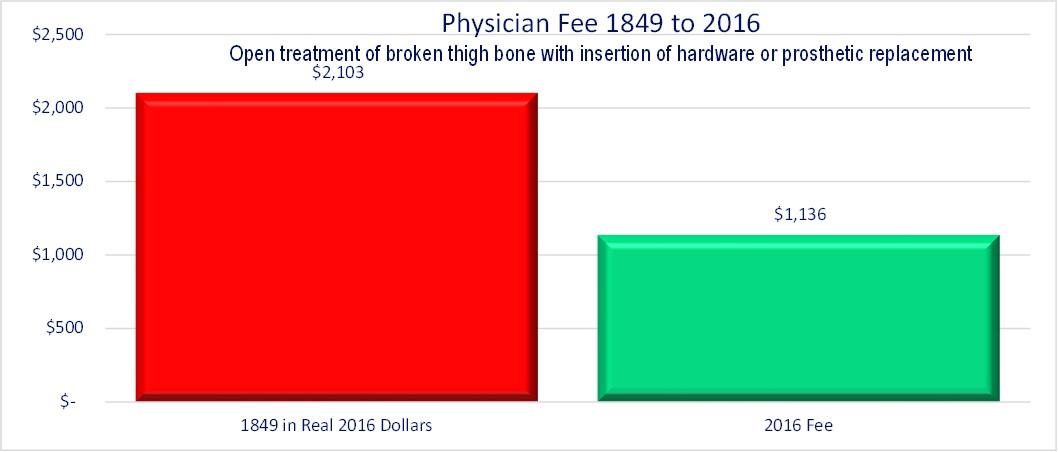





























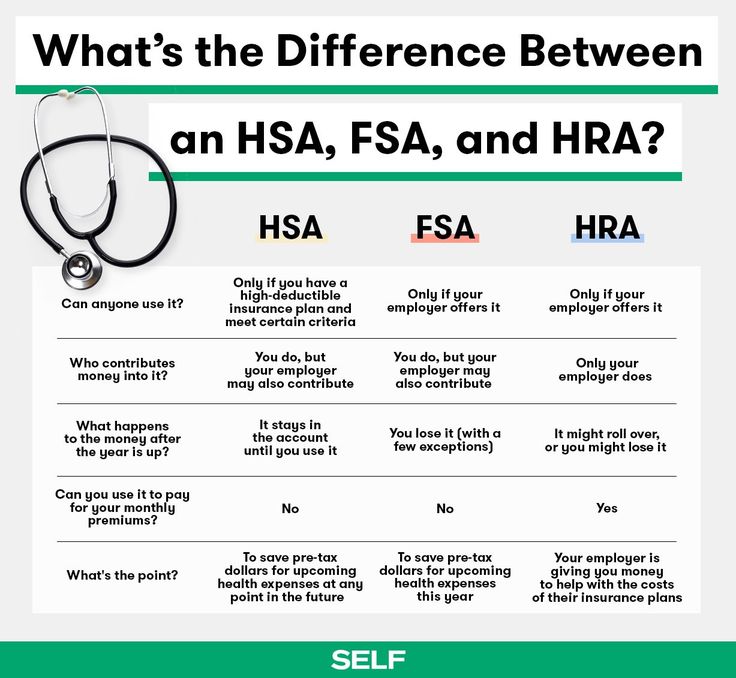











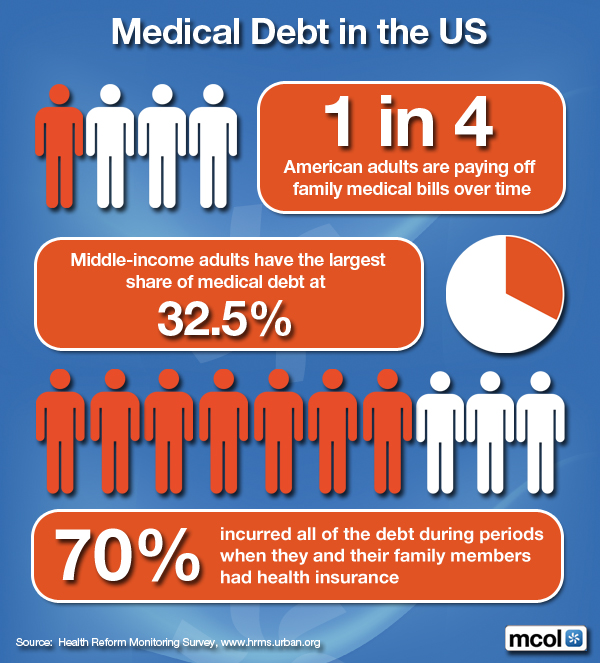


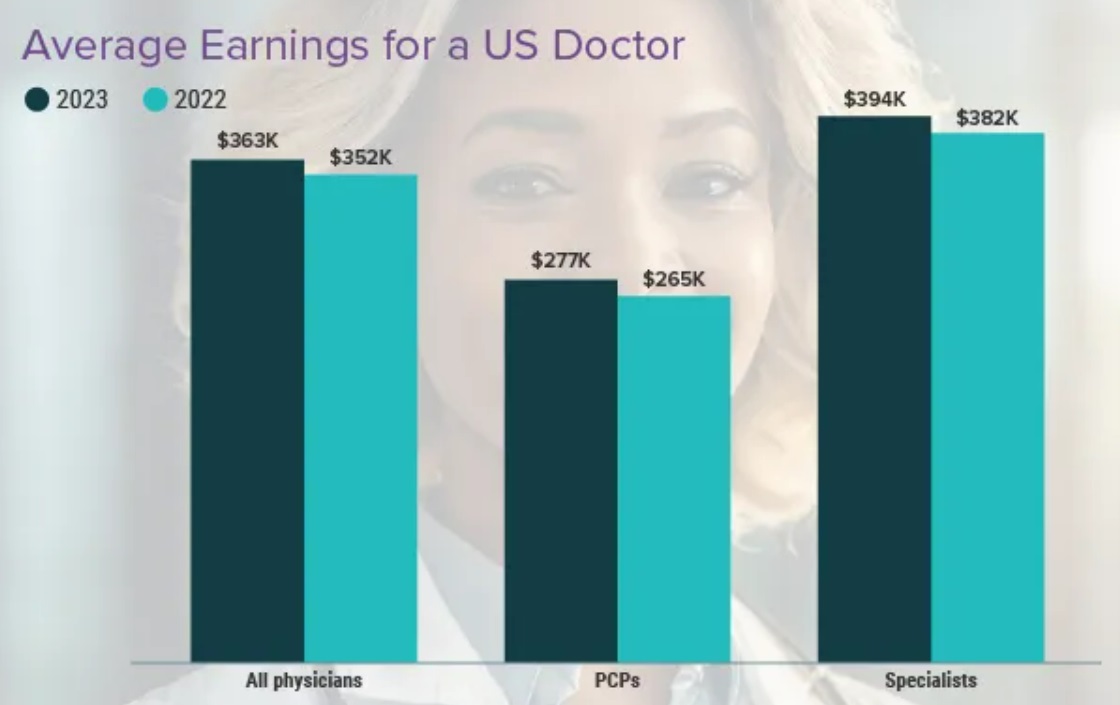







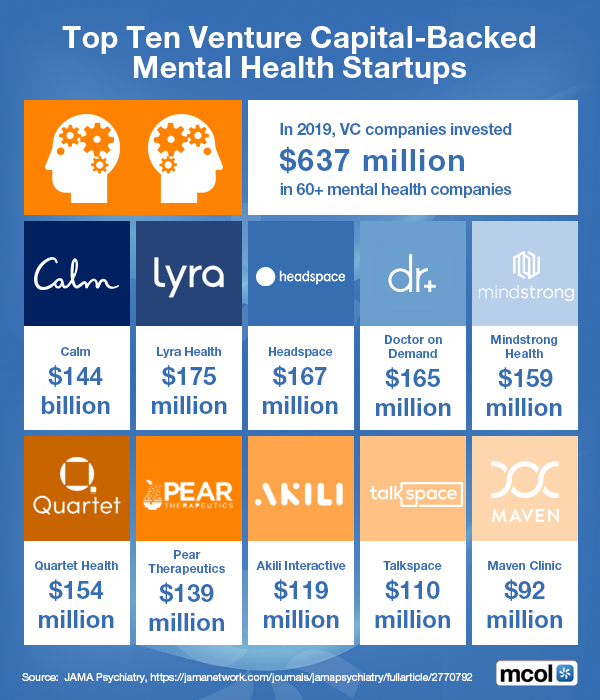

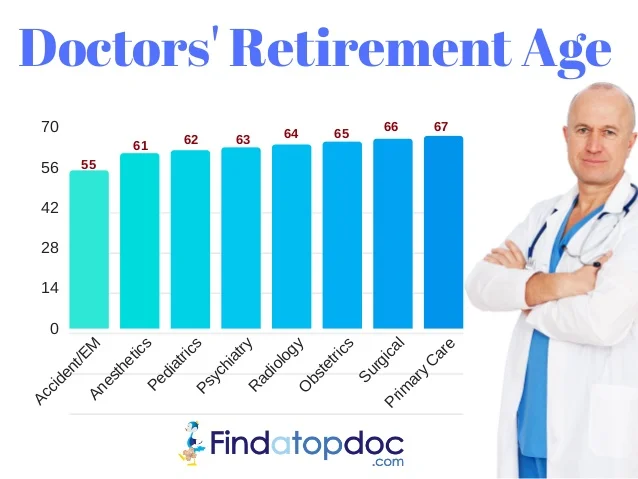








 The Leading Business Education Network for Doctors, Financial Advisors and Health Industry Consultants