BOARD CERTIFICATION EXAM STUDY GUIDES Lower Extremity Trauma
[Click on Image to Enlarge]
ME-P Free Advertising Consultation
The “Medical Executive-Post” is about connecting doctors, health care executives and modern consulting advisors. It’s about free-enterprise, business, practice, policy, personal financial planning and wealth building capitalism. We have an attitude that’s independent, outspoken, intelligent and so Next-Gen; often edgy, usually controversial. And, our consultants “got fly”, just like U. Read it! Write it! Post it! “Medical Executive-Post”. Call or email us for your FREE advertising and sales consultation TODAY [678.779.8597] Email: MarcinkoAdvisors@outlook.com
Medical & Surgical e-Consent Forms
ePodiatryConsentForms.com
iMBA Inc., OFFICES
Suite #5901 Wilbanks Drive, Norcross, Georgia, 30092 USA [1.678.779.8597]. Our location is real and we are now virtually enabled to assist new long distance clients and out-of-town colleagues.
ME-P Publishing
SEEKING INDUSTRY INFO PARTNERS?
If you want the opportunity to work with leading health care industry insiders, innovators and watchers, the “ME-P” may be right for you? We are unbiased and operate at the nexus of theoretical and applied R&D. Collaborate with us and you’ll put your brand in front of a smart & tightly focused demographic; one at the forefront of our emerging healthcare free marketplace of informed and professional “movers and shakers.” Our Ad Rate Card is available upon request [678-779-8597].
Posted on August 4, 2021 by Dr. David Edward Marcinko MBA MEd CMP™
Health Insurance Business Harms Doctors, Patients and Hospitals –Inside Healthcare with Nate Kaufman–
Rich Helppie brings back healthcare expert and consultant, Nathan Kaufman, Managing Director of Kaufman Strategic Advisors.
Rich and Nate talk about the current policy issues surrounding healthcare, and why the United States’ approach to health insurance, care and finance are woefully inadequate in today’s landscape.
On July 19, 2021, CMS released the proposed rule for the Outpatient Prospective Payment System (OPPS) and Ambulatory Surgery Centers (ASCs) for calendar year (CY) 2022. The proposed rule builds on President Joe Biden’s July 9, 2021 executive order on “Promoting Competition in the American Economy,” as it relates to increasing access and price transparency in the healthcare industry.
In a press release regarding the proposed rule, CMS stated their commitment to addressing the persistent health inequities in the U.S. and finding opportunities to improve data collection that will lead to policy changes to help meet the health needs of patients. (Read more…)
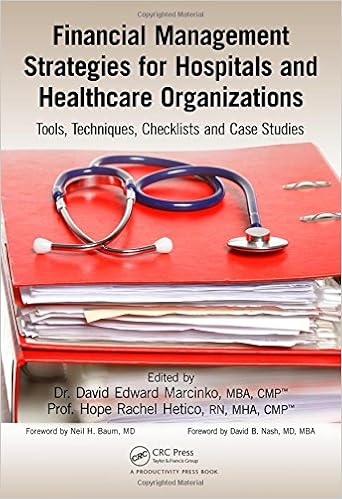
Navigating a course where sound organizational management is intertwined with financial acumen requires a strategy designed by subject-matter experts. Fortunately, Financial Management Strategies for Hospital and Healthcare Organizations: Tools, Techniques, Checklists and Case Studiesprovides that blueprint. ―David B. Nash, MD, MBA,Jefferson Medical College, Thomas Jefferson University
It is fitting that Dr. David Edward Marcinko, MBA, CMP™ and his fellow experts have laid out a plan of action in Financial Management Strategies for Hospital and Healthcare Organizationsthat physicians, nurse-executives, administrators, institutional CEOs, CFOs, MBAs, lawyers, and healthcare accountants can follow to help move healthcare financial fitness forward in these uncharted waters. ―Neil H. Baum, MD, Tulane Medical School
Posted on July 18, 2021 by Dr. David Edward Marcinko MBA MEd CMP™
THE SHERLOCK COMPANY
This podcast features a brief discussion by colleague Doug B. Sherlock CFA, Senior Health Care Analyst and President, Sherlock Company http://www.sherlockco.com featuring his insights into the quarterly financial reports of health plans, for the first quarter 2021.
Posted on July 16, 2021 by Dr. David Edward Marcinko MBA MEd CMP™
HSA Update 2021
By Michael Thompson
High-deductible health plans have been popular, but it’s becoming clear they are not right for all employees, said Michael Thompson, president and chief executive officer of the National Alliance of Healthcare Purchaser Coalitions.
Specifically, Forrester Research Says That Customer Service is ‘Poor’ at Blue Cross of Texas and Illinois, Blue Shield of California, CareFirst Blue Cross, Anthem, United Healthcare, Cigna and Aetna.
Hospital Billing Customer Services Is Bad Too.
Hospital Billing Complexity is So Troublesome to Patients, that 40% Say They Avoid Preventive Care and Screening Tests Just to Avoid the Billing Headache.
Healthcare Customer Service is Terrible Because Health Insurance Companies and Hospitals Do Not Need Good Billing Customer Service to Be Successful, As Demonstrated by High and Rising Health Insurance Stock Prices and Large and Growing Hospital System Revenue.
For Health Insurance Companies and Hospitals, Not Fixing Their Poor Customer Service May Be a Calculated Business Decision.
Implications:To Help Make Their Employees’ Lives Better, Employers May Need to 1) Hire a Healthcare Navigation Company or 2) Deliver More Care to Their Plan Members Outside of the Traditional Health Insurance and Hospital Systems… and Avoid the Terrible Customer Service All Together.
Disclaimer: Dr. Bricker is the Chief Medical Officer of Virtual Care Company First Stop Health and is the Former Co-Founder of Compass Professional Health Services.
Posted on July 12, 2021 by Dr. David Edward Marcinko MBA MEd CMP™
MANAGEMENT STRATEGIES, OPERATIONAL TECHNIQUES, TOOLS, TEMPLATES AND CASE STUDIES
TEXTBOOKREVIEWS:
Hospitals and Health Care Organizationsis a must-read for any physician and other health care provider to understand the multiple, and increasingly complex, interlocking components of the U.S. health care delivery system, whether they are employed by a hospital system, or manage their own private practices.
The operational principles, methods, and examples in this book provide a framework applicable on both the large organizational and smaller private practice levels and will result in better patient care. Physicians today know they need to better understand business principles and this book by Dr. David E. Marcinko and Professor Hope Rachel Hetico provides an excellent framework and foundation to learn important principles all doctors need to know. ―Richard Berning, MD, Pediatric Cardiology
… Dr. David Edward Marcinko and Professor Hope Rachel Hetico bring their vast health care experience along with additional national experts to provide a health care model-based framework to allow health care professionals to utilize the checklists and templates to evaluate their own systems, recognize where the weak links in the system are, and, by applying the well-illustrated principles, improve the efficiency of the system without sacrificing quality patient care. … The health care delivery system is not an assembly line, but with persistence and time following the guidelines offered in this book, quality patient care can be delivered efficiently and affordably while maintaining the financial viability of institutions and practices. ―James Winston Phillips, MD, MBA, JD, LLM
Depression is Highest Among 18-25 Year Olds at 11%.
19% of US Adults Have Anxiety and 56% of Those with Anxiety Are Impaired By Their Condition.
12% of People with Diabetes Have Associated Depression… Resulting in Missed Appointments, Poorer Diet, Decreased Medication Adherence and Increased Complications.
To Address This Problem, The Intermountain Health System Incorporated a Mental Health Provider in Their Primary Care Clinics.
Results: Improved in Diabetes Care, Decreased Hospitalizations and Decreased ER Utilization.
Treating Mental Health Not Only Improves Mental Wellbeing, But Also Lowers Overall Healthcare Costs as Well.
Disclaimer: Dr. Bricker is the Chief Medical Officer of Virtual Care Company First Stop Health.
NOTE: If you or someone you know is considering suicide, please contact the National Suicide Prevention Lifeline at 1800-273-TALK (8255), text “help” to the Crisis Text Line at 741-741 or go to suicidepreventionlifeline.org.
1) Some Individual Doctors Were Paid Upwards of $5.8 Million Dollars by Medicare in Just a Single Year!
2) The Specialists That Charged Medicare the Most Tended to Be Vascular Surgeons, Ophthalmologists, Oncologists and Cardiologists.
Implications for Employer-Sponsored Health Plans:
1) Medicare Data Can Be Used to Identify High Volume Physicians and Surgeons.
2) The Highest-Costing Doctors Are Concentrated in a Relatively Small Number of Specialties That Can Be Targeted for Detailed Review, Feedback and Possible Exclusion/Steerage Away.
ASSESSMENT: Your thoughts and comments are appreciated.
Many accountable care organizations (ACOs) received disappointing news on May 21, 2021, when the Centers for Medicare & Medicare Services (CMS) announced that it would not be extending the Next Generation ACO (NGACO) model for 2022.
After five years and a dwindling number of participating ACOs, experts were split on whether or not CMS should keep the model in place for another year. On one hand, stakeholders have argued for the NGACO model’s extension until it can be replaced with or integrated into another program; howowever, others asserted that resources could not be properly invested with only one more year left in the program. (Read more…)
Reimbursement Typically Takes the Form of a Bundled Payment or a Lower Rate of Fee-for-Service.
Employers with Greater Than 500 Employees Tend To Engage in Direct Contracting.
Mid-Market Employers with a High Concentration of Employees in One Geographic Area Tend to Engage in Direct Contracting as Well.
The Employer Frequently Uses an Independent TPA to Process the Claims for the Direct Contract.
Also, the Employee Health Plan Changes the ‘Benefit Level’ Such that Care at the Direct Contract Facility is Often at $0 Out-of-Pocket Cost for the Member.
Engaging the Plan Members with Navigation Services is Helpful to Make the Experience Integrated with the Overall Health Plan Offerings.
Walmart, the world’s largest retailer, opened the first Walmart Health in 2019 with the main goal of helping to meet the healthcare needs of the communities they serve. After opening six locations in almost two years, Walmart is looking to operate a total of 22 standalone clinics by the end of 2021.
This Health Capital Topics article will review Walmart Health’s approach to delivering primary care, the communities into which it is expanding, its partnerships it is developing in the healthcare sector, and the competitive landscape in which it operates. (Read more…)
However, That 5% of High-Cost Claimants is a Heterogenous Population
2.5 Percentage Points of the 5% Are Claimants That Were Either High-Cost Claimants the Previous Year with On-Going Complex Medical Situations or Generated Claims Related to Chronic Diseases Such as Diabetes or Multiple Sclerosis.
HOWEVER, the Other 2.5 Percentage Points of the 5% Are Claimants That Generated Zero or Almost-Zero Claims in the Previous 12-Months.
They Essentially ‘Blow Up’ Out of Nowhere.
This Video Describes the 4 Categories of These High-Cost Claimants:
1) Previously Known and Prolonged High Costs
2) Previously Known and Episodic High Costs (that no longer continue)
3) Previously Unknown and Prolonged High Costs
4) Previously Unknown and Episodic High Costs (that no longer continue)
Learn the Clinical Diagnoses That Make Up Each Category and the Secret of Which Groups to Target and Why.
Posted on June 18, 2021 by Dr. David Edward Marcinko MBA MEd CMP™
Medicare “Safe Harbor” Regulations
The Medicare Safe Harbor rules were passed in an effort to identify areas of practice that would not lead to a conviction under the anti-fraud statute. The Safe Harbor regulations provide for eleven areas where providers may practice without violating the anti-fraud statute.
Areas of safe practice under these regulations are briefly highlighted below:
Large Entity Investments – Investment in entities with assets over $50 million. The entity must be registered and traded on national exchanges.
Small Entity Investments – Small entity investment entities must abide by the 40-40 rule. No more than 40% of the investment interests may be held by investors in a position to make referrals. Additionally, no more than 40% of revenues can come through referrals by these investors.
Space and Equipment Rentals – Such lease agreements must be in writing and must be for at least a one year term. Furthermore, the terms must be at fair market value.
Personal Services and Management Contracts – These contracts are allowable as long as certain rules are followed. Like lease agreements, these personal service and management contracts must be in writing for at least a one-year term, and the services must be valued at fair market value.
Sale of a medical practice – There are restrictions if the selling practitioner is in a position to refer patients to the purchasing practitioner.
Referral services– Referral services (such as hospital referral services) are allowed. However, such referral services may not discriminate between practitioners who do or do not refer patients.
Warranties – There is certain requirements if any item of value is received under a warranty.
Discounts – Certain requirements must be met if a buyer receives a discount on the purchase of goods or services that are to be paid for by Medicare or Medicaid.
Payments to Bona Fide Employees – Payments made to bona fide employees do not constitute fraud under the Safe Harbor Regulations.
Group Purchasing Organizations – Organizations that purchase goods and services for a group of entities or individuals are allowed; provided certain requirements are met.
Waiver of Beneficiary Co-Insurance and Deductible – Routine waiver would not come under the safe harbor.
A physician’s actions that come under the Safe Harbor Regulations will not violate the Medicare Fraud and Abuse Statutes. However, the provider must still abide by the Stark amendments and must also abide by applicable state law.
Posted on June 18, 2021 by Dr. David Edward Marcinko MBA MEd CMP™
Important Economic Concepts to UNDERSTAND
BY ERIC BRICKER MD
One of Their Applications Pertains to the Impact on Time Spent Working Vs. Time Spend on Leisure if a Healthcare Worker’s Pay is Changed.
DEFINITION: The INCOME EFFECT States That If a Worker’s Pay is Decreased, They Will Work More Hours to Maintain the Same Income. Conversely, If a Worker’s Pay is Increased, They Will Work Fewer Hours and Still Maintain the Same Income.
A Real-World Example of the Income Effect is When Medicare Decreased Reimbursement for Echocardiograms and as a Result, Decreased Cardiologists’ Pay. Accordingly, Cardiology Practices Increased the Number of Patients They Saw Per Day to Make Up for the Lost Pay and Maintain Their Income.
The SUBSTITUTION EFFECT States That Work and Leisure Time Have OPPORTUNITY COSTS for Each Other.
If a Worker’s Pay Goes Up, then the Opportunity Cost for Leisure (i.e. Not Working) Also Goes Up and the Worker Will Work MORE, Not LESS. Conversely, If a Worker’s Pay Goes Down, then the Opportunity Cost for Leisure Goes Down and the Worker Will Work LESS, Not MORE.
Whether the Income or Substitution Effect Dominates Depends on the Person and the Situation.
THE POINT: In the World of Fee-for-Service Reimbursement, a Decrease in Doctor Pay Per Service May Result in Doctors Providing More Services In Order to Maintain Their Income… Nullifying Any Cost-Savings.
Posted on June 17, 2021 by Dr. David Edward Marcinko MBA MEd CMP™
BREAKING NEWS!
On June 17, 2021, the Supreme Court of the United States (SCOTUS) released its long-awaited ruling on the fate of the Patient Protection and Affordable Care Act (ACA). In a 7-2 ruling, the majority (written by Justice Stephen Breyer) found that the two individual and 18 state plaintiffs did not have standing, stating
“the plaintiffs…failed to show a concrete, particularized injury fairly traceable to the defendants’ conduct in enforcing the specific statutory provision they attack as unconstitutional. They have failed to show that they have standing to attack as unconstitutional the Act’s minimum essential coverage provision.”
By ruling on the question of standing, the Court did not have to proceed to, and rule on, the issue of the constitutionality of the Individual Mandate.
The Court reversed the Fifth Circuit’s ruling with respect the standing issue, vacated the ruling, and remanded the case with instructions to dismiss.
***
*** A more robust discussion of the majority’s opinion and the procedural history of this case will be included in the June 2021 issue of Health Capital Topics. (Read the ruling here)
Posted on June 13, 2021 by Dr. David Edward Marcinko MBA MEd CMP™
See the Future of Healthcare By Looking to Medicare’s Past
***
BY DR. ERIC BRICKER MD
***
Desire for a Healthcare ‘Safety Net’ Goes Back Almost 100 years to President F.D.R. and His “New Deal“
FDR Was Able to Pass Social Security, but He Also Wanted a Healthcare Safety Net Too.
Presidents Truman and Kennedy Also Wanted a Federally-Funded Healthcare Safety Net.
LBJ Carried the Torch of the Healthcare Safety Net. He Was Able to Have Medicare Legislation Passed in 1965 by Combining 3 Separate Proposals and Acts:
1) Hospital Insurance
2) Doctor Insurance That Was Voluntary
3) the State-Administered Kerr-Mills Act
Hospital Insurance Became Medicare Part A. Doctor Insurance Became Medicare Part B. The Kerr-Mills Act Became Medicaid.
Presidents Carter and Clinton Also Wanted to Expand the Healthcare Safety Net. President Obama Expanded the Healthcare Safety Net with Passage of Obamacare. President Biden is Seeking to Expand the Healthcare Safety Net Too.
The Arc of Government-Funded Healthcare Stretches Back Almost 100 Years and Will Inevitably Result in the Full Government Payment for Healthcare in America.
It’s Not a Question of If, But When.
Implication:United Health Group is Making Many Acquisitions to Become a Vertically Integrated Healthcare Company to Position Itself as a Major Government Contractor for the Eventual Federal Takeover.
Posted on June 11, 2021 by Dr. David Edward Marcinko MBA MEd CMP™
OVER HEARD IN THE DOCTOR’S LOUNGE
I currently have no fewer than 10 separate insurance policies associated with my plastic surgery practice. I understand very little about the policies other than that somebody at some point told me I needed each and every one of them, and each made sense when I bought it. But, I often wonder:
Am I over-insured and thus wasting money?
Am I under-insured and thus at risk for a liability disaster?
I never really had the means of answering these questions …. Until Now!
Posted on June 11, 2021 by Dr. David Edward Marcinko MBA MEd CMP™
Bhagwan Satiani, MD, MBA, DFSVS, FACHE, FACS
Todd A. Zigrang, MBA, MHA, FACHE, CVA, ASA
Jessica L. Bailey-Wheaton, JD
ABSTRACT
The appropriate focus in managing the COVID-19 pandemic in the United States has been addressing access and delivery of care to the population affected by the outbreak. All sectors of the U.S. economy have been significantly affected,including physicians. Physician groups of all specialties and sizes have experienced the financial effects of the pandemic.Hospitals have received billions of dollars to support and enable them to manage emergencies and cover the costs of the disruption.
However, many vascular surgeons are under great financial pressure because of the postponement of all non-emergency procedures. The federal government has announced a myriad of programs in the form of grants and loans to reimburse physicians for some of their expenses and loss of revenue. It is more than likely that unless the public health emergency subsides significantly, many practices will experience dire consequences without additional financial assistance.
The authors have attempted to provide a concise listing of such programs and resources available to assist vascular surgeons who are small businesses in accessing these opportunities.
Two of the Largest Purchases Were KKR‘s Purchase of Envision’s 25,000 Doctors for Almost $10 Billion and Blackstone‘s Purchase of Team Health’s 20,000 Doctors for $6 Billion.
QUERY: If Corporate Practice of Medicine Laws Say that Doctors Cannot Work for a Corporation, How are Private Equity Purchases of Physician Practices Legal?
Posted on June 6, 2021 by Dr. David Edward Marcinko MBA MEd CMP™
Executive Order Expands Tele-Medicine to Ease Burden
By Health Capital Consultants, LLC
On August 3, 2020, President Donald Trump signed an executive order aimed at expanding access to care through two avenues: telemedicine and eased financial burdens on rural providers.
And so, our colleagues for this Health Capital Topics article will discuss the executive rule and the subsequent agency actions on these fronts.
Posted on June 5, 2021 by Dr. David Edward Marcinko MBA MEd CMP™
Turning Potential into Actual Value
By Erin Benson and Rich Morino
Social determinants of health can directly be used to improve risk stratification and care management initiatives. But first, it’s important to identify how to effectively use this data to get the most value for your members and organizations.
And so, we present a brief recap of the webinar: “Social Determinants of Health: Turning Potential into Actual Value,” sponsored by LexisNexis Health Care, with Erin Benson, Director Market Planning and Rich Morino, Director, Strategic Solutions.
This recap includes discussion of 5 categories of SDOH. Then, the full webinar discusses elements of success for social determinants of health and opportunities for health plans to leverage social determinants of health data to attain quality goals while managing cost and enhancing member experience.
A recent study from the National Bureau of Economic Research (NBER) indicates that quality and patient outcomes suffer in hospitals that cannot maintain their relationships with banks and their lines of credit.
The NBER study measured quality and cost data in Medicare-certified hospitals from 2010 to 2016, during which banks were undergoing annual stress tests. Regulatory “stress tests” are annual assessments from the Federal Reserve, put in place after the Great Recession in 2008, to examine a bank’s ability to survive an impending economic crisis. (Read more…)
Posted on June 2, 2021 by Dr. David Edward Marcinko MBA MEd CMP™
Here are the major issues facing healthcare according to PwC
Will a health system battered by the pandemic emerge stronger in the year ahead? The annual report predicts challenges such as profitably merging virtual and in-person care, and capitalizing on new consumer- and clinician-facing digital health tools.
OK – I admit that I am not an attorney. But, approximately half of states in the U.S. have made it unlawful for practicing physicians to be employees of corporations. This ban on the corporate practice of medicine (CPM) is intended to keep medical professionals independent and free from financial pressures and influence.
Most states have made exceptions allowing physicians to become employees of not-for-profit organizations and sometimes hospitals. States such as California, Iowa, and Texas, have declined to allow hospitals to employ physicians, although even those states have special exceptions. Iowa hospitals may employ pathologists and radiologists, and Texas public hospitals and California teaching hospitals may employ physicians. Ohio has no ban on the corporate practice of medicine.
ASSESSMENT: Anyone can own a physician practice in Ohio.
To keep up with the ever-changing healthcare industrial complex, we must learn new definitions and re-learn old terminology in order to correctly apply it to practice. By aggregating the most up-to-date abbreviations, acronyms, definitions and terms, the Health DictionarySeries offers a wealth of information to help understand the ever-changing terms-of-art in healthcare today.
Each 10,000 item handbook is essential for doctors, nurses, benefits managers, financial advisors/planners, and insurance agents, CPAs, and administrators; as well as graduate and under graduate students and professors. Our goal to for each dictionary to be designated as a Doody’s Core Title.
Dictionary of Health Insurance and Managed Care
With more than 10,000 definitions, 4,000 abbreviations and acronyms, and a 3,000 item oeuvre of resources, readings, and nomenclature derivatives, this dictionary covers the Medicare, managed care and Medicaid, private insurance, Veteran’s Administration and PP-ACA language of the entire health and long-term care insurance sector.
Dictionary of Health Economics and Finance
Health economics and finance is an integral component of the health care industrial complex. Its language is a diverse and broad-based concept covering many other industries: accounting, mathematics, the actuarial sciences, stochastics and statistics, salary reimbursements, physician payments, compensation and forecasting are all commingled arenas.
Dictionary of Health Information Technology Security
There is a myth that all healthcare stakeholders understand the meaning of information technology jargon. In truth, the vernacular of contemporary systems is unique, and often misused or misunderstood. Moreover, emerging Heath Information Technology (HIT) thru the HITECG initiatives; in the guise of terms, definitions, acronyms, abbreviations and standards; often puts the non-expert in a position of maximum uncertainty and minimum productivity.
Posted on May 26, 2021 by Dr. David Edward Marcinko MBA MEd CMP™
The Pandemic is Ending?
How Are Hospitals Doing?
Interview with Brian Peters
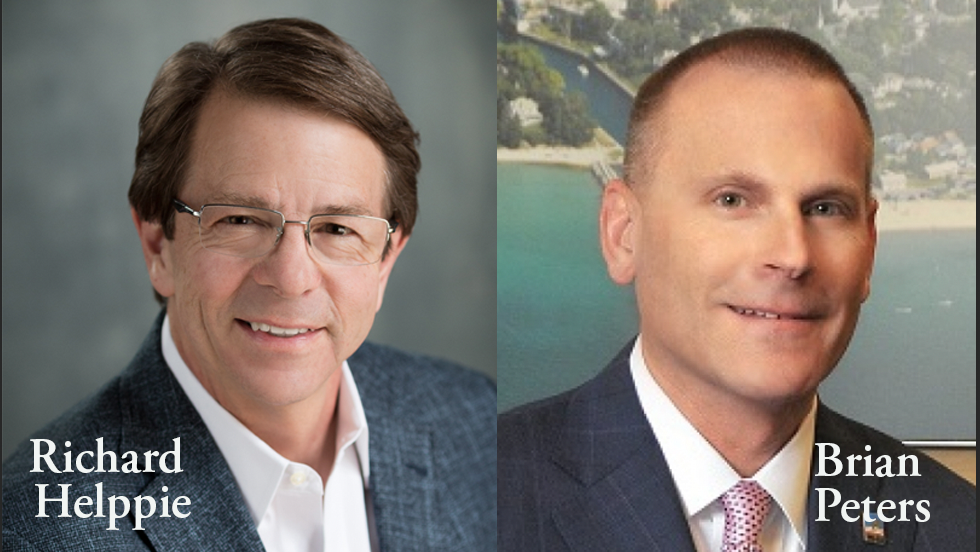
Rich Helppie brings back Brian Peters, the CEO of The Michigan Health and Hospital Association to talk about the current state of Covid-19; what we may have gotten right, what we may have gotten wrong and how to move forward.
****
EDITOR’S NOTE: I first met Rich in B-school, when I was a student, back in the day. He was the Founder and CEO of Superior Consultant Holdings Corp. Rich graciously wrote the Foreword to one of my first textbooks on financial planning for physicians and healthcare professionals. Today, Rich is a successful entrepreneur in the technology, health and finance space. -Dr. David E. Marcinko MBA CMP®
Charges of money laundering may seem foreign to the practice of medicine. The term “money laundering” evokes visions of a suitcase of drug cash being brought into a legitimate business and being transformed into that business’s receipts and later tunneled through legal channels.
In medicine the route beings with receipt of a claim payment check (i.e., a check as opposed to the drug dealer’s cash). The check is then deposited into the professional corporation’s checking account. The funds are then paid to the physician in the form of wages. Those wages are then deposited into the physician’s personal checking account.
Those funds and other similarly situated funds are then accumulated until a check is written to pay for a new automobile. The money received from the alleged fraudulent insurance claim has successful been “laundered” into a hard asset (e.g., Jaguar XJL-V8 4 door luxury sedan).
EDITOR’SNOTE: David Balat is the director of the Right on Healthcare initiative at the Texas Public Policy Foundation and founder of the patient-physician coalition, Free2Care. He has broad experience across the healthcare spectrum with special expertise in healthcare finance. He is a former congressional candidate in Texas’ 2nd Congressional District and a seasoned hospital executive with more than 20 years of healthcare industry leadership and executive management experience.
Posted on May 16, 2021 by Dr. David Edward Marcinko MBA MEd CMP™
EDITOR’S POINT OF PRIVILEGE
This week, for the first time in a year, I took a walk without wearing a mask. It was all going great until I saw a woman walking her dog approach me. She was wearing a mask, and my body instinctively moved to cross the street to give her space. It made me realize that we’ve been living in fear of other humans, which is pretty sad.
Pandemic-era habits die hard, but I’m confident we can once again re-wire our brains to view other people not as biological vectors for disease, but as … people, just with germs.
So, here’s to hoping this summer, we’ll learn to come together as quickly as we learned to distance.
Posted on May 12, 2021 by Dr. David Edward Marcinko MBA MEd CMP™
CCCs AND UCCs Popularity on the Rise!
EDITOR’S NOTE: Convenience Care Clinics [CCCs], including Urgent Care Centers (UCCs) and retail health clinics, have seen increasing popularity and attention in recent years. Colleague Todd Zigrang of HCC, LLC opines.
–Dr. David E. Marcinko MBA CMP®
***
President Health Capital Consultants, LLC
By Todd A. Zigrang, MBA, MHA, FACHE, CVA, ASA
As the number of UCCs and retail health clinics in the U.S., as well as the number of patients they serve, grow, some experts have called for stronger state regulation and oversight in order to ensure that these convenience care centers are providing access to all, including vulnerable communities, without discrimination. (Read more…)
On March 11, 2021, President Joe Biden signed into law the American Rescue Plan Act of 2021 (ARPA). The law looks to alleviate the burden felt by the millions of people who lost their employer-sponsored health insurance over the first six months of the pandemic and assist the hardest-hit communities through the extension of the Patient Protection & Affordable Care Act (ACA) and Consolidated Omnibus Budget Reconciliation Act (COBRA) subsidies, expanding Medicaid coverage, increasing funding for behavioral health, ramping up COVID-19 vaccines and testing, providing financial relief for rural providers, and enacting other individual and healthcare system protections. (Read more…)







 Support our online development, and advance our onground research initiatives in free market economics, as we seek to showcase the brightest Next-Gen minds.
THE ME-P DISCLAIMER: Posts, comments and opinions do not necessarily represent iMBA, Inc., but become our property after submission. Copyright © 2006 to-date. iMBA, Inc allows colleges, universities, medical and financial professionals and related clinics, hospitals and non-profit healthcare organizations to distribute our proprietary essays, photos, videos, audios and other documents; etc. However, please review copyright and usage information for each individual asset before submission to us, and/or placement on your publication or web site. Attestation references, citations and/or back-links are required. All other assets are property of the individual copyright holder.
Support our online development, and advance our onground research initiatives in free market economics, as we seek to showcase the brightest Next-Gen minds.
THE ME-P DISCLAIMER: Posts, comments and opinions do not necessarily represent iMBA, Inc., but become our property after submission. Copyright © 2006 to-date. iMBA, Inc allows colleges, universities, medical and financial professionals and related clinics, hospitals and non-profit healthcare organizations to distribute our proprietary essays, photos, videos, audios and other documents; etc. However, please review copyright and usage information for each individual asset before submission to us, and/or placement on your publication or web site. Attestation references, citations and/or back-links are required. All other assets are property of the individual copyright holder.




























 The Leading Business Education Network for Doctors, Financial Advisors and Health Industry Consultants