BOARD CERTIFICATION EXAM STUDY GUIDES Lower Extremity Trauma
[Click on Image to Enlarge]
ME-P Free Advertising Consultation
The “Medical Executive-Post” is about connecting doctors, health care executives and modern consulting advisors. It’s about free-enterprise, business, practice, policy, personal financial planning and wealth building capitalism. We have an attitude that’s independent, outspoken, intelligent and so Next-Gen; often edgy, usually controversial. And, our consultants “got fly”, just like U. Read it! Write it! Post it! “Medical Executive-Post”. Call or email us for your FREE advertising and sales consultation TODAY [678.779.8597] Email: MarcinkoAdvisors@outlook.com
Medical & Surgical e-Consent Forms
ePodiatryConsentForms.com
iMBA Inc., OFFICES
Suite #5901 Wilbanks Drive, Norcross, Georgia, 30092 USA [1.678.779.8597]. Our location is real and we are now virtually enabled to assist new long distance clients and out-of-town colleagues.
ME-P Publishing
SEEKING INDUSTRY INFO PARTNERS?
If you want the opportunity to work with leading health care industry insiders, innovators and watchers, the “ME-P” may be right for you? We are unbiased and operate at the nexus of theoretical and applied R&D. Collaborate with us and you’ll put your brand in front of a smart & tightly focused demographic; one at the forefront of our emerging healthcare free marketplace of informed and professional “movers and shakers.” Our Ad Rate Card is available upon request [678-779-8597].
There is no shortage of analysis for anyone interested in investing. A search for the term “stock market analysis” turned up 16 million hits on Google and well over 200,000 hits each on Bing, and Yahoo.
***
***
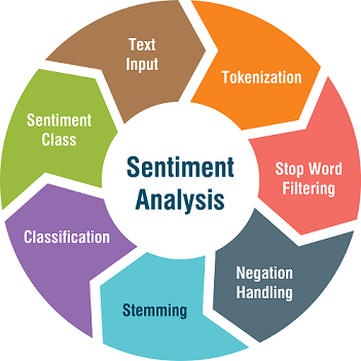
The majority of stock market analysis can be lumped into three broad groups: fundamental, technical, and sentimental. Here’s a close look at SA.
Sentimental Analysis
Sentimental analysis attempts to measure the market in terms of the attitudes of investors. Sentimental analysis starts from the assumption that the majority of investors are wrong. In other words, that the stock market has the potential to disappoint when “masses of investors” believe prices are headed in a particular direction.
Sentiment analysts are often referred to as contrarians who look to invest against the majority view of the market.
For example, if the majority of professional market watchers expect a stock price to trend higher, sentiment analysts may look for prices to disappoint the majority and trend lower.
Which approach is best?
There is no clear answer to that question.
But it’s important to remember three things:
Past performance does not guarantee future results, actual results will vary, and the best approach may be to create a portfolio based on your time horizon, risk tolerance, and goals.
Keep in mind that the return and principal value of stock prices will fluctuate as market conditions change.
And shares, when sold, may be worth more or less than their original cost.
Conclusion
Your thoughts and comments on this ME-P are appreciated. Feel free to review our top-left column, and top-right sidebar materials, links, URLs and related websites, too. Then, subscribe to the ME-P. It is fast, free and secure.
Speaker: If you need a moderator or speaker for an upcoming event, Dr. David E. Marcinko; MBA – Publisher-in-Chief of the Medical Executive-Post – is available for seminar or speaking engagements.
Subscribe: MEDICAL EXECUTIVE POST for curated news, essays, opinions and analysis from the public health, economics, finance, marketing, IT, business and policy management ecosystem.
Posted on October 21, 2024 by Dr. David Edward Marcinko MBA MEd CMP™
By Staff Reporters
***
***
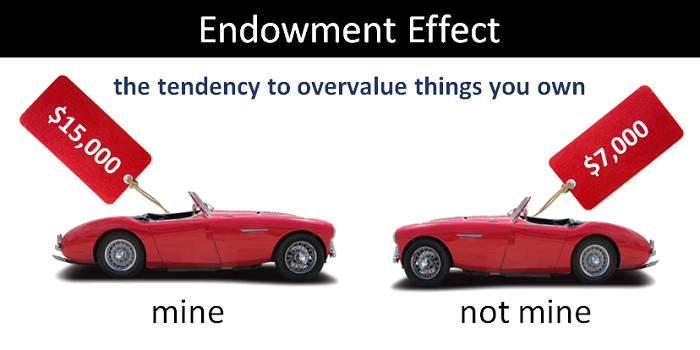
The Meaningful Endowment Effect is the tendency to value things more highly when they’re personally meaningful. It’s why a homemade gift can feel priceless while a store-bought one feels ordinary. Or, a coveted sports car, etc.
Our brains attach emotional significance to objects, inflating their value. This effect explains why we hang onto mementos and keepsakes, even if they’re not objectively valuable.
So, next time you’re de-cluttering, remember: it’s not just stuff, it’s meaningful stuff.
Posted on October 17, 2024 by Dr. David Edward Marcinko MBA MEd CMP™
By Dr. David E. Marcinko MBAMEd CMP
SWARM INTELLIGENCE IN MEDICINE
***
Warm Learning or Swarm Intelligence, is how swarms of bees or birds move in response to their environment.
When applied to data there is “more peer-to-peer communications, more peer-to-peer collaboration, more peer-to-peer learning and that’s the reason why swarm learning will become more and more important as … as the center of gravity shifts” from centralized to decentralized data.
Medicine Example:
Consider this example, “A hospital trains their machine learning models on chest X-rays and sees a lot of tuberculosis cases, but very little of lung collapsed cases. So therefore, this neural network model, when trained, will be very sensitive to what’s detecting tuberculosis and less sensitive towards detecting lung collapse.”
“However, we get the converse of it in another hospital. So what you really want is to have these two hospitals combine their data so that the resulting neural network model can predict both situations better. But since you can’t share that data, swarm learning comes in to help reduce that bias of both the hospitals.”
And this means, “each hospital is able to predict outcomes, with accuracy and with reduced bias, as though you have collected all the patient data globally in one place and learned from it.”
Moreover, it’s not just hospital and patient data that must be kept secure. What swarm learning does is to try to avoid or reduce the sharing of data, or totally prevent the sharing of data, to [a model] where you only share the insights, or you share the learnings.
According to colleague Dan Ariely PhD, a Zero Sum Bias [ZSB] is the mistaken belief that one person’s gain is another’s loss. It’s like thinking the world is a giant pie with only so many slices. This mindset fuels competition and jealousy, making us forget that collaboration can create more pie. It’s why we sometimes root against others instead of working together.
Question: Is the stock market a zero-sum game? You frequently hear media refer to games and markets as zero-sum games.
Answer: Well, yes, we define the stock market as a zero-sum game, both in the short and in the long term, although it technically is incorrect. A zero-sum game is where one person’s gain is another person’s loss – thus there is no wealth created and the overall benefit is zero. This doesn’t apply to stocks, but it’s a zero-sum game in relation to a stock market benchmark.
For example, short-term trading in stocks is theoretically not a zero-sum game, and neither is long-term investing. But short-term trading is close to a zero-sum game, and long-term investing is a zero-sum game if we use a broad index as a benchmark.
Essentially, in other words, the stock market functions as an expansive network of zero-sum transactions; each trade engages a buyer and a seller–their perspectives on a security’s future value contrasting. These opposing views propel market prices: they mirror not only risk transfer but also potential reward—a dynamic process indeed! Traders and investors must grasp the crucial zero-sum aspect; it underscores trading’s inherent competitiveness. Effectively anticipating market trends and actions from other participants: therein lies success in this environment.
Posted on October 12, 2024 by Dr. David Edward Marcinko MBA MEd CMP™
By Staff Reporters
***
***
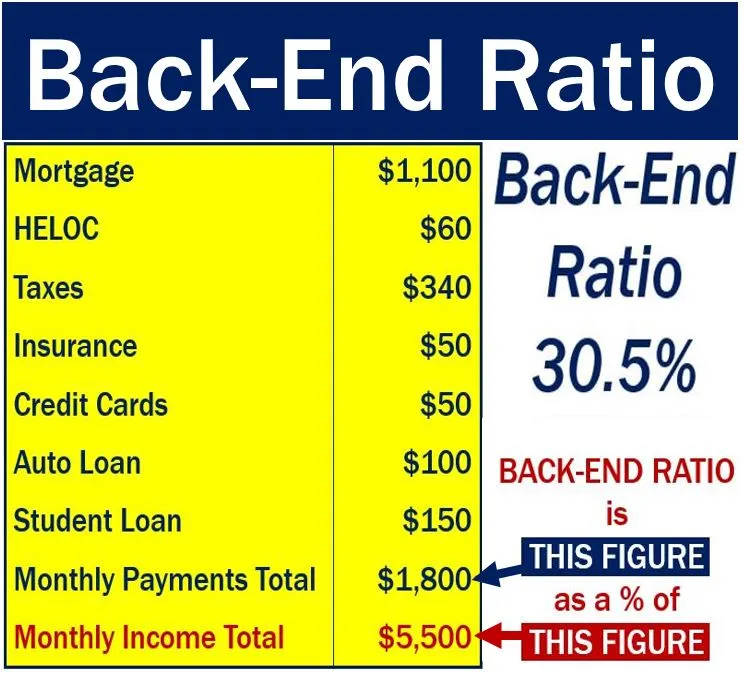
Back-End Ratio or Back Ratio
DEFINITION: The sum of your monthly mortgage payment and all other monthly debts (credit cards, car payments, student loans, etc.) divided by your monthly pre-tax income.
Traditionally, lenders wouldn’t give people loans that increased this ratio past 36%, but they often do now.
A class action lawsuit has been filed in Minnesota against UnitedHealth Group (NYSE:UNH) over allegations that the health insurer and its subsidiary, NaviHealth, used a faulty algorithm to deny rehabilitation care for Medicare Advantage beneficiaries. California-based Clarkson Law Firm filed the lawsuit in the U.S. District Court of Minnesota on Tuesday following an investigative report published by the health-focused news site Stat.
It alleges that UnitedHealth and its subsidiary, NaviHealth, used the computer algorithm named nH Predict to “systematically deny claims” of patients recovering from debilitating illnesses in nursing homes. According to the lawsuit, despite its 90% error rate, the company used the algorithm to deny claims, knowing that only 0.2% would appeal its decision. According to Stat, Humana (HUM), the nation’s second-largest player in the Medicare Advantage market behind UnitedHealth (UNH), also uses nH Predict. UnitedHealth (UNH) denied it used the NaviHealth predict tool to arrive at coverage decisions.
***
***
Ironically, UnitedHealth’s (NYSE:UNH) Optum Rx unit announced plans to move eight insulin products to “preferred” status on formularies to further expand the number of patients benefiting from $35 or less monthly out-of-pocket costs for the lifesaving therapy.
Optum Rx, UNH’s pharmacy benefit manager (PBM), said that effective January 1, 2024, all short- and rapid-acting insulins will move to Tier 1 in commercial formularies, a list of drugs the company maintains to indicate coverage for insured patients.
“A reliable way to make people believe in falsehoods is frequent repetition, because familiarity is not easily distinguished from truth.” – Daniel Kahneman
As I was watching with interest more [fake] news such as stories surrounding evidence by citations of Russian involvement in US elections and fake prices leading to some violent market gyrations as in Bitcoin and the Corona Virus Pandemic, and societal musings around the thematic of hoaxes … we decided to offer this theme.
Enter the WOOZLE
And so, the Woozle effect, also known as evidence by citation, or a woozle, occurs when frequent citation of previous publications that lack evidence misleads individuals, groups and the public into thinking or believing there is evidence, and non-facts become urban myths and factoids.
Posted on October 4, 2024 by Dr. David Edward Marcinko MBA MEd CMP™
IN PRIVATE EQUITY AND MEDICINE
By Staff Reporters
***
***
PRIVATE EQUITY
In private equity, the J curve is used to illustrate the historical tendency of private equity funds to deliver negative returns in early years and investment gains in the outlying years as the portfolios of companies mature.
And, according to Wikipedia, in the early years of the fund, a number of factors contribute to negative returns including management fees, investment costs and under-performing investments that are identified early and written down. Over time the fund will begin to experience unrealized gains followed eventually by events in which gains are realized (e.g., IPOs, mergers and acquisitions, leveraged recapitalizations).
Historically, the J curve effect has been more pronounced in the US, where private equity firms tend to carry their investments at the lower of market value or investment cost and have been more aggressive in writing down investments than in writing up investments. As a result, the carrying value of any investment that is under performing will be written down but the carrying value of investments that are performing well tend to be recognized only when there is some kind of event that forces the PE to mark up the investment.
The steeper the positive part of the J curve, the quicker cash is returned to investors. A private equity firm that can make quick returns to investors provides investors with the opportunity to reinvest that cash elsewhere. Of course, with a tightening of credit markets, private equity firms have found it harder to sell businesses they previously invested in. Proceeds to investors have reduced. J curves have flattened dramatically. This leaves investors with less cash flow to invest elsewhere, such as in other private equity firms. The implications for private equity could well be severe. Being unable to sell businesses to generate proceeds and fees means some in the industry have predicted consolidation among private equity firms.
MEDICINE
In medicine, the “J curve” refers to a graph in which the x-axis measures either of two treatable symptoms (blood pressure or blood cholesterol level) while the y-axis measures the chance that a patient will develop cardiovascular disease (CVD). It is well known that high blood pressure or high cholesterol levels increase a patient’s risk.
Paradoxically, what is less well known is that plots of large populations against CVD mortality often take the shape of a J curve which indicates that patients with very low blood pressure and/or low cholesterol levels are also at increased risk.
In economics, a Kuznets curve (/ˈkʌznɛts/) graphs the hypothesis that as an economy develops, market forces first increase and then decrease economic inequality.
Posted on October 3, 2024 by Dr. David Edward Marcinko MBA MEd CMP™
NEBULOUS DEFINITIONS
By Staff Reporters
***
***
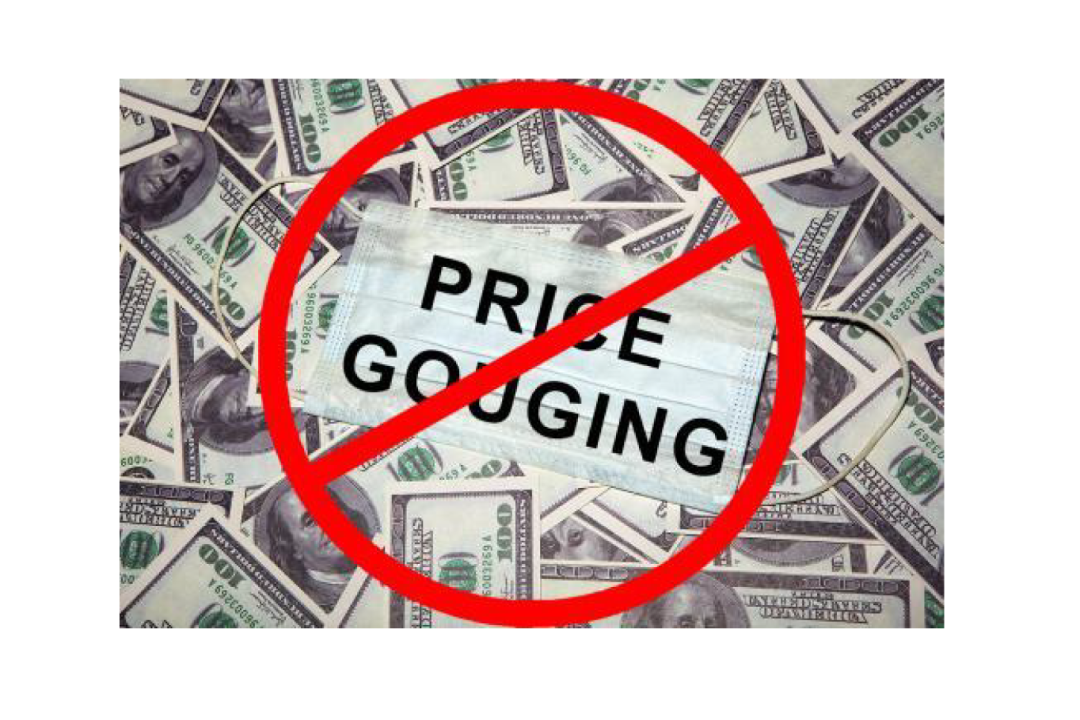
The simplest model of a market involves two things, supply and demand, and the price and quantity of the goods sold in the market are a function of both. When a natural disaster hits like Hurricane Helene, the immediate effect can be two-fold. In such situations, it is not unusual that the demand for certain products may increase. For example, if everyone is trying to leave the area, demand for gas may rise. The other effect is that supply for certain products may decrease. And, it may be more costly to transport gas in areas affected by a natural disaster, thus decreasing the supply of gas and in turn, increasing the price.
When supply decreases, the price of the good increases. And when demand increases, again the price of the good increases. So we would predict that the market price of gas, for example, would increase in areas recently affected by a hurricane. And in fact we do see this.
Price-gouging occurs when companies raise prices to unfair levels. There is no rule for what qualifies as price-gouging, but it is not an uncommon occurrence. For example in medicine, EpiPen costs is a current example of price increases that have been labeled unfair.
Note: An epinephrine auto-injector (or adrenaline auto-injector, also known by the trade mark EpiPen) is a medical device for injecting a measured dose or doses of epinephrine (adrenaline) by means of auto-injector technology. It is most often used for the treatment of anaphylaxis. The first epinephrine auto-injector was brought to market in 1983.
Posted on October 2, 2024 by Dr. David Edward Marcinko MBA MEd CMP™
SIGMOID CURVE
By Staff Reporters
***
DEFINITION
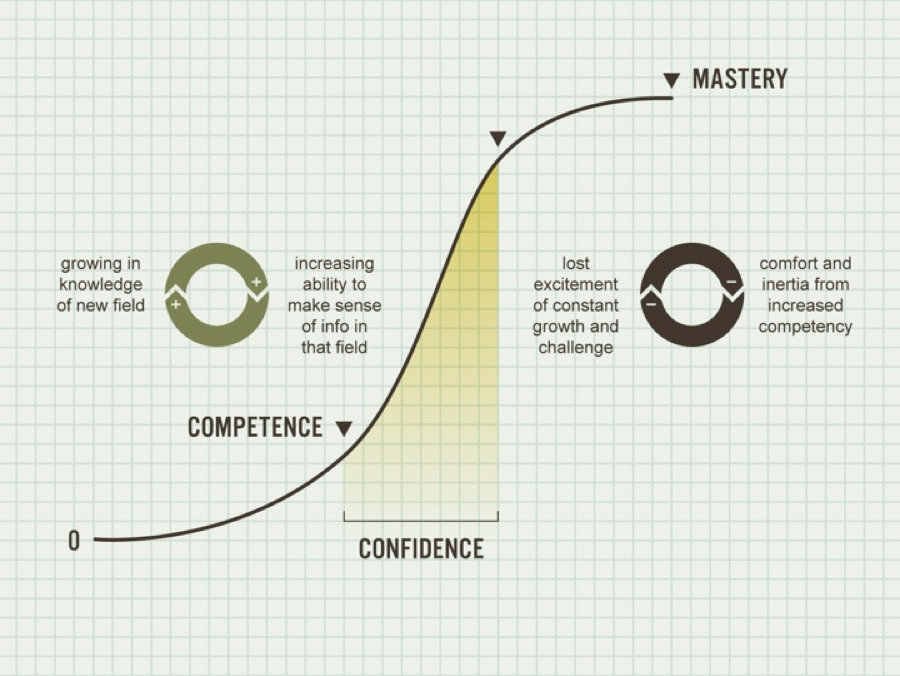
The S curve refers to a chart that is used to describe, visualize, and predict the performance of a project or business overtime. More specifically, it is a logistic curve that plots the progress of a variable by relating it to another variable over time.
The term S curve was developed as a result of the shape that the data takes. Projects on the S curve often experience a slow growth at the beginning, rapid growth in the middle, and slow growth and at the end. The maximum point of acceleration is called the point of inflexion. It is at this point that the project or business returns to the initial slow growth it started from.
Posted on September 27, 2024 by Dr. David Edward Marcinko MBA MEd CMP™
BREAKING NEWS
By Staff Reporters
Tropical Storm Helene made landfall in Florida last night as a Category 4 hurricane, the strongest to ever hit the state’s Big Bend. It is a huge and powerful storm—with a wind field that could span the distance between tjhe State of Maryland/Washington, DC, and Indianapolis/Chicago—that has already caused historic flooding to some of Florida’s coastal communities.
How bad is it? The Waffle House Index, which has been used by FEMA as an indicator of a storm’s severity, closed all of its locations in Tallahassee, Florida. The Waffle House Index [WHI] is an informal metric named after the Waffle House restaurant chain, headquartered in Georgia, and used by the Federal Emergency Management Agency (FEMA) to determine the effect of a storm and the likely scale of assistance required for disaster recovery.
And, as of 8am EST, Helene has weakened to a Category 1 as it’s moved into Atlanta, Georgia. Nearly 2 million customers are without power across Florida, Georgia, and North/South Carolina. You can get real-time updates here, as we hope everyone in the region is staying safe.
***
Stock market yesterday: The S&P 500 clinched a fresh new record amid GDP data and micro chip stock gains.and Stonk Stocks. Stonk, a deliberate misspelling of stock (meaning “a share of the value of a company which can be bought, sold, or traded as an investment”), was coined in a 2017 meme. The word is often used humorously on the internet to imply a vague understanding of financial transactions or poor financial decisions.
Upbeat GDP data and new stimulus measures in China were largely to thank. One of the day’s big winners was Southwest Airlines, which soared after executives announced plans to revitalize the business.
COMMENTS APPRECIATED
Thank You
***
*** Designated a Doody’s Core Title!
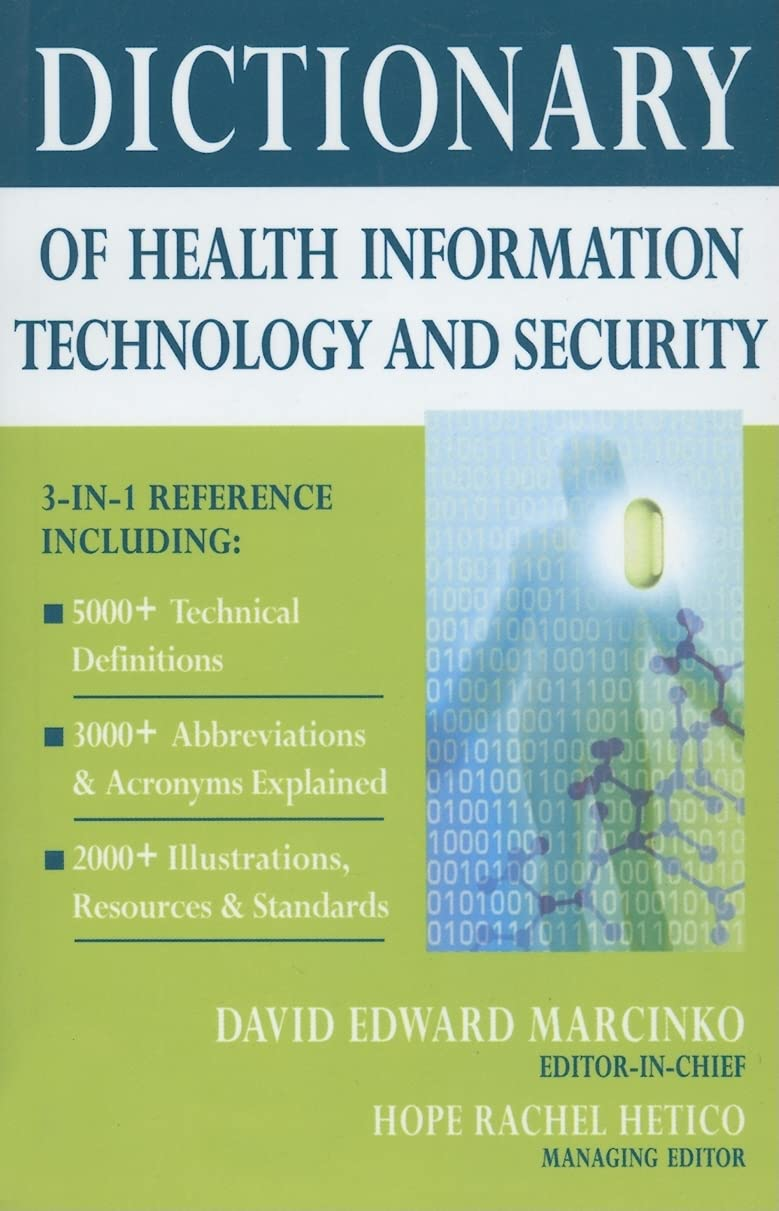
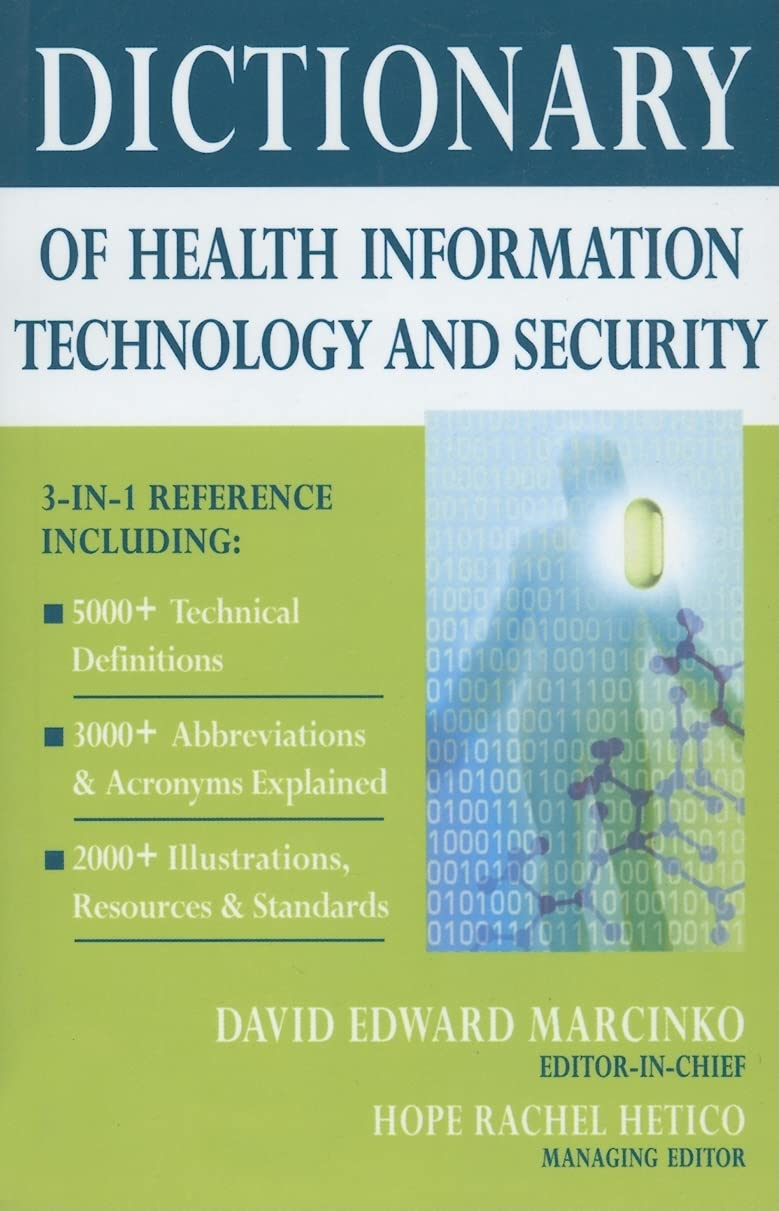
To keep up with the ever-changing field of health care, we must learn new and re-learn old terminology in order to correctly apply it to practice. By bringing together the most up-to-date abbreviations, acronyms, definitions, and terms in the health care industry, the Dictionary offers a wealth of essential information that will help you understand the ever-changing policies and practices in health insurance and managed care today.
Do you ever wish you could acquire specific information for your career activities without having to complete a university Master’s Degree or finish our entire Certified Medical Planner™ professional designation program? Well, Micro-Certifications from the Institute of Medical Business Advisors, Inc., might be the answer. Read on to learn how our three Micro-Certifications offer new opportunities for professional growth in the medical practice, business management, health economics and financial planning, investing and advisory space for physicians, nurses and healthcare professionals.
Micro-Certification Basics
Stock-Brokers, Financial Advisors, Investment Advisors, Accountants, Consultants, Financial Analyists and Financial Planners need to enhance their knowledge skills to better serve the changing and challenging healthcare professional ecosystem. But, it can be difficult to learn and demonstrate mastery of these new skills to employers, clients, physicians or medical prospects. This makes professional advancement difficult. That’s where Micro-Certification and Micro-Credentialing enters the online educational space. It is the process of earning a Micro-Certification, which is like a mini-degree or mini-credential, in a very specific topical area.
Micro-Certification Requirements
Once you’ve completed all of the requirements for our Micro-Certification, you will be awarded proof that you’ve earned it. This might take the form of a paper or digital certificate, which may be a hard document or electronic image, transcript, file, or other official evidence that you’ve completed the necessary work.
Uses of Micro-Certifications
Micro-Certifications may be used to demonstrate to physicians prospective medical clients that you’ve mastered a certain knowledge set. Because of this, Micro-Certifications are useful for those financial service professionals seeking medical clients, employment or career advancement opportunities.
Examples of iMBA, Inc., Micro-Certifications
Here are the three most popular Micro-Certification course from the Institute of Medical Business Advisors, Inc:
1. Health Insurance and Managed Care: To keep up with the ever-changing field of health care physician advice, you must learn new medical practice business models in order to attract and assist physicians and nurse clients. By bringing together the most up-to-date business and medical prctice models [Medicare, Medicaid, PP-ACA, POSs, EPOs, HMOs, PPOs, IPA’s, PPMCs, Accountable Care Organizations, Concierge Medicine, Value Based Care, Physician Pay-for-Performance Initiatives, Hospitalists, Retail and Whole-Sale Medicine, Health Savings Accounts and Medical Unions, etc], this iMBA Inc., Mini-Certification offers a wealth of essential information that will help you understand the ever-changing practices in the next generation of health insurance and managed medical care.
2. Health Economics and Finance: Medical economics, finance, managerial and cost accounting is an integral component of the health care industrial complex. It is broad-based and covers many other industries: insurance, mathematics and statistics, public and population health, provider recruitment and retention, health policy, forecasting, aging and long-term care, and Venture Capital are all commingled arenas. It is essential knowledge that all financial services professionals seeking to serve in the healthcare advisory niche space should possess.
3. Health Information Technology and Security: There is a myth that all physician focused financial advisors understand Health Information Technology [HIT]. In truth, it is often economically misused or financially misunderstood. Moreover, an emerging national HIT architecture often puts the financial advisor or financial planner in a position of maximum uncertainty and minimum productivity regarding issues like: Electronic Medical Records [EMRs] or Electronic Health Records [EHRs], mobile health, tele-health or tele-medicine, Artificial Intelligence [AI], benefits managers and human resource professionals.
Other Topics include: economics, finance, investing, marketing, advertising, sales, start-ups, business plan creation, financial planning and entrepreneurship, etc.
How to Start Learning and Earning Recognition for Your Knowledge
Now that you’re familiar with Micro-Credentialing, you might consider earning a Micro-Certification with us. We offer 3 official Micro-Certificates by completing a one month online course, with a live instructor consisting of twelve asynchronous lessons/online classes [3/wk X 4/weeks = 12 classes]. The earned official completion certificate can be used to demonstrate mastery of a specific skill set and shared with current or future employers, current clients or medical niche financial advisory prospects.
Mini-Certification Tuition, Books and Related Fees
The tuition for each Mini-Certification live online course is $1,250 with the purchase of one required dictionary handbook. Other additional guides, white-papers, videos, files and e-content are all supplied without charge. Alternative courses may be developed in the future subject to demand and may change without notice.
***
Contact: For more information, or to speak with an academic representative, please contact Ann Miller RN MHA CMP™ at: MarcinkoAdvisors@msn.com [24/7].
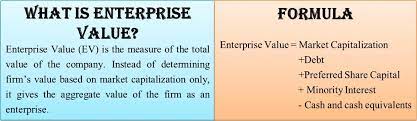
The enterprise value [EV] tends to be thought of as a theoretical takeover price if a company were to be bought. It is calculated as market capitalization plus debt, minority interest and preferred shares, minus total cash and cash equivalents.
Enterprise value = common equity at market value (this line item is also known as “market cap”) + debt at market value (here debt refers to interest-bearing liabilities, both long-term and short-term) + minority interest at market value, if any + preferred equity at market value + unfunded pension liabilities and other debt-deemed provisions – value of associate companies – cash and cash equivalents.
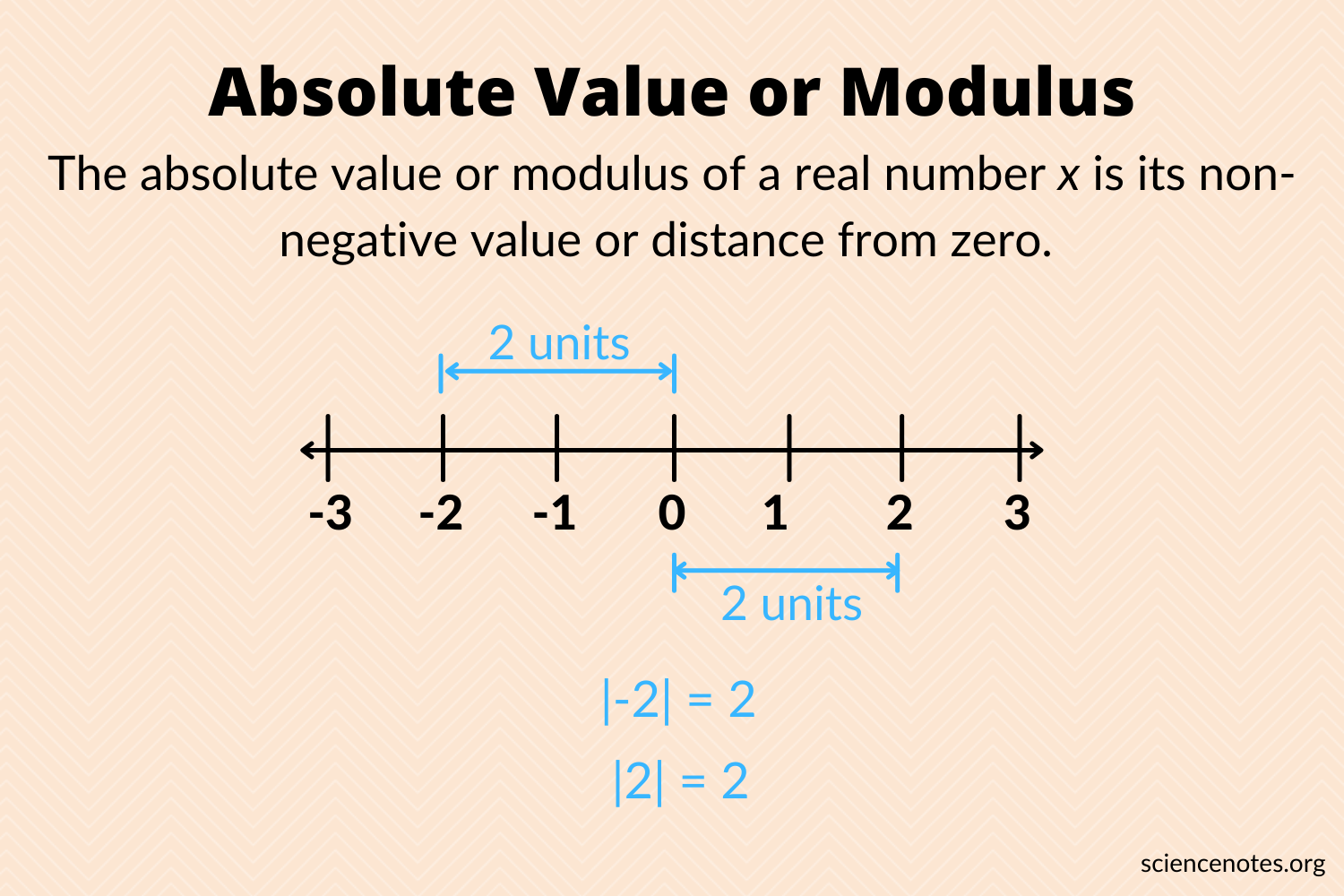
In mathematics, the absolute value or modulus of a real number x, denoted |x|, is the non-negative value of x without regard to its sign. Namely, |x| = x if x is positive, and |x| = −x if x is negative (in which case −x is positive), and |0| = 0. For example, the absolute value of 3 is 3, and the absolute value of −3 is also 3. The absolute value of a number may be thought of as its distance from zero.
***
In finance, absolute value, also known as an intrinsic value, refers to a business valuation method that uses discounted cash flow (DCF) analysis to determine a company’s financial worth. The absolute value method differs from the relative value models that examine what a company is worth compared to its competitors. Absolute value models try to determine a company’s intrinsic worth based on its projected cash flows.
Absolute value refers to a business valuation method that uses discounted cash flow analysis to determine a company’s financial worth.
Investors can determine if a stock is currently under or overvalued by comparing what a company’s share price should be given its absolute value to the stock’s current price.
There are some challenges with using the absolute value analysis including forecasting cash flows, predicting accurate growth rates, and evaluating appropriate discount rates.
Absolute value, unlike relative value, does not call for the comparison of companies in the same industry or sector.
Posted on September 23, 2024 by Dr. David Edward Marcinko MBA MEd CMP™
By Staff Reporters
***
***
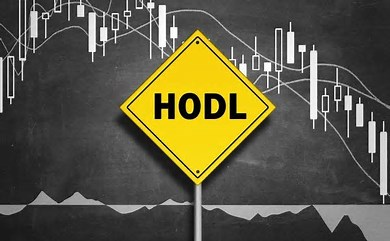
In the cryptocurrency world, people who HODL are usually inexperienced traders but who have a lot of faith in the future of Bitcoin. These traders believe that one day, Bitcoin will become a mainstream currency with a six-figure value. That is why they can’t risk losing any of their investments for short-term trading gratifications. These traders argue that given Bitcoin’s limited supply, the price will always rise as fewer and fewer coins remain in circulation and more investors and institutions recognize it as a store of value.
In a nutshell, HODL is now used to describe an investing strategy where investors are discouraged from trading based on short-term price swings. The approach basically stems from the rationale that inexperienced traders are more likely to lose their investment in short-term trading since they cannot correctly read and interpret vital signals. The safest approach for them, therefore, is to simply HODL and wait until their investments become highly profitable when the price goes up. Hodling can also help traders avoid two common mistakes in the cryptocurrency market. These are:
The Fear of Missing Out (FOMO) that can cause traders to buy high
Fear, Uncertainty, and Doubt (FUD) that can cause traders to sell low, also known as SODling.
Hodlers believe that cryptocurrencies will someday supplant fiat currencies and become insanely valuable. They, ideally, do not believe in exchanging cryptocurrencies for traditional money.
There is one popular meme that perfectly captures this maximalist philosophy. The meme is a satirical version of the Matrix Movie where Neo asks Orpheus “ “What are you trying to tell me, that I can trade my bitcoin for millions someday?” and Orpheus responds, “No Neo, I’m trying to tell you that when you’re ready … you won’t have to.”
That, according to Hodlers, means that a time will come when you won’t have to sell your Bitcoin for fiat money because there won’t be any fiat money but only Bitcoin.
Posted on September 22, 2024 by Dr. David Edward Marcinko MBA MEd CMP™
By Staff Reporters
***
***
*** Individuals Working in Care Management Rose by 63.8% Nearly 100 entities responded to the Sixth Annual Survey of Healthcare Consumer Engagement Practices. According to the survey:
• 65.8% of respondents reported that member experience was within the scope of their role in 2021: • 40.5% of respondents indicated their role included some responsibility for on-boarding and retention • Individuals working in care management rose by 63.8% • Individuals working in digital transformation rose by 50.4% • Individuals working in population health grew by 47.1% Source:Engagys, December 16, 2021 CITE: https://www.r2library.com/Resource/Title/082610254
Posted on September 22, 2024 by Dr. David Edward Marcinko MBA MEd CMP™
By Staff Reporters
***
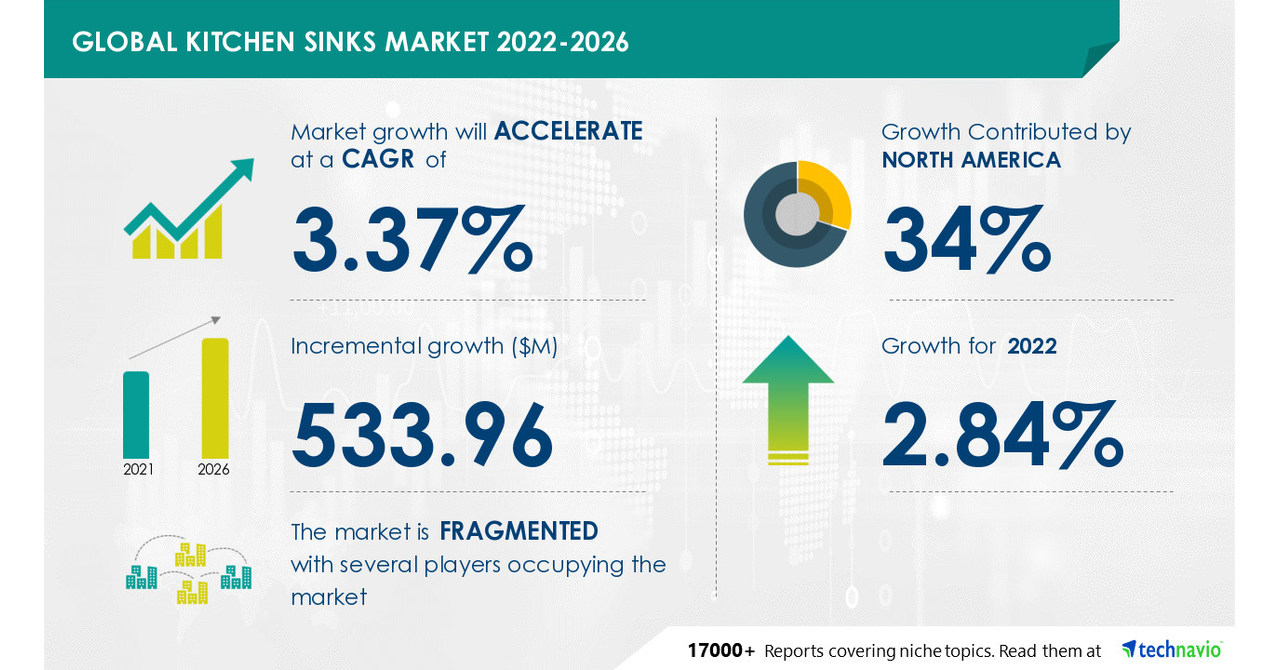
Technavio has announced its latest market research report titled Kitchen Sinks Market by End-user and Geography – Forecast and Analysis 2022-2026
***
Kitchen Sink stock market disclosures are a communication technique commonly used by political parties, public companies and businesses, although it’s not so well known by the public. The idea is to release all of your bad news at the same time rather than creating a drip-drip effect over an extended period of time.
Steven Barnett, professor of communications at the University of Westminster, says it’s used by organizations when they have some really shocking news they know they are not going to get away with burying. “You’re saying: ‘Let’s just sweep up every piece of bad news we’ve got, put it all in one place, take all of the flak and deal with it at the same time'”. “When you’re announcing the worst figures in your corporate history, you know it’s never going to be a page two story.”
It’s the opposite of the “dead cat” strategy where you distract people from something that is garnering a lot of attention. The idea being that, by placing a dead cat on the table, you make people look in a different direction.
“If you know that you have pretty appalling news, it makes absolute sense to get it all out at the same time because the speed and intensity of the news cycle demands that the agenda moves on so you know you’ll be out of the spotlight within 48 hours.”
Posted on September 22, 2024 by Dr. David Edward Marcinko MBA MEd CMP™
WHAT IS IT?
On an earnings call last year Microsoft CEO Satya Nadella said the term “enterprise metaverse.”
By [Avatar] Dr. David Edward Marcinko MBA
DEFINITION: The Metaverse is a collective virtual shared space, created by the convergence of virtually enhanced physical reality and physically persistent virtual space, including the sum of all virtual worlds, augmented reality, and the Internet.
The word “metaverse” is made up of the prefix “meta” (meaning beyond) and the stem “verse” (a back formation from “universe“); the term is typically used to describe the concept of a future iteration of the internet, made up of persistent, shared, 3D virtual spaces linked into a perceived virtual universe.
The law was named in 1860 by Henry Dunning Macleod, after Sir Thomas Gresham (1519–1579), who was an English financier during the Tudor dynasty. However, there are predecessors.
The law had been stated earlier by Nicolaus Copernicus. It was also stated in the 14th century, by Nicole Oresme in his treatise On the Origin, Nature, Law, and Alterations of Money, and by jurist and historian Al-Maqrizi (1364–1442) in the Mamluk Empire; and noted by Aristophanes in his play The Frogs, which dates from around the end of the 5th century BC.
***
***
IOW: It is the tendency for money of lower intrinsic value to circulate more freely than money of higher intrinsic and equal nominal value (often expressed as “Bad money drives out good”).
***
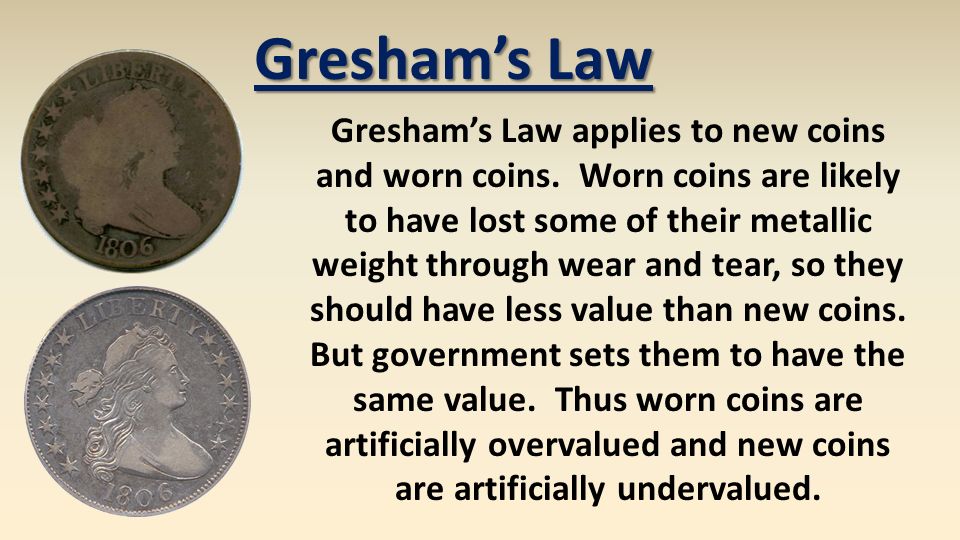
Gresham’s Law applies to new coins and worn coins. Worn coins are likely to have lost some of their metallic weight through wear and tear, so they should have less value than new coins. But government sets them to have the same value. Thus worn coins are artificially overvalued and new coins are artificially undervalued.
***
So, is Gresham’s Law still relevant today?
THINK: The modern Bitcoin, and related crypto-currency, controversy? We asked colleague Timothy J. McIntosh CFP® MPH CFA for some insights.
Feel free to review our top-left column, and top-right sidebar materials, links, URLs and related websites, too. Then, subscribe to the ME-P. It is fast, free and secure.
Speaker: If you need a moderator or speaker for an upcoming event, Dr. David E. Marcinko; MBA – Publisher-in-Chief of the Medical Executive-Post – is available for seminar or speaking engagements.
Subscribe: MEDICAL EXECUTIVE POST for curated news, essays, opinions and analysis from the public health, economics, finance, marketing, IT, business and policy management ecosystem.
Posted on September 20, 2024 by Dr. David Edward Marcinko MBA MEd CMP™
MEDICAL EXECUTIVE-POST–TODAY’SNEWSLETTERBRIEFING
***
Essays, Opinions and Curated News in Health Economics, Investing, Business, Management and Financial Planning for Physician Entrepreneurs and their Savvy Advisors and Consultants
“Serving Almost One Million Doctors, Financial Advisors and Medical Management Consultants Daily“
A Partner of the Institute of Medical Business Advisors , Inc.
Microsoft will buy back up to $60 billion in shares and is boosting its dividend by about 10% (from 75 cents per share to 83 cents).
Stat: 60%. That’s how much Intuitive Machines’ stock jumped in early trading yesterday after NASA awarded the company a contract to “build moon data satellites.” (CNBC)
MobilEye Global popped 14.99% after Intel announced it has no plans to sell any of its 88% stake in the autonomous driving company. Intel shares rose 1.78% as well.
What’s down
Trump Media & Technology Group fell 5.89% as the lockup period, during which early investors like the former president can’t sell their stake in the company, is about to end.
Progyny plummeted 32.65% after the health insurance benefits company announced it is losing a key customer that accounts for 12% of Progyny’s revenue.
Five Below sank 2.22% after JP Morgan analysts downgraded the stock, though they also boosted their price target.
The SPX rose 95.38 points (1.70%) to 5,713.64; the $DJI added 522.09 points (1.26%) to 42,025.19; the NASDAQ Composite® ($COMP) added 440.68 points (2.51%) to 18,013.98.
The 10-year Treasury note yield (TNX) climbed five basis points to 3.74%, while the 2-year note yield was unchanged.
The CBOE Volatility Index® (VIX) slid to 16.33, registering its lowest close so far this month.
Posted on September 19, 2024 by Dr. David Edward Marcinko MBA MEd CMP™
By Staff Reporters
***
***
The Russell 2000 Index is a stock market index that measures the performance of the 2,000 smaller companies included in the Russell 3000 Index. The Russell 2000 is managed by London’s FTSE Russell Group, widely regarded as a bellwether of the U.S. economy because of its focus on smaller companies in the U.S. market.
As of 31st December 2022, the weighted average market capitalization of a company in the index is approximately $2.76 billion and the median market capitalization is approximately $950 million. The market capitalization of the largest company in the index is approximately $8.1 billion. It first traded above the 1,000 level on May 20th, 2013, and above the 2,000 level on December 23rd, 2020.
Similar small-cap indices include the S&P 600 from Standard & Poor’s, which is less commonly used, along with those from other financial information providers.
Posted on September 18, 2024 by Dr. David Edward Marcinko MBA MEd CMP™
At 2 pm EST Today
By Staff Reporters
***
***
ABOUT THE FEDERAL OPEN MARKET COMMITTEE
The term “monetary policy” refers to the actions undertaken by a central bank, such as the Federal Reserve, to influence the availability and cost of money and credit to help promote national economic goals. The Federal Reserve Act of 1913 gave the Federal Reserve responsibility for setting monetary policy.
The Federal Reserve controls the three tools of monetary policy–open market operations, the discount rate, and reserve requirements. The Board of Governors of the Federal Reserve System is responsible for the discount rate and reserve requirements, and the Federal Open Market Committee is responsible for open market operations. Using the three tools, the Federal Reserve influences the demand for, and supply of, balances that depository institutions hold at Federal Reserve Banks and in this way alters the federal funds rate. The federal funds rate is the interest rate at which depository institutions lend balances at the Federal Reserve to other depository institutions overnight.
Changes in the federal funds rate trigger a chain of events that affect other short-term interest rates, foreign exchange rates, long-term interest rates, the amount of money and credit, and, ultimately, a range of economic variables, including employment, output, and prices of goods and services.
And so, the macroeconomic FOMC is kicking off at 2pm ET today, when the Fed will announce the first interest rate cut in over four years. But, financial watchers are split between two predictions: a standard 0.25% cut or a more aggressive one of 0.5% (investors are betting on the latter, while many analysts think the former).
Regardless of its size, today’s rate cut and subsequent ones are expected to make borrowing cheaper for consumers and businesses, with ripple effects throughout the economy.
Your thoughts and comments on this ME-P are appreciated. Feel free to review our top-left column, and top-right sidebar materials, links, URLs and related websites, too. Then, subscribe to the ME-P. It is fast, free and secure.
Speaker: If you need a moderator or speaker for an upcoming event, Dr. David E. Marcinko; MBA – Publisher-in-Chief of the Medical Executive-Post – is available for seminar or speaking engagements.
Subscribe: MEDICAL EXECUTIVE POST for curated news, essays, opinions and analysis from the public health, economics, finance, marketing, IT, business and policy management ecosystem.
Walt Ehmer, the president and CEO of Waffle House and a member of the board of trustees for the Atlanta Police Foundation, has died at age 58, the foundation announced last Sunday; 2024. Ehmer joined Waffle House in 1992 and quickly rose to senior leadership, becoming president of the company in 2002, and later adding the titles of CEO and chairman, according to information from Georgia Tech University, his alma mater.
“His leadership, dedication and warmth touched the lives of many, both within the Waffle House family and beyond. He leaves behind a remarkable legacy,” Mayor Andre Dickens said in a news release.
415 Restaurants Closed in Georgia and Elsewhere in 2022
The Waffle House Index [WHI] is an informal metric named after the Waffle House restaurant chain, headquartered in Georgia, and used by the Federal Emergency Management Agency (FEMA) to determine the effect of a storm and the likely scale of assistance required for disaster recovery.
IOW: “If you get there and the Waffle House is closed? Well, that’s really bad”, according to Craig Fugate – Former Head of the Federal Emergency Management Agency [FEMA].
Posted on September 7, 2024 by Dr. David Edward Marcinko MBA MEd CMP™
MEDICAL EXECUTIVE-POST–TODAY’SNEWSLETTERBRIEFING
***
Essays, Opinions and Curated News in Health Economics, Investing, Business, Management and Financial Planning for Physician Entrepreneurs and their Savvy Advisors and Consultants
“Serving Almost One Million Doctors, Financial Advisors and Medical Management Consultants Daily“
A Partner of the Institute of Medical Business Advisors , Inc.
Telehealth has become all the rage following the Covid-19 pandemic, with about 17% of appointments going virtual, up from 1% in February 2020.
Stat: 350. That’s about how many small and rural US hospitals—out of roughly 1,800—are using free and cheap cybersecurity resources the White House rolled out this summer. (Nextgov/FCW)
Quote: “We’re being blinded.”—Meghan Curry O’Connell, chief public health officer for the Great Plains Tribal Leaders’ Health Board, on the reported lack of access Native American tribal epidemiology centers have to federal government health data (KFF Health News)
Read: Race is used in clinical algorithms that determine patient diagnoses and care for everything from kidney transplants to lung function. A growing number of health professionals argue it shouldn’t be. (Stat)
Bowlero climbed 6.68% after announcing impressive revenue growth and a positive fourth-quarter forecast.
Guidewire Software gained 12.36% thanks to a strong quarter for the insurance software provider.
Big Lots soared 8.73% after it faked out the market and delayed the announcement of its latest quarterly earnings for another week. Management is probably trying to find some loose change between the couch cushions to stave off bankruptcy.
What’s down
Broadcom sank 10.36% after beating earnings but failing to impress investors with revenue guidance for next quarter.
Super Micro Computer just can’t catch a break, and fell another 6.79% after a JP Morgan analyst downgraded the stock due to the sense of uncertainty hanging around it.
UIPath shed 6.04% even though the AI software provider beat top and bottom line expectations, forecast solid growth ahead, and increased its share buyback program.
Semiconductor stocks sank as a group, pulled lower by fears of slowing growth. ASML Holding dropped 5.38%, MarvellTechnology slid 5.28%, and KLACorporation stumbled 3.47%.
The S&P 500® index (SPX)dropped 95points (–1.73%) to 5,408.42, down 4.3% for the week; the Dow Jones Industrial Average® ($DJI) fell 410.34 points (–1.01%) to 40,345.41, down 2.9% on the week; NASDAQ Composite® ($COMP)declined 436.82 points (–2.55%) to 16,690.83, down 5.8% for the week.
The 10-year Treasury note yield (TNX) fell two basis points to 3.71%and was down 20 basis points for the week, but now, it has a six-basis point premium to the 2-year Treasury note yield, which fell 28 basis points this week.
The CBOE Volatility Index® (VIX) hopped to 22.21 after hitting 23.76 intraday, the highest since August 8.
Posted on September 6, 2024 by Dr. David Edward Marcinko MBA MEd CMP™
TODAYSEPTEMBER SIXTH
By Staff Reporters
***
***
National Read a Book Day on September 6th calls all book lovers to indulge in their favorite hobby, guilt-free. Bringing new worlds to life, books enlighten us and transport us on exciting adventures. They can challenge our perspectives on the human experience in ways unmatched by other media. In a world deluged by technology, National Read a Book Day encourages us to silence the noise and turn the pages for a while.
While National Read a Book Day is believed to have originated in the US, other details of the day’s history are unclear. What is clear, though, is Americans’ love for books! And, for many, this is a welcomed day because 81% of us don’t feel we spend as much time reading as we would like. So, today is the perfect opportunity to set aside a little time to catch up on our “to read” list.
The popularity of book clubs points to our ongoing love for books. They date back to the 1600s with women’s Bible studies. But, in the last few decades, reading has taken on a much more social element influenced, in large part, by Oprah Winfrey’s Book Club. Starting in 1996, Oprah’s Book Club recommended 70 books contributing to over $55 million in sales and has been credited with inspiring millions of people to read books.
Over 74% of Americans have read at least one book in the last 12 months. Sure, the busyness of life definitely gets in the way of our reading pursuits with many other activities competing for our time. Luckily, electronic platforms have made it easier for us to read on the go. Almost 20% of books consumed are now via electronic platforms. Whatever format you prefer, grab or download the book on the top of your stack and dive in!
Posted on September 5, 2024 by Dr. David Edward Marcinko MBA MEd CMP™
Information that Physician Investors Should Know?
By Staff Reporters
DEFINITION: Fractional shares are partial shares of a company’s stock. Instead of owning one or more full shares of the stock, you own a portion, or fraction, of one. In the past, investors generally would end up with fractional shares only after a stock split, since brokers allowed the purchase of full shares only.
A fractional share is a portion of an equity stock that is less than one full share.
Fractional shares often result from stock splits, which don’t always result in an even number of shares.
Mergers or acquisitions create fractional shares, as companies combine new common stock using a predetermined ratio.
Fractional shares can make it easy to buy very small stakes in many different companies. But, if your brokerage charges commissions, you might wind up paying a lot of fees due to the temptation to invest in many different companies.
Posted on September 5, 2024 by Dr. David Edward Marcinko MBA MEd CMP™
By Staff Reporters
***
***
An increasingly common leasing scam is the money factor lie
The “money factor” in leasing is the financing cost of a monthly lease payment and is similar to an interest rate – and it’s important to know the difference. The money factor is a small decimal and should be shown as such, whereas the interest rate is a percentage. A deceitful sales person will count on you not knowing the difference.
For example, a interest rate of 2.5% is not the same as a factor of .0025 and when the latter is used to calculate your lease payment, he or she ends up overcharging you. As a result, you have to pay much more over the lease term without realizing it.
To calculate the money factor, use this formula: Money Factor = Lease Charge / (Capitalized Cost * Residual Value) * Lease Term. It’s important to note that the customer’s credit score determines the money factor. The higher your credit score is, the lower the money factor on the lease will be.
One way to calculate the money factor is by converting it to an APR. To do this, you multiply the money factor by 2,400. If a car dealer provides you with an interest rate, divide it by 2,400 to find the money factor.
In another example, if you are quoted a money factor of .003 on a loan, that would be (2,400x.003) 7.2%. If the car dealer quotes you an interest rate of 4.2%, you can divide it by 2,400 to find the money factor of .00175.
The money factor may be shown in an easier-to-read format, like 1.75 instead of .00175. This can often confuse customers because it appears to be a low interest rate. But don’t be fooled by a money factor presented as a factor of 1,000. Always be sure to ask if the number you are given is the APR or the money factor. If it’s the money factor, convert it to APR so that you can clearly see the interest rate.
Posted on September 4, 2024 by Dr. David Edward Marcinko MBA MEd CMP™
***
***
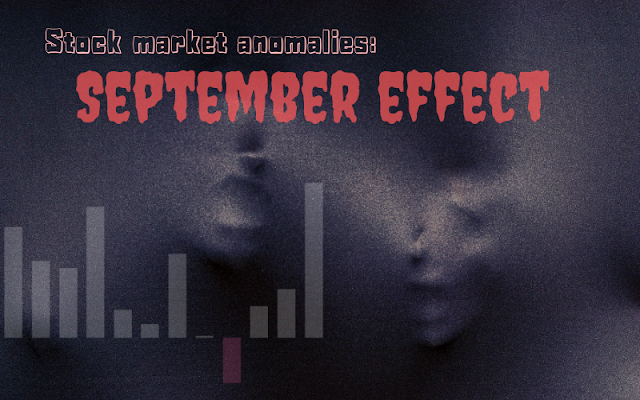
Yesterday was only the first trading day of what’s traditionally Wall Street’s weakest month of the year, and September’s already living up to its reputation.
U.S. stocks tumbled Tuesday to their worst day since an early August sell-off, as a week full of updates on the economy got off to a discouragingly weak start. The S&P 500 sank 2.1% to give back a chunk of the gains from a three-week winning streak that had carried it to the cusp of its all-time high. The Dow Jones Industrial Average dropped 626 points, or 1.5%, from its own record set on Friday before Monday’s Labor Day holiday. The NASDAQ composite fell 3.3% as Nvidia and other Big Tech stocks led the way lower.
Understanding the September Effect
From 1928 through 2023, the S&P 500 index has averaged a decline during the month of September.
Stock Trader’s Almanac. “September Almanac: Worst Month of the Year since 1950.” This is, however, an average observed over many nearly a century, and September is certainly not the worst month of stock-market trading every year. In fact, for some years September has been among the best-performing months. Moreover, while the average return for September is negative, the median return for that month has turned positive.
While the September Effect might present a market anomaly in the sense that it violates the assumption of market efficiency, the effect is not overwhelming and, more importantly, is not predictive in any useful sense. This is because the time period under consideration will matter a great deal.
For instance, if an individual had bet against September over the last 100 years, that individual would have made an overall profit. If the investor had made that bet only since 2014, though, that investor would have lost money.
Beside market, limit and stop orders, there are some other miscellaneous orders for the physician or guided investor, to know:
A stop limit order is a stop order that, once triggered or activated, becomes a limit order. Realize that it is possible for a stop limit to be triggered and not executed, as the limit price specified by the doctor may not be available.
In addition, there are all or none and fill or kill orders, and even though both require the entire order to be filled, there are distinct differences. An all or none (AON) is an order in which the broker is directed to fill the entire order or none of it.
A fill or kill (FOK) is an order either to buy or to sell a security in which the broker is directed to attempt to fill the entire’ amount of the order immediately and in full, or that it be canceled.
The difference between an all or none and a fill or kill order is that with an all or none order, immediate execution is not required, while immediate execution is a critical component of the fill or kill. Because of the immediacy requirement,
FOK orders are never found on the specialist’s book. Another difference is that AON orders are only permitted for bonds, not stocks, while FOK orders may be used for either.
Also, there exists an immediate or cancel order (IOC), which is an order to buy or sell a security in which the broker is directed to attempt to fill immediately as much of the order as possible and cancel any part remaining. This type of order differs from a fill-or-kill order which requires the entire order to be filled. An IOC order will permit a partial fill. Because of the immediacy requirement, IOC and FOK orders are never found on the specialist’s book.
Long and Short Positions
A long buy position means that shares are for sale from a market makers inventory or owned by the medical investor outright. Market makers take long positions when customers and other firms wish to sell, and they take short positions when customers and other firms want to buy in quantities larger than the market maker’s inventory. By always being ready, willing, and able to handle orders in this way, market makers assure the investing public of a ready market in the securities in which they are interested. When a security can be bought and sold at firm prices very quickly and easily the security is said to have a high degree of liquidity, also known as marketability.
A short position investor seeks to make a profit by participating in the decline in the market price of a security.
Now; let’s see how these terms, long and short, apply to transactions by medical investors [rather than market makers] in the securities markets.
When a doctor buys any security – he is said to be taking a long position in that security. This means the investor is an owner of the security. Why does a doctor take a long position in a security? Well, receiving dividend income to make a profit from an increase in the market price is one reason. Once the security has risen sufficiently in price to satisfy the investor’s profit needs, the investor will liquidate his long position, or sell his stock. This would officially be known as a long sale of stock, though few people in the securities business use the label “long sale”. This is the manner in which the above investor had made a profit is the traditional method used; buy low, sell high.
Let’s look at an actual investment in General Motors to investigate this principle further. A medical investor has taken a long position in 100 shares of General Motors stock at a price of $70 per share. This means that the manner in which he can do that is by placing a market order which will be executed at the best “available market price at the time, or by the placing of a buy limit order with a limit price of $70 per share. The investor firmly believes, on the basis of reports that he has read about the automobile industry and General Motors specifically, that at $70 a share, General Motors is a real bargain. He believes that based on its current level of performance, it should be selling for a price of between $80 and $85 per share. But, the doctor investor has a dilemma. He feels certain that the price is going to rise but he cannot watch his computer, or call his broker, every hour of every day. The reason he can’t watch is because patients have to be seen in the office. The only people who watch a computer screen all day are those in the offices of brokerage firms (stock broker registered representatives), and doctor day traders, among others.
In the above example, with a sell limit order, if the doctor investor was willing to settle for a profit of $12 per share, what order would he place at this time? If you said, “sell at $82 good ’til canceled”, you are correct. Why GTC rather than a day order? Because our doctor investor knows that General Motors is probably not going to rise from $70 to $82 in one day. If he had placed an order to sell at $82 without the GTC qualification, his order would have been canceled at the end of this trading day. He would have had to re-enter the order each morning until he got an execution at 82. Marking the order GTC (or open) relieves him of any need to replace the order every morning. Several weeks later, when General Motors has reached $82 per share in the market, his order to sell at 82 is executed. The medical investor has bought at 70 and sold at 82 and realized a $12 per share profit for his efforts.
Let’s suppose that the medical investor, who has just established a $12 per share profit, has evaluated the performance of General Motors common stock by looking at the market performance over a period of many years. Let’s further assume that the investor has found by evaluating the market price statistics of General Motors that the pattern of movement of General Motors is cyclical. By cyclical, we mean that it moves up and down according to a regular pattern of behavior.
Let’s say the investor has observed that in the past, General Motors had repeated a pattern of moving from prices in the $60 per share range as a low, to a high of approximately $90 per share. Further, our investor has observed that this pattern of performance takes approximately 10 to l2 months to do a full cycle; that is, it moves from about 60 to about 90 and back to about 60 within a period of roughly l2 months. If this pattern repeats itself continually, the investor would be well advised to buy the stock at prices in the low to mid 60’s hold onto it until it moves well into the 80’s, and then sell his long position at a profit. However, what this means is that our investor is going to be invested in General Motors only 6 months of each year. That is, he will invest when the price is low and, usually within half a year, it will reach its high before turning around and going back to its low again. How can the doctor-investor make a profit not only on the rise in price of General Motors in the first 6 months of the cycle, but on the fall in price of General Motors in the second half of the cycle? One technique that is available is the use of the short sale.
The Short Sale
If a doctor investor feels that GM is at its peak of $ 90 per share, he may borrow 100 shares from his brokerage firm and sell the 100 shares of borrowed GM at $ 90. This is selling stock that is not owned and is known as a short sale. The transaction ends when the doctor returns the borrowed securities at a lower price and pockets the difference as a profit. In this case, the doctor investor has sold high, and bought low.
Odd Lots
Most of the thousands of buy and sell orders executed on a typical day on the NYSE are in 100 share or multi-100 share lots. These are called round lots. Some of the inactive stocks traded at post 30, the non-horseshoe shaped post in the northwest corner of the exchange, are traded in 70 share round lots due to their inactivity. So, while a round lot is normally 700 shares, there are cases where it could be 10 shares. Any trade for less than a round lot is known as an odd lot. The execution of odd lot orders is somewhat different than round lots and needs explanation.
When a stock broker receives an odd lot order from one of his doctor customers, the order is processed in the same manner as any other order. However, when it gets to the floor, the commission broker knows that this is an order that will not be part of the regular auction market. He takes the order to the specialist in that stock and leaves the order with the specialist. One of the clerks assisting the specialist records the order and waits for the next auction to occur in that particular stock. As soon as a round lot trade occurs in that particular stock as a result of an auction at the post, which may occur seconds later, minutes later, or maybe not until the next day, the clerk makes a record of the trade price.
Every odd lot order that has been received since the last round lot trade, whether an order to buy or sell, is then executed at the just noted round lot price, the price at which the next round lot traded after receipt of the customer’s odd lot order, plus or minus the specialist’s “cut “. Just like everything else he does, the specialist doesn’t work for nothing. Generally, he will add 1/8 of a point to the price per share of every odd lot buy order and reduce the proceeds of each odd lot sale order by 1/8 per share. This is the compensation he earns for the effort of breaking round lots into odd lots. Remember, odd lots are never auctioned but, there can be no odd lot trade unless a round lot trades after receipt of the odd lot order.
Posted on August 30, 2024 by Dr. David Edward Marcinko MBA MEd CMP™
By Staff Reporters
***
***
DEFINITION: Consumer confidence index (CCI) is a standardized confidence indicator providing an indication of future developments of households’ consumption and saving.
The index is based upon answers regarding household’s expected financial situation, their sentiment about the general economic situation, unemployment and capability of savings. An indicator above 100 signals a boost in the consumers’ confidence towards the future economic situation, as a consequence of which they are less prone to save, and more inclined to spend money on major purchases in the next 12 months. Values below 100 indicate a pessimistic attitude towards future developments in the economy, possibly resulting in a tendency to save more and consume less.
The decline in inflation and the expectation of an imminent interest rate cut have Americans feeling better about the economy than they have in a while, according to the latest update of the Conference Board’s consumer confidence index [CCI].
On the other hand, consumers are worried about the softening labor market. While the unemployment rate remains below historical standards at 4.3%, it has increased for four straight months—likely enough to convince J. Powell and the Federal Reserve to cut rates in September.
DEFINITION: According to Wikipedia, the lipstick index is a term coined by Leonard Lauder, chairman of the board of Estee Lauder, used to describe increased sales of cosmetics during the early 2000s recession. Lauder made the claim that lipstick sales could be an economic indicator, in that purchases of cosmetics – lipstick in particular – tend to be inversely correlated to economic health. The speculation was that women substitute lipstick for more expensive purchases like dresses and shoes in times of economic distress.
Lauder identified the Lipstick index as sales across the Estee Lauder family of brands. Subsequent recessions, including the late-2000s recession, provided controverting evidence to Lauder’s claims, as sales have actually fallen with reduced economic activity. Conversely, lipstick sales have experienced growth during periods of increased economic activity. As a result, the lipstick index has been discredited as an economic indicator. The increased sales of cosmetics in 2001 has since been attributed to increased interest in celebrity-designed cosmetics brands.
In the 2010s, many media outlets reported that with the rise of nail art as fad in the English-speaking countries and as far afield as Japan and the Philippines, nail-polish had replaced lipstick as the main affordable indulgence for women in place of bags and shoes during recession, leading to talk of a Nail Polish index. Similar sentiment was noted during the coronavirus pandemic, when the mandated use of face masks to prevent the spread of the disease resulted in an increase of eye makeup purchases, suggesting a Mascara index.
Now, decades after former Estée Lauder chairman Leonard Lauder first recognized the infamous “lipstick index”—the idea that cosmetics sales hold steady and sometimes spike during economic downturns—the same company posted a relatively downbeat earnings report.
Currently, the economy’s not great, but not abysmal, which makes for two possible interpretations of Estée Lauder’s latest report: Either the economy’s better than it seems, or the lipstick index was always a bit off.
The cosmetics giant reported declining sales figures, while weakening its full-year forecast. “For full-year fiscal 2023, we delivered organic sales growth and prestige beauty share gains in many developed and emerging markets, but Asia travel retail pressured results, particularly in skin care, and we continued to experience softness in North America,” the report said.
Posted on August 28, 2024 by Dr. David Edward Marcinko MBA MEd CMP™
By Staff Reporters
***
***
A consumer confidence index (CCI) is an economic indicator published by various organizations in several countries.
In simple terms, increased consumer confidence indicates economic growth in which consumers are spending money, indicating higher consumption. Decreasing consumer confidence implies slowing economic growth, and so consumers are likely to decrease their spending.
The idea is that the more confident people feel about the economy and their jobs and incomes, the more likely they are to make purchases. Declining consumer confidence is a sign of slowing economic growth and may indicate that the economy is headed into trouble.
FOR EXAMPLE:
Consumers’ assessment of current business conditions was mixed in November, 2022.
18.2% of consumers said business conditions were “good,” up from 17.7%.
On the other hand, more consumers, 26.7%, said business conditions were “bad,” up from 24.0%.
Consumers’ appraisal of the labor market was somewhat more favorable.
45.8% of consumers said jobs were “plentiful,” up from 44.8%.
13.0% of consumers said jobs were “hard to get,” unchanged from last month.
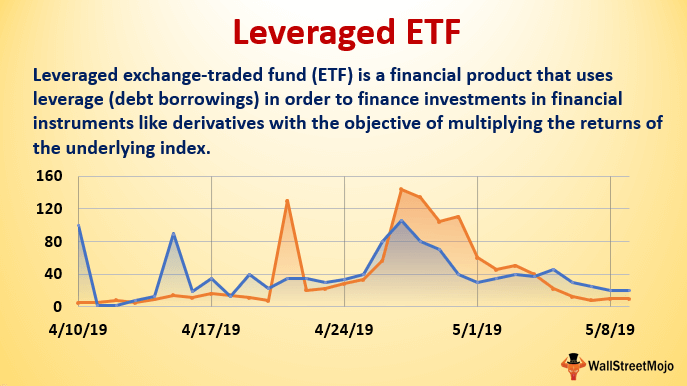
Leveraged ETFs have received tremendous media attention and are proving to be extremely popular with both individual and institutional investors. There are hundreds of leveraged ETFs, covering virtually every asset class and industry sector. The majority are double-leveraged, but there’s a sizeable group of triple-leveraged ETFs.
For professional investors, leveraged ETFs are useful in statistical arbitrage, short-term tactical strategies, and for use as short-term hedges without the need to roll futures. For individual investors, leveraged ETFs are alluring because of the potential for higher returns.
Now, some physicians and Uninformed investors might assume that the leverage returns are generated on a continuous basis, so that if an underlying index is up 5% for a month, the double-leveraged ETF will be up 10% for the same month; if the index is up 10% for 6 months, the ETF will be up 20%, and so forth. That is absolutely not the case. The leverage is determined on a daily basis and the returns for any other period usually will not be double or triple the underlying index.
In order for the leveraged funds to achieve appropriate levels of assets so they can provide their implied leverage, they have to rebalance daily. In the case of an ETF providing long 2-times leveraged exposure, they would typically attain exposure to a notional set of assets equal to 2 times their NAV.
Example: An example would be an ETF that takes in 100 units in assets that does a swap with a counterparty to provide exposure to 200 units in performing assets. The rebalancing activity of these funds will almost always be in the same direction as the market.
In essence, a leveraged ETF is essentially marked to market every night. It starts with a clean slate the next day, almost as if the previous day had not existed. This process produces daily leverage results. However, over time, the compounding of this reset can potentially vary the performance of the fund versus its underlying benchmark. This can result in either greater or lesser degrees of final leverage over individual holding periods.
Posted on August 23, 2024 by Dr. David Edward Marcinko MBA MEd CMP™
Is A Market Downside Ahead?
By Staff Reporters
***
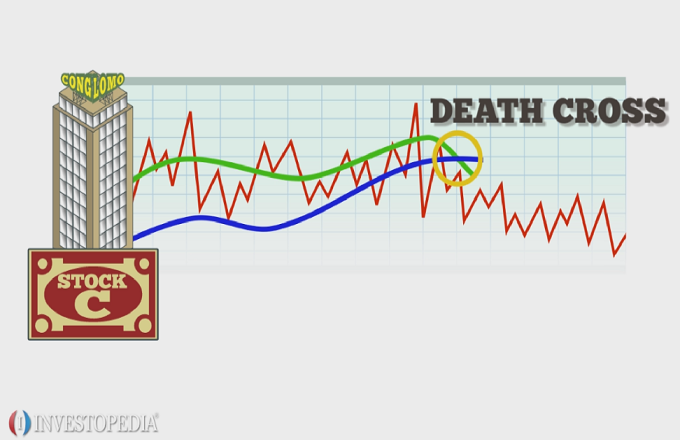
Charles Schwab: The stock is about to form a death cross pattern as the 200-day and 50-day moving averages are about to cross each other. If this pattern forms, there are signs that the stock will continue falling as sellers target the key support at $60.8, its lowest point this month. A break above that level will see it drop to the psychological support at $55.
***
What Is a Death Cross?
The death cross is a technical chart pattern indicating the potential for a major sell-off. The death cross appears on a chart when a stock’s short-term moving average crosses below its long-term moving average. Typically, the most common moving averages used in this pattern are the 50-day and 200-day moving averages.
Financial ratio analysis typically involves the calculation of ratios that are financial and operational measures representative of the financial status of a clinic or medical practice enterprise. These ratios are evaluated in terms of their relative comparison to generally established industry norms, which may be expressed as positive or negative trends for that industry sector. The ratios selected may function as several different measures of operating performance or financial condition of the subject entity.
Common types of financial indicators that are measured by ratio analysis include:
Liquidity. Liquidity ratios measure the ability of an organization to meet cash obligations as they become due, i.e., to support operational goals. Ratios above the industry mean generally indicate that the organization is in an advantageous position to better support immediate goals. The current ratio, which quantifies the relationship between assets and liabilities, is an indicator of an organization’s ability to meet short-term obligations. Managers use this measure to determine how quickly assets are converted into cash.
Activity. Activity ratios, also called efficiency ratios, indicate how efficiently the organization utilizes its resources or assets, including cash, accounts receivable, salaries, inventory, property, plant, and equipment. Lower ratios may indicate an inefficient use of those assets.
Leverage.Leverage ratios, measured as the ratio of long-term debt to net fixed assets, are used to illustrate the proportion of funds, or capital, provided by shareholders (owners) and creditors to aid analysts in assessing the appropriateness of an organization’s current level of debt. When this ratio falls equal to or below the industry norm, the organization is typically not considered to be at significant risk.
Profitability. Indicates the overall net effect of managerial efficiency of the enterprise. To determine the profitability of the enterprise for bench marking purposes, the analyst should first review and make adjustments to the owner(s) compensation, if appropriate. Adjustments for the market value of the “replacement cost” of the professional services provided by the owner are particularly important in the valuation of professional medical practices for the purpose of arriving at an ”economic level” of profit.
The selection of financial ratios for analysis and comparison to the organization’s performance requires careful attention to the homogeneity of data. Bench marking of intra-organizational data (i.e., internal bench marking) typically proves to be less variable across several different measurement periods.
However, the use of data from external facilities for comparison may introduce variation in measurement methodology and procedure. In the latter case, use of a standard chart of accounts for the organization or recasting the organization’s data to a standard format can effectively facilitate an appropriate comparison of the organization’s operating performance and financial status data to survey results.
Posted on August 19, 2024 by Dr. David Edward Marcinko MBA MEd CMP™
By Staff Reporters
***
***
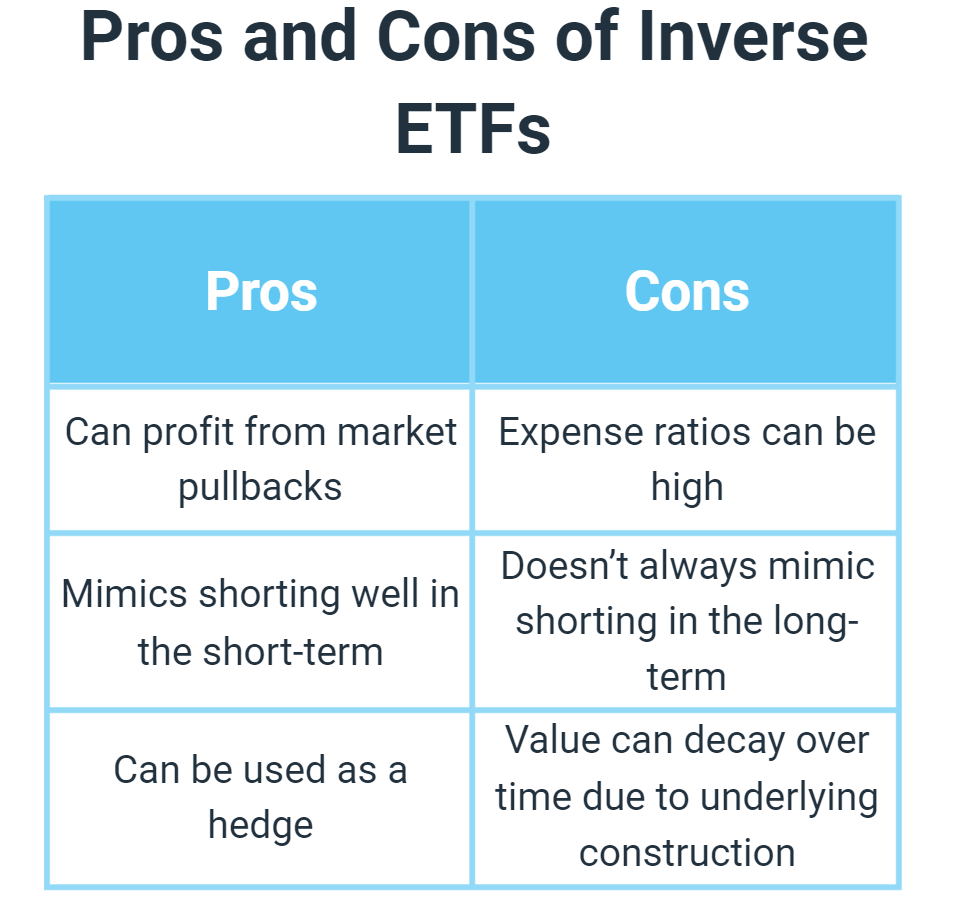
What are inverse ETFs?
An inverse ETF, often known as a bear or short ETF, is an exchange-traded fund designed to profit from a market decline. These short-term, publicly traded investments are utilized by investors who believe that a particular market or individual security will lose value in the near future. They may use inverse ETFs as a way of hedging losses during a downturn.
“Inverse ETFs are a tool to hedge a stock portfolio,” according to John DeYonker. “If the S&P 500 is your benchmark, and it goes up 1%, then your hedge will go down 1% and vice versa. Hedging with inverse ETFs can reduce volatility for investors—it’s like insurance.”
Investors may also use inverse ETFs as a way to take advantage of a predicted decline. In this way, they may be used as an alternative to short selling. For example, if an investor believes that the oil industry will have a setback in the immediate future, they may choose to purchase an inverse ETF of securities tied to energy producers. If correct in their prediction, the investor’s inverse ETF may recognize a profit. If the investor is incorrect, and the market or individual security increases in price, they may see a loss.
An investor who believes that the S&P 500 will decline, for example, may choose to purchase shares of the ProShares Short S&P 500. This inverse ETF’s value is inversely proportional to the overall S&P 500 index.
Inverse ETFs are generally considered to be highly volatile investments, as their losses typically compound daily. This makes inverse ETFs more risky than the index to which they are tied.
Posted on August 18, 2024 by Dr. David Edward Marcinko MBA MEd CMP™
By Staff Reporters
***
***
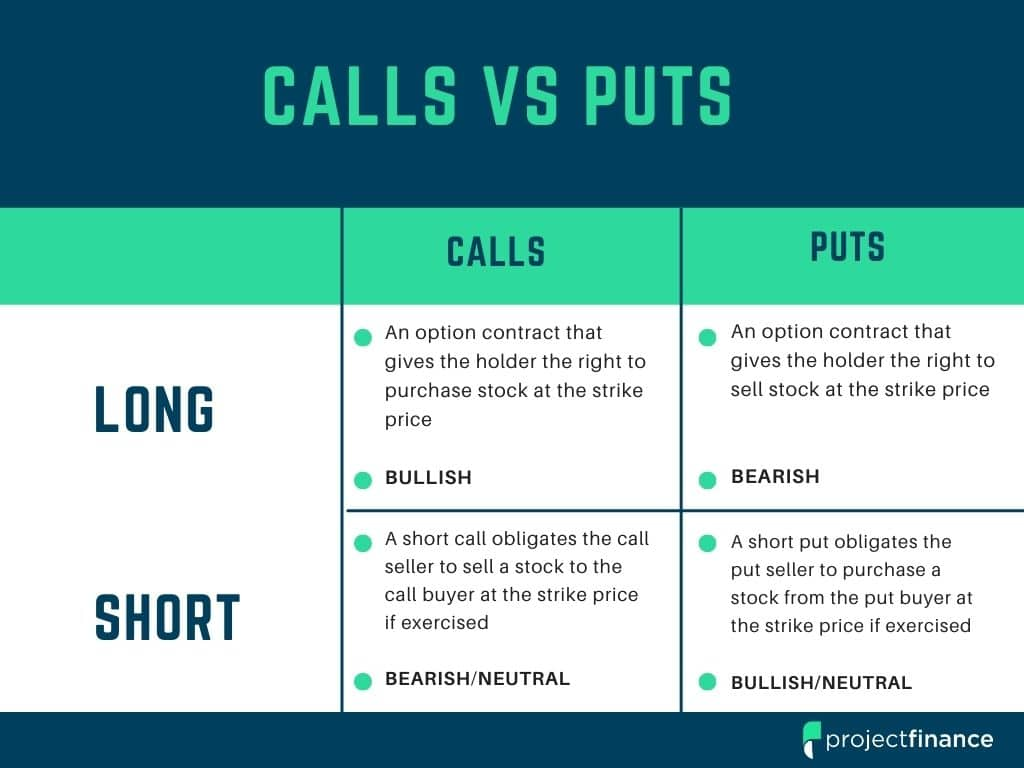
Options are contracts that give investors the right to buy or sell stocks, indexes or other financial securities at an agreed upon price and date. Puts are the option to sell while calls are the option to buy.
Specifically – A Call Option gives the buyer the right, but not the obligation to buy the underlying security at the exercise price, at or within a specified time. A Put Option gives the buyer the right, but not the obligation to sell the underlying security at the exercise price, at or within a specified time.
Ratio – When the ratio of puts to calls is rising, it is usually a sign investors are growing more nervous. A ratio above 1 is considered bearish. The Fear & Greed Index uses a bearish options ratio as a signal for Fear.
Posted on August 17, 2024 by Dr. David Edward Marcinko MBA MEd CMP™
What is is – How it works
By Staff Reporters
****
***
A virtual credit card is a randomly generated 16-digit number associated with your actual credit card account. Your credit card provider may offer this service as a way to protect against fraud whenever you shop without presenting your physical credit card.
Posted on August 17, 2024 by Dr. David Edward Marcinko MBA MEd CMP™
By Staff Reporters
***
***
When you plastic, use a credit card instead of a debit card whenever possible.
Credit cards are protected under The Fair Credit Billing Act (FCBA), while debit cards are protected by the Electronic Fund Transfer Act (EFTA). As the Federal Trade Commission explains, the FCBA limits your potential liability to $50, while the EFTA can leave you responsible for up to $500 of fraudulent charges (and occasionally more) in certain situations.
Posted on August 12, 2024 by Dr. David Edward Marcinko MBA MEd CMP™
By Staff Reporters
***
An interval fund is a closed-end mutual fund that buys back shares only during specific intervals. Shares of the First Eagle Credit Opportunities Fund aren’t traded on public exchanges, and purchases or sales take place at the close of business, at the net asset value (NAV).
A fund’s NAV is simply the sum of its assets divided by the number of shares. A traditional open-ended mutual fund isn’t publicly traded either, and investors can buy or sell at NAV at the market close every business day. This means the manager of an open-ended fund has limited investment choices because a relatively high level of liquidity is needed to handle daily re-demptions.
***
An interval fund sets intervals (time periods) during which shares can be sold back to the fund manager and the number of shares it is willing to redeem during any interval. This makes it possible for the manager to go for higher yields by participating in less liquid markets.
The stock markets have been near all time highs, lately. Physician colleagues and clients are so excited that they are even checking the overnight status of favorite stocks and/or the domestic/overseas markets.
Some colleagues are even becoming a bit OCD by checking the implied open of various markets the night before. But, what exactly is the Implied Open? How is it calculated?
DEFINITION: The Implied Open attempts to predict the prices at which various stock indexes will open, at 9:30am New York time. It is frequently shown on various cable television channels prior to the start of the next business day.
EXAMPLE: Considering the DJIA as an example, the basis of calculating implied open is the price of a “DJX index option futures contract”. This is not the price of the DJIA itself but rather the current ticker price of an option issued by the Chicago Board Options Exchange.
CBOE: The Chicago Board Options Exchange, located at 400 South LaSalle Street in Chicago, is the largest U.S. options exchange with annual trading volume that hovered around 1.27 billion contracts at the end of 2014. CBOE offers options on over 2,200 companies, 22 stock indices, and 140 exchange-traded funds.
NOTE: We would like to remind you that new amendments adopted by the U.S. Securities Exchange Commission (SEC) have gone into effect as of September 28, 2021. These amendments restrict the ability of market makers to publish OTC quotations for those companies that have not made required current financial and company information available to regulators and investors.
Posted on August 12, 2024 by Dr. David Edward Marcinko MBA MEd CMP™
By Free Market Medical Association
*** DEFINITION: Direct Primary Care (DPC) is an innovative alternative payment model improving access to high functioning healthcare with a simple, flat, affordable membership fee. No fee-for-service payments. No third party billing. The defining element of DPC is an enduring and trusting relationship between a patient and his or her primary care provider. Patients have extraordinary access to a physician of their choice, often for as little as $70 per month, and physicians are accountable first and foremost their patients. DPC is embraced by health policymakers on the left and right and creates happy patients and happy doctors all over the country!







 Support our online development, and advance our onground research initiatives in free market economics, as we seek to showcase the brightest Next-Gen minds.
THE ME-P DISCLAIMER: Posts, comments and opinions do not necessarily represent iMBA, Inc., but become our property after submission. Copyright © 2006 to-date. iMBA, Inc allows colleges, universities, medical and financial professionals and related clinics, hospitals and non-profit healthcare organizations to distribute our proprietary essays, photos, videos, audios and other documents; etc. However, please review copyright and usage information for each individual asset before submission to us, and/or placement on your publication or web site. Attestation references, citations and/or back-links are required. All other assets are property of the individual copyright holder.
Support our online development, and advance our onground research initiatives in free market economics, as we seek to showcase the brightest Next-Gen minds.
THE ME-P DISCLAIMER: Posts, comments and opinions do not necessarily represent iMBA, Inc., but become our property after submission. Copyright © 2006 to-date. iMBA, Inc allows colleges, universities, medical and financial professionals and related clinics, hospitals and non-profit healthcare organizations to distribute our proprietary essays, photos, videos, audios and other documents; etc. However, please review copyright and usage information for each individual asset before submission to us, and/or placement on your publication or web site. Attestation references, citations and/or back-links are required. All other assets are property of the individual copyright holder.



 8
8































































 The Leading Business Education Network for Doctors, Financial Advisors and Health Industry Consultants