The Economics of Stock Market Fear for Physicians

Panic Control and the Possibility of Severe Financial Degradation 

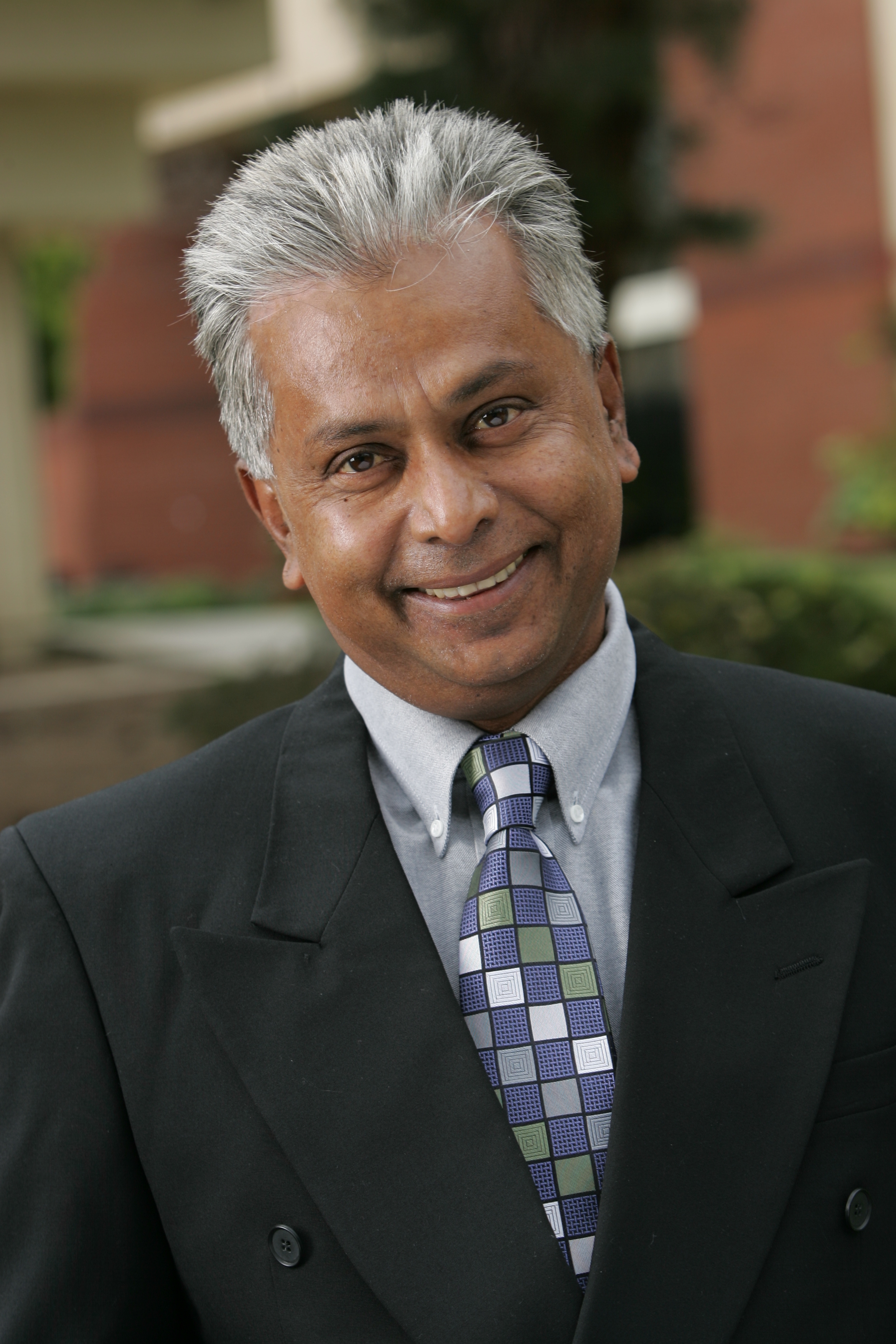
By Somnath Basu PhD, MBA [www.clunet.edu/cif]

[Director California Institute of Finance]

An experiential learning of mammoth proportions occurred several weeks ago in the financial markets. The absolute 10 minute freefall of the prices of stocks and bonds, without any pre-notification froze the hearts of many physicians and lay others both in, and outside, of the investment community. The possibility of a one trillion dollar loss had suddenly and unexpectedly turned real. It happened in a matter of minutes. This experience of panic, of the possibility of a severe economic degradation of life becoming immediately real, is like none other that most of us can ever remember experiencing. Even the 1987 crash happened over a large part of that Monday. Like then, this time too there is no known reason of why it happened, though attempts are being made to understand the cause(s). Whatever the reasons may be, it will not change the experience we had of the realization of the fear of a sudden and unexpectedly large loss.

Event Analogies

Before going deeper into the experienced fear, it is useful to provide some analogies to the event. If the meltdown in the financial markets of 2008 was like an earthquake, then this was like a severe aftershock. It is also similar to going down one of those severe roller coaster freefalls that some may consider very undesirable. Alternately, what makes a 30 year old physician be mostly unconcerned about his/her lack of retirement savings while a 60 year old doctor in the same poor condition is much more concerned. Obviously, the possibility of a lower quality of economic life is much more real for the elder than the younger. In such cases we would expect the fear of an economically degraded life to spur people to take preventive or remedial action.

Understanding Fear

To truly understand our responses to fear, we need to go deeper into our minds. According to behavioral psychologists and neurologists both, there are various segments within our mind. For example, one segments of our mind (the frontal lobe) is understood to process analytical tasks. Similarly, other parts of our brain (the older limbic system composed of mammalian and reptilian brains) react to and affect/control our emotions and fear. When we are faced with an immediate threat, this older system takes over control of our reactions and often drives us towards instinctive responses and will not, in general, make the analytically reasoned response. It is similar to learning about all the different ways we need to behave in the wild if we came across a bear. When people actually are faced by such a situation, they rarely remember all their learning and respond with their instincts. Those are the limbic responses. In other words, when threats are real, our emotional mechanisms will dominate our rational mind and we will react according to our older and longer existing nature.

Shocked Limbic System

Such was the effect of the financial freeform. In those 10 minutes the economic shock to our limbic system was the first of its kind, in terms of magnitude. While discussions are held about sudden unexpected losses, typically the impact of sudden huge losses in a very very short period of time is rarely thought of in very meaningful ways because the probability is so very low. This time, it did actually happen! We will bear some consequences which will begin playing themselves out slowly over this summer. For one, the investing nation will be much more circumspect about stocks and other volatile financial instruments. In a more technical way, our risk aversion as a nation will have suddenly increased. This will have an impact on both trading volume and security market prices and eventually on portfolio values. How younger physicians and other investors will react is less known.

www.CertifiedMedicalPlanner.com

Assessment

Finally, there is one important lesson in behavioral finance for us all – and that is for medical professionals to find competent financial advisors and planners who can safely herald all people in these times. It also is probably an important point to understand why the portfolios of older physicians should consider safety of principal first whilst the younger ones focus on growing their wealth.

Editor’s Note: Somnath Basu PhD is program director of the California Institute of Finance in the School of Business at California Lutheran University where he’s also a professor of finance. He can be reached at (805) 493 3980 or basu@callutheran.edu. See the agebander at work at www.agebander.com

Conclusion

And so, your thoughts and comments on this ME-P are appreciated. Would anyone like to discuss neurotransmitters or chime in on the flight or fight response? Are these very human reactions any different for doctors? How about feelings of “fear” or stock-market “panic attacks?”

Feel free to review our top-left column, and top-right sidebar materials, links, URLs and related websites, too. Then, be sure to subscribe. It is fast, free and secure.

Get our Widget: Get this widget!

Our Other Print Books and Related Information Sources:

Practice Management: http://www.springerpub.com/prod.aspx?prod_id=23759

Physician Financial Planning: http://www.jbpub.com/catalog/0763745790

Medical Risk Management: http://www.jbpub.com/catalog/9780763733421

Healthcare Organizations: www.HealthcareFinancials.com

Health Administration Terms: www.HealthDictionarySeries.com

Physician Advisors: www.CertifiedMedicalPlanner.com

Subscribe Now: Did you like this Medical Executive-Post, or find it helpful, interesting and informative? Want to get the latest ME-Ps delivered to your email box each morning? Just subscribe using the link below. You can unsubscribe at any time. Security is assured.

Link: http://feeds.feedburner.com/HealthcareFinancialsthePostForcxos

Sponsors Welcomed

And, credible sponsors and like-minded advertisers are always welcomed. 

Link: https://healthcarefinancials.wordpress.com/2007/11/11/advertise

Of Wants, Needs, Economic Sustainability and Even Healthcare Reform

A Social Domestic Healthcare Initiative?

By Somnath Basu PhD, MBA [www.clunet.edu/cif]

[Director California Institute of Finance]

Necessities, conveniences and luxuries are an articulation of the hierarchy within wants and needs. The scale and scope of this hierarchy seems quite seamless at the surface. Food, micro waved dinners to gourmet meals. Transportation needs become personal transportation needs and then into Ferraris. Family picnics are replaced by TVs and then by exotic vacations. Home rentals needs change to the wanting of mansions.

As we move up each of the needs totem poles, our monetary requirements stretch endlessly; otherwise if we were all able to bask in everlasting luxury, the end of capitalism and free markets would be in sight. The ideal of everlasting luxury forever too is therefore necessarily unachievable but something that is pursuable, forever. In this vein of reasoning, all of society’s resources and endeavors must go towards attaining this ideal. What then are the limitations of such pursuits?

The above concept of needs and wants also defines layers of society by their consumption abilities. It also defines the pressures imposed upon the growth of GDP from large sections of society to increase their consumption. It is a single-minded pursuit by the upper middle-class of society to strive towards the entering the class of the wealthy, followed by the middle class seeking upper-middle class status, etc. The wealthy comprise a group who are small in number (10% or less) but who account for more than 67% of the ownership and consumption of resources and production, respectively. As large numbers of people start striving to break into the next higher classes of citizenry, pressures increase for GDP to grow. Over time, the wealthy get wealthier, some new entrants appear in each socio-economic group while the general population at large become poorer and more frustrated from this sum-zero game. At some point, the sustainability of the economic system is tested and then broken; societies develop, peak and then wither through strife.

GDP Pressures

For the event of the entire upper-middle class citizenry of joining the class of the wealthy to happen, the GDP would probably need to grow at about a rate of 10 – 12% per year, for each of the next 10 to 20 years! We can easily deduce that for the remaining 80% of the population, the ideal is mostly unachievable. Thus, it may be useful to ask ourselves what is a desirable benchmark for our way of life? “How much money do we need to be happy?” may be another variable approach. Clearly, there are social costs arising from our relentless pursuits of wealth.

To properly assess the cost-benefits of our economic system we need to explore two issues at the heart of the situation. One is the production of wealth. The second is its distribution. Clearly, distributing some wealth inequally is preferred to distributing nothing equally. The question then becomes one of society’s tolerances of inequality. Thought another way, how is enough provided at each level of society such that there is strive and not strife, such that the entire society is better off.

The Elderly

One victim to the current economic system is the elderly. In relentlessly pursuing growth and consumption of luxuries over anything else, we often forget to save for the years where we are no more productive, in a GDP sense.  The retirement woes of the generation of unprepared baby boomers can be seen in articles and papers in many depressing data forms. The main reason we fall victim to being unprepared for retirement is the need to spend every penny we earn on consumption so as not to forget that we are striving to attain the ranks of the upper echelons of society and which demands that our consumption and lifestyles mimic those we aspire to emulate. Using this example, we can take a closer look at some of our spending patterns and understand the pressures we impose upon our savings, GDP growth and the limitations inherent in such growth.


What is Enough?

We spend about 17% on transportation, another 15% on food, and about 35% on housing. This is the national average. If collectively we wished to move into the class of the wealthy, we would impose immense pressure on GDP, one that would clearly not be sustainable. That begs the question as to what’s enough. There is somewhere along these lines of reasoning a place of social well being, where the pressures of producing wealth do not dominate our lifestyles.

Global Considerations

On another plane an argument can be made for the prolongation of our imperial life cycle. As with any cycle, micro or macro, our rein at the top of the global economic cycle is waning; the question then becomes as to what course of action can slow down our descent. It is the respite we need where we can also plan for our grandchildren and beyond, rather than be engrossed in current mindless consumption and the bequest of their repercussions for generations to come. Slowing down consumption is one way of prolonging our place near the top; our “apparent” successor, China, depends mostly on us to buy the goods that they produce on our behalf. Developing fully China’s own middle markets for consumption and reducing its dependency on our consumption will take more than one lifetime for the Chinese. On the same note, let us not give away our technological supremacy to India either. In pursuit of the bottom line and exporting many technical and business jobs to India in the name of bottom line economics will also eventually impoverish our own citizens.

American Economics Nobel laureates

A recent study conducted by two American Economics Nobel laureates (Joseph Stiglitz and Amartya Kumar Sen) examined the very issue of GDP focus on behalf of the Government of France. Their findings were of a similar vein where they questioned the government’s fixation with GDP and society’s need for a balanced, sustainable and comfortable lifestyle. They found that using only GDP as the benchmark lead to myopia of sorts amongst government officials that people are happy and satisfied or that their relentless pursuit of GDP growth does not matter to them. The scientists also found that a need exists among people to also have an achievable benchmark of happiness and satisfaction with life without the mires of just GDP alone.

In a sense, if people can be liberated from the necessary requirements of basic living (food, shelter, basic healthcare and retirement), the self-induced pressures to outperform economically, along with the accompanying social malaises, would not be necessary; our lifestyles would also possibly change in very meaningful and simplifying ways as we seek more sustainable allocations of our land, labor and capital.

While the idea above may sound utopian at first, it may be useful to note that there are some societies in the world (primarily Scandinavia) where a much smaller version of such a system exists. First, a visit to any of those countries will persuade any American that their style of life is no less than ours. This is in spite of lesser wages and a staggering (income and sales) tax burden. However, ironically, it is the latter reason (high tax rate) that allows the citizens in Scandinavia to enjoy free education (up to any academic level and including boarding, lodging and international studies!), adequate and free healthcare, subsidized and efficient transportation and a basic pension for all upon retirement. However, this magic is mainly because of a small and highly efficient government giving back probably 90 cents for every dollar worth of taxes collected. Now, that is public good.

Join Our Mailing List

The First Issue

What are the issues for us to scale to such a system? Obviously, the first is not having such a big and unwieldy government. Unfortunately, a lean, mean and highly efficient government is not foreseeable for us either in the near future and neither are higher tax rates. Higher tax rates just drives high income individuals and businesses underground and is not a market solution. Can our society at large demanding such a welfare state, be willing participants in such a system and demand such a government? If it did, we certainly could sail smoother through our busy impersonal lives. Having the GDP monkey off our backs will certainly calm us; consider the intense polarization in political thought around the globe arising from inequities of both consumption and thought. A sustainable solution that creates a safety net for all citizens would indeed be desirable for any society.

The Second Issue

This brings back the second issue, the issue of wealth distribution among society. Even when a non-market system (such as taxes) does not work in making society more egalitarian, a reallocation of wealth is somewhat desirable but no tools exist to make this happen. Possibly, the only market solution is philanthropy where suppliers provide capital for fulfilling social needs.

In the true sense of a long run, the ethical decision of philanthropy is also utilitarian; the value of the family name pays back handsomely to the family over the years. It is well known that where moderately large inheritances are left purely to the children and family inheritors, the family descends into decadence and the wealth is squandered in about three generations.

Of Relentless Pursuits

In a society where economic demarcation lines cannot be drawn but exist, the population at large will go towards a state of constant strife for higher status and eventually self-destruct. In other words, a mass population fed on this idea of relentless pursuit of income or wealth will eventually not be able to sustain itself and disintegrate and decay in its social fabric. In the long run, keeping people distracted by wars, economic woes or other narrow global or domestic events will not keep people placated forever; people have a way of collectively being heard.

Our Global Role

While the above may seem like a commentary on our own social system, it is not. The recent financial disasters have taught us that going into the future, no solution can remain purely domestic in nature. This world, through the unifying effect of the financial disaster, has learnt like never before, that any sustainable solution has to be global in nature. Now, more than at any time before, we must shed any feeling of ethnocentrism and nationalism and prepare to enter and lead the world through global solutions. After all, in relation to the about 5.5 other billion people, our way of life is still grand and we remain the Mecca of all aspiring global citizens.

Politics

As a political nation, we have shown that we are more enlightened than any other nation when we elected the Mr. Barack H. Obama as the President of the country. Ask this simple question: which Caucasian majority country will next vote a non-Caucasian to its highest seat? Nowhere, not in our lifetimes, I think.

Yet by electing President Obama, we sent a clear signal to the rest of the world about our system of meritocracy which very few societies can show and also not brag about.  Through this action we have also shown that we have the political will and dedication to bring around changes in shape to global economic systems as well.

A social domestic healthcare initiative, even if it be a non-market solution, is one in the right vein, though only time will tell if we executed the policy correctly or not.


Editor’s Note: Somnath Basu PhD is program director of the California Institute of Finance in the School of Business at California Lutheran University where he’s also a professor of finance. He can be reached at (805) 493 3980 or basu@callutheran.edu. See the agebander at work at www.agebander.com

Assessment

As for myself, I would be willing to pay the costs for a social safety net. If I was assured of some basic amenities by way of food, lodging, healthcare and retirement, I would be quite willing to do the requisite work to pay the appropriate cost and spend the rest of my time in a warm sunny beach and eventually experience the liberating feeling of retirement and enjoy each day as the holiday it is.

Conclusion

Your thoughts and comments on this ME-P are appreciated. Feel free to review our top-left column, and top-right sidebar materials, links, URLs and related websites, too. Then, subscribe to the ME-P. It is fast, free and secure.

Speaker: If you need a moderator or speaker for an upcoming event, Dr. David E. Marcinko; MBA – Publisher-in-Chief of the Medical Executive-Post – is available for seminar or speaking engagements. Contact: MarcinkoAdvisors@msn.com

OUR OTHER PRINT BOOKS AND RELATED INFORMATION SOURCES:

Comprehensive Financial Planning Strategies for Doctors and Advisors: Best Practices from Leading Consultants and Certified Medical Planners™

***

New Agreement on IRA Charitable Rollovers

Join Our Mailing List

Includes Tax Extenders
By Robert Giese
bob.giese@chsfl.org

After months of negotiation, Senate Finance Committee Chair Max Baucus (D-MT) and House Ways and Means Committee Chair Sander Levin (D-MI) have announced an agreement.

Passed House and Senate

The House and Senate both previously passed bills that would extend over 40 tax provisions, including the IRA Charitable Rollover. Because there were different tax offsets in the House and Senate bills, extended negotiations were required to find tax increases acceptable to both.

The House bill paid for the tax extenders by increasing the tax rate on hedge fund managers. Currently, the “carried interest” or income of hedge fund managers is taxed at capital gain rates. The House proposed to tax this income at the higher ordinary income rates.

American Jobs and Closing Tax Loopholes Act of 2010

Under the compromise published in the American Jobs and Closing Tax Loopholes Act of 2010 (H.R. 4213), the “carried interest” amounts will be subject to increased tax. For hedge fund managers, 75% of income is taxed at ordinary rates and 25% is taxed as long-term capital gain.

Vote this Week

The House plans to vote on the bill the week of May 24. Former Chair of the House Ways and Means Committee Charles Rangel (D-NY) stated, “For a lot of members, it’s a very difficult vote and they don’t want to take a vote unless they have assurance that the Senate is going to pass it.”

Assessment

Sen. Max Baucus indicated that he expected to find the 60 votes required for passage in the Senate. As is true in the House, a number of Senators who represent regions with financial service firms are concerned about the change in the tax on hedge fund managers. However, Sen. Baucus indicates that the votes are likely to be sufficient to pass the bill.

Editor’s Note: Because the tax extenders portion of the bill includes the educational deduction for teachers, a research and development credit for business and many other popular provisions, similar bills normally pass by large margins. Even with the tax offsets, it is probable that the bill will pass in the next few weeks. Charities should begin planning their fall IRA Charitable Rollover marketing campaigns. Because most individuals with larger IRAs take their required minimum distributions in the fall, there is still time to have a successful IRA Rollover Campaign in 2010.

Channel Surfing the ME-P Have you visited our other topic channels? Established to facilitate idea exchange and link our community together, the value of these topics is dependent upon your input. Please take a minute to visit. And, to prevent that annoying spam, we ask that you register. It is fast, free and secure.

Conclusion

Your thoughts and comments on this ME-P are appreciated. Feel free to review our top-left column, and top-right sidebar materials, links, URLs and related websites, too. Then, subscribe to the ME-P. It is fast, free and secure.

Speaker: If you need a moderator or speaker for an upcoming event, Dr. David E. Marcinko; MBA – Publisher-in-Chief of the Medical Executive-Post – is available for seminar or speaking engagements. Contact: MarcinkoAdvisors@msn.com

OUR OTHER PRINT BOOKS AND RELATED INFORMATION SOURCES:

Product Details  Product Details

Financial Reform Amendment Would Address Loan Modification Problems

Proposed New ‘Office of the Homeowner Advocate’

By Paul Kiel, ProPublica – May 7, 2010 11:37 am EDT

An amendment to the financial reform bill filed recently by Sen. Al Franken, D-Minn., and Sen. Olympia Snowe, R-Maine, would create a special office to assist homeowners who are facing problems with the administration’s mortgage modification program. The measure has White House support [1], but is opposed by the financial services industry.

Mortgage Servicers

As we’ve reported, homeowners and housing counselors frequently complain that mortgage servicers frequently lose financial documents [2] and make mistakes [3]—mistakes that can result in foreclosure [4]. Homeowners regularly wait several months [5] for an answer on their application.

About $75 billion has been earmarked for the program from the TARP [6], but very little of that has so far been spent owing to the small number of permanent modifications so far: about 228,000 as of March [7].

The amendment proposes a new “Office of the Homeowner Advocate” that would be devoted to solving homeowner problems with the program. Right now, homeowners with complaints are told to call the HOPE Hotline, which has a staff of counselors to handle escalations—a process that’s been criticized as ineffective [8].

[picapp align=”none” wrap=”false” link=”term=mortgage+reform&iid=1896936″ src=”a/3/e/7/Jesse_Jackson_Rallies_e4dd.jpg?adImageId=12804308&imageId=1896936″ width=”380″ height=”246″ /]

Office of Homeowner Advocate

Under the amendment, all homeowner complaints about servicers would go to this new “Office of the Homeowner Advocate” within the Treasury Department. That would effectively create an appeals process for homeowners who think they’ve been wrongly denied a modification—something that housing counselors and other consumer advocates have long said is desperately needed [9].

“A mandated homeowner’s advocate, built into the process and reportable to Congress, would counteract the servicer unresponsiveness we’ve heard so much about and be able to serve as a recourse for homeowners,” said Richard H. Neiman, superintendent of banks for New York State and a member of the Congressional Oversight Panel for the TARP. Neiman has been pushing for the creation of the office.

The office would have the power to penalize servicers for noncompliance with the program‘s guidelines, but would need the sign-off from Herb Allison, the Treasury official in charge of the TARP, to do so. The Treasury currently has the power to penalize services, but so far has not done so [10].

Financial Services Industry Opposition

The idea has already garnered opposition from the financial services industry. Scott Talbott, a lobbyist with the Financial Services Roundtable, which counts the largest mortgage servicers among its many members [11], said the group opposed the amendment because it would just create “another layer of bureaucracy that could actually slow” the program’s process. He also said there is already adequate oversight of the program.

One of the watchdogs that over-sees the TARP, the Government Accountability Office, reported in March (PDF) that servicers have widely varying ways of dealing with homeowner complaints and some were not systematically tracking them. Several tracked only written ones, the GAO said. Another servicer had closely tracked only those complaints that were addressed to a company executive.

“The unnecessary problems with HAMP are found mostly with servicers who have provided inadequate, inconsistent service to homeowners and delayed or denied homeowner assistance on a mass basis,” said Alys Cohen of the National Consumer Law Center.

Join Our Mailing List

Assessment

The amendment has support from Americans for Financial Reform [12] and a host of consumer advocate groups, including the Center for Responsible Lending, the Service Employees International Union and the United Auto Workers.

The amendment also specifies that any candidate for the homeowner advocate position would have to come from an advocacy background and cannot have worked for a servicer or the Treasury in the previous four years. The advocate’s office would be funded out of the TARP and close down after the federal program ends. The idea is modeled after the Internal Revenue Service’s “taxpayer advocate.” [13] It’s not clear when the amendment might come up for a vote.

Link: http://www.propublica.org/ion/loan-mods/item/financial-reform-amendment-would-address-loan-mod-problems-with-homeowner-a

Conclusion

And so, your thoughts and comments on this ME-P are appreciated. Do you agree with this new proposal? How might medical professionals and/or financial advisors be affected?

Feel free to review our top-left column, and top-right sidebar materials, links, URLs and related websites, too. Then, be sure to subscribe. It is fast, free and secure.

Link: http://feeds.feedburner.com/HealthcareFinancialsthePostForcxos

Speaker: If you need a moderator or speaker for an upcoming event, Dr. David E. Marcinko; MBA – Publisher-in-Chief of the Medical Executive-Post – is available for seminar or speaking engagements. Contact: MarcinkoAdvisors@msn.com

Get our Widget: Get this widget!

Our Other Print Books and Related Information Sources:

Practice Management: http://www.springerpub.com/prod.aspx?prod_id=23759

Physician Financial Planning: http://www.jbpub.com/catalog/0763745790

Medical Risk Management: http://www.jbpub.com/catalog/9780763733421

Healthcare Organizations: www.HealthcareFinancials.com

Health Administration Terms: www.HealthDictionarySeries.com

Physician Advisors: www.CertifiedMedicalPlanner.com

Subscribe Now: Did you like this Medical Executive-Post, or find it helpful, interesting and informative? Want to get the latest ME-Ps delivered to your email box each morning? Just subscribe using the link below. You can unsubscribe at any time. Security is assured.

Link: http://feeds.feedburner.com/HealthcareFinancialsthePostForcxos

Sponsors Welcomed

And, credible sponsors and like-minded advertisers are always welcomed.

Link: https://healthcarefinancials.wordpress.com/2007/11/11/advertise

Product Details  Product Details

Disorganization at Banks

Causing Mistaken Foreclosures

Join Our Mailing List

By Paul Kiel, ProPublica – May 4, 2010 9:20 pm EDT

Millions of people face losing their homes in the continuing foreclosure crisis, but homeowners often have more than the struggling economy and slumping house prices to worry about: Disorganization within the big banks that service mortgages has made a bad problem worse.

ProPublica is matching local journalists with homeowners having trouble getting loan mods.

Are you a homeowner with a story to tell?
Are you a reporter and want to cover it?

Sometimes the communication breakdown within the banks is so complete that it leads to premature or mistaken foreclosures. Some homeowners, with the help of an attorney or housing counselor, have eventually been able to reverse a foreclosure. Others have lost their homes.

“We believe in many cases people are losing their homes when they should not have,” said Kevin Stein, associate director of the California Reinvestment Coalition, which counts dozens of nonprofits that work with homeowners among its members.

In the worst breakdowns, banks — and other companies that service loans — actually work at cross-purposes, with one arm of the company foreclosing on the home while the other offers help. Servicers say such mistakes are rare and result from the high volume of defaults and foreclosures.

The problems happen even among servicers participating in the administration’s $75 billion foreclosure-prevention program [1]. Servicers operating under the year-old program are forbidden from auctioning someone’s home while a modification decision is pending. It happens anyway.

Consumer advocates say the lapses continue because they go unpunished. “We’ve had too much of the carrot, and we need a stick,” Stein says. The Treasury Department has yet to penalize a servicer for breaking the program’s rules. The program provides federal subsidies to encourage modifications.

Treasury officials overseeing the program say they’re aware of the problems and have moved to fix them. But some states are going further to protect homeowners, with recent rules that stop the foreclosure process if the homeowner requests a modification.

Many homeowners, seeing no other option, have gone to court to reclaim their homes. At least 50 homeowners have recently filed lawsuits alleging the servicer foreclosed with a loan mod request pending or even while they were on a payment plan.

Homeowners have long waits for help

In good times, banks and other servicers — Bank of America is the biggest, followed by Chase and Wells Fargo — were known mainly to homeowners simply as where they sent their monthly mortgage payments. But the companies have been deluged over the past couple of years by requests for help from millions of struggling homeowners.

Homeowners commonly wait six months for an answer on a loan mod application. The federal program for encouraging loan mods includes a three-month trial period, after which servicers are supposed to decide whether to make the modifications permanent. But some homeowners have waited as long as 10 months [2] for a final answer.

Communication breakdowns occur because of the way the servicers are structured. One division typically deals with modifications and another with foreclosures. Servicers also hire a local trustee or attorney to actually pursue foreclosure.

“Often they just simply don’t communicate with each other,” said Laurie Maggiano, the Treasury official in charge of setting policy for the modification program. Such problems were particularly bad last summer, in the first few months of the program, she said. “Basically, you have the right hand at the mortgage company not knowing what the left hand is doing,” said Mark Pearce, North Carolina’s deputy commissioner of banks. Communication glitches and mistakes are “systemic, more than anecdotal” among mortgage servicers, he said.

“We’ve had cases where we’ve informed the mortgage company that they’re about to foreclose on someone.” The experience for the homeowner, he said, can be “Kafkaesque.”

“We’re all human, and the servicers are overworked and trying their best,” said Vicki Vidal, of the Mortgage Bankers Association. She said foreclosure errors are rare, particularly if struggling homeowners are prompt in contacting their servicer.

The Human Face

Frances Gomez, of Tempe, Ariz., lived in her house for over 30 years. Three years ago, she refinanced it with Countrywide, now part of Bank of America, for nearly $300,000. The home’s value has declined dramatically, said Gomez, who put some of the money from the refinancing into her hair salon.

Last year, the recession forced her to close her shop. Gomez fell behind on her mortgage, and after striking out with a company that promised to work with Bank of America to get her a loan mod, she learned in December that her home was scheduled for foreclosure.

So Gomez applied herself. She twice succeeded in getting Bank of America to postpone the sale date and said she was assured it would not happen until her application was reviewed. Gomez had opened a smaller salon and understood there was a good chance she would qualify.

She was still waiting in March when a Realtor, representing the new owner of her home, showed up. Her house had sold at auction — for less than half of what Gomez owed. “They don’t give you an opportunity,” she said. “They just go and do it with no warning.”

It’s not supposed to work that way.

Federal Programs

Under the federal program, which requires servicers to follow a set of guidelines for modifications, servicers must give borrowers a written denial before foreclosing. When Gomez called Bank of America about the sale, she said she was told there was a mistake but nothing could be done. She did get a denial notice [3] — some three weeks after the house was sold and just days before she was evicted.

“I just want people to know what they’re doing,” Gomez, now living with family members, said.

After being contacted by ProPublica, Bank of America reviewed Gomez’s case. Bank spokesman Rick Simon acknowledged that Gomez might not have been told her house would be sold and that the bank made a mistake in denying Gomez, because it did not take into account the income from her new salon business. Simon said a Bank of America representative would seek to negotiate with the new owner of Gomez’s house to see if the sale could be unwound.

Simon said the bank regrets when such mistakes happen due to the “very high volume” of cases and that any errors in Gomez’s case were “inadvertent.”

Timeline: How Michael Hill Almost Lost His Home [4]

Even avoiding a mistaken sale can also be a stressful process.

One day in February, a man approached Ron Bermudez of Emeryville, Calif., in front of his house and told him his home would be sold in a few hours. This came as a shock to Bermudez; Bank of America had told him weeks prior that he’d been approved for a trial modification and the papers would soon arrive. He made a panicked phone call to an attorney, who was able to make sure there was no auction.

Last November, Michael Hill of Lexington, S.C., finally got the call he’d been waiting for. Congratulations, a rep from JPMorgan Chase told him, your trial mortgage modification is approved. Hill’s monthly payment, around $900, would be nearly halved.

Except there was a problem. Chase had foreclosed on Hill’s home a month earlier, and his family was just days away from eviction.

“I listened to her and then I just said, ‘Well, that sounds good,’” recalled Hill, who is married and has two children. “‘Tell me how we’re going to do this, seeing as how you sold the house.’” That, he found out, was news to Chase.

Hill was able to avoid eviction — for now. Chase reversed the sale by paying the man who’d bought the home an extra $19,500 on top of the $86,000 [5] he’d paid at the auction.

After the mistaken foreclosure, he began the trial modification last December. He made those payments, but two months after his trial period was supposed to end, Hill is still waiting for a final answer from Chase.

The miscommunications have continued. He received a letter in January saying that he’d been approved for a permanent modification, but he was then told he’d received it in error.

His family remains partially packed, ready to move should the modification not go through. “I’m on pins and needles every time someone’s knocking on the door or calling,” he said.

Christine Holevas, a Chase spokeswoman, said that Chase had “agreed with Hill’s request to rescind the foreclosure” and was “now reviewing his loan for permanent modification.” She said Chase services “more than 10 million mortgages — the vast majority without a hitch.”

HOPE Hotline

To contest a foreclosure under the federal program, Maggiano, the Treasury official, said a homeowner should call the HOPE Hotline, 888-995-HOPE, a Treasury Department-endorsed hotline staffed by housing counselors. Those counselors can escalate the case if the servicer still won’t correct the problem, she said.

That escalation process has saved “a number” of homeowners from being wrongfully booted out of their homes, Maggiano said. Hill, the South Carolina homeowner, is an example of someone helped by the HOPE Hotline.

Of course, the homeowner must know about the hotline to call it. Gomez, the Arizona homeowner who lost her home to foreclosure, said she’d never heard of it.

Many homeowner advocates say the government’s effort has been largely ineffective at resolving problems with servicers.

“I uniformly hear from attorneys and counseling advocates on the ground that the HOPE Hotline simply parrots back what the servicers have said,” said Alys Cohen, an attorney with the National Consumer Law Center. Cohen said she’d voiced her concerns with Treasury officials, who indicated they’d make improvements.

Bank

New rules to offer more protection

Under the current rules for the federal program, servicers have been barred from conducting a foreclosure sale if the homeowner requested a modification, but are allowed to push along the process, even set a sale date. That allows them to foreclose more quickly if they determine the homeowner doesn’t qualify for a modification.

As a result, a homeowner might get a modification offer one day and a foreclosure notice the next. As of March, servicers were pursuing foreclosure on 1.8 million residences, according to LPS Applied Analytics.

Maggiano, the Treasury official, said that’s been confusing for homeowners. Some “just got discouraged and gave up.”

New rules issued by the Treasury in March say the servicer must first give the homeowner a shot at a modification before beginning the process that leads to foreclosure.

They also require the servicer to adopt new policies to prevent mishaps. For instance, the servicer will be required to provide a written certification to its attorney or trustee that the homeowner does not qualify for the federal program before the house can be sold.

Maggiano said the changes resulted from visits to the servicers’ offices last December that allowed Treasury officials to “much better understand (their) inner workings.”

The rules, however, don’t take effect until June. Nor do they apply to hundreds of thousands of homeowners seeking a modification for whom the process leading to foreclosure has already begun. And Treasury has yet to set any penalties for servicers who don’t follow the rules.

Maggiano said Treasury’s new rule struck a balance to help homeowners who were responsive to servicer communications to stay out of foreclosure while not introducing unnecessary delays for servicers. Some borrowers don’t respond at all to offers of help from the servicers until they’re faced with foreclosure, she said.

Join Our Mailing List

States Differ

Some states, such as North Carolina, have recently gone further to delay moving toward foreclosure if a homeowner requests a modification. State regulators there passed a law that requires a servicer to halt the process if a homeowner requests a modification.

Pearce, the North Carolina official, said the rule was prompted by the delays homeowners have been facing and puts the burden on the servicers to expeditiously review the request. “They’re in total control.”

Stopping the process not only removes the possibility of a sudden foreclosure, he said, but also stops the accumulation of fees, which build up and can add thousands to the homeowner’s debt as the servicer moves toward foreclosure.

In California, state Sen. Mark Leno, a Democrat from San Francisco, is pushing a bill that would do something similar. The servicers “should be working a lot harder to keep homeowners in their home,” he said.

Assessment

Original article: http://www.propublica.org/feature/disorganization-at-banks-causing-mistaken-foreclosures-050410

Conclusion

Your thoughts and comments on this ME-P are appreciated. Feel free to review our top-left column, and top-right sidebar materials, links, URLs and related websites, too. Then, subscribe to the ME-P. It is fast, free and secure.

Link: http://feeds.feedburner.com/HealthcareFinancialsthePostForcxos

Speaker: If you need a moderator or speaker for an upcoming event, Dr. David E. Marcinko; MBA – Publisher-in-Chief of the Medical Executive-Post – is available for seminar or speaking engagements. Contact: MarcinkoAdvisors@msn.com

OUR OTHER PRINT BOOKS AND RELATED INFORMATION SOURCES:

DICTIONARIES: http://www.springerpub.com/Search/marcinko
PHYSICIANS: www.MedicalBusinessAdvisors.com
PRACTICES: www.BusinessofMedicalPractice.com
HOSPITALS: http://www.crcpress.com/product/isbn/9781466558731
CLINICS: http://www.crcpress.com/product/isbn/9781439879900
BLOG: www.MedicalExecutivePost.com
FINANCE: Financial Planning for Physicians and Advisors
INSURANCE: Risk Management and Insurance Strategies for Physicians and Advisors

Product Details  Product Details

Geithner Talks Tough about Banks’ Loan Modification Efforts

But – More Bark Than Bite

By Paul Kiel, ProPublica – April 30, 2010 11:30 am EDT

For nearly a year now, we at ProPublica have been reporting on the problems [1] homeowners have encountered when seeking a mortgage modification [2] under the administration’s program [3].

Yesterday, Treasury Secretary Tim Geithner for the first time acknowledged the depths of the problems, but didn’t offer any new solutions. He committed to release more detailed data on how banks and other servicers are faring—a promise Treasury first made six months ago.

Geithner Speaks

“We are concerned by the wide variation in performance we see across servicers and by the countless frustrated phone calls we receive from borrowers,” Geithner testified yesterday before Congress. He added that the Treasury was “troubled” by “reports that servicers have foreclosed on potentially eligible homeowners” and frequent complaints from homeowners that servicers lose their documents. He said servicers are “not doing enough to help homeowners” and that it was not “acceptable.”

From the Treasury Department

This isn’t the first time Treasury Department officials have directed some tough talk [4] at servicers, including vague threats [5] of penalties [6]. But it remains to be seen whether, as Geithner says, the Treasury will follow through and punish servicers that break the program’s rules. Under the program, which involves paying incentives to servicers, investors and homeowners to encourage modifications, the Treasury has the power to punish servicers by withholding those payments. But Treasury has never issued any such penalties. Nor has the government outlined how much such penalties might be.

Geithner did promise to publish within a month or two more detailed information about each servicer’s performance, data that could give a much clearer picture of how servicers are treating homeowners. Treasury officials have actually been promising to release this sort of data since last year [7]. In December, Herb Allison, the official in charge of the TARP, said [8] it would be released in January. Like everything else with the government’s loan mod program, it’s taken several months longer than it was supposed to.

More Granular Data

The new, more detailed data will show how long it takes each servicer to answer calls from homeowners, how long they take to process applications, and the number of customer complaints each receives. A Treasury spokeswoman also said the reports will provide some sort of breakdown of how many people have been denied mods for which reasons, but it’s not clear yet if that data will be made available by servicer.

Up until now, the Treasury has only been releasing basic information for each of the largest servicers. And each month, we’ve transformed that data into an easy-to-digest breakdown [9].

Assessment

One major problem, the data show, has been the large volume of homeowners in limbo (376,000 as of March). A trial period under the program is supposed to last three months, but for those homeowners, it’s stretched longer, sometimes as long as ten months [6]. In total, 1.2 million homeowners have started trials since the program launched a year ago, but only 231,000 have made it to a permanent modification.

Link: http://www.propublica.org/ion/bailout/item/geithner-talks-tough-about-banks-loan-mod-efforts-but-more-bark-than-bite

Conclusion

And so, your thoughts and comments on this ME-P are appreciated. Feel free to review our top-left column, and top-right sidebar materials, links, URLs and related websites, too. Then, be sure to subscribe. It is fast, free and secure.

Link: http://feeds.feedburner.com/HealthcareFinancialsthePostForcxos

Get our Widget: Get this widget!

Our Other Print Books and Related Information Sources:

Practice Management: http://www.springerpub.com/prod.aspx?prod_id=23759

Physician Financial Planning: http://www.jbpub.com/catalog/0763745790

Medical Risk Management: http://www.jbpub.com/catalog/9780763733421

Healthcare Organizations: www.HealthcareFinancials.com

Health Administration Terms: www.HealthDictionarySeries.com

Physician Advisors: www.CertifiedMedicalPlanner.com

Subscribe Now: Did you like this Medical Executive-Post, or find it helpful, interesting and informative? Want to get the latest ME-Ps delivered to your email box each morning? Just subscribe using the link below. You can unsubscribe at any time. Security is assured.

Link: http://feeds.feedburner.com/HealthcareFinancialsthePostForcxos

Sponsors Welcomed

And, credible sponsors and like-minded advertisers are always welcomed.

Link: https://healthcarefinancials.wordpress.com/2007/11/11/advertise 

Retirement Plan Risks for Physician-Employers

Join Our Mailing List

Advantages Well Known – Disadvantages Not So

By Brian J. Knabe, MD

[Certified Medical Planner™ candidate]

A source of risk often overlooked by the physician-employer is the risk involved in offering a retirement plan.

Medical practice owners, like other small business owners, find several advantages to starting a retirement plan. The plan can be used to allow the owners to save money in a tax-advantaged manner, and a generous retirement plan can help to attract and retain quality employees.

Administration Risks 

The recent “Great Recession” and turbulence in the stock market have highlighted the risks involved in administering these plans. There is a long history of fraud and neglect in the field of retirement savings plans, and a series of legislative efforts have been enacted to counter these abuses.

Current standards are based primarily on four federal laws, the Employee Retirement Income Security Act (ERISA), the Uniform Prudent Investors Act (UPIA), the Management of Public Employee Retirement Systems Act (MPERS), and the Pension Protection Act of 2006 (PPA).

ERISA Standards 

According to ERISA standards, you may be considered a fiduciary for a retirement plan if you meet any of the following tests:

  • You exercise discretionary authority or control over plan assets or plan management.
  • You are specifically identified in the written documents of a plan as a named fiduciary.
  • You have discretionary responsibility in the administration of the plan.
  • You manage the plan or its assets or render investment advice for a fee.

Recent court decisions have found fiduciaries to be personally liable, even for acts of which they were unaware or in areas not considered within their scope of responsibility. Acting with good intentions or in good faith is not an acceptable defense. Neither is ignorance of your responsibilities.

www.CertifiedMedicalPlanner.com

Liability Mitigation 

The liability of the administrator (or business owner) can be diminished by taking these steps:

  • Act in a procedurally prudent manner.
  • Diversify investments to minimize the risk of large losses.
  • Provide sufficient information and education to employees to enable them to exercise control over their investments.
  • Offer a broad, diversified investment menu having at least three (preferably five or six) “core” alternatives, each of which must be diversified.

Assessment

The most efficient way to meet these and other requirements is to hire a retirement plan provider which is a certified as a fiduciary, and which accepts “co-fiduciary” status along with the practice owner.  The Centre for Fiduciary Excellence (CEFEX) offers certification as a fiduciary.

For more information, see www.savantcapital.com/cefex.

Savant Capital Management, Inc®

190 Buckley Drive

Rockford, IL 61107

Tel 815-227-0300

Fax 815-226-2195

bknabe@savantcapital.com

Channel Surfing the ME-P

Have you visited our other topic channels? Established to facilitate idea exchange and link our community together, the value of these topics is dependent upon your input. Please take a minute to visit. And, to prevent that annoying spam, we ask that you register. It is fast, free and secure.

Conclusion

Your thoughts and comments on this ME-P are appreciated. Feel free to review our top-left column, and top-right sidebar materials, links, URLs and related websites, too. Then, subscribe to the ME-P. It is fast, free and secure.

Speaker: If you need a moderator or speaker for an upcoming event, Dr. David E. Marcinko; MBA – Publisher-in-Chief of the Medical Executive-Post – is available for seminar or speaking engagements. Contact: MarcinkoAdvisors@msn.com

OUR OTHER PRINT BOOKS AND RELATED INFORMATION SOURCES:

Product Details  Product Details

Financial Advisory Reform Going Down in Flames

A [False] Hobson’s Choice*

By Staff Reporters

In political Washington DC, according to Ian Salisbury, almost anything will fly if you can make an argument it will benefit the middle class. It worked in the fight against requiring advisors to act in clients’ best interests … Say what?

Is this the case of a classic Hobson’s choice?

[picapp align=”none” wrap=”false” link=”term=bank+reform&iid=8227139″ src=”c/3/0/3/Sen_Dodd_Discusses_655e.jpg?adImageId=12270785&imageId=8227139″ width=”380″ height=”570″ /]

The Strategy

Yep, its true! At least, this strategy worked for the National Association of Insurance and Financial Advisors [NAIFA], which fought a recent proposal that would have made all financial advisors act in clients’ best interests … you know – the “F” word.

Assessment

It seems that there are few protections for the public from unscrupulous FAs, stockbrokers, and insurance agents. And, few wish to become fiduciaries.

http://www.fa-mag.com/online-extras/5406-a-phony-argument.html

*A Hobson’s choice is a free, usually economic, choice in which only one option is offered.

Conclusion

And so, your thoughts and comments on this ME-P are appreciated. Please visit: www.CertifiedMedicalPlanner.com

As former certified financial planner, insurance agent, stockbroker, surgeon and this ME-P publisher Dr. David Edward Marcinko MBA, CMP™ has always opined to physician colleagues: it is “buyer-beware” out there!

Feel free to review our top-left column, and top-right sidebar materials, links, URLs and related websites, too. Then, be sure to subscribe to the ME-P. It is fast, free and secure.

Speaker: If you need a moderator or speaker for an upcoming event, Dr. David E. Marcinko; MBA – Publisher-in-Chief of the Medical Executive-Post – is available for seminar or speaking engagements. Contact: MarcinkoAdvisors@msn.com

Get our Widget: Get this widget!

Our Other Print Books and Related Information Sources:

Practice Management: http://www.springerpub.com/prod.aspx?prod_id=23759

Physician Financial Planning: http://www.jbpub.com/catalog/0763745790

Medical Risk Management: http://www.jbpub.com/catalog/9780763733421

Healthcare Organizations: www.HealthcareFinancials.com

Health Administration Terms: www.HealthDictionarySeries.com

Physician Advisors: www.CertifiedMedicalPlanner.com

Subscribe Now: Did you like this Medical Executive-Post, or find it helpful, interesting and informative? Want to get the latest ME-Ps delivered to your email box each morning? Just subscribe using the link below. You can unsubscribe at any time. Security is assured.

Link: http://feeds.feedburner.com/HealthcareFinancialsthePostForcxos

Sponsors Welcomed

And, credible sponsors and like-minded advertisers are always welcomed.

Link: https://healthcarefinancials.wordpress.com/2007/11/11/advertise

Modern Retirement Planning and “Banding” for Physicians

Join Our Mailing List

The “AgeBander” Approach Presents a More Accurate Portrayal

[By Somnath Basu, PhD, MBA]

A convergence of mega-trends will forever change the face of retirement planning and raise its importance in the pantheon of physician retirement planning and most all employee benefits. Chief among them: longer life expectancy, advances in medicine, healthier lifestyles and mounting concern about years of abysmally low savings rates.

What it all Means in Practical Terms

What this means in practical terms for future retired physicians and most all retirees is the need for employers, service providers and financial advisers [FAs] to plot a more accurate and thoughtful course to planning for retirement that acknowledges the necessity of pursuing an “age-banded” approach. The idea behind this new approach is that individuals undergo various changes in lifestyles during retirement that last for finite or “age-banded”, periods.

Example:

For example, doctors like most people spend more time and money on leisurely activities early on in retirement, while health care needs dominate the latter years. Further, the costs associated with these lifestyles also change at differential inflation rates than from the basic inflation rate. While the basic inflation rate is about 3%, the U.S. Census Bureau noted that annual recreation costs increased at 7.14% though most of the 1990s. Health care costs also increased by much higher rates than the basic rate. Since the traditional model bundles all costs (including leisure, health care, basic living, etc) and extrapolates at the basic rate, it tends to underestimate retirement expenses. The traditional model’s “static” approach to retirement can have dangerous implications since it may lead to under-funded retirement plans, especially those earmarked for the critical years.

A Flawed Model?

In a research paper published by the Association for Financial Counseling and Planning Education, I detailed the reasons why an age-banded approach is superior to the traditional view of retirement planning. This new model provides for a more accurate portrayal of retirement expenses and an algorithm to calculate the income-replacement ratio, as well as smaller resource requirements and greater flexibility in managing risk. It also allows easier incorporation of long-term care insurance (LTCI) and significantly reduces funding needs. Indeed, the funding needs of a husband and wife who are both age 60 and presumably five years away from retirement are reduced by more than 16% and contributions for a 35-year-old single woman are reduced by 42% compared with previous approaches.

Traditional Retirement Planning Weaknesses

There are five inherent weaknesses to the traditional approach to retirement planning. They include the assumption that all living expenses will increase at the overall rate of inflation as measured by the Consumer Price Index (CPI), bundling all expenses together and not allowing them to change based on the life-cycle, estimating those expenses as a fixed percentage (replacement ratio) of pre-retirement costs, investing in low-return assets and failing to consider contingencies such as LTCI benefits, which can have a significant impact on the amount of funding required for retirement.

Financial Advisory Estimates

When financial planners estimate how much income a client needs in retirement, the calculation hinges on their income just prior to retirement. The pre-retirement income is adjusted downward by 10% to 35%. This adjustment reflects the income necessary to maintain one’s standard of living and incorporates reductions in taxes and other work-related expenses that cease upon retirement. Unfortunately, there’s no objective way to estimate the replacement ratio. Aggressive financial planners typically use large ratios and conservative planners use smaller ones.

30-year Retirement Window

Under the age-banded model, an individual typically lives about 30 years in retirement (e.g., age 65 to 95) and experiences a lifestyle change every 10 years at 65, 75 and 85. Of course, both the retirement period and the width of the age bands are arbitrary but can be subjectively changed to fit each retiree as closely as possible. In addition, a number of steps are taken to produce a clearer picture of retirement costs by categorizing them based on taxes, living expenses, health care and leisure, as well as calculating anticipated expenses using the appropriate rate of inflation for each category, which is adjusted to reflect post-retirement lifestyle changes.

Those expenses are extrapolated through 30 years of retirement and the present value of post-retirement expenses are calculated at an amount deemed sufficient to finance the three following decade (each age band). Instead of discounting these values to the year of retirement (the traditional model), the age banding considers them to be three retirement portfolios that require funding.

Since the portfolio required to fund the expenses during the years 86 to 95 is 20 years behind the first band (66 to 75), investors can seek marginally higher rates of return to reflect the longer terms. Contributions toward these amounts can now be calculated.

Example:

For example, the couple mentioned earlier is able to seek higher rates of return for longer-term investment portfolios which more than mitigate the effects of escalating health care costs. In the case  of the 35-year-old single woman, since the funds required for these three portfolios are 30, 40 and 50 years away she should be willing to take on more risk since she has ample time to manage the portfolio risk.

The expenses for the age-banded method become considerably higher at the latter stages of retirement as compared to the traditional model. This is desirable since the over-funding is associated with an age at which one cannot afford to be out of funds. The higher estimate of the age band comes from higher inflation rates for health care and the incorporation of lifestyle changes that imply accelerated costs such as increased leisure spending upon retirement and higher health care costs in the latter years.

Thus, these higher costs are not only more realistic but they incorporate the dynamics of a retired life, unlike the traditional model. Incredible as it might seem, the ability to assume a marginally higher risk leads to an actual decrease in the funding requirements versus the traditional plan.

Join Our Mailing List 

Assessment

One caveat that doctors need to know, and that financial planners will need to keep in mind, is that their clients may be reticent to buy equities when markets are underperforming. Clear explanations are required regarding why it may still be beneficial for the long run and that the risk will be managed on an ongoing basis. But, the results will be well worth the effort for the multiple stakeholders involved in assuring that tomorrow’s retirees are able to live more comfortable after their working years. It’s a small price to pay for the peace of mind associated with knowing retirement expenses will be portrayed more accurately and plan participants will be afforded greater flexibility in managing their risk.

Table [Comparison of growth in retirement expenses]

Link: Age-Banded Retirement Planning FINAL[1]

Editor’s Note: Somnath Basu PhD is program director of the California Institute of Finance in the School of Business at California Lutheran University where he’s also a professor of finance. He can be reached at (805) 493 3980 or basu@callutheran.edu. See the agebander at work at www.agebander.com

Conclusion

And so, your thoughts and comments on this ME-P are appreciated. Financial advisors please chime in on the debate? Is Basu correct; why or why not? Review our top-left column, and top-right sidebar materials, links, URLs and related websites, too. Then, be sure to subscribe to the ME-P. It is fast, free and secure.

Speaker: If you need a moderator or speaker for an upcoming event, Dr. David E. Marcinko; MBA – Publisher-in-Chief of the Medical Executive-Post – is available for seminar or speaking engagements. Contact: MarcinkoAdvisors@msn.com

OUR OTHER PRINT BOOKS AND RELATED INFORMATION SOURCES:

Product Details  Product Details

Risk Management, Liability Insurance, and Asset Protection Strategies for Doctors and Advisors: Best Practices from Leading Consultants and Certified Medical Planners™8Comprehensive Financial Planning Strategies for Doctors and Advisors: Best Practices from Leading Consultants and Certified Medical Planners™

***

Physicians and FAs Dealing with Debt Collaboratively

A Holistic Approach to Financial Health Planning

[By Somnath Basu; PhD, MBA]

Financial Advisers [FAs] often feel helpless in the face of fierce resistance from clients, especially doctors, to rein in their spending, stop living beyond their means and salt away more of their paychecks. Even worse, the financial services industry’s less discerning practitioners are enabling reckless behavior for fear of losing business.

Psychological MoJo

A huge part of the problem is psychological. Look no further than the emerging field of behavioral finance to explain why average Americans of all ages and walks of life feel pressure to keep up with their neighbor. The unfortunate result, of course, is that consumers max out their credit cards, tap equity lines of credit or consolidate loans in pursuit of the American Dream. But, in the process, they often fall victim to over-consumption and under-saving.

Bad Faith Lenders

Unscrupulous lenders are exploiting doctors and consumers with interest-only loans and variable-rate home buying without a down payment – the latter labeled in one recent headline as a car-dealer tactic on the new-home lot. Another gimmick ties a home equity loan to life insurance with the promise of zero premiums, albeit no escape from a lien on equity no matter how it’s sold to an unsuspecting public.

Debt Consolidation Issues

There’s also the issue of determining whether it’s prudent for physicians to consolidate their debt. Many online calculators use the current monthly payment figure as the basis for comparison against monthly payments after debt consolidation, which is erroneous since payments in subsequent periods aren’t compared. This flawed approach is enough to convince unwary people they should consolidate their loans, and in many cases, it justifies a resumption of conspicuous consumption – leading to a vicious cycle.

Need for Discipline

Before a Financial Advisor even gets through a doctor-client’s front door, chances are that the person they’re meeting with might require the services of a psychotherapist and/or credit counselor (or require such a recommendation) to examine the root causes of their propensity for reckless spending and suggest a need for financial discipline.

Wants versus Needs

There must be a clear understanding of the difference between needs (i.e., retiring with peace of mind) and desires (i.e., living the high life), and a willingness to change. It means not eating out five times a week or financing a $75,000 kitchen remodeling makeover, cutting back on entertainment, or making more than the minimum payment on credit card balances. It means not rushing out to buy a house or perhaps finding a local college for children to attend and spare the added expense of housing them in a dormitory. Only then can physician’s and all of us, earmark increasing amounts from each paycheck to build a comfortable savings cushion.

A New Collaborative Approach

What’s needed is a collaborative approach [much like emerging Health 2.0 participatory medicine], since Financial Advisers cannot be the sole catalyst for change. The media too, needs to do much more reporting on the dangers of debt. Politicians need to make difficult choices [a balanced budget, for example] and business leaders need to be more vigilant about adopting ethical practices when it comes to lending, advertising or marketing products and services that feed the vicious cycle of indebtedness.

Join Our Mailing List 

The Courage to Deliver Tough Love

Astute Financial Advisers can take on a real collaborative leadership role with regard to helping doctors and other clients avoid or dig out of debt; but the FAs who have the intestinal fortitude tend to have the most affluent clients. So the question becomes, do they have the courage to deliver tough love to their working or upper-middle class, or affluent middle-class clients and prospects?

The Faithful

For doctors to have faith in their FAs, they need to trust their expertise as a financial health practitioner and believe in the power of a diversified investment portfolio. But, they also need to be repeatedly told to stick with their long-term financial plan whenever there’s a downturn in financial markets and not be swayed by fear or the lure of short-term gain.

Financial Advisers who are willing to recognize and treat the symptoms of irrational decision-making, and educate their physician-clients on the follies of making emotion-based decisions, will be able to distinguish themselves in a competitive market. They need to understand investor psychology, as well as identify behavioral biases and offer counsel about the perils and consequences of irrational decisions. They need to know their target physician market-audience, too. This will enhance the results of their long-term planning.

Rethinking Mission

At the end of the day, it’s not just a matter of offering financial planning. It’s as much about life planning as helping get a client’s financial house in order. Just ask Richard Wagner or George Kinder, who describe the movement they created as “the human side of financial planning” and holds workshops that teach advisers client-relationship skills.

But, an even better objective would be to offer financial health planning as part of a more holistic, and arguably, effective approach.

Avoiding Unscrupulous Lending Practices

The best Financial Advisers know how to steer their clients away from unscrupulous lending practices, resist the urge to over-consume and learn financial discipline; but unfortunately they’re a rare breed. Unless the status quo changes, financial planning runs the risk of irrelevance.

How can people possibly expect to amass adequate savings for a home, child’s education and/or retirement if they can’t first dig out of debt? The only possible result will be legions of unhappy clients.

NPOs?

One way to help combat the nation’s difficulty in dealing with debt would be through the creation of a quasi-governmental, nonprofit organization whose educational mission is to better understand the basic issues surrounding the need to borrow money.

But, perhaps the time has come for the some 200 educational institutions that teach financial planning to pool their resources in hopes of becoming a credible watchdog of the nation’s financial health.

Lawmakers increasingly have come to the realization that financial literacy needs to become a higher priority. Advisers should never forget that sound financial health is a necessary condition for good physical and mental health, especially since most married couples argue about money more than anything else and financial distress is a leading cause of depression.

Link: http://www.fa-mag.com/issues.php?id_content=2&idArticle=1640#

Assessment

In the future, Financial Advisers could serve as financial health practitioners in partnership with counselors, behavioralists and psychologists. The very health of financial planning just might depend upon it.

Somnath Basu, Ph.D., is program director of the California Institute of Finance in the School of Business at California Lutheran University where he’s also a professor of finance. He can be reached at (805) 493 3980 or basu@callutheran.edu.

Conclusion

Your thoughts and comments on this ME-P are appreciated. Feel free to review our top-left column, and top-right sidebar materials, links, URLs and related websites, too. Then, subscribe to the ME-P. It is fast, free and secure.

Link: http://feeds.feedburner.com/HealthcareFinancialsthePostForcxos

Speaker: If you need a moderator or speaker for an upcoming event, Dr. David E. Marcinko; MBA – Publisher-in-Chief of the Medical Executive-Post – is available for seminar or speaking engagements. Contact: MarcinkoAdvisors@msn.com

OUR OTHER PRINT BOOKS AND RELATED INFORMATION SOURCES:

Product Details  Product Details

New Regulations Needed For Financial Planners?

So Says New Coalition

By Dr. David Edward Marcinko; MBA, CMP™

[Publisher-in-Chief]

The Financial Planning Coalition [FPC] is pushing for a law that would require anyone calling themselves a financial planner to meet certain ethical and educational standards and to register with the Securities and Exchange Commission [SEC].

About the FPC

According to its’ website, the Financial Planning Coalition is a collaboration of Certified Financial Planner Board of Standards (CFP Board), the Financial Planning Association® (FPA), and the National Association of Personal Financial Advisors (NAPFA) to advise legislators and regulators on how to best protect consumers by ensuring financial planning services are delivered with fiduciary accountability and transparency. Americans have grown leery of those who work in financial services.

Currently, financial planning (the process of advising individuals and families across a range of personal finance topics in addition to investment advice) is unregulated as a profession, resulting in major gaps in current laws. So, is it really a “profession” many ask – void of any significant barrier to entry?

The Financial Planning Coalition intends to work with Congress to produce legislation that puts the interests of clients first and enables consumers to identify a trusted financial adviser.

To learn more about the Financial Planning Coalition’s purpose and mission, click here to read, or download the Statement of Understanding [PDF].

SEC Wrong Oversight Agency?

According to this report in Financial Advisor magazine, an advertiser-driven trade journal:

the standards would be set by a public oversight board that would be funded by small registration fees paid by the financial planners, said Robert Glovsky, chair of the Certified Financial Planner Board of Standards during a conference call today. The CFP Board, as well as the Financial Planning Association and the National Association of Personal Financial Advisors makes up the coalition.

Exemptions

However, brokers and insurance agents would not be forced to register as financial planners, but those who held themselves out as financial planners would have to meet the required minimum competency and ethics standards or stop using the financial planner title.

Assessment

And so, as we have noted, written, preached and warned for more than a decade – anyone can call themselves a financial planner, or financial advisor; so beware medical colleagues.

More: http://www.fa-mag.com/fa-news/5314-new-regs-needed-for-financial-planners-coalition-says.html

NOTE: The fiduciary definitional standard conundrum was not even addressed in the article or by the committee, as far as I know. Moreover, note that SEC oversight was in place before, during and now after the Bernie Madoff scandal – so enough said about competency! www.HealthDictionarySeries.com

Conclusion

Your thoughts and comments on this ME-P are appreciated. What do you think FAs, and CFPs®? Should all become an RIA or ERISA styled fiduciary? Or, will this be another CFP® lite fiasco?

Feel free to review our top-left column, and top-right sidebar materials, links, URLs and related websites, too. Then, be sure to subscribe to the ME-P. It is fast, free and secure.

Disclaimer: I am a former certified financial planner and CEO of the online www.CertifiedMedicalPlanner.com program for fiduciary advisors working in the healthcare space.

Link: http://feeds.feedburner.com/HealthcareFinancialsthePostForcxos

Speaker: If you need a moderator or speaker for an upcoming event, Dr. David E. Marcinko; MBA – Publisher-in-Chief of the Medical Executive-Post – is available for seminar or speaking engagements. Contact: MarcinkoAdvisors@msn.com
Get our Widget: Get this widget!

Our Other Print Books and Related Information Sources:

Practice Management: http://www.springerpub.com/prod.aspx?prod_id=23759

Physician Financial Planning: http://www.jbpub.com/catalog/0763745790

Medical Risk Management: http://www.jbpub.com/catalog/9780763733421

Healthcare Organizations: www.HealthcareFinancials.com

Health Administration Terms: www.HealthDictionarySeries.com

Physician Advisors: www.CertifiedMedicalPlanner.com

Subscribe Now: Did you like this Medical Executive-Post, or find it helpful, interesting and informative? Want to get the latest ME-Ps delivered to your email box each morning? Just subscribe using the link below. You can unsubscribe at any time. Security is assured.

Link: http://feeds.feedburner.com/HealthcareFinancialsthePostForcxos

Sponsors Welcomed

And, credible sponsors and like-minded advertisers are always welcomed.

Link: https://healthcarefinancials.wordpress.com/2007/11/11/advertise


Product DetailsProduct DetailsProduct Details

Product Details  Product Details

Product Details

Insuring the Investment Portfolio

A Multi-Strategic Discussion

By Ann Miller RN, MHA

Since the market crash, portfolio insurance and program trading are not as popular as they were in the mid-1980s.

In this essay, Dr. Somnath Basu explains why.

Link: Insuring the Investment Portfolio

Somnath Basu, Ph.D., is program director of the California Institute of Finance in the School of Business at California Lutheran University where he’s also a professor of finance. He can be reached at (805) 493 3980 or basu@callutheran.edu.

Conclusion

And so, your thoughts and comments on this ME-P are appreciated. Financial advisors please chime in on the debate? Is Basu correct; why or why not? Review our top-left column, and top-right sidebar materials, links, URLs and related websites, too. Then, be sure to subscribe to the ME-P. It is fast, free and secure.

Link: http://feeds.feedburner.com/HealthcareFinancialsthePostForcxos

Contact: MarcinkoAdvisors@msn.com 

Get our Widget: Get this widget!

Our Other Print Books and Related Information Sources:

Practice Management: http://www.springerpub.com/prod.aspx?prod_id=23759

Physician Financial Planning: http://www.jbpub.com/catalog/0763745790

Medical Risk Management: http://www.jbpub.com/catalog/9780763733421

Healthcare Organizations: www.HealthcareFinancials.com

Health Administration Terms: www.HealthDictionarySeries.com

Physician Advisors: www.CertifiedMedicalPlanner.com

Subscribe Now: Did you like this Medical Executive-Post, or find it helpful, interesting and informative? Want to get the latest ME-Ps delivered to your email box each morning? Just subscribe using the link below. You can unsubscribe at any time. Security is assured.

Link: http://feeds.feedburner.com/HealthcareFinancialsthePostForcxos

Sponsors Welcomed

And, credible sponsors and like-minded advertisers are always welcomed.

Link: https://healthcarefinancials.wordpress.com/2007/11/11/advertise

Doctors – Are You Ready to Retire?

Moneywise?

By Somnath Basu; PhD, MBA

For those of us between the ages of 45 to 54, the thought of retirement should be popping up a few times these days. And, for doctors between ages 55 and 64, the thought may be taking on urgent tones. Many of us are reconciling to the idea that it may be a fact that we have to either postpone our retirements or live a much simpler life during retirement. Whatever the thoughts may be, what’s driving them is our preparedness to retire.

Preparedness Components

So, we will now examine what the component (dos and don’ts) may be for physicians, and others, to assess whether they are on the right path in their preparations to retire. It is somewhat easier if we consider the preparedness issues of the expectant retirees along the two age groups we tagged earlier. It is possible that we may find that the proper components of our retirement plans may already exist for us and we need to give them a good and disciplined effort to carry us through in the retirement years. It is also important to note, in this vein, that as a nation, our savings rate has gone from -0.6% in 2006 to about 5% today. While most of the increase in savings is the result of people building back an emergency nest egg, we can also take heart in the fact that the savings habit has not become obsolete or even rusty, and given the proper motivation (e.g. a sub-standard retired lifestyle), we can alter our destinies by riding on the same savings wave.

The Possibilities

Let us begin by describing the possibilities for the younger group (ages 45-54) doctors and employees pondering their retirement moves. There are two aspects of retirement that needs consideration. First is the contemplation of the needs associated with retirement lifestyles and the corresponding financial requirements required to sustain such lifestyles.

The second is to consider our current lifestyles, living standards (consumption), our income and savings and to assess whether we are set to achieve our retirement lifestyle targets. To understand the many possibilities, we will examine some typical scenarios using data from the Employee Benefits Research Institute (EBRI). Note that all calculations are only approximations for a typical individual.

Join Our Mailing List 

Example:

If you are about 50 years of age, have worked and saved for about 20 years [401(k), or 403(b)] or other pension plan) and earn about $100,000 a year, you should have about $200,000 in your retirement account today. Assuming that Social Security (if the organization remains viable and makes its required payouts), covers about 27% of your needed retirement expenses. You could expect a Social Security payment of about $30,000 per year at age 65. This would mean that in about 15 years, you would need to generate an additional $80,000 per year from your own savings. While you may think that you are not consuming $110,000 worth of lifestyle today, it is useful to note that this estimate is in future (and inflated) dollar terms.

This brings us back to the second question of how much you may be consuming today. If you are paying about 25% as taxes and saving another 5%, then you are currently spending about $70,000 today. At a 3% inflation rate, in 15 years this amounts to a spending of $110,000 on an income of approximately $160,000.

Thus, if your 403(b) balance does not change from now till retirement and you estimate to plan for a 25 year retirement phase, then your 403(b) account will be equivalent to about an additional $8,000 per year, which itself will grow every year minimally at the inflation rate.

If you assume the 403(b) plan will itself grow at about 7% a year over the next 40 years (from ages 50 to 90) then at retirement (age 65) you’ll have about $550,000 and be able to withdraw about $50,000 per year. This will leave you with a shortfall of $30,000 per year. To be able to afford retirement to its fullest, you’ll need to save an additional $15,000 per year for the next 15 years. Before you begin thinking that is a doable task and start assessing which parts of current lifestyle to pare, note that many of the assumptions above may not hold true.

Average Rates of Return

For example, earning a 7% average rate of return over 40 years is no simple task; Social Security may not be able to deliver on its promise. Physician income and job security is a political issue. Paring current lifestyle is a bigger issue. Healthcare and leisure types of costs during retirement may increase by more than 3%, even as you consume more of these retirement lifestyle services.

Therefore, you may want to continue enjoying your current medical practice lifestyle and consider worrying about retirement about 10 years (or more) later or you may take stock of your current situation. If your situation is worse than the average portrayed above, a big issue for you is to keep your physical and mental health well balanced and not depressed and medicated; plan to postpone retirement and practice or work longer, albeit in good health.

Assessment

If you are about 60 years of age, have worked for about 25-30 years, earn $100,00 per year and have about $350,000 in your retirement accounts, your problems are more exacerbated and your fears (of postponing retirement, paring current or future lifestyle or not being able to make up shortfalls) are much more real. The strategies remain the same from earlier in that you have to make some urgent and difficult decisions. These are decisions that cannot be postponed any longer.

Note: First released “All Things Financial Planning Blog” on December 18, 2009.

Conclusion

Your thoughts and comments on this ME-P are appreciated. Feel free to review our top-left column, and top-right sidebar materials, links, URLs and related websites, too. Then, subscribe to the ME-P. It is fast, free and secure.

Link: http://feeds.feedburner.com/HealthcareFinancialsthePostForcxos

Speaker: If you need a moderator or speaker for an upcoming event, Dr. David E. Marcinko; MBA – Publisher-in-Chief of the Medical Executive-Post – is available for seminar or speaking engagements. Contact: MarcinkoAdvisors@msn.com

OUR OTHER PRINT BOOKS AND RELATED INFORMATION SOURCES:

Product Details  Product Details

Dr. Somnath Basu on Investing

Join Our Mailing List

He Writes for the Medical Executive-Post

By Ann Miller; RN, MHA

[Executive-Director]

Dr. Somnath Basu is no stranger to the ME-P, or the financial planning community. He is a Professor of Finance at California Lutheran University and the Director of its California Institute of Finance.

Academic Background

Dr Basu earned his BA in Economics, University of Delhi, MBA (Finance), Marquette University and a PhD (Finance), University of Arizona. He is well published and is an award winning teacher. He has significant consulting experience with US Fortune 100 companies, advising institutional money managers and in developing proprietary finance and planning software. He serves on various Boards and committees including the CFP (chaired the Model Curriculum Revision Committee) Board of Standards and the Financial Planning Association.

Basu’s New Book

His new book, co-authored with Professors’ Block and Hirt, Investment Planning for Financial Professionals is available now, published by McGraw Hill, in May 2006.

Link: http://www.amazon.com/Investment-Planning-Geoffrey-Hirt/dp/0071437215/ref=sr_1_1?ie=UTF8&s=books&qid=1265918999&sr=1-1

Additional essays by Dr. Basu can be viewed at: http://blog.fpaforfinancialplanning.org/author/somnathbasufpa/

He also writers a column for the Journal of Financial Services Professionals. He can be reached at:

Contact Dr. Somnath Basu
Director – California Institute of Finance
Cell: 805 405 4448
Work: 805 493 3980
http://www.clunet.edu/cif

Conclusion

Your thoughts and comments on this ME-P are appreciated. Feel free to review our top-left column, and top-right sidebar materials, links, URLs and related websites, too. Then, subscribe to the ME-P. It is fast, free and secure.

Speaker: If you need a moderator or speaker for an upcoming event, Dr. David E. Marcinko; MBA – Publisher-in-Chief of the Medical Executive-Post – is available for seminar or speaking engagements. Contact: MarcinkoAdvisors@msn.com

OUR OTHER PRINT BOOKS AND RELATED INFORMATION SOURCES:

Comprehensive Financial Planning Strategies for Doctors and Advisors: Best Practices from Leading Consultants and Certified Medical Planners(TM)

Hospital Capital Formation, Harry Markowitz and Modern Portfolio Theory

Strategic Risk Considerations for Physician-Executives and Healthcare CXOs

[By Calvin W. Wiese; MBA, CPA, CMA]

To most all financial advisors, wealth managers and stock-brokers, the work of Harry Markowitz and Modern Portfolio Theory [MPT] is not usually discussed in terms of hospital capital formation. But, perhaps it should!

Capital Investments Create Risk

Capital investments create risk. Risk is the uncertainty of future events. When hospitals make capital investments, they commit to costs that affect future periods. Those costs are known and relatively fixed. What are unknown are the benefits to be realized by those capital investments.

Defining Risk

For capital investments, risk is the certainty of future costs coupled with the uncertainty of future benefits. In some cases, while the future benefits are uncertain, there is a high degree of certainty that the benefits will exceed the costs. In these cases, risk can be very low. Risk may be better defined as the degree to which the uncertainty of unknown benefits will exceed the known and committed costs.

Asset Burdens and Benefits

When capital assets are purchased, both the burdens and the benefits of ownership are transferred to the owner. The burdens are primarily the costs associated with acquisition and installation. The benefits are primarily the revenues generated by operating the capital assets. Risk of ownership is created to the degree that the benefits are uncertain.

Understanding Risk

Hospital managers need to be skilled at putting hospital assets at risk. Without clear knowledge and understanding of the benefits and the burdens, hospitals can quickly find themselves at unacceptably high levels of risk. Risk must be continually assessed and evaluated in order to successfully put hospital assets at risk. Hospitals require many varied capital investments; their capital investments represent a risk portfolio. An effective combination of risky assets can often create risk that is less than the sum of the risk of each asset.

Modern Portfolio Theory

Of course, financial managers have know this for years as a basic principle of Modern Portfolio Theory (MPT), first introduced by Harry Markowitz, PhD, with the paper “Portfolio Selection,” which appeared in the 1952 Journal of Finance. Thirty-eight years later, he shared a Nobel Prize with Merton Miller, PhD, and William Sharpe, PhD, for what has become a broad theory for securities asset selection; and hospital assets may be viewed as little different.

Prior to Markowitz’s work, investors focused on assessing the rewards and risks of individual securities in constructing a portfolio. Standard advice was to identify those that offered the best opportunities for gain with the least risk and then construct a portfolio from them. Following this advice, a hospital administrator might conclude that a positron emission tomography (PET) scanning machine offered good risk-reward characteristics, and pursue a strategy to compile a network of them in a given geographic area. Intuitively, this would be foolish. Markowitz formalized this intuition.

Detailing the mathematics of diversity, he proposed that investors focus on selecting portfolios based on their overall risk-reward characteristics instead of merely compiling portfolios of securities, or capital assets that each individually has attractive risk-reward characteristics. In a nutshell, just as investors should select portfolios not individual securities, so hospital administrators should select a wide spectrum of radiology services, not merely machines.

Join Our Mailing List

Assessment

Savvy hospital managers will mitigate ownership risk by constructing their portfolio of risky assets in a manner that lowers overall risk

Conclusion

Your thoughts and comments on this ME-P are appreciated. Feel free to review our top-left column, and top-right sidebar materials, links, URLs and related websites, too. Then, subscribe to the ME-P. It is fast, free and secure.

Link: http://feeds.feedburner.com/HealthcareFinancialsthePostForcxos

Speaker: If you need a moderator or speaker for an upcoming event, Dr. David E. Marcinko; MBA – Publisher-in-Chief of the Medical Executive-Post – is available for seminar or speaking engagements. Contact: MarcinkoAdvisors@msn.com

OUR OTHER PRINT BOOKS AND RELATED INFORMATION SOURCES:

Product Details  Product Details

Product Details

Understanding the New “Mixed” Economy

Musings of an Informed Thought-Leader

By Somnath Basu PhD, MBA

Brief Excerpt

The recent debacle in the financial markets has opened up a plethora of issues that require serious attention from all market participants. Perhaps the most serious concern is the emergence of a “mixed” economy where both “public” and government-owned enterprises will coexist with “private” enterprises.

Review of Past Performance

Unfortunately, the historical performances of such economies have been fairly dismal. The debacle is also bound to usher in additional regulation of financial markets. The new regulations are likely to focus on ways to control the possibilities of similar failures in the future.

Assessment

However, the structure of regulation should not be constructed on the basis of how the markets failed the people but instead on how people failed the market. The ramifications of the debacle require our attention and understanding, especially the possibilities of the existence of a regime of both high inflation and high market volatility. 

White Paper Link Here:  The New Economy

Conclusion

And so, your thoughts and comments on this ME-P are appreciated. Feel free to review our top-left column, and top-right sidebar materials, links, URLs and related websites, too. Then, be sure to subscribe to the ME-P. It is fast, free and secure.

Link: http://feeds.feedburner.com/HealthcareFinancialsthePostForcxos

Get our Widget: Get this widget!

Our Other Print Books and Related Information Sources:

Practice Management: http://www.springerpub.com/prod.aspx?prod_id=23759

Physician Financial Planning: http://www.jbpub.com/catalog/0763745790

Medical Risk Management: http://www.jbpub.com/catalog/9780763733421

Healthcare Organizations: www.HealthcareFinancials.com

Health Administration Terms: www.HealthDictionarySeries.com

Physician Advisors: www.CertifiedMedicalPlanner.com

Subscribe Now: Did you like this Medical Executive-Post, or find it helpful, interesting and informative? Want to get the latest ME-Ps delivered to your email box each morning? Just subscribe using the link below. You can unsubscribe at any time. Security is assured.

Link: http://feeds.feedburner.com/HealthcareFinancialsthePostForcxos

Sponsors Welcomed

And, credible sponsors and like-minded advertisers are always welcomed.

Link: https://healthcarefinancials.wordpress.com/2007/11/11/advertise

Predicting the Economic Recovery

Join Our Mailing List

How Would Life Change – Even if Prescience Possible?

By Somnath Basu PhD, MBA [www.clunet.edu/cif]

All medical professionals and ME-P readers should know that there’s about a 50% chance that someone will predict correctly when and how the domestic economy will recover. The chances of that person failing are the same, at 50%. There is very little chance (probability approaching zero) that nothing will change. Under these circumstances, it’s quite easy for the pundits to take a shot at being right. It is easy to be wrong because it’ll never be held against them, given the circumstances around the global financial crisis. There’s always a way out of being wrong.

Of Rumors, Guesses, Optimism and Pessimism

Of course being right has its rewards of reaping benefits without any downside. In the meantime, a whole nation is being held hostage as to what happens next. Rumors, guesses, optimism, pessimism abound as stock markets rise and fall, employment goes down by less or more than expected, price of oil suddenly becomes a leading economic indicator, China starts showing the way out, interest rates remain low, home (new, used, new construction, commercial vs. residential) sales increase and decrease in tandem, inflation is a problem but not deflation or vice versa and the economy grows as expected or not. The bewilderment at this state of things is taking a toll but the pundits keep going on. Politicians scream and bureaucrats moan. Obviously, this too is a crisis of sorts.

The Two Questions

There are two questions that fall out of this scenario. First, how does one predict the economy and how sound are the methodologies. Second, and more importantly, do we really need a prediction? I will explore these questions in the order presented above but the first one in more detail.

Let’s Begin the Evaluation

To begin with, it’s useful to evaluate the techniques used by our economic gurus who preach lofty sermons from their altars. These folks have a battalion of charts and graphs depicting why something is happening, ably backed up by rigorous mathematical models that have passed the test of their enlightened peers. These people consider economic indicators using complex models of GDP growth, change in unemployment, trade imbalances, flow of goods and services etc. etc. At the end of the day, they still have a 50% chance of being right. Of course they have a theory already explain this possibility (efficient market hypothesis, or EMH) which they use to explain why the market cannot be predicted with any certainty and the odds of predicting correctly are as good as repeatedly calling a coin toss right. However, it seems that this does not dampen their need in any way to keep on predicting.


 The Comparisons

Compared to previous recessions, there is a marked difference with the one we just experienced. This difference is that the great recession of 2008-09 can be considered as the first true global recession where even remote countries in Africa experienced mild recessionary conditions.

Hence, one of the first requirements for the predicting community is to truly incorporate global economic conditions in predicting the future. The current emphasis on domestic economic conditions precludes to an extent our ability to comprehend the changes underlying this “one world” which is necessary to get closer to a more realistic prediction. Further, we should include not only the developed economies along with some of the major emerging markets, but literally all economies, in extending our analysis. As we will ponder later, our model for prediction should be much more inclusive of all countries, no matter how small or economically less developed the countries are.  The understanding here is that given the fragile nature of the global economy at present, even a small non-economic ripple in a distant land can turn into something that encompasses the globe in some kind of economic turmoil.

Thus, hopefully, a globally inclusive model of understanding should definitely help us in the business of prediction.

Departure from the Traditional View

At this point I am going to depart from the traditional view that predicting the future of any economy should necessarily be an exclusive economic model. I shall argue that in this world we live in, such a model is inadequate if we realistically expect to beat the odds of a coin toss game. The point I seek to make is that in a world where we are so dependent of each other, how can we exclude factors like political or social conditions, geographic dispositions and historical interrelations, religion, world health, poverty or global climate change. I am going to elaborate upon some of these above contentions with some simple examples to support my view of an all inclusive understanding model before we go about the business of predicting the economy.

War- What is it Good For?

Consider the politics of wars in the world. Does it have an impact on our economy? It sure does. If we are directly involved, it has a huge cost in human suffering besides the direct dollar cost of war. The countries we are engaged in are similarly impacted by their casualties in human lives (and the subsequent economic effect of that) and the real time dollar costs of the real and financial economy being in shambles. If our country is not directly involved in some war overseas, then the whole defense and allied industries stands to gain – we are by far the largest suppliers of weapons in the world. Hence any war has economic consequences from tangible dollar costs to the associated costs of low morale, drops in consumer confidence, etc. An even simpler example would be to look at the wars we are engaged in (in Iraq and Afghanistan) and ask ourselves whether the economic consequences are not sufficient enough to be included in a predictive model.

Global Climate Change

What about global climate change? It is far too late to say it is not real. The main question is whether the economic consequences of global climate change are large enough to be included in any predictive model. What is the impact of climate change on our economy from the increased ravages of floods,   and famines? Costs in crop loss, insurance claims, higher food prices etc. etc. are surely not trivial. Are we willing to say that in the future these extremes of weather will dissipate and not increase so that we do not need to consider their economic impacts? If the climate changes problem is real then we do need to do something about carbon emissions and fossil fuels even as we find larger and larger oil deposits.

However, it is not enough for us to move strongly in this direction. China and India are already crying foul as the world tries to persuade these two countries to slow down carbon emissions. It is a difficult pitch to sell since the retort is that the economic development in the western world is what caused this condition and it is unfair to ask these two countries to slow down their growth ambitions especially since they have waited so long to wait their turn.

Moreover, less consumption of commodities (e.g. of oil, steel, building material) by China and India will trigger economic events of their own since lower production levels in these countries would mean higher costs to us since we are the main consumers of their economic production. The irony of this argument is that if these countries are not halted from their frenetic economic activity and stepped up consumption of commodities, then there is a good chance of inflation creeping through the commodity sector.

However, the point to make is that the effects of global climate change certainly do have serious economic consequences and excluding it would surely denigrate the prediction.

Other Issues

There are other associate issues. What is the impact of global poverty on future economic activities? Should this be an issue at all? What we don’t observe is the staggering scope of this problem. Let me clarify with a simple example. There are roughly 1.2 billion people in India. Another rough estimate would be to state that about 5% of this population are millionaires (in dollar terms), especially when you factor in that for each Indian Rupee that is accounted for (in the economic system) there is at least two Indian Rupees that are unaccounted (money on which tax has not been paid and has not been laundered either (black money) for but that which circulates in the economy.

Another way of expressing the 5% is to say that there are more millionaires (60 million) in India than there are people in France!! Another 400 million can be considered the middle class. No wonder India is an attractive market to developed nations whose internal markets have become tepid.  However, this also means that the rest of the Indians (about 750 million) live in abject poverty, on a dollar a day. Given that this is an average consumption value, there ought to be about 350 million Indians who live on a lot less than $1 a day. And, this entire population is growing.  In China as in Indonesia; in Bangladesh and in Nigeria. In Brazil and Russia. A growing number of people who are hungry and clamoring for food. People who are adding to the others in claiming land to live on, away from agricultural production. Is there a limit of how many people the world can support before it breaks apart. Does this have any significant (other than the usual Malthusian one) economic impact? It does for sure; much more surely than climate change and swine flu. Yet our models and predictions are oblivious to these possibilities.

SAARS

Physicians and ME-P readers may recalls that about 5-6 years ago, we saw the advent of SAARS, a lethal infection in China and Taiwan, beginning to spread in other parts of the world. There was an immediate and sharp economic impact on many of the industrialized nations. Fortunately for us, the spread of the infection was arrested and the global economy quickly got back in track. Surely, we were lucky. A few years ago, the world witnessed bird flu, an even more lethal viral infection. This too was quickly contained. At some point during the financial meltdown of 2008-09 we witnessed the advent of swine flu, a close relative of the bird flu. This time too we were lucky.

Of course, it is important to note that these infections are one step away from being an epidemic of immense proportions where 100s of millions may perish. If the swine flu was not contained when it appeared in late 2008 – early 2009, the financial meltdown we experienced would seem like a tame event. What happens if the next time and next viral mutation around) we are not that lucky? Should we consider the economic consequence of such an event, albeit within a probability framework?

Non-Economic Issues

As we can see, there are many other noteworthy non-economic issues that can have serious economic impacts.  As a matter of fact, we can all conjure up other examples of non-economic issues at will and make a case for their inclusion because we can so easily rationalize their economic impact. But I have made the point to wrap up the answer to my first question – how good are the economic models? Not much, really.

Join Our Mailing List

Educated ME-P Readers

Since my readers possess financial knowledge and acumen, it is worthwhile for me to allude to the various predictions that are flying about in the economy without having to explain them in great detail. This time around, predictions of economic recovery are in the form of shapes. So now the big question is whether the recovery will look like the shape of a V (a sharp recovery) as compared to a U (a prolonged recession followed by a fairly sharp recovery) or a W (a second round of recession followed by another sharp recovery or like a pair of conjoint Vs (V V). The latest one I had the misfortune to hear about was a square root (√, a V-shaped recovery till a point after which the economy changes very little for a considerable period of time). What is also quite obvious that we can make up many other shapes like the above, using economic (and non-economic) arguments as mentioned earlier but at the end of the day, any one of them has a 50% chance of being right. Because our theories say (yes, the very ones we constructed) that markets are efficient and predictions are futile.

Which brings us to the second question: knowing all this, how important are predictions in the way we live. How much better would our lives be, knowing that one or two of these predictions are right and all others are not? Can we identify the ones that are right?  Most likely not, and definitely much harder than finding good or bad stocks.

Assessment

How would our lives change if we could find that handful of people who predicted correctly and consistently more often than not, if there were such people? Surely, armed with this knowledge, we would be able to exploit the predictions for gain. But, given the odds, it is also quite plain and obvious that finding such people is as difficult as winning the lottery. We know the odds. We continue to admonish our clients who stray in these extreme speculative peripheries. Yet, when it comes to reading about predictions, we continue to play the lottery, in hopes of a windfall. The windfall wills make us richer, but will it make us better or happier?

Note: Dr. Somnath Basu is a professor of Finance at California Lutheran University and the President of Financial Health Technology (www.financialhealthtechnology.com), a personal financial software company.

Channel Surfing the ME-P

Have you visited our other topic channels? Established to facilitate idea exchange and link our community together, the value of these topics is dependent upon your input. Please take a minute to visit. And, to prevent that annoying spam, we ask that you register. It is fast, free and secure.

Conclusion

Your thoughts and comments on this ME-P are appreciated. Feel free to review our top-left column, and top-right sidebar materials, links, URLs and related websites, too. Then, subscribe to the ME-P. It is fast, free and secure.

Speaker: If you need a moderator or speaker for an upcoming event, Dr. David E. Marcinko; MBA – Publisher-in-Chief of the Medical Executive-Post – is available for seminar or speaking engagements. Contact: MarcinkoAdvisors@msn.com

OUR OTHER PRINT BOOKS AND RELATED INFORMATION SOURCES:

Product Details  Product Details

Questioning [Physician’s] Upward Social Mobility and the State of the Union Address

Broad Consensus Seems Impossible for Medical Professionals – and Everyman

By Dr. David Edward Marcinko; MBA, CMP™

[Publisher-in-Chief]

While an undergraduate student at Loyola University in Maryland, I learned from my Jesuit teachers and philosophers that a couple of centuries ago, the decider of all matters of importance in Jerusalem was the Great Sanhedrin, or a council of 71 judges. The council met most every day except on festivals and the Sabbath. It functioned as sort of a combination of the Supreme Court, Congress and a political debate boiler room.

Incorrect Unanimity

As one might imagine, the Sanhedrin’s members normally disagreed as they hammered out their daily opinions; much like today’s political debates over healthcare reform. But occasionally they came to a unanimous decision, and they had an amazing and very wise rule when that occurred: The decision was immediately overturned because the sages believed that a unanimous conclusion among so many individuals just had to be wrong.

THINK: The US Senate and Congress

Rules for Upward Mobility

Anyway, I was thinking about the Sanhedrin’s rule after last night’s 2010 State of the Union address by President Barrack H. Obama while I was considering the current state of the economic union for doctors – specifically. The translation is easy for non-physicians [everyman] as well; so bear with me.

Anyway, I was struck by the fact that if there was one grand unified theory which gets at least 90-100% agreement from current generations of America’s medical and lay punditocracy – it is the rules for upward [medical professional] mobility.

These rules, especially for second generation Americans like me, were:

  • A medical degree [college education] leads to a lucrative profession [job] and a satisfying lifestyle.
  • [Working hard], or practicing long hours, means your income will grow.
  • Devotion to medicine, or your job, will produce a comfortable retirement.
  • Your children will follow your career path [job] and create a lasting legacy

The Paradigm Shift

Today, with a national unemployment rate hovering around 10%, doctors and everyman may need to reconsider the above unwritten rules that have governed our upward mobility since the end of World War II. As the son of a GM auto worker – I did decades ago – and still do.

For example, from 1945 to 2000, various private and public health insurance mechanisms were developed, along with the idea that health insurance was a fringe benefit in lieu of the wage and price controls instituted after the war. Today it is even considered a “right” by some.

Nevertheless, the doctor-class was a surrogate for the affluent American upper middle class lifestyle, and a type of perpetual prosperity machine that created wealth.

There were periodic general economic dislocations of course, like the recessions of the mid-1970s and early 1980s, and the rise of managed care in the early 1990s. But, wealth seemed to compound for physicians, and progress always resumed its upward trajectory. This was especially true for all medical professional during the “golden age of medicine” [circa 1965-1990, approx].

After all, wasn’t [isn’t] healthcare considered a recession proof business? Perhaps no more!

The Physician Net-Worth Numbers

Then: I was involved in study a few years ago [September 16, 2008] which determined that the average 47 year-old physician, earning $180,000 annually, needed to amass a net-worth of about $5.5-M in order to maintain the same lifestyle throughout retirement at age 65.

Link: http://www.hcplive.com/finance/publications/pmd/2005/92/3951

Link: www.CertifiedMedicalPlanner.com

Now: Today, with the DJIA down about 30% from its’ October 2008 high, is this retirement / employment scenario still possible? Are our opinions Sanhedrin-like?

And remember, the estate tax laws sunset back to their original rates in 2011. Moreover, many financial advisors, like me, believe income tax rates and brackets will increase going forward; along with increasingly onerous regulations for small businessmen and women like physicians and private medical practitioners. New business innovations of all stripes will also be adversely affected.

Full Disclosure: I am founder of the Certified Medical Planner™ online education program for financial advisors and medical management consultants.

 Join Our Mailing List

Assessment

And so, I ask, do the rules of upward mobility for physicians or everyman still apply; or have they changed?  Why or why not? If so, is the change permanent or temporary, and is it for the positive or negative. Please consider financial, societal and/or generational implications.

IOW: Is President Barack H. Obama correct?

Conclusion

Your thoughts and comments on this ME-P are appreciated. Feel free to review our top-left column, and top-right sidebar materials, links, URLs and related websites, too. Then, subscribe to the ME-P. It is fast, free and secure.

Link: http://feeds.feedburner.com/HealthcareFinancialsthePostForcxos

Speaker: If you need a moderator or speaker for an upcoming event, Dr. David E. Marcinko; MBA – Publisher-in-Chief of the Medical Executive-Post – is available for seminar or speaking engagements. Contact: MarcinkoAdvisors@msn.com

OUR OTHER PRINT BOOKS AND RELATED INFORMATION SOURCES:

Product Details  Product Details

The DB[k] Pension Plan

A New Combination Plan

By Staff Reporters

Did you know that The Pension Protection Act of 2006 will provide for a new kind of hybrid pension plan for employers with 500 or fewer employees?

What it is – How it works

According to PensionRights.org, until now, employee contributions to traditional pension plans have not been tax deferred. For that reason, few pension plans require or permit employee contributions. Instead, many employers supplement their pension plans with separate 401(k) plans which permit employees to defer taxes on their contributions.

The DB/K Plan

The new “DB/K plan” will combine a traditional defined benefit pension plan with a 401(k) savings plan. The plan will provide a low employer-paid guaranteed lifetime monthly retirement benefit that could be supplemented by voluntary tax deferred contributions by employees. The minimum pension benefit, payable to employees who work 3 or more years for the employer, will be equal to the lesser of 1 percent of average pay during the last five years of work multiplied by the number of years of service with the employer, or 20 percent of the average pay in the employee’s consecutive highest 5 years of earnings.

Assessment

The 401(k) component of the plan requires the employer to match at least 50% of an employee’s contributions up to 4% of the employee’s salary. The provision will take effect in 2010.

Read Section 903 of The Pension Protection Act of 2006 Public Law 109-280

Visit: www.PensionRights.org

Conclusion

Join Our Mailing List

So, tell us what you think, Financial Advisors? How will it affect medical professionals? Feel free to review our top-left column, and top-right sidebar materials, links, URLs and related websites, too. Then, be sure to subscribe to the ME-P. It is fast, free and secure.

Get our Widget: Get this widget!

Our Other Print Books and Related Information Sources:

Practice Management: http://www.springerpub.com/prod.aspx?prod_id=23759

Physician Financial Planning: http://www.jbpub.com/catalog/0763745790

Medical Risk Management: http://www.jbpub.com/catalog/9780763733421

Healthcare Organizations: www.HealthcareFinancials.com

Health Administration Terms: www.HealthDictionarySeries.com

Physician Advisors: www.CertifiedMedicalPlanner.com

Subscribe Now: Did you like this Medical Executive-Post, or find it helpful, interesting and informative? Want to get the latest ME-Ps delivered to your email box each morning? Just subscribe using the link below. You can unsubscribe at any time. Security is assured.

Link: http://feeds.feedburner.com/HealthcareFinancialsthePostForcxos

Sponsors Welcomed

And, credible sponsors and like-minded advertisers are always welcomed.

Link: https://healthcarefinancials.wordpress.com/2007/11/11/advertise

Important Financial Documents for Physicians

A Simple Pro-Active List

By Staff Reporters

www.HealthcareFinancials.com 

Document Status   Location
 
Will, original      
 
Will, copy      
 
Living Will      
 
Power of Attorney      
 
Birth Certificate      
 
Marriage Certificate      
 
Antenuptial Agreements      
 
Postnuptial Agreements      
 
Divorce Decrees      
 
Separation Agreement      
 
Social Security Card      
 
Income Tax Records      
 
Life Insurance Policies      
 
Other Insurance Policies      
 
Stocks and Bonds      
 
Notes Receivable      
 
Mortgages Receivable      
 
Deeds      
 
Leases      
 
Bank and Financial  
Records      
 
Business Agreements      
 
Trust Instruments      

Assessment

What did we miss, please advise?


Conclusion

Feel free to review our top-left column, and top-right sidebar materials, links, URLs and related websites, too. Then, be sure to subscribe to the ME-P. It is fast, free and secure.

Get our Widget: Get this widget!

Our Other Print Books and Related Information Sources:

Practice Management: http://www.springerpub.com/prod.aspx?prod_id=23759

Physician Financial Planning: http://www.jbpub.com/catalog/0763745790

Medical Risk Management: http://www.jbpub.com/catalog/9780763733421

Healthcare Organizations: www.HealthcareFinancials.com

Health Administration Terms: www.HealthDictionarySeries.com

Physician Advisors: www.CertifiedMedicalPlanner.com

Subscribe Now: Did you like this Medical Executive-Post, or find it helpful, interesting and informative? Want to get the latest ME-Ps delivered to your email box each morning? Just subscribe using the link below. You can unsubscribe at any time. Security is assured.

Link: http://feeds.feedburner.com/HealthcareFinancialsthePostForcxos

Sponsors Welcomed

And, credible sponsors and like-minded advertisers are always welcomed.

Link: https://healthcarefinancials.wordpress.com/2007/11/11/advertise

Ten Questions on Section 127 Plans for College Funding

Join Our Mailing List

Physician-Parents and the Cost of Education

[By Staff Reporters]

IRS Section 127 plans are used to pay and deduct college costs. These plans allow your practice to pay up to $5,250 of college expenses per year, but do not require your child to recognize the tuition payment as income. The following questions and answers relate to the IRS Section 127 Educational Assistance Plan which became effective on July 1, 2002

1. What benefits are provided under the Section 127 Plan?

The Section 127 Plan is intended to provide favorable tax benefits only. The Plan will exclude from taxation graduate-level courses provided to eligibles up to a maximum of $5,250 per calendar year. Section 127 plans provide relief from taxation for those eligibles whose graduate-level educational benefits are not covered under other Code provisions.

2. Who will benefit under the Plan?

Employees enrolled in graduate-level courses under the Reduced Fee Enrollment Policy that are not job-related will benefit from the Plan.  The value of such courses will not be taxed, up to the $5,250 annual limit.  Employees enrolled in non-job-related graduate courses taken for professional development at another educational institution are also covered by the Plan and will not be taxed on the value of those courses, subject to the annual limit.

3. What kinds of graduate courses are covered under the Plan?

The Plan covers graduate-level courses of a kind normally taken by an individual leading to a law, business, medical, or other advanced academic or professional degree. Covered courses do not include courses or other education involving sports, games, or hobbies. Courses covered by the Plan may be taken at another educational institution.

4. Are any undergraduate courses covered under the Plan?

No.  Undergraduate courses are excluded from taxation under IRC section 117.

5. Why are job-related courses not covered under the Plan?

Job-related courses are already exempt from taxation under IRC section 162. Thus, only courses taken for professional development that are not directly related to an employee’s current position are covered by the Plan.

6. What is the definition of a job-related course?

A job-related course is a course taken by an employee either to maintain or improve skills required in the employee’s current job; or to meet the express requirements of the employer; or the requirements of law or regulations, imposed as a condition to retaining the employee’s salary, status, or employment.

7. Are Section 127 educational benefits reportable on the Form W-2?

No. The instructions for Form W-2 provide that payments qualifying under a Section 127 educational assistance program are not reportable in box 1 as wages.  Only waivers or reimbursements (for non-job-related graduate courses) in excess of the $5,250 annual exclusion limit would be reported on the Form W-2 as taxable compensation, subject to withholding. Accordingly, such excess amounts should be paid through a payroll system.

8. What are the requirements for a Section 127 Plan?

Section 127 requires that an employer prepare a separate written plan for the exclusive benefit of its employees to provide such employees with educational assistance. In addition, eligible employees must be provided reasonable notification of the availability and terms of the plan; and the plan must not discriminate in favor of highly compensated employees.  Section 127 does not require the educational assistance program to be funded.

9. May benefits be provided on a retroactive basis?

No. Section 127 requires that employees be provided with reasonable notice about the benefits available under the plan.  If benefits are provided before the plan is in effect, employees have not been provided with the requisite notice.

10. Are there any IRS information reporting requirements related to 127 Plans?

No. The IRS has indefinitely suspended the reporting of data related to the administration of a Section 127 Plan (IRS Notice 2002-24).

Assessment

Join Our Mailing List

To properly use a Section 127 plan, physicians must adhere to several rules: the student must be 21 years old; the student cannot be a tax dependent of the physician; the student must be an employee of the medical practice; and the plan cannot discriminate against employees not related to the physician.

Conclusion

Your thoughts and comments on this ME-P are appreciated. Feel free to review our top-left column, and top-right sidebar materials, links, URLs and related websites, too. Then, subscribe to the ME-P. It is fast, free and secure.

Link: http://feeds.feedburner.com/HealthcareFinancialsthePostForcxos

Speaker: If you need a moderator or speaker for an upcoming event, Dr. David E. Marcinko; MBA – Publisher-in-Chief of the Medical Executive-Post – is available for seminar or speaking engagements. Contact: MarcinkoAdvisors@msn.com

OUR OTHER PRINT BOOKS AND RELATED INFORMATION SOURCES:

DICTIONARIES: http://www.springerpub.com/Search/marcinko
PHYSICIANS: www.MedicalBusinessAdvisors.com
PRACTICES: www.BusinessofMedicalPractice.com
HOSPITALS: http://www.crcpress.com/product/isbn/9781466558731
CLINICS: http://www.crcpress.com/product/isbn/9781439879900
BLOG: www.MedicalExecutivePost.com
FINANCE: Financial Planning for Physicians and Advisors
INSURANCE: Risk Management and Insurance Strategies for Physicians and Advisors

Product Details  Product Details

BEWARE: Top Ten Mistakes Financial Advisors Make

Understanding the “Cobbler’s Children are Barefoot” – Syndrome

Staff Reporters

Here is an article by Philip Palaveev recently published in a financial services trade industry magazine.

“Before helping others, put your own oxygen mask first.”

That’s what they say on airplanes when instructing passengers on what to do in an emergency. It makes a lot of sense: If you can’t breathe, you can’t help others.

Personal Issues

Unfortunately, an alarming number of financial advisors suffer from personal financial “issues” that can interfere with their ability to help their clients. Personal financial problems can indeed cloud advisors’ judgment and can prevent FAs from making much needed investments in the practice.

http://registeredrep.com/advisorland/marketing_selling/top_ten_financial_mistakes_financial_advisors_1124/index.html

Assessment

According to ME-P Publisher-in-Chief Dr. David E. Marcinko, MBA, a former certified financial planner and financial advisor himself;

“Far too many so-called “Financial Advisors” have no formal business management education and precious little real financial training from sources other than their Broker-Dealers or wire-houses; so this report comes as no surprise. The vast majority of stock-brokers are product sales men and women, period.  So – always beware – dear medical colleagues and all readers.”

Conclusion

Join Our Mailing List

And so, your thoughts and comments on this ME-P are appreciated. Feel free to review our top-left column, and top-right sidebar materials, links, URLs and related websites, too. Then, be sure to subscribe to the ME-P. It is fast, free and secure.

Link: http://feeds.feedburner.com/HealthcareFinancialsthePostForcxos

Speaker: If you need a moderator or speaker for an upcoming event, Dr. David E. Marcinko; MBA – Publisher-in-Chief of the Executive-Post – is available for seminar or speaking engagements. Contact: MarcinkoAdvisors@msn.com 

Get our Widget: Get this widget!

Our Other Print Books and Related Information Sources:

Practice Management: http://www.springerpub.com/prod.aspx?prod_id=23759

Physician Financial Planning: http://www.jbpub.com/catalog/0763745790

Medical Risk Management: http://www.jbpub.com/catalog/9780763733421

Healthcare Organizations: www.HealthcareFinancials.com

Health Administration Terms: www.HealthDictionarySeries.com

Physician Advisors: www.CertifiedMedicalPlanner.com

Subscribe Now: Did you like this Medical Executive-Post, or find it helpful, interesting and informative? Want to get the latest ME-Ps delivered to your email box each morning? Just subscribe using the link below. You can unsubscribe at any time. Security is assured.

Link: http://feeds.feedburner.com/HealthcareFinancialsthePostForcxos

Sponsors Welcomed

And, credible sponsors and like-minded advertisers are always welcomed.

Link: https://healthcarefinancials.wordpress.com/2007/11/11/advertise

About the New Video-Launch of InvestorGov.com

Do You Trust Mary?

By Dr. David Edward Marcinko; MBA

[Publisher-in-Chief]Dr. David E. Marcinko MBA

Did you know that according to this new website, the mission of the US Securities and Exchange Commission [SEC] is to protect investors, maintain fair, orderly and efficient markets, and facilitate capital formation?

Well, I did, but during the last two years you might surmise that the SEC didn’t.

So – What’s an Inept Government to Do?

Launch a new website, of course, with these tab menus:

1. Invest Wisely

2. Avoid Fraud

3. Plan for Your Future

4. How the SEC Helps

A FINRA Re-Deux

Much information on the site is from the Financial Industry Regulatory Authority [FINRA/NASD]. Of course, SEC Chairwoman Mary Schapiro is the former chief executive of that organization, and we all know how they protected us from Bernie Madoff and his ilk, don’t we.

Assessment

Nevertheless, take a look at this video from Mary Schapiro. She sure looks serious, doesn’t she?

Video Link: http://investor.gov/welcome-message-from-chairman-schapiro/

Conclusion

Click to play :

And so, your thoughts and comments on this Medical Executive-Post are appreciated. What do you think about the new site? Oh, by the way, my answer to the posed question is No! But, feel free to review our top-left column, and top-right sidebar materials, links, URLs and related websites, too. Then, be sure to subscribe to the ME-P. It is fast, free and secure.

Link: http://feeds.feedburner.com/HealthcareFinancialsthePostForcxos

Speaker: If you need a moderator or speaker for an upcoming event, Dr. David E. Marcinko; MBA – Publisher-in-Chief of the Executive-Post – is available for seminar or speaking engagements. Contact: MarcinkoAdvisors@msn.com 

Get our Widget: Get this widget!

Our Other Print Books and Related Information Sources:

Practice Management: http://www.springerpub.com/prod.aspx?prod_id=23759

Physician Financial Planning: http://www.jbpub.com/catalog/0763745790

Medical Risk Management: http://www.jbpub.com/catalog/9780763733421

Healthcare Organizations: www.HealthcareFinancials.com

Health Administration Terms: www.HealthDictionarySeries.com

Physician Advisors: www.CertifiedMedicalPlanner.com

Subscribe Now: Did you like this Medical Executive-Post, or find it helpful, interesting and informative? Want to get the latest ME-Ps delivered to your email box each morning? Just subscribe using the link below. You can unsubscribe at any time. Security is assured.

Link: http://feeds.feedburner.com/HealthcareFinancialsthePostForcxos

Sponsors Welcomed

And, credible sponsors and like-minded advertisers are always welcomed.

Link: https://healthcarefinancials.wordpress.com/2007/11/11/advertise

How Much Do “Financial Advisors” Pay for Doctor [Any Client] Prospect Leads?

More Than you Think in this Murky Advertising World – but – Are Matching Services Effective? 

By Dr. David Edward Marcinko; MBA, CMP™

[Publisher-in-Chief]Dr. David E. Marcinko MBA

Recently, I received the sixth telephone cold call from one Mr. Tim Smith [866 952 4065], in as many months, regarding a service called Prospect Match of Concord California. It purports to match financial advisors with pre-screened clients [like affluent doctors] in my area.

Of course, because of their high quality selection process, only three advisors are “needed” in my locale. I also received this email sales-service pitch.

The Introductory e-mail Sales Pitch

We are hosting a live presentation with Ilene Hirsch of ProspectMatch, and new agent Wayne Dunlap will show you a service that will prospect for you—even in a terrible economy. See How Wayne Dunlap invested $1,094 in his business to earn $39,560 and does it again and again. Join us for 30 minutes and learn how Wayne:

  • Outsources his prospecting, and was
  • Introduced to 73 new prospects; resulting in 23 appointments and in 9 sales. 

Thank you
Eric Palmer (800) 290-7226
www.Brokersalliance.com 

About Prospect Match

“ProspectMatch helps financial professionals who are wasting time and earning too little. If you are earning less than $100,000 a year, you’re either not serious, or doing the wrong things and we can show you what to do. If you are earning $100,000-$300,000 annually, you’ve figured some things out. But those who use our systems see their income top $500,000 annually because they spend their days doing marketing the right way, talking to motivated affluent prospects and they sell the right way.”

Link: www.ProspectMatch.com

Costs

The blog states that there is a one time non-refundable registration [fixed-cost] fee of $149; so that prospects meeting their selection criteria are assigned to me exclusively. For each prospect match, the charge is an additional $20 [variable-cost] fee. This is known as a hybrid business cost model.   

Assessment

Here are a few interesting thoughts and co-incidences for further ME-P subscriber consideration and commentary:

  • The site is a pre or post-retiree sales lead generator for the 45 +age market for annuities; typically the most commission loaded and profitable financial product in the industry today. The fear of Obama-care may be self-promoting for annuities. 
  • It appears to be geared more for insurance sales agents; not RIAs or fiduciaries.
  • The service appears to help mitigate the so-called national “do-not-call” prohibitions. 
  • Explanatory sales booklets and other customized self-promotional literature are available for an additional surcharge, along with other premium upgrade services.
  • We have been getting more than the usual number of contacts recently, either to buy our ME-P mailing list [not for sale-confidentially assured], or to purchase an AMA. APMA or ADA mailing list for doctors, podiatrists and dentists. These folks are apparently unaware of our medical affiliations.
  • How do you feel about being called a “prospect” or book-of-business?
  • I am not – and have never been – a member of the Financial Planning Association [FPA], and I haven’t been a certified financial planner for the last three years; having quit that organization in abject disgust after more than a decade [read related posts – why?]. So, how and why did they target me? Big mistake, too.

Disclosure

I am not a member of the AMA; 82% of eligible [cogent and modern] physicians are not. But, I am founder of the www.CertifiedMedicalPlanner.com for fiduciary advisors and medical management consultants.

ConclusionProspecting Advisors  

And so, your thoughts and comments on this Medical Executive-Post are appreciated. What are the good and bad points of this service? Has any FA used it and what is your experience with it? As a doctor, how do you feel about being targeted as a “prospect” by a third-party head-hunter? Be sure to give the website a click and tell us what you think? 

We will try to contact Tim, or other representative of this advertising/marketing program, for an email interview. Let’s be objective.

Feel free to review our top-left column, and top-right sidebar materials, links, URLs and related websites, too. Then, be sure to subscribe to the ME-P. It is fast, free and secure.

Link: http://feeds.feedburner.com/HealthcareFinancialsthePostForcxos

Speaker: If you need a moderator or speaker for an upcoming event, Dr. David E. Marcinko; MBA – Publisher-in-Chief of the Executive-Post – is available for seminar or speaking engagements. Contact: MarcinkoAdvisors@msn.com 

Our Other Print Books and Related Information Sources:

Practice Management: http://www.springerpub.com/prod.aspx?prod_id=23759

Physician Financial Planning: http://www.jbpub.com/catalog/0763745790

Medical Risk Management: http://www.jbpub.com/catalog/9780763733421

Healthcare Organizations: www.HealthcareFinancials.com

Health Administration Terms: www.HealthDictionarySeries.com

Physician Advisors: www.CertifiedMedicalPlanner.com

Join Our Mailing List

Product Details  Product Details

When to Change Portfolio Managers

Some Considerations for Medical Professionalsfp-book

By Clifton N. McIntire, Jr.; CIMA, CFP®

By Lisa Ellen McIntire; CIMA, CFP®

Sometimes even the best made physician financial plans just don’t work out. And, despite extensive time and energy spent on due diligence before hiring an investment or portfolio manager, it becomes evident that you must change managers.

Some Thoughts for Doctors

Here are a few thoughts when considering a portfolio manager change:

  • You should have initially hired the manager with a long-term relationship in mind. Realizing that styles go in and out of favor, we were not simply buying last quarter’s best numbers; in 2009.
  • Market statistics often mask “real” performance of money managers, both good and bad. The S&P 500’s 2007 performance can be attributed to a few very large companies.
  • Generally, a full market cycle would be required to assess money manager performance. Having said that, what could happen that would warrant changing managers? Here is a brief list:
  1. Style Drift: You have a growth manager and when growth stocks turn down, you begin to see the purchase of “value” stocks.
  2. Not Sticking to Previously Established Disciplines: If the process is to sell if the price declines 20 percent down from the original buy range and now they are holding because, “This time, it is different.”
  3. Personnel Changes: New analysts are hired with a different philosophy. Recent transactions seem 180 degrees off course.
  4. Principals Leave: Like professional sports figures, good money managers are in demand and sometimes change firms. The replacement may be a 29-year-old MBA with little experience.
  5. The Firm is Sold: This may be good new if it broadens ownership and helps retain good people.  Look for long-term incentive driven “staying” bonus plans.
  6. Loss of Major Accounts: Reduced revenues may force cut backs in personnel and services. Attention may shift from portfolio management to marketing.

Assessment

Finally, sometimes it is just not working. Misjudgments in asset allocation and poor stock selection over a reasonable period of time can be reason enough to change managers.

Join Our Mailing List

Conclusion

Your thoughts and comments on this ME-P are appreciated. Feel free to review our top-left column, and top-right sidebar materials, links, URLs and related websites, too. Then, subscribe to the ME-P. It is fast, free and secure.

Link: http://feeds.feedburner.com/HealthcareFinancialsthePostForcxos

Speaker: If you need a moderator or speaker for an upcoming event, Dr. David E. Marcinko; MBA – Publisher-in-Chief of the Medical Executive-Post – is available for seminar or speaking engagements. Contact: MarcinkoAdvisors@msn.com

OUR OTHER PRINT BOOKS AND RELATED INFORMATION SOURCES:

DICTIONARIES: http://www.springerpub.com/Search/marcinko
PHYSICIANS: www.MedicalBusinessAdvisors.com
PRACTICES: www.BusinessofMedicalPractice.com
HOSPITALS: http://www.crcpress.com/product/isbn/9781466558731
CLINICS: http://www.crcpress.com/product/isbn/9781439879900
BLOG: www.MedicalExecutivePost.com
FINANCE: Financial Planning for Physicians and Advisors
INSURANCE: Risk Management and Insurance Strategies for Physicians and Advisors

Product Details  Product Details

Comprehensive Financial Planning Strategies for Doctors and Advisors: Best Practices from Leading Consultants and Certified Medical Planners(TM)

When Investing or Stock Trading Is No Longer Fun

Understanding Obsessive-Compulsive Behavior

By: Dr. David Edward Marcinko; FACFAS, MBA, CMP™

By: Dr. Eugene Schmuckler; MBA, CTS

By: Dr. Kenneth H. Shubin-Stein, CFA

By: Richard B. Wagner; JD, CFP®fp-book1

An obsession is a persistent, recurring preoccupation with an idea or thought. A compulsion is an impulse that is experienced as irresistible. Obsessive-compulsive individuals feel compelled to think thoughts that they say they do not want to think or to carry out actions that they say are against their will. These individuals usually realize that their behavior is irrational, but it is beyond their control. In general, these individuals are preoccupied with orderliness, perfectionism, and mental and interpersonal control, at the expense of flexibility, openness, and efficiency.

Specifically, behaviors such as the following may be seen:

  • Preoccupation with details.
  • Perfectionism that interferes with task completion.
  • Excessive devotion to work and office productivity.
  • Scrupulous and inflexible about morality (not accounted for by cultural or religious identification).
  • Inability to discard worn-out or worthless objects without sentimental value.
  • Reluctance to delegate tasks or to work with others.
  • Adopts a miserly spending style toward both self and others.
  • Demonstrates a rigid, inflexible and stubborn nature.

Most people resort to some minor obsessive-compulsive patterns under severe pressure or when trying to achieve goals that they consider critically important. In fact, many individuals refer to this as superstitious behavior. The study habits required for medical students entail a good deal of compulsive behavior.

Related Addictions

As the above examples suggest, there are a variety of addictions possible. Recent news accounts have pointed out that even high-level governmental officials can experience sex addiction. The advent of the Internet has led to what is referred to as Internet addiction where an individual is transfixed to the computer working for hours on end without a specific project in mind. The simple act of “surfing” offers the person afflicted with the addiction some degree of satisfaction.

The Gambler

Still another form of addictive behavior is that of the compulsive gambler. This is the behavior of an individual who is unable to resist the impulse to gamble. Many reasons have been posited for this type of behavior including the death instinct; a need to lose; a wish to repeat a big win; identification with adults the “gambler” knew as an adolescent; and a desire for action and excitement. There are other explanations offered for this form of compulsive behavior. The act of betting allows the individual to express an immature bravery, courage, manliness, and persistence against unfavorable odds. By actually using money and challenging reality, he puts himself into “action” and intense emotion. By means of gambling, the addicted individual is able to pretend that he is favored by “lady luck,” specially chosen, successful, able to beat the system and escape from feelings of discontent.

Just Plain Greed

Greed is another reason. In fact, a 1987 poll conducted by the Chicago Tribune revealed that people who earned less than $30,000 a year, said that $50,000 would fulfill their dreams, whereas those with yearly incomes of over $100,000 said they would need $250,000 to be satisfied. More recent studies confirm that goals keep getting pushed upward as soon as a lower level is reached. Now, consider Bernie Madoff, and the recent sub-prime mortgage debt fiasco in this light?

Compulsive Doctors

Edward Looney, executive director of the Trenton, New Jersey based Council on Compulsive Gambling (CCG) reports that the number of individuals calling with trading-associated problems is doubling annually. In the mid 1980s, when the council was formed, the number of people calling the council’s hotline (1 – 800 Gambler) with stock-market gambling problems was approximately 1.5 percent of all calls received. In 1998 that number grew to 3 percent and it is projected to rise to 7-8 percent by 2005. Dr. Robert Custer, an expert on compulsive gambling reported, that stock market gamblers represent over 20 percent of the gamblers that he has diagnosed. It is evident that on-line trading presents a tremendous risk to the speculator. The CCG describes some of the consequences:

  • Dr. Fred B. is a 43-year-old Caucasian male physician with a salary above $100,000 and in debt for more than $100,000. He is married with two children. He was a day trader.
  • Michael Q. is a 28-year-old Caucasian male registered nurse. He is married and the father of one (7 month old) child. He earns $65,000 and lost $40,000 savings in day trading and is in debt for $25,000. He has suicidal ideation.

Assessment

Join Our Mailing List

Question: So how much money is enough?

Answer: Just a little bit more.

Conclusion

And so, your thoughts and comments on this Medical Executive-Post are appreciated. Feel free to review our top-left column, and top-right sidebar materials, links, URLs and related websites, too. Then, be sure to subscribe to the ME-P. It is fast, free and secure.

Link: http://feeds.feedburner.com/HealthcareFinancialsthePostForcxos

Speaker: If you need a moderator or speaker for an upcoming event, Dr. David E. Marcinko; MBA – Publisher-in-Chief of the Medical Executive-Post – is available for seminar or speaking engagements. Contact: MarcinkoAdvisors@msn.com

Our Other Print Books and Related Information Sources:

Practice Management: http://www.springerpub.com/prod.aspx?prod_id=23759

Physician Financial Planning: http://www.jbpub.com/catalog/0763745790

Medical Risk Management: http://www.jbpub.com/catalog/9780763733421

Physician Advisors: www.CertifiedMedicalPlanner.org

Subscribe Now: Did you like this Medical Executive-Post, or find it helpful, interesting and informative? Want to get the latest ME-Ps delivered to your email box each morning? Just subscribe using the link below. You can unsubscribe at any time. Security is assured.

Link: http://feeds.feedburner.com/HealthcareFinancialsthePostForcxos

Sponsors Welcomed

And, credible sponsors and like-minded advertisers are always welcomed.

Link: https://healthcarefinancials.wordpress.com/2007/11/11/advertise

Product Details  Product Details

Understanding Behavioral Finance and Economics

Historical Review

By: Dr. David Edward Marcinko; MBA, MEd, CMP™

By: Eugene Schmuckler; PhD, MBA, CTS

By: Dr. Kenneth H. Shubin-Stein, CFA

By: Richard B. Wagner; JD, CFP®

***

Validating the emerging alliance between psychology (human behavior) and finance (economics) is the fact that two Americans won the Royal Swedish Academy of Science’s, 2002 Nobel Memorial Prize in Economic Science. Their research was nothing short of an explanation for the idiosyncrasies incumbent in human financial decision-making outcomes.

The Pioneers

Daniel Kahneman, PhD, professor of psychology at Princeton University, and Vernon L. Smith, PhD, professor of economics at George Mason University in Fairfax, Va., shared the prize for work that provided insight on everything from stock market bubbles, to regulating utilities, and countless other economic activities. In several cases, the winners tried to explain apparent financial paradoxes.

The Experiments

For example, Professor Kahneman made the economically puzzling discovery that most of his subjects would make a 20-minute trip to buy a calculator for $10 instead of $15, but would not make the same trip to buy a jacket for $120 instead of $125, saving the same $5.

Initially, in the 1960’s, Smith set out to demonstrate how economic theory worked in the laboratory (in vitro), while Kahneman was more interested in the ways economic theory mis-predicted people in real-life (in-vivo). He tested the limits of standard economic choice theory in predicting the actions of real people, and his work formalized laboratory techniques for studying economic decision making, with a focus on trading and bargaining.

Academe’

Later, Smith and Kahneman together were among the first economists to make experimental data a cornerstone of academic output. Their studies included people playing games of cooperation and trust, and simulating different types of markets in a laboratory setting. Their theories assumed that individuals make decisions systematically, based on preferences and available information, in a way that changes little over time, or in different contexts. By the late 1970’s, Richard H. Thaler, PhD, an economist at the University of Chicago also began to perform behavioral experiments further suggesting irrational wrinkles in standard financial theory and behavior, enhancing the still embryonic but increasingly popular theories of Kahneman and Smith.

Other Pioneers

Other economists’ laboratory experiments used ideas about competitive interactions pioneered by game theorists like John Forbes Nash Jr., PhD, who shared the Nobel in 1994, as points of reference. But, Kahneman and Smith often concentrated on cases where people’s actions depart from the systematic, rational strategies that Nash envisioned. Psychologically, this was all a precursor to the informal concept of life planning.

Enter the Financial Planners

Of course, comprehensive financial planners have always consulted with their clients regarding their goals and objectives, hopes and dreams, but typically from the point of view of money goals, rather than life ideals or business goals. The absence, or presence of biological and/or psychological reasons for them was never conceived, nor discussed. But, quantifying future subjective and objective goals, and doing a technical analysis of factors such as risk tolerance, age, insurance, tax, investing, retirement and estate planning needs, has certainly been the norm, especially for Certified Medical Planners (CMP).

Assessmentcmp-logo

Life planning and behavioral finance then, as proposed for physicians and integrated by the Institute of Medical Business Advisors (iMBA) is somewhat similar. Its uniqueness emanates from a holistic union of personal financial planning and medical practice management, solely for the healthcare space.  Unlike pure life planning, pure financial planning, or pure management theory, it is both a quantitative and qualitative “hard and soft” science. It has an ambitious economic, psychological and managerial niche value proposition never before proposed and codified, while still representing an evolving philosophy. Its’ zealous practitioners are called Certified Medical Planners (CMPs).

www.CertifiedMedicalPlanner.org

Conclusion

Your thoughts and comments on this ME-P are appreciated. Feel free to review our top-left column, and top-right sidebar materials, links, URLs and related websites, too. Then, subscribe to the ME-P. It is fast, free and secure.

Speaker: If you need a moderator or speaker for an upcoming event, Dr. David E. Marcinko; MBA – Publisher-in-Chief of the Medical Executive-Post – is available for seminar or speaking engagements. Contact: MarcinkoAdvisors@msn.com

OUR OTHER PRINT BOOKS AND RELATED INFORMATION SOURCES:

  ***

***

Stock Broker Report Card Survey

Join Our Mailing List

Doctor – Does your Broker Make the Grade?

[By Staff Reporters]Medical staff

Dear Colleagues,

Does your stock-broker or brokerage firm make the grade?

Be sure to participate in the annual broker report cards survey. And, if you work for Merrill Lynch, UBS, Morgan Stanley Smith Barney, Wells Fargo Advisors or Edward Jones, this trade magazine [Registered Rep] survey is for you.

Assessment

Click here to participate!

Channel Surfing the ME-P

Have you visited our other topic channels? Established to facilitate idea exchange and link our community together, the value of these topics is dependent upon your input. Please take a minute to visit. And, to prevent that annoying spam, we ask that you register. It is fast, free and secure.

Conclusion

Your thoughts and comments on this ME-P are appreciated. Feel free to review our top-left column, and top-right sidebar materials, links, URLs and related websites, too. Then, subscribe to the ME-P. It is fast, free and secure.

Speaker: If you need a moderator or speaker for an upcoming event, Dr. David E. Marcinko; MBA – Publisher-in-Chief of the Medical Executive-Post – is available for seminar or speaking engagements. Contact: MarcinkoAdvisors@msn.com

OUR OTHER PRINT BOOKS AND RELATED INFORMATION SOURCES:

Product Details  Product Details

Our Recent Experience with CFP® Mark Utility

Join Our Mailing List

Certification Falling from Grace – Deserved or Not?

By Dr. David Edward Marcinko; MBA, CMP™

[Publisher-in-Chief] dem21 

The Premise

In the summer [2008], we sent a random email blast to the first 200 Certified Financial Planners® on our list-serve. These were folks who had previously contacted us, and/or purchased our textbooks, handbooks, tools and/or dictionaries that assist accountants, financial advisors, attorneys, medical management consultants and all those working to assist physicians and medical professionals on business and economics matters.

The “Straw-Poll” Query

Our email blast asked the simple question:

“Did you ever voluntarily resign your license to use the CFP® mark?”

First Round Results

We received four positive responses [2%]. We then followed up to learn that 2 of the 4 were CPAs, one was a CFA and another was an MBA. Now, what do these results signify – probably nothing – or maybe an emerging trend?

Repeat

So, last summer [2009], after the continuing Wall Street collapse, and the Somnath Basu PhD article on “CFP Trust” in Financial Advisor magazine and this blog, we sent out a follow-up email to the exact same 200 Certified Financial Planners® as before; but carved-out and replaced the 4 CFPs who had resigned the mark, with 4 others.

Link: I Jealously “Shake my Fist” at Somnath Basu PhD

This time we asked the question:

“Have you recently considered allowing your CFP mark to lapse; or resigning it?”

Second Round Results

This time we received exactly eight positive replies [4%] or double the number from the first round. One CFP® said:

“I am rethinking my entire business and marketing philosophy. This includes separation from any taint left over from recent industry scandals – and yes – even including my CFP® mark”

 CMP logo

http://www.CertifiedMedicalPlanner.org

Assessment

This little experiment was not statistically significant by any means. And, again it probably is indicative of nothing. Yet, these types of questions must be boldly asked today; even if they were not even timidly asked yesterday.

Nevertheless, cited plausible reasons for the increased negative CFP® mark response may be:


  • CFP BoS lacks modernity and membership alliance. 
  • SEC mismanagement.
  • NASD/FINRA impotence.
  • Wall Street greed.
  • Lack of true fiduciary accountability.
  • Client anger and public distrust.
  • Advisor frustration at lost income.
  • College for Financial Planning and American College credibility.  
  • ME-P operations in the medical niche advisory space.
  • CFP® mark and related industry certification taint.
  • Alternative degrees and available designations.
  • Rise of RIAs and the fiduciary CMPmark for healthcare specificity.
  • Resigning [doing] and considering [thinking] are not equivalent;
  • etc, etc. 

It is interesting to note that no CFP® resigned their mark who did not hold either another graduate degree [MBA, MSFS, MA, MS, PhD], or more rigorous industry [CFA and CPA] certification.

Assessment 

So, is CFP mark allegiance just a union-like mentality of “united we stand – divided we fall”, by those with little to no gravitation pull of their own – or something else; ie., industry group think? You decide; and do tell us what you think.

Note: I am the founder of the CMP online education and certification program for financial advisors and consultants interested in the health economics, finance and medical practice management space, and a former [resigned] certified financial planner www.CertifiedMedicalPlanner.org 

Update 2013:

Conclusion

Your thoughts and comments on this ME-P are appreciated. Feel free to review our top-left column, and top-right sidebar materials, links, URLs and related websites, too. Then, subscribe to the ME-P. It is fast, free and secure.

Link: http://feeds.feedburner.com/HealthcareFinancialsthePostForcxos

Speaker: If you need a moderator or speaker for an upcoming event, Dr. David E. Marcinko; MBA – Publisher-in-Chief of the Medical Executive-Post – is available for seminar or speaking engagements. Contact: MarcinkoAdvisors@msn.com

OUR OTHER PRINT BOOKS AND RELATED INFORMATION SOURCES:

Product Details  Product Details

Product DetailsProduct Details

Why Most Financial Advisors Won’t be Fiduciaries

Industry Groups Differ On Fiduciary Standard

By Staff ReportersBenjamin Bills

The House Financial Services Committee recently heard two takes on the fiduciary standard – investment advisors who want it applied to broker dealers – and broker-dealers who want to apply a universal standard of care to all advisors, including investment advisors.

Assessment

And so, we encourage all ME-P subscribers to read industry trade magazines [aka ”trade rags”] to learn how some financial advisors fleece physicians and other investors by not being fiduciaries; with sincere apologies to all honest and hard working fiduciary advisors.Become a CMP IOW: Follow the money.

Link: http://www.financialadvisormagazine.com/fa-news/4532-industry-groups-differ-on-fiduciary-standard-.html

www.CertifiedMedicalPlanner.com

Channel Surfing

Have you visited our other topic channels? Established to facilitate idea exchange and link our community together, the value of these topics is dependent upon your input. Please take a minute to visit. And, to prevent that annoying spam, we ask that you register. 

Link: http://feeds.feedburner.com/HealthcareFinancialsthePostForcxos

Get our Widget: Get this widget!

Our Other Print Books and Related Information Sources:

Practice Management: http://www.springerpub.com/prod.aspx?prod_id=23759

Physician Financial Planning: http://www.jbpub.com/catalog/0763745790

Medical Risk Management: http://www.jbpub.com/catalog/9780763733421

Healthcare Organizations: www.HealthcareFinancials.com

Health Administration Terms: www.HealthDictionarySeries.com

Physician Advisors: www.CertifiedMedicalPlanner.com

Subscribe Now: Did you like this Medical Executive-Post, or find it helpful, interesting and informative? Want to get the latest ME-Ps delivered to your email box each morning? Just subscribe using the link below. You can unsubscribe at any time. Security is assured.

Link: http://feeds.feedburner.com/HealthcareFinancialsthePostForcxos

Sponsors Welcomed

And, credible sponsors and like-minded advertisers are always welcomed.

Link: https://healthcarefinancials.wordpress.com/2007/11/11/advertise

Product Details  Product Details


Take the Hospital Endowment Fund Management Challenge!

Calling all Financial Advisors – Are You CMP™ Worthy?

By Staff ReportersBecome a CMP

After conducting a comprehensive fundraising program, the Hoowa Medical Center received initial gifts of $50 million to establish an endowment. Its status as the community’s only trauma center and neonatal intensive care unit causes it to provide substantial amounts of unreimbursed care every year. This phenomenon, together with the declining reimbursements and an estimated 6% increase in operating costs, leaves the Center with a budgeted cash shortfall of $4 million next fiscal year. Although the new endowment’s funds are available to cover such operating shortfalls, the donors also expect their gifts to provide perpetual support for a leading-edge medical institution.

The Treasurer

Bill, the Center’s treasurer, has been appointed to supervise the day-to-day operations of the endowment. One of his initial successes was convincing his investment committee to retain a consultant who specializes in managing endowment investments. The consultant has recommended a portfolio that is expected to generate long-term investment returns of approximately 10%. The allocation reflects the consultant’s belief that endowments should generally have long-term investment horizons. This belief results in an allocation that has a significant equity bias. Achieving the anticipated long-term rate of returns would allow the endowment to transfer sufficient funds to the operating accounts to cover the next year’s anticipated deficit. However, this portfolio allocation carries risk of principal loss as well as risk that the returns will be positive but somewhat less than anticipated. In fact, Bill’s analysis suggests that the allocation could easily generate a return ranging from a 5% loss to a 25% gain over the following year.

The Committee

Although the committee authorized Bill to hire the consultant, he knows that he will have some difficulty selling the allocation recommendation to his committee members. In particular, he has two polarizing committee members around whom other committee members tend to organize into factions. John, a wealthy benefactor whose substantial inheritances allow him to support pet causes such as the Center, believes that a more conservative allocation that allows the endowment to preserve principal is the wisest course. Although such a portfolio would likely generate a lower long-term return, John believes that this approach more closely represents the donors’ goal that the endowment provide a reliable and lasting source of support to the Center. For this committee faction, Bill hopes to use MVO to illustrate the ability of diversification to minimize overall portfolio risk while simultaneously increasing returns. He also plans to share the results of the MCS stress testing he performed suggesting that the alternative allocation desired by these “conservative” members of his committee would likely cause the endowment to run out of money within 20 to 25 years.

The Polarizer

Another polarizing figure on Bill’s committee is Marcie, an entrepreneur who took enormous risks but succeeded in taking her software company public in a transaction that netted her millions. She and other like-minded committee members enthusiastically subscribe to the “long-term” mantra and believe that the endowment can afford the 8% payout ratio necessary to fund next year’s projected deficit. Marcie believes that the excess of the anticipated long-term rate of return over the next year’s operating deficit still provides some cushion against temporary market declines. Bill is certain that Marcie will focus on the upside performance potential. Marcie will also argue that, in any event, additional alternative investments could be used as necessary to increase the portfolio’s long-term rate of return. Bill has prepared a comparative analysis of payout policies illustrating the potential impact of portfolio fluctuations on the sustainability of future payout levels. Bill is also concerned that Marcie and her supporters may not fully understand some of the trade-offs inherent in certain of the alternative investment vehicles to which they desire to increase the allocated funds.

Key Issues:

1. Given the factors described in the case study (anticipated long-term investment return, anticipated inflation rate, and operating deficit) how should Bill recommend compromise with respect to maximum sustainable payout rates?

2. How should Bill incorporate the following items into his risk management strategy?

a. educating the committee regarding types of risk affecting individual investments, classes, and the entire portfolio;

b. measuring risk and volatility;

c. provisions for periodic portfolio rebalancing;

d. using tactical asset allocation; and,

e. developing and implementing a contingency plan.

3) What additional steps should Bill take to form a group consensus regarding the appropriate level of endowment investment risk?

4) What additional elements should Bill add to his presentation to target the concerns of the “conservative” and “aggressive” committee members, respectively?

Assessment

And so, financial advisors, planners and wealth managers; are you up to answering this challenge? We dare you to respond! Visit: www.CertifiedMedicalPlanner.com

Conclusion

And so, your thoughts and comments on this Medical Executive-Post are appreciated. Feel free to review our top-left column, and top-right sidebar materials, links, URLs and related websites, too. Then, be sure to subscribe to the ME-P. It is fast, free and secure.

Link: http://feeds.feedburner.com/HealthcareFinancialsthePostForcxos

Speaker: If you need a moderator or speaker for an upcoming event, Dr. David E. Marcinko; MBA – Publisher-in-Chief of the Executive-Post – is available for seminar or speaking engagements. Contact: MarcinkoAdvisors@msn.com 

Get our Widget: Get this widget!

Our Other Print Books and Related Information Sources:

Practice Management: http://www.springerpub.com/prod.aspx?prod_id=23759

Physician Financial Planning: http://www.jbpub.com/catalog/0763745790

Medical Risk Management: http://www.jbpub.com/catalog/9780763733421

Healthcare Organizations: www.HealthcareFinancials.com

Health Administration Terms: www.HealthDictionarySeries.com

Physician Advisors: www.CertifiedMedicalPlanner.com

Ask an Advisor about Financial Seminars

Questions of Secrecy

By a Registered NurseLight Bulb

I attended a retirement planning seminar about a year ago; after the big stock market drop. It focused on annuities along with the “free” dinner. The strange thing was that the host asked that no recording devices be used during the presentation for copyright purposes. I know a bit about annuities and don’t think he said anything wrong, other than using a few common scare tactics. He had virtually no academic credentials and so I enjoyed the dinner and went on with my life.

Personal Invitation

A few days ago I was “personally” invited by mail to a financial planning seminar hosted by a group of attorneys, accountants and estate planners to an extremely prestigious, and no doubt expensive, restaurant. This time, the following warning appeared in writing on the invitation.

“Due to the copyright nature of this material, attorneys, accountants, insurance agents or financial planning practitioners are not admitted without express permission. And, no audio or video recording devices will be allowed.”

Assessment

As a nurse I am not in the dis-invited group, and realize that the “personal” nature of the invitation was bogus. But, I was wondering if this copyright warning was “kosher”, or am I just being paranoid?

Conclusion

And so, your thoughts and comments on this Medical Executive-Post are appreciated. Is this secrecy standard industry practice? Feel free to review our top-left column, and top-right sidebar materials, links, URLs and related websites, too. Then, be sure to subscribe to the ME-P. It is fast, free and secure.

Link: http://feeds.feedburner.com/HealthcareFinancialsthePostForcxos

Speaker: If you need a moderator or speaker for an upcoming event, Dr. David E. Marcinko; MBA – Publisher-in-Chief of the Executive-Post – is available for seminar or speaking engagements. Contact: MarcinkoAdvisors@msn.com 

Get our Widget: Get this widget!

Our Other Print Books and Related Information Sources:

Practice Management: http://www.springerpub.com/prod.aspx?prod_id=23759

Physician Financial Planning: http://www.jbpub.com/catalog/0763745790

Medical Risk Management: http://www.jbpub.com/catalog/9780763733421

Healthcare Organizations: www.HealthcareFinancials.com

Health Administration Terms: www.HealthDictionarySeries.com

Physician Advisors: www.CertifiedMedicalPlanner.com

Whither Physician Self-Portfolio Management?

Do it Yourself Considerations

By Clifton N. McIntire, Jr.; CIMA, CFP®

By Lisa Ellen McIntire; CIMA, CFP®fp-book

In order to self create and monitor an investment portfolio for personal, office, or medical foundation use, the physician investor should ask him/herself three questions:

1. How much do I have invested?

2. How much did I make on my investments?

3. How much risk did I take to get that rate of return?

How Am I Doing?

Most doctors and health care professionals know how much money they have invested. If they don’t, they can add a few statements together to obtain a total. Few actually know the rate of return achieved during last year’s debacle, or so far this year in 2009. Everyone can get this number by simply subtracting the ending balance from the beginning balance and dividing the difference. But, few take the time to do it. Why? A typical response to the question is, “We were doing fine” -or- “We did terrible last year.”

But, ask how much risk is in the portfolio and help is needed. Nobel laureate Harry Markowitz, PhD said, “If you take more risk, you deserve more return.” Using standard deviation, he referred to the “variability of returns” –  in other words, how much the portfolio goes up and down, its volatility.

Your Own Portfolio

How, and even whether or not to create and manage your own portfolio, is what this brief post is about.

First, you must determine what to do with your investments. How much risk can be taken and what is the time frame? You must understand the concept of risk vs. reward and write an investment policy statement.

Next, the assets that will be used for investment must be selected. This involves asset allocation and mixing different styles of investment management to achieve the desired results, and is the point where you go it alone, or professional investment managers are selected.

Be sure to review expenses, like wrap accounts, service fees, AUMs, commissions and compare mutual funds with private money management.

Monitor

Once the initial portfolio is in place, the performance must be monitored to assure compliance with the investment policy.  Here’s where you consider 401k or 403(b) plans, pension plans, retirement accounts, as well as how to change doctor trustees or managers when necessary.

Assessment

Finally, consider the role of professional consultants. Now after all of this, if you still want to do it yourself rather than be a doctor, the entire process will be professionally illustrated. An actual physicians’ financial plan with investing portfolio was reviewed previously, along with the steps taken to improve returns and reduce risk.

Link: https://healthcarefinancials.wordpress.com/2009/09/03/evaluating-a-sample-physician-financial-plan-iii/

Join Our Mailing List

Conclusion

And so, your thoughts and comments on this Medical Executive-Post are appreciated. Feel free to review our top-left column, and top-right sidebar materials, links, URLs and related websites, too. Then, be sure to subscribe to the ME-P. It is fast, free and secure.

Link: http://feeds.feedburner.com/HealthcareFinancialsthePostForcxos

Speaker: If you need a moderator or speaker for an upcoming event, Dr. David E. Marcinko; MBA – Publisher-in-Chief of the Executive-Post – is available for seminar or speaking engagements. Contact: MarcinkoAdvisors@msn.com 

Get our Widget: Get this widget!

Our Other Print Books and Related Information Sources:

Practice Management: http://www.springerpub.com/prod.aspx?prod_id=23759

Physician Financial Planning: http://www.jbpub.com/catalog/0763745790

Medical Risk Management: http://www.jbpub.com/catalog/9780763733421

Healthcare Organizations: www.HealthcareFinancials.com

Health Administration Terms: www.HealthDictionarySeries.com

Physician Advisors: www.CertifiedMedicalPlanner.com

Understanding Expenses and Investment Portfolio Performance

A Direct Relationship

By Clifton N. McIntire, Jr.; CIMA, CFP®

By Lisa Ellen McIntire; CIMA, CFP®fp-book

Expenses can play an important role in portfolio performance. You don’t hear much about expense ratios in an up market, like early 2007. If your account was up +28 percent, whether the expense was 3 percent or 1 percent doesn’t seem to make much difference. But, let the market decline, like it did later on in October 2007 and we change our perspective. A 10 percent portfolio decline plus charges of 3 percent equals a 13 percent decline. Now we need a 15 percent increase net of fees just to get even.

The Four Cost Horsemen

Basically you have four cost areas:

  1. Custody—someone must hold the stocks and bonds, collect dividends and interest, prepare tax information for the government, issue monthly statements, and send checks.
  2. Commissions—orders must be executed, transfer securities into and out of your account, trades settled.
  3. Investment Decisions—the money manager must be paid.
  4. Monitoring Performance and Advice—usually an investment management analyst is engaged to provide this service; as well as write the investment policy statement and prepare the asset allocation study.

Portfolio Size

Naturally, size makes a difference. For a doctor’s stock account with a $200,000 total value, all of the above can be accomplished for annual fees between 2.00 and 3.00 percent. An account with $1,500,000 in total assets part bonds and part stocks would pay annual fees between 1.25 and 1.75 percent depending on the ratio of stocks and bonds. These are annual fees and are all-inclusive. Commissions, portfolio management fees, and statements check charges are all included. One quarter of the annual fee is charged every three months. Family related accounts are generally grouped for a quantity fee discount.


Assessment

Some financial consultants prefer to use mutual funds with smaller accounts. A charge of 1 percent per year for their service with a stated minimal fee is common practice. This does not include fees deducted from the account by the mutual fund (anywhere from .50 to 2.50 percent) or commissions paid by the fund managers for trade executions. 

Morningstar Report: Morningstar Expense Ratio Results

Conclusion

And so, your thoughts and comments on this Medical Executive-Post are appreciated. How much do you pay for this service? Feel free to review our top-left column, and top-right sidebar materials, links, URLs and related websites, too. Then, be sure to subscribe to the ME-P. It is fast, free and secure.

Link: http://feeds.feedburner.com/HealthcareFinancialsthePostForcxos

Speaker: If you need a moderator or speaker for an upcoming event, Dr. David E. Marcinko; MBA – Publisher-in-Chief of the Executive-Post – is available for seminar or speaking engagements. Contact: MarcinkoAdvisors@msn.com 

Get our Widget: Get this widget!

Our Other Print Books and Related Information Sources:

Practice Management: http://www.springerpub.com/prod.aspx?prod_id=23759

Physician Financial Planning: http://www.jbpub.com/catalog/0763745790

Medical Risk Management: http://www.jbpub.com/catalog/9780763733421

Healthcare Organizations: www.HealthcareFinancials.com

Health Administration Terms: www.HealthDictionarySeries.com

Physician Advisors: www.CertifiedMedicalPlanner.com

Introducing Somnath Basu; PhD MBA

Our Newest ME-P Thought-Leader in Finance and Economics

By Ann Miller; RN, MHA

[Executive Director]Dr. Basu

Dr. Somnath Basu is a Professor of Finance at California Lutheran University and the Director of its California Institute of Finance. Dr. Basu is also a Professor of the Helsinki School of Economics Executive MBA Program. He earned his BA in Economics, University of Delhi, MBA (Finance), Marquette University and a PhD (Finance), University of Arizona.

Publications and Experience

Dr. Basu is extensively published in the field of investments and financial planning and is an award winning teacher. He has significant consulting experience with US Fortune 100 companies, advising institutional money managers and in developing proprietary personal investment software. Dr. Basu is actively involved with financial planning organizations including the National Endowment for Financial Education (NEFE), the CFP Board of Standards, International CFP Board and the Financial Planning Association. He coauthored the book (with Block and Hirt), “Investment Planning for Financial Professionals” McGraw Hill, May 2006 which is widely used by financial planning programs nationwide. 

AssessmentCLU

To regular our ME-P readers, Dr. Basu’s opinions are well known and not without controversy. But, whether you agree with him or not, his commitment to the industry and his economics and financial planning students is solid. And, always adhering to the Socratic dialog tradition of candor intelligence and goodwill.

Link: https://healthcarefinancials.wordpress.com/2009/04/09/i-jealously-shake-my-fist-at-somnath-basu/

Link: https://healthcarefinancials.wordpress.com/2009/04/16/dr-somnath-basu-replies-to-the-cfp%c2%ae-mis-trust-controversy/ 

Conclusion

And so, your thoughts and comments on this Medical Executive-Post are appreciated. Pleas give Somnath a warm ME-P welcome and electronic “shout-out”. Then, be sure to subscribe to the ME-P. It is fast, free and secure.

Link: http://feeds.feedburner.com/HealthcareFinancialsthePostForcxos

Get our Widget: Get this widget!

Our Other Print Books and Related Information Sources:

Practice Management: http://www.springerpub.com/prod.aspx?prod_id=23759

Physician Financial Planning: http://www.jbpub.com/catalog/0763745790

Medical Risk Management: http://www.jbpub.com/catalog/9780763733421

Healthcare Organizations: www.HealthcareFinancials.com

Health Administration Terms: www.HealthDictionarySeries.com

Physician Advisors: www.CertifiedMedicalPlanner.com

Do Financial Advisors Add Value to Retail Portfolios?

Some Consultants Emphatically Say … No!

By Staff Reportersfp-book1

Nope! So says Andre’ Cappon, Guy Manual, Stephan Mignot and Seth Varnhagen of the CBM Group, Inc; a consulting firm in Manhattan, New York. In fact, while writing in Registered Rep – a trade magazine for FAs in September 2009 – they estimate that long-term real (adjusted for inflation), actual (after taxes, fees and market timing) returns for the average retail investor, to be around 0 percent. That’s right; not the 8-12 percent usually attributed to long term investing trends.

Or; do you simply have the wrong type of Financial Advisor [FA]?

Visit: www.CertifiedMedicalPlanner.com Do you need a fiduciary advisor? Who really knows for sure?

About the CBM Group

Founded in 1992, the CBM Group is a general management consulting firm specialized in the financial services industry. Their goal is to help leading financial institutions, and their financial advisors, create and sustain the competitive advantages necessary to thrive in the global marketplace.

Link: www.theCBMGroup.com

Assessment

Despite the math, and numerics like Ibbotson charts showing impressive long-term gains, on average retail investors — like doctors, medical professionals and ME-P readers — have made very little actual return on their savings; according to CMB.

Link: http://registeredrep.com/advisorland/marketing_selling/0901-small-investment-return/index.html

Conclusion

And so, your thoughts and comments on this Medical Executive-Post are appreciated. Does your FA add value to his/her fees of 1-3%; or are they a drag on your portfolio’s performance. Ever consider “doing it yourself”  like some medical institutions www.HealthcareFinancials.com 

Feel free to review our top-left column, and top-right sidebar materials, links, URLs and related websites, too. Then, be sure to subscribe to the ME-P. It is fast, free and secure.

Link: http://feeds.feedburner.com/HealthcareFinancialsthePostForcxos

Speaker: If you need a moderator or speaker for an upcoming event, Dr. David E. Marcinko; MBA – Publisher-in-Chief of the Executive-Post – is available for seminar or speaking engagements. Contact: MarcinkoAdvisors@msn.com 

Get our Widget: Get this widget!

Our Other Print Books and Related Information Sources:

Practice Management: http://www.springerpub.com/prod.aspx?prod_id=23759

Physician Financial Planning: http://www.jbpub.com/catalog/0763745790

Medical Risk Management: http://www.jbpub.com/catalog/9780763733421

Healthcare Organizations: www.HealthcareFinancials.com

Health Administration Terms: www.HealthDictionarySeries.com

Physician Advisors: www.CertifiedMedicalPlanner.com

Product Details  Product Details

VOTE: Poll on Rule 206(4) of the IAA of 1940?

 Please Vote


Get our Widget: Get this widget!

Our Other Print Books and Related Information Sources:

Practice Management: http://www.springerpub.com/prod.aspx?prod_id=23759

Physician Financial Planning: http://www.jbpub.com/catalog/0763745790

Medical Risk Management: http://www.jbpub.com/catalog/9780763733421

Healthcare Organizations: www.HealthcareFinancials.com

Health Administration Terms: www.HealthDictionarySeries.com

Physician Advisors: www.CertifiedMedicalPlanner.com

Subscribe Now: Did you like this Medical Executive-Post, or find it helpful, interesting and informative? Want to get the latest ME-Ps delivered to your email box each morning? Just subscribe using the link below. You can unsubscribe at any time. Security is assured.

Link: http://feeds.feedburner.com/HealthcareFinancialsthePostForcxos

Sponsors Welcomed

And, credible sponsors and like-minded advertisers are always welcomed.

Link: https://healthcarefinancials.wordpress.com/2007/11/11/advertise

Superannuation Demographics for Financial Advisors

Join Our Mailing List

www.CertifiedMedicalPlanner.org

“Live Long and Prosper”

By Dr. David Edward Marcinko; MBA, CMP™

By Thomas A. Muldowney; MSFS, CLU, CFP®, CMP™

By Hope Rachel Hetico; RN, MHA, CMP™Senior Citizens

The words of Mr. Spock!

Recently, during my promotional speaking tour for the summer of 2009, I had the occasion to visit a few nursing and related homes for the elderly, sick, infirmed and aged. This harkened warm thoughts back to my time at Temple University in Philadelphia, PA as a young medical student. So, as a health economist and former certified financial planner, I recruited some folks and did some research on the domestic aging population to refresh my understanding of the facts and figures; especially in light of the current healthcare reform political debates [DEM].

Just the Facts  

According to the U.S. Bureau of the Census, there were almost 49 million people in the United States who were over age 60 in 2001. There are approximately 4 million people over the age of 85 living in the US and there are over 60,000 people older than age 100 estimated as of July 1st 2004. For every100 middle aged persons in the United States there are at present about 114 persons over the age of 65. This statistic will change as we move forward through time. In the year 2025, there will be about 253 people over age 65 for every 100 middle-aged people.

Enter the Baby Boomers

Beginning on January 1, 2006 at midnight and every 12 seconds thereafter for fifteen years, a baby boomer will have a birthday and cross over the age threshold of age 60. In the next 30 years, the 60+ age group will more than double, becoming 25% of the total population, and will have to be supported by a proportionately smaller workforce. Research published in June 2005 by AARP (based on data from 2002) estimates that: ‘‘In 2002, roughly $140 billion was spent on nursing home and home health care, with 24% of these costs being paid out of pocket” (O’Brien and Elias, 2004).

Aging Boomers

As the baby boom generation ages, the care needs will expand precipitously. Add to this, scientific and technological improvements in healthcare. These very same people will need more expensive healthcare and more expensive custodial care, and they will need it for an even longer period of time. Who will pay for this expanded need is not so clear. What is clear is that it will take money and lots of it to make these payments.

Money Preservation Variables

There are only three variables associated with the accumulation or preservation of money: ‘‘time, money and rate of return.’’ Time is reduced to the following two questions ‘‘How long until I will need my money?’’ and ‘‘How long will I live?’’ an uncertainty to be sure. Rate of return is either a function of the financial markets or the successful maintenance of a Long Term Care Insurance [LTCI] plan. Because of the volatility in the financial markets, the ‘‘money’’ question is equally as uncertain. In order to accumulate sufficient assets; an aging physician must ’tradeoff’ many other alternatives such as ’lifestyle.’

Assessment

What is certain is this—financial planning is important. More important is the implementation.

Conclusion

Your thoughts and comments on this ME-P are appreciated. Feel free to review our top-left column, and top-right sidebar materials, links, URLs and related websites, too. Then, subscribe to the ME-P. It is fast, free and secure.

Speaker: If you need a moderator or speaker for an upcoming event, Dr. David E. Marcinko; MBA – Publisher-in-Chief of the Medical Executive-Post – is available for seminar or speaking engagements. Contact: MarcinkoAdvisors@msn.com

OUR OTHER PRINT BOOKS AND RELATED INFORMATION SOURCES:

Product Details  Product Details

More on Doctors and Personal Net Worth

Join Our Mailing List

Determinations Using Rules-of-Thumb

[By Staff Reporters]fp-book1

Once the value of all personal assets and liabilities is known, physician net worth can be determined with the following formula: Net worth – assets minus liabilities. Obviously, higher is better.

And, although eschewed in the past, rule-of-thumb determinations are making a comeback because of the recent financial implosion and stock market meltdown.

Benchmarks

In The Millionaire Next Door, Thomas H. Stanley, Ph.D., and William H. Danko gave the following benchmark for net worth accumulation. Although conservative for physicians of a past generation, it may again be more applicable in the future because of the current managed care environment and political turmoil.

Here is the guide: Multiple your age by your annual pre-tax income from all sources, except inheritances; and then divide by ten.

Example

As an HMO pediatrician, Dr. Curtis earned $60,000 last year. So, if she is 35, her net worth should be at least $210,000. How do you get to that point? In a word, consume less and save more. Stanley and Danko found that the typical millionaire set aside 15 percent of earned income annually and has enough invested to survive 10 years, at current income levels if he stopped working. If Dr. Curtis lost her job tomorrow, how long could she pay herself the same salary?

More:

Assessment 

In one non-medical but stark example of inattentiveness to net-worth, John McAfee, the entrepreneur who founded the antivirus software company that bears his name, is now worth about $4 million, down from a peak of more than $100 million, according to the New York Times.

Conclusion

Your thoughts and comments on this ME-P are appreciated. Feel free to review our top-left column, and top-right sidebar materials, links, URLs and related websites, too. Then, subscribe to the ME-P. It is fast, free and secure.

Link: http://feeds.feedburner.com/HealthcareFinancialsthePostForcxos

Speaker: If you need a moderator or speaker for an upcoming event, Dr. David E. Marcinko; MBA – Publisher-in-Chief of the Medical Executive-Post – is available for seminar or speaking engagements. Contact: MarcinkoAdvisors@msn.com

OUR OTHER PRINT BOOKS AND RELATED INFORMATION SOURCES:

DICTIONARIES: http://www.springerpub.com/Search/marcinko
PHYSICIANS: www.MedicalBusinessAdvisors.com
PRACTICES: www.BusinessofMedicalPractice.com
HOSPITALS: http://www.crcpress.com/product/isbn/9781466558731
CLINICS: http://www.crcpress.com/product/isbn/9781439879900
BLOG: www.MedicalExecutivePost.com
FINANCE: Financial Planning for Physicians and Advisors
INSURANCE: Risk Management and Insurance Strategies for Physicians and Advisors

Product Details  Product Details

Comprehensive Financial Planning Strategies for Doctors and Advisors: Best Practices from Leading Consultants and Certified Medical Planners(TM)

What is a Zero-Based Budget?

A Most Cruel – but Needed – Endeavor

[By Staff Reporters]fp-book2

A zero-based budget means you start with the absolute essential expenses and then add-back expenses from there until you run out of money. This is an extremely effective, yet rigorous, exercise for most doctors and medical professionals; and can be used personally or at the office.

Triage and Prioritize

Your first personal financial item should be retirement plan contributions, then your mortgage and other debt payments, and then other required fixed expenses. From the office perspective, the first budget item should be salary expenses for both you and your staff. Operating assets and other big ticket items come next, followed by the more significant items on your net income statement. Some doctors even review their P&L statements quarterly, line by line, in an effort to reduce expenses. Then, you add discretionary personal or business expenses that you have some control over.

More Month than Money

Now, do you run out of money before you reach the end of the month, quarter, or year? Then you better cut back on entertainment at home or that fancy new, but unproven piece of office or medical equipment. This sounds Draconian until you remind yourself that your choice is either (1) entertainment now but no money later or; (2) living a simpler lifestyle now as you invest so you’re able to enjoy yourself at retirement.

Assessment

When you were a young doctor, budgeting may have seemed a task needed far into the future; but at midlife, you are staring retirement right in the face.

Conclusion

Your thoughts and comments on this ME-P are appreciated. Feel free to review our top-left column, and top-right sidebar materials, links, URLs and related websites, too. Then, subscribe to the ME-P. It is fast, free and secure.

Link: http://feeds.feedburner.com/HealthcareFinancialsthePostForcxos

Speaker: If you need a moderator or speaker for an upcoming event, Dr. David E. Marcinko; MBA – Publisher-in-Chief of the Medical Executive-Post – is available for seminar or speaking engagements. Contact: MarcinkoAdvisors@msn.com

OUR OTHER PRINT BOOKS AND RELATED INFORMATION SOURCES:

DICTIONARIES: http://www.springerpub.com/Search/marcinko
PHYSICIANS: www.MedicalBusinessAdvisors.com
PRACTICES: www.BusinessofMedicalPractice.com
HOSPITALS: http://www.crcpress.com/product/isbn/9781466558731
CLINICS: http://www.crcpress.com/product/isbn/9781439879900
BLOG: www.MedicalExecutivePost.com
FINANCE: Financial Planning for Physicians and Advisors
INSURANCE: Risk Management and Insurance Strategies for Physicians and Advisors


Product DetailsProduct DetailsProduct Details

Meet Brian J. Knabe MD CFP™ CMP™

A New ME-P Thought-Leader

By Ann Miller; RN, MHA

[Executive Director]Brian J. Knabe MD

Brian J Knabe MD is a financial advisor with Savant Capital Management www.SavantCapital.com. He uses his experience from the medical field in his work with clients, portfolio managers, physicians and other financial advisors to develop comprehensive planning, investment, and tax strategies for professionals.

Medical and Financial Background

Brian is a magna cum laude graduate of Marquette University with an honors degree in biomedical engineering. He earned his medical degree from the University Illinois College of Medicine. Brian also attended the University of Illinois for his family practice residency, where he served as chief resident. Brian is currently pursuing his Certified Financial Planner (CFP®) designation, and he recently passed the exam.

Certified Medical Planner™

Dr. Knabe is also matriculating in the online www.CertifiedMedicalPlanner.org [CMP™] charter-designation program for financial advisors and medical management consultants, from the Institute of Medical Business Advisors, Inc.

Personal Background

As if the above were not enough to keep him busy, Brian is also a clinical assistant professor in the Department of Family Medicine with the University of Illinois. He is a member of several professional organizations, including the American Academy of Family Physicians, the American Medical Association [AMA], and the Catholic Medical Association. Brian has also served as the vice president of membership for the Blackhawk Area Council of the Boy Scouts of America.

Our Congratulations

And so, we trust all ME-P readers will give a congratulatory “shout-out” to Brian J. Knabe MD, our newest “thought-leader.” Read his position paper here:

Evidence Based Investing [A Scientific Framework for the Art of Investing]

Link: Evidence Based Investing[1][1]

We trust we will hear much more from him in the future.

Conclusion

And so, your thoughts and comments on this Medical Executive-Post are appreciated. Tell us what you think about the credentials of Dr. Knabe. Is this extreme education a new-wave of fiduciary focus for all financial advisors and planners in the healthcare space? Feel free to review our top-left column, and top-right sidebar materials, links, URLs and related websites, too. Then, be sure to subscribe to the ME-P. It is fast, free and secure.

Link: http://feeds.feedburner.com/HealthcareFinancialsthePostForcxos

Speaker: If you need a moderator or speaker for an upcoming event, Dr. David E. Marcinko; MBA – Publisher-in-Chief of the Executive-Post – is available for seminar or speaking engagements. Contact: MarcinkoAdvisors@msn.com

Our Other Print Books and Related Information Sources:

Practice Management: http://www.springerpub.com/prod.aspx?prod_id=23759

Physician Financial Planning: http://www.jbpub.com/catalog/0763745790

Medical Risk Management: http://www.jbpub.com/catalog/9780763733421

Subscribe Now: Did you like this Medical Executive-Post, or find it helpful, interesting and informative? Want to get the latest ME-Ps delivered to your email box each morning? Just subscribe using the link below. You can unsubscribe at any time. Security is assured.

Link: http://feeds.feedburner.com/HealthcareFinancialsthePostForcxos

Sponsors Welcomed

And, credible sponsors and like-minded advertisers are always welcomed.

Link: https://healthcarefinancials.wordpress.com/2007/11/11/advertise

Product Details  Product Details

Product DetailsProduct Details

Medical Accounts Receivable and Related Formulae

Join Our Mailing List

Understanding Rationale and Formulae

[By Dr. David Edward Marcinko; MBA, CMP™]

[By Dr. Gary L. Bode; CPA, MSA, CMP™]

HO-JFMS-CD-ROMMedical practices, clinics and hospitals generate a patient account or an account receivable (AR) at the same time as they send the patient a bill or the insurance company a claim. ARs are treated as current assets (cash equivalents) on the healthcare entity balance sheet, and usually with a percentage mark-down to reflect historic collection rates.

The Balance Sheet

The balance sheet is a snapshot of a medical practice or healthcare entity at a specific point in time. This contrasts with the income statement (profit and loss), which shows accounting data across a period of time. The balance sheet uses the accounting formula:

Assets (what the entity owns) = Liabilities (what the entity owes) + Entity Equity (left over).

AR Aging Schedules

HDSAccording to the Dictionary of Health Economics and Finance, an AR aging schedule is a periodic report (30, 60, 90, 180, or 360 days) showing all outstanding ARs identified by patient or payor, and month due. The average duration of an AR is equal to total claims, divided by accounts receivable. Faster is better, of course, but it is not unusual for a hospital to wait six, nine, twelve months, or more for payment. Each of these measures seeks to answer two questions:

1) How many days of revenue are tied up in ARs?

2) How long does it take to collect ARs?

More Formulae

An important measure in the analysis of accounts receivable is the AR Ratio, AR Turnover Rate, and Average Days Receivables, expressed by these formulae:

1. AR Ratio = Current AR Balance / Average Monthly Gross Production
(suggested between 1 and 3 for hospitals)

2. AR Turnover Rate = AR Balance / Average Monthly Receipts

3. Average Days Receivable = AR Balance / Daily Average Charges
(suggested < 90 days for medical practices)

And Even More Measures

Other significant measures include:

1. Collection Period = ARs / Net Patient Revenue / 365 days

2. Gross Collection Percentage = Clinic Collections / Clinic Production
(suggested > 40-80% for hospitals)

3. Net Collection Percentage = Clinic Collections / Clinic Production – (minus) Contractual Adjustments (suggested > 80-90% for medical practices)

4. Contractual Percentage = Contractual adjustments / Gross production
(suggested < 40-50% for hospitals).

Assessment

Often, older ARs are often written off, or charged back as bad debt expenses and never collected at all.

Conclusion

Your thoughts and comments on this ME-P are appreciated. Feel free to review our top-left column, and top-right sidebar materials, links, URLs and related websites, too. Then, subscribe to the ME-P. It is fast, free and secure.

Speaker: If you need a moderator or speaker for an upcoming event, Dr. David E. Marcinko; MBA – Publisher-in-Chief of the Medical Executive-Post – is available for seminar or speaking engagements. Contact: MarcinkoAdvisors@msn.com

OUR OTHER PRINT BOOKS AND RELATED INFORMATION SOURCES:

Product Details

[HEALTH INSURANCE, MANAGED CARE, ECONOMICS, FINANCE AND HEALTH INFORMATION TECHNOLOGY COMPANION DICTIONARY SET]

      Product DetailsProduct DetailsProduct Details

***

Discount Brokerages versus On-Line Brokerages

Physicians Must Appreciate the Differences

By Daniel B. Moisand; CFP® and the ME-P StaffME-P Blogger

Here are a few questions for all physician-investors to consider in 2009:

1. True or False? 

The key to investment success is to pay as little for a trade as possible.

2. True or False? 

The higher the number of trades in an investment account, the better the investment results.

3. True or False? 

The majority of revenue of a discount or on-line brokerage comes from trades. 

A: The answers should be crystal clear! False, False and True. It is almost entirely that simple.

Cost Control

Much like a medical practice, keeping costs down is an important objective of personal finance but, it is certainly not the key to success.  There are many studies that show that active trading garners inferior results compared to a longer term buy and hold type of strategy. One of the most publicized recently was conducted by a UC-Davis team led by Dr. Terrance Odean. The study examined the actual tracing activity of thousands of self-directed accounts at a major discount brokerage over a six-year period. The results were clear. Regardless of trading level, most of the accounts underperformed the market and showed that the higher the number of trades, the worse the result.

Of Bulls and Bears

While the U.S. markets were on a dramatic upswing a decade ago, the general interest level in them increased as well.  More households owned financial assets than ever before. Demographics drive much of this surge. The older edge of the baby boom generation is finding that as the children leave home, they have more income than ever before and saving for retirement becomes a higher priority. The proliferation of defined contribution [401-k, 403-b] retirement plans has also forced more people to take responsibility for their long-term security. When, the US stock market was on a tear; one would have be wise to remember an old Wall Street saying – “Don’t confuse brains with a bull market.” Unfortunately today, far too many self-directed investors did not heed the warnings. The media is full of stories about investors whose portfolios were decimated by the recent bear market. While this loss of wealth is somewhat tragic, in almost all cases the losses were made possible by poor planning and/or poor execution that a mediocre advisor would have avoided.

The Business of Advice

One also cannot conclude that everyone is acting as his or her own investment advisor. The advice business continues to thrive. Sales of load mutual funds have continued to grow, as has commission revenue at full-service firms. No-load funds have continued to grow as well and gain market share from the load funds. However, it would be inaccurate to tie that growth to do-it-yourselfers. Much of the growth of no-load funds can be attributed to the advice of various types of advisors who are recommending the funds. In addition, several traditionally no-load fund families have begun to offer funds through brokers for a load.

The Discounters

For physicians and all clients, the primary attraction to a discounter is cost. Everyone loves a bargain. Once it is determined that it is a good idea to buy say 100 shares of IBM, the trade needs to get executed. When the trade settles one owns 100 shares of IBM, regardless of what was paid for the trade. There is no harm in saving a few bucks. However, the decision to buy the IBM shares and when to sell those shares will have a far greater impact on the investment results than the cost of the trade as long as the level of trading is kept at a prudent level. The fact is that most good advisors use discount firms for custodial and transaction services. The leading providers to advisors are Schwab, Fidelity, and Waterhouse.fp-book1

Ego Driven

In addition to cost savings, discounters appeal to one’s ego for business. Everyone wants to feel like a smart investor; especially doctors. Often, marketing materials will cite the IBM example and portray the cost difference as an example of how the investor is either stupid or being ripped off. There is also a strong appeal to one’s sense of control. An investor is made to feel like they are the masters of their own destiny.  All of this is a worthy goal. One should feel confident, in control, and smart about financial issues. Hiring a professional should not result in losing any of these feelings, rather solidify them. Getting one’s affairs in order is smart. The advisor works for the client so a client should maintain control by only delegating tasks to the extent one is comfortable. Knowing that the particular circumstances are being addressed effectively should yield enhanced confidence.

Sales Pressure Release

The final reason people turn to discount and on-line brokerages is to avoid sales pressure. Unlike the stereotypical stockbroker, no one calls to push a particular stock. Instead, sales pressure is created within the mind of the investor. By maintaining a steady flow of information about stocks and the markets to the account holders, brokerages keep these issues in the forefront of the investor’s minds. This increases the probability that the investor will act on the information and execute a trade. Add some impressive graphics and interfaces and the brokerage can keep an investor glued to the screen. The Internet has made this flow easier and cheaper for the brokerages, lowering costs and increasing the focus on trade volume to achieve profitability.

Assessment

The pressurized information flow however, does little to protect investors during a bear market. Ironically, this focus on trading is one of the very conflicts investors are trying to avoid by fleeing a traditional full service broker.

Conclusion

And so, your thoughts and comments on this Medical Executive-Post are appreciated. What are your feelings on discount and internet brokers? Tell us what you think. Feel free to review our top-left column, and top-right sidebar materials, links, URLs and related websites, too. Then, be sure to subscribe to the ME-P. It is fast, free and secure.

Link: http://feeds.feedburner.com/HealthcareFinancialsthePostForcxos

Speaker: If you need a moderator or speaker for an upcoming event, Dr. David E. Marcinko; MBA – Publisher-in-Chief of the Executive-Post – is available for seminar or speaking engagements. Contact: MarcinkoAdvisors@msn.com 

Get our Widget: Get this widget!

Our Other Print Books and Related Information Sources:

Practice Management: http://www.springerpub.com/prod.aspx?prod_id=23759

Physician Financial Planning: http://www.jbpub.com/catalog/0763745790

Medical Risk Management: http://www.jbpub.com/catalog/9780763733421

Healthcare Organizations: www.HealthcareFinancials.com

Health Administration Terms: www.HealthDictionarySeries.com

Physician Advisors: www.CertifiedMedicalPlanner.com

Subscribe Now: Did you like this Medical Executive-Post, or find it helpful, interesting and informative? Want to get the latest ME-Ps delivered to your email box each morning? Just subscribe using the link below. You can unsubscribe at any time. Security is assured.

Link: http://feeds.feedburner.com/HealthcareFinancialsthePostForcxos

Sponsors Welcomed

And, credible sponsors and like-minded advertisers are always welcomed.

Link: https://healthcarefinancials.wordpress.com/2007/11/11/advertise

Doctor – Are You on Your Way to $5.5 Million?

Update 2015

[By Staff Reporters]

[Initially Published on September 16, 2008]

As a physician, how much do you need in your retirement kitty to finance your golden years?

It was a vexing question when this article was first written by Physician’s Money Digest’s Editor-in-Chief, Gregory J. Kelly, and is an even more vexing dilemma in 2009. It is also one that most physicians tend to ignore; hence the reprint.

Assessment

And so, for those doctors curious about whether they’ll be living on Easy Street, or Skid Row, when they hang up their stethoscope, it helps to do some basic math and to review this link:

Read: http://www.hcplive.com/print.php?url=http://www.hcplive.com/publications/pmd/2005/95/4030

Channel Surfing the ME-P

Have you visited our other topic channels? Established to facilitate idea exchange and link our community together, the value of these topics is dependent upon your input. Please take a minute to visit. And, to prevent that annoying spam, we ask that you register. It is fast, free and secure.

More:

  1. More on the Doctor Salary Conundrum
  2. Doctor Salary v. Others [Present Value of Career Wealth]
  3. Are Doctors Members of the Middle Class?
  4. Taxing the [not so] Rich [doctors]
  5. Doctor – Are You on Your Way to $5.5 Million?

Conclusion

Your thoughts and comments on this ME-P are appreciated. Feel free to review our top-left column, and top-right sidebar materials, links, URLs and related websites, too. Then, subscribe to the ME-P. It is fast, free and secure.

Speaker: If you need a moderator or speaker for an upcoming event, Dr. David E. Marcinko; MBA – Publisher-in-Chief of the Medical Executive-Post – is available for seminar or speaking engagements. Contact: MarcinkoAdvisors@msn.com

OUR OTHER PRINT BOOKS AND RELATED INFORMATION SOURCES:

Financial Planning MDs 2015

Comprehensive Financial Planning Strategies for Doctors and Advisors: Best Practices from Leading Consultants and Certified Medical Planners(TM)

Essential Insights on Successful Physician Budgeting

fp-book5Special Report for all Medical Professionals

By Dr. David Edward Marcinko; MBA

By Hope Rachel Hetico; RN, MHA

What: A Special Report Prepared upon the Request of “Podiatry Today”

Who: Dr. David E Marcinko and Hope Rachel Hetico; MHA


Topic: Essential Insights on Successful Budgeting

Reporter: Jeffrey Hall [Editor “Podiatry Today” Magazine]

Where: Internet Ether

Although some doctors might view a budget as unnecessarily restrictive, sticking to a spending plan can be a useful tool in enhancing the wealth of a medical practice. These authors emphasize keys to smart budgeting and how to track spending and savings in these tough economic times. The universal applicability to all doctors is obvious.

Read the Report Here

Link: http://www.podiatrytoday.com/essential-insights-on-successful-budgeting

Conclusion

And so, your thoughts and comments on this Medical Executive-Post are appreciated?

Subscribe: Link: http://feeds.feedburner.com/HealthcareFinancialsthePostForcxos

Speaker: If you need a moderator or speaker for an upcoming event, Dr. David E. Marcinko; MBA – Publisher-in-Chief of the Executive-Post – is available for seminar or speaking engagements. Contact: MarcinkoAdvisors@msn.com  or Bio: www.stpub.com/pubs/authors/MARCINKO.htm

Get our Widget: Get this widget!

Our Other Print Books and Related Information Sources:

Practice Management: http://www.springerpub.com/prod.aspx?prod_id=23759

Physician Financial Planning: http://www.jbpub.com/catalog/0763745790

Medical Risk Management: http://www.jbpub.com/catalog/9780763733421

Healthcare Organizations: www.HealthcareFinancials.com

Health Administration Terms: www.HealthDictionarySeries.com

Physician Advisors: www.CertifiedMedicalPlanner.com

Subscribe Now: Did you like this Medical Executive-Post, or find it helpful, interesting and informative? Want to get the latest ME-Ps delivered to your email box each morning? Just subscribe using the link below. You can unsubscribe at any time. Security is assured.

Link: http://feeds.feedburner.com/HealthcareFinancialsthePostForcxos

About Fiduciary Benchmarks, Inc

Independent Custom Benchmark Groups

By Staff Reportersfp-book1

Department of Labor [DOL] regulations under ERISA, and specifically pending section 408(b)(2), requires that retirement plan sponsors obtain fee disclosures for their plans and that all fees be “reasonable” for services provided.

Fiduciary Benchmarks, Inc. [FBi] was launched to support plan sponsors, advisors, consultants, record-keepers and other plan service providers in addressing this obligation. Fiduciary Benchmarks helps document a thorough and objective process and well-informed decisions. This is an increasingly important topic for hospitals, healthcare systems, CXOs, CFOs, sponsoring medical entities and many modern physician-executives.

Background

Fiduciary Benchmarks, Inc was founded in October 2007 with the express purpose of providing pension and retirement plan benchmarking services. The genesis of the firm was recognition by FBi principals that the marketplace did not have an efficient and affordable way to help plan sponsors meet their fiduciary obligation to determine if plan fees are reasonable.

Progressing Past Current Approaches

Existing marketplace approaches to assessing fee reasonableness (including the use of simple averages books, issuing RFIs, participating in a mock RFPs or actually taking a plan to market) were falling short in terms of validity and/or the time, effort and disruption involved. These gaps continue today.

FBi Modern Approaches

FBi spent more than a year sharing their methodology and reports with the marketplace. They solicited and considered feedback from record-keepers and TPAs, advisors, consultants, independent auditors and ERISA attorneys. As a result, products are claimed to be well vetted and improved.

Link: http://www.fiduciarybenchmarks.com

Fiduciary Report [The Duty to Use Outside Sources]

“Fiduciaries are not expected to be experts. They may reasonably rely on the assistance of others in performing required investigation of and data gathering process. One of the key issues in determining whether reliance on the expert is reasonable is whether the expert is independent and unbiased.”

-Fred Reish

Assessment

In order to remain independent and conflict free, FBi does not perform any traditional investment consulting, plan monitoring and/or record-keeper search work. FBi offers benchmarking services, where desired, by plan sponsors, directly. Fiduciary Benchmarks, Inc. is a completely independent company.

Conclusion

And so, your thoughts and comments on this Medical Executive-Post are appreciated; especially from FAs, wealth managers, CPAs, CFAs and CMPs™? Experienced customer opinions are appreciated. Feel free to review our top-left column, and top-right sidebar materials, links, URLs and related websites, too. Then, be sure to subscribe to the ME-P. It is fast, free and secure.

Link: http://feeds.feedburner.com/HealthcareFinancialsthePostForcxos

Speaker: If you need a moderator or speaker for an upcoming event, Dr. David E. Marcinko; MBA – Publisher-in-Chief of the Medical Executive-Post – is available for seminar or speaking engagements. Contact: MarcinkoAdvisors@msn.com

OUR OTHER PRINT BOOKS AND RELATED INFORMATION SOURCES:

DICTIONARIES: http://www.springerpub.com/Search/marcinko
PHYSICIANS: www.MedicalBusinessAdvisors.com
PRACTICES: www.BusinessofMedicalPractice.com
HOSPITALS: http://www.crcpress.com/product/isbn/9781466558731
CLINICS: http://www.crcpress.com/product/isbn/9781439879900
ADVISORS: www.CertifiedMedicalPlanner.org
PODIATRISTS: www.PodiatryPrep.com
BLOG: www.MedicalExecutivePost.com
FINANCE: Financial Planning for Physicians and Advisors
INSURANCE: Risk Management and Insurance Strategies for Physicians and Advisors


Product Details  Product Details