Independent Medical Practitioner as Solo Primary Care Surrogate

Join Our Mailing List

Doctors Facing a Bleak Future Business and Financial Planning Model

By Dr. David Edward Marcinko; MBA, CMP™

[Publisher-in-Chief]dem2

According to Physicians News, on March 19, 2009, the demand for family physicians is growing. Proposals for health system reform focus on increasing the number of primary care physicians in America. Yet, despite these trends, the number of future physicians who chose family medicine dipped this year, according to the 2009 National Resident Matching Program. What gives?

NRMP

The National Resident Matching Program [NRMP] recently announced that a total of 2,329 graduating medical students matched to family medicine training programs. This is a decrease in total student matches from 2008, when 2,404 family medicine residency positions were filled.

Primary Care Demand Explodes

Meanwhile, demand for primary care physicians continues to skyrocket. For example, in its most recent recruitment survey, Merritt Hawkins, a national physician recruiting company, reported primary care physician search assignments had more than doubled from 341 in 2003 to 848 last year. 

The Decline of Solo Medical Practitioners

Regular readers and subscribers to this Medical Executive- Post are aware of the declining number of solo medical practitioners; we have been sounding the alarm here, in our books, journal, speaking engagements and elsewhere for years now.dhimc-book4

In fact, the statistic that we often cite is that more than 40% of the nation’s physicians are employed doctors; not employers as in the past. This business model shift has occurred over the past decade or so, and has accelerated of late. The decline in solo and independent doctors has occurred elsewhere as well, but much more slowly [i.e., dentistry, podiatry and osteopathy] as these specialties have been somewhat isolated from the traditional allopathic mainstream.

Going forward, this solitary model seems to be a good thing, and a fortunate result of the un-intended consequence of previously keeping these folks out of the healthcare mainstream.

The Decline of Independent Medical Practitioners

Now, in the March 2009 issue of Healthcare Finance News, we learn that the number of hospital owned physician practices has been climbing over the last four years, according to the Medical Group Management Association [MGMA]. Think: PHOs back-in-the-day. ho-journal3

And, while this trend only marginally affects patients and patient care, it is quite disruptive to physicians, their families, personal wealth accumulation, retirement and estate planning endeavors.

For example, according to Professor Hope Rachel Hetico, RN, MHA, CMP™ of our firm www.MedicalBusinessAdvisors.com

“The professional good-will valuation component of a medical practice is being decimated. Today, some practices are being bought and sold for tangible asset value, only.

Assessment

Therefore, allow me to identify this emerging trend which suggests independent medical practice as reflective of solo primary medical care. In other words, as independence goes the way of the “dodo-bird”, so goes primary care practitioners precisely at a time when the later is needed more than the former.

Why? Employed doctors stay that way by making money for their employer and hospital-bosses. Specialists make more money than primary care doctors. So, if you want to stay an employed doctor; which specialty would you pursue?

Answer: The NRMP class this year spoke out loud and clear. Any specialty but primary care!

Channel Surfing the ME-P

Have you visited our other topic channels? Established to facilitate idea exchange and link our community together, the value of these topics is dependent upon your input. Please take a minute to visit. And, to prevent that annoying spam, we ask that you register. It is fast, free and secure.

Conclusion

Your thoughts and comments on this ME-P are appreciated. Feel free to review our top-left column, and top-right sidebar materials, links, URLs and related websites, too. Then, subscribe to the ME-P. It is fast, free and secure.

Speaker: If you need a moderator or speaker for an upcoming event, Dr. David E. Marcinko; MBA – Publisher-in-Chief of the Medical Executive-Post – is available for seminar or speaking engagements. Contact: MarcinkoAdvisors@msn.com

OUR OTHER PRINT BOOKS AND RELATED INFORMATION SOURCES:

Product DetailsProduct Details

Product Details 

Medical Practice Financial Statement Valuation Adjustments

Why Benchmarks are Out – and Scrutiny is In

By Dr. David Edward Marcinko; MBA, CMP™

Publisher-in-Chief

CEO: www.MedicalBusinessAdvisors.comdr-david-marcinko11

As discussed elsewhere on this ME-P, the medical practice appraiser’s primary goal is to determine the value of the business based on its expected earnings or cash flow. To accomplish this, the medical practice appraiser looks to the company’s historical financial statements to see how it has been reporting its earnings. Because of differences in accounting practices across organizations, the appraiser must analyze how the medical practice’s financial statements differ from those of other practices and how those differences might have an effect on the practice’s value. This is particularly true when the appraiser is comparing the performance of the medical practice company being valued with those of so-called industry benchmarks. In all instances, it is important that the appraiser compare numbers that have been accounted for in the same way. Below is a discussion of the most common adjustments.biz-book4

Nonrecurring or Extraordinary Items

Nonrecurring or extraordinary items of income or expense reported by the practice will be eliminated from the profit and loss statement. These include the following:

• Insurance settlements (income or expense) or life insurance proceeds on the death of the key physician-partner.

• Large payments in settlement of lawsuits (either as income or as expense).

• The gain or loss on the sale of certain assets or portions of the practice which are not likely to be repeated.

• Expenses related to the start-up or discontinuance of a new or old segment of the practice.

• Moving and related expenses.

• Expenses relating to fire or flood damage not covered by insurance.

• Adjustments to prior years’ financial statements when the practice discontinued an employee benefit (such as eliminating the company’s pension or profit-sharing plan).

• Adjustments for income and/or expenses related to non-operating assets, such as a portfolio of marketable securities not used in the practice or medical real estate held for investment purposes.fp-book12

Valuation Calculations

The appraiser needs to gather the following facts regarding the financial statements of the practice and may need to make adjustments to account for these differences. The information will give the appraiser an understanding of the company’s normalized earnings and will be used to make valuation calculations.

• How does a specialty practice [such as physiatry’s DME] value its inventory—LIFO or FIFO? In certain specialties, inventory is accounted for on the LIFO or “last-in, first-out” basis. When prices are rising, profits are reduced because the DME items being sold are presumably bought most recently at higher prices. The “old” or lower-cost inventory is held in reserve while the higher-cost inventory is sold off. This situation may reverse in times of recession and low or no inflation. At that point, profits will be distorted by the low-cost items. Recognizing these facts, practice owners have more commonly used FIFO or “first-in, first-out,” inventory accounting to value their inventory.

• What kind of reserves has the practice been taking for doubtful accounts receivable? Some doctors will not – or very slowly – write off bad debts or take reserves for them, and thus the income is improperly overstated. The appraiser will look at the actual bad debt expenses relative to the doubtful accounts receivable booked to determine if the practice’s adjustments are reasonable.

• How does the practice depreciate its hard assets? A variety of approved methods are used to depreciate assets over their useful lives. It is important for the appraiser to recognize the impact these methods have on corporate earnings. Some assets can be depreciated over a short time frame, which will mean higher annual write-offs; others, such as real estate, must be depreciated over a much longer period and thus will have a smaller impact on annual expenses.insurance-book6

Asset-Related Issues

The appraiser must address asset-related issues, such as:

• Has the practice’s assets been valued recently? If not, will current appraisals be required?

• Are any non-operating assets carried on the books of the practice? These assets may have to be valued separately and added to the operating value of the business.

Assessment

In our experience valuating medical practices, adjustments made for excess compensation and perquisites paid to the physician-owner and other family members, are the most common items of contention between buyer and seller.

For example, above average physician income usually equates to lower medical practice transferrable enterprise value; and vice versa.

Link: https://healthcarefinancials.wordpress.com/2007/11/30/90

Channel Surfing the ME-P

Have you visited our other topic channels? Established to facilitate idea exchange and link our community together, the value of these topics is dependent upon your input. Please take a minute to visit. And, to prevent that annoying spam, we ask that you register. It is fast, free and secure.

Conclusion

Your thoughts and comments on this ME-P are appreciated. Feel free to review our top-left column, and top-right sidebar materials, links, URLs and related websites, too. Then, subscribe to the ME-P. It is fast, free and secure.

Speaker: If you need a moderator or speaker for an upcoming event, Dr. David E. Marcinko; MBA – Publisher-in-Chief of the Medical Executive-Post – is available for seminar or speaking engagements. Contact: MarcinkoAdvisors@msn.com

OUR OTHER PRINT BOOKS AND RELATED INFORMATION SOURCES:

Product DetailsProduct Details

Reflections on Evidence Based Dentistry

Join Our Mailing List

My Search for Truth – 2009

[By Darrell Kellus Pruitt; DDS]pruitt4

Do the leaders of the American Dental Association [ADA] encourage critical thinking by membership?  Or; do they fear my opinion of what appears to be destructive and self-serving institutional bias in my ADA that favors businesses peripheral to the care of dental patients, and at patients’ expense?  I think it is clear that there are a few good ol’ boys imbedded in the fat ADA who prefer to hide behind a comfortable, but obsolete command-and-control ADA business model.  The mighty ostrich stuck its head in the sand. Then along came a noisy, gasoline-powered weed-whacker. Never saw it coming.

Evidence-Based Dentistry Champion Conference

On May 29-30, the First Annual “Evidence-Based Dentistry (EBD) Champion Conference” will be convened in ADA Headquarters in Chicago.  Just like last year, the meeting with a brand-new name is sponsored by Procter & Gamble and The Journal of Evidence-Based Dental Practice with Dr. Michael G. Newman as its Editor and Chief.  Even though this effort is enthusiastically supported by large corporations with products to sell, like P&G, managed care insurance companies such as Delta Dental, and electronic health records vendors such as Allscripts, the power of the reclusive stakeholders is further amplified by bureaucrats inside and outside the ADA – siphoning off my professional organization’s credibility.  That is my opinion based on actual contact with a few characters in this group. 

Evidence-Based Dentistry: 3rd International Conference

I attended the meeting last year when it was called “Evidence-Based Dentistry: 3rd International Conference” – I assume that in the last year, it lost its “international” status, and now caters only to “EBD Champions” (cheerleaders).  Last year, they were also looking for Champions for their EBD ideas, but the bias was better concealed.  I reported on the meeting in an article called “Evidence-Based Dentistry – My search for truth.”

http://community.pennwelldentalgroup.com/forum/topics/evidencebased-dentistry-my

Shortly into the meeting on May 4, 2008, I could tell by a show of hands from attendees that as a dentist who actually puts his hands in patients’ mouths as a regular part of his job; I was virtually alone in the auditorium.  This was confirmed by the volume of “Boo” directed at me later that day.  The Champions who had been selected months before the conference had already met that week and they were pumped. One could smell the zeal for EBD – whatever it means. 

Journal of Evidence-Based Dental Practice

In his introduction to last year’s conference, Dr. Michael G. Newman, Editor in Chief of the Journal of Evidence-Based Dental Practice, told attendees that P&G is providing all the information about EBD to all the dental schools in the nation. I will be honest with you.  Being booed last year for addressing what I think is the inferior quality of managed care dentistry during the final discussion period may have affected my attitude about EBD. In addition, being subsequently blocked from responding to a hurt and angry managed care discount dentistry broker by an ADA employee named Dr. Ron Zentz also disappointed me in my ADA.  Dr. Zentz told me “This is not the place for this” as he stood between me and the microphone. Later I could not get Zentz to concede the indisputable fact that quality is proportional to reward. When I pressed him for an answer to the managed care question, he stoically repeated exactly what the insurance representative said: “Whether the dentistry is managed care or not, it makes no difference in the quality of care.”  Here is something cute:  The event was an “Evidence-Based” conference on the second floor of the Headquarters of the ADA, and Dr. Zentz is employed in the ADA’s “unbiased” science department.  Get it?  Now that’s funny!

Trouble-Makers Don’t Get Invited Back

My bad behavior last year may have something to do with why I was not invited to attend this year, even though I worked hard on the prerequisite essays which I will share with you later.  Nevertheless, I have to warn that ADA-approved propaganda from P&G doesn’t strengthen this dentist’s confidence that our leaders are protecting the future of dentistry, friends. Take a look at what healthcare parasites have quietly done over the last decade or so to physicians’ practices with the blessing of the AMA, and counter to the interests of patients.  Those same parasites were in ADA Headquarters on May 4, 2008.  Our house at 211 East Chicago Avenue reeked. 

EDB Vagueness

Like the HIPAA Rule on which Newman’s favorite interpretation of EBD leans hard, the beauty of EBD is in its vagueness. Both HIPAA and EBD can mean damn well anything one needs them to mean, and stakeholders with lots of influence have their fingerprints and drool all over the plans.  For example, Dr. Robert Ahlstrom, a stakeholder and one of the speakers at last year’s conference uses HIPAA to support EBD and vice-versa according to closed-circuit, cause-I-said-so science that he evidently makes up as he goes.  It is difficult for me to imagine that Ahlstrom’s eleven reasons that HIPAA benefit dentistry – which he presented as testimony for HHS Secretary Michael Leavitt over a year ago – were approved by a committee. I think Ahlstrom made up his reasons while waiting in the hall for the NCVHS meeting to begin. If the reasons were indeed approved by an ADA committee, I extend my sympathy. It must be difficult for challenged people like that to safely find their way home from work every day. 

(See “HIPAA and Dentistry – About Ahlstrom’s Controversial HIPAA Testimony”) 

https://healthcarefinancials.wordpress.com/2009/01/08/hipaa-and-dentistry/

Where is the Evidence?

A few hours before Dr. Ahlstrom, an ADA NHII (National Health Information Infrastructure) Task Force member, took the podium, Dr. Newman pleaded with dentists to always ask, “Where is the evidence?”  I know Dr. Ahlstrom heard Dr. Newman’s words because Ahlstrom was sitting on the first row, next to ADA Senior VP Dr. John Luther, who is in charge of the ADA Department of Dental Informatics – a major beneficiary of EBD and HIPAA.

***

dental

***

Buzzwords 

I have come to the conclusion that EBD is a buzzword for a scheme supported by avaricious stakeholders who seek to regulate dentistry using healthcare IT.  I assume it will be left to Dr. Robert Ahlstrom to present the plan to the next administration in his special, fanciful way.  It is clear to me that the ADA is using Ahlstrom to lead American dentists down a computerized, cook-book path initially promoted several years ago at ADA Headquarters by none other than Newt Gingrich.  The path ends with the NPI, NPPES and Ingenix-style Pay-for-Performance instead of free-market competition and consumers’ desires.  Like Ahlstrom, EBD is little more than a tool.

Living with Rejection

I learned a couple of days ago that my application for this year’s conference was rejected.  A PDF letter signed by Dr. Michael Newman, Editor and Chief of the Journal of Evidence-Based Dental Practice stated that the competition for seats was intense this year, and that I just didn’t have what the selection committee was looking for in a “champion” – even though one can see by their essay questions that the EBD stakeholders desire dentists who can draw audiences. 

My Responses 

Below are my responses to this year’s questions that I posted on September 23, even before I hooked up with PennWell, and the ME-P.  I’m even more widely read now. 

Q: Are you involved in the treatment of populations with limited access to care?

Counseling people who have big problems and little money is part of the job. Almost every day I help patients make hard decisions that affect their appearance as well as health. Compromises are always difficult, especially when it involves children. I do my best to provide my patients with the information they need concerning their specific problems in a personal manner. In that respect, I am no different than almost all other dentists I know.

Q: Given the opportunity, how do you plan to disseminate the information and knowledge of EBD?

For dentistry-related news, I am arguably the most popular commentator on the Internet. If I am convinced that EBD is in patients’ best interest, I can promote the concept to a wider audience than anyone else in dentistry and it will not cost a thing. I can use any number of websites in addition to a private network of colleagues that has been in place for almost three years.  

If I leave the conference suspecting that stakeholders ambushed EBD to manipulate dentist-patient relationships for selfish reasons, I will work even more effectively to undermine it. Fair is fair.

Q: Are there any specific examples that demonstrate your ability to be a good disseminator?

Apart from having an increasingly popular column about healthcare matters on this ME-P https://healthcarefinancials.wordpress.com/?s=darrell+pruitt+dds ), I am always seeking new and innovative ways to attract attention to dentistry. I am very good at what I do.

Here is a simple demonstration of my talent: Googlesearch “Darrell Pruitt DDS.” You will discover that I’ve got what they call “googlejuice.” I create interesting content. People you need to reach read me.

The question is; does the ADA have the confidence to subject EBD to my critique? On the other hand, does the ADA have the courage not to?

Since I will not be allowed to keep colleagues in my neighborhood as informed in real-time and in detail as they should be, I invite one or more “EBD Champions” to describe what they learned following the Conference in May right here on this ME-P and PennWell forums.  And as always, I invite Dr. Robert Ahlstrom to discuss what he plans to do with my dental practice. 

Assessment

Tomorrow, as part of “Transparency and the ADA – a dissecting experiment,” I intend to post another question on the EBD link following my weekly report.  I will ask if Dr. Robert H. Ahlstrom will be addressing the audience before having my name put on a short-call list to replace late-cancellations.  Depending on the answer, I may go camping instead.

Channel Surfing the ME-P

Have you visited our other topic channels? Established to facilitate idea exchange and link our community together, the value of these topics is dependent upon your input. Please take a minute to visit. And, to prevent that annoying spam, we ask that you register. It is fast, free and secure.

Conclusion

Your thoughts and comments on this ME-P are appreciated. Feel free to review our top-left column, and top-right sidebar materials, links, URLs and related websites, too. Then, subscribe to the ME-P. It is fast, free and secure.

Speaker: If you need a moderator or speaker for an upcoming event, Dr. David E. Marcinko; MBA – Publisher-in-Chief of the Medical Executive-Post – is available for seminar or speaking engagements. Contact: MarcinkoAdvisors@msn.com

OUR OTHER PRINT BOOKS AND RELATED INFORMATION SOURCES:

Product DetailsProduct DetailsProduct Details

Consulting for the ME-P

Talk to Us

By Ann Miller; RN, MHA

[Executive Director]solo-consultant

We would like to better understand who is visiting the Medical Executive-Post, and what you like, or do not like, about our blog site, print journal and/or communications forum. Most of all, we wish to know who is just visiting versus who is posting, commenting and subscribing; and why?

Assessment

Your responses are confidential, and will only be used for internal use to improve the website blog. We will not sell your information to anyone, ever!

Conclusion

And so, your thoughts and comments on this Medical Executive-Post are appreciated. Please send in your considered responses to me at: MarcinkoAdvisors.@msn.com

Speaker: If you need a moderator or speaker for an upcoming event, Dr. David E. Marcinko; MBA – Publisher-in-Chief of the Executive-Post – is available for seminar or speaking engagements. Contact: MarcinkoAdvisors@msn.com  or Bio: www.stpub.com/pubs/authors/MARCINKO.htm

Get our Widget: Get this widget!

Subscribe Now: Did you like this Medical Executive-Post, or find it helpful, interesting and informative? Want to get the latest E-Ps delivered to your email box each morning? Just subscribe using the link below. You can unsubscribe at any time. Security is assured.

Link: http://feeds.feedburner.com/HealthcareFinancialsthePostForcxos

About Fi360.com

Education for Financial Fiduciaries

Staff Reportersnyse1

According to the firm and website, www.Fi360.com offers a full circle approach to investment fiduciary education, practice management and support that has established it as the go-to source for investment fiduciary insights.


The Term “Fiduciary” Defined?

And, Fi360 defines an investment “Fiduciary” as:

“Someone who is managing the assets of another person and stands in a special relationship of trust, confidence, and/or legal responsibility”

Related definitional info: www.HealthDictionarySeries.com

Practitioner Based

With substantiated best-practices as a foundation, the firm offers training, tools and resources that are essential for fiduciaries and those who provide services to fiduciaries to effectively and successfully manage their roles and responsibilities. Fi360 say it is committed to assisting those who rely on their education programs, Web-based analytical software and resources to achieve success.

Training

Fi360 offers both AIF® and AIFA® training curriculums. The AIF® curriculum instructs investment fiduciaries on how to fulfill their duties to a defined standard of care. The AIFA® curriculum instructs participants on how to assess the conformance of investment fiduciaries to a Global Fiduciary Standard of Excellence [GFSE] using an ISO-like assessment process. These training curriculums are available in both classroom and Web-based settings; customized program are also available. Participants who successfully complete the programs, submit dues, agree to a code of ethics and meet other prerequisites may earn the AIF® or AIFA® designations, respectively.

Goals and Objectives

The goal of Fi360 is to help investment fiduciaries manage their responsibilities. But, according to Bennet Aiken AIF®, Fi360 Communications Coordinator, it is important to realize that AIF® / AIFA® designees are not required to be fiduciaries. While these designations are symbolic of training, knowledge and ongoing fiduciary development, they do not mean certification holders will always be acting as a fiduciary.

Assessment

Publications, blogs, articles, national conferences, assessments and more material for the collective and ongoing support of the fiduciary community are available; many for free and/or for the general public.

Conclusion

And so, your thoughts and comments on this Medical Executive-Post are appreciated. But, why would a healthcare institution, medical practice, clinic or individual physician-investor hire anyone who will not act as a fiduciary and put their interests first; especially an AIF®/AIFA certification holder?

Note: Beginning today, and for the entire month of March 2009, we will be posting an exclusive interview with Bennett Aikin AIF®, the Communications Coordinator for fi360.com. Our topic will be on the rules, regulations and very definition of the modern financial fiduciary. Perhaps he can explain it all? Don’t miss it!

Speaker: If you need a moderator or speaker for an upcoming event, Dr. David E. Marcinko; MBA – Publisher-in-Chief of the Executive-Post – is available for seminar or speaking engagements. Contact: MarcinkoAdvisors@msn.com  or Bio: www.stpub.com/pubs/authors/MARCINKO.htm

Our Other Print Books and Related Information Sources:

Practice Management: http://www.springerpub.com/prod.aspx?prod_id=23759

Physician Financial Planning: http://www.jbpub.com/catalog/0763745790

Medical Risk Management: http://www.jbpub.com/catalog/9780763733421

Healthcare Organizations: www.HealthcareFinancials.com

Health Administration Terms: www.HealthDictionarySeries.com

Physician Advisors: www.CertifiedMedicalPlanner.com

Subscribe Now: Did you like this Medical Executive-Post, or find it helpful, interesting and informative? Want to get the latest E-Ps delivered to your email box each morning? Just subscribe using the link below. You can unsubscribe at any time. Security is assured.

Link: http://feeds.feedburner.com/HealthcareFinancialsthePostForcxos


Goodnight Willem J. Kolff MD

Join Our Mailing List

A Medical Inventor and Bio-Engineering Pioneer

By Dr. David Edward Marcinko; FACFAS, MBA, CMP™

[Publisher-in-Chief]dr-david-marcinko19

OK; let’s get this right out into the open. Although I did a little reconstructive bone and traumatic joint surgery in my career, I am not a cardio-vascular surgeon, nor am I a cardiologist, or even a nephrologist. But, I did treat more than my share of diabetic, alcoholic or other patients on renal dialysis and was well aware of the immense contributions of Willem Kolff to the profession. Therefore, I was saddened to learn of his recent passing at age 97. You see, Dr. Kolff not only developed the well known blood cleansing process that is now portable; he was also originator of the artificial-heart.

About Willem Johan Kolff; MD

When Willem Johan Kolff began work on the artificial kidney, few believed it possible. To draw a patient’s blood, cleanse it of toxins and return it seemed beyond the expertise of the most sophisticated medical centers. In the beginning, Dr. Kolff had no resources to draw upon. He was the sole internist in a small-town hospital, in the middle of the occupied Netherlands, during wartime. Materials were in short supply. The first 15 patients to receive the treatment failed to recover, but Dr. Kolff persevered. The dialysis treatment he pioneered and since perfected saved the lives, and limbs, of hundreds of thousands of patients, all over the world.

Link: http://www.achievement.org/autodoc/page/kol0int-1

Assessment

Dr. Kolff went on to design the heart-lung machine that made open-heart surgery possible. He pioneered artificial eyes, ears and arms, and for 25 years led the effort to develop the artificial heart. In 1982, a heart designed under his supervision was successfully implanted in Barney Clark, an event that captured the imagination of the world. All this was accomplished before such medical media stars as Dr. Robert Jarvik [Kolff’s student at the University of Utah in 1971] were lauded on TV, and then ignominiously dissed, for never having actually practiced medicine on real patients. In fact, Jarvik never pursued a medical internship, is not licensed to practice and can’t legally prescribe. Just imagine that!

Link: https://healthcarefinancials.wordpress.com/2008/02/14/the-jarvik-affair 

Channel Surfing the ME-P

Have you visited our other topic channels? Established to facilitate idea exchange and link our community together, the value of these topics is dependent upon your input. Please take a minute to visit. And, to prevent that annoying spam, we ask that you register. It is fast, free and secure.

Conclusion

Your thoughts and comments on this ME-P are appreciated. Feel free to review our top-left column, and top-right sidebar materials, links, URLs and related websites, too. Then, subscribe to the ME-P. It is fast, free and secure.

Speaker: If you need a moderator or speaker for an upcoming event, Dr. David E. Marcinko; MBA – Publisher-in-Chief of the Medical Executive-Post – is available for seminar or speaking engagements. Contact: MarcinkoAdvisors@msn.com

OUR OTHER PRINT BOOKS AND RELATED INFORMATION SOURCES:

Product DetailsProduct DetailsProduct Details

Maintenance of Medical Board Certification

Status Growing in Importance – or Sham

Dr. David Edward Marcinko; MBA, CMP™

And Staff Reporters

dr-david-marcinko11Increasingly, efforts to boost quality and gain better value from the world’s most costly healthcare system are including attention to Maintenance of Board Certification [BOBC], a little-understood but rigorous process by which physicians maintain board certification status and then keep it.  

Hillary-Care Redeux

Back in the day, circa late 1970s – early 1980s, medical board certification was indeed a rigorous process; and still is to a very large extent. For example, Democratic presidential candidate Hillary Rodham Clinton, in laying out the quality portion of her three-part healthcare reform plan last year, specifically touted these programs as a key step in enhancing quality. From the presidential campaign trail to hospital and health plan board rooms, Board Certification and the Maintenance of Board Certification is a growing force in the industry.

But, is maintaining recertification status another matter of true quality import?

Major Health Plans On-Board

Several of the nation’s biggest health plans—including Aetna, Cigna, Humana, UnitedHealth Group and national and regional Blue Cross and Blue Shield organizations—are embracing Maintenance of Certification as part of their recognition and reward programs. Physicians who do not participate are not highlighted in plan directories and miss out on higher plan reimbursements.

Yet, why do we have “red flag” issues, “never-events” policies and/or the rise of “checklist-medicine” for risk reduction if these continuing education programs are so effective?

Allow me to cite the raging over-treatment epidemic, especially in specialties like arthroscopic orthopedics, radiology imaging [CT and MRI scans] and invasive cardiology, etc. Not to mention recent, and not so recent, Institute of Medicine [IOM] quality chasm reports for in-hospital patient deaths, complications and infections, etc.   

Assessment

Of course, savvy hospital administrators and physician executives, of all stripes, are examining ways to use elements of board certification maintenance to respond to the Joint Commission’s new requirements for physician credentialing and privileging. Furthermore, the National Quality Forum [NQF] and the AQA quality alliance will be considering Maintenance of Certification for quality measurement endorsement.

Source: Cary Sennett and Christine Cassel, Modern Healthcare

Joint Commission Relevance in Modernity

But, is the Joint Commission itself even as relevant today, as in the past? Or – is its [political, quality and economic] status, might and swagger being reduced in favor of modern new-wave insights from health 2.0 collaboration activities and emerging formal organizations like DNV Healthcare Inc., a division of the Norwegian company.

As subscribers and Medical Executive-Post readers are aware, Det Norske Veritas [DNV] has recently been charged with immediately determining if hospitals are in compliance with the Medicare Conditions of Participation [COP]. The company’s authority to accredit hospitals runs through September 26, 2012. DNV joins the American Osteopathic Association [AOA] as the only other national hospital accrediting agency approved by the Centers for Medicare and Medicaid Servicers [CMS].

Conclusion

And so, your thoughts and comments on this Medical Executive-Post are appreciated. Is medical board certification and maintenance status of real value – or just fluff – much like the continuing education and licensure requirements of insurance agents, stock-brokers and financial advisors, etc? Is it less for medical education – and more for liability risk reduction – or PR – you decide? 

Disclosure: I am a reformed insurance agent, stock-broker, board certified quality review physician and Certified Financial Planner®.

Speaker:If you need a moderator or speaker for an upcoming event, Dr. David E. Marcinko; MBA – Publisher-in-Chief of the Medical Executive-Post – is available for seminar or speaking engagements. Contact: MarcinkoAdvisors@msn.com 

Our Other Print Books and Related Information Sources:

Practice Management: http://www.springerpub.com/prod.aspx?prod_id=23759

Physician Financial Planning: http://www.jbpub.com/catalog/0763745790

Medical Risk Management: http://www.jbpub.com/catalog/9780763733421

Physician Advisors: www.CertifiedMedicalPlanner.org

Subscribe Now:Did you like this Medical Executive-Post, or find it helpful, interesting and informative? Want to get the latest ME-Ps delivered to your email box each morning? Just subscribe using the link below. You can unsubscribe at any time. Security is assured.

Link: http://feeds.feedburner.com/HealthcareFinancialsthePostForcxos

Product DetailsProduct DetailsProduct Details

A Due-Diligence ‘Condom’ for Physician Investors

Join Our Mailing List

Using Financial Advisors with Increased Safety

[By Dr. David Edward Marcinko; MBA, CMP™]dr-david-marcinko8

Following the Bernie Madoff investment scheme, and related financial industry scandals, here are seven “red-flags” that should have alerted physician-investors to proceed with extreme caution. Always consider them before making an investment with any financial advisor [FA], registered representative [RR] or financial advisory firm, regardless of reputation, size, referral recommendation or so-called industry certifications and designations. In other words, according to Robert James Cimasi; MHA, AVA, and a Certified Medical Planner™ from Health Capital Consultants LLC, of St. Louis, MO;” trust no one and paddle your own canoe.”

Red Flags of Cautious Investing

As a former insurance agent, financial advisor, registered representative, investment advisor and Certified Financial Planner™ for more than a decade, the existence of any one of the following items may be a “red-flag” of caution to any investor:

  • Acting as its’ own custodian, clearance firm or broker-dealer, etc.
  • Lack of a well-known accounting firm review with regular reporting.
  • Unreliable or sporadic written performance reports.
  • Rates-of-return that don’t seem to track industry benchmarks.
  • Seeming avoidance of regulatory oversight, transparency or review.
  • Lack of recognized written fiduciary accountability in favor of lower brokerage “sales suitability” standards.
  • No Investment Policy Statement [IPS]. 

Assessment

Let a word to the wise be sufficient going forward. But, in hindsight, a healthy dose of skepticism might have prevented this situation in the first place. As is the usual case, fear and greed often seem to rule the day. Just as there is no such thing as safe sex – just safer sex – there is no thing as safe intermediary investing. But, exercising some common sense will surely make investing with any financial advisor much safer. It’s like a condom for your money. 

For more information on the topic of fiduciary standards – which we have championed for the last ten years in our books, texts, white-papers, journal and online educational Certified Medical Planner™ program for FAs – watch out for our exclusive Medical Executive-Post interview with Bennett Aikin AIF®, Communications Coordinator of www.fi360.com coming in March. Ben, an Accredited Investment Fiduciary® did a great job with the tough questions submitted by our own Ann Miller; RN, MHA and Hope Hetico; RN, MHA, CMP™. Don’t miss it!

Disclaimer

I am the Managing Partner for http://www.CertifiedMedicalPlanner.org and I agree with this message.

Conclusion

Your thoughts and comments on this ME-P are appreciated. Feel free to review our top-left column, and top-right sidebar materials, links, URLs and related websites, too. Then, subscribe to the ME-P. It is fast, free and secure.

Speaker: If you need a moderator or speaker for an upcoming event, Dr. David E. Marcinko; MBA – Publisher-in-Chief of the Medical Executive-Post – is available for seminar or speaking engagements. Contact: MarcinkoAdvisors@msn.com

OUR OTHER PRINT BOOKS AND RELATED INFORMATION SOURCES:

Product Details

***

Tragedy at William Beaumont Army Medical Center

Join Our Mailing List
Thousands at Risk from Needle Contamination

[By Staff Reporters]

56372274

According to Derek Shore of Veterans Today, on February 7, 2009, the Army Medical Center announced that 2,114 diabetic patients treated at the hospital may be at risk for contracting blood-borne illnesses.

Improper Insulin Injections

Hospital administrators reported to local station, KFOX, that diabetic patients at the hospital were being injected with insulin improperly. A medical injection pen was being used on more than one patient. Even though the needle was changed with each patient, there are fears the insulin reservoir may have contained diseases from past patients, which has sparked the fear of contamination.

Assessment

Doctors said the patients could be at risk of being given blood-borne diseases from August 2007 until Friday, February 6, 2009.

William Beaumont Army Medical Center has set up a toll-free hotline at 1-866-770-0194.

Link: http://www.veteranstoday.com/modules.php?name=News&file=article&sid=4726

Channel Surfing the ME-P

Have you visited our other topic channels? Established to facilitate idea exchange and link our community together, the value of these topics is dependent upon your input. Please take a minute to visit. And, to prevent that annoying spam, we ask that you register. It is fast, free and secure.

Conclusion

Your thoughts and comments on this ME-P are appreciated. Feel free to review our top-left column, and top-right sidebar materials, links, URLs and related websites, too. Then, subscribe to the ME-P. It is fast, free and secure.

Speaker: If you need a moderator or speaker for an upcoming event, Dr. David E. Marcinko; MBA – Publisher-in-Chief of the Medical Executive-Post – is available for seminar or speaking engagements. Contact: MarcinkoAdvisors@msn.com

OUR OTHER PRINT BOOKS AND RELATED INFORMATION SOURCES:

Product Details  Product Details

Wi-Max 2 the Medical-Max

An HIT Report from the Inner City Trenches

By Dr. David Edward Marcinko; MBA, CMP™

[Publisher-in-Chief]dr-david-marcinko4

While not an IT guru by any means, I am a prudent fan of health IT where appropriate, and have always been a bit on the curious side.

A Bit about Me

OK; I am a member of the American Health Information Management Association (AHIMA) and the Healthcare Information and Management Systems Society (HIMSS). I am also a beta-tester for the Microsoft Corporation, a member of the Microsoft Health User’s Group (MS-HUG) and the Sun Executive Boardroom program sponsored by CEO Jonathan Schwartz; as well as SUNSHINE [Solutions for Healthcare Information, Networking and Education [NASD/FINRA-JAVA]. I also was fortunate to just finish editing the Dictionary of Health Information Technology and Security, with Foreword by Chief Medical Information Officer Richard J. Mata; MD MS MS-CIS of Johns Hopkins University.

And, I was incredibly lucky to have  my colleague Ahmad Hashem; MD PhD, who was the Global Productivity Manager for the Microsoft Healthcare Solutions Group at the time, to pen the Foreword to the second edition of my book, the Business of Medical Practice

And so, it was with the pleasure of potential intellectual satiety that goaded me into testing the airwaves, so to speak, on my recent visit to my home town of Bal’more. Thus, this exclusive ME-P report follows.

Location … Location … Location

If you lived in San Francisco a few years ago, during the ill-fated and costly WiFi experiment, you have my sincere condolences. If you live in Baltimore however, and want to have fast, wireless Internet speeds, then congratulations because you’ve chosen your place of residence wisely. Me, I’m an ex-patriot who was ecstatic when Sprint announced in October 2008, that Baltimore would be the first US city to have access to its new Wi-Max mobile data network; known as Xohm. I visit my home town 3-4 times, annually.

About the Wireless Xohm Data Network

Xohm is a wireless data service which, thanks to its WiMax capability, reportedly provides broadband-like speeds on a wireless PC. With this, as long as you have a WiMAX adapter and can pay for the service, the Internet should be available anywhere within the city. For home use, service for WiMAX costs $25 per month for six months, and $35 per month after that. Laptop access was to be $30 per month for the first six months. If you’re just visiting the city, single day access will cost $10, which is a bit steep, but not bad compared to the price of Wi-Fi access in some airports. Or, their unsecure networks were purported free; anywhere in the city. This was the object of my informal beta-testing activities.

computer-hardware2

City of Baltimore

My neighborhood, in Baltimore, is known as the historic Fell’s Point District. It was founded in 1670 by William Cole who bought 550 acres on the Inner Harbor, downtown. English Quaker, William Fell then bought land he named “Fell’s Prospect”. The land was also known as “Long Island Point” and “Copus Harbor”.

This area was the ideal hostile site for the Wi-Max experiment. The surrounding neighborhoods are composed of many dense, old-brick and stone-masonry buildings, with abundant large expanses of Chesapeake Bay with its related estuaries and inlets. Local gossip about the experiment suggested that if it was successful in this hostile Baltimore environment, it would like be successful in more modern American cities.

Link: http://www.fellspoint.us/history.html

Test-Laptop Specifications

I used my daughter’s [age 12, eighth-grade] Dell Latitude D600 laptop PC, running a Windows XP professional downgrade, with an Intel® P4 micro-processor [1.4 GHZ, 512 MB, 30 GIG CD with 24X CD-RW/DVD] for data only. It was originally purchased used – not new – for a few hundred bucks and badly in need of some upgrades. For the test, we added 512 MB LT DDR PC-3200, and a wireless LINKSYS PCMCIA card [WPC54GX].

Network Results

First, set up was a snap. While the network is expansive, it was not exactly blazingly fast, at least not for unsecure roaming access. The network can provide “download speeds of 2 to 4 megabits per second“. While, it is faster than most cellular networks, the service is nothing compared to some home internet connections. Although, the option to use it on a laptop is useful, the 4 Mbps is good enough for checking email or other smaller, lower bandwidth internet surfing usages. It’s hard to say if these estimates actually hold up with a lot of people using the network at once, especially if you are far from a broadcast tower – or in a funky part of the city – which is everywhere. But, they seemed to work quite well. My daughter, wife and I were suitably impressed.

Of Medical PACS

Of course, we also talked to local town folk about their free unsecured use. All were pleased with the Baltimore experience. We found business, law, nursing and graduate school students who were ferocious users. We even found medical students using open network wireless PCAS. To the uninitiated, picture archiving and communication systems (PACS) are computers or networks dedicated to the storage, retrieval, distribution and presentation of digital radiology images. The medical images are stored in an independent format. The most common format for image storage is Digital Imaging and Communications in Medicine [DICOM].

Roll-Put in Other Cities

Apparently, Sprint plans on releasing Xohm WiMAX networks in Chicago and Washington DC, this year.  While they are both major cities, it is hard to speak for just how well the WiMAX works when you’re sitting in Atlanta, GA. Should these networks actually get some decent use, perhaps the service will be released in more markets. I just don’t know.

About NETGEAR

Local Baltimore provider NETGEAR has been a worldwide leader of technologically advanced, branded networking products since 1996. Their mission is to be the preferred customer-driven provider of innovative networking solutions for small businesses and homes.

Link: federal@netgear.com

Assessment

As an old city, Baltimore has a rich medical heritage. There is the University of Maryland School of Medicine, Dentistry, Nursing and Pharmacy. Up the street from the Inner Harbor are the famed Johns Hospital School of Medicine and the Kennedy School of Public Health. It is here where I played stickball, as a child, in the parking lot. Nevertheless, given the high demands of business networking security and emerging network management in the local, State and Federal space today, NETGEAR is reported to have an end-to-end solution to meet most agency needs. This did seem to be the case in my ad-hoc experiment. We always found an open channel, and dropped links were few and far between; usually while mobile or riding in an automobile, bus, train or high-rail transportation system.

Link: http://www.freewimaxservice.net

Conclusion

Your thoughts and comments on this ME-P are appreciated. Feel free to review our top-left column, and top-right sidebar materials, links, URLs and related websites, too. Then, subscribe to the ME-P. It is fast, free and secure.

Link: http://feeds.feedburner.com/HealthcareFinancialsthePostForcxos

Speaker: If you need a moderator or speaker for an upcoming event, Dr. David E. Marcinko; MBA – Publisher-in-Chief of the Medical Executive-Post – is available for seminar or speaking engagements. Contact: MarcinkoAdvisors@msn.com

OUR OTHER PRINT BOOKS AND RELATED INFORMATION SOURCES:

DICTIONARIES: http://www.springerpub.com/Search/marcinko
PHYSICIANS: www.MedicalBusinessAdvisors.com
PRACTICES: www.BusinessofMedicalPractice.com
HOSPITALS: http://www.crcpress.com/product/isbn/9781466558731
CLINICS: http://www.crcpress.com/product/isbn/9781439879900
BLOG: www.MedicalExecutivePost.com
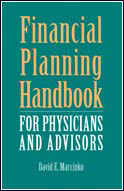
FINANCE: Financial Planning for Physicians and Advisors
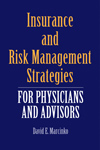
INSURANCE: Risk Management and Insurance Strategies for Physicians and Advisors

Product DetailsProduct Details

Enhancing Revenue Cycles with Recondo

About SurePayHealthPayment Processing

Staff Reporters

stk305087rknConsumer-driven health care [CDHC], high-deductible health plans [HDHPs], medical and health savings accounts [MSAs/HSAs] are changing the rules of revenue cycle management for medical practices, clinics, retail facilities and hospitals. In fact, compared to other industry segments, health care payment processing remains extremely inefficient; for example, the retail segment settles payments for less than two percent of revenue, and financial services settles payments for less than one percent. Some health economists even estimate that if health care could settle payments even for 10 percent of revenue, savings would exceed $100 billion.

Graphs: http://www.recondotech.com/pdf/HSA-AHIP-January-2008.pdf

About Recondo Technolgy

According to the website, Recondo Technology was formed by a veteran team of experienced software developers with a singular goal: to build tools that help hospitals, offices and medical clinics accelerate patient payments and streamline claims to payers; especially in the emerging Consumer Directed Health Care model of US health care.

Product Offerings

Recondo is an early pioneer in verifying patient information, financially approving and clearing patients, predicting payment accurately, and automating the Medicaid/charity approval process. Recondo offers: 

· Real-time access to information that ensures payment sources for services are properly identified prior to, during, and after care delivery.

· Statement processing that handles approximately 300 million patient documents annually for healthcare providers throughout the country. 

Link: http://www.recondotech.com

Assessment

Accelerating the healthcare cash conversion cycle is a desirable business goal, especially if collection occurs at the point-of-contact. Nevertheless, all medical professionals should realize that their guiding principle should always be: Omnia pro Aegroto [all for the patient].   

Conclusion

And so, your thoughts and comments on this Medical Executive-Post are appreciated; especially from our retail and concierge medical practitioners and subscribers.

Speaker: If you need a moderator or speaker for an upcoming event, Dr. David E. Marcinko; MBA – Publisher-in-Chief of the Executive-Post – is available for seminar or speaking engagements. Contact: MarcinkoAdvisors@msn.com  or Bio: www.stpub.com/pubs/authors/MARCINKO.htm

Subscribe Now: Did you like this Medical Executive-Post, or find it helpful, interesting and informative? Want to get the latest E-Ps delivered to your email box each morning? Just subscribe using the link below. You can unsubscribe at any time. Security is assured.

Link: http://feeds.feedburner.com/HealthcareFinancialsthePostForcxos

On Physician Leadership Today

Past versus Present in the Health 2.0 Era

By Susan Bock; MAOM, SPHRmedfrd1210

If you don’t know where you’re going, any road can take you there.

Hundreds, if not thousands, of books, articles and training materials have been published on leadership skills; far fewer for physicians of course; but the basics remain the same.

Self Help Proliferation

Why is there such a proliferation of paper devoted to this subject? Perhaps, it is due to the fact that business leadership today is ever so different from leadership of yesterday. Every aspect of leadership has been under intense scrutiny, by employees, industry experts, physician-executives and business gurus. Much like healthcare today, the very form of leadership is in a state of evolution – changing, modifying and redefining its core values. A multitude of leadership theories or models have been developed, revised, reviewed and assessed by the experts. What is needed, therefore, is an integration of several models specifically appropriate for today’s healthcare business environment and modern healthcare executive.  

Yesterday’s Death Knoll for Medicine

Replication of the leadership skills of yesterday is the death knoll for business today; especially for the business of healthcare. Leadership is no longer based on managing, directing, or supervising [top-down or command and control model].  As stated by James S. Doyle in his book The Business Coach [A Game Plan for the New Work Environment],

 “Today’s employees … do not respond well to bosses. Quite simply, they have plenty of other options where they will be treated as full members of a team.” 

Societal norms, generational beliefs and expanding diversity in healthcare are, in part, contributing to the new business environment. Likewise, medical leaders are required to respond, react and re-direct in the moment.

What Makes a Leader?

In a recent Harvard Business Review publication, What Makes a Leader”, author Daniel Goleman says that the desired traits most often sited were intelligence, toughness, determination, and vision.  A sufficient level of technical and analytical ability is even more essential now that we have moved into the new millennium. 

However, the leadership skills of this era are placing much more emphasis on the so-called ‘soft skills’ or ‘emotional intelligence’ and this may very well be the key attribute that distinguishes outstanding healthcare leaders from those who are merely adequate.

Multi Generations

It is common to have three generations represented in any organization. We have the Baby-boomers, Gen X and now, Gen Y. The Baby Boomer generation is saying with some sadness, “It sure isn’t want it used to be!”, while Generation Xers are saying “It’s about time things changed!” and the latest generation to enter the medical workforce, Gen Y’s, are saying “Ready or not, we’re here”. 

Each generation is extraordinarily complex, bringing various skills, expertise and expectations to the work environment. Determining the best methods to unite such diverse thinking is one of the many challenges faced by business leaders.

Assessment

Is it any wonder that many leaders in the Baby Boomer generation find themselves at a loss? The days of functional leadership are gone and suddenly, no one cares about the expertise of the Baby Boomers or how they climbed the corporate ladder, in medicine or elsewhere. The concept of ‘paying your dues’ is as foreign to the younger generations as is life without email, wikis or social networks. Still not convinced? Just think about the election of Barack Obama as 44th president of these United States. Leadership in the era of Health 2.0 is no longer about controlling or dictating with intense focus on the bottom line; it is about collaboration, empowerment and communication. 

Conclusion

And so, your thoughts and comments on this Medical Executive-Post are appreciated. How does the digital generation change the leadership equation in healthcare today?

Speaker: If you need a moderator or speaker for an upcoming event, Dr. David E. Marcinko; MBA – Publisher-in-Chief of the Executive-Post – is available for seminar or speaking engagements. Contact: MarcinkoAdvisors@msn.com  or Bio: www.stpub.com/pubs/authors/MARCINKO.htm

Our Other Print Books and Related Information Sources:

Practice Management: http://www.springerpub.com/prod.aspx?prod_id=23759

Physician Financial Planning: http://www.jbpub.com/catalog/0763745790

Medical Risk Management: http://www.jbpub.com/catalog/9780763733421

Healthcare Organizations: www.HealthcareFinancials.com

Health Administration Terms: www.HealthDictionarySeries.com

Physician Advisors: www.CertifiedMedicalPlanner.com

Subscribe Now: Did you like this Medical Executive-Post, or find it helpful, interesting and informative? Want to get the latest E-Ps delivered to your email box each morning? Just subscribe using the link below. You can unsubscribe at any time. Security is assured.

Link: http://feeds.feedburner.com/HealthcareFinancialsthePostForcxos

At-Home or Nursing-Home for Long Term Care [Part I]

Cost and Duration of Long-Term Care at Home

By Dr. David Edward Marcinko; FACFAS, M.B.A., CPHQ™, CMP™

By Thomas A. Muldowney; M.S.F.S., CLU, ChFC, CFP® CMP™

By Hope Rachel Hetico; R.N., M.H.A., CPHQ™, CMPdr-david-marcinko

This is the first post in an exclusive four part series for the ME-P titled: At-Home or Nursing Home Care for Long-Term Care.”

Remaining at Home

It is not surprisingly, eighty-five percent of married elders prefer to remain at home instead of moving to a nursing home or some other senior care facility. Staying at home is easier, more comfortable, and less traumatic. Home care statistics are limited, but three years is the estimated average number of years that elders will require custodial care services. This estimate also may combine home care followed by nursing home care. And, the anecdotal healthcare experience of two authors [DEM and HRH] confirms this period length.

Incremental LT Cost Approach

Quantifying the annual incremental costs of LTC home custodial services is difficult. Today, a high percentage of home care services are provided by unpaid family members, friends, or volunteer organizations. In the future, however, there will be fewer available unpaid caregivers, and more elders will have to pay for home custodial care.

Because of this potential shortage of caregivers, new business opportunities are springing up and, as usual, let the buyer beware. Many of these new businesses, for a fee, contract with a family that needs home LTC for a family member.  Upon contract, the new LTC business owner begins a search for a candidate caregiver who will live in your house and care for your parent or spouse. Often the in-home caregivers have difficulty speaking the language or may not be familiar with local customs.

Furthermore, many of them wish to be paid in cash rather than by check. As you might imagine, background checks, tax compliance and other legal considerations are of utmost importance.  Career education and career experience are also very important. Be sure that if you look for such a caregiver, you must exercise thorough due diligence so that your loved one will be cared for properly.

LTC Costs Vary Widely

LTC home care cost estimates vary widely by location and type of service. At present, the average annual cost for a live-in, full-time aide in the United States (especially if part-time help to relieve a full-time aide is added) is estimated at $40,000, the same as the estimated cost of staying at a nursing home for a year. If living expenses are added to costs for custodial aides, LTC home care costs can be more expensive than nursing home costs.

For three shifts of paid LTC custodial services, home care costs may exceed $100,000 annually; more than triple the current estimated cost for nursing home care. These numbers should not be surprising.  In a nursing home environment, one caregiver may be able to provide care for multiple patient/residents. This reduces the cost per patient. In your private home, your personal caregiver can give only care to a single patient.

Custodial Aide Costs

Costs for custodial aides in the fragmented, rapidly expanding, competitive home care industry may increase at a faster rate than the Consumer Price Index [CPI]. Employed aides will replace family caregivers. The Bureau of Labor Statistics [BLS] indicates that jobs for home health aides, human service workers, and personal and home care aides are expected to grow faster than any other industry in terms of total jobs.

In the next decade, there will be more than 2 million home care jobs, and they will become a larger component of total gross domestic product expenditures. Using an estimated three-year home care requirement and current estimated costs, and allowing for 15 years of inflation at 5 percent, $225,000 per person is a reasonable estimate to use for financial planning purposes.

Assessment

However, in some metropolitan or suburban areas, such as New York City, the cost should be increased by at least 100 percent. Of course, three years of required care is an estimate. About one-third of the people who require nursing home care will need it for more than three years. Presumably, nursing home care will be preceded by home care. Moreover, only one full-time aide was assumed. Some elders also will require additional part-time help.

And so, your thoughts and comments on this Medical Executive-Post, which represents the first in a series of four parts on: At Home or Nursing Home Care for Long Term Care, are appreciated. Comments from physicians and LTC insurance agents are especially valued.

Conclusion

Feel free to review our top-left column, and top-right sidebar materials, links, URLs and related websites, too. Then, subscribe to the ME-P. It is fast, free and secure.

Speaker: If you need a moderator or speaker for an upcoming event, Dr. David E. Marcinko; MBA – Publisher-in-Chief of the Medical Executive-Post – is available for seminar or speaking engagements. Contact: MarcinkoAdvisors@msn.com

OUR OTHER PRINT BOOKS AND RELATED INFORMATION SOURCES:

Join Our Mailing List

Ban on Referenced Based Drug Pricing

Join Our Mailing List

A Medicare and CMS Three-Sixty

[By Staff Reporters]rboa_16

According to Jane Zhang and Vanessa Fuhrmans of the Wall Street Journal, on January 10, 2009, the last days of the Bush administration saw a proposed ban that allows private insurers to charge Medicare beneficiaries stiff penalties if they choose brand-name drugs instead of cheaper generic drugs.

Referenced Based Pricing

Under reference-based drug pricing, the penalty for insisting on a brand-name drug often amounts to the price difference between the drug and the generic version, plus a copayment. In some cases, that leaves patients paying the full price of the brand-name drug. In contrast, buyers of brand-name drugs when there is no generic equivalent are charged just a copayment. Nearly 10% of drug plans used the pricing technique to steer beneficiaries to lower-cost generics www.HealthDictionarySeries.com 

CMS Announcement

Of course, the announcement from the Centers for Medicare and Medicaid Services came after lawmakers and patient advocates protested that reference-based pricing made it difficult for consumers to calculate drug costs.

CMS Renouncement

But, the agency reversed itself 360 degrees this week, proposing to ban such pricing for the 2010 drug plans. The WSJ reported that complicated formulas made it “very difficult to accurately convey the extent of expected out-of-pocket spending” for prescription drugs. And, “The basis for this decision is our belief that reference-based pricing may be inherently misleading to beneficiaries and inconsistent with our goal of improving transparency.”

The Pfizer-Wyeth Drug Deal

Following the ban, investors appeared skeptical about the just announced Pfizer-Wyeth drug deal. Pfizer will pay $68 billion for Wyeth, which is the biggest in the drug sector since 2000. The merger comes as Pfizer faces the difficult hurdle of dealing with patent expirations for some of its biggest drugs, including its cholesterol-lowering Lipitor, which makes up about 25% of the company’s overall sales.

Assessment

The ban is part of CMS’s criteria for prescription-drug plans that insurers will offer for 2010. The criteria won’t be final until March, leaving a narrow window for the Obama administration to change them.

Conclusion

Your thoughts and comments on this ME-P are appreciated. Feel free to review our top-left column, and top-right sidebar materials, links, URLs and related websites, too. Then, subscribe to the ME-P. It is fast, free and secure.

Speaker: If you need a moderator or speaker for an upcoming event, Dr. David E. Marcinko; MBA – Publisher-in-Chief of the Medical Executive-Post – is available for seminar or speaking engagements. Contact: MarcinkoAdvisors@msn.com

OUR OTHER PRINT BOOKS AND RELATED INFORMATION SOURCES:

Product DetailsProduct DetailsProduct Details

***

Healthcare and the Recession

Join Our Mailing List

Physician and Hospital Pricing Pressure

[By Staff Reporters]life-preserver

As reported in Modern Physician Online, by Dan Bowman, new metadata coming from the federal government suggests that the current financial meltdown and domestic recession has impacted hospital and physician charges, as implicated by their revenues.

USBLS on Physician Charges

According to data from the US Bureau of Labor Statistics [USBLS], retail prices charged by doctors rose 2.9 percent in 2008, compared with 4.1 percent the year before. Wholesale prices for physicians were up 1.2 percent last year, compared with 4 percent in 2007.

USBLS on Hospital Charges

Hospitals meanwhile, were up 5.9 percent in 2008, compared with 8.3 percent the year before. Wholesale prices for hospital services, for their part, were up 1.5 percent last year, falling from a 3.8 percent increase in 2007.

Assessment

Link: www.ModernHealthcare.com

Conclusion

Your thoughts and comments on this ME-P are appreciated. Feel free to review our top-left column, and top-right sidebar materials, links, URLs and related websites, too. Then, subscribe to the ME-P. It is fast, free and secure.

Link: http://feeds.feedburner.com/HealthcareFinancialsthePostForcxos

Speaker: If you need a moderator or speaker for an upcoming event, Dr. David E. Marcinko; MBA – Publisher-in-Chief of the Medical Executive-Post – is available for seminar or speaking engagements. Contact: MarcinkoAdvisors@msn.com

OUR OTHER PRINT BOOKS AND RELATED INFORMATION SOURCES:

DICTIONARIES: http://www.springerpub.com/Search/marcinko
PHYSICIANS: www.MedicalBusinessAdvisors.com
PRACTICES: www.BusinessofMedicalPractice.com
HOSPITALS: http://www.crcpress.com/product/isbn/9781466558731
CLINICS: http://www.crcpress.com/product/isbn/9781439879900
BLOG: www.MedicalExecutivePost.com
FINANCE: Financial Planning for Physicians and Advisors
INSURANCE: Risk Management and Insurance Strategies for Physicians and Advisors

Product Details  Product Details

On Episodes of Medical Care

Join Our Mailing List

Another Medical Payment Paradigm Shift

einstein

[By Ann Miller; RN, MHA]

 “Any intelligent fool can make things bigger, more complex, and more violent. It takes a touch of genius — and a lot of courage — to move in the opposite direction.”

Currently, the Centers for Medicare and Medicaid Services [CMS] pay hospitals a single prospectively determined amount under the inpatient prospective payment system [IPPS] for all care given to an inpatient. Physicians who provide other care to patients are paid separately – accordingly to a Medicare physician fee schedule – for each service they perform http://www.HealthDictionarySeries.org

The ACE Project

A newer project, called the Acute Care Episode demonstration, will soon test whether a global payment will better align the incentives for both types of providers leading to better quality and greater efficiency; beginning in January 2009 www.HealthcareFinancials.com.

Bundled Payment Advocates

Like Einstein’s statement on simplicity, we are believers in bundling payments for medical providers. If done correctly, episodic medical care bundling may be an acceptable compromise for all. The current Medicare payment system treats physicians like virtual offending criminals. Every potential health claim is fraud; although this situation probably wouldn’t change. Any formula that buries E&M coding is a system worth evaluating. Many docs easily double the number of patients seen if paperwork and documentation was not so onerous. Not sure this is always a good thing; however. Bundling forces physicians to reevaluate, what is necessary and what isn’t. There is a much unnecessary productivity in medical care. “Too much friction – not enough movement” 

Assessment

Fee-for-service medicine has a way of creating business that need not be created. Will less be done under bundled care – will diagnostic care be upgraded for increased reimbursements?  Will episodic coding consultants come out of the wood-work? Maybe! And, can we can look at the DRG and MS-DRG experience as a potential harbinger of the future?

Conclusion

Your thoughts and comments on this ME-P are appreciated. Feel free to review our top-left column, and top-right sidebar materials, links, URLs and related websites, too. Then, subscribe to the ME-P. It is fast, free and secure.

Speaker: If you need a moderator or speaker for an upcoming event, Dr. David E. Marcinko; MBA – Publisher-in-Chief of the Medical Executive-Post – is available for seminar or speaking engagements. Contact: MarcinkoAdvisors@msn.com

OUR OTHER PRINT BOOKS AND RELATED INFORMATION SOURCES:

Product DetailsProduct DetailsProduct Details

What’s Up with Plaid Management?

Join Our Mailing List

A “Cold-Call” Cowboy for Financial Advisors

[By An Anonymous Subscriber]gears

We have been getting annoying cold robo-calls, monthly for about a year now, from one Tim Smith. It seems as though Mr. Smith is a financial services matchmaker from Plaid Management, who brokers deals between clients and those in the financial services [sales] industry desperate for them. His firm may also do this with patients and medical professionals too; but, at what cost?

Our Internet Search

So, as a financial advisory firm, we did a web search for his company in Houston. Of course, you can too. According to the site, Smith founded The Plaid Group as a resource to help companies improve financial performance by simplifying and stabilizing their business operations. So, he is not working for the client prospect or patient-consumer; at all. But, he does seem to have a marketing history that includes a Fortune 500 Diversified Financial Services Corporation; and in a gamut of industries that include CPAs, IT, law, training, employee assessment folks, and marketing firms. Yet we know nothing else about him, good or bad, sans his cheesy and automated cold-call techniques.

Why Plaid?

Plaid is a fabric with a consistent, repeatable, and predictable pattern. Like Tim, we’ve taken that idea and applied it to his constant gear-like marketing activities.

Assessment

In other words, we have placed his firm on our Do Not Call list; with email message block. If inclined, you can too; or not! The decision is your own; but caveat emptor. Here is the contact info:

The Plaid Group
PO Box 25247
Houston, TX 77265-5247
713-627-3569 info@plaidgroup.com

Channel Surfing the ME-P

Have you visited our other topic channels? Established to facilitate idea exchange and link our community together, the value of these topics is dependent upon your input. Please take a minute to visit. And, to prevent that annoying spam, we ask that you register. It is fast, free and secure.

Conclusion

Your thoughts and comments on this ME-P are appreciated. Feel free to review our top-left column, and top-right sidebar materials, links, URLs and related websites, too. Then, subscribe to the ME-P. It is fast, free and secure.

Speaker: If you need a moderator or speaker for an upcoming event, Dr. David E. Marcinko; MBA – Publisher-in-Chief of the Medical Executive-Post – is available for seminar or speaking engagements. Contact: MarcinkoAdvisors@msn.com

OUR OTHER PRINT BOOKS AND RELATED INFORMATION SOURCES:

About National Compliance Services, Inc.

Want, Need or Risk Reduction Mechanism?
Staff Reporters

cmp-logo6

As readers and subscribers to the Medical Executive Post, and our related print periodicals, dictionaries and books are aware, choosing the right financial consulting firm, or consultant, is always a challenging task www.HealthCareFinancials.com Today, this is true more than ever, given the financial meltdown and the all too obvious shenanigans of Wall Street www.HealthDictionarySeries.com Lay and physician investors alike are affected; along with related financial advisors of all stripes, degrees and designations [spurious or more credible] www.MedicalBusinessAdvisors.com

National Compliance Services

According to the National Compliance Services, Inc. [NCS] website, an experienced team of customer-oriented professionals is in place that strives to meet personal and corporate compliance needs so that clients can focus on areas of expertise www.NCSonline.com

A Protean Focus

NCS operates in the financial compliance and regulatory services industry. Its strength may be in providing efficient, and reasonably priced products and services for many different sub-arenas, such as: investment and financial advisors, hedge and mutual funds, stock-brokers and broker-dealers. Their customized services are designed to structure a compliance program that is appropriate for any individual, or firm’s unique regulatory needs. NCS works to ensure compliance with applicable federal and/or state rules and regulations.

Range of Products and Services

NCS has offered its personalized services to more than 6,000 clients, both domestically and internationally. Their consultants include former regulatory examiners, accountants, attorneys, and other individuals with extensive hands-on industry experience.

Verification Services

NCS also offers a standard or customized line of verification services to Mutual Funds, Hedge Funds, Custodians, Broker-Dealers, Investment Advisers, and Third-Party Vendors. Verification services can be customized to include any or all of the following:

  • Firm Registration/Notice Filing with the Proper Jurisdiction(s)
  • Adviser Representative Registration(s)
  • Adviser Representative Degree(s) or Professional Designation(s)
  • Firm Reported Disciplinary History
  • Adviser Representative Reported Disciplinary History
  • Proper Registration of Solicitors
  • Proper Registration of Wholesalers and Third-Party Vendors
  • Bank Background and Activity Reports, and
  • OFAC Checks, etc.

Assessment

Moreover, claims of verification for over 15,000 Registered Investment Advisers, and Investment Adviser Representatives, seem plausible. For example, NCS recently contacted www.CertifiMedicalPlanner.com to verify the good-standing of a member and charter-holder.

Contact Info:

For further information, please contact:

Alex Aghyarian
National Compliance Services, Inc
Verification Technician
Phone: 561.330.7645 ext 302 and Fax: 561.330.7044
aaghyarian@ncsonline.com

Conclusion

And so, your thoughts and comments on this Medical Executive-Post are appreciated. Verification in most any space is worthwhile of course; but is membership in a vague or nebulous organization helpful or harmful to the uninitiated?

Speaker: If you need a moderator or speaker for an upcoming event, Dr. David E. Marcinko; MBA – Publisher-in-Chief of the Executive-Post – is available for seminar or speaking engagements. Contact: MarcinkoAdvisors@msn.com  or Bio: www.stpub.com/pubs/authors/MARCINKO.htm

Our Other Print Books and Related Information Sources:

Practice Management: http://www.springerpub.com/prod.aspx?prod_id=23759

Physician Financial Planning: http://www.jbpub.com/catalog/0763745790

Medical Risk Management: http://www.jbpub.com/catalog/9780763733421

Healthcare Organizations: www.HealthcareFinancials.com

Health Administration Terms: www.HealthDictionarySeries.com

Physician Advisors: www.CertifiedMedicalPlanner.com

Subscribe Now: Did you like this Medical Executive-Post, or find it helpful, interesting and informative? Want to get the latest E-Ps delivered to your email box each morning? Just subscribe using the link below. You can unsubscribe at any time. Security is assured.

Link: http://feeds.feedburner.com/HealthcareFinancialsthePostForcxos

An Open Letter on eMRs from Hayward Zwerling MD

On eMRs Dangers and Expenses

Submitted by Darrell K. Prutt; DDS55909808

Like communicable diseases that nobody wants to discuss; eMRs are dangerous, incredibly expensive and not worth having for free.  

A Fresh Look at eMRs

A couple of weeks ago, Hayward Zwerling, M.D. uncovered a fresh look at what makes current eMRs so lame, and clinically described the underlying problem in a blunt way that only a doctor with clinical experience can do. Dr. Zwerling’s informative comment on Boston.com is in response to Lisa Wangsness’ Jan. 1 article, “Letter highlights hurdles in digitizing health records.”  

We should have known that CCHIT would draw parasites for natural reasons.   

http://people.boston.com/articles/nation/?p=articlecomments&activityId=6778798549471809193

Dr. Hayward Zweling Speaks

Under the Federal Government’s direction, CCHIT has been given the task of promoting IT (information technology) within the health care industry. Approximately half of CCHIT’s Board of Directors work for medical insurance companies, commercial medical informatic companies, physicians employed by very large group practices or eMR companies. As a result, CCHIT’s priorities have been tailored to reflect the interests of it’s Board of Directors, rather than the needs of the physicians and the health interests of our society at large.

CCHIT Force

CCHIT is now attempting to coerce physicians to purchase specific, expensive and “CCHIT certified” electronic medical record programs, which are designed to collect medical information. This information is “quantified; ” thereby creating a huge repository of all US healthcare interactions. As 16% of the US GDP is spent on healthcare, the amount of information that will be stored in these databases is massive and will eventually be available (for sale) to third parties. One can logically conclude that those organizations that have access to this information will be able to exert a hugh influence on the future of US healthcare.

Enter the Non-CCHIT Vendors

There are now several hundred non-CCHIT certified eMRs on the market which provide low cost and innovative solutions that are not otherwise available to physicians. If CCHIT’s influence remains unchecked, many small eMR companies will be forced out of business. The end result will be extremely disruptive to small medical practices, while forcing them to adopt expensive and bloated software while creating a frighteningly comprehensive healthcare database.

Unique Position

As a practicing physician who also has more than 15 years experience incorporating IT into small medical practice, I am in a unique position to understand the needs of the healthcare community and the potential of health IT. I am a firm believer that the appropriate use of health IT can improve the quality of healthcare. However, it is my opinion that the Federal Government needs to force the Certification Commission for Health Information Technology to alter their priorities so that they mirror the needs of the the majority of the medical community, rather than the interests of CCHIT’s Board of Directors and their representative companies. This can only be accomplished by replacing CCHIT’s Board of Directors, who has a financial interest in the health information technology industry, with people who have no financial connection to the medical-health IT-pharmaceutical industrial complex.

Eisenhower’s Farewell Address

In President Eisenhower’s Farewell Address, he said ” … we must guard against the acquisition of unwarranted influence … by the military-industrial complex … Only an alert and knowledgeable citizenry can compel the proper meshing of the huge industrial and military machinery … so that … liberty may prosper …”

The size of US’s medical-health IT-pharmaceutical industrial complex now rivals the size of its’ military-industrial complex and the parallel between the two industries is too obvious to be discounted. If we choose to ignore this historical precedent, then the future of healthcare in the USA will be controlled by several powerful industries, whose priorities do not necessarily parallel the health interests of our society. And once these industries take control of the health industry, their political influence will ensure that they will remain in control for many decades into the future.

Hayward Zwerling; MD, FACP, FACE

President, ComChart Medical Software

The Lowell Diabetes & Endocrine Center

Information Resources, LLC, Denver, Colorado

Speaker: If you need a moderator or speaker for an upcoming event, Dr. David E. Marcinko; MBA – Publisher-in-Chief of the Executive-Post – is available for seminar or speaking engagements. Contact: MarcinkoAdvisors@msn.com  or Bio: www.stpub.com/pubs/authors/MARCINKO.htm

Subscribe Now: Did you like this Medical Executive-Post, or find it helpful, interesting and informative? Want to get the latest ME-Ps delivered to your email box each morning? Just subscribe using the link below. You can unsubscribe at any time. Security is assured.

Link: http://feeds.feedburner.com/HealthcareFinancialsthePostForcxos

Product DetailsProduct DetailsProduct Details       

Emergence of Online Doctors

Health 2.0 e-Consultations

Staff Reporters

insurance-book3

Did you ever wish that you could talk to a doctor without schlepping all the way to a crowded medical office where you’ll probably pick up even more germs? Well, if you live in Hawaii, you may be in luck. 


Computerworld Speaks to the Healthcare Industry

According to Computerworld, January 15, 2009, the Hawaii Medical Service Association (HMSA) just launched a new program where patients can connect with doctors over a standard Internet connection or telephone. The service is available 24 hours a day to anyone in the state.

Several Medical Specialties Available

Customers of the insurer pay $10 and non-HMSA members pay $45 per session. About 140 local doctors, including family physicians, cardiologists, ophthalmologists, pediatricians, psychiatrists and surgeons, have signed up to be available for questions.

Is Hawaii the Vanguard?

“HMSA’s Online Care is making Hawaii’s health care system more accessible to patients by overcoming the constraints of time, distance, mobility or lack of insurance,” so says Michael Gold, HMSA’s executive vice president and chief operating officer.

Assessment

HMSA, an independent licensee of the Blue Cross and Blue Shield Association, also notes that this is the first health plan in the US to provide state residents with online service. Now, we ask, is it coincidental that Hawaii is President-elect Barack Obama’s home state?

Conclusion

And so, your thoughts and comments on this Medical Executive-Post are appreciated. For example, what are the liability issues of this new health 2.0 dialog?

Speaker: If you need a moderator or speaker for an upcoming event, Dr. David E. Marcinko; MBA – Publisher-in-Chief of the Executive-Post – is available for seminar or speaking engagements. Contact: MarcinkoAdvisors@msn.com  or Bio: www.stpub.com/pubs/authors/MARCINKO.htm

Our Other Print Books and Related Information Sources:

Practice Management: http://www.springerpub.com/prod.aspx?prod_id=23759

Physician Financial Planning: http://www.jbpub.com/catalog/0763745790

Medical Risk Management: http://www.jbpub.com/catalog/9780763733421

Healthcare Organizations: www.HealthcareFinancials.com

Health Administration Terms: www.HealthDictionarySeries.com

Physician Advisors: www.CertifiedMedicalPlanner.com

Subscribe Now: Did you like this Medical Executive-Post, or find it helpful, interesting and informative? Want to get the latest E-Ps delivered to your email box each morning? Just subscribe using the link below. You can unsubscribe at any time. Security is assured.

Link: http://feeds.feedburner.com/HealthcareFinancialsthePostForcxos

Troubles Brewing for Physician Owned Hospitals

Financial Problems Predicted

Staff Reporterscrazy-house

According to the Wall Street Journal, January 22, 2009, a bill making its way through Congress to provide more low-income children with health-insurance coverage might mean financial trouble for scores of physician owned hospitals.  


Emergence and Growth

The very existence of doctor-owned hospitals is controversial. But, their numbers have tripled to about 200 since 1990.

The Supporters

Supporters say these hospitals, which usually focus on several lucrative services, such as cardiac care or orthopedics, are highly efficient, saving expenses for both patients and insurance programs, including Medicare.

More: www.HealthcareFinancials.com

The Critics

Critics say physicians who refer patients to hospitals with an ownership stake drive up costs, because they order more tests or perform unnecessary surgery. They argue that such hospitals also cherry pick healthy patients hurting surrounding non-profits hospitals.

Assessment

According to Pete Stark, chairman of the House Ways and Means health subcommittee, the proposed legislation would prohibit “the unethical kickbacks that physicians receive from ownership hospitals, most of which are of questionable safety and quality.”

Conclusion

And so, your thoughts and comments on this Medical Executive-Post are appreciated. Do you agree, or disagree with the thesis; why or why not? Does this mean that not-for-profit hospitals, for-profit entities, or those hospitals with training programs don’t order un-needed tests? Are these hospitals and physician-investors, “crazy” or colorful and sane? 

Speaker: If you need a moderator or speaker for an upcoming event, Dr. David E. Marcinko; MBA – Publisher-in-Chief of the Executive-Post – is available for seminar or speaking engagements. Contact: MarcinkoAdvisors@msn.com  or Bio: www.stpub.com/pubs/authors/MARCINKO.htm

Our Other Print Books and Related Information Sources:

Practice Management: http://www.springerpub.com/prod.aspx?prod_id=23759

Physician Financial Planning: http://www.jbpub.com/catalog/0763745790

Medical Risk Management: http://www.jbpub.com/catalog/9780763733421

Healthcare Organizations: www.HealthcareFinancials.com

Health Administration Terms: www.HealthDictionarySeries.com

Physician Advisors: www.CertifiedMedicalPlanner.com

Subscribe Now: Did you like this Medical Executive-Post, or find it helpful, interesting and informative? Want to get the latest E-Ps delivered to your email box each morning? Just subscribe using the link below. You can unsubscribe at any time. Security is assured.

Link: http://feeds.feedburner.com/HealthcareFinancialsthePostForcxos

Discount Dentistry Brokers

Join Our Mailing List

More … on Sleazy Defenseless Companies

By Darrell K. Pruitt; DDS

I just came across a deceptive advertisement for a discount dentistry broker.

Yea, I know! What’s new? 

Why do we as healthcare providers silently allow naïve consumers to be so brazenly misled by sleazy businesses like Universal Benefit Plans and Universal Dental Plan, when we know they cheat their clients out of healthcare dollars?

Massachusetts Non-Profits

In a press release that announces their joint outreach initiative to aid Massachusetts nonprofits, it says Universal Dental Plan provides “… guaranteed rate discounts of 20-50% on all procedures.”

http://news.prnewswire.com/DisplayReleaseContent.aspx?ACCT=104&STORY=/www/story/01-06-2009/0004949991&EDATE=

Off the Top 

Just think – 20-50% off what – a super-inflated “retail” price? Dentists’ overhead easily tops 60%. If a dentist is losing 10% of his or her retirement just to do an intricate procedure for a gullible and trusting consumer who has no idea what is happening, how well do you think that work of art will chew? 

A Madoff Investment

Universal Dental Plan sounds almost as good as a Bernard L Madoff Investment, except that Ponzi tycoon Madoff accidentally promised quality before the wheels fell off. Universal Benefit Plans and Universal Dental Plan are sleazy companies who will never attempt to defend themselves on the Internet. They know better.

Assessment

This has been fun. Let’s do it again. And, if sleazy attorneys don’t like what I have to say about these two sleazy clients, come and get me.  But you better bring a ladder and a sack lunch. I’m not worried. I’ve said the same thing about Delta Dental, and they haven’t the guts to face me either [“Such a ‘Sleazy’ Company” on this Medical Executive-Post].

https://healthcarefinancials.wordpress.com/2008/09/19/%E2%80%9Csuch-a-sleazy-company%E2%80%9D/

Note: Dr. Pruitt blogs at PenWell and other dental sites, where this post first appeared.

Channel Surfing the ME-P

Have you visited our other topic channels? Established to facilitate idea exchange and link our community together, the value of these topics is dependent upon your input. Please take a minute to visit. And, to prevent that annoying spam, we ask that you register. It is fast, free and secure.

Conclusion

Your thoughts and comments on this ME-P are appreciated. Feel free to review our top-left column, and top-right sidebar materials, links, URLs and related websites, too. Then, subscribe to the ME-P. It is fast, free and secure.

Speaker: If you need a moderator or speaker for an upcoming event, Dr. David E. Marcinko; MBA – Publisher-in-Chief of the Medical Executive-Post – is available for seminar or speaking engagements. Contact: MarcinkoAdvisors@msn.com

OUR OTHER PRINT BOOKS AND RELATED INFORMATION SOURCES:

Product DetailsProduct DetailsProduct Details

ICD-10 Deadline Delay Achieved

Join Our Mailing List

Two-Year Postponement Announced

[By Staff Reporters]

The Department of Health and Human Services [DHHS] just released the final rule for implementing the ICD-10 [International Classification of Diseases] CM [Clinical Modification] and ICD10-PCS [Procedure Coding System] insurance coding initiatives.

The Delay

The compliance deadline was shifted from October 1, 2011; as proposed in the original rule; to October 1, 2013.

What it is?

The ICD provides codes to classify diseases and a wide variety of signs, symptoms, abnormal findings, complaints, social circumstances and external causes of injury or disease. Every health condition can be assigned to a unique category and given a code, up to six characters long. Such categories can include a set of similar diseases.

Assessment

The proposed rule was issued last August and presented for public comments.

Conclusion

Your thoughts and comments on this ME-P are appreciated. Feel free to review our top-left column, and top-right sidebar materials, links, URLs and related websites, too. Then, subscribe to the ME-P. It is fast, free and secure.

Speaker: If you need a moderator or speaker for an upcoming event, Dr. David E. Marcinko; MBA – Publisher-in-Chief of the Medical Executive-Post – is available for seminar or speaking engagements. Contact: MarcinkoAdvisors@msn.com

OUR OTHER PRINT BOOKS AND RELATED INFORMATION SOURCES:

Product Details

Market Driven Healthcare

Keep Practicing Medicine

By Dr. David Edward Marcinko; MBA, CMP™

By Hope Rachel Hetico; RN, MHA, CMP™biz-book2

In the second edition our book, the Business of Medical Practice, we cite Regina E. Herzlinger, PhD, the Nancy R. McPherson professor of business administration and chair at Harvard Business School, and mother of a physician-daughter. Regina was a guest lecturer at Piedmont Hospital, here in Atlanta, GA last year, as we were fortunate to heed her advice decades ago.

Herzlinger Speaks

In her musings, Regina opines that there is little wonder that some physicians become depressed and want to give up their careers entirely when pondering the future of medicine, managed care and related compensation issues?

Healthcare Update

In fact, the newest Medicare Trustees Report projects a 4.7% reduction in physician reimbursements in 2009 and 37% in cumulative cuts over the next nine years. It notes that each year for the next decade will feature a roughly 5% cut in doctors’ pay – unless Congress steps in – while the costs to physicians of providing care increase by more than 2%. Trustees also noted that spending on Medicare Part B continues to rise at alarming levels and puts growing strain on beneficiary and government pocketbooks.

In response, the Bush administration repeated its call for nearly $36 billion in Medicare reductions over five years to hospitals and non-physicians, and pushed again for a physician quality reporting program that would lead to reimbursements based on individual performance against predetermined standards. What path the new Obama Administration will pursue is still not known?

Market Driven Healthcare

Nevertheless, Herzlinger implores in her book, Market Driven Healthcare, “don’t give up practice, yet.” Pragmatically, the future is bright and offers great opportunity to early adaptors who have the foresight to change medicine for the better and be handsomely compensated, too! But, physicians’ inability to deal with competitive market forces is well known and many are loath to deal with them.

Assessmentcmp-logo4

And so, one way is to seek a strategic competitive advantage is with additional education through a traditional Master’s Degree in Business Administration (MBA); or a new-wave online distance-education resource like the Certified Medical Planner program in health economics and medical management for financial advisors and healthcare consultants (CMP™). Tuition, textbooks and fees may be tax deductible. In this way, doctors may maintain their place as salary and compensation leaders in the U.S. labor force www.CertifiedMedicalPlanner.com

Conclusion

And so, your thoughts and comments on this Medical Executive-Post are appreciated.

Speaker: If you need a moderator or speaker for an upcoming event, Dr. David E. Marcinko; MBA – Publisher-in-Chief of the Executive-Post – is available for seminar or speaking engagements. Contact: MarcinkoAdvisors@msn.com  or Bio: www.stpub.com/pubs/authors/MARCINKO.htm

Our Other Print Books and Related Information Sources:

Practice Management: http://www.springerpub.com/prod.aspx?prod_id=23759

Physician Financial Planning: http://www.jbpub.com/catalog/0763745790

Medical Risk Management: http://www.jbpub.com/catalog/9780763733421

Healthcare Organizations: www.HealthcareFinancials.com

Health Administration Terms: www.HealthDictionarySeries.com

Physician Advisors: www.CertifiedMedicalPlanner.com

Subscribe Now: Did you like this Medical Executive-Post, or find it helpful, interesting and informative? Want to get the latest E-Ps delivered to your email box each morning? Just subscribe using the link below. You can unsubscribe at any time. Security is assured.

Link: http://feeds.feedburner.com/HealthcareFinancialsthePostForcxos

Locum Tenens Medical Practitioners

Join Our Mailing List

Employment Considerations of a Nomadic Lifestyle

By Dr. David Edward Marcinko; MBA, CMP™

autos1

Locum Tenens [LT] is an alternative to full-time employment for most medical specialties. And, although having never personally used this business model myself [my past work history does include moonlighting, acting as an assistant surgeon, litigation support duties, and/or weekend / after-hours employment], this business model is increasingly attractive to many doctors.

Addressing the Physician Shortage

It is well known that the physician shortage is especially acute in rural America where LT recruiting firms do at least 60% of their business. For example, the National Rural Health Association [NRHA] and the federal Office of Rural Health Policy [ORHP] reports that roughly 25 percent of the U.S. population lives in rural America, but only 10 percent of US physicians practice in these areas. There are 2,157 Health Professional Shortage Areas [HPSA’s] in frontier areas of all states and US territories; compared to 910 in urban areas.

Benefits and Disadvantages

Younger physicians seem to enjoy the travel and excitement of the LT model, while mature physicians like to practice at their leisure. Of course, the lack of a permanent office presence, with its potential equity build-up and little community involvement, may be considered drawbacks of the LT business model

Employment Factors

LT employment factors to consider include third-party employment firm reputation, malpractice insurance, credentialing, travel and relocation expenses [which are negotiable].  

Salary Considerations

A recent survey by LocumTenens.com revealed the following salary considerations:

www.CertifiedMedicalPlanner.org

Assessment

Moreover, a LT firm typically will not cover taxes. 

Conclusion

Your thoughts and comments on this ME-P are appreciated. Feel free to review our top-left column, and top-right sidebar materials, links, URLs and related websites, too. Then, subscribe to the ME-P. It is fast, free and secure.

Speaker: If you need a moderator or speaker for an upcoming event, Dr. David E. Marcinko; MBA – Publisher-in-Chief of the Medical Executive-Post – is available for seminar or speaking engagements. Contact: MarcinkoAdvisors@msn.com

OUR OTHER PRINT BOOKS AND RELATED INFORMATION SOURCES:


Product DetailsProduct DetailsProduct Details

Product Details  Product Details

Product Details

HIPAA and Dentistry

About Ahlstrom’s Controversial HIPAA Testimony

By Darrell K. Pruitt; DDS

pruitt

Dr. Robert H. Ahlstrom, representing the ADA as well as all US dentists, testified in July 2007 before the standards and security subcommittee of the National Committee on Vital and Health Statistics (NCVHS) about the benefits of HIPAA in dentistry.  His testimony is featured as an official HHS document titled “Testimony of the American Dental Association, National Committee on Vital and Health Statistics Subcommittee on Standards and Security”, July 31, 2007. 

http://www.ncvhs.hhs.gov/070731p08.pdf

The NCVHS Document 

The document was presented by NCVHS to HHS Secretary Michael Leavitt as fact – a mistake that not only set back healthcare IT in dentistry, and miracles from trusted Evidence Based Dentistry [EBD] a decade or more – but seriously stained the reputation of the American Dental Association, crippling my profession’s influence in the nation’s capitol. Dr. Ahlstrom is a prosthodontist from Reno, Nevada and a tireless ADA volunteer. At one time, he was a respected proponent of paperless dental practices, and was rewarded with prominent appointments in the ADA, which he continues to silently cling to. However, at some point in his efforts, his enthusiasm for healthcare IT in dentistry caused him to lose perspective of who he was serving. When Dr. Ahlstrom chose to ignore the warnings of the danger from digitalized patient information, he abandoned the needs of dental patients and dentists.

Discussion Avoidance 

For at least the last few years, Dr. Robert Ahlstrom has suspiciously avoided discussing the dangers of digital records with ADA members – including me – even in front of a crowd of a hundred or so witnesses in ADA Headquarters. 

http://community.pennwelldentalgroup.com/forum/topics/evidencebased-dentistry-my?page=1&commentId=2013420%3AComment%3A17400&x=1#2013420Comment17400

The Challenge

Even though I think it is unlikely that he will accept my open challenge, I emailed him an invitation to defend his testimony here, or on the PennWell forum. In my opinion, the time has come for Ahlstrom to either show courage or be terminally irrelevant. If he fails to respond, I personally call for his resignation from all ADA positions because of clear unaccountability to ADA membership.  

Robert Ahlstrom is the only dentist left in the nation who applauds HIPAA, and I don’t expect any official from the ADA to come to his defense. It would be wonderfully entertaining, but that is just too much to ask of the shy good ol’ boys I have bumped heads with. My questions to the ADA about HIPAA have been evaded for years.

Ahlstrom’s Eleven Selling Points 

Here are the 11 selling points Ahlstrom presented to our lawmakers in support of HIPAA – which I will contest individually and in depth: 

1. Dental office computer systems will be compatible with those of the hospitals and plans they conduct business with. Referral inquiries will be handled easily.

2. Vendors will be able to supply low-cost software solutions to physicians/dentists who support standards-based electronic data interchange. Costs associated with mailing, faxing and telephoning will decrease.

3. All administrative tasks can be accomplished electronically. Dentists will have more time to devote to direct care.

4. Dentists will have a more complete data set of the patient they are treating, enabling better care.

5. Patients seeking information on enrollment status or health care benefits will be given more accurate, complete and easier-to-understand information.

6. Consumer documents will be more uniform and easier to read.                                  

7. Cost savings to providers and plans will translate in less costly health care for consumers. Premiums and charges will be lowered.

8. Patients will save postage and telephone costs incurred in claims follow-up.

9. Patients will have the ability to see what is contained in their medical and dental records and who has accessed them. Patient records will be adequately protected through organizational policies and technical security controls.

10. Visits to dentists and other health care providers will be shorter without the burden of filling out forms.

11. Consumer correspondence with insurers about problems with claims will be reduced.

Pruitt’s Response 

1. Dental office computer systems will be compatible with those of the hospitals and plans they conduct business with. 

Referral inquiries will be handled easily. Just how important is that to dentists other than you and the insurers you repeatedly represent, Dr. Ahlstrom?  Adequate communication with other healthcare professionals has never been an issue in my office, and the US Post Office is hard to beat for safety. Dentists’ offices are not emergency rooms. Even in the most urgent situation, I cannot imagine a general dentist needing anything faster than the telephone and fax machine.  And if it is a life-threatening emergency, rather than going online, we simply dial 911 in my office. 

Common forms of communication are much more convenient, inexpensive and dependable than computers.  But most importantly, like the US mail, they do not endanger dental patients’ welfare like digital records do. In fact, because universally accepted communications are not covered by the HIPAA rule you support, they cannot draw inspections and fines from the HHS.

As far as aiding communication with insurers, that has always been an insurance problem – commonly used to delay and deny payments to dentists. Since dental insurance companies continue to avoid transparency with their own clients for strategic reasons, their greed must never again be officially declared as dentistry’s problem by representatives of the ADA. You are wrong to mislead the federal government. It has never been the mission of the ADA to protect the profits of dental insurance companies. In fact, those you assist compete with dentists for dental patients’ dollars. That means it is unethical as well as against the Hippocratic Oath for you to assist them, Dr. Ahlstrom.

2. Vendors will be able to supply low-cost software solutions to physicians/dentists who support standards-based electronic data interchange.  Costs associated with mailing, faxing and telephoning will decrease.

Supply solutions for what problems?  How can a prosthodontist be so imprecise as to include vague words like “low-cost” in such important testimony to lawmakers on behalf of the nation’s dentists? Low-cost compared to what – no software? Just how expensive are the postage and telephone bills compared to the $40 thousand vendor problem you describe later in your testimony to the NCVHS? 

“One dentist contacted the ADA recently and said that their current vendor was not going to update the current version in use today and instead the dental office would be forced to purchase a new system for $30,000-$40,000 dollars or return to submitting paper claims.” Dr. Ahlstrom, please leave baseless advertisements to healthcare IT vendors. They follow a code that forces them to maintain credibility. 

3. All administrative tasks can be accomplished electronically. Dentists will have more time to devote to direct care.

As the best, if grossly exaggerated selling point for HIPAA that Dr. Ahlstrom highlights, this is still a blatant reach that is silly. I find it odd to read that any dentists sacrifice chair time for administrative tasks.

The business of dentistry is actually so simple that it was managed successfully for decades in even the busiest offices with pegboards and ledger cards.  The bottleneck in dentistry has never been the front desk. It has always been the speed of the dentist. As a matter of fact, HIPAA forms have actually hurt efficiency. In addition, operatory turn-around is further delayed by another unfunded and unproductive mandate called OSHA, which also offers nothing to hold down the cost of compliancy. 

What is the difference between the two? OSHA makes a little bit of sense, is hundreds of times cheaper and it does not harm patients other than increasing the cost of dental care. As for Ahlstrom’s incredible claim that “All administrative tasks can be accomplished electronically,” HIPAA compliance itself increasingly adds serious administrative tasks to covered entities’ overhead even before HIPAA inspections of dental offices begin. Let me provide a partial list of documents that are expected to be handy for HIPAA inspectors:  In April 2005, long before Ahlstrom’s deceptive suggestion that HIPAA reduces non-productive tasks, Piedmont Hospital in Atlanta was inspected by HHS for HIPAA violations.

http://www.computerworld.com/action/article.do?command=viewArticleBasic&articleId=9024921

As a result, Piedmont officials were presented with a documented list of 42 items that the agency wanted information on  “… including physical and logical access to systems and data, Internet usage, violations of security rules by employees, and logging and recording of system activities.  The document also requested items such as IT and data security organizational charts and lists of the hospital’s systems, software and employees, including new hires and terminated workers.”

Has the ADA prepared members for HIPAA inspections?  Not at all! They never mention it. Isn’t that odd?

I personally conducted a survey that I posted on the Executive-Post titled “HIPAA Rules and Dentistry.”

https://healthcarefinancials.wordpress.com/2008/09/01/hipaa-rules-and-dentistry/

The results show that the range of compliancy was found to be from 0% for the requirement of a written workstation policy to 88% for that of password security. The average was 49%, meaning that less than half of the requirements are being respected by the dentists in this sample. Once again, neither Ahlstrom nor the ADA has mentioned a word about HIPAA inspections to membership.

4. Dentists will have a more complete data set of the patient they are treating, enabling better care.

This is beyond reaching. This is absurd. If Ahlstrom had not obviously included this false testimony to placate members of the NCVHS who know nothing about dentistry, the intention of his misrepresentation would not make sense at all. What more do dentists need to successfully treat a patient’s oral problems than an uncomplicated, up-to-date and concise health history like the hundreds of millions of paper ones safely in use today in dental offices? Even if one pulls up an interoperable electronic health record, the dentist still must review it before initiating treatment. No time saved there. As more eHRs become imperceptibly altered by health insurance thieves who are not likely to be allergic to the same medications as the true owners of the records, I am determined that my patients’ health histories will always be paper – even if I am forced to pretend to have a paperless practice as mandated by an absurd law. It will cost my patients more to have two sets of records, but they will enjoy less risk of anaphylactic shock. 

Let’s face it, dentistry is not heart surgery. Dentists don’t even need to know blood types. A health record complicated with superfluous and possibly tainted information clearly increases the chance for serious error without providing patients any benefit. One complaint already heard from physicians using eMRs is that there is simply too much information in digital records that complicate treatment rather than enhance healthcare. 

In addition, unethical employers, bankers, ad executives and insurers find detailed electronic information about patients’ frailties of value and worth paying for, while eHRs are being breached millions at a time.  Why should a dentist maintain any more medical information than necessary?  There is no black market value for dental records. Why on Earth create one?

5. Patients seeking information on enrollment status or health care benefits will be given more accurate, complete and easier-to-understand information.

This should have never been mentioned by Dr. Ahlstrom. Incomprehensible dental insurance policies can no longer be defended by the ADA. Otherwise the insurance industry will continue to encourage complexity in order to take advantage of their clients. As healthcare providers for trusting patients, we cannot allow agents of the ADA to force the nation’s dentists to be enablers of deceit. Otherwise, like Ahlstrom, we are guilty of deceit as well. 

Adequate communication between an insured and the insurer has always been an insurance problem and not a dental problem. ADA leaders must immediately stop encouraging members to assume insurers’ responsibilities of explaining their intentionally complicated dental plans to their clients. The ADA should never again spend a penny of members’ dues to assist insurance companies. Once again, performing work for insurance companies is outside the mission of the ADA.  It always has been.

6. Consumer documents will be more uniform and easier to read.

This is pure fantasy. Computerization does not fix sloppy, it empowers sloppy.

7. Cost savings to providers and plans will translate in less costly health care for consumers. Premiums and charges will be lowered.

Although it is undeniable that electronic records benefit insurers more than anyone else, one has to pay close attention to Ahlstrom’s use of the words “cost savings.”  If Ahlstrom had said that HIPAA will lower dentists’ overhead, like head ADA lobbyist Michael Graham claims on his ADA website, Ahlstrom’s statement would be just another lie from another ADA representative.

http://www.ada.org/prof/advocacy/agenda.asp

By calling it a “cost savings,” Ahlstrom technically concedes that HIPAA will indeed require an increase in overhead – which dental patients will ultimately have to pay to obtain dental care.  Ahlstrom cleverly skirts the lie that Graham continues to post by promising “savings over what it could cost otherwise” – perhaps without the “low-cost” vendors he previously mentioned.

It can no longer be denied by employees of the ADA like Michael Graham. ADA members will have to raise fees to cover the purchase and maintenance of untried and expensive information technology that neither patients nor dentists want. It is also undeniable that because of their deceit, more children will go to bed with toothaches; So much for increasing access to care, ADA.

Will there be problems? You bet! Big expensive ones attached to very angry ADA members similar to the $40 thousand problem mentioned by Ahlstrom himself.

Here is another problem that the ADA has kept hidden from membership: In Subpart D, §160.426, of the HIPAA enforcement rule, there is a section titled “Notification of the public and other agencies” which gives HHS the right to inform virtually everyone if they find a violation in a dental office. When inspections begin, I expect HHS to publicly punish violators.  For good reason, there is a growing bi-partisan push for accountability for data breaches which continue to occur copiously. There is no doubt that news about HIPAA violations will be made public on the Internet through the NPPES using dentists’ NPI numbers. Since dentists freely volunteered for the numbers, it makes this legal. Volunteering is legal consent to abide the laws of the revised 1966 Freedom of Information Act which in 1996 was turned 180 degrees away from government entities such as the HHS and directed against US citizens who happen to be dentists.  The ADA has also failed to inform members that an investigator can show up unannounced in any covered entity’s office and demand everything digital immediately.  This means that office computers can be instantly confiscated even before one is publicly labeled as a HIPAA violator on the Internet.

And to think that some rookie healthcare IT enthusiasts are still foolish enough to mention Hurricane Katrina as a swell reason for going paperless. One can see hurricanes coming.

8. Patients will save postage and telephone costs incurred in claims follow-up. 

Once again, this problem will never be solved electronically. Insurers will merely save money for postage on denial letters – which will naturally encourage more denials – and an insurance executive will receive a bonus.

9. Patients will have the ability to see what is contained in their medical and dental records and who has accessed them.  Patient records will be adequately protected through organizational policies and technical security controls.

My patients can drop by my office at any time to see their dental records. If they want copies, I can provide those as well. I can even mail them. Nobody has ever had access to my patients’ paper records without my patients’ permission. As for protection, a huge, clunky sheet-metal file cabinet stuffed with hundreds of pounds of paper records, including radiographs, is hard to slip down a flight of metal and concrete stairs quickly without making at least a little noise. On the other hand, hackers, or even dishonest or angry employees raise no alarm whatsoever, and they can be gone in a flash with thousands of IDs. How can Dr. Ahlstrom possibly promise that with HIPAA, electronic records will be adequately protected?  What about the organizational policies he casually mentions?  Does this mean more staff meetings? I should remind everyone that selling point number three was a decrease in administrative work. Did Ahlstrom change his mind in mid-testimony? 

Lastly, effective technical security controls just do not exist.  For example: If electronic health records show who has accessed them, can someone discover who has accessed the more than 160 million records that have been reported lost in the last few years?  Impossible!

10. Visits to dentists and other health care providers will be shorter without the burden of filling out forms.

Does this mean fewer HIPAA “Notice of Privacy Practices (NPP)” forms? How much time would it take for new patients to actually read the NPP form they sign? How much more time would it take for dentists to disclose to the patients that the form does nothing to protect their rights to privacy?  Quite the contrary; “Patients also may ask covered entities to restrict the use or disclosure of their information beyond the practices included in the notice, but the covered entities would not have to agree to the changes.” – abstracted from “Protecting the Privacy of Patients’ Health Information,” released in April 2003 from the HHS.

http://www.hhs.gov/news/facts/privacy.html

11. Consumer correspondence with insurers about problems with claims will be reduced.

Since I am never a legal party in my patients’ insurance decisions, and since very few dental insurance companies hold themselves accountable to anyone, including their own clients, why should I care about patients’ contractual agreements with their dental insurance companies? I do not want that responsibility and such earthly bad advice from an ADA leader is simply not consistent with the mission of the ADA.

Assessment

In closing, I have to ask why Dr. Robert Ahlstrom would invent the fantasy he told lawmakers. It is as if he told the NCVHS what he thought HHS wanted to hear. Why couldn’t he just tell the truth?  HIPAA offers no benefit to dental patients. In fact, the mandate endangers their welfare, making it unethical for a dentist to become a covered entity, even if encouraged to do so by a representative of the American Dental Association.

If I am wrong about any part of this national disgrace, Dr. Robert Ahlstrom should immediately stand up and publicly defend HIPAA on this forum. It is failing in dentistry on a national scale and pulling the ADA down with it.  If nobody can clear up the apparent absurdity, not only will it hurt my profession, but the Department of Health and Human Services as well as Obama’s administration will suffer embarrassment when the media discovers that HIPAA is in reality, a grand fraudulent scheme of historic proportions.

The Challenge

It is your turn now, Dr. Robert Ahlstrom. Meet the professionals whose interests you misrepresented in front of lawmakers. Otherwise, be forever silent. I will always hold you accountable for abetting fraud against my profession. 

Conclusion

Your thoughts and comments on this polemic and Medical Executive-Post are appreciated; especially from dentists, attorneys and health policy wonks, and IT gurus. Does the dentist have a point; or not?

Note: Dr. Pruitt blogs at PenWell and others sites, where this post first appeared.

Speaker: If you need a moderator or speaker for an upcoming event, Dr. David E. Marcinko; MBA – Publisher-in-Chief of the Executive-Post – is available for seminar or speaking engagements. Contact: MarcinkoAdvisors@msn.com  or Bio: www.stpub.com/pubs/authors/MARCINKO.htm

Subscribe Now: Did you like this Medical Executive-Post, or find it helpful, interesting and informative? Want to get the latest E-Ps delivered to your email box each morning? Just subscribe using the link below. It’s free. You can unsubscribe at any time. Security is assured.

Link: http://feeds.feedburner.com/HealthcareFinancialsthePostForcxos

Product DetailsProduct DetailsProduct Details       

Product Details  Product Details

Saving Primary Care

The British Reimbursement Experience

Staff Reportersred-cross1 

Recent articles in the medical and lay press, this and other blogs, have focused on the growing shortage of primary care physicians in the United States. Of course, there is plenty of blame to go around; from Congress – to the AMA – to medical specialists and the CPT Coding Committee – the shortage is causing a crisis in the nation’s healthcare system.

More: www.healthcarefinancials.wordpress.com/2008/04/02/physician-compensation-trends

JAMA Speaks

For example, a recent article in the Journal of the American Medical Association [JAMA] documented that family medicine, at $185,740, has the lowest average salary of the medical specialties.

More: http://certifiedmedicalplanner.com/MDs.aspx

The UK Experience

A preventive medicine doctor commented on Medscape.com, January 2, 2009, “In the UK, whatever the defects of the system – and they are many – they build around GPs, who get $230,000 a year plus 25% performance bonuses. And, of course, they don’t have huge medical school debts.”

Assessment

In the US, [you] “have it backwards. The most valuable doctors — primary care physicians — get paid the least.”

Conclusion

And so, your thoughts and comments on this Medical Executive-Post are appreciated.

Speaker: If you need a moderator or speaker for an upcoming event, Dr. David E. Marcinko; MBA – Publisher-in-Chief of the Executive-Post – is available for seminar or speaking engagements. Contact: MarcinkoAdvisors@msn.com  or Bio: www.stpub.com/pubs/authors/MARCINKO.htm

Our Print Books and Related Information Sources:

Practice Management: http://www.springerpub.com/prod.aspx?prod_id=23759

Physician Financial Planning: http://www.jbpub.com/catalog/0763745790

Medical Risk Management: http://www.jbpub.com/catalog/9780763733421

Healthcare Organizations: www.HealthcareFinancials.com

Health Administration Terms: www.HealthDictionarySeries.com

Physician Advisors: www.CertifiedMedicalPlanner.com

Subscribe Now: Did you like this Medical Executive-Post, or find it helpful, interesting and informative? Want to get the latest E-Ps delivered to your email box each morning? Just subscribe using the link below. It’s free. You can unsubscribe at any time. Security is assured.

Link: http://feeds.feedburner.com/HealthcareFinancialsthePostForcxos

About the DocSite Registry

Join Our Mailing List

A Health 2.0 Information Technology Reality

By Staff Reportersstk127239rke

[What is DocSite?]

According to the website, www.DocSite.com is comprised of a passionate group of employees and customers focused on making better patient care easier for physicians across all specialties, and helping them get paid for the quantity and quality of care delivered. Physicians want to use Health IT, but rightly demand their investment be easy to use, provide immediate benefit to their patients and practice, and be affordable.

By Physicians, For Physicians

John Haughton MD, MS started working in Health IT twenty years ago as a young physician, but soon became frustrated with expensive and complex software applications delivering clinical value only after years of implementation. In 1997, he began developing an online patient registry to help physicians realize the value of using simple information technology to enhance their delivery of quality patient care.

The Creation

Encouragement from customers and colleagues led Dr. Haughton to form DocSite and create an affordable suite of tools usable by all physicians. Simple and affordable, the tools provide immediate clinical value, save time and improve care.

The Team

Today the DocSite team is a group of highly dedicated people who believe in “doing good while doing well”. They believe in their mission and understand the challenges customers face. Healthcare needs to work better and they are proud to be part of the solution.

New CMS Certification

According to the Pennsylvania State eHealth Initiative, December 9, 2008, DocSite just received CMS certification for its alternative Physician Quality Reporting Initiative [PQRI] reporting method program that allows Medicare participating physicians to qualify for a 1.5 percent Medicare fee-for-service bonus in 2008 by completing and submitting as few as 30 simple preventive care surveys through the DocSite registry.

Select Discounts Available

In a letter to members of the Pennsylvania State eHealth Initiative, Board Chairman Martin J. Ciccocioppo noted that DocSite – a PAeHI member organization – is offering this online reporting tool/program nationwide for $350 per submitting physician. DocSite has agreed to offer all Pennsylvania practicing physicians a 45 percent discount off of their normal $350 price. This drives the cost of participation down to $192.50 per submitting physician and represents the lowest negotiated price discount offered by DocSite for this service. Physicians only have until the end of this calendar year to take advantage of the 2008 1.5 percent CMS PQRI bonus opportunity.

Assessment

Making care easier, faster and better has not always been the foremost business problem in healthcare to solve. Effective Health IT solutions that truly improve care and save time must take into consideration patient safety, aging population, available broadband and continued healthcare financial pressure, along with the realization that physicians are healthcare experts not “computer-jocks” come together to demand effective solutions that truly improve care and save time.

Can a regional or national roll-out of the DocSite registry be imminent? Contact them for more info and feel free to report back to us.

Channel Surfing the ME-P

Have you visited our other topic channels? Established to facilitate idea exchange and link our community together, the value of these topics is dependent upon your input. Please take a minute to visit. And, to prevent that annoying spam, we ask that you register. It is fast, free and secure.

Conclusion

Your thoughts and comments on this ME-P are appreciated. Feel free to review our top-left column, and top-right sidebar materials, links, URLs and related websites, too. Then, subscribe to the ME-P. It is fast, free and secure.

Speaker: If you need a moderator or speaker for an upcoming event, Dr. David E. Marcinko; MBA – Publisher-in-Chief of the Medical Executive-Post – is available for seminar or speaking engagements. Contact: MarcinkoAdvisors@msn.com

OUR OTHER PRINT BOOKS AND RELATED INFORMATION SOURCES:

Product DetailsProduct Details

Doctors Seek Pay-Hike from Obama

ACP Wants Steep Primary-Care Bonus from Medicare 

Staff Reporters

rbhf_93

American College of Physicians [ACP] President Jeffrey Harris recently sent a letter to HHS nominee Tom Daschle asking that the Obama administration’s economic stimulus package include a 10 percent pay bonus for all services provided by primary care docs under Medicare for a period of 18 months.

Targeting Primary Care

According to the Wall Street Journal, December 18, 2008, the letter requests that primary care medical practices, especially small ones, get a piece of the funding pie for health information technology; Obama has pledged to spend billions of dollars on that endeavor.

Bonus for Grass-Roots Doctors

The 18 months when the bonus would be in effect would stabilize funding for primary care practices, especially smaller ones, which are an essential part of the safety net that people rely on for their care, especially in tough economic times. Primary care physicians who own small practices are struggling to survive because of inadequate access to credit, losses in their own investments, slower collections and more “bad-debt” and uncompensated care as their patients are unable to pay their bills and the numbers of uninsured increase.

Assessment

Without funding to stabilize primary care practices, the letter said, many will go under and have to close.

Conclusion

And so, your thoughts and comments on this Medical Executive-Post are appreciated.

Speaker: If you need a moderator or speaker for an upcoming event, Dr. David E. Marcinko; MBA – Publisher-in-Chief of the Executive-Post – is available for seminar or speaking engagements. Contact: MarcinkoAdvisors@msn.com  or Bio: www.stpub.com/pubs/authors/MARCINKO.htm

Our Other Print Books and Related Information Sources:

Practice Management: http://www.springerpub.com/prod.aspx?prod_id=23759

Physician Financial Planning: http://www.jbpub.com/catalog/0763745790

Medical Risk Management: http://www.jbpub.com/catalog/9780763733421

Healthcare Organizations: www.HealthcareFinancials.com

Health Administration Terms: www.HealthDictionarySeries.com

Physician Advisors: www.CertifiedMedicalPlanner.com

Subscribe Now: Did you like this Medical Executive-Post, or find it helpful, interesting and informative? Want to get the latest E-Ps delivered to your email box each morning? Just subscribe using the link below. It’s free. You can unsubscribe at any time. Security is assured.

Link: http://feeds.feedburner.com/HealthcareFinancialsthePostForcxos

Medical School Debt Burdens

Join Our Mailing List

Tuition and Student Cost-of-Living Expenses

dr-david-marcinko1

[By Dr. David Edward Marcinko; MBA, CMP™]

According to the New York Times, December 19, 2008, almost one-quarter of U.S. medical students now graduate from medical school with $200,000 or more in debt. And, according to New England Journal of Medicine [NEJM], this is an expense that limits entry to the profession.

Median Costs

The median cost of attending a year of medical school, including all fees, is now $62,243 at private schools and $44,390 for state residents at public schools. Most of the $2.5 billion in financial assistance available to medical students comes in the form of non-subsidized loans, while few top schools have the resources to discount tuition for students from lower-income families. The steep costs may discourage low-income students from going to medical school, and sway graduates toward higher-earning specialties like radiology, surgery, invasive cardiology and gastroenterology; and away from lower-paying ones like primary care; well-know for sparse compensation and long hours [thinker versus doer].

Assessment

By way of comparison at Temple University in the late 1980’s, my annual tuition and lodging was in the $5,500 – $8,500 range. I was a bachelor without a vehicle, who shared a single room above an antique store on Pine Street, and worked part-time at Pennsylvania Hospital. I graduated debt-free. This frugality enabled me to take prime, but low paying internship, residency and fellowship programs which proved an excellent long-term decision.

Conclusion

Your thoughts and comments on this ME-P are appreciated. Feel free to review our top-left column, and top-right sidebar materials, links, URLs and related websites, too. Then, subscribe to the ME-P. It is fast, free and secure.

Link: http://feeds.feedburner.com/HealthcareFinancialsthePostForcxos

Speaker: If you need a moderator or speaker for an upcoming event, Dr. David E. Marcinko; MBA – Publisher-in-Chief of the Medical Executive-Post – is available for seminar or speaking engagements. Contact: MarcinkoAdvisors@msn.com

OUR OTHER PRINT BOOKS AND RELATED INFORMATION SOURCES:

DICTIONARIES: http://www.springerpub.com/Search/marcinko
PHYSICIANS: www.MedicalBusinessAdvisors.com
PRACTICES: www.BusinessofMedicalPractice.com
HOSPITALS: http://www.crcpress.com/product/isbn/9781466558731
CLINICS: http://www.crcpress.com/product/isbn/9781439879900
BLOG: www.MedicalExecutivePost.com
FINANCE: Financial Planning for Physicians and Advisors
INSURANCE: Risk Management and Insurance Strategies for Physicians and Advisors

Product Details  Product Details


Risk Management, Liability Insurance, and Asset Protection Strategies for Doctors and Advisors: Best Practices from Leading Consultants and Certified Medical Planners™8Comprehensive Financial Planning Strategies for Doctors and Advisors: Best Practices from Leading Consultants and Certified Medical Planners™

***

Desperately Seeking CMO

ADVERTISEMENT

Rapidly Growing New Medical Group

By Susan Scott 

Spectrum Health Medical Group (SHMG) is currently seeking a full-time Chief Medical Officer (CMO) to complete its leadership team. The CMO role will include: development and implementation of long-range strategic plans; directing medical staff policies; quality and safety oversight; implementing physician performance management systems; and leading recruitment decisions and processes, including on-boarding of new members.

Qualifications

Qualifications include board certification, 10 years of clinical experience and a Masters is preferred. Leadership experience in a large, complex health system required.

Spectrum Health is a not-for-profit health system in Grand Rapids, Michigan that offers a full continuum of care through its seven hospitals, with more than 140 service sites and Priority Health, a health plan with nearly 500,000 members. Spectrum Health’s 14,000 employees and 1,500 medical staff members are committed to delivering the highest quality of care to those in medical need.

View More Details About This Position

Family-friendly Grand Rapids

Grand Rapids, Michigan is the second largest city in the state located just 35 minutes from the shores of Lake Michigan. The metropolitan area population is 750,000 with a 3 million population referral base. Grand Rapids boasts top-rated public and private schools and seven colleges. The downtown area is vibrant and growing with multiple cultural, professional sporting events, concerts, river activities, parks and excellent restaurants. This is a family-friendly city – not too small, not too large.

More Info:

Cejka Search, Inc.

4 CityPlace Drive

Ste. 300

Saint Louis, MO 63141

sscott@cejkasearch.com

Subscribe Now: Did you like this Medical Executive-Post, or find it helpful, interesting and informative? Want to get the latest E-Ps delivered to your email box each morning? Just subscribe using the link below. You can unsubscribe at any time. Security is assured.

Link: http://feeds.feedburner.com/HealthcareFinancialsthePostForcxos

Doctor Discontent

Physician’s Foundation Survey Results

Staff Reporters

According to the Wall Street Journal, November 18, 2008, doctors reported a variety of professional discontents in a survey conducted by the Physicians’ Foundation, to which 11,950 primary care physicians and specialists responded.

Legal Origins

The Physicians’ Foundation, began in 2003 through the settlement of a class-action lawsuit brought by doctors and medical associations against private insurers, says it seeks to “advance the work of practicing physicians and to improve the quality of health care for all Americans,” And, its most recent survey found that:

Survey Results:

  • 94 percent of respondents said the time they’ve devote to non-clinical paperwork in the past three years has increased, while 63 percent said the paperwork has meant they spend less time per patient.
  • 82 percent said their practices would be “unsustainable” if proposed Medicare pay cuts were made.
  • 78 percent believe there is a shortage of primary care docs in the U.S.
  • 49 percent said that over the next three years they plan to reduce the number of patients they see or stop practicing entirely.
  • 60 percent would not recommend medicine as a career to young people.
  • 42 percent said professional morale is either “poor” or “very low.”
  • 17 percent rated the financial position of their practices as “healthy and profitable.”

Assessment

Perhaps the most unpleasant finding was that only 06 percent described the morale of their colleagues as “positive.”

Conclusion

And so, your thoughts and comments on this Executive-Post are appreciated. Do you essentially agree, or disagree, with these results?

Related Information Sources:

Practice Management: http://www.springerpub.com/prod.aspx?prod_id=23759

Physician Financial Planning: http://www.jbpub.com/catalog/0763745790

Medical Risk Management: http://www.jbpub.com/catalog/9780763733421

Healthcare Organizations: www.HealthcareFinancials.com

Health Administration Terms: www.HealthDictionarySeries.com

Physician Advisors: www.CertifiedMedicalPlanner.com

Speaker: If you need a moderator or speaker for an upcoming event, Dr. David E. Marcinko; MBA – Publisher-in-Chief of the Executive-Post – is available for seminar or speaking engagements. Contact: MarcinkoAdvisors@msn.com  or Bio: www.stpub.com/pubs/authors/MARCINKO.htm

Subscribe Now: Did you like this Executive-Post, or find it helpful, interesting and informative? Want to get the latest E-Ps delivered to your email box each morning? Just subscribe using the link below. You can unsubscribe at any time. Security is assured.

Link: http://feeds.feedburner.com/HealthcareFinancialsthePostForcxos

Healthcare Fraud versus Healthcare Abuse

Join Our Mailing List

Understanding Definitional Semantics

[Staff Reporters]dhimc-book

Fraud Defined

Fraudmay be defined as any illegal healthcare activity where someone obtains something of value without paying for, or earning it. In healthcare, this usually occurs when someone bills for services not provided by the physician.

Abuse Defined

According to the Dictionary of Health Insurance and Managed Care, healthcare abuse is the activity where someone overuses or misuses services. And, according to the Center for Medicare and Medicaid Services [CMS]:

“although some of the practices may be initially considered to be abusive, rather than fraudulent activities, they may evolve into fraud.”

Example:

In the case of healthcare abuse, this may occur when a physician sees the patient for treatment more times than deemed medically appropriate. If there are reported issues or actions from other sources, such as the NPDB or a medical board, a health insurance program can take that opportunity to review healthcare providers’ activities. Most participation agreements allow for this type of scrutiny.

Assessment

And so, now that a workable definition of healthcare fraud and abuse has been proposed, and we have some definitional clarity, any preliminary billing or invoice review program will usually request a sampling of specific medical records. This may progress to an on-site review of any and all medical records of patients that participate in a CMS program.

These activities can be generated by the plan’s quality assurance, or quality improvement program, and often are tied to the credentialing process for a provider’s participation.

Conclusion

Your thoughts and comments on this ME-P are appreciated. Feel free to review our top-left column, and top-right sidebar materials, links, URLs and related websites, too. Then, subscribe to the ME-P. It is fast, free and secure.

Link: http://feeds.feedburner.com/HealthcareFinancialsthePostForcxos

Speaker: If you need a moderator or speaker for an upcoming event, Dr. David E. Marcinko; MBA – Publisher-in-Chief of the Medical Executive-Post – is available for seminar or speaking engagements. Contact: MarcinkoAdvisors@msn.com

OUR OTHER PRINT BOOKS AND RELATED INFORMATION SOURCES:

Product DetailsProduct DetailsProduct Details

Such a “Sleazy” Company

About Delta Dental

[By Darrell K. Pruitt; DDS]

pruitt

“A contract provision that holds dentists to Delta’s maximum allowed fee for non-covered services will affect all of Delta’s Premier and Preferred Provider Organization participating dentists throughout the country by January 2011″ (my emphasis).

“Delta Caps Rates Nationally for Two Networks”

I copied the line from an American Dental Association News online article by Arlene Furlong’s article is titled “Delta caps rates nationally for two networks.”

http://www.ada.org/prof/resources/pubs/adanews/adanewsarticle.asp?articleid=3218

This means that if a Delta preferred provider wishes to make up for the profit lost from providing Delta customers 25% discounts on dentistry, doing more cosmetic dentistry will no longer help keep the doors open.  Delta is telling its providers that it will demand discounts on everything for its customers. 

Discount Factor Costs

How much does a 25% discount cut into a dentist’s pay?  Overhead in dental practices typically run about 65%.  Do the math.  If the net profit is 35%, and Delta knocks off 25% the dentist’s fee; that means the dentist takes a 70% cut in pay to treat Delta patients.  How happy do you think dentists are to see Delta patients who show up for appointments? You guessed it.  Delta Dental preferred providers are disagreeable already, according to Doctor Oogle (www.doctoroogle.com), a Patient Driven Referral Site [PDRS]. 

The Delta Dental Rankings

To see how Delta Dental preferred providers rank in patient satisfaction against all other dentists, pick a few names off of Delta’s list and see where they fall on DR. Oogle’s ranking.  I recently saw such a study involving Austin, Texas dentists from almost a year ago.  The Delta dentists’ ranks averaged 206 out of 297 Austin dentists listed on the site.  That is the bottom 30%.  One could say the 70% cut in pay buys Delta Dental clients dental work from the most unpopular 30% of dentists; interesting coincidence.

Cogent Thoughts 

Think about this way: In a little more than two years, if a dentist’s practice consists entirely of Delta Dental patients, the doctor cannot raise fees at all.  What makes leaders of Delta think they can get away with tyranny in the land of the free? 

Furlong further writes: “Tom Dolatowski, Delta’s vice president of marketing and communication, estimates that some 75 percent of dentists nationally are participating in the Delta Dental Premier plan, while some 25-30 percent are participating in the Delta Dental PPO plan.”

That’s how; effective sales techniques

Delta Dental is Simply a Sleazy Company. 

This spring, at the Southwest Dental Conference in Dallas, Delta Dental employees encouraged me and other dentists to apply for NPI numbers.  NPI application forms were prominently displayed in Delta’s booth.  The Delta saleswoman who covers the east side of Fort Worth, my neighborhood, said, “You don’t want to wait until the last minute.  May 23rd is the [final] deadline.”  (The deadline had been delayed a few times).

Then she and other Delta employees emphatically agreed that the NPI number will soon become a licensure requirement for all Texas dentists anyway.  That is an unethical and unlawful lie – condoned, if not encouraged by the leaders of Delta Dental to enhance corporate profits using deception.  Everyone knows that the NPI number helps nobody but insurance companies.

Assessment 

There is no question that Delta Dental desperately wants dentists to volunteer for NPI numbers.  When a dentist applies for the number it gives Delta permission to mine the uninformed dentist’s “Freedom of Information Act-disclosable” data from dental claims.  Delta will use its proprietary algorithms to rate the dentist. Then Delta will display the dentist’s value to society on an Internet website. This way Delta can direct its clients to the best neighborhood dentists according to Delta’s preferences – but not necessarily the patients’. 

The fact that Delta’s customers generally don’t like Delta’s dentists means that the last thing Delta wants published is patients’ opinions – like those in DR. Ogle.

Conclusion 

In my opinion, Delta Dental is such a sleazy company. What is your opinion?

Your thoughts and comments on this ME-P are appreciated. Feel free to review our top-left column, and top-right sidebar materials, links, URLs and related websites, too. Then, subscribe to the ME-P. It is fast, free and secure.

Speaker: If you need a moderator or speaker for an upcoming event, Dr. David E. Marcinko; MBA – Publisher-in-Chief of the Medical Executive-Post – is available for seminar or speaking engagements. Contact: MarcinkoAdvisors@msn.com

OUR OTHER PRINT BOOKS AND RELATED INFORMATION SOURCES:

Product DetailsProduct Details

Call for “Executive-Post” Content

Seeking Expert Contributors

The Executive Post at www.HealthcareFinancials.com is currently calling for medical professionals, financial advisors, financial services professionals, accountants, health economists and related CXOs, medical administrators, managers and healthcare business organizations around the world to contribute content to www.HealthcareFinancials.wordpress.com

Call for Editors

The Executive-Post aims to inspire a new generation of doctors, advisors, nurses, accountants, medical and financial professionals, and healthcare administrators and CXOs by allowing unprecedented numbers of individuals the ability to contribute to the well-being of the healthcare industrial complex and humanity. The goal is to create an invaluable clearinghouse for all the best related information that cuts across disciplines, socio-economic status and geography to provide valuable medical business information to anyone, anywhere, at any time.

The Executive-Post website is continually evolving and was officially launch in late 2007. It is maintained by the Institute of Medical Business Advisors, Inc, in Atlanta, Ga. Most content created on the Executive-Post is freely licensable under the GNU Free Documentation License (GFDL). Contact us for advertising details.

Print Edition Healthcare Journalism

If you would like to “step-up-your-game” and be considered as a peer-reviewed print contributor to the third edition of: The Business of Medical Practice [Advanced Profit Maximizing Techniques for Savvy Doctors]; just contact Ann at MarcinkoAdvisors@msn.com There are many chapter topics still available.

Link: http://www.springerpub.com/prod.aspx?prod_id=23759

Subscribe Now: Did you like this Executive-Post, or find it helpful, interesting and informative? Want to get the latest E-Ps delivered to your email box each morning? Just subscribe using the link below. You can unsubscribe at any time. Security is assured.

Link: http://feeds.feedburner.com/HealthcareFinancialsthePostForcxos

Copyright 2008 iMBA Inc: All rights reserved, USA, unless otherwise noted. Use is restricted to Executive-Post subscribers only. No redistribution is allowed. To avoid violation of iMBA Inc copyright restrictions and redistribution policy, please register for your own free Executive-Post membership. Detailed information and registration links are available at:

Link: http://feeds.feedburner.com/HealthcareFinancialsthePostForcxos

Referrals: Thank you in advance for your electronic referrals to the Executive-Post.

Executive Medical Director Opportunity

Suburban Hospital Healthcare System

By Rachel Polhemus

We are conducting a search to recruit an Executive Director, Premier Physician Group [PPG] for Suburban Hospital Healthcare System located in Bethesda, MD.

Attached is a copy of the position specifications along with general information about the community and organization. 

Link: suburbanhospexecdir

If you have an interest in the position after your review of the information, please let me know at your earliest convenience.  If I do not have an updated resume or curriculum vitae, please email (mailto:rachelp@wittkieffer.com), fax or mail one to me.

I hope to have the opportunity to assist you.

Rachel Polhemus
[Witt/Kieffer]

7201 Wisconsin Ave.
Suite 675N
Bethesda, MD 20814
(301) 654-5070
(301) 654-1318 Fax

http://www.wittkieffer.com  

Subscribe Now: Did you like this Executive-Post, or find it helpful, interesting and informative? Want to get the latest E-Ps delivered to your email box each morning? Just subscribe using the link below. You can unsubscribe at any time. Security is assured.

Link: http://feeds.feedburner.com/HealthcareFinancialsthePostForcxos

Copyright 2008 iMBA Inc: All rights reserved, USA, unless otherwise noted. Use is restricted to Executive-Post subscribers only. No redistribution is allowed. To avoid violation of iMBA Inc copyright restrictions and redistribution policy, please register for your own free Executive-Post membership. Detailed information and registration links are available at:

Link: http://feeds.feedburner.com/HealthcareFinancialsthePostForcxos

Referrals: Thank you in advance for your electronic referrals to the Executive-Post


Dental Managed Care Survey

Delta Dental Plans Association (DDPA)

By Darrell K. Pruitt; DDS

The common sense truth about managed-care dentistry was recently confirmed by Delta Dental data mining.

Preliminary Oral Care Report

Concerning what one can do to assure the best oral care for oneself or one’s family; allow me to share some significant news about research that has not yet been formally published.

On the morning of August 14 2008, less than two weeks ago, a representative for Delta Dental Plans Association (DDPA) revealed the results of an in-house study that confirms that remaining with the same dentist for the long term prevents fillings.

The 2008 National Dental benefits Conference

It was during the first day of the 2008 National Dental Benefits Conference in ADA Headquarters in Chicago that Maxwell H. Anderson DDS, the dental affairs advisor for DDPA, located in Oak Brook Illinois, announced that by data mining their proprietary dental claims over 11 years, Delta uncovered evidence-based information revealing that clients who change dentists regularly are likely to receive more fillings than those who stay in consistent “dental homes” where they are content.

Dr. Anderson told the audience of about a hundred dentists and dental industry representatives that “The greatest hazard to teeth is changing dentists.”

A Righteous Finding

I find it remarkable, as well as noble, that a managed care insurance company like Delta, based on preferred provider lists that are valid for only 12 months at a time, would voluntarily reveal findings that can only bring harm to their business model.

However, when one thinks about it, Delta’s results clearly make sense. If a patient or family of patients is comfortable with a dental team, they are more likely to keep their check-up appointments as well as take better care of their teeth at home. And, consequently, enjoy better health.

Perhaps Delta came to the righteous conclusion that to hide such landmark findings would be unethical?

Assessment

How do preferred-provider lists cause more fillings?

When dentists can rely on a dental care broker like Delta Dental for new patients, there is an inherent absence of accountability that occurs when guided by the invisible hand of competition in the marketplace, naturally. That is an undeniable fact. Managed care dentistry is dentistry by the lowest bidder with no quality control; also an undeniable fact.

Note: Dr. Pruitt, an attendee of the 2008 National Benefits Conference on August 14 and 15 in ADA Headquarters, is the sole proprietor of a fee-for-service dental practice in Fort Worth, Texas. He represents only himself for the benefit of dental patients. His name cannot be found on any preferred provider list. Report posted with permission.

Conclusion

Your thoughts and suggestions are appreciated. Are this dentist’s “facts” and quality assessment true; please opine and comment?

Speaker: If you need a moderator or speaker for an upcoming event, Dr. David E. Marcinko; MBA – Publisher-in-Chief of the Executive-Post – is available for seminar or speaking engagements. Contact: MarcinkoAdvisors@msn.com  or Bio: www.stpub.com/pubs/authors/MARCINKO.htm

Subscribe Now: Did you like this Executive-Post, or find it helpful, interesting and informative? Want to get the latest E-Ps delivered to your email box each morning? Just subscribe using the link below. You can unsubscribe at any time. Security is assured.

Link: http://feeds.feedburner.com/HealthcareFinancialsthePostForcxos

Copyright 2008 iMBA Inc: All rights reserved, USA, unless otherwise noted. Use is restricted to Executive-Post subscribers only. No redistribution is allowed. To avoid violation of iMBA Inc copyright restrictions and redistribution policy, please register for your own free Executive-Post membership. Detailed information and registration links are available at:

Link: http://feeds.feedburner.com/HealthcareFinancialsthePostForcxos

Referrals: Thank you in advance for your electronic referrals to the Executive-Post

Of Hospital CXOs

Benchmarks versus Hunches

By Dr. David Edward Marcinko; MBA, CMP™

Publisher-in-Chief

By Hope Rachel Hetico; RN, MHA, CMP™

Managing Editor

As administrators and physician-executives, we have often wondered about the managerial thought processes of some former hospital CXOs.

Our History in Georgia

For example, since arriving in Atlanta in the early 1980s, we have seen more than a dozen hospitals and five free-standing outpatient treatment centers shuttered due to fiscal insolvency.  Included among the closures were urban and suburban entities, as well as private and public organizations following both profit and not-for-profit business models. 

The recent public plight of Grady Memorial Hospital, our only Level III trauma center, is another good illustration. And, there seems to be no commonality among the casualties. 

CXO Hunches

We can only surmise that these healthcare organizations were run according to CXO “hunches” regarding cash flow analysis, revenue augmentation and cash conversion cycles, etc.

If true, this reinforces our belief that, although providing high-quality medical care remains the primary concern of all healthcare organizations, profitability does matter … and the maxim “no margin, no mission” still applies. 

CXO Benchmarks

Fortunately, we are better informed today as real [entity specific] business benchmarks – not best guesses – can be used to help us make wiser strategic and more profitable financial decisions for almost any healthcare organization.  

Assessment

Therefore, we are grateful for the opportunity to edit this blog’s companion print journal guide, Healthcare Organizations [Financial Management Strategies] www.HealthcareFinancials.com

It’s a behemoth at 1,200 pages – in 2 volumes – and produced in arm’s length fashion by iMBA, Inc www.MedicalBusinessAdvisors.com

We trust you, and your healthcare organization, will review, use and profit by it.

Print TOC: http://www.stpub.com/pdfs/toc_ho.pdf

PS: Don’t forget to review-read-rave and rant online at this communications forum:

www.HealthcareFinancials.wordpress.com

Conclusion

Let benchmarks, this blog, and Healthcare Organizations: [Financial Management Strategies] take precedence over your gut in guiding your decisions.

orders@STPub.com

Speaker: If you need a moderator or speaker for an upcoming event, Dr. David E. Marcinko; MBA – Publisher-in-Chief of the Executive-Post – is available for seminar or speaking engagements. Contact: MarcinkoAdvisors@msn.com  or Bio: www.stpub.com/pubs/authors/MARCINKO.htm

Subscribe Now: Did you like this Executive-Post, or find it helpful, interesting and informative? Want to get the latest E-Ps delivered to your email box each morning? Just subscribe using the link below. You can unsubscribe at any time. Security is assured.

Link: http://feeds.feedburner.com/HealthcareFinancialsthePostForcxos

Copyright 2008 iMBA Inc: All rights reserved, USA, unless otherwise noted. Use is restricted to Executive-Post subscribers only. No redistribution is allowed. To avoid violation of iMBA Inc copyright restrictions and redistribution policy, please register for your own free Executive-Post membership. Detailed information and registration links are available at:

Link: http://feeds.feedburner.com/HealthcareFinancialsthePostForcxos

Referrals: Thank you in advance for your electronic referrals to the Executive-Post

Stark III Legislation

Join Our Mailing List

Self-Referral Rules Unveiled

[Staff Reporters]

cms

The Centers for Medicare and Medicaid Services [CMS] recently reported changes to the Stark self-referral ban that could have a significant effect on physician-hospital relationships and Physician-Hospital-Organizations [PHOs]. 

Final IPPS Regulations

The new changes appeared in the final Inpatient Prospective Payment System [IPPS] regulation unveiled on July 31, and due for publication in the August 19th 2008 Federal Register [FR].

“Standing-in-the-Shoes” and other Issues

The healthcare industry will soon have to navigate new Stark rules on issues like percentage-based compensation, per-click arrangements and other “stand-in-the-shoes” legal analysis. And, it’s time to sunset “under-arrangements” with physicians because CMS finalized its revised definition of entities that provide Designated Health Services (DHS) under Stark.

But, CMS also cleared a path for returning to Stark compliance over unsigned physician contracts, and clarified how providers can end the “period of disallowance,” when a Stark violation renders Medicare claims un-payable.

Assessment

According to the Report on Medicare Compliance [8/11/08], the Stark self-referral law bans Medicare payments to entities providing DHS if patients were referred by physicians with an ownership, investment or compensation relationship with the DHS entity.

Conclusion

Your thoughts and comments on this ME-P are appreciated. Feel free to review our top-left column, and top-right sidebar materials, links, URLs and related websites, too. Then, subscribe to the ME-P. It is fast, free and secure.

Link: http://feeds.feedburner.com/HealthcareFinancialsthePostForcxos

Speaker: If you need a moderator or speaker for an upcoming event, Dr. David E. Marcinko; MBA – Publisher-in-Chief of the Medical Executive-Post – is available for seminar or speaking engagements. Contact: MarcinkoAdvisors@msn.com

OUR OTHER PRINT BOOKS AND RELATED INFORMATION SOURCES:

DICTIONARIES: http://www.springerpub.com/Search/marcinko
PHYSICIANS: www.MedicalBusinessAdvisors.com
PRACTICES: www.BusinessofMedicalPractice.com
HOSPITALS: http://www.crcpress.com/product/isbn/9781466558731
CLINICS: http://www.crcpress.com/product/isbn/9781439879900
BLOG: www.MedicalExecutivePost.com
FINANCE: Financial Planning for Physicians and Advisors
INSURANCE: Risk Management and Insurance Strategies for Physicians and Advisors

Product DetailsProduct DetailsProduct Details

Improving Inter/Intra Professional Relations

Establishing Rapport within the Medical Community

By Dr. David Edward Marcinko; MBA, CMP™

Publisher-in-Chief

By Hope Rachel Hetico; RN, MHA, CMP™

Managing Editor

In our consulting work, publishing, speaking engagements and relate professional endeavors, we are often asked how to establish and even increase professional visibility in a particular medical, or even alternative-medial community.

While there is no-one-size-fits-all answer, the following are useful “tips and pearls” to enhance your awareness among known, and unknown, physician colleagues in your geographic locale.

A Few “Tips and Pearls”

  • Send office announcements to all health professionals in the community. Include pharmacies, pediatricians, family practitioners, PAs and NPs, concierge practices, chiropractors and alternative medical provides, convenient-care and convalescent facilities. All are potential sources of patient referrals.
  • Meet other health professionals personally and establish a one-to-one relationship with them. This will serve to educate them to your abilities and practice.
  • Send written reports to all practitioners who refer patients.
  • Do not hesitate to refer patients for consultations, as indicated. This is not only good business sense, but good medicine.
  • Use novel business cards, such as the new CD-ROMs cut into the size of a standard business card, by One Voice Technologies, of San Diego. For about a dollar, depending upon quantity, you can order a labeled disc with all the business information of a standard card, which also functions as a CD-ROM containing up to 100 megabytes of multi-media data about your medical practice or specialty.

Assessment

Please feel free to send in your own “tips” and favorite professional relationship building ideas.

Conclusion

What differentiates you from the competition, and how did you become know in your local medical community; please opine and comment?

Related Information Sources:

Practice Management: http://www.springerpub.com/prod.aspx?prod_id=23759

Physician Financial Planning: http://www.jbpub.com/catalog/0763745790

Medical Risk Management: http://www.jbpub.com/catalog/9780763733421

Healthcare Organizations: www.HealthcareFinancials.com

Health Administration Terms: www.HealthDictionarySeries.com

Physician Advisors: www.CertifiedMedicalPlanner.com

Speaker: If you need a moderator or speaker for an upcoming event, Dr. David E. Marcinko; MBA – Publisher-in-Chief of the Executive-Post – is available for seminar or speaking engagements. Contact: MarcinkoAdvisors@msn.com  or Bio: www.stpub.com/pubs/authors/MARCINKO.htm

Subscribe Now: Did you like this Executive-Post, or find it helpful, interesting and informative? Want to get the latest E-Ps delivered to your email box each morning? Just subscribe using the link below. You can unsubscribe at any time. Security is assured.

Link: http://feeds.feedburner.com/HealthcareFinancialsthePostForcxos

Copyright 2008 iMBA Inc: All rights reserved, USA, unless otherwise noted. Use is restricted to Executive-Post subscribers only. No redistribution is allowed. To avoid violation of iMBA Inc copyright restrictions and redistribution policy, please register for your own free Executive-Post membership. Detailed information and registration links are available at:

Link: http://feeds.feedburner.com/HealthcareFinancialsthePostForcxos

Referrals: Thank you in advance for your electronic referrals to the Executive-Post.

Eroding Doctor-Patient Relationships

Join Our Mailing List

The “Bed-Side Manner” Deterioration Continues

[By Staff Reporters]

A growing chorus of discontent suggests that the once-revered doctor-patient relationship is on the rocks.

Results

About one in four patients feel that their physicians sometimes expose them to unnecessary risk, according to data from a Johns Hopkins University [JHU] study published in the journal, Medicine, while two recent studies show that whether patients trust a doctor strongly influences whether they take their medication, according to the New York Times, on July 29, 2008.

Tell-all-Books

In bookstores, there is now a new genre of “what your doctor won’t tell you” books promising previously withheld information on everything from weight loss to heart disease, while the Internet is bristling with frustrated comments, blogs, text-messages and wiki’s, etc., from patients.

Raison Detra’

Reasons for the frustration include declining reimbursements and higher costs that give doctors only minutes to spend with each patient, news reports about medical errors and drug industry influence fueling patients’ distrust, and the rise of direct-to-consumer drug advertising and medical Web sites that have taught patients to research their own medical issues and made them more skeptical and inquisitive.

Of course, related quality improvement initiatives seem to be loosing ground.

Assessment

One can only wonder if more extensive use of physician-extenders; like PAs, CRNAs, CNMWs, NPs and DNPs are part of the solution; as well as well-trained limited licensed providers like podiatrists, dentists, optometrists and psychologists; along with walk-in, on-site and retail medical clinics, etc?

Conclusion

Your thoughts and comments on this ME-P are appreciated. Feel free to review our top-left column, and top-right sidebar materials, links, URLs and related websites, too. Then, subscribe to the ME-P. It is fast, free and secure.

Speaker: If you need a moderator or speaker for an upcoming event, Dr. David E. Marcinko; MBA – Publisher-in-Chief of the Medical Executive-Post – is available for seminar or speaking engagements. Contact: MarcinkoAdvisors@msn.com

OUR OTHER PRINT BOOKS AND RELATED INFORMATION SOURCES:

Product DetailsProduct Details

***

Risk Management: It’s Not All About Medical Malpractice Anymore

Book Review

By Murray J. Goodman; MD

In the narrow world of our day-to-day practice, orthopaedic surgeons often think of risk management strictly in terms of avoiding exposure to medical liability lawsuits. But, in the book Insurance and Risk Management Strategies for Physicians and Advisors, author, physician, and healthcare economist David E. Marcinko has assembled a cadre of experts who address the broader issue of risk management.

Link: http://www.amazon.com/Insurance-Management-Strategies-Physicians-Advisors/dp/0763733423/ref=sr_1_3?ie=UTF8&s=books&qid=1217606361&sr=1-3

15 Chapter Overview

This book examines the many important risks that we, as physicians, face daily in the practice of medicine. You may not think of life insurance, sexual harassment, Medicare fraud, marital divorce, and privacy issues as part of a risk management plan, but they are. Dr. Marcinko has written a book that provides an initial reference point for these diverse issues.

Each of the 15 chapters covers a single area, providing a broad overview as well as specific information and recommendations. This book addresses the personal, professional and business risks physicians face on a daily basis.

Personal Insurance Matters

The personal side of insurance is first, beginning with a discussion on insuring the doctor’s life. The chapter explains the various types of policies available, as well as various permutations and combinations of policy provisions. It briefly discusses both health insurance and long-term care insurance. It includes the critical features to look for in selecting a long-term care policy for yourself and the necessary criteria for successfully filing a claim under such a policy.

Practice Insurance Matters

Many orthopaedic practices are also small businesses, so property insurance and the business uses of life insurance, such as in buy-out and succession planning, are covered. The author reviews the use of restrictive covenants and employment contracts, providing examples of what works and what does not. One of the questions this chapter addresses is the difference in applicability between a restrictive covenant with regard to a departing employed physician and a restrictive covenant included in the sale of a medical practice.

Compliance Topics and Medical Workplace Regulations

Recent actions by the Department of Justice [DOJ] and activities of the Office of the Inspector General [OIG] regarding Medicare have focused attention on compliance issues. The text provides a good overview on medical documentation and healthcare compliance, including a summary of record-keeping obligations.

In addition, the author includes pointers on how a medical practice can avoid running afoul of the federal False Claims Act, fraud and abuse statutes, Stark and safe harbor laws, and the “alphabet soup” of HIPAA, OSHA, and ERISA regulations. Risks involved with serving as an expert witness, doing peer review and taking call are also covered. The discussions are as timely as those sponsored by the AAOS. The chapter on medical malpractice even includes a discussion of physician self-regulation and expert witness discipline.

Sexual Harassment Issues

The section on sexual harassment explains what constitutes a hostile work environment and what the physician’s role should be in risk avoidance. Complimenting an employee’s dress or telling a slightly off-color joke may seem innocent enough, but not if they meet the two criteria that determine offensive behavior and can lead to a lawsuit. Violence in the workplace is discussed as it relates to patients and employees, both as perpetrators and as victims. The author recommends that every orthopaedic practice have a policy and a plan in place to deal with these issues should they arise.

Malpractice Liability and Going to Court

One-quarter of the book is devoted to medical liability risks. Although the discussion of the medical liability crisis might be a bit dated and only too familiar to many readers, the section on the anatomy and procedures of a medical liability trial and the physician defendant’s role in that process is excellent. From subpoena to verdict, the process is laid out. Written by a malpractice attorney who is also a physician, the chapter provides solid advice on how to respond to the subpoena, secure the medical record [make an exact copy and seal it], and find personal counsel.

Pre-Nuptial Agreements, Divorce and Asset Protection

The financial risks of divorce are rarely covered in books geared to medical professionals, but this text examines them in detail. It also discusses prenuptial agreements and the special circumstances surrounding older divorcing medical professionals. Final chapters cover asset protection principles and how to select insurance and financial advisers who specialize in serving medical professionals.

Recommended Reading

Each chapter is authored by an expert in that particular field, but the text has a uniform consistency and approach, listing basic principles and citing specific examples to illustrate the issues involved. Ample references are provided, including written texts and articles, case law, and Internet Web sites. The table of contents is functional, and the index is well-organized for quick reference.

Insurance and Risk Management Strategies for Physicians and Advisors[Jones and Bartlett Publishers, Sudbury, Mass] is a comprehensive examination of risk management strategies. It does not provide specific legal or financial advice, but it does provide a background in many areas germane to the practical aspects of maintaining a medical practice in this millennium. Although not a stand-alone text, it gives the reader the vocabulary and information necessary to take many of these issues to the next level.

Assessment

“This book is recommended reading for those about to enter the practice of medicine; those already in practice will find it a helpful reference when seeking resources on a particular issue”.

Personal

My wife tells me that because it also addresses the personal and emotional issues affecting physicians’ lives, it is suitable for spouses as well.

Note: Murray J. Goodman, MD, is a member of the Medical Liability Committee. He can be reached at mj-goodman@comcast.net June 2008 AAOS Now http://www.aaos.org/news/aaosnow/jun08/managing2.asp

From the article of the same title AAOS Now (06/08) Goodman, Murray J.

http://www.asoa.org/resources/practice-mgmt-news/practice-management-news.cfm

Conclusion

Your thoughts and comments on this ME-P are appreciated. Feel free to review our top-left column, and top-right sidebar materials, links, URLs and related websites, too. Then, subscribe to the ME-P. It is fast, free and secure.

Link: http://feeds.feedburner.com/HealthcareFinancialsthePostForcxos

Speaker: If you need a moderator or speaker for an upcoming event, Dr. David E. Marcinko; MBA – Publisher-in-Chief of the Medical Executive-Post – is available for seminar or speaking engagements. Contact: MarcinkoAdvisors@msn.com

OUR OTHER PRINT BOOKS AND RELATED INFORMATION SOURCES:

LEXICONS: http://www.springerpub.com/Search/marcinko
PHYSICIANS: www.MedicalBusinessAdvisors.com
PRACTICES: www.BusinessofMedicalPractice.com
HOSPITALS: http://www.crcpress.com/product/isbn/9781466558731
CLINICS: http://www.crcpress.com/product/isbn/9781439879900
ADVISORS: www.CertifiedMedicalPlanner.org
PODIATRISTS: www.PodiatryPrep.com
BLOG: www.MedicalExecutivePost.com

Product Details  Product Details

Physician Recruiting Success

Senior Leadership’s Contribution
By Allison McCarthy; MBA

If you’re recruiting physicians to your organization, then you probably feel challenged by internal disconnects that hinder your progress. More than likely you deal with one or more of them daily. And for many of these issues you need your senior leader to be your ally, champion and advocate, helping you navigate around those obstacles.

But, exactly what skill set within your leader is your most important resource? And how can you optimize those attributes when you need them?

Leading-Up

Leading up is one of the physician recruiter’s greatest challenges. Getting the right amount of time and attention (to establish an internal environment attractive to candidates) is critical to successfully bringing new physicians into the organization.

Beyond that, it is about having your senior leader play the right role at the right time in the recruitment process to deliver results. Their most vital contributions are:

1. Establishing Priorities
Medical staff development planning and priority setting are senior leadership obligations. And, in today’s high demand/shrinking supply of physicians, most organizations and their senior leadership need to improve their recruitment planning to get ahead of the competition. With the average time to fulfill a recruitment project for some specialties taking 24 months or longer, many recruitment assignments need to start two to three years ahead of projected need. That means having solid delineation of recruitment priorities – not just for the coming 12 months but for the next three or more years. Medical staff development planning and priority setting is the obligation of senior leadership.

2. Clearing Clutter
Some recruitment priorities are unsettling to members of your existing medical staff. Others are important to only a select group and lack organization-wide urgency.

As a result, we can face internal team members that encumber success – either purposefully or innocently obstructing candidate advancement through the interview process. In those instances, your senior leader needs to clear the way – either by negotiating with saboteurs or motivating the unresponsive. This then leads to the third attribute.

3. Communicating the Vision
Establishing physician recruitment as a strategic core competency is not easy. So much of what it takes to achieve the desired goal – a recruited physician – requires many pieces and parts of organizational input and participation. To create that involvement necessitates that the entire enterprise understands the “why” behind the recruitment agenda. Senior leadership must regularly communicate the vision behind the effort.

Only leadership can motivate the parties needed to be involved. Only leadership can establish its urgency among conflicting agendas and clarify priorities when there is uncertainty. Only leadership can guide the necessary cultural change so the organization is receptive to and welcoming of new physicians.

We often assume that because someone is a leader they know what to do. We also know what happens when we assume (you know the old saying right?). But we are the organizational experts on physician recruitment. We are also senior leadership’s eyes and ears to organizational reactions and reverberations.

So, our senior leaders need us to direct them to what is needed. Some key strategies to do that include:

a]. Collecting/Sharing Market Intelligence
David Cottrell in Monday Morning Choices said, “The process of discovering reality includes examining the facts and separating them from feelings and egos.” Regularly sharing information from articles or external statistical resources can help leadership understand the realities of the market and the challenges of recruiting specific specialties needed.

Further, tracking and trending prospect feedback about our opportunities provides the justification senior leaders need to enhance package elements and make them more market attractive. While we can share this information anecdotally, it doesn’t have the same impact on those we are trying to influence. Senior leaders come from a data-driven world. They spend their days reviewing financial statistics and operational performance findings. So, we need to translate our recruitment findings into their decision-making language if we want to influence and change the outcome.

b]. Tracking the Recruitment Process
Not dissimilar to the above, benchmarking the various touch points in the recruitment process identifies the gaps and obstacles that need to be addressed.

A simple spreadsheet that captures those key dates when the candidate moves from one stage in the recruitment process to the other illustrates those situations when consistently there are delays in response by the organization. Match that with candidate rejection feedback and you tell a compelling story about the internal issues that need to be addressed by your senior leader.

c]. Sharing the Wins
All of us need positive reinforcement and your senior leadership and internal organization are no different. Beyond communicating successes, it also means giving credit to those who participated in reaching the goal. When you see all pistons firing – everyone is on-board and doing their part, and the process flows as it should – celebrate those victories and recognize those that contributed in obtaining the prize.

By doing so, inertia often gets lifted by illustrating that success feels good. Momentum is generated for the next recruitment assignment and the entire process has established credibility by demonstrating how much more can be accomplished when there is team energy and involvement.

“Leaders push boundaries. They desire to find a better way. They want to make improvements. They like to see progress. All these things mean making changes, retiring old rules, inventing new procedures.”
John Maxwell

Assessment

As a former in-house recruiter and a consultant to organizations today, I know many health care enterprise senior leaders are looking to the physician strategy team to direct and guide the ways they can be most effective. That is not only an obligation but an opportunity to be leadership’s partner in fulfilling this vital strategic agenda. There is no greater reward!

Conclusion

And so, what do you think, and do, about physician recruiting success? Your thoughts and comments are appreciated.

Related Information Sources:

Practice Management: http://www.springerpub.com/prod.aspx?prod_id=23759

Physician Financial Planning: http://www.jbpub.com/catalog/0763745790

Medical Risk Management: http://www.jbpub.com/catalog/9780763733421

Healthcare Organizations: www.HealthcareFinancials.com

Health Administration Terms: www.HealthDictionarySeries.com

Physician Advisors: www.CertifiedMedicalPlanner.com

Subscribe Now: Did you like this Executive-Post, or find it helpful, interesting and informative? Want to get the latest E-Ps delivered to your email box each morning? Just subscribe using the link below. You can unsubscribe at any time. Security is assured.

Link: http://feeds.feedburner.com/HealthcareFinancialsthePostForcxos

Referrals: Thank you in advance for your electronic referrals to the Executive-Post.

Physician Compensation Trends Query?

Tacoma / Seattle Washington Area

As compensation professionals, Certified Medical Planners [CMPs] and financial advisors [FAs], what kinds of trends are you observing in physician compensation for multi-specialty hospitals in the Tacoma/Seattle Washington state locations? 

Additionally, what innovations (in 2008) are observed in the manner doctors and hospital leadership are compensated?

Please e-mail ASAP, if possible to Kkyewu1@aol.com

Thank you ever so much!
Warm Regards.
Beverly Motley


MD Compensation and Benchmarking Tools

MGMA and ValueSource Release Software

Staff Reporters

Free online compensation and productivity benchmarking tools for physician practices are now available from ValueSource Software and the Medical Group Management Association [MGMA].

Dashboards in the Cloud

The two web-based [internet computing] dashboards enable physicians and group practices to enter a few easy-to-find variables about physician compensation, and production and costs, and then compare themselves to national norms. Practice managers select their specialty from a pull-down menu, enter information about compensation, collections, gross charges, ambulatory encounters, surgery/anesthesia cases, and work RVUs, etc.

Assessment

The internet based cloud dashboards compare that data to national norms and produce a series of six gauges that measure physician performance in specific areas.

Conclusion

Please opine if you have used these new tools in your practice, clinic or hospital setting; and tell us what you think. Your review and evaluation is appreciated and will assist Executive-Post readers.

Related Information Sources:

Practice Management: http://www.springerpub.com/prod.aspx?prod_id=23759

Physician Financial Planning: http://www.jbpub.com/catalog/0763745790

Medical Risk Management: http://www.jbpub.com/catalog/9780763733421

Healthcare Organizations: www.HealthcareFinancials.com

Health Administration Terms: www.HealthDictionarySeries.com

Physician Advisors: www.CertifiedMedicalPlanner.com

Speaker: If you need a moderator or speaker for an upcoming event, Dr. David E. Marcinko; MBA – Publisher-in-Chief of the Executive-Post – is available for seminar or speaking engagements. Contact: MarcinkoAdvisors@msn.com  or Bio: www.stpub.com/pubs/authors/MARCINKO.htm

Subscribe Now: Did you like this Executive-Post, or find it helpful, interesting and informative? Want to get the latest E-Ps delivered to your email box each morning? Just subscribe using the link below. You can unsubscribe at any time. Security is assured.

Link: http://feeds.feedburner.com/HealthcareFinancialsthePostForcxos

Referrals: Thank you in advance for your electronic referrals to the Executive-Post.

Medical Cultural Disparity

A Real or Perceived Contemporary Concept?

Staff Writers

Question

Joseph R. Betancourt, MD, MPH, director of The Disparities Solutions Center at Massachusetts General Hospital [www.massgeneral.org/disparitiessolutions] was asked during a recent interview with Physician’s News Digest how he defined the emerging concept of “medical cultural competency.”

Answer

He replied that he viewed it as basically an “expansion of patient-centered care,” which he said is characterized by the physician’s awareness of and agreement with “the need to be attentive to the health beliefs, values and perspectives of the patient.”

Conclusion

And so, is this the same or different from participatory or collaborative Healthcare 2.0.

Your opinions and comments are appreciated.

Related Information Sources:

Practice Management: http://www.springerpub.com/prod.aspx?prod_id=23759

Physician Financial Planning: http://www.jbpub.com/catalog/0763745790

Medical Risk Management: http://www.jbpub.com/catalog/9780763733421

Healthcare Organizations: www.HealthcareFinancials.com

Health Administration Terms: www.HealthDictionarySeries.com

Physician Advisors: www.CertifiedMedicalPlanner.com

Speaker: If you need a moderator or speaker for an upcoming event, Dr. David E. Marcinko; MBA – Publisher-in-Chief of the Executive-Post – is available for seminar or speaking engagements. Contact: MarcinkoAdvisors@msn.com  or Bio: www.stpub.com/pubs/authors/MARCINKO.htm

Subscribe Now: Did you like this Executive-Post, or find it helpful, interesting and informative? Want to get the latest E-Ps delivered to your email box each morning? Just subscribe using the link below. You can unsubscribe at any time. Security is assured.

Link: http://feeds.feedburner.com/HealthcareFinancialsthePostForcxos

Referrals: Thank you in advance for your electronic referrals to the Executive-Post.

Doctors Unite!

On the “Open Letter from America’s Physicians”

By Dr. David Edward Marcinko; MBA, CMP™

Publisher-in-Chief

As we have seen in this healthcare-charged election season, almost every form of political activism or debate has moved online. So, it is no surprise that a coalition of disgruntled physicians would electronically socialize and network together, as seen with www.sermo.com

About Sermo – Peer 2 Peer Doctor Network

First billed as a physician’s only online community, where 65,000 doctors around the nation exchanged the latest medical insights with each other to improve patient clinical outcomes, some portions of the Sermo community have morphed into a kind of political action committee [PAC] representing a particular flavor of zealot doctor activist.

Political Activism

And, not to miss out on a marketing opportunity, Sermo has allowed itself to be used as a vehicle for an open letter signed by physicians, decrying the state of domestic healthcare, that’s only going to get more public.

According to Mr. Matthew Arnold of Medical Marketing & Media, the letter is a physicians’ manifesto of sorts, composed by selected Sermo doctors demanding an end to intrusive insurers and overzealous regulators. To date it has garnered 5,200 signatures in the several weeks since it was posted on www.mmm-online.com

So, You Want a Revolution?

According to Arnold, “There’s a sense of revolution in this,” said Dr. Daniel Palestrant, founder and CEO of the physician social networking site, which boasts around 70,000 members. “It’s doctors coming together for the first time, voicing discontent with the representation they’ve had to date, and making it clear to the public that the quality of care is going to be suffering based on some of these outside forces.” http://www.mmm-online.com/Fed-up-Sermo-docs-draft-manifesto/article/112006

Doctors Unite

The “Open Letter from America’s Physicians,” hosted at www.doctorsunite.org blames “The insurance industry’s undue authority and oppressive control over healthcare processes,” “Excessive and misguided government regulation” and “The practice of defensive medicine in response to a harmful and costly legal environment” for America’s healthcare crisis, and vows: “We, the physicians of the United States, will no longer remain silent. We will not tolerate a healthcare system where those without medical expertise or genuine interest in our patients’ health have absolute control.”

Assessment

As almost every other form of political activism has moved online, don’t be surprised to see more websites, blogs, wikis or social e-communities like this. Of course, if the details get specific, it’s tricky to know whether the coalition of disgruntled doctors will stay together, and/or whether Sermo will emerge as representing a new breed of doctor “turned-political-pundit.”

Conclusion

And so, is political activism an appropriate initiative for the medical community; why or why not?

Might it be considered more self-serving; or more patient centric? Your thoughts and comments are appreciated.

Related Information Sources:

Practice Management: http://www.springerpub.com/prod.aspx?prod_id=23759

Physician Financial Planning: http://www.jbpub.com/catalog/0763745790

Medical Risk Management: http://www.jbpub.com/catalog/9780763733421

Healthcare Organizations: www.HealthcareFinancials.com

Health Administration Terms: www.HealthDictionarySeries.com

Physician Advisors: www.CertifiedMedicalPlanner.com

Speaker: If you need a moderator or speaker for an upcoming event, Dr. David E. Marcinko; MBA – Publisher-in-Chief of the Medical Executive-Post – is available for seminar or speaking engagements. Contact: MarcinkoAdvisors@msn.com  or Bio: www.stpub.com/pubs/authors/MARCINKO.htm

Subscribe Now: Did you like this Medical Executive-Post, or find it helpful, interesting and informative? Want to get the latest ME-Ps delivered to your email box each morning? Just subscribe using the link below. You can unsubscribe at any time. Security is assured.

Link: http://feeds.feedburner.com/HealthcareFinancialsthePostForcxos

Referrals: Thank you in advance for your electronic referrals to the Executive-Post.

Product DetailsProduct DetailsProduct Details       

Product Details  Product Details