HONcode: Reliable health and medical information on the internet

By Staff Reporters

***

***

The HONcode commitment to reliable health and medical information on the internet

The HONcode certification is an ethical standard aimed at offering quality health information. It demonstrates the intent of a website to publish transparent information. The transparency of the website will improve the usefulness and objectivity of the information and the publishment of correct data.

HONcode is the oldest and the most used ethical and trustworthy code for medical and health related information available on the Internet.The HONcode is designed for three target audiences: the general public, the health professionals and the web publisher, actively involving the site owner in the process of certification.

The HON Foundation is a Non-Governmental Organization, internationally known for its pioneering work in the field of health information ethics, notably for the establishment of its code of ethical conduct, the HONcode.

CITE: https://www.r2library.com/Resource/Title/082610254

The HONcode: Principles

Principle 1: Authority

Give qualifications of authors

Principle 2: Complementarity

Information to support, not replace

Principle 3: Confidentiality

Respect the privacy of site users

Principle 4: Attribution

Cite the sources and dates of medical information

Principle 5: Justifiability

Justification of claims / balanced and objective claims

Principle 6: Transparency

Accessibility, provide valid contact details

Principle 7: Financial disclosure

Provide details of funding

Principle 8: Advertising

Clearly distinguish advertising from editorial content

THANK YOU

VISIT: http://www.CertifiedMedicalPlanner.org

***

Become a Board CERTIFIED MEDICAL PLANNER™ and Thrive

Join Our Mailing List

Think Different – Be Different  – Thrive

[By Ann Miller RN MHA]

Dear Physician Focused Financial Advisors;

Did you know that desperate doctors of all ages are turning to knowledgeable financial advisors and medical management consultants for help? Symbiotically too, generalist advisors are finding that the mutual need for knowledge and extreme niche synergy is obvious.

***

planning

***

But, there was no established curriculum or educational program; no corpus of knowledge or codifying terms-of-art; no academic gravitas or fiduciary accountability; and certainly no identifying professional designation that demonstrated integrated subject matter expertise for the increasingly unique healthcare focused financial advisory niche … Until Now! 

***

CMP logo

http://www.CertifiedMedicalPlanner.org

Enter the CMPs

“The informed voice of a new generation of fiduciary advisors for healthcare”

Think Different

 [Think Different – Be Different – Thrive]

InfoGraphic

http://e.infogr.am/enter_the_certified_medical_planner?src=embed

CMP logo

http://www.CertifiedMedicalPlanner.org

***

So, if you are looking to supplement your knowledge, income and designations; and find other qualified professionals you may want to consider the CMP® program.

Enter the Certified Medical Planner™ charter professional designation. And, CMPs™ are FIDUCIARIES, 24/7.

Channel Surfing the ME-P

Have you visited our other topic channels? Established to facilitate idea exchange and link our community together, the value of these topics is dependent upon your input. Please take a minute to visit. And, to prevent that annoying spam, we ask that you register. It is fast, free and secure.

Conclusion

Your thoughts and comments on this ME-P are appreciated. Feel free to review our top-left column, and top-right sidebar materials, links, URLs and related websites, too. Then, subscribe to the ME-P. It is fast, free and secure.

***

Become a CMP

***

Speaker: If you need a moderator or speaker for an upcoming event, Dr. David E. Marcinko; MBA – Publisher-in-Chief of the Medical Executive-Post – is available for seminar or speaking engagements. Contact: MarcinkoAdvisors@msn.com

OUR OTHER PRINT BOOKS AND RELATED INFORMATION SOURCES:

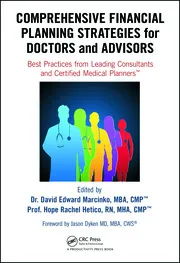
 Comprehensive Financial Planning Strategies for Doctors and Advisors: Best Practices from Leading Consultants and Certified Medical Planners(TM)* 8

Become a Board CERTIFIED MEDICAL PLANNER™ and Thrive

Join Our Mailing List

Think Different – Be Different  – Thrive

[By Ann Miller RN MHA]

Dear Physician Focused Financial Advisors;

Did you know that desperate doctors of all ages are turning to knowledgeable financial advisors and medical management consultants for help? Symbiotically too, generalist advisors are finding that the mutual need for knowledge and extreme niche synergy is obvious.

***

planning

***

But, there was no established curriculum or educational program; no corpus of knowledge or codifying terms-of-art; no academic gravitas or fiduciary accountability; and certainly no identifying professional designation that demonstrated integrated subject matter expertise for the increasingly unique healthcare focused financial advisory niche … Until Now! 

***

CMP logo

http://www.CertifiedMedicalPlanner.org

Enter the CMPs

“The informed voice of a new generation of fiduciary advisors for healthcare”

Think Different

 [Think Different – Be Different – Thrive]

InfoGraphic

http://e.infogr.am/enter_the_certified_medical_planner?src=embed

CMP logo

http://www.CertifiedMedicalPlanner.org

***

So, if you are looking to supplement your knowledge, income and designations; and find other qualified professionals you may want to consider the CMP® program.

Enter the Certified Medical Planner™ charter professional designation. And, CMPs™ are FIDUCIARIES, 24/7.

Channel Surfing the ME-P

Have you visited our other topic channels? Established to facilitate idea exchange and link our community together, the value of these topics is dependent upon your input. Please take a minute to visit. And, to prevent that annoying spam, we ask that you register. It is fast, free and secure.

Conclusion

Your thoughts and comments on this ME-P are appreciated. Feel free to review our top-left column, and top-right sidebar materials, links, URLs and related websites, too. Then, subscribe to the ME-P. It is fast, free and secure.

***

Become a CMP

***

Speaker: If you need a moderator or speaker for an upcoming event, Dr. David E. Marcinko; MBA – Publisher-in-Chief of the Medical Executive-Post – is available for seminar or speaking engagements. Contact: MarcinkoAdvisors@msn.com

OUR OTHER PRINT BOOKS AND RELATED INFORMATION SOURCES:

 Comprehensive Financial Planning Strategies for Doctors and Advisors: Best Practices from Leading Consultants and Certified Medical Planners(TM)* 8

Become a Board CERTIFIED MEDICAL PLANNER™ and Thrive

Join Our Mailing List

Think Different – Be Different  – Thrive

[By Ann Miller RN MHA]

Dear Physician Focused Financial Advisors;

Did you know that desperate doctors of all ages are turning to knowledgeable financial advisors and medical management consultants for help? Symbiotically too, generalist advisors are finding that the mutual need for knowledge and extreme niche synergy is obvious.

***

planning

***

But, there was no established curriculum or educational program; no corpus of knowledge or codifying terms-of-art; no academic gravitas or fiduciary accountability; and certainly no identifying professional designation that demonstrated integrated subject matter expertise for the increasingly unique healthcare focused financial advisory niche … Until Now! 

***

CMP logo

http://www.CertifiedMedicalPlanner.org

Enter the CMPs

“The informed voice of a new generation of fiduciary advisors for healthcare”

Think Different

 [Think Different – Be Different – Thrive]

InfoGraphic

http://e.infogr.am/enter_the_certified_medical_planner?src=embed

CMP logo

http://www.CertifiedMedicalPlanner.org

***

So, if you are looking to supplement your knowledge, income and designations; and find other qualified professionals you may want to consider the CMP® program.

Enter the Certified Medical Planner™ charter professional designation. And, CMPs™ are FIDUCIARIES, 24/7.

Channel Surfing the ME-P

Have you visited our other topic channels? Established to facilitate idea exchange and link our community together, the value of these topics is dependent upon your input. Please take a minute to visit. And, to prevent that annoying spam, we ask that you register. It is fast, free and secure.

Conclusion

Your thoughts and comments on this ME-P are appreciated. Feel free to review our top-left column, and top-right sidebar materials, links, URLs and related websites, too. Then, subscribe to the ME-P. It is fast, free and secure.

***

Become a CMP

***

Speaker: If you need a moderator or speaker for an upcoming event, Dr. David E. Marcinko; MBA – Publisher-in-Chief of the Medical Executive-Post – is available for seminar or speaking engagements. Contact: MarcinkoAdvisors@msn.com

OUR OTHER PRINT BOOKS AND RELATED INFORMATION SOURCES:

 Comprehensive Financial Planning Strategies for Doctors and Advisors: Best Practices from Leading Consultants and Certified Medical Planners(TM)* 8

Become a Board CERTIFIED MEDICAL PLANNER™ and Thrive

Join Our Mailing List

Think Different – Be Different  – Thrive

[By Ann Miller RN MHA]

Dear Physician Focused Financial Advisors;

Did you know that desperate doctors of all ages are turning to knowledgeable financial advisors and medical management consultants for help? Symbiotically too, generalist advisors are finding that the mutual need for knowledge and extreme niche synergy is obvious.

***

planning

***

But, there was no established curriculum or educational program; no corpus of knowledge or codifying terms-of-art; no academic gravitas or fiduciary accountability; and certainly no identifying professional designation that demonstrated integrated subject matter expertise for the increasingly unique healthcare focused financial advisory niche … Until Now! 

***

CMP logo

http://www.CertifiedMedicalPlanner.org

Enter the CMPs

“The informed voice of a new generation of fiduciary advisors for healthcare”

Think Different

 [Think Different – Be Different – Thrive]

InfoGraphic

http://e.infogr.am/enter_the_certified_medical_planner?src=embed

CMP logo

http://www.CertifiedMedicalPlanner.org

***

So, if you are looking to supplement your knowledge, income and designations; and find other qualified professionals you may want to consider the CMP® program.

Enter the Certified Medical Planner™ charter professional designation. And, CMPs™ are FIDUCIARIES, 24/7.

Channel Surfing the ME-P

Have you visited our other topic channels? Established to facilitate idea exchange and link our community together, the value of these topics is dependent upon your input. Please take a minute to visit. And, to prevent that annoying spam, we ask that you register. It is fast, free and secure.

Conclusion

Your thoughts and comments on this ME-P are appreciated. Feel free to review our top-left column, and top-right sidebar materials, links, URLs and related websites, too. Then, subscribe to the ME-P. It is fast, free and secure.

***

Become a CMP

***

Speaker: If you need a moderator or speaker for an upcoming event, Dr. David E. Marcinko; MBA – Publisher-in-Chief of the Medical Executive-Post – is available for seminar or speaking engagements. Contact: MarcinkoAdvisors@msn.com

OUR OTHER PRINT BOOKS AND RELATED INFORMATION SOURCES:

 Comprehensive Financial Planning Strategies for Doctors and Advisors: Best Practices from Leading Consultants and Certified Medical Planners(TM)* 8

PODCAST: Hedge Fund Manager Michael Burry MD

In The Subprime of His Life – My Story

By Dr. David Edward Marcinko MBA, CMP™

[Editor-in-Chief]

I am a long time fan of financial industry journalist Michael Lewis [Liars’ Poker, Moneyball and others] who just released a new book. The Big Short is a chronicle of four players in the subprime mortgage market who had the foresight [and testosterone] to short the diciest mortgage deals: Steve Eisner of FrontPoint, Greg Lippmann at Deutsche Bank, the three partners at Cornwall Capital, and most indelibly, Wall Street outsider Michael Burry MD of Scion Capital.

They all walked away from the disaster with pockets full of money and reputations as geniuses.

About Mike

Now, I do not know the first three folks, but I do know a little something about my colleague Michael Burry MD; he is indeed a very smart guy. Mike is a nice guy too, who also has a natural writing style that I envy [just request and read his quarterly reports for a stylized sample]. He gave me encouragement and insight early in my career transformation – from doctor to “other”.

And, he confirmed my disdain for the traditional financial services [retail sales] industry, Wall Street and their registered representatives and ‘training’ system, and sad broker-dealer ethos [suitability versus fiduciary accountability] despite being a hedge fund manager himself.

I mentioned him in my book: “Insurance and Risk Management Strategies” [For Physicians and their Advisors].

http://www.amazon.com/Insurance-Management-Strategies-Physicians-Advisors/dp/0763733423/ref=sr_1_2?ie=UTF8&s=books&qid=1269254153&sr=1-2

He ultimately helped me eschew financial services organizations, “certifications”, “designations” and ”colleges”, and their related SEO rules, SEC regulations and policy wonks; and above all to go with my gut … and go it alone!

And so, I rejected my certified financial planner [marketing] designation status as useless for me, and launched the www.CertifiedMedicalPlanner.org on-line educational program for physician focused financial advisors and management consultants interested in the healthcare space … who wish to be fiduciaries.

And I thank Mike for the collegial good will. By the way, Mike is not a CPA, nor does he posses an MBA or related advanced degree or designation. He is not a middle-man FA. He is a physician. Unlike far too many other industry “financial advisors” he is not a lemming.

IOW: We are not salesman. We are out-of-the-box thinkers, innovators and contrarians by nature. www.MedicalBusinessAdvisors.com

From a Book Review

According to book reviewer Michael Osinski, writing in the March 22-29 issue of Businessweek.com, Lewis is at his best working with characters and Burry is rendered most vividly.

A loner from a young age, in part because he has a glass eye that made it difficult to look people in the face, Burry excelled at topics that required intense and isolated concentration. Originally, investing was just a hobby while he pursued a career in medicine. As a resident neurosurgeon at Stanford Hospital in the late 1990s, Burry often stayed up half the night typing his ideas onto a message board. Unbeknownst to him, professional money managers began to read and profit from his freely dispensed insight, and a hedge fund eventually offered him $1 million for a quarter of his investment firm, which consisted of a few thousand dollars from his parents and siblings. Another fund later sent him $10 million”.

“Burry’s obsession with finding undervalued companies eventually led him to realize that his own home in San Jose, Calif., was grossly overpriced, along with houses all over the country. He wrote to a friend: “A large portion of the current [housing] demand at current prices would disappear if only people became convinced that prices weren’t rising. The collateral damage is likely to be orders of magnitude worse than anyone now considers.” This was in 2003.

“Through exhaustive research, Burry understood that subprime mortgages would be the fuse and that the bonds based on these mortgages would start to blow up within as little as two years, when the original “teaser” rates expired. But Burry did something that separated him from all the other housing bears—he found an efficient way to short the market by persuading Goldman Sachs (GS) to sell him a CDS against subprime deals he saw as doomed. A unique feature of these swaps was that he did not have to own the asset to insure it, and over time, the trade in these contracts overwhelmed the actual market in the underlying bonds”.

“By June 2005, Goldman was writing Burry CDS contracts in $100 million lots, “insane” amounts, according to Burry. In November, Lippmann contacted Burry and tried to buy back billions of dollars of swaps that his bank had sold. Lippmann had noticed a growing wave of subprime defaults showing up in monthly remittance reports and wanted to protect Deutsche Bank from potentially massive losses. All it would take to cause major pain, Lippmann and his analysts deduced, was a halt in price appreciation for homes. An actual fall in prices would bring a catastrophe. By that time, Burry was sure he held winning tickets; he politely declined Lippmann’s offer”

And the rest, as they say, is history.

Link: http://www.businessweek.com/magazine/content/10_12/b4171094664065.htm

My Story … Being a Bit like Mike

I first contacted Mike, by phone and email, more than a decade ago. His hedge fund, Scion Capital, had no employees at the time and he outsourced most of the front and back office activities to concentrate on position selection and management. Early investors were relatives and a few physicians and professors from his medical residency days. Asset gathering was a slosh, indeed. And, in a phone conversation, I remember him confirming my impressions that doctors were not particularly astute investors. For him, they generally had sparse funds to invest as SEC “accredited investors” and were better suited for emerging tax advantaged mutual funds. ETFs were not significantly on the radar screen, back then, and index funds were considered unglamorous. No, his target hedge-fund audience was Silicon Valley.

And, much like his value-hero Warren Buffett [also a Ben Graham and David Dodd devotee], his start while from the doctor space, did not derive its success because of them.

Moreover, like me, he lionized the terms “value investing”, “margin of safety” and “intrinsic value”.

Co-incidentally, as a champion of the visually impaired, I was referred to him by author, attorney and blogger Jay Adkisson www.jayadkisson.com Jay is an avid private pilot having earned his private pilot’s license after losing an eye to cancer.

Join Our Mailing List

Mike again re-entered my cognitive space while doing research for the first edition of our successful print book: “Financial Planning Handbook for Physicians and Advisors” and while searching for physicians who left medicine for alternate careers!

In fact, he wrote the chapter on hedge funds in our print journal and thru the third book edition before becoming too successful for such mundane stuff. We are now in our fourth edition, with a fifth in progress once the Obama administration stuff [healthcare and financial services industry “reform” and new tax laws] has been resolved

http://www.amazon.com/Financial-Planning-Handbook-Physicians-Advisors/dp/0763745790/ref=sr_1_1?ie=UTF8&s=books&qid=1269211056&sr=1-1

Assessment

News: Dr. Burry appeared on 60 Minutes Sunday March 14th, 2010. His activities with Scion Capital are portrayed in Michael Lewis’s newest book, The Big Short.  An excerpt is available in the April 2010 issue of Vanity Fair magazine, and at VanityFair.com 

Video of Dr. Burry: http://www.cbsnews.com/video/watch/?id=6298040n&tag=contentBody;housing

Video of Dr. Burry: http://www.cbsnews.com/video/watch/?id=6298038n&tag=contentBody;housing

PS: Michael Osinski retired from Wall Street and now runs Widow’s Hole Oyster Co. in Greenport, NY http://www.widowsholeoysters.com

And, our www.MedicalBusinessAdvisors.com related books can be reviewed here: http://www.amazon.com/s/ref=nb_sb_noss?url=search-alias%3Dstripbooks&field-keywords=david+marcinko

Assessment

Visit Scion Capital LLC and tell us what you think http://www.scioncapital.com.

And to Mike himself, I say “Mazel Tov” and congratulations? I am sure you will be a good and faithful steward. The greatest legacy one can have is in how they treated the “little people.” You are a champ. Call me – let’s do lunch. And, I am still writing: www.BusinessofMedicalPractice.com for the conjoined space we both LOVE.

Conclusion

Your thoughts and comments on this ME-P are appreciated. Feel free to review our top-left column, and top-right sidebar materials, links, URLs and related websites, too. Then, subscribe to the ME-P. It is fast, free and secure.

Link: http://feeds.feedburner.com/HealthcareFinancialsthePostForcxos

Speaker: If you need a moderator or speaker for an upcoming event, Dr. David E. Marcinko; MBA – Publisher-in-Chief of the Medical Executive-Post – is available for seminar or speaking engagements. Contact: MarcinkoAdvisors@msn.com

OUR OTHER PRINT BOOKS AND RELATED INFORMATION SOURCES:

Product DetailsProduct DetailsProduct Details

Product Details  Product Details

   Product Details 

[PHYSICIAN FOCUSED FINANCIAL PLANNING AND RISK MANAGEMENT COMPANION TEXTBOOK SET]

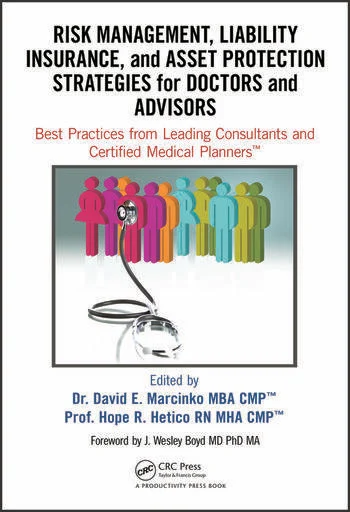
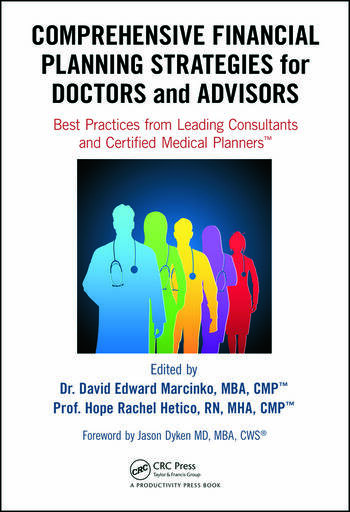
  Risk Management, Liability Insurance, and Asset Protection Strategies for Doctors and Advisors: Best Practices from Leading Consultants and Certified Medical Planners™  Comprehensive Financial Planning Strategies for Doctors and Advisors: Best Practices from Leading Consultants and Certified Medical Planners™

[Dr. Cappiello PhD MBA] *** [Foreword Dr. Krieger MD MBA]

***

The FIDUCIARY OATH for “Financial Advisors”

“Will you sign a fiduciary oath?”

PHYSICIAN COLLEAGUES AND MEDICAL PROFESSIONALS ASK

By Dr. David Edward Marcinko MBA CMP®

CMP

SPONSOR: http://www.CertifiedMedicalPlanner.org

https://certifiedmedicalplannerdotorg1.files.wordpress.com/2012/03/cmp-logo17.jpg

“SIGN IT -OR- FORGET IT”

Asking a “Financial Advisor” if they’re a fiduciary isn’t always enough to hire them. People can “ice skate” around that terminology and give fuzzy or unclear answers to that question. Instead, you may consider asking them to sign a fiduciary oath.

“If someone is fee-only, not “fee-based”, they shouldn’t have a problem signing a document stating how they get compensated.” “If someone is, for example, a broker dealer, insurance agent or investment advisor who works on commissions, they probably wouldn’t be allowed to sign it.” Just say NO to contract arbitration clauses, too! As well as “Dual Registration.” Remember Bernie Lawrence Madoff.

THE FIDUCIARY OATH

This one-page document outlines five fiduciary principles a financial adviser must follow to put the client’s interests ahead of their own. They include acting with prudence, not misleading the client, avoiding conflicts of interest, and disclosing and managing unavoidable conflicts.

The oath, meant to be printed out and signed by an adviser, has been around for several years. But recent events, such as the 5th Circuit Court of Appeals striking down the DOL rule, have increased the urgency to get it into circulation.

“With the 5th Circuit ruling, it is just so important to have this oath out there because it states fiduciary principles,” said Ms. P. Houlihan, president of Houlihan Financial Resource Group. “The oath is the answer, given that the DOL rule is gone.”

***

;,nbv

 fiduciaryoath_individual

Conclusion

Your thoughts and comments on this ME-P are appreciated. Feel free to review our top-left column, and top-right sidebar materials, links, URLs and related websites, too. Then, subscribe to the ME-P. It is fast, free and secure.

Speaker: If you need a moderator or speaker for an upcoming event, Dr. David E. Marcinko; MBA – Publisher-in-Chief of the Medical Executive-Post – is available for seminar or speaking engagements.

Book Marcinko: https://medicalexecutivepost.com/dr-david-marcinkos-bookings/

Subscribe: MEDICAL EXECUTIVE POST for curated news, essays, opinions and analysis from the public health, economics, finance, marketing, IT, business and policy management ecosystem.

DOCTORS:

“Insurance & Risk Management Strategies for Doctors” https://tinyurl.com/ydx9kd93

“Fiduciary Financial Planning for Physicians” https://tinyurl.com/y7f5pnox

“Business of Medical Practice 2.0” https://tinyurl.com/yb3x6wr8

HOSPITALS:

“Financial Management Strategies for Hospitals” https://tinyurl.com/yagu567d

“Operational Strategies for Clinics and Hospitals” https://tinyurl.com/y9avbrq5

Risk Management, Liability Insurance, and Asset Protection Strategies for Doctors and Advisors: Best Practices from Leading Consultants and Certified Medical Planners™8Comprehensive Financial Planning Strategies for Doctors and Advisors: Best Practices from Leading Consultants and Certified Medical Planners™

 ***

COMMENTS ARE APPRECIATED.

Thank You

***

What is an ADR / SPDR Receipt?

AMERICAN DEPOSITORY RECEIPTS AND S&P RECEIPTS

By Dr. David E. Marcinko MBA CMP®

CMP logo

SPONSOR: http://www.CertifiedMedicalPlanner.org

AMERICAN DEPOSITORY RECEIPT (ADR) = A receipt evidencing shares of a foreign corporation held on deposit or under the control of a U. S. banking institution; it is used to facilitate transactions and expedite transfer of beneficial ownership for a foreign security in the U.S. Everything is done in dollars and the ADR holder doesn’t have voting rights; essentially the same as an American Depository Share (ADS).

CITE: https://www.r2library.com/Resource/Title/0826102549

****

A Standard & Poor’s Depositary Receipt, or SPDR, is a type of exchange traded fund that began trading on the American Stock Exchange (AMEX) in 1993 when State Street Global Advisors’ investment management group first issued shares of the SPDR 500 Trust (SPY).

image-2

CITE: https://www.r2library.com/Resource/Title/0826102549

***

MORE: https://medicalexecutivepost.com/2008/02/15/about-american-depository-receipts/

S&P: https://medicalexecutivepost.com/2011/01/12/on-standard-poors-depository-receipts/

S&P Index: https://medicalexecutivepost.com/2011/01/15/spdrs-vs-index-mutual-funds/

S&P TAX: https://medicalexecutivepost.com/2011/01/30/do-spdrs-yield-tax-advantages/

YOUR COMMENTS ARE APPRECIATED.

Thank You

ORDER: https://www.amazon.com/Comprehensive-Financial-Planning-Strategies-Advisors/dp/1482240289/ref=sr_1_1?ie=UTF8&qid=1418580820&sr=8-1&keywords=david+marcinko

***

Become a Board CERTIFIED MEDICAL PLANNER™ and Thrive

Join Our Mailing List

Think Different – Be Different  – Thrive

[By Ann Miller RN MHA]

Dear Physician Focused Financial Advisors;

Did you know that desperate doctors of all ages are turning to knowledgeable financial advisors and medical management consultants for help? Symbiotically too, generalist advisors are finding that the mutual need for knowledge and extreme niche synergy is obvious.

***

planning

***

But, there was no established curriculum or educational program; no corpus of knowledge or codifying terms-of-art; no academic gravitas or fiduciary accountability; and certainly no identifying professional designation that demonstrated integrated subject matter expertise for the increasingly unique healthcare focused financial advisory niche … Until Now! 

***

CMP logo

http://www.CertifiedMedicalPlanner.org

Enter the CMPs

“The informed voice of a new generation of fiduciary advisors for healthcare”

Think Different

 [Think Different – Be Different – Thrive]

InfoGraphic

http://e.infogr.am/enter_the_certified_medical_planner?src=embed

CMP logo

http://www.CertifiedMedicalPlanner.org

***

So, if you are looking to supplement your knowledge, income and designations; and find other qualified professionals you may want to consider the CMP® program.

Enter the Certified Medical Planner™ charter professional designation. And, CMPs™ are FIDUCIARIES, 24/7.

Channel Surfing the ME-P

Have you visited our other topic channels? Established to facilitate idea exchange and link our community together, the value of these topics is dependent upon your input. Please take a minute to visit. And, to prevent that annoying spam, we ask that you register. It is fast, free and secure.

Conclusion

Your thoughts and comments on this ME-P are appreciated. Feel free to review our top-left column, and top-right sidebar materials, links, URLs and related websites, too. Then, subscribe to the ME-P. It is fast, free and secure.

***

Become a CMP

***

Speaker: If you need a moderator or speaker for an upcoming event, Dr. David E. Marcinko; MBA – Publisher-in-Chief of the Medical Executive-Post – is available for seminar or speaking engagements. Contact: MarcinkoAdvisors@msn.com

OUR OTHER PRINT BOOKS AND RELATED INFORMATION SOURCES:

 Comprehensive Financial Planning Strategies for Doctors and Advisors: Best Practices from Leading Consultants and Certified Medical Planners(TM)* 8

Musings on a Famous Portfolio Asset Allocation Study

Some Critics Claim Brinson, Hood, and Beebower Conclusions Wrong

[By Dr. David Edward Marcinko MBA CMP™]

http://www.CertifiedMedicalPlanner.org

[Publisher-in-Chief]

Frequently, we hear the axiom that asset allocation is the most important investment decision, explaining 93.6% of portfolio returns. The presumption has been that once the risk tolerance and time horizon have been established, investing is simply a matter of implementing a fixed mix of stocks, bonds, and cash using mutual funds selected for this purpose. This axiom is based on a famous study by Brinson, Hood, and Beebower (BHB) published in the Financial Analysts Journal in July/August 1986. It is the stuff of most modern business school and graduate students in economics and finance.

Enter the Critics

One critic claims that BHB’s conclusions and the interpretation of their conclusions are wrong, stating that because of several methodological problems, BHB needed to make certain assumptions for their analysis to go forward. They assumed that the average asset-class weights for the 10-year period studied are the same as the actual normal policy weights; that investments in foreign stocks, real estate, private placements, and venture capital can be proxied by a mix of stocks, bonds, and cash; and that the benchmarks for stocks, bonds, and cash against which fund performance was measured are appropriate. The author believes that each of these assumptions can lead to a faulty measurement of success or failure at market timing and stock selection.

The Jahnke Study

William Jahnke claims that BHB erred in their focus on explaining the variation of quarterly portfolio returns rather than portfolio returns over the 10-year period studied. According to the study, asset allocation policy explains only a small fraction of the range of 10-year portfolio returns earned by the pension funds reported in the study. The author concluded that this discrepancy is caused by the effect of compounding returns. He adds that BHB were wrong to use variance of quarterly returns rather than the standard deviation. Use of standard deviation would reduce the often cited 93.6% to about 79%. Moreover, BHB did not consider the cost of investing, such as operating expenses, management fees, brokerage commissions, and other trading costs, which are more significant for individual investors than for the pension plans studied. Jahnke claims that excessive costs can reduce wealth accumulation by 50%.

Note: (“The Asset Allocation Hoax,” William W. Jahnke, Journal of Financial Planning, February 1997, Institute of Certified Financial Planners [303] 759-4900).

Assessment

Finally, the author takes issue with establishing long-term fixed asset class weights. Asset allocation should be a dynamic process. Higher equity return expectations should in turn produce larger equity allocations, other things being equal.

Certified Medical Planner

Conclusion

Are doctors different than the average investor noted in this essay?

Your thoughts and comments on this ME-P are appreciated. Feel free to review our top-left column, and top-right sidebar materials, links, URLs and related websites, too. Then, subscribe to the ME-P. It is fast, free and secure.

Link: http://feeds.feedburner.com/HealthcareFinancialsthePostForcxos

Speaker: If you need a moderator or speaker for an upcoming event, Dr. David E. Marcinko; MBA – Publisher-in-Chief of the Medical Executive-Post – is available for seminar or speaking engagements. Contact: MarcinkoAdvisors@msn.com

OUR OTHER PRINT BOOKS AND RELATED INFORMATION SOURCES:

Product Details

  Risk Management, Liability Insurance, and Asset Protection Strategies for Doctors and Advisors: Best Practices from Leading Consultants and Certified Medical Planners™8Comprehensive Financial Planning Strategies for Doctors and Advisors: Best Practices from Leading Consultants and Certified Medical Planners™

Invite Dr. Marcinko

***

FINANCIAL HEALTH INSURANCE CO-PAY CARDS & DRUG COUPONS?

The “Real Deal”

A co-payment is a fixed amount ($20, for example) you pay for a covered health care service after you’ve paid your deductible.

Let’s say your health insurance plan’s allowable cost for a doctor’s office visit is $100. Your copayment for a doctor visit is $20.

  • If you’ve paid your deductible: You pay $20, usually at the time of the visit.
  • If you haven’t met your deductible: You pay $100, the full allowable amount for the visit.
  • Partial deductible payments incur hybrid fees.

Copayments (sometimes called “copays”) can vary for different services within the same plan, like drugs, lab tests, and visits to specialists. Generally plans with lower monthly premiums have higher copayments. Plans with higher monthly premiums usually have lower copayments.

CITE: https://www.r2library.com/Resource/Title/0826102549

***

Invite Dr. Marcinko | The Leading Business Education Network for Doctors,  Financial Advisors and Health Industry Consultants

BY DR. DAVID E. MARCINKO MBA CMP®

CMP logo

SPONSOR: http://www.CertifiedMedicalPlanner.org

Co-Pay Cards May Be Creating More Controversy Instead of Solutions

Instead of reducing the actual price of their excessively priced medications, many companies have opted to provide co-pay cards / coupons as an affordable solution. However, co-pay cards may only lower the cost for some consumers and patients.

Novartis: https://www.copay.novartispharma.com/nvscopay/#

Pfizer: https://www.pfizerpro.com/co-pay-cards-patient-savings-offers

***

See the source image

***

But – The insurer is still left to pay the high price, which will eventually be passed back on to the patient / consumers in the form of higher health insurance deductibles. So – It doesn’t really seem like much of a solution when we all end up paying for these co-pay cards / coupons; does it?

Find out more here. (Source: Rebecca Mayer Knutsen, MM&M, 8/26/16)

***

MEDICAL OFFICE CREDIT CARDS:

We stopped taking credit cards altogether. The only credit cards we take are for call-in payments of balances. We have placed ATM machines in our lobbies and we educate patients in advance of their visits that we only take cash or check. Our cash income has increased, our credit card fees have decreased, and we make $1.50 from each transaction through our ATM. Our patients have taken to the idea so much that they use the ATM for personal cash for other transactions because our fee is the lowest of any ATM. It has been a win-win-win.  

Dr. Farshid Nejad, Beverly Hills, CA [PM Magazine]

***

For anyone contemplating taking credit cards for payments or copayments in your office, please be aware that some of the credit card companies require you to sign a contract. Don’t do that! If you do and you either have a problem with the company or find out that they are overcharging you, they will hold you responsible for the contract and may take you to court. There are enough credit card companies out that that do not require contracts and are highly competitive. 

-Dr. Elliot Udell, DPM, Hicksville, NY [PM Magazine]

***

YOUR COMMENTS ARE APPRECIATED.

Thank You

***

***

Two Books VITAL to ALL Doctor’s Financial Succes!

SPONSORED

http://www.CertifiedMedicalPlanner.org

PHYSICIAN FOCUSED FINANCIAL PLANNING AND RISK MANAGEMENT COMPANION TEXTBOOK SET

***

 Risk Management, Liability Insurance, and Asset Protection Strategies for Doctors and Advisors: Best Practices from Leading Consultants and Certified Medical Planners™           Comprehensive Financial Planning Strategies for Doctors and Advisors: Best Practices from Leading Consultants and Certified Medical Planners™

[Dr. Cappiello PhD MBA] *** [Foreword Dr. Krieger MD MBA]

Front Matter with Foreword by Jason Dyken MD MBA

Enter the CMPs

***

INDUSTRY STATURE: Certified Medical Planner®

SPONSOR: http://www.CertifiedMedicalPlanner.org

***

***

OUR OEUVRE’ OF TEXT BOOKS IS GROWING WITH OUR INDUSTRY STATURE

We believe that by writing and sharing our experiences in standard textbook, white-paper and new media electronic format, our experts are able to address most areas of physician-focused financial planning, business or medical practice management needs in an understandable and unbiased manner.

But, we recognize that some consultants and financial advisors may appreciate reading current medical business management theory, healthcare economics, technology or financial planning information privately, prior to becoming a Certified Medical Planner® professional.

However, there is a virtual information overload out there, little of which addresses the pragmatic concerns of the modern medical provider or healthcare industry. None imparts the wisdom to become a better financial advisor or medical management consultant. All motivate the purchase of products.

Therefore, as part of the iMBA Research Library for the Certified Medical Planner® program, we highly recommend the following in-house produced books. You may even recognize some of our nationally known contributing authors and CMPs®.

CITE: https://www.r2library.com/Resource/Title/0826102549

TEXT BOOKS AND HAND BOOKS

iMBA Inc offers links to these publications, to members, and non-members, alike:

***

ORDER: https://www.amazon.com/Financial-Management-Strategies-Healthcare-Organizations/dp/1466558733/ref=sr_1_3?ie=UTF8&qid=1380743521&sr=8-3&keywords=david+marcinko

***

ORDER: https://www.amazon.com/Business-Medical-Practice-Transformational-Doctors/dp/0826105750/ref=sr_1_9?ie=UTF8&qid=1448163039&sr=8-9&keywords=david+marcinko

ENJOY THEM ALL

***

FAs & CPAs Wanted -BUT- Certified Medical Planners® Needed?

***

***

Career Development, Products and Services for Medical Specificity

“The informed voice of a new generation of fiduciary advisors for healthcare”

SPONSOR: http://www.CertifiedMedicalPlanner.org 

CMP

FINANCIAL ADVISER WANTED: New York’s Belfer family, which gained riches from oil, is racking up quite an investing losing streak. They lost billions in Enron’s collapse and were clients of Bernie Madoff, and now it’s come to light that they were shareholders in FTX.

***

CPAs WANTED: Just as tax season kicks off, US firms are facing a national shortage of accountants, forcing them to look overseas for workers to look over your W-2. More than 300k accountants and auditors have quit in the last two years, per the WSJ.

***

CMPs NEEDED: The Certified Medical Planner® program was created in response to the frustration felt by doctors in small and mid-sized practices that dealt with top financial, brokerage and accounting firms. These non-fiduciary behemoths often prescribed costly wholesale solutions that were applicable to all, but customized to few, despite ever changing needs.

Enter the CMPs

Learn why brokerage sales-pitches and/or internet resources will never replace the knowledge and deep advice of a collegial Certified Medical Planner® professional.

Letterhead CMP

***

COMMENTS APPRECIATED

Thank You

***

ORDER: https://www.routledge.com/Comprehensive-Financial-Planning-Strategies-for-Doctors-and-Advisors-Best/Marcinko-Hetico/p/book/9781482240283

***

Alphabet Soup: Financial Designations & Certificates

Join Our Mailing List 

financial-designationsjuly

AUTHOR: Dr. David Edward Marcinko; MBA, CMP™

POSITION: Publisher-in-Chief

dem26

TOPIC: Financial Designations and Certifications [Alphabet Soup of Industry Obfuscation and Self-Promotion, or Real Gravitas – You Decide?]

EXCERPT: “Until recently, most financial advisors were regulated by the NASD, the National Association of Securities Dealers. Now the Financial Industry Regulatory Authority or FINRA is the largest non-governmental regulator for all securities firms doing business in the United States. It is a self-regulatory agency comprised of the nation’s brokerage firms. Upon completion of a required exam the FINRA will issue a variety of licenses. The most common are the Series 6, 7, and 24.

The Series 6 is essentially a license to sell packaged products, namely mutual funds. It is most commonly held by insurance agents and bank representatives. It is considered a very easy test. Holding such a license allows the holder to collect commission income through its member firm.

The Series 7 exam is a bit more difficult and includes issues relating to individual securities such as stocks, bonds and limited partnership interests. The pass rate is lower than the Series 6. The probable culprit is the extensive questioning on margin and options, topics most are unfamiliar with prior to entering the securities business.

The Series 24 covers issues of compliance and supervision and is required of Branch Managers of brokerage firms. All registered representatives (the proper name for a broker) must be supervised by someone with a Series 24, also known as a principal’s license.

Checking the background of a registered representative, a branch manager or a member firm is easily done through NASD and/or FINRA Regulation, Inc. NASDR/FINRA maintains the Central Registration Depository (CRD). The CRD can be checked for a description of a disclosed event by phone or by Internet. One should request information on an advisor’s firm as well as the individual. A reputable advisor at a disreputable firm has its own set of potentially dangerous implications.

Regardless of the above, these tests produce licenses to sell financial products. They are not educational achievements. There is virtually no academic barrier to entry for them. Stock-brokers today – hate the term – and prefer “financial advisor”; yet the term has no real meaning other than as a sales license.

Some are college graduates, and beyond; while some other experts argue that too many are not!”

Hence, the need to “raise the bar to fiduciary accountability with deep knowledge of healthcare modernity.”

For more info: http://www.CertifiedMedicalPlanner.org

READ JULY HERE: financial-designationsjuly

Conclusion

Your thoughts and comments on this ME-P are appreciated. Feel free to review our top-left column, and top-right sidebar materials, links, URLs and related websites, too. Then, subscribe to the ME-P. It is fast, free and secure.

Speaker: If you need a moderator or speaker for an upcoming event, Dr. David E. Marcinko; MBA – Publisher-in-Chief of the Medical Executive-Post – is available for seminar or speaking engagements. Contact: MarcinkoAdvisors@msn.com

OUR OTHER PRINT BOOKS AND RELATED INFORMATION SOURCES:

Product Details  Product Details

PROFESSIONAL DESIGNATION: Certified Medical Planner™

By Ann Miller RN MHA CMP

***

[WHERE LEARNING IS A plus+]

Career Development, Products and Services

“The informed voice of a new generation of fiduciary advisors for healthcare”

http://www.CertifiedMedicalPlanner.org 

CMP

[Best Practices from Leading Consultants and Certified Medical Planners™]

logos

“BY DOCTORS – FOR DOCTORS – PEER REVIEWED – FIDUCIARY FOCUSED”

***

***

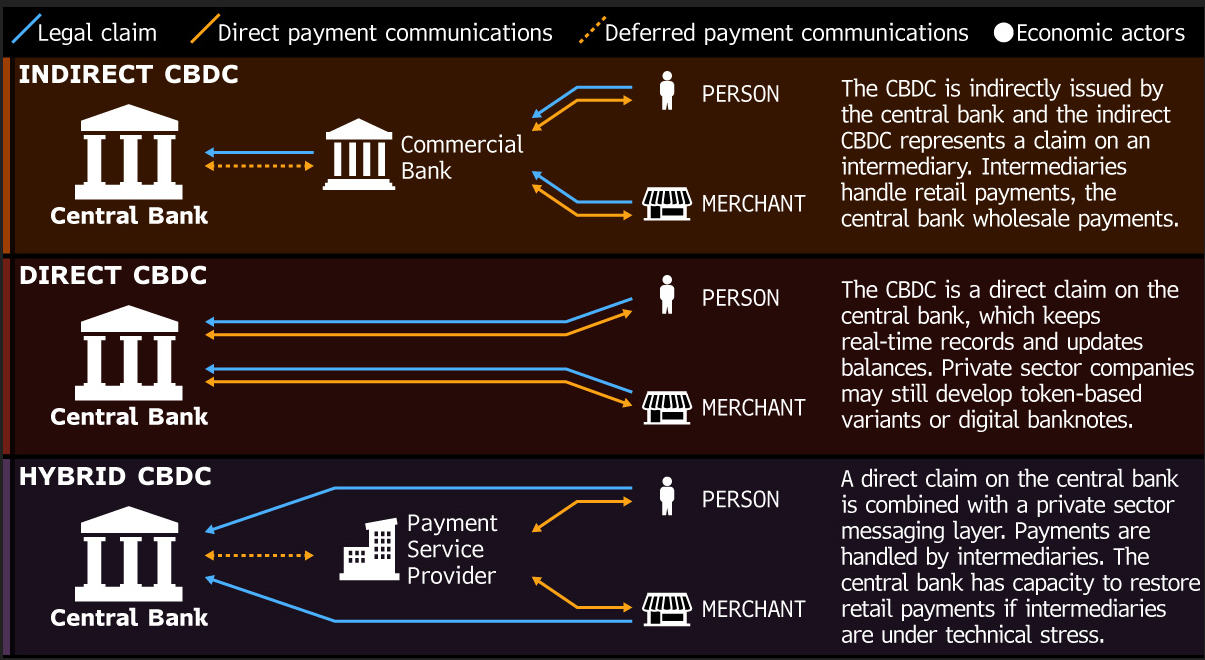
What is a CENTRAL BANK DIGITAL CURRENCY?

By Staff Reporters

***

***

DEFINITION: A CBDC is a digital form of central bank money that is widely available to the general public.

CITE: https://www.r2library.com/Resource/Title/082610254

“Central bank money” refers to money that is a liability of the central bank. In the United States, there are currently two types of central bank money: physical currency issued by the Federal Reserve and digital balances held by commercial banks at the Federal Reserve.

While Americans have long held money predominantly in digital form—for example in bank accounts, payment apps or through online transactions—a CBDC would differ from existing digital money available to the general public because a CBDC would be a liability of the Federal Reserve, not of a commercial bank.

MORE: https://www.federalreserve.gov/faqs/what-is-a-central-bank-digital-currency.htm

***

COMMENTS APPRECIATED

Thank You

***

ORDER: https://www.routledge.com/Comprehensive-Financial-Planning-Strategies-for-Doctors-and-Advisors-Best/Marcinko-Hetico/p/book/9781482240283

***

PODCAST: Value Based Healthcare Delivery by Dr. Michael Porter PhD

HARVARD BUSINESS SCHOOL

By Staff Reporters

CITE: https://www.r2library.com/Resource/Title/082610254

***

***

ORDER: https://www.amazon.com/Business-Medical-Practice-Transformational-Doctors/dp/0826105750/ref=sr_1_9?ie=UTF8&qid=1448163039&sr=8-9&keywords=david+marcinko

***

COMMENTS APPRECIATED

Thank You

***

VALUE STOCKS: Now Seeking Bargains?

Dr. David Edward Marcinko MBA CMP

SPONSOR: http://www.CertifiedMedicalPlanner.org

***

***

The bargain-hunting value style is looking for shares that are under priced in relation to the company’s future potential. A value investor will invest in a company in the expectation that its shares will increase in value over time. Value investing is based essentially on quantitative criteria; asset values, cash flow, and discounted future earnings. The key properties of value shares are low Price/Earnings, Price/Sales ratios, and normally higher dividend yields. 

CITE: https://www.r2library.com/Resource/Title/082610254

No Christmas Rally this year!

So, on observing a company’s earnings growth, a value manager will decide whether to buy shares based on the company’s consistency or recovery prospects. The key research questions are: 1) Does the current P/E ratio warrant an investment in a slow growth company or, 2) Is the company a higher growth candidate that has dropped in price due to a temporary problem.  If this is the case, will the company’s earnings growth recover, and if so, when? The key to value investing is to find bargain shares (priced low historically or for temporary and/or irrational reasons), avoiding shares that are merely cheap (priced low because the company is failing).

The buying opportunity is identified when a company undergoing some immediate problems is perceived to have good chances of recovery in the medium to long term.  If there is a loss in market confidence in the company, the share price may fall, and the value investor can step in. Once the share price has achieved a suitable value, reflecting the predicted turnaround in company performance, the shareholding is sold, realizing a capital gain. A potential risk in value investing is that the company may not turn around, in which case the share price may stay static or fall.

***

COMMENTS APPRECIATED

Thank You

***

ORDER: https://www.routledge.com/Comprehensive-Financial-Planning-Strategies-for-Doctors-and-Advisors-Best/Marcinko-Hetico/p/book/9781482240283

***

Musings on a Famous Portfolio Asset Allocation Study

Some Critics Claim Brinson, Hood, and Beebower Conclusions Wrong

[By Dr. David Edward Marcinko MBA CMP™]

http://www.CertifiedMedicalPlanner.org

[Publisher-in-Chief]

Frequently, we hear the axiom that asset allocation is the most important investment decision, explaining 93.6% of portfolio returns. The presumption has been that once the risk tolerance and time horizon have been established, investing is simply a matter of implementing a fixed mix of stocks, bonds, and cash using mutual funds selected for this purpose. This axiom is based on a famous study by Brinson, Hood, and Beebower (BHB) published in the Financial Analysts Journal in July/August 1986. It is the stuff of most modern business school and graduate students in economics and finance.

Enter the Critics

One critic claims that BHB’s conclusions and the interpretation of their conclusions are wrong, stating that because of several methodological problems, BHB needed to make certain assumptions for their analysis to go forward. They assumed that the average asset-class weights for the 10-year period studied are the same as the actual normal policy weights; that investments in foreign stocks, real estate, private placements, and venture capital can be proxied by a mix of stocks, bonds, and cash; and that the benchmarks for stocks, bonds, and cash against which fund performance was measured are appropriate. The author believes that each of these assumptions can lead to a faulty measurement of success or failure at market timing and stock selection.

The Jahnke Study

William Jahnke claims that BHB erred in their focus on explaining the variation of quarterly portfolio returns rather than portfolio returns over the 10-year period studied. According to the study, asset allocation policy explains only a small fraction of the range of 10-year portfolio returns earned by the pension funds reported in the study. The author concluded that this discrepancy is caused by the effect of compounding returns. He adds that BHB were wrong to use variance of quarterly returns rather than the standard deviation. Use of standard deviation would reduce the often cited 93.6% to about 79%. Moreover, BHB did not consider the cost of investing, such as operating expenses, management fees, brokerage commissions, and other trading costs, which are more significant for individual investors than for the pension plans studied. Jahnke claims that excessive costs can reduce wealth accumulation by 50%.

Note: (“The Asset Allocation Hoax,” William W. Jahnke, Journal of Financial Planning, February 1997, Institute of Certified Financial Planners [303] 759-4900).

Assessment

Finally, the author takes issue with establishing long-term fixed asset class weights. Asset allocation should be a dynamic process. Higher equity return expectations should in turn produce larger equity allocations, other things being equal.

Certified Medical Planner

Conclusion

Are doctors different than the average investor noted in this essay?

Your thoughts and comments on this ME-P are appreciated. Feel free to review our top-left column, and top-right sidebar materials, links, URLs and related websites, too. Then, subscribe to the ME-P. It is fast, free and secure.

Link: http://feeds.feedburner.com/HealthcareFinancialsthePostForcxos

Speaker: If you need a moderator or speaker for an upcoming event, Dr. David E. Marcinko; MBA – Publisher-in-Chief of the Medical Executive-Post – is available for seminar or speaking engagements. Contact: MarcinkoAdvisors@msn.com

OUR OTHER PRINT BOOKS AND RELATED INFORMATION SOURCES:

Product Details

  Risk Management, Liability Insurance, and Asset Protection Strategies for Doctors and Advisors: Best Practices from Leading Consultants and Certified Medical Planners™8Comprehensive Financial Planning Strategies for Doctors and Advisors: Best Practices from Leading Consultants and Certified Medical Planners™

Invite Dr. Marcinko

***

Join the ME-P and Become a CERTIFIED MEDICAL PLANNER™

ADVERTISEMENT

Sponsored by: http://www.CertifiedMedicalPlanner.org

As a medical professional, are you looking for ways to make your practice more profitable and boost your efficiency?

Or, as a financial advisor to doctors, are you looking to develop deeper relationships of knowledge and trust with your physician clients?

We can help!

Well, look no more! We can help. Designed with both advisors and physicians’ needs in mind, the ME-P website is filled with practical advice on the most-requested topics. Join us by subscribing so you can read about practice management and physician focused financial planning, and network with your fellow physicians and FAs. You don’t even have to leave the office!

More than 50 topics

  • The ABCs of RVUs
  • Hospital/Practice Integration
  • Employment Contracts
  • eHR Incentives are Here
  • How Health Reform Will Affect You
  • 5010 Transaction Standards
  • Malpractice and liability
  • Fiduciary standards
  • Financial advisors versus planners
  • SEC and FINRA rules and regulations
  • Health economics, finance and insurance
  • Medical business models
  • ACA, and so much more!

Enter the Certified Medical Planners

A Working-White Paper:

Enter the CMPs

Assessment

Get all the benefits of a personal consultant without the hassle and expense of traveling. Subscribe today. Read posts and comment on more than 50 topical channels addressing the hottest topics in medical practice and financial management today.

CMP.Candidate.Welcome

Link: http://www.CertifiedMedicalPlanner.org

Conclusion

Your thoughts and comments on this ME-P are appreciated. Feel free to review our top-left column, and top-right sidebar materials, links, URLs and related websites, too. Then, subscribe to the ME-P. It is fast, free and secure.

Speaker: If you need a moderator or speaker for an upcoming event, Dr. David E. Marcinko; MBA – Publisher-in-Chief of the Medical Executive-Post – is available for seminar or speaking engagements. Contact: MarcinkoAdvisors@msn.com

OUR OTHER PRINT BOOKS AND RELATED INFORMATION SOURCES:

Product DetailsProduct DetailsProduct Details

Product Details  Product Details

   Product Details 

***

[PHYSICIAN FOCUSED FINANCIAL PLANNING AND RISK MANAGEMENT COMPANION TEXTBOOK SET]

  Risk Management, Liability Insurance, and Asset Protection Strategies for Doctors and Advisors: Best Practices from Leading Consultants and Certified Medical Planners™Comprehensive Financial Planning Strategies for Doctors and Advisors: Best Practices from Leading Consultants and Certified Medical Planners™

***

How to NAME Your New Medical Practice?

PRAGMATIC BUSINESS – NOT PERSONAL – MANAGEMENT ADVICE

By Dr. David E. Marcinko MBA CMP®

CMP logo

SPONSOR: http://www.CertifiedMedicalPlanner.org

THE MEDICAL PRACTICE NAME

Did you know that most experts recommend against naming a practice with your own name because it limits future growth and you may lose the benefits that a more descriptive name would bring?

Your business name will likely be incorporated using your practice’s name, although larger (multi-specialty group) practices may use a more general name for the entire enterprise; and then having multiple “dba’s” (”Doing Business As”) for the individual practices under the umbrella. It is important to discuss these options with an attorney if you believe this arrangement has advantage; others find it confusing.

Healthcare Marketing: How to Name Your Medical Practice - The Medically

Usually, your medical specialty can be used as a base-name, and then some descriptor to differentiate it from local competing practices. Selecting a name like “The Allegiance Partners” does not indicate that medicine is your service. On the other hand, naming your practice “Podiatry Associates of Your Town” won’t be helpful to patients looking for you in the yellow pages, health insurance provider network list, or internet search engines, and finding your practice listed just before “Your Town Podiatry Partners”. It is therefore good to be cognizant of your competitors’ names when choosing your own. And, you should select a name that will hopefully grow with you into a larger enterprise.

For example, are you a solo doctor, but are pretty sure you’ll take on one or more partners in the future? Then besides not naming your practice after yourself, you may choose to add “Group” or “Partners” to your name initially even if you’re the only doctor. Is there any possibility you’ll open a second office in another town? Naming your medical practice something like the ”Apple Street Internal Medicine Group” may not make sense when your second office is opened on Main Street in a nearby city, in a few years.

Order Forms and Practice Stationary

Orders forms, invoices, purchase and estimate forms, business cards, envelopes, stationary and specialty labels can all be personalized for your medical practice name, script, colors and logo. Often, local or regional printers are the most cost effective and you support another entrepreneur, as well.

Well-know internet companies that print stationary are: www.nebs.com; www.paperdirect.com; and www.vistaprint.com

YOUR COMMENTS ARE APPRECIATED.

Thank You

***

BOOK: https://www.amazon.com/Business-Medical-Practice-Transformational-Doctors/dp/0826105750/ref=sr_1_9?ie=UTF8&qid=1448163039&sr=8-9&keywords=david+marcinko

***

HOSPITALS: https://www.amazon.com/Hospitals-Healthcare-Organizations-Management-Operational/dp/1439879907/ref=sr_1_4?s=books&ie=UTF8&qid=1334193619&sr=1-4

***

The MEDICAL EXECUTIVE-POST [Join Us]

By Staff Reporters

***

***

The ME-P is a reader-supported publication.

To receive new posts and support our work, consider becoming a free or paid subscriber.

SPONSORSHIPS: https://medicalexecutivepost.com/sponsors/

***

CERTIFIED MEDICAL PLANNER: http://www.CertifiedMedicalPlanner.org

THANK YOU

****

Over Heard in the DOCTOR’S LOUNGE

On “Hard Working” HMO Physicians

CMP logo

SPONSOR: http://www.CertifiedMedicalPlanner.org

***

By Dr. David E. Marcinko MBA CMP®

INVITE DR. MARCINKO: https://medicalexecutivepost.com/dr-david-marcinkos-

One of my favorite patients told me this anecdote as he recalled the story of the old man who spent a day watching his physician son treating HMO patients in the office. 

The doctor had been working at his usual feverish pace all morning, and although he was working hard, bitterly complained to his dad that he was not making as much money as he used to.

Finally, the old man interrupted him and said,

“Son, why don’t you just treat the sick patients?” 

The doctor-son looked annoyed at his father, and responded,

“Dad, can’t you see, I don’t have time to treat just the sick ones.”

***

COMMENTS ARE APPRECIATED.

***

FINANCE: https://www.amazon.com/Comprehensive-Financial-Planning-Strategies-Advisors/dp/1482240289/ref=sr_1_1?ie=UTF8&qid=1418580820&sr=8-1&keywords=david+marcinko

***

BUSINESS: https://www.amazon.com/Business-Medical-Practice-Transformational-Doctors/dp/0826105750/ref=sr_1_9?ie=UTF8&qid=1448163039&sr=8-9&keywords=david+marcinko

***

Wither DROP-IN Group Medical Appointments?

THE RE-EMERGING RE-VOLUTION!

By Dr. David Edward Marcinko MBA CMP®

CMP logo

SPONSOR: http://www.CertifiedMedicalPlanner.org

HISTORY

DIGMAs (Drop-In Group Medical Appointments) are medical office appointments with a patient’s physician that take place in a supportive group setting. The model, developed in 1996 by Kaiser Permanente psychologist Dr. Ed Noffsinger, is a combination of an extended medical appointment with the patient’s own physician and effective group learning and support.

The group consists of the physician, a behavioral health professional, and patients from the physician’s panel. DIGMAs are best suited for routine appointments. Unfortunately, the nascent concept was met with mockery and great derision after the PP-ACA era.

PRANKSTERS: https://medicalexecutivepost.com/2016/01/31/group-drop-in-doctor-visits-evolving/

Today, after the pandemic and with the rise of tel-health and tele-medicine, Shared Medical Appointments (SMAs), also known as Group Medical Visits [GMVs], are again a growing topic of discussion among providers and health economists, looking for ways to increase access to care and improve efficiency. The group visit format is also getting more attention in recent years as a strategy to add value for the patient. They typically involve up to a dozen patients or so and offer various efficiencies as well as benefits of shared discussion and experiences.

***

Behavioral Changes

Moreover, physicians and medical providers know that simply telling patients what to do often does not improve their health. The basic premise of DIGMAs, SMAs and GMVs is to build more patient engagement and inspire lasting behavior change by offering patients the opportunity to share their personal experiences not only with their provider but also with other patients dealing with similar issues.

NEWER REALITY: https://www.hqontario.ca/Portals/0/Documents/qi/learningcommunity/Roadmap%20Resources/Advanced%20Access%20and%20Efficiency/Step%205/pc-nha-group-medical-appointments-manual-en.pdf#:~:text=DIGMAs%20%28Drop-In%20Group%20Medical%20Appointments%29%20are%20medical%20appointments,that%20take%20place%20in%20a%20supportive%20group%20setting.

BILLING: https://www.aafp.org/family-physician/practice-and-career/getting-paid/coding/group-visits.html

QUERY: Might this be an approach for tele-health visits as well as rural healthcare, etc.

ASSESSMENT: Your thoughts are comments are appreciated.

Product Details

ORDER TEXTBOOK: https://www.amazon.com/Business-Medical-Practice-Transformational-Doctors/dp/0826105750/ref=sr_1_9?ie=UTF8&qid=1448163039&sr=8-9&keywords=david+marcinko

SECOND OPINIONS: https://medicalexecutivepost.com/schedule-a-consultation/

INVITE DR. MARCINKO: https://medicalexecutivepost.com/dr-david-marcinkos-bookings/

THANK YOU

***

What is E-Learning?

What it is – How it works?

[By Staff Reporters]

Invite Dr. Marcinko

Live Interactive iMBA Education

Electronic Classes can require intense interaction between live faculty members and adult-learners, often more so than in many traditional on-ground courses; and most automated Computer Based Training (CBT) programs.

Students [adult learners] are typically expected to log-in and contribute three to five times each week. With this frequency of interaction, students and faculty all get to know one another, well. There are few opportunities for passivity.

In fact, in the iMBA CERTIFIED MEDICAL PLANNER™ program, students tend to interact with instructors much more than in traditional settings; thus promoting future peer-based discussions and real world applications.

Moreover, in the electronic iMBA classroom, everyone must write; particularly for the R&D loaded CERTIFIED MEDICAL PLANNER™ program. All assignments are typed, creating a permanent record of each person’s contribution. Faculty members find this promotes careful, reflective submissions from most students.

Additionally, instructors can easily monitor student progress and communicate with those who need help, or who have trouble keeping up. This is usually done privately by e-mail, fax or phone after certain online expectations have been clarified.

***

e

***

More:

Conclusion

Your thoughts and comments on this ME-P are appreciated. Feel free to review our top-left column, and top-right sidebar materials, links, URLs and related websites, too. Then, subscribe to the ME-P. It is fast, free and secure.

***

CMP Logo

Become a CMP

***

Speaker: If you need a moderator or speaker for an upcoming event, Dr. David E. Marcinko; MBA – Publisher-in-Chief of the Medical Executive-Post – is available for seminar or speaking engagements. Contact: MarcinkoAdvisors@msn.com

OUR OTHER PRINT BOOKS AND RELATED INFORMATION SOURCES:

Comprehensive Financial Planning Strategies for Doctors and Advisors: Best Practices from Leading Consultants and Certified Medical Planners(TM) 

PODCAST: What is the “Diluted” Stock Effect?

WHAT IT IS – HOW IT WORKS

BY DR. DAVID E. MARCINKO MBA CMP®

CMP logo

SPONSOR: http://www.CertifiedMedicalPlanner.org

The lowering of the book or market value of the shares of a company’s stock as a result of more shares outstanding. A company’s initial registration may include more shares than are initially issued when the company goes public for the first time.

Later, an issue of more stock by a company (called a “primary offering,” distinguished from the “initial public offering”) dilutes the existing shares outstanding. 

Also, earnings-per-share calculations are said to be “fully diluted” when all common stock equivalents (convertible securities, rights, and warrants) are included. “Fully diluted” numbers are used in analysis when there is a likelihood of conversion or exercise of rights and warrants.

CITE: https://www.r2library.com/Resource/Title/0826102549

***

How does dilution affect my shares? | Startupxplore Blog

***

PODCAST: https://duckduckgo.com/?q=Dilutive%22+Stock&t=newext&atb=v275-2&iax=videos&ia=videos&iai=https%3A%2F%2Fwww.youtube.com%2Fwatch%3Fv%3DtjQzJ7GY0GY

ASSESSMENT: Your thoughts are appreciated.

Comprehensive Financial Planning Strategies for Doctors and Advisors: Best Practices from Leading Consultants and Certified Medical Planners™

ORDER TEXTBOOK: https://www.routledge.com/Comprehensive-Financial-Planning-Strategies-for-Doctors-and-Advisors-Best/Marcinko-Hetico/p/book/9781482240283

INVITE DR. MARCINKO: https://medicalexecutivepost.com/dr-david-marcinkos-

THANK YOU

***

October is “Financial Planning” Month [Especially for Medical Professionals]

By Staff Reporters

SPONSOR: http://www.CertifiedMedicalPlanner.org

***

***

U.S. Financial Planning Month is observed nationwide during October.

With the holiday season coming up (aka hefty gifting expenses) and the new year just around the corner, Financial Planning Month is a great opportunity to get your finances and budgets in order before life gets too busy.

CALL US TODAY TO GET STARTED: https://medicalexecutivepost.com/coach/

CALL FOR A SECOND OPINION: https://medicalexecutivepost.com/schedule-a-consultation/

***

***

FINANCE: https://www.routledge.com/Comprehensive-Financial-Planning-Strategies-for-Doctors-and-Advisors-Best/Marcinko-Hetico/p/book/9781482240283

***

COMMENTS APPRECIATED

Thank You

***

What is an “INSIDER” Company Shareholder?

TERMS AND DEFINITIONS PHYSICIAN INVESTORS SHOULD KNOW

By Dr. David E. Marcinko MBA CMP®

CMP logo

SPONSOR: http://www.CertifiedMedicalPlanner.org

Insider transactions shouldn’t be used primarily to make an investing decision, however an insider transaction can be an important factor in the investing decision.

In legal terms, an “insider” refers to any shareholder who owns at least 10% of a company. This can include executives in the c-suite and large hedge funds. These insiders are required to let the public know of their transactions via a Form 4 filing, which must be filed within two business days of the transaction.

SEC: https://www.sec.gov/about/forms/form4data.pdf

CITE: https://www.r2library.com/Resource/Title/0826102549

INSIDER TRANSACTIONS

When a company insider makes a new purchase, that is an indication that they expect the stock to rise.

Insider sells, on the other hand, can be made for a variety of reasons, and may not necessarily mean that the seller thinks the stock will go down.

MORE: https://smartasset.com/financial-advisor/insider-trading

EXAMPLE:

Mark Zuckerberg, CEO at Facebook (NASDAQ:FB), just made a large buy and sell of company shares on November 3, according to a new SEC filing. A Form 4 filing from the U.S. Securities and Exchange Commission states that Mark Zuckerberg exercised options to purchase 62,300 Facebook shares for $0 on November 3. They then sold their shares on the same day in the open market. They sold at prices ranging from $324.04 to $332.02 to raise a total of $25,463,482 from the stock sale.

Zuckerberg still owns a total of 232,400 shares of Facebook worth, $78,226,142.

***

YOUR COMMENTS ARE APPRECIATED

FINANCE: https://www.amazon.com/Comprehensive-Financial-Planning-Strategies-Advisors/dp/1482240289/ref=sr_1_1?ie=UTF8&qid=1418580820&sr=8-1&keywords=david+marcinko

Thank You

RISK MANAGEMENT: https://www.routledge.com/Risk-Management-Liability-Insurance-and-Asset-Protection-Strategies-for/Marcinko-Hetico/p/book/9781498725989

***

What is the SELLING AWAY of Securities?

Information All Physician Investors Should Know

By Dr. David Edward Marcinko MBA CMP®

CMP logo

SPONSOR: http://www.CertifiedMedicalPlanner.org

According to Wikipedia, selling away in the U.S. securities brokerage industry is the inappropriate practice of an investment professional who sells, or solicits the sale of, securities not held or offered by the brokerage firm with which he is associated.

CITE: https://www.r2library.com/Resource/Title/0826102549

An example of the term expressed in a sentence is, “The broker was selling investments away from the firm.” Brokers marketing securities must have obtained the appropriate securities licenses for various types of investments. Brokers in the U.S. may be “associated” with one or more Brokerage firms and must obtain licenses by passing standardized Financial Industry Regulatory Authority exams such as the Series 6 or Series 7 exam.

***

In the past I’ve held these as well as a Series 63 and 65 license [SEC].

CFI: https://corporatefinanceinstitute.com/resources/knowledge/trading-investing/selling-away/

YOUR COMMENTS ARE APPRECIATED.

Thank You

FINANCE: https://www.amazon.com/Comprehensive-Financial-Planning-Strategies-Advisors/dp/1482240289/ref=sr_1_1?ie=UTF8&qid=1418580820&sr=8-1&keywords=david+marcinko

***

The Three [3] Types of Banks

Join Our Mailing List Understanding Differences

[By Dr. David Edward Marcinko MBA CMP™]

SPONSOR: http://www.CertifiedMedicalPlanner.org

CMP logo

***

dem-thinkingThere are several different kinds of banks.

A general understanding of these types is suggested for any medical professional prior to launching a self-directed [ME, Inc], or even a guided investment strategy or wealth building portfolio effort with a financial advisor [FA], stock broker or wealth manager, etc.

This banking information is usually not included in any text on financial planning, or related, until now.

CITE: https://www.r2library.com/Resource/Title/082610254

Definition of Retail Bank

A retail bank is a typical small mass-market financial institution in which individual customers use local branches; usually of larger commercial banks. Services offered include savings and checking accounts, mortgages, personal loans, debit/credit cards and certificates of deposit (CDs).

Definition of Commercial Bank

A financial institution that provides services, such as accepting deposits, giving business loans and auto loans, mortgage lending, and basic investment products like savings accounts and certificates of deposit. The traditional commercial bank is a brick and mortar institution with tellers, safe deposit boxes, vaults and ATMs.

However, some commercial banks do not have any physical branches and require consumers to complete all transactions by phone or Internet. In exchange, they generally pay higher interest rates on investments and deposits, and charge lower fees.

Definition of Investment Bank

Investment banking activities are different than those of retail and commercial banking and include underwriting securities, acting as an intermediary between an issuer of securities and the investing public, facilitating mergers and other corporate reorganizations, and also acting as a broker for institutional clients.

***

Bankers

***

Assessment

This brief review provides a retrospective on implications for modernity.

More:

Conclusion

Your thoughts and comments on this ME-P are appreciated. Feel free to review our top-left column, and top-right sidebar materials, links, URLs and related websites, too. Then, subscribe to the ME-P. It is fast, free and secure.

Speaker: If you need a moderator or speaker for an upcoming event, Dr. David E. Marcinko; MBA – Publisher-in-Chief of the Medical Executive-Post – is available for seminar or speaking engagements. Contact: MarcinkoAdvisors@msn.com

OUR OTHER PRINT BOOKS AND RELATED INFORMATION SOURCES:

***

Understanding the Cost of Not-for-Profit Hospital Capital

Join Our Mailing List

A “Must-Know” Economic Concept for Not-for-Profit Hospital Executives

Hospital[By Calvin W. Wiese; MBA, CPA]

It is critical to understand and to measure the total cost of capital for any hospital or healthcare organization. Lack of understanding and appreciation of the total cost of capital is widespread, particularly among not-for-profit hospital executives.

The capital structure includes long-term debt and equity; total capital is the sum of these two. Each of these components has cost associated with it. For the long-term debt portion, this cost is explicit: it is the interest rate plus associated costs of placement and servicing.

Equity Cost

For the equity portion, the cost is not explicit and is widely misunderstood. In many cases, hospital capital structures include significant amounts of equity that has accumulated over many years of favorable operations. Too many physician executives wrongly attribute zero cost to the equity portion of their capital structure. Although it is correct that generally accepted accounting principles continue to assign a zero cost to equity, there is opportunity cost associated with equity that needs to be considered. This cost is the opportunity available to utilize that capital in alternative ways.

Equity Greater than Cost of Debt

In general, the cost attributed to equity is the return expected by the equity markets on hospital equity. This can be observed by evaluating the equity prices of hospital companies whose equity is traded on public stock exchanges. Usually the equity prices will imply cost of equity in the range of 10% to 14%; or lower recently. Almost always, the cost of equity implied by hospital equity prices traded on public stock exchanges will substantially exceed the cost of long-term debt.

Thus, while many hospital executives will view the cost of equity to be substantially less than the cost of debt (i.e., to be zero), in nearly all cases, the appropriate cost of equity will be substantially greater than the cost of debt.

The Weighted Average Cost of Capital

Hospitals need to measure their weighted average cost of capital (WACC). WACC is the cost of long-term debt multiplied by the ratio of long-term debt to total capital plus the cost of equity multiplied by the ratio of equity to total capital (where total capital is the sum of long-term debt and equity).

Assessment

WACC is then used as the basis for capital charges associated with all capital investments. Capital investments should be expected to generate positive returns after applying this capital charge based on the WACC. Capital investments that don’t generate returns exceeding the WACC consume enterprise value; those that generate returns exceeding WACC increase enterprise value. Hospital executives need to be rewarded for increasing enterprise value.

Conclusion

Your thoughts and comments on this ME-P are appreciated. Feel free to review our top-left column, and top-right sidebar materials, links, URLs and related websites, too. Then, subscribe to the ME-P. It is fast, free and secure.

Link: http://feeds.feedburner.com/HealthcareFinancialsthePostForcxos

Speaker: If you need a moderator or speaker for an upcoming event, Dr. David E. Marcinko; MBA – Publisher-in-Chief of the Medical Executive-Post – is available for seminar or speaking engagements. Contact: MarcinkoAdvisors@msn.com

OUR OTHER PRINT BOOKS AND RELATED INFORMATION SOURCES:

DICTIONARIES: http://www.springerpub.com/Search/marcinko
PHYSICIANS: www.MedicalBusinessAdvisors.com
PRACTICES: www.BusinessofMedicalPractice.com
HOSPITALS: http://www.crcpress.com/product/isbn/9781466558731
CLINICS: http://www.crcpress.com/product/isbn/9781439879900
BLOG: www.MedicalExecutivePost.com
FINANCE: Financial Planning for Physicians and Advisors
INSURANCE: Risk Management and Insurance Strategies for Physicians and Advisors

Product DetailsProduct Details

More on Medical Practice Business Costs for Entrepreneurial Physicians

Unknown and Under-Appreciated by Many

By Rick Kahler CFP®

I recently talked with an administrator of a private medical practice about some of the financial challenges she faces in dealing with the medical system, insurers, and patients.

Some of the insights she gave me into the realities that private physicians face in providing medical care were rather disturbing.

***

Here are a few of them.

Let’s start with the insurers who account for the bulk of their revenue. Many payments for procedures from insurance companies (including Medicare) are below the cost of providing the service. This forces physicians to make up the difference on other procedures or find other sources of income to sustain the profitability of the practice.

Conversely, in markets that have just one hospital, the insurance companies have no leverage. If the insurers won’t pay what the hospitals demand, the hospitals can threaten to drop out of the network, leaving the insurers with nowhere to send their insureds in those markets. The insurers end up agreeing to pay the hospitals more.

Charges for services provided in-house at the hospital can end up being substantially higher than those same services done by outside providers.

Example:

She gave me an example of a lab test that cost $1,500 to $2,000 at the hospital lab but $35 to $80 at an independent lab. Patients do have the option to direct the hospital to use an independent lab. But, how many people know that and will have the presence of mind to make the request? While it makes financial sense to price-shop if you have a high deductible HSA plan, there isn’t much incentive if your plan has low deductibles.

Collections

Another challenge is collecting from patients. She says a surprising percentage of Americans maintain checking accounts with no money or keep checks from accounts which have long been closed. While writing bad checks is a crime, those who game the system know they can probably get by with writing a low-dollar check because the cost of pursuing justice is much more than the check is worth.

Most companies would never do business with such a person again. Healthcare professionals tend to have a bias toward giving everyone services, so these same people do return requesting care. She said she and her physician employer have had huge internal arguments about this. Her position is that these people take advantage of the physician in a premeditated fashion and don’t deserve to be extended services. The physician argues that everyone, even deadbeats, deserves healthcare. Since the practice doesn’t provide life-and-death services, she was able to get the physician to agree that if someone has an outstanding bill they need to settle it upfront, in cash, before any new services are provided.

Then there are those who use credit cards and then fraudulently dispute the charges. Some providers let this go because of the difficulty of proving that the charge is legitimate. It requires photographs of customers during the transaction, copies of driver’s licenses, customers’ signatures on the paperwork, and notarized statements from the provider verifying that this was the person who received services and presented the credit card.

***

http://www.CertifiedMedicalPlanner.org

***

SSNs

A final interesting point concerned patients’ Social Security numbers. She said the only time these are ever needed is when an outstanding bill is sent for collection. Otherwise, they are never accessed or used.

Assessment

Finally, she was quick to add that only a small fraction of their patients premeditate stealing from them. She also stressed that not all insurance companies or hospitals behave unethically, and some do wonderful, humane acts of kindness. Nevertheless, the lack of integrity that does occur on both sides is infuriating and adds to the cost of health services.

Conclusion

Your thoughts and comments on this ME-P are appreciated. Feel free to review our top-left column, and top-right sidebar materials, links, urls and related websites, too. Then, subscribe to the ME-P. It is fast, free and secure.

Speaker: If you need a moderator or speaker for an upcoming event, Dr. David E. Marcinko; MBA – Publisher-in-Chief of the Medical Executive-Post – is available for seminar or speaking engagements.

Contact: MarcinkoAdvisors@msn.com

Subscribe: MEDICAL EXECUTIVE POST for curated news, essays, opinions and analysis from the public health, economics, finance, marketing, I.T, business and policy management ecosystem.

Product Details

***

Invite Dr. Marcinko

***

What is the FOREX MARKET?

CMP logo

By Dr. David E. Marcinko MBA CMP®

SPONSOR: http://www.CertifiedMedicalPlanner.org

The foreign exchange market is a global decentralized or over-the-counter market for the trading of currencies. This market determines foreign exchange rates for every currency. It includes all aspects of buying, selling and exchanging currencies at current or determined prices.

In terms of trading volume, it is by far the largest market in the world, followed by the credit market.

CITE: https://www.r2library.com/Resource/Title/0826102549

The forex market is not dominated by a single market exchange, but a global network of computers and brokers from around the world. Forex brokers act as market makers as well and may post bid and ask prices for a currency pair that differs from the most competitive bid in the market.

The forex market is made up of two levels—the interbank market and the over-the-counter (OTC) market. The interbank market is where large banks trade currencies for purposes such as hedging, balance sheet adjustments, and on behalf of clients. The OTC market, on the other hand, is where individuals trade through online platforms and brokers.

INDICATORS: https://medicalexecutivepost.com/2014/02/08/top-forex-indicators/

NOTE: FOREX.com is a registered FCM and RFED with the CFTC and member of the National Futures Association (NFA # 0339826). Forex trading involves significant risk of loss and is not suitable for all physicians or investors.

***

YOUR COMMENTS ARE APPRECIATED.

Thank You

FINANCE: https://www.amazon.com/Comprehensive-Financial-Planning-Strategies-Advisors/dp/1482240289/ref=sr_1_1?ie=UTF8&qid=1418580820&sr=8-1&keywords=david+marcinko

***

Risk Management, Liability Insurance, and Asset Protection Strategies for Doctors and Advisors : Best Practices from Leading Consultants and Certified Medical Planners™ book cover

ORDER: https://www.routledge.com/Risk-Management-Liability-Insurance-and-Asset-Protection-Strategies-for/Marcinko-Hetico/p/book/9781498725989

***

What is a DIVIDEND ARISTOCRAT Stock?

By Dr. David Edward Marcinko MBA CMP®

SPONSOR: http://www.CertifiedMedicalPlanner.org

CMP logo

A Dividend Aristocrat is a stock that has exhibited a remarkable level of consistency, measured by the fact that only those S&P 500 companies that have increased their annual dividend for 25 straight years — or more — can be called one. The name was coined by cable TV personality and investor Jim Cramer

These companies have raised their dividends through good times and bad, including recessions, crashes, and pandemics. Being able to continue doing so is a tribute to their stability and strength. Now, the past 18 months have been a particularly difficult economic environment to operate in, and some companies were forced to slash or hold the line on their dividends as a result.

CITE: https://www.r2library.com/Resource/Title/0826102549

But others are just fine, like investment manager T. Rowe Price (NASDAQ: TROW), which increased its dividend for the 35th straight year in 2022. It is located in Baltimore Maryland not far from where I grew up. In fact, I used to play stick ball, as a kid, in the parking lot.

UPDATE: https://www.msn.com/en-us/money/markets/down-between-15-and-53-3-top-dividend-aristocrats-that-are-too-cheap-to-ignore/ar-AA10oFN9?cvid=962479fd28494731a0cd106028a00940

YOUR COMMENTS ARE APPRECIATED.

CITE: https://www.r2library.com/Resource/Title/0826102549

FOREWORD: https://medicalexecutivepost.com/wp-content/uploads/2007/10/dr-getzen.pdf

FINANCE: https://www.amazon.com/Comprehensive-Financial-Planning-Strategies-Advisors/dp/1482240289/ref=sr_1_1?ie=UTF8&qid=1418580820&sr=8-1&keywords=david+marcinko

****

Understanding the Mental Healthcare Regulatory Environment

Join Our Mailing List

Appreciating the Rules

[By Carol Miller; RN, MBA]

Carol S. MillerLocal counties and municipalities are the primary providers of state mental healthcare for patients who lack private insurance coverage for such care.

Both children and adults may be eligible to receive assistance.

These counties provide a wide range of psychiatric and counseling services to the residents in their community as well as other types of assistance such as:

  • treatment services related to substance abuse;
  • housing;
  • employment services;
  • information and education service;
  • referrals;
  • consultative services to schools, courts and other agencies;
  • after-care services; and other related activities.

mental

Rules and Regulations

Accordingly, regulations from federal, state, and county governments have an impact on the day-to-day operations, procedures and processes of a county mental health center. Traditionally, there are three main types of regulations.

Federal Regulations — The United States healthcare system is guided by programs such as those established under the Centers for Medicare and Medicaid (in the case of county mental health programs, Medicaid is especially important), Americans with Disabilities Act (ADA), Occupational Safety and Health Administration (OSHA), Health Insurance Portability and Accountability Act (HIPAA), and others.

State Regulations — These include general legislative guidelines, state management of benefits and reimbursement of the Medicaid program, and state allocations of budgets, which impact the centers’ operations.

County Regulations — Each county defines its own County Mental Health Program and decides which services will be provided or excluded.

Assessment

County facilities generally include outpatient clinics, county mental health programs, short-term psychiatric facilities, day-care centers, de-toxification centers, residential rehabilitation centers for substance abuse, long-term care psychiatric facilities, and Veterans Affairs (VA) psychiatric centers. The county centers may be co-located with other county services such as social services, occupational rehabilitation services, information technology services, human resources, maintenance services, and others or may be independently located.

Conclusion

Your thoughts and comments on this ME-P are appreciated. Feel free to review our top-left column, and top-right sidebar materials, links, URLs and related websites, too. Then, subscribe to the ME-P. It is fast, free and secure.

Speaker: If you need a moderator or speaker for an upcoming event, Dr. David E. Marcinko; MBA – Publisher-in-Chief of the Medical Executive-Post – is available for seminar or speaking engagements. Contact: MarcinkoAdvisors@msn.com

OUR OTHER PRINT BOOKS AND RELATED INFORMATION SOURCES:

Product DetailsProduct Details

What is EBITDA?

A TERM ALL PHYSICIAN INVESTORS MUST KNOW

CMP logo

SPONSOR: http://www.CertifiedMedicalPlanner.org

What Is Earnings Before Interest, Taxes, Depreciation, and Amortization (EBITDA)?

***

EBITDA, or earnings before interest, taxes, depreciation, and amortization, is a measure of a company’s overall financial performance and is used as an alternative to net income in some circumstances. EBITDA, however, can be misleading because it strips out the cost of capital investments like property, plant, and equipment.

This metric also excludes expenses associated with debt by adding back interest expense and taxes to earnings. Nonetheless, it is a more precise measure of corporate performance since it is able to show earnings before the influence of accounting and financial deductions.

Why EBITDA is still a Great Financial Management Metric

Simply put, EBITDA is a measure of profitability. While there is no legal requirement for companies to disclose their EBITDA, according to the U.S. generally accepted accounting principles (GAAP), it can be worked out and reported using the information found in a company’s financial statements.

The earnings, tax, and interest figures are found on the income statement, while the depreciation and amortization figures are normally found in the notes to operating profit or on the cash flow statement. The usual shortcut to calculate EBITDA is to start with operating profit, also called earnings before interest and tax (EBIT) then add back depreciation and amortization.

CITE: https://www.r2library.com/Resource/Title/0826102549

***

Comprehensive Financial Planning Strategies for Doctors and Advisors: Best Practices from Leading Consultants and Certified Medical Planners™

MORE: https://www.routledge.com/Comprehensive-Financial-Planning-Strategies-for-Doctors-and-Advisors-Best/Marcinko-Hetico/p/book/9781482240283

YOUR COMMENTS ARE APPRECIATED

Thank You

***

What is a “DEAD CAT” BOUNCE?

HOW IT WORKS

SPONSOR: http://www.CertifiedMedicalPlanner.org

CMP logo

By Dr. David E. Marcinko MBA CMP®

***

In finance, a dead cat bounce is a small, brief recovery in the price of a declining stock.

****

***

Derived from the idea that “even a dead cat will bounce if it falls from a great height”, the phrase, which originated on Wall Street, is also popularly applied to any case where a subject experiences a brief resurgence during or following a severe decline.

  • The dead cat bounce is a sudden and temporary increase in stock price caused by investors erroneously believing that the stock price’s reached its lowest.
  • The dead cat bounce can only be fully accurately determined with concrete data in hindsight.
  • Both falsely identifying a stock price trough (i.e., falling victim to a dead cat bounce) and falsely identifying a true price trough as a dead cat bounce will result in negative financial consequences.

CITE: https://www.r2library.com/Resource/Title/0826102549

YOUR COMMENTS ARE APPRECIATED.

FINANCE: https://www.amazon.com/Comprehensive-Financial-Planning-Strategies-Advisors/dp/1482240289/ref=sr_1_1?ie=UTF8&qid=1418580820&sr=8-1&keywords=david+marcinko

Thank You

***

PODCAST: “UNIVERSAL PRECAUTIONS” EXISTED LONG BEFORE THE CORONA VIRUS

WHAT’S OLD – IS NEW AGAIN?

Courtesy: www.CertifiedMedicalPlanner.org

cropped-dem

Dr. David E. Marcinko MBA

Universal Precautions refer to the medical practice of avoiding contact with patients’ bodily fluids, by means of the wearing of nonporous articles such as medical gloves, goggles, and face shields.

LINK: https://www.amazon.com/Dictionary-Health-Insurance-Managed-Care/dp/0826149944/ref=sr_1_4?ie=UTF8&s=books&qid=1275315485&sr=1-4

The infection control techniques were essentially good hygiene habits, such as hand washing and the use of gloves and other barriers, the correct handling of hypodermic needles, scalpels, and aseptic techniques.

Following the AIDS outbreak in the 1980s the US CDC formally introduced them in 1985–88. Every patient was treated as if infected and therefore precautions were taken to minimize risk.

***

***

PODCAST: https://www.bing.com/videos/search?q=universal+precautions&&view=detail&mid=CF8A605C252259D0DA6FCF8A605C252259D0DA6F&&FORM=VRDGAR&ru=%2Fvideos%2Fsearch%3Fq%3Duniversal%2Bprecautions%26FORM%3DHDRSC3

ASSESSMENT: Your thoughts and comments are appreciated.

***

   Product DetailsProduct DetailsProduct Details

***

New Medical Practice Entrepreneurial Business Rules for Young Physicians [circa 2022]

Join Our Mailing List

Go “Out-of-Box” – OR – Go Employee

By Dr. David Edward Marcinko MBA CMP™ www.CertifiedMedicalPlanner.org

There are more than 950,000 physicians in the United States. Yet, the brutal supply and demand, and demographic calculus of the matter is that there are just too many aging patients chasing too few doctors. Compensation and reimbursement is plummeting as Uncle Sam becomes the payer-of-choice for more than 52% of us. More so, going forward with the PP-ACA OR, perhaps not so much after the Trump election.

Furthermore, many large health care corporations, hospitals, and clinical and medical practices have not been market responsive to this change. Some physicians with top-down business models did not recognize the changing health care ecosystem or participatory medicine climate. Change is not inherent in the DNA of traditionalists. These entities and practitioners represented a rigid or “used-to-be” mentality, not a flexible or “want-to-be” mindset.

Yet today’s physicians and emerging Health 2.0 initiatives must possess a market nimbleness that cannot be recreated in a command-controlled or collectivist environment. Going forward, it is not difficult to imagine the following rules for the new virtual medical culture, and young physicians of the modern era.

A. Rule 1

Forget about large office suites, surgery centers, fancy equipment, larger hospitals, and the bricks and mortar that comprised traditional medical practices. One doctor with a great idea, good bedside manners, or competitive advantage can outfox a slew of insurance companies, Certified Public Accountants, or the Associate Management Accountant, while still serving patients and making money. It is now a unit-of-one economy where “ME Inc.,” is the standard. Physicians must maneuver for advantages that boost their standing and credibility among patients, peers, and payers.

Examples include patient satisfaction surveys, outcomes research analysis, evidence-based-medicine, direct reimbursement compensation, physician economic credentialing, and true patient-centric medicine. Physicians should realize the power of networking, vertical integration, and the establishment of virtual offices that come together to treat a patient and then disband when a successful outcome is achieved. Job security is earned with more successful outcomes; not a magnificent office suite or onsite presence.

B. Rule 2

Challenge conventional wisdom, think outside the traditional box, recapture your dreams and ambitions, disregard conventional gurus, and work harder than you have ever worked before. Remember the old saying, “if everyone is thinking alike, then nobody is thinking.” Do traditionalists or collective health care reform advocates react rationally or irrationally?

For example, some health care competition and career thought-leaders, such as Shirley Svorny, PhD, a professor of economics and chair of the Department of Economics at California State University, Northridge, wonder if a medical degree is a barrier—rather than enabler—of affordable health care. An expert on the regulation of health care professionals, including medical professional licensing, she has participated in health policy summits organized by Cato and the Texas Public Policy Foundation. She argues that licensure not only fails to protect consumers from incompetent physicians, but, by raising barriers to entry, makes health care more expensive and less accessible.

Institutional oversight and a sophisticated network of private accrediting and certification organizations, all motivated by the need to protect reputations and avoid legal liability, offer whatever consumer protections exist today.

C. Rule 3

Differentiate yourself among your health care peers. Do or learn something new and unknown by your competitors. Market your accomplishments and let the world know. Be a non-conformist. Conformity is an operational standard and a straitjacket on creativity. Doctors must create and innovate, not blindly follow entrenched medical societies into oblivion.

For example, the establishment of virtual medical schools and hospitals, where students, nurses, and doctors learn and practice their art on cyber entities that look and feel like real patients, can be generated electronically through the wonders of virtual reality units.

D. Rule 4

Realize that the present situation is not necessarily the future. Attempt to see the future and discern your place in it. Master the art of quick change with fast, but informed decision making. Do what you love, disregard what you do not, and let the fates have their way with you.

Assessment

I receive a couple of phone calls each month from young doctors on this topic. I ask them to decide if they are of the philosophical ilk to adhere to the above rules; or become another conformist and go along … to get along? In other words, get fly!

Or, become an employed, or government doctor.  Just remember … the entity that gives you a job, can also take it away.

Sample fly: http://crossoverhealth.com/

MORE: Marriage Business

Conclusion

Your thoughts and comments on this ME-P are appreciated. Feel free to review our top-left column, and top-right sidebar materials, links, URLs and related websites, too. Then, subscribe to the ME-P. It is fast, free and secure.

Link: http://feeds.feedburner.com/HealthcareFinancialsthePostForcxos

Speaker: If you need a moderator or speaker for an upcoming event, Dr. David E. Marcinko; MBA – Publisher-in-Chief of the Medical Executive-Post – is available for seminar or speaking engagements. Contact: MarcinkoAdvisors@msn.com

OUR OTHER PRINT BOOKS AND RELATED INFORMATION SOURCES:

LEXICONS: http://www.springerpub.com/Search/marcinko
PHYSICIANS: www.MedicalBusinessAdvisors.com
PRACTICES: www.BusinessofMedicalPractice.com
HOSPITALS: http://www.crcpress.com/product/isbn/9781466558731
CLINICS: http://www.crcpress.com/product/isbn/9781439879900
ADVISORS: www.CertifiedMedicalPlanner.org
BLOG: www.MedicalExecutivePost.com


Product DetailsProduct DetailsProduct Details

Product Details  Product Details

Product Details

Product Details 

Activity Based Medical Cost Accounting and Management

NON-TRADITIONAL ACCOUNTING METHODS KNOWN IN THE BUSINESS COMMUNITY BUT NOT USED IN HOSPITALS OR HEALTH CARE ORGANIZATIONS

By Dr. David Edward Marcinko; MBA CMP® CPHQ

CMP logo

SPONSOR: http://www.CertifiedMedicalPlanner.org

Sooner or later – as a practicing physician – you will want to ascertain and then demonstrate the cost effectiveness of your medical care. By using the process of Activity Based Cost (ABC) Management, you will be able to do so.  

ALAS: But, if you’re using a traditional accounting system – like most all hospitals today that use the fictional “average wholesale cost” method – you won’t know a thing about your medical practice or clinic activity costs. Hence, again like most all hospitals, fees become simply vacuous.

Managerial Accounting Assignment Help in Australia

Here’s how: https://medicalexecutivepost.com/2007/12/15/activity-based-cost-medical-management/

HOW TO READ A SCIENTIFIC PAPER: https://medicalexecutivepost.com/2021/04/09/how-to-read-and-understand-a-scientific-paper/

DETAILED WHITE PAPERIN-PROGRESS [thru editing but before peer-reviewed publication]: https://medicalexecutivepost.com/wp-content/uploads/2007/12/abcm.pdf

ASSESSMENT: Your thoughts are appreciated.

ORDER TEXTBOOK: https://www.amazon.com/Business-Medical-Practice-Transformational-Doctors/dp/0826105750/ref=sr_1_9?s=books&ie=UTF8&qid=1287563112&sr=1-9

Product Details
Product Details

ORDER TEXTBOOK: https://www.amazon.com/Financial-Management-Strategies-Healthcare-Organizations/dp/1466558733/ref=sr_1_3?ie=UTF8&qid=1380743521&sr=8-3&keywords=david+marcinko

THANK YOU

***

VALUATION: Approaches for Common Stocks

A BRIEF REVIEW FOR PHYSICIAN INVESTORS

By Dr. David Edward Marcinko MBA CMP™

CMP logo

SPONSOR: http://www.CertifiedMedicalPlanner.org

QUESTION: We are in near bear market correction territory – especially for tech stocks – so what are the 2 major types of valuation approaches for common stock?

UPDATE: https://www.msn.com/en-us/money/markets/stock-market-news-live-updates-sandp-500-dow-fall-amid-mixed-bank-earnings-retail-sales-miss/ar-AASL74g?li=BBnb7Kz

TECH: https://www.msn.com/en-us/money/markets/nasdaq-near-a-10percent-correction-isnt-the-sell-signal-you-probably-think-it-is/ar-AASL22m?li=BBnbfcL

ANSWER: There are basically two different approaches for common stock valuation; top-down and bottom-up.  Under either of the two fundamental approaches, a physician investor will have to work with individual company data.  In reality, each of these approaches is used by investors and security analysts when doing fundamental analysis.  

CITE: https://www.r2library.com/Resource/Title/082610254

With the bottom-up approach, investors focus directly on a company’s prospects. Analysis of such information as the company’s products, its competitive position, and its financial status leads to an estimate of the company’s earnings potential, and, ultimately, its value in the market.  Considerable time and effort are required to produce the type of detailed financial analysis needed to understand a firm’s standing. The emphasis in this approach is on finding companies with good long-term growth prospects, and making accurate earnings estimates. 

The top-down approach is the opposite of the bottom-up approach. Investors begin with the economy and the overall market, considering such important factors as interest rates and inflation. They next consider likely industry prospects, or sectors of the economy that are likely to do particularly well (or particularly poorly). Finally, having decided that factors are favorable for investing, and having determined which parts of the overall economy are likely to perform well, individual companies are analyzed.

***

COMMENTS APPRECIATED.

Thank You

Subscribe to the Medical Executive-Post

***

RISK MANAGEMENT: https://www.amazon.com/Comprehensive-Financial-Planning-Strategies-Advisors/dp/1482240289/ref=sr_1_1?ie=UTF8&qid=1418580820&sr=8-1&keywords=david+marcinko

***

Risk Management, Liability Insurance, and Asset Protection Strategies for Doctors and Advisors : Best Practices from Leading Consultants and Certified Medical Planners™ book cover

ORDER: https://www.routledge.com/Risk-Management-Liability-Insurance-and-Asset-Protection-Strategies-for/Marcinko-Hetico/p/book/9781498725989

***

DICTIONARY: Health Economics and Finance

By Dr. David Edward Marcinko MBA CMP

CMP logo

COURTESY: http://www.CertifiedMedicalPlanner.org

***

FOREWORD

***

***
ORDER: https://www.r2library.com/Resource/Title/0826102549

***

A.I. Examiners and the CERTIFIED MEDICAL PLANNER® Professional Designation Program

Artificial Intelligence and “Robo-Examiners” Let Adult-Learners and Students Take Control of their Career Education and On-Line Matriculation

Dr. David Edward Marcinko MBA CMP®
[Academic Dean and CEO: Institute of Medical Business Advisors, Inc]

Enter the CMPs

[Course Curriculum]

The concept of a self-taught and student motivated, but automated outcomes driven classroom may seem like a nightmare scenario for those who are not comfortable with computers. Now everyone can breathe a sigh of relief, because the Institute of Medical Business Advisors just launched an “automated” final examination review protocol that requires no programming skill whatsoever.

cmp

In fact, everything is designed to be very simple and easy to use. Once a student’s examination “blue-book” is received, computerized “robotic reviewers” correct student assignments and quarterly test answers. This automated examination model lets the robots correct tests and exams, while the students concentrate on guided self-learning.

Get a robo advisor on board to help with your investment ...

http://www.CertifiedMedicalPlanner.org

Assessment

According to Eugene Schmuckler PhD MBA MEd, Academic Provost of the CERTIFIED MEDICAL PLANNER® professional designation and certification program,

“This option allows the modern adult-learner save both time and money as s/he progresses toward the ultimate goal of board certification as a CMP® mark holder.”

The trend is growing and iMBA, Inc., is leading the way.

COURSE TEXTBOOKS: https://medicalexecutivepost.com/2021/04/29/why-are-certified-medical-planner-textbooks-so-darn-popular/

Product Details
Product Details
Comprehensive Financial Planning Strategies for Doctors and Advisors: Best Practices from Leading Consultants and Certified Medical Planners™

ADMISSIONS CONTACT:

Ann Miller RN MHA CMP®

[Executive-Director]

PH: 770-448-0769

EM: MarcinkoAdvisors@msn.com

THANK YOU

***

Business Plan for Creatives … and Doctors!

CMP logo

A Detailed Plan for Medical Professionals

By Dr. David Edward Marcinko MBA CMP

http://www.CertifiedMedicalPlanner.org

***

***

MBA Business Plan CAPSTONE Outline

PODCAST Transcript: Podcast

Conclusion

Your thoughts and comments on this ME-P are appreciated. Feel free to review our top-left column, and top-right sidebar materials, links, urls and related websites, too. Then, subscribe to the ME-P. It is fast, free and secure.

Speaker: If you need a moderator or speaker for an upcoming event, Dr. David E. Marcinko; MBA – Publisher-in-Chief of the Medical Executive-Post – is available for seminar or speaking engagements. Contact: MarcinkoAdvisors@msn.com

OUR OTHER PRINT BOOKS AND RELATED INFORMATION SOURCES:

[PRIVATE MEDICAL PRACTICE BUSINESS MANAGEMENT TEXTBOOK – 3rd.  Edition]

Product DetailsProduct Details

  [Foreword Dr. Hashem MD PhD] *** [Foreword Dr. Silva MD MBA]

***

What is Techno SCAM-BAITING?

BY ANONYMOUS

SPONSOR: http://www.CertifiedMedicalPlanner.org

CMP logo

Scam-Baiting Behind the Scenes

The most basic form of scambaiting sets out to waste a scammer’s time. At a minimum, scambaiters attempt to make scammers answer countless questions or perform pointless and random tasks. By keeping a scammer busy, scambaiters claim they’re preventing the scammer from defrauding a real victim.

Scambaiting may also be conducted with a specific purpose in mind. Sometimes scambaiters attempt to obtain an offender’s bank account information, for instance, which they then report to a financial institution. But there are other, less benevolent motives in the scambaiting community.

Thousands of scambaiters are organised on the 419eater forum, which describes itself as the “largest scambaiting community on earth”, with over 1.7 million forum threads. The forum was first established in 2003 to tackle the growing issue of 419 emails – a scam that promises people huge sums of cash in return for a small upfront fee.

419eater provides a particularly interesting case study because members are incentivised and rewarded for their scambaits through a unique system of icons, regarded as trophies, that they can obtain in their profile’s signature lines.

***

Romance Scam : Find Out How We Uncovered This Chinese Scam

***

MORE: https://www.theguardian.com/technology/2021/oct/03/who-scams-the-scammers-meet-the-amateur-scambaiters-taking-on-the-crooks?utm_source=pocket-newtab

Healthcare: https://www.scamwatch.gov.au/types-of-scams/buying-or-selling/health-medical-products

Medical Insurance: https://www.reddit.com/r/scambait/comments/jsgffx/just_got_a_scam_call_to_sign_me_up_for_bogus/

YOUR COMMENTS ARE APPRECIATED.

***

THANK YOU

***

Professor VERSUS Entrepreneur

Teaching / Educating

Bill Hennessey, M.D.

Bill Hennessey, M.D.

As a teacher educating is your job. It’s what you enjoy. There’s a fairly lax time schedule and resources are already built in the equation. Little accountability because the ultimate burden and measure of success is placed on the student to pass a test. If they don’t do well, it’s the student not directly the teacher who pays the price.

Now, I work with first year students who don’t know what a red blood cell looks like (biconcave disc, you thought I forgot, didn’t you) all the way to a chief resident who can probably do some surgeries better than me. It’s my job to take that first year student and turn them into a chief resident.

As an entrepreneur with limited resources, time, and energy, you don’t have the luxury to continuously teach, develop, and convince. You need people who simply get it especially in strategic positions. You don’t have the luxury of time or resources. You also are directly accountable if they don’t understand because you have a burn rate that probably just got worse. So how much “oxygen” do you allocate when trying to build your team?

Different story for Apple, Boeing and others that can create academies and educational tracks to teach and develop internally.

ASSESSMENT: Your thoughts are appreciated.

Product Details