Government Shutdown Update: Healthcare Impacts Deepen

By Health Capital Consultants, LLC

***

***

Since lawmakers failed to pass a bill to fund the federal government before the September 30, 2025 deadline, lawmakers have remained deadlocked over the spending bill. The deadlock is centered on the continuation of health insurance exchange subsidies, but the shutdown has broader implications on the healthcare industry.

This Health Capital Topics article provides an update on the continuing saga. (Read more…)

COMMENTS APPRECIATED

EDUCATION: Books

Like, Refer and Subscribe

***

***

Understanding Polymaths, Savants, and Geniuses

By Staff Reporters

***

***

What’s a polymath?

The definition of “polymath” is the subject of debate. The term has its roots in Ancient Greek and was first used in the early 17th Century to mean a person with “many learnings”, but there is no easy way to decide how advanced those learnings must be and in how many disciplines. Most researchers argue that to be a true polymath you need some kind of formal acclaim in at least two apparently unrelated domains. And, one of the most detailed examinations of the subject comes from Waqas Ahmed in his book The Polymath, published earlier this year.

Now, despite his many achievements, Ahmed does not identify as a polymath. “It is too esteemed an accolade for me to refer to myself as one,” he said. When examining the lives of historical polymaths, he only considered those who had made significant contributions to at least three fields, such as Leonardo da Vinci (the artist, inventor and anatomist), Johann Wolfgang von Goethe (the great writer who also studied botany, physics and mineralogy) and Florence Nightingale (who, besides founding modern nursing, was also an accomplished statistician and theologian).

What is a savant?

Savant syndrome is an exceedingly rare condition in which individuals with a developmental disorder or an intellectual disability possess extraordinary talents, knowledge, or abilities in a specific area. Savant syndrome may be congenital at birth or acquired later in life and is commonly associated with autism spectrum disorder (ASD). It may also coexist alongside other conditions, such as brain injuries . Individuals with savant syndrome were historically referred to with the term “idiot savant,” but negative connotations of the term “idiot” resulted in its abandonment and is now solely termed “savant.”

Famous individuals with savant syndrome include Kim Peek, who was able to calculate dates for any event hundreds of years into the past or future and inspired the movie the Rain Man. Stephen Wiltshire was mute and communicated through drawings of detailed city landscapes. Approximately 10% of individuals with autistic disorder have savant abilities. Less than 1% of the non-autistic population have savant syndrome. Therefore, not all savants have ASD, and not all persons with autismare savants.

What is a genius?

There is no scientifically precise definition of genius. When used to refer to the characteristic, genius is associated with talent but several authors systematically distinguish these terms. Walter Isaacson, biographer of many well-known geniuses, explains that although high intelligence may be a prerequisite, the most common trait that actually defines a genius may be the extraordinary ability to apply creativity and imaginative thinking to almost any situation.

The plural form of genius can be either geniuses or genii, pronounced [ jee-nee-ahy ], depending on the intended meaning of the word. Geniuses is much more commonly used. The plural forms of several other singular words that end in -us are also formed in this way, such as virus/viruses, callus/calluses, and status/statuses. Irregular plurals that are formed like genii, such as radius/radii or cactus/cacti, derive directly from their original pluralization in Latin. However, the standard English plural -es is often also acceptable for these terms, as in radiuses and cactuses.

Who is Mensa material?

Mensa members range in age from 2 to 106. They include engineers, homemakers, teachers, actors, athletes, students, and CEOs, and they share only one trait — high intelligence. To qualify for Mensa, they scored in the top 2 percent of the general population on an accepted standardized intelligence test.

 Note: These descriptions are presented with some thanks to Chat GPT.

COMMENTS APPRECIATED

Refer and Subscribe

***

***

Unlock Your Career with Micro-Certifications

Micro-Credentials on the Rise

KNOWLEDGE RICHES IN SPECIALTY NICHES

DR. DAVID EDWARD MARCINKO MBA MEd CMP

SPONSOR: http://www.CertifiedMedicalPlanner.org

***

***

Do you ever wish you could acquire specific information for your career activities without having to complete a university Master’s Degree or finish our entire Certified Medical Planner™ professional designation program? Well, Micro-Certifications from the Institute of Medical Business Advisors, Inc., might be the answer. Read on to learn how our three Micro-Certifications offer new opportunities for professional growth in the medical practice, business management, health economics and financial planning, investing and advisory space for physicians, nurses and healthcare professionals.

Micro-Certification Basics

Stock-Brokers, Financial Advisors, Investment Advisors, Accountants, Consultants, Financial Analyists and Financial Planners need to enhance their knowledge skills to better serve the changing and challenging healthcare professional ecosystem. But, it can be difficult to learn and demonstrate mastery of these new skills to employers, clients, physicians or medical prospects. This makes professional advancement difficult. That’s where Micro-Certification and Micro-Credentialing enters the online educational space. It is the process of earning a Micro-Certification, which is like a mini-degree or mini-credential, in a very specific topical area.

Micro-Certification Requirements

Once you’ve completed all of the requirements for our Micro-Certification, you will be awarded proof that you’ve earned it. This might take the form of a paper or digital certificate, which may be a hard document or electronic image, transcript, file, or other official evidence that you’ve completed the necessary work.

Uses of Micro-Certifications

Micro-Certifications may be used to demonstrate to physicians prospective medical clients that you’ve mastered a certain knowledge set. Because of this, Micro-Certifications are useful for those financial service professionals seeking medical clients, employment or career advancement opportunities.

Examples of iMBA, Inc., Micro-Certifications

Here are the three most popular Micro-Certification course from the Institute of Medical Business Advisors, Inc:

  • 1. Health Insurance and Managed Care: To keep up with the ever-changing field of health care physician advice, you must learn new medical practice business models in order to attract and assist physicians and nurse clients. By bringing together the most up-to-date business and medical prctice models [Medicare, Medicaid, PP-ACA, POSs, EPOs, HMOs, PPOs, IPA’s, PPMCs, Accountable Care Organizations, Concierge Medicine, Value Based Care, Physician Pay-for-Performance Initiatives, Hospitalists, Retail and Whole-Sale Medicine, Health Savings Accounts and Medical Unions, etc], this iMBA Inc., Mini-Certification offers a wealth of essential information that will help you understand the ever-changing practices in the next generation of health insurance and managed medical care.
  • 2. Health Economics and Finance: Medical economics, finance, managerial and cost accounting is an integral component of the health care industrial complex. It is broad-based and covers many other industries: insurance, mathematics and statistics, public and population health, provider recruitment and retention, health policy, forecasting, aging and long-term care, and Venture Capital are all commingled arenas. It is essential knowledge that all financial services professionals seeking to serve in the healthcare advisory niche space should possess.
  • 3. Health Information Technology and Security: There is a myth that all physician focused financial advisors understand Health Information Technology [HIT]. In truth, it is often economically misused or financially misunderstood. Moreover, an emerging national HIT architecture often puts the financial advisor or financial planner in a position of maximum uncertainty and minimum productivity regarding issues like: Electronic Medical Records [EMRs] or Electronic Health Records [EHRs], mobile health, tele-health or tele-medicine, Artificial Intelligence [AI], benefits managers and human resource professionals.

Other Topics include: economics, finance, investing, marketing, advertising, sales, start-ups, business plan creation, financial planning and entrepreneurship, etc.

How to Start Learning and Earning Recognition for Your Knowledge

Now that you’re familiar with Micro-Credentialing, you might consider earning a Micro-Certification with us. We offer 3 official Micro-Certificates by completing a one month online course, with a live instructor consisting of twelve asynchronous lessons/online classes [3/wk X 4/weeks = 12 classes]. The earned official completion certificate can be used to demonstrate mastery of a specific skill set and shared with current or future employers, current clients or medical niche financial advisory prospects.

Mini-Certification Tuition, Books and Related Fees

The tuition for each Mini-Certification live online course is $1,250 with the purchase of one required dictionary handbook. Other additional guides, white-papers, videos, files and e-content are all supplied without charge. Alternative courses may be developed in the future subject to demand and may change without notice.

***

Contact: For more information, or to speak with an academic representative, please contact Ann Miller RN MHA CMP™ at Email: MarcinkoAdvisors@msn.com [24/7].

***

Essential Glossary of Health Insurance Terms

GLOSSARY OF TERMS

ORDER HERE: https://www.amazon.com/Dictionary-Health-Insurance-Managed-Care/dp/0826149944/ref=sr_1_4?ie=UTF8&s=books&qid=1275315485&sr=1-4

THANK YOU

***

Revolutionizing Patient Scheduling in Healthcare

Efficient New Patient-Scheduling Models

[By Staff Writers]biz-book15

Most doctors follow a linear (series-singular) time allocation strategy for scheduling patients (i.e., every 15 or 20 minutes).  This can create bottlenecks because of emergencies, late patients, traffic jams, absent office personal, paperwork delays, etc.  

Therefore, as first proposed by Dr. Neal Baum, a practicing urologist in New Orleans, one of these three newer scheduling approaches might prove more useful. 

Customized Scheduling 

The bottleneck problem may be reduced by trying to customize, estimate or project the time needed for the patient’s next office visit.  

For example:  CPT #99211 (15 minutes), #99212 (25 minutes), #99213 (35 minutes), or #99214 (45 minutes). Occasionally, extra time is need, and can be accommodated, if the allocated times are not too tightly scheduled.   

Wave Scheduling

Most patients do not mind a brief 20-30 minute wait prior to seeing the doctor.  Wave scheduling assumes that no patient will wait longer than this time period, and that for every three patients; two will be on time and one will be late.

This model begins by scheduling the three patients on the hour; and works like this. The first patient is seen on schedule, while the second and third wait for a few minutes.  The later two patients are booked at 20 minutes past the hour and one or both may wait a brief time. One patient is scheduled for 40 minutes past the hour. The doctor then has 20 minutes to finish with the last three patients and may then get back on schedule before the end of the hour. 

Bundle Scheduling  

Bundling involves scheduling like-patient activities in blocks of time to increase efficiency.  

For example, schedule minor surgical checkups on Monday morning, immunizations on Tuesday afternoon, and routine physical examinations on Wednesday evening, or make Thursday kid’s day and Friday senior citizens day. Do not be too rigid, but by scheduling similar activities together, assembly-line efficiency is achieved without assembly line mentality, and allows you to develop the most economically profitable operational flow process possible for the office. 

Patient Self Scheduling (Internet Based Access Management) 

New software programs allow patients to schedule their own appointments over the internet. The software allows solo or individual group physicians with a practice to set their own parameters of time, availability and even insurance plans.  Through a series of interrogatories, the program confirms each appointment. When the patient arrives, a software tracker communicates with office staff and follows the patients from check-in, to procedures, to checkout. 

Today, many hospitals have even abandoned the check-in or admissions, department. It has been replaced by Access Management.

Assessment

The traditional inear patient scheduling system is slowly being abandoned by modern medical practitioners; an all venues (medical practices, clinics, hospitals and various other healthcare entireties).

Conclusion

Your thoughts and comments on this ME-P are appreciated. Feel free to review our top-left column, and top-right sidebar materials, links, URLs and related websites, too. Then, subscribe to the ME-P. It is fast, free and secure.

Link: http://feeds.feedburner.com/HealthcareFinancialsthePostForcxos

Speaker: If you need a moderator or speaker for an upcoming event, Dr. David E. Marcinko; MBA – Publisher-in-Chief of the Medical Executive-Post – is available for seminar or speaking engagements. Contact: MarcinkoAdvisors@msn.com

OUR OTHER PRINT BOOKS AND RELATED INFORMATION SOURCES:

Product DetailsProduct Details

Product Details

INHERITANCE: Disclaimers

DEFINITION

“Show Me the Money”

By Staff Reporters

***

***

In some situations, an inheritance might complicate an estate and add to the estate tax burden.  If there are sufficient assets and income to accomplish financial goals, more assets are not needed. A disclaimer may be useful.  This is an unqualified refusal to accept a gift or inheritance, that is, when you “just say no”.  You have decided not to accept a sizable gift made under a will, trust or other document. 

When you disclaim the property, certain requirements must be met:

  • The disclaimer must be irrevocable;
  • The refusal must be in writing;
  • The refusal must be received within nine months;
  • You must not have accepted any interest in the property; and
  • As a result of the refusal, the property will pass to someone else.

The property passes under the terms of the decedents will, as if you had predeceased the decedent. If the filer of the disclaimer has control, the property will be included in the disclaimant’s estate and can only be passed to another as a gift for as an inheritance. The intent of the disclaimer is to renounce and never take control of the property.

EDUCATION: Books

COMMENTS APPRECIATED

Refer, Like and Subscribe

***

***

ARTHUR SELDON: Free State Education Report

By Staff Reporters

***

***

The Reform of “Free” State Education: Arthur Seldon and the Education Voucher Scheme (1957-88), Hsiao-Yuh KuHistory of Education: , v53 n4 p748-772 2024

***

Arthur Seldon (1916-2005) was a significant British neo-liberal economist in the second half of the twentieth century. From 1957 to 1988, as the “engine room” of the Institute of Economic Affairs, Seldon had been advocating the reform of “free” state education. He vigorously argued for education vouchers, by which each parent could be provided with purchasing power and school choice.

From the mid-1960s, his ideas gradually attracted the attention of the Conservatives and contributed to the rise of the New Right and Thatcherism in the 1980s. Despite this, previous literature seldom explores Seldon’s work in relation to education in greater depth. To fill the lacuna, this paper aims to provide a deeper understanding of Seldon’s neo-liberal ideas about education and his approaches in promoting reform agenda.

READ: https://eric.ed.gov/?q=source%3A%22History+of+Education%22&ff1=subPolitics+of+Education&id=EJ1428693

COMMENTS APPRECIATED

Refer and Subscribe

***

***

NEWEST THOUGHTS: Physician Personal Emergency Fund Size is Getting Complicated

SPONSOR: http://www.MarcinkoAssociates.com

***

By Dr. David Edward Marcinko MBA MEd

***

It has been said that most ordinary people should have at least three to six months of living expenses (not including taxes) in a cash-equivalent reserve fund that is easily accessible (i.e., liquid).  The amount needed for a one-month reserve is equal to the amount of expenses for the month, rather than the amount of monthly income. This is because during no-income months there is no income tax.  

However, the situation might not be the same for physicians in today’s harsh economic climate. 

The New Realities

Now, some physician-focused financial advisors, financial planners and Certified Medical Planners™ suggest even more reserve fund savings; up to two years. That’s because many factors come into play when determining how much a particular doctor’s family should have.

For example: 

  • Does the family have one income or two? If the doctor is in a dual-income family with stable incomes and they live on a single income, the need for a liquid reserve is less.  
  • How stable is the doctor’s income source? If a sole provider with an unstable income who spends all of the income each month, the need for a liquid cash reserve is high. 
  • Does the doctor own the practice, work in a clinic, medical group, hospital or healthcare system? In other words – employee (less control) or employer (more control). 
  • What is the doctor’s medical specialty and how has managed care penetrated his locale, or affected her focus? What about a DO, DDS/DMD or DPM, etc.
  • How does the family use its income each month; does it have a saver, spender, or investor mentality?  
  • Does the family anticipate the possibility of large expenses occurring in the future (medical practice start-up costs or practice purchase; children, medical school student debts; auto or home loans; and/or liability suits, etc)?  
  • Pan physician lifestyle?

The Past 

In the ancient past, a doctor may have opted for a nine-twelve month reserve if the need for security was high – and a six-to-nine month reserve if the need for security was low. But today, even more may be needed.  How about 15-18 months, or more? Perhaps even 24 months!

So, the following questions may be helpful in determining the amount of reserve needed by the physician: 

1. How long would it take you to find another job in your medical specialty if you suddenly found yourself unemployed – same for your spouse?

2. Would you have to relocate – same for your spouse? 

3. How much do you spend each month on fixed or discretionary expenses and would you be willing to lower your monthly expenses if you were unemployed? 

Assessment

Once the amount of reserve is determined, the doctor should use the appropriate investment vehicles for the funds. 

At minimum, the reserve should be invested in a money market fund. For larger reserves, an ultra-short-term bond fund might be appropriate for amounts over three-six months. While even larger reserves might be kept in a short term bond fund depending on interest rates and trends. 

So, what do the initials M.D. really mean? … More Dough!

How much reserve do you have and where is it stashed?

COMMENTS APPRECIATED

Refer and Subscribe

EDUCATION: Books

SPEAKING: Dr. Marcinko will be speaking and lecturing, signing and opining, teaching and preaching, storming and performing at many locations throughout the USA this year! His tour of witty and serious pontifications may be scheduled on a planned or ad-hoc basis; for public or private meetings and gatherings; formally, informally, or over lunch or dinner. All medical societies, financial advisory firms or Broker-Dealers are encouraged to submit a RFP for speaking engagements: MarcinkoAdvisors@outlook.com 

***

INFINITE BANKING: Life Insurance Defined

By Staff Reporters

***

***

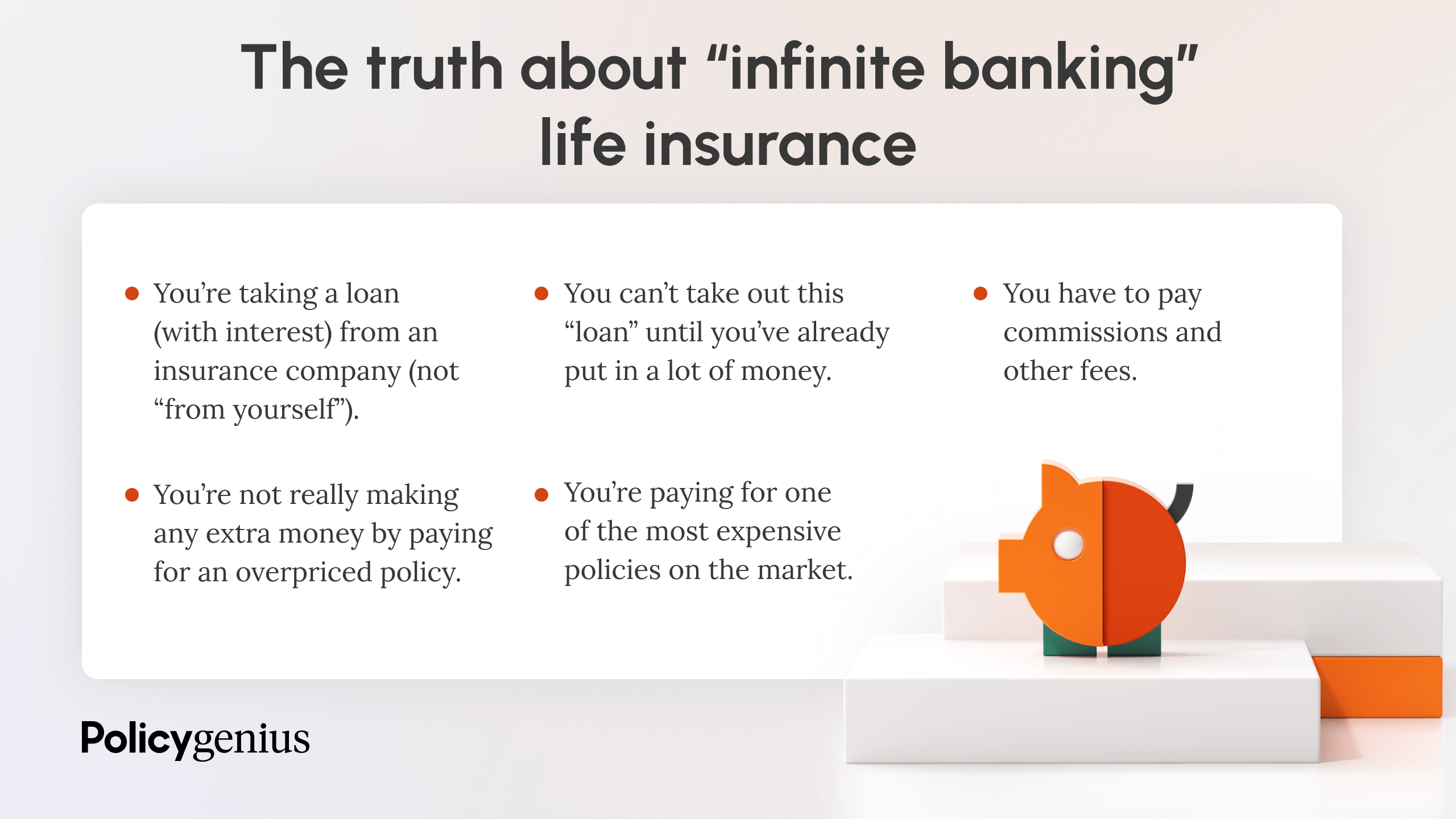
Infinite banking is not a product or service offered by a specific institution. It’s a concept promoted as a way you can “be your own bank” to have more control over your money. 

Infinite banking is a strategy in which you buy a life insurance policy that accumulates interest-earning cash value and take out loans against it, “borrowing from yourself” as a source of capital. Then eventually pay back the loan and start the cycle all over again. To whit:

  1. Buy a cash value life insurance policy, which you own and control.
  2. Pay policy premiums, a portion of which builds cash value.
  3. Cash value earns compounding interest.
  4. Take a loan out against the policy’s cash value, tax-free.
  5. Repay loans with interest.
  6. Cash value accumulates again, and the cycle repeats.

If you use this concept as intended, you’re taking money out of your life insurance policy to purchase everything you’d need for the rest of your life. Cars. Houses. Airplane tickets. Netflix.

So, when you pay back the policy loan, just as you’d have to pay back any mortgage, auto loan, or credit card, you’re paying yourself back.

Nelson Nash popularized this concept in his book Becoming Your Own Banker.

COMMENTS APPRECIATED

Refer and Subscribe

***

***

TEST: Financial Literacy in the USA

By Staff Reporters

SPONSOR: http://www.MarcinkoAssociates.com

***

***

A new report from the Global Financial Literacy Excellence Center shows that the average American scored just 48% on a financial literacy test, with groups scoring as low as 37% in certain areas. Since the report’s inception in 2017, the results have been relatively stable: Americans have scored 48% to 52% correctly on the annual study.

But only 16% of Americans scored between 75% and 100% on the test in 2024. This alarming statistic has far-reaching consequences for companies, the wider economy, and more than half all Americans. 

Cite: https://www.benzinga.com

COMMENTS APPRECIATED

Refer and Subscribe

***

***

FLEXNER REPORT: Medical Education

By Staff Reporters

***

***

According to Wikipedia, the Flexner Report was a book-length landmark report of medical education in the United States and Canada, written by Abraham Flexner and published in 1910 under the aegis of the Carnegie Foundation. Flexner not only described the state of medical education in North America, but he also gave detailed descriptions of the medical schools that were operating at the time. He provided both criticisms and recommendations for improvements of medical education in the United States.

Many aspects of the present-day American medical profession stem from the Flexner Report and its aftermath. While it had many positive impacts on American medical education, the Flexner report has been criticized for introducing policies that encouraged systemic racism and sexism.

The Report, also called Carnegie Foundation Bulletin Number Four, called on American medical schools to enact higher admission and graduation standards, and to adhere strictly to the protocols of mainstream science principles in their teaching and research. The report talked about the need for revamping and centralizing medical institutions. Many American medical schools fell short of the standard advocated in the Flexner Report and, subsequent to its publication, nearly half of such schools merged or were closed outright.

Colleges for the education of the various forms of alternative medicine, such as electro-therapy were closed. Homeopathy, traditional osteopathy, eclectic medicine, and physiomedicalism (botanical therapies that had not been tested scientifically) were derided.

The Report also concluded that there were too many medical schools in the United States, and that too many doctors were being trained. A repercussion of the Flexner Report, resulting from the closure or consolidation of university training, was the closure of all but two black medical schools and the reversion of American universities to male-only admittance programs to accommodate a smaller admission pool.

In Chapter 11, Flexner stressed that the success of medical education reform and the professionalization of medicine relied heavily on the effective legal and ethical functioning of state medical boards. However, he noted that these boards were failing in their mission, stalling progress and allowing substandard medical practices to continue, thereby jeopardizing public health. This problem persists as a significant issue in the current practice of medicine in the United States.

Subscribe and Refer

COMMENTS APPRECIATED

***

***

Generative AI in Healthcare – Valuation Considerations

By Health Capital Consultants, LLC

***

***

HCC recently authored the article “Generative AI in Healthcare – Valuation Considerations” published by the National Association of Certified Valuators and Analysts in the November/December issue of The Value Examiner.

Generative artificial intelligence (AI) is the utilization of algorithms to create content—such as text, code, imagery, videos, and even simulations—in mere seconds. The goal of AI in general is to mimic the intelligence of humans to perform tasks. “Generative” AI aims to learn from data without the assistance of humans. While today’s generative AI bots are not yet prepared for widespread utilization in patient care settings, AI is garnering significant interest in the healthcare industry as providers begin to test its capabilities in clinics and offices.

This article reviews the role that generative AI is beginning to play in the U.S. healthcare system, the potential of AI in healthcare, and concerns related to the technology.

Read the Entire Article HERE

COMMENTS APPRECIATED

Refer and Subscribe

***

***

DAILY UPDATE: Stocks Regain Steam

MEDICAL EXECUTIVE-POST TODAY’S NEWSLETTER BRIEFING

***

Essays, Opinions and Curated News in Health Economics, Investing, Business, Management and Financial Planning for Physician Entrepreneurs and their Savvy Advisors and Consultants

Serving Almost One Million Doctors, Financial Advisors and Medical Management Consultants Daily

A Partner of the Institute of Medical Business Advisors , Inc.

http://www.MedicalBusinessAdvisors.com

SPONSORED BY: Marcinko & Associates, Inc.

***

http://www.MarcinkoAssociates.com

Daily Update Provided By Staff Reporters Since 2007.
How May We Serve You?
© Copyright Institute of Medical Business Advisors, Inc. All rights reserved. 2025

REFER A COLLEAGUE: MarcinkoAdvisors@outlook.com

SPONSORSHIPS AVAILABLE: https://medicalexecutivepost.com/sponsors/

ADVERTISE ON THE ME-P: https://tinyurl.com/ytb5955z

Your Referral Count -0-

CITE: https://www.r2library.com/Resource

US stocks gained steam on Thursday afternoon as investors digested megacap tech earnings and waited for Apple (AAPL) results for more clues on prospects for Big Tech. The S&P 500 (^GSPC) gained 0.5%, while the Dow Jones Industrial Average (^DJI) rose nearly 0.4%. The tech-heavy NASDAQ Composite (^IXIC) was up nearly 0.3%.

And, after the Federal Reserve stood pat on interest rates as expected, investors have turned to parsing earnings reports — and in particular, the first wave of results from the “Magnificent Seven” companies that have driven broader stock market gains.

CITE: https://tinyurl.com/2h47urt5

Right ahead of the closing bell, President Donald Trump once again teased looming 25% tariffs on Mexico and Canada. The US dollar (DX=F) index spiked on the news, reversing earlier losses to close near flat.

CITE: https://tinyurl.com/tj8smmes

Visualize: How private equity tangled banks in a web of debt, from the Financial Times.

COMMENTS APPRECIATED

PLEASE SUBSCRIBE: MarcinkoAdvisors@outlook.com

Thank You

***

***

***

***

EDUCATIONAL TEXTBOOKS: https://tinyurl.com/4zdxuuwf

***

BACKFIRE: Mind Effect

By Staff Reporters

SPONSOR: http://www.MarcinkoAssociates.com

***

***

The Backfire Effect refers to the strengthening of a belief even after it has been challenged.

Cook and Lewandowsky (2011) explain it very well in the context of changing people’s minds in their Debunking Handbook. The backfire effect may work based on the same foundation as Declinism, in that we do not like change. It is also similar to negativity bias, in that we wish to avoid losing and other negative outcomes—in this case, one’s idea is being challenged or rejected (i.e. perceived as being made out to be “wrong”) and thus, they may hold on tighter to the idea than they had before.

However, according to colleague Dan Ariely PhD, there are caveats to the backfire effect—for example, we also tend to abandon a belief if there’s enough evidence against it with regard to specific facts.

***

COMMENTS APPRECIATED

Subscribe and Refer

***

ICARUS: Business Paradox

By Staff Reporters

***

***

The Icarus Paradox suggests that some businesses bring about their own downfall through their own successes.

The Icarus paradox was coined by Dan Miller in his 1990 book by the same name. The term refers to the phenomenon of businesses failing abruptly after a period of apparent success, where this failure is brought about by the very elements that led to their initial success.

It alludes to Icarus of Greek mythology, who drowned after flying too close to the Sun. The failure of the very wings that allowed him to escape imprisonment and soar through the skies was what ultimately led to his demise, hence the paradox.

COMMENTS APPRECIATED

Subscribe and Like Today!

***

***

e-BOOKS: For Doctors, Financial Advisors, CPAs, Insurance Agents, Medical Consultants and Health Law Attorneys

By Ann Miller RN MHA CMP

INTRODUCING OUR NEXT GENERATION e-BOOK LIBRARY FROM iMBA, Inc.

An e-book is an electronic or digital book that can be read on a computer or a handheld device.

Our new e-books consists of text, images, and are fixed to a specific spot on the page.

And, our e-books are a data files similar in content and structure to a word-processing document that comes in a PDF format. To use our e-books, you need to purchase and download it to a device that has a .pdf file reader app, such as ADOBE® or similar on a smartphone, tablet or computer. A PDF, also known as a portable document format, is the format most people are familiar with and used in our e-books. PDFs are known for their ease of use and ability to hold custom layouts. They are the most commonly used e-Book formats, especially by professionals and adult-learners.

You can then access the e-book and read it, or highlight pages and even take side notes.

e-Books Save Money

With no manufacturing, printing, binding or shipping costs, e-Books are cheaper than traditional hard or paper back books.The price of each specialized and highly niche focused e-Book [50-100 pages] is only $25, whereas similar paperback printed books of this type generally cost $145, or more!

Payable thru PayPal [3% courtesy surcharge applies].

MORE HERE: https://medicalexecutivepost.com/me-pr-a-new-feature/

COMMENTS APPRECIATED

Thank You

***

Why are CERTIFIED MEDICAL PLANNER® Textbooks So DARN Popular?

 The Big Surprise

[By Dr. David Edward Marcinko MBA MEd CMP®]

http://www.CertifiedMedicalPlanner.org

OK – I was a Certified Financial Planner® before my academic team launched the Certified Medical Planner™ online and on-ground chartered education and board certification designation program a few years ago. I am now CFP reformed and in remission.

MORE: Enter CPMs

Enter the Certified Medical PlannerChartered Designation

Today, we are of course, gratified that Certified Medical Planner™ mark notoriety is growing organically in the healthcare, as well as financial services, industry.

Even uber-blogger Mike Kitces MSFS, MTAX, CFP, CLU, ChFC, RHU, REBC, CASL has taken note of us in his musings on the Nerd’s Eye View website. And, the reality is that there are a growing number of CFP educational programs at the post-CFP niche market level.

But, none for healthcare industrial complex: for doctors … by doctors!

Popularity of our Text Books

However, it is our modern, innovative and proprietary Certified Medical Planner™ textbooks and dictionaries that have exploded in the academic marketplace.

In fact, they are now redacted in thousands of medical, graduate, law and B-schools and libraries, as well as colleges and universities throughout the nation. This includes the Library of Congress, National Institute of Health and  the Library of Congress.

What Gives?

We have been told that this textbook popularity and publishing success is because of their balanced and peer-reviewed nature; something not very widespread in the financial services industry that is prone to gross and overstated advertising, salesmanship and marketing hyperbole. And, for this we are very gratified.

But, is there another reason our books are so popular?

A bit of networking and research suggests that interested folks may be eschewing the actual course work in favor of just the high quality textbooks! UGH!

Another reason may be that our books and curricula are kept fresh and updated on our corporate website: http://www.MedicalBusinessAdvisors.com

Assessment

So, what do you think? Matriculation with the professional mark versus self study without the designation mark. Please opine.

Conclusion

Your thoughts and comments on this ME-P are appreciated. Feel free to review our top-left column, and top-right sidebar materials, links, URLs and related websites, too. Then, subscribe to the ME-P. It is fast, free and secure.

Speaker: If you need a moderator or speaker for an upcoming event, Dr. David E. Marcinko; MBA – Publisher-in-Chief of the Medical Executive-Post – is available for seminar or speaking engagements.

Book Marcinko: https://medicalexecutivepost.com/dr-david-marcinkos-bookings/

Subscribe: MEDICAL EXECUTIVE POST for curated news, essays, opinions and analysis from the public health, economics, finance, marketing, IT, business and policy management ecosystem.

DOCTORS:

“Insurance & Risk Management Strategies for Doctors” https://tinyurl.com/ydx9kd93

“Fiduciary Financial Planning for Physicians” https://tinyurl.com/y7f5pnox

“Business of Medical Practice 2.0” https://tinyurl.com/yb3x6wr8

Risk Management, Liability Insurance, and Asset Protection Strategies for Doctors and Advisors: Best Practices from Leading Consultants and Certified Medical Planners™  Comprehensive Financial Planning Strategies for Doctors and Advisors: Best Practices from Leading Consultants and Certified Medical Planners™

Product DetailsProduct Details

HOSPITALS:

“Financial Management Strategies for Hospitals” https://tinyurl.com/yagu567d

“Operational Strategies for Clinics and Hospitals” https://tinyurl.com/y9avbrq5

Product DetailsProduct Details

Adult Learners and Students:

Product DetailsProduct DetailsProduct Details

***

The TIPPING POINT: Meanings Vary

By Staff Reporters

***

***

A “Tipping point” has slightly varied meanings depending upon the field of study, but is frequently defined as a series of small changes in an evolutionary process that ultimately lead to a significant change or point beyond which new circumstances and conditions obtain.

For example, the point at which emerging economies go from being a long-time source of deflation to a source of inflation can be said to be an inflationary tipping point.

***

The Tipping Point: How Little Things Can Make a Big Difference is the debut book by Malcolm Gladwell, first published by Litttle, Brown in 2000. Gladwell defines a tipping point as “the moment of critical mass, the threshold, the boiling point.” The book seeks to explain and describe the “mysterious” sociological changes that mark everyday life. As Gladwell stated: “Ideas and products and messages and behaviors spread like viruses do.”

Examples of such changes in his book include the rise in popularity and sales of Hush Puppies shoes in the mid-1990s and the steep drop in New York City‘s crime rate after 1990.

COMMENTS APPRECIATED

Subscribe Today!

***

***

Transforming Hospital Finances with Six Sigma

The Mount Carmel Health System

By Mark Matthews MD

A “Scrubbed” True Illustration

One of the earliest healthcare adopters of Six Sigma was the Mount Carmel Health System in Columbus, Ohio.

The organization was barely breaking even in the summer of 2021 when competition from surrounding providers made things worse. Employee layoffs added fuel to an already all-time low employee morale.

The CEO

The Chief Executive Officer was determined to stem the bleeding, break the cycle of poor financial performance and return the hospital system to profitability.  He sought the potential benefits of Six Sigma and began a full deployment of its methodology. The plan was a bold move, as the organization ensured that no one would be terminated as a result of a Six Sigma project having eliminated his or her previous duties. These employees would be offered an alternative position in a different department. Moreover, top personnel were asked to leave their current positions to be trained and work full time as Six Sigma expert practitioners who would oversee project deployment while their positions were back filled.

Assessment

The Six Sigma deployment was the right decision. More than 50 projects were initiated with significant success. An example of an early Mount Carmel success story is the dramatic improvement in their Medicare Part C product reimbursements, previously written off as uncollectible accounts. These accounts were often denied by HCFA due to coding of those patients as “working aged.”

Since the treatment process status often changed in these patients, HCFA often rejected claims or lessened reimbursement amounts, effectively making coding a difficult and elusive problem. The employment of the Six Sigma process fixed the problem, resulting in a real gain of $857,000 to the organization. The spillover of this methodology to other coding parameters also has dramatically boosted revenue collection.

A Glimpse of Lean Medical Management Tools and Techniques

Conclusion

Your thoughts and comments on this ME-P are appreciated. Feel free to review our top-left column, and top-right sidebar materials, links, URLs and related websites, too. Then, subscribe to the ME-P. It is fast, free and secure.

Speaker: If you need a moderator or speaker for an upcoming event, Dr. David E. Marcinko; MBA – Publisher-in-Chief of the Medical Executive-Post – is available for seminar or speaking engagements. Contact: MarcinkoAdvisors@msn.com

Our Other Print Books and Related Information Sources:

Physician Financial Planning: http://www.jbpub.com/catalog/0763745790

Medical Risk Management: http://www.jbpub.com/catalog/9780763733421

Hospitals: http://www.crcpress.com/product/isbn/9781439879900

Physician Advisors: www.CertifiedMedicalPlanner.org

***

Buy from Amazon

BOOK FOREWORD / TESTIMONIAL

***

***

ORTHOPEDIC & PODIATRIC SURGERY: Ambulatory Surgery Centers

AVERAGE REVENUE PER CASE

By Staff Reporters

***

Podiatry is 3rd in Average Revenue Per Case in ASCs

***

Ambulatory Surgery Centers: Creating Value through Outpatient Surgery

***

Orthopedic surgery topped the pack for ASC revenue per case, according to VMG Health’s “Multi-Specialty ASC Benchmarking Study” for 2022.

The specialty was only the fourth most-represented among ASC cases, however. Nationally, gastroenterology was the most-represented specialty among ASCs, with 32 percent of all cases, followed by ophthalmology, with 26 percent, and pain management and orthopedics, with 22 and 21 percent, respectively.

Average revenue per case:

1. Orthopedics — $3,791

2. Gynecology — $3,117

3. Podiatry — $2,990

4. Urology — $2,724

5. Otolaryngology — $2,617

6. General surgery — $2,508

7. Plastic surgery — $2,264

8. Ophthalmology — $1,487

9. Pain management — $1,273

10. Gastroenterology — $1,079

Source: Marcus Robertson, Becker’s ASC [2/15/22]

***

ORDER INFECTION TEXTBOOK: https://tinyurl.com/ms647rnt

***

***

COMMENTS APPRECIATED

Thank You

Subscribe to the Medical Executive-Post

***

Selecting Financial Advisors the Risky Way

Physician Due Diligence is Important

[By Daniel B. Moisand; CFP®, and the ME-P Staff]Tall Shadows

While the merits of hiring the right financial advisor [FA] may be clear, hiring the wrong one can be devastating. Medical professionals still tend to have higher incomes and are an attractive target for most financial institutions and scam artists. This fear is a poor excuse for not getting the assistance necessary. Advice about who to engage for financial assistance comes from a hodge-podge of disjointed sources. This leads to good intentions and bad results. Take caution when using the following as sources of advice.

Relying on Family and Friends

By far more people seek financial advice from trusted family members and friends than any other source.  This is only natural. It is essential to trust that you are getting advice from a source that means well. It is also important that you get along well with your advisors. Hesitating to communicate with your advisor, even a great advisor, can cause problems even more problematic that getting bad advice from someone you like. While these sources have a good handle on the essential elements of trust and rapport, it is the competence of the advice that is most often the issue. The life and money experiences of those who are close to you certainly have value, but they are not necessarily relevant to your unique goals and circumstances. THINK: Bernie Madoff.

Media

A few years ago, the dominant media force in consumer oriented financial matters was the print media.  Magazines and newsletters proliferated with the bull market. More recently however, television has supplanted print even in the bear market. For example, a study now estimates that 80 percent of what the average American knows about current events comes from TV. Why wait three weeks for the next issue when you can get a commentary instantly on the television? There is nothing wrong with watching shows that cover the markets or subscribing to a consumer finance magazine. It is certainly a good idea to be informed. However, be wary of the quality and applicability of information put out by the media.

The Internet

It is easy to run across an ad for prescriptions drugs on television. Images prance across the screen followed by a litany of potential side effects and the obligatory, “Ask your doctor about”. With the expansion of the information superhighway, more and more companies are going direct to the consumer in some manner or another.

Financially speaking this information can be of great benefit but should also generate more concern. It is very easy to project a particular image via the web. The webmaster controls the interaction from what you see to what you hear. One of the results of this is that the Internet has already garnered a reputation as a breeding ground for new scams. More prevalent, however, is the presentation of information meant to be useful that is simply wrong, misinterpreted, or misapplied. The most terrifying source of misinformation on the net is the chat rooms. Here the entire interaction is clouded by anonymity. Some people enter chat rooms because there is a comfort in anonymity when asking a question. There is also a danger in an anonymous answer. When it comes to something as important as your finances or your health, the prudent course should be to take all the advice with a grain of salt. A great deal of consideration to the quality of the source is in order. It is also essential that one understand the level of accountability a source may possess.   fp-book2

Assessment

Much has been written on financial advisor selection, here on the ME-P and elsewhere; but little on how not to select an advisor. We trust this information will be of assistance to the medical professional in some small increment. Send in your FA stories; both good and bad.

Channel Surfing the ME-P

Have you visited our other topic channels? Established to facilitate idea exchange and link our community together, the value of these topics is dependent upon your input. Please take a minute to visit. And, to prevent that annoying spam, we ask that you register. It is fast, free and secure.

Conclusion

Your thoughts and comments on this ME-P are appreciated. Feel free to review our top-left column, and top-right sidebar materials, links, URLs and related websites, too. Then, subscribe to the ME-P. It is fast, free and secure.

Speaker: If you need a moderator or speaker for an upcoming event, Dr. David E. Marcinko; MBA – Publisher-in-Chief of the Medical Executive-Post – is available for seminar or speaking engagements. Contact: MarcinkoAdvisors@msn.com

OUR OTHER PRINT BOOKS AND RELATED INFORMATION SOURCES:

Product Details  Product Details

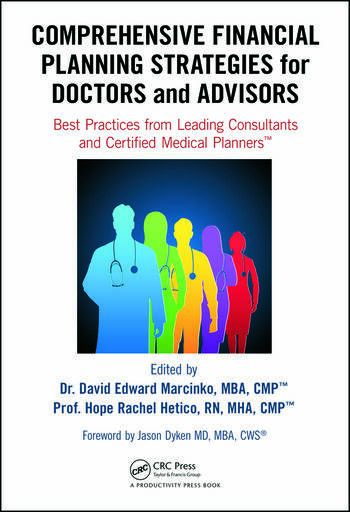
Comprehensive Financial Planning Strategies for Doctors and Advisors: Best Practices from Leading Consultants and Certified Medical Planners™

***

CASH FLOW ANALYSIS: Real Life ACO Accounting Example

ACCOUNTABLE CARE ORGANIZATION EXAMPLE

Touring with Marcinko | The Leading Business Education ...

BY DR. DAVID EDWARD MARCINKO MBA MEd CMP®

CMP logo

SPONSOR: http://www.CertifiedMedicalPlanner.org

What is an ACO?

ACOs are groups of doctors, hospitals, and other health care providers, who come together voluntarily to give coordinated high-quality care to their Medicare patients. The goal of coordinated care is to ensure that patients get the right care at the right time, while avoiding unnecessary duplication of services and preventing medical errors.

When an ACO succeeds both in delivering high-quality care and spending health care dollars more wisely, the ACO will share in the savings it achieves for the Medicare program.

Citation: https://www.r2library.com/Resource/Title/0826102549

Case Model

Now, suppose that in a new Accountable Care Organization [ACO] contract, a certain medical practice was awarded a new global payment or capitation styled contract that increased revenues by $100,000 for the next fiscal year. The practice had a gross margin of 35% that was not expected to change because of the new business. However, $10,000 was added to medical overhead expenses for another assistant and all Account’s Receivable (AR) are paid at the end of the year, upon completion of the contract.

Cost of Medical Services Provided (COMSP):

The Costs of Medical Services Provided (COMSP) for the ACO business contract represents the amount of money needed to service the patients provided by the contract.  Since gross margin is 35% of revenues, the COMSP is 65% or $65,000.  Adding the extra overhead results in $75,000 of new spending money (cash flow) needed to treat the patients. Therefore, divide the $75,000 total by the number of days the contract extends (one year) and realize the new contract requires about $ 205.50 per day of free cash flows.

Assumptions

Financial cash flow forecasting from operating activities allows a reasonable projection of future cash needs and enables the doctor to err on the side of fiscal prudence. It is an inexact science, by definition, and entails the following assumptions:

  • All income tax, salaries and Accounts Payable (AP) are paid at once.
  • Durable medical equipment inventory and pre-paid advertising remain constant.
  • Gains/losses on sale of equipment and depreciation expenses remain stable.
  • Gross margins remain constant.
  • The office is efficient so major new marginal costs will not be incurred.

Physician Reactions:

Since many physicians are still not entirely comfortable with global reimbursement, fixed payments, capitation or ACO reimbursement contracts; practices may be loath to turn away short-term business in the ACA era.  Physician-executives must then determine other methods to generate the additional cash, which include the following general suggestions:

1. Extend Account’s Payable

Discuss your cash flow difficulties with vendors and emphasize their short-term nature. A doctor and her practice still has considerable cache’ value, especially in local communities, and many vendors are willing to work them to retain their business

2. Reduce Accounts Receivable

According to most cost surveys, about 30% of multi-specialty group’s accounts receivable (ARs) are unpaid at 120 days. In addition, multi-specialty groups are able to collect on only about 69% of charges. The rest was written off as bad debt expenses or as a result of discounted payments from Medicare and other managed care companies. In a study by Wisconsin based Zimmerman and Associates, the percentages of ARs unpaid at more than 90 days is now at an all time high of more than 40%. Therefore, multi-specialty groups should aim to keep the percentage of ARs unpaid for more than 120 days, down to less than 20% of the total practice. The safest place to be for a single specialty physician is probably in the 30-35% range as anything over that is just not affordable.

The slowest paid specialties (ARs greater than 120 days) are: multi-specialty group practices; family practices; cardiology groups; anesthesiology groups; and gastroenterologists, respectively. So work hard to get your money, faster. Factoring, or selling the ARs to a third party for an immediate discounted amount is not usually recommended.

3. Borrow with Short-Term Bridge Loans

Obtain a line of credit from your local bank, credit union or other private sources, if possible in an economically constrained environment. Beware the time value of money, personal loan guarantees, and onerous usury rates. Also, beware that lenders can reduce or eliminate credit lines to a medical practice, often at the most inopportune time.

4. Cut Expenses

While this is often possible, it has to be done without demoralizing the practice’s staff.

5.  Reduce Supply Inventories

If prudently possible; remember things like minimal shipping fees, loss of revenue if you run short, etc.

6. Taxes

Do not stop paying withholding taxes in favor of cash flow because it is illegal.

Hyper-Growth Model:

Now, let us again suppose that the practice has attracted nine more similar medical contracts. If we multiple the above example tenfold, the serious nature of potential cash flow problem becomes apparent. In other words, the practice has increased revenues to one million dollars, with the same 35% margin, 65% COMSP and $100,000 increase in operating overhead expenses.  Using identical mathematical calculations, we determine that $750,000 / 365days equals $2,055.00 per day of needed new free cash flows!  Hence, indiscriminate growth without careful contract evaluation and cash flow analysis is a prescription for potential financial disaster.

ASSESSMENT: Your comments are appreciated.

INVITE DR. MARCINKO: https://medicalexecutivepost.com/dr-david-marcinkos-

CONTACT: Ann Miller RN MH

[Executive Director]

THANK YOU

BUSINESS: https://www.amazon.com/Business-Medical-Practice-Transformational-Doctors/dp/0826105750/ref=sr_1_9?ie=UTF8&qid=1448163039&sr=8-9&keywords=david+marcinko

***

Discover the Best [Financial Planning and Investing] Practices of Leading Certified Medical Planners®

CMP logo

http://www.CertifiedMedicalPlanner.org 

 Our New Texts – “Take a Peek Inside – Now Available

Comprehensive Financial Planning Strategies for Doctors and Advisors: Best Practices from Leading Consultants and Certified Medical Planners(TM)

Front Matter with Foreword by Jason Dyken MD MBA

logos

“BY DOCTORS – FOR DOCTORS – PEER REVIEWED – FIDUCIARY FOCUSED”

***

On Internet and Investing Psychology

And … Wi-Fi Doctor Investors

[By ME-P Staff Reporters]

***

wifi

Sourcehttp://www.xkcd.com

***

OVER HEARD IN THE DOCTOR’S LOUNGE

***

Of course you don’t need a human financial advisor … until you do.

Today, we’ve had unfettered internet access to a wide range of investments, opinions and models for at least two decades. So, why the bravado to go it alone; five straight positive years for equities, since 2009!

The financial advisor’s role is to remove the human element and emotion from investing decisions for something as personal as your wealth. Emotion drives the retail investor to sell low (fear) and buy high (greed). This is the reason why the average equity returns for retail investors is less than half of the S&Ps returns.

No, of course you don’t need a human financial advisor … until you do. And when you do, it may be too late.

***

Dan Ariely PhD

[The Irrational Economist]

WiFi

OUR TEXT BOOK

[BY DOCTORS – FOR DOCTORS – PEER REVIEWED]

[Chapter One]

UNIFYING THE PHYSIOLOGIC AND PSYCHOLOGIC FINANCIAL PLANNING DIVIDE  [Holistic Life Planning, Behavioral Economics, Trading Addiction and the Art of Money]

  • Dr. Brad Klontz PhD CFP
  • Dr. Ted Klontz PsyD
  • Dr. Eugene Schmuckler PhD MBA MEd
  • Dr. Kenneth Shubin-Stein MD CFA
  • Dr. David Edward Marcinko MBA CMP MBBS [Hon]

More:

COACH

Channel Surfing the ME-P

Have you visited our other topic channels? Established to facilitate idea exchange and link our community together, the value of these topics is dependent upon your input. Please take a minute to visit. And, to prevent that annoying spam, we ask that you register. It is fast, free and secure.

Conclusion

Your thoughts and comments on this ME-P are appreciated. Feel free to review our top-left column, and top-right sidebar materials, links, URLs and related websites, too. Then, subscribe to the ME-P. It is fast, free and secure.

Speaker: If you need a moderator or speaker for an upcoming event, Dr. David E. Marcinko; MBA – Publisher-in-Chief of the Medical Executive-Post – is available for seminar or speaking engagements. Contact: MarcinkoAdvisors@msn.com

OUR OTHER PRINT BOOKS AND RELATED INFORMATION SOURCES:

Financial Planning MDs 2015

Comprehensive Financial Planning Strategies for Doctors and Advisors: Best Practices from Leading Consultants

***

Physician Medical Risk Management and Insurance Planning Practices of Leading CERTIFIED MEDICAL PLANNERS®

SPONSOR: http://www.CertifiedMedicalPlanner.org 

 Our New Texts – “Take a Peek Inside – Now Available

      Risk Management, Liability Insurance, and Asset Protection Strategies for Doctors and Advisors: Best Practices from Leading Consultants and Certified Medical Planners™  Risk Management, Liability Insurance, and Asset Protection Strategies for Doctors and Advisors: Best Practices from Leading Consultants and Certified Medical Planners™

 logos

“BY DOCTORS – FOR DOCTORS – PEER REVIEWED – FIDUCIARY FOCUSED”

SAMPLE: 21. Practice Risks

MORE: Risk Mgmt Leadership

***

On Wall Street’s Suitability, Prudence and Fiduciary Accountability

Financial Advisor’s are Not Doctors!

dr-david-marcinko1

Dr. David E. Marcinko FACFAS MBA MEd CMP™ MBBS

THRIVE-BECOME A CMP™ Physician Focused Fiduciary

http://www.CertifiedMedicalPlanner.org

Financial advisors don’t ascribe to the Hippocratic Oath.  People don’t go to work on “Wall Street” for the same reasons other people become firemen and teachers.  There are no essays where they attempt to come up with a new way to say, “I just want to help people.”

Financial Advisor’s are Not Doctors

Some financial advisors and insurance agents like to compare themselves to CPAs, attorneys and physicians who spend years in training and pass difficult tests to get advanced degrees and certifications. We call these steps: barriers-to-entry. Most agents, financial product representatives and advisors, if they took a test at all, take one that requires little training and even less experience. There are few BTEs in the financial services industry.

For example, most insurance agent licensing tests are thirty minutes in length. The Series #7 exam for stock brokers is about 2 hours; and the formerly exalted CFP® test is about only about six [and now recently abbreviated]. All are multiple-choice [guess] and computerized. An aptitude for psychometric savvy is often as important as real knowledge; and the most rigorous of these examinations can best be compared to a college freshman biology or chemistry test in difficulty.

Yet, financial product salesman, advisors and stock-brokers still use lines such as; “You wouldn’t let just anyone operate on you, would you?” or “I’m like your family physician for your finances.  I might send you to a specialist for a few things, but I’m the one coordinating it all.”  These lines are designed to make us feel good about trusting them with our hard-earned dollars and, more importantly, to think of personal finance and investing as something that “only a professional can do.”

Unfortunately, believing those lines can cost you hundreds of thousands of dollars and years of retirement.

***

231_1

***

Suitability Rule

A National Association of Securities Dealers [NASD] / Financial Industry Regulatory Authority [FINRA] guideline that require stock-brokers, financial product salesman and brokerages to have reasonable grounds for believing a recommendation fits the investment needs of a client. This is a low standard of care for commissioned transactions without relationships; and for those “financial advisors” not interested in engaging clients with advice on a continuous and ongoing basis. It is governed by rules in as much as a Series #7 licensee is a Registered Representative [RR] of a broker-dealer. S/he represents best-interests of the firm; not the client.

And, a year or so ago there we two pieces of legislation for independent broker-dealers-Rule 2111 on suitability guidelines and Rule 408(b)2 on ERISA. These required a change in processes and procedures, as well as mindset change.

Note: ERISA = The Employee Retirement Income Security Act of 1974 (ERISA) codified in part a federal law that established minimum standards for pension plans in private industry and provides for extensive rules on the federal income tax effects of transactions associated with employee benefit plans. ERISA was enacted to protect the interests of employee benefit plan participants and their beneficiaries by:

  • Requiring the disclosure of financial and other information concerning the plan to beneficiaries;
  • Establishing standards of conduct for plan fiduciaries ;
  • Providing for appropriate remedies and access to the federal courts.

ERISA is sometimes used to refer to the full body of laws regulating employee benefit plans, which are found mainly in the Internal Revenue Code and ERISA itself. Responsibility for the interpretation and enforcement of ERISA is divided among the Department Labor, Treasury, IRS and the Pension Benefit Guarantee Corporation.

Yet, there is still room for commissioned based FAs. For example, some smaller physician clients might have limited funds [say under $100,000-$250,000], but still need some counsel, insight or advice.

Or, they may need some investing start up service from time to time; rather than ongoing advice on an annual basis. Thus, for new doctors, a commission based financial advisor may make some sense. 

Prudent Man Rule

This is a federal and state regulation requiring trustees, financial advisors and portfolio managers to make decisions in the manner of a prudent man – that is – with intelligence and discretion. The prudent man rule requires care in the selection of investments but does not limit investment alternatives. This standard of care is a bit higher than mere suitability for one who wants to broaden and deepen client relationships. 

***

student-849825_640

***

Prudent Investor Rule

The Uniform Prudent Investor Act (UPIA), adopted in 1992 by the American Law Institute’s Third Restatement of the Law of Trusts, reflects a modern portfolio theory [MPT] and total investment return approach to the exercise of fiduciary investment discretion. This approach allows fiduciary advisors to utilize modern portfolio theory to guide investment decisions and requires risk versus return analysis. Therefore, a fiduciary’s performance is measured on the performance of the entire portfolio, rather than individual investments 

Fiduciary Rule

The legal duty of a fiduciary is to act in the best interests of the client or beneficiary. A fiduciary is governed by regulations and is expected to judge wisely and objectively. This is true for Investment Advisors [IAs] and RIAs; but not necessarily stock-brokers, commission salesmen, agents or even most financial advisors. Doctors, lawyers, and the clergy are prototypical fiduciaries. 

***

business-insurance

***

More formally, a financial advisor who is a fiduciary is legally bound and authorized to put the client’s interests above his or her own at all times. The Investment Advisors Act of 1940 and the laws of most states contain anti-fraud provisions that require financial advisors to act as fiduciaries in working with their clients. However, following the 2008 financial crisis, there has been substantial debate regarding the fiduciary standard and to which advisors it should apply. In July of 2010, The Dodd-Frank Wall Street Reform and Consumer Protection Act mandated increased consumer protection measures (including enhanced disclosures) and authorized the SEC to extend the fiduciary duty to include brokers rather than only advisors, as prescribed in the 1940 Act. However, as of 2014, the SEC has yet to extend a meaningful fiduciary duty to all brokers and advisors, regardless of their designation.

The Fiduciary Oath: fiduciaryoath_individual

Assessment 

Ultimately, physician focused and holistic “financial lifestyle planning” is about helping some very smart people change their behavior for the better. But, one can’t help doctors choose which opportunities to take advantage of along the way unless there is a sound base of technical knowledge to apply the best skills, tools, and techniques to achieve goals in the first place.

Most of the harms inflicted on consumers by “financial advisors” or “financial planners” occur not due to malice or greed but ignorance; as a result, better consumer protections require not only a fiduciary standard for advice, but a higher standard for competency.

The CFP® practitioner fiduciary should be the minimum standard for financial planning for retail consumers, but there is room for post CFP® studies, certifications and designations; especially those that support real medical niches and deep healthcare specialization like the Certified Medical Planner™ course of study [Michael E. Kitces; MSFS, MTax, CLU, CFP®, personal communication].

Being a financial planner entails Life-Long-Learning [LLL]. One should not be allowed to hold themselves out as an advisor, consultant, or planner unless they are held to a fiduciary standard, period. Corollary – there’s nothing wrong with a suitability standard, but those in sales should be required to hold themselves out as a salesperson, not an advisor.

The real distinction is between advisors and salespeople. And, fiduciary standards can accommodate both fee and commission compensation mechanisms. However; there must be clear standards and a process to which advisors can be held accountable to affirm that a recommendation met the fiduciary obligation despite the compensation involved.

Ultimately, being a fiduciary is about process, not compensation.

More: Deception in the Financial Service Industry

Full Disclosure:

As a medical practitioner, Dr. Marcinko is a fiduciary at all times. He earned Series #7 (general securities), Series #63 (uniform securities state law), and Series #65 (investment advisory) licenses from the National Association of Securities Dealers (NASD-FINRA), and the Securities Exchange Commission [SEC] with a life, health, disability, variable annuity, and property-casualty license from the State of Georgia.

Dr.Marcinko was a licensee of the CERTIFIED FINANCIAL PLANNER™ Board of Standards (Denver) for a decade; now reformed, and holds the Certified Medical Planner™ designation (CMP™). He is CEO of iMBA Inc and the Founding President of: http://www.CertifiedMedicalPlanner.org

More: Enter the CMPs

***

[PHYSICIAN FOCUSED FINANCIAL PLANNING AND RISK MANAGEMENT COMPANION TEXTBOOK SET]

  Risk Management, Liability Insurance, and Asset Protection Strategies for Doctors and Advisors: Best Practices from Leading Consultants and Certified Medical Planners™  Comprehensive Financial Planning Strategies for Doctors and Advisors: Best Practices from Leading Consultants and Certified Medical Planners™

[Dr. Cappiello PhD MBA] *** [Foreword Dr. Krieger MD MBA]

[Two Newest Books by Marcinko annd the iMBA, Inc Team]

Conclusion

Your thoughts and comments on this ME-P are appreciated. Feel free to review our top-left column, and top-right sidebar materials, links, URLs and related websites, too. Then, subscribe to the ME-P. It is fast, free and secure.

Speaker: If you need a moderator or speaker for an upcoming event, Dr. David E. Marcinko; MBA – Publisher-in-Chief of the Medical Executive-Post – is available for seminar or speaking engagements. Contact: MarcinkoAdvisors@msn.com

OUR OTHER PRINT BOOKS AND RELATED INFORMATION SOURCES:

***

Product DetailsProduct Details

Product DetailsProduct DetailsProduct Details

[PRIVATE MEDICAL PRACTICE BUSINESS MANAGEMENT TEXTBOOK – 3rd.  Edition]

Product DetailsProduct Details

  [Foreword Dr. Hashem MD PhD] *** [Foreword Dr. Silva MD MBA]

***

Sample Medical Practice Sales Non-Disclosure Agreement

Customizable Medical Practice Example

[By Staff Reporters]insurance-book

The undersigned acknowledges that Hamilton Family Clinic (HFC) has furnished to the undersigned potential Investor (“Investor”) certain proprietary data (“Confidential Information”) relating to the business affairs and operations of Hamilton Family Clinic (HFC) for study and evaluation by Investor for possibly investing in Hamilton Family Clinic (HFC).

It is acknowledged by Investor that the information provided by Hamilton Family Clinic (HFC) is confidential; therefore, Investor agrees not to disclose it and not to disclose that any discussions or contracts with Hamilton Family Clinic (HFC) have occurred or are intended, other than as provided for in the following paragraph.

It is acknowledged by Investor that information to be furnished is in all respects confidential in nature, other than information which is in the public domain through other means and that any disclosure or use of same by Investor, except as provided in this agreement, may cause serious harm or damage to Hamilton Family Clinic (HFC), and its owners and officers.

Therefore, Investor agrees that Investor will not use the information furnished for any purpose other than as stated above, and agrees that Investor will not either directly or indirectly by agent, employee, or representative, disclose this information, either in whole or in part, to any third party; provided, however that (a) information furnished may be disclosed only to those directors, officers and employees of Investor and to Investor’s advisors or their representatives who need such information for the purpose of evaluating any possible transaction (it being understood that those directors, officers, employees, advisors and representatives shall be informed by Investor of the confidential nature of such information and shall be directed by Investor to treat such information confidentially), and (b) any disclosure of information may be made to which Hamilton Family Clinic (HFC) consents in writing. At the close of negotiations, Investor will return to Hamilton Family Clinic (HFC) all records, reports, documents, and memoranda furnished and will not make or retain any copy thereof.

__________________

Signature – and – Date

LINK: Sample

Assessment

No intent to practice law; sample customizable template only. Always consult an attorney or competent consultant familiar with your individual circumstances before use.

Conclusion

Your thoughts and comments on this ME-P are appreciated. Feel free to review our top-left column, and top-right sidebar materials, links, URLs and related websites, too. Then, subscribe to the ME-P. It is fast, free and secure.

Speaker: If you need a moderator or speaker for an upcoming event, Dr. David E. Marcinko; MBA – Publisher-in-Chief of the Medical Executive-Post – is available for seminar or speaking engagements. Contact: MarcinkoAdvisors@msn.com

OUR OTHER PRINT BOOKS AND RELATED INFORMATION SOURCES:

HOSPITALS: http://www.crcpress.com/product/isbn/9781466558731
CLINICS: http://www.crcpress.com/product/isbn/9781439879900
BLOG: www.MedicalExecutivePost.com
FINANCE: Financial Planning for Physicians and Advisors
INSURANCE: Risk Management and Insurance Strategies for Physicians and Advisors

Product DetailsProduct DetailsProduct Details

Product Details  Product Details

Medical Workplace Violence Prevention Guidelines

http://www.MARCINKOAssociates.com

Earliest Guidelines in California Program

By Eugene Schmuckler; PhD MBA MEd CTS

By Dr. David E. Marcinko MBA MEd CMP

UPDATE

Assassination attempt on Donald J.Trump

At least 5 people are dead and multiple people are injured following a shooting at the Natalie Building at St. Francis Hospital in Tulsa, Oklahoma.

***

The impact of medical workplace violence became widely exposed on November 6, 2009 when 39 year old Army psychiatrist Maj. Nidal M. Hasan MD, a 1997 graduate of Virginia Tech University who received a medical doctorate in psychiatry from the Uniformed Services University of the Health Sciences in Bethesda, Maryland, and served as an intern, resident and fellow at the Walter Reed Army Medical Center in the District of Columbia, went on a savage 100 round shooting spree and rampage that killed 13 people and injured 32 others. In April 2010 he was transferred to Bell County Jail in Belton, Texas awaiting trial.

Federal Government Guidelines

The federal government and some states have developed guidelines to assist employers with workplace violence prevention. For instance, one of the earliest sets of guidelines for a comprehensive workplace violence prevention program was published in 1993 by California OSHA. This resulted from the murder of a state employee. In 1996, Guidelines for Preventing Workplace Violence for Healthcare and Social Service Workers was published by OSHA.

OSHA Guidelines

In its guidelines, OSHA sets forth the following essential elements for developing a violence prevention program:

  • Management commitment — as seen by high-level management involvement and support for a written workplace violence prevention policy and its implementation.
  • Meaningful employee involvement — in policy development, joint management-worker violence prevention committees, post-assault counseling and debriefing, and follow-up are all critical program components.
  • Worksite analysis — includes regular walk-through surveys of all patient care areas and the collection and review of all reports of worker assault. A successful job hazard analysis must include strategies and policies for encouraging the reporting of all incidents of workplace violence, including verbal threats that do not result in physical injury.
  • Hazard prevention and control — includes the installation and maintenance of alarm systems in high-risk areas. It may also include the training and posting of security personnel in emergency departments. Adequate staffing is an essential hazard prevention measure, as is adequate lighting and control of access to staff offices and secluded work areas.
  • Pre-placement and periodic training and education — must include educationally appropriate information regarding the risk factors for violence in the healthcare environment and control measures available to prevent violent incidents. Training should include skills in aggressive behavior identification and management, especially for staff working in the mental health and emergency departments.

On May 17, 1999, Governor Gary Locke signed the New Workplace Violence Prevention Act for the state of Washington. This act mandates that each healthcare setting in the state implement a plan to reasonably prevent and protect employees from violence.

New Washington Workplace Violence Prevention Act

According to this act, prevention plans need to address security considerations related to:

  • physical attributes of the healthcare setting;
  • staffing, including security staffing;
  • personnel policies;
  • first aid and emergency procedures;
  • reporting of violent acts; and
  • employee education and training.

Prior to the development of an actual plan, a security and safety assessment needs to be conducted to identify existing or potential hazards. The training component of the plan must include the following topics:

  • general safety procedures;
  • personal safety procedures;
  • the violence escalation cycle;
  • violence-predicting factors;
  • means of obtaining a patient history form from a patient with violent behavior;
  • strategies to avoid physical harm;
  • restraining techniques;
  • appropriate use of medications as chemical restraints;
  • documenting and reporting incidents;
  • the process whereby employees affected by a violent act may debrief;
  •  any resources available to employee for coping with violence; and
  • the healthcare setting’s workplace violence prevention plan.

Assessment

The act further mandates that any hospital operated and maintained by the State of Washington for the care of the mentally ill is required to provide violence prevention training to affected employees identified in the plan on a regular basis and prior.

Conclusion

Your thoughts and comments on this ME-P are appreciated. Feel free to review our top-left column, and top-right sidebar materials, links, URLs and related websites, too. Then, subscribe to the ME-P. It is fast, free and secure.

Speaker: If you need a moderator or speaker for an upcoming event, Dr. David E. Marcinko; MBA – Publisher-in-Chief of the Medical Executive-Post – is available for seminar or speaking engagements. Contact: MarcinkoAdvisors@msn.com

OUR OTHER PRINT BOOKS AND RELATED INFORMATION SOURCES:

PHYSICIANS: www.MedicalBusinessAdvisors.com
HOSPITALS: http://www.crcpress.com/product/isbn/9781466558731
CLINICS: http://www.crcpress.com/product/isbn/9781439879900
BLOG: www.MedicalExecutivePost.com
FINANCE: Financial Planning for Physicians and Advisors
INSURANCE: Risk Management and Insurance Strategies for Physicians and Advisors

Product Details 

JULY FOURTH WEEKEND READING LIST 2024

Happy Independence Weekend Greetings to our Readers and Subscribers for 2024

Product Details

From the Medical Executive-Post

***

Product Details
Product Details
Product Details
Product Details
Product Details
Product Details
Product Details

Rate this:

Comprehensive Financial Planning Strategies for Doctors and Advisors: Best Practices from Leading Consultants and Certified Medical Planners™
Risk Management, Liability Insurance, and Asset Protection Strategies for Doctors and Advisors: Best Practices from Leading Consultants and Certified Medical Planners™

INVITE DR. MARCINKO: https://medicalexecutivepost.com/dr-david-marcinkos-

CONTACT: Ann Miller RN MH

[Executive Director]

MarcinkoAdvisors@msn.com

THANK YOU

***

The correlation between income and cognitive abilities as measured by IQ?

Is there a correlation between higher incomes and high cognitive abilities as measured by IQ tests?

By Rick Kahler MS CFP®

“The higher your IQ, the greater the probability you will earn more than average.”

Like many people, I have believed this common money script to be true. It seems to make sense that the smarter you are, the more likely you are to succeed financially. Many of us assume there must be a correlation between higher incomes and high cognitive abilities as measured by IQ tests.

The Studies

I was surprised, however, to learn that this is not the case. A study published in November 2016 in the Proceedings of the National Academy of Sciences showed that a high level of innate intelligence is no indicator of financial success.

A December 2016 article in Bloomberg cited one of the co-authors of the study, economist James Heckman. When he asks how much of the difference between people’s incomes can be tied to their IQ’s, most people guess between 25% and 50%. The actual number is about one or two percent.

The study found that personality plays a much bigger part than IQ in financial success. The personality trait that was most strongly associated with earning a high income was conscientiousness.

Conscientiousness?

What, then is conscientiousness? One definition from the English Oxford Dictionary is “wishing to do one’s work or duty well and thoroughly.” A conscientious person is described as diligent, dedicated, perseverant, self-disciplined, meticulous, attentive, careful, studious, rigorous, and hard-working.

The article also warned to be careful not to confuse a high IQ with good grades. They are two very different things. It found that grades and the results of achievement tests were better than raw IQ scores at predicting success. Cognitive ability is only one factor in getting good grades. There are several non-cognitive factors that heavily influence grades, such as perseverance, good study habits, and the ability to collaborate. All of these, of course, are qualities of being conscientious.

The study also found that a secondary trait influencing financial success was curiosity. This is one of the nine traits commonly found in people with high emotional intelligence, according to Dr. Travis Bradberry, author of Emotional Intelligence 2.0.

In a November 2016 article titled “9 Habits Of Highly Emotionally Intelligent People”, Bradberry says that emotionally intelligent people are curious about everyone around them. “Curiosity is the product of empathy, one of the most significant gateways to a high EQ.” Bradberry says the more a person cares about other people and what they’re going through, the more curiosity they will have about them.

The bottom line in financial success is that personality counts, a lot.

This is good news for parents of young children. While you can’t do much to influence a child’s IQ, you can influence conscientiousness and curiosity. One way to do this is through direct teaching.

***

***

Direct Teaching

For example: Give them some responsibility for household chores. Provide work spaces and schedules to foster good study habits. Help them explore and learn about things they show interest in. Show them that you appreciate emotional intelligence and relationships. Encourage them to finish what they start, and celebrate and appreciate their successes when they persevere.

To teach financial conscientiousness, encourage kids to save for things they want. Allow them to experience the consequences of financial misjudgments like spending all their allowance the minute they get it. Involve them in family projects like planning and saving for a vacation.

Of course, just as with most behaviors and personality traits we would like our children to develop, the most effective form of teaching is by example. The best way to raise conscientious and curious kids is to let them see us being conscientious and curious ourselves. 

Conclusion

Your thoughts and comments on this ME-P are appreciated. Feel free to review our top-left column, and top-right sidebar materials, links, URLs and related websites, too. Then, subscribe to the ME-P. It is fast, free and secure.

Speaker: If you need a moderator or speaker for an upcoming event, Dr. David E. Marcinko; MBA – Publisher-in-Chief of the Medical Executive-Post – is available for seminar or speaking engagements. Contact: MarcinkoAdvisors@msn.com

OUR OTHER PRINT BOOKS AND RELATED INFORMATION SOURCES:

Risk Management, Liability Insurance, and Asset Protection Strategies for Doctors and Advisors: Best Practices from Leading Consultants and Certified Medical Planners™         8Comprehensive Financial Planning Strategies for Doctors and Advisors: Best Practices from Leading Consultants and Certified Medical Planners™

***

Our iMBA e-Book Sales and Service

The Institute of Medical Business Advisors is a leading national scope provider of healthcare economics, finance, investing, managerial accounting, policy, management and business administration education and medical practice management textbooks, reports, hand-books, dictionaries, journals, white-papers, fair-market valuations [FMV] and legal advisory opinions using multi-platform and traditional seminars and channels of knowledge distribution. iMBA helps the nation’s financial, healthcare and education professionals make decisive improvements in their direction and performance by empowering them through unbiased information, consultants and proprietary tools, books, templates and B-school styled case models.A virtuous “win-win” situation for all concerned.

Link: https://medicalexecutivepost.com/me-pr-a-new-feature/

The firm serves universities, medical, business, graduate and nursing schools; physicians, dentists, attorneys and legal societies – accountants, financial service providers, stock brokers, RIAs, wealth and hedge fund managers – emerging entities, hospitals, clinics, outpatient centers, CXOs and their BODs – the press, media and related academic entities.

Link: http://www.MarcinkoAssociates.com

***

AT YOUR SERVICE

***

RE-BROADCAST: An Interview with Fiduciary Bennett Aikin AIF®

On Financial Fiduciary Accountability

[By Dr. David E. Marcinko MBA MEd CMP™]

[By Ann Miller; RN, MHA]

Currently, there is a growing dilemma in the financial sales and services industry. It goes something like this:

  • What is a financial fiduciary?
  • Who is a financial fiduciary?
  • How can I tell if my financial advisor is a fiduciary?

Now, in as much as this controversy affects laymen and physician-investors alike, we went right to the source for up-to-date information regarding this often contentious topic, for an email interview and Q-A session, with Ben Aikin.ben-aikin

About Bennett Aikin AIF® and fi360.com

Bennett [Ben] Aikin is the Communications Coordinator for fi360.com. He oversees all communications for fi360. His responsibilities include messaging, brand management, copyrights and trademarks, and publications. Mr. Aikin received his BA in English from Virginia Tech in 2003 and is currently an MS candidate in Journalism from Ohio University.

Q. Medical Executive Post 

You have been very helpful and gracious to us. So, let’s get right to it, Ben. In the view of many; attorneys, doctors, CPAs and the clergy are fiduciaries; most all others who retain this title seem poseurs; sans documentation otherwise.

A. Mr. Aikin

You are correct. Attorneys, doctors and clergy are the prototype fiduciaries. They have a clear duty to put the best interests of their clients, patients, congregation, etc., above their own. [The duty of a CPA isn’t as clear to me, although I believe you are correct]. Furthermore, this is one of the first topics we address in our AIF training programs, and what we call the difference between a profession and an industry.  The three professions you name have three common characteristics that elevate them from an industry to a profession:

  1. Recognized body of knowledge
  2. Society depends upon practitioners to provide trustworthy advice
  3. Code of conduct that places the clients’ best interests first

Q. Medical Executive Post 

It seems that Certified Financial Planner®, Chartered Financial Analysts, Registered Investment Advisors and their representatives, Registered Representative [stock-brokers] and AIF® holders, etc, are not really financial fiduciaries, either by legal statute or organizational charter. Are we correct, or not? Of course, we are not talking ethics or morality here. That’s for the theologians to discuss.

A. Mr. Aikin

One of the reasons for the “alphabet soup”, as you put it in one of your white papers [books, dictionaries and posts] on financial designations, is that while there is a large body of knowledge, there is no one recognized body of knowledge that one must acquire to enter the financial services industry.  The different designations serve to provide a distinguisher for how much and what parts of that body of knowledge you do possess.  However, being a fiduciary is exclusively a matter of function. 

In other words, regardless of what designations are held, there are five things that will make one a fiduciary in a given relationship:

  1. You are “named” in plan or trust documents; the appointment can be by “name” or by “title,” such as CFO or Head of Human Resources
  2. You are serving as a trustee; often times this applies to directed trustees as well
  3. Your function or role equates to a professional providing comprehensive and continuous investment advice
  4. You have discretion to buy or sell investable assets
  5. You are a corporate officer or director who has authority to appoint other fiduciaries

So, if you are a fiduciary according to one of these definitions, you can be held accountable for a breach in fiduciary duty, regardless of any expertise you do, or do not have. This underscores the critical nature of understanding the fiduciary standard and delegating certain duties to qualified “professionals” who can fulfill the parts of the process that a non-qualified fiduciary cannot.

Q. Medical Executive Post 

How about some of the specific designations mentioned on our site, and elsewhere. I believe that you may be familiar with the well-known financial planner, Ed Morrow, who often opines that there are more than 98 of these “designations”? In fact, he is the founder of the Registered Financial Consultants [RFC] designation. And, he wrote a Foreword for one of our e-books; back-in-the-day. His son, an attorney, also wrote as a tax expert for us, as well. So, what gives?

A. Mr. Aikin

As for the specific designations you list above, and elsewhere, they each signify something different that may, or may not, lend itself to being a fiduciary: For example:

• CFP®: The act of financial planning does very much imply fiduciary responsibility.  And, the recently updated CFP® rules of conduct does now include a fiduciary mandate:

• 1.4 A certificant shall at all times place the interest of the client ahead of his or her own. When the certificant provides financial planning or material elements of the financial planning process, the certificant owes to the client the duty of care of a fiduciary as defined by CFP Board. [from http://www.cfp.net/Downloads/2008Standards.pdf]

•  CFA: Very dependent on what work the individual is doing.  Their code of ethics does have a provision to place the interests of clients above their own and their Standards of Practice handbook makes clear that when they are working in a fiduciary capacity that they understand and abide by the legally mandated fiduciary standard.

• FA [Financial Advisor]: This is a generic term that you may find being used by a non-fiduciary, such as a broker, or a fiduciary, such as an RIA.

• RIA: Are fiduciaries.  Registered Investment Advisors are registered with the SEC and have obligations under the Investment Advisers Act of 1940 to provide services that meet a fiduciary standard of care.

• RR: Registered Reps, or stock-brokers, are not fiduciaries if they are doing what they are supposed to be doing.  If they give investment advice that crosses the line into “comprehensive and continuous investment advice” (see above), their function would make them a fiduciary and they would be subject to meeting a fiduciary standard in that advice (even though they may not be properly registered to give advice as an RIA).

• AIF designees: Have received training on a process that meets, and in some places exceeds, the fiduciary standard of care.  We do not require an AIF® to always function as a fiduciary. For example, we allow registered reps to gain and use the AIF® designation. In many cases, AIF designees are acting as fiduciaries, and the designation is an indicator that they have the full understanding of what that really means in terms of the level of service they provide.  We do expect our designees to clearly disclose whether they accept fiduciary responsibility for their services or not and advocate such disclosure for all financial service representatives.

Q. Medical Executive Post 

Your website, http://www.fi360.com, seems to suggest, for example, that banks/bankers are fiduciaries. We have found this not to be the case, of course, as they work for the best interests of the bank and stockholders. What definitional understanding are we missing?

A. Mr. Aikin

Banks cannot generally be considered fiduciaries.  Again, it is a matter of function. A bank may be a named trustee, in which case a fiduciary standard would generally apply.  Banks that sell products are doing so according to their governing regulations and are “prudent experts” under ERISA, but not necessarily held to a fiduciary standard in any broader sense.

Q. Medical Executive Post 

And so, how do we rectify the [seemingly intentional] industry obfuscation on this topic. We mean, our readers, subscribers, book and dictionary purchasers, clients and colleagues are all confused on this topic. The recent financial meltdown only stresses the importance of understanding same.

For example, everyone in the industry seems to say they are the “f” word. But, our outreach efforts to contact traditional “financial services” industry pundits, CFP® practitioners and other certification organizations are continually met with resounding silence; or worse yet; they offer an abundance of parsed words and obfuscation but no confirming paperwork, or deep subject-matter knowledge as you have kindly done. We get the impression that some FAs honesty do-not have a clue; while others are intentionally vague.

A. Mr. Aikin

All of the evidence you cite is correct.  But that does not mean it is impossible to find an investment advisor who will manage to a fiduciary standard of care and acknowledge the same. The best way to rectify confusion as it pertains to choosing appropriate investment professionals is to get fiduciary status acknowledged in writing and go over with them all of the necessary steps in a fiduciary process to ensure they are being fulfilled. There also are great resources out there for understanding the fiduciary process and for choosing professionals, such as the Department of Labor, the SEC, FINRA, the AICPA’s Personal Financial Planning division, the Financial Planning Association, and, of course, Fiduciary360.

We realize the confusion this must cause to those coming from the health care arena, where MD/DO clearly defines the individual in question; as do other degrees [optometrist, clinical psychologist, podiatrist, etc] and medical designations [fellow, board certification, etc.]. But, unfortunately, it is the state of the financial services industry as it stands now.

Q. Medical Executive Post 

It is as confusing for the medical community, as it is for the lay community. And, after some research, we believe retail financial services industry participants are also confused. So, what is the bottom line?

A. Mr. Aikin

The bottom line is that lay, physician and all clients have a right to expect and demand a fiduciary standard of care in the managing of investments. And, there are qualified professionals out there who are providing those services.  Again, the best way to ensure you are getting it is to have fiduciary status acknowledged in writing, and go over the necessary steps in a fiduciary process with them to ensure it is being fulfilled.

Q. Medical Executive Post 

The “parole-evidence” rule, of contract law, applies, right? In dealing with medical liability situations, the medics and malpractice attorneys have a rule: “if it wasn’t written down, it didn’t happen.”  

A. Mr. Aikin

An engagement contract accepting fiduciary status should trump a subsequent attempt to claim the fiduciary standard didn’t apply. But, to reiterate an earlier point, if someone acts in one of the five functional fiduciary roles, they are a fiduciary whether they choose to acknowledge it or not.  I have attached a sample acknowledgement of fiduciary status letter with copies of our handbook, which details the fiduciary process we instruct in our programs, and our SAFE, which is basically a checklist that a fiduciary should be able to answer “Yes” to every question to ensure the entire fiduciary process is being covered.

Q. Medical Executive Post 

It is curious that you mention checklists. We have a post arguing that very theme for doctors and hospitals as they pursue their medial error reduction, and quality improvement, endeavors. And, we applaud your integrity, and wish only for clarification on this simple fiduciary query?

A. Mr. Aikin

Simple definition: A fiduciary is someone who is managing the assets of another person and stands in a special relationship of trust, confidence, and/or legal responsibility.

Q. Medical Executive Post 

Who is a financial fiduciary and what, if any, financial designation indicates same?

A. Mr. Aikin

Functional definition: See above for the five items that make you a fiduciary.

Financial designations that unequivocally indicate fiduciary duty: Short answer is none, only function can determine who is a fiduciary. 

Q. Medical Executive Post 

Please repeat that?

A. Mr. Aikin

Financial designations that indicate fiduciary duty: none. It is the function that determines who is a fiduciary.  Now, having said that, the CFP® certification comes close by demanding their certificants who are engaged in financial planning do so to a fiduciary standard. Similarly, other designations may certify the holder’s ability to perform a role that would be held to a fiduciary standard of care.  The point is that you are owed a fiduciary standard of care when you engage a professional to fill that role or they functionally become one.  And, if you engage a professional to fill a non-fiduciary role, they will not be held to a fiduciary standard simply because they have a particular designation.  One of the purposes the designations serve is to inform you what roles the designation holder is capable of fulfilling.

It is also worth keeping in mind that just being a fiduciary doesn’t equate to a full knowledge of the fiduciary standard. The AIF® designation indicates having been fully trained on the standard.

Q. Medical Executive Post 

Yes, your website mentions something about fiduciaries that are not aware of same! How can this be? Since our business model mimics a medical model, isn’t that like saying “the doctor doesn’t know he is doctor?” Very specious, with all due respect!

A. Mr. Aikin

I think it is first important to note that this statement is referring not just to investment professionals.  Part of the audience fi360 serves is investment stewards, the non-professionals who, due to facts and circumstances, still owe a fiduciary duty to another.  Examples of this include investment committee members, trustees to a foundation, small business owners who start 401k plans, etc.  This is a group of non-sophisticated investors who may not be aware of the full array of responsibilities they have. 

However, even on the professional side I believe the statement isn’t as absurd as it sounds.  This is basically a protection from both ignorant and unscrupulous professionals.  Imagine a registered representative who, either through ignorance or design, begins offering comprehensive and continuous investment advice.  Though they may deny or be unaware of the fact, they have opened themselves up to fiduciary liability. 

Q. Medical Executive Post 

Please clarify the use of arbitration clauses in brokerage account contracts for us. Do these disclaim fiduciary responsibility? If so, does the client even know same?

A. Mr. Aikin

By definition, an engagement with a broker is a non-fiduciary relationship.  So, unless other services beyond the scope of a typical brokerage account contract are specified, fiduciary responsibility is inherently not applicable.  Unfortunately, I do imagine there are clients who don’t understand this. Furthermore, AIF® designees are not prohibited from signing such an agreement and there are some important points to understand the reasoning.

First, by definition, if you are entering into such an agreement, you are entering into a non-fiduciary relationship. So, any fiduciary requirement wouldn’t apply in this scenario.

Second, if this same question were applied into a scenario of a fiduciary relationship, such as with an RIA, this would be a method of dispute resolution, not a practice method. So, in the event of dispute, the advisor and investor would be free to agree to the method of resolution of their choosing. In this scenario, however, typically the method would not be discussed until the dispute itself arose.

Finally, it is important to know that AIF/AIFA designees are not required to be a fiduciary. It is symbolic of the individuals training, knowledge and ongoing development in fiduciary processes, but does not mean they will always be acting as a fiduciary.

Q. Medical Executive Post 

Don’t the vast majority of arbitration hearings find in favor of the FA; as the arbitrators are insiders, often paid by the very same industry itself?

A. Mr. Aikin

Actual percentages are reported here: http://www.finra.org/ArbitrationMediation/AboutFINRADR/Statistics/index.htm However, brokerage arbitration agreements are a dispute resolution method for disputes that arise within the context of the securities brokerage industry and are not the only means of resolving differences for all types of financial advisors.  Investment advisers, for example, are subject to respond to disputes in a variety of forums including state and federal courts.  Clients should look at their brokerage or advisory agreement to see what they have agreed to. If you wanted to go into further depth on this question, we would recommend contacting Brian Hamburger, who is a lawyer with experience in this area and an AIFA designee. Bio page: http://www.hamburgerlaw.com/attorneys/BSH.htm.

Q. Medical Executive Post 

What about our related Certified Medical Planner® designation, and online educational program for financial advisors and medical management consultants? Is it a good idea – reasonable – for the sponsor to demand fiduciary accountability of these charter-holders? Cleary, this would not only be a strategic competitive advantage, but advance the CMP™ mission to put medical colleagues first and champion their cause www.CertifiedMedicalPlanner.org above all else. 

A. Mr. Aikin

I think it is a good idea for any plan sponsor to demand fiduciary status be acknowledged from anyone engaged to provide comprehensive and continuous investment advice.  I also think it is a good idea to be proactive in verifying that the fiduciary process is being followed.

Q. Medical Executive Post 

Is there anything else that we should know about this topic?

A. Mr. Aikin

Yes, a further note about fi360’s standards. I wrote generically about the fiduciary standard, because there is one that is defined by multiple sources of regulation, legislation and case law.  The process defined in our handbooks, we call a Fiduciary Standard of Excellence, because it covers that minimum standard and also best practice standards that go above and beyond.  All of our Practices, which comprise that standard, are legally substantiated in our Legal Memoranda handbook, which was written by Fred Reish’s law firm, who is considered a leading ERISA attorney.

Additional resources:

Q. Medical Executive Post 

Thank you so much for your knowledge and willingness to frankly share it with the Medical-Executive-Post.

Assessment

All are invited to continue the conversation with Mr. Aikin, asynchronously online, or thru this contact information:

fi360.com
438 Division Street
Sewickley, PA 15143
412-741-8140 Phone
866-390-5080 Toll-free phone
412-741-8142 Fax

Conclusion

Your thoughts and comments on this ME-P are appreciated. Feel free to review our top-left column, and top-right sidebar materials, links, URLs and related websites, too. Then, subscribe to the ME-P. It is fast, free and secure.

Speaker: If you need a moderator or speaker for an upcoming event, Dr. David E. Marcinko; MBA – Publisher-in-Chief of the Medical Executive-Post – is available for seminar or speaking engagements. Contact: MarcinkoAdvisors@msn.com

OUR OTHER PRINT BOOKS AND RELATED INFORMATION SOURCES:

HOSPITALS: http://www.crcpress.com/product/isbn/9781466558731
CLINICS: http://www.crcpress.com/product/isbn/9781439879900
ADVISORS: www.CertifiedMedicalPlanner.org
BLOG: www.MedicalExecutivePost.com

Product DetailsProduct DetailsProduct Details

Product Details  Product Details

Product DetailsProduct Details

Product Details

Risk Management, Liability Insurance, and Asset Protection Strategies for Doctors and Advisors: Best Practices from Leading Consultants and Certified Medical Planners™8Comprehensive Financial Planning Strategies for Doctors and Advisors: Best Practices from Leading Consultants and Certified Medical Planners™

About Tombstone Securities Advertising and the “New Issue” Propsectus

SPONSOR: http://www.CertifiedMedicalPlanner.org

A Primer for Physician Investors and Medical Professionals

By: Dr. David Edward Marcinko; MBA, MEd, CMP™

[Editor-in-Chief]

[PART 2 OF 8]

BU Dr. Marcinko

NOTE: This is an eight part ME-P series based on a weekend lecture I gave more than a decade ago to an interested group of graduate, business and medical school students. The material is a bit dated and some facts and specifics may have changed since then. But, the overall thought-leadership information of the essay remains interesting and informative. We trust you will enjoy it.

Introduction

Despite the SEC restrictions, noted in Part I of this series, some idea of potential demand for a new security issue can be gauged and have a bearing on  pricing decisions.

For example, as CEO of a medical instrument company, or interested investor, would you rather see a great deal of interest in a potential new issue or not very much interest?  There is however, one kind of advertisement that the underwriter can publish during the cooling off period. It’s known as a tombstone ad.  The ad makes it clear that it is only an announcement and does not constitute an offer to sell or  solicit the issue, and that such an offering can only be made by  prospectus.  SEC Rule 134 of the 1933 Act  itself, refers to a tombstone ad as “communication not deemed a prospectus”  because it makes reference to the prospectus in the ad. Tombstones have received their name because of the sparse nature of details found in them.

However, the most popular use of the tombstone ad is to announce the effectiveness of a new issue, after it has been successfully issued. This promotes the success of  both he underwriter, as well as the company.

Since distributing securities involves potential liability to the investment bank, it will do everything possible to protect itself.  So, near the end of the cooling off period, a meeting is held between the underwriter and the corporation. It is known as a due diligence meeting. At this meeting they both discuss amendments that are going to be necessary to make the registration statement complete and accurate. The corporate officers, and the underwriters sign, the final registration statement. They have civil liability for damages that result from omissions of material facts or

Mis-statements of fact. They also have criminal liability if the distribution is done by use of fraudulent, manipulative, or deceptive means. Due diligence takes on a whole new meaning when  incarceration from a half-hearted effort underwriting efforts can occur. The investment bank strives to ensure that there have been no material changes to the issuer or the terms of the issue since the registration statement was filed.

Again, as a physician, how would you feel if you were an investment banker raising capital for a new pharmaceutical company that had developed a drug product that was highly marketable. But, on the day after the issue was effective, there was a major news story indicating that the company was being sued for patent infringement? What effect do you think that would have on the market price of this new issue? It would probably plunge. How could this situation have been prevented? The due diligence meeting is more than a cocktail party or a gathering in a smoke filled room. Otherwise, the company would require specially trained people, to do a patent search lessening the likelihood of this scenario. At the due diligence meeting, work is done on the preparation of the final prospectus, but the investment bank does not set the public offering price or the effective date at this meeting. The SEC will eventually set the effective date for the registration and it is on that date that the final offering price will be determined.

Once the SEC sets the effective date, sales may be executed and money can be accepted by the investment bank. It is at this time that the final prospectus, similar to the red herring but without the red ink and with the missing numbers, is issued. A prospectus is an abbreviated form of the registration statement, distributed to purchasers, on and after the effective date of  the registration. It is not the same as the registration statement. A typical registration statement consists of papers that stand more than a foot high; rarely does a prospectus go beyond 40 or 50 pages. All purchasers will receive a final prospectus and then it becomes permissible for the underwriter to provide sales literature.

In addition to the requirement that a prospectus must be delivered to a purchaser of new issues no later than with confirmation of the trade, there are two other requirements that healthcare executives investors should know.

90-day: When an issuer has an initial public offering (IPO), there is generally a lack of publicly available material relating to the operations of that issuer.  Because of this, the SEC requires that all members of the underwriting group make available a prospectus on an IPO for a period of 90 days after the effective date.

4O-day: Once an issuer has gone public, there are a number of routine filings that must be made with the SEC so there is publicly available information regarding the financial condition of that issuer. Since additional information is now available, the SEC requires that, on all issues other than IPOs, any member of the underwriting group must make available a prospectus for a period of 40 days after the effective date.

In the event that the investment bankers misgauged the marketplace, and the issue moves quite slowly, it is possible that information contained in the prospectus would be rendered obsolete by the SEC. Specifically, the SEC requires that any prospectus used more than 9 months after the effective date, may not have any financial information more than 16 months old. It can however, be amended or stickered, with updated information, as needed.

###

  Risk Management, Liability Insurance, and Asset Protection Strategies for Doctors and Advisors: Best Practices from Leading Consultants and Certified Medical Planners™8Comprehensive Financial Planning Strategies for Doctors and Advisors: Best Practices from Leading Consultants and Certified Medical Planners™

###

Syndication Among Underwriters

Because the investment banking firm may be underwriting (distributing) a rather large dollar amount of securities, to spread its risk exposure, it may form a group made up of other investment bankers or underwriters, known as a syndicate. The syndicate is headed by a syndicate manager, or lead underwriter, and it is his job to decide whether to participate in the offering. If so, the managing underwriter will sign a non-binding agreement called a letter of intent. .

If all has gone well and the market place is sufficiently interested in the security, and the SEC has been satisfied with respect to the registration statement, it is time for all parties to the offering to formalize their relationships with a contract including the basic understandings reflected in the letter of intent. Three principal underwriting contracts are involved in the usual public offering, each serving a distinct purpose. These are the: Agreement among Underwriters, Underwriting Agreement, and the Dealer Agreement.

In the Agreement Among Underwriters (AAU), the underwriters committing to a portion of the issue, enter into an agreement establishing the nature and terms of their relationship with each other. It designates the syndicate manager to act on their behalf, particularly to enter into an Underwriting Agreement with the issuer, and to conduct the offering on behalf of each  of them. The AAU will designate the managing underwriter’s compensation (management fee) for managing the offering.

The authority to manage the offering includes the authority to: agree with the issuer as to the public offering price; decide when to commence the offering; modify the offering price and selling commission; control all advertising; and, control the timing and effectiveness of the registration statement by quickly responding to deficiency letters. Each underwriter agrees to purchase a portion of the underwritten securities, which is known as each under-writer’s allotment (allocation).  It is normally signed severally, but not jointly, meaning each underwriter is obligated to sell his allocation but bears no financial obligation for any unsold allotment of another underwriter. This is referred to as a divided account or a Western account. Much less frequently, an undivided or Eastern account, will be used. Each underwriter is responsible for unsold allotments of others, based upon a  proportionate share of the offering.

The above comments referred to firm commitment underwriting. Another type of underwriting commitment  however, is known as best efforts underwriting. Under the terms of  best efforts underwriting, the underwriters make no commitment to buy or sell the issue, they simply do the best they can, acting as an agent for the issuer, and having no liability to the issuer if none of the securities are sold. There is no syndicate formed with a best efforts underwriting. The investment bankers form a selling group, with each member doing his best to sell his allotment. Two variations of a best efforts underwriting are: the all-or-none, and the mini-max (part-or-none) underwriting. Under the provisions of an all-or-none offering, unless all of the shares can be distributed within a specified period of time, the offering will terminate and no subscriptions or orders will be accepted or filled. Under mini-max, unless a set minimum amount is sold, the offering will be terminated.

SEC Rule 15c2-4 requires the underwriter to set up an escrow account for any money received before the closing date, in the event that it is necessary to return the money to prospective purchasers. If the “minimum”, or the “all” contingencies are met, the monies in escrow go to the issuer with the underwriters retaining their appropriate compensation. In order to make sure that investors are properly protected, the escrow account must be maintained at a bank for the benefit of the investors until every appropriate event or contingency has occurred. Then, the funds are properly returned to the investors. If the money is to be placed into an interest bearing account, it must have a maturity date no later than the closing date of the offering, or the account must be redeemable at face with no prepayment penalty as regards principal.

Underwriter Compensation Hierarchy

As we have seen, in a firm commitment the underwriter buys the entire issue from the issuer and then attempts to resell it to the public. The price at which the syndicate offers the securities to the public is known as the public offering price. It is the price printed on the front page of the prospectus.

However, the managing underwriter pays the issuer a lower price than this for the securities. The difference between that lower price and the public offering price is known as the spread or underwriting discount. Everyone involved in the sale of a new issue is compensated by receiving part of the spread. The amount of the spread is the subject of negotiations between the issuer and the managing underwriter, but usually is within a range established by similar transactions between comparable issuers and underwriters. The spread is also subject to NASD [now FINRA] review and approval before sales may commence. The spread is broken down by the underwriters so that a portion of it is paid to the managing underwriter for finding and packaging the issue and managing the offering (usually called the manager’s fee); and a portion is retained by each underwriter (called the underwriting or syndicate allowance) to compensate the syndicate members for their expenses, use of money, and assuming the risk of the underwriting. The remaining portion is allocated to the selling group and is called selling concession. It is often useful to remember the compensation hierarchy pecking order in the following way:

  • Spread (syndicate manager).
  • Underwriters allowance (syndicate members)
  • Selling concession (selling group members)
  • Re-allowance (any other firm)

While the above deal with corporate equity, the only other significant item with respect to corporate debt is the Trust Indenture Act of 1939. This Federal law applies to public issues of debt securities in excess of $5,000,000. The thrust of this act is to require an indenture with an independent trustee (usually a bank or trust company) who will report to the holders of the debt securities on a regular basis.

Successful marketing of a new issue is a marriage between somewhat alien factors: compliance and numerous Federal, state, and self-regulatory rules and statutes; along with finely honed and profit-motivated sales techniques. It’s not too hard to see that there could be a real, or apparent, conflict of interest here. Most successful investment bankers have built their excellent reputations upon their ability to properly balance these two objectives consistently, year after year.

PART ONE:

Understanding investment banking rules, securities markets, brokerage accounts, margin and debt

Channel Surfing the ME-P

Have you visited our other topic channels? Established to facilitate idea exchange and link our community together, the value of these topics is dependent upon your input. Please take a minute to visit. And, to prevent that annoying spam, we ask that you register. It is fast, free and secure.

Conclusion

Your thoughts and comments on this ME-P are appreciated. Feel free to review our top-left column, and top-right sidebar materials, links, URLs and related websites, too. Then, subscribe to the ME-P. It is fast, free and secure.

Speaker: If you need a moderator or speaker for an upcoming event, Dr. David E. Marcinko; MBA – Publisher-in-Chief of the Medical Executive-Post – is available for seminar or speaking engagements. Contact: MarcinkoAdvisors@msn.com

OUR OTHER PRINT BOOKS AND RELATED INFORMATION SOURCES:

Product DetailsProduct DetailsProduct Details

Product Details  Product Details

Product DetailsProduct Details

Product Details

Invite Dr. Marcinko

***

PODCAST: History Applied to Health Economics

Divining the Future?

By Eric Bricker MD

***

***

CITE: https://www.r2library.com/Resource/Title/0826102549

COMMENTS APPRECIATED

Thank You

Subscribe to the Medical Executive-Post

***

What is a Hospital CHARGE MASTER?

***

By Dr. David Edward Marcinko MBA MEd CMP

***

According to George Washington University, a hospital chargemaster is a comprehensive list of a hospital’s products, procedures, and services. Everything from prescription drugs to supplies for diagnostic tests has a unique price listing in the chargemaster, making it a go-to document for hospital administrators such as CFOs, clinical documentation improvement specialists, and revenue directors.

Chargemaster usage dates back to the mid-20th century. At that time, fee-for-service (FFS) health insurance plans, which allow patients to direct their medical care by choosing physicians and facilities and paying a portion of the billed total, had just emerged in the U.S. healthcare system.

The chargemaster originally served as something akin to an FFS dictionary, with an entry for virtually anything billable under that economic model of healthcare.

CITE: https://www.r2library.com/Resource/Title/082610254

***

***

Over time, FFS itself has evolved and been challenged by alternatives like value-based care (VBC). Chargemasters built for FFS have changed accordingly, and they remain fixtures of the modern hospital revenue cycle. A standard chargemaster is a large electronic file containing multiple elements for each entry. These attributes usually include:

  • The charge for a single unit of the service in question
  • A Current Procedural Terminology (CPT) code; CPT is the official medical code set of the American Medical Association
  • Potentially, a Healthcare Common Practice Coding System (HCPCS) code; HCPCS is based on CPT
  • Alternative CPT and HCPCS codes if needed, e.g. one corresponding only to specific payers
  • A revenue code associated with the charge
  • Flag(s) indicating if the entry is scheduled for deletion, active or inactive
  • An internal reference number within the ledger for accounting purposes

LINK: https://revcycleintelligence.com/features/the-role-of-the-hospital-chargemaster-in-revenue-cycle-management

MORE: https://medicalexecutivepost.com/2013/09/26/some-modern-issues-impacting-hospital-revenue-cycles/

RCC: https://medicalexecutivepost.com/2013/03/06/a-better-approach-to-hospital-cost-estimation/

***

COMMENTS APPRECIATED

RELATED TEXT BOOKS

Thank You

FINANCE: https://www.amazon.com/Financial-Management-Strategies-Healthcare-Organizations/dp/1466558733/ref=sr_1_3?ie=UTF8&qid=1380743521&sr=8-3&keywords=david+marcinko

BUSINESS: https://www.amazon.com/Business-Medical-Practice-Transformational-Doctors/dp/0826105750/ref=sr_1_9?ie=UTF8&qid=1448163039&sr=8-9&keywords=david+marcinko

HEALTH INSURANCE: https://www.amazon.com/Dictionary-Health-Insurance-Managed-Care/dp/0826149944/ref=sr_1_4?ie=UTF8&s=books&qid=1275315485&sr=1-4

***

***

PODCAST: Cash Flow, Revenue & Entrepreneurial Leadership in Healthcare Business

THE ENTREPRENEURIAL M.D.

In this episode we are joined by Dr. Brent Jackson, Chief Medical Officer for Mercy General in Sacramento, CA to discuss the physician life-cycle, burnout, and transitioning into leadership within healthcare.

Play EpisodeDownload (40.4 MB)

Summary: Dr Brent Jackson discusses the flow of revenue throughout the medical industry.

CITE: https://www.r2library.com/Resource/Title/0826102549

SECOND OPINIONS: https://medicalexecutivepost.com/schedule-a-consultation/

INVITE DR. MARCINKO: https://medicalexecutivepost.com/dr-david-marcinkos-bookings/

Comments Appreciated

SUBSCRIBE TODAY!

THANK YOU

***

***

Behavioral Finance for Doctors?

On the Psychology of Investing [Book Review]

By Peter Benedek, PhD CFA

Founder: www.RetirementAction.com

Some of the pioneers of behavioral finance are Drs. Kahneman, Twersky and Thaler. This short introduction to the subject is based on John Nofsinger’s little book entitled “Psychology of Investing” an excellent quick read for all medical professionals or anyone who is interested in learning more about behavioral finance.

Rational Decisions?

Much of modern finance is built on the assumption that investors “make rational decisions” and “are unbiased in their predictions about the future”, however this is not always the case.

Cognitive errors come from (1) prospect theory (people feel good/bad about gain/loss of $500, but not twice as good/bad about a gain/loss of $1,000; they feel worse about a $500 loss than feel good about a $500 gain); (2) mental accounting (meaning that people tend to create separate buckets which they examine individually), (3) Self-deception (e.g. overconfidence), (4) heuristic simplification (shortcuts) and (4) mood can affect ability to reach a logical conclusion.

John Nofsinger’s Book

The following are some of the major chapter headings in Nofsinger’s book, and represent some of the key behavioral finance concepts.

Overconfidence leads to: (1) excessive trading (which in turn results in lower returns due to costs incurred), (2) underestimation of risk (portfolios of decreasing risk were found for single men, married men, married women, and single women), (3) illusion of knowledge (you can get a lot more data nowadays on the internet) and (4) illusion of control (on-line trading).

Pride and Regret leads to: (1) disposition effect (not only selling winners and holding on to the losers, but selling winners too soon- confirming how smart I was, and losers to late- not admitting a bad call, even though selling losers increases one’s wealth due to the tax benefits), (2) reference points (the point from where one measures gains or losses is not necessarily the purchase price, but may perhaps be the most recent 52 week high and it is most likely changing continuously- clearly such a reference point will affect investor’s judgment by perhaps holding on to “loser” too long when in fact it was a winner.)

Considering the Past in decisions about the future, when future outcomes are independent of the past lead to a whole slew of more bad decisions, such as: (1) house money effect (willing to increase the level of risk taken after recent winnings- i.e. playing with house’s money), (2) risk aversion or snake-bite effect (becoming more risk averse after losing money), (3) trying to break-even (at times people will increase their willing to take higher risk to try to recover their losses- e.g. double or nothing), (4) endowment or status quo effect (often people are only prepared to sell something they own for more than they would be willing to buy it- i.e. for investments people tend to do nothing, just hold on to investments they already have) (5) memory and decision making ( decisions are affected by how long ago did the pain/pleasure occur or what was the sequence of pain and pleasure), (6) cognitive dissonance (people avoid important decisions or ignore negative information because of pain associated with circumstances).

Mental Accounting is the act of bucketizing investments and then reviewing the performance of the individual buckets separately (e.g. investing at low savings rate while paying high credit card interest rates).

Examples of mental accounting are: (1) matching costs to benefits (wanting to pay for vacation before taking it and getting paid for work after it was done, even though from perspective of time value of money the opposite should be preferred0, (2) aversion to debt (don’t like long-term debt for short-term benefit), (3) sunk-cost effect (illogically considering non-recoverable costs when making forward-going decisions). In investing, treating buckets separately and ignoring interaction (correlations) induces people not to sell losers (even though they get tax benefits), prevent them from investing in the stock market because it is too risky in isolation (however much less so when looked at as part of the complete portfolio including other asset classes and labor income and occupied real estate), thus they “do not maximize the return for a given level of risk taken).

In building portfolios, assets included should not be chosen on basis of risk and return only, but also correlation; even otherwise well educated individuals make the mistake of assuming that adding a risky asset to a portfolio will increase the overall risk, when in fact the opposite will occur depending on the correlation of the asset to be added with the portfolio (i.e. people misjudge or disregard interactions between buckets, which are key determinants of risk).

This can lead to: (1) building behavioral portfolios (i.e. safety, income, get rich, etc type sub-portfolios, resulting in goal diversification rather than asset diversification), (2) naïve diversification (when aiming for 50:50 stock:bond allocation implementing this as 50:50 in both tax-deferred (401(k)/RRSP) accounts and taxable accounts, rather than placing the bonds in the tax-deferred and stocks in taxable accounts respectively for tax advantages), (3) naïve diversification in retirement accounts (if five investment options are offered then investing 1/5th in each, thus getting an inappropriate level of diversification or no diversification depending on the available choices; or being too heavily invested in one’s employer’s stock).

Representativenes may lead investors to confusing a good company with a good investment (good company may already be overpriced in the market; extrapolating past returns or momentum investing), and familiarity to over-investment in one’s own employer (perhaps inappropriate as when stock tanks one’s job may also be at risk) or industry or country thus not having a properly diversified portfolio.

Emotions can affect investment decisions: mood/feelings/optimism will affect decision to buy or sell risky or conservative assets, even though the mood resulted from matters unrelated to investment. Social interactions such as friends/coworkers/clubs and the media (e.g. CNBC) can lead to herding effects like over (under) valuation.

Financial Strategies

Nofsinger finishes with a final chapter which includes strategies for:

(i) beating the biases: (1) Understand the biases, (2) define your investment objectives, (3) have quantitative investment criteria, i.e. understand why you are buying a specific investor (or even better invest in a passive fashion), (4) diversify among asset classes and within asset classes (and don’t over invest in your employer’s stock), and (5) control your investment environment (check on stock monthly, trade only monthly and review progress toward goals annually).

(ii) using biases for the good: (1) set new employee defaults for retirement plans to being enrolled, (2) get employees to commit some percent of future raises to automatically go toward retirement (save-more-tomorrow).

Assessment

Buy the book (you can get used copies through Amazon). As indicated it is a quick read and occasionally you may even want to re-read it to insure you avoid the biases or use them for the good. Also, the book has long list of references for those inclined to delve into the subject more deeply.

You might even ask “How does all this Behavioral Finance coexist with Efficient Market theory?” and that’s a great question that I’ll leave for another time.

More: SSRN-id2596202

Conclusion

Your thoughts and comments on this ME-P are appreciated. Feel free to review our top-left column, and top-right sidebar materials, links, URLs and related websites, too. Then, subscribe to the ME-P. It is fast, free and secure.

Speaker: If you need a moderator or speaker for an upcoming event, Dr. David E. Marcinko; MBA – Publisher-in-Chief of the Medical Executive-Post – is available for seminar or speaking engagements. Contact: MarcinkoAdvisors@msn.com

OUR OTHER PRINT BOOKS AND RELATED INFORMATION SOURCES:

***

Risk Management, Liability Insurance, and Asset Protection Strategies for Doctors and Advisors: Best Practices from Leading Consultants and Certified Medical Planners™8Comprehensive Financial Planning Strategies for Doctors and Advisors: Best Practices from Leading Consultants and Certified Medical Planners™

What is Financial Portfolio “DI-WORSIFICATION”

Versus Di-Versification

BUSINESS MANAGEMENT: The term “diworsification” was coined by legendary investor Peter Lynch in his book, One up on Wall Street, to describe the over-expansion of a company into new growth projects and businesses they do not fully understand and which do not align with the company’s core competencies.

See the source image

PORTFOLIO MANAGEMENT: The term diworsification has since grown to also refer to over-diversifying an investment portfolio in such a way that it reduces the overall risk-return characteristics.

ORDER CITATION: https://www.r2library.com/Resource/Title/0826102549

INVESTOPEDIA: https://www.investopedia.com/terms/d/diworsification.asp

READ: https://medicalexecutivepost.com/2014/11/12/the-negative-short-term-implications-of-diversification/

YOUR COMMENTS ARE APPRECIATED.

Thank You

***

FINANCIAL PLANNING: Strategies for Doctors and their Advisors

***

BY DR. DAVID E. MARCINKO MBA CMP®

SPONSOR: http://www.CertifiedMedicalPlanner.org

CMP logo

REVIEWS:

Written by doctors and healthcare professionals, this textbook should be mandatory reading for all medical school students—highly recommended for both young and veteran physicians—and an eliminating factor for any financial advisor who has not read it. The book uses jargon like ‘innovative,’ ‘transformational,’ and ‘disruptive’—all rightly so! It is the type of definitive financial lifestyle planning book we often seek, but seldom find.
LeRoy Howard MA CMPTM,Candidate and Financial Advisor, Fayetteville, North Carolina

I taught diagnostic radiology for over a decade. The physician-focused niche information, balanced perspectives, and insider industry transparency in this book may help save your financial life.
Dr. William P. Scherer MS, Barry University, Ft. Lauderdale, Florida

This book was crafted in response to the frustration felt by doctors who dealt with top financial, brokerage, and accounting firms. These non-fiduciary behemoths often prescribed costly wholesale solutions that were applicable to all, but customized for few, despite ever-changing needs. It is a must-read to learn why brokerage sales pitches or Internet resources will never replace the knowledge and deep advice of a physician-focused financial advisor, medical consultant, or collegial Certified Medical Planner™ financial professional.
—Parin Khotari MBA,Whitman School of Management, Syracuse University, New York

In today’s healthcare environment, in order for providers to survive, they need to understand their current and future market trends, finances, operations, and impact of federal and state regulations. As a healthcare consulting professional for over 30 years supporting both the private and public sector, I recommend that providers understand and utilize the wealth of knowledge that is being conveyed in these chapters. Without this guidance providers will have a hard time navigating the supporting system which may impact their future revenue stream. I strongly endorse the contents of this book.
—Carol S. Miller BSN MBA PMP,President, Miller Consulting Group, ACT IAC Executive Committee Vice-Chair at-Large, HIMSS NCA Board Member

This is an excellent book on financial planning for physicians and health professionals. It is all inclusive yet very easy to read with much valuable information. And, I have been expanding my business knowledge with all of Dr. Marcinko’s prior books. I highly recommend this one, too. It is a fine educational tool for all doctors.
—Dr. David B. Lumsden MD MS MA,Orthopedic Surgeon, Baltimore, Maryland

There is no other comprehensive book like it to help doctors, nurses, and other medical providers accumulate and preserve the wealth that their years of education and hard work have earned them.
—Dr. Jason Dyken MD MBA,Dyken Wealth Strategies, Gulf Shores, Alabama

I plan to give a copy of this book written
by doctors and for doctors’ to all my prospects, physician, and nurse clients. It may be the definitive text on this important topic.
—Alexander Naruska CPA,Orlando, Florida

Health professionals are small business owners who need to apply their self-discipline tactics in establishing and operating successful practices. Talented trainees are leaving the medical profession because they fail to balance the cost of attendance against a realistic business and financial plan. Principles like budgeting, saving, and living below one’s means, in order to make future investments for future growth, asset protection, and retirement possible are often lacking. This textbook guides the medical professional in his/her financial planning life journey from start to finish. It ranks a place in all medical school libraries and on each of our bookshelves.
—Dr. Thomas M. DeLauro DPM,Professor and Chairman – Division of Medical Sciences, New York College of Podiatric Medicine

Physicians are notoriously excellent at diagnosing and treating medical conditions. However, they are also notoriously deficient in managing the business aspects of their medical practices. Most will earn $20-30 million in their medical lifetime, but few know how to create wealth for themselves and their families. This book will help fill the void in physicians’ financial education. I have two recommendations: 1) every physician, young and old, should read this book; and 2) read it a second time!
—Dr. Neil Baum MD,Clinical Associate Professor of Urology, Tulane Medical School, New Orleans, Louisiana

I worked with a Certified Medical Planner™ on several occasions in the past, and will do so again in the future. This book codified the vast body of knowledge that helped in all facets of my financial life and professional medical practice.
Dr. James E. Williams DABPS, Foot and Ankle Surgeon, Conyers, Georgia

This is a constantly changing field for rules, regulations, taxes, insurance, compliance, and investments. This book assists readers, and their financial advisors, in keeping up with what’s going on in the healthcare field that all doctors need to know.
Patricia Raskob CFP® EA ATA, Raskob Kambourian Financial Advisors, Tucson, Arizona

I particularly enjoyed reading the specific examples in this book which pointed out the perils of risk … something with which I am too familiar and have learned (the hard way) to avoid like the Black Death. It is a pleasure to come across this kind of wisdom, in print, that other colleagues may learn before it’s too late— many, many years down the road.
Dr. Robert S. Park MD, Robert Park and Associates Insurance, Seattle, Washington

Although this book targets physicians, I was pleased to see that it also addressed the financial planning and employment benefit needs of nurses; physical, respiratory, and occupational therapists; CRNAs, hospitalists, and other members of the health care team….highly readable, practical, and understandable.
Nurse Cecelia T. Perez RN, Hospital Operating Room Manager, Ellicott City, Maryland

Personal financial success in the PP-ACA era will be more difficult to achieve than ever before. It requires the next generation of doctors to rethink frugality, delay gratification, and redefine the very definition of success and work–life balance. And, they will surely need the subject matter medical specificity and new-wave professional guidance offered in this book. This book is a ‘must-read’ for all health care professionals, and their financial advisors, who wish to take an active role in creating a new subset of informed and pioneering professionals known as Certified Medical Planners™.
—Dr. Mark D. Dollard FACFAS, Private Practice, Tyson Corner, Virginia

As healthcare professionals, it is our Hippocratic duty to avoid preventable harm by paying attention. On the other hand, some of us are guilty of being reckless with our own financial health—delaying serious consideration of investments, taxation, retirement income, estate planning, and inheritances until the worry keeps one awake at night. So, if you have avoided planning for the future for far too long, perhaps it is time to take that first step toward preparedness. This in-depth textbook is an excellent starting point—not only because of its readability, but because of his team’s expertise and thoroughness in addressing the intricacies of modern investments—and from the point of view of not only gifted financial experts, but as healthcare providers, as well … a rare combination.
Dr. Darrell K. Pruitt DDS, Private Practice Dentist, Fort Worth, Texas

This text should be on the bookshelf of all contemporary physicians. The book is physician-focused with unique topics applicable to all medical professionals. But, it also offers helpful insights into the new tax and estate laws, fiduciary accountability for advisors and insurance agents, with investing, asset protection and risk management, and retirement planning strategies with updates for the brave new world of global payments of the Patient Protection and Affordable Care Act. Starting out by encouraging readers to examine their personal ‘money blueprint’ beliefs and habits, the book is divided into four sections offering holistic life cycle financial information and economic education directed to new, mid-career, and mature physicians.

This structure permits one to dip into the book based on personal need to find relief, rather than to overwhelm. Given the complexity of modern domestic healthcare, and the daunting challenges faced by physicians who try to stay abreast of clinical medicine and the ever-evolving laws of personal finance, this textbook could not have come at a better time.
—Dr. Philippa Kennealy MD MPH, The Entrepreneurial MD, Los Angeles, California

Physicians have economic concerns unmatched by any other profession, arriving ten years late to the start of their earning years. This textbook goes to the core of how to level the playing field quickly, and efficaciously, by a new breed of dedicated Certified Medical Planners™. With physician-focused financial advice, each chapter is a building block to your financial fortress.
Thomas McKeon, MBA, Pharmaceutical Representative, Philadelphia, Pennsylvania

An excellent resource … this textbook is written in a manner that provides physician practice owners with a comprehensive guide to financial planning and related topics for their professional practice in a way that is easily comprehended. The style in which it breaks down the intricacies of the current physician practice landscape makes it a ‘must-read’ for those physicians (and their advisors) practicing in the volatile era of healthcare reform.
—Robert James Cimasi, MHA ASA FRICS MCBA CVA CM&AA CMP™, CEO-Health Capital Consultants, LLC, St. Louis, Missouri

Rarely can one find a full compendium of information within a single source or text, but this book communicates the new financial realities we are forced to confront; it is full of opportunities for minimizing tax liability and maximizing income potential. We’re recommending it to all our medical practice management clients across the entire healthcare spectrum.
Alan Guinn, The Guinn Consultancy Group, Inc., Cookeville, Tennessee

Dr. David Edward Marcinko MBA CMP™ and his team take a seemingly endless stream of disparate concepts and integrate them into a simple, straightforward, and understandable path to success. And, he codifies them all into a step-by-step algorithm to more efficient investing, risk management, taxation, and enhanced retirement planning for doctors and nurses. His text is a vital read—and must execute—book for all healthcare professionals and physician-focused financial advisors.
Dr. O. Kent Mercado, JD, Private Practitioner and Attorney, Naperville, Illinois

Kudos. The editors and contributing authors have compiled the most comprehensive reference book for the medical community that has ever been attempted. As you review the chapters of interest and hone in on the most important concerns you may have, realize that the best minds have been harvested for you to plan well… Live well.
Martha J. Schilling; AAMS® CRPC® ETSC CSA, Shilling Group Advisors, LLC, Philadelphia, Pennsylvania

I recommend this book to any physician or medical professional that desires an honest no-sales approach to understanding the financial planning and investing world. It is worthwhile to any financial advisor interested in this space, as well.
David K. Luke, MIM MS-PFP CMP™, Net Worth Advisory Group, Sandy, Utah

Although not a substitute for a formal business education, this book will help physicians navigate effectively through the hurdles of day-to-day financial decisions with the help of an accountant, financial and legal advisor. I highly recommend it and commend Dr. Marcinko and the Institute of Medical Business Advisors, Inc. on a job well done.
Ken Yeung MBA CMP™, Tseung Kwan O Hospital, Hong Kong

I’ve seen many ghost-written handbooks, paperbacks, and vanity-published manuals on this topic throughout my career in mental healthcare. Most were poorly written, opinionated, and cheaply produced self-aggrandizing marketing drivel for those agents selling commission-based financial products and expensive advisory services. So, I was pleasantly surprised with this comprehensive peer-reviewed academic textbook, complete with citations, case examples, and real-life integrated strategies by and for medical professionals. Although a bit late for my career, I recommend it highly to all my younger colleagues … It’s credibility and specificity stand alone.
Dr. Clarice Montgomery PhD MA,Retired Clinical Psychologist

In an industry known for one-size-fits-all templates and massively customized books, products, advice, and services, the extreme healthcare specificity of this text is both refreshing and comprehensive.
Dr. James Joseph Bartley, Columbus, Georgia

My brother was my office administrator and accountant. We both feel this is the most comprehensive textbook available on financial planning for healthcare providers.
Dr. Anthony Robert Naruska DC,Winter Park, Florida

***

MORE: tps://www.amazon.com/Comprehensive-Financial-Planning-Strategies-Advisors/dp/1482240289/ref=sr_1_1?ie=UTF8&qid=1418580820&sr=8-1&keywords=david+marcinko

INVITE DR. MARCINKO: https://medicalexecutivepost.com/dr-david-marcinkos-bookings/

Thank You

***

Some Cool New Health Care Administration Abbreviations and Terms

By Ann Miller RN MHA

[Executive-Director]

Abbreviations for 2024

  • AALL American Association for Labor Legislation
  • ACA Accountable Care Organizations (see PPACA)
  • AAMC Association of American Medical Colleges
  • AHA American Hospital Association
  • ALOS Average Length of Stay
  • AMA American Medical Association
  • ANA American Nurses Association
  • ASTHO Association of State and Territorial Health Offi cials
  • CAT Computerized Axial Tomography
  • CCMC Committee on the Costs of Medical Care
  • CDC Centers for Disease Control and Prevention
  • CHC Community Health Center
  • CHSS Cooperative Health Statistics System
  • CME Continuing Medical Education
  • CMS Centers for Medicare and Medicaid Services
  • CPO Combined Provider Organization
  • DHHS Department of Health and Human Services
  • DO Doctor of Osteopathy
  • DOD Department of Defense
  • DRG Diagnosis-Related Group
  • DVA Department of Veterans Affairs
  • EAP Employee Assistance Program
  • ED Emergency Department
  • EMS Emergency Medical Service (or System)
  • EMT Emergency Medical Technician
  • EPA Environmental Protection Agency
  • EPO Exclusive Provider Organization
  • FDA Food and Drug Administration
  • GAO General Accounting Offi ce
  • GPO Government Printing Offi ce
  • GDP Gross Domestic Product
  • GMENAC Graduate Medical Education National Advisory Committee
  • GNP Gross National Product
  • GPEP General Professional Education of the Physician Panel
  • HCFA Health Care Financing Administration
  • HIV Human Immunodeficiency Virus
  • HMO Health Maintenance Organization
  • HRSA Health Resources and Services Administration
  • IDS Integrated Delivery System
  • IPA Individual or Independent Practice Association
  • IPO Independent Practice Organization
  • JCAHO Joint Commission on Accreditation of Healthcare Organizations
  • LCME Liaison Committee on Medical Education
  • LPN Licensed Practical Nurse
  • MC Managed Care
  • MCH Maternal and Child Health
  • MCO Managed Care Organization
  • MEPS Medical Expenditure Panel Survey
  • MHS Marine Hospital Service
  • MMWR Morbidity and Mortality Weekly Report
  • MRI Magnetic Resonance Imaging
  • MVSR Monthly Vital Statistics Report
  • NCHS National Center for Health Statistics
  • NHANES National Health and Nutrition Examination Survey
  • NHIS National Health Interview Survey
  • NIH National Institutes of Health
  • NIMH National Institute of Mental Health
  • NIOSH National Institute of Occupational Safety and Health
  • NLN National League for Nursing
  • NP Nurse Practitioner
  • OMB Offi ce of Management and Budget
  • OPD Outpatient Department
  • OSHA Occupational Safety and Health Administration
  • PA Physician Assistant (or Associate)
  • PPACA Patient Protection and Affordable Care Act of 2010
  • PHO Physician–Hospital Organization
  • PHS Public Health Service
  • POS Point of Service
  • PPGP Prepaid Group Practice
  • PPO Preferred Provider Organization
  • RBRVS Resource-Based Relative Value System
  • RN Registered Nurse
  • SAMSHA Substance Abuse and Mental Health Services Administration
  • UR Utilization Review
  • USDA United States Department of Agriculture
  • USPHS United States Public Health Service
  • VA United States Department of Veterans Affairs
  • WHO World Health Organization
  • WIC Women, Infants, and Children Supplemental Nutrition Program

Assessment

Feel free to send us your own new-wave abbreviations and terms.

MORE: Glossary Terms Ap 3

SOURCE: Jonas’ US Health Care System

http://www.springerpub.com/product/9780826109309?utm_medium=email&utm_campaign=718+Public+Health+Single&utm_content=718+Public+Health+Single+Version+A+CID_ba75230692a1f4f7e4e896da56f9dff2&utm_source=MyemailFX&utm_term=Jonas+Introduction+to+the+US+Health+Care+System+7th+Edition

Product DetailsProduct DetailsProduct Details

Order Our “Best-Selling” Healthcare Administration Dictionaries

Get ’em … While They are Hot!

By Ann Miller RN MHA

[ME-P Executive Director]

Just click on the book icon to order; get any one or all three! You’ll be glad you did.

 Product Details

Product Details

Product Details

Speaker: If you need a moderator or speaker for an upcoming event, Dr. David E. Marcinko; MBA – Publisher-in-Chief of the Medical Executive-Post – is available for seminar or speaking engagements. Contact: MarcinkoAdvisors@msn.com

Financial Accounting Definitions All Physician Should Know

By Meredith Wood

The Most Important Business and Finance Terms

  1. Accounts Payable
  2. Accounts Receivable
  3. Asset
  4. Balance Sheet
  5. Cash Flow
  6. Fixed Asset
  7. Income Statement
  8. Liability
  9. Profit & Loss Statement
  10. Annual Percentage Rate
  11. Collateral
  12. Loan-to-Value
  13. Debt-Service Coverage Ratio
  14. Lien
  15. Personal Guarantee
  16. Financial Statements
  17. Debt Consolidation
  18. Gross Profit
  19. Statement of Cash Flow
  20. Credit Limit

Running a business involves a constant learning curve. And that applies whether you’re a rookie entrepreneur just starting out with a great idea for a new business or a more established small business owner with a quickly growing business that needs to expand. You should always be learning as a business owner, no matter where you are in your career—there’s always a new tool to master, new problems to solve, and new vocabulary to understand.

In order to not get totally overwhelmed, it’s helpful to take things one segment at a time. For instance, feeling confident when discussing the business’s financial needs should be a priority for every small business owner. After all, you represent the heart and soul of your business in the marketplace. So knowing the “language” of business finance is an integral part of your job as the owner.

The good news is that you don’t have to be an accountant or a financial planner to negotiate in the world of business finance. Here are some business terms and finance terms that will help you find your way to successful small business funding. https://www.youtube.com/embed/0kD4X2fgxGs

Business and Finance Terms to Know

From accounting, to business loans, to general business financial operations, here’s the ultimate list to all the business finance terms and definitions you need to know:

1. Accounts Payable

Accounts payable is a business finance 101 term. This represents your small business’s obligations to pay debts owed to lenders, suppliers, and creditors. Sometimes referred to as A/P or AP for short, accounts payable can be short or long term depending upon the type of credit provided to the business by the lender.

2. Accounts Receivable

Also known as A/R (or AR, good guess), accounts receivables is another business finance 101 term that means the money owed to your small business by others for goods or services rendered. These accounts are labeled as assets because they represent a legal obligation for the customer to pay you cash for their short-term debt.

3. Accrual Basis

The accrual basis of accounting is an accounting method of recording income when it’s actually earned and expenses when they actually occur. Accrual basis accounting is the most common approach used by larger businesses to record and maintain financial transactions.

4. Accruals

A business finance term and definition referring to expenses that have been incurred but haven’t yet been recorded in the business books. Wages and payroll taxes are common examples.

5. Asset

This business finance key term is anything that has value—whether tangible or intangible—and is owned by the business is considered an asset. Typical items listed as business assets are cash on hand, accounts receivable, buildings, equipment, inventory, and anything else that can be turned into cash.

6. Balance Sheet

Along with three other reports relating to the financial health of your small business, the balance sheet is essential information that gives a “snapshot” of the company’s net worth at any given time. The report is a summary of the business assets and liabilities.

7. Bookkeeping

A method of accounting that involves the timely recording of all financial transactions for the business.

8. Capital

Refers to the overall wealth of a business as demonstrated by its cash accounts, assets, and investments. Often called “fixed capital,” it refers to the long-term worth of the business. Capital can be tangible, like durable goods, buildings, and equipment, or intangible such as intellectual property.

9. Working Capital

Not to be confused with fixed capital, working capital is another business finance 101 term. It consists of the financial resources necessary for maintaining the day-to-day operation of the business. Working capital, by definition, is the business’s cash on hand or instruments that you can convert to cash quickly.

10. Cash Flow

Every business needs cash to operate. The business finance term and definition cash flow refers to the amount of operating cash that “flows” through the business and affects the business’s liquidity. Cash flow reports reflect activity for a specified period of time, usually one accounting period or one month. Maintaining tight control of cash flow is especially important if your small business is new, since ready cash can be limited until the business begins to grow and produce more working capital.

11. Cash Flow Projections

Future business decisions will depend on your educated cash flow projections. To plan ahead for upcoming expenditures and working capital, you need to depend on previous cash flow patterns. These patterns will give you a comprehensive look at how and when you receive and spend your cash. This info is the key to unlock informed, accurate cash flow projections.

12. Depreciation

The value of any asset can be said to depreciate when it loses some of that value in increments over time. Depreciation occurs due to wear and tear. Various methods of depreciation are used by businesses to decrease the recorded value of assets.

13. Fixed Asset

A tangible, long-term asset used for the business and not expected to be sold or otherwise converted into cash during the current or upcoming fiscal year is called a fixed asset. Fixed assets are items like furniture, computer equipment, equipment, and real estate.

14. Gross Profit

This business finance term and definition can be calculated as total sales (income) less the costs (expenses) directly related to those sales. Raw materials, manufacturing expenses, labor costs, marketing, and transportation of goods are all included in expenses.

15. Income Statement

Here is one of the four most important reports lenders and investors want to see when evaluating the viability of your small business. It is also called a profit and loss statement, and it addresses the business’s bottom line, reporting how much the business has earned and spent over a given period of time. The result will be either a net gain or a net loss.

16. Intangible Asset

A business asset that is non-physical is considered intangible. These assets can be items like patents, goodwill, and intellectual property.

17. Liability

This business finance key term is a legal obligation to repay or otherwise settle a debt. Liabilities are considered either current (payable within one year or less) or long-term (payable after one year) and are listed on a business’s balance sheet. A business’s accounts payable, wages, taxes, and accrued expenses are all considered liabilities. 

18. Liquidity

Liquidity is an indicator of how quickly an asset can be turned into cash for full market value. The more liquid your assets, the more financial flexibility you have.

19. Profit & Loss Statement

See “Income Statement” above.

20. Statement of Cash Flow

One of the important documents required by lenders and investors that shows a summary of the actual collection of revenue and payment of expenses for your business. The statement of cash flow should reflect activity in the areas of operating, investing, and financing and should be an integral part of your financial statement package.

21. Statement of Shareholders’ Equity

If you have chosen to fund your small business with equity financing and you have established shares and shareholders as part of the controlling interests, you are obligated to provide a financial report that shows changes in the equity section of your balance sheet.

22. Annual Percentage Rate

The business finance term and definition APR represents the yearly real cost of a loan including all interest and fees. The total amount of interest to be paid is based on the original amount loaned, or the principal, and is represented in percentage form. When shopping for the right loan for your small business, you should know the APR for the loan in question. This figure can be very helpful in comparing one financial tool with another since it represents the actual cost of borrowing.

23. Appraisal

Just like your real estate appraisal when buying a house, an appraisal is a professional opinion of market value. When closing a loan for your small business, you will probably need one or more of the three types of appraisals: real estate, equipment, and business value.

24. Balloon Loan

A loan that is structured so that the small business owner makes regular repayments on a predetermined schedule and one much larger payment, or balloon payment, at the end. These can be attractive to new businesses because the payments are smaller at the outset when the business is more likely to be facing strict financial constraints. However, be sure that your business will be capable of making that last balloon payment since it will be a large one.

25. Bankruptcy

This federal law is used as a tool for businesses or individuals who are having severe financial challenges. It provides a plan for reduction and repayment of debts over time or an opportunity to completely eliminate the majority of the outstanding debts. Turning to bankruptcy should be given careful thought because it will have a negative effect on the business credit score.

26. Bootstrapping

Using your own money to finance the start-up and growth of your small business. Think of it as being your own investor. Once the business is up and running successfully, the business finance term and definition bootstrapping refers to the use of profits earned to reinvest in the business.

27. Business Credit Report

Just like you have a personal credit report that lenders look at to determine risk factors for making personal loans, businesses also generate credit reports. These are maintained by credit bureaus that record information about a business’s financial history.

Items like how large the company is, how long has it been in business, amount and type of credit issued to the business, how credit has been managed, and any legal filings (i.e., bankruptcy) are all questions addressed by the business credit report. Lenders, investors, and insurance companies use these reports to evaluate risk exposure and financial health of a business.

28. Business Credit Score

A business credit score is calculated based on the information found in the business credit report. Using a specialized algorithm, business credit scoring companies take into account all the information found on your credit report and give your small business a credit score. Also called a commercial credit score, this number is used by various lenders and suppliers to evaluate your creditworthiness.

29. Collateral

Any asset that you pledge as security for a loan instrument is called collateral. Lenders often require collateral as a way to make sure they won’t lose money if your business defaults on the loan. When you pledge an asset for collateral, it becomes subject to seizure by the lender if you fail to meet the requirements of the loan documents.

30. Credit Limit

When a lender offers a business line of credit it usually comes with a credit limit, or a maximum amount that you can use at any given time. It is said that you reach your credit limit or “max out” your credit when you borrow up to or exceed that number. A business line of credit can be especially useful if your business is seasonal or if the income is extremely unpredictable. It is one of the fastest ways to access cash for emergencies.

31. Debt Consolidation

If your small business has several loans with various payments, you might want to consider a business debt consolidation loan. It is a process that lets you combine multiple loans into a single loan. The advantages are possibly reducing the interest rates on the borrowed funds as well as lowering the total amount you repay each month. Businesses use this tool to help improve cash flow.

32. Debt Service Coverage Ratio

The business finance term and definition debt service coverage ratio (DSCR) is the ratio of cash your small business has available for paying or servicing its debt. Debt payments include making principal and interest payments on the loan you are requesting. Generally speaking, if your DSCR is above 1, your business has enough income to meet its debt requirements.

33. Debt Financing

When you borrow money from a lender and agree to repay the principal with interest in regular payments for a specified period of time, you’re using debt financing. Traditionally, it has been the most common form of funding for small businesses.

Debt financing can include borrowing from banks, business credit cards, lines of credit, personal loans, merchant cash advances, and invoice financing. This method creates a debt that must be repaid but lets you maintain sole control of your business.

34. Equity Financing

The act of using investor funds in exchange for a piece or ”share” of your business is another way to raise capital. These funds can come from friends, family, angel investors, or venture capitalists.

Before deciding to use equity financing to raise the cash necessary for your business, decide how much control you are willing to share when it comes to decision-making and philosophy. Some investors will also want voting rights.

35. FICO Score

A FICO score is another type of credit score used by potential lenders for evaluating the wisdom of entering a contract with you and your business. FICO scores comprise a substantial part of the credit report that lenders use to assess credit risk. It was created by the Fair Isaac Corporation, hence the name FICO.

36. Financial Statements

An integral part of the loan application process is furnishing information that shows your business is a good credit risk. The standard financial statement packet includes four main reports: the income statement, the balance sheet, the statement of cash flow, and the statement of shareholders’ equity, if you have shareholders.

Lenders and investors want to see that your business is well-balanced with assets and liabilities, has positive cash flow, and will have capital to make expected repayments.

37. Fixed Interest Rate

The interest rate on a loan that is established in the beginning and does not change for the lifetime of the loan is said to be fixed. Loans with fixed interest rates are appealing to small business owners because the repayment amounts are consistent and easier to budget for in the future.

38. Floating Interest Rate

In contrast to the business finance term and definition fixed rate, the floating interest rate will change with market fluctuations. Also referred to as variable rates or adjustable rates, these amounts may often start out lower than the fixed rate percentages. This makes them more appealing in the short term if the market is trending down.

39. Guarantor

When starting a new small business, lenders might want you to provide a guarantor. This is an individual who guarantees to cover the balance owed on a debt if you or your business cannot meet the repayment obligation.

40. Interest Rate

All loans and other lending instruments are assigned the business finance key term interest rates. This is a percentage of the principal amount charged by the lender for the use of its money. Interest rates represent the current cost of borrowing.

41. Invoice Factoring or Financing

If your business has a significant amount of open invoices outstanding, you may contact a factoring company and have them purchase the invoices at a discount. By raising capital this way, there is no debt, and the factoring company assumes the financial responsibility for collecting the invoice debts.

42. Lien

This business finance term and definition is a creditor’s legal claim to the collateral pledged as security for a loan is called a lien.

43. Line of Credit

A lender may offer you an unsecured amount of funds available for your business to draw on when capital is needed. This line of credit is considered a short-term funding option, with a maximum amount available. This pre-approved pool of money is appealing because it gives you quick access to the cash.

44. Loan-to-Value

The LTV comparison is a ratio of the fair-market value of an asset compared to the amount of the loan that will fund it. This is another important number for lenders who need to know if the value of the asset will cover the loan repayment if your business defaults and fails to pay.

45. Long-Term Debt

Any loan product with a total repayment schedule lasting longer than one year is considered a long-term debt.

46. Merchant Cash Advance

A merchant may offer a funding method through a loan based on the business’s monthly sales volume. Repayment is made with a percentage of the daily or weekly sales. These tend to be short-term loans and are one of the costliest ways to fund your small business.

47. Microloan

Microloans are loans made through nonprofit, community-based organizations and they are most often for amounts under $50,000.

48. Personal Guarantee

If you’re seeking financing for a very new business and don’t have a high value asset to offer as collateral, you may be asked by the lender to sign a statement of  personal guarantee. In effect, this statement affirms that you as an individual will act as guarantor for the business’s debt, making you personally liable for the balance of the loan even in the event that your business fails.

49. Principal

Any loan instrument is made of three parts—the principal, the interest, and the fees. The principal is a business finance key term and is the original amount that is borrowed or the outstanding balance to be repaid less interest. It is used to calculate the total interest and fees charged.

50. Revolving Line of Credit

This business finance term and definition is a funding option is similar to a standard line of credit. However, the agreement is to lend a specific amount of money, and once that sum is repaid, it can be borrowed again.

51. Secured Loan

Many lenders will require some form of security when loaning money. When this happens, this business finance term and definition is a secured loan. The asset being used as collateral for the loan is said to be “securing” the loan. In the event that your small business defaults on the loan, the lender can then claim the collateral and use its fair-market value to offset the unpaid balance.

52. Term Loan

These are debt financing tools used to raise needed funds for your small business. Term loans provide the business with a lump sum of cash up front in exchange for a promise to repay the principal and interest at specified intervals over a set period of time. These are typically longer term, one-time loans for start-up expenses or costs for established business expansion.

53. Unsecured Loans

Loans that are not backed by collateral are called unsecured loans. These types of loans represent a higher risk for the lender, so you can expect to pay higher interest rates and have shorter repayment time frames. Credit cards are an excellent example of unsecured loans that are a good option for small business funding when combined with other financing options.

54. Articles of Incorporation

This is legal documentation of the business’s creation, including name, type of business, and type of business structure or incorporation. This paperwork is one of the first tasks you will complete when you officially start your business. Once submitted, your articles of incorporation are kept on file with the appropriate governmental agencies.

55. Business Plan

Here is your tool for demonstrating how you want to establish your small business and how you plan to grow it into good financial health. When writing a business plan, it should include financial, operational, and marketing goals as well as how you plan to get there. The more specific you are with your business plan, the better prepared you will be in the long run.

56. Employer Identification Number (EIN) Certificate

In order to be more easily identified by the Internal Revenue Service, every business entity is assigned a unique number called an EIN. When you start your small business, an EIN will be assigned and mailed to the business address. This number never changes, and you will be asked to furnish it for many reasons.

57. Franchise Agreement

For a small business entrepreneur, entering into a franchise agreement with a larger company can be a way to enter the marketplace. The agreement made between you and the larger company gives you the right to operate as a satellite of the larger company in a certain territory for a given period of time. This lets you, the business owner, take advantage of a brand name that’s already familiar in the marketplace and a process or operation that has already been tested.

58. Net Worth

This business finance term and definition is an expression of your business’s total value, as determined by your total current assets less the total liabilities currently owed by the business. With your business’s most recent balance sheet in hand, you can calculate the net worth using a simple formula: Assets – Liabilities = Net Worth.

59. Retained Earnings

Just like it sounds, this term represents any profits earned that are retained in the business. This can also be referred to as bootstrapping.

60. Tax Lien

If your business fails to pay taxes owed to the designated government entity, namely the IRS, you may find your assets seized by the claim of a tax lien. The government can not only seize your assets for liquidation to resolve the tax debt, but they can also charge you penalties on the amount you owe.

Don’t Be Overwhelmed by Health Economics, Business and Finance Terms 

As a small business owner, physicians are required to wear many different hats—often including that of chief financial officer or bookkeeper. Before you let yourself get intimidated by all the business terms and definitions, just remember that knowledge is power.

Product Details

CITE: https://www.r2library.com/Resource/Title/0826102549

You can serve your small practice business, clinic, out-patient center or hospital most effectively by becoming familiar with terms used in business and finance and how they will affect your financial health. Armed with a basic understanding of business finance key terms, you will be prepared to face the financial challenges that go along with being a modern doctor, today!

INVITE DR. MARCINKO: https://medicalexecutivepost.com/dr-david-marcinkos-

***

FINANCE: https://www.amazon.com/Comprehensive-Financial-Planning-Strategies-Advisors/dp/1482240289/ref=sr_1_1?ie=UTF8&qid=1418580820&sr=8-1&keywords=david+marcinko

COMMENTS ARE APPRECIATED.

Thank You

***

DICTIONARY: Health Economics and Finance

BY DR. DAVID E. MARCINKO MBA

http://www.MARCINKOASSOCIATES.com

Designated a Doody’s Core Title!

“”Medical economics and finance is an integral component of the health care industrial complex. Its language is a diverse and broad-based concept covering many other industries: accounting, insurance, mathematics and statistics, public health, provider recruitment and retention, Medicare, health policy, forecasting, aging and long-term care, are all commingled arenas.

The Dictionary of Health Economics and Finance will be an essential tool for doctors, nurses and clinicians, benefits managers, executives and health care administrators, as well as graduate students and patients? With more than 5,000 definitions, 3,000 abbreviations and acronyms, and a 2,000 item oeuvre of resources, readings, and nomenclature derivatives? it covers the financial and economics language of every health care industry sector.””
– From the Preface by David Edward Marcinko

RELATED TEXTS: https://medicalexecutivepost.com/2021/04/29/why-are-certified-medical-planner-textbooks-so-darn-popular/

INVITE DR. MARCINKO: https://medicalexecutivepost.com/dr-david-marcinkos-

THANK YOU!

Product Details

ORDER HERE: https://www.r2library.com/Resource/Title/0826102549

***

Medical Malpractice Trial Types

Understanding the Litigation Process

By Dr. Jay S. Grife; Esq, MAinsurance-book

There are two types of trials, trial by jury and trial by judge. It is the task of the judge to determine the law, while the jury determines the facts.  In a trial by judge—called a “bench” trial—the judge determines both the law and the facts.  The U.S. Constitution guarantees a trial by jury.  If a party does not request a jury trial, however, the right to a jury trial can be waived.

The Statistics

Most civil cases in the United States are tried by jury.  Of the 3 percent of all cases that go to trial, the Department of Justice reports about two-thirds are jury trials, and one-third are bench trials. Whether to try a case to the judge or to a jury is strictly a matter of choice by the litigants.  If either party timely requests a jury trial, however, the case must be tried to a jury.  Because of the constitutional implications, in most cases both parties must waive their right to a jury trial in order for the case to be tried to a judge.  In a few instances, such as trials for injunctions and family law matters, a jury trial is not an option and a judge must hear the case.  However, the majority of civil issues offer the litigants a choice between bench or jury trials.

Notions and Perceptions

So why would anyone choose to have a case heard by a judge as opposed to a jury, or vice versa?  The reasons are mainly based on preconceived notions about judge and juror biases.  Generally, most litigants favor a jury over a judge because the decision is put into the hands of many rather than in the hands of one.  Plaintiffs usually like juries because lay individuals are believed to be more sympathetic, and a plaintiff can appeal to the emotions of a jury.  Conversely, defendants usually prefer bench trials because a judge is thought to be more objective in deciding a case.  Requesting a bench trial can also result in a much quicker trial date.  Since court dockets in most large cities are becoming increasingly congested, the time difference between a jury trial date and a bench trial date can be literally years.

Assessment

None of the perceptions about the benefits of a jury trial or a bench trial apply to all situations—every case is different.  There is at least some empirical evidence that some of the commonly held conceptions about bench and jury trials are actually misconceptions.  For example, while it is almost universally believed that juries tend to favor plaintiffs and award much higher monetary amounts, a recent study by the Department of Justice suggests that judges favor plaintiffs and return higher verdicts.  Still, jury trials outnumber bench trials by about two to one [1].

Conclusion

Your thoughts and comments on this ME-P are appreciated. Feel free to review our top-left column, and top-right sidebar materials, links, URLs and related websites, too. Then, subscribe to the ME-P. It is fast, free and secure.

Speaker: If you need a moderator or speaker for an upcoming event, Dr. David E. Marcinko; MBA – Publisher-in-Chief of the Medical Executive-Post – is available for seminar or speaking engagements. Contact: MarcinkoAdvisors@msn.com

OUR OTHER PRINT BOOKS AND RELATED INFORMATION SOURCES:

PHYSICIANS: www.MedicalBusinessAdvisors.com
HOSPITALS: http://www.crcpress.com/product/isbn/9781466558731
CLINICS: http://www.crcpress.com/product/isbn/9781439879900
BLOG: www.MedicalExecutivePost.com
FINANCE: Financial Planning for Physicians and Advisors
INSURANCE: Risk Management and Insurance Strategies for Physicians and Advisors


[1] See Civil Jury Cases and Verdicts in Large Counties, Civil Justice Survey of State Courts at: http://www.usdoj.gov/bjs/abstract/cjcavilc.htm.

Product Details  Product Details

Malpractice Trial Jury Selection

Understanding the Trial Process

[By Dr. Jay S. Grife; Esq, MA]insurance-book

The selection process for a jury begins with what is called the jury pool.  A number of citizens are selected as potential jurors, usually several times the number of jurors needed for a trial.  From this pool of potential jurors, the jury panel is selected.

Jury Size and Constituency

The size of the jury panel varies by state and locale.  Most juries consist of about six to twelve individuals on a panel.  In addition, one or more alternate jurors may also be selected.  Alternate jurors sit with the jury and hear evidence just as all the other jurors.  In some states, they also sit in on jury deliberations, though they are not allowed to participate.  If for some reason a member of the panel is unable to continue with the trial or other deliberations, the alternate juror fills in.  The number of alternate jurors varies, and determining the number is usually left to the discretion of the judge.  Generally; longer trials require more alternate jurors.

Pre-Trial Questionnaires

Before any potential juror appears at the courthouse for a trial, usually a questionnaire form is mailed for the individual to complete and return to the court.  Such forms request information such as name, age, occupation, educational background, participation as a party or witness in previous litigation, previous jury service, etc.  Attorneys for the parties are able to obtain and review these questionnaires in advance of the trial date.

More Questions

On the day of trial, when the potential jurors arrive at the courthouse, the judge typically asks some generic questions about their ability to serve.  The judge may ask whether any potential juror has a problem staying for the duration of the trial, or whether the potential jurors know any of the parties or their attorneys.  The purpose of these questions is for the judge to determine which, if any, of the potential jurors will be excused immediately from service.

Assessment

Many juries tend to be comprised of citizens with little or no college education.  One of the possible reasons for this result is that many professionals, especially medical professionals, request to be excused from jury service, citing their professional commitments as justification.  Ironically, professionals are usually the first to complain when juries who lack any representatives with advanced education hear their own cases.  Once the judge is finished with the preliminary screening of the jury pool; attorney questioning of the jurors and voir dire begins.

Conclusion

Your thoughts and comments on this ME-P are appreciated. Feel free to review our top-left column, and top-right sidebar materials, links, URLs and related websites, too. Then, subscribe to the ME-P. It is fast, free and secure.

Speaker: If you need a moderator or speaker for an upcoming event, Dr. David E. Marcinko; MBA – Publisher-in-Chief of the Medical Executive-Post – is available for seminar or speaking engagements. Contact: MarcinkoAdvisors@msn.com

OUR OTHER PRINT BOOKS AND RELATED INFORMATION SOURCES:

Product Details  Product Details

CASH FLOW ANALYSIS: Real Life ACO Accounting Example

ACCOUNTABLE CARE ORGANIZATION EXAMPLE

BY DR. DAVID EDWARD MARCINKO MBA CMP®

http://www.MARCINKOASSOCIATES.com

CMP logo

SPONSOR: http://www.CertifiedMedicalPlanner.org

What is an ACO?

ACOs are groups of doctors, hospitals, and other health care providers, who come together voluntarily to give coordinated high-quality care to their Medicare patients. The goal of coordinated care is to ensure that patients get the right care at the right time, while avoiding unnecessary duplication of services and preventing medical errors.

When an ACO succeeds both in delivering high-quality care and spending health care dollars more wisely, the ACO will share in the savings it achieves for the Medicare program.

Citation: https://www.r2library.com/Resource/Title/0826102549

Case Model

Now, suppose that in a new Accountable Care Organization [ACO] contract, a certain medical practice was awarded a new global payment or capitation styled contract that increased revenues by $100,000 for the next fiscal year. The practice had a gross margin of 35% that was not expected to change because of the new business. However, $10,000 was added to medical overhead expenses for another assistant and all Account’s Receivable (AR) are paid at the end of the year, upon completion of the contract.

Cost of Medical Services Provided (COMSP):

The Costs of Medical Services Provided (COMSP) for the ACO business contract represents the amount of money needed to service the patients provided by the contract.  Since gross margin is 35% of revenues, the COMSP is 65% or $65,000.  Adding the extra overhead results in $75,000 of new spending money (cash flow) needed to treat the patients. Therefore, divide the $75,000 total by the number of days the contract extends (one year) and realize the new contract requires about $ 205.50 per day of free cash flows.

Assumptions

Financial cash flow forecasting from operating activities allows a reasonable projection of future cash needs and enables the doctor to err on the side of fiscal prudence. It is an inexact science, by definition, and entails the following assumptions:

  • All income tax, salaries and Accounts Payable (AP) are paid at once.
  • Durable medical equipment inventory and pre-paid advertising remain constant.
  • Gains/losses on sale of equipment and depreciation expenses remain stable.
  • Gross margins remain constant.
  • The office is efficient so major new marginal costs will not be incurred.

Physician Reactions:

Since many physicians are still not entirely comfortable with global reimbursement, fixed payments, capitation or ACO reimbursement contracts; practices may be loath to turn away short-term business in the ACA era.  Physician-executives must then determine other methods to generate the additional cash, which include the following general suggestions:

1. Extend Account’s Payable

Discuss your cash flow difficulties with vendors and emphasize their short-term nature. A doctor and her practice still has considerable cache’ value, especially in local communities, and many vendors are willing to work them to retain their business

2. Reduce Accounts Receivable

According to most cost surveys, about 30% of multi-specialty group’s accounts receivable (ARs) are unpaid at 120 days. In addition, multi-specialty groups are able to collect on only about 69% of charges. The rest was written off as bad debt expenses or as a result of discounted payments from Medicare and other managed care companies. In a study by Wisconsin based Zimmerman and Associates, the percentages of ARs unpaid at more than 90 days is now at an all time high of more than 40%. Therefore, multi-specialty groups should aim to keep the percentage of ARs unpaid for more than 120 days, down to less than 20% of the total practice. The safest place to be for a single specialty physician is probably in the 30-35% range as anything over that is just not affordable.

The slowest paid specialties (ARs greater than 120 days) are: multi-specialty group practices; family practices; cardiology groups; anesthesiology groups; and gastroenterologists, respectively. So work hard to get your money, faster. Factoring, or selling the ARs to a third party for an immediate discounted amount is not usually recommended.

3. Borrow with Short-Term Bridge Loans

Obtain a line of credit from your local bank, credit union or other private sources, if possible in an economically constrained environment. Beware the time value of money, personal loan guarantees, and onerous usury rates. Also, beware that lenders can reduce or eliminate credit lines to a medical practice, often at the most inopportune time.

4. Cut Expenses

While this is often possible, it has to be done without demoralizing the practice’s staff.

5.  Reduce Supply Inventories

If prudently possible; remember things like minimal shipping fees, loss of revenue if you run short, etc.

6. Taxes

Do not stop paying withholding taxes in favor of cash flow because it is illegal.

Hyper-Growth Model:

Now, let us again suppose that the practice has attracted nine more similar medical contracts. If we multiple the above example tenfold, the serious nature of potential cash flow problem becomes apparent. In other words, the practice has increased revenues to one million dollars, with the same 35% margin, 65% COMSP and $100,000 increase in operating overhead expenses.  Using identical mathematical calculations, we determine that $750,000 / 365days equals $2,055.00 per day of needed new free cash flows!  Hence, indiscriminate growth without careful contract evaluation and cash flow analysis is a prescription for potential financial disaster.

ASSESSMENT: Your comments are appreciated.

INVITE DR. MARCINKO: https://medicalexecutivepost.com/dr-david-marcinkos-

CONTACT: Ann Miller RN MHA

THANK YOU

BUSINESS: https://www.amazon.com/Business-Medical-Practice-Transformational-Doctors/dp/0826105750/ref=sr_1_9?ie=UTF8&qid=1448163039&sr=8-9&keywords=david+marcinko

***