PODCAST: High Medical Debt Yet Hospitals Still Thrive!

By Eric Bricker MD

***

***

COMMENTS APPRECIATED

Thank You

***

HOSPITALS: https://www.amazon.com/Financial-Management-Strategies-Healthcare-Organizations/dp/1466558733/ref=sr_1_3?ie=UTF8&qid=1380743521&sr=8-3&keywords=david+marcinko

***

“Best” Physician Focused Financial Planning and Medical Practice Management Books for 2022

[Doctor-Advisor]

CAREER DEVELOPMENT

Buy from Amazon

Learn How to Profit and Thrive in the PP-ACA Era

BOOK FOREWORD / TESTIMONIAL

Best Sellers

Product Details

Product DetailsProduct Details

Product DetailsProduct DetailsProduct Details

###

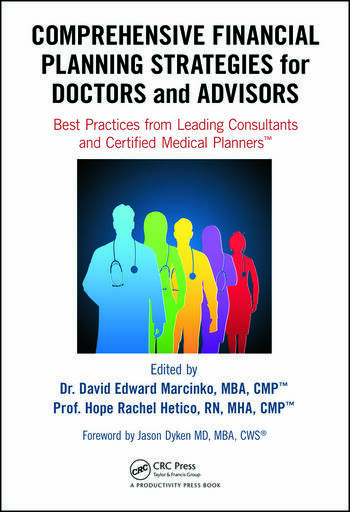
Comprehensive Financial Planning Strategies for Doctors and Advisors: Best Practices from Leading Consultants and Certified Medical Planners(TM)

Comprehensive Financial Planning Strategies for Doctors and Advisors: Best Practices from Leading Consultants

***

site

***

PODCAST: Hospital Executives Confess Fee-For-Service Care Drives Costs

By Eric Bricker MD

1) Fee-for-Services Motivates Hospitals to Increase Costs.
2) Medicare and Commercial Insurance Companies Have Not Changed That Motivation with ‘Value-Based’ Payments.
3) Hospital Prices Have NO Connection to the Underlying Cost of a Test or Procedure.
4) Most Don’t Even Know What the Underlying Test or Procedure Cost Is in the First Place.

***

***

COMMENTS APPRECIATED

Thank You

***

HOSPITALS: https://www.amazon.com/Financial-Management-Strategies-Healthcare-Organizations/dp/1466558733/ref=sr_1_3?ie=UTF8&qid=1380743521&sr=8-3&keywords=david+marcinko

***

PODCAST: Healthcare Selling Strategies

By Eric Bricker MD

***

***

COMMENTS APPRECIATED

Thank You

***

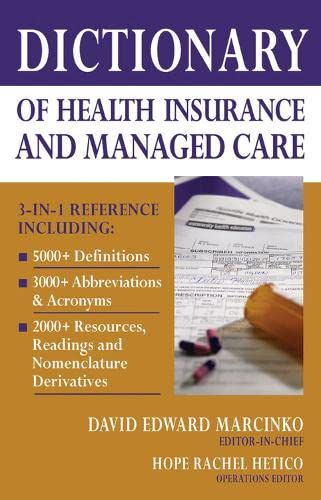
DICTIONARY: https://www.amazon.com/Dictionary-Health-Insurance-Managed-Care/dp/0826149944/ref=sr_1_4?ie=UTF8&s=books&qid=1275315485&sr=1-4

***

Understanding the Mental Healthcare Regulatory Environment

Join Our Mailing List

Appreciating the Rules

[By Carol Miller; RN, MBA]

Carol S. MillerLocal counties and municipalities are the primary providers of state mental healthcare for patients who lack private insurance coverage for such care.

Both children and adults may be eligible to receive assistance.

These counties provide a wide range of psychiatric and counseling services to the residents in their community as well as other types of assistance such as:

  • treatment services related to substance abuse;
  • housing;
  • employment services;
  • information and education service;
  • referrals;
  • consultative services to schools, courts and other agencies;
  • after-care services; and other related activities.

mental

Rules and Regulations

Accordingly, regulations from federal, state, and county governments have an impact on the day-to-day operations, procedures and processes of a county mental health center. Traditionally, there are three main types of regulations.

Federal Regulations — The United States healthcare system is guided by programs such as those established under the Centers for Medicare and Medicaid (in the case of county mental health programs, Medicaid is especially important), Americans with Disabilities Act (ADA), Occupational Safety and Health Administration (OSHA), Health Insurance Portability and Accountability Act (HIPAA), and others.

State Regulations — These include general legislative guidelines, state management of benefits and reimbursement of the Medicaid program, and state allocations of budgets, which impact the centers’ operations.

County Regulations — Each county defines its own County Mental Health Program and decides which services will be provided or excluded.

Assessment

County facilities generally include outpatient clinics, county mental health programs, short-term psychiatric facilities, day-care centers, de-toxification centers, residential rehabilitation centers for substance abuse, long-term care psychiatric facilities, and Veterans Affairs (VA) psychiatric centers. The county centers may be co-located with other county services such as social services, occupational rehabilitation services, information technology services, human resources, maintenance services, and others or may be independently located.

Conclusion

Your thoughts and comments on this ME-P are appreciated. Feel free to review our top-left column, and top-right sidebar materials, links, URLs and related websites, too. Then, subscribe to the ME-P. It is fast, free and secure.

Speaker: If you need a moderator or speaker for an upcoming event, Dr. David E. Marcinko; MBA – Publisher-in-Chief of the Medical Executive-Post – is available for seminar or speaking engagements. Contact: MarcinkoAdvisors@msn.com

OUR OTHER PRINT BOOKS AND RELATED INFORMATION SOURCES:

Product DetailsProduct Details

Ray Dalio SPEAKS

By Staff Reporters

***

***

  • Ray Dalio no longer believes “cash is trash” in light of tighter monetary policy.
  • He’s warmed to the greenback due to higher interest rates and the Fed shrinking its balance sheet.
  • However, Dalio is still only neutral on the dollar, likely because of stubborn inflation.

Ray Dalio, after repeatedly proclaiming “cash is trash” in recent years, has warmed to the US dollar and now views it as a passable investment.

“The facts have changed and I’ve changed my mind about cash as an asset: I no longer think cash is trash,” Dalio just tweeted.

***

COMMENTS APPRECIATED

Thank You

FINANCE: https://www.routledge.com/Comprehensive-Financial-Planning-Strategies-for-Doctors-and-Advisors-Best/Marcinko-Hetico/p/book/9781482240283

***

A Review of Mental Healthcare Provider Types

Join Our Mailing List

Implications for Staffing Modern Mental Health Facilities

[By Carol Miller RN MBA]

Carol S. MillerCommunity Mental Health Centers are also referred to as County Mental Health Centers and treat patients usually with no or limited insurance in a domiciliary setting versus an inpatient state or community facility.

And, both children and adults are eligible to receive such assistance.

These programs provide a wide range of psychiatric and counseling services to the residents in their community as well
as other types of assistance. But, what type of mental healthcare staff, and providers, are involved with these facilities?

Staffing

Staffing levels at community mental health facilities depend on the size and funding of each clinic, and vary in number, qualifications, and mix. Many personnel hold or are working on Master’s degrees and various professional certifications.

Typical staffing would include:

  • Administrative or Mental Health Director ¾ This individual, working under general policy directives, is responsible for planning, organizing, coordinating, and directing delivery of a community’s comprehensive mental health programs and services. This would include the development and implementation of goals, objectives, policies, procedures, budget, standard compliance, and work standards for mental health services. The Director is responsible not only for the services offered under the program, but also for extensive coordination with other county departments, public and private organizations, citizen groups, and the Board of Supervisors.
  • Case management staff ¾ These personnel are responsible for compiling all the services related to the treatment program.
  • Psychiatrists ¾ These individuals may work for a mental health center full or part time, and be Board-eligible or Board-certified in Psychiatry.
  • Psychologists ¾ These individuals will hold Ph.D., Psy.D. or Ed.D. qualifications and be licensed as clinical psychologists in the state.
  • Licensed Independent Social Worker (LISW) ¾ These individuals will have expertise in such services as family counseling, child psychology, geriatric dementia, psychological testing, and so on.
  • Licensed Marriage and Family Therapist (LMFT) — These individuals are specialized in various fields and provide an array of counseling services to patients, dependent on the nature of their problem.
  • Clinical Nurse Specialists ¾ These personnel are certified in psychiatric nursing by a national nursing organization such as the American Nurses Association to practice within the scope of these services and are licensed in the state.
  • Support staff ¾ These staff members would include an administrative assistant to the Director, medical billers, transcriptionist, and possibly a receptionist.
  • Substance Abuse Counselor or Licensed Professional Clinical Mental Health Counselor (LPC or LPCC) — An individual who takes a holistic approach where they exam a person’s external environmental and societal influences while also monitoring inner emotion, physical and behavioral health.

###

ME-P Careers

###

Counselor Qualifications

A licensed mental health counselor has met or exceeded the following professional qualifications:

  • earned a Master’s degree in counseling or a closely related mental health discipline;
  • completed a minimum of two years post-Master’s clinical work under the supervision of a licensed or certified mental health professional; and
  • passed a state-developed or national licensure or certification examination.

Assessment

Conclusion

Your thoughts and comments on this ME-P are appreciated. Feel free to review our top-left column, and top-right sidebar materials, links, URLs and related websites, too. Then, subscribe to the ME-P. It is fast, free and secure.

Speaker: If you need a moderator or speaker for an upcoming event, Dr. David E. Marcinko; MBA – Publisher-in-Chief of the Medical Executive-Post – is available for seminar or speaking engagements. Contact: MarcinkoAdvisors@msn.com

OUR OTHER PRINT BOOKS AND RELATED INFORMATION SOURCES:

Product Details

UPDATE: Domestic Markets Soar as United Kingdom Scraps Taxation

By Staff Reporters

***

***

The Dow surged 825 points, or 2.8%. The Dow has soared more than 1,500 points in the past two days. It is now back above the key 30,000 milestone and is about 18% off its most recent record high, meaning that is no longer in a bear market.

The S&P 500 and Nasdaq gained 3.1% and 3.3%, respectively. But both of those indexes remain in bear territory, at more than 20% off their all-time highs.

***

The UK is scrapping its plan to remove the 45% top rate of income tax, calling it a huge distraction from other priorities. The plan, which the government defended just recently, caused a mini-financial meltdown before the Bank of England stepped in with emergency measures.

***

COMMENTS APPRECIATED

Thank You

***

FINANCE: https://www.routledge.com/Comprehensive-Financial-Planning-Strategies-for-Doctors-and-Advisors-Best/Marcinko-Hetico/p/book/9781482240283

***

Three Fundamental Criteria All Physicians Should Consider before Investing

Join Our Mailing List

Re-Appreciating the Basic Three Rs …

By Guy P. Jones CFP® www.guypjones.com

Guy P. Jones

Physician-investors are often confronted with a myriad of decisions concerning any potential investment not the least of which is:

“When or how should I change my investment strategy?”

Given the choice of investment options, there are three criteria by which any investment you make should be evaluated: Risk, Reward and Liquidity.

  • Risk, in a financial context, is defined as: The probability that the actual return on an investment will be lower than the expected return.  For our purposes and for most people, it equates to whether there is the potential to lose money on an investment and how much of a risk you are willing to take in order to achieve an acceptable return.

One measurement of the risk or volatility of market-based investments can be quantified by the beta of an investment.  Beta is a measurement of volatility of an investment and is measured against how volatile an investment is relative to the market.  The beta of the market is always 1.00, so any investment that has a beta of less than 1.00 is less volatile and conversely, one with a beta greater than 1.00 is more volatile.   The desired result is low beta (low volatility) investments that have higher returns vs. the market.  Each of our institutional-class money managers utilize investments that collectively have a beta that is lower than the market while generating results that avoided the steep losses of the stock market in 2000-02 and 2008.*

  • Reward, in a financial context, is the positive return on your investment.  The rule of thumb is that the reward – or return on investment – is directly proportional to the amount of risk that one is willing to assume- i.e. – the higher the risk, the higherreturn on investment.

In addition, traditional thinking says in order to reap stock market-like returns, you have to invest in the stock market.  In our managed portfolios, that is not necessarily the case.  Two of our investment managers, who do not invest in the stock market, have generated average returns over the past 7 and 10 years that are equal to or better than returns of the stock market over similar timeframes with 76-84% less risk as measured by the beta of each manager*

  • Liquidity, in a financial context, means how quickly you can get your hands on your cash or is the ability to get your money whenever you need it.  One of the first things I advise anyone to have is a liquid emergency fund of readily available cash.  By having available cash, you don’t have to convert another asset to cash and create a transaction that could result in potentially adverse tax consequences or worse, trigger losses.  I often see clients sacrifice higher returns that they could be earning on idle cash because of their perceived need for absolute liquidity of their money.  But what if there was a way to have both?  Wouldn’t you want higher returns in low risk, low-volatility assets as well as the ability to get at those assets quickly?

With our multi-manager investment platform, investors have the ability to have a portion of their assets held in a safe, liquid money market account while also having their remaining assets diversified in a variety of low risk, low-volatility investments.

financial risk

More:

Assessment

*Past performance is not a guarantee or indicator of future performance

Conclusion

Your thoughts and comments on this ME-P are appreciated. Feel free to review our top-left column, and top-right sidebar materials, links, URLs and related websites, too. Then, subscribe to the ME-P. It is fast, free and secure.

Speaker: If you need a moderator or speaker for an upcoming event, Dr. David E. Marcinko; MBA – Publisher-in-Chief of the Medical Executive-Post – is available for seminar or speaking engagements. Contact: MarcinkoAdvisors@msn.com

OUR OTHER PRINT BOOKS AND RELATED INFORMATION SOURCES:

Product DetailsProduct DetailsProduct Details

Product Details  Product Details

COVID-19’s Impact on Mental Health and Workplace Well-being

Pandemic Mental Health

By NIHCM

***

***

READ: https://nihcm.org/publications/covid-19s-impact-on-mental-health-and-workplace-well-being?utm_source=NIHCM+Foundation&utm_campaign=a03fb2164b-EMAIL_CAMPAIGN_2020_12_03_03_17&utm_medium=email&utm_term=0_6f88de9846-a03fb2164b-167744768

***

INVITE: https://medicalexecutivepost.com/dr-david-marcinkos-bookings/

COMMENTS APPRECIATED

Thank You

***

PODCAST: Doctors Split from Hospital

By Eric Bricker MD

***

The Story of Tryon Medical Partners shows us that if doctors don’t like the way a hospital is running their practice, they can leave and be successful.

Specifically, the 88 mostly primary care doctors of Tryon Medical Partners sued Atrium Health, the hospital system that owned them, in order to leave and become independent in 2018.

Some of their grievances against the hospital system were:
1. The hospital replaced the nurses in their clinics with medical assistants.
2. The hospital increased the number of patients they needed to see per day and decreased their visit times.

Atrium agreed to let the doctors separate in exchange for dropping the lawsuit.

Just one year later Tryon Medical Partners began to offer Direct Primary Care to local employers and have signed up 30 companies.

The program has been a huge success because an independent primary care practice can work to provide better care at lower costs. Conversely, physicians associated with a hospital system are incentivized to increase healthcare costs.

***

***

COMMENTS APPRECIATED

Thank You

***

HOSPITALS: https://www.amazon.com/Financial-Management-Strategies-Healthcare-Organizations/dp/1466558733/ref=sr_1_3?ie=UTF8&qid=1380743521&sr=8-3&keywords=david+marcinko

HEALTH INSURANCE: https://www.amazon.com/Dictionary-Health-Insurance-Managed-Care/dp/0826149944/ref=sr_1_4?ie=UTF8&s=books&qid=1275315485&sr=1-4

****

Medicare Customers Say Mental Health Benefits Are Very Important

By Staff Reporters

AN eHEALTH SURVEY

***

***
A eHealth survey of 3,800 Medicare customers aged 65 and older asked “When choosing health coverage, how important are mental health benefits?” The survey found: 
•  38% say mental health benefits are “very important” to them when choosing health insurance.
 •  34% say it’s “somewhat important” to them.
 •  22% say mental health benefits are “not so important” to them.
 •  Only 5% say it’s “not at all important.”
Source: eHealth, “Seniors Speak Out On Mental Health,” March 2022

***

COMMENTS APPRECIATED

Thank You

Subscribe to the Medical Executive-Post

***

MANAGED CARE: https://www.amazon.com/Dictionary-Health-Insurance-Managed-Care/dp/0826149944/ref=sr_1_4?ie=UTF8&s=books&qid=1275315485&sr=1-4

***

Text or Call 988: SAMHSA – Substance Abuse and Mental Health Services Administration

By Staff Reporters

***

988, a New National Suicide Hotline, Launched on July 16th, 2022

**

***

A new national suicide hotline, 988, becomes operational nationwide on July 16th. People experiencing a mental health emergency, such as suicidal thoughts, a substance-use crisis, or any other emotionally distressing event, will be able to call during times of crisis, but operators will also be available via text and online chat (at https://suicidepreventionlifeline.org/chat), according to the Substance Abuse and Mental Health Services Administration (SAMHSA).

The 988 hotline will essentially replace the National Suicide Prevention Lifeline (1-800-273-TALK); however, the previous hotline will not be discontinued when 988 is rolled out, and callers will be directed to the same services offered via 988. Mental health experts say the new hotline will provide necessary updates to the services currently provided by the 1-800 number, chief among them a focus on sending trained experts to respond to mental health emergencies rather than law enforcement who are unfamiliar with protocols when approaching suicidal individuals.

***

READ: https://www.samhsa.gov/find-help/988

MORE: https://www.kevinmd.com/2022/07/new-988-hotline-has-potential-to-transform-mental-health-care-but-challenges-loom.html

***

COMMENTS APPRECIATED

Thank You

***

PODCAST: Inflation Reduction Act [IRA] and Healthcare

THE AGENDA 2022 AND BEYOND!

By Eric Bricker MD

***

***

COMMENTS APPRECIATED

Thank You

***

RELATED: https://www.amazon.com/Dictionary-Health-Insurance-Managed-Care/dp/0826149944/ref=sr_1_4?ie=UTF8&s=books&qid=1275315485&sr=1-4

***

FIGHTING Inflation!

By Staff Reporters

Fed Official Says Inflation Fight Will Take Time, Despite Signs of Progress

Bringing inflation down from 40-year highs is likely to take time and will require a slowdown in economic growth and reduced demand for workers by employers, a Federal Reserve official said yesterday.

Those efforts are showing tentative signs of progress, said Fed governor Philip Jefferson, in his first public remarks since taking office in May. But Mr. Jefferson also said he remains concerned that higher prices could change consumer expectations around inflation in a way that makes further price increases self-fulfilling.

***

***

READ: Fed Official Says Inflation Fight Will Take Time, Despite Signs of Progress (msn.com)

COMMENTS APPRECIATED

Thank You

***

On the Prevalence of Mental Health Issues

 The 7 most common issues

By http://www.MCOL.com

*** 

 ***

Conclusion

Your thoughts and comments on this ME-P are appreciated. Feel free to review our top-left column, and top-right sidebar materials, links, URLs and related websites, too. Then, subscribe to the ME-P. It is fast, free and secure.

Speaker: If you need a moderator or speaker for an upcoming event, Dr. David E. Marcinko; MBA – Publisher-in-Chief of the Medical Executive-Post – is available for seminar or speaking engagements. Contact: MarcinkoAdvisors@msn.com

OUR OTHER PRINT BOOKS AND RELATED INFORMATION SOURCES:

Product DetailsProduct Details

***

It’s OK = Not to Be OK: Physician Burnout and Mental Health

NICHM

Percent of Population Under 65 With Mental Health Disorders

By Staff Reporters

***

***

EBRI: % of Population Under 65 With Mental Health Disorders

 •  Anxiety disorders: 8.1%
 •  Major depressive disorders: 5.3%
 •  Attention deficit hyperactivity disorder: 2.8%
 •  Other behavioral/mental health disorders: 2.2%
 •  Bipolar and manic disorders: 0.7%
 •  Post-traumatic stress disorder: 0.5%
 •  Phobic anxiety disorders: 0.4%
 •  Autistic disorder: 0.3%
 •  Obsessive-compulsive disorder: 0.2%
 •  Eating disorders: 0.2%
 •  Schizophrenic disorders: 0.1%
 •  Dissociative disorders: 0.04%
 •  Delusional disorders: 0.02%

Source: EBRI, “How Do High-Deductible Health Plans Affect Use of Health Care Services and Spending Among Enrollees With Mental Health Disorders?” March 10, 2022

***

COMMENTS APPRECIATED

Thank You

***

***

FINANCE: https://www.amazon.com/Comprehensive-Financial-Planning-Strategies-Advisors/dp/1482240289/ref=sr_1_1?ie=UTF8&qid=1418580820&sr=8-1&keywords=david+marcinko

***

DICTIONARY: https://www.amazon.com/Dictionary-Health-Insurance-Managed-Care/dp/0826149944/ref=sr_1_4?ie=UTF8&s=books&qid=1275315485&sr=1-4

***

On Cultural Sensitivity in Education and Medicine

Join Our Mailing List

A Modern Integral Component of Healthcare Training

[By Render S. Davis MHA CHE]

[By Dr. David Edward Marcinko MBA]

***

While America has often been called a “nation of immigrants,” it has never been more true than today. Consequently, the challenge for physicians and other health care providers, in both large cities and small communities, is meeting the health care needs of increasingly diverse and multi-cultural populations who speak different languages and have social norms, traditions, and values that may substantially differ from their own. Problems arise when clinicians expect, even demand, that patients and their families discard their cultural foundations and adhere to the health care provider’s view of the care and decision-making process.

Instead, the health care team should be more aware of and sensitive to the values and beliefs of patients who come from other cultures; working within to assure that the patient’s individual rights are supported and wishes honored to the fullest extent possible.

In her award-winning book, The Spirit Catches You and You Fall Down, Ann Fadiman chronicled this tragic clash of two cultures in medical care for a child of the traditional Hmong people of Laos, transplanted to California after the Vietnam War.

In the book, Fadiman recounts a conversation with Professor Arthur Kleinman of Harvard University, a highly regarded expert in multicultural relations and conflict, who noted that “If you cannot see that your own culture has its own set of interests, emotions, and biases, how can you expect to deal successfully with someone else’s culture?”

***

anatomy-254129_640

***

Former U.S. Surgeon General David Satcher, M.D., Ph.D., now Director of the Satcher Health Leadership Institute at Morehouse College of Medicine in Atlanta, Georgia, helped develop a special curriculum designed to foster greater cultural competence among physicians and health care providers.

Called the “CRASH Course,” the program emphasizes:

  1. Cultural Awareness. Acknowledging the diversity and legitimacy of the many cultures that make up the fabric of American Society;
  2. Respect. Valuing other cultural norms, even if they differ or conflict with your own;
  3. Assess and affirm. Understanding the points of both congruence and difference among cultural approaches to decision-making; learning how to achieve the best outcomes within the cultural framework of the patient and family unit;
  4. Sensitivity and self awareness. Being secure in your own values; while willing to be flexible in working through cultural differences with others;
  5. Humility. Recognizing that every culture has legitimacy and that no one is an expert in what is best for others; being willing to subordinate your values for those of another to achieve the goals of treatment.

There is little doubt that multi-cultural sensitivity will continue to grow as an increasingly integral component of medical education and risk management in health care practice.

Dr. Marcinko Teaching Philosophy

***

anatomy-254120_640

**

Channel Surfing the ME-P

Have you visited our other topic channels? Established to facilitate idea exchange and link our community together, the value of these topics is dependent upon your input. Please take a minute to visit. And, to prevent that annoying spam, we ask that you register. It is fast, free and secure.

More:

Conclusion

Your thoughts and comments on this ME-P are appreciated. Feel free to review our top-left column, and top-right sidebar materials, links, URLs and related websites, too. Then, subscribe to the ME-P. It is fast, free and secure.

About the Author

Render Davis was a Certified Healthcare Executive, now retired from Crawford Long Hospital at Emory University, in Atlanta, GA He served as Assistant Administrator for General Services, Policy Development, and Regulatory Affairs from 1977-95.  He is a founding board member of the Health Care Ethics Consortium of Georgia and served on the consortium’s Executive Committee, Advisory Board, Futility Task Force, Strategic Planning Committee, and chaired the Annual Conference Planning Committee, for many years.  

Speaker: If you need a moderator or speaker for an upcoming event, Dr. David E. Marcinko; MBA – Publisher-in-Chief of the Medical Executive-Post – is available for seminar or speaking engagements. Contact: MarcinkoAdvisors@msn.com

OUR OTHER PRINT BOOKS AND RELATED INFORMATION SOURCES:

Product DetailsProduct Details

Invite Dr. Marcinko

Product DetailsProduct Details

***

Dentistry’s SECRET!

***

By Darrell Pruitt DDS

***

***

“Small- and medium-sized businesses with two to 200 employees suffered the most attacks during the period, accounting for 46%, or 2,300 ransomware attacks total, according to the report.” That’s us, Doc. Patterson and Schein won’t admit it, but if you don’t put patients’ information on a computer, you and your patients are completely safe from ransomware.

“US organizations hit by almost half of all ransomware since 2020 – American exceptionalism extends to ransomware as organizations based in the U.S. suffered the greatest number of attacks, ahead of Canada and the U.K.

By Matt Kapko: Cybersecurity Dive, Sept. 28, 2022.

Paper’s security“Report: 90% of companies affected by ransomware in 2022 – An annual SpyCloud survey found that 90% of organizations were impacted by ransomware over the past twelve months, an alarming increase from last year’s 72.5%.”

– Yet still none involved paper dental records –

***

COMMENTS APPRECIATED

Thank You

***

DHITS: https://www.amazon.com/Dictionary-Health-Information-Technology-Security/dp/0826149952/ref=sr_1_5?ie=UTF8&s=books&qid=1254413315&sr=1-5

***

PODCAST: The Real Secret About Why Corporate Mergers Fail

AN AUDIO PRESENTATION


By Vitaliy Katsenelson CFA

***

Corporate acquisitions often fail for one simple reason: the buyer pays too much. An old Wall Street adage comes to mind: Price is what you pay, value is what you get.

It all starts with a control premium

When we purchase shares of a stock, we pay a price that is within pennies of the last trade. When a company is acquired, the purchase price is negotiated during long dinners at fine restaurants and comes with a control premium that is higher than the latest stock quotation.

How much above?

***

Risk Management, Liability Insurance, and Asset Protection Strategies for Doctors and Advisors: Best Practices from Leading Consultants and Certified Medical Planners™8Comprehensive Financial Planning Strategies for Doctors and Advisors: Best Practices from Leading Consultants and Certified Medical Planners™


What is EBITDA?

A TERM ALL PHYSICIAN INVESTORS MUST KNOW

CMP logo

SPONSOR: http://www.CertifiedMedicalPlanner.org

What Is Earnings Before Interest, Taxes, Depreciation, and Amortization (EBITDA)?

***

EBITDA, or earnings before interest, taxes, depreciation, and amortization, is a measure of a company’s overall financial performance and is used as an alternative to net income in some circumstances. EBITDA, however, can be misleading because it strips out the cost of capital investments like property, plant, and equipment.

This metric also excludes expenses associated with debt by adding back interest expense and taxes to earnings. Nonetheless, it is a more precise measure of corporate performance since it is able to show earnings before the influence of accounting and financial deductions.

Why EBITDA is still a Great Financial Management Metric

Simply put, EBITDA is a measure of profitability. While there is no legal requirement for companies to disclose their EBITDA, according to the U.S. generally accepted accounting principles (GAAP), it can be worked out and reported using the information found in a company’s financial statements.

The earnings, tax, and interest figures are found on the income statement, while the depreciation and amortization figures are normally found in the notes to operating profit or on the cash flow statement. The usual shortcut to calculate EBITDA is to start with operating profit, also called earnings before interest and tax (EBIT) then add back depreciation and amortization.

CITE: https://www.r2library.com/Resource/Title/0826102549

***

Comprehensive Financial Planning Strategies for Doctors and Advisors: Best Practices from Leading Consultants and Certified Medical Planners™

MORE: https://www.routledge.com/Comprehensive-Financial-Planning-Strategies-for-Doctors-and-Advisors-Best/Marcinko-Hetico/p/book/9781482240283

YOUR COMMENTS ARE APPRECIATED

Thank You

***

MUSK versus TWITTER

By Staff Reporters

***

***

Quote: “Maybe Oprah would be interested in joining the Twitter board if my bid succeeds.”

Floating Oprah as a Twitter board member to CBS anchor Gayle King is just one of many juicy Elon Musk texts that were released yesterday ahead of the Musk v. Twitter trial.

Also included in the treasure trove: Oracle co-founder Larry Ellison pledging $1 billion to Musk’s take-private bid because “it would be lots of fun” and former Twitter CEO Jack Dorsey endorsing Musk’s attempted takeover because, “It’s too critical for humanity.”

***

COMMENTS APPRECIATED

Thank You

***

DHITS: https://www.amazon.com/Dictionary-Health-Information-Technology-Security/dp/0826149952/ref=sr_1_5?ie=UTF8&s=books&qid=1254413315&sr=1-5

****

CREDIT Suisse?

By Staff Reporters

***

***

Leaders at the Swiss bank tried to calm down investors and clients after concerns mounted about its weak financial position, the FT reported.

Credit Suisse’s stock price has fallen to a record low and spreads on its credit default swaps have spiked, suggesting that investors are worried about it potentially defaulting.

CEO Ulrich Körner fired off a memo assuring employees that the bank has a “strong capital base and liquidity position,” but it remains in a “critical moment” ahead of a massive overhaul.

***

COMMENTS APPRECIATED

Thank You

***

INVESTING: https://www.routledge.com/Comprehensive-Financial-Planning-Strategies-for-Doctors-and-Advisors-Best/Marcinko-Hetico/p/book/9781482240283

***

FINANCIAL MANAGEMENT STRATEGIES: For Hospitals and Healthcare Organizations

Managerial Accounting

TOOLS, TECHNIQUES, CHECKLISTS AND CASE STUDIES

***

TEXT: https://www.amazon.com/Financial-Management-Strategies-Healthcare-Organizations/dp/1466558733/ref=sr_1_3?ie=UTF8&qid=1380743521&sr=8-3&keywords=david+marcinko

Reviews

Navigating a course where sound organizational management is intertwined with financial acumen requires a strategy designed by subject-matter experts. Fortunately, Financial Management Strategies for Hospital and Healthcare Organizations: Tools, Techniques, Checklists and Case Studies provides that blueprint.
David B. Nash, MD, MBA, Jefferson Medical College, Thomas Jefferson University

It is fitting that Dr. David Edward Marcinko, MBA, CMP™ and his fellow experts have laid out a plan of action in Financial Management Strategies for Hospital and Healthcare Organizations that physicians, nurse-executives, administrators, institutional CEOs, CFOs, MBAs, lawyers, and healthcare accountants can follow to help move healthcare financial fitness forward in these uncharted waters.
Neil H. Baum, MD, Tulane Medical School

ORDER: https://www.amazon.com/Financial-Management-Strategies-Healthcare-Organizations/dp/1466558733/ref=sr_1_3?ie=UTF8&qid=1380743521&sr=8-3&keywords=david+marcinko

***

Dictionary of Health Information Technology and Security

ADVERTISEMENT

Whither the “Dictionary of Health Information Technology and Security?”

DHITS

A simple query that demands a cogent answer!

There is a myth that all stakeholders in the healthcare space understand the meaning of basic information technology jargon. In truth, the vernacular of contemporary medical information systems is unique, and often misused or misunderstood. It is sometimes altogether confounding.

Terms such as, “RSS”, “eHRs”, “DRAM”, “ROM”, “USB”, “PDA”, “NPI”, “CCHIT”, and “DNS” are common acronyms, but is their meaning AND functionality truly understood?

We appreciate the support of our sponsors. So, click-on on the links below and review all dictionary products.

Link: http://healthdictionaryseries.com/TechnologySecurity.aspx

HDS


Link: http://www.findbookprices.com/author/Hope_Hetico

Subscribe Now: Did you like this Medical Executive-Post, or find it helpful, interesting and informative? Want to get the latest ME-Ps delivered to your email box each morning? Just subscribe using the link below. You can unsubscribe at any time. Security is assured.

Link: http://feeds.feedburner.com/HealthcareFinancialsthePostForcxos

Sponsors Welcomed

And, credible sponsors and like-minded advertisers are always welcomed.

Link: https://healthcarefinancials.wordpress.com/2007/11/11/advertise

DOCTOR SIEGEL Speaks

By Staff Reporters

***

Wharton professor Jeremy Siegel says predictions of a lost decade in the stock market are unfounded and 6% annual returns are likely after inflation.

READ: https://www.msn.com/en-us/money/markets/wharton-professor-jeremy-siegel-says-predictions-of-a-lost-decade-in-the-stock-market-are-unfounded-and-6-annual-returns-are-likely-after-inflation/ar-AA12rjKm?cvid=a220a2a6cd9f422686166062b87f7ebf

***
COMMENTS APPRECIATED

Thank You

***

INVESTING: https://www.routledge.com/Comprehensive-Financial-Planning-Strategies-for-Doctors-and-Advisors-Best/Marcinko-Hetico/p/book/9781482240283

***

HOSPITALS: Management, Operations and Strategies

Tools, Templates and Case Studies

***

How Physician-Executives Get Recruited

Join Our Mailing List

Behind the Scenes of Executive Search Firms

[By Pierce Gray]

[By Ann Miller RN MHA]

Fill the Funnel

The best-kept secret about physician recruiting is to keep the funnel filled with a pool of candidates.  Organizations can’t afford to wait for doctors to beat a path to their door; they have to go after the physicians they want.  That means generating a sizeable list of prospects on the front end to narrow it down to the 100 or so doctors who will be called for an initial conversation.

From there, the team may do some 50 telephone screening interviews to generate five site visits in order to select the one perfectly matched prospect who will sign on the dotted line.

***Physician Executives

***

The Prospect List

Depending upon the opportunity, there are a number of ways to generate a list of prospects:

  • Direct mail using a purchased list of physicians culled from criteria such as medical specialty and current geographical location. The American Board of Medical Specialties, the American Medical Association [AMA], and licensure boards can supply these lists. The organization sends direct mail announcing the opportunity and then has a team member follow-up with outbound calling. If the physician is not interested, the caller should ask if s/he knows someone who is interested.
  • Personal calls following recruitment fairs and specialty meetings.
  • Advertising in medical and specialty journals and on the web, Twitter, etc.
  • Resident campaign using posted flyers and announcements.
  • Physician networking based on group member recommendations.
  • Medical Staff Office contacts at the local hospital.
  • Networking through specialty or group management organizations. Some organizations offer free on-line job postings for members.
  • Affiliations with residency programs.From the initial pool of candidates, the internal recruiter must call prospects and conduct preliminary screenings to verify licensure status and board certification, gather professional and personal details about the candidate, and answer his or her questions about the opportunity. Whenever possible, research should be done to secure the prospect’s home or cell telephone number. Calling prospects in the evening at home gives them more time and privacy to talk freely.
  • This screening step generates a smaller list of credible prospects that meet the search criteria that was generated at the beginning of the recruitment process.

Channel Surfing the ME-P

Have you visited our other topic channels? Established to facilitate idea exchange and link our community together, the value of these topics is dependent upon your input. Please take a minute to visit. And, to prevent that annoying spam, we ask that you register. It is fast, free and secure.

Conclusion

Your thoughts and comments on this ME-P are appreciated. Feel free to review our top-left column, and top-right sidebar materials, links, URLs and related websites, too. Then, subscribe to the ME-P. It is fast, free and secure.

Speaker: If you need a moderator or speaker for an upcoming event, Dr. David E. Marcinko; MBA – Publisher-in-Chief of the Medical Executive-Post – is available for seminar or speaking engagements. Contact: MarcinkoAdvisors@msn.com

OUR OTHER PRINT BOOKS AND RELATED INFORMATION SOURCES:

Product DetailsProduct Details

What is a CONTENT DELIVERY NETWORK, Doctor?

CDNs and What They Mean to Physicians

BY J.M.

[Anonymous IT Expert]

DOCTOR – Do you like the internet? Do you use EMRs/EHRs? Do you like fast internet? Of course you do.

But, without a strong infrastructure of content delivery networks (CDNs), website loading times would be too slow to stream tele-health/tele-medicine visits or tela-radiology services; not to mention Netflix, or argue with Reddit strangers or your patients; etc.

CDNs are geographically distributed networks of servers that handle processing and speed up internet delivery. In practice, CDNs make website content like HTML pages, JavaScript files, style-sheets, images, and videos load faster. They also reduce bandwidth costs, handle more traffic, and provide a little security protection. 

  • CDNs don’t actually host web content, but instead keep cached versions of it at the ready in edge servers. 

***

How CDN Works? How to Find the Cheapest CDN Provider?

***

Fastly is one of a number of significant CDN providers that help form the infrastructure of the internet. And while the outage shows the breadth of its reach, it’s far from the biggest player—Akami, Cloudflare, and Amazon CloudFront take up 75% of revenue in CDN space, per Intricately.

But Fastly, one of the world’s largest cloud computing companies itself, just had an outage that shut down its CDN service, affecting major websites including the New York Times, HBO Max, and the British government’s homepage. 

ASSESSMENT: Were you or your clinic or hospital affected? Your thoughts and comments are appreciated.

ORDER DICTIONARY: https://medicalexecutivepost.com/wp-content/uploads/2007/10/foreword-mata.pdf

INVITE DR. MARCINKO: https://medicalexecutivepost.com/dr-david-marcinkos-

THANK YOU

***

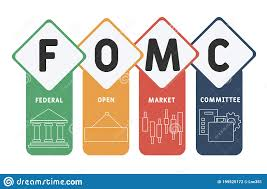
FOMC: May Keep Tightening Until a Recession!

By Staff Reporters

***

The FOMC just reiterated calls for aggressive policy to combat stubbornly high inflation—fueling expectations for bigger rate hikes amid a stock-market sell-off that’s seen major indexes hit new lows for the year—and some analysts project the losses could only deepen.

Expectations for rate hikes climbed amid the comments, with markets pricing in an end-of-year rate of 4.5%—above the 4.4% rate Fed officials projected earlier this month, which itself was one percentage point higher than the forecast in June.

***

COMMENTS APPRECIATED

Thank You

***

FINANCE: https://www.routledge.com/Comprehensive-Financial-Planning-Strategies-for-Doctors-and-Advisors-Best/Marcinko-Hetico/p/book/9781482240283

***

Careers and Net Worth

Join Our Mailing List 

Your Career as an Asset Class

By Rick Kahler MS CFP® http://www.KahlerFinancial.com

Rick Kahler CFPIs your [medical] career part of your net worth? Should you include it as an asset class in a diversified investment portfolio? While we consider careers as essential aspects of financial and professional success, few of us think of or manage them as financial assets.

Emerging New Philosophy

Michael Haubrich, CFP®, of Financial Service Group, Inc., in Racine, Wisconsin, encourages clients to think of careers this way. Some of the following ideas come from his new book, Career Asset Management: Getting Ahead, Staying Ahead and Using Your Head to Maximize Your Career Value.

Career as Assset

If you consider your career an asset, then managing it means paying attention to the return you get from that asset. Here are a few things to consider in order in order to receive the most value from a career.

  1. Keep in mind that the most important return on investment from a career is not necessarily financial

The value of a career is much more than just the money you earn; it includes a host of less tangible but vital rewards like the satisfaction you get from your work and the fulfillment that comes from following your dreams and using the talents that make up your unique genius.

  1. Consciously set out to build a career rather than get a job

As with investing, this provides the most benefit when you start early. Settling long-term for “just a job” usually won’t provide as much value, in terms of both income and job satisfaction, as you will get from a meaningful career.

  1. If your career asset isn’t providing a good return, make changes

Just as you might sell an underperforming mutual fund, consider making changes to your career if you aren’t getting the earnings, fulfillment, or other value you want from it. You might look for a similar job with a different company, add skills and knowledge to help you move up, consider changing careers, or explore starting your own business.

One way to fund such changes is to budget for a reserve over and above the six months of living expenses that many financial advisors recommend. Mike calls this reserve an Asset Working Capital Fund. He suggests the amount to have in this fund depends on the “velocity” and “volatility” of your career asset—including how fast you’re likely to advance, the stability of your job and career field, and life changes like starting a family that will affect your income.

  1. Think of your career as a rental property

Mike recommends viewing your career as an asset that you own and rent to others for given periods of time. To get the highest “rent”—income and satisfaction—you need to keep that asset in top shape by keeping your skills and knowledge up to date, maintaining your passion for your work, and building a strong reputation and network of relationships within your profession.

  1. Make the most of your near-retirement years

Wanting to retire early because you’re dissatisfied with your work can be a sign that your career asset isn’t working for you. Yet staying employed for even a few more years can make a big difference in your retirement income. Mike suggests considering options like part-time or contract work, flexible scheduling, consulting, or freelancing to add value to your late-career years. This can help you move into retirement gradually, as well as provide more financial security.

Bear + A Falling Stock Chart

Assessment

Chances are you won’t choose to list your career as an asset class in your investment portfolio. To make the most of both your aspirations and your earning power, however, keep in mind that a satisfying career is one of the most important assets you can own.

More:

Conclusion

Your thoughts and comments on this ME-P are appreciated. Feel free to review our top-left column, and top-right sidebar materials, links, URLs and related websites, too. Then, subscribe to the ME-P. It is fast, free and secure.

Speaker: If you need a moderator or speaker for an upcoming event, Dr. David E. Marcinko; MBA – Publisher-in-Chief of the Medical Executive-Post – is available for seminar or speaking engagements. Contact: MarcinkoAdvisors@msn.com

OUR OTHER PRINT BOOKS AND RELATED INFORMATION SOURCES:

Financial Planning MDs 2015BOOK:

Comprehensive Financial Planning Strategies for Doctors and Advisors: Best Practices from Leading Consultants and Certified Medical Planners™

On “Triple” and “Quadruple” Witching Day?

By Staff Reporters

***

The final hour of trading on a Friday when stock index futures, stock index options, and stock options all expire. This happens on the third Friday in March, June, September, and December. See Quadruple Witching Hour.

CITE: https://www.r2library.com/Resource/Title/0826102549

According to TheStreet, Inc

Triple witching sounds like something from a horror movie, but it’s actually a financial term. Options and derivatives traders know this phenomenon well because it’s the day when three different types of contracts expire. It happens only once a quarter and can cause wild swings in volatility, as large institutional traders roll over futures contracts to free up cash. Doing so creates a ton of increased volume—sometimes 50% higher than average, especially in the last trading hour of the day—but individual investors needn’t feel spooked. In fact, some might even view this volatility as a profit-making opportunity.

Which 3 Types of Derivative Contracts Expire on Triple Witching Day?

  1. Stock Options: These are contracts taken out on the direction of a stock price at a future date. Unlike stocks, they’re not an investment in a company; rather, they’re the right to buy or sell shares of a company at a later time frame. Calls let you buy stock shares at a set price, known as the strike price, on or before the expiration date. Puts give you the right to sell shares.
  2. Index Options: These are futures contracts on a stock index, such as the S&P 500. These options are settled in cash.
  3. Index Futures: These are futures contracts on equity indexes. These contracts are also settled in cash.

A futures contract is also referred to as an “anticipated hedge” because it’s used to lock in prices on future buy or sell transactions. These hedges are a way to protect a portfolio from market setbacks without selling long-term holdings.

It’s worth noting that a few times a year, single stock futures also expire on witching day, adding a fourth asset to the trading cauldron, and that’s why some investors refer to this date as “quadruple witching,” although the terms are interchangeable.

When Is Triple Witching? Triple Witching Calendar 2022

In modern trading, triple witching happens on the third Friday of March, June, September, and December (the last month of each quarter).

Upcoming Triple Witching Dates

  • Friday, March 18, 2022
  • Friday, June 17, 2022
  • Friday, September 16, 2022
  • Friday, December 16, 2022

What Is the Witching Hour?

In the U.S. stock market, the last hour of the trading day, before the closing bell, sees the most trading activity, so the witching hour is from 3–4 pm EST. In folklore, the “witching hour” actually happens in the dead of night, from 3–4 am. It was known as a time when spirits reached the height of their powers. During the Middle Ages, the Catholic Church even banned people from venturing outside during this time, so as not to get caught in the chaos.

Today, such ideas aren’t taken any more seriously than mere superstition, but triple witching can cause chaos among investors, if they are not aware of what is happening.

***

***

What Happens During Triple Witching?

As you might imagine, a lot of trading activity happens in the market when stock options, index options, and index futures contracts all expire. We’re talking a lot of money here: during Triple Witching in September 2021, for example, around $3.4 trillion of equity options expired.

So, what exactly is going on? Should they keep their hedges on? Should they speculate? Should they roll, or close out, their contracts, and if so, by how much? This is what generates the increased trading activity, and the large trades, especially from offsetting trades, can cause temporary price distortions. 

At the same instant that the derivatives contracts expire, the anticipatory hedges that traders have placed become unnecessary, and so traders also seek to close these hedges, and the offsetting trades result in increased volume. These large volume increases can in turn cause price swing (i.e., volatility) in the underlying assets. 

How Does Triple Witching Affect the Stock Market?

Triple witching itself doesn’t move the stock market; it just creates increased volume. In the same way, the expiration of the options and futures contracts don’t necessarily result in volatility—that’s caused by the actions that traders take based on the temporary price fluctuations of their underlying assets which can be moved due to the increased volume.

When this happens, arbitrageurs try to take advantage, often making trades that are completed in mere seconds. An arbitrageur is a trader who looks for price inefficiencies in a security and then seeks to make a profit by buying and selling it simultaneously. This practice involves much risk.

Is Triple Witching Bullish or Bearish?

Historically speaking, triple witching is not always an “up” day, and it’s not always a “down” day for the markets. It does not signify a trend. Typically, it neither moves the market significantly higher nor lower; it simply adds a temporary increase in volume and liquidity.

However, it’s important to note that market volumes also tend to be higher on index re-balancing day as well as during and after broader macroeconomic news events, and so, when taken in tandem with triple witching, these events can cause big moves in the market.

Examples of Triple Witching Volatility in Light of News Events

On June 18, 2021, a record number—$818 billion—of stock options expired, which led to nearly $3 trillion in “open interest,” or open contracts. On this day, the Federal Reserve also announced that it might raise interest rates in 2023 due to inflationary pressures. These news events resulted in increased volatility, and the S&P 500 lost 1.3% while the Dow Jones Industrial Average dropped 1.6%.

On September 17th, 2021, one week ahead of the Federal Reserve’s meeting, market volatility was growing based on mounting concerns about the COVID-19 Delta variant impacting the economy as well as the Federal Reserve’s announcement that it would begin to unwind its monetary stimulus. These news events, taken along with the S&P 500’s quarterly index rebalancing, which also happened that day, caused the S&P 500 to lose 1%. 

Is There Such a Thing as “Quadruple” Witching?

Single Stock Futures are the fourth type of derivative contract which can expire on triple witching day. This can cause the phenomenon to be called “quadruple witching,” although one term can replace the other. Single stock futures are futures contracts placed on individual stocks, with one contract controlling 100 shares being typical. They are a hedging tool that was previously banned from trading in the United States. The Commodity Futures Modernization Act lifted the ban in 2000, and single stock futures were traded on the One Chicago Exchange from November, 2002 until September, 2020, although currently they are only available on overseas financial markets.

MORE: https://www.tradestation.com/insights/2022/02/03/quadruple-witching-dates-2022-trading/

***

How Did Triple Witching Affect 1987’s “Black Monday?”

On October 19th, 1987, the Dow Jones Industrial Average lost 22.6% in a single trading session. The day became known as “Black Monday,” but triple witching events, which took place the Friday before, on October 16, 1987, had caused the selloff of options and futures contracts to rapidly accelerate, resulting in stocks tanking in pre-day trading. The massive sell orders were left unchecked by any kinds of systematic stop gaps, and so financial markets roiled globally throughout the day. This stock market crash was the greatest one-day decline to occur since the Great Depression in 1929.

Taking lessons from the event, regulators moved the options expiration from the morning to the afternoon and put “circuit breakers” into place that would let the exchanges temporarily halt trading in the event of another massive sell off.

How Can Investors Prepare for Triple Witching Days? 

The triple witching takeaway is that investors should be aware of what happens on these days and understand that there is a lot more volume in the markets. There could be some drastic price swings, but investors shouldn’t be carried away by any short-term emotions (which, really, is great advice any day in the markets).

COMMENTS APPRECIATED

Thank You

Subscribe to the Medical Executive-Post

***

https://www.amazon.com/Comprehensive-Financial-Planning-Strategies-Advisors/dp/1482240289/ref=sr_1_1?ie=UTF8&qid=1418580820&sr=8-1&keywords=david+marcinko

***

What is a Stock Market CORRECTION?

By Staff Reporters

***

A correction is a decline of 10 percent or more from an asset’s most recent high. For a stock that recently reached an all-time high of $100 per share, a correction would occur if the stock fell to $90 or lower. Corrections can happen in any financial asset such as individual stocks, broad market indexes like the S&P 500 or commodities. The S&P 500 fell below 4,336 in January 2022, marking a more than 10 percent decline from its high earlier in the year.

***

Corrections can be caused by a number of different factors and they’re difficult, if not impossible, to predict ahead of time. Short-term concerns about economic growth, Federal Reserve policy, political issues or even a new variant of the COVID-19 virus all have the potential to trigger market corrections. These issues make investors fearful that their prior assumptions about the future might not be correct. When people are fearful, they typically look to sell stocks in favor of assets considered safer such as U.S. Treasury bonds.

CITE: https://www.r2library.com/Resource/Title/082610254

***

Difference between a correction and a crash

A stock-market correction may sound similar to a crash, but there are some key distinctions between the two. A crash is a sharp drop in share prices, typically a double-digit percentage decline, over the course of just a few days. A correction tends to happen at a slower pace, therefore making the drop less steep than a crash would be. One of the most famous stock-market crashes happened in October 1987, when the Dow Jones Industrial Average fell 22.6 percent in a single day that became historically known as Black Monday.

Corrections are more subtle and are sometimes even thought to be healthy for rising markets because they help things from becoming overheated. Like their name suggests, they correct prices back down from a slightly elevated level.

Difference between a correction and a bear market

The difference between a correction and a bear market is in the magnitude of the decline. A correction is a decline of at least 10 percent, but less than 20 percent, while a bear market begins at a decline of at least 20 percent from a recent peak. Bear markets also tend to last longer than corrections because they tend to reflect an economic reality, such as a recession, rather than a short-term concern that may or may not materialize. The challenge for investors is that it’s very difficult to determine in real time whether a market is just in a correction or if it could become a bear market.

Related: https://medicalexecutivepost.com/2022/05/16/update-stock-market-sentiment-and-capitulation/

MORE: https://www.merrilledge.com/article/how-weather-stock-market-correction

***

***

COMMENTS APPRECIATED

Thank You

***

FINANCE: https://www.amazon.com/Comprehensive-Financial-Planning-Strategies-Advisors/dp/1482240289/ref=sr_1_1?ie=UTF8&qid=1418580820&sr=8-1&keywords=david+marcinko

****

PODCAST: What Hospital CEOs Should Do?

TOP 4 PRESUMPTIONS!

BY ERIC BRICKER, MD

***

***

YOUR COMMENTS APPRECIATED.

HOSPITALS:

https://www.amazon.com/Hospitals-Healthcare-Organizations-Management-Operational/dp/1439879907/ref=sr_1_4?s=books&ie=UTF8&qid=1334193619&sr=1-4

Thank You

HEALTHCARE:

https://www.amazon.com/Financial-Management-Strategies-Healthcare-Organizations/dp/1466558733/ref=sr_1_3?ie=UTF8&qid=1380743521&sr=8-3&keywords=david+marcinko

***

NEW TAX PROPOSAL: Higher Capital Gains?

By Staff Reporters

***

***

House proposes raising capital gains tax to 28.8%

  • House Democrats proposed a top federal rate of 25% on long-term capital gains, according to legislation issued by the House Ways and Means Committee.
  • The new rate would apply to gains realized after Sep. 13th.
  • In 2022, it would kick in for single filers with taxable income over $400,000 and for married couples at $450,000, according to a Committee aide.

***

COMMENTS APPRECIATED

Thank You

***

UPDATE: S&P 500 Hits a New 2022 Low and the DJIA Falls 458 Points!

By Staff Reporters

***

  • Major US indexes plunged after staging a relief rally in the prior session. 
  • UK prime minister Liz Truss stood by proposed tax cuts, despite a chorus of vocal critics.
  • US Treasury yields hit multi-year highs this week as markets react to growing recession fears. 

Stocks recovered from their steepest losses of the day, with the Dow Jones Industrial Average down over 600 points and the NASDAQ lower by nearly 4% at one point in the afternoon. Major indexes still ended deep in the red, though, with the S&P 500 hitting a new closing low for the year. 

UK prime minister Liz Truss said that she stood by the government’s plan to cut taxes, which earlier in the week rocked markets and sent the pound falling last week to 37-year lows. Top economists including Paul Krugman, Mohamed El-Erian, and Nouriel Roubini have ripped into the new fiscal policy, warning that it could set UK inflation surging even higher and require more aggressive moves by the central bank, upping the risk of recession. 

***

INVESTING: https://www.routledge.com/Comprehensive-Financial-Planning-Strategies-for-Doctors-and-Advisors-Best/Marcinko-Hetico/p/book/9781482240283

COMMENTS APPRECIATED

Thank You

***

What is a BEAR MARKET Relief Rally?

Are We Experiencing a Bear Market Relief Rally?

***

Maybe yesterday – Not today!

By Staff Reporters

***

A bear market relief rally describes a period inside of a bear market in which prices of stocks temporarily increase during, sometimes quite sharply, before returning to new lows. This rise in prices is typically a short-lived increase, sometimes lasting anywhere from days to months, amidst an overall long-term downward trend in the market.

CITE: https://www.r2library.com/Resource/Title/082610254

Key Takeaways

  • A bear market rally is when prices rise during a bear market.
  • This type of rally is difficult to identify until after it has happened and can occur more than once in a prolonged bear market.
  • Day traders can make money shorting stocks, but individual investors should just stay the course with their investing strategy.

COMMENTS APPRECIATED

Thank You

Subscribe to the Medical Executive-Post

***

***

PODCAST: Medical Specialties with High Margin Hospital Power

By Eric Bricker MD

***

***

***

COMMENTS APPRECIATED

Thank You

***

HOSPITALS: https://www.amazon.com/Financial-Management-Strategies-Healthcare-Organizations/dp/1466558733/ref=sr_1_3?ie=UTF8&qid=1380743521&sr=8-3&keywords=david+marcinko

***

WHO / WHAT Are the Best Predictors of Stock Market Performance?

Join Our Mailing List

ME-P Special Report

Lon Jefferies

By Lon Jefferies MBA CFP®

WHO Are the Best Predictors of Stock Market Performance?

Every day CNBC airs dozens of “financial professionals” making market forecasts. Similarly, every financial publication has multiple pieces regarding the future of the stock market. With so much information, how is it possible to determine who is worth listening to and what information to incorporate into your investment strategy?

Dropping Names

Without dropping any names, I’d suggest that the more confident a market pundit is about his or her prediction, the more you should question their advice.

People who make strong, unwavering forecasts are interesting to watch and appear as intelligent, appealing leaders whose advice is worth following. Meanwhile, people who frequently say phrases such as “it depends,” “maybe,” or even “I don’t know” don’t seem to be adding much value and don’t appear to be any more knowledgeable than the average investor. Yet, I’d suggest you tune out the stanch forecaster pounding his fist on the table as he speaks and rather listen closely to the individual who is less willing to make firm predictions.

Stock market performance

Stock market performance is clearly not a result of any singular factor such as whether or not companies will generate more profits than expected. If this was the case, making market predictions would be easy – one could simply guess the answer to be yes or no and have a 50% chance of being correct. Rather, hitting profit targets is only point A on a long list of factors impacting stock market performance.

Point B may be whether or not the Federal Reserve will raise interest rates during their next meeting. Again, our market forecaster could guess yes or no to this question and have a 50% chance of being correct. However, when considering both factors A and B, now our market forecaster has to be right twice on two issues where there is only a 50% probability of being correct on each. Simple math tells us there is only a 25% chance that this will occur (50% x 50% = 25%).

Point C may be whether the republicans or the democrats win the 2016 election. Again, there is a 50% chance of either possibility. Now there are three factors in play, each with a 50% probability, so the probability that the market pundit will get all three factors correct is 12.5% (50% x 50% x 50% = 12.5%).

Point D may be whether the US dollars strengthens or weakens when compared to other currencies. Again, there is a 50% chance of getting this right, so when we consider all four factors, there is now a 6.25% chance of getting it right (50% x 50% x 50% x 50% = 6.25%).

The equation

There are hundreds of factors that go into this equation. Will Greece have another economic crisis? Will the price of oil go up or down? Will a war breakout with Russia? This is exactly why forecasting market performance is so difficult!

For this reason, the people who make the best forecasters are people who say phrases such as “perhaps,” “however,” and “on the other hand” a lot. Doing so illustrates that the individual has looked at the situation from a lot of different perspectives and realizes that everything may not go according to plan. These types of people also tend to admit when they are wrong more willingly and update their analysis utilizing the latest information available, even if the new information doesn’t reflect what they previously anticipated. Their thought process is likely: “I got point A wrong, so I need to adjust my thinking on point B, which will have an impact on point C, so how does this change my perspective on point D.” We’ll call this a point-A-to-point-B-to-point-C-to-point-D mentality.

By comparison, the forecaster who makes the strong prediction while staring into the camera likely utilizes more of a point-A-to-point-D mentality. They are less likely to admit that there are more factors affecting market performance than can be managed, and less likely to incorporate new information that doesn’t coincide with his previous prediction when making forward-looking forecasts. Their thought process is likely: “I may have gotten point A wrong, but that doesn’t matter. All that matters is point D and I believe I got that right when making my prediction.” This approach is obviously less logic-based than the approach taken by the forecaster who knows there are too many factors to enable an individual to make a confident prediction.

***

idea

***

Assessment

While people who make confident predictions regarding market performance are entertaining to watch and provide advice that is simple to follow (he said buy, so I’ll buy), their advice is not likely to be any more accurate than other market pundits. In fact, if they are unwilling to admit when they get any potential factor concerning market performance wrong, their advice may be more damaging then useful.  By comparison, market forecasters who utilize phrases such as “however,” “it is hard to say,” and “I’m not sure” provide advice that may come off as unhelpful or impossible to follow, but it is these people who provide logic-based nuggets of information that are likely to benefit your investment portfolio.

ABOUT

Lon Jefferies, a Certified Financial Planner™ (CFP), is a fee-only financial advisor and trusted fiduciary at Net Worth Advisory Group in Salt Lake City, Utah. He is dedicated to providing comprehensive financial planning and investment management on a fee-only basis.

Conclusion

Your thoughts and comments on this ME-P are appreciated. Feel free to review our top-left column, and top-right sidebar materials, links, URLs and related websites, too. Then, subscribe to the ME-P. It is fast, free and secure.

Speaker: If you need a moderator or speaker for an upcoming event, Dr. David E. Marcinko; MBA – Publisher-in-Chief of the Medical Executive-Post – is available for seminar or speaking engagements. Contact: MarcinkoAdvisors@msn.com

OUR OTHER PRINT BOOKS AND RELATED INFORMATION SOURCES:

 ***

[PHYSICIAN FOCUSED FINANCIAL PLANNING AND RISK MANAGEMENT COMPANION TEXTBOOK SET]

  Risk Management, Liability Insurance, and Asset Protection Strategies for Doctors and Advisors: Best Practices from Leading Consultants and Certified Medical Planners™  Comprehensive Financial Planning Strategies for Doctors and Advisors: Best Practices from Leading Consultants and Certified Medical Planners™

[Dr. Cappiello PhD MBA] *** [Foreword Dr. Krieger MD MBA]

***

What is a “DEAD CAT” BOUNCE?

HOW IT WORKS

SPONSOR: http://www.CertifiedMedicalPlanner.org

CMP logo

By Dr. David E. Marcinko MBA CMP®

***

In finance, a dead cat bounce is a small, brief recovery in the price of a declining stock.

****

***

Derived from the idea that “even a dead cat will bounce if it falls from a great height”, the phrase, which originated on Wall Street, is also popularly applied to any case where a subject experiences a brief resurgence during or following a severe decline.

  • The dead cat bounce is a sudden and temporary increase in stock price caused by investors erroneously believing that the stock price’s reached its lowest.
  • The dead cat bounce can only be fully accurately determined with concrete data in hindsight.
  • Both falsely identifying a stock price trough (i.e., falling victim to a dead cat bounce) and falsely identifying a true price trough as a dead cat bounce will result in negative financial consequences.

CITE: https://www.r2library.com/Resource/Title/0826102549

YOUR COMMENTS ARE APPRECIATED.

FINANCE: https://www.amazon.com/Comprehensive-Financial-Planning-Strategies-Advisors/dp/1482240289/ref=sr_1_1?ie=UTF8&qid=1418580820&sr=8-1&keywords=david+marcinko

Thank You

***

What IF the Bear Market is OVER?

***

By Michael A. Gayed, CFA

Portfolio Manager of the ATAC Rotation Funds

***

Bob Farrell is a legendary Wall Street trader and market analyst. He’s perhaps best-known for his “10 rules” of investing that he developed based on his 50-year career in the industry. One of the more popular rules says that “when all the experts and forecasts agree, something else is going to happen.”Right now, almost everyone is expecting a recession driven by high inflation, rising interest rates and geopolitical risks. The S&P 500 is still more than 10% off of its highs, while the NASDAQ 100 is down by more than 20%. Many feel as if more downside is ahead, but what if they’re wrong? What if the bottom is already in? What if the worst is over?

My take? I have no idea. I believe there’s still a bigger and more traditional classic “risk-off” period coming where stocks decline and Treasuries rally in price (which is what historically happens during periods of heightened equity volatility), but the path to get there is what drives investor sentiment. And like everyone else in this business, I can’t tell the future. All I can do is identify conditions in a rules-based fashion that favor an outcome.The important thing to remember here is that the market isn’t the economy. The financial markets are often leading indicators of where investors feel things are going. The actual data is only showing how conditions are or were.

Take the 2020 COVID recession, for example. Once the government announced its multi-trillion dollar stimulus program, stock prices shot higher even though the worst of the economic pain had yet to be experienced.Today, some of the data isn’t even indicating imminent danger.
High yield spreads tend to blow out ahead of a recession. They’re currently not at the levels reached during 2016, 2018 or 2020. Investors often view the 10-year/2-year Treasury yield spread as the “recession indicator”. This number did briefly turn negative earlier this year, but has remained in positive territory ever since. While both of these numbers have teased the idea of higher risk conditions ahead, neither has done so in convincing fashion yet.Also consider that the markets tend to be very sensitive to what the Fed does. If the central bank ever decides that recession risk is too high and it hits the pause button on the rate hiking cycle, it could be off to the races again for equity prices. Risk asset prices have the ability to react favorably to looser monetary conditions. Any pivot in that direction could give a big boost to investor sentiment.

If the bear market is over, the ATAC Rotation Fund (ATACX), the ATAC U.S. Rotation ETF (RORO) and the ATAC Credit Rotation ETF (JOJO) could be primed to benefit.We believe all three funds use proven market signals to determine whether they should be positioned either offensively or defensively. Since investors often flock to safety in times of market volatility, the three funds use Treasuries as the “risk-off” or defensive asset class. Admittedly, Treasuries haven’t acted as they historically do relative to equities when in high volatility states. But that doesn’t mean things won’t revert back to historical behavior in the small sample of the here and now.When the signals suggest that conditions are more favorable, the funds can go “risk-on”.

In the case of RORO and ATACX, that could include some combination of large-cap stocks, small-caps and emerging markets. JOJO remains in the fixed income markets and targets junk bonds in this scenario.RORO and ATACX also use leverage, which offers higher return potential. Why? Because leveraging equities when risk-on helps to, over time, counter the impact of being in Treasuries when stocks continue to move higher and with hindsight, risk-off positioning there wasn’t warranted.

Of course this is a double-edged sword, since in a year like this year, the leveraged risk-on position in stocks earlier in the year led to a sizeable decline for both ATACX and RORO. However, over multiple roll of the die, it is that leverage which gives investors the opportunity to capture above average returns in more traditional markets when combined with occasional risk-off periods where Treasuries perform well.High volatility markets don’t need to be feared.

We believe strategies that add and remove market risk based on what the market is telling us give investors the opportunity to earn superior risk-adjusted returns while lowering downside risk. If the markets are ready to begin the next leg higher, the ATAC funds stand ready to benefit while (hopefully) Treasuries get back to doing what they normally would in true risk-off periods .

At some point.

***

COMMENTS APPRECIATED

Thank You

***

FINANCE: https://www.amazon.com/Comprehensive-Financial-Planning-Strategies-Advisors/dp/1482240289/ref=sr_1_1?ie=UTF8&qid=1418580820&sr=8-1&keywords=david+marcinko

***

LECANEMAB: Shows Promise for Alzheimer’s?

By Staff Reporters

***

Alzheimer’s new drug shows promise

Lecanemab, an Alzheimer’s drug from Eisai and Biogen, slowed cognitive decline in patients with early Alzheimer’s by 27% over 18 months in a final-phase trial, the companies said recently.

That rate of decline met the study’s targets and offers hope to the 6 million people in the US with Alzheimer’s that their dementia can be slowed down or delayed. The companies hope lecanemab will fare better commercially than their previous Alzheimer’s drug Aduhelm—which was a flop.

ECONOMIC IMPACT: https://medicalexecutivepost.com/2014/12/06/the-economic-impact-of-alzheimers-disease/

***

COMMENTS APPRECIATED

Thank You

***

INVESTING :https://www.routledge.com/Comprehensive-Financial-Planning-Strategies-for-Doctors-and-Advisors-Best/Marcinko-Hetico/p/book/9781482240283

***