On Health Care Fraud Detection Analytics

Join Our Mailing List

On the Intersection of Data and Linking Analytics

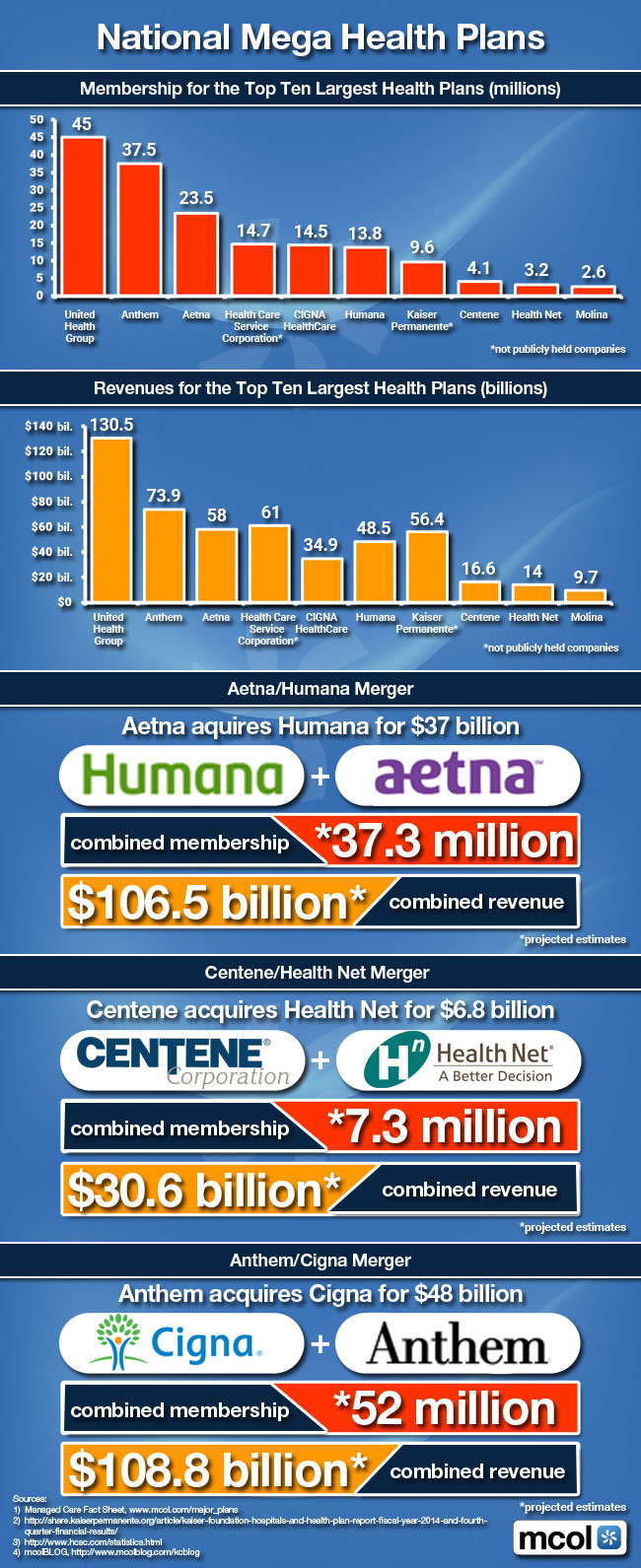
By http://www.MCOL.com

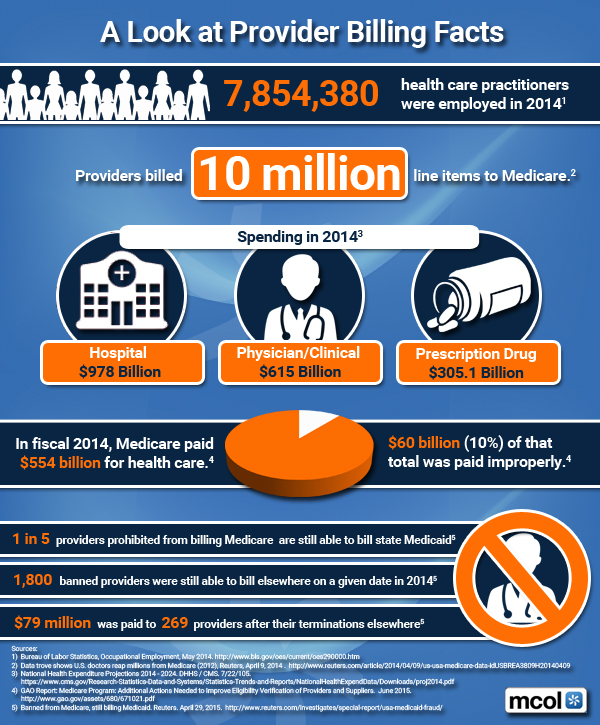
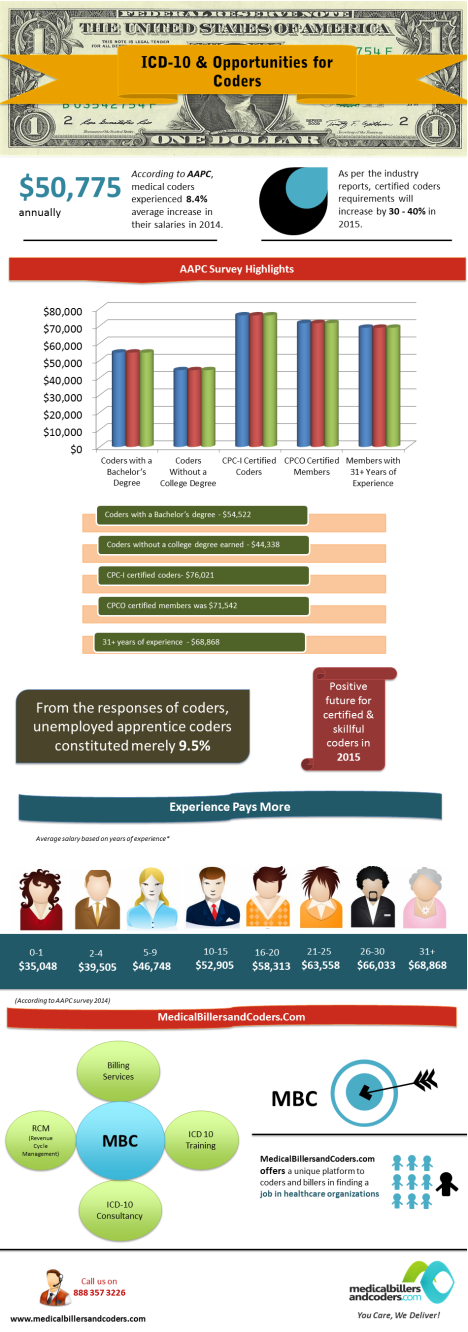
fraud

More:

Channel Surfing the ME-P

Have you visited our other topic channels? Established to facilitate idea exchange and link our community together, the value of these topics is dependent upon your input. Please take a minute to visit. And, to prevent that annoying spam, we ask that you register. It is fast, free and secure.

Conclusion

Your thoughts and comments on this ME-P are appreciated. Feel free to review our top-left column, and top-right sidebar materials, links, URLs and related websites, too. Then, subscribe to the ME-P. It is fast, free and secure.

Speaker: If you need a moderator or speaker for an upcoming event, Dr. David E. Marcinko; MBA – Publisher-in-Chief of the Medical Executive-Post – is available for seminar or speaking engagements. Contact: MarcinkoAdvisors@msn.com

OUR OTHER PRINT BOOKS AND RELATED INFORMATION SOURCES:

Product DetailsProduct DetailsProduct Details

The Economic Impact of Alzheimer’s Disease

Join Our Mailing List

Economic Projections 

By http://www.MCOL.com

economics Az

Channel Surfing the ME-P

Have you visited our other topic channels? Established to facilitate idea exchange and link our community together, the value of these topics is dependent upon your input. Please take a minute to visit. And, to prevent that annoying spam, we ask that you register. It is fast, free and secure.

Conclusion

Your thoughts and comments on this ME-P are appreciated. Feel free to review our top-left column, and top-right sidebar materials, links, URLs and related websites, too. Then, subscribe to the ME-P. It is fast, free and secure.

Speaker: If you need a moderator or speaker for an upcoming event, Dr. David E. Marcinko; MBA – Publisher-in-Chief of the Medical Executive-Post – is available for seminar or speaking engagements. Contact: MarcinkoAdvisors@msn.com

OUR OTHER PRINT BOOKS AND RELATED INFORMATION SOURCES:

 Product DetailsProduct DetailsProduct Details


Physician Couples and Money Management

Join Our Mailing List 

On Cash Management Techniques

By Rick Kahler MS CFP® www.KahlerFinancial.com

Rick Kahler MS CFPMoney is just one of many challenges to becoming part of a couple; especially for physicians. Probably the most common question couples ask me concerns the best way to handle their cash management.

Specifically, they wonder if they should combine all their cash flow into one joint checking account, keep everything separate, or have some combination of both.

Stock Answers

My stock answer is “yes.” It seems that, the older I become, the fewer right answers there are and the more often I say, “It depends.” This is one of those situations where there is no one best method.

Future Physicians

Let’s consider the advantages and disadvantages of each approach.

  1. Combining everything in one joint account

The plus side of this scenario is that there is total financial transparency as to where the money comes from and goes to. Each party has full access to and opportunity to be fully aware of the money flow. It’s easy to track. There are no secrets.

Which brings us to the downside: there are no secrets, no autonomy. Each party can see the other’s spending and spend the other’s money. This works well in some relationships where the shared belief is, “My money is your money and your money is my money.” It doesn’t work well absent that philosophy. I find this scenario is often problematic when one or both of the parties want autonomy over how they spend their money without the watchful (often critical) eye of the other. Often this arrangement doesn’t work well in second marriages or where both parties have careers.

  1. Keeping everything completely separate

The positive of this scenario is that each party has complete autonomy and control over his or her money. This often works well for two-career couples or second marriages where both partners came into the union with significant pensions or assets. It may also be a good fit for unmarried couples. If one partner is a spendthrift, it can protect the other partner from unauthorized purchases.

The negatives are that it can be more difficult to manage joint expenses like housing costs and that neither party has any specifics into the spending of the other. If a partner has any type of addiction, separate accounts can serve to enable the addiction by hiding the extent of the problem from the other partner.

  1. Combination of joint and separate accounts

The advantage to this scenario is that it provides more autonomy than putting everything into a joint account, yet it offers an easier way to manage joint expenses. It can often result in a clear agreement on what is mine, yours, and ours. Some couples have a system where each one’s earnings are their own, and they each contribute put fixed amounts into joint account. Another method is to deposit all the income into the joint account and give each partner a periodic allowance.

The disadvantages to this are the need to manage three accounts and to decide who writes the checks from the joint account.

Spouses

Case Example:

Personally, my wife and I use the third option. As the major breadwinner, I deposit most of my income into the joint account, from which she pays all the family bills. A smaller amount of my income goes into my separate account that I use to pay for private schooling, funding 529 plans, and personal care like massages and haircuts.

Assessment

Problems often arise when partners assume the money should be managed (or is being managed) in a certain way. No matter which approach couples use, the most important factor is to discuss it and agree, as equal partners, to a system that works for them.

Channel Surfing the ME-P

Have you visited our other topic channels? Established to facilitate idea exchange and link our community together, the value of these topics is dependent upon your input. Please take a minute to visit. And, to prevent that annoying spam, we ask that you register. It is fast, free and secure.

More:

  1. Physician Cash Maximization Rules
  2. On Emergency Funds for Physicians
  3. Essential Insights on Successful Physician Budgeting

Conclusion

Your thoughts and comments on this ME-P are appreciated. Feel free to review our top-left column, and top-right sidebar materials, links, URLs and related websites, too. Then, subscribe to the ME-P. It is fast, free and secure.

Speaker: If you need a moderator or speaker for an upcoming event, Dr. David E. Marcinko; MBA – Publisher-in-Chief of the Medical Executive-Post – is available for seminar or speaking engagements. Contact: MarcinkoAdvisors@msn.com

OUR OTHER PRINT BOOKS AND RELATED INFORMATION SOURCES:

Comprehensive Financial Planning Strategies for Doctors and Advisors: Best Practices from Leading Consultants and Certified Medical Planners™

Integrity and Accountability [The Declining State of Physician Health and the Urgent Need for Ethical and Evidence-Based Leadership]

Join Our Mailing List

SPECIAL ME-P REPORT

[By Michael Lawrence Langan MD]

Integrity and Accountability—The Declining State of Physician Health and the Urgent Need for Ethical and Evidence-Based Leadership.

***

gag

***

Channel Surfing the ME-P

Have you visited our other topic channels? Established to facilitate idea exchange and link our community together, the value of these topics is dependent upon your input. Please take a minute to visit. And, to prevent that annoying spam, we ask that you register. It is fast, free and secure.

Conclusion

Your thoughts and comments on this ME-P are appreciated. Feel free to review our top-left column, and top-right sidebar materials, links, URLs and related websites, too. Then, subscribe to the ME-P. It is fast, free and secure.

Speaker: If you need a moderator or speaker for an upcoming event, Dr. David E. Marcinko; MBA – Publisher-in-Chief of the Medical Executive-Post – is available for seminar or speaking engagements. Contact: MarcinkoAdvisors@msn.com

OUR OTHER PRINT BOOKS AND RELATED INFORMATION SOURCES:

Product DetailsProduct Details

The Financial Planner’s Responsibility?

Join Our Mailing List 

Are Consumers Losing Ethical Ground?

By Rick Kahler MS CFP http://www.KahlerFinancial.com

Rick Kahler MS CFPSuppose one of my clients has his heart set on using half of his retirement account to buy each of his grandchildren a new car.

Or, a physician-client in a panic over falling markets wants to sell all her stocks and buy gold. What is my responsibility as their financial planner? How far should planners go to try to keep clients from making serious financial mistakes?

Just as with the patient engagement, it’s important for planners to respect clients’ competence and ability to make their own life decisions. Client-centered planners also need to remember that the goal is to help clients get what they want, not what the planner might want or think the client should want.

On the other hand, should a planner stand idly by and watch someone walk off what the planner perceives as the edge of a financial cliff?

Potential Answers?

Part of the answer to this dilemma stems from a planner’s legal obligation. Most advisors who sell financial products have no fiduciary duty and are not legally required to put their customers’ interests first. Fiduciary advisors, which include those who are fee-only, do have a legal obligation to act in their clients’ best interests.

Fiduciary Responsibility

Doctors, clergymen and attorneys are fiduciaries. But, what is the legal responsibility of a fiduciary financial planner who believes clients are about to do themselves financial harm?

Example:

Let’s say I have a client who is about to do something that may be viewed by a court of law as “extreme” or “imprudent.” (An example would be putting all his money into one asset class like gold, cash, penny stocks, etc.) At the minimum, I would need to protect myself by carefully fulfilling my legal responsibilities. This would include making certain I emphasized to the client that, given the research and data available, his actions could hurt him financially. I also would want to be sure the client fully understood and took responsibility for his actions.

***

comedy

***

In terms of the broader aspect of what financial planners owe to their clients, meeting this legal obligation is not enough. In my view, fiduciary planners’ obligation to put clients’ interests first includes an ethical responsibility to do no harm. Sometimes this ethical and legal responsibility requires planners to give clients information they may not want to hear.

As we focus on the clients’ goals and help them carry out their wishes, part of our role is to make sure they have all the information they need. This gives us a responsibility to educate ourselves so the advice we offer is as sound as we can make it. We also need to do whatever we can to help clients hear and understand that advice.

Clients who are hovering on the edge of a financial cliff are typically about to act out of strong emotions such as fear. They often can’t take in financial advice until they are able to move through that fear. It only makes things worse if financial advisors shame clients, bully them, or abandon them to their fears. The challenge for planners is to help clients reach a more rational place so they can gather additional information and make decisions that will serve them well.

Industry Update is Not Good – Give Up the ‘Fiduciary’ Fight

According to industry pundit Bob Veres, so-called Financial Advisors need to face a hard truth – Independent Registered Investment Advisors [RIAs] have lost this round.

But, we already told you so on this ME-P.

Fortunately, there are other better ways to set yourself in the medical ecosystem.

The Certified Medical Planner™ Designation

A Certified Medical Planner is a fiduciary at all times.

More:

Assessment

With the right kind of support, clients are almost always able to get past the fear that is pushing them to make imprudent decisions. Providing such support by working with clients’ emotions and beliefs about money, perhaps with the help of a financial therapist or financial coach, is well within a financial planner’s ethical responsibility. Our role is not merely to do no harm. It is also to use all the tools we have to help clients act in their own best interests.

Product Details  Product Details

Conclusion

Your thoughts and comments on this ME-P are appreciated. Feel free to review our top-left column, and top-right sidebar materials, links, URLs and related websites, too. Then, subscribe to the ME-P. It is fast, free and secure.

Speaker: If you need a moderator or speaker for an upcoming event, Dr. David E. Marcinko; MBA – Publisher-in-Chief of the Medical Executive-Post – is available for seminar or speaking engagements. Contact: MarcinkoAdvisors@msn.com

OUR OTHER PRINT BOOKS AND RELATED INFORMATION SOURCES:

Financial Planning MDs 2015

Comprehensive Financial Planning Strategies for Doctors and Advisors: Best Practices from Leading Consultants and Certified Medical Planners™

The Medical Profession, Moral Entrepreneurship, Moral Panics, and Social Control

Disrupted Physician

IMG_9005The Medical Profession, Moral Entrepreneurship, and Social Control

Sociologist Stanley Cohen  used the term “”moral panic” to characterize the amplification of deviance by the media, the public, and agents of social control.1  Labeled as being outside the central core values of consensual society, the deviants in the designated group are perceived as posing a threat to both the values of society and society itself.   Belief in the seriousness of the situation justifies intolerance and unfair treatment of the accused.   The evidentiary standard is lowered.

Howard Becker describes the role of “moral entrepreneurs,” who crusade for making and enforcing rules that benefit their own interests by bringing them to the attention of the public and those in positions of power and authority under the guise of righting a society evil. 2

And according to cultural theorist Stuart Hall, the media obtain their information from the primary definers of social…

View original post 2,659 more words

Out-Look on Global Inflation Rates for 2015

Join Our Mailing List

A Mixed Picture

[By BNY Mellon]

inflation

[Click to Enlarge]

Channel Surfing the ME-P

Have you visited our other topic channels? Established to facilitate idea exchange and link our community together, the value of these topics is dependent upon your input. Please take a minute to visit. And, to prevent that annoying spam, we ask that you register. It is fast, free and secure.

More:

Conclusion

Your thoughts and comments on this ME-P are appreciated. Feel free to review our top-left column, and top-right sidebar materials, links, URLs and related websites, too. Then, subscribe to the ME-P. It is fast, free and secure.

Speaker: If you need a moderator or speaker for an upcoming event, Dr. David E. Marcinko; MBA – Publisher-in-Chief of the Medical Executive-Post – is available for seminar or speaking engagements. Contact: MarcinkoAdvisors@msn.com

OUR OTHER PRINT BOOKS AND RELATED INFORMATION SOURCES:

Financial Planning MDs 2015

Comprehensive Financial Planning Strategies for Doctors and Advisors: Best Practices from Leading Consultants and Certified Medical Planners™


12 Email Marketing Tips for MDs and FAs

Join Our Mailing List

To Ensure Your Campaign Isn’t a Waste of Time and Money

B

The success of your email marketing campaign will depend on a number of things, from how you grow your list, the times and days you send them, to the type of content you send.

To ensure your email marketing campaigns aren’t a waste of time and money make sure you read the tips in this infographic from Vertical Response.

***

eMail tips

Conclusion

Your thoughts and comments on this ME-P are appreciated. Feel free to review our top-left column, and top-right sidebar materials, links, URLs and related websites, too. Then, subscribe to the ME-P. It is fast, free and secure.

Speaker: If you need a moderator or speaker for an upcoming event, Dr. David E. Marcinko; MBA – Publisher-in-Chief of the Medical Executive-Post – is available for seminar or speaking engagements. Contact: MarcinkoAdvisors@msn.com

OUR OTHER PRINT BOOKS AND RELATED INFORMATION SOURCES:

***

Product DetailsProduct Details

2015 Health Plan Premium Increases

Join Our Mailing List

Projections

By http://www.MCOL.com

premium

Channel Surfing the ME-P

Have you visited our other topic channels? Established to facilitate idea exchange and link our community together, the value of these topics is dependent upon your input. Please take a minute to visit. And, to prevent that annoying spam, we ask that you register. It is fast, free and secure.

Conclusion

Your thoughts and comments on this ME-P are appreciated. Feel free to review our top-left column, and top-right sidebar materials, links, URLs and related websites, too. Then, subscribe to the ME-P. It is fast, free and secure.

Speaker: If you need a moderator or speaker for an upcoming event, Dr. David E. Marcinko; MBA – Publisher-in-Chief of the Medical Executive-Post – is available for seminar or speaking engagements. Contact: MarcinkoAdvisors@msn.com

OUR OTHER PRINT BOOKS AND RELATED INFORMATION SOURCES:

Product DetailsProduct Details

The Impact of Gratitude on Financial Behavior

Overspending? Try a Little Thanksgiving Gratitude 

By Rick Kahler MS CFP® http://www.KahlerFinancial.com

Rick Kahler MS CFPDo you want to more easily change your over-spending behavior? According to research, maybe all you need is a bit of gratitude.

Gratitude

Before you brush this idea aside as just another “feel good” theory, you may want to consider a 2013 study that suggests practicing gratitude is a powerful way to increase your happiness and decrease temptations. Northeastern University’s David DeSteno led the research project, which was published in June 2014 in the journal Psychological Science.

Logic versus Emotions

Many of us believe we ought to make decisions, especially financial ones, logically rather than emotionally. We assume emotions get in the way of decision-making, so we try to set them aside. We may think the best way to resist temptation, such as wanting to buy something we can’t afford, is to use self-control to clamp down our emotions.

The Research?

Yet research has shown that emotions play a significant role in all our decision-making. Some of that research is discussed in an article by Ray Williams published September 25, 2011, in Psychology Today.

Trying to ignore our emotions and make cold and calculating decisions is fear-based behavior. The gratitude research, however, suggests that emotions can be used instead to help us resist temptation. Perhaps being less fearful and more grateful can actually produce better decisions.

The Study

DeSteno’s study gave 75 participants a classic test of their financial self-control. They were told they could have either $54 right now or $80 in 30 days. Before they made their decision, the researchers put the participants into one of three emotional states: grateful, happy, or neutral.

The Results

Those who were either happy or neutral showed a strong preference for taking the $54 now. The fact that by waiting 30 days and getting $80 they would receive a one-month return of 48%, which is equal to an annualized return of 576%, wasn’t even a consideration. Behavioral economists tell us this is normal. Our brains are generally wired to “kill and eat.” Having something now, even though it’s less, is better than having more later, even if it will be much more. That is some strong wiring!

***

mind-investing-behavioral-finance

***

The Surprise

However, the surprise was that the people in the state of gratitude were much more likely to wait 30 days to receive the $80. Results also showed that the more gratitude the participants reported feeling, the more willing they were to wait for the larger gain.

The Grateful Difference

One conclusion of the study is that just cultivating the emotion of happiness isn’t enough to make wise financial decisions. It is specifically the emotion of gratefulness that makes a difference. According to one of the study’s authors, Professor Ye Li, this research “. . . opens up tremendous possibilities for reducing a wide range of societal ills from impulse buying and insufficient saving to obesity and smoking.”

We don’t know why gratitude has this effect. Psychologist Dr. Jeremy Dean, in a June 18 post at PsyBlog about the research, says, “. . . it may be because it makes us feel more social, co-operative and altruistic. In other words: gratitude may make us feel less selfish, which gives us more patience.”

Personally, I wonder whether another possibility may be that feeling gratitude reminds us of how much we already have, which tends to reduce our desire to get something more.

Assessment

If you’d like to do some experimenting of your own, consider practicing some gratitude exercises. Dr. Dean describes some at PsyBlog. These may be as simple as making daily lists of things you have to be grateful for. It’s possible that fostering gratitude could do more than just promote happiness. It might even change the way you spend and invest.

Conclusion

Your thoughts and comments on this ME-P are appreciated. Feel free to review our top-left column, and top-right sidebar materials, links, URLs and related websites, too. Then, subscribe to the ME-P. It is fast, free and secure.

Speaker: If you need a moderator or speaker for an upcoming event, Dr. David E. Marcinko; MBA – Publisher-in-Chief of the Medical Executive-Post – is available for seminar or speaking engagements. Contact: MarcinkoAdvisors@msn.com

OUR OTHER PRINT BOOKS AND RELATED INFORMATION SOURCES:

Product Details  Product Details

Employee Health Benefits for Same Sex Domestic Partners

Join Our Mailing List

Regional Distribution

http://www.MCOL.com

same

More:

Conclusion

Your thoughts and comments on this ME-P are appreciated. Feel free to review our top-left column, and top-right sidebar materials, links, URLs and related websites, too. Then, subscribe to the ME-P. It is fast, free and secure.

Speaker: If you need a moderator or speaker for an upcoming event, Dr. David E. Marcinko; MBA – Publisher-in-Chief of the Medical Executive-Post – is available for seminar or speaking engagements. Contact: MarcinkoAdvisors@msn.com

OUR OTHER PRINT BOOKS AND RELATED INFORMATION SOURCES:

Product Details  Product Details

Medical Claims Payment Data Differences

Join Our Mailing List

Between Price Transparency Platform Users and Non-Users

By http://www.MCOL.com

ImageProxy

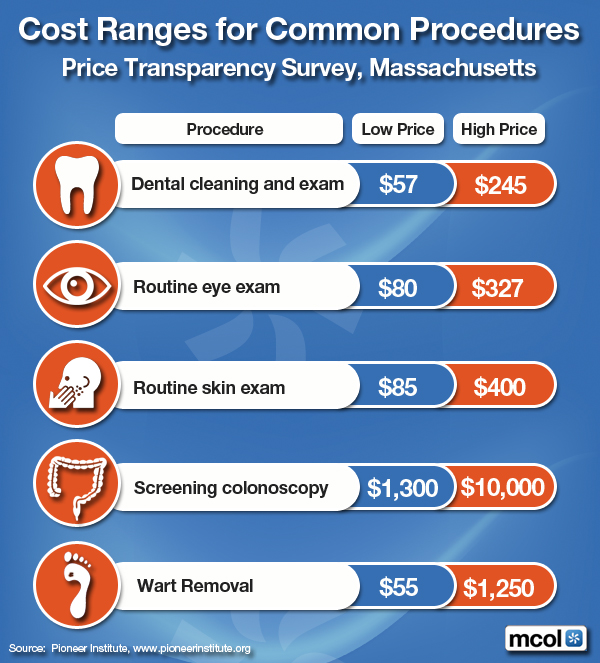
data

Conclusion

Your thoughts and comments on this ME-P are appreciated. Feel free to review our top-left column, and top-right sidebar materials, links, URLs and related websites, too. Then, subscribe to the ME-P. It is fast, free and secure.

Speaker: If you need a moderator or speaker for an upcoming event, Dr. David E. Marcinko; MBA – Publisher-in-Chief of the Medical Executive-Post – is available for seminar or speaking engagements. Contact: MarcinkoAdvisors@msn.com

OUR OTHER PRINT BOOKS AND RELATED INFORMATION SOURCES:

Product DetailsProduct Details

How Financial Advisors Build Trust with Physician Prospects and Clients

Join Our Mailing List 

A SPECIAL ME-P REPORT

Niche Career Development for Financial Advisors

VR MD

[By Vicki Rackner MD]

Attention Physician Focused Financial Advisors

If you are a financial advisor who would like to acquire more physician clients, consider these facts:

  • Fact: Half of physicians are behind where they would like to be in retirement planning.
  • Fact: About half of physicians work with professional financial advisors.
  • Fact: Physicians who work with financial advisors are better prepared for retirement.

The Survey

How can YOU build trust and be found by more physician prospects? Here are some steps. Trust is an abstract concept. It begs the question: Trust to do what? I asked my physician colleagues and friends, “When you say you trust your financial advisor, what do you mean?”

Here are some of the answers:

  • You may trust your hairdresser to give you a great look, but you would not trust her to take out your gallbladder.
  • Ask, “Trust to do what?”
  • A recent survey offers insights. Almost half of physicians said that they do not work with advisors because they cannot find someone they trust.
  • This leads to an obvious question: Why would physicians–smart professionals who spend their days identifying problems and fixing them–fail to take action and get on track for retirement?
  1. I trust that she cares about me.
  2. I trust he puts my best interests before his own.
  3. I trust he knows what he’s doing.
  4. I trust he understands the challenges I face.
  5. I trust that she’s honest and direct. A person of integrity.
  6. I trust that he’ll challenge me if I’m about to make a dumb financial move.
  7. I trust the person who gave me his name.
  8. I trust that I’ll keep more money than I spend in fees.

***

Product Details  Product DetailsProduct Details

***

Take steps to build rapport and trust – Be authentic

Tell the story of how and why you came to offer financial advice to physicians.

Here are a few examples from my own clients:

  • Show you care. A famous quote among physicians is, “For the secret in the care of the patient is caring for the patient.” Your first step in building trust with physician prospects and clients is demonstrating you care about them.
  • You can survey your clients and Identify how they how they see your trust-building strengths.
  • An advisor tells the story of his surgeon father who outlived his money. That inspired him to help other surgeons enjoy true financial security.
  • A cancer survivor tells physicians he’s giving back to the doctors who helped his kids grow up with a father.
  • An advisor tells the story of always wanting to be a cardiologist. Now he’s using his real gift–making money grow–to help cardiologists build wealth.

More Tips:

Keep your promises

As my grandmother said, “Keep every promise you make, and only make promises you can keep.”

Conduct yourself like a physician

What does your personal physician do to win your trust? Do the same!

Be consistent

Conservative physicians may need to be exposed to you and your message six to ten times before they take action. Do you have lists of prospects and clients? Have you built an automated way of delivering something of value to them on a regular basis?

Quote other physicians

The most influential person in a physician’s life is another physician. If a physician offers a great idea or a best practice, ask permission to share this pearl of wisdom with other physicians. You want to be known as the financial advisor who rubs shoulders with physician leaders.

Regularly ask

Ask MD prospects and clients, “How can I do better?”

Take steps to be found

Physicians find financial advisors in much the same way you find a personal physician. You begin with someone you trust. Like me, most physicians turn to their own colleagues for names of financial advisors.

Address painful problems that need to be fixed TODAY

Busy people tend to put off problems that are asymptomatic today, even when they know the neglected problems will lead to pain in the future. Retirement is years away for most physicians. However, they seek relief from the acute financial pain of ObamaCare today.

Partner with experts and offer solutions to the problems of falling reimbursements, rising practice costs and heavier tax burdens. When physicians have more money to invest, they build wealth more quickly.

Interview key physician opinion leaders

Ask top physicians how ObamaCare impacts their day-to-day practice and their plans for the future. Uncover specific active problems. These are all opportunities for you. A key physician could introduce you to many physicians.

Listen to physicians

Active listening builds trust. Further, when you express true curiosity in others, they will want to learn about you.

Go to places physicians gather

Offer to speak at medical meetings about topics that the key physician opinion leaders identify. Submit articles for association publications. Join conversations on social media if that’s where your physician prospects gather.

What this means for you

Here’s why you may want to build trust and be found among physicians: you can mine the treasures in the medical market.
  • Fact: Doctors make up 9 of the top 10 earners in the US.
  • Fact: 500,000 US practicing physicians and dentists are financial do-it-yourself’ers.
  • Fact: 40% of practicing physicians are age 55 or older.Physicians’ acute financial pain is your business opportunity. Someone will offer financial leadership to physicians. Why not you?
  • Assessment
  • Every physician is actively developing a personal ObamaCare plan; this is complex personal financial plan for which physicians solicit expert opinions.

Assessment

Enter the Certified Medical Planners

About the Author

Vicki Rackner MD, author, speaker and President of Targeting Doctors, helps financial advisors accelerate their practice growth by acquiring more physician clients. She calls on her experience as a practicing surgeon, clinical faculty at the University of Washington School of Medicine and nationally-noted expert in physician engagement to offer a bridge between the world of medicine and the world of business.

Conclusion

Your thoughts and comments on this ME-P are appreciated. Feel free to review our top-left column, and top-right sidebar materials, links, URLs and related websites, too. Then, subscribe to the ME-P. It is fast, free and secure.

Speaker: If you need a moderator or speaker for an upcoming event, Dr. David E. Marcinko; MBA – Publisher-in-Chief of the Medical Executive-Post – is available for seminar or speaking engagements. Contact: MarcinkoAdvisors@msn.com

OUR OTHER PRINT BOOKS AND RELATED INFORMATION SOURCES:

Comprehensive Financial Planning Strategies for Doctors and Advisors: Best Practices from Leading Consultants and Certified Medical Planners™

Understanding the “Least” Important Issues for Physician-Investors

Join Our Mailing List 

A Dimensional Fund Advisors Survey

By Rick Kahler MS CFP® http://www.KahlerFinancial.com

Rick Kahler MS CFPIn this ME-P, I will focus on the three least important things investors want to know. The rankings came from a survey of investors, funded by Dimensional Fund Advisors, conducted in March 2014 by Advisor Impact.

All three deserved to be much higher on the list. In my experience, they are what most physicians and all investors really need to know.

The factors

These three factors are:

  • What are the chances the investment will lose money? Only 10% of investors thought it was important to ask about factors that contributed to historic performance. Just one-third thought it important to even ask about historical performance in general.
  • What type of volatility can they expect? Only 17% of investors considered this important.
  • How and why did the advisor select the investment for their portfolio? Only 21% of survey respondents thought this was important, and just 8% asked about the investment managers chosen.

Drilling Down and Going Granular

Some of these factors may seem difficult to understand, but they do matter. Give your financial advisor a chance to explain them; it can help you become a more informed investor.

ME-P Physicians

  1. Chances of losing money

This factor could be better addressed by asking about the specific factors that influenced historic performance of the security over various long-term economic climates. True, looking at the past performance of an investment is never a guarantee of future performance.

Yet, if the historical periods evaluated contain a variety of economic conditions (high inflation, various economic cycles, various political influences, etc.) and long-term holding periods (at least 10 years or more), looking backward may give you a reasonable idea of what future performance might look like.

  1. Volatility

Most investors will cognitively agree they fully understand that most investments that carry any chance of real (after inflation) significant long-term return will fluctuate. I say “cognitively” because, once that fluctuation happens on the downside, all cognitive understanding sometimes goes out the window and the emotional brain takes control.

One way of internalizing the potential fluctuation of an investment is to ask about its volatility. Specifically, it’s standard deviation. This measure of the amount of variation from the average is something an advisor can easily find out for almost every bond, stock, and mutual fund. Take the standard deviation times three, then subtract that number from the average return. This is the amount of value over one year your investment could drop (or rise) in 99% of all years. Stated conversely, there is only a 1% chance your investment would drop further in any one year.

  1. Portfolio Fit

I recently sent back a shirt that hung on me like a tent. While it would have been perfect for a larger guy, it was not a fit for me. Investments are similar. While some are perfect matches for one portfolio, they can be lethal in another. An over-allocation to emerging market stocks may make perfect sense for a newborn, but it could be a retirement disaster for a 90-year-old.

Pensive Financial Advisor for Physicians

Assessment

It’s important to ask why an investment belongs in your portfolio. You want investments (asset classes) that complement one another by tending to fluctuate independently of each other.

In an ideal balance of investments, when some decrease in value the other half increase an equal or greater amount, and all of them earn a real return over time.

Conclusion

Your thoughts and comments on this ME-P are appreciated. Feel free to review our top-left column, and top-right sidebar materials, links, URLs and related websites, too. Then, subscribe to the ME-P. It is fast, free and secure.

Speaker: If you need a moderator or speaker for an upcoming event, Dr. David E. Marcinko; MBA – Publisher-in-Chief of the Medical Executive-Post – is available for seminar or speaking engagements. Contact: MarcinkoAdvisors@msn.com

OUR OTHER PRINT BOOKS AND RELATED INFORMATION SOURCES:

 Comprehensive Financial Planning Strategies for Doctors and Advisors: Best Practices from Leading Consultants and Certified Medical Planners™

How Physicians Prepare for Retirement?

 Join Our Mailing List 

ME-P SPECIAL REPORT

On Physician DIY’s

[By Vicki Rackner MD]

VR MD

Dear ME-P Readers and Subscribers,

Employed physicians who use professional financial advisors v.s. physician financial do-it-yourself-ers):

Did you know the following:

  • Feel better prepared for retirement
  • Have more in emergency savings
  • Have more diverse financial investments and
  • Feel more confident about their personal financial decisions?

Did you also know:

Here are some other key survey findings:

  • 60% of practicing physicians are employed by hospitals, groups and medical schools.
  • 42% of of employed physicians are behind where they would like to be in retirement planning.
  • Employed physicians” #1 financial goal is to enjoy a comfortable retirement. Other top concerns include funding long-term care, minimizing losses and ensuring an inheritance for children/ grandchildren.
  • Half of employed physicians believe they have unique or more complex financial needs than other professionals.These finding affirm the intuitively obvious: experts get better results than dabblers.
  • Patients get the best medical outcomes when they work with physicians whom they trust; physicians get the best financial results when they work with financial advisors whom they trust.

***

Product Details  Product Details

***

What this means for you

These finding affirm the intuitively obvious: experts get better results than dabblers.

Patients get the best medical outcomes when they work with physicians whom they trust; physicians get the best financial results when they work with financial advisors whom they trust; as a fiduciary advisor.

Assessment

Enter the Certified Medical Planners

About the Author

Vicki Rackner MD, author, speaker and President of Targeting Doctors, helps financial advisors accelerate their practice growth by acquiring more physician clients. She calls on her experience as a practicing surgeon, clinical faculty at the University of Washington School of Medicine and nationally-noted expert in physician engagement to offer a bridge between the world of medicine and the world of business.

Conclusion

Your thoughts and comments on this ME-P are appreciated. Feel free to review our top-left column, and top-right sidebar materials, links, URLs and related websites, too. Then, subscribe to the ME-P. It is fast, free and secure.

Speaker: If you need a moderator or speaker for an upcoming event, Dr. David E. Marcinko; MBA – Publisher-in-Chief of the Medical Executive-Post – is available for seminar or speaking engagements. Contact: MarcinkoAdvisors@msn.com

OUR OTHER PRINT BOOKS AND RELATED INFORMATION SOURCES:

Financial Planning MDs 2015

Comprehensive Financial Planning Strategies for Doctors and Advisors: Best Practices from Leading Consultants and Certified Medical Planners™

On The Next Stock Market Correction?

Join Our Mailing List

Remember the Ace Up Your Sleeve!

By Lon Jefferies MBA CFP® CMP®

Lon JeffriesAfter the historic growth the stock market has experienced since early 2009, many physician investors have felt that a healthy pullback may not be a completely negative thing.

After all, we certainly don’t want another bubble, or stock prices that are clearly out of line with the earning potential of the underlying companies.

Unfortunately, market corrections never feel healthy when they occur. Physicians, investors and almost all people get uncomfortable when the market declines, the media fans the flames by giving investors reason after reason to be afraid, and worries that this is the beginning of the next crash begin to develop.

While many investors admit that a 5% pullback is manageably unpleasant, concerns expand when the market decline hits 10% — right when the media can officially throw around the word “correction.”

Of course, we have no idea when the next drop will occur, but why not mentally prepare ourselves by exploring what has traditionally happened to stock prices once that 10% decline is crossed?

The Data

Ben Carlson, an institutional investment portfolio manager, looked at the S&P data going back to 1950, and found that there have been 28 instances when stocks fell by 10% or more. Thus, on average, the market has entered an official correction every 2.25 years. The last market correction occurred in 2011, so another 10% drop at this time would correlate pretty close to the average amount of time between corrections.

Obviously, the market has done pretty well since that last temporary correction in 2011. Clearly, such a drop is quite normal and far from historically concerning.

  • S&P 500 Losses of 10% or More Since 1950
  • Total Occurrences: 28 Times
  • Average Loss: -21.6%
  • Median Loss: -16.5%
  • Average Length: 7.8 Months
  • Greater Than 20% Loss: 9 Times
  • Greater Than 30% Loss: 5 Times

Your Advantage

Are you thinking “I don’t think I can stomach that median loss of 16.5%?” Then it’s time to pull out the ace up your sleeve. Remember that the data above represents the historical performance of the S&P 500 – an index that is composed of 100% stocks. A capable financial planner would ensure you have an asset allocation mix between stocks, bonds, and cash that represents your tolerance for risk.

Consequently, your portfolio likely isn’t 100% stocks. In fact, the appropriate allocation for an average investor approaching or already enjoying retirement might be closer to only 50% stocks. This means that on average, your portfolio should decline only half as much as the S&P 500 during market downturns.

This ace may bring the loss endured by our sample investor with a 50% stock portfolio down to around 8.25% during the median decline. Are you now back in the “manageably unpleasant” range? If so, you likely have an appropriately constructed portfolio. If not, your risk tolerance may need to be reevaluated to ensure you are not exposing your nest egg to a larger loss than you can endure.

Avoid Harmful Reactions to the Market

Although the recent market pullback produces what seems like a foreign feeling, we’ve been here before. The S&P 500 declined in value by 18.64% over a 5 month period in 2011. However, an investor with a 50% stock portfolio likely only saw their account values drop around 9%-10% — still not fun, but manageable.

Assessment

Of course, we don’t know whether the market will continue to bounce back or again drop into official correction territory. If you continue to hear about the broad markets declining, remember that the average historical correction has been far from catastrophic, and that you have the ace of an appropriate asset allocation up your sleeve.

Financial Planning MDs 2015

Comprehensive Financial Planning Strategies for Doctors and Advisors: Best Practices from Leading Consultants and Certified Medical Planners™

Conclusion

Your thoughts and comments on this ME-P are appreciated. Feel free to review our top-left column, and top-right sidebar materials, links, URLs and related websites, too. Then, subscribe to the ME-P. It is fast, free and secure.

Speaker: If you need a moderator or speaker for an upcoming event, Dr. David E. Marcinko; MBA – Publisher-in-Chief of the Medical Executive-Post – is available for seminar or speaking engagements. Contact: MarcinkoAdvisors@msn.com

OUR OTHER PRINT BOOKS AND RELATED INFORMATION SOURCES:

Product Details  Product Details

Some Financial Health Insurance Hardships and Concerns of Adults

Join Our Mailing List

Privately Insured

By http://www.MCOL.com

***

123

***

Assessment

Conclusion

Your thoughts and comments on this ME-P are appreciated. Feel free to review our top-left column, and top-right sidebar materials, links, URLs and related websites, too. Then, subscribe to the ME-P. It is fast, free and secure.

Speaker: If you need a moderator or speaker for an upcoming event, Dr. David E. Marcinko; MBA – Publisher-in-Chief of the Medical Executive-Post – is available for seminar or speaking engagements. Contact: MarcinkoAdvisors@msn.com

OUR OTHER PRINT BOOKS AND RELATED INFORMATION SOURCES:

Product DetailsProduct Details

A Financial Planning Curated News Round-Up for MDs

Join Our Mailing List

Interesting news and topics from around the blog-o-sphere

[By Staff Reporters]

  • How 6 Types of Retirement Income Are Taxed
    A common mistake retirees make when calculating their living expenses is forgetting how big a bite state and federal taxes can take out of savings. And how you tap your accounts can make a big difference.
  • Long-term Care by the Numbers
    Seven out of ten people will need long-term care sometime after 65. One expert examines the numbers behind long-term care.
  • Three Retirement Goals People Never Achieve
    New and soon-to-be retirees often set lofty retirement goals based on newfound time and opportunities. However, some of their most common goals and dreams are never even attempted, let alone achieved.
  • How Rising Rates Could Impact 3 Key Sectors
    How might different fixed income sectors respond to rising rates? And how might investors position their portfolios? This article offers a view of three widely held fixed income sectors.

healthfinance

Assessment

Conclusion

Your thoughts and comments on this ME-P are appreciated. Feel free to review our top-left column, and top-right sidebar materials, links, URLs and related websites, too. Then, subscribe to the ME-P. It is fast, free and secure.

Speaker: If you need a moderator or speaker for an upcoming event, Dr. David E. Marcinko; MBA – Publisher-in-Chief of the Medical Executive-Post – is available for seminar or speaking engagements. Contact: MarcinkoAdvisors@msn.com

OUR OTHER PRINT BOOKS AND RELATED INFORMATION SOURCES:

Financial Planning MDs 2015

 Comprehensive Financial Planning Strategies for Doctors and Advisors: Best Practices from Leading Consultants and Certified Medical Planners™


The “ObamaCare Opportunity” for Financial Advisors

Join Our Mailing List

Why Physicians Need Financial Advisors Now!

[By Vicki Rackner MD]

http://www.CertifiedMedicalPlanner.org

VR MDI recently attended a surgical meeting. Most conversations with my physician colleagues turned to the same singular topic: physicians’ new financial reality.

And the message is, “It hurts!”

Physicians’ Financial Plans

Financially savvy physicians execute thoughtful retirement plans. Yet, today about half of surveyed physicians are behind where they would like to be in retirement preparedness. Further, today only about half of physicians work with professional financial planners.

As a physician myself, I understand why smart physicians fail to take smart financial action. We physicians dedicate ourselves to the alleviation of pain and suffering of others. Retirement is a distant personal concern that does not cause immediate financial pain today. We put it off.

Lesson from My Dentist

Years ago my dentist recommended that I undergo a procedure to replace a filling. He explained that the filling material put in my mouth about 40 years ago tends to pull from the tooth over time and allow new cavities to form.

As much as I like my dentist, I actively avoid spending time in his dental chair. I put off the recommended filling replacement year after year. That is, of course, until I experienced vague throbbing from that tooth. I rearranged my schedule so I could tend to this small problem before it became a much bigger problem. Who wants a root canal!

For physicians retirement planning is like that proactive filling replacement. We understand that without action there will be problems down the road. However, the threat of a problem in the distant future does not propel many like myself to action today.

***

Product Details  Product Details

***

The ObamaCare [PP-ACA] Opportunity for Financial Advisors

ObamaCare is the source of acute financial pain for physicians. It’s the financial toothache. Practicing physicians are looking at:

  • Higher taxes. Doctors represent 9 of the 10 highest earners in the US.
  • Rising costs of goods and services as businesses address their own higher tax bills.
  • The costs of building the infrastructure that will lead to greater healthcare efficiencies, like converting to electronic medical records, hiring new staff to address new administrative demands and aligning with new compliance requirements.
  • Lower professional fees. The 24% Medicare fee reduction that was averted this year will become reality soon. As Medicare goes, so, too, go the rest of the insurance fee schedules.
  • Decreasing patient referrals as primary care doctors sell their practices.
  • Physicians know they need to act now to avoid the financial root canal. Each physician is in the process of creating a personal ObamaCare plan.

Physicians’ Wants and Needs

As a financial advisor, you know that physicians NEED a retirement plan. Kids need to eat their broccoli, too. It’s good for them.

Physicians WANT a plan to help them achieve the personal, professional and financial goals that drew them to a career in medicine. Engaging physicians by address their ObamaCare plan is about as hard as getting kids to eat ice cream.

What This Means for You

Today physicians actively seek experts to help them create their ObamaCare plans.

Financial advisor are winning new physician clients. As Seattle Seahawks quarterback Russell Wilson asks, “Why not you?”

If you want to work with more physician clients, this is your moment! Seize it. You have a chance to join the high-performing financial advisors mining the treasures in the medical market.

Assessment

Should wish to learn more here’s a video that addresses 4 questions:

  • Why do physicians need you now?
  • What do you need to know about physicians now?
  • How do you engage physicians now?
  • How do you conduct yourself so physicians want to conduct business with you now?

About the Author

Vicki Rackner MD is an author, speaker and consultant who offers a bridge between the world of medicine and the world of business. She helps businesses acquire physician clients.

VIDEO: https://www.youtube.com/watch?v=CeCyidc4JP8&feature=player_embedded

Enter the Certified Medical Planners

Conclusion

Your thoughts and comments on this ME-P are appreciated. Feel free to review our top-left column, and top-right sidebar materials, links, URLs and related websites, too. Then, subscribe to the ME-P. It is fast, free and secure.

Speaker: If you need a moderator or speaker for an upcoming event, Dr. David E. Marcinko; MBA – Publisher-in-Chief of the Medical Executive-Post – is available for seminar or speaking engagements. Contact: MarcinkoAdvisors@msn.com

OUR OTHER PRINT BOOKS AND RELATED INFORMATION SOURCES:

Financial Planning MDs 2015

Comprehensive Financial Planning Strategies for Doctors and Advisors: Best Practices from Leading Consultants and Certified Medical Planners™

The “Selling-Out” of a Profession [Dentistry]?

Join Our Mailing List 

Dentistry …?

[By D. Kellus Pruitt DDS]

1-darrellpruittSeveral years ago, a president-elect of the American Dental Association proclaimed, “The electronic health record may not be the result of changes of our choice. They are going to be mandated. No one is going to ask, ‘Do you want to do this?’ No, it’s going to be, ‘You have to do this.’” (ADA News, October 2008).

Looking back, it is easy to recognize the ADA’s renegade capitulation to HHS as a warning sign of things to come.

The ADA is the same national healthcare institution whose leaders joined Delta Dental in persuading dentists to volunteer for HIPAA’s NPI numbers – never revealing what they are to be used for. It’s the same not-for-profit Chicago corporation which continues to protect non-dues revenue by misleading the nation about the “savings and convenience” of EHRs in dentistry. Among all healthcare organizations, the ADA is alone in their enthusiasm for EHRs and Meaningful Use requirements.

And to top it off, the ADA leadership has progressively become less accessible by the community it serves – NEVER entering into open discussions of urgent dental issues on the internet, even to the extent of ending its commitment to answering dental questions for visitors to Dr. Oz’s Sharecare.com. It’s only dentistry for crying out loud!

As a matter of fact, Dr. Maxine Feinberg, the new ADA President, recently suggested in an interview with the ADA’s Judy Jakush that telephone conversations are “The best kept secret of the ADA which members don’t understand.” What?

Dr. Feinberg: “The best-kept secret is that if you have a problem or complaint, you will likely walk away with a positive experience. And, on the rare occasion that the staff can’t help you, there is a good chance that you will speak to Dr. Kathy O’Loughlin, the executive director. That’s amazing customer service.”

***

Insightful or clueless dentist?

***

What’s not to understand? I understand that ADA membership numbers have taken a hit over the last few years, but nevertheless, the dues of a little over 150,000 dentists still help pay the salaries of ADA employees. That’s a lot of phone calls that will have to be transferred to the right person (the first time), scheduled to call back later or be completely ignored. Isn’t email, or even the US Mail a better idea? Or is lousy communication (unaccountability) with dentists and patients the goal?

About that NPI number

How do you feel about the ADA leading the effort to assess and report your value to your community without ever stepping into your office or talking with a satisfied patient? When you volunteered for your National Provider Identifier at the insistence of the ADA and Delta Dental, you agreed to CMS terms. What? Nobody mentioned that?:

“Spread the mission of the DQA – The DQA, formed in 2008 through a request from the Centers for Medicare & Medicaid Services, is comprised of multiple stakeholders from across the oral health community who are committed to development of consensus-based quality measures.” By Kelly Soderlund for the ADA News, November 3, 2014.

Does “multiple stakeholders” sound as costly to you as it does to me, Doc? I say we already have too many stakeholders. What about the principals (dentists and their patients) who pay the stakeholders’ bills?

***

eHRs

***

Does anyone disagree that DQA looks like the ADA’s desperate mission creep for cash? With the chronic drop in membership, the Chicago corporation has turned to vigorous pursuit of non-dues revenue – probably in the form of federal grants and stimulus money from HHS. The ADA (which prefers clumsy communication via telephone), is asking state and local dental leaders to put their own personal credibility at risk by persuading uninformed dentists to unquestioningly accept multiple stakeholders’ assessment of their value to society – just like clueless dentists cooperated in the NPI effort.

Dr. David Schirmer, chair of the DQA’s education committee, tells ADA News: “Eventually, all of dentistry will need to understand quality measures. But before we reach our grass roots membership, we need our leaders in dentistry to understand.” He adds, “I’m challenging those leaders to pave the way for their younger colleagues and help them understand the long-term impact this will have on dentistry.”

ADA Editor Soderlund: “The DQA has taken the lead on developing quality measures within oral health care. These measures touch every practicing dentist in the United States, and with dentistry, how it’s modeled and how it’s financed changes in the future — specifically as a result of the Affordable Care Act — they’ll become even more prevalent. The mission of the DQA is to advance performance measurement as a means to improve oral health, patient care and safety through a consensus-building process.”

“— specifically as a result of the Affordable Care Act —“ Since you never respond, ADA, how do we know you haven’t sold us out once again for taxpayers’ money?

Assessment

If it’s difficult for the ADA to hold onto membership now, just wait until the nation’s dentists figure out that Obamacare cannot give everyone A’s on their internet report cards. This means the majority of dentists are going to be pissed at the ADA for their bad grades, no matter what.

Conclusion

Your thoughts and comments on this ME-P are appreciated. Feel free to review our top-left column, and top-right sidebar materials, links, URLs and related websites, too. Then, subscribe to the ME-P. It is fast, free and secure.

Speaker: If you need a moderator or speaker for an upcoming event, Dr. David E. Marcinko; MBA – Publisher-in-Chief of the Medical Executive-Post – is available for seminar or speaking engagements. Contact: MarcinkoAdvisors@msn.com

OUR OTHER PRINT BOOKS AND RELATED INFORMATION SOURCES:

Product DetailsProduct Details

Doctors and Rental Cars

Join Our Mailing List

Obtaining and Making the Most of an Upgrade

[By Dr. David Edward Marcinko MBA]

[By Nalley Lexus Roswell, GA]

Dr David E Marcinko MBADoctors and other medical professionals typically rent automobiles; and frequently.

When you rent a car, the rental company will normally have a range of different types available, each priced according to the size and class of car.

While you will almost certainly have booked one class of car, very often the rental company will be in a position to offer you a free upgrade to a larger or more luxurious model.

The Upgrade

So how do you increase your chances of getting a free vehicle upgrade? Here are some ideas:.

  1. Use the same office

If you regularly hire cars, try to make a point of using the same company. If you use a local office (or the same rental office) then the staff members will probably start to recognize you, which might increase your chances of being offered a free upgrade. The car rental business is very competitive, especially in certain locations, so these businesses will be looking to find ways to please you.

  1. Get to the office early

While car rental offices are turning over a number of cars throughout the day, most cars will be returned between the hours of 9 a.m. and midday. If you get to the office early, the staff members may actually have a shortage of cars in the class that you have ordered, which could force them to offer you something larger or more luxurious.

  1. Join loyalty schemes

Some car rental companies have loyalty schemes or member’s clubs, where you may be offered special deals. In exchange for a few personal details, you will receive regular mailings about discounts and offers, some of which will include a free upgrade if you fulfill certain conditions. Even if there is no offer in place, make sure the staff members know that you’re a member of the scheme, as it may just sway their opinion.

  1. Use the personal touch

The way in which you interact with the office personnel may influence the likelihood that you will get a free upgrade. Bear in mind that staff members deal with hundreds of people every day. Somebody that smiles and is patient and friendly is much more likely to be welcome in the office and may be rewarded. Chat with the staff member dealing with you and, if necessary, show your interest in one of the larger, more luxurious cars. It might just sway them in your favor!

  1. Choose a popular model

When you make a reservation, make a point of talking to the office directly so that you can use the staff member’s local knowledge. Ask the office which class or type of car is the most popular and then book that one. That way, there is a higher likelihood that the office will be out of stock when you arrive.

***

001

[Classic Jaguar XJ-V8 Luxury Touring Sedan]

***

Assessment

In all cases, be aware that many offices will try and push an upgrade charge on you, which may range from $5 upwards per day. Don’t be bullied into accepting this charge!

Conclusion

Your thoughts and comments on this ME-P are appreciated. Feel free to review our top-left column, and top-right sidebar materials, links, URLs and related websites, too. Then, subscribe to the ME-P. It is fast, free and secure.

Speaker: If you need a moderator or speaker for an upcoming event, Dr. David E. Marcinko; MBA – Publisher-in-Chief of the Medical Executive-Post – is available for seminar or speaking engagements. Contact: MarcinkoAdvisors@msn.com

OUR OTHER PRINT BOOKS AND RELATED INFORMATION SOURCES:

Product Details  Product DetailsProduct Details

The PP-ACA [Game Changer for Health Care Financing]

Join Our Mailing List 

The fuel which fires the self-funded engine of employee health and welfare plans

[By William Rusteberg]

A SPECIAL ME-P REPORT

PP-ACA Taxes for 2015

Introduction

The Affordable Care Act (ACA) has had a fundamental impact on health care financing in this country. It has effectively provided added incentives for plan sponsors to consider modified self-funding arrangements for their employee health and welfare plans in lieu of fully-insured plans. The advantages of doing so are clear.

Health care costs continue to rise despite passage of the ACA. While the ACA addresses many aspects surrounding the delivery of health care, it does little or nothing to identify and offer solutions to constantly rising costs. On the contrary, many ACA provisions are driving cost up.

Plan sponsors have a choice between assuming a passive strategy with little or no control through fully-insured funding arrangements or the alternative. The alternative affords more control and less cost. It rewards innovation and creativity. It utilizes all the tools a risk manager requires as part of his trade.

More plan sponsors are turning to self-funding in response to the ACA.

Product DetailsProduct DetailsProduct Details

The Market Leading Up To the ACA

The financial and benefit advantages of self-funded health and welfare plans became evident with the passage of the Employee Retirement Income Security Act (ERISA) of 1974. Dramatic growth in self-funding occurred when ERISA preemption, clarified legal environment, rising health care costs, widespread use of risk management, the cost containment movement (Managed Care) and high interest rates were all being experienced.

Fully insured plans continued to be a large segment of the market, especially among smaller employer groups. However, a significant number larger groups remaining fully-insured moved towards minimum premium plans, or plans which were rated retrospectively on an administration cost plus basis. This approach among larger employers mirrored self-funding advantages to some degree, however the insurance companies ultimately bore the entire risk and maintained full control over plan expenses and claim costs. These types of fully-insured funding arrangements were the carrier’s response to the growing phenomenon and popularity of self-funding.

With the advent of managed care in the early 1980’s, the entire dynamics of health care delivery changed. Third party intermediaries became an important element in the health care equation.  These intermediaries performed valuable services in cost containment which initially had a positive impact on health care benefits and costs to the advantage of both the consumer and payer.

Carefully selected health care givers were aggregated into exclusive networks of preferred providers. The theory behind the scheme was valid; selected health care providers would agree to discount their usual fees for service in return for more patients. Steerage was accomplished by rewarding consumers with improved benefits when seeking care through these “preferred” providers. All worked well, with health care costs temporarily softening.

Consumers no longer had to satisfy deductibles to receive most care. Instead, co-pays as low as $10 to see a doctor became the norm. Prescription drugs benefits, now accounting for as much as 25% of a plan’s total spend in today’s market, were easily accessed by paying a small co-pay. Access to care became easier and affordable. Utilization increased.

With increased utilization, consumers began to demand more doctors and hospitals to be added to networks. Over time, just about every doctor and hospital in a given geographic area were all on networks. Competition among insurance companies hinged upon who had the broadest network. The pressure to add medical providers became intense. A seller’s market for medical providers became an established trend that continues to this day. Preferred Provider Organizations (PPO) thus gained the advantage of a seller’s market they created while end users became subject to a weakened and impotent buyer’s market.

Over time PPO’s lost their core characteristic. There was no longer any steerage. The scheme that worked so well in the beginning began to unravel. Costs increased dramatically, year after year.

Plan sponsors failed to recognize the slow progression towards failure of managed care. They continued to subscribe to the theory behind managed care based upon reliance of advice and guidance from “trusted” insurance companies, third party administrators, agents, brokers and insurance experts posing as consultants. Unfortunately, and unknown to plan sponsors, these trusted advisors maintained a vested interest in continuing the scheme. A de facto conspiracy of third party intermediaries formed. The conspiracy continues to this day. It is one of the health care industry’s best kept secrets.

No one can dispute that managed care has failed. Health care costs have continued to increase at double digits year after year, becoming unaffordable for most Americans. Plan Sponsors, concerned and desperate for answers and solutions continue to rely on advice and guidance from third party intermediaries whose vested interests is in maintaining the status quo. To more and more employers health care costs can mean the difference between profit and loss.

The perception that private enterprise has failed in reining in costs is widespread. Private and public budgets can no longer sustain the current level of spending, let alone future health care inflation.

Pointing to failure of the market to keep medical costs affordable, many looked to government for solutions.

Product DetailsProduct Details

The Affordable Care Act & The Impact on Health Care Financing

With the passage of the ACA, we find ourselves in a dynamic and somewhat unpredictable market, particularly the political dimensions as the ACA continues to evolve. However, we do know to a large degree, how the market will be affected and what plan sponsors must do to maintain affordable health care for their employees.

The ACA’s most significant impact centers upon how group medical plans will be financially structured for years to come. The ACA effectively makes fully-insured plans less attractive while providing advantages to self-funded arrangements. Carriers have come to recognize this and are moving to increase their market share. Currently the BUCA’s (Blue Cross, United HealthCare, Cigna and Aetna) administer more self-funded business than fully-insured business on their respective large group blocks of business. They are now actively expanding this funding method to the small group market.

The ACA’s universal intent is to provide government mandated means for affordable health care for all Americans. However, the ACA as it is now written does not address cost of care nor does it mandate parameters around which cost of care is to be based. Instead, the ACA mandates rigid requirements that address what insurance companies can offer in the way of benefits, as well as profit and operating margins. There is nothing in the Act that addresses what medical providers charge and what they are paid.

These far reaching rules have dramatically impacted fully-insured plans. All ACA mandates apply to these plans, whereas self-funded plans are exempt from many of them. Fully-insured plans are effectively handcuffed affording little leeway to be proactive and innovative in plan design and cost basis. Unlike self-funded plans, little can be done to control costs under fully insured plans.

An example of a reverse outcome of good intentions pertains to the Minimum Loss Ratio mandate required of all fully insured plans but exempted under self-funded plans. Fully insured large groups are required to maintain a loss ratio wherein health care claims cannot be less than 85% of premium leaving insurance companies with15% of premium to cover their costs and earn profits. However this has had a reverse effect, the opposite of which is higher costs. The greater the cost (claims), the greater the profit to the insurance company. Fifteen percent of a larger number is larger than 15% of a smaller number.

Insurance companies remaining in the fully-insured market have little or no incentive to reduce health care costs except to remain competitive in the market. With only a handful of fully-insured carriers in any given market there is less competition. Shadow pricing between competitors can very often be an effective means of maximizing insurance company profits at the expense of the plan sponsor and plan participants. A 15% operating and profit margin becomes greater when insurance rates are higher.

A good example of a constricted market can be found in San Antonio, Texas, a market we know well. There are only four major players in the fully-insured market: Blue Cross, United Healthcare, Aetna and Humana. Employer groups who continue to fully-insure will contract with one of these four carriers.

The Lower Rio Grande Valley in deep South Texas, on the other hand, has only one major carrier in the fully-insured market. Blue Cross is the dominant carrier, with occasional, cyclical and short lived forays into the Valley by Aetna and Humana..

Fully insured health insurance carriers have developed proprietary provider networks as an integral part of their insurance plans. None to our knowledge market plans that do not utilize their PPO network as part of the offering. There is an economic reason for this and it has nothing to do with lowering health care costs.

To insure continuing higher profits, health claim costs must continue to escalate. Third party intermediaries negotiate provider agreements in secrecy with both parties agreeing to non-disclose of terms, conditions and pricing to the public. It is our opinion that if you are not allowed to see a contract you are probably paying more than you should. Plan sponsors have simply become third party beneficiaries, accessing provider agreements they cannot see, examine or audit.

Fully insured group medical insurance in today’s market requires accessing proprietary, secretive PPO contracts. These contracts drive costs up each year primarily due to automatic escalator clauses. Other contract provisions include provider re-pricing fees and shared savings provisions based on egregious charge master rates no one ever pays. There are other contract provisions that guarantee continued cost increases but we will save that discussion for another day.

Self-funding provides plan sponsors a means to comply with the ACA with less restrictive mandates and lower costs. In addition, plan sponsors have the ability to design benefits that are far more flexible. They gain the freedom to choose provider reimbursement methods based on transparency, benchmarked off costs instead of phony discounts based on inflated sticker prices no one ever pays. They have the ability to eliminate expensive third party intermediaries that bring no value, They have the ability to directly contract with willing providers based on transparent benchmarking, achieving savings of 20% or more.

The ACA’s adverse impact on fully insured plans include community rating and minimum essential benefit requirements, 3:1 age band rating, pre-existing condition inclusion, and benefit expansions. All of these mandates drive cost up.

A self-funded plan is not subject to community rating nor are they required to include all ten (10) essential benefits. In addition, self-funded plans are not subject to the 3:1 rating rule and can mitigate pre-existing inclusion through selective lasers. Lasers are an underwriting technique that increases exposure/costs only when a loss occurs. If no loss occurs, there is no effective additional load to plan costs unlike fully-insured plans that load the premium costs at the beginning of the plan year, effectively passing on a cost that may or may not be necessary.

Complementing the advantages of self-funding under the ACA, ERISA preempts the state’s ability to mandate health insurance contract terms and benefits, impose premium taxes, impose underwriting constraints and mandated premiums (varies by state) and limit employee benefit plan options.

Product Details  Product Details

The Future under the ACA

Health care costs continue to escalate. Both private and public sector budgets can no longer sustain the current level of spending, let alone future health care inflation.

Over 170 million Americans are insured through employer sponsored health plans today. These employers, fearing the effects of the ACA on their bottom line, are concerned and desperate for answers and solutions to ever increasing health care costs. To more and more of them health care costs can mean the difference between profit and loss.

Acceptance to change, historically, has been slow among employers who have traditionally relied on third party intermediaries to guide them through the complicated maze of our health care system. The ACA has effectively changed that mindset among many plan sponsors.

We are seeing a movement away from managed care by some employers, and to a lesser degree, by health care providers, particularly health care professionals. Employers, for the first time, are questioning managed care contracts they cannot see but upon which their health care costs are based.

We are seeing a major shift to self-funded arrangements which enable plan sponsors to effectively manage costs through avoidance of certain ACA requirements, underwriting advantages, and pro-active risk management.

Assessment

Product Details

Although ERISA was passed into law over 35 years ago, with the advent of the ACA more plan sponsors are accepting full fiduciary responsibility to assure that plan assets are expended prudently and in the best interests of plan participants.

Conclusion

As it stands today, the ACA is the fuel which fires the self-funded engine of employee health and welfare plans, providing flexibility, control and lower costs. It is the parking brakes of fully-insured plans.

About the Author

Bill Rusteberg is a fee based insurance consultant and principal of RiskManagers.us since 1998. He has been involved in the insurance industry for over 41 years specializing in self-funded employee welfare plans. Bill has spoken nationally on continuing changes affecting our health care delivery system, most recently at the Physician Hospital of America (PHA) annual forum in 2013 and the Health Care Administrators Association (HCAA) Executive Forum in 2014. Bill walks his audience through the complicated maze of the American health care delivery system. He exposes industry secrets that drive costs by outlining specific findings not generally known to Plan Sponsors. Bill offers common sense solutions to ever increasing health care costs. Armed with the knowledge industry insiders have kept hidden for years, Plan Sponsors are, for the first time, empowered to negotiate with insurance companies, managed care organizations and other third party intermediaries from a position of strength and can better achieve cost effective health care for their employees while often improving benefits at the same time. Bill is a licensed Risk Manager, Life & Health Counselor, Property & Casualty / Life & Health Insurance agent and Surplus Lines broker in Texas. He holds reciprocal licenses in several other states.

About RiskManagers.us

RiskMangers.us is a specialty company in the benefits market that, while not an insurance company, works directly with health entities, medical providers, and businesses to identify and develop cost effective benefits packages, emphasizing transparency and fairness in direct reimbursement compensation methods

Conclusion

Your thoughts and comments on this ME-P are appreciated. Feel free to review our top-left column, and top-right sidebar materials, links, URLs and related websites, too. Then, subscribe to the ME-P. It is fast, free and secure.

Speaker: If you need a moderator or speaker for an upcoming event, Dr. David E. Marcinko; MBA – Publisher-in-Chief of the Medical Executive-Post – is available for seminar or speaking engagements. Contact: MarcinkoAdvisors@msn.com

OUR OTHER PRINT BOOKS AND RELATED INFORMATION SOURCES:

Financial Planning MDs 2015

Comprehensive Financial Planning Strategies for Doctors and Advisors: Best Practices from Leading Consultants and Certified Medical Planners™

Year End MEGA Tax Planning “Tips” for Physicians

Join Our Mailing List 

For Medical Professionals … and Us All

[By PERRY D’ALESSIO CPA] http://www.dalecpa.com

A SPECIAL ME-P REPORT

perry-dalessio-cpaYear-end tax planning is especially challenging this year, for EVERYONE, because Congress has yet to act on a host of tax breaks that expired at the end of 2013. Some of these tax breaks may be retroactively reinstated and extended, but Congress may not decide the fate of these tax breaks until the very end of this year (and, possibly, not until next year).

For Individuals

These breaks include, for individuals: the option to deduct state and local sales and use taxes instead of state and local income taxes; the above-the-line-deduction for qualified higher education expenses; tax-free IRA distributions for charitable purposes by those age 70- 1/2 or older; and the exclusion for up-to-$2 million of mortgage debt forgiveness on a principal residence.

For Businesses

For businesses, tax breaks that expired at the end of last year and may be retroactively reinstated and extended include: 50% bonus first year depreciation for most new machinery, equipment and software; the $500,000 annual expensing limitation; the research tax credit; and the 15-year write-off for qualified leasehold improvement property, qualified restaurant property, and qualified retail improvement property.

Bigger Earners

Higher-income-earners, like some doctors, have unique concerns to address when mapping out year-end plans. They must be wary of the 3.8% surtax on certain unearned income and the additional 0.9% Medicare (hospital insurance, or HI) tax that applies to individuals receiving wages with respect to employment in excess of $200,000 ($250,000 for married couples filing jointly and $125,000 for married couples filing separately).

The surtax is 3.8% of the lesser of: (1) net investment income (NII), or (2) the excess of modified adjusted gross income (MAGI) over an un-indexed threshold amount ($250,000 for joint filers or surviving spouses, $125,000 for a married individual filing a separate return, and $200,000 in any other case). As year-end nears; a taxpayer’s approach to minimizing or eliminating the 3.8% surtax will depend on his estimated MAGI and net investment income (NII) for the year. Some taxpayers should consider ways to minimize (e.g., through deferral) additional NII for the balance of the year, others should try to see if they can reduce MAGI other than NII, and other individuals will need to consider ways to minimize both NII and other types of MAGI.

The additional Medicare tax may require year-end actions. Employers must withhold the additional Medicare tax from wages in excess of $200,000 regardless of filing status or other income. Self-employed persons must take it into account in figuring estimated tax. There could be situations where an employee may need to have more withheld toward year end to cover the tax.

For example, an individual earns $200,000 from one employer during the first half of the year and a like amount from another employer during the balance of the year. He would owe the additional Medicare tax, but there would be no withholding by either employer for the additional Medicare tax since wages from each employer don’t exceed $200,000.

Also, in determining whether they may need to make adjustments to avoid a penalty for underpayment of estimated tax, individuals also should be mindful that the additional Medicare tax may be over-withheld. This could occur, for example, where only one of two married spouses works and reaches the threshold for the employer to withhold, but the couple’s income won’t be high enough to actually cause the tax to be owed.

The Checklist[s]

I’ve have compiled a checklist of additional actions, for ME-P readers, based on current tax rules that may help you save tax dollars if you act before year-end. Not all actions will apply in your particular situation, but you (or a family member) will likely benefit from many of them.

***

Next-Gen Physicians

[Future High Income-Earners?]

***

Year-End Tax Planning Moves for Individual Medical Providers 

Realize losses on stock while substantially preserving your investment position. There are several ways this can be done.

For example, you can sell the original holding, then buy back the same securities at least 31 days later. It may be advisable for us to meet to discuss year-end trades you should consider making.

Let’s consider the following:

  • Postpone income until 2015 and accelerate deductions into 2014 to lower your 2014 tax bill. This strategy may enable you to claim larger deductions, credits, and other tax breaks for 2014 that are phased out over varying levels of adjusted gross income (AGI). These include child tax credits, higher education tax credits, and deductions for student loan interest. Postponing income also is desirable for those taxpayers who anticipate being in a lower tax bracket next year due to changed financial circumstances. Note, however, that in some cases, it may pay to actually accelerate income into 2014. For example, this may be the case where a person’s marginal tax rate is much lower this year than it will be next year or where lower income in 2015 will result in a higher tax credit for an individual who plans to purchase health insurance on a health exchange and is eligible for a premium assistance credit.
  • If you believe a Roth IRA is better than a traditional IRA, and want to remain in the market for the long term, consider converting traditional-IRA money invested in beaten-down stocks (or mutual funds) into a Roth IRA if eligible to do so. Keep in mind, however, that such a conversion will increase your adjusted gross income for 2014. If you converted assets in a traditional IRA to a Roth IRA earlier in the year, the assets in the Roth IRA account may have declined in value, and if you leave things as is, you will wind up paying a higher tax than is necessary. You can back out of the transaction by re-characterizing the conversion, that is, by transferring the converted amount (plus earnings, or minus losses) from the Roth IRA back to a traditional IRA via a trustee-to-trustee transfer. You can later reconvert to a Roth IRA, if doing so proves advantageous.
  • It may be advantageous to try to arrange with your PHO, medical group, clinic, hospital or employer to defer a bonus that may be coming your way until 2015.
  • Consider using a credit card to pay deductible expenses before the end of the year. Doing so will increase your 2014 deductions even if you don’t pay your credit card bill until after the end of the year.
  • If you expect to owe state and local income taxes when you file your return next year, consider asking your employer to increase withholding of state and local taxes (or pay estimated tax payments of state and local taxes) before year-end to pull the deduction of those taxes into 2014 if doing so won’t create an alternative minimum tax (AMT) problem.
  • Take an eligible rollover distribution from a qualified retirement plan before the end of 2014 if you are facing a penalty for underpayment of estimated tax and having your employer increase your withholding isn’t viable or won’t sufficiently address the problem. Income tax will be withheld from the distribution and will be applied toward the taxes owed for 2014. You can then timely roll over the gross amount of the distribution, i.e., the net amount you received plus the amount of withheld tax, to a traditional IRA. No part of the distribution will be includible in income for 2014, but the withheld tax will be applied pro rata over the full 2014 tax year to reduce previous underpayments of estimated tax.
  • Estimate the effect of any year-end planning moves on the alternative minimum tax (AMT) for 2014, keeping in mind that many tax breaks allowed for purposes of calculating regular taxes are disallowed for AMT purposes. These include the deduction for state property taxes on your residence, state income taxes, miscellaneous itemized deductions, and personal exemption deductions. Other deductions, such as for medical expenses, are calculated in a more restrictive way for AMT purposes than for regular tax purposes in the case of a taxpayer who is over age 65 or whose spouse is over age 65 as of the close of the tax year. As a result, in some cases, deductions should not be accelerated.
  • You may be able to save taxes this year and next by applying a bunching strategy to “miscellaneous” itemized deductions (i.e., certain deductions that are allowed only to the extent they exceed 2% of adjusted gross income), medical expenses and other itemized deductions.
  • You may want to pay contested taxes to be able to deduct them this year while continuing to contest them next year.
  • You may want to settle an insurance or damage claim in order to maximize your casualty loss deduction this year.
  • Take required minimum distributions (RMDs) from your IRA or 401(k) plan (or other employer-sponsored retired plan) if you have reached age 70- 1/2. Failure to take a required withdrawal can result in a penalty of 50% of the amount of the RMD not withdrawn. If you turned age 70- 1/2 in 2014, you can delay the first required distribution to 2015, but if you do, you will have to take a double distribution in 2015-the amount required for 2014 plus the amount required for 2015. Think twice before delaying 2014 distributions to 2015-bunching income into 2015 might push you into a higher tax bracket or have a detrimental impact on various income tax deductions that are reduced at higher income levels. However, it could be beneficial to take both distributions in 2015 if you will be in a substantially lower bracket that year.
  • Increase the amount you set aside for next year in your employer’s health flexible spending account (FSA) if you set aside too little for this year.
  • If you are eligible to make health savings account (HSA) contributions in December of this year, you can make a full year’s worth of deductible HSA contributions for 2014. This is so even if you first became eligible on Dec. 1st, 2014.
  • Make gifts sheltered by the annual gift tax exclusion before the end of the year and thereby save gift and estate taxes. You can give $14,000 in 2014 to each of an unlimited number of individuals but you can’t carry over unused exclusions from one year to the next. The transfers also may save family income taxes where income-earning property is given to family members in lower income tax brackets who are not subject to the kiddie tax.

***

Target MD

[Future IRS Targets?]

***

Year-End Tax-Planning Moves for Medical Practices & Physician Executives 

  • Medical practices, clinics and businesses should buy machinery and equipment before year end and, under the generally applicable “half-year convention,” thereby secure a half-year’s worth of depreciation deductions for the first ownership year.
  • Although the business property expensing option is greatly reduced in 2014 (unless legislation changes this option for 2014), don’t neglect to make expenditures that qualify for this option. For tax years beginning in 2014, the expensing limit is $25,000, and the investment-based reduction in the dollar limitation starts to take effect when property placed in service in the tax year exceeds $200,000.
  • Businesses may be able to take advantage of the “de minimis safe harbor election” (also known as the book-tax conformity election) to expense the costs of inexpensive assets and materials and supplies, assuming the costs don’t have to be capitalized under the Code Sec. 263A uniform capitalization (UNICAP) rules. To qualify for the election, the cost of a unit-of-property can’t exceed $5,000 if the taxpayer has an applicable financial statement (AFS; e.g., a certified audited financial statement along with an independent CPA’s report). If there’s no AFS, the cost of a unit of property can’t exceed $500. Where the UNICAP rules aren’t an issue, purchase such qualifying items before the end of 2014.
  • A corporation should consider accelerating income from 2015 to 2014 where doing so will prevent the corporation from moving into a higher bracket next year. Conversely, it should consider deferring income until 2015 where doing so will prevent the corporation from moving into a higher bracket this year.
  • A corporation should consider deferring income until next year if doing so will preserve the corporation’s qualification for the small corporation alternative minimum tax (AMT) exemption for 2014. Note that there is never a reason to accelerate income for purposes of the small corporation AMT exemption because if a corporation doesn’t qualify for the exemption for any given tax year, it will not qualify for the exemption for any later tax year.
  • A corporation (other than a “large” corporation) that anticipates a small net operating loss (NOL) for 2014 (and substantial net income in 2015) may find it worthwhile to accelerate just enough of its 2015 income (or to defer just enough of its 2014 deductions) to create a small amount of net income for 2014. This will permit the corporation to base its 2015 estimated tax installments on the relatively small amount of income shown on its 2014 return, rather than having to pay estimated taxes based on 100% of its much larger 2015 taxable income.
  • If your business qualifies for the domestic production activities deduction for its 2014 tax year, consider whether the 50%-of-W-2 wages limitation on that deduction applies. If it does, consider ways to increase 2014 W-2 income, e.g., by bonuses to owner-shareholders whose compensation is allocable to domestic production gross receipts. Note that the limitation applies to amounts paid with respect to employment in calendar year 2014, even if the business has a fiscal year.
  • To reduce 2014 taxable income, consider disposing of a passive activity in 2014 if doing so will allow you to deduct suspended passive activity losses. If you own an interest in a partnership or S corporation consider whether you need to increase your basis in the entity so you can deduct a loss from it for this year.

Assessment

These are just some of the year-end steps that you can take to save taxes. So, contact your CPA to tailor a particular plan that will work best for you. We also will need to stay in close touch in the event Congress revives expired tax breaks, to assure that you don’t miss out on any resuscitated tax saving opportunities.

Conclusion

Your thoughts and comments on this ME-P are appreciated. Feel free to review our top-left column, and top-right sidebar materials, links, URLs and related websites, too. Then, subscribe to the ME-P. It is fast, free and secure.

Speaker: If you need a moderator or speaker for an upcoming event, Dr. David E. Marcinko; MBA – Publisher-in-Chief of the Medical Executive-Post – is available for seminar or speaking engagements. Contact: MarcinkoAdvisors@msn.com

OUR OTHER PRINT BOOKS AND RELATED INFORMATION SOURCES:

Financial Planning MDs 2015

Comprehensive Financial Planning Strategies for Doctors and Advisors: Best Practices from Leading Consultants

I’m a 47 year old MD – Can you help me?

Join Our Mailing Listcmp-logo

cmp-program1

A Real-Life Case Model

By Ann Miller RN MHA

http://www.CertifiedMedicalPlanner.org

As a generic financial advisor, how would you answer this client prospect’s inquiry?

QUESTION: I’m a 47 year old MD – Can you help me?

TRADITIONAL ANSWER: I am a stock-broker [aka financial advisor] or insurance agent, and I sell financial products and insurance policies on a commission basis.

What do you want to buy?

CURRENT ANSWER: I am a financial planner, and I charge a percentage amount on the assets I “manage” for you. But, I have a minimum portfolio amount.

So how much money do you have to invest?

DEEP NICHE ANSWER: Yes! I am a fully CERTIFIED MEDICAL PLANNER™ practitioner.  I understand holistic financial planning for medical professionals and current health industry tumult. And, as an informed fiduciary – with transparent fees – I can help with your medical practice, business and/or personal financial planning matters.

When can we meet to discuss your needs?

***

Financial Planning MDs 2015

Comprehensive Financial Planning Strategies for Doctors and Advisors: Best Practices from Leading Consultants and Certified Medical Planners™

***

ENTER THE CMPs

Enter the CMPs

Conclusion

Your thoughts and comments on this ME-P are appreciated. Feel free to review our top-left column, and top-right sidebar materials, links, URLs and related websites, too. Then, subscribe to the ME-P. It is fast, free and secure.

Speaker: If you need a moderator or speaker for an upcoming event, Dr. David E. Marcinko; MBA – Publisher-in-Chief of the Medical Executive-Post – is available for seminar or speaking engagements. Contact: MarcinkoAdvisors@msn.com

OUR OTHER PRINT BOOKS AND RELATED INFORMATION SOURCES:

 Product Details  Product Details

2014 Midterm Elections [Information Project VOTE Today]

Join Our Mailing List

Election Day: November 4, 2014

[By iMBA, Inc and the ME-P]

dave-and-hope9We at iMBA Inc., the ME-P and WordPress.com have teamed up with the The Pew Charitable Trusts, who, along with Google, and election officials nationwide, have developed the The Voting Information Project (VIP).

Together, we’re offering cutting-edge tools that give you access to the customized information you need to cast a ballot on or before Election Day and then tell the world you voted by embedding the custom WordPress.com I Voted badge.

Click on the link below to find out more about this important iniaitive so that you and WordPress.com users across America can ensure that your voices are heard on Election Day.

Since 2004, iMBA, Inc., and WordPress have set out with an ambitious goal in mind — to democratize publishing and put state-of-the-art tools in front of publishers both large and small across the planet. We believe strongly in this vision because when more people have access to powerful tools on the web, that in-turn empowers them to do great things and publish amazing content. We feel the same way when it comes to democratizing, well, democracy — and in just a few weeks, citizens across the United States will have a unique opportunity to flex their political muscle and vote in the 2014 Midterm Elections.

For our part, we want to provide our US-based users a set of resources to help them make a smart, informed decision when it comes to who they will vote for. We also want to provide a toolkit so that they can get more information on where to vote, which issues are at stake and of course, after voting occurs, a way to show their pride and encourage others to go get out the vote.

We’ve teamed up with the good folks from The Pew Charitable Trusts, who, along with Google, and election officials nationwide, have developed the The Voting Information Project (VIP). Together, we’re offering cutting-edge tools that give voters access to the customized information they need to cast a ballot on or before Election Day. The Voting Information Project is offering free apps and tools that provide polling place locations and ballot information for the 2014 election across a range of technology platforms. The project provides official election information to voters in all 50 states and the District of Columbia and voters can find answers to common questions such as “Where is my polling location?” and “What’s on my ballot?” through the convenience of their phone or by searching the web.

The only way a set of resources will be effective is if they make it into the right hands, so if you’re eligible to vote in the US Midterm Elections, take advantage of these tools and share them with your readers.

i-voted-sticker

After you vote, either by mail, or in early voting, OR on Election Day, please embed the I Voted badge into your WordPress.com site or other blog and share it with your audience, along with friends throughout your social network. Here’s how to install the I Voted badge:

  1. Go to your blog’s dashboard.
  2. Look under the Appearance menu for the “Widgets” option.
  3. Locate the “I Voted” widget and drag it to the sidebar of your choosing.
  4. Give the widget a title (optional) and hit the save button. Your badge will now be displayed for all your readers to see.

Voting is our most fundamental responsibility as citizens — without it, our American democracy wouldn’t exist. WordPress.com is an ME-P and iMBA Inc.,  platform that gives everyday people the ability to share their voice and we’re asking you to take advantage of this voice — by exercising your right to vote. We’re asking you for your help to spread the word, encourage participation and get out the vote on November 4th, 2014.

If you have any questions, please let them in the comments and we’ll be sure you help wherever we can. Thanks!


Conclusion

Your thoughts and comments on this ME-P are appreciated. Feel free to review our top-left column, and top-right sidebar materials, links, URLs and related websites, too. Then, subscribe to the ME-P. It is fast, free and secure.

Speaker: If you need a moderator or speaker for an upcoming event, Dr. David E. Marcinko; MBA – Publisher-in-Chief of the Medical Executive-Post – is available for seminar or speaking engagements. Contact: MarcinkoAdvisors@msn.com

OUR OTHER PRINT BOOKS AND RELATED INFORMATION SOURCES:

Product DetailsProduct DetailsProduct Details

Product Details  Product DetailsProduct Details


Product DetailsProduct Details

10 Atomobile Facebook Pages to Follow

Join Our Mailing List

For the Physician Aficionado

david balt 09 005[By Dr. David Edward Marcinko MBA]

[By Nalley Lexus Roswell, GA]

Remember back in the day when the only way to get information on automobiles was to buy magazines with girls in bikinis washing motorcycles on the cover? With the advent of the Internet, the two subjects were separated. With the advent of social media, the automotive information comes to you.

Top Ten

Here are 10 automotive Facebook pages that we think you might be interested in.

  1. http://www.AutoBlog.com. Interested in Andre Agassi’s customized, Hemi-powered Jeep Wrangler? If you followed Autoblog.com’s Facebook page, you’d have known it was on eBay. Not just any auto blog, Autoblog.com “obsessively” follows the automotive industry, featuring car reviews, auto shows, eBay’s find of the day, and more.
  2. WorldCarFans. WorldCarFans.com is an online magazine that features “daily editorial coverage of emerging products and industry news, spy photos, motor shows, high resolution photos, videos, and more.” Follow their Facebook page to see photos of cars you’ll probably never drive. It doesn’t hurt to dream.
  3. Car and Driver Magazine. Even those with little interest in cars other than it getting them to and from work five mornings a week know that a car that lands on the Car and Driver top automobile lists is a car worth owning. That’s just one reason the Car and Driver Facebook page is a page worth following.
  4. Motor Trend Magazine. Auto manufacturers covet the Motor Trend Car of the Year award, which is why those who want the latest automotive news covet Motor Trend’s Facebook page. Unlike winning the Motor Trend Car of the Year award, however, anyone can gain access to Motor Trend’s Facebook page.
  5. com. Conceptcarz specializes in following vehicles from concept to production. Its in-depth look at automobiles features high-interest automobiles such as the Popemobile, a 1955 Scuderia Lancia, and a 1971 Porsche Spyder as well as automobiles coming out in the next few months.
  6. comEdmunds claimsyou can “enhance your research and shopping experience by connecting with Facebook to get advice from your friends and local car experts.” In addition to researching your next car, Edmunds invites you to review your current or past vehicles.
  7. Motor Authority. Whether you own a high-performance or luxury car or just like to dream, Motor Authority is the authority to consult. Unlike similar blogs, Motor Authority focuses on the products as opposed to industry news. And unlike most Facebook friends who make things up to impress you, the cars on Motor Authority actually exist.
  8. Jalopnik. With thousands of websites and magazines on cars, it’s difficult to carve out a niche. That’s why Jalopnik has been so successful. Jalopnik is “obsessed with the cult of cars” and their Facebook page allows others with like obsession to share their opinion on topics like the coolest cars of all time that never happened, a rapper destroying his Lamborghini, and the best and worst cars you’ve driven.
  9. Autoweek. Autoweek has been online since 1995. It’s obvious their vision includes the use of newer technology to share car news, photos, reviews, and more.
  10. Road and Track. Road and Track provides car news, photos, reviews, and a car lovers community. Get behind-the-scenes peeks at luxury and cutting-edge automobiles years before they’re unveiled. Follow their Facebook page to find this information first.

*** Millionaire's Jaguar

 DEM's Jaguar

My Jaguar's engine after a steam

[Jaguar 2000 XJ V8-L Autumn Touring Sedan]

***

Conclusion

Your thoughts and comments on this ME-P are appreciated. Feel free to review our top-left column, and top-right sidebar materials, links, URLs and related websites, too. Then, subscribe to the ME-P. It is fast, free and secure.

Speaker: If you need a moderator or speaker for an upcoming event, Dr. David E. Marcinko; MBA – Publisher-in-Chief of the Medical Executive-Post – is available for seminar or speaking engagements. Contact: MarcinkoAdvisors@msn.com

OUR OTHER PRINT BOOKS AND RELATED INFORMATION SOURCES:

Product DetailsProduct Details

Handling Protected [Cyber] Health Information [PHI]

Join Our Mailing List

More on Medical Cyber-Security

[By The Doctors Company]

***EHR risks

***

NOTE

The guidelines suggested here are not rules, do not constitute legal advice, and do not ensure a successful outcome. The ultimate decision regarding the appropriateness of any treatment must be made by each health care provider in light of all circumstances prevailing in the individual situation and in accordance with the laws of the jurisdiction in which the care is rendered.

More:

Conclusion

Your thoughts and comments on this ME-P are appreciated. Feel free to review our top-left column, and top-right sidebar materials, links, URLs and related websites, too. Then, subscribe to the ME-P. It is fast, free and secure.

Speaker: If you need a moderator or speaker for an upcoming event, Dr. David E. Marcinko; MBA – Publisher-in-Chief of the Medical Executive-Post – is available for seminar or speaking engagements. Contact: MarcinkoAdvisors@msn.com

OUR OTHER PRINT BOOKS AND RELATED INFORMATION SOURCES:

Product Details  Product Details

Financial Planning MDs 2015

Comprehensive Financial Planning Strategies for Doctors and Advisors: Best Practices from Leading Consultants


On Children’s Inheritance

Join Our Mailing List 

In Estate Planning

By Rick Kahler MS CFP®  http://www.KahlerFinancial.com

Rick Kahler MS CFPEstate planning can be one of the most emotionally difficult aspects of financial planning. One often-overlooked aspect of estate planning is talking with your heirs about your legacy plans.

While most of us probably accept in theory that these conversations are important, actually carrying them out can be terribly difficult.

Suggestions

Here are a few suggestions that may help.

  1. Communicate your values about money in a larger context with both words and behavior. Our estate plans often reflect lifelong values such as a commitment to charitable giving or a wish to provide first for our families. If children are familiar with your values, chances are they will have a good idea of what to expect from your estate.
  2. Evaluate your children’s money skills. Just because kids grow up in the same family doesn’t mean they will have the same knowledge and attitudes about money. Especially if children will inherit significant amounts, conversations about estate planning can become part of larger conversations designed to help teach them how to manage and become comfortable with their legacies.
  3. If your estate plan does not treat children “equally,” for whatever reasons, it’s best to share that information well in advance and to communicate it privately to each child. There are many reasons why treating children differently in an estate plan can be the fairest thing to do, but that doesn’t mean it’s wise to let them learn the specifics when a will is read. If parents and individual children can discuss these provisions and the reasons for them ahead of time, there is less likelihood of conflict between siblings after the parents are gone.
  4. Don’t allow children to assume they are inheriting more than is the case. If most of your estate will go to charity, don’t keep it a secret. Not telling the kids may avoid conflict now, but it will sow seeds for deeper conflict and resentment after your death.
  5. Prepare children for large or unexpected inheritances. I’ve worked with heirs who were stunned to receive legacies much larger than their parents’ lifestyles had led them to expect. If you have a substantial net worth that’s “below the radar,” perhaps in the form of land or business ownership, your children may be totally unprepared for what they will inherit. Find ways to help them learn more about both the financial and the emotional aspects of managing inherited wealth. You might also consider options, such as giving more to the children during their lifetime, to help reduce the impact of a sudden inheritance.
  6. Acknowledge your own fears. Although it is seldom expressed, perhaps the strongest reason for not discussing estate plans with family members is fear. It’s natural for parents to be afraid that children will be angry or disappointed, will build too much on their expectations for an inheritance, or will be resentful of other heirs.

***

Currency

***

Communications

Talking to family members about estate planning and legacies can be difficult and even painful. Those discussions, however, will almost certainly be less painful in the long run than the stories children may make up about your decisions after you are gone.

Role of Planners and Coaches

Financial planners and financial coaches can play an important role that goes beyond providing financial advice. They may also be helpful in facilitating the family conversations. In especially difficult circumstances, the help of a financial therapist can also be invaluable.

Assessment

Using the available resources to help you discuss your wishes with family members can be an important aspect of estate planning. Having those difficult conversations is one way to enhance the legacy you want to pass on to your family.

Conclusion

Your thoughts and comments on this ME-P are appreciated. Feel free to review our top-left column, and top-right sidebar materials, links, URLs and related websites, too. Then, subscribe to the ME-P. It is fast, free and secure.

Speaker: If you need a moderator or speaker for an upcoming event, Dr. David E. Marcinko; MBA – Publisher-in-Chief of the Medical Executive-Post – is available for seminar or speaking engagements. Contact: MarcinkoAdvisors@msn.com

OUR OTHER PRINT BOOKS AND RELATED INFORMATION SOURCES:

Product Details  Product Details

How Using a ‘Scorecard’ Can Smooth Your Hospital’s Transition to a Population Health-Based Reimbursement Model

Join Our Mailing List

Transforming Business and Operating Models

[By Russ Richmond MD]

Russ Richmond MDDr. Marcinko and ME-P,

The US healthcare system’s myriad of problems again seized the headlines recently with the release of an Institute of Medicine report, which found that 30 percent of healthcare spending in 2009 – around $750 billion – was wasted. Citing the “urgent need for a system-wide transformation,” the report blamed the lack of coordination at every point in the system for the massive amount of money wasted in healthcare each year.

One critical area in particular need of transformation is the business and operating model that drives healthcare in the US. There is broad-based agreement across the healthcare industry that the current fee-for-service model does not work, and needs to be changed. The sweeping health reform law enacted in 2010 included a range of more holistic, value-based payment structures that are now being referred to as “populatiobn health.”

Population health is an integrated care model that incentivizes the healthcare system to keep patients healthy, thus lowering costs and increasing quality. In this value-based healthcare approach, patient care is better coordinated and shared between different providers. Key population health models include:

  • Bundled/Episodic Payments – This is where provider groups are reimbursed based on an expected cost for a clinically defined episode of care.
  • Accountable Care Organizations (ACOs) – This new model ties provider reimbursement to quality and reduction in the total cost of care for a population of patients.

Both of these care approaches aim to reduce care utilization through prevention programs, case/disease management and integrated care coordination, including better information transfer across different providers. Equally important, they are focused on reducing the cost of treatment by managing physician misuse and overuse and driving volumes to lower cost settings of care.

The shift to coordinated care is rapidly picking up steam across the country. According to a recent American Hospital Association survey of hospital chief executives, some 98 percent of respondents agree that hospitals should investigate and implement population health management strategies. Anecdotally, the hospital leaders participating in the survey indicated that it is not “if” they will have to pursue these risk sharing strategies, but “when.”

Even with healthcare providers now realizing that migrating to a population health approach is inevitable, there is still significant confusion about the crucial details of implementing these models. Hospital managements are worried about being left behind in the headlong rush toward adoption of ACOs and other value-based reimbursement models. Against this backdrop, healthcare providers now confront a growing list of urgent questions:

  • Which of the emerging population health-based care models is right for our hospital?
  • How much risk is prudent for our hospital with these new reimbursement models?
  • Should we move to an ACO, or is that too big of a jump for our hospital?
  • How does our management team even start to plan effectively to make the shift to a prevention-focused care and reimbursement model? Where do we begin?
  • What is the optimal time-frame for making these changes?

Using a “Scorecard” to Assess Your Population Health Readiness

So, how do hospital leaders break through the confusion and uncertainty to put their institutions on a clear path toward a successful population health-based future?

An effective way for hospitals to manage this process is by using a “scorecard” based on industry benchmarks to assess their relative readiness for – or current performance in – adopting a value-based reimbursement model.

The scorecard contains metrics that quantify the financial and volume impact on a hospital when it transitions to a population health-based reimbursement model. These metrics can be grouped into a range of key categories – i.e., top 5% high-cost patients, non- urgent emergency department visits, avoidable admissions, readmissions, physician overuse, outpatient procedures performed in lower cost settings, and proportion of one-day inpatient procedures done as outpatient. Hospital managements can address each of these categories in order to reduce per-member, per-month costs of care.

For example, new risk-sharing models have created more impetus for physicians and health systems to work together to prevent avoidable admissions. In 2011 alone, potentially avoidable admissions accounted for 10-14 percent of total inpatient admissions for most hospitals. With the growing push to reduce avoidable admissions, an average 300-bed hospital could potentially lose $9.5 million in annual contribution, as they would no longer obtain volume/revenue from these avoidable hospitalizations. On the flip side, if a hospital doesn’t prevent avoidable hospitalizations, they would be penalized for these unnecessary visits.

The emerging population health landscape has also resulted in hospitals experiencing growing competition from lower cost settings such as Ambulatory Surgery Centers (ASCs). Over the past decade, the number of ASC operating rooms has doubled. Historically, ASCs and hospitals shared in the growth of common procedures such as shoulder arthroscopy. But, with 60 percent of hospitals now within a 5 minutes drive from an ASC, and given the industry’s accelerating shift to population health models, ASC’s price advantage puts hospitals at a competitive disadvantage.

The scorecard gives hospital executives the ability to accurately assess the financial and volume impacts of population health-based reimbursement models to their institution. This is critical in identifying opportunities for improvement, setting priorities, and making key strategic and operational decisions that will help guide a hospital through periods of great change and uncertainty.

Population-Health

Key Principles for Implementing Population Health

Through our work helping hospitals to prepare for a coordinated care future through strategic assessment tools like scorecards, we have identified three key principles that help to drive a successful transition:

1. First, the entire organization needs to embrace change – To engineer a successful shift to one of the new risk sharing business models, your hospital’s management team – indeed the entire organization – will need to embrace change. The fact is, much of that change is already happening right now, so it makes sense to manage it in a way that works best for your hospital’s specific needs and culture. The scorecard process will help your senior management team to clarify goals, assumptions and priorities around where the hospital needs to go, and how best to get there, in the population health future.

2. Plan for “evolutionary” change – Moving to a new value-based health system need not involve a wrenching “revolution” for your hospital. Indeed, jumping headfirst into the unknown is a recipe for disaster for most providers. Taking well planned, incremental steps is usually the best and least disruptive way to evolve to a fundamentally different reimbursement and care model like population health. For example, some hospitals are starting with their own employee populations to experiment with ACO-like care models.

3. Learn to love data – It’s an article of faith in management that you can’t improve it if you can’t measure it. At the core of the population health scorecard assessment approach is the imperative to collect the right data, analyze them, and then continually measure your actions and results as your hospital travels along the population health journey. Data are essential for effective decision making, and also for implementing a new risk sharing reimbursement model at your institution.

Implementing the fundamental changes necessary to meet the historic challenges now confronting healthcare providers has been compared to swapping out the engines in a jet plane – while it is still airborne! As daunting as that metaphor sounds, hospitals can successfully evolve to the population health-based future if they take the right steps to plan for the changes and implement them in a methodical, data-driven fashion.

Careful planning and practical assessment tools like the scorecard help hospital leaders make smarter strategic decisions around value-based healthcare.

About the Author

Dr. Russ Richmond is the CEO of Objective Health, part of the global McKinsey healthcare practice, which serves hundreds of public- and private-sector organizations worldwide. He is passionate about the use of data to manage health and to improve healthcare performance. Dr. Richmond holds an MD from the University of Cincinnati and a BS in Biology from the University of Michigan.

Conclusion

Your thoughts and comments on this ME-P are appreciated. Feel free to review our top-left column, and top-right sidebar materials, links, URLs and related websites, too. Then, subscribe to the ME-P. It is fast, free and secure.

Speaker: If you need a moderator or speaker for an upcoming event, Dr. David E. Marcinko; MBA – Publisher-in-Chief of the Medical Executive-Post – is available for seminar or speaking engagements. Contact: MarcinkoAdvisors@msn.com

OUR OTHER PRINT BOOKS AND RELATED INFORMATION SOURCES:


Product DetailsProduct DetailsProduct Details

Product Details  Product Details

Product DetailsProduct Details

About Theranos

What is Is – How it Works

[By Staff Reporters]

The next time your doctor recommends a blood test, you may be able to swing by your local Walgreens. You can have your finger pricked and receive results within four hours. The process of blood testing has remained the same since the 1960s. Doctors and nurses drawing vials of blood, from you, that are sent to labs leaving patients waiting for results for days or weeks.

***

theranos

***

Enter Theranos

Theranos is a privately held health technology and medical laboratory services company based in Palo Alto, California that provides blood tests. The company’s blood testing platform uses a few drops of blood obtained via a fingerstick rather than vials of blood obtained via traditional venipuncture, using microfluidics technology.

Link: http://en.wikipedia.org/wiki/Theranos

Founder Elizabeth Holmes

At 30, Elizabeth Holmes makes her debut on the Forbes 400 as the youngest self-made woman billionaire. She dropped out her sophomore year of Stanford University to found Palo Alto, Calif.-based blood testing company Theranos in 2003 with money she saved for college. With a painless prick, her labs can quickly test a drop of blood at a fraction of the price of commercial labs which need more than one vial. Theranos has raised $400 million from venture capitalists, valuing the company at $9 billion, and Holmes’ 50% stake at $4.5 billion. She has assembled a stellar board that includes elder statesmen George Shultz and Henry Kissinger. Last year, Walgreens, the largest U.S. retail pharmacy chain, with more than 8,100 stores, announced plans to roll out Theranos Wellness Centers inside its pharmacies.

Link: http://news.therawfoodworld.com/walgreens-implements-new-technology-uses-just-one-drop-blood-run-dozens-tests/

***

blood test

***

Conclusion

Your thoughts and comments on this ME-P are appreciated. Feel free to review our top-left column, and top-right sidebar materials, links, URLs and related websites, too. Then, subscribe to the ME-P. It is fast, free and secure.

Speaker: If you need a moderator or speaker for an upcoming event, Dr. David E. Marcinko; MBA – Publisher-in-Chief of the Medical Executive-Post – is available for seminar or speaking engagements. Contact: MarcinkoAdvisors@msn.com

OUR OTHER PRINT BOOKS AND RELATED INFORMATION SOURCES:

Product DetailsProduct Details

More on 401(k) Choices

Join Our Mailing List 

Studies, Research, Experiments and Experience

By Rick Kahler MS CFP® http://www.KahlerFinancial.com

Rick Kahler MS CFPHere is a conversation I’ve had too many times: An acquaintance says proudly that he invests the maximum into his 401(k). I ask what allocation he’s made between equities and bonds.

He says he just divides his contributions equally among the four investment choices the plan offers. I cringe.

The Book

While it’s wise to put the maximum into your 401(k), it’s also important to choose the right investment options. This is difficult for most people, as shown in the 2004 book, Pension Design and Structure, by Olivia Mitchell and Stephen Utkus.

The Study

In one study, participants were asked to allocate their 401(k) contributions between two investment funds. The first group was given a choice of a bond fund and a stock fund. A second group was given the choice of a bond fund and a balanced fund (50% in stocks and 50% in bonds). A third group was given the choice of a stock fund and a balanced fund.

In all three cases, a common strategy was for participants to split their contributions equally between the two funds offered. Yet because of the difference in the funds, the asset allocations of each group differed radically. The average allocation to stocks was 54% for the first group, 35% for the second, and 73% for the third.

The Experiment

In another experiment, participants were asked to select investments from three different menus offering options with varying degrees of risk. Most made their choices simply by avoiding both the high-risk and the low-risk extremes. They didn’t select a portfolio from the available options based on the appropriateness of the risk each presented.

Investing your retirement funds in such a haphazard manner is almost the same as playing the roulette wheel. A portfolio with 35% in stocks will perform very differently than one with 73%. Especially if you’re young, holding the portfolio with the 35% stock allocation or the 73% may mean a significant difference in your retirement lifestyle.

Another Study

In another study, when employees were given a choice between holding their own portfolio or that of the average participant in the plan, about 80% chose the average portfolio. That’s like going into a clothing store and telling the sales clerk, “Just give me a suit in whatever size you sell the most.

Implications

These studies suggest ways employers can help employees make better investment decisions. One strategy is to reduce their investment choices to a small number of funds that offer portfolios with an asset allocation based on various target retirement dates. Another is to offer employees a variety of investment choices, along with guidance and education so they could make intelligent choices.

My Experiences

In my 30 years of investment experience, the strategy I’ve seen work the best is having a wide variety of asset classes (global stocks, global bonds, treasury inflation protected securities, real estate investment trusts, and commodities) that do well in a variety of economic scenarios. A study reported on by Peng Chen in Financial Planning in 2010 found that from 1970 to 2009, a portfolio with a minimum of 10% to a maximum of 30% in each of these asset classes out-performed portfolios that did not have commodity exposure. Splitting 401(k) contributions equally among these asset classes would provide a greater chance of having an appropriately well-balanced portfolio.

***

Spreadsheet

***

Assessment

Once you’ve chosen a variety of asset classes, then keep your hands off except for periodic rebalancing. True, this strategy means that in any given year your portfolio will always have winners and losers. Yet with a broad range of assets, the losers and winners tend to balance out. Over the long run the odds are good that you will do fine.

Note: Ditto for 403(b) plans.

More:

Conclusion

Your thoughts and comments on this ME-P are appreciated. Feel free to review our top-left column, and top-right sidebar materials, links, URLs and related websites, too. Then, subscribe to the ME-P. It is fast, free and secure.

Speaker: If you need a moderator or speaker for an upcoming event, Dr. David E. Marcinko; MBA – Publisher-in-Chief of the Medical Executive-Post – is available for seminar or speaking engagements. Contact: MarcinkoAdvisors@msn.com

OUR OTHER PRINT BOOKS AND RELATED INFORMATION SOURCES:

Comprehensive Financial Planning Strategies for Doctors and Advisors: Best Practices from Leading Consultants

Hospital Admission Costs

Join Our Mailing List

In Four Nations

By http://www.MCOL.com

ImageProxy

Conclusion

Your thoughts and comments on this ME-P are appreciated. Feel free to review our top-left column, and top-right sidebar materials, links, URLs and related websites, too. Then, subscribe to the ME-P. It is fast, free and secure.

Speaker: If you need a moderator or speaker for an upcoming event, Dr. David E. Marcinko; MBA – Publisher-in-Chief of the Medical Executive-Post – is available for seminar or speaking engagements. Contact: MarcinkoAdvisors@msn.com

OUR OTHER PRINT BOOKS AND RELATED INFORMATION SOURCES:

Financial Planning MDs 2015

Comprehensive Financial Planning Strategies for Doctors and Advisors: Best Practices from Leading Consultants

Reviewing Physician Disability Insurance Policies

Join Our Mailing List

Including Policy Checklist

By Dr. David Edward Marcinko MBA http://www.CertifiedMedicalPlanner.org

Dr. DEM

The Basic Premise 101

Could you continue to support your family and pay your bills if you were unable to work for any length of time because of illness or injury? If you were to become disabled, do you know how much money would be coming in each month and from what sources?

The Checklist

As a doctor I covered the ER, and was an insurance agent, for almost a decade. But, I reformed and am now a Certified Medical Planner™ and B-school professor. And, I know that every disability insurance policy has different features.

The following checklist will help you compare policies you may be considering:

  1. How is disability defined? Is it defined as the inability to perform your own job, or inability to do any job? We recommend all our clients, as physicians, to obtain a policy that protects them in their own specialty. This kind of policy is defined as an own-occupation policy, which protects the income you earn in your own specialty and continues to pay benefits if your disability requires that you choose a new specialty or occupation.
  2. Are benefits available for partial or residual disability, as well as for full disability? The most comprehensive policies will pay you a benefit even if you are not completely disabled. If you can only earn up to 20% of your income you are deemed totally disabled; if you can earn 80% or more you are deemed totally well. Partial or residual policies pay benefits when you fall in the category between 20-80%.
  3. Are full benefits paid, whether or not you are able to work, for loss of sight, loss of hearing, or loss of limbs? This is called presumptive disability. Some policies do not cover presumptive disability, some cover you for a specified amount of time, and some protect you for life.
  4. What is the maximum benefit I am eligible for? The amount is based on your income to a maximum of $15,000 per month for one company, and $20,000 total.
  5. Is the policy non-cancelable, guaranteed renewable, or conditionally renewable? The most comprehensive policies are non-cancelable and guaranteed renewable; these put you in total control, not the insurance company, practice or association. The insurance company cannot raise rates, cannot reduce benefits, add exclusions, or cancel your policy at anytime. You are in control, and the policy is portable and goes wherever you go.
  6. How long must you be disabled before premiums are waived? Premiums are waived at the end of the waiting period and refunded for the amount paid during the waiting period.
  7. Is there an option to buy additional coverage, without undergoing additional medical tests or examinations, at a later date? This kind of coverage is called guaranteed issue disability insurance and is available to those who qualify.
  8. Does the policy offer an inflation adjustment feature? If so, what is the rate of inflation? Is there a maximum? This feature is available by an added rider. Ask a licensed DI4MDs.com agent if inflation protection fits your needs at this time.
***

Ankle-Leg Trauma

[Back When I Covered the ER]

[Copyright David Edward Marcinko and iMBA Inc., All rights reserved. USA]

***

Other Items

  • What is an adequate level of benefits in relation to your present and future obligations?
  • How long a waiting period (until benefits begin) should you select to fit your situation?
  • How long do you want to receive disability income should it become necessary? How much coverage can you get at your current salary?

More: More on Disability Insurance for Physicians

Conclusion

Your thoughts and comments on this ME-P are appreciated. Feel free to review our top-left column, and top-right sidebar materials, links, URLs and related websites, too. Then, subscribe to the ME-P. It is fast, free and secure.

Speaker: If you need a moderator or speaker for an upcoming event, Dr. David E. Marcinko; MBA – Publisher-in-Chief of the Medical Executive-Post – is available for seminar or speaking engagements. Contact: MarcinkoAdvisors@msn.com

OUR OTHER PRINT BOOKS AND RELATED INFORMATION SOURCES:

Financial Planning MDs 2015

Comprehensive Financial Planning Strategies for Doctors and Advisors: Best Practices from Leading Consultants

Medical Assistants Recognition Week

Join Our Mailing List

Week of October 20-24, 2014

[By Staff Reporters]

Medical Assistants Recognition Day [October 22nd], and Week, is celebrated on Wednesday of the third full week in October.
What is a Medical Assistant?

Medical assistants work alongside physicians, mainly in outpatient or ambulatory care facilities, such as medical offices and clinics.

Job Responsibilities  |  Medical assistants are cross-trained to perform administrative and clinical duties.

Here is a quick overview (duties vary from office to office depending on location, size, specialty, and state law):

Administrative Duties (may include, but not limited to):

  • Using computer applications
  • Answering telephones
  • Greeting patients
  • Updating and filing patient medical records
  • Coding and filling out insurance forms
  • Scheduling appointments
  • Arranging for hospital admissions and laboratory services
  • Handling correspondence, billing, and bookkeeping.

Clinical Duties (may include, but not limited to):

  • Taking medical histories
  • Explaining treatment procedures to patients
  • Preparing patients for examination
  • Assisting the physician during exams
  • Collecting and preparing laboratory specimens
  • Performing basic laboratory tests
  • Instructing patients about medication and special diets
  • Preparing and administering medications as directed by a physician
  • Authorizing prescription refills as directed
  • Drawing blood
  • Taking electrocardiograms
  • Removing sutures and changing dressings.

PCMH Team Member  |  Medical assistants are essential members of the Patient-Centered Medical Home team. According to a survey by the Healthcare Intelligence Network, medical assistants ranked as one of the top five professionals necessary to the PCMH team.

CMA (AAMA) Certification  |  Many employers of allied health personnel prefer, or even insist, that their medical assistants are CMA (AAMA) certified.

The American Association of Medical Assistants (AAMA) offers certification to graduates of medical assisting programs accredited by the Commission on Accreditation of Allied Health Education Programs (CAAHEP) or the Accrediting Bureau of Health Education Schools (ABHES).

***

MAs

***

Our heart is your heart

To spread the spirit of Medical Assistants Recognition Week, we are sharing the MARWeek logo with you. Use the logo to promote the week. Your options are endless!

  • Print the logo on T-shirts, bumper stickers, buttons, and flyers.
  • Embroider it on hats and apparel items.
  • Print it on giveaway gifts for patients and colleagues.

The logos are provided in three file formats:

  • JPEG: This low-resolution (72 dpi) format is standard for web page design and PowerPoint presentations.
  • TIFF: This high-resolution (300 dpi) format is standard for professional offset printing or home and office laser printing.
  • EPS: The EPS format is resolution independent and can be dramatically resized for use on signage.

Downloading instructions:

Right-click on the link to the desired logo below and select “Save Target As…” to save the image to your hard drive.

2-color logo (JPEG) Black-and-white logo (JPEG)
2-color logo (TIFF) Black-and-white logo (TIFF)
2-color logo (EPS) Black-and-white logo (EPS)

Patient Liaison 

Medical assistants are also instrumental in helping patients feel at ease in the physician’s office and often explain the physician’s instructions.

marweek-logo-2c-jpg

Assessment

Medical assisting is one of the nation’s fastest growing careers, according to the United States Bureau of Labor Statistics, attributing job growth to the following:

  • Predicted surge in the number of physicians’ offices and outpatient care facilities.
  • Technological advancements.
  • Growing number of elderly Americans who need medical treatment.

More:

Conclusion

Your thoughts and comments on this ME-P are appreciated. Feel free to review our top-left column, and top-right sidebar materials, links, URLs and related websites, too. Then, subscribe to the ME-P. It is fast, free and secure.

Speaker: If you need a moderator or speaker for an upcoming event, Dr. David E. Marcinko; MBA – Publisher-in-Chief of the Medical Executive-Post – is available for seminar or speaking engagements. Contact: MarcinkoAdvisors@msn.com
OUR OTHER PRINT BOOKS AND RELATED INFORMATION SOURCES:

Product DetailsProduct DetailsProduct Details

Much More Ado About Healthcare Business Buy–Sell Insurance Agreements

Join Our Mailing List 

HOW THEY SHOULD BE STRUCTURED?

By Dr David Edward Marcinko MBA CMP™

Dr. DEMwww.CertifiedMedicalPlanner.org

A buy–sell agreement provides a ready market for the sale of a medical practice or healthcare business interest, provides liquidity on a timely basis, and provides for a smooth transfer to the desired successors.

A buy–sell agreement may be funded to insure retirement, disability, and death protection. A properly designed agreement may help provide for a smooth financial and managerial transition.

The buy–sell agreement should also include the method for determining the value of the medical office or healthcare business-entity; and the payment terms. A buy–sell agreement may be structured in one of two ways: [1] redemption or a [2] cross-purchase agreement.

Redemptions

A redemption is an agreement between the medical business owner in which insurance proceeds, or other corporate funds, are used to buy out the deceased or retired physician owner’s interest. If life insurance proceeds are to be used to fund the buy-out of a deceased owner, the potential risks that need to be considered include:

  • The possibility of alternative minimum tax (AMT) that would only affect a C corporation.
  • The potential for insurance proceeds to be exposed to corporate creditors.
  • The possibility that undesirable dividend treatment may occur if the constructive ownership rules of Code Section 318 are met. (This requires close scrutiny of Sections 302, 303, and 318 when structuring a plan.)

Private medical business owners who currently have redemptions in their estate plans may desire to switch to a cross-purchase agreement. This modification prevents exposure of the insurance proceeds to corporate creditors and the potential for corporate AMT.

Cross-Purchase Agreements

A cross-purchase agreement between or among the parties, unlike the redemption agreement, provides a stepped-up outside basis. It may be cumbersome to coordinate funding with many shareholders because life insurance policies must be acquired on each particular life. Some CPAs, financial advisors, insurance agents and attorneys suggest that a business insurance trust can solve this, but the current popular solution is a partnership.

***

Buy-Sell

***

Example:

Drs. Jon, Bob, and Brent are three unrelated physicians who are shareholders in a professional corporation. They sign a cross-purchase buy–sell as shareholders, agreeing to purchase the outstanding stock of a deceased shareholder based upon a formula including the prior year’s earnings and the current net worth. They purchase life insurance policies on one another so that they have a way to fund the purchase of the shares from the decedent’s estate. The policies are an approximation of the required funds and are reviewed annually to verify that sufficient insurance exists to cover the needs. They have created a funded cross-purchase agreement.

The shareholders considered having a disability buy-out clause also, but have been unable to agree upon appropriate dollar amounts and have had problems selecting disability insurance coverage. They felt that it was best to have a signed contract on the portion that they could agree on, rather than tie the whole process up seeking agreement on everything.

“Wait and See” Buy–Sell Agreements

The less frequently used option of the “wait and see” buy–sell agreement postpones the decision on how to transfer the business until after the death of the business owner, when more information is available. The purchase price and funding are established currently, but the identity of the purchaser is left open. Typically, the business has the first option to buy. Then, after a set period, the owners have the option to buy. Finally, to protect the heirs of the deceased, if neither of the first two options is exercised, the business must purchase the stock.

Estate Valuation

Certain criteria must be met for a buy–sell to fix the value of the medical business interest for estate tax purposes. For agreements entered before October 9, 1990, that have not been substantially modified, the values established in the buy–sell agreement should serve to establish the value for estate tax purposes, unless the agreement was a device to transfer the business to a family member below fair market value or if the agreement is not a bona fide business arrangement.

For agreements substantially modified after October 8, 1990, or those entered into after that date, the value of the property is determined without regard to any option, agreement, or right to acquire or use the property at less than fair market value or any restriction on the right to sell or use such property, unless the option, agreement, right, or restriction:

  • Is a bona fide business arrangement, and
  • Is not a device to transfer such property to members of a decedent’s family for less than full and adequate consideration in money or money’s worth, and
  • The terms of the option, agreement, right, or restrictions are comparable to similar arrangements entered into by persons in an arm’s length transaction.

If the buy–sell option meets these requirements, its terms may be utilized in the valuation of the interest transferred for estate or gift tax purposes. [IRC § 2703]

If these specific tests are not satisfied, the buy–sell agreement will not establish the value for estate tax purposes and the valuation factors of Revenue Ruling 59-60 probably would prevail. This may leave the estate in the position of having to litigate if the taxing authorities set a value higher than the actual sale value.

***

Business

***

To assist in meeting the three criteria, advisors should not encourage the use of formulas as in the past; but individual appraisals and personalized valuations. Some practices or entities even fix the value of the business annually and justify this by pointing out that nobody knows whether there will be a purchaser or a seller. They have every incentive to try to make a fair valuation. But, the advisor should keep in mind that such a valuation could be used against an owner in the event of a divorce or separation, so he or she should use prudence before publishing a stated value.

In most cases, the IRS will argue that the agreement doesn’t meet the requirements of Code Section 2703 because of the need for the agreement to be comparable to similar arrangements. This means the buy–sell agreement may not be solely determinative in valuation issues, regardless of how carefully it is constructed.

Assessment

A buy–sell between unrelated parties who are not the “natural objects of each other’s bounty” is deemed to have met the three tests for exclusion from Code Section 2703. This means that the new rules generally only apply to intrafamily transfers, although some experts believe that this term may be broad enough to include any potential heir.

More:

Conclusion

Your thoughts and comments on this ME-P are appreciated. Feel free to review our top-left column, and top-right sidebar materials, links, URLs and related websites, too. Then, subscribe to the ME-P. It is fast, free and secure.

Speaker: If you need a moderator or speaker for an upcoming event, Dr. David E. Marcinko; MBA – Publisher-in-Chief of the Medical Executive-Post – is available for seminar or speaking engagements. Contact: MarcinkoAdvisors@msn.com

OUR OTHER PRINT BOOKS AND RELATED INFORMATION SOURCES:

Product DetailsProduct DetailsProduct Details


JOIN THE “THIS IS PUBLIC HEALTH” CAMPAIGN

Join Our Mailing List

What it Is – How it Works?

By Dr. David Edward Marcinko MBA

Dr. DEMMost people don’t understand what public health is or how it impacts their daily lives. So, with the Ebola crisis of a few years ago finally reduced, it may be just the right time to review this important specialty.

Referencing Ebola

According to Wikipedia, Ebola virus disease (EVD), Ebola hemorrhagic fever (EHF) or simply Ebola is a disease of humans and other mammals caused by ebolavirus. Signs and symptoms typically start between two days and three weeks after contracting the virus, with a fever, sore throat, muscle pain and headaches. Then, vomiting, diarrhea and rash usually follows, along with decreased function of the liver and kidneys. Around this time, infected people may begin to bleed both within the body and externally. Death, if it occurs, is typically six to sixteen days after symptoms appear and is often due to low blood pressure from fluid loss.

The virus is acquired by contact with blood or other body fluids of an infected human or other animal. This may also occur by direct contact with a recently contaminated item. Spread through the air has not been documented in the natural environment. Fruit bats are believed to be the normal carrier in nature, able to spread the virus without being affected. Humans become infected by contact with the bats or a living or dead animal that has been infected by bats. Once human infection occurs, the disease may spread between people as well. Male survivors may be able to transmit the disease via semen for nearly two months. To diagnose EVD, other diseases with similar symptoms such as malaria, cholera and other viral hemorrhagic fevers are first excluded. Blood samples are tested for viral antibodies, viral RNA, or the virus itself to confirm the diagnosis.

Outbreak control requires a coordinated series of medical services, along with a certain level of community engagement. The necessary medical services include rapid detection and contact tracing, quick access to appropriate laboratory services, proper management of those who are infected, and proper disposal of the dead through cremation or burial. Prevention includes decreasing the spread of disease from infected animals to humans. This may be done by only handling potentially infected bush meat while wearing proper protective clothing and by thoroughly cooking it before consumption. It also includes wearing proper protective clothing and washing hands when around a person with the disease. Samples of body fluids and tissues from people with the disease should be handled with special caution.

No specific treatment for the disease is yet available. Efforts to help those who are infected are supportive and include giving either oral rehydration therapy (slightly sweetened and salty water to drink) or intravenous fluids. This supportive care improves outcomes. The disease has a high risk of death, killing between 25% and 90% of those infected with the virus (average is 50%). EVD was first identified in an area of Sudan (now part of South Sudan), as well as in Zaire (now the Democratic Republic of the Congo). The disease typically occurs in outbreaks in tropical regions of sub-Saharan Africa. From 1976 (when it was first identified) through 2013, the World Health Organization reported a total of 1,716 cases. The largest outbreak to date is the ongoing 2014 West African Ebola outbreak, which is currently affecting Guinea, Sierra Leone, and Liberia.

As of 14th October 2014, 9,216 suspected cases resulting in the deaths of 4,555 have been reported. Efforts are under way to develop a vaccine; however, none yet exists.

***

2

***

This Is Public Health

The “This Is Public Health” campaign was designed by ASPPH to let people know that public health affects them on a daily basis and that we are only as healthy as the world we live in. Over 750,000 stickers have been sent around the world to public health students and professionals eager to spread the word about the importance of public health.

Get Started

To start your own campaign,  follow the easy steps below.  Click for campaign ideas. Easy steps to join our campaign: https://thisispublichealth.org/

  1. Request “This Is Public Health” stickers. Please specify how many stickers and a mailing address. You will also be sent an invitation to join our Flickr group.
  2. Place these stickers in strategic locations that highlight examples of public health in action and snap a picture.
  3. Upload your pictures to our Flickr website and geomap them so that others can see where the pictures were taken. Click on the following links for information about the uploading process:


 ****

Body-Home1

Assessment

That’s it! We encourage educational institutions and public health organizations to spread the message about this opportunity.

Conclusion

Your thoughts and comments on this ME-P are appreciated. Feel free to review our top-left column, and top-right sidebar materials, links, URLs and related websites, too. Then, subscribe to the ME-P. It is fast, free and secure.

Speaker: If you need a moderator or speaker for an upcoming event, Dr. David E. Marcinko; MBA – Publisher-in-Chief of the Medical Executive-Post – is available for seminar or speaking engagements. Contact: MarcinkoAdvisors@msn.com

OUR OTHER PRINT BOOKS AND RELATED INFORMATION SOURCES:

Product DetailsProduct DetailsProduct Details

Product DetailsProduct Details

Product DetailsProduct Details

Invite Dr. Marcinko

“The Wall Street Casino”

 Join Our Mailing List 

Am I Scolded?

[By Rick Kahler MS CFP®] http://www.KahlerFinancial.com

Rick Kahler MS CFPJust recently I heard from an insurance salesman who scolded me for never giving any investment advice except to put all your money into “The Wall Street Casino.”

The impetus for this admonishment was the “up-down”, “buy-sell”, market craziness of this past week; no doubt.

My Story

Over the past 23 years, I’ve penned scores of columns about the benefits of a diversified portfolio of asset classes (Wall Street being just one of them). Still, I would far rather invest 100% of my retirement funds in a diversified portfolio of US stocks than speculate on a roulette wheel. There is a big difference between investing and speculating.

I learned that difference the hard way when I was in my early twenties. I had some money in savings and some mutual funds in an IRA, but they weren’t building wealth fast enough for me. Gold prices were up and going higher, so I took $1000 out of my savings and put it into gold futures. In just a few days, my $1000 had turned into $3000.

My broker suggested putting the $3000 into pork bellies. I didn’t really know what they were, but he seemed to know what he was talking about, so I bought pork bellies. For a few days, everything was fine. Then the price of pork bellies tanked. For five days straight, the price fell so dramatically that trading was stopped at the beginning of the day. I couldn’t even sell. There was nothing to do except watch the losses pile up.

By the time trading resumed, I had a margin call for $12,500 ($50,000 today, adjusted for inflation). To pay it, I had to wipe out my savings and cash in my IRA. At least I had savings, so I didn’t have to go borrow the money.

I had made a classic rookie mistake—speculating instead of investing.

***

blackjack

***

The Money Options Triad

There are three things you can do with money you wish to set aside: save, invest, or speculate.

  1. Saving is putting money away for future needs, often in a bank savings account or CDs. The primary purpose isn’t building wealth; it’s having money when you need it for emergencies or large purchases.
  2. Investing is diversifying money into stocks, bonds, real estate, commodities, and other asset classes. The purpose is to build wealth over the long term, so investing is boring. While you will see the value of your money decline as well as increase, it is unlikely that over a long period of time you will actually suffer a permanent loss of capital. Your returns over time will probably be more than you would earn from simple savings.
  3. Speculating is putting money into a high-risk investment in the hope of building wealth quickly. It’s exciting, dramatic, and risky. Examples of speculating include trying to time the markets through day trading, putting everything you have into one investment, and borrowing to buy stocks, real estate, or commodities. True, great fortunes have been made through speculating, but many more fortunes have been lost. Not only can you lose your initial investment, you can—as I did with my pork bellies—lose way more money than you had to begin with.

When novices skip from saving to speculating, chances are good that they’ll lose big. Unfortunately, too many of them learn the wrong lesson. They decide, “Investing is too risky,” never realizing they were speculating rather than investing.

***

American Flag

***

The Savings Trap

As a result, in the future they may limit themselves to saving. Their money stays safe, but over time they lose in a big way, especially through decreased purchasing power. Investing is not a “casino,” but a way to earn the long-term returns that are so important for building net worth and achieving financial security.

Assessment

So, have I been scolded; my bad?

Conclusion

Your thoughts and comments on this ME-P are appreciated. Feel free to review our top-left column, and top-right sidebar materials, links, URLs and related websites, too. Then, subscribe to the ME-P. It is fast, free and secure.

Speaker: If you need a moderator or speaker for an upcoming event, Dr. David E. Marcinko; MBA – Publisher-in-Chief of the Medical Executive-Post – is available for seminar or speaking engagements. Contact: MarcinkoAdvisors@msn.com

OUR OTHER PRINT BOOKS AND RELATED INFORMATION SOURCES:

Financial Planning MDs 2015

Comprehensive Financial Planning Strategies for Doctors and Advisors: Best Practices from Leading Consultants

Today is [Health] “Dictionary Day” 2014

Join Our Mailing List

Promoting the … Health Dictionary Series™

By Dr. David Edward Marcinko FACFAS MBA CMP™

[Editor-in-Chief]

DEM blue

A day for lexicographers everywhere, Dictionary Day was founded to celebrate the achievements and contributions of Noah Webster – the father of the modern dictionary.

The objective of this day is to emphasize the importance of dictionary skills, and seeks to improve vocabulary.

History

Webster began to write his dictionary at the age of 43. It took him 27 years to finish it! In addition to traditional English vocabulary, it contained uniquely American words.

Our Health Dictionary Series™

The HDS Consists of three handbooks:

  1. Dictionary of Health Insurance and Managed Care
  2. Dictionary of Health Information Technology and Security
  3. Dictionary of Health Economics and Finance

Each has 10,000 terms, definitions and initialisms!

Dictionary Foreword Links:

Assessment

Why not take the opportunity to learn some new health administration terms, words and definitons? Designated as Doody’s Core Titles.

“Health care economist Dr. David Edward Marcinko, MBA, and his colleagues at the Institute of Medical Business Advisors, Inc., should be complimented for conceiving and completing this laudable project. The Dictionary of Health Insurance and Managed Care lifts the fog of confusion surrounding the most contentious topic in the health care industrial complex today. My suggestion, therefore, is to “read it, refer to it, recommend it, and reap.”

-Dictionary of Health Insurance and Managed Care

Michael J. Stahl, PhD
[Director, Physician Executive MBA Program]
William B. Stokely Distinguished Professor of Business
College of Business Administration
The University of Tennessee

Conclusion

Your thoughts and comments on this ME-P are appreciated. Feel free to review our top-left column, and top-right sidebar materials, links, URLs and related websites, too. Then, subscribe to the ME-P. It is fast, free and secure.

Speaker: If you need a moderator or speaker for an upcoming event, Dr. David E. Marcinko; MBA – Publisher-in-Chief of the Medical Executive-Post – is available for seminar or speaking engagements. Contact: MarcinkoAdvisors@msn.com

OUR OTHER PRINT BOOKS AND RELATED INFORMATION SOURCES:

 Product DetailsProduct DetailsProduct Details


Should Tom Frieden of the CDC Resign [VOTE]?

Join Our Mailing List

A Voting and Opinion Poll

[By ME-P Staff Reporters]

Thomas R. Frieden MD is the Director of the U.S. Centers for Disease Control and Prevention (CDC) and Administrator of the Agency for Toxic Substances and Disease Registry (ATSDR).

250px-Thomas_Frieden_official_CDC_portrait

He served as Commissioner of the New York City Department of Health and Mental Hygiene from 2002–2009.

Conclusion

Your thoughts and comments on this ME-P are appreciated. Feel free to review our top-left column, and top-right sidebar materials, links, URLs and related websites, too. Then, subscribe to the ME-P. It is fast, free and secure.

Speaker: If you need a moderator or speaker for an upcoming event, Dr. David E. Marcinko; MBA – Publisher-in-Chief of the Medical Executive-Post – is available for seminar or speaking engagements. Contact: MarcinkoAdvisors@msn.com

OUR OTHER PRINT BOOKS AND RELATED INFORMATION SOURCES:

Product Details

Product Details

Career Advice for those Interested in Chiropracty

What is a Chiropractor?

[By Cheryl S.]

A chiropractor is a doctor who specializes in treating the spine this includes the neck, back and lumbar region and the connecting muscles. The theory is that poorly aligned joints in the spine cause muscular-skeletal problems that can impact on other areas of health. Through regular manipulation a chiropractor can improve bone alignment and posture and this in turn improves health and wellbeing.

With stimulating, fulfilling work and high demand for their services, chiropractors are a well-regarded part of the care community. Many people consider the practice as being closer to a complementary healthcare service than conventional medicine, but it certainly does provide comfort and healing for many people. They do this by means of a practice called spinal adjustment.

The Bureau of Labor Statistics predicts that there will be a growth in demand for medical professionals across all medical fields over the next six years; this is certainly a good time for anybody who is considering studying in this sector.

Brief history

Daniel David Palmer developed Chiropracty in 1895. He believed that “95 percent of diseases are caused by displaced vertebrae; the remainder by luxations of other joints”. The first school of chiropracry was set up in the Palmer Infirmary in Davenport, Iowa. Today, the Palmer College of Chiropractic is one of the leading establishments in this field.

Chiropracty developed a bad reputation during the 1970s, mostly because of poor regulation; many people claimed to be able to cure many illnesses and diseases. However, these people have since been discredited. What remains is a professional industry that provides invaluable treatments to people suffering from chronic pain and discomfort.

Requirements to work as a Chiropractor

An individual must have completed at least four years of study to work as a chiropractor. The agency that regulates courses in chiropractic is The Council on Chiropractic Education; this agency has been certified by the Department of Education.

The Department of Education has approved 15 chiropractic programs at just 18 locations. Any chiropracty course that has not been officially approved will not provide a valid qualification so students must take care to ensure that they only enroll on approved courses.

Chiropracty has some special educational requirements. An individual must train for at least four years towards becoming a doctor before they can start treating patients. Chiropractic training is done in four parts.

Part 1 is the initial two years of basic sciences that all student doctors must complete. This covers all areas of medicine and healthcare and is really a foundation year before students start to specialize and focus on their chosen career subjects.

Part 2 covers clinical subjects such as general diagnosis, diagnostic imaging, and principles of chiropracty and chiropractic practice.

Part 3 includes case history, physical examination and diagnostics. It also starts to teach chiropractic techniques, supportive techniques and case management. This part is sometimes completed during a clinical internship; it is at this time that a chiropractry student can first start working with patients, although this should always be under supervision from an experienced doctor.

Part 4 covers more advanced diagnosis and techniques and is done during a clinical phase. It is during this phase of training that students receive most of their work experience before they eventually go on to become a chiropractic doctor.

No drugs

Many people are drawn to chiropracty because the treatment avoids the use of drugs; instead the emphasis is on repairing the body through external manipulation. It actually has some similarities with Eastern medicine in this respect. Also, the even increasing cost of drugs and medical diagnosis, especially for chronic pain and other incurable conditions, means that chiropracty is a very valid option for many people today.

Similar roles

There are several roles that are similar to chiropracty, one of which is physiotherapy. In fact, because of new research and understanding, chiropractic is being used more in sports therapy and replacing some physiotherapy procedures. Physiotherapy is mostly focused on manipulation of muscles to aid and speed healing following injuries and surgery. Chiropracty often goes direct to the source of the problem and manipulates the bones that in turn manipulate muscles and tendons.

Successful Chiropractors

Many people have managed to build successful chiropractic services after obtaining their qualifications. New centers, such as Detroit Chiropractic  are springing up all the time and these are bringing the latest new techniques and providing patients with an excellent service http://www.healthquest.us/ChiropracticCare.html

Chiropracty is developing into a well-respected profession and every year thousands of people benefit from the treatment. With an ever aging population that is often sedentary and overweight, spinal problems will only worsen and the role of the chiropractor becomes more important.

1613487772200

Conclusion

Your thoughts and comments on this ME-P are appreciated. Feel free to review our top-left column, and top-right sidebar materials, links, URLs and related websites, too. Then, subscribe to the ME-P. It is fast, free and secure.

Speaker: If you need a moderator or speaker for an upcoming event, Dr. David E. Marcinko; MBA – Publisher-in-Chief of the Medical Executive-Post – is available for seminar or speaking engagements. Contact: MarcinkoAdvisors@msn.com

OUR OTHER PRINT BOOKS AND RELATED INFORMATION SOURCES:

Product DetailsProduct Details

Saving Private Medical Practice?

Join Our Mailing List

Can the EHR Save this Business Model?

[Dr. David Edward Marcinko MBA]

Dr David E Marcinko MBAHealthcare insurance reform from the Obama Administration – as incremental as it will be on both the Federal Medicare and State Medicaid levels from 2014 to 2018 – forces medical providers to look for more efficient ways to provide services, as well as additional sources of revenue in a margin-diminishing business model.

Total federal spending for both programs, under current Office of Management and Budget [OMB] assumptions, are growing. Skepticism is prevalent throughout the healthcare industry about the benefits and the role of market competition in the provision of healthcare services, despite pronouncements by the Federal Trade Commission (FTC) and Department of Justice (DOJ) that competition has positively affected healthcare quality and cost-effectiveness, and recommendations that many of the barriers to competition that prevent it from fully benefiting consumers be removed.

And so, according to Cimasi, Alexander and Zigrang of Health Capital Consultants LLC, and others; this growing economic tension has threatened the traditional private medical practice business model.

[Private communication: http://www.HealthCapital.com]

***

EHR

 ***

Link: http://www.medicalpracticeinsider.com/news/infographic-can-ehr-save-private-practice

Assessment

The “tipping point” has been reached, according to some experts, as the private practice model falls below 50/50.

Rhetorical Questions

  • What will save private medical practice as we know it.
  • Does it need to be saved, at all?
  • Will EHRs be the salvation?

Conclusion

Your thoughts and comments on this ME-P are appreciated. Feel free to review our top-left column, and top-right sidebar materials, links, URLs and related websites, too. Then, subscribe to the ME-P. It is fast, free and secure.

Speaker: If you need a moderator or speaker for an upcoming event, Dr. David E. Marcinko; MBA – Publisher-in-Chief of the Medical Executive-Post – is available for seminar or speaking engagements. Contact: MarcinkoAdvisors@msn.com

OUR OTHER PRINT BOOKS AND RELATED INFORMATION SOURCES:

Drilling Down on Camouflaged Annuity Taxation

Join Our Mailing List

A Fee by any other Name

[By Rick Kahler MS CFP®] http://www.KahlerFinancial.com

Rick Kahler CFPWe South Dakotans can be smug about the economic advantages of residing in our income tax-free state. While those advantages are big, we do have a few lesser-known taxes.

These include a 6% franchise tax on banks and a 4.5% energy minerals severance tax on mining and oil companies. Like many other states, we also tax life insurance premiums; our rate is 2.5%.

The Hidden Annuity Premium Tax

I recently learned about another “hidden” tax, one on annuity premiums. A recent article in Investment News lists the eight states or territories that have such a tax: California, Florida, Maine, Nevada, Puerto Rico, South Dakota, West Virginia, and Wyoming. The tax ranges from 1% in Florida, West Virginia, and Wyoming to a whopping 3.5% in Nevada. South Dakota’s rate is 1.25%.

If you have purchased an annuity while living in one of these jurisdictions, you’ve paid this tax. You may have not been aware of it, as there are many hidden fees associated with purchasing annuities.

The Fee that is a Camouflaged Tax

I learned about the tax when our client service specialist questioned a 1.25% expense charged by the company on a new “no load” annuity. I thought the company had charged a commission of some type to the account, which was puzzling since we don’t accept any commissions. After sorting things out, we discovered the fee was actually the 1.25% premium tax that South Dakota charges on every contribution going into an annuity.

Impact

While states charge the tax just once on new money invested into the annuity, it still serves to decrease the total return of the annuity. If you held an annuity for a year, the premium tax would reduce your overall return by 1.25%. If you held the annuity for 10 years, the overall impact would be much less, reducing the return by 0.125% annually.

Specifics

The states leave the method of collecting the tax up to the annuity company. Most annuity companies that pay a salesperson a commission to sell the product build the fee into the overall costs. This is often easy, since the upfront commissions can range up to 10% and annual expenses up to 7% a year. I have seen more than one annuity where the fees and commissions eat up the majority of any potential return. Many no-load annuities, like Jefferson National, charge the tax to their customers.

The States

If you live in a state that taxes annuity premiums, you might have the idea of buying an annuity in a non-taxing state. This isn’t an option, as companies must levy the tax based on your state of residency.

On the surface, there appears to be some good news for residents of Maine, Nevada, South Dakota, and Wyoming. Residents who purchase an annuity in a qualified plan like an IRA or 401(k) don’t pay the tax. That benefit is somewhat moot, as owning an annuity in a qualified plan is rare. It generally makes little sense for a tax-deferred qualified plan to own a tax-deferred annuity, especially considering the annuity fees.

***

Tax

***

Rule-Outs?

If you live in a state that taxes annuity purchases, should you automatically rule out annuities? Not necessarily. Just be aware you will have to pay the piper. For residents of South Dakota, Florida, and Wyoming, lawmakers argue that maybe the tax isn’t such a heavy burden since these states don’t have an income tax.

Assessment

Still, no matter how you want to figure it, a tax is a tax. It’s one more factor to consider in deciding whether a given annuity product is right for you. Whatever amount you pay in state taxes is just that much less of your money that goes to work for you.

Conclusion

Your thoughts and comments on this ME-P are appreciated. Feel free to review our top-left column, and top-right sidebar materials, links, URLs and related websites, too. Then, subscribe to the ME-P. It is fast, free and secure.

Speaker: If you need a moderator or speaker for an upcoming event, Dr. David E. Marcinko; MBA – Publisher-in-Chief of the Medical Executive-Post – is available for seminar or speaking engagements. Contact: MarcinkoAdvisors@msn.com

OUR OTHER PRINT BOOKS AND RELATED INFORMATION SOURCES:

Financial Planning MDs 2015

Comprehensive Financial Planning Strategies for Doctors and Advisors: Best Practices from Leading Consultants

Why You Should Schedule an Autumn Road Trip Tune-Up

Join Our Mailing List

Getting Ready for Fall Leisure Travels

[By Dr. David Edward Marcinko MBA CMP™]

[By Nalley Lexus – Roswell, GA]

DEM in his 1990 MiataMany doctor and other drivers believe that there is no need to send their car to a technician unless there is a noticeable problem. I used to be of this mind set. But, I soon learned this philosophy often ends up costing money and peace of mind in the long run.

So, as a surgeon with NO mechanical automobile aptitude, I believe in preparing a vehicle for the road ahead – so that you can concentrate on what’s really important – having a great autumn ride to see the mountains and leaves this season.

Why?

Here are the main reasons why you should schedule a tune-up prior to a summer road trip.

Sometimes, you have to spend money to save money–and while a tune-up isn’t free, it will diagnose minor problems before they become major problems. This could range from parts approaching the end of their expected life to car part damage. Regardless of the issue, if there is something wrong with your car, then it is going to need to be fixed in due course.

For instance, even if only one part is faulty, then it can eventually cause problems with other parts of your car if you do not resolve the issue immediately.

You cannot put a price on peace of mind, and if you are about to set out with your family on an exciting road trip, the last thing you want to do is worry about whether or not your car is going to endure the long distance. A tune-up, ahead of your getaway, will allow you to drive long distances, devoid of stress.

***

cloudy-mtn-auto-bahn

***

Nikon D800, AF-S Nikkor 16-35mm F/4 VR

***

Overall, the most important consideration in scheduling a road trip tune-up is your safety, the safety of your passengers and the safety of other drivers.

If you are driving for an extended period of time, it is important to ensure that your car is not only reliable, but that it is also safe to drive.

If you need to use your anti-lock braking system while on the road, for example, you need to be certain that it is working efficiently. Similarly, you want to be sure that your comfort features, such as air conditioning, are running properly as well.

More:

Conclusion

Your thoughts and comments on this ME-P are appreciated. Feel free to review our top-left column, and top-right sidebar materials, links, URLs and related websites, too. Then, subscribe to the ME-P. It is fast, free and secure.

Speaker: If you need a moderator or speaker for an upcoming event, Dr. David E. Marcinko; MBA – Publisher-in-Chief of the Medical Executive-Post – is available for seminar or speaking engagements. Contact: MarcinkoAdvisors@msn.com

OUR OTHER PRINT BOOKS AND RELATED INFORMATION SOURCES:

Product DetailsProduct Details

The Health Economics of Moderate Coffee Consumption

Join Our Mailing List

Financial and Life Expectation Advantages?

By http://www.MCOL.com

***

coffee

***

***

Conclusion

Your thoughts and comments on this ME-P are appreciated. Feel free to review our top-left column, and top-right sidebar materials, links, URLs and related websites, too. Then, subscribe to the ME-P. It is fast, free and secure.

Speaker: If you need a moderator or speaker for an upcoming event, Dr. David E. Marcinko; MBA – Publisher-in-Chief of the Medical Executive-Post – is available for seminar or speaking engagements. Contact: MarcinkoAdvisors@msn.com

OUR OTHER PRINT BOOKS AND RELATED INFORMATION SOURCES:

Product DetailsProduct Details


Today is World Mental Health Day 2014

Join Our Mailing List 

World Federation for Mental Health

[By Dr. David Edward Marcinko MBA CMP™]

dem2World Mental Health Day was established in 1992 by the World Federation for Mental Health.

In some countries around the world, it forms just one part of the larger Mental Illness Awareness Week.

A Range of Issues

Mental health problems, ranging from issues like depression and anxiety disorders to conditions like schizophrenia, affect millions of people around the world.

In fact, according to current statistics, 1 in 4 people will experience some kind of mental health problem during their lifetime and many more will see friends of family members affected.

The Cause

The purpose of World Mental Health Day is to raise awareness of mental health issues, increase education on the topic and attempt to eliminate the stigma attached. It is hoped that this, in turn, will encourage sufferers to seek help and support.

***

world-mental-health-day

***

Assessment

A number of fundraising events take place globally, so why not check if there is an event happening near you and show your support for this serious issue?

More:

Conclusion

Your thoughts and comments on this ME-P are appreciated. Feel free to review our top-left column, and top-right sidebar materials, links, URLs and related websites, too. Then, subscribe to the ME-P. It is fast, free and secure.

Speaker: If you need a moderator or speaker for an upcoming event, Dr. David E. Marcinko; MBA – Publisher-in-Chief of the Medical Executive-Post – is available for seminar or speaking engagements. Contact: MarcinkoAdvisors@msn.com

OUR OTHER PRINT BOOKS AND RELATED INFORMATION SOURCES:

Product DetailsProduct Details

Acknowledging Ada Lovelace Day [“Mother” of HIT?]

Join Our Mailing List 

Today is Ada Lovelace Day 2014

[By Dr. David Edward Marcinko MBA CMP™]

demAda Lovelace Day was created to celebrate one of the first female computer programmers. As the daughter of the poet Lord Byron, Augusta Ada Byron, was brought up by her mother, Annabella, after he passed.

Her mother feared that she would inherit her father’s poetic temperament, and gave Ada a strict upbringing of logic, science and mathematics. Ada became fascinated with mechanisms and designed steam flying machines, poring over the scientific magazines of the time and embracing the British Industrial revolution.

The Analytical Engine

In 1833, Ada Lovelace was introduced to Charles Babbage whom she helped to develop a device called The Analytical Engine; an early predecessor of the modern computer. Lovelace and Babbage worked together closely for many years in order to refine the Engine. Ada found relative fame in 1842 when she expanded on an article by an Italian mathematician, in which she elaborated on the use of machines through the manipulation of symbols. Although Babbage had sketched out programs before, Lovelace’s were the most elaborate and complete, and the first to be published; so she is often referred to as “the first computer programmer”.

***

ADA LOVELACE

***

Death

Ada Lovelace died of cancer at the age of 36 a few short years after the publication of “Sketch of the Analytical Engine, with Notes from the Translator”. The Analytical Engine remained a vision for many but until Ada’s notes inspired Alan Turing to work on the first modern computers in the 1940’s.

Assessment

Her passion and vision for technology have made her a powerful symbol for women in the modern world of technology. But, was she the “mother” of Health Information Technology? You decide.

More:

Conclusion

Your thoughts and comments on this ME-P are appreciated. Feel free to review our top-left column, and top-right sidebar materials, links, URLs and related websites, too. Then, subscribe to the ME-P. It is fast, free and secure.

Speaker: If you need a moderator or speaker for an upcoming event, Dr. David E. Marcinko; MBA – Publisher-in-Chief of the Medical Executive-Post – is available for seminar or speaking engagements. Contact: MarcinkoAdvisors@msn.com

OUR OTHER PRINT BOOKS AND RELATED INFORMATION SOURCES:

Product DetailsProduct Details

ME-P Publisher Marcinko Nominated for WEGO Health Awards – VOTE

Join Our Mailing List 

Helping Patients, Colleagues, Health Entities and all ME-P Readers and Subscribers

[By Ann Miller RN MHA]

About WEGO

The WEGO Health Community — is a network of over 100,000 of the most influential members of the online health community. They are composed of bloggers, tweeters, pinners, and leaders of Facebook pages; etc — all are empowered to drive the healthcare conversation online, across virtually every health topic and condition.

***

***

Health Activists

Nominees for the fourth annual WEGO Health award are those exceptional health activists who make a difference in the lives of patients, medical providers and health caregivers.

They say it is an honor just to be nominated, but we think the honor is all in the nominating itself!

Endorse and Vote for David of the ME-P

If you believe in the servant-leadership of Dr. David Edward Marcinko, WEGO Health and the mission of this Medical Executive-Post, feel free to vote and endorse him here:

VOTE Link: https://awards.wegohealth.com/nominees/5721

Conclusion

Your thoughts and comments on this ME-P are appreciated. Feel free to review our top-left column, and top-right sidebar materials, links, URLs and related websites, too. Then, subscribe to the ME-P. It is fast, free and secure.

Speaker: If you need a moderator or speaker for an upcoming event, Dr. David E. Marcinko; MBA – Publisher-in-Chief of the Medical Executive-Post – is available for seminar or speaking engagements. Contact: MarcinkoAdvisors@msn.com

OUR OTHER PRINT BOOKS AND RELATED INFORMATION SOURCES:

Product DetailsProduct Details

Is it Time to Reduce Your Bond Exposure?

Join Our Mailing List 

On Investment Portfolio Analysis

By Lon Jefferies MBA CFP®

Lon Jefferies

For the last half-decade, investors have been continually concerned about rising interest rates and the effect they may have on the bond portion of their investment portfolio.

The fear is that if interest rates rise, the bonds currently held by investors will be outdated and provide investment returns that are less than what new bonds issued at the higher yields would return.

Concerned?

There is validity to this concern – if an investor could buy a bond yielding 4% on the open market, why would anyone buy a bond that yields only 3%, unless they could do so at a significant discount? Given that today’s interest rates are considerably lower than historical averages and expected to rise in the future, would now be a good time to sell some of the bonds in your portfolio?

Consider the Timing

First, let’s consider one of the most basic principles of investing – that markets are unpredictable. Are we certain that interest rates will rise, and are we confident this rate increase will happen soon? I’d contend the answer to both questions is no.

Actually, the majority of investors have believed interest rates would rise since the first round of quantitative easing took place in 2009, and have suspected rates would rise in every calendar year since.  Quite simply, this has not happened. In fact, interest rates are currently lower than they were during the majority of 2009 despite five years of buzz about interest rate hikes.

During this five-year period, how have bonds performed? From 2009 through 2013, the Barclays Aggregate Bond Index (AGG) returned 5.93%, 6.54%, 7.84%, 4.22%, and -2.02%, respectively. Bonds only declined once during the five-year period, by a relatively nominal -2.02%, and still averaged a compound rate of return of 4.86%—not bad for the conservative portion of a portfolio.

Additionally, various bond categories have done even better than the Aggregate Bond Index, which consists of just U.S. government and corporate bond holdings. For instance, emerging market bonds (EMB) achieved a compounded return of 9.30%, while high yield bonds (HYG) returned 12.26% annually over the same five-year span. An investor whose bond portfolio was diversified among a range of asset categories has far from suffered since the expectation of a rate increases began.

Will You Miss the Stability of Bonds?

Let’s also consider the consistency of bonds. Since 1980, the Aggregate Bond Index has achieved a positive return an astonishing 31 out of 34 years (91% of the time!). Given this data, perhaps bonds aren’t as likely to decline in value as some investors think.

Equally amazing, although the bond index has achieved an annual return as high as 32.65% during this time period (in 1982), the largest loss it ever suffered in a calendar year over the same period was just -2.92% (in 1994). Over the entire 34-year period, the index obtained an average annual gain of 8.42%. Bottom line: Over the last 34 years, bonds have offered a lot of return for relatively little risk.

Diversification: the Most Important Factor

Not putting all your eggs in one basket is another basic principal of investing, and the primary motivation for having a significant portion of your portfolio allocated in bonds. It is important to remember that for an investor with a long-term perspective, equities will likely provide the majority of investment growth and return in a portfolio while bonds are needed to reduce volatility and risk.

For example, while a portfolio that was 100% stocks suffered a 38.6% loss in 2008, a portfolio that was 50% stocks and 50% bonds suffered a loss of only 14.5% the same year—still not pleasant, but much more manageable.

***

healthcare costs

***

Correlation

Bonds reduce risk in a portfolio because their return has a low correlation to the return of stocks. How low? Since 1928, both the S&P 500 and the 10-year treasury note have lost value during a calendar year only three times (in 1931, 1941 and 1969). That is less than 4% of all annual periods!

Further, since the Barclays Aggregate Bonds Index was created in 1973, the index has never decreased in value in the same year as the S&P 500. Amazing, but true! Clearly, bonds are fulfilling their role as a diversifier and reducing the volatility in your portfolio.

There is Always a Role for Bonds

Despite the continuous threat of rising interest rates, bonds have continued to perform. More importantly, history illustrates that mixing bonds with stocks smoothes out the investment results of your portfolio.

Assessment

Don’t get sucked in by the media buzz. Bonds are too valuable an asset to disregard.

The Author:

Lon Jefferies is a Certified Financial Planner with a fee-only approach to ensure the client’s best interest is the top priority. He isn’t paid commission and gains nothing through recommendations but his client’s satisfaction. He has contributed to national publications like The Wall Street Journal, The New York Times, USA Today, Morningstar.com and Investment News.   

Conclusion

Your thoughts and comments on this ME-P are appreciated. Feel free to review our top-left column, and top-right sidebar materials, links, URLs and related websites, too. Then, subscribe to the ME-P. It is fast, free and secure.

Speaker: If you need a moderator or speaker for an upcoming event, Dr. David E. Marcinko; MBA – Publisher-in-Chief of the Medical Executive-Post – is available for seminar or speaking engagements. Contact: MarcinkoAdvisors@msn.com

OUR OTHER PRINT BOOKS AND RELATED INFORMATION SOURCES:

Product Details  Product Details

Today is “Physician Assistant” Day 2014

Join Our Mailing List 

Celebrating PA Day

[By Dr. David Edward Marcinko MBA CMP]

Dr. DEMPhysician Assistant Day, or PA Day, is a celebration of those who assist doctors in their work.

This important event, begun by the American Academy of Physicians’ Assistants, aims to raise awareness of the PA profession, and inform people about healthy living.

A Work Horse – Not a Show Horse

Physician assistants are less high-profile and glamorous than doctors themselves, but the work that they do is essential for the smooth running of hospitals and performing of healthcare.

Many medical establishments are in need of more people to enter the profession, and one of the main aims of PA Day is to get this message across, encouraging people to consider assistance as a career.

***

Unknown-1

***

Assessment

The main celebration takes place on Rockefeller Plaza in New York. You can join in by being there on the day, arranging an event to raise awareness at your local hospital or social hub.

Link: http://www.cute-calendar.com/event/physician-assistant-day/16354.html

More:

Conclusion

Your thoughts and comments on this ME-P are appreciated. Feel free to review our top-left column, and top-right sidebar materials, links, URLs and related websites, too. Then, subscribe to the ME-P. It is fast, free and secure.

Speaker: If you need a moderator or speaker for an upcoming event, Dr. David E. Marcinko; MBA – Publisher-in-Chief of the Medical Executive-Post – is available for seminar or speaking engagements. Contact: MarcinkoAdvisors@msn.com

OUR OTHER PRINT BOOKS AND RELATED INFORMATION SOURCES:

Product DetailsProduct Details

EHRs – AMA versus ADA

Join Our Mailing List 

Will Electronic Health Records Ever Be Usable?

[By Darrell K. Pruitt DDS]

1-darrellpruittThe American Medical Association

The AMA attempts to address the frustration EHRs create, especially for doctors and other healthcare workers. ‘It’s easy to use, once you know where everything is,’ the instructor said during an EHR training session I recently attended.

Most EHR companies seem to believe this is an acceptable way to design software. EHR usability has been greatly ignored by vendors, and last week the American Medical Association issued eight usability priorities in an attempt to address the issue.

This directive comes as a result of a joint study by the RAND Corporation and the AMA highlighting EHRs as a significant detractor from physicians’ professional satisfaction.” Commentary by Stephanie Kreml for InformationWeek, September 26, 2014.

http://www.informationweek.com/healthcare/electronic-health-records/will-electronic-health-records-ever-be-usable/a/d-id/1316071

The American Dental Association

On the other hand, “EHRs provide long-term savings and convenience,” no byline, ADA News, December 6, 2013.

http://www.ada.org/en/publications/ada-news/2013-archive/december/ehrs-provide-long-term-savings-convenience

boxing-gloves-1053702

[POW – SPLAT – BIFF – UGH]

More:

  1. The Percentage of Office-Based Doctors with EHRs
  2. Do Nurses like EHRs?
  3. EHRs – Still Not Ready For Prime Time
  4. The “Price” of eHRs
  5. Borges versus Kvedar Video eHR Debate

EHRs versus the Federal Government

Government mandated EHRs – what a waste!

“Doctors, Hospitals Went Digital, But Still Can’t Share Records – After spending billions to switch from paper to digital records — much of it taxpayer subsidized through the economic stimulus package — providers say the systems often do not share information with competitors.”

[Kaiser Health News, October 1, 2014]

http://www.kaiserhealthnews.org/Daily-Reports/2014/October/01/marketplace.aspx

Conclusion

Your thoughts and comments on this ME-P are appreciated. Feel free to review our top-left column, and top-right sidebar materials, links, URLs and related websites, too. Then, subscribe to the ME-P. It is fast, free and secure.

Speaker: If you need a moderator or speaker for an upcoming event, Dr. David E. Marcinko; MBA – Publisher-in-Chief of the Medical Executive-Post – is available for seminar or speaking engagements. Contact: MarcinkoAdvisors@msn.com

OUR OTHER PRINT BOOKS AND RELATED INFORMATION SOURCES:

Product DetailsProduct Details