NEPO BABIES: Broke Too Often!

By Dr. David Edward Marcinko MBA MEd

SPONSOR: http://www.MarcinkoAssociates.com

***

***

Nepo babies often go broke due to a mix of financial mismanagement, lack of resilience, and the illusion of inherited success. Their privileged upbringing can mask the need for discipline, adaptability, and long-term planning—traits essential for sustaining wealth.

The term nepo baby—short for nepotism baby—refers to children of celebrities or influential figures who benefit from family connections to launch careers, especially in entertainment, fashion, or media. While these individuals often start with significant advantages, including wealth, fame, and access, many struggle to maintain financial stability over time. The reasons are complex and rooted in both personal and systemic factors.

First, many nepo babies lack financial literacy. Growing up in environments where money flows freely, they may never learn budgeting, investing, or the value of money. Without these skills, they’re prone to overspending, poor investments, and unsustainable lifestyles. Lavish purchases—designer clothes, luxury cars, expensive homes—can quickly drain even sizable inheritances if not managed wisely.

Second, the illusion of guaranteed success can be dangerous. Nepo babies often enter industries where their family name opens doors, but that doesn’t guarantee longevity. Fame is fickle, and public interest can fade. If they don’t develop their own talents or work ethic, they may find themselves unemployable once the novelty wears off. This overreliance on family reputation can lead to complacency, making it harder to adapt when challenges arise.

Third, many nepo babies face identity crises and public scrutiny. Constant comparisons to their successful parents can erode confidence and create pressure to live up to unrealistic expectations. Some rebel by distancing themselves from their family’s legacy, while others try to prove themselves in unrelated fields. Either way, this struggle can lead to erratic career choices and unstable income streams.

Fourth, fame without privacy can fuel destructive habits. The entertainment world is rife with stories of young stars—many of them nepo babies—falling into substance abuse, reckless behavior, or toxic relationships. These issues not only affect mental health but also lead to legal troubles and financial loss. Without strong support systems or accountability, it’s easy to spiral.

Finally, inherited wealth can disappear quickly without proper estate planning. Trust funds and inheritances may be mismanaged or depleted by taxes, lawsuits, or poor financial advisors. Some nepo babies assume the money will last forever and fail to plan for long-term sustainability. Others are exploited by opportunistic friends or partners who take advantage of their naivety.

In contrast, those who succeed often do so by acknowledging their privilege, developing their own skills, and surrounding themselves with trustworthy mentors. They treat their inherited platform as a launchpad—not a safety net—and work to build something lasting.

In short, nepo babies go broke not because they lack opportunity, but because opportunity without discipline is a recipe for downfall. Wealth and fame are fleeting without the grit to sustain them. The lesson here isn’t just about celebrity—it’s a universal truth: success inherited must still be earned.

COMMENTS APPRECIATED

EDUCATION: Books

SPEAKING: Dr. Marcinko will be speaking and lecturing, signing and opining, teaching and preaching, storming and performing at many locations throughout the USA this year! His tour of witty and serious pontifications may be scheduled on a planned or ad-hoc basis; for public or private meetings and gatherings; formally, informally, or over lunch or dinner. All medical societies, financial advisory firms or Broker-Dealers are encouraged to submit an RFP for speaking engagements: CONTACT: Ann Miller RN MHA at MarcinkoAdvisors@outlook.com 

Like, Refer and Subscribe

***

**

MEDICAL SCHOOLS: What They Do Not Teach About Money!

By Dr. David Edward Marcinko MBA MEd

SPONSOR: http://www.MarcinkoAssociates.com

***

WARNING! WARNING! All DOCTORS

What Medical School Didn’t Teach Doctors About Money

Medical school is designed to mold students into competent, compassionate physicians. It teaches anatomy, pathology, pharmacology, and clinical skills with precision and rigor. Yet, despite the depth of medical knowledge imparted, one critical area is often overlooked: financial literacy. For many doctors, the transition from student to professional comes with a steep learning curve—not in medicine, but in money. From managing debt to understanding taxes, investing, and retirement planning, medical school leaves a financial education gap that can have long-term consequences.

The Debt Dilemma

One of the most glaring omissions in medical education is how to manage student loan debt. The average medical student graduates with over $200,000 in debt, yet few are taught how to navigate repayment options, interest accrual, or loan forgiveness programs. Many doctors enter residency with little understanding of income-driven repayment plans or Public Service Loan Forgiveness (PSLF), missing opportunities to reduce their financial burden. Without guidance, some make costly mistakes—such as refinancing federal loans prematurely or choosing repayment plans that don’t align with their career trajectory.

Income ≠ Wealth

Medical students often assume that a high salary will automatically lead to financial security. While physicians do earn more than most professionals, income alone doesn’t guarantee wealth. Medical school rarely addresses the importance of budgeting, saving, and investing. As a result, many doctors fall into the “HENRY” trap—High Earner, Not Rich Yet. They spend lavishly, assuming their income will always cover expenses, only to find themselves living paycheck to paycheck. Without a solid financial foundation, even high earners can struggle to build net worth.

***

***

Taxes and Business Skills

Doctors are also unprepared for the complexities of taxes. Whether employed by a hospital or running a private practice, physicians face unique tax challenges. Medical school doesn’t teach how to track deductible expenses, optimize retirement contributions, or navigate self-employment taxes. For those who open their own clinics, the lack of business education is even more pronounced. Understanding profit margins, payroll, insurance billing, and compliance regulations is essential—but rarely covered in medical training.

Investing and Retirement Planning

Another blind spot is investing. Medical students are rarely taught the basics of compound interest, asset allocation, or retirement accounts. Many don’t know the difference between a Roth IRA and a traditional 401(k), or how to evaluate mutual funds and index funds. This lack of knowledge delays retirement planning and can lead to missed opportunities for long-term growth. Some doctors rely on financial advisors without understanding the fees or conflicts of interest involved, putting their wealth at risk.

Insurance and Risk Management

Medical school also fails to educate students on insurance—life, disability, malpractice, and health. Doctors need robust coverage to protect their income and assets, but many don’t know how to evaluate policies or understand terms like “own occupation” or “elimination period.” Inadequate coverage can leave physicians vulnerable to financial disaster in the event of illness, injury, or litigation.

Emotional and Behavioral Finance

Beyond technical knowledge, medical school overlooks the emotional side of money. Physicians often face pressure to maintain a certain lifestyle, especially after years of sacrifice. The desire to “catch up” can lead to impulsive spending, luxury purchases, and financial stress. Without tools to manage money mindset and behavioral habits, doctors may struggle with guilt, anxiety, or burnout related to finances.

The Case for Financial Education

Fortunately, awareness of this gap is growing. Organizations like Medics’ Money and podcasts such as “Docs Outside the Box” are working to fill the void by offering financial education tailored to physicians.

These resources cover everything from budgeting and debt management to investing and entrepreneurship. Some medical schools are beginning to incorporate financial literacy into their curricula, but progress is slow and inconsistent.

Conclusion

Medical school equips doctors to save lives, but it doesn’t prepare them to secure their own financial future. The lack of financial education leaves many physicians vulnerable to debt, poor investment decisions, and lifestyle inflation. To thrive both professionally and personally, doctors must seek out financial knowledge beyond the classroom. Whether through self-study, mentorship, or professional guidance, understanding money is as essential as understanding medicine. After all, financial health is a cornerstone of overall well-being—and every doctor deserves to master both.

COMMENTS APPRECIATED

EDUCATION: Books

SPEAKING: Dr. Marcinko will be speaking and lecturing, signing and opining, teaching and preaching, storming and performing at many locations throughout the USA this year! His tour of witty and serious pontifications may be scheduled on a planned or ad-hoc basis; for public or private meetings and gatherings; formally, informally, or over lunch or dinner. All medical societies, financial advisory firms or Broker-Dealers are encouraged to submit an RFP for speaking engagements: CONTACT: Ann Miller RN MHA at MarcinkoAdvisors@outlook.com -OR- http://www.MarcinkoAssociates.com

Like, Refer and Subscribe

***

***

Using Debt Wisely to Build Wealth

By Staff Reporters

SPONSOR: http://www.MarcinkoAssociates.com

***

***

Sometimes debt is a necessary tool in building wealth

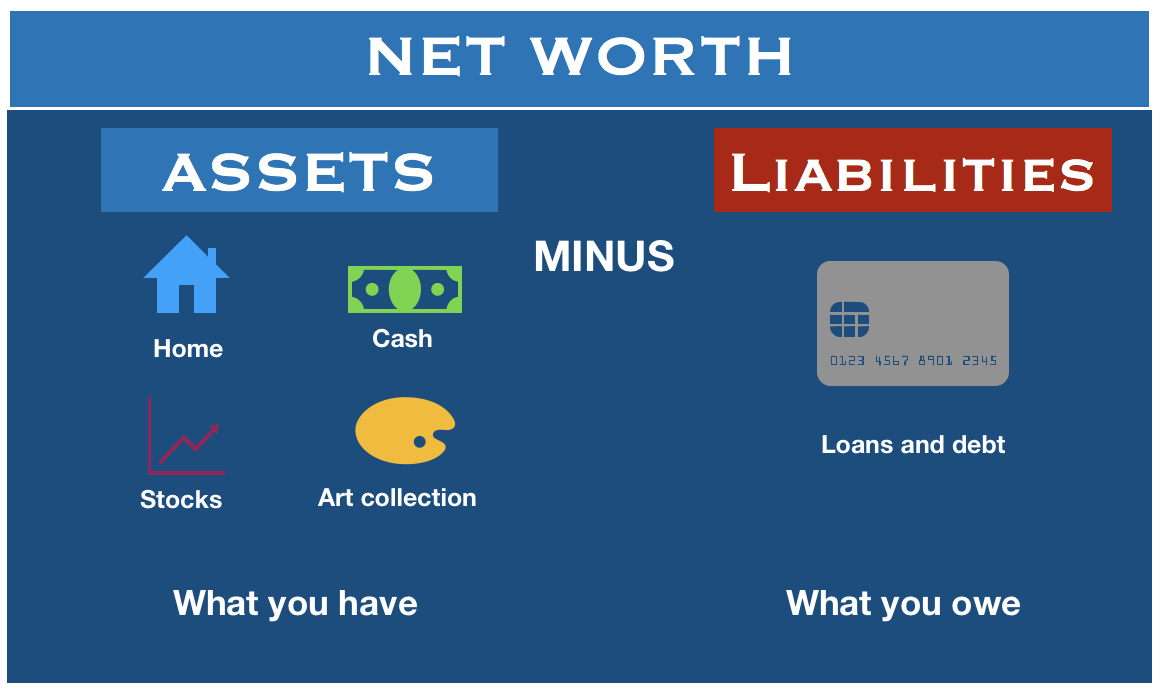
Using debt to build wealth might seem counterintuitive. After all, when you calculate your wealth, you look at what you own (assets) and subtract what you owe (debts and liabilities) to determine what your net worth (wealth) is.

It’s easy to oversimplify that debt is bad and is harmful to your wealth. Because some debt is really harmful, like credit cards, automobile, debt gets lumped into the category of “bad.”

But some types of debt can be useful and sometimes necessary to create wealth; home, education, business, etc. For folks that don’t readily have access to large sums of cash or capital, debt may be the tool that allows them to expand.

Borrow Carefully * Invest Wisely!

COMMENTS APPRECIATED

Subscribe and Refer

***

***

NET WORTH: Retirees Economic Class

LIMITED RESOURCES TO WEALTHY

By Staff Reporters

SPONSOR: http://www.MarcinkoAssociates.com

***

***

In retirement, according to Josephine Nesbit, your economic class can be broadly categorized into four distinct groups, each defined by their net worth and financial capabilities, ranging from retirees with limited resources to the wealthy. And, according to Moneywise, here are the net worth categories of the poor, middle class (and upper-middle class) and rich:

  • Poor retirees: Poor retirees are in the lower 20th percentile, and may have a net worth of around $10,000. This is often without property ownership, forcing many to rely mainly on Social Security or minimal pensions.
  • Middle-class retirees: Making up the 50th percentile, with a median net worth of approximately $281,000, this group usually includes home equity, retirement savings and a 401(k) plan.
  • Upper-middle-class retirees: These retirees possess a net worth between $201,800 and $608,900. They have diversified assets and enjoy a comfortable retirement cushion.
  • Rich retirees: In the 90th percentile, with net worth starting at $1.9 million, this group has much more financial freedom and is able to afford luxuries and legacy planning.

COMMENTS APPRECIATED

Refer and Subscribe

***

***

DJT EXECUTIVE ORDER: US Sovereign Wealth Fund Created

Trump orders creation of US sovereign wealth fund

BREAKING NEWS

By Staff Reporters

SPONSOR: http://www.MarcinkoAssociates.com

***

***

What Is a Sovereign Wealth Fund (SWF)?

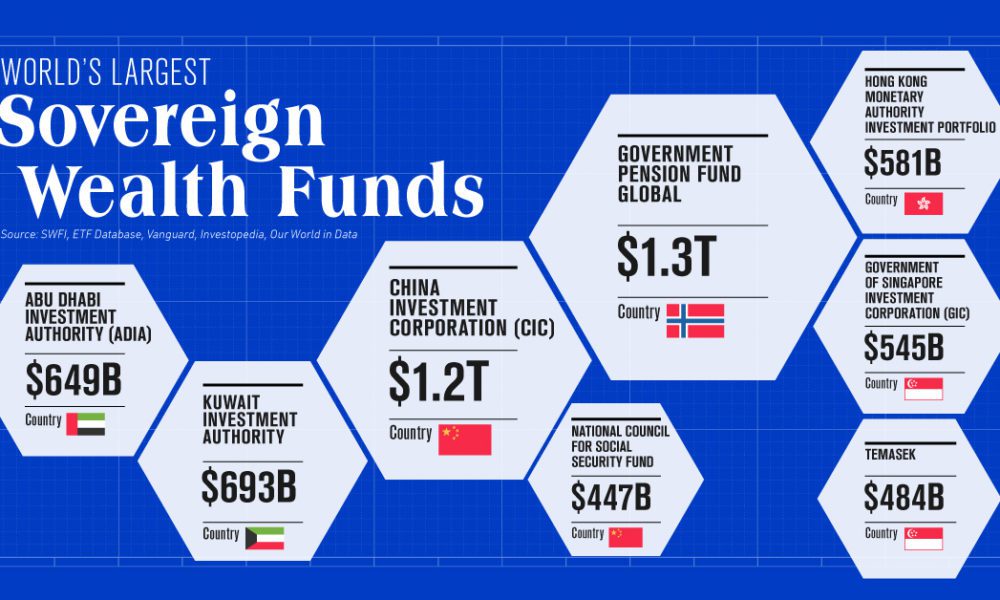
A Sovereign Wealth Fund (SWF) is a large pool of capital managed by a country’s government to achieve specific economic and social goals. These funds are invested in various assets such as stocks, bonds, real estate, commodities, and other financial instruments.

SWFs are typically funded from the savings of state-owned enterprises, foreign currency reserves from central banks, or commodity exports. The size and composition of each SWF can vary significantly between countries based on their respective economic circumstances. Each country has various reasons for setting up an SWF. However, the most common purpose of establishing one is to diversify and protect a country’s economy. For instance, this fund can be used as emergency reserves for potential future global financial shocks.

Purpose of a Sovereign Wealth Fund

Sovereign wealth funds invest a country’s wealth to achieve the government’s economic and social objectives. These funds provide countries with an additional method to diversify their economies and reduce risk exposure. They also give governments a chance to invest in global markets outside their own countries, which can get them better returns on their investments. This increases the earning potential on foreign exchanges and provides additional economic stability.

Furthermore, SWFs are a valuable tool to help countries build up buffers and savings for future generations to be better prepared for future economic shocks. Proper use of SWFs leads to long-term economic growth and stability.

In addition to providing an alternative form of investment for governments and enterprises worldwide, SWFs have also been used to increase financial transparency and accountability in many countries. By making their investment decisions public, these funds help promote corporate governance standards across the globe. This encourages market stability and reduces risks associated with certain types of investments.

MORE: https://www.financestrategists.com/financial-advisor/sovereign-wealth-fund-swf/

TRUMP: https://www.reuters.com/markets/wealth/trump-signs-executive-order-create-sovereign-wealth-fund-2025-02-03/

TRUMP: https://www.usnews.com/news/top-news/articles/2025-02-03/trump-signs-executive-order-to-create-sovereign-wealth-fund

COMMENTS APPRECIATED

Subscribe and Refer

***

***

MIDDLE CLASS: Once-in-a-Generation Wealth Boom Ends?

By Staff Reporters

***

DEFINITION: The Pew Research Center defines the middle class as households that earn between two-thirds and double the median U.S. household income, which was $65,000 in 2021, according to the U.S. Census Bureau. 21 Using Pew’s yardstick, middle income is made up of people who make between $43,350 and $130,000.

CITE: https://www.r2library.com/Resource/Title/0826102549

***

***

The American middle class is facing the biggest hit to its wealth in a generation going into the midterm election, although it is also entering the vote richer than it has ever been thanks to a decade of cheap money and the wealth boom it fed.

That’s the conclusion of a Bloomberg News examination that paired new wealth data with an exclusive Harris Poll of attitudes of the 100 million adults who sit at the core of the US economy and its politics ahead of the election.

READ HERE: https://www.bloomberg.com/graphics/2022-us-midterms-middle-class-wealth/?leadSource=uverify%20wall

***

ORDER: https://www.routledge.com/Comprehensive-Financial-Planning-Strategies-for-Doctors-and-Advisors-Best/Marcinko-Hetico/p/book/9781482240283


***

COMMENTS APPRECIATED

Thank You

***

Rags to Riches thru [Medical] Education?

Or … Riches to Rags for Docs and the ACA?

Join Our Mailing List

American society prides itself on being a meritocracy, particularly with the fruition of the ‘American Dream’ being achieved by individuals from all types of backgrounds; like doctors, Financial Advisors [FAs] and all medical professionals.

Success

Success today typically involves some form of higher education, to expand intellectual capacity and to hone a skill-set.

However, the highest quality education is not the most easily accessible. And so, this infographic takes a look at how the elite tend to fare well, and how the disadvantaged aren’t provided the same opportunities.

Source: www.onlineschools.org

Conclusion

Your thoughts and comments on this ME-P are appreciated. Feel free to review our top-left column, and top-right sidebar materials, links, URLs and related websites, too. Then, subscribe to the ME-P. It is fast, free and secure.

Link: http://feeds.feedburner.com/HealthcareFinancialsthePostForcxos

Speaker: If you need a moderator or speaker for an upcoming event, Dr. David E. Marcinko; MBA – Publisher-in-Chief of the Medical Executive-Post – is available for seminar or speaking engagements. Contact: MarcinkoAdvisors@msn.com

OUR OTHER PRINT BOOKS AND RELATED INFORMATION SOURCES:

DICTIONARIES: http://www.springerpub.com/Search/marcinko
PHYSICIANS: www.MedicalBusinessAdvisors.com
PRACTICES: www.BusinessofMedicalPractice.com
HOSPITALS: http://www.crcpress.com/product/isbn/9781466558731
CLINICS: http://www.crcpress.com/product/isbn/9781439879900
BLOG: www.MedicalExecutivePost.com
FINANCE: Financial Planning for Physicians and Advisors
INSURANCE: Risk Management and Insurance Strategies for Physicians and Advisors

Product Details

The Associated Press “American Dream”?

Join Our Mailing List 

On Changing Definitions

By Rick Kahler CFP® http://www.KahlerFinancial.com

Rick Kahler CFPThe surest road to financial success and independence is a long one. That path includes working hard at a career you enjoy, living on less than you earn, taking educated and appropriate risks, and building wealth gradually through diversified investing.

The American Dream

I know many people who have followed this route successfully. Their achievement—what has long been described as the American Dream—should be something to be proud of.

The Associated Press

Apparently, in today’s world, that isn’t the case. At least not according to an Associated Press news article published in the Rapid City Journal on December 9, 2013. The headline was straightforward enough: “Rising riches: 1 in 5 in US reaches affluence.” The article stated that 20% of Americans will have household incomes of $250,000 or more at some point in their lives. This includes those with high incomes for only one year or a few years. During those periods of affluence, they are in the top 2% of earners.

AP Inaccuracies and Assumptions

Beyond that, the piece was filled with inaccuracies and assumptions.

First, its writers confused “affluence” and “wealth.” Someone with a high income in a given year is affluent. Anyone with a basic grasp of finance, however, understands that wealth is associated with net worth. When only 2% of Americans have a net worth of $1 million or more, 20% can’t be accurately described as wealthy.

A One Time Affluent Deal

Some high earners are two-income couples, or professionals like physicians, at the peak of their careers. For others, affluence is a one-time deal.

Consider this example: A couple in their 50’s have always earned around $40,000 a year (adjusted for inflation). The husband inherits a $250,000 IRA from his parents. The couple decides to distribute the money in the IRA, pay the income taxes, and use the balance to pay off their mortgage. For that one year only, their income exceeds $250,000. That certainly isn’t enough to earn the label of “new rich.”

The article notes these “new rich” tend to be “much more fiscally conservative” than other Americans and “less likely to support public programs, such as food stamps or early public education to help the disadvantaged.” This makes anyone who ever receives over $250,000 in any one year look like Ebenezer Scrooge before his transformation. but it is true.

Windfalls

Ask anyone, no matter how liberal, who received a windfall in 2013 and watched 25% to 50% of it disappear to federal and state income taxes, whether they are happy about this income redistribution.

The AP also notes the number of people reporting income of over $250,000 doubled since 1979, leaving the impression that the rich are getting richer while the poor are getting poorer. While this is technically correct, the figures are meaningless because they are not adjusted for inflation.

cropped-header.jpg

Accenture’s Institute for High Performance and Research

The article also cites Paul F. Nunes of Accenture’s Institute for High Performance and Research, in support of its contention that those who are newly or temporarily affluent aren’t spending enough. Their “capacity to spend more will be important to a U.S. economic recovery.” Instead, they “spend just 60 percent of their before-tax income, often setting the rest aside for retirement or investing.”

Taking Care of Business

In other words, these successful Americans are doing exactly what the American Dream says they should do. They are taking care of themselves and planning for the future by working to build their short-term affluence into lasting wealth and financial independence.

Assessment

For this, they should be applauded. It would be more helpful to our country, economically and socially, to see them as role models rather than part of the problem. Instead of trying to bring successful people down, we would achieve more by using their example to lift others up.

More:

Conclusion

Your thoughts and comments on this ME-P are appreciated. Feel free to review our top-left column, and top-right sidebar materials, links, URLs and related websites, too. Then, subscribe to the ME-P. It is fast, free and secure.

Link: http://feeds.feedburner.com/HealthcareFinancialsthePostForcxos

Speaker: If you need a moderator or speaker for an upcoming event, Dr. David E. Marcinko; MBA – Publisher-in-Chief of the Medical Executive-Post – is available for seminar or speaking engagements. Contact: MarcinkoAdvisors@msn.com

OUR OTHER PRINT BOOKS AND RELATED INFORMATION SOURCES:

DICTIONARIES: http://www.springerpub.com/Search/marcinko
PHYSICIANS: www.MedicalBusinessAdvisors.com
PRACTICES: www.BusinessofMedicalPractice.com
HOSPITALS: http://www.crcpress.com/product/isbn/9781466558731
CLINICS: http://www.crcpress.com/product/isbn/9781439879900
BLOG: www.MedicalExecutivePost.com
FINANCE: Financial Planning for Physicians and Advisors
INSURANCE: Risk Management and Insurance Strategies for Physicians and Advisors

Product Details  Product Details

The Doctor’s Path to Wealth?

And … for us all

By Rick Kahler CFP® http://www.KahlerFinancial.com

Rick Kahler CFPAfter three decades as a financial planner, working with successful wealth-builders, you’d think I would have a clear idea of the right path for creating wealth.

Instead, what I’ve learned is that there is no such thing. Here are just a few of the paths that aren’t the sure routes to wealth they might seem to be:

Several Paths

1. Education and career choices. Going into a field like law or medicine might seem to guarantee financial success. Not necessarily. I’ve seen many physicians, for example, who have accumulated significant wealth. I’ve seen just as many who live paycheck to paycheck.

2. High earnings. Again, this isn’t the reliable predictor of wealth it would seem to be. True, someone who spends decades in low-wage jobs is unlikely to be able to accumulate much financial security. But a person earning $1 million a year will not necessarily have a larger net worth than someone earning $75,000. I’ve seen people who worked as janitors, nurses, and mechanics become millionaires. I’ve worked with others, earning a hundred times more in careers like sales or entertainment, who reach retirement age with absolutely nothing.

3. Owning your own business. Many hard-working, creative entrepreneurs build successful businesses that provide wealth, not just for themselves, but for their children and grandchildren. Others might see a business or even a series of businesses fail. Still others might work hard all their lives but never achieve more than the equivalent of an average salary in their field.

4. Investment choices. Some people have had great success investing in various types of real estate, businesses, and commodities. Others have lost everything they ever owned investing in those same vehicles.

Some Commonalities

So, sorry, I can’t give you a simple list of the top ways to build wealth. There’s little commonality in how my successful clients have made their money. What I can suggest are a few ways to help you find your own path to accumulating wealth.

1. Define “wealth” in your own way. Maybe you’re willing to live frugally in order to accumulate enough money to feel secure that your needs will be met even if you live to be 100. Maybe wealth to you is living a lavish lifestyle and being willing to work hard to pay for it. You might see wealth as the satisfaction and responsibility of having your own business. Maybe it means being able to give generously. Or perhaps you define wealth as the freedom of owning little and traveling around the world on a bicycle.

2. Know what you are willing to sacrifice—and what you are not—in order to accumulate wealth. There’s nothing wrong with earning a high salary doing work you hate for a time, as part of an overall strategy to get you to doing something you love. But doing so for a lifetime is hardly the road to either happiness or wealth.

3. Think long term. The most reliable way to build lifetime wealth, with the lowest risk, is through a long-term commitment to diversified investing. Yet even those who are successful on riskier paths to wealth take the long view. Business owners may fail more than once before they succeed. And those who have made fortunes in high-risk investments have also lost fortunes. They understand that success is about taking calculated risks.

4. Learn to make conscious financial decisions. I’ve seen many intelligent, capable people stuck in financial chaos and poverty because of emotional pain and dysfunction. Emotional health may not be essential for building financial wealth. It is, however, essential if you want to use that wealth to support a rich and satisfying life.

###

Stock Market

More:

Conclusion

Your thoughts and comments on this ME-P are appreciated. Feel free to review our top-left column, and top-right sidebar materials, links, URLs and related websites, too. Then, subscribe to the ME-P. It is fast, free and secure.

Speaker: If you need a moderator or speaker for an upcoming event, Dr. David E. Marcinko; MBA – Publisher-in-Chief of the Medical Executive-Post – is available for seminar or speaking engagements. Contact: MarcinkoAdvisors@msn.com

OUR OTHER PRINT BOOKS AND RELATED INFORMATION SOURCES:

***

  Risk Management, Liability Insurance, and Asset Protection Strategies for Doctors and Advisors: Best Practices from Leading Consultants and Certified Medical Planners™8Comprehensive Financial Planning Strategies for Doctors and Advisors: Best Practices from Leading Consultants and Certified Medical Planners™

***

Invite Dr. Marcinko

***

Upcoming Health Economics Interview with Dr. David Marcinko

Coming Soon from Medical Business News, Inc

By Ann Miller; RN, MHA

ME-P Executive-Directordr-david-marcinko22

Medical Business News, Inc., the publisher of Medical News of Arkansas, is a leading source for healthcare industry news that is truly useful. With a professional readership comprised of physicians and key industry decision makers, Medical News publications are devoted entirely to healthcare issues that impact both clinical and administrative best practices. Written and edited specifically for healthcare professionals, MBN writers work with experts at the local, regional and national level to keep stakeholders informed about the ever-evolving healthcare system.

Out Reach

It is no wonder then, why local market MNA editor Jennifer Boulden recently contacted us to arrange an interview with Dr. David Edward Marcinko, our Publisher-in-Chief, who is also a former insurance agent, registered investment advisor, health economist and Certified Financial Planner™

Link: www.MedicalBusinessAdvisors.com  

Interview Topics

The wide open topic in this environment of medically specific lethargy and macro economic insecurity – personal and business planning for physicians. Of course, since this is a broad field, we will use the rating and ranking system of this blog to help Jennifer and her staff, winnow down categories to top-of-mind concerns of our ME-P subscribers and her MNA readers.

Link: www.HealthcareFinancials.com

Assessment

But, we also ask you to send in any particular issues that you may have in order to make the interview helpful and exciting for all concerned.

Link: www.HealthDictionarySeries.com

Conclusion

And so, your thoughts and comments on this Medical Executive-Post are appreciated.

Link: www.CertifiedMedicalPlanner.com

Speaker: If you need a moderator or speaker for an upcoming event, Dr. David E. Marcinko; MBA – Publisher-in-Chief of the Executive-Post – is available for seminar or speaking engagements. Contact: MarcinkoAdvisors@msn.com  or Bio: www.stpub.com/pubs/authors/MARCINKO.htm

Get our Widget: Get this widget!

Subscribe Now: Did you like this Medical Executive-Post, or find it helpful, interesting and informative? Want to get the latest E-Ps delivered to your email box each morning? Just subscribe using the link below. You can unsubscribe at any time. Security is assured.

Link: http://feeds.feedburner.com/HealthcareFinancialsthePostForcxos