FINANCIAL Derivatives

By Dr. David Edward Marcinko MBA MEd

SPONSOR: http://www.MarcinkoAssociates.com

***

***

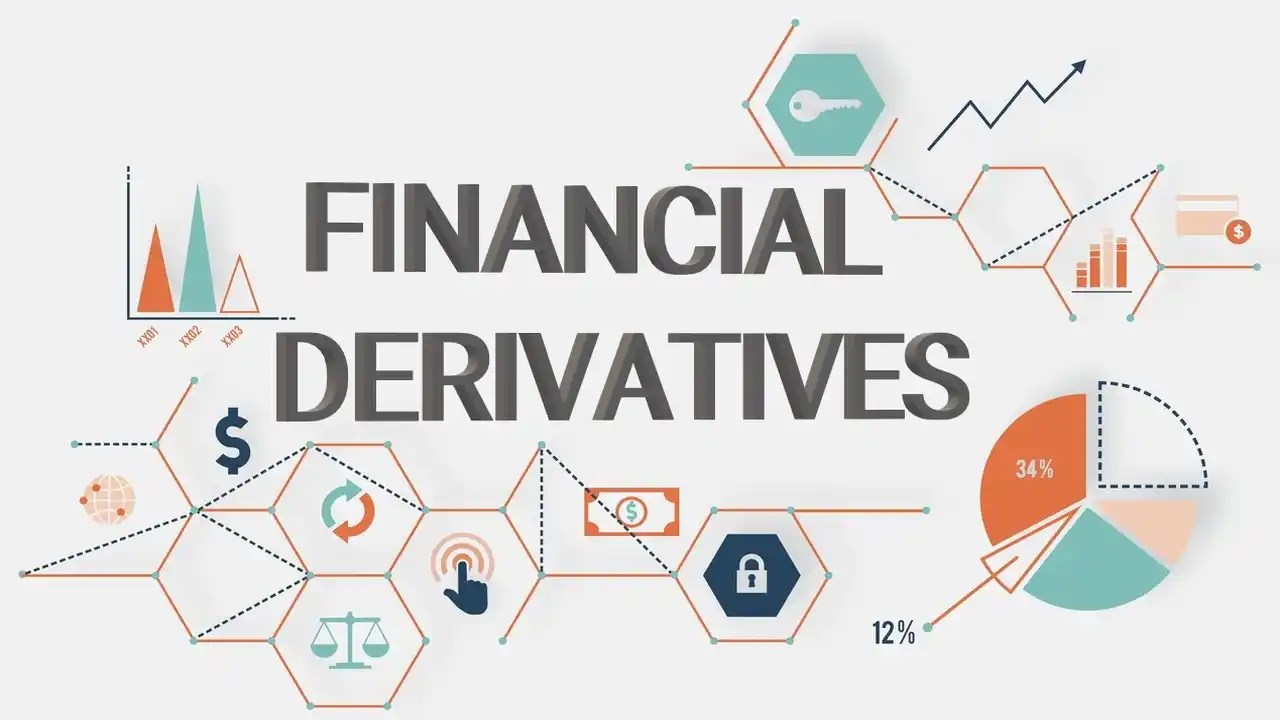
Derivatives are securities whose performance and/or structure is derived from the performance and/or structure of other assets, interest rates, or indexes. If used moderately and in appropriate situations, derivatives can help stabilize portfolios and/or enhance returns. However, if used in excess and/or in inappropriate circumstances, they can be harmful, potentially causing portfolio instability and/or losses. Derivatives are similar to medicine in their behavior–usually safe when used as directed, potentially toxic when abused.

There are many different types of derivative securities and many different ways to use them. Some derivative securities, such as mortgage-related and other asset-backed securities, are in many respects like any other investment, although they may be more volatile or less liquid than more traditional debt securities.

Futures and options are commonly used for traditional hedging purposes to attempt to protect portfolios from exposure to changing interest rates, securities prices or currency exchange rates, and for cash management purposes as a low-cost method of gaining exposure to a particular securities market without investing directly in those securities.

Certain other derivative securities may be described as structured investments. A structured investment is a security whose value or performance is linked to an underlying index or other security or asset class. Structured investments include collateralized mortgage obligations (CMOs). Structured investments also include securities backed by other types of collateral.

CITE: https://www.r2library.com/Resource/Title/0826102549

COMMENTS APPRECIATED

Subscribe Today!

***

***

DAILY UPDATE: New Highs for NASDAQ

MEDICAL EXECUTIVE-POST TODAY’S NEWSLETTER BRIEFING

***

Essays, Opinions and Curated News in Health Economics, Investing, Business, Management and Financial Planning for Physician Entrepreneurs and their Savvy Advisors and Consultants

Serving Almost One Million Doctors, Financial Advisors and Medical Management Consultants Daily

A Partner of the Institute of Medical Business Advisors , Inc.

http://www.MedicalBusinessAdvisors.com

SPONSORED BY: Marcinko & Associates, Inc.

***

http://www.MarcinkoAssociates.com

Daily Update Provided By Staff Reporters Since 2007.
How May We Serve You?
© Copyright Institute of Medical Business Advisors, Inc. All rights reserved. 2024

REFER A COLLEAGUE: MarcinkoAdvisors@msn.com

SPONSORSHIPS AVAILABLE: https://medicalexecutivepost.com/sponsors/

ADVERTISE ON THE ME-P: https://tinyurl.com/ytb5955z

Your Referral Count -0-

CITE: https://www.r2library.com/Resource

STOCKS UP

Trump Media & Technology Group rocketed higher at the opening bell, prompting the Nasdaq to halt trading on what has quickly become the meme stock du jour. Shares ended the day 8.76% higher.

  • 23andMe clawed 1.86% higher after introducing three new board members about a month after the entire board resigned.
  • VF Corp, parent company of clothing brands JanSport, Vans, and North Face, surged 27.01% thanks to an impeccable earnings report that revealed its turnaround plans are coming to fruition.
  • Trex, the stuff your dad built an awesome deck out of, saw sales fall last quarter but still managed to beat earnings expectations. Shares popped 6.19%.

STOCKS DOWN

  • JetBlue Airways sank 17.08% in spite of reporting a smaller loss than analysts expected. The problem is all the turbulence that lies ahead.
  • D.R. Horton is the largest homebuilder by market cap, so when it says that 2025 will be a bad year, investors should listen. Shares dropped 7.29% on the news.
  • Crocs stumbled 19.17% after beating earnings but announcing that its fiscal year would be bogged down by poor sales of its HeyDude shoe brand.
  • Stanley Black & Decker fell 8.77% after missing on both profits and sales, citing weaker consumer spending.
  • Xerox plummeted 17.41% after the company that can’t make a printer that works for longer than 3 months without needing a new ink cartridge announced weaker sales than expected.

CITE: https://tinyurl.com/2h47urt5

Here’s where the major benchmarks ended:

  • The S&P 500® index (SPX) rose 9.40(0.16%) to 5,832.92; the Dow Jones Industrial Average® ($DJI) fell 154.52 points (–0.36%) to 42,233.05; and the $COMP added points 145.55 (0.78%) to 18,712.75.
  • The 10-year Treasury note yield (TNX) finished unchanged at 4.27% after reaching nearly 4.34% earlier today.
  • The VIX fell slightly to 19.49.

CITE: https://tinyurl.com/tj8smmes

Visualize: How private equity tangled banks in a web of debt, from the Financial Times.

COMMENTS APPRECIATED

PLEASE SUBSCRIBE: MarcinkoAdvisors@msn.com

Thank You

***

***

***

***

EDUCATIONAL TEXTBOOKS: https://tinyurl.com/4zdxuuwf

***

DAILY UPDATE: Health-Care’s Future as Stocks Climb

MEDICAL EXECUTIVE-POST TODAY’S NEWSLETTER BRIEFING

***

Essays, Opinions and Curated News in Health Economics, Investing, Business, Management and Financial Planning for Physician Entrepreneurs and their Savvy Advisors and Consultants

Serving Almost One Million Doctors, Financial Advisors and Medical Management Consultants Daily

A Partner of the Institute of Medical Business Advisors , Inc.

http://www.MedicalBusinessAdvisors.com

SPONSORED BY: Marcinko & Associates, Inc.

***

http://www.MarcinkoAssociates.com

Daily Update Provided By Staff Reporters Since 2007.
How May We Serve You?
© Copyright Institute of Medical Business Advisors, Inc. All rights reserved. 2024

REFER A COLLEAGUE: MarcinkoAdvisors@msn.com

SPONSORSHIPS AVAILABLE: https://medicalexecutivepost.com/sponsors/

ADVERTISE ON THE ME-P: https://tinyurl.com/ytb5955z

Your Referral Count -0-

Healthcare’s future as HSBC Innovation Banking collaborated with LINUS and HLTH to help prepare the healthcare ecosystem for the future. The Health 2035 report goes in depth with discussions between visionaries in the ecosystem and studies of young physicians’ forecasts for what the state of care will be in the year 2035. Download the report.

CITE: https://www.r2library.com/Resource

Stocks Up

  • Trump Media & Technology Group soared 21.59% following a major rally at Madison Square Garden, an appearance on Joe Rogan’s podcast, and rising chances of winning the election. Fun fact: After this latest stock surge, Trump Media is now worth almost as much as social media network X.
  • Nio surged 10.46% thanks to an upgrade from Macquerie, whose analysts believe that the EV startup could see strong growth from new vehicle launches next year.
  • Spotify has earned a spot on Wells Fargo’s top pick playlist, with analysts confident the stock could rise over 20%. Shares rose 1.27%.
  • Lower oil prices hurt energy stock, but are a big boost for companies that spend a lot on fuel. Carnival Corp rose 4.83%, Royal Caribbean Cruises climbed 1.35%, and American Airlines popped 3.42%.

Stocks Down

  • Philips floundered 15.95% after the Dutch consumer goods manufacturer missed on earnings and lowered its full-year forecast.
  • Boeing continued to fall yet another 2.79%, this time on the news that it is raising $19 billion through a stock offering in the hopes that it fends off a credit rating downgrade.
  • Oil stocks took a beating thanks to a big decline for crude prices. Diamondback Energy fell 3.36%, APA Corp. dropped 4.51%, Exxon Mobil sank 0.49%, and BP lost 1.48%.

CITE: https://tinyurl.com/2h47urt5

Here’s where the major benchmarks ended:

  • The S&P 500® index (SPX)rose15.40points (0.27%) to 5,823.52; the Dow Jones Industrial Average® ($DJI) added 273.17 points (0.65%) to 42,387.57; and the NASDAQ Composite® ($COMP) gained 48.58 points (0.26%) to 18,567.19.
  • The 10-year Treasury note yield (TNX) climbed six basis points to 4.29%, the highest close since July 9.
  • The VIX fell to 19.53.

CITE: https://tinyurl.com/tj8smmes

Visualize: How private equity tangled banks in a web of debt, from the Financial Times.

COMMENTS APPRECIATED

PLEASE SUBSCRIBE: MarcinkoAdvisors@msn.com

Thank You

***

***

***

***

EDUCATIONAL TEXTBOOKS: https://tinyurl.com/4zdxuuwf

***

Challenging Investment Rules and Key Investor Traits

By Vitaliy Katenselson CFA

***

***

Today, we’re diving into two thought-provoking questions:

1. What’s a famous investment rule I don’t agree with?
2. Which key characteristics should a good investor have?

1. A Famous Investment Rule I Don’t Agree With: “Buy and Hold”

Buy and hold becomes a religion during bull markets. Then, holding a stock because you bought it is often rewarded through higher and higher valuations. There’s a Pavlovian bull market reinforcement – every time you don’t sell (hold) a stock, it goes higher.

Buying is a decision. So is holding, but it should not be a religion but a decision. The value of any company is the present value of its cash flows. When the present value of cash flows (per share) is less than the price of the stock, the stock should not be “held” but sold.

Warren Buffett is looked upon as the deity of buy and hold.

Look at Coca Cola when it hit $40 in 1999. Its earnings power at the time was about $0.80. It was trading at 50 times earnings. It was significantly overvalued, considering that most of the growth for this company was in the past.

Fast-forward almost a quarter of a century – literally a generation. Today the stock is at $60. It took more than a decade to reclaim its 1999 high. Today, Coke’s earnings power is around $1.50–1.90. Earnings have stagnated for over a decade. If you did not sell the stock in 1999, you collected some dividends, not a lot but some. The stock is still trading at 30–40x earnings. Unless they discover that Coke cures diabetes (not causes it), its earnings will not move much. It’s a mature business with significant health headwinds against it.

“Long-term” and “buy-and-hold” investing are often confused.

People should not own stocks unless they have a long-term time horizon. Long-term investing is an attitude, an analytical approach. When you build a discounted cash flow model, you are looking decades ahead. However, this doesn’t mean that you should stop analyzing the company’s valuation and fundamentals after you buy the stock, as they may change and affect your expected return. After you put in a lot of analytical work and buy the stock, you should not simply switch off your brain and become a mindless buy-and-hold investor.

This doesn’t mean you shouldn’t be patient, which I’ll discuss next; but holding, not selling, a stock is a decision.

2. Key Characteristics of a Good Investor

I’m going to sound a bit more preachy than usual, but it’s very difficult to answer this question in any other way.

You need three Ps – passion, patience, process.

Passion

Investing is not a 9-to-5 job; it’s a 24/7 adventure. Unlike flipping burgers or processing insurance claims, where you can clock in at 9 AM, fall into a stupor, and then reawaken at 5 PM when you clock out.

This should be your test: If you catch yourself treating investing as a 9-to-5 job, then you have little passion for it.

If this is the case, don’t do it (this probably applies to any choice of a profession). You don’t stand a chance against people for whom investing is a never-ending puzzle to be solved on their life’s journey. All of my investment friends are dripping with passion for investing; they are obsessed with it. None of them are in it only for the money.

You won’t last long in this profession if you’re not passionate about stocks.

Patience


Investing is like real life – the connection between effort and result is nonlinear. It is very loose.

You may be making all of the right rational decisions: You are buying stocks that lie within your EQ/IQ spectrum, and they are significantly undervalued, but the market simply doesn’t care. It just keeps sending your stocks down. To make things even more frustrating, while your stocks are declining, speculators who treat the stock market as a craps table at Caesars Palace are killing it, making money hand over fist. It’s painful. It is excruciatingly painful if you have the wrong client base.

This is where patience comes in. My father told me this story, which happened right before I was born.

My family lived in Murmansk, a city 125 miles north of the Arctic Circle in northwest Russia. My mom went to give birth to my brothers and me in Saratov, a city in central Russia, about 1200 miles from Murmansk. She wanted to be closer to her parents. My father could not leave work, so he stayed in Murmansk.

A few weeks before I was born, he went to visit his best friend, Alexander. He told him that he was worried about my mom and the birth. His friend told him something that I remember to this day (with a chuckle): “Naum, you did your part; you cannot go back and correct what you did. Now you just have to wait.”

Investing is patience punctuated by decisions.

As the French mathematician Blaise Pascal said, “All of humanity’s problems stem from man’s inability to sit quietly in a room alone.”

One more thought here: I try to take the temperature of my emotions and the mental activity of my brain. When I find myself overheating, with the stock market occupying my entire brain, I forcibly disconnect and unplug myself from it. The quality of my thoughts and decisions when my brain is overheating is likely to be low. So, I go for a walk in the park, read a fiction book, go see a movie, or visit an art museum.

Process


Managing someone else’s money is an incredible responsibility, which you may not fully appreciate during bull markets. But sideways and bear markets will remind you quickly.

I don’t want to over-glorify what we do – we are not curing cancer or saving people from burning buildings. But IMA clients entrust us with their life savings and tell me, “Vitaliy, please don’t screw it up.”

My decisions may determine whether our clients get to retire, pay for their medical expenses, or help their kids buy houses.

Staying rational when the world around you is melting up with greed or melting down in fear isn’t a capacity that one accidentally stumbles upon. You engineer it through a series of small, repeatable decisions – your investment process.

COMMENTS APPRECIATED

Thank You

***

***

DAILY UPDATE: Stocks Finish with New NASDAQ High

MEDICAL EXECUTIVE-POST TODAY’S NEWSLETTER BRIEFING

***

Essays, Opinions and Curated News in Health Economics, Investing, Business, Management and Financial Planning for Physician Entrepreneurs and their Savvy Advisors and Consultants

Serving Almost One Million Doctors, Financial Advisors and Medical Management Consultants Daily

A Partner of the Institute of Medical Business Advisors , Inc.

http://www.MedicalBusinessAdvisors.com

SPONSORED BY: Marcinko & Associates, Inc.

***

http://www.MarcinkoAssociates.com

Daily Update Provided By Staff Reporters Since 2007.
How May We Serve You?
© Copyright Institute of Medical Business Advisors, Inc. All rights reserved. 2024

REFER A COLLEAGUE: MarcinkoAdvisors@msn.com

SPONSORSHIPS AVAILABLE: https://medicalexecutivepost.com/sponsors/

ADVERTISE ON THE ME-P: https://tinyurl.com/ytb5955z

Your Referral Count -0-

CITE: https://www.r2library.com/Resource

Here’s where the major benchmarks ended:

  • The SPX fell 1.74 points (–0.03%) to 5,808.12 to end the week down 0.96%; the $DJI lost 259.96 points (–0.61%) to 42,114.40 to end the week down 2.68%; and the $COMP rose 103.12 points (0.56%) to 18,518.61 to end the week up 0.16%.
  • The 10-year Treasury note yield (TNX) added three basis points to 4.23%.
  • The CBOE Volatility Index® (VIX) climbed sharply to 19.95, nearing recent highs. The 20 level is an area to watch next week, as it traditionally signals more volatile markets.

CITE: https://tinyurl.com/2h47urt5

Stocks Up

  • Pick a direction already: On Wednesday, Spirit Airlines soared 30% on news of a possible merger with Frontier. On Thursday, shares plunged 21% as investors took their profits. Today, shares are back up 15.05% after Spirit announced it will cut jobs and sell planes in an effort to boost profits.
  • Texas Roadhouse sizzled like a porterhouse T-bone, rising 3.58% after announcing that earnings rose 32% last quarter.
  • Deckers Outdoor popped 10.57% thanks to soaring demand for Hoka shoes, helping the footwear company beat earnings estimates and raise forecasts.
  • Newell Brands may not be a household name, but they make household goods like Sharpies, Elmer’s Glue, and Crock-Pot—all things that people bought a ton of last quarter, which is why shares soared 21.59% today.
  • Apple is just fine, thanks: The Market Cap King got a rare analyst downgrade from KeyBanc, which is worried about lower demand from China. Shareholders were unfazed, and the stock rose 0.36%.

STOCKS DOWN

  • AutoNation hasn’t shaken off the aftereffects of a major cyberattack in July just yet, which is why revenue and earnings both missed estimates last quarter. Shares fell 4.46% today.
  • Colgate-Palmolive announced a beat-and-raise quarter, but it wasn’t enough to impress shareholders, who pushed the consumer staples giant down 4.14%.
  • Mohawk Industries was the worst-performing stock on the market at one point today, falling 13.70% after the flooring manufacturer reported disappointing earnings and lowered its fiscal forecast.
  • Online education company Coursera got an F from shareholders after the company lowered its revenue guidance for the full fiscal year. Shares dropped 9.83%.
  • Newmont had its worst day in over a decade yesterday after the gold miner reported shockingly bad earnings, with higher costs offsetting the rising price of gold. Shares continued to fall 1.69% today.

CITE: https://tinyurl.com/tj8smmes

Visualize: How private equity tangled banks in a web of debt, from the Financial Times.

COMMENTS APPRECIATED

PLEASE SUBSCRIBE: MarcinkoAdvisors@msn.com

Thank You

***

***

***

***

EDUCATIONAL TEXTBOOKS: https://tinyurl.com/4zdxuuwf

***

DAILY UPDATE: Inflation Calm but Stock Markets Down

MEDICAL EXECUTIVE-POST TODAY’S NEWSLETTER BRIEFING

***

Essays, Opinions and Curated News in Health Economics, Investing, Business, Management and Financial Planning for Physician Entrepreneurs and their Savvy Advisors and Consultants

Serving Almost One Million Doctors, Financial Advisors and Medical Management Consultants Daily

A Partner of the Institute of Medical Business Advisors , Inc.

http://www.MedicalBusinessAdvisors.com

SPONSORED BY: Marcinko & Associates, Inc.

***

http://www.MarcinkoAssociates.com

Daily Update Provided By Staff Reporters Since 2007.
How May We Serve You?
© Copyright Institute of Medical Business Advisors, Inc. All rights reserved. 2024

REFER A COLLEAGUE: MarcinkoAdvisors@msn.com

SPONSORSHIPS AVAILABLE: https://medicalexecutivepost.com/sponsors/

ADVERTISE ON THE ME-P: https://tinyurl.com/ytb5955z

Your Referral Count -0-

Quote: “It looks like the global battle against inflation has largely been won, even if price pressures persist in some countries. In most countries, inflation is now hovering close to central bank targets…The decline in inflation without a global recession is a major achievement.”—IMF (CNN Business)

CITE: https://www.r2library.com/Resource

STOCKS UP

  • Spirit Airlines is back from the dead, soaring 46.67% on a Wall Street Journal report that it may end up merging with Frontier Airlines after all. Frontier Airlines rose 0.76% on the news.
  • AT&T climbed 4.65% after it beat earnings expectations in the third quarter, though it missed on revenue.
  • Starbucks fell hard late yesterday but recovered a bit this afternoon after new CEO Brian Niccol said the coffee chain is suspending its 2025 fiscal outlook. Shares rose 0.86% today.
  • Stride Technology sprinted 39.11% higher after the education technology company absolutely crushed earnings expectations.

STOCKS DOWN

  • Coca-Cola fizzled 2.07% after beating both top and bottom line expectations. The problem is that the only reason the soda giant performed well was because it raised prices, while demand for soft drinks slowed.
  • Enphase Energy plummeted 14.92% after the solar stock missed on both earnings and revenue expectations last quarter.
  • Boeing is a very familiar name in the “What’s down” section, and its latest earnings report did nothing to help. The manufacturing giant notched a $6 billion loss last quarter, and shares fell 1.76%.

CITE: https://tinyurl.com/2h47urt5

Here’s where the major benchmarks ended:

  • The SPX fell 53.78 points (–0.92%) to 5,797.42; the Dow Jones Industrial Average® ($DJI) lost 409.94 points (–0.96%) to 42,514.95; and the NASDAQ Composite ($COMP) dropped 296.47 points (–1.60%) to 18,276.65.
  • The 10-year Treasury note yield gained four basis points to 4.24%. 
  • The CBOE Volatility Index® (VIX) jumped to 19.37.

CITE: https://tinyurl.com/tj8smmes

Visualize: How private equity tangled banks in a web of debt, from the Financial Times.

COMMENTS APPRECIATED

PLEASE SUBSCRIBE: MarcinkoAdvisors@msn.com

Thank You

***

***

***

***

EDUCATIONAL TEXTBOOKS: https://tinyurl.com/4zdxuuwf

***

DAILY UPDATE: 2025 IRS Tax Brackets as Stock Markets Barely Budge

MEDICAL EXECUTIVE-POST TODAY’S NEWSLETTER BRIEFING

***

Essays, Opinions and Curated News in Health Economics, Investing, Business, Management and Financial Planning for Physician Entrepreneurs and their Savvy Advisors and Consultants

Serving Almost One Million Doctors, Financial Advisors and Medical Management Consultants Daily

A Partner of the Institute of Medical Business Advisors , Inc.

http://www.MedicalBusinessAdvisors.com

SPONSORED BY: Marcinko & Associates, Inc.

***

http://www.MarcinkoAssociates.com

Daily Update Provided By Staff Reporters Since 2007.
How May We Serve You?
© Copyright Institute of Medical Business Advisors, Inc. All rights reserved. 2024

REFER A COLLEAGUE: MarcinkoAdvisors@msn.com

SPONSORSHIPS AVAILABLE: https://medicalexecutivepost.com/sponsors/

ADVERTISE ON THE ME-P: https://tinyurl.com/ytb5955z

Your Referral Count -0-

The IRS has announced the annual inflation adjustments for the year 2025, including tax rate schedules, tax tables and cost-of-living adjustments. These are the official numbers for the tax year 2025—that tax year begins January 1, 2025. These are not the numbers that you’ll use to prepare your 2024 tax returns in 2025 (you’ll find those official 2024 tax numbers here). These are the numbers that you’ll use to prepare your 2025 tax returns in 2026.

CITE: https://www.r2library.com/Resource

STOCKS UP

  • Philip Morris International was smoking hot today, rising 10.47% to a record high thanks to strong demand for its Zyn nicotine pouches.
  • Americans just love a pickup truck: General Motors revved 9.85% higher on an impressive beat-and-raise earnings report.
  • Trump Media & Technology Group rose 9.87% to its highest level since July as the “Trump trade” wagering on the former president to regain the White House picks up steam.
  • Quest Diagnostics isn’t just a sad, windowless building where you get your blood drawn—it’s also been a pretty profitable investment. Shares rose 6.88% on strong earnings and revenue growth.

STOCKS DOWN

  • Stop us if you’ve heard this one before: Target is cutting the price of 2,000 products ahead of the holiday season. Shares sank 1.13% as shareholders digest what appears to be a desperate move to boost sales.
  • Verizon Communications dropped 5.03% after missing on both revenue and earnings estimates. But the real problem was slowing customer growth and phone sales.
  • Defense contractors were in the earnings spotlight today, and none of them did well. GE Aerospace tumbled 9.07% despite beating analyst forecasts and Lockheed Martin fell 6.12% after sales missed estimates.
  • Genuine Parts, better known as NAPA Auto Parts, plummeted 20.96% after earnings missed estimates and the company announced lower fiscal year forecasts.

CITE: https://tinyurl.com/2h47urt5

Here’s where the major benchmarks ended:

  • The SPX fell 2.78 points (–0.05%) to 5,851.20; the Dow Jones Industrial Average® ($DJI) lost 6.71 points (–0.02%) to 42,924.89; and the $COMP gained 33.12 points (0.18%) to 18,573.13.
  • The 10-year Treasury note yield (TNX) added two basis points to 4.2%.
  • The CBOE Volatility Index® (VIX) fell to 18.15, down from above 20 a week ago.

CITE: https://tinyurl.com/tj8smmes

Visualize: How private equity tangled banks in a web of debt, from the Financial Times.

COMMENTS APPRECIATED

PLEASE SUBSCRIBE: MarcinkoAdvisors@msn.com

Thank You

***

***

***

***

EDUCATIONAL TEXTBOOKS: https://tinyurl.com/4zdxuuwf

***

DAILY UPDATE: Life Span, Earnings Reports, Oil, Gold and Bitcoin with Closing Stock Highs

MEDICAL EXECUTIVE-POST TODAY’S NEWSLETTER BRIEFING

***

Essays, Opinions and Curated News in Health Economics, Investing, Business, Management and Financial Planning for Physician Entrepreneurs and their Savvy Advisors and Consultants

Serving Almost One Million Doctors, Financial Advisors and Medical Management Consultants Daily

A Partner of the Institute of Medical Business Advisors , Inc.

http://www.MedicalBusinessAdvisors.com

SPONSORED BY: Marcinko & Associates, Inc.

***

http://www.MarcinkoAssociates.com

Daily Update Provided By Staff Reporters Since 2007.
How May We Serve You?
© Copyright Institute of Medical Business Advisors, Inc. All rights reserved. 2024

REFER A COLLEAGUE: MarcinkoAdvisors@msn.com

SPONSORSHIPS AVAILABLE: https://medicalexecutivepost.com/sponsors/

ADVERTISE ON THE ME-P: https://tinyurl.com/ytb5955z

Your Referral Count -0-

Maximum lifespans. The upper limit of human life expectancy is leveling out, according to a new study published in the journal Nature Aging. Back in 1990, life-extending tech and health measures were increasing the average global lifespan by about 2.5 years per decade, but that dropped to 1.5 years per decade in the 2010s and closer to zero in the US, where there are more drug overdoses, shootings, and medical care inequities.

CITE: https://www.r2library.com/Resource

  • Stocks kicked off the first full week of earnings season at full throttle. The S&P 500 rose to a new intraday record, the Dow closed above 43,000 for the first time ever, and the NASDAQ climbed steadily throughout the trading session.
  • Bitcoin soared on the news of China’s additional stimulus spending that broke this weekend. Although the Chinese government’s plans are light on details at the moment, the promise of more support for the world’s second largest economy was enough to get crypto traders hyped.

CITE: https://tinyurl.com/2h47urt5

  • Interestingly enough, those same promises of Chinese stimulus sent oil tumbling to start the day. The selling was exacerbated by OPEC’s announcement that crude demand will fall lower than expected in 2024 and 2025.
  • Gold sank a hair today as traders weighed Chinese stimulus against a stronger dollar.

CITE: https://tinyurl.com/tj8smmes

Here’s where the major benchmarks ended:

  • The S&P 500® index (SPX) rose44.82points (0.77%) to 5,859.85, a new closing high; the Dow Jones Industrial Average® ($DJI) increased 201.36 points (0.47%) to 43,065.22, also a new closing high; and the NASDAQ Composite® ($COMP) added 159.74 points (0.87%) to 18,502.69.
  • The 10-year Treasury note yield (TNX) did not trade today due to the holiday. 
  • The CBOE Volatility Index® (VIX) slipped to 19.9, its first drop below 20 since October 4.

A slate of corporate earnings reports coming from Goldman Sachs, Bank of America, and Citigroup in the financial sector, along with healthcare giants Johnson & Johnson, Walgreens, and UnitedHealth. And throughout the week: Morgan Stanley will report on Wednesday, Netflix reports on Thursday, and Procter & Gamble and American Express drop their financials on Friday. It’ll pose a big test for the stock market’s $8 trillion rally this year.

COMMENTS APPRECIATED

PLEASE SUBSCRIBE: MarcinkoAdvisors@msn.com

Thank You

***

***

***

***

EDUCATIONAL TEXTBOOKS: https://tinyurl.com/4zdxuuwf

***

COLUMBUS DAY 2024: Stocks, Bonds, Gold & Oil

By Staff Reporters

***

U.S. stock markets, including the New York Stock Exchange and the NASDAQ remain open and follow a regular schedule today.

The bond markets will be closed, however.

***

***

  • Stocks ended last week on a high note, closing out their fifth straight week of gains. The Dow was pushed to yet another new all-time high by strong earnings from JPMorgan, while the S&P 500 was in the green and rose to its own record close, and the NASDAQ clawed its way out of the red by early Friday afternoon.
  • Bond yields took a breather, falling below 4.1% thanks to a better-than-expected PPI report that helped offset inflation fears that had re-arisen after a worse-than-expected CPI report.
  • Gold rose as well on PPI news, since the data pointed to a better chance of more rate cuts ahead.
  • Oil fell a bit but gained over the last two weeks on geopolitical tensions and destruction in the Gulf of Mexico following the two major hurricanes.

COMMENTS APPRECIATED

Thank You

***

***

STOCK MARKET: A Zero Sum Bias?

By Staff Reporters

FINANCIAL / INVESTMENT ADVISORS & STOCK BROKERS

SPONSOR: http://www.MarcinkoAssociates.com

***

***

According to colleague Dan Ariely PhD, a Zero Sum Bias [ZSB] is the mistaken belief that one person’s gain is another’s loss. It’s like thinking the world is a giant pie with only so many slices. This mindset fuels competition and jealousy, making us forget that collaboration can create more pie. It’s why we sometimes root against others instead of working together.

Question: Is the stock market a zero-sum game? You frequently hear media refer to games and markets as zero-sum games.

Answer: Well, yes, we define the stock market as a zero-sum game, both in the short and in the long term, although it technically is incorrect. A zero-sum game is where one person’s gain is another person’s loss – thus there is no wealth created and the overall benefit is zero. This doesn’t apply to stocks, but it’s a zero-sum game in relation to a stock market benchmark.

For example, short-term trading in stocks is theoretically not a zero-sum game, and neither is long-term investing. But short-term trading is close to a zero-sum game, and long-term investing is a zero-sum game if we use a broad index as a benchmark.

Essentially, in other words, the stock market functions as an expansive network of zero-sum transactions; each trade engages a buyer and a seller–their perspectives on a security’s future value contrasting. These opposing views propel market prices: they mirror not only risk transfer but also potential reward—a dynamic process indeed! Traders and investors must grasp the crucial zero-sum aspect; it underscores trading’s inherent competitiveness. Effectively anticipating market trends and actions from other participants: therein lies success in this environment. 

CITE: https://www.r2library.com/Resource/Title/0826102549

So, next time you feel like someone else’s success diminishes your own, remember: there’s more than enough pie to go around.

COMMENTS APPRECIATED

Thank You

***

***

DAILY UPDATE: Pfizer Down While Stock Markets Ignite

MEDICAL EXECUTIVE-POST TODAY’S NEWSLETTER BRIEFING

***

Essays, Opinions and Curated News in Health Economics, Investing, Business, Management and Financial Planning for Physician Entrepreneurs and their Savvy Advisors and Consultants

Serving Almost One Million Doctors, Financial Advisors and Medical Management Consultants Daily

A Partner of the Institute of Medical Business Advisors , Inc.

http://www.MedicalBusinessAdvisors.com

SPONSORED BY: Marcinko & Associates, Inc.

***

http://www.MarcinkoAssociates.com

Daily Update Provided By Staff Reporters Since 2007.
How May We Serve You?
© Copyright Institute of Medical Business Advisors, Inc. All rights reserved. 2024

REFER A COLLEAGUE: MarcinkoAdvisors@msn.com

SPONSORSHIPS AVAILABLE: https://medicalexecutivepost.com/sponsors/

ADVERTISE ON THE ME-P: https://tinyurl.com/ytb5955z

Your Referral Count -0-

Activist investor takes $1 billion stake in Pfizer. The firm Starboard Value has amassed a stake in the pharma giant, which has struggled after reaching new heights during the pandemic, in hopes of turning the company around.

CITE: https://www.r2library.com/Resource

What’s up

  • If you can’t beat ‘em, join ‘em: WW International, aka WeightWatchers, soared 46.95% after the company announced it will begin offering GLP-1 weight-loss drugs.
  • Nvidia rose 4.05% after the Foxconn CEO told CNBC that AI demand is still incredibly strong.
  • Trump Technology & Media Group soared 18.54% after Tesla CEO Elon Musk appeared alongside the former president at a rally in Pennsylvania over the weekend.
  • Palantir popped 6.58% after the CTO of the data analytics firm appeared on CNBC and told everyone that his company is making mad money.
  • Welcome to the club: S&P Global announced that DocuSign is replacing MDU Resources Group in the S&P MidCap 400 index, while MDU is moving to the S&P SmallCap 600 index. Docusign rose 6.55% on the news, while MDU gained 2.44%.
  • Humana finally caught a break when a Bernstein analyst upgraded the stock today, writing that the health insurer has been hurt enough. Shares rose 2.92%.

What’s down

  • What goes up must come down: Chinese stocks, which have enjoyed an impressive rally recently, came tumbling back to Earth today after the country’s state planner didn’t announce any new stimulus measures. Bilibili fell 12.93%, JD.com lost 7.52%, Alibaba sold off 6.67%, and Nio dropped 8.10%.
  • Today’s oil selloff pummeled energy stocks: Valero Energy lost 5.31%, while Marathon Petroleum stumbled 7.66%.
  • Sphere Entertainment dropped 2.84% on the news that its CFO is leaving the company.
  • Super Micro Computer gave back 5.01% after its rally yesterday as investors pocketed their profits.

CITE: https://tinyurl.com/2h47urt5

Here’s where the major benchmarks ended:

  • The SPX rose 55.19 points (0.97%) to 5,751.15; the Dow Jones Industrial Average® ($DJI) added 126.13 points (0.30%) to 42,080.37; and the NASDAQ Composite® ($COMP) gained 259.01 points (1.45%) to 18,182.92.
  • The 10-year Treasury note yield (TNX) rose one basis point to 4.03%.
  • The CBOE Volatility Index® (VIX) sank to 21.24, still above its long-term average.

CITE: https://tinyurl.com/tj8smmes

COMMENTS APPRECIATED

PLEASE SUBSCRIBE: MarcinkoAdvisors@msn.com

Thank You

***

***

***

***

EDUCATIONAL TEXTBOOKS: https://tinyurl.com/4zdxuuwf

***

DAILY UPDATE: MSFT, J&J and CVS as Stock Markets Lag

MEDICAL EXECUTIVE-POST TODAY’S NEWSLETTER BRIEFING

***

Essays, Opinions and Curated News in Health Economics, Investing, Business, Management and Financial Planning for Physician Entrepreneurs and their Savvy Advisors and Consultants

Serving Almost One Million Doctors, Financial Advisors and Medical Management Consultants Daily

A Partner of the Institute of Medical Business Advisors , Inc.

http://www.MedicalBusinessAdvisors.com

SPONSORED BY: Marcinko & Associates, Inc.

***

http://www.MarcinkoAssociates.com

Daily Update Provided By Staff Reporters Since 2007.
How May We Serve You?
© Copyright Institute of Medical Business Advisors, Inc. All rights reserved. 2024

REFER A COLLEAGUE: MarcinkoAdvisors@msn.com

SPONSORSHIPS AVAILABLE: https://medicalexecutivepost.com/sponsors/

ADVERTISE ON THE ME-P: https://tinyurl.com/ytb5955z

Your Referral Count -0-

Rosh Hashanah, the Jewish New Year, begins tonight and ends on Friday. Shana Tova to those celebrating.

Microsoft overhauled its Copilot AI assistant, adding voice and vision capabilities to make it more personalized.


A new report from Deloitte reveals improving health equity could increase the country’s GDP by $2.8 trillion by 2040 and increase U.S.-based corporate profits by $763 billion.


And … Johnson & Johnson’s is not moving forward with implementation of its proposed rebate model after HRSA push-back.  

CITE: https://www.r2library.com/Resource

What’s up stocks

  • Caesars Entertainment popped 5.27% after it announced it will buy back $500 million in common shares while also offering $1 billion in senior notes to raise money.
  • Joby Aviation surged 27.92% on the news that Toyota will invest another $500 million in the aviation startup as it attempts to build a flying electric taxi.
  • Lamb Weston Holdings rose 2.62% thanks to a strong earnings report and a comprehensive restructuring plan for the french fry titan.
  • Novavax soared 19.16% following a glowing report from Jefferies analysts citing the pharma company’s strong vaccine sales.

What’s down stocks

  • Tesla sank 3.49% after revealing that auto deliveries for the third quarter came in lower than analysts expected.
  • Ford fell 2.51% for pretty much the same reason, reporting disappointing sales growth in the third quarter.
  • It’s never a good thing when a company pulls its guidance, and that was certainly true for Nike today. Shares dropped 6.77% after the company postponed its investor day and reported a 10% year over year decline in sales.
  • Nike’s report was so bad that shares of Foot Locker and Dick’s Sporting Goods fell 2.97% and 0.23%, respectively.
  • Humana plummeted 11.79% on the news that membership in its 4 star-rated Medicare Advantage plans plunged 94%.
  • Conagra Brands dropped 8.07% after the packaged food giant missed on both sales and earnings estimates last quarter.

CITE: https://tinyurl.com/2h47urt5

Here’s where the major benchmarks ended:

  • The S&P 500® index (SPX)was little changed at 5,709.54; the Dow Jones Industrial Average ($DJI) rose 39.55 points (0.09%) to 42,196.52; the NASDAQ Composite® ($COMP) gained 14.76 points (0.08%) to 17,925.12.
  • The 10-year Treasury note yield (TNX) added 5 basis points to 3.78%. 
  • The CBOE Volatility Index® (VIX) edged 0.4 points lower to 18.86.

CITE: https://tinyurl.com/tj8smmes

CVS is laying off nearly 3,000. The healthcare giant is conducting a strategic review as its stock has fallen more than 20% this year, the Wall Street Journal reported

COMMENTS APPRECIATED

PLEASE SUBSCRIBE: MarcinkoAdvisors@msn.com

Thank You

***

***

***

***

EDUCATIONAL TEXTBOOKS: https://tinyurl.com/4zdxuuwf

***

DAILY UPDATE: Health Plan Costs Up and Stock Markets Upbeat

MEDICAL EXECUTIVE-POST TODAY’S NEWSLETTER BRIEFING

***

Essays, Opinions and Curated News in Health Economics, Investing, Business, Management and Financial Planning for Physician Entrepreneurs and their Savvy Advisors and Consultants

Serving Almost One Million Doctors, Financial Advisors and Medical Management Consultants Daily

A Partner of the Institute of Medical Business Advisors , Inc.

http://www.MedicalBusinessAdvisors.com

SPONSORED BY: Marcinko & Associates, Inc.

***

http://www.MarcinkoAssociates.com

Daily Update Provided By Staff Reporters Since 2007.
How May We Serve You?
© Copyright Institute of Medical Business Advisors, Inc. All rights reserved. 2024

REFER A COLLEAGUE: MarcinkoAdvisors@msn.com

SPONSORSHIPS AVAILABLE: https://medicalexecutivepost.com/sponsors/

ADVERTISE ON THE ME-P: https://tinyurl.com/ytb5955z

Your Referral Count -0-

Despite inflation cooling down, employer health plan costs are heating up, according to a September analysis from consulting firm consulting firm Mercer.

CITE: https://www.r2library.com/Resource

STOCKS UP

STOCKS DOWN

Stellantis, the European company behind Chrysler, Dodge, and Jeep sank 12.49% after it warned that sales in the second half of its fiscal year will come in lower than expected. The bad news pulled down shares of competitors Aston Martin (which fell 24.51%), Ford (a 2% drop), and GM (3.53% lower today).

  • Carnival beat top and bottom line estimates last quarter, and posted record revenue for the third quarter. But shares stumbled 0.32% on management’s forecast that earnings in the fourth quarter will disappoint. Rival cruise companies all dropped in sympathy: Royal Caribbean fell 0.10%, while Norwegian Cruise Line Holdings tumbled 2.10%.
  • Crypto stocks took a beating today after bitcoin’s latest rally fizzled out. Coinbase fell 6.83%, while MicroStrategy lost 4.32%.

CITE: https://tinyurl.com/2h47urt5

Here’s where the major stock market benchmarks ended:

  • The SPX gained 24.26 points (0.42%) to 5,762.48; the Dow Jones Industrial Average® ($DJI) rose 17.15 points (0.04%) to 42,330.15; the NASDAQ Composite® ($COMP) added 69.58 points (0.38%) to 18,189.17.
  • The 10-year Treasury note yield (TNX) climbed five basis points to 3.8%, near the high of its recent range.
  • The CBOE Volatility Index® (VIX) eased to 16.66 after climbing above 17 earlier today but remains up from a week ago.

CITE: https://tinyurl.com/tj8smmes

COMMENTS APPRECIATED

PLEASE SUBSCRIBE: MarcinkoAdvisors@msn.com

Thank You

***

***

***

***

EDUCATIONAL TEXTBOOKS: https://tinyurl.com/4zdxuuwf

***

DAILY UPDATE: The Stock Markets and Meta

MEDICAL EXECUTIVE-POST TODAY’S NEWSLETTER BRIEFING

***

Essays, Opinions and Curated News in Health Economics, Investing, Business, Management and Financial Planning for Physician Entrepreneurs and their Savvy Advisors and Consultants

Serving Almost One Million Doctors, Financial Advisors and Medical Management Consultants Daily

A Partner of the Institute of Medical Business Advisors , Inc.

http://www.MedicalBusinessAdvisors.com

SPONSORED BY: Marcinko & Associates, Inc.

***

http://www.MarcinkoAssociates.com

Daily Update Provided By Staff Reporters Since 2007.
How May We Serve You?
© Copyright Institute of Medical Business Advisors, Inc. All rights reserved. 2024

REFER A COLLEAGUE: MarcinkoAdvisors@msn.com

SPONSORSHIPS AVAILABLE: https://medicalexecutivepost.com/sponsors/

ADVERTISE ON THE ME-P: https://tinyurl.com/ytb5955z

Your Referral Count -0-

CITE: https://www.r2library.com/Resource

  • Markets: It’s been a September to remember for the stock market after the S&P 500 and Dow Jones hit fresh highs last week. Thursday was the 42nd record-high close for the S&P 500 this year, and on Friday, the Dow notched its 32nd record-high close, per CNN Business. Recent data indicates that all the ingredients are coming together for a “soft landing”: The economy is staying strong while inflation has continued to fall. And more rate cuts are on their way.

CITE: https://tinyurl.com/2h47urt5

Stock spotlight: Meta’s rally this year has been fruitful for its CEO’s bank account. The net worth of Mark Zuckerberg, who owns a 13% stake in his company, climbed above $200 billion for the first time, per Bloomberg. He’s now the fourth-richest person in the world.

CITE: https://tinyurl.com/tj8smmes

COMMENTS APPRECIATED

PLEASE SUBSCRIBE: MarcinkoAdvisors@msn.com

Thank You

***

***

***

***

EDUCATIONAL TEXTBOOKS: https://tinyurl.com/4zdxuuwf

***

The Stock Market, The Economy, Possible Outcomes, How to Invest

By Vitaliy Katsenelson, CFA

***

This is part one of the post winter seasonal letter I wrote to IMA clients, sharing my thoughts about the economy and the market. I tried something I’ve never done before. Instead of conveying my message through storytelling, I tried to compress my thoughts into short sentences. I summarized some 50,000 words into about 1,000 (a compression ratio of 50 to 1!). 

READ HERE: https://contrarianedge.com/the-stock-market-the-economy-possible-outcomes-how-to-invest/?utm_source=IMA++-+Main+Articles&utm_campaign=7b4f1d01d6-UBER_MONEY_MANAGER_KIDNAPPED_COPY_01&utm_medium=email&utm_term=0_f1c90406d1-7b4f1d01d6-55139025

***
COMMENTS APPRECIATED

Thank You

***

ORDER: https://www.routledge.com/Comprehensive-Financial-Planning-Strategies-for-Doctors-and-Advisors-Best/Marcinko-Hetico/p/book/9781482240283

***

STOCK MARKET TRIFECTA: A Good January Launch for 2023

By Staff Reporters

***

***

  • The stock market just confirmed a rare trifecta of bullish indicators that suggests big upside in 2023.
  • The trifecta included a Santa Claus rally, positive returns in the first five trading days of the year, and a positive January.
  • On other occasions when the bullish trifecta occurred after a bear market, stocks were higher 100% of the time in the following year.
  • RELATED: https://medicalexecutivepost.com/2022/12/28/what-is-the-santa-claus-stock-market-rally/

***

ORDER: https://www.routledge.com/Comprehensive-Financial-Planning-Strategies-for-Doctors-and-Advisors-Best/Marcinko-Hetico/p/book/9781482240283

***

COMMENTS APPRECIATED

Thank You

***

PORTFOLIO: How to Build One for Today’s Crazy Stock Markets

Insights For Doctors and All Investors

***

Amazon.com: Vitaliy Katsenelson: Books, Biography, Blog, Audiobooks, Kindle

By Vitaliy Katsenelson CFA

***

NOTE: This piece is a little more technical, and contains a bit more stock-market jargon, than most essays you get from me. While how we build portfolios is important to us and our clients, we realize that the puts and takes might bore many readers.

CITE: https://www.r2library.com/Resource/Title/082610254

***

***

COMMENTS APPRECIATED

Thank You

Subscribe to the Medical Executive-Post

***

***

Stock Market Open New Year’s Eve 12/31/2021

Bond Markets to Close Early Friday

By Staff reporters

***

The stock market, buoyed by a Santa Claus rally and a banner year, will have one more day to extend its gains.

Both the New York Stock Exchange and NASDAQ will be open on New Year’s Eve. Bond markets will close early at 2 p.m. Friday.

The markets typically close on New Year’s Day but this year the holiday falls on a Saturday, when they would have shuttered anyway. Last week, the New York Stock Exchange and Nasdaq closed on Friday, Christmas Eve, in observance of Christmas, which also fell on a Saturday.

***

***

UPDATE: Markets and Medicine

By Staff Reporters

***

The Federal Reserve announced that it will stop buying bonds about three months earlier than initially planned. The Fed now plans to trim its monthly Treasury and mortgage-backed security purchases by $30 billion a month starting next month. The new pace is expected to put an end to bond buying by March.

CITE: https://www.r2library.com/Resource/Title/0826102549

The Fed also announced that it would leave interest rates unchanged at near-zero percent. The announcement paves the way for three interest rate hikes by the end of 2022, which could weigh on tech and growth stocks.

UPDATE: https://www.msn.com/en-us/money/news/tech-takes-a-beating-as-central-banks-pull-back/vi-AARTp0n

  • Markets: Stocks reversed their post-Federal Reserve announcement rally with a stinker of a day—especially tech stocks. Semiconductor companies like AMD and Nvidia got particularly thwacked.
  • Covid: The CDC recommended adults use Moderna’s and Pfizer’s Covid vaccines over J&J’s due to the risk of developing rare but serious blood clots.

MORE: https://www.msn.com/en-us/money/markets/stocks-fall-as-investors-digest-feds-latest-move/vi-AARTm2C

***
COMMENTS APPRECIATED.

***

***

Thank You

***

UPDATE: Stock Market

By Staff Reporters

***

Markets: Meme stocks like GameStop surged at the beginning of the year, but they’re now in a big funk as investors dump riskier assets.

An index of 37 stocks favored by retail traders hit its lowest level in seven months, and lost almost 25% of its value in just the last three weeks.

CITE: https://www.r2library.com/Resource/Title/082610254

MEME Stocks: https://medicalexecutivepost.com/2021/10/23/what-are-meme-stocks/

PEEK AHEAD TODAY: https://www.msn.com/en-us/money/markets/a-peek-into-the-markets-us-stock-futures-down-ahead-of-producer-price-index/ar-AARNFUs?li=BBnb7Kz

***

***
COMMENTS APPRECIATED.

Thank You

***

Economic Market Update

END OF “WHAT A WEEK”

By Staff Reporters

***

Wall Street closed lower on Thursday as investors banked some profits after three straight days of gains and turned their focus toward upcoming inflation data and how it might influence the Federal Reserve’s meeting next week.

So, what about today-prognostications?

YOUR COMMENTS ARE APPRECIATED.

Thank You

***

***

STOCKS: A Very Skewed Market “Boom”

PRICES CHANGES FOR THE LAST SEVEN YEARS

***

***

Your thoughts are appreciated.

SECOND OPINIONS: https://medicalexecutivepost.com/schedule-a-consultation/

INVITE DR. MARCINKO: https://medicalexecutivepost.com/dr-david-marcinkos-bookings/

SPONSOR: http://www.CertifiedMedicalPlanner.org

***

The Stock Market Has Been Flat For Six Months

Join Our Mailing List

This is Great News!

By Lon Jefferies MBA CFP® http://www.NetWorthAdvice.com

Lon JefferiesInvestors have experienced a very uneventful 2015.

In fact, for seven months the Dow Jones Industrial Average was at essentially the same value.* This lack of fluctuation has been even more pronounced over the last two months. As of the market close on May 14th, 2015, the S&P 500 has closed between 2,040 and 2,120 for 71 days in a row.

Further, for nearly a full month, the DOW hasn’t experienced a 1-month high OR low and traded within a 2% range the entire time (always between -1% and 1%).** This was the longest streak in over 100 years!

***

one-month-return

***

Believe it or not, this may be the best pattern possible for the U.S. stock market.

***

Trendline Image

***

History tells us that the market is likely to increase in value over time. If we were to plot the market’s value from the time the market first opened to the current day, a chart of those two points would illustrate a return as such:

Trendline Image

However, we all know that the market doesn’t provide a consistent return. On individual trading days, the market can either increase or decrease in value, and the range of potential gains or losses is wide. Over extended periods of time, the market’s actual value may be above or below the expected trend line. In fact, the market’s actual historical return may look more like:

Historical vs Trendline

***

Historical vs Trendline

***

Anyone who is familiar with Net Worth Advisory Group is likely aware that we are not the type to make market predictions. We have no idea whether the market is near a temporary top or is still experiencing the upward trend after hitting the bottom of an S curve in 2008. However, let’s assume the market has reached the top of an S curve and is currently above the trend line that would represent consistent growth (similar to the illustration above).

If that is the case, there are two ways the market could get back in line with the trend line representing consistent long-term growth. The first and most obvious way this could happen is for actual market performance to curve downwards towards the trend line. This would represent a market correction or even crash.

***

crash

***

The second, and perhaps less obvious way that actual returns could become aligned with the long-term trend line is for time to allow the trend line to catch up to the actual returns we have experienced since 2008.

In this scenario, the market doesn’t slump but remains stable while time enables price-to-earnings ratios, valuations, and the economy a chance to catch up.

Time Catch Up

***

Time Catch Up

***

Very few investors enjoy or take advantage of a market correction. In fact, most investors lose control of their emotions when the market experiences a drastic downturn, and do exactly the opposite of what they should do: they sell at market lows – hardly a profitable investment strategy.

Consequently, if we are to avoid an over-heated market, it is likely better for most investors if the market realigns itself with the long-term growth rate by remaining flat for awhile and allowing the trend line time to catch up.

Allow me to reemphasize that I am not predicting that the market is in fact at a temporary high and above where it should be. I have no idea what the market will do tomorrow, over the next month, or over the next year. That is why I’m a believer in having a well diversified portfolio that represents your risk tolerance and you stick to it through thick and thin.

However, let’s look at the other side of the coin and assume the market is still at the bottom of an S curve, below the long-term trend line, and needs to experience further growth in order to catch up. Even in this scenario, an extended period of flat market performance is hardly a bad thing – it would simply make the potential upside needed to get back to market norms all the larger.

Market Under Valued

***

Market Under Valued

***

Assessment

It turns out that an extended period of flat market performance may very well be a positive for investors in any environment, regardless of whether the market is currently over or under-valued.

Channel Surfing

Have you visited our other topic channels? Established to facilitate idea exchange and link our community together, the value of these topics is dependent upon your input. Please take a minute to visit. And, to prevent that annoying spam, we ask that you register.

Link: http://feeds.feedburner.com/HealthcareFinancialsthePostForcxos

Conclusion

Your thoughts and comments on this ME-P are appreciated. Feel free to review our top-left column, and top-right sidebar materials, links, URLs and related websites, too. Then, subscribe to the ME-P. It is fast, free and secure.

Speaker: If you need a moderator or speaker for an upcoming event, Dr. David E. Marcinko; MBA – Publisher-in-Chief of the Medical Executive-Post – is available for seminar or speaking engagements. Contact: MarcinkoAdvisors@msn.com

OUR OTHER PRINT BOOKS AND RELATED INFORMATION SOURCES:

Sponsors Welcomed

And, credible sponsors and like-minded advertisers are always welcomed.

Support Med Executive-Post

Risk Management, Liability Insurance, and Asset Protection Strategies for Doctors and Advisors: Best Practices from Leading Consultants and Certified Medical Planners™8Comprehensive Financial Planning Strategies for Doctors and Advisors: Best Practices from Leading Consultants and Certified Medical Planners™

What If the Stock Market Falls 30%?

Join Our Mailing List

Are YOU ready, Doctor?

By Michael Zhuang,

[Principal of MZ Capital Management – Contributor to Morningstar and Physicians Practice]

Ever since it touched bottom on March 9th, 2009, the market has been going up and up and up with barely any hiccup. That’s dangerous! Because our minds could get complacent. That’s why I want to do a mental exercise with all of you: What would you do if the market falls 30%?

First of all, recognize these two important facts:

1.    Market fall of 30% and above happened every ten years or so.

If we use history as a guide, we should expect a 10% odds of that happening over the next 12 months. (So don’t be surprised.)

2.    All market tumbles of that magnitude were recovered within 18 months in the US. (So don’t despair.)

So instead of seeing a 30% fall a bad thing: a horrible hit to your wealth, how about seeing that as a good thing: a deep discount of productive assets on sale that happens only once every decade.

Here is what you should do before, during and after a 30% fall of the market.

1.    Start with having an appropriate asset allocation. Depending on your age and risk tolerance, maybe it’s a 70/30 portfolio, or a 60/40 one, or a 50/50 one.

2.    Stick to it through good market and bad.

3.    Rebalance periodically or opportunistically

Let’s take a 50/50 portfolio for example. After the (stock) market tumble of 30%, the portfolio becomes 35/65. To rebalance back to 50/50, you must sell appreciated bonds and buy discounted stocks.

When you do the above over and over, you create a system of buying low and selling high.

An additional note on rebalance, to keep it simple, you can rebalance every year. The optimal rebalance however, is opportunistic not periodic. The research on that was published in Journal of Financial Analyst and it suggests a rebalance when an asset class has deviated from its target allocation by 20%. When this is done right, you can add about 40 basis points in excess return.

***

stock market

***

Channel Surfing

Have you visited our other topic channels? Established to facilitate idea exchange and link our community together, the value of these topics is dependent upon your input. Please take a minute to visit. And, to prevent that annoying spam, we ask that you register.

Link: http://feeds.feedburner.com/HealthcareFinancialsthePostForcxos

Conclusion

Your thoughts and comments on this ME-P are appreciated. Feel free to review our top-left column, and top-right sidebar materials, links, URLs and related websites, too. Then, subscribe to the ME-P. It is fast, free and secure.

Speaker: If you need a moderator or speaker for an upcoming event, Dr. David E. Marcinko; MBA – Publisher-in-Chief of the Medical Executive-Post – is available for seminar or speaking engagements. Contact: MarcinkoAdvisors@msn.com

OUR OTHER PRINT BOOKS AND RELATED INFORMATION SOURCES:

Risk Management, Liability Insurance, and Asset Protection Strategies for Doctors and Advisors: Best Practices from Leading Consultants and Certified Medical Planners™8Comprehensive Financial Planning Strategies for Doctors and Advisors: Best Practices from Leading Consultants and Certified Medical Planners™

“Retirement Investors Flock Back to Stocks”

Join Our Mailing List 

WSJ Front Page Headlines

[By Rick Kahler MS CFP® http://www.KahlerFinancial.com]

Rick Kahler CFP“Retirement Investors Flock Back to Stocks” was the front page headline of The Wall Street Journal on May 2, 2014.

I retweeted it to my Twitter feed, adding, “Just In Time to Ride Them to the Bottom Again.”

Introduction

Five years ago some of those same investors were abandoning stocks in sheer panic. In early March 2009, the Dow Jones Industrial Average hit a low of 6700. Many financial advisors spent hours listening to frightened clients wanting to sell out their entire portfolios and go to cash. It was an exhausting and traumatic period for doctors, financial advisors and clients.

Calm and Steady

Those who followed advisors’ recommendations to stay the course certainly came out on top. Their portfolios recovered nicely, with double-digit annualized returns for the past five years. Even over the past 10 years, most diversified portfolios earned very respectable returns far in excess of bank CD’s or bond yields.

Panic and Fear

Unfortunately, those who panicked and sold out paid an incredibly high price for the momentary relief of getting off the market roller coaster. Many of them kept their money on the sidelines until recently, waiting until “things were better” to reinvest.

Today-Bubbles?

Apparently that time has come. Here are some numbers from the WSJ article:

Retirement investors have recently increased their stock holdings by almost 40% from the market lows. Today, bond and money market funds make up only 25% of retirement plans, and 67% of new 401(k) contributions go toward purchasing stocks.

In 2007, bond and money market funds accounted for 21% of retirement plans. At the market top in October 2007, the average new 401(k) contribution going into stocks was 69%. Within 18 months stocks had declined almost 60% from their highs.

Correlations?

Do you see any potential correlations here? I have little doubt these individual investors, mistiming the market once more, are setting themselves up to get slaughtered all over again.

But, what about those who did get out of the markets five years ago and now realize they made a big mistake? Suppose you’ve learned the wisdom of staying in the market with a well-diversified portfolio. How do you get back in without waiting for the next crash?

Three Strategies:

Here are three strategies to rebuild your portfolio.

First, don’t go all in, but move into the market gradually with “dollar cost averaging.” Over the next two years, methodically (monthly or quarterly) buy into a diversified mixture of asset classes. If the market turns downward, which carries a high probability, you will buy into a falling market. You will also reduce the possibility of a huge market drop that might cause you to panic and sell out again.

Second, allocate your purchases to a mixture of US and international stocks, as well as options such as real estate investment trust (REIT) funds, commodity funds, managed futures funds, Treasury Inflation Protected (TIPs) bond funds, high yield bond funds, and high quality bond funds.

Finally, once your two-year dollar cost averaging is done and you are fully invested into your asset classes, rebalance at least once a year to maintain your original allocations as the values of the assets change.

For example, if you have allocated 30% of your portfolio to stocks, purchase more if stocks add up to less than 30% or sell some if they are over 30%.

Bull markets

Assessment

The research suggests there is a high probability that things will end badly for individual investors who try to time the markets. A few will succeed, but will confuse their “skill” with the fact they just got lucky. A methodical approach, however, provides a strategy to help you hold on, even in the face of market ups and downs.

Conclusion

Your thoughts and comments on this ME-P are appreciated. Feel free to review our top-left column, and top-right sidebar materials, links, URLs and related websites, too. Then, subscribe to the ME-P. It is fast, free and secure.

Speaker: If you need a moderator or speaker for an upcoming event, Dr. David E. Marcinko; MBA – Publisher-in-Chief of the Medical Executive-Post – is available for seminar or speaking engagements. Contact: MarcinkoAdvisors@msn.com

OUR OTHER PRINT BOOKS AND RELATED INFORMATION SOURCES:

Product DetailsProduct DetailsProduct Details

Product Details  Product Details

Product Details

On Recent Stock Market Losses

Join Our Mailing List 

Should Physician Investors Be Concerned?

Lon JefferiesBy Lon Jefferies MBA CFP®

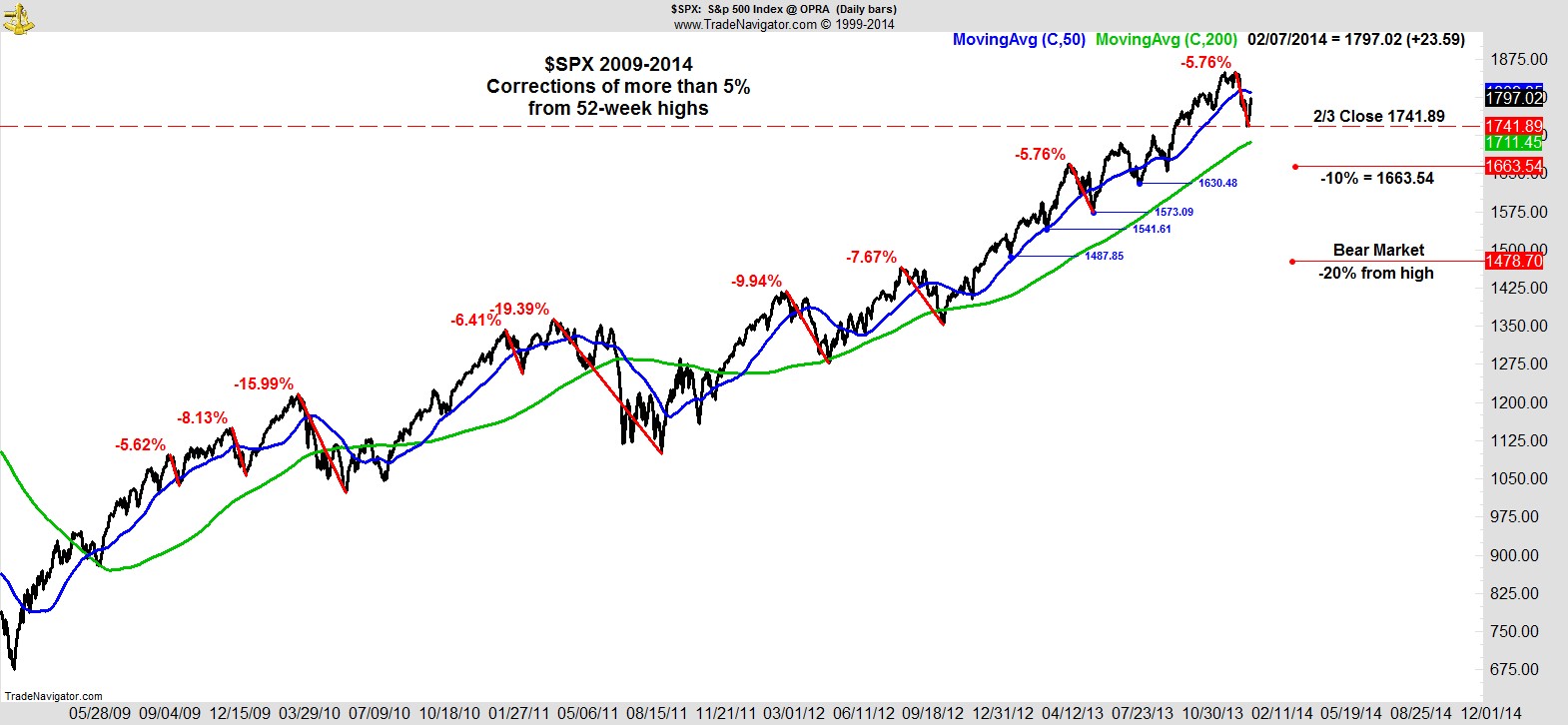
Many doctors and some investors viewed the end of January and early February as a pretty scary time. Over a period of just 12 trading days (1/15-2/3), the S&P 500 lost -5.76%. This spurred conversations online and in the media about the end of a long bull market run and even the possibility of a bubble. However, since the end of that tough stretch, the market has responded strongly and is again reaching new all time highs.

What’s Up!

So what happened during that short time span to cause such a response? Was it a concern about the health of emerging markets that caused such a scare, or perhaps the threat of rising interest rates? Did the uncertainty of having a new Fed chairman cause a pullback in the market, or maybe the concern of a terrorist attack in Sochi during the Olympics? These are all clearly issues that obtained a good amount of short-term attention, but I’d contend that none of them were the root cause of the market decline.

Historical Review

History illustrates time and again that market volatility leads to memory problems for many investors.  Check out this chart itemizing all market corrections of 5% or more since the bull market began.

****

original_19861592

****

As you can see, although the S&P 500 index has increased in value from 676.53 on March 9, 2009 to 1,819.75 on February 11, 2014, the S&P 500 has endured nine pullbacks of over 5% during that time frame.

As illustrated by the lengths of the red lines associated with each correction, many of these market declines happened over a similarly short time span.

Consequently, despite the S&P increasing in value by 169% over the last five years, the market has experienced a decline of at least 5% every six and a half months on average.

In fact, nearly a third of the months since the bull market began have seen the market decline, and by an average of 3% per month.  Considering this information, late January and early February wasn’t particularly unusual.

Periodic Pull-Backs

These periodic market pullbacks aren’t specific to the recent strong run. Historically, we typically see three stock market dips of 5% or more every year and one correction of more than 10% every 20 months. Yet, for some reason, the same conversations and concerns are repeated during every market correction. Investors wonder if this is the beginning of an extended market decline or even a crash?

People consider selling their assets and taking their money out of the market. It is so easy to forget that we have seen similar circumstances in the past and that very rarely has anyone benefitted from selling.

Refer back to the chart itemizing all market corrections over the last five years. There wasn’t a single market decline that didn’t recoup all value in a short period of time. Even the 20% decline that occurred in 2011 only took nine months to go from peak to trough to new all time high.

Assessment

As a result, I’d suggest that the January decline in the markets is not only nothing to be concerned about, but it is expected and healthy. In fact, if you have done your homework as an investor and have a well diversified portfolio with a stocks/bonds ratio that matches your risk tolerance, you’ll be hard-pressed to find a market movement that justifies dramatic action.

Of course, there will always be market corrections (even the occasional crash), but as long as your portfolio is built to accurately match your investment time horizon, market values are likely to recover before the pullback is catastrophic to your retirement goals. Next time the market experiences a short-term correction, remember it isn’t anything we haven’t seen before.

Conclusion

Your thoughts and comments on this ME-P are appreciated. Feel free to review our top-left column, and top-right sidebar materials, links, URLs and related websites, too. Then, subscribe to the ME-P. It is fast, free and secure.

Link: http://feeds.feedburner.com/HealthcareFinancialsthePostForcxos

Speaker: If you need a moderator or speaker for an upcoming event, Dr. David E. Marcinko; MBA – Publisher-in-Chief of the Medical Executive-Post – is available for seminar or speaking engagements. Contact: MarcinkoAdvisors@msn.com

OUR OTHER PRINT BOOKS AND RELATED INFORMATION SOURCES:

DICTIONARIES: http://www.springerpub.com/Search/marcinko
PHYSICIANS: www.MedicalBusinessAdvisors.com
PRACTICES: www.BusinessofMedicalPractice.com
HOSPITALS: http://www.crcpress.com/product/isbn/9781466558731
CLINICS: http://www.crcpress.com/product/isbn/9781439879900
BLOG: www.MedicalExecutivePost.com
FINANCE: Financial Planning for Physicians and Advisors
INSURANCE: Risk Management and Insurance Strategies for Physicians and Advisors

Product Details  Product Details

About the Third and Fourth Stock Trading Markets

On OTC and Private Transactions

dem

By Dr. David Edward Marcinko MBA

http://www.CertifiedMedicalPlanner.org

Join Our Mailing List

In most cases, a market maker of a stock in the NASDAQ system must report his trade in 90 seconds, but there is another circumstance in which the trade must be reported. This is called the third market, and is defined as transactions in exchange listed securities in the OTC market.

For example, even though IBM is listed on the NYSE, an OTC market marking firm can acquire the IBM stock and begin to make a market for it just like an OTC stock. All of these trades are considered the third market, and are reported to the Consolidated Quotation System (CQS) within 90 seconds of the trade.

Fourth Market

The fourth market is defined as private transactions made directly between large investors, institutions such as banks, mutual funds, and insurance companies without the use of a securities firm.

In other words, fourth market trading is usually one institution swapping securities in its portfolio with another large institution. From the stock broker’s viewpoint, there is one problem with the fourth market.

Assessment

Since no broker/dealer is involved, no registered representative is involved and there is no commission to be earned. These trades are reported on a system called Instinet. This is advantageous to larger medial foundations or institutional investors.

Conclusion

And so, your thoughts and comments on this ME-P are appreciated. Feel free to review our top-left column, and top-right sidebar materials, links, URLs and related websites, too. Then, subscribe to the ME-P. It is fast, free and secure.

Speaker: If you need a moderator or speaker for an upcoming event, Dr. David E. Marcinko; MBA – Publisher-in-Chief of the Medical Executive-Post – is available for seminar or speaking engagements. Contact: MarcinkoAdvisors@msn.com

The Economics of Stock Market Fear for Physicians

Panic Control and the Possibility of Severe Financial Degradation 

By Somnath Basu PhD, MBA [www.clunet.edu/cif]

[Director California Institute of Finance]

An experiential learning of mammoth proportions occurred several weeks ago in the financial markets. The absolute 10 minute freefall of the prices of stocks and bonds, without any pre-notification froze the hearts of many physicians and lay others both in, and outside, of the investment community. The possibility of a one trillion dollar loss had suddenly and unexpectedly turned real. It happened in a matter of minutes. This experience of panic, of the possibility of a severe economic degradation of life becoming immediately real, is like none other that most of us can ever remember experiencing. Even the 1987 crash happened over a large part of that Monday. Like then, this time too there is no known reason of why it happened, though attempts are being made to understand the cause(s). Whatever the reasons may be, it will not change the experience we had of the realization of the fear of a sudden and unexpectedly large loss.

Event Analogies

Before going deeper into the experienced fear, it is useful to provide some analogies to the event. If the meltdown in the financial markets of 2008 was like an earthquake, then this was like a severe aftershock. It is also similar to going down one of those severe roller coaster freefalls that some may consider very undesirable. Alternately, what makes a 30 year old physician be mostly unconcerned about his/her lack of retirement savings while a 60 year old doctor in the same poor condition is much more concerned. Obviously, the possibility of a lower quality of economic life is much more real for the elder than the younger. In such cases we would expect the fear of an economically degraded life to spur people to take preventive or remedial action.

Understanding Fear

To truly understand our responses to fear, we need to go deeper into our minds. According to behavioral psychologists and neurologists both, there are various segments within our mind. For example, one segments of our mind (the frontal lobe) is understood to process analytical tasks. Similarly, other parts of our brain (the older limbic system composed of mammalian and reptilian brains) react to and affect/control our emotions and fear. When we are faced with an immediate threat, this older system takes over control of our reactions and often drives us towards instinctive responses and will not, in general, make the analytically reasoned response. It is similar to learning about all the different ways we need to behave in the wild if we came across a bear. When people actually are faced by such a situation, they rarely remember all their learning and respond with their instincts. Those are the limbic responses. In other words, when threats are real, our emotional mechanisms will dominate our rational mind and we will react according to our older and longer existing nature.

Shocked Limbic System

Such was the effect of the financial freeform. In those 10 minutes the economic shock to our limbic system was the first of its kind, in terms of magnitude. While discussions are held about sudden unexpected losses, typically the impact of sudden huge losses in a very very short period of time is rarely thought of in very meaningful ways because the probability is so very low. This time, it did actually happen! We will bear some consequences which will begin playing themselves out slowly over this summer. For one, the investing nation will be much more circumspect about stocks and other volatile financial instruments. In a more technical way, our risk aversion as a nation will have suddenly increased. This will have an impact on both trading volume and security market prices and eventually on portfolio values. How younger physicians and other investors will react is less known.

www.CertifiedMedicalPlanner.com

Assessment

Finally, there is one important lesson in behavioral finance for us all – and that is for medical professionals to find competent financial advisors and planners who can safely herald all people in these times. It also is probably an important point to understand why the portfolios of older physicians should consider safety of principal first whilst the younger ones focus on growing their wealth.

Editor’s Note: Somnath Basu PhD is program director of the California Institute of Finance in the School of Business at California Lutheran University where he’s also a professor of finance. He can be reached at (805) 493 3980 or basu@callutheran.edu. See the agebander at work at www.agebander.com

Conclusion

And so, your thoughts and comments on this ME-P are appreciated. Would anyone like to discuss neurotransmitters or chime in on the flight or fight response? Are these very human reactions any different for doctors? How about feelings of “fear” or stock-market “panic attacks?”

Feel free to review our top-left column, and top-right sidebar materials, links, URLs and related websites, too. Then, be sure to subscribe. It is fast, free and secure.

Get our Widget: Get this widget!

Our Other Print Books and Related Information Sources:

Practice Management: http://www.springerpub.com/prod.aspx?prod_id=23759

Physician Financial Planning: http://www.jbpub.com/catalog/0763745790

Medical Risk Management: http://www.jbpub.com/catalog/9780763733421

Healthcare Organizations: www.HealthcareFinancials.com

Health Administration Terms: www.HealthDictionarySeries.com

Physician Advisors: www.CertifiedMedicalPlanner.com

Subscribe Now: Did you like this Medical Executive-Post, or find it helpful, interesting and informative? Want to get the latest ME-Ps delivered to your email box each morning? Just subscribe using the link below. You can unsubscribe at any time. Security is assured.

Link: http://feeds.feedburner.com/HealthcareFinancialsthePostForcxos

Sponsors Welcomed

And, credible sponsors and like-minded advertisers are always welcomed. 

Link: https://healthcarefinancials.wordpress.com/2007/11/11/advertise

Challenging Standard & Poor’s 500 Index

Join Our Mailing List

Dr. Jeremy Siegel Opines

[By Staff Reporters]56371606

According to Financial Advisor News – an electronic trade magazine on March 17 2009 – Standard & Poor’s underestimate the earnings of its S&P 500 Index. So says, Jeremy Siegel PhD, a finance professor at the University of Pennsylvania’s Wharton School of Business and author of Stocks for the Long Run.

The Dilemma

The problem started when the Wall Street Journal ran an op-ed piece by Siegel that argued Standard & Poor’s uses a “bizarre” methodology for calculating the earnings and P/E ratio for the S&P 500. In it, Siegel explained that the earnings of S&P 500 companies are currently treated equally, but should instead be weighted in proportion to their market capitalization. Market capitalization weighting, he noted, is used to measure the S&P 500 returns. Such a system gives larger weight to the earnings of a company such as Exxon-Mobil, and lower weight to an S&P 500 member such as Jones Apparel.

Siegel’s Example

For example, “a 10% rise in Exxon-Mobil’s price would boost the S&P 500 by 4.64 index points, while the same fall in Jones Apparel would have no impact since the change is far less than the one-hundredth of one point to which the index is routinely rounded,” Siegel wrote.

fp-book10

Outcome

As a result of the above, if capitalization weightings were applied to 2008, the earnings of S&P 500 companies would have been $71.10 per share instead of $39.73 per share.

S&P’s Support

In response, an S&P official said Siegel’s argument “fails the test of both logic and index mathematics.”

Conclusion

Your thoughts and comments on this ME-P are appreciated. Feel free to review our top-left column, and top-right sidebar materials, links, URLs and related websites, too. Then, subscribe to the ME-P. It is fast, free and secure.

Link: http://feeds.feedburner.com/HealthcareFinancialsthePostForcxos

Speaker: If you need a moderator or speaker for an upcoming event, Dr. David E. Marcinko; MBA – Publisher-in-Chief of the Medical Executive-Post – is available for seminar or speaking engagements. Contact: MarcinkoAdvisors@msn.com

OUR OTHER PRINT BOOKS AND RELATED INFORMATION SOURCES:

DICTIONARIES: http://www.springerpub.com/Search/marcinko
PHYSICIANS: www.MedicalBusinessAdvisors.com
PRACTICES: www.BusinessofMedicalPractice.com
HOSPITALS: http://www.crcpress.com/product/isbn/9781466558731
CLINICS: http://www.crcpress.com/product/isbn/9781439879900
BLOG: www.MedicalExecutivePost.com
FINANCE: Financial Planning for Physicians and Advisors
INSURANCE: Risk Management and Insurance Strategies for Physicians and Advisors

Product DetailsProduct DetailsProduct Details

Product Details  Product Details