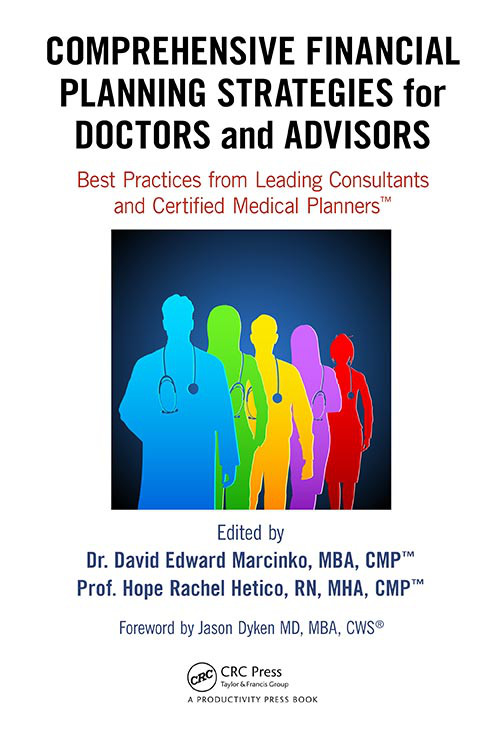
FINANCIAL PLANNING: Strategies for Doctors and Advisors

SPONSOR: http://www.CertifiedMedicalPlanner.org

***

***

RELATED TEXTS: https://medicalexecutivepost.com/2021/04/29/why-are-certified-medical-planner-textbooks-so-darn-popular/

INVITE DR. MARCINKO: https://medicalexecutivepost.com/dr-david-marcinkos-

THANK YOU!

***

National “Financial Awareness Day” 2021

MAKE IT EVERYDAY FOR PHYSICIANS AND MEDICAL COLLEAGUES

By Dr. David Edward Marcinko MBA CMP®

CMP logo

SPONSOR: http://www.CertifiedMedicalPlanner.org

***

Use National Financial Awareness Day to your Advantage

Aug. 14th is National Financial Awareness Day. Financial awareness is about more than just understanding the basics on how money works. It’s also about evaluating your own budget, savings and investments to make sure your finances are working for your needs.

HERE: https://nationaltoday.com/national-financial-awareness-day/

So if it’s been a while since your last financial “check up,” National Financial Awareness Day can be the extra push you’ve needed to finally take a look under the hood.

***

***

RELATED TEXTS: https://medicalexecutivepost.com/2021/04/29/why-are-certified-medical-planner-textbooks-so-darn-popular/

INVITE DR. MARCINKO: https://medicalexecutivepost.com/dr-david-marcinkos-

Second Opinions: https://medicalexecutivepost.com/schedule-a-consultation/

THANK YOU!

***

FINANCIAL PLANNING AND INVESTING FOR PHYSICIANS: Purchase Textbook Today & Relax Tomorrow

“MANIC MONDAY” 2021

INVITE DR. MARCINKO: https://medicalexecutivepost.com/dr-david-marcinkos-bookings/

YOUR THOUGHTS ARE APPRECIATED

SPONSOR: http://www.CertifiedMedicalPlanner.org

CMP logo

THANK YOU

***

FINANCIAL PLANNING: Strategies for Physicians and their Advisors

A Textbook Review

SECOND OPINIONS: https://medicalexecutivepost.com/schedule-a-consultation/

INVITE DR. MARCINKO: https://medicalexecutivepost.com/dr-david-marcinkos-bookings/

SPONSOR: http://www.CertifiedMedicalPlanner.org

CMP logo

THANK YOU

***

STOCKS: A Very Skewed Market “Boom”

PRICES CHANGES FOR THE LAST SEVEN YEARS

***

***

Your thoughts are appreciated.

SECOND OPINIONS: https://medicalexecutivepost.com/schedule-a-consultation/

INVITE DR. MARCINKO: https://medicalexecutivepost.com/dr-david-marcinkos-bookings/

SPONSOR: http://www.CertifiedMedicalPlanner.org

***

ON THE ROAD AGAIN: Public Speaking, Opining and Assigning

Dr. David Edward Marcinko is Speaking Up

Dr. David Edward Marcinko MBA CMP® enjoys personal coaching and public speaking and gives as many talks each year as possible, at a variety of medical society and financial services conferences around the country and world.

These have included lectures and visiting professorships at major academic centers, keynote lectures for hospitals, economic seminars and health systems, keynote lectures at city and statewide financial coalitions, and annual keynote lectures for a variety of internal yearly meetings.

His talks tend to be engaging, iconoclastic, and humorous. His most popular presentations include a diverse variety of topics and typically include those in all iMBA, Inc’s textbooks, handbooks, white-papers and most topics covered on this blog.

***

Recognizing the Differences between Healthcare and Other ...

INVITATIONS: https://medicalexecutivepost.com/dr-david-marcinkos-bookings/

CONTACT: Ann Miller RN MHA

MarcinkoAdvisors@msn.com

Ph: 770-448-0769

Second Opinions: https://medicalexecutivepost.com/schedule-a-consultation/

DIY Textbooks: https://medicalexecutivepost.com/2021/04/29/why-are-certified-medical-planner-textbooks-so-darn-popular/

THANK YOU

***

On Finding PHYSICIAN FOCUSED Financial Advice?

OVER HEARD IN THE DOCTOR’S LOUNGE

Michigan Association of Osteopathic Family Physicians ...

The financial planner is a like juggler, trying to keep a variety of balls simultaneously in the air.  Each aspect of practice becomes critical, just as action is needed. 

Some of the activities of operating a successful financial planning practice generally attract more attention than others, such as marketing and advertising, closing engagements, and office administration.  Because product review, selection and implementation are often related to advisor compensation, they attract a great deal of the financial juggler’s concentration. 

But, the heart of financial planning, niche advice, often receives little attention.  Not because it is unimportant, it just doesn’t seem immediately and predictably urgent.  Here, that ball does not seem to be dropping so rapidly. 

However, retaining clients and receiving referrals from other professionals is very dependent on the quality of the advice delivered.  And, the first line of protection from practitioner liability exposure is to not deliver incorrect or incomplete advice. 

But, where does the financial advisor turn for ideas and organized research in the healthcare sector? 

Edwin P. Morrow; CFPTM, CLU, ChFC, RFC

edwin

[Middletown, Ohio, USA]

ORDER Textbook: https://www.amazon.com/Comprehensive-Financial-Planning-Strategies-Advisors/dp/1482240289/ref=sr_1_1?ie=UTF8&qid=1418580820&sr=8-1&keywords=david+marcinko

THANK YOU

***

ME-P Speaking Invitations

Dr. David E. Marcinko is at your Service

thumbnail_IMG_1663.edit1

Dr. David Edward Marcinko MBA CMP® enjoys personal coaching and public speaking and gives as many talks each year as possible, at a variety of medical society and financial services conferences around the country and world.

These have included lectures and visiting professorships at major academic centers, keynote lectures for hospitals, economic seminars and health systems, keynote lectures at city and statewide financial coalitions, and annual keynote lectures for a variety of internal yearly meetings.

His talks tend to be engaging, iconoclastic, and humorous. His most popular presentations include a diverse variety of topics and typically include those in all iMBA, Inc’s textbooks, handbooks, white-papers and most topics covered on this blog.

CONTACT: Ann Miller RN MHA

MarcinkoAdvisors@msn.com

Ph: 770-448-0769

Abbreviated Topic List: https://medicalexecutivepost.com/wp-content/uploads/2009/02/imba-inc-firm-services.pdf

Second Opinions: https://medicalexecutivepost.com/schedule-a-consultation/

DIY Textbooks: https://medicalexecutivepost.com/2021/04/29/why-are-certified-medical-planner-textbooks-so-darn-popular/

THANK YOU

***

THE ANATOMIC BASIS OF HUMAN PHYSIOLOGY AND BEHAVIOR?

BRAIN ANATOMY

By Dr. David Edward Marcinko MBA CMP©

SPONSOR: http://www.CertifiedMedicalPlanner.org

CMP logo

I am not a neurologist, psychologist, or psychiatrist. But, it is well known that emotional and behavioral change involves the human nervous system. And, there are two parts of the nervous system that are especially significant for holistic financial advisor; the first is the limbic system and the second is the autonomic nervous system. 

According to Dr. C. George Boerre of Shippensburg University of Pennsylvania, this is known as the emotional nervous system.

1. The Limbic System

The limbic system is a set of structures that lies on both sides of the thalamus, just under the cerebrum.  It includes the hypothalamus, the hippocampus, the amygdala, and nearby areas.  It is primarily responsible for emotions, memories and recollection. 

Hypothalamus

The small hypothalamus is located just below the thalamus on both sides of the third ventricle (areas within the cerebrum filled with cerebrospinal fluid that connect to spinal fluid). It sits inside both tracts of the optic nerve, and just above the pituitary gland.

The hypothalamus is mainly concerned with homeostasis or the process of returning to some “set point.”  It works like a thermostat:  When the room gets too cold, the thermostat conveys that information to the furnace and turns it on.  As the room warms up and the temperature rises, it sends turns off the furnace.  The hypothalamus is responsible for regulating hunger, thirst, response to pain, levels of pleasure, sexual satisfaction, anger and aggressive behavior, and more.  It also regulates the functioning of the autonomic nervous system, which means it regulates functions like pulse, blood pressure, breathing, and arousal in response to emotional circumstances. In a recent discovery, the protein leptin is released by fat cells with over-eating.  The hypothalamus senses leptin levels in the bloodstream and responds by decreasing appetite.  So, it seems that some people might have a gene mutation which produces leptin, and can’t tell the hypothalamus that it is satiated.   The hypothalamus sends instructions to the rest of the body in two ways.  The first is to the autonomic nervous system.  This allows the hypothalamus to have ultimate control of things like blood pressure, heart rate, breathing, digestion, sweating, and all the sympathetic and parasympathetic functions.

The second way the hypothalamus controls things is via the pituitary gland.  It is neurally and chemically connected to the pituitary, which in turn pumps hormones called releasing factors into the bloodstream.  The pituitary is the so-called “master gland” as these hormones are vitally important in regulating growth and metabolism.

Hippocampus

The hippocampus consists of two “horns” that curve back from the amygdala.  It is important in converting things “in your mind” at the moment (short-term memory) into things that are remembered for the long run (long-term memory).  If the hippocampus is damaged, a patient cannot build new memories and lives in a strange world where everything they experience just fades away; even while older memories from the time before the damage are untouched!  Most patients who suffer from this kind of brain damage are eventually institutionalized.

Amygdala

The amygdalas are two almond-shaped masses of neurons on either side of the thalamus at the lower end of the hippocampus.  When it is stimulated electrically, animals respond with aggression.  And, if the amygdala is removed, animals get very tame and no longer respond to anger that would have caused rage before.  The animals also become indifferent to stimuli that would have otherwise have caused fear and sexual responses.

Related Anatomic Areas

Besides the hypothalamus, hippocampus, and amygdala, there are other areas in the structures near to the limbic system that are intimately connected to it:

  • The cingulate gyrus is the part of the cerebrum that lies closest to the limbic system, just above the corpus collosum.  It provides a pathway from the thalamus to the hippocampus, is responsible for focusing attention on emotionally significant events, and for associating memories to smells and to pain.
  • The ventral tegmental area of the brain stem (just below the thalamus) consists of dopamine pathways responsible for pleasure.  People with damage here tend to have difficulty getting pleasure in life, and often turn to alcohol, drugs, sweets, and gambling.
  • The basal ganglia (including the caudate nucleus, the putamen, the globus pallidus, and the substantia nigra) lie over to the sides of the limbic system, and are connected with the cortex above them.  They are responsible for repetitive behaviors, reward experiences, and focusing attention. 
  • The prefrontal cortex, which is the part of the frontal lobe which lies in front of the motor area, is also closely linked to the limbic system.  Besides apparently being involved in thinking about the future, making plans, and taking action, it also appears to be involved in the same dopamine pathways as the ventral tegmental area, and plays a part in pleasure and addiction.

https://wallpapercave.com/wp/wp3011600.jpg

2. The Autonomic Nervous System

The second part of the nervous system to have a particularly powerful part to play in our emotional life is the autonomic nervous system. 

The autonomic nervous system is composed of two parts, which function primarily in opposition to each other.  The first is the sympathetic nervous system, which starts in the spinal cord and travels to a variety of areas of the body.  Its function appears to be preparing the body for the kinds of vigorous activities associated with “fight or flight,” that is, with running from danger or with preparing for violence.  Activation of the sympathetic nervous system has the following effects:

  • dilates the pupils and opens the eyelids,
  • stimulates the sweat glands and dilates the blood vessels in large muscles,
  • constricts the blood vessels in the rest of the body,
  • increases the heart rate and opens up the bronchial tubes of the lungs, and
  • inhibits the secretions in the digestive system.

One of its most important effects is causing the adrenal glands (which sit on top of the kidneys) to release epinephrine (adrenalin) into the blood stream.  Epinephrine is a powerful hormone that causes various parts of the body to respond in much the same way as the sympathetic nervous system.  Being in the blood stream, it takes a bit longer to stop its effects, and may take some time to calm down again

The sympathetic nervous system also takes in information, mostly concerning pain from internal organs.  Because the nerves that carry information about organ pain often travel along the same paths that carry information about pain from more surface areas of the body, the information sometimes get confused.  This is called referred pain, and the best known example is the pain in the left shoulder and arm when having a heart attack.

The other part of the autonomic nervous system is called the parasympathetic nervoussystem.  It has its roots in the brainstem and in the spinal cord of the lower back.  Its function is to bring the body back from the emergency status that the sympathetic nervous system puts it into.

Some of the details of parasympathetic arousal include some of the following:.

  • pupil constriction and activation of the salivary glands,
  • stimulating the secretions of the stomach and activity of the intestines,
  • stimulating secretions in the lungs and constricting the bronchial tubes, and;
  • decreases heart rate.

The parasympathetic nervous system also has some sensory abilities:  It receives information about blood pressure, levels of carbon dioxide in the blood, etc.

There is actually another part of the autonomic nervous system that is not mentioned too often: the enteric nervous system.  It is a complex of nerves that regulate the activity of the stomach. 

For example, if you get sick to your stomach with a new financial advisory client – or feel nervous butterflies with your first patient encounter as a doctor- you can blame the enteric nervous system.

ASSESSMENT: Your thoughts are appreciated.

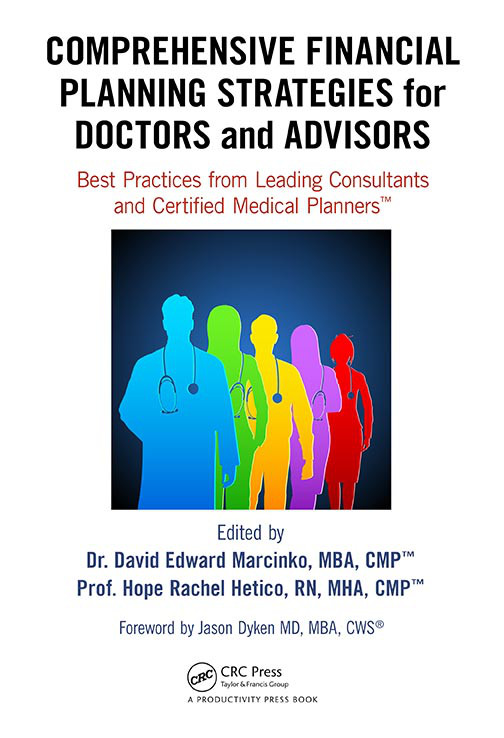
Comprehensive Financial Planning Strategies for Doctors and Advisors: Best Practices from Leading Consultants and Certified Medical Planners™

ORDER Textbook: https://www.amazon.com/Comprehensive-Financial-Planning-Strategies-Advisors/dp/1482240289/ref=sr_1_1?ie=UTF8&qid=1418580820&sr=8-1&keywords=david+marcinko

Risk Management, Liability Insurance, and Asset Protection Strategies for Doctors and Advisors : Best Practices from Leading Consultants and Certified Medical Planners™ book cover

Order Textbook: https://www.routledge.com/Risk-Management-Liability-Insurance-and-Asset-Protection-Strategies-for/Marcinko-Hetico/p/book/9781498725989

SECOND OPINIONS: https://medicalexecutivepost.com/schedule-a-consultation/

INVITE DR. MARCINKO: https://medicalexecutivepost.com/dr-david-marcinkos-bookings/

THANK YOU

***

PODCAST: HYPER-INFLATION 2021?

Inflated Fears of “Rigged” Markets and Hyperinflation

[By Rick Kahler CFP®]

BIO: Rick Kahler resides in Rapid City, South Dakota and is a fee-only financial planner.

MORE: https://www.msn.com/en-us/money/personalfinance/is-inflation-about-to-trash-your-investments/ar-BB1fZg72

Your thoughts are appreciated.

EDITOR’S NOTE: It has been a few years since I spoke with my colleague Rick. But, I read his newsletters and blog regularly and suggest all ME-P readers do the same.

Dr. David E. Marcinko; MBA

[Editor-in-Chief]

TEXTBOOK:

Comprehensive Financial Planning Strategies for Doctors and Advisors: Best Practices from Leading Consultants and Certified Medical Planners™

ORDER: https://www.amazon.com/Comprehensive-Financial-Planning-Strategies-Advisors/dp/1482240289/ref=sr_1_1?ie=UTF8&qid=1418580820&sr=8-1&keywords=david+marcinko

THANK YOU

***

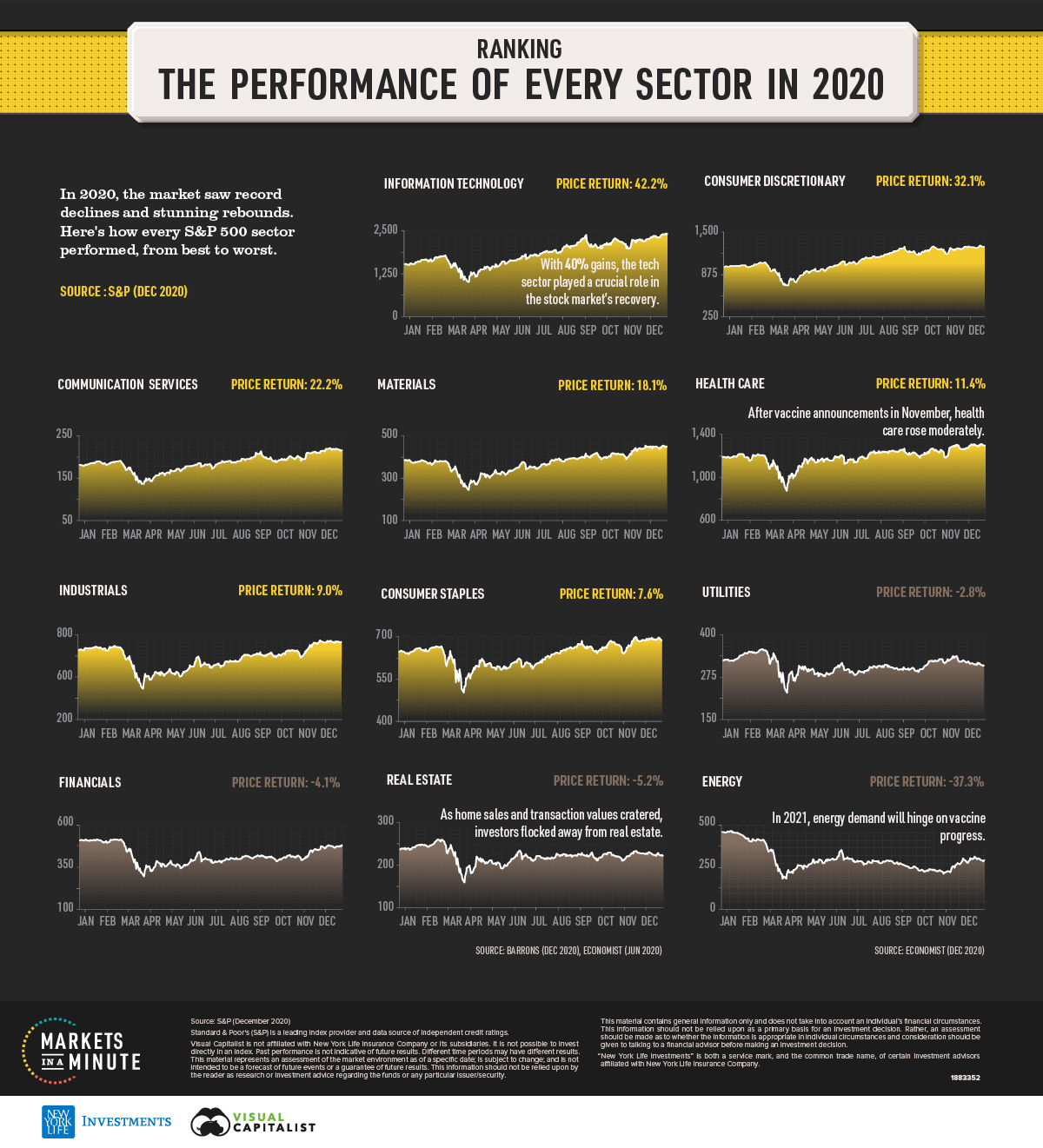
Ranking the Performance of All Most Every Financial Market Sector

CIRCA: 2020 [S&P 500 Sectors]

***

***

COMPREHENSIVE FINANCIAL PLANNING FOR PHYSICIANS & ADVISORS 2.0

COMPREHENSIVE FINANCIAL PLANNING FOR PHYSICIANS & ADVISORS 2.0
Courtesy: https://lnkd.in/eBf-4vY

BEST PRACTICES OF LEADING CERTIFIED MEDICAL PLANNERs®
Website: https://lnkd.in/eVGcji5

BUSINESS, FINANCE, INVESTING AND INSURANCE TEXTS FOR DOCTORS:
1 – https://lnkd.in/ebWtzGg
2 – https://lnkd.in/ezkQMfR
3 – https://lnkd.in/ewJPTJs

“DICTIONARY OF TERMS FOR THE BUSINESS OF MEDICINE”
DHEF: https://lnkd.in/dqdbWM9
DHIMC: https://lnkd.in/e9AmEhd
DHITS: https://lnkd.in/eWx3WjZ

Thank You
***

ABOUT THE Institute of Medical Business Advisors, Inc

About iMBA, Inc

By Staff Reporters

iMBA Inc., is a healthcare consulting and financial planning analytics firm specializing in medical practice management and physician alignment.

Our mission is to empower physician colleagues and healthcare organizations to drive clarity, improve performance, and create accountability.

Our team combines a cross-section of skill-sets including public and population health, financial operations, business intelligence, and data science.

And, our diverse background of experience includes advanced academic training, economic and financial research, global marketing, management consulting, and entrepreneurial spirit.

INSTITUTE WEB: www.MedicalBusinessAdvisors.com

***

SCHEDULE A MEDICAL PRACTICE & FINANCIAL PLANNING CONSULTATION TODAY!
Courtesy: https://lnkd.in/eBf-4vY
For Doctors – By Doctors – Confidential – Video Conference
WEB: https://lnkd.in/eVGcji5

BUSINESS, FINANCE, INVESTING AND INSURANCE TEXTS FOR DOCTORS:
1 – https://lnkd.in/ebWtzGg
2 – https://lnkd.in/ezkQMfR
3 – https://lnkd.in/ewJPTJs

HOSPITAL MANAGEMENT TEXTS FOR PHYSICIAN CXOs:
1 – https://lnkd.in/eEf-xEH
2 – https://lnkd.in/e2ZmewQ

DICTIONARY OF TERMS FOR THE BUSINESS OF MEDICINE:
DHEF: https://lnkd.in/dqdbWM9
DHIMC: https://lnkd.in/e9AmEhd
DHITS: https://lnkd.in/eWx3WjZ

INVITATION: https://lnkd.in/d2SefCY
SPEAKING TOPIC LIST: https://lnkd.in/e7WrDj9
MY “AVATAR“: https://lnkd.in/d6BU-TQ

***

DR. DAVID EDWARD MARCINKO MBA CMP®

[Chief Executive Officer]

***

CONTACT: MarcinkoAdvisors@msn.com
Thank You
***

On Finding Physician-Focused Financial Advice

OVER HEARD IN THE DOCTOR’S LOUNGE

Courtesy: www.CertifiedMedicalPlanner.org

CMP logo

[On Finding Physician-Focused Financial Advice]

The financial planner is a like juggler, trying to keep a variety of balls simultaneously in the air.  Each aspect of practice becomes critical, just as action is needed. 

Some of the activities of operating a successful financial planning practice generally attract more attention than others, such as marketing and advertising, closing engagements, and office administration.  Because product review, selection and implementation are often related to advisor compensation, they attract a great deal of the financial juggler’s concentration. 

But, the heart of financial planning, niche advice, often receives little attention.  Not because it is unimportant, it just doesn’t seem immediately and predictably urgent.  Here, that ball does not seem to be dropping so rapidly. 

However, retaining clients and receiving referrals from other professionals is very dependent on the quality of the advice delivered.  And, the first line of protection from practitioner liability exposure is to not deliver incorrect or incomplete advice. 

But, where does the financial advisor turn for ideas and organized research in the healthcare sector?” 

Edwin P. Morrow; CFPTM, CLU, ChFC, RFC

[Middletown, Ohio, USA]

Your thoughts are appreciated.

BUSINESS, FINANCE, INVESTING AND INSURANCE TEXTS FOR DOCTORS:

1https://lnkd.in/ezkQMfR

2 – https://lnkd.in/ebWtzGg

3 – https://lnkd.in/ewJPTJs

THANK YOU

Risk Management, Liability Insurance, and Asset Protection Strategies for Doctors and Advisors: Best Practices from Leading Consultants and Certified Medical Planners™8Comprehensive Financial Planning Strategies for Doctors and Advisors: Best Practices from Leading Consultants and Certified Medical Planners™

***

Another CERTIFIED MEDICAL PLANNER® “In The News”

YAHOO Finance!

Courtesy: http://www.MedicalExecutivePost.com

“The extensive experience of our professional team allows us to implement a rigorous process to identify ‘Best in Class’ opportunities in our focus areas,” said Amaury Cifuentes CFP®, CMP® one of the firm’s founders. “We assist in providing capital, innovative solutions and strategic expertise to our portfolio throughout the investment cycle.”

LINK: www.CertifiedMedicalPlanner.org

The partners in the firm include:

Amaury Cifuentes, CFP®, CMP® has 30 years of experience in banking and finance; financial planning and investments with an emphasis on business lending, real estate and private investments. He is a Certified Medical Planner®, giving him an enhanced knowledge of the medical industry’s specific needs.

LINK: https://finance.yahoo.com/news/bluekey-wealth-advisors-announces-formation-150000988.html

Assessment: Your congratulations are appreciated.

TEXTS FOR PHYSICIAN EXECUTIVES AND HOSPITAL CXOs:

1 – https://lnkd.in/eEf-xEH

2 – https://lnkd.in/e2ZmewQ

***

TEXTS FOR PHYSICIANS AND ADVISORS

Risk Management, Liability Insurance, and Asset Protection Strategies for Doctors and Advisors: Best Practices from Leading Consultants and Certified Medical Planners™8Comprehensive Financial Planning Strategies for Doctors and Advisors: Best Practices from Leading Consultants and Certified Medical Planners™

THANK YOU

****

Contribute to a Leading Physician Focused Practice Management and Financial Planning Resource

Join Our Mailing List

Get Published – Get Known

By Ann Miller RN MHA [Executive Director] MarcinkoAdvisors@msn.com

The ME-P is one of the leading online and onground resources for medical professionals, financial advisors and medical management consultants.

Want to Contribute Your Thought Leadership?

By submitting a guest article, video, infographic, or case study/report related to our forum, you can:

  • Raise your personal/company’s brand visibility/awareness
  • Build your social influence
  • Garner a larger audience
  • Spark a networkeffect to exponentially reach potential viewers across the healthcare and financial services industry.

Article/Guest Post Submission Guidelines

  1. All articles submitted for publication should be the guest author’s original work
  2. Articles should be reviewed for clarity, spelling, punctuation and grammar
  3. Articles should be between 350 – 1000 words. Longer articles will be accepted depending upon content relevance
  4. We reserves the right to revise any submission to meet the needs of the readers
  5. Include a brief bio about yourself and a company link with a brief summary about your business or website.

Submission Process

  1. Please submit all articles via email to: MarcinkoAdvisors@msn.com
  2. We will respond to your submission within 3 business days of receipt.
  3. Once accepted, your article will run at our discretion. All accepted articles retain full rights to every article, which can be published on their own site as well. If you have any additional questions about the submission guidelines, feel free contact us.

The ME-P also welcomes the submission of all white papers and case studies that will be posted in the appropriate channel section of the site.

Article/Guest Post Writing Tips

  1. Articles/Guest Posts should be well written, informative, engaging and relevant to the industries we serve.
  2. Please provide specific examples to illustrate your point through recent reports, studies, surveys, case studies, etc.
  3. We encourage using photos, tables, charts or figures as effective methods of providing documentation and support to your point of view. Please remember to cite your sources as necessary providing proper attribution.

Conclusion

Your thoughts and comments on this ME-P are appreciated. Feel free to review our top-left column, and top-right sidebar materials, links, URLs and related websites, too. Then, subscribe to the ME-P. It is fast, free and secure.

Link: http://feeds.feedburner.com/HealthcareFinancialsthePostForcxos

Speaker: If you need a moderator or speaker for an upcoming event, Dr. David E. Marcinko; MBA – Publisher-in-Chief of the Medical Executive-Post – is available for seminar or speaking engagements. Contact: MarcinkoAdvisors@msn.com

OUR OTHER PRINT BOOKS AND RELATED INFORMATION SOURCES:

DICTIONARIES: http://www.springerpub.com/Search/marcinko
PHYSICIANS: www.MedicalBusinessAdvisors.com
PRACTICES: www.BusinessofMedicalPractice.com
HOSPITALS: http://www.crcpress.com/product/isbn/9781466558731
CLINICS: http://www.crcpress.com/product/isbn/9781439879900
BLOG: www.MedicalExecutivePost.com
FINANCE: Financial Planning for Physicians and Advisors
INSURANCE: Risk Management and Insurance Strategies for Physicians and Advisors

Product DetailsProduct DetailsProduct Details

Product Details Product Details

Product Details

A Financial “Christmas Carol” [Part 2]

Join Our Mailing List 

By Rick Kahler MS CFP® http://www.KahlerFinancial.com

Rick Kahler MS CFPPreviously, in Part 1, we discussed the most important step of changing a problematic financial behavior: becoming willing to admit that changing the behavior is important and to seriously contemplate the change. Ebenezer Scrooge in A Christmas Carol took that step when he heeded a warning from the ghost of Jacob Marley.

Financial Transformations

The next step in the financial transformation process is probably the most difficult and requires the most courage. It is looking into the past to revisit the events in our lives where our strongly held delusions were formed. Scrooge resisted this step and tried his best to skip over it. Yet his guide, the Ghost of Christmas Past, gently turned him toward the past.

Bringing objectivity and understanding to entrenched financial delusions isn’t easy. Many people want to focus instead on obtaining more information on how to save, invest, or spend wisely. We try to jump into the present before visiting the past, which is typically the last thing we want to do.

Yet, what we need most for transformation is emotional intelligence, which cannot be learned academically or developed by oneself. It must be learned emotionally, experientially, and in community. Just as Scrooge found a guide in the Ghost of Christmas Past, people wanting to gain the emotional intelligence needed to change their financial behaviors require the assistance of a financial coach or therapist. This is a journey that cannot be taken alone.

The New Reality?

Once we have taken that difficult but transformational journey into the past, we are ready to become present and see reality with new clarity. While Scrooge was less resistant to looking at the present than the past, it was the one step that terrified him the most. Once emotional intelligence is gained, we must face replacing our faulty beliefs with accurate cognitive information. This is the place for learning about budgeting, debt reduction, investments, and other financial skills.

In Changing for Good, Dr. James O. Prochaska calls this the stage of preparation, where we begin to acquire necessary knowledge and take the necessary steps to get ready to act. Scrooge’s guide, the Ghost of Christmas Present, helped him negotiate the present and obtain this knowledge. Our real-world guides may include accountants, attorneys, financial planners, and educational books and workshops.

When we gain accurate financial knowledge, we are ready to look toward the future to see where our previous delusional decisions potentially were taking us. Like the vision that the Ghost of Christmas Future unveils before Scrooge, the scene is often harsh. However, because of our preparation, we have the capacity and tools to enter what Prochaska calls the action phase.

***

100_1

***

Now we can begin to create a future that is consciously and deliberately planned. We can take control of our money rather than our money controlling us. Our guides can be financial advisors, financial planners, and financial mentors.

Many of us try to shortcut the transformation process by starting here, in the last step of looking toward the future. Sadly, without first taking the critical steps of viewing the past and learning the present, we often lose heart. This is why resolutions for financial change often fail, not because the goal is bad or unattainable, but because we are unprepared to go into action.

The end product of Scrooge’s difficult journey with the three Spirits was a transformed person, full of joy, generosity, and spirit. He experienced this transformation because he had the courage and conviction to start the process.

Assessment

It’s not possible to give the gift of a financial transformation. It is a gift that can only be received. This Christmas and New Year 2019, perhaps it’s time for you to receive yours.

Part 1: A Financial “Christmas Carol” [Part 1]

Conclusion

Your thoughts and comments on this ME-P are appreciated. Feel free to review our top-left column, and top-right sidebar materials, links, URLs and related websites, too. Then, subscribe to the ME-P. It is fast, free and secure.

Speaker: If you need a moderator or speaker for an upcoming event, Dr. David E. Marcinko; MBA – Publisher-in-Chief of the Medical Executive-Post – is available for seminar or speaking engagements. Contact: MarcinkoAdvisors@msn.com

OUR OTHER PRINT BOOKS AND RELATED INFORMATION SOURCES:

Comprehensive Financial Planning Strategies for Doctors and Advisors: Best Practices from Leading Consultants and Certified Medical Planners(TM)

Meet David K. Luke MIM CMP™ [An ME-P Thought-Leader]

Join Our Mailing List

A Physician Focused Financial Advisior and Certified Medical Planner™

Financial Management Experience

https://www.medicuswealthplanning.com/team/david-k-luke

David K. Luke focuses on helping physicians, medical professionals, and successful retirees with financial planning, investment and risk management.

In the past 24 years of industry experience, David has held licenses including general securities registered representative, registered investment advisor, Branch management supervision, and Life, Accident, and Health Producers.

David, a fee-only advisor, is able to help his clients to achieve peace of mind and greater assurance with their financial goals by giving advice and providing investment management that is in their best interest, untainted by commissions or sales objectives. Likewise, in a true fiduciary capacity, he is able to help investors determine the reliability and suitability of products and services that they have been sold by other advisors.

David began his career managing money in 1986 in the General Motors of Canada Banking and Investments department where he was engaged in cash management, foreign currency hedging, and the debt issuance of a $100 million Eurobond and a $300 million Note Issuance facility. In 1988 as Supervisor of Borrowings for GMAC Canada David was responsible for the daily average issuance of $125 million in short-term Commercial Paper. David worked as a stock broker and portfolio manager for 2 major national brokerage firms (A.G. Edwards and Wachovia Securities) from 1989 to 2008.

Additionally, at Wachovia Securities David was among an elite group of financial advisors approved as a PIM (Private Investment Management) Portfolio Manager. Prior to joining Net Worth Advisory Group in 2010, David managed his own independent firm, Luke Wealth Strategies, working as a registered representative and investment advisor.

Education and Designations

  • President 2009/2010, Financial Planning Association (FPA) – Utah Chapter Affiliate
  • National Association of Personal Financial Advisors (NAPFA)
  • Member, Medical Group Management Association Master of International Management (Finance concentration)
  • American Graduate School of International Management Bachelor of Arts, Brigham Young University
  • Certified Medical Planner™ Professiobnal Designation from iMBA, Inc www.CertifiedMedicalPlanner.org

http://www.CertifiedMedicalPlanner.org

Assessment

David is our newest ME-P “thought-leader”. We look foward to his insider comments and posts. So, please welcome him and give his site a click: http://networthadvice.com/our-team/david-k-luke/

Product DetailsProduct DetailsProduct Details

Product Details  Product Details

Product Details

Book Dr. David E. Marcinko MBA for your Next Seminar

 Join Our Mailing List

Schedule Marcinko for Your Next Seminar!

DEM 2012

***

http://www.CertifiedMedicalPlanner.org

***

Book Dr. David Edward Marcinko CMP®, MBA, MBBS for your Next Medical, Pharma or Financial Services Seminar or Personal and Corporate Coaching Sessions 

Dr. Dave Marcinko enjoys personal coaching and public speaking and gives as many talks each year as possible, at a variety of medical society and financial services conferences around the country and world.

These have included lectures and visiting professorships at major academic centers, keynote lectures for hospitals, economic seminars and health systems, keynote lectures at city and statewide financial coalitions, and annual keynote lectures for a variety of internal yearly meetings.

Topics Link: toc_ho

***

[PHYSICIAN FOCUSED FINANCIAL PLANNING AND RISK MANAGEMENT COMPANION TEXTBOOK SET]

  Risk Management, Liability Insurance, and Asset Protection Strategies for Doctors and Advisors: Best Practices from Leading Consultants and Certified Medical Planners™ Comprehensive Financial Planning Strategies for Doctors and Advisors: Best Practices from Leading Consultants and Certified Medical Planners™

***

[HOSPITAL OPERATIONS, ORGANIZATIONAL BEHAVIOR AND FINANCIAL MANAGEMENT COMPANION TEXTBOOK SET]

Product DetailsProduct Details

[Foreword Dr. Phillips MD JD MBA LLM] *** [Foreword Dr. Nash MD MBA FACP]

***

A New FINANCIAL PLANNING TEXTBOOK for DRs and Physician Focused Financial Advisors

Join Our Mailing List

 THRIVE IN 2019

Our New Text – “Take a Peek Inside 

Now Available –

***

Comprehensive Financial Planning Strategies for Doctors and Advisors: Best Practices from Leading Consultants and Certified Medical Planners(TM)

Front Matter with Foreword by Jason Dyken MD MBA

logos

“BY DOCTORS – FOR DOCTORS – PEER REVIEWED – FIDUCIARY FOCUSED”

***

Book Reviews

Written by doctors and healthcare professionals, this textbook should be mandatory reading for all medical school students—highly recommended for both young and veteran physicians—and an eliminating factor for any financial advisor who has not read it. The book uses jargon like ‘innovative,’ ‘transformational,’ and ‘disruptive’—all rightly so! It is the type of definitive financial lifestyle planning book we often seek, but seldom find.
LeRoy Howard MA CMPTM, Candidate and Financial Advisor, Fayetteville, North Carolina

I taught diagnostic radiology for over a decade. The physician-focused niche information, balanced perspectives, and insider industry transparency in this book may help save your financial life.
Dr. William P. Scherer MS, Barry University, Ft. Lauderdale, Florida

This book was crafted in response to the frustration felt by doctors who dealt with top financial, brokerage, and accounting firms. These non-fiduciary behemoths often prescribed costly wholesale solutions that were applicable to all, but customized for few, despite ever-changing needs. It is a must-read to learn why brokerage sales pitches or Internet resources will never replace the knowledge and deep advice of a physician-focused financial advisor, medical consultant, or collegial Certified Medical Planner™ financial professional.
—Parin Khotari MBA, Whitman School of Management, Syracuse University, New York

In today’s healthcare environment, in order for providers to survive, they need to understand their current and future market trends, finances, operations, and impact of federal and state regulations. As a healthcare consulting professional for over 30 years supporting both the private and public sector, I recommend that providers understand and utilize the wealth of knowledge that is being conveyed in these chapters. Without this guidance providers will have a hard time navigating the supporting system which may impact their future revenue stream. I strongly endorse the contents of this book.
—Carol S. Miller BSN MBA PMP, President, Miller Consulting Group, ACT IAC Executive Committee Vice-Chair at-Large, HIMSS NCA Board Member

This is an excellent book on financial planning for physicians and health professionals. It is all inclusive yet very easy to read with much valuable information. And, I have been expanding my business knowledge with all of Dr. Marcinko’s prior books. I highly recommend this one, too. It is a fine educational tool for all doctors.
—Dr. David B. Lumsden MD MS MA, Orthopedic Surgeon, Baltimore, Maryland

There is no other comprehensive book like it to help doctors, nurses, and other medical providers accumulate and preserve the wealth that their years of education and hard work have earned them.
—Dr. Jason Dyken MD MBA, Dyken Wealth Strategies, Gulf Shores, Alabama

I plan to give a copy of this book written
by doctors and for doctors’ to all my prospects, physician, and nurse clients. It may be the definitive text on this important topic.
—Alexander Naruska CPA, Orlando, Florida

Health professionals are small business owners who need to apply their self-discipline tactics in establishing and operating successful practices. Talented trainees are leaving the medical profession because they fail to balance the cost of attendance against a realistic business and financial plan. Principles like budgeting, saving, and living below one’s means, in order to make future investments for future growth, asset protection, and retirement possible are often lacking. This textbook guides the medical professional in his/her financial planning life journey from start to finish. It ranks a place in all medical school libraries and on each of our bookshelves.
—Dr. Thomas M. DeLauro DPM, Professor and Chairman – Division of Medical Sciences, New York College of Podiatric Medicine

Physicians are notoriously excellent at diagnosing and treating medical conditions. However, they are also notoriously deficient in managing the business aspects of their medical practices. Most will earn $20-30 million in their medical lifetime, but few know how to create wealth for themselves and their families. This book will help fill the void in physicians’ financial education. I have two recommendations: 1) every physician, young and old, should read this book; and 2) read it a second time!
—Dr. Neil Baum MD, Clinical Associate Professor of Urology, Tulane Medical School, New Orleans, Louisiana

I worked with a Certified Medical Planner™ on several occasions in the past, and will do so again in the future. This book codified the vast body of knowledge that helped in all facets of my financial life and professional medical practice.
Dr. James E. Williams DABPS, Foot and Ankle Surgeon, Conyers, Georgia

This is a constantly changing field for rules, regulations, taxes, insurance, compliance, and investments. This book assists readers, and their financial advisors, in keeping up with what’s going on in the healthcare field that all doctors need to know.
Patricia Raskob CFP® EA ATA, Raskob Kambourian Financial Advisors, Tucson, Arizona

I particularly enjoyed reading the specific examples in this book which pointed out the perils of risk … something with which I am too familiar and have learned (the hard way) to avoid like the Black Death. It is a pleasure to come across this kind of wisdom, in print, that other colleagues may learn before it’s too late— many, many years down the road.
Dr. Robert S. Park MD, Robert Park and Associates Insurance, Seattle, Washington

Although this book targets physicians, I was pleased to see that it also addressed the financial planning and employment benefit needs of nurses; physical, respiratory, and occupational therapists; CRNAs, hospitalists, and other members of the health care team….highly readable, practical, and understandable.
Nurse Cecelia T. Perez RN, Hospital Operating Room Manager, Ellicott City, Maryland

Personal financial success in the PP-ACA era will be more difficult to achieve than ever before. It requires the next generation of doctors to rethink frugality, delay gratification, and redefine the very definition of success and work–life balance. And, they will surely need the subject matter medical specificity and new-wave professional guidance offered in this book. This book is a ‘must-read’ for all health care professionals, and their financial advisors, who wish to take an active role in creating a new subset of informed and pioneering professionals known as Certified Medical Planners™.
—Dr. Mark D. Dollard FACFAS, Private Practice, Tyson Corner, Virginia

As healthcare professionals, it is our Hippocratic duty to avoid preventable harm by paying attention. On the other hand, some of us are guilty of being reckless with our own financial health—delaying serious consideration of investments, taxation, retirement income, estate planning, and inheritances until the worry keeps one awake at night. So, if you have avoided planning for the future for far too long, perhaps it is time to take that first step toward preparedness. This in-depth textbook is an excellent starting point—not only because of its readability, but because of his team’s expertise and thoroughness in addressing the intricacies of modern investments—and from the point of view of not only gifted financial experts, but as healthcare providers, as well … a rare combination.
Dr. Darrell K. Pruitt DDS, Private Practice Dentist, Fort Worth, Texas

This text should be on the bookshelf of all contemporary physicians. The book is physician-focused with unique topics applicable to all medical professionals. But, it also offers helpful insights into the new tax and estate laws, fiduciary accountability for advisors and insurance agents, with investing, asset protection and risk management, and retirement planning strategies with updates for the brave new world of global payments of the Patient Protection and Affordable Care Act. Starting out by encouraging readers to examine their personal ‘money blueprint’ beliefs and habits, the book is divided into four sections offering holistic life cycle financial information and economic education directed to new, mid-career, and mature physicians.

This structure permits one to dip into the book based on personal need to find relief, rather than to overwhelm. Given the complexity of modern domestic healthcare, and the daunting challenges faced by physicians who try to stay abreast of clinical medicine and the ever-evolving laws of personal finance, this textbook could not have come at a better time.
—Dr. Philippa Kennealy MD MPH, The Entrepreneurial MD, Los Angeles, California

Physicians have economic concerns unmatched by any other profession, arriving ten years late to the start of their earning years. This textbook goes to the core of how to level the playing field quickly, and efficaciously, by a new breed of dedicated Certified Medical Planners™. With physician-focused financial advice, each chapter is a building block to your financial fortress.
Thomas McKeon, MBA, Pharmaceutical Representative, Philadelphia, Pennsylvania

An excellent resource … this textbook is written in a manner that provides physician practice owners with a comprehensive guide to financial planning and related topics for their professional practice in a way that is easily comprehended. The style in which it breaks down the intricacies of the current physician practice landscape makes it a ‘must-read’ for those physicians (and their advisors) practicing in the volatile era of healthcare reform.
—Robert James Cimasi, MHA ASA FRICS MCBA CVA CM&AA CMP™, CEO-Health Capital Consultants, LLC, St. Louis, Missouri

Rarely can one find a full compendium of information within a single source or text, but this book communicates the new financial realities we are forced to confront; it is full of opportunities for minimizing tax liability and maximizing income potential. We’re recommending it to all our medical practice management clients across the entire healthcare spectrum.
Alan Guinn, The Guinn Consultancy Group, Inc., Cookeville, Tennessee

Dr. David Edward Marcinko MBA CMP™ and his team take a seemingly endless stream of disparate concepts and integrate them into a simple, straightforward, and understandable path to success. And, he codifies them all into a step-by-step algorithm to more efficient investing, risk management, taxation, and enhanced retirement planning for doctors and nurses. His text is a vital read—and must execute—book for all healthcare professionals and physician-focused financial advisors.
Dr. O. Kent Mercado, JD, Private Practitioner and Attorney, Naperville, Illinois

Kudos. The editors and contributing authors have compiled the most comprehensive reference book for the medical community that has ever been attempted. As you review the chapters of interest and hone in on the most important concerns you may have, realize that the best minds have been harvested for you to plan well… Live well.
Martha J. Schilling; AAMS® CRPC® ETSC CSA, Shilling Group Advisors, LLC, Philadelphia, Pennsylvania

I recommend this book to any physician or medical professional that desires an honest no-sales approach to understanding the financial planning and investing world. It is worthwhile to any financial advisor interested in this space, as well.
David K. Luke, MIM MS-PFP CMP™, Net Worth Advisory Group, Sandy, Utah

Although not a substitute for a formal business education, this book will help physicians navigate effectively through the hurdles of day-to-day financial decisions with the help of an accountant, financial and legal advisor. I highly recommend it and commend Dr. Marcinko and the Institute of Medical Business Advisors, Inc. on a job well done.
Ken Yeung MBA CMP™, Tseung Kwan O Hospital, Hong Kong

I’ve seen many ghost-written handbooks, paperbacks, and vanity-published manuals on this topic throughout my career in mental healthcare. Most were poorly written, opinionated, and cheaply produced self-aggrandizing marketing drivel for those agents selling commission-based financial products and expensive advisory services. So, I was pleasantly surprised with this comprehensive peer-reviewed academic textbook, complete with citations, case examples, and real-life integrated strategies by and for medical professionals. Although a bit late for my career, I recommend it highly to all my younger colleagues … It’s credibility and specificity stand alone.
Dr. Clarice Montgomery PhD MA, Retired Clinical Psychologist

In an industry known for one-size-fits-all templates and massively customized books, products, advice, and services, the extreme healthcare specificity of this text is both refreshing and comprehensive.
Dr. James Joseph Bartley, Columbus, Georgia

My brother was my office administrator and accountant. We both feel this is the most comprehensive textbook available on financial planning for healthcare providers.
Dr. Anthony Robert Naruska DC, Winter Park, Florida

***

business-valuation

***

Holistic Financial Planning Specialists

Beyond “Primary Care Planning”

By Rick Kahler CFP®

I believe strongly in the value of financial planning and of working with a fiduciary planner who acts in your best interests. However, a planner is not necessarily the only money professional you may need to maintain your financial wellness. In many ways, a planner is similar to a primary care physician. Both these professionals know that providing the best patient or client service includes knowing when to consult a specialist.

When you see your doctor for an annual physical, the main purpose is to evaluate your health to find any potential problems before they become irreversible or life-threatening. This is important: most of us can think of someone who attributes being alive to “catching something early” because of a routine checkup.

While primary care physicians are skilled at diagnosing and treating many conditions, they are also trained to recognize health concerns that are beyond their areas of expertise. In these cases, they will often refer patients to an appropriate specialist for further treatment.

In similar fashion, a true financial planner is also a generalist whose role is to evaluate and maintain your financial health. This includes diagnosing financial threats and potential threats.

While the financial planner can address some of these conditions, others require referrals to specialists.

Here are a few examples of possible threats and a specialist whose help might be appropriate.

  • Critical gaps in insurance coverage. An insurance agent.
  • An inability to save for retirement. A financial therapist, if the financial planner has been unable to help the client resolve the emotional issues behind this behavior.
  • Potentially devastating issues in existing wills. An attorney specializing in estate planning.
  • Squandered tax-saving opportunities. An accountant and/or attorney with expertise in tax law and planning.
  • Lack of personal or business record-keeping and money management. A bookkeeper.
  • High-fee investment products that are draining retirement resources. This most often would be dealt with by the financial planner.

One of the many differences between doctors and financial planners is that most patients don’t have previous relationships with specialists, so primary care physicians often control the referrals they make. However, people often wait until they are in their 30s or 40s to engage a financial planner. This means they are likely to have existing relationships with attorneys, accountants, and insurance agents.

When a financial issue needing a specialist comes up, then, it’s common to assume one of the professionals you already know is the right person to deal with it. This may or may not be the case. For example, the attorney who handled your divorce or drafted your will is not necessarily an expert on real estate law or asset protection. Not every accountant understands the tax planning inherent in spendthrift trusts or life estates.

***

***

It’s often a better idea, if your financial planner recommends getting help from a specialist, to ask the planner to recommend someone who has the necessary expertise.

It might also be appropriate to ask for a recommendation from a current professional, such as your attorney or accountant. They may be glad to help, for two reasons. One, your relationship with them does not need to end because you engage a different professional whose particular skills you need. Two, they may well prefer not to take on a matter outside of their usual areas of expertise when a specialist could serve you better.

Assessment

Keep in mind, as well, that it’s your financial health at stake. Whether a professional is your generalist financial planner or a financial specialist, you need them to act in your best interests. This includes making sure they are professional enough to know and acknowledge what they don’t know.

Conclusion

Your thoughts and comments on this ME-P are appreciated. Feel free to review our top-left column, and top-right sidebar materials, links, URLs and related websites, too. Then, subscribe to the ME-P. It is fast, free and secure.

Speaker: If you need a moderator or speaker for an upcoming event, Dr. David E. Marcinko; MBA – Publisher-in-Chief of the Medical Executive-Post – is available for seminar or speaking engagements. Contact: MarcinkoAdvisors@msn.com

OUR OTHER PRINT BOOKS AND RELATED INFORMATION SOURCES:

Risk Management, Liability Insurance, and Asset Protection Strategies for Doctors and Advisors: Best Practices from Leading Consultants and Certified Medical Planners™8Comprehensive Financial Planning Strategies for Doctors and Advisors: Best Practices from Leading Consultants and Certified Medical Planners™

***

Vital Financial Texts for Doctors

SPONSORED

http://www.CertifiedMedicalPlanner.org

Join Our Mailing List

PHYSICIAN FOCUSED FINANCIAL PLANNING AND RISK MANAGEMENT COMPANION TEXTBOOK SET

***

 Risk Management, Liability Insurance, and Asset Protection Strategies for Doctors and Advisors: Best Practices from Leading Consultants and Certified Medical Planners™           Comprehensive Financial Planning Strategies for Doctors and Advisors: Best Practices from Leading Consultants and Certified Medical Planners™

[Dr. Cappiello PhD MBA] *** [Foreword Dr. Krieger MD MBA]

Front Matter with Foreword by Jason Dyken MD MBA

Enter the CMPs

***

The “Perfect” Holiday Gift for your Favorite Doctor – YES REALLY!

http://www.CertifiedMedicalPlanner.org

Now, is the perfect time of year to consider one, or all, of these texts as the perfect holiday gift for your favorite doctor, or allied health care professional.

Also, may be used as a client-prospecting tool for Financial Advisors, Wealth and Practice Managers, and CPAs, etc.

Smile, learn and prosper with iMBA in 2016.

***holiday_gift***

Last Generation Holiday Gift for MDs

***

RECENT BOOKS FROM iMBA, Inc.

Comprehensive Financial Planning Strategies for Doctors and Advisors: Best Practices from Leading Consultants and Certified Medical Planners(TM)      

Product DetailsProduct Details

Product DetailsProduct DetailsProduct Details

    Product Details

  Next Generation Holiday Gifts for MDs

***

Deception in the Financial Service Industry

Join Our Mailing List

ME-P Special Report

Continue reading

14 Smart Things to Consider for Your 2015 Year-End Financial Checklist

Join Our Mailing List

Be Ready for a Great 2016!

pat

[By Patrick Bourbon CFA]

1. IRA – 401(k) / 403(b) retirement accounts – Are you on track for a comfortable retirement?   You could increase the funding of your IRA and company retirement plan like a 401(k) or 403(b) accounts.   401(k) and 403(b) accounts allow individuals younger than 50 to contribute $18,000 each year, and individuals 50 and older to contribute $24,000. Some plans allow workers to make additional contributions of after-tax money.

For those under 50, the maximum is $53,000 for 2015. Doing so does not reduce your taxable income, but taxes are deferred on any earnings that the after-tax money makes. Later, some people roll these contributions into a Roth IRA, tax-free so the money would then grow tax-free.   Traditional and Roth IRAs allow individuals younger than 50 to contribute $5,500 each year and individuals 50 and older to contribute $6,500. Even if you earn too much to contribute to a Roth IRA directly, you can open a traditional nondeductible IRA and convert it to a Roth; there is no income limit on traditional nondeductible IRAs or conversions.    Returns generated in IRA and 401(k) / 403(b) accounts compound tax-free over their entire life.

2. Start tax planning! It’s not too early to think about taxes. Asset location & Tax efficiency   Review your taxable and non-taxable accounts to ensure they are optimized for tax efficiency. If you have foreign bank accounts, make sure you comply with FATCA and FBAR (forms FinCEN 114, 8938, 8621…). If you have forgotten, you may look into the Offshore Voluntary Disclosure Program (OVDP) or Streamlined procedures.

3. Portfolio rebalancing   Make sure you have rebalanced your portfolios to keep them in line with your goals, time horizon and risk tolerance. The market movements this summer may have thrown off your portfolio balance between stocks and bonds.   David Swensen, the Chief Investment Officer at the Yale Endowment, performed an analysis that showed optimal rebalancing could add 0.4% to your annual return.

4. Harvest your capital losses   Maybe it is time to sell some funds, ETF, stocks to generate some capital losses?   Tax-loss harvesting is a method of reducing your taxes by selling an investment that is trading at a significant loss.  Find out if you have any loss carryovers from prior years to be applied against capital gains (from sale of funds, ETF, stocks… in your taxable/brokerage accounts). If your current year’s capital losses exceed your capital gains, you have a net capital loss. You can use up to $3,000 of that loss ($1,500 if you are married filing separately) to offset other taxable income such as your salaries, wages, interest and dividends. If the capital loss is more than $3,000, you can carry over the excess and apply it against capital gains next year.

5. Emergency fund   Don’t forget to establish or tune up your emergency fund. This is a good time to set aside money for next year’s cash needs. It is an account that is used to set aside funds to be used in an emergency, such as the loss of a job, an illness or a major expense.

6. Review your insurance policies   Do you have a life, disability and long term care insurance? Make sure you and your loved ones are well protected if something happens to you. Your life may have changed (birth, marriage …). If you do have enough coverage it is also a good time simply to review the different types of coverage you have. Whole life or Variable Universal Life may help you reduce your taxes.

7. Health Spending Account   Did you maximize your contribution to your healthcare HSA? The interest and earnings in this account are tax free! The maximum contribution for 2015 is $3,350 for an individual and $6,650 for a family ($1,000 catch-up over 55). The contributions are tax deductible and withdraws are non-taxable if they are used for medical expenses. Over the age of 65 you can withdraw funds at your ordinary tax rate (if the distribution is not used for unreimbursed medical expenses). Fidelity estimates that a 65-year-old couple retiring in 2014 will need $220,000 for health care costs in retirement, in addition to expenses covered by Medicare. The HSA can be a great source of tax-free money to pay those bills.

8. Required Minimum Distribution   If you are age 70.5 or older, remember to take your required minimum distribution to avoid a potential 50% penalty.

9. 529 Plan   Did you contribute to your 529 educational plan for your child/children?   You can contribute $14,000 per year (annual limit) for each parent or you can pre-fund in a single instance up to five years’ worth of contributions, up to $70,000 (5 x $14,000). Together, that means a married couple can open a 529 plan with $140,000.   Money saved in a 529 plan grows tax-free when used for eligible educational expenses, and some states have additional tax benefits for residents who contribute to a plan in that state.

10. Determine your net worth   Add up what you own (home, car, savings, investments…) and subtract what you owe (mortgage, loans, credit cards, …).   This will allow you to track your progress year to year. It may also give you some incentive to save more and create a better budget for next year.

11. Check your credit score Go to annualcreditreport.com and request a free credit report from each of the three nationwide credit reporting agencies. You’re entitled to one free report from each agency every 12 months.

12. Check your beneficiaries   You can check the beneficiaries on your retirement accounts or insurance policies at any time, but it’s a good idea to do this at least annually.

13. Update your estate plan   New baby? Newly married or divorced? Make sure your beneficiary designations reflect any changes. Don’t yet have an estate plan? Make that a new year’s resolution!  Estate planning may include updating or establishing a “will” or trust that can help avoid public disclosure of assets in probate.

14. Spending and automated savings – You want to look ahead   Did you review your budget and set up automated savings?   You may have started the year with a clear budget, but did you to stick to it?    Fall can be a good time of the year for your financial checkup and to reflect on your spending and develop a budget for next year.  It is also a very good time to put whatever you can on automatic. Bills, recurring payments, even savings—the more you can put on auto pay now, the easier your financial life will be next year.   With this year’s facts and figures in front of you, it will be easier to plan and prioritize your expenditures for next year.

Assessment

198174

Conclusion

Your thoughts and comments on this ME-P are appreciated. Feel free to review our top-left column, and top-right sidebar materials, links, URLs and related websites, too. Then, subscribe to the ME-P. It is fast, free and secure.

Speaker: If you need a moderator or speaker for an upcoming event, Dr. David E. Marcinko; MBA – Publisher-in-Chief of the Medical Executive-Post – is available for seminar or speaking engagements. Contact: MarcinkoAdvisors@msn.com

OUR OTHER PRINT BOOKS AND RELATED INFORMATION SOURCES:

 ***

Comprehensive Financial Planning Strategies for Doctors and Advisors: Best Practices from Leading Consultants and Certified Medical Planners(TM)

Front Matter with Foreword by Jason Dyken MD MBA

logos

“BY DOCTORS – FOR DOCTORS – PEER REVIEWED – FIDUCIARY FOCUSED

***

ME-P Health Economics, Financial Planning & Investing, Medical Practice, Risk Management and Insurance Textbooksfor Doctors and Advisors

ME-P At Your Service!

***

[PHYSICIAN FOCUSED FINANCIAL PLANNING AND RISK MANAGEMENT COMPANION TEXTBOOK SET]

  Risk Management, Liability Insurance, and Asset Protection Strategies for Doctors and Advisors: Best Practices from Leading Consultants and Certified Medical Planners™Comprehensive Financial Planning Strategies for Doctors and Advisors: Best Practices from Leading Consultants and Certified Medical Planners™

[HOSPITAL OPERATIONS, ORGANIZATIONAL BEHAVIOR AND FINANCIAL MANAGEMENT COMPANION TEXTBOOK SET]

Product DetailsProduct Details

[Foreword Dr. Phillips MD JD MBA LLM] *** [Foreword Dr. Nash MD MBA FACP]

[HEALTH INSURANCE, MANAGED CARE, ECONOMICS, FINANCE AND HEALTH INFORMATION TECHNOLOGY COMPANION DICTIONARY SET]

      Product DetailsProduct DetailsProduct Details

[Mike Stahl PhD MBA] *** [Foreword Dr.Mata MD CIS] *** [Dr. Getzen PhD]

***

Product Details

http://www.BusinessofMedicalPractice.com

***

Dr. David Edward Marcinko, editor-in-chief, is a next-generation apostle of Nobel Laureate Kenneth Joseph Arrow, PhD, as a health-care economist, insurance advisor, financial advisor, risk manager, and board-certified surgeon from Temple University in Philadelphia. In the past, he edited eight practice-management books, three medical textbooks and manuals in four languages, five financial planning yearbooks, dozens of interactive CD-ROMs, and three comprehensive health-care administration dictionaries. Internationally recognized for his clinical work, he is a distinguished visiting professor of surgery and a recipient of an honorary Bachelor of Medicine–Bachelor of Surgery (MBBS) degree from Marien Hospital in Aachen, Germany. He provides litigation support and expert witness testimony in state and federal court, with medical publications archived in the Library of Congress and the Library of Medicine at the National Institutes of Health.

***

About the Institute of Medical Business Advisors, Inc

Join Our Mailing List

Who we are – What we do!

[By Ann Miller RN MHA]

www.MedicalBusinessAdvisors.com

The Institute of Medical Business Advisors, Inc provides a team of experienced, senior level consultants led by iMBA Chief Executive Officer Dr. David Edward Marcinko MBA CMPMBBS [Hon] and President Hope Rachel Hetico RN MHA CMP™ to provide going contact with our clients throughout all phases of each project, with most of the communications between iMBA and the key client participants flowing through this Senior Team.

iMBA Inc., and its skilled staff of certified professionals have many years of significant experience, enjoy a national reputation in the healthcare consulting field, and are supported by an unsurpassed research and support staff of CPAs, MBAs, MPHs, PhDs, CMPs™, CFPs® and JDs to maintain a thorough and extensive knowledge of the healthcare environment.

The iMBA team approach emphasizes providing superior service in a timely, cost-effective manner to our clients by working together to focus on identifying and presenting solutions for our clients’ unique, individual needs.

***

Risk Management and Insurance Foreword for Doctors by Lloyd Krieger MD MBA article-2270211-173CD250000005DC-373_634x447

Financial Planning for Physicians Foreword by Jason Dyken MD MBA

***

Our Team 

The iMBA Inc project team’s exclusive focus on the healthcare industry provides a unique advantage for our clients.  Over the years, our industry specialization has allowed iMBA to maintain instantaneous access to a comprehensive collection of healthcare industry-focused data comprised of both historically-significant resources as well as the most recent information available.

iMBA Inc’s specific, in-depth knowledge and understanding of the “value drivers” in various healthcare markets, in addition to the transaction marketplace for healthcare entities, will provide you with a level of confidence unsurpassed in the public health, health economics, management, administration, and financial planning and consulting fields.

iMBA Inc’s information resources and network of healthcare industry textbook resources enhanced by our professional consultants and research staff, ensure that the iMBA project team will maintain the highest level of knowledge regarding the current and future trends of the specific specialty market related to the project, as well as the healthcare industry overall, which serves as the “foundation” for each of our client engagements.

Comprehensive Financial Planning Strategies for Doctors and Advisors: Best Practices from Leading Consultants and Certified Medical Planners(TM) 

Product Details

Product DetailsProduct Details

Product DetailsProduct DetailsProduct Details


Medical Executive-Post

And, through the balanced collaboration of this rich-media sharing and ranking ME-P forum, we have become a leading network at the intersection of health administration, practice management, medical economics, business strategy and financial planning for doctors and their consulting advisors. Even if not seeking our products or services, we hope this knowledge silo is useful to you.

In the Health 2.0 era of political reform, our goal is to: “bridge the gap between practice mission and financial solidarity for all medical professionals.”

Join the ME-P Nation today … and tell us what you think! 

We are at your service.

Go back

Your message has been sent

Warning
Warning
Warning
Warning

Warning.

Great Book Gifts for Medical School and Health Care Graduates

Join Our Mailing List

[By Staff reporters]

An Educational Resource Supporting Doctors, Universities and Consulting Advisors  

We are an emerging online and onground community that connects medical professionals with financial advisors and management consultants. We participate in a variety of insightful educational seminars, teaching conferences and national workshops. We produce journals, textbooks and handbooks, white-papers, CDs and award-winning dictionaries. And, our didactic heritage includes innovative R&D, litigation support, opinions for engaged private clients and media sourcing in the sectors we passionately serve.

Through the balanced collaboration of this rich-media sharing and ranking forum, we have become a leading network at the intersection of healthcare administration, practice management, medical economics, business strategy and financial planning for doctors and their consulting advisors. Even if not seeking our products or services, we hope this knowledge silo is useful to you.

In the Health 2.0 era of political reform, our goal is to: “bridge the gap between practice mission and financial solidarity for all medical professionals.”

Join the ME-P Nation today … and tell us what you think! 

  ***gifts

***

  OUR BOOKS, TEXTS AND DICTIONARIES ARE VITAL SURVIVAL TOOLS FOR ALL PHYSICIANS … AND THEIR CONSULTING ADVISORS

***

Product Details

Product DetailsProduct Details

       Product DetailsProduct DetailsProduct Details

Risk Management, Liability Insurance, and Asset Protection Strategies for Doctors and Advisors: Best Practices from Leading Consultants and Certified Medical Planners™8Comprehensive Financial Planning Strategies for Doctors and Advisors: Best Practices from Leading Consultants and Certified Medical Planners™

***

Channel Surfing

Have you visited our other topic channels? Established to facilitate idea exchange and link our community together, the value of these topics is dependent upon your input. Please take a minute to visit. And, to prevent that annoying spam, we ask that you register.

Link: http://feeds.feedburner.com/HealthcareFinancialsthePostForcxos

More:

Conclusion

Your thoughts and comments on this ME-P are appreciated. Feel free to review our top-left column, and top-right sidebar materials, links, URLs and related websites, too. Then, subscribe to the ME-P. It is fast, free and secure.

Speaker: If you need a moderator or speaker for an upcoming event, Dr. David E. Marcinko; MBA – Publisher-in-Chief of the Medical Executive-Post – is available for seminar or speaking engagements. Contact: MarcinkoAdvisors@msn.com

OUR OTHER PRINT BOOKS AND RELATED INFORMATION SOURCES:

Join Our Mailing List

Living and Dying on Financial Planning Averages

Join Our Mailing List

Too simplest … Too manageable?

By Lon Jeffries MBA CFP CMP®

Lon JeffriesNever forget the story of the six-foot tall man who drowned crossing the stream that was only five feet deep, on average.

We want to abide by averages because they make our lives simple and manageable. A couple on a date night assumes a movie will be an average of two hours long so they know when to schedule dinner with friends.

The entrepreneur wants to think in terms of making an average profit of $100,000 per year so he has a guideline regarding the standard of living he can enjoy.

The 65-year old retiree wants to assume he will live to the average age of 84.3 so he knows at what pace he can enjoy his nest egg.

Planning Gone Awry

However, when we rely too heavily on averages, our planning can go awry. If the movie runs longer than two hours, the couple will be late for their dinner date. If the entrepreneur has a slow year and earns less than $100,000, he may end up taking out short term debt to pay his bills. If the retiree lives past age 84.3, he may outlive his money.

Financial Planning Averages

The use of averages is essential in financial planning. A range of assumptions is required in the development of a financial plan – how long will you live, how much will you spend each year, what rate of return will your investments achieve, how much will you pay in taxes, what will the rate of inflation be, etc. Without these assumptions, retirement projections can’t be constructed. Further, the best method for making these assumptions is to use averages – an average life expectancy, an historical average rate of return, an historical average inflation rate, etc.

So, how do we prevent the use of averages from destroying us? The answer is by allowing enough time and repetitions for the law of averages to come into effect. Just because a basketball player shoots free throw shots at a 90% success rate doesn’t mean he will necessarily make the next free throw he takes. It does, however, mean that if he shoots 100 free throws he is likely to make 90 of them.

Beware Assumptions

A financial plan may assume you achieve an average annual rate of return of 7% per year. Of course, this doesn’t mean it is impossible that your portfolio will actually lose 10% over the next 12 months. It is critical to remember that the financial plan assumes you achieve a 7% return over the entirety of your retirement, which may be 30 years. Consequently, if a loss of 10% occurs in the first year of retirement, your portfolio still has another 29 years to achieve returns that average out to 7% per year. Thus, a 10% loss is far from catastrophic to your retirement projections.

In fact, the primary way a 10% loss could become catastrophic to your portfolio is if it motivates you to make changes to your investments that would prevent the law of averages from applying. If an investor sold their portfolio after suffering the 10% loss, it would essentially guarantee that the anticipated average rate of return won’t be achieved, and consequently, the financial plan would be likely to fail.

***

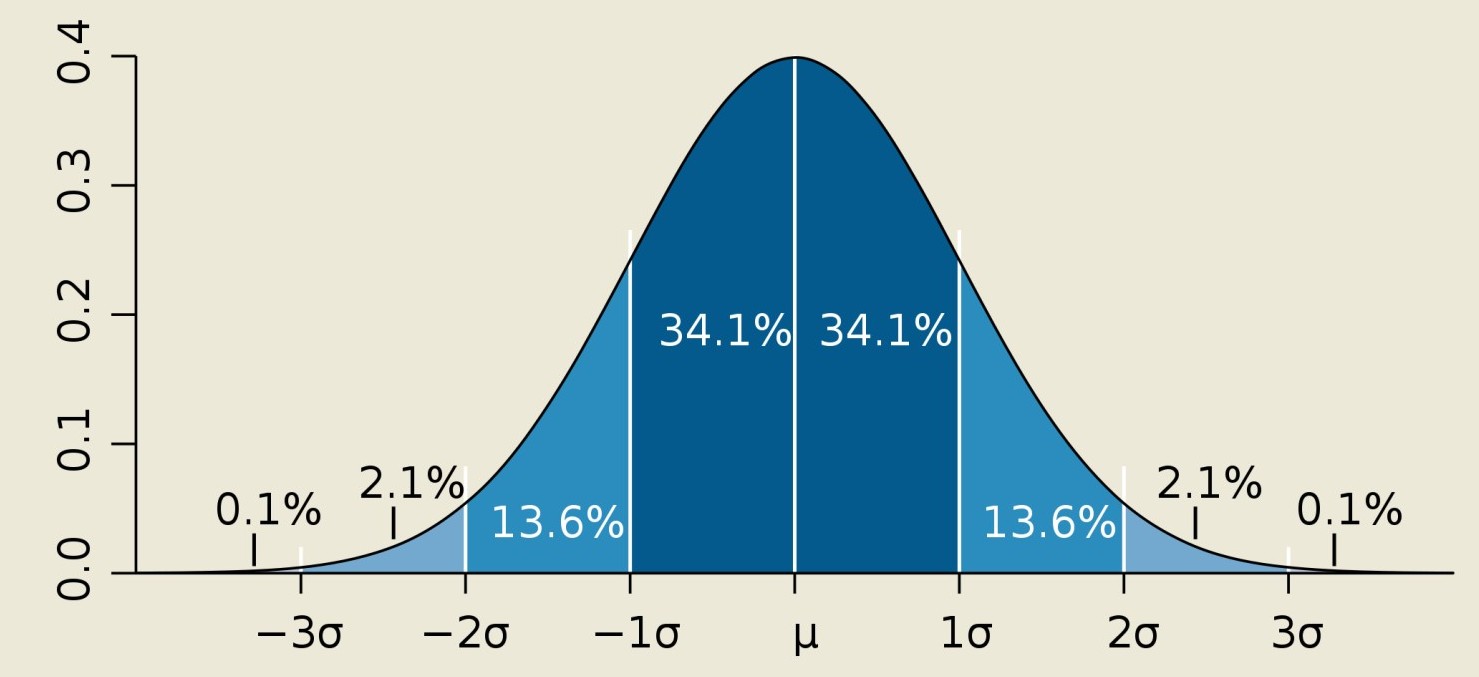
Bell Curve

***

For this reason, while it is true that over an extended period of time the stock market has averaged an annual return of 10%, we should always remember that there is a significant chance of the market taking a loss during any given year (or three-year) period, and it is possible that the market could endure a decade without any significant gains (similar to the 2000’s).

Still, if the financial plan requires an average investment return over an extended period of time such as a 30-year retirement, even these setbacks are far from certain to dislodge your secure retirement as long as time is granted for the average to work itself out.

Enter Howard Marks

As famed writer and investor Howard Marks said,

“We can’t live by the averages. We can’t say ‘well, I’m happy to survive, on average.’ We gotta survive on the bad days. If you’re a decision maker, you have to survive long enough for the correctness of your decision to become evident. You can’t count on it happening right away.”

Assessment

The use of averages has a purpose in financial planning, and in other aspects of life. We simply need to be confident that the figures we use for our averages are achievable over time, and allow time the opportunity to prove us right.

Pareto’s Law or Principle

The Pareto principle (also known as the 80–20 rule, the law of the vital few, and the principle of factor sparsity) states that, for many events, roughly 80% of the effects come from 20% of the causes Management consultant Joseph M. Juran suggested the principle and named it after Italian economist Vilfredo Pareto, who, while at the University of Lausanne in 1896, published his first paper “Cours d’économie politique.” Essentially, Pareto showed that approximately 80% of the land in Italy was owned by 20% of the population; Pareto developed the principle by observing that 20% of the pea pods in his garden contained 80% of the peas.

It is a common rule of thumb in business; e.g., “80% of your sales come from 20% of your clients.” Mathematically, the 80–20 rule is roughly followed by a power law distribution (also known as a Pareto distribution) for a particular set of parameters, and many natural phenomena have been shown empirically to exhibit such a distribution.[2]

The Pareto principle is only tangentially related to Pareto efficiency. Pareto developed both concepts in the context of the distribution of income and wealth among the population.

More: 

Conclusion

Your thoughts and comments on this ME-P are appreciated. Feel free to review our top-left column, and top-right sidebar materials, links, URLs and related websites, too. Then, subscribe to the ME-P. It is fast, free and secure.

Speaker: If you need a moderator or speaker for an upcoming event, Dr. David E. Marcinko; MBA – Publisher-in-Chief of the Medical Executive-Post – is available for seminar or speaking engagements. Contact: MarcinkoAdvisors@msn.com

OUR OTHER PRINT BOOKS AND RELATED INFORMATION SOURCES:

Comprehensive Financial Planning Strategies for Doctors and Advisors: Best Practices from Leading Consultants and Certified Medical Planners(TM)

An Educational Niche Resource Supporting Doctors and their Consulting Advisors

Join Our Mailing List

By Eugene Schmuckler PhD MBA MEd CTS [Academic Provost]

About the Medical Executive-Post

We are an emerging online and onground community that connects medical professionals with financial advisors and management consultants.

We participate in a variety of insightful educational seminars, teaching conferences and national workshops. We produce journals, textbooks and handbooks, white-papers, CDs and award-winning dictionaries. And, our didactic heritage includes innovative R&D, litigation support, opinions for engaged private clients and media sourcing in the sectors we passionately serve.

Through the balanced collaboration of this rich-media sharing and ranking forum, we have become a leading network at the intersection of healthcare administration, practice management, medical economics, business strategy and financial planning for doctors and their consulting advisors. Even if not seeking our products or services, we hope this knowledge silo is useful to you.

In the Health 2.0 era of political reform, our goal is to: “bridge the gap between practice mission and financial solidarity for all medical professionals.”

More: Letterhead.iMBA_Inc.

***

niche

 ***

Enter the Certified Medical Planners™

There is no certification program, course of study or professional designation for FAs who wish to enter the lucrative financial planning space serving physicians and healthcare professionals.

That’s why the R&D efforts of our governing board of physician-directors, accountants, financial advisors, academics and health economists identified the need for integrated personal financial planning and medical practice management as an effective first step in the survival and wealth building life-cycle for physicians, nurses, healthcare executives, administrators and all medical professionals.

Now – more than ever – desperate doctors of all ages are turning to knowledge able financial advisors and medical management consultants for help. Symbiotically too, generalist advisors are finding that the mutual need for extreme niche synergy is obvious.

But, there was no established curriculum or educational program; no corpus of knowledge or codifying terms-of-art; no academic gravitas or fiduciary accountability; and certainly no identifying professional designation that demonstrated integrated subject matter expertise for the increasingly unique healthcare focused financial advisory niche … Until Now!

Enter the Certified Medical Planner™ charter professional designation. And, CMPs™ are FIDUCIARIES, 24/7.

FAs

Video: http://vimeo.com/84247360

An Interview with Bennett Aikin AIF®

Physician-Investors and the “F” Word

More:

Channel Surfing the ME-P

Have you visited our other topic channels? Established to facilitate idea exchange and link our community together, the value of these topics is dependent upon your input. Please take a minute to visit. And, to prevent that annoying spam, we ask that you register. It is fast, free and secure.

Conclusion

Your thoughts and comments on this ME-P are appreciated. Feel free to review our top-left column, and top-right sidebar materials, links, URLs and related websites, too. Then, subscribe to the ME-P. It is fast, free and secure.

Speaker: If you need a moderator or speaker for an upcoming event, Dr. David E. Marcinko; MBA – Publisher-in-Chief of the Medical Executive-Post – is available for seminar or speaking engagements. Contact: MarcinkoAdvisors@msn.com

OUR OTHER PRINT BOOKS AND RELATED INFORMATION SOURCES:

Comprehensive Financial Planning Strategies for Doctors and Advisors: Best Practices from Leading Consultants and Certified Medical Planners(TM)

How may we assist you?

Go back

Your message has been sent

Warning
Warning
Warning
Warning

Warning.

About the INSTITUTE OF MEDICAL BUSINESS ADVISORS, Inc.

Join Our Mailing List

About

INSTITUTE OF MEDICAL BUSINESS ADVISORS, Inc.

  ***

The Institute of Medical Business Advisors, Inc provides a team of experienced, senior level consultants led by iMBA Chief Executive Officer Dr. David Edward Marcinko MBA CMPMBBS [Hon] and President Hope Rachel Hetico RN MHA CMP™ to provide going contact with our clients throughout all phases of each project, with most of the communications between iMBA and the key client participants flowing through this Senior Team.

Product Details

iMBA Inc., and its skilled staff of certified professionals have many years of significant experience, enjoy a national reputation in the healthcare consulting field, and are supported by an unsurpassed research and support staff of CPAs, MBAs, MPHs, PhDs, CMPs™, CFPs® and JDs to maintain a thorough and extensive knowledge of the healthcare environment.

Product Details

The iMBA team approach emphasizes providing superior service in a timely, cost-effective manner to our clients by working together to focus on identifying and presenting solutions for our clients’ unique, individual needs.

Product Details

The iMBA Inc project team’s exclusive focus on the healthcare industry provides a unique advantage for our clients.  Over the years, our industry specialization has allowed iMBA to maintain instantaneous access to a comprehensive collection of healthcare industry-focused data comprised of both historically-significant resources as well as the most recent information available.  iMBA Inc’s specific, in-depth knowledge and understanding of the “value drivers” in various healthcare markets, in addition to the transaction marketplace for healthcare entities, will provide you with a level of confidence unsurpassed in the public health, health economics, management, administration, and financial planning and consulting fields.

 Product DetailsProduct DetailsProduct Details

iMBA Inc’s information resources and network of healthcare industry textbook resources enhanced by our professional consultants and research staff, ensure that the iMBA project team will maintain the highest level of knowledge regarding the current and future trends of the specific specialty market related to the project, as well as the healthcare industry overall, which serves as the “foundation” for each of our client engagements.

Product Details  Product Details

Ann Miller RN MHA

www.MedicalBusinessAdvisors.com

Financial Advisor Education Letterhead CMP

Solicitation Letterhead.iMBA, Inc

Sample iMBA Engagements

iMBA Seminar Topics

***

Financial Planning MDs 2015

Comprehensive Financial Planning Strategies for Doctors and Advisors: Best Practices from Leading Consultants and Certified Medical Planners™

***

A Financial Planning Curated News Round-Up for MDs

Join Our Mailing List

Interesting news and topics from around the blog-o-sphere

[By Staff Reporters]

  • How 6 Types of Retirement Income Are Taxed
    A common mistake retirees make when calculating their living expenses is forgetting how big a bite state and federal taxes can take out of savings. And how you tap your accounts can make a big difference.
  • Long-term Care by the Numbers
    Seven out of ten people will need long-term care sometime after 65. One expert examines the numbers behind long-term care.
  • Three Retirement Goals People Never Achieve
    New and soon-to-be retirees often set lofty retirement goals based on newfound time and opportunities. However, some of their most common goals and dreams are never even attempted, let alone achieved.
  • How Rising Rates Could Impact 3 Key Sectors
    How might different fixed income sectors respond to rising rates? And how might investors position their portfolios? This article offers a view of three widely held fixed income sectors.

healthfinance

Assessment

Conclusion

Your thoughts and comments on this ME-P are appreciated. Feel free to review our top-left column, and top-right sidebar materials, links, URLs and related websites, too. Then, subscribe to the ME-P. It is fast, free and secure.

Speaker: If you need a moderator or speaker for an upcoming event, Dr. David E. Marcinko; MBA – Publisher-in-Chief of the Medical Executive-Post – is available for seminar or speaking engagements. Contact: MarcinkoAdvisors@msn.com

OUR OTHER PRINT BOOKS AND RELATED INFORMATION SOURCES:

Financial Planning MDs 2015

 Comprehensive Financial Planning Strategies for Doctors and Advisors: Best Practices from Leading Consultants and Certified Medical Planners™


I’m a 47 year old MD – Can you help me?

Join Our Mailing Listcmp-logo

cmp-program1

A Real-Life Case Model

By Ann Miller RN MHA

http://www.CertifiedMedicalPlanner.org

As a generic financial advisor, how would you answer this client prospect’s inquiry?

QUESTION: I’m a 47 year old MD – Can you help me?

TRADITIONAL ANSWER: I am a stock-broker [aka financial advisor] or insurance agent, and I sell financial products and insurance policies on a commission basis.

What do you want to buy?

CURRENT ANSWER: I am a financial planner, and I charge a percentage amount on the assets I “manage” for you. But, I have a minimum portfolio amount.

So how much money do you have to invest?

DEEP NICHE ANSWER: Yes! I am a fully CERTIFIED MEDICAL PLANNER™ practitioner.  I understand holistic financial planning for medical professionals and current health industry tumult. And, as an informed fiduciary – with transparent fees – I can help with your medical practice, business and/or personal financial planning matters.

When can we meet to discuss your needs?

***

Financial Planning MDs 2015

Comprehensive Financial Planning Strategies for Doctors and Advisors: Best Practices from Leading Consultants and Certified Medical Planners™

***

ENTER THE CMPs

Enter the CMPs

Conclusion

Your thoughts and comments on this ME-P are appreciated. Feel free to review our top-left column, and top-right sidebar materials, links, URLs and related websites, too. Then, subscribe to the ME-P. It is fast, free and secure.

Speaker: If you need a moderator or speaker for an upcoming event, Dr. David E. Marcinko; MBA – Publisher-in-Chief of the Medical Executive-Post – is available for seminar or speaking engagements. Contact: MarcinkoAdvisors@msn.com

OUR OTHER PRINT BOOKS AND RELATED INFORMATION SOURCES:

 Product Details  Product Details

Physician Creditor Protection for IRAs, Annuities and Insurance for 2014-15

Join Our Mailing List

A SPECIAL ME-P REPORT

###

Asset Protection Planning for Qualified and Non-Qualified Retirement Plans, IRAs, 403(b)s, Education IRAs (Coverdell ESAs), 529 Plans, UTMA Accounts, Health/Medical Savings Accounts (MSA/HSAs), Qualified and Non-Qualified Annuities, Long-Term Care Insurance, Disability Insurance and Group, Individual and Business Life Insurance [Ohio Focus]

By Edwin P. Morrow III; JD LLM MBA CFP® RFC®

[©2007-12-14. All rights reserved. USA]

EDITOR’S NOTE:

Hi Ann,

A couple years ago you posted an earlier version of the attached Asset Protection Outline. I updated it to include quite a bit more discussion of different protection levels for various kinds of accounts, and included more discussion of states other than Ohio, including a 50 state chart with IRA/403b protections.

So please delete the old one and replace with this one which contains more topics, including some substantial discussion of issues regarding current class action litigation jeopardizing asset protection for Schwab and Merrill Lynch IRAs.

Regards
Ed

###

The Importance of Asset Protection as Part of Financial and Estate Planning for Doctor’s and Medical Professionals

Asset Protection has become a ubiquitous buzz-word in the legal and financial community. It often means different things to different people. It may encompass anything from buying umbrella liability insurance to funding offshore trusts.

What is most likely to wipe out a client’s entire net worth? An investment scam, investment losses, a lawsuit, divorce or long-term health care expenses? “Asset Protection” may be construed to address all of these scenarios, but this outline will cover risk from non-spousal creditors as opposed to risk from bad investments, divorce, medical bills or excessive spending. Prudent business practice and limited liability entity use (LP, LLP, LLC, Corporation, etc) is the first line of defense against such risks. Similarly, good liability insurance and umbrella insurance coverage is paramount.

However, there is a palpable fear among many of frivolous lawsuits and rogue juries [especially among physicians and medical professionals]. Damages may exceed coverage limits. Moreover, insurance policies often have large gaps in coverage (e.g. intentional torts, “gross” negligence, asbestos or mold claims, sexual harassment).

As many doctors in Ohio know all too well, malpractice insurance companies can fail, too. Just as we advise clients regarding legal ways to legitimately avoid income and estate taxes or qualify for benefits, so we advise how to protect family assets from creditors. Ask your clients, “What level of asset protection do you want for yourself?

For the inheritance you leave to your family?” Do any clients answer “none” or “low”? Trusts that are mere beneficiary designation form or POD/TOD substitutes are going out of style in favor of “beneficiary-controlled trusts”, “inheritance trusts” and the like.

Table of Contents

While effort is made to ensure the material is accurate, this material is not intended as legal advice and no one may rely on it as such. Sections II(d), II(i), V, VI and XI were updated Feb 2012, but much of the material and citations have not been verified since 2010. Permission to reprint and share with fellow bar members is granted, but please contact author for updates if more than a year old.

T.O.C. [Page Number]

I. Importance of Asset Protection 2

II. State and Federal Protections Outside ERISA or Bankruptcy 4

a. Non-ERISA Qualified Plans: SEP, SIMPLE IRAs 5

b. Traditional and Roth IRAs, “Deemed IRAs” 7

c. Life Insurance 9

d. Long-Term Care, Accident/Disability Insurance 13

e. Non-Qualified Annuities 13

f. Education IRAs (now Coverdell ESAs) 16

g. 529 Plans 17

h. Miscellaneous State and Federal Benefits 18

i. HSAs, MSAs, FSAs, HRAs 18

III. Federal ERISA Protection Outside Bankruptcy 20

IV. Federal Bankruptcy Scheme of Creditor Protection 26

V. Non-Qualified Deferred Comp – Defying Easy Categorization 30

VI. Breaking the Plan – How Owners Can Lose Protection 32

(incl Prohibited Transactions and Schwab/Merrill Lynch IRA problems) 35

VII. Post-Mortem – Protections for a Decedent’s Estate 51

VIII. Post-Mortem – State Law Protections for Beneficiaries 52

IX. Post-Mortem – Bankruptcy Protections for Beneficiaries 54

X. Dangers and Advantages of Inheriting Through Trusts 56

XI. Piercing UTMA/UGMA and Other Third Party Created Trusts 59

XII. Exceptions for Spouses, Ex-Spouses and Dependents 61

XIII. Exceptions when the Federal Government (IRS) is Creditor 62

XIV. Fraudulent Transfer (UFTA) and Other Exceptions 68

XV. Disclaimer Issues – Why Ohio is Unique 69

XVI. Medicaid/Government Benefit Issues 71

XVII. Liability for Advisors 72

XVIII. Conflicts of Law – Multistate Issues 73

XIX. Conclusions 75

Appendices

A. Ohio exemptions – R.C. §2329.66 (excerpt), §3911.10, §3923.19 78

B. Bankruptcy exemptions – 11 U.S.C. § 522 excerpts 80

C. Florida IRA exemption – Fla Stat. § 222.21 (note-may be outdated) 85

D. Sal LaMendola’s Inherited IRA Win/Loss Case Chart 86

E. Multistate Statutory Debtor Exemption Chart 88

###

Assessment

This outline will discuss the sometimes substantial difference in legal treatment and protection for various investment vehicles and retirement accounts, with some further discussion of important issues to consider when trusts receive such assets.

Beware of general observations like: “retirement plans, insurance, IRAs and annuities are protected assets” – that may often be true, but Murphy’s law will make your client the exception to the general rules. The better part of this outline is pointing out those exceptions.

2012 WHITE PAPER LINK:

Creditor Protection for IRAs Annuities Insurance Nov 19 2010 WC CLE Feb 2012 update

***

2014 WHITE PAPER LINK UPDATE:

Optimal Basis Increase Trust Aug 2014

***

ABOUT THE AUTHOR:

Mr. Edwin P. Morrow III, a friend of the Medical Executive-Post, is a Wealth Specialist and Manager, Wealth Strategies Communications Ohio State Bar Association Certified Specialist, Estate Planning, Probate and Trust Law Key Private Bank Wealth Advisory Services. 10 W. Second St., 27th Floor Dayton, OH 45402. He is an ME-P “thought leader”.

Constructive criticism or other comments welcome.

Conclusion

Your thoughts and comments on this ME-P are appreciated. Feel free to review our top-left column, and top-right sidebar materials, links, URLs and related websites, too. Then, subscribe to the ME-P. It is fast, free and secure.

Speaker: If you need a moderator or speaker for an upcoming event, Dr. David E. Marcinko; MBA – Publisher-in-Chief of the Medical Executive-Post – is available for seminar or speaking engagements. Contact: MarcinkoAdvisors@msn.com

OUR OTHER PRINT BOOKS AND RELATED INFORMATION SOURCES:

Product Details  Product Details

Why Medical Professionals Need a Financial Plan?

Join Our Mailing List

We don’t plan to fail – We fail to plan

[By Dr. David Edward Marcinko MBA CMP™]

http://www.CertifiedMedicalPlanner.org

Dr. DEM

Our newest textbook COMPREHENSIVE FINANCIAL PLANNING STRATEGIES FOR DOCTORS AND ADVISORS [Best Practices from Leading Consultants and Certified Medical Planners™] will shape the physician-focused financial planning landscape for the next-generation of Health 2.0 medical professionals and their financial advisors.

Why Now?

We created this innovative textbook because the healthcare industry is rapidly changing and the financial planning ecosystem has not kept pace. Traditional insurance-commission and sales-driven generic advice is yielding to a new breed of deeply informed fiduciary advisor, and educated consultant, or Certified Medical Planner (CMP™). Internet and social media of the last decade demonstrates that medical providers are becoming accustomed to the need for knowledgeable advice. And so, financial planning is set to be transformed by “market disruptors” that will soon make an impact on the $2.8 trillion healthcare marketplace for those financial advisers serving this sector.

We are at the leading edge of this positive disruption — also known as niche based Financial Planning 2.0 — that over time will see today’s command-controlled financial services industry becomes a wide open academic marketplace. And, a growing cadre of specialty entrants is poised to shake up the industry drawing billions of dollars in revenue from traditional broker-dealer organizations while building lucrative new markets.

For example, an iMBA Inc survey points to the growing need for financial advisors to serve current and future medical professionals thanks to their eagerness to seek premium financial planning solutions from non-traditional sources and providers; like the online Certified Medical Planner™ charter designation program. The industry is ripe for a shakeup and physician focused financial planning will soon have its own new brands. We aim to be among the first-movers and top tier names in the industry.

Doctors and Computers

How We Are Different?

COMPREHENSIVE FINANCIAL PLANNING STRATEGIES FOR DOCTORS AND ADVISORS [Best Practices from Leading Consultants and Certified Medical Planners™] will change this niche industry sector by following eight important principles.

1. First, we have assembled a world-class editorial advisory board and independent team of contributors and reviewers and asked them to draw on their experiences in contemporaneous healthcare focused financial planning. Like many of their physician and nurse clients, each struggles mightily with the decreasing revenues, increasing costs, automation, SEC scrutiny and higher physician-client expectations in today’s competitive financial advisory and technological landscape. Yet, their practical experience and physician focused education, knowledge and vision is a source of objective information, informed opinion and crucial information to all consultants working with doctors and medical professionals in the financial services field.

2. Second, our writing style allows us to condense a great deal of information into one volume. We integrate bullet points and tables; pithy language, prose and specialty perspectives with real world examples and case models. The result is an oeuvre of integrated financial planning principles vital to all modern physicians and allied healthcare professionals.

3. Third, to the best of our knowledge, this is the first peer-reviewed book of its type, as we seek to follow traditional medical research and journal publishing guidelines for best practices. We present differing viewpoints, divergent and opposing stake-holder perspectives, and informed personal and professional opinions. Each chapter has been reviewed by one to three outside independent reviewers and critical thinkers. We include references and citations, and although we cannot rule out all biases, we do strive to make them transparent to the extent possible.

4. Fourth, our perspective is decidedly from the physician-client side of the equation. More specifically, as consultants to medical professionals, we champion the physician-investor over the financial advisor. And, to the extent that both sides ethically succeed; we hope all concerned “do well – by doing good”. This is unique in the fee and commission driven financial services industry. Much like the emerging patient-centered care initiative in medicine, we call it client-centered advice.

5. Fifth, it is important to note that deep specificity and niche knowledge is needed when advising physicians and healthcare providers. And so, we present information directly from that space, and not by indirect example from other industries, as is the unfortunate norm. Medical case models, healthcare industry examples, and anecdotal insights from the Over Heard in the Doctor’s Lounge, and Over Heard in the Advisor’s Lounge features, are also included. Finally, personalized financial planning for all medical professionals is our core, and only focus.

6. Sixth, this textbook represents an academic template for about 25 percent [125/500 credit hours] of the Certified Medical Planner™ chartered professional online certification program curriculum. It is useful for those studying, auditing, or considering matriculation for this prestigious designation mark.

7. Seventh, we include a glossary-of-terms specific to the text, a list of comprehensive advice sources, and three illustrative physician-specific financial plan examples additionally available by separate order.

8. Finally, as editor, we prefer engaged readers who demand compelling content.  According to conventional wisdom, printed texts like this one should be a relic of the past; from an era before instant messaging and high-speed connectivity.  Our experience shows just the opposite. Applied physician focused personal financial planning literature, from informed fiduciary sources, is woefully sparse; just as a plethora of generalized internet information makes that material less valuable to doctor clients.

***

plan

***

A Seminal Work

And so, rest assured that COMPREHENSIVE FINANCIAL PLANNING STRATEGIES FOR DOCTORS AND ADVISORS [Best Practices from Leading Consultants and Certified Medical Planners™] will become a seminal book for the advancement of personal financial planning and related personal micro-economic principles in this niche ecosystem.

In the years ahead, we trust these principles will enhance utility and add value to your book. Most importantly, we hope to increase your return on investment by some small increment.

If you have any comments or would like to contribute material or suggest topics for future editions please contact me.

More:

Conclusion

Your thoughts and comments on this ME-P are appreciated. Feel free to review our top-left column, and top-right sidebar materials, links, URLs and related websites, too. Then, subscribe to the ME-P. It is fast, free and secure.

Speaker: If you need a moderator or speaker for an upcoming event, Dr. David E. Marcinko; MBA – Publisher-in-Chief of the Medical Executive-Post – is available for seminar or speaking engagements. Contact: MarcinkoAdvisors@msn.com

OUR OTHER PRINT BOOKS AND RELATED INFORMATION SOURCES:

Financial Planning MDs 2015

Comprehensive Financial Planning Strategies for Doctors and Advisors: Best Practices from Leading Consultants

COMPREHENSIVE FINANCIAL PLANNING STRATEGIES for DOCTORS and ADVISORS

Join Our Mailing List

UPCOMING: Our Newest Major Textbook Release

[By Ann Miller RN MHA]

Release: February 19th, 2015 by Productivity Press, Inc

744 Pages | 43 Illustrations

Editor(s): Dr. David Edward Marcinko MBA CMP™ and Professor Hope Rachel Hetico RN MHA CMP™

***

 COMPREHENSIVE FINANCIAL PLANNING STRATEGIES for DOCTORS and ADVISORS 

[Best Practices from Leading Consultants and

Certified Medical Planners™]

Comprehensive Financial Planning Strategies for Doctors and Advisors: Best Practices from Leading Consultants and Certified Medical Planners™

 Features: 

  • Engaging content with case models, templates and examples for all medical professionals and their consulting advisors.
  • Combines holistic financial planning with new topics like hedge funds, investment banking, Wall Street practices and shenanigans; securities markets and margin accounts; alternative asset classes and investment policy creation – all integrated with emerging health industry concerns like the PP-ACA, ACOs, new tax laws and reimbursement models; practice sales, contracting and valuations; social media, hospital employee fringe benefits and PHO stock options.
  • Presents disruptive theories on industry suitability rules, fiduciary accountability and stewardship principles, and how to select the most knowledgeable and cost-efficient advisor for every life-cycle need.

Summary

Drawing on the expertise of multi-degreed doctors, and multi-certified financial advisors, COMPREHENSIVE  FINANCIAL PLANNING STRATEGIES FOR DOCTORS AND ADVISORS[Best Practices from Leading Consultants and Certified Medical Planners™]will shape the industry landscape for the next-generation as the current ecosystem strives to keep pace. Traditional generic products and sales-driven advice will yield to a new breed of deeply informed financial advisor, or Certified Medical Planner™.

The profession is set to be transformed by “cognitive-disruptors” that will significantly impact the $2.8 trillion healthcare marketplace for those financial consultants serving this challenging sector. There will be winners and losers. The text which contains 24 chapters, and champions healthcare providers while informing financial advisors, is divided into four sections compete with glossary of terms, CMP™ curriculum content, and related information sources:

  1. For ALL medical providers and financial industry practitioners
  2. For NEW medical providers and financial industry practitioners
  3. For MID-CAREER medical providers and financial industry practitioners
  4. For MATURE medical providers and financial industry practitioners.

Using an engaging style, the book is filled with authoritative guidance and health care–centered discussions, to provide tools and techniques to create a personalized financial plan using professional advice. Comprehensive coverage includes topics likes behavioral finance, medical risk management, Modern Portfolio Theory (MPF), the Capital Asset Pricing Model (CAP-M) and Arbitrage Pricing Theory (APT); as well as insider insights on commercial real estate; High Frequency Trading platforms and robo-advisors; the Patriot and Sarbanes–Oxley Acts; hospital endowment fund management, ethical wills, divorce and other special situations.

The result is a codified “must-have” book, for all health industry participants, and those seeking advice from the growing cadre of financial consultants and Certified Medical Planners™ who seek to “do well – by doing good”, dispensing granular physician-centric financial advice: Omnia pro medicus-clientis.

Financial Planning 2015

 RAISING THE BAR

CERTIFIED MEDICAL PLANNER

“The informed voice of a new generation of fiduciary advisors for healthcare”

[Omnia pro medicus-clientis]  

More:

BOOK: Comprehensive Financial Planning Strategies for Doctors and Advisors: Best Practices from Leading Consultants and Certified Medical Planners™

Conclusion

Your thoughts and comments on this ME-P are appreciated. Feel free to review our top-left column, and top-right sidebar materials, links, URLs and related websites, too. Then, subscribe to the ME-P. It is fast, free and secure.

Link: http://feeds.feedburner.com/HealthcareFinancialsthePostForcxos

Speaker: If you need a moderator or speaker for an upcoming event, Dr. David E. Marcinko; MBA – Publisher-in-Chief of the Medical Executive-Post – is available for seminar or speaking engagements. Contact: MarcinkoAdvisors@msn.com

OUR OTHER PRINT BOOKS AND RELATED INFORMATION SOURCES:

Product DetailsProduct DetailsProduct Details

Product DetailsProduct Details

Risk Management, Liability Insurance, and Asset Protection Strategies for Doctors and Advisors: Best Practices from Leading Consultants and Certified Medical Planners™8Comprehensive Financial Planning Strategies for Doctors and Advisors: Best Practices from Leading Consultants and Certified Medical Planners™

Why You Should [Still] Know Your Marginal Tax Rate?

Join Our Mailing List

And … Other Financial Planning Topics of Import

Lon JefferiesBy Lon Jefferies MBA CFP®

In 2014, the federal tax brackets are 10%, 15%, 25%, 28%, 33%, 35%, and 39.6%. For a taxpayer who is married and files jointly, regardless of how much the household makes, the first $18,150 of income after accounting for deductions and exemptions will only be taxed at the 10% rate.

Similarly, any income the household makes that is more than $18,150 but less than $73,800 is taxed at the 15% rate. At that point, the next $75,050 is taxed at 25%, and so on.

Consequently, not all income a household makes during the course of the year is taxed at the same rate. A marginal tax bracket is the tax rate that applies to the last dollar the household made.

It is crucial for all taxpayers to know their marginal tax rate. This information can help a client identify which type of investment accounts fits their situation best, how to structure an investment portfolio, and how to determine the value of certain deductions when filing their tax return.

Roth or Traditional Retirement Accounts

Contributions to traditional retirement accounts like IRAs and 401(k)s allow taxpayers to avoid recognizing income earned during the tax year and push the need to acknowledge the revenue into a future year. This is valuable because many people are in a higher tax bracket during their working years than they are during retirement. For instance, for a person who is currently in the 25% marginal tax bracket, it may be advantageous to delay recognizing the income until the investor retires and has less income, causing him to be in only the 15% marginal tax bracket. Doing this would enable the taxpayer to pay taxes at only 15% as opposed to 25%.

Alternatively, a Roth IRA or Roth 401(k) allows an investor to pay taxes on contributed income during the year it was earned but the money then grows tax-free. Consequently, a Roth retirement account is great for someone who believes they may be in a higher marginal tax bracket in the future. For example, a young employee in the early stages of his career who is in the 15% tax bracket but believes he may be in the 25% or 28% bracket in the future would benefit from paying all taxes on the income at his current rate of 15% and then getting tax-free investment growth. This would prevent the investor from having to pay the higher future tax rate of 25% or 28% on the invested dollars.

Knowing your marginal tax bracket can help you determine if you would favor paying taxes on your invested dollars at your current tax rate or if you believe you may benefit from pushing the need to recognize the income into a future tax year. This is a critical decision when planning for retirement and it can’t accurately be made without knowing your marginal tax rate.

Capital Gains Rate

A long term capital gains tax rate is the rate that applies to the growth of any asset held for longer than a year that is not within a tax-advantaged account. If you buy stock outside a tax-advantaged account, or purchase investment property, any growth in the value of the investment will be taxed as capital gains when sold.

An investor’s capital gains tax rate is determined by the investor’s marginal tax rate. For most taxpayers the long term capital gains tax rate is 15%. However, if a taxpayer is in the 10% or 15% marginal tax bracket, the long term capital gains tax rate is an amazing 0%! Additionally, many taxpayers in either the 35% or 39.6% tax bracket may end up paying capital gains at a rate of 20%.

Clearly, knowing your marginal tax bracket will help you analyze the appeal of making investments outside of tax-advantaged accounts. People who qualify for the 0% capital gains tax should actively search for ways to take advantage of this benefit.

Additionally, knowing your marginal tax rate can help you determine the best time to recognize long-term capital gains. If your marginal tax rate will be 25% in 2014 — leading to a capital gains tax rate of 15% — but you believe your marginal rate will be 15% in 2015 — leading to a capital gains tax rate of 0% — it would save you money and lower your tax bill to defer recognizing long-term capitals gains until next year.

***

FP

***

Annuities

Annuities are promoted as a way for invested dollars to obtain tax-deferred growth. However, when money is withdrawn from an annuity it is taxed at the investor’s marginal tax rate as opposed to his long term capital gains tax rate. Knowing your marginal tax bracket can help determine whether an annuity adds any value to your portfolio, or whether it could actually be detrimental.

Suppose an investor is in the 15% marginal tax bracket. If this person invests in an annuity, he will avoid paying taxes on any of the investment’s growth until the funds are withdrawn from the annuity. However, at that point the investment’s growth will be taxed at the taxpayer’s marginal income tax bracket of 15%. Alternatively, if this same investor utilized a taxable investment account rather than an annuity, the investment’s growth would be taxed at the investor’s capital gains tax rate of 0% when sold. In this case, investing in an annuity actually created a tax bill for this investor!

Clearly, knowing your marginal tax rate and your resulting capital gains tax rate can help you determine the best type of investment accounts for your personal situation.

Itemized Deductions

The value of your itemized deductions is essentially determined by your marginal tax bracket. For a simplified example, consider a taxpayer who could generate an additional $10,000 of deductions. Doing so would mean the individual would pay taxes on $10,000 of income less than he would without the deduction. If the individual is in the 15% tax bracket, generating the deduction would lower the person’s tax bill by $1,500 dollars ($10,000 x 15%). However, if the individual is in the 25% tax bracket, the same deduction would lower the person’s tax bill by $2,500 ($10,000 x 25%).

Consequently, knowing your marginal tax bracket can help determine when large itemized deductions should be taken. If you would like to donate funds to your favorite charitable institution, knowing which year you will be in the highest marginal tax bracket can help you determine the best time to make the contribution.

***

FA

***

Marginal Tax Rates Change

Many people’s income is relatively constant year-after-year. For these people, there may not be much fluctuation in their marginal tax bracket. However, any time you have a significant increase or decrease in income recognized during a year, your marginal tax rate may change. Whenever possible, it is best to anticipate how your current marginal tax rate might compare to your future marginal tax rate.This is another strong factor that can impact all the key financial decisions effected by your marginal tax rate.

Conclusion

Your thoughts and comments on this ME-P are appreciated. Feel free to review our top-left column, and top-right sidebar materials, links, URLs and related websites, too. Then, subscribe to the ME-P. It is fast, free and secure.

Link: http://feeds.feedburner.com/HealthcareFinancialsthePostForcxos

Speaker: If you need a moderator or speaker for an upcoming event, Dr. David E. Marcinko; MBA – Publisher-in-Chief of the Medical Executive-Post – is available for seminar or speaking engagements. Contact: MarcinkoAdvisors@msn.com

OUR OTHER PRINT BOOKS AND RELATED INFORMATION SOURCES:

Product DetailsProduct DetailsProduct Details

Product DetailsProduct Details

Product Details

New “Physician-Focused” Financial Planning Book Reviewers Needed

Join Our Mailing List 

Discerning the “Best Emerging Practices” in Financial Planning for Doctors and Health Professionals

http://www.CertifiedMedicalPlanner.org

By Ann Miller RN MHA AdviceforDoctors@Outlook.com

[ME-P Executive Director]

The Medical Executive-Post occasionally fact-checks and codifies the posts and comments of our readers, subscribers and other experts in order to present them in book form. This is a form of academic, or cognitive, crowd-sourcing. It might also be called a form of private Wikipedia styled information gathering. We may use it to create new books, up-date prior books, or fill in the gaps of books-in-progress.

Book Reviewers  

And so, we are requesting informed [MD-DO-DDSs] doctors and [FA, CFP, CPA, CMP, PhD, CFA or MBA] related folks, or other knowledgeable readers and subscribers to review the Table of Contents of our current project, now under review. We wish to ensure no important topics of interest are omitted for modernity. Editorial writing and assistance will be provided.

www.CertifiedMedicalPlanner.org

Our ME-P Book Review Format:

An easy to follow, and typical book review format, usually starts with the preliminaries such as stating the title of the book, its author, place of publication, publisher, date of publication, and the number of pages. This is completed by us.

What follows next is the making of an introduction to at least give the readers a preview of the review. It is sometimes followed by background information of the book in order to set out criteria in judging a book.

This includes the author’s basic information such as the era in which he wrote the book, or how it relates to his life experience.

Then it is followed by writing a short summary of the content or text of a novel, history book, or any other type of book.

Testimonials, Too!

Crafting a brief, 2-3 sentence, informal testimonial is also needed.

Books

Assessment

This is highly confidential peer-reviewed styled publishing; do not disclose material. MarcinkoAdvisors@msn.com

Conclusion

Your thoughts and comments on this ME-P are appreciated. Feel free to review our top-left column, and top-right sidebar materials, links, URLs and related websites, too. Then, subscribe to the ME-P. It is fast, free and secure.

Link: http://feeds.feedburner.com/HealthcareFinancialsthePostForcxos

Speaker: If you need a moderator or speaker for an upcoming event, Dr. David E. Marcinko; MBA – Publisher-in-Chief of the Medical Executive-Post – is available for seminar or speaking engagements. Contact: MarcinkoAdvisors@msn.com

OUR OTHER PRINT BOOKS AND RELATED INFORMATION SOURCES:

DICTIONARIES: http://www.springerpub.com/Search/marcinko
PHYSICIANS: www.MedicalBusinessAdvisors.com
PRACTICES: www.BusinessofMedicalPractice.com
HOSPITALS: http://www.crcpress.com/product/isbn/9781466558731
CLINICS: http://www.crcpress.com/product/isbn/9781439879900
BLOG: www.MedicalExecutivePost.com
FINANCE: Financial Planning for Physicians and Advisors
INSURANCE: Risk Management and Insurance Strategies for Physicians and Advisors

Product DetailsProduct DetailsProduct Details

Product Details  Product Details

Product DetailsProduct Details

Product Details

The Associated Press “American Dream”?

Join Our Mailing List 

On Changing Definitions

By Rick Kahler CFP® http://www.KahlerFinancial.com

Rick Kahler CFPThe surest road to financial success and independence is a long one. That path includes working hard at a career you enjoy, living on less than you earn, taking educated and appropriate risks, and building wealth gradually through diversified investing.

The American Dream

I know many people who have followed this route successfully. Their achievement—what has long been described as the American Dream—should be something to be proud of.

The Associated Press

Apparently, in today’s world, that isn’t the case. At least not according to an Associated Press news article published in the Rapid City Journal on December 9, 2013. The headline was straightforward enough: “Rising riches: 1 in 5 in US reaches affluence.” The article stated that 20% of Americans will have household incomes of $250,000 or more at some point in their lives. This includes those with high incomes for only one year or a few years. During those periods of affluence, they are in the top 2% of earners.

AP Inaccuracies and Assumptions

Beyond that, the piece was filled with inaccuracies and assumptions.

First, its writers confused “affluence” and “wealth.” Someone with a high income in a given year is affluent. Anyone with a basic grasp of finance, however, understands that wealth is associated with net worth. When only 2% of Americans have a net worth of $1 million or more, 20% can’t be accurately described as wealthy.

A One Time Affluent Deal

Some high earners are two-income couples, or professionals like physicians, at the peak of their careers. For others, affluence is a one-time deal.

Consider this example: A couple in their 50’s have always earned around $40,000 a year (adjusted for inflation). The husband inherits a $250,000 IRA from his parents. The couple decides to distribute the money in the IRA, pay the income taxes, and use the balance to pay off their mortgage. For that one year only, their income exceeds $250,000. That certainly isn’t enough to earn the label of “new rich.”

The article notes these “new rich” tend to be “much more fiscally conservative” than other Americans and “less likely to support public programs, such as food stamps or early public education to help the disadvantaged.” This makes anyone who ever receives over $250,000 in any one year look like Ebenezer Scrooge before his transformation. but it is true.

Windfalls

Ask anyone, no matter how liberal, who received a windfall in 2013 and watched 25% to 50% of it disappear to federal and state income taxes, whether they are happy about this income redistribution.

The AP also notes the number of people reporting income of over $250,000 doubled since 1979, leaving the impression that the rich are getting richer while the poor are getting poorer. While this is technically correct, the figures are meaningless because they are not adjusted for inflation.

cropped-header.jpg

Accenture’s Institute for High Performance and Research

The article also cites Paul F. Nunes of Accenture’s Institute for High Performance and Research, in support of its contention that those who are newly or temporarily affluent aren’t spending enough. Their “capacity to spend more will be important to a U.S. economic recovery.” Instead, they “spend just 60 percent of their before-tax income, often setting the rest aside for retirement or investing.”

Taking Care of Business

In other words, these successful Americans are doing exactly what the American Dream says they should do. They are taking care of themselves and planning for the future by working to build their short-term affluence into lasting wealth and financial independence.

Assessment

For this, they should be applauded. It would be more helpful to our country, economically and socially, to see them as role models rather than part of the problem. Instead of trying to bring successful people down, we would achieve more by using their example to lift others up.

More:

Conclusion

Your thoughts and comments on this ME-P are appreciated. Feel free to review our top-left column, and top-right sidebar materials, links, URLs and related websites, too. Then, subscribe to the ME-P. It is fast, free and secure.

Link: http://feeds.feedburner.com/HealthcareFinancialsthePostForcxos

Speaker: If you need a moderator or speaker for an upcoming event, Dr. David E. Marcinko; MBA – Publisher-in-Chief of the Medical Executive-Post – is available for seminar or speaking engagements. Contact: MarcinkoAdvisors@msn.com

OUR OTHER PRINT BOOKS AND RELATED INFORMATION SOURCES:

DICTIONARIES: http://www.springerpub.com/Search/marcinko
PHYSICIANS: www.MedicalBusinessAdvisors.com
PRACTICES: www.BusinessofMedicalPractice.com
HOSPITALS: http://www.crcpress.com/product/isbn/9781466558731
CLINICS: http://www.crcpress.com/product/isbn/9781439879900
BLOG: www.MedicalExecutivePost.com
FINANCE: Financial Planning for Physicians and Advisors
INSURANCE: Risk Management and Insurance Strategies for Physicians and Advisors

Product Details  Product Details

Twelve Steps of Financial Independence for Doctors

Join Our Mailing List

A Basic Guide

By Lon Jefferies  MBA CFP® CMP®

Lon JeffriesWant to get your finances in order? Consider this comprehensive 12-step guide to address each element of your personal financial situation. In most cases, you should not address a step until all previous steps are satisfied.

1. 401(k) 403(b) Match: Without exception, if your employer matches 401(k) contributions, you should maximize whatever they’re offering. If it’s a dollar-for-dollar match, that’s an instant 100 percent return! Even the 50 percent return of a two-for-one match is irresistible.

2. Consumer Debt: Pay off your credit cards and all other unsecured loans, prioritizing the debts with the highest interest rates. Credit cards frequently charge rates as high as 30 percent. Paying off a card with 30 percent APR is comparable to getting a 30 percent investment return. Not completing this step will hamper your entire financial plan.

3. Cash Flow: You can’t develop wealth if you spend more than you make. Construct and follow a written budget to ensure you are living within your means. Your budget should include saving at least 10 percent of your gross income for retirement. Constantly compare actual spending with your budget and hold yourself accountable! Mint.com is an excellent free tool for this step.

4. Emergency Reserve: Develop a liquid savings account consisting of enough money to cover three to six months of expenses. These funds should only be utilized in crisis such as a job loss or medical emergency.

5. Life Insurance: If you have dependent children, you likely need life insurance. Cost-efficient coverage can frequently be obtained via your employer. To calculate the amount of coverage to purchase, first determine how much money your survivors would need to maintain a comfortable lifestyle, and then subtract any income they will generate as well as any savings you’ve accumulated. Alternatively, if you don’t have children in your household and your spouse is self-sufficient, you may not need life insurance coverage.

6. Disability Insurance: Getting hurt can completely derail your financial planning. A loss of income halts your savings and likely leads to increased debt. Obtain enough disability coverage to bridge the gap between earnings and expenses in the event of an injury. Coverage can frequently be purchased through your employer.

7. Estate Planning: Obtain a power of attorney, medical directive and living will. These documents allow you to designate the person you would like to make decisions for you if you become incapacitated. They also specify your preferences regarding life-prolonging medical treatments. Ensure both primary and contingent beneficiaries are assigned to your retirement accounts. Finally, develop a will or trust to ensure all other assets are distributed as you desire when you die.

8. Retirement Contributions: With risk exposures covered, it’s time to return to retirement planning efforts. Again, a 401(k) is an attractive retirement vehicle because it frequently offers an employer match and allows large annual contributions ($18,500 or $25,000 for individuals over age 50). If your employer doesn’t offer a 401(k), you can still contribute up to $6,500 (or $7,000 if over age 50) to an IRA. IRA contributions can be made on behalf of both spouses, even if only one is employed.

9. Traditional or Roth: The type of account that is best for you depends on when you want to pay taxes. A traditional retirement account allows an immediate tax deduction, the investments grow tax deferred, and the money isn’t taxed until the funds are withdrawn from the account. Alternatively, taxes are paid on Roth contributions immediately, but both contributions and growth are completely tax free when withdrawn during retirement. Put simply: will you be in a higher tax bracket now or when you withdraw the funds?

10. Asset Allocation: The most important investment decision you can make is how much of your portfolio will be invested in stocks versus bonds. A higher proportion of stocks leads to increased risk, but the potential for greater returns. The more time you have until the funds are needed, the more risk you can usually afford to take. Consequently, you should reduce the proportion of stocks in your portfolio as you approach retirement in order to minimize your risk factor. Identify an asset allocation that is aggressive enough to accomplish your investment goals while exposing you to an acceptable level of risk.

11. Get Caught Up: According to a recent Fidelity study, your nest egg should be one times your salary by age 35, three times your salary by 45, five times your salary by 55 and seven times your salary by 67.

12. Education Planning: Only after your retirement savings is where it should be can you focus on your children’s college education. At this point, explore a Utah Educational Savings Plan 529 (uesp.org) or a Coverdell Education Savings Account, both of which offer tax advantages if used for schooling.

Assessment

Does this mean you don’t need a financial advisor? Of course not! A qualified, comprehensive financial planner can add value, address shortcomings, and answer questions in each of these areas. Once you have completed each of these steps, you can be confident you have your financial ducks in a row.

###

healthcare-business

Conclusion

Your thoughts and comments on this ME-P are appreciated. Feel free to review our top-left column, and top-right sidebar materials, links, URLs and related websites, too. Then, subscribe to the ME-P. It is fast, free and secure.

Link: http://feeds.feedburner.com/HealthcareFinancialsthePostForcxos

Speaker: If you need a moderator or speaker for an upcoming event, Dr. David E. Marcinko; MBA – Publisher-in-Chief of the Medical Executive-Post – is available for seminar or speaking engagements. Contact: MarcinkoAdvisors@msn.com

Product DetailsProduct DetailsProduct Details

Product Details  Product Details

Risk Management, Liability Insurance, and Asset Protection Strategies for Doctors and Advisors: Best Practices from Leading Consultants and Certified Medical Planners™8Comprehensive Financial Planning Strategies for Doctors and Advisors: Best Practices from Leading Consultants and Certified Medical Planners™

Purchase ME-P Textbooks, Handbooks and Dictionaries to Thrive

 Our Library is Growing … thanks to you

Join Our Mailing List

By Ann Miller RN MHA

[ME-P Executive-Director]

We have been publishing the Medical Executive-Post for more than eight years now. And, with almost 3,000 formal posts, by the nation’s brightest experts, we have a treasure trove of information available to you.

So now, for the first time, all this information – and more – has been codified, updated, copy-righted and copy-protected in print form for your purchase and use. All have been edited by our Publisher – Dr. David Edward Marcinko and Professor Hope Rachel Hetico.

Just click on an image below to order.

Product DetailsProduct DetailsProduct Details

Product Details  Product Details

Product DetailsProduct Details

Assessment

Purchase our white papers, too: https://medicalexecutivepost.com/white-papers/

Conclusion

Your thoughts and comments on this ME-P are appreciated. Feel free to review our top-left column, and top-right sidebar materials, links, URLs and related websites, too. Then, subscribe to the ME-P. It is fast, free and secure.

Link: http://feeds.feedburner.com/HealthcareFinancialsthePostForcxos

Speaker: If you need a moderator or speaker for an upcoming event, Dr. David E. Marcinko; MBA – Publisher-in-Chief of the Medical Executive-Post – is available for seminar or speaking engagements. Contact: MarcinkoAdvisors@msn.com

OUR OTHER PRINT BOOKS AND RELATED INFORMATION SOURCES:

Health Dictionary Series: http://www.springerpub.com/Search/marcinko

Practice Management: http://www.springerpub.com/product/9780826105752

Physician Financial Planning: http://www.jbpub.com/catalog/0763745790

Medical Risk Management: http://www.jbpub.com/catalog/9780763733421

Hospitals: http://www.crcpress.com/product/isbn/9781439879900

Physician Advisors: www.CertifiedMedicalPlanner.org

Business%20Optimization

Health 2.0 Financial Planning for Medical Executive-Post Members

A By-Product of Health 2.0?

By Dr. David Edward Marcinko FACFAS MBA CMP*

[Founder and CEO]

www.MedicalBusinessAdvisors.com

Dr David E Marcinko MBAA decade ago, Editor Gregory J. Kelley of Physician’s MONEY DIGEST and I reported that a 47 year old-doctor with $184,000 annual income would need about $5.5 million dollars for retirement at age 65. Then came the “flash-crash’ of 2007-08, the home mortgage fiasco and the Patient Protection and Accountable Care Act [PP-ACA] of 2010; etc.

No wonder that medical provider career panic is palpable. Much like the new medical home concept, the idea of holistic life planning was born.

Life Planning

Life planning has many detractors and defenders. Formally, life planning has been defined in the following way. 

Financial Life Planning is an approach to financial planning that places the history, transitions, goals, and principles of the client at the center of the planning process.  For the client, their life becomes the axis around which financial planning develops and evolves.

But, for physicians, life planning’s quasi-professional and informal approach to the largely isolated disciplines of medically focused financial planning, was still largely inadequate.

Why? 

Today’s personal financial and practice environment is incredibly more complex than it was in 2007-08, as economic stress from HMOs, Wall Street, liability fears, criminal scrutiny from government agencies, IT mischief from hackers, economic benchmarking from hospitals and the lost confidence of patients all converged to inspire a robust new financial planning 2.0 approach for medical professionals.

Example of a financial planning mistake 

Recall the tale of Dr. Debasis Kanjilal, a pediatrician from New York who put more than $500,000 into the dot.com company, InfoSpace, upon the advice of Merrill Lynch’s star but non fiduciary analyst Henry Bloget.

Is it any wonder that when the company crashed, the analyst was sued, and Merrill settled out of court? Other analysts, such as Mary Meeker of Morgan Stanley, Dean Witter and Jack Grubman from Salomon Smith Barney, were involved in similar fiascos.

Although sad, this story is a matter of public record. Hopefully, doctors now understand that the big brokerage houses that underwrite and recommend stocks may have credibility problems, and that physicians got burned with the adrenalin rush of “self-directed” investment portfolios.

Example of a medical practice management mistake 

Just reflect a moment on colleagues willing to securitize their medical practices a few years ago, and cash out to Wall Street for perceived riches that were not rightly deserved

Where are firms such as MedPartners, Phycor, FPA and Coastal now? A recent survey of the Cain Brothers Physician Practice Management Corporation Index of publicly traded PPMCs revealed a market capital loss of more than 95%, since inception. 

Another Approach?

This disruptive narrative shift was formally noted by the Institute of Medical Business Advisors Inc [iMBA, Inc] and introduced to the medical and financial services industry. This research and corpus of work resulted in hundreds of publications in the Library of Medicine, National Institute of Health (NIH) and the Library of Congress, along with related publications, a dozen textbooks and white papers

http://www.ncbi.nlm.nih.gov/nlmcatalog?term=marcinko

The iMBA approach to financial planning, as championed by the www.CertifiedMedicalPlanner.org professional charter designation, integrates the traditional concepts of fiduciary focused financial planning, with the increasing complex business concepts of medical practice management.

The former ideas are presented in our textbook on financial planning for doctors: Financial Planning for Physicians and Advisors

The later in our companion book: Business of Medical Practice [Edition 3.0]

A textbook for hospital CXOs and physician-executives: Hospitals & Healthcare Organizations

While most issues of risk management, liability and insurance are found in Risk Management and Insurance Strategies for Physicians and Advisors

And, for the perplexed, all definitions are codified in the dictionary glossary Health Dictionary Series

Health 2.0 Paradigm Shift

And so, the ME-P community now realizes that a more integrated approach is needed.  The traditional vision of medical practice management, personal physician financial planning and how they may look in the future are rapidly changing as the retail mentality of medicine is replaced with a wholesale philosophy.

Or, how views on maximizing current practice income might be more profitably sacrificed for the potential of greater wealth upon eventual practice sale and disposition.

Or, how Yale University economist Robert J Shiller warns in “The New Financial Order” [Risk in the 21st Century] that the risk for choosing the wrong healthcare profession or specialty might render physicians obsolete by technological changes, managed care systems or fiscally unsound demographics. 

Physician-Executive

My Assessment

Yet, the opportunity to re-vise the future at any age through personal re-engineering, exists for all of us, and allows a joint exploration of the medicine, business and the meaning and purpose of life.

To allow this deeper and more realistic approach, the advisor and the doctor must build relationships based on fiduciary trust, greater self-knowledge and true medical business and financial enhancement acumen.

Are you up to the task?

Conclusion

Your thoughts and comments on this ME-P are appreciated. Feel free to review our top-left column, and top-right sidebar materials, links, URLs and related websites, too. Then, subscribe to the ME-P. It is fast, free and secure.

Link: http://feeds.feedburner.com/HealthcareFinancialsthePostForcxos

Speaker: If you need a moderator or speaker for an upcoming event, Dr. David E. Marcinko; MBA – Publisher-in-Chief of the Medical Executive-Post – is available for seminar or speaking engagements. Contact: MarcinkoAdvisors@msn.com

OUR OTHER PRINT BOOKS AND RELATED INFORMATION SOURCES:

Product DetailsProduct DetailsProduct Details

Product Details  Product Details

Product DetailsProduct Details

Physician Financial Planning IS Medical Risk Management [video]

Join Our Mailing List

By Ann Miller RN MHA

Financial Planning Handbook for Physicians and Advisors

Product Details

Insurance and Risk Management Strategies for Physicians and Advisors

Product Details

[Click on icons for larger image]

###

Business protection strategies for small medical practices

A study recently released by insurance specialist firm The Hartford reveals that small businesses continue to succeed despite challenging economic conditions.

In this video, Ray Sprague, senior vice president for The Hartford’s small commercial insurance segment, shares key takeaways from the study and discusses strategies that small medical practices can implement to protect their business.

VIDEO

http://www.healthcarefinancenews.com/video/business-protection-strategies-small-medical-practices

Gun control dialog

###

Books for Savvy Doctors and their Financial Advisors and Management Consultants

Join Our Mailing List

Learn and Prosper from the ME-P

By Ann Miller RN MHA

Product DetailsProduct DetailsProduct Details

Product Details  Product Details

Product DetailsProduct Details

Assessment

Click on each image for more information.

Feel free to write a review and tell us what you think?

Conclusion

Your thoughts and comments on this ME-P are appreciated. Feel free to review our top-left column, and top-right sidebar materials, links, URLs and related websites, too. Then, subscribe to the ME-P. It is fast, free and secure.

Speaker: If you need a moderator or speaker for an upcoming event, Dr. David E. Marcinko; MBA – Publisher-in-Chief of the Medical Executive-Post – is available for seminar or speaking engagements. Contact: MarcinkoAdvisors@msn.com

OUR OTHER PRINT BOOKS AND RELATED INFORMATION SOURCES:

Product Details

Publications Related to Behavioral Finance, Economics and Money

Join Our Mailing List

Interesting Articles by Dan Ariely PhD

NOTE: Dan is the Irrational Economist: He blogs at: http://danariely.com/

By Staff Reporters

LIST:

Conclusion

Your thoughts and comments on this ME-P are appreciated. Feel free to review our top-left column, and top-right sidebar materials, links, URLs and related websites, too. Then, subscribe to the ME-P. It is fast, free and secure.

Link: http://feeds.feedburner.com/HealthcareFinancialsthePostForcxos

Speaker: If you need a moderator or speaker for an upcoming event, Dr. David E. Marcinko; MBA – Publisher-in-Chief of the Medical Executive-Post – is available for seminar or speaking engagements. Contact: MarcinkoAdvisors@msn.com

OUR OTHER PRINT BOOKS AND RELATED INFORMATION SOURCES:

DICTIONARIES: http://www.springerpub.com/Search/marcinko
PHYSICIANS: www.MedicalBusinessAdvisors.com
PRACTICES: www.BusinessofMedicalPractice.com
HOSPITALS: http://www.crcpress.com/product/isbn/9781466558731
CLINICS: http://www.crcpress.com/product/isbn/9781439879900
BLOG: www.MedicalExecutivePost.com
FINANCE: Financial Planning for Physicians and Advisors
INSURANCE: Risk Management and Insurance Strategies for Physicians and Advisors

Product Details

On Financial Therapy Rising

Join Our Mailing List

Uniting Financial Planning and Behavioral Psychology

By Rick Kahler MS CFP® ChFC CCIM www.KahlerFinancial.com

The driver of the van that was to take me from the University of Missouri to the St. Louis airport asked where I was from. When I said, “Rapid City” and we struck up a conversation about his childhood trip to the Sturgis Rally. At one point he asked me, “What were you doing visiting MU?”

A Topic at the Financial Therapy Association (FTA) Conference

There I explained I had attended the third annual Financial Therapy Association (FTA) Conference. There was a silence. Then he continued talking about his memories of visiting the Black Hills.

Bringing up the topic of financial therapy tends to leave people speechless. It isn’t a common term. Plus, it combines two topics that most people want to avoid: therapy and finances. Put them together, and you have a real conversation killer.

Fortunately, there was plenty of conversation for the 85 professionals and students at the three-day FTA conference. For those attending for the first time, it was a “coming home” experience.

Mental Health Needs

Financial therapy addresses a need that until recent years most financial and mental health professionals didn’t talk about or didn’t even know existed. It’s the unconscious and unspoken thoughts, beliefs, and feelings around all things financial. Certified Financial Planners® aren’t required to have training in even basic communication skills, much less the more complex fundamentals of psychology or neuroscience.

Likewise, therapists and psychologists aren’t taught to deal with money, either in working with clients or in managing their own businesses.

As a result, neither profession provides the tools to address clients’ problematic and often self-destructive beliefs and behaviors around money. Destructive behaviors around money usually aren’t about the money.

For this reason, giving people more information about how money, investing, or financial planning works isn’t enough.

Financial Psychology

The exploration of financial psychology or emotion and money isn’t new. Dr. Jacob Needleman and Olivia Mellan were among the mental health pioneers who began raising questions around the psychological side of money in the 1990’s. About the same time, two financial planners, George Kinder and Dick Wagner, co-founded a leaderless group of financial planners, coaches, and therapists called the Nazrudin project to explore the emotional side of money. The Nazrudin project, which still meets annually, spawned scores of books, courses, and organizations raising the awareness and skill level of financial professionals and therapists.

The Nazrudin project was the primary influence that gave me, along with others, the idea of uniting financial planning with experiential therapy. I began referring to it as financial therapy after hearing the term from therapist Bari Tessler.

Financial Therapy

Typically, financial therapy involves a client-centered financial planner (typically only compensated by fee for service), and a therapist or psychologist, that conjointly work with clients. In my experience, this process helps clients who are in some way financially stuck make significant progress.

Academia Required

Link: www.CertifiedMedicalPlanner.org

The one thing missing in the evolution of financial therapy until recently was the involvement of academia. For the first time, the FTA unites academics, therapists, and financial planners in a common pursuit of defining and developing the concept of financial therapy. This is essential if financial therapy is to become a profession.

It may be some time before we see practitioners with advanced degrees in financial therapy. Before that time comes, the FTA has a lot of work to do, including coming up with a scholarly definition of financial therapy.

Assessment

In the meantime, Jeff Zaslow, who reported on our first financial therapy workshop in 2003 for The Wall Street Journal, wrote that it “combines experiential therapy with nuts-and-bolts financial planning.” As we work to foster the emerging profession of financial therapy, that’s still an accurate and effective way to describe it.

Conclusion

Your thoughts and comments on this ME-P are appreciated. Feel free to review our top-left column, and top-right sidebar materials, links, URLs and related websites, too. Then, subscribe to the ME-P. It is fast, free and secure.

Link: http://feeds.feedburner.com/HealthcareFinancialsthePostForcxos

Speaker: If you need a moderator or speaker for an upcoming event, Dr. David E. Marcinko; MBA – Publisher-in-Chief of the Medical Executive-Post – is available for seminar or speaking engagements. Contact: MarcinkoAdvisors@msn.com

Our Other Print Books and Related Information Sources:

Health Dictionary Series: http://www.springerpub.com/Search/marcinko

Practice Management: http://www.springerpub.com/product/9780826105752

Physician Financial Planning: http://www.jbpub.com/catalog/0763745790

Medical Risk Management: http://www.jbpub.com/catalog/9780763733421

Hospitals: http://www.crcpress.com/product/isbn/9781439879900

Physician Advisors: www.CertifiedMedicalPlanner.org

Product DetailsProduct DetailsProduct Details

Product Details  Product Details


October is Financial Planning Month

Join Our Mailing List

We Don’t Plan to Fail – But We Often Fail to Plan

Assessment

Doctors – Do not let this happen to you:

Link: http://www.msn.com/en-us/news/national/business-icons-who-went-broke/ss-BBa4MR9

Conclusion

Your thoughts and comments on this ME-P are appreciated. Feel free to review our top-left column, and top-right sidebar materials, links, URLs and related websites, too. Then, subscribe to the ME-P. It is fast, free and secure.

Speaker: If you need a moderator or speaker for an upcoming event, Dr. David E. Marcinko; MBA – Publisher-in-Chief of the Medical Executive-Post – is available for seminar or speaking engagements. Contact: MarcinkoAdvisors@msn.com

OUR OTHER PRINT BOOKS AND RELATED INFORMATION SOURCES:

Product Details  Product Details

Comprehensive Financial Planning Strategies for Doctors and Advisors: Best Practices from Leading Consultants and Certified Medical Planners(TM)


A Simple Formula For Financial Sobriety

Join Our Mailing List

On Changing Financial Behaviors

By Rick Kahler MS CFP® ChFC CCIM www.KahlerFinancial.com

From time to time I offer financial courses through Community Education of the Black Hills. Classes on the fundamentals of making good investments and how to do your own financial planning usually fill quickly.

But, a class on “financial sobriety”—how to change your psychological behaviors around money and begin making wiser money decisions—had only one person sign up. Based on my 30 years of financial advising, this wasn’t a big surprise.

The Research

Research tells us 70% of US citizens have no savings and live month to month or are insolvent. Only 9% have saved over $100,000 and just 3% over $500,000. The stats for medical professionals are not so transparent.

Why is this? The simple answer is Americans have a significant resistance to saving, including some doctors, according to ME-P Editor-in-Chief, Dr. David Edward Marcinko FACFAS MBA CMP® www.CertifiedMedicalPlanner.org

Mathematically, the solution to this is very simple. Out of every dollar earned, do this: First, pay taxes. Second, save and invest 20% or more. Third, live on the rest. This formula has a high probability of successfully creating financial independence.

So, why are fewer than one in 10 Americans able to follow this simple formula? The answer to that isn’t so simple.

Psychological Responses

The first response to these options is often, “I can’t.” Non-savers tell themselves there is nowhere to cut. When put in context of maintaining their current lifestyle, this is true—and therein lies the problem. When you’re living month to month, becoming a saver inherently means either reducing your lifestyle or increasing your income.

Unfortunately, too many people vaguely intend to start saving when their income goes up. This is backwards. Focusing instead on reducing your lifestyle is what creates the habit of saving.

  • For some people, downsizing a lifestyle can mean switching kids from private to public schools or selling expensive cars and homes.
  • For others, downsizing can mean getting rid of cable TV, buying generic brands, and shopping at garage sales instead of Walmart. Most budgets have room for at least a few small cuts. We just can’t see the options, because our brains tell us that reducing our lifestyle will be a fate worse than death.

It may seem that a lifestyle reduction would be a lot easier for high income earner. Yet I’ve seen those earning $750,000 have as much trouble saving $10,000 a year as those earning $50,000. The self-talk and reasons why it’s impossible to cut spending are exactly the same.

Not about Money

It’s not about the money. It’s never about the money. It’s not that most non-savers don’t know the solution to saving more; it’s that they don’t like the solution. We cannot change what we refuse to confront.

It takes a lot of courage to admit you have to change and then take action to actually put a plan into motion. It can feel overwhelming, embarrassing, and fearful. It’s hard saying goodbye to the old lifestyle and the trappings we come to enjoy.

Adaptable Humans

Fortunately, the difficult times are temporary. Humans are very adaptable. Before long you will settle into the new “normal.” You will discover you can be just as happy with your new lifestyle as you were in the old. The anxiety of losing that lifestyle will be replaced with the satisfaction of watching your savings and investments grow, knowing you will someday be able to support yourself without working.

Assessment

Eventually, you will experience much less anxiety than you did when you were living in denial. Knowing you have enough savings to see you through a job loss or other financial calamity is a real anxiety buster.

You may even choose not to increase your lifestyle as your income increases. You’ll be too busy enjoying the financial serenity, satisfaction, and joy that comes with living on less than you earn and building financial independence.

Conclusion

Your thoughts and comments on this ME-P are appreciated. Feel free to review our top-left column, and top-right sidebar materials, links, URLs and related websites, too. Then, subscribe to the ME-P. It is fast, free and secure.

Speaker: If you need a moderator or speaker for an upcoming event, Dr. David E. Marcinko; MBA – Publisher-in-Chief of the Medical Executive-Post – is available for seminar or speaking engagements. Contact: MarcinkoAdvisors@msn.com

OUR OTHER PRINT BOOKS AND RELATED INFORMATION SOURCES:

Product Details  Product Details

An Rx for Physician’s Financial Health

Join Our Mailing List

Fundamental Principles for all Medical Professionals

Donald M. Roy CFP® CFS www.newealthadvisors.com

SPONSOR: www.PhysicianNexus.com

The demands on medical practitioners today can seem overwhelming. It’s no secret that health-care delivery is changing, and those changes are reflected in the financial issues that health-care professionals face every day. You must continually educate yourself about new research in your chosen specialty, stay current on the latest technology that is transforming health care, and pay attention to business considerations, including ever-changing state and federal insurance regulations.

Like many, you may have transitioned from medical school and residency to being on your own with little formal preparation for the substantial financial issues you now face. Even the day-to-day concerns that affect most people–paying college tuition bills or student loans, planning for retirement, buying a home, insuring yourself and your business–may be complicated by the challenges and rewards of a medical practice. It’s no wonder that many medical practitioners look forward to the day when they can relax and enjoy the fruits of their labors.

Unfortunately, substantial demands on your time can make it difficult for you to accurately evaluate your financial plan, or monitor changes that can affect it. That’s especially true given ongoing health care reform efforts that will affect the future of the industry as a whole. Just as patients need periodic checkups, you may need to work with a financial professional to make sure your finances receive the proper care.

Maximizing your personal assets

Much like medicine, the field of finance has been the subject of much scientific research and data, and should be approached with the same level of discipline and thoughtfulness. Making the most of your earning years requires a plan for addressing the following issues.

Retirement

Your years of advanced training and perhaps the additional costs of launching and building a practice may have put you behind your peers outside the health-care field by a decade or more in starting to save and invest for retirement. You may have found yourself struggling with debt from years of college, internship, and residency; later, there’s the ongoing juggling act between making mortgage payments, caring for your parents, paying for weddings and tuition for your children, and maybe trying to squeeze in a vacation here and there. Because starting to save early is such a powerful ally when it comes to building a nest egg, you may face a real challenge in assuring your own retirement. A solid financial plan can help.

Investments

Getting a late start on saving for retirement can create other problems.

For example, you might be tempted to try to make up for lost time by making investment choices that carry an inappropriate level or type of risk for you. Speculating with money you will need in the next year or two could leave you short when you need that money. And once your earnings improve, you may be tempted to overspend on luxuries you were denied during the lean years. One of the benefits of a long-range financial plan is that it can help you protect your assets–and your future–from inappropriate choices.

Tuition

Many medical professionals not only must pay off student loans, but also have a strong desire to help their children with college costs, precisely because they began their own careers saddled with large debts.

Tax considerations

Once the lean years are behind you, your success means you probably need to pay more attention to tax-aware investing strategies that help you keep more of what you earn.

Using preventive care

The nature of your profession requires that you pay special attention to making sure you are protected both personally and professionally from the financial consequences of legal action, a medical emergency of your own, and business difficulties. Having a well-defined protection plan can give you confidence that you can practice your chosen profession without putting your family or future in jeopardy.

Liability insurance

Medical professionals are caught financially between rising premiums for malpractice insurance and fixed reimbursements from managed-care programs and you may find yourself evaluating a variety of approaches to providing that protection. Some physicians also carry insurance that protects them against unintentional billing errors or omissions.

Remember that in addition to potential malpractice claims, you also face the same potential liabilities as other business owners. You might consider an umbrella policy as well as coverage that protects against business-related exposures such as fire, theft, employee dishonesty, or business interruption.

Disability insurance

Your income depends on your ability to function, especially if you’re a solo practitioner, and you may have fixed overhead costs that would need to be covered if your ability to work were impaired. One choice you’ll face is how early in your career to purchase disability insurance. Age plays a role in determining premiums, and you may qualify for lower premiums if you are relatively young. When evaluating disability income policies, medical professionals should pay special attention to how the policy defines disability. Look for a liberal definition such as “own occupation,” which can help ensure that you’re covered in case you can’t practice in your chosen specialty.

To protect your business if you become disabled, consider business overhead expense insurance that will cover routine expenses such as payroll, utilities, and equipment rental. An insurance professional can help evaluate your needs.

Practice management and business planning

Is a group practice more advantageous than operating solo, taking in a junior colleague, or working for a managed-care network? If you have an independent practice, should you own or rent your office space? What are the pros and cons of taking over an existing practice compared to starting one from scratch? If you’re part of a group practice, is the practice structured financially to accommodate the needs of all partners? Does running a “concierge” or retainer practice appeal to you? If you’re considering expansion, how should you finance it?

Questions like these are rarely simple and should be done in the context of an overall financial plan that takes into account both your personal and professional goals.

Many physicians have created processes and products for their own practices, and have then licensed their creations to a corporation. If you are among them, you may need help with legal and financial concerns related to patents, royalties, and the like. And if you have your own practice, you may find that cash flow management, maximizing return on working capital, hiring and managing employees, and financing equipment purchases and maintenance become increasingly complex issues as your practice develops.

Practice valuation

You may have to make tradeoffs between maximizing current income from your practice and maximizing its value as an asset for eventual sale. Also, timing the sale of a practice and minimizing taxes on its proceeds can be complex. If you’re planning a business succession, or considering changing practices or even careers, you might benefit from help with evaluating the financial consequences of those decisions.

Estate planning

Estate planning, which can both minimize taxes and further your personal and philanthropic goals, probably will become important to you at some point. Options you might consider include:

  • Life insurance
  • Buy-sell agreements for your practice
  • Charitable trusts

You’ve spent a long time acquiring and maintaining expertise in your field, and your patients rely on your specialized knowledge. Doesn’t it make sense to treat your finances with the same level of care?

Channel Surfing the ME-P

Have you visited our other topic channels? Established to facilitate idea exchange and link our community together, the value of these topics is dependent upon your input. Please take a minute to visit. And, to prevent that annoying spam, we ask that you register. It is fast, free and secure.

Conclusion

Your thoughts and comments on this ME-P are appreciated. Feel free to review our top-left column, and top-right sidebar materials, links, URLs and related websites, too. Then, subscribe to the ME-P. It is fast, free and secure.

Speaker: If you need a moderator or speaker for an upcoming event, Dr. David E. Marcinko; MBA – Publisher-in-Chief of the Medical Executive-Post – is available for seminar or speaking engagements. Contact: MarcinkoAdvisors@msn.com

OUR OTHER PRINT BOOKS AND RELATED INFORMATION SOURCES:

Dictionary of Health Insurance and Managed Care

Product DetailsProduct DetailsProduct Details

Product Details  Product Details

Product Details

Physicians as “Dr. Money Waster”

Join Our Mailing List

Paging … Doctor Money Waster?

By Rick Kahler MS CFP® ChFC CCIM

www.KahlerFinancial.com

Be frugal. Live on less than you make. Save for the future. It’s my message, and I’m sticking to it.

Just in case you’re getting tired of that message, though, let’s take a look at thrift from a slightly different perspective.

And so, for any medical professional who wants to throw cash around, here are some effective ways to waste your money:

How to Waste Money on Travel:

  • Buy package vacation deals.
  • Buy a vacation home.
  • Get an RV and only use it one or two weeks a year.
  • Buy a timeshare unit.
  • Pay for hotel Internet packages.
  • Eat at hotel restaurants.
  • Use room service.
  • Over-pack and pay checked airline baggage fees.
  • Don’t bother to use a travel credit card that gives you frequent flyer credits.
  • Stay at full-service hotels with amenities you don’t use.

How to Waste Money on Big-Ticket Items:

  • Buy a new car every three years.
  • Buy hybrid cars.
  • Pay for extended warranties.
  • Fail to compare prices and check product reviews.
  • Pay full price for furniture.

How to Waste Money on Insurance:

  • Get a cancer or accidental death policy.
  • Buy credit life insurance.
  • Buy variable universal life insurance.
  • Have life insurance if you don’t need it.
  • Keep your deductibles low.
  • Purchase the cruise line’s trip insurance.
  • Purchase car rental insurance.

How to Waste Money on Investing:

  • Don’t take advantage of a retirement plan with employer matching that doubles your money.
  • Invest outside of a retirement plan instead of fully funding the plan first.
  • Buy variable and fixed annuities that charge you big commissions and high fees.
  • Buy load mutual funds and trade them often.
  • Cash in your 401(k) or 403(b) plan when you leave your job instead of rolling it to an IRA.
  • Cash in your IRA when money gets tight.

How to Waste Money on Health and Fitness:

  • Buy home fitness equipment and use it to hang clothes on.
  • Pay for a fitness center membership but rarely or never use it.
  • Be a sucker for the latest “cure-all de jour” supplement or multi-level marketing product.
  • Pay more for specialized brand-name vitamins even though store brands are just as good.
  • Buy junk food instead of stuff that’s good for you.
  • Skip those regular visits to the doctor and the dentist.

How to Waste Money with Your Everyday Habits:

  • Drive across town to save two or three cents on gas.
  • Buy grocery name brands instead of cheaper store brands.
  • Pay full retail price for clothes, furnishings, or other items instead of waiting for sales.
  • Buy bottled water.
  • Disregard ATM fees.
  • Pay hefty overdraft fees because you don’t bother to keep track of your bank balance.
  • Forget to change your furnace filter.
  • Don’t bother to maintain your car or house.
  • Be disorganized about taking care of bills on time, so you pay late fees.
  • Pay for premium cable TV packages with channels you rarely watch.
  • If you can’t afford something now, pull out the plastic. When you don’t pay a credit card bill in full at the end of the month, high interest rates can quickly double or triple the price of anything you buy.
  • Gamble. Online gambling, slot machines, gaming  tables, and lottery tickets are all good ways to get rid of extra cash.
  • Speed. This is a three-for-one deal. You’ll use extra gas, pay $100 or more for a speeding ticket, and end up with higher car  insurance premiums.

Blog Forums

Don’t subscribe or read the Medical Executive-Post.

Assessment

Even practicing a few of these overspending habits will give you more financial stress and less financial security. Just observing half of them will give you an interesting life full of financial chaos.

Follow more than half and you, too, can qualify as a first-class Dr. Money Waster.

Conclusion

Your thoughts and comments on this ME-P are appreciated. Feel free to review our top-left column, and top-right sidebar materials, links, URLs and related websites, too. Then, subscribe to the ME-P. It is fast, free and secure.

Link: http://feeds.feedburner.com/HealthcareFinancialsthePostForcxos

Speaker: If you need a moderator or speaker for an upcoming event, Dr. David E. Marcinko; MBA – Publisher-in-Chief of the Medical Executive-Post – is available for seminar or speaking engagements. Contact: MarcinkoAdvisors@msn.com

Our Other Print Books and Related Information Sources:

Health Dictionary Series: http://www.springerpub.com/Search/marcinko

Practice Management: http://www.springerpub.com/product/9780826105752

Physician Financial Planning: http://www.jbpub.com/catalog/0763745790

Medical Risk Management: http://www.jbpub.com/catalog/9780763733421

Hospitals: http://www.crcpress.com/product/isbn/9781439879900

Physician Advisors: www.CertifiedMedicalPlanner.org

Product DetailsProduct DetailsProduct Details

Product Details  Product Details

Product Details