Selecting Financial Advisors the Risky Way

Physician Due Diligence is Important

[By Daniel B. Moisand; CFP®, and the ME-P Staff]Tall Shadows

While the merits of hiring the right financial advisor [FA] may be clear, hiring the wrong one can be devastating. Medical professionals still tend to have higher incomes and are an attractive target for most financial institutions and scam artists. This fear is a poor excuse for not getting the assistance necessary. Advice about who to engage for financial assistance comes from a hodge-podge of disjointed sources. This leads to good intentions and bad results. Take caution when using the following as sources of advice.

Relying on Family and Friends

By far more people seek financial advice from trusted family members and friends than any other source.  This is only natural. It is essential to trust that you are getting advice from a source that means well. It is also important that you get along well with your advisors. Hesitating to communicate with your advisor, even a great advisor, can cause problems even more problematic that getting bad advice from someone you like. While these sources have a good handle on the essential elements of trust and rapport, it is the competence of the advice that is most often the issue. The life and money experiences of those who are close to you certainly have value, but they are not necessarily relevant to your unique goals and circumstances. THINK: Bernie Madoff.

Media

A few years ago, the dominant media force in consumer oriented financial matters was the print media.  Magazines and newsletters proliferated with the bull market. More recently however, television has supplanted print even in the bear market. For example, a study now estimates that 80 percent of what the average American knows about current events comes from TV. Why wait three weeks for the next issue when you can get a commentary instantly on the television? There is nothing wrong with watching shows that cover the markets or subscribing to a consumer finance magazine. It is certainly a good idea to be informed. However, be wary of the quality and applicability of information put out by the media.

The Internet

It is easy to run across an ad for prescriptions drugs on television. Images prance across the screen followed by a litany of potential side effects and the obligatory, “Ask your doctor about”. With the expansion of the information superhighway, more and more companies are going direct to the consumer in some manner or another.

Financially speaking this information can be of great benefit but should also generate more concern. It is very easy to project a particular image via the web. The webmaster controls the interaction from what you see to what you hear. One of the results of this is that the Internet has already garnered a reputation as a breeding ground for new scams. More prevalent, however, is the presentation of information meant to be useful that is simply wrong, misinterpreted, or misapplied. The most terrifying source of misinformation on the net is the chat rooms. Here the entire interaction is clouded by anonymity. Some people enter chat rooms because there is a comfort in anonymity when asking a question. There is also a danger in an anonymous answer. When it comes to something as important as your finances or your health, the prudent course should be to take all the advice with a grain of salt. A great deal of consideration to the quality of the source is in order. It is also essential that one understand the level of accountability a source may possess.   fp-book2

Assessment

Much has been written on financial advisor selection, here on the ME-P and elsewhere; but little on how not to select an advisor. We trust this information will be of assistance to the medical professional in some small increment. Send in your FA stories; both good and bad.

Channel Surfing the ME-P

Have you visited our other topic channels? Established to facilitate idea exchange and link our community together, the value of these topics is dependent upon your input. Please take a minute to visit. And, to prevent that annoying spam, we ask that you register. It is fast, free and secure.

Conclusion

Your thoughts and comments on this ME-P are appreciated. Feel free to review our top-left column, and top-right sidebar materials, links, URLs and related websites, too. Then, subscribe to the ME-P. It is fast, free and secure.

Speaker: If you need a moderator or speaker for an upcoming event, Dr. David E. Marcinko; MBA – Publisher-in-Chief of the Medical Executive-Post – is available for seminar or speaking engagements. Contact: MarcinkoAdvisors@msn.com

OUR OTHER PRINT BOOKS AND RELATED INFORMATION SOURCES:

Product Details  Product Details

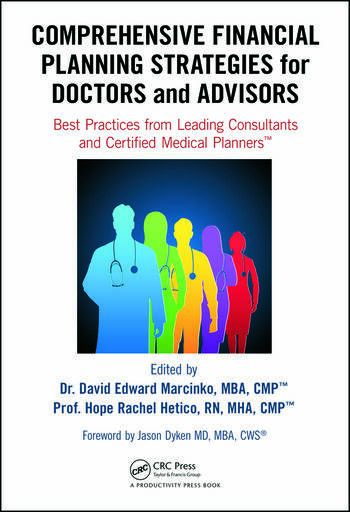
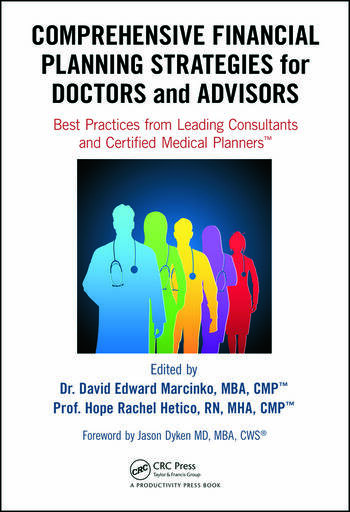
Comprehensive Financial Planning Strategies for Doctors and Advisors: Best Practices from Leading Consultants and Certified Medical Planners™

***

DE MARCINKO & ASSOCIATES: Financial, Business & Management Education and Advisory Opinions for Physicians

By Dr. David Edward Marcinko MBA MEd CMP

“AT YOUR SERVICE”

E-mail: MarcinkoAdvisors@msn.com

SPONSOR: http://www.MarcinkoAssociates.com

Marcinko & Associates is financial guide. We help answer your questions in an empowering way. We educate and guide medical colleagues to understand their financial picture and to make better financial decisions. We strive to simplify everything, clear up confusion, and address specific needs and goals.

Simply put, we’re a financial services company on a mission to empower financial freedom for all healthcare professionals; only. We work with doctors, nurses, medical providers, individuals and all sizes of organizations to offer investment, wealth management and retirement solutions so everyone can have a clear and simple understanding of where their finances and career is today and where it is headed tomorrow.

Whatever your financial situation, we do not shame, criticize, or sell. We enrich, educate and empower. We work only with medical colleagues at every stage of their financial journey [students, interns, residents, practitioners, mid-career and mature physicians], through big life personal changes to annual employment reviews, in order to help them understand, invest, and protect their money and lifestyle.

CITE: https://www.r2library.com/Resource

For example, the following are current issues of review need for each Fall and Winter:

  • Financial planning reviews: 401-k, insurance, budget plans, investing, debt and savings, etc
  • Assess, develop, and align financial retirement and estate planning goals
  • Risk Management: Malpractice, home, life, medical, auto and personal indemnity
  • Life Insurance Need Reviews: whole, universal and term  
  • Business, operations, HR, employment negotiations and medical practice management
  • Annuity Need Reviews: Indexed and Fixed [Pros and Cons].

***

***

At Marcinko & Associates we discuss specific needs and answer specific questions. We educate and make personalized recommendations that you are free to use, incorporate or disregard. Referrals to trusted specialists and strategic alliance partners then occur if – and as – needed [pro re nata].

SPONSOR: http://www.CertifiedMedicalPlanner.org

***


Discover the Best [Financial Planning and Investing] Practices of Leading Certified Medical Planners®

CMP logo

http://www.CertifiedMedicalPlanner.org 

 Our New Texts – “Take a Peek Inside – Now Available

Comprehensive Financial Planning Strategies for Doctors and Advisors: Best Practices from Leading Consultants and Certified Medical Planners(TM)

Front Matter with Foreword by Jason Dyken MD MBA

logos

“BY DOCTORS – FOR DOCTORS – PEER REVIEWED – FIDUCIARY FOCUSED”

***

About EngagewithGrace.org

Contemplating End-of-Life Dignity

[By Staff Reporters] 

SPONSOR: http://www.MarcinkoAssociates.com

According to the website, Engage with Grace, we make choices throughout our lives — where we want to live, what types of activities will fill our days, and with whom we spend our time, etc. These choices are often a balance between our desires and our means, but at the end of the day, they are decisions made with intent.

Somehow when we get close to death, however, we stop making decisions. We get frozen in our tracks and can’t talk about our preferences for end of life care. 


Death Studies

Studies loom out there — 73% of Americans would prefer to die at home, but anywhere between 20-50% of Americans die in hospital settings. More than 80% of Californians say their loved ones “know exactly” or have a “good idea” of what their wishes would be if they were in a persistent coma, but only 50% say they’ve talked to them about their preferences.

But, end of life experience is about a lot more than statistics. It’s about all of us.

Genesis and Epiphany

In the summer of 2008, Matt Holt (Founder of Health2.0) and Alexandra Drane (President of Eliza) met with some friends for dinner. Over their second cocktail, they got deep into conversation about these very topics. Many of us live with such intent — why do we put the end of our lives in someone else’s control?  Why isn’t this topic a conversation that people are having? How could we help start it? And it hit them — What if we could work together to start a viral movement — a movement focused on improving the end of life experience?  What if we took responsibility for starting a national (even global) discussion that, until now, most of us haven’t had?

Engage With Grace

The One Slide Project was designed with one simple goal: to help get the conversation about end of life experience started. The idea is simple: Create a tool to help get people talking. One Slide, with just five questions on it.  Five questions designed to help get us talking with each other, with our loved ones, about our preferences. And we’re asking people to share this One Slide — wherever and whenever they can… at a presentation, at dinner, at their book club. Just One Slide with five questions to help get all of us talking about death. Just One Slide that we as a community could collectively rally around sharing — in meetings, at a conference, or over a drink.

This is the link to the slide, and this is what we are asking you to do …

Download the One Slidehttp://engagewithgrace.org/about/

Share it any time you can — at the end of presentations, at dinner, or at your book club. Think of the slide as currency and donate just two minutes whenever you can. Commit to being able to answer these five questions about end of life experience for yourself and for your loved ones. Then commit to helping others do the same. Get this conversation started.

Assessment

Let’s start a viral movement driven by the change we as individuals can affect …and the incredibly positive impact we could have collectively. Donate just two minutes to adding just this One Slide to the end of your presentations. Get others involved. Help ensure that all of us — and the people we care for — can end our lives in the same purposeful way we live them.

Just One Slide, just one goal. Think of the enormous difference we can make together.

Conclusion

Your thoughts and comments on this ME-P are appreciated. Feel free to review our top

-left column, and top-right sidebar materials, links, URLs and related websites, too. Then, subscribe to the ME-P. It is fast, free and secure.

Speaker: If you need a moderator or speaker for an upcoming event, Dr. David E. Marcinko; MBA – Publisher-in-Chief of the Medical Executive-Post – is available for seminar or speaking engagements. Contact: MarcinkoAdvisors@msn.com

OUR OTHER PRINT BOOKS AND RELATED INFORMATION SOURCES:

Product DetailsProduct DetailsProduct Details    

Product DetailsProduct Details

FINANCIAL EDUCATION PODCAST: CMPs™ are In … Are CPAs Out?

CERTIFIED MEDICAL PLANNER

By Staff Reporters

SPONSOR: http://www.CertifiedMedicalPlanner.og

***

Statistics: 7.4%. That’s the percentage drop in students who graduated with a degree in accounting in the 2021–2022 school year than the year before. Low starting salaries, heavy workloads, and uncertainty around AI are driving the exodus of students from choosing accounting degrees. (the Wall Street Journal).

MORE: https://www.wsj.com/lifestyle/careers/accounting-salary-cpa-shortage-dec2caa2?utm_campaign=mb&utm_medium=newsletter&utm_source=morning_brew

PODCAST: https://www.ted.com/talks/dan_bricklin_meet_the_inventor_of_the_electronic_spreadsheet

***
COMMENTS APPRECIATED
Thank You

***

***

SECOND OPINIONS: Secure Investment Advisory -OR- Medical Practice Management Advice

***

MARCINKO & ASSOCIATES, Inc.

Dr. David Edward Marcinko MBA MEd CMP®

Certified Medical Planner®

SPONSOR: http://www.CertifiedMedicalPlanner.org

CMP logo

***

FINANCIAL PLANNING

CAREER DEVELOPMENT

MEDICAL PRACTICE BUY IN / OUT

INVESTMENT ANALYSIS

PORTFOLIO MANAGEMENT

MERGERS AND ACQUISITIONS

PRACTICE APPRAISALS AND VALUATIONS

RETIREMENT PLANNING

FEE-ONLY CONSULTATIONS

***

CONTACT: Ann Miller RN MHA

EMAIL: MarcinkoAdvisors@msn.com

***

JULY FOURTH WEEKEND READING LIST 2024

Happy Independence Weekend Greetings to our Readers and Subscribers for 2024

Product Details

From the Medical Executive-Post

***

Product Details
Product Details
Product Details
Product Details
Product Details
Product Details
Product Details

Rate this:

Comprehensive Financial Planning Strategies for Doctors and Advisors: Best Practices from Leading Consultants and Certified Medical Planners™
Risk Management, Liability Insurance, and Asset Protection Strategies for Doctors and Advisors: Best Practices from Leading Consultants and Certified Medical Planners™

INVITE DR. MARCINKO: https://medicalexecutivepost.com/dr-david-marcinkos-

CONTACT: Ann Miller RN MH

[Executive Director]

MarcinkoAdvisors@msn.com

THANK YOU

***

Financial “Planning” versus Financial “Preparing”

Understanding the Difference

By Rick Kahler CFP®

Retirement planning is one of the issues that commonly lead clients to consult financial advisers.

One of its essential aspects is creating a plan to save and invest in order to provide a comfortable retirement income. Ideally, this starts many years ahead of retirement, even as early as your first paycheck.

As retirement comes closer, planning for it expands to take in a host of other considerations, such as deciding when to retire, where to live, and what kind of lifestyle you hope to have. When retirement becomes a reality, the focus shifts to carrying out the plan.

Preparing

All of this planning is crucial. Yet, for both financial advisers and clients, it’s good to keep in mind that planning has its limits. In the post-retirement years, it may be helpful to think in terms of preparing for old age rather than planning for it.

The older we get, the more important this distinction between planning and preparing becomes. Too many life-changing things can happen without regard to our best-laid plans. Often they occur unexpectedly, resulting in emergency situations where urgent decisions have to be made. A stroke or a fall, a diagnosis of terminal illness, a broken hip that leaves someone unable to go back to independent living—and suddenly, right now, the family needs to find an assisted living facility, arrange for live-in help, or sell a home.

What are some of the ways to prepare for these contingencies?

  1. Explore housing options well ahead of time. Find out what assisted living, home care, and nursing home services and facilities are available where you live and whether they have waiting lists. Have family conversations about possibilities like relocating or sharing households:
  2. Research the financial side of these options. Investigate the cost of hiring help at home, assisted living facilities, and nursing care centers. Find out what is and is not covered by Medicare and long-term care insurance. For example, people are sometimes surprised to learn that Medicare does not pay for nursing home care other than short-term medical stays.
  3. Designate someone to take over decision-making, and do the paperwork. Execute documents like a living will, medical power of attorney, and contingent power of attorney. Update them as necessary, and give copies to your doctors, your financial planner, and appropriate family members.
  4. Start relatively early to downsize. Well before you’re ready to let go of possessions or move into smaller housing, start considering what to do with your “stuff.” Focus on the decisions rather than the distribution. There’s no need to get rid of possessions prematurely, but decide what you want to do with them—and put in writing. Do this while it’s still your choice, rather than something your family members do while you’re in the hospital or nursing home
  5. Do your best to practice flexibility and acceptance. No matter how strongly you want to live in your own home until the end of your life, for example, it may not be possible. The physical limitations of aging can limit our choices, and even the best options available may not be what we would like them to be. It is a profound gift to yourself and your family members to accept these realities with as much grace as you can muster.

***

***

Assessment

Finally, please don’t underestimate the importance of planning financially for retirement. Because the bottom line is that you can’t plan for all the things that might happen as you age, but you can prepare to deal with them. One of the most useful tools to cope with those contingencies is having enough money.

Conclusion

Your thoughts and comments on this ME-P are appreciated. Feel free to review our top-left column, and top-right sidebar materials, links, URLs and related websites, too. Then, subscribe to the ME-P. It is fast, free and secure.

Speaker: If you need a moderator or speaker for an upcoming event, Dr. David E. Marcinko; MBA – Publisher-in-Chief of the Medical Executive-Post – is available for seminar or speaking engagements. Contact: MarcinkoAdvisors@msn.com

OUR OTHER PRINT BOOKS AND RELATED INFORMATION SOURCES:

Comprehensive Financial Planning Strategies for Doctors and Advisors: Best Practices from Leading Consultants and Certified Medical Planners™

***

OFTEN NEEDED: A Business, Medical Management or Financial SECOND Opinion?

SPONSOR: http://www.MARCINKOASSOCIATES.com

***

***

When You May Need a Business, Management or Financial Second Opinion?

The Marcinko & Associates second opinion service is a physician-to-advisor telephone or e-mail portal that connects independent financial and business management professionals and consultants, with doctors or healthcare executives desiring affordable and unbiased financial or business advice on an as-needed, pay-per-use basis.

Medical professionals and healthcare executives can now receive direct access to us in the areas of Practice Enhancement, Investing, Financial Planning, Asset Allocation, Portfolio Management, Insurance, Mortgage and Lending, Practice Management, Information Technology, Human Resources and Employee Benefits.

This Marcinko & Associates service is designed to fill a growing need for medically focused financial or managerial advice that traditional consultants have not been able to serve. For example, situations in which you could benefit from a personal financial planning second opinion include: 

READ HERE: https://marcinkoassociates.com/opinions-second/

COMMENTS APPRECIATED

Thank You

***

***

PHYSIOLOGY v. PSYCHOLOGY: The Financial Planning Divide

THE PHYSIOLOGIC v. PSYCHOLOGICAL FINANCIAL PLANNING DIVIDE

[Holistic Life Planning, Behavioral Economics & Trading Addiction]

READ HERE: Psychology Behavioral Economics Finance

***

***
By Dr. David Edward Marcinko MBA MEd CMP

COMMENTS APPRECIATED

THANK YOU
***

***

PHYSICIANS & DENTISTS: Financial Consulting & Planning

Sponsored by: http://www.MARCINKOASSOCIATES.com

START TO FINISH CYCLE

***

Our Process

***

READ HERE: https://marcinkoassociates.com/financial-planning/

RELATED: https://medicalexecutivepost.com/2023/12/15/doctor-are-you-a-financial-advisors-customer-or-client/

COMMENTS APPRECIATED

Thank You

***

***

PHYSICIANS ONLY: Hedge Funds and Venture Capitalists

SPONSORED: http://www.MARCINKOASSOCIATES.com

START TO FINISH CYCLE

***

Our Process

***

READ HERE: https://marcinkoassociates.com/hedge-funds/

MORE: https://medicalexecutivepost.com/2023/02/19/what-is-an-unregistered-security/

COMMENTS APPRECIATED

Thank You

***

***

DOCTORS & DENTISTS: Obtain a Financial Planning and Economic Education Consultation

You’ve Earned a Reduced Rate Second-Opinion in 2024

***

SPONSOR: http://www.CertifiedMedicalPlanner.org

SPONSOR: http://www.MARCINKOASSOCIATES.com

***

We have partnered with fiduciary focused financial advisors and fee-only financial consultants who understand the needs of doctors, dentists and medical professionals. More importantly, they understand how the healthcare industrial complex is currently in flux.

READ: https://marcinkoassociates.com/financial-planning/

INVITATION: So, If you are a colleague, schedule a conversation with one of them to review your goals to see if they can help.

ANN MILLER RN MHA CMP

Please email us at: MarcinkoAdvisors@msn.com

***

***

FINANCIAL PLANNING: Strategies for Doctors and their Advisors

***

BY DR. DAVID E. MARCINKO MBA CMP®

SPONSOR: http://www.CertifiedMedicalPlanner.org

CMP logo

REVIEWS:

Written by doctors and healthcare professionals, this textbook should be mandatory reading for all medical school students—highly recommended for both young and veteran physicians—and an eliminating factor for any financial advisor who has not read it. The book uses jargon like ‘innovative,’ ‘transformational,’ and ‘disruptive’—all rightly so! It is the type of definitive financial lifestyle planning book we often seek, but seldom find.
LeRoy Howard MA CMPTM,Candidate and Financial Advisor, Fayetteville, North Carolina

I taught diagnostic radiology for over a decade. The physician-focused niche information, balanced perspectives, and insider industry transparency in this book may help save your financial life.
Dr. William P. Scherer MS, Barry University, Ft. Lauderdale, Florida

This book was crafted in response to the frustration felt by doctors who dealt with top financial, brokerage, and accounting firms. These non-fiduciary behemoths often prescribed costly wholesale solutions that were applicable to all, but customized for few, despite ever-changing needs. It is a must-read to learn why brokerage sales pitches or Internet resources will never replace the knowledge and deep advice of a physician-focused financial advisor, medical consultant, or collegial Certified Medical Planner™ financial professional.
—Parin Khotari MBA,Whitman School of Management, Syracuse University, New York

In today’s healthcare environment, in order for providers to survive, they need to understand their current and future market trends, finances, operations, and impact of federal and state regulations. As a healthcare consulting professional for over 30 years supporting both the private and public sector, I recommend that providers understand and utilize the wealth of knowledge that is being conveyed in these chapters. Without this guidance providers will have a hard time navigating the supporting system which may impact their future revenue stream. I strongly endorse the contents of this book.
—Carol S. Miller BSN MBA PMP,President, Miller Consulting Group, ACT IAC Executive Committee Vice-Chair at-Large, HIMSS NCA Board Member

This is an excellent book on financial planning for physicians and health professionals. It is all inclusive yet very easy to read with much valuable information. And, I have been expanding my business knowledge with all of Dr. Marcinko’s prior books. I highly recommend this one, too. It is a fine educational tool for all doctors.
—Dr. David B. Lumsden MD MS MA,Orthopedic Surgeon, Baltimore, Maryland

There is no other comprehensive book like it to help doctors, nurses, and other medical providers accumulate and preserve the wealth that their years of education and hard work have earned them.
—Dr. Jason Dyken MD MBA,Dyken Wealth Strategies, Gulf Shores, Alabama

I plan to give a copy of this book written
by doctors and for doctors’ to all my prospects, physician, and nurse clients. It may be the definitive text on this important topic.
—Alexander Naruska CPA,Orlando, Florida

Health professionals are small business owners who need to apply their self-discipline tactics in establishing and operating successful practices. Talented trainees are leaving the medical profession because they fail to balance the cost of attendance against a realistic business and financial plan. Principles like budgeting, saving, and living below one’s means, in order to make future investments for future growth, asset protection, and retirement possible are often lacking. This textbook guides the medical professional in his/her financial planning life journey from start to finish. It ranks a place in all medical school libraries and on each of our bookshelves.
—Dr. Thomas M. DeLauro DPM,Professor and Chairman – Division of Medical Sciences, New York College of Podiatric Medicine

Physicians are notoriously excellent at diagnosing and treating medical conditions. However, they are also notoriously deficient in managing the business aspects of their medical practices. Most will earn $20-30 million in their medical lifetime, but few know how to create wealth for themselves and their families. This book will help fill the void in physicians’ financial education. I have two recommendations: 1) every physician, young and old, should read this book; and 2) read it a second time!
—Dr. Neil Baum MD,Clinical Associate Professor of Urology, Tulane Medical School, New Orleans, Louisiana

I worked with a Certified Medical Planner™ on several occasions in the past, and will do so again in the future. This book codified the vast body of knowledge that helped in all facets of my financial life and professional medical practice.
Dr. James E. Williams DABPS, Foot and Ankle Surgeon, Conyers, Georgia

This is a constantly changing field for rules, regulations, taxes, insurance, compliance, and investments. This book assists readers, and their financial advisors, in keeping up with what’s going on in the healthcare field that all doctors need to know.
Patricia Raskob CFP® EA ATA, Raskob Kambourian Financial Advisors, Tucson, Arizona

I particularly enjoyed reading the specific examples in this book which pointed out the perils of risk … something with which I am too familiar and have learned (the hard way) to avoid like the Black Death. It is a pleasure to come across this kind of wisdom, in print, that other colleagues may learn before it’s too late— many, many years down the road.
Dr. Robert S. Park MD, Robert Park and Associates Insurance, Seattle, Washington

Although this book targets physicians, I was pleased to see that it also addressed the financial planning and employment benefit needs of nurses; physical, respiratory, and occupational therapists; CRNAs, hospitalists, and other members of the health care team….highly readable, practical, and understandable.
Nurse Cecelia T. Perez RN, Hospital Operating Room Manager, Ellicott City, Maryland

Personal financial success in the PP-ACA era will be more difficult to achieve than ever before. It requires the next generation of doctors to rethink frugality, delay gratification, and redefine the very definition of success and work–life balance. And, they will surely need the subject matter medical specificity and new-wave professional guidance offered in this book. This book is a ‘must-read’ for all health care professionals, and their financial advisors, who wish to take an active role in creating a new subset of informed and pioneering professionals known as Certified Medical Planners™.
—Dr. Mark D. Dollard FACFAS, Private Practice, Tyson Corner, Virginia

As healthcare professionals, it is our Hippocratic duty to avoid preventable harm by paying attention. On the other hand, some of us are guilty of being reckless with our own financial health—delaying serious consideration of investments, taxation, retirement income, estate planning, and inheritances until the worry keeps one awake at night. So, if you have avoided planning for the future for far too long, perhaps it is time to take that first step toward preparedness. This in-depth textbook is an excellent starting point—not only because of its readability, but because of his team’s expertise and thoroughness in addressing the intricacies of modern investments—and from the point of view of not only gifted financial experts, but as healthcare providers, as well … a rare combination.
Dr. Darrell K. Pruitt DDS, Private Practice Dentist, Fort Worth, Texas

This text should be on the bookshelf of all contemporary physicians. The book is physician-focused with unique topics applicable to all medical professionals. But, it also offers helpful insights into the new tax and estate laws, fiduciary accountability for advisors and insurance agents, with investing, asset protection and risk management, and retirement planning strategies with updates for the brave new world of global payments of the Patient Protection and Affordable Care Act. Starting out by encouraging readers to examine their personal ‘money blueprint’ beliefs and habits, the book is divided into four sections offering holistic life cycle financial information and economic education directed to new, mid-career, and mature physicians.

This structure permits one to dip into the book based on personal need to find relief, rather than to overwhelm. Given the complexity of modern domestic healthcare, and the daunting challenges faced by physicians who try to stay abreast of clinical medicine and the ever-evolving laws of personal finance, this textbook could not have come at a better time.
—Dr. Philippa Kennealy MD MPH, The Entrepreneurial MD, Los Angeles, California

Physicians have economic concerns unmatched by any other profession, arriving ten years late to the start of their earning years. This textbook goes to the core of how to level the playing field quickly, and efficaciously, by a new breed of dedicated Certified Medical Planners™. With physician-focused financial advice, each chapter is a building block to your financial fortress.
Thomas McKeon, MBA, Pharmaceutical Representative, Philadelphia, Pennsylvania

An excellent resource … this textbook is written in a manner that provides physician practice owners with a comprehensive guide to financial planning and related topics for their professional practice in a way that is easily comprehended. The style in which it breaks down the intricacies of the current physician practice landscape makes it a ‘must-read’ for those physicians (and their advisors) practicing in the volatile era of healthcare reform.
—Robert James Cimasi, MHA ASA FRICS MCBA CVA CM&AA CMP™, CEO-Health Capital Consultants, LLC, St. Louis, Missouri

Rarely can one find a full compendium of information within a single source or text, but this book communicates the new financial realities we are forced to confront; it is full of opportunities for minimizing tax liability and maximizing income potential. We’re recommending it to all our medical practice management clients across the entire healthcare spectrum.
Alan Guinn, The Guinn Consultancy Group, Inc., Cookeville, Tennessee

Dr. David Edward Marcinko MBA CMP™ and his team take a seemingly endless stream of disparate concepts and integrate them into a simple, straightforward, and understandable path to success. And, he codifies them all into a step-by-step algorithm to more efficient investing, risk management, taxation, and enhanced retirement planning for doctors and nurses. His text is a vital read—and must execute—book for all healthcare professionals and physician-focused financial advisors.
Dr. O. Kent Mercado, JD, Private Practitioner and Attorney, Naperville, Illinois

Kudos. The editors and contributing authors have compiled the most comprehensive reference book for the medical community that has ever been attempted. As you review the chapters of interest and hone in on the most important concerns you may have, realize that the best minds have been harvested for you to plan well… Live well.
Martha J. Schilling; AAMS® CRPC® ETSC CSA, Shilling Group Advisors, LLC, Philadelphia, Pennsylvania

I recommend this book to any physician or medical professional that desires an honest no-sales approach to understanding the financial planning and investing world. It is worthwhile to any financial advisor interested in this space, as well.
David K. Luke, MIM MS-PFP CMP™, Net Worth Advisory Group, Sandy, Utah

Although not a substitute for a formal business education, this book will help physicians navigate effectively through the hurdles of day-to-day financial decisions with the help of an accountant, financial and legal advisor. I highly recommend it and commend Dr. Marcinko and the Institute of Medical Business Advisors, Inc. on a job well done.
Ken Yeung MBA CMP™, Tseung Kwan O Hospital, Hong Kong

I’ve seen many ghost-written handbooks, paperbacks, and vanity-published manuals on this topic throughout my career in mental healthcare. Most were poorly written, opinionated, and cheaply produced self-aggrandizing marketing drivel for those agents selling commission-based financial products and expensive advisory services. So, I was pleasantly surprised with this comprehensive peer-reviewed academic textbook, complete with citations, case examples, and real-life integrated strategies by and for medical professionals. Although a bit late for my career, I recommend it highly to all my younger colleagues … It’s credibility and specificity stand alone.
Dr. Clarice Montgomery PhD MA,Retired Clinical Psychologist

In an industry known for one-size-fits-all templates and massively customized books, products, advice, and services, the extreme healthcare specificity of this text is both refreshing and comprehensive.
Dr. James Joseph Bartley, Columbus, Georgia

My brother was my office administrator and accountant. We both feel this is the most comprehensive textbook available on financial planning for healthcare providers.
Dr. Anthony Robert Naruska DC,Winter Park, Florida

***

MORE: tps://www.amazon.com/Comprehensive-Financial-Planning-Strategies-Advisors/dp/1482240289/ref=sr_1_1?ie=UTF8&qid=1418580820&sr=8-1&keywords=david+marcinko

INVITE DR. MARCINKO: https://medicalexecutivepost.com/dr-david-marcinkos-bookings/

Thank You

***

FINANCIAL PLANNING: Next Generation for Physicians Only

By Dr. David Edward Marcinko MBA CMP™

SPONSOR: http://www.MARCINKOASSOCIATES.com

***

SPONSOR: http://www.CertifiedMedicalPlanner.org

(“Informed Voice of a New Generation of Fiduciary Advisors for Healthcare”)

For most lay folks, personal financial planning typically involves creating a personal budget, planning for taxes, setting up a savings account and developing a debt management, retirement and insurance recovery plan. Medicare, Social Security and Required Minimal Distribution [RMD] analysis is typical for lay retirement. Of course, we can assist in all of these activities, but lay individuals can also create and establish their own financial plan to reach short and long-term savings and investment goals.

But, as fellow doctors, we understand better than most the more complex financial challenges doctors can face when it comes to their financial planning. Of course, most physicians ultimately make a good income, but it is the saving, asset and risk management tolerance and investing part that many of our colleagues’ struggle with. Far too often physicians receive terrible guidance, have no time to properly manage their own investments and set goals for that day when they no longer wish to practice medicine.

For the average doctor or healthcare professional, the feelings of pride and achievement at finally graduating are typically paired with the heavy burden of hundreds of thousands of dollars in student loan debt.

CITE: https://www.r2library.com/Resource

You dedicated countless hours to learning, studying, and training in your field. You missed birthdays and holidays, time with your families, and sacrificed vacations to provide compassionate and excellent care for your patients. Amidst all of that, there was no time to give your finances even a second thought.

Between undergraduate, medical school, and then internship and residency, most young physicians do not begin saving for retirement until late into their 20s, if not their 30s. You’ve missed an entire decade or more of allowing your money and investments to compound and work for you. When it comes to addressing your financial health and security, there’s no time to waste.

And you may be misled by unscrupulous “advisors”.

READ HERE: https://marcinkoassociates.com/financial-planning/

RELATED: https://medicalexecutivepost.com/2023/12/15/doctor-are-you-a-financial-advisors-customer-or-client/

COMMENTS APPRECIATED

Thank You

***

***

FINANCIAL PLANNING: Physician and Fiduciary Focused

(“Informed Voice of a New Generation of Fiduciary Advisors for Healthcare”)

By Dr. David Edward Marcinko MBA CMP

http://www.MarcinkoAssociates.com

As fellow doctors, we understand better than most the more complex financial challenges physicians can face when it comes to their financial planning. Of course, most physicians ultimately make a good income, but it is the saving, asset and risk management tolerance and investing part that many of our colleagues’ struggle with. Far too often physicians receive terrible guidance, have no time to properly manage their own investments and set goals for that day when they no longer wish to practice medicine.

For the average doctor or healthcare professional, the feelings of pride and achievement at finally graduating are typically paired with the heavy burden of hundreds of thousands of dollars in student loan debt.

You dedicated countless hours to learning, studying, and training in your field. You missed birthdays and holidays, time with your families, and sacrificed vacations to provide compassionate and excellent care for your patients. Amidst all of that, there was no time to give your finances even a second thought.

Between undergraduate, medical school, and then internship and residency, most young physicians do not begin saving for retirement until late into their 20s, if not their 30s. You’ve missed an entire decade or more of allowing your money and investments to compound and work for you. When it comes to addressing your financial health and security, there’s no time to waste.

And you may be misled by unscrupulous “advisors”.

For example:

Question: Do you know the difference between a “Fee-Only” and a “Fee-Based financial advisor? Not knowing may cost you tens of thousands of dollars, or more, in excessive advisory fees.

MORE: https://marcinkoassociates.com/financial-planning/

Of course, all of this compound’s physician stress and burnout related issues, as well.

MORE: https://marcinkoassociates.com/process-what-we-do/

COMMENTS APPRECIATED

Thank You

***

***

15: PODCAST: CPAs are Out … Are CMPs™ In?

CERTIFIED MEDICAL PLANNER

By Staff Reporters

SPONSOR: http://www.CertifiedMedicalPlanner.org

***

The giant accounting firm Grant Thornton LLP is laying off 200 people, its second round of layoffs in the past six months and an indication that the major players in the professional consulting, accounting and advisory business are preparing for an economic slowdown that could squeeze profits across corporate America.

***

Statistics: 7.4%. That’s the percentage drop in students who graduated with a degree in accounting in the 2021–2022 school year than the year before. Low starting salaries, heavy workloads, and uncertainty around AI are driving the exodus of students from choosing accounting degrees. (the Wall Street Journal).

MORE: https://www.wsj.com/lifestyle/careers/accounting-salary-cpa-shortage-dec2caa2?utm_campaign=mb&utm_medium=newsletter&utm_source=morning_brew

PODCAST: https://www.ted.com/talks/dan_bricklin_meet_the_inventor_of_the_electronic_spreadsheet

CMP RELATED: https://medicalexecutivepost.com/2023/10/29/become-a-board-certified-medical-planner-healthcare-niche-advisor-and-thrive/

***
COMMENTS APPRECIATED
Thank You

***

***

RESOURCES: Financial and Economic Essays for Doctors and Healthcare Professionals

https://marcinkoassociates.com

***

***

Informational essays of most current interest to healthcare professionals. Check back periodically for practical updates. Our catalogue library of major books, texts, case models and dictionaries is suggested for additional financial, economic, business and medical practice management information and education.

READ HERE: https://marcinkoassociates.com/articles-essays/

UPDATE: Prior ME-P Topics:

1-The number of balance billing disputes reaching arbitration is far higher than federal projections suggested.


2-Experts worry ACOs could face lasting financial difficulties due to an alleged $2 billion Medicare urinary catheter fraud scheme. 

COMMENTS APPRECIATED

Thank You

INVITE DR. MARCINKO: https://medicalexecutivepost.com/2024/02/05/invite-dr-marcinko-to-speak-at-your-next-seminar-webcast-or-event-in-2024/

***

AMERICAN DREAM: Now Costs $3.4 Million?

By Staff Reporters

SPONSOR: http://www.MARCINKOASSOCIATES.com

***

The classic “American Dream” including two kids, a house, and car now costs more than most folks make in a lifetime. According to Investopedia.

READ HERE: https://www.investopedia.com/the-american-dream-now-costs-over-usd3-million-8409951

PHYSICIAN SPECIFIC ASSISTANCE AND RESOURCES: https://marcinkoassociates.com/financial-planning/

Comments Appreciated

Thank You

***

***

A Financial Early “Christmas Eve Carol” [Parts 1 and 2]

By Rick Kahler MS CFP®

http://www.KahlerFinancial.com

Rick Kahler MS CFPFor me, the Christmas season doesn’t seem complete without Charles Dickens’s A Christmas Carol. I’ve long been captivated by the transformation of the cold-hearted and calculating Mr. Scrooge, the seemingly inherent goodness of Bob Cratchit, and the haunting visits of the Ghosts of Christmas.

As a student of Dickens’s fable, I’ve been amazed at the wisdom and universal truths contained in that seemingly simple story. I have discovered that Mr. Scrooge isn’t merely the villain he’s often made out to be, nor is Cratchit the straightforward hero.

It’s not uncommon for the average American to have a stressful, even adversarial relationship with money, especially since half of Americans have no savings or investments and live month to month. Stress over money is especially exacerbated during the Christmas season each year. Many Americans borrow heavily on credit cards for gifts and end up stressing for months afterward trying to pay the bill.

Financial Transformations

How ironic that what Dickens unveils in the short A Christmas Carol is a powerful process for financial transformation (or any desired transformation). Dickens gives us a four-step process that anyone can employ to change destructive financial behaviors.

A few years ago I co-authored a book, The Financial Wisdom of Ebenezer Scrooge that highlights the subtle wisdom of Dickens’s story as it pertains to transforming one’s behavior around finances. The story became the heart of a successful model employed by financial planners and therapists to help transform a person’s relationship with money.

***

***

The Story

The first big event in the story is the visit to Scrooge by the ghost of his old business partner, Jacob Marley. Scrooge takes to heart Marley’s warning to change his ways, thereby becoming willing to consider changing. Psychologists would call this an intervention.

The first and most important step toward transformation needs to be a personal realization that something is amiss with your behavior and it’s you who wants to contemplate changing, as opposed to someone else insisting you ought to or should change. Meaningful and sustainable change comes only from within, not without. Blaming personal financial problems on family, employers, the wealthy, or the government just keeps a person stuck in delusion.

What is the key to developing an internal desire to change? Addiction recovery programs call this “hitting bottom.” I describe it as reaching a state of openness to accept the facts and circumstances as they are, not as you wish they were. It is becoming convinced that change is crucial and that you are passionately ready to take action to change.

On that Christmas Eve, inexplicably, Scrooge was finally ready consider the message his old friend Marley had tried to deliver to him on many Christmas Eves previously.

In the book Changing for Good, psychologist James O. Prochaska and his co-authors describe this as moving from the stage of pre-contemplation to contemplation. Scrooge was willing to consider that his firmly entrenched world view might be skewed and to consider seeing the facts for what they were, not as he assumed they were.

***

bear

***

We may not be misers like Scrooge, but when it comes to our beliefs around money, we have as many delusions as he did. A few of the more popular of these beliefs, or money scripts, are: “More money is the answer,” “The stock market is a gamble,” “I work hard so I deserve to spend money,” and, “If I work hard I will make money.”

Assessment

Becoming willing to consider change is half the battle to free ourselves from destructive financial behavior based on these delusions. But it is only half. Next time we will look at three additional steps to transformation.

Part 2: A Financial “Christmas Carol” [Part 2]

Channel Surfing the ME-P

Have you visited our other topic channels? Established to facilitate idea exchange and link our community together, the value of these topics is dependent upon your input. Please take a minute to visit. And, to prevent that annoying spam, we ask that you register. It is fast, free and secure.

Conclusion

Your thoughts and comments on this ME-P are appreciated. Feel free to review our top-left column, and top-right sidebar materials, links, URLs and related websites, too. Then, subscribe to the ME-P. It is fast, free and secure.

Speaker: If you need a moderator or speaker for an upcoming event, Dr. David E. Marcinko; MBA – Publisher-in-Chief of the Medical Executive-Post – is available for seminar or speaking engagements. Contact: MarcinkoAdvisors@msn.com

OUR OTHER PRINT BOOKS AND RELATED INFORMATION SOURCES:

Comprehensive Financial Planning Strategies for Doctors and Advisors: Best Practices from Leading Consultants and Certified Medical Planners(TM)

FINANCIAL PLANNING: Physician Niche Focused Fiduciaries

(“Informed Voice of a New Generation of Fiduciary Advisors for Healthcare”)

By Dr. David Edward Marcinko MBA CMP

http://www.MarcinkoAssociates.com

As fellow doctors, we understand better than most the more complex financial challenges physicians can face when it comes to their financial planning. Of course, most physicians ultimately make a good income, but it is the saving, asset and risk management tolerance and investing part that many of our colleagues’ struggle with. Far too often physicians receive terrible guidance, have no time to properly manage their own investments and set goals for that day when they no longer wish to practice medicine.

For the average doctor or healthcare professional, the feelings of pride and achievement at finally graduating are typically paired with the heavy burden of hundreds of thousands of dollars in student loan debt.

You dedicated countless hours to learning, studying, and training in your field. You missed birthdays and holidays, time with your families, and sacrificed vacations to provide compassionate and excellent care for your patients. Amidst all of that, there was no time to give your finances even a second thought.

Between undergraduate, medical school, and then internship and residency, most young physicians do not begin saving for retirement until late into their 20s, if not their 30s. You’ve missed an entire decade or more of allowing your money and investments to compound and work for you. When it comes to addressing your financial health and security, there’s no time to waste.

And you may be misled by unscrupulous “advisors”.

For example:

Question: Do you know the difference between a “Fee-Only” and a “Fee-Based financial advisor? Not knowing may cost you tens of thousands of dollars, or more, in excessive advisory fees.

MORE: https://marcinkoassociates.com/financial-planning/

Of course, all of this compound’s physician stress and burnout related issues, as well.

MORE: https://marcinkoassociates.com/process-what-we-do/

COMMENTS APPRECIATED

Thank You

***

***

Medical Endowment Fund Manager Selection

Are External Financial Consultants Necessary?

[By Dr. David E. Marcinko MBA CMP]

http://www.CertifiedMedicalPlanner.org

John English, of the Ford Foundation, once observed that:

[T]he thing that is most interesting to me is that every one of the managers is able to give me a chart that shows me he was in the first quartile or the first decile. I have never had a prospective manager come in and say, ‘We’re in the fourth quartile or bottom decile’.

According to Wayne Firebaugh CPA, CFP® CMP™ most medical endowment funds today, even those with internal investment staff, rely heavily upon consultants and external managers.

In fact, a 2006 Commonfund Benchmarks Healthcare Study revealed that 85% of all surveyed institutions relied upon consultants with an even greater percentage of larger endowments relying upon consultants.  The common reasons given by endowments for such reliance are augmenting staff and oddly enough, cost containment.  In essence, the endowment staff’s job becomes one of managing the managers.

Manager Selection 

Even those endowments that use consultants to assist in selecting outside managers remain involved in the selection and monitoring process.  Interestingly, performance should generally not be the overriding criterion for selecting a manager.  Selecting a manager could be viewed as a two-step process in which the endowment first establishes its initial allocation and determines what classes will require an external manager.  The second part of the process is to select a manager that due diligence has indicated to have two primary characteristics: integrity and a repeatable and sustainable systematic process.  These characteristics are interrelated, as a manager who embodies integrity will also strive to follow the established investment selection process.

Of Medical-Managers

In medicine, obtaining the best care often means consulting a specialist.  As a manager of managers, the average endowment should seek specialist managers within a given asset class. Just as physicians and healthcare institutions gain additional insight and skill in their area of specialty, investment managers may be able to gain informational or system advantages within a given concentrated area of investments.

Assessment

Since most plan managers are seeking positive alpha by actively managing certain asset classes, many successful endowments will use a greater number of external managers in the concentrated segments than they will in the larger, more efficient markets.

Conclusion

Your thoughts and comments on this ME-P are appreciated. Feel free to review our top-left column, and top-right sidebar materials, links, URLs and related websites, too. Then, subscribe to the ME-P. It is fast, free and secure.

Speaker: If you need a moderator or speaker for an upcoming event, Dr. David E. Marcinko; MBA – Publisher-in-Chief of the Medical Executive-Post – is available for seminar or speaking engagements. Contact: MarcinkoAdvisors@msn.com

OUR OTHER PRINT BOOKS AND RELATED INFORMATION SOURCES:

Product Details  Product Details

What is EBITDA? It is Not GAAP

SPONSOR: http://www.MARCINKOASSOCIATES.com

Earnings before interest, taxes, depreciation, and amortization

A company’s earnings before interest, taxes, depreciation, and amortization is an accounting measure calculated using a company’s earnings, before interest expenses, taxes, depreciation, and amortization are subtracted, as a proxy for a company’s current operating profitability. Though often shown on an income statement, it is not considered part of the Generally Accepted Accounting Principles by the SEC.

Citation: https://www.r2library.com/Resource/Title/0826102549

EBITDA Formula | Calculator (Examples with Excel Template)

READ: https://www.investopedia.com/terms/e/ebitda.asp

Your thoughts and comments are appreciated.

THANK YOU

ORDER: https://www.amazon.com/Comprehensive-Financial-Planning-Strategies-Advisors/dp/1482240289/ref=sr_1_1?ie=UTF8&qid=1418580820&sr=8-1&keywords=david+marcinko

***

CERTIFIED MEDICAL PLANNER™: Helping Physicians Financially Thrive to Avoid the “Doctor Effect”

By Dr. David Edward Marcinko, MBA CMP

CEO: D.E. Marcinko & Associates, Inc.

***

SPONSOR: http://www.CERTIFIEDMEDICALPLANNER.org

BEWARE MEDICAL PRACTITIONERS

Several years ago a group of highly trusted and deeply experienced financial services professionals and estate planners noted that far too many of their mature physician clients, using traditional stock brokers, management consultants and financial advisors, seemed to be less successful than those who went it alone. These Do-it-Yourselfers [DIYs] had setbacks and made mistakes, for sure. But, the ME Inc doctors seemed to learn from their mistakes and did not incur the high management and service fees demanded from general or retail one-size-fits-all “advisors.”

In fact, an informal inverse relationship was noted, and dubbed the “Doctor Effect.” In others words, the more consultants an individual doctor retained; the less well they did in all disciplines of the financial planning and medical practice management, continuum.

Of course, the reason for this discrepancy eluded many of them as Wall Street brokerages and wire-houses flooded the media with messages, infomercials, print, radio, TV, texts, tweets, and internet ads to the contrary. Rather than self-learn the basics, the prevailing sentiment seemed to purse the holy grail of finding the “perfect financial advisor.” This realization was a confirmation of the industry culture which seemed to be: Bread for the advisor – Crumbs for the client!

And so, at D.E. Marcinko & Associates, our informed cadre’ of technology focused and highly educated doctors, nurses, financial advisors, attorneys, accountants, psychologists and educational visionaries decided there must be a better way for healthcare colleagues to receive financial planning advice, products and related management services within a culture of fiduciary responsibility.

We trust you agree with this ME Inc, and Certified Medical Planner™ consulting philosophy, as illustrated  on our website.

WEBSITE: http://www.MARCINKOASSOCIATES.com

***

RISK MANAGEMENT FOR PHYSICIANS

https://www.routledge.com/Risk-Management-Liability-Insurance-and-Asset-Protection-Strategies-for/Marcinko-Hetico/p/book/9781498725989

***

FIDUCIARY OPINIONS: Secure Investment Advisory -OR- Medical Practice Management Advice

***

MARCINKO & ASSOCIATES, Inc.

Dr. David Edward Marcinko MBA CMP®

Certified Medical Planner®

SPONSOR: http://www.CertifiedMedicalPlanner.org

CMP logo

***

FINANCIAL PLANNING

CAREER DEVELOPMENT

MEDICAL PRACTICE BUY IN / OUT

INVESTMENT ANALYSIS

PORTFOLIO MANAGEMENT

MERGERS AND ACQUISITIONS

PRACTICE APPRAISALS AND VALUATIONS

RETIREMENT PLANNING

FEE-ONLY

***

CONTACT: Ann Miller RN MHA

EMAIL: MarcinkoAdvisors@msn.com

***

FIDUCIARY: Obtain an Unbiased 2nd Financial Advisory -or- Economic Practice Management Opinion

***

Dr. David Edward Marcinko MBA CMP®

Certified Medical Planner®

SPONSOR: http://www.CertifiedMedicalPlanner.org

CMP logo

***

FINANCIAL PLANNING

CAREER DEVELOPMENT

MEDICAL PRACTICE BUY IN / OUT

INVESTMENT ANALYSIS

PORTFOLIO MANAGEMENT

MERGERS AND ACQUISITIONS

PRACTICE APPRAISALS AND VALUATIONS

RETIREMENT PLANNING

FEE-ONLY

***

CONTACT: Ann Miller RN MHA

EMAIL: MarcinkoAdvisors@msn.com

***

Obtain a Second Financial Planning Opinion -OR- Medical Practice Management Analysis

****

By Dr. David Edward Marcinko MBA CMP®

CMP logo

SPONSOR: http://www.CertifiedMedicalPlanner.org

***

See the source image

***

2nd. Opinion HERE: https://medicalexecutivepost.com/schedule-a-consultation/

CONSULT: https://davidedwardmarcinko.com/coach/

CONTACT: Ann Miller RN MHA CMP®

PHONE: 770-448-0769

EMAIL: MarcinkoAdvisors@msn.com

THANK YOU

Product Details

ORDER: https://www.amazon.com/Business-Medical-Practice-Transformational-Doctors/dp/0826105750/ref=sr_1_9?ie=UTF8&qid=1448163039&sr=8-9&keywords=david+marcinko

***

Comprehensive Financial Planning Strategies for Doctors and Advisors: Best Practices from Leading Consultants and Certified Medical Planners™

MORE: https://www.routledge.com/Comprehensive-Financial-Planning-Strategies-for-Doctors-and-Advisors-Best/Marcinko-Hetico/p/book/9781482240283

****

HOW: The ME-P Helps Your Financial Advisory Business or Medical Practice Grow?

All about the Medical Executive-Post Business Model

imba inc

***

One of the questions we receive most often from readers of the Medical Executive-Post is how can we “afford” to give away so much content for free. Or stated another way, “how do we get paid for all of this?”

The simple answer is that we know many (or even most) of you will simply take the ideas that we share and implement them yourself. Do-It-YourSelfers can always simply purchase our texts, books and peer reviewed handbooks redacted in more than a thousand, medical, law, business and graduate schools, as well as the Library of Congress, Institute of Health and Library of Congress.

LINK: https://medicalexecutivepost.com/2021/10/22/why-are-certified-medical-planner-textbooks-so-darn-popular/

On the other hand, some of you will realize you need some additional help.

For example:

Maybe as a financial advisor you’re “stuck” in your financial planning business and recognize that some outside assistance is necessary to help you get to the next level of niche specificity thru our Certified Medical Planner™ chartered certification program designation. Helping physicians of all specialty types in a fiduciary focused manner is the proverbial Win-Win for all concerned.

LINK: http://www.CertifiedMedicalPlanner.org

CMP

CMP logo

OR, perhaps you are seeking a glossary of terms and definitions in heath economics, finance, accounting, insurance, managed care, health information technology and security; found in our Health Dictionary Series Wiki Project? Free and print versions are available.

LINK: http://www.HealthDictionarySeries.org

LINK: https://medicalexecutivepost.com/2011/09/17/order-our-three-newest-best-selling-dictionaries/

HDS

OR, as a doctor maybe your medical practice is growing so much you just hit a wall where you don’t have time to do it all for your patients. After all, with only “so much” time available every day and week, it’s vital to delegate or outsource anything that isn’t really core to your practice and management skill set.

LINK: http://www.MedicalBusinessAdvisors.com

OR, maybe you are even starting, buying or selling your medical practice and need our financial and valuation services. Part (1) – Part (2) – Part (3) Financial, estate, investing and retirement planning services are also available.

OR, you may just need a second informed opinion about a topic not listed; there are a myriad of issues to consider in the competitive ecosystem today.

LINK: https://medicalexecutivepost.com/schedule-a-consultation/

Regardless, we may have solutions to help!


So, in the meantime, I hope that the ME-P content continues to be helpful food for thought, and perhaps we’ll have an opportunity to cross paths soon at a future conferences or podcasts. Feel free to invite us to speak at your own seminar/podcast online V-log, as well.

INVITATION LINK: https://medicalexecutivepost.com/dr-david-marcinkos-bookings/

With warm regards.

Fraternally.
Ann Miller RN MHA CMP

[Managing Director]

email: MarcinkoAdvisors@msn.com

Phone: 770-448-0769

***

***

PODCAST: Hospital Money Challenges in 2023

By Eric Bricker MD

***

***

CITE: https://www.r2library.com/Resource/Title/0826102549

CITE: https://www.amazon.com/Dictionary-Health-Insurance-Managed-Care/dp/0826149944/ref=sr_1_4?ie=UTF8&s=books&qid=1275315485&sr=1-4

***

COMMENTS APPRECIATED

Thank You

***

About iMBA Inc., Educational Events

Bridging the Medical School – Financial Services Industry & Business Education Gap

imba inc

[By Ann Miller RN MHA]

***

iMBA Inc., routinely presents to residents and fellows across the country on a variety of medical, financial, accounting and practice management related topics.

Whether on-site or via webinar, our educational sessions are tailored to fill the finance, economic, practice management, business and practice management educational gap and to provide physicians and allied healthcare professionals with practical advice and strategies to help make sound financial and business decisions.

***

***

Our firm works exclusively with physicians and their advisors, and we understand the stresses and financial pitfalls that are unique to the medical profession. We are doctors who are passionate about equipping, training, and advising physicians so they can work toward achieving their professional and financial goals.

We can tailor our presentations to the needs of the program or group. Above all, we aim to empower residents and fellows with the knowledge they’ll need to succeed financially as they begin their career in private practice or in academics.

***

Successful team of doctors at a meeting

****

In addition to speaking with individual programs, we speak with House Officers Associations, Fellowship & Residency Associations, Spouse Support Groups, etc. We are regularly invited to present at Grand Rounds, weekly practice management gatherings, and after-hours dinners.

Educational sessions can be done either on-site or via webinar.

Assessment

To see a list of presentations and topics, click here:

Channel Surfing the ME-P

Have you visited our other topic channels? Established to facilitate idea exchange and link our community together, the value of these topics is dependent upon your input. Please take a minute to visit. And, to prevent that annoying spam, we ask that you register. It is fast, free and secure.

Avatar of Dr. Marcinko Speaking as MSL

Conclusion

Your thoughts and comments on this ME-P are appreciated. Feel free to review our top-left column, and top-right sidebar materials, links, URLs and related websites, too. Then, subscribe to the ME-P. It is fast, free and secure.

Speaker: If you need a moderator or speaker for an upcoming event, Dr. David E. Marcinko; MBA – Publisher-in-Chief of the Medical Executive-Post – is available for seminar or speaking engagements. Contact: MarcinkoAdvisors@msn.com

OUR OTHER PRINT BOOKS AND RELATED INFORMATION SOURCES:

Comprehensive Financial Planning Strategies for Doctors and Advisors: Best Practices from Leading Consultants and Certified Medical Planners(TM)

Product DetailsProduct Details

Product Details

TELL US MORE ABOUT YOUR EVENT NEEDS

Go back

Your message has been sent

Warning
Warning
Warning
Warning

Warning.

About iMBA Inc., Educational Events

Bridging the Medical School – Financial Services Industry & Business Education Gap

imba inc

[By Ann Miller RN MHA]

***

iMBA Inc., routinely presents to residents and fellows across the country on a variety of medical, financial, accounting and practice management related topics.

Whether on-site or via webinar, our educational sessions are tailored to fill the finance, economic, practice management, business and practice management educational gap and to provide physicians and allied healthcare professionals with practical advice and strategies to help make sound financial and business decisions.

***

***

Our firm works exclusively with physicians and their advisors, and we understand the stresses and financial pitfalls that are unique to the medical profession. We are doctors who are passionate about equipping, training, and advising physicians so they can work toward achieving their professional and financial goals.

We can tailor our presentations to the needs of the program or group. Above all, we aim to empower residents and fellows with the knowledge they’ll need to succeed financially as they begin their career in private practice or in academics.

***

Successful team of doctors at a meeting

****

In addition to speaking with individual programs, we speak with House Officers Associations, Fellowship & Residency Associations, Spouse Support Groups, etc. We are regularly invited to present at Grand Rounds, weekly practice management gatherings, and after-hours dinners.

Educational sessions can be done either on-site or via webinar.

Assessment

To see a list of presentations and topics, click here:

Channel Surfing the ME-P

Have you visited our other topic channels? Established to facilitate idea exchange and link our community together, the value of these topics is dependent upon your input. Please take a minute to visit. And, to prevent that annoying spam, we ask that you register. It is fast, free and secure.

Avatar of Dr. Marcinko Speaking as MSL

Conclusion

Your thoughts and comments on this ME-P are appreciated. Feel free to review our top-left column, and top-right sidebar materials, links, URLs and related websites, too. Then, subscribe to the ME-P. It is fast, free and secure.

Speaker: If you need a moderator or speaker for an upcoming event, Dr. David E. Marcinko; MBA – Publisher-in-Chief of the Medical Executive-Post – is available for seminar or speaking engagements. Contact: MarcinkoAdvisors@msn.com

OUR OTHER PRINT BOOKS AND RELATED INFORMATION SOURCES:

Comprehensive Financial Planning Strategies for Doctors and Advisors: Best Practices from Leading Consultants and Certified Medical Planners(TM)

Product DetailsProduct Details

Product Details

TELL US MORE ABOUT YOUR EVENT NEEDS

Go back

Your message has been sent

Warning
Warning
Warning
Warning

Warning.

PODCAST: Financial Planning and Medical Business Management Mistakes of Independent Doctors

By Entrepreneurial MD

***

***

In this episode, host Christopher Hughey talks to Steven Huskey about the financial, management and planning mistakes many independent doctors make when setting up their own medical practice.

PODCAST: https://www.theentrepreneurmd.com/search?query=mistakes

***

COMMENTS APPRECIATED

Thank You

***

ORDER: https://www.amazon.com/Business-Medical-Practice-Transformational-Doctors/dp/0826105750/ref=sr_1_9?ie=UTF8&qid=1448163039&sr=8-9&keywords=david+marcinko

***:

ORDER: https://www.routledge.com/Comprehensive-Financial-Planning-Strategies-for-Doctors-and-Advisors-Best/Marcinko-Hetico/p/book/9781482240283

***

ORDER: https://www.routledge.com/Risk-Management-Liability-Insurance-and-Asset-Protection-Strategies-for/Marcinko-Hetico/p/book/9781498725989

***

Over Heard in the DOCTOR’S LOUNGE

On “Hard Working” HMO Physicians

CMP logo

SPONSOR: http://www.CertifiedMedicalPlanner.org

***

By Dr. David E. Marcinko MBA CMP®

INVITE DR. MARCINKO: https://medicalexecutivepost.com/dr-david-marcinkos-

One of my favorite patients told me this anecdote as he recalled the story of the old man who spent a day watching his physician son treating HMO patients in the office. 

The doctor had been working at his usual feverish pace all morning, and although he was working hard, bitterly complained to his dad that he was not making as much money as he used to.

Finally, the old man interrupted him and said,

“Son, why don’t you just treat the sick patients?” 

The doctor-son looked annoyed at his father, and responded,

“Dad, can’t you see, I don’t have time to treat just the sick ones.”

***

COMMENTS ARE APPRECIATED.

***

FINANCE: https://www.amazon.com/Comprehensive-Financial-Planning-Strategies-Advisors/dp/1482240289/ref=sr_1_1?ie=UTF8&qid=1418580820&sr=8-1&keywords=david+marcinko

***

BUSINESS: https://www.amazon.com/Business-Medical-Practice-Transformational-Doctors/dp/0826105750/ref=sr_1_9?ie=UTF8&qid=1448163039&sr=8-9&keywords=david+marcinko

***

October is “Financial Planning” Month [Especially for Medical Professionals]

By Staff Reporters

SPONSOR: http://www.CertifiedMedicalPlanner.org

***

***

U.S. Financial Planning Month is observed nationwide during October.

With the holiday season coming up (aka hefty gifting expenses) and the new year just around the corner, Financial Planning Month is a great opportunity to get your finances and budgets in order before life gets too busy.

CALL US TODAY TO GET STARTED: https://medicalexecutivepost.com/coach/

CALL FOR A SECOND OPINION: https://medicalexecutivepost.com/schedule-a-consultation/

***

***

FINANCE: https://www.routledge.com/Comprehensive-Financial-Planning-Strategies-for-Doctors-and-Advisors-Best/Marcinko-Hetico/p/book/9781482240283

***

COMMENTS APPRECIATED

Thank You

***

Obtain an ME-P Second Opinion Right Here!

 2nd Opinions

Join Our Mailing List

iMBA, Inc., Consultations and Discussion Board

stk312038rkn

ImageProxy

Finally … it’s right here!

Link: http://www.medicalbusinessadvisors.com/forum-discussion.asp

Telephonic or electronic advice for medical professionals that is:

  • Objective, affordable, medically focused and personalized
  • Rendered by a prescreened financial consultant or medical management advisor
  • Offered on a pay-as-you-go basis, by phone or secure e-mail transmission.

2nd Opinions

***

***

Typical Topics 

  • Financial Planning
  • Retirement Planning
  • Overhead Assessments
  • Income Distribution Models
  • Academic Funding Analyses
  • Insurance Planning
  • Risk Management
  • Practice Assessments
  • New Venture Business Plans
  • Hospital Based Contract Assessments
  • Practice Income Turnarounds
  • Estate Planning
  • Portfolio Analysis
  • Compensation Plans
  • Cost Accounting Implementation
  • Contract Subsidy Analyses
  • Practice Buy Sell Valuations
  • Investment Policy Statement Analysis
  • Interim Management
  • Contract Compliance Models
  • New Physician Projections
  • Productivity Measurements
  • Revenue Cycle Gap Analyses
  • Payer Rate Evaluations
  • Revenue Cycle Improvements
  • Compensation Benchmarking
  • Strategic Planning Models
  • HIT System Evaluations
  • Staffing Analyses
  • P4P – ACOs – Concierge Medicine
  • Annual Budget Development
  • Ancillary Service Modeling
  • New Practice Development
  • Medical Service Line Extensions
  • Markets, Sales and Advertising
  • Health PR and Medical Practice Crisis Management
  • Investment Management-product evaluation/selection/competitive analysis
    -investment research
    -asset allocation and risk management* Research (products, pensions, planning, risk)
    * Financial Planning (IPS process, solutions, segmentation)
    * New Product Development (pension, longevity insurance, risk management)
    * Management Consulting (effectiveness/efficiency assessment of the investment management process)* Advocacy (regulatory, pensions, new products)
    * Financial Education/Coaching (corporate, groups)

***

[PHYSICIAN FOCUSED FINANCIAL PLANNING AND RISK MANAGEMENT COMPANION TEXTBOOK SET]

  Risk Management, Liability Insurance, and Asset Protection Strategies for Doctors and Advisors: Best Practices from Leading Consultants and Certified Medical Planners™Comprehensive Financial Planning Strategies for Doctors and Advisors: Best Practices from Leading Consultants and Certified Medical Planners™

***

[HOSPITAL OPERATIONS, ORGANIZATIONAL BEHAVIOR AND FINANCIAL MANAGEMENT COMPANION TEXTBOOK SET]

Product DetailsProduct Details

[Foreword Dr. Phillips MD JD MBA LLM] *** [Foreword Dr. Nash MD MBA FACP]

***

[PRIVATE MEDICAL PRACTICE BUSINESS MANAGEMENT TEXTBOOK – 3rd.  Edition]

Product Details

[Foreword Dr. Hashem MD PhD] *** [Foreword Dr. Silva MD MBA]

***

More on “income inequality” and financial planning

“The rich get richer and the poor get poorer”

By Rick Kahler CFP®

One of the pillars of my profession of financial planning and counseling is to help people get richer. For many people, this statement might evoke the idea of “income inequality” as summed up by the phrase “the rich get richer and the poor get poorer.” This is a common money script around a topic that evokes a lot of difficult emotion.

Of course, there are people who have wealth that tends to increase over time. This includes some who inherit vast wealth and others who achieve wealth through business ownership or creative successes. It also includes those who live on less than they make, invest the difference, and make sound investment decisions with the money they have saved.

Goals of financial planning

Regardless of the economic class people start out in, one of the goals of financial planning is to help them expand their lifestyles—in in other words, to get richer. We help them build wealth so they can afford to send their children to college, or can take care of themselves in old age, or can someday not have to work for an income. We help the poor to become middle class, the middle class to become affluent, the affluent to become rich, and the rich to become richer.

When I frame “the rich getting richer” in that manner, people typically respond, “I never thought of it that way.” It contradicts the popular interpretation that the way the rich get richer is by taking from the poor, hence “the poor get poorer.”

Certainly it’s true that some rich people and companies do exploit the poor or try to influence legislation in their own interests. The artificially high prices they charge can be one factor in causing the poor to get poorer. Examples of this might include the secondary educational system as well as industries where excessive regulations limit competition.

***

https://www.amazon.com/Comprehensive-Financial-Planning-Strategies-Advisors/dp/1482240289/ref=sr_1_1?ie=UTF8&qid=1418580820&sr=8-1&keywords=david+marcinko

***

Reasons

However, just as most of the rich don’t get richer by exploiting the poor, most of the poor don’t get poorer by being exploited by the rich. Some get poorer because they lack education or don’t know how to access help. Some get poorer by events out of their control, such as job layoffs, serious illnesses, or cultural, racial, or sexual discrimination. There are many reasons.

Some get poorer through choosing careers with little future, not taking care of their health, or making poor money decisions such as financially enabling children. Others are caught up in destructive behaviors like addictions or compulsive gambling. A few even choose poverty for religious or philosophical reasons.

Complex

As with many things, income inequality is complex.

For example, some people choose to take large risks that could result in their becoming very rich or very poor.

Others choose the security of a steady paycheck. There could ultimately be a huge wealth gap between the entrepreneur who hits it big and the more conservative person who wants to play it safe. Does that mean the gap is inherently bad, or that the risk-taker doesn’t deserve the rewards of success?

Certainly, the risk-taker could have ended up far worse than the person who played it safe. Does that make one right and the other wrong? I don’t believe so.

Assessment

Just as with other money scripts, “the rich get richer and the poor get poorer” is true in some circumstances. At other times, the truth can be that “the rich get poorer and the poor get richer.” It can also be true (think of the 2008 economic crash) that “the rich get poorer and the poor get poorer.” And the final truth—one that financial planners work toward—is to help “the rich get richer and the poor get richer.”

Conclusion

Your thoughts and comments on this ME-P are appreciated. Feel free to review our top-left column, and top-right sidebar materials, links, urls and related websites, too. Then, subscribe to the ME-P. It is fast, free and secure.

Speaker: If you need a moderator or speaker for an upcoming event, Dr. David E. Marcinko; MBA – Publisher-in-Chief of the Medical Executive-Post – is available for seminar or speaking engagements.

Book Marcinko: https://medicalexecutivepost.com/dr-david-marcinkos-bookings/
Subscribe: MEDICAL EXECUTIVE POST for curated news, essays, opinions and analysis from the public health, economics, finance, marketing, IT, business and policy management ecosystem.

***

AT YOUR SERVICE: Invite Dr. Marcinko to Your Next Event, Video Conference or Blog-Cast in 2022

***

ABOUT | DAVID EDWARD MARCINKO

BY ANN MILLER RN CPHQ

https://medicalexecutivepost.com/2021/08/22/dr-marcinko-at-your-service/

THANK YOU

***

Comprehensive Financial Planning Strategies for Doctors and Advisors: Best Practices from Leading Consultants and Certified Medical Planners™

MORE: https://www.routledge.com/Comprehensive-Financial-Planning-Strategies-for-Doctors-and-Advisors-Best/Marcinko-Hetico/p/book/9781482240283

COLLEAGUE: Dr. Mike Burry Opines on the Markets

***

By Dr. David Edward Marcinko MBA

***

Big Short’ investor Michael Burry MD warns stocks will crash and rallies won’t last.

  • “The Big Short” investor Michael Burry expects a far steeper decline in the stock market.
  • The Scion Asset Management chief’s view is based on how past crashes have played out.
  • Burry warned brief rallies were likely, and joked about his penchant for premature predictions.

Michael Burry, the hedge fund manager of “The Big Short” fame, rang the alarm on the “greatest speculative bubble of all time in all things” last summer. He warned the retail investors piling into meme stocks and cryptocurrencies that they were careening towards the “mother of all crashes.”

***

Mike also wrote a popular chapter in our financial planning textbook for physician investors. With our appreciation and gratitude.

***

COMMENTS APPRECIATED

Thank You

***

***

Financial Planning Advice that Changed My Life

A PODCAST

By Vitaliy Katsenelson CFA

One of the best wedding gifts I received was lunch with my friend, Mark. Here, I reflect on the financial advice Mark gave me then, and how it could help young people like my son Jonah settle into adulthood with a lot more forward-thinking.

***

You can read this article online at:

 https://contrarianedge.com/personal-finance-advice-that-changed-my-life/

Comprehensive Financial Planning Strategies for Doctors and Advisors: Best Practices from Leading Consultants and Certified Medical Planners™

***

CONCLUSION: The Six Commandments of Value Investing

***

Investing and Chess

By Vitaliy Katsenelson, CFA

***

Conclusion: Investing and Chess 

I read somewhere that chess is a game of small advantages. When the game starts, the players are equal – both hold the same number of pieces in the same positions. But then every move either adds to your position (competitive advantage) or subtracts from it. These little decisions (resulting in a better pawn structure, a more secure king, a centrally positioned knight, and so on) that you make with every move accumulate into victory. 

Investing is not that much different, especially in today’s world where access to information has flattened. A mutual fund that manages $100 billion may spend $100 million on research, but that $100 million doesn’t buy any more than what a patient value investor can glean by reading financial statements. 

I am not talking about Warren Buffett either, who doesn’t even have a PC in his office. Ted Weschler and Todd Combs (Warren Buffett’s right-hand men) achieved phenomenal investment success without a fancy research department by simply reading carefully and following our Six Commandments. 

The key to succeeding in this irrational world is to actively ingrain each one of these principles into your investment operating system, improving your process just a little on a daily basis, and then success will follow. 

Finally, this would not be a worthy chapter if I did not contradict myself, just a little. Investing is also unlike chess. Investing affords us a luxury that few people appreciate: You can choose your own opponent. In chess tournaments, you don’t get to choose your opponent. Tournament organizers match you to someone with an equal rating; then as you win, you are progressively matched against better opponents. 

In investing, you are the “tournament organizer.” You get to walk into the room and, instead of choosing the geekiest opponent – the dude with thick glasses who hasn’t been on a date in years and has only thought and dreamt about chess – you can go for the muscular guy who spends five hours a day in the gym, and only joined the tournament because he lost a bet. 

Money doesn’t know how you made it. A hundred dollars made by solving easy problems (buying stocks where both your IQ and EQ were at their highest) buys as much as a hundred dollars that caused you to lose your hair. In investing, you don’t have to solve the problems that everyone else is solving. There are thousands of stocks out there, and your portfolio needs only a few dozen.

***

COMMENTS APPRECIATED

Thank You

Subscribe to the Medical Executive-Post

***

***

#5: The Six Commandments of Value Investing

***

***

EDITOR’S NOTE: Although it has been some time since speaking live with busy colleague Vitaliy Katsenelson CFA, I review his internet material frequently and appreciate this ME-P series contribution. I encourage all ME-P readers to do the same and consider his value investing insights carefully.

By Vitaliy Katsenelson, CFA

***

5. Risk is a permanent loss of capital (not volatility)

Conventional wisdom views volatility as risk. Not value investors. We befriend volatility, embrace it, and try to take advantage of it. For someone who has not researched a company, it is not readily apparent whether a decline in shares is temporary or permanent. After all, if you don’t know what the company is worth, the quoted price becomes the quotient of intrinsic value. If you do know what the company is worth, then the change in intrinsic value is all that is going to matter. The price quoted on the exchange will be your friend, allowing you to take advantage of the difference between intrinsic value and quoted stock price. If the quoted stock price is significantly cheaper than your estimated intrinsic value, you buy it (or buy more of it if you already own it). If the opposite is true, you sell it.

What is a company worth?

Determining the intrinsic value requires a combination of art and science, in that order – it is not quoted on the exchanges. We go about this the same way a businessman would figure how much he’d want to pay for a gas station or a McDonald’s franchise. Analysis of each company will be different, but at the core we estimate the cash flows the business will produce for shareholders in the long run (at least ten years) and what the business will be worth then (based on our estimate of its earnings power at the time). The combination of the two provides us an approximation of what the business is worth now. To further embed “the right” type of risk analysis into our investment operating system, we build financial models. Models help us to understand businesses better and provide insights as to which metrics matter and which don’t. They allow us to stress test the business: We don’t just look at the upside but spend a lot of times looking at the downside – we try to “kill” the business. We look at known risks and try to imagine unknown ones; we try to quantify their impact on cash flows. This “killing” helps to us understand how much of a discount (margin of safety) we should demand to what the business is worth. By applying this discount to fair value, we arrive at a buy price. For every stock we buy we probably look at a few dozen (at least).

For instance, if we are looking at a company that is selling products or services to consumers, we’ll be focusing on customer-acquisition costs. We try to drill down to the essential operating metrics of each company. If it’s a convenience store retailer, we’ll look into gallons of gas sold and profit per gallon. If it’s an oil driller, we’ll look at utilization rates, rigs in service, average revenue per rig per day. If it’s a pharmaceuticals company, we’ll have revenue lines for each major drug it sells and model the company for the eventuality that patents will run out. (Revenues usually decline 80-90% when a patent expires).

These models help us to understand the economics of the business. We usually build two type of models. We start with what we call the “tablecloth” model. This is a very detailed, in-depth model that zeros in on different aspects of the business. But the risk we run with a tablecloth model is that we get lost in the trees and forget about the forest.

This brings us to our “napkin” model. It’s a much simpler and smaller model that focuses only on the essentials of the business. It is easier to build the tablecloth model than the “napkin.” If we can build a napkin model, that means we understand the drivers of the business – we understand what matters. Models are important because they help us remain rational. It is only the matter of time before a stock we own will “blow up” (or, in layman’s terms, decline).

In this type of analysis, what happens this month, this quarter, or even this year is only important in the context of the long run – unless the company’s good or bad earnings report in any quarter changes our assumptions on the company’s long-term cash flows. If you methodically focus on what the company is worth and if your Total IQ is maximized, then price fluctuations are just noise. Volatility becomes your friend because you can rationally take advantage of it. It’s an under-appreciated gift from Mr. Market.

Side Note: As an advisor, I feel it is one of my great responsibilities to be an honest and clear communicator. There is an asymmetry of information between us and our clients. We have invested weeks and months of research into the analysis of each stock; therefore, we have a good idea what each company is worth. Our clients have not done this research, and they should not have to – that is what they hired us to do.This is why we pour our heart and soul into our quarterly letters – we want to close this informational gap and so we try as hard as we can to explain what we think the companies in our portfolio are worth. Our letters are often 15-20 pages long. 

***
COMMENTS APPRECIATED

Thank You

Subscribe to the Medical Executive-Post

***

****

Medical FINANCIAL PLANNING “Holistic” STRATEGIES

BY AND FOR PHYSICIANS AND THEIR ADVISORS

INVITE DR. MARCINKO: https://medicalexecutivepost.com/dr-david-marcinkos-

***

SPONSOR: http://www.CertifiedMedicalPlanner.org

CMP logo

***

Personal Financial Planning for Physicians and Medical Colleagues

ME Inc = Going it Alone but with a Team

BY DR. DAVID EDWARD MARCINKO MBA CMP®

CMP logo

SPONSOR: http://www.CertifiedMedicalPlanner.org

The physician, nurse, or other medical professional should easily recognize that there are a vast array of opportunities, obstacles, and pitfalls when it comes to managing one’s finances.  Still, with some modicum of effort, the basic aspects of insurance, investments, taxes, accounting, portfolio management, retirement and estate planning, debt reduction, asset protection and practice management can be largely self-taught. Yet, it is realized that nuances and subtleties can make a well-intentioned financial plan fall short.  The devil truly is in the details.  Moreover, none of these areas can be addressed in isolation. It is common for a solution in one area to cause a new set of problems in another. 

Accordingly, most health care practitioners would be well served to hire [independent, hourly compensated and prn] financial help. Unlike some medical problems, financial issues may not cause any “pain” or other obvious symptoms.  Medical professionals tend to have far more complex financial situations than most lay people. Despite the complexities of the new world of health reform, far too many either do nothing; or give up all control totally, to an external advisor. This either/or mistake can be costly in many ways, and should be avoided. 

In reality, and at various time in their careers, the medical professional needs a team comprised of at least a financial analyst, lawyer, management consultant, risk manager [actuary, mathematician or insurance counselor] and accountant. At various points in time, each member of the team, or significant others, will properly assume a role of more or less importance, but the doctor must usually remain the “quarterback” or leader; in the absence of a truly informed other, or Certified Medical Planner™.

This is necessary because only the doctor has the personal self-mandate with skin in the game, to take a big picture view.  And, rightly or wrongly, investments dominate the information available regarding personal finance and the attention of most physicians.  One is much more likely to need or want to discuss the financial markets with their financial advisor than private letter rulings by the IRS, or with their estate planning attorney or tax accountant. While hiring for expertise is a good idea, there is sinister way advisors goad doctors into using all their retail services; all of the time. That artifice is – the value of time. 

True integrated physician focused and financial planning is at its core a service business, not a product or sales endeavor. And, increasingly money is more likely to be at the top of the list for providers as the healthcare environment is contracting.

So, eschewing the quarterback model of advice, and choosing to self-educate thru this book and elsewhere, may be one of the best efforts a smart physician can make.

ASSESSMENT: Your thoughts are appreciated.

Comprehensive Financial Planning Strategies for Doctors and Advisors: Best Practices from Leading Consultants and Certified Medical Planners™

ORDER TEXTBOOK: https://www.routledge.com/Comprehensive-Financial-Planning-Strategies-for-Doctors-and-Advisors-Best/Marcinko-Hetico/p/book/9781482240283

RELATED TEXTS: https://medicalexecutivepost.com/2021/04/29/why-are-certified-medical-planner-textbooks-so-darn-popular/

INVITE DR. MARCINKO: https://medicalexecutivepost.com/dr-david-marcinkos-

THANK YOU!

*****

How We INVEST IN INFLATION?

STRATEGIES AND MITIGATION

Finding investments to weather the storm. Strategies and ways to mitigate inflation risk, including investing in businesses with pricing power, capital intensity, and investing abroad.

By Vitaliy Katsenelson CFA

COMMENTS ARE APPRECIATED.

Thank You

***

***

COMPREHENSIVE FINANCIAL PLANNING STRATEGIES

For Doctors and Advisors

BOOK REVIEWS WITH FOREWORD

Reviews

Written by doctors and healthcare professionals, this textbook should be mandatory reading for all medical school students―highly recommended for both young and veteran physicians―and an eliminating factor for any financial advisor who has not read it. The book uses jargon like ‘innovative,’ ‘transformational,’ and ‘disruptive’―all rightly so! It is the type of definitive financial lifestyle planning book we often seek, but seldom find.
LeRoy Howard MA CMPTM,Candidate and Financial Advisor, Fayetteville, North Carolina

I taught diagnostic radiology for over a decade. The physician-focused niche information, balanced perspectives, and insider industry transparency in this book may help save your financial life.
Dr. William P. Scherer MS, Barry University, Ft. Lauderdale, Florida

This book was crafted in response to the frustration felt by doctors who dealt with top financial, brokerage, and accounting firms. These non-fiduciary behemoths often prescribed costly wholesale solutions that were applicable to all, but customized for few, despite ever-changing needs. It is a must-read to learn why brokerage sales pitches or Internet resources will never replace the knowledge and deep advice of a physician-focused financial advisor, medical consultant, or collegial Certified Medical Planner™ financial professional.
―Parin Khotari MBA,Whitman School of Management, Syracuse University, New York

In today’s healthcare environment, in order for providers to survive, they need to understand their current and future market trends, finances, operations, and impact of federal and state regulations. As a healthcare consulting professional for over 30 years supporting both the private and public sector, I recommend that providers understand and utilize the wealth of knowledge that is being conveyed in these chapters. Without this guidance providers will have a hard time navigating the supporting system which may impact their future revenue stream. I strongly endorse the contents of this book.

―Carol S. Miller BSN MBA PMP,President, Miller Consulting Group, ACT IAC Executive Committee Vice-Chair at-Large, HIMSS NCA Board Member

This is an excellent book on financial planning for physicians and health professionals. It is all inclusive yet very easy to read with much valuable information. And, I have been expanding my business knowledge with all of Dr. Marcinko’s prior books. I highly recommend this one, too. It is a fine educational tool for all doctors.

―Dr. David B. Lumsden MD MS MA,Orthopedic Surgeon, Baltimore, Maryland

There is no other comprehensive book like it to help doctors, nurses, and other medical providers accumulate and preserve the wealth that their years of education and hard work have earned them.
―Dr. Jason Dyken MD MBA, Dyken Wealth Strategies, Gulf Shores, Alabama

I plan to give a copy of this book written
by doctors and for doctors’ to all my prospects, physician, and nurse clients. It may be the definitive text on this important topic.
―Alexander Naruska CPA, Orlando, Florida

Health professionals are small business owners who need to apply their self-discipline tactics in establishing and operating successful practices. Talented trainees are leaving the medical profession because they fail to balance the cost of attendance against a realistic business and financial plan. Principles like budgeting, saving, and living below one’s means, in order to make future investments for future growth, asset protection, and retirement possible are often lacking. This textbook guides the medical professional in his/her financial planning life journey from start to finish. It ranks a place in all medical school libraries and on each of our bookshelves.
―Dr. Thomas M. DeLauro DPM, Professor and Chairman – Division of Medical Sciences, New York College of Podiatric Medicine

Physicians are notoriously excellent at diagnosing and treating medical conditions. However, they are also notoriously deficient in managing the business aspects of their medical practices. Most will earn $20-30 million in their medical lifetime, but few know how to create wealth for themselves and their families. This book will help fill the void in physicians’ financial education. I have two recommendations: 1) every physician, young and old, should read this book; and 2) read it a second time!
―Dr. Neil Baum MD, Clinical Associate Professor of Urology, Tulane Medical School, New Orleans, Louisiana

I worked with a Certified Medical Planner™ on several occasions in the past, and will do so again in the future. This book codified the vast body of knowledge that helped in all facets of my financial life and professional medical practice.
Dr. James E. Williams DABPS, Foot and Ankle Surgeon, Conyers, Georgia

***

Comprehensive Financial Planning Strategies for Doctors and Advisors: Best Practices from Leading Consultants and Certified Medical Planners™

***

YOUR THOUGHTS ARE APPRECIATED.

SECOND OPINIONS: https://medicalexecutivepost.com/schedule-a-consultation/

INVITE DR. MARCINKO: https://medicalexecutivepost.com/dr-david-marcinkos-bookings/

Thank You

PROSPECT THEORY: Client Empowerment for Financial Decision Making

OVERHEARD IN THE DOCTOR’S LOUNGE

Image result for doctors lounge

By Jaan E. Sidorov MD

***
DEFINITION:
Prospect theory is a theory of behavioral economics and behavioral finance that was developed by Daniel Kahneman and Amos Tversky in 1979. The theory was cited in the decision to award Kahneman the 2002 Nobel Memorial Prize in Economics.

CITE: https://www.r2library.com/Resource/Title/0826102549

CASE MODEL:

Amanda, an RN client, was just informed by her financial advisor that she
needed to re-launch her 403-b retirement plan. Since she was leery about
investing, she quietly wondered why she couldn’t DIY. Little does her FA know
that she doesn’t intend to follow his advice, anyway! So, what went wrong?


The answer may be that her advisor didn’t deploy a behavioral economics
framework to support her decision-making. One such framework is the
“prospect theory” model that boils client decision-making into a “three step
heuristic.”

Prospect theory makes the unspoken biases that we all have more explicit. By
identifying all the background assumptions and preferences that clients
[patients] bring to the office, decision-making can be crafted so that everyone
[family, doctor and patient] or [FA, client and spouse] is on the same page.

****

Prospect theory - Sketchplanations

***
Briefly, the three steps are:

  • Simplify choices by focusing on the key differences between investment
    [treatment] options such as stock, bonds, cash, and index funds.
  • Understanding that clients [patients] prefer greater certainty when it comes to
    pursuing financial [health] gains and are willing to accept uncertainty when
    trying to avoid a loss [illness].
  • Cognitive processes lead clients and patients to overestimate the value of their choices thanks to survivor bias, cognitive dissonance, appeals to authority
    and hindsight biases.

ASSESSMENT

Much like in healthcare today, the current mass-customized approaches to the financial services industry fall short of recognizing more personalized advisory approaches like prospect theory and assisted client-centered investment decision-making.

YOUR COMMENTS ARE APPRECIATED.

Thank You

***

Risk Management, Liability Insurance, and Asset Protection Strategies for Doctors and Advisors: Best Practices from Leading Consultants and Certified Medical Planners™

RISK MANAGEMENT: https://www.routledge.com/Risk-Management-Liability-Insurance-and-Asset-Protection-Strategies-for/Marcinko-Hetico/p/book/9781498725989

***


Become a Board CERTIFIED MEDICAL PLANNER®

***

CMP logo

Help Physicians and Medical Professionals Thrive

[FINANCIAL PLANNING AND MEDICAL PRACTICE MANAGEMENT]

***

XPAS

***

LEARN MORE HERE: https://medicalexecutivepost.com/2021/10/02/the-certified-medical-planner-curriculum/

CONTACT: ANN MILLER RN MHA CMP®

Phone: 770-448-0769

EMAIL: MarcinkoAdvisors@msn.com

***

***

What is the “SAVER’S CREDIT”?

By Dr. David E. Marcinko MBA CMP®

CMP logo

Sponsor: http://www.CertifiedMedicalPlanner.org

The saver’s credit is a tax credit that’s intended to promote retirement savings among low- and moderate-income workers. It can reduce an eligible taxpayer’s federal income taxes when they save in a qualified retirement plan. It may be especially useful to medical students, nurses, interns, residents and fellows.

****

IRS Releases Plan Limits for 2020 - Montgomery Retirement Plan Advisors

***

In 2021, the maximum credit is worth $1,000 for individuals and $2,000 for married couples filing jointly, although it phases out for higher earners. To qualify for the credit, individuals must have an adjusted gross income of $32,500 or less. The income threshold for married couples is $65,000.

Because the credit is non-refundable, eligible taxpayers are able to use it to effectively reduce their tax bill to zero – but it cannot provide them with a tax refund.

IRS: https://www.irs.gov/retirement-plans/plan-participant-employee/retirement-savings-contributions-savers-credit

CITE: https://www.r2library.com/Resource/Title/0826102549

YOUR THOUGHTS AND COMMENTS ARE APPRECIATED.

***

ORDER: https://www.amazon.com/Comprehensive-Financial-Planning-Strategies-Advisors/dp/1482240289/ref=sr_1_1?ie=UTF8&qid=1418580820&sr=8-1&keywords=david+marcinko

Thank You

***