EDUCATION: Micro-Schools for Students & Micro-Credentials for Adults

By Staff Reporters

SPONSOR: http://www.CertifiedMedicalPlanner.org

***

***

MICRO-SCHOOLS FOR STUDENTS

A new kind of school with fewer pupils is becoming increasingly popular. They’re called micro-schools, and they serve between five and 25 children following home-schooling curricula. There are at least 125,000 micro-schools in the US with ~1.5 million students, the head of the National MicroSchooling Center, Don Soifer, told EducationWeek.

Many parents turned to home schooling during the pandemic, and now there’s money flowing into these smaller learning environments.

  • As states adopt voucher systems for private schools, roughly a dozen of them allow that cash to be used for home schooling and, therefore, at micro-schools.
  • And venture capitalists have plowed tens of millions of dollars into companies that serve this market, per the Washington Post. That includes businesses like Prenda and KaiPod that help parents to set up their own micro-schools.

Micro-school advocates say that their size allows for more individualized, student-focused environments. But critics note that, although it varies by state, the may follow fewer standards than public and private schools, leading to the possibility of poorer education.

***

MICRO-CREDENTIALS FOR ADULTS

***

On the other hands, Stock-Brokers, Financial Advisors, Investment Advisors, Accountants, Consultants, Financial Analysts and Financial Planners need to enhance their knowledge skills to better serve the changing and challenging healthcare professional ecosystem. Doctors, dentists and allied healthcare professionals are in need, as well.

But, it can be difficult to learn and demonstrate mastery of these new skills to employers, clients, physicians or medical prospects. This makes professional advancement difficult.

That’s where Micro-Certification and Micro-Credentialing enters the online educational space. It is the process of earning a Micro-Certification, which is like a mini-degree or mini-credential, in a very specific topical area.

MORE: https://medicalexecutivepost.com/2023/09/01/micro-certifications-for-financial-advisors-seeking-physician-client-niche-success-6/

CERTIFIED MEDICAL PLANNER: https://medicalexecutivepost.com/wp-content/uploads/2011/11/enter-the-cmps.pdf

***

COMMENTS APPRECIATED

Thank You

***

***

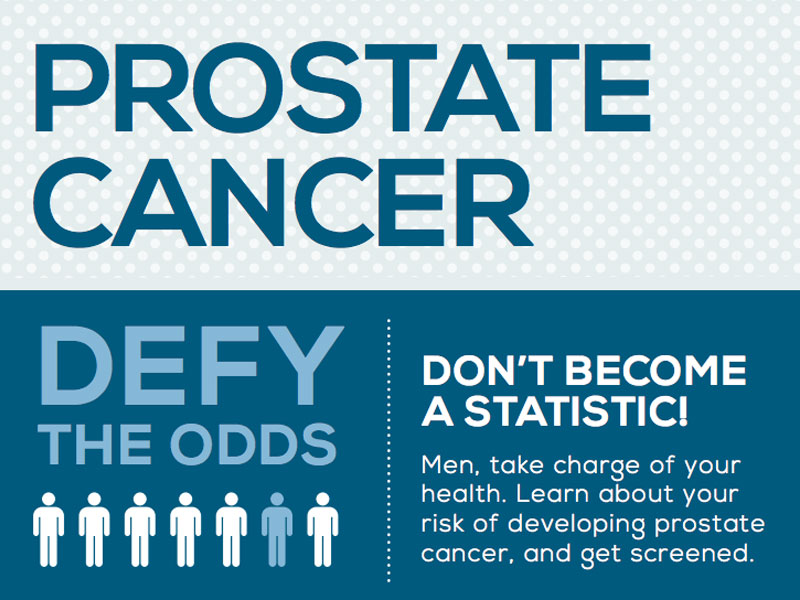
September is National Prostate Health Month

What it is?

[By Staff Reporters]

National Prostate Health Month (NPHM) is observed every September in the United States by health experts, health advocates, and individuals concerned with men’s prostate health.

***

PC
 ***

Purpose

Designating a month for the issue serves the purpose of:

  • Increasing public awareness of the importance of prostate health
  • Providing easily accessible prostate health screenings
  • Educating about risk factors and symptoms of prostate related diseases and
  • Advocating for further research on prostate health issues.

ribbon

[A light blue ribbon is the symbol for prostate cancer]

 Assessment

Conclusion

Your thoughts and comments on this ME-P are appreciated. Feel free to review our top-left column, and top-right sidebar materials, links, URLs and related websites, too. Then, subscribe to the ME-P. It is fast, free and secure.

Speaker: If you need a moderator or speaker for an upcoming event, Dr. David E. Marcinko; MBA – Publisher-in-Chief of the Medical Executive-Post – is available for seminar or speaking engagements. Contact: MarcinkoAdvisors@msn.com

OUR OTHER PRINT BOOKS AND RELATED INFORMATION SOURCES:

Product DetailsProduct Details

OPEN LETTER: MARCINKO Associates, Inc.

MISSION STATEMENT

Open Letter from the CEO

Dr. David Edward Marcinko MBA CMP™

http://www.MarcinkoAssociates.com

ALL MEDICAL AND HEALTHCARE COLLEAGUES

Did you know that at MARCINKO & Associates, all medical colleagues throughout the United States may contact us when they are considering the sale, purchase, strategic operating improvement, merger, acquisition and/or other financial business or related personal financial planning transaction?

MORE: https://marcinkoassociates.com/welcome-medical-colleagues/

***

Our difference is “hard” knowledge and insider financial guidance that helps medical colleagues, nurses, private practitioners, clinics, ambulatory surgery, radiology and outpatient wound care centers realize their ultimate economic goals. This typically includes managerial and cost accounting, financial ratio analysis, fair market valuation business appraisals, business plan creation and personal financial planning.

MORE: https://marcinkoassociates.com/fmv-appraisals/

Our “expert witness” business litigation support service and divorce mediation, arbitration, asset division, settlement and second opinion offerings are always available, as well.

MORE: https://marcinkoassociates.com/expert-witness/

And, our “soft” skill professional career guidance and mentoring center includes executive coaching, consulting and mentoring advisory programs for stressed, conflicted or burned-out physicians and medical practitioners.

Most importantly, our professional fees are reasonable and always transparent.

MARCINKO & Associates also serves universities, medical, business, graduate and nursing schools; physicians, dentists, podiatrists, optometrists and legal societies. This includes accountants, financial service providers, wealth and hedge fund managers, emerging entities, hospitals, CEOs and their BODs, the press, media and related organizations.

MORE: https://marcinkoassociates.com/speaking-seminars/

Contact us for an educational white-paper on most any topic.

MORE: https://marcinkoassociates.com/case-studies/

***

Now, please review our website to learn more.

And, always retain us when needed.

How May We Serve You?

DAVID EDWARD MARCINKO

email: MarcinkoAdvisors@msn.com

© Copyright: Institute of Medical Business Advisors, Inc. All rights reserved, USA. Present to 2024.

PODCAST PARODY: Outrageous EMRs

AN ELECTRONIC MEDICAL RECORDS STATE OF MIND

SPONSOR: http://www.CertifiedMedicalPlanner.org

By Zubin Damania MD

EDITOR’S NOTE: Dr. Zubin Damania, MD is a UCSF/Stanford-trained hospital doctor and host of The ZDoggMD Show, dedicated to Alt-Middle sense-making in healthcare and beyond. Videos are informational and are not medical advice, more info: https://zdoggmd.com/terms

***

WATCH PARODY HERE: https://www.youtube.com/watch?v=xB_tSFJsjsw

NOW – NOT AN EMR PARODY

WATCH NOT A PARODY HERE: https://www.youtube.com/watch?v=3TdSKr81III

***
COMMENTS APPRECIATED

Thank You

***

***

MARCINKO & Associates, Inc.

WHAT WE DO AND HOW WE ASSIST MEDICAL COLLEAGUES

Hard Business Advice AND Personal Lifestyle Coaching

http://www.MARCINKOASSOCIATES.com

By Ann Miller RN MHA CMP™

At Marcinko & Associates our clients traditionally include physicians [MD, MBBS and DO], dentists [DDS and DMD], podiatrists [DPM], Registered Nurses [RNs], Certified Registered Nurse Anesthetists [CRNA], Physician Assistants [PA] and Nurse Practitioners [NP]. A growing cohort of clients include medical technologists, physical, speech and occupational therapists, etc.

The above are naturally segregated into three career tranches: 1. New practitioners, 2] Mid-Career practitioners and 3] Mature practitioners. We serve them all and are fully prepared for any special needs situation that may arise in any tranche [death, divorce, adverse risk event and/or bankruptcy, etc].

Marcinko & Associates understands the complexity of financial and non-financial deal terms because we are also doctors. Our “hard” knowledge of your business comes from being actual healthcare facility owners, operators and medical practitioners [with additional professional licenses and expertise] enabling us to effectively analyze your business, take corrective measures and present your healthcare entity in the best possible and accurate light.

***

But, if you’re looking at this website, chances are you are fed up, burned out, seeking practice management techniques or a better work-life balance. Or, you are looking for a new non-clinical career, thinking of finance, investing, retirement, or all of the above. Perhaps you are just looking to regain the joy and meaning in your medical or professional career? This is known as “soft” psychology, coaching, personal consulting or fraternal advice.

***

Regardless, of your “soft” personal or “hard” corporate needs, our transparent Fees for Service [FFS] model is moderated for all colleagues based on the acuity and urgency of their engagements. Reduced rates and/or limited charity work may also be possible.

***

http://www.DavidEdwardMarcinko.com

CONTACT US TODAYTHRIVE TOMORROW!

Suite #5901 Wilbanks Drive

Norcross, Georgia USA 30092-1141

email: MarcinkoAdvisors@msn.com

***

***

CAREER: Physician Coaching and Development

MARCINKO ASSOCIATES, Inc.

SPONSOR: http://www.MarcinkoAssociates.com

***

***

Did you Know?

Experts estimate that it can cost more than $1 million to recruit and train a replacement for a doctor who leaves the profession because of burnout. But, as no broad calculation of burnout costs exists, Dr. Tait Shanafelt [Mayo Clinic researcher and Stanford Medicine’s first Chief Physician Wellness Officer] said Stanford, Harvard Business School, Mayo Clinic and the American Medical Association (AMA) are further cost estimating the issue. Nevertheless, Shanafelt and other researchers have shown that burnout erodes job performance, increases medical errors, and leads doctors to leave a profession they once loved.

CITE: https://www.r2library.com/Resource

Fortunately, we can help. From formal coaching to second career opinions, mentoring and advising, we can help with our remediation executive career programs. Regardless of what is happening in your life, it is wonderful to have a non-partial, confidential and informed career coach and sounding board on your side.

CITE: JAMA Internal Medicine [Effect of a Professional Coaching Intervention on the Well-Being and Distress of Physicians].

NCBI: https://www.ncbi.nlm.nih.gov/pmc/articles/PMC6686971/

THANK YOU

CONTACT US: https://marcinkoassociates.com/process-what-we-do/

***

PODCAST: Poverty in Healthcare Explained

By Eric Bricker MD

***

***

COMMENTS APPRECIATED

Thank You

***

***

***

MARCINKO & Associates, Inc.

WHAT WE DO AND HOW WE ASSIST MEDICAL COLLEAGUES

Hard Business Advice AND Personal Lifestyle Coaching

http://www.MARCINKOASSOCIATES.com

By Ann Miller RN MHA CMP™

At Marcinko & Associates our clients traditionally include physicians [MD, MBBS and DO], dentists [DDS and DMD], podiatrists [DPM], Registered Nurses [RNs], Certified Registered Nurse Anesthetists [CRNA], Physician Assistants [PA] and Nurse Practitioners [NP]. A growing cohort of clients include medical technologists, physical, speech and occupational therapists, etc.

The above are naturally segregated into three career tranches: 1. New practitioners, 2] Mid-Career practitioners and 3] Mature practitioners. We serve them all and are fully prepared for any special needs situation that may arise in any tranche [death, divorce, adverse risk event and/or bankruptcy, etc].

Marcinko & Associates understands the complexity of financial and non-financial deal terms because we are also doctors. Our “hard” knowledge of your business comes from being actual healthcare facility owners, operators and medical practitioners [with additional professional licenses and expertise] enabling us to effectively analyze your business, take corrective measures and present your healthcare entity in the best possible and accurate light.

***

But, if you’re looking at this website, chances are you are fed up, burned out, seeking practice management techniques or a better work-life balance. Or, you are looking for a new non-clinical career, thinking of finance, investing, retirement, or all of the above. Perhaps you are just looking to regain the joy and meaning in your medical or professional career? This is known as “soft” psychology, coaching, personal consulting or fraternal advice.

***

Regardless, of your “soft” personal or “hard” corporate needs, our transparent Fees for Service [FFS] model is moderated for all colleagues based on the acuity and urgency of their engagements. Reduced rates and/or limited charity work may also be possible.

***

http://www.DavidEdwardMarcinko.com

CONTACT US TODAYTHRIVE TOMORROW!

Suite #5901 Wilbanks Drive

Norcross, Georgia USA 30092-1141

email: MarcinkoAdvisors@msn.com

***

***

MICRO-CERTIFICATIONS: For Financial Advisors Seeking Physician-Client Niche Success?

Micro-Credentials on the Rise

KNOWLEDGE RICHES IN NICHES

DR. DAVID EDWARD MARCINKO MBA CMP

SPONSOR: http://www.CertifiedMedicalPlanner.org

***

***

Do you ever wish you could acquire specific information for your career activities without having to complete a university Master’s Degree or finish our entire Certified Medical Planner™ professional designation program? Well, Micro-Certifications from the Institute of Medical Business Advisors, Inc., might be the answer. Read on to learn how our three Micro-Certifications offer new opportunities for professional growth in the medical practice, business management, health economics and financial planning, investing and advisory space for physicians, nurses and healthcare professionals.

Micro-Certification Basics

Stock-Brokers, Financial Advisors, Investment Advisors, Accountants, Consultants, Financial Analyists and Financial Planners need to enhance their knowledge skills to better serve the changing and challenging healthcare professional ecosystem. But, it can be difficult to learn and demonstrate mastery of these new skills to employers, clients, physicians or medical prospects. This makes professional advancement difficult. That’s where Micro-Certification and Micro-Credentialing enters the online educational space. It is the process of earning a Micro-Certification, which is like a mini-degree or mini-credential, in a very specific topical area.

Micro-Certification Requirements

Once you’ve completed all of the requirements for our Micro-Certification, you will be awarded proof that you’ve earned it. This might take the form of a paper or digital certificate, which may be a hard document or electronic image, transcript, file, or other official evidence that you’ve completed the necessary work.

Uses of Micro-Certifications

Micro-Certifications may be used to demonstrate to physicians prospective medical clients that you’ve mastered a certain knowledge set. Because of this, Micro-Certifications are useful for those financial service professionals seeking medical clients, employment or career advancement opportunities.

Examples of iMBA, Inc., Micro-Certifications

Here are the three most popular Micro-Certification course from the Institute of Medical Business Advisors, Inc:

  • 1. Health Insurance and Managed Care: To keep up with the ever-changing field of health care physician advice, you must learn new medical practice business models in order to attract and assist physicians and nurse clients. By bringing together the most up-to-date business and medical prctice models [Medicare, Medicaid, PP-ACA, POSs, EPOs, HMOs, PPOs, IPA’s, PPMCs, Accountable Care Organizations, Concierge Medicine, Value Based Care, Physician Pay-for-Performance Initiatives, Hospitalists, Retail and Whole-Sale Medicine, Health Savings Accounts and Medical Unions, etc], this iMBA Inc., Mini-Certification offers a wealth of essential information that will help you understand the ever-changing practices in the next generation of health insurance and managed medical care.
  • 2. Health Economics and Finance: Medical economics, finance, managerial and cost accounting is an integral component of the health care industrial complex. It is broad-based and covers many other industries: insurance, mathematics and statistics, public and population health, provider recruitment and retention, health policy, forecasting, aging and long-term care, and Venture Capital are all commingled arenas. It is essential knowledge that all financial services professionals seeking to serve in the healthcare advisory niche space should possess.
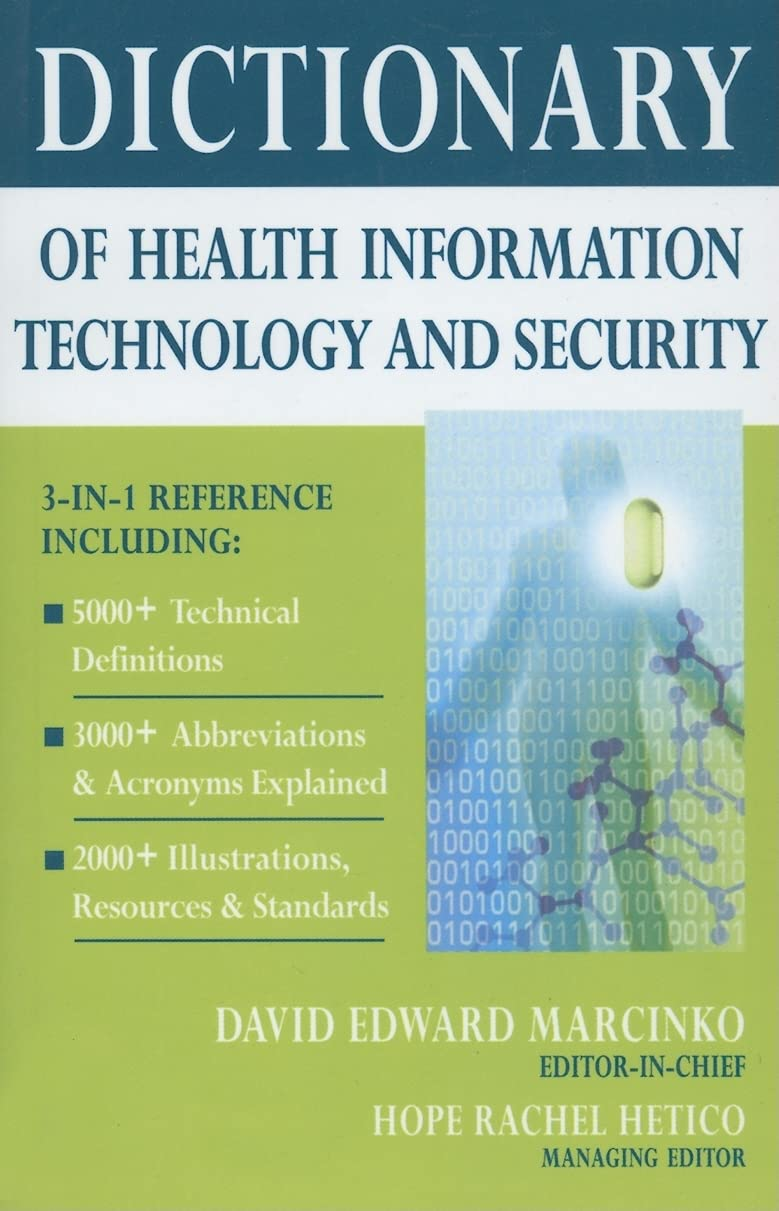
  • 3. Health Information Technology and Security: There is a myth that all physician focused financial advisors understand Health Information Technology [HIT]. In truth, it is often economically misused or financially misunderstood. Moreover, an emerging national HIT architecture often puts the financial advisor or financial planner in a position of maximum uncertainty and minimum productivity regarding issues like: Electronic Medical Records [EMRs] or Electronic Health Records [EHRs], mobile health, tele-health or tele-medicine, Artificial Intelligence [AI], benefits managers and human resource professionals.

Other Topics include: economics, finance, investing, marketing, advertising, sales, start-ups, business plan creation, financial planning and entrepreneurship, etc.

How to Start Learning and Earning Recognition for Your Knowledge

Now that you’re familiar with Micro-Credentialing, you might consider earning a Micro-Certification with us. We offer 3 official Micro-Certificates by completing a one month online course, with a live instructor consisting of twelve asynchronous lessons/online classes [3/wk X 4/weeks = 12 classes]. The earned official completion certificate can be used to demonstrate mastery of a specific skill set and shared with current or future employers, current clients or medical niche financial advisory prospects.

Mini-Certification Tuition, Books and Related Fees

The tuition for each Mini-Certification live online course is $1,250 with the purchase of one required dictionary handbook. Other additional guides, white-papers, videos, files and e-content are all supplied without charge. Alternative courses may be developed in the future subject to demand and may change without notice.

***

Contact: For more information, or to speak with an academic representative, please contact Ann Miller RN MHA CMP™ at: MarcinkoAdvisors@msn.com [24/7] -OR- 770-448-0769 [9:00 – 5:00 EST].

***

OnLine MICRO-CERTIFICATIONS: For Financial Advisors Seeking Physician-Client Niche Success?

Micro-Credentials on the Rise

KNOWLEDGE RICHES IN NICHES

DR. DAVID EDWARD MARCINKO MBA CMP

SPONSOR: http://www.CertifiedMedicalPlanner.org

***

***

Do you ever wish you could acquire specific information for your career activities without having to complete a university Master’s Degree or finish our entire Certified Medical Planner™ professional designation program? Well, Micro-Certifications from the Institute of Medical Business Advisors, Inc., might be the answer. Read on to learn how our three Micro-Certifications offer new opportunities for professional growth in the medical practice, business management, health economics and financial planning, investing and advisory space for physicians, nurses and healthcare professionals.

Micro-Certification Basics

Stock-Brokers, Financial Advisors, Investment Advisors, Accountants, Consultants, Financial Analyists and Financial Planners need to enhance their knowledge skills to better serve the changing and challenging healthcare professional ecosystem. But, it can be difficult to learn and demonstrate mastery of these new skills to employers, clients, physicians or medical prospects. This makes professional advancement difficult. That’s where Micro-Certification and Micro-Credentialing enters the online educational space. It is the process of earning a Micro-Certification, which is like a mini-degree or mini-credential, in a very specific topical area.

Micro-Certification Requirements

Once you’ve completed all of the requirements for our Micro-Certification, you will be awarded proof that you’ve earned it. This might take the form of a paper or digital certificate, which may be a hard document or electronic image, transcript, file, or other official evidence that you’ve completed the necessary work.

Uses of Micro-Certifications

Micro-Certifications may be used to demonstrate to physicians prospective medical clients that you’ve mastered a certain knowledge set. Because of this, Micro-Certifications are useful for those financial service professionals seeking medical clients, employment or career advancement opportunities.

Examples of iMBA, Inc., Micro-Certifications

Here are the three most popular Micro-Certification course from the Institute of Medical Business Advisors, Inc:

  • 1. Health Insurance and Managed Care: To keep up with the ever-changing field of health care physician advice, you must learn new medical practice business models in order to attract and assist physicians and nurse clients. By bringing together the most up-to-date business and medical prctice models [Medicare, Medicaid, PP-ACA, POSs, EPOs, HMOs, PPOs, IPA’s, PPMCs, Accountable Care Organizations, Concierge Medicine, Value Based Care, Physician Pay-for-Performance Initiatives, Hospitalists, Retail and Whole-Sale Medicine, Health Savings Accounts and Medical Unions, etc], this iMBA Inc., Mini-Certification offers a wealth of essential information that will help you understand the ever-changing practices in the next generation of health insurance and managed medical care.
  • 2. Health Economics and Finance: Medical economics, finance, managerial and cost accounting is an integral component of the health care industrial complex. It is broad-based and covers many other industries: insurance, mathematics and statistics, public and population health, provider recruitment and retention, health policy, forecasting, aging and long-term care, and Venture Capital are all commingled arenas. It is essential knowledge that all financial services professionals seeking to serve in the healthcare advisory niche space should possess.
  • 3. Health Information Technology and Security: There is a myth that all physician focused financial advisors understand Health Information Technology [HIT]. In truth, it is often economically misused or financially misunderstood. Moreover, an emerging national HIT architecture often puts the financial advisor or financial planner in a position of maximum uncertainty and minimum productivity regarding issues like: Electronic Medical Records [EMRs] or Electronic Health Records [EHRs], mobile health, tele-health or tele-medicine, Artificial Intelligence [AI], benefits managers and human resource professionals.

Other Topics include: economics, finance, investing, marketing, advertising, sales, start-ups, business plan creation, financial planning and entrepreneurship, etc.

How to Start Learning and Earning Recognition for Your Knowledge

Now that you’re familiar with Micro-Credentialing, you might consider earning a Micro-Certification with us. We offer 3 official Micro-Certificates by completing a one month online course, with a live instructor consisting of twelve asynchronous lessons/online classes [3/wk X 4/weeks = 12 classes]. The earned official completion certificate can be used to demonstrate mastery of a specific skill set and shared with current or future employers, current clients or medical niche financial advisory prospects.

Mini-Certification Tuition, Books and Related Fees

The tuition for each Mini-Certification live online course is $1,250 with the purchase of one required dictionary handbook. Other additional guides, white-papers, videos, files and e-content are all supplied without charge. Alternative courses may be developed in the future subject to demand and may change without notice.

***

Contact: For more information, or to speak with an academic representative, please contact Ann Miller RN MHA CMP™ at: MarcinkoAdvisors@msn.com [24/7] -OR- 770-448-0769[9:00 – 5:00 EST].

***

PODCAST: Generative A.I. In Healthcare Today!

By Eric Bricker MD

***

***

COMMENTS APPRECIATED

Thank You

***

***

The Next-Generation of “Anti-Millionaire” Doctors

“$1 Million Mistake: Becoming a Doctor”

See the source image

BY DR. DAVID E. MARCINKO MBA CMP®

CMP logo

SPONSOR: http://www.CertifiedMedicalPlanner.org

CBS Moneywatch published an article entitled “$1 Million Mistake: Becoming a Doctor” Aside from the possibility that devoting one’s life to helping others might be considered a mistake, medical student Dan Coleman was struck by the “$1 million” figure.

Before medical school, he worked in the pharmaceutical industry and even turned down a hefty promotion to his education as soon as possible, rather than defer for a year or two. But, his financial calculations made it fairly obvious that, including benefits, bonuses, and potential promotions, his medical decision was not a $1 million mistake, but was more like a $1.3 million dollar disaster. Still; he opined:

Yet, even today, as we stare down the barrel of the Affordable Care Act, being a doctor is a very desirable job. We may not be famous, but we will be well-respected. We may not be rich, but we will certainly live comfortably. We may work a lot, but we will never be out of work. To future doctors, the young and impecunious, the anti-millionaires, tuition is a mere afterthought. All that matters is the MD.

Source: http://in-training.org/medical-students-the-anti-millionaires-4361

Millionaire Interview 81 - ESI Money

OVER HEARD IN THE MEDICAL STUDENT’S LOUNGE

“We are medical students.
We are young, proud, and righteous.
We have made the hard choice (medicine), but we have cleared the high hurdle (getting into school).


We know healthcare is a difficult, imperfect art, but we are devoted.
We arm ourselves with the weapons of knowledge and compassion, prepared to defend against the onslaught of trauma, disease, and time.
We are here to the bitter end, for our patients and ourselves.
And above all, we know the cost of our choice.

And if we’re lucky, it will stay under 6% interest through graduation”.

Daniel Coleman

[Georgetown University School of Medicine]

First-year Student

Your thoughts are appreciated,

THANK YOU

***

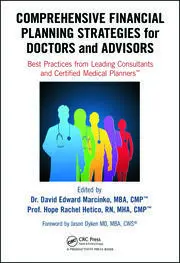
Comprehensive Financial Planning Strategies for Doctors and Advisors: Best Practices from Leading Consultants and Certified Medical Planners™

ORDER Textbook: https://www.amazon.com/Comprehensive-Financial-Planning-Strategies-Advisors/dp/1482240289/ref=sr_1_1?ie=UTF8&qid=1418580820&sr=8-1&keywords=david+marcinko

ODER TEXTBOOK: https://www.routledge.com/Risk-Management-Liability-Insurance-and-Asset-Protection-Strategies-for/Marcinko-Hetico/p/book/9781498725989

INVITE DR. MARCINKO: https://medicalexecutivepost.com/dr-david-marcinkos-

***

MICRO-CERTIFICATIONS: For Financial Advisors Seeking Physician-Client Niche Success?

Micro-Credentials on the Rise

KNOWLEDGE RICHES IN NICHES

DR. DAVID EDWARD MARCINKO MBA CMP

SPONSOR: http://www.CertifiedMedicalPlanner.org

***

***

Do you ever wish you could acquire specific information for your career activities without having to complete a university Master’s Degree or finish our entire Certified Medical Planner™ professional designation program? Well, Micro-Certifications from the Institute of Medical Business Advisors, Inc., might be the answer. Read on to learn how our three Micro-Certifications offer new opportunities for professional growth in the medical practice, business management, health economics and financial planning, investing and advisory space for physicians, nurses and healthcare professionals.

Micro-Certification Basics

Stock-Brokers, Financial Advisors, Investment Advisors, Accountants, Consultants, Financial Analyists and Financial Planners need to enhance their knowledge skills to better serve the changing and challenging healthcare professional ecosystem. But, it can be difficult to learn and demonstrate mastery of these new skills to employers, clients, physicians or medical prospects. This makes professional advancement difficult. That’s where Micro-Certification and Micro-Credentialing enters the online educational space. It is the process of earning a Micro-Certification, which is like a mini-degree or mini-credential, in a very specific topical area.

Micro-Certification Requirements

Once you’ve completed all of the requirements for our Micro-Certification, you will be awarded proof that you’ve earned it. This might take the form of a paper or digital certificate, which may be a hard document or electronic image, transcript, file, or other official evidence that you’ve completed the necessary work.

Uses of Micro-Certifications

Micro-Certifications may be used to demonstrate to physicians prospective medical clients that you’ve mastered a certain knowledge set. Because of this, Micro-Certifications are useful for those financial service professionals seeking medical clients, employment or career advancement opportunities.

Examples of iMBA, Inc., Micro-Certifications

Here are the three most popular Micro-Certification course from the Institute of Medical Business Advisors, Inc:

  • 1. Health Insurance and Managed Care: To keep up with the ever-changing field of health care physician advice, you must learn new medical practice business models in order to attract and assist physicians and nurse clients. By bringing together the most up-to-date business and medical prctice models [Medicare, Medicaid, PP-ACA, POSs, EPOs, HMOs, PPOs, IPA’s, PPMCs, Accountable Care Organizations, Concierge Medicine, Value Based Care, Physician Pay-for-Performance Initiatives, Hospitalists, Retail and Whole-Sale Medicine, Health Savings Accounts and Medical Unions, etc], this iMBA Inc., Mini-Certification offers a wealth of essential information that will help you understand the ever-changing practices in the next generation of health insurance and managed medical care.
  • 2. Health Economics and Finance: Medical economics, finance, managerial and cost accounting is an integral component of the health care industrial complex. It is broad-based and covers many other industries: insurance, mathematics and statistics, public and population health, provider recruitment and retention, health policy, forecasting, aging and long-term care, and Venture Capital are all commingled arenas. It is essential knowledge that all financial services professionals seeking to serve in the healthcare advisory niche space should possess.
  • 3. Health Information Technology and Security: There is a myth that all physician focused financial advisors understand Health Information Technology [HIT]. In truth, it is often economically misused or financially misunderstood. Moreover, an emerging national HIT architecture often puts the financial advisor or financial planner in a position of maximum uncertainty and minimum productivity regarding issues like: Electronic Medical Records [EMRs] or Electronic Health Records [EHRs], mobile health, tele-health or tele-medicine, Artificial Intelligence [AI], benefits managers and human resource professionals.

Other Topics include: economics, finance, investing, marketing, advertising, sales, start-ups, business plan creation, financial planning and entrepreneurship, etc.

How to Start Learning and Earning Recognition for Your Knowledge

Now that you’re familiar with Micro-Credentialing, you might consider earning a Micro-Certification with us. We offer 3 official Micro-Certificates by completing a one month online course, with a live instructor consisting of twelve asynchronous lessons/online classes [3/wk X 4/weeks = 12 classes]. The earned official completion certificate can be used to demonstrate mastery of a specific skill set and shared with current or future employers, current clients or medical niche financial advisory prospects.

Mini-Certification Tuition, Books and Related Fees

The tuition for each Mini-Certification live online course is $1,250 with the purchase of one required dictionary handbook. Other additional guides, white-papers, videos, files and e-content are all supplied without charge. Alternative courses may be developed in the future subject to demand and may change without notice.

***

Contact: For more information, or to speak with an academic representative, please contact Ann Miller RN MHA CMP™ at: MarcinkoAdvisors@msn.com [24/7] -OR- 770-448-0769[9:00 – 5:00 EST].

***

MICRO-CERTIFICATIONS: For Financial Advisors Seeking Physician-Client Niche Success?

Micro-Credentials on the Rise

KNOWLEDGE RICHES IN NICHES

DR. DAVID EDWARD MARCINKO MBA CMP

SPONSOR: http://www.CertifiedMedicalPlanner.org

***

***

Do you ever wish you could acquire specific information for your career activities without having to complete a university Master’s Degree or finish our entire Certified Medical Planner™ professional designation program? Well, Micro-Certifications from the Institute of Medical Business Advisors, Inc., might be the answer. Read on to learn how our three Micro-Certifications offer new opportunities for professional growth in the medical practice, business management, health economics and financial planning, investing and advisory space for physicians, nurses and healthcare professionals.

Micro-Certification Basics

Stock-Brokers, Financial Advisors, Investment Advisors, Accountants, Consultants, Financial Analyists and Financial Planners need to enhance their knowledge skills to better serve the changing and challenging healthcare professional ecosystem. But, it can be difficult to learn and demonstrate mastery of these new skills to employers, clients, physicians or medical prospects. This makes professional advancement difficult. That’s where Micro-Certification and Micro-Credentialing enters the online educational space. It is the process of earning a Micro-Certification, which is like a mini-degree or mini-credential, in a very specific topical area.

Micro-Certification Requirements

Once you’ve completed all of the requirements for our Micro-Certification, you will be awarded proof that you’ve earned it. This might take the form of a paper or digital certificate, which may be a hard document or electronic image, transcript, file, or other official evidence that you’ve completed the necessary work.

Uses of Micro-Certifications

Micro-Certifications may be used to demonstrate to physicians prospective medical clients that you’ve mastered a certain knowledge set. Because of this, Micro-Certifications are useful for those financial service professionals seeking medical clients, employment or career advancement opportunities.

Examples of iMBA, Inc., Micro-Certifications

Here are the three most popular Micro-Certification course from the Institute of Medical Business Advisors, Inc:

  • 1. Health Insurance and Managed Care: To keep up with the ever-changing field of health care physician advice, you must learn new medical practice business models in order to attract and assist physicians and nurse clients. By bringing together the most up-to-date business and medical prctice models [Medicare, Medicaid, PP-ACA, POSs, EPOs, HMOs, PPOs, IPA’s, PPMCs, Accountable Care Organizations, Concierge Medicine, Value Based Care, Physician Pay-for-Performance Initiatives, Hospitalists, Retail and Whole-Sale Medicine, Health Savings Accounts and Medical Unions, etc], this iMBA Inc., Mini-Certification offers a wealth of essential information that will help you understand the ever-changing practices in the next generation of health insurance and managed medical care.
  • 2. Health Economics and Finance: Medical economics, finance, managerial and cost accounting is an integral component of the health care industrial complex. It is broad-based and covers many other industries: insurance, mathematics and statistics, public and population health, provider recruitment and retention, health policy, forecasting, aging and long-term care, and Venture Capital are all commingled arenas. It is essential knowledge that all financial services professionals seeking to serve in the healthcare advisory niche space should possess.
  • 3. Health Information Technology and Security: There is a myth that all physician focused financial advisors understand Health Information Technology [HIT]. In truth, it is often economically misused or financially misunderstood. Moreover, an emerging national HIT architecture often puts the financial advisor or financial planner in a position of maximum uncertainty and minimum productivity regarding issues like: Electronic Medical Records [EMRs] or Electronic Health Records [EHRs], mobile health, tele-health or tele-medicine, Artificial Intelligence [AI], benefits managers and human resource professionals.

Other Topics include: economics, finance, investing, marketing, advertising, sales, start-ups, business plan creation, financial planning and entrepreneurship, etc.

How to Start Learning and Earning Recognition for Your Knowledge

Now that you’re familiar with Micro-Credentialing, you might consider earning a Micro-Certification with us. We offer 3 official Micro-Certificates by completing a one month online course, with a live instructor consisting of twelve asynchronous lessons/online classes [3/wk X 4/weeks = 12 classes]. The earned official completion certificate can be used to demonstrate mastery of a specific skill set and shared with current or future employers, current clients or medical niche financial advisory prospects.

Mini-Certification Tuition, Books and Related Fees

The tuition for each Mini-Certification live online course is $1,250 with the purchase of one required dictionary handbook. Other additional guides, white-papers, videos, files and e-content are all supplied without charge. Alternative courses may be developed in the future subject to demand and may change without notice.

***

Contact: For more information, or to speak with an academic representative, please contact Ann Miller RN MHA CMP™ at: MarcinkoAdvisors@msn.com [24/7] -OR- 770-448-0769[9:00 – 5:00 EST].

***

CAREER: Physician Coaching and Development

MARCINKO ASSOCIATES, Inc.

SPONSOR: http://www.MarcinkoAssociates.com

***

***

Did you Know?

Experts estimate that it can cost more than $1 million to recruit and train a replacement for a doctor who leaves the profession because of burnout. But, as no broad calculation of burnout costs exists, Dr. Tait Shanafelt [Mayo Clinic researcher and Stanford Medicine’s first Chief Physician Wellness Officer] said Stanford, Harvard Business School, Mayo Clinic and the American Medical Association (AMA) are further cost estimating the issue. Nevertheless, Shanafelt and other researchers have shown that burnout erodes job performance, increases medical errors, and leads doctors to leave a profession they once loved.

CITE: https://www.r2library.com/Resource

Fortunately, we can help. From formal coaching to second career opinions, mentoring and advising, we can help with our remediation executive career programs. Regardless of what is happening in your life, it is wonderful to have a non-partial, confidential and informed career coach and sounding board on your side.

CITE: JAMA Internal Medicine [Effect of a Professional Coaching Intervention on the Well-Being and Distress of Physicians].

NCBI: https://www.ncbi.nlm.nih.gov/pmc/articles/PMC6686971/

THANK YOU

CONTACT US: https://marcinkoassociates.com/process-what-we-do/

***

CAREER: Physician Coaching and Development

MARCINKO ASSOCIATES, Inc.

SPONSOR: http://www.MarcinkoAssociates.com

***

***

Did you Know?

Experts estimate that it can cost more than $1 million to recruit and train a replacement for a doctor who leaves the profession because of burnout. But, as no broad calculation of burnout costs exists, Dr. Tait Shanafelt [Mayo Clinic researcher and Stanford Medicine’s first Chief Physician Wellness Officer] said Stanford, Harvard Business School, Mayo Clinic and the American Medical Association (AMA) are further cost estimating the issue. Nevertheless, Shanafelt and other researchers have shown that burnout erodes job performance, increases medical errors, and leads doctors to leave a profession they once loved.

CITE: https://www.r2library.com/Resource

Fortunately, we can help. From formal coaching to second career opinions, mentoring and advising, we can help with our remediation executive career programs. Regardless of what is happening in your life, it is wonderful to have a non-partial, confidential and informed career coach and sounding board on your side.

CITE: JAMA Internal Medicine [Effect of a Professional Coaching Intervention on the Well-Being and Distress of Physicians].

NCBI: https://www.ncbi.nlm.nih.gov/pmc/articles/PMC6686971/

THANK YOU

CONTACT US: https://marcinkoassociates.com/process-what-we-do/

***

INTERVIEW: A Healthcare Financing Solution for Entrepreneurs?

Former: CEO and Founder
Superior Consultant Company, Inc.
[SUPC-NASD]

EDITOR’S NOTE: I first met Rich in B-school, when I was a student, back in the day. He was the Founder and CEO of Superior Consultant Holdings Corp. Rich graciously wrote the Foreword to one of my first textbooks on financial planning for physicians and healthcare professionals. Today, Rich is a successful entrepreneur in the technology, health and finance space.

-Dr. David E. Marcinko MBA MEd CMP®

***

Staff & Contributors - CHAMPIONS OF WAYNE

By Richard Helppie

Today for your consideration – How to fix the healthcare financing methods in the United States?

I use the term “methods” because calling what we do now a “system” is inaccurate. I also focus on healthcare financing, because in terms of healthcare delivery, there is no better place in the world than the USA in terms of supply and innovation for medical diagnosis and treatment. Similarly, I use the term healthcare financing to differentiate from healthcare insurance – because insurance without supply is an empty promise.

This is a straightforward, 4-part plan. It is uniquely American and will at last extend coverage to every US citizen while not hampering the innovation and robust supply that we have today. As this is about a Common Bridge and not about ideology or dogma, there will no doubt be aspects of this proposal that every individual will have difficulty with. However, on balance, I believe it is the most fair and equitable way to resolve the impasse on healthcare funding . . . .

CITE: https://www.r2library.com/Resource/Title/0826102549

Let me start in an area sure to raise the ire of a few. And that is, we have to start with eliminating the methods that are in place today. The first is the outdated notion that healthcare insurance is tied to one’s work, and the second is that there are overlapping and competing tax-supported bureaucracies to administer that area of healthcare finance.

Step 1 is to break the link between employment and health insurance. Fastest way to do that is simply tax the cost of benefits for the compensation that it is. This is how company cars, big life insurance policies and other fringe benefits were trimmed. Eliminating the tax-favored treatment of employer-provided healthcare is the single most important change that should be made.

Yes, you will hear arguments that this is an efficient market with satisfied customers. However, upon examination, it is highly risky, unfair, and frankly out of step with today’s job market.

Employer provided health insurance is an artifact from the 1940’s as an answer to wage freezes – an employer could not give a wage increase, but could offer benefits that weren’t taxed. It makes no sense today for a variety of reasons. Here are a few:

1. Its patently unfair. Two people living in the same apartment building, each making the same income and each have employer provided health insurance. Chris in unit 21 has a generous health plan that would be worth $25,000 each year. Pays zero tax on that compensation. Pat, in unit 42 has a skimpy plan with a narrow network, big deductibles and hefty co-pays. The play is worth $9,000 each year. Pat pays zero tax.

3. The insurance pools kick out the aged. Once one becomes too old to work, they are out of the employer plan and on to the retirement plan or over to the taxpayers (Medicare).

4. The structure is a bad fit. Health insurance and healthy living are longitudinal needs over a long period of time. In a time when people change careers and jobs frequently, or are in the gig economy, they are not any one place long enough for the insurance to work like insurance.

5. Creates perverse incentives. The incentives are weighted to have employers not have their work force meet the standards of employees so they don’t have to pay for the health insurance. Witness latest news in California with Uber and Lyft.

6. Incentives to deny claims abound. There is little incentive to serve the subscriber/patient since the likelihood the employer will shop the plan or the employee will change jobs means that stringing out a claim approval is a profitable exercise.

7. Employers have difficulty as purchasers. An employer large enough to supply health insurance has a diverse set of health insurance needs in their work force. They pay a lot of money and their work force is still not 100% happy.

Net of it, health insurance tied to work has outlived its usefulness. Time to end the tax-favored treatment of employer-based insurance. If an employer wants to provide health insurance, they can do it, but the value of that insurance is reflected in the taxable W-2 wages – now Pat and Chris will be treated equally.

Step 2 is to consolidate the multiple tax-supported bureaus that supply healthcare. Relieve the citizens from having to prove they are old enough, disabled enough, impoverished enough, young enough. Combine Medicare, Medicaid, CHIP, Tricare and even possibly the VA into a single bureaucracy. Every American Citizen gets this broad coverage at some level. Everyone pays something into the system – start at $20 a year, and then perhaps an income-adjusted escalator that would charge the most wealthy up to $75,000. Collect the money with a line on Form 1040.

I have not done the exact math. However, removing the process to prove eligibility and having one versus many bureaucracies has to generate savings. Are you a US Citizen? Yes, then here is your base insurance. Like every other nationalized system, one can expect longer waits, fewer referrals to a specialist, and less innovation. These centralized systems all squeeze supply of healthcare services to keep their spend down. The reports extolling their efficiencies come from the people whose livelihoods depend on the centralized system. However, at least everyone gets something. And, for life threatening health conditions, by and large the centralized systems do a decent job. With everyone covered, the fear of medical bankruptcy evaporates. The fear of being out of work and losing healthcare when one needs it most is gone.

So if you are a free market absolutist, then the reduction of vast bureaucracies should be attractive – no need for eligibility requirements (old enough, etc.) and a single administration which is both more efficient, more equitable (everyone gets the same thing). And there remains a private market (more on this in step 3) For those who detest private insurance companies a portion of that market just went away. There is less incentive to purchase a private plan. And for everyone’s sense of fairness, the national plan is funded on ability to pay. Bearing in mind that everyone has to pay something. Less bureaucracies. Everyone in it together. Funded on ability to pay.

Step 3 is to allow and even encourage a robust market for health insurance above and beyond the national plan – If people want to purchase more health insurance, then they have the ability to do so. Which increases supply, relieves burden on the tax-supported system, aligns the US with other countries, provides an alternative to medical tourism (and the associated health spend in our country) and offers a bit of competition to the otherwise monopolistic government plan.

Its not a new concept, in many respects it is like the widely popular Medigap plans that supplement what Medicare does not cover.

No one is forced to make that purchase. Other counties’ experience shows that those who choose to purchase private coverage over and above a national plan often cite faster access, more choice, innovation, or services outside the universal system, e.g., a woman who chooses to have mammography at an early age or with more frequency than the national plan might allow.  If the insurance provider can offer a good value to the price, then they will sell insurance. If they can deliver that value for more than their costs, then they create a profit. Owners of the company, who risk their capital in creating the business may earn a return.

For those of you who favor a free market, the choices are available. There will be necessary regulation to prevent discrimination on genetics, pre-existing conditions, and the like. Buy the type of plan that makes you feel secure – just as one purchases automobile and life insurance.For those who are supremely confident in the absolute performance of a centralized system to support 300+ million Americans in the way each would want, they should like this plan as well – because if the national plan is meeting all needs and no one wants perhaps faster services, then few will purchase the private insurance and the issuers will not have a business. Free choice. More health insurance for those who want it. Competition keeps both national and private plans seeking to better themselves.

Step 4 would be to Permit Access to Medicare Part D to every US Citizen, Immediately

One of the bright spots in the US Healthcare Financing Method is Medicare Part D, which provides prescription drug coverage to seniors. It is running at 95% subscriber satisfaction and about 40% below cost projections.

Subscribers choose from a wide variety of plans offered by private insurance companies. There are differences in formularies, co-pays, deductibles and premiums.

So there you have it, a four part plan that would maintain or increase the supply of healthcare services, universal insurance coverage, market competition, and lower costs. Its not perfect but I believe a vast improvement over what exists today. To recap:

1. Break the link between employment and healthcare insurance coverage, by taxing the benefits as the compensation they are.

2. Establish a single, universal plan that covers all US citizens paid for via personal income taxes on an ability-to-pay basis.  Eliminate all the other tax-funded plans in favor of this new one.

3. For those who want it, private, supplemental insurance to the national system, ala major industrialized nations.

4. Open Medicare Part D (prescription drugs) to every US citizen. Today.

YOUR THOUGHTS ARE APPRECIATED.

Thank You

***

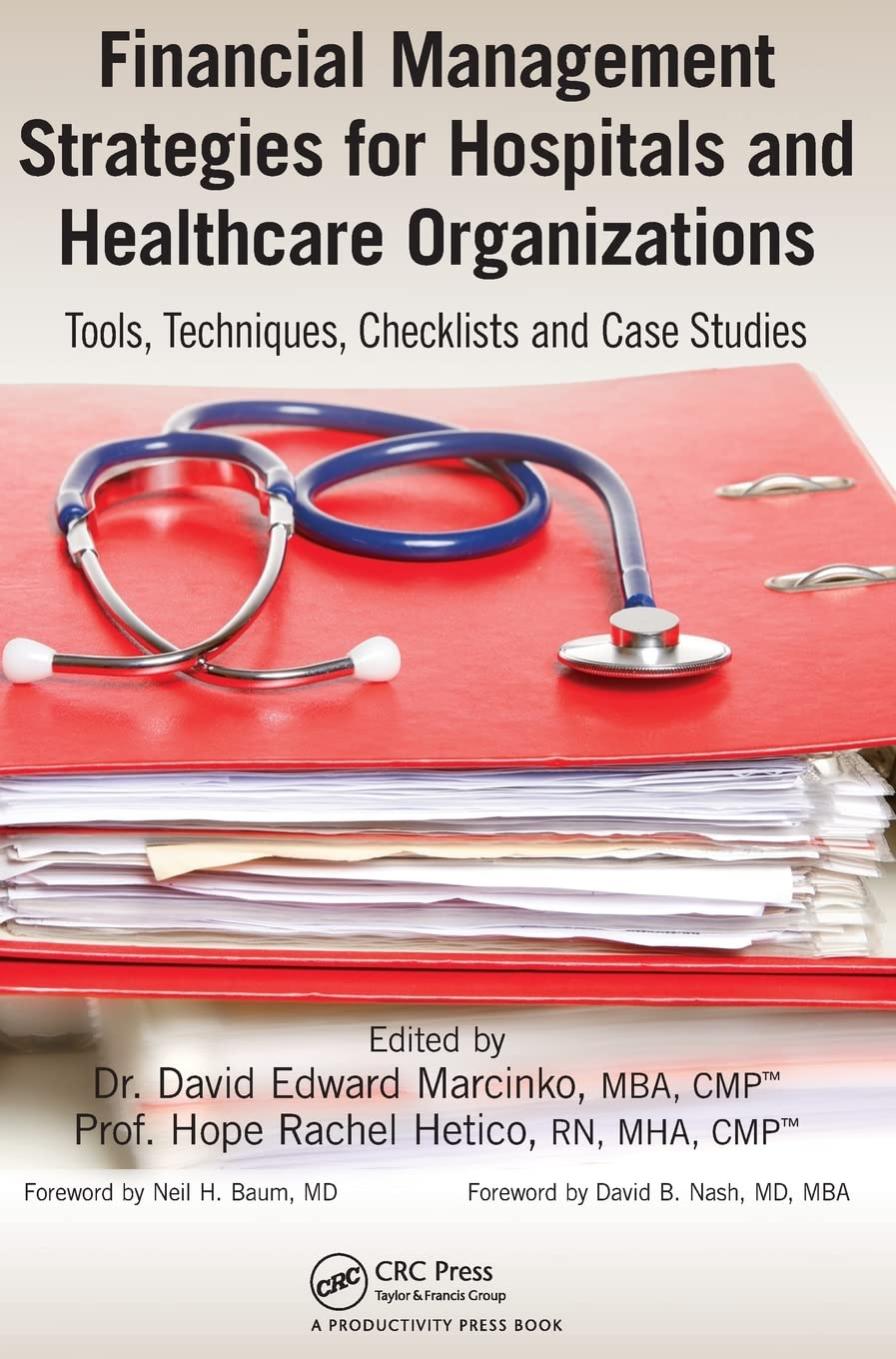
HOSPITALS: https://www.amazon.com/Financial-Management-Strategies-Healthcare-Organizations/dp/1466558733/ref=sr_1_3?ie=UTF8&qid=1380743521&sr=8-3&keywords=david+marcinko

***

HEALTHCARE: https://www.amazon.com/Hospitals-Healthcare-Organizations-Management-Operational/dp/1439879907/ref=sr_1_4?s=books&ie=UTF8&qid=1334193619&sr=1-4

***

They’re Coming for Your [Electronic] Records, Doc!

By Darrell Pruitt DDS

***

***

“Regardless whether you are a physician, dentist or optometrist, they are coming for your patients’ records, Doc.” Family Vision of Anderson Data Breach Leaks Social Security Numbers of Up to 62,631 Patients

On July 26, 2023, Family Vision of Anderson filed a notice of data breach with the Attorney General of Maine after a ransomware attack exposed confidential patient information to unauthorized access. In this notice, Family Vision explains that the incident resulted in an unauthorized party being able to access patients’ sensitive information, which includes their first and last names, dates of birth, Social Security numbers, driver’s license numbers, addresses, telephone numbers, email addresses, genders, health insurance information, and protected health information.

Upon completing its investigation, Family Vision began sending out data breach notification letters to all individuals whose information was affected by the recent data security incident.

JDSupra, July 28, 2023: https://www.jdsupra.com/legalnews/family-vision-of-anderson-data-breach-1534646/

MORE: https://medicalexecutivepost.com/2023/07/23/hacked-peachtree-orthopedics-medical-practice/

***

So what about cyber-insurance? … Not so fast.

“Twenty-one percent of organizations stated that ransomware is now specifically excluded from their policies, and those with cyber insurance saw changes in their last policy renewals: 74% saw increased premiums, 43% saw increased deductibles, 10% saw coverage benefits reduced.” From “Ransomware is being excluded from cyber insurance policies” 

-Security, May 24, 2023: https://www.securitymagazine.com/articles/99390-ransomware-is-being-excluded-from-cyber-insurancepolicies#:~:text=Twenty%2Done%20percent%20of%20organizations,10%25%20saw%20coverage%20benefits%20reduced.

So far, paper dental records still remain unaffected by ransomware, and that does not appear likely to change.

RELATED: https://medicalexecutivepost.com/2011/01/24/on-cyber-insurance-for-doctors/

***

COMMENTS APPRECIATED

Thank You

***

***

PODCAST: Why Doctors Select Alternative Insurance Payment Networks

DIRECT CONTRACTING

By Eric Bricker MD

***

***

***

COMMENTS APPRECIATED

Thank You

***

***

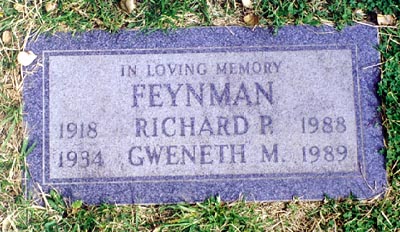
About the Richard Feynman Learning Technique

What it is – How it works?

[By Dr. David Edward Marcinko MBA M.Ed]

I’ve taught at the undergraduate, graduate, business and medical school levels. And, I’ve used and modified the Feynman technique at every level.

***

***

Learning From the Richard Feynman Technique

  1. Identify the subject. Write down everything you know about the topic.
  2. Teach it to a child. If you can teach a concept to a child, you’re way ahead of the game.
  3. Identify your knowledge gaps. This is the point where the real learning happens.
  4. Organize + simplify + Tell a story. Start to tell your story.

VIDEO: https://collegeinfogeek.com/feynman-technique/

Assessment: Some time the Feynman Technique even reminds me of the 70-20-10 Leadership Model.

LINK: https://medicalexecutivepost.com/2018/05/18/what-is-the-70-20-10-leadership-model/

Conclusion: Your thoughts are appreciated.

***

Risk Management, Liability Insurance, and Asset Protection Strategies for Doctors and Advisors: Best Practices from Leading Consultants and Certified Medical Planners™8Comprehensive Financial Planning Strategies for Doctors and Advisors: Best Practices from Leading Consultants and Certified Medical Planners™

***

Invite Dr. Marcinko

***

PODCAST: Doctors Divorcing from their Hospital Systems

By Eric Bricker MD

***

***

***

COMMENTS APPRECIATED

Thank You

***

***

Of Financial Certifications and Designations

The “Too Numerous to Count” Syndrome

[By Dr. David Edward Marcinko; MBA, CMP™]

Dr. MarcinkoThe following list of certifications enumerates only a partial exposure of the often nebulous field of “financial planning credentials” that presently exist in the market place. 

Good … and Not So

Some of these professional designations are awarded to individuals in the financial planning or financial “advisory” space after [some] diligent study and [often not so] arduous testing; others not so.

Disclaimer: I am a reformed Certified Financial Planner®, Series 7 [stock-broker], 63 and 65 license holder, and RIA representative who also held all applicable insurance and security licenses.

The individuals hold not only proper education [some only reguire a HS diploma or GED] as evidenced by the credential; the holders are often people of ethics [hopefully] and competence [usually]. But, not all credentials are the same. Some credentialing bodies have higher educational requirements that also require years of experience and a thorough background search. Others are awarded after only a few hours of study and, most all, remain non-fiduciary in nature.

Too Many To Count – Syndrome

In medicine, the abbreviation TNTC is well known. Sometime, I think this term is better applicable to the plethora of “credentials” in the financial services industry.

dhimc-book1

The Designation Line-up

A brief description for some of these financial designations [not degrees] follows:

  • AAMS – Accredited Asset Management Specialist
  • AEP – Accredited Estate Planner
  • AFC – Accredited Financial Counselor
  • AIF – Accredited Investment Fiduciary
  • AIFA – Accredited Investment Fiduciary Auditor
  • APP – Asset Protection Planner
  • BCA – Board Certified in Annuities
  • BCAA – Board Certified in Asset Allocation
  • BCE – Board Certified in Estate Planning
  • BCM – Board Certified in Mutual Funds
  • BCS – Board Certified in Securities
  • C3DWP – 3 Dimensional Wealth Practitioners
  • CAA – Certified Annuity Advisor
  • CAC – Certified Annuity Consultant
  • CAIA – Chartered Alternative Investment Analyst
  • CAM – Chartered Asset Manager
  • CAS – Chartered Annuity Specialist
  • CCPS – Certified College Planning Specialist
  • CDFA – Certified Divorce Financial Analyst
  • CEA – Certified Estate Advisor
  • CEBS – Certified Employee Benefit Specialist
  • CEP – Certified Estate Planner
  • CEPP – Chartered Estate Planning Practitioner
  • CFA – Chartered Financial Analyst
  • CFE – Certified Financial Educator
  • CFG – Certified Financial Gerontologist
  • CFP – Certified Financial Planner
  • CFPN – Christian Financial Professionals Network 
  • CFS – Certified Fund Specialist
  • CIC – Chartered Investment Counselor
  • CIMA – Certified Investment Analyst
  • CIMC – Certified Investment Management Consultant
  • CLTC – Certified in Long Term Care
  • CMFC – Chartered Mutual Fund Counselor
  • CMP – Certified Medical Planner™
  • CPC – Certified Pension Consultant
  • CPHQ – Certified Professional in Healthcare Quality
  • CPHQ – Certified Physician in Healthcare Quality
  • CPM – Chartered Portfolio Manager
  • CRA – Certified Retirement Administrator
  • CRC – Certified Retirement Counselor
  • CRFA – Certified Retirement Financial Advisor
  • CRP – Certified Risk Professional
  • CRPC – Chartered Retirement Planning Counselor
  • CRPS – Chartered Retirement Plan Specialist
  • CSA – Certified Senior Advisor
  • CSC – Certified Senior Consultant
  • CSFP – Certified Senior Financial Planner
  • CSS – Certified Senior Specialist
  • CTEP – Chartered Trust and Estate Planner
  • CTFA – Certified Trust and Financial Advisor
  • CWC – Certified Wealth Counselor
  • CWM – Chartered Wealth Manager
  • CWPP – Certified Wealth Preservation Planner
  • ECS –  Elder Care Specialist
  • FAD – financial Analyst Designate
  • FIC – Fraternal Insurance Counselor
  • FLMI – Fellow Life Management Institute
  • FRM – Financial Risk Manager
  • FSS – Financial Services Specialist
  • LIFA – Licensed Insurance Financial Analyst
  • MFP – Master Financial Professional
  • MSFS – Masters of Science Financial Service Degree
  • PFS – Personal Financial Specialist
  • PPC – Professional Plan Consultant
  • QFP – Qualified Financial Planner
  • REBC – Registered Employee Benefits Consultant
  • RFA – Registered Financial Associate
  • RFC – Registered Financial Consultant
  • RFG – Registered Financial Gerontologist
  • RFP – Registered Financial Planner
  • RFS – Registered Financial Specialist
  • RHU – Registered Health Underwriter
  • RPA – Registered Plans Associate
  • WMS – Wealth Management Specialist

This list is intentionally incomplete and it is not intended to be an endorsement of any credential by the Institute of Medical Business Advisors, Inc www.MedicalBusinessAdvisors.com

Alphabet Soup

Obviously, these “professional” designations spread across multiple industries. For example there is an alphabet of designations in the brokerage and securities field, another alphabet in the insurance industry and within the insurance industry, designations exist for those who meet face to face with prospective customers, another for those who provide client service and yet another in underwriting the various insurance products. Certainly when the designations are complied in a list such as that above, they present a dizzying array of apparent qualifications.

Assessment

While in general, education for the financial service [and medical] professional is good for everybody, there are certain things that you should do as proper due diligence to protect your family and your financial assets. What are they?

Disclaimer: I am also founder of the Certified Medical Planner™ online educational program in health economics for financial advisors and medical management consultants. www.CertifiedMedicalPlanner.org

Conclusion

Your thoughts and comments on this ME-P are appreciated. Feel free to review our top-left column, and top-right sidebar materials, links, URLs and related websites, too. Then, subscribe to the ME-P. It is fast, free and secure.

Link: http://feeds.feedburner.com/HealthcareFinancialsthePostForcxos

Speaker: If you need a moderator or speaker for an upcoming event, Dr. David E. Marcinko; MBA – Publisher-in-Chief of the Medical Executive-Post – is available for seminar or speaking engagements. Contact: MarcinkoAdvisors@msn.com

OUR OTHER PRINT BOOKS AND RELATED INFORMATION SOURCES:

LEXICONS: http://www.springerpub.com/Search/marcinko
PHYSICIANS: www.MedicalBusinessAdvisors.com
PRACTICES: www.BusinessofMedicalPractice.com
HOSPITALS: http://www.crcpress.com/product/isbn/9781466558731
CLINICS: http://www.crcpress.com/product/isbn/9781439879900
ADVISORS: www.CertifiedMedicalPlanner.org
BLOG: www.MedicalExecutivePost.com

Product DetailsProduct DetailsProduct Details

Product Details  Product Details

Comprehensive Financial Planning Strategies for Doctors and Advisors: Best Practices from Leading Consultants and Certified Medical Planners(TM)

***

FIDUCIARY ADVICE: For Physicians, Nurses and Medical Professionals

By Ann Miller RN MHA CPHQ CMP

***

***

INVESTMENT ADVISORY & PORTFOLIO OPINIONS, MEDICAL START-UPS, ESTABLISHED PRACTICE VALUATIONS, BUSINESS MANAGEMENT AND EXPERT WITNESS CONSULTING

“FROM CHAOS-TO-CALM”

If you’re looking at this ME-P tab, chances are you are fed up, burned out, seeking practice management techniques or a better work-life balance; looking for a new non-clinical career, thinking of finance, investing, retirement, or all of the above. Perhaps you are just looking to regain the joy and meaning in your medical or professional career?

And so, we can help. From informal coaching and mentoring – to second opinions and more formal business, legal and/or financial consulting. Regardless, the need is real.

No Worries! You may have come to the right place.

A Fiduciary At Your Service

START HERE: https://davidedwardmarcinko.com/coach/

Thank You

***

DAILY UPDATE: Markets Fall on Jerome Powell’s Testimony

By Staff Reporters

***

***

Wall Street’s major averages yesterday, on Wednesday, ended lower for a third straight session, weighed down by losses in growth stocks. And, sentiment was dampened by Federal Reserve Chair Jerome Powell’s largely hawkish reiteration that more rate hikes were likely.

Powell in his published opening remarks to his two-day testimony to Congress said that nearly all policymakers expect that interest rates would have to be raised further by the end of the year. The Fed chief then, in responses to questions from lawmakers, said that it may “make sense” for the central bank to raise rates at a “more moderate pace” going forward.

***

So, here is where the major benchmarks ended:

  • The S&P 500 Index was down 23.02 points (0.5%) at 4,365.69; the Dow Jones Industrial Average (DJIA) was down 102.35 (0.3%) at 33,951.52; the NASDAQ Composite was down 165.10 (1.2%) at 13,502.20.
  • The 10-year Treasury note yield (TNX) was little changed at 3.727%.
  • Cboe’s Volatility Index (VIX) was  was down 0.68 at 13.19.

Technology shares were among the weakest performers Wednesday, with the Philadelphia Semiconductor Index (SOX) dropping nearly 2% to near a two-week low. Regional banks were also lower.

Energy stocks led sector gainers as crude oil futures jumped nearly 2% to a two-week high on hopes for stronger demand from China. Volatility based on the VIX sank to its lowest level since January 2020.

***

ORDER: https://www.routledge.com/Risk-Management-Liability-Insurance-and-Asset-Protection-Strategies-for/Marcinko-Hetico/p/book/9781498725989

ORDER: https://www.routledge.com/Comprehensive-Financial-Planning-Strategies-for-Doctors-and-Advisors-Best/Marcinko-Hetico/p/book/9781482240283

***

***

COMMENTS APPRECIATED

Thank You

***

PODCAST: Top 10 Sales Healthcare Tactics

By Eric Bricker MD

***

***

***

***

COMMENTS APPRECIATED

Thank You

***

KAISER PERMANENTE: Acquires Geisinger Health

By Health Capital Consultants, LLC

***

***

On April 26, 2023, the California-based healthcare giant Kaiser Permanente announced a $5 billion “mega deal” to acquire Pennsylvania health system Geisinger Health. Kaiser also announced the formation of a new nonprofit health system, to be called Risant Health. Geisinger Health will be the first health system under the umbrella of Risant Health, although Kaiser aims to add approximately five more systems to the entity.

CITE: https://www.r2library.com/Resource

This Health Capital Topics article will review this mega deal and discuss what this transaction may mean for hospitals and health systems. (Read more…)

COMMENTS APPRECIATED

Thank You

***

***

MEDICAL MALPRACTICE : Update on Physician Rates of Liability

By Staff Reporters

***

***

About one in three physicians reported that they’ve been sued for medical malpractice during their career, a new study from the American Medical Association (AMA) found.

The study analyzed 14,000 responses from AMA Physician Practice Benchmark Surveys between 2016 and 2022. The longer a physician works in the industry, the higher their risk of getting a malpractice claim.

In summary, almost half of physicians over the age of 54 have been sued in their career, versus 9.5% of physicians younger than 40 years old. Specialty and gender influenced the likelihood of being sued. For example, general surgeons and ob-gyns, as well as men physicians, had the highest risk, per the AMA report.

***

This is exactly why we produced a major 800 page textbook for all our medical colleagues: Risk Management, Liability Insurance, and Asset Protection Strategies for Doctors and Advisors Best Practices from Leading Consultants and Certified Medical Planners

ORDER HERE: https://www.routledge.com/Risk-Management-Liability-Insurance-and-Asset-Protection-Strategies-for/Marcinko-Hetico/p/book/9781498725989

COMMENTS APPRECIATED

Thank You

***

***

CUSTOMIZABLE e-PODIATRY CONSENT FORMS

electronically CUSTOMIZABLE FOR EVERY SURGEON

***

http://www.ePodiatryConsentForms.com

CUSTOMIZABLE CMS & AGENCY FOR HEALTHCARE RESEARCH AND QUALITY STYLED PROTOCOLS, CHECKLISTS AND TEMPLATES

.… Specifically for Podiatrists ….   

e-Podiatry Consent Forms™ is an innovative new suite of software programs from the Institute of Medical Business Advisors [iMBA, Inc]. Our products solve your informed consent problems and enhance the education, discussion and documentation of the informed consent process for all podiatrists performing foot, ankle and leg reconstructive surgical procedures.

THE PROBLEM

All podiatrists are being pressured by the Centers for Medicare and Medicaid Services [CMS], the Joint Commission on Accreditation of Healthcare Organizations [JCAHO], liability carriers and private insurance payers to make their consent process more patient-friendly, informed and easily understood. And, the pressure to standardize and comply is great.

Most recently, based on the need to make healthcare even safer, the Agency for Healthcare Research and Quality (AHRQ) undertook a major study to identify patient safety issues and develop recommendations for “best practices”.

The AHRQ Evidence Report

The AHRQ report identified the challenge of addressing shortcomings such as missed, incomplete or not fully comprehended informed consent, as a significant patient safety issue and opportunity for improvement.

The authors of the AHRQ report hypothesized that better informed patients:

“are less likely to experience errors by acting as another layer of protection.”

And, the AHRQ study ranked a “more interactive informed consent process” among the top 11 practices supporting more widespread implementation; especially for surgical consent forms.

THE SOLUTION

Why Us: https://epodiatryconsentforms.com/why-us/

One answer to the modern risk-management problem of “informed consent interactivity” may be e-Podiatry Consent Forms™  We license two core interactive surgical products, and a reference library, with related concepts and products in development:

  • Forefoot, Mid-Foot and Simple Rear-Foot Version
  • Complex Rear-Foot, Ankle and Lower Leg Version
  • Comprehensive content library for extreme customization.

Each e-Podiatry Consent Forms™ CD-ROM [secure email delivery is now available] is increasingly trusted as the simple solution to standardized communications across the entire office-enterprise; from managing-risk, informing-patients and complying with modern regulatory requirements through enhanced patient-centric informed consent encounters.

Thus, by improving the consistency, details, documentation and effectiveness of the informed consent process, e-Podiatry Consent Forms™ equips all podiatric surgeons with the tools needed to augment quality standards, reduce litigation potential and improve patient outcomes and safety.

http://www.ePodiatryConsentForms.com

***

ORDER NOW: http://www.ePodiatryConsentForms.com

Phone: 770-448-0769

***

DENTAL DATA BREACH: Paper is Safer – It Always has Been!

By Darrell K. Pruitt DDS

***

***

PAPER IS SAFER – IT ALWAYS HAS BEEN!

“9M dental patient records published following LockBit ransomware attack”

By Duncan Riley for Silicone Angle, May 30th, 2023
READ: https://siliconangle.com/2023/05/30/9m-dental-patient-records-published-following-lockbit-ransomware-attack/

***

We knew digital dental records were never safe, even though our trusting patients had no idea. I started warning dentists about sudden public rejection of electronic dental records over a decade ago. In fact, that is why the Texas Dental Association suspended my membership.

It’s the start of the predictable end of digital records in most dental offices. The TDA and the ADA were repeatedly warned, but chose to say nothing about the comparative security of paper to dues-paying members. In fact, the American Dental Association marketed its own digital dental record system until a few years ago when over 500 dental practices using their system were hacked. Then the ADA quietly sold it.

“The records of nearly 9 million people have been published online following a LockBit ransomware attack on Managed Care of North America. The company, also known as MCNA Dental, is a leading provider of dental plans in the U.S., serving private employers, individuals and families through a range of Medicare, long-term and commercial plans. MCNA is also the largest dental insurer for government-sponsored Medicaid and Children’s Health Insurance Program, programs.”

The question is, what will this news do to huge, multi-location dental franchises such as Aspen Dental, Monarch, Medicare and other discount dentistry centers. Dentists have proven they can run successful, large practices using pegboards, ledger cards and bulky, loud metal filing cabinets without risking their patients’ privacy.

By the way, my practice is accepting new patients. Oh yea: TDA, you still owe me $200 in prorated dues for the remainder of the year you kicked me out. Idiots!

***

COMMENTS APPRECIATED

Thank You

***

***

ASPEN DENTAL: Cyber Attack with Data Breach

By Darrell Pruitt DDS

***

***

Aspen Dental has been hit by a cyber attack.  Aspen has over a thousand dental offices across the nation, and even though their official website says there are no signs of patient information being compromised, the American Dental Association is calling it a “breach,” since the attack involved ransomware.

If Aspen Practices each maintain dental records on 10,000 patients, and there are over a thousand Aspen locations, that would mean more than 10 million patients’ records were potentially breached. Texas has 58 Aspen locations – second only to Florida which has 124. (There are three Aspen locations near me in the Dallas-Fort Worth metroplex).

Last of all, history has shown that businesses which suffer one ransomware attack are likely to be targeted a second or even third time. It never ends. And then there are the HIPAA violations and remediation … This is bad for Aspen Dental.

Related: https://www.pact-one.com/2023/05/aspen-dental-cyber-attack-1000-dental-practices-affected-nationwide/

***

COMMENTS APPRECIATED

Thank You

***

***

Musings on a Famous Portfolio Asset Allocation Study

Some Critics Claim Brinson, Hood, and Beebower Conclusions Wrong

[By Dr. David Edward Marcinko MBA CMP™]

http://www.CertifiedMedicalPlanner.org

[Publisher-in-Chief]

Frequently, we hear the axiom that asset allocation is the most important investment decision, explaining 93.6% of portfolio returns. The presumption has been that once the risk tolerance and time horizon have been established, investing is simply a matter of implementing a fixed mix of stocks, bonds, and cash using mutual funds selected for this purpose. This axiom is based on a famous study by Brinson, Hood, and Beebower (BHB) published in the Financial Analysts Journal in July/August 1986. It is the stuff of most modern business school and graduate students in economics and finance.

Enter the Critics

One critic claims that BHB’s conclusions and the interpretation of their conclusions are wrong, stating that because of several methodological problems, BHB needed to make certain assumptions for their analysis to go forward. They assumed that the average asset-class weights for the 10-year period studied are the same as the actual normal policy weights; that investments in foreign stocks, real estate, private placements, and venture capital can be proxied by a mix of stocks, bonds, and cash; and that the benchmarks for stocks, bonds, and cash against which fund performance was measured are appropriate. The author believes that each of these assumptions can lead to a faulty measurement of success or failure at market timing and stock selection.

The Jahnke Study

William Jahnke claims that BHB erred in their focus on explaining the variation of quarterly portfolio returns rather than portfolio returns over the 10-year period studied. According to the study, asset allocation policy explains only a small fraction of the range of 10-year portfolio returns earned by the pension funds reported in the study. The author concluded that this discrepancy is caused by the effect of compounding returns. He adds that BHB were wrong to use variance of quarterly returns rather than the standard deviation. Use of standard deviation would reduce the often cited 93.6% to about 79%. Moreover, BHB did not consider the cost of investing, such as operating expenses, management fees, brokerage commissions, and other trading costs, which are more significant for individual investors than for the pension plans studied. Jahnke claims that excessive costs can reduce wealth accumulation by 50%.

Note: (“The Asset Allocation Hoax,” William W. Jahnke, Journal of Financial Planning, February 1997, Institute of Certified Financial Planners [303] 759-4900).

Assessment

Finally, the author takes issue with establishing long-term fixed asset class weights. Asset allocation should be a dynamic process. Higher equity return expectations should in turn produce larger equity allocations, other things being equal.

Certified Medical Planner

Conclusion

Are doctors different than the average investor noted in this essay?

Your thoughts and comments on this ME-P are appreciated. Feel free to review our top-left column, and top-right sidebar materials, links, URLs and related websites, too. Then, subscribe to the ME-P. It is fast, free and secure.

Link: http://feeds.feedburner.com/HealthcareFinancialsthePostForcxos

Speaker: If you need a moderator or speaker for an upcoming event, Dr. David E. Marcinko; MBA – Publisher-in-Chief of the Medical Executive-Post – is available for seminar or speaking engagements. Contact: MarcinkoAdvisors@msn.com

OUR OTHER PRINT BOOKS AND RELATED INFORMATION SOURCES:

Product Details

  Risk Management, Liability Insurance, and Asset Protection Strategies for Doctors and Advisors: Best Practices from Leading Consultants and Certified Medical Planners™8Comprehensive Financial Planning Strategies for Doctors and Advisors: Best Practices from Leading Consultants and Certified Medical Planners™

Invite Dr. Marcinko

***

FORM ADV is a Must Read for Selecting a Financial “Advisor”

Form ADV – The Essential Document

Dr. David Edward Marcinko MBA - WEGO Health Awards Nominee

By Dr. David Edward Marcinko MBA CMP©

SPONSOR: http://www.CertifiedMedicalPlanner.org

CMP logo

Under law, financial advisors and planners must provide you with a form ADV Part II or a brochure that covers the same information.  Even if a brochure is provided, ask for the ADV.  While it is acceptable, even desirable, for the brochure to be easier to read than the ADV, the ADV is what is filed with the appropriate state or SEC.  If the brochure reads more like a slick sales brochure or the information in the brochure glosses over the items on the ADV to a high degree, one should consider eliminating the advisor from consideration.

FIDUCIARY: https://medicalexecutivepost.com/2023/03/11/recast-an-interview-with-fiduciary-bennett-aikin-aif-2/

Registering with a state or SEC gives an advisor a fiduciary duty to the client.  This is a high standard under the law. 

There are several types of advisors who are exempt from registering and filing an ADV. 

First, there are registered representatives (brokers).  Brokers have a fiduciary responsibility to their firms regardless of whether they are statutory employees or independent contractors. Not the client.

Second are attorneys and accountants whose advice is “incidental” to their legal or accounting practices. But, why would one hire someone whose advice is “incidental” to his primary profession?  A top-notch advisor is a full-time professional and should be registered.  One should insist that their advisor be registered.

CFP: https://medicalexecutivepost.com/2016/11/18/why-we-cannot-assume-cfp-equals-fiduciary/

The ADV will describe the advisor’s background and employment history, including any prior disciplinary issues.  It will describe the ownership of the firm and outline how the firm and advisor are compensated.  Any referral arrangements will be described.  If an advisor has an interest in any of the investments to be recommended, it must be listed as well as the fee schedule.  There is also a description of the types of investments recommended and the types of research information that is used.

ASSESSMENT: A review of the ADV should result in an alignment of what the advisor said during the interview and what is filed with the regulators.  If there is a clear discrepancy, choose another advisor.  If it is unclear, discuss the issue with the advisor.

Your thoughts and comments are appreciated.

Form ADV | Moneygrow.com | Registered Investment Advisor ...

SEC Headquarters
100 F Street, NE
Washington, DC 20549
(202) 942-8088

TEXTBOOK ORDER: ORDER Textbook: https://www.amazon.com/Comprehensive-Financial-Planning-Strategies-Advisors/dp/1482240289/ref=sr_1_1?ie=UTF8&qid=1418580820&sr=8-1&keywords=david+marcinko

Comprehensive Financial Planning Strategies for Doctors and Advisors: Best Practices from Leading Consultants and Certified Medical Planners™

SECOND OPINIONS: https://medicalexecutivepost.com/schedule-a-consultation/

INVITE DR. MARCINKO: https://medicalexecutivepost.com/dr-david-marcinkos-bookings/

THANK YOU

***

The Emerging Role of CHIEF MARKETING STRATEGY IMPACT OFFICER

Common in Industry – Still Not so Much in Academe’

By Dr. David Edward Marcinko MBA

Invite Dr. Marcinko

http://www.CertifiedMedicalPlanner.org

A Chief Strategy Officer [CSO], or chief strategist, is the senior  executive responsible for assisting the Chief Executive Officer [CEO] with developing, communicating, executing, and sustaining corporate strategic initiatives. Some companies give the title Chief Business Officer [CBO] to its’ senior executives who are holding the top strategy role.

My opinion in academia

A few decades ago, the role of university Chief Strategy Officer [CSO] did not exist or marginally existed as a mid-level project manager in the communications department. It may have consisted of a formal background in teaching and education exhibited by the BA and/or B.Ed degrees or HR certification.

A first generation didactic CSO 1.0; if you will.

Then, as academic competition and granularity increased along with new technology information exchange, the need for deeper subject matter expertise arose. Next – generation business, under/graduate LAs, HUMANITIES, modern culture, psychology / sociology and STEM expertise arose to create and explore new – real or perceived – strategic advantages for university public relations in the form of the M.Ed, MA or MBA degrees in marketing, advertising, sales or competitive analysis.

THINK: Michal Porter PhD, known for his theories on economics, business strategy, and social causes. He is the Bishop William Lawrence University Professor at Harvard Business School, and a social impact consultant. He is credited for creating Porter’s five forces analysis, which is instrumental in business strategy development today.

Also, consider traditional S.W.O.T analysis, as well. SWOT analysis (alternatively SWOT matrix) is an initialism for strengths, weaknesses, opportunities, and threats—and is a structured planning method that evaluates those four elements of a project or business venture. A SWOT analysis can be carried out for a product, place, industry, university or person.

So, let’s call this a second generation expert CSO 2.0

However, as the complex business of running any college or university is ever changing, the ideal profile of CSO is still morphing to face modern business and management challenges like: physical and cyber security; culture and organizational behavior; gender differences, racial disparities and workplace violence issues; enrollment and international expansion; corporatization and competition; online and e-learning initiatives; with accounting, financial and economic pressures, etc.

Consequently, BODs are now seeking and embracing a new kind of CSO with advanced PhD or DBA degrees; and college and university experience. In fact, the role of contemporary CSO is emerging and becoming closer to that of an experienced corporate Chief Executive Officer, than the mere educator, academician or manager of the past.

Definitions: https://www.amazon.com/Dictionary-Health-Economics-Finance-Marcinko/dp/0826102549/ref=sr_1_6?ie=UTF8&s=books&qid=1254413315&sr=1-6

Universities and colleges  today

Insightful academic search committees are now seeking a new type of modern CSO who can build university and college rankings, maintain relationships with stakeholders, and project a positive image as a “celebrity university”.

This means shepherding students and attracting qualified youth, and faculty, for matriculation as areas of particular importance. This new entrepreneurial CSO must focus on business management, economics and finance – operational, marketing, advertising and consultative sales strategies to attract a qualified, protean and diverse student / professional staff that sets it apart from the competition; as well as more meaningfully interacting within [research and development], and without the university [outreach].

Accordingly, this  modern CSO must be a combination and protean surrogate for the university  CEO / CFO / CMO / COO / CAO and leader – NOT just a teacher or manager – who will help run it like a matrix business unit that makes a profit to generate needed capital and ROI.

Multiple lines of business – tuition; certifications; worker-placement; grants and endowments; CEUs and non-degree program fees; as well as for-profit R&D, publications, patents, copyrights and trade-marks; and applied business incubators – must ALL be created and managed as a diversified portfolio. S/he must lead in the implementation, planning and operations of systemic community responsive programs, as well as policy interventions requiring advocacy, political action and public analysis.

I prefer the moniker – CSO 3.0

Assessment

This academic CSO 3.0 must be a change-agent, crisis manager, corporate strategist, Machiavellian devotee and/or seasoned C-suite executive with the required inter – disciplinary skills outlined for this important position.

Above all – the modern CSO 3.0 must be pro-active, flexible and market responsive. This is not the place for tenure tracking.

 ***

MEDICAL PRACTICE AND HOSPITAL OPERATIONS, STRATEGIC DEVELOPMENT, ORGANIZATIONAL BEHAVIOR AND FINANCIAL MANAGEMENT COMPANION TEXTBOOK SET

Product DetailsProduct DetailsProduct Details

[Foreword Dr. Phillips MD JD MBA LLM] *** [Foreword Dr. Nash MD MBA FACP]  [Foreword Dr. Hashem MD PhD] *** [Foreword Dr. Silva MD MBA]

Conclusion

Your thoughts and comments on this ME-P are appreciated. Feel free to review our top-left column, and top-right sidebar materials, links, URLs and related websites, too. Then, subscribe to the ME-P. It is fast, free and secure.

Speaker: If you need a moderator or speaker for an upcoming event, Dr. David E. Marcinko; MBA – Publisher-in-Chief of the Medical Executive-Post – is available for seminar or speaking engagements.

imageproxy5

***

OPINIONS: Stock Markets VERSUS Economic Vision?

What is Your Opinion?

By Staff Reporters

***

***

  • Markets: Stocks ran on a treadmill yesterday as investors waited for the high-stakes inflation report to drop this morning. Major cryptocurrencies have emerged as the biggest winners of 2023 so far, and Bitcoin topped $30,000 for the first time in 10 months.
  • Dueling economic visions: Depending on who you ask, the economy is doing just fine…or it’s about to slow down dramatically. Treasury Secretary Janet Yellen said yesterday that “the US economy is obviously performing exceptionally well.” But that’s not obvious at all to the IMF, which predicted weak global growth this year and gave its gloomiest five-year economic forecast since 1990.
  • CITE: https://www.r2library.com/Resource/Title/0826102549

***

COMMENTS APPRECIATED

Thank You

***

ORDER: https://www.routledge.com/Comprehensive-Financial-Planning-Strategies-for-Doctors-and-Advisors-Best/Marcinko-Hetico/p/book/9781482240283

***

DAILY UPDATE: Charles Schwab and the Major Market Indices

By Staff Reporters

***

***

Analysts at Morgan Stanley downgraded Charles Schwab Corp (NYSE: SCHW) on Tuesday, citing concerns over cash sorting and regulatory changes. But, Schwab CEO Walt Bettinger recently said that the company’s banking unit had enough liquidity to cover if 100% of its bank deposits ran off without having to sell a single security — Morgan Stanley says otherwise. Schwab’s recent performance has not been up to Morgan Stanley’s expectations, with customers moving cash out of sweep accounts into money market funds at a rate twice that which the bank had been modeling.

CITE: https://www.r2library.com/Resource/Title/082610254

***

Here’s how the major indexes performed Thursday.

  • The S&P 500® Index rose 23 points (0.57%) to 4050.84; the Dow Jones industrial average was up 141 points (0.43%) at 32859.03; the NASDAQ Composite was up 87 points (0.73%) at 12013.47.
  • The 10-year Treasury yield slipped 2 basis points to 3.555%.
  • CBOE’s Volatility Index was little changed at 19.14.

***

ORDER: https://www.routledge.com/Comprehensive-Financial-Planning-Strategies-for-Doctors-and-Advisors-Best/Marcinko-Hetico/p/book/9781482240283

***

COMMENTS APPRECIATED

Thank You

***

PODCAST: Doctor MEDICAL Specialty Rankings

The R.O.A.D. to Happiness?

By Eric Bricker MD

***

***
COMMENTS APPRECIATED

Thank You

***

***

ORDER: https://www.amazon.com/Business-Medical-Practice-Transformational-Doctors/dp/0826105750/ref=sr_1_9?ie=UTF8&qid=1448163039&sr=8-9&keywords=david+marcinko

CITE: https://www.r2library.com/Resource/Title/082610254

***

CIGNA Healthcare Truth

By Darrell K. Pruitt DDS

QUOTE: “Employees are the biggest asset of any company, so it’s more important than ever to focus on staff well-being during uncertain times.”

Jason SadlerPresident, International Health

Cigna Healthcare

QUERIES: So, Jason Sadler, how do you think Cigna’s dentists feel about Cigna?

Do you even dare to publicly respond to that question? … I didn’t think so.

COMMENTS APPRECIATED

Thank You

***

ORDER: https://www.amazon.com/Dictionary-Health-Insurance-Managed-Care/dp/0826149944/ref=sr_1_4?ie=UTF8&s=books&qid=1275315485&sr=1-4

***

CIGNA Healthcare Truth

By Darrell K. Pruitt DDS

QUOTE: “Employees are the biggest asset of any company, so it’s more important than ever to focus on staff well-being during uncertain times.”

Jason SadlerPresident, International Health

Cigna Healthcare

QUERIES: So, Jason Sadler, how do you think Cigna’s dentists feel about Cigna?

Do you even dare to publicly respond to that question? … I didn’t think so.

COMMENTS APPRECIATED

Thank You

***

ORDER: https://www.amazon.com/Dictionary-Health-Insurance-Managed-Care/dp/0826149944/ref=sr_1_4?ie=UTF8&s=books&qid=1275315485&sr=1-4

***

DIGITAL HEALTH: 8 Ways to Impress Your Doctor

By Bertalan Meskó, MD PhD
The Medical Futurist

***

READ HERE: https://tinyurl.com/2hat4fun

COMMENTS APPRECIATED

Thank You

***

ORDER: https://www.amazon.com/Dictionary-Health-Information-Technology-Security/dp/0826149952/ref=sr_1_5?ie=UTF8&s=books&qid=1254413315&sr=1-5

***

NAPA Update for Inova Loudoun Hospital

***

By Anonymous Letter Leaker

***

DAVE – This is what happens when private equity takes over anesthesiologists and other medical services. Private equity has squeezed so much out of physician lives and their practices, that practice has become intolerable. They are all so burnt out that the physician anesthesiologist must now strike out against their own private equity group owners (NAPA). The trickle-down effect becomes with the hospital now caught in the middle, contracted with a private equity group which  provides anesthesia, but they have no anesthesiologist employees.

Where does patient care survive?

***

February 2023
Colleagues,

As you may be aware, Inova contracts with North American Partners in Anesthesia (NAPA) to provide anesthesia services at Inova Loudoun Hospital. This week, we received notice that our anesthesiologists at Inova Loudoun Hospital have submitted 90-day notice letters of resignation to NAPA. In the spirit of full transparency, we are sharing this news with our physicians.

Here’s what you need to know:

Although we are monitoring this situation, Inova is not a participant in discussions. They are held solely between the anesthesiologists and NAPA. We are actively working to ensure minimal disruptions to current workflows at our care sites.      Our anesthesiologists are among the best in the country, and we fully expect that our team members will continue to provide world-class healthcare to the communities we are privileged to serve.

Per our care mandate, people are at the center of everything we do, and we take any situation that affects the work environment of our team members very seriously. We will continue to communicate with NAPA and keep you apprised of pertinent developments.

If you have questions about this situation, please contact Loren Rufino, Senior Vice President, Perioperative Services.

Thank you,

John J. Moynihan, MD, FACS               
President, Surgery Service Line          

Loren A. Rufino        
SVP, Perioperative Services   
Administrator Surgery Service Line

Paula R. Graling, DNP, RN, CNOR, NEA-C,
FAAN
VP, Nursing, Surgery Service Line

***
ME-P COMMENTS APPRECIATED
 Thank You

ORDER: https://www.amazon.com/Business-Medical-Practice-Transformational-Doctors/dp/0826105750/ref=sr_1_9?ie=UTF8&qid=1448163039&sr=8-9&keywords=david+marcinko

***

CUSTOMIZABLE e-PODIATRY CONSENT FORMS

electronically CUSTOMIZABLE FOR EVERY SURGEON

***

http://www.ePodiatryConsentForms.com

CUSTOMIZABLE CMS & AGENCY FOR HEALTHCARE RESEARCH AND QUALITY STYLED PROTOCOLS, CHECKLISTS AND TEMPLATES

.… Specifically for Podiatrists ….   

e-Podiatry Consent Forms™ is an innovative new suite of software programs from the Institute of Medical Business Advisors [iMBA, Inc]. Our products solve your informed consent problems and enhance the education, discussion and documentation of the informed consent process for all podiatrists performing foot, ankle and leg reconstructive surgical procedures.

THE PROBLEM

All podiatrists are being pressured by the Centers for Medicare and Medicaid Services [CMS], the Joint Commission on Accreditation of Healthcare Organizations [JCAHO], liability carriers and private insurance payers to make their consent process more patient-friendly, informed and easily understood. And, the pressure to standardize and comply is great.

Most recently, based on the need to make healthcare even safer, the Agency for Healthcare Research and Quality (AHRQ) undertook a major study to identify patient safety issues and develop recommendations for “best practices”.

The AHRQ Evidence Report

The AHRQ report identified the challenge of addressing shortcomings such as missed, incomplete or not fully comprehended informed consent, as a significant patient safety issue and opportunity for improvement.

The authors of the AHRQ report hypothesized that better informed patients:

“are less likely to experience errors by acting as another layer of protection.”

And, the AHRQ study ranked a “more interactive informed consent process” among the top 11 practices supporting more widespread implementation; especially for surgical consent forms.

THE SOLUTION

Why Us: https://epodiatryconsentforms.com/why-us/

One answer to the modern risk-management problem of “informed consent interactivity” may be e-Podiatry Consent Forms™  We license two core interactive surgical products, and a reference library, with related concepts and products in development:

  • Forefoot, Mid-Foot and Simple Rear-Foot Version
  • Complex Rear-Foot, Ankle and Lower Leg Version
  • Comprehensive content library for extreme customization.

Each e-Podiatry Consent Forms™ CD-ROM [secure email delivery is now available] is increasingly trusted as the simple solution to standardized communications across the entire office-enterprise; from managing-risk, informing-patients and complying with modern regulatory requirements through enhanced patient-centric informed consent encounters.

Thus, by improving the consistency, details, documentation and effectiveness of the informed consent process, e-Podiatry Consent Forms™ equips all podiatric surgeons with the tools needed to augment quality standards, reduce litigation potential and improve patient outcomes and safety.

http://www.ePodiatryConsentForms.com

***

ORDER NOW: http://www.ePodiatryConsentForms.com

Phone: 770-448-0769

***

Musings on a Famous Portfolio Asset Allocation Study

Some Critics Claim Brinson, Hood, and Beebower Conclusions Wrong

[By Dr. David Edward Marcinko MBA CMP™]

http://www.CertifiedMedicalPlanner.org

[Publisher-in-Chief]

Frequently, we hear the axiom that asset allocation is the most important investment decision, explaining 93.6% of portfolio returns. The presumption has been that once the risk tolerance and time horizon have been established, investing is simply a matter of implementing a fixed mix of stocks, bonds, and cash using mutual funds selected for this purpose. This axiom is based on a famous study by Brinson, Hood, and Beebower (BHB) published in the Financial Analysts Journal in July/August 1986. It is the stuff of most modern business school and graduate students in economics and finance.

Enter the Critics

One critic claims that BHB’s conclusions and the interpretation of their conclusions are wrong, stating that because of several methodological problems, BHB needed to make certain assumptions for their analysis to go forward. They assumed that the average asset-class weights for the 10-year period studied are the same as the actual normal policy weights; that investments in foreign stocks, real estate, private placements, and venture capital can be proxied by a mix of stocks, bonds, and cash; and that the benchmarks for stocks, bonds, and cash against which fund performance was measured are appropriate. The author believes that each of these assumptions can lead to a faulty measurement of success or failure at market timing and stock selection.

The Jahnke Study

William Jahnke claims that BHB erred in their focus on explaining the variation of quarterly portfolio returns rather than portfolio returns over the 10-year period studied. According to the study, asset allocation policy explains only a small fraction of the range of 10-year portfolio returns earned by the pension funds reported in the study. The author concluded that this discrepancy is caused by the effect of compounding returns. He adds that BHB were wrong to use variance of quarterly returns rather than the standard deviation. Use of standard deviation would reduce the often cited 93.6% to about 79%. Moreover, BHB did not consider the cost of investing, such as operating expenses, management fees, brokerage commissions, and other trading costs, which are more significant for individual investors than for the pension plans studied. Jahnke claims that excessive costs can reduce wealth accumulation by 50%.

Note: (“The Asset Allocation Hoax,” William W. Jahnke, Journal of Financial Planning, February 1997, Institute of Certified Financial Planners [303] 759-4900).

Assessment

Finally, the author takes issue with establishing long-term fixed asset class weights. Asset allocation should be a dynamic process. Higher equity return expectations should in turn produce larger equity allocations, other things being equal.

Certified Medical Planner

Conclusion

Are doctors different than the average investor noted in this essay?

Your thoughts and comments on this ME-P are appreciated. Feel free to review our top-left column, and top-right sidebar materials, links, URLs and related websites, too. Then, subscribe to the ME-P. It is fast, free and secure.

Link: http://feeds.feedburner.com/HealthcareFinancialsthePostForcxos

Speaker: If you need a moderator or speaker for an upcoming event, Dr. David E. Marcinko; MBA – Publisher-in-Chief of the Medical Executive-Post – is available for seminar or speaking engagements. Contact: MarcinkoAdvisors@msn.com

OUR OTHER PRINT BOOKS AND RELATED INFORMATION SOURCES:

Product Details

  Risk Management, Liability Insurance, and Asset Protection Strategies for Doctors and Advisors: Best Practices from Leading Consultants and Certified Medical Planners™8Comprehensive Financial Planning Strategies for Doctors and Advisors: Best Practices from Leading Consultants and Certified Medical Planners™

Invite Dr. Marcinko

***

PODCAST: How Doctors are Really Paid?

Learn the Incentives in Physician Compensation

BY ERIC BRICKER MD

RAND and Harvard University Researchers Recently Published a Study in the Journal of the American Medical Association Examining How Doctors are Paid by Hospital System-Owned Practices. The Study Found that only 9% of Primary Care Physician Compensation was Based on Value (Quality and Cost-Effectiveness) and only 5.3% of Specialist Compensation was Based on Value.

The Study Concluded: “The results of this cross-sectional study suggest that PCPs and specialists despite receiving value-based reimbursement incentives from payers, the compensation of health system PCPs and specialists was dominated by volume-based incentives designed to maximize health systems revenue.”

***

***

MORE: https://medicalexecutivepost.com/2020/09/19/what-doctors-must-do-to-file-an-aetna-claim-to-get-paid/?preview_id=237387&preview_nonce=44f9028974&preview=true

RELATED: https://medicalexecutivepost.com/2008/09/12/how-doctors-get-paid/

***

BUSINESS MEDICINE: https://www.amazon.com/Business-Medical-Practice-Transformational-Doctors/dp/0826105750/ref=sr_1_9?ie=UTF8&qid=1448163039&sr=8-9&keywords=david+marcinko

***

HOSPITALS: https://www.amazon.com/Financial-Management-Strategies-Healthcare-Organizations/dp/1466558733/ref=sr_1_3?ie=UTF8&qid=1380743521&sr=8-3&keywords=david+marcinko

****

COMMENTS APPRECIATED

Subscribe to the Medical Executive-Post

Thank You

***

PODCAST: Hospital Money Problems 2023

INFLATION AND COMPETITION

By Eric Bricker MD

***

***

ORDER: https://www.amazon.com/Hospitals-Healthcare-Organizations-Management-Operational/dp/1439879907/ref=sr_1_4?s=books&ie=UTF8&qid=1334193619&sr=1-4

***

ORDER: https://www.amazon.com/Financial-Management-Strategies-Healthcare-Organizations/dp/1466558733/ref=sr_1_3?ie=UTF8&qid=1380743521&sr=8-3&keywords=david+marcinko

COMMENTS APPRECIATED

Thank You

***

Alphabet Soup: Financial Designations & Certificates

Join Our Mailing List 

financial-designationsjuly

AUTHOR: Dr. David Edward Marcinko; MBA, CMP™

POSITION: Publisher-in-Chief

dem26

TOPIC: Financial Designations and Certifications [Alphabet Soup of Industry Obfuscation and Self-Promotion, or Real Gravitas – You Decide?]

EXCERPT: “Until recently, most financial advisors were regulated by the NASD, the National Association of Securities Dealers. Now the Financial Industry Regulatory Authority or FINRA is the largest non-governmental regulator for all securities firms doing business in the United States. It is a self-regulatory agency comprised of the nation’s brokerage firms. Upon completion of a required exam the FINRA will issue a variety of licenses. The most common are the Series 6, 7, and 24.

The Series 6 is essentially a license to sell packaged products, namely mutual funds. It is most commonly held by insurance agents and bank representatives. It is considered a very easy test. Holding such a license allows the holder to collect commission income through its member firm.

The Series 7 exam is a bit more difficult and includes issues relating to individual securities such as stocks, bonds and limited partnership interests. The pass rate is lower than the Series 6. The probable culprit is the extensive questioning on margin and options, topics most are unfamiliar with prior to entering the securities business.

The Series 24 covers issues of compliance and supervision and is required of Branch Managers of brokerage firms. All registered representatives (the proper name for a broker) must be supervised by someone with a Series 24, also known as a principal’s license.

Checking the background of a registered representative, a branch manager or a member firm is easily done through NASD and/or FINRA Regulation, Inc. NASDR/FINRA maintains the Central Registration Depository (CRD). The CRD can be checked for a description of a disclosed event by phone or by Internet. One should request information on an advisor’s firm as well as the individual. A reputable advisor at a disreputable firm has its own set of potentially dangerous implications.

Regardless of the above, these tests produce licenses to sell financial products. They are not educational achievements. There is virtually no academic barrier to entry for them. Stock-brokers today – hate the term – and prefer “financial advisor”; yet the term has no real meaning other than as a sales license.

Some are college graduates, and beyond; while some other experts argue that too many are not!”

Hence, the need to “raise the bar to fiduciary accountability with deep knowledge of healthcare modernity.”

For more info: http://www.CertifiedMedicalPlanner.org

READ JULY HERE: financial-designationsjuly

Conclusion

Your thoughts and comments on this ME-P are appreciated. Feel free to review our top-left column, and top-right sidebar materials, links, URLs and related websites, too. Then, subscribe to the ME-P. It is fast, free and secure.

Speaker: If you need a moderator or speaker for an upcoming event, Dr. David E. Marcinko; MBA – Publisher-in-Chief of the Medical Executive-Post – is available for seminar or speaking engagements. Contact: MarcinkoAdvisors@msn.com

OUR OTHER PRINT BOOKS AND RELATED INFORMATION SOURCES:

Product Details  Product Details