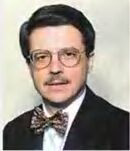
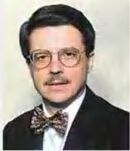
Dr. Somnath Basu on Investing

Join Our Mailing List

He Writes for the Medical Executive-Post

By Ann Miller; RN, MHA

[Executive-Director]

Dr. Somnath Basu is no stranger to the ME-P, or the financial planning community. He is a Professor of Finance at California Lutheran University and the Director of its California Institute of Finance.

Academic Background

Dr Basu earned his BA in Economics, University of Delhi, MBA (Finance), Marquette University and a PhD (Finance), University of Arizona. He is well published and is an award winning teacher. He has significant consulting experience with US Fortune 100 companies, advising institutional money managers and in developing proprietary finance and planning software. He serves on various Boards and committees including the CFP (chaired the Model Curriculum Revision Committee) Board of Standards and the Financial Planning Association.

Basu’s New Book

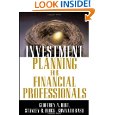
His new book, co-authored with Professors’ Block and Hirt, Investment Planning for Financial Professionals is available now, published by McGraw Hill, in May 2006.

Link: http://www.amazon.com/Investment-Planning-Geoffrey-Hirt/dp/0071437215/ref=sr_1_1?ie=UTF8&s=books&qid=1265918999&sr=1-1

Additional essays by Dr. Basu can be viewed at: http://blog.fpaforfinancialplanning.org/author/somnathbasufpa/

He also writers a column for the Journal of Financial Services Professionals. He can be reached at:

Contact Dr. Somnath Basu
Director – California Institute of Finance
Cell: 805 405 4448
Work: 805 493 3980
http://www.clunet.edu/cif

Conclusion

Your thoughts and comments on this ME-P are appreciated. Feel free to review our top-left column, and top-right sidebar materials, links, URLs and related websites, too. Then, subscribe to the ME-P. It is fast, free and secure.

Speaker: If you need a moderator or speaker for an upcoming event, Dr. David E. Marcinko; MBA – Publisher-in-Chief of the Medical Executive-Post – is available for seminar or speaking engagements. Contact: MarcinkoAdvisors@msn.com

OUR OTHER PRINT BOOKS AND RELATED INFORMATION SOURCES:

Comprehensive Financial Planning Strategies for Doctors and Advisors: Best Practices from Leading Consultants and Certified Medical Planners(TM)

Understanding the New “Mixed” Economy

Musings of an Informed Thought-Leader

By Somnath Basu PhD, MBA

Brief Excerpt

The recent debacle in the financial markets has opened up a plethora of issues that require serious attention from all market participants. Perhaps the most serious concern is the emergence of a “mixed” economy where both “public” and government-owned enterprises will coexist with “private” enterprises.

Review of Past Performance

Unfortunately, the historical performances of such economies have been fairly dismal. The debacle is also bound to usher in additional regulation of financial markets. The new regulations are likely to focus on ways to control the possibilities of similar failures in the future.

Assessment

However, the structure of regulation should not be constructed on the basis of how the markets failed the people but instead on how people failed the market. The ramifications of the debacle require our attention and understanding, especially the possibilities of the existence of a regime of both high inflation and high market volatility. 

White Paper Link Here:  The New Economy

Conclusion

And so, your thoughts and comments on this ME-P are appreciated. Feel free to review our top-left column, and top-right sidebar materials, links, URLs and related websites, too. Then, be sure to subscribe to the ME-P. It is fast, free and secure.

Link: http://feeds.feedburner.com/HealthcareFinancialsthePostForcxos

Get our Widget: Get this widget!

Our Other Print Books and Related Information Sources:

Practice Management: http://www.springerpub.com/prod.aspx?prod_id=23759

Physician Financial Planning: http://www.jbpub.com/catalog/0763745790

Medical Risk Management: http://www.jbpub.com/catalog/9780763733421

Healthcare Organizations: www.HealthcareFinancials.com

Health Administration Terms: www.HealthDictionarySeries.com

Physician Advisors: www.CertifiedMedicalPlanner.com

Subscribe Now: Did you like this Medical Executive-Post, or find it helpful, interesting and informative? Want to get the latest ME-Ps delivered to your email box each morning? Just subscribe using the link below. You can unsubscribe at any time. Security is assured.

Link: http://feeds.feedburner.com/HealthcareFinancialsthePostForcxos

Sponsors Welcomed

And, credible sponsors and like-minded advertisers are always welcomed.

Link: https://healthcarefinancials.wordpress.com/2007/11/11/advertise

Questioning [Physician’s] Upward Social Mobility and the State of the Union Address

Broad Consensus Seems Impossible for Medical Professionals – and Everyman

By Dr. David Edward Marcinko; MBA, CMP™

[Publisher-in-Chief]

While an undergraduate student at Loyola University in Maryland, I learned from my Jesuit teachers and philosophers that a couple of centuries ago, the decider of all matters of importance in Jerusalem was the Great Sanhedrin, or a council of 71 judges. The council met most every day except on festivals and the Sabbath. It functioned as sort of a combination of the Supreme Court, Congress and a political debate boiler room.

Incorrect Unanimity

As one might imagine, the Sanhedrin’s members normally disagreed as they hammered out their daily opinions; much like today’s political debates over healthcare reform. But occasionally they came to a unanimous decision, and they had an amazing and very wise rule when that occurred: The decision was immediately overturned because the sages believed that a unanimous conclusion among so many individuals just had to be wrong.

THINK: The US Senate and Congress

Rules for Upward Mobility

Anyway, I was thinking about the Sanhedrin’s rule after last night’s 2010 State of the Union address by President Barrack H. Obama while I was considering the current state of the economic union for doctors – specifically. The translation is easy for non-physicians [everyman] as well; so bear with me.

Anyway, I was struck by the fact that if there was one grand unified theory which gets at least 90-100% agreement from current generations of America’s medical and lay punditocracy – it is the rules for upward [medical professional] mobility.

These rules, especially for second generation Americans like me, were:

  • A medical degree [college education] leads to a lucrative profession [job] and a satisfying lifestyle.
  • [Working hard], or practicing long hours, means your income will grow.
  • Devotion to medicine, or your job, will produce a comfortable retirement.
  • Your children will follow your career path [job] and create a lasting legacy

The Paradigm Shift

Today, with a national unemployment rate hovering around 10%, doctors and everyman may need to reconsider the above unwritten rules that have governed our upward mobility since the end of World War II. As the son of a GM auto worker – I did decades ago – and still do.

For example, from 1945 to 2000, various private and public health insurance mechanisms were developed, along with the idea that health insurance was a fringe benefit in lieu of the wage and price controls instituted after the war. Today it is even considered a “right” by some.

Nevertheless, the doctor-class was a surrogate for the affluent American upper middle class lifestyle, and a type of perpetual prosperity machine that created wealth.

There were periodic general economic dislocations of course, like the recessions of the mid-1970s and early 1980s, and the rise of managed care in the early 1990s. But, wealth seemed to compound for physicians, and progress always resumed its upward trajectory. This was especially true for all medical professional during the “golden age of medicine” [circa 1965-1990, approx].

After all, wasn’t [isn’t] healthcare considered a recession proof business? Perhaps no more!

The Physician Net-Worth Numbers

Then: I was involved in study a few years ago [September 16, 2008] which determined that the average 47 year-old physician, earning $180,000 annually, needed to amass a net-worth of about $5.5-M in order to maintain the same lifestyle throughout retirement at age 65.

Link: http://www.hcplive.com/finance/publications/pmd/2005/92/3951

Link: www.CertifiedMedicalPlanner.com

Now: Today, with the DJIA down about 30% from its’ October 2008 high, is this retirement / employment scenario still possible? Are our opinions Sanhedrin-like?

And remember, the estate tax laws sunset back to their original rates in 2011. Moreover, many financial advisors, like me, believe income tax rates and brackets will increase going forward; along with increasingly onerous regulations for small businessmen and women like physicians and private medical practitioners. New business innovations of all stripes will also be adversely affected.

Full Disclosure: I am founder of the Certified Medical Planner™ online education program for financial advisors and medical management consultants.

 Join Our Mailing List

Assessment

And so, I ask, do the rules of upward mobility for physicians or everyman still apply; or have they changed?  Why or why not? If so, is the change permanent or temporary, and is it for the positive or negative. Please consider financial, societal and/or generational implications.

IOW: Is President Barack H. Obama correct?

Conclusion

Your thoughts and comments on this ME-P are appreciated. Feel free to review our top-left column, and top-right sidebar materials, links, URLs and related websites, too. Then, subscribe to the ME-P. It is fast, free and secure.

Link: http://feeds.feedburner.com/HealthcareFinancialsthePostForcxos

Speaker: If you need a moderator or speaker for an upcoming event, Dr. David E. Marcinko; MBA – Publisher-in-Chief of the Medical Executive-Post – is available for seminar or speaking engagements. Contact: MarcinkoAdvisors@msn.com

OUR OTHER PRINT BOOKS AND RELATED INFORMATION SOURCES:

Product Details  Product Details

Investment Returns Drop for Nonprofit Healthcare Organizations

A Commonfund Report

By Roy Chernus
SK Communication, LLC for Commonfund

Did you know that nonprofit healthcare organizations reported average investment returns which dropped [minus] -21.2% in fiscal year 2008, ending December 31st 2008?

Results

Attached below is a press release with findings from the 2009 Commonfund Benchmarks Study of Healthcare Organizations. The 143 participating healthcare organizations represented total investable and Defined Benefit plan assets of $113.8 billion, comprising investable assets of $81.6 billion and $32.2 billion in DB plan assets.

Assessment
www.commonfund.org/Commonfund/Archive/CF+Institute/2009+0921+CBS+Healthcare+Press+Release.htm

Channel Surfing

Join Our Mailing List

Have you visited our other topic channels? Established to facilitate idea exchange and link our community together, the value of these topics is dependent upon your input. Please take a minute to visit. And, to prevent that annoying spam, we ask that you register. 

Link: http://feeds.feedburner.com/HealthcareFinancialsthePostForcxos

Speaker: If you need a moderator or speaker for an upcoming event, Dr. David E. Marcinko; MBA – Publisher-in-Chief of the Executive-Post – is available for seminar or speaking engagements. Contact: MarcinkoAdvisors@msn.com 

Get our Widget: Get this widget!

Our Other Print Books and Related Information Sources:

Practice Management: http://www.springerpub.com/prod.aspx?prod_id=23759

Physician Financial Planning: http://www.jbpub.com/catalog/0763745790

Medical Risk Management: http://www.jbpub.com/catalog/9780763733421

Healthcare Organizations: www.HealthcareFinancials.com

Health Administration Terms: www.HealthDictionarySeries.com

Physician Advisors: www.CertifiedMedicalPlanner.com

Subscribe Now: Did you like this Medical Executive-Post, or find it helpful, interesting and informative? Want to get the latest ME-Ps delivered to your email box each morning? Just subscribe using the link below. You can unsubscribe at any time. Security is assured.

Link: http://feeds.feedburner.com/HealthcareFinancialsthePostForcxos

Sponsors Welcomed

And, credible sponsors and like-minded advertisers are always welcomed.

Link: https://healthcarefinancials.wordpress.com/2007/11/11/advertise

About the New Video-Launch of InvestorGov.com

Do You Trust Mary?

By Dr. David Edward Marcinko; MBA

[Publisher-in-Chief]Dr. David E. Marcinko MBA

Did you know that according to this new website, the mission of the US Securities and Exchange Commission [SEC] is to protect investors, maintain fair, orderly and efficient markets, and facilitate capital formation?

Well, I did, but during the last two years you might surmise that the SEC didn’t.

So – What’s an Inept Government to Do?

Launch a new website, of course, with these tab menus:

1. Invest Wisely

2. Avoid Fraud

3. Plan for Your Future

4. How the SEC Helps

A FINRA Re-Deux

Much information on the site is from the Financial Industry Regulatory Authority [FINRA/NASD]. Of course, SEC Chairwoman Mary Schapiro is the former chief executive of that organization, and we all know how they protected us from Bernie Madoff and his ilk, don’t we.

Assessment

Nevertheless, take a look at this video from Mary Schapiro. She sure looks serious, doesn’t she?

Video Link: http://investor.gov/welcome-message-from-chairman-schapiro/

Conclusion

Click to play :

And so, your thoughts and comments on this Medical Executive-Post are appreciated. What do you think about the new site? Oh, by the way, my answer to the posed question is No! But, feel free to review our top-left column, and top-right sidebar materials, links, URLs and related websites, too. Then, be sure to subscribe to the ME-P. It is fast, free and secure.

Link: http://feeds.feedburner.com/HealthcareFinancialsthePostForcxos

Speaker: If you need a moderator or speaker for an upcoming event, Dr. David E. Marcinko; MBA – Publisher-in-Chief of the Executive-Post – is available for seminar or speaking engagements. Contact: MarcinkoAdvisors@msn.com 

Get our Widget: Get this widget!

Our Other Print Books and Related Information Sources:

Practice Management: http://www.springerpub.com/prod.aspx?prod_id=23759

Physician Financial Planning: http://www.jbpub.com/catalog/0763745790

Medical Risk Management: http://www.jbpub.com/catalog/9780763733421

Healthcare Organizations: www.HealthcareFinancials.com

Health Administration Terms: www.HealthDictionarySeries.com

Physician Advisors: www.CertifiedMedicalPlanner.com

Subscribe Now: Did you like this Medical Executive-Post, or find it helpful, interesting and informative? Want to get the latest ME-Ps delivered to your email box each morning? Just subscribe using the link below. You can unsubscribe at any time. Security is assured.

Link: http://feeds.feedburner.com/HealthcareFinancialsthePostForcxos

Sponsors Welcomed

And, credible sponsors and like-minded advertisers are always welcomed.

Link: https://healthcarefinancials.wordpress.com/2007/11/11/advertise

When to Change Portfolio Managers

Some Considerations for Medical Professionalsfp-book

By Clifton N. McIntire, Jr.; CIMA, CFP®

By Lisa Ellen McIntire; CIMA, CFP®

Sometimes even the best made physician financial plans just don’t work out. And, despite extensive time and energy spent on due diligence before hiring an investment or portfolio manager, it becomes evident that you must change managers.

Some Thoughts for Doctors

Here are a few thoughts when considering a portfolio manager change:

  • You should have initially hired the manager with a long-term relationship in mind. Realizing that styles go in and out of favor, we were not simply buying last quarter’s best numbers; in 2009.
  • Market statistics often mask “real” performance of money managers, both good and bad. The S&P 500’s 2007 performance can be attributed to a few very large companies.
  • Generally, a full market cycle would be required to assess money manager performance. Having said that, what could happen that would warrant changing managers? Here is a brief list:
  1. Style Drift: You have a growth manager and when growth stocks turn down, you begin to see the purchase of “value” stocks.
  2. Not Sticking to Previously Established Disciplines: If the process is to sell if the price declines 20 percent down from the original buy range and now they are holding because, “This time, it is different.”
  3. Personnel Changes: New analysts are hired with a different philosophy. Recent transactions seem 180 degrees off course.
  4. Principals Leave: Like professional sports figures, good money managers are in demand and sometimes change firms. The replacement may be a 29-year-old MBA with little experience.
  5. The Firm is Sold: This may be good new if it broadens ownership and helps retain good people.  Look for long-term incentive driven “staying” bonus plans.
  6. Loss of Major Accounts: Reduced revenues may force cut backs in personnel and services. Attention may shift from portfolio management to marketing.

Assessment

Finally, sometimes it is just not working. Misjudgments in asset allocation and poor stock selection over a reasonable period of time can be reason enough to change managers.

Join Our Mailing List

Conclusion

Your thoughts and comments on this ME-P are appreciated. Feel free to review our top-left column, and top-right sidebar materials, links, URLs and related websites, too. Then, subscribe to the ME-P. It is fast, free and secure.

Link: http://feeds.feedburner.com/HealthcareFinancialsthePostForcxos

Speaker: If you need a moderator or speaker for an upcoming event, Dr. David E. Marcinko; MBA – Publisher-in-Chief of the Medical Executive-Post – is available for seminar or speaking engagements. Contact: MarcinkoAdvisors@msn.com

OUR OTHER PRINT BOOKS AND RELATED INFORMATION SOURCES:

DICTIONARIES: http://www.springerpub.com/Search/marcinko
PHYSICIANS: www.MedicalBusinessAdvisors.com
PRACTICES: www.BusinessofMedicalPractice.com
HOSPITALS: http://www.crcpress.com/product/isbn/9781466558731
CLINICS: http://www.crcpress.com/product/isbn/9781439879900
BLOG: www.MedicalExecutivePost.com
FINANCE: Financial Planning for Physicians and Advisors
INSURANCE: Risk Management and Insurance Strategies for Physicians and Advisors

Product Details  Product Details

Comprehensive Financial Planning Strategies for Doctors and Advisors: Best Practices from Leading Consultants and Certified Medical Planners(TM)

Understanding Behavioral Finance and Economics

Historical Review

By: Dr. David Edward Marcinko; MBA, MEd, CMP™

By: Eugene Schmuckler; PhD, MBA, CTS

By: Dr. Kenneth H. Shubin-Stein, CFA

By: Richard B. Wagner; JD, CFP®

***

Validating the emerging alliance between psychology (human behavior) and finance (economics) is the fact that two Americans won the Royal Swedish Academy of Science’s, 2002 Nobel Memorial Prize in Economic Science. Their research was nothing short of an explanation for the idiosyncrasies incumbent in human financial decision-making outcomes.

The Pioneers

Daniel Kahneman, PhD, professor of psychology at Princeton University, and Vernon L. Smith, PhD, professor of economics at George Mason University in Fairfax, Va., shared the prize for work that provided insight on everything from stock market bubbles, to regulating utilities, and countless other economic activities. In several cases, the winners tried to explain apparent financial paradoxes.

The Experiments

For example, Professor Kahneman made the economically puzzling discovery that most of his subjects would make a 20-minute trip to buy a calculator for $10 instead of $15, but would not make the same trip to buy a jacket for $120 instead of $125, saving the same $5.

Initially, in the 1960’s, Smith set out to demonstrate how economic theory worked in the laboratory (in vitro), while Kahneman was more interested in the ways economic theory mis-predicted people in real-life (in-vivo). He tested the limits of standard economic choice theory in predicting the actions of real people, and his work formalized laboratory techniques for studying economic decision making, with a focus on trading and bargaining.

Academe’

Later, Smith and Kahneman together were among the first economists to make experimental data a cornerstone of academic output. Their studies included people playing games of cooperation and trust, and simulating different types of markets in a laboratory setting. Their theories assumed that individuals make decisions systematically, based on preferences and available information, in a way that changes little over time, or in different contexts. By the late 1970’s, Richard H. Thaler, PhD, an economist at the University of Chicago also began to perform behavioral experiments further suggesting irrational wrinkles in standard financial theory and behavior, enhancing the still embryonic but increasingly popular theories of Kahneman and Smith.

Other Pioneers

Other economists’ laboratory experiments used ideas about competitive interactions pioneered by game theorists like John Forbes Nash Jr., PhD, who shared the Nobel in 1994, as points of reference. But, Kahneman and Smith often concentrated on cases where people’s actions depart from the systematic, rational strategies that Nash envisioned. Psychologically, this was all a precursor to the informal concept of life planning.

Enter the Financial Planners

Of course, comprehensive financial planners have always consulted with their clients regarding their goals and objectives, hopes and dreams, but typically from the point of view of money goals, rather than life ideals or business goals. The absence, or presence of biological and/or psychological reasons for them was never conceived, nor discussed. But, quantifying future subjective and objective goals, and doing a technical analysis of factors such as risk tolerance, age, insurance, tax, investing, retirement and estate planning needs, has certainly been the norm, especially for Certified Medical Planners (CMP).

Assessmentcmp-logo

Life planning and behavioral finance then, as proposed for physicians and integrated by the Institute of Medical Business Advisors (iMBA) is somewhat similar. Its uniqueness emanates from a holistic union of personal financial planning and medical practice management, solely for the healthcare space.  Unlike pure life planning, pure financial planning, or pure management theory, it is both a quantitative and qualitative “hard and soft” science. It has an ambitious economic, psychological and managerial niche value proposition never before proposed and codified, while still representing an evolving philosophy. Its’ zealous practitioners are called Certified Medical Planners (CMPs).

www.CertifiedMedicalPlanner.org

Conclusion

Your thoughts and comments on this ME-P are appreciated. Feel free to review our top-left column, and top-right sidebar materials, links, URLs and related websites, too. Then, subscribe to the ME-P. It is fast, free and secure.

Speaker: If you need a moderator or speaker for an upcoming event, Dr. David E. Marcinko; MBA – Publisher-in-Chief of the Medical Executive-Post – is available for seminar or speaking engagements. Contact: MarcinkoAdvisors@msn.com

OUR OTHER PRINT BOOKS AND RELATED INFORMATION SOURCES:

  ***

***

Why Most Financial Advisors Won’t be Fiduciaries

Industry Groups Differ On Fiduciary Standard

By Staff ReportersBenjamin Bills

The House Financial Services Committee recently heard two takes on the fiduciary standard – investment advisors who want it applied to broker dealers – and broker-dealers who want to apply a universal standard of care to all advisors, including investment advisors.

Assessment

And so, we encourage all ME-P subscribers to read industry trade magazines [aka ”trade rags”] to learn how some financial advisors fleece physicians and other investors by not being fiduciaries; with sincere apologies to all honest and hard working fiduciary advisors.Become a CMP IOW: Follow the money.

Link: http://www.financialadvisormagazine.com/fa-news/4532-industry-groups-differ-on-fiduciary-standard-.html

www.CertifiedMedicalPlanner.com

Channel Surfing

Have you visited our other topic channels? Established to facilitate idea exchange and link our community together, the value of these topics is dependent upon your input. Please take a minute to visit. And, to prevent that annoying spam, we ask that you register. 

Link: http://feeds.feedburner.com/HealthcareFinancialsthePostForcxos

Get our Widget: Get this widget!

Our Other Print Books and Related Information Sources:

Practice Management: http://www.springerpub.com/prod.aspx?prod_id=23759

Physician Financial Planning: http://www.jbpub.com/catalog/0763745790

Medical Risk Management: http://www.jbpub.com/catalog/9780763733421

Healthcare Organizations: www.HealthcareFinancials.com

Health Administration Terms: www.HealthDictionarySeries.com

Physician Advisors: www.CertifiedMedicalPlanner.com

Subscribe Now: Did you like this Medical Executive-Post, or find it helpful, interesting and informative? Want to get the latest ME-Ps delivered to your email box each morning? Just subscribe using the link below. You can unsubscribe at any time. Security is assured.

Link: http://feeds.feedburner.com/HealthcareFinancialsthePostForcxos

Sponsors Welcomed

And, credible sponsors and like-minded advertisers are always welcomed.

Link: https://healthcarefinancials.wordpress.com/2007/11/11/advertise

Product Details  Product Details


Take the Hospital Endowment Fund Management Challenge!

Calling all Financial Advisors – Are You CMP™ Worthy?

By Staff ReportersBecome a CMP

After conducting a comprehensive fundraising program, the Hoowa Medical Center received initial gifts of $50 million to establish an endowment. Its status as the community’s only trauma center and neonatal intensive care unit causes it to provide substantial amounts of unreimbursed care every year. This phenomenon, together with the declining reimbursements and an estimated 6% increase in operating costs, leaves the Center with a budgeted cash shortfall of $4 million next fiscal year. Although the new endowment’s funds are available to cover such operating shortfalls, the donors also expect their gifts to provide perpetual support for a leading-edge medical institution.

The Treasurer

Bill, the Center’s treasurer, has been appointed to supervise the day-to-day operations of the endowment. One of his initial successes was convincing his investment committee to retain a consultant who specializes in managing endowment investments. The consultant has recommended a portfolio that is expected to generate long-term investment returns of approximately 10%. The allocation reflects the consultant’s belief that endowments should generally have long-term investment horizons. This belief results in an allocation that has a significant equity bias. Achieving the anticipated long-term rate of returns would allow the endowment to transfer sufficient funds to the operating accounts to cover the next year’s anticipated deficit. However, this portfolio allocation carries risk of principal loss as well as risk that the returns will be positive but somewhat less than anticipated. In fact, Bill’s analysis suggests that the allocation could easily generate a return ranging from a 5% loss to a 25% gain over the following year.

The Committee

Although the committee authorized Bill to hire the consultant, he knows that he will have some difficulty selling the allocation recommendation to his committee members. In particular, he has two polarizing committee members around whom other committee members tend to organize into factions. John, a wealthy benefactor whose substantial inheritances allow him to support pet causes such as the Center, believes that a more conservative allocation that allows the endowment to preserve principal is the wisest course. Although such a portfolio would likely generate a lower long-term return, John believes that this approach more closely represents the donors’ goal that the endowment provide a reliable and lasting source of support to the Center. For this committee faction, Bill hopes to use MVO to illustrate the ability of diversification to minimize overall portfolio risk while simultaneously increasing returns. He also plans to share the results of the MCS stress testing he performed suggesting that the alternative allocation desired by these “conservative” members of his committee would likely cause the endowment to run out of money within 20 to 25 years.

The Polarizer

Another polarizing figure on Bill’s committee is Marcie, an entrepreneur who took enormous risks but succeeded in taking her software company public in a transaction that netted her millions. She and other like-minded committee members enthusiastically subscribe to the “long-term” mantra and believe that the endowment can afford the 8% payout ratio necessary to fund next year’s projected deficit. Marcie believes that the excess of the anticipated long-term rate of return over the next year’s operating deficit still provides some cushion against temporary market declines. Bill is certain that Marcie will focus on the upside performance potential. Marcie will also argue that, in any event, additional alternative investments could be used as necessary to increase the portfolio’s long-term rate of return. Bill has prepared a comparative analysis of payout policies illustrating the potential impact of portfolio fluctuations on the sustainability of future payout levels. Bill is also concerned that Marcie and her supporters may not fully understand some of the trade-offs inherent in certain of the alternative investment vehicles to which they desire to increase the allocated funds.

Key Issues:

1. Given the factors described in the case study (anticipated long-term investment return, anticipated inflation rate, and operating deficit) how should Bill recommend compromise with respect to maximum sustainable payout rates?

2. How should Bill incorporate the following items into his risk management strategy?

a. educating the committee regarding types of risk affecting individual investments, classes, and the entire portfolio;

b. measuring risk and volatility;

c. provisions for periodic portfolio rebalancing;

d. using tactical asset allocation; and,

e. developing and implementing a contingency plan.

3) What additional steps should Bill take to form a group consensus regarding the appropriate level of endowment investment risk?

4) What additional elements should Bill add to his presentation to target the concerns of the “conservative” and “aggressive” committee members, respectively?

Assessment

And so, financial advisors, planners and wealth managers; are you up to answering this challenge? We dare you to respond! Visit: www.CertifiedMedicalPlanner.com

Conclusion

And so, your thoughts and comments on this Medical Executive-Post are appreciated. Feel free to review our top-left column, and top-right sidebar materials, links, URLs and related websites, too. Then, be sure to subscribe to the ME-P. It is fast, free and secure.

Link: http://feeds.feedburner.com/HealthcareFinancialsthePostForcxos

Speaker: If you need a moderator or speaker for an upcoming event, Dr. David E. Marcinko; MBA – Publisher-in-Chief of the Executive-Post – is available for seminar or speaking engagements. Contact: MarcinkoAdvisors@msn.com 

Get our Widget: Get this widget!

Our Other Print Books and Related Information Sources:

Practice Management: http://www.springerpub.com/prod.aspx?prod_id=23759

Physician Financial Planning: http://www.jbpub.com/catalog/0763745790

Medical Risk Management: http://www.jbpub.com/catalog/9780763733421

Healthcare Organizations: www.HealthcareFinancials.com

Health Administration Terms: www.HealthDictionarySeries.com

Physician Advisors: www.CertifiedMedicalPlanner.com

Whither Physician Self-Portfolio Management?

Do it Yourself Considerations

By Clifton N. McIntire, Jr.; CIMA, CFP®

By Lisa Ellen McIntire; CIMA, CFP®fp-book

In order to self create and monitor an investment portfolio for personal, office, or medical foundation use, the physician investor should ask him/herself three questions:

1. How much do I have invested?

2. How much did I make on my investments?

3. How much risk did I take to get that rate of return?

How Am I Doing?

Most doctors and health care professionals know how much money they have invested. If they don’t, they can add a few statements together to obtain a total. Few actually know the rate of return achieved during last year’s debacle, or so far this year in 2009. Everyone can get this number by simply subtracting the ending balance from the beginning balance and dividing the difference. But, few take the time to do it. Why? A typical response to the question is, “We were doing fine” -or- “We did terrible last year.”

But, ask how much risk is in the portfolio and help is needed. Nobel laureate Harry Markowitz, PhD said, “If you take more risk, you deserve more return.” Using standard deviation, he referred to the “variability of returns” –  in other words, how much the portfolio goes up and down, its volatility.

Your Own Portfolio

How, and even whether or not to create and manage your own portfolio, is what this brief post is about.

First, you must determine what to do with your investments. How much risk can be taken and what is the time frame? You must understand the concept of risk vs. reward and write an investment policy statement.

Next, the assets that will be used for investment must be selected. This involves asset allocation and mixing different styles of investment management to achieve the desired results, and is the point where you go it alone, or professional investment managers are selected.

Be sure to review expenses, like wrap accounts, service fees, AUMs, commissions and compare mutual funds with private money management.

Monitor

Once the initial portfolio is in place, the performance must be monitored to assure compliance with the investment policy.  Here’s where you consider 401k or 403(b) plans, pension plans, retirement accounts, as well as how to change doctor trustees or managers when necessary.

Assessment

Finally, consider the role of professional consultants. Now after all of this, if you still want to do it yourself rather than be a doctor, the entire process will be professionally illustrated. An actual physicians’ financial plan with investing portfolio was reviewed previously, along with the steps taken to improve returns and reduce risk.

Link: https://healthcarefinancials.wordpress.com/2009/09/03/evaluating-a-sample-physician-financial-plan-iii/

Join Our Mailing List

Conclusion

And so, your thoughts and comments on this Medical Executive-Post are appreciated. Feel free to review our top-left column, and top-right sidebar materials, links, URLs and related websites, too. Then, be sure to subscribe to the ME-P. It is fast, free and secure.

Link: http://feeds.feedburner.com/HealthcareFinancialsthePostForcxos

Speaker: If you need a moderator or speaker for an upcoming event, Dr. David E. Marcinko; MBA – Publisher-in-Chief of the Executive-Post – is available for seminar or speaking engagements. Contact: MarcinkoAdvisors@msn.com 

Get our Widget: Get this widget!

Our Other Print Books and Related Information Sources:

Practice Management: http://www.springerpub.com/prod.aspx?prod_id=23759

Physician Financial Planning: http://www.jbpub.com/catalog/0763745790

Medical Risk Management: http://www.jbpub.com/catalog/9780763733421

Healthcare Organizations: www.HealthcareFinancials.com

Health Administration Terms: www.HealthDictionarySeries.com

Physician Advisors: www.CertifiedMedicalPlanner.com

Understanding Expenses and Investment Portfolio Performance

A Direct Relationship

By Clifton N. McIntire, Jr.; CIMA, CFP®

By Lisa Ellen McIntire; CIMA, CFP®fp-book

Expenses can play an important role in portfolio performance. You don’t hear much about expense ratios in an up market, like early 2007. If your account was up +28 percent, whether the expense was 3 percent or 1 percent doesn’t seem to make much difference. But, let the market decline, like it did later on in October 2007 and we change our perspective. A 10 percent portfolio decline plus charges of 3 percent equals a 13 percent decline. Now we need a 15 percent increase net of fees just to get even.

The Four Cost Horsemen

Basically you have four cost areas:

  1. Custody—someone must hold the stocks and bonds, collect dividends and interest, prepare tax information for the government, issue monthly statements, and send checks.
  2. Commissions—orders must be executed, transfer securities into and out of your account, trades settled.
  3. Investment Decisions—the money manager must be paid.
  4. Monitoring Performance and Advice—usually an investment management analyst is engaged to provide this service; as well as write the investment policy statement and prepare the asset allocation study.

Portfolio Size

Naturally, size makes a difference. For a doctor’s stock account with a $200,000 total value, all of the above can be accomplished for annual fees between 2.00 and 3.00 percent. An account with $1,500,000 in total assets part bonds and part stocks would pay annual fees between 1.25 and 1.75 percent depending on the ratio of stocks and bonds. These are annual fees and are all-inclusive. Commissions, portfolio management fees, and statements check charges are all included. One quarter of the annual fee is charged every three months. Family related accounts are generally grouped for a quantity fee discount.

Assessment

Some financial consultants prefer to use mutual funds with smaller accounts. A charge of 1 percent per year for their service with a stated minimal fee is common practice. This does not include fees deducted from the account by the mutual fund (anywhere from .50 to 2.50 percent) or commissions paid by the fund managers for trade executions. 

Morningstar Report: Morningstar Expense Ratio Results

Conclusion

And so, your thoughts and comments on this Medical Executive-Post are appreciated. How much do you pay for this service? Feel free to review our top-left column, and top-right sidebar materials, links, URLs and related websites, too. Then, be sure to subscribe to the ME-P. It is fast, free and secure.

Link: http://feeds.feedburner.com/HealthcareFinancialsthePostForcxos

Speaker: If you need a moderator or speaker for an upcoming event, Dr. David E. Marcinko; MBA – Publisher-in-Chief of the Executive-Post – is available for seminar or speaking engagements. Contact: MarcinkoAdvisors@msn.com 

Get our Widget: Get this widget!

Our Other Print Books and Related Information Sources:

Practice Management: http://www.springerpub.com/prod.aspx?prod_id=23759

Physician Financial Planning: http://www.jbpub.com/catalog/0763745790

Medical Risk Management: http://www.jbpub.com/catalog/9780763733421

Healthcare Organizations: www.HealthcareFinancials.com

Health Administration Terms: www.HealthDictionarySeries.com

Physician Advisors: www.CertifiedMedicalPlanner.com

Introducing Somnath Basu; PhD MBA

Our Newest ME-P Thought-Leader in Finance and Economics

By Ann Miller; RN, MHA

[Executive Director]Dr. Basu

Dr. Somnath Basu is a Professor of Finance at California Lutheran University and the Director of its California Institute of Finance. Dr. Basu is also a Professor of the Helsinki School of Economics Executive MBA Program. He earned his BA in Economics, University of Delhi, MBA (Finance), Marquette University and a PhD (Finance), University of Arizona.

Publications and Experience

Dr. Basu is extensively published in the field of investments and financial planning and is an award winning teacher. He has significant consulting experience with US Fortune 100 companies, advising institutional money managers and in developing proprietary personal investment software. Dr. Basu is actively involved with financial planning organizations including the National Endowment for Financial Education (NEFE), the CFP Board of Standards, International CFP Board and the Financial Planning Association. He coauthored the book (with Block and Hirt), “Investment Planning for Financial Professionals” McGraw Hill, May 2006 which is widely used by financial planning programs nationwide. 

AssessmentCLU

To regular our ME-P readers, Dr. Basu’s opinions are well known and not without controversy. But, whether you agree with him or not, his commitment to the industry and his economics and financial planning students is solid. And, always adhering to the Socratic dialog tradition of candor intelligence and goodwill.

Link: https://healthcarefinancials.wordpress.com/2009/04/09/i-jealously-shake-my-fist-at-somnath-basu/

Link: https://healthcarefinancials.wordpress.com/2009/04/16/dr-somnath-basu-replies-to-the-cfp%c2%ae-mis-trust-controversy/ 

Conclusion

And so, your thoughts and comments on this Medical Executive-Post are appreciated. Pleas give Somnath a warm ME-P welcome and electronic “shout-out”. Then, be sure to subscribe to the ME-P. It is fast, free and secure.

Link: http://feeds.feedburner.com/HealthcareFinancialsthePostForcxos

Get our Widget: Get this widget!

Our Other Print Books and Related Information Sources:

Practice Management: http://www.springerpub.com/prod.aspx?prod_id=23759

Physician Financial Planning: http://www.jbpub.com/catalog/0763745790

Medical Risk Management: http://www.jbpub.com/catalog/9780763733421

Healthcare Organizations: www.HealthcareFinancials.com

Health Administration Terms: www.HealthDictionarySeries.com

Physician Advisors: www.CertifiedMedicalPlanner.com

Do Financial Advisors Add Value to Retail Portfolios?

Some Consultants Emphatically Say … No!

By Staff Reportersfp-book1

Nope! So says Andre’ Cappon, Guy Manual, Stephan Mignot and Seth Varnhagen of the CBM Group, Inc; a consulting firm in Manhattan, New York. In fact, while writing in Registered Rep – a trade magazine for FAs in September 2009 – they estimate that long-term real (adjusted for inflation), actual (after taxes, fees and market timing) returns for the average retail investor, to be around 0 percent. That’s right; not the 8-12 percent usually attributed to long term investing trends.

Or; do you simply have the wrong type of Financial Advisor [FA]?

Visit: www.CertifiedMedicalPlanner.com Do you need a fiduciary advisor? Who really knows for sure?

About the CBM Group

Founded in 1992, the CBM Group is a general management consulting firm specialized in the financial services industry. Their goal is to help leading financial institutions, and their financial advisors, create and sustain the competitive advantages necessary to thrive in the global marketplace.

Link: www.theCBMGroup.com

Assessment

Despite the math, and numerics like Ibbotson charts showing impressive long-term gains, on average retail investors — like doctors, medical professionals and ME-P readers — have made very little actual return on their savings; according to CMB.

Link: http://registeredrep.com/advisorland/marketing_selling/0901-small-investment-return/index.html

Conclusion

And so, your thoughts and comments on this Medical Executive-Post are appreciated. Does your FA add value to his/her fees of 1-3%; or are they a drag on your portfolio’s performance. Ever consider “doing it yourself”  like some medical institutions www.HealthcareFinancials.com 

Feel free to review our top-left column, and top-right sidebar materials, links, URLs and related websites, too. Then, be sure to subscribe to the ME-P. It is fast, free and secure.

Link: http://feeds.feedburner.com/HealthcareFinancialsthePostForcxos

Speaker: If you need a moderator or speaker for an upcoming event, Dr. David E. Marcinko; MBA – Publisher-in-Chief of the Executive-Post – is available for seminar or speaking engagements. Contact: MarcinkoAdvisors@msn.com 

Get our Widget: Get this widget!

Our Other Print Books and Related Information Sources:

Practice Management: http://www.springerpub.com/prod.aspx?prod_id=23759

Physician Financial Planning: http://www.jbpub.com/catalog/0763745790

Medical Risk Management: http://www.jbpub.com/catalog/9780763733421

Healthcare Organizations: www.HealthcareFinancials.com

Health Administration Terms: www.HealthDictionarySeries.com

Physician Advisors: www.CertifiedMedicalPlanner.com

Product Details  Product Details

VOTE: Poll on Rule 206(4) of the IAA of 1940?

 Please Vote


Get our Widget: Get this widget!

Our Other Print Books and Related Information Sources:

Practice Management: http://www.springerpub.com/prod.aspx?prod_id=23759

Physician Financial Planning: http://www.jbpub.com/catalog/0763745790

Medical Risk Management: http://www.jbpub.com/catalog/9780763733421

Healthcare Organizations: www.HealthcareFinancials.com

Health Administration Terms: www.HealthDictionarySeries.com

Physician Advisors: www.CertifiedMedicalPlanner.com

Subscribe Now: Did you like this Medical Executive-Post, or find it helpful, interesting and informative? Want to get the latest ME-Ps delivered to your email box each morning? Just subscribe using the link below. You can unsubscribe at any time. Security is assured.

Link: http://feeds.feedburner.com/HealthcareFinancialsthePostForcxos

Sponsors Welcomed

And, credible sponsors and like-minded advertisers are always welcomed.

Link: https://healthcarefinancials.wordpress.com/2007/11/11/advertise

More on Doctors and Personal Net Worth

Join Our Mailing List

Determinations Using Rules-of-Thumb

[By Staff Reporters]fp-book1

Once the value of all personal assets and liabilities is known, physician net worth can be determined with the following formula: Net worth – assets minus liabilities. Obviously, higher is better.

And, although eschewed in the past, rule-of-thumb determinations are making a comeback because of the recent financial implosion and stock market meltdown.

Benchmarks

In The Millionaire Next Door, Thomas H. Stanley, Ph.D., and William H. Danko gave the following benchmark for net worth accumulation. Although conservative for physicians of a past generation, it may again be more applicable in the future because of the current managed care environment and political turmoil.

Here is the guide: Multiple your age by your annual pre-tax income from all sources, except inheritances; and then divide by ten.

Example

As an HMO pediatrician, Dr. Curtis earned $60,000 last year. So, if she is 35, her net worth should be at least $210,000. How do you get to that point? In a word, consume less and save more. Stanley and Danko found that the typical millionaire set aside 15 percent of earned income annually and has enough invested to survive 10 years, at current income levels if he stopped working. If Dr. Curtis lost her job tomorrow, how long could she pay herself the same salary?

More:

Assessment 

In one non-medical but stark example of inattentiveness to net-worth, John McAfee, the entrepreneur who founded the antivirus software company that bears his name, is now worth about $4 million, down from a peak of more than $100 million, according to the New York Times.

Conclusion

Your thoughts and comments on this ME-P are appreciated. Feel free to review our top-left column, and top-right sidebar materials, links, URLs and related websites, too. Then, subscribe to the ME-P. It is fast, free and secure.

Link: http://feeds.feedburner.com/HealthcareFinancialsthePostForcxos

Speaker: If you need a moderator or speaker for an upcoming event, Dr. David E. Marcinko; MBA – Publisher-in-Chief of the Medical Executive-Post – is available for seminar or speaking engagements. Contact: MarcinkoAdvisors@msn.com

OUR OTHER PRINT BOOKS AND RELATED INFORMATION SOURCES:

DICTIONARIES: http://www.springerpub.com/Search/marcinko
PHYSICIANS: www.MedicalBusinessAdvisors.com
PRACTICES: www.BusinessofMedicalPractice.com
HOSPITALS: http://www.crcpress.com/product/isbn/9781466558731
CLINICS: http://www.crcpress.com/product/isbn/9781439879900
BLOG: www.MedicalExecutivePost.com
FINANCE: Financial Planning for Physicians and Advisors
INSURANCE: Risk Management and Insurance Strategies for Physicians and Advisors

Product Details  Product Details

Comprehensive Financial Planning Strategies for Doctors and Advisors: Best Practices from Leading Consultants and Certified Medical Planners(TM)

Meet Brian J. Knabe MD CFP™ CMP™

A New ME-P Thought-Leader

By Ann Miller; RN, MHA

[Executive Director]Brian J. Knabe MD

Brian J Knabe MD is a financial advisor with Savant Capital Management www.SavantCapital.com. He uses his experience from the medical field in his work with clients, portfolio managers, physicians and other financial advisors to develop comprehensive planning, investment, and tax strategies for professionals.

Medical and Financial Background

Brian is a magna cum laude graduate of Marquette University with an honors degree in biomedical engineering. He earned his medical degree from the University Illinois College of Medicine. Brian also attended the University of Illinois for his family practice residency, where he served as chief resident. Brian is currently pursuing his Certified Financial Planner (CFP®) designation, and he recently passed the exam.

Certified Medical Planner™

Dr. Knabe is also matriculating in the online www.CertifiedMedicalPlanner.org [CMP™] charter-designation program for financial advisors and medical management consultants, from the Institute of Medical Business Advisors, Inc.

Personal Background

As if the above were not enough to keep him busy, Brian is also a clinical assistant professor in the Department of Family Medicine with the University of Illinois. He is a member of several professional organizations, including the American Academy of Family Physicians, the American Medical Association [AMA], and the Catholic Medical Association. Brian has also served as the vice president of membership for the Blackhawk Area Council of the Boy Scouts of America.

Our Congratulations

And so, we trust all ME-P readers will give a congratulatory “shout-out” to Brian J. Knabe MD, our newest “thought-leader.” Read his position paper here:

Evidence Based Investing [A Scientific Framework for the Art of Investing]

Link: Evidence Based Investing[1][1]

We trust we will hear much more from him in the future.

Conclusion

And so, your thoughts and comments on this Medical Executive-Post are appreciated. Tell us what you think about the credentials of Dr. Knabe. Is this extreme education a new-wave of fiduciary focus for all financial advisors and planners in the healthcare space? Feel free to review our top-left column, and top-right sidebar materials, links, URLs and related websites, too. Then, be sure to subscribe to the ME-P. It is fast, free and secure.

Link: http://feeds.feedburner.com/HealthcareFinancialsthePostForcxos

Speaker: If you need a moderator or speaker for an upcoming event, Dr. David E. Marcinko; MBA – Publisher-in-Chief of the Executive-Post – is available for seminar or speaking engagements. Contact: MarcinkoAdvisors@msn.com

Our Other Print Books and Related Information Sources:

Practice Management: http://www.springerpub.com/prod.aspx?prod_id=23759

Physician Financial Planning: http://www.jbpub.com/catalog/0763745790

Medical Risk Management: http://www.jbpub.com/catalog/9780763733421

Subscribe Now: Did you like this Medical Executive-Post, or find it helpful, interesting and informative? Want to get the latest ME-Ps delivered to your email box each morning? Just subscribe using the link below. You can unsubscribe at any time. Security is assured.

Link: http://feeds.feedburner.com/HealthcareFinancialsthePostForcxos

Sponsors Welcomed

And, credible sponsors and like-minded advertisers are always welcomed.

Link: https://healthcarefinancials.wordpress.com/2007/11/11/advertise

Product Details  Product Details

Product DetailsProduct Details

Capital Sources for Hospitals

Understanding the Liquidity Crunch -with- Publisher’s Interview

By Calvin W. Weise; MBA, CMA, CPA

www.HealthcareFinancials.com

HO-JFMS-CD-ROMHospital are struggling in the current financial crisis, and like most of us, liquidity is scarce. In general, hospitals have three sources of capital: equity from earnings, equity from donations, and long-term debt.


Equity from Earnings

Earnings generate cash, and a portion of that cash is available to fund capital investments. Besides funding capital investments, cash generated from earnings is used to fund working capital. As operations grow, more working capital is required to fund the difference between the operating receivables and operating payables since days of revenue in receivables tend to be a good deal higher than days of expense in payables. Additionally, cash on hand should increase as operations grow so that days of cash remain constant or increase. Once working capital has been adequately funded, any remaining cash generated from earnings is available to invest in capital.

Donations

Most not-for-profit hospitals engage in active fundraising to generate donations. Donations are a good source of capital in certain markets. Often, fundraising initiatives are less useful than they appear due to the costs expended in the fundraising activities. It is important to ensure that all the costs incurred in fundraising activities are properly attributed.

Long-Term Debt

Borrowing long-term debt has been an important source of capital for hospitals and will continue to be. Debt is particularly attractive due to the low cost associated with borrowing on a tax-exempt basis. Long-term debt, borrowed on a tax-exempt basis, is probably the lowest cost form of capital available to hospitals. Tax-exempt borrowing is fairly complex due to the tax regulations affecting it. Because of its complexity, the costs associated with these transactions are quite high, making it less practical for small borrowings.

Assessment

Tax-exempt borrowing transactions require many lawyers and high-priced investment bankers. Credit rating agencies and credit enhancers are also typically involved. Accessing the tax-exempt markets requires a good bit of sophistication and expertise. Despite these requirements, this capital is highly attractive to hospitals and should be used whenever possible.

Interview

Read: Dr. David Edward Marcinko’s recent interview on the current status of hospitals.

Link [unedited version]: https://healthcarefinancials.wordpress.com/2009/04/01/medical-news-of-arkansas-interviews-dr-marcinko/?preview=true&preview_id=9094&preview_nonce=d9039cf076

Link [edited version]: http://www.arkansasmedicalnews.com/news.php?viewStory=738dem2

Conclusion

And so, your thoughts and comments on this Medical Executive-Post are appreciated. What is the financial status of your hospital, today? How has the cash flow crisis affected it; and your practice? Feel free to review our top-left column, and top-right sidebar materials, links, URLs and related websites, too. Then, be sure to subscribe to the ME-P. It is fast, free and secure.


Link: http://feeds.feedburner.com/HealthcareFinancialsthePostForcxos

Speaker: If you need a moderator or speaker for an upcoming event, Dr. David E. Marcinko; MBA – Publisher-in-Chief of the Executive-Post – is available for seminar or speaking engagements. Contact: MarcinkoAdvisors@msn.com  or Bio: www.stpub.com/pubs/authors/MARCINKO.htm

Get our Widget: Get this widget!

Our Other Print Books and Related Information Sources:

Practice Management: http://www.springerpub.com/prod.aspx?prod_id=23759

Physician Financial Planning: http://www.jbpub.com/catalog/0763745790

Medical Risk Management: http://www.jbpub.com/catalog/9780763733421

Healthcare Organizations: www.HealthcareFinancials.com

Health Administration Terms: www.HealthDictionarySeries.com

Physician Advisors: www.CertifiedMedicalPlanner.com

Subscribe Now: Did you like this Medical Executive-Post, or find it helpful, interesting and informative? Want to get the latest ME-Ps delivered to your email box each morning? Just subscribe using the link below. You can unsubscribe at any time. Security is assured.

Link: http://feeds.feedburner.com/HealthcareFinancialsthePostForcxos

Sponsors Welcomed

And, credible sponsors and like-minded advertisers are always welcomed.

Link: https://healthcarefinancials.wordpress.com/2007/11/11/advertise

Hospital Loses Twenty-Five Million Dollar Investment

Investment Losses Cited

By Staff Reportersho-journal8 

www.HealthcareFinancials.com

According to Brian Bandell, of the South Florida Business Journal on May 20 2009, Baptist Health South Florida [BHSF] could not climb out of the red in the fiscal second quarter that ended March 31, 2009. Its investment losses wiped out operating income, according to a report the nonprofit issued to its bondholders.

Investment Losses Nix Operating Income

The Miami-based health care provider lost $24.8 million on operating revenue of $530.2 million in its second quarter. That’s improved from a loss of $26.8 million on operating revenues of $470.2 million in the same quarter of 2008.

Link: http://www.bizjournals.com/southflorida/stories/2009/05/18/daily47.html

Assessment

Perhaps the BHSF CFO and CEO should read Tab 8, Chapter 3 on: Hospital Endowment Fund Management, by J. Wayne Firebaugh, Jr; CPA, CFP® CMP™ in Healthcare Organizations [Financial Management Strategies]?

T.O.C. Link: toc_ho[1]

Conclusion

And so, your thoughts, post and comments on this Medical Executive-Post are appreciated; especially from hospital CEOs and major health institutional CFOs and CIOs, etc. Feel free to review our top-left column, and top-right sidebar materials, links, URLs and related websites, too. Then, be sure to subscribe to the ME-P. It is fast, free and secure.

Link: http://feeds.feedburner.com/HealthcareFinancialsthePostForcxos

Speaker: If you need a moderator or speaker for an upcoming event, Dr. David E. Marcinko; MBA – Publisher-in-Chief of the Executive-Post – is available for seminar or speaking engagements. Contact: MarcinkoAdvisors@msn.com  or Bio: www.stpub.com/pubs/authors/MARCINKO.htm

Get our Widget: Get this widget!

Our Other Print Books and Related Information Sources:

Practice Management: http://www.springerpub.com/prod.aspx?prod_id=23759

Physician Financial Planning: http://www.jbpub.com/catalog/0763745790

Medical Risk Management: http://www.jbpub.com/catalog/9780763733421

Healthcare Organizations: www.HealthcareFinancials.com

Health Administration Terms: www.HealthDictionarySeries.com

Physician Advisors: www.CertifiedMedicalPlanner.com

Subscribe Now: Did you like this Medical Executive-Post, or find it helpful, interesting and informative? Want to get the latest ME-Ps delivered to your email box each morning? Just subscribe using the link below. You can unsubscribe at any time. Security is assured.

Link: http://feeds.feedburner.com/HealthcareFinancialsthePostForcxos

Sponsors Welcomed

And, credible sponsors and like-minded advertisers are always welcomed.

Link: https://healthcarefinancials.wordpress.com/2007/11/11/advertise

About Fiduciary Benchmarks, Inc

Independent Custom Benchmark Groups

By Staff Reportersfp-book1

Department of Labor [DOL] regulations under ERISA, and specifically pending section 408(b)(2), requires that retirement plan sponsors obtain fee disclosures for their plans and that all fees be “reasonable” for services provided.

Fiduciary Benchmarks, Inc. [FBi] was launched to support plan sponsors, advisors, consultants, record-keepers and other plan service providers in addressing this obligation. Fiduciary Benchmarks helps document a thorough and objective process and well-informed decisions. This is an increasingly important topic for hospitals, healthcare systems, CXOs, CFOs, sponsoring medical entities and many modern physician-executives.

Background

Fiduciary Benchmarks, Inc was founded in October 2007 with the express purpose of providing pension and retirement plan benchmarking services. The genesis of the firm was recognition by FBi principals that the marketplace did not have an efficient and affordable way to help plan sponsors meet their fiduciary obligation to determine if plan fees are reasonable.

Progressing Past Current Approaches

Existing marketplace approaches to assessing fee reasonableness (including the use of simple averages books, issuing RFIs, participating in a mock RFPs or actually taking a plan to market) were falling short in terms of validity and/or the time, effort and disruption involved. These gaps continue today.

FBi Modern Approaches

FBi spent more than a year sharing their methodology and reports with the marketplace. They solicited and considered feedback from record-keepers and TPAs, advisors, consultants, independent auditors and ERISA attorneys. As a result, products are claimed to be well vetted and improved.

Link: http://www.fiduciarybenchmarks.com

Fiduciary Report [The Duty to Use Outside Sources]

“Fiduciaries are not expected to be experts. They may reasonably rely on the assistance of others in performing required investigation of and data gathering process. One of the key issues in determining whether reliance on the expert is reasonable is whether the expert is independent and unbiased.”

-Fred Reish

Assessment

In order to remain independent and conflict free, FBi does not perform any traditional investment consulting, plan monitoring and/or record-keeper search work. FBi offers benchmarking services, where desired, by plan sponsors, directly. Fiduciary Benchmarks, Inc. is a completely independent company.

Conclusion

And so, your thoughts and comments on this Medical Executive-Post are appreciated; especially from FAs, wealth managers, CPAs, CFAs and CMPs™? Experienced customer opinions are appreciated. Feel free to review our top-left column, and top-right sidebar materials, links, URLs and related websites, too. Then, be sure to subscribe to the ME-P. It is fast, free and secure.

Link: http://feeds.feedburner.com/HealthcareFinancialsthePostForcxos

Speaker: If you need a moderator or speaker for an upcoming event, Dr. David E. Marcinko; MBA – Publisher-in-Chief of the Medical Executive-Post – is available for seminar or speaking engagements. Contact: MarcinkoAdvisors@msn.com

OUR OTHER PRINT BOOKS AND RELATED INFORMATION SOURCES:

DICTIONARIES: http://www.springerpub.com/Search/marcinko
PHYSICIANS: www.MedicalBusinessAdvisors.com
PRACTICES: www.BusinessofMedicalPractice.com
HOSPITALS: http://www.crcpress.com/product/isbn/9781466558731
CLINICS: http://www.crcpress.com/product/isbn/9781439879900
ADVISORS: www.CertifiedMedicalPlanner.org
PODIATRISTS: www.PodiatryPrep.com
BLOG: www.MedicalExecutivePost.com
FINANCE: Financial Planning for Physicians and Advisors
INSURANCE: Risk Management and Insurance Strategies for Physicians and Advisors


Product Details  Product Details

Predicting the Next Domestic Economic Implosion

Emerging Financial Doomsday Scenarios

By Dr. David Edward Marcinko; MBA, CMP™

Publisher-in-Chief

dem23

Recently, I was pondering the extreme instability that we are facing in this country today, in the two professional sectors in which I work, live and enjoy: [1] health economics and finance; and [2] medicine and medical practice management. In other words; from healthcare and Wall Street reform, to the housing mess and rising unemployment rates; these are challenging and at least, changing times. 

 The Question 

And so, any cogent thinker may reasonably ask: where will the next domestic financial blow-up be? And, what economic doomsday scenario do you predict; and how will it affect the healthcare industrial complex?

The Choices

  • Commercial mortgage debt foreclosures because they have lagged the home mortgage fiasco, but may be deeper, wider and larger than ever imagined.   
  • Life insurance and annuity companies since these entities have watched their investment portfolios sink and their variable annuity business models implode. Moreover, annuity benefits are being cut, premiums are rising and transparency is increasing.
  • Health insurance and healthcare reform since the country can not afford the Obama Administration’s current deficit spending and medical initiatives that will spark long term inflation.
  • Wall Street, the SEC, FINRA, Financial Planner’s Board of Standards, broker-dealers, etc., as the public demands increased competency, fiduciary accountability and transparency in their dealings within a client-focused culture. 

fp-book2

Assessment

Of course, our astute ME-P readers may have other ideas that are certainly welcomed; especially from our informed CPA, CFA, CMP™ and FA readers. Physicians, CEOs, CFOs, nurses, politicians, economists and all ME-P readers and subscribers may opine, as well. 


Conclusion

And so, your thoughts and comments on this Medical Executive-Post are appreciated. Feel free to review our top-left column, and top-right sidebar materials, links, URLs and related websites, too. Then, be sure to subscribe to the ME-P. It is fast, free and secure.

Link: http://feeds.feedburner.com/HealthcareFinancialsthePostForcxos

Speaker: If you need a moderator or speaker for an upcoming event, Dr. David E. Marcinko; MBA – Publisher-in-Chief of the Executive-Post – is available for seminar or speaking engagements. Contact: MarcinkoAdvisors@msn.com  or Bio: www.stpub.com/pubs/authors/MARCINKO.htm

Get our Widget: Get this widget!

Our Other Print Books and Related Information Sources:

Practice Management: http://www.springerpub.com/prod.aspx?prod_id=23759

Physician Financial Planning: http://www.jbpub.com/catalog/0763745790

Medical Risk Management: http://www.jbpub.com/catalog/9780763733421

Healthcare Organizations: www.HealthcareFinancials.com

Health Administration Terms: www.HealthDictionarySeries.com

Physician Advisors: www.CertifiedMedicalPlanner.com

Subscribe Now: Did you like this Medical Executive-Post, or find it helpful, interesting and informative? Want to get the latest ME-Ps delivered to your email box each morning? Just subscribe using the link below. You can unsubscribe at any time. Security is assured.

Link: http://feeds.feedburner.com/HealthcareFinancialsthePostForcxos

Paradigm Shift to “Defined Health Contributions” from “Defined Health Benefits” Plans

What it is – How it Works

By Staff Reporters

Join Our Mailing List 

In the past, according to Robert James Cimasi MHA AVA CMP™ of Health Capital Consultants LLC in St. Louis MO, many employers had defined retirement benefits for employees. Today, most retirement benefits are in the form of 401K plans where companies make defined contributions, effectively shifting the financial risk of paying for retirement to employees.

Defined Health Contributions

Defined health contributions are similar to employer-funded defined retirement contributions like 401K plans. Currently, employers pay for some portion of about half of Americans’ health insurance. Traditional employer-funded plans are those for which the employee simply fills out a form; that is, an employer will offer one or possibly two health insurance plans, and the employee fills out application paperwork. The employer administers the plan and may charge the employee a portion of the monthly premium or pay the entire premium themselves. A defined contribution plan allows companies to shift the financial risk of paying for rising health insurance costs.

Defined Health Benefits

Although part of the “benefit” of a health benefit plan is that the employer also takes care of all the administrative paperwork related to the insurance, companies are increasingly uninvolved in the administration process, opting instead to let the employee decide which plan out of many choices suits them best. For example, if an employer typically spends about $5,000 per employee per year on health benefits, the employer would use that money as a “defined contribution.” The employee then has $5,000 to spend per year on benefits, but instead of using the employer-defined health plan, the employee may choose from a variety of HMOs, preferred provider organizations PPOs, or other health plans. If the insurance premiums rise above this amount, the employee must make up the difference.

dhimc-book24Defined Contribution Package

Many employers are currently offering a defined contribution package to their employees. The definition of “defined contributions,” however, can range from one in which employers are completely uninvolved in the administration of benefits and simply give their employees cash or vouchers for the amount contributed that they can use to buy coverage, to a more “defined choice model” where employers offer a variety of health options at differing price levels along with a premium dollar contribution, and a variety of other options in between.

Risk Shifting

Thus, defined contributions shift the financial risk from the employer to the employee. Defined care is not a replacement for managed care, but will probably cause managed care to adapt under these new systems. That is, HMOs, PPOs and other managed care plans still appear to be the main choices in a defined care environment, so they are in fact a part of the system.

Assessment

Another challenge with a defined health benefit program is that the concept of risk-pooling becomes more difficult. In traditional employer-sponsored plans, rates are usually based on the pool of employees; a chronically ill employee who tries to find insurance independently may face rates drastically higher than if they had participated in an employer-sponsored plan.

MORE: www.CertifiedMedicalPlanner.org

Conclusion

Your thoughts and comments on this ME-P are appreciated. Feel free to review our top-left column, and top-right sidebar materials, links, URLs and related websites, too. Then, subscribe to the ME-P. It is fast, free and secure.

Link: http://feeds.feedburner.com/HealthcareFinancialsthePostForcxos

Speaker: If you need a moderator or speaker for an upcoming event, Dr. David E. Marcinko; MBA – Publisher-in-Chief of the Medical Executive-Post – is available for seminar or speaking engagements. Contact: MarcinkoAdvisors@msn.com

OUR OTHER PRINT BOOKS AND RELATED INFORMATION SOURCES:

DICTIONARIES: http://www.springerpub.com/Search/marcinko
PHYSICIANS: www.MedicalBusinessAdvisors.com
PRACTICES: www.BusinessofMedicalPractice.com
HOSPITALS: http://www.crcpress.com/product/isbn/9781466558731
CLINICS: http://www.crcpress.com/product/isbn/9781439879900
BLOG: www.MedicalExecutivePost.com
FINANCE: Financial Planning for Physicians and Advisors
INSURANCE: Risk Management and Insurance Strategies for Physicians and Advisors

Product DetailsProduct Details

Product Details


Understanding Collateralized Mortgage Obligations

Defining Terms and Concepts for Medical Professionals

By Staff Reporters

www.HealthcareFinancials.comho-journal9

A CMO is a debt security backed by mortgages. These mortgage pools are usually separated into different maturity classes called tranches (from the French word for “slice”). The securities were issued by private issuers, as well as the Federal Home Loan Mortgage Corporation (Freddie Mac). As the mortgages were usually government-guaranteed, CMOs usually carried AAA ratings until their current financial meltdown. The early versions of CMOs were known as “plain vanilla,” but recent developments gave us PACs (planned amortization certificates) and TACs (targeted amortization certificates); among too many others. They were all variations on how principal repayments in advance of maturity date were treated.

Assessmentdhimc-book19

Link: www.HealthDictionarySeries.com

Conclusion

And so, your thoughts and comments on this Medical Executive-Post are appreciated?

Link: http://feeds.feedburner.com/HealthcareFinancialsthePostForcxos

Speaker: If you need a moderator or speaker for an upcoming event, Dr. David E. Marcinko; MBA – Publisher-in-Chief of the Executive-Post – is available for seminar or speaking engagements. Contact: MarcinkoAdvisors@msn.com  or Bio: www.stpub.com/pubs/authors/MARCINKO.htm

Our Other Print Books and Related Information Sources:

Practice Management: http://www.springerpub.com/prod.aspx?prod_id=23759

Physician Financial Planning: http://www.jbpub.com/catalog/0763745790

Medical Risk Management: http://www.jbpub.com/catalog/9780763733421

Healthcare Organizations: www.HealthcareFinancials.com

Health Administration Terms: www.HealthDictionarySeries.com

Physician Advisors: www.CertifiedMedicalPlanner.com

Subscribe Now:Did you like this Medical Executive-Post, or find it helpful, interesting and informative? Want to get the latest ME-Ps delivered to your email box each morning? Just subscribe using the link below. You can unsubscribe at any time. Security is assured.

Link: http://feeds.feedburner.com/HealthcareFinancialsthePostForcxos

Product DetailsProduct DetailsProduct Details

Broker Compensation for Debt-Based Securities

Understanding Commission Methods for Selling Investments

By Staff Reporters

steveBrokers earn commissions on debt instruments based on the spread, or markup, between the price at which the broker can secure the bond and the price at which it is sold.

Bond Funds

In the case of bond funds, the fund charges a management fee and/or an expense fee. There may or may not be a load, or commission, paid to a broker.

Assessmentdhimc-book10

For more terminology information, please refer to the Dictionary of Health Economics and Finance.

www.HealthDictionarySeries.com

Conclusion

And so, your thoughts and comments on this Medical Executive-Post are appreciated?

Link: http://feeds.feedburner.com/HealthcareFinancialsthePostForcxos

Speaker: If you need a moderator or speaker for an upcoming event, Dr. David E. Marcinko; MBA – Publisher-in-Chief of the Executive-Post – is available for seminar or speaking engagements. Contact: MarcinkoAdvisors@msn.com  or Bio: www.stpub.com/pubs/authors/MARCINKO.htm

Get our Widget: Get this widget!

Our Other Print Books and Related Information Sources:

Practice Management: http://www.springerpub.com/prod.aspx?prod_id=23759

Physician Financial Planning: http://www.jbpub.com/catalog/0763745790

Medical Risk Management: http://www.jbpub.com/catalog/9780763733421

Healthcare Organizations: www.HealthcareFinancials.com

Health Administration Terms: www.HealthDictionarySeries.com

Physician Advisors: www.CertifiedMedicalPlanner.com

Subscribe Now: Did you like this Medical Executive-Post, or find it helpful, interesting and informative? Want to get the latest E-Ps delivered to your email box each morning? Just subscribe using the link below. You can unsubscribe at any time. Security is assured.

Link: http://feeds.feedburner.com/HealthcareFinancialsthePostForcxos

I Jealously “Shake my Fist” at Somnath Basu PhD

On CFP® Mis [Trust] – One Doctor’s Painful Personal Experience

[“So Sorry to Say it … but I Told You So”]

By: Dr David Edward Marcinko; FACFAS, MBA, CMP™

[Publisher-in-Chief]dem21

According to Somnath Basu, writing on April 6, 2009 in Financial Advisor a trade magazine, the painful truth is that many financial practitioners are merely sales people masquerading, as financial planners [FPs] and/or financial advisors [FAs] in an industry whose ethical practices have a shameful track record. Well, I agree, and completely. This includes some who hold the Certified Financial Planner® designation, as well as the more than 98 other lesser related organizations, logo marks and credentialing agencies [none of which demand ERISA-like fiduciary responsibility]. For more on this topic, the ME-P went right to the source last month, in an exclusive interview with Ben Aiken; AIF® of Fi360.com  

fp-book4

The CFP® Credential – What Credential?

Basu further writes that stockbrokers and insurance agents who earn commissions from buying and selling stocks, insurance and other financial products realize that a Certified Financial Planner® credential will help grow the volume of their business or branch them into other related and lucrative products and services. After all, there are more than 55,000 of these “credentialed” folks. And, this marketing designation seems to have won the cultural wars in the hearts and minds of an unsuspecting – i.e., duped public; probably because of sheer numbers. Didn’t a CFP Board CEO state that its’ primary goal was growth, a few years ago? Can you say “masses of asses”, as the oft quoted Bill Gates of Microsoft used to say when only 2,000 micro-softies defeated 400,000 IBMers during the PC operating system wars of the early 1980’s. Quantity, and marketing money, can trump quality in the public-relations business; ya’ know … if you repeat the lie often enough … yada … yada … yada! Yet, as the so-called leading industry designation, the CFP® entry-barrier standard is woefully low. Moreover, the SEC’s [FINRA] Series #7 general securities licensure sales examination is not worth much more than a weekend’s study attention, even to the uninitiated.

insurance-book2

Easy In – Worth Less Out

In our experience, we agree with Basu and others who suggest that scores of lightly educated, and sometimes wholly in-articulate and impatient individuals are zipping through the CFP® Board of Standards approved curriculum in three to six months of online, on-ground, or “self-study”. But, that some can do so without a bachelor’s degree when they join wire-houses and financial institutions, which cannot be trusted to adequately train them, is an abomination. And, even more sadly, some of these CFP™ mark-holders, and other folks, believe they have actually received an “education” from same. Of course, their writing skills are often non-existent and I have cringed when told that, in their opinion, advertiser-driven trade magazines constitute “peer-reviewed” and academic publications. Incidentally, have you noticed how thin these trade-rags are getting lately? Much like the print newspaper industry, are they becoming dinosaurs? One agent even told me, point-blank, that his CLU designation was the equivalent of an “academic PhD in insurance.” This was at an industry seminar, where he thought I was a lay insurance prospect.

THINK: No critical thinking skills.

biz-book4

Education

There is another sentiment that may be applied in many of these cases; “hubris.” I mean, these CFP® people … just don’t know – how much they don’t know.”  The very real difference between training versus education is unknown to many wire-houses and FAs, isn’t it? And, please don’t get me started on the differences in pedagogy, heutagogy and androgogy. Moreover, it’s sad when we see truly educated youngsters become goaded by wire-houses into thinking that these practices are de-rigor for the industry. One such applicant to our Certified Medical Planner™ program, for example, had both an undergraduate degree in finance and a graduate degree in economics from the prestigious Johns Hopkins University – in my home town of Baltimore, MD [name available upon request]. He was told, in his Smith Barney wire-house training program, to eschew CMP™ accountability and RIA fiduciary responsibility, when working with potential physician and lay clients; but to get his CFP® designation to gather more clients. To mimic my now 12 year-old daughter; it seems that: SEC Suitability Rules – and – Fiduciary Accountability Drools. And, to quote Hollywood’s “Mr. T”; I pity the fools, er-a, I mean clients. But, T was an actor, and this is serious business.

cmp-logo1

Of CEU Credits and Ethics

Beside trade-marks and logos, we are all aware that continuing education, and a code of ethics, is another important marketing and advertising component of state insurance agents and CFP licensees. It’s that old “be” – or “pretend to be” – a trusted advisor clap-trap. Well, I say horse-feathers for two reasons. First, both my insurance and CFP® Continuing Educational Unit [CEU] requirements were completed by my daughter [while age 7-10], by filling in the sequentially identical and bubble-coded, multiple-choice, answer-blanks each year. Second, this included the mandatory “ethics” portions of each test. When I complained to my CEU vendor, and state insurance department, I was told to “enjoy-the-break.”  My daughter even got fatigued after the third of fourth time she took the “home-based tests” for me.  After I opened my big mouth, the exact order of questions was changed to increase acuity, but remained essentially the same, nevertheless. My daughter got bored, and quit taking the tests for me, shortly thereafter. She always “passed.”dhimc-book3

Thus, like Basu, I also find that far too many financial advisors are unwilling to devote the time necessary to achieve a sound education that will help attain their goals, and would rather sell variable or whole life products than simple term life, even when the suitability argument overwhelmingly suggests so, for a higher payday. We not only have met sale folks without undergraduate degrees, but also too many of those with only a HS diploma, or GED. Perhaps this is why a popular business truism suggests that the quickest way for the uneducated/under educated class to make big bucks, is in sales. Just note the many classified ads for financial advisors placed in the newspaper job-section, under the heading “sales.” Or, in more youthful cultural terms, “fake it – until you make it.”

Of the iMBA, Inc Experience

According to Executive Director Ann Miller RN MHA, and my experience at the Institute of Medical Business Advisors, Inc:

“Far too many financial advisors who contact us about matriculation in our online Certified Medical Planner™ program – in health economics and management for medical professionals – don’t even know what a Curriculum Vitae [CV] is? Instead, they send in Million Dollar Roundtable awards, Million Dollar Producer awards, or similar sales accomplishments as resume’ boosters. It is also not unusual for them to list some sort of college participation on their resumes, and websites, but no school affiliation or dates of graduation, etc. And, they become furious to learn that we require a college degree for our fiduciary focused CMP™ program, and not from an online institution, either. The onslaught of follow-up nasty phone-calls; faxes and emails are laughable [frightening] too.”  

www.MedicalBusinessAdvisors.com

Assessment

More often than not, it is the financial institutions that FAs and CFP™ certificants’ work for that reward sales behavior with higher commissions, rather than salaries; which encourage such behavior and create the vicious cycles that are now the norm.

THINK: ML, AIG, Citi, WAMU, Wachovia, Hartford, Prudential, etc.

Note: Original author of Restoring Trust in the CFP Mark, Somnath Basu PhD, is program director of the California Institute of Finance in the School of Business at California Lutheran University where he’s also a professor of finance. He can be reached at (805) 493 3980 or basu@callutheran.edu. We have asked him to respond further.

My Story: I am a retired surgeon and former Certified Financial Planner® who resigned my “marketing trademark” over the long-standing fiduciary flap. I watched this chicanery for more than a decade after protesting to magazines like Investment Advisor, Financial Advisor, Registered Rep, Financial Planner, the FPA, etc; up to, and even including the CFP® Board of Standards; to no avail. Feel free to contact me for a copy of a 43 page fax, and other supportive documentation from the CFP® Board of Standards – and their outsourced intellectual property attorneys – over a Federal trademark infringement lawsuit they tried to institute against me for innocent website errors placed by a visually impaired intern. Obviously, they disliked the launch of our CMP™ program. As a health economist and devotee of Ken Arrow PhD, I polity resigned my license, as holding no utility for me, to the shocked CFP Board. They later offered to consider re-instatement for a mere $600 fee with letter of explanation, to which I politely declined. Of course, my first thought after living in the streets of South Philadelphia while in medical school, during the pre-Rocky era, was to say f*** off – but I didn’t. Nevertheless, I still seem to be on their mailing list, years later. No doubt, the list is sold, and re-sold, to various advertisers for much geld. And, why shouldn’t they; an extra bachelor, master and medical degree holder on their PR roster looks pretty good. I distrust the CFP® Board almost as much as I distrust the AMA, and its parsed and disastrous big-pharma funding policies. Right is right – wrong is wrong – and you can’t fool all of the people, all of the time, especially in this age of internet transparency.

Shaking my Fist at Somnath … in Envy

And so, why do I shake my fist at Somnath Basu? It’s admittedly with congratulations, and a bit of schadenfreude, because he wrote an article more eloquently than I ever could, and will likely receive much more publicity [good or slings-arrows] for doing so. You know, it’s very true that one is never a prophet in his own tribe. Oh well, Mazel Tov anyway for stating the obvious, Somnath. The financial services industry – and more specifically – the CFP® emperor have no clothes! Duh!

ho-journal5

Good Guys and White Hats

Now that Basu’s article has appeared in Financial Advisor News e-magazine, the other industry trade magazines are sure to follow the CFP® certification denigration reportage, in copy-cat fashion. And, the fiduciary flap is just getting started. This is indeed unfortunate, because I do know many fine CFP® certificants, and non-CFP® certified financial advisors, who are well-educated, honest and work very diligently on behalf of their clients. It’s just a shame the public has no way of knowing about them – there is no white hat imprimatur or designation for same – most of whom are Registered Investment Advisors [RIAs] or RIA reps. For example, we know great folks like Douglas B. Sherlock MBA, CFA; Robert James Cimasi MHA, AVA, CMP™; J. Wayne Firebaugh, Jr CPA, CFP®, CMP™; Lawrence E. Howes MBA, CFP®; Pati Trites PhD; Gary A. Cook MSFS, CFP®, CLU; Tom Muldowney MSFS, CLU, CFP®, CMP™;  Jeffrey S. Coons PhD, CFP®; Alex Kimura MBA, CFP®; Ken Shubin-Stein MD, CFA; and Hope Hetico RN, MHA, CMP™; etc. And, to use a medical term, there are TNTC [too many, to count] more … thankfully!

Conclusion

Your thoughts and comments on this ME-P are appreciated. Feel free to review our top-left column, and top-right sidebar materials, links, URLs and related websites, too. Then, subscribe to the ME-P. It is fast, free and secure.

Speaker: If you need a moderator or speaker for an upcoming event, Dr. David E. Marcinko; MBA – Publisher-in-Chief of the Medical Executive-Post – is available for seminar or speaking engagements. Contact: MarcinkoAdvisors@msn.com

OUR OTHER PRINT BOOKS AND RELATED INFORMATION SOURCES:

Product DetailsProduct DetailsProduct Details

  Product DetailsProduct Details

Product Details

Impact of Size on Mutual Fund Performance

Vital Information for Doctors to Consider

[By Dr. David Edward Marcinko; FACFAS, MBA, CMP™]

[By Professor Hope Rachel Hetico; RN, MHA, CMP™]dave-and-hope3

The actual size of a mutual or index fund, in terms of amount of assets, and the growth rate of a fund are the two aspects of size to consider. The impact of size on mutual fund performance varies—it can be negative, neutral, or positive. Size affects different types of funds differently; it also affects the manager’s ability to achieve objectives. Monitor size changes and make investment decisions accordingly.

Economies of Scale

A relatively large amount of assets available to a portfolio manager presents various economies. The costs at most funds (e.g., expense ratios) are reduced as a percentage of net asset value as the fund grows. Expense ratios can have a major impact on performance. In addition to being an effect of size, low fees can cause size changes. Funds do at times waive some fees to attract assets.

Asset Base

A larger asset base provides more liquidity to a fund. With more assets, the manager can buy more shares and more stocks. Transaction costs are reduced if higher trading volumes are achieved. A larger asset base also can reduce relative tax costs. Realized but undistributed capital gain can be spread over more shares at the time of year-end distribution. A larger asset base and manager success attracts higher-caliber managers to the management team.

fp-book20

Fund Growth

Growth of fund assets impairs certain funds more than others. Generally, bond funds are less affected by asset growth and size than equity funds. Growth may have a positive impact on bond funds because buying bonds of similar characteristics further diversifies credit, event, and other risks. Equity funds that invest in larger capitalization stocks can be less affected than funds buying less liquid small-cap stocks. (This is so because funds usually limit their investments in a single company, i.e., many funds will not buy more than 5% of a specific company. Five percent of a small company uses up less cash than 5% of a large company. Therefore, a small-cap fund is more likely to exhaust its choice of available companies sooner than a large-cap fund. A large-cap fund could increase its investment to a 5% level, whereas a small-cap fund may already be fully invested in the companies the manager likes to own.)

Growth Rate

The rate of growth can affect performance. Rapid growth may mean that a large portion of the portfolio remains un-invested. A rapidly growing growth-type equity fund with a high percentage of cash earns lower returns in a rising market than a fully invested fund. With rapid growth, the fund may not provide pure exposure to the desired asset class. At a certain point, however, fund asset growth impairs the manager’s ability to achieve objectives. For this reason, funds often close to new investors or to new investment once they have reached a certain size. Growth affects managers in many ways. Many fund managers or teams of managers direct a number of funds and possibly even private accounts. As the fund grows, managers are spread thin and may have difficulty in reacting quickly or efficiently to changing market conditions. Managers may need to hire assistant portfolio managers or delegate work to analysts or other employees. As a result, the manager manages people, administration, or internal quality control systems rather than studying companies or investment strategies. Also, a manager may become complacent in periods of rapid asset growth. Such growth can mean their own compensation is substantially greater, which may in turn change the manager’s motivation. Rapid growth often changes a fund because there are not enough opportunities to invest in the targeted securities. For example, a fund can change from aggressive to conservative, small cap to large cap. Managers may have to slow trading or increase liquidity in the portfolio to prevent this occurrence.

Meaningful Positions Difficult

Rapid growth or a large asset base can prevent managers from taking meaningful positions in market sectors they believe will outperform others. Smaller funds are more flexible and may take advantage of opportunities or liquidate unwanted positions faster than larger funds. A large fund that owns a significant position will negatively affect a security’s market price if it unloads shares all at one time. Rapid growth also impairs research of funds, affecting an investor’s choice of funds. A fund with outstanding performance over the past 5 years and a $150 million asset base may be much different when its base grows to $1 billion; at that point, it may no longer be the “right choice” for an investor.

insurance-book9Asset Declinations

Just as rapid asset growth affects performance, a rapid decline of fund assets also may impact performance. Significant quantities of redemptions over short periods force managers to liquidate security positions, often at the wrong time (i.e., they would rather be buying in a declining market than selling to accommodate redemptions). To prevent this scenario, some funds have redemption charges to discourage investors from such short-term decisions. Such environments can negatively impact bond funds as easily as equity funds. Large redemptions compound the effect of declining fund net asset values.

What a Doctor-Investor Can Do?

What can physician-investors do to avoid negative effects on investment? Avoid overloading a portfolio with hot, rapidly growing funds, if possible. Generally, size should be a neutral factor for most bond funds. Small and/or aggressive equity funds can be affected by growth, however. Emphasize funds that promise to close to new investors after assets reach a certain size. Once a fund becomes large, monitor it closely for problems caused by the growth. If there is a better, smaller fund, it may be wise to change. Also, closed-end funds are always a possibility. These funds have a major advantage in that their asset base is a factor of growth in security values, not new investment (unless the fund makes a secondary stock offering). Closed-end managers work with a finite portfolio, which reduces the problem of sudden asset growth.

Assessment

To the extent that a lack of SEC and FINRA over-sight, and the recent financial, insurance and banking meltdown has affected the above; such investing is left up to the doctor’s discretion and personal situation.  When it comes to the financial services product sales industry; always remember “caveat emptor” or “buyer-beware.”

Disclaimer: Both contributors are former licensed insurance agents and financial advisors.

Conclusion

Your thoughts and comments on this ME-P are appreciated. Feel free to review our top-left column, and top-right sidebar materials, links, URLs and related websites, too. Then, subscribe to the ME-P. It is fast, free and secure.

Link: http://feeds.feedburner.com/HealthcareFinancialsthePostForcxos

Speaker: If you need a moderator or speaker for an upcoming event, Dr. David E. Marcinko; MBA – Publisher-in-Chief of the Medical Executive-Post – is available for seminar or speaking engagements. Contact: MarcinkoAdvisors@msn.com

OUR OTHER PRINT BOOKS AND RELATED INFORMATION SOURCES:

DICTIONARIES: http://www.springerpub.com/Search/marcinko
PHYSICIANS: www.MedicalBusinessAdvisors.com
PRACTICES: www.BusinessofMedicalPractice.com
HOSPITALS: http://www.crcpress.com/product/isbn/9781466558731
CLINICS: http://www.crcpress.com/product/isbn/9781439879900
BLOG: www.MedicalExecutivePost.com
FINANCE: Financial Planning for Physicians and Advisors
INSURANCE: Risk Management and Insurance Strategies for Physicians and Advisors

Product Details  Product Details

Impact of Performance Fees on Mutual Funds and Physician Portfolios

Join Our Mailing List

More Complex than Realized by Some Doctors

[By Dr. David Edward Marcinko; FACFAS, MBA, CMP™]

[By Professor Hope Rachel Hetico; RN, MHA, CMP™]dave-and-hope4

Physician-investors may find themselves paying advisory fees, brokerage commissions, and other sales charges and expenses. All of these layers of expense can reduce or eliminate the advantage of professional management, if not monitored carefully. Also, fees can have a major impact on investment results. As a percentage of the portfolio, they normally range from low of 15–30 basis points (or .15% to .30%, a basis point is one one-hundredth of one percent) to a high of 300–400 basis points or even higher.

Charges are Universal

All portfolio managers, mutual funds, and investment advisors charge fees in one form or another. Ultimately, they must justify their fees by creating value added, or they would not be in business. Value added includes tangibles, such as greater investment return, as well as intangibles, such as assurance that the investment plan is successfully implemented and monitored, investor convenience, and professional service.

Comparisons Required

Always compare investment performance of funds or managed accounts after fees are deducted; only then can adequate comparisons be made. Also, compare fees within asset classes. Management fees and expenses of investing in bonds or bond funds are much different than the fees of investing in, for example, small companies or emerging market stocks. Whereas 100–200 basis points of fees may be appropriate for an equity portfolio or fund, similar charges may offset the advantages of a managed bond portfolio. With managed bond portfolios, real bond returns have limited long-term potential, because returns are ultimately based on interest rates. For example, if a 3% real (i.e., after inflation) return is expected, 200 basis points in fees may produce a negative after-tax result: 3% real return minus 2% fees minus 10% taxes equals a negative 9% total return.fp-book22

Sales Charges

Mutual funds (and some private portfolio managers) charge sales charges to sell or “distribute” the product. Investors who buy funds through the advice of brokers or “commission based” financial planners will pay a sales load. The many combinations of sales charges fall into three basic categories: front-end, deferred (or back-end), and continuous.

Front-End Fees

Front-end fees are a direct assessment against the initial investment and are limited to a maximum of 8.5%. They usually are stated either as a percentage of the investment or as a percentage of the investment, net of sales charges. For example, a 6% charge on a $10,000 investment is really a $600 charge to invest $9,400 or a real charge of 6.4%. Many low-load funds charge in the range of 1% to 3%. Rather than pay brokers or other purveyors, these fund companies or sponsors use the charges to offset selling or distribution costs. Although rare, some funds charge a load against reinvested dividends.

Deferred Charges

Deferred charges (or back-end loads, or redemption fees) come in many forms. Often, the longer the investor stays with the fund the smaller the charge is upon fund redemption. A typical sliding scale used for deferred charges may be 5-4-3-2-1, where redemption in year 1 is charged 5%, and redemption in year 5 is charged 1%; after year 5, there are no sales charges. Sometimes deferred charges are combined with front-end charges.

Redemption Fees

Certain quoted redemption fees may not apply after a period, such as one year. Funds often use such fees to discourage the trading of funds. Frequently, these charges are paid to the fund itself rather than to the fund management company; or broker. Long-term physician investors actually benefit from this fee structure; short-term shareholders who redeem shares bear the additional liquidation costs to satisfy redemption requests.

Continuous Charges

Continuous sales charges, known as 12b-1 fees for the SEC rule governing such charges, represent ongoing charges to pay distribution costs, including those of brokers who sell and maintain accounts, in which case they are known as “trail commissions.” The fund company may be reimbursed for distribution costs as well. In the prospectus, funds quote 12b-1 charges in the form of a maximum charge. This does not mean that the full charge is incurred, however. For example, a fund with a .75% 12b-1 approved plan may actually incur much lower expenses than .75%. Compared to front-end charges, a .75% per year sales charge of this type could be more costly to investment performance, given enough time.

Sales Loads

Portfolio managers can charge sales loads as well, usually in the form of a traditional WRAP fee arrangement (the investor pays a broker an all-inclusive fee that covers portfolio manager fees and transactions costs). No-load funds can be purchased through brokers or discount brokerage firms. The broker charges a commission for such purchases or sales.

Management Advisory Fees

Private account managers and mutual funds charge a fee for managing the portfolio. These fees typically range between 25 and 150 basis points. Bond funds tend to charge in the range of 25 to 100 basis points, and equity funds charge 75 to 150 basis points. Fees charged by private account managers usually are higher because of the direct attention given to a single doctor client. These managers do not pass along additional administrative costs, however, because they pay them out of the management fee. These management fees come in many forms. Tiered fees can charge smaller accounts a higher fee than larger accounts. Mutual funds often charge “group fees”: a fund family may tier its fee structure to encompass all funds offered by the fund family or by a group of similar funds (such as all international equity funds). Performance fees, although subject to SEC regulations, may be charged as well. A performance fee may be charged if the manager exceeds a certain return or outperforms a particular index or benchmark portfolio.

Administrative Expenses and Expense Ratios

Most private managers are compensated with higher management fees, as mentioned above. Therefore, many private accounts usually do not incur separate administrative expenses. Some management firms charge custodial fees or similar account maintenance fees. Mutual funds incur a number of administrative expenses, including shareholder servicing, prospectuses, reporting, legal and auditing costs, and registration and custodial costs. Mutual funds report these expenses and management fees as an expense ratio—the ratio of expenses to the average net assets of the fund. Expense ratios also include distribution costs or 12b-1 charges.insurance-book10 

Brokerage Commissions

Almost all buyers and sellers of securities incur brokerage commissions. Private “wealth managers” usually provide commission schedules to prospective physician-investors or current clients. Some private managers charge higher management fees and a discounted commission schedule, while others charge lower fees and higher commissions. These combinations of management and commission fees make comparison of prospective managers’ cost structures a difficult task. Most portfolio managers obtain research from brokerage firms, which can affect the commission relationship between broker and manager. Reduced commission schedules exchanged for information are known as “soft dollar costs.” Mutual funds may negotiate similar reduced commission schedules. In this regard, more-competitive brokerage firms can charge lower fees to investors. Commissions are not part of the expense ratio, because they are a part of the security cost basis. Firms with higher portfolio turnover are more likely to have higher commission costs than those with low turnover. Asset class impacts such costs as well. For example, small-cap stocks may be more expensive than large-cap stocks, or foreign bonds may be more expensive than domestic bonds.

Total Cost Approach

To arrive at a relevant comparison of fees among funds and managers, and to see what the total effect of fees on investment performance is, analyze the various charges on a net present value basis. Begin with a given investment amount (e.g., $10,000) and factor in fees over time to arrive at the present value of those fees. Present the comparisons in an easy-to-use table.

Sources of Fee Information

Consult the mutual fund prospectus for fee information. The prospectus has a fund expenses section that summarizes sales charges, expense ratios, and management fees; it does not cover commissions, however. Expense ratios usually are reported for the past 10 years. Commission or brokerage fees are more difficult to find. The statement of additional information and often the annual report disclose the annual amounts paid for commissions. When the total commission paid is divided by average asset values a sense of commission costs can be determined. Private wealth managers disclose fee structures in the ADV I filed with the SEC. Managers must disclose these fees to potential and current clients by providing either ADV Part II or equivalent form to the investor.

Reporting Services

Reporting services, such as Morningstar and Lipper, provide similar information from their own research of mutual funds. These services can be extremely beneficial, because fee information is summarized and often accounted for in the reports’ investment return calculations. This helps the investor and planner make good comparisons of funds. Information services that cover private managers provide information, primarily about management fees.

Assessment

To the extent that online trading, deep discount brokerages, lack of SEC and FINRA oversight, and the recent financial, insurance and banking meltdown has affected the above, it is left up to your discretion and personal situation. Generally, all fess are, and should be, negotiable.

Disclaimer: Both contributors are former licensed insurance agents and financial advisors.

Conclusion

Your thoughts and comments on this ME-P are appreciated. Feel free to review our top-left column, and top-right sidebar materials, links, URLs and related websites, too. Then, subscribe to the ME-P. It is fast, free and secure.

Link: http://feeds.feedburner.com/HealthcareFinancialsthePostForcxos

Speaker: If you need a moderator or speaker for an upcoming event, Dr. David E. Marcinko; MBA – Publisher-in-Chief of the Medical Executive-Post – is available for seminar or speaking engagements. Contact: MarcinkoAdvisors@msn.com

OUR OTHER PRINT BOOKS AND RELATED INFORMATION SOURCES:

Comprehensive Financial Planning Strategies for Doctors and Advisors: Best Practices from Leading Consultants and Certified Medical Planners™

***

Physician’s Acquiring Real-Estate

Join Our Mailing List

Innovative Funding in Difficult Times

[Staff Reporters]mortgaged-house

Real estate can be acquired by physician-investors, even in these difficult times, in many different ways. For example, through direct purchase, participation in a real estate partnership vehicle with other investors [such as general partnerships, limited partnerships, various corporate entities, and, in most states, limited liability companies (LLCs), and investments in real estate securities such as Real Estate Investment Trusts (REITs).

Section 1031

Real estate also can be acquired through tax-deferred exchanges under Section 1031 of the IRS Code, in which a client “trades” one investment property for another, deferring the taxes due on the sale of the exchanged property. This allows the doctor to reinvest “pre-tax” dollars in another real estate investment, potentially benefiting from appreciation on the larger investment. The physician may also exchange one larger property into two or several smaller properties and pay tax consequences on each one as those properties are sold as cash is needed.

Tax and Risk Management

The way a physician takes ownership of real estate will affect the tax treatment of income and profit. For example, having an LLC-owned investment property will provide him/her with the same protection from individual liability as a corporation, while allowing him/her to have much more favorable tax treatment. Real estate can be bought directly by purchasing it in the following manners:

1. Paying cash,

2. Paying a cash down payment and acquiring a loan,

3. Paying cash to the seller who is financing, or

4. Financing the purchase by using either new real estate financing, seller financing, or credit borrowing when a lender is willing to loan solely on the strength of, and the financial statement of, the borrower, or a combination of these.

Trading and Secured Loans

Real estate also can be acquired by trading other valuable assets, sometimes in combination with financing. A client can obtain interests in real estate by making loans on real estate assets that are secured by a deed of trust or a mortgage. Another method is to invest as a participating lender. In such an instance the borrower needs to agree to provide equity kickers or participation in cash flow whereby the lender (doctor) can benefit directly from the real estate performance.fp-book21

Equity Participation Plans

With an equity participation, the physician-investor can profit or gain from the sale of the property, sometimes in a preferential manner (i.e., the money the doctor loaned is returned, with interest, and a predetermined percentage or portion of the gain is given to the owner/borrower before distribution of the sales proceeds). Similarly, the doctor can participate in annual cash flow, giving a fixed or a fluctuating amount depending on the performance of the investment. As a lender, many of the benefits of ownership of real estate are not available to the MD, but the doctor should have a security interest in the property and no direct responsibility for operation of the real estate investment. Also, if possible, the borrower should provide additional guarantees of performance. The borrower could do this by providing additional security, such as the deeds of trust on the borrower’s house, other real-estate, and the acquired property; bank letters of credit; or guarantees of performance from people other than the party to whom the money is originally loaned.archway

Assessment

If a physician-investor is considering acquiring or lending on real estate, s/he should check with his professional advisors, including accountants and attorneys, before proceeding. The doctor’s attorney should review any contracts or agreements before the client signs anything. The physician also will need a due diligence review to ascertain both the relative values of the real estate on which money is being loaned and the borrower’s track record and background.

Conclusion

Your thoughts and comments on this ME-P are appreciated. Feel free to review our top-left column, and top-right sidebar materials, links, URLs and related websites, too. Then, subscribe to the ME-P. It is fast, free and secure.

Link: http://feeds.feedburner.com/HealthcareFinancialsthePostForcxos

Speaker: If you need a moderator or speaker for an upcoming event, Dr. David E. Marcinko; MBA – Publisher-in-Chief of the Medical Executive-Post – is available for seminar or speaking engagements. Contact: MarcinkoAdvisors@msn.com

OUR OTHER PRINT BOOKS AND RELATED INFORMATION SOURCES:

DICTIONARIES: http://www.springerpub.com/Search/marcinko

Product DetailsProduct DetailsProduct Details

The Gay Doctor Dilemma

Join Our Mailing List

Understanding Domestic Partnership Problems

[By Staff Reporters]fp-book16

Legal Strangers

In spite of many changes to state laws and with a few exceptions, for all intents and purposes, unmarried physician couples are still considered strangers to one another. The unmarried partner has no right to make health care decisions, no right to Social Security survivor benefits, and no inheritance rights without proper documentation. An unmarried partner generally has no standing to seek damages for the “wrongful death” of a spouse, nor any standing for any other contractual rights.

Tax Treatment

Unmarried couples do not get the same tax treatment—such as the ability to file a joint tax return—as do married couples. While this may not necessarily mean higher taxes for married couples, it can make deductions difficult to determine for unmarried couples. Nor can an unmarried couple use the spousal Individual Retirement Account deductions for a nonworking spouse. An unmarried couple may not use a family partnership for tax purposes.

Non-Tax Benefits

Unmarried partners do not have the benefits that spouses have when a relationship ends or one partner dies. Domestic partners may not receive alimony or child support, except in special cases. A partner may not receive pension rights, and generally will not receive employer benefits, except in certain companies and municipalities. One partner who is forced to quit practice when the other partner is transferred may not receive unemployment benefits, while a spouse can. Unmarried partners may not qualify to get residency status for a non-citizen partner to avoid deportation.

Estates and Gift Problems

Estate tax law allows married couples an unlimited deduction for estate and gift tax purposes. Unmarried couples do not get this benefit, and may be taxed on what would otherwise be a tax-free transfer. If one partner dies intestate (without a will) the couple’s joint property would not necessarily go to the survivor. A married couple can give away $26,000 per recipient each year without gift tax consequences, but an unmarried individual with a high income is limited to $13,000, per recipient per year, even when living with a partner.

Personal Benefits

Domestic partners may be kept from visiting a partner in a prison or in the hospital or any other place restricted to “immediate family” members. Without specific legal permission, such as a durable power of attorney, the blood relatives of the partner who is ill can keep the domestic partner from seeing his or her mate. Except in a few municipalities and companies, domestic partners may not be eligible for bereavement leave when one partner dies.

Conclusion

Your thoughts and comments on this ME-P are appreciated. Feel free to review our top-left column, and top-right sidebar materials, links, URLs and related websites, too. Then, subscribe to the ME-P. It is fast, free and secure.

Link: http://feeds.feedburner.com/HealthcareFinancialsthePostForcxos

Speaker: If you need a moderator or speaker for an upcoming event, Dr. David E. Marcinko; MBA – Publisher-in-Chief of the Medical Executive-Post – is available for seminar or speaking engagements. Contact: MarcinkoAdvisors@msn.com

OUR OTHER PRINT BOOKS AND RELATED INFORMATION SOURCES:

DICTIONARIES: http://www.springerpub.com/Search/marcinko
PHYSICIANS: www.MedicalBusinessAdvisors.com
PRACTICES: www.BusinessofMedicalPractice.com
HOSPITALS: http://www.crcpress.com/product/isbn/9781466558731
CLINICS: http://www.crcpress.com/product/isbn/9781439879900
ADVISORS: www.CertifiedMedicalPlanner.org
PODIATRISTS: www.PodiatryPrep.com
BLOG: www.MedicalExecutivePost.com
FINANCE: Financial Planning for Physicians and Advisors
INSURANCE: Risk Management and Insurance Strategies for Physicians and Advisors

Product Details  Product Details

Risk Management, Liability Insurance, and Asset Protection Strategies for Doctors and Advisors: Best Practices from Leading Consultants and Certified Medical Planners™8Comprehensive Financial Planning Strategies for Doctors and Advisors: Best Practices from Leading Consultants and Certified Medical Planners™

About Bond Uni-Trusts

What they Are –  How they Work

By Staff Reportersdhimc-book12

Bond uni-trusts are a type of closed-end investment company. Their funds issue a fixed number of shares, and the value of the shares is determined by the market for them.

Obtaining unit trust bonds

A physician-investor wishing to buy into a closed-end fund must buy shares from an owner of the shares of that fund. The same holds true for selling shares. The market price may or may not be related to the net asset value of the fund. If the market for the shares is higher than the net asset value, then the shares are said to be trading at a premium. If the market for the shares is lower, they are said to be trading at a discount.

Appropriate uses

Unit trusts are generally sold in units of $1,000. As funds are received into the trust, reflecting payment of principal and interest, they are distributed to the shareholders. Because the portfolio is fixed and therefore does not incur the higher expenses normally associated with research and trading, the unit trust’s expenses are relatively low. For these reasons, unit trusts are appropriate for physician-investors who need a steady and periodic income. The doctor-investor who needs to withdraw capital may do so by selling shares back to the unit trust at their current net asset value. Again, depending on where interest rates are, the medical professional may or may not suffer a capital loss.

Assessment

For more terminology information, please refer to the Dictionary of Health Economics and Finance.

www.HealthDictionarySeries.com

Conclusion

And so, your thoughts and comments on this Medical Executive-Post are appreciated?

Link: http://feeds.feedburner.com/HealthcareFinancialsthePostForcxos

Speaker: If you need a moderator or speaker for an upcoming event, Dr. David E. Marcinko; MBA – Publisher-in-Chief of the Executive-Post – is available for seminar or speaking engagements. Contact: MarcinkoAdvisors@msn.com  or Bio: www.stpub.com/pubs/authors/MARCINKO.htm

Get our Widget: Get this widget!

Our Other Print Books and Related Information Sources:

Practice Management: http://www.springerpub.com/prod.aspx?prod_id=23759

Physician Financial Planning: http://www.jbpub.com/catalog/0763745790

Medical Risk Management: http://www.jbpub.com/catalog/9780763733421

Healthcare Organizations: www.HealthcareFinancials.com

Health Administration Terms: www.HealthDictionarySeries.com

Physician Advisors: www.CertifiedMedicalPlanner.com

Subscribe Now: Did you like this Medical Executive-Post, or find it helpful, interesting and informative? Want to get the latest E-Ps delivered to your email box each morning? Just subscribe using the link below. You can unsubscribe at any time. Security is assured.

Link: http://feeds.feedburner.com/HealthcareFinancialsthePostForcxos

Understanding Managed Bond Funds

Considerations for the Physician-Investor

By Staff Reportersdhimc-book11

Proper diversification among types of bonds is an important investment objective. The maturity schedule and the number of issuers are often very important, along with the issuers’ creditworthiness.

Individual Constraints

The constraints on purchases of individual bond issues often put the physician-investor at a disadvantage. Minimum amounts of investments are imposed by the marketplace or the issuer. Many doctor-investors find it impractical to meet these requirements and also obtain proper diversification (the amount of portfolio funds committed to debt-based securities simply is not large enough to obtain diversification and at the same time meet the other limitations). Accordingly, many investors find mutual funds devoted to debt-based securities most effective in achieving diversification.

A Large Marketplace

The mutual fund marketplace has many types of bond funds, and diversification can be obtained quite easily. The investor with a relatively reduced amount to invest in debt-based securities should consider using mutual funds.

Assessment

For more terminology information, please refer to the Dictionary of Health Economics and Finance.

www.HealthDictionarySeries.com

Conclusion

And so, your thoughts and comments on this Medical Executive-Post are appreciated?

Link: http://feeds.feedburner.com/HealthcareFinancialsthePostForcxos

Speaker: If you need a moderator or speaker for an upcoming event, Dr. David E. Marcinko; MBA – Publisher-in-Chief of the Executive-Post – is available for seminar or speaking engagements. Contact: MarcinkoAdvisors@msn.com  or Bio: www.stpub.com/pubs/authors/MARCINKO.htm

Get our Widget: Get this widget!

Our Other Print Books and Related Information Sources:

Practice Management: http://www.springerpub.com/prod.aspx?prod_id=23759

Physician Financial Planning: http://www.jbpub.com/catalog/0763745790

Medical Risk Management: http://www.jbpub.com/catalog/9780763733421

Healthcare Organizations: www.HealthcareFinancials.com

Health Administration Terms: www.HealthDictionarySeries.com

Physician Advisors: www.CertifiedMedicalPlanner.com

Subscribe Now: Did you like this Medical Executive-Post, or find it helpful, interesting and informative? Want to get the latest E-Ps delivered to your email box each morning? Just subscribe using the link below. You can unsubscribe at any time. Security is assured.

Link: http://feeds.feedburner.com/HealthcareFinancialsthePostForcxos

Exercising Healthcare Employee Options

Join Our Mailing List

Vital Information for Medical Professionals and Heathcare Workers

[By Staff Reporters]dhimc-book9

To a large degree the decision to exercise a stock option will depend on whether the medical professional, hospital or other healthcare services employee is going to hold the stock following the exercise or is going to sell the stock immediately.

A Bifurcated Decision Point

1. If the employee intends to sell the stock, then he or she should try to time the exercise so that the stock is at its highest value.

2. If the employee is going to hold the acquired stock for future investment, then he or she should exercise the option as late as possible under the terms of the option agreement; the employee thus enjoys all upside potential without any investment and has nothing at risk.

Exceptions

There are two exceptions to the general rule:

1. First, if the rate of dividends is sufficient to cover the financing cost, or is at least equal to other investment returns, then exercise of the options makes sense.

2. Second, if the option is an Incentive Stock Option [ISO], the potential application of the alternative minimum tax (AMT) rules may force the employee to stagger the exercise.

Assessment

For more terminology information, please refer to the Dictionary of Health Economics and Finance.

Conclusion

And so, your thoughts and comments on this Medical Executive-Post are appreciated?

Link: http://feeds.feedburner.com/HealthcareFinancialsthePostForcxos

Speaker: If you need a moderator or speaker for an upcoming event, Dr. David E. Marcinko; MBA – Publisher-in-Chief of the Medical Executive-Post – is available for seminar or speaking engagements. Contact: MarcinkoAdvisors@msn.com 

Our Other Print Books and Related Information Sources:

Practice Management: http://www.springerpub.com/prod.aspx?prod_id=23759

Physician Financial Planning: http://www.jbpub.com/catalog/0763745790

Medical Risk Management: http://www.jbpub.com/catalog/9780763733421

Subscribe Now:Did you like this Medical Executive-Post, or find it helpful, interesting and informative? Want to get the latest ME-Ps delivered to your email box each morning? Just subscribe using the link below. You can unsubscribe at any time. Security is assured.

Link: http://feeds.feedburner.com/HealthcareFinancialsthePostForcxos

Product DetailsProduct DetailsProduct Details

Asset Allocation Methods for Physician-Investors

What’s Old … is New Again?

By Dr. David Edward Marcinko; MBA, CMP™

Publisher-in-Chiefdem23

Asset allocation policies, incorporating the risk/return fundamental equation, have traditionally been classified under the following approaches: Principal Stability and Income, Income, Income-Oriented, Balanced, Growth, and Aggressive Growth.

Traditional Concepts

In all forms of traditional asset allocation and diversification policy approaches, the physician-investor is presumed to diversify within the chosen asset class in order to reduce the potential for specific or unsystematic risk.

Principal stability and income approach

Objective: Income, liquidity, and stability of principal.

Investment: Shorter-term fixed income securities with a large concentration in money market exposure to enhance liquidity and price stability. Accounts tend to maintain cash equivalent reserve balance of 30–50% of the portfolio.

Income approach

Objective: Maximum income.

Investment: 100% fixed income exposure.

Income portfolios arise from the traditional notion that an investor should spend only income and reinvest capital gains. Sometimes this is a legal requirement, as in a trust that has an income beneficiary distinct from the principal beneficiary.

Income-oriented approach

Objective: Income and some capital growth.

Investment: Accounts tend to maintain 15–35% in equity investments; balance of investment in fixed income.

Income and growth approach

Objective: Capital growth and income using a balanced approach to limit volatility.

Investment:  Accounts tend to maintain 45–65% equity exposure; balance of investment in fixed income.

Income and growth portfolio policies generally refer to both the fixed income and equity portions of the portfolios. Because of the income bias, the overall stock portion of the portfolio will usually have a dividend yield greater than the market yield. This method allows the portfolio manager to invest in some no- or low-dividend yielding issues.

Growth approach

Objective: Capital growth with income as a secondary objective.

Investment: Accounts tend to maintain between 65%–85% equity exposure; balance of investment in fixed income, usually cash reserves.

Aggressive growth approach

Objective: Long-term capital growth.

Investment: Accounts maintain 100% equity exposure. Exposure to variety of equity types normal (small capitalization, international, emerging markets, etc).

fp-book15

Assessment Of course, the above is much more accurate during stable economic times, than it is today; don’t you think? Are newer concepts required today … or is past … prologue.

Link: https://healthcarefinancials.wordpress.com/2008/10/25/new-wave-thoughts-on-investing/

Conclusion

And so, your thoughts and comments on this Medical Executive-Post are appreciated.

Speaker: If you need a moderator or speaker for an upcoming event, Dr. David E. Marcinko; MBA – Publisher-in-Chief of the Executive-Post – is available for seminar or speaking engagements. Contact: MarcinkoAdvisors@msn.com  or Bio: www.stpub.com/pubs/authors/MARCINKO.htm

Get our Widget: Get this widget!

Our Other Print Books and Related Information Sources:

Practice Management: http://www.springerpub.com/prod.aspx?prod_id=23759

Physician Financial Planning: http://www.jbpub.com/catalog/0763745790

Medical Risk Management: http://www.jbpub.com/catalog/9780763733421

Healthcare Organizations: www.HealthcareFinancials.com

Health Administration Terms: www.HealthDictionarySeries.com

Physician Advisors: www.CertifiedMedicalPlanner.com

Subscribe Now: Did you like this Medical Executive-Post, or find it helpful, interesting and informative? Want to get the latest E-Ps delivered to your email box each morning? Just subscribe using the link below. You can unsubscribe at any time. Security is assured.

Link: http://feeds.feedburner.com/HealthcareFinancialsthePostForcxos

Medical Real Estate Investments

Join Our Mailing List

Physician’s Need to Understand Compensation Methods

[By Staff Reporters]

Property Managers

Medical property managers are compensated for their services on an hourly or fee basis. In addition, they may be reimbursed for expenses related to the maintenance of the property, such as materials, and they may also pay for expenses incurred by subcontractors.

Fees

Fees usually are based on a percentage of gross collected rents, but are negotiable. Property managers of larger medical complexes may receive higher fees than managers of small complexes because of the details involved in managing larger properties. Fees also are affected by the total pro-forma income stream. In general, the better a manager enhances the property’s performance, the more the manager is paid.

Barter

Some owners pay fees and provide rent-free units for resident medical managers to handle on-site leasing; or for offices for managers to take care of buildings warranting on-site property management. Bartered phantom income may be reportable to the IRS.

fp-book11

Real Estate Brokers

Each state has specific requirements regarding the sales and leasing of medical, commercial and other real estate. Every state, however, has the clear and mandatory requirement that no commission or fee can be paid to anyone who is not licensed in that state as a real estate broker, an associate broker, or sales agent if the person represents or works on behalf of another. All fees and commissions must be paid to the company employing the broker, associate broker, or sales agent. Violation of these laws can have serious consequences to both the principal and the real estate broker.

Hybrid Compensation

A medical real estate broker is usually compensated by either a negotiated fee or a negotiated commission; or hybrid of both methods. Neither fees for work or commissions earned are set or standardized in any way. The amount earned or the amount paid is the result of an agreement. The agreement or contract must be in writing, under the Statute of Frauds, just as all real estate offers and contracts must be in writing sales or on leases of more than one year.

Commissions

If a broker is working on commission, h/she is paid only when she is successful and the sales transaction closes and title is passed to the buyer. Sales commission is established either in a Listing Agreement or a Buyers Brokerage Agreement. No fee is due if the sale does not occur. Rates of commission vary widely by city, region, and state. The amount of commission usually is a percentage of the sales price or a set amount. The percentage of commission is dependent on competition; effort required; to some degree, the size of the transaction; and market activity. For example, the sale of a large regional shopping center might be a 3% commission whereas the sale of a small retail building under $1 million might warrant a 7% commission.

Lease Execution Warrants Payment

Leasing commissions are based on gross rental income over the term of the lease, are due when the lease is executed by both landlord and tenant, and can be paid at one of the following times:

  1. On execution of the lease.
  2. Partly on lease execution and partly on occupancy; or
  3. On occupancy, depending on the landlord’s written agreement with the broker.

Leasing commissions usually are a negotiated percentage of gross rents, with the percentage varying dependent on type of lease. For example, the percentage rate of commission might be more on a net lease, in which the tenant pays all expenses, than if the same lease were structured on a gross or fully serviced basis; or in which the landlord provides services within the rents due. Commission on ground leases might range up to 10% and office space might range from 4% to 6%.

Example:

Term: 5 years (60 months)         

Monthly rental rate: $1,000 per month     

Gross rental income under the lease: $1,000 x 60 = $60,000        

Commission calculation (using a 6% rate): $60,000 x 6% = $3,600           

The fees paid under sales and leases are usually split between the colleague brokers working on the transaction and are shared between the listing agent and the selling or leasing agent under a co-brokerage agreement between the brokers. This too is a negotiated percentage. It is common for commissions to be split on a 50/50 basis, but it is not the rule. How the commission is divided between brokers depends on the transaction. The commission is often shared evenly between cooperating brokers, but the split ultimately is the seller and listing agent’s decision.

Hard-to-Move Properties

On extremely difficult medical real estate properties [as is seen in many parts of the country today], incentive splits may be offered. Incentive splits offer the selling or leasing agent a greater share of the commission if he or she is successful. Under commission agreements between a seller and a broker, or a buyer and a broker, in which the broker is representing a buyer, nothing is earned until the transaction is complete and the broker has added value, unless spelled out to the contrary in the agreement or the broker is working on a fee basis. On a typical sale, commissions are paid through escrow at closing. Leasing commissions are usually, but not always, paid upon lease execution.

Other forms of payment for property managers and real estate brokers

It has become increasingly common for medical property managers and real estate brokers, particularly when representing a buyer or a tenant, to work on a contractual basis. In these instances, the parties are paid on an hourly or set-fee basis, regardless of whether the transaction is completed. In some cases, a principal may decide he wants only some of the services offered, such as a lease review, and those are also paid on a negotiated basis for the service provided.

Assessment

Combinations of fixed fees and commission incentives also are common, but in most all cases there is not a set amount or standard fee charged by all brokers.

Conclusion

Your thoughts and comments on this ME-P are appreciated. Feel free to review our top-left column, and top-right sidebar materials, links, URLs and related websites, too. Then, subscribe to the ME-P. It is fast, free and secure.

Link: http://feeds.feedburner.com/HealthcareFinancialsthePostForcxos

Speaker: If you need a moderator or speaker for an upcoming event, Dr. David E. Marcinko; MBA – Publisher-in-Chief of the Medical Executive-Post – is available for seminar or speaking engagements. Contact: MarcinkoAdvisors@msn.com

OUR OTHER PRINT BOOKS AND RELATED INFORMATION SOURCES:

LEXICONS: http://www.springerpub.com/Search/marcinko
PHYSICIANS: www.MedicalBusinessAdvisors.com
PRACTICES: www.BusinessofMedicalPractice.com
HOSPITALS: http://www.crcpress.com/product/isbn/9781466558731
CLINICS: http://www.crcpress.com/product/isbn/9781439879900
ADVISORS: www.CertifiedMedicalPlanner.org
BLOG: www.MedicalExecutivePost.com

Product Details  Product Details

About Healthcare Employee Cash-Balance Plans

What they Are – How they Work

By Staff Reportershuman-drones

Motivated by cost savings, an increasing number of hospitals, healthcare systems and large healthcare organizations are converting their traditional legacy defined benefit pension plans to cash balance plans. While the trend seems sudden, it is not surprising. Healthcare related companies are reaping substantial savings from cash balance plans. And for the most part, younger doctors and other employees are enthusiastic about the plans.

However, older employees (age 50 or above) realize  that in switching from a traditional defined benefit [legacy] plan to a cash balance plan, their retirement benefits decreased, initiating an onslaught of overwhelmingly negative publicity. Indeed, several years ago, Congress rushed to pass legislation requiring employers to provide benefits computations to affected employees.

Overview

Even though many defined-benefit plans are under/over-funded, they are calculated on an actuarial basis and are quite costly to maintain. And because plan costs can vary from one year to the next, budgeting is difficult.

However, if a healthcare company terminates a pension plan, replacing it with a defined contribution plan such as a profit sharing plan, all employees must be 100% vested, any surplus is subject to income tax, and a portion of the surplus is subject to an additional excise tax even if all of it is transferred to a succession plan. A cash balance plan is a pension plan, so the change is viewed as an amendment to the pension plan. This is true even though in many respects the cash balance plan operates like a defined contribution plan.

The Cash Balance Planfp-book13

A cash balance plan works in the following manner: The sum accrued in a hospital’s employee’s defined benefit plan is converted to a lump sum cash value; the employer agrees to make specified contributions to the employee’s account based on compensation; and the account earns a specified rate of interest, say 5%. The employee receives regular statements showing the current cash value of his or her account. [The amount is listed as a lump sum amount even though it is usually paid as an annuity].

If the hospital or other employer already has a defined benefit pension plan and converts it to a cash balance plan, there is no tax on the surplus. The reason, as noted above, is that a cash balance plan is treated as a pension plan. Thus, the employer merely amended its pension plan and can use the existing surplus to provide the required contributions, which are usually less than the actuarial costs of maintaining a traditional pension plan. And, in the former bull market this recent decade, many employers did not have to make contributions at all. Today, of course, the opposite may be true.

Example

Let’s say the average earnings on an investment is 15%, and the rate of interest payable to the plan is 5%. In recent years, many funds have earned 15% or more if they invested in an index fund. It was thought that, if continued, it would be quite some time before some employers are required to make any contributions out of their own funds. Not so today, however.

Clearly, the savings can be substantial, and the costs of maintaining the plan are easily budgeted for. These advantages convinced some public utilities, telephone companies, financial, hospitals and healthcare institutions to convert their plans to cash balance plans.  

Impact on Employees

The cash balance plan is actually a hybrid plan—a cross between a traditional defined benefit pension plan and a defined contribution plan. But one of the key differences between the cash balance plan and a defined benefit plan is the manner in which the benefits are calculated. In a traditional defined benefit plan, an employee’s retirement benefit grows slowly in the early years and more rapidly as he or she approaches retirement. By contrast, a cash balance plan increases growth in the early years and decreases growth in later years of employment.

Youngsters

Younger healthcare employees usually liked the change; before the recent financial meltdown. Their accounts were portable; they grew quickly; and could be rolled over into an IRA or into a new employer’s plan. And, their account balances were listed as lump sums, so they know precisely how much they’ve accumulated. Today unfortunately, they have mostly been decimated.

Oldsters

Older healthcare employees initially liked the concept because the values of their pensions (on an actuarial basis) were converted to dollar amounts so they could see how much had accrued in their accounts without having to calculate an anticipated pension award. But, after further review, it was evident that upon retirement the cash bonus plans would yield smaller pensions than the defined benefit plans. Opinions differ today?

Health Workers in the Middle

When a hospital or similar entity converts from a defined benefit plan to a cash balance plan, employees their late 40s may see their pensions reduced by 25% or more while older employees see reductions of up to 50%. If the formula for calculating benefits under the defined benefit plan is 2% times years of service, and high-five compensation, then each year of service increases an employee’s pension. More importantly each time high-five compensation increases, the amount is accrued back to the employee’s original date of employment. So, as a hospital employee gets older, the high five-has tremendous impact. An employee who is age 60 can actually accrue most of his or her pension in the last five years of employment.

www.HealthDictionarySeries.com

dhimc-book5

No “Mo”

Cash balance plans don’t have that type of momentum [“Mo”]. The company contributes a certain amount based upon compensation and a specified interest rate. Usually, the interest rate is based on the 30-year treasury rate (approximately 2.5%).

Closing the Gap

Some employers are offering a grandfathered benefit designed to reverse the penalty for older workers. For example, employees within 10 years of retirement (usually age 65) will receive the greater of the cash balance plan or the pension under the original plan. This reduces the cost savings for the company.

Some employers increase the contribution percentage for employees based on age (i.e., 7% of compensation is contributed for employees aged 40—rather than the standard 5%—and 9% of compensation for those aged 50).

Assessment

Finally, some hospital employees are offered special “sweetners” in the form of additional lump sum credits when converting from an existing plan to a cash plan. The best benefit provides that all existing employees will receive the greater of the old plan or the new plan upon retirement. Only a small number of employers typically adopt this approach.

Conclusion

And so, your thoughts and comments on this Medical Executive-Post are appreciated. Nurses, hospital workers and hospitalists – please opine and subscribe to the ME-P here – it’s fast free and secure:

Link: http://feeds.feedburner.com/HealthcareFinancialsthePostForcxos

Speaker: If you need a moderator or speaker for an upcoming event, Dr. David E. Marcinko; MBA – Publisher-in-Chief of the Executive-Post – is available for seminar or speaking engagements. Contact: MarcinkoAdvisors@msn.com  or Bio: www.stpub.com/pubs/authors/MARCINKO.htm

Get our Widget: Get this widget!

Our Other Print Books and Related Information Sources:

Practice Management: http://www.springerpub.com/prod.aspx?prod_id=23759

Physician Financial Planning: http://www.jbpub.com/catalog/0763745790

Medical Risk Management: http://www.jbpub.com/catalog/9780763733421

Healthcare Organizations: www.HealthcareFinancials.com

Health Administration Terms: www.HealthDictionarySeries.com

Physician Advisors: www.CertifiedMedicalPlanner.com

Subscribe Now: Did you like this Medical Executive-Post, or find it helpful, interesting and informative? Want to get the latest E-Ps delivered to your email box each morning? Just subscribe using the link below. You can unsubscribe at any time. Security is assured.

Link: http://feeds.feedburner.com/HealthcareFinancialsthePostForcxos

Challenging Standard & Poor’s 500 Index

Join Our Mailing List

Dr. Jeremy Siegel Opines

[By Staff Reporters]56371606

According to Financial Advisor News – an electronic trade magazine on March 17 2009 – Standard & Poor’s underestimate the earnings of its S&P 500 Index. So says, Jeremy Siegel PhD, a finance professor at the University of Pennsylvania’s Wharton School of Business and author of Stocks for the Long Run.

The Dilemma

The problem started when the Wall Street Journal ran an op-ed piece by Siegel that argued Standard & Poor’s uses a “bizarre” methodology for calculating the earnings and P/E ratio for the S&P 500. In it, Siegel explained that the earnings of S&P 500 companies are currently treated equally, but should instead be weighted in proportion to their market capitalization. Market capitalization weighting, he noted, is used to measure the S&P 500 returns. Such a system gives larger weight to the earnings of a company such as Exxon-Mobil, and lower weight to an S&P 500 member such as Jones Apparel.

Siegel’s Example

For example, “a 10% rise in Exxon-Mobil’s price would boost the S&P 500 by 4.64 index points, while the same fall in Jones Apparel would have no impact since the change is far less than the one-hundredth of one point to which the index is routinely rounded,” Siegel wrote.

fp-book10

Outcome

As a result of the above, if capitalization weightings were applied to 2008, the earnings of S&P 500 companies would have been $71.10 per share instead of $39.73 per share.

S&P’s Support

In response, an S&P official said Siegel’s argument “fails the test of both logic and index mathematics.”

Conclusion

Your thoughts and comments on this ME-P are appreciated. Feel free to review our top-left column, and top-right sidebar materials, links, URLs and related websites, too. Then, subscribe to the ME-P. It is fast, free and secure.

Link: http://feeds.feedburner.com/HealthcareFinancialsthePostForcxos

Speaker: If you need a moderator or speaker for an upcoming event, Dr. David E. Marcinko; MBA – Publisher-in-Chief of the Medical Executive-Post – is available for seminar or speaking engagements. Contact: MarcinkoAdvisors@msn.com

OUR OTHER PRINT BOOKS AND RELATED INFORMATION SOURCES:

DICTIONARIES: http://www.springerpub.com/Search/marcinko
PHYSICIANS: www.MedicalBusinessAdvisors.com
PRACTICES: www.BusinessofMedicalPractice.com
HOSPITALS: http://www.crcpress.com/product/isbn/9781466558731
CLINICS: http://www.crcpress.com/product/isbn/9781439879900
BLOG: www.MedicalExecutivePost.com
FINANCE: Financial Planning for Physicians and Advisors
INSURANCE: Risk Management and Insurance Strategies for Physicians and Advisors

Product DetailsProduct DetailsProduct Details

Product Details  Product Details

Physician Household Borrowing and/or Investing

Join Our Mailing List

Deciding What Works?

[By Staff Reporters]fp-book4

Another way of asking the above titled question might be, “Is it smart for a doctor’s household to build savings while they are getting out of debt?”  

Financial Priorities

In the first instance, the doctor already has debt and would be increasing the terms of any loans by deferring some of the payments to savings, which is equivalent to borrowing the same amount.

In the second instance, the doctor would be taking on debt to save more money. The answer is that it makes sense to borrow money for investment purposes only if the financial gains derived from the investment are larger than the financial benefits of paying off the debt. But, who can know for sure?

www.MedicalBusinessAdvisors.com

Minimum Account Payments

Assuming that a medical professional has more debt than needed, and doesn’t make contributions to a retirement account, the concern becomes: [1] should he/she make minimum payments to the debt and contribute to a retirement account; or [2] should he/she make the maximum payments toward the debt or loans, etc?

Downside Risks

It is important to understand the downside risks of a lower payment strategy. Just as stocks return more than bonds due to their higher risk, the lower payment strategy returns more because of its’ higher risk. Taking on debt to finance an investment is riskier than paying off debt for a number of reasons.

First, the US economy may continue its’ current depressionary spiral, and investments and savings could disappear as financial institutions fail. This would leave the doctor with debt that he or she could not service.

Second, the rate-of-return required to decide whether or not to borrow for investment purposes may not be achieved, leaving the doctor in worse financial shape than if he or she had just paid off the debt.

Assessment

Ultimately, the doctor must decide if the added risks are worth the possible gain. But, the services of a fiduciary financial advisor may also be required. However, some doctors may not be ready to receive the sort of “tough-love” required in this case. 

Channel Surfing the ME-P

Have you visited our other topic channels? Established to facilitate idea exchange and link our community together, the value of these topics is dependent upon your input. Please take a minute to visit. And, to prevent that annoying spam, we ask that you register. It is fast, free and secure.

Conclusion

Your thoughts and comments on this ME-P are appreciated. Feel free to review our top-left column, and top-right sidebar materials, links, URLs and related websites, too. Then, subscribe to the ME-P. It is fast, free and secure.

Speaker: If you need a moderator or speaker for an upcoming event, Dr. David E. Marcinko; MBA – Publisher-in-Chief of the Medical Executive-Post – is available for seminar or speaking engagements. Contact: MarcinkoAdvisors@msn.com

OUR OTHER PRINT BOOKS AND RELATED INFORMATION SOURCES:

Comprehensive Financial Planning Strategies for Doctors and Advisors: Best Practices from Leading Consultants and Certified Medical Planners(TM)

Debt Consolidation for Physicians

Advantages and Disadvantages

By Staff Reportersfp-book5

The main advantage of debt consolidation is that it allows a doctor to make one payment instead of many, and this helps avoid late fees for missed payments. The doctor may save time by having to make only one payment per month instead of many.

Other Advantages

Another advantage is that debt consolidation promotes self-discipline by transferring credit card debt (and other lines of credit) that does not require mandatory principal payments into a fixed-term loan – with mandatory payments that include both principal and interest. This is a useful tool for doctors who may find it difficult to make more than the minimum payments on their loans because they spend too much. It should be obvious that budgeting should go hand-in-hand with this process, because if the doctor continues to spend at the former level, yet now has a mandatory payment, the result can be financially devastating.

A final advantage to debt consolidation is it may result in a lower overall interest rate. This is, of course, conditional on the lender providing the consolidation.

Disadvantages

One disadvantage of debt consolidation is that it can lock a doctor into mandatory payments. Depending on the situation, this can be either a blessing or a curse. It becomes a curse when the fixed payments are so high that he/she can no longer make the full debt payments each month. Depending on the lender, and the terms of the consolidation loan, this could result in the loan being called. The effects of this are obviously detrimental to the doctor.

Other Disadvantages

A second disadvantage is that the doctor loses flexibility when he or she takes on a fixed payment that is larger than the combination of all smaller minimum payments. The fixed-payment schedule becomes detrimental when h/she has an unexpected reduction in income. The doctor without a fixed-payment schedule can increase payments to many small individual loans, and if income reduction occurs, drop the payments back down to the lower level. Then; when normal levels of income return, the higher payments can be resumed.insurance-book2

Assessment

Making larger payments requires discipline; because a lack of same was likely causative of the debt in the first place.

Conclusion

Your thoughts and comments on this Medical Executive-Post are appreciated. Have you ever been in this situation? Feel free to opine anonymously.

Speaker: If you need a moderator or speaker for an upcoming event, Dr. David E. Marcinko; MBA – Publisher-in-Chief of the Executive-Post – is available for seminar or speaking engagements. Contact: MarcinkoAdvisors@msn.com  or Bio: www.stpub.com/pubs/authors/MARCINKO.htm

Get our Widget: Get this widget!

Our Other Print Books and Related Information Sources:

Practice Management: http://www.springerpub.com/prod.aspx?prod_id=23759

Physician Financial Planning: http://www.jbpub.com/catalog/0763745790

Medical Risk Management: http://www.jbpub.com/catalog/9780763733421

Healthcare Organizations: www.HealthcareFinancials.com

Health Administration Terms: www.HealthDictionarySeries.com

Physician Advisors: www.CertifiedMedicalPlanner.com

Get our Widget: Get this widget!

Subscribe Now: Did you like this Medical Executive-Post, or find it helpful, interesting and informative? Want to get the latest E-Ps delivered to your email box each morning? Just subscribe using the link below. You can unsubscribe at any time. Security is assured.

Link: http://feeds.feedburner.com/HealthcareFinancialsthePostForcxos

On Emergency Funds for Physicians

dr-david-marcinko3Cash Reserves Now More Important Than Ever!

By Dr. David Edward Marcinko; MBA, CMP™

[Publisher-in-Chief]

CEO: www.MedicalBusinessAdvisors.com

This is a basic question in financial planning circles that has generated much activity in the medical community, of late. Previously considered so mundane – as to be dismissed by some haughty physicians – it has acquired increased urgency with the current financial meltdown.

What Security Level Desired?

Yet, the answer to this question is dependent upon the security level desired by the medical provider and his/her family. Traditionally, financial planners suggested most people with solid employment, and transferrable skills, have at least three months of living expenses (not including taxes) in a reserve fund that is easily accessible (i.e., liquid). The amount needed for a one-month reserve is equal to the amount of expenses for the month, rather than the amount of monthly income. This is because during no-income months – there is no income tax.

The Usual Checklist

We suggest the following questions as helpful in determining the amount of reserve needed by medical professionals:

1. How many incomes do you have in your household?

2. How secure is your current practice, or medical job?

3. Do you have other unrelated sources of income; medically or non-medically related?

4. How long would it take you to find another position in your specialty, if suddenly unemployed? [Hint: Assume one month per ten grand of income; at $150-k annually, this means searching for 15 months].

5. How much money do you spend, and save, each month?

6. Would you be willing [able] to lower your monthly [fixed or variable] expenses, if you were unemployed?

Many Factors to Considerinsurance-book1

But, many other factors come into play when determining how much money a particular physician and his/her family should have on hand. Does the family have one income or two? How stable is this income source? Does the doctor work for himself [managing partner], or is she employed [minority partner, associate, etc]? What kind of firm, company or hospital employs him; private, HMO, MCO, Federal or State entity? Does the family use all of the income each month? What about, life, health, disability or LTC insurance as fringe benefits? Does the family anticipate the possibility of large liability exposures and expenses occurring in the future (i.e., medical school or practice start-up debt, private tuition for the kids, medical expenses, liability suits etc.)? Are you willing to relocate for a new job?

Family Situation Appraisal

If the doctor is in a dual-income family – with stable incomes – and/or lives on a single income – the need for a liquid reserve is minimal; but still much more than for the average layman. On the other hand, if the doctor is a single individual, with an unstable income and she spends everything each month, the need for a liquid cash reserve is higher.

In the previous example, and in the stable past, the doctor may have opted for a six-to-nine month reserve if the need for security was high; and a three-to-six month reserve if the need for security was low. For the last five to seven years however, we have suggested to our medical clients that they expand this reserve cash corpus to 12-24 months; and as a blanket rule of thumb for all medical professionals. Of course, I was roundly criticized for it; until now.

Today, we are suggesting 3-5 years; with considerably less criticism. Cash is power, choice, swagger, potency, freedom and represents options. Acquire it!

Stashing the Cash

Once the amount of reserve is determined, the doctor should consider the appropriate investment vehicles for the reserve fund. At minimum, the reserve should be invested in a money market mutual fund with NAV @ 1.00 USD. Larger income earners may opt for tax-exempt money market mutual funds, as needed.  For larger reserves, an ultra-short term, no-low bond fund, might be appropriate for amounts over three months – in periods of deflation; not so during inflationary periods.

Assessment

Today, we recommend doctors keep 3-5 years of cash-on-hand. Yes, I am aware of the “paradox-of-thrift” conundrum. But, do you want to help the domestic GDP, or your family; you decide? Personally, my own concern is not the macro-economic milieu.

Full disclosure: I am a former insurance agent, registered investment advisor; board certified surgeon and Certified Financial Planner™

Conclusion

And so, your thoughts and comments on this Medical Executive-Post are appreciated. How stressed out are you, right now? You are sleepless if previously considered cash, as trash.

But, if sitting on a little pile; you should be sleeping like a baby.    

Link: http://feeds.feedburner.com/HealthcareFinancialsthePostForcxos

Speaker: If you need a moderator or speaker for an upcoming event, Dr. David E. Marcinko; MBA – Publisher-in-Chief of the Medical Executive-Post – is available for seminar or speaking engagements. Contact: MarcinkoAdvisors@msn.com

OUR OTHER PRINT BOOKS AND RELATED INFORMATION SOURCES:

LEXICONS: http://www.springerpub.com/Search/marcinko
PHYSICIANS: www.MedicalBusinessAdvisors.com
PRACTICES: www.BusinessofMedicalPractice.com
HOSPITALS: http://www.crcpress.com/product/isbn/9781466558731
CLINICS: http://www.crcpress.com/product/isbn/9781439879900
ADVISORS: www.CertifiedMedicalPlanner.org
BLOG: www.MedicalExecutivePost.com

***

Comprehensive Financial Planning Strategies for Doctors and Advisors: Best Practices from Leading Consultants and Certified Medical Planners(TM) 

Front Matter with Foreword by Jason Dyken MD MBA

logos

“BY DOCTORS – FOR DOCTORS – PEER REVIEWED – FIDUCIARY FOCUSED”

***

Upcoming Health Economics Interview with Dr. David Marcinko

Coming Soon from Medical Business News, Inc

By Ann Miller; RN, MHA

ME-P Executive-Directordr-david-marcinko22

Medical Business News, Inc., the publisher of Medical News of Arkansas, is a leading source for healthcare industry news that is truly useful. With a professional readership comprised of physicians and key industry decision makers, Medical News publications are devoted entirely to healthcare issues that impact both clinical and administrative best practices. Written and edited specifically for healthcare professionals, MBN writers work with experts at the local, regional and national level to keep stakeholders informed about the ever-evolving healthcare system.

Out Reach

It is no wonder then, why local market MNA editor Jennifer Boulden recently contacted us to arrange an interview with Dr. David Edward Marcinko, our Publisher-in-Chief, who is also a former insurance agent, registered investment advisor, health economist and Certified Financial Planner™

Link: www.MedicalBusinessAdvisors.com  

Interview Topics

The wide open topic in this environment of medically specific lethargy and macro economic insecurity – personal and business planning for physicians. Of course, since this is a broad field, we will use the rating and ranking system of this blog to help Jennifer and her staff, winnow down categories to top-of-mind concerns of our ME-P subscribers and her MNA readers.

Link: www.HealthcareFinancials.com

Assessment

But, we also ask you to send in any particular issues that you may have in order to make the interview helpful and exciting for all concerned.

Link: www.HealthDictionarySeries.com

Conclusion

And so, your thoughts and comments on this Medical Executive-Post are appreciated.

Link: www.CertifiedMedicalPlanner.com

Speaker: If you need a moderator or speaker for an upcoming event, Dr. David E. Marcinko; MBA – Publisher-in-Chief of the Executive-Post – is available for seminar or speaking engagements. Contact: MarcinkoAdvisors@msn.com  or Bio: www.stpub.com/pubs/authors/MARCINKO.htm

Get our Widget: Get this widget!

Subscribe Now: Did you like this Medical Executive-Post, or find it helpful, interesting and informative? Want to get the latest E-Ps delivered to your email box each morning? Just subscribe using the link below. You can unsubscribe at any time. Security is assured.

Link: http://feeds.feedburner.com/HealthcareFinancialsthePostForcxos

About Fi360.com

Education for Financial Fiduciaries

Staff Reportersnyse1

According to the firm and website, www.Fi360.com offers a full circle approach to investment fiduciary education, practice management and support that has established it as the go-to source for investment fiduciary insights.


The Term “Fiduciary” Defined?

And, Fi360 defines an investment “Fiduciary” as:

“Someone who is managing the assets of another person and stands in a special relationship of trust, confidence, and/or legal responsibility”

Related definitional info: www.HealthDictionarySeries.com

Practitioner Based

With substantiated best-practices as a foundation, the firm offers training, tools and resources that are essential for fiduciaries and those who provide services to fiduciaries to effectively and successfully manage their roles and responsibilities. Fi360 say it is committed to assisting those who rely on their education programs, Web-based analytical software and resources to achieve success.

Training

Fi360 offers both AIF® and AIFA® training curriculums. The AIF® curriculum instructs investment fiduciaries on how to fulfill their duties to a defined standard of care. The AIFA® curriculum instructs participants on how to assess the conformance of investment fiduciaries to a Global Fiduciary Standard of Excellence [GFSE] using an ISO-like assessment process. These training curriculums are available in both classroom and Web-based settings; customized program are also available. Participants who successfully complete the programs, submit dues, agree to a code of ethics and meet other prerequisites may earn the AIF® or AIFA® designations, respectively.

Goals and Objectives

The goal of Fi360 is to help investment fiduciaries manage their responsibilities. But, according to Bennet Aiken AIF®, Fi360 Communications Coordinator, it is important to realize that AIF® / AIFA® designees are not required to be fiduciaries. While these designations are symbolic of training, knowledge and ongoing fiduciary development, they do not mean certification holders will always be acting as a fiduciary.

Assessment

Publications, blogs, articles, national conferences, assessments and more material for the collective and ongoing support of the fiduciary community are available; many for free and/or for the general public.

Conclusion

And so, your thoughts and comments on this Medical Executive-Post are appreciated. But, why would a healthcare institution, medical practice, clinic or individual physician-investor hire anyone who will not act as a fiduciary and put their interests first; especially an AIF®/AIFA certification holder?

Note: Beginning today, and for the entire month of March 2009, we will be posting an exclusive interview with Bennett Aikin AIF®, the Communications Coordinator for fi360.com. Our topic will be on the rules, regulations and very definition of the modern financial fiduciary. Perhaps he can explain it all? Don’t miss it!

Speaker: If you need a moderator or speaker for an upcoming event, Dr. David E. Marcinko; MBA – Publisher-in-Chief of the Executive-Post – is available for seminar or speaking engagements. Contact: MarcinkoAdvisors@msn.com  or Bio: www.stpub.com/pubs/authors/MARCINKO.htm

Our Other Print Books and Related Information Sources:

Practice Management: http://www.springerpub.com/prod.aspx?prod_id=23759

Physician Financial Planning: http://www.jbpub.com/catalog/0763745790

Medical Risk Management: http://www.jbpub.com/catalog/9780763733421

Healthcare Organizations: www.HealthcareFinancials.com

Health Administration Terms: www.HealthDictionarySeries.com

Physician Advisors: www.CertifiedMedicalPlanner.com

Subscribe Now: Did you like this Medical Executive-Post, or find it helpful, interesting and informative? Want to get the latest E-Ps delivered to your email box each morning? Just subscribe using the link below. You can unsubscribe at any time. Security is assured.

Link: http://feeds.feedburner.com/HealthcareFinancialsthePostForcxos


About FDIC.gov

What it is – How it works

Staff Reporters

handcuffsThe Federal Deposit Insurance Corporation (FDIC) preserves and promotes public confidence in the US financial system by insuring deposits in banks and thrift institutions for up to $250,000 (through December 31, 2009); and by identifying, monitoring and addressing risks to the deposit insurance funds; and by limiting the effect on the economy and the financial system when a bank or thrift institution fails

Mission

The FDIC is an independent agency created by the Congress that maintains the stability and public confidence in the nation’s financial system by insuring deposits, examining and supervising financial institutions, and managing receiverships.

Vision

The FDIC is a leader in developing and implementing sound public policies, identifying and addressing new and existing risks in the nation’s financial system, and effectively and efficiently carrying out its insurance, supervisory, and receivership management responsibilities.

The Website

The website www.FDIC.gov has these tabs-of-interest:

  • Deposit Insurance
  • Consumer Protections
  • Industry Analysis and Analysis
  • Regulations and Examinations
  • Failed Bank Information
  • Institutional Asset Sales
  • Breaking News and Events

Assessment

This site is an excellent resource for physicians, financial advisors, medical executives and all investors in this time of national economic crisis:

For more information:

Federal Deposit Insurance Corporation
Consumer Response Center
2345 Grand Boulevard, Suite 100
Kansas City, MO 64108-2638
Fax Number (703) 812-1020

Conclusion

And so, your thoughts and comments on this Medical Executive-Post are appreciated.

Speaker: If you need a moderator or speaker for an upcoming event, Dr. David E. Marcinko; MBA – Publisher-in-Chief of the Executive-Post – is available for seminar or speaking engagements. Contact: MarcinkoAdvisors@msn.com  or Bio: www.stpub.com/pubs/authors/MARCINKO.htm

Subscribe Now: Did you like this Medical Executive-Post, or find it helpful, interesting and informative? Want to get the latest E-Ps delivered to your email box each morning? Just subscribe using the link below. You can unsubscribe at any time. Security is assured.

Link: http://feeds.feedburner.com/HealthcareFinancialsthePostForcxos

A Due-Diligence ‘Condom’ for Physician Investors

Join Our Mailing List

Using Financial Advisors with Increased Safety

[By Dr. David Edward Marcinko; MBA, CMP™]dr-david-marcinko8

Following the Bernie Madoff investment scheme, and related financial industry scandals, here are seven “red-flags” that should have alerted physician-investors to proceed with extreme caution. Always consider them before making an investment with any financial advisor [FA], registered representative [RR] or financial advisory firm, regardless of reputation, size, referral recommendation or so-called industry certifications and designations. In other words, according to Robert James Cimasi; MHA, AVA, and a Certified Medical Planner™ from Health Capital Consultants LLC, of St. Louis, MO;” trust no one and paddle your own canoe.”

Red Flags of Cautious Investing

As a former insurance agent, financial advisor, registered representative, investment advisor and Certified Financial Planner™ for more than a decade, the existence of any one of the following items may be a “red-flag” of caution to any investor:

  • Acting as its’ own custodian, clearance firm or broker-dealer, etc.
  • Lack of a well-known accounting firm review with regular reporting.
  • Unreliable or sporadic written performance reports.
  • Rates-of-return that don’t seem to track industry benchmarks.
  • Seeming avoidance of regulatory oversight, transparency or review.
  • Lack of recognized written fiduciary accountability in favor of lower brokerage “sales suitability” standards.
  • No Investment Policy Statement [IPS]. 

Assessment

Let a word to the wise be sufficient going forward. But, in hindsight, a healthy dose of skepticism might have prevented this situation in the first place. As is the usual case, fear and greed often seem to rule the day. Just as there is no such thing as safe sex – just safer sex – there is no thing as safe intermediary investing. But, exercising some common sense will surely make investing with any financial advisor much safer. It’s like a condom for your money. 

For more information on the topic of fiduciary standards – which we have championed for the last ten years in our books, texts, white-papers, journal and online educational Certified Medical Planner™ program for FAs – watch out for our exclusive Medical Executive-Post interview with Bennett Aikin AIF®, Communications Coordinator of www.fi360.com coming in March. Ben, an Accredited Investment Fiduciary® did a great job with the tough questions submitted by our own Ann Miller; RN, MHA and Hope Hetico; RN, MHA, CMP™. Don’t miss it!

Disclaimer

I am the Managing Partner for http://www.CertifiedMedicalPlanner.org and I agree with this message.

Conclusion

Your thoughts and comments on this ME-P are appreciated. Feel free to review our top-left column, and top-right sidebar materials, links, URLs and related websites, too. Then, subscribe to the ME-P. It is fast, free and secure.

Speaker: If you need a moderator or speaker for an upcoming event, Dr. David E. Marcinko; MBA – Publisher-in-Chief of the Medical Executive-Post – is available for seminar or speaking engagements. Contact: MarcinkoAdvisors@msn.com

OUR OTHER PRINT BOOKS AND RELATED INFORMATION SOURCES:

Product Details

***

Hospital Financial Capital Capacity

An Economic Risk Measurement

By Calvin Weise; MBA, CPAho-journal5

Hospital capital capacity is all about risk.

A Risk Measurement

Since capital investments have risks associated with them, capital capacity is a measurement of how much risk a hospital can bear. Capital capacity is not simple to determine. Capital investments introduce varying levels of risk, depending on the relative uncertainty of the benefits to be derived.

For example, one million dollars invested in an MRI at a hospital that has a two-month backlog for scheduling MRIs has much lower risk than $1 million invested in a new service like a PET scanner.

Profit Margins

Profit margins affect capital capacity. Larger profit margins create larger capacity for uncertainty which implies more risk and that means more capital capacity. Higher liquidity means more capital capacity. Lower debt leverage means more capital capacity. Liquidity and leverage are balance sheet ratios. Both imply capacity to absorb uncertain outcomes; both affect capital capacity.

Capital Determinations

Determining capital capacity is more art than science because of the variability in risk presented by various capital investments and the subjectivity associated with trying to measure that uncertainty.

That having been said, it is important to build models that estimate capital capacity. Most capital capacity models ignore the variability in risk presented by capital investments. They are typically built from published rating agency financial ratio medians. These models are based on the view that financial ratios of similar rating categories represent equivalent risks.

Of course, this is a simplistic view as it suggests that credit analysts simply categorize risk on the basis of financial ratios. It is not the case as the recent financial meltdown has demonstrated. Even the major credit rating agencies have been implicated as suspect; of late

Assessment

Published medians are the result of credit analysis, not the basis for credit analysis. Importantly, what is not usually published is the range or distribution around these medians. Models that estimate risk need to differentiate among risks presented by capital investments. Capital investments with little risk should consume less capital capacity than capital investments with a lot of risk.

Link: www.HealthcareFinancials.com

Conclusion

And so, your thoughts and comments on this Medical Executive-Post are appreciated. How does your practice, medical clinic or hospital measure and report capital risk; does it?

Speaker: If you need a moderator or speaker for an upcoming event, Dr. David E. Marcinko; MBA – Publisher-in-Chief of the Executive-Post – is available for seminar or speaking engagements. Contact: MarcinkoAdvisors@msn.com  or Bio: www.stpub.com/pubs/authors/MARCINKO.htm

Our Other Print Books and Related Information Sources:

Practice Management: http://www.springerpub.com/prod.aspx?prod_id=23759

Physician Financial Planning: http://www.jbpub.com/catalog/0763745790

Medical Risk Management: http://www.jbpub.com/catalog/9780763733421

Healthcare Organizations: www.HealthcareFinancials.com

Health Administration Terms: www.HealthDictionarySeries.com

Physician Advisors: www.CertifiedMedicalPlanner.com

Subscribe Now: Did you like this Medical Executive-Post, or find it helpful, interesting and informative? Want to get the latest E-Ps delivered to your email box each morning? Just subscribe using the link below. You can unsubscribe at any time. Security is assured.

Link: http://feeds.feedburner.com/HealthcareFinancialsthePostForcxos

Product DetailsProduct DetailsProduct Details       

Physician Retirement Threats and Opportunities

Investing Vehicle Updates for Modernity

By Steven Podnos; MD, MBA, CFP®

coins

Most physicians count on their retirement plans for the bulk of their financial security. Yet, few of us understand the intricate workings of these plans, and are therefore misled or at the least miss out on a number of cost savings and benefits. Here are some examples to consider, especially during this time of financial upheaval:

1. Jim L, an endocrinologist in private practice, works with his wife as office manager and has four other employees.  Jim had a “free” prototype profit sharing plan with a well known brokerage and has been putting 15% of his total employee compensation away every year in order to fund about $35,000 dollars a year into his own plan.  He pays his wife $60,000 dollars a year in order to get a $9,000 dollar annual contribution for her, but at a social security cost of the same $9,000 dollars.  His plan is invested in a variety of “loaded” mutual funds and stocks at the brokerage, and he was not really sure how it was doing in terms of performance.

Change:

The plan was changed to a customized 401k/profit sharing plan using a Third Party Administrator at a cost of 2500 dollars.  Jim’s wife lowered her salary to $20,000 dollars, which saved over $5,000 dollars a year in social security taxes.  Yet Jim and his wife were now able to contribute over $65,000 dollars in pretax money (rather than $44,000 dollars in prior years.  His employee cost for the plan dropped from 15% of a $100,000dollar payroll to 6%, another annual savings of $9,000 dollars. 

2. Statewide Healthcare medical group had an insurance based “retirement” plan.  All of the investments allowed were wrapped in variable annuity/insurance wrappers with an annual expense ratio of between 2 and 4% annually. The plan was “free” to the group but did not allow any differentiation in benefits or contributions between the physicians and their employees

Change:

An unbundled 401k/profit sharing plan was designed that allowed physicians to contribute the maximum in salary deferral and profit sharing contributions. Using an age-weighted contribution formula, the physicians were able to put away 14% of their salary in the profit sharing plan as compared with a 5% contribution for employees.  The new investment portfolios carried an annual cost well below 1% annually and were actively monitored by a fee only fiduciary advisor, mostly relieving the group from the fiduciary responsibility for the fund investments.

3. Kirk L, an orthopedic surgeon employed his wife and 5 employees in a busy practice.  He is 55 years of age and looking towards retirement in ten years.  He had a reasonably well designed 401k/profit sharing plan advisor which let him and his wife put away about 70-75 thousand dollars a year with an employee cost of about 15 thousand dollars. He was beginning to worry about not having enough savings to make his retirement goal.

Change:

Kirk and two of his younger employees were switched to a new Defined Benefit plan, but also continued in the 401k salary deferral plan. Kirk’s wife and the remaining employees stayed in the old plan and his wife’s salary was reduced to lower Social Security costs.  With the new plan, Kirk and his wife are now putting away about $200,000 dollars in pretax contributions annually at a marginally higher cost for the employees.

Poorly Designed Retirement Plans

None of these stories are unusual, in fact they are typical.  Most physician retirement plans are poorly designed, expensive and misunderstood.  Few existing plans are updated to capture the many positive changes made in tax law over the last decade.  Many plans are shoddily designed to catch the “quick” dollar, with financially terrible consequences to the physicians.

Qualified Plans

And so, I’ll review the most common types of retirement plans available to medical practices and discuss the pros, cons and specific opportunities each type for most practices. Note that most of these plans are considered “qualified” plans by the US Government.  Being qualified means that contributions to the plans are allowed to be deducted as business expenses and that the plan assets are generally protected from creditors.  In exchange, the government requires extensive paperwork and mandatory contributions for employees on the lower end of the salary scale. 

1. SEP-IRA

The SEP-IRA allows a fixed percentage of salary (up to 25% of W2 income) to be contributed to individual IRAs of most employees (including the physicians). There can be no discrimination in what percentage of compensation is used between owner/managers and lower paid employees, making this a relatively expensive plan in terms of employee funding. There is no component of salary deferral by employees, and all plan funding is immediately “vested” (belongs to the employee immediately if they leave employment).

The advantages of the SEP plan include a minimum of paperwork and ease of setup. Generally, SEP-IRA plans are used by small family owned businesses with few to no outside employees. It does work well for physicians that act as Independent Contractors (no employees) such as many Emergency Room physicians.  However, an individual contractor with an income of less than around $170,000 dollars can actually put more pre-tax money away in a Self-Employed 401k plan.

2. SIMPLE-IRA

This plan is another relatively easy one to set up and administer. It allows companies that have less than 100 employees to open individual IRA accounts for employees. The employees may defer salary in amounts of $10,500-$13,000 (depending on age), and the employer supplies a “match.” All money in the plan is immediately vested. The match is generally (but not always) a dollar for dollar matching contribution of up to 3% of the employee’s compensation.

For example, a company owner with a compensation of 100,000 dollars would be able to defer salary in an amount of up to $13,000 (if age 50 or older), and then have the company “match” 3% or $3,000 more. A SIMPLE IRA plan is a good choice for small businesses in which the owners are highly compensated, and few employees wish to defer salary. The disadvantages of the SIMPLE-IRA are immediate vesting for the matched funds, and relatively low total amounts of contributions compared to other qualified plans. 

NOTE:

I have seen these plans work well in small practices that wish to avoid paperwork, have few to no employees that wish to defer salary, and who don’t mind the limited ability to make contributions.  Note one unusual feature of this plan, in that the 3% match has no limits. I have seen one physician with a small group of employees and an income of $600,000 dollars per year put away 13,000 in salary deferrals and another ($600K X 3%) 18K in the match at no employee cost!

3. 401k/PROFIT SHARING PLAN

This is by far the most common type of qualified plan in existence.  These plans actually have three components:


a)       401k salary deferral-In 2008, employees may defer between 15,500 and 20,500 dollars. This money and earnings on it are not subject to Federal income tax until withdrawn in retirement, and are immediately vested.

b)       A “match”-this is an optional part of the plan in which an employer may offer to contribute a matching amount of dollars to give employees an incentive to participate.  Matching funds are usually subject to vesting on a time schedule.

c)       Profit sharing-like the match, this is a discretionary contribution by the employer of up to 25% of payroll and usually subject to vesting.


It is crucial to have a skilled plan designer customize a 401K plan for your individual practice.  The most common abuse of these plans is the use of “cookie cutter” prototype plans used by brokerages and insurance companies. These prototype plans are for the convenience and profit of the person “selling” the plan, and are a solid negative for the practice. Customization allows the physicians to have maximal participation at the lowest employee cost.

There is also a self employed 401k option for small practices that have no full time employees other than the physician and spouse. They operate in much the same way, but with little expense and much less paperwork.

4. DEFINED BENEFIT PLAN

Once common, these plans are now rarely used by most companies. They are based completely on company contributions to a fund (no salary deferral) that are actuarially designed to produce a set benefit amount at retirement. All the risk for providing the promised benefit is the responsibility of the employer, which is an advantage when the major beneficiary is the physician. Defined Benefit plans work best for practices in which the physician/employee ratio is low and the physician(s) is approaching age 50 or older. The advantage of this plan is allowing much higher contributions on a pretax basis, with the disadvantage of higher administrative costs. These plans work extremely well for high income businesses employing one individual (plus or minus a spouse) who is nearing age 50 or over. However, physician practices that employ a spouse or physicians of different ages can often use a Defined Benefit Plan in conjunction with a 401k/profit sharing plan to great benefit as in example three.

Assessment

Doctors have a tremendous opportunity to review and enhance the retirement plan options. Although the article focuses on these medical professionals and related occupations, much of the material applies to other professional and business clients.  A relationship with a good Third Party Administrator [TPA] and some independent study are invaluable to your ability to perform this function well.

Conclusion

Dr. Podnos is a fee-only financial planner and the author of “Building and Preserving Your Wealth, A Practical Guide to Financial Planning for Affluent Investors” (available at Amazon.com and bookstores). He can be reached at Steven@wealthcarellc.com And so, your thoughts and comments on this Medical Executive-Post are appreciated.

Speaker: If you need a moderator or speaker for an upcoming event, Dr. David E. Marcinko; MBA – Publisher-in-Chief of the Executive-Post – is available for seminar or speaking engagements. Contact: MarcinkoAdvisors@msn.com  or Bio: www.stpub.com/pubs/authors/MARCINKO.htm

Our Other Print Books and Related Information Sources:

Practice Management: http://www.springerpub.com/prod.aspx?prod_id=23759

Physician Financial Planning: http://www.jbpub.com/catalog/0763745790

Medical Risk Management: http://www.jbpub.com/catalog/9780763733421

Healthcare Organizations: www.HealthcareFinancials.com

Health Administration Terms: www.HealthDictionarySeries.com

Physician Advisors: www.CertifiedMedicalPlanner.com

Subscribe Now: Did you like this Medical Executive-Post, or find it helpful, interesting and informative? Want to get the latest E-Ps delivered to your email box each morning? Just subscribe using the link below. You can unsubscribe at any time. Security is assured.

Link: http://feeds.feedburner.com/HealthcareFinancialsthePostForcxos