iMBA Inc Books, Texts and Dictionaries

We Feature our Own Research and Development at the ME-P

By Ann Miller; RN, MHA

[Executive Director]

Physicians Beware … the Medical Management Consultants

Product Details

Are you a doctor desperate for practice enhancement solutions, but don’t know where to turn for help?

Full article: http://oig.hhs.gov/fraud/docs/alertsandbulletins/consultants.pdf

Financial Planning … Wither On-line and Self-Advice for Physicians

Product DetailsProduct Details

Our sponsor, iMBA Inc, was created and launched in response to the frustration felt by doctors in small and mid-sized practices that dealt with top financial, brokerage and accounting firms. These non-fiduciary behemoths often prescribed costly wholesale solutions that were applicable to all, but customized to few – despite ever changing needs.

Full Article: http://www.medicalbusinessadvisors.com/quality%20of%20financial%20advice%20report.pdf

About the Comprehensive Health Dictionary Series™  

Product DetailsProduct DetailsProduct Details

Each useful and up-to-date quick reference in the 3 volume comprehensive collection lists and defines more than ten thousand words, abbreviations, acronyms, slang-terms, initialisms and specialized non-clinical health terms; alphabetically.

Full Article: www.HealthDictionarySeries.com

Assessment

Join Our Mailing List 

Channel Surfing

Sponsor Link: www.MedicalBusinessAdvisors.com

Have you visited our other topic channels? Established to facilitate idea exchange and link our community together, the value of these topics is dependent upon your input. Please take a minute to visit. And, to prevent that annoying spam, we ask that you register.  

Link: http://feeds.feedburner.com/HealthcareFinancialsthePostForcxos

Get our Widget: Get this widget!

Our Other Print Books and Related Information Sources:

Practice Management: http://www.springerpub.com/prod.aspx?prod_id=23759

Physician Financial Planning: http://www.jbpub.com/catalog/0763745790

Medical Risk Management: http://www.jbpub.com/catalog/9780763733421

Healthcare Organizations: www.HealthcareFinancials.com

Health Administration Terms: www.HealthDictionarySeries.com

Physician Advisors: www.CertifiedMedicalPlanner.com

Subscribe Now: Did you like this Medical Executive-Post, or find it helpful, interesting and informative? Want to get the latest ME-Ps delivered to your email box each morning? Just subscribe using the link below. You can unsubscribe at any time. Security is assured.

Link: http://feeds.feedburner.com/HealthcareFinancialsthePostForcxos

Sponsors Welcomed

And, credible sponsors and like-minded advertisers are always welcomed.

Link: https://healthcarefinancials.wordpress.com/2007/11/11/advertise

ME-Pr Photo Sharing Examples

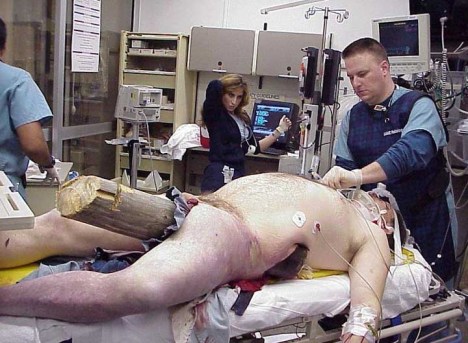
 “Impaled”

Impaled

This is an actual military emergency room photo of a man who lost control of his high speed boat. We believe that he was t raveling at a speed of approximately 75 mph at the time of the accident.  He was unable to negotiate a curve in the narrow waterway and unfortunately for him, upon striking the shoreline, he was ejected from the boat and landed on an old fence post. You can probably picture what happened next, but this photograph really says it all.

The good news is after about 6 months, this man made a full recovery after suffering a shattered hip, broken leg, several broken ribs, internal injuries and soft tissue damage. The doctors credited his recovery to the fact that the post lodged itself so tightly that there was little or noblood loss. Now, that’s got to hurt!

###

“Cheesy Ambulance”

Prudential Ambulance

The irony of this Prudential insurance logo on an ambulance in Waltham, a city in Middlesex, MA, is obvious and very cheesy!

###

“Devotee of Medical Marijuana”

Devotee of Medical Marijuana

A clandestine medical marijuana farm located in the basement of a doctor’s home in California. He apparently wanted to disintermediate the middle man [Federal government and IRS]; to no avail!

###

“Publisher-Driver”

Ambulance DEM

ME-P Publisher-in-Chief Dr. David Edward Marcinko, at the wheel of a Marquette Hospital FMS ambulance, in MI during the summer of 2009.

###

“Strawberry Meth”

Strawberry Quick

Strawberry Meth

This is a new drug known as ‘strawberry quick.”  It is a form of crystal meth that looks like strawberry pop rocks (the candy that sizzles and ‘pops’ in your mouth). It smells like strawberry and is being handed out to kids in our schoolyards. Another name is “strawberry meth.” Our children are ingesting this drug thinking it is candy and being rushed off to the hospital in dire conditions. It also comes in chocolate, peanut butter, cola, cherry, grape and orange flavors. Please instruct your children not to accept candy from strangers or even accept candy that looks like this from a friend (who may have been given it and believes it candy). Instruct them to immediately take any candy/drug that they may have to a teacher, principal, etc. Pass this ME-Pr post to as many people as you can (even if they do not have kids), We must raise awareness and hopefully prevent any tragedies from occurring. I do not want to see your kids – in my ER.

###

“Benjamins for Healthcare”

Benjamin Bills

This photo was submitted by a physician whose patient wanted to pay in cash for medical care. The incident takes the concept of high-deductible Health Savings Accounts [HSAs], or concierge medical practice, to another level.

###

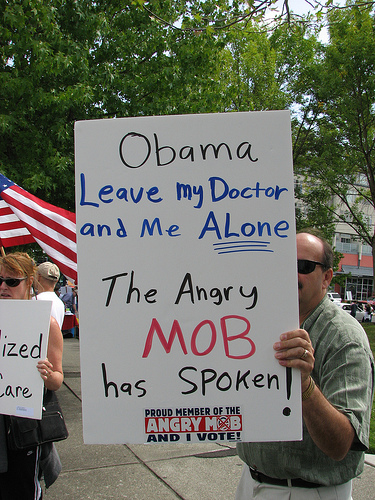
“Going Galt”

Going Galt

From a tea-party protesting against President Obama’s healthcare bill, in Seattle Washington, at the Northgate Center! The term “Going Galt” suggests that there are physicians and other citizen producers taking a lesson from Ayn Rand’s novel, “Atlas Shrugged”, who are trying to reduce their own productivity in order to minimize the amount of tax money they send to the government.

###

Palmer Fire Department

Negaunee, Michigan “Pioneer Days” parade with Palmer Fire Department rescue vehicle [Submitted by Rachel Pentin-Maki; RN, MHA].

###

Healthcare Fraud Goes Mainstream

Five million, four hundred thousand, dollars in cash was seized during a raid on this fraudulent durable medical equipment [DME] billing enterprise near Washington, DC. Trace amounts of cocaine and nitrate residue were also found on the bills. Some suggest that healthcare fraud is going “main-stream” as an easy alternative to violent crime in the underworld.

###

Military Medicine

We truly take a lot for granted. Forget the football ‘heroes’ and movie ‘stars’. Pass this on so that all may know the price of freedom. Submitted by Army Captain Cecelia T. Perez; RN, ANC, who served with the 67th Combat Support Hospital (CSH) in Tikrit, Iraq, during Operation Iraqi Freedom II

###

ACPE Meeting

The American College of Physician Executives Fall Institute meeting, in Tucson, Arizona. The event was held Nov. 14–19 at the Westin LaPaloma in the foothills of the Catalina Mountains.

###

Christmas in Iraq

Army Captain Cecelia T. Perez ANC, served with the 67th Combat Support Hospital (CSH) in Tikrit, Iraq, during Operation Iraqi Freedom II.  She makes us proud of her courage.

###

Desperation in Haiti ?

Excavating in Port–au–Prince [January 2010]

###

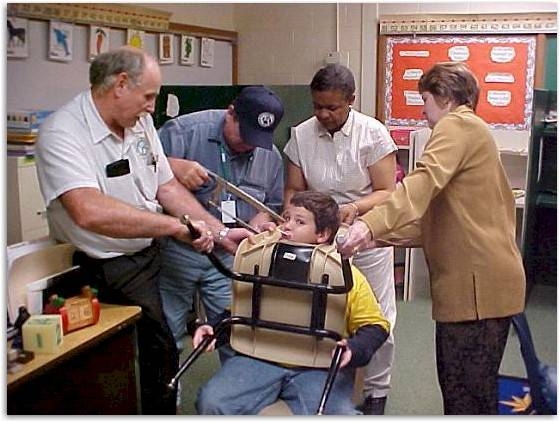
Johnny in Home-Room

Minutes before his trip to the Emergency Room

###

Non-Medical Mary Jane?

The iGrow Superstore in Oakland, California is a 15,000 square foot superstore for hydroponic and medical marijuana growing supplies.  However, these native plants in the wild may not be hot-sellers. Photo © 2010 iMBA Inc. All rights reserved.

###

Tree Surgeon Wanted


“Dr. Tree Surgeon to the OR, stat”. Submitted by Edward, February 6, 2010, Baltimore, Maryland.

###

Safe Dental Amalgam Removal?

Imaginative dental care stakeholders armed with frightening stories about “mercury fillings” happen to have swell solutions for sale, and are hoping for business help in the way of a federal mandate of some kind. If the alarmists have their way with the FDA, and you happen to have the same kind of silver/mercury alloy fillings in your mouth that haven’t caused your ancestors harm for over a hundred years, this is the modern way to remove them safely. Let’s get silly.

Darrell Kellus Pruitt; DDS

[Fort Worth, TX]

###

A New Meth Lab Definition

According to Wikipedia, Methamphetamine (pronounced /ˌmɛθæmˈfɛtəmiːn/ listen), also known as metamfetamine (INN), methylamphetamine, N-methylamphetamine, desoxyephedrine, and colloquially as meth, is a psychostimulant of the phenethylamine and amphetamine class of drugs. It increases alertness, concentration, energy, and in high doses, can induce euphoria, enhance self-esteem, and increase libido. Methamphetamine has high potential for abuse and addiction by activating the psychological reward system via triggering a cascading release of dopamine, norepinephrine and serotonin in the brain. Methamphetamine is FDA approved for the treatment of ADHD and exogenous obesity, marketed in the USA and Canada under the trademark name Desoxyn.

###

Automobile License Plate from the State of Virginia

 ###

Lost my Laptop

ImageProxy

###

Computer Voyeur

never look

email us your photo submissions for placement here:

MarcinkoAdvisors@msn.com

Join Our Mailing List

Sponsorship Opportunities

Advertise on the Medical Executive-PostSyringe

Let’s get right to the point!

Reach out and impress more than 100,000 physician and nurse-executives, financial advisors, CEOs and medical management consultants in the Health 2.0 space.

Our premium institutional e-journal: www.HealthcareFinancials.com and complimentary companion www.MedicalExecutivePost.com  has limited sponsorship and advertising opportunities available; So, be sure to act now!

Advertise with us!

Reserve your space today.

For more information please contact:

Ann: MarcinkoAdvisors@msn.com

Speaker: If you need a moderator or speaker for an upcoming event, Dr. David E. Marcinko; MBA – Publisher-in-Chief of the Executive-Post – is available for seminar or speaking engagements.

Sponsors Welcomed

Credible sponsors and like-minded advertisers are always welcomed.

Link: https://healthcarefinancials.wordpress.com/2007/11/11/advertise

Get our Widget: Get this widget!

Our Other Print Books and Related Information Sources:

Practice Management: http://www.springerpub.com/prod.aspx?prod_id=23759

Physician Financial Planning: http://www.jbpub.com/catalog/0763745790

Medical Risk Management: http://www.jbpub.com/catalog/9780763733421

Healthcare Organizations: www.HealthcareFinancials.com

Health Administration Terms: www.HealthDictionarySeries.com

Physician Advisors: www.CertifiedMedicalPlanner.com

Subscribe Now: Link: http://feeds.feedburner.com/HealthcareFinancialsthePostForcxos

ReThinking Medical Professional Autonomy in the Era of Obama Care

Eying Contemporary Medical Ethics in Healthcare Reform

By Render S. Davis; MSA, CHE

And, Staff Reportersbiz-book

Not so long ago, a physician’s clinical judgment was virtually unquestioned. Now with the advent of clinical pathways and case management protocols, many aspects of treatment are outlined in algorithm-based plans that allied health professionals may follow with only minimal direct input from a physician. Much about this change has been good. Physicians have been freed from much tedious routine and are better able to watch more closely for unexpected responses to treatments or unusual outcomes and then utilize their knowledge to chart an appropriate response.  

Restrictive Protocols

What is of special concern, though, is the restrictive nature of protocols in some managed care plans that may unduly limit a physician’s clinical prerogatives to address a patient’s specific needs. Such managed care plans may prove to be the ultimate bad examples of “cook book” medicine. While some may find health care and the practice of medicine an increasingly stressful and unrewarding field, others are continuing to search for ways to assure that caring, compassionate, and ethically rewarding medicine remain at the heart of our health care system.

Assessment

Link: For another opinion: http://healthcareorganizationalethics.blogspot.com/2009/09/obamas-speech-good-ethics-and-good.html

Conclusion

And so, your thoughts and comments on this Medical Executive-Post are appreciated. How does the specter of HR 3200-3400 in the healthcare reform debate impact the concept of medical autonomy and professional ethics? Feel free to review our top-left column, and top-right sidebar materials, links, URLs and related websites, too. Then, be sure to subscribe to the ME-P. It is fast, free and secure.

Link: http://feeds.feedburner.com/HealthcareFinancialsthePostForcxos

Speaker: If you need a moderator or speaker for an upcoming event, Dr. David E. Marcinko; MBA – Publisher-in-Chief of the Executive-Post – is available for seminar or speaking engagements. Contact: MarcinkoAdvisors@msn.com 

Get our Widget: Get this widget!

Our Other Print Books and Related Information Sources:

Practice Management: http://www.springerpub.com/prod.aspx?prod_id=23759

Physician Financial Planning: http://www.jbpub.com/catalog/0763745790

Medical Risk Management: http://www.jbpub.com/catalog/9780763733421

Healthcare Organizations: www.HealthcareFinancials.com

Health Administration Terms: www.HealthDictionarySeries.com

Physician Advisors: www.CertifiedMedicalPlanner.com

ME-P Thought-Leader [MD] in the News

Brian J. Knabe MD of Savant Capital Management

By Max Alexander

Dow Jones Newswires; 212-416-2245 Brian J. Knabe MD

Lots of doctors get burnt out dealing with the business end of medicine. But Brian Knabe, a family practice physician in Rockford, Ill., had such a passion for crunching numbers that he became a financial planner.

Knabe, 42 years old, still sees patient’s two half-days a week. He also teaches residents for another half-day at the University of Illinois – College of Medicine.

Most of the week, he’s a certified financial planner with Savant Capital Management.

“I hear all the jokes,” says Knabe, “the most popular being some version of, ‘Hey I guess my portfolio’s doing so badly, they had to bring in the doctor.'”

When the laughter dies down – it doesn’t take long – people often ask what motivated him to transition from medicine into finance.

His short answer is what you’d expect from a wealth adviser: “I wanted to diversify my career.”

The long answer includes a lifelong passion for math that runs in the family. Knabe’s father and brother are both engineers, and the doctor himself majored in bioengineering at Marquette University. “In college, I loved calculus, statistics and differential equations,” he says.

Growing up in Rockford, his best friend was Brent Brodeski, a partner at Savant, and Knabe had been a client of the firm since 1995. “For years, I joked with Brian, ‘If you ever get bored with medicine, you can join us,'” says Brodeski. “Three years ago he called and said, ‘I’ll take you up on that.’ I was floored.”

Knabe wasn’t bored with medicine. “I love taking care of patients, and the intellectual stimulation of the field,” he says. “So I told the partners at Savant that I would only do this if they allowed me to continue practicing medicine part-time.” Meanwhile, he went back to Marquette and got his CFP credentials.

About half of Knabe’s financial clients are doctors, who appreciate his insider’s knowledge of their work and financial issues. Both fields involve privacy and trust, he notes, and both involve planning for the future. They also involve an element of uncertainty.

Sometimes his advice is specifically health-related.

“One client I was working with was a couple where the husband had a terminal illness,” recalls Knabe. “I worked closely with the family in planning living will issues and durable power of attorney for health care. I’ve helped other clients wade through health insurance and disability issues.”

Yes, financial clients do sometimes ask him for medical advice, but he stops them before they can unbutton their shirt.

“If they have a problem and need a diagnosis, I’ll tell them where to go to get a second opinion,” he says.

Link: http://online.wsj.com/article_email/BT-CO-20090914-711325-kIyVDAtMEM5TzEtNDIxMDQwWj.html 

Managing Editor’s Note:Become a CMP

Dr. Knabe is also enrolled in the www.CertifiedMedicalPlanner.com program in health economics and medical practice management for financial advisors and healthcare consultants.

Conclusion

And so, your thoughts and comments on this Medical Executive-Post are appreciated. Feel free to review our top-left column, and top-right sidebar materials, links, URLs and related websites, too. Then, be sure to subscribe to the ME-P. It is fast, free and secure.

Link: http://feeds.feedburner.com/HealthcareFinancialsthePostForcxos

Speaker: If you need a moderator or speaker for an upcoming event, Dr. David E. Marcinko; MBA – Publisher-in-Chief of the Executive-Post – is available for seminar or speaking engagements. Contact: MarcinkoAdvisors@msn.com 

Get our Widget: Get this widget!

Our Other Print Books and Related Information Sources:

Practice Management: http://www.springerpub.com/prod.aspx?prod_id=23759

Physician Financial Planning: http://www.jbpub.com/catalog/0763745790

Medical Risk Management: http://www.jbpub.com/catalog/9780763733421

Healthcare Organizations: www.HealthcareFinancials.com

Health Administration Terms: www.HealthDictionarySeries.com

Physician Advisors: www.CertifiedMedicalPlanner.com

Soliciting Textbook Peer-Reviewers and Experts

Business of Medical Practice

Ann Miller; RN, MHA

[Executive Director]biz-book

Please contact me if you would like to serve as a peer-reviewer for the third edition of our popular textbook, “Business of Medical Practice”.

Link: http://www.springerpub.com/prod.aspx?prod_id=23759

If interested, please email me and send in a bio. A non-disclosure agreement is required.

Email: MarcinkoAdvisors@msn.com

In return for conscientious industry and expertise, if accepted, we may offer you a possible mention, blog promotion and/or book acknowledgement … such a deal! 

Conclusion

Then, be sure to subscribe to this ME-P. It is fast, free and secure.

Link: http://feeds.feedburner.com/HealthcareFinancialsthePostForcxos

Speaker: If you need a moderator or speaker for an upcoming event, Dr. David E. Marcinko; MBA – Publisher-in-Chief of the Executive-Post – is available for seminar or speaking engagements. Contact: MarcinkoAdvisors@msn.com 

Get our Widget: Get this widget!

Our Other Print Books and Related Information Sources:

Practice Management: http://www.springerpub.com/prod.aspx?prod_id=23759

Physician Financial Planning: http://www.jbpub.com/catalog/0763745790

Medical Risk Management: http://www.jbpub.com/catalog/9780763733421

Healthcare Organizations: www.HealthcareFinancials.com

Health Administration Terms: www.HealthDictionarySeries.com

Physician Advisors: www.CertifiedMedicalPlanner.com

Subscribe Now: Did you like this Medical Executive-Post, or find it helpful, interesting and informative? Want to get the latest ME-Ps delivered to your email box each morning? Just subscribe using the link below. You can unsubscribe at any time. Security is assured.

Link: http://feeds.feedburner.com/HealthcareFinancialsthePostForcxos

Sponsors Welcomed

And, credible sponsors and like-minded advertisers are always welcomed.

Link: https://healthcarefinancials.wordpress.com/2007/11/11/advertise

HALLOWEEN: Nathaniel Potter MD & Touring with Dr. Marcinko [Part VI]

About Nathaniel Potter, MD

By Dr. David Edward Marcinko; MBA, CMP™
[Publisher-in-Chief]
Dateline: Baltimore MarylandNathaniel Potter MD

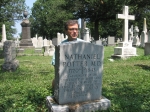
While in Washington DC on the second portion of our recent ME-P book “signing and opining” tour, I had the good fortune to visit the gravesite of the noted physician Nathaniel Potter, MD. Dr. Potter was born in Carolina county Maryland in 1770 and died in Baltimore on 2 January, 1843. He graduated from the University of Pennsylvania in 1796, and settled in Baltimore, where he practiced medicine until his death. In 1807, he associated with Dr. John B. Davidge in founding the University of Maryland, School of Medicine where he ultimately served as professor and dean. He died penniless.

THINK Potter’s field!

About Green Mount Cemetery

Green Mount Cemetery is located in Baltimore, MD. Established in 1839, it is noted for the large number of historical figures that have been interred in its grounds as well as a large number of prominent Baltimore-area families. It retained the name Green Mount when the land was purchased from the heirs of Baltimore merchant Robert Oliver. Green Mount is also a treasury of precious works of art, including striking works by major sculptors like William Rinehart and Hans Schuler. The cemetery was listed in the National Register of Historic Places in 1980.

Assessment

In as much as Dr. Potter was a well know figure to me, I was most pleased at the impromptu visit to his grave. You see, although I attended Temple University because of my future specialty, my first medical school choice would have been at University of Maryland if post-graduate education opportunities had been different at the time. And, I passed the medical school, and the imposing Greek themed Davidge Hall Dome, daily for four years as I rode the number 8 public transportation bus to my undergraduate studies at nearby Loyola University, in Townson Maryland. Of course, the fact that Potter was educated at the University of Pennsylvania School of Medicine, the first in the nation, did not elude me when I worked in its ER as a young medical student in Philadelphia, back in-the-day. University of Maryland was the fifth such medical school in the country.

About Off Road with Dr. Marcinko

These sporadic off-road segments will continue through-out my summer promotional tour. Attendance at several formal and informal engagements increased since the early summer. The previously noted sales spike for our texts, handbooks and dictionaries; as well as interest in our online www.CertifiedMedicalPlanner.org  program.

Part V: https://healthcarefinancials.wordpress.com/2009/08/21/off-road-touring-with-dr-marcinko-part-v/

Conclusion

Your thoughts and comments on this ME-P are appreciated. Feel free to review our top-left column, and top-right sidebar materials, links, URLs and related websites, too. Then, subscribe to the ME-P. It is fast, free and secure.

Speaker: If you need a moderator or speaker for an upcoming event, Dr. David E. Marcinko; MBA – Publisher-in-Chief of the Medical Executive-Post – is available for seminar or speaking engagements. Contact: MarcinkoAdvisors@msn.com

OUR OTHER PRINT BOOKS AND RELATED INFORMATION SOURCES:

Product DetailsProduct Details

Product Details

***

What is a Zero-Based Budget?

A Most Cruel – but Needed – Endeavor

[By Staff Reporters]fp-book2

A zero-based budget means you start with the absolute essential expenses and then add-back expenses from there until you run out of money. This is an extremely effective, yet rigorous, exercise for most doctors and medical professionals; and can be used personally or at the office.

Triage and Prioritize

Your first personal financial item should be retirement plan contributions, then your mortgage and other debt payments, and then other required fixed expenses. From the office perspective, the first budget item should be salary expenses for both you and your staff. Operating assets and other big ticket items come next, followed by the more significant items on your net income statement. Some doctors even review their P&L statements quarterly, line by line, in an effort to reduce expenses. Then, you add discretionary personal or business expenses that you have some control over.

More Month than Money

Now, do you run out of money before you reach the end of the month, quarter, or year? Then you better cut back on entertainment at home or that fancy new, but unproven piece of office or medical equipment. This sounds Draconian until you remind yourself that your choice is either (1) entertainment now but no money later or; (2) living a simpler lifestyle now as you invest so you’re able to enjoy yourself at retirement.

Assessment

When you were a young doctor, budgeting may have seemed a task needed far into the future; but at midlife, you are staring retirement right in the face.

Conclusion

Your thoughts and comments on this ME-P are appreciated. Feel free to review our top-left column, and top-right sidebar materials, links, URLs and related websites, too. Then, subscribe to the ME-P. It is fast, free and secure.

Link: http://feeds.feedburner.com/HealthcareFinancialsthePostForcxos

Speaker: If you need a moderator or speaker for an upcoming event, Dr. David E. Marcinko; MBA – Publisher-in-Chief of the Medical Executive-Post – is available for seminar or speaking engagements. Contact: MarcinkoAdvisors@msn.com

OUR OTHER PRINT BOOKS AND RELATED INFORMATION SOURCES:

DICTIONARIES: http://www.springerpub.com/Search/marcinko
PHYSICIANS: www.MedicalBusinessAdvisors.com
PRACTICES: www.BusinessofMedicalPractice.com
HOSPITALS: http://www.crcpress.com/product/isbn/9781466558731
CLINICS: http://www.crcpress.com/product/isbn/9781439879900
BLOG: www.MedicalExecutivePost.com
FINANCE: Financial Planning for Physicians and Advisors
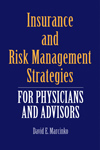
INSURANCE: Risk Management and Insurance Strategies for Physicians and Advisors


Product DetailsProduct DetailsProduct Details

Off-Road Touring with Dr. Marcinko [Part V]

About the Ship USNS COMFORT
By Dr. David Edward Marcinko; MBA, CMP™
[Publisher-in-Chief]
Dateline: August 4, 2009USNS Comfort Canton, Maryland

The official Navy ship USNS COMFORT [“Medical Treatment Facility”] has the primary mission to provide a mobile, flexible and rapidly responsive capability for acute medical and surgical care in support of amphibious task forces. These forces include the Marine Corps, Army and Air Force elements, forward deployed Navy elements of the fleet, and activities located in areas where hostilities may be imminent. Operations are governed by the principles of the “Geneva Convention for the Amelioration of the Wounded, Sick, and Shipwrecked Members of the Armed Forces at Sea”, as of August 12, 1949.

Mission

As a secondary mission of the ship COMFORT is providing a full hospital service asset for use by other government agencies involved in the support of relief and humanitarian operations worldwide. These mission statements are accountable to both the Reduced Operating Status (ROS) and Full Operating Status (FOS) military personnel staffed at National Naval Medical Center, Bethesda Maryland until the ship is activated. However, the ROS personnel’s immediate and number one priority is to fully activate the ship to a FOS Echelon III Medical Treatment Facility within a prescribed 5-day time frame.

Functions

In meeting these missions, the ROS personnel perform the following functions:

  • Serve as the nucleus of the critical core required to execute activations;
  • Develop, test, and maintain systems and procedures to support activation process;
  • Orient and train FOS augmenting staff;
  • Monitor/assess the medical treatment facility’s overall ability to fully activate/perform mission.

Leaders

The ship is commanded by CAPT James J. Ware DDS, with Executive Officer Captain Larnerd, and Master Chief Lohner. The home base is Baltimore, Maryland.  Upon arrival at the dock, the ME-P and I planned to meet onboard with Master David Lieberman. But, an interview was cancelled due to a last minute scheduling conflict. However, we were placed in the competent hands of our civilian tour guide, Shaun B. of Virginia. He noted 70 civilian and 700 military personnel.US Comfort

Assessment

Shaun B, informed me that despite advanced age, my application for a four month tour would be gladly reviewed. And, it is under serious future consideration as my nurse sister is a recent Bronze Star Award winner from a Combat Army Surgical Hospital [CASH] unit stationed in Iraq. I also did my trauma surgery training in Martin Army Hospital, at Fort Benning Georgia, back-in-the-day.

About Off Road with Dr. Marcinko

These sporadic off-road segments will continue through-out my 2009 summer promotional tour. Attendance at several formal and informal engagements increased since the early summer. The previously noted sales spike for our texts, handbooks and dictionaries www.HealthDictionarySeries.com continued and interest in our online www.CertifiedMedicalPlanner.com program and premier quarterly guide: Healthcare Organizations [Journal of Financial Management Strategies] www.HealthcareFinancials.com remained high.

Part IV: https://healthcarefinancials.wordpress.com/2009/08/13/off-road-touring-with-dr-marcinko-part-iv/

Conclusion

And so, your thoughts and comments on this Medical Executive-Post are appreciated. Feel free to review our top-left column, and top-right sidebar materials, links, URLs and related websites, too. Then, be sure to subscribe to the ME-P. It is fast, free and secure.

Link: http://feeds.feedburner.com/HealthcareFinancialsthePostForcxos

Speaker: If you need a moderator or speaker for an upcoming event, Dr. David E. Marcinko; MBA – Publisher-in-Chief of the Executive-Post – is available for seminar or speaking engagements. Contact: MarcinkoAdvisors@msn.com

Get our Widget: Get this widget!

Our Other Print Books and Related Information Sources:

Practice Management: http://www.springerpub.com/prod.aspx?prod_id=23759

Physician Financial Planning: http://www.jbpub.com/catalog/0763745790

Medical Risk Management: http://www.jbpub.com/catalog/9780763733421

Healthcare Organizations: www.HealthcareFinancials.com

Health Administration Terms: www.HealthDictionarySeries.com

Physician Advisors: www.CertifiedMedicalPlanner.com

Subscribe Now: Did you like this Medical Executive-Post, or find it helpful, interesting and informative? Want to get the latest ME-Ps delivered to your email box each morning? Just subscribe using the link below. You can unsubscribe at any time. Security is assured.

Link: http://feeds.feedburner.com/HealthcareFinancialsthePostForcxos

Sponsors Welcomed

And, credible sponsors and like-minded advertisers are always welcomed.

Link: https://healthcarefinancials.wordpress.com/2007/11/11/advertise

Healthcare Organizations

My Favorite Health 2.0 Experience from McDonalds

Meet the Schwieterman’s

By Dr. David Edward Marcinko; MBA, CMP™biz-book

Back in 2005, we published the second edition of our popular textbook: the Business of Medical Practice. And, we are now working on the third edition. At the time however, I was fortunate to have a colleague from the Microsoft Corporation pen our Foreword, now reprinted below for your review.

Link: http://www.springerpub.com/prod.aspx?prod_id=23759


What a Family Tradition!

My favorite story came from Dr. Thomas Schwieterman, a fourth-generation physician working in the same medical office his great grandfather established in 1896 in the town of Mariastein, Ohio. From those same historic environs, Schwieterman has used Microsoft Access to create his own physician assistant application.

The Schwieterman Family Physicians practice kept him so busy that he was wondering how he could keep up with his patient caseload. Schwieterman wanted a faster way to handle prescriptions, provide medical information, and record data for his patient records. He walked into a McDonald’s restaurant one day and had an idea.

The Epiphany

“I ordered a cheeseburger and fries and watched the person at the counter touch the screen of the cash register a few times, and realized the order was getting transferred back to the food preparation area, and that by the time I paid, my order was ready,” he said. “I thought to myself: ‘That’s what I need!’” He searched for commercially available solutions, but when he couldn’t find an exact match for his needs, and when he found prices steep for a small private practice, he decided to create his own – using Access. He also called upon a friend with a Master’s Degree in electrical engineering to help on the coding. His creation boosted his income by 20 percent – “Which was important because we pay more than $60,000 a year for malpractice insurance even though our clinic has never been sued since it was founded 107 years ago.”

Assessment

What my friends at Microsoft especially like about this story is that when Dr. Schwieterman’s colleagues tried his program, liked it, and suggested he try to sell it, he put together a PowerPoint presentation – and landed a partnership agreement with a major healthcare supply and services corporation to market his ChartScribe solution.

Conclusion

So, the pressures facing physicians are great, but so are their resources. Information technology is one resource, this book is another, but the greatest of all is the innate curiosity and drive to discover and create that seems to be so much a part of those who are drawn to this noble profession.

Ahmad Hashem; MD, PhD

Global Healthcare Productivity Manager

Microsoft’s Healthcare Industry Solutions Group

Microsoft Corporation

Redmond, Washington 

Conclusion

And so, your thoughts and comments on this Medical Executive-Post are appreciated. Tell us what you think. Feel free to review our top-left column, and top-right sidebar materials, links, URLs and related websites, too. Then, be sure to subscribe to the ME-P. It is fast, free and secure.

Link: http://feeds.feedburner.com/HealthcareFinancialsthePostForcxos

Speaker: If you need a moderator or speaker for an upcoming event, Dr. David E. Marcinko; MBA – Publisher-in-Chief of the Executive-Post – is available for seminar or speaking engagements. Contact: MarcinkoAdvisors@msn.com 

Get our Widget: Get this widget!

Our Other Print Books and Related Information Sources:

Practice Management: http://www.springerpub.com/prod.aspx?prod_id=23759

Physician Financial Planning: http://www.jbpub.com/catalog/0763745790

Medical Risk Management: http://www.jbpub.com/catalog/9780763733421

Healthcare Organizations: www.HealthcareFinancials.com

Health Administration Terms: www.HealthDictionarySeries.com

Physician Advisors: www.CertifiedMedicalPlanner.com

Subscribe Now: Did you like this Medical Executive-Post, or find it helpful, interesting and informative? Want to get the latest ME-Ps delivered to your email box each morning? Just subscribe using the link below. You can unsubscribe at any time. Security is assured.

Link: http://feeds.feedburner.com/HealthcareFinancialsthePostForcxos

Sponsors Welcomed

And, credible sponsors and like-minded advertisers are always welcomed.

Link: https://healthcarefinancials.wordpress.com/2007/11/11/advertise

Integration of Hospital Automatic Data Collection Technologies

Review of Automatic Data Collection Equipment

By David J. Piasecki, with
Hope Hetico; RN, MHA

While hardware costs of automatic data collection [ADC] equipment continue to come down for hospital and healthcare organizations, the cost of integration will often prove to be the project buster. Software and integration costs will often be several times the cost of the hardware, especially in smaller health system operations where only a few devices will be used. Integration of ADC technologies is also far from standardized.

www.HealthcareFinancials.comHO-JFMS-CD-ROM

Example:

For example, when implementing a system with portable terminals, one integrator may create a program on the terminals that will write directly to the file on the host system, another may create programs on a separate server to do this, another may write or modify a program on your host system and use terminal emulation software, and another may use a screen mapping tool to reformat an existing program to be used on the portable device. So, make sure to speak with several integrators to ensure the best solution. Also, make sure to participate heavily in equipment selection and program/process design (prompts, data input) to ensure a system that provides the highest levels of accuracy and productivity.

Real-Time Locator System 

A real-time locator system (RTLS) uses RFID technology that provides the objects they are attached to the ability to transmit their current location.  The system requires some type of RFID tag to be attached to each object that needs to be tracked, and RF transmitters/receivers located throughout the facility to determine the location and send information to a computerized tracking system. While it sounds like a great way to eliminate “lost” inventory, the systems are still too costly for most inventory-tracking operations and are more likely to be used to track more valuable assets.

Screen Mapping/Screen Scraping

This software provides the functionality to change the arrangement of data fields on a computer screen that accesses a mainframe computer program. Screen mapping is frequently used in combination with terminal-emulation software to “remap” data fields from a standard mainframe program to be used on the smaller screen of a portable hand-held device.

Speech-Based Technology

Speech-based technology, also known as voice technology is really composed of two technologies:  (1) voice directed, which converts computer data into audible commands, and (2) speech recognition, which allows user voice input to be converted into data.  Portable voice systems consist of a headset with a microphone and a wearable computer.

Terminal Emulation

Software used on desktop and portable computers is available that allows the computer to act like a terminal connected to a mainframe system. If you have a networked desktop PC and are accessing mainframe programs (green screen programs) you are using terminal emulation. Terminal emulation is also a common method used to connect portable computers (as in pharmacy bar-code ADC systems) to mainframe software.

Warehouse Management System

Computer software designed specifically for managing the movement and storage of materials throughout the healthcare system warehouse or chain of command generally controls the following three operations:  (1) put-away, (2) replenishment, and (3) picking.  The key to these systems is the logic to direct these operations to specific locations based on user-defined criteria.  Warehouse Management Systems (WMSs) are often set up to integrate with ADC systems. 

Conclusion

And so, your thoughts and comments on this Medical Executive-Post are appreciated. Can you think of any other data integration technologies?  Tell us what you think. Feel free to review our top-left column, and top-right sidebar materials, links, URLs and related websites, too. Then, be sure to subscribe to the ME-P. It is fast, free and secure.

Link: http://feeds.feedburner.com/HealthcareFinancialsthePostForcxos

Speaker: If you need a moderator or speaker for an upcoming event, Dr. David E. Marcinko; MBA – Publisher-in-Chief of the Executive-Post – is available for seminar or speaking engagements. Contact: MarcinkoAdvisors@msn.com 

Get our Widget: Get this widget!

Our Other Print Books and Related Information Sources:

Practice Management: http://www.springerpub.com/prod.aspx?prod_id=23759

Physician Financial Planning: http://www.jbpub.com/catalog/0763745790

Medical Risk Management: http://www.jbpub.com/catalog/9780763733421

Healthcare Organizations: www.HealthcareFinancials.com

Health Administration Terms: www.HealthDictionarySeries.com

Physician Advisors: www.CertifiedMedicalPlanner.com

Subscribe Now: Did you like this Medical Executive-Post, or find it helpful, interesting and informative? Want to get the latest ME-Ps delivered to your email box each morning? Just subscribe using the link below. You can unsubscribe at any time. Security is assured.

Link: http://feeds.feedburner.com/HealthcareFinancialsthePostForcxos

Sponsors Welcomed

And, credible sponsors and like-minded advertisers are always welcomed.

Link: https://healthcarefinancials.wordpress.com/2007/11/11/advertise

Hospital Automated Data Collection

Understanding Data Capture Technologies

By David J. Piasecki, with
Hope Hetico; RN, MHA

Automated data collection (ADC), also known as automated data capture, automated identification (AutoID) or automated identification and data capture (AIDC), consists of many different technologies. Bar codes, voice systems, RFID, OCR, laser scanners, vehicle mounted and wearable computers are all part of ADC management and hospital inventory activities.

www.HealthcareFinancials.comHO-JFMS-CD-ROM

Six-Figure Projects

However, the fear of six-figure project costs often prevent many small to mid-sized hospitals and healthcare systems from taking advantage of these technologies. The key to implementing cost-effective ADC systems is to know what technologies are available and the amount of integration needed to implement them. Applying this processing knowledge in a healthcare organization will help in developing the scope of any project. Limiting projects to or prioritizing by those applications that have a high benefit/cost ratio allows these operational improvement technologies within a reasonable budget. 

Example:

For example, adding a keyboard-wedge bar-code scanner to an existing personal computer (PC) or blade terminal in a nursing station is a very low-cost method for applying ADC to existing hospital reporting applications. This type of hardware is inexpensive and the only real programming required is to add a bar code to the proper form (work order, pick and delivery slip, etc).

Review of the ADC Technologies

Some of the current hospital data capture technologies include the following:

a. Bar Codes

b. Bar-Code Scanners

Laser or CCD 

Auto-Discrimination

Keyboard-Wedge Scanners 

Fixed-Position Scanners

c. Portable Computers

d. Batch versus Radio Frequency

e. Hand-Held Devices

f. Vehicle-Mounted Devices

g. Wearable Systems

h. Voice Technology

i. Optical Character Recognition

j. Light Systems

Assessment

Driven by a need for improved data capture, asset management, staff mobility and standardized medication administration to name a few benefits, hospitals are likely to invest much more heavily in ADC and Wi-Fi technologies over the next five years, according to this new research report.

Link: http://www.eweek.com/c/a/Health-Care-IT/WiFi-Healthcare-Systems-to-Hit-49B-878082/

Conclusion

And so, your thoughts and comments on this Medical Executive-Post are appreciated. Tell us what you think. Can you think of any other hospital data capture technologies? Feel free to review our top-left column, and top-right sidebar materials, links, URLs and related websites, too. Then, be sure to subscribe to the ME-P. It is fast, free and secure.

Link: http://feeds.feedburner.com/HealthcareFinancialsthePostForcxos

Speaker: If you need a moderator or speaker for an upcoming event, Dr. David E. Marcinko; MBA – Publisher-in-Chief of the Executive-Post – is available for seminar or speaking engagements. Contact: MarcinkoAdvisors@msn.com 

Get our Widget: Get this widget!

Our Other Print Books and Related Information Sources:

Practice Management: http://www.springerpub.com/prod.aspx?prod_id=23759

Physician Financial Planning: http://www.jbpub.com/catalog/0763745790

Medical Risk Management: http://www.jbpub.com/catalog/9780763733421

Healthcare Organizations: www.HealthcareFinancials.com

Health Administration Terms: www.HealthDictionarySeries.com

Physician Advisors: www.CertifiedMedicalPlanner.com

Subscribe Now: Did you like this Medical Executive-Post, or find it helpful, interesting and informative? Want to get the latest ME-Ps delivered to your email box each morning? Just subscribe using the link below. You can unsubscribe at any time. Security is assured.

Link: http://feeds.feedburner.com/HealthcareFinancialsthePostForcxos

Sponsors Welcomed

And, credible sponsors and like-minded advertisers are always welcomed.

Link: https://healthcarefinancials.wordpress.com/2007/11/11/advertise

Dictionary of Health Insurance and Managed Care

ADVERTISEMENT

Whither the Dictionary of Health Insurance and Managed Care?

HDS

A simple query that demands a cogent answer!

Why do we need the Dictionary of Health Insurance and Managed Care, and, why do payers, providers, benefits managers, consultants, and consumers need a credible and unbiased source of explanations for their health insurance needs and managed care products?

The Answer is Clear!

Health care is the most rapidly changing domestic industry. The revolution occurring in health insurance and managed care delivery is particularly fast. Some might even suggest these machinations were malignant, as many industry segments, professionals, and patients suffer because of them. And so, because knowledge is power in times of great flux, codified information protects all people from physical, as well as economic harm.

We appreciate the support of our sponsors. So, click-on on the links and review all dictionary products.

Link: http://healthdictionaryseries.com/TechnologySecurity.aspx

Link: http://www.findbookprices.com/author/Hope_Hetico

Subscribe Now: Did you like this Medical Executive-Post, or find it helpful, interesting and informative? Want to get the latest ME-Ps delivered to your email box each morning? Just subscribe using the link below. You can unsubscribe at any time. Security is assured.

Link: http://feeds.feedburner.com/HealthcareFinancialsthePostForcxos

Sponsors Welcomed

And, credible sponsors and like-minded advertisers are always welcomed.

Link: https://healthcarefinancials.wordpress.com/2007/11/11/advertise

Product DetailsProduct DetailsProduct Details

Medical Inventory Management Methodologies

Understanding Traditional Costing Methods

By David J. Piasecki, with
Hope Rachel Hetico; RN MHA, CMP™cmp-logo1

A good inventory management system offers opportunities for improved efficiency in any healthcare organization. The following traditional methods of inventory cost accounting and management are useful when one is calculating the cost of supplies (as opposed to medical items for resale and DME).

a. LIFO

The last-in first-out (LIFO) inventory costing method means the last items purchased are the first to be used (at least for cost calculations if the inventory consists of identical units). In times of rising prices, a lower total cost inventory is produced with a higher cost of goods sold. The last items purchased are most often the most expensive, and used first for the calculation. This happens because LIFO increases an expense (cost of goods sold) and decreases taxable income. Given the same revenue, higher expenses mean less profit. Deflation has the opposite effect.

b. FIFO

The first-in first-out (FIFO) inventory costing method means the first items purchased are the first to be used (at least for cost calculations if the inventory consists of identical units). In times of rising prices, a higher total cost inventory is produced with a lower cost of goods sold. This happens because FIFO decreases an expense (cost of goods sold) and increases taxable income. Deflation has the opposite effect.

Note: Any switch from FIFO to LIFO does not change reality, and although a decrease in reported incomes occurs, it does not increase cash outflows. However, for a taxable healthcare entity, after-tax net cash flow does increase.

c. Specific Identification

Specific identification is used for larger pieces of equipment, as it traces actual costs to an identifiable unit of product and is usually applied with an identification tag, serial plate, or radio frequency identification device (RFID) scanner. It does not involve flow-of-cost analysis. It does, however, permit the manipulation of income because healthcare entities state their cost of goods sold, and ending inventory, at the actual cost of specific units sold.

d. Average Cost

Average costing calculates ending inventory using a weighted average unit cost. When prices are rising, cost of good sold is less than under LIFO, but more than that under FIFO, and hence income manipulation is also possible.

e. Just-in-time Management

Although technically not a costing technique, JIT inventory management means that inventory supplies like DME are delivered as soon as needed by the healthcare organization, the prescribing doctor, or the patient. In JIT, inventory is “pulled” through the flow process. This is contrasted to the “push” approach used by conventional IM. In the push system, DME is already on-site, with little regard to when it is actually needed. In the JIT “pull” system, the overriding concern is to keep a minimum cost inventory, so that means having a system in which inventory is obtained on an as-needed basis.

The key elements of JIT consist of six parts:

1. a few dependable vendors or suppliers willing to ship with little advance notice;

2. total sharing of demand information throughout the supply chain;

3. more frequent orders;

4. smaller size of individual orders;

5. improved physical plant (hospital or clinic) layout to reduce travel flow distance; and

6. use of a total quality control system to reduce flawed medical products.

Using the JIT method, inventory is delivered when needed, rather than in advance, saving handling and storage costs. The healthcare entity never needs to stockpile inventory, and cash flow is enhanced. JIT is further characterized as follows:

  • little or no work orders;
  • little or no tracing of materials;
  • fewer inventory accounts or accounts payables;
  • reduction or elimination of work-in-progress or handling activities; and
  • no tracing of overhead and direct labor costs

JIT requires a dependable working relationship with suppliers and the precise calculation of inventory needs, especially for the following:

  • sterile surgical packs;
  • gastro-intestinal and gastro-urinary instrumentation;
  • orthopedic and OB-GYN inventory;
  • invasive heart and lung equipment;
  • radio isotopes and trace radiographic materials; and
  • equipment for almost all pre-schedule medical interventions and procedures.

Assessment

This means that, when JIT inventory monitoring is used, healthcare managers are better prepared with the proper inputs to control and reduce inventory, including when dramatic bursts or declines occur. This means a more rapid and higher cash flow balance, rather than inventory balance. Each of these traditional methods of inventory cost accounting is adequate for most healthcare facilities, but as inventory orders and costs continue to increase, economic order quantity [EOQ] costing may be the most effective means of accounting for inventory in DME-intensive organizations.

Conclusion

And so, your thoughts and comments on this Medical Executive-Post are appreciated. Can you think of any other inventory management technologies?  Tell us what you think. Feel free to review our top-left column, and top-right sidebar materials, links, URLs and related websites, too. Then, be sure to subscribe to the ME-P. It is fast, free and secure.

Link: http://feeds.feedburner.com/HealthcareFinancialsthePostForcxos

Speaker: If you need a moderator or speaker for an upcoming event, Dr. David E. Marcinko; MBA – Publisher-in-Chief of the Executive-Post – is available for seminar or speaking engagements. Contact: MarcinkoAdvisors@msn.com

Subscribe Now: Did you like this Medical Executive-Post, or find it helpful, interesting and informative? Want to get the latest ME-Ps delivered to your email box each morning? Just subscribe using the link below. You can unsubscribe at any time. Security is assured.

Link: http://feeds.feedburner.com/HealthcareFinancialsthePostForcxos

Sponsors Welcomed

And, credible sponsors and like-minded advertisers are always welcomed.

Link: https://healthcarefinancials.wordpress.com/2007/11/11/advertise

Product DetailsProduct Details

***

Off-Road Touring with Dr. Marcinko [Part III]

Join Our Mailing List

I Dislocate a Finger

By Dr. David Edward Marcinko; MBA, CMP™

[Publisher-in-Chief]

Dateline: Sunday June 28, 2009DEM-MQT MTN

Fresh off my “runner’s” high from meeting Olympians Shani Davis and Apolo Ohno, the other day, I easily ran an extra couple of miles during my daily training run to stay in shape during my arduous speaking and book signing tour. Thus, invigorated in mind and body, and flushed with surging natural endomorphins, I decided to spend the afternoon at Marquette Mountain watching the downhill mountain bike races.

After introducing myself to Bruce Gustafson, the ambulance driver there on professional standby from the local Marquette General Hospital EMT service, I spent an hour or so marveling at how the racers survived the rocky and treacherous down-hill course. Unfortunately, I was not so lucky, and came very close to requiring Bruce’s expert services.

Taking a TumbleDismay

While climbing down the mounting, running actually, I tripped head-over-heels and commenced wildly flailing and rolling down the rocky terrain, stopping just short of smashing into a large birch tree after 50 feet or so. Bouncing straight back up in an instant, I doubt if nearby spectators even noticed what had happened.  Nevertheless, I was most pleased at my adroit body and still youthful ability to assume a dolphin like roll into the fall, dissipating kinetic energy and avoiding injury. Or, so I thought.

Dislocating a Finger

Unfortunately, my fourth right finger began to throb a few seconds later; and then scream at me. Not much medical acumen was needed to note that something was wrong, as the proximal-inter-phalangeal-joint [PIPJ] appeared laterally deviated forty-five degrees, just as the digital apex was turning blue and the joint began swelling before my eyes. Appreciating the impending neurovascular compromise potential, I grabbed the finger, distracted it, reversed the mechanism of injury, let go, and felt it snap back into place.  I promptly sat down as a diaphoretic wave of cold sweat broke out on my forehead, chest, shoulders and arms. Fortunately, the hypo-tensive episode lasted only a few minutes, and I did not go into shock. A visiting nurse came to the rescue, elevating my feet, monitoring vital signs and offering fluids as I recovered quickly. She was indeed my Florence Nightingale and, as I later learned, a Master’s prepared nurse-executive. I was gratefully taken back to my hotel after refusing further medical assistance or X-rays. The finger was grotesquely swollen the next few days but did not hurt much. Simple contrast baths, passive and active ROM exercises, along with the “tincture of time” which I estimate to be 6-8 weeks based on clinical experience, will hopefully be all that is required for complete recovery. Although, it may be some time before full typing flexibility is returned; assuming a “button-hole” extensor tendon rupture incarcerating, strangling or imbricating the phalangeal head, did not occur.Ambulance DEM

Assessment

In my former clinical medical career, I diagnosed, treated and operated on hundreds of injured fingers and toes; for various acute and chronic conditions, fractures, dislocations and related digital anomalies. I even published several peer reviewed papers on same. Still, my course of action may be considered reckless, by some, and should not be repeated. Always seek medical advice.

References:

1. Digital Fractures and Dislocations [Diagnosis and Treatment]. Author: DH Elleby, and DE Marcinko [Clinics in Podiatry. 05/1985; 2(2):233-45].

2. Marcinko DE, and Elleby DH. Digital Fractures and Dislocations; In: Scurran BL, ed. Foot and Ankle Trauma, 2nd ed; Church-Hill-Livingston, Boston, MA.

About Off Road with Dr. Marcinko

These sporadic off-road segments will continue through-out my 2009 summer promotional tour. On the one hand, formal attendance at several engagements was a bit sparse because of the death of several recent celebrities and entertainer types. On the other hand, local book stores and sponsors noted a spike in our CD and book sales, as well as interest in our online www.CertifiedMedicalPlanner.com program as well as our quarterly institutional premium guide; Healthcare Organizations [Journal of Financial Management Strategies] www.HealthcareFinancials.com

Part I: https://healthcarefinancials.wordpress.com/2009/07/20/off-road-touring-with-dr-marcinko-part-i/

Part II: https://healthcarefinancials.wordpress.com/2009/07/22/off-road-touring-with-dr-marcinko-part-ii/

Conclusion

Your thoughts and comments on this ME-P are appreciated. Feel free to review our top-left column, and top-right sidebar materials, links, URLs and related websites, too. Then, subscribe to the ME-P. It is fast, free and secure.

Speaker: If you need a moderator or speaker for an upcoming event, Dr. David E. Marcinko; MBA – Publisher-in-Chief of the Medical Executive-Post – is available for seminar or speaking engagements. Contact: MarcinkoAdvisors@msn.com

OUR OTHER PRINT BOOKS AND RELATED INFORMATION SOURCES:

Product DetailsProduct DetailsProduct Details

Off-Road Touring with Dr. Marcinko [Part II]

Meeting Olympic Champions

By Dr. David Edward Marcinko; MBA, CMP™

[Publisher-in-Chief]

Dateline: Saturday June 27, 2009MGH Bike Race

I attended the Superior BMX Bike Fest today, sponsored in-part by Marquette General Hospital [MGH] and held for amateur and professional cyclists, alike. These brave riders in downtown Marquette MI; segregated by gender and age groups, rode mostly carbon bicycles. Female winner of the Twilight Criterium was 22 year old Sarah Maguire, of Team Priority Health, and the defending state champion. Her time was 33:14.6 for the urban and very hilly short course. The first place male winner was Derek Graham at 28:15.5, and the second place winner was Graham Howard, a former pharmacy graduate student, also from powerhouse Team Priority Health. All were given a hearty ME-P congratulatory “shout-out”, as my services in the medical-tent went un-needed for the entire event.

Apolo, Shani and RyanOEC

Shani Davis, of Marquette High School, is a former US Olympic Education Center [USOEC] ice skater and 1,000 meter Olympic gold medalist at the 2006 Winter Games in Torino, Italy. He is also a close friend of Apolo Anton Ohno who was here to participate in the US Short Track National Speed Skating Trials. Fans of the sport may recall that Apolo is a five time Olympian speed ice-skating medalist and most recent “Dancing with the Star’s” winner. So, he took a celebratory bike ride through the city while in town practicing with the US Olympic team at the nearby Berry Events Center. Both Shani and Apolo cheered for former USOEC speed skater Ryan Bedford, while remaining very approachable to their considerable fan base. I was lucky enough to briefly chat-them-up at the races. All young men are fine examples of amateur athletics in the truest Olympic tradition. 

About Off Road with Dr. Marcinko

These sporadic off-road segments will continue through-out my 2009 summer promotional tour. On the one hand, formal attendance at several engagements was a bit sparse because of the death of several recent celebrities and entertainer types. On the other hand, local book stores and sponsors noted a spike in our CD and book sales, as well as interest in our online www.CertifiedMedicalPlanner.com program and premier quarterly guide: Healthcare Organizations [Journal of Financial Management Strategies] www.HealthcareFinancials.com

Part I: https://healthcarefinancials.wordpress.com/2009/07/20/off-road-touring-with-dr-marcinko-part-i/

Conclusion

And so, your thoughts and comments on this Medical Executive-Post are appreciated. Tell us what you think. Feel free to review our top-left column, and top-right sidebar materials, links, URLs and related websites, too. Then, be sure to subscribe to the ME-P. It is fast, free and secure.

Link: http://feeds.feedburner.com/HealthcareFinancialsthePostForcxos

Speaker: If you need a moderator or speaker for an upcoming event, Dr. David E. Marcinko; MBA – Publisher-in-Chief of the Executive-Post – is available for seminar or speaking engagements. Contact: MarcinkoAdvisors@msn.com 

Get our Widget: Get this widget!

Our Other Print Books and Related Information Sources:

Practice Management: http://www.springerpub.com/prod.aspx?prod_id=23759

Physician Financial Planning: http://www.jbpub.com/catalog/0763745790

Medical Risk Management: http://www.jbpub.com/catalog/9780763733421

Healthcare Organizations: www.HealthcareFinancials.com

Health Administration Terms: www.HealthDictionarySeries.com

Physician Advisors: www.CertifiedMedicalPlanner.com

Subscribe Now: Did you like this Medical Executive-Post, or find it helpful, interesting and informative? Want to get the latest ME-Ps delivered to your email box each morning? Just subscribe using the link below. You can unsubscribe at any time. Security is assured.

Link: http://feeds.feedburner.com/HealthcareFinancialsthePostForcxos

Sponsors Welcomed

And, credible sponsors and like-minded advertisers are always welcomed.

Link: https://healthcarefinancials.wordpress.com/2007/11/11/advertise

Off-Road Touring with Dr. Marcinko [Part I]

“Using-Up” Health Insurance

By Dr. David Edward Marcinko; MBA, CMP™

[Publisher-in-Chief]

Dateline: June 18-19th, 2009dem24          

I flew into Marquette Michigan last night on a puddle jumper from Chicago, Illinois. Marquette will be the home base on my current book promotion and public/private  speaking tour. This second leg of our trip, from Atlanta, was delayed for mechanical reasons. So, rather than follow directions from American Airlines regarding new arrangements, and rushing to wait in a long line of humanity for a new boarding pass on a much later flight, I simply called the travel assistance number on my cell phone. We were re-routed by computer from American, to a Delta Airlines flight, that caused no additional time lag as we later learned the other passengers boarded their American flight three hours late. Many of the elderly and slower moving folks even missed connecting flights which necessitated overnight hotel stays, in some cases.

THINK: outside the box independently, and don’t follow directions mindlessly.  

About Marquette, Michigan

The City of Marquette is located in the central region of Michigan’s Upper Peninsula. With a population of 20,714, it is the UP’s largest community. In addition to being a population center, it serves as the regional center for education, health care, recreation, and retail. This regional draw is particularly evident due to Northern Michigan University and Marquette General Hospital, both of which are located in the City of Marquette. Of course, I visited both.

Quality Healthcare for the Upper PeninsulaUPHC

So, the next morning I called some friends who suggested we head over to the Marquette Upper Peninsula  Healthcare Network System, on Washington Street, for an unplanned and unofficial stop on our current “signing and opining” tour. It seemed very busy for a Friday morning; so we gathered some colleagues and ambled over to Viering’s Restaurant where we discussed the local economy, current state of the healthcare industry and the Obama Administration’s ideas for healthcare reform. When I expressed my surprise at the number of patients in the clinic waiting room areas, I was informed that an unexpected corporate layoff resulted in patients “wanting to use their health insurance, before being RIFed [Reduced-in-Force].” Now, as a doctor, and insurance agent, I find this attitude both very strange; yet not uncommon.

“Using-Up” Health Insurance

I can honestly say that after more than three-decades in the business, I have never heard a single soon-to-be unemployed client say,” I need to use up my life insurance”, or “auto insurance”, or “homeowner’s insurance”, etc. So, what gives with health insurance?

Health Insurance IS Different

Insurance of all types is sold to economically protect against catastrophic events like pre-mature death, auto accidents, or home destruction. But life insurance doesn’t pay for non-lethal issues; auto insurance doesn’t pay for new tires, tune-ups or oil changes; and home owner’s insurance doesn’t pay for regular upkeep and maintenance, etc. So, why do some patients believe that health insurance necessarily needs to be used-up? Were they not healthy before the lay-off announcement; or did they suddenly become ill, thereafter? What do you think? Is this just a local phenomenon, or would it be [is it] pandemic in any community given the same or similar circumstances?

AssessmentUPHC-DEM

For me, this scenario clearly demonstrates two things. First, that Health Insurance is thought of as a personal right and/or corporate fringe-benefit; rather than true financial indemnification. Second, it demonstrates the ability of patients to think ahead; unlike the airline customers on my initial trip here. So, if patients can be forward thinking about their health insurance needs, why don’t they think ahead about their personal health care needs? Why don’t more of us exercise regularly, watch our blood pressure and weight, and/or avoid drugs, alcohol and promiscuous sex, etc.  If we can monitor and pay for routine auto and home maintenance ourselves; why not our routine health needs?  Isn’t good health our most important personal asset? Aren’t we worth it? Do we really want to abrogate our very lives to others? Do we want to concede our responsibilities to a third party, ie, a national [single-payer] governmental controlled healthcare? Those patients wanting to “use their health insurance”, before unemployment, certainly seem to think so.

About Off Road with Dr. Marcinko

These sporadic off-road segments will continue through-out my 2009 summer promotional tour. On the one hand, formal attendance at several engagements was initially a bit sparse because of the death of several recent celebrities and entertainer types. On the other hand, local book stores and sponsors noted a spike in our CD and book sales, as well as interest in our online www.CertifiedMedicalPlanner.com program and premier quarterly guide: Healthcare Organizations [Journal of Financial Management Strategies] www.HealthcareFinancials.com

Conclusion

And so, your thoughts and comments on this Medical Executive-Post are appreciated. Tell us what you think. Feel free to review our top-left column, and top-right sidebar materials, links, URLs and related websites, too. Then, be sure to subscribe to the ME-P. It is fast, free and secure.

Link: http://feeds.feedburner.com/HealthcareFinancialsthePostForcxos

Speaker: If you need a moderator or speaker for an upcoming event, Dr. David E. Marcinko; MBA – Publisher-in-Chief of the Executive-Post – is available for seminar or speaking engagements. Contact: MarcinkoAdvisors@msn.com 

Get our Widget: Get this widget!

Our Other Print Books and Related Information Sources:

Practice Management: http://www.springerpub.com/prod.aspx?prod_id=23759

Physician Financial Planning: http://www.jbpub.com/catalog/0763745790

Medical Risk Management: http://www.jbpub.com/catalog/9780763733421

Healthcare Organizations: www.HealthcareFinancials.com

Health Administration Terms: www.HealthDictionarySeries.com

Physician Advisors: www.CertifiedMedicalPlanner.com

Subscribe Now: Did you like this Medical Executive-Post, or find it helpful, interesting and informative? Want to get the latest ME-Ps delivered to your email box each morning? Just subscribe using the link below. You can unsubscribe at any time. Security is assured.

Link: http://feeds.feedburner.com/HealthcareFinancialsthePostForcxos

Sponsors Welcomed

And, credible sponsors and like-minded advertisers are always welcomed.

Link: https://healthcarefinancials.wordpress.com/2007/11/11/advertise

Boosting Medical Practice Goodwill Value

Goodwill Hunting

What’s your Office Really Worth?

[By Dr. David E. MarcinkoStethoscope; MBA]

There are several measures a physician can take to increase the value of medical practice goodwill, which in turn will make the practice more desirable, and profitable, when selling or taking on a partner.

These are listed below for your consideration:  

  • Keep good financial records. Know your capital purchases, and have your balance sheet, statement of cash flow and net income statement up to date.
  • Continually monitor key financial ratios, such as profitability, creditors, long-term debt management and medical equity value-added.
  • Have adequate practice insurance, including property liability coverage, plus have workers’ compensation for staff and life and disability insurance on the key doctors.
  • Build a brand identity for the practice rather than an individual brand identity for you as a physician. This helps in developing a business that others could assume and operate.
  • Have a practice continuation plan that stipulates how the practice will be sold or continued in the event of a physician’s death or disability. Specify who will buy the practice and for how much. And specify whether the purchase will include land, buildings, inventory, licenses and goodwill. Have a covenant that specifies the procedures to follow when a physician leaves the practice.
  • Have strong relationships with everyone who does business with your practice, including supply vendors as well as referring doctors and fellow physicians.
  • Be organized when it comes time to present the supporting information. Don’t accept the first valuation given. Numbers can be changed, if you can present substantive reasons.

MORE: AMA News Interviews Dr. Marcinko

Conclusion

And so, your thoughts and comments on this Medical Executive-Post are appreciated. How have you reacted to the recent declines in both medical practice [business] and personal [doctor] goodwill?

Tell us what you think? Feel free to review our top-left column, and top-right sidebar materials, links, URLs and related websites, too. Then, be sure to subscribe to the ME-P. It is fast, free and secure.

Link: http://feeds.feedburner.com/HealthcareFinancialsthePostForcxos

Speaker: If you need a moderator or speaker for an upcoming event, Dr. David E. Marcinko; MBA – Publisher-in-Chief of the Executive-Post – is available for seminar or speaking engagements. Contact: MarcinkoAdvisors@msn.com

Our Other Print Books and Related Information Sources:

Risk Management, Liability Insurance, and Asset Protection Strategies for Doctors and Advisors: Best Practices from Leading Consultants and Certified Medical Planners™8Comprehensive Financial Planning Strategies for Doctors and Advisors: Best Practices from Leading Consultants and Certified Medical Planners™

Subscribe Now: Did you like this Medical Executive-Post, or find it helpful, interesting and informative? Want to get the latest ME-Ps delivered to your email box each morning? Just subscribe using the link below. You can unsubscribe at any time. Security is assured.

Link: http://feeds.feedburner.com/HealthcareFinancialsthePostForcxos

Sponsors Welcomed

And, credible sponsors and like-minded advertisers are always welcomed.

Link: https://healthcarefinancials.wordpress.com/2007/11/11/advertise

Product DetailsProduct DetailsProduct Details

***

Invite Dr. Marcinko

***

Government-Enabled Patient “Bounty Hunters”

Spider Webbing Technology May Trip-Up Miscreant Doctors

By Dr. David Edward Marcinko; MBA CMP™

HO-JFMS-CD-ROMUnder the Health Insurance Portability Accountability Act (HIPAA), the U. S. Department of Health and Human Service (HHS) have operated an “Incentive Program for Fraud and Abuse Information.”

In this program, HHS pays $100 – $1,000 to Medicare recipients who report abuse in the program.

To assist patients in spotting fraud, HHS has published examples of potential fraud, which include:

  • medical services not provided;
  • duplicated services or procedures;
  • more expenses, services, or procedures claimed for than provided (upcoding/billing);
  • misused Medicare cards and numbers;
  • medical telemarketing scams; and
  • no-medical necessity.

Real Health Fraud Exists

There is no question that real fraud exists. The Office of Inspector General of HHS saved American taxpayers a record $32 billion in 2006, according to Inspector General Glenn A. Fine.  Savings were achieved through an intensive and continuing crackdown on waste, fraud, and abuse in Medicare and over 300 other HHS programs. To discourage flagrant allegations, regulations require that reported information directly contribute to monetary recovery for activities not already under investigation.  For the DRA in 2009, this includes the following:

  • promoting state False Claims Acts (section 6032);
  • enhancing the Fair and Accurate Credit Transaction Act, with “red flags” (PL 108-159); see http://www.gpo.gov/fdsys/pkg/PLAW-108publ159/content-detail.html
  • employee education about false claims recovery (section 6033);
  • augmenting the Medicaid Integrity Program (section 6034);
  • enhancing third party recovery (section 6035); and
  • “mining” medical claims for potential fraud with the help of sophisticated computer technology algorithms – called “spider-webbing” – which locate a common insurance claim denominator and then follow the thread throughout claims review. Indicators of  possible fraud include doctors charging more than peers; providers who administer more tests or procedures per patient; providers who conduct medically “unlikely” procedures; providers who bill for more expensive procedures and equipment when there are cheaper options; and patients who travel long distances for treatment.

Assessment

CMS and private companies are able to save far more money by detecting fraud before claims are paid than recovering the money after the fact. And so, a further erosion of patient confidence can be expected as CMS, and private insurers, assume the “bounty hunter” view of healthcare providers.

Conclusion

Of course, your thoughts and comments on this Medical Executive-Post are appreciated. Do you feel like the hunter; or the hunted? Tell us what you think? Do you ever – or never –  fear the spider? Feel free to review our top-left column, and top-right sidebar materials, links, URLs and related websites, too. Then, be sure to subscribe to the ME-P. It is fast, free and secure.

Link: http://feeds.feedburner.com/HealthcareFinancialsthePostForcxos

Speaker: If you need a moderator or speaker for an upcoming event, Dr. David E. Marcinko; MBA – Publisher-in-Chief of the Executive-Post – is available for seminar or speaking engagements. Contact: MarcinkoAdvisors@msn.com

Our Other Print Books and Related Information Sources:

Practice Management: http://www.springerpub.com/prod.aspx?prod_id=23759

Physician Financial Planning: http://www.jbpub.com/catalog/0763745790

Medical Risk Management: http://www.jbpub.com/catalog/9780763733421

Healthcare Organizations: www.HealthcareFinancials.com

Physician Advisors: www.CertifiedMedicalPlanner.org

Subscribe Now: Did you like this Medical Executive-Post, or find it helpful, interesting and informative? Want to get the latest ME-Ps delivered to your email box each morning? Just subscribe using the link below. You can unsubscribe at any time. Security is assured.

Link: http://feeds.feedburner.com/HealthcareFinancialsthePostForcxos

Sponsors Welcomed

And, credible sponsors and like-minded advertisers are always welcomed.

Link: https://healthcarefinancials.wordpress.com/2007/11/11/advertise


For details about how to report an abuse, see www.usdoj.gov/oig/FOIA/hotline.htm.

Product Details

Introducing Parin Kothari MBA

Our Newest ME-P Thought-Leader

By Hope Rachel Hetico; RN, MHA, CMP™

[Managing Editor]Parin Kothari MBA

Parin Kothari is a seasoned management consultant with focus on strategy and operations. He earned his MBA from Syracuse University in New York and has eight years experience spanning various industries from automobiles & advertising to healthcare management & financial services.

Infamous Banking and Financial Services Industry

As Vice President of business architecture at Wells Fargo Bank, one of the leading financial institutions in US, Parin consults on realizing business strategy using information technology. He has presented at leading banks in Canada, Israel, Turkey and New Zealand, and is also a guest lecturer at Syracuse University. Besides working for the infamous banking industry, Parin is also a strong supporter of non profit work in the field of primary education. He works with several schools and non profit organizations in the San Francisco Bay area, as well as in developing countries such as Palestine, India, Cambodia and Iraql; and is deeply involved with education among Iraqi youth in Cambodia. 

Link: www.eachcentcounts.org

Assessment

We are all sure to learn much from Parin Kothari, our newest ME-P thought-leader.

Conclusion

And so, your thoughts and comments on this Medical Executive-Post are appreciated. Feel free to review our top-left column, and top-right sidebar materials, links, URLs and related websites, too. Then, be sure to subscribe to the ME-P. It is fast, free and secure.

Link: http://feeds.feedburner.com/HealthcareFinancialsthePostForcxos

Speaker: If you need a moderator or speaker for an upcoming event, Dr. David E. Marcinko; MBA – Publisher-in-Chief of the Executive-Post – is available for seminar or speaking engagements. Contact: MarcinkoAdvisors@msn.com 

Get our Widget: Get this widget!

Our Other Print Books and Related Information Sources:

Practice Management: http://www.springerpub.com/prod.aspx?prod_id=23759

Physician Financial Planning: http://www.jbpub.com/catalog/0763745790

Medical Risk Management: http://www.jbpub.com/catalog/9780763733421

Healthcare Organizations: www.HealthcareFinancials.com

Health Administration Terms: www.HealthDictionarySeries.com

Physician Advisors: www.CertifiedMedicalPlanner.com

Subscribe Now: Did you like this Medical Executive-Post, or find it helpful, interesting and informative? Want to get the latest ME-Ps delivered to your email box each morning? Just subscribe using the link below. You can unsubscribe at any time. Security is assured.

Link: http://feeds.feedburner.com/HealthcareFinancialsthePostForcxos

Sponsors Welcomed

And, credible sponsors and like-minded advertisers are always welcomed.

Link: https://healthcarefinancials.wordpress.com/2007/11/11/advertise

Understanding the PHI “Minimum Necessary” Rule

Join Our Mailing List

Protected Health Information and HIPAA

By Richard J. Mata; MD, MIS, CMP™ [Hon]

Dr. Mata

One important concept of the Health Insurance Portability and Accountability Act [HIPAA] is the “minimum necessary” rule, which states the minimum use of Protected Health Information [PHI] to identify a person, such as a social security number, home address, or phone number.

Only the essential elements are to be used in transferring information from the patient record to anyone else that needs this information.

Financial Information Included

This is especially important when financial information is being addressed. Only the minimum codes necessary to determine the cost should be provided to the financial department. No other information should be accessed by that department. Many institutions have systems where a registration or accounting clerk can pull up as much information as a doctor or nurse, but this is now against HIPAA policy and subject to penalties. The “minimum necessary” rule is also changing the way software is set up and vendor access is provided.

Human Resources

Another challenging task is keeping up with the number of people who access PHI, because the privacy regulations allow a patient to receive an accounting of anyone who has accessed their information, both internally (within your hospital, Emerging Healthcare Organization, or medical entity) and externally (such as through your business associates).  The patient has the right to know who in the lengthy data chain has seen their PHI.  This sets up an audit challenge for the medical organization, especially if the accountability is programmed internally.  When other business associates use this PHI without documenting access to a specific patient’s PHI, no one would be accountable for a breach in privacy.

http://www.findbookprices.com/author/Hope_Hetico

One way to track access is through a designated record set, which contains medical or mixed billing records, and any other information that a physician and/or medical practice utilizes for making decisions about a patient.  It is up to the hospital, EHO, or healthcare organization to define which set of information comprises “protected health information” and which does not, though logically this should not differ from locale to locale.

Assessment

Overlaps from the privacy regulations that are also addressed in the security regulations are access controls, audit trails, policies on e-mail and fax transmissions, contingency planning, configuration management, entity and personal authentication, and network controls. For more information about the Security Standards final rule; reference the Federal Register.

Conclusion

Your thoughts and comments on this ME-P are appreciated. Feel free to review our top-left column, and top-right sidebar materials, links, URLs and related websites, too. Then, subscribe to the ME-P. It is fast, free and secure.

Link: http://feeds.feedburner.com/HealthcareFinancialsthePostForcxos

Speaker: If you need a moderator or speaker for an upcoming event, Dr. David E. Marcinko; MBA – Publisher-in-Chief of the Medical Executive-Post – is available for seminar or speaking engagements. Contact: MarcinkoAdvisors@msn.com

OUR OTHER PRINT BOOKS AND RELATED INFORMATION SOURCES:

DICTIONARIES: http://www.springerpub.com/Search/marcinko
PHYSICIANS: www.MedicalBusinessAdvisors.com
PRACTICES: www.BusinessofMedicalPractice.com
HOSPITALS: http://www.crcpress.com/product/isbn/9781466558731
CLINICS: http://www.crcpress.com/product/isbn/9781439879900
BLOG: www.MedicalExecutivePost.com
FINANCE: Financial Planning for Physicians and Advisors
INSURANCE: Risk Management and Insurance Strategies for Physicians and Advisors

Product DetailsProduct DetailsProduct Details

Product DetailsProduct Details

Product Details

Capital Sources for Hospitals

Understanding the Liquidity Crunch -with- Publisher’s Interview

By Calvin W. Weise; MBA, CMA, CPA

www.HealthcareFinancials.com

HO-JFMS-CD-ROMHospital are struggling in the current financial crisis, and like most of us, liquidity is scarce. In general, hospitals have three sources of capital: equity from earnings, equity from donations, and long-term debt.


Equity from Earnings

Earnings generate cash, and a portion of that cash is available to fund capital investments. Besides funding capital investments, cash generated from earnings is used to fund working capital. As operations grow, more working capital is required to fund the difference between the operating receivables and operating payables since days of revenue in receivables tend to be a good deal higher than days of expense in payables. Additionally, cash on hand should increase as operations grow so that days of cash remain constant or increase. Once working capital has been adequately funded, any remaining cash generated from earnings is available to invest in capital.

Donations

Most not-for-profit hospitals engage in active fundraising to generate donations. Donations are a good source of capital in certain markets. Often, fundraising initiatives are less useful than they appear due to the costs expended in the fundraising activities. It is important to ensure that all the costs incurred in fundraising activities are properly attributed.

Long-Term Debt

Borrowing long-term debt has been an important source of capital for hospitals and will continue to be. Debt is particularly attractive due to the low cost associated with borrowing on a tax-exempt basis. Long-term debt, borrowed on a tax-exempt basis, is probably the lowest cost form of capital available to hospitals. Tax-exempt borrowing is fairly complex due to the tax regulations affecting it. Because of its complexity, the costs associated with these transactions are quite high, making it less practical for small borrowings.

Assessment

Tax-exempt borrowing transactions require many lawyers and high-priced investment bankers. Credit rating agencies and credit enhancers are also typically involved. Accessing the tax-exempt markets requires a good bit of sophistication and expertise. Despite these requirements, this capital is highly attractive to hospitals and should be used whenever possible.

Interview

Read: Dr. David Edward Marcinko’s recent interview on the current status of hospitals.

Link [unedited version]: https://healthcarefinancials.wordpress.com/2009/04/01/medical-news-of-arkansas-interviews-dr-marcinko/?preview=true&preview_id=9094&preview_nonce=d9039cf076

Link [edited version]: http://www.arkansasmedicalnews.com/news.php?viewStory=738dem2

Conclusion

And so, your thoughts and comments on this Medical Executive-Post are appreciated. What is the financial status of your hospital, today? How has the cash flow crisis affected it; and your practice? Feel free to review our top-left column, and top-right sidebar materials, links, URLs and related websites, too. Then, be sure to subscribe to the ME-P. It is fast, free and secure.


Link: http://feeds.feedburner.com/HealthcareFinancialsthePostForcxos

Speaker: If you need a moderator or speaker for an upcoming event, Dr. David E. Marcinko; MBA – Publisher-in-Chief of the Executive-Post – is available for seminar or speaking engagements. Contact: MarcinkoAdvisors@msn.com  or Bio: www.stpub.com/pubs/authors/MARCINKO.htm

Get our Widget: Get this widget!

Our Other Print Books and Related Information Sources:

Practice Management: http://www.springerpub.com/prod.aspx?prod_id=23759

Physician Financial Planning: http://www.jbpub.com/catalog/0763745790

Medical Risk Management: http://www.jbpub.com/catalog/9780763733421

Healthcare Organizations: www.HealthcareFinancials.com

Health Administration Terms: www.HealthDictionarySeries.com

Physician Advisors: www.CertifiedMedicalPlanner.com

Subscribe Now: Did you like this Medical Executive-Post, or find it helpful, interesting and informative? Want to get the latest ME-Ps delivered to your email box each morning? Just subscribe using the link below. You can unsubscribe at any time. Security is assured.

Link: http://feeds.feedburner.com/HealthcareFinancialsthePostForcxos

Sponsors Welcomed

And, credible sponsors and like-minded advertisers are always welcomed.

Link: https://healthcarefinancials.wordpress.com/2007/11/11/advertise

Appraising a Medical Practice

The “Art of the Deal” for Buyers and Sellers

By Dr. David Edward Marcinko; MBA, CMP™

Publisher-in-Chiefdem2

Are you considering selling your practice — or merging it with another? Thinking of buying? If you are, you’re hardly alone. Despite the decline of the big physician practice management companies [PPMCs] of the 1990s, the merger-and-acquisition market remains robust for small, private practices, as they respond to the continuing financial squeeze being placed on them, in 2009.


Read: http://www.humana.com/providers/NewsLetters/HumanaWeb1stQ07/articles/CoverStoryOne.html

Assessment

Humana’s YourPractice is a quarterly publication for office staff, physicians and other health care providers within the Humana network, and is produced by Corporate Communications in conjunction with “Physicians Practice”.

biz-book

Note: David Marcinko is also a writer for Physicians Practice 

Conclusion

And so, your thoughts and comments on this Medical Executive-Post are appreciated. Feel free to review our top-left column, and top-right sidebar materials, links, URLs and related websites, too. Then, be sure to subscribe to the ME-P. It is fast, free and secure.

Link: http://feeds.feedburner.com/HealthcareFinancialsthePostForcxos

Speaker: If you need a moderator or speaker for an upcoming event, Dr. David E. Marcinko; MBA – Publisher-in-Chief of the Executive-Post – is available for seminar or speaking engagements. Contact: MarcinkoAdvisors@msn.com  or Bio: www.stpub.com/pubs/authors/MARCINKO.htm

Get our Widget: Get this widget!

Our Other Print Books and Related Information Sources:

Practice Management: http://www.springerpub.com/prod.aspx?prod_id=23759

Physician Financial Planning: http://www.jbpub.com/catalog/0763745790

Medical Risk Management: http://www.jbpub.com/catalog/9780763733421

Healthcare Organizations: www.HealthcareFinancials.com

Health Administration Terms: www.HealthDictionarySeries.com

Physician Advisors: www.CertifiedMedicalPlanner.com

Subscribe Now: Did you like this Medical Executive-Post, or find it helpful, interesting and informative? Want to get the latest ME-Ps delivered to your email box each morning? Just subscribe using the link below. You can unsubscribe at any time. Security is assured.

Link: http://feeds.feedburner.com/HealthcareFinancialsthePostForcxos

Sponsors Welcomed

And, credible sponsors and like-minded advertisers are always welcomed.

Link: https://healthcarefinancials.wordpress.com/2007/11/11/advertise

Doctor – Are You on Your Way to $5.5 Million?

Update 2015

[By Staff Reporters]

[Initially Published on September 16, 2008]

As a physician, how much do you need in your retirement kitty to finance your golden years?

It was a vexing question when this article was first written by Physician’s Money Digest’s Editor-in-Chief, Gregory J. Kelly, and is an even more vexing dilemma in 2009. It is also one that most physicians tend to ignore; hence the reprint.

Assessment

And so, for those doctors curious about whether they’ll be living on Easy Street, or Skid Row, when they hang up their stethoscope, it helps to do some basic math and to review this link:

Read: http://www.hcplive.com/print.php?url=http://www.hcplive.com/publications/pmd/2005/95/4030

Channel Surfing the ME-P

Have you visited our other topic channels? Established to facilitate idea exchange and link our community together, the value of these topics is dependent upon your input. Please take a minute to visit. And, to prevent that annoying spam, we ask that you register. It is fast, free and secure.

More:

  1. More on the Doctor Salary Conundrum
  2. Doctor Salary v. Others [Present Value of Career Wealth]
  3. Are Doctors Members of the Middle Class?
  4. Taxing the [not so] Rich [doctors]
  5. Doctor – Are You on Your Way to $5.5 Million?

Conclusion

Your thoughts and comments on this ME-P are appreciated. Feel free to review our top-left column, and top-right sidebar materials, links, URLs and related websites, too. Then, subscribe to the ME-P. It is fast, free and secure.

Speaker: If you need a moderator or speaker for an upcoming event, Dr. David E. Marcinko; MBA – Publisher-in-Chief of the Medical Executive-Post – is available for seminar or speaking engagements. Contact: MarcinkoAdvisors@msn.com

OUR OTHER PRINT BOOKS AND RELATED INFORMATION SOURCES:

Financial Planning MDs 2015

Comprehensive Financial Planning Strategies for Doctors and Advisors: Best Practices from Leading Consultants and Certified Medical Planners(TM)

Dictionary of Health Economics and Finance

ADVERTISEMENT

Whither the Dictionary of Health Economics and Finance?

DHEF

A simple query that demands a cogent answer!

Medical professionals are struggling to maintain adequate income levels. While some specialties are flourishing, others like primary care barely moved forward, not even incrementally keeping up with inflation. In the words of Atul Gawande, MD, a former surgical resident at Brigham and Women’s Hospital in Boston, and one of the best young medical writers in America,

“Doctors quickly learn that how much they make has little to do with how good they are. It largely depends on how they handle the business side of their practice”.

Therefore, the ability to decipher the alphabet soup of medical economics (i.e., OPHCOO, ALOS, DRG, RBRVS, behavioral health, acuity, etc), and understand those financial terms coming from clinical medicine (i.e., call premium, cost benefit ratios, IGARCH, AACPD, IBNR ABCM, internal rate of return, accounts receivable days outstanding, etc.) is vital for survival. Until we have a common language however, medical professionals cannot possess a shared vision, nor can we communicate successfully to create healthcare entities that provide quality care to patients and reasonable profits to medical practitioners.

We appreciate the support of our sponsors. So, click-on on the links below to review all dictionary products.

 HDS


Subscribe Now: Did you like this Medical Executive-Post, or find it helpful, interesting and informative? Want to get the latest ME-Ps delivered to your email box each morning? Just subscribe using the link below. You can unsubscribe at any time. Security is assured.

Link: http://feeds.feedburner.com/HealthcareFinancialsthePostForcxos

Sponsors Welcomed

And, credible sponsors and like-minded advertisers are always welcomed.

Link: https://healthcarefinancials.wordpress.com/2007/11/11/advertise

Product DetailsProduct DetailsProduct Details

Essential Insights on Successful Physician Budgeting

fp-book5Special Report for all Medical Professionals

By Dr. David Edward Marcinko; MBA

By Hope Rachel Hetico; RN, MHA

What: A Special Report Prepared upon the Request of “Podiatry Today”

Who: Dr. David E Marcinko and Hope Rachel Hetico; MHA


Topic: Essential Insights on Successful Budgeting

Reporter: Jeffrey Hall [Editor “Podiatry Today” Magazine]

Where: Internet Ether

Although some doctors might view a budget as unnecessarily restrictive, sticking to a spending plan can be a useful tool in enhancing the wealth of a medical practice. These authors emphasize keys to smart budgeting and how to track spending and savings in these tough economic times. The universal applicability to all doctors is obvious.

Read the Report Here

Link: http://www.podiatrytoday.com/essential-insights-on-successful-budgeting

Conclusion

And so, your thoughts and comments on this Medical Executive-Post are appreciated?

Subscribe: Link: http://feeds.feedburner.com/HealthcareFinancialsthePostForcxos

Speaker: If you need a moderator or speaker for an upcoming event, Dr. David E. Marcinko; MBA – Publisher-in-Chief of the Executive-Post – is available for seminar or speaking engagements. Contact: MarcinkoAdvisors@msn.com  or Bio: www.stpub.com/pubs/authors/MARCINKO.htm

Get our Widget: Get this widget!

Our Other Print Books and Related Information Sources:

Practice Management: http://www.springerpub.com/prod.aspx?prod_id=23759

Physician Financial Planning: http://www.jbpub.com/catalog/0763745790

Medical Risk Management: http://www.jbpub.com/catalog/9780763733421

Healthcare Organizations: www.HealthcareFinancials.com

Health Administration Terms: www.HealthDictionarySeries.com

Physician Advisors: www.CertifiedMedicalPlanner.com

Subscribe Now: Did you like this Medical Executive-Post, or find it helpful, interesting and informative? Want to get the latest ME-Ps delivered to your email box each morning? Just subscribe using the link below. You can unsubscribe at any time. Security is assured.

Link: http://feeds.feedburner.com/HealthcareFinancialsthePostForcxos

The Power of “ME Inc” for Physicians

Embracing a New Competitive Practice Culture

By Dr. David Edward Marcinko; MBA, CMP™

[Publisher-in-Chief]dem21

There are more than 900,000 physicians in the United States. Yet, the brutal supply/demand/demographic calculus of the matter is that there are just too many aging patients chasing too few doctors. Compensation and reimbursement is plummeting as Uncle Sam becomes the payer-of-choice for more than 52% of us. And, the government as payer will likely increase with the Obama Administration. So, going forward, it is not difficult to imagine the following four rules for a new-wave competitive medical care culture for all physicians.

[A] Rule No. 1

Forget about large office suites, surgery centers, fancy equipment and the bricks and mortar that comprised traditional medical practices. One doctor with a great idea, good bedside manner or competitive advantage, can outfox a slew of CPAs, while still serving the public and making money. It’s a unit-of-one healthcare economy where “ME Inc.”, is the standard and physicians must maneuver for advantages that boost their standing and credibility among patients and payers. Examples include patient satisfaction surveys, the rise of evidence-based medicine; outcomes research analysis, concierge medicine, direct reimbursement payment plans, and economic credentialing; etc.

 [B] Rule No. 2

Challenge conventional wisdom, think outside the traditional payer box, recapture your dreams and ambitions, disregard conventional gurus and work harder – and smarter – than you have ever worked before. Remember the old saying, “if everyone is thinking alike, then nobody is thinking”. Do insurance panel members think rationally or react irrationally?

However, you should realize the power of networking, vertical integration and the establishment of virtual medical practices, which come together to treat a patient, and then disband when a successful outcome achieved. Job security in this structure is achieved with successful outcomes, and perhaps not necessarily a degree in the near future. Medical futurists even presume the establishment of virtual medical schools and hospitals, where students and doctors learn and practice their art on cyber-entities that look and feel like real patients, but are generated electronically through the wonders of virtual reality units.

www.HealthcareFinancials.com

HOFMS

[C] Rule No 3

Differentiate yourself among your medical peers. Do or learn something new and unknown by your competitors. Market your accomplishments and let the world know. Be a non-conformist. The conformity of health insurance plans are an operational standard and a straitjacket on creativity. Doctors should create and innovate, not blindly follow entrenched medical society leaders into oblivion. Seek, and practice, health 2.0 collaboration with all stakeholders.

[D] Rule No 4

Realize that the present situation is not necessarily the future. Attempt to see the future and discern your place in it. Master the art of the quick change and fast but informed decision making. Do what you love, disregard what you don’t, and let the fates have their way with you. Then, decide for yourself if health plans adhere to any of the above rules?

AssessmentKung Fu

Regardless of the future de facto business model of the learned profession of medicine, current practice models are no longer the structure of choice. Rather, a more laissez-faire and highly competitive business model should be pursued.  Physicians have been slow to accept this philosophy.  Remember, as a physician, if you merely want a static job with promised security, pledged retirement benefits, limited goals and structured regulations; join a health plan panel and become their laborer.

However, if you desire more, such as the possibility of a dynamic career, the unlimited security of your brainpower, non-defined retirement contributions, infinite potential with rules you can create along the way; incorporate the power of ME, Inc., in everything you do. Remain a competitive professional and be a physician ... Get fly! 

Conclusion

And so, your thoughts and comments on this Medical Executive-Post are appreciated. Feel free to review our top-left column, and top-right sidebar materials, links, URLs and related websites, too. Then, be sure to subscribe to the ME-P. It is fast, free and secure.

Link: http://feeds.feedburner.com/HealthcareFinancialsthePostForcxos

Speaker: If you need a moderator or speaker for an upcoming event, Dr. David E. Marcinko; MBA – Publisher-in-Chief of the Executive-Post – is available for seminar or speaking engagements. Contact: MarcinkoAdvisors@msn.com  or Bio: www.stpub.com/pubs/authors/MARCINKO.htm

Get our Widget: Get this widget!

Our Other Print Books and Related Information Sources:

Practice Management: http://www.springerpub.com/prod.aspx?prod_id=23759

Physician Financial Planning: http://www.jbpub.com/catalog/0763745790

Medical Risk Management: http://www.jbpub.com/catalog/9780763733421

Healthcare Organizations: www.HealthcareFinancials.com

Health Administration Terms: www.HealthDictionarySeries.com

Physician Advisors: www.CertifiedMedicalPlanner.com

Subscribe Now: Did you like this Medical Executive-Post, or find it helpful, interesting and informative? Want to get the latest ME-Ps delivered to your email box each morning? Just subscribe using the link below. You can unsubscribe at any time. Security is assured.

Link: http://feeds.feedburner.com/HealthcareFinancialsthePostForcxos

Sponsors Welcomed

And, credible sponsors and like-minded advertisers are always welcomed.

Link: https://healthcarefinancials.wordpress.com/2007/11/11/advertise

Product DetailsProduct DetailsProduct Details       

Product Details  Product Details

   Product Details 

Hospital Loses Twenty-Five Million Dollar Investment

Investment Losses Cited

By Staff Reportersho-journal8 

www.HealthcareFinancials.com

According to Brian Bandell, of the South Florida Business Journal on May 20 2009, Baptist Health South Florida [BHSF] could not climb out of the red in the fiscal second quarter that ended March 31, 2009. Its investment losses wiped out operating income, according to a report the nonprofit issued to its bondholders.

Investment Losses Nix Operating Income

The Miami-based health care provider lost $24.8 million on operating revenue of $530.2 million in its second quarter. That’s improved from a loss of $26.8 million on operating revenues of $470.2 million in the same quarter of 2008.

Link: http://www.bizjournals.com/southflorida/stories/2009/05/18/daily47.html

Assessment

Perhaps the BHSF CFO and CEO should read Tab 8, Chapter 3 on: Hospital Endowment Fund Management, by J. Wayne Firebaugh, Jr; CPA, CFP® CMP™ in Healthcare Organizations [Financial Management Strategies]?

T.O.C. Link: toc_ho[1]

Conclusion

And so, your thoughts, post and comments on this Medical Executive-Post are appreciated; especially from hospital CEOs and major health institutional CFOs and CIOs, etc. Feel free to review our top-left column, and top-right sidebar materials, links, URLs and related websites, too. Then, be sure to subscribe to the ME-P. It is fast, free and secure.

Link: http://feeds.feedburner.com/HealthcareFinancialsthePostForcxos

Speaker: If you need a moderator or speaker for an upcoming event, Dr. David E. Marcinko; MBA – Publisher-in-Chief of the Executive-Post – is available for seminar or speaking engagements. Contact: MarcinkoAdvisors@msn.com  or Bio: www.stpub.com/pubs/authors/MARCINKO.htm

Get our Widget: Get this widget!

Our Other Print Books and Related Information Sources:

Practice Management: http://www.springerpub.com/prod.aspx?prod_id=23759

Physician Financial Planning: http://www.jbpub.com/catalog/0763745790

Medical Risk Management: http://www.jbpub.com/catalog/9780763733421

Healthcare Organizations: www.HealthcareFinancials.com

Health Administration Terms: www.HealthDictionarySeries.com

Physician Advisors: www.CertifiedMedicalPlanner.com

Subscribe Now: Did you like this Medical Executive-Post, or find it helpful, interesting and informative? Want to get the latest ME-Ps delivered to your email box each morning? Just subscribe using the link below. You can unsubscribe at any time. Security is assured.

Link: http://feeds.feedburner.com/HealthcareFinancialsthePostForcxos

Sponsors Welcomed

And, credible sponsors and like-minded advertisers are always welcomed.

Link: https://healthcarefinancials.wordpress.com/2007/11/11/advertise

Beware the Faux Medical Journals

When is a “Journal” … not a Journal?

By Dr. David Edward Marcinko; MBA, CMP™

Publisher-in-Chiefdem23

Allow me to begin this post by making the unusual disclosure that I was the Editor-in-Chief of a print guide in healthcare finance and economics [aka periodical or journal].

Formally, the title was: Healthcare Organizations [Financial Management Strategies]. At 2 volumes, and more than 1,200 pages, it was quite a job to update it quarterly. And, with more than two dozen contributing authors, it was a labor of love indeed. Alas … no more!

ho-journal9

Varying Levels of Credibility

Now, we doctors know that medical journals are not all alike. There are different levels of “credibility.” Some are peer-reviewed, others not. Some are trade magazines. Frankly, some “real” journals are better, and more respected than others. Some entrenched journals are in decline, while other emerging journals are leading-edge in the health 2.0 space. Still others, like the formerly esteemed Journal of the American Medical Association [JAMA], have been accused of outright censorship.

Link: https://healthcarefinancials.wordpress.com/2009/04/02/is-jama-censoring-physician-dissent/

Adventures

Of course, doctors also know that pharmaceutical companies routinely offer us reprints of articles from medical journals that are favorable to their products. But, news of a Merck-sponsored publication for doctors in Australia has come to light in a personal injury lawsuit over Vioxx. It raised more than a few eyebrows in international medical publishing circles. It may have even crossed the line of journalistic, not to mention medical, ethics.

Read: Merck Paid for Medical ‘Journal’ Without Disclosure; by Natasha Singer, May 13, 2009.

Link: http://www.nytimes.com/2009/05/14/business/14vioxxside.html?_r=1&adxnnl=1&adxnnlx=1242313549-xaAEwW4MCd7pJh9OdgWdUQ

Mis-Adverntures

Tracy Staton wrote more about these mis-adventures in a story, dated May 14, 2009, in FiercePharma.

Analysis and Apology

Analysis in the Pipeline: http://seekingalpha.com/article/136942-merck-and-elsevier-cross-the-line-in-joint-medical-journal?source=yahoo

Libology Mea Culpa: http://www.libology.com/blog/tag/excerpta-medica

Assessment

Perhaps; Merck ought to read our Medical-Executive Post on health journalists?

Link: https://healthcarefinancials.wordpress.com/2009/03/17/battered-health-journalists

Or, our Medical-Executive Post on medical experts, reporters and journalists?

Link: https://healthcarefinancials.wordpress.com/2009/03/09/healthcare-experts-versus-health-journalists

Conclusion

Your thoughts and comments on this ME-P are appreciated. Feel free to review our top-left column, and top-right sidebar materials, links, URLs and related websites, too. Then, subscribe to the ME-P. It is fast, free and secure.

Link: http://feeds.feedburner.com/HealthcareFinancialsthePostForcxos

Speaker: If you need a moderator or speaker for an upcoming event, Dr. David E. Marcinko; MBA – Publisher-in-Chief of the Medical Executive-Post – is available for seminar or speaking engagements. Contact: MarcinkoAdvisors@msn.com

OUR OTHER PRINT BOOKS AND RELATED INFORMATION SOURCES:

Product DetailsProduct DetailsProduct Details

Product Details  Product Details

Product Details

Medical Inventory Supplies and Management

Join Our Mailing List

Understanding Traditional D.M.E. and Turn-Over Rates

[By Staff Reporters]

Healthcare inventory represents tangible medical items used in the delivery of healthcare services, or for patient use and resale, or durable medical equipment [DME]. A certain quantity of safety stock should always be available. Inventory ranges from normal administrative office supplies to highly specialized chemicals and reagents used in the clinical laboratory.

Capital Supplies

Inventory should be distinguished from capital supplies, such as major equipment, instruments, and other items that are not used up faster than inventory or related inventory wastes.

Understanding Inventory Turnover

Historically, asset utilization ratios provided information on how effectively the enterprise used its inventory assets to produce revenues, or deplete its cash. For example, the inventory turnover ratio (ITR) determines the total volume of inventory turnover (change) during a pre-determined accounting period (month or quarter). It is defined as cost of inventory purchased for the period, divided by average inventory (AI) at cost.

Supply Chain Management

Dunn and Bradstreet, the supply chain management and consulting company; does not provide exact comparatives for private healthcare ITR. Nonetheless, ITR is useful as an internal performance indicator of inventory turnover speed and cash flow enhancement. Currently however, for public hospitals, 60 – 75 days is estimated to be the average time for inventory turnover.

Assessment

The main problem with traditional ITR, similar analyses such as AI, and the usual inventory costing methods (e.g., last-in first-out, first-in first-out, specific identification, average costs), and even just-in-time inventory costing, is that they do not embrace supply chain inventory management models. This occurs because sources of profit or loss are not recognized in the traditional inventory cost accounting equation:

Cost of goods sold = beginning inventory + net purchases – ending inventory. 

Conclusion

Your thoughts and comments on this ME-P are appreciated. Feel free to review our top-left column, and top-right sidebar materials, links, URLs and related websites, too. Then, subscribe to the ME-P. It is fast, free and secure.

Speaker: If you need a moderator or speaker for an upcoming event, Dr. David E. Marcinko; MBA – Publisher-in-Chief of the Medical Executive-Post – is available for seminar or speaking engagements. Contact: MarcinkoAdvisors@msn.com

OUR OTHER PRINT BOOKS AND RELATED INFORMATION SOURCES:

Product DetailsProduct DetailsProduct Details

Product DetailsProduct Details

Doctor’s and Tax Deductions

Physicians Can Take More Tax Deductions

By Staff Reportersfp-book2

Now that tax season is over, it’s time for physician practices to start saving receipts and filing tax records again.

The Report

According to the May 04, 2009 report of Chelsey Ledue, Associate Editor of Healthcare Finance News; there are more than 400 possible deductions that medical practices can take, although most physicians only know of a few common ones.

Link: www.CertifiedMedicalPlanner.org

Assessment

In reality, “most docs are taking somewhere in the neighborhood of 40 deductions”, according to one industry expert.

Link: http://www.healthcarefinancenews.com/news/physicians-can-take-more-tax-deductions

Conclusion

Your thoughts and comments on this ME-P are appreciated. Feel free to review our top-left column, and top-right sidebar materials, links, URLs and related websites, too. Then, subscribe to the ME-P. It is fast, free and secure.

Link: http://feeds.feedburner.com/HealthcareFinancialsthePostForcxos

Speaker: If you need a moderator or speaker for an upcoming event, Dr. David E. Marcinko; MBA – Publisher-in-Chief of the Medical Executive-Post – is available for seminar or speaking engagements. Contact: MarcinkoAdvisors@msn.com

OUR OTHER PRINT BOOKS AND RELATED INFORMATION SOURCES:

DICTIONARIES: http://www.springerpub.com/Search/marcinko
PHYSICIANS: www.MedicalBusinessAdvisors.com
PRACTICES: www.BusinessofMedicalPractice.com
HOSPITALS: http://www.crcpress.com/product/isbn/9781466558731
CLINICS: http://www.crcpress.com/product/isbn/9781439879900
BLOG: www.MedicalExecutivePost.com
FINANCE: Financial Planning for Physicians and Advisors
INSURANCE: Risk Management and Insurance Strategies for Physicians and Advisors

Product Details  Product Details

More On Attempted ME-Post Censorship

Return to Ethridge’s Hill

By Darrell K. Pruitt; DDSpruitt

For those who have stayed up late, here is a sneak preview of some upcoming action – hopefully attracting the best PR people BCBS of New Mexico can field – Becky Kenny and Ross Blackstone. 

ModernHealthcare.com – The Strong Arm? – NOT

You may or may not recall that about two months ago, Martin Ethridgehill, who once worked for BCBSNM, posted a comment on ModernHealthcare.com that was later removed as ordered by Becky Kenny – a PR specialist who represents the interests of BCBSNM. So what did Becky’s recently laid-off colleague say that justified field censorship? The title says it all:  “Don’t Rush eHRs Without Addressing Medical ID Theft.”  It attracted my attention before it attracted BCBSNM’s. They move slower than I do.

Blue Cross – Blue Shield 

Apparently, even though leaders of BCBS think caution might be prudent in paying Texas physicians for health care, the organization is not necessarily in favor of delaying the adoption of eHRs … or something like that. Maybe Jon Stewart will explain it some day for us on Comedy Central.

ME-P … Marcinko Does Not Fold 

And who is this Ross Blackstone? He’s a manly piece of PR. He tried to persuade Dr. David E. Marcinko, publisher of the ME-P, to remove my comment which is not a copy of Ethridgehill’s statement, but is a report on his statement. Blackstone learned that Marcinko doesn’t fold as easily as the publisher of ModernHealthcare.com folded to Becky Kenny’s demand. I bet she got nasty with them.

The Blackstone Video 

So who is Ross Blackstone? I’m trying to get away from posting links because they are so tedious. But you just have to watch “Ross Blackstone Reporter Resume” video on YouTube. 

http://www.youtube.com/watch?v=IuHBnNiYvcU

Assessment

“First they ignore you, then they attack you, and then you win”

-Mohandas Karamchand Gandhi

Conclusion

And so, your thoughts and comments on this Medical Executive-Post are appreciated.

Speaker: If you need a moderator or speaker for an upcoming event, Dr. David E. Marcinko; MBA – Publisher-in-Chief of the Executive-Post – is available for seminar or speaking engagements. Contact: MarcinkoAdvisors@msn.com  or Bio: www.stpub.com/pubs/authors/MARCINKO.htm

Get our Widget: Get this widget!

Our Other Print Books and Related Information Sources:

Practice Management: http://www.springerpub.com/prod.aspx?prod_id=23759

Physician Financial Planning: http://www.jbpub.com/catalog/0763745790

Medical Risk Management: http://www.jbpub.com/catalog/9780763733421

Healthcare Organizations: www.HealthcareFinancials.com

Health Administration Terms: www.HealthDictionarySeries.com

Physician Advisors: www.CertifiedMedicalPlanner.com

Subscribe Now: Did you like this Medical Executive-Post, or find it helpful, interesting and informative? Want to get the latest E-Ps delivered to your email box each morning? Just subscribe using the link below. You can unsubscribe at any time. Security is assured.

Link: http://feeds.feedburner.com/HealthcareFinancialsthePostForcxos

On Medical and Other Patient-Centric Specialty Homes

New Guidelines Released

By Dr. David Edward Marcinko; MBA, CMP™

[Publisher-in-Chief]

dem23According to Chris Silva, AMA News on May, 12 2009, new medical home guidelines have just been released.

Physician Input

Four physician organizations have developed new guidelines for medical home projects to ensure consistency and help define how a patient-centered home model should look. The 16 guidelines include recommendations on who should collaborate on the projects, how they should choose practices to participate, what type of support should be provided to practices, how practices should be reimbursed, and what each project should do to analyze and report results.

Link: http://www.ama-assn.org/amednews/2009/05/11/gvse0512.htm

Assessment

Physician groups hope clarity and consistency will lead to broader acceptance of the programs. But, what about mental health homes or dental homes; how about podiatry or optometric homes, etc? What about patient mobility?

Is this concept even viable given our increasingly mobile society? Or, is this philosophy fixed in the last century; especially in light of the Obama Administration’s HIT, and eHR initiatives? Was the fluid health 2.0 culture even considered? What are we missing?

Conclusion

Your thoughts and comments on this ME-P are appreciated. Feel free to review our top-left column, and top-right sidebar materials, links, URLs and related websites, too. Then, subscribe to the ME-P. It is fast, free and secure.

Speaker: If you need a moderator or speaker for an upcoming event, Dr. David E. Marcinko; MBA – Publisher-in-Chief of the Medical Executive-Post – is available for seminar or speaking engagements. Contact: MarcinkoAdvisors@msn.com

OUR OTHER PRINT BOOKS AND RELATED INFORMATION SOURCES:

Product Details

On HIT Cost Savings

Real or Imagined SolutionsUS Capitol

According to David M. Cutler, of the Center for American Progress Fund [CAPF] on May 11, 2009, health care will be the major challenge to the federal budget in coming decades. Rising health costs will account for nearly all of the expected increase in government spending relative to gross domestic product [GDP].

Healthcare Costs and GDP

Health care currently accounts for 16 percent of domestic GDP, and that share is forecast to nearly double in the next quarter century. Spending money on health care is not bad, but wasting money is very bad.

Link: http://www.americanprogressaction.org/issues/2009/05/health_modernization.htmlHIT

HIT to the Rescue

But, $600 billion might be saved over the next ten years, and $9 trillion saved over the next 25 years, if HIT initiatives are used; says the CAPF.

Assessment

Estimates suggest that a third or more of medical spending—perhaps $700 billion per year—is not known to be worth the cost. Wasting hundreds of billions of dollars on inefficient health care is a luxury the country cannot afford.

Conclusion

And so, your thoughts and comments on this Medical Executive-Post are appreciated? Feel free to review our top-left column, and top-right sidebar materials, links, URLs and related websites, too. Then, be sure to subscribe to the ME-P. It is fast, free and secure.

Link: http://feeds.feedburner.com/HealthcareFinancialsthePostForcxos

Speaker: If you need a moderator or speaker for an upcoming event, Dr. David E. Marcinko; MBA – Publisher-in-Chief of the Executive-Post – is available for seminar or speaking engagements. Contact: MarcinkoAdvisors@msn.com  or Bio: www.stpub.com/pubs/authors/MARCINKO.htm

Subscribe Now: Did you like this Medical Executive-Post, or find it helpful, interesting and informative? Want to get the latest ME-Ps delivered to your email box each morning? Just subscribe using the link below. You can unsubscribe at any time. Security is assured.

Link: http://feeds.feedburner.com/HealthcareFinancialsthePostForcxos

Business Property and Liability Insurance Coverage for MDs

General Commercial Property Insurance for Physicians

By Gary A Cook; MSFS, CLU, ChFC, RHU, CFP® CMP™ (Hon)

insurance-book8

One category of property and casualty coverage is commercial or business coverage.  Commercial Insurance protects against those perils and losses that a medical practitioner routinely faces in their practice of healthcare. These exposures are both wide and varied and include aspects that may never affect most practitioners, such as the explosion of boilers, or aviation mishaps, or ship’s hulls failing. However, many risk exposures should be considered.  This post will outline the covered property, covered perils, and a little known area titled Loss Settlement.

Covered Property

  • Buildings
  • Business personal property of the policyowner (which, remember, may be the practice)
  • Property and equipment used in the business
  • Personal property of others in the care and custody of the policyowner.

Covered Perils

This topic defies clear summarization because it usually defines the exposures unique to the healthcare practice. The risks of loss for a radiology practice are different from those of an obstetrician / gynecology office. Within numerous policy forms, “named perils” are identified in addition to the “all-risks” form that generally cover common perils such as crime or fire. In addition, just like with the individual Homeowners policies, endorsements can be obtained to cover unique and specific risks, such as earthquakes in California and hurricanes in Florida.

Loss Settlement

This special provision of commercial policies provides for the settle of losses on a cash value basis.  Most policies are subject to a deductible amount, although “Full loss replacement value” coverage is usually available. Typically, the deductible is 20 percent of the covered value, with the insurance company only covering the balance. As with personal lines of coverage, the amount of the deductible effects the premium charged.

www.HealthDictionarySeries.com

fp-book3

Commercial General Liability Insurance

Commercial general liability (CGL) provides coverage for a wide variety of risks that a medical/healthcare facility may face.  In brief, these exposures will include (there are others in a general liability policy that may be “endorsed out” for the particular practice):


  • Premises liability – injuries on the property owned or occupied by the policy-owner
  • Business operations liability – losses caused by business activities of employees
  • Contractual liability – litigation arising from oral or written contracts assumed by the organization.

Unfortunately, for the medical practitioner, as with many property and liability contracts, liabilities that occur “from the rendering or failure to render professional services” are standard exclusions from this section of liability coverage.

BOP

Often, insurance companies offer “packaged” programs or, Businessowners Policy (BOP) especially for small to medium medical practices.  These policies include “all–risks” coverages for the property and limited liability. Most BOP programs include such coverages as:

  • Debris removal  
  • Fire department service charges
  • Pollutant cleanup and removal                
  • Water damage.

Most importantly, BOP contracts will cover:

  • Loss of Business Income (it is difficult to run the practice if half of it was destroyed by water damage from the fire in the office upstairs);
  • Extra Expense Coverage (the cost of renting substitute property while the covered property is being repaired); and
  • Payroll Expense (the need to retain specialists or key employees while the property is being rehabilitated).

Although the latter is limited in amounts and period of coverage, it is valuable coverage, especially for professional practices.

biz-book3

Assessment

Finally, the Businessowners Policy will cover losses due to crime (such as, forgery and alteration). As with Commercial Liability coverage, professional liability is excluded from Businessowner policies. 

Conclusion

And so, your thoughts and comments on this Medical Executive-Post are appreciated.

Speaker: If you need a moderator or speaker for an upcoming event, Dr. David E. Marcinko; MBA – Publisher-in-Chief of the Executive-Post – is available for seminar or speaking engagements. Contact: MarcinkoAdvisors@msn.com  or Bio: www.stpub.com/pubs/authors/MARCINKO.htm

Get our Widget: Get this widget!

Our Other Print Books and Related Information Sources:

Practice Management: http://www.springerpub.com/prod.aspx?prod_id=23759

Physician Financial Planning: http://www.jbpub.com/catalog/0763745790

Medical Risk Management: http://www.jbpub.com/catalog/9780763733421

Healthcare Organizations: www.HealthcareFinancials.com

Health Administration Terms: www.HealthDictionarySeries.com

Physician Advisors: www.CertifiedMedicalPlanner.com

Subscribe Now: Did you like this Medical Executive-Post, or find it helpful, interesting and informative? Want to get the latest E-Ps delivered to your email box each morning? Just subscribe using the link below. You can unsubscribe at any time. Security is assured.

Link: http://feeds.feedburner.com/HealthcareFinancialsthePostForcxos

Negotiating Physician Fee Schedules

Join Our Mailing List

Better Data for Improved Fixed Compensation

[By Christy Clodwick; MHA]

[By Dr. David E. Marcinko MBA]

biz-book1It is known that most health plans operate with fixed fee schedules. While these fee schedules have little or nothing to do with RBRVS, and most are based on a percentage of what Medicare pays, the question is: “are they tied to levels that are more than 3 or 4 years old?”  Physicians who have no negotiating tools or a plan in place, and who question the methodology that the payers are using, are (too casual-left) with a ‘take it or leave it’ response from the health insurance provider.

Gathering the Data

A good solid foundation of data is necessary to negotiate better reimbursement rates successfully. The practice administrator or accountant (not 1 in 100 accountants can actually do this) should have this information readily available, especially if the office has an automated billing system.

Steps to Preparing a Fee Analysis

First and foremost, the medical management team in charge of this project will need to determine the most commonly used CPT® codes for the practice.  The bulk of primary care or family practice physician fees should be derived from the revenue of the office visit, hospital and preventive medicine codes. This in turn may limit the number of codes for the study. The frequency of each CPT code should be listed over a 12 month period.  If applicable, laboratory fees should also be included to see if there are fluctuating reimbursement schemes for these services. The codes on the list should account for at least 75% of the total practice charges.

Determining Top Payers and Reimbursement by Payer

It is known that Medicare and Medicaid use established fee schedules and do not negotiate, therefore the focus should be on the other major payers that make up the bulk of the reimbursement. In this process, make sure that the payers in the report are the practice’s top payers. The practice administrator will also need to determine the reimbursement for each code that is sent to the various payers’ list in the report. The administrator or team leader (the average GP has 3-4 employees, so I don’t think there would be a team leader, here). For this project we can use the Explanation of Benefits EOB that is received from each payer that has been selected for the report.  When including this data, make sure the allowed amount, not the paid amount, is referenced. After this information has been gathered, each payer’s reimbursement rate will need to be calculated as a percentage of Medicare’s reimbursement rate. Medicare’s current rates for any geographical area can be found through the “Medicare Physician Fee Schedule Look-up” tool at:

Link: https://questions.cms.hhs.gov/cgi-bin/cmshhs.cfg/php/enduser/std_alp.php?p_sid=1reSKuxj

This site also provides a reference to Relative Value Unit, (RVU) that Medicare assigns to each code.

RVU Conversion Factors

It is important for the practice administrator or manager to understand the RVU conversion factors and how they work, simply because most payers are in the beginning stages of using this method. To calculate a payment for service you multiply a particular CPT Code by the Medicare conversion factor for that code. For an example we will use the code 99214 – office visit. The Relative Value Unit for that Code is 2.2. The Medicare conversion factor for the same code is $37.34.  The calculation would result in a rate of $82.15.  Geographical adjustments must be taken into account when performing these calculations. The next step in this process would be to review the fees for each code listed in the report. Calculate each fee as a percentage of Medicare’s rates. You will find different statistics for each payer.

dhimc-book1

Apply the Rules and Process

Follow these basic rules when applying this new process:

First, if the charges are being reimbursed at 100%, the fee may be too low. At this point, raising the fee for that code would be acceptable (Usually not the case). Next, If several fees are in this category, the practice should just set all its fees to a percentage of Medicare reimbursement across the board, such as 125 percent (many managed care plans pay at less than MC, i.e., 80% MC). Finally, a tiered fee schedule would be applicable if the payers seem to pay more for certain procedures or diagnostic studies. That would set evaluation and management codes at 125 percent of Medicare reimbursement while charging 150 of Medicare reimbursement for other procedures and diagnostic tests.

Assessment

The medical practice administrator should make sure that, no matter which fee schedule is best suited for the practice, it is updated annually to prevent loss of any increases that may occur per payer.

Conclusion

Your thoughts and comments on this ME-P are appreciated. Feel free to review our top-left column, and top-right sidebar materials, links, URLs and related websites, too. Then, subscribe to the ME-P. It is fast, free and secure.

Speaker: If you need a moderator or speaker for an upcoming event, Dr. David E. Marcinko; MBA – Publisher-in-Chief of the Medical Executive-Post – is available for seminar or speaking engagements. Contact: MarcinkoAdvisors@msn.com

OUR OTHER PRINT BOOKS AND RELATED INFORMATION SOURCES:

Product Details

Setting Up a Medical Practice Web Site

Join Our Mailing List

Establishing Healthcare Presence on the Internet

[By Carol S. Miller; RN, MBA]

Carol S. MillerMany physician practices are interested in creating their own Web sites to provide information about their practice to patients, the community, peers and other individuals; market their practice specialty; provide ease of access to medical inquiries or scheduling appointments; and provide links to other health-related sites. 

There are “easy-step” programs available in the marketplace, such as the IBM home page.  Web sites, like www.webdeveloper.com can assist your practice with a tutorial and step-by-step process in creating and developing an initial site. 

Templates

Many programs include already established page templates. As part of the process, the Web site can be connected to an online service provider; however, many practices have considered using a Web-hosting company, such as www.hostdepot.com.   With this process, the practice will create its own domain name, the name given to a host computer on the Internet.  With this name in place, it will be easier for your patients to remember, easier to provide linkages to other sites, and you won’t have to change your Web site’s URL (Uniform Resource Locator or Web address) each time you move your Web site.

Starting Point

A good place to start is www.budgetweb.com or www.e-businessexpress.com.   Other reference sites are www.microsoft.com/frontpage, www.register.com to register and renew domain names, and www.verizon.net.  As an example of cost for Verizon, there is a set up fee of $50-$100 for setting up the web site, a monthly service fee from $30-$100 depends on the options selected and web design fees vary by page or hours and from several hundred dollars to over $1000.

Assessment

If the medical practice is interested in developing a more sophisticated end product, it is recommended that a Web-page designer work with the practice to design a Web site conducive to your expectations.

Conclusion

Your thoughts and comments on this ME-P are appreciated. Feel free to review our top-left column, and top-right sidebar materials, links, URLs and related websites, too. Then, subscribe to the ME-P. It is fast, free and secure.

Speaker: If you need a moderator or speaker for an upcoming event, Dr. David E. Marcinko; MBA – Publisher-in-Chief of the Medical Executive-Post – is available for seminar or speaking engagements. Contact: MarcinkoAdvisors@msn.com

OUR OTHER PRINT BOOKS AND RELATED INFORMATION SOURCES:

Product Details

Physician Use of the Internet

The Slow Evolution of a Healthcare Tool

[By Carol S. Miller; RN, MBA]biz-book15

The Internet is a constantly evolving service that continues to grow at an exponential rate, especially in physician practices. Primarily, the Internet is used as a means to electronically and expeditiously transfer data via e-mail as well as obtain information from a variety of sites.  Initially, in the physician’s office, the primary use was e-mail communications with peers, hospitals and others. Next providers linked to hospitals and managed care organizations to obtain more direct connectivity for clinical information and benefit coverage. Today physicians are finding other beneficial avenues to expand their utilization of the Internet. Several examples include:


  • Direct e-mail inquiries from the patient to the physician.
  • Patient educational newsletters and links to other healthcare educational web sites.
  • Continuing medical education (CME).
  • Chat room consultations, conferences or presentations with other providers.
  • Nurse to patient e-mail connectivity.
  • Immediate data on lab results with alerts for abnormal high or low values.
  • CPOEs (Computerized Purchase Order Entry Systems).
  • Radiology images.
  • EMR (Electronic Medical Records).
  • Monitoring of patients blood sugars or EKGs via the Internet.
  • Appointment scheduling on-line by patients.
  • Patient appointment reminders via the Internet.
  • Secure physician portals such as Medicity, located at www.medicity.com, which allows access to pertinent and prioritized data from a wide range of sources and vendors to include, labs, imaging centers, hospitals, payers and others.
  • HIPAA compliant Application Service Providers (ASP) for dictation, recording, routing and speech recognition and transcription services, such as Speech Machines at http://www.speechmachines.com.

Access Management

Besides the value to the patient and the physician, the physician can utilize his or her Internet connection with software firms such as NextGen to automate the registration, scheduling, eligibility verification, billing and “clean” claims processing via innovative Web-base solutions in real-time scenarios. All the physician’s office needs is a PC, a standard Internet browser, and a connection to the Internet to take advantage of this service.

Assessment

snow-highway1These resources and more, via the Internet super highway, enable physicians to have quicker and easier access to clinical information and improve productivity. Furthermore, these tools will quickly assist providers with accurate and timely medical decision making, thus improving patient care and outcomes.

Conclusion

Your thoughts and comments on this ME-P are appreciated. Feel free to review our top-left column, and top-right sidebar materials, links, URLs and related websites, too. Then, subscribe to the ME-P. It is fast, free and secure.

Speaker: If you need a moderator or speaker for an upcoming event, Dr. David E. Marcinko; MBA – Publisher-in-Chief of the Medical Executive-Post – is available for seminar or speaking engagements. Contact: MarcinkoAdvisors@msn.com

OUR OTHER PRINT BOOKS AND RELATED INFORMATION SOURCES:


Product Details

http://www.BusinessofMedicalPractice.com

***

Non-Traditional Property and Liability Insurance Coverage for Doctors

Review of Other Insurance Forms for Medical Providers

By Dr. David Edward Marcinko; MBA, CMP™

Publisher-in-Chief

dem23Obviously, not all forms of P and L insurance coverage can be described in detail on this post. However, the healthcare professional or medical practitioner should consider these other forms of commercial property and liability coverage.

Directors and Officers Liability Insurance

The officers and directors of large practices, or healthcare facilities can be held personally accountable, and thus liable, for breaches of their duties by a number of parties.

Commercial Automobile / Vehicle Insurance

As the name suggests, this coverage provides protection for any commercial vehicles owned and operated by the healthcare corporation. If the practice or facility owns automobiles or other vehicles that are used in the “usual and customary” business activities, this coverage is required.  The policy-owner should be aware of the nine classifications of automobiles insured to ensure that coverage is appropriate.

Commercial Umbrella Liability Insurance

This coverage is very similar to the umbrella coverage that falls under the personal coverage area. Again, risks above the limits established by the underlying commercial liability coverage trigger the umbrella policy. The word of caution for this coverage is “Read the Provisions Carefully” as there is little standardization among insurance companies. Make sure the umbrella policy covers what you want it to cover, with the right limits of benefits and “trigger” points, with proper exclusions, and proper endorsements (if being used specifically for a medical practice.)

Employee Benefits Liability Insurance

Virtually each medical practice or healthcare facility has employee non-cash benefits in addition to their payroll. These benefits usually include group insurance and some form of retirement plan (a 401(k), for example). Nevertheless, each of these benefit packages expose the employer to liabilities under state and federal statutes. Employee Benefits Liability Insurance covers an employer, or if so stipulated by some policies, the employees who act on behalf of the employer, against liability claims involving alleged errors or omissions, or improper advice or administration of the employee fringe benefit plans.  For example, an employer may be liable for not enrolling an employee on a timely manner resulting in no medical coverage. Frequent litigation also arises out of violations of the Employee Retirement Income Security Act (ERISA) of 1974.  Since 1974, the provisions and reach of this Act has become massive and errors can occur.insurance-book3

Disclaimer: The author is a former licensed insurance agent and certified financial planner and advisor.

Conclusion

And so, your thoughts and comments on this Medical Executive-Post are appreciated. What have we missed, and who might wish to update this post?

Speaker: If you need a moderator or speaker for an upcoming event, Dr. David E. Marcinko; MBA – Publisher-in-Chief of the Executive-Post – is available for seminar or speaking engagements. Contact: MarcinkoAdvisors@msn.com  or Bio:

Our Other Print Books and Related Information Sources:

Practice Management: http://www.springerpub.com/prod.aspx?prod_id=23759

Physician Financial Planning: http://www.jbpub.com/catalog/0763745790

Medical Risk Management: http://www.jbpub.com/catalog/9780763733421

Physician Advisors: www.CertifiedMedicalPlanner.org

Subscribe Now: Did you like this Medical Executive-Post, or find it helpful, interesting and informative? Want to get the latest E-Ps delivered to your email box each morning? Just subscribe using the link below. You can unsubscribe at any time. Security is assured.

Link: http://feeds.feedburner.com/HealthcareFinancialsthePostForcxos

Product Details  Product Details

ADSL – DSL Primer for Physicians

Asynchronous Data Subscriber Line versus Digital Subscriber Loop

By Carol S. Miller; RN, MBAbiz-book20

Asynchronous Data Subscriber Lines

ADSL is a very fast digital line provided by the telephone company. If available in your area, the ADSL provides fast connections, but generally not as fast as cable. There are various choices, beginning around 256 kbps (about five to six times the speed of a fast modem) going up to 7 Mbps.  Prices begin around $60 per month (including Internet service). There is also a set-up charge and a card needs to be inserted in your computer.

Digital Subscriber Lines

DSL is a high-speed direct line that can be 20-100 times faster in communication over the modem, depending on the type selected. Prices for the DSL begin at approximately $30-$40 per month and that includes Internet access. In addition, there is a set-up charge and a network card will need to be installed into the computer. Office workstations can usually share DSL circuits over their existing local area network (LAN).

Internet Connection

To connect with the Internet, as a rule of thumb, the faster the better; therefore, the office should have at least 56 kbps.  DSL normally runs over the same line as a basic telephone voice circuit and provides Internet access from speeds of 384 kbps all the way up to 1.54 mbps (megabits per second). The advantage of this configuration is you not only have high-speed access to the Internet, your telephone is still free to make and receive calls at the same time.

Integrated Services Digital Network   

A digital telephone line that allows voice and data to be transmitted on the same line in a digital format – instead of analog – and at a relatively high speed, usually around 64 to 128 kbps.  When reviewing this service, make sure the ISP has an ISDN connection. If not, you will be charge more by both the telephone company and the ISP. Prices for the ISDN average around $300 plus, with an extra fee to install the telephone line and a monthly service charge of $25 to $100 plus to maintain.

Wireless Network (WiFi – 802.11b)

The biggest change to happen to computers in the last ten years has undoubtedly been the Internet. Close on its heels in importance may just be the adoption of the wireless network access.  Wireless Fidelity, or Wi-Fi, is now cost effective and available at the computer store.  It is no longer necessary to re-wire buildings with Category 5 wire to provide LAN connectivity and resource sharing to multiple computers. Wi-Fi, or IEE standard 802.11b, enables small offices to connect up to four computers to a single network for less than the cost of a single computer.  This means the days of multiple analog lines to offer Internet access to every computer, or a printer on every desktop, are going away. Now a single cable modem or DSL line and a centralized printer can service four users. This can save a small business hundreds of dollars a year.

www.HealthDictionarySeries.comdhimc-book28

Limited Connectivity

For limited connectivity, computer stores are stocked with wireless vendor products that are cost effective, easy to install, and very robust that will push even the most cautious computer user to take the leap to wireless computing.  Not only does it make the initial cost to install a network cheaper than it has ever been before, it eliminates the cost to remodel or move computers within a building since instead of requiring data wiring at each proposed desktop all you need now is an electrical outlet to power the PC itself. 

Satellite

This is a more modern device. In the past, satellite connections were at 400K bps or fourteen times faster than the average modem.  As an example, a 2MB file would be downloaded in 30-40 seconds.  Benefits of the satellite connection are:  The connection is always on; it is reliable; there is a secure connection; office can have multiple e-mail addresses; the web space is free; and there is tech support coverage nationwide.  Costs include around $300 for the equipment, $150 plus to install the equipment, and around $30 to $50 per month for service.  Web site reference is satcast.com (DirecWay Satellite Dish).

Conclusion

And so, your thoughts and comments on this Medical Executive-Post are appreciated? Who can update the above post for modernity?

Link: https://healthcarefinancials.wordpress.com/2009/03/13/rip-retail-financial-services-industry/

Feel free to review our top-left column, and top-right sidebar materials, links, URLs and related websites, too. Then, be sure to subscribe to the ME-P. It is fast, free and secure.

Link: http://feeds.feedburner.com/HealthcareFinancialsthePostForcxos

Speaker: If you need a moderator or speaker for an upcoming event, Dr. David E. Marcinko; MBA – Publisher-in-Chief of the Executive-Post – is available for seminar or speaking engagements. Contact: MarcinkoAdvisors@msn.com  or Bio: www.stpub.com/pubs/authors/MARCINKO.htm

Get our Widget: Get this widget!

Our Other Print Books and Related Information Sources:

Practice Management: http://www.springerpub.com/prod.aspx?prod_id=23759

Physician Financial Planning: http://www.jbpub.com/catalog/0763745790

Medical Risk Management: http://www.jbpub.com/catalog/9780763733421

Healthcare Organizations: www.HealthcareFinancials.com

Health Administration Terms: www.HealthDictionarySeries.com

Physician Advisors: www.CertifiedMedicalPlanner.com

Subscribe Now: Did you like this Medical Executive-Post, or find it helpful, interesting and informative? Want to get the latest ME-Ps delivered to your email box each morning? Just subscribe using the link below. You can unsubscribe at any time. Security is assured.

Link: http://feeds.feedburner.com/HealthcareFinancialsthePostForcxos

Understanding Automobile Insurance

A Review for Physicians

By Gary A Cook; MSFS, CLU, ChFC, RHU, CFP® CMP™ (Hon)

insurance-book7

Like the Home Owners policy, automobile insurance comes in a package (commonly called a Personal Auto Policy, or PAP) containing declarations, forms and endorsements.

These are: Liability Coverage, Medical Payments coverage, Uninsured Motorist coverage, and Coverage for Damage to your auto.

Important Elements

The important elements of automobile coverage are:

  • The vehicle or vehicles is covered, whether owned or leased
  • The insured – the covered driver
  • What is covered?
  • What are the limits of coverage – for both property and liability?

Exclusions

What are the exclusions – for example, the business use of a vehicle may not be covered under the personal policy? Other coverage for example includes a friend driving your car, or, coverage driving a rental vehicle. The medical payments coverage outlines the limits of liability for medical services needed as the result of an accident.

PULP

The final area of common personal coverages is the Personal Umbrella Liability Policy. To say that our society has become very litigious may be a gross understatement. The umbrella liability policy transfers the risk of losing substantial assets or future personal income to pay legal obligations resulting from an adverse judgment. The umbrella policy originated to provide risk protection against catastrophic legal claims or judgments. Typically, coverage limits begin at $1 million with upper limits of $10 million, and some unique situations, more. The term “umbrella” arises from the contract language that reflects that the individual carries the appropriate underlying basic coverages (homeowners or automobile) and that this coverage is triggered after the limits of the base contracts are exhausted.

Provided Coverage

An important element of this policy is that coverage provides for protection for the named insured, spouse, and family members living in the household.  This coverage should be very important to those households with teenage drivers.  Organizations may also obtain the protection of an umbrella policy, with certain limitations and exclusions. Unfortunately, “failure to render proper professional services” is very frequently a common exclusion, though some insurance companies will cover this loss exposure with an increased premium.

biz-book2

Other Policies

Other common policies available include: Watercraft and Airplane coverage, Title Insurance, Flood Insurance (offered by very few private insurance companies), Renters Insurance (which covers the contents), and Condominium protection (like homeowners, but has language for common wall risks).

Personal Legal Expense Protection

Finally, there is the issue of the taxation of premiums and claim payments. Premiums for personal property and casualty coverage are not deductible. Therefore, only under unusual circumstances will any benefits received from the coverage be considered taxable income.

fp-book2

Assessment

However, the benefit payments may be considered capital gain if they happen to exceed the insured’s basis in the property. Uninsured losses are generally deductible under the current Internal Revenue Code.

As usual, specific questions concerning the taxation of premiums or benefits should be directed to your professional advisors.

Conclusion

Your thoughts and comments on this ME-P are appreciated. Feel free to review our top-left column, and top-right sidebar materials, links, URLs and related websites, too. Then, subscribe to the ME-P. It is fast, free and secure.

Link: http://feeds.feedburner.com/HealthcareFinancialsthePostForcxos

Speaker: If you need a moderator or speaker for an upcoming event, Dr. David E. Marcinko; MBA – Publisher-in-Chief of the Medical Executive-Post – is available for seminar or speaking engagements. Contact: MarcinkoAdvisors@msn.com

OUR OTHER PRINT BOOKS AND RELATED INFORMATION SOURCES:

Product Details  Product Details

Application Service Provider Primer for Physicians

Understanding ASPs

By Carol S. Miller; RN, MBAbiz-book19

An Application Service Provider (ASP) enables healthcare organizations to run complex software programs or applications on remote servers that can be accessed from numerous sites and by numerous devices. By installing and maintaining central, instead of on-site services, ASPs reduce the complexity, time, resources, hardware requirements, technical support, cost of installing and distributing upgraded software (done by ASP at its host site), and cost involved in application management.  In addition, ASPs provide the physician a means of low cost entry to new applications in a very short timeframe. Upgrades are quickly deployed and healthcare organizations or medical offices can experience affordable and secure business critical applications.  Most ASP services are billed on a per use basis or monthly annual fee. An example of an ASP is NextGen, an Internet based enterprise and a real-time practice management system that includes an electronic medical record, appointment scheduling, connectivity with hand-held solutions and patient indexes.

Reverse ASPs in Healthcare

Healthblocks (www.healthblocks.com) coined the term “reverse ASP” to signify that as an ASP, it provides unique solutions through the Healthblocks eSite, tailored to the situations and circumstances that face healthcare organizations and care givers on a daily basis.  More formally, a reverse ASP deploys through portals, hosts and manages access to medical applications that offices, in a single, seamless manner, can view a patient’s clinical information.  The applications are delivered over networks on a subscription basis and the reverse ASP remotely manages the packaged application over a network. The following benefits are achieved in this model:


  • Hardware/software located on recipient’s facility can connect disparate facilities
  • User names/passwords are located on-site with extensive integration with legacy systems
  • Existing clinical data remains on-site without danger of lost data
  • Connectivity to ASP solutions is not dependent upon an ISP

Assessment

A reverse ASP model provides physicians, nurses, allied healthcare providers and related personnel with rapid access to confidential clinical patient information. It can also benefit and help extend the reach and usefulness of third-party e-health solutions in a cost-effective manner.

www.HealthDictionarySeries.comdhimc-book27

Conclusion

And so, your thoughts and comments on this Medical Executive-Post are appreciated? Who can update the above for modernity?

Link: https://healthcarefinancials.wordpress.com/2009/03/13/rip-retail-financial-services-industry/

Feel free to review our top-left column, and top-right sidebar materials, links, URLs and related websites, too. Then, be sure to subscribe to the ME-P. It is fast, free and secure.

Link: http://feeds.feedburner.com/HealthcareFinancialsthePostForcxos

Speaker: If you need a moderator or speaker for an upcoming event, Dr. David E. Marcinko; MBA – Publisher-in-Chief of the Executive-Post – is available for seminar or speaking engagements. Contact: MarcinkoAdvisors@msn.com  or Bio: www.stpub.com/pubs/authors/MARCINKO.htm

Get our Widget: Get this widget!

Our Other Print Books and Related Information Sources:

Practice Management: http://www.springerpub.com/prod.aspx?prod_id=23759

Physician Financial Planning: http://www.jbpub.com/catalog/0763745790

Medical Risk Management: http://www.jbpub.com/catalog/9780763733421

Healthcare Organizations: www.HealthcareFinancials.com

Health Administration Terms: www.HealthDictionarySeries.com

Physician Advisors: www.CertifiedMedicalPlanner.com

Subscribe Now: Did you like this Medical Executive-Post, or find it helpful, interesting and informative? Want to get the latest ME-Ps delivered to your email box each morning? Just subscribe using the link below. You can unsubscribe at any time. Security is assured.

Link: http://feeds.feedburner.com/HealthcareFinancialsthePostForcxos