Hospital Consolidation: Trends, Impacts & Outlook

By NIHCM

***

***

READ HERE: https://nihcm.org/publications/hospital-consolidation-trends-impacts-outlook

CITE: https://www.r2library.com/Resource/Title/082610254

MORE: https://www.amazon.com/Financial-Management-Strategies-Healthcare-Organizations/dp/1466558733/ref=sr_1_3?ie=UTF8&qid=1380743521&sr=8-3&keywords=david+marcinko

***

COMMENTS APPRECIATED

Thank You

***

Activity Based Medical Cost Accounting and Management

NON-TRADITIONAL ACCOUNTING METHODS KNOWN IN THE BUSINESS COMMUNITY BUT NOT USED IN HOSPITALS OR HEALTH CARE ORGANIZATIONS

By Dr. David Edward Marcinko; MBA CMP® CPHQ

CMP logo

SPONSOR: http://www.CertifiedMedicalPlanner.org

Sooner or later – as a practicing physician – you will want to ascertain and then demonstrate the cost effectiveness of your medical care. By using the process of Activity Based Cost (ABC) Management, you will be able to do so.  

ALAS: But, if you’re using a traditional accounting system – like most all hospitals today that use the fictional “average wholesale cost” method – you won’t know a thing about your medical practice or clinic activity costs. Hence, again like most all hospitals, fees become simply vacuous.

Managerial Accounting Assignment Help in Australia

Here’s how: https://medicalexecutivepost.com/2007/12/15/activity-based-cost-medical-management/

HOW TO READ A SCIENTIFIC PAPER: https://medicalexecutivepost.com/2021/04/09/how-to-read-and-understand-a-scientific-paper/

DETAILED WHITE PAPERIN-PROGRESS [thru editing but before peer-reviewed publication]: https://medicalexecutivepost.com/wp-content/uploads/2007/12/abcm.pdf

ASSESSMENT: Your thoughts are appreciated.

ORDER TEXTBOOK: https://www.amazon.com/Business-Medical-Practice-Transformational-Doctors/dp/0826105750/ref=sr_1_9?s=books&ie=UTF8&qid=1287563112&sr=1-9

Product Details
Product Details

ORDER TEXTBOOK: https://www.amazon.com/Financial-Management-Strategies-Healthcare-Organizations/dp/1466558733/ref=sr_1_3?ie=UTF8&qid=1380743521&sr=8-3&keywords=david+marcinko

THANK YOU

***

Hodja Nasreddin and Behavioral Economics [Gains and Losses]

The Difference

[By Anonymous]

One of the most important concepts in behavioral economics is that people react differently to gains and losses. An example from Hodja Nasreddin:

***

Hodja Nasreddin

***

“One day Nasreddin went to his neighbour and asked to borrow a large cooking pot. The neighbour obliged and Nasreddin promised to bring it back shortly. Weeks passed when the neighbour came by to remind Nasreddin about his pot.

Embarrassed, the hodja went inside and after a short time re-emerged with the pot. On handing it over there was a clanging sound inside upon which the neighbour lifted the lid to reveal a smaller pot inside. “Hodja, what is this?” He exclaimed. “Neighbour, it seems the pot you gave me was expecting and this is her young!” The neighbour gave the hodja a silent look and left with both pots.

Some time later Nasreddin again asked to borrow the pot and the neighbour happily obliged. Again weeks passed and the neighbour came again inquiring about his pot.

“Alas!” Nasreddin said, your dear pot passed on to the afterlife, please accept my condolences.”

“But hodja, how can a metal pot die?” said his neighbour whereupon Nasreddin hodja flew into a rage and yelled:”You had no trouble believing it gave birth but her death strikes you as incredible? Now begone, you rascal!

NOTE: Why backward? http://mullahnasruddin.com/?p=1927

Assessment: Your thoughts are appreciated.

***

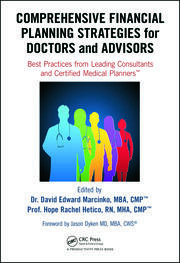
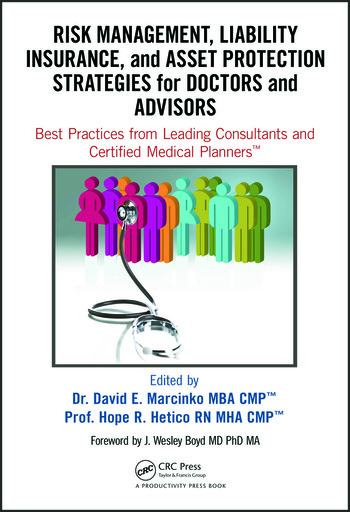
Risk Management, Liability Insurance, and Asset Protection Strategies for Doctors and Advisors: Best Practices from Leading Consultants and Certified Medical Planners™8Comprehensive Financial Planning Strategies for Doctors and Advisors: Best Practices from Leading Consultants and Certified Medical Planners™

***

NEWS: Corona Boosters 2.0

Sub-Variants BA.4 and BA.5

By Staff Reporters

***

***

READ: https://www.msn.com/en-us/health/medical/u-s-rules-out-summer-covid-boosters-to-focus-on-fall-campaign/ar-AA107aqr?cvid=9178f595fefa4fd98b7ec56ac5f90e2e

Re-formulated virus booster shots from Pfizer and Moderna should be on pharmacy shelves by September, a Biden administration official told NBC News.

This means a campaign to release second boosters to a broader swath of the population this summer is being scrapped. These re-tooled shots are intended to provide better protection against the Omicron BA.5 and BA.4 sub-variants, which accounted for more than 90% of new cases in the USA last week.

CITE: https://www.r2library.com/Resource/Title/082610254

***

COMMENTS APPRECIATED

Thank You

***

STOP-LOSS Health Insurance?

What is stop-loss insurance AND how does it work?

By Staff Reporters

***

***

A stop-loss health insurance policy covers claims above a health insurance plan’s retained claims. The claims fund of a self-funded employer will pay claims up to the predetermined deductible for each of the company’s covered employees. The role of the stop-loss is to cover all claims above these deductible levels.

CITATION: https://www.r2library.com/Resource/Title/0826102549

According to RoundStone Insurance, aggregate stop-loss insurance is designed to protect an employer who self-funds their employee health plan from higher-than-anticipated payouts for claims. Stop-loss insurance is similar to high-deductible insurance, and the employer remains responsible for claims below the deductible amount.

An individual stop-loss insurance carrier determines the average expected monthly claims per employee / per month PEPM based on the employer’s history. Then, this figure is multiplied by a percentage ranging from 110%-150%. That determined amount is then multiplied by the enrollment on a monthly basis to establish the aggregate deductible.

DHIMA: https://www.amazon.com/Dictionary-Health-Insurance-Managed-Care/dp/0826149944/ref=sr_1_4?ie=UTF8&s=books&qid=1275315485&sr=1-4

BUSINESS: https://www.amazon.com/Business-Medical-Practice-Transformational-Doctors/dp/0826105750/ref=sr_1_9?ie=UTF8&qid=1448163039&sr=8-9&keywords=david+marcinko

***

COMMENTS APPRECIATED

Thank You

Subscribe to the Medical Executive-Post

***

PODCAST: Google Launches Health Insurance Stop-Loss Company

By Eric Bricker MD

***

Google Starts Stop Loss Company Called Coefficient

Coefficient Will be a Part of the Verily Healthcare Subsidiary Within Google. Coefficient Will Also Be in Partnership and Partly Owned by the Giant, International Reinsurance Company Swiss Re.

***

***

COMMENTS APPRECIATED

Thank You

Subscribe to the Medical Executive-Post

***

ORDER: https://www.routledge.com/Risk-Management-Liability-Insurance-and-Asset-Protection-Strategies-for/Marcinko-Hetico/p/book/9781498725989

DHIMC: https://www.amazon.com/Dictionary-Health-Insurance-Managed-Care/dp/0826149944/ref=sr_1_4?ie=UTF8&s=books&qid=1275315485&sr=1-4

***

GENERAL ELECTRIC: Tri-Partite Company Spin-Offs

By Staff Reporters

***

***

ICYMI: After a celebrated 130-year brand history, last fall GE announced plans to create three new, publicly traded companies, building on its heritage of innovation while marking a new beginning.

CITE: https://www.r2library.com/Resource/Title/082610254

And now, these planned companies have names. So meet the three ways GE plans to evolve from building a world that works to creating a future that does, too:

  • GE HealthCare signals continued confidence and trust from clinicians and will bring better outcomes for patients and health systems.
  • GE Vernova represents GE’s portfolio of energy businesses and commitment to leading the global energy transition.
  • GE Aerospace points to a new era of possibility in aerospace and defense for the company’s aviation business.

Visit GE.com to learn more

INVESTING: https://www.amazon.com/Comprehensive-Financial-Planning-Strategies-Advisors/dp/1482240289/ref=sr_1_1?ie=UTF8&qid=1418580820&sr=8-1&keywords=david+marcinko

***

COMMENTS APPRECIATED

Thank You

***

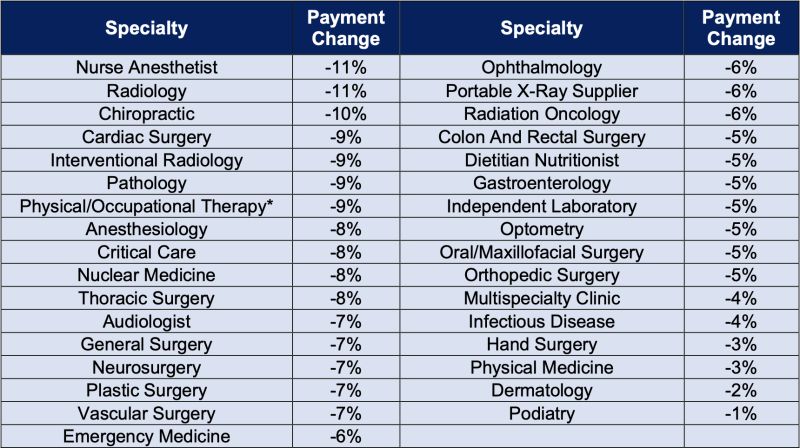
Medicare Cuts by Physician Specialty

Medicare cuts by specialty 1/1/2021

***

***

Product DetailsProduct Details

PODCAST: Why AMAZON CARE Will Fail?

BY Eric Bricker MD

Employee AGE AND Demographics

****

***

Healthcare Costs (Per Person Per Year) by Age:
Less than 18: $3,628
19 – 44: $4,422
45-64: $8,370
65+: $18,424

***

YOUR COMMENTS ARE APPRECIATED.

Thank You

***

Risk Management, Liability Insurance, and Asset Protection Strategies for Doctors and Advisors : Best Practices from Leading Consultants and Certified Medical Planners™ book cover

ORDER: https://www.routledge.com/Risk-Management-Liability-Insurance-and-Asset-Protection-Strategies-for/Marcinko-Hetico/p/book/9781498725989

***

ORDER: https://www.amazon.com/Financial-Management-Strategies-Healthcare-Organizations/dp/1466558733/ref=sr_1_3?ie=UTF8&qid=1380743521&sr=8-3&keywords=david+marcinko

***

AMAZON Buys “One Medical”

***

By Neal Freyman [Morning Brew]

***

Amazon turned and coughed up $3.9 billion to buy One Medical, a primary care provider, in its biggest push yet into health care. It may not be long until your Prime membership comes with a complimentary physical.

What’s One Medical? A company that operates more than 180 medical offices across 25 US markets, offering both in-person and virtual medical services. When it went public as a unicorn in January 2020, it followed a similar trajectory of other high-flying startups: A huge spike when telehealth was in feverish demand, then an equally huge crash to fall well below its IPO price.

The deal for One Medical represents Andy Jassy’s first major acquisition as CEO of Amazon, showing that he’s willing to make bets on growth in certain areas even as he reins in costs in others.

So why is health care a priority?

As you know all too well from every time you pay a medical bill, health care is a massive industry. With a market size of $4 trillion, it accounts for about 20% of the entire US economy. And as Amazon looks to grow outside of its core areas, it sees potential in sending a digital shock wave through a medical industry that’s entangled in a complex web of insurance companies and government regulations.

Not that it’s even clear what a “core” area of Amazon is anymore. Besides its e-commerce marketplace, Amazon has tentacles in cloud services, grocery stores, entertainment, and many other sectors. Basically, we’re about to live in a world where one company owns the James Bond franchise…and also medical clinics.

But Amazon’s infatuation with health care isn’t new. It acquired the online pharmacy PillPack in 2018, and launched its own on-demand health care services one year later. Some projects, like its buzzy joint venture with Berkshire Hathaway and JPMorgan, collapsed, illustrating the challenges for anyone—even Bezos and Buffett—to break into the medical realm.

Those stumbles won’t stop Amazon, or Big Tech in general, from trying. Just this week, Apple released a 60-page report outlining why health care will be a major focus for the company going forward.—NF

***

COMMENTS APPRECIATED

Thank You

***

BUSINESS MEDICINE: https://www.amazon.com/Business-Medical-Practice-Transformational-Doctors/dp/0826105750/ref=sr_1_9?s=books&ie=UTF8&qid=1287563112&sr=1-9

****

PODCAST: Population Health and Patient Economics

HIGH COST MEDICAL CLAIMANTS

CITE: https://www.r2library.com/Resource/Title/0826102549

By Eric Bricker MD

***

***

YOUR COMMENTS ARE APPRECIATED.

ESSAY: https://medicalexecutivepost.com/2019/08/31/is-health-economics-heterodoxic-or-not/

ESSAY: https://www.modernhealthcare.com/education/ama-adopts-new-policy-training-physicians-healthcare-economics

MORE: https://medicalexecutivepost.com/2019/11/10/ricardian-derived-demand-economics-in-medicine/

MORE: https://medicalexecutivepost.com/2014/08/27/financial-and-health-economics-benchmarking/

MORE: https://healthcare

RELATED: https://www.amazon.com/Financial-Management-Strategies-Healthcare-Organizations/dp/1466558733/ref=sr_1_3?ie=UTF8&qid=1380743521&sr=8-3&keywords=david+marcinko

***

Thank You

***

UNICORNS: Successful Private Companies?

The Healthcare, IT AND FINANCIAL Sectors

DEFINITION: A private, non-public, company valued at more than a billion dollars.

CITE: https://www.r2library.com/Resource/Title/0826102549

Now, just five months into 2021, there were 199 new companies that reached unicorn status (a private company with a $1+ billion valuation), eclipsing the 163 companies that reached unicorn status in all of 2020, according to Crunchbase data shared with Emerging Tech Brew. And it’s not just a pandemic rebound: That figure is higher than any full-year total over the last nine years. 

***

***

Landscape lowdown 

After a 2020 full of stagnation and uncertainty, the VC scene is making up for lost time and then some. 

“Many of the concerns…that ground deal making to a halt have largely been alleviated in what many investors see as a new normal,” Joshua Chao, venture capital analyst at PitchBook told us. “We’re now seeing VCs invest in companies outside of their immediate networks and it’s just full steam ahead on deal making and fundraising.” 

Deena Shakir, partner at Lux Capital, said VCs are branching out of their traditional comfort zones to chase opportunities, leading to stiff competition and unprecedented valuations.

  • “Everyone [is] inching further upstream and downstream than their normal sweet spot,” Shakir said. “Hedge funds [are] now leading seed deals and seed funds [are] participating in growth deals.”

Why so exuberant? Blame the same Big Acceleration society underwent since Covid hit: the shift to digital. Tami Hutchinson, VP at Intel Capital, told us the pandemic-fueled digital transformation has now become “a critical must-have for all enterprises,” creating opportunities for startups to serve that need.

Health Care: Health care, financial services, and privacy and security are the most popular sectors for new $1+ billion companies, per Crunchbase. Shakir echoed that idea, saying Lux is most excited by deals at the intersections of “clinical data and AI, hardware and software, care delivery and clinical insights, [and] physical and digital security.”

More proof…

  • In Q1 2021, digital health startups amassed a record $6.7 billion in funding, on pace to eclipse the $14 billion raised in all of 2020.
  • On the fintech side, Webull, the Chinese-owned Robinhood rival, reached unicorn status in February after a $150 million funding round.
  • Israeli cybersecurity firm Wiz is an example of a fresh unicorn in the space—it was valued at $1.7 billion as of May 2021.

Looking ahead…VCs say it’s a safe bet to assume that more billion-dollar companies are on the horizon this year.

“For entrepreneurs, this is possibly one of the most founder-friendly periods we’ve seen in several years—all-time highs for valuations across the board coupled with all-time lows for deals,” Chao said.

ASSESSMENT: Your thoughts and comments are appreciated.

MORE: https://www.amazon.com/Business-Medical-Practice-Transformational-Doctors/dp/0826105750/ref=sr_1_9?ie=UTF8&qid=1448163039&sr=8-9&keywords=david+marcinko

RELATED: https://www.amazon.com/Comprehensive-Financial-Planning-Strategies-Advisors/dp/1482240289/ref=sr_1_1?ie=UTF8&qid=1418580820&sr=8-1&keywords=david+marcinko

THANK YOU

***

Biden Administration to Overhaul Vertical [Health Systems] Merger Guidelines

***

By Health Capital Consultants, LLC

***

***

Biden Administration to Overhaul Vertical Merger Guidelines

The U.S. healthcare industry has seen a rise in vertical integration transactions since the passage of the ACA, especially among physician groups integrating with health systems or insurers, as providers seek to fill gaps in their continuum of care. In response to these trends and resulting market imbalances, the Biden Administration is aggressively pursuing antitrust enforcement by updating and revising U.S. antitrust law guidance.

This Health Capital Topics article will discuss the vertical integration movement and the proposed changes to antitrust laws that may affect the future of healthcare. (Read more…) 

***

CITE: https://www.r2library.com/Resource/Title/0826102549

***

COMMENTS APPRECIATED

Thank You

RELATED: https://www.amazon.com/Financial-Management-Strategies-Healthcare-Organizations/dp/1466558733/ref=sr_1_3?ie=UTF8&qid=1380743521&sr=8-3&keywords=david+marcinko

HOSPITALS: https://www.amazon.com/Hospitals-Healthcare-Organizations-Management-Operational/dp/1439879907/ref=sr_1_4?s=books&ie=UTF8&qid=1334193619&sr=1-4

***

MEDICARE: More Bad News!

By AnneMarie Schieber

A great many physician practices already do not accept Medicare. A recent article in Healthcare News indicates that the trend will only continue.

***

***

READ: https://heartlanddailynews.com/2021/11/medicare-premium-increase-erodes-social-security-inflation-adjustment/

COMMENTS APPRECIATED

Thank You

***

DICTIONARY: https://www.amazon.com/Dictionary-Health-Insurance-Managed-Care/dp/0826149944/ref=sr_1_4?ie=UTF8&s=books&qid=1275315485&sr=1-4

FIVE CONDITIONS: Total 50% of Healthcare Financial Costs

By Staff Reporters

***

***

5 Conditions Total 50% of Healthcare Costs

 •  Cancer makes up nearly 15% of all healthcare spending with employers in the study paying $533 million for nearly 103,000 cancer claims.
 •  Musculoskeletal conditions (including joint wear, knee injuries, hip pain, etc.) makes up 13% of healthcare spending with employers spending $477 million for 317,000 musculoskeletal claims.
 •  Cardiovascular conditions (including heart rhythm issues, stroke, heart attack, and heart failure) makes up 9% of healthcare spending with employers paying $357 million towards 169,000 claims.
 •  Gastrointestinal conditions (including colitis, irritable bowel system, celiac disease, etc.) makes up 7% of healthcare spending with employers paying $284 million for 136,000 claims.
 •  Neurological conditions (including Parkinson’s disease, migraines, epilepsy, etc.) makes up 6% of total health care spending with employers paying $225 million for 240,000 claims.

Source: HAC and UHC via ACDIS, April 14, 2022

CITE: https://www.r2library.com/Resource/Title/082610254

HOSPITALS: https://www.amazon.com/Financial-Management-Strategies-Healthcare-Organizations/dp/1466558733/ref=sr_1_3?ie=UTF8&qid=1380743521&sr=8-3&keywords=david+marcinko

MANAGED CARE: https://www.amazon.com/Dictionary-Health-Insurance-Managed-Care/dp/0826149944/ref=sr_1_4?ie=UTF8&s=books&qid=1275315485&sr=1-4

***

PODCAST: The “Hospital” – A Book Review

By Eric Bricker MD

***

Book Review: ‘The Hospital’ by Brian Alexander –

***

***

HOSPITALS: https://www.amazon.com/Financial-Management-Strategies-Healthcare-Organizations/dp/1466558733/ref=sr_1_3?ie=UTF8&qid=1380743521&sr=8-3&keywords=david+marcinko

HEALTH INSURANCE: https://www.amazon.com/Dictionary-Health-Insurance-Managed-Care/dp/0826149944/ref=sr_1_4?ie=UTF8&s=books&qid=1275315485&sr=1-4

***

COMMENTS APPRECIATED

Thank You

***

PODCAST: Employer Healthcare Priorities

By Eric Bricker MD

A Mercer Employer Survey

***

***

COMMENTS APPRECIATED

Thank You

DHIMC: https://www.amazon.com/Dictionary-Health-Insurance-Managed-Care/dp/0826149944/ref=sr_1_4?ie=UTF8&s=books&qid=1275315485&sr=1-4

MORE: https://www.amazon.com/Financial-Management-Strategies-Healthcare-Organizations/dp/1466558733/ref=sr_1_3?ie=UTF8&qid=1380743521&sr=8-3&keywords=david+marcinko

***

HEALTHCARE POLICY: Blog and Internet Sources of Gravitas

BY DR. DAVID E. MARCINKO MBA CMP®

CMP logo

SPONSOR: http://www.CertifiedMedicalPlanner.org

REFERENCES

https://mises.org/library/mayo-clinic-and-free-market

http://www.kevinmd.com/blog/2017/08/problem-free-market-health-care.html

http://www.healthsharetv.com/content/dr-zeke-emanuel-history-healthcare-reform-us

https://www.pointnurse.com/blog/do-you-have-a-healthcare-blockchain-strategy/

Not Really Insurance: The Pre-Existing Condition Debate

Learn More about Concierge Medicine

http://www.kevinmd.com/blog/2017/04/health-care-right-privilege-cant-answer.html

http://www.healthissocial.com/

http://www.msn.com/en-us/money/markets/brave-new-world-of-bitcoins-what-they-are-and-how-to-buy-them/ar-AAoWUza?li=BBnbfcN

https://www.pointnurse.com/blog/do-you-have-a-healthcare-blockchain-strategy/

http://www.kevinmd.com/blog/2017/06/golden-era-medicine-never-coming-back.html

http://mdwhistleblower.blogspot.com/2016/02/concierge-medicine-is-it-ethical-or.html

http://www.msn.com/en-us/money/healthcare/americas-health-care-crisis-is-a-gold-mine-for-crowdfunding/ar-BBCxjbU?li=BBnbfcN

http://www.msn.com/en-us/money/companies/the-company-behind-many-surprise-emergency-room-bills/ar-AAoKYCK?li=BBnbfcN

https://studymatescom.wordpress.com/

Is Healthcare a Right? A Privilege? Something Entirely Different?

http://www.kevinmd.com/blog/2017/07/moral-assassination-physicians-must-stop.html

http://www.kevinmd.com/blog/2017/01/emphasize-public-health-medical-education.html

Hobson’s Wrong Answer

Is Health Privacy a Human Right?

http://www.kevinmd.com/blog/2016/12/must-temper-unregulated-free-market-philosophy-health-care.html

http://www.kevinmd.com/blog/2017/06/slow-death-private-practices.html

A Primer For Conservatives: Health Insurance is not Really Insurance

http://www.kevinmd.com/blog/2017/06/doctors-pr-problem.html

http://www.kevinmd.com/blog/2017/06/doctors-cops-can-fight-mistrust-way.html

http://www.msn.com/en-us/health/healthtrending/did-a-1980-letter-help-spark-the-us-opioid-crisis/ar-BBBKkM4?li=BBnb7Kz

http://alertandoriented.com/

http://www.sheknows.com/health-and-wellness/articles/1030383/crowdsourcing-health-care

DIY Textbooks: https://medicalexecutivepost.com/2021/04/29/why-are-certified-medical-planner-textbooks-so-darn-popular/

INVITE DR. MARCINKO: https://medicalexecutivepost.com/dr-david-marcinkos-

CONTACT: Ann Miller RN MH

[Executive Director]

MarcinkoAdvisors@msn.com

***

Justice Recovers $5B from Healthcare Fraud Cases in 2021

By Staff Reporters

***

***

The Justice Department’s (JD) efforts returned almost $1.9 billion to the federal government or paid it out to private individuals. Of that money, about $1.2 billion went to the Medicare trust fund. About $98.7 million in federal Medicaid money was transferred to CMS. The JD opened 831 criminal healthcare fraud cases last year. Federal prosecutors filed criminal charges in 462 cases involving 741 defendants. A total of 312 defendants were convicted of healthcare fraud during the year. The JD opened 805 civil healthcare fraud investigations and had 1,432 civil healthcare fraud matters pending at the end of last year. 

HHS Office of the Inspector General (OIG) investigations resulted in 504 criminal actions against individuals or entities accused of Medicare- and Medicaid-related crimes. The OIG filed 669 civil actions, which included false claims and unjust-enrichment lawsuits filed in federal district courts, and civil monetary penalties. The OIG excluded 1,689 individuals and entities from participating in federal healthcare programs, including Medicare and Medicaid. 

Source: Andrew Cass, Becker’s Hospital Review

***

COMMENTS APPRECIATED

Thank You

***

***

UPDATE: Markets, Twitter, Theranos and the ‘Pass-Through’ Tax Loophole

By Staff Reporters

***

***

  • Markets: The S&P climbed for its fourth-straight trading day, tying its best winning streak in 2022 (h/t chip and energy companies). But, at 8:30am ET today, with the release of the June jobs report, any sign of a recession will show up.
  • Elon Musk could take drastic action to back out of his $44 billion agreement to buy Twitter, according to the Washington Post. Apparently Musk’s team cannot verify the data on bots that were provided to them and therefore are looking to exit the agreement.
  • Former Theranos executive Sunny Balwani was convicted of defrauding investors and patients in his role as president and COO of the company.

Finally, under proposed IRS changes, individuals who make more than $400,000 annually and couples who make more than $500,000 will have to pay a 3.8% tax on earnings from their pass-through business income. Those revenues would be used to shore up the government-run Medicare healthcare program for the elderly. A pass-through business is a sole proprietorship, partnership, or S corporation that is not subject to the corporate income tax; instead, this business reports its income on the individual income tax returns of the owners and is taxed at individual income tax rates.

***

COMMENTS APPRECIATED

Thank You

FINANCE: https://www.amazon.com/Comprehensive-Financial-Planning-Strategies-Advisors/dp/1482240289/ref=sr_1_1?ie=UTF8&qid=1418580820&sr=8-1&keywords=david+marcinko

***

AMA: Doctors Committed to Tele-Health

By AMA / MCOL

***

***

AMA: Doctors Committed to Tele-Health

 •  More than 80% said patients have better access to care since using telehealth.
 •  62% believe patients have higher satisfaction since offering telehealth.
 •  60% agreed telehealth enabled them to provide high-quality care.
 •  56% are motivated to increase telehealth use in their practices.
 •  44% indicated that telehealth decreased the costs of care.

Source: AMA, April 1, 2022

***
COMMENTS APPRECIATED

Thank You

***

***

***

DICTIONARY: Health Economics and Finance

By Dr. David Edward Marcinko MBA CMP

CMP logo

COURTESY: http://www.CertifiedMedicalPlanner.org

***

FOREWORD

***

***
ORDER: https://www.r2library.com/Resource/Title/0826102549

***

VALUATION: Home Health Agencies [Technological Environment]

By Health Capital Consultants, LLC

***

***

Valuation of Home Health Agencies: Technological Environment

With home healthcare providers increasingly being viewed as a critical link in the array of patient-centered healthcare services aimed to bring care back into the community, technology will likely play a more prominent role in managing patient populations in need of home healthcare services.

CITE: https://www.r2library.com/Resource/Title/082610254

The final installment of this five-part series on the valuation of home health agencies (HHAs) will discuss the growing role of technology in home healthcare and the challenges of utilizing this technology post-COVID-19. (Read more…) 

***

COMMENTS APPRECIATED

Thank You

***

***

Q1 2022 – The Entrepreneurial Digital Health Financing Boom Chills

By Phil Taylor

***

***

US digital health company investment financing experienced a dip in Q1 of 2022, dropping to $6 billion from the $6.7 billion invested in Q1 2021. In addition, the average size of each investment deal dropped from $46 million last year to just shy of $33 million. These declines come after a boom in investments in recent years. The Rock Health Digital health securities index also reflected this year’s trend, including special purpose acquisition company (SPAC) listings.

According to Phil Taylor of PharmaPhorum, “SPACs have been a popular route to public listing for digital health as well as many other sectors, but the deals have underperformed, with steep declines in share prices after they closed that has “exerted downwards pressure” on the Rock Health Digital Health Index (RHDHI).”

Read more by clicking here

SPACs: https://medicalexecutivepost.com/2021/11/12/spac-popularity-soaring-in-healthcare/

***

COMMENTS APPRECIATED

Thank You

Subscribe to the Medical Executive-Post

***

***

***

What is Stock Price BREADTH?

By Staff Reporters

***

The market is made up of thousands of stocks. And on any given day, investors are actively buying and selling them. This measure looks at the amount, or volume, of shares on the NYSE that are rising compared to the number of shares that are falling.

Link: https://medicalexecutivepost.com/2022/05/01/what-up-vix/

A low (or even negative) number is a bearish sign. The Fear & Greed Index uses decreasing trading volume as a signal for Fear.

CITE: https://www.r2library.com/Resource/Title/0826102549

The formula: Breadth Line Value= (No. of Advance Stocks – No of Decline Stocks) + Breadth Line Value of the Previous day. When the number of advance stocks exceeds the number of the decline stocks then the breadth line will rise and vice versa.

***

COMMENTS APPRECIATED

Thank You

***

***

PODCASTS: 36 Blue Cross / Blue Shield Organizations Explained

By Eric Bricker MD

By Laurence Baker MD

***

***

***

COMMENTS APPRECIATED

Thank You

***

***

A Doctor – Economist’s Solution for Health Reform

My Laundry Wish List for all US Healthcare Stakeholders

By Dr. David Edward Marcinko; MBA, CMP™

[Publisher-in-Chief]Fox News

As President Obama spoke, prodded and cajoled for Congress to pass HR 3200-3400 in 2008, I believe that for any healthcare reform effort to work successfully for the American people – for the long term – we need to consider the following in no particular prioritized order:

  • Insurance portability uncoupled from patient employment
  • Health insurance regional exchanges with inter-state purchase competition
  • Doctor, drug, DME and hospital pricing and payment transparency for HSAs, and all of us
  • Modifying or eliminating AMA owned CPT Codes®; a huge money maker for them
  • Abandoning ala’ carte medicine for values-based outcomes
  • Reduce JCAHO influence; encourage competition from Norwegian Det Norske Veritas [DNV]
  • Reduce big-pharma influence thru-out the entire medical education, career and care pipeline
  • End DTC advertising from big-pharma
  • Promote wholesale drug purchase competition, MC bidding and generic drugs
  • Encourage evidence-based medicine, not expert-based medicine
  • Less pay for medical specialists with a  re-evaluation of the hospitalist concept
  • Advance the dying art of physical diagnosis, teach and embrace Paretto’s 80/20 rule for clinic issues
  • Reduce lab test, diagnostic imaging and testing
  • Encourage private 24/7/365 medical offices and clinics; and on-site and retail clinics
  • Abandon P4P, medical homes and disease management ideas
  • Give more economic skin-in-game to patients relative to health benchmarks
  • Concretize the “never-event” prohibitions and include a list of patient health responsibilities
  • More pay for primary care docs and internists
  • Adopt digital records and cloud computing for patients
  • Phase in true eHRs incrementally; and abandon CCHIT for open source SaaS
  • Promote Health 2.0 social media.
  • Augmented scope of practice, numbers and pay for NPs and DNPs, etc
  • Reduce pay for CRNAs and increase it for staff RNs
  • Develop step down triage and treatment units to reduce the number of full service ERs
  • Increase medical, osteopathic, dental, optometric and podiatric medical school classes
  • Increased practice scope for dentists, podiatrists and optometrists
  • Make some sort of catastrophic HI mandatory, much like auto insurance for all
  • End pre-existing conditon health insurance contract clauses
  • More choice  and end of life control for the terminally ill patient
  • Increase marketplace competition with fewer political and financial “externalities”.
  • Teach basic healthcare topics in school and encourage physical exercise
  • Health and insurance education should be, but is not, the “answer” for Americans
  • Protect borders and discourage undocumented illegals
  • Adopt medical malpractice tort reform
  • Make all stakeholders fiduciaries
  • No public “option” unless you like food stamps, Section 8 housing, public transportation and schools
  • Budget deficit neutrality
  • Slow down!

Assessment

Recently, while in the Baltimore/Washing area, I was asked by several reporters to opine on the healthcare debate; which I did so freely having never been known as the shy type. And, regular readers will note that many of these items have been used as posts or comments on this ME-P. Unfortunately, my “laundry list” interview was pre-empted by two local but boisterous town-hall meetings with respective passionate politicians. It was redacted no doubt, but never broadcast. Thus, I missed the potential for my “five minutes” of fame. C’est la vive!

Conclusion

There you have it; direct and straight forward. And so, your thoughts and comments on this Medical Executive-Post are appreciated. Feel free to review our top-left column, and top-right sidebar materials, links, URLs and related websites, too. Then, be sure to subscribe to the ME-P. It is fast, free and secure.

Link: http://feeds.feedburner.com/HealthcareFinancialsthePostForcxos

Speaker: If you need a moderator or speaker for an upcoming event, Dr. David E. Marcinko; MBA – Publisher-in-Chief of the Executive-Post – is available for seminar or speaking engagements. Contact: MarcinkoAdvisors@msn.com

Our Other Print Books and Related Information Sources:

Practice Management: http://www.springerpub.com/prod.aspx?prod_id=23759

Physician Financial Planning: http://www.jbpub.com/catalog/0763745790

Medical Risk Management: http://www.jbpub.com/catalog/9780763733421

Healthcare Organizations: www.HealthcareFinancials.com

Health Administration Terms: www.HealthDictionarySeries.com

Physician Advisors: www.CertifiedMedicalPlanner.com

THANK YOU

Anthem is Now Elevance Health

By Jakob Emerson, beckerspayer.com

***

***

The company formerly known as Anthem commemorated its official rebranding to Elevance Health on June 28th by ringing the opening bell at the New York Stock Exchange and beginning to trade under the new ticker symbol “ELV”. The former Anthem website now reflects the name change, which is a combination of the words elevate and advance to represent the company’s commitment to “elevating the importance of whole health and advancing health beyond healthcare for consumers.”

When it first announced the rebrand in March, the payer said Blue Cross Blue Shield health plan names would not change, though it planned to narrow the number of brands under its umbrella. The company owns BCBS plans in 14 states. On June 15, the company launched two new subsidiaries under the Elevance name: Carelon and Wellpoint.

Carelon, a healthcare services brand, will consolidate the company’s existing portfolio of capabilities and services businesses under a single name. The Wellpoint health plan brand will unify the company’s Medicare, Medicaid, and commercial health plans in select markets.

***

COMMENTS APPRECIATED

Thank You

***

***

IMHO @TeamCigna Should Treat their Dentists Better!

***

By Darrell Pruitt DDS

***

***

“How Is The Market Feeling About Cigna?” Spoiler – According to Benzinga insights, the market is not optimistic about Cigna’s future. Neither am I. But then, I’m only their clients’ dentist.

Link: https://www.benzinga.com/short-sellers/22/06/27888029/how-is-the-market-feeling-about-cigna

Tomorrow is my last day as a Cigna Preferred Provider .. Never Again!

***

COMMENTS APPRECIATED

Thank You

***

***

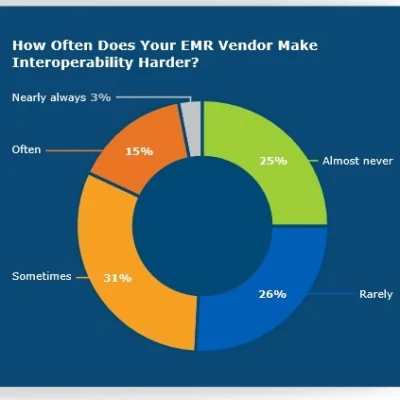
PODCAST: Healthcare I.T. Interoperability Rankings

By Eric Bricker MD

***

***

PODCAST: https://www.youtube.com/watch?v=yQSY957s_GY

***

COMMENTS APPRECIATED

Thank You

***

***

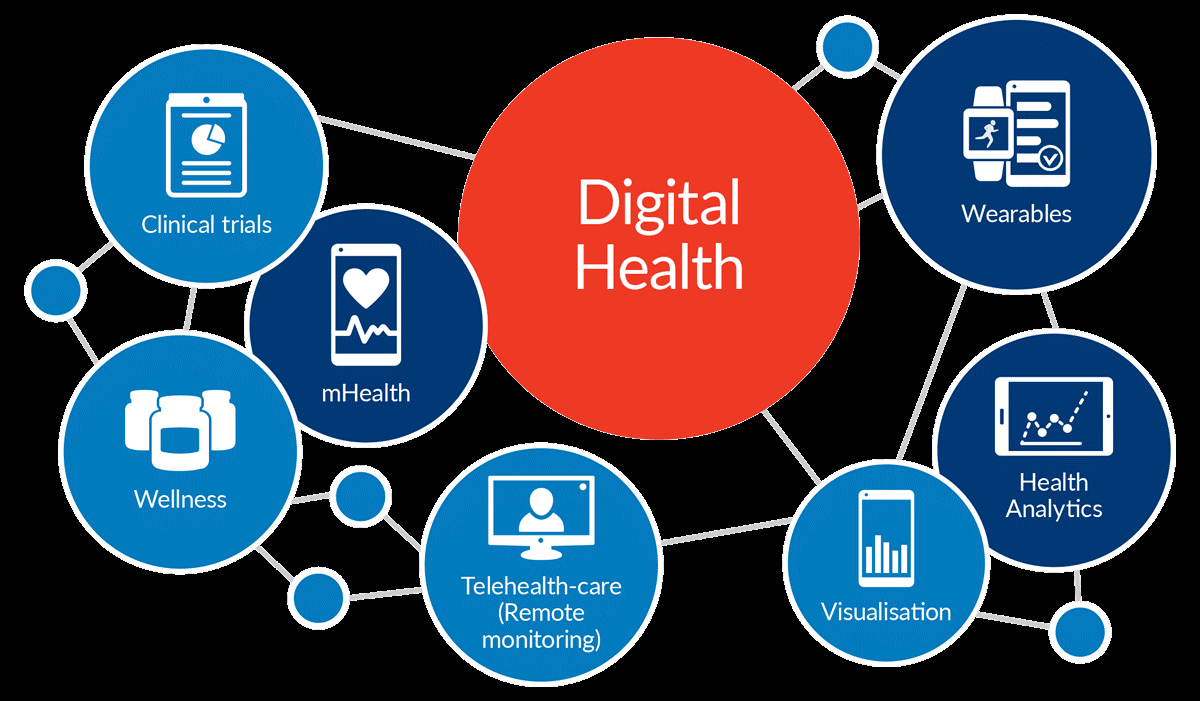
HEALTH TECH: Technology Giants?

***

Dr. Bertalan Meskó, MD PhD

***


The Medical Futurist

***

  • Google in healthcare: The search giant has repeatedly successfully transferred its in-depth knowledge of algorithms in the field of medicine, particularly since it acquired DeepMind.
  • Apple in healthcare: Apple will keep on working on expanding the health features of its devices, Apple Watch and iPhones included.
  • Microsoft in healthcare: Microsoft’s cloud solutions provide integrated capabilities that make it easier to improve the healthcare experience.
  • Amazon in healthcare: Amazon will make further use of its vast knowledge of online shopping trends and behavior and will keep on providing what people need, from medicine to wearables.
  • IBM in healthcare: IBM has a lot to offer in federated learning, blockchain, and quantum computing
  • Nvidia in healthcare: NVIDIA seems incredibly focused on its approach to healthcare. We can expect NVIDIA to be a leader in the use of artificial intelligence in healthcare
  • Facebook in healthcare: The Metaverse developed by Facebook/Meta has incredible potential to revolutionize healthcare.

***

COMMENTS APPRECIATED

Thank You

***

***

MARK CUBAN’s: “Cost Plus Drugs”. com

By Staff Reporters

***

***

Mark Cuban: The billionaire owner of the Dallas Mavericks just launched an online pharmacy for generic drugs that looks to cut out middlemen and combat pharmaceutical industry price gouging by offering steep discounts.

Set up as CostPlusDrugs.com with 100 generic drugs to treat conditions like diabetes and asthma. Cost Plus will not accept health insurance but claims its prices will still be lower than what people would typically pay at a pharmacy.

“All drugs are priced at cost plus 15%!” Cuban tweeted.

READ: https://medicalexecutivepost.com/2022/01/23/podcast-the-mark-cuban-cost-plus-drug-co-mccpdc/

***

COMMENTS APPRECIATED

Thank You

***

***

PODCAST: Health Tech Faves & Investment Trends from Entrepreneurs

START-UPS AND INNOVATIONS

Health tech investment raced ahead in 2020. Join innovation insiders for a discussion on new health technologies, health-care’s digital transformation timeline, and what to expect for mid- to long-term health tech investment.

Health Care Technology Today | Canadian Physiotherapy ...

PODCAST: https://www.healthsharetv.com/content/golive-webinar-health-tech-faves-investment-trends-innovation-insiders

Your thoughts are appreciated.

THANK YOU

***

HEALTHCARE MERGERS & ACQUISITIONS: 2021 in Review

By Staff Reporters

***

Healthcare Partnerships – 5 Takeaways

 •  This year had the largest percentage of announced “mega merger” transactions in the last six years at 16.3% and, in more than one out of every 10 transactions, the smaller partner had a credit rating of A- or higher in 2021.
 •  Since 2011, average smaller partner size by annual revenue has increased at a compound annual growth rate (CAGR) of approximately 8.0%.
 •  Transactions involving a not-for-profit partner represented 87% of announced transactions.
 •  Transactions involving rural or urban/rural sellers increased to 31% of announced transactions.

Source: KaufmanHall, January 10, 2022

CITE: https://www.r2library.com/Resource/Title/082610254

****

COMMENTS APPRECIATED

Thank You

Subscribe to the Medical Executive-Post

***

***

The Real Economic Business Cycle?

REALLY?

By Dr. David Edward Marcinko MBA

***

The business cycle is also known as the economic cycle and reflects the expansion or contraction in economic activity. Understanding the business cycle and the indicators used to determine its phases may influence investment or economic business decisions and financial or medical planning expectations. 

Although often depicted as the regular rising and falling of an episodic curve, the business cycle is very irregular in terms of amplitude and duration. Moreover, many elements move together during the cycle and individual elements seldom carry enough momentum to cause the cycle to move.  

However, elements may have a domino effect on one another, and this is ultimately drives the cycle, too.  We can also have a large positive cycle, coincident with a smaller but still negative cycle, as may be seen in the current healthcare climate of today. 

  1. First Phase: Trough to Recovery (service and production driven)

Scenario: A depressed GNP leads to declining industrial production and capacity utilization. Decreased workloads result in improved labor productivity and reduced labor (unit) costs until actual producer (wholesale) prices decline. 

  1. Second Phase: Recovery to Expansion (patient and consumer driven)

Scenario: CPI declines (due to reduced wholesale prices) and consumer real income rises, improving consumer sentiment and actual demand for consumer goods. 

  1. Third Phase: Expansion to Peak (service and production driven)

Scenario: GNP raises leading to increased industrial production and capacity utilization. But, labor productivity declines and unit labor costs and producer (wholesale) prices rise. 

  1. Fourth Phase: Peak to Contraction (patient and consumer driven)

Scenario: CPI rises making consumer real income and sentiment erode until consumer demand, and ultimately purchases, shrink dramatically.  Recessions may occur and economists have an alphabet used to describe them.  

For example, with a “V” graph shape, the drop and recovery is quick. For a “U” shaped graph, the economy moves up more sluggishly from the bottom. A “W” is what you would expect: repeated recoveries and declines. An “L” shaped recession describes a prolonged dry economic spell or even depression.

And now, the REAL Cycle?

MORE: https://etonomics.com/2021/11/09/real-business-cycle-theory/

***

COMMENTS APPRECIATED

Thank You

***

***

PODCAST: Roadmap to a High Performance Employee Health Plan

By Eric Bricker MD

***

***

COMMENTS APPRECIATED

Thank You

***

CITE: https://www.r2library.com/Resource/Title/082610254

***

***

SURVEY: Medicare Part C Plan Enrollment

By Staff Reporters

***

***

Total Medicare Advantage Enrollment 2016-2021

 •  2016: 18M
 •  2017: 19M
 •  2018: 20M
 •  2019: 22M
 •  2020: 24M
 •  2021: 26M

Source: OIG, “Some Medicare Advantage Organization Denials of Prior Authorization Requests Raise Concerns About Beneficiary Access to Medically Necessary Care,” April 2022

***

COMMENTS APPRECIATED

Thank You

***

***

***

PODCAST: Hospital SUPPLY CHAIN Status

By Staff Reporters

***

Hospital Supply Chain Optimization Status: Survey Results

A recent survey from Syft of 100 hospital and supply chain leaders found:

 •  65% said better supply chain management could improve margins by 1-3%, with 23% of respondents believing margins can improve by more than 3%.
 •  94% agreed that supply chain analytics can reduce supply chain costs. 76% said it can improve quality.
 •  24% said their organizations identify supply standardization opportunities very well.
 •  32% said it would cost their organizations more than $500,000 annually to meet new supply chain regulations like California Assembly Bill 2357.

Source: Syft via. PRNewswire, December 8, 2021

***

PODCAST: https://medicalexecutivepost.com/2021/08/04/podcast-medical-supply-chain-management/

COMMENTS APPRECIATED.

***

MORE: https://www.amazon.com/Hospitals-Healthcare-Organizations-Management-Operational/dp/1439879907/ref=sr_1_4?s=books&ie=UTF8&qid=1334193619&sr=1-4

***

HOSPITALS https://www.amazon.com/Financial-Management-Strategies-Healthcare-Organizations/dp/1466558733/ref=sr_1_3?ie=UTF8&qid=1380743521&sr=8-3&keywords=david+marcinko

***

THANK YOU

What is an [Famous] ECONOMIST?

The Top 15 Most Famous?

By Staff Reporters
***

***

15 Famous Economists and Their Contributions That’ll Truly Amaze You

According to Wikipedia, an economist is a professional and practitioner in the social science discipline of economics. The individual may also study, develop, and apply theories and concepts from economics and write about economic policy. Within this field there are many sub-fields, ranging from the broad philosophical theories to the focused study of minutiae within specific markets, macroeconomic analysis, microeconomic analysis or financial statement analysis, involving analytical methods and tools such as econometrics, statistics, economics computational models, financial economics, mathematical finance and mathematical economics.

CITE: https://www.r2library.com/Resource/Title/082610254

***

The Famous 15

READ: https://historyplex.com/famous-economists

***

COMMENTS APPRECIATED

Thank You

***

***

Is the Economy and Stock Market Entering a “Minsky Moment”?

The different phases leading to a “Minsky Moment”

[By Dr. David E. Marcinko MBA]

With all the stock market volatility lately, and the recent declines signaling a potential bear market from both fundamentalists and chartists, I have to ask this question:

Q = Are we entering a stock market Minsky Moment?

DEFINITION

A Minsky moment is a sudden major collapse of asset values which is part of the credit cycle or business cycle. Such moments occur because long periods of prosperity and increasing value of investments lead to increasing speculation using borrowed money. The spiraling debt incurred in financing speculative investments leads to cash flow problems for investors. The cash generated by their assets is no longer sufficient to pay off the debt they took on to acquire them. Losses on such speculative assets prompt lenders to call in their loans. This is likely to lead to a collapse of asset values. Meanwhile, the over-indebted investors are forced to sell even their less-speculative positions to make good on their loans.

However, at this point no counterparty can be found to bid at the high asking prices previously quoted. This starts a major sell-off, leading to a sudden and precipitous collapse in market-clearing asset prices, a sharp drop in market liquidity, and a severe demand for cash.

CITE: https://www.r2library.com/Resource/Title/082610254

A  more general meaning is to say that a “Minsky Cycle” features a series of Minsky Moments … in which a period of stability encourages risk taking, which leads to a period of instability, which causes more conservative and risk-averse (de-leveraging) behavior, until stability is restored, continuing the cycle. In this more general view, the Minsky Cycle may apply to a wide range of human activities, beyond investment economics.

History

The term was coined by Paul McCulley of PIMCO in 1998, to describe the 1998 Russian financial crisis,and was named after economist Dr. Hyman Minsky, who noted that bankers, traders, and other financiers periodically played the role of arsonists, setting the entire economy ablaze. Minsky opposed the deregulation that characterized the 1980s.

Some, such as McCulley, have dated the start of the financial crisis of 2007–2010 to a Minsky moment, and called the following crisis a “reverse Minsky journey”; McCulley dates the moment to August 2007, while others date the start to some months earlier or later, such as the June 2007 failure of two Bear Stearns funds.

***

***

Assessment

The concept has some parallels with Austrian business cycle theory although Minsky himself was known as a Keynesian and is identified as a post-Keynesian—as is McCulley.

Conclusion

Your thoughts and comments on this ME-P are appreciated. Feel free to review our top-left column, and top-right sidebar materials, links, URLs and related websites, too. Then, subscribe to the ME-P. It is fast, free and secure.

Speaker: If you need a moderator or speaker for an upcoming event, Dr. David E. Marcinko; MBA – Publisher-in-Chief of the Medical Executive-Post – is available for seminar or speaking engagements.

Book Marcinko: https://medicalexecutivepost.com/dr-david-marcinkos-bookings/

Subscribe: MEDICAL EXECUTIVE POST for curated news, essays, opinions and analysis from the public health, economics, finance, marketing, IT, business and policy management ecosystem.

DOCTORS:

“Insurance & Risk Management Strategies for Doctors” https://tinyurl.com/ydx9kd93

“Fiduciary Financial Planning for Physicians” https://tinyurl.com/y7f5pnox

“Business of Medical Practice 2.0” https://tinyurl.com/yb3x6wr8

HOSPITALS:

“Financial Management Strategies for Hospitals” https://tinyurl.com/yagu567d

“Operational Strategies for Clinics and Hospitals” https://tinyurl.com/y9avbrq5

***

Risk Management, Liability Insurance, and Asset Protection Strategies for Doctors and Advisors: Best Practices from Leading Consultants and Certified Medical Planners™8Comprehensive Financial Planning Strategies for Doctors and Advisors: Best Practices from Leading Consultants and Certified Medical Planners™

PODCAST: The “Medical Trend”?

By Eric Bricker MD

***

***

COMMENTS APPRECIATED

Thank You

***

MORE: https://medicalexecutivepost.com/2022/01/25/global-medical-trends-healthcare-cost-increases/

***

***

PODCAST: Optum – The $101 Billion Division of United Health Group Explained

By Eric Bricker MD

***

PODCAST: https://www.youtube.com/watch?v=dHAr0s33Gns

RELATED: https://www.youtube.com/watch?v=-21-h5lZBEU

***

***

***

COMMENTS APPRECIATED

Thank You

***

How Much Do You Earn Dr. Dad … or Dr. Mom?

Join Our Mailing List

Your Children and Your Money

Rick Kahler MS CFPBy Rick Kahler CFP

As a doctor – Do your kids know how much money you make? If not, and they asked, would you feel comfortable telling them?

My hunch is that the most common answer to both these questions is “No.” Talking about money is such a strong taboo that it often keeps us from sharing information about our earnings and net worth even with members of our immediate families.

Yet being honest with children about what we earn and how we spend it is a perfect opportunity to teach them important life lessons about money.

Here are a few suggestions to foster those conversations:

  1. Take advantage of teachable moments. As with many other big questions, like where babies come from or whether cats go to heaven (personally, I doubt it, but that may say more about my prejudices than my theology), the ideal time to answer money questions is when the kids ask.
  2. Provide context for numbers. To a child who gets an allowance of five bucks a week, either $10,000 or $100,000 a year can seem huge. One way to put those numbers into context is with comparisons: “I earn about the same amount as your teachers do,” or, “Most doctors probably earn about twice as much as our family does.”
  3. Talk about expenses as well as income. This is huge. It’s another important way of providing context. Plus it helps open kids’ eyes to the realities of earning and spending. When my kids, at about age 10 and 14, first asked about my income, they were impressed with how high the number was. Then we looked at the family expenses: house payment, health insurance, food, college savings, and everything else. They were even more impressed. Seeing what things cost and where the money goes is a good start to educating kids about spending, saving, and creating healthy money habits.
  4. Share appropriately for kids’ ages and understanding. Seven-year-olds and 13-year-olds aren’t ready for the same information. Don’t underestimate your kids’ comprehension, however; if you encourage them to ask questions and are willing to explain and clarify, they may understand more than you expect.
  5. Tell the truth. If you have financial difficulties that stem from your own money mistakes or other bad choices, being honest with your kids can be a powerful teaching opportunity. If you don’t earn a lot but are managing to take care of the family, that’s something to be proud of. If your kids may inherit substantial amounts, it’s wise to start teaching them early how to deal with wealth. Whether you have a net worth in the millions or are barely getting by from month to month, clean honesty about the family finances is a good policy.
  6. Remember that you’re the adult. Over-sharing about financial challenges can frighten your kids. It’s more useful to be matter-of-fact about problems and focus on what you’re doing to solve them.
  7. Keep in mind that when parents don’t talk about money, kids will make up their own stories. Typically this will be either that you earn and have more than you do, or that the family is on the brink of bankruptcy and homelessness.
  8. Look at your own shame and secrecy about money. If parents never talk about money, kids may never ask money questions. Either the topic is simply not on their radar, or they have internalized the unspoken message that it is off limits. In either case, parents can change the family culture by becoming more open about their finances. Those teachable moments for kids begin to happen when money is no longer a secret.

***

Doctor salary

***

More:

Conclusion

Your thoughts and comments on this ME-P are appreciated. Feel free to review our top-left column, and top-right sidebar materials, links, URLs and related websites, too. Then, subscribe to the ME-P. It is fast, free and secure.

Speaker: If you need a moderator or speaker for an upcoming event, Dr. David E. Marcinko; MBA – Publisher-in-Chief of the Medical Executive-Post – is available for seminar or speaking engagements. Contact: MarcinkoAdvisors@msn.com

OUR OTHER PRINT BOOKS AND RELATED INFORMATION SOURCES:

[PHYSICIAN FOCUSED FINANCIAL PLANNING AND RISK MANAGEMENT COMPANION TEXTBOOK SET]

  Risk Management, Liability Insurance, and Asset Protection Strategies for Doctors and Advisors: Best Practices from Leading Consultants and Certified Medical Planners™ Comprehensive Financial Planning Strategies for Doctors and Advisors: Best Practices from Leading Consultants and Certified Medical Planners™

***

More on Concierge, Retail, Cash Pay and Boutique Medicine; etc [SAM’S CLUB]

Sam’s Club Launches Innovative Pilot to Help Make Healthcare More Affordable


cropped-dem

By Dr. David E. Marcinko MBA CMP

I devoted a full chapter of my book; “The Business of Medical Practice” to concierge and boutique medicine, retail medicine, direct, cash and private pay medicine; etc. We included terms and definitions, process and methodologies, marketing and advertising, and examples, etc. In fact, who knew I was so prescient and the landscape would finally begin evolving.

For example, we recently learned about Sam’s Club offering targeted “bundles” of health care services collaborating with Humana. https://lnkd.in/ejHGGzk

And, earlier, we learned of Amazon’s new virtual / primary care clinic model. And of course, in the past couple of weeks, Walmart’s (Sam’s affiliate) opening their freestanding clinics, along with new behavioral health services, as well.

 ******

Assessment: Your thoughts are appreciated.

THANK YOU

Product DetailsProduct Details

***

SURVEY: Surgical Cost Spending

By MCOL

***

***

EHIR was started nearly a decade ago out of a need for objective support in identifying and assessing emerging solutions to sift through the noise and stay ahead of the curve amid a rapidly changing competitive landscape. EHIR provides a streamlined and efficient innovation intake and evaluation process along with valuable insights to the world’s leading employers.

CITE: https://www.r2library.com/Resource/Title/082610254

Employer Health Innovation Roundtable, LLC

4 KEY Findings

 •  The survey found that 59% indicated lowering costs was a very high, or high, priority – up from 52% prior to the pandemic.
 •  Over half of the employers surveyed indicated that surgical costs were a significant issue, with surgery accounting for 34% of their total healthcare spend. About 75% noted that by controlling surgery costs, they can largely reduce their total spend.

***

*  Even though 69% of employers have a COE (Center of Excellence), the majority of them have been implemented within the past two years, and not with an eye to specifically reducing surgical costs.
 *  Only 9% of respondents rely on carrier-sponsored COEs, which suggests that they are seeking out third-party vendors for this benefit, as either the sole COE provider or as a partner with the employer’s health plan carrier.
Source: EHIR and Carrum Health via PRNewswire, May 4, 2022

***

COMMENTS APPRECIATED

Thank You

***

***

***