Of Interest to MD and FA Philanthropists

About The New Center on Philanthropy

By Staff Reporters

Join Our Mailing List 

Major philanthropists and those successful doctors [and their patients], and affluent financial advisors [and their clients], about to join their ranks increasingly want information about which organizations with causes matching their interests are receiving large gifts, where their peers are giving and where gaps in funding may exist.

Now, they have a new tool that can help them decide where, when and why to make gifts of $1 million or more.

Last week, Indiana University’s Center on Philanthropy rolled out a searchable database of more than 60,000 large, publicly reported gifts it has compiled since 2000. The Million Dollar List covers gifts from individuals, foundations and corporations.

What it is – How it works

The Center on Philanthropy at the Indiana University is a leading academic center dedicated to increasing the understanding of philanthropy and improving its practice through research, teaching, public service and public affairs. Founded in 1987, the Center is a part of the Indiana University School of Liberal Arts at Indiana University-Purdue University Indianapolis.

The Center was founded as the result of the convergence of two ideas.

First, some people recognized the need to professionalize fundraising and to create a permanent, university-based home for The Fund Raising School. Second, others were interested in building knowledge about the philanthropy field through an inter-disciplinary approach grounded in the liberal arts. These ideas, and the goal of bringing scholars and practitioners together to learn from each other, are the founding principles that remain the bedrock of their mission.

Today, the Center says it boasts a thriving research program that informs the work of nonprofit professionals throughout the world. Academic programs related to philanthropy and nonprofit management are attracting from a diverse group of highly talented students. And, The Fund Raising School continues to be the premier international university-based education and training program for fundraisers.

Assessment

So, give em’ a click, and tell us what you think?

http://www.philanthropy.iupui.edu/About/center_overview.aspx

Conclusion

And so, your thoughts and comments on this ME-P are appreciated. Feel free to review our top-left column, and top-right sidebar materials, links, URLs and related websites, too. Then, subscribe to the ME-P. It is fast, free and secure.

Link: http://feeds.feedburner.com/HealthcareFinancialsthePostForcxos

Speaker: If you need a moderator or speaker for an upcoming event, Dr. David E. Marcinko; MBA – Publisher-in-Chief of the Medical Executive-Post – is available for seminar or speaking engagements. Contact: MarcinkoAdvisors@msn.com

Our Other Print Books and Related Information Sources:

Health Dictionary Series: http://www.springerpub.com/Search/marcinko

Practice Management: http://www.springerpub.com/product/9780826105752

Physician Financial Planning: http://www.jbpub.com/catalog/0763745790

Medical Risk Management: http://www.jbpub.com/catalog/9780763733421

Healthcare Organizations: www.HealthcareFinancials.com

Physician Advisors: www.CertifiedMedicalPlanner.com

Subscribe Now: Did you like this Medical Executive-Post, or find it helpful, interesting and informative? Want to get the latest ME-Ps delivered to your email box each morning? Just subscribe using the link below. You can unsubscribe at any time. Security is assured.

Link: http://feeds.feedburner.com/HealthcareFinancialsthePostForcxos

Sponsors Welcomed: And, credible sponsors and like-minded advertisers are always welcomed.

Link: https://healthcarefinancials.wordpress.com/2007/11/11/advertise

Product DetailsProduct DetailsProduct Details       

Product Details  Product Details

   Product Details

Why I Rue the Hospital “Team-Based Medicine” Approach to In-Patient Care

Join Our Mailing List

Or, Whose Patient is it – Anyway?

By Dr. David Edward Marcinko MBA, CMP™

www.CertifiedMedicalPlanner.org

[ME-P Publisher-in-Chief]

Ok, I admit it; I may be an aging curmudgeon [just ask my wife and daughter] who has not regularly seen patients in the office for the last decade. A consult here, Independent Medical Examination [IME] there, or a surgical assist when needed has been the extent of my patient experience since my transition out of direct care medicine in 2000-01.

Moreover, I admit to not being an ardent fan of hospital-based medicine [with all due respect to colleague and uber-hospitalist Robert Wachter MD, who I admire and have frequently mentioned in my books, white papers, speaking engagements and here on this Medical-Executive Post].

I am also not completely in favor of the many new-fangled “specialties” and medical business models.  And, as recent models and linguistic evolution occurred, the nomenclature designation of hospitalist was followed by that of hospital-intensivist, hospital-proceduralist and hospital-nocturnalist, etc [http://medinnovationblog.blogspot.com and personal communication Richard L. Reece MD].

Enter the Team-Based Hospital Doctors

And now – for the last five years or so on my radar – there is a new term to add to the lexicon: team-based hospital medicine [practice], or similar. But, I ask, whose patient is it? Who is accountable? Where does the buck of responsibility stop?

The Quintessential Example

On Friday, May 9, 2003, a 5-year-old boy was undergoing diagnostic testing for his epilepsy at Children’s Hospital in Boston when he suffered a massive seizure. Two days later, on Mother’s Day, he died. Despite the fact that he was in intensive care at one of the world’s leading pediatric hospitals, none of the physicians caring for him ordered the treatment that could have saved his life.

The death was tragic, but even more troubling from an organizational perspective was the series of events that led up to it. The Massachusetts Department of Public Health investigated the death, and The Boston Globe reported on the results that, “the investigation portrays a situation where lines of authority were deeply tangled, and where no one person had accountability for the patient. Each of the doctors who initially worked on the case–two at the bedside and one consulting by phone–told investigators that they thought one of the others was in charge.” In the end, no one was in charge.

This is a striking example of how even the most talented clinicians in one of the world’s best hospitals can fail not only to provide adequate care, but to save a savable life—all because the lines of authority were unclear. The lack of clarity resulted in this team’s inability to collaborate effectively at a time when the stakes couldn’t have been higher.

Here are two other benign, but more personal, examples circa 2011.

My Personal Experiences

My Sister

This past summer, my sister was in a VA hospital [extremity injuries, nothing serious] for about a week. She was seen by 13 different physicians who were on her “team”; not to mention the plethora of other allied healthcare “team-members”. Me, my wife [RN], and/or her boyfriend [Army Medic and a PA] were at her bedside at least 12-15 hours each day. She was rarely left alone, by design, as we all recalled the admonition of former AMA President Tom R. Reardon MD, to always have a bedside advocate while in the hospital.

Yet, she was offered the wrong medications on one occasion, personally mis-identified twice, and it was obvious that her team-members rarely communicated or discussed her case [by their own admission], or even reviewed her electronic medical records [vistA system] before rounds. Here, the “system is down” was cited as causative: https://medicalexecutivepost.com/2009/09/21/what-is-a-client-server-system

My Dad

Now, later this same year and under the same patient advocate approach, my dad was in two different hospitals sequentially, both using the “team-based” care model. In each, members did not know, or were loathe acknowledging, who was in charge of his case! Malpractice phobia was apparent despite the coterie of, no doubt brilliant, MD/PhD interns, residents and fellows making daily rounds by starring at their shoes. One physician even cited her hectic return from vacation as the reason she examined my dad – for the first time – without reading his paper chart. “Doctors need vacations, too”, was her flippant response when challenged.

Outcomes

Fortunately, our insider knowledge and – shall we say – “charming swagger” was helpful in avoiding major complications with the continuity-of-care in the above two examples. But, most patients are not so blessed!

Our Newest Book

These stories reflect just one of many difficult collaboration challenges in healthcare, today.

In her textbook chapter, Collaborating to Improve Operating Performance in a Changing Healthcare Landscape [Opportunities for Improvement Widespread], contributing author Jennifer Tomasik MS, Principal at CFAR [Center For Applied Research Inc, in Cambridge, MA], focuses on the increasing need for collaboration among physicians, clinicians, hospital executives, and administrative leaders in the dynamic, complex healthcare environment. She looks specifically at collaboration along three different dimensions, including

  • inter-professional teams,
  • institution to institution, and
  • physicians and administrators.

In each instance, she describes useful tools that can be applied to improve collaboration and overall institutional performance—all in the service of providing better patient care.

Assessment

To me, it seems pretty obvious that “hospital team-based” medical care is an oxy-moron. On one hand, it appears to reduce risk, but on the other hand, it appears to reduce quality care as well. Moreover, it also seems to be an invoice generating machine, and revenue enhancing mechanism

And so, beyond this individual ME-P, and its’ tragic and trivial examples, it is important for hospitals and healthcare organizations to improve collaboration. Our patients depend on us to get the philosophy of “hospital team-based” care right, if it is to continue. Otherwise, it will become another good intention, gone awry, in the changing hospital ecosystem that is domestic health care.

Pre-Order Here:

“Healthcare Organizations” [Management Strategies, Tools, Techniques and Case Studies]

In-Process, 425 pages, est., from (c) Productivity Press 2012
http://www.crcpress.com/product/isbn/9781439879900

Product DetailsProduct Details

Conclusion

Your thoughts and comments on this ME-P are appreciated. Feel free to review our top-left column, and top-right sidebar materials, links, URLs and related websites, too. Then, subscribe to the ME-P. It is fast, free and secure.

Link: http://feeds.feedburner.com/HealthcareFinancialsthePostForcxos

Speaker: If you need a moderator or speaker for an upcoming event, Dr. David E. Marcinko; MBA – Publisher-in-Chief of the Medical Executive-Post – is available for seminar or speaking engagements. Contact: MarcinkoAdvisors@msn.com

OUR OTHER PRINT BOOKS AND RELATED INFORMATION SOURCES:

LEXICONS: http://www.springerpub.com/Search/marcinko
PHYSICIANS: www.MedicalBusinessAdvisors.com
PRACTICES: www.BusinessofMedicalPractice.com
HOSPITALS: http://www.crcpress.com/product/isbn/9781466558731
CLINICS: http://www.crcpress.com/product/isbn/9781439879900
ADVISORS: www.CertifiedMedicalPlanner.org
BLOG: www.MedicalExecutivePost.com

Product DetailsProduct DetailsProduct Details

Product Details  Product Details

   Product Details 

For Doctors Who Wish to Retire Wealthy [Despite the Economy?]

Financial Planning for Physicians and Advisors


Financial Planning Handbook for Physicians and Advisors


Speaker: If you need a moderator or speaker for an upcoming event, Dr. David E. Marcinko; MBA – Publisher-in-Chief of the Medical Executive-Post – is available for seminar or speaking engagements. Contact: MarcinkoAdvisors@msn.com


Knowledge Doctors Need to Survive the Financial Crisis on Wall Street

Dictionary of Health Economics and Finance 


Dictionary of Health Economics and Finance


Speaker: If you need a moderator or speaker for an upcoming event, Dr. David E. Marcinko; MBA – Publisher-in-Chief of the Medical Executive-Post – is available for seminar or speaking engagements. Contact: MarcinkoAdvisors@msn.com


The Legal eHR [Extreme Caution Ahead]

Is there such a thing?

By Dr. David Edward Marcinko MBA CMP

[Editor-in-Chief]

Electronic medical and healthcare records [eMRs and eHRs] are a hot topic and the subject of many positive and negative posts and comments on this ME-P; and around the healthcare space. Personally, I am agnostic on the subject – trending against – for most physicians at this point in time.

In other words, the technology is just not there yet regarding “ease of use”, inter-operability, common transmission and security standards, and common platform, etc. This is reminiscent of the early days of the word processing industry, when I first used Edix-Wordex, Leading Edge, Word Perfect, Word Star, ASCII, PFR-Write, PC-Write, etc.  It was both exciting and confusing, being a writer and editor, at that time. Sorta like working in an electronic Tower of Babel; or using the many disparate eHR systems existing today?

I am not a Luditte, however. I’m a former American Health Information Management Association (AHIMA), and Healthcare Information and Management Systems Society (HIMSS), member. And, I’m certain that eHRs will be pervasive one day, but I’ll reserve my opinions, my money and information security, and my patient’s data until then. After all, I am a MSFT-Word® guy today as I thank Bill Gates for consolidating the formerly competitive, and chaotic, word processing software space. Yes, sometimes monopolies are a good thing! 

Malpractice Issues

Moreover, it seems I have been a Cassandra [the daughter of King Priam and Queen Hecuba of Troy] of sorts, crying aloud about the professional liability and medical malpractice issues of eMRS; here on this ME-P, during my speeches and lectures, as wells as in our books and CDs. All to no avail; until now!

Links: https://medicalexecutivepost.com/2009/12/23/will-electronic-records-raise-the-legal-standard-of-care-and-increase-malpractice-risk/

I suppose this is a product of my prior work as a licensed insurance agent for the State of Georgia, a malpractice reviewer, a court approved medical-legal expert witness, and author of the book: “Risk Management and Insurance Planning for Physicians and their Advisors”.

Link: http://www.jbpub.com/catalog/9780763733421

Assessment

Q: And so, is there a legal eHR and is it different from traditional eHRs?

A: You bet there is!

Read Link: http://www.himss.org/content/files/LegalEMR_Flyer3.pdf

Conclusion

And so, your thoughts and comments on this ME-P are appreciated. Think I am still mis-guided, or worse, paranoid? Feel free to review our top-left column, and top-right sidebar materials, links, URLs and related websites, too. Then, subscribe to the ME-P. It is fast, free and secure.

Link: http://feeds.feedburner.com/HealthcareFinancialsthePostForcxos

Speaker: If you need a moderator or speaker for an upcoming event, Dr. David E. Marcinko; MBA – Publisher-in-Chief of the Medical Executive-Post – is available for seminar or speaking engagements. Contact: MarcinkoAdvisors@msn.com

Our Other Print Books and Related Information Sources:

Health Dictionary Series: http://www.springerpub.com/Search/marcinko

Practice Management: http://www.springerpub.com/product/9780826105752

Physician Financial Planning: http://www.jbpub.com/catalog/0763745790

Medical Risk Management: http://www.jbpub.com/catalog/9780763733421

Physician Advisors: www.CertifiedMedicalPlanner.org

   Product Details

On Selling or Transitioning Out of Medical Practice?

We Can Help with a FMV Practice Appraisal – Get a FREE White-Paper

By Ann Miller RN MHA

[Executive-Director]

The www.MedicalBusinessAdvisors.com practice valuation and transition team can help you appraise your medical practice, develop a new associate/partner transition plan, and even help transition your patients.

A Profitable Transition

You can also choose how to “wind-down” or transition out of practice gracefully and economically, as you work with only select patients, on-board a new associate/partner, or sell your practice outright.

Your Practice Business Equity

Either way, we can help you unlock the hard-earned equity in your medical practice and ensure that your patients, and life’s work – are taken care of professionally.

Purchasing and reviewing our books and white-papers is a great way to start. Otherwise – call, or email us, today?

Let’s Talk or e-mail:

770.448.0769

MarcinkoAdvisors@msn.com for a free white paper!

Speaker: If you need a moderator or speaker for an upcoming event, Dr. David E. Marcinko; MBA – Publisher-in-Chief of the Medical Executive-Post – is available for seminar or speaking engagements. Contact: MarcinkoAdvisors@msn.com

Our Other Print Books and Related Information Sources:

Health Dictionary Series: http://www.springerpub.com/Search/marcinko

Practice Management: http://www.springerpub.com/product/9780826105752

Physician Financial Planning: http://www.jbpub.com/catalog/0763745790

Medical Risk Management: http://www.jbpub.com/catalog/9780763733421

Healthcare Organizations: www.HealthcareFinancials.com

Physician Advisors: www.CertifiedMedicalPlanner.com

Product Details


Understanding the Risks of Health 2.0 in Medical Practice

Risk Management and Insurance Strategies for Physicians and Financial Advisors

Insurance and Risk Management Strategies for Physicians and Advisors

Channel Surfing the ME-P

Have you visited our other topic channels? Established to facilitate idea exchange and link our community together, the value of these topics is dependent upon your input. Please take a minute to visit. And, to prevent that annoying spam, we ask that you register. It is fast, free and secure.

Conclusion

Your thoughts and comments on this ME-P are appreciated. Feel free to review our top-left column, and top-right sidebar materials, links, URLs and related websites, too. Then, subscribe to the ME-P. It is fast, free and secure.

Speaker: If you need a moderator or speaker for an upcoming event, Dr. David E. Marcinko; MBA – Publisher-in-Chief of the Medical Executive-Post – is available for seminar or speaking engagements. Contact: MarcinkoAdvisors@msn.com

OUR OTHER PRINT BOOKS AND RELATED INFORMATION SOURCES:

Comprehensive Financial Planning Strategies for Doctors and Advisors: Best Practices from Leading Consultants and Certified Medical Planners(TM)* 8

Video on Being a ‘Real Doctor’

DVM vs MD, etc.

By Dr. David Edward Marcinko MBA

[Publisher-in-Chief]

While discussing the future of medicine at Drexel University in Philadelphia recently [privately and off-the-record], a medical colleague shared the below video with me that strangely struck a chord.

Turf Battles

MD vs DO vs DPM vs DDS vs NP vs ANP vs PA vs DNP vs OD vs PT vs DC etc.

Can you think of any others; formal degrees and designations, or mere turf battles?

Assessment

Trust me … it’s worth 3.55 minutes out of your life to view and ponder.

Link: http://www.xtranormal.com/watch/6868901/veterinarian-vs-md

Conclusion

Have we created a system that is more careless health than health care?

And so, your thoughts and comments on this ME-P are appreciated. Feel free to review our top-left column, and top-right sidebar materials, links, URLs and related websites, too. Then, subscribe to the ME-P. It is fast, free and secure.

Link: http://feeds.feedburner.com/HealthcareFinancialsthePostForcxos

Our Other Print Books and Related Information Sources:

Health Dictionary Series: http://www.springerpub.com/Search/marcinko

Practice Management: http://www.springerpub.com/product/9780826105752

Physician Financial Planning: http://www.jbpub.com/catalog/0763745790

Medical Risk Management: http://www.jbpub.com/catalog/9780763733421

Healthcare Organizations: www.HealthcareFinancials.com

Physician Advisors: www.CertifiedMedicalPlanner.com

Subscribe Now: Did you like this Medical Executive-Post, or find it helpful, interesting and informative? Want to get the latest ME-Ps delivered to your email box each morning? Just subscribe using the link below. You can unsubscribe at any time. Security is assured.

Link: http://feeds.feedburner.com/HealthcareFinancialsthePostForcxos

Sponsors Welcomed: And, credible sponsors and like-minded advertisers are always welcomed.

Link: https://healthcarefinancials.wordpress.com/2007/11/11/advertise

Product DetailsProduct DetailsProduct Details       

Product Details  Product Details

   Product Details 

Recruiting Medical Director

Corvallis Clinic‏

By Judy Kliethermes

Join Our Mailing List 

Corvallis Clinic, a large, physician-owned, multi-specialty clinic located in the heart of Willamette Wine Valley, is seeking a Medical Director. Corvallis Clinic is comprised of 82 providers located at five sites. Founded in 1947, Corvallis Clinic boasts more than 25 specialties and employs 600 medical professionals. Corvallis Clinic serves more than a quarter million people in surrounding communities and has been recognized for superior performance by the American Medical Group Association, the National Committee of Quality Assurance, and the Medical Group Management Association.

The Medical Director will be responsible for EHR implementation and enhancement, risk management, peer review and quality improvement. Additionally, the Medical Director must have experience working with LEAN and Six Sigma concepts as they relate to process improvement. The Medical Director will be charged with encouraging physician involvement and will act as a change agent for the organization.

Furthermore, the Medical Director will be the face of Corvallis Clinic and will be expected to represent the clinic in civic and community events and activities. We are seeking collaborative, patient-focused physician leaders who have strong experience leading physician-owned clinics.

Medical Director candidates must be board-certified and possess a minimum of ten years clinical experience. An MBA or MHA is preferred, but not required. The role is 80% administrative; 20% clinical.

I would welcome your interest.

Sincerely,

Cejka Executive Search
4 CityPlace Dr., Ste. 300
St. Louis, MO 63141
314.236.4429 Office
judyk@cejkasearch.com
http://www.cejkaexecutivesearch.com


The Sick Cost of Medical Paperwork – Maybe?

Join Our Mailing List 

[By Staff Reporters]

If there’s one thing Americans can agree upon 100%, it’s that the cost of helath care is completely insane. Costs are far higher in theUSthan in any other industialized nation, and even health care reform hasn’t been able to reel them in yet.

But, where is all the money going, exactly? Hundreds of billions are going straight into the paper shredder. Brought to you by Medicaltranscription.net


Conclusion

Your thoughts and comments on this ME-P are appreciated. Feel free to review our top-left column, and top-right sidebar materials, links, URLs and related websites, too. Then, subscribe to the ME-P. It is fast, free and secure.

Speaker: If you need a moderator or speaker for an upcoming event, Dr. David E. Marcinko; MBA – Publisher-in-Chief of the Medical Executive-Post – is available for seminar or speaking engagements. Contact: MarcinkoAdvisors@msn.com

OUR OTHER PRINT BOOKS AND RELATED INFORMATION SOURCES:

Product DetailsProduct DetailsProduct Details

Product Details  Product Details

   Product Details

Healthcare Associated Infections [HAIs]

The Unknown Killer

Join Our Mailing List 

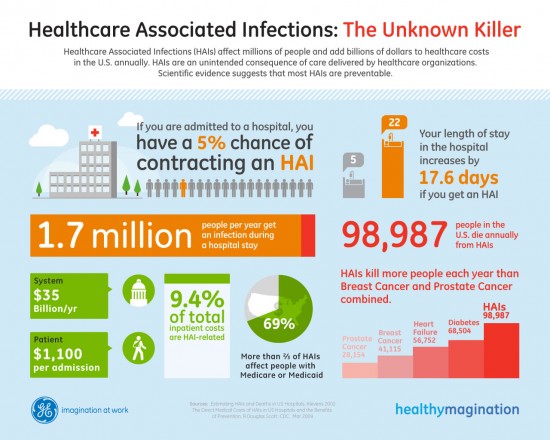
Each year, Healthcare Associated Infections (HAIs) affect millions of patients and add billions of dollars to healthcare costs in the U.S. GE’s Healthcare division is aggressively working to find ways to address this issue and prevent the widespread occurrence of HAIs in the future.

GE and JESS3 partnered to create an infographic which visualizes several statistics related to the spread of HAIs such as the number of people who die of HAIS in the US annually, the staggering number of people who are affected by HAIs annually and the incredible cost it creates per patient and to the healthcare system. By laying out the complex numbers in this sharp and colorful graphic, GE hopes to raise awareness about the widespread problem which scientific evidence suggests could often be preventable.

Conclusion

Your thoughts and comments on this ME-P are appreciated. Feel free to review our top-left column, and top-right sidebar materials, links, URLs and related websites, too. Then, subscribe to the ME-P. It is fast, free and secure.

Link: http://feeds.feedburner.com/HealthcareFinancialsthePostForcxos

Speaker: If you need a moderator or speaker for an upcoming event, Dr. David E. Marcinko; MBA – Publisher-in-Chief of the Medical Executive-Post – is available for seminar or speaking engagements. Contact: MarcinkoAdvisors@msn.com

OUR OTHER PRINT BOOKS AND RELATED INFORMATION SOURCES:

DICTIONARIES: http://www.springerpub.com/Search/marcinko
PHYSICIANS: www.MedicalBusinessAdvisors.com
PRACTICES: www.BusinessofMedicalPractice.com
HOSPITALS: http://www.crcpress.com/product/isbn/9781466558731
CLINICS: http://www.crcpress.com/product/isbn/9781439879900
BLOG: www.MedicalExecutivePost.com
FINANCE: Financial Planning for Physicians and Advisors
INSURANCE: Risk Management and Insurance Strategies for Physicians and Advisors

Product DetailsProduct DetailsProduct Details

The ACO Prescription?

Cure or Disease?

Join Our Mailing List 

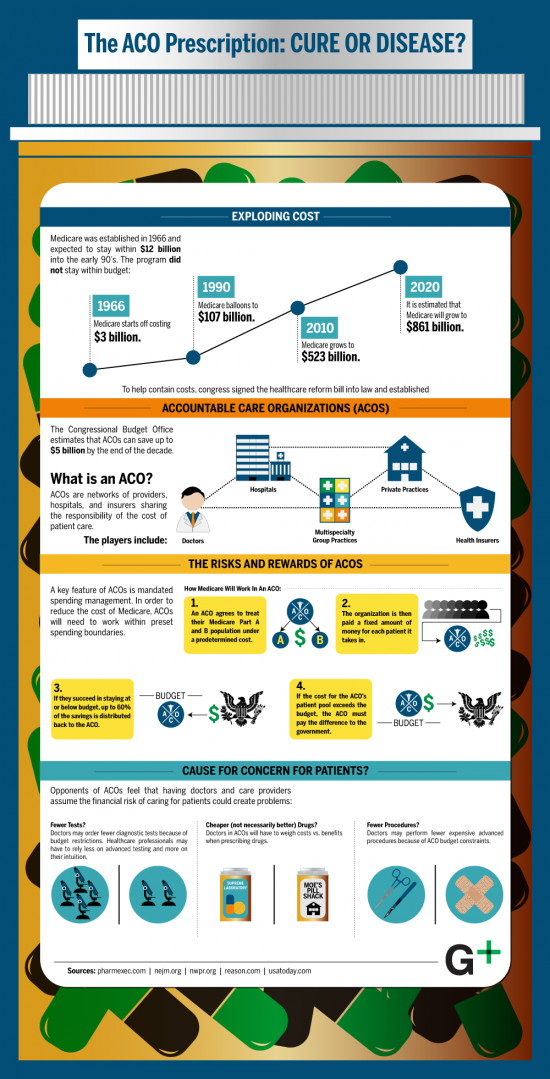
Accountable Care Organizations are the ACA’s [Obamacare] answer to skyrocketing Medicare costs, but who wins besides the government? Doctors take on the financial risk, and patients could suffer as a result.

Here’s a look at how Accountable Care Organizations could affect the quality of healthcare in the near future. Brought to you by gplus.com

Conclusion

Your thoughts and comments on this ME-P are appreciated. Feel free to review our top-left column, and top-right sidebar materials, links, URLs and related websites, too. Then, subscribe to the ME-P. It is fast, free and secure.

Speaker: If you need a moderator or speaker for an upcoming event, Dr. David E. Marcinko; MBA – Publisher-in-Chief of the Medical Executive-Post – is available for seminar or speaking engagements. Contact: MarcinkoAdvisors@msn.com

OUR OTHER PRINT BOOKS AND RELATED INFORMATION SOURCES:

***

Product Details 

***

Join the One-Click Movement for DWB

 header

Imagine that you could improve the lives of millions with just a click of a mouse!

You can. And it costs you nothing

One click can help millions around the world

Every new healthcare professional who creates a free account on www.physicianspractice.com will trigger a donation of $10 to the international organization Doctors Without Borders/ Médecins Sans Frontières (MSF) – a non-profit delivering emergency medical assistance in nearly 60 countries to people affected by armed conflict, epidemics, malnutrition, natural disasters, or exclusion from health care. It’s one way of promoting global social good for doctors caring for those in desperate need. 

The goal is to donate $25,000 – enough for vaccinations for 25,000 people against meningitis, measles, polio or other deadly epidemics.

One click improves the care of patients in our local communities

As a leader in providing highly respected and valued content and services to health care professionals in this country, the site provides free content that helps medical practitioners become better, more effective and knowledgeable in the latest discoveries.

In addition to the donation, your click will grant you access to free, timely content from www.physicianspractice.com to help keep you on the cutting edge of practice management and healthcare reform.

One click starts the movement – together we can help save lives

Conclusion

Source: http://www.physicianspractice.com/1c4m

And so, your thoughts and comments on this ME-P is appreciated. Feel free to review our top-left column, and top-right sidebar materials, links, URLs and related websites, too. Then, subscribe to the ME-P. It is fast, free and secure.

Link: http://feeds.feedburner.com/HealthcareFinancialsthePostForcxos

Speaker: If you need a moderator or speaker for an upcoming event, Dr. David E. Marcinko; MBA – Publisher-in-Chief of the Medical Executive-Post – is available for seminar or speaking engagements. Contact: MarcinkoAdvisors@msn.com

Our Other Print Books and Related Information Sources:

Health Dictionary Series: http://www.springerpub.com/Search/marcinko

Practice Management: http://www.springerpub.com/product/9780826105752

Physician Financial Planning: http://www.jbpub.com/catalog/0763745790

Medical Risk Management: http://www.jbpub.com/catalog/9780763733421

Healthcare Organizations: www.HealthcareFinancials.com

Physician Advisors: www.CertifiedMedicalPlanner.com

Subscribe Now: Did you like this Medical Executive-Post, or find it helpful, interesting and informative? Want to get the latest ME-Ps delivered to your email box each morning? Just subscribe using the link below. You can unsubscribe at any time. Security is assured.

Link: http://feeds.feedburner.com/HealthcareFinancialsthePostForcxos

Sponsors Welcomed: And, credible sponsors and like-minded advertisers are always welcomed.

Link: https://healthcarefinancials.wordpress.com/2007/11/11/advertise

   Product Details

Is an MBA Worth It?

How about for Doctors?

Join Our Mailing List 

By knewton.com via holykaw.alltop.com and Master Degree Online

Is the value of a business degree worth the investment of time and money? The higher the degree the more marketable you will become!

And, what does it really take to get an MBA?


Assessment

As Publisher for the ME-P, and one who received his MBA back in 1998, it has totally been worth it for me. In fact, I recouped my entire tuition costs, as a healthcare consultant, within the first six months of graduation. The rest was gravy and ultimately launched  my transition out of clinical medicine. And, this was after almost 20 years of practice.

-Dr. David Edward Marcinko FACFAS, MBA

###

NOTEContinual education is key to successful business. Whether you are in the medical profession or a http://www.pastryschools.net/degree-programs-and-curriculum pastry chef, you must keep current.

Conclusion

Your thoughts and comments on this ME-P are appreciated. Feel free to review our top-left column, and top-right sidebar materials, links, URLs and related websites, too. Then, subscribe to the ME-P. It is fast, free and secure.

Speaker: If you need a moderator or speaker for an upcoming event, Dr. David E. Marcinko; MBA – Publisher-in-Chief of the Medical Executive-Post – is available for seminar or speaking engagements. Contact: MarcinkoAdvisors@msn.com

OUR OTHER PRINT BOOKS AND RELATED INFORMATION SOURCES:

Product DetailsProduct DetailsProduct Details

Product Details  Product Details

   Product Details 

About the HumanCondition [HCX]

Join Our Mailing List

Transformational Experiences and Innovation in Healthcare

[By Staff Reporters]

To solve human problems

HumanCondition [HCX] was created with the notion that in order to truly innovate – you need to be sensitive, yet take risks and make bold moves. Listen well, understand modern technologies and above all understand how to benefit from insightful, sensitive and intelligent design.

The Vision

The HCX vision is through a wide lens to see opportunities others would miss. They make sure to vet carefully to avoid dredging and believe there are smarter and faster ways to problem solving if you know the appropriate tools to use–and if these tools don’t exist, to create them. Intelligent human capital coupled with the application of off-the-shelf and advanced technologies is a powerful mix.

To Innovate

The term innovation means a new way of doing something. It may refer to incremental or revolutionary changes in thinking, products, processes, or organizations. Ideas alone are one thing, yet true innovation is an idea applied successfully.

How to innovate?

HCX believes that in order to solve real business needs and problems you have to first really understand the problems. Don’t take a shotgun approach to problem solving. Rather, build insight, define goals, present observations then begin iterative ideation using modern design thinking.

To love what you do

You don’t often find such a diverse mix of talent from the creative, technical and business strategy worlds in one place. HCX stays focused on the end user’s experience and business objectives. What do you want them to say when they leave, and what do you want them to tell their friends and neighbors? How many years do you want them to remember your experience?

Assessment

HCX analyzes challenging problems in health care and develops insightful solutions through proven methodologies. HCX works with healthcare facilities, pharmaceutical organizations, medical manufactures, teaching organizations and governments to define and create systems, products, training and communications toolsets that address the very specific needs of the healthcare industry.

Link: http://www.hcxdesign.com

Assessment

So, give em’ a click and tell us what you think?

Conclusion

Your thoughts and comments on this ME-P are appreciated. Feel free to review our top-left column, and top-right sidebar materials, links, URLs and related websites, too. Then, subscribe to the ME-P. It is fast, free and secure.

OUR OTHER PRINT BOOKS AND RELATED INFORMATION SOURCES:

Speaker: If you need a moderator or speaker for an upcoming event, Dr. David E. Marcinko; MBA – Publisher-in-Chief of the Medical Executive-Post – is available for seminar or speaking engagements. Contact: MarcinkoAdvisors@msn.com

Product DetailsProduct DetailsProduct Details

Product Details  Product Details

   Product Details 

Dentistry’s Low Hanging Fruit – Podcast on “What We Fix First”

An Internet Radio Interview with a ME-P “Mover and Shaker”

By Ann Miller RN MHA and The Whole Tooth

As announced last week, we are privileged to have Dr. Darrell Pruitt share his topic is “Dentistry’s Low Hanging Fruit – What We Fix First”.

About Dr. Pruitt

If you know Dr. Pruitt thru this ME-P, or elsewhere, then you know that he doesn’t hold anything back! Like always, join your hosts Hogan Allen & Richard Train, along with occasional clinical guest hosts, for “The Whole Tooth”. The show airs every Tuesday at 8 P.M. EST, with a weekly conversation with not only the “who’s who” in dentistry, but many other experts who you ‘should’ get to know.

About The Whole Tooth

“The Whole Tooth” is the premier internet radio show for dental practices which discusses how you can make more money, save more money and improve processes for everyone in your dental office. Topics include: clinical dentistry, what’s “hot” in hygiene, practice management, internet strategies, finance and more.

Assessment

“The Whole Tooth” is a fun half hour filled with great information and can fit into any schedule. If you miss a show, feel free to download the archive, or catch us on iTunes for FREE!

Podcast link: http://www.blogtalkradio.com/thewholetooth/2011/06/01/dentistrys-low-hanging-fruit-what-we-fix-1st-wdr-pruitt

Conclusion

And so, your thoughts and comments on this ME-P are appreciated. Feel free to review our top-left column, and top-right sidebar materials, links, URLs and related websites, too. Then, subscribe to the ME-P. It is fast, free and secure.

Link: http://feeds.feedburner.com/HealthcareFinancialsthePostForcxos

Our Other Print Books and Related Information Sources:

Health Dictionary Series: http://www.springerpub.com/Search/marcinko

Practice Management: http://www.springerpub.com/product/9780826105752

Physician Financial Planning: http://www.jbpub.com/catalog/0763745790

Medical Risk Management: http://www.jbpub.com/catalog/9780763733421

Healthcare Organizations: www.HealthcareFinancials.com

Physician Advisors: www.CertifiedMedicalPlanner.com

Subscribe Now: Did you like this Medical Executive-Post, or find it helpful, interesting and informative? Want to get the latest ME-Ps delivered to your email box each morning? Just subscribe using the link below. You can unsubscribe at any time. Security is assured.

Link: http://feeds.feedburner.com/HealthcareFinancialsthePostForcxos

Sponsors Welcomed: And, credible sponsors and like-minded advertisers are always welcomed.

Link: https://healthcarefinancials.wordpress.com/2007/11/11/advertise

Product DetailsProduct DetailsProduct Details       

Product Details  Product Details

   Product Details 

Seeking Chief Medical Director [CMD]

Magnolia Health Plan

By Missy Wohldmann

Dear Dr. Marcinko and ME-P Readers, 

Centene Corporation is seeking a Chief Medical Director (CMD) for Magnolia Health Plan (Magnolia), a wholly-owned subsidiary and HMO for the state of Mississippi. The regional headquarters for Magnolia is located in Jackson, Mississippi.

About Centene

A Fortune 500 company, Centene is a national leader in low-cost solutions for high quality healthcare services for uninsured and underinsured patients. Centene’s subsidiary health plans bring better health outcomes to their 1.5 million members. Centene’s core philosophy is that quality healthcare is best delivered locally. This local approach enables them to provide accessible, high quality and culturally sensitive healthcare services to their members in their own communities.

Visionary Needed

The Chief Medical Director will establish the strategic vision and attendant policies and procedures for Magnolia Health Plan. The CMD will provide leadership and direction to the medical management, quality improvement and credentialing functions for Magnolia Health Plan based on, and in support of, the company’s strategic plan. The CMD will review analyses of activities, costs, operations and forecast data to determine progress toward stated goals and objectives. Also within the purview of CMD will be oversight for compliance with National Committee on Quality Assurance (NCQA) and/or Joint Commission on Accreditation of Healthcare Organization (JACHO) standards as determined for accreditation of the health plan.

Candidates

Successful candidates will be physician leaders with thorough knowledge of quality improvement practices and familiarity with medical information systems, medical claims payment processing and coding. Knowledge of managed care, Medicaid, and case management programs are also essential. Board certification in a recognized medical specialty and an active medical license are required.

We welcome your interest, or nominations, for this highly visible role.

Assessment
Cejka Executive Search
4 CityPlace Dr., Ste. 300
St. Louis, MO 63141
314.236.4478 Office
mwohldmann@cejkasearch.com
http://www.cejkaexecutivesearch.com

Conclusion

And so, your thoughts and comments on this ME-P are appreciated. Feel free to review our top-left column, and top-right sidebar materials, links, URLs and related websites, too. Then, subscribe to the ME-P. It is fast, free and secure.

Link: http://feeds.feedburner.com/HealthcareFinancialsthePostForcxos

Speaker: If you need a moderator or speaker for an upcoming event, Dr. David E. Marcinko; MBA – Publisher-in-Chief of the Medical Executive-Post – is available for seminar or speaking engagements. Contact: MarcinkoAdvisors@msn.com

Our Other Print Books and Related Information Sources:

Health Dictionary Series: http://www.springerpub.com/Search/marcinko

Practice Management: http://www.springerpub.com/product/9780826105752

Physician Financial Planning: http://www.jbpub.com/catalog/0763745790

Medical Risk Management: http://www.jbpub.com/catalog/9780763733421

Healthcare Organizations: www.HealthcareFinancials.com

Physician Advisors: www.CertifiedMedicalPlanner.com

Subscribe Now: Did you like this Medical Executive-Post, or find it helpful, interesting and informative? Want to get the latest ME-Ps delivered to your email box each morning? Just subscribe using the link below. You can unsubscribe at any time. Security is assured.

Link: http://feeds.feedburner.com/HealthcareFinancialsthePostForcxos

Sponsors Welcomed: And, credible sponsors and like-minded advertisers are always welcomed.

Link: https://healthcarefinancials.wordpress.com/2007/11/11/advertise

Product DetailsProduct DetailsProduct Details       

Product Details  Product Details

   Product Details 

What Counts as a Good Doctor-Patient Relationship?

Nuances of Patient-Centricity

By Mario Moussa PhD MBA

By Jennifer Tomasik MS

Join Our Mailing List

Researchers at the University of Pennsylvania are experimenting with an electronic nose that literally smells disease. In the not-too-distant future, it may be able to detect whether a patient has an infection in the lungs or somewhere else. There is no need to be radiated with an X-ray, or to wait anxiously for two days as bacteria sprouts from a biological sample. One simply lies in a hospital bed while the super-sensitive machine monitors the body’s exhalations.

Of Hippocrates

Hippocrates, the founding father of Western medicine, did it differently. He relied on smell, too. But, he used his actual nose. He sniffed and inspected his patients’ stool, as well as their earwax, pus, and phlegm. Then he went further, recording the details of his patients’ diets, the water they drank, the local weather, and even the positioning of their house. He spent a lot of time getting to know the highly personal facts of his patients’ lives. He was an early practitioner of individualized and holistic medicine.

Rise of the Historical Symptoms Review

But, doctors in the Hippocratic tradition have not always had this kind of intimate relationship with their patients. In 17th. and 18th. century Europe, the standards of human dignity imposed limits, especially on physical contact. Health providers were just as likely to scrutinize the story of an illness as its observable symptoms. Dr. John Symcotts, who had a successful practice that encompassed two English villages, captured his patients’ narratives in casebooks that contained vivid descriptions of intense subjective experiences. One patient, Miss Christian Tenum, complained of “a heavy burden or weight continually pressing down upon the top of her head,” a “pulsing of the arteries,” and “images passing before her eyes.” The diagnosis was unclear. Symcotts prescribed a fluid diet and a medicine that helped her expel stones with her urine. The outcome? Miss Tenum was cured.

Subjective Reporting

In Symcotts’ era, physicians treated subjective reporting as a valid source of information. Using an ancestral form of telemedicine, they even based diagnoses on letters. John Morgan, a founder of the University of Pennsylvania’s Medical School in the late 1700s, offered his expert opinion on patients who lived “ a distance from Philadelphia, whenever the history of the case is properly drawn up and transmitted to me for advice.” Why the emphasis on spoken and written first-hand accounts? In the words of one physician, there was a “repugnance” to physical examination that was “natural and proper.”

Link: www.BusinessofMedicalPractice.com

Assessment

Bottom line: intimacy can take strikingly different forms. This is especially important to remember in the world of Health 2.0, where you have so many choices for communicating.

In purely human terms, we think the relationship that Hippocrates had with his patients was neither better nor worse than the one Symcotts had with Miss Tenum or that Morgan had with his epistolary advice-seekers. Hippocrates paid meticulous attention to a patient’s circumstances: emotional outlook, diet, bodily secretions, family relationships and friends, climate, dwelling. Symcotts may not have known his patient in all of these ways, but he could hardly have been more committed to understanding Miss Tenum’s story in her own terms.

Conclusion

And so, your thoughts and comments on this ME-P are appreciated. In different, but equally valid ways, can Hippocrates, Symcotts, and Morgan be considered patient-centered? Feel free to review our top-left column, and top-right sidebar materials, links, URLs and related websites, too. Then, subscribe to the ME-P. It is fast, free and secure.

Link: http://feeds.feedburner.com/HealthcareFinancialsthePostForcxos

Speaker: If you need a moderator or speaker for an upcoming event, Dr. David E. Marcinko; MBA – Publisher-in-Chief of the Medical Executive-Post – is available for seminar or speaking engagements. Contact: MarcinkoAdvisors@msn.com

Our Other Print Books and Related Information Sources:

Health Dictionary Series: http://www.springerpub.com/Search/marcinko 

Practice Management: http://www.springerpub.com/product/9780826105752

Physician Financial Planning: http://www.jbpub.com/catalog/0763745790

Medical Risk Management: http://www.jbpub.com/catalog/9780763733421

Healthcare Organizations: www.HealthcareFinancials.com

Physician Advisors: www.CertifiedMedicalPlanner.com

Subscribe Now: Did you like this Medical Executive-Post, or find it helpful, interesting and informative? Want to get the latest ME-Ps delivered to your email box each morning? Just subscribe using the link below. You can unsubscribe at any time. Security is assured.

Link: http://feeds.feedburner.com/HealthcareFinancialsthePostForcxos

Sponsors Welcomed: And, credible sponsors and like-minded advertisers are always welcomed.

Link: https://healthcarefinancials.wordpress.com/2007/11/11/advertise

   Product Details 

Dr. Marcinko Interviewed by PedSource.com

On … Medical Practice Mission Statements [“Use Them or Lose Them”]

By Jill Fahy

Join Our Mailing List

You won’t find a formal mission statement posted on the website or framed on the wall at East Bay Pediatrics, in Berkeley, California.

Dr. Marcinko Speaks

But, you will find a few words on medical practice Mission Statements, from our ME-P Editor-in-Chief Dr. David E. Marcinko MBA CMP™, right here.

Assessment

http://www.pedsource.com/library/mission-statements-use-them-or-lose-them

About

PCC created PedSource, an online community for pediatricians, to share insights they’ve gained through their extensive experiences improving revenue and implementing technology in pediatric practices. Their vision is to share resources and build a community to improve the health of pediatric practices nationwide.

Conclusion

And so, your thoughts and comments on this ME-P are appreciated. Feel free to review our top-left column, and top-right sidebar materials, links, URLs and related websites, too. Then, subscribe to the ME-P. It is fast, free and secure.

Link: http://feeds.feedburner.com/HealthcareFinancialsthePostForcxos

Speaker: If you need a moderator or speaker for an upcoming event, Dr. David E. Marcinko; MBA – Publisher-in-Chief of the Medical Executive-Post – is available for seminar or speaking engagements. Contact: MarcinkoAdvisors@msn.com

Our Other Print Books and Related Information Sources:

Health Dictionary Series: http://www.springerpub.com/Search/marcinko

Practice Management: http://www.springerpub.com/product/9780826105752

Physician Financial Planning: http://www.jbpub.com/catalog/0763745790

Medical Risk Management: http://www.jbpub.com/catalog/9780763733421

Healthcare Organizations: www.HealthcareFinancials.com

Physician Advisors: www.CertifiedMedicalPlanner.com

Subscribe Now: Did you like this Medical Executive-Post, or find it helpful, interesting and informative? Want to get the latest ME-Ps delivered to your email box each morning? Just subscribe using the link below. You can unsubscribe at any time. Security is assured.

Link: http://feeds.feedburner.com/HealthcareFinancialsthePostForcxos

Sponsors Welcomed: And, credible sponsors and like-minded advertisers are always welcomed.

Link: https://healthcarefinancials.wordpress.com/2007/11/11/advertise

Product DetailsProduct DetailsProduct Details       

Product Details  Product Details

   Product Details 

Survey on the Prescription Drug Abuse Prevention Plan

Doctors – How do you feel about the Obama Administration’s New Plan?

Join Our Mailing List

Background Review:

Our Other Print Books and Related Information Sources:

Health Dictionary Series: http://www.springerpub.com/Search/marcinko

Practice Management: http://www.springerpub.com/product/9780826105752

Physician Financial Planning: http://www.jbpub.com/catalog/0763745790

Medical Risk Management: http://www.jbpub.com/catalog/9780763733421

Healthcare Organizations: www.HealthcareFinancials.com

Physician Advisors: www.CertifiedMedicalPlanner.com

Subscribe Now: Did you like this Medical Executive-Post, or find it helpful, interesting and informative? Want to get the latest ME-Ps delivered to your email box each morning? Just subscribe using the link below. You can unsubscribe at any time. Security is assured.

Link: http://feeds.feedburner.com/HealthcareFinancialsthePostForcxos

Sponsors Welcomed:  And, credible sponsors and like-minded advertisers are always welcomed.

Link: https://healthcarefinancials.wordpress.com/2007/11/11/advertise

Product DetailsProduct DetailsProduct Details       

Product Details  Product Details

   Product Details

Are Doctors Switching Financial Advisors?

A Survey Poll

Join Our Mailing List

Doctor, have you considered switching your financial advisor due to higher fees or poor portfolio performance since the “flash-crash” of 2008? Please vote and opine.

VOTE:

Conclusion

And so, your thoughts and comments on this ME-P are appreciated. Feel free to review our top-left column, and top-right sidebar materials, links, URLs and related websites, too. Then, subscribe to the ME-P. It is fast, free and secure.

Link: http://feeds.feedburner.com/HealthcareFinancialsthePostForcxos

Speaker: If you need a moderator or speaker for an upcoming event, Dr. David E. Marcinko; MBA – Publisher-in-Chief of the Medical Executive-Post – is available for seminar or speaking engagements. Contact: MarcinkoAdvisors@msn.com

Our Print Books and Related Information Sources:

Health Dictionary Series: http://www.springerpub.com/Search/marcinko

Practice Management: http://www.springerpub.com/product/9780826105752

Physician Financial Planning: http://www.jbpub.com/catalog/0763745790

Medical Risk Management: http://www.jbpub.com/catalog/9780763733421

Healthcare Organizations: www.HealthcareFinancials.com

Physician Advisors: www.CertifiedMedicalPlanner.com

Subscribe Now: Did you like this Medical Executive-Post, or find it helpful, interesting and informative? Want to get the latest ME-Ps delivered to your email box each morning? Just subscribe using the link below. You can unsubscribe at any time. Security is assured.

Link: http://feeds.feedburner.com/HealthcareFinancialsthePostForcxos

Sponsors Welcomed: And, credible sponsors and like-minded advertisers are always welcomed.

Link: https://healthcarefinancials.wordpress.com/2007/11/11/advertise

Product Details  Product Details

Guide to Biostatistics

Clinical Tools

Join Our Mailing List

Here is a white paper of important epidemiological concepts and common bio-statistical terms to help doctors and related professionals translate medical research into everyday practice.

Link: http://www.medpagetoday.com/Medpage-Guide-to-Biostatistics.pdf

Conclusion

And so, your thoughts and comments on this ME-P are appreciated. Feel free to review our top-left column, and top-right sidebar materials, links, URLs and related websites, too. Then, subscribe to the ME-P. It is fast, free and secure.

Link: http://feeds.feedburner.com/HealthcareFinancialsthePostForcxos

Our Print Books and Related Information Sources:

Health Dictionary Series: http://www.springerpub.com/Search/marcinko

Practice Management: http://www.springerpub.com/product/9780826105752

Physician Financial Planning: http://www.jbpub.com/catalog/0763745790

Medical Risk Management: http://www.jbpub.com/catalog/9780763733421

Healthcare Organizations: www.HealthcareFinancials.com

Physician Advisors: www.CertifiedMedicalPlanner.com

Subscribe Now: Did you like this Medical Executive-Post, or find it helpful, interesting and informative? Want to get the latest ME-Ps delivered to your email box each morning? Just subscribe using the link below. You can unsubscribe at any time. Security is assured.

Link: http://feeds.feedburner.com/HealthcareFinancialsthePostForcxos

Sponsors Welcomed: And, credible sponsors and like-minded advertisers are always welcomed.

Link: https://healthcarefinancials.wordpress.com/2007/11/11/advertise

Seeking Medical Director [HRMC]

Heartland Regional Medical Center

By Deedra Hartung

CLASSIFIED ADVERTISEMENT

Join Our Mailing List

Dear Dr. Marcinko,

Cejka Executive Search has been exclusively retained by Heartland Health, a physician-led, integrated health care system in St. Joseph, Missouri, to recruit a physician leader who will serve as Medical Director of Heartland Regional Medical Center (HRMC).

About HRMC

HRMC is a 491-bed medical center comprised of a 250-member medical staff, including 125 employed physicians, and is a 2009 Malcolm Baldrige National Quality award winner. Heartland Health is rapidly moving towards becoming an Accountable Care Organization and will likely be a Medicare ACO Pilot Site. Heartland Health includes a large physician clinic, foundation, health plan and other ventures and affiliations.

Responsibilities

In collaboration with the Administrator of HRMC, the Medical Director will be responsible for providing clinical and operational oversight, communicating the vision of the medical center, building partnerships with key stakeholders and advocating quality and safety measures within clinical and ancillary departments. Additionally, the Medical Director will serve as a mentor and coach to the medical staff and the leadership team. The Medical Director position is ideal for a physician leader wanting additional operational experience in preparation for a future in a position as a CEO.

Qualifications

Candidates must be board certified, eligible for a Missouri license and possess a minimum of ten years clinical experience.  An MBA or MHA is highly preferred. Ideal candidates will have experience with peer review, credentialing, population health, clinical research and the development of a residency program.

View Additional Details

Qualified candidates may submit their CV’s or contact:
Deedra Hartung
Executive Vice President, Managing Principal
Cejka Executive Search
800-209-8143, Extension 63518
Email: jkliethermes@cejkasearch.com

www.cejkaexecutivesearch.com

Understanding the Referral Relationship in Medicine

Cultivating a Steady Stream of Patients

By Dr. David Edward Marcinko MBA

[Publisher-in-Chief]

Developing and cultivating a steady stream of referrals involves good planning, an investment of time and energy in the referral relationship, and a keen understanding of referring physicians’ needs and priorities.

According to consultant Carolyn Merriman, enhancing the referral relationship is a step-by-step process, not unlike the clinical process, that begins by identifying target physicians and their needs, prioritizing the list of referral contacts and then determining the best way to reach them.

Link: www.BusinessofMedicalPractice.com

Make it a Win-Win Relationship

For example, a physician may routinely refer patients to a particular specialist because he or she has an out­standing reputation for medical expertise and competence, is more accessible than comparable practitioners or has a convenient location for the referring physician’s patients. The physician may have a relationship with the specialist because of marketing by a local hospital or the specialist’s own practice. And, in some cases the two physicians have a social relationship.

There are many ways to create and maintain these relationships. Physicians should choose the approach that works best for them, put together a plan and stay consistent. Look for ways to make the relationship a win-win for both practices or for the referring hospital or outpatient facility.

Link: Front Matter BoMP – 3

The SHSMD

If you are not comfortable with developing referral relationships for your practice, seek out partners, office staff or hospital partners who can appropriately assist, train or support you in this effort. Many hospitals have staff focused on physician sales and service.

The Society for Healthcare Strategy and Market Development (SHSMD) recently reported that 41% of hospitals had dedicated sales staff support, with more than half of those using their sales staff to support cardiology and radiology.

Assessment

Often, hospitals are seeking physician speakers for community seminars, wellness programs and other outreach efforts. Ask about participating in these venues. Offer to write articles for newsletters, the Web site or local media outlets. All of these expose the physician and the practice to referral sources as well as the public.

Conclusion

Your thoughts and comments on this ME-P are appreciated. Feel free to review our top-left column, and top-right sidebar materials, links, URLs and related websites, too. Then, subscribe to the ME-P. It is fast, free and secure.

Speaker: If you need a moderator or speaker for an upcoming event, Dr. David E. Marcinko; MBA – Publisher-in-Chief of the Medical Executive-Post – is available for seminar or speaking engagements. Contact: MarcinkoAdvisors@msn.com

OUR OTHER PRINT BOOKS AND RELATED INFORMATION SOURCES:


Ref: “By the Numbers, 2008.”  Society for Healthcare Strategy and Market Development of the American Hospital Association.

Product Details 

Strengthening Physician Hospital Relationships

A PHO Primer 

By Dr. David Edward Marcinko MBA, CMP™

[Publisher-in-Chief]

Contrary to popular belief, physician-hospital relationships are not always driven by formal economics partnerships such as joint ventures, employment or medical director stipends. A concerted physician outreach program demonstrates a hospital’s commitment to working together more effectively.

Example

For example, Bon Secours Hampton Roads Health System in Virginia uses a systematic outreach program in which senior leadership, supplemented by physicians sales staff, meet regularly with physicians to identify critical operational issues that are disrupting their practice. The program is so important to building referral relationships with physicians who have other options for alignment that the system CEO reviews the issues list daily.

Link: www.BusinessofMedicalPractice.com

Key Areas 

Regardless of the partnership model, consultant Carolyn Merriman believes effective physician-hospital relationships call for alignment in four key areas:

  • Leadership – physicians are included in developing the strategic direction of the hospital and its programs and services.
  • Input – physician input is sought from people and areas beyond the traditional medical executive committee, often using younger, informal leaders who are the future leaders of the medical staff.
  • Communication – physicians feel heard and responded to as they identify issues and challenges they encounter as they practice medicine, and they feel that processes are in place for effectively resolving the issues.
  • Relationship Management – executives understand what motivates physicians professionally and personally and use that information to build a solid foundation of trust and mutual respect as they build and foster relationships.

Assessment

In a 2007 survey, the American College of Healthcare Executives (ACHE) found that physician-hospital relations was the third most pressing issue for hospital CEOs, topped only by financial challenges and care for the uninsured. Within the physician-hospital category, specific concerns included creating win-win collaboration, physician requests for payment for service to the hospital, competition with physician-owned facilities/equipment, medical staff structures/leadership and niche providers. 

Certainly from the physician’s perspective, a better relationship with hospital leaders and hospital staff makes life infinitely easier. We do, after all, share a common denominator—the patient. Like the physician, the hospital is equally interested in providing patients with the very best quality and service possible.

Conclusion

And so, your thoughts and comments on this ME-P are appreciated. Feel free to review our top-left column, and top-right sidebar materials, links, URLs and related websites, too. Then, subscribe to the ME-P. It is fast, free and secure.

Link: http://feeds.feedburner.com/HealthcareFinancialsthePostForcxos

Speaker: If you need a moderator or speaker for an upcoming event, Dr. David E. Marcinko; MBA – Publisher-in-Chief of the Medical Executive-Post – is available for seminar or speaking engagements. Contact: MarcinkoAdvisors@msn.com

Our Other Print Books and Related Information Sources:

Health Dictionary Series: http://www.springerpub.com/Search/marcinko

Practice Management: http://www.springerpub.com/product/9780826105752

Physician Financial Planning: http://www.jbpub.com/catalog/0763745790

Medical Risk Management: http://www.jbpub.com/catalog/9780763733421

Healthcare Organizations: www.HealthcareFinancials.com

Physician Advisors: www.CertifiedMedicalPlanner.com

Subscribe Now: Did you like this Medical Executive-Post, or find it helpful, interesting and informative? Want to get the latest ME-Ps delivered to your email box each morning? Just subscribe using the link below. You can unsubscribe at any time. Security is assured.

Link: http://feeds.feedburner.com/HealthcareFinancialsthePostForcxos

Sponsors Welcomed: And, credible sponsors and like-minded advertisers are always welcomed.

Link: https://healthcarefinancials.wordpress.com/2007/11/11/advertise

Product Details 

Donating to the Victims in Japan

How the ME-P is Helping Out

By Dr. David Edward Marcinko, MBA CMP™

[Publisher and Editor-in-Chief]

Millions of Japanese are struggling in the cold; without electricity or heat. And, rolling blackouts have been implemented as the earth-quake and tsunami devastated country faces a crippled power grid.

And, of course, all medical professionals realize that there is no “safe threshold” for any amount of ionizing radiation. 

Info Link: http://www.msnbc.msn.com/id/42079799/ns/world_news-disaster_in_japan/?gt1=43001

You Can Help

And so, one way you – our ME-P readers and subscribers can help your fellow physicians who are already on the ground in Japan helping to care for the wounded – is to donate to Doctors Without Borders.

Donors can give between $35 to up to $10,000 or more directly on its website.

Thank you.

Our Other Print Books and Related Information Sources:

Health Dictionary Series: http://www.springerpub.com/Search/marcinko

Practice Management: http://www.springerpub.com/product/9780826105752

Physician Financial Planning: http://www.jbpub.com/catalog/0763745790

Medical Risk Management: http://www.jbpub.com/catalog/9780763733421

Healthcare Organizations: www.HealthcareFinancials.com

Physician Advisors: www.CertifiedMedicalPlanner.com

Subscribe Now: Did you like this Medical Executive-Post, or find it helpful, interesting and informative? Want to get the latest ME-Ps delivered to your email box each morning? Just subscribe using the link below. You can unsubscribe at any time. Security is assured.

Link: http://feeds.feedburner.com/HealthcareFinancialsthePostForcxos

Sponsors Welcomed: And, credible sponsors and like-minded advertisers are always welcomed.

Link: https://healthcarefinancials.wordpress.com/2007/11/11/advertise

Call for Authors, Contributors, Opinions and Essays

The Network and Forum for Doctors, and their Financial Advisors and Management Consultants

By Ann Miller RN MHA

[Executive-Director

MarcinkoAdvisors@msn.com

Join Our Mailing List 

The Medical Executive-Post publishes material that is practical, versatile, and user-friendly for our target audience in the integrated healthcare industrial and financial services complex. So, if you have an essay, article, op-ed piece or post proposal on a topic that would benefit our readers and subscribers, we would like to hear from you.

Topic Specificity

Or, become part of our ME-P search team and get published for fun and profit! We’ll give you an occasional topic, and you tell us how your life and medical or financial advisory practice has been affected by it. Just send in your best stories and musings in essay form.

Examples:

Doctors: tell us your most interesting Health 2.0 story from the patient clinical examination room.

Financial Advisors: tell us your most interesting Web 2.0 story from a physician-client engagement.

Conclusion

Your thoughts and comments on this ME-P are appreciated. Feel free to review our top-left column, and top-right sidebar materials, links, URLs and related websites, too. Then, subscribe to the ME-P. It is fast, free and secure.

Link: http://feeds.feedburner.com/HealthcareFinancialsthePostForcxos

Speaker: If you need a moderator or speaker for an upcoming event, Dr. David E. Marcinko; MBA – Publisher-in-Chief of the Medical Executive-Post – is available for seminar or speaking engagements. Contact: MarcinkoAdvisors@msn.com

OUR OTHER PRINT BOOKS AND RELATED INFORMATION SOURCES:

DICTIONARIES: http://www.springerpub.com/Search/marcinko
PHYSICIANS: www.MedicalBusinessAdvisors.com
PRACTICES: www.BusinessofMedicalPractice.com
HOSPITALS: http://www.crcpress.com/product/isbn/9781466558731
CLINICS: http://www.crcpress.com/product/isbn/9781439879900
BLOG: www.MedicalExecutivePost.com
FINANCE: Financial Planning for Physicians and Advisors
INSURANCE: Risk Management and Insurance Strategies for Physicians and Advisors

Product DetailsProduct DetailsProduct Details

Product Details  Product Details

   Product Details 

Assessing Job [Dis]-Satisfaction Among Primary Care Doctors

Comment Period of Solicitation

By Staff Reporters

Join Our Mailing List 

A recent survey of 3,729 family care physicians found that 40.3% considered leaving their primary care practices, with 16.5% reporting that 2010 was the first year they had considered such a career change.

M3 Global Research

“The poll results are not surprising given the rising financial pressures for family practices,” said Craig Overpeck, chief operating officer of M3 Global Research.

“Only 15.6% hold out hope of 2011 being a better than average year for their personal income, with 17.7% forecasting 2011 to be one of the worst earning years of their career. The survey also reported only three out of five physicians enjoying better job satisfaction than they anticipated on their first day in medical school.”

The ME-P Wants to Know:

  • Are you satisfied with being a primary care physician?
  • Why or why not?
  • What do you think the main reasons are for dissatisfaction among primary care physicians?
  • Would you advise a medical student to go into primary care?

Channel Surfing the ME-P

Have you visited our other topic channels? Established to facilitate idea exchange and link our community together, the value of these topics is dependent upon your input. Please take a minute to visit. And, to prevent that annoying spam, we ask that you register. It is fast, free and secure.

Conclusion

Your thoughts and comments on this ME-P are appreciated. Feel free to review our top-left column, and top-right sidebar materials, links, URLs and related websites, too. Then, subscribe to the ME-P. It is fast, free and secure.

Speaker: If you need a moderator or speaker for an upcoming event, Dr. David E. Marcinko; MBA – Publisher-in-Chief of the Medical Executive-Post – is available for seminar or speaking engagements. Contact: MarcinkoAdvisors@msn.com

OUR OTHER PRINT BOOKS AND RELATED INFORMATION SOURCES:

Product DetailsProduct DetailsProduct Details

Product Details  Product Details

   Product Details 

Search Guidance for a Chief Medical Security Officer

A Business Case Model

By Richard J. Mata MD MS CIS

Dr. Mata

Join Our Mailing List

The Mighty-Soft Hospital is a futuristic 1,500 bed fortress-like facility operating with a state-of-the-art dual wired-wireless infrastructure complete with computerized physician order entry  system, radio frequency inventory device (RFID) control tags, and integrated electronic medical records (EMRs) that are the envy of its competitors and vendors, and offer a formidable strategic competitive advantage in the marketplace.

Now, imagine the potential liability, PR disaster and chagrin when its enfant terrible CEO is told of a massive security breach similar to the ChoicePoint and Lexis-Nexis fiascos.  The ID theft involves release of critically protected healthcare financial, employment, clinical, and contact information for all of its patients, employees, physicians, business associates, and affiliated medical personnel.

Suddenly, senior management is charged with the task of establishing the new position of Chief Medical Security Officer (CMSO) for Mighty-Soft, and navigating a crisis management dilemma never previously faced by the formerly HIPAA-compliant electronic giant.

The CMSO is to be a senior level management position responsible for championing institutional security.  Awareness of electronic and HIPAA policy and procedure developments, while working to ensure compliance with internal and external standards related to information security, is vital.  The CMSO is to report directly to the CEO and the CIO.

The Search Committee developed the following list of CMSO duties and responsibilities:

  • Chair the hospital’s Information Security and Privacy Committee in its policy development efforts to maintain the security and integrity of information assets in compliance with state and federal laws, and accreditation standards.
  • Provide project management and operational responsibility for the administration, coordination, and implementation of information security policies and procedures across the enterprise-wide hospital system.
  • Perform periodic information security risk assessments including disaster recovery and contingency planning, and coordinate internal audits to ensure that appropriate access to information assets is maintained.
  • Work with the financial division to coordinate a business recovery plan.
  • Serve as a central repository for information security-related issues and performance indicators.  Research security or database software for implementing the central repository, and note that a server based system could be useful for a Wide Area Network (WAN), so this information can be shared with the enterprise-wide hospital system.  Develop, implement, and administer a coordinated process for response to such issues.
  • Function when necessary as an approval authority for platform and/or application security and coordinate efforts to educate the hospital community in good information security practices.
  • Maintain a broad understanding of federal and state laws relating to information security and privacy, security policies, industry best practices, exposures, and their application to the healthcare information technology environment.
  • Make recommendations for short- and long-range security planning in response to future systems, new technology, and new organizational challenges.
  • Act as an advocate for security and privacy on internal and external committees as necessary.
  • Develop, maintain, and administer the security budget required to fulfill organizational information security expectations.
  • Demonstrate effectiveness with consensus building, policy development, and verbal and written communication skills.
  • Possess the clear ability to explain information technology concepts to audiences outside the field.
  • Become the public face for the Mighty-Soft Hospital’s legacy security system.

Minimum Qualifications:

  • MD, DO, DPM, DDS, DMD, with bachelor’s/master’s degree in computer science or related field or equivalent experience.
  • Three or more years of experience in the healthcare industry.
  • Five or more years of experience in information security.
  • Eight or more years of experience in information technology.
  • In-depth understanding of network and system security technology and practices across all major computing areas (mainframe, client/server, PC/LAN, telephony) with a special emphasis on Internet related technology.

Preferred Qualifications:

  • Experience with electronic medical devices.
  • Specific experiences in the healthcare industry.
  • Familiarity with legislation and standards for PHI and patient privacy.
  • Demonstrated successful project management expertise.
  • Professional certification, e.g., CISSP, CISA, PMP.
  • Experience with student record/higher education laws.

Key Issues:

  • What is your IT hardware infrastructure and how are security-related devices deployed?
  • What security requirements are imposed by federal and state authorities on your institution?
  • What would you consider the most important criteria for choosing a CMSO?
  • What relationship will the CMSO have with the CIO, CMIO and CEO?
  • What level of security education/training do you consider necessary for your hospital community?
  • What are the key security issues your CMSO will have to address?
  • What are the key privacy issues?
  • What are the key risk management issues?
  • What are the pros and cons of EHRs for your institution?
  • What do you see as the EHR priorities for your CMSO?
  • What are the security issues of EHRs for your institution?

Assessment

How would you select a CMSO?

Conclusion

And so, your thoughts and comments on this ME-P are appreciated. Feel free to review our top-left column, and top-right sidebar materials, links, URLs and related websites, too. Then, subscribe to the ME-P. It is fast, free and secure.

Speaker: If you need a moderator or speaker for an upcoming event, Dr. David E. Marcinko; MBA – Publisher-in-Chief of the Medical Executive-Post – is available for seminar or speaking engagements. Contact: MarcinkoAdvisors@msn.com

OUR OTHER PRINT BOOKS AND RELATED INFORMATION SOURCES:

Product DetailsProduct DetailsProduct Details

Product Details  Product Details

   Product Details 

Seeking Healthcare Administration Experts and Contributing Print Authors

Healthcare Organizations [second edition]

By Ann Miller RN MHA

[Executive-Director]

Join Our Mailing List 

Greetings ME-P Readers, Experts and Subscribers,

As you may know, we are now preparing the next edition of our book: Healthcare Organizations [Management Strategies, Operational Techniques and Case Studies]. And so, we solicit your interest in crafting new material or simply updating original chapters for subscriber, ACPE, Barnes & Noble, MGMA, ACHE and related distribution channels.

Tentative Table of Contents [400 pages]

  1. On the Origins and Development of Quality Initiatives in Healthcare
  2. Competitive Analysis of the Contemporary Healthcare Ecosystem
  3. Capital Formation Strategies for Healthcare Entities
  4. Inventory Management and Economic Order Quantity Analysis
  5. Improving Operations and Management to Achieve Objectives
  6. Financial and Clinical Features of Hospital Information Systems
  7. Managing Health Information Technology Security Risks
  8. Monitoring, Managing and Enhancing Hospital Revenue Cycles  
  9. Patient [Customer] Relations Management in Healthcare
  10. Healthcare Organization Compliance Processes and Tactics
  11. Reviewing OSHA Standards and Health Policy Practices
  12. Operational Impact of HIPAA, Sarbanes-Oxley and the USA PATRIOT ACT
  13. Understanding Continuous Healthcare Process Improvement
  14. Using Medical Informatics to Track Health Care
  15. Appreciating Six-Sigma Healthcare Quality Improvement
  16. Hospital-Flow Through Efficiency and Logistics.

Editorial support is available, and you would enjoy increasing subject-matter notoriety, exposure and public relations in an erudite and credible fashion. ME-P expert reader synergy seems ideal and our time line for submission is ample in a prose writing style that is “wide, and deep.”  Scheduled release is 2012.

Assessment [first edition]

Foreword: http://healthcarefinancials.com/aboutus.aspx

Style and format: http://healthcarefinancials.com/Documents/Clinical%20and%20Financial%20Features%20of%20Hospital%20IT%20Systems.pdf

Prior authors: http://healthcarefinancials.com/contributors.aspx

TOC: http://healthcarefinancials.com/Documents/TABLE%20OF%20CONTENTS.pdf

We look forward to working with you and appreciate your continued “crowd-sourced” interest in this important body of work. So, please advise me of your interest: MarcinkoAdvisors@msn.com

Conclusion

And so, your thoughts and comments on this ME-P are appreciated. Feel free to review our top-left column, and top-right sidebar materials, links, URLs and related websites, too. Then, subscribe to the ME-P. It is fast, free and secure.

Speaker: If you need a moderator or speaker for an upcoming event, Dr. David E. Marcinko; MBA – Publisher-in-Chief of the Medical Executive-Post – is available for seminar or speaking engagements. Contact: MarcinkoAdvisors@msn.com and http://www.springerpub.com/Search/marcinko

Our Other Print Books and Related Information Sources:

Health Dictionary Series: http://www.springerpub.com/Search/marcinko

Practice Management: http://www.springerpub.com/product/9780826105752

Physician Financial Planning: http://www.jbpub.com/catalog/0763745790

Medical Risk Management: http://www.jbpub.com/catalog/9780763733421

Healthcare Organizations: www.HealthcareFinancials.com

Physician Advisors: www.CertifiedMedicalPlanner.com

Subscribe Now: Did you like this Medical Executive-Post, or find it helpful, interesting and informative? Want to get the latest ME-Ps delivered to your email box each morning? Just subscribe using the link below. You can unsubscribe at any time. Security is assured.

Link: http://feeds.feedburner.com/HealthcareFinancialsthePostForcxos

Sponsors Welcomed: And, credible sponsors and like-minded advertisers are always welcomed.

Link: https://healthcarefinancials.wordpress.com/2007/11/11/advertise

Product DetailsProduct DetailsProduct Details       

Product Details  Product Details

   Product Details 

About RepairPal.com for Doctors

Doctors – Take the Mystery Out of Auto Repair!

By Staff Reporters

Join Our Mailing List 

RepairPal gives you independent and unbiased repair estimates, user ratings and reviews, plus advice you can’t get anywhere else. It’s easy, accurate, and FREE!

How it Works

If you’ve received a price estimate for a specific automobile repair job, compare it to a RepairPrice estimate to make sure you’re getting a fair deal. They’ll show you what to expect and what to look out for when you have the service or repair performed.

DEM with JAG

Assessment

Doctors, and advisors, take the mystery out of auto repair by giving em’ a click, and telling us what you think.

www.RepairPal.com

Conclusion

Your thoughts and comments on this ME-P are appreciated. Feel free to review our top-left column, and top-right sidebar materials, links, URLs and related websites, too. Then, subscribe to the ME-P. It is fast, free and secure.

Speaker: If you need a moderator or speaker for an upcoming event, Dr. David E. Marcinko; MBA – Publisher-in-Chief of the Medical Executive-Post – is available for seminar or speaking engagements. Contact: MarcinkoAdvisors@msn.com

OUR OTHER PRINT BOOKS AND RELATED INFORMATION SOURCES:

Product Details  Product Details

Financial Planning and Risk Management Strategies for Physicians

Financial Planning Handbook for Physicians and Advisors

Product Details

 • http://www.jblearning.com/catalog/9780763745790/

Insurance Planning and Risk Management Strategies for Physicians and Advisors

Product Details

http://www.jblearning.com/catalog/9780763733421/

ADVERTISEMENT

Speaker: If you need a moderator or speaker for an upcoming event, Dr. David E. Marcinko; MBA – Publisher-in-Chief of the Medical Executive-Post – is available for seminar or speaking engagements. Contact: MarcinkoAdvisors@msn.com and http://www.springerpub.com/Search/marcinko

Be Heard on the Leading Doctor-Advisor Platform

Submit an Essay or Article and Have a Voice

By Ann Miller RN MHA

[Executive-Director]

The Medical Executive-Post is the web’s only social media platform for doctors, and their advisors, with more than a quarter million visits to date. Professional medical administration and financial services organizations, as well as a core group of influential media voices, read the ME-P routinely. Newspaper reporters and editors also read the ME-P – so this is an opportunity to get noticed by major media outlets.

Our Reach

You can reach this influential audience by submitting a guest opinion or essay on any topic related to health economics, finance, medical practice management, financial planning or related subject matter of interest to our target audience. Articles of about 500-1,500 jargon-free words in length, and free of grammatical and spelling errors, are preferred. Accepted pieces will be published on the ME-P blog platform. Authors retain co-rights to their pieces, which may be published elsewhere.

Assessment

Articles can be sent here for consideration:

MarcinkoAdvisors@msn.com

Conclusion

Feel free to review our top-left column, and top-right sidebar materials, links, URLs and related websites, too. Then, subscribe to the ME-P. It is fast, free and secure.

Join Our Mailing List 

Speaker: If you need a mod erator or speaker for an upcoming event, Dr. David E. Marcinko; MBA – Publisher-in-Chief of the Medical Executive-Post – is available for seminar or speaking engagements. Contact: MarcinkoAdvisors@msn.com and http://www.springerpub.com/Search/marcinko

Our Other Print Books and Related Information Sources:

Health Dictionary Series: http://www.springerpub.com/Search/marcinko

Practice Management: http://www.springerpub.com/product/9780826105752

Physician Financial Planning: http://www.jbpub.com/catalog/0763745790

Medical Risk Management: http://www.jbpub.com/catalog/9780763733421

Healthcare Organizations: www.HealthcareFinancials.com

Physician Advisors: www.CertifiedMedicalPlanner.com

Subscribe Now: Did you like this Medical Executive-Post, or find it helpful, interesting and informative? Want to get the latest ME-Ps delivered to your email box each morning? Just subscribe using the link below. You can unsubscribe at any time. Security is assured.

Link: http://feeds.feedburner.com/HealthcareFinancialsthePostForcxos

Sponsors Welcomed: And, credible sponsors and like-minded advertisers are always welcomed.

Link: https://healthcarefinancials.wordpress.com/2007/11/11/advertise

Product DetailsProduct DetailsProduct Details       

Product Details  Product Details

   Product Details 

Understanding the Collaborative Shift in Bedside Manner

Join Our Mailing List

Doctor-Patient Relations in the Modern Era

[By Mario Moussa PhD]

[By Jennifer Tomasik MS]

[By Dr. David E. Marcinko MBA]

www.BusinessofMedicalPractice.com

When it comes to the doctor-patient relationship, Health 2.0 needs guidelines. Several leading health providers have begun to call for them. We think guidelines would, among other things, help define the right mix of virtual and live communication.

Our relationship strategies take a step in this direction. Such a framework can be used to start a productive dialogue among health providers about social media. A hospital committee or some other governing body could easily use Web 2.0 tools—a blog or a wiki—to start the discussion. Before long, there would be ample case material to flesh out general principles.

Health 2.0 Needs Guidelines

Guidelines would also address a big barrier to using Health 2.0: getting paid. Currently reimbursement policies do not cover electronic communication, so physicians have little financial incentive to use it. In a 2003 study, only 9% of physicians were willing to use e-mail to communicate with patients. This has something to do with old habits. But it has a lot to do with payment schedules, too. Guidelines should feature the research that shows the positive health outcomes of strong physician-patient relationships and how social media tools help build relationships. In today’s “pay for performance” market, these outcomes help build credibility for wired communication.

Training Support

We also think Health 2.0 guidelines need to be supported by training. Studies show that training in interviewing and interpersonal skills produces substantial differences in the quality of care. Training in Health 2.0 communication would likely have a similar impact.

Assessment

Paradoxically, as patients can access and control more data, they have a greater need for trusted physicians who communicate well using various mediums. As Ted Epperly, President of the American Academy of Family Physicians, has said, patients need “wise counsel” in sifting through the prodigious amounts of information available via Health 2.0. And physicians as well as patients need to learn how to navigate this environment. No longer the sole authoritative source of medical information, physicians need to adapt, becoming an experienced partner and guide for inquiring patients. Training can help doctors get comfortable in this new role.

Conclusion

And so, your thoughts and comments on this ME-P are appreciated. Feel free to review our top-left column, and top-right sidebar materials, links, URLs and related websites, too. Then, subscribe to the ME-P. It is fast, free and secure.

Speaker: If you need a moderator or speaker for an upcoming event, Dr. David E. Marcinko; MBA – Publisher-in-Chief of the Medical Executive-Post – is available for seminar or speaking engagements. Contact: MarcinkoAdvisors@msn.com and http://www.springerpub.com/Search/marcinko

Subscribe Now: Did you like this Medical Executive-Post, or find it helpful, interesting and informative? Want to get the latest ME-Ps delivered to your email box each morning? Just subscribe using the link below. You can unsubscribe at any time. Security is assured.

Link: http://feeds.feedburner.com/HealthcareFinancialsthePostForcxos

Sponsors Welcomed: And, credible sponsors and like-minded advertisers are always welcomed.

Link: https://healthcarefinancials.wordpress.com/2007/11/11/advertise


Anderson, James G., Eysenbach, Gunther, and Rainey, Michelle R. “The Impact of CyberHealthcare on the Physician–Patient Relationship.” Journal of Medical Systems. 27 (2003): 67 – 84.

Kaplan, Sherrie H., Greenfield, Sheldon, Gandek, Barbara, et al. “Characteristics of physicians with participatory decision-making styles.” Annals of Internal Medicine. 124.5 (1996): 497–504

Product DetailsProduct DetailsProduct Details

Product Details

Why Doctors DO NOT Need eMRs?

Join Our Mailing List

Why Doctors DO NEED Patient Collaboration Tools!

By Shahid N. Shah MS

As a doctor, it seems as though you’re being told by everyone that you need to jump into electronic health records and electronic medical records software; that’s like telling you that you need to manage patients’ records and is so obvious as to be useless advice.

Focus on Patient Care

Of course, it’s true you need tools to manage records but that’s just the first step. Try not to think about or talk about EMRs; instead, focus on patient care collaboration tools. Here are the kinds of collaboration you need to do on a daily basis and where EMRs and EHRs usually do not help you:

Collaborative Tools

  • Reach out and market to new patients and communicate with existing patients that you may have lost touch with; you need tools that will promote you and your practice so that you can convert visitors to your website into paying patients and clients.
  • Register new patients and maintain patient data – find and work with tools that make the patient fill out major portions of your EMR for you; think of it as “self-service” EMR with tools that can be exposed on your website so that patients can do it themselves.
  • Help cover your medical risks by presenting medical liability coverage information to patients via your website using tools that can prove that they read the materials like informed consent, surgical prep, preparing for a procedure, etc.
  • Allow patients to see their schedule and help manage their appointments directly; if airlines can coordinate and manage aircraft and seats you should be able to get a system that allows patients to schedule an appointment with you.
  • Encourage the use of personal health records (PHRs) and make sure you review and link to the patient’s PHRs. This allows you to be ready to pull data from the PHRs in the future and get out of daily data entry when possible.
  • Get feedback about your practice and patient satisfaction using online surveys.
  • Be able to and receive send secure e-mails and documents to colleagues instead of playing phone tag or faxing constantly.

Assessment

As you can see from the simple list above, when people tell you to use EMRs they forget that the EMR is not only not enough but may be the wrong thing to focus on if you’re looking to streamline operations.

Link: Front Matter BoMP – 3

http://www.BusinessofMedicalPractice.com

Conclusion

Your thoughts and comments on this ME-P are appreciated. Feel free to review our top-left column, and top-right sidebar materials, links, URLs and related websites, too. Then, subscribe to the ME-P. It is fast, free and secure.

Speaker: If you need a moderator or speaker for an upcoming event, Dr. David E. Marcinko; MBA – Publisher-in-Chief of the Medical Executive-Post – is available for seminar or speaking engagements. Contact: MarcinkoAdvisors@msn.com

OUR OTHER PRINT BOOKS AND RELATED INFORMATION SOURCES:

Link: https://healthcarefinancials.wordpress.com/2007/11/11/advertise

Product DetailsProduct DetailsProduct Details

Building a Modern Electronic Heath Data Warehouse

A Brief “How-to” Essay with Commentary

By Staff Reporters

Join Our Mailing List 

According to a Standish Group survey, more than 70% of Health Information Technology applications go over budget and time and medical data warehouse applications are no exception. However, if you adopt a process, an oriented development approach and implement a rigorous project management discipline, your increase the likelihood that your medical data warehouse will be effective.

Key Steps

This is a simplified list, but reveals some of the key steps needed to build a medical data warehouse.

  • Extracting data from the data sources – can be very challenging as data might reside on different systems and this forces you to prioritize what data you want and what role that plays in your patient relations management decision-making. This step involves moving data from the source (for example to your Web site) to a central location (e.g. your marketing data mart).
  • Transforming the data – a key activity after data extraction.  This is critical to have cleaner data and involves modification, enhancement or elimination of data based on the job instructions.
  • Loading the transformed data into a dimensional database.
  • Building reports for decision makers (e.g. this could be a report for your marketing management outlining the analysis of your latest patient acquisition campaign).

Assessment

The first 3 steps – Effective data extract, transform and load (ETL) processes represent the number one success factor for your medical data warehouse project and can absorb up to 70 percent of the time spent on a typical warehousing project.

Conclusion

Your thoughts and comments on this ME-P are appreciated. Feel free to review our top-left column, and top-right sidebar materials, links, URLs and related websites, too. Then, subscribe to the ME-P. It is fast, free and secure.

Link: http://feeds.feedburner.com/HealthcareFinancialsthePostForcxos

Speaker: If you need a moderator or speaker for an upcoming event, Dr. David E. Marcinko; MBA – Publisher-in-Chief of the Medical Executive-Post – is available for seminar or speaking engagements. Contact: MarcinkoAdvisors@msn.com

OUR OTHER PRINT BOOKS AND RELATED INFORMATION SOURCES:

LEXICONS: http://www.springerpub.com/Search/marcinko
PHYSICIANS: www.MedicalBusinessAdvisors.com
PRACTICES: www.BusinessofMedicalPractice.com
HOSPITALS: http://www.crcpress.com/product/isbn/9781466558731
CLINICS: http://www.crcpress.com/product/isbn/9781439879900
ADVISORS: www.CertifiedMedicalPlanner.org
BLOG: www.MedicalExecutivePost.com


Product DetailsProduct DetailsProduct Details

About Cyber Insurance for Doctors

Join Our Mailing List

What it is – How it works?

By Staff Reporters

All medical practitioners and ME-P readers and subscribers are aware that there are stiff penalties for protected health information [PHI] data breaches. And, the HIPPA policies and laws are legendary.

Security Standards

Cyber security standards are standards which enable healthcare and other organizations to practice safe security techniques to minimize the number of successful cyber security attacks and HIPPA information breaches.

Assessment

These guides provide general outlines as well as specific techniques for implementing cyber security. For certain specific standards, cyber security certification by an accredited body can be obtained. There are many advantages to obtaining certification including the ability to get cyber security insurance.

Link: ISA – Cyber-Insurance Metrics and Impact on Cyber-Security

Conclusion

Your thoughts and comments on this ME-P are appreciated. Feel free to review our top-left column, and top-right sidebar materials, links, URLs and related websites, too. Then, subscribe to the ME-P. It is fast, free and secure.

Speaker: If you need a moderator or speaker for an upcoming event, Dr. David E. Marcinko; MBA – Publisher-in-Chief of the Medical Executive-Post – is available for seminar or speaking engagements. Contact: MarcinkoAdvisors@msn.com

OUR OTHER PRINT BOOKS AND RELATED INFORMATION SOURCES:

Product DetailsProduct DetailsProduct Details

Product Details  Product Details

   Product Details 

The Rising Tide of EHR Vendors

Electronic Health Records (EHRs)

By Don Fornes

[Founder & CEO, Software Advice]

EHR software vendors aren’t churning out profits like you might expect. You’d think that the Federal subsidies for EHR implementation would create a rising tide that lifted all boats in the EHR software industry. In reality, some vendors are about to capsize.

Based on data points I’ve observed in the market over the past few months, I think some vendors are facing a cash flow crunch. They’re thrilled to have the wind at their backs for once, but the pace is proving hard to maintain as market evolution has accelerated under the unnatural effect of government subsidies.

Here’s the problem.

EHR Vendors Are Spending Money Like Crazy

Most software markets evolve over a twenty or thirty-year period. Consider the enterprise resource planning (ERP) market: the first ERP vendors were founded in the early 1970s, but rapid growth and innovation continued until about the year 2000. The EHR market, however, will mature in the next five years. This is because healthcare providers are buying EHR systems sooner than they otherwise would, to make the most of massive federal subsidies and avoid penalties. Consequently, EHR vendors are in a mad rush to gain market share.

Those that win will own a massive customer base paying recurring support fees. Those that lose will become irrelevant from a market share standpoint and will be ingested into a larger vendor (if they’re lucky; some will just go broke). As a result, EHR vendors are increasing their R&D budgets to develop new features and meet meaningful use criteria. Their marketing colleagues are spending heavily on demand generation and brand building. These vendors have no choice but to win today’s market share battle.

But Medical Providers Are Gun Shy

Almost a year and a half passed between when the American Recovery & Reinvestment Act (ARRA) was signed in 2009, and the final definitions of “Meaningful Use” and “Certified EHR” were issued in July 2010. Certainly that process was no small task, but during that time, most providers took a wait-and-see approach to EHR adoption. There have been tens, maybe hundreds, of thousands of practices out kicking tires, but fewer than expected are writing checks to buy an EHR system. Furthermore, a disproportionate share of these deals – I’m estimating >60% – are going to the top ten market leaders, which is typical of enterprise software markets.

With meaningful use criteria now defined, I believe demand trends have improved. Providers now have the clarity necessary to make purchase decisions with confidence. That can’t happen soon enough, however. EHR spending has to catch up with the investments these vendors have been making over the past two years.

And Subscription Pricing Constrains Cash Flow

To complicate matters further, the software industry as a whole is shifting to cloud computing. Providers have not yet embraced the Cloud en masse, but they have embraced the subscription pricing model popularized by Cloud vendors. Why make a large, up-front investment in a perpetual license when you can just pay monthly for what you consume? Subscriptions are even more logical in light of a five-year subsidy payout.

To meet physician demands, the major EHR players are now offering low monthly pricing and publishing it right on their home pages. EHR vendors love this recurring subscription revenue, but their cash flow is spread out into the future as a result. It takes a healthy balance sheet to withstand this transition.

So what do we have so far?

  • EHR vendors are investing lots of money;
  • providers are writing fewer checks than expected; and,
  • checks that are written are smaller and spread out.

The result is a very difficult cash flow scenario for many, but not all, EHR vendors. Lately, I’ve seen some EHR vendors stretching their payables out 90 or even 120 days. Meanwhile, I’ve been surprised to hear that some leading vendors are operating between breakeven and just a few points of profit margin. Both practices represent good financial discipline considering the pace of market evolution. In reality, however, some vendors are struggling – “taking on water,” to stick with our nautical imagery.

Buyers Beware

The EHR and practice management markets have always been highly fragmented into hundreds of software vendors, largely as a result of the need to service small and demanding local practices. As a result, providers have seen plenty of vendors fail to reach critical mass, then close up shop or sell out. Anecdotally, I also know that some of the leading EHR vendors grew their top line 30% to 60% last year, while laggards foundered. Gaps between winners and losers are expanding quickly, so expect to see more consolidation.

Vendor size is important, but isn’t the deciding factor for success and viability. In this intense market, success will result from execution. The winners and losers will be determined by the competency and discipline of their management. EHR vendors must spend with discipline and generate a strong return on their investments. It wouldn’t hurt to raise capital, either, but not all vendors will need to take this step.

It’s tough for providers to assess the financial viability of private EHR vendors. Software Advice offers our Guide to Assessing Medical Software Vendor Viability, but the industry really needs a trusted third-party to evaluate the 400 plus vendors. Organizations like CCHITInfoGard and ICSA Labs are all certifying EHRs against functional criteria. However, buyers also need the equivalent of an A.M. Best orMoody’s to rate the financial health of EHR vendors. Okay, maybe without the negligence and bias the later demonstrated during the mortgage bubble.

Assessment

Link:  http://www.softwareadvice.com/medical/electronic-medical-record-software-comparison/

There will be some big EHR winners within the next five years and consolidation will be a net positive for the industry. However, buyers must be careful not to become collateral damage as the fierce battle for market share plays out. It’s important to determine which vendors are closing businesses, growing their revenue and building a sustainable, profitable business. Providers should keep in mind that their success is tied to the success of the software vendor that will enhance and support their EHR system in years to come.

Conclusion

Your thoughts and comments on this ME-P are appreciated. Feel free to review our top-left column, and top-right sidebar materials, links, URLs and related websites, too. Then, subscribe to the ME-P. It is fast, free and secure.

Speaker: If you need a moderator or speaker for an upcoming event, Dr. David E. Marcinko; MBA – Publisher-in-Chief of the Medical Executive-Post – is available for seminar or speaking engagements. Contact: MarcinkoAdvisors@msn.com

OUR OTHER PRINT BOOKS AND RELATED INFORMATION SOURCES:

Product Details

Product DetailsProduct DetailsProduct Details

David B. Nash MD MBA FACP

ADVERTISEMENT
Product Details

Hospitals & Healthcare Organizations

FOREWORD 

David Nash MD MBA

It should come as no surprise to our readers that the nation faces a financial crisis in healthcare. 

Currently, the United States spends nearly 16% of the world’s largest economy on providing healthcare services to its citizens.  Another way of looking at this same information is to realize that we spend nearly $6,500 per man, woman, and child per year to deliver health services.  And, what do we get for the money we spend?  

This is an important policy question and the answer is disquieting.  Although the man and woman on the street may believe we have the best health system in the world, on an international basis, using well-accepted epidemiologic outcome measures, our investment does not yield much!  

According to information from the World Health Organization and other international bodies, the United States of America ranks somewhere towards the bottom of the top fifteen developed nations in the world, regarding the outcome in terms of improved health for the monies we spend on healthcare. 

From a financial and economic perspective then, it appears as though the 16% of the GDP going to healthcare may not represent a solid investment with a good return. 

It is then timely that our colleagues at the Institute of Medical Business Advisors, Inc. have brought us their greatest work: Healthcare Organizations: [Financial Management Strategies]; a two-volume set of nearly 1,200 pages.  

Certainly, this comprehensive manual, and its quarterly updates, is not for everyone. It is intended only for those executives and administrators who understand that clinics, hospitals and healthcare organizations are complex businesses, with advances in science, technology, management principles and patient/consumer awareness often eclipsed by regulations, rights, and economic restrictions.  Navigating a course where sound organizational management is intertwined with financial acumen requires a strategy designed by subject matter experts. Fortunately, Healthcare Organizations: [Financial Management Strategies] provides that blueprint.

Allow me to outline its strengths and put it into context relative to other policy works around the nation. 

For nearly two years, the research team at iMBA, Inc., has sought out the best minds in the healthcare industrial complex to organize the seemingly impossible-to-understand strategic financial backbone of the domestic healthcare system.   

The periodical print-guide is organized into two volumes in order to appropriately cover many of the key topics at hand.  It has a natural flow, starting with Competitive Strategy and moving through Asset Management, Cost Management, and Claims Management.  

Volume 1, most especially the Competitive Strategy section, has broad appeal and would be of interest to most people in the health insurance industry, including managed care, hospitals, third party benefit managers and the pharmaceutical industry. 

Volume 2 continues in a well-organized theme, progressing from Risk Management and Compliance to Health Policy, Information Technology, and most importantly, Financial Benchmarking. 

Volume 2 would be of greater interest to those in the policy sphere, both in Washington, DC, in state legislatures, consulting companies, medical colleges, and graduate schools of health administration, public health and related fields. Every day colleagues ask me to help explain the seemingly incomprehensible financial design of our healthcare system.  These two volumes would go a long way toward answering their queries. 

I also believe both volumes would be appropriate as text books and reference tools in graduate level courses taught in schools of business, public health, health administration, and medicine. 

In my travels about the nation, many faculty members would also benefit from the support of these two volumes as it is nearly impossible, even for experts in the field, to grasp all of the rapidly evolving details. 

On a personal level, I was particularly taken with the Competitive Strategy section and it brought back enjoyable memories of my work nearly twenty-five years ago at the Wharton School, on the campus of the University of Pennsylvania.  There, I was exposed to some of the best economic minds in the healthcare business and it was a watershed event for me forming some of my earliest opinions about the healthcare system. 

I also very much enjoyed the section on Health Policy, most especially, the section on the Sarbanes-Oxley Act for hospitals and healthcare organizations.  I believe we have not fully embraced the comprehensive nature of Sarbanes-Oxley on the hospital side, and envision a day when hospital boards will be held accountable for quality, in the same way that proprietary corporations are held accountable for the strength and comprehensiveness of their audit reports. Simply put, Sarbanes-Oxley for quality is around the corner and this volume goes a long way toward preparing our basic understanding of the Act and its potential future implications. Congratulations to all authors, but this one in particular deserves specific mention. As a board member for a major national integrated delivery system, I am happy that there appears to be a greater interest in the intricacies of Sarbanes-Oxley on the healthcare side of the ledger. 

In summary, Healthcare Organizations: [Financial Management Strategies] represents a unique marriage between the Institute of Medical Business Advisors, Inc., and its many contributors from across the nation.  As its mission statement suggests, I believe this massive interpretive text carries out its vision to connect healthcare financial advisors, hospital administrators, business consultants, and medical colleagues everywhere. It will help them learn more about organizational behavior, strategic planning, medical management trends and the fluctuating healthcare environment; and consistently engage everyone in a relationship of trust and a mutually beneficial symbiotic learning environment.  

Editor-in-Chief and healthcare economist Dr. David Edward Marcinko and his colleagues at the Institute of Medical Advisors, Inc should be complimented for conceiving and completing this vitally important project. There is no question that Healthcare Organizations: [Journal of Financial Management Strategies] will indeed enable us to leverage our cognitive assets and prepare a future generation of leaders capable of tackling the many challenges present in our healthcare economy.  

My suggestion therefore, is to “read it, refer to it, recommend it, and reap.”  

David B. Nash MD, MBA
The Dr. Raymond C and Doris N. Professor and
Chair of the Department of Health Policy
Jefferson Medical College
Thomas Jefferson University
Philadelphia, Pa, USA
 

Conclusion

Your thoughts and comments on this ME-P are appreciated. Feel free to review our top-left column, and top-right sidebar materials, links, URLs and related websites, too. Then, subscribe to the ME-P. It is fast, free and secure.

Link: http://feeds.feedburner.com/HealthcareFinancialsthePostForcxos

Speaker: If you need a moderator or speaker for an upcoming event, Dr. David E. Marcinko; MBA – Publisher-in-Chief of the Medical Executive-Post – is available for seminar or speaking engagements. Contact: MarcinkoAdvisors@msn.com

OUR OTHER PRINT BOOKS AND RELATED INFORMATION SOURCES:

LEXICONS: http://www.springerpub.com/Search/marcinko
PHYSICIANS: www.MedicalBusinessAdvisors.com
PRACTICES: www.BusinessofMedicalPractice.com
HOSPITALS: http://www.crcpress.com/product/isbn/9781466558731
CLINICS: http://www.crcpress.com/product/isbn/9781439879900
ADVISORS: www.CertifiedMedicalPlanner.org
BLOG: www.MedicalExecutivePost.com

Product Details

More on Disability Insurance for Physicians

Join Our Mailing List

Some Advice from a Doctor, Insurance Agent and Financial Advisor

Dr. David Edward Marcinko MBA CMP™

www.CertifiedMedicalPlanner.org

[Publisher-in-Chief]

Policies Are Harder to Get, More Expensive, and Offer Less Protection Than Before

Due principally to large claims from anesthesiologists, surgeons, emergency room physicians, and trial attorneys, disability insurance underwriting is becoming stricter. Among the effects on policyholders: revised definitions of disability; restriction of benefits to two years on so-called “soft tissue” disabilities and mental and nervous disorders; and downgrading of professionals to the general white-collar category. The result is higher premiums.

Buy a Good Individual Policy

Based upon the fact that disability is the only insurance product on the market that is non-cancelable (premiums and policy features are locked in until age 65), my advice is to buy a good quality individual policy as early as possible and hang on to it. Group benefits should be added later. Also, many group plans only include straight salary in compensation. Incentive compensation, which makes up a large portion of an executive’s compensation, is not considered. Under the Revenue Reconciliation Act of 1993, employee disability benefits can only cover up to $150,000 in compensation. Finally, don’t forget that if the employer pays the premiums, benefits are taxable. This can substantially reduce an executive’s disability income.

Pay More for Non-Cancelable Coverage

I also may recommend paying a 15–20% higher premium to obtain non-cancelable coverage, if available, as compared to guaranteed renewable coverage. In both cases, coverage cannot be canceled. However, in the latter case, premiums can be increased on a class basis. Also, investigate the partial-disability benefits as well as the residual benefits after returning to work.

Note: “Your Disability Is Your Opportunity,” by Jaberta C. Evans, Dow Jones Investment Advisor, December 1996, pp. 76–80, Dow Jones Financial Publishing Corp., [908] 389-8700.)

Conclusion

Your thoughts and comments on this ME-P are appreciated. Feel free to review our top-left column, and top-right sidebar materials, links, URLs and related websites, too. Then, subscribe to the ME-P. It is fast, free and secure.

Link: http://feeds.feedburner.com/HealthcareFinancialsthePostForcxos

Speaker: If you need a moderator or speaker for an upcoming event, Dr. David E. Marcinko; MBA – Publisher-in-Chief of the Medical Executive-Post – is available for seminar or speaking engagements. Contact: MarcinkoAdvisors@msn.com

OUR OTHER PRINT BOOKS AND RELATED INFORMATION SOURCES:

DICTIONARIES: http://www.springerpub.com/Search/marcinko
PHYSICIANS: www.MedicalBusinessAdvisors.com
PRACTICES: www.BusinessofMedicalPractice.com
HOSPITALS: http://www.crcpress.com/product/isbn/9781466558731
CLINICS: http://www.crcpress.com/product/isbn/9781439879900
BLOG: www.MedicalExecutivePost.com
FINANCE: Financial Planning for Physicians and Advisors
INSURANCE: Risk Management and Insurance Strategies for Physicians and Advisors

Product DetailsProduct DetailsProduct Details

Product Details  Product Details

   Product Details 

Seeking Chief Medical Director

IlliniCare Health Plan

CLASSIFIED ADVERTISEMENT

By Judy Kliethermes

Join Our Mailing List 

JOB POST

Centene Corporation is seeking a Chief Medical Director for IlliniCare Health Plan, a wholly owned subsidiary and HMO for the state of Illinois.  The regional headquarters for IlliniCare is in Chicago.  A Fortune 500 company, Centene Corporation is a national leader in low-cost solutions for high quality health care services for the un-insured and under-insured.

CMD Responsibiities 

The Chief Medical Director (CMD) will be responsible for directing and coordinating the medical management, quality improvement and credentialing functions for IlliniCare. S/he will serve as a clinical advisor and educator of the medical management staff, ensuring the clinical quality and efficacy of patient care. The CMD will identify trends in patient treatment data and proactively develop programs to address improve patient health and wellness needs.  As an integral part of IlliniCare senior leadership team, the CMD will have an active role in supporting the strategic plans and vision of the organization. 

Assesment

Previous experience as medical director for a health plan and knowledge of managed Medicare and Medicaid is preferred. Board certification and an unrestricted medical license are required. I would welcome your interest or your nominations for the Chief Medical Director role.

  • Cejka Executive Search
  • 4 CityPlace Drive, Ste. 300
  • St. Louis, MO  63141
  • (800) 209-8143 Toll Free
  • (314) 236-4429 Direct
  • judyk@cejkasearch.com

Our Other Print Books and Related Information Sources:

Health Dictionary Series: http://www.springerpub.com/Search/marcinko

Practice Management: http://www.springerpub.com/product/9780826105752

Physician Financial Planning: http://www.jbpub.com/catalog/0763745790

Medical Risk Management: http://www.jbpub.com/catalog/9780763733421

Healthcare Organizations: www.HealthcareFinancials.com

Physician Advisors: www.CertifiedMedicalPlanner.com

Subscribe Now: Did you like this Medical Executive-Post, or find it helpful, interesting and informative? Want to get the latest ME-Ps delivered to your email box each morning? Just subscribe using the link below. You can unsubscribe at any time. Security is assured.

Link: http://feeds.feedburner.com/HealthcareFinancialsthePostForcxos

Sponsors WelcomedAnd, credible sponsors and like-minded advertisers are always welcomed.

Link: https://healthcarefinancials.wordpress.com/2007/11/11/advertise

Product DetailsProduct DetailsProduct Details       

Product Details  Product Details

   Product Details 

Social-Norms versus Market-Norms in Healthcare Reimbursement

Rogue Thoughts on Toppling the Current Payment System

By Dr. David Edward Marcinko MBA, CMP™

[ME-P Editor-in-Chief]

Recently, I reviewed a copy of “Predictably Irrational” by fellow blogger Dan Ariely, PhD. Dan is the James B. Duke Professor of Behavioral Economics at Duke University and a founding member of the Center for Advanced Hindsight.

In the book, he examines some of the positive effects that irrationality has in our lives and offers a new look on how irrational decisions might influence our personal lives and our workplace experiences. I found the chapter on social-norms v. market-norms particularly interesting and wondered about its’ applicability to healthcare economics and reimbursement.

Example:

Dan sites the example of various fund raising charitable goods that had been set at market prices [the norm in this country – little retail negotiating takes place in the USA], but that he recently chose to experiment and make them donation-based instead. 

The Difference

What a difference it made! He cites the case of one woman who bought a cupcake and reached for a dollar bill when asked about the price.  When told there was no set price, but donations-only were accepted, she put the one bill back in her wallet and pulled out a ten-spot. 

References and Research

Assessment

So, please allow me to use this trivial example and suggest a limited switch experiment to social-norms – instead of market-norms in some cases of healthcare reimbursement – perhaps starting with non-surgical, non-specialty, primary care providers [GPs, internists, FPs, DNPs, podiatrists, etc], or any “willing provider” for that matter. What do you think would happen?

Conclusion

And so, your thoughts and comments on this ME-P are appreciated. Is this idea too far out – or thought provoking enough for further consideration? Feel free to review our top-left column, and top-right sidebar materials, links, URLs and related websites, too. Then, subscribe to the ME-P. It is fast, free and secure.

Speaker: If you need a moderator or speaker for an upcoming event, Dr. David E. Marcinko; MBA – Publisher-in-Chief of the Medical Executive-Post – is available for seminar or speaking engagements. Contact: MarcinkoAdvisors@msn.com and http://www.springerpub.com/Search/marcinko

Get our Widget: Get this widget!

Our Other Print Books and Related Information Sources:

Health Dictionary Series: http://www.springerpub.com/Search/marcinko

Practice Management: http://www.springerpub.com/product/9780826105752

Physician Financial Planning: http://www.jbpub.com/catalog/0763745790

Medical Risk Management: http://www.jbpub.com/catalog/9780763733421

Healthcare Organizations: www.HealthcareFinancials.com

Physician Advisors: www.CertifiedMedicalPlanner.com

Subscribe Now: Did you like this Medical Executive-Post, or find it helpful, interesting and informative? Want to get the latest ME-Ps delivered to your email box each morning? Just subscribe using the link below. You can unsubscribe at any time. Security is assured.

Link: http://feeds.feedburner.com/HealthcareFinancialsthePostForcxos

Sponsors Welcomed: And, credible sponsors and like-minded advertisers are always welcomed.

Link: https://healthcarefinancials.wordpress.com/2007/11/11/advertise

Product DetailsProduct DetailsProduct Details       

Product Details  Product Details

   Product Details 

Is Primary Care Medicine Toxic?

Join Our Mailing List

Requesting Real-Life Examples of Professional Despair

By Dr. David Edward Marcinko MBA CMP™

www.BusinessofMedicalPractice.com

[Editor-in-Chief]

As you’ve probably heard – and experienced or know from our books, journal and this ME-P – there’s a primary care medical shortage out-there!  Maybe you’ve even read or heard about the Physician’s Foundation study describing the overwhelming number of PCPs who want out of this toxic environment. On one hand, we have patients desperately searching for a PCP, while on the other hand we have good caring doctors being forced out of the profession. Of course, NPs, ANPs, DNPs and other ancillaries are part of the solution; but not entirely.

Link: http://www.physiciansfoundation.org/

Human Anguish

And humanely, as stated by our medical colleague L. Gordon Moore MD, these statistics miss the very real pain and anguish of people who entered primary care to help patients when they find the environment for primary care toxic to the ethical practice of medicine. Even to the point of suicide!

Assessment

These voices need to be heard. And so, we are asking doctors and providers of all stripes to post in the comments section below personal examples of medical practitioners leaving primary, solo or small group practice because they just can’t stand the toxic environment any longer.

Conclusion

Your thoughts and comments on this ME-P are appreciated. Feel free to review our top-left column, and top-right sidebar materials, links, URLs and related websites, too. Then, subscribe to the ME-P. It is fast, free and secure.

Speaker: If you need a moderator or speaker for an upcoming event, Dr. David E. Marcinko; MBA – Publisher-in-Chief of the Medical Executive-Post – is available for seminar or speaking engagements. Contact: MarcinkoAdvisors@msn.com

OUR OTHER PRINT BOOKS AND RELATED INFORMATION SOURCES:


Product Details 

Doctors – Are You Preparing for Retirement [A Voting Opinion Poll]?

ME-P Voting Poll with Survey

By Dr. David Edward Marcinko FACFAS,  MBA, CMP™

[Publisher-in-Chief]

www.CertifiedMedicalPlanner.com

As a physician-focused financial advisor, I know that for those medical professionals between the ages of 45 to 54, the thought of retirement should be popping up a few times these days.

And, for doctors between ages 55 and 64, the thought may be taking on urgent tones about now!

In fact, many of us are reconciling to the idea that it may be a fact that we have to either postpone our retirements or live a much simpler life during retirement. Whatever the thoughts may be, what’s driving them is our preparedness to retire.

And so, we’d appreciate your vote and comments, too!

Disclaimer: I am a reformed Certified Financial Planner®, Series 7 [stock-broker], 63 and 65 license holder, and RIA representative who also held all applicable insurance and security licenses.

Product DetailsProduct DetailsProduct Details       

Product Details  Product Details

   Product Details 

“The ADA Practical Guide to HIPAA Compliance”

Book Review – Dark, Dark Reading

By Darrell K. Pruitt DDS

Complying with HIPAA is an investment in the future of your dental practice. HIPAA Privacy sets forth requirements regarding the proper protection, use, and disclosure of patient information. HIPAA Security addresses using and protecting electronic patient information and the electronic technology that can save time, increase revenues, and improve workflow.” So are those evidence-based claims or an advertisement in the $250 ADA publication I purchased?

On Being Leary 

I’ve learned to be wary when dentalcare stakeholders like authors Ed Jones and Carolyn P. Hartley call HIPAA an “investment in the future of your practice” much like I would advise people to be wary of a dentist who sells cosmetic veneers by calling it an “investment in your smile!” All too often it turns out to be an investment in the dentist’s smile.

Unsupported Claims

Contrary to the authors’ unsupported claims in the Introduction of “The ADA Practical Guide to HIPAA Compliance,” there is no evidence that electronic technology saves time, increases revenues or improves workflow in dental offices. And even though Jones and Hartley mention “investment” numerous times in their HIPAA guide, how smart is it for a dentist to sink money into expensive electronic technology that demands mind-numbing documentation (even if it’s done on a computer); that exposes a practice to government inspections which carry liabilities up to $1.5 million even before state attorneys general get involved; that endangers the long-term welfare of both the dental practice as well as dental patients, and that promises no financial return? So just how smart is a HIPAA investment in the future of one’s practice?

Disaster Recovery 

I wasn’t far into Jones and Hartley’s imaginative guide to HIPAA compliance before reading other long-since rejected selling points that are so lame that even rookie eDR vendors know better than to attempt them. The authors’ naïve claim of the digital advantage of easier “disaster recovery” from a fire or hurricane is a good example of ADA-approved HIT fiction. Just ask yourself why disaster recovery was hardly a concern throughout the history of dentistry until the ADA leadership mindlessly bought in to promoting paperless practices and suddenly needed selling points in the worst way.

ADA Slogan

“Dentistry is healthcare that works”.

Beware

Any time dentalcare stakeholders trot out solutions, before asking the price, dentists should determine that there is indeed a corresponding problem that needs to be solved. Here is a simple marketplace test of Jones and Hartley’s disaster recovery claim: Which is cheaper: Disaster recovery insurance or data breach insurance? Common sense says that dentists’ offices are much more likely to be hit by burglars than fires and hurricanes. When burglars break into dentists’ offices, they don’t go for filing cabinets and ledger cards. They steal computers that can contain thousands of patients’ identities. As for the small percentage of US dentists whose offices are located in coastal cities and vulnerable to hurricanes, perhaps those dentists should maintain both digital and paper patient records. After all, which kind is easier to read during power failures that are common with hurricanes as well as ice storms – which occur much more frequently and throughout the nation?  What’s more, pegboards and ledger card boxes in a paper-based practice are not only hack-proof, but their use is unaffected when Internet servers go down, or are hacked. Confused yet? 

“You may decide to engage a technology consultant at some point, but after reading this book, you’ll have specific reasons for that engagement.”

Still Not a Fan

I’m not a fan of creative writers Ed Jones and Carolyn P. Hartley’s style of humor, but I needed a few continuing education credits and decided to pick up 8 easy hours through the ADA by purchasing their HIPAA guide and accompanying test. After finally conquering the first 2 bureaucratic-tedious chapters, it’s a pretty sure bet that I’ll try to wing it on the test long before getting through all 360 pages – many with footnotes even.

In the Minority 

I think studying for a CPA exam would be more riveting reading for me, as well as perhaps more meaningful for my dental patients – even if I were a HIPAA-covered entity. But since I’m one of the 4% of dentists in the nation who still doesn’t store or transmit patients’ protected health information (PHI) in slippery digital form, I never have to worry about attracting a subjective inspection because of my highly visible opinions about the absurdity of HIPAA in dentistry. Fines for being “willfully negligent” start at $50,000, and my transparent lack of respect for the Law would understandably trigger an inspection if I were a HIPAA-covered entity.

Join Our Mailing List 

HIPAA Flexibility 

On the other hand, since the HIPAA Rule is “flexible” by design, and HIPAA-covered dentists can be charged with huge fines – the other 96% of dentists in the nation who use computers in the business office have good reason to be careful about exercising their basic freedoms in the land of the free. It’s easy to see why covered entities aren’t complaining. Not to worry. As always, Proots has your six, good buddy. Are flexible laws really in American citizen’s best interest?

Although authors Jones and Hartley repeatedly point out that the HIPAA Rule’s flexibility is its beauty – even to the extent of allowing dentists to decide whether or not to notify their patients of a breach – dentists simply must be warned of the dangers that are inherent in vague laws: Flexibility for the dentist always means subjectivity for the inspector. History has shown us that subjectivity is dangerous in the hands of poorly-trained people with badges working on commission. The odds of fair treatment following even a self-reported data breach are not in a dentist’s favor. Even the simplest investigation by HHS representatives will cost a dentist at least $100 – even if the dentist is determined to be innocent of a baseless complaint – perhaps filed by a disappointed patient or employee.

Investigations and Violations 

“Violation Category (A) Did Not Know:  For a violation in which it is established that the Covered Entity did not know and, by exercising reasonable diligence, would not have known the Covered Entity violated such provision [$100-$50,000 per violation]. Chapter 2, page 20. HHS Secretary Kathleen Sebelius promised Congress that she intends to efficiently investigate every complaint against providers and vows to stop data breaches through stricter enforcement of the (hazy) HIPAA Rule – starting real soon. How is that not tyranny?

HITECH Subjectivity?

The ADA’s guide to HIPAA compliance has reaffirmed to me that HITECH HIPAA is a subjective law designed for abuse by those who created it. What’s more, eDRs provide NOTHING to dental care that has not been adequately and safely handled by conventional means of communication for decades at far lower costs. Sooner or later, the sudden news about HIPAA’s absurdity in dentistry is going to hit the HIT market like a brick. Following that flash of honesty, anyone who doesn’t agree that HIPAA is absurd in dentistry will do so at risk of snickers. So how complicated is compliance?

Chapter One: Dentist’s Obligations 

Chapter 1, page 1: “This book is concerned with only a portion of [Public Law 104-191]: Subtitle F — Administrative Simplification, hereinafter referred to as ‘HIPAA.’” Later in Chapter 1, Jones and Hartley use a paragraph to describe dentists’ obligations.

“Adopting Health IT presents challenges as well. For example, a dental practice must research and evaluate available systems, assess the current and foreseeable needs of the practice, negotiate the terms of the contract for the system and related services, including items such as the cost and availability of tech support, the number of licenses and authorized users that the contract will include, and the hardware and software features that enable HIPAA and HITECH compliance. Time and energy must be devoted to training staff to use the electronic health record system. A dental practice adopting an electronic health record should consult its attorney both with regard to the acquisition itself (including any contracts, licenses, and other legal documents) as well as with regard to the legal implications of using an electronic health record (for example, the dental practice should understand what will constitute the legal record and how the electronic health record would affect document retention requirements). A dental practice that intends to take advantage of the HITECH Act Medicare or Medicaid reimbursement incentives must understand and stay abreast of developments regarding the incentives, such as the qualifications of an “eligible provider,” how to demonstrate compliance with the “meaningful use” criteria,  how reimbursement incentives will be structured, and certification criteria of dental information systems.” 

Now do you see why the name “HIPAA” works better for stakeholders than “Administrative Simplification”?

HIT Rot 

As another illustration of how effectively stakeholders have hidden rot in HIT, the most common misspelling of HIPAA is “HIPPA,” and most consumers trustingly assume at least one of the Ps stands for “Privacy.” HIPAA hasn’t been about patient privacy since it was amended 8 years ago, and the P stands for “Portability.” And boy-howdy are digital records ever portable! HIPAA has ceased to be a benevolent law for Americans. It’s become instead a bi-partisan plan to take control of healthcare from healthcare principals and award it to healthcare stakeholders such as the HIT industry.

Assessment

You’ll spend a good amount of time implementing the Security Rule in your dental practice, but it’s the maintenance measures that will keep you in compliance.” This is a beautiful, meaningless point, Ed Jones and Carolyn P. Hartley.

Conclusion

Your thoughts and comments on this ME-P are appreciated. Feel free to review our top-left column, and top-right sidebar materials, links, URLs and related websites, too. Then, subscribe to the ME-P. It is fast, free and secure.

Link: http://feeds.feedburner.com/HealthcareFinancialsthePostForcxos

Speaker: If you need a moderator or speaker for an upcoming event, Dr. David E. Marcinko; MBA – Publisher-in-Chief of the Medical Executive-Post – is available for seminar or speaking engagements. Contact: MarcinkoAdvisors@msn.com

OUR OTHER PRINT BOOKS AND RELATED INFORMATION SOURCES:

DICTIONARIES: http://www.springerpub.com/Search/marcinko
PHYSICIANS: www.MedicalBusinessAdvisors.com
PRACTICES: www.BusinessofMedicalPractice.com
HOSPITALS: http://www.crcpress.com/product/isbn/9781466558731
CLINICS: http://www.crcpress.com/product/isbn/9781439879900
BLOG: www.MedicalExecutivePost.com
FINANCE: Financial Planning for Physicians and Advisors
INSURANCE: Risk Management and Insurance Strategies for Physicians and Advisors

Product DetailsProduct DetailsProduct Details

Product Details  Product Details

   Product Details 

Useful Managed Care Provider, Staffing, Activity and Financial Trends

Part Two

By Dr. David Edward Marcinko MBA

[Publisher-in-Chief]

Dr. DEMIf you read this ME-P regularly or have read my earlier blogs, you know that I am writing a book on practice management for the private medical practitioner.

The Business of Medical Practice [Transformational Health 2.0 Skills for Doctors]; third edition: www.BusinessofMedicalPractice.com

Link: Front Matter BoMP – 3

A recent story in the Chicago Tribune on the difficult business life of private practitioners today reminds me that I need to keep my nose to the grindstone.

For example, according to the sanofi-aventis Pharmaceutical Company Managed Care Digest Series, for 2008-10, the following patterns and comparative trend information has been empirically determined and may provide a basic starting point for medical practitioners to share business management, facilities, personnel, and records information for enhanced success www.managedcaredigest.com

Mid-Level Provider and Staffing Trends

  • Mid-level provider use increased among multi-specialty groups, especially in those with more than half of their revenue from capitated contracts. Use also rose with the size of the practice and was highest with OB/GYN groups.
  • Medical support staff for all multi-specialty groups fell and was lowest in medical groups with less than 10 full-time equivalent (FTE) physicians. However, groups with a large amount of capitated revenue actually added support staff. Smaller groups limited support staff.
  • Compensation costs of support staff increased and the percentages of total operating costs associated with laboratories, professional liability insurance, IT services, and imaging also increased. Support staff costs increase with capitation levels and more than half of all operating costs are tied to support staff endeavors.

Managed Care Activity and Contracting Trends

  • More medical group practices are likely to own interests in preferred provider organizations (PPOs) than in HMOs and the percentages of groups with managed care revenue continues to rise. Multi-specialty and large groups also derive more revenue from MCOs than single specialty or smaller groups.
  • Managed care has little effect on physician payment methods that are still predominantly based on productivity. Physicians were paid differently for at-risk managed care contracts in only a small percentage of cases.
  • Most medical groups (75%) participating in managed care medicine have PPO contracts. Group practices contract with network HMOs more often than solo practices. Single-specialty groups more often have PPO contracts.
  • Capitated lives often raise capitation revenues in large group practices. Group practices are more highly capitated than smaller groups or solo practices. Almost 30% of highly capitated medical groups have more than 15 contracts and 22% have globally capitated contracts.
  • Higher capitation is linked with increased risk contracting. Larger groups have more risk contracting than smaller groups.

Physician Health

Financial Profile Trends

  • Medicare fee-for-service reimbursement is decreasing. Highly capitated groups incur high consulting fees.
  • The share of total gross charges for OB/GYN groups associated with managed care at-risk contracts is rising while non-managed care, or not-at-risk charges are declining.
  • Capitated contracts have little effect on the amount of on-site office non-surgical work. Off-site surgeries are most common for surgery groups, not medical groups.
  • Half of all charges are for on-site non-surgical procedures.
  • Highly capitated medical groups have higher operating costs and lower net profits.
  • Groups without capitation have higher laboratory expenses than those who do.
  • Physician costs are highest in orthopedic surgery group practices. Generally, median costs at most specialty levels are rising and profits shrinking.

Assessment

Obviously, the above information is only a gauge since regional differences, and certain medical sub-specialty practices and carve-outs, do exist.

Part One: Useful Managed Care Patterns and Procedural Utilization Trends

Conclusion

Your thoughts and comments on this ME-P are appreciated. Feel free to review our top-left column, and top-right sidebar materials, links, URLs and related websites, too. Then, subscribe to the ME-P. It is fast, free and secure.

Speaker: If you need a moderator or speaker for an upcoming event, Dr. David E. Marcinko; MBA – Publisher-in-Chief of the Medical Executive-Post – is available for seminar or speaking engagements. Contact: MarcinkoAdvisors@msn.com

OUR OTHER PRINT BOOKS AND RELATED INFORMATION SOURCES:

Product DetailsProduct DetailsProduct Details

Product Details  Product Details

   Product Details 

Survey for Primary Care Physicians and Specialists

For Sales and Services Activities

By Michele von Dambrowski
Strategic Health Care Marketing
(V) 914-967-6741

Dear ME-P Colleagues

To better understand how hospitals and healthcare systems are pursuing sales and service activities directed to primary care physicians and specialists, Corporate Health Group is conducting its Third Benchmarking Survey.

The national survey will help spot new trends and analysis will include comparisons and a gap analysis of data captured in the 2005 and 2008 surveys.

The Survey 

The survey should take about 10 minutes and can be accessed by going to this link: http://www.surveymonkey.com/s.aspx?sm=0MVXYZ5pvsjjonCzmmsDUEFZqyWxhucX9YSuawcKtcY%3d.

All individual information from the survey will be kept in the strictest confidence.  In return, you will receive an executive summary of the results.

Assessment 

The survey should be completed by someone very familiar with the sales and service activities at your organization; please forward to the appropriate person. It would be appreciated if you would complete the survey by November 11.Thank you in advance for your valuable assistance.

Conclusion

Your thoughts and comments on this ME-P are appreciated. Feel free to review our top-left column, and top-right sidebar materials, links, URLs and related websites, too. Then, subscribe to the ME-P. It is fast, free and secure.

Speaker: If you need a moderator or speaker for an upcoming event, Dr. David E. Marcinko; MBA – Publisher-in-Chief of the Medical Executive-Post – is available for seminar or speaking engagements. Contact: MarcinkoAdvisors@msn.com

OUR OTHER PRINT BOOKS AND RELATED INFORMATION SOURCES:

Product DetailsProduct DetailsProduct Details

Product Details  Product Details

   Product Details 

Useful Managed Care Patterns and Procedural Utilization Trends

Join Our Mailing List

Part One of Two

By Dr. David Edward Marcinko MBA

[Publisher-in-Chief]

If you read this ME-P regularly or have read my earlier blogs, you know that I am writing a book on practice management for the private medical practitioner.

The Business of Medical Practice [Transformational Health 2.0 Skills for Doctors]; third edition: www.BusinessofMedicalPractice.com

Link: Front Matter BoMP – 3

And, a recent story in the Chicago Tribune on the difficult business life of private practitioners today reminds me that I need to keep my nose to the grindstone.

For example, knowing your medical contract negotiation objectives, gathering information on the choices of contracts and discount payment systems, and understanding the pitfalls to watch for when evaluating a contract are the keys to any successful negotiation process.

Reimbursement Contract Negotiations

According to the sanofi-aventis Pharmaceutical Company Managed Care Digest Series, for 2008-10, the following pattern and trend comparative information has been empirically determined and may provide a basic starting point for practitioners to share business management, facilities, personnel, and other records for enhanced contract negotiation success.

www.managedcaredigest.com

hos

Procedural Utilization Trends

  • Among all physicians in a single-specialty group practice, invasive cardiologists averaged the most encounters with total hospital inpatient admissions down from the prior year. However, encounters rose for cardiologists in multispeciality group practices.
  • Echocardiography was the most commonly performed procedure on HMO seniors, followed by coronary artery bypass graft surgery. Group practices performed cardiovascular stress tests for circulatory problems most often.
  • CT studies of the brain and chest were the most common studies for HMO seniors, while MRI head studies were the most common diagnostic test on commercial HMO members.
  • Colonoscopy was the most common digestive system procedure on senior HMO members, while barium enemas were more common on commercial members.
  • Hospital admission volume decreased for allergists, family practitioners, internists, OB/GYNs, pediatricians, and general surgeons.
  • Internists ordered more in-hospital laboratory procedures than any other physicians in single-specialty groups.
  • Non-hospital MD/DOs used in-hospital radiology services most frequently, continuing a three-year upward trend.
  • Pediatricians averaged the most ambulatory encounters, down from the prior year.
  • Non-hospitalist internists ordered a higher number of in-hospital laboratory procedures than any other single medical specialty group, but allergists and immunologists increased their laboratory usage.
  • The number of ambulatory encounters increased for general surgeons, while group surgeons had the most cases. Capitated surgeons, of all types, had a lower mean number of surgical cases than surgeons in groups without capitation. Surgeons in internal medical groups also had more cases than those in multi-specialty groups.
  • The average number of total office visits per commercial and senior HMO visits fell, along with the number of institutional visits for both commercial and senior HMO members.
  • The average length of hospital stay for all commercial HMO members increased to 3.6 days but decreased to 6 days for all HMO members.
  • The total number of births increased for commercial HMO members served by medical group practices, and decreased for solo practitioners.
  • More than one-third of all medical groups use treatment protocols, rising from the year before. Multi-specialty groups were more likely to use them than single-specialty groups, who often develop their own protocols. The use of industry benchmarks to judge the quality of healthcare delivery also increased.
  • Outcome studies are most common at larger medical groups, and multi-specialty groups pursue quality assurance activities more often than single-specialty groups.
  • Provider interaction during office visits is increasingly coming under scrutiny. Patients approve of cardiologists more frequently than allergists and ophthalmologists.

Assessment

Obviously, the above information is only a gauge since regional differences, and certain medical sub-specialty practices and carve-outs, do exist.

Part Two: Useful Managed Care Provider, Staffing, Activity and Financial Trends

Conclusion

Your thoughts and comments on this ME-P are appreciated. Feel free to review our top-left column, and top-right sidebar materials, links, URLs and related websites, too. Then, subscribe to the ME-P. It is fast, free and secure.

Speaker: If you need a moderator or speaker for an upcoming event, Dr. David E. Marcinko; MBA – Publisher-in-Chief of the Medical Executive-Post – is available for seminar or speaking engagements. Contact: MarcinkoAdvisors@msn.com

OUR OTHER PRINT BOOKS AND RELATED INFORMATION SOURCES:

Product DetailsProduct DetailsProduct Details

Product Details  Product Details

   Product Details