18 Financial Planning Tips For Physicians from a DR-CPA

Join Our Mailing List

For Personal and Medical Practice Management Modernity

Dr. Gary Bode; CPA, MSA, CMP

By Dr. Gary L. Bode CPA MSA CMP [Hon] PA

http://garybodecpa.com/

http://www.CertifiedMedicalPlanner.org

1. Consider establishing an employee stock ownership plan (ESOP).

If you own a clinic or medical practice or business and need to diversify your investment portfolio, consider establishing an ESOP. ESOP’s are the most common form of employee ownership in the U.S. and are used by companies for several purposes, among them motivating and rewarding employees and being able to borrow money to acquire new assets in pretax dollars. In addition, a properly funded ESOP provides you with a mechanism for selling your shares with no current tax liability. Consult a specialist in this area to learn about additional benefits.

2. Make sure there is a succession plan in place.

Have you provided for a succession plan for both management and ownership of your medical practice, clinic or business in the event of your death or incapacity? Many business owners or physician-executives wait too long to recognize the benefits of making a succession plan. These benefits include ensuring an orderly transition at the lowest possible tax cost. Waiting too long can be expensive from a financial perspective (covering gift and income taxes, life insurance premiums, appraiser fees, and legal and accounting fees) and a non-financial perspective (intra-family and intra-company squabbles).

3. Consider the limited liability company (LLC) and limited liability partnership (LLP) forms of ownership.

These entity forms should be considered for both tax and non-tax reasons.

4. Avoid nondeductible compensation.

Compensation can only be deducted if it is reasonable. Recent court-decisions have allowed physician executives or business owners to deduct compensation when (1) the corporation’s success was due to the shareholder-employee, (2) the bonus policy was consistent, and (3) the corporation did not provide unusual corporate prerequisites and fringe benefits.

5. Purchase corporate owned life insurance (COLI).

COLI can be a tax-effective tool for funding deferred executive compensation, funding clinic or company redemption of stock as part of a succession plan, and providing many employees with life insurance in a highly leveraged program. Consult your insurance and tax advisers when considering this technique.

6. Consider establishing a SIMPLE retirement plan.

If you have no more than 100 employees and no other qualified plan, you may set up a Savings Incentive Match Plan for Employees (SIMPLE) into which an employee may contribute up to $12,500 per year if you’re under 50 years old and $15,500 a year if you’re over 50 in 2015. As an employer, you are required to make matching contributions. Talk with a benefits specialist to fully understand the rules and advantages and disadvantages of these accounts.

 ***free_54915

***

7. Establish a Keogh retirement plan before December 31st.

If you are self-employed and want to deduct contributions to a new Keogh retirement plan for this tax year, you must establish the plan by December 31st. You don’t actually have to put the money into your Keogh(s) until the due date of your tax return. Consult with a specialist in this area to ensure that you establish the Keogh or Keoghs that maximize your flexibility and your annual contributions.

8. Section 179 expensing.

Businesses and medical practices may be able to expense up to $25,000 in 2015 for equipment purchases of qualifying property placed in service during the filing year, instead of depreciating the expenditures over a longer time period. The limit is reduced by the amount by which the cost of Section 179 property placed in service during the tax year 2015 exceeds $200,000.

9. Don’t forget deductions for health insurance premiums.

If you are self-employed (or are a partner or a 2-percent S corporation shareholder-employee) you may deduct 100 percent of your medical insurance premiums for yourself and your family as an adjustment to gross income. The adjustment does not reduce net earnings subject to self-employment taxes, and it cannot exceed the earned income from the business under which the plan was established. You may not deduct premiums paid during a calendar month in which you or your spouse is eligible for employer-paid health benefits.

10. Review whether compensation may be subject to self-employment taxes.

If you are a sole proprietor, an active partner in a partnership, or a manager in a limited liability company, the net earned income you receive from the entity may be subject to self-employment taxes.

11. Don’t overlook minimum distributions at age 70½ and rack up a 50 percent penalty.

Minimum distributions from qualified retirement plans and IRAs must begin by April 1 of the year after the year in which you reach age 70½. The amount of the minimum distribution is calculated based on your life expectancy or the joint and last survivor life expectancy of you and your designated beneficiary. If the amount distributed is less than the minimum required amount, an excise tax equal to 50 percent of the amount of the shortfall is imposed.

12. Don’t double up your first minimum distributions and pay unnecessary income and excise taxes.

Minimum distributions are generally required at age seventy and one-half, but you are allowed to delay the first distribution until April 1 of the year following the year you reach age seventy and one-half. In subsequent years, the required distribution must be made by the end of the calendar year. This creates the potential to double up in distributions in the year after you reach age 70½. This double-up may push you into higher tax rates than normal. In many cases, this pitfall can be avoided by simply taking the first distribution in the year in which you reach age 70½.

***

buckets cash

***

13. Don’t forget filing requirements for household employees.

Employers of household employees must withhold and pay social security taxes annually if they paid a domestic employee more than $1,900 a year in 2015 (same as 2014). Federal employment taxes for household employees are reported on your individual income tax return (Form 1040, Schedule H). To avoid underpayment of estimated tax penalties, employers will be required to pay these taxes for domestic employees by increasing their own wage withholding or quarterly estimated tax payments. Although the federal filing is now required annually, many states still have quarterly filing requirements.

14. Consider funding a nondeductible regular or Roth IRA.

Although nondeductible IRAs are not as advantageous as deductible IRAs, you still receive the benefits of tax-deferred income. Note, the income thresholds to qualify for making deductible IRA contributions, even if you or your spouse is an active participant in a employer plan, are increasing.

The $100,000 income test for converting a traditional IRA to a ROTH IRA was permanently eliminated in 2010, allowing anyone to complete the conversion.

You can withdraw all or part of the assets from a traditional IRA and reinvest them (within 60 days) in a Roth IRA. The amount that you withdraw and timely contribute (convert) to the Roth IRA is called a conversion contribution. If properly (and timely) rolled over, the 10 percent additional tax on early distributions will not apply. However, a part or all of the distribution from your traditional IRA may be included in gross income and subjected to ordinary income tax.

Caution: You must roll over into the Roth IRA the same property you received from the traditional IRA. You can roll over part of the withdrawal into a Roth IRA and keep the rest of it. However, the amount you keep will generally be taxable (except for the part that is a return of nondeductible contributions) and may be subject to the 10 percent additional tax on early distributions.

15. Calculate your tax liability as if filing jointly and separately.

In certain situations, filing separately may save money for a married couple. If you or your spouse is in a lower tax bracket or if one of you has large itemized deductions, filing separately may lower your total taxes. Filing separately may also lower the phase out of itemized deductions and personal exemptions, which are based on adjusted gross income. When choosing your filing status, you should also factor in the state tax implications.

16. Avoid the hobby loss rules.

If you choose self-employment over a second job to earn additional income, avoid the hobby loss rules if you incur a loss. The IRS looks at a number of tests, not just the elements of personal pleasure or recreation involved in the activity.

17. Review your will and plan ahead for post-mortem tax strategies.

A number of tax planning strategies can be implemented soon after death. Some of these, such as disclaimers, must be implemented within a certain period of time after death. A number of special elections are also available on a decedent’s final individual income tax return. Also, review your will as the estate tax laws are influx and your will may have been written with differing limits in effect. In 2015, estates of $5,430,000 (up from $5,340,000 in 2014) are exempt from the estate tax with a 40 percent maximum tax rate (made permanent starting in tax year 2013).

18. Check to see if you qualify for the Child Tax Credit.

A $1,000 tax credit is available for each dependent child (including stepchildren and eligible foster children) under the age of 17 at the end of the taxable year. The child credit generally is available only to the extent of a taxpayer’s regular income tax liability. However, for a taxpayer with three or more children, this limitation is increased by the excess of Social Security taxes paid over the sum of other nonrefundable credits and any earned income tax credit allowed to the taxpayer. For 2015 (as in previous years), the income threshold is $3,000.

For more information concerning these financial planning ideas, please call or email us.

More: Enter the CMPs

ABOUT  DR. GARY L. BODE MSA CPA CMP [Hon]

Dr. Gary L. Bode was Chief Executive Officer of Comprehensive Practice Accounting, Inc., a firm specializing in providing tax solutions to medical professionals. Originally, he was a board certified podiatrist and managing partner of a multi-office medical practice for a decade before earning his Master of Science degree in Accounting from the University of North Carolina. He then served as Chief Financial Officer [CFO] for a private mental healthcare facility. Today, Dr. Bode is a nationally known Certified Public Accountant, financial author, educator, and speaker. Areas of expertise include producing customized managerial accounting reports, practice appraisals and valuations, restructurings, and innovative financial accounting as well as proactive tax positioning and tax return preparation for healthcare facilities. He has been quoted in Newsweek.

Channel Surfing the ME-P

Have you visited our other topic channels? Established to facilitate idea exchange and link our community together, the value of these topics is dependent upon your input. Please take a minute to visit. And, to prevent that annoying spam, we ask that you register. It is fast, free and secure.

Conclusion

Your thoughts and comments on this ME-P are appreciated. Feel free to review our top-left column, and top-right sidebar materials, links, URLs and related websites, too. Then, subscribe to the ME-P. It is fast, free and secure.

Speaker: If you need a moderator or speaker for an upcoming event, Dr. David E. Marcinko; MBA – Publisher-in-Chief of the Medical Executive-Post – is available for seminar or speaking engagements. Contact: MarcinkoAdvisors@msn.com

OUR OTHER PRINT BOOKS AND RELATED INFORMATION SOURCES:

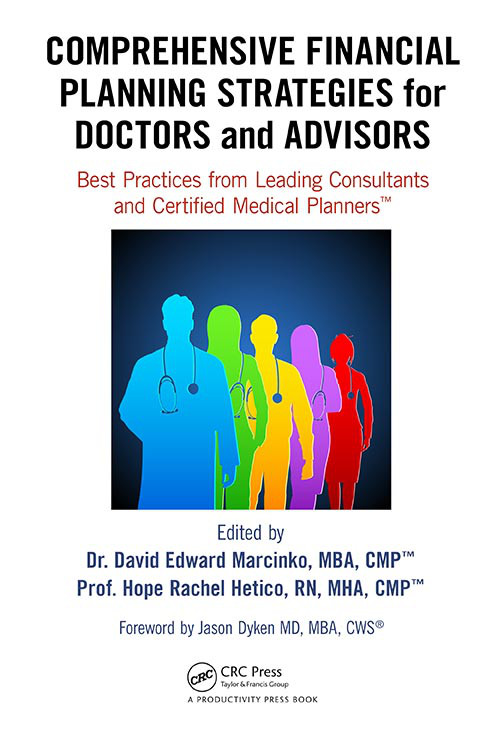
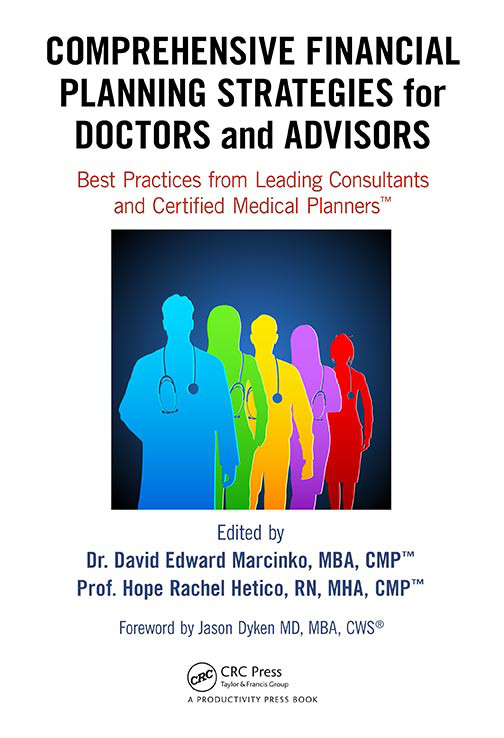
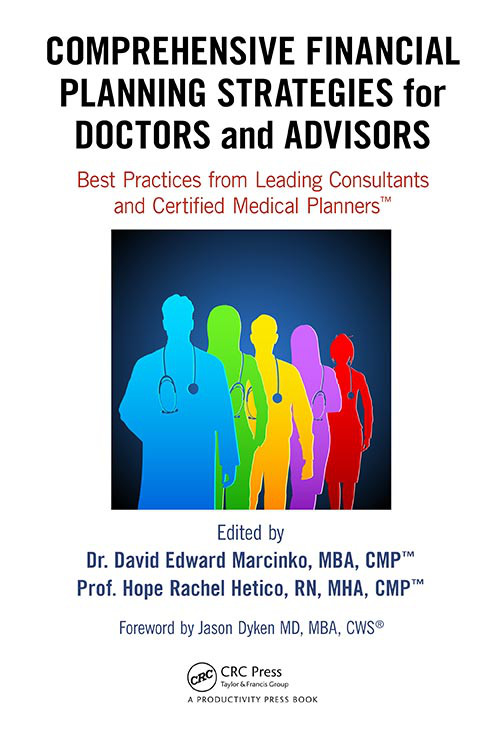
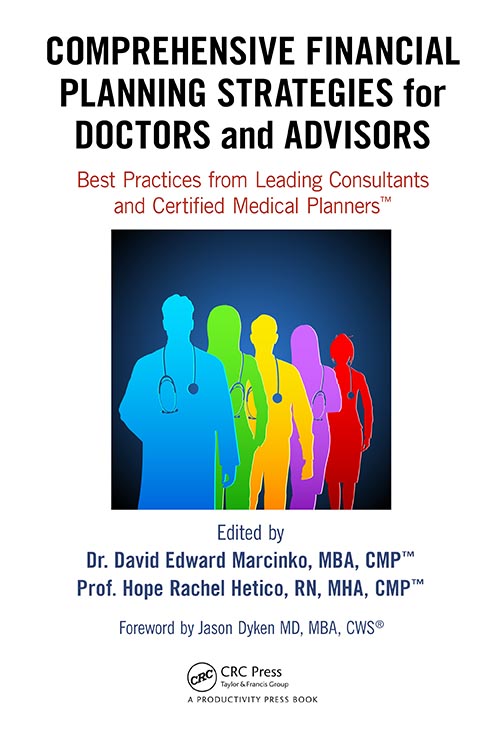
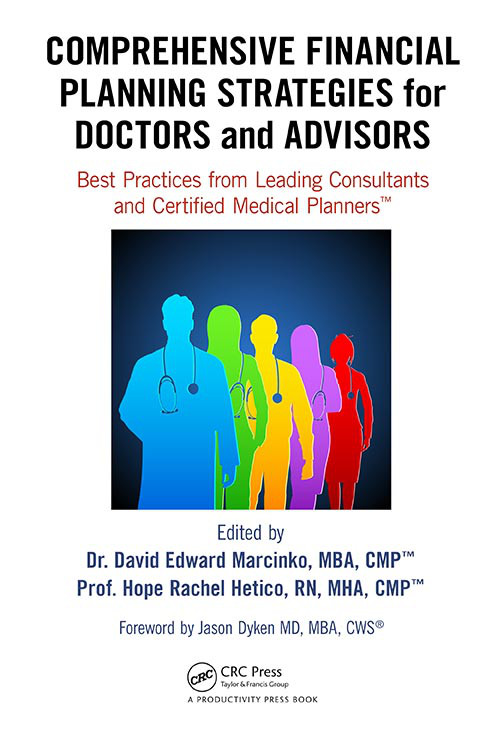
Comprehensive Financial Planning Strategies for Doctors and Advisors: Best Practices from Leading Consultants and Certified Medical Planners(TM)* 8

Product DetailsProduct DetailsProduct Details

Seeking Peer Reviewers for New Medical Risk Management Text Book

Join Our Mailing List 

Our Newest Text Book-in-Production

http://www.CertifiedMedicalPlanner.org

[By Ann Miller RN MHA]

CMP logo

***

RISK MANAGEMENT, LIABILITY INSURANCE, AND ASSET PROTECTION STRATEGIES FOR DOCTOR AND ADVISORS

[Best Practices from Leading Consultants and Certified Medical Planners™]

***

***

Skills Needed

If you are a physician, nurse, accountant, attorney, medical risk manager or healthcare executive, we need you.

Form below or contact us for details to peer-review, etc. MarcinkoAdvisors@msn.com

Assessment

Channel Surfing the ME-P

Have you visited our other topic channels? Established to facilitate idea exchange and link our community together, the value of these topics is dependent upon your input. Please take a minute to visit. And, to prevent that annoying spam, we ask that you register. It is fast, free and secure.

Conclusion

Your thoughts and comments on this ME-P are appreciated. Feel free to review our top-left column, and top-right sidebar materials, links, URLs and related websites, too. Then, subscribe to the ME-P. It is fast, free and secure.

Speaker: If you need a moderator or speaker for an upcoming event, Dr. David E. Marcinko; MBA – Publisher-in-Chief of the Medical Executive-Post – is available for seminar or speaking engagements. Contact: MarcinkoAdvisors@msn.com

OUR OTHER PRINT BOOKS AND RELATED INFORMATION SOURCES:

Comprehensive Financial Planning Strategies for Doctors and Advisors: Best Practices from Leading Consultants and Certified Medical Planners(TM)

[Companion Text Book]


← Back

Thank you for your response. ✨

Warning
Warning
Warning
Warning

Warning.

An Educational Niche Resource Supporting Doctors and their Consulting Advisors

Join Our Mailing List

By Eugene Schmuckler PhD MBA MEd CTS [Academic Provost]

About the Medical Executive-Post

We are an emerging online and onground community that connects medical professionals with financial advisors and management consultants.

We participate in a variety of insightful educational seminars, teaching conferences and national workshops. We produce journals, textbooks and handbooks, white-papers, CDs and award-winning dictionaries. And, our didactic heritage includes innovative R&D, litigation support, opinions for engaged private clients and media sourcing in the sectors we passionately serve.

Through the balanced collaboration of this rich-media sharing and ranking forum, we have become a leading network at the intersection of healthcare administration, practice management, medical economics, business strategy and financial planning for doctors and their consulting advisors. Even if not seeking our products or services, we hope this knowledge silo is useful to you.

In the Health 2.0 era of political reform, our goal is to: “bridge the gap between practice mission and financial solidarity for all medical professionals.”

More: Letterhead.iMBA_Inc.

***

niche

 ***

Enter the Certified Medical Planners™

There is no certification program, course of study or professional designation for FAs who wish to enter the lucrative financial planning space serving physicians and healthcare professionals.

That’s why the R&D efforts of our governing board of physician-directors, accountants, financial advisors, academics and health economists identified the need for integrated personal financial planning and medical practice management as an effective first step in the survival and wealth building life-cycle for physicians, nurses, healthcare executives, administrators and all medical professionals.

Now – more than ever – desperate doctors of all ages are turning to knowledge able financial advisors and medical management consultants for help. Symbiotically too, generalist advisors are finding that the mutual need for extreme niche synergy is obvious.

But, there was no established curriculum or educational program; no corpus of knowledge or codifying terms-of-art; no academic gravitas or fiduciary accountability; and certainly no identifying professional designation that demonstrated integrated subject matter expertise for the increasingly unique healthcare focused financial advisory niche … Until Now!

Enter the Certified Medical Planner™ charter professional designation. And, CMPs™ are FIDUCIARIES, 24/7.

FAs

Video: http://vimeo.com/84247360

An Interview with Bennett Aikin AIF®

Physician-Investors and the “F” Word

More:

Channel Surfing the ME-P

Have you visited our other topic channels? Established to facilitate idea exchange and link our community together, the value of these topics is dependent upon your input. Please take a minute to visit. And, to prevent that annoying spam, we ask that you register. It is fast, free and secure.

Conclusion

Your thoughts and comments on this ME-P are appreciated. Feel free to review our top-left column, and top-right sidebar materials, links, URLs and related websites, too. Then, subscribe to the ME-P. It is fast, free and secure.

Speaker: If you need a moderator or speaker for an upcoming event, Dr. David E. Marcinko; MBA – Publisher-in-Chief of the Medical Executive-Post – is available for seminar or speaking engagements. Contact: MarcinkoAdvisors@msn.com

OUR OTHER PRINT BOOKS AND RELATED INFORMATION SOURCES:

Comprehensive Financial Planning Strategies for Doctors and Advisors: Best Practices from Leading Consultants and Certified Medical Planners(TM)

How may we assist you?

← Back

Thank you for your response. ✨

Warning
Warning
Warning
Warning

Warning.

On Hospital Endowment Fund Management

Join Our Mailing List

A Case Model Example

[By Dr. David Edward Marcinko MBA]

http://www.CertifiedMedicalPlanner.org

DEM at Wharton

Just as the field of medicine continuously changes, so too does the field of endowment management.

Endowment managers continue to increase their knowledge of the science and expand their skill in the art.

However, successful endowment managers will continue to focus on the areas that they can control in order to minimize the risk of the areas they cannot.

***

So, here is a case model to show you how it is done.

[Case Model]

Endowment Fund

***

hospital

Invite Dr. Marcinko

***

Channel Surfing the ME-P

Have you visited our other topic channels? Established to facilitate idea exchange and link our community together, the value of these topics is dependent upon your input. Please take a minute to visit. And, to prevent that annoying spam, we ask that you register. It is fast, free and secure.

More:

Conclusion

Your thoughts and comments on this ME-P are appreciated. Feel free to review our top-left column, and top-right sidebar materials, links, URLs and related websites, too. Then, subscribe to the ME-P. It is fast, free and secure.

Speaker: If you need a moderator or speaker for an upcoming event, Dr. David E. Marcinko; MBA – Publisher-in-Chief of the Medical Executive-Post – is available for seminar or speaking engagements. Contact: MarcinkoAdvisors@msn.com

OUR OTHER PRINT BOOKS AND RELATED INFORMATION SOURCES:

Product DetailsProduct Details

***

Retirement Planning and Physicians [An Oxymoron]?

Join Our Mailing List 

Confidence Eluded

By Shikha Mittra MBA CFP® AIF® http://www.feeonlynetwork.com/Shikha-Mittra

Shikha-MittraAccording to a survey from the Employee Benefit Research Institute [EBRI] and Greenwald & Associates; nearly half of workers without a retirement plan were not at all confident in their financial security, compared to 11 percent for those who participated in a plan, according to the 2014 Retirement Confidence Survey (RCS).

Retirement Money

In addition, 35 percent of workers have not saved any money for retirement, while only 57 percent are actively saving for retirement. Thirty-six percent of workers said the total value of their savings and investments—not including the value of their home and defined benefit plan—was less than $1,000, up from 29 percent in the 2013 survey. But, when adjusted for those without a formal retirement plan, 73 percent have saved less than $1,000.

Debt

Debt is also a concern, with 20 percent of workers saying they have a major problem with debt. Thirty-eight percent indicate they have a minor problem with debt. And, only 44 percent of workers said they or their spouse have tried to calculate how much money they’ll need to save for retirement. But, those who have done the calculation tend to save more.

Shifting Demographics

The biggest shift in the 24 years has been the number of workers who plan to work later in life. In 1991, 84 percent of workers indicated they plan to retire by age 65, versus only 9 percent who planned to work until at least age 70. In 2014, 50 percent plan on retiring by age 65; with 22 percent planning to work until they reach 70.

***

z93

*** 

Physician Statistics

Now, compare and contrast the above to these statistics according to a 2013 survey of physicians on financial preparedness by American Medical Association [AMA] Insurance.

The statistics are still alarming:

  • The top personal financial concern for all physicians is having enough money to retire.
  • Only 6% of physicians consider themselves ahead of schedule in retirement preparedness.
  • Nearly half feel they were behind
  • 41% of physicians average less than $500,000 in retirement savings.
  • Nearly 70% of physicians don’t have a long term care plan.
  • Only half of US physicians have a completed estate plan including an updated will and Medical directives.

Assessment

More:

Conclusion

Your thoughts and comments on this ME-P are appreciated. Feel free to review our top-left column, and top-right sidebar materials, links, URLs and related websites, too. Then, subscribe to the ME-P. It is fast, free and secure.

Speaker: If you need a moderator or speaker for an upcoming event, Dr. David E. Marcinko; MBA – Publisher-in-Chief of the Medical Executive-Post – is available for seminar or speaking engagements. Contact: MarcinkoAdvisors@msn.com

OUR OTHER PRINT BOOKS AND RELATED INFORMATION SOURCES:

Comprehensive Financial Planning Strategies for Doctors and Advisors: Best Practices from Leading Consultants and Certified Medical Planners(TM)

About Peer-to-Peer Lending [P2PL]

Join Our Mailing List 

What it is – How it works?

big_picBy TIMOTHY J. McINTOSH; MBA, MPH, CFP®, CMP™ [Hon]

Similar to private equity or venture capital, peer-to-peer lending [aka person-to-person lending, peer-to-peer investing and social lending] is the practice of lending money to unrelated individuals without the benefit a traditional financial intermediary like a bank or financial institution. P2P lending takes place online using various platforms and credit checking tools.

And, it has been in existence for about a decade.

Here are some important characteristics:

  • P2PL offers a chance to get a lower interest rate than a bank, and gives investors a chance to receive higher returns. Of course, more rewards means more risk.
  • The two largest P2PL companies are Prosper.com and LendingClub.com.  Prosper is older, Lending Club is bigger.  Prosper allows bidding on the interest rates you’re willing to provide a loan. Lending Club sets the rates.
  • Initial returns on Prosper were disappointing because default rates were high; today it is better. For loans originating in the last six months of 2009, both Lending Club and Prosper have a default rate (including currently late loans) of about 13.5%. Using loans from that same time period, Prosper had overall returns of 8.3% and Lending Club had returns of 4.3%.
  • Since avoiding defaults is an important part of P2PL, investors should buy many lots of notes – for as little as $25 each – which make it relatively easy to achieve broad diversification.  Compared to buying index funds and rebalancing once a year, P2PL is more time-consuming as you must pick the loans to invest in individually.  Filtering through the offered loans is time-consuming, but can be rewarding. Some investors sell off their notes at a discount once the borrower goes late on a payment for instance, or just because they need their money out of the investment before the term is up.
  • No matter how closely watched there will be a drag on returns from the cash in your portfolio.  It takes time to choose loans acceptable and then for them to be approved.  Just as with a mutual fund, this will lower your returns, perhaps as much as 1%.
  • One of the real benefits of P2PL is a low correlation with other investments, as it is different than other asset classes and ought to perform differently from equity and fixed income investments.

я74

More:

Assessment

The Author

Timothy J. McIntosh is Chief Investment Officer and founder of SIPCO.  As chairman of the firm’s investment committee, he oversees all aspects of major client accounts and serves as lead portfolio manager for the firm’s equity and bond portfolios. Mr. McIntosh was a Professor of Finance at Eckerd College from 1998 to 2008. He is the author of The Bear Market Survival Guide and the The Sector Strategist.  He is featured in publications like the Wall Street Journal, New York Times, USA Today, Investment Advisor, Fortune, MD News, Tampa Doctor’s Life, and The St. Petersburg Times.  He has been recognized as a Five Star Wealth Manager in Texas Monthly magazine; and continuously named as Medical Economics’ “Best Financial Advisors for Physicians since 2004.  And, he is a contributor to SeekingAlpha.com., a premier website of investment opinion. Mr. McIntosh earned a Bachelor of Science Degree in Economics from Florida State University; Master of Business Administration (M.B.A) degree from the University of Sarasota; Master of Public Health Degree (M.P.H) from the University of South Florida and is a CERTIFIED FINANCIAL PLANNER® practitioner. His previous experience includes employment with Blue Cross/Blue Shield of Florida, Enterprise Leasing Company, and the United States Army Military Intelligence.

Conclusion

Your thoughts and comments on this ME-P are appreciated. Feel free to review our top-left column, and top-right sidebar materials, links, URLs and related websites, too. Then, subscribe to the ME-P. It is fast, free and secure.

Speaker: If you need a moderator or speaker for an upcoming event, Dr. David E. Marcinko; MBA – Publisher-in-Chief of the Medical Executive-Post – is available for seminar or speaking engagements. Contact: MarcinkoAdvisors@msn.com

OUR OTHER PRINT BOOKS AND RELATED INFORMATION SOURCES:

Comprehensive Financial Planning Strategies for Doctors and Advisors: Best Practices from Leading Consultants and Certified Medical Planners(TM)

The Financial Planner’s Responsibility?

Join Our Mailing List 

Are Consumers Losing Ethical Ground?

By Rick Kahler MS CFP http://www.KahlerFinancial.com

Rick Kahler MS CFPSuppose one of my clients has his heart set on using half of his retirement account to buy each of his grandchildren a new car.

Or, a physician-client in a panic over falling markets wants to sell all her stocks and buy gold. What is my responsibility as their financial planner? How far should planners go to try to keep clients from making serious financial mistakes?

Just as with the patient engagement, it’s important for planners to respect clients’ competence and ability to make their own life decisions. Client-centered planners also need to remember that the goal is to help clients get what they want, not what the planner might want or think the client should want.

On the other hand, should a planner stand idly by and watch someone walk off what the planner perceives as the edge of a financial cliff?

Potential Answers?

Part of the answer to this dilemma stems from a planner’s legal obligation. Most advisors who sell financial products have no fiduciary duty and are not legally required to put their customers’ interests first. Fiduciary advisors, which include those who are fee-only, do have a legal obligation to act in their clients’ best interests.

Fiduciary Responsibility

Doctors, clergymen and attorneys are fiduciaries. But, what is the legal responsibility of a fiduciary financial planner who believes clients are about to do themselves financial harm?

Example:

Let’s say I have a client who is about to do something that may be viewed by a court of law as “extreme” or “imprudent.” (An example would be putting all his money into one asset class like gold, cash, penny stocks, etc.) At the minimum, I would need to protect myself by carefully fulfilling my legal responsibilities. This would include making certain I emphasized to the client that, given the research and data available, his actions could hurt him financially. I also would want to be sure the client fully understood and took responsibility for his actions.

***

comedy

***

In terms of the broader aspect of what financial planners owe to their clients, meeting this legal obligation is not enough. In my view, fiduciary planners’ obligation to put clients’ interests first includes an ethical responsibility to do no harm. Sometimes this ethical and legal responsibility requires planners to give clients information they may not want to hear.

As we focus on the clients’ goals and help them carry out their wishes, part of our role is to make sure they have all the information they need. This gives us a responsibility to educate ourselves so the advice we offer is as sound as we can make it. We also need to do whatever we can to help clients hear and understand that advice.

Clients who are hovering on the edge of a financial cliff are typically about to act out of strong emotions such as fear. They often can’t take in financial advice until they are able to move through that fear. It only makes things worse if financial advisors shame clients, bully them, or abandon them to their fears. The challenge for planners is to help clients reach a more rational place so they can gather additional information and make decisions that will serve them well.

Industry Update is Not Good – Give Up the ‘Fiduciary’ Fight

According to industry pundit Bob Veres, so-called Financial Advisors need to face a hard truth – Independent Registered Investment Advisors [RIAs] have lost this round.

But, we already told you so on this ME-P.

Fortunately, there are other better ways to set yourself in the medical ecosystem.

The Certified Medical Planner™ Designation

A Certified Medical Planner is a fiduciary at all times.

More:

Assessment

With the right kind of support, clients are almost always able to get past the fear that is pushing them to make imprudent decisions. Providing such support by working with clients’ emotions and beliefs about money, perhaps with the help of a financial therapist or financial coach, is well within a financial planner’s ethical responsibility. Our role is not merely to do no harm. It is also to use all the tools we have to help clients act in their own best interests.

Product Details  Product Details

Conclusion

Your thoughts and comments on this ME-P are appreciated. Feel free to review our top-left column, and top-right sidebar materials, links, URLs and related websites, too. Then, subscribe to the ME-P. It is fast, free and secure.

Speaker: If you need a moderator or speaker for an upcoming event, Dr. David E. Marcinko; MBA – Publisher-in-Chief of the Medical Executive-Post – is available for seminar or speaking engagements. Contact: MarcinkoAdvisors@msn.com

OUR OTHER PRINT BOOKS AND RELATED INFORMATION SOURCES:

Financial Planning MDs 2015

Comprehensive Financial Planning Strategies for Doctors and Advisors: Best Practices from Leading Consultants and Certified Medical Planners™

How Financial Advisors Build Trust with Physician Prospects and Clients

Join Our Mailing List 

A SPECIAL ME-P REPORT

Niche Career Development for Financial Advisors

VR MD

[By Vicki Rackner MD]

Attention Physician Focused Financial Advisors

If you are a financial advisor who would like to acquire more physician clients, consider these facts:

  • Fact: Half of physicians are behind where they would like to be in retirement planning.
  • Fact: About half of physicians work with professional financial advisors.
  • Fact: Physicians who work with financial advisors are better prepared for retirement.

The Survey

How can YOU build trust and be found by more physician prospects? Here are some steps. Trust is an abstract concept. It begs the question: Trust to do what? I asked my physician colleagues and friends, “When you say you trust your financial advisor, what do you mean?”

Here are some of the answers:

  • You may trust your hairdresser to give you a great look, but you would not trust her to take out your gallbladder.
  • Ask, “Trust to do what?”
  • A recent survey offers insights. Almost half of physicians said that they do not work with advisors because they cannot find someone they trust.
  • This leads to an obvious question: Why would physicians–smart professionals who spend their days identifying problems and fixing them–fail to take action and get on track for retirement?
  1. I trust that she cares about me.
  2. I trust he puts my best interests before his own.
  3. I trust he knows what he’s doing.
  4. I trust he understands the challenges I face.
  5. I trust that she’s honest and direct. A person of integrity.
  6. I trust that he’ll challenge me if I’m about to make a dumb financial move.
  7. I trust the person who gave me his name.
  8. I trust that I’ll keep more money than I spend in fees.

***

Product Details  Product DetailsProduct Details

***

Take steps to build rapport and trust – Be authentic

Tell the story of how and why you came to offer financial advice to physicians.

Here are a few examples from my own clients:

  • Show you care. A famous quote among physicians is, “For the secret in the care of the patient is caring for the patient.” Your first step in building trust with physician prospects and clients is demonstrating you care about them.
  • You can survey your clients and Identify how they how they see your trust-building strengths.
  • An advisor tells the story of his surgeon father who outlived his money. That inspired him to help other surgeons enjoy true financial security.
  • A cancer survivor tells physicians he’s giving back to the doctors who helped his kids grow up with a father.
  • An advisor tells the story of always wanting to be a cardiologist. Now he’s using his real gift–making money grow–to help cardiologists build wealth.

More Tips:

Keep your promises

As my grandmother said, “Keep every promise you make, and only make promises you can keep.”

Conduct yourself like a physician

What does your personal physician do to win your trust? Do the same!

Be consistent

Conservative physicians may need to be exposed to you and your message six to ten times before they take action. Do you have lists of prospects and clients? Have you built an automated way of delivering something of value to them on a regular basis?

Quote other physicians

The most influential person in a physician’s life is another physician. If a physician offers a great idea or a best practice, ask permission to share this pearl of wisdom with other physicians. You want to be known as the financial advisor who rubs shoulders with physician leaders.

Regularly ask

Ask MD prospects and clients, “How can I do better?”

Take steps to be found

Physicians find financial advisors in much the same way you find a personal physician. You begin with someone you trust. Like me, most physicians turn to their own colleagues for names of financial advisors.

Address painful problems that need to be fixed TODAY

Busy people tend to put off problems that are asymptomatic today, even when they know the neglected problems will lead to pain in the future. Retirement is years away for most physicians. However, they seek relief from the acute financial pain of ObamaCare today.

Partner with experts and offer solutions to the problems of falling reimbursements, rising practice costs and heavier tax burdens. When physicians have more money to invest, they build wealth more quickly.

Interview key physician opinion leaders

Ask top physicians how ObamaCare impacts their day-to-day practice and their plans for the future. Uncover specific active problems. These are all opportunities for you. A key physician could introduce you to many physicians.

Listen to physicians

Active listening builds trust. Further, when you express true curiosity in others, they will want to learn about you.

Go to places physicians gather

Offer to speak at medical meetings about topics that the key physician opinion leaders identify. Submit articles for association publications. Join conversations on social media if that’s where your physician prospects gather.

What this means for you

Here’s why you may want to build trust and be found among physicians: you can mine the treasures in the medical market.

  • Fact: Doctors make up 9 of the top 10 earners in the US.
  • Fact: 500,000 US practicing physicians and dentists are financial do-it-yourself’ers.
  • Fact: 40% of practicing physicians are age 55 or older.Physicians’ acute financial pain is your business opportunity. Someone will offer financial leadership to physicians. Why not you?
  • Assessment
  • Every physician is actively developing a personal ObamaCare plan; this is complex personal financial plan for which physicians solicit expert opinions.

Assessment

Enter the Certified Medical Planners

About the Author

Vicki Rackner MD, author, speaker and President of Targeting Doctors, helps financial advisors accelerate their practice growth by acquiring more physician clients. She calls on her experience as a practicing surgeon, clinical faculty at the University of Washington School of Medicine and nationally-noted expert in physician engagement to offer a bridge between the world of medicine and the world of business.

Conclusion

Your thoughts and comments on this ME-P are appreciated. Feel free to review our top-left column, and top-right sidebar materials, links, URLs and related websites, too. Then, subscribe to the ME-P. It is fast, free and secure.

Speaker: If you need a moderator or speaker for an upcoming event, Dr. David E. Marcinko; MBA – Publisher-in-Chief of the Medical Executive-Post – is available for seminar or speaking engagements. Contact: MarcinkoAdvisors@msn.com

OUR OTHER PRINT BOOKS AND RELATED INFORMATION SOURCES:

Comprehensive Financial Planning Strategies for Doctors and Advisors: Best Practices from Leading Consultants and Certified Medical Planners™

Understanding the “Least” Important Issues for Physician-Investors

Join Our Mailing List 

A Dimensional Fund Advisors Survey

By Rick Kahler MS CFP® http://www.KahlerFinancial.com

Rick Kahler MS CFPIn this ME-P, I will focus on the three least important things investors want to know. The rankings came from a survey of investors, funded by Dimensional Fund Advisors, conducted in March 2014 by Advisor Impact.

All three deserved to be much higher on the list. In my experience, they are what most physicians and all investors really need to know.

The factors

These three factors are:

  • What are the chances the investment will lose money? Only 10% of investors thought it was important to ask about factors that contributed to historic performance. Just one-third thought it important to even ask about historical performance in general.
  • What type of volatility can they expect? Only 17% of investors considered this important.
  • How and why did the advisor select the investment for their portfolio? Only 21% of survey respondents thought this was important, and just 8% asked about the investment managers chosen.

Drilling Down and Going Granular

Some of these factors may seem difficult to understand, but they do matter. Give your financial advisor a chance to explain them; it can help you become a more informed investor.

ME-P Physicians

  1. Chances of losing money

This factor could be better addressed by asking about the specific factors that influenced historic performance of the security over various long-term economic climates. True, looking at the past performance of an investment is never a guarantee of future performance.

Yet, if the historical periods evaluated contain a variety of economic conditions (high inflation, various economic cycles, various political influences, etc.) and long-term holding periods (at least 10 years or more), looking backward may give you a reasonable idea of what future performance might look like.

  1. Volatility

Most investors will cognitively agree they fully understand that most investments that carry any chance of real (after inflation) significant long-term return will fluctuate. I say “cognitively” because, once that fluctuation happens on the downside, all cognitive understanding sometimes goes out the window and the emotional brain takes control.

One way of internalizing the potential fluctuation of an investment is to ask about its volatility. Specifically, it’s standard deviation. This measure of the amount of variation from the average is something an advisor can easily find out for almost every bond, stock, and mutual fund. Take the standard deviation times three, then subtract that number from the average return. This is the amount of value over one year your investment could drop (or rise) in 99% of all years. Stated conversely, there is only a 1% chance your investment would drop further in any one year.

  1. Portfolio Fit

I recently sent back a shirt that hung on me like a tent. While it would have been perfect for a larger guy, it was not a fit for me. Investments are similar. While some are perfect matches for one portfolio, they can be lethal in another. An over-allocation to emerging market stocks may make perfect sense for a newborn, but it could be a retirement disaster for a 90-year-old.

Pensive Financial Advisor for Physicians

Assessment

It’s important to ask why an investment belongs in your portfolio. You want investments (asset classes) that complement one another by tending to fluctuate independently of each other.

In an ideal balance of investments, when some decrease in value the other half increase an equal or greater amount, and all of them earn a real return over time.

Conclusion

Your thoughts and comments on this ME-P are appreciated. Feel free to review our top-left column, and top-right sidebar materials, links, URLs and related websites, too. Then, subscribe to the ME-P. It is fast, free and secure.

Speaker: If you need a moderator or speaker for an upcoming event, Dr. David E. Marcinko; MBA – Publisher-in-Chief of the Medical Executive-Post – is available for seminar or speaking engagements. Contact: MarcinkoAdvisors@msn.com

OUR OTHER PRINT BOOKS AND RELATED INFORMATION SOURCES:

 Comprehensive Financial Planning Strategies for Doctors and Advisors: Best Practices from Leading Consultants and Certified Medical Planners™

How Physicians Prepare for Retirement?

 Join Our Mailing List 

ME-P SPECIAL REPORT

On Physician DIY’s

[By Vicki Rackner MD]

VR MD

Dear ME-P Readers and Subscribers,

Employed physicians who use professional financial advisors v.s. physician financial do-it-yourself-ers):

Did you know the following:

  • Feel better prepared for retirement
  • Have more in emergency savings
  • Have more diverse financial investments and
  • Feel more confident about their personal financial decisions?

Did you also know:

Here are some other key survey findings:

  • 60% of practicing physicians are employed by hospitals, groups and medical schools.
  • 42% of of employed physicians are behind where they would like to be in retirement planning.
  • Employed physicians” #1 financial goal is to enjoy a comfortable retirement. Other top concerns include funding long-term care, minimizing losses and ensuring an inheritance for children/ grandchildren.
  • Half of employed physicians believe they have unique or more complex financial needs than other professionals.These finding affirm the intuitively obvious: experts get better results than dabblers.
  • Patients get the best medical outcomes when they work with physicians whom they trust; physicians get the best financial results when they work with financial advisors whom they trust.

***

Product Details  Product Details

***

What this means for you

These finding affirm the intuitively obvious: experts get better results than dabblers.

Patients get the best medical outcomes when they work with physicians whom they trust; physicians get the best financial results when they work with financial advisors whom they trust; as a fiduciary advisor.

Assessment

Enter the Certified Medical Planners

About the Author

Vicki Rackner MD, author, speaker and President of Targeting Doctors, helps financial advisors accelerate their practice growth by acquiring more physician clients. She calls on her experience as a practicing surgeon, clinical faculty at the University of Washington School of Medicine and nationally-noted expert in physician engagement to offer a bridge between the world of medicine and the world of business.

Conclusion

Your thoughts and comments on this ME-P are appreciated. Feel free to review our top-left column, and top-right sidebar materials, links, URLs and related websites, too. Then, subscribe to the ME-P. It is fast, free and secure.

Speaker: If you need a moderator or speaker for an upcoming event, Dr. David E. Marcinko; MBA – Publisher-in-Chief of the Medical Executive-Post – is available for seminar or speaking engagements. Contact: MarcinkoAdvisors@msn.com

OUR OTHER PRINT BOOKS AND RELATED INFORMATION SOURCES:

Financial Planning MDs 2015

Comprehensive Financial Planning Strategies for Doctors and Advisors: Best Practices from Leading Consultants and Certified Medical Planners™

The “ObamaCare Opportunity” for Financial Advisors

Join Our Mailing List

Why Physicians Need Financial Advisors Now!

[By Vicki Rackner MD]

http://www.CertifiedMedicalPlanner.org

VR MDI recently attended a surgical meeting. Most conversations with my physician colleagues turned to the same singular topic: physicians’ new financial reality.

And the message is, “It hurts!”

Physicians’ Financial Plans

Financially savvy physicians execute thoughtful retirement plans. Yet, today about half of surveyed physicians are behind where they would like to be in retirement preparedness. Further, today only about half of physicians work with professional financial planners.

As a physician myself, I understand why smart physicians fail to take smart financial action. We physicians dedicate ourselves to the alleviation of pain and suffering of others. Retirement is a distant personal concern that does not cause immediate financial pain today. We put it off.

Lesson from My Dentist

Years ago my dentist recommended that I undergo a procedure to replace a filling. He explained that the filling material put in my mouth about 40 years ago tends to pull from the tooth over time and allow new cavities to form.

As much as I like my dentist, I actively avoid spending time in his dental chair. I put off the recommended filling replacement year after year. That is, of course, until I experienced vague throbbing from that tooth. I rearranged my schedule so I could tend to this small problem before it became a much bigger problem. Who wants a root canal!

For physicians retirement planning is like that proactive filling replacement. We understand that without action there will be problems down the road. However, the threat of a problem in the distant future does not propel many like myself to action today.

***

Product Details  Product Details

***

The ObamaCare [PP-ACA] Opportunity for Financial Advisors

ObamaCare is the source of acute financial pain for physicians. It’s the financial toothache. Practicing physicians are looking at:

  • Higher taxes. Doctors represent 9 of the 10 highest earners in the US.
  • Rising costs of goods and services as businesses address their own higher tax bills.
  • The costs of building the infrastructure that will lead to greater healthcare efficiencies, like converting to electronic medical records, hiring new staff to address new administrative demands and aligning with new compliance requirements.
  • Lower professional fees. The 24% Medicare fee reduction that was averted this year will become reality soon. As Medicare goes, so, too, go the rest of the insurance fee schedules.
  • Decreasing patient referrals as primary care doctors sell their practices.
  • Physicians know they need to act now to avoid the financial root canal. Each physician is in the process of creating a personal ObamaCare plan.

Physicians’ Wants and Needs

As a financial advisor, you know that physicians NEED a retirement plan. Kids need to eat their broccoli, too. It’s good for them.

Physicians WANT a plan to help them achieve the personal, professional and financial goals that drew them to a career in medicine. Engaging physicians by address their ObamaCare plan is about as hard as getting kids to eat ice cream.

What This Means for You

Today physicians actively seek experts to help them create their ObamaCare plans.

Financial advisor are winning new physician clients. As Seattle Seahawks quarterback Russell Wilson asks, “Why not you?”

If you want to work with more physician clients, this is your moment! Seize it. You have a chance to join the high-performing financial advisors mining the treasures in the medical market.

Assessment

Should wish to learn more here’s a video that addresses 4 questions:

  • Why do physicians need you now?
  • What do you need to know about physicians now?
  • How do you engage physicians now?
  • How do you conduct yourself so physicians want to conduct business with you now?

About the Author

Vicki Rackner MD is an author, speaker and consultant who offers a bridge between the world of medicine and the world of business. She helps businesses acquire physician clients.

VIDEO: https://www.youtube.com/watch?v=CeCyidc4JP8&feature=player_embedded

Enter the Certified Medical Planners

Conclusion

Your thoughts and comments on this ME-P are appreciated. Feel free to review our top-left column, and top-right sidebar materials, links, URLs and related websites, too. Then, subscribe to the ME-P. It is fast, free and secure.

Speaker: If you need a moderator or speaker for an upcoming event, Dr. David E. Marcinko; MBA – Publisher-in-Chief of the Medical Executive-Post – is available for seminar or speaking engagements. Contact: MarcinkoAdvisors@msn.com

OUR OTHER PRINT BOOKS AND RELATED INFORMATION SOURCES:

Financial Planning MDs 2015

Comprehensive Financial Planning Strategies for Doctors and Advisors: Best Practices from Leading Consultants and Certified Medical Planners™

I’m a 47 year old MD – Can you help me?

Join Our Mailing Listcmp-logo

cmp-program1

A Real-Life Case Model

By Ann Miller RN MHA

http://www.CertifiedMedicalPlanner.org

As a generic financial advisor, how would you answer this client prospect’s inquiry?

QUESTION: I’m a 47 year old MD – Can you help me?

TRADITIONAL ANSWER: I am a stock-broker [aka financial advisor] or insurance agent, and I sell financial products and insurance policies on a commission basis.

What do you want to buy?

CURRENT ANSWER: I am a financial planner, and I charge a percentage amount on the assets I “manage” for you. But, I have a minimum portfolio amount.

So how much money do you have to invest?

DEEP NICHE ANSWER: Yes! I am a fully CERTIFIED MEDICAL PLANNER™ practitioner.  I understand holistic financial planning for medical professionals and current health industry tumult. And, as an informed fiduciary – with transparent fees – I can help with your medical practice, business and/or personal financial planning matters.

When can we meet to discuss your needs?

***

Financial Planning MDs 2015

Comprehensive Financial Planning Strategies for Doctors and Advisors: Best Practices from Leading Consultants and Certified Medical Planners™

***

ENTER THE CMPs

Enter the CMPs

Conclusion

Your thoughts and comments on this ME-P are appreciated. Feel free to review our top-left column, and top-right sidebar materials, links, URLs and related websites, too. Then, subscribe to the ME-P. It is fast, free and secure.

Speaker: If you need a moderator or speaker for an upcoming event, Dr. David E. Marcinko; MBA – Publisher-in-Chief of the Medical Executive-Post – is available for seminar or speaking engagements. Contact: MarcinkoAdvisors@msn.com

OUR OTHER PRINT BOOKS AND RELATED INFORMATION SOURCES:

 Product Details  Product Details

Reviewing Physician Disability Insurance Policies

Join Our Mailing List

Including Policy Checklist

By Dr. David Edward Marcinko MBA http://www.CertifiedMedicalPlanner.org

Dr. DEM

The Basic Premise 101

Could you continue to support your family and pay your bills if you were unable to work for any length of time because of illness or injury? If you were to become disabled, do you know how much money would be coming in each month and from what sources?

The Checklist

As a doctor I covered the ER, and was an insurance agent, for almost a decade. But, I reformed and am now a Certified Medical Planner™ and B-school professor. And, I know that every disability insurance policy has different features.

The following checklist will help you compare policies you may be considering:

  1. How is disability defined? Is it defined as the inability to perform your own job, or inability to do any job? We recommend all our clients, as physicians, to obtain a policy that protects them in their own specialty. This kind of policy is defined as an own-occupation policy, which protects the income you earn in your own specialty and continues to pay benefits if your disability requires that you choose a new specialty or occupation.
  2. Are benefits available for partial or residual disability, as well as for full disability? The most comprehensive policies will pay you a benefit even if you are not completely disabled. If you can only earn up to 20% of your income you are deemed totally disabled; if you can earn 80% or more you are deemed totally well. Partial or residual policies pay benefits when you fall in the category between 20-80%.
  3. Are full benefits paid, whether or not you are able to work, for loss of sight, loss of hearing, or loss of limbs? This is called presumptive disability. Some policies do not cover presumptive disability, some cover you for a specified amount of time, and some protect you for life.
  4. What is the maximum benefit I am eligible for? The amount is based on your income to a maximum of $15,000 per month for one company, and $20,000 total.
  5. Is the policy non-cancelable, guaranteed renewable, or conditionally renewable? The most comprehensive policies are non-cancelable and guaranteed renewable; these put you in total control, not the insurance company, practice or association. The insurance company cannot raise rates, cannot reduce benefits, add exclusions, or cancel your policy at anytime. You are in control, and the policy is portable and goes wherever you go.
  6. How long must you be disabled before premiums are waived? Premiums are waived at the end of the waiting period and refunded for the amount paid during the waiting period.
  7. Is there an option to buy additional coverage, without undergoing additional medical tests or examinations, at a later date? This kind of coverage is called guaranteed issue disability insurance and is available to those who qualify.
  8. Does the policy offer an inflation adjustment feature? If so, what is the rate of inflation? Is there a maximum? This feature is available by an added rider. Ask a licensed DI4MDs.com agent if inflation protection fits your needs at this time.

***

Ankle-Leg Trauma

[Back When I Covered the ER]

[Copyright David Edward Marcinko and iMBA Inc., All rights reserved. USA]

***

Other Items

  • What is an adequate level of benefits in relation to your present and future obligations?
  • How long a waiting period (until benefits begin) should you select to fit your situation?
  • How long do you want to receive disability income should it become necessary? How much coverage can you get at your current salary?

More: More on Disability Insurance for Physicians

Conclusion

Your thoughts and comments on this ME-P are appreciated. Feel free to review our top-left column, and top-right sidebar materials, links, URLs and related websites, too. Then, subscribe to the ME-P. It is fast, free and secure.

Speaker: If you need a moderator or speaker for an upcoming event, Dr. David E. Marcinko; MBA – Publisher-in-Chief of the Medical Executive-Post – is available for seminar or speaking engagements. Contact: MarcinkoAdvisors@msn.com

OUR OTHER PRINT BOOKS AND RELATED INFORMATION SOURCES:

Financial Planning MDs 2015

Comprehensive Financial Planning Strategies for Doctors and Advisors: Best Practices from Leading Consultants

Finding a Fiduciary Financial Advisor

Join Our Mailing List

A Critical Life Skill? 

[By Rick Kahler MS CFP® http://www.KahlerFinancial.com]

Rick Kahler CFPIn today’s complex world of technology, regulations, and finance, a critical life skill is finding advisors and service providers we can trust.

Few of us know how to repair a laptop, grasp the details of income tax regulations, or understand the nuances of selecting the best mutual fund.

We must rely on others to help us out.

Trust Owed

In the legal sense, there are very few people who “owe” us their trust. Certainly, those selling us goods owe us accuracy and honesty. When I buy a 48-ounce bottle of 100% pomegranate juice from Safeway, I expect it to contain exactly 48 ounces and be 100% pomegranate juice, not a blend of pomegranate, grape, and apple. However, I cannot trust Safeway to know whether the health claims behind pomegranate juice are accurate or whether I can find it cheaper elsewhere.

Sales People

In a similar fashion, salespeople for appliances, cars, or cable service have one basic goal, to sell products to their customers. They owe us honesty about the costs, features, and condition of their wares. But it is up to us to research products and decide whether they are good values for us.

Professionals

Professionals in some fields give unbiased advice about certain products or services as they relate specifically to you. In a legal sense, such professionals do owe you trust. They have a “fiduciary” duty to be your advocate. The law requires a professional held to a fiduciary duty to work solely in the consumer’s interest. Examples of such professionals are physicians, attorneys, accountants, trustees, trust officers, and most real estate consultants.

When a professional has a fiduciary duty to you, you are called a client. When a professional is selling you a product or service, you are a customer.

Conflicts of Interest

One of the primary issues affecting how easily fiduciaries can advocate for you is their level of freedom from a conflict of interest. At times a potential conflict of interest can be so significant that a fiduciary will decline the engagement. Attorneys, for example, will turn you down if you want to sue someone they have represented in the past. The past association may cloud their ability to effectively advocate for you.

Compensation

One of the greatest potential conflicts of interest is how you compensate the fiduciary. Typically, paying a flat or hourly fee is the easiest way to insure there is no compensational conflict. Compensating a fiduciary with commissions almost always carries some type of potential conflict. The greater the compensation from a commission, the greater the potential conflict.

pennies

Example:

For example, Real Estate Agent A acts as a buyer’s broker with a fiduciary duty to a buyer, who pays her an hourly fee plus 1% of any amount that the final purchase price is reduced from the list price. Agent B, also a fiduciary buyer’s broker, is only compensated by a commission if there is a sale. Which agent has the larger potential conflict of interest? Without a question, Agent B. He may face a situation where his client’s interest would be best served by a sale with a lower commission or even no sale at all. Advocating for his client would mean a direct financial loss for Agent B.

To minimize such potential conflicts, in most states real estate agents are required to clearly disclose fees and get clients’ written acknowledgement. Unfortunately, the total fees charged by investment advisors, and whether you are their customer or a client, is seldom clear, often even when the advisor assures you that you will be a client. Many advisors don’t know the difference.

More:

Sponsor:

Assessment

What can you do to protect yourself? Next time I will give you a five-minute solution.

Conclusion

Your thoughts and comments on this ME-P are appreciated. Feel free to review our top-left column, and top-right sidebar materials, links, URLs and related websites, too. Then, subscribe to the ME-P. It is fast, free and secure.

Speaker: If you need a moderator or speaker for an upcoming event, Dr. David E. Marcinko; MBA – Publisher-in-Chief of the Medical Executive-Post – is available for seminar or speaking engagements. Contact: MarcinkoAdvisors@msn.com

OUR OTHER PRINT BOOKS AND RELATED INFORMATION SOURCES:

Product Details

Product Details

Why Medical Professionals Need a Financial Plan?

Join Our Mailing List

We don’t plan to fail – We fail to plan

[By Dr. David Edward Marcinko MBA CMP™]

http://www.CertifiedMedicalPlanner.org

Dr. DEM

Our newest textbook COMPREHENSIVE FINANCIAL PLANNING STRATEGIES FOR DOCTORS AND ADVISORS [Best Practices from Leading Consultants and Certified Medical Planners™] will shape the physician-focused financial planning landscape for the next-generation of Health 2.0 medical professionals and their financial advisors.

Why Now?

We created this innovative textbook because the healthcare industry is rapidly changing and the financial planning ecosystem has not kept pace. Traditional insurance-commission and sales-driven generic advice is yielding to a new breed of deeply informed fiduciary advisor, and educated consultant, or Certified Medical Planner (CMP™). Internet and social media of the last decade demonstrates that medical providers are becoming accustomed to the need for knowledgeable advice. And so, financial planning is set to be transformed by “market disruptors” that will soon make an impact on the $2.8 trillion healthcare marketplace for those financial advisers serving this sector.

We are at the leading edge of this positive disruption — also known as niche based Financial Planning 2.0 — that over time will see today’s command-controlled financial services industry becomes a wide open academic marketplace. And, a growing cadre of specialty entrants is poised to shake up the industry drawing billions of dollars in revenue from traditional broker-dealer organizations while building lucrative new markets.

For example, an iMBA Inc survey points to the growing need for financial advisors to serve current and future medical professionals thanks to their eagerness to seek premium financial planning solutions from non-traditional sources and providers; like the online Certified Medical Planner™ charter designation program. The industry is ripe for a shakeup and physician focused financial planning will soon have its own new brands. We aim to be among the first-movers and top tier names in the industry.

Doctors and Computers

How We Are Different?

COMPREHENSIVE FINANCIAL PLANNING STRATEGIES FOR DOCTORS AND ADVISORS [Best Practices from Leading Consultants and Certified Medical Planners™] will change this niche industry sector by following eight important principles.

1. First, we have assembled a world-class editorial advisory board and independent team of contributors and reviewers and asked them to draw on their experiences in contemporaneous healthcare focused financial planning. Like many of their physician and nurse clients, each struggles mightily with the decreasing revenues, increasing costs, automation, SEC scrutiny and higher physician-client expectations in today’s competitive financial advisory and technological landscape. Yet, their practical experience and physician focused education, knowledge and vision is a source of objective information, informed opinion and crucial information to all consultants working with doctors and medical professionals in the financial services field.

2. Second, our writing style allows us to condense a great deal of information into one volume. We integrate bullet points and tables; pithy language, prose and specialty perspectives with real world examples and case models. The result is an oeuvre of integrated financial planning principles vital to all modern physicians and allied healthcare professionals.

3. Third, to the best of our knowledge, this is the first peer-reviewed book of its type, as we seek to follow traditional medical research and journal publishing guidelines for best practices. We present differing viewpoints, divergent and opposing stake-holder perspectives, and informed personal and professional opinions. Each chapter has been reviewed by one to three outside independent reviewers and critical thinkers. We include references and citations, and although we cannot rule out all biases, we do strive to make them transparent to the extent possible.

4. Fourth, our perspective is decidedly from the physician-client side of the equation. More specifically, as consultants to medical professionals, we champion the physician-investor over the financial advisor. And, to the extent that both sides ethically succeed; we hope all concerned “do well – by doing good”. This is unique in the fee and commission driven financial services industry. Much like the emerging patient-centered care initiative in medicine, we call it client-centered advice.

5. Fifth, it is important to note that deep specificity and niche knowledge is needed when advising physicians and healthcare providers. And so, we present information directly from that space, and not by indirect example from other industries, as is the unfortunate norm. Medical case models, healthcare industry examples, and anecdotal insights from the Over Heard in the Doctor’s Lounge, and Over Heard in the Advisor’s Lounge features, are also included. Finally, personalized financial planning for all medical professionals is our core, and only focus.

6. Sixth, this textbook represents an academic template for about 25 percent [125/500 credit hours] of the Certified Medical Planner™ chartered professional online certification program curriculum. It is useful for those studying, auditing, or considering matriculation for this prestigious designation mark.

7. Seventh, we include a glossary-of-terms specific to the text, a list of comprehensive advice sources, and three illustrative physician-specific financial plan examples additionally available by separate order.

8. Finally, as editor, we prefer engaged readers who demand compelling content.  According to conventional wisdom, printed texts like this one should be a relic of the past; from an era before instant messaging and high-speed connectivity.  Our experience shows just the opposite. Applied physician focused personal financial planning literature, from informed fiduciary sources, is woefully sparse; just as a plethora of generalized internet information makes that material less valuable to doctor clients.

***

plan

***

A Seminal Work

And so, rest assured that COMPREHENSIVE FINANCIAL PLANNING STRATEGIES FOR DOCTORS AND ADVISORS [Best Practices from Leading Consultants and Certified Medical Planners™] will become a seminal book for the advancement of personal financial planning and related personal micro-economic principles in this niche ecosystem.

In the years ahead, we trust these principles will enhance utility and add value to your book. Most importantly, we hope to increase your return on investment by some small increment.

If you have any comments or would like to contribute material or suggest topics for future editions please contact me.

More:

Conclusion

Your thoughts and comments on this ME-P are appreciated. Feel free to review our top-left column, and top-right sidebar materials, links, URLs and related websites, too. Then, subscribe to the ME-P. It is fast, free and secure.

Speaker: If you need a moderator or speaker for an upcoming event, Dr. David E. Marcinko; MBA – Publisher-in-Chief of the Medical Executive-Post – is available for seminar or speaking engagements. Contact: MarcinkoAdvisors@msn.com

OUR OTHER PRINT BOOKS AND RELATED INFORMATION SOURCES:

Financial Planning MDs 2015

Comprehensive Financial Planning Strategies for Doctors and Advisors: Best Practices from Leading Consultants

COMPREHENSIVE FINANCIAL PLANNING STRATEGIES for DOCTORS and ADVISORS

Join Our Mailing List

UPCOMING: Our Newest Major Textbook Release

[By Ann Miller RN MHA]

Release: February 19th, 2015 by Productivity Press, Inc

744 Pages | 43 Illustrations

Editor(s): Dr. David Edward Marcinko MBA CMP™ and Professor Hope Rachel Hetico RN MHA CMP™

***

 COMPREHENSIVE FINANCIAL PLANNING STRATEGIES for DOCTORS and ADVISORS 

[Best Practices from Leading Consultants and

Certified Medical Planners™]

Comprehensive Financial Planning Strategies for Doctors and Advisors: Best Practices from Leading Consultants and Certified Medical Planners™

 Features: 

  • Engaging content with case models, templates and examples for all medical professionals and their consulting advisors.
  • Combines holistic financial planning with new topics like hedge funds, investment banking, Wall Street practices and shenanigans; securities markets and margin accounts; alternative asset classes and investment policy creation – all integrated with emerging health industry concerns like the PP-ACA, ACOs, new tax laws and reimbursement models; practice sales, contracting and valuations; social media, hospital employee fringe benefits and PHO stock options.
  • Presents disruptive theories on industry suitability rules, fiduciary accountability and stewardship principles, and how to select the most knowledgeable and cost-efficient advisor for every life-cycle need.

Summary

Drawing on the expertise of multi-degreed doctors, and multi-certified financial advisors, COMPREHENSIVE  FINANCIAL PLANNING STRATEGIES FOR DOCTORS AND ADVISORS[Best Practices from Leading Consultants and Certified Medical Planners™]will shape the industry landscape for the next-generation as the current ecosystem strives to keep pace. Traditional generic products and sales-driven advice will yield to a new breed of deeply informed financial advisor, or Certified Medical Planner™.

The profession is set to be transformed by “cognitive-disruptors” that will significantly impact the $2.8 trillion healthcare marketplace for those financial consultants serving this challenging sector. There will be winners and losers. The text which contains 24 chapters, and champions healthcare providers while informing financial advisors, is divided into four sections compete with glossary of terms, CMP™ curriculum content, and related information sources:

  1. For ALL medical providers and financial industry practitioners
  2. For NEW medical providers and financial industry practitioners
  3. For MID-CAREER medical providers and financial industry practitioners
  4. For MATURE medical providers and financial industry practitioners.

Using an engaging style, the book is filled with authoritative guidance and health care–centered discussions, to provide tools and techniques to create a personalized financial plan using professional advice. Comprehensive coverage includes topics likes behavioral finance, medical risk management, Modern Portfolio Theory (MPF), the Capital Asset Pricing Model (CAP-M) and Arbitrage Pricing Theory (APT); as well as insider insights on commercial real estate; High Frequency Trading platforms and robo-advisors; the Patriot and Sarbanes–Oxley Acts; hospital endowment fund management, ethical wills, divorce and other special situations.

The result is a codified “must-have” book, for all health industry participants, and those seeking advice from the growing cadre of financial consultants and Certified Medical Planners™ who seek to “do well – by doing good”, dispensing granular physician-centric financial advice: Omnia pro medicus-clientis.

Financial Planning 2015

 RAISING THE BAR

CERTIFIED MEDICAL PLANNER

“The informed voice of a new generation of fiduciary advisors for healthcare”

[Omnia pro medicus-clientis]  

More:

BOOK: Comprehensive Financial Planning Strategies for Doctors and Advisors: Best Practices from Leading Consultants and Certified Medical Planners™

Conclusion

Your thoughts and comments on this ME-P are appreciated. Feel free to review our top-left column, and top-right sidebar materials, links, URLs and related websites, too. Then, subscribe to the ME-P. It is fast, free and secure.

Link: http://feeds.feedburner.com/HealthcareFinancialsthePostForcxos

Speaker: If you need a moderator or speaker for an upcoming event, Dr. David E. Marcinko; MBA – Publisher-in-Chief of the Medical Executive-Post – is available for seminar or speaking engagements. Contact: MarcinkoAdvisors@msn.com

OUR OTHER PRINT BOOKS AND RELATED INFORMATION SOURCES:

Product DetailsProduct DetailsProduct Details

Product DetailsProduct Details

Risk Management, Liability Insurance, and Asset Protection Strategies for Doctors and Advisors: Best Practices from Leading Consultants and Certified Medical Planners™8Comprehensive Financial Planning Strategies for Doctors and Advisors: Best Practices from Leading Consultants and Certified Medical Planners™

Congratulations to Ken Chi Yeung MBA CMP™

Join Our Mailing List

Meet Our Newest Certified Medical Planner™

ky

Ken Chi Yeung MBA CMP

Ken is a hospital administrator and financial consultant for the Tseung Kwan O Hospital, in Hong Kong. He speaks English, Cantonese, Mandarin and Chinese.

diploma

Assessment

Certified Medical Planner

Link: http://www.CertifiedMedicalPlanner.org

NEW BOOK: Comprehensive Financial Planning Strategies for Doctors and Advisors: Best Practices from Leading Consultants and Certified Medical Planners™

Conclusion

Your thoughts and comments on this ME-P are appreciated. Feel free to review our top-left column, and top-right sidebar materials, links, URLs and related websites, too. Then, subscribe to the ME-P. It is fast, free and secure.

Speaker: If you need a moderator or speaker for an upcoming event, Dr. David E. Marcinko; MBA – Publisher-in-Chief of the Medical Executive-Post – is available for seminar or speaking engagements. Contact: MarcinkoAdvisors@msn.com

OUR OTHER PRINT BOOKS AND RELATED INFORMATION SOURCES:

Product DetailsProduct Details

Financial Planning MDs 2015

OUR NEWEST BOOK:

Comprehensive Financial Planning Strategies for Doctors and Advisors: Best Practices from Leading Consultants and Certified Medical Planners™

Enter the Financial Advisory Gurus?

Join Our Mailing List 

Understanding the Nexus Between Fame and Quality

[By Rick Kahler CFP®]  http://www.KahlerFinancial.com

  • “I see that firm’s ads everywhere.”
  • “His books are best-sellers.”
  • “That advisor does all kinds of free seminars for retirees.”
  • “She’s on TV all the time.”

The Case … For?

When a financial advisor, someone with a radio or television show, or an author of financial books becomes well-known, it’s easy to assume you can trust that person’s advice. This isn’t necessarily the case.

Recently I was selected by an Internet community site called moneytips.com as one of their top 50 “social influencers.” This is a list of professionals in the areas of wealth and personal finance who use social media and other Internet tools effectively.

Among the top three on this list are Dave Ramsey and Suze Orman, whose books and advice include a great deal of solid information to help people get out of debt, manage money well, and provide for the future. Many others in the top 50 are respected financial journalists and advisors.

The Case … Against?

However, the list also includes a few advocates for high-risk investment methods, proponents of dubious get-rich-quick schemes, and purveyors of poorly researched advice. Those who put together the list focused on how well people established a presence on the Internet and used technology to communicate. That’s an assessment completely unrelated to the question of whether the advice or information being communicated was worthwhile.

Financial Planning

Financial planning, just like any other field, has a solid core of practitioners who quietly and ethically serve their clients. It also has its gurus, its outstanding marketers, and its fringe practitioners with extreme ideas. The challenge for consumers is not to assume fame and quality always go together.

Linking Fame and Quality?

Here are a few suggestions for keeping a balanced perspective about famous or familiar financial faces:

1. Knowing about a professional isn’t the same as knowing a professional. Everyone you know may have heard of Noted Local Advisor. That’s not the same as being able to recommend him or her. Get recommendations first-hand, from people who actually are clients of a firm or have used someone’s plan or advice. Ask specific questions about what they’ve done and how it worked for them.

2. Yes, there are shortcuts to building wealth, but they come with very high risks. For most of us, the best ways to build wealth are gradual and even boring: saving part of every paycheck, living on less than we earn, and investing for the long term in a well-diversified portfolio of different asset classes. It’s natural to wish for an easier, faster way, but that desire can make you more vulnerable to high-risk schemes and even scams.

3. Even if a method of building wealth is perfectly legitimate and works for others, it still may not be a good fit for you. If you’re a reclusive introvert, for example, sales is probably not your best path to success.

4. Apply the same common sense and skepticism to financial products or wealth-building methods that you would use anywhere else. For example, you probably don’t assume that a car’s advertised gas mileage is what you’ll actually get under real-world conditions. In the same way, it’s a good idea to assume that your real-world results from a proposed investment or business will be lower than the advertised numbers.

5. Don’t assume every financial guru is a crook. Many reputable professionals can teach you a great deal about money. Your job is to learn the financial basics so you can evaluate them with some educated skepticism.

networking advisors

More:

Assessment

And always keep in mind that a product or idea is not the same thing as the selling of that product or idea. The true genius of some financial “experts,” after all, is marketing.

Conclusion

Your thoughts and comments on this ME-P are appreciated. Feel free to review our top-left column, and top-right sidebar materials, links, URLs and related websites, too. Then, subscribe to the ME-P. It is fast, free and secure.

Speaker: If you need a moderator or speaker for an upcoming event, Dr. David E. Marcinko; MBA – Publisher-in-Chief of the Medical Executive-Post – is available for seminar or speaking engagements. Contact: MarcinkoAdvisors@msn.com

OUR OTHER PRINT BOOKS AND RELATED INFORMATION SOURCES:

Product Details  Product Details

Understanding Some Common Portfolio Payout Methods

   Certified Medical Planner

By Dr. David Edward Marcinko MBA CMP™

Recognizing the risk that market volatility represents to long-term portfolio health, investment accounts and endowment funds utilize a variety of methods to calculate periodic payouts.

  • Investment Yield: An investment portfolio using this method spends only its dividends and interest and re-invests any unrealized and realized gains. There would appear to be two primary disadvantages of this method. First, the payout amount will be extremely volatile as yields on equity and fixed income investments fluctuate. Second, the endowment manager could be encouraged to adopt a short-term focus on yield to the detriment of purchasing power preservation.
  • Percentage of the Prior Year’s Ending Market Value: An endowment using this method would withdraw some fixed percentage of the prior year’s market value. As with the Investment Yield method, disbursements from the endowment can be somewhat volatile under this method.
  • Moving Average: This approach, which is most common among educational institutions, generally involves taking a percentage of a moving average of the endowment market value. The percentage commonly approximates 5% over a 3-year period.
  • Inflation Adjusted: This portfolio method simply adds some factor to the applicable rate of inflation for the institution or investor.
  • Banded Inflation or Corridor: This account method is similar to the Inflation Adjusted method except that it establishes a corridor or band of minimum and maximum increases in an attempt to limit the volatility of the disbursement amounts.

payout

More:

Conclusion

Your thoughts and comments on this ME-P are appreciated. Feel free to review our top-left column, and top-right sidebar materials, links, URLs and related websites, too. Then, subscribe to the ME-P. It is fast, free and secure.

Speaker: If you need a moderator or speaker for an upcoming event, Dr. David E. Marcinko; MBA – Publisher-in-Chief of the Medical Executive-Post – is available for seminar or speaking engagements. Contact: MarcinkoAdvisors@msn.com

OUR OTHER PRINT BOOKS AND RELATED INFORMATION SOURCES:

Product Details  Product Details

Two Healthcare Sectors the Stock Market Got Wrong on Election Day 2012

Join Our Mailing List

How various sectors in the Health Care Industry fared under the PP-ACA legislation?

[A SPECIAL R&D REPORT FOR THE ME-P]

By David K. Luke MIM, MS-PFP, CMP™ [Certified Medical Planner™]

Website: http://www.networthadvice.com

David K. LukeThere has been a lot of speculation since the words “Affordable Care Act” were first whispered years ago on how the various sectors in the Health Care Industry would fare under such legislation. I proposed that a good indicator would be to look at the performance of the individual health care sector stocks on the first trading day after the election.

(See With Obama Election Win, “Mr. Market” Weighs in on the ACA Equity Winners and Losers by David K. Luke on November 16, 2012).

Link: With Obama Election Win “Mr. Market” Weighs in on the ACA Equity Winners and Losers

The day after Pres. Obama’s reelection on Wednesday, November 7, 2012 the stock market was down over 2% as measured by the S&P 500 and the Dow Jones Industrial Average (DJIA). The common reason given was increased doubt that the impending “fiscal cliff” issue, which was splitting the House and the Senate, would be resolved. There was however, another big concern on investor’s mind: the future of the Affordable Care Act. While the election was close when measured by the popular vote with President Obama earning 51.06% versus Mitt Romney with 47.20%, the electoral vote showed a hands-down Obama victory with 332 versus 206 votes. Investors voted with their pocketbooks with that first trading session following the election showing certain healthcare sectors up in price, other healthcare sectors with moderate returns, and certain healthcare sectors down in price.

Disparate Health Care Sector Returns

It is interesting to look back now over a year and a half later and see how accurate those investor votes were on that first day of realization that health care reform was continuing forward at a much faster pace now that President Obama would be serving a second term. Keeping in mind that the day was a very negative day as a whole in the stock market, a number of healthcare sectors were up in price. This group includes Hospital Stocks and Medicaid HMOs. Note the phenomenal one-day returns (in a down 2% market!) on the sample stocks in these two groups:

Hospital Stocks

  • Health Management Associates (HMA) +7.3%
  • HCA Holdings Inc. (HCA) +9.4%
  • Community Health Systems Inc. (CYH) +6.0%
  • Tenet Healthcare Corp. (THC) +9.6%

Medicaid HMOs

  • Molina Healthcare Inc. (MOH) +4.6%
  • Centene Corp. (CNC) +10.1%
  • WellCare Health Plans Inc. (WCG) +4.4%

Such positive returns on a big down day in the market indicates investors assessing these healthcare sectors being good investments under an Obama presidency and a positive outlook for the implementation of the Affordable Care Act. The other up sector on that day was the Drug Wholesalers, up almost 1% on that negative day. (See “Selected Health Care Performance” Chart – below).

The market had a tepid response to the Pharmacy Benefit sector, as well as the Generic Pharmacy, Testing Labs, and Big Pharma. In my sample group, these sectors were down -.4%, -7%, -1.7%, and -1.4% respectively. It is important to note however that these sectors while slightly positive or barely negative still performed better than the general market that day.

Two Sectors

But, the two healthcare sectors that the stock market severely punished with the voting of substantially more sellers than buyers by investors on that first post-election day were the Medical Device Companies (down 2.5% in the sample group) and the Medicare Part D Companies (down 4.7% in the sample group). The thought at the time was that Medical Device Companies, facing an impending medical device excise tax of 2.3% on the sale of most medical devices in the United States, would be devastated, and that Medicare Part D Companies would face severe profit constraints with tighter-fisted government regulations imposed by the ACA.

***

Stock_Market

***

The Retro-Specto-Scope

In hindsight, investors were correct on two out of the three predictions based on stock market prices on the various healthcare sectors. Hospital Stocks, Medicaid HMOs, and Drug Wholesalers, the leading sectors indicated to be winners with the impending implementation of the ACA, are up 69.8%, 63.6% and 76.5% respectively in the sample groups since November 7, 2012. This remarkable and closely parallel return for these three sectors seemed to prove that the stock market on November 7, 2012 correctly picked the three winning health care sectors! The S&P 500 index for the same time is up 32.02%, a nice return for 1 ½ years but about half the return of these apparently huge benefactors of the ACA. The healthcare sectors that investors felt less positive about (but more positive than the general stock market) on that first postelection day were Pharmacy Benefit Companies, Generic Pharmacy Companies, Testing Labs, and Big Pharma. These four health care sectors are up 43.8%, 40.5%, 6.4%, and 20.5% respectively. Again, in terms of ranking the sectors, these four sectors performed in line based on the comparative returns of the other healthcare sectors.

Wisdom of Crowds

Amazingly, it appears that the emotional Mr. Market predicated quite accurately on Wednesday, November 7, 2012, in one day of trading, not just which health sectors would be good investments for the near future, but the actually ranking of the future performance of the sectors! It seems as though the stock market, as one large voting machine, precisely dissected the over 20,000 pages + of resulting legislation created from the original 906 pages (pdf here) of the PPACA law and distilled it down to profits and losses with the resulting winners and losers in the health care industry in one trading session.

Two [2] Big Misses

Investors however were way off on their concerns about Medical Device Companies and Medicare Part D Companies. The two sample groups were up 71.3% and 66.4% in the time of November 7, 2012 to May 19, 2014 respectively, more than double the S&P 500 for the same period, and in line with the best performing sectors! This is spite of the fact that stock sample of these two groups were the two worst performers on post-election day trading. What happened?

***

Bear + A Falling Stock Chart

***

The “Medical Device Excise Tax” Fable and the “Private Insurers Will Control Costs” Fairy Tale

Wall Street has sharpened their pencils in the last year and a half and realized they have gravely underestimated the profit potential of the Medical Device makers and the Managed Care Health Insurers, in spite of the ACA. Based on stock price performance of the sample group of major players in the past 18 months, fewer sectors look as profitable as the Medical Device Industry and the Medicare Part D Industry. What happened?

The Medical Device industry states that the tax will cost the US “tens of thousands of jobs” and that those jobs will be shipped overseas. A number of issues that are involved here however refute these claims (http://www.factcheck.org/2013/10/boehner-and-the-medical-device-tax/. It appears that any targeted reductions were not related to the implementation of the tax, which became effective January 1, 2013, in spite of heavy protest by the industry. Medical technology continues to have a bright future regardless of the tax.

The notion that the “Affordable” Care Act will help reign in the rampant cost increases of Medicare’s “Part D” program seem to be elusive. Private insurers have done a poor job of keeping drug prices down, especially when compared to the discounts the government gets for Medicaid. Medicare Part D companies wield significant influence on Capitol Hill, and impending steeper discounts look unlikely.

Everybody Wins, Except …

Before the ACA implementation, about 85% of Americans had health insurance. Currently with an additional 7 million Americans with health insurance thanks to Obamacare, an additional 2.2% of Americans now have coverage, or about 87% of all Americans. How can such a slight increase in new health care consumers be responsible for such large anticipated profits in the health care sector? It cannot. Wall Street is telling us that the new health law is not about new customers, but about increased profit margins for the health care industry. I can draw three conclusions:

  1. The Affordable Care Act may not be so affordable for health consumers
  2. Most companies in the Health Care Industry stand to gain financially with ACA. There is one sure loser with ACA: The physician, who can only look forward to increased workloads and mpending Medicare SGR pay cuts.

THE CHART [Research and Development]

Selected Health Care Sector Stock Performance Random Sampling of Publically Traded Companies From President Obama Re-election Date to Present

Chart

Conclusion

Your thoughts and comments on this ME-P are appreciated. Feel free to review our top-left column, and top-right sidebar materials, links, URLs and related websites, too. Then, subscribe to the ME-P. It is fast, free and secure.

Link: http://feeds.feedburner.com/HealthcareFinancialsthePostForcxos

Speaker: If you need a moderator or speaker for an upcoming event, Dr. David E. Marcinko; MBA – Publisher-in-Chief of the Medical Executive-Post – is available for seminar or speaking engagements. Contact: MarcinkoAdvisors@msn.com

OUR OTHER PRINT BOOKS AND RELATED INFORMATION SOURCES:

Product DetailsProduct DetailsProduct Details

Product DetailsProduct Details

Product Details  Product Details

Product Details

Enter the CERTIFIED MEDCIAL PLANNERs™

Join Our Mailing List

By Eugene Schmuckler PhD MBA MEd CTS

[Academic Provost iMBA Inc., and the CMP™ Online Charter Certification Program]

***

CERTIFIED MEDICAL PLANNER CHARTERED PROFESSIONAL DESIGNATION AND CERTIFICATION PROGRAM DESCRIPTOR AND CURRICULUM

 A Working-White Paper

[Enter the Informed Voice of a New Generation of Fiduciary Advisors for Healthcare]

As the financial planning industry grows, and quality information is available on the internet, medical professionals have more access to information than ever before. At the same time, the growing number of consulting generalists – leads to a troubling counter trend – more financial advisors means less differentiation to being a financial advisor. Perhaps this is the reason for the embarrassing number of, valid and specious, financial industry certifications in existence today?

Enter the Institute of Medical Business Advisors, Inc and its’ life-long learning Certified Medical Planner™ initiative.

FOCUS ON LIFE-LONG LEARNERS

The INSTITUTE OF MEDICAL BUSINESS ADVISORS [iMBA] INC., provides a team of experienced, senior level educators and consultants, led by Chief Executive and Medical Officer Dr. David Edward Marcinko FACFAS MBA CMP™ and Chief Academic Officer and Dean – Eugene Schmuckler PhD MBA M.Ed CTS, to construct individually focused curricula for Life-Long Learners [LLLs]. This curriculum is used throughout all phases of Certified Medical Planner™ program matriculation. iMBA Inc., and its staff of teaching professionals, have decades of experience and didactic repute, supported by an unsurpassed in-bound research library, to augment knowledge of the integrated healthcare and financial services environment.

Thus, the iMBA Inc., team provides superior online education in an asynchronous, cost-effective manner, by focusing on academic solutions for the unique needs of each adult-learner. This vast niche network of cognitive and human resources ensures that the Certified Medical Planner™ instructional team maintains the highest level of current and future competence regarding industry trends to serve as the foundation for each adult-learner e-engagement.

Link: Down Load Free White Paper Enter the CMPs

CMP logo

More: Mike Kitces; MSFS, MTAX, CFP®, CLU, ChFC, RHU, REBC, CASL

What Comes After CFP Certification? Finding Your Niche Or Specialization With Post-CFP Designations

Conclusion:

Your thoughts and comments on this ME-P are appreciated. Feel free to review our top-left column, and top-right sidebar materials, links, URLs and related websites, too. Then, subscribe to the ME-P. It is fast, free and secure. Link: http://feeds.feedburner.com/HealthcareFinancialsthePostForcxos

Speaker: If you need a moderator or speaker for an upcoming event, Dr. David E. Marcinko; MBA – Publisher-in-Chief of the Medical Executive-Post – is available for seminar or speaking engagements. Contact: MarcinkoAdvisors@msn.com

OUR OTHER PRINT BOOKS AND RELATED INFORMATION SOURCES:

Product DetailsProduct DetailsProduct Details

Product DetailsProduct Details

8Risk Management, Liability Insurance, and Asset Protection Strategies for Doctors and Advisors: Best Practices from Leading Consultants and Certified Medical Planners™8Comprehensive Financial Planning Strategies for Doctors and Advisors: Best Practices from Leading Consultants and Certified Medical Planners™

Product Details

***

How Much is a Financial Advisor Really Worth?

Join Our Mailing List

And … Can it be Quantified?

Doctors and FAs

[By Staff Reporters]

How much of a boost in net returns can financial advisors add to client portfolios? According to Vanguard Brokerage Services®; maybe as much as 3%?

The Study

In a recent paper from the Valley Forge, PA based mutual fund and ETF giant, Vanguard said financial advisors can generate returns through a framework focused on five wealth management principles:

Being an effective behavioral coach: Helping clients maintain a long-term perspective and a disciplined approach is arguably one of the most important elements of financial advice. (Potential value added: up to 1.50%).

Applying an asset location strategy: The allocation of assets between taxable and tax-advantaged accounts is one tool an advisor can employ that can add value each year. (Potential value added: from 0% to 0.75%).

Employing cost-effective investments: This component of every advisor’s tool kit is based on simple math: Gross return less costs equals net return. (Potential value added: up to 0.45%).

Maintaining the proper allocation through rebalancing: Over time, as investments produce various returns, a portfolio will likely drift from its target allocation. An advisor can add value by ensuring the portfolio’s risk/return characteristics stay consistent with a client’s preferences. (Potential value added: up to 0.35%).

Implementing a spending strategy: As the retiree population grows, an advisor can help clients make important decisions about how to spend from their portfolios. (Potential value added: up to 0.70%).

Source: Financial Advisor Magazine, page 20, April 2014.

networking advisors

The Fine-Print

But, Vanguard notes that while it’s possible all of these principles could add up to 3% in net returns for clients, it’s more likely to be an intermittent number than an annual one because some of the best opportunities to add value happen during extreme market lows and highs when angst or giddiness [fear and greed] can cause investors to bail on their well-thought-out investment plans.

More: http://www.CertifiedMedicalPlanner.org

Assessment

Most retail financial services products are designed to enhance the well-being of the Financial Advisor and/or vendor at the expense of clients. The clients get only the leftovers. Of course, no one tells them that secret. They have to figure it out for themselves. As the old line goes, “Where are the customers’ boats?”

Source: Rowland, M: Planning Periscope [Where Advisors are the Clients]. Financial Advisors Magazine; page 36, April 2014

Conclusion

Are doctors different than the average investors noted in this essay?

Your thoughts and comments on this ME-P are appreciated. Feel free to review our top-left column, and top-right sidebar materials, links, URLs and related websites, too. Then, subscribe to the ME-P. It is fast, free and secure.

Link: http://feeds.feedburner.com/HealthcareFinancialsthePostForcxos

Speaker: If you need a moderator or speaker for an upcoming event, Dr. David E. Marcinko; MBA – Publisher-in-Chief of the Medical Executive-Post – is available for seminar or speaking engagements. Contact: MarcinkoAdvisors@msn.com

OUR OTHER PRINT BOOKS AND RELATED INFORMATION SOURCES:

Product Details  Product Details

Risk Management, Liability Insurance, and Asset Protection Strategies for Doctors and Advisors: Best Practices from Leading Consultants and Certified Medical Planners™8Comprehensive Financial Planning Strategies for Doctors and Advisors: Best Practices from Leading Consultants and Certified Medical Planners™

***

Certified Medical Planner™ Program “In-the-News”

Join Our Mailing List

Post-CFP® Subject Matter Expertise

By Ann Miller RN MHA [iMBA Inc., Executive Director]

Mike Kitces MSFS, MTAX, CFP®, CLU, ChFC, RHU, REBC an uber-financial services blogger over at www.Kitces.com had this to say about us in a recent essay: Finding Your Niche Or Specialization With Post-CFP Designations

The News Essay

CMP (Certified Medical Planner) – The CMP™ designation was created by Dr. David Edward Marcinko MBA CMP™ [reformed CFP®] and the team at the Institute of Medical Business Advisors, Inc., (who also produced the “Financial Planning Handbook for Physicians and Advisors“). It is intended for advisors who aim specifically to serve physicians and the medical community. Content focuses not only on the insurance and investment issues relevant to physicians, but also provides an understanding of the business of medical practices themselves so advisors can help work with their physician clients to have more successful businesses as well.

CMP™ Practitioner Testimonials

I am happy to give my unbiased, unpaid opinion on the CMP™ program to anyone considering the course.

David K. Luke MS-PFP, MIM, CMP™ [Net Worth Advisory Group]

9980 South 300 West, Suite 110 Sandy, Utah 84070

david.luke@networthadvice.com

###

cmp-program1

###

CMP™ Practitioner Testimonials

I am in favor and support the CMP™ program and curriculum … but just like any other academic curriculum, it is an “accretive academic” program rather than an instant “change of life” program.  I use the material that I learned on a regular basis, but I cannot say that I use it every day.  You will be more able to “talk-the- talk” of the physicians if you have completed the CMP™ curriculum. I would do it again!

Savant recently hired a physician, Dr. Brian Knabe MD as an advisor. He is leaving the medical field, transitioning out, and entering the field of financial services. He has enrolled in this curriculum. Let me know if you wish to discuss.

Thomas A. Muldowney MSFS CFP® ChFC CLU CRC CMP® AIF®

[Savant Capital Management, Inc®]

190 Buckley Drive – Rockford, IL 61107 Tel 815-227-0300 – Fax 815-226-2195

Tmuldowney@savantcapital.com

caution

Assessment:

Link: What Comes After CFP Certification? Finding Your Niche Or Specialization With Post-CFP Designations

Visit: www.CertifiedMedicalPlanner.org

Visit: Enter the CMPs

Conclusion

Your thoughts and comments on this ME-P are appreciated. Feel free to review our top-left column, and top-right sidebar materials, links, URLs and related websites, too. Then, subscribe to the ME-P. It is fast, free and secure.

Link: http://feeds.feedburner.com/HealthcareFinancialsthePostForcxos

Speaker: If you need a moderator or speaker for an upcoming event, Dr. David E. Marcinko; MBA – Publisher-in-Chief of the Medical Executive-Post – is available for seminar or speaking engagements. Contact: MarcinkoAdvisors@msn.com

OUR OTHER PRINT BOOKS AND RELATED INFORMATION SOURCES:

Product DetailsProduct DetailsProduct Details

Product Details  Product Details

Product DetailsProduct Details

Product Details

Attempting to Time the Stock Market?

Join Our Mailing List 

A Fruitful or Futile Endeavor?

[By Dr. David Edward Marcinko MBA CMP

BC Dr. MarcinkoSome medical professionals, or their financial advisors, believe they are “smarter than the market” and can time when to jump in and buy stocks or sell everything and go to cash.

A Tale of Two Physician Investors

Wouldn’t it be nice to have the clairvoyance to be out of stocks on the market’s worst days and in on the best days? Consider these two doctors.

The Good Stats

Using the S&P 500 Index, our agile imaginary MD investor managed to steer clear of the worst 12.42% annualized return (including reinvestment of dividends and capital gains) during a recent 20+ years time frame, sufficient to compound a $10,000 investment into $107,100.

The Bad Stats

But, what about another unfortunate DO investor that had the wonderful mistiming to be out of the market on the best day of each year. This ill-fated investor’s portfolio returned only 4.31% annualized from Jan. 1992-March 2012, increasing the $10,000 portfolio value to just $23,500 during the 20 years.

div

Assessment

The design of timing markets may sound easy, but for most all investors it is a losing strategy: http://www.CertifiedMedicalPlanner.org

caution

Conclusion

Your thoughts and comments on this ME-P are appreciated. Feel free to review our top-left column, and top-right sidebar materials, links, URLs and related websites, too. Then, subscribe to the ME-P. It is fast, free and secure.

Link: http://feeds.feedburner.com/HealthcareFinancialsthePostForcxos

Speaker: If you need a moderator or speaker for an upcoming event, Dr. David E. Marcinko; MBA – Publisher-in-Chief of the Medical Executive-Post – is available for seminar or speaking engagements. Contact: MarcinkoAdvisors@msn.com

OUR OTHER PRINT BOOKS AND RELATED INFORMATION SOURCES:

Product Details  Product Details

SPECIAL ISSUE VOTING

***

Poll: Do you support a one-year delay to ICD-10?

Take the Medical-Economics poll, and let them know what you think about the pending ICD-10 delay. » Click here to Vote

About the AIF® Designation

Certified Medical Planner

A Fiduciary Moniker?

[By Dr. David Edward Marcinko MBA CMP®]

DEM blue tieInvestment fiduciaries and professionals are constantly exposed to legal and practical scrutiny — it comes from multiple directions and for various reasons.

And, it is likely that complaints and/or lawsuits alleging investment mismanagement will continue to increase.

Although some of these allegations may be justified, many can be avoided by having clear knowledge of who constitutes a fiduciary and what is required of one.

AIF® Designation Training 

The AIF Designation Training and designation help mitigate this liability by instructing in practices that cover pertinent legislation and best practices. The Accredited Investment Fiduciary® (AIF®) designation represents a thorough knowledge of and ability to apply the fiduciary practices.

And, did you know that all Certified Medical Planners® are fiduciaries for their clients? http://www.CertifiedMedicalPlanner.org

Assessment

So all FAs, feel free to check em’ out at: http://www.fi360.com/

More:

Conclusion

Your thoughts and comments on this ME-P are appreciated. Feel free to review our top-left column, and top-right sidebar materials, links, URLs and related websites, too. Then, subscribe to the ME-P. It is fast, free and secure.

Link: http://feeds.feedburner.com/HealthcareFinancialsthePostForcxos

Speaker: If you need a moderator or speaker for an upcoming event, Dr. David E. Marcinko; MBA – Publisher-in-Chief of the Medical Executive-Post – is available for seminar or speaking engagements. Contact: MarcinkoAdvisors@msn.com

OUR OTHER PRINT BOOKS AND RELATED INFORMATION SOURCES:

Product Details  Product Details


New “Physician-Focused” Financial Planning Book Reviewers Needed

Join Our Mailing List 

Discerning the “Best Emerging Practices” in Financial Planning for Doctors and Health Professionals

http://www.CertifiedMedicalPlanner.org

By Ann Miller RN MHA AdviceforDoctors@Outlook.com

[ME-P Executive Director]

The Medical Executive-Post occasionally fact-checks and codifies the posts and comments of our readers, subscribers and other experts in order to present them in book form. This is a form of academic, or cognitive, crowd-sourcing. It might also be called a form of private Wikipedia styled information gathering. We may use it to create new books, up-date prior books, or fill in the gaps of books-in-progress.

Book Reviewers  

And so, we are requesting informed [MD-DO-DDSs] doctors and [FA, CFP, CPA, CMP, PhD, CFA or MBA] related folks, or other knowledgeable readers and subscribers to review the Table of Contents of our current project, now under review. We wish to ensure no important topics of interest are omitted for modernity. Editorial writing and assistance will be provided.

www.CertifiedMedicalPlanner.org

Our ME-P Book Review Format:

An easy to follow, and typical book review format, usually starts with the preliminaries such as stating the title of the book, its author, place of publication, publisher, date of publication, and the number of pages. This is completed by us.

What follows next is the making of an introduction to at least give the readers a preview of the review. It is sometimes followed by background information of the book in order to set out criteria in judging a book.

This includes the author’s basic information such as the era in which he wrote the book, or how it relates to his life experience.

Then it is followed by writing a short summary of the content or text of a novel, history book, or any other type of book.

Testimonials, Too!

Crafting a brief, 2-3 sentence, informal testimonial is also needed.

Books

Assessment

This is highly confidential peer-reviewed styled publishing; do not disclose material. MarcinkoAdvisors@msn.com

Conclusion

Your thoughts and comments on this ME-P are appreciated. Feel free to review our top-left column, and top-right sidebar materials, links, URLs and related websites, too. Then, subscribe to the ME-P. It is fast, free and secure.

Link: http://feeds.feedburner.com/HealthcareFinancialsthePostForcxos

Speaker: If you need a moderator or speaker for an upcoming event, Dr. David E. Marcinko; MBA – Publisher-in-Chief of the Medical Executive-Post – is available for seminar or speaking engagements. Contact: MarcinkoAdvisors@msn.com

OUR OTHER PRINT BOOKS AND RELATED INFORMATION SOURCES:

DICTIONARIES: http://www.springerpub.com/Search/marcinko
PHYSICIANS: www.MedicalBusinessAdvisors.com
PRACTICES: www.BusinessofMedicalPractice.com
HOSPITALS: http://www.crcpress.com/product/isbn/9781466558731
CLINICS: http://www.crcpress.com/product/isbn/9781439879900
BLOG: www.MedicalExecutivePost.com
FINANCE: Financial Planning for Physicians and Advisors
INSURANCE: Risk Management and Insurance Strategies for Physicians and Advisors

Product DetailsProduct DetailsProduct Details

Product Details  Product Details

Product DetailsProduct Details

Product Details

Fiduciary Financial Advisor versus Non-Fiduciary FAs

Join Our Mailing List 

Understanding the Difference

Dr. DEMBy Dr. David Edward Marcinko MBA CMP™

GOAL: To understand the difference between fiduciaries and non-fiduciaries, examine the SEC conduct rules.

Stock-Brokers (non-fiduciaries) are subject to FINRA Conduct Rule 2310(a) which reads:

In recommending to a customer the purchase, sale or exchange of any security, a member shall have reasonable grounds for believing that the recommendation is suitable for such customer upon the basis of the facts, if any, disclosed by such customer as to his security holdings and as to his financial situation and needs.

A fiduciary follows a higher standard of conduct: 

A fiduciary duty is an obligation to act in the best interest of another party. A fiduciary obligation exists whenever the relationship with the client involves a special trust, confidence and reliance on the fiduciary to exercise his discretion or expertise in acting for a client. A person acting in a fiduciary capacity is held to a high standard of honesty and full disclosure in regard to the client and must not obtain a personal benefit at the expense of the client.

Five primary responsibilities as a fiduciary to clients are:

  • To always put clients’ interest first
  • To act with utmost good faith
  • To provide full and fair disclosure of all material facts
  • Not to mislead clients, and
  • To expose all conflicts of interest and all compensation to clients.

More:

Assessment

Conclusion

Your thoughts and comments on this ME-P are appreciated. Feel free to review our top-left column, and top-right sidebar materials, links, URLs and related websites, too. Then, subscribe to the ME-P. It is fast, free and secure.

Link: http://feeds.feedburner.com/HealthcareFinancialsthePostForcxos

Speaker: If you need a moderator or speaker for an upcoming event, Dr. David E. Marcinko; MBA – Publisher-in-Chief of the Medical Executive-Post – is available for seminar or speaking engagements. Contact: MarcinkoAdvisors@msn.com

OUR OTHER PRINT BOOKS AND RELATED INFORMATION SOURCES:

DICTIONARIES: http://www.springerpub.com/Search/marcinko
PHYSICIANS: www.MedicalBusinessAdvisors.com
PRACTICES: www.BusinessofMedicalPractice.com
HOSPITALS: http://www.crcpress.com/product/isbn/9781466558731
CLINICS: http://www.crcpress.com/product/isbn/9781439879900
BLOG: www.MedicalExecutivePost.com
FINANCE: Financial Planning for Physicians and Advisors
INSURANCE: Risk Management and Insurance Strategies for Physicians and Advisors

Product Details  Product Details

Seeking Securities Analysts, Stock-Brokers and Investment Bankers for New “Financial Planning Textbook for Doctors”

  Join Our Mailing List 

Planning our newest major textbook

By Ann Miller RN MHA [ph-770-448-0769]

[Executive-Director]

Dear Stock Brokers, IBs and Securities Analysts,

Greetings from the Institute of Medical Business Advisors, in Atlanta, Georgia.

Historical Review

As you may know, we released: Financial Planning Handbook for Physicians and Advisors, some time ago. It has enjoyed much success and acclaim in the medical and financial service sectors.

Recently, we have been asked to produce the next edition of this book for our target market of physicians, nurses, medical professionals, healthcare administrators – and those in the financial services sector who target this large and fertile, but rapidly changing niche market.

Why Now?

Urgency for the update has been prompted by ARRA, HI-TECH, the flash-crash of 2008 and the day-crash of 2011; by social, macro-economic and demographic changes; by political fiat and especially the PP-ACA.

Our medical colleagues are frustrated, afraid and fearful for their financial futures. They WANT informed advice.

Thus, true integrated financial planning information that targets this market – very expertly and specifically – is greatly needed.

The Invitation 

And so, we ask if you are interested in contributing an updated vision of an existing book chapter.

  • INVESTMENT BANKING-SECURITIES-MARKETS-MARGIN
  • HOSPITAL EMPLOYEE BENEFITS AND STOCK OPTIONS
  • INVESTMENT POLICY STATEMENT CONSTRUCTION

Not to worry – The original MS-WORD® chapter files are archived and available for use. We will forward it to you, upon assignment acceptance.

And, we are again fortunate that our Editor-in-Chief will be Dr. David Edward Marcinko FACFAS MBA CMP™ along with Professor Hope Rachel Hetico RN MHA CMP™ serving as Managing Editor.

They opined at a recent interview for the ME-P.

David and Hope” … We have entered into an emerging era in the financial planning ecosystem. It is a new era where one size does not fit all; and off-the-shelf financial products and mass sales customization is no long adequate for physicians and medical professionals; or their related generic financial planners or wire-house advisors.

It is a period of rapid change, shifting reimbursement paradigms and salary reductions that focus the healthcare industrial complex on pay-for-performance [P4], compensation for value and quality care; rather than procedures performed and quantity of care.

All must learn to do more with less professionally; and plan their personal financial lives more efficiently than ever before. Mistakes will be more difficult to overcome and the wiggle room that high income earning physicians, nurses and medical professionals used to enjoy is being narrowed by demographic, economic, social, technological and political fiat.

This emerging financial planning analog follows the health industry’s fiscal metamorphosis …”

Style Instructions 

The look and feel, format and style, and font and size of the book will remain the same. We use endnotes, not foot notes; and include mini-case reports or illustrative case models. It will be a major text; not a handbook.

Timeline for submission is about 3 months. Additional time is available, if needed, for a comprehensive update. But, we are trying to avoid running too far along into 2014 in order to avoid income tax season and the related time constraints on all concerned.

Writers Search

A Pleasure – Not Burden 

This should be a pleasurable project for you; and not anxiety provoking.

So, if you are a medically focused and experienced financial advisor with an: MBA, CFP®, PhD, MD, DDS, MSA/MS, CPA, RN, CMP®, DO, JD and/or CFA degree or designation, etc; please let me know if you are interested in updating and revising our chapters. OR, authoring a new to the world chapter.

Your Payback 

In return for your conscientious industry, you will receive a complimentary edition of the entire textbook; be listed on this ME-P as thought-leader with related book advertising content attributed to you; and given e-exposure to our almost 600,000 readers and ME-P subscribers …. Such the deal!

And, you will be added to our roster of experts for potential referrals, interviews, pod-casts and other marketing efforts

Assessment

Regardless of your decision, we remain apostles promoting your core vision of physician focused financial planning whenever possible.

Or, you may suggest another possible author- writer-expert contributor; if you wish.

Just let me know; ASAP [MarcinkoAdvisors@msn.com]

Thank you.
ANN
ANN MILLER RN MHA
[Executive-Director]
INSTITUTE OF MEDICAL BUSINESS ADVISORS, INC.
Suite #5901 Wilbanks Drive
Norcross, Georgia, 30092-1141 USA
[Ph] 770.448.0769

DICTIONARIES: http://www.springerpub.com/Search/marcinko
PRACTICES: www.BusinessofMedicalPractice.com
HOSPITALS: http://www.crcpress.com/product/isbn/9781466558731
CLINICS: http://www.crcpress.com/product/isbn/9781439879900
ADVISORS: www.CertifiedMedicalPlanner.org
BLOG: www.MedicalExecutivePost.com 

Product Details  Product Details

NOTICE: This invitation is not for all readers of the ME-P. It is a privilege invitation intended for those who possess the needed credentials, as decided by us, with an inclination to serve.  We reserve the right to accept or reject contributors, and content, at our own non-disclosed discretion.

##

Changes are Afoot at the CFP-Board of Directors

Join Our Mailing List 

Well-intentioned attempts to protect consumers backfire?

By Rick Kahler CFP® http://www.KahlerFinancial.com

Rick Kahler CFPIntegrity. Trustworthiness.

A commitment to clients’ best interests. These are all essential qualities for any advisor you entrust with your financial affairs.

One clue to financial planners’ trustworthiness is the certifications they hold. Designations such as CFP® (Certified Financial Planner) and Chartered Financial Consultant (ChFC) require adhering to certain professional standards and codes of ethics.

The organizations that maintain these standards safeguard the integrity of their professional designations and especially the well-being of consumers who seek out their members’ services. Yet sometimes, their well-intentioned attempts to protect consumers can backfire.

New Rules

The CFP® Board recently adopted new rules meant to prevent financial planners from calling themselves “fee-only” while still receiving commissions by selling financial products through separate companies. Now, CFP®s and members of their families can no longer own an interest in financial service companies that earn commissions if they wish to brand themselves as “fee only.”

This would be good, except the Board has cast its net so wide that it is catching the dolphins along with the sharks. It defines “financial service company” too broadly, including real estate firms, mortgage companies, and property management companies. It also illogically focuses on what clients could pay and what the planner could receive, rather than what clients do pay and what the planner does receive.

Example:

I have a minority interest in and occasionally receive dividends from a real estate brokerage and a property management firm. While I do maintain a license as a real estate broker, I am not active in the business. Because I could potentially receive a commission for selling real estate and because I do receive dividends, I’ve been told by a representative of the CFP® Board that I can no longer call myself “fee only” and must advertise myself as a “fee and commission” financial planner.

This would dishonestly insinuate I sell mutual funds, life insurance, or annuities. “Fee-only,” which to consumers means I sell no financial products, is much more accurate.

Disgruntled Calls Growing

I’ve received calls from other CFP®s affected in similar ways by the new rules.

Example:

One is a young fee-only planner who does not sell any financial products or own a portion of any company that does. Yet, he recently married a woman who owns a minority interest in her family’s property casualty insurance company. She holds an insurance license but does not work in the business. Because she, a “related party,” could legally receive commissions, her husband can no longer hold himself out as a “fee-only” CFP® and must list himself as a “fee and commission” planner.

00290065-0000-0000-0000-000000000000_bd9e518c-8b9e-4904-b459-4f2b1c196df1_20130621181508_noh8

Is the CFP-BOD, and the CFP® mark, in Jeopardy? [VOTE]

If a financial planner’s clients pay only fees and do not purchase financial products like mutual funds, insurance, and annuities from a related company, the CFP® Board needs to designate the planner as “fee only.” The same applies to planners who maintain financial services licenses (as those in Illinois must if they give insurance advice) but do not receive commissions. The CFP® Board should not consider companies that offer services unrelated to financial planning, such as selling and managing real estate or originating mortgages, as financial services companies.

I understand and fully support the CFP® Board’s intent to stop those who were abusing the brand of “fee only.” Yet the Board’s rules in their present form will only devalue the CFP® designation.

Assessment

It appears the only way I can continue to honestly advertise my practice as “fee-only” is to terminate as a CFP®. What’s most important for me is to be seen as a fiduciary planner, working with integrity in the best interest of my clients. I won’t dishonestly brand myself as a “fee and commission” planner to keep my CFP® designation.

Conclusion

Your thoughts and comments on this ME-P are appreciated. Feel free to review our top-left column, and top-right sidebar materials, links, URLs and related websites, too. Then, subscribe to the ME-P. It is fast, free and secure.

Link: http://feeds.feedburner.com/HealthcareFinancialsthePostForcxos

Speaker: If you need a moderator or speaker for an upcoming event, Dr. David E. Marcinko; MBA – Publisher-in-Chief of the Medical Executive-Post – is available for seminar or speaking engagements. Contact: MarcinkoAdvisors@msn.com

OUR OTHER PRINT BOOKS AND RELATED INFORMATION SOURCES:

LEXICONS: http://www.springerpub.com/Search/marcinko
PHYSICIANS: www.MedicalBusinessAdvisors.com
PRACTICES: www.BusinessofMedicalPractice.com
HOSPITALS: http://www.crcpress.com/product/isbn/9781466558731
CLINICS: http://www.crcpress.com/product/isbn/9781439879900
BLOG: www.MedicalExecutivePost.com

Product Details  Product Details

How the Medical Executive-Post Survived to our 8th Anniversary?

Join Our Mailing List

And … Why the American Medical News was Shuttered after 50 Years!

[Some Musing on our Eighth Anniversary]

Ann Miller RN MHA

[Executive-Director]

Happy BirthdayAccording to well known healthcare industry journalist Kevin B. O’Reilly, a dramatic drop in medical-publishing revenues caused the recent closure of the American Medical News, effective with a final edition of the newspaper published just last month.

Published for more than five decades, AMNews was hit hard by industrywide trends. The newspaper’s revenue fell by two-thirds during the last decade, as reported by Thomas J. Easley, senior vice-president and publisher of periodic publications for the American Medical Association [AMA].

Unsustainable financial losses forced the move despite the newspaper’s editorial quality, the AMA’s senior management reportedly said. But, the Association’s other news operations will be enhanced.

###

amn

###

What the Death of American Medical News Says About the Future of American Medicine

###

How we survive!

We’ve been online for eight years now. We have a skeleton staff, a scalable business model, an almost free distribution model, no print analog, and a tiny electronic advertising revenue stream.

Oh, let’s not forget some brilliant essayists, contrarian contributors, insightful commentators and controversial opinions that are often the elephant in the virtual room. 

Our gratitude to you all is without limits.

So, how else do we do it?

Interestingly – Our print books are good, better and best sellers. We’ve been releasing one major, semi-peer reviewed text each year …. and sales are brisk. And, we are now negotiating to begin our next and ninth volume for 2014-15. We maintain our own copy-rights, perform in-house editing, seek out the best contributing authors, and reduce the cost of numerous channels of distribution. How do we do it, year after year? In a word, professional crowdsourcing.

Our consulting business is increasingly robust, too. Cudos to healthcare reform, managed care, and the PP-ACA!

And … another thing

I ask again. How do we do it? How do we stay in business?

Here are some more ways to help-us, do just that:

  1. Subscribe to the ME-P site
  2. Tell a friend or colleague about us
  3. Visit our Blogroll list
  4. Use our classified ads or advertise with us
  5. Purchase a printed handbook, dictionary, software product or textbook
  6. Use our career and educational resources
  7. “Ask a Consultant” for free advice
  8. Request a strategic competitive consultation
  9. Hire us for a medical practice valuation or revenue enhancement review
  10. Request a medical business planning RFP
  11. Purchase a practice management checklist
  12. Seek out our financial planning advice
  13. Ask for second opinion; hire our thought-leaders
  14. Request a healthcare econometrics review
  15. Seek out our practice management or business advice
  16. Become a Certified Medical Planner™ www.CertifiedMedicalPlanner.org
  17. Request a speaker for a pharmaceutical seminar or health convention
  18. Attend a seminar, sponsor or take a learning-teaching cruise with us
  19. Donate to us …  and repeat
  20. Buy a link … and repeat again
  21. Send a thank you note to our Publisher-in-Chief and Managing Editor
  22. Visit us often to review, read, rant and rave.

Bottom Line Eight Years Out

The ME-P is an austere … Labor of Love.

Please support us: Support the “Medical Executive-Post”

Printable Donation Form: Printable Donation Form

Electronic Donations: www.e-junkie.com/ecom/gb.php?c=cart&i=641232&cl=109140&ejc=2

Multi-Year Pledge Form: Multi-Year Pledge

###

QuestionEverythingWallpaper

###

Assessment

So, does the demise of the American Medical News really say anything at all about the ME-P; in addition to the future of domestic medicine? How do we avoid the same fate? Please tell us. Question Everything … Trust No One … Paddle your Own Canoe … Keep the Faith!

Conclusion

Your thoughts and comments on this ME-P are appreciated. Did the AMNews forget the aphorism; No margin – No Mission?

Feel free to review our top-left column, and top-right sidebar materials, links, URLs and related websites, too. Then, subscribe to the ME-P. It is fast, free and secure.

Link: http://feeds.feedburner.com/HealthcareFinancialsthePostForcxos

Speaker: If you need a moderator or speaker for an upcoming event, Dr. David E. Marcinko; MBA – Publisher-in-Chief of the Medical Executive-Post – is available for seminar or speaking engagements. Contact: MarcinkoAdvisors@msn.com

OUR OTHER PRINT BOOKS AND RELATED INFORMATION SOURCES:

LEXICONS: http://www.springerpub.com/Search/marcinko
PHYSICIANS: www.MedicalBusinessAdvisors.com
PRACTICES: www.BusinessofMedicalPractice.com
HOSPITALS: http://www.crcpress.com/product/isbn/9781466558731
CLINICS: http://www.crcpress.com/product/isbn/9781439879900
ADVISORS: www.CertifiedMedicalPlanner.org
BLOG: www.MedicalExecutivePost.com

Product DetailsProduct DetailsProduct Details

Product Details  Product Details

Product DetailsProduct Details

Product Details

Ground Breaking Book Explains Why Accountable Care Organizations May Be the Answer the Health Care Industry Has Been Seeking!

Join Our Mailing List

Book Reviews, with Testimonial, by ME-P Founding Publisher Dr. David Edward Marcinko MBA CMP®

PRESS RELEASE!

August 23, 2013CRC Press / Productivity Press is pleased to announce the publication of  Accountable Care Organizations: Value Metrics and Capital Formation authored by nationally recognized healthcare expert, Robert James Cimasi. This dynamic book explores the historical background and evolution of the highly anticipated ACO model which is rapidly expanding since its adoption as part of the Affordable Care Act, commonly referred to as Obama Care. The book describes the basis for the development of value metrics and capital formation analyses that are foundational to assessing capacity for change in healthcare organizations considering the development of an ACO, as well as, the current efficacy of the model.

Book Reviews

“Bob Cimasi has done it again. As a thought leader in contemporary healthcare matters, his new book, Accountable Care Organizations: Value Metrics and Capital Formation, establishes and explains, in plain terms, the operational and financial DNA and genomic construct and understanding for any organization considering the development and operations of an ACO…a must read and resource for any healthcare industry executive.”

-Roger W. Logan, MS, CPA/ABV, ASA, Senior Vice President of Phoenix Children’s Hospital

“Accountable Care Organizations is the first comprehensive text on capital formation and value metrics for this new healthcare business model… I can think of no one more qualified to write it than Bob Cimasi at Health Capital Consultants … it is destined to become a classic work … read, review, refer, and profit by this valuable resource.”

-Dr. David Edward Marcinko MBA CMP® of the Institute of Medical Business Advisors, Inc Atlanta, GA

“As both a healthcare management educator and as a consultant who has worked on health and professional services transactional advisory work for many years, I applaud the ambitious undertaking of Bob Cimasi’s latest book, Accountable Care Organizations: Value Metrics and Capital Formation. Cimasi’s description of the complex history and evolution of the US health system provides a useful framework for students and professionals who may lack a detailed background in the field. This should help them better understand both how we have arrived at the ACO approach, and how it might work. This addressing capital and valuation information is also uncommon in the literature on ACOs. It should provide a valuable contribution to the field, especially given that a some surveys of healthcare leaders have pointed to access to capital and to a lesser but still important degree, agreement on valuation, as concerns as they consider acquisitions, mergers, and other affiliations towards forming/joining ACOs or similar organizations to help deal with the changing reimbursement and competitive environment.”

-R. Brooke Hollis, MBA/HHSA, Executive Director, Sloan Program in Health Administration, Cornell University and Managing Member, Hollis Associates Acquisition Advisors, LLC

The book examines the Four Pillars of Value in the Healthcare Industry: regulatory, reimbursement, competition and technology in addressing the value metrics of ACOs, including requirements for capital formation, financial feasibility, and economic returns. It focuses the discussion of non-monetary value on a review of aspects of population health within the context of such objectives as improved quality outcomes and access to care. It also examines the positive externalities of the ACO model, including results for third parties outside the basic construct of the ACO contracts shared savings payments. The potential role and opportunities for consultants in assisting their provider clients in the consideration, development, implementation, and operation of an ACO are also discussed.

###

Accountable Care Organizations

###

About the Author:

Robert James Cimasi, MHA, ASA, FRICS, MCBA, AVA, CM&AA, CMP® is CEO of Health Capital Consultants (HCC), a nationally recognized healthcare financial and economic consulting firm headquartered in St. Louis, Missouri, since 1993. Cimasi has more than 30 years of experience in serving clients in over 45 states, with a professional focus on the financial and economic aspects of healthcare service sector entities including feasibility analysis and forecasting; valuation consulting and capital formation services; healthcare industry transactions including joint ventures, mergers, acquisitions, and divestitures; certificate-of-need and other regulatory and policy planning consulting; and, litigation support and expert testimony.

Mr. Cimasi has served for many years as faculty in both an academic and professional basis for continuing education courses, and he has provided testimony before federal and state legislative committees and has served as an expert witness in numerous court cases. He is a nationally known speaker on healthcare industry topics, the author of several books, including A Guide to Consulting Services for Emerging Healthcare Organizations (John Wiley & Sons, 1999), The U.S. Healthcare Certificate of Need Sourcebook (Beard Books, 2005), The Adviser’s Guide to Healthcare (AICPA, 2010), and Healthcare Valuation: The Financial Appraisal of Enterprises, Assets, and Services (John Wiley & Sons, 2013), as well as numerous chapters, published articles, research papers and case studies, and is often quoted by healthcare industry press.


UPDATE:
Top Five Videos Trending in The Last Month On HealthShareTV
  1. Accountable Care Directory 2014
  2. Achieving Quality in Accountable Care Organizations
  3. High-Performing Care Coordination in a Patient/Family-Centered Medical Home
  4. ‘Aetna’s Medicare Advantage Collaborative Initiatives’
  5. Aligning High Performance in Medication Safety to Improve Patient Outcomes and Reduce Readmissions

Source: HealthShareTV

###

Product DetailsProduct Details
 

Will Healthcare Reform Impact a Spine Surgeon’s Retirement Plan?

Certified Medical Planner

Q&A With Dr. Brian Knabe of Savant Capital Management

Brian J. Knabe MDBy Ann Miller RN MHA

Brian Knabe MD CFP® CMP® is a former medical physician turned financial advisor at Savant Capital Management, a fee-only wealth management firm.

Here, he discusses the smartest moves for spine surgeons at various stages in their careers to ensure an enjoyable retirement.

###

retirement

LINK: Will Healthcare Reform Impact a Spine Surgeon’s Retirement Plan? Q&A With Dr. Brian Knabe of Savant Capital Management

More

Conclusion

Your thoughts and comments on this ME-P are appreciated. Feel free to review our top-left column, and top-right sidebar materials, links, URLs and related websites, too. Then, subscribe to the ME-P. It is fast, free and secure.

Link: http://feeds.feedburner.com/HealthcareFinancialsthePostForcxos

Speaker: If you need a moderator or speaker for an upcoming event, Dr. David E. Marcinko; MBA – Publisher-in-Chief of the Medical Executive-Post – is available for seminar or speaking engagements. Contact: MarcinkoAdvisors@msn.com

OUR OTHER PRINT BOOKS AND RELATED INFORMATION SOURCES:

DICTIONARIES: http://www.springerpub.com/Search/marcinko
PHYSICIANS: www.MedicalBusinessAdvisors.com
PRACTICES: www.BusinessofMedicalPractice.com
HOSPITALS: http://www.crcpress.com/product/isbn/9781466558731
CLINICS: http://www.crcpress.com/product/isbn/9781439879900
BLOG: www.MedicalExecutivePost.com
FINANCE: Financial Planning for Physicians and Advisors
INSURANCE: Risk Management and Insurance Strategies for Physicians and Advisors

Product Details  Product Details

Product DetailsProduct Details

PP-ACA Physician Ownership Provisions

Join Our Mailing List

Understanding the “whole hospital exception” to the Stark laws

By Dr. David Edward Marcinko MBA CMP®

www.CertifiedMedicalPlanner.org

Dr. David E. Marcinko MBAThis was a big week for healthcare reform, wasn’t it? Some provisions of the PP-ACA requiring the employer mandates were delayed another year; until January 1, 2015.

But, before passage of the ACA in 2010, the “whole hospital exception” to the Stark law allowed physicians to have an ownership interest in a hospital to which those physicians refer patients, provided the physician is invested in the whole hospital and not a subdivision of the hospital, with no limitations as to the amount or extent of physician ownership, on either an aggregate or individual basis.

Prohibitions

Now, according to colleague Robert James Cimasi MHA, AVA, ASA, MCBA, CMP®, of www.HealthCapital.com, The ACA completely prohibits physician-owned hospitals which were not Medicare-certified by December 31, 2010.

[1] The ACA allows hospitals with a provider agreement prior to December 31, 2010 to continue Medicare participation if they meet the following four criteria: (1) located in a county with a population growth rate of at least150% the state’s population growth over the last 5 years; (2) have Medicaid inpatient admission percentage of at least the average of all hospitals in the county; (3) located in a state with below-national-average bed capacity; and, (4) have bed occupancy rate greater than state average. [2]

Grandfathered

A very limited number of physician-owned hospital existing in 2010 met or were close to meeting all 4 of criteria.[3] The Reconciliation Act provided a limited exception to the ACA growth restrictions for grandfathered physician owned hospitals that treat the highest percentage of Medicaid patients in their county (and are not the sole hospital in a county).[4]

###

Financial Management Strategies for Hospitals and Healthcare Organizations: Tools, Techniques, Checklists and…

### 

Assessment

Based on these provisions, the 2010 healthcare reform legislation will likely have a considerable negative impact on physician-owned hospitals, in terms of impeding development of new hospitals and expansion of existing hospitals.

Conclusion

Your thoughts and comments on this ME-P are appreciated. Feel free to review our top-left column, and top-right sidebar materials, links, URLs and related websites, too. Then, subscribe to the ME-P. It is fast, free and secure.

Link: http://feeds.feedburner.com/HealthcareFinancialsthePostForcxos

Speaker: If you need a moderator or speaker for an upcoming event, Dr. David E. Marcinko; MBA – Publisher-in-Chief of the Medical Executive-Post – is available for seminar or speaking engagements. Contact: MarcinkoAdvisors@msn.com

OUR OTHER PRINT BOOKS AND RELATED INFORMATION SOURCES:

Health Dictionary Series: http://www.springerpub.com/Search/marcinko

Practice Management: http://www.springerpub.com/product/9780826105752

Physician Financial Planning: http://www.jbpub.com/catalog/0763745790

Medical Risk Management: http://www.jbpub.com/catalog/9780763733421

Hospitals: http://www.crcpress.com/product/isbn/9781439879900

Physician Advisors: www.CertifiedMedicalPlanner.org


[1]       “Section-by-Section Analysis with Changes Made by Title X and Reconciliation included within Titles I-IX,” Democratic Policy Committee, http://dpc.senate.gov/healthreformbill/healthbill96.pdf (Accessed 5/24/2010).

[2]       “Section-by-Section Analysis with Changes Made by Title X and Reconciliation included within Titles I-IX,” Democratic Policy Committee, http://dpc.senate.gov/healthreformbill/healthbill96.pdf (Accessed 5/24/2010).

[3]       “Healthcare Reform: A Brief Analysis on How it Impacts ASCs and Physician-OwnedHospitals – 10 Observations”, By Scott Becker, Leigh Page, and Rob Kurtz, Becker’s Hospital Review, http://www.beckersorthopedicandspine.com/news-a-analysis/legal-a-regulatory/1193-healthcare-reform-abrief- analysis-on-how-it-impacts-ascs-and-physician-owned-hospitals-10-observations (Accessed 5/20/10).

[4]       “Section-by-Section Analysis with Changes Made by Title X and Reconciliation included within Titles I-IX,” Democratic Policy Committee, http://dpc.senate.gov/healthreformbill/healthbill96.pdf (Accessed 5/24/2010).

Product DetailsProduct Details

Contribute to the Medical Executive-Post and Tell Us What You Think

Join Our Mailing List

Call for Guest Medical Executive-Posts!

By Ann Miller RN MHA

[Executive-Director]

MarcinkoAdvisors@msn.com

ME-P

Now that we’ve wrapped up our newest textbook, we thought it would be fun to keep everybody writing to share your best posts and comments with our ever-growing online community.

###

We’re open to all kinds of related subjects on the business of medical practice, healthcare economics and finance, HIT and personal financial planning and investing for doctors and all medical professionals.

###

So, if you’d like to comment or be a featured guest on our blog, or know of a great post we should feature or re-print, just let us know by emailing me! BROADCAST yourself.

Product Details

www.CertifiedMedicalPlanner.org

###

A Hospital Industry Outlook for 2013

Join Our Mailing List

One Expert’s Opinion

By Ann Miller RN MHA

[Managing Editor]

The ME-P and nation recently celebrated National Hospital Week for 2013. And so, what better time than now to ask health economist and financial expert Robert James Cimasi MHA, ASA, AVA, CMP for his take on the industry outlook. www.HealthCapital.com

cimasiHistory Background and Overview

The U.S. Healthcare Delivery System is facing what is perhaps its greatest challenge in the expected demand for increased health services from the aging of the “baby-boom” generation, the fastest-growing segment of the population.

The enactment of healthcare reform in March 2010, requiring increased insurance coverage requirements for individuals and employers, will also increase patient demand for hospital inpatient and outpatient services in the coming years.

Hospital Industry 

The hospital industry continues to face many challenges in the changing healthcare environment, including workforce shortages, rising healthcare costs to provide care, and difficulty acquiring needed capital. With consistent financial stresses, hospitals in some areas appear to be struggling.

However, general acute-care hospitals recorded record high profits of $35.2 billion in 2006, an increase of over 20% from 2005.  Total net revenues for general acute-care hospitals were $587.1 billion, resulting in an average profit margin of 6% (the highest since 1997, when the average profit margin was 6.7%).

While the demand for healthcare continues to rise, the site of service also continues to evolve as more procedures are performed on an outpatient basis and by freestanding facilities rather than by inpatient acute care hospitals.  As evidence of this trend, the number of freestanding ambulatory care surgery centers increased from 2,864 in 2000 to 5,197 in 2006.

U.S. healthcare costs are again increasing after their rate of growth slowed in the mid-1990s.

In 2009, total national health expenditures (NHE) in the U.S. grew to $2.5 trillion, a 5.7% increase from 2008.  Meanwhile, the nation’s gross domestic product (GDP) shrank by 1.1%, and as a result, NHE increased from 16.2% to 17.3% of the GDP: the largest one-year increase-in history. Additionally, healthcare spending has been projected to grow to 19.6% by 2016. The potential impact of the 2010 healthcare reform legislation to reduce rising healthcare expenditures is yet uncertain.

According to a 2002 study conducted by the Blue Cross and Blue Shield Association (BCBSA), inpatient costs are responsive to hospital market organization.  Each 1% increase in for-profit hospital market share is associated with a 2% increase in inpatient expenditure per person.  Conversely, each 1% increase in network hospital market share corresponds to a 1% decrease in inpatient expenditures.

Risk Sharing

As healthcare costs again continue to rise faster than inflation in the overall economy in 2013, driven by advances in technology and treatment (as well as the growing baby-boomer population), pressures to reduce costs, such as those included in the ACA will result in a changed paradigm for healthcare delivery.

Reimbursement mechanisms are increasingly designed to control costs and access, and hospitals must continually adjust to deal with increasing pressure to contain reimbursement and utilization levels; ie., share financial risks.

The Marketplace

The healthcare marketplace continues to experience dramatic change as the business of healthcare becomes increasingly competitive, particularly in the outpatient ancillary services arena.  Providers and payors continue to seek to control costs and markets. Legal and regulatory issues also affect change as providers adapt to new opportunities and restrictions.

In particular, there are a wide variety of cost, operational, and regulatory pressures impacting the specialty and surgical hospital industry.

Of course, these pressures are offset by the stable and increasing demand for hospital services, particularly for those hospitals already in operation.

national-hospital-week

Assessment

Bob feels that hospitals that are operationally efficient will continue to be successful within this environment; others will not. How about you?

More: Financial Management Strategies for Hospitals and Healthcare Organizations : Tools, Techniques, Checklists and Case Studies

More: Arkansas Medical News Interviews Dr. Marcinko

Conclusion

Your thoughts and comments on this ME-P are appreciated. Feel free to review our top-left column, and top-right sidebar materials, links, URLs and related websites, too. Then, subscribe to the ME-P. It is fast, free and secure.

Link: http://feeds.feedburner.com/HealthcareFinancialsthePostForcxos

Speaker: If you need a moderator or speaker for an upcoming event, Dr. David E. Marcinko; MBA – Publisher-in-Chief of the Medical Executive-Post – is available for seminar or speaking engagements. Contact: MarcinkoAdvisors@msn.com

OUR OTHER PRINT BOOKS AND RELATED INFORMATION SOURCES:

Health Dictionary Series: http://www.springerpub.com/Search/marcinko

Practice Management: http://www.springerpub.com/product/9780826105752

Physician Financial Planning: http://www.jbpub.com/catalog/0763745790

Medical Risk Management: http://www.jbpub.com/catalog/9780763733421

Hospitals: http://www.crcpress.com/product/isbn/9781439879900

Physician Advisors: www.CertifiedMedicalPlanner.org

Product Details

More on the Doctor Salary “WARS” – er! ah! … CONUNDRUM!

Join Our Mailing List

Compensation Trend Data Sources

cropped-dem

By Dr. David Edward Marcinko MBA

[Editor-in-Chief] www.BusinessofMedicalPractice.com

Related chapters: Chapter 27: Salary Compensation and Chapter 29: Concierge Medicine and Chapter 30: Practice Value-Worth


***

PERSONAL PREAMBLE

***

Physician compensation is a contentious issue and often much fodder for public scrutiny. Throw modern pay for performance [P4P], and related metrics, into the mix and few situations produce the same level of emotion as doctors fighting over wages, salary and other forms of reimbursement.

This situation often springs from a failure of both sides to understand mutual compensation terms-of-art when the remuneration deal was first negotiated. This physician salary and compensation information is thus offered as a reference point for further investigations.

Introduction 

More than a decade ago, Fortune magazine carried the headline “When Six Figured Incomes Aren’t Enough. Now Doctors Want a Union.” To the man in the street, it was just a matter of the rich getting richer. The sentiment was quantified in the March 31, 2005 issue of Physician’s Money Digest when Greg Kelly and I reported that a 47-y.o. doctor with 184,000 dollars in annual income would need about 5.5 million dollars for retirement at age.

Of course, physicians were not complaining back then under the traditional fee-for-service system; the imbroglio only began when managed care adversely impacted income and the stock market crashed in 2008.

Today, the situation is vastly different as medical professionals struggle to maintain adequate income levels. Rightly or wrongly, the public has little sympathy for affluent doctors following healthcare reform. While a few specialties flourish, others, such as primary care, barely move.

In the words of colleague Atul Gawande, MD, a surgeon and author from Brigham and Women’s Hospital in Boston, “Doctors quickly learn that how much they make has little to do with how good they are. It largely depends on how they handle the business side of practice.”  And so, it is critical to understand contemporary thoughts on physician compensation and related trends.

Compensation Trend Data Sources

A growing number of surveys measure physician compensation, encompassing a varying depth of analysis. Physician compensation data, divided by specialty and subspecialty, is central to a range of consulting activities including practice assessments and valuations of medical entities. It may be used as a benchmarking tool, allowing the physician executive or consultant to compare a practitioner’s earnings with national and local averages.

The Medical Group Management Association’s (MGMA’s) annual Physician Compensation and Production Correlations Survey is a particularly well-known source of this data in the valuation community. Other information sources include Merritt Hawkins and Associates; and the annual the Health Care Group’s, [www.theHealthCareGroup.com] Goodwill Registry.

###

Portfolio analysis

www.CertifiedMedicalPlanner.org

Assessment

However, all sources are fluid and should be taken with a grain of statistical skepticism, and users are urged to seek out as much data as possible and assess all available information in order to determine a compensation amount that may be reasonably expected for a comparable specialty situation. And, realize that net income is defined as salary after practice expenses but before payment of personal income taxes.

Conclusion

Your thoughts and comments on this ME-P are appreciated. Feel free to review our top-left column, and top-right sidebar materials, links, URLs and related websites, too. Then, subscribe to the ME-P. It is fast, free and secure.

Link: http://feeds.feedburner.com/HealthcareFinancialsthePostForcxos

Speaker: If you need a moderator or speaker for an upcoming event, Dr. David E. Marcinko; MBA – Publisher-in-Chief of the Medical Executive-Post – is available for seminar or speaking engagements. Contact: MarcinkoAdvisors@msn.com

OUR OTHER PRINT BOOKS AND RELATED INFORMATION SOURCES:

DICTIONARIES: http://www.springerpub.com/Search/marcinko
PHYSICIANS: www.MedicalBusinessAdvisors.com
PRACTICES: www.BusinessofMedicalPractice.com
HOSPITALS: http://www.crcpress.com/product/isbn/9781466558731
CLINICS: http://www.crcpress.com/product/isbn/9781439879900
BLOG: www.MedicalExecutivePost.com
FINANCE: Financial Planning for Physicians and Advisors
INSURANCE: Risk Management and Insurance Strategies for Physicians and Advisors

Product Details

Risk Management, Liability Insurance, and Asset Protection Strategies for Doctors and Advisors: Best Practices from Leading Consultants and Certified Medical Planners™ Risk Management, Liability Insurance, and Asset Protection Strategies for Doctors and Advisors: Best Practices from Leading Consultants and Certified Medical Planners™

***

Invite Dr. Marcinko

***

What Happens if the Stock Market Crashes – Doctor?

Join Our Mailing List

There is No Investing Crystal Ball

Lon JeffriesBy Lon Jefferies, MBA CFP CMP™

As the Dow has risen greatly since March 9, 2009, some physicians and investors worry that the market is overheated and due for a severe pullback; as recently experienced very minor events have illustrated.

But, an opposing view is that the current price of the S&P 500 is comparable to its value in 1999, despite the fact that its earnings and dividends have doubled since that time, and suggesting the market has additional room to grow.

The Future is UnKnown

There is no crystal ball. What the stock market will do in the near future is anyone’s guess. As uncertainty is always a factor when investing, developing a portfolio that represents your risk tolerance and investment time horizon is critical.

Many physicians and investors realize they need to scale back the assertiveness of their portfolio as they approach retirement, but why is this important? The mechanics of an investment portfolio are very different for a portfolio in the distribution phase than for a portfolio still accumulating assets. If an investor is taking withdrawals from their account, it is much more difficult to recover from losses because distributions only serve to exacerbate the market decline.

crystalball2

Dr. Israelsen Speaks

As Craig Israelsen PhD points out in the February 2013 issue of Financial Planning Magazine with the following illustration, a portfolio enduring annual 5% withdrawals faces a much steeper climb back to break even after a loss than does an accumulation portfolio:

Clearly, the conclusion is if you are taking distributions from your account, or intend to do so soon, it is vitally important to avoid large losses. As it may be realistic for investors still accumulating assets to recover from a -20% loss by obtaining an average annualized return of 7.7% for three years, it is unlikely that a retiree taking distributions from his account will get the 16.5% annual return required for three years in order to recover from a similar loss.

Diversify

Protect yourself from unsustainable losses by maintaining adequate diversification within your portfolio. Bonds serve as a buffer against volatility and will likely decrease your loss during stock market corrections.

Additionally, ensure your portfolio has sufficient exposure to various asset classes: large cap, mid cap, and small cap stocks; US, international, and emerging market stocks; government, corporate, international, and emerging market bonds. Investing in multiple asset categories will protect your portfolio from a catastrophic loss next time a bubble in a market sector pops.

chart

Assessment

Speak with a Certified Medical Planner™ or fiduciary and physician focused financial advisor to ensure your portfolio is assertive enough to meet your retirement goals while maintaining an acceptable level of risk. If you wait for the market to turn before taking action, it may be too late.

www.CertifiedMedicalPlanner.org

Conclusion

Your thoughts and comments on this ME-P are appreciated. Feel free to review our top-left column, and top-right sidebar materials, links, URLs and related websites, too. Then, subscribe to the ME-P. It is fast, free and secure.

Link: http://feeds.feedburner.com/HealthcareFinancialsthePostForcxos

Speaker: If you need a moderator or speaker for an upcoming event, Dr. David E. Marcinko; MBA – Publisher-in-Chief of the Medical Executive-Post – is available for seminar or speaking engagements. Contact: MarcinkoAdvisors@msn.com

***

Risk Management, Liability Insurance, and Asset Protection Strategies for Doctors and Advisors: Best Practices from Leading Consultants and Certified Medical Planners™8Comprehensive Financial Planning Strategies for Doctors and Advisors: Best Practices from Leading Consultants and Certified Medical Planners™

Patents, Trademarks and Copyright for Doctors and Financial Advisors

Join Our Mailing List

An Explanation and Infographic Review in Brief

By Dr. David Edward Marcinko MBA

Dr. Marcinkowww.BusinessofMedicalPractice.com

Patents

In the US, a patent is restricted to inventions granted under federal statute. The specific attributes are called claims. A patent gives the inventor the exclusive privilege of using a certain process or of making, using, and selling a specific product for a specified period of time.  In 1980 patent coverage was extended to genetic engineering. It is granted upon filing an application, payment of fees, and after a determination that the invention new and useful. A patent number is granted to the patentee and his/her heirs and assignees for a period of 17 years. In the case of design patents, the period of the patent is 14 years. If two or more parties make an invention jointly, they must apply jointly. If the inventor dies or becomes disabled before making application, a legal representative or guardian may do so. Patents may be transferred from one party to another. Copies of US patents may be purchased from the Patent and Trademark Office in Washington, DC.

Trademarks™

A trademark is any symbol, word, number, picture or design used to identify goods and services and distinguish them from others. A trademark identifies a service or product and fixes responsibility for its quality. If customers or patients like them, the trademark identified what to purchase in the future. If disliked, goods and services are avoided with that trademark. The name of a type of product cannot be a trademark, because every maker is free to use its’ name. Dr. Mary G. Jones, for example, may be a well-known trademark for her medical specialty device, but no one can have trademark rights to the words “Dr. Mary G. Jones.” On occasion, however, trademarked words become generically used. Such words lose their legal status as trademarks. Examples include aspirin, cellophane and escalator. An important condition with trademarks is they are not confusingly similar to one previously registered in the US. Upon approval, the trademark is published in an official gazette to enable objections to be heard in an opposition proceeding. Registration lasts for 20 years and may be renewed for as long as the trademark is in use. Once a federal registration has been obtained, the owner may give notice by using the registration symbol ® next to the trademark.

A trademark may become the valuable property of a physician because it is the symbol of the practice’s goodwill and of its healthcare products and medical services. Thus, a trademark can be sold or assigned when a practice and its assets are sold. It can also be licensed to others to use as long as the owner exercises control over the quality of medical goods or health services supplied by the licensee.

Service MarksSM

Are similar to trademarks, expect they represent largely cognitive and intangible services.

Copyright Issues©

A copyright is a body of legal rights that protect creative works from being reproduced, performed, or disseminated without permission. The owner as the exclusive right to reproduce a protected work; to prepare derivative works that only slightly change the protected work; to sell or lend copies of the protected work to the public; to perform protected works in public for profit; and to display copyrighted works publicly. The term “work” refers to any original creation of authorship produced in a tangible medium. Works that can be copyrighted include medical practice brochures and marketing pieces; medical photographs, healthcare drawings and diagrams; practice advertisements, websites, blogs, wikis, web-casts and pod-casts; and radio and television practice advertisement, etc. Copyright does not protect the idea or concept; it only protects the way in that an author has expressed an idea or concept. If, for example, a doctor publishes an article explaining a new process for making a medicine, the copyright prevents others from substantially copying the article, but it does not prevent anyone from using the process described to prepare the medicine. In order to protect the process, the doctor must “fix” the work and obtain a patent. For works created after January 1, 1978, copyright becomes the property of the author the moment the work is created and lasts for the author’s life plus 50 years. When a work is created by an employee in the normal course of a physician’s job however, as with an HMO or employed physician, the copyright becomes the property of the employer and lasts for 75 years from publication or 100 years from creation, whichever is shorter.  The 1978 act extends the term of copyrights existing on January 1, 1978, so that they last for about 75 years from publication.

Although copyright becomes effective when fixed on creation, it may be lost unless a prescribed copyright notice is placed on all publicly distributed copies. This notice consists either of the word Copyright, or the symbol ©, accompanied by the name of the owner and the year of first publication (© John Doe MD, 2011, all rights reserved, USA). The use of the notice is the responsibility of the copyright owner and does not require advance permission from or registration with the Copyright Office. But, a work is not fully protected until a copyright claim has been registered with the Copyright Office in Washington, DC. To register, the author must fill out the application, pay a fee, and send two complete copies of the work which is placed in the Library of Congress. The sooner the claim to copyright is registered, the more remedies the author may have in litigation, if challenged. And, an author who types a story on a computer keyboard and stores it on a tape, disc drive, thumb-drive, virtual memory mechanism or cloud grid, has “fixed” the work sufficient for copyright protection [United States Patent and Trademark Office www.USPTO.gov

Infringement

Infringement is any violation of the rights above that produce an unauthorized copy of a copyrighted work. Infringement does not necessarily constitute word-for-word reproduction; “substantial similarity” may also be infringement. Generally, copyright infringements are dealt with in civil lawsuits in federal court. If infringement is proved, the court may order an injunction against future infringement; the destruction of infringing copies; reimbursement for financial loss; transfer of profits; and payment of fixed damages for each work infringed, as well as court costs and attorney’s fees.

Fair Use

Fair Use permits the reproduction of small amounts of copyrighted material when the copying will have little effect on the value of the original work. Examples of fair use includes the quotation of excerpts from a book or medical journal; quotations of short passages in a scholarly books to illustrate or clarify the author’s observations; use in a parody; summary of a speech testimonial or article; and reproduction by a teacher or student of a small part of a work to illustrate a lesson. Because works produced and published by the US government cannot be copyrighted, material from the many publications of the US Government Printing Office may be reproduced without fear of infringement [United States Patent and Trademark Office www.USPTO.gov

More:

Quick Tips for Obtaining a Chapter 04: Strategic Operations

Trademark [infographic] Review

Protective marks

Assessment

Certified Medical Planner

Trademarks, patents and copyrights can be a little confusing. Knowing the difference between them is very important for securing your medical practice, advisory or accounting firm, or healthcare business’s ownership of products and brands. That poses the question:

Are you protecting your brand? Obtaining a federal trademark on your business name is serious business (no pun intended). www.gerbenlaw.com created the following infographic to help business owners and entrepreneurs understand what is needed to register a trademark

Conclusion

Your thoughts and comments on this ME-P are appreciated. Feel free to review our top-left column, and top-right sidebar materials, links, URLs and related websites, too. Then, subscribe to the ME-P. It is fast, free and secure.

Link: http://feeds.feedburner.com/HealthcareFinancialsthePostForcxos

Speaker: If you need a moderator or speaker for an upcoming event, Dr. David E. Marcinko; MBA – Publisher-in-Chief of the Medical Executive-Post – is available for seminar or speaking engagements. Contact: MarcinkoAdvisors@msn.com

Our Other Print Books and Related Information Sources:

Health Dictionary Series: http://www.springerpub.com/Search/marcinko

Practice Management: http://www.springerpub.com/product/9780826105752

Physician Financial Planning: http://www.jbpub.com/catalog/0763745790

Medical Risk Management: http://www.jbpub.com/catalog/9780763733421

Hospitals: http://www.crcpress.com/product/isbn/9781439879900

Physician Advisors: www.CertifiedMedicalPlanner.org

Product Details


Is Working with a Financial Advisor Worth It?

Join Our Mailing List

The Future of Retirement, the Power of Planning

By Lon Jefferies CFP® MBA

Lon JeffriesHSBC recently published an article titled “The Future of Retirement, the Power of Planning” which compares the circumstances of investors who work with a financial planner to those who invest on their own. The goal of the study was to determine if there is a benefit to working with an investment professional.

The Survey

The survey categorized survey respondents as non-planners, advice-seeking non-planners, self-guided planners, and advice seeking planners.

The Psychological Profile

  1. Non-planners have done nothing by way of financial planning or obtaining financial advice. This group represented 38% of all respondents.
  2. Advice-seeking non-planners are individuals who do not have a financial plan, though they do seek professional financial advice from time to time. They are likely to seek advice about one particular need rather than taking holistic, comprehensive advice. This group made up 12% of all respondents.
  3. Self-guided planners have a financial plan in place but do not seek professional expertise to help them make sense of their finances. Members of this group are likely to be younger, internet savvy, and mid-to-high income earners. This group accounted for 22% of respondents.
  4. Advice-seeking planners have a financial plan and utilize a financial professional to help manage their finances. Members of this grouping are more likely to be approaching retirement or retired, and are typically more wealthy. They made up 28% of survey respondents.

Errors

The most glaring findings of the study is the importance of a financial plan. Those with advisor directed financial plans have nest-eggs that are over four times as large as those without plans. Further, consistently working with a financial planner seems to add significant value; Advice-seeking planners had nest-eggs that were 57% larger than self-guided planners.

Why?

The Financial Engines & AON Hewitt report that investors who manage their investments with the aid of a financial advisor are more diversified, take less risk, and obtain better returns than self-directed investors. In fact, advisor directed investors were found to increase their returns by 2.92% per year after expenses!

Lastly, if you are curious how the size of your nest-egg compares to that of the average American worker, you might be shocked.

Homestead

Excluding the value of a primary residence and defined benefit plans (pensions), 60% of American workers have less than $50k in savings and investments, according to the Employee Benefit Research Institute. Moreover, 79% have less than $100k saved. Only 10% of workers have accumulated a nest-egg of over $250k.

Now, how does this compare with doctors and medical professionals; of today and yesterday. How about you? What about a fiduciary focused Certified Medical Planner www.CertifiedMedicalPlanner.org?

Assessment

Conclusion

Your thoughts and comments on this ME-P are appreciated. Feel free to review our top-left column, and top-right sidebar materials, links, URLs and related websites, too. Then, subscribe to the ME-P. It is fast, free and secure.

Link: http://feeds.feedburner.com/HealthcareFinancialsthePostForcxos

Speaker: If you need a moderator or speaker for an upcoming event, Dr. David E. Marcinko; MBA – Publisher-in-Chief of the Medical Executive-Post – is available for seminar or speaking engagements. Contact: MarcinkoAdvisors@msn.com

OUR OTHER PRINT BOOKS AND RELATED INFORMATION SOURCES:

DICTIONARIES: http://www.springerpub.com/Search/marcinko
PHYSICIANS: www.MedicalBusinessAdvisors.com
PRACTICES: www.BusinessofMedicalPractice.com
HOSPITALS: http://www.crcpress.com/product/isbn/9781466558731
CLINICS: http://www.crcpress.com/product/isbn/9781439879900
BLOG: www.MedicalExecutivePost.com
FINANCE: Financial Planning for Physicians and Advisors
INSURANCE: Risk Management and Insurance Strategies for Physicians and Advisors

Product Details  Product Details

Crafting a Business Plan and Starting a Medical Practice “Live” Audio Conference

Medical Office Business PlanCrafting A Business Plan And Starting A Medical Practice
Speaker: Dr. David Edward Marcinko MBA CMP
Live Audio Conference
Date:Wednesday, January 30, 2013 Time: 1 pm Eastern | 12 pm Central | 11 am Mountain | 10 am Pacific Length: 60 Minutes
 Order
Do you need money to start or Grow your medical practice?
The “Business Plan” is a key tool for raising start-up capital for a new medical practice, or financing a medical / surgical service line extension for a mature one. It is also used for acquiring loans to finance growth of an existing practice. Although long recognized as a quintessential business tool, its’ formal structure and mental rigor are only now being recognized in the medical community as competition increases in the healthcare industrial complex. There are many reasons to write a medical practice business plan. The process of gathering, compiling and analyzing information is an invaluable experience to the beginning practitioner, or experienced veteran physician. Our expert Dr. David, will discuss all these, step by step in this 1-hour enlightening event. See the steps below:

  • Determine the feasibility of a new practice start-up.
  • Raise money from investment bankers for a new practice.
  • Obtain financing to expand an existing office or turn-around a declining satellite.
  • Develop an operational strategic plan and conduct due diligence.
  • Create a budget, time frame or business direction for a practice.
  • Unmask potential problems, risks or benefits of a medical practice.
  • Focus on market opportunities by determining revenue centers or cost drivers.
  • Persuade third party payers, networks and insurance carriers that your practice has a future and represents a viable synergistic partner for their organization.
  • And more
As a attendee you will get:

  • Power Point slide presentation.
  • Time-line checklist to new medical office launch.
  • Topical comprehensive white paper.
  • Electronic blog forum for further information.
  • And more
Dr. David in this 60-minute conference will present to you:

  • Executive Summary: Where you concisely state the purpose of the loan, the exact amount of money required, an explanation of what the loan will be used for and why it’s needed.
  • Pro-forma Cash Budgets and Financial Statements:You’ll learn to how effectively use your data and underlying assumptions to prepare information that your banker can easily read and buy into.
  • Doctor’s Personal Financial Statements: Learn how to use copies of the last 3 years of personal tax returns for the bank as well as identify the collateral being pledged as security for the loan.
  • Representation: Here is where this presentation is invaluable.
  • And more
Order
Call 1-866-458-2965 and mention code STCIGH02
Ask a question at the Q&A session following the live event and get advice unique to your situation
About Our Speaker
Dr. David Edward Marcinko MBA CMP is founding CEO of the Institute of Medical Business Advisors, Inc www.MedicalBusinessAdvisors.com and Publisher of the Medical Executive-Post www.MedicalExecutivePost.com iMBA Inc is a leading national scope provider of real time medical practice management reports, books, dictionaries, journals, financial planning and advisory opinions, Fair Market Value appraisals and educational seminars www.CertifiedMedicalPlanner.org  The firm serves physicians, nurses and medical societies; financial advisors, wealth managers and CPAs; emerging healthcare entities, hospitals, clinics, IPAs and their CXOs; the press, media and all related organizations. Read more
Get $20 Off On Registering NOW!(Use Codé “David20” at Checkóut )

Order

Certified Medical Planner

How to Start a Private Medical Practice

Our Next e-VENT

###

[Writing a Medical Practice Business Plan for Capital]

Speaker: Dr. David Edward Marcinko MBA CMP

 A Live Audio Conference with QA Session

Date: Wednesday, January 30, 2013 Time: 1 pm Eastern | 12 pm Central | 11 am Mountain | 10 am Pacific Length: 60 Minutes

 Dr. David E. Marcinko MBA


Live Audio Conference

Date: Wednesday, January 30, 2013 Time: 1 pm Eastern | 12 pm Central | 11 am Mountain | 10 am Pacific Length: 60 Minutes

Product Details

Hear Dr. Marcinko on Audio-Educator [Do you Need Money to Start or Grow Your Medical Practice?]

Join Our Mailing List

Crafting a Business Plan and Starting a Medical Practice [A “Live” Audio-Conference]

Conference Registration: http://www.audioeducator.com/hospitals-and-health-systems/business-plan-for-medical-practice-013012.html

Wednesday, Jan 30th, 2013 at 1 PM, EST for 60 minutes

Order

By Staf Reporters www.CertifiedMedicalPlanner.org

Dr David E Marcinko MBAThe “Business Plan” is a key tool for raising start-up capital for a new medical practice, or financing a medical / surgical service line extension for a mature one. It is also used for acquiring loans to finance growth of an existing practice.
Although long recognized as a quintessential business tool, its’ formal structure and mental rigor are only now being recognized in the medical community as competition increases in the healthcare industrial complex.

Reasons for the Plan

There are many reasons to write a medical practice business plan. The process of gathering, compiling and analyzing information is an invaluable experience to the beginning practitioner, or experienced veteran physician. Our expert Dr. David E. Marcinko MBA CMPwill discuss all these, step by step in this 1-hour enlightening event.

See the steps below:

  • Determine the feasibility of a new practice start-up.
  • Raise money from investment bankers for a new practice.
  • Obtain financing to expand an existing office or turn-around a declining satellite.
  • Develop an operational strategic plan and conduct due diligence.
  • Create a budget, time frame or business direction for a practice.
  • Unmask potential problems, risks or benefits of a medical practice.
  • Focus on market opportunities by determining revenue centers or cost drivers.
  • Persuade third party payers, networks and insurance carriers that your practice has a future and represents a viable synergistic partner for their organization.

Medical Office Business Plan

As an attendee you will get:

  • Power Point slide presentation.
  • Time-line checklist to new medical office launch.
  • Topical comprehensive white paper.
  • Electronic blog forum for further information.

Dr. Marcinko in this 60-minute conference will present to you:

  • Executive Summary: Where you concisely state the purpose of the loan, the exact amount of money required, an explanation of what the loan will be used for and why it’s needed.
  • Pro-forma Cash Budgets and Financial Statements: You’ll learn to how effectively use your data and underlying assumptions to prepare information that your banker can easily read and buy into.
  • Doctor’s Personal Financial Statements: Learn how to use copies of the last 3 years of personal tax returns for the bank as well as identify the collateral being pledged as security for the loan.
  • Representation: Here is where this presentation is invaluable.

Ask a question at the Q&A session following the live event and get advice unique to your situation, directly from our expert speaker.

Who should attend? Medical students, interns, residents and fellows, New, mid-career and mature medical practitioners, Office managers, clinic administrators, healthcare CXOs and physician / nurse executives, All doctors who wish to be employers; not employees.

http://businessofmedicalpractice.com/chapter-3-2/

Why use AudioEducator?

  • Save money on travel. Our conferences are available from the comfort and convenience of your own office or meeting room.
  • Meet your specific training needs. Whether you attend a live event, load up one of our encore broadcasts, or purchase a CD or PDF transcript — you’ll get the information you need on your schedule.
  • Keep learning after the event. Every conference purchase includes the speaker’s materials so you can keep learning long after the conference is over.
  • Save time training your whole staff. Gather around a speaker phone or computer and enlighten your entire team for one low price.
  • Do you work with a virtual team or multiple locations? Ask our customer specialists about discounts for your whole staff.

REGISTER HERE

http://www.audioeducator.com/speakers/index/speaker/600

###

 Product Details

www.BusinessofMedicalPractice.com

Order


Fixing the Mental Health Infrastructure of the US

Join Our Mailing List

The Political Topic Du Jour

By David K. Luke MIM CMP™ www.NetWorthAdvice.com

David K. LukeThe sad events of the recent tragedy which occurred in at Sandy Hook Elementary School in Connecticut where 20 children and 6 adults were killed painfully reminds us of two problems that are not going away in the United States: continued gun violence and untreated mental illness.

As a Father I could not bear to watch the news coverage. Resolving the problem of high gun violence in this country typically leads to an emotional debate over gun control and gun rights, a debate that in the past has ended with both sides drawing the line and little being accomplished. Politicians that would like to be reelected avoid this emotionally charged hot potato like a leper colony with the hope that the Topic Du Jour will change quickly back to how they can reduce taxes, increase entitlements, or frankly any other issue that will ensure their livelihood for the current elected term. In the meantime, this stalemate is unnecessarily costing the lives of our innocent children and productive citizens that happen to be in the wrong place at the wrong time.

Commonalities

The common thread to almost all of the tragic public gun violence episodes in the past few decades is that the shooter is suffering a serious mental illness. An estimated 26.2 percent of Americans suffer from a diagnosable mental disorder in a given year according to the National Institute of Mental Health (http://www.nimh.nih.gov/health/publications/the-numbers-count-mental-disorders-in-america/index.shtml).

Unique among the developed countries is the position of the United States that those with mental illness, like those with any other disease, can receive treatment as long as they pay for it. Those that can’t or choose not to pay for it often end up in dire straits in one of our emergency rooms (the de facto health care solution in the United States for the uninsured) forcing our overworked and understaffed emergency room health professionals to deal with the problem and our hospital systems with spiraling unpaid ER bills. As a country that was founded on the principles of self-reliance and freedom of choice, we recognize the fact that some individuals may prefer not to pay for their health care by electing to not have private health insurance. Lest we become too judgmental of our fellow citizens that do not have health insurance, we should be reminded that our for-profit health insurance industry in the United States that provides the largest portion of payment for healthcare services also precludes individuals that are unhealthy from purchasing coverage. This is done by hiking premiums to unaffordable levels or simply by flat issuing a denial of coverage. So individuals with mental illness, even those diagnosed with mild depression, are often branded by the system that considers mental health issues as preexisting conditions.

Which brings about the question:  How does an individual with a mental health illness in the US normally get medical treatment?

Link: Chapter 07: Workplace Violence

Standard Protocol

Normally, the individual sees their primary care physician, talks about the problem, is diagnosed by the physician and receives treatment, which often includes prescription medications. The individual’s private health insurance plan (or Medicare or Medicaid, depending on the age or financial qualification of the individual), covers all this with typically a small or no copay at the doctor’s office. If a medication is prescribed, the drug (often a generic) is covered typically by a small copay at the pharmacy. Further checkups and treatment are all typically covered by insurance with little money out-of-pocket.

Here are the complications to the “normal” answer regarding an individual with a mental illness in the United States seeking help:

Reasons Mental Illness Goes Untreated That Involve Lack of Access to Medical Care

  1. The individual does not have insurance.  The cost to treat the problem may be considered unaffordable.
  2. The individual has insurance but the mental illness has been ruled a preexisting condition and is not covered under the policy. The cost to treat the problem may be considered unaffordable.
  3. The individual does not see a health service provider on a regular basis and may not realize that they are sick with a mental illness or consider that it is just stress or a temporary mood change.

Reasons Mental Illness Goes Untreated In Spite of Access to Medical Care

  1. The individual considers seeing a physician for such an issue to be a hassle or too time consuming. Some primary care practices in some parts of the country require a long wait to be scheduled and then a long wait in the waiting room to be seen.
  2. The individual would like to receive treatment for their mental illness, but knows that such treatment will be recorded on their medical records and likewise have repercussions that could include such events as losing their job, tarnishing their reputation in their community, family, church, or other organization, or denying them access to a gun license, pilot’s license, medical licenses, etc. Military service people and police officers, for example can be rightfully disqualified from their positions if certain mental illnesses were revealed on a medical record. Also having a mental illness on their medical record could increase their cost to get life insurance or their ability to get new health insurance should they leave their current employer. Likewise many of these individuals may seek help “off the record” or may avoid seeking help all together and simply “man up” as expected.
  3. The individual, for reasons mentioned above and regardless of medical care access, avoids professional medical care and self-diagnoses their mental illness. Likewise, an individual suffering from severe depression may decide that they have only mild depression and based on “Dr. Google” may start a regimen of Vitamin B, a chromium supplement, and some St. John’s Wort. Self-treatment of mental illness issues with easy access to information and prescription drugs through the internet lulls some individuals into a false sense that they are on the road to recovery when their condition can actually worsen.
  4. The individual may know they need help, may have access to qualified medical help, but may be discouraged from seeking help due to a trusted family member or friend that assures them professional medical help is not necessary. I have even witnessed a loving father tell his diagnosed schizophrenic son who had just experienced a manic episode to “shake it off and be happy”. Can you imagine telling your child who suffers from a serious chronic disease such as heart disease, cancer, or diabetes to just “shake it off and be happy”?
  5. The individual perceives that continued medical treatment of their mental illness could threaten their personal freedoms, by resulting in a court ordered commitment to a psychiatric facility for example. Fearing such restrictions, the individual cuts off all medical treatment. In fact recent news is now coming forth that Adam Lanza, the 20-year-old Sandy Hook shooter, had been taken to a psychiatrist by his mother and was in fear of being committed to a facility, which may have been part of the motive for the mass shooting spree, which included the killing of his mother.

[Re-Thinking our Gun Control Dialog]

Gun control dialog

Will the PP-ACA Fix Our Maligned Mental Health Care System?

Mental health services are a part of the services provided under the Affordable Care Act. The Mental Health Parity and Addiction Equity Act, which was signed into law in 2008, also helped increase coverage that includes mental health services by requiring employers with more than 50 workers to cover them at the same level as other medical conditions offered by the insurance plan.

In other words, the plan could not provide fewer inpatient hospital days or require higher out-of-pocket costs for mental health conditions. It is still possible however for larger employers to not offer mental health coverage in their insurance plans even after 2014. The ACA will require small group and individual plans however to offer the coverage in 2014 through health exchanges created under the law. An individual that earns less than 138 percent of the federal poverty level may be eligible for Medicaid coverage in 2014, which offers mental health benefits.

It is estimated that as many as 30 million people will gain insurance coverage and likewise mental health care beginning in 2014. Some estimates are lower, with the expectation that many will forgo the mandated insurance coverage and pay the “tax” instead. Even with more Americans having access to mental health care, many will opt to forgo such care as outlined above in “Reasons Mental Illness Goes Untreated In Spite Of Access To Medical Care”.

For those folks we can fault the independent American spirit, good old fashioned stubbornness, the desire to avoid any stigma attached to mental illness, or simply the desire to be unencumbered by a system that threatens to “lock you up and put you away” for your disease. As with the case of Adam Lanza, access to mental health care does not mean the disease is cured or that the patient is an obedient, willing participant.

Assessment

Sadly, preventing another Sandy Hook from occurring is impossible. Whether or not the gun debate this time around will produce any results remains to be seen. Where is the limit of personal freedoms? However, with increased mental health access beginning in 2014 and with increased mental health awareness and acceptance we can hope that such events in the future will be less common.

About the Author:

David K. K. Luke focuses on helping physicians and successful retirees with financial planning, investment and risk management. In the past 24 years of industry experience, David has held licenses including general securities registered representative, registered investment advisor, Branch management supervision, and Life, Accident, and Health Producers.  David, a fee-only advisor, is able to help his clients to achieve peace of mind and greater assurance with their financial goals by giving advice and providing investment management that is in their best interest, untainted by commissions or sales objectives. Likewise, in a true fiduciary capacity, he is able to help investors determine the reliability and suitability of products and services that they have been sold by other advisors. David began his career managing money in 1986 in the General Motors of Canada Banking and Investments department where he was engaged in cash management, foreign currency hedging, and the debt issuance of a $100 million Eurobond and a $300 million Note Issuance facility. In 1988 as Supervisor of Borrowings for GMAC Canada David was responsible for the daily average issuance of $125 million in short-term Commercial Paper. David worked as a stock broker and portfolio manager for 2 major national brokerage firms (A.G. Edwards and Wachovia Securities) from 1989 to 2008. Additionally, at Wachovia Securities David was among an elite group of financial advisors approved as a PIM (Private Investment Management) Portfolio Manager. Prior to joining Net Worth Advisory Group in 2010, David managed his own independent firm, Luke Wealth Strategies, working as a registered representative and investment advisor.

He is also a Certified Medical Planner™ charterholder: www.CertifiedMedicalPlanner.org

Conclusion

Your thoughts and comments on this ME-P are appreciated. Feel free to review our top-left column, and top-right sidebar materials, links, URLs and related websites, too. Then, subscribe to the ME-P. It is fast, free and secure.

Link: http://feeds.feedburner.com/HealthcareFinancialsthePostForcxos

Speaker: If you need a moderator or speaker for an upcoming event, Dr. David E. Marcinko; MBA – Publisher-in-Chief of the Medical Executive-Post – is available for seminar or speaking engagements. Contact: MarcinkoAdvisors@msn.com

OUR OTHER PRINT BOOKS AND RELATED INFORMATION SOURCES:

LEXICONS: http://www.springerpub.com/Search/marcinko
PHYSICIANS: www.MedicalBusinessAdvisors.com
PRACTICES: www.BusinessofMedicalPractice.com
HOSPITALS: http://www.crcpress.com/product/isbn/9781466558731
CLINICS: http://www.crcpress.com/product/isbn/9781439879900
ADVISORS: www.CertifiedMedicalPlanner.org
BLOG: www.MedicalExecutivePost.com

Buy from Amazon

Learn How to Profit and Thrive in the PP-ACA Era

BOOK FOREWORD / TESTIMONIAL

US Income Distribution [Doctors versus Laymen]

Join Our Mailing List

Fortunate Medical Professionals

www.CertifiedMedicalPlanner.org

The income gap between the 95th percentile and 80th percentile grew by $1,424 from 2010 to 2011. Indeed, income distribution appears to be widening, and fast, according to the graphic below.

income distribution

Inequality Grows

Okay, we don’t have inequality figures for 2012 yet. But, we do have income data for 2011, and it suggests that the post-war trend of widening income gaps show little sign of abating.

Assessment

And so, the gap between the top 5 percent and the rest of the country just kept growing. But, what about doctors and related medical professionals?

Conclusion

Your thoughts and comments on this ME-P are appreciated. Feel free to review our top-left column, and top-right sidebar materials, links, URLs and related websites, too. Then, subscribe to the ME-P. It is fast, free and secure.

Speaker: If you need a moderator or speaker for an upcoming event, Dr. David E. Marcinko; MBA – Publisher-in-Chief of the Medical Executive-Post – is available for seminar or speaking engagements. Contact: MarcinkoAdvisors@msn.com

OUR OTHER PRINT BOOKS AND RELATED INFORMATION SOURCES:

Product Details  Product Details

Product Details

How To Stay Within Your Holiday Budget

   Yes – it Can be Done with these Secrets!
 By Dr. David Edward Marcinko MBA CMP
 www.CertifiedMedicalPlanner.org

Join Our Mailing List

For some doctors and many Americans, the holiday season is all about excess, and all the gifts, travel, drinks, decadent food, and party dresses can leave a gaping hole in your personal finances. And so, as a Certified Medical Planner, I know that a holiday budget is a helpful tool for managing your spending during the holiday season, so that you don’t start out the New Year in the red. Of course, a holiday budget is only effective if you stick with it, and these shopping tips can help you do just that.

Hallelujah!

Shorten your gift list

Sure, the holiday season is about generosity, but that doesn’t mean you need  to buy an extravagant gift for everyone on the neighborhood block or office floor. Gifts are easily one of the largest expense categories during the holiday season, so the fewer gifts you have to buy; the easier it is to stay within your holiday budget. When times are tight, it’s okay to scrutinize your gift list and cut out anyone whom you don’t really need or even want to buy for. This important step should be done before you even make your holiday budget.

Set a spending limit for each person

Once you’ve whittled down your gift list, set a spending limit for each person on that list. You may want to spend the most on family and friends, but these are also the relationships that leave the most room for creativity.

For example, it might be fun to have your family make gifts for one another this year or create a challenge among friends to see who can find the best gift for the least amount of money. Your boss, CMO or CXO on the other hand, may not appreciate inexpensive gifts like your homemade fudge or a handcrafted ornament.

Shop ahead for deals

When the holiday season is fast approaching, you’re pretty much forced to pay whatever prices the stores are offering, although you can sometimes save money by shopping online at websites like Amazon and eBay. However, if you’re smart, you’ll start your holiday shopping early, leaving yourself time to hunt down only the very best deals.

Shop with cash

Putting the credit cards away and shopping with cash is another smart way to stay within your holiday budget. In fact, shopping with cash is a good general rule for living within your means year-round, but it’s especially effective during the holiday season, when impulse purchases really go through the roof. If you only bring a designated amount of cash with you on each shopping trip, you’ll be forced to stick within your budget. Setting a time limit on your holiday shopping can also have the same budget-bolstering effect.

ME-P Classified Blast!

Simplify holiday parties

For many medical professionals, lavish parties are another major expense of the holiday season. If you’re invited to tons of holiday parties every year, you can stay within your holiday budget by choosing to RSVP to only a few; this saves on party attire, gas, cab fare, parking, host/hostess gifts, drinks, and more.

If you plan to host your own party, forget about all the unnecessary decadence that your guests will have forgotten by mid-January; instead, keep things simple, but classy, and keep your guest list small to help stay within your holiday budget.

Assessment

These are just a few of the many ways that you can stay within your holiday budget this season. Nearly any money-saving tips that you employ year-round can be tailored to help you save on your holiday shopping. As long as you take the time to create a holiday budget, and then stick to that plan, you should save major green and subsequently stay out of the red.

How very festive of you!

Conclusion

Your thoughts and comments on this ME-P are appreciated. Feel free to review our top-left column, and top-right sidebar materials, links, URLs and related websites, too. Then, subscribe to the ME-P. It is fast, free and secure.

Speaker: If you need a moderator or speaker for an upcoming event, Dr. David E. Marcinko; MBA – Publisher-in-Chief of the Medical Executive-Post – is available for seminar or speaking engagements. Contact: MarcinkoAdvisors@msn.com

OUR OTHER PRINT BOOKS AND RELATED INFORMATION SOURCES:


Product Details  Product Details

The Newtown, Conn School Massacre [Lessons to Learn?]

Join Our Mailing List

REPRINT: This re-publication is provided as a service to our readers, as we mourn the children and victims of the Newtown, Conn massacre. The workplace – healthcare setting analogy is self-evident.

Hospital Workplace Violence Risk Factors

[An NIOSH Summary and Review]

By Dr. Eugene Schmuckler MBA CTS

By Dr. David Edward Marcinko MBA CMP™

www.CertifiedMedicalPlanner.org

Domestically, the impact of workplace violence in the US became widely exposed on November 6, 2009 when 39 year old Army psychiatrist Maj. Nidal M. Hasan MD, a 1997 graduate of Virginia Tech University who received a medical doctorate in psychiatry from the Uniformed Services University of the Health Sciences in Bethesda, Maryland, and served as an intern, resident and fellow at the Walter Reed Army Medical Center in the District of Columbia, went on a savage 100 round shooting spree and rampage that killed 13 people and injured 32 others.

In April 2010 he was transferred to Bell County Jail in Belton, Texas. An Article 32 hearing, which determined whether Hasan would be fit to stand trial at court martial, began on 12 October 2010. Hasan subsequently deemed fit, was arraigned on July 20 2011 and trial was scheduled for March 2012. It was rescheduled again, but is now ongoing and in the news; almost daily.

The NIOSH

The National Institute for Occupational Safety and Health (NIOSH) summarizes the risk factors for occupational violence to hospital workers. These include:

  • working directly with volatile people, especially if they are under the influence of drugs or alcohol or have a history of violence or certain psychotic diagnoses;
  • working when understaffed — especially during meal times or visiting hours;
  • transporting patients and long waits for service;
  • overcrowded, uncomfortable waiting rooms;
  • working alone;
  • poor environmental design;
  • inadequate and/or ineffective security;
  • lack of staff training and policies for preventing or managing crises with potentially volatile patients;
  • drug and alcohol abuse;
  • access to firearms;
  • unrestricted movement of the public; and
  • poorly lit corridors, rooms, parking lots, and other areas.

Occupational Violence 

Violence occurring in other occupational groups is most often related to robbery. In healthcare settings, however, acts of violence are most often perpetrated by patients or clients. Family members who feel frustrated, vulnerable, and out of control; and colleagues of patients (especially when the patient is a gang member) are also identified as perpetrators of abuse! However, the presence of co-workers has been identified as a potential deterrent to assault in healthcare.

Healthcare and social service workers face an increased risk of work-related assaults stemming from several factors, including:

  • the prevalence of handguns and other weapons — as high as 25% among patients, their families, and friends. Handguns are increasingly used by police and the criminal justice system for criminal holds and the care of acutely disturbed, violent individuals;
  • the increasing number of acute and chronically mentally ill patients now being released from hospitals without follow-up care, who now have the right to refuse medicine and who can no longer be hospitalized involuntarily unless they pose an immediate threat to themselves or others;
  • the availability of drugs or money at hospitals, clinics, and pharmacies, making staff and patients likely robbery targets;
  • situational and circumstantial factors such as:
    • unrestricted movement of the public in clinics and hospitals;
    • the increasing presence of gang members, drug or alcohol abusers, trauma patients, or distraught family members;
    • long waits in emergency or clinic areas, leading to client frustration over an inability to obtain needed services promptly;
  • low staffing levels during times of specific increased activity such as meal times, visiting times, and when staff is transporting patients. This also includes isolated work with clients during examinations or treatment;
  • solo work, often in remote locations, particularly in high crime settings, with no back up or means of obtaining assistance such as communication devices or alarm systems;
  • lack of training of staff in recognizing and managing escalating hostile and assaultive behavior; and
  • poorly lighted parking areas.

OSHA

The Guidelines established by the Occupational Safety and Health Administration (OSHA) seek to set forth procedures leading to the elimination or reduction of worker exposure to conditions causing death or injury from violence by implementing effective security devices and administrative work practices, among other control measures. Healthcare professionals need to be aware that violence can occur anywhere and in any practice settings.

In hospitals and clinics, which are more likely to report incidents of violence than private offices, the most frequent sites are:

  • psychiatric wards;
  • acute care settings;
  • critical care units;
  • community health agencies;
  • homes for special care;
  • emergency rooms; and
  • waiting rooms and geriatric units.

Impact

The impact of workplace violence is far-reaching and affects individual staff members, co-workers, patients/clients, and their families. Those who have been affected, directly or indirectly, by a workplace violence incident report a broad spectrum of responses — anger is the most common. There are also reports of:

  • difficulty returning to work;
  • decreased job performance;
  • changes in relationships with co-workers;
  • sleep pattern disturbance;
  • helplessness and symptoms for post-traumatic stress disorders;
  • fear of other patients; and
  • fear of returning to the scene of the assault.

Assessment

Link: Chapter 07: Workplace Violence

More: Medical Workplace Violence

BREAKING NEWS: 3 shot in Alabama hospital *** Two die in Nev. hotel shooting

Conclusion

Your thoughts and comments on this ME-P are appreciated. Feel free to review our top-left column, and top-right sidebar materials, links, URLs and related websites, too. Then, subscribe to the ME-P. It is fast, free and secure.

Link: http://feeds.feedburner.com/HealthcareFinancialsthePostForcxos

Speaker: If you need a moderator or speaker for an upcoming event, Dr. David E. Marcinko; MBA – Publisher-in-Chief of the Medical Executive-Post – is available for seminar or speaking engagements. Contact: MarcinkoAdvisors@msn.com

Our Other Print Books and Related Information Sources:

Health Dictionary Series: http://www.springerpub.com/Search/marcinko

Practice Management: http://www.springerpub.com/product/9780826105752

Physician Financial Planning: http://www.jbpub.com/catalog/0763745790

Medical Risk Management: http://www.jbpub.com/catalog/9780763733421

Hospitals: http://www.crcpress.com/product/isbn/9781439879900

Physician Advisors: www.CertifiedMedicalPlanner.org

From Our Newest Textbook Release

Buy from Amazon

Learn How to Profit and Thrive in the PP-ACA Era

BOOK FOREWORD / TESTIMONIAL

Doctors Selecting the Wrong Financial Advisor [Video]

Join Our Mailing List

Does it Seem Like this … Sometimes?

MD versus FA

Link: http://www.youtube.com/watch?v=Vv4HQG2Hz0I

Assessment

Visit: www.CertifiedMedicalPlanner.org

Conclusion

Your thoughts and comments on this ME-P are appreciated. Feel free to review our top-left column, and top-right sidebar materials, links, URLs and related websites, too. Then, subscribe to the ME-P. It is fast, free and secure.

Link: http://feeds.feedburner.com/HealthcareFinancialsthePostForcxos

Speaker: If you need a moderator or speaker for an upcoming event, Dr. David E. Marcinko; MBA – Publisher-in-Chief of the Medical Executive-Post – is available for seminar or speaking engagements. Contact: MarcinkoAdvisors@msn.com

OUR OTHER PRINT BOOKS AND RELATED INFORMATION SOURCES:

Product Details  Product Details

Product Details

Risk Management, Liability Insurance, and Asset Protection Strategies for Doctors and Advisors: Best Practices from Leading Consultants and Certified Medical Planners™8Comprehensive Financial Planning Strategies for Doctors and Advisors: Best Practices from Leading Consultants and Certified Medical Planners™

Medical Practice and Health 2.0 Risk Management is Now a Part of Financial Planning for Doctors

Join Our Mailing List

Ann Miller RN MHA [Executive-Director]

http://www.CertifiedMedicalPlanner.org

About Us

Our ME-P Editor, Dr. David Edward Marcinko MBA CMP™, is a nationally recognized healthcare financial and business advisor to physicians, clinics, hospitals and medical practices. Based in Atlanta Georgia, as a Certified Medical Planner™, Dr. Marcinko leads the industry delivering expert financial and managerial advice to all healthcare entities and stakeholders regarding managed care contracting, operations, strategic planning, revenue growth, health 2.0 business modeling and physician litigation support.

Dr. Marcinko is a sought-after author and speaker with three-decades of expert healthcare consulting experience. He has authored hundreds of healthcare business, finance, economics and management articles and dozens of text books. He is a chosen speaker among prominent national healthcare groups and financial services associations.

Committed to addressing the needs of each client, Dr. Marcinko and the iMBA Inc team takes great pride in personally leading every consulting team that produces effective response time and measurable results for satisfied colleagues and corporate clients www.MedicalBusinessAdvisors.com 

Product Details  Product Details

Educational Inititatives

That’s why the R&D efforts of our governing board of physician-directors, accountants, financial advisors, academics and health economists identified the need for integrated personal financial planning and medical practice management as an effective first step in the survival and wealth building life-cycle for physicians, nurses, healthcare executives, administrators and all medical professionals.

Now – more than ever – desperate doctors of all ages are turning to knowledge able financial advisors and medical management consultants for help. Symbiotically too, generalist advisors are finding that the mutual need for extreme niche synergy is obvious.

But, there was no established curriculum or educational program; no corpus of knowledge or codifying terms-of-art; no academic gravitas or fiduciary accountability; and certainly no identifying professional designation that demonstrated integrated subject matter expertise for the increasingly unique healthcare focused financial advisory niche … Until Now!

Enter the Certified Medical Planner™ charter professional designation www.CertifiedMedicalPlanner.org

Assessment

And so, for all financial services professionals interested in the fast-moving healthcare advisory space: Medical Practice and Risk Management is Now a Part of Financial Planning for Doctors

Certified Medical Planner

Conclusion

Your thoughts and comments on this ME-P are appreciated. Feel free to review our top-left column, and top-right sidebar materials, links, URLs and related websites, too. Then, subscribe to the ME-P. It is fast, free and secure.

Link: http://feeds.feedburner.com/HealthcareFinancialsthePostForcxos

Speaker: If you need a moderator or speaker for an upcoming event, Dr. David E. Marcinko; MBA – Publisher-in-Chief of the Medical Executive-Post – is available for seminar or speaking engagements. Contact: MarcinkoAdvisors@msn.com

OUR OTHER PRINT BOOKS AND RELATED INFORMATION SOURCES:

DICTIONARIES: http://www.springerpub.com/Search/marcinko
PHYSICIANS: www.MedicalBusinessAdvisors.com
PRACTICES: www.BusinessofMedicalPractice.com
HOSPITALS: http://www.crcpress.com/product/isbn/9781466558731
CLINICS: http://www.crcpress.com/product/isbn/9781439879900
BLOG: www.MedicalExecutivePost.com
FINANCE: Financial Planning for Physicians and Advisors
INSURANCE: Risk Management and Insurance Strategies for Physicians and Advisors

Product Details