BOARD CERTIFICATION EXAM STUDY GUIDES Lower Extremity Trauma
[Click on Image to Enlarge]
ME-P Free Advertising Consultation
The “Medical Executive-Post” is about connecting doctors, health care executives and modern consulting advisors. It’s about free-enterprise, business, practice, policy, personal financial planning and wealth building capitalism. We have an attitude that’s independent, outspoken, intelligent and so Next-Gen; often edgy, usually controversial. And, our consultants “got fly”, just like U. Read it! Write it! Post it! “Medical Executive-Post”. Call or email us for your FREE advertising and sales consultation TODAY [678.779.8597] Email: MarcinkoAdvisors@outlook.com
Medical & Surgical e-Consent Forms
ePodiatryConsentForms.com
iMBA Inc., OFFICES
Suite #5901 Wilbanks Drive, Norcross, Georgia, 30092 USA [1.678.779.8597]. Our location is real and we are now virtually enabled to assist new long distance clients and out-of-town colleagues.
ME-P Publishing
SEEKING INDUSTRY INFO PARTNERS?
If you want the opportunity to work with leading health care industry insiders, innovators and watchers, the “ME-P” may be right for you? We are unbiased and operate at the nexus of theoretical and applied R&D. Collaborate with us and you’ll put your brand in front of a smart & tightly focused demographic; one at the forefront of our emerging healthcare free marketplace of informed and professional “movers and shakers.” Our Ad Rate Card is available upon request [678-779-8597].
Posted on March 25, 2024 by Dr. David Edward Marcinko MBA MEd CMP™
By Colin Hung
***
Small- and medium-sized medical practices are struggling. The uncertain economic environment, staffing challenges, and the increasing complexity of providing care is putting practice owners under tremendous stress. EverHealth, providers of end-to-end solutions for healthcare providers, believes that these practices need support from partners that can take on some of the administrative, operational, and financial tasks so they can continue to deliver care to patients.
Healthcare IT Today sat down with Adam Laskey, General Manager of EverHealth at EverCommerce, to find out more about the company’s work, their vision for medical practices, and how the acquisitions of DrChrono and Updox is progressing.
Posted on March 24, 2024 by Dr. David Edward Marcinko MBA MEd CMP™
By Staff Reporters
***
***
Financial hardship has led dozens of operators of senior facilities to file for bankruptcy over the past three years, with 13 companies filing petitions in 2021, 12 debtors filing in 2022 and 15 more in 2023, according to Gibbins Advisors.
***
***
Notable Chapter 11 filings over the past year have included Evangelical Retirement Homes of Greater Chicago, which filed Chapter 11 in the U.S. Bankruptcy Court for the Northern District of Illinois in June 2023 to sell its assets at auction. Also, Windsor Terrace Health, an operator of 32 nursing homes in California and three in Arizona, filed its petition in the U.S. Bankruptcy Court for the Central District of California in August 2023 listing $1 million to $10 million in assets and liabilities and unable to pay its debts.
More recently, Magnolia Senior Living, an operator of four facilities in Georgia, filed for Chapter 11 protection on March. 19 in the U.S. Bankruptcy Court for the Northern District of Georgia.
***
The Great Recession of 2008 had a lot of downsides: People lost homes, jobs, and retirement savings, had their careers derailed, and were forced to learn what the heck synthetic collateralized debt obligations are. But according to recent research, it also made people in the US live longer.
Posted on March 24, 2024 by Dr. David Edward Marcinko MBA MEd CMP™
By Vitaliy Katsenelson CFA
***
***
Over the last few months, electric car sales seem to have gone from hot to cold. Hertz is dumping 20% of its 100,000 Tesla fleet, and Ford is cutting production of its F-150 Lightning. Tesla has gone from raising prices to cutting them. In fact, Tesla is reducing prices so much that the CEO of Stellantis (a merger between Fiat and Peugeot) has expressed concern that if other automakers join Tesla CEO Elon Musk in implementing similar cuts, it will result in a bloodbath for the industry.
And so, are electric cars a fad, like beanie babies, pet rocks, or fidget spinners? The short answer is no. The full answer comes with a lot of nuance. READ HERE:
Posted on March 23, 2024 by Dr. David Edward Marcinko MBA MEd CMP™
By Staff Reporters
***
***
Investors slowed their roll yesterday but the Dow still pulled off its best week of the year. Lululemon reported a disappointing forecast and slowing US sales growth. The athleisure company suffered its worst day since March 2020.
Here’s where the major benchmarks ended:
The S&P 500 index sank 7.35 points (0.1%) to 5,234.18, up 2.3% for the week; the Dow Jones Industrial Average dropped 305.47 points (0.8%) to 39,475.90, up 2% for the week; the NASDAQ Composite rose 26.98 points (0.2%) to 16,428.82, up 2.9% for the week.
The 10-year Treasury note yield dipped five basis points to 4.22%, down nearly nine basis points for the week.
The CBOE Volatility Index edged up 0.14 to 13.06, falling 1.34 points for the week.
Utilities, information technology, and communication services were among the strongest sectors. Real estate and financials saw relative weakness Friday.
Posted on March 23, 2024 by Dr. David Edward Marcinko MBA MEd CMP™
By Vitaliy Katsenelson CFA
***
***
You don’t have to worry about the market and its crazy valuations. That’s your neighbor’s problem, not yours. In building your portfolio, we are aiming for resilience.
Posted on March 22, 2024 by Dr. David Edward Marcinko MBA MEd CMP™
By Staff Reporters
***
***
Stocks soared again on Thursday, pushing the major indexes to new records as tech companies over performed and investors hung onto the good vibes from this week’s Fed meeting. It was a scintillating debut for Reddit, which rocketed nearly 50% in its first day as a public company.
Here’s where the major benchmarks ended:
The S&P 500 index added 16.91 points (0.3%) to 5,241.53; the Dow Jones Industrial Average surged 269.24 points (0.7%) to 39,781.37; the NASDAQ Composite rose 32.43 points (0.2%) to 16,401.84.
The 10-year Treasury note yield (TNX) was flat at 4.27%.
The CBOE Volatility Index® (VIX) dropped 0.11 to 12.93.
Industrials, financials, and energy stocks were among the strongest sectors. Utilities and communication services finished modestly lower.
Apple (AAPL) was the biggest loser in the Dow Jones Industrial Average, falling 4.1% on reports the Justice Department filed an antitrust lawsuit against the company. Other widely held stocks were mostly higher: Microsoft (MSFT) added 1%, Meta Platforms (META) gained 0.4%, and Amazon (AMZN) was unchanged on the day.
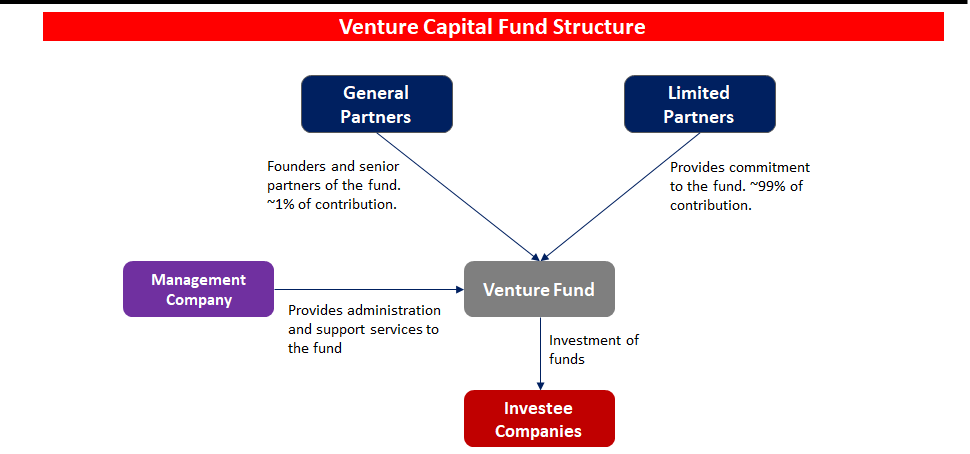
Venture capital funding in the digital health space cooled a bit in 2022 following a red-hot 2021. Overall, digital health companies raised $15.3 billion last year, down from the $29.1 billion raised in 2021—but still above the $14.1 billion raised in 2020, according to Rock Health a seed fund that supports digital health startups.
Nevertheless, analysts predict VC investors and bankers will still put a good amount of money into digital health in 2024 and 2025, especially in alternative care, drug development, health information technology technology, EMRs and software that reduces physician workload.
Of course. an essential first part of attracting VC interest and money is the crafting and presentation of your formal business plan [“elevator pitch”]; as well as the needed technical and managerial experience. This is crucial for success and exactly where we can assist.
(“Informed Voice of a New Generation of Fiduciary Advisors for Healthcare”)
For most lay folks, personal financial planning typically involves creating a personal budget, planning for taxes, setting up a savings account and developing a debt management, retirement and insurance recovery plan. Medicare, Social Security and Required Minimal Distribution [RMD] analysis is typical for lay retirement. Of course, we can assist in all of these activities, but lay individuals can also create and establish their own financial plan to reach short and long-term savings and investment goals.
But, as fellow doctors, we understand better than most the more complex financial challenges doctors can face when it comes to their financial planning. Of course, most physicians ultimately make a good income, but it is the saving, asset and risk management tolerance and investing part that many of our colleagues’ struggle with. Far too often physicians receive terrible guidance, have no time to properly manage their own investments and set goals for that day when they no longer wish to practice medicine.
For the average doctor or healthcare professional, the feelings of pride and achievement at finally graduating are typically paired with the heavy burden of hundreds of thousands of dollars in student loan debt.
You dedicated countless hours to learning, studying, and training in your field. You missed birthdays and holidays, time with your families, and sacrificed vacations to provide compassionate and excellent care for your patients. Amidst all of that, there was no time to give your finances even a second thought.
Between undergraduate, medical school, and then internship and residency, most young physicians do not begin saving for retirement until late into their 20s, if not their 30s. You’ve missed an entire decade or more of allowing your money and investments to compound and work for you. When it comes to addressing your financial health and security, there’s no time to waste.
Posted on March 21, 2024 by Dr. David Edward Marcinko MBA MEd CMP™
By Staff Reporters
CHERRY BLOSSOM FESTIVAL, DC.
***
***
KROGER, the supermarket chain said it expects to close the sale of its specialty pharmacy business during the second half of 2024. Kroger said it is planning to sell its speciality pharmacy business to pharmacy benefit manager CarelonRx, a subsidiary of Elevance Health, the company just reported.
Nvidia continues its bid for world domination with the announcement of its new B200 “Blackwell” chip. The Blackwell is 2.5 times more powerful than the “Hopper” chip which helped it become a $2 trillion company. (Bloomberg)
Here’s where the major benchmarks ended:
The S&P 500 index added 46.11 points (0.9%) to 5,224.62; the Dow Jones Industrial Average gained 401.37 points (1%) to 39,512.13; the NASDAQ Composite rose 202.62 points (1.3%) to 16,369.41.
The 10-year Treasury note yield slid two basis points to 4.27%.
The CBOE Volatility Index®(VIX) fell 0.77 to 13.06.
Health care was the biggest loser among the S&P 500 sectors. Energy was also lower after crude oil prices sank on the heels of weekly inventory data. Brent Crude Oil (/BZ) futures, the global benchmark, dropped 1.6% on the heels of five days of gains.
The producer price index (PPI) rose 0.6% for the month, according to the Bureau of Labor Statistics—double the Dow Jones estimate, CNBC reported. February’s larger-than-expected PPI uptick follows a more modest 0.3% increase in January and a 0.1% decline in December. On an annual basis, the PPI increased 1.6%, “the largest rise since moving up 1.8% for the 12 months ended September 2023,” according to the BLS.
The market had a good Tuesday, with stocks climbing as investors await word from the Fed meeting today on any changes to interest rates. The bank is expected to keep rates the same for now, but could signal when (or how often) it’ll lower them later in the year. Meanwhile, Nordstrom shares surged following a report that the retailer’s founding family wants to take it private.
The S&P 500 index added 29.09 points (0.6%) to 5,178.51; the Dow Jones Industrial Average® ($DJI) gained 320.33 points (0.8%) to 39,110.76; the NASDAQ Composite® ($COMP) rose 63.34 points (0.40%) to 16,166.79.
The 10-year Treasury note yield (TNX) eased four basis points to just under 4.3%.
The CBOE Volatility Index® (VIX) lost 0.50 to 13.83.
The energy sector was the top performer after crude oil prices notched multi-month highs ahead of weekly inventory data from the American Petroleum Institute. After a 2% rally to start the trading week, Brent Crude Oil (/BZ) futures, the global benchmark, added another 0.6% Tuesday.
Industrials, consumer discretionary, and utilities were among the other strong sectors. Communications, real estate, and materials finished modestly lower.
Almost every medical profession has its fair share of grossness and unbelievable moments. But, when it comes to podiatrists, you could argue that they have it extra bad for the simple reason that they specialize in feet. Most people would probably agree feet can be one of the human body’s most disgusting parts. People often neglect or ignore their feet, which can suffer badly from some common diseases and become a hotbed for unsanitary practices.
But, is a podiatrist really a physician?
You bet! Now, while the American Podiatric Medical Association [APMA] defines Doctor of Podiatric Medicine, or podiatrist, as “a physician and surgeon of the foot and ankle,” the The Social Security Administration’s Program Operations Manual System (POMS) legally defines a podiatrist as the following:
A podiatrist is a “physician” with respect to those functions which the podiatrist is legally authorized to perform in the State in which the individual performs them. Furthermore, the POMS states: A podiatrist is considered a “physician” for any of the following purposes: 1. for making the required physician certification and re-certifications of the medical necessity for Part A and Part B provider services. 2. for the purpose of establishing and periodically reviewing a home health plan of treatment; and for purposes of constituting a member of a Utilization Review (UR) committee but only if: a. the performance of these functions is consistent with the policy of the institution or agency with respect to which the podiatrist performs them; b. the podiatrist is legally authorized by the State to perform such functions; and c. at least two of the physicians on the Utilization Review committee are doctors of medicine or osteopathy.
In the United States, podiatrists are educated and licensed as Doctors of Podiatric Medicine (DPM). After a 4-year bachelor’s degree, the preparatory education of most podiatric physicians — similar to the paths of traditional physicians (MD or DO) — includes four years of undergraduate work, followed by four years in an accredited podiatric medical school, followed by a three or four year hospital-based residency program.
Optional one to two-year fellowships in foot and ankle reconstruction, surgical limb salvage, sports medicine, plastic surgery, pediatric foot and ankle surgery, and wound care is also available. Podiatric medical residencies and/ or fellowships are accredited by the Council on Podiatric Medical Education (CPME). The overall scope of podiatric practice varies from state to state with a common focus on foot and ankle surgery. Podiatrists work in hospitals, private practices and clinics, university medical centers and/or specialized practices.
Generally podiatrists can:
Perform physical examinations and study medical histories
Order and interpret X-rays and also other imaging studies like MRIs, and CAT scans.
Giving podiatric advice, second opinions and diagnosis
Administer drugs, narcotics, anesthetics and also sedation
Perform surgery related to the foot, ankle and legs
Perform plastic, macro and micro-surgeries and reconstructive bone surgeries
Prescribe medications such as narcotic pain killers, sleep aides and antibiotics
Perform certain physical and occupational therapies
Be on hospital staffs and take Emergency Room hospital call
Be on health insurance plans for covered physicians and medical providers
Prescribe, order, and fit prosthetics, casts, insoles, and orthotic devices
Attest to physical disability, write a doctor’s medical, treatment or absentee note, etc
In fact, the American Board of Podiatric Medicine [ABPM] offers a comprehensive qualification and certification process in podiatric medicine and orthopedics. Sub-specialties of podiatry include:
Posted on March 19, 2024 by Dr. David Edward Marcinko MBA MEd CMP™
By Staff Reporters
***
***
Stocks started the week off strong yesterday as tech companies rose. Chipotle, Progressive, and more hit all-time highs. Tesla got a boost after announcing higher prices for its Model Y in the US and parts of Europe.
Here’s where major benchmarks ended yesterday:
The S&P 500 index rose 32 points (0.6%) to 5,149.42; the Dow Jones Industrial Average ($DJI) gained 75.66 points (0.2%) to 38,790.43; the NASDAQ Composite jumped 130.27 points (0.8%) to 16,103.45.
The 10-year Treasury note yield rose nearly four basis points to 4.34%.
The CBOE Volatility Index® (VIX) dipped 0.08 to 14.33.
All but two S&P 500 sectors finished in the green, with communications, information technology, consumer discretionary, and consumer staples leading the advance. Health care and real estate finished modestly lower.
Crude oil prices rose to multi-month highs on the heels of stronger-than-expected industrial production data from China and concerns over potential supply disruptions.
According to Reuters, a Ukrainian strike sparked a fire at the Slavyansk refinery in Krasnodar on Saturday and ongoing attacks have now idled around 7% of Russia’s refining capacity so far this year. Brent Crude Oil (/BZ) futures, the global benchmark, gained 2% Monday.
Posted on March 18, 2024 by Dr. David Edward Marcinko MBA MEd CMP™
By Staff Reporters
***
Salesforce just announced new AI solutions for health-care workers that could help automate some of the manual administrative tasks that are driving physician burnout. READ MORE
***
***
***
On Friday, National Association of Realtors (NAR) agreed to pay $418 million over the next four years to settle several lawsuits alleging it artificially inflated realtor commissions. Included in the deal is a policy change that will likely obliterate agents’ 5%–6% commissions.
Posted on March 17, 2024 by Dr. David Edward Marcinko MBA MEd CMP™
What is the Point?
At the ME-P, we love to educate and learn. So, here they are in brief.
In the Beginning
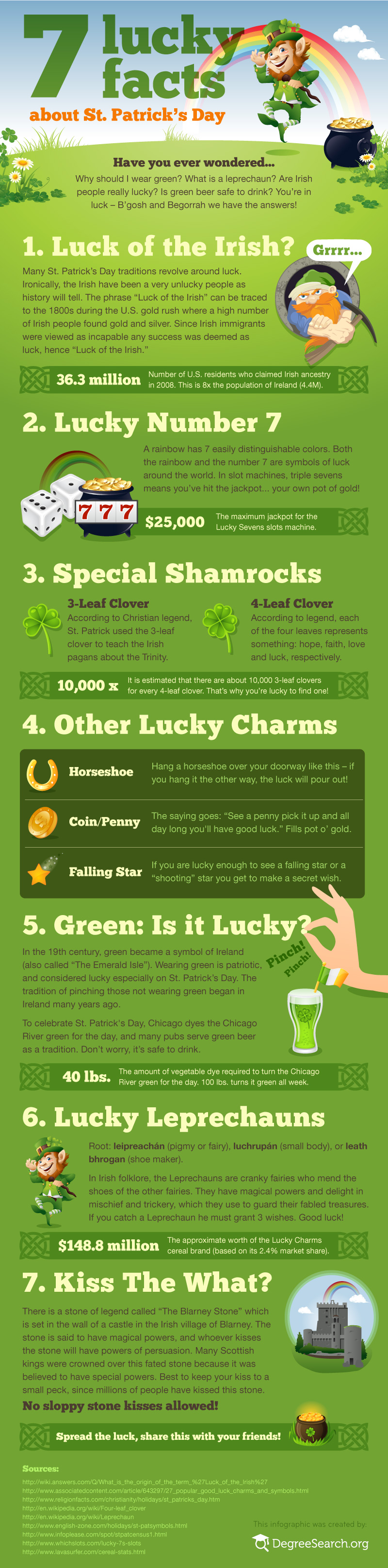
St. Patrick’s Day started out as a religious feast holiday celebrating the life of St. Patrick, a Christian missionary from Britain who is credited with bringing Christianity to Ireland.
And Today
Now, it’s a hodgepodge of non-religious celebrations of Irish culture, folklore and superstition. Oh, and let’s not forget [responsible] drinking.
Assessment
At the very least, you’re supposed to wear green, the national color of Ireland. If you want to get more involved, you could join one of hundreds of parades nationwide. The largest St. Patrick’s Day parade in the world is in New York City, with 150,000 marchers in a typical year. Other popular activities involve dyeing things green … everything from pancakes and beer to the Chicago River and the White House fountain.
Have you visited our other topic channels? Established to facilitate idea exchange and link our community together, the value of these topics is dependent upon your input. Please take a minute to visit. And, to prevent that annoying spam, we ask that you register. It is fast, free and secure.
Conclusion
Your thoughts and comments on this ME-P are appreciated. Feel free to review our top-left column, and top-right sidebar materials, links, URLs and related websites, too. Then, subscribe to the ME-P. It is fast, free and secure.
Speaker: If you need a moderator or speaker for an upcoming event, Dr. David E. Marcinko; MBA – Publisher-in-Chief of the Medical Executive-Post – is available for seminar or speaking engagements. Contact: MarcinkoAdvisors@msn.com
OUR OTHER PRINT BOOKS AND RELATED INFORMATION SOURCES:
Posted on March 17, 2024 by Dr. David Edward Marcinko MBA MEd CMP™
By Staff Reporters
***
***
Stat: $748 million. That’s how much Reddit plans to raise ahead of its upcoming IPO, where the company is seeking an approximate $6.5 billion valuation. After a couple of rocky IPO years, investors have been hotly anticipating Reddit’s IPO, which would mark the first social media IPO since Pinterest’s in 2019.(CNBC)
But, The FTC is investigating Reddit’s policies of licensing data for training AI, the company said Friday as it gears up for an IPO.
Posted on March 16, 2024 by Dr. David Edward Marcinko MBA MEd CMP™
Happy Saint Urho’s Day on March 16th!
[By Staff reporters]
***
Saint Urho is a fictional saint of Finland, created and elaborated by Finnish Americans.
***
***
Finnish Americans comprise Americans with ancestral roots from Finland or Finnish people who emigrated to and reside in the United States. The Finnish American population numbered about 600,000 in the 1950s. To celebrate their heritage and pre-empted and extend celebrations of St. Patrick’s Day the day before.
***
***
NOTE: Blue grapes denoted Finnish wine. Just as a green 4-leaf clover represented “good luck” on St. Patrick’s Day.
Posted on March 16, 2024 by Dr. David Edward Marcinko MBA MEd CMP™
By Staff Reporters
***
***
Stocks fell yesterday after this week’s inflation data made investors worried about high prices. Tech companies took a hosing, especially Adobe, which dropped after releasing a weak sales forecast.
Here’s where the major benchmarks ended:
The S&P 500 index fell 33.39 points (0.7%) to 5,117.09, down 0.1% for the week; the Dow Jones Industrial Average lost 190.89 points (0.5%) to 38,714.77, down 0.02% for the week; the NASDAQ Composite fell 155.36 points (1.0%) to 15,973.17, down 0.7% for the week.
The 10-year Treasury note yield (TNX) rose about 1 basis point to 4.308%.
The CBOE Volatility Index® (VIX) rose 0.01 to 14.41.
Tech weakness sent the NASDAQ-100® (NDX), which includes the NASDAQ’s biggest non-financial companies, down 1.2% to its lowest level in over three weeks. The small-cap-focused Russell 2000® Index (RUT) bounced Friday but still ended the week with a 2.1% loss, breaking a two-week winning streak. Energy companies extended a recent rally behind climbing crude oil prices, pushing the Philadelphia Oil Services Index (OSX) up almost 5% for the week to its highest level since early November.
In other markets, the U.S. dollar strengthened behind expectations the Fed will keep interest rates high. The U.S. dollar index ($DXY) posted a gain of 0.7% for the week.
Posted on March 16, 2024 by Dr. David Edward Marcinko MBA MEd CMP™
By Staff Reporters
***
Zeno of Elea was a pre-Socratic Greek philosopher of Magna Graecia and a member of the Eleatic School founded by Parmenides. Aristotle called him the inventor of the dialectic. He is best known for his paradoxes, which Bertrand Russell described as “immeasurably subtle and profound”
Now, Zeno’s paradoxes are a set of philosophical problems generally thought to have been devised to support Parmenides’ doctrine that contrary to the evidence of one’s senses, the belief in plurality and change is mistaken, and in particular that motion is nothingbut an illusion.
Posted on March 16, 2024 by Dr. David Edward Marcinko MBA MEd CMP™
By Staff Reporters
***
***
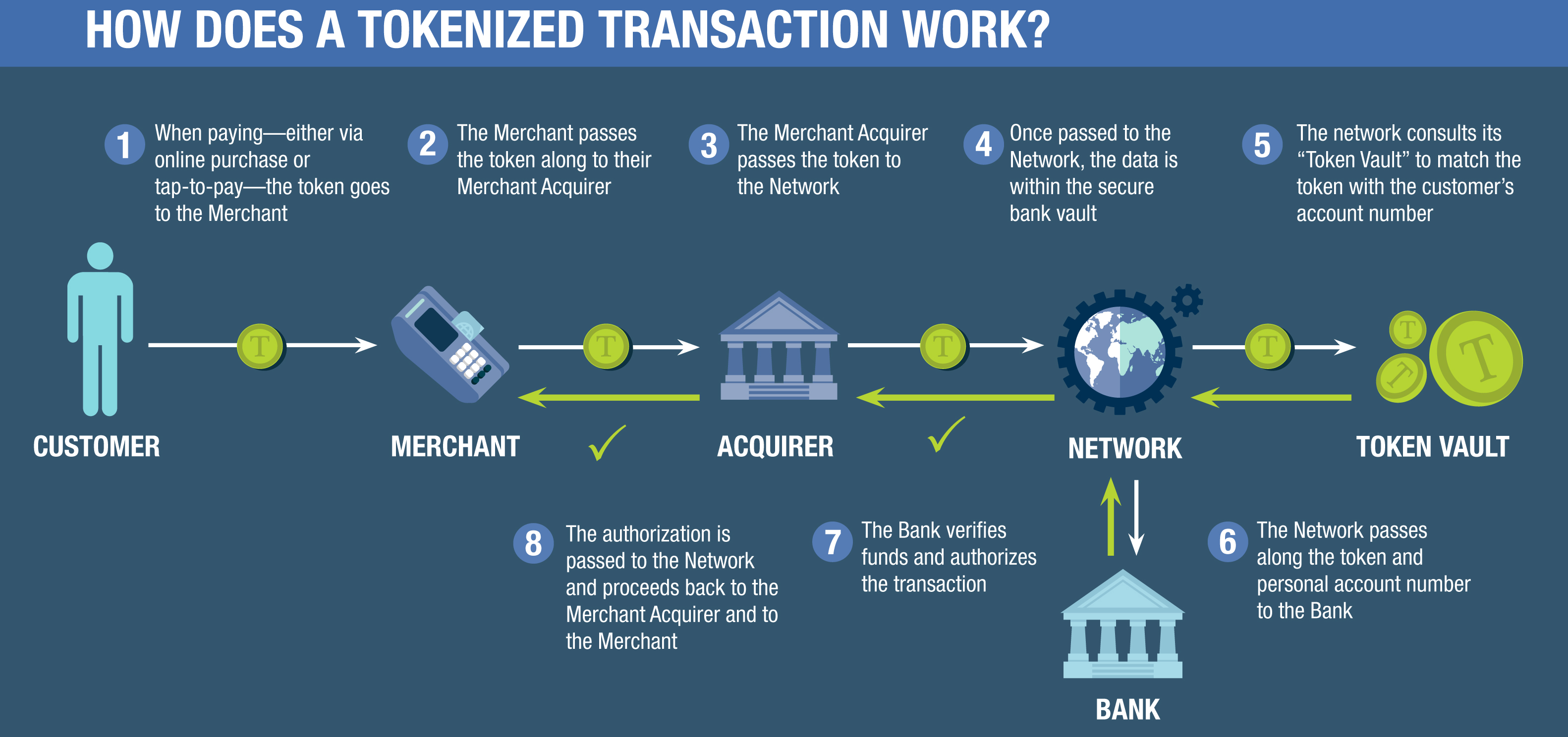
Tokenization is the process of converting an asset or the ownership rights of an asset to a unique unit called tokens. Tokens are commonly referred to when discussing blockchain technology, where they are used to indicate the ownership of a valuable asset.
Tokens can indicate ownership of tangible assets, like art, or they can indicate ownership of intangible assets, such as shares in a company or voting rights. Tokenization can occur for any item that is deemed valuable.
Tokens can then be used to transfer ownership of an asset, make payments and complete other financial tasks. An example of tokenization would be Bitcoin. It is a popular cryptocurrency that uses tokens to represent how much BTC a person owns.
Tokenization began as a type of data security for businesses that replaces sensitive information with unique, non-sensitive data. Tokens don’t contain the original data, but they usually share similar characters or formatting.
A user would need access to the tokens that are connected to the separately-stored originals in order to restore the tokens and view the secured data. Otherwise, a user would not be able to decipher the token to view the data. Therefore, they can be useful for securing personal information, financial transaction data and other sensitive data.
***
***
There are multiple types of blockchain tokenization and non-blockchain tokenization.
Blockchain Tokenization
Types of blockchain tokenization include:
Fungible tokenization. These are standard blockchain tokens. They have identical values, so they can easily replace one another — think of swapping one dollar for another dollar.
Non-fungible tokenization. These are less common blockchain tokens that do not have a set value. Instead, they represent ownership of an asset, such as digital art or real estate, that determines the value of the token.
Governance tokenization. These tokens represent voting rights and can be used to vote and collaborate on a blockchain system.
Utility tokenization. These tokens are used to give access to certain products and services on a specific blockchain, so they can be used to complete actions like paying transaction fees or operating a decentralized market system.
Non-blockchain Tokenization
Types of non-blockchain tokenization include:
Vault tokenization. This is the standard type of tokenization to protect payment information, where the token is used to process payments without providing card numbers or other data.
Vaultless tokenization. This is a type of tokenization used for payment processing that doesn’t require a token vault for storage. Instead, it uses cryptographic devices and algorithms to convert data to a token.
Natural language processing tokenization. This type of tokenization breaks information down into simpler terms to make it more easily understood by computers. It includes word, sub word and character tokenization.
While tokenization began with the idea of protecting data assets using non-blockchain tokenization, it has developed into a way to protect the ownership of many other types of assets by using blockchain technology.
Posted on March 15, 2024 by Dr. David Edward Marcinko MBA MEd CMP™
By Staff Reporters
***
***
Stocks fell yesterday after another round of hotter-than-expected inflation data chilled investors. But it was a tremendous Thursday for sporting goods store Dick’s, as it soared 15% after posting its largest sales quarter in history in Q4, thanks in part to consumers buying more expensive items.
Here’s where the major stock benchmarks ended:
The S&P 500 index fell 14.83 points (0.3%) to 5,150.48; the Dow Jones Industrial Average® ($DJI) declined 137.66 points (0.4%) to 38,905.66; the NASDAQ Composite shed 49.24 points (0.3%) to 16,128.53.
The 10-year Treasury note yield (TNX) rose about 10 basis points to 4.292%.
The CBOE Volatility Index® (VIX) rose 0.65 to 14.40.
Technology shares remained under pressure, as a pullback in Nvidia (NVDA) and other chip makers sent the Philadelphia Semiconductor Index (SOX) down almost 2% to its lowest close of the month. Nvidia fell 3.2% Thursday and has dropped nearly 10% from a record intraday high of $974 last Friday. Banks and small-cap stocks were also among the market’s weakest performers.
“Tech shares appear to be going through a corrective phase following last Friday’s key reversal day in Nvidia. The question remains whether a potential correction in tech will spill over into the broader market or whether money will rotate into other areas of the market.”
In other markets, WTI crude oil futures (/CL) extended this week’s rally with a gain of 1.7% and ended slightly above $81 per barrel, its highest level since early November. Oil’s strength has been driven by an unexpected drop in U.S. inventories and concerns over supply disruptions after Ukrainian strikes on oil refineries in Russia.
Posted on March 15, 2024 by Dr. David Edward Marcinko MBA MEd CMP™
By Health Capital Consultants, LLC
***
***
On December 26, 2023, a study published in the Journal of the American Medical Association (JAMA) found concerning changes in patient outcomes and hospital adverse events associated with private equity (PE) acquisition and ownership of hospitals. Over the past ten years, PE firms have set their sights on hospitals as a lucrative investment opportunity, spending nearly $1 trillion to finance healthcare acquisitions, and purchasing more than 200 hospitals from non-PE owners.
Posted on March 14, 2024 by Dr. David Edward Marcinko MBA MEd CMP™
By Staff Reporters
***
***
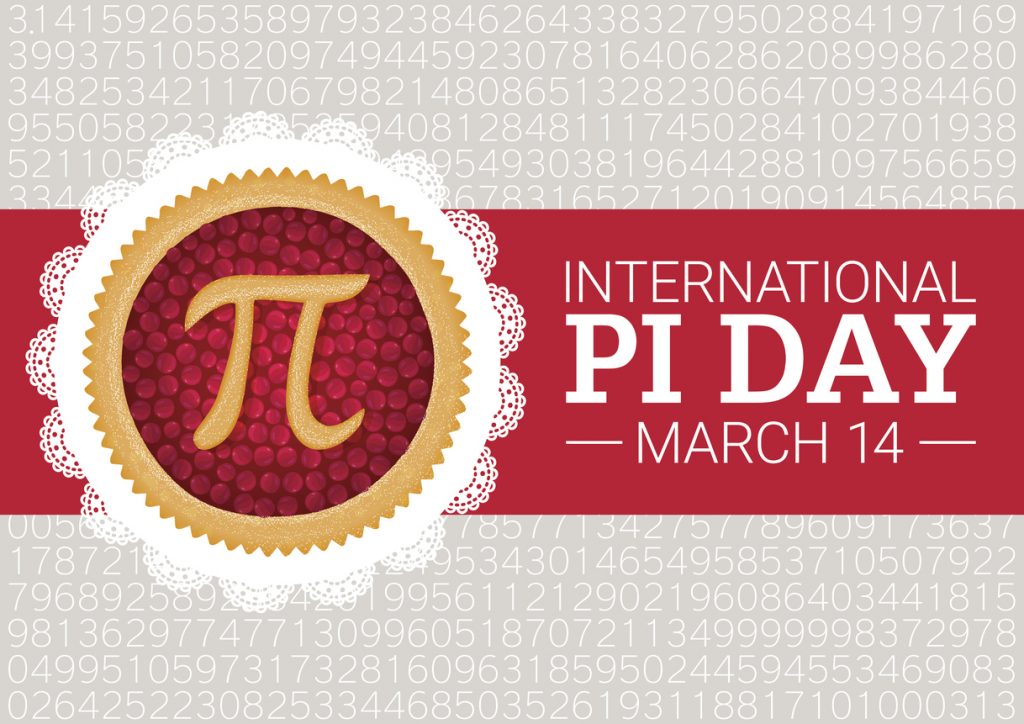
Each Pi Day, we recall Akira Haraguchi, who in 2016 set the unofficial world record for reciting the most digits of pi: 100,000 over more than 16 hours. He did it by mentally linking each digit with a syllable and creating a collection of epic stories from the words those syllables formed.
Posted on March 14, 2024 by Dr. David Edward Marcinko MBA MEd CMP™
By Staff Reporters
***
***
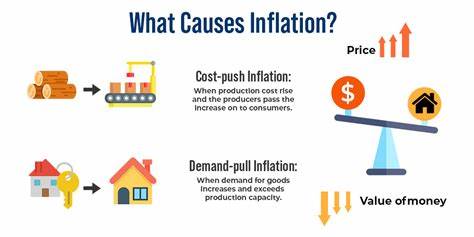
DEFINITION: Creeping, or mild, inflation occurs when prices rise slowly. According to the Federal Reserve, when prices increase by 2% or less, it benefits economic growth. This kind of mild inflation makes consumers expect that prices will keep going up, which boosts demand.
And so, inflation was a bit warmer last month as consumer prices rose 3.2% in February, the Labor Department just reported, up from the 3.1% that economists expected. That marks the second straight month that inflation came in higher than forecast. The data reinforces the Fed’s position to wait until inflation is tamed before cutting interest rates. Still, the central bank is widely expected to cut rates sometime later this year despite yesterday’s less-than-ideal report. It will meet next week to continue deliberations on a potential rate reduction.
The S&P 500® index (SPX) fell 9.96 points (0.2%) to 5,165.31; the Dow Jones Industrial Average gained 37.83 points (0.1%) to 39,043.32; the NASDAQ Composite® (COMP) declined 87.87 points (0.5%) to 16,177.77.
The 10-year Treasury note yield (TNX) rose almost 4 basis points to 4.192%.
The CBOE Volatility Index® (VIX) fell slightly to 13.75.
Energy shares were among the market’s strongest performers Wednesday behind gains in crude oil prices. Brent crude futures (/BZ), the global benchmark, rose above $84 to end at their highest level since early November after Ukrainian strikes on oil refineries in Russia stirred concern over supply disruptions. The S&P Energy Index ($SP500#10) jumped 1.5% and reached its highest level since late October, while the S&P 500 Materials Index ($SP500#15) rose almost 1% and ended at a record high.
Posted on March 14, 2024 by Dr. David Edward Marcinko MBA MEd CMP™
THE PARADOX OF self-reference
DEFINITION: The Epimenides paradox reveals a problem with self-reference in logic. It is named after the Cretan philosopher Epimenides of Knossos who is credited with the original statement.
A paradox of self-reference arises when one considers whether it is possible for Epimenides to have spoken the truth.
Posted on March 14, 2024 by Dr. David Edward Marcinko MBA MEd CMP™
***
***
As tax season kicks off, the Internal Revenue Service is warning taxpayers and administrators of health spending plans that personal expenses for general health and wellness are not legally considered medical expenses, as it fears some may be misled.
In a press release published Wednesday, the IRS reminded individuals filing their taxes that medical expenses for areas such as weight loss are not deductible or reimbursable under health flexible spending arrangements, health savings accounts, health reimbursement arrangements or medical savings accounts, and that they should beware of companies suggesting otherwise.
“Legitimate medical expenses have an important place in the tax law that allows for reimbursements,” said Danny Werfel, the IRS commissioner, in a statement. “But taxpayers should be careful to follow the rules amid some aggressive marketing that suggests personal expenditures on things like food for weight loss qualify for reimbursement when they don’t qualify as medical expenses.”
According to the IRS, while some companies claim that a doctor’s note based on self-reported health information is enough to qualify a non-medical nutritional, wellness or exercise program as a reimbursable medical expense, that’s not the case. Legally, such a note does not back a targeted diagnosis-specific activity or treatment that would qualify as a medical expense, but simply a personal expense. Cite: Newsweek Giulia Carbonaro
Did you know that the American Medical Association is calling on medical schools and residency programs to include specific information about healthcare economics and financing in their curricula.
But, is health economics heterodoxic, or not? And; what about demand-derived economics in medicine?
Posted on March 13, 2024 by Dr. David Edward Marcinko MBA MEd CMP™
By Staff Reporters
***
***
Pharmaceutical companies have filed a slew of suits around the country to get federal judges to invalidate a government program aimed at lowering drug costs for seniors by allowing Medicare to negotiate prices, as is the norm in many other countries, according to the Washington Post. The companies argue it’s unconstitutional and would inhibit their ability to develop new treatments.
The Federal Reserve is looking for steady, reliable signs that inflation is simmering down before it cuts interest rates this year. So far, 2024 has not delivered. Data released by the Bureau of Labor Statistics on Tuesday showed prices rose 3.2 percent over last year, slightly outpacing forecasts of 3.1 percent. Prices also rose 0.4 percent in February over the previous month — in line with expectations, but still hotter than economists would like to discern.
Stocks swung up on Tuesday as investors shrugged off a middling inflation report and looked ahead to next week’s Fed meeting. Meanwhile, Oracle went sky-high, posting its best day since 2021 after demand for AI prompted a huge increase in sales for its cloud computing business.
Here’s where the major benchmarks ended:
The S&P 500® index (SPX) gained 57.33 points (1.1%) to 5,175.27; the Dow Jones Industrial Average® ($DJI) added 235.83 points (0.6%) to 39,005.49; the NASDAQ Composite® (COMP) climbed 246.36 points (1.5%) to 16,265.64.
The 10-year Treasury note yield (TNX) rose about 5 basis points to 4.155%.
The CBOE Volatility Index® (VIX) fell 1.38 to 13.84.
Chip makers’ bounce-back helped boost the Philadelphia Semiconductor Index (SOX) more than 2%, as it recovered part of a 5% drop the previous two trading days. Industry leader Nvidia (NVDA) jumped over 7%. Consumer discretionary and communications services shares were also among the strongest areas. Regional banks and real estate were among the weakest sectors as the CPI data spurred an upturn in Treasury yields.
Posted on March 12, 2024 by Dr. David Edward Marcinko MBA MEd CMP™
By Staff Reporters
***
***
Stocks were mixed yesterday as investors looked ahead to what today’s government inflation data will bring. Boeing took a dive and the stock is down 24% this year.
Here’s where the major benchmarks ended:
The S&P 500® index (SPX) fell 5.75 points (0.1%) to 5,117.94; the Dow Jones Industrial Average® ($DJI) gained 46.97 points (0.1%) to 38,769.66; the NASDAQ Composite® (COMP) declined 65.84 points (0.4%) to 16,019.27.
The 10-year Treasury note yield (TNX) was up almost 1 basis point to 4.096%.
The CBOE Volatility Index® (VIX) rose 0.45 to 15.19.
Chip maker weakness sent the Philadelphia Semiconductor Index (SOX) down 1.36% Monday following a 3.5% drop Friday, when the benchmark initially set a record intra-day high above 5,217. The index is still up 17% this year.
Other sectors outside of tech extended recent strength, including the Dow Jones Utility Index ($DJU), which gained for the fourth straight day and ended at its highest level since February 1. The S&P Energy Index ($SP500#10) reached its highest level since late October, while the S&P 500 Materials Index ($SP500#15) advanced over 1% to its highest post in nearly two years.
Posted on March 12, 2024 by Dr. David Edward Marcinko MBA MEd CMP™
By Health Capital Consultants, LLC
***
***
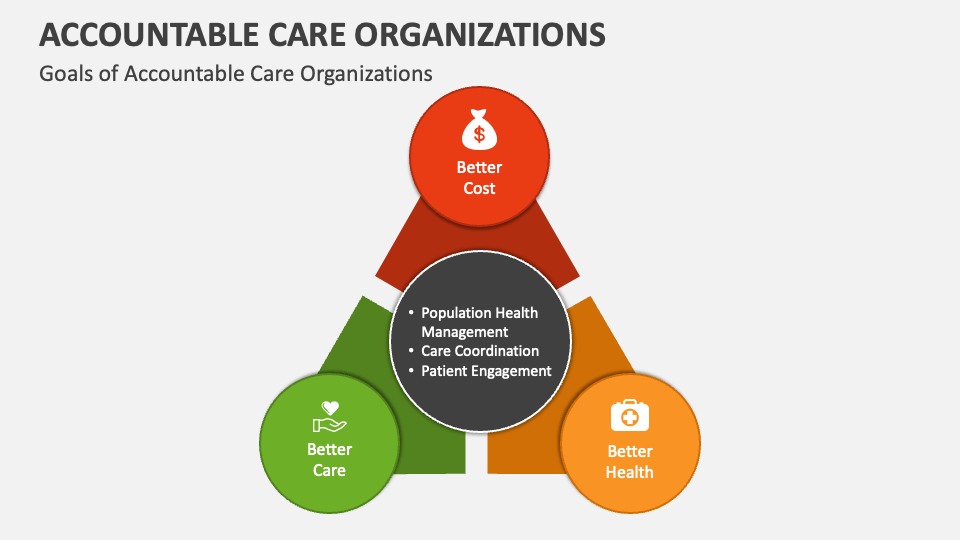
On January 29, 2024, the Centers for Medicare and Medicaid Services (CMS) announced that Performance Year 2024 participation increased in their various accountable care organization (ACO) initiatives. Specifically, 50 new ACOs joined the Medicare Shared Savings Program (MSSP), and 71 ACOs renewed their contracts, bringing the total participation in the MSSP to 480 ACOs.
Additionally, 245 organizations chose to continue participation in two other CMS models – the ACO Realizing Equity, Access, and Community Health (REACH) Model and the Kidney Care Choice (KCC) Model.
Posted on March 11, 2024 by Dr. David Edward Marcinko MBA MEd CMP™
By Staff Reporters
***
***
Key inflation data incoming: February’s consumer price index report on Tuesday will provide fresh data to help the Fed decide when to lower interest rates. Last week, Chair Jerome Powell said he needed “just a bit more evidence” that inflation was coming back down to normal levels before reducing rates, though “we’re not far from it,” he acknowledged.
Posted on March 11, 2024 by Dr. David Edward Marcinko MBA MEd CMP™
Indications for 2024
By Health Capital Consultants, LLC
***
***
After healthcare mergers and acquisitions (M&A) activity began to regain momentum in 2022, following the slowing of deals in the wake of the COVID-19 pandemic, transactional activity continued to accelerate in 2023. While the healthcare sector continued to be impacted by factors such as valuation gaps, higher-for-longer interest rates, general macroeconomic risks, and increased state and federal regulatory concerns in 2023, the outlook for 2024 remains cautiously optimistic.
This Health Capital Topics article reviews the U.S. healthcare industry’s 2023 M&A activity and discusses what these trends may mean for 2024. (Read more…)
Posted on March 10, 2024 by Dr. David Edward Marcinko MBA MEd CMP™
By Staff Reporters
***
***
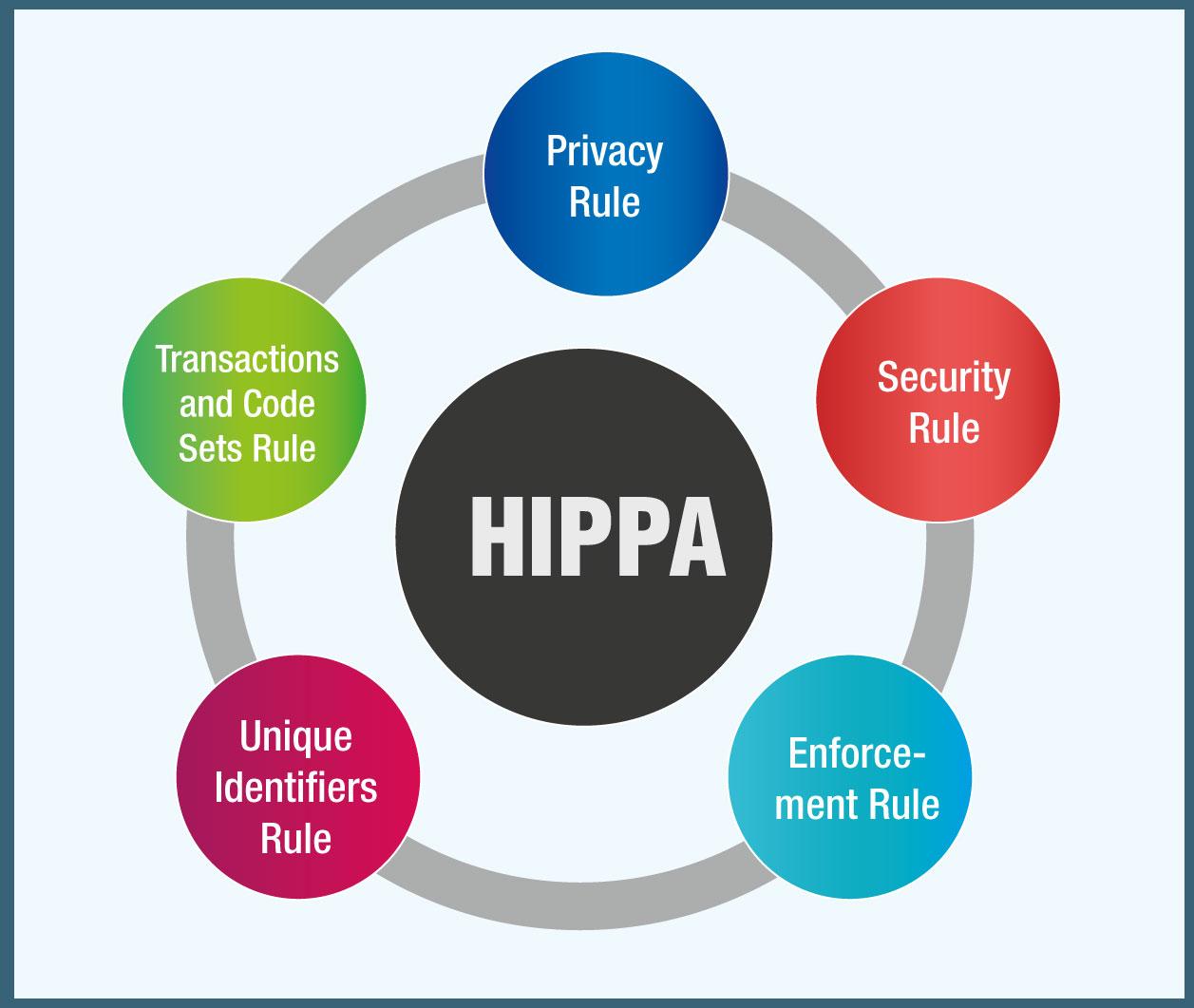
Stat: According to HIPPA, and the cyberattack on Change Healthcare, there were 725 “large” reported healthcare security breaches in the US last year. Experts say health organizations suffer from a lack of basic security measures, and are being targeted by “increasingly sophisticated cyberattacks.” (The HIPAA Journal)
Quote: “Having a [doctor] who can coordinate your healthcare and is willing to do so on a personal basis was very important to me. And I really feel like that is completely gone, and I feel like it happened overnight.”—Deborah Wood, an older adult patient at primary care provider Iora Health, where some patients say care quality has worsened after Amazon acquired its parent company One Medical in 2022 (the Washington Post)
Posted on March 9, 2024 by Dr. David Edward Marcinko MBA MEd CMP™
By Staff Reporters
Tomorrow is the start of daylight saving time. Enjoy the extra hour of evening light.
***
***
UnitedHealth Group is laying out a timeline to restore its systems as a cyberattack on its Change Healthcare subsidiary continues to disrupt the health care industry for nearly a third week. The company said Thursday it’s still working “aggressively” to restore its services after the attack Feb. 21st caused it to shut down its insurance claims and payment platforms, leaving health care providers and pharmacies across the nation unable to process prescriptions or pay employees, but as of now, its electronic prescribing is back to being “fully functional.”
***
Stocks tumbled yesterday, giving the Dow its worst week since October as Nvidia’s seemingly unstoppable rally…stopped. Meanwhile, bitcoin notched another record, hitting $70,000 for the first time before the volatile cryptocurrency retreated.
Government: The Senate passed vital funding bills just barely ahead of a shutdown deadline, ensuring the government can stay open—at least for now. But they still need to pass more before March 22nd.
Here’s where the major benchmarks ended:
The S&P 500 index (SPX) fell 33.67 points (0.7%) to 5,123.69, down 0.3% for the week; the Dow Jones Industrial Average® ($DJI) lost 68.66 points (0.2%) to 38,722.69, down 0.9% for the week; the NASDAQ Composite (COMP) dropped 188.26 points (1.2%) to 16,085.11, down 1.2% for the week.
The 10-year Treasury note yield (TNX) fell more than 1 basis point to 4.079%.
The CBOE Volatility Index® (VIX) rose 0.30 to 14.74.
The Philadelphia Semiconductor Index (SOX) sank 3.5% Friday but still gained 0.6% for the week, its third straight weekly advance. Bank and utility shares were among the market’s few areas of strength, and small-cap stocks held up relatively well. The Russell 2000® Index (RUT) fell 0.1% after earlier climbing to a two-year high but still added 0.3% for the week, its fourth weekly gain in the past five.
Posted on March 8, 2024 by Dr. David Edward Marcinko MBA MEd CMP™
TO FIX THE FDA APPROVAL’S FLAW
By Staff Reporters
***
***
DEFINITION: Right-to-try laws are United States state laws and a federal law that were created with the intent of allowing terminally ill patients access to experimental therapies (drugs, biologics, devices) that have completed Phase I testing but have not been approved by the Food and Drug Administration (FDA).
This law would allow patients suffering from rare and genetic diseases to try personalized treatments not yet approved by the FDA, as long as they have the support of their physician and have exhausted other treatment options. This policy would have an outsized impact on patients with rare diseases. Although rare diseases have small patient pools by definition, collectively, about 30 million Americans are estimated to have a rare disease.
Posted on March 8, 2024 by Dr. David Edward Marcinko MBA MEd CMP™
By Staff Reporters
***
***
Stocks surged yesterday, once again pushing the S&P 500 and NASDAQ to record highs, after Fed Chair Jerome Powell said he expects interest rates to come down this year. It was also a big day for Rivian which zoomed 13% after it revealed three new vehicles.
Here’s where the major benchmarks ended:
The S&P 500 index rallied 52.60 points (1.0%) to 5,157.36; the Dow Jones Industrial Average gained 130.30 points (0.3%) to 38,791.35; the NASDAQ Composite climbed 241.83 points (1.5%) to 16,273.38.
The 10-year Treasury note yield (TNX) lost almost 2 basis points to 4.085%.
The CBOE Volatility Index® (VIX) fell 0.06 to 14.44.
Chip-maker strength boosted the Philadelphia Semiconductor Index (SOX) 3.4% to its fourth record close in the past five trading days. The index has gained 9.3% so far this month and 24% for the year. Oilfield services and communication services companies were also among the market’s strongest sectors. Small-cap shares joined the rally, boosting the Russell 2000® Index (RUT) 0.8% to a two-year high.
In other markets, the U.S. dollar index (DXY) slipped 0.5%, its fifth consecutive daily decline, and touched a five-week low. The dollar has been under pressure from expectations for lower U.S. interest rates.
Posted on March 7, 2024 by Dr. David Edward Marcinko MBA MEd CMP™
STATE OF THE UNION EVENING
***
Markets: Stocks rose yesterday as investors watched Jerome Powell tell lawmakers that he still expects to cut interest rates this year, just not right away.
Stock spotlight: Troubled regional lender New York Community Bancorp, which fell 40% before soaring back up after announcing it’s getting $1 billion from investors, including ex-Treasury Secretary Steven Mnuchin’s firm.
***
***
Meanwhile, Stocks tumbled on Tuesday as several of the “Magnificent Seven” tech giants shed some of their gains from earlier this year, dragging the entire market with them. One of those companies was Apple, which fell about 3% after a report suggested that iPhone sales in China have plunged in the first six weeks of 2024.
And, Bitcoin set a new record yesterday, briefly jumping past $69k before falling back down to ~$62k. The rally highlighted the crypto’s seemingly rapid recovery from the nail-in-the-coffin that was FTX’s demise in 2022.
Posted on March 7, 2024 by Dr. David Edward Marcinko MBA MEd CMP™
By Staff Reporters
***
***
American Express Co. has told an undisclosed number of cardholders that their account information may have been breached in a recent hacking of a merchant processor. Current and previously issued American Express Card account numbers, expiration dates and customer names may have been compromised, AmEx stated in a notice filed last week with Massachusetts regulators.
The S&P 500® index (SPX) rose 26.11 points (0.5%) to 5,104.76; the Dow Jones Industrial Average® (DJI) gained 75.86 points (0.2%) to 38,661.05; the NASDAQ Composite® (COMP) added 91.95 points (0.6%) to 16,031.54.
The 10-year Treasury note yield (TNX) dropped about 3 basis points to 4.108%, near a four-week low.
The CBOE Volatility Index® (VIX) rose 0.04 to 14.50
Semiconductor shares were among the market’s strongest performers Wednesday, and utilities and consumer staples were also firm. Banks shares took pressure despite further declines in Treasury yields. In other markets, the U.S. dollar index (DXY) fell near a five-week low and Gold (/GC) futures extended a rally to a record above $2,160 per ounce, reflecting expectations for lower U.S. interest rates.
Posted on March 6, 2024 by Dr. David Edward Marcinko MBA MEd CMP™
By Staff Reporters
***
***
According to Fidelity, in documents filed with the Maine attorney general’s office, miscreants “likely acquired” information about 28,268 people’s life insurance policies after infiltrating Infosys.
***
***
Criminals have probably stolen nearly 30,000 Fidelity Investments Life Insurance customers’ personal and financial information — including bank account and routing numbers, credit card numbers and security or access codes — after breaking into Infosys’ IT systems.
***
***
Healthcare providers across the United States are struggling to get paid following the week-long ransomware outage at a key tech unit of UnitedHealth Group, with some smaller medical providers saying they are already running low on cash.
And, the nation’s health-care system continues to reel from a cyberattack that has crippled payments for tens of thousands of organizations as Daniel Gilbert writes in The Post.
The S&P 500® index (SPX) dropped 52.30 points (1.0%) to 5,078.65; the Dow Jones Industrial Average decreased 404.64 points (1.0%) to 38,585.19; the NASDAQ Composite fell 267.92 points (1.7%) to 15,939.59.
The 10-year Treasury note yield (TNX) fell about 8 basis points to 4.137%.
The CBOE Volatility Index® (VIX) rose 0.97 to 14.46.
With chip makers under pressure, the Philadelphia Semiconductor Index (SOX) fell 2.1%, reversing part of a recent surge to a record high. Consumer discretionary and real estate shares also ranked among the weakest performers Tuesday. Banks were one of the few industries to buck the broader weakness, perhaps supported by further declines in Treasury yields. The 10-year Treasury note yield (TNX) almost fell to a four-week low near 4.11%. The KBW Regional Banking Index (KRX) jumped 4.3%.
In other markets, bitcoin plunged almost 10% after climbing earlier Tuesday to a record above $69,000. The cryptocurrency had rallied as much as 36% over the last week of February.
Posted on March 5, 2024 by Dr. David Edward Marcinko MBA MEd CMP™
***
***
Rallies from Artificial Intelligence related companies weren’t enough to keep the major indexes from falling yesterday. Meanwhile, bitcoin continued its journey toward the sky, getting close to an all-time record.
And it wasn’t the only cryptocurrency having a banner day: memecoins like dogecoin, pepe, and dogwifhat all soared.
Users found themselves unable to load the apps or websites as normal. On Facebook, affected users found they had been logged out and were unable to get on, while Instagram refused to work at all.
Posted on March 5, 2024 by Dr. David Edward Marcinko MBA MEd CMP™
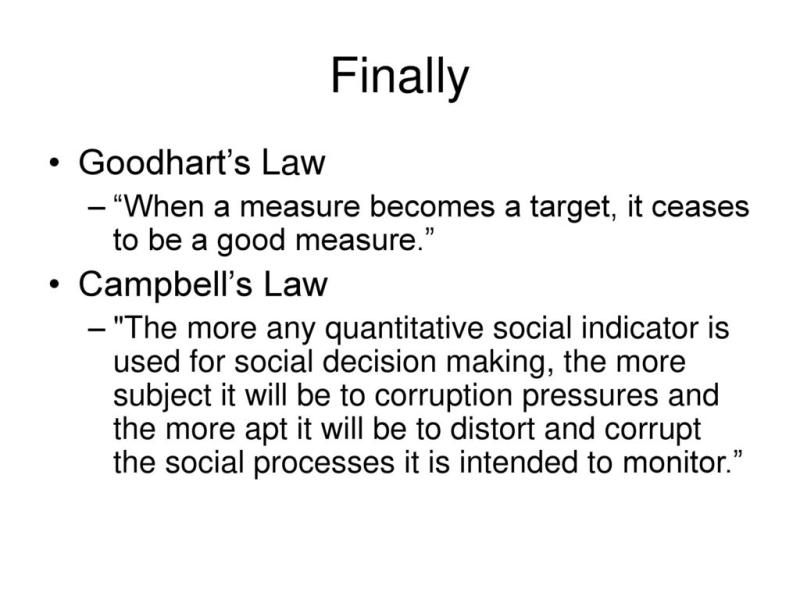
The Goodhart Principle, and related
[By staff reporters]
***
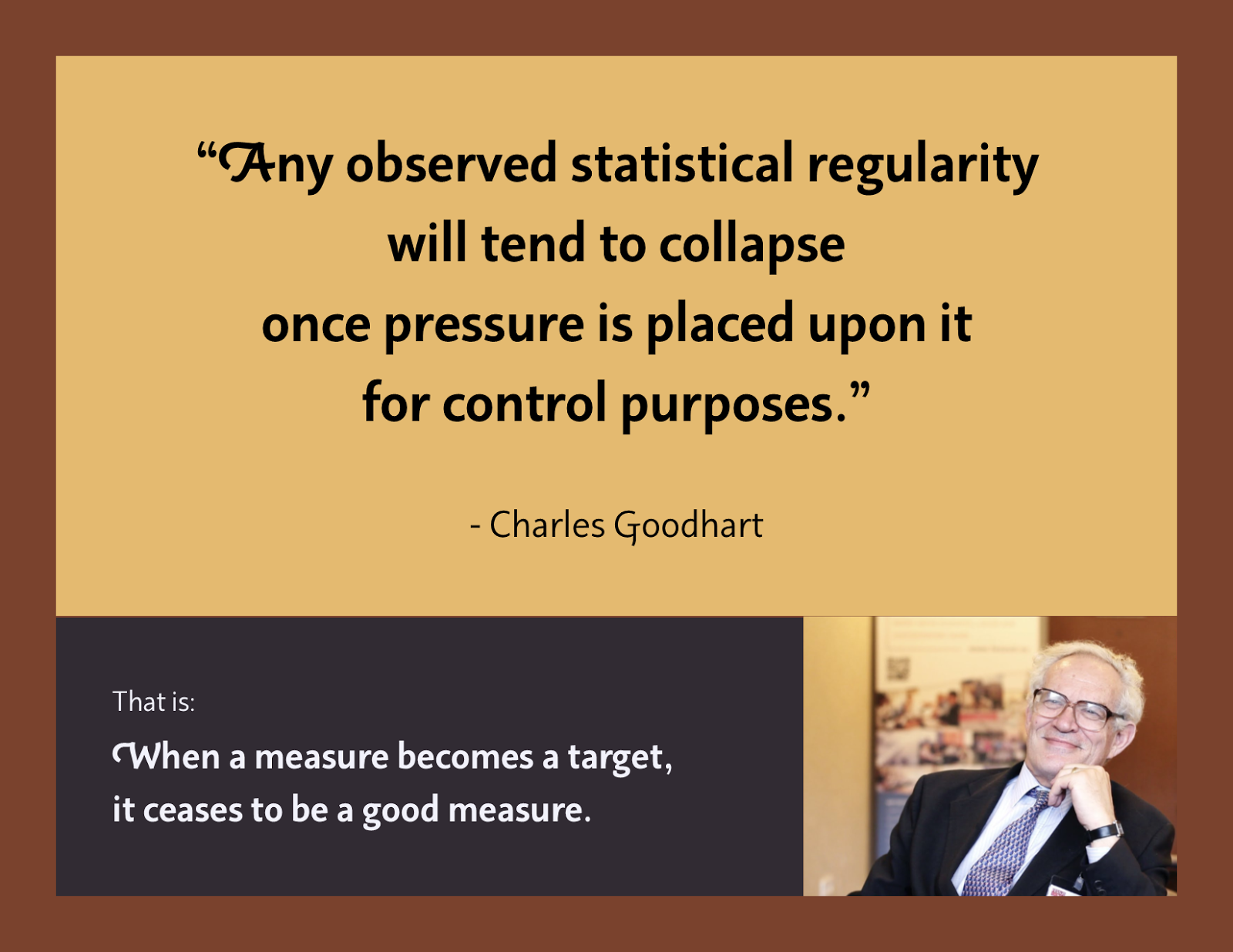
Goodhart’s law is a sociological analogue of Heisenberg’s uncertainty principle in quantum mechanics. Measuring a system usually disturbs it. The more precise the measurement, and the shorter its timescale, the greater the energy of the disturbance and the greater the unpredictability of the outcome.
***
***
***
CAMPBELL’S LAW:
“The more any quantitative social indicator is used for social decision-making, the more subject it will be to corruption pressures and the more apt it will be to distort and corrupt the social processes it is intended to monitor.”
Posted on March 5, 2024 by Dr. David Edward Marcinko MBA MEd CMP™
By Staff Reporters
***
***
Stat: 125,000+. That’s how many high-income people the IRS is targeting for not filing their taxes. The IRS started sending letters last week to folks with over $400,000 in income who haven’t filed between 2017 and 2022 (Journal of Accountancy)
The S&P 500 index fell 6.13 points (0.1%) to 5,130.95; the Dow Jones Industrial Average lost 97.55 points (0.3%) to 38,989.83; the NASDAQ Composite declined 67.43 points (0.4%) to 16,207.51.
The 10-year Treasury note yield (TNX) rose about 4 basis points to 4.219%.
The CBOE Volatility Index® (VIX) increased 0.38 to 13.49.
Ongoing strength in chip makers propelled a 1.1% advance in the Philadelphia Semiconductor Index (SOX), which posted a record high for the third-straight trading day. Banks were also among the strongest performers. Small-cap shares eased, with the Russell 2000® Index (RUT) ending with a marginal loss after rising earlier to a two-year high.
As fellow doctors, we understand better than most the more complex financial challenges physicians can face when it comes to their financial planning. Of course, most physicians ultimately make a good income, but it is the saving, asset and risk management tolerance and investing part that many of our colleagues’ struggle with. Far too often physicians receive terrible guidance, have no time to properly manage their own investments and set goals for that day when they no longer wish to practice medicine.
For the average doctor or healthcare professional, the feelings of pride and achievement at finally graduating are typically paired with the heavy burden of hundreds of thousands of dollars in student loan debt.
You dedicated countless hours to learning, studying, and training in your field. You missed birthdays and holidays, time with your families, and sacrificed vacations to provide compassionate and excellent care for your patients. Amidst all of that, there was no time to give your finances even a second thought.
Between undergraduate, medical school, and then internship and residency, most young physicians do not begin saving for retirement until late into their 20s, if not their 30s. You’ve missed an entire decade or more of allowing your money and investments to compound and work for you. When it comes to addressing your financial health and security, there’s no time to waste.
And you may be misled by unscrupulous “advisors”.
For example:
Question: Do you know the difference between a “Fee-Only” and a “Fee-Based financial advisor? Not knowing may cost you tens of thousands of dollars, or more, in excessive advisory fees.







 Support our online development, and advance our onground research initiatives in free market economics, as we seek to showcase the brightest Next-Gen minds.
THE ME-P DISCLAIMER: Posts, comments and opinions do not necessarily represent iMBA, Inc., but become our property after submission. Copyright © 2006 to-date. iMBA, Inc allows colleges, universities, medical and financial professionals and related clinics, hospitals and non-profit healthcare organizations to distribute our proprietary essays, photos, videos, audios and other documents; etc. However, please review copyright and usage information for each individual asset before submission to us, and/or placement on your publication or web site. Attestation references, citations and/or back-links are required. All other assets are property of the individual copyright holder.
Support our online development, and advance our onground research initiatives in free market economics, as we seek to showcase the brightest Next-Gen minds.
THE ME-P DISCLAIMER: Posts, comments and opinions do not necessarily represent iMBA, Inc., but become our property after submission. Copyright © 2006 to-date. iMBA, Inc allows colleges, universities, medical and financial professionals and related clinics, hospitals and non-profit healthcare organizations to distribute our proprietary essays, photos, videos, audios and other documents; etc. However, please review copyright and usage information for each individual asset before submission to us, and/or placement on your publication or web site. Attestation references, citations and/or back-links are required. All other assets are property of the individual copyright holder.




























































 The Leading Business Education Network for Doctors, Financial Advisors and Health Industry Consultants