How Much Will a Ticket Raise Your Car Insurance Rates?

Join Our Mailing List

GMAC Survey Results

Be careful out there! A GMAC survey revealed that 1 in 5 drivers would not pass the written driver’s test if they took it today.

And, getting a ticket will raise your car insurance rate, but by how much?

Reckless Driving

We found that reckless driving triggers the highest hike — an average increase of 22 percent — yet many drivers aren’t even sure what constitutes reckless driving? Depending on state laws, reckless driving can be defined as: driving over 80 mph, driving too fast for weather conditions, knowingly driving in a way that endangers others.

Assessment

Above, we present 14 common traffic violations, along with the average percent increase to car insurance premiums.

Brought to you by: www.insurance.com

Conclusion

Your thoughts and comments on this ME-P are appreciated. Feel free to review our top-left column, and top-right sidebar materials, links, URLs and related websites, too. Then, subscribe to the ME-P. It is fast, free and secure.

Speaker: If you need a moderator or speaker for an upcoming event, Dr. David E. Marcinko; MBA – Publisher-in-Chief of the Medical Executive-Post – is available for seminar or speaking engagements. Contact: MarcinkoAdvisors@msn.com

OUR OTHER PRINT BOOKS AND RELATED INFORMATION SOURCES:

Comprehensive Financial Planning Strategies for Doctors and Advisors: Best Practices from Leading Consultants and Certified Medical Planners(TM) 

Important Notice from the Office of the National Coordinator for Health Information Technology‏

Join Our Mailing List

On behalf of the Office of the National Coordinator for Health IT

By JJ Minder joseph.minder@ketchum.com

Hello ME-P,

As I’m sure you’re aware, the Office of the National Coordinator for Health Information Technology (ONC) launched its brand new website HealthIT.gov last August. The website is designed to be the leading national resource on health information technology (health IT).

Link Update Notice

We see that the Medical Executive Post website currently links to ONC’s old policy site HealthIT.hhs.gov from the post titled: “Asking Uncle Sam…Why Health IT.”

Content currently on the HealthIT.hhs.gov site will be removed and merged to the new site by November 1st, 2012. We wanted to give you prior notice so you will be able to replace this link with a link to our new site HealthIT.gov

Assessment

We really appreciate you changing the link address to HealthIT.gov.

Please feel free to contact me at joseph.minder@ketchum.com if you have any questions or comments.

Best,

JJ Minder [Ketchum PR]

Contractor to the Office of the National Coordinator for Health IT (ONC)

(202) 835-9461

Conclusion

Your thoughts and comments on this ME-P are appreciated. Feel free to review our top-left column, and top-right sidebar materials, links, URLs and related websites, too. Then, subscribe to the ME-P. It is fast, free and secure.

Link: http://feeds.feedburner.com/HealthcareFinancialsthePostForcxos

Speaker: If you need a moderator or speaker for an upcoming event, Dr. David E. Marcinko; MBA – Publisher-in-Chief of the Medical Executive-Post – is available for seminar or speaking engagements. Contact: MarcinkoAdvisors@msn.com

Conclusion

Your thoughts and comments on this ME-P are appreciated. Feel free to review our top-left column, and top-right sidebar materials, links, URLs and related websites, too. Then, subscribe to the ME-P. It is fast, free and secure.

Speaker: If you need a moderator or speaker for an upcoming event, Dr. David E. Marcinko; MBA – Publisher-in-Chief of the Medical Executive-Post – is available for seminar or speaking engagements. Contact: MarcinkoAdvisors@msn.com

OUR OTHER PRINT BOOKS AND RELATED INFORMATION SOURCES:

     Our Newest Textbook Release

Buy from Amazon

Learn How to Profit and Thrive in the PP-ACA Era

BOOK FOREWORD / TESTIMONIAL


Why the USA Must Address Rising Healthcare Costs Now!

Join Our Mailing List

Spending expected to increase from 25 to 40 percent by 2037

[By Staff Reporters]

Rising healthcare costs is exploding with the cost of healthcare currently outpacing inflation with federal health spending expecting to increase from 25 percent to 40 percent by 2037 equivalent to 25 percent of the American economy. With the country still in a recession and all the changes in healthcare reform has brought the issue as one of the hot topics for the fall’s presidential election.

Key Drivers of Rising Healthcare Costs

Hospital care and physician/clinical services combined account for half (51%) of the nation’s health expenditures sparking debates on how healthcare spending can be controlled. Some of the key drivers of rising healthcare costs are:

  • Prescription Drugs/Technology – Pharma is usually the biggest culprit associated with rising healthcare costs; however, medical technology has also been cited as a driver to an increase in overall healthcare spending. Cutting edge technology and drugs can fuel healthcare costs due to development costs and services.
  • Rise in Chronic Diseases – Baby boomers getting older, longer life spans, and the epidemic rates of obesity create an expensive dilemma for the healthcare system. Efforts have increased with the adoption of accountable care and healthcare technology to provide tools for chronic disease management while lowering costs.
  • Administrative Costs – 7% of health care expenditures are estimated to go toward for the administrative costs of government health care programs and the net cost of private insurance (e.g. administrative costs, reserves, taxes, profits/losses).

The Infographic

  • The below infographic, created by The Center for American Progress and featured by Compliance and Safety provides a snapshot of the current state of the American healthcare system
  • This infographic outlines several important statistics relevent to the healthcare spending debate including:
  • The U.S spends 2.5x more on healthcare per capita than other wealthy countries, but yet scores far below these same countries in average life expectancy.
  • The growth rate of healthcare spending far exceeds the growth of our national economy and wages
  • On average, current healthcare premiums cost the American family 16% of their gross income.

A Few Queries to Consider

  • How will ACA affect healthcare spending?
  • Can the adoption of Health IT (e.g. chronic disease management tools, patient remote monitoring, mobile health, and others) improve quality of care without increasing healthcare spending?
  • What role should individual states play in controlling costs?
  • How do we effectively address the low income families?

Assessment

This Infographic highlighted the rising healthcare costs and what could be bought with the $2.8 trillion dollars that Americans spend on healthcare yearly.

Related Links

References:

  1. Congress of the United States, Congressional Budget Office;Technological Change and the Growth of Health Care Spending, January 2008.
  2. Centers for Disease Control and Prevention. Rising Health Care Costs Are Unsustainable. April 2011.
  3. Recent opinions/ reports have focused on the viability of a single-payer system in the U.S. W.C. Hsiao’s article “State-based single-payer health care- as solution for the United States?” explores potential adoption among states, and R. Feldman explores unregulated markets vs. single-payer systems in “Quality of care in single-payer and multipayer health systems.”
  4. Martin A.B. et al., “Growth In US Health Spending Remained Slow in 2010; Health Share of Gross Domestic Product Was Unchanged from 2009,” Health Affairs, 2012.
  5. http://www.kaiseredu.org/Issue-Modules/US-Health-Care-Costs/Background-Brief.aspx#footnote8

Conclusion

Your thoughts and comments on this ME-P are appreciated. Feel free to review our top-left column, and top-right sidebar materials, links, URLs and related websites, too. Then, subscribe to the ME-P. It is fast, free and secure.

Link: http://feeds.feedburner.com/HealthcareFinancialsthePostForcxos

Speaker: If you need a moderator or speaker for an upcoming event, Dr. David E. Marcinko; MBA – Publisher-in-Chief of the Medical Executive-Post – is available for seminar or speaking engagements. Contact: MarcinkoAdvisors@msn.com

OUR OTHER PRINT BOOKS AND RELATED INFORMATION SOURCES:

DICTIONARIES: http://www.springerpub.com/Search/marcinko
PHYSICIANS: www.MedicalBusinessAdvisors.com
PRACTICES: www.BusinessofMedicalPractice.com
HOSPITALS: http://www.crcpress.com/product/isbn/9781466558731
CLINICS: http://www.crcpress.com/product/isbn/9781439879900
BLOG: www.MedicalExecutivePost.com
FINANCE: Financial Planning for Physicians and Advisors
INSURANCE: Risk Management and Insurance Strategies for Physicians and Advisors

Product DetailsProduct DetailsProduct Details

Product Details  Product Details

Product Details

Pre-2014 Medicaid Expansion for the PP-ACA

Join Our Mailing List

States Acceptance – Cost and Savings Factors

Link: http://www.healthcarefinancenews.com/infographic/infographic-factors-consider-medicaid-expansion

Conclusion

Your thoughts and comments on this ME-P are appreciated. Feel free to review our top-left column, and top-right sidebar materials, links, URLs and related websites, too. Then, subscribe to the ME-P. It is fast, free and secure.

Speaker: If you need a moderator or speaker for an upcoming event, Dr. David E. Marcinko; MBA – Publisher-in-Chief of the Medical Executive-Post – is available for seminar or speaking engagements. Contact: MarcinkoAdvisors@msn.com

OUR OTHER PRINT BOOKS AND RELATED INFORMATION SOURCES:


Product DetailsProduct DetailsProduct Details

Product Details Product Details

Product Details

The Potential for Major Tax Reform in 2013

Join Our Mailing List

Romney and Schumer Talk Taxes

By Children’s Home Society of Florida Foundation

Members of both parties made speeches on this past October 9th that focused attention on taxes. While there undoubtedly will be discussion of tax provisions in the upcoming November congressional session, the focus of the two speeches this week by Presidential Nominee Mitt Romney and Sen. Chuck Schumer (D-NY) was potential major tax reform in 2013.

Mitt Romney’s Tax Plan

Mr. Romney explained his principal proposal on taxes to reduce the top rate from 35% to 28%. Because the goal is for the plan to be “tax neutral,” the total revenue to be raised should not change from the current amount. The Romney proposal intends to limit itemized deductions to produce a lower top rate and maintain the existing level of tax revenue.

The major itemized deductions are for state and local taxes, home mortgage interest, health insurance and charitable giving. Mr. Romney suggested that a cap of $17,000 on itemized deductions could be one acceptable option.

On a national media news program, Romney was asked whether he would consider reducing the charitable deduction and the home mortgage deduction. He stated, “I can tell you, with regards to the deductions you described – home mortgage interest deduction and charitable contributions – there will, of course, continue to be preferences for those types of expenses.”

In subsequent discussions with news media, aides to the Romney campaign indicated that the cap on deductions could be negotiated to a higher level such as $25,000 or $50,000. All of the final provisions of a tax bill would be subject to negotiation with both parties in Congress.

Romney campaign aides also mentioned other potential options. There could be a percentage cap on itemized deductions similar to the percentage limits for charitable deductions. Another option would be a conversion of some of the itemized deductions to credits.

During the Vice-Presidential debate on October 11, nominee Paul Ryan (R-WI) stated that the tax rate reduction from 35% to 28% could be accomplished without increasing middle-class taxes. He stated that the current levels of taxes paid by upper-income and middle-income Americans could be retained. Vice President Joseph Biden did not agree with this statement and suggested that the current progressivity of the tax system would suffer under the Romney proposal.

Senator Schumer’s Tax Plan

Senator Chuck Schumer (D-NY) spoke on October 9 and discussed in detail both personal and corporate tax reform.

Schumer stated that the tax reform would be quite different from the last comprehensive tax bill in 1986. That bill was negotiated by House Ways and Means Chair Dan Rostenkowski (D-IL), Speaker of the House Tip O’Neill (D-MA) and President Ronald Reagan. Schumer noted, “Our needs today are different compared to 1986, and we cannot take the same approach we did then.”

He observed that the 1986 bill was revenue neutral. However, because the current national debt is “approximately 73% of GDP” and approximately double the debt level of 1986, Schumer indicated that any tax reform must also lead to higher revenues.

Three Legs

The Schumer plan would start with corporate tax reform. This would be revenue neutral. The rate would be reduced from the current 35% by limiting depreciation and other corporate deductions. A lower overall corporate rate is essential in competing with other nations. All other industrialized nations now have lower corporate rates than the United States. Schumer believes that a lower corporate rate will assist in job creation.

Schumer then discussed three options for personal income tax reform.

1. First, he reviewed the proposals such as a reduction to a 25% top rate accompanied by very limited itemized deductions. He noted that the Joint Economic Committee, a nonpartisan group that assists Congress, estimates that this plan would lead to a tax increase for many taxpayers. Couples with incomes over $100,000 would pay $2,681 in higher taxes.

2. Second, the Simpson-Bowles plan from the Bipartisan Debt Commission appointed by President Obama suggested reducing the top rate to 28% through changing many of the deductions to credits. This plan would also involve a tax increase for couples with incomes over $100,000 in the amount of $1,000.

3. Schumer then explored his third approach. He suggested that it is important to protect some tax expenditures, such as those for college education, retirement savings, mortgage interest, charitable deductions, and state and local tax deductions.

In order to protect these tax expenditures, Schumer proposed increasing the top rate to 39.6%. He points to a Congressional Research Service report that states tax cuts “do not appear correlated with economic growth.” If that report is correct, Schumer claims that increasing the rates on upper-income persons will not harm the economy.

A major part of the solution in the view of Schumer is to increase the tax rate on capital gains. A substantial portion of the benefit of the 15% rate on long term capital gains accrues to upper-income persons. Schumer indicates that the capital gain rate should not increase to 39.6%, but should be substantially above the present 15%.

In summary, the Schumer solution involves three elements:

  1. Reduce tax expenditures by limiting itemized deductions.
  2. Increase the top rate to the 39.6% that existed under President Clinton.
  3. Increase the long term capital gain tax rate.

Schumer suggests that a “grand bargain” is possible between the two parties. It would include the higher taxes suggested under his plan together with the entitlement reforms that have been proposed by the other party.

Editor’s Note: Your editor and this organization take no position on the Romney and Schumer tax proposals. It is now probable that there will be a major effort towards tax reform in 2013. While there will be discussion of taxes during the November session, the majority of tax changes are likely to be passed by Congress in 2013.

Conclusion

Your thoughts and comments on this ME-P are appreciated. Feel free to review our top-left column, and top-right sidebar materials, links, URLs and related websites, too. Then, subscribe to the ME-P. It is fast, free and secure.

Link: http://feeds.feedburner.com/HealthcareFinancialsthePostForcxos

Speaker: If you need a moderator or speaker for an upcoming event, Dr. David E. Marcinko; MBA – Publisher-in-Chief of the Medical Executive-Post – is available for seminar or speaking engagements. Contact: MarcinkoAdvisors@msn.com

Our Other Print Books and Related Information Sources:

Health Dictionary Series: http://www.springerpub.com/Search/marcinko

Practice Management: http://www.springerpub.com/product/9780826105752

Physician Financial Planning: http://www.jbpub.com/catalog/0763745790

Medical Risk Management: http://www.jbpub.com/catalog/9780763733421

Hospitals: http://www.crcpress.com/product/isbn/9781439879900

Physician Advisors: www.CertifiedMedicalPlanner.org

Product Details  Product Details


Our Newest Textbook Release for Healthcare Institutions

    From the ME-P and iMBA Inc

Buy from Amazon

Learn How to Profit and Thrive in the PP-ACA Era

BOOK FOREWORD / TESTIMONIAL

Vinod Khosla’s Controversial Thoughts on Health Innovation Video [Exit the Doctors]

Join Our Mailing List

Will technology replace doctors?

[By ME-P Staff Reporters]

Here is a video encore presentation of Silicon Valley investor Vinod Khosla‘s controversial interview with Thomas Goetz from last month’s Health Innovation Summit where he likens modern healthcare to witchcraft and says technology will replace 80% of doctors.

Video link: http://www.hitconsultant.net/2012/09/15/vinod-khosla-thoughts-health-innovation/

Channel Surfing the ME-P

Have you visited our other topic channels? Established to facilitate idea exchange and link our community together, the value of these topics is dependent upon your input. Please take a minute to visit. And, to prevent that annoying spam, we ask that you register. It is fast, free and secure.

Conclusion

Your thoughts and comments on this ME-P are appreciated. Feel free to review our top-left column, and top-right sidebar materials, links, URLs and related websites, too. Then, subscribe to the ME-P. It is fast, free and secure.

Speaker: If you need a moderator or speaker for an upcoming event, Dr. David E. Marcinko; MBA – Publisher-in-Chief of the Medical Executive-Post – is available for seminar or speaking engagements. Contact: MarcinkoAdvisors@msn.com

OUR OTHER PRINT BOOKS AND RELATED INFORMATION SOURCES:

Product Details


The High Cost of HIPAA Violations

Join Our Mailing List

A Review of Serious Penalties

The Health Insurance Portability and Accountability Act (HIPAA) was instituted in order to protect the personal health information held by covered entities, including doctors, pharmacies and health insurance companies.

The Violations

A HIPAA violation can cost an individual or entity millions of dollars in fines and can even land those responsible in prison.

Assessment

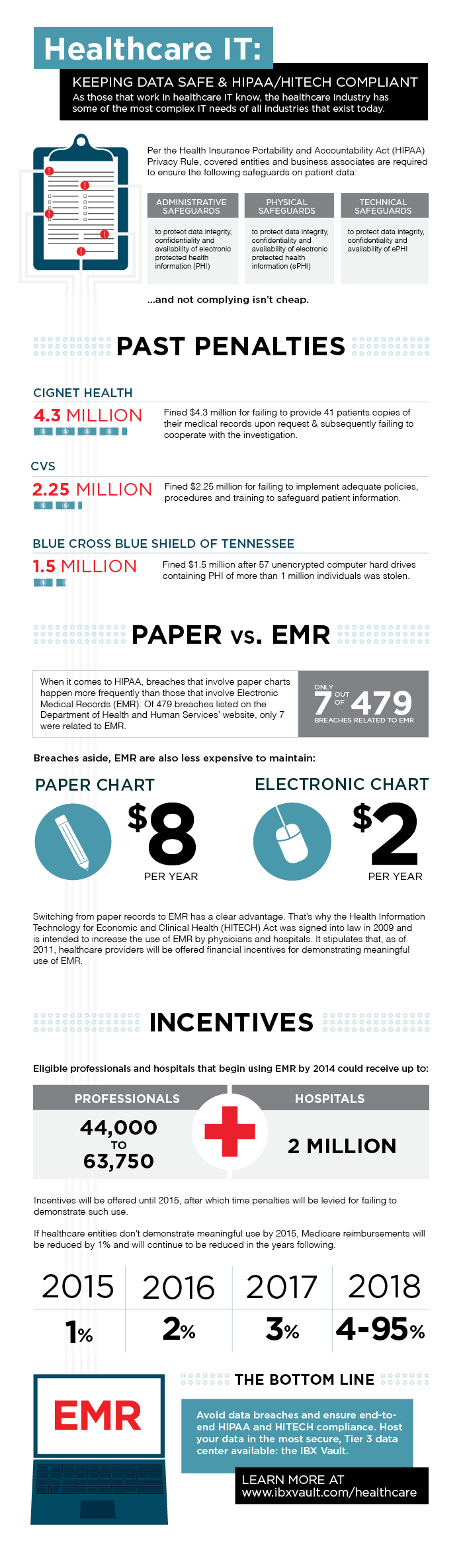
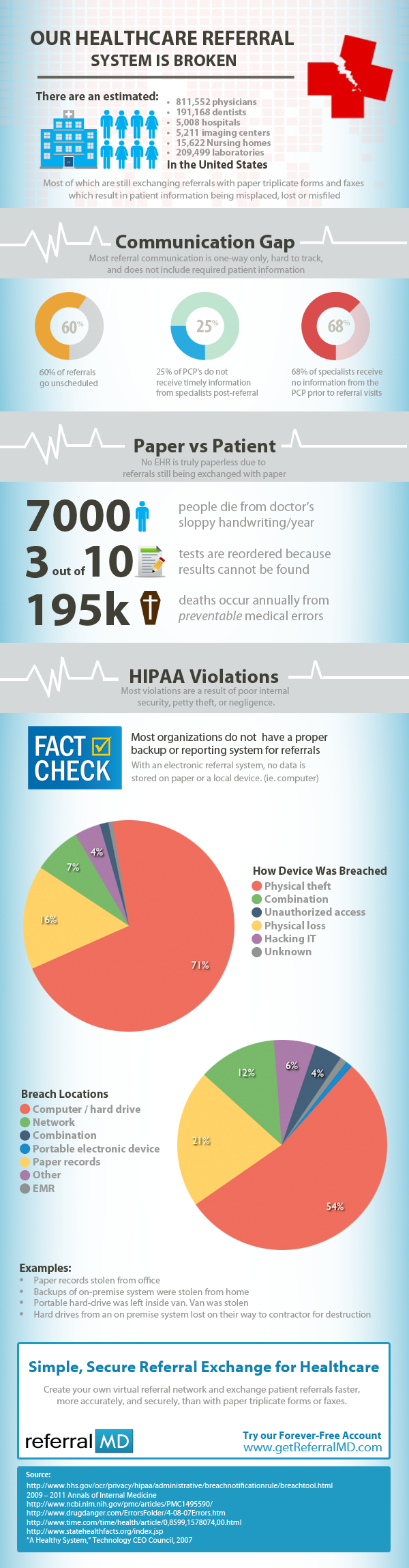
In this HIPAA infographic, we detail some of the most serious penalties ever dished out by the federal government and break down the various fines that are on the table for noncompliance.

Conclusion

Your thoughts and comments on this ME-P are appreciated. Feel free to review our top-left column, and top-right sidebar materials, links, URLs and related websites, too. Then, subscribe to the ME-P. It is fast, free and secure.

Link: http://feeds.feedburner.com/HealthcareFinancialsthePostForcxos

Speaker: If you need a moderator or speaker for an upcoming event, Dr. David E. Marcinko; MBA – Publisher-in-Chief of the Medical Executive-Post – is available for seminar or speaking engagements. Contact: MarcinkoAdvisors@msn.com

Our Other Print Books and Related Information Sources:

Health Dictionary Series: http://www.springerpub.com/Search/marcinko

Practice Management: http://www.springerpub.com/product/9780826105752

Physician Financial Planning: http://www.jbpub.com/catalog/0763745790

Medical Risk Management: http://www.jbpub.com/catalog/9780763733421

Hospitals: http://www.crcpress.com/product/isbn/9781439879900

Physician Advisors: www.CertifiedMedicalPlanner.org

Product Details

Who Won the Vice Presidential Debate [Opinion Poll]?

Join Our Mailing List

A ME-P Voting and Opinion Poll

Who Won the Vice Presidential Debate Last Night?

Assessment

The pressure is on: http://firstread.nbcnews.com/_news/2012/10/10/14340705-first-thoughts-the-pressure-is-on?lite&gt1=43001

Conclusion

Your thoughts and comments on this ME-P are appreciated. Feel free to review our top-left column, and top-right sidebar materials, links, URLs and related websites, too. Then, subscribe to the ME-P. It is fast, free and secure.

Link: http://feeds.feedburner.com/HealthcareFinancialsthePostForcxos

Speaker: If you need a moderator or speaker for an upcoming event, Dr. David E. Marcinko; MBA – Publisher-in-Chief of the Medical Executive-Post – is available for seminar or speaking engagements. Contact: MarcinkoAdvisors@msn.com

Our Other Print Books and Related Information Sources:

Health Dictionary Series: http://www.springerpub.com/Search/marcinko

Practice Management: http://www.springerpub.com/product/9780826105752

Physician Financial Planning: http://www.jbpub.com/catalog/0763745790

Medical Risk Management: http://www.jbpub.com/catalog/9780763733421

Hospitals: http://www.crcpress.com/product/isbn/9781439879900

Physician Advisors: www.CertifiedMedicalPlanner.org

Product Details


How Hospital Billing Impacts the Patient Experience

Join Our Mailing List

It’s About … the Invoice

By Staff Reporters

Here, Connance visually shows how hospital billing process is directly correlated to the patient experience.

Assessment

Patients who encounter problems with their physician’s billing office are less likely to recommend that physician/clinician to others.

www.BusinessofMedicalPractice.com

Conclusion

Your thoughts and comments on this ME-P are appreciated. Feel free to review our top-left column, and top-right sidebar materials, links, URLs and related websites, too. Then, subscribe to the ME-P. It is fast, free and secure.

Link: http://feeds.feedburner.com/HealthcareFinancialsthePostForcxos

Speaker: If you need a moderator or speaker for an upcoming event, Dr. David E. Marcinko; MBA – Publisher-in-Chief of the Medical Executive-Post – is available for seminar or speaking engagements. Contact: MarcinkoAdvisors@msn.com

Our Other Print Books and Related Information Sources:

Health Dictionary Series: http://www.springerpub.com/Search/marcinko

Practice Management: http://www.springerpub.com/product/9780826105752

Physician Financial Planning: http://www.jbpub.com/catalog/0763745790

Medical Risk Management: http://www.jbpub.com/catalog/9780763733421

Hospitals: http://www.crcpress.com/product/isbn/9781439879900

Physician Advisors: www.CertifiedMedicalPlanner.org

Our Newest Textbook Release

Buy from Amazon

Learn How to Profit and Thrive in the PP-ACA Era

BOOK FOREWORD / TESTIMONIAL

How Physicians Can Make the Patient Experience a Priority

Join Our Mailing List

By Staff Reporters

Connection Makes the Difference – A Collaborative Shift in Bedside Manner?

Healthcare 2.0 is all about connecting. Take your pick: you can communicate via blogs, tweets, IMs, wikis, or social networks. And then, of course, you can opt for just plain old face-to-face dialogue.

The Communication Explosion

According to ME-P experts and Business of Medical Practice textbook contributors Mario Moussa PhD and Jennifer Tomasik MA, on the face of it, the explosion of communication options seems like a very good thing indeed.

www.BusinessofMedicalPractice.com

In the most basic ways, human beings need connection. Without the give and take of social interaction, our health suffers. In extreme situations—in solitary confinement or similar conditions—the brain almost completely shuts down.

What We Can Learn from Terry Anderson

The journalist Terry Anderson was held hostage in Lebanon from 1985 to 1992, enduring months at a time of almost complete isolation. In his memoir Den of Lions, Anderson described the catastrophic result: “The mind is a blank…. Where are all the things I learned, the books I read, the poems I memorized? There’s nothing there, just a formless, gray-black misery. My mind’s gone dead.”

The Link Between Social Connection and Good Health

On the positive side, studies have established a link between social connection and good health. (Even contact with people you dislike is better than having no contact at all). The same goes for the relationship between doctor and patient: data show that when the relationship is satisfying, it has tangible health benefits.

For example, when patients have a positive emotional connection with their doctors, they remember a higher percentage of care-related information and even experience significantly better physiological outcomes.

The Conversation

And the way doctors converse with patients—apart from the actual content of the conversations—has an equally powerful effect:

Do you want your patient’s nagging headaches to go away?

Discuss their expectations and feelings, in addition to the neurological facts. This is much more effective than sticking to the facts alone, since a strong psychological bond is strong medicine.

Do you want your medical advice to be followed?

Draw your patient into conversations about treatment. The research shows that engagement makes a difference.

Assessment

Is there an analogy here for financial advisors and medical management consultants?

Conclusion

Your thoughts and comments on this ME-P are appreciated. Feel free to review our top-left column, and top-right sidebar materials, links, URLs and related websites, too. Then, subscribe to the ME-P. It is fast, free and secure.

Speaker: If you need a moderator or speaker for an upcoming event, Dr. David E. Marcinko; MBA – Publisher-in-Chief of the Medical Executive-Post – is available for seminar or speaking engagements. Contact: MarcinkoAdvisors@msn.com

OUR OTHER PRINT BOOKS AND RELATED INFORMATION SOURCES:

Product Details

Product DetailsProduct Details

A Review of Social Security Benefits

A Bird in Hand May Not Give Maximum Benefits

Join Our Mailing List

By Rick Kahler MS CFP® ChFC CCIM

“A bird in the hand is worth two in the bush.”

That may be good advice for pheasant hunters, but it isn’t necessarily great financial advice for trying to decide when to file for Social Security benefits.

A Social Security Review in [Very] Brief

Social Security pays your full benefit amount at your full retirement age (FRA). Depending on your birth year, this is around age 65 to 67. You can choose to take a lesser amount beginning at age 62 or wait until age 70 and receive a greater amount.

Many people want to grab that bird in the hand by filing at age 62. The most common reason I hear for this choice is, “Why should I wait till age 66 or 70 to collect benefits? I might not even be around by then. There are no guarantees about how long I’ll live.”

Obviously, knowing when we can expect to die would be really helpful in making Social Security decisions. If you are going to leave the planet at age 70, you would be ahead to start receiving your Social Security benefit at age 62. For every year you will live past 62, however, the odds increase that delaying your benefit to the FRA or even age 70 is the wiser financial decision.

Are You Terminal?

Unless you have a terminal illness, you will most likely be better off to wait until age 70 to begin receiving your benefits. Here’s why:

  1. First, if you are still working between age 62 and your FRA, any earnings above the $14,160 limit will reduce your Social Security benefit by one dollar for every two dollars earned.
  2. Second, the average monthly check you receive by waiting till age 70 is 66% more than what you receive at age 62. If your benefit at full retirement age is $1,000, at age 62 it is around $750, but if you wait until age 70 it is probably closer to $1,250. On average, if you will live 15 to 20 years past age 62 you are ahead to wait until 70 to start receiving your benefits. And if you are alive at age 62 and don’t have a terminal illness, the odds are that you will live another 15 years.

Of course, Social Security benefits are also indexed to inflation. This advantage is much greater than it might appear. For example, if inflation averages 3.5% a year, your benefit check will double in 20 years. If your initial monthly benefit at age 66 is $1,000, by the time you’re 86 it will have doubled to $2,000.

And … Another Reason!

Financial planner and writer Michael Kitces has pointed out another reason to delay receiving Social Security benefits. The risks and rewards of delaying benefits are not equal when you consider the break-even point. This is the age, typically 77, when your total benefit from filing at age 62 equals your total benefit from filing at age 70. He says, “While the risks of delaying benefits and dying early are limited, the upside is potentially far greater.”

If you give up one year of early benefits, you risk losing that amount only if you don’t live to age 77. But you receive double that one year of benefits if you live to age 83, and you triple it if you live to 89. “The penalty for not living to life expectancy is modest, while the benefit for outliving life expectancy is tremendous,” Kitces says.

Assessment

It’s important to look at all the numbers, including your own probable life expectancy, before  you decide to file at age 62. If you settle too easily for that bird in the hand, it may turn out to be a turkey.

Conclusion

Your thoughts and comments on this ME-P are appreciated. Feel free to review our top-left column, and top-right sidebar materials, links, URLs and related websites, too. Then, subscribe to the ME-P. It is fast, free and secure.

Speaker: If you need a moderator or speaker for an upcoming event, Dr. David E. Marcinko; MBA – Publisher-in-Chief of the Medical Executive-Post – is available for seminar or speaking engagements. Contact: MarcinkoAdvisors@msn.com

OUR OTHER PRINT BOOKS AND RELATED INFORMATION SOURCES:

     Our Newest Textbook Release

Comprehensive Financial Planning Strategies for Doctors and Advisors: Best Practices from Leading Consultants and Certified Medical Planners(TM)

Learn How to Profit and Thrive in the PP-ACA Era

On Financial Institutional Fraud

Join Our Mailing List

About Accounting Fraud

Definition: Any act or attempt to falsify an accounting statement for financial gain.

A clear example of accounting fraud is the act of deliberately overpricing a company’s assets in order to drive up its share price.

Another example is filing bankruptcy to avoid debt, rather than because of financial hardship.

One of the biggest accounting frauds in history occurred during the Enron scandal in 2001.

Conclusion

Your thoughts and comments on this ME-P are appreciated. Feel free to review our top-left column, and top-right sidebar materials, links, URLs and related websites, too. Then, subscribe to the ME-P. It is fast, free and secure.

Link: http://feeds.feedburner.com/HealthcareFinancialsthePostForcxos

Speaker: If you need a moderator or speaker for an upcoming event, Dr. David E. Marcinko; MBA – Publisher-in-Chief of the Medical Executive-Post – is available for seminar or speaking engagements. Contact: MarcinkoAdvisors@msn.com

Our Other Print Books and Related Information Sources:

Health Dictionary Series: http://www.springerpub.com/Search/marcinko

Practice Management: http://www.springerpub.com/product/9780826105752

Physician Financial Planning: http://www.jbpub.com/catalog/0763745790

Medical Risk Management: http://www.jbpub.com/catalog/9780763733421

Hospitals: http://www.crcpress.com/product/isbn/9781439879900

Physician Advisors: www.CertifiedMedicalPlanner.org

Product DetailsProduct DetailsProduct Details

Product Details  Product Details

Product Details

Who Won the First Presidential Debate?

Join Our Mailing List

Mitt or Barack? A Voting and ME-P Opinion Poll

Conclusion

Your thoughts and comments on this ME-P are appreciated. Feel free to review our top-left column, and top-right sidebar materials, links, URLs and related websites, too. Then, subscribe to the ME-P. It is fast, free and secure.

Link: http://feeds.feedburner.com/HealthcareFinancialsthePostForcxos

Speaker: If you need a moderator or speaker for an upcoming event, Dr. David E. Marcinko; MBA – Publisher-in-Chief of the Medical Executive-Post – is available for seminar or speaking engagements. Contact: MarcinkoAdvisors@msn.com

Our Other Print Books and Related Information Sources:

Health Dictionary Series: http://www.springerpub.com/Search/marcinko

Practice Management: http://www.springerpub.com/product/9780826105752

Physician Financial Planning: http://www.jbpub.com/catalog/0763745790

Medical Risk Management: http://www.jbpub.com/catalog/9780763733421

Hospitals: http://www.crcpress.com/product/isbn/9781439879900

Physician Advisors: www.CertifiedMedicalPlanner.org

     Our Newest Textbook Release

Buy from Amazon

Learn How to Profit and Thrive in the PP-ACA Era

BOOK FOREWORD / TESTIMONIAL

Can Nanotechnology Re-Engineer Us?

Join Our Mailing List

Human versus Enhanced Human

From: http://www.Keithley.com

Assesment

Linkhttp://www.keithley.com/knowledgecenter/How-Nanotechnology-Could-Reengineer-Us

Conclusion

Your thoughts and comments on this ME-P are appreciated. Feel free to review our top-left column, and top-right sidebar materials, links, URLs and related websites, too. Then, subscribe to the ME-P. It is fast, free and secure.

Link: http://feeds.feedburner.com/HealthcareFinancialsthePostForcxos

Speaker: If you need a moderator or speaker for an upcoming event, Dr. David E. Marcinko; MBA – Publisher-in-Chief of the Medical Executive-Post – is available for seminar or speaking engagements. Contact: MarcinkoAdvisors@msn.com

Our Other Print Books and Related Information Sources:

Health Dictionary Series: http://www.springerpub.com/Search/marcinko

Practice Management: http://www.springerpub.com/product/9780826105752

Physician Financial Planning: http://www.jbpub.com/catalog/0763745790

Medical Risk Management: http://www.jbpub.com/catalog/9780763733421

Hospitals: http://www.crcpress.com/product/isbn/9781439879900

Physician Advisors: www.CertifiedMedicalPlanner.org

Product DetailsProduct DetailsProduct Details

Product Details  Product Details

Product Details

Is Walking Away from A Mortgage Ever OK?

Join Our Mailing List

One Doctor Asks the ME-P

The scourge of foreclosures has brought a lot of moral issues to light. So, Dr. Jones from Las Vegas asks, is it OK to simply stop paying your mortgage?

The answer you get depends on who you ask and what the circumstances are. If you’ve never thought much about this question, you may soon. There are so many mortgages going into foreclosure that it may soon happen to you or someone you know. And even those who don’t go through foreclosure may still be vulnerable to terrible mortgage conditions.

How Bad Is the Foreclosure Rate?

The epidemic of foreclosures is worse than you would believe. Since 2005, there have been 2.5 million foreclosures. In July of 2010, the foreclosure rate went up 6 percent over the same month a year earlier.

Are You Underwater?

If you owe more on your house than your house is actually worth, you may feel like you’re underwater. With excess borrowing against equity and falling home prices, this situation has reached epidemic proportions. It isn’t just a few people in this situation or even a few million people. One quarter of all families are underwater, with negative equity in their own homes.

The states with the worst numbers of people underwater are Florida, Wisconsin, Nevada, California and Arizona. By far, the worst state for this situation is Nevada. In Nevada, 65 percent of borrowers owe more on their mortgage than their house is worth.

  • What should homeowners do in this situation?
  • Should they continue to pay?
  • Or, do you think they should they simply chuck it all and stop all payments?
  • Would you?

What Do People Think About Walking Away From a Mortgage?

If you have already formed an opinion about whether it’s OK to ditch a mortgage or not, you’re not alone in being opinionated. Everyone has an opinion on this, from renters to homeowners and from the young to the old.

In total, 25 percent of renters think it’s okay to walk away from a mortgage. Homeowners aren’t as hip to ditching, though. Among those who own homes, only 17 percent think it’s OK to stop paying.

Is It a Moral Issue?

Some homeowners believe that whether or not to pay is a moral issue. Their own ethics come into play, telling them that someone who signed a contract should see it through, regardless of how home prices have fallen. The mortgage industry loves that—they are really playing up the idea that paying is a moral obligation.

Assessment

What people believe about this issue often comes down to their age and gender.

To see what age groups and genders believe it’s OK to walk away, review the above graphic. And, men and women aren’t as far apart on this issue as you may think. Many people of both genders believe that if your financial circumstances are dire, it may be OK to ditch that mortgage. What about medical professionals? Do you agree with your peers? Click on the graphic to see.

Conclusion

Your thoughts and comments on this ME-P are appreciated. Feel free to review our top-left column, and top-right sidebar materials, links, URLs and related websites, too. Then, subscribe to the ME-P. It is fast, free and secure.

Link: http://feeds.feedburner.com/HealthcareFinancialsthePostForcxos

Speaker: If you need a moderator or speaker for an upcoming event, Dr. David E. Marcinko; MBA – Publisher-in-Chief of the Medical Executive-Post – is available for seminar or speaking engagements. Contact: MarcinkoAdvisors@msn.com

Our Other Print Books and Related Information Sources:

Product DetailsProduct DetailsProduct Details

Product Details Product Details

Product Details

Presidential Debate Prep – Why Doctors Need to Understand Mitt Romney’s Tax Policy

Join Our Mailing List

The 2012 Presidential Election

By Andrew D. Schwartz, CPA

The conventions have passed and the presidential debate season is upon us. And the 2012 Presidential Election is just a few months away. Let’s take a look at Mitt Romney’s tax policy based on information posted on his campaign’s official website www.mittromney.com.

Extend the Bush Tax Cuts:

If Congress doesn’t act by the end of the year, the 2001 Bush tax cuts will expire on December 31st causing tax rates across the board to increase. According to Mitt Romney:

While the entire tax code is in dire need of a fundamental overhaul, Mitt Romney believes in holding the line against increases in marginal tax rates. The goals that President Bush pursued in bringing rates down to their current level— to spur economic growth, encourage savings and investment, and help struggling Americans make ends meet—are just as important today as they were a decade ago. Letting them lapse, as President Obama promises to do in 2012, is a step in precisely the wrong direction. If anything, the lower rates established by President Bush should be regarded as a directional marker on the road to more fundamental reform.

Eliminate Taxes on Investment Income for People Earning Below $200k:

Romney’s Tax Policy includes a provision to cut taxes for taxpayers earning less than $200k. Let’s see what the Romney Campaign calls the Middle-Class Tax Savings Plan:

As with the marginal income tax rates, Mitt Romney will seek to make permanent the lower tax rates for investment income put in place by President Bush. Another step in the right direction would be a Middle-Class Tax Savings Plan that would enable most Americans to save more for retirement. As president, Romney will seek to eliminate taxation on capital gains, dividends, and interest for any taxpayer with an adjusted gross income of under $200,000, helping Americans to prepare for retirement and enjoy the freedom that accompanies financial security. This would encourage more Americans to save and to invest for the long-term, which would in turn free up capital for investment flowing back into the economy and helping to facilitate economic growth.

Implement Tax Simplification:

Promising tax simplification is nothing new. When I started practicing accounting in 1987, President Reagan had just signed the huge Tax Reform Act of 1986 into law. That Tax Act really complicated the tax code, and it has continued to become increasing more complex over the past 25 years. Remember Steve Forbes? He ran two presidential campaigns on his Flat Tax Platform.

Here is Romney’s spin on tax simplification:

In the long run, Mitt Romney will pursue a conservative overhaul of the tax system that includes lower and flatter rates on a broader tax base. The approach taken by the Bowles-Simpson Commission is a good starting point for the discussion. The goal should be a simpler, more efficient, user-friendly, and less onerous tax system. Every American would be readily able to ascertain what they owed and why they owed it, and many forms of unproductive tax gamesmanship would be brought to an end. Conversely, tax reform should not be used as an under-the-radar means of raising taxes. Where reforms that simplify the code or encourage growth have the effect of increasing the tax burden, they should be offset by reductions in marginal rates. Washington’s problem is not too little revenue, but rather too much spending.

Mitt Romney also wants to eliminate the Death Tax and repeal the Alternative Minimum Tax. You can read Mitt Romney’s complete Tax Policy atwww.mittromney.com/sites/default/files/shared/TaxPolicy.pdf

President Obama’s Rebuttal:

There actually isn’t very much information about Obama’s tax policy on his campaign’s official website. Check out The President’s Record on Taxes available at: www.barackobama.com/record/taxes?source=issues-nav and all you will find is mention of the Buffett rule and these four bullet points:

  • President Obama has cut taxes for middle-class families and small businesses. One of the first things he did in office was cut taxes for 95 percent of working families. He has also signed 18 tax cuts for small businesses and extended the payroll tax cut for all American workers and their families, putting an extra $1,000 in the typical middle-class family’s pocket.
  • For too long, the U.S. tax code has benefited the wealthy and well-connected at the expense of the vast majority of Americans. A third of the 400 highest income taxpayers paid an average rate of 15 percent or less in 2008.
  • That’s why President Obama proposed the Buffett Rule, asking millionaires and billionaires to do their fair share. But if you’re one of the 98 percent of American families who make under $250,000 a year, your taxes won’t go up.
  • The President has asked Congress to take action to reform our tax code and close tax loopholes for millionaires and billionaires, as well as hedge fund managers, private jet owners, and oil companies.

President Obama’s official campaign site also includes a link to a report that pokes holes in the Romney Tax Policy, available at:www.taxpolicycenter.org/UploadedPDF/1001628-Base-Broadening-Tax-Reform.pdf.

Which Candidate’s Tax Policy Makes the Most Sense?

Tough question. What makes it tougher is that the President doesn’t write the laws. Instead, the President’s job is to sign bills that have been passed by Congress into law. Even so, having an understanding of the tax philosophy of the country’s two presidential candidates is probably a prudent idea.

Assessment

As an interesting exercise, check out President Obama’s views on taxes from the prior election cycle in our article called What’s The Tax Plan, Man? included in ourOctober 2008 Newsletter, and compare his suggestions from 2008 to what’s been enacted during his first term. A few of the items that he proposed during his previous campaign, including raising the Social Security taxes on people earning more than $250k and implementing a “Make Work Pay” tax credit, have come to fruition during his first term in office.

Conclusion

Your thoughts and comments on this ME-P are appreciated. Feel free to review our top-left column, and top-right sidebar materials, links, URLs and related websites, too. Then, subscribe to the ME-P. It is fast, free and secure.

Link: http://feeds.feedburner.com/HealthcareFinancialsthePostForcxos

Speaker: If you need a moderator or speaker for an upcoming event, Dr. David E. Marcinko; MBA – Publisher-in-Chief of the Medical Executive-Post – is available for seminar or speaking engagements. Contact: MarcinkoAdvisors@msn.com

Our Other Print Books and Related Information Sources:

Health Dictionary Series: http://www.springerpub.com/Search/marcinko

Practice Management: http://www.springerpub.com/product/9780826105752

Physician Financial Planning: http://www.jbpub.com/catalog/0763745790

Medical Risk Management: http://www.jbpub.com/catalog/9780763733421

Hospitals: http://www.crcpress.com/product/isbn/9781439879900

Physician Advisors: www.CertifiedMedicalPlanner.org

Product DetailsProduct DetailsProduct Details

Product Details  Product Details


Gold as an Investment Option for Medical Professionals?

Join Our Mailing List

Gold in That There IRA

By Rick Kahler MS CFP® ChFC CCIM www.KahlerFinancial.com

Here in the Black Hills, home of the historic Homestake Mine, we know a gold rush when we see one. The last few years have tempted investors to take part in a modern gold rush. The precious metal is thought of as a safe harbor for investment capital during times of economic and political unrest and chaos.

Holding Gold

There are many ways to own gold, including holding an interest in it via a financial medium like a mutual fund or an Exchange Traded Fund (ETF). Those who want gold as protection against political or economic turmoil, though, probably are thinking of owning physical gold.

Since Americans’ savings and investing rates are so low, most folks don’t have any extra funds to put into gold. Their only investment vehicle may be an IRA. Yet IRAs are specifically excluded from owning collectibles, metals, and coins.

There are exceptions, however: U.S. gold coins minted by the U.S. Treasury, or bullion bars or coins of a fineness of 995 parts per 1,000. Several non-U.S. minted gold coins meet that standard. The key here is that the coins or bars must be in the physical possession of a qualified trustee. That means gold you stash in a safe or bury in the back yard does not qualify.

Most banks, brokerage firms, or mutual fund companies are not interested in holding physical gold, so finding a qualified trustee can be difficult. You must do a reasonable amount of due diligence to be sure the trustee you find is really trustworthy.

The Trustee 

A trustee needs to arrange for the shipping, handling, and storage of your gold. For this reason, you will certainly pay much higher fees than you would for normal stock, bond, and cash investments. The fees can amount to hundreds or thousands of dollars annually.

Even if you are willing to pay the high fees, first ask yourself, “What’s the point?” The reason most folks want to own physical gold or silver is to have “real” money available in case of an economic crisis or political uprising. How does owning physical gold in an unknown location that may be thousands of miles from you fulfill that requirement? Wouldn’t owning an ETF like GLD actually accomplish the same thing, only without the high costs? Yes, it would.

If you want to own gold, my strong suggestion is to own the GLD ETF and avoid all the high fees. The total cost of purchasing GLD is probably about $10.

Other Options 

Other options are mutual funds that purchase gold mining stocks, which is probably a better way to participate in the gold market. This is because of the leverage factor. In a rising market, the cost of mining gold is much lower relative to the market value of the gold. So if a mining company pays $1,000 to mine an ounce of gold and can sell it for $1,500, the company—and you, as an owner of its stock—make $500 per ounce. Gold could stay at that same price for a year and your company would continue to make a 33% gross profit.

However, if you owned the physical gold and it stayed at the same price for a year, your profit would be 0%. You would only make that same $500 profit if the gold appreciated from $1,500 to $2,000 an ounce.

Assessment 

Of course, the reverse is also true. If gold turns downward, you will stand to lose much more owning the mining company than the physical gold. That’s why I recommend owning gold, like any other asset, only as part of a diversified portfolio of investments.

Conclusion

Your thoughts and comments on this ME-P are appreciated. Feel free to review our top-left column, and top-right sidebar materials, links, URLs and related websites, too. Then, subscribe to the ME-P. It is fast, free and secure.

Link: http://feeds.feedburner.com/HealthcareFinancialsthePostForcxos

Speaker: If you need a moderator or speaker for an upcoming event, Dr. David E. Marcinko; MBA – Publisher-in-Chief of the Medical Executive-Post – is available for seminar or speaking engagements. Contact: MarcinkoAdvisors@msn.com

OUR OTHER PRINT BOOKS AND RELATED INFORMATION SOURCES:

DICTIONARIES: http://www.springerpub.com/Search/marcinko
PHYSICIANS: www.MedicalBusinessAdvisors.com
PRACTICES: www.BusinessofMedicalPractice.com
HOSPITALS: http://www.crcpress.com/product/isbn/9781466558731
CLINICS: http://www.crcpress.com/product/isbn/9781439879900
BLOG: www.MedicalExecutivePost.com
FINANCE: Financial Planning for Physicians and Advisors
INSURANCE: Risk Management and Insurance Strategies for Physicians and Advisors

Product Details  Product Details

Top 20 Most Popular eMRs

A Review of Some Software Solutions

Join Our Mailing List

As the deadline for implementation in the US draws near, talk of electronic medical records (EMR) and electronic health records (EHR) software is a hot topic at the doctor’s office lately.

These systems assist medical practitioners in the creation, storage, and organization of electronic medical records, including patient charts, electronic prescriptions, lab orders, and evaluations (just to name a few common features).

While the terms “EMR” and “EHR” are often used interchangeably, EMR solutions allow for patient information to be shared within one health care organization, whereas EHR solutions allow for health-related records to be shared across multiple organizations.

Assessment

Above is a look at some of the most popular options in both categories, but to see a comprehensive list, visit the EMR Software Directory.

Conclusion

Your thoughts and comments on this ME-P are appreciated. Feel free to review our top-left column, and top-right sidebar materials, links, URLs and related websites, too. Then, subscribe to the ME-P. It is fast, free and secure.

Speaker: If you need a moderator or speaker for an upcoming event, Dr. David E. Marcinko; MBA – Publisher-in-Chief of the Medical Executive-Post – is available for seminar or speaking engagements. Contact: MarcinkoAdvisors@msn.com

OUR OTHER PRINT BOOKS AND RELATED INFORMATION SOURCES:


Product DetailsProduct DetailsProduct Details

Product Details  Product Details

Product Details

Events-Planner: October 2012

ADVERTISEMENT

Events-Planner: OCTOBER 2012

By Staff Writers
“Keeping track of important health economics and financial industry meetings, conferences and summits”

Welcome to this issue of the Medical Executive-Post and our Events-Planner. It contains the latest information on conferences, news, and relevant resources in healthcare finance, economics, research and development, business management, pharmaceutical pricing, and physician/entity reimbursement!  Watch for a new Events-Planner each month.

First, a little about us! The Medical Executive-Post is still a relative newcomer. But today, we have almost 175,000 visitors and readers each month from all over the country, in addition to our growing subscriber base. We have been a successful collaborative effort, thanks to your contributions.  As a result, we are adding new resources daily. And, we hope the website continues to provide the best place to go for journals, books, conferences, educational resources, tools, and other things you need to establish the value your healthcare consulting and financial advisory intervention.

So, enjoy the Medical Executive-Post and this monthly Events-Planner with our compliments.

A Look Ahead this Month – And now, the important dates:

  • October 01-03: FRA Sub-Advised Forum. Philadelphia, PA
  • October 02-04: SRI Annual Conference. Uncasville, CT
  • October 16-19: CHIME Forum. Indian Wells, CA
  • October 21-24: MGMA Annual Conference. San Antonio, TX
  • October 23-23: SIFMA Annual Conference. New York, NY

MarcinkoAdvisors@msn.com

Speaker: If you need a moderator or speaker for an upcoming event, Dr. David E. Marcinko; MBA – Publisher-in-Chief of the Executive-Post – is available for seminar or speaking engagements. Contact: MarcinkoAdvisors@msn.com

Subscribe Now: Did you like this Medical Executive-Post, or find it helpful, interesting and informative? Want to get the latest E-Ps delivered to your email box each morning? Just subscribe using the link below. It’s free. You can unsubscribe at any time. Security is assured.

Link: http://feeds.feedburner.com/HealthcareFinancialsthePostForcxos

Our Newest Textbook Release

Buy from Amazon

Learn How to Profit and Thrive in the PP-ACA Era

BOOK FOREWORD / TESTIMONIAL

Contribute to the ME-P

Join Our Mailing List

By Ann Miller RN MHA

[Executive-Director]

Contributors

The Medical Executive-Post is written by contributors that represent a range of professional expertise.  From PhDs, MDs, DDSs, FAs, CPAs, MBAs, CFPs and CMPs, RNs etc; becasue managing a medical practice, clinic or healthcare business, and tracking one’s personal financial career is a complex and difficult task.

So, we have asked physicians, practice managers, CXOs and financial services industry participants and leaders to provide advice, experience and insight.

Link: ME-P MAST HEAD

Want to Join Us?

Have something important to add – join us.

Link: Why Post Your e-Content or Print Publish with Us?

We welcome your comments and if you would like to become a featured author just complete the reply form below and we will contact you.

Crowd-Sourced Print Examples of Our Text Books

Product DetailsProduct DetailsProduct Details

Product Details Product Details

Product Details

Our Newest Textbook Release

Buy from Amazon

Learn How to Profit and Thrive in the PP-ACA Era

BOOK FOREWORD / TESTIMONIAL

Of Human and Digital Viruses

Join Our Mailing List

The Greatest Miscreants of All Time

“If you think you are too small to make a difference, try sleeping with a mosquito.”Dalai Lama XIV

Viruses are inevitably small in nature, yet engineered to unleash intense and often terrifying devastation. They leave a costly aftermath whether it’s the irreparable loss of human life, or millions (sometimes billions) of dollars in lost revenue and property.

We have gone through history to find the worst viruses of them all; little creatures and scripts that have taken advantage of social and economic situations to propagate and amplify their prowess in mayhem and destruction.

Assessment

The above graphic is a brief journey through time, spanning back as early as 1348 where we met the darkest and most wicked viruses to ever afflict mankind.

Conclusion

Your thoughts and comments on this ME-P are appreciated. Feel free to review our top-left column, and top-right sidebar materials, links, URLs and related websites, too. Then, subscribe to the ME-P. It is fast, free and secure.

Link: http://feeds.feedburner.com/HealthcareFinancialsthePostForcxos

Speaker: If you need a moderator or speaker for an upcoming event, Dr. David E. Marcinko; MBA – Publisher-in-Chief of the Medical Executive-Post – is available for seminar or speaking engagements. Contact: MarcinkoAdvisors@msn.com

OUR OTHER PRINT BOOKS AND RELATED INFORMATION SOURCES:

DICTIONARIES: http://www.springerpub.com/Search/marcinko
PHYSICIANS: www.MedicalBusinessAdvisors.com
PRACTICES: www.BusinessofMedicalPractice.com
HOSPITALS: http://www.crcpress.com/product/isbn/9781466558731
CLINICS: http://www.crcpress.com/product/isbn/9781439879900
BLOG: www.MedicalExecutivePost.com
FINANCE: Financial Planning for Physicians and Advisors
INSURANCE: Risk Management and Insurance Strategies for Physicians and Advisors

Product DetailsProduct DetailsProduct Details

Product Details  Product Details

Product Details

Accounting for the Cost of US Health Care

Join Our Mailing List

Conclusion

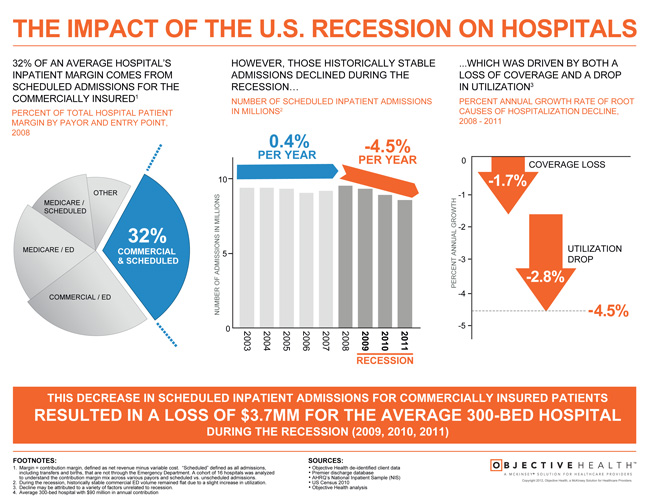
Your thoughts and comments on this ME-P are appreciated. What are your thoughts on the pre-reform trends and the impact of the recession?

Feel free to review our top-left column, and top-right sidebar materials, links, URLs and related websites, too. Then, subscribe to the ME-P. It is fast, free and secure.

Link: http://feeds.feedburner.com/HealthcareFinancialsthePostForcxos

Speaker: If you need a moderator or speaker for an upcoming event, Dr. David E. Marcinko; MBA – Publisher-in-Chief of the Medical Executive-Post – is available for seminar or speaking engagements. Contact: MarcinkoAdvisors@msn.com

Our Other Print Books and Related Information Sources:

Health Dictionary Series: http://www.springerpub.com/Search/marcinko

Practice Management: http://www.springerpub.com/product/9780826105752

Physician Financial Planning: http://www.jbpub.com/catalog/0763745790

Medical Risk Management: http://www.jbpub.com/catalog/9780763733421

Hospitals: http://www.crcpress.com/product/isbn/9781439879900

Physician Advisors: www.CertifiedMedicalPlanner.org

Our Newest Textbook Release

Buy from Amazon

Learn How to Profit and Thrive in the PP-ACA Era

BOOK FOREWORD / TESTIMONIAL


How Long to Keep Tax Records?

Join Our Mailing List

Understanding the IRS Position

By Andrew D. Schwartz, CPA

At my public accounting firm, we get this question all the time from our medical professional and lay clients:

Q: “How long do I need to keep my tax records?”

Here is the IRS answer to this question:

Well organized records make it easier to prepare a tax return and help provide answers if your return is selected for examination, or to prepare a response if you receive an IRS notice.

What to Keep – Individuals.

In most cases, keep records that support items on your tax return for at least three years after that tax return has been filed. Returns filed before the due date are treated as filed on the due date. Examples include bills, credit card and other receipts, invoices, mileage logs, canceled, imaged or substitute checks or other proof of payment and any other records to support deductions or credits claimed. You should typically keep records relating to property at least three years after you’ve sold or otherwise disposed of the property.

Examples include a home purchase or improvement, stocks and other investments, Individual Retirement Account transactions and rental property records.

What to Keep – Doctors as Small Business Owners.

Typically, keep all your employment tax records for at least four years after the tax becomes due or is paid, whichever is later. Also, keep records documenting gross receipts, proof of purchases, expenses, and assets. Examples include cash register tapes, bank deposit slips, receipt books, purchase and sales invoices, credit card charges and sales slips. Forms 1099-Misc, canceled checks, accounts statements, petty cash slips and real estate closing statements. Electronic records can included databases, saved files, e-mails, instant messages, faxes and voice messages.

There is no period of limitations to assess tax when a return is fraudulent or when no return is filed. If income that you should have reported is not reported, and it is more than 25% of the gross income shown on the return, the time to assess is 6 years from when the return is filed. For filing a claim for credit or refund, the period to make the claim generally is 3 years from the date the original return was filed, or 2 years from the date the tax was paid, whichever is later. For filing a claim for a loss from worthless securities the time to make the claim is 7 years from when the return was due.

Assessment

For more information from the IRS, check out:

  • Publication 552, Recordkeeping for Individuals, provides more information on recordkeeping requirements for individuals.
  • Publication 583, Starting a Business and Keeping Records
  • Publication 463, Travel, Entertainment, Gift, and Car Expenses, provide additional information on required documentation for taxpayers with business expenses.

For a more complete listing, please check out: Record Retention Guide Compiled by the Massachusetts Society of CPAs.

Conclusion

Your thoughts and comments on this ME-P are appreciated. Feel free to review our top-left column, and top-right sidebar materials, links, URLs and related websites, too. Then, subscribe to the ME-P. It is fast, free and secure.

Link: http://feeds.feedburner.com/HealthcareFinancialsthePostForcxos

Speaker: If you need a moderator or speaker for an upcoming event, Dr. David E. Marcinko; MBA – Publisher-in-Chief of the Medical Executive-Post – is available for seminar or speaking engagements. Contact: MarcinkoAdvisors@msn.com

Our Other Print Books and Related Information Sources:

Health Dictionary Series: http://www.springerpub.com/Search/marcinko

Practice Management: http://www.springerpub.com/product/9780826105752

Physician Financial Planning: http://www.jbpub.com/catalog/0763745790

Medical Risk Management: http://www.jbpub.com/catalog/9780763733421

Hospitals: http://www.crcpress.com/product/isbn/9781439879900

Physician Advisors: www.CertifiedMedicalPlanner.org

Product DetailsProduct DetailsProduct Details

Product Details  Product Details

Product Details

Understanding the House Democrats’ Health Plan [PP-ACA]

Join Our Mailing List

An Organization Chart

By Staff Reporters

If you have ever wondered exactly how health care reform will work for the United States, there is unfortunately no easy answer.

But, with the democrats and republicans strongly divided on universal health care, it can be tough for the average American citizen to find answers.

Fortunately, the graphic below will help.

PP-ACA

Assessment

However, it is important to listen to both sides to make a well-rounded decision of whether or not you can get behind health care reform.

Conclusion

Your thoughts and comments on this ME-P are appreciated. Feel free to review our top-left column, and top-right sidebar materials, links, URLs and related websites, too. Then, subscribe to the ME-P. It is fast, free and secure.

Link: http://feeds.feedburner.com/HealthcareFinancialsthePostForcxos

Speaker: If you need a moderator or speaker for an upcoming event, Dr. David E. Marcinko; MBA – Publisher-in-Chief of the Medical Executive-Post – is available for seminar or speaking engagements. Contact: MarcinkoAdvisors@msn.com

Our Other Print Books and Related Information Sources:

Health Dictionary Series: http://www.springerpub.com/Search/marcinko

Practice Management: http://www.springerpub.com/product/9780826105752

Physician Financial Planning: http://www.jbpub.com/catalog/0763745790

Medical Risk Management: http://www.jbpub.com/catalog/9780763733421

Hospitals: http://www.crcpress.com/product/isbn/9781439879900

Physician Advisors: www.CertifiedMedicalPlanner.org

Product DetailsProduct DetailsProduct Details

Product Details  Product Details

Product Details

On Marginal Tax Rates

Join Our Mailing List

 A Historical Review

The marginal tax rate is the rate paid on the “last dollar” earned.

But, when you view the taxes you paid as a percentage of income, the effective tax rate is less than your marginal rate, especially after you take into account the deductions and exemptions, i.e. income that is not subject to any tax.

Conclusion

Your thoughts and comments on this ME-P are appreciated. Feel free to review our top-left column, and top-right sidebar materials, links, URLs and related websites, too. Then, subscribe to the ME-P. It is fast, free and secure.

Link: http://feeds.feedburner.com/HealthcareFinancialsthePostForcxos

Speaker: If you need a moderator or speaker for an upcoming event, Dr. David E. Marcinko; MBA – Publisher-in-Chief of the Medical Executive-Post – is available for seminar or speaking engagements. Contact: MarcinkoAdvisors@msn.com

Our Other Print Books and Related Information Sources:

Health Dictionary Series: http://www.springerpub.com/Search/marcinko

Practice Management: http://www.springerpub.com/product/9780826105752

Physician Financial Planning: http://www.jbpub.com/catalog/0763745790

Medical Risk Management: http://www.jbpub.com/catalog/9780763733421

Hospitals: http://www.crcpress.com/product/isbn/9781439879900

Physician Advisors: www.CertifiedMedicalPlanner.org

Product DetailsProduct DetailsProduct Details

Product Details  Product Details

Product Details

Got Drugs?

Join Our Mailing List

www.DEA.Gov

The Concept

Turn in your used or expired medication for safe disposal on September 25th.

Assessment

This novel program is actually available, anytime.

Conclusion

Your thoughts and comments on this ME-P are appreciated. Feel free to review our top-left column, and top-right sidebar materials, links, URLs and related websites, too. Then, subscribe to the ME-P. It is fast, free and secure.

Link: http://feeds.feedburner.com/HealthcareFinancialsthePostForcxos

Speaker: If you need a moderator or speaker for an upcoming event, Dr. David E. Marcinko; MBA – Publisher-in-Chief of the Medical Executive-Post – is available for seminar or speaking engagements. Contact: MarcinkoAdvisors@msn.com

Our Other Print Books and Related Information Sources:

Health Dictionary Series: http://www.springerpub.com/Search/marcinko

Practice Management: http://www.springerpub.com/product/9780826105752

Physician Financial Planning: http://www.jbpub.com/catalog/0763745790

Medical Risk Management: http://www.jbpub.com/catalog/9780763733421

Hospitals: http://www.crcpress.com/product/isbn/9781439879900

Physician Advisors: www.CertifiedMedicalPlanner.org

Product DetailsProduct DetailsProduct Details

Product Details Product Details

Product Details

Do You Value Your Time, Doctor?

Join Our Mailing List

Just Think Like an Entrepreneur

By Rick Kahler MS CFP® ChFC CCIM

This Monday [9/24] morning I got up at 6:30 am. I took a hot shower, turned on the sprinkler to water the lawn, cooked an omelet for breakfast, put the dishes in the dishwasher, read The Wall Street Journal on my iPad while I enjoyed a cup of espresso, and answered five questions from my staff and clients via email. Then I got into my car and drove five miles to arrive at work at 7:45 am.

Technology

The point here isn’t that there’s anything exciting about my morning routine. It’s to emphasize how much our current technology allows one person to do in 75 ordinary minutes. Some of what I do every day, like getting to work in ten minutes or reading an East Coast newspaper the same day it’s published, would have taken hours or days to accomplish 100 years ago.

Time

One of the greatest benefits we all receive from new inventions, discoveries, technology, and tools is time. The most valuable commodity a dollar can buy is time. Time to do what we want, when we want to do it … Time that allows us to easily provide for our day-to-day needs and frees us to develop and use our own particular skills.

Thanks

Who do we have to thank for that gift of time? The entrepreneurs [medical, healthcare and others]. Through their inventions and services, successful entrepreneurs don’t just make it possible for us to live more comfortably and have easy access to more goods and services. They create more time for all of us.

Politicians

According to many politicians, the real problem with America is its entrepreneurs. If all those business people just paid more taxes, focused less on profitability, hired more people, and spent more money, all our problems would be solved.

I would suggest the opposite is true. Entrepreneurs are actually what is right with America. Instead of demonizing them, our politicians should support them in every manner possible. Entrepreneurs are the reason for our nation’s relatively high standard of living.

Disdain of entrepreneurs shows an ignorance of how a successful economy works. Production drives an economy. Show me a nation where the government produces most of the goods and services, and I will show you a nation in poverty. Cuba comes to mind.

Government

Certainly, governments do have an important role to play. They provide services and infrastructure that support and encourage entrepreneurship. To do so, governments must take a portion of the production of their citizens by requiring them to pay taxes. Therefore, citizens must sell their labor, goods, and services to acquire the country’s currency with which to pay their tax obligations.

A government must strike a fine balance in the amount of productivity it takes from its citizens and what it leaves them. Taking too much risk killing the golden goose of productivity. If entrepreneurs decide that what is left after paying taxes is not worth their capital, time, and risk, they will expend less effort and become less productive. Some will even move to countries that encourage productivity.

Assessment

According to Adam Smith, “The real price of everything, what everything really costs to the man who wants to acquire it, is the toil and trouble of acquiring it.”

The work of entrepreneurs like Alexander Graham Bell, Thomas Edison, and Bill Gates continually reduces the toil and trouble it takes us to acquire goods and services. The enormous improvements in our standard of living over the past 100 years have come from the creativity and risk-taking of entrepreneurs. It is they who provide us with the most important form of wealth—more time to do what matters to us in our own pursuit of happiness.

Link: On Disruptive Healthcare Innovators and Financial Industry Change Agents

Conclusion

But … Who and where are the medical and healthcare entrepreneurs?

Link: About HealthSpottr.com

Your thoughts and comments on this ME-P are appreciated. Feel free to review our top-left column, and top-right sidebar materials, links, URLs and related websites, too. Then, subscribe to the ME-P. It is fast, free and secure.

Link: http://feeds.feedburner.com/HealthcareFinancialsthePostForcxos

Speaker: If you need a moderator or speaker for an upcoming event, Dr. David E. Marcinko; MBA – Publisher-in-Chief of the Medical Executive-Post – is available for seminar or speaking engagements. Contact: MarcinkoAdvisors@msn.com

Our Other Print Books and Related Information Sources:

Health Dictionary Series: http://www.springerpub.com/Search/marcinko

Practice Management: http://www.springerpub.com/product/9780826105752

Physician Financial Planning: http://www.jbpub.com/catalog/0763745790

Medical Risk Management: http://www.jbpub.com/catalog/9780763733421

Hospitals: http://www.crcpress.com/product/isbn/9781439879900

Physician Advisors: www.CertifiedMedicalPlanner.org

Product DetailsProduct DetailsProduct Details

Product Details Product Details

Product Details

The NBER Bulletin on Aging and Health

Join Our Mailing List

The National Bureau of Economic Research — 2012 No. 2

The 2012 No. 2 Bulletin includes the articles below:

1)  Can Low-Cost Interventions Affect Retirement Saving Behavior?

by Gopi Shah Goda, Colleen Flaherty Manchester, and Aaron Sojourner –  #17927
by James Choi, Emily Haisley, Jennifer Kurkoski, and Cade Massey – #17843

http://www.nber.org/aginghealth/2012no2/w17927.html

2)  Labor Market Effects of the Massachusetts Health Insurance Reform

by Jonathan Kolstad and Amanda Kowalski

http://www.nber.org/aginghealth/2012no2/w17933.html

3)  Can Germany’s Riester Pensions Fill the Pension Gap?

by Axel Boersch-Supan, Michela Coppola, and Anette Reil-Held

http://www.nber.org/aginghealth/2012no2/w18014.html

4)  Retirement Before the Social Security Entitlement Age

by Kevin Milligan

http://www.nber.org/aginghealth/2012no2/w18051.html

5)  Are Consumers Forward-Looking in Responding to Health Care Prices?

by Aviva Aron-Dine, Liran Einav, Amy Finklestein, and Mark Cullen

http://www.nber.org/aginghealth/2012no2/w17802.html

NBER Profile:  Patricia Danzon

http://www.nber.org/aginghealth/2012no2/danzon.html

NBER Profile:  Doug Staiger

http://www.nber.org/aginghealth/2012no2/staiger.html

Conclusion

Your thoughts and comments on this ME-P are appreciated. Feel free to review our top-left column, and top-right sidebar materials, links, URLs and related websites, too. Then, subscribe to the ME-P. It is fast, free and secure.

Link: http://feeds.feedburner.com/HealthcareFinancialsthePostForcxos

Speaker: If you need a moderator or speaker for an upcoming event, Dr. David E. Marcinko; MBA – Publisher-in-Chief of the Medical Executive-Post – is available for seminar or speaking engagements. Contact: MarcinkoAdvisors@msn.com

Our Other Print Books and Related Information Sources:

Health Dictionary Series: http://www.springerpub.com/Search/marcinko

Practice Management: http://www.springerpub.com/product/9780826105752

Physician Financial Planning: http://www.jbpub.com/catalog/0763745790

Medical Risk Management: http://www.jbpub.com/catalog/9780763733421

Hospitals: http://www.crcpress.com/product/isbn/9781439879900

Physician Advisors: www.CertifiedMedicalPlanner.org

Product DetailsProduct DetailsProduct Details

Product Details Product Details

Product Details

In Case of ME-P Technical Emergency

Medical Executive-Post Disaster Preparedness Instructions

Join Our Mailing List

By Ann Miller RN MHA [Executive-Director]

It occurrs to us that if this ME-P blog’s RSS feed fails (due to Feedburner troubles) those who subscribe that way won’t know it.

So, here’s a big hint: we rarely go a day without a post. It’s probably been years since we’ve gone two days without one. So, if you don’t see the ME-P in your reader for a day or two, check the site. We will have posted instructions for how to regain the RSS feed, or otherwise communicate what we’re doing to resolve the interruption.

By the way, another way to find out what is going on in an ME-P technical emergency is to contact me:

MarcinkoAdvisors@msn.com

Conclusion

Your thoughts and comments on this ME-P are appreciated. Feel free to review our top-left column, and top-right sidebar materials, links, URLs and related websites, too. Then, subscribe to the ME-P. It is fast, free and secure.

Link: http://feeds.feedburner.com/HealthcareFinancialsthePostForcxos

Speaker: If you need a moderator or speaker for an upcoming event, Dr. David E. Marcinko; MBA – Publisher-in-Chief of the Medical Executive-Post – is available for seminar or speaking engagements. Contact: MarcinkoAdvisors@msn.com

Our Other Print Books and Related Information Sources:

Health Dictionary Series: http://www.springerpub.com/Search/marcinko

Practice Management: http://www.springerpub.com/product/9780826105752

Physician Financial Planning: http://www.jbpub.com/catalog/0763745790

Medical Risk Management: http://www.jbpub.com/catalog/9780763733421

Hospitals: http://www.crcpress.com/product/isbn/9781439879900

Physician Advisors: www.CertifiedMedicalPlanner.org

     Our Newest Textbook Release

Buy from Amazon

Learn How to Profit and Thrive in the PP-ACA Era

BOOK FOREWORD / TESTIMONIAL

Is There a Six Month Deferral for the Fiscal Cliff?

Join Our Mailing List

The Budget Control Act of 2011

By Children’s Home Society of Florida Foundation

Speaking in Chicago last week, Senate Whip Richard Durbin (D-IL) proposed a change in the plan to reduce spending starting January 1, 2013. Under the Budget Control Act of 2011, substantial spending cuts in both defense and Medicare providers will commence on that date. These cuts together with potential tax increases have been described as a “fiscal cliff” that could send the nation back into recession.

Spending Cuts

The spending cuts are required because the Joint Congressional Committee in 2011 was unable to agree on a budget and tax plan. The anticipated spending cuts are designed to reduce costs by $1.2 trillion over the next decade.

Sen. Durbin proposes delaying the spending cuts for a term of six months. The Budget Control Act would be modified to allow the Senate Finance Committee and the House Ways and Means Committee an opportunity to develop a new plan.

Under Durbin’s proposal, the two committees must submit bills by June of 2013. The plans must total $4 trillion in budget savings. There would be $1.33 trillion in increased taxes and $2.67 trillion in budget reductions.

Assessment

Following hearings by both committees, the bill would need to be submitted to a conference committee. After passage by both the House and the Senate, the $4 trillion plan could be signed by the President. If all of those steps were completed by June 30, 2013, the mandatory budget cuts would not take place. They would be replaced by the agreements for tax increases and budget cuts in the new law.

Editor’s Note: The mandatory budget reductions in defense and Medicare take effect in 2013 because the Joint Congressional Committee was unable to agree on the balance of tax increases and budget reductions. There will be an opportunity for enacting new tax and budget provisions in the November session following the elections. Because the time is quite short for writing major legislation, many Senators and Representatives would like to defer action to 2013. However, there is a general reluctance to agree on the level of tax increases and budget reductions necessary for a compromise bill.

Conclusion

Your thoughts and comments on this ME-P are appreciated. Feel free to review our top-left column, and top-right sidebar materials, links, URLs and related websites, too. Then, subscribe to the ME-P. It is fast, free and secure.

Link: http://feeds.feedburner.com/HealthcareFinancialsthePostForcxos

Speaker: If you need a moderator or speaker for an upcoming event, Dr. David E. Marcinko; MBA – Publisher-in-Chief of the Medical Executive-Post – is available for seminar or speaking engagements. Contact: MarcinkoAdvisors@msn.com

Our Other Print Books and Related Information Sources:

Health Dictionary Series: http://www.springerpub.com/Search/marcinko

Practice Management: http://www.springerpub.com/product/9780826105752

Physician Financial Planning: http://www.jbpub.com/catalog/0763745790

Medical Risk Management: http://www.jbpub.com/catalog/9780763733421

Hospitals: http://www.crcpress.com/product/isbn/9781439879900

Physician Advisors: www.CertifiedMedicalPlanner.org

Product DetailsProduct DetailsProduct Details

Product Details Product Details

Product Details

Some More on Hospital Hazards

Join Our Mailing List

Not as Safe as We Think?

Conclusion

Your thoughts and comments on this ME-P are appreciated. Feel free to review our top-left column, and top-right sidebar materials, links, URLs and related websites, too. Then, subscribe to the ME-P. It is fast, free and secure.

Link: http://feeds.feedburner.com/HealthcareFinancialsthePostForcxos

Speaker: If you need a moderator or speaker for an upcoming event, Dr. David E. Marcinko; MBA – Publisher-in-Chief of the Medical Executive-Post – is available for seminar or speaking engagements. Contact: MarcinkoAdvisors@msn.com

Our Other Print Books and Related Information Sources:

Health Dictionary Series: http://www.springerpub.com/Search/marcinko

Practice Management: http://www.springerpub.com/product/9780826105752

Physician Financial Planning: http://www.jbpub.com/catalog/0763745790

Medical Risk Management: http://www.jbpub.com/catalog/9780763733421

Hospitals: http://www.crcpress.com/product/isbn/9781439879900

Physician Advisors: www.CertifiedMedicalPlanner.org

Product DetailsProduct DetailsProduct Details

Product Details Product Details

Product Details

Is a Captive Insurance Company (CIC) Right for Your Medical Practice?

 Join Our Mailing List

A Medical Practice Risk Management Strategy

By Guy P. Jones CFP®

Successful practices face multiple risks in their daily operations including loss of a medical license or professional certification, legal defense reimbursement, medical/Medicare collections risk, HIPAA violations, and reputational risk. Small- to medium-sized practices can benefit from risk-management tools that can help them handle such risks more effectively and reduce their overall insurance costs. To that end, the practice may want to consider the establishment of a Captive Insurance Company (CIC) to protect themselves from risks not typically covered by traditional insurance companies.

Captive Insurance Planning

Captive insurance planning is a strategy for physicians to manage risk through the purchase of a property-casualty insurance policy. Premiums paid by the practice to a properly structured CIC should be tax-deductible to the practice under section 162(a) of the IRS code just like their workers’ compensation or malpractice coverage.

When the practice forms a CIC, it receives premium income tax-free up to $1,200,000 per year, per captive. Profits that come out of the CIC come out as a distribution from a C-corp. as qualifying dividends or long-term capital gains, which are currently 15%. Furthermore, the CIC may retain surplus from underwriting profits within reserve accounts, free from income tax. Profits that accumulate within the CIC can be used as a tax-deductible sinking fund in order to save money on malpractice premiums by shifting to a high deductible policy and/or insuring that deductible through the CIC.

No Rules – Just Right

There are no hard-and-fast rules regarding the minimum amount of gross revenue from a practice or the minimum amount of insurance premiums paid by a practice before considering the establishment of a CIC.

Planning Opportunities

The establishment of a CIC creates immense planning opportunities for physicians because of the flexible ownership of the CIC. The CIC is set up as a C-Corp and someone or some entity owns the shares of the C-Corp While it’s important to keep in mind the primary business purpose of the CIC is for risk management, some potential planning opportunities include the following:

  • Wealth Accumulation/Surplus Retirement Income: Physicians own the CIC outside the practice for surplus dollars in retirement.
  • Asset Protection Planning: Most physicians have the CIC owned inside an asset protection trust to potentially shield pre-tax dollars and assets from judgment creditors or litigation.
  • Estate Planning/Wealth Transfer: Physicians who don’t need access to this money may be interested in having the CIC owned outside of their estate to also bypass gift and estate taxes with each premium payment.
  • Practice-Owner Benefits: By the CIC not being an employee benefit plan, it is not subject to the non-discrimination rules of ERISA, and therefore only benefits the owners of the practice.
  • Non-Mandatory Participation for Practice Doctors: Doctors at smaller levels can join together to create a CIC for economies of scale.

Enter the Experts

Physicians would be encouraged to discuss the various CIC planning strategies with their tax, estate planning, and other legal professionals to ensure that the most appropriate structure is utilized to fit their unique planning objectives. As part of our services to the practice, we would be happy to meet with the practice management and advisors to answer any questions and start the process of the feasibility of a CIC for the practice. As reassurance, this is already IRS-tested, and we strictly adhere to each IRS Safe Harbor Revenue Ruling for a conservative model offering very predictable risk management and tax planning results.

Assessment

While this is not intended to be a thorough discussion of CICs, it is meant to initiate a conversation with practices or conduct due diligence with their key advisors as to the many potential benefits of establishing a Captive Insurance Company.

About the Author

Mr. Guy P. Jones is a Certified Financial Planner in Houston, TX who has specialized in serving the financial planning needs of medical professionals and their families since 1990.  He can be reached at 832.677.1692, email: guypjones@guypjones.com, or by visiting his website: www.guypjones.com

Conclusion

Your thoughts and comments on this ME-P are appreciated. Feel free to review our top-left column, and top-right sidebar materials, links, URLs and related websites, too. Then, subscribe to the ME-P. It is fast, free and secure.

Link: http://feeds.feedburner.com/HealthcareFinancialsthePostForcxos

Speaker: If you need a moderator or speaker for an upcoming event, Dr. David E. Marcinko; MBA – Publisher-in-Chief of the Medical Executive-Post – is available for seminar or speaking engagements. Contact: MarcinkoAdvisors@msn.com

OUR OTHER PRINT BOOKS AND RELATED INFORMATION SOURCES:

LEXICONS: http://www.springerpub.com/Search/marcinko
PHYSICIANS: www.MedicalBusinessAdvisors.com
PRACTICES: www.BusinessofMedicalPractice.com
HOSPITALS: http://www.crcpress.com/product/isbn/9781466558731
CLINICS: http://www.crcpress.com/product/isbn/9781439879900
ADVISORS: www.CertifiedMedicalPlanner.org
BLOG: www.MedicalExecutivePost.com

Product DetailsProduct DetailsProduct Details

Product Details  Product Details

Product Details

Update on Health Information Exchanges [HIEs]

Join Our Mailing List

A Snapshot as Deadlines Approach

http://www.MCOL.com

The federal health law [PP-ACA] gives states the option of creating health insurance exchanges [HIEs] through which residents can purchase coverage.

Now, with a November 16 deadline for states to declare their readiness to build an exchange, most states are expected to let the feds take over by default–only 15 states, and the District of Columbia, have created a health insurance exchange thus far.

Conclusion

Your thoughts and comments on this ME-P are appreciated. Feel free to review our top-left column, and top-right sidebar materials, links, URLs and related websites, too. Then, subscribe to the ME-P. It is fast, free and secure.

Link: http://feeds.feedburner.com/HealthcareFinancialsthePostForcxos

Speaker: If you need a moderator or speaker for an upcoming event, Dr. David E. Marcinko; MBA – Publisher-in-Chief of the Medical Executive-Post – is available for seminar or speaking engagements. Contact: MarcinkoAdvisors@msn.com

OUR OTHER PRINT BOOKS AND RELATED INFORMATION SOURCES:

DICTIONARIES: http://www.springerpub.com/Search/marcinko
PHYSICIANS: www.MedicalBusinessAdvisors.com
PRACTICES: www.BusinessofMedicalPractice.com
HOSPITALS: http://www.crcpress.com/product/isbn/9781466558731
CLINICS: http://www.crcpress.com/product/isbn/9781439879900
BLOG: www.MedicalExecutivePost.com
FINANCE: Financial Planning for Physicians and Advisors
INSURANCE: Risk Management and Insurance Strategies for Physicians and Advisors

Product DetailsProduct DetailsProduct Details

Product Details  Product Details

Product Details

Top Ten Wealth Management Posts for Doctors

Join Our Mailing List

By Michael Zhuang

Conclusion

Your thoughts and comments on this ME-P are appreciated. Feel free to review our top-left column, and top-right sidebar materials, links, URLs and related websites, too. Then, subscribe to the ME-P. It is fast, free and secure.

Speaker: If you need a moderator or speaker for an upcoming event, Dr. David E. Marcinko; MBA – Publisher-in-Chief of the Medical Executive-Post – is available for seminar or speaking engagements. Contact: MarcinkoAdvisors@msn.com

OUR OTHER PRINT BOOKS AND RELATED INFORMATION SOURCES:

Product Details  Product Details

Where the Presidential Candidates Stand on Medicare and Medicaid

Join Our Mailing List

The Big Picture View

By Suevon Lee ProPublica, Sept. 14, 2012, 2:26 p.m.

Medicare and Medicaid, which provide medical coverage for seniors, the poor and the disabled, together [1]make up nearly a quarter [1] of all federal spending. With total Medicare spending projected to cost [2] $7.7 trillion over the next 10 years, there is consensus that changes are in order. But what those changes should entail has, of course, been one of the hot-button issues [3] of the campaign.

With the candidates slinging charges [4], we thought we’d lay out the facts. Here’s a rundown of where the two candidates stand on Medicare and Medicaid:

THE CANDIDATES ON MEDICARE

Big Picture

Earlier this year, the Medicare Board of Trustees estimated [5] that the Medicare hospital trust fund would remain fully funded only until 2024. Medicare would not go bankrupt or disappear, but it wouldn’t have enough money to cover all hospital costs.

Under traditional government-run Medicare, seniors 65 and over and people with disabilities are given health insurance for a fixed set of benefits, in what’s known as fee-for-service [6] coverage. Medicare also offers a subset of private health plans known as Medicare Advantage, in which roughly one-quarter [7] of Medicare beneficiaries are currently enrolled. Obama retains this structure.

The Obama administration has also made moves that it says would keep Medicare afloat. It says the Affordable Care Act would extend solvency [8] by eight years, mainly by imposing tighter spending controls on Medicare payments to private insurers and hospitals.

In contrast, Rep. Paul Ryan, Mitt Romney’s running mate, has proposed a more fundamental overhaul of Medicare, which he says [9] is on an “unsustainable path.” On his campaign website [10], Romney says that Ryan’s proposals “almost precisely mirrors” his ideas on Medicare. But he’s been fuzzy on other aspects of the plan.

A Romney-Ryan administration would replace a defined benefits system with a defined contribution system [11] in which seniors are given federal vouchers to purchase health insurance in a newly created private marketplace known as Medicare Exchange. In this marketplace, private health plans, along with traditional Medicare, would compete for enrollees’ business. These changes wouldn’t start until 2023, meaning current beneficiaries aren’t affected – just those under 55.

Under the Romney-Ryan, the vouchers would be valued [12] at the second-cheapest private plan or traditional Medicare, whichever costs less. Seniors who opt for a more expensive plan would pay the difference. If they choose a cheaper plan, they keep the savings.

Who’s Covered

In the current system, people 65 and over are eligible for Medicare, which Obama has said he would keep [13] for now.

Romney has proposed [14]raising the eligibility age for Medicare beneficiaries from 65 to 67 in 2022, then increasing it by a month each year after that. In the long run, he would index [15] eligibility levels to “longevity.” Ryan’s budget plan proposes [16] raising Medicare eligibility age by two months a year starting in 2023, until it reaches 67 by 2034.

Many others looking to keep Medicare solvent have also proposed [17]raising the age of eligibility.

The Congressional Budget Office estimates [18]that raising the minimum age from 65 to 67 would reduce annual federal spending by 5 percent.But it would also result in higher premiums and out-of-pocket costs for seniors who would lose access to Medicare.

Obama’s health care law also adds [19] some benefits for seniors, such as annual wellness visits without co-pays, preventive services like free cancer screenings and prescription drug savings.

Proposed Savings

The Affordable Care Act is projected to reduce Medicare spending by $716 billion over the next 10 years. These reductions, as detailed [20] by Washington Post’s Wonkblog, will come mostly from reducing payments to hospitals, nursing homes and private health care providers.

While Ryan criticized [21] such spending cuts in his speech at the Republican National Convention, his own budget proposed [22] keeping these reductions.

“The ACA grows the trust fund by giving more general revenue to the Treasury, which then gives the trust fund bonds. But it then uses the money from those bonds to expand coverage for low- and middle-income people,” explains [23] Dylan Matthews on Washington Post’s Wonkblog.

Romney hasn’t really come up with a solid answer: he previously said he would restore [24] the $716 billion savings that the health care law imposes. Per this New York Times story [24], the American Institutes for Research calculates this would increase premiums and co-payments for Medicare beneficiaries by $342 a year on average over the next 10 years.

For more on where the candidates stand on the $716 billion, the private health policy Commonwealth Fund offers this helpful explanation [25].

Caps on Spending

Both Obama and Ryan have set an identical target rate [26] that would cap Medicare spending at one-half a percentage point above the nation’s gross domestic product.

But they have different ideas on mechanisms to achieve it.

The Affordable Care Act establishes a 15-member Independent Payment Advisory Board [27] that, starting in 2015, would make binding recommendations to reduce spending rates. As Jonathan Cohn points out [28] in the New Republic, the commission is prohibited from making any changes that would affect beneficiaries.

Ryan has proposed hard caps on spending and derided [29]this panel of appointed members as “unelected, unaccountable bureaucrats.” When laying out his plan in a 2011 memo [30], Ryan wrote that to control spending, “Congress would be required to intervene and could implement policies that change provider reimbursements, program overhead, and means-tested premiums.”

Romney hasn’t stated [31] clear proposals for imposing a cap on spending.

THE CANDIDATES ON MEDICAID

Big Picture

Though, it’s far less discussed [32] on the campaign trail, Medicaid actually covers more people than Medicare. The joint federal-state insurance program for the poor, the disabled, and elderly individuals in long-term nursing home care currently covers about 60 million Americans. The Affordable Care Act hasexpanded [33] Medicaid coverage further. Beginning 2014, Medicaid will include [34]people under 65 with income below 133 percent of the federal poverty level (roughly $15,000 for an individual, $30,000 for a family of four). This was estimated [35] to cover an additional 17 million Americans as eligible beneficiaries.

In June, however, the U.S. Supreme Court ruled [36] that states could opt out of the Medicaid expansion. A ProPublica analysis estimated [37] that the 26 states that challenged the health care law, and thus may possibly opt out, would account for up to 8.5 million of those new beneficiaries.

Romney and Ryan would overhaul this current system by turning Medicaid into a system of block grants [38]: the federal government would issue lump sum payments to the states, who would determine eligibility criteria and benefits for enrollees. These grants would begin in 2013.

Effects on spending

The Congressional Budget Office estimates [39] that Medicaid expansion under the new health care law would cost an additional $642 billion over the next 10 years.

Under the Ryan plan, federal Medicaid grants would be adjusted only for inflation, but not health care costs, which grow at a much higher rate. The CBO estimates [40] Ryan’s plan would save the federal government $800 billion over the next 10 years. Another study conducted by Bloomberg News shows that the block-grants could decrease Medicaid funding by as much as $1.26 trillion [41] over the next nine years.

Actual Impact

The New York Times points out [42] that more than half of Medicaid spending goes toward the elderly and disabled. An Urban Institute analysis estimates [43] the Ryan plan would result in 14 million to 27 million fewer people receiving Medicaid coverage by 2021.

Assessment

Though rarely mentioned by any of the candidates, Medicaid costs are soaring to cover the elderly who require long-term nursing care. As the Times’ details [44] how, states saddled by high Medicaid costs have begun turning to private managed care plans to blunt the cost.

Conclusion

Your thoughts and comments on this ME-P are appreciated. Feel free to review our top-left column, and top-right sidebar materials, links, URLs and related websites, too. Then, subscribe to the ME-P. It is fast, free and secure.

Speaker: If you need a moderator or speaker for an upcoming event, Dr. David E. Marcinko; MBA – Publisher-in-Chief of the Medical Executive-Post – is available for seminar or speaking engagements. Contact: MarcinkoAdvisors@msn.com

OUR OTHER PRINT BOOKS AND RELATED INFORMATION SOURCES:

Product DetailsProduct DetailsProduct Details

Product Details  Product Details

Product Details

About the Certified Medical Planner™ Program

Certified Medical Planner

ADVERTISEMENT

The Virtual Certified Medical Planner™ Program, from iMBA Inc.

Our flagship 500 hour Certified Medical Planner™ professional designation program is designed for fiduciary focused FAs, CFPs®, CPAs, RIAs and other financial services professionals and/or doctors, nurses, health entity CXOs, managers and administrators [medical management consultants] and those in career transition looking to enhance their theoretical knowledge and practical experience in the integrated and expanding fields of medical practice management and personal financial planning.

In all our courses, we cover the full spectrum for any given topic.  Best of all, we utilize real-life case studies from the marketplace, either as a financial advisor or medical management consultant, so students can actively participate in a mock “working financial advisory group” or “medical managerial team”.

And, our unique CMP™ teaching methodology uses “live” dedicated instructors to help [adult-learners] students understand how to fully integrate quantitative and qualitative analysis when advising clients.

We offer 24/7/365 classes designed for working professionals with a heavy workload or travel schedule. In addition, our courses can be taken without ever having to leave your desk, home, office, practice, or even your hotel room.

Our training program is internet based so most of our students take the course virtually. Nevertheless, while our service delivery model is virtual – the educational benefits and notoriety you receive are REAL!

More info:

Ann Miller RN MHA

[Executive-Director]

www.CertifiedMedicalPlanner.org

###

Product DetailsProduct DetailsProduct Details

Product Details  Product Details

Product DetailsProduct Details

Product Details

The Rise of Digital Doctors?

Join Our Mailing List

Physicians and the Use of Social Media

Conclusion

Your thoughts and comments on this ME-P are appreciated. Feel free to review our top-left column, and top-right sidebar materials, links, URLs and related websites, too. Then, subscribe to the ME-P. It is fast, free and secure.

Link: http://feeds.feedburner.com/HealthcareFinancialsthePostForcxos

Speaker: If you need a moderator or speaker for an upcoming event, Dr. David E. Marcinko; MBA – Publisher-in-Chief of the Medical Executive-Post – is available for seminar or speaking engagements. Contact: MarcinkoAdvisors@msn.com

Our Other Print Books and Related Information Sources:

Health Dictionary Series: http://www.springerpub.com/Search/marcinko

Practice Management: http://www.springerpub.com/product/9780826105752

Physician Financial Planning: http://www.jbpub.com/catalog/0763745790

Medical Risk Management: http://www.jbpub.com/catalog/9780763733421

Hospitals: http://www.crcpress.com/product/isbn/9781439879900

Physician Advisors: www.CertifiedMedicalPlanner.org

Product DetailsProduct DetailsProduct Details

Product Details  Product Details

Product Details

The Tax Foundation Reviews the Presidential Candidates’ Tax Proposals

Join Our Mailing List

Goals for Sound Tax Policy

By Children’s Home Society of Florida Foundation

The nonpartisan Tax Foundation states that its goals for sound tax policy include, “simplicity, neutrality, transparency and stability.”

The Review

It published a review on September 6, 2012 of three different major tax proposals. The review discussed the tax proposals of the National Commission on Fiscal Responsibility and Reform, co-chaired by Alan Simpson and Erskine Bowles, the proposals of President Obama and the proposals of Presidential Candidate Mitt Romney. The nonpartisan Tax Commission attempted to provide an objective comparison of the three proposals. It discussed proposals for income tax, capital gains tax, corporate tax and gas tax for each plan.

The National Commission on Fiscal Responsibility and Reform produced a plan in December of 2010. With nine Democrats and nine Republicans on the committee, the plan received 11 of 18 votes. However, it did not receive a sufficiently large majority to be submitted for a vote by the House and Senate.

The plan is commonly described as the “Simpson-Bowles” plan after the Republican and Democratic Co-Chairs of the Commission.

The “Simpson-Bowles” Plan

Simpson-Bowles proposes a 28% top rate on personal income taxes. Capital gains and corporations would also be taxed at 28%. Corporations would not pay tax on earnings overseas. The alternative minimum tax would be repealed. Taxes on gasoline would be increased from 18 cents to 23 cents per gallon.

With the reduction in the top income tax rate, most credits and deductions would be greatly limited. There would be a child credit, an earned income tax credit, a limited deduction for mortgage interest and deductions for health and retirement plans.

The principal goal of Simpson-Bowles is to reduce spending to 21% of gross domestic product (GDP) and to raise taxes to that same level. Simpson-Bowles is projected to balance the budget by 2037.

The Tax Foundation

The Tax Foundation study of proposals by President Obama covered many of the same areas. The top income tax rate would be set at 39.6%. Long-term capital gains are taxed at 30% under the “Buffett Rule.” Dividends are potentially taxed at the top rate of 39.6% plus the 3.8% additional tax under the Affordable Care Act. Corporate taxes for both U.S. and foreign profits are 28%. The alternative minimum tax is retained with the “Buffett Rule” level of 30%.

President Obama proposes retaining most credits and deductions with some technical changes. The benefit of deductions for the upper income brackets of 39.6% and 36% would be limited to the tax savings in the 28% bracket.

Presidential Candidate Mitt Romney proposes a top income tax rate of 28%. Capital gains would continue to be taxed at 15% and dividends at 15%. Corporate tax rates would be reduced to 25%, and foreign income would not be taxed. There would be substantial limits on credits and deductions. There would be limited deductions for home mortgage, charitable gifts, retirement plans and health plans. The alternative minimum tax would be repealed. Candidate Romney’s plans are projected to balance the budget by 2020.

Editor’s Note: This nonpartisan review by Dr. McBride and the Tax Foundation is offered as an educational service to our readers. Your editor and this organization take no position on the specific provisions that are involved. Our readers should recognize that with the complexity of our tax system, the comparison by Dr. McBride involves review of extensive information and a number of judgments on the various proposals.

Conclusion

Your thoughts and comments on this ME-P are appreciated. Feel free to review our top-left column, and top-right sidebar materials, links, URLs and related websites, too. Then, subscribe to the ME-P. It is fast, free and secure.

Link: http://feeds.feedburner.com/HealthcareFinancialsthePostForcxos

Speaker: If you need a moderator or speaker for an upcoming event, Dr. David E. Marcinko; MBA – Publisher-in-Chief of the Medical Executive-Post – is available for seminar or speaking engagements. Contact: MarcinkoAdvisors@msn.com

Our Other Print Books and Related Information Sources:

Health Dictionary Series: http://www.springerpub.com/Search/marcinko

Practice Management: http://www.springerpub.com/product/9780826105752

Physician Financial Planning: http://www.jbpub.com/catalog/0763745790

Medical Risk Management: http://www.jbpub.com/catalog/9780763733421

Hospitals: http://www.crcpress.com/product/isbn/9781439879900

Physician Advisors: www.CertifiedMedicalPlanner.org

Product DetailsProduct DetailsProduct Details

Product Details Product Details

Product Details

More on “Meaningful Use” Requirements

Join Our Mailing List

And  …  Its’ Impact on eHRs

Carol Miller RN MBA millerconsultgroup@gmail.com

The American Recovery and Reinvestment Act of 2009introduced the “Meaningful Use” requirement for EHR systems with three main components:

The Components

1) The use of a certified EHR in a meaningful manner, such as e-prescribing, 2) The use of a certified EHR technology for electronic exchange of health information to improve quality of health care, and 3) The use of a certified EHR technology to submit clinical quality and other measures.

Meaningful Use refers to a set of 15 criteria that medical providers must meet in order to prove that they are using their EHRs as an effective tool in their practice.  There are also 10 additional criteria that are considered a la carte from which only 5 need to be demonstrated by the medical provider.

In total, 20 Meaningful Use criteria must be used within the EHR to qualify for stimulus payments during Stage One of the EHR incentive program.   Each of the criteria were developed and further reviewed by the Office of the National Coordinator [ONC] with public input.

A Five Year TimeLine

Meaningful use will be measured in stages over five years.  Each stage represents a level of adoption.  Many certified EHRS will allow providers to complete all Meaningful Use criteria, whereas others will only certify what is required in the early stages and modify at a later date with any new criteria.

The three stages are:

Stage One:  Essentially, Stage One is using the major functionality of a certified EHR.  This includes documenting set percentages of your visits, diagnoses, prescriptions, immunizations and other relevant health information electronically; using the clinical support tools (warnings and reminders that will be included in a certified EHR); and sharing patient information.  Providers and hospitals must report quality measures and public health information. For providers they must report on 6 clinical quality measures – 3 required core measures and 3 additional measures selected from a set of 38 clinical quality measures.  Eligible hospitals and Critical Care Hospitals (CAHs) must report on all 15 of the clinical quality measures.  Stage One is required in years 2011 and 2012.

Stage Two:  In addition to continuing to use all functionality from Stage One, physicians will be required to use EHRs to send and receive information such as lab orders and results.   Other criteria may be added.  Stage Two is expected to be implemented in 2013.

Stage Three:  This stage will continue fulfilling the criteria from Stages One and Two and will include clinical decisions support for national high priority conditions; emailing patients in a Personal Health Record (PHR); accessing comprehensive patient data; and improving population health.  Stage Three criteria have not been developed to date and the implementation is not expected until 2015.

Assessment

CMS payment penalties for non-compliance to the meaningful use regulations will begin in 2016 with an initial 1% penalty which could escalate to 5% five years later.  Therefore, with these criteria in place, we are likely to see virtually all hospitals attempt to meet the meaningful use criteria to avoid penalty cost.

Conclusion

Your thoughts and comments on this ME-P are appreciated. Feel free to review our top-left column, and top-right sidebar materials, links, URLs and related websites, too. Then, subscribe to the ME-P. It is fast, free and secure.

Speaker: If you need a moderator or speaker for an upcoming event, Dr. David E. Marcinko; MBA – Publisher-in-Chief of the Medical Executive-Post – is available for seminar or speaking engagements. Contact: MarcinkoAdvisors@msn.com

OUR OTHER PRINT BOOKS AND RELATED INFORMATION SOURCES:

Buy from Amazon

Learn How to Profit and Thrive in the PP-ACA Era

BOOK FOREWORD / TESTIMONIAL

Financial Update on Non-Profit Healthcare Organizations

COMMONFUND: NONPROFIT HEALTHCARE ORGANIZATIONS REPORT FLAT INVESTMENT RETURNS

Join Our Mailing List

For Fiscal Year 2011

By Ron Chernus

Press Release

Link: 2012 CBS Healthcare release final

Conclusion

Your thoughts and comments on this ME-P are appreciated. Feel free to review our top-left column, and top-right sidebar materials, links, URLs and related websites, too. Then, subscribe to the ME-P. It is fast, free and secure.

Link: http://feeds.feedburner.com/HealthcareFinancialsthePostForcxos

Speaker: If you need a moderator or speaker for an upcoming event, Dr. David E. Marcinko; MBA – Publisher-in-Chief of the Medical Executive-Post – is available for seminar or speaking engagements. Contact: MarcinkoAdvisors@msn.com

OUR OTHER PRINT BOOKS AND RELATED INFORMATION SOURCES:

DICTIONARIES: http://www.springerpub.com/Search/marcinko
PHYSICIANS: www.MedicalBusinessAdvisors.com
PRACTICES: www.BusinessofMedicalPractice.com
HOSPITALS: http://www.crcpress.com/product/isbn/9781466558731
CLINICS: http://www.crcpress.com/product/isbn/9781439879900
ADVISORS: www.CertifiedMedicalPlanner.org
PODIATRISTS: www.PodiatryPrep.com
BLOG: www.MedicalExecutivePost.com
FINANCE: Financial Planning for Physicians and Advisors
INSURANCE: Risk Management and Insurance Strategies for Physicians and Advisors

Product DetailsProduct DetailsProduct Details

Product Details Product Details

Product Details

What is Patient Satisfaction Data – Really?

Join Our Mailing List

Is it all about Subjectivity?

By Brent Mefesel MD

Patient Satisfaction data [PSD] is a subjective measure of what the patient perceives in terms of the level of service quality and care provided by the clinician.

Many health plans consider patient satisfaction an important measure of physician quality.  Although not a direct measure of clinical quality, many researchers link patient satisfaction to clinical outcomes.

Resource Intense

This PSD however, is also resource-intensive to collect and requires commitment on the part of the patient to fill out the forms and return them in the mail or on-line.  Selection bias may also occur in terms of patient satisfaction data, in that patients who choose to fill out and return the forms may in some cases not be representative of the overall patient population for a physician.

Recent Evolution

More recently, the field has been moving from measuring “satisfaction” to elucidating a more validated and specific “patient experience of care”.  The Consumer Assessment of Healthcare Providers and Systems (CAHPS®), funded and administered by the Agency for Healthcare Quality (AHRQ), is a part of a national initiative to measure, report on, and improve health care quality from the viewpoint of patients and other consumers.  Separate surveys are used for evaluating ambulatory care and facility or hospital care.

More CAHPS®

In addition, the National CAHPS Benchmarking Database contains over 10 years of CAHPS survey data from commercial and Medicaid plans and is designed to facilitate comparative analysis of individual CAHPS survey results with benchmarks, including national or regional averages.

Assessment

The CAHPS program works closely with other public and private research agencies, known collectively as the CAHPS Consortium, for continued review and enhancement of the survey tools.

Conclusion

Your thoughts and comments on this ME-P are appreciated. Feel free to review our top-left column, and top-right sidebar materials, links, URLs and related websites, too. Then, subscribe to the ME-P. It is fast, free and secure.

Link: http://feeds.feedburner.com/HealthcareFinancialsthePostForcxos

Speaker: If you need a moderator or speaker for an upcoming event, Dr. David E. Marcinko; MBA – Publisher-in-Chief of the Medical Executive-Post – is available for seminar or speaking engagements. Contact: MarcinkoAdvisors@msn.com

OUR OTHER PRINT BOOKS AND RELATED INFORMATION SOURCES:

From Our Newest Textbook Release

Buy from Amazon

Learn How to Profit and Thrive in the PP-ACA Era

BOOK FOREWORD / TESTIMONIAL

Physicians and Discount or On-Line Brokerages

Join Our Mailing List

Why are Doctors and Investors Eschewing Full Service Brokers?

By Dr. David Edward Marcinko MBA CMP™

[Founder and CEO] www.CertifiedMedicalPlanner.org

There are many studies that show that active trading garners inferior results to a longer term buy and hold type of strategy.

The UC-Davis Study

One of the most publicized recently was conducted by a UC-Davis team led by Dr. Terrance Odean. The study examined the actual tracing activity of thousands of self-directed accounts at a major discount brokerage over a six-year period. The results were clear. Regardless of trading level, most of the accounts underperformed the market and showed that the higher the number of trades, the worse the result.

Link: http://faculty.haas.berkeley.edu/odean/

Ego Driven

In addition to cost savings, discounters appeal to one’s ego for business. Everyone wants to feel like a smart investor. There is also a strong appeal to one’s sense of control. Hiring a professional advisor should not result in losing these feelings, but should solidify them. And, advice to sell has a far greater impact on investment results than the cost of a purchase trade as long as the level of trading is kept at a prudent level.

Avoidance of Sales Pressure

The final reason people turn to discount and on-line brokerages is to avoid sales pressure.  Unlike the stereotypical stockbroker or financial advisor [FA], no one calls to push a particular stock.  Instead, sales pressure is created within the mind of the investor.

Assessment

By maintaining a steady flow of information about stocks and the markets to the account holders, brokerages keep these issues in the forefront of the investor’s minds. This increases the probability that the investor will act on the information and execute a trade. Ironically, this focus on trading is one of the very conflicts investors are trying to avoid by fleeing a traditional full service broker.

Conclusion

Your thoughts and comments on this ME-P are appreciated. Feel free to review our top-left column, and top-right sidebar materials, links, URLs and related websites, too. Then, subscribe to the ME-P. It is fast, free and secure.

Link: http://feeds.feedburner.com/HealthcareFinancialsthePostForcxos

Speaker: If you need a moderator or speaker for an upcoming event, Dr. David E. Marcinko; MBA – Publisher-in-Chief of the Medical Executive-Post – is available for seminar or speaking engagements. Contact: MarcinkoAdvisors@msn.com

OUR OTHER PRINT BOOKS AND RELATED INFORMATION SOURCES:

Product Details  Product Details

Product Details

Case Model Illustration of a Six Sigma Healthcare Pioneer

Join Our Mailing List

The Mount Carmel Health System

By Mark Matthews MD

A “Scrubbed” True Illustration

One of the earliest healthcare adopters of Six Sigma was the Mount Carmel Health System in Columbus, Ohio.

The organization was barely breaking even in the summer of 2000 when competition from surrounding providers made things worse. Employee layoffs added fuel to an already all-time low employee morale.

The CEO

Chief Executive Officer Joe Calvaruso was determined to stem the bleeding, break the cycle of poor financial performance and return the hospital system to profitability.  He sought the potential benefits of Six Sigma and began a full deployment of its methodology. The plan was a bold move, as the organization ensured that no one would be terminated as a result of a Six Sigma project having eliminated his or her previous duties. These employees would be offered an alternative position in a different department. Moreover, top personnel were asked to leave their current positions to be trained and work full time as Six Sigma expert practitioners who would oversee project deployment while their positions were backfilled.

Assessment

The Six Sigma deployment was the right decision. More than 50 projects were initiated with significant success. An example of an early Mount Carmel success story is the dramatic improvement in their Medicare + Choice product reimbursements, previously written off as uncollectible accounts. These accounts were often denied by HCFA due to coding of those patients as “working aged.”

Since the treatment process status often changed in these patients, HCFA often rejected claims or lessened reimbursement amounts, effectively making coding a difficult and elusive problem. The employment of the Six Sigma process fixed the problem, resulting in a real gain of $857,000 to the organization. The spillover of this methodology to other coding parameters also has dramatically boosted revenue collection.

A Glimpse of Lean Medical Management Tools and Techniques

Conclusion

Your thoughts and comments on this ME-P are appreciated. Feel free to review our top-left column, and top-right sidebar materials, links, URLs and related websites, too. Then, subscribe to the ME-P. It is fast, free and secure.

Link: http://feeds.feedburner.com/HealthcareFinancialsthePostForcxos

Speaker: If you need a moderator or speaker for an upcoming event, Dr. David E. Marcinko; MBA – Publisher-in-Chief of the Medical Executive-Post – is available for seminar or speaking engagements. Contact: MarcinkoAdvisors@msn.com

Our Other Print Books and Related Information Sources:

Health Dictionary Series: http://www.springerpub.com/Search/marcinko

Practice Management: http://www.springerpub.com/product/9780826105752

Physician Financial Planning: http://www.jbpub.com/catalog/0763745790

Medical Risk Management: http://www.jbpub.com/catalog/9780763733421

Hospitals: http://www.crcpress.com/product/isbn/9781439879900

Physician Advisors: www.CertifiedMedicalPlanner.org

From Our Newest Textbook Release

Buy from Amazon

Learn How to Profit and Thrive in the PP-ACA Era

BOOK FOREWORD / TESTIMONIAL

2012 Year End Tax Planning for Medical Professionals

Join Our Mailing List

How to Reduce Exposure to Higher post-2012 Taxes on Investment Income and Gains

By Perry Dalesandro CPA perry@dalecpa.com

Doctors and most all individuals face the prospect of a darker tax climate in 2013 for investment income and gains. Under current law, higher-income taxpayers will face a 3.8% surtax on their investment income and gains under changes made by the Affordable Care Act. Additionally, if current tax-reduction provisions sunset, all taxpayers will face higher taxes on investment income and gains, and the vast majority of taxpayers also will face higher rates on their ordinary income. This Alert explores year-end planning moves that can help reduce exposure to higher post-2012 taxes on investment income and   gains. This first part explains who has to worry about the 3.8% surtax and what it covers. It also briefly discusses key sunset rules, and begins examining some essential year-end moves.

Future parts will describe other planning moves in detail.

Who has to worry about the 3.8% Surtax and what it covers

For tax years beginning after Dec. 31, 2012, a 3.8% surtax applies to the lesser of (1) net investment income or (2) the excess of modified adjusted gross income (MAGI) over the threshold amount ($250,000 for joint filers or surviving spouses, $125,000 for a married individual filing a   separate return, and $200,000 in any other case). MAGI is adjusted gross income (AGI) increased by the amount excluded from income as foreign earned income (net of the deductions and exclusions disallowed with respect to the foreign earned income).

Illustration 1: For 2013, a single taxpayer has net investment income of $50,000 and MAGI of $180,000. He won’t be liable for the tax, because his MAGI ($180,000) doesn’t exceed his threshold amount ($200,000).

Illustration 2: For 2013, a single taxpayer has net investment income of $100,000 and MAGI of $220,000. He would pay the tax only on the $20,000 amount by which his MAGI exceeds his threshold amount of $200,000, because that is less than his net investment income of $100,000. Thus, the surtax would be $760 ($20,000 × 3.8%).

Observation: An individual will pay the 3.8% tax on the full amount of his net investment income only if his MAGI exceeds his threshold amount by at least the amount of the net investment income.

Ilustration 3: For 2013, a single taxpayer has net investment income of $100,000 and MAGI of $300,000. Because his MAGI exceeds his threshold amount by $100,000, he would pay the tax on his full $100,000 of net investment income. Thus, the tax would be $3,800 ($100,000 × .038).

The tax is taken into account in determining the amount of estimated tax that an individual must pay, and is not deductible in computing an individual’s income tax.

What is net investment income? For purposes of the Medicare contribution tax, “net investment income” means the excess, if any, of:

(1) the sum of:

… gross income from interest, dividends, annuities, royalties,   and rents, unless those items are derived in the ordinary course of a trade or business to which the Medicare contribution tax doesn’t apply (see below),

… other gross income derived from a trade or business to which the Medicare contribution tax does apply (below),

… net gain (to the extent taken into account in computing taxable income) attributable to the disposition of property other than property held in a trade or business to which the Medicare contribution tax doesn’t apply, over

(2) the allowable deductions that are properly allocable to that gross income or net gain.

Trades and businesses to which tax applies. The 3.8% surtax applies to a trade or business if it is a passive activity of the taxpayer, or a trade or business of trading in financial instruments or commodities.

Investment income won’t include amounts subject to self-employment tax. Specifically, net investment income won’t include any item taken into account in determining self-employment income and subject to the self-employment Medicare tax

Observation: Thus, the same item of income can’t be subject to both self-employment tax and the Medicare contribution tax. If self-employment tax applies, the Medicare contribution tax won’t apply.

The tax doesn’t apply to trades or businesses conducted by a sole proprietor, partnership, or S corporation. But income, gain, or loss on working capital isn’t treated as derived from a trade or business and thus is subject to the tax.

Exception for certain active interests in partnerships and S corporations. Gain or loss from a disposition of an interest in a partnership or S corporation is taken into account by the partner or shareholder as net investment income only to the extent of the net gain or loss that the transferor would take into account if the entity had sold all its property for fair market value immediately before the disposition.

Retirement plan distributions. Investment income doesn’t include distributions from tax-favored retirement plans, such as qualified employer plans and IRAs.

Looming Sunsets Would Affect Almost all Taxpayers

Unless Congress acts, the Bush-era tax breaks-those in the EGTRRA and JGTRRA legislation of 2001 and 2003-will come to an end (i.e., they will sunset) at the end of 2012. Depending on how the November elections play out, the sunsets may be: (1) abolished for everyone, (2) deferred for everyone (as they were in December of 2010, when they originally were to   sunset), or (3) deferred for all taxpayers other than those with higher incomes. Still a fourth, albeit unlikely, possibility is that the parties will not be able to agree on remedial legislation and the Bush-era tax breaks actually will sunset at the end of 2012 for everyone.

There are scores of income tax rules that would be altered if the Bush-era tax breaks sunset at the end of 2012, but arguably the most important ones are as follows:

Tax brackets. The 10% bracket will disappear (lowest bracket will be 15%); the 15% tax bracket for joint filers &  qualified surviving spouses will be 167% (rather than 200%) of the 15% tax bracket for individual filers; and the top four tax brackets will rise from 25%, 28%, 33% and 35% to 28%, 31%, 36% and 39.6%.

Taxation of capital gains and qualified dividends.  Currently, most long-term capital gains are taxed at a maximum rate of 15%, and qualified dividend income is taxed at the same rates that apply to   long-term capital gains. Under the sunset, most long-term capital gains will be taxed at a maximum rate of 20% (18% for certain assets held more than five years). And, dividends paid to individuals will be taxed at the same rates that apply to ordinary income.

If the EGTRRA/JGTRRA sunset rules go into effect at the end of 2012 and dividends and interest are taxed at ordinary income rates up to 39.6% in 2013, it seems highly unlikely that dividends and interest also would be subjected to a 3.8% surtax on net investment income (i.e., Congress would at least repeal the surtax).

Year-end Planning for Investments

Beginning below, and to be continued in future articles, are specific steps that taxpayers can take now in order to reduce or avoid exposure to the 3.8% surtax as well as possibly higher tax rates on capital gains and dividend income.

Accelerate Home Sales

The sale of a residence after 2012 can trigger the 3.8% surtax in one of two ways. It also can expose taxpayers to a higher capital gain tax rate if the sunset rules affect them next year.

  •  Under Code Sec. 121, when taxpayers sell their principal residences, they may exclude up to $250,000 in capital gain if single, and $500,000 in capital gain if married. Gain on a post-2012 sale in excess of   the excluded amount will increase net investment income for purposes of the 3.8% surtax and net capital gain under the general tax rules. And if  taxpayers sell a second home (vacation home, rental property, etc.) after 2012, they pay taxes on the entire capital gain and all of it will be subject to the 3.8% surtax.

Recommendation: A taxpayer expecting to realize a gain on a principal residence substantially in excess of the applicable $250,000/$500,000 limit who is planning to sell either this year  or the next should try to complete the sale before 2013. Doing so rather than selling after 2012 will remove the portion of the gain that doesn’t qualify for the Code Sec. 121 exclusion from the reach of the 3.8% tax. It also will reduce the taxpayer’s exposure to possibly higher rates of tax on capital gains under the sunset rules.

Illustration 4: A married couple  earn a combined salary of $260,000. They plan to sell their principal residence for $1.2 million, and should net a gain of about $700,000, of which $500,000 will be excluded under Code Sec. 121. If they sell this year they  will pay a tax of $30,000 (15%) on their $200,000 of taxable residence gain.  If they wait till next year to sell, their gain will be fully exposed to the  surtax, which in their case equals 3.8% multiplied by the lesser of: (1) $200,000 of net investment income; or (2) $210,000 ($460,000 of MAGI  [$260,000 salary + $200,000 of taxable home sale gain] − the $250,000  threshold). Thus, the tax on their gain will be at least $37,600 ([.15 +   .038] × $200,000). The tax could be even more if they are subject to a higher capital gains tax next year under the sunset rule (or a modified sunset rule).

Illustration 5: A single taxpayer earns a salary of $170,000 and also has $30,000 of investment income (interest and dividends). He plans to sell his vacation home for $500,000 and will net a gain of approximately $400,000. If he sells this year, he’ll pay a $60,000 tax on his gain (.15 × $400,000). If he waits till next year, his MAGI will swell to $600,000 ($170,000 salary + $30,000 investment income +  $400,000 gain). He will pay an additional $15,200 of tax on his vacation home  gain (3.8% of $400,000), on top of the regular capital gain tax.  Additionally, sale of the vacation home in 2013 will expose his $30,000 of  investment income to an additional $1,140 of tax (3.8% of $30,000).

Conclusion

Your thoughts and comments on this ME-P are appreciated. Feel free to review our top-left column, and top-right sidebar materials, links, URLs and related websites, too. Then, subscribe to the ME-P. It is fast, free and secure.

Link: http://feeds.feedburner.com/HealthcareFinancialsthePostForcxos

Product Details  Product Details

Our Other Print Books and Related Information Sources:

Health Dictionary Series: http://www.springerpub.com/Search/marcinko

Practice Management: http://www.springerpub.com/product/9780826105752

Physician Financial Planning: http://www.jbpub.com/catalog/0763745790

Medical Risk Management: http://www.jbpub.com/catalog/9780763733421

Hospitals: http://www.crcpress.com/product/isbn/9781439879900

Physician Advisors: www.CertifiedMedicalPlanner.org

Our Newest Textbook Release

Buy from Amazon

Learn How to Profit and Thrive in the PP-ACA Era

BOOK FOREWORD / TESTIMONIAL

Making Medical Content Actionable

The Importance of Rules

(http://ow.ly/d3D2D)

By Jacqueline Mitus, MD, Senior Vice President, Product Strategy; Steve Silverstein, MD, FACEP, Vice President, Chief Clinical Architect; and Matthew Zubiller, Vice President, Decision Management, McKesson Health Solutions

Join Our Mailing List 

Clear, consistent and reproducible rules logic is at the core of translating information into actionable content. In other words, rules make content more intelligent by tying disparate pieces of information together — for example, heart failure codes and care guidelines — so that a conclusion can be drawn, a recommendation can be made or an action can occur. In so doing, the content becomes meaningful and can drive the right, timely intervention or behavior. 

Value Driven

Rules do not have to be complex to drive value. A very simple rule can be very actionable: for example, an automated reminder to both member and physician about annual mammograms.

Simple or complex, transforming clinical content into reproducible, actionable rules is a highly precise endeavor. Consider how nuance and meaning can be lost in any translation and the time and effort that can be spent debating an author’s original intent. In healthcare, the stakes are significantly higher in “getting it right,” and shades of gray in meaning can affect the intended outcome.

For example, concepts such as “worsening,” “severe” and “over time” are common parameters that need specific definition to become actionable and measurable.

“Rules” for a good rule:

  • Is complete, meaning that it has fully considered all the cases relevant to that circumstance
  • Similarly understands all the exceptions that can still allow a case to meet the rule
  • Considers elements such as timing and time spans, number of activities required before the rule comes into action, inclusions and exclusions
  • Is as transparent as possible to support a clear relationship between the input of data and the generation of recommendations
  • Is specific and unambiguous

Assessment

To learn more, download the full white paper on Actionable Content: A Framework for Better Decision-Making.

###

Learn more about McKesson Health Solutions at:http://www.mckesson.com/en_us/McKesson.com/Our+Businesses/McKesson+Health+Solutions/McKesson+Health+Solutions.html.

Conclusion

Your thoughts and comments on this ME-P are appreciated. Feel free to review our top-left column, and top-right sidebar materials, links, URLs and related websites, too. Then, subscribe to the ME-P. It is fast, free and secure.

Link: http://feeds.feedburner.com/HealthcareFinancialsthePostForcxos

Speaker: If you need a moderator or speaker for an upcoming event, Dr. David E. Marcinko; MBA – Publisher-in-Chief of the Medical Executive-Post – is available for seminar or speaking engagements. Contact: MarcinkoAdvisors@msn.com

Our Other Print Books and Related Information Sources:

Health Dictionary Series: http://www.springerpub.com/Search/marcinko

Practice Management: http://www.springerpub.com/product/9780826105752

Physician Financial Planning: http://www.jbpub.com/catalog/0763745790

Medical Risk Management: http://www.jbpub.com/catalog/9780763733421

Hospitals: http://www.crcpress.com/product/isbn/9781439879900

Physician Advisors: www.CertifiedMedicalPlanner.org

Product Details

A Simple Formula For Financial Sobriety

Join Our Mailing List

On Changing Financial Behaviors

By Rick Kahler MS CFP® ChFC CCIM www.KahlerFinancial.com

From time to time I offer financial courses through Community Education of the Black Hills. Classes on the fundamentals of making good investments and how to do your own financial planning usually fill quickly.

But, a class on “financial sobriety”—how to change your psychological behaviors around money and begin making wiser money decisions—had only one person sign up. Based on my 30 years of financial advising, this wasn’t a big surprise.

The Research

Research tells us 70% of US citizens have no savings and live month to month or are insolvent. Only 9% have saved over $100,000 and just 3% over $500,000. The stats for medical professionals are not so transparent.

Why is this? The simple answer is Americans have a significant resistance to saving, including some doctors, according to ME-P Editor-in-Chief, Dr. David Edward Marcinko FACFAS MBA CMP® www.CertifiedMedicalPlanner.org

Mathematically, the solution to this is very simple. Out of every dollar earned, do this: First, pay taxes. Second, save and invest 20% or more. Third, live on the rest. This formula has a high probability of successfully creating financial independence.

So, why are fewer than one in 10 Americans able to follow this simple formula? The answer to that isn’t so simple.

Psychological Responses

The first response to these options is often, “I can’t.” Non-savers tell themselves there is nowhere to cut. When put in context of maintaining their current lifestyle, this is true—and therein lies the problem. When you’re living month to month, becoming a saver inherently means either reducing your lifestyle or increasing your income.

Unfortunately, too many people vaguely intend to start saving when their income goes up. This is backwards. Focusing instead on reducing your lifestyle is what creates the habit of saving.

  • For some people, downsizing a lifestyle can mean switching kids from private to public schools or selling expensive cars and homes.
  • For others, downsizing can mean getting rid of cable TV, buying generic brands, and shopping at garage sales instead of Walmart. Most budgets have room for at least a few small cuts. We just can’t see the options, because our brains tell us that reducing our lifestyle will be a fate worse than death.

It may seem that a lifestyle reduction would be a lot easier for high income earner. Yet I’ve seen those earning $750,000 have as much trouble saving $10,000 a year as those earning $50,000. The self-talk and reasons why it’s impossible to cut spending are exactly the same.

Not about Money

It’s not about the money. It’s never about the money. It’s not that most non-savers don’t know the solution to saving more; it’s that they don’t like the solution. We cannot change what we refuse to confront.

It takes a lot of courage to admit you have to change and then take action to actually put a plan into motion. It can feel overwhelming, embarrassing, and fearful. It’s hard saying goodbye to the old lifestyle and the trappings we come to enjoy.

Adaptable Humans

Fortunately, the difficult times are temporary. Humans are very adaptable. Before long you will settle into the new “normal.” You will discover you can be just as happy with your new lifestyle as you were in the old. The anxiety of losing that lifestyle will be replaced with the satisfaction of watching your savings and investments grow, knowing you will someday be able to support yourself without working.

Assessment

Eventually, you will experience much less anxiety than you did when you were living in denial. Knowing you have enough savings to see you through a job loss or other financial calamity is a real anxiety buster.

You may even choose not to increase your lifestyle as your income increases. You’ll be too busy enjoying the financial serenity, satisfaction, and joy that comes with living on less than you earn and building financial independence.

Conclusion

Your thoughts and comments on this ME-P are appreciated. Feel free to review our top-left column, and top-right sidebar materials, links, URLs and related websites, too. Then, subscribe to the ME-P. It is fast, free and secure.

Speaker: If you need a moderator or speaker for an upcoming event, Dr. David E. Marcinko; MBA – Publisher-in-Chief of the Medical Executive-Post – is available for seminar or speaking engagements. Contact: MarcinkoAdvisors@msn.com

OUR OTHER PRINT BOOKS AND RELATED INFORMATION SOURCES:

Product Details  Product Details

Events Planner: September 2012

ADVERTISEMENT

Events-Planner: SEPTEMBER 2012

By Staff Writers

Keeping track of important health economics and financial industry meetings, conferences and summits

Welcome to this issue of the Medical Executive-Post and our Events-Planner. It contains the latest information on conferences, news, and relevant resources in healthcare finance, economics, research and development, business management, pharmaceutical pricing, and physician/entity reimbursement! Watch for a new Events-Planner each month.

First, a little about us! The Medical Executive-Post is still a relative newcomer. But today, we have almost 175,000 visitors and readers each month from all over the country, in addition to our growing subscriber base. We have been a successful collaborative effort, thanks to your contributions.  As a result, we are adding new resources daily. And, we hope the website continues to provide the best place to go for journals, books, conferences, educational resources, tools, and other things you need to establish the value your healthcare consulting and financial advisory intervention.

So, enjoy the Medical Executive-Post and this monthly Events-Planner with our compliments.

A Look Ahead this Month – And now, the important dates:

  • September 14-16: Physicians in Management Seminar, Atlanta, GA
  • September 16-19: Association Healthcare Environment, Phoenix, AZ
  • September 19-22: SHSMD Meeting, Philadelphia, PA
  • September 22-25: ASHHRA Meeting, Denver, CO

MarcinkoAdvisors@msn.com

Speaker: If you need a moderator or speaker for an upcoming event, Dr. David E. Marcinko; MBA – Publisher-in-Chief of the Executive-Post – is available for seminar or speaking engagements. Contact: MarcinkoAdvisors@msn.com 

Subscribe Now: Did you like this Medical Executive-Post, or find it helpful, interesting and informative? Want to get the latest E-Ps delivered to your email box each morning? Just subscribe using the link below. It’s free. You can unsubscribe at any time. Security is assured.

Link: http://feeds.feedburner.com/HealthcareFinancialsthePostForcxos

Product DetailsProduct DetailsProduct Details

Product Details  Product Details

Product Details