On Second Medical Opinions

Join Our Mailing List

Humor on the ME-P

Courtesy Scott Shreeve MD

###

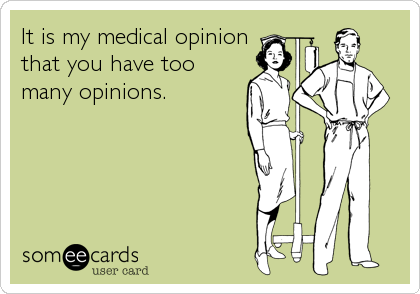
Second opinions

###

Assessment

And, the definition of humor is …?

Conclusion

Your thoughts and comments on this ME-P are appreciated. Feel free to review our top-left column, and top-right sidebar materials, links, URLs and related websites, too. Then, subscribe to the ME-P. It is fast, free and secure.

Link: http://feeds.feedburner.com/HealthcareFinancialsthePostForcxos

Speaker: If you need a moderator or speaker for an upcoming event, Dr. David E. Marcinko; MBA – Publisher-in-Chief of the Medical Executive-Post – is available for seminar or speaking engagements. Contact: MarcinkoAdvisors@msn.com

Our Other Print Books and Related Information Sources:

Health Dictionary Series: http://www.springerpub.com/Search/marcinko

Practice Management: http://www.springerpub.com/product/9780826105752

Physician Financial Planning: http://www.jbpub.com/catalog/0763745790

Medical Risk Management: http://www.jbpub.com/catalog/9780763733421

Hospitals: http://www.crcpress.com/product/isbn/9781439879900

Physician Advisors: www.CertifiedMedicalPlanner.org

Product DetailsProduct DetailsProduct Details

Director of Hospital Quality Management Needed

Join Our Mailing List

For A Hospital in Mississippi

Dear Dr. Marcinko,

Perhaps you can help a colleague?

I am conducting a confidential search for well qualified candidates to fill an immediate opening as a Director of Quality Management in a Mississippi hospital. Candidates must have hospital quality management experience and be willing to relocate if not already in the area.

This is an ideal opportunity for a strong Quality Manager to advance as Director in a modest size hospital which is a part of a growing national healthcare system.

To be considered, please email all resumes or candidates to me. Candidates may also contact me directly. If there appears to be a match, I’ll be able to disclose the location and discuss the details of the role.

So, please let me know if you know someone who may be qualified for this role.

Thank you.

Steve Haynes | Recruiting Manager
Avery Partners, LLC
steve.haynes@averypartners.com

###

Team Quality

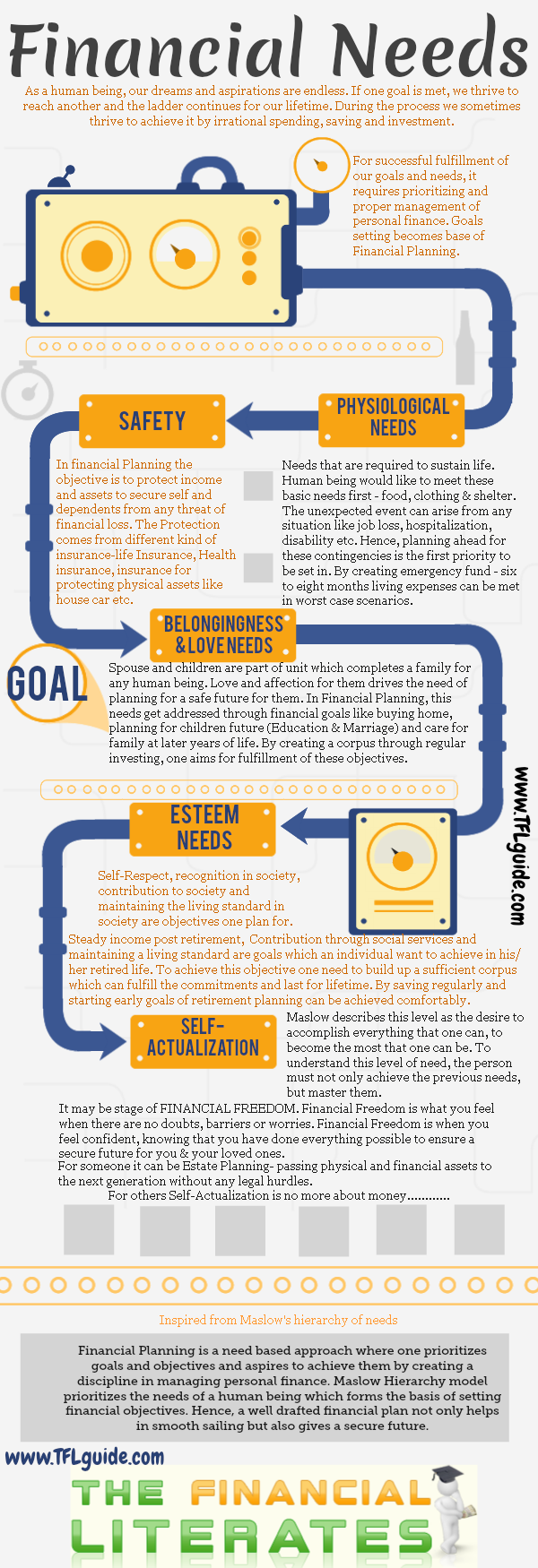
Understanding Maslow’s Hierarchy of Needs and Your Financial Goals

Join Our Mailing List

Of Financial Wants … and Needs

Courtesy Hemant Beniwal

###

financial needs 300x262 Maslows hierarchy of needs & your financial goals

###

Numeric Figures Life’s Purpose

Financial goals are basically numerical figures of your purpose of life. We all have a purpose in life and the goals should be a part of that purpose. In fact the goals should make you achieve that purpose of life.

The Goals

Your financial goal should have a reasonable priority in fact these goals should be in parallel to your life goals.

Understand what motivates you to keep your goals on track. Lot of time it has been seen that people lose hope or lack motivation in between and they start showing signs of back stepping and indulging in some other interest.

Some time back I wrote about “Setting SMART Financial Goals” which talked about setting Specific, Measurable, Attainable, Relevant & Time-bound goals. But what about purpose of life, prioratising goals & motivation to achieve them.

I think Maslow’s hierarch of needs can help you in identifying purpose of your life, prioratising goals & giving enough motivation to achieve them. If you don’t know about Maslow’s hierarchy check Wikipedia page.

###

Maslows-hierarchy-of-needs-your-financial-goals-Infographics

###

Assessment

Conclusion

Your thoughts and comments on this ME-P are appreciated. Feel free to review our top-left column, and top-right sidebar materials, links, URLs and related websites, too. Then, subscribe to the ME-P. It is fast, free and secure.

Speaker: If you need a moderator or speaker for an upcoming event, Dr. David E. Marcinko; MBA – Publisher-in-Chief of the Medical Executive-Post – is available for seminar or speaking engagements. Contact: MarcinkoAdvisors@msn.com

OUR OTHER PRINT BOOKS AND RELATED INFORMATION SOURCES:

Product Details  Product Details

Comprehensive Financial Planning Strategies for Doctors and Advisors: Best Practices from Leading Consultants and Certified Medical Planners(TM)

The Flaws of Electronic Records

Join Our Mailing List

Reporting on an Op-Ed by Drexel University’s Scot Silverstein

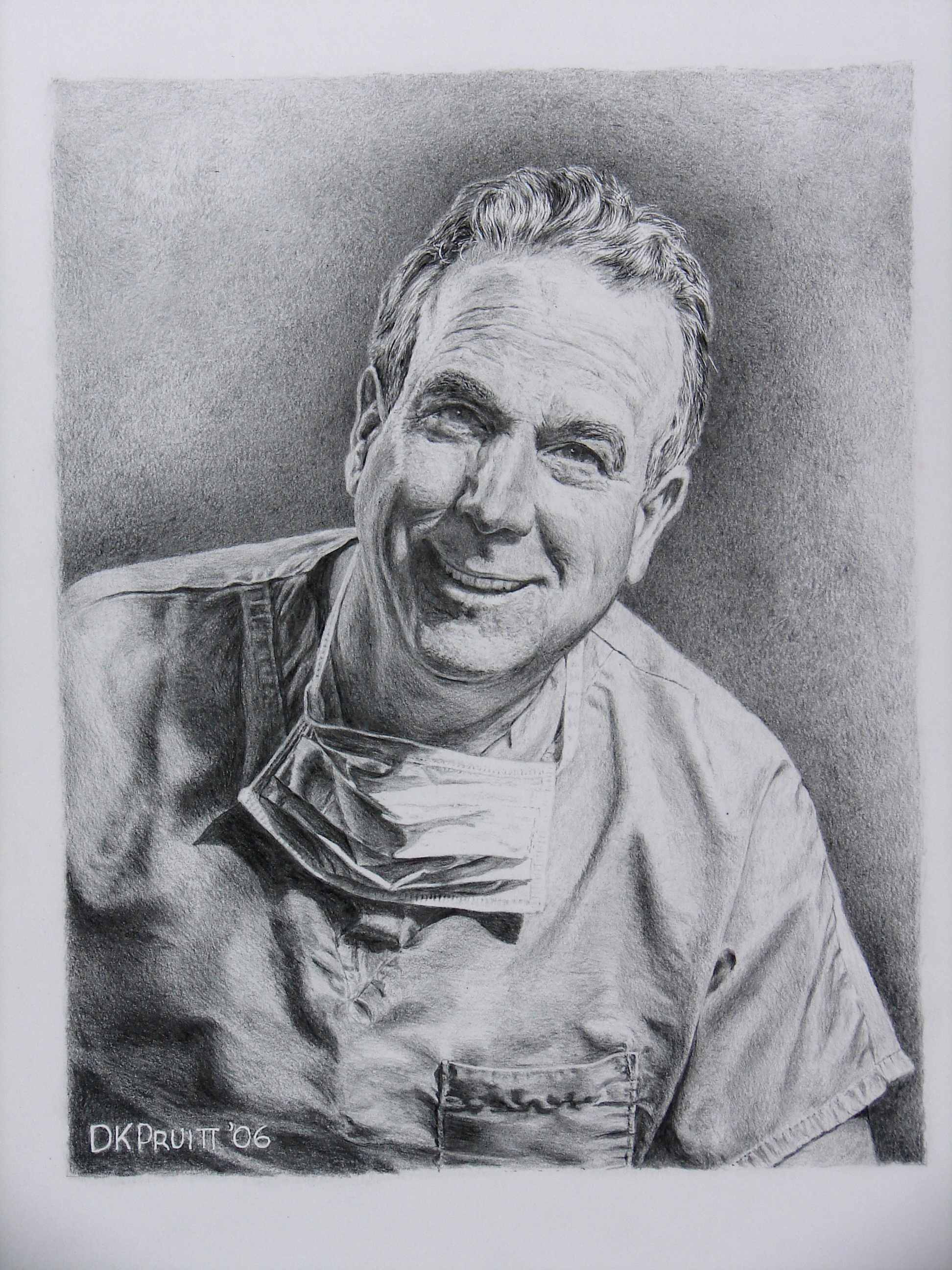
By Darrell K. Pruitt DDS

pruittRecently, on Philly.com, I read the following interesting essay and counter-opinion.

“The flaws of electronic records – Drexel University’s Scot Silverstein is a leading critic of the rapid switch to computerized medical charts, saying the notion that they prevent more mistakes than they cause is not proven.”

by Jay Hancock, writing in:

KAISER HEALTH NEWS.

http://www.philly.com/philly/entertainment/20130218_The_flaws_of_electronic_records.html

Do you recall that I advised dentists to wait a year or so before purchasing electronic dental records?

Dr. Silverstein warns Hancock that we’re in the midst of “a mania” as traditional patient charts are switched to computers. “We know it causes harm, and we don’t even know the level of magnitude. That statement alone should be the basis for the greatest of caution and slowing down.”

Silverstein Speaks

Silverstein tells Hancock that he doesn’t discount the potential of digital records to eliminate duplicate scans and alert doctors to drug interactions and unsuspected dangers.

“But, the rush to implementation has produced badly designed products that may be more likely to confound doctors than enlighten them, he says. Electronic health records, Silverstein believes, should be rigorously tested under government supervision before being used in life-and-death situations, much like medical hardware or airplanes.”

Physician George Lundberg, editor at large for MedPage Today, says Silverstein “is an essential critic of the field,” and that “It’s too easy for those of us in medicine to get excessively enthusiastic about things that look like they’re going to work out really well. Sometimes we go too far and don’t see the downside of things.”

Hancock Writes

Hancock writes. “Many say he comes on too strong.” Remind you of anyone? It’s easy to fall into a habit of “coming on too strong” once politeness proves ineffective and not nearly as much fun.

Silverstein points out that since the government doesn’t require caregivers to report problems, “many computer-induced mistakes may never surface.”

In dentistry, EHR stakeholders bury computer-induced mistakes even deeper by ignoring and even censoring dentists’ concerns about cost and safety.

Shah Opines

Furthermore, ME-P thought-leader Shahid N. Shah MS opines in Chapter 4 of the book: www.BusinessofMedicalPractice.com

Chapter 13: IT, eMRs & GroupWare

And … Pruitt Wonders?

I sincerely wonder how many dentists have been kicked off of DrBicuspid, DentalTown, Dental Economics and LinkedIn for pointing out dangerous flaws in advertisers’ dental products. I offered to start a listing of the censored, but got no response. Nevertheless, I bet I’m not the only one.

Assessment

More opinions from ME-P contributors and essayists:

Conclusion

Your thoughts and comments on this ME-P are appreciated. Feel free to review our top-left column, and top-right sidebar materials, links, URLs and related websites, too. Then, subscribe to the ME-P. It is fast, free and secure.

Link: http://feeds.feedburner.com/HealthcareFinancialsthePostForcxos

Speaker: If you need a moderator or speaker for an upcoming event, Dr. David E. Marcinko; MBA – Publisher-in-Chief of the Medical Executive-Post – is available for seminar or speaking engagements. Contact: MarcinkoAdvisors@msn.com

OUR OTHER PRINT BOOKS AND RELATED INFORMATION SOURCES:

DICTIONARIES: http://www.springerpub.com/Search/marcinko
PHYSICIANS: www.MedicalBusinessAdvisors.com
PRACTICES: www.BusinessofMedicalPractice.com
HOSPITALS: http://www.crcpress.com/product/isbn/9781466558731
CLINICS: http://www.crcpress.com/product/isbn/9781439879900
BLOG: www.MedicalExecutivePost.com
FINANCE: Financial Planning for Physicians and Advisors
INSURANCE: Risk Management and Insurance Strategies for Physicians and Advisors

Product DetailsProduct Details

Controlling the Power of a “Power of Attorney”

Join Our Mailing List

A Primer and Review for Doctors

By Rick Kahler MS CFP® ChFC CCIM www.KahlerFinancial.com

Rick Kahler CFPIs it a good idea to give control of your finances to someone else through a power of attorney?

Maybe. Or maybe not. It’s foolish to sign away complete authority to someone who may or may not be trustworthy. It’s equally foolish to refuse to consider a power of attorney in circumstances where it could serve you well.

The Patricia Cornwell Case

In a recent case where a power of attorney might have been given too easily, best-selling author Patricia Cornwell charged a financial management firm with negligence, alleging that it cost her millions of dollars. She had hired the firm to take care of her financial affairs, authorizing its manager through a power of attorney to make decisions on her behalf.

A More Typical Case Example

At the other extreme, one of my clients was taking care of financial matters for her elderly father, who had Alzheimer’s. Yet when she mentioned a power of attorney, her father refused to sign one. Even with his memory failing, he had retained the idea that giving control of his money to someone else was a really bad idea.

Options are Wide Ranging

Doctors don’t necessarily realize that a power of attorney can offer a whole range of options between “go ahead and do everything” and “absolutely not.” There are many situations where a limited power of attorney might be useful. Such a document authorizes someone to act on your behalf only for a one narrow purpose. It spells out the boundaries of that person’s authority and often expires after a given period of time.

For example:

One common use for a limited power of attorney is to facilitate the sale of a piece of real estate or other property from a distance. If you have to move to Ohio but your house back in Nebraska hasn’t sold yet, you could authorize a trusted friend, relative, or financial professional to handle the transaction for you.

Another way a limited power of attorney is often used is to have someone take care of your affairs while you are temporarily unavailable or incapable. Suppose you’re undergoing treatment for a serious illness or injury, or you’re taking a three-month trip around the world. You might want to authorize a family member to pay your bills and make other necessary decisions. The authority you give them could be as broad or narrow as you deem appropriate.

Many physician-couples execute durable powers of attorney granting their spouses or children broad authority to act for them if they become disabled. This has become a common and helpful component of retirement/old age planning.

IBNRs

###

Limiting the Limited Power

Yet, I see far fewer folks, and even medical professionals, using limited powers of attorney. One reason for this may be the expense and hassle. You don’t necessarily want to hire an attorney to draw up a complex document every time you go on vacation.

If you think limited powers of attorney might be useful for you, one possibility could be to look online. Several sites offer legal forms at reasonable rates. Just keep in mind these are “one size fits all.” Be sure the forms are valid in your state and that you understand what you’re signing.

Another option might be to see if your attorney would draft one document as a template, including language to cover various situations. Then you could adapt it as needed for specific purposes.

Assessment

Whatever the circumstances; remember that a power of attorney is a useful but potentially dangerous tool. It’s a bit like a chainsaw—an expert can make beautiful sculpture with it, but an amateur can cut someone’s leg off. Before you put that much power into anyone’s hands, make sure you can trust the person to use it well.

Conclusion

Your thoughts and comments on this ME-P are appreciated. Feel free to review our top-left column, and top-right sidebar materials, links, URLs and related websites, too. Then, subscribe to the ME-P. It is fast, free and secure.

Link: http://feeds.feedburner.com/HealthcareFinancialsthePostForcxos

Speaker: If you need a moderator or speaker for an upcoming event, Dr. David E. Marcinko; MBA – Publisher-in-Chief of the Medical Executive-Post – is available for seminar or speaking engagements. Contact: MarcinkoAdvisors@msn.com

Our Other Print Books and Related Information Sources:

Health Dictionary Series: http://www.springerpub.com/Search/marcinko

Practice Management: http://www.springerpub.com/product/9780826105752

Physician Financial Planning: http://www.jbpub.com/catalog/0763745790

Medical Risk Management: http://www.jbpub.com/catalog/9780763733421

Hospitals: http://www.crcpress.com/product/isbn/9781439879900

Physician Advisors: www.CertifiedMedicalPlanner.org

Product Details  Product Details


Appreciating Early Results of the Health 2.0 Initiative

Join Our Mailing List

In Population Health and Patient Self Management

Jennifer TomasikBy Jennifer Tomasik MS

By Carey Huntington

By Fabian Poliak

www.CFAR.com

Despite the growth in Health 2.0 interaction over the past few years, we still see Health 2.0 in its infancy relative to the potential it holds for activating patients in managing and being more accountable for their own health. There is further hard evidence that its strategies are already improving patients’ quality of life, expanding providers’ expertise, and helping health systems and payors financially.

On Patient Self Management

And, if Health 2.0 can, as discussed elsewhere on this ME-P, enable people to reduce smoking, become physically fit, and more actively participate with their providers in the management of chronic disease, we posit that these things combine to result in a better sense of health and wellbeing for those involved.

One would logically conclude that these kinds of interventions result in fewer interactions with the healthcare system, an issue that Harrison et al tackled in a study earlier this year that was published in Population Health Management. It looked at the relationship between self-reported individual wellbeing and future healthcare utilization and cost. They found that higher self-reported wellbeing was associated with fewer hospitalizations, visits to the emergency room, and use of medications.

Overall, the authors concluded that improving wellbeing (or what we would refer to as a perceived sense of health) holds tremendous promise in reducing future use of healthcare services and the costs associated with that care[i]. We see Health 2.0 as an effective way to enable people to improve their wellbeing and suggest that its impact will continue to mount over time in terms of better outcomes and reduced cost.

Health 2.0 Offerings

Health 2.0 offerings are looking at a variety of ways to measure their impact beyond cost and quality. The Collaborative Chronic Care Network, for example, is reporting on number of participants, response rates via text, and pilot projects undertaken, but not yet on clinical or financial impact of its patient partnerships. Even well-known companies, like Patients LikeMe, are not currently reporting their specific impact on influencing organizations and institutions in healthcare to drive toward standards of care and other cost-reduction solutions—rather, they are reporting their impact on individual lives, through testimonials on the power of connection. Their vision of results rings true for many components and actors in Health 2.0:

We envision a world where information exchange between patients, doctors, pharmaceutical companies, researchers, and the healthcare industry can be free and open; where, in doing so, people do not have to fear discrimination, stigmatization, or regulation; and where the free flow of information helps everyone. We envision a future where every patient benefits from the collective experience of all, and where the risk and reward of each possible choice is transparent and known.[ii]

This description does not mention economics, but it also does not mention illness. And we know that clients of companies like ShapeUp are working in the background compiling their own estimates of the savings that these programs and other interventions are likely to have on their healthcare costs. This is the kind of data that will “triangulate” out to other organizations and help build momentum for Health 2.0.

###

Achievement

From Sickness to Health

As we shift from a system that addresses sickness to one that promotes health, we may experience that the more interesting promise of Health 2.0 is less about economics and more about accelerating a sweeping cultural shift that focuses our collective and individual energy on wellness. We know that tools alone—the supports that can help catalyze behavior change—will not be totally responsible for the change in outlook.

But, the tools and other supports in Health 2.0 will serve as some of the key catalysts, ushering in a new era that foregrounds prevention, wellness, and better management of chronic disease, and works to reduce the economic burden on health systems, governments, and individuals themselves. 

Assessment 

Conclusion

Your thoughts and comments on this ME-P are appreciated. Feel free to review our top-left column, and top-right sidebar materials, links, URLs and related websites, too. Then, subscribe to the ME-P. It is fast, free and secure.

Link: http://feeds.feedburner.com/HealthcareFinancialsthePostForcxos

About the Authors

Jennifer Tomasik is a Principal at CFAR, a boutique management consulting firm specializing in strategy, change and collaboration. Jennifer has worked in the health care sector for nearly 20 years, with expertise in strategic planning, large-scale organizational and cultural change, public health, and clinical quality measurement. She leads CFAR’s Health Care practice. Jennifer has a Master’s in Health Policy and Management from the Harvard School of Public Health. Her clients include some of the most prestigious hospitals, health systems and academic medical centers in the country.

Carey Huntington and Fabian Poliak both work in CFAR’s Health Care practice.

Speaker: If you need a moderator or speaker for an upcoming event, Dr. David E. Marcinko; MBA – Publisher-in-Chief of the Medical Executive-Post – is available for seminar or speaking engagements. Contact: MarcinkoAdvisors@msn.com

OUR OTHER PRINT BOOKS AND RELATED INFORMATION SOURCES:


[i] Harrison PL, Pope JE, Coberley CF, Rula EY. “Evaluation of the Relationship Between Individual Well-Being and Future Health Care Utilization and Cost.” Population Health Management 2012;15(00).

[ii] “Corporate FAQ – What is the future of healthcare in a PatientsLikeMe world?” PatientsLikeMe. Online. Accessed 12 Oct 2012. <http://www.patientslikeme.com/help/faq/Corporate&gt;

Product Details

Automobile Safety, Financial and Related Topics of Import for Physicians

Join Our Mailing List

Leisure and LifeStyle Activities

By Dr. David Edward Marcinko MBA

[ME-P Publisher and Editor-in-Chief]

DEM's Jaguar

My Vintage British circa 2000 Jaguar Touring Sedan

XJ-V8-LWB Jaguar touring sedan

Hood Ornament “The Leaper”

DEM's Jaguar

Inner and Outer Glass Headlight Globes

Classic XJ-V8-WB Jaguar

“Saw Toothed” Grill with Curve-Lined Bonnett [Hood]

DEM's Jaguar

Extended Antenna with Satellite – SiriusXM Radio

More:

Assessment

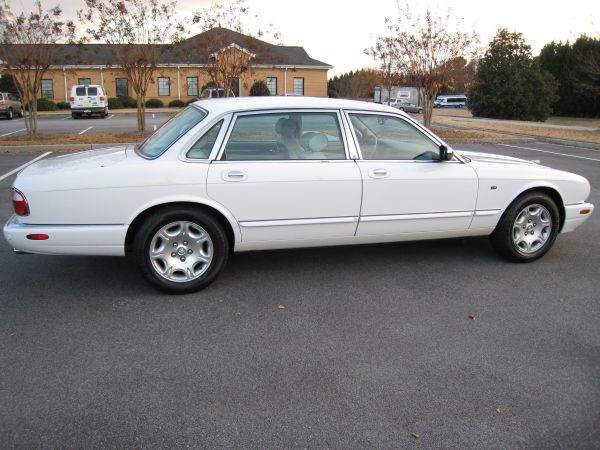
GAMy near showroom and mint conditioned 2000 Jaguar XJ-V8-L is a full-size luxury sedan, offers sporting drive characteristics, mixed with a classic style and interior comfort. It was available in multiple trims which all came very well equipped with upscale amenities.

And, this extended wheelbase version offers much more rear seat leg room for long and winding Georgia road trips. The standard steel engine [not nikasil] in this XJ is a 4.0L V8 which produces 290 hp. The upper and lower timing chain tensioners are original, second generation metal, not plastic.

There is also a supercharged version of this vehicle which bumps output to an impressive 370 hp. Even with all of its power and weight, my XJ-8-L is still rated at over 20 mpg on the highway. Ammenities and upgrades include a mobile phone, Magellan GPS, LoJack theft recovery system, CD and MP-3 players, with internal and external cable antenna for satellite radio.

What a Cat? She is my third favorite female after my intelligent and beautiful wife, and smart and lovely daughter.

Wikipedia link: http://en.wikipedia.org/wiki/Jaguar_XJ8

Conclusion

Your thoughts and comments on this ME-P are appreciated. Feel free to review our top-left column, and top-right sidebar materials, links, URLs and related websites, too. Then, subscribe to the ME-P. It is fast, free and secure.

Link: http://feeds.feedburner.com/HealthcareFinancialsthePostForcxos

Speaker: If you need a moderator or speaker for an upcoming event, Dr. David E. Marcinko; MBA – Publisher-in-Chief of the Medical Executive-Post – is available for seminar or speaking engagements. Contact: MarcinkoAdvisors@msn.com

Our Other Print Books and Related Information Sources:

Health Dictionary Series: http://www.springerpub.com/Search/marcinko

Practice Management: http://www.springerpub.com/product/9780826105752

Physician Financial Planning: http://www.jbpub.com/catalog/0763745790

Medical Risk Management: http://www.jbpub.com/catalog/9780763733421

Hospitals: http://www.crcpress.com/product/isbn/9781439879900

Physician Advisors: www.CertifiedMedicalPlanner.org

Product Details  Product Details

Are Social Security Benefits Taxed?

Join Our Mailing List

And … By How Much?
By Lon Jefferies, MBA CFP™  www.NetWorthAdvice.com

Lon JeffriesDoctor – Ever wondered if your Social Security benefit is subject to federal tax?

The answer depends on your annual household income.

The first step is to calculate your “provisional income,” which is a combination of all your taxable income plus half your Social Security benefit.

Then, comparing your provisional income to the following chart tells you how much of your Social Security benefit is taxed at various income levels.

###

Social Security Tax

Assessment:

Conclusion

Your thoughts and comments on this ME-P are appreciated. Feel free to review our top-left column, and top-right sidebar materials, links, URLs and related websites, too. Then, subscribe to the ME-P. It is fast, free and secure.

Link: http://feeds.feedburner.com/HealthcareFinancialsthePostForcxos

Speaker: If you need a moderator or speaker for an upcoming event, Dr. David E. Marcinko; MBA – Publisher-in-Chief of the Medical Executive-Post – is available for seminar or speaking engagements. Contact: MarcinkoAdvisors@msn.com

OUR OTHER PRINT BOOKS AND RELATED INFORMATION SOURCES:

DICTIONARIES: http://www.springerpub.com/Search/marcinko
PHYSICIANS: www.MedicalBusinessAdvisors.com
PRACTICES: www.BusinessofMedicalPractice.com
HOSPITALS: http://www.crcpress.com/product/isbn/9781466558731
CLINICS: http://www.crcpress.com/product/isbn/9781439879900
BLOG: www.MedicalExecutivePost.com
FINANCE: Financial Planning for Physicians and Advisors
INSURANCE: Risk Management and Insurance Strategies for Physicians and Advisors

Product Details  Product Details

Books for Savvy Doctors and their Financial Advisors and Management Consultants

Join Our Mailing List

Learn and Prosper from the ME-P

By Ann Miller RN MHA

Product DetailsProduct DetailsProduct Details

Product Details  Product Details

Product DetailsProduct Details

Assessment

Click on each image for more information.

Feel free to write a review and tell us what you think?

Conclusion

Your thoughts and comments on this ME-P are appreciated. Feel free to review our top-left column, and top-right sidebar materials, links, URLs and related websites, too. Then, subscribe to the ME-P. It is fast, free and secure.

Speaker: If you need a moderator or speaker for an upcoming event, Dr. David E. Marcinko; MBA – Publisher-in-Chief of the Medical Executive-Post – is available for seminar or speaking engagements. Contact: MarcinkoAdvisors@msn.com

OUR OTHER PRINT BOOKS AND RELATED INFORMATION SOURCES:

Product Details

About “Hospitals and Healthcare Organizations” in 2014

Join Our Mailing List

Management Strategies, Operational Techniques, Tools, Templates and Case Studies

Product DetailsProduct Details

Search Inside these Books

###

Conclusion

Your thoughts and comments on this ME-P are appreciated. Feel free to review our top-left column, and top-right sidebar materials, links, URLs and related websites, too. Then, subscribe to the ME-P. It is fast, free and secure.

Link: http://feeds.feedburner.com/HealthcareFinancialsthePostForcxos

Speaker: If you need a moderator or speaker for an upcoming event, Dr. David E. Marcinko; MBA – Publisher-in-Chief of the Medical Executive-Post – is available for seminar or speaking engagements. Contact: MarcinkoAdvisors@msn.com

OUR OTHER PRINT BOOKS AND RELATED INFORMATION SOURCES:

DICTIONARIES: http://www.springerpub.com/Search/marcinko
PHYSICIANS: www.MedicalBusinessAdvisors.com
PRACTICES: www.BusinessofMedicalPractice.com
HOSPITALS: http://www.crcpress.com/product/isbn/9781466558731
CLINICS: http://www.crcpress.com/product/isbn/9781439879900
BLOG: www.MedicalExecutivePost.com
FINANCE: Financial Planning for Physicians and Advisors
INSURANCE: Risk Management and Insurance Strategies for Physicians and Advisors

###

Time-Line to Launching a New Medical Practice

Join Our Mailing List

A New Practice Checklist

Dr. David Edward Marcinko MBA CMP™

www.BusinessofMedicalPractice.com

Dr. Marcinko at Emory UniversityIt is important to develop a general checklist that touches some of the most important issues in launching a traditional medical practice; or an extended medical service line.

Link: Chapter 04: Strategic Operations

Once the checklist or “to-do” list is completed, and practically it never will be, a time-line may be developed, accelerated, decelerated or modified depending on circumstances. Just think of it as an overlapping continuum rather than discrete steps using appropriate elements of the checklist below.

Time-Line Milestones to Office Launch

12 Months Out:

  • Determine your strategic competitive advantage
  • Obtain medical license
  • Craft a business plan
  • Secure capital funding and living expenses
  • Secure office location for professional, demographic or lifestyle reasons
  • Retain a practice management consultant, accountant, banker and attorney.

9-11 Months Out:

  • Retain and hire contractor, architect or remodeling firm and build out the office space
  • Obtain certificate of occupancy or appropriate permits
  • Incorporate the business [S Corp, LLC, PC, etc]
  • Obtain state and federal tax ID and EIN, DEA number, NPI, Medicare and Medicaid provider numbers, etc
  • Contact insurance companies for credentialing applications to become a contracted provider
  • Contact local medical professionals, hospitals and ASCs, etc.

7-8 Months Out:

  • Establish a benefit and retirement plan
  • Obtain insurance coverage [life insurance, malpractice insurance, disability and worker’s compensation coverage, etc]
  • Complete Medicare/Medicaid paperwork and from private and commercial insurance companies, hospitals, ASCs, etc.

5-6 Months Out:

  • Complete building out the office
  • Obtain furniture, office equipment, medical and administrative supplies
  • Evaluate and order computerized HIT and eHR systems
  • Begin insurance discussions and obtain policies from agent/broker/counselor

3-4 Months Out:

  • Policy / procedure manuals in place [OSHA, HIPAA, ADA, PA, etc]
  • Interview and start hiring staff, personnel and office manager [FT and PT]
  • Begin marketing and advertising [websites, blogs, yellow pages, TV, radio, etc]
  • Contact drug representatives
  • Retain a CPA, or similar accounting or payroll services professional
  • Secure traditional and electronic “new” yellow page ads
  • Rent a PO box and open a business savings and checking bank account
  • Get a business credit/debt card and unsecured line of credit [LOC], if possible.

1-2 Months Out:

  • Systems check [phone system, answering service, laundry, lawn care, janitorial and cleaning, security, collections, bookkeeping and payroll.
  • Contact clinical laboratory, biopsy, blood analysis, C&S services, etc
  • Contact and set up an account with a medical waste company (unless the landlord includes this in the lease or sub-lease)
  • Secure credit card or similar payment services
  • Prepare for MCO, HMO, CAQH credentialing and walk-thru’s, etc
  • Order office stationary, logos, business cards, etc.
  • Open house parties.

The Road Ahead for New Doctors

Impending Opening

Commence patient care.

Conclusion

Your thoughts and comments on this ME-P are appreciated. Feel free to review our top-left column, and top-right sidebar materials, links, urls and related websites, too. Then, subscribe to the ME-P. It is fast, free and secure.

Speaker: If you need a moderator or speaker for an upcoming event, Dr. David E. Marcinko; MBA – Publisher-in-Chief of the Medical Executive-Post – is available for seminar or speaking engagements. Contact: MarcinkoAdvisors@msn.com

OUR OTHER PRINT BOOKS AND RELATED INFORMATION SOURCES:


Product Details


Automobile Rust Prevention Methods for Frugal Doctors

Join Our Mailing List

Getting the Most Beauty and Utility from your Car

By Dr. David Edward Marcinko MBA [Publisher]

via Nalley Lexus Georgia

Dr. MarcinkoCar manufacturers have invested heavily in the use of new and improved materials to help reduce the risk of damage to your car from rust. Where decades ago rust was a very common problem, modern cars are rather more resilient.

But, if you drive an older depreciated car like we recommend on this ME-P; or a vintage vehicle like my classic 2000 Jaguar XJ-V8-LWB touring sedan; or if you just want to keep your new car in great condition for as long as possible, then you should never ignore the threat of rust.

On Rising Used Car Prices

The good news is that there are plenty of things [wash, clay-bar and wax] that you can do to prevent rust on your car; and care products abound. I use Meguir’s car care products on my favorite cat.

Here are five of them:

1. Protect your undercarriage

Your car’s undercarriage is very vulnerable to damage, and there are a number of critical mechanical components to protect. As the undercarriage is not something most drivers ever really look at, it is easy to neglect it. This could be a costly mistake. Invest in an undercarriage sealant to help protect mechanical parts from damage.

How Doctors Might Buy a Pre-Owned Car?

There are a number of products that you can apply yourself, but working on the undercarriage is potentially dangerous if you are not properly equipped, so you may want to ask your mechanic or service department for help.

My Jaguar touring sedan 2000 XJ-V8-L

2. Inspect your paint work regularly

Rust is a problem that gets progressively worse and the longer you leave a rust problem, the harder and more expensive it will be to fix. Learn about the parts of your car that are the most vulnerable. Paint work is constantly exposed to the elements, and the early signs of rust appear as bumps and lumps under the paint work. Treat these areas promptly.

Automobile Windshield Maintenance Tips for Physicians

There are a variety of ways to do this. Removing the affected metal is one possibility. Rust convertors halt the rusting process, but may not always be effective.

3. Use a rust preventative

There are a variety of rust preventative products available to consumers, many of which can easily be applied at home. A rust preventative can, for example, be sprayed onto or into a part of the car that is otherwise very difficult to access. This will help slow down the formation of any rust, and will also halt the spread of existing rust. Always follow the manufacturer’s instructions closely when using these products.

Helping Doctors Understand Multi-Point Automobile Check-Up Inspections

4. Apply wax and sealant to your paint work

Look after your paint work to ensure that it stays in great condition. This is not just about cleaning and polishing the paint work. Over time, your paint work will wear and become more susceptible to rust if you are unable to protect the finish. A wax layer, with sealant, adds an additional physical barrier between the paint work and the elements. This prevents damage to the bodywork, which might otherwise expose the metal underneath the paint and allow rust to form. You can apply wax and sealant at home.

My Jaguar's engine after a steam

5. Keep your car clean

The simplest thing you can do to protect your car from rust is keep it clean. Deposits of mud, salt, and other dirt can all corrode your paint work surprisingly quickly. Regular car washing reduces the amount of time it takes to get the vehicle clean on an ongoing basis.

Reasons Why Doctors Should Get New Automobile Tires

Do not forget the undercarriage and other hard-to-reach places too, but do not use a jet spray underneath the car as this could damage vital parts. Again, it may be a good idea to ask your mechanic or service department to help if you are unsure.

And, don’t forget to steam clean that engine when needed, too!

Assessment 

Conclusion

Your thoughts and comments on this ME-P are appreciated. Feel free to review our top-left column, and top-right sidebar materials, links, URLs and related websites, too. Then, subscribe to the ME-P. It is fast, free and secure.

Link: http://feeds.feedburner.com/HealthcareFinancialsthePostForcxos

Speaker: If you need a moderator or speaker for an upcoming event, Dr. David E. Marcinko; MBA – Publisher-in-Chief of the Medical Executive-Post – is available for seminar or speaking engagements. Contact: MarcinkoAdvisors@msn.com

OUR OTHER PRINT BOOKS AND RELATED INFORMATION SOURCES:

DICTIONARIES: http://www.springerpub.com/Search/marcinko
PHYSICIANS: www.MedicalBusinessAdvisors.com
PRACTICES: www.BusinessofMedicalPractice.com
HOSPITALS: http://www.crcpress.com/product/isbn/9781466558731
CLINICS: http://www.crcpress.com/product/isbn/9781439879900
BLOG: www.MedicalExecutivePost.com
FINANCE: Financial Planning for Physicians and Advisors
INSURANCE: Risk Management and Insurance Strategies for Physicians and Advisors

Product Details  Product Details

Dr. Benjamin Solomon Carson, Sr for President?

Join Our Mailing List

Forget …. Being like Mike – Instead … Be like Ben 

By Dr. David Edward Marcinko MBA CMP™

Hopkins Medical SchoolA unique speech was delivered by neuro-surgeon Benjamin Carson MD on February 7, 2013 at the National Prayer Breakfast in President Barack Obama’s presence.

Who is Ben Carson MD?

Benjamin Solomon “Ben” Carson, Sr. (born September 18, 1951) is an American neurosurgeon and the Director of Pediatric Neurosurgery at Johns Hopkins Hospital. He was awarded the Presidential Medal of Freedom, the highest civilian award in the United States, by President George W. Bush, in 2008.

The Breakfast

During the breakfast, Carson suggested that political correctness is a “dangerous” threat to free speech and encouraged Americans to share their views without hesitation. Carson also included his ideas on the national debt, deficits, taxation and health care; he explains his personal position on each matter.

Here is a teaser quote:

I don’t like to bring up problems without coming up with solutions… What about our taxation system? It is so complex, there is no one who can possibly comply with every jot and tittle. That doesn’t make any sense.

What we need to do is come up with something that’s simple. The inherently fair principle is proportionality: you make 10 billion dollars, you put in a billion. You make 10 dollars, you put in one. Of course, you have to get rid of the loopholes.

Some people say, ‘That’s not fair! It’s doesn’t hurt the guy who made 10 billion dollars.’ Where does it say you have to hurt that guy? He just put a billion dollars into the pot!

My Connectinon to Ben Carson

Ok, I really don’t have any connection to Dr. Carson despite the seven degrees of separation philosophy. But, I did grow up in Baltimore Maryland and played stickball in the parking lot of the famed Johns Hopkins University  Hospital. I was even seen in the ER for a minor injury as a kid.

But, I was not accepted into medical school there, and could not attend Johns Hopkins University up on North Charles Street for my undergraduate career, because of the expense.

The Video

Nevertheless, this video is worth watching. It is 26 minutes in length and it is interesting to watch the president grimace as he gives a complete opposite solution to every problem the country faces.

Link: http://www.youtube.com/watch?v=vyyHegP255g

Ben’s Proposals

I especially liked Ben’s thoughts on the following topics:

  • Replacing the IRS with tithing for all income levels. No need to hurt the successful among us with a graduated tax system.
  • Giving all Americans a Health Savings Account [HSA] at birth. This will not only give them some financial skin-in-the game, but makes them educated stewards of their healthcare needs, treatments and expenses. And, the savings portion would be transferrable to a next generation beneficiary for estate-like continuity.
  • Giving everyone a personal electronic health record [pEHR] at birth.
  • Reforming the welfare state so it does not become a way of life
  • Morality and the PC mania.

Assessment

Ben is one smart pediatric brain surgeon. I would consider voting for him in a heart-beat. But, as a surgeon, I am like him, a doer who wants to solve a problem.

Unfortunately, Washington politicians are often talkers who place self-interest above all. Problem solving often takes a back-seat to pleasing constituents. 

Conclusion

Your thoughts and comments on this ME-P are appreciated. Feel free to review our top-left column, and top-right sidebar materials, links, URLs and related websites, too. Then, subscribe to the ME-P. It is fast, free and secure.

Link: http://feeds.feedburner.com/HealthcareFinancialsthePostForcxos

Speaker: If you need a moderator or speaker for an upcoming event, Dr. David E. Marcinko; MBA – Publisher-in-Chief of the Medical Executive-Post – is available for seminar or speaking engagements. Contact: MarcinkoAdvisors@msn.com

Our Other Print Books and Related Information Sources:

Health Dictionary Series: http://www.springerpub.com/Search/marcinko

Practice Management: http://www.springerpub.com/product/9780826105752

Physician Financial Planning: http://www.jbpub.com/catalog/0763745790

Medical Risk Management: http://www.jbpub.com/catalog/9780763733421

Hospitals: http://www.crcpress.com/product/isbn/9781439879900

Physician Advisors: www.CertifiedMedicalPlanner.org

Product DetailsProduct DetailsProduct Details

Product Details  Product Details

Product DetailsProduct Details

It’s not how much you own [assets] – It’s how much you control

Join Our Mailing List

Are non-asset owners financially ahead?

By Rick Kahler MS CFP® ChFC CCIM http://www.KahlerFinancial.com

Rick Kahler CFPOwning a home is part of the American Dream. Financial experts tell us owning a car is better than leasing. And who would think of not owning the clothes you wear? The concept of “that’s mine” runs so deep it’s probably hardwired into our brains. To prove it, just try to take a toy away from a two-year-old.

On the other hand, the control of an asset is often more valuable than ownership. If you could lease a new $25,000 car for one dollar a month for 10 years, do you really care if you don’t own it? Absolutely not!

Or take a middle-aged tenant with a lifetime lease on a property subject to rent controls who pays rent at a tenth of current market rates. Who has the more value from that asset, the tenant or the owner? Clearly, the tenant has a valuable leasehold interest that in some cases could be worth more than the ownership interest.

If we can have regular access to something, whether it’s using a beach house through a home swap, sharing power tools, or renting a trailer to haul a piano, we don’t need to own it. Often, we’re financially ahead not to own it.

Income Receipt

Can this same concept apply to the income you receive? It may. For some people, having access to benefits and services they don’t “own” through their earnings may be the better deal. This is the conclusion Gary Alexander, Secretary of Public Welfare for Pennsylvania, reached in a paper called “Welfare’s Failure and the Solution.”

He published a chart showing the government benefits that accrue to single mothers. Alexander states, “The single mom is better off earning gross income of $29,000 with $57,327 in net income and benefits than to earn gross income of $69,000 with net income and benefits of $57,045.”

According to Alexander, benefits that accrue in Pennsylvania to a single mom with two preschool children, who earns $29,000, include health insurance for her children ($5,000), various childcare benefits ($15,000), housing ($6,000), and food ($2,300). A single mom earning $69,000 doesn’t qualify for any of these benefits and actually takes home $182 less than the mom earning $29,000.

A chart in Alexander’s paper with even more serious implications illustrates that 110 million privately employed workers in the US now support 88 million welfare recipients and government workers. This trend is not economically sustainable. While the government can print all the money needed to fund the 88 million, inflation becomes a huge concern. If inflation and taxes continue to climb, at some point, the producers/taxpayers may say “enough.” They will either choose to become recipients instead of producers, or they might relocate themselves and their skills to a country that rewards productivity and incentive.

###

landlords

A painful reality in America

The financial blog ZeroHedge.com published an article on this topic on November 27, 2012. The piece calls it a “painful reality in America” that “for increasingly more it is now more lucrative—in the form of actual disposable income—to sit, do nothing, and collect various welfare entitlements, than to work.”

This is a difficult subject to raise. I am sure my inbox will fill with unhappy emails from folks who will miss my point and others who will give me illustrations of those less fortunate who legitimately depend on welfare.

Assessment

However, the painful long-term costs and consequences of welfare is one of the essential topics we need to talk about if we are to solve our nation’s fiscal problems. If our representatives come to depend more for reelection on those who receive tax funds than those who provide tax funds, we will only dig ourselves further into debt.

Conclusion

Your thoughts and comments on this ME-P are appreciated. Feel free to review our top-left column, and top-right sidebar materials, links, URLs and related websites, too. Then, subscribe to the ME-P. It is fast, free and secure.

Link: http://feeds.feedburner.com/HealthcareFinancialsthePostForcxos

Speaker: If you need a moderator or speaker for an upcoming event, Dr. David E. Marcinko; MBA – Publisher-in-Chief of the Medical Executive-Post – is available for seminar or speaking engagements. Contact: MarcinkoAdvisors@msn.com

Our Other Print Books and Related Information Sources:

Health Dictionary Series: http://www.springerpub.com/Search/marcinko

Practice Management: http://www.springerpub.com/product/9780826105752

Physician Financial Planning: http://www.jbpub.com/catalog/0763745790

Medical Risk Management: http://www.jbpub.com/catalog/9780763733421

Hospitals: http://www.crcpress.com/product/isbn/9781439879900

Physician Advisors: www.CertifiedMedicalPlanner.org

Product Details  Product Details

Patents, Trademarks and Copyright for Doctors and Financial Advisors

Join Our Mailing List

An Explanation and Infographic Review in Brief

By Dr. David Edward Marcinko MBA

Dr. Marcinkowww.BusinessofMedicalPractice.com

Patents

In the US, a patent is restricted to inventions granted under federal statute. The specific attributes are called claims. A patent gives the inventor the exclusive privilege of using a certain process or of making, using, and selling a specific product for a specified period of time.  In 1980 patent coverage was extended to genetic engineering. It is granted upon filing an application, payment of fees, and after a determination that the invention new and useful. A patent number is granted to the patentee and his/her heirs and assignees for a period of 17 years. In the case of design patents, the period of the patent is 14 years. If two or more parties make an invention jointly, they must apply jointly. If the inventor dies or becomes disabled before making application, a legal representative or guardian may do so. Patents may be transferred from one party to another. Copies of US patents may be purchased from the Patent and Trademark Office in Washington, DC.

Trademarks™

A trademark is any symbol, word, number, picture or design used to identify goods and services and distinguish them from others. A trademark identifies a service or product and fixes responsibility for its quality. If customers or patients like them, the trademark identified what to purchase in the future. If disliked, goods and services are avoided with that trademark. The name of a type of product cannot be a trademark, because every maker is free to use its’ name. Dr. Mary G. Jones, for example, may be a well-known trademark for her medical specialty device, but no one can have trademark rights to the words “Dr. Mary G. Jones.” On occasion, however, trademarked words become generically used. Such words lose their legal status as trademarks. Examples include aspirin, cellophane and escalator. An important condition with trademarks is they are not confusingly similar to one previously registered in the US. Upon approval, the trademark is published in an official gazette to enable objections to be heard in an opposition proceeding. Registration lasts for 20 years and may be renewed for as long as the trademark is in use. Once a federal registration has been obtained, the owner may give notice by using the registration symbol ® next to the trademark.

A trademark may become the valuable property of a physician because it is the symbol of the practice’s goodwill and of its healthcare products and medical services. Thus, a trademark can be sold or assigned when a practice and its assets are sold. It can also be licensed to others to use as long as the owner exercises control over the quality of medical goods or health services supplied by the licensee.

Service MarksSM

Are similar to trademarks, expect they represent largely cognitive and intangible services.

Copyright Issues©

A copyright is a body of legal rights that protect creative works from being reproduced, performed, or disseminated without permission. The owner as the exclusive right to reproduce a protected work; to prepare derivative works that only slightly change the protected work; to sell or lend copies of the protected work to the public; to perform protected works in public for profit; and to display copyrighted works publicly. The term “work” refers to any original creation of authorship produced in a tangible medium. Works that can be copyrighted include medical practice brochures and marketing pieces; medical photographs, healthcare drawings and diagrams; practice advertisements, websites, blogs, wikis, web-casts and pod-casts; and radio and television practice advertisement, etc. Copyright does not protect the idea or concept; it only protects the way in that an author has expressed an idea or concept. If, for example, a doctor publishes an article explaining a new process for making a medicine, the copyright prevents others from substantially copying the article, but it does not prevent anyone from using the process described to prepare the medicine. In order to protect the process, the doctor must “fix” the work and obtain a patent. For works created after January 1, 1978, copyright becomes the property of the author the moment the work is created and lasts for the author’s life plus 50 years. When a work is created by an employee in the normal course of a physician’s job however, as with an HMO or employed physician, the copyright becomes the property of the employer and lasts for 75 years from publication or 100 years from creation, whichever is shorter.  The 1978 act extends the term of copyrights existing on January 1, 1978, so that they last for about 75 years from publication.

Although copyright becomes effective when fixed on creation, it may be lost unless a prescribed copyright notice is placed on all publicly distributed copies. This notice consists either of the word Copyright, or the symbol ©, accompanied by the name of the owner and the year of first publication (© John Doe MD, 2011, all rights reserved, USA). The use of the notice is the responsibility of the copyright owner and does not require advance permission from or registration with the Copyright Office. But, a work is not fully protected until a copyright claim has been registered with the Copyright Office in Washington, DC. To register, the author must fill out the application, pay a fee, and send two complete copies of the work which is placed in the Library of Congress. The sooner the claim to copyright is registered, the more remedies the author may have in litigation, if challenged. And, an author who types a story on a computer keyboard and stores it on a tape, disc drive, thumb-drive, virtual memory mechanism or cloud grid, has “fixed” the work sufficient for copyright protection [United States Patent and Trademark Office www.USPTO.gov

Infringement

Infringement is any violation of the rights above that produce an unauthorized copy of a copyrighted work. Infringement does not necessarily constitute word-for-word reproduction; “substantial similarity” may also be infringement. Generally, copyright infringements are dealt with in civil lawsuits in federal court. If infringement is proved, the court may order an injunction against future infringement; the destruction of infringing copies; reimbursement for financial loss; transfer of profits; and payment of fixed damages for each work infringed, as well as court costs and attorney’s fees.

Fair Use

Fair Use permits the reproduction of small amounts of copyrighted material when the copying will have little effect on the value of the original work. Examples of fair use includes the quotation of excerpts from a book or medical journal; quotations of short passages in a scholarly books to illustrate or clarify the author’s observations; use in a parody; summary of a speech testimonial or article; and reproduction by a teacher or student of a small part of a work to illustrate a lesson. Because works produced and published by the US government cannot be copyrighted, material from the many publications of the US Government Printing Office may be reproduced without fear of infringement [United States Patent and Trademark Office www.USPTO.gov

More:

Quick Tips for Obtaining a Chapter 04: Strategic Operations

Trademark [infographic] Review

Protective marks

Assessment

Certified Medical Planner

Trademarks, patents and copyrights can be a little confusing. Knowing the difference between them is very important for securing your medical practice, advisory or accounting firm, or healthcare business’s ownership of products and brands. That poses the question:

Are you protecting your brand? Obtaining a federal trademark on your business name is serious business (no pun intended). www.gerbenlaw.com created the following infographic to help business owners and entrepreneurs understand what is needed to register a trademark

Conclusion

Your thoughts and comments on this ME-P are appreciated. Feel free to review our top-left column, and top-right sidebar materials, links, URLs and related websites, too. Then, subscribe to the ME-P. It is fast, free and secure.

Link: http://feeds.feedburner.com/HealthcareFinancialsthePostForcxos

Speaker: If you need a moderator or speaker for an upcoming event, Dr. David E. Marcinko; MBA – Publisher-in-Chief of the Medical Executive-Post – is available for seminar or speaking engagements. Contact: MarcinkoAdvisors@msn.com

Our Other Print Books and Related Information Sources:

Health Dictionary Series: http://www.springerpub.com/Search/marcinko

Practice Management: http://www.springerpub.com/product/9780826105752

Physician Financial Planning: http://www.jbpub.com/catalog/0763745790

Medical Risk Management: http://www.jbpub.com/catalog/9780763733421

Hospitals: http://www.crcpress.com/product/isbn/9781439879900

Physician Advisors: www.CertifiedMedicalPlanner.org

Product Details


Credit Reporting for Medical Students, Interns, Residents, Fellows and New Practitioners

Join Our Mailing List

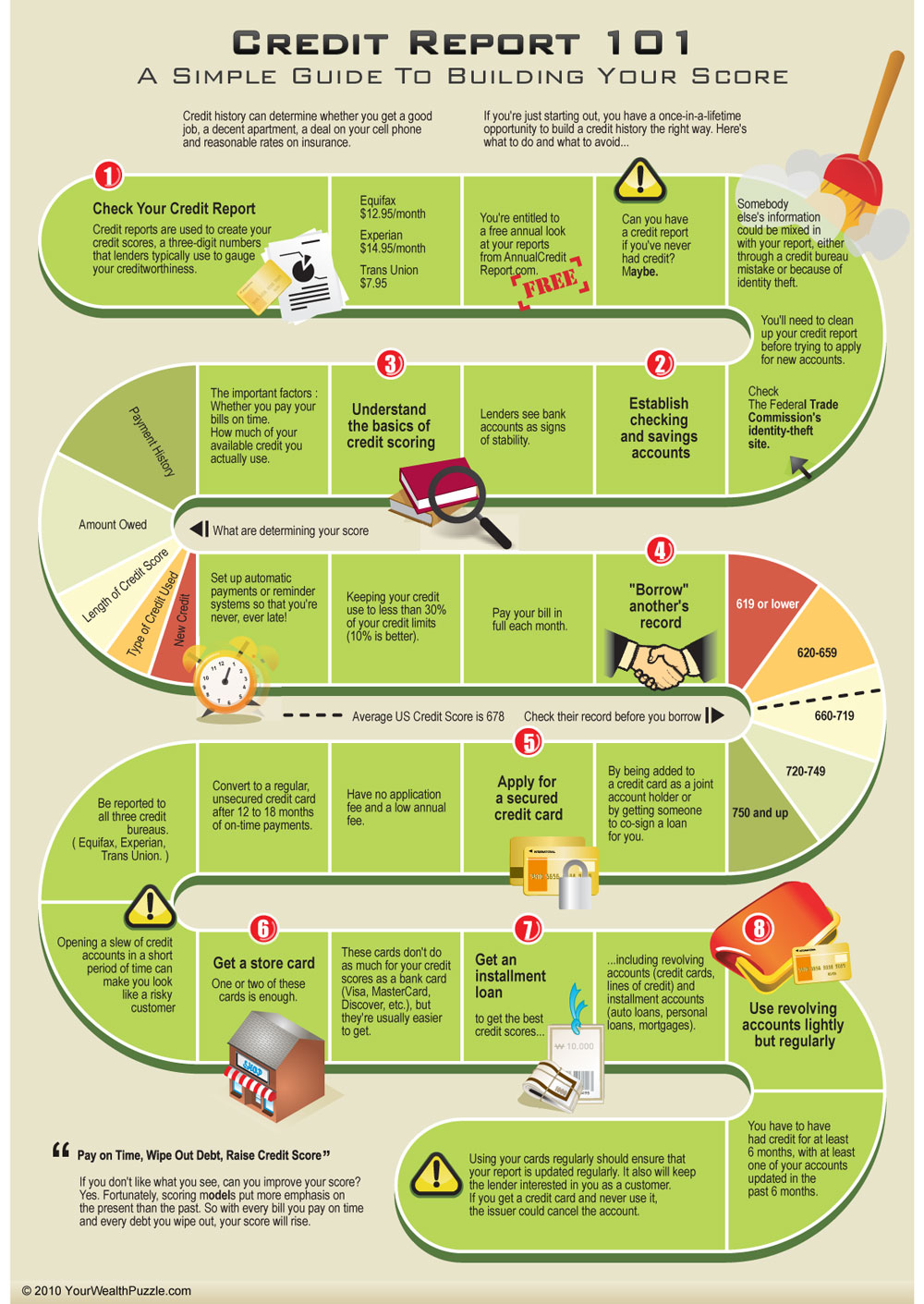
Understanding and Building your Score [The Basics]

Credit-Infographic

More:

Conclusion

Your thoughts and comments on this ME-P are appreciated. Feel free to review our top-left column, and top-right sidebar materials, links, URLs and related websites, too. Then, subscribe to the ME-P. It is fast, free and secure.

Link: http://feeds.feedburner.com/HealthcareFinancialsthePostForcxos

Speaker: If you need a moderator or speaker for an upcoming event, Dr. David E. Marcinko; MBA – Publisher-in-Chief of the Medical Executive-Post – is available for seminar or speaking engagements. Contact: MarcinkoAdvisors@msn.com

Our Other Print Books and Related Information Sources:

Health Dictionary Series: http://www.springerpub.com/Search/marcinko

Practice Management: http://www.springerpub.com/product/9780826105752

Physician Financial Planning: http://www.jbpub.com/catalog/0763745790

Medical Risk Management: http://www.jbpub.com/catalog/9780763733421

Hospitals: http://www.crcpress.com/product/isbn/9781439879900

Physician Advisors: www.CertifiedMedicalPlanner.org

Product Details

Are Physicians Investing in International Bonds?

Join Our Mailing List

A Global Approach to Investing

By Rick Kahler MS CFP® ChFC CCIM www.KahlerFinancial.com

Rick Kahler CFPUS investors and fans of the St. Louis Rams have something in common. Both have seen their home teams fall from prominence to mediocrity in the past ten years. In 2000 the Rams won the Super Bowl, but in 2011 they ended the season tied for the worst record in the league. The US ranked as the world’s third freest economy in 2000, but by 2010 had fallen to number 18.

So, how do physicians and other investors allocate their funds in a country that’s in economic decline? Much like an ardent fan of the Rams who is also an astute gambler! You cheer for your team to win, but you place your bets on the stronger opponents.

Global Investing

It’s critical today to take a global approach to investing. Since the US now makes up less than half of the world’s wealth, it makes sense to invest the majority of your portfolio in the stocks and bonds of other countries. This is simply another form of diversification. Not only does it make sense to have US government bonds and the bonds from a wide range of companies in your portfolio, it also makes sense to diversify and hold a wide range of bonds of international companies and foreign governments.

While it isn’t uncommon for physician investors to have some exposure to international stocks, I find it is unusual for them to have investments in international bonds.

Investing in Bonds

When you invest in bonds, you are lending to a borrower who promises to pay interest and to repay the loan on a certain date. Bonds represent an IOU from a US or foreign corporation or government.

As with any bond, an important factor to consider is the credit quality of the issuer. This can become more complex with foreign bonds, as many countries don’t have the same standards of accounting required in the US.

More:

Foreign Bonds

A unique feature of foreign bonds is the effect that currency exchange rates have on your investment. Fluctuations in the local currency can enhance or depress your returns.

For example, if you want to purchase bonds denominated in the Australian dollar (AUD) you will first need to exchange your US dollars (USD) for AUD and then purchase the bonds. If the USD drops in value against the AUD, then the value of your Australian bonds goes up because your AUD now buy more USD. The reverse happens if the USD appreciates against the AUD.

Global investing

Direct Purchase of Mutual Funds

There are two ways to purchase international bonds. You can buy bonds directly from a securities broker or purchase shares of a mutual fund that invests in foreign bonds. Any fund with “international” in its name invests only in bonds of countries outside the US. If the fund has “global” in its name, it includes both foreign and US bonds in its mix.

The two categories of international bonds include those issued by developed nations like the United Kingdom, Japan, or Germany, and those issued by emerging market nations like India, Brazil, or Morocco. Emerging market bond funds invest in bonds from developing nations, risking greater losses for the chance of higher returns.

In my portfolios, I generally split my bond allocations 50/50 between the US and foreign bonds. Currently, our fund manager favors the bonds of Australia, New Zealand, and Canada.

Assessment

The Rams did better in 2012 than in 2011, so fans can hope they regain their top status in 2013. We can also hope the US can stop its economic slide and regain its global prominence in the next decade. But, until there is evidence of a turnaround, international bonds are one way physicians can avoid betting too heavily on the home team.

Conclusion

Your thoughts and comments on this ME-P are appreciated. Feel free to review our top-left column, and top-right sidebar materials, links, URLs and related websites, too. Then, subscribe to the ME-P. It is fast, free and secure.

Link: http://feeds.feedburner.com/HealthcareFinancialsthePostForcxos

Speaker: If you need a moderator or speaker for an upcoming event, Dr. David E. Marcinko; MBA – Publisher-in-Chief of the Medical Executive-Post – is available for seminar or speaking engagements. Contact: MarcinkoAdvisors@msn.com

Our Other Print Books and Related Information Sources:

Health Dictionary Series: http://www.springerpub.com/Search/marcinko

Practice Management: http://www.springerpub.com/product/9780826105752

Physician Financial Planning: http://www.jbpub.com/catalog/0763745790

Medical Risk Management: http://www.jbpub.com/catalog/9780763733421

Hospitals: http://www.crcpress.com/product/isbn/9781439879900

Physician Advisors: www.CertifiedMedicalPlanner.org

Product Details  Product Details


How to Protect Your Interests in Insurance Claims

Join Our Mailing List

Don’t Be a Victim Twice

By Rick Kahler MS CFP® ChFC CCIM http://www.KahlerFinancial.com

Rick Kahler CFPHurricane Sandy attacked the East Coast, did her worst, and disappeared. Yet cleaning up the mess she left behind will take months and even years.

When Disaster Strikes

Even dealing with damage from much smaller disasters can take a long time. As an example, in July 2011 a severe storm with baseball-sized hail moved through southern Rapid City. It only took nature a few minutes to flatten gardens, beat up vehicles, and damage buildings. It will probably take until the second anniversary of the storm to repair all the damage to our house.

Such a delay isn’t unusual. The most common reasons are finding a contractor and negotiating with your insurance company.

Rapid Response

Moving quickly to report a claim after a disaster is important. In fact, you should probably call a contractor even before you call your insurance agent. Insurance companies are fast to respond to disasters and easily move adjusters in from other areas. Local, credible contractors, on the other hand, fill their schedules fast. We spent hours on the phone to get bids from beleaguered roofers, painters, and carpenters.

Low Balls

These bids were worth our time, because they showed us that the initial repair estimates from our insurance company were low—usually by 50% to 66%.

For example, our roof had cedar shake shingles. The company’s replacement estimate was for much cheaper asphalt shingles. Estimates to repair our siding and deck were also low. It took us 15 months to come to an agreement on the cost of replacing the deck. The work probably won’t be done until summer of 2013.

Switching Gears

Does this difficulty in getting a full settlement mean it’s time to switch insurance companies? Certainly, I thought so more than once during the negotiating process. However, that isn’t necessarily the case. It’s important to remember that getting compensation from an insurance company is just business. And good business means not necessarily accepting the first offer. Negotiating will take time and effort, but it eventually should get you full compensation.

Competing Claims Interests

When you file a claim, you and your insurance company have competing interests. The company is not your advocate. You want as much money as possible from them for repairs, while they want to repair your damage for the lowest cost. There’s nothing out of place with either motivation.

Once I understood that the insurance company and I were natural adversaries, not friends, it helped me feel less victimized and more empowered. While getting the money we needed to make the repairs certainly took time and perseverance, the company readily acquiesced when we presented the facts. After all, their best interest also included keeping us as customers. We did not have to threaten a lawsuit or go to court.

###

policy insurance

Assessment

Certainly, when it’s time to renew my home insurance I will ask my agent to investigate other companies. That’s just business. However, I won’t change companies just because I had to argue with this one.

Understanding your role in negotiating an insurance claim helps bring a healthy perspective to your relationship with any service provider. Unless they are a fiduciary to you (like an attorney or doctor, or some a fee-only financial advisors], they have no responsibility to look out for you. Someone selling you something has no duty to put your interests before theirs. Protecting your interests is your duty and yours alone.

More:

Conclusion

When a natural disaster strikes, whether it’s a hail storm or a hurricane, we are certainly victims of nature’s whims. When it’s time to clean up the mess, though, we’re not victims. We’re our own advocates, with the responsibility and ability to look out for our own best interests.

Your thoughts and comments on this ME-P are appreciated. Feel free to review our top-left column, and top-right sidebar materials, links, URLs and related websites, too. Then, subscribe to the ME-P. It is fast, free and secure.

Link: http://feeds.feedburner.com/HealthcareFinancialsthePostForcxos

Speaker: If you need a moderator or speaker for an upcoming event, Dr. David E. Marcinko; MBA – Publisher-in-Chief of the Medical Executive-Post – is available for seminar or speaking engagements. Contact: MarcinkoAdvisors@msn.com

OUR OTHER PRINT BOOKS AND RELATED INFORMATION SOURCES:

DICTIONARIES: http://www.springerpub.com/Search/marcinko
PHYSICIANS: www.MedicalBusinessAdvisors.com
PRACTICES: www.BusinessofMedicalPractice.com
HOSPITALS: http://www.crcpress.com/product/isbn/9781466558731
CLINICS: http://www.crcpress.com/product/isbn/9781439879900
BLOG: www.MedicalExecutivePost.com
FINANCE: Financial Planning for Physicians and Advisors
INSURANCE: Risk Management and Insurance Strategies for Physicians and Advisors

Product Details  Product Details


Events Planner: February 2013

Join Our Mailing List

Events-Planner: FEBRUARY 2013

By Staff Writers
Calendar Calculator“Keeping track of important health economics and financial industry meetings, conferences and summits”

Welcome to this issue of the Medical Executive-Post and our Events-Planner. It contains the latest information on conferences, news, and relevant resources in healthcare finance, economics, research and development, business management, pharmaceutical pricing, and physician/entity reimbursement!  Watch for a new Events-Planner each month.

First, a little about us! The Medical Executive-Post is still a relative newcomer. But today, we have almost 175,000 visitors and readers each month from all over the country, in addition to our growing subscriber base. We have been a successful collaborative effort, thanks to your contributions.  As a result, we are adding new resources daily. And, we hope the website continues to provide the best place to go for journals, books, conferences, educational resources, tools, and other things you need to establish the value your healthcare consulting and financial advisory intervention.


So, enjoy the Medical Executive-Post and this monthly Events-Planner with our compliments.

A Look Ahead this Month – And now, the important dates:

  • February 04-05: IMCA New York Consultants Conference. Mariott Marquis, NY
  • February 10-12: Inside ETFs Conference. Hollywood, FLA
  • February 10-13: Rural Health Care Leadership Conference. Phoenix, AZ
  • February 17-20: Center for Health Care Governance Symposium. Phoenix, AZ.

Speaker: If you need a moderator or speaker for an upcoming event, Dr. David E. Marcinko; MBA – Publisher-in-Chief of the Medical Executive-Post – is available for seminar or speaking engagements. Contact: MarcinkoAdvisors@msn.com

Subscribe Now: Did you like this Medical Executive-Post, or find it helpful, interesting and informative? Want to get the latest E-Ps delivered to your email box each morning? Just subscribe using the link below. It’s free. You can unsubscribe at any time. Security is assured.

Link: http://feeds.feedburner.com/HealthcareFinancialsthePostForcxos

Product Details

What to do if You Rear End the Car in Front of You?


Join Our Mailing List

By Dr David Edward Marcinko MBA via Nalley Collision Center

[Editor-in-Chief]

dr-david-marcinko21As a doctor, driver and former insurance agent, I know that any car accident, no matter the point of impact, is frightening and inconvenient. But, rear-end accidents (frequently referred to as “fender benders”) are a common occurrence on the road and form a significant proportion of all road collisions.

According to a report on the Science Daily website, there were nearly two   million rear-end collisions in 2006, comprising nearly 30% of all crashes on   U.S. roads. Here’s how to deal if you rear-end another vehicle on the road.

First Things First

In the event that you rear-end the car in front of you, you will likely be very dazed or shocked, especially initially. Unless there are life-threatening reasons why you must exit the vehicle immediately, try to pause for a moment in an effort to gather your breath and calm down. You will   need to be able to make a number of decisions related to the situation, and the clearer your head, the more likely you are to act appropriately.

Your first consideration must always be to the welfare and safety of yourself and your passengers, as well as the passengers in any other vehicle involved in the accident.

According to the severity of the accident, the range of personal injuries caused by rear-end collisions can be significant, ranging from bruises and grazes to whiplash, broken bones, and even death. When you rear-end a car, the impact from your vehicle is transferred to the car in front, lifting passengers and drivers sharply forwards and upwards at the same time. Whiplash injuries are common, difficult to treat, and may not be immediately obvious. If you are in any doubt as to the severity of any injury incurred during the collision, call the emergency services and request an ambulance. Some injuries can be worsened if the injured party is moved awkwardly, for example.

When exiting the vehicle, ensure that you and your passengers can move to a safe place, away from any remaining traffic. Move completely off the road or highway, and as far away from the vehicles as you can. If the impact is minor, you may be able to drive the vehicle to the side of the road, or onto a side road, but remember that, in some states, it is illegal to move your car from the scene of a collision until the police have attended, so don’t do anything hasty. Regardless of where your car is, ensure that when leaving the vehicle you do not exit into moving traffic. Pay particular attention to children or animals who may be frightened by the collision, and will require additional supervision.

If you have an emergency kit, use this to alert other drivers to your vehicle. Ensure that the engine is turned off, that your hazard lights are on and that you have placed emergency cones or warning triangles at an appropriate distance from the car.

Road traffic safety regulations stipulate that, regardless of the driving conditions, you must be able to stop safely if the car in front of you comes to a halt, even if that car brakes very sharply. It is only in the event that a vehicle rear-ends your vehicle, causing you to shunt into the car in front, that your insurance company may not conclude that the accident was your fault. Like any other type of   collision, you will need to surrender your insurance and driver details to the other driver. Even if you are assuming that the accident was your fault, you will need to collect the other driver’s details, too. You will need their license number, their name, address, phone number, insurance company, insurance policy number, and license plate number. You should also establish whether the other driver owns the vehicle.

If possible, and if it is safe to do so, take photographs of the accident scene with your cell phone, showing the road conditions, the position of the cars, and any specific damage noted.

Remember that most modern mobile phones include a camera. Insurance companies suggest that you do not admit liability (and that could mean not even apologizing). They also often request detailed descriptions of what happened and the scene of the incident so try and write down some notes.

Once you have established that nobody needs medical attention, taken all the relevant details, and the police have attended the scene (if necessary), you will need to think about taking your car away. A breakdown recovery service may be needed if the damage is extensive, but you should also contact your insurance company as soon as possible, as they may have specific instructions on where to take your vehicle, outlining which dealers can and cannot carry out any necessary repair work.

###

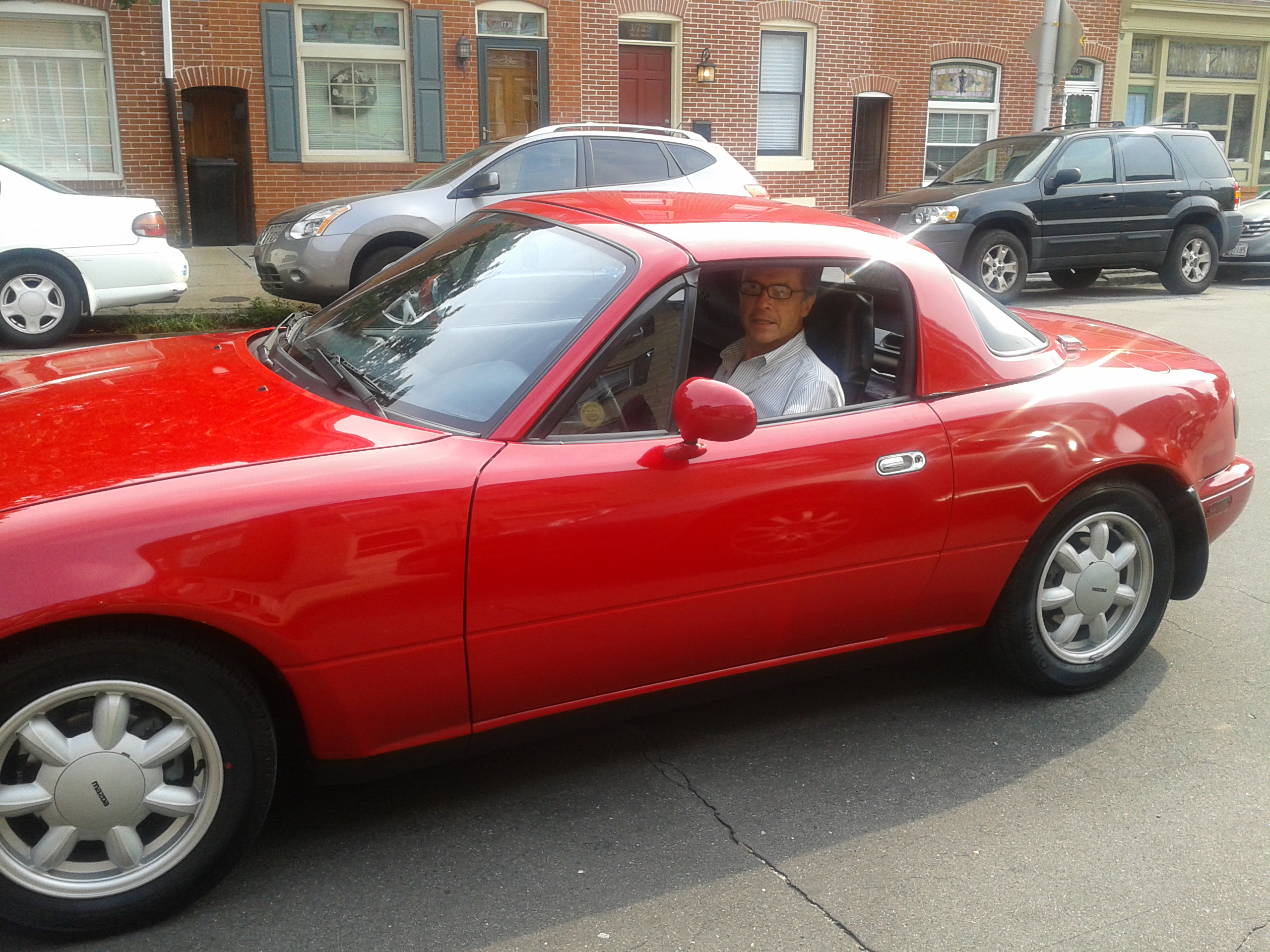
DEM in his 1990 Miata

Assessment

A rear-end collision may be inconvenient and embarrassing, and it could even be traumatic and dangerous. Keep a cool head, complete all the steps necessary to ensure the safety of your passengers, and ensure that you comply with both the law and the requirements of your insurance company to insure that it doesn’t escalate into a bigger problem.

More: Automobile Safety, Financial and Related Topics of Import for Physicians

Conclusion

Your thoughts and comments on this ME-P are appreciated. Feel free to review our top-left column, and top-right sidebar materials, links, URLs and related websites, too. Then, subscribe to the ME-P. It is fast, free and secure.

Link: http://feeds.feedburner.com/HealthcareFinancialsthePostForcxos

Speaker: If you need a moderator or speaker for an upcoming event, Dr. David E. Marcinko; MBA – Publisher-in-Chief of the Medical Executive-Post – is available for seminar or speaking engagements. Contact: MarcinkoAdvisors@msn.com

Our Other Print Books and Related Information Sources:

Health Dictionary Series: http://www.springerpub.com/Search/marcinko

Practice Management: http://www.springerpub.com/product/9780826105752

Physician Financial Planning: http://www.jbpub.com/catalog/0763745790

Medical Risk Management: http://www.jbpub.com/catalog/9780763733421

Hospitals: http://www.crcpress.com/product/isbn/9781439879900

Physician Advisors: www.CertifiedMedicalPlanner.org

Product Details  Product Details