DAILY UPDATE: Coca-Cola and Pfizer as Stock Markets Rise

MEDICAL EXECUTIVE-POST TODAY’S NEWSLETTER BRIEFING

***

Essays, Opinions and Curated News in Health Economics, Investing, Business, Management and Financial Planning for Physician Entrepreneurs and their Savvy Advisors and Consultants

Serving Almost One Million Doctors, Financial Advisors and Medical Management Consultants Daily

A Partner of the Institute of Medical Business Advisors , Inc.

http://www.MedicalBusinessAdvisors.com

SPONSORED BY: Marcinko & Associates, Inc.

***

http://www.MarcinkoAssociates.com

Daily Update Provided By Staff Reporters Since 2007.
How May We Serve You?
© Copyright Institute of Medical Business Advisors, Inc. All rights reserved. 2025

REFER A COLLEAGUE: MarcinkoAdvisors@outlook.com

SPONSORSHIPS AVAILABLE: https://medicalexecutivepost.com/sponsors/

ADVERTISE ON THE ME-P: https://tinyurl.com/ytb5955z

Your Referral Count -0-

CITE: https://www.r2library.com/Resource

Coca-Cola rose 0.84% after the beverage behemoth beat earnings expectations. Not only that, it also doubled down on its forward-looking guidance, saying that revenue will grow 5% to 6% while comparable earnings per share will jump 2% to 3% in 2025. Tariff mania may raise some costs, but the company said it would be “manageable,” putting it a step ahead of arch-rival PepsiCo.

Pfizer jumped 3.28% today after the pharma giant announced that it expects to cut costs by about $7.7 billion by the end of 2027 thanks to advances in AI and automation. Despite lower sales in Q1, the company managed to keep its 2025 revenue guidance of $61 billion to $64 billion intact. While that forecast takes into account the $150 million blow from tariffs, it does not include any future tariffs (which President Trump has threatened to slap on the pharma industry).—LB

CITE: https://tinyurl.com/2h47urt5

What’s up

  • Meta Platforms gained 0.85% after the social media giant announced it will launch a standalone AI app to compete with ChatGPT. Expect more details in its earnings call tomorrow.
  • JetBlue Airways may have pulled guidance, but investors like the airline’s lower-than-expected loss last quarter so pushed shares 2.70% higher.
  • SoFi Technologies rose 0.53% after it crushed analyst expectations on both the top and bottom line.
  • Speaking of fintech, PayPal climbed 2.14% thanks in no small part to a 20% pop in Venmo revenue.
  • Honeywell International gained 5.40% thanks to strong earnings and sales for the manufacturing conglomerate.
  • Deutsche Bank climbed 4.08% after Germany’s largest lender reported a 39% increase in profit last quarter.
  • Sherwin-Williams may have missed on revenue last quarter, but the paint company beat earnings estimates and kept its forward guidance intact, so shareholders pushed it up 4.80%.
  • Royal Caribbean eked out a 0.02% despite reporting record bookings and boosting its profit outlook, a rare move these days amid tariff uncertainty.
  • Leggett & Platt may not be a household name, but it sells household goods—and the bedding company’s solid earnings and strong fiscal guidance sent shares 31.73% higher.

What’s down

  • General Motors fell 0.64% after the automaker beat on top and bottom line estimates but warned that it will have to pull its forward guidance and suspend stock buybacks.
  • Spotify dropped 3.04% despite active monthly users rising 10% last quarter. The problem, believe it or not, was lower guidance.
  • Regeneron lost 6.87% thanks to disappointing sales for its hit eye drug Eylea.
  • NXP Semiconductors may have beaten analyst estimates last quarter, but management’s lower-than-expected earnings guidance disappointed investors, and pushed shares 6.94% lower.
  • Wolfspeed tumbled 15.98% after the chipmaker’s impressive short squeeze rally fizzled out.

CITE: https://tinyurl.com/tj8smmes

Visualize: How private equity tangled banks in a web of debt, from the Financial Times.

COMMENTS APPRECIATED

PLEASE SUBSCRIBE: MarcinkoAdvisors@outlook.com

Thank You

***

***

***

***

EDUCATIONAL TEXTBOOKS: https://tinyurl.com/4zdxuuwf

***

DAILY UPDATE: Zuck’s Testimony and Pfizer’s Liver as Stocks Fizzle Out

MEDICAL EXECUTIVE-POST TODAY’S NEWSLETTER BRIEFING

***

Essays, Opinions and Curated News in Health Economics, Investing, Business, Management and Financial Planning for Physician Entrepreneurs and their Savvy Advisors and Consultants

Serving Almost One Million Doctors, Financial Advisors and Medical Management Consultants Daily

A Partner of the Institute of Medical Business Advisors , Inc.

http://www.MedicalBusinessAdvisors.com

SPONSORED BY: Marcinko & Associates, Inc.

***

http://www.MarcinkoAssociates.com

Daily Update Provided By Staff Reporters Since 2007.
How May We Serve You?
© Copyright Institute of Medical Business Advisors, Inc. All rights reserved. 2025

REFER A COLLEAGUE: MarcinkoAdvisors@outlook.com

SPONSORSHIPS AVAILABLE: https://medicalexecutivepost.com/sponsors/

ADVERTISE ON THE ME-P: https://tinyurl.com/ytb5955z

Your Referral Count -0-

CITE: https://www.r2library.com/Resource

Mark Zuckerberg testified as the trial for the FTC’s antitrust case against Meta over its purchases of Instagram and WhatsApp began yesterday.

Pfizer said it would end development of its daily weight loss pill after a patient reported liver damage.

CITE: https://tinyurl.com/2h47urt5

  • Stocks started the day strong but the rally eventually fizzled out as reports of trade talks between the US and EU making “little progress” left all three major indexes in the red.
  • The dreaded death cross has arrived: The S&P 500’s 50-day moving average is now below the 200-day moving average for the first time since 2022, a bearish technical indicator that has investors worried.
  • 10-year Treasury yields fell to a one-week low, letting traders breathe a small sigh of relief after tariffs upended the status quo last week.

CITE: https://tinyurl.com/tj8smmes

Visualize: How private equity tangled banks in a web of debt, from the Financial Times.

COMMENTS APPRECIATED

PLEASE SUBSCRIBE: MarcinkoAdvisors@outlook.com

Thank You

***

***

***

***

EDUCATIONAL TEXTBOOKS: https://tinyurl.com/4zdxuuwf

***

Stocks UP and Stocks DOWN

By Staff Reporters

***

***

🟢 What’s up

  • Auto stocks soared on comments from President Trump that car companies “need a little bit of time.” GM rose 3.48%, Ford climbed 4.13%, and Stellantis gained 5.64%.
  • Investors are bullish: WeBull exploded 374.72% after the online investment platform went public via SPAC merger last Friday.
  • Goldman Sachs rose 1.87% after the Wall Street titan announced record revenue in its equities-trading business thanks to stock market volatility in the first quarter.
  • Palantir gained 4.60% after it sealed a deal with NATO to provide the organization with its advanced AI-powered warfighting system.
  • Intel climbed 2.89% on news that it will sell a 51% stake in its programmable chips unit Altera to Silver Lake Management.
  • Pfizer somehow rose 0.96% despite announcing that it is discontinuing the development of a once-daily weight-loss pill after a patient experienced a liver injury. That’s great news for Viking Therapeutics, which has its own oral weight-loss pill in the pipeline. Shares of Viking rose 10.58%.
  • Speaking of biotech stocks, Verve Therapeutics soared 26.38% after the company reported no issues with patients trialing its new gene-editing technology.

What’s down

  • Meta Platforms fell 2.22% as its antitrust trial began today. If it loses its case against the FTC, it may be forced to sell off Instagram.
  • DaVita sank 3.03% after the kidney disease treatment company announced it was the victim of a ransomware attack.
  • Hilton Worldwide Holdings fell 1.10% on a downgrade from Goldman Sachs analysts, who believe the vacation club company will struggle as fewer people splurge on travel. Marriott International received the same treatment, and also dropped 0.77%.
  • LVMH Moet Hennessy Louis Vuitton (really rolls off the tongue) tumbled 6.39% after the luxury goods retailer missed analyst expectations, reporting a 3% decline in sales compared to forecasts of 2% growth.
  • It’s a bit broad, but Citi analysts downgraded all US stocks to “neutral” this morning. The analysts argued that US stocks are too exposed to President Trump’s policies and are expensive compared to international peers, and endorsed investing in Japanese, European, and UK equities instead.

COMMENTS APPRECIATED

Like and Refer

***

***

DAILY UPDATE: Pfizer’s Conflict as NASDAQ and Bitcoin Sink along with Consumer Confidence

MEDICAL EXECUTIVE-POST TODAY’S NEWSLETTER BRIEFING

***

Essays, Opinions and Curated News in Health Economics, Investing, Business, Management and Financial Planning for Physician Entrepreneurs and their Savvy Advisors and Consultants

Serving Almost One Million Doctors, Financial Advisors and Medical Management Consultants Daily

A Partner of the Institute of Medical Business Advisors , Inc.

http://www.MedicalBusinessAdvisors.com

SPONSORED BY: Marcinko & Associates, Inc.

***

http://www.MarcinkoAssociates.com

Daily Update Provided By Staff Reporters Since 2007.
How May We Serve You?
© Copyright Institute of Medical Business Advisors, Inc. All rights reserved. 2025

REFER A COLLEAGUE: MarcinkoAdvisors@outlook.com

SPONSORSHIPS AVAILABLE: https://medicalexecutivepost.com/sponsors/

ADVERTISE ON THE ME-P: https://tinyurl.com/ytb5955z

Your Referral Count -0-

CITE: https://www.r2library.com/Resource

Health experts have expressed conflict of interest concerns after the FDA‘s drug chief quit for a top job in Big Pharma. Pfizer announced this week that Dr. Patrizia Cavazzoni, former director of the FDA’s Center for Drug Evaluation and Research (CDER), will join the company as its chief medical officer.

CITE: https://tinyurl.com/2h47urt5

The tech-heavy NASDAQ Composite (^IXIC) finished the volatile trading day down around 1.3%, dragged down by shares of Magnificent Seven players like Nvidia (NVDA) and Tesla (TSLA). The benchmark S&P 500 (^GSPC) dropped roughly 0.4%, while the Dow Jones Industrial Average (^DJI) reversed earlier session declines to end the day in the green, up about 0.4%.

Some of the biggest market moves also came from the cryptocurrency space, where the price of bitcoin (BTC-USD) tumbled below $90,000 for the first time since November. Bitcoin touched a low closer to $86,000 in the early morning hours, its lowest level since early November. Prices stabilized to just around $88,000 at the market close.

CITE: https://tinyurl.com/tj8smmes

Visualize: How private equity tangled banks in a web of debt, from the Financial Times.

COMMENTS APPRECIATED

PLEASE SUBSCRIBE: MarcinkoAdvisors@outlook.com

Thank You

***

***

***

***

EDUCATIONAL TEXTBOOKS: https://tinyurl.com/4zdxuuwf

***

DAILY UPDATE: Pfizer Down While Stock Markets Ignite

MEDICAL EXECUTIVE-POST TODAY’S NEWSLETTER BRIEFING

***

Essays, Opinions and Curated News in Health Economics, Investing, Business, Management and Financial Planning for Physician Entrepreneurs and their Savvy Advisors and Consultants

Serving Almost One Million Doctors, Financial Advisors and Medical Management Consultants Daily

A Partner of the Institute of Medical Business Advisors , Inc.

http://www.MedicalBusinessAdvisors.com

SPONSORED BY: Marcinko & Associates, Inc.

***

http://www.MarcinkoAssociates.com

Daily Update Provided By Staff Reporters Since 2007.
How May We Serve You?
© Copyright Institute of Medical Business Advisors, Inc. All rights reserved. 2024

REFER A COLLEAGUE: MarcinkoAdvisors@msn.com

SPONSORSHIPS AVAILABLE: https://medicalexecutivepost.com/sponsors/

ADVERTISE ON THE ME-P: https://tinyurl.com/ytb5955z

Your Referral Count -0-

Activist investor takes $1 billion stake in Pfizer. The firm Starboard Value has amassed a stake in the pharma giant, which has struggled after reaching new heights during the pandemic, in hopes of turning the company around.

CITE: https://www.r2library.com/Resource

What’s up

  • If you can’t beat ‘em, join ‘em: WW International, aka WeightWatchers, soared 46.95% after the company announced it will begin offering GLP-1 weight-loss drugs.
  • Nvidia rose 4.05% after the Foxconn CEO told CNBC that AI demand is still incredibly strong.
  • Trump Technology & Media Group soared 18.54% after Tesla CEO Elon Musk appeared alongside the former president at a rally in Pennsylvania over the weekend.
  • Palantir popped 6.58% after the CTO of the data analytics firm appeared on CNBC and told everyone that his company is making mad money.
  • Welcome to the club: S&P Global announced that DocuSign is replacing MDU Resources Group in the S&P MidCap 400 index, while MDU is moving to the S&P SmallCap 600 index. Docusign rose 6.55% on the news, while MDU gained 2.44%.
  • Humana finally caught a break when a Bernstein analyst upgraded the stock today, writing that the health insurer has been hurt enough. Shares rose 2.92%.

What’s down

  • What goes up must come down: Chinese stocks, which have enjoyed an impressive rally recently, came tumbling back to Earth today after the country’s state planner didn’t announce any new stimulus measures. Bilibili fell 12.93%, JD.com lost 7.52%, Alibaba sold off 6.67%, and Nio dropped 8.10%.
  • Today’s oil selloff pummeled energy stocks: Valero Energy lost 5.31%, while Marathon Petroleum stumbled 7.66%.
  • Sphere Entertainment dropped 2.84% on the news that its CFO is leaving the company.
  • Super Micro Computer gave back 5.01% after its rally yesterday as investors pocketed their profits.

CITE: https://tinyurl.com/2h47urt5

Here’s where the major benchmarks ended:

  • The SPX rose 55.19 points (0.97%) to 5,751.15; the Dow Jones Industrial Average® ($DJI) added 126.13 points (0.30%) to 42,080.37; and the NASDAQ Composite® ($COMP) gained 259.01 points (1.45%) to 18,182.92.
  • The 10-year Treasury note yield (TNX) rose one basis point to 4.03%.
  • The CBOE Volatility Index® (VIX) sank to 21.24, still above its long-term average.

CITE: https://tinyurl.com/tj8smmes

COMMENTS APPRECIATED

PLEASE SUBSCRIBE: MarcinkoAdvisors@msn.com

Thank You

***

***

***

***

EDUCATIONAL TEXTBOOKS: https://tinyurl.com/4zdxuuwf

***

DAILY UPDATE: Pfizer and Eli Lilly as Stock Fall Again!

MEDICAL EXECUTIVE-POST TODAY’S NEWSLETTER BRIEFING

***

Essays, Opinions and Curated News in Health Economics, Investing, Business, Management and Financial Planning for Physician Entrepreneurs and their Savvy Advisors and Consultants

Serving Almost One Million Doctors, Financial Advisors and Medical Management Consultants Daily

A Partner of the Institute of Medical Business Advisors , Inc.

http://www.MedicalBusinessAdvisors.com

SPONSORED BY: Marcinko & Associates, Inc.

***

http://www.MarcinkoAssociates.com

Daily Update Provided By Staff Reporters Since 2007.
How May We Serve You?
© Copyright Institute of Medical Business Advisors, Inc. All rights reserved. 2024

REFER A COLLEAGUE: MarcinkoAdvisors@msn.com

SPONSORSHIPS AVAILABLE: https://medicalexecutivepost.com/sponsors/

ADVERTISE ON THE ME-P: https://tinyurl.com/ytb5955z

Your Referral Count -0-

Pfizer is stepping out from the pharmacy aisle and into the living room with a new website called PfizerForAll. The platform helps patients find information about migraines, Covid, flu, or other seasonal respiratory viruses, the pharma giant said in a Tuesday press release.

Eli Lilly is slashing the price of its blockbuster weight loss drug, Zepbound, offering new, single-dose vials, the company announced on August 27th. Self-pay patients with an on-label prescription can purchase 2.5-mg and 5-mg single-dose vials of Zepbound at roughly 50% off the drug’s list price through the pharma giant’s direct-to-consumer website, LillyDirect, which launched in January. This is the first time the drug maker has offered the drug in single-dose vials rather than an auto-injector.

CITE: https://www.r2library.com/Resource

What’s up

What’s down

  • Dollar Tree plummeted 22.16%, its biggest selloff in 23 years, after the discount retailer posted a terrible earnings report.
  • Zscaler plunged 18.67% after issuing much lower guidance for the coming quarters than shareholders expected, despite the cybersecurity company beating estimates this quarter.
  • Dick’s Sporting Goods fell 4.89% in spite of management projecting strong sales growth in the rest of the year. Investors thought that forecasts would be higher.
  • Asana sank 4.97% due to today’s theme: The software management company’s growth projections didn’t meet shareholder expectations.
  • Super Micro Computer dropped 4.14% after it was downgraded by Barclays analysts as the fallout from short seller Hindenburg Research’s latest report continues.

CITE: https://tinyurl.com/2h47urt5

Here’s where the major benchmarks ended:

  • The S&P 500® index (SPX) fell 8.86points (–0.16%) to 5,520.07; the Dow Jones Industrial Average® ($DJI) added 38.04 points (0.09%) to 40,974.97; the NASDAQ Composite® ($COMP) declined 52.00 points (–0.30%) to 17,084.30. 
  • The TNX dropped to just under 3.77%, the lowest since August 21st.
  • The CBOE Volatility Index® (VIX) closed higher at 21.05 but down from intra-day peaks.

And, the market’s defensive pose continued, with utilities, staples, and real estate leading sector gains, while energy dove again amid weak commodity prices. Info tech, the last place finisher Tuesday, fell again, but only 0.35%, helped by slight gains in the semiconductor sector.

CITE: https://tinyurl.com/tj8smmes

Stat: 19%. That’s how much lower your risk of developing heart disease could be if you caught up on sleep during the weekend, according to a recent study. (CNN)

Visualize: How private equity tangled banks in a web of debt, from the Financial Times.

COMMENTS APPRECIATED

PLEASE SUBSCRIBE: MarcinkoAdvisors@msn.com

Thank You

***

***

***

***

EDUCATIONAL TEXTBOOKS: https://tinyurl.com/4zdxuuwf

***

DAILY UPDATE: Pfizer, MSFT and the NASDAQ Collapse

MEDICAL EXECUTIVE-POST TODAY’S NEWSLETTER BRIEFING

***

Essays, Opinions and Curated News in Health Economics, Investing, Business, Management and Financial Planning for Physician Entrepreneurs and their Savvy Advisors and Consultants

Serving Almost One Million Doctors, Financial Advisors and Medical Management Consultants Daily

A Partner of the Institute of Medical Business Advisors , Inc.

http://www.MedicalBusinessAdvisors.com

SPONSORED BY: Marcinko & Associates, Inc.

***

http://www.MarcinkoAssociates.com

Daily Update Provided By Staff Reporters Since 2007.
How May We Serve You?
© Copyright Institute of Medical Business Advisors, Inc. All rights reserved. 2024

REFER A COLLEAGUE: MarcinkoAdvisors@msn.com

SPONSORSHIPS AVAILABLE: https://medicalexecutivepost.com/sponsors/

ADVERTISE ON THE ME-P: https://tinyurl.com/ytb5955z

***

As drugs like Wegovy and Zepbound that help people slim down have enlarged its competitors’ bottom lines, Pfizer has struggled to keep up. But now it’s moving forward with the development of a once-daily version.

Here’s where the major benchmarks ended:

  • The S&P 500 index fell 49.37 points (0.8%) to 5,584.54; the Dow Jones Industrial Average® ($DJI) rose 32.39 points (0.1%) to 39,753.75; the NASDAQ Composite® ($COMP) collapsed and lost 364.04 points (1.95%) to 18,283.41 but remains up 22% year to date. The SPX is still up 17% this year.
  • The 10-year Treasury note yield dropped eight basis points to 4.19%.
  • The CBOE Volatility Index® (VIX) climbed to 12.99.

CITE: https://www.r2library.com/Resource

  • More specifically, the S&P 500 and NASDAQ broke their winning streaks today, closing in the red for the first time in over a week—though both did hit intraday highs at one point. The Dow finished the afternoon in the green, just barely.
  • Gold breached $2,400, and is closing in on a record high of $2,449.89 set back in May.
  • Oil rose on today’s CPI news, with the idea being that if inflation slows and the Fed cuts rates then economic activity will pick up, as will demand for crude.
  • Bond yields sank on CPI data while prices rose.

CITE: https://tinyurl.com/2h47urt5

According to the Wall Street Journal, Microsoft abandoned its post as an observer on the board after realizing it was bothering antitrust officials who were looking into the relationship between the two companies. Apple, which was expected to take a similar seat on the OpenAI board, will reportedly no longer do s

CITE: https://tinyurl.com/tj8smmes

COMMENTS APPRECIATED

PLEASE SUBSCRIBE: MarcinkoAdvisors@msn.com

Thank You

***

***

***

***

EDUCATIONAL TEXTBOOKS: https://tinyurl.com/4zdxuuwf

***

2024: FOMC Interest Rate Cuts?

By Staff Reporters

***

***

The Dow hit an all-time high yesterday after the Federal Reserve hinted at plans to make multiple rate cuts next year. Not having such a good day was Pfizer, which touched a 10-year low after releasing disappointing projections for 2024 because people just aren’t buying Covid products like they used to.

CITE: https://www.r2library.com/Resource/Title/082610254

Fed rate cuts may come in threes next year

The Federal Reserve had investors popping bottles yesterday, not just because it made the expected move of holding interest rates steady for now but also for signaling that there may be multiple interest rate cuts in 2024. Most Fed officials penciled in three quarter-percentage-point cuts in their projections. Fed Chair Jerome Powell said inflation had “eased” but still did his best to keep everyone from getting too excited, saying, “No one is declaring victory. That would be premature.” Even so, markets started pricing in even more aggressive cuts than the projections.

COMMENTS APPRECIATED

Thank You

***

***

DAILY UPDATE: Stock Markets Rally and IPOs

By Staff Reporters

***

SPONSOR: http://www.MarcinkoAssociates.com

***

As we reported, the S&P 500 had its best day of the year on Friday as stocks kept their November rally rolling right into December. Pfizer, however, fell to its lowest since March 2020 after announcing that it’s pulling the plug on its experimental twice-a-day weight loss pill because it caused too many negative side effects even as pharmaceutical companies are rushing to serve the growing weight loss market.

***

And, Panera Bread filed IPO paperwork, the Financial Times reported. And it’s not the only household name that’s anticipated to hit brokerage apps next year as more companies are once again considering going public. The past two years have been an IPO stale mate as rising interest rates led to a tepid market for newcomers. Last year, Panera itself aborted a public listing it was planning via a special purpose acquisition company [SPAC] due to harsh market conditions.

CITE: https://medicalexecutivepost.com/2022/06/13/spac-v-direct-listing-v-ipo/

But, things might be different in 2024. Fast-fashion behemoth Shein also recently filed paperwork for what could be a blockbuster IPO that raises as much as $90 billion, per Bloomberg. The publication says that more companies are rumored to be thinking about joining the potential IPO bonanza. For example:

  • Kim Kardashian might list her $4 billion undergarment brand, Skims.
  • Reddit is supposedly flirting with the idea of going public. It would be the first major social media IPO in years, and it’s been in the offing since last year, when Reddit was valued at $15 billion.

However, all IPOs have not done well:

  • The Birkenstock and Instacart IPOs fell short of expectations according to investment data from Dealogic
  • Three out of four companies that IPOed this year were trading below their offer prices as of the middle of last month.
  • Companies debuting on the public markets raised a meager $20 billion so far this year, a slight rebound from 2022 but a ~90% decline from 2021.

CITE: https://www.r2library.com/Resource

COMMENTS APPRECIATED

Refer a Colleague: MarcinkoAdvisors@msn.com

Your referral Count: 0

Thank You

***

***

DAILY UPDATE: Pfizer Revises amid US Economic Growth as the Stock Markets Plummet

By Staff Reporters

***

Pfizer, a key producer of the COVID-19 vaccine, has revised its earnings outlook for 2023, cutting its projected earnings per share and revenue estimates. Pfizer saw its 2022 revenue surpass a record $100 billion as company CEO Albert Bourla vowed that everyone will have a “perfectly normal life with just injection maybe once a year.” Bourla received a 36% pay hike and netted $33 million through the pandemic.

***

***

The U.S. economy grew at its fastest pace in nearly two years in the third quarter as higher wages from a tight labor market helped to power consumer spending, again defying dire warnings of a recession that have lingered since 2022. Gross domestic product increased at a 4.9% annualized rate last quarter, the fastest since the fourth quarter of 2021, the Commerce Department’s Bureau of Economic Analysis said in its advance estimate of third-quarter GDP growth. Economists polled by Reuters had forecast GDP rising at a 4.3% rate.

CITE: https://www.r2library.com/Resource

Here is where the major benchmarks ended:

  • The S&P 500® Index (SPX) was down 49.54 points (1.2%) at 4,137.23; the Dow Jones Industrial Average (DJI) was down 251.63 points (0.8%) at 32,784.30; the NASDAQ Composite was down 225.62 points (1.8%) at 12,595.61.
  • The 10-year Treasury note yield (TNX) was down about 11 basis points at 4.845%.
  • CBOE’s Volatility Index (VIX) was up 0.49 at 20.68.

Energy shares were among the weakest-performing sectors Thursday after a larger-than-expected increase in U.S. oil inventories last week sent WTI crude futures down more than 2% to a two-week low. Communication services and technology were also lower.

The market’s overall weakness belied some notable pockets of strength, including in banks and utilities, as the KBW Regional Banking Index (KRX) jumped more than 3%. Small-caps offered possible signs that a recent steep downdraft may be waning, with the Russell 2000 Index (RUT) dropping to a 12-month low earlier in the day before recovering to close about 0.7% higher.

***

COMMENTS APPRECIATED

Thank You

***

***

RSV VACCINE: CDC OK’s Pfizer Maternal Shots

By Staff Reporters

***

***

Respiratory syncytial virus (RSV), also called human respiratory syncytial virus (hRSV) and human orthopneumovirus, is a common, contagious virus that causes infections of the respiratory tract. It is a negative-sense, single-stranded RNA virus. Its name is derived from the large cells known as syncytia that form when infected cells fuse.

CITE: https://www.r2library.com/Resource

CDC panel backs Pfizer’s maternal RSV vaccine

A Centers for Disease Control and Prevention advisory committee yesterday recommended administering the vaccine to pregnant people during the third trimester to prevent infants from contracting the virus.

The vaccine is already available, and another RSV vaccine made by AstraZeneca and Sanofi, which is given directly to babies, also won approval recently. RSV sends ~80,000 children under five to US hospitals annually, according to the CDC, and it’s the second leading cause of death for under-one-year-olds globally.

***

COMMENTS APPRECIATED

JOIN US

***

***

COVID VACCINE NEWS: The Companies

By Staff Reporters

***

***

Stocks started the week on an upswing as technology companies rallied—including Nvidia, whose earnings report investors eagerly await tomorrow—helping the NASDAQ snap a four-day losing streak.

But, a new Covid variants are helping to push up the value of companies that make vaccines. Novavax, Moderna, BioNTech, and Pfizer rose yesterday as fall is likely to bring demand for boosters.

CITE: https://www.r2library.com/Resource

And, Atlanta-based Morris Brown College has announced that the school is reinstating its Covid mask mandate for the next two weeks as a result of positive cases at the Atlanta University Center.

The historically black college posted a note on its official Instagram account noting that the protocols would be in effect for the next 14 days. This includes a requirement for mask-wearing by students and employees, physical distancing, contact tracing, and other significant efforts to reduce the spread of Covid-19 among the population on the Atlanta campus. 

***

COMMENTS APPRECIATED

Thank You

***

***

GSK: Zantac Risks and American Depository Receipt Shares

By Staff Reporters

***

***

GlaxoSmithKline

***

GSK (GSK) American Depository Shares lost ~2% pre-market yesterday after a new report from Bloomberg Businessweek claimed that the British drug maker chose to keep quiet on the cancer risks of the recalled heartburn medication Zantac. Zantac, also known as ranitidine, was pulled from the U.S. market in 2020 amid concerns over the unacceptable levels of potential human carcinogen, N-nitrosodimethylamine (NDMA).

Since then, the makers of Zantac generics, including Sanofi (SNY) (OTCPK:SNYNF), GSK (GSK), Pfizer (PFE), and Boehringer Ingelheim GmbH, have faced thousands of lawsuits for failure to adequately warn health risks of the antacid.

Citing court filings, studies, FDA transcripts, and new drug applications obtained through the Freedom of Information Act requests, Bloomberg said that the FDA considered the cancer risks when green lighting the medication, but GSK (GSK) withheld key study data.

CITE: https://www.r2library.com/Resource/Title/0826102549

***

COMMENTS APPRECIATED

Thank You

***

ORDER: https://www.routledge.com/Risk-Management-Liability-Insurance-and-Asset-Protection-Strategies-for/Marcinko-Hetico/p/book/9781498725989

***

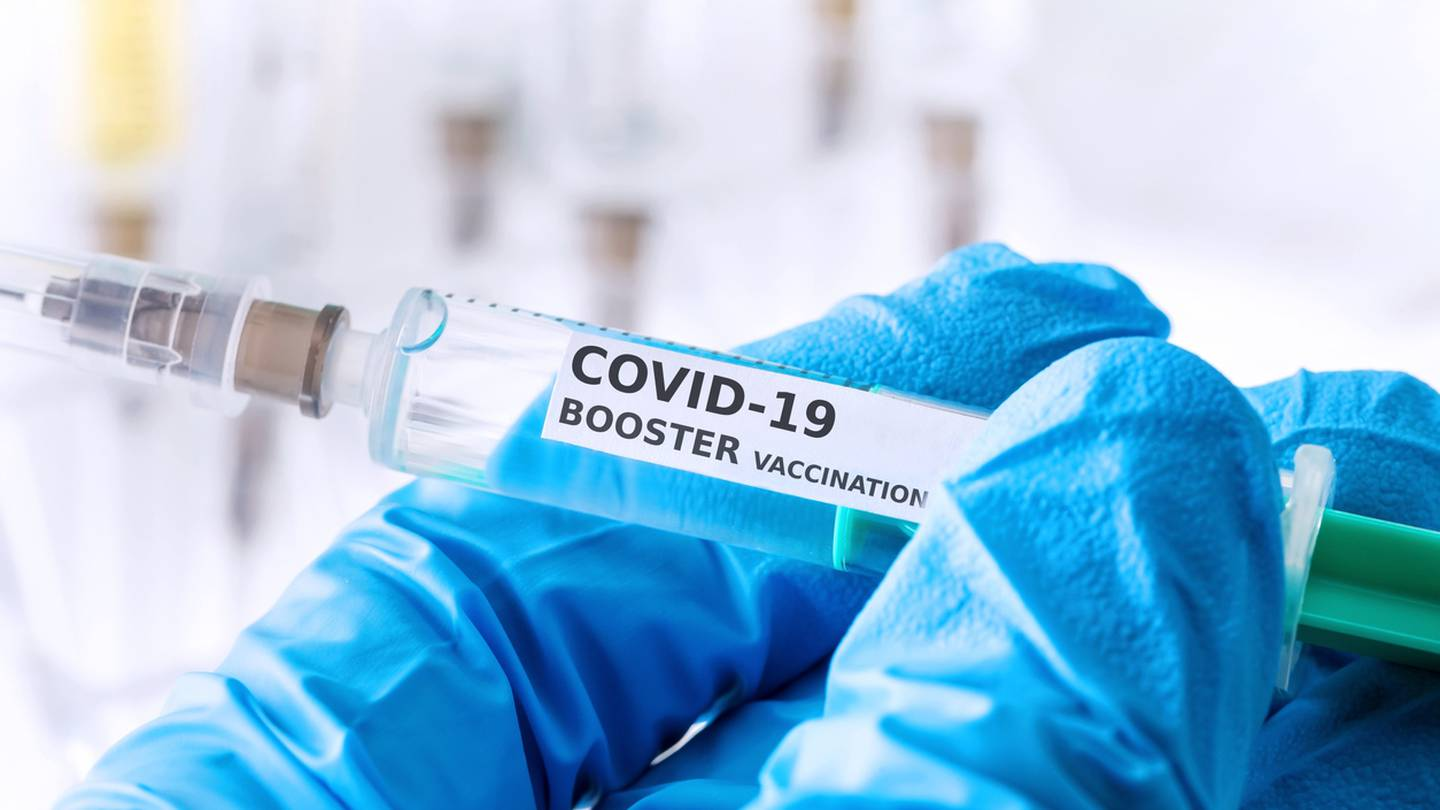
Update on COVID-19 Booster Shots

***

***

Update on COVID-19 booster shots
In case you missed it: If you or a loved one are 50 or older, or are moderately or severely immunocompromised, you can get an additional Pfizer or Moderna COVID-19 booster shot at no cost to you.

The CDC recommends an additional booster shot for certain individuals to increase protection from severe disease from COVID-19. People over the age of 50, or who are moderately or severely immunocompromised, can get an additional booster of Pfizer or Moderna 4 months after their last dose.

This is especially important for those 65 and older who are at higher risk from severe disease and most likely to benefit from getting an additional booster.

Learn More: Remember: Medicare covers the COVID-19 vaccine, including booster shots, at no cost to you. Find a COVID-19 vaccine location near you.

Sincerely
The Medicare Team

COMMENTS APPRECIATED

Thank You

MORE: https://www.medicare.gov/medicare-coronavirus?utm_campaign=20220406_cvd_prv_gal&utm_content=english&utm_medium=email&utm_source=govdelivery

***

***

UPDATE: Stock Markets, the Economy and Pandemic

By Staff Reporters

CMP logo

SPONSOR: http://www.CertifiedMedicalPlanner.org

***

  • Stock Markets: US stocks staged a big afternoon comeback for the second day in a row … but still not big enough to close in the green. American Express was the top performer in both the S&P and the Dow after the company reported its highest billings volume ever in Q4. And, enthusiasm over meme stocks more broadly appears to be dwindling along with cryptos. And, while NASDAQ took a hit, Microsoft reported quarterly sales of more than $50 billion for the first time ever.
  • Economy: The weight of the financial world is on Jerome Powell’s shoulders today. The Federal Reserve chair will provide an update on the central bank’s views on sky-high inflation and its plan for interest rate hikes this year (though none are expected until March).
  • Pandemic: Pfizer and BioNTech started clinical trials for an Omicron-specific vaccine yesterday. The results will help the pharma partners decide whether to replace their current jab formula with one that targets the most dominant Covid variant. The new vaccine is being tested both as a three-shot series for un-vaccinated participants and as a booster for the already vaccinated.
  • CITE: https://www.r2library.com/Resource/Title/082610254

***

COMMENTS APPRECIATED

Thank You

Subscribe to the Medical Executive-Post

***

***

MERRY CHRISTMAS EVE 2021: Stock Markets and Medicine

BY STAFF REPORTERS

***

***

COMMENTS APPRECIATED

***

***

UPDATE: Markets, Money and Covid

***

  • Markets: Down big one day, up big the next—that’s the Omicron-era stock market for you. Stocks surged yesterday following a 3-day losing streak, with travel companies leading the way.
  • Covid: The FDA is set to authorize Covid pills from Pfizer and Merck this week, Bloomberg reports. These treatments, which are intended to be taken by vulnerable people shortly after they are infected, could significantly reduce the burden on strained hospitals. Experts say the pills are a pandemic medical milestone second only to vaccines.
  • CITE: https://www.r2library.com/Resource/Title/082610254

***

***

COMMENTS APPRECIATED.

Thank You

***

TRIFECTA Update: Markets, Covid and Congress

TOPICS PREVIOUSLY MENTIONED ON THE ME-P

By Staff Reporters

***

  • Markets: Omicron who? Fed tapering what? Stocks continued to roar back from their post-Thanksgiving hangover, with tech shares leading the way. The NASDAQ had its best day since March.
  • Covid: Pfizer’s Covid-19 vaccine is less effective, but still provides some protection, against the Omicron variant, an early study from South Africa showed.
  • US Government: Congress had a busy evening. Lawmakers reached a deal to raise the country’s debt ceiling, and the House passed a $768 billion defense policy bill that increases pay for service members.
  • Citation: https://www.r2library.com/Resource/Title/0826102549

***
YOUR COMMENTS ARE APPRECIATED.

***

Thank You

***

COVID-19 UPDATE: Vaccine Booster Shots

BY MEDICARE TEAM

***

Important update on COVID-19 vaccine booster shots
If you previously got 2 doses of the Pfizer-BioNTech COVID-19 vaccine, you can get a booster shot of the Pfizer-BioNTech COVID-19 vaccine if you fall into one of these groups:

You’re 65 and older,You’re 18+ and have certain underlying medical conditions, or
You’re 18+ and work or live in a high-risk setting.

You can get your booster shot at least 6 months after you complete your second dose of the Pfizer vaccine.
The booster shot can help strengthen and prolong your protection against COVID-19.

Learn More: Visit CDC.gov for more information on other groups already vaccinated with the Pfizer vaccine that may be eligible for a booster shot.

Remember: Medicare covers a Pfizer vaccine booster shot at no cost to you.

***

Oregon says it's ready to provide COVID-19 booster shots to those eligible,  but asks for patience - KTVZ

Sincerely,
The Medicare Team
****

***

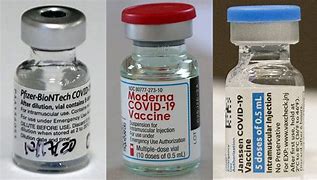
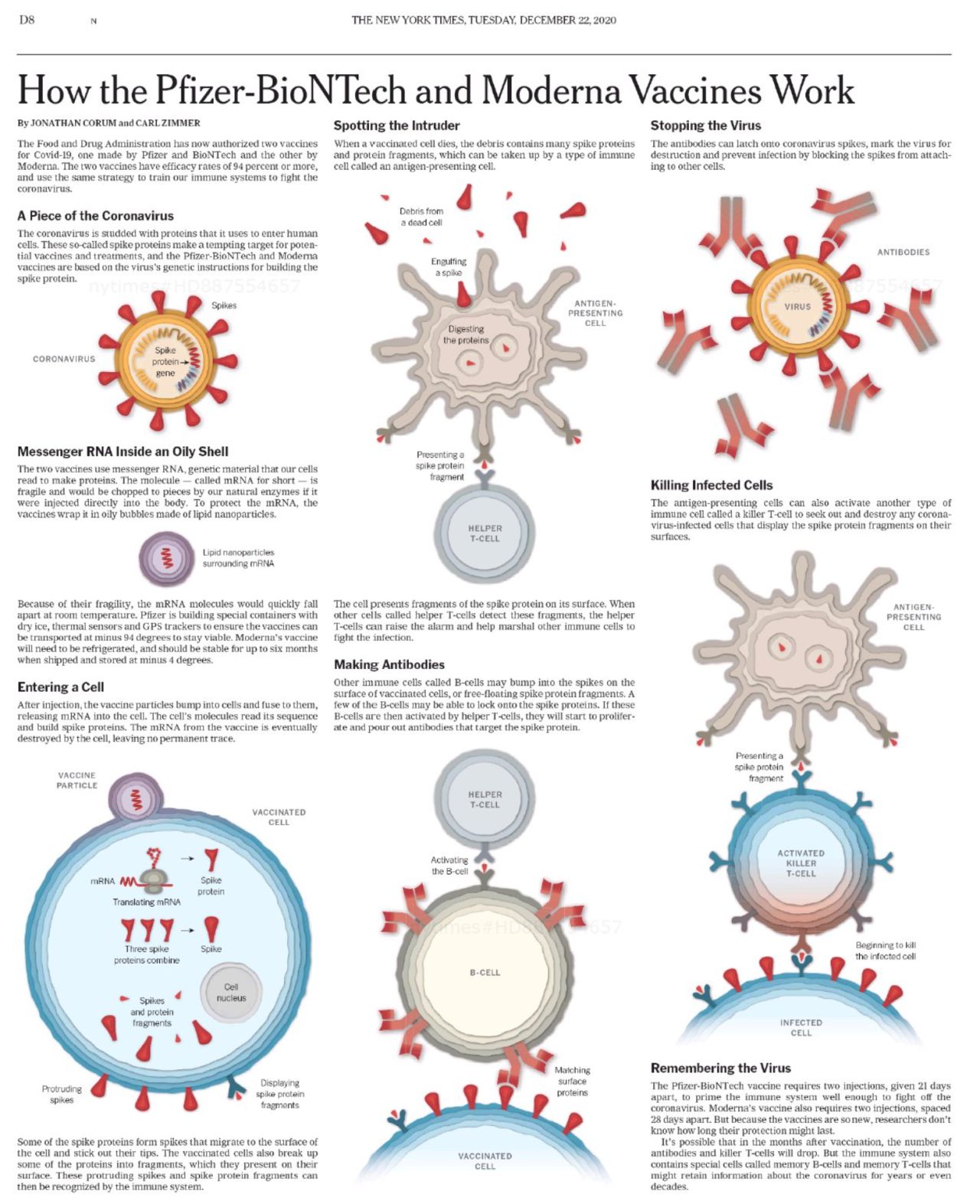
How the Vaccines Work?

PFIZER-BioNTech and MODERNA

By staff reporters

***

***

Pfizer’s Latest Twist on ‘Pay for Delay’

Protecting Brand-Named Drugs

By Marian Wang
ProPublica, November, 14th, 2011, 2:41 pm

Join Our Mailing List

Pharmaceutical companies have sought for years to protect their expensive brand-name drugs by paying generic rivals [1] handsome sums of money to put off efforts to introduce cheaper, generic alternatives that could steal market share.

Pay for Delay

The controversial practice, known as “pay for delay,” occurs as part of patent litigation settlements and typically buys a brand-name drug company more time to sell its blockbuster drug exclusively until its patent on the drug expires. Federal Trade Commission regulators have said the practice costs consumers an estimated $3.5 billion each year [2], and have pushed for a ban.

But now it appears the drug company Pfizer is adding yet another twist to its efforts to delay generic competitors. As The New York Times reports, the company seems to have struck a deal with certain pharmacy benefit managers — the middlemen in the pharmaceutical industry — to block generic versions [3] of Lipitor.

The Block Buster

Lipitor, Pfizer’s blockbuster cholesterol-lowering drug, is among the world’s best-selling pharmaceuticals, and this isn’t Pfizer’s first attempt to protect it.

In 2008, the company settled patent litigation [4] with Ranbaxy, an Indian generic manufacturer, striking a deal that guaranteed that Pfizer would not have to face challenges [5] from Ranbaxy’s generic version of Lipitor until the end of November 2011. Pfizer granted Ranbaxy some incentives [6] as part of the bargain but said it made no payments. Nonetheless, a group of pharmacies filed suit [7] against Pfizer and Ranbaxy last week over the deal, calling it “an extraordinary ripoff” and alleging price-fixing between the two companies.

Big Discounts

Now that it’s November 2011, Ranbaxy and other drugmakers are gearing up to offer cheaper versions of Lipitor. As The Times reports [3], Pfizer has tried to counter this competition by offering big discounts on Lipitor to the middlemen that process prescriptions [8] for pharmacies and other buyers, giving them discounts in exchange for having them block generic versions of Lipitor for another six months. Here’s The Times:

Many drugstores are being asked to block prescriptions for a generic version of Pfizer’s Lipitor starting Dec. 1, when the company loses its patent for the blockbuster cholesterol drug and generic competition begins.

Medco Health Solutions, among the nation’s largest pharmacy benefit managers, is one of the companies issuing instructions, seeking to have pharmacists keep filling prescriptions with the more expensive Lipitor for six months.

See some of those instructions [9] sent to pharmacies by the pharma middlemen. The documents were released by Pharmacists United for Truth and Transparency, a group of independent pharmacists. (We first noticed them posted at the blog Pharmalot [10].)

According to the group, Pfizer’s plan would mean that customers at the pharmacies serviced by these middlemen would receive Lipitor even when they’ve been prescribed a generic version. Because Lipitor co-pays would also be reduced to the level of generic co-pays, customers might not notice, but employers and Medicare Part D would pay the same amount as before, despite the availability of a cheaper alternative.

Assessment

A Pfizer spokesman gave The Times a statement saying that the company was committed to ensuring that customers had access to Lipitor but declined to answer additional questions. We’ve also asked Pfizer for comment and will update when we hear back.

Conclusion

Your thoughts and comments on this ME-P are appreciated. Feel free to review our top-left column, and top-right sidebar materials, links, URLs and related websites, too. Then, subscribe to the ME-P. It is fast, free and secure.

Speaker: If you need a moderator or speaker for an upcoming event, Dr. David E. Marcinko; MBA – Publisher-in-Chief of the Medical Executive-Post – is available for seminar or speaking engagements. Contact: MarcinkoAdvisors@msn.com

OUR OTHER PRINT BOOKS AND RELATED INFORMATION SOURCES:


Product Details

Product Details

Product Details

Docs on Pharma Payroll Have Blemished Records

Limited Credentials

By Charles Ornstein , Tracy Weber and Dan Nguyen
ProPublica, Oct. 18, 2010, 11:52 p.m.

Join Our Mailing List 

The Ohio medical board concluded [1] that pain physician William D. Leak had performed “unnecessary” nerve tests on 20 patients and subjected some to “an excessive number of invasive procedures,” including injections of agents that destroy nerve tissue.

Yet the finding, posted on the board’s public website, didn’t prevent Eli Lilly and Co. from using him as a promotional speaker and adviser. The company has paid him $85,450 since 2009.

In 2001, the U.S. Food and Drug Administration ordered [2] Pennsylvania doctor James I. McMillen to stop “false or misleading” promotions of the painkiller Celebrex, saying he minimized risks and touted it for unapproved uses.

Still, three other leading drug makers paid the rheumatologist $224,163 over 18 months to deliver talks to other physicians about their drugs.

In Georgia

And in Georgia, a state appeals court in 2004 upheld [3] a hospital’s decision to kick Dr. Donald Ray Taylor off its staff. The anesthesiologist had admitted giving young female patients rectal and vaginal exams without documenting why. He’d also been accused of exposing women’s breasts during medical procedures. When confronted by a hospital official, Taylor said, “Maybe I am a pervert, I honestly don’t know,” according to the appellate court ruling.

Last year, Taylor was Cephalon’s third-highest-paid speaker out of more than 900. He received $142,050 in 2009 and another $52,400 through June.

Leak, McMillen and Taylor are part of the pharmaceutical industry’s white-coat sales force, doctors paid to promote brand-name drugs to their peers — and if they’re convincing enough, get more physicians to prescribe them.

Drug companies say they hire the most-respected doctors in their fields for the critical task of teaching about the benefits and risks of their drugs.

ProPublica Investigates

But an investigation by ProPublica uncovered hundreds of doctors on company payrolls who had been accused of professional misconduct, were disciplined by state boards or lacked credentials as researchers or specialists.

This story is the first of several planned by ProPublica examining the high-stakes pursuit of the nation’s physicians and their prescription pads. The implications are great for patients, who in the past have been exposed to such heavily marketed drugs as the painkiller Bextra and the diabetes drug Avandia — billion-dollar blockbusters until dangerous side effects emerged.

“Without question the public should care,” said Dr. Joseph Ross, an assistant professor of medicine at Yale School of Medicine who has written about the industry’s influence on physicians. “You would never want your kid learning from a bad teacher. Why would you want your doctor learning from a bad doctor, someone who hasn’t displayed good judgment in the past?”

To vet the industry’s handpicked speakers, ProPublica created a comprehensive database [4] that represents the most accessible accounting yet of payments to doctors. Compiled from disclosures by seven companies, the database covers $257.8 million in payouts since 2009 for speaking, consulting and other duties. In addition to Lilly and Cephalon, the companies include AstraZeneca, GlaxoSmithKline, Johnson & Johnson, Merck & Co. and Pfizer.

Although these companies have posted payments on their websites — some as a result of legal settlements — they make it difficult to spot trends or even learn who has earned the most. ProPublica combined the data and identified the highest-paid doctors, then checked their credentials and disciplinary records.

Not all Companies Comply

That is something not all companies do.

A review of physician licensing records in the 15 most-populous states and three others found sanctions against more than 250 speakers, including some of the highest paid. Their misconduct included inappropriately prescribing drugs, providing poor care or having sex with patients. Some of the doctors had even lost their licenses.

More than 40 have received FDA warnings for research misconduct, lost hospital privileges or been convicted of crimes. And at least 20 more have had two or more malpractice judgments or settlements. This accounting is by no means complete; many state regulators don’t post these actions on their web sites.

In interviews and written statements, five of the seven companies acknowledged that they don’t routinely check state board websites for discipline against doctors. Instead, they rely on self-reporting and checks of federal databases. Only Johnson & Johnson and Cephalon said they review the state sites.

ProPublica found 88 Lilly speakers who have been sanctioned and four more who had received FDA warnings. Reporters asked Lilly about several of those, including Leak and McMillen. A spokesman said the company was unaware of the cases and is now investigating them.

“They are representatives of the company,” said Dr. Jack Harris, vice president of Lilly’s U.S. medical division. “It would be very concerning that one of our speakers was someone who had these other things going on.”

Leak, the pain doctor, and his attorney did not respond to multiple messages. The Ohio medical board voted to revoke Leak’s license in 2008. It remains active as he appeals in court, arguing that the evidence against him was old, the witnesses unreliable and the sentence too harsh.

In an interview, McMillen denied nearly all of the allegations in the FDA letter and blamed his troubles on a rival firm whose drug he had criticized in his presentations.

“I’m more cautious now than I ever was,” said McMillen, who said he also does research. “That’s why I think a lot of the companies use me. I’m not taking any risks.”

Taylor said that the allegations against him were “old news” from the 1990s and that regulators had not sanctioned him. “It had nothing to do with my skills as a physician,” said Taylor, noting that he speaks every other week around the country and sometimes abroad. “Even my biggest detractors in that situation lauded my skills as a physician. That’s what’s most important.”

Disclosures are just the start

Payments to doctors for promotional work are not illegal and can be beneficial. Strong relationships between pharmaceutical companies and physicians are critical to developing new and better treatments.

There is much debate, however, about whether paying doctors to market drugs can inappropriately influence what they prescribe. Studies have shown that even small gifts and payments affect physician attitudes. Such issues have become flashpoints in recent years both in courtrooms and in Congress.

All told, 384 of the approximately 17,700 individuals in ProPublica’s database earned more than $100,000 for their promotional and consulting work on behalf of one or more of the seven companies in 2009 and 2010. Nearly all were physicians, but a handful of pharmacists, nurse practitioners and dietitians also made the list. Forty-three physicians made more than $200,000 — including two who topped $300,000.

Physicians also received money from some of the 70-plus drug companies that have not disclosed their payments. Some of those interviewed could not recall all the companies that paid them, and certainly not how much they made. By 2013, the health care reform law requires [5] all drug companies to report this information to the federal government, which will post it on the Web.

The busiest — and best compensated — doctors gave dozens of speeches a year, according to the data and interviews. The work can mean a significant salary boost — enough for the kids’ college tuition, a nicer home, a better vacation.

Top Paid Speakers

Among the top-paid speakers, some had impressive resumes, clearly demonstrating their expertise as researchers or specialists. But others did not –contrary to the standards the companies say they follow.

Forty five who earned in excess of $100,000 did not have board certification in any specialty, suggesting they had not completed advanced training and passed a comprehensive exam. Some of those doctors and others also lacked published research, academic appointments or leadership roles in professional societies.

Experts say the fact that some companies are disclosing their payments is merely a start. The disclosures do not fully explain what the doctors do for the money — and what the companies get in return.

In a raft of federal whistleblower lawsuits [6], former employees and the government contend that the firms have used fees as rewards for high-prescribing physicians. The companies have each paid hundreds of millions or more to settle the suits.

The disclosures also leave unanswered what impact these payments have on patients or the health care system as a whole. Are dinner talks prompting doctors to prescribe risky drugs when there are safer alternatives? Or are effective generics overlooked in favor of pricey brand-name drugs?

“The pressure is enormous. The investment in these drugs is massive,” said Dr. David A. Kessler, who formerly served as both FDA commissioner and dean of the University of California, San Francisco School of Medicine. “Are any of us surprised they’re trying to maximize their markets in almost any way they can?”

From Drug Reps to Doc Reps

For years, drug companies bombarded doctors with pens, rulers, sticky notes, even stuffed animals emblazoned with the names of the latest remedies for acid reflux, hypertension or erectile dysfunction. They wooed physicians with fancy dinners, resort vacations and personalized stethoscopes.

Concerns that this pharma-funded bounty amounted to bribery led the industry to ban most gifts voluntarily [7]. Some hospitals and physicians also banned the gift-givers: the legions of drug sales reps who once freely roamed their halls.

So the industry has relied more heavily on the people trusted most by doctors — their peers. Today, tens of thousands of U.S. physicians are paid to spread the word about pharma’s favored pills and to advise the companies about research and marketing.

Recruited and trained by the drug companies, the physicians — accompanied by drug reps — give talks to doctors over small dinners, lecture during hospital teaching sessions and chat over the Internet. They typically must adhere to company slides and talking points.

These presentations fill an educational gap, especially for geographically isolated primary care doctors charged with treating everything from lung conditions to migraines. For these doctors, poring over a stack of journal articles on the latest treatments may be unrealistic. A pharma-sponsored dinner may be their only exposure to new drugs that are safer and more effective.

Oklahoma pulmonologist James Seebass, for example, earned $218,800 from Glaxo in 2009 and 2010 for lecturing about respiratory diseases “in the boonies,” he said. On a recent trip, he said, he drove to “a little bar 40 miles from Odessa,” Texas, where physicians and nurse practitioners had come 50 to 60 miles to hear him.

Seebass, the former chair of internal medicine at Oklahoma State University College of Osteopathic Medicine, said such talks are “a calling,” and he is booking them for 2011.

The fees paid to speakers are fair compensation for their time away from their practices, and for travel and preparation as well as lecturing, the companies say.

Dr. Samuel Dagogo-Jack has a resume that would burnish any company’s sales force: He is chief of the division of endocrinology, diabetes and metabolism at the University of Tennessee Health Science Center. Dagogo-Jack conducts research funded by the National Institutes of Health, has edited medical journals and continues to see patients.

While most people are going home to dinner with their families, he said, he is leaving to hop on a plane to bring news of fresh diabetes treatments to non-specialist physicians “in the trenches” who see the vast majority of cases.

Since 2009, Dagogo-Jack has been paid at least $257,000 by Glaxo, Lilly and Merck.

“If you actually prorate that by the hours put in, it is barely more than minimum wage,” he said. (A person earning the federal minimum wage of $7.25 would have to work 24 hours a day, seven days a week for more than four years to earn Dagogo-Jack’s fees).

Product Details 

Big Pharma Benefits

For the big pharmaceutical companies, one effective speaker may not only teach dozens of physicians how to better recognize a condition, but sell them on a drug to treat it. The success of one drug can mean hundreds of millions in profits, or more. Last year, prescription drugs sales in the United States topped $300 billion, according to IMS Health, a healthcare information and consulting company.

Glaxo’s drug to treat enlarged prostates, Avodart — locked in a battle with a more popular competitor — is the topic of more lectures than any of the firm’s other drugs, a company spokeswoman said. Glaxo’s promotional push has helped quadruple Avodart’s revenue to $559 million in five years and double its market share, according to IMS.

Favored speakers like St. Louis pain doctor Anthony Guarino earn $1,500 to $2,000 for a local dinner talk to a group of physicians.

Guarino, who made $243,457 from Cephalon, Lilly and Johnson & Johnson since 2009, considers himself a valued communicator. A big part of his job, he said, is educating the generalists, family practitioners and internists about diseases like fibromyalgia, which causes chronic, widespread pain — and to let them know that Lilly has a drug to treat it.

“Somebody like myself may be able to give a better understanding of how to recognize it,” Guarino said. Then, he offers them a solution: “And by the way, there is a product that has an on-label indication for treating it.’’

Guarino said he is worth the fees pharma pays him on top of his salary as director of a pain clinic affiliated with Washington University. Guarino likened his standing in the pharma industry to that of St. Louis Cardinals first baseman Albert Pujols, named baseball player of the decade last year by Sports Illustrated. Both earn what the market will bear, he said: “I know I get paid really well.”

Is Anyone Checking Out There?

Simple searches of government websites turned up disciplinary actions against many pharma speakers in ProPublica’s database.

The Medical Board of California filed a public accusation against psychiatrist Karin Hastik in 2008 and placed her [8] on five years’ probation in May for gross negligence in her care of a patient. A monitor must observe her practice.

Kentucky’s medical board placed Dr. Van Breeding on probation [9] from 2005 to 2008. In a stipulation filed with the board, Breeding admits unethical and unprofessional conduct. Reviewing 23 patient records, a consultant found Breeding often that gave addictive pain killers without clear justification. He also voluntarily relinquished his Florida license.

New York’s medical board put Dr. Tulio Ortega on two years’ probation [10] in 2008 after he pleaded no contest to falsifying records to show he had treated four patients when he had not. Louisiana’s medical board, acting on the New York discipline, also put him on probation [11] this year.

Yet during 2009 and 2010, Hastik made $168,658 from Lilly, Glaxo and AstraZeneca. Ortega was paid $110,928 from Lilly and AstraZeneca. Breeding took in $37,497 from four of the firms. Hastik declined to comment, and Breeding and Ortega did not respond to messages.

Their disciplinary records raise questions about the companies’ vigilance.

“Did they not do background checks on these people? Why did they pick them?” said Lisa Bero, a pharmacy professor at University of California, San Francisco who has extensively studied conflicts of interest in medicine and research.

Disciplinary actions, Bero said, reflect on a physician’s credibility and willingness to cross ethical boundaries.

“If they did things in their background that are questionable, what about the information they’re giving me now?” she said.

Sanctions Found

ProPublica found sanctions ranging from relatively minor misdeeds such as failing to complete medical education courses to the negligent treatment of multiple patients. Some happened long ago; some are ongoing. The sanctioned doctors were paid anywhere from $100 to more than $140,000.

Several doctors were disciplined for misconduct involving drugs made by the companies that paid them to speak. In 2009, Michigan regulators accused one rheumatologist of forging a colleague’s name to get prescriptions for Viagra and Cialis. Last year, the doctor was paid $17,721 as a speaker for Pfizer, Viagra’s maker.

A California doctor who was paid $950 this year to speak for AstraZeneca was placed on five years’ probation by regulators in 2009 after having a breakdown, threatening suicide and spending time in a psychiatric hospital after police used a Taser on him. He said he’d been self-treating with samples of AstraZeneca’s anti-psychotic drug Seroquel, medical board records show.

Other paid speakers had been disciplined by their employers or warned by the federal government. At least 15 doctors lost staff privileges at various hospitals, including one New Jersey doctor who had been suspended twice for patient care lapses and inappropriate behavior. Other doctors received FDA warning letters for research misconduct such as failing to get informed consent from patients.

Pharma companies say they rely primarily on a federal database listing those whose behavior in some way disqualifies them from participating in Medicare. This database, however, is notoriously incomplete.

The industry’s primary trade group says its voluntary code of conduct is silent about what, if any, behavior should disqualify physician speakers.

“We look at it from the affirmative — things that would qualify physicians,” said Diane Bieri, general counsel and executive vice president of the Pharmaceutical Research and Manufacturers of America.

Some physicians with disciplinary records say their past misdeeds do not reflect on their ability to educate their peers.

Family medicine physician Jeffrey Unger was put on probation [12] by California’s medical board in 1999 after he misdiagnosed a woman’s breast cancer for 2½ years. She received treatment too late to save her life. In 2000, the Nevada medical board revoked Unger’s license for not disclosing California’s action.

As a result, Unger said, he decided to slow down and start listening to his patients. Since then, he said, he has written more than 130 peer-reviewed articles and book chapters on diabetes, mental illness and pain management.

“I think I’ve more than accomplished what I’ve needed to make this all right,” he said. During 2009 and the first quarter of 2010, Lilly paid Unger $87,830. He said he also is a paid speaker for Novo Nordisk and Roche, two companies that have not disclosed payments.

The drug firms, Unger said “apparently looked beyond the record.”

Companies Make their Own Experts

Last summer, as drug giant Glaxo battled efforts to yank its blockbuster diabetes drug Avandia from the market, Nashville cardiologist Hal Roseman worked the front lines.

At an FDA hearing, he borrowed David Letterman’s shtick [13] to deliver a “Top Five” list of reasons to keep the drug on the market despite evidence it caused heart problems. He faced off [14] against a renowned Yale cardiologist and Avandia critic on the PBS NewsHour, arguing that the drug’s risks had been overblown.

“I still feel very convinced in the drug,” Roseman said with relaxed confidence. The FDA severely restricted access to the drug last month citing its risks.

Roseman is not a researcher with published peer-reviewed studies to his name. Nor is he on the staff of a top academic medical center or in a leadership role among his colleagues.

Roseman’s public profile comes from his work as one of Glaxo’s highest-paid speakers. In 2009 and 2010, he earned $223,250 from the firm — in addition to payouts from other companies.

Pharma companies often say their physician salesmen are chosen for their expertise. Glaxo, for example, said it selects “highly qualified experts in their field, well-respected by their peers and, in the case of speakers, good presenters.”

ProPublica found that some top speakers are experts mainly because the companies have deemed them such. Several acknowledge that they are regularly called upon because they are willing to speak when, where and how the companies need them to.

“It’s sort of like American Idol,” said sociologist Susan Chimonas, who studies doctor-pharma relationships at the Institute on Medicine as a Profession in New York City.

“Nobody will have necessarily heard of you before — but after you’ve been around the country speaking 100 times a year, people will begin to know your name and think, ‘This guy is important.’ It creates an opinion leader who wasn’t necessarily an expert before.”

To check the qualifications of top-paid doctors, reporters searched for medical research, academic appointments and professional society involvement. They also interviewed national leaders in the physicians’ specialties.

In numerous cases, little information turned up.

Las Vegas endocrinologist Firhaad Ismail, for example, is the top earner in the database, making $303,558, yet only his schooling and mostly 20-year-old research articles could be found. An online brochure [15] for a presentation he gave earlier this month listed him as chief of endocrinology at a local hospital, but an official there said he hasn’t held that title since 2008.

And several leading pain experts said they’d never heard of Santa Monica pain doctor Gerald Sacks, who was paid $249,822 since 2009.

Neither physician returned multiple calls and letters.

A recently unsealed whistleblower lawsuit against Novartis [16], the nation’s sixth-largest drug maker by sales, alleges that many speakers were chosen “on their prescription potential rather than their true credentials.”

Speakers were used and paid as long as they kept their prescription levels up, even though “several speakers had difficulty with English,” according to the amended complaint filed this year in federal court in Philadelphia.

Speaking to Each Other

Some physicians were paid for speaking to one another, the lawsuit alleged. Several family practice doctors in Peoria, Ill., “had two programs every week at the same restaurant with the same group of physicians as the audience attendees.”

In September, Novartis agreed to pay [17] the government $422.5 million to resolve civil and criminal allegations in this case and others. The company has said it fixed its practices and now complies with government rules.

Roseman, who has been a pharma speaker for about a decade, acknowledged that his expertise comes by way of the training provided by the companies that pay him. But he says that makes him the best prepared to speak about their products, which he prescribes for his own patients. Asked about Roseman’s credentials, a Glaxo spokeswoman said he is an “appropriate” speaker

Assessment

Getting paid to speak “doesn’t mean that your views have necessarily been tainted,” he said.

Plus pharma needs talent, Roseman said. Top-tier universities such as Harvard [18] have begun banning their staffs from accepting pharma money for speaking, he said. “It irritates me that the debate over bias comes down to a litmus test of money,” Roseman said. “The amount of knowledge that I have is in some regards to be valued.”

Related News:

Editor’s Note: ProPublica Director of Research Lisa Schwartz and researcher Nicholas Kusnetz contributed to this report

Conclusion

Your thoughts and comments on this ME-P are appreciated. Feel free to review our top-left column, and top-right sidebar materials, links, URLs and related websites, too. Then, subscribe to the ME-P. It is fast, free and secure.

Speaker: If you need a moderator or speaker for an upcoming event, Dr. David E. Marcinko; MBA – Publisher-in-Chief of the Medical Executive-Post – is available for seminar or speaking engagements. Contact: MarcinkoAdvisors@msn.com

OUR OTHER PRINT BOOKS AND RELATED INFORMATION SOURCES:


Product Details  Product Details

About the ASTER Pilot Project

Improving the Reporting of Adverse Events

By Staff Reporters

SkeletonAccording to its website, ‘ASTER’ stands for “ADE Spontaneous Triggered Event Reporting”. The ASTER study was conceived as a proof-of-concept project for a new model of gathering and reporting spontaneous adverse drug events (ADEs).


A Collaborative Project 

ASTER is a collaboration of the following organizations and individuals:

  • Brigham and Women’s Hospital (Dr. David Bates is sponsor, Dr. Jeffrey Linder is Lead Investigator)
  • Partners Healthcare – use of the Longitudinal Medical Record
  • CDISC (an international standards group)         
  • CRIX International (a public/private not-for-profit organization)
  • Pfizer Incorporated

Assessment

ASTER will implement automated ADE collection in an ambulatory clinic electronic health record (eHR). It employs a flexible standard for data collection known as “Retrieve Form for Data” (RFD) from CDISC and Integrating the Healthcare Enterprise (IHE), and will use CRIX International to host the application. The application allows direct downloading of data from the EHR and will forward the report to the FDA in the proper formats for electronic reporting of individual case safety reports (ICSRs).

http://www.asterstudy.com

www.hhnmag.com/hhnmag_app/jsp/articledisplay.jsp?dcrpath=HHNMAG/Article/data/05MAY2009/0905HHN_Inbox_Medication&domain=HHNMAG

Conclusion

And so, your thoughts, post and comments on this Medical Executive-Post are appreciated. Feel free to review our top-left column, and top-right sidebar materials, links, URLs and related websites, too. Then, be sure to subscribe to the ME-P. It is fast, free and secure.

Link: http://feeds.feedburner.com/HealthcareFinancialsthePostForcxos

Speaker: If you need a moderator or speaker for an upcoming event, Dr. David E. Marcinko; MBA – Publisher-in-Chief of the Executive-Post – is available for seminar or speaking engagements. Contact: MarcinkoAdvisors@msn.com  or Bio: www.stpub.com/pubs/authors/MARCINKO.htm

Get our Widget: Get this widget!

Our Other Print Books and Related Information Sources:

Practice Management: http://www.springerpub.com/prod.aspx?prod_id=23759

Physician Financial Planning: http://www.jbpub.com/catalog/0763745790

Medical Risk Management: http://www.jbpub.com/catalog/9780763733421

Healthcare Organizations: www.HealthcareFinancials.com

Health Administration Terms: www.HealthDictionarySeries.com

Physician Advisors: www.CertifiedMedicalPlanner.com

Subscribe Now: Did you like this Medical Executive-Post, or find it helpful, interesting and informative? Want to get the latest ME-Ps delivered to your email box each morning? Just subscribe using the link below. You can unsubscribe at any time. Security is assured.

Link: http://feeds.feedburner.com/HealthcareFinancialsthePostForcxos

Sponsors Welcomed

And, credible sponsors and like-minded advertisers are always welcomed.

Link: https://healthcarefinancials.wordpress.com/2007/11/11/advertise

I Shake my Fist at Pfizer, Inc.

Join Our Mailing List

And, Laugh out Loud over D2D Marketing

By Dr. David Edward Marcinko; FACFAS, MBA, CMP™

[Publisher-in-Chiefdem22]

We all know how intrusive direct-to-consumer [D2C] marketing by the pharmaceutical industry has become. Especially for those male “enhancement” type drugs that seem to be a ubiquitous feature on TV, the print media and internet, etc.

No, I’m not talking about sildenafil citrate or minoxidil; although I do recall seeing them on TV for the last decade, or so; maybe more. The target audience for both keeps getting younger and younger; or am I getting older and older? Still, allow me to assure all ME-P readers that the problems they reportedly treat are not my own.

Gotcha!

For this post however, I am talking about antibiotics.

Pfizer Seriously

Seriously, we are all aware that D2C marketing, and patients, goad doctors into “action” during an office visit [i.e., prescribe], when perhaps they ought not to. A follow-up office visit is often able to be scheduled, too.

Think: the antibiotic drug resistance epidemic.

Therefore, I was so righteously upset recently that I had to go out for a premature hour-long run, as I have been doing almost daily for thirty years, just to cool off.

Why?

It’s because I received the email copied verbatim, below.

Doctor [my name was not used, but my personal email address was correct],

For decades, azithromycin has been proven clinically effective to fight infections in your patients. With Zmax, azithromycin is reformulated to provide the same powerful efficacy against infection in a single, well-tolerated, liquid dose.

Zmax — the novel one-dose formulation of azithromycin
Zmax is indicated for community-acquired pneumonia (CAP) in pediatric patients and adults and acute bacterial sinusitis (ABS) in adults. Zmax uses extended-release microspheres to deliver one well-tolerated, front-loaded dose.

Zmax is not to be confused with Zithromax®, Z-Pak®, or Tri-Pak®

By delivering 100% compliance with just one dose, Zmax is the only formulation of azithromycin that avoids the complexities of multiple-day dosing for your patients.3-5

Prescribe Zmax and save with the “Never Pay More Than $20” coupon
Prescribe Zmax as your antibiotic-of-choice for your patients with CAP and ABS.
Zmax guarantees that your patients never pay more than $20 with the cost-saving Zmax coupon. For more information, please visit
www.ZmaxInfo.com or www.PfizerPro.com/Zmax

Sincerely,
Raymond W. Urbanski; MD, PhD

Vice President
Clinical Development and Medical Affairs
Established Products Business Unit
Pfizer, Inc.

Now, I have prescribed Zithromax® in the past, and will probably do so again in the future. I have lectured for several big-pharma companies throughout the years, and have written a textbook on bone and soft tissue extremity infections, and their diagnosis and treatment. I have served, and still serve, as a medical expert witness in malpractice cases involving infectious diseases, etc. But, I do not, repeat, do not need to be reminded by personal email about this anti-microbial, or any other drug. Being spammed in the office is one thing; but please not at home. I “reply-cancelled” the email; I think. Will let you know, down-line.

Of Podcasts and Webcasts

Recently, I was asked to make several new-wave podcast and modern webcast presentations for physician distribution by third-party vendors of the pharmaceutical industry. From what I could gather, this sort of “product information” distribution has not been eagerly embraced by the profession to-date, and so they are searching for industry recognized “names” to do their bidding. And so, as an educator, I acquiesced regarding same. But, I do pine for the attractive female pharma-rep visits back-in-the-day; replete with food for “lunch and learn” office presentations [mea culpa].

Think: Sermo, if you want a medical opinion.     

Assessment

Poor Dr. Urbanski, by the looks of his sur-name, I bet he’s Polish like me. I also bet that he gets more than a few emails, cards, faxes and letters like this post.

So, here’s where you need to imagine me shaking my fist at Pfizer, Inc.

I also laugh mockingly, as well.

Click to play :

PS: Ray, call me; let’s do lunch.

Conclusion

Your thoughts and comments on this ME-P are appreciated. Feel free to review our top-left column, and top-right sidebar materials, links, URLs and related websites, too. Then, subscribe to the ME-P. It is fast, free and secure.

Link: http://feeds.feedburner.com/HealthcareFinancialsthePostForcxos

Speaker: If you need a moderator or speaker for an upcoming event, Dr. David E. Marcinko; MBA – Publisher-in-Chief of the Medical Executive-Post – is available for seminar or speaking engagements. Contact: MarcinkoAdvisors@msn.com

OUR OTHER PRINT BOOKS AND RELATED INFORMATION SOURCES:

DICTIONARIES: http://www.springerpub.com/Search/marcinko
PHYSICIANS: www.MedicalBusinessAdvisors.com
PRACTICES: www.BusinessofMedicalPractice.com
HOSPITALS: http://www.crcpress.com/product/isbn/9781466558731
CLINICS: http://www.crcpress.com/product/isbn/9781439879900
BLOG: www.MedicalExecutivePost.com
FINANCE: Financial Planning for Physicians and Advisors
INSURANCE: Risk Management and Insurance Strategies for Physicians and Advisors

Product DetailsProduct DetailsProduct Details    

The Pfizer Website

A Medication Safety Initiative

Staff Writers

Pfizer, Inc will be launching a website, now under beta construction, on medication safety to help consumers weigh drug risks and benefits. This is considered, by some, an unusual move in an industry often criticized as using marketing practices that oversell drug benefits and downplay risks.

Patient Advocacy

According to the Associated Press on September 16, Pfizer plans to promote the site by working with medical and patient advocacy groups, as well as with online advertising on websites targeting medical professionals and patients.

Assessment

The detailed future site will include sections written for patients and for health professionals, with plain-English explanations, engaging graphics and clips of video hosts discussing important points. It will also have a prominent link to information about how to report a drug side effect to Medwatch, the Food and Drug Administration [FDA] reporting program.

Conclusion

Your thoughts and comments are appreciated. Is it about time to launch this patient safety initiative; or far too late?

Practice Management: http://www.springerpub.com/prod.aspx?prod_id=23759

Physician Financial Planning: http://www.jbpub.com/catalog/0763745790

Medical Risk Management: http://www.jbpub.com/catalog/9780763733421

Healthcare Organizations: www.HealthcareFinancials.com

Health Administration Terms: www.HealthDictionarySeries.com

Physician Advisors: www.CertifiedMedicalPlanner.com

Speaker: If you need a moderator or speaker for an upcoming event, Dr. David E. Marcinko; MBA – Publisher-in-Chief of the Executive-Post – is available for seminar or speaking engagements. Contact: MarcinkoAdvisors@msn.com  or Bio: www.stpub.com/pubs/authors/MARCINKO.htm

Subscribe Now: Did you like this Executive-Post, or find it helpful, interesting and informative? Want to get the latest E-Ps delivered to your email box each morning? Just subscribe using the link below. You can unsubscribe at any time. Security is assured.

Link: http://feeds.feedburner.com/HealthcareFinancialsthePostForcxos

Copyright 2008 iMBA Inc: All rights reserved, USA, unless otherwise noted. Use is restricted to Executive-Post subscribers only. No redistribution is allowed. To avoid violation of iMBA Inc copyright restrictions and redistribution policy, please register for your own free Executive-Post membership. Detailed information and registration links are available at:

Link: http://feeds.feedburner.com/HealthcareFinancialsthePostForcxos

Referrals: Thank you in advance for your electronic referrals to the Executive-Post