VALUATION of Internal Medicine Services

Valuation of Internal Medicine Services: Reimbursement

BY HEALTH CAPITAL CONSULTANTS, LLC


As noted in the first installment of this five-part series, internal medicine is the largest specialty among physicians and an understanding of the various environments in which these physicians operate is crucial in determining their numerous value drivers.

In particular, healthcare reimbursement, the process by which private health insurers and government agencies pay for the services of healthcare providers (including internists), is perhaps one of the most important environments to understand, as it comprises a provider’s expectation of future return on investment.

CITE: https://www.r2library.com/Resource/Title/0826102549

This installment will discuss the reimbursement of internal medicine services. (Read more…)

YOUR COMMENTS ARE APPRECIATED.

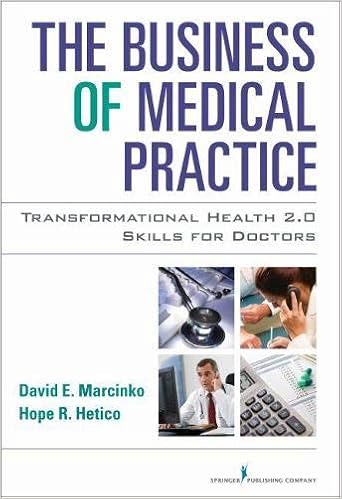
BUSINESS: https://www.amazon.com/Business-Medical-Practice-Transformational-Doctors/dp/0826105750/ref=sr_1_9?ie=UTF8&qid=1448163039&sr=8-9&keywords=david+marcinko

***h

HOSPITALS: ttps://www.amazon.com/Financial-Management-Strategies-Healthcare-Organizations/dp/1466558733/ref=sr_1_3?ie=UTF8&qid=1380743521&sr=8-3&keywords=david+marcinko

THANK YOU

***

Medical Practice Valuation Blunders

Join Our Mailing List 

Top Ten Appraisal Blunders to Avoid

By Dr. David Edward Marcinko; MBA, CMP™

Top Ten Appraisal Blunders to Avoid

The science of the modern medical practice valuation can be traced to the Estate of Edgar A. Berg v. Commissioner (T. C. Memo 1991-279). In this case, the Court criticized CPAs as not being qualified to perform business valuations, failing to provide analysis of an appropriate discount rates, and making only general references to justify their   “Opinion of Value.”

In rejecting accountants, the Court accepted IRS economists because of background, education and training, as well as discount rate calculations and reproducible evidence applied to the assets being examined. This marked the beginning of the Tax Court leaning toward the side with the most comprehensive appraisal. Previously, it had a tendency to “split the difference.” Now, some feel the Berg case launched the valuation profession; especially for contemporaneous health economists.

But, it was not until after 1995 that the IRS issued guidelines for the valuation of physician practices. As a result, the Uniform Standards of Professional Appraisal Practice [USPAP] requires that a blended constellation of three recognized valuation approaches (income, market, and cost approaches) be considered when estimating fair market value.

Operative Valuation Definitions

When pursuing any discussion of medical practice worth, two key elements must be understood: (1) the valuation process, and (2) fair market value.  According to the Dictionary of Health Economics and Finance

  1. Practice valuation is the “the formal process of determining the worth of a healthcare or other medical business entity, at a specific point in time, and the act or process of determining fair market value.”
  2. Fair market value [FMV] is “a legal term generally meaning the price at which a willing buyer will buy, and a willing seller will sell an asset in an open free market with full disclosure.”  IRS Revenue Ruling 59-60 clearly states that FMV “is essentially a future prophesy and must be based on facts available at the required date of appraisal”

Unfortunately, the value of a medical practice cannot be directly observed by activity in thinly traded private markets. Perhaps this is why we continually observe the following valuation blunders? They are committed by both sellers and buyers who are pursuing opposite objectives; sale price maximization versus price minimization?

Top 10 Blunders:

Not Understanding What a Medical Practice Valuation Is and Is Not

  • Valuations are not source document fraud audits.
  • Valuations are material representations providing a range of transferable worth.
  • Valuations are reproducible estimates based on economic assumptions.
  • Valuations are not “back-of-the envelope multiples” using specious benchmarks.
  • Valuations are defensible and “signed-off” attesting to USPAP/IRS formats.
  • Financial accounting value [book-value] is not fair market value.
  • Professional valuators represent only one party at arm’s length; not both sides.
  • Engagement solicitor and/or valuation payer is the client.
  • Unbiased valuators do not provide financing or equity-participation schemes. Although not standardized, the Institute of Medical Business Advisors, Inc uses the following three levels that approximate engagement types for the industry.

2. A Limited Valuation lacks additional suggested USPAP procedures.  It is considered an “agreed-upon-procedure”, used in circumstances where the client is the only user [i.e., updating a buy-sell agreement, or practice buy-in for a valued associate] and not for external purposes. No onsite visit is needed. A formal Opinion of Value is not rendered.

3. Not Observing Industry Standards, Rules and Regulations

Specifically, in USPAP transactions involving physician practices, the IRS implied:

  • Ad-Hoc Valuation is low level engagement that provides a gross and non-specific approximation of value based on limited meters by involved parties. Neither a written report, nor an Opinion of Value is rendered. It is often used periodically as an internal organic growth / decline gauge.
  • A Comprehensive Valuation is an extensive service designed to provide an unambiguous Opinion of Value range. It is supported by all procedures that valuators deem relevant with mandatory onsite review. This “gold-standard” is suitable for contentious situations like divorce, partnership dissolution, estate planning and gifting, etc. The written Opinion of Value is applicable for litigation support activities like depositions and trial. It is also useful for external reporting to bankers, investors, the public and IRS, etc.

4. Not Understanding Engagement Types and Levels

  • Discounted cash flow (DCF) analysis is the most relevant income approach and must be done on an “after-tax” basis.
  • Practice collections must be projected based on reasonable assumptions for the practice and market; etc.
  • Physician compensation must be based on market rates consistent with age, experience and productivity.
  • Majority premiums and minority discounts are to be considered.Goodwill represents the difference between practice purchase price and the value of the net assets.  Personal goodwill results from the charisma, skills and reputation of a specific doctor. Its attributes accrue solely to the individual, are not transferable and can’t be sold. It has little or no economic value as it “goes to the grave” with the doctor.  Transferable medical practice goodwill has value, may be transferred, and is defined as the unidentified residual attributes that contribute to the propensity of patients and managed care contracts (and their revenue streams) to return in the future (Schilbach v. Commissioner, T.C. Memo 1991-556).  And so, one must also appreciate the: (i) impact of a changing environment; (ii) practice transfer in a local market which can augment or blunt goodwill value; and the (iii) determination of whether patients or HMOs return because of true goodwill, or are mandated by contractual obligations; among many other multi-variable determinants.
  • Even the Goodwill Registry however, a classic source used to determine the average percentage of revenue contributed to practice goodwill, may be dated for some specialties leading to abnormally high values.

5. Not Understanding the Value of Practice Goodwill: Unlimited life span.

6. Not Understanding the Value of Personal Goodwill: Limited life span.

Now, to further confuse the issue, how each kind of goodwill is allocated in situations like divorce depends on state law. For example, some courts include both kinds of goodwill to be apportioned – some exclude both – and others pursue a case-by-case approach.

7. Not Understanding “Excess Earnings Capitalization”

Another way to determine goodwill value is through “excess earnings capitalization.” This economic method looks at the difference between salary, and what you’d have to pay a comparable doctor replacement.

As an example, when you subtract the numbers, and divide the result by 20%, an important percentage referred to as the Capitalization Rate emerges. The final number gives a dollar value for practice goodwill. Courts seem to prefer this method in divorces because it tends to reflect a practice’s current value.

8. Not Understanding the Present Compensation versus Future Value Paradox

Regardless of practice business model, physician compensation is inversely related to practice value. In other words, the more a doctor takes home in above-average salary, the less the practice is generally worth, and vice versa; ceteris paribus

9. Substituting Benchmarks and Formulas for Practice Specificity

In the stable economic past, industry benchmarks might have been used as quick and inexpensive substitutes for professionally prepared valuations.  Muck like preparing one’s own income tax return today – while legal – it is a fraught with peril if challenged. The Courts seem to frown on this simplistic and dated methodology.

Moreover, generic benchmark formulas assume a financial statement reporting standard that just does not exist in public accounting.

Therefore, most every competitive issue that impacts value should be addressed with each practice engagement. This includes, but is not limited to contemporary dislocations by third parties, Medicare and commercial payers; retail clinics and changes in supply/demand and specialty trends; rise of ambulatory surgery centers and specialty hospitals; outsourced care and medical tourism, alterations in resource based-relative value units, APCs, DRGs and newer MS-DRGs; the Medicare Modernization Act, HIPAA, OSHA, EEOC, Sarbanes-Oxley and US Patriot Acts, PP-CA, and ACOs; among other regulations.

Current employee trends to high-deductible health care plans [HD-HCPs] and private concierge medicine must also be considered, as well as demographic and employer shifts to defined contribution plans – from defined benefits plans – to name just a few more complicating issues.

10. Not Aggregating or “Normalizing” Financial Information

Employees may be interviewed and financial information must be gathered before a medical practice can be properly valued. The following data, for the most recent three year period, serves as a starting point:

  • Practice (corporate) tax returns.
  • Equipment / automobile leasing and/or tax depreciation schedules.
  • Accounts Receivable aging-schedule.
  • Practice consolidated financial statements (P&L, Cash Flow, Balance Sheet and Retained Earnings).
  • Prior Buy-Sell and/or non-compete agreements, and;
  • Sample medical record chart review is increasingly being demanded.
  • It is especially important to eliminate one-time, non-recurring practice expenses. These are adjusted for excessive or below normal expenses on the profit and loss statement. Such “normalization” can produce a big surprise for benchmark proponents and formula-driven advocates when a selling doctor runs personal expenditures through the practice that a buyer [or Court] wouldn’t consider legitimate.  Of course, such shenanigans are less noted using professional USPAP/IRS guidelines. Conversely, you may have to defend legitimate business expenses that an appraiser may seek to normalize. For example, doctors may pay for a vehicle through their practice, but if used to travel between multiple offices and hospitals, the expense may be legitimate.  Of course, normalization is a sophisticated and time-intensive process. But, it is where the expert earns his/her professional fee, and defends the resulting valuation range when challenged.The most important credential to look for is fiduciary experience, specificity and independence. Some doctors mistakenly turn to those who may have never appraised a practice before. And, just because an appraiser has initials behind his name, doesn’t mean he understands the peculiarities of medical specialties, especially podiatry. We believe that only an independent health economist, who will be your advocate under Securities Exchange Commission [SEC] fiduciary [not lower “suitability”] guidelines, should be selected. Of course, it is almost impossible to answer concerns regarding fees without specific information. The cost of a valuation can range from $0 (benchmarks-rule of thumb) to $50,000 for an onsite team of experts for behemoth practices and ambulatory surgery centers. Keep in mind that in most cases you want to ensure the value determination will stand up to IRS scrutiny, so the $0 rule-of-thumb is not an optionExternal appraisals, or poorly aggregated financial information, onsite reviews and litigation support services incur additional costs; yet most doctors find the money well spent. Expect to pay a retainer and sign a formal professional engagement letter.

Assessment

Don’t be surprised if a sales-broker does not consider the above issues as the modern health era emerges. Most agent-appraisers are predominantly concerned with earning commissions by working both transaction parties, and may not represent your best interests. And, they are usually not obliged to disclose conflicts-of-interest and don’t provide legal testimony.

As a result, a good medical practice is no longer necessarily a good business; and retiring doctors can no longer automatically expect to extract premium sales prices. Moreover, uninformed young physicians should not be goaded to over-pay. Regardless of your dismay – or delight – in the changing healthcare milieu, always be foreword thinking and remember the admonition, Trust-but Verify, for any business transaction. 

But, it is a fait accompli that medical practice worth is presently deteriorating. As the population ages and third-party reimbursements plummet, doctors are commoditized and traditional retail medicine is replaced by more efficient wholesale business models like workplace health clinics. The recent sub-prime mortgage de-fault fiasco, potential tax-reform law expiration and the political specter of a nationalized healthcare system, only adds fuel to the macro-economic fires of uncertainly.

Finally, once practice price is mutually agreed upon, sales contract terms and agreements present a plethora of financing challenges for both involved parties to consider [bank loan payment rates and length, personal promissory guarantees, down-payment offsets, earn-out arrangements, Uniform Commercial Codes-1 asset guarantees, etc] in their due-diligence efforts.

However, most reputable firms use a blended fee-schedule of fixed and hourly rates (plus expenses). So, doctors should expect to spend approximately $5,000-15,000 for an average sized – limited appraisal – that is completely suitable for most internal activities.

Moreover, look-out if the valuation not done at an-arm’s-length and independent manner; or worse still, if it is performed for both parties simultaneously.

 Selecting the Wrong Valuator and Not Understanding Professional Fees

  • Realize too, that the appraiser may also add expenses that have not been incurred; like an office manager’s salary if your spouse is in that role for free. This produces a lower appraised value and is common in small medical practices. Honoraria are another example that does not figure into value calculations.
  • For example, we recall one doctor who painted his personal residence and wrote it-off as a valid business expense. Deleting other major expenses such as country club memberships, make a practice look more profitable—good news if you’re selling it, bad news if you’re getting a divorce.

Conclusion

Your thoughts and comments on this ME-P are appreciated. Feel free to review our top-left column, and top-right sidebar materials, links, URLs and related websites, too. Then, subscribe to the ME-P. It is fast, free and secure.

Speaker: If you need a moderator or speaker for an upcoming event, Dr. David E. Marcinko; MBA – Publisher-in-Chief of the Medical Executive-Post – is available for seminar or speaking engagements. Contact: MarcinkoAdvisors@msn.com

 ***

Risk Management, Liability Insurance, and Asset Protection Strategies for Doctors and Advisors: Best Practices from Leading Consultants and Certified Medical Planners™8Comprehensive Financial Planning Strategies for Doctors and Advisors: Best Practices from Leading Consultants and Certified Medical Planners™

[Dr. Cappiello PhD MBA] *** [Foreword Dr. Krieger MD MBA]

Front Matter with Foreword by Jason Dyken MD MBA

***

Invite Dr. Marcinko

***


Get your FREE Medical Office Start-Up Business Plan

Get your FREE White Paper

SPONSOR:

http://www.CertifiedMedicalPlanner.org

CRAFTING A BUSINESS PLAN AND STARTING A MEDICAL PRACTICE

[Understanding Business Models, the Entrepreneurial Spirit and Obtaining Capital]

Dr. DEM

By Dr. David Edward Marcinko MBA CMP™

Medical Office Business Plan

We have been involved in the highly competitive private, and/or “for-profit”, education sector for two decades. Yet, are also familiar with the larger public university and sustainable ecosystem.

Solo Medical Practice NOT Dead!

For example, we’ve participated in start-up business competitions, and refereed PhD / MBA Capstone presentations at Georgia State University, Emory University and the Georgia Institute of Technology; including at Triangle Technology Park, NC; and the Whitman School of Business in Syracuse, NY.

Funding was achieved for emerging initiatives deemed most efficient and profitable; like solo and small group medical practices and clinics.

Executive Service Line [ESL] education

Also known as Executive Service Line [ESL] education, this business model refers to academic programs for business leaders and adults that are generally non-credit and non-degree-granting, but may lead to professional certifications.

Estimates by Business Week magazine suggest that executive education in the United States is a $900 million annual business with approximately 80 percent provided by university schools. Beside the educational benefits, monetary dividends are reaped as open enrollment eases matriculation access. Similar programs at the Wharton School, Darden, Harvard and the Goizueta Business School at Emory University charge premium rates for the implied institutional moniker.

Assessment

And, an imperative is that electronic technology be used to expand the universe of targeted adult-learners. This is for aspiring professionals and executives, or those already in the workforce. The tuition gathering universe is thus expanded beyond the School. We have developed and launched several such successful programs that were merged or sold to private investors, colleges and hedge funds

***

stk166326rke

***

More:

FREE WHITE PAPER [Is Medical Practice a New Asset Class?] from iMBA, Inc.

FREE Sample BP Here:

Feel free to request your free medical office start-up BP, right here.
MarcinkoAdvisors@msn.com
Thank you.
ANN
ANN MILLER RN MHA
[Executive-Director]
http://www.MedicalExecutivePost.com

Product Details

← Back

Thank you for your response. ✨

Warning
Warning
Warning
Warning

Warning.

SECOND OPINIONS: Physician Financial Planning, Investing, Medical Practice Management and Business Valuations; etc!

BY DR. DAVID EDWARD MARCINKO MBA CMP

***

Financial Planning for Medical Professionals

HERE: https://medicalexecutivepost.com/schedule-a-consultation/

CONTACT: Ann Miller RN MHA

770-448-0769

***

ORDER: https://www.amazon.com/Comprehensive-Financial-Planning-Strategies-Advisors/dp/1482240289/ref=sr_1_1?ie=UTF8&qid=1418580820&sr=8-1&keywords=david+marcinko

THANK YOU

***

SECOND OPINIONS: Physician Financial Planning, Investing, Medical Practice Management and Business Valuations; etc!

BY DR. DAVID EDWARD MARCINKO MBA CMP

***

Financial Planning for Medical Professionals

HERE: https://medicalexecutivepost.com/schedule-a-consultation/

CONTACT: Ann Miller RN MHA

770-448-0769

***

ORDER: https://www.amazon.com/Comprehensive-Financial-Planning-Strategies-Advisors/dp/1482240289/ref=sr_1_1?ie=UTF8&qid=1418580820&sr=8-1&keywords=david+marcinko

THANK YOU

***

Defining the Standard of Medical Practice Business Value

Understanding Terms and Definitions

Dr. David E. Marcinko; MBA, CMP™

[Editor-in-Chief]

The term “value” in and of itself is too broad to be useful in the business appraisal of a medical practice, ASC or clinic, etc.  It must be given a context. As a medical practice appraiser, the industry generally refers to four standards of value. 

Fair Market Value

This is the most common context given to the term value. Fair Market Value [FMV] is defined by the IRS through Revenue Ruling 59-60 as:

“the amount at which property would exchange hands between a willing buyer and a willing seller when the former is not under compulsion to buy and the latter is not under any compulsion to sell, both parties having reasonable knowledge of the relevant facts.”

It is generally agreed that fair market value is based upon a hypothetical arm’s length transaction before direct consideration of taxes to be paid as a result the transaction.  That does not imply that taxes are not part of the relevant fact set that a willing doctor-buyer considers when determining the value.  Fair Market Value is the standard of value that is used in valuations for estate tax and generally for valuations related to divorce.

Investment Value        

Investment Value focuses on value to a specific buyer rather than value to a hypothetical buyer. For example, let us examine an owner of a medical office who is considering the acquisition of a competitor practice that operates in the same geographic market.  The doctor owner might calculate value based upon the knowledge that the combination of the two entities will create economies of scale and less competition. This would result in greater profitability per dollar of revenue.  Therefore, such a buyer, all else equal, may assess a greater value to the practice than a buyer who would expect to operate the office in its current free standing situation, without the expected cost saving and corresponding expectation of increased cash flow.

Intrinsic Value

Intrinsic Value is similar to investment value however the practice is typically viewed in a stand-alone mode as a going concern.  That is, value is based upon the expected cash flows of the firm based upon its current operating configuration.  However, changes in operating policy such as changing its financial structure can have an impact on its intrinsic value. 

Going Concern Value vs. Liquidation Value

A medical business cannot be worth less than its liquidation value. Thus, liquidation value sets a floor for value. Liquidation value assumes that a practice’s operations cease and assets are sold either piecemeal or in groups and obligations are satisfied. Liquidation value is generally based on an “orderly liquidation” process where assets are sold in manner to realize the greatest possible value for them. 

In contrast, a “forced liquidation” process is where practice assets are sold as quickly as possible often through an auction. Going Concern Value views a firm as a holistic combination of tangible and intangible assets in which the sum is often greater than its parts. This synergistic view of the practice is typically what is being valued.     

Product DetailsProduct DetailsProduct Details       

Conclusion

Feel free to comment, opine and review our top-left column, and top-right sidebar materials, links, URLs and related websites, too. Then, be sure to subscribe to the ME-P. It is fast, free and secure.

Speaker: Dr. Marcinko is a highly sought after futurist and speaker in the areas of health economics, financial planning, medical practice management and related entrepreneurial e-insights for many intersecting sectors in the healthcare industrial complex. Contact the ME-P for availability and scheduling. 

Get our Widget: Get this widget!

Our Other Print Books and Related Information Sources:

Practice Management: http://www.springerpub.com/prod.aspx?prod_id=23759

Physician Financial Planning: http://www.jbpub.com/catalog/0763745790

Medical Risk Management: http://www.jbpub.com/catalog/9780763733421

Healthcare Organizations: www.HealthcareFinancials.com

Physician Advisors: www.CertifiedMedicalPlanner.com

Subscribe Now: Did you like this Medical Executive-Post, or find it helpful, interesting and informative? Want to get the latest ME-Ps delivered to your email box each morning? Just subscribe using the link below. You can unsubscribe at any time. Security is assured.

Link: http://feeds.feedburner.com/HealthcareFinancialsthePostForcxos

Sponsors Welcomed: And, credible sponsors and like-minded advertisers are always welcomed.

Link: https://healthcarefinancials.wordpress.com/2007/11/11/advertise

“Rules-of-Thumb” and Medical Practice Valuation Benchmarks

Join Our Mailing List

Busting another Myth of Medical Practice Appraisal

[By Dr. David Edward Marcinko; MBA, CMP™]

[Publisher-in-Chiefdr-david-marcinko]

For doctors, buying or selling a practice may be the biggest financial transaction of their lives. 

Reasons for appraising practice worth include: succession, retirement and estate planning; partnership disputes and divorce; or as an important tool for organic growth and strategic planning.

However, the transaction is fraught with many pitfalls to avoid and no medical specialty seems immune. 

Valuation Difficulties 

For example, we recall the MD who asked her accountant for the “value” of her practice and was correctly given its lower “book value”, rather than its higher “fair-market-value” as a profitable ongoing-concern. The doctor lost tens-of-thousands-of-dollars in a subsequent attorney-driven sales transaction.

Although her CPA produced correct figures for exactly what was requested, the doctor and attorney did not differentiate between the two terms-of-art.  Later legal mediation determined that neither was responsible for the linguistic error, as both parties acted in good-faith.

Of course, it was the doctor who paid dearly for her mistake in communication and business acumen.  

“Rules-of-Thumb” [aka: benchmark formulas or calculations] 

And so, in the stable distant past, physicians occasionally used “rules of thumb” formulas to value their medical practices. 

“Rules” typically were expressed as benchmark calculations, formulas or multipliers (e.g. “one times revenues” or “five times cash flow”).  

Today, because of the economic volatility in the healthcare industrial complex, “rules of thumb” should not be used to value any medical practice (other than as general internal managerial sanity checks).  

Moreover, they are fraught with legal liability should the deal sour, and such benchmarks general hold little to no weight with the IRS. 

Case example [the tale of two identical medical practices] 

Economically, for example, consider two medical offices, each earning $1 million in gross revenues; both worth $1.5 million (according to a “rule of thumb” that a medical practice is worth 1½ times annual revenues).  Yet, in reality Medical Office #1 is worth twice Medical Office #2.   

How is this possible?   

The answer is because Medical Office #1 is a newer practice in a hot neighborhood that did $500,000 last year, $1 million this year; and projects to do even more next year.  Its property, instruments, HIT and medical equipment is new; aggressive young physician-executive management and medical training is excellent.   

Medical Office #2 is an older practice located in a low-income area, revenues were $2 million a few years ago and have fallen to the current level; the practice has a leaky roof, old equipment and lots of deferred maintenance, etc.  HMO patients abound, with declining reimbursement rates and an older practitioner.  

Assessment 

So, although much more complicated than the above simple example, we can now see how “rule-of-thumbs” can mislead more often than inform. 

Yet, we might also ask why they are still used by some misinformed doctors?  

Simplicity and inertia is the answer, according to Hope Rachel Hetico; RN, MHA a valuation professional and Certified Medical Planner™ from the Institute of Medical Business Advisors Inc, in Atlanta GA www.MedicalBusinessAdvisors.com 

And, the cost of a benchmark “rule-of-thumb” valuation is hard to beat; $0. Keep in mind that in most cases, you will want to ensure the value determination will stand up to IRS scrutiny, so the $0 rule-of-thumb is not really an option  

The Case of Edgar versus Berg 

Legalistically, a landmark legal case in business valuation was the Estate of Edgar A. Berg v. Commissioner (T. C. Memo 1991-279). The Court criticized the CPAs as not being qualified to perform valuations, failing to provide analysis of an appropriate discount rate, and making only general references to justify their “Opinion of Value.”  

In rejecting these experts, the Court accepted the IRS’s expert because he possessed the background, education and training; and developed discounts, and demonstrating how reproducible evidence applied to the assets being examined.  

Assessment 

The Berg decision marked the beginning of the Tax Court leaning toward the side with the most comprehensive appraisal. Previously, it had a tendency to “split the difference.”  

Now, some feel the Berg case launched the business valuation profession.

MORE: https://medicalexecutivepost.com/2017/11/03/traditional-reasons-for-a-medical-practice-valuation/

Conclusion

Your thoughts and comments on this ME-P are appreciated. Feel free to review our top-left column, and top-right sidebar materials, links, URLs and related websites, too. Then, subscribe to the ME-P. It is fast, free and secure.

Link: http://feeds.feedburner.com/HealthcareFinancialsthePostForcxos

Speaker: If you need a moderator or speaker for an upcoming event, Dr. David E. Marcinko; MBA – Publisher-in-Chief of the Medical Executive-Post – is available for seminar or speaking engagements. Contact: MarcinkoAdvisors@msn.com

OUR OTHER PRINT BOOKS AND RELATED INFORMATION SOURCES:

HOSPITALS: http://www.crcpress.com/product/isbn/9781466558731
CLINICS: http://www.crcpress.com/product/isbn/9781439879900
BLOG: www.MedicalExecutivePost.com


Comprehensive Financial Planning Strategies for Doctors and Advisors: Best Practices from Leading Consultants and Certified Medical Planners(TM)

***

Invite Dr. Marcinko

How to THRIVE in Private Independent Medical Practice, Today?

ORDER TEXTBOOK: https://www.amazon.com/Business-Medical-Practice-Transformational-Doctors/dp/0826105750/ref=sr_1_9?ie=UTF8&qid=1448163039&sr=8-9&keywords=david+marcinko

INVITE DR. MARCINKO: https://medicalexecutivepost.com/dr-david-marcinkos-

THANK YOU

***

PODCAST: Private Equity in Healthcare Explained

By Eric Bricker MD

***

Private Equity is a Newer Name for Leveraged-Buyout Firms that were Popular in the 1980s.

These Companies Use Investor Money and Debt to Buy Companies and Often Use Additional Debt to Accelerate Growth.

The Private Equity Firm then ‘Flips’ or Sells the Company for a Profit.

The Private Equity Firm KKR’s Acquisition of the Physician Staffing Firm Envision is a Great Example of This Strategy.

However, Private Equity Firms May Be Contributing to the Rising Cost of Healthcare Through Their Activities.

***

***

COMMENTS APPRECIATED

Thank You

***

***

BUSINESS OF MEDICINE: https://www.amazon.com/Business-Medical-Practice-Transformational-Doctors/dp/0826105750/ref=sr_1_9?ie=UTF8&qid=1448163039&sr=8-9&keywords=david+marcinko

***

Obtain an ME-P Second Opinion Right Here!

 2nd Opinions

Join Our Mailing List

iMBA, Inc., Consultations and Discussion Board

stk312038rkn

ImageProxy

Finally … it’s right here!

Link: http://www.medicalbusinessadvisors.com/forum-discussion.asp

Telephonic or electronic advice for medical professionals that is:

  • Objective, affordable, medically focused and personalized
  • Rendered by a prescreened financial consultant or medical management advisor
  • Offered on a pay-as-you-go basis, by phone or secure e-mail transmission.

2nd Opinions

***

***

Typical Topics 

  • Financial Planning
  • Retirement Planning
  • Overhead Assessments
  • Income Distribution Models
  • Academic Funding Analyses
  • Insurance Planning
  • Risk Management
  • Practice Assessments
  • New Venture Business Plans
  • Hospital Based Contract Assessments
  • Practice Income Turnarounds
  • Estate Planning
  • Portfolio Analysis
  • Compensation Plans
  • Cost Accounting Implementation
  • Contract Subsidy Analyses
  • Practice Buy Sell Valuations
  • Investment Policy Statement Analysis
  • Interim Management
  • Contract Compliance Models
  • New Physician Projections
  • Productivity Measurements
  • Revenue Cycle Gap Analyses
  • Payer Rate Evaluations
  • Revenue Cycle Improvements
  • Compensation Benchmarking
  • Strategic Planning Models
  • HIT System Evaluations
  • Staffing Analyses
  • P4P – ACOs – Concierge Medicine
  • Annual Budget Development
  • Ancillary Service Modeling
  • New Practice Development
  • Medical Service Line Extensions
  • Markets, Sales and Advertising
  • Health PR and Medical Practice Crisis Management
  • Investment Management-product evaluation/selection/competitive analysis
    -investment research
    -asset allocation and risk management* Research (products, pensions, planning, risk)
    * Financial Planning (IPS process, solutions, segmentation)
    * New Product Development (pension, longevity insurance, risk management)
    * Management Consulting (effectiveness/efficiency assessment of the investment management process)* Advocacy (regulatory, pensions, new products)
    * Financial Education/Coaching (corporate, groups)

***

[PHYSICIAN FOCUSED FINANCIAL PLANNING AND RISK MANAGEMENT COMPANION TEXTBOOK SET]

  Risk Management, Liability Insurance, and Asset Protection Strategies for Doctors and Advisors: Best Practices from Leading Consultants and Certified Medical Planners™Comprehensive Financial Planning Strategies for Doctors and Advisors: Best Practices from Leading Consultants and Certified Medical Planners™

***

[HOSPITAL OPERATIONS, ORGANIZATIONAL BEHAVIOR AND FINANCIAL MANAGEMENT COMPANION TEXTBOOK SET]

Product DetailsProduct Details

[Foreword Dr. Phillips MD JD MBA LLM] *** [Foreword Dr. Nash MD MBA FACP]

***

[PRIVATE MEDICAL PRACTICE BUSINESS MANAGEMENT TEXTBOOK – 3rd.  Edition]

Product Details

[Foreword Dr. Hashem MD PhD] *** [Foreword Dr. Silva MD MBA]

***

More on Medical Practice Business Costs for Entrepreneurial Physicians

Unknown and Under-Appreciated by Many

By Rick Kahler CFP®

I recently talked with an administrator of a private medical practice about some of the financial challenges she faces in dealing with the medical system, insurers, and patients.

Some of the insights she gave me into the realities that private physicians face in providing medical care were rather disturbing.

***

Here are a few of them.

Let’s start with the insurers who account for the bulk of their revenue. Many payments for procedures from insurance companies (including Medicare) are below the cost of providing the service. This forces physicians to make up the difference on other procedures or find other sources of income to sustain the profitability of the practice.

Conversely, in markets that have just one hospital, the insurance companies have no leverage. If the insurers won’t pay what the hospitals demand, the hospitals can threaten to drop out of the network, leaving the insurers with nowhere to send their insureds in those markets. The insurers end up agreeing to pay the hospitals more.

Charges for services provided in-house at the hospital can end up being substantially higher than those same services done by outside providers.

Example:

She gave me an example of a lab test that cost $1,500 to $2,000 at the hospital lab but $35 to $80 at an independent lab. Patients do have the option to direct the hospital to use an independent lab. But, how many people know that and will have the presence of mind to make the request? While it makes financial sense to price-shop if you have a high deductible HSA plan, there isn’t much incentive if your plan has low deductibles.

Collections

Another challenge is collecting from patients. She says a surprising percentage of Americans maintain checking accounts with no money or keep checks from accounts which have long been closed. While writing bad checks is a crime, those who game the system know they can probably get by with writing a low-dollar check because the cost of pursuing justice is much more than the check is worth.

Most companies would never do business with such a person again. Healthcare professionals tend to have a bias toward giving everyone services, so these same people do return requesting care. She said she and her physician employer have had huge internal arguments about this. Her position is that these people take advantage of the physician in a premeditated fashion and don’t deserve to be extended services. The physician argues that everyone, even deadbeats, deserves healthcare. Since the practice doesn’t provide life-and-death services, she was able to get the physician to agree that if someone has an outstanding bill they need to settle it upfront, in cash, before any new services are provided.

Then there are those who use credit cards and then fraudulently dispute the charges. Some providers let this go because of the difficulty of proving that the charge is legitimate. It requires photographs of customers during the transaction, copies of driver’s licenses, customers’ signatures on the paperwork, and notarized statements from the provider verifying that this was the person who received services and presented the credit card.

***

http://www.CertifiedMedicalPlanner.org

***

SSNs

A final interesting point concerned patients’ Social Security numbers. She said the only time these are ever needed is when an outstanding bill is sent for collection. Otherwise, they are never accessed or used.

Assessment

Finally, she was quick to add that only a small fraction of their patients premeditate stealing from them. She also stressed that not all insurance companies or hospitals behave unethically, and some do wonderful, humane acts of kindness. Nevertheless, the lack of integrity that does occur on both sides is infuriating and adds to the cost of health services.

Conclusion

Your thoughts and comments on this ME-P are appreciated. Feel free to review our top-left column, and top-right sidebar materials, links, urls and related websites, too. Then, subscribe to the ME-P. It is fast, free and secure.

Speaker: If you need a moderator or speaker for an upcoming event, Dr. David E. Marcinko; MBA – Publisher-in-Chief of the Medical Executive-Post – is available for seminar or speaking engagements.

Contact: MarcinkoAdvisors@msn.com

Subscribe: MEDICAL EXECUTIVE POST for curated news, essays, opinions and analysis from the public health, economics, finance, marketing, I.T, business and policy management ecosystem.

Product Details

***

Invite Dr. Marcinko

***

VALUATION: Clinic and Medical Practice Worth

Plastic Surgery Proto-Type

***

See the source image

Download our Complimentary “Free” Resources

[Medical Practice Worth, Valuation, Sales and Succession Planning]

Part (1) – Part (2) – Part (3)

By Dr. David Edward Marcinko MBA DPM MBBS CMP

By Professor Hope Rachel Hetico RN MHA CPHQ CMP

By Robert James Cimasi MHA AVA CBA ASA FCBI MCMA CMP

YOUR THOUGHTS ARE APPRECIATED.

SECOND OPINIONS: https://medicalexecutivepost.com/schedule-a-consultation/

INVITE DR. MARCINKO: https://medicalexecutivepost.com/dr-david-marcinkos-bookings/

Thank You

***

FINANCIAL MANAGEMENT STRATEGIES: For Hospitals and Healthcare Organizations

Managerial Accounting

TOOLS, TECHNIQUES, CHECKLISTS AND CASE STUDIES

***

TEXT: https://www.amazon.com/Financial-Management-Strategies-Healthcare-Organizations/dp/1466558733/ref=sr_1_3?ie=UTF8&qid=1380743521&sr=8-3&keywords=david+marcinko

Reviews

Navigating a course where sound organizational management is intertwined with financial acumen requires a strategy designed by subject-matter experts. Fortunately, Financial Management Strategies for Hospital and Healthcare Organizations: Tools, Techniques, Checklists and Case Studies provides that blueprint.
David B. Nash, MD, MBA, Jefferson Medical College, Thomas Jefferson University

It is fitting that Dr. David Edward Marcinko, MBA, CMP™ and his fellow experts have laid out a plan of action in Financial Management Strategies for Hospital and Healthcare Organizations that physicians, nurse-executives, administrators, institutional CEOs, CFOs, MBAs, lawyers, and healthcare accountants can follow to help move healthcare financial fitness forward in these uncharted waters.
Neil H. Baum, MD, Tulane Medical School

ORDER: https://www.amazon.com/Financial-Management-Strategies-Healthcare-Organizations/dp/1466558733/ref=sr_1_3?ie=UTF8&qid=1380743521&sr=8-3&keywords=david+marcinko

***

How Much Do You Earn Dr. Dad … or Dr. Mom?

Join Our Mailing List

Your Children and Your Money

Rick Kahler MS CFPBy Rick Kahler CFP

As a doctor – Do your kids know how much money you make? If not, and they asked, would you feel comfortable telling them?

My hunch is that the most common answer to both these questions is “No.” Talking about money is such a strong taboo that it often keeps us from sharing information about our earnings and net worth even with members of our immediate families.

Yet being honest with children about what we earn and how we spend it is a perfect opportunity to teach them important life lessons about money.

Here are a few suggestions to foster those conversations:

  1. Take advantage of teachable moments. As with many other big questions, like where babies come from or whether cats go to heaven (personally, I doubt it, but that may say more about my prejudices than my theology), the ideal time to answer money questions is when the kids ask.
  2. Provide context for numbers. To a child who gets an allowance of five bucks a week, either $10,000 or $100,000 a year can seem huge. One way to put those numbers into context is with comparisons: “I earn about the same amount as your teachers do,” or, “Most doctors probably earn about twice as much as our family does.”
  3. Talk about expenses as well as income. This is huge. It’s another important way of providing context. Plus it helps open kids’ eyes to the realities of earning and spending. When my kids, at about age 10 and 14, first asked about my income, they were impressed with how high the number was. Then we looked at the family expenses: house payment, health insurance, food, college savings, and everything else. They were even more impressed. Seeing what things cost and where the money goes is a good start to educating kids about spending, saving, and creating healthy money habits.
  4. Share appropriately for kids’ ages and understanding. Seven-year-olds and 13-year-olds aren’t ready for the same information. Don’t underestimate your kids’ comprehension, however; if you encourage them to ask questions and are willing to explain and clarify, they may understand more than you expect.
  5. Tell the truth. If you have financial difficulties that stem from your own money mistakes or other bad choices, being honest with your kids can be a powerful teaching opportunity. If you don’t earn a lot but are managing to take care of the family, that’s something to be proud of. If your kids may inherit substantial amounts, it’s wise to start teaching them early how to deal with wealth. Whether you have a net worth in the millions or are barely getting by from month to month, clean honesty about the family finances is a good policy.
  6. Remember that you’re the adult. Over-sharing about financial challenges can frighten your kids. It’s more useful to be matter-of-fact about problems and focus on what you’re doing to solve them.
  7. Keep in mind that when parents don’t talk about money, kids will make up their own stories. Typically this will be either that you earn and have more than you do, or that the family is on the brink of bankruptcy and homelessness.
  8. Look at your own shame and secrecy about money. If parents never talk about money, kids may never ask money questions. Either the topic is simply not on their radar, or they have internalized the unspoken message that it is off limits. In either case, parents can change the family culture by becoming more open about their finances. Those teachable moments for kids begin to happen when money is no longer a secret.

***

Doctor salary

***

More:

Conclusion

Your thoughts and comments on this ME-P are appreciated. Feel free to review our top-left column, and top-right sidebar materials, links, URLs and related websites, too. Then, subscribe to the ME-P. It is fast, free and secure.

Speaker: If you need a moderator or speaker for an upcoming event, Dr. David E. Marcinko; MBA – Publisher-in-Chief of the Medical Executive-Post – is available for seminar or speaking engagements. Contact: MarcinkoAdvisors@msn.com

OUR OTHER PRINT BOOKS AND RELATED INFORMATION SOURCES:

[PHYSICIAN FOCUSED FINANCIAL PLANNING AND RISK MANAGEMENT COMPANION TEXTBOOK SET]

  Risk Management, Liability Insurance, and Asset Protection Strategies for Doctors and Advisors: Best Practices from Leading Consultants and Certified Medical Planners™ Comprehensive Financial Planning Strategies for Doctors and Advisors: Best Practices from Leading Consultants and Certified Medical Planners™

***

The BUSINESS of Medical Practice

“NO MARGIN – NO MISSION”

Within Reason

***

BY DR. DAVID E. MARCINKO MBA CMP®

SPONSOR: http://www.CertifiedMedicalPlanner.org

CMP logo

INVITE DR. MARCINKO: https://medicalexecutivepost.com/dr-david-marcinkos-

Your thoughts are appreciated.

THANK YOU

***

45% of Hospitals Have a Shortage of Primary Care Physicians

***

By Staff Reporters

***

***

A recent American College of Healthcare Executives’ survey of 310 hospital CEOs shows:

 •  94% have personnel shortages in registered nursing field
 •  85% have personnel shortages in technicians field
 •  67% have personnel shortages in therapists field
 •  45% have personnel shortages in primary care physicians field
 •  43% have personnel shortages in physician specialists field
 •  31% have personnel shortages in physician extenders and specially certified nurses field

Source: American College of Healthcare Executives, “Top Issues Confronting Hospitals in 2021, February 4, 2022

***

COMMENTS APPRECIATED

Thank You

Subscribe to the Medical Executive-Post

***

***

***

Comprehensive Financial Planning and Risk Management Strategies for Doctors and their Advisors

***

Best Practices from Leading Consultants and Certified Medical Planners

SPONSOR: http://www.CertifiedMedicalPlanner.org

CMP logo

***

***

Risk Management, Liability Insurance, and Asset Protection Strategies for Doctors and Advisors: Best Practices from Leading Consultants and Certified Medical Planners™

ORDER: https://www.routledge.com/Risk-Management-Liability-Insurance-and-Asset-Protection-Strategies-for/Marcinko-Hetico/p/book/9781498725989

***

Medical FINANCIAL PLANNING “Holistic” STRATEGIES

BY AND FOR PHYSICIANS AND THEIR ADVISORS

INVITE DR. MARCINKO: https://medicalexecutivepost.com/dr-david-marcinkos-

***

SPONSOR: http://www.CertifiedMedicalPlanner.org

CMP logo

***

Personal Financial Planning for Physicians and Medical Colleagues

ME Inc = Going it Alone but with a Team

BY DR. DAVID EDWARD MARCINKO MBA CMP®

CMP logo

SPONSOR: http://www.CertifiedMedicalPlanner.org

The physician, nurse, or other medical professional should easily recognize that there are a vast array of opportunities, obstacles, and pitfalls when it comes to managing one’s finances.  Still, with some modicum of effort, the basic aspects of insurance, investments, taxes, accounting, portfolio management, retirement and estate planning, debt reduction, asset protection and practice management can be largely self-taught. Yet, it is realized that nuances and subtleties can make a well-intentioned financial plan fall short.  The devil truly is in the details.  Moreover, none of these areas can be addressed in isolation. It is common for a solution in one area to cause a new set of problems in another. 

Accordingly, most health care practitioners would be well served to hire [independent, hourly compensated and prn] financial help. Unlike some medical problems, financial issues may not cause any “pain” or other obvious symptoms.  Medical professionals tend to have far more complex financial situations than most lay people. Despite the complexities of the new world of health reform, far too many either do nothing; or give up all control totally, to an external advisor. This either/or mistake can be costly in many ways, and should be avoided. 

In reality, and at various time in their careers, the medical professional needs a team comprised of at least a financial analyst, lawyer, management consultant, risk manager [actuary, mathematician or insurance counselor] and accountant. At various points in time, each member of the team, or significant others, will properly assume a role of more or less importance, but the doctor must usually remain the “quarterback” or leader; in the absence of a truly informed other, or Certified Medical Planner™.

This is necessary because only the doctor has the personal self-mandate with skin in the game, to take a big picture view.  And, rightly or wrongly, investments dominate the information available regarding personal finance and the attention of most physicians.  One is much more likely to need or want to discuss the financial markets with their financial advisor than private letter rulings by the IRS, or with their estate planning attorney or tax accountant. While hiring for expertise is a good idea, there is sinister way advisors goad doctors into using all their retail services; all of the time. That artifice is – the value of time. 

True integrated physician focused and financial planning is at its core a service business, not a product or sales endeavor. And, increasingly money is more likely to be at the top of the list for providers as the healthcare environment is contracting.

So, eschewing the quarterback model of advice, and choosing to self-educate thru this book and elsewhere, may be one of the best efforts a smart physician can make.

ASSESSMENT: Your thoughts are appreciated.

Comprehensive Financial Planning Strategies for Doctors and Advisors: Best Practices from Leading Consultants and Certified Medical Planners™

ORDER TEXTBOOK: https://www.routledge.com/Comprehensive-Financial-Planning-Strategies-for-Doctors-and-Advisors-Best/Marcinko-Hetico/p/book/9781482240283

RELATED TEXTS: https://medicalexecutivepost.com/2021/04/29/why-are-certified-medical-planner-textbooks-so-darn-popular/

INVITE DR. MARCINKO: https://medicalexecutivepost.com/dr-david-marcinkos-

THANK YOU!

*****

VALUATION of Internal Medicine Services

Valuation of Internal Medicine Services: Reimbursement

BY HEALTH CAPITAL CONSULTANTS, LLC


As noted in the first installment of this five-part series, internal medicine is the largest specialty among physicians and an understanding of the various environments in which these physicians operate is crucial in determining their numerous value drivers.

In particular, healthcare reimbursement, the process by which private health insurers and government agencies pay for the services of healthcare providers (including internists), is perhaps one of the most important environments to understand, as it comprises a provider’s expectation of future return on investment.

CITE: https://www.r2library.com/Resource/Title/0826102549

This installment will discuss the reimbursement of internal medicine services. (Read more…)

YOUR COMMENTS ARE APPRECIATED.

BUSINESS: https://www.amazon.com/Business-Medical-Practice-Transformational-Doctors/dp/0826105750/ref=sr_1_9?ie=UTF8&qid=1448163039&sr=8-9&keywords=david+marcinko

***h

HOSPITALS: ttps://www.amazon.com/Financial-Management-Strategies-Healthcare-Organizations/dp/1466558733/ref=sr_1_3?ie=UTF8&qid=1380743521&sr=8-3&keywords=david+marcinko

THANK YOU

***

The “BUSINESS” of Transformational Medical Practice Skills

[3rd] THIRD EDITION

INVITE DR. MARCINKO: https://medicalexecutivepost.com/dr-david-marcinkos-bookings/

THANK YOU

***

The BUSINESS of Medical Practice

BY DR. David Edward Marcinko MBA

***

RELATED TEXTS: https://medicalexecutivepost.com/2021/04/29/why-are-certified-medical-planner-textbooks-so-darn-popular/

INVITE DR. MARCINKO: https://medicalexecutivepost.com/dr-david-marcinkos-

Second Opinions: https://medicalexecutivepost.com/schedule-a-consultation/

THANK YOU!

***

The “Business of Medical Practice”

TRANSFORMATIONAL HEALTH 2.0 SKILLS FOR DOCTORS

Third Edition

***

***

RELATED TEXTS: https://medicalexecutivepost.com/2021/04/29/why-are-certified-medical-planner-textbooks-so-darn-popular/

INVITE DR. MARCINKO: https://medicalexecutivepost.com/dr-david-marcinkos-

THANK YOU!

*****

MedPAC Examines Private Equity in Medicare

MedPAC Examines Private Equity Involvement in Medicare

By Health Capital Consultants, LLC


In 2020, at the request of the U.S. House Committee on Ways and Means (the Committee), the Medicare Payment Advisory Commission (MedPAC) began investigating the role that private equity (PE) plays in healthcare provided to Medicare beneficiaries.

CITE: https://www.r2library.com/Resource/Title/0826102549

In its June 2021 “Report to the Congress on Medicare and the Health Care Delivery System,” MedPAC included for the first time a chapter on PE’s effect on Medicare, wherein it discussed the findings and observations from its investigation and answered a number of questions posed by the Committee. This Health Capital Topics article will analyze MedPAC’s answers to those questions, review its investigation of PE’s role in healthcare, and summarize reactions from stakeholders. (Read more…)

Photo by RODNAE Productions on Pexels.com

YOUR THOUGHTS AND COMMENTS ARE APPRECIATED.

Thank You

***

PODCAST: United Health Group “Harmony” Network?

UHG Uses Those Doctors for their NEW Harmony Network That They Sell as an HMO Insurance Product to Employers.

United Health Group Has Bought Physician Practices in Southern California Totaling 6,500 Doctors, Associated with 133 Hospitals.

YOUR THOUGHTS ARE APPRECIATED.

Thank You

***

HOSPITALS and Health Care Organizations

Management Strategies, Operational Techniques, Tools, Templates and Case Studies

Tex Book Review

Drawing on the expertise of decision-making professionals, leaders, and managers in health care organizations, Hospitals & Health Care Organizations: Management Strategies, Operational Techniques, Tools, Templates, and Case Studies addresses decreasing revenues, increasing costs, and growing consumer expectations in today’s increasingly competitive health care market.

Offering practical experience and applied operating vision, the authors integrate Lean managerial applications, and regulatory perspectives with real-world case studies, models, reports, charts, tables, diagrams, and sample contracts. The result is an integration of post PP-ACA market competition insight with Lean management and operational strategies vital to all health care administrators, comptrollers, and physician executives. The text is divided into three sections:

  1. Managerial Fundamentals
  2. Policy and Procedures
  3. Strategies and Execution

Using an engaging style, the book is filled with authoritative guidance, practical health care–centered discussions, templates, checklists, and clinical examples to provide you with the tools to build a clinically efficient system. Its wide-ranging coverage includes hard-to-find topics such as hospital inventory management, capital formation, and revenue cycle enhancement. Health care leadership, governance, and compliance practices like OSHA, HIPAA, Sarbanes–Oxley, and emerging ACO model policies are included. Health 2.0 information technologies, EMRs, CPOEs, and social media collaboration are also covered, as are 5S, Six Sigma, and other logistical enhancing flow-through principles. The result is a must-have, “how-to” book for all industry participants.

SECOND OPINIONS: https://medicalexecutivepost.com/schedule-a-consultation/

INVITE DR. MARCINKO: https://medicalexecutivepost.com/dr-david-marcinkos-

THANK YOU

***

ME-P Speaking Invitations

Dr. David E. Marcinko is at your Service

thumbnail_IMG_1663.edit1

Dr. David Edward Marcinko MBA CMP® enjoys personal coaching and public speaking and gives as many talks each year as possible, at a variety of medical society and financial services conferences around the country and world.

These have included lectures and visiting professorships at major academic centers, keynote lectures for hospitals, economic seminars and health systems, keynote lectures at city and statewide financial coalitions, and annual keynote lectures for a variety of internal yearly meetings.

His talks tend to be engaging, iconoclastic, and humorous. His most popular presentations include a diverse variety of topics and typically include those in all iMBA, Inc’s textbooks, handbooks, white-papers and most topics covered on this blog.

CONTACT: Ann Miller RN MHA

MarcinkoAdvisors@msn.com

Ph: 770-448-0769

Abbreviated Topic List: https://medicalexecutivepost.com/wp-content/uploads/2009/02/imba-inc-firm-services.pdf

Second Opinions: https://medicalexecutivepost.com/schedule-a-consultation/

DIY Textbooks: https://medicalexecutivepost.com/2021/04/29/why-are-certified-medical-planner-textbooks-so-darn-popular/

THANK YOU

***

The Business of Medical Practice [3rd. edition]

SPONSOR: http://www.CertifiedMedicalPlanner.org

CMP logo

ORDER TEXTBOOK: https://www.amazon.com/Business-Medical-Practice-Transformational-Doctors/dp/0826105750/ref=sr_1_9?ie=UTF8&qid=1448163039&sr=8-9&keywords=david+marcinko

SECOND OPINIONS: https://medicalexecutivepost.com/schedule-a-consultation/

INVITE DR. MARCINKO: https://medicalexecutivepost.com/dr-david-marcinkos-bookings/

THANK YOU

***

Hospitals and Healthcare Organizations

SPONSOR: http://www.CertifiedMedicalPlanner.org

CMP logo

ORDER TEXTBOOK: https://www.amazon.com/Hospitals-Healthcare-Organizations-Management-Operational/dp/1439879907/ref=sr_1_4?s=books&ie=UTF8&qid=1334193619&sr=1-4

SECOND OPINIONS: https://medicalexecutivepost.com/schedule-a-consultation/

INVITE DR. MARCINKO: https://medicalexecutivepost.com/dr-david-marcinkos-bookings/

THANK YOU

***

How to Compare Cost-of-Living Benefits?

On Career Advancements and New Jobs

By Rick Kahler MSFS CFP®

As a doctor, nurse or allied healthcare professional; suppose you’re ready to take your career up a step, and you’re exploring opportunities in various parts of the country. You may easily be misled by the money script that a higher salary equates to a higher standard of living; however this is not necessarily always true.

What can you do to expand and reframe this money script?

Here are a few things to consider:

1. If the salary isn’t published, ask the money question right up front. Many candidates leave the inquiry into salary and benefits until the last step when both they and the potential employer have invested time and perhaps money into the interview process. Asking earlier avoids this wasted time, as well as allowing you to do your research on the front end and avoid potentially passing up other opportunities.

2. Get a clear picture of the lifestyle the salary will buy.  One of the best ways to do this is at bestplaces.net, which offers a cost-of-living calculator to compare the relative locations and salaries you are considering. For example, if you compare Rapid City, SD, and Redwood City, CA, you will find the latter costs 259% more than the former. That means you need to multiply the Rapid City salary by 3.59 to find the equivalent salary in Redwood City.

The “City Compare” tab also allows you to compare specific categories. For example, health care is 10% more in Rapid City than Redwood City, while housing in Redwood City costs over eight times as much. You can also compare factors like crime rate, climate, air quality, and tax rates. Pay particular attention to taxes; needing to pay both state and city income taxes, for example, could make a significant difference in your cost of living.

3. Investigate surrounding areas that have a lower cost of living. A 45-minute to one-hour commute each way from La Honda to Redwood City would result in a 37% decrease in the cost of living. A salary of $140,000 would buy a lifestyle in La Honda equivalent to that provided by $222,222 in Redwood City.

4. Examine your own beliefs about various areas. Look beyond salary amounts to your perceptions and assumptions about factors such as amenities, city-vs-rural living, lifestyles, status, etc. Then investigate the realities of those factors—both their value to you and the probability that you could take advantage of them. If a city offers professional sports, theatre productions, and concerts, for example, could you realistically afford the time and money to attend regularly? Would available public transportation fit your lifestyle and work schedule?

5. Consider your short-term and long-term family circumstances. Is a big-city lifestyle what you want as a young adult but not for raising a family? Would a given location fit your spouse’s needs as well as your own? Are your kids toddlers or about to leave home? Do you have aging parents that might need help?

6. If you choose a job in an area with a high cost of living, consider ways to reduce your budget. Thesimpledollar.com has 40 great tips on how to save money on monthly expenses.

Assessment

Finally, put all your research together and do your best to imagine year-round daily living in various locations. Envision yourself in the different routines and possibilities, whether they might include a daily two-hour commute, a city apartment, or a home in the woods with your own snow blower. Look beyond the financial cost of living to the emotional benefits and costs of living in various places. The most important lifestyle factor is finding the place where you will feel most at home.

***

***

Conclusion

Your thoughts and comments on this ME-P are appreciated. Feel free to review our top-left column, and top-right sidebar materials, links, URLs and related websites, too. Then, subscribe to the ME-P. It is fast, free and secure.

Speaker: If you need a moderator or speaker for an upcoming event, Dr. David E. Marcinko; MBA – Publisher-in-Chief of the Medical Executive-Post – is available for seminar or speaking engagements.

Book Marcinko: https://medicalexecutivepost.com/dr-david-marcinkos-bookings/

Subscribe: MEDICAL EXECUTIVE POST for curated news, essays, opinions and analysis from the public health, economics, finance, marketing, IT, business and policy management ecosystem.

DOCTORS:

“Insurance & Risk Management Strategies for Doctors” https://tinyurl.com/ydx9kd93

“Fiduciary Financial Planning for Physicians” https://tinyurl.com/y7f5pnox

“Business of Medical Practice 2.0” https://tinyurl.com/yb3x6wr8

HOSPITALS:

“Financial Management Strategies for Hospitals” https://tinyurl.com/yagu567d

“Operational Strategies for Clinics and Hospitals” https://tinyurl.com/y9avbrq5

***

Risk Management, Liability Insurance, and Asset Protection Strategies for Doctors and Advisors: Best Practices from Leading Consultants and Certified Medical Planners™

Product Details

***

FREE WHITE PAPER [Is Medical Practice a New Asset Class?] from iMBA, Inc.

Is Medical Practice a New Asset Class Under MPT?

Get your FREE White Paper

SPONSOR:

http://www.CertifiedMedicalPlanner.org

Valuing the Private Practice Physician’s Quintessential Alternative Financial Investment

Dr. DEM

By Dr. David Edward Marcinko MBA CMP™ MBBS

Order NOW!

To help you decide if medical practice is indeed an asset class – and how much a practice may be worth – and how to valuate a practice – request your free white paper using the order form below.

 Comprehensive Financial Planning Strategies for Doctors and Advisors: Best Practices from Leading Consultants and Certified Medical Planners(TM)

FREE WHITE PAPER [Is Medical Practice a New Asset Class?]

Courtesy: http://www.CertifiedMedicalPlanner.org

Request your FREE White Paper Here!

← Back

Thank you for your response. ✨

Warning
Warning
Warning
Warning

Warning.

Book Dr. David E. Marcinko MBA for your Next Seminar

 Join Our Mailing List

Schedule Marcinko for Your Next Seminar!

DEM 2012

***

http://www.CertifiedMedicalPlanner.org

***

Book Dr. David Edward Marcinko CMP®, MBA, MBBS for your Next Medical, Pharma or Financial Services Seminar or Personal and Corporate Coaching Sessions 

Dr. Dave Marcinko enjoys personal coaching and public speaking and gives as many talks each year as possible, at a variety of medical society and financial services conferences around the country and world.

These have included lectures and visiting professorships at major academic centers, keynote lectures for hospitals, economic seminars and health systems, keynote lectures at city and statewide financial coalitions, and annual keynote lectures for a variety of internal yearly meetings.

Topics Link: toc_ho

***

[PHYSICIAN FOCUSED FINANCIAL PLANNING AND RISK MANAGEMENT COMPANION TEXTBOOK SET]

  Risk Management, Liability Insurance, and Asset Protection Strategies for Doctors and Advisors: Best Practices from Leading Consultants and Certified Medical Planners™ Comprehensive Financial Planning Strategies for Doctors and Advisors: Best Practices from Leading Consultants and Certified Medical Planners™

***

[HOSPITAL OPERATIONS, ORGANIZATIONAL BEHAVIOR AND FINANCIAL MANAGEMENT COMPANION TEXTBOOK SET]

Product DetailsProduct Details

[Foreword Dr. Phillips MD JD MBA LLM] *** [Foreword Dr. Nash MD MBA FACP]

***

Dr. Marcinko Interviewed on the Physician Credit Crunch

Financial Experts Share Tips on Obtaining Loans to Start or Expand a Medical Practice

By Michael Gibbons

Editor: ADVANCE Newsmagazines

Maybe you’re a young dermatologist or plastic surgeon who dreams of starting your own practice. Or maybe you’re an established professional but want to expand your palette of anti-aging services. Either way, you’ve probably made an unpleasant discovery: Banks are leery about lending today. Global recessions with seemingly no end in sight tend to give loan officers sticky fingers.HO-JFMS-CD-ROM

Dermatologists and Plastic Surgeons

We have it on good authority that dermatologists and plastic surgeons as a group are less affected by this problem than physicians in some other branches of medicine. Still, there’s no better time than now to absorb some sound advice on how to approach banks for loans—whether you’re a fresh-faced newcomer to the fresh-face business or a wrinkled veteran at eliminating wrinkles.

Start Small

There’s no soft-soaping it: Starting a healthy aging practice is much harder than expanding an existing practice, even in the flushest of times.

“For young dermatologists starting out, I recommend you start small,” advises Jerome Potozkin, MD, who offers facial rejuvenation, liposuction, body contouring and dermatological care through his practice in Walnut Creek, CA. “You can always expand. Keep your overhead low. Know what your credit score is and do everything you can to improve it. Pay your bills on time.”

Lasers aren’t cheap. Besides the initial acquisition costs, a service contract can cost $7,000 to $12,000 a year, according to Dr. Potozkin. “Don’t feel you have to buy every new laser under the sun,” he says. “In fact, renting rather than purchasing is an option many companies offer. When your volume is low you can rent and schedule laser days—although the pitfall there is you don’t have lasers available whenever patients come in.”

Also, young dermatologists “will probably have an easier time getting a loan if they go to a relatively underserved area, as opposed to an area that has a large number of dermatologists per capita,” says Dr. Potozkin, who began practicing 10 years ago. “There are two schools of thought on this: Go where you want to live to start a practice or go to where there’s a need and be instantly successful. I chose the former. It took me longer to get started but I’m very happy where I am.”

Patience, Prudence and Passiondem2

Be patient, prudent, passionate—and start with a spare office and as little debt as possible, advises Dr. David E. Marcinko MBA, a financial advisor and Certified Medical Planner™. Marcinko, a health economist,  is CEO of the Institute of Medical Business Advisors Inc., a national physician and medical practice consulting firm based in Norcross, GA www.MedicalBusinessAdvisors.com

“Patients are looking for passion from you, not lavish trappings,” Dr. Marcinko says. “When a banker or a loan officer sees $175,000 or more of debt they are loath to give a loan—and it’s hard to blame them. Purchase a home after you become a private practitioner. You need to be as close to debt-free as you can be.

Exit Strategy

“Another thing bankers want to know is, ‘If we give you a loan and you start a practice and it fails, how will we be paid back?’ They want an exit strategy.”

The good news is dermatology “remains a very lucrative specialty, and in most parts of the country they are in a shortage position, particularly with the aging population,” says Sandra McGraw, JD, MBA, principal and CEO of the Health Care Group, a financial and legal consulting firm based in Plymouth Meeting, PA., that advises the American Academy of Dermatology, among other groups.

“I would start with a realistic business plan for why you think this practice can succeed, in the specific location,” McGraw says. “How many patients do you expect to see? How will they know you are there and available? Remember that banks lend to all kinds of people, so keep your numbers realistic. Overestimating expenses is as bad as underestimating them. Then determine how you want the money—usually a fixed loan for a period of time and then a line of credit as you get your practice going and sometimes need the cash flow.”biz-book

Expanding a Practice

Established dermatologists should have an easier time getting loans to expand their practices. They have, one hopes, a track record of success and assets to put up as collateral.

Mid-career physicians “have cash flow, physician assets and equity to some degree in a house and personal assets,” Dr. Marcinko observes. “Banks can attach loans to personal assets and savings accounts. Ninety-nine percent of times you must sign a personal asset guarantee. Mid-lifers have assets young ones don’t, so mid-lifers aren’t quite the risk. They have businesses that have value and cash flow. Banks like cash flow.”

However, even veterans must do some homework before approaching a bank. “You still want to establish why you want the money and how the expansion will increase your income,” McGraw says.

Another tip: If the bank has loans out with reputable vendors, you might ask the loan officer to recommend them to you as potential contractors. “Sometimes keeping it local and supporting others with loans at the bank can be helpful,” she says.

Assessment

Dr. Marcinko adds, “Bankers today want you to come in with a well-reasoned, well-thought-out and well-written business plan. Give bankers a 30-second elevator speech on why you are different. It’s really important to ask yourself, ‘What can I offer the community as a doctor in my specialty that nobody else can?’ If you bill yourself as the first dermatologist to do laser surgery, that’s a perceived advantage. You purchased the equipment and learned to use it. But anyone can do that. If you can come up with something that nobody else has or can do, that’s how you’re successful in anything.”

Link: Dr. Marcinko Interview

Link: https://medicalexecutivepost.com/wp-content/uploads/2009/08/dr-marcinko-interview.pdf

Conclusion

And so, your thoughts and comments on this Medical Executive-Post are appreciated. Tell us what you think. Feel free to review our top-left column, and top-right sidebar materials, links, URLs and related websites, too. Then, be sure to subscribe to the ME-P. It is fast, free and secure.

Link: http://feeds.feedburner.com/HealthcareFinancialsthePostForcxos

Speaker: If you need a moderator or speaker for an upcoming event, Dr. David E. Marcinko; MBA – Publisher-in-Chief of the Executive-Post – is available for seminar or speaking engagements. Contact: MarcinkoAdvisors@msn.com

Sponsors Welcomed

And, credible sponsors and like-minded advertisers are always welcomed.

Link: https://healthcarefinancials.wordpress.com/2007/11/11/advertise

Helping Hospitals THRIVE

SPONSORED

Join Our Mailing List

HOSPITAL AND HEALTH CARE OPERATIONS, ORGANIZATIONAL BEHAVIOR AND FINANCIAL MANAGEMENT COMPANION TEXT BOOK  SET

***

 Product DetailsProduct Details

[Foreword Dr. Phillips MD JD MBA LLM] 

[Foreword Dr. Nash MD MBA FACP]

***

PURCHASE TODAY – FLOURISH TOMORROW!

HISTORIC PURPOSE OF MEDICAL RECORDS and S.E.S.

 Join Our Mailing List

An iMBA Inc., Review

***

DEM white shirt

[By Dr. David Edward Marcinko CMP® MBA]

***

As little as a hundred years ago, detailed medical records were likely to have been compiled by medical researchers such as Charcot and Hughlings-Jackson. The medical record was an aide memoire for detecting changes in patients’ conditions over time, solely for the benefit of the physician in treating the patient.

As health care became more institutionalized, medical records became a communications device among health care providers.  Doctors made progress notes and gave orders.  Nurses carried them out and kept a record of patient responses.  A centralized record, theoretically, allowed all to know what each was doing.  The ideal was that if the doctor were unable to care for the patient, another physician could stand in his or her shoes and assume the patient’s care.

***

stack_of_file_12

***

Enter Third Parties 

Then pressures from third party payers occurred. As insurance and then government programs became larger players in the compensation game, they wanted to know if the care they were paying for was being delivered efficiently.

  • Why were these tests ordered?
  • Why weren’t these studies done?
  • Why had the patient remained hospitalized after his temperature had returned to normal for so many hours and no pain medications had been required?
  • Why couldn’t this pre-operative work be done on an outpatient basis?

Though the real push behind these questions was the desire to save money, utilization review also directly contributed to better patient care. A patient who was being given inefficient care was getting substandard care as well. Utilization review was mainly retrospective; denial of compensation was rarely imposed, and suasion by peers was the main effector of change.  Though “economic credentialing” was shouted about, it rarely showed itself in public.

PP-ACA

Even health reform which openly admitted economic incentives as one of its motivators preferred to find some other reason for deciding not to reimburse, or admit Dr. Jones to its narrow panel of ACA, or other “skinny” network providers, or not renewing Dr. Smith’s contract an HMO. The medical record remained essentially a record of patient care which was good or not, efficient or not.  If the record wasn’t complete, the doctor could always supplement it with an affidavit, use information from somewhere else, or provide explanations.

***

 train station

***

Socio Economic Status

Today, the concept known as Socio Economic Status [S.E.S.] is conceptualized as the social standing, or class of an individual or group. It is often measured as a combination of education, income and occupation. Examinations of socioeconomic status often reveal inequities in access to medical resources, plus issues related to privilege, power and control. SES is increasingly being considered as another payment component [CPT® codes] to medical providers, as reflected in the paper medical record, EMR and elsewhere. 

Assessment

Have you encountered any Socio Economic Status initiative in your clinic, hospital or other medical institution?

Conclusion

Your thoughts and comments on this ME-P are appreciated. Feel free to review our top-left column, and top-right sidebar materials, links, URLs and related websites, too. Then, subscribe to the ME-P. It is fast, free and secure.

Speaker: If you need a moderator or speaker for an upcoming event, Dr. David E. Marcinko; MBA – Publisher-in-Chief of the Medical Executive-Post – is available for seminar or speaking engagements. Contact: MarcinkoAdvisors@msn.com

OUR OTHER PRINT BOOKS AND RELATED INFORMATION SOURCES:

***

[PHYSICIAN FOCUSED FINANCIAL PLANNING AND RISK MANAGEMENT COMPANION TEXTBOOK SET]

  Risk Management, Liability Insurance, and Asset Protection Strategies for Doctors and Advisors: Best Practices from Leading Consultants and Certified Medical Planners™  Comprehensive Financial Planning Strategies for Doctors and Advisors: Best Practices from Leading Consultants and Certified Medical Planners™

[Dr. Cappiello PhD MBA] *** [Foreword Dr. Krieger MD MBA]

***

FREE WHITE PAPER [Is Medical Practice a New Asset Class?] from iMBA, Inc.

Is Medical Practice a New Asset Class Under MPT?

Get your FREE White Paper

SPONSOR:

http://www.CertifiedMedicalPlanner.org

Valuing the Private Practice Physician’s Quintessential Alternative Financial Investment

Dr. DEM

By Dr. David Edward Marcinko MBA CMP

As we know, the investment industry and Modern Portfolio Theory [MPT] strives to make optimal ‘allocations’ into different ‘asset classes’; according to some defined risk tolerance level or efficient frontier.

Equities, fixed income, property, private equity, emerging markets and so, are all ‘asset classes’, into which physician investors and mutual fund or portfolio managers will make an allocation of their total funds under management. It is quite proper for them to do this as they seek to balance the risk and potential returns for their own; ME, Inc., or other clients’ money.

And, by creating a “new” asset class, this concept opens the door to significant capital flows; advisory and management fees. Hence; the unrelenting innovation of Wall Street, and its’ commission driven and fee-seeking mavens, is unending.

The Social Security Example:

This concept may be illustrated using Social Security as an example.

Wall Street opines, if you’re not counting on Social Security benefits as a part of an overall asset allocation strategy, you may be missing out on bigger gains in a retirement portfolio. Those of this ilk say that retirement investors should consider the value of their Social Security as a portion of their fixed-income investments …. Others believe it may be too risky.

***

Empty Retired Doctor's Lounge

***

The Portfolio Shift

Generally, adopting this strategy would mean shifting a big portion of investible assets out of bonds and into stocks and into the hands of money managers, stock brokers and wealth managers for a fee; of course. This is akin to those financial advisors who rightly or wrongly goaded clients to not pay off a home mortgage and instead reposition the free cash flow into a rising; and then falling; market. Of course, there are detractors, as well as proponents of this emerging financial planning philosophy.

For example, Jack Bogle, founder of the Vanguard Group, often cites his penchant for basing one’s asset allocation on age. (If you’re 40 years old, you have 40% of your investments in fixed income and 60% in equities. By the time you’re 60, you’ve got 60% in fixed income, 40% in equities).

Now, let’s again consider Social Security, citing a physician with $300,000 in an investment portfolio, and capitalizing the stream of future payments. If the $300,000 is all in equity funds, even equity-index funds, and $300,000 in Social Security, you are already at 50/50″ fixed income versus equities.

The next step is a conversation as this the nexus of where Social Security meets risk management. So, how will the doctor feel when market goes up and down? Some may believe the concept, but not enjoy the inevitable more fluctuating self-directed 401-k, or 403-b plan. One must be comfortable with taking on a larger stock position.

Sources:

  • Andrea Coombes; MarketWatch, September, 2013.

Others experts, like Paul Merriman, opine that Social Security is not an asset class and the idea is fundamentally flawed and should not be a part of anyone’s portfolio.

***

Physician SGR Critics and the Doctor Fix

***

Why?

As classically defined, a portfolio is composed of financial assets. A financial asset is something that can be sold. Social Security cannot be bought and sold. Because of that, it has a market value of zero.

Therefore, since a medical practice can be bought or sold, the definitional decision is left up to the informed reader, modern physician or financially enlightened financial advisor; or Certified Medical Planner.

Source:

Order NOW!

To help you decide if medical practice is indeed an asset class – and how much a practice may be worth – and how to valuate a practice – request your free white paper using the order form below.

 Comprehensive Financial Planning Strategies for Doctors and Advisors: Best Practices from Leading Consultants and Certified Medical Planners(TM)

Courtesy

http://www.CertifiedMedicalPlanner.org

Request your FREE White Paper Here!

← Back

Thank you for your response. ✨

Warning
Warning
Warning
Warning

Warning.

More on the Doctor Salary “WARS” – er! ah! … CONUNDRUM!

Join Our Mailing List

Compensation Trend Data Sources

cropped-dem

By Dr. David Edward Marcinko MBA

[Editor-in-Chief] www.BusinessofMedicalPractice.com

Related chapters: Chapter 27: Salary Compensation and Chapter 29: Concierge Medicine and Chapter 30: Practice Value-Worth


***

PERSONAL PREAMBLE

***

Physician compensation is a contentious issue and often much fodder for public scrutiny. Throw modern pay for performance [P4P], and related metrics, into the mix and few situations produce the same level of emotion as doctors fighting over wages, salary and other forms of reimbursement.

This situation often springs from a failure of both sides to understand mutual compensation terms-of-art when the remuneration deal was first negotiated. This physician salary and compensation information is thus offered as a reference point for further investigations.

Introduction 

More than a decade ago, Fortune magazine carried the headline “When Six Figured Incomes Aren’t Enough. Now Doctors Want a Union.” To the man in the street, it was just a matter of the rich getting richer. The sentiment was quantified in the March 31, 2005 issue of Physician’s Money Digest when Greg Kelly and I reported that a 47-y.o. doctor with 184,000 dollars in annual income would need about 5.5 million dollars for retirement at age.

Of course, physicians were not complaining back then under the traditional fee-for-service system; the imbroglio only began when managed care adversely impacted income and the stock market crashed in 2008.

Today, the situation is vastly different as medical professionals struggle to maintain adequate income levels. Rightly or wrongly, the public has little sympathy for affluent doctors following healthcare reform. While a few specialties flourish, others, such as primary care, barely move.

In the words of colleague Atul Gawande, MD, a surgeon and author from Brigham and Women’s Hospital in Boston, “Doctors quickly learn that how much they make has little to do with how good they are. It largely depends on how they handle the business side of practice.”  And so, it is critical to understand contemporary thoughts on physician compensation and related trends.

Compensation Trend Data Sources

A growing number of surveys measure physician compensation, encompassing a varying depth of analysis. Physician compensation data, divided by specialty and subspecialty, is central to a range of consulting activities including practice assessments and valuations of medical entities. It may be used as a benchmarking tool, allowing the physician executive or consultant to compare a practitioner’s earnings with national and local averages.

The Medical Group Management Association’s (MGMA’s) annual Physician Compensation and Production Correlations Survey is a particularly well-known source of this data in the valuation community. Other information sources include Merritt Hawkins and Associates; and the annual the Health Care Group’s, [www.theHealthCareGroup.com] Goodwill Registry.

###

Portfolio analysis

www.CertifiedMedicalPlanner.org

Assessment

However, all sources are fluid and should be taken with a grain of statistical skepticism, and users are urged to seek out as much data as possible and assess all available information in order to determine a compensation amount that may be reasonably expected for a comparable specialty situation. And, realize that net income is defined as salary after practice expenses but before payment of personal income taxes.

Conclusion

Your thoughts and comments on this ME-P are appreciated. Feel free to review our top-left column, and top-right sidebar materials, links, URLs and related websites, too. Then, subscribe to the ME-P. It is fast, free and secure.

Link: http://feeds.feedburner.com/HealthcareFinancialsthePostForcxos

Speaker: If you need a moderator or speaker for an upcoming event, Dr. David E. Marcinko; MBA – Publisher-in-Chief of the Medical Executive-Post – is available for seminar or speaking engagements. Contact: MarcinkoAdvisors@msn.com

OUR OTHER PRINT BOOKS AND RELATED INFORMATION SOURCES:

DICTIONARIES: http://www.springerpub.com/Search/marcinko
PHYSICIANS: www.MedicalBusinessAdvisors.com
PRACTICES: www.BusinessofMedicalPractice.com
HOSPITALS: http://www.crcpress.com/product/isbn/9781466558731
CLINICS: http://www.crcpress.com/product/isbn/9781439879900
BLOG: www.MedicalExecutivePost.com
FINANCE: Financial Planning for Physicians and Advisors
INSURANCE: Risk Management and Insurance Strategies for Physicians and Advisors

Product Details

Risk Management, Liability Insurance, and Asset Protection Strategies for Doctors and Advisors: Best Practices from Leading Consultants and Certified Medical Planners™ Risk Management, Liability Insurance, and Asset Protection Strategies for Doctors and Advisors: Best Practices from Leading Consultants and Certified Medical Planners™

***

Invite Dr. Marcinko

***

Transitioning and Appraising a Podiatry [Medical] Practice

Join Our Mailing List

A Round Table Fair Market Valuation Discussion of One

By Dr. David Edward Marcinko MBA CMP™

[Former – American Society of Health Economists (ASHE) member]

[Editor-in-Chief]

www.CertifiedMedicalPlanner.org

Recently, I was asked to participate in a roundtable of expert’s discussion on the worth or fair market value [FMV] of a typical podiatric [medical] practice on an “ongoing concern” basis.

Of course, this is the type of engagement we often perform at the www.MedicalBusinessAdvisors.com And, I have written about this topic informally on this blog, and more formally in our white-papers and books: www.BusinessofMedicalPractice.com

So, I was pleased to add my experienced opinion to the discussion sponsored by a trade industry magazine upon the invitation of Editor Dr. Barry H. Block JD.

LINK: Podiatry Mgmt Round Table

Assessment

Due to copyright issues, I posted only my comments to the questions posed to all participants. Nevertheless, they are very representative of most medical practices with the exception of the noted podiatric-specific differences.

Invitation: Letterhead.iMBA_Inc.

Product Details

Conclusion

Your thoughts and comments on this ME-P are appreciated. Feel free to review our top-left column, and top-right sidebar materials, links, URLs and related websites, too. Then, subscribe to the ME-P. It is fast, free and secure.

Link: http://feeds.feedburner.com/HealthcareFinancialsthePostForcxos

Speaker: If you need a moderator or speaker for an upcoming event, Dr. David E. Marcinko; MBA – Publisher-in-Chief of the Medical Executive-Post – is available for seminar or speaking engagements. Contact: MarcinkoAdvisors@msn.com

Our Other Print Books and Related Information Sources:

Health Dictionary Series: http://www.springerpub.com/Search/marcinko

Practice Management: http://www.springerpub.com/product/9780826105752

Physician Financial Planning: http://www.jbpub.com/catalog/0763745790

Medical Risk Management: http://www.jbpub.com/catalog/9780763733421

Hospitals: http://www.crcpress.com/product/isbn/9781439879900

Physician Advisors: www.CertifiedMedicalPlanner.org

Product DetailsProduct DetailsProduct Details

About the Institute of Medical Business Advisors, Inc

Join Our Mailing List

iMBA, Inc

[www.MedicalBusinessAdvisors.com]

Championing the Financial Success of

Doctors and their Consulting Advisors

[Career Development Products and Services]

Comprehensive Financial Planning Strategies for Doctors and Advisors: Best Practices from Leading Consultants and Certified Medical Planners(TM)

Your Personal DR. Invitation: Letterhead.iMBA_Inc.

Doctor Salary v. Others [Present Value of Career Wealth]

Specialists v. GPs v. MBAs v. PAs v. College Graduates

Join Our Mailing List

Researchers at Duke University modeled the earning potential of cardiologists and primary care physicians between the ages of 22 and 65, taking into account medical school debt, earning potential and the age at which doctors begin earning an income.

According to John Goodman, they then conducted similar analyses for the average b-school, physician assistant and college graduate.

Assessment

Conclusion

Your thoughts and comments on this ME-P are appreciated. Feel free to review our top-left column, and top-right sidebar materials, links, URLs and related websites, too. Then, subscribe to the ME-P. It is fast, free and secure.

Link: http://feeds.feedburner.com/HealthcareFinancialsthePostForcxos

Speaker: If you need a moderator or speaker for an upcoming event, Dr. David E. Marcinko; MBA – Publisher-in-Chief of the Medical Executive-Post – is available for seminar or speaking engagements. Contact: MarcinkoAdvisors@msn.com

OUR OTHER PRINT BOOKS AND RELATED INFORMATION SOURCES:

Product DetailsProduct DetailsProduct Details

Thinking About Selling or Transitioning Your Medical Practice?

We Can Help with a FMV Practice Appraisal

ADVERTISEMENT

The www.MedicalBusinessAdvisors.com practice valuation and transition team can help you appraise your medical practice, develop a new associate/partner transition plan, and even help transition your patients.

A Profitable Transition

You can also choose how to “wind-down” or transition out of practice gracefully and economically, as you work with only select patients, on-board a new associate/partner, or sell your practice outright.


Your Practice Business Equity

Either way, we can help you unlock the hard-earned equity in your medical practice and ensure that your patients – and life’s work – are taken care of with a fair market valuation. Purchasing and reviewing our books and white-papers is a great way to start. Otherwise – call us today?

Let’s Talk

770.448.0769

MarcinkoAdvisors@msn.com

Speaker: If you need a moderator or speaker for an upcoming event, Dr. David E. Marcinko; MBA – Publisher-in-Chief of the Medical Executive-Post – is available for seminar or speaking engagements. Contact: MarcinkoAdvisors@msn.com

Our Other Print Books and Related Information Sources:

Health Dictionary Series: http://www.springerpub.com/Search/marcinko

Practice Management: http://www.springerpub.com/product/9780826105752

Physician Financial Planning: http://www.jbpub.com/catalog/0763745790

Medical Risk Management: http://www.jbpub.com/catalog/9780763733421

Healthcare Organizations: www.HealthcareFinancials.com

Physician Advisors: www.CertifiedMedicalPlanner.com

Product Details 

The Ins and Outs of Selling Your Business

Cost-Benefit Analysis and FMV for Entrepreneurs

Join Our Mailing List 

There comes a time in (almost) every entrepreneur’s life when the question of whether to sell his/her business inevitably arises.

So, if you need a proper cost-benefit analysis, take a look at the info-graphic below.

Assessment

Brought to you by contactme.com in collaboration with Column Five

Conclusion

And so, your thoughts and comments on this ME-P are appreciated. Feel free to review our top-left column, and top-right sidebar materials, links, URLs and related websites, too. Then, subscribe to the ME-P. It is fast, free and secure.

Link: http://feeds.feedburner.com/HealthcareFinancialsthePostForcxos

Speaker: If you need a moderator or speaker for an upcoming event, Dr. David E. Marcinko; MBA – Publisher-in-Chief of the Medical Executive-Post – is available for seminar or speaking engagements. Contact: MarcinkoAdvisors@msn.com

Our Other Print Books and Related Information Sources:

Health Dictionary Series: http://www.springerpub.com/Search/marcinko

Practice Management: http://www.springerpub.com/product/9780826105752

Physician Financial Planning: http://www.jbpub.com/catalog/0763745790

Medical Risk Management: http://www.jbpub.com/catalog/9780763733421

Healthcare Organizations: www.HealthcareFinancials.com

Physician Advisors: www.CertifiedMedicalPlanner.com

Subscribe Now: Did you like this Medical Executive-Post, or find it helpful, interesting and informative? Want to get the latest ME-Ps delivered to your email box each morning? Just subscribe using the link below. You can unsubscribe at any time. Security is assured.

Link: http://feeds.feedburner.com/HealthcareFinancialsthePostForcxos

Sponsors Welcomed: And, credible sponsors and like-minded advertisers are always welcomed.

Link: https://healthcarefinancials.wordpress.com/2007/11/11/advertise

Product DetailsProduct DetailsProduct Details       

Product Details  Product Details

   Product Details

About the Mobile Health Market

Sensor-Based Mobile Apps Show How M-Health Business Models Could Work

By Markus Pohl

Join Our Mailing List 

Making money with mobile healthcare applications takes much more effort than most developers expected. M-Health apps normally do not get into the app stores’ top ranking lists and thus do not receive high download numbers.

m-Health Applications Business Models

But, there are working business models for the mHealth applications. Within the mobile health app category revenue won’t be generated through app stores. More and more mHealth app publishers have understood that they have to adapt their business model accordingly. Turning away from the “normal” pay-per-download models to practices like charging for medical service (call a doc) or sensor based models.

Sensor Based Models

Sensor based business models seem to have particularly caught the attention of mHealth app publishers over the last 6 months. The idea behind this model is not to sell an app but to use the app to promote the sales of a sensor. Revenue will be generated outside the app store.

Trend Examples: 

Here are some examples to highlight this trend.

  • Health and Wellness Monitoring tools combine fitness-related equipment to track pulse, calories, running speed, heart rate, or use sensor-devices to monitor weight control, fetus observation and eye testing. Target groups for these products are fitness and health-conscious users aged mainly between 35 and 45 years.
  • Chronic Condition Monitoring tools monitor health conditions like heart disease, hypertension, diabetes, asthma and obesity. They generate revenue from selling a sensor-device with a free application. Target groups are healthcare providers, medical personnel and chronically ill people between 30 and 50 years.
  • Diagnosis Tools are mainly targeted at professionals, who increasingly demand more portable and easy-to-use devices for easier communication with patients and peers.
  • Educational and Motivational Tools monitor habit patterns (e.g. sleep monitoring via app/device) or serve as useful didactic instruments for science education (e.g. portable microscopes).

Traditional health care service providers and especially medical device manufacturers should be aware of these trends and start to connect to the smartphone world.

To find a detailed overview of mHealth business models – please see the Mobile Health Market Report 2010-2015. Or, take a look at more mobile healthcare research from research2guidance.

Assessment

Outside app store revenue will drive the market. Sensor-based business models prove how to actually make money with mobile applications.

Conclusion

And so, your thoughts and comments on this ME-P are appreciated. Feel free to review our top-left column, and top-right sidebar materials, links, URLs and related websites, too. Then, subscribe to the ME-P. It is fast, free and secure.

Link: http://feeds.feedburner.com/HealthcareFinancialsthePostForcxos

Speaker: If you need a moderator or speaker for an upcoming event, Dr. David E. Marcinko; MBA – Publisher-in-Chief of the Medical Executive-Post – is available for seminar or speaking engagements. Contact: MarcinkoAdvisors@msn.com

Our Other Print Books and Related Information Sources:

Health Dictionary Series: http://www.springerpub.com/Search/marcinko

Practice Management: http://www.springerpub.com/product/9780826105752

Physician Financial Planning: http://www.jbpub.com/catalog/0763745790

Medical Risk Management: http://www.jbpub.com/catalog/9780763733421

Healthcare Organizations: www.HealthcareFinancials.com

Physician Advisors: www.CertifiedMedicalPlanner.com

Subscribe Now: Did you like this Medical Executive-Post, or find it helpful, interesting and informative? Want to get the latest ME-Ps delivered to your email box each morning? Just subscribe using the link below. You can unsubscribe at any time. Security is assured.

Link: http://feeds.feedburner.com/HealthcareFinancialsthePostForcxos

Sponsors Welcomed: And, credible sponsors and like-minded advertisers are always welcomed.

Link: https://healthcarefinancials.wordpress.com/2007/11/11/advertise

Product DetailsProduct DetailsProduct Details       

Product Details  Product Details

   Product Details 

“Journal of Financial Management Strategies” for Healthcare Organizations

ADVERTISEMENT

Hospitals and Healthcare Organizations

[A Textbook of Financial Management Strategies]

Buy from Amazon


Financial Planning and Risk Management Strategies for Physicians

Financial Planning Handbook for Physicians and Advisors

Product Details

 • http://www.jblearning.com/catalog/9780763745790/

Insurance Planning and Risk Management Strategies for Physicians and Advisors

Product Details

http://www.jblearning.com/catalog/9780763733421/

ADVERTISEMENT

Speaker: If you need a moderator or speaker for an upcoming event, Dr. David E. Marcinko; MBA – Publisher-in-Chief of the Medical Executive-Post – is available for seminar or speaking engagements. Contact: MarcinkoAdvisors@msn.com and http://www.springerpub.com/Search/marcinko

Understanding CPT® Code Payment Components

Determinations More Complex than Most Believe

By Staff Reporters

Join Our Mailing List 

Currently, there are more than 10,000 physician services designated by the current procedural terminology (CPT®) or healthcare common procedure coding system (HCPCS) codes.  Each reflects the three major cost drivers of a particular procedure:

  • Physician work effort or the relative value unit (RVUw) of medical providers’ work efforts, pre-service, intra-service and post-service time.

Patients may exhibit anxiety when examined orduring procedures resulting in the need for additional timeand effort by the physician to respond to and prepare for the examination or procedure. This uniformly adds moretime and stress to the pre-service and intra-service period as doctors respond to constantly changing behavior, questionsand level of cooperation in varying specialties.  Follow-up communicationwith employers, family, friends and concerned others requires increased post-service times.

  • Practice expenses (RVUpe), including non-physician costs but excluding medical malpractice coverage premiums.

The practice expense component of the resource-based relative value scale (RBRVS) includes clinicalstaff time, medical supplies, and medical equipment.  Often, the costsof supplies and equipment are not proportional to practicesize.  Major factorsaffecting practice expense are the volume of telephone, cell, or Internet management services, and the case management and administrative work required. For example, high patient turnover requires more examination rooms to maintain physician efficiency. High volume requires moreclerical staff to deal with larger patient-flow volume and resulting phone calls, difficultiesdressing and undressing patients, and is marked by increasedcomplexity and time in collecting laboratory specimens.  Thesefactors must be accounted for in any resource-based practiceexpense study and in the resulting practice expense calculationsfor medical services; and

  • Malpractice (RVUm) representing the cost of liability insurance.

The RBRVS system assigns RVUs to cover the malpractice expensesincurred by physicians. These malpractice RVUs, originally calculatedfor office-based physicians, may systematically undervaluethe practice liability costs for some specialties. The prolonged statutes of limitation on some legalactions may result in increased malpracticerisk exposure for physicians providing such services [i.e., pediatricians]. The differences in exposure may not be calculated in theRBRVS system, and were not included in initial studies.  Specialty specific survey data for malpractice expenseshould be used for this component when assigning final RVU valuations.  Without specialty-specific CPT® codes, however, there was no wayto do this objectively.

Conclusion

Your thoughts and comments on this ME-P are appreciated. Feel free to review our top-left column, and top-right sidebar materials, links, URLs and related websites, too. Then, subscribe to the ME-P. It is fast, free and secure.

Link: http://feeds.feedburner.com/HealthcareFinancialsthePostForcxos

Speaker: If you need a moderator or speaker for an upcoming event, Dr. David E. Marcinko; MBA – Publisher-in-Chief of the Medical Executive-Post – is available for seminar or speaking engagements. Contact: MarcinkoAdvisors@msn.com

OUR OTHER PRINT BOOKS AND RELATED INFORMATION SOURCES:

DICTIONARIES: http://www.springerpub.com/Search/marcinko
PHYSICIANS: www.MedicalBusinessAdvisors.com
PRACTICES: www.BusinessofMedicalPractice.com
HOSPITALS: http://www.crcpress.com/product/isbn/9781466558731
CLINICS: http://www.crcpress.com/product/isbn/9781439879900
ADVISORS: www.CertifiedMedicalPlanner.org
PODIATRISTS: www.PodiatryPrep.com
BLOG: www.MedicalExecutivePost.com
FINANCE: Financial Planning for Physicians and Advisors
INSURANCE: Risk Management and Insurance Strategies for Physicians and Advisors

Product DetailsProduct DetailsProduct Details

The ME-P Recommends: Financial Planning and Risk Management Handbooks

Product Details  Product Details

ADVERTISEMENT

A Brief History of the ME-P

Enhancing Health 2.0 Connectivity for Physicians and their Financial Advisors

By Staff Reporters

Join Our Mailing List 

The Medical Executive-Post [ME-P] was launched in 2006, and was a resounding success. We first went online in October 2006 with an overwhelmingly positive response. Readers and subscribers alike reported finding it a credible source of information with more than half saying the information was far new to them. Our parent company remains: www.MedicalBusinessAdvisors.com

Our Research

In additional, our internal research revealed:

  • 85% of those surveyed considered practice-related, non-clinical information very important to them.
  • 82% heavily favored solutions and essays to specific needs versus general editorial content.
  • 77% found practice management information integrated with financial planning content very unique.
  • 68% felt a journal or newspaper presentation as increasingly irrelevant.

Physician and Financial Advisory Books Launched Since Inception

Product DetailsProduct DetailsProduct Details       

Product Details  Product Details

   Product Details 

Healthcare Organizations Financial Journal: www.HealthcareFinancials.com

Medical Practice Management CD-ROMs

Personal Financial and Medical Management Consulting Services

Link: https://medicalexecutivepost.com/schedule-a-consultation/

Certification Education for Financial Advisors and Management Consultants

Link: www.CertifiedMedicalPlanner.com

More about Us

Link: https://medicalexecutivepost.com/2007/10/08/hello-world/

Advertise with Us

Link: https://medicalexecutivepost.com/2007/11/11/advertise/

Sponsor Us                                             

Link: https://healthcarefinancials.wordpress.com/2007/11/11/advertise

Speaker: If you need a moderator or speaker for an upcoming event, Dr. David E. Marcinko; MBA – Publisher-in-Chief of the Medical Executive-Post – is available for seminar or speaking engagements. Contact: MarcinkoAdvisors@msn.com and http://www.springerpub.com/Search/marcinko

Get our Widget: Get this widget!

Our Other Print Books and Related Information Sources:

Health Dictionary Series: http://www.springerpub.com/Search/marcinko

Practice Management: http://www.springerpub.com/product/9780826105752

Physician Financial Planning: http://www.jbpub.com/catalog/0763745790

Medical Risk Management: http://www.jbpub.com/catalog/9780763733421

Healthcare Organizations: www.HealthcareFinancials.com

Physician Advisors: www.CertifiedMedicalPlanner.com

Subscribe Now: Did you like this Medical Executive-Post, or find it helpful, interesting and informative? Want to get the latest ME-Ps delivered to your email box each morning? Just subscribe using the link below. You can unsubscribe at any time. Security is assured.

Link: http://feeds.feedburner.com/HealthcareFinancialsthePostForcxos

On Medical Practice [Business] Succession Planning

A Process of Financial Steps

By Dr. David Edward Marcinko, MBA CMP™

[Editor-in-Chief]

http://www.CertifiedMedicalPlanner.org

Succession planning is a dynamic process requiring current ownership and management to plan the medical practice or company’s future, and then implement the resulting plan. As a financial planner and advisor myself, I see many doctors and clients approach business [practice] succession planning initially through retirement planning. Once they understand the issues and realities of the tax laws, they are much more amenable to working out a viable succession plan. Many doctors and other clients have not clearly articulated their goals, but have many pieces of the plan that need to be organized and analyzed by the financial planner to meet their objectives, including both personal and financial issues.

A Step-Wise Process

The steps necessary for successful succession planning are as follows:

• Gathering and analyzing data and personal information

• Contacting the doctor [client’s] other advisors

• Valuing the medical practice or business

• Projecting estate and transfer taxes

• Presenting liquidity needs

• Gathering additional corporate information

• Identifying dispositive and financial goals

• Analyzing the needs and desires of nonfamily key employees

• Identifying potential ownership, physician-executive and/or management successors

• Making recommendations, modifying goals, and providing methodologies

• Assisting the doctor-client in implementation

Gathering and Analyzing Data and Personal Information

The first step in data collection is talking to the doctor or client, and explaining the process of gathering data. Most successful financial planners use a questionnaire to be sure to address all important information. The planner should gain an understanding of the interrelationships between the practice, family and the business and address each of these areas as separate parts of the same equation. Finding out how the practice or business operates and why it operates that way can help the planner determine whether change is necessary and how to go about implementing it. Other important elements to address include the environment in which the practice [business] operates, potential flaws in the current structure and operations, appropriate levels of key-person life insurance coverage, investment asset diversification, prior estate planning efforts, and existing legal contracts that may need modification.

A Timely Process

It may take some time, from weeks to months, for the client to gather the required information. The planner should be encouraging and should periodically check on the doctor-client’s progress. If it appears that the client may not be motivated to complete the questionnaires independently, the planner should schedule an appointment to help the doctor-client finish. The client may create obstacles because he or she does not want to talk about death or relinquish control of the practice or business. These are delicate topics, and the financial planner cannot force the client to face them. Still, the consequences of not carrying out personal financial and estate planning can be explained.

Understanding the Practice or Business

To be most helpful to the doctor-client, the financial planner must understand the client’s medical practice or business. Reviewing the history of the company, getting acquainted with its current operations, and becoming familiar with the industry is important. By reviewing financial statements, income tax returns, business plans, and all pertinent legal documents, the planner will be able to identify key areas to focus on during the engagement. Understanding the patient or customer base of the business is also important. For example, exploring the impact of the principal’s death on the patient [customer] base helps the financial planner understand what changes could occur in the business after the physician-owner’s death.

Fair Market Valuation

Next, the planner must translate the balance sheet to current fair market values and analyze the debt, capital structure, and cash flows. A review of accounts receivable, inventory, and any fixed assets should be included to determine whether there is sufficient collateral for a leveraged buy-out or other estate planning technique for succession planning. Also, the cash flow should be reviewed to see if new fixed payments such as debt repayments or dividend distributions could be made.

Contacting the Doctor-Client’s Other Advisors

After gathering the documents, it’s a good idea for the planner to contact the client’s attorney, accountant or tax advisor, bank or trust officer, insurance advisor, investment advisor, stockbroker, and other business advisors. As many key advisers as possible should be contacted early in the engagement to create a spirit of cooperation. A planner will benefit by creating team harmony and establishing himself or herself as the team leader. Additionally, a planner could be engaged by these professionals in the future, and a planner is a valuable source of referrals.

Valuing the Medical practice of Business

The next step in the succession planning process is computing the value of the practice or business. It may surprise the planner to hear what the doctor or client perceives as the value of the [practice] business at the beginning of the engagement. Likewise, the client may be surprised to hear what value could be placed on the business for estate tax purposes. The goal in valuation is determining the price at which the business would change hands between a willing buyer and a willing seller, assuming:

• The buyer is not under any compulsion to buy.

• The seller is not under any compulsion to sell.

• Both parties have reasonable knowledge of the relevant facts.

Revenue Ruling 59-60 (1959-1, CB 237

The IRS issued Revenue Ruling 59-60 (1959-1, CB 237), which lists several factors to be used in valuing a business:

• Nature and history of the practice or business

• Economic outlook and condition of the healthcare industry

• Book value and financial condition of the practice or business

• Earning capacity of the practice or business

• Dividend-paying capacity of the practice or business

• Value of any goodwill or other intangibles

• Value of similar stocks traded on open markets

• Degree of control represented by the size of the block of stock interest

Highest and Best Use

The IRS computes a value based on the “highest and best use” of the practice or business. This means that the business will be valued by the IRS at the highest possible value that can be reasonably justified. Valuation methods include the asset approach, income approaches, and market approach.

• Asset approach:  This is primarily used for a business that is worth more if it is sold in pieces rather than as a whole. The tangible asset value is added to the intangible goodwill value.

• Income approaches:  A business as a going concern has value in its ability to produce profits in the future. These profits represent a return on the investment. The value of the business is a function of expected profits and desired rate of return.

— Discounted future earnings method:  Projected future earnings are discounted to present value.

— Discounted cash flow method:  Cash that the owner can withdraw from the business is discounted to present value.

— Capitalization of earnings method: Expected earnings are divided by the capitalization rate.

— Capitalization of excess earnings method.  Expected earnings that are not needed in the business are divided by the capitalization rate.

• Market approach: A business is worth what similar businesses sell for. Referred to as the comparable method of business valuation, this method should be used only when the comparable business is truly comparable.
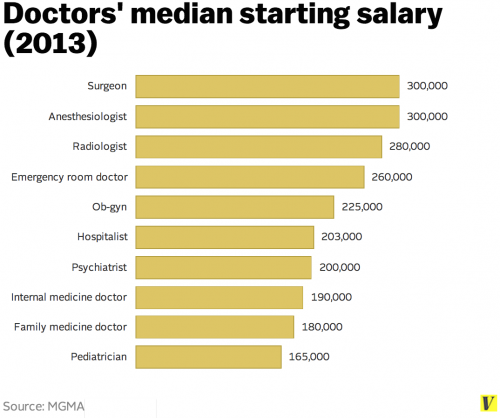
Each of these primary methods has numerous variations that may provide a more desirable or justifiable value.

Assessment

When reviewing potentially taxable estates, the planner should analyze the opportunity to use favorable valuation discounts for loss of a key employee, lack of marketability, or possibly a minority discount for lack of control. Alternatively, planning recommendations can be made to avoid exposure to valuation premiums for control. The physician-owner may avail himself or herself of many of these discounts by reducing holdings to less than 50% prior to death.

Conclusion

Your thoughts and comments on this ME-P are appreciated. Feel free to review our top-left column, and top-right sidebar materials, links, URLs and related websites, too. Then, subscribe to the ME-P. It is fast, free and secure.

Link: http://feeds.feedburner.com/HealthcareFinancialsthePostForcxos

Speaker: If you need a moderator or speaker for an upcoming event, Dr. David E. Marcinko; MBA – Publisher-in-Chief of the Medical Executive-Post – is available for seminar or speaking engagements. Contact: MarcinkoAdvisors@msn.com

OUR OTHER PRINT BOOKS AND RELATED INFORMATION SOURCES:

DICTIONARIES: http://www.springerpub.com/Search/marcinko
PHYSICIANS: www.MedicalBusinessAdvisors.com
PRACTICES: www.BusinessofMedicalPractice.com
HOSPITALS: http://www.crcpress.com/product/isbn/9781466558731
CLINICS: http://www.crcpress.com/product/isbn/9781439879900
BLOG: www.MedicalExecutivePost.com
FINANCE: Financial Planning for Physicians and Advisors
INSURANCE: Risk Management and Insurance Strategies for Physicians and Advisors

Product DetailsProduct DetailsProduct Details

Product Details  Product Details

   Product Details