TEXAS: Stock Exchange?

TXSE versus NYSE?

By Staff Reporters

***

***

A group leading the charge for an “anti-woke” TXSE exchange sees an opportunity to capitalize on 1) the Southeast’s skyrocketing economy and 2) growing disillusionment with perceived burdensome regulation at the New York-based exchanges.

The TXSE pledged to be more “CEO-friendly,” drawing a clear distinction from the NASDAQ, which requires companies on the exchange to meet a diversity requirement or explain why they can’t.

The Texas Stock Exchange will focus on enabling U.S. and global companies to access U.S. equity capital markets and will provide a venue to trade and list public companies and the growing universe of exchange-traded products. TXSE will be a fully electronic, national securities exchange that will seek registration with the U.S. Securities and Exchange Commission.

MORE: http://www.TXSEGroup.com

COMMENTS APPRECIATED

Thank You

***

***

Walking Doctors Through a Stock Exchange Trade

Understanding the Traditional Process

By Dr. David Edward Marcinko MBA MEd CMP

SPONSOR: http://www.CertifiedMedicalPlanner.org

To see how the transactions are actually handled on the floor of an exchange, let us assume that an order to buy 100 shares of General Electric has been given by a doctor customer to the registered representative (stock broker), of a member firm in Atlanta. The order is a market order (an order to buy at the lowest possible price at the time the order reaches the floor of the exchange). This order is telephoned by direct wire, or computer, to the New York office of the member firm, which in turn telephones its order to its clerk on the floor of the exchange.

Each member firm has at least one member of the exchange representing them making trades on the floor. Each one of these members is assigned a number for identification. When the floor clerk receives the order to purchase the General Electric, he causes his member’s call number to appear on 3 large boards situated so that one is always in view. These boards are constantly watched brokers so that they will know when wanted at the phone, since there’s too much noise on the floor to use a paging system. Seeing his number on the board, the broker hurries to his telephone station or cell phone and receives the order to buy 100 shares of G.E. “at the market”. Acting as a commission broker, he immediately goes to the post where G.E. is traded and asks “how’s G.E”, of the specialist?

Order and Position Types

At this point, it is important to understand the different types of orders and positions that can be used to buy and sell securities from the specialist.

Market Order:

A market order is an order to be executed at the best possible price at the time the order reaches the floor. Market orders are the most common of all orders. The greatest advantage of the market order is speed. The doctor specifies no price in this type of order, he merely orders his broker to sell or buy at the best possible price, regardless of what it may be. The best possible price on a buy is the lowest possible price. The best possible price on a sell is the highest possible price. In other words, if a medical professional customer is buying, he logically wants to pay as little as possible, but he is not going to quibble over price. He wants the stock now, whatever it takes to get it. If he’s a seller, the doctor client wants to receive as much as possible, but will not quibble, he wants out, and will take what he can get, right now. No other type of order can be executed so rapidly. Some market orders are executed in less than one minute from the time the broker phones in the order. Because the investor has specified no price, a market order will always be executed. The doctor is literally saying, “I will pay whatever it takes, or accept whatever is offered”.

Limit Order:

The chief characteristic of a limit order is that the doctor decides in advance on a price at which he decides to trade. He believes that his price is one that will be reached in the market in reasonable time. He is willing to wait to do business until he has obtained his price even at the risk his order may not be executed either in the near future or at all. In the execution of a limit order, the broker is to execute it at the limit price or better. Better, means that a limit order to buy is executed at the customer’s price limit or lower, in a limit order to sell, at price limit or higher. If the broker can obtain a more favorable price for his doctor customer than the one specified, he is required to do so.

Order Length:

Now, even though the doctor has given his price limit, we need to know the length of effectiveness of the order. Is the order good for today only? If so, it is a day order, it automatically expires at the end of the day.  Alternatively, the doctor may enter an open or, “good until canceled” order. This type of order is used when the doctor believes that the fluctuations in the market price of the stock in which he’s interested will be large enough in the future that they will cause the market price to either fall to, or rise to, his desired price, i.e. his limit price. He is reasonably sure of his judgment and is in no hurry to have/his order executed. He knows what he wants to pay or receive and is willing to wait for an indefinite period.

Years ago, such orders were carried for long periods of time without being reconfirmed. This was very unsatisfactory for all parties concerned.  A doctor would frequently forget his order existed and, if the price ever reached his limit and the order was executed, the resulting trade might not be one he wished to make. To avoid the problem, open (GTC) orders must be reconfirmed by the doctor customer each six months. Does that mean six months after the order is entered? … No! The exchange has appointed the last business day of April and the last business day of October as the two dates per year when all open orders must be reconfirmed.

Example: Dr. Smith wants to buy 100 shares of XYZ. The price has been fluctuating between 50 and 55. He places a limit order to buy at 51, although the current market price is 54. Limit orders to buy (buy limit orders) are always placed below the current market. To do otherwise makes no sense. It is possible that, within a reasonable time, the price will drop to 51 and his broker can purchase the stock for him at that price. If the broker can purchase the stock at less that 51, that would certainly be fine with the doctor customer since he wants to pay no more than 51. A sell limit order works in reverse and is always placed above the current market price.

Example: Dr. Smith wants to sell 100 shares of XYZ stock. The order is 54. A sell limit order is place at 56. Sell limit orders are always placed above the market price. As soon as the pride rises to 56, if it ever does, the broker will execute it at 56 or higher. In no case will it be executed at less than 56.

The advantage of the limit order is that the doctor has a chance to buy at less or to sell at more than the current market price prevailing when he placed the order. He assumes that the market price will become more favorable in the future than it is at the time the order is placed. The word” chance ” is important. There is also the “chance” that the order will not be executed at all. The doctor just mentioned, who wanted to buy at 51, may never get his order filled since the price may not fall that low.  If he wanted to sell at 56, the order may also not ever be executed since it might not rise that high during the time period the order is in effect.

Stop Orders:

A very important type of order is the stop order, frequently called a stop-loss order. There are two distinct types of stop orders. One is the stop order to sell, called a sell stop, and the other is a stop order to buy, called a buy stop. Either type might be thought of as a suspended market order; it goes into effect only if the stock reaches or passes through a certain price.

The fact that the market price reaches or goes through the specified stop price does not mean the broker will obtain execution at the exact stop price. It merely means that the order becomes a market order and will be executed at the best possible price thereafter. The price specified on a stop order bears a relationship to the current market price exactly opposite to that on a limit order. Whereas a sell limit is placed at a price above the current market, a sell stop is placed at a price below the current market. Similarly, while a buy limit is placed at a price below the current market, a buy stop is placed at a price above the current market. Why would a doctor investor use a stop order?

There are two established uses for stop orders. One of them might be called protective; the other might be called preventive.

Protective: This order protects a doctors’ existing profit on a stock currently owned.

For example, a doctor purchases a stock at 60. It rises to 70. He has made a paper profit of $10 per share. He realizes that the market may reverse itself. He therefore gives his broker a stop order to sell at 67. If the reversal does occur and the price drops to 67 or less, the order immediately becomes a market order. The stock is disposed of at the best possible price. This may be exactly 67, or it may be slightly above or below that figure. Why? …Because what happened at 67 was that his order became a market order; the price he actually received was dependent upon the next activity in the market. Let us suppose that the sale was made at 66 1/2. The doctor customer made a gross profit of 6 1/2 points per share on his original purchase. Without the stop order, the stock may have dropped considerably below that before the customer could have placed a market order and his profit might have been less or, in fact, he might have even sold at a loss.

Preventive:

A doctor purchases 100 shares of a stock at 30. He obviously anticipates that the price of the stock will rise in the near future (why else would he buy?). However, he realizes that his judgment may be faulty. He therefore, at the time of purchase, places a sell stop order at a price somewhat below his purchase price, for example, at 28. As yet, he has made neither profit nor loss; he’s merely acting to prevent a loss that might follow if he made the wrong bet and the stock does fall in price. If the stock does drop, the doctor knows that once it gets as low as 28, a market order will be turned in for him and, therefore, he will lose only 2 points or thereabout. It might have been much more had he not used the sell stop.

Miscellaneous Orders and Positions

Beside market, limit and stop orders, there are some other miscellaneous orders to know.

A stop limit order is a stop order that, once triggered or activated, becomes a limit order. Realize that it is possible for a stop limit to be triggered and not executed, as the limit price specified by the doctor may not be available.

In addition, there are all or none and fill or kill orders, and even though both require the entire order to be filled, there are distinct differences. An all or none (AON) is an order in which the broker is directed to fill the entire order or none of it. A fill or kill (FOK) is an order either to buy or to sell a security in which the broker is directed to attempt to fill the entire”‘ amount of the order immediately and in full, or that it be canceled.

The difference between an all or none and a fill or kill order is that with an all or none order, immediate execution is not required, while immediate execution is a critical component of the fill or kill. Be cause of the immediacy requirement, FOK orders are never found on the specialist’s book. Another difference is that AON orders are only permitted for bonds, not stocks, while FOK orders may be used for either.

Also, there exists an immediate or cancel order (IOC), which is an order to buy or sell a security in which the broker is directed to attempt to fill immediately as much of the order as possible and cancel any part remaining. This type of order differs from a fill or kill order which requires the entire order to be filled. An IOC order will permit a partial fill. Because of the immediacy requirement, IOC and FOK orders are never found on the specialist’s book.

Long and Short Positions

A long buy position means that shares are for sale from a market makers inventory, or owned by the medical investor, outright. Market makers take long positions when customers and other firms wish to sell, and they take short positions when customers and other firms want to buy in quantities larger than the market maker’s inventory. By always being ready, willing, and able to handle orders in this way, market makers assure the investing public of a ready market in the securities in which they are interested. When a security can be bought and sold at firm prices very quickly and easily, the security is said to have a high degree of liquidity, also known as marketability.

A short position investor seeks to make a profit by participating in the decline in the market price of a security.

Now, let’s see how these terms, long and short, apply to transactions by medical investors, rather than market makers, in the securities markets.

When a doctor buys any security, he is said to be taking a long position in that security. This means the investor is an owner of the security. Why does a doctor take a long position in a security? Besides – receiving dividend income, to make a profit from an increase in the market price. Once the security has risen sufficiently in price to satisfy the investor’s profit needs, the investor will liquidate his long position, or sell his stock. This would officially be known as a long sale of stock, though few people in the securities business use the label “long sale”. This is the manner in which the above investor had made a profit is the traditional method used; buy low, sell high.

Let’s look at an actual investment in General Motors to investigate this principle further. A medical investor has taken a long position in 100 shares of General Motors stock at a price of $70 per share. This means that the manner in which he can do that is by placing a market order which will be executed at the best “available market price at the time, or by the / placing of a buy limit order with a limit price of $70 per share. The investor firmly believes, on the basis of reports that he has read about the automobile industry and General Motors specifically, that at $70 a share, General Motors is a real bargain. He believes that based on its current level of performance, it should be selling for a price of between $80 and $85 per share. But, the doctor investor has a dilemma. He feels certain that the price is going to rise but he cannot watch his computer, or call his broker, every hour of every day. The reason he can’t watch is because patients have to be seen in the office. The only people who watch a computer screen all day are those in the offices of brokerage firms (stock broker registered representatives), and doctor day traders, among others.

In the above example, with a sell limit order, if the doctor investor was willing to settle for a profit of $12 per share, what order would he place at this time? If you said, “sell at $82 good ’til canceled”, you are correct. Why GTC rather than a day order? Because our doctor investor knows that General Motors is probably not going to rise from $70 to $82 in one day. If he had placed an order to sell at $82 without the GTC qualification, his order would have been canceled at the end of this trading day. He would have had to re-enter the order each morning until he got an execution at 82. Marking the order GTC (or open) relieves him of any need to replace the order every morning. Several weeks later, when General Motors has reached $82 per share in the market, his order to sell at 82 is executed. The medical investor has bought at 70 and sold at 82 and realized a $12 per share profit for his efforts.

Let’s suppose that the medical investor, who has just established a $12 per share profit, has evaluated the performance of General Motors common stock by looking at the market performance over a period of many years. Let’s further assume that the investor has found by evaluating the market price statistics of General Motors is that the pattern of movement of General Motors is cyclical. By cyclical, we mean that it moves up and down according to a regular pattern of behavior. Let’s say the investor has observed that in the past, General Motors had repeated a pattern of moving from prices in the $60 per share range as a low, to a high of approximately $90 per share. Further, our investor has observed that this pattern of performance takes approximately 10 to l2 months to do a full cycle; that is, it moves from about 60 to about 90 and back to about 60 within a period of roughly l2 months. If this pattern repeats itself continually, the investor would be well advised to buy the stock at prices in the low to mid 60’s hold onto it until it moves well into the 80’s, and then sell his long position at a profit. However, what this means is that our investor is going to be invested in General Motors only 6 months of each year. That is, he will invest when the price is low and, usually within half a year, it will reach its high before turning around and going back to its low again. How can the doctor investor make a profit not only on the rise in price of General Motors in the first 6 months of the cycle, but on the fall in price of General Motors in the second half of the cycle? One technique that is available is the use of the short sale.

The Short Sale

If a doctor investor feels that GM is at its peak of $ 90 per share, he may borrow 100 shares from his brokerage firm and sell the 100 shares of borrowed GM at $ 90. This is selling stock that is not owned and is known as a short sale. The transaction ends when the doctor returns the borrowed securities at a lower price and pockets the difference as a profit. In this case, the doctor investor has sold high, and bought low.

Odd Lots

Most of the thousands of buy and sell orders executed on a typical day on the NYSE are in 100 share or multi-100 share lots. These are called round lots. Some of the inactive stocks traded at post 30, the non-horseshoe shaped post in the northwest corner of the exchange, are traded in 70 share round lots due to their inactivity. So, while a round lot is normally 700 shares, there are cases where it could be 10 shares. Any trade for less than a round lot is known as an odd lot. The execution of odd lot orders is somewhat different than round lots and needs explanation.

When a stock broker receives an odd lot order from one of his doctor customers, the order is processed in the same manner as any other order. However, when it gets to the floor, the commission broker knows that this is an order that will not be part of the regular auction market. He takes the order to the specialist in that stock and leaves the order with the specialist. One of the clerks assisting the specialist records the order and waits for the next auction to occur in that particular stock. As soon as a round lot trade occurs in that particular stock as a result of an auction at the post, which may occur seconds later, minutes later, or maybe not until the next day, the clerk makes a record of the trade price.

Every odd lot order that has been received since the last round lot trade, whether an order to buy or sell, is then executed at the just noted round lot price, the price at which the next round lot traded after receipt of the customer’s odd lot order, plus or minus the specialist’s “cut “.  Just like everything else he does, the specialist doesn’t work for nothing. Generally, he will add 1/8 of a point to the price per share of every odd lot buy order and reduce the proceeds of each odd lot sale order by 1/8 per share. This is the compensation he earns for the effort of breaking round lots into odd lots. Remember, odd lots are never auctioned but, there can be no odd lot trade unless a round lot trades after receipt of the odd lot order.

Conclusion

And so, your thoughts and comments on this ME-P are appreciated. Feel free to review our top-left column, and top-right sidebar materials, links, URLs and related websites, too. Then, subscribe to the ME-P. It is fast, free and secure.

Speaker: If you need a moderator or speaker for an upcoming event, Dr. David E. Marcinko; MBA – Publisher-in-Chief of the Medical Executive-Post – is available for seminar or speaking engagements. Contact: MarcinkoAdvisors@msn.com

Our Other Print Books and Related Information Sources

Subscribe Now: Did you like this Medical Executive-Post, or find it helpful, interesting and informative? Want to get the latest ME-Ps delivered to your email box each day? Just subscribe and you can unsubscribe at any time. Security is assured.

Sponsors WelcomedAnd, credible sponsors and like-minded advertisers are always welcomed.

Link: https://healthcarefinancials.wordpress.com/2007/11/11/advertise

***

Hurdle Rates V. Highwater Marks V. Claw Back Provisions

More on Hedge Funds and Fees

dem-2By Dr. David Edward Marcinko MBA MEd CMP®

SPONSOR: http://www.CertifiedMedicalPlanner.org

Many physicians and other investors — even those that meet net worth guidelines — are surprised to learn that there exists a $500 – 999 billion, or more, alternative investment industry that is not generally marketed to the public. Such alternative investments have also been known as hedge funds or private investment funds.

Unlike mutual funds, these alternative investments can be structured in a wide variety of ways. Because of the very same regulations discussed above, these funds cannot be advertised, but they are far from illegal or illicit.

http://www.CertifiedMedicalPlanner.org

cmp

History

In fact, physicians were among the most significant early investors in one of the last century’s most successful hedge funds. Mr. Warren Buffett, Chairman of Berkshire Hathaway, Inc. and a legendary investor got his start in 1957 running the Buffett Partnership, an alternative investment fund not open to the general public. Mr. Buffett’s first public appearance as a money manager was before a group of physicians in Omaha, Nebraska. Eleven decided to put some money with him. A few of these original investors followed him into Berkshire Hathaway, now among the most highly valued companies in the world.

The alternative investment, or hedge, funds of today are similar to the original Buffett Partnership in many ways. So, we will discuss several unique terms which potential investors should be aware.

http://www.HealthDictionarySeries.org

hds

Hurdle Rate

Hedge funds may feature a hurdle rate as part of the calculation of the fund manager’s performance incentive compensation. Also known as a “benchmark,” the hurdle rate is the amount, expressed in percentage points, an investor’s capital account must appreciate before the account becomes subject to a performance incentive fee. Potential medical investors should view the hurdle rate as a form of protection in context with other features of the fee arrangement.

The hurdle rate, which benchmarks a single year’s performance, may be considered mutually exclusive of any other year, or the hurdle rate may compound each year. The former case is more common. In the latter case, a portfolio manager failing to attain a hurdle rate in the first year will find the effective hurdle rate considerably higher during the second year.

Once a fund manager attains the hurdle rate for an investor, the medical investor’s capital account may be charged a performance incentive fee only on the performance above and beyond the hurdle rate. Alternatively, the account may be charged a performance fee for the entire level of performance, including the performance required to attain the hurdle rate. Other variations on the use of the hurdle rate exist, and are limited only by the contract signed between the fund manager and the investor. The hurdle rate is not generally a negotiating point, however.

Example:

A fund charges a performance fee with a 6 percent hurdle rate, calculated in mutually exclusive manner. Dr. Lanouettea, a radiologist investor places $100,000 with the fund. The first year’s performance is 5 percent. The investor therefore owes no performance fee during the first year because the portfolio manager did not attain the hurdle rate. During year two, the portfolio manager guides the fund to a 7 percent return. Because the hurdle rate is mutually exclusive of any other year, the portfolio manager has attained the 6 percent hurdle rate and is entitled to a performance fee.

Highwater Mark

Some funds feature a highwater mark provision, also known as a ”loss-carryforward” provision. As with the hurdle rate, potential investors should consider the highwater mark a form of protection. A high water mark is an amount equal to the greatest value of an investor’s capital account, adjusted for contributions and withdrawals. The high water mark ensures that the hedge fund manager charges a performance incentive fee only on the amount of appreciation over and above the highwater mark set at the time the performance fee was last charged. The current trend is for newer funds to feature this highwater mark, while older, larger funds may not feature it.

Example:

A fund charges a 20 percent performance fee with a highwater mark but no hurdle rate. Dr. Butalak, a dentist investor contributes $100,000 to the fund. During the first year, the hedge fund manager grows that capital account to $110,000 and charges a 20 percent performance fee, or $2,000. The ending capital account balance and highwater mark is therefore $108,000. During year two, the account falls back to $100,000, but the highwater mark remains $108,000. During year three, in order for the manager to charge a performance fee, the manager must grow the capital account to a level above $108,000.

Clawback Provision

Rarely, a fund may provide investors with a clawback provision. This term, borrowed from the venture capital fund world, such provisions result in a refund to the investor of all or part of a previously charged performance fee if a certain level of performance is not attained in subsequent years. Such refunds in the face of poor or inadequate performance may not be legal in some states or under certain authorities.

Conclusion

Your thoughts and comments on this ME-P are appreciated. Feel free to review our top-left column, and top-right sidebar materials, links, URLs and related websites, too. Then, subscribe to the ME-P. It is fast, free and secure.

Speaker: If you need a moderator or speaker for an upcoming event, Dr. David E. Marcinko; MBA – Publisher-in-Chief of the Medical Executive-Post – is available for seminar or speaking engagements. Contact: MarcinkoAdvisors@msn.com

OUR OTHER PRINT BOOKS AND RELATED INFORMATION SOURCES:

 Risk Management, Liability Insurance, and Asset Protection Strategies for Doctors and Advisors: Best Practices from Leading Consultants and Certified Medical Planners™  Comprehensive Financial Planning Strategies for Doctors and Advisors: Best Practices from Leading Consultants and Certified Medical Planners™

***

DAILY UPDATE: +/- Stocks and Dull Market Reviews

MEDICAL EXECUTIVE-POST TODAY’S NEWSLETTER BRIEFING

***

Essays, Opinions and Curated News in Health Economics, Investing, Business, Management and Financial Planning for Physician Entrepreneurs and their Savvy Advisors and Consultants

Serving Almost One Million Doctors, Financial Advisors and Medical Management Consultants Daily

A Partner of the Institute of Medical Business Advisors , Inc.

http://www.MedicalBusinessAdvisors.com

SPONSORED BY: Marcinko & Associates, Inc.

***

http://www.MarcinkoAssociates.com

Daily Update Provided By Staff Reporters Since 2007.
How May We Serve You?
© Copyright Institute of Medical Business Advisors, Inc. All rights reserved. 2024

REFER A COLLEAGUE: MarcinkoAdvisors@msn.com

SPONSORSHIPS AVAILABLE: https://medicalexecutivepost.com/sponsors/

ADVERTISE ON THE ME-P: https://tinyurl.com/ytb5955z

***

CITE: https://www.r2library.com/Resource

What’s up

What’s down

  • Victoria’s Secret shares dropped 6.37% even though the company met both earnings and revenue estimates this quarter. It’s still mid-turnaround, however, and high debt remains a concern for investors.
  • Big Lots shares tanked 18.32% after the company announced abysmal earnings thanks to core customers cutting back their spending.
  • Canopy Growth shares dropped 8.45% after the marijuana producer announced plans to sell more shares in order to keep the company afloat.
  • Five Below shares fell 10.60% after announcing unimpressive earnings as low-income customers get squeezed by inflation.
  • Nio shares dropped 6.92% after the EV maker announced slower earnings than anticipated thanks to the ongoing decline in EV sales.

CITE: https://tinyurl.com/2h47urt5

Here’s where the major benchmarks ended:

  • The S&P 500 index fell 1.07 points (0.02%) to 5,352.96; the Dow Jones Industrial Average® ($DJI) gained 78.84 points (0.2%) to 38,886.17; the NASDAQ Composite eased 14.78 points (0.1%) to 17,173.12.
  • The 10-year Treasury note yield (TNX) fell slightly to 4.285%.
  • The CBOE Volatility Index® (VIX) declined 0.05 to  12.58.

CITE: https://tinyurl.com/tj8smmes

COMMENTS APPRECIATED

PLEASE SUBSCRIBE: MarcinkoAdvisors@msn.com

Thank You

***

***

***

***

EDUCATIONAL TEXTBOOKS: https://tinyurl.com/4zdxuuwf

***

VENTURE CAPITAL: In the Digital Health Care Space

Dr. David Edward Marcinko MBA CMP

SPONSOR: http://www.MarcinkoAssociates.com

***

***

At Marcinko & Associates, we appreciate that Venture Capital funding for entrepreneurs in the digital health space cooled a bit in 2020-22 following a red-hot 2018-20. And, overall, digital health companies raised $15.3 billion last year, down from the $29.1 billion raised in 2021—but still above the $14.1 billion raised in 2020, according to Rock Health a seed fund that supports digital health startups.

CITE: https://www.r2library.com/Resource

Nevertheless, other analysts predict VC investors and Investment Bankers will still put a good amount of money into digital health in 2024 thru 2027, especially in alternative care, drug development, health information technology, artificial intelligence, EMRs and software that reduces physician workload.

An essential first part of attracting VC interest and IB money is the crafting and presentation of your formal business plan [“elevator pitch”]; as well as the needed technical and managerial experience. This too is crucial for success and exactly where we can assist.

Of course, companies focused on scaling and growing will have different needs across the business lifecycle.

And so, no matter where you are in your journey—from seeking early funding to making final preparations for your IPO—we have equity and insightful administration solutions for you and can assist at any stage of your growth spectrum.

MORE: https://marcinkoassociates.com/fmv-appraisals/

CONTACT US TODAY – RETAIN US TOMORROW

How May We Serve You?

E-mail: MarcinkoAdvisors@msn.com

Thank You

***

***

DAILY UPDATE: D-Day, Digital Health, Stock Companies as Markets Zoom Up!

MEDICAL EXECUTIVE-POST TODAY’S NEWSLETTER BRIEFING

***

Essays, Opinions and Curated News in Health Economics, Investing, Business, Management and Financial Planning for Physician Entrepreneurs and their Savvy Advisors and Consultants

Serving Almost One Million Doctors, Financial Advisors and Medical Management Consultants Daily

A Partner of the Institute of Medical Business Advisors , Inc.

http://www.MedicalBusinessAdvisors.com

SPONSORED BY: Marcinko & Associates, Inc.

***

http://www.MarcinkoAssociates.com

Daily Update Provided By Staff Reporters Since 2007.
How May We Serve You?
© Copyright Institute of Medical Business Advisors, Inc. All rights reserved. 20224

REFER A COLLEAGUE: MarcinkoAdvisors@msn.com

SPONSORSHIPS AVAILABLE: https://medicalexecutivepost.com/sponsors/

ADVERTISE ON THE ME-P: https://tinyurl.com/ytb5955z

***

Today is the 80th anniversary of D-Day: More than 60 World War II veterans flew to Paris over the weekend to take part in what organizers believe could be the final major WWII commemoration involving living veterans. American veterans will be joined by President Joe Biden and other heads of state in Normandy.

CITE: https://www.r2library.com/Resource

The digital health market has had a tough year, with no IPOs in all of 2023. Comparatively, the industry saw roughly 20 public exits in 2021. The recent slowdown in the broader IPO market is linked to several trends, including high interest rates and some high-profile bankruptcies, according to Adriana Krasniansky, head of research at digital health strategy group and venture fund Rock Health’s advisory arm.

Here’s where the major benchmarks ended:

  • The S&P 500 index rose 62.69 points (1.2%) to 5,354.03; the Dow Jones Industrial Average® ($DJI) gained 96.04 points (0.3%) to 38,807.33; the NASDAQ Composite rallied 330.86 points (2.0%) to 17,187.90.
  • The 10-year Treasury note yield (TNX) fell more than 5 basis points to 4.283%, its lowest level since April 1.
  • The CBOE Volatility Index® (VIX) declined 0.53 to 12.63.

What’s up

  • Nvidia only rose 5.16% today, but it was enough to surpass Apple’s market cap, making the high-flying semiconductor stock the second most valuable public company in the US.
  • Crowdstrike rose 11.98% today after reporting better than expected fiscal first quarter earnings yesterday afternoon.
  • Guidewire Software rose 17.63% today after its beat & raise quarterly report late yesterday.
  • Stitch Fix rose 29.40% after a red-hot earnings report, completely turning around the stock’s slow slide downward this year.
  • SweetGreen popped 12.76% this afternoon after revealing that its new automated kitchens can actually save on costs and cut time for orders in the long run.

What’s down

CITE: https://tinyurl.com/2h47urt5

In case you needed more proof that we’re living in the strangest timeline: Morgan Stanley, which owns E*Trade, is contemplating kicking stock influencer Roaring Kitty off the platform. It’s concerned he manipulated GameStop stocks by…posting a meme on X. (the Wall Street Journal)

CITE: https://tinyurl.com/tj8smmes

COMMENTS APPRECIATED

PLEASE SUBSCRIBE: MarcinkoAdvisors@msn.com

Thank You

***

***

***

***

EDUCATIONAL TEXTBOOKS: https://tinyurl.com/4zdxuuwf

***

PODCAST: Number #1 Rule for Healthcare Investing

SUPPLY-DEMAND CONSIDERATIONS

By Eric Bricker MD

***

CITE: https://www.r2library.com/Resource

***

COMMENTS APPRECIATED

Thank You

***

***

***

DAILY UPDATE: The Peso, Health Company News with Firmer Stock Markets

MEDICAL EXECUTIVE-POST TODAY’S NEWSLETTER BRIEFING

***

Essays, Opinions and Curated News in Health Economics, Investing, Business, Management and Financial Planning for Physician Entrepreneurs and their Savvy Advisors and Consultants

Serving Almost One Million Doctors, Financial Advisors and Medical Management Consultants Daily

A Partner of the Institute of Medical Business Advisors , Inc.

http://www.MedicalBusinessAdvisors.com

SPONSORED BY: Marcinko & Associates, Inc.

***

http://www.MarcinkoAssociates.com

Daily Update Provided By Staff Reporters Since 2007.
How May We Serve You?
© Copyright Institute of Medical Business Advisors, Inc. All rights reserved. 2024

REFER A COLLEAGUE: MarcinkoAdvisors@msn.com

SPONSORSHIPS AVAILABLE: https://medicalexecutivepost.com/sponsors/

ADVERTISE ON THE ME-P: https://tinyurl.com/ytb5955z

***

Sword Health, a virtual provider of musculoskeletal care, banked a financing round of $130 million after nearly tripling its revenue in the past year.


Blue Cross and Blue Shield of Kansas City is leaving the Medicare Advantage market, citing increased regulatory demands and a relatively small MA membership.


And … Cigna laid off 261 employees from its Evernorth Care Group division in Arizona. Keep up to date with all workforce updates with Fierce Healthcare’s ongoing layoff tracker.

CITE: https://www.r2library.com/Resource

On Monday, the largest U.S.-traded, Mexico-focused fund — the iShares MSCI Mexico ETF which has more than $2 billion under management — slid 10.7% to book its largest daily percentage decrease since March 16th, 2020. Meanwhile, the Franklin FTSE Mexico ETF was off 10%, also logging its worst day in over four years, according to Dow Jones Market Data. The two funds, which traded at $57.93 and $28.78, respectively, on Monday afternoon, closed at their lowest levels since early November, according to Dow Jones Market Data. 

CITE: https://tinyurl.com/2h47urt5

June got off to a rough start on Monday when a glitch at the NYSE incorrectly made it appear that some stocks suffered steep plunges—including a 99% dip in Berkshire Hathaway. Trading in the affected stocks was quickly halted and the errors were fixed.

CITE: https://tinyurl.com/tj8smmes

What’s up

What’s down

  • Stanley Black & Decker fell 3.69% after it was downgraded at Barclays. A slowdown in consumer spending plus a slow housing market means not many people are buying fancy drills at the moment.
  • Bath & Body Works fell 12.60% after beating analyst expectations this quarter but announcing that next quarter will bring lower lower earnings.
  • Designer Brands fell 20.27% after it beat revenue expectations but missed on earnings as its turnaround continues.

Here’s where the major benchmarks ended:

  • The S&P 500 index gained 7.94 points (0.2%) to 5,291.34; the Dow Jones Industrial Average® ($DJI) added 140.26 points (0.4%) to 38,711.29; the NASDAQ Composite® ($COMP) rose 28.38 points (0.2%) to 16,857.05.
  • The 10-year Treasury note yield (TNX) fell more than 7 basis points to 4.328%.
  • The CBOE Volatility Index® (VIX) rose 0.05 to 13.16.

COMMENTS APPRECIATED

PLEASE SUBSCRIBE: MarcinkoAdvisors@msn.com

Thank You

***

***

***

***

EDUCATIONAL TEXTBOOKS: https://tinyurl.com/4zdxuuwf

***

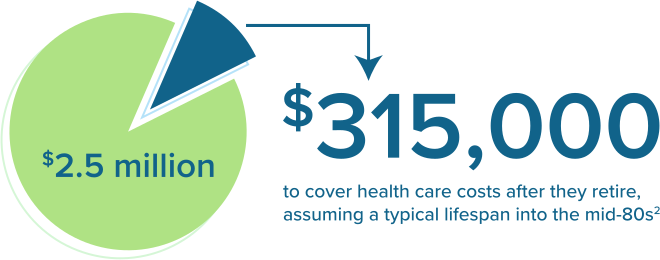
PHYSICIANS: Is $2.5 Million “Really” Enough to Retire at Age 65?

By Staff Reporters

SPONSOR: http://www.MarcinkoAssociates.com

DOCTORS ARE DIFFERENT: https://marcinkoassociates.com/doctors-unique/

***

***

Is $2.5 Million Really Enough to Retire?

A retirement nest egg of $2.5 million can likely produce an annual income of $100,000 for as long as you are likely to live. This is using the 4% withdrawal rate many financial advisors consider standard. After starting with the first withdrawal of 4% of the total, the annual withdrawal will adjust for inflation. For example, if inflation runs at the target 2% rate of federal policymakers, during retirement the retiree will withdraw:

$100,000

in the first year

$102,000

in the second year

$104,040

in the third year and so on …

According to this model and conventional wisdom, a 4% withdrawal rate will allow a portfolio to last for at least 30 years. This would permit a 65-year-old retiree to maintain consistent purchasing power until age 95 and beyond.

For most retirees, this will likely be adequate to maintain a satisfying standard of living. Only about 3% of 2,000 retirees surveyed by the Employee Benefit Research Institute in 2022 spent $7,000 or more per month, equivalent to $84,000 in annual spending.

This model does not include a number of other factors. For instance, nearly all retirees are eligible for Social Security. For 2023, the maximum monthly Social Security benefit for people who claim benefits at full retirement age is $3,627. That’s equal to more than half the spending of the top 3% of retirees surveyed by EBRI. And, like the standard withdrawal rate, Social Security benefits are indexed to inflation.

5 Variables for Retiring With $2.5 Million at Age 65

While $2.5 million could seem like enough to retire at 65, many factors could change the outlook.

1. Unexpected Healthcare Costs

The Fidelity Retiree Health Care Cost Estimate suggests an average 65-year-old couple could need (approximate, after taxes):Unexpected Healthcare Costs

This assumes both spouses are enrolled in traditional Medicare, which between Medicare Part A and Part B covers expenses such as hospital stays, doctor visits and services, physical therapy, lab tests and more, and in Medicare Part D, which covers prescription drugs.

This figure does not include long-term care (“custodial care”), most dental care, eye exams and more, so your estimated healthcare costs in retirement could be considerably more.

2. Inflation

Inflation can powerfully influence retirees’ financial well-being. When inflation occurs, it reduces the purchasing power of money withdrawn from your retirement account. You can increase withdrawals to maintain purchasing power, but this risks more quickly depleting your savings.

3. Market Downturns

Inflation isn’t the only cause of market downturns. Business cycles and financial crises can exaggerate normal fluctuations in stock market valuations. If you’re selling investments to generate income for living expenses, you may want to sell more if valuations are down.

4. Longevity

While living a long life is positive, you could outlive the money you’ve saved for retirement. Many financial planners use life expectancy to age 95 or 100 when developing plans for funding retirement.

The Social Security Administration says an average 65-year-old male can live to age 83, while the average woman can live to age 86. However, people in their 80s and 90s also generally reduce their spending, with the exception of healthcare costs.

5. Estate Planning

Retiring at 65 with $2.5 million likely involved generating high income and savings, so there’s a chance you could have assets to pass on. With estate planning, adding members of your family as beneficiaries for homes you paid off with a mortgage may have long-term positives.

You may also want to think about any additional income streams. For example, if you own a medical practice or business, you may want to add your family as a beneficiary so they can decide to keep the business running or sell it.

CITE: https://www.r2library.com/Resource

COMMENTS APPRECIATED

Thank You

***

***

***

SUNK COSTS: The Fallacy

By Staff Reporters

***

***

A common term in business, the sunk cost fallacy applies to our choices and activities made daily.

CITE: https://www.r2library.com/Resource/Title/082610254

A sunk cost fallacy is a simple logical fallacy that means sticking with a losing or failed venture or activity because you have already invested considerable time, energy, money, or other things you can’t get back. It’s the idea that because you already have incurred costs, you stick with it to  “get your money’s worth.”

The sunk cost fallacy differs from other logical fallacies because it’s not a rhetorical fallacy. You may also experience a discussion with a “red herring” or “straw man” fallacy with someone. But the sunk cost fallacy is an illogical choice as a way to justify to yourself why you keep doing something.

***
COMMENTS APPRECIATED

Thank You

***

***

DAILY UPDATE: Cyber Health Hacks, DocGo, Public Companies and Mixed Stock Markets

MEDICAL EXECUTIVE-POST TODAY’S NEWSLETTER BRIEFING

***

Essays, Opinions and Curated News in Health Economics, Investing, Business, Management and Financial Planning for Physician Entrepreneurs and their Savvy Advisors and Consultants

Serving Almost One Million Doctors, Financial Advisors and Medical Management Consultants Daily

A Partner of the Institute of Medical Business Advisors , Inc.

http://www.MedicalBusinessAdvisors.com

SPONSORED BY: Marcinko & Associates, Inc.

***

http://www.MarcinkoAssociates.com

Daily Update Provided By Staff Reporters Since 2007.
How May We Serve You?
© Copyright Institute of Medical Business Advisors, Inc. All rights reserved. 2024

REFER A COLLEAGUE: MarcinkoAdvisors@msn.com

SPONSORSHIPS AVAILABLE: https://medicalexecutivepost.com/sponsors/

ADVERTISE ON THE ME-P: https://tinyurl.com/ytb5955z

***

Dollar General has ended a pilot program with mobile care provider DocGo, becoming the latest retailer to wind down primary care operations, spokespeople from both companies confirmed to Healthcare Brew on May 31st. The retail giant—the largest in the US by number of stores—began the healthcare partnership in 2023 after announcing ambitions to establish itself as a “health destination” two years prior. DocGo and Dollar General offered mobile health clinics with basic, preventive, and urgent care services at three stores in Tennessee. Dollar General executives previously said in a June 2023 press release that they would expand the DocGo pilot program to more stores.

CITE: https://www.r2library.com/Resource

Here’s where the major benchmarks ended:

  • The S&P 500® index (SPX) rose 5.89 points (0.1%) to 5,283.40; the Dow Jones Industrial Average® ($DJI) lost 115.29 points (0.3%) to 38,571.03; the NASDAQ Composite® ($COMP) advanced 93.65 points (0.6%) to 16,828.67.
  • The 10-year Treasury note yield (TNX) declined more than 11 basis points to 4.40%, near a two-week low.
  • The CBOE Volatility Index® (VIX) rose 0.19 to 13.11.

🟢 What’s up?

What’s down?

  • GSK dropped 8.65% on the news that a Delaware court will allow scientific evidence to be heard in a series of lawsuits regarding the discontinued heartburn drug Zantac.
  • Boston Beer fell 3.25% after shareholders decided to take their winnings and run following Friday’s big pop after news of its apparent acquisition by Suntory.
  • Tractor Supply shares toppled 6.21%, likely on poor manufacturing news from the ISM Index, while Halliburton shares fell 5.34%, likely on poor oil news from OPEC+.
  • Dozens of Mexican stocks and ETFs tumbled today on the election of a new president. The steepest decline was seen by Grupo Financiero Banorte, SAB, which fell 11.38%.

CITE: https://tinyurl.com/2h47urt5

Cyberattacks around the country are wreaking havoc on the ground at targeted hospitals, but a new study shows that security breaches hurt surrounding providers, too. The research published in JAMA on May 29 found that cyberattacks led to a decrease in emergency department (ED) visits at attacked hospitals and an increase in ED patients at nearby hospitals.

CITE: https://tinyurl.com/tj8smmes

COMMENTS APPRECIATED

PLEASE SUBSCRIBE: MarcinkoAdvisors@msn.com

Thank You

***

***

***

***

EDUCATIONAL TEXTBOOKS: https://tinyurl.com/4zdxuuwf

***

DAILY UPDATE: Jobs, Chips, Banks and Tax Refunds

MEDICAL EXECUTIVE-POST TODAY’S NEWSLETTER BRIEFING

***

Essays, Opinions and Curated News in Health Economics, Investing, Business, Management and Financial Planning for Physician Entrepreneurs and their Savvy Advisors and Consultants

Serving Almost One Million Doctors, Financial Advisors and Medical Management Consultants Daily

A Partner of the Institute of Medical Business Advisors , Inc.

http://www.MedicalBusinessAdvisors.com

SPONSORED BY: Marcinko & Associates, Inc.

***

http://www.MarcinkoAssociates.com

Daily Update Provided By Staff Reporters Since 2007.
How May We Serve You?
© Copyright Institute of Medical Business Advisors, Inc. All rights reserved. 2024

REFER A COLLEAGUE: MarcinkoAdvisors@msn.com

SPONSORSHIPS AVAILABLE: https://medicalexecutivepost.com/sponsors/

ADVERTISE ON THE ME-P: https://tinyurl.com/ytb5955z

***

Stat: 4.6%. That’s how much the average income tax refund increased YoY, from $2,878 in April 2023 to $3,011 as of April 5th. (Axios)

Quote: “Wall Street has never been known for high character and high values. Is there a willingness to support Trump if it looks like he’s on the right track? Yes. I’m not proud of that, and I’m not part of that either.”—Dan Lufkin, co-founder of investment bank Donaldson, Lufkin & Jenrette (Bloomberg)

Read: Bank of America’s CEO sees an overall cautiousness on display in the current spending choices of consumers and businesses. (CNBC)

CITE: https://www.r2library.com/Resource

The May jobs report will drop on Friday: Little change is expected from April, when the unemployment rate ticked up to 3.9% and fewer jobs were added than expected (175,000). This jobs report will be one of the final pieces of economic data to drop before the Fed meets on June 11th and 12th. The central bank is unlikely to announce an interest rate cut.

CITE: https://tinyurl.com/2h47urt5

Software is no longer eating the world. For the first time, chip stocks now account for the heaviest weighting in the S&P 500, taking the top spot away from software companies last week. Salesforce and other enterprise software giants are getting crushed as companies prioritize generative AI investments (chips and servers) over SaaS products.

CITE: https://tinyurl.com/tj8smmes

COMMENTS APPRECIATED

PLEASE SUBSCRIBE: MarcinkoAdvisors@msn.com

Thank You

***

***

***

***

EDUCATIONAL TEXTBOOKS: https://tinyurl.com/4zdxuuwf

***

DIGITAL HEALTH: Technology Start-Ups

By Staff Reporters

***

***

The “new normal” is characterized by fewer deals, smaller deal sizes, and fewer investors, Rock Health found in a recent study. And if funding in the second half of the year continues at its current pace, 2023 will be the lowest digital health funding year since 2019, according to the report, authored primarily by research associates Mihir Somaiya and Madelyn Knowles. For example, in the first half of 2023:

  • Digital health startups raised $6.1 billion in 244 deals. The average deal size was $24.8 million.
  • In Q1, startups raised $3.5 billion in 131 deals, and $2.5 billion over 113 deals in Q2.
  • 555 investors were involved in fund raises, compared to 775 in the first half of 2022 and 832 in the first half of 2021. Of those investors, 71% had previously invested in digital health.
  • There were roughly 12 digital health startup acquisitions per month, compared to 15 monthly in 2022 and 14 each month for the past five years.

The lack of dollars flowing to companies is already reverberating: Some startups are closing down. Pear Therapeutics filed for bankruptcy in April and sold its assets to four buyers in May. Other digital health startups—SimpleHealth, The Pill Club, Hurdle, and Quil Health—also closed in the first half of 2023.

RELATED: https://medicalexecutivepost.com/2023/08/04/venture-capital-rising-for-womens-health-start-ups/

Assessment: There may be fewer investors overall, but those still investing in digital health are putting a lot of money down, according to Rock Health.

***

***
COMMENTS APPRECIATED

Thank You

***

***

Financial “Planning” versus Financial “Preparing”

Understanding the Difference

By Rick Kahler CFP®

Retirement planning is one of the issues that commonly lead clients to consult financial advisers.

One of its essential aspects is creating a plan to save and invest in order to provide a comfortable retirement income. Ideally, this starts many years ahead of retirement, even as early as your first paycheck.

As retirement comes closer, planning for it expands to take in a host of other considerations, such as deciding when to retire, where to live, and what kind of lifestyle you hope to have. When retirement becomes a reality, the focus shifts to carrying out the plan.

Preparing

All of this planning is crucial. Yet, for both financial advisers and clients, it’s good to keep in mind that planning has its limits. In the post-retirement years, it may be helpful to think in terms of preparing for old age rather than planning for it.

The older we get, the more important this distinction between planning and preparing becomes. Too many life-changing things can happen without regard to our best-laid plans. Often they occur unexpectedly, resulting in emergency situations where urgent decisions have to be made. A stroke or a fall, a diagnosis of terminal illness, a broken hip that leaves someone unable to go back to independent living—and suddenly, right now, the family needs to find an assisted living facility, arrange for live-in help, or sell a home.

What are some of the ways to prepare for these contingencies?

  1. Explore housing options well ahead of time. Find out what assisted living, home care, and nursing home services and facilities are available where you live and whether they have waiting lists. Have family conversations about possibilities like relocating or sharing households:
  2. Research the financial side of these options. Investigate the cost of hiring help at home, assisted living facilities, and nursing care centers. Find out what is and is not covered by Medicare and long-term care insurance. For example, people are sometimes surprised to learn that Medicare does not pay for nursing home care other than short-term medical stays.
  3. Designate someone to take over decision-making, and do the paperwork. Execute documents like a living will, medical power of attorney, and contingent power of attorney. Update them as necessary, and give copies to your doctors, your financial planner, and appropriate family members.
  4. Start relatively early to downsize. Well before you’re ready to let go of possessions or move into smaller housing, start considering what to do with your “stuff.” Focus on the decisions rather than the distribution. There’s no need to get rid of possessions prematurely, but decide what you want to do with them—and put in writing. Do this while it’s still your choice, rather than something your family members do while you’re in the hospital or nursing home
  5. Do your best to practice flexibility and acceptance. No matter how strongly you want to live in your own home until the end of your life, for example, it may not be possible. The physical limitations of aging can limit our choices, and even the best options available may not be what we would like them to be. It is a profound gift to yourself and your family members to accept these realities with as much grace as you can muster.

***

***

Assessment

Finally, please don’t underestimate the importance of planning financially for retirement. Because the bottom line is that you can’t plan for all the things that might happen as you age, but you can prepare to deal with them. One of the most useful tools to cope with those contingencies is having enough money.

Conclusion

Your thoughts and comments on this ME-P are appreciated. Feel free to review our top-left column, and top-right sidebar materials, links, URLs and related websites, too. Then, subscribe to the ME-P. It is fast, free and secure.

Speaker: If you need a moderator or speaker for an upcoming event, Dr. David E. Marcinko; MBA – Publisher-in-Chief of the Medical Executive-Post – is available for seminar or speaking engagements. Contact: MarcinkoAdvisors@msn.com

OUR OTHER PRINT BOOKS AND RELATED INFORMATION SOURCES:

Comprehensive Financial Planning Strategies for Doctors and Advisors: Best Practices from Leading Consultants and Certified Medical Planners™

***

OFTEN NEEDED: A Business, Medical Management or Financial SECOND Opinion?

SPONSOR: http://www.MARCINKOASSOCIATES.com

***

***

When You May Need a Business, Management or Financial Second Opinion?

The Marcinko & Associates second opinion service is a physician-to-advisor telephone or e-mail portal that connects independent financial and business management professionals and consultants, with doctors or healthcare executives desiring affordable and unbiased financial or business advice on an as-needed, pay-per-use basis.

Medical professionals and healthcare executives can now receive direct access to us in the areas of Practice Enhancement, Investing, Financial Planning, Asset Allocation, Portfolio Management, Insurance, Mortgage and Lending, Practice Management, Information Technology, Human Resources and Employee Benefits.

This Marcinko & Associates service is designed to fill a growing need for medically focused financial or managerial advice that traditional consultants have not been able to serve. For example, situations in which you could benefit from a personal financial planning second opinion include: 

READ HERE: https://marcinkoassociates.com/opinions-second/

COMMENTS APPRECIATED

Thank You

***

***

DAILY UPDATE: Mixed Stock Markets with DJIA Up

MEDICAL EXECUTIVE-POST TODAY’S NEWSLETTER BRIEFING

***

Essays, Opinions and Curated News in Health Economics, Investing, Business, Management and Financial Planning for Physician Entrepreneurs and their Savvy Advisors and Consultants

Serving Almost One Million Doctors, Financial Advisors and Medical Management Consultants Daily

A Partner of the Institute of Medical Business Advisors , Inc.

http://www.MedicalBusinessAdvisors.com

SPONSORED BY: Marcinko & Associates, Inc.

***

http://www.MarcinkoAssociates.com

Daily Update Provided By Staff Reporters Since 2007.
How May We Serve You?
© Copyright Institute of Medical Business Advisors, Inc. All rights reserved. 2024

REFER A COLLEAGUE: MarcinkoAdvisors@msn.com

SPONSORSHIPS AVAILABLE: https://medicalexecutivepost.com/sponsors/

ADVERTISE ON THE ME-P: https://tinyurl.com/ytb5955z

***

Here’s where the major benchmarks ended:

  • The S&P 500 index added 42.03 points (0.8%) to 5,277.51, down 0.5% for the week; the Dow Jones Industrial Average® ($DJI) gained 574.84 points (1.5%) to 38,686.32, down 1.0% for the week; the NASDAQ Composite® ($COMP) declined 2.06 points (0.01%) to 16,735.02, down 1.1% for the week. 
  • The 10-year Treasury note yield (TNX) fell more than 6 basis points to 4.491%.
  • The CBOE Volatility Index® (VIX) declined 1.55 to 12.92.

CITE: https://www.r2library.com/Resource

🟢 What’s up

  • Gap popped 27% after the retail conglomerate raised its guidance for the year and sales for all four of its brands beat earnings expectations.
  • Caesars jumped 12% because of the Carl Icahn effect: The investor reportedly acquired a “sizeable stake” in the casino company, per Bloomberg.
  • The Boston Beer Company shares gained 21% on reports that the company may sell itself to Suntory.
  • Ambarella leapt 20% after better-than-expected earnings for the semiconductor company.
  • PENN Entertainment jumped 20% today after an activist investor called for a sale of the company.

What’s down

CITE: https://tinyurl.com/2h47urt5

Private equity and consolidation are leading to a rise in hospital costs for patients. (the Wall Street Journal)

CITE: https://tinyurl.com/tj8smmes

COMMENTS APPRECIATED

PLEASE SUBSCRIBE: MarcinkoAdvisors@msn.com

Thank You

***

***

***

***

EDUCATIONAL TEXTBOOKS: https://tinyurl.com/4zdxuuwf

***

Understanding Risk Adjusted Portfolio Performance

A Vital Feedback Loop for any Medical Professional’s Investment Program

By Dr. David Edward Marcinko MBA, MEd, CMP™

[Publisher-in-Chief]

While recently visiting the beautiful Johns Hopkins University and Medical School in Baltimore Maryland, I realized that investment portfolio performance measurement — much like an annual physical exam in the Spring — is an important feedback loop to monitor progress towards the goals of the medical professional’s investment program.

Performance comparisons to market indices and/or peer groups are a useful part of this feedback loop, as long as they are considered in the context of the market environment and with the limitations of market index and manager database construction.  Inherent to performance comparisons is the reality that portfolios taking greater risk will tend to out-perform less risky investments during bullish phases of a market cycle, but are also more likely to under-perform during the bearish phase.  The reason for focusing on performance comparisons over a full market cycle is that the phases biasing results in favor of higher risk approaches can be balanced with less favorable environments for aggressive approaches to lessen/eliminate those biases.

THINK: The “flash crash” of March 2009, and the DJIA now hovering near a record of  late.

The Biases

Can we eliminate the biases of the market environment by adjusting performance for the risk assumed by the portfolio?  While several interesting calculations have been developed to measure risk-adjusted performance, the unfortunate answer is that the biases of the market environment still tend to have an impact even after adjusting returns for various measures of risk.

Assessment

However, medical professionals and their advisors will have many different risk-adjusted return statistics presented to them, so understanding the Sharpe ratio, Treynor ratio, Jensen’s measure or alpha, Morningstar star ratings, etc. and their limitations should help to improve the decisions made from the performance measurement feedback loop.

And, these are discussed elsewhere on this ME-P.

MORE:  https://medicalexecutivepost.com/2022/10/19/what-is-risk-adjusted-stock-market-performance/

Conclusion

Your thoughts and comments on this ME-P are appreciated. Feel free to review our top-left column, and top-right sidebar materials, links, URLs and related websites, too. Then, subscribe to the ME-P. It is fast, free and secure.

Speaker: If you need a moderator or speaker for an upcoming event, Dr. David E. Marcinko; MBA – Publisher-in-Chief of the Medical Executive-Post – is available for seminar or speaking engagements. Contact: MarcinkoAdvisors@msn.com

OUR OTHER PRINT BOOKS AND RELATED INFORMATION SOURCES:

Product DetailsProduct DetailsProduct Details

Product Details  Product Details

***

Our iMBA e-Book Sales and Service

The Institute of Medical Business Advisors is a leading national scope provider of healthcare economics, finance, investing, managerial accounting, policy, management and business administration education and medical practice management textbooks, reports, hand-books, dictionaries, journals, white-papers, fair-market valuations [FMV] and legal advisory opinions using multi-platform and traditional seminars and channels of knowledge distribution. iMBA helps the nation’s financial, healthcare and education professionals make decisive improvements in their direction and performance by empowering them through unbiased information, consultants and proprietary tools, books, templates and B-school styled case models.A virtuous “win-win” situation for all concerned.

Link: https://medicalexecutivepost.com/me-pr-a-new-feature/

The firm serves universities, medical, business, graduate and nursing schools; physicians, dentists, attorneys and legal societies – accountants, financial service providers, stock brokers, RIAs, wealth and hedge fund managers – emerging entities, hospitals, clinics, outpatient centers, CXOs and their BODs – the press, media and related academic entities.

Link: http://www.MarcinkoAssociates.com

***

AT YOUR SERVICE

***

The Hemline Stock Market Index

What’s Up?

[By staff reporters]

According to Wikipedia, the hemline index is a theory presented by economist George Taylor in 1926. The theory suggests that hemlines on women’s dresses rise along with stock prices.

In good economies, we get such results as miniskirts (as seen in the 1920s and the 1960s), or in poor economic times, as shown by the 1929 Wall Street Crash, hems can drop almost overnight.

Non-peer-reviewed research in 2010 supported the correlation, suggesting that “the economic cycle leads the hemline with about three years”.

***

***

Conclusion

Your thoughts and comments on this ME-P are appreciated. Feel free to review our top-left column, and top-right sidebar materials, links, URLs and related websites, too. Then, subscribe to the ME-P. It is fast, free and secure.

Speaker: If you need a moderator or speaker for an upcoming event, Dr. David E. Marcinko; MBA – Publisher-in-Chief of the Medical Executive-Post – is available for seminar or speaking engagements. Contact: MarcinkoAdvisors@msn.com

***

Risk Management, Liability Insurance, and Asset Protection Strategies for Doctors and Advisors: Best Practices from Leading Consultants and Certified Medical Planners™8Comprehensive Financial Planning Strategies for Doctors and Advisors: Best Practices from Leading Consultants and Certified Medical Planners™

***

DAILY UPDATE: Hospital Charges, Cannabis and Stocks as Markets Slump

MEDICAL EXECUTIVE-POST TODAY’S NEWSLETTER BRIEFING

***

Essays, Opinions and Curated News in Health Economics, Investing, Business, Management and Financial Planning for Physician Entrepreneurs and their Savvy Advisors and Consultants

Serving Almost One Million Doctors, Financial Advisors and Medical Management Consultants Daily

A Partner of the Institute of Medical Business Advisors , Inc.

http://www.MedicalBusinessAdvisors.com

SPONSORED BY: Marcinko & Associates, Inc.

***

http://www.MarcinkoAssociates.com

Daily Update Provided By Staff Reporters Since 2007.
How May We Serve You?
© Copyright Institute of Medical Business Advisors, Inc. All rights reserved. 2024

REFER A COLLEAGUE: MarcinkoAdvisors@msn.com

SPONSORSHIPS AVAILABLE: https://medicalexecutivepost.com/sponsors/

ADVERTISE ON THE ME-P: https://tinyurl.com/ytb5955z

***

The prices hospitals charge for their services have long been opaque, but thanks to a 2021 hospital price transparency law, the picture is starting to come slightly into focus. And it turns out, there are some huge disparities in the prices hospitals charge that can’t be attributed to quality of care, according to a recent study from research institute Rand Corporation.

CITE: https://www.r2library.com/Resource

🟢 What’s up

What’s down

  • Salesforce is down 19.73% after the cloud computing company missed revenue estimates for the first time since 2006 and projected slower sales in the coming quarter. Turns out not even commercials featuring hunky Matthew McConaughey could save the company’s quarter.
  • UIPath shares plummeted 34.06% after announcing disappointing results and lower forward guidance, and to add insult to injury got hit with an analyst downgrade from Bank of America.
  • Build-A-Bear Workshop got the stuffing knocked out of it, dropping 13.92% after it missed estimates on both the top and bottom lines.
  • Hormel sank 9.69% after missing earnings thanks to slower retail sales offsetting higher meat prices, leaving shareholders stuck eating bologna sandwiches for lunch.
  • Kohl’s dropped 22.88% in its worst day ever after the company announced a terrible quarter and forecast more issues ahead due to customers contending with inflation.

Here’s where the major benchmarks ended:

  • The S&P 500® index (SPX) fell 31.47 points (0.6%) to 5,235.48; the Dow Jones Industrial Averagedropped 330.06 points (0.9%) to 38,111.48; the NASDAQ Composite® ($COMP) declined 183.50 points (1.1%) to 16,737.08.
  • The 10-year Treasury note yield (TNX) lost more than 7 basis points to 4.548%.
  • The CBOE Volatility Index® (VIX) rose 0.19 to 14.47.

Interest-rate-sensitive sectors including banks and utilities were among the stronger performers Thursday, boosted by a pullback in Treasury yields from four-week highs posted earlier in the week. Stocks are still heading for a down week, with the S&P 500 on track for its first weekly decline out of the past six.

CITE: https://tinyurl.com/2h47urt5

Legal cannabis is a booming industry: An estimated $38.4 billion in medical and recreational cannabis was sold in the US in 2023, and that figure is projected to rise to $56.9 billion by 2028. The industry has grown an average of 29.1% per year between 2018 and 2023, according to IBISWorld.

CITE: https://tinyurl.com/tj8smmes

COMMENTS APPRECIATED

PLEASE SUBSCRIBE: MarcinkoAdvisors@msns.com

Thank You

***

***

***

***

EDUCATIONAL TEXTBOOKS: https://tinyurl.com/4zdxuuwf

***

Basel AML Index: Money Laundering

By Staff Reporters

***

***

The Basel AML Index, an annual survey published by the International Centre for Asset Recovery (ICAR) at the Basel Institute of Governance, found that countries are not keeping up with “the evolving financial crimes risk of new technologies,” especially crypto and other digital assets.

Citing Financial Action Task Force (FATF) data covering six years from 2017 to 2023, the report found that only 43% of global jurisdictions surveyed are in technical compliance with international standards for crypto anti-money laundering (AML) measures.

COMMENTS APPRECIATED

Thank You

***

***

OMAHA: Breakfast Meeting 2024

By Vitaliy Kensenelson CFA

***

***

Breakfast in Omaha Meeting 2024 – Session One
While I was in Omaha attending the BRK annual meeting, I hosted Q&A sessions for my readers. Due to high reader interest, what started out as a simple breakfast get-together turned into two breakfast sessions and an afternoon session. We had so much interest that we were still unable to accommodate all of our readers – we had 200 folks on the waiting list.

I was exhausted, but I really enjoyed answering questions and meeting readers. The upside of this is that we have three video recordings.

Over the next three weeks, I will share the videos from each session. For those who prefer to read, I will also include a lightly edited full transcript.

For those who don’t have the time to read 15 pages or watch an hour-long video, I’ll include my favorite excerpts from each session.

COMMENTS APPRECIATED

Thank You

***

***

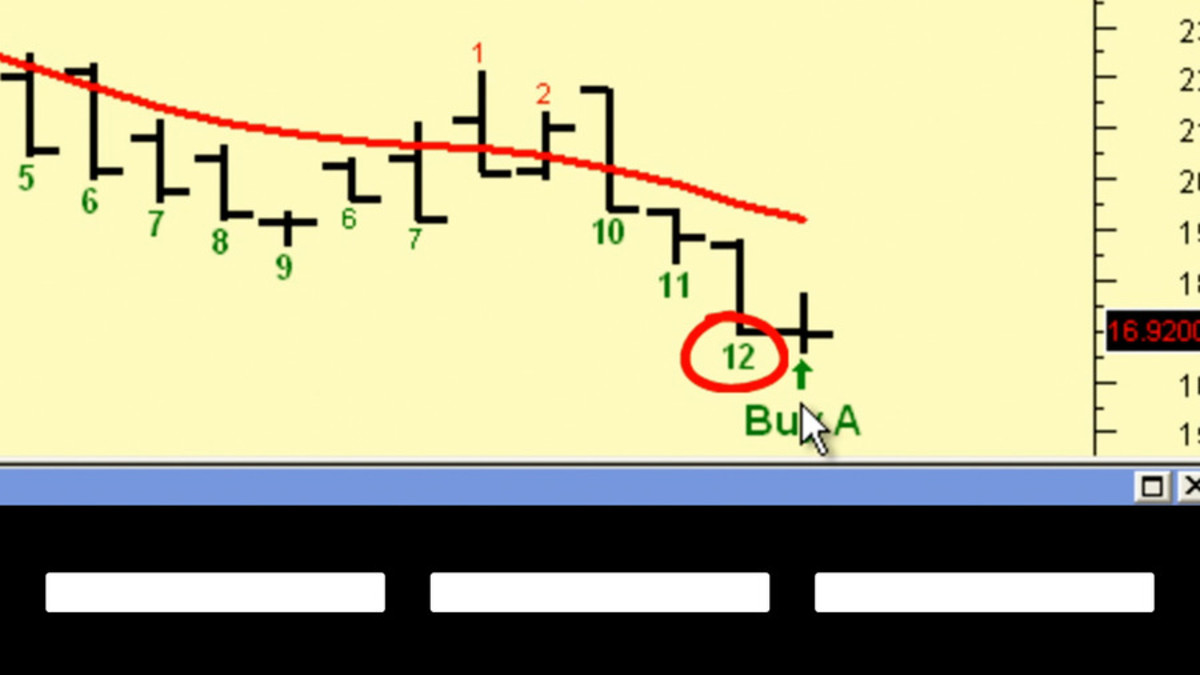
What is the “DeMark” Investing Indicator?

A TECHNICAL ANALYSIS STOCK TRADING SIGNAL?

By Dr. David Edward Marcinko MBA, MEd CMP

***

DEFINITION: The DeMark indicator (DeM) is a technical analysis oscillator that compares the most recent and previous prices of an asset to measure the demand and the directional trend of the market. It is based on principles promoted by technical analyst Thomas DeMark, who developed it over his nearly 50-year career. It aims to identify potential price reversals and inflection points before the market responds. It can be applied to any asset class, region, time interval, and data set.

CITE: https://www.r2library.com/Resource

***

***

See the source image

READ: https://www.tradingview.com/scripts/demark/

TECHNICAL ANALYSIS: https://medicalexecutivepost.com/2007/12/03/the-technicians/

YOUR THOUGHTS ARE APPRECIATED.

Thank You

FINANCE: https://www.amazon.com/Comprehensive-Financial-Planning-Strategies-Advisors/dp/1482240289/ref=sr_1_1?ie=UTF8&qid=1418580820&sr=8-1&keywords=david+marcinko

***

What is VIX Stock Market Volatility?

What it is – How it works
[Courtesy Wikipedia and staff reporters]

AKA “The Fear Gauge”

The CBOE Volatility Index, known by its ticker symbol VIX, is a popular measure of the stock market’s expectation of volatility implied by S&P 500 index options, calculated and published by the Chicago Board Options Exchange (CBOE). It is colloquially referred to as the fear index or the fear gauge.

******

According to Wikipedia, the formulation of a volatility index, and financial instruments based on such an index, were developed by Menachem Brenner and Dan Galai in 1986 and described in academic papers. The authors stated the “volatility index, to be named Sigma Index, would be updated frequently and used as the underlying asset for futures and options. … A volatility index would play the same role as the market index play for options and futures on the index.”

In 1986, Brenner and Galai proposed to the American Stock Exchange the creation of a series of volatility indices, beginning with an index on stock market volatility, and moving to interest rate and foreign exchange rate volatility. In 1987, Brenner and Galai met with Joseph Levine and Deborah Clayworth at the Chicago Board of Options Exchange to propose various structures for a tradeable index on volatility; those discussions continued until 1991.

The current VIX concept formulates a theoretical expectation of stock market volatility in the near future. The current VIX index value quotes the expected annualized change in the S&P 500 index over the next 30 days, as computed from the options-based theory and current options-market data.

MORE: https://www.amazon.com/Comprehensive-Financial-Planning-Strategies-Advisors/dp/1482240289/ref=sr_1_1?ie=UTF8&qid=1418580820&sr=8-1&keywords=david+marcinko

Assessment

The CBOE retained consultant Robert Whaley in 1992 to develop a tradable volatility instrument based on index option prices.[4] Since 1993, CBOE has published VIX real-time data. Based on historical index option prices, Whaley has computed a data series of retrospective daily VIX levels from January 1986 onward.

Conclusion

Your thoughts and comments on this ME-P are appreciated. Feel free to review our top-left column, and top-right sidebar materials, links, URLs and related websites, too. Then, subscribe to the ME-P. It is fast, free and secure.

Speaker: If you need a moderator or speaker for an upcoming event, Dr. David E. Marcinko; MBA – Publisher-in-Chief of the Medical Executive-Post – is available for seminar or speaking engagements.

Book Marcinko: https://medicalexecutivepost.com/dr-david-marcinkos-bookings

Subscribe: MEDICAL EXECUTIVE POST for curated news, essays, opinions and analysis from the public health, economics, finance, marketing, IT, business and policy management ecosystem.

***

Invite Dr. Marcinko

PODCAST: The Buridan’s Ass Paradox

Analysis of Paralysis

[By Staff reporters]

Buridan’s ass is an illustration of a paradox in philosophy in the conception of free will. It refers to a hypothetical situation wherein a donkey that is equally hungry and thirsty is placed precisely midway between a stack of hay and a pail of water. Since the paradox assumes the ass will always go to whichever is closer, it dies of both hunger and thirst since it cannot make any rational decision between the hay and water. A common variant of the paradox substitutes two identical piles of hay for the hay and water; the ass, unable to choose between the two, dies of hunger.

The paradox is named after the 14th-century French philosopher Jean Buridan, whose philosophy of moral determinism it satirizes. Although the illustration is named after Buridan, philosophers have discussed the concept before him, notably Aristotle who used the example of a man equally hungry and thirsty, and Al-Ghazali who used a man faced with the choice of equally good dates.

***

***

A version of this situation appears as metastability in digital electronics, when a circuit must decide between two states based on an input that is in itself undefined (neither zero nor one). Metastability becomes a problem if the circuit spends more time than it should in this “undecided” state, which is usually set by the speed of the clock the system is running at.

LINK: https://en.wikipedia.org/wiki/Buridan%27s_ass

Assessment: Your thoughts are appreciated.

***

Risk Management, Liability Insurance, and Asset Protection Strategies for Doctors and Advisors: Best Practices from Leading Consultants and Certified Medical Planners™8Comprehensive Financial Planning Strategies for Doctors and Advisors: Best Practices from Leading Consultants and Certified Medical Planners™

[Dr. Cappiello PhD MBA] *** [Foreword Dr. Krieger MD MBA]

Front Matter with Foreword by Jason Dyken MD MBA

Book of Month

DAILY UPDATE: Physician Salary, Consumer Confidence, Company Stocks and Slumping Markets

MEDICAL EXECUTIVE-POST TODAY’S NEWSLETTER BRIEFING

***

Essays, Opinions and Curated News in Health Economics, Investing, Business, Management and Financial Planning for Physician Entrepreneurs and their Savvy Advisors and Consultants

Serving Almost One Million Doctors, Financial Advisors and Medical Management Consultants Daily

A Partner of the Institute of Medical Business Advisors , Inc.

http://www.MedicalBusinessAdvisors.com

SPONSORED BY: Marcinko & Associates, Inc.

***

http://www.MarcinkoAssociates.com

Daily Update Provided By Staff Reporters Since 2007.
How May We Serve You?
© Copyright Institute of Medical Business Advisors, Inc. All rights reserved. 2024

REFER A COLLEAGUE: MarcinkoAdvisors@msn.com

SPONSORSHIPS AVAILABLE: https://medicalexecutivepost.com/sponsors/

ADVERTISE ON THE ME-P: https://tinyurl.com/ytb5955z

***

Doctors Saw a 6% Boost in Pay in 2023

After several years of modest or declining growth, the average pay for doctors jumped 5.9% in 2023, rebounding from a decline of 2.4% in 2022. Most medical specialties experienced positive growth in 2023, with the top 10 seeing annual growth rates exceeding 7%, according to the 2024 Physician Compensation Report from professional medical network Doximity.

However, inflationary pressures continue to impact physicians’ real income. According to the American Medical Association, when adjusted for inflation, Medicare physician payment has dropped 26% since 2001. Doximity’s compensation data draw from nearly 150,000 survey responses over five years, including responses from more than 33,000 U.S. physicians in 2023 alone.

Source: Heather Landi, Fierce Healthcare [5/23/24]

Economic Summary

  • The S&P 500 has risen 23 of the last 30 weeks, according to Deutsche Bank, and rose slightly today as well. Meanwhile, the NASDAQ closed at a record high yesterday after tech companies across the board rose, while the Dow dropped over 200 points.
  • Treasury prices fell and yields rose after two weaker-than-expected auctions saw soft sales of 2-year and 5-year bonds.
  • Gold prices slipped 5% last week after falling four days in a row, but the key commodity kicked off this week with a win. With key PCE data coming out on Friday that could send the market soaring or tanking, investors are hedging their bets with the shiny yellow metal.
  • Bitcoin fell as Mt. Gox made good with its creditors a decade after being hacked, while ethereum sank as traders continued to lock in gains from the SEC’s dramatic ruling last week.
  • The S&P 500® index (SPX) fell 39.09 points (0.7%) to 5,266.95; the Dow Jones Industrial Average lost 411.32 points (1.1%) to 38,441.54; the NASDAQ Composite® ($COMP) shed 99.30 points (0.6%) to 16,920.58.
  • The 10-year Treasury note yield climbed more than 7 basis points to 4.614%.
  • The CBOE Volatility Index® (VIX) rose 1.38 to 14.30.

CITE: https://www.r2library.com/Resource

Consumer confidence rose for the first time in four months

Americans are unexpectedly feeling better about the economy this month: Per the Conference Board’s monthly index, US consumer sentiment rose from 97.5 in April to 102 in May, smashing economists’ estimates. Meanwhile, the expectations index, which measures the short-term outlook for income and other labor market conditions, increased the most since July. However, the report showed that Americans remain worried about inflation and interest rates. Despite their mixed feelings about the economy, Americans continue to spend vigorously on travel. The TSA set a record for most travelers screened in a single day last Friday.

CITE: https://tinyurl.com/2h47urt5

STOCKS UP:

Dick’s Sporting Goods rose 15.86% to a new all-time high today after the company reported impressive earnings and a strong outlook.

STOCKS DOWN:

American Airlines shares fell 13.54% after the company cut its guidance for the second quarter. Southwest Airlines fell 3.83%, and Delta Air Lines fell 0.74%.

CITE: https://tinyurl.com/tj8smmes

COMMENTS APPRECIATED

PLEASE SUBSCRIBE: MarcinkoAdvisors@msns.com

Thank You

***

***

***

***

EDUCATIONAL TEXTBOOKS: https://tinyurl.com/4zdxuuwf

***

More on Cognitive Bias

In the “Mind of the Beholder”

By Dr. David Edward Marcinko MBA MEd CMP™

http://www.HealthDictionarySeries.org

Definition

A cognitive bias refers to a systematic pattern of deviation from norm or rationality in judgment, whereby inferences about other people and situations may be drawn in an illogical fashion. Individuals create their own “subjective social reality” from their perception of the input.
***
It is a  re-emerging topic in investing and financial planning, today! Here are some examples.
***

Conclusion

Your thoughts and comments on this ME-P are appreciated. Feel free to review our top-left column, and top-right sidebar materials, links, URLs and related websites, too. Then, subscribe to the ME-P. It is fast, free and secure. 

Speaker: If you need a moderator or speaker for an upcoming event, Dr. David E. Marcinko; MBA – Publisher-in-Chief of the Medical Executive-Post – is available for seminar or speaking engagements. https://medicalexecutivepost.com/dr-david-marcinkos-bookings/ 

Contact: MarcinkoAdvisors@msn.com

***

Risk Management, Liability Insurance, and Asset Protection Strategies for Doctors and Advisors: Best Practices from Leading Consultants and Certified Medical Planners™8Comprehensive Financial Planning Strategies for Doctors and Advisors: Best Practices from Leading Consultants and Certified Medical Planners™

DAILY UPDATE: Citigroup, CBO, CFPB, Spiked Treasury Yields and the Mixed Stock Markets

MEDICAL EXECUTIVE-POST TODAY’S NEWSLETTER BRIEFING

***

Essays, Opinions and Curated News in Health Economics, Investing, Business, Management and Financial Planning for Physician Entrepreneurs and their Savvy Advisors and Consultants

Serving Almost One Million Doctors, Financial Advisors and Medical Management Consultants Daily

A Partner of the Institute of Medical Business Advisors , Inc.

http://www.MedicalBusinessAdvisors.com

SPONSORED BY: Marcinko & Associates, Inc.

***

http://www.MarcinkoAssociates.com

Daily Update Provided By Staff Reporters Since 2007.
How May We Serve You?
© Copyright Institute of Medical Business Advisors, Inc. All rights reserved. 2024

REFER A COLLEAGUE: MarcinkoAdvisors@msn.com

SPONSORSHIPS AVAILABLE: https://medicalexecutivepost.com/sponsors/

ADVERTISE ON THE ME-P: https://tinyurl.com/ytb5955z

***

Stat: $78 million. That’s the fine levied against Citigroup for an accidental, “fat finger” trade that momentarily erased $322 billion in market value in the European stock markets. (Business Insider)

Quote: “The CFPB wants to make sure that these new competitive offerings are not gaining an advantage by sidestepping the rights and responsibilities enshrined under the law.”Rohit Chopra, director of the Consumer Financial Protection Bureau, on the CFPB’s decision to treat “buy now, pay later” apps as credit cards.

CITE: https://www.r2library.com/Resource

Here’s where the major benchmarks ended yesterday:

  • The S&P 500® index (SPX) rose 1.32 points (0.02%) to 5,306.04; the Dow Jones Industrial Average® ($DJI) lost 216.73 points (0.6%) to 38,852.86; the NASDAQ Composite gained 99.09 points (0.6%) to 17,019.88.
  • The 10-year Treasury note yield jumped almost 7 basis points to 4.54%.
  • The CBOE Volatility Index® (VIX) rose 0.55 to 12.91.

Financial shares were among Tuesday’s weakest performers, reflecting ideas elevated interest rates could burden bank margins. The KBW Regional Bank Index (KRX) sank 1% to its lowest close since April 30. Biotechnology and health care sectors were also under pressure.

In other markets, WTI Crude Oil (/CL) futures jumped more than 3% and ended at a four-week high above $80 per barrel ahead of next weekend’s OPEC meeting, which is expected to end with no change to the cartel’s production levels.

CITE: https://tinyurl.com/2h47urt5

House Committee Chair Jodey Arrington (R-Texas) said that site-neutral payment policy is the “most obvious” solution amid supportive testimonies from partisan think-tanks, the Congressional Budget Office and a practicing independent physician. 

CITE: https://tinyurl.com/tj8smmes

COMMENTS APPRECIATED

PLEASE SUBSCRIBE: MarcinkoAdvisors@msns.com

Thank You

***

***

***

***

EDUCATIONAL TEXTBOOKS: https://tinyurl.com/4zdxuuwf

***

DAILY UPDATE: Post Memorial Day Tuesday

MEDICAL EXECUTIVE-POST TODAY’S NEWSLETTER BRIEFING

***

Essays, Opinions and Curated News in Health Economics, Investing, Business, Management and Financial Planning for Physician Entrepreneurs and their Savvy Advisors and Consultants

Serving Almost One Million Doctors, Financial Advisors and Medical Management Consultants Daily

A Partner of the Institute of Medical Business Advisors , Inc.

http://www.MedicalBusinessAdvisors.com

SPONSORED BY: Marcinko & Associates, Inc.

***

http://www.MarcinkoAssociates.com

Daily Update Provided By Staff Reporters Since 2007.
How May We Serve You?
© Copyright Institute of Medical Business Advisors, Inc. All rights reserved. 2024

REFER A COLLEAGUE: MarcinkoAdvisors@msn.com

SPONSORSHIPS AVAILABLE: https://medicalexecutivepost.com/sponsors/

ADVERTISE ON THE ME-P: https://tinyurl.com/ytb5955z

***

CITE: https://www.r2library.com/Resource

US markets were closed for Memorial Day in what will be a quiet few days until the latter half of the week, when a slew of economic reports get filed. The highlights include the Fed’s Beige Book on Wednesday, initial jobless claims and Q1 GDP on Thursday, and both the April personal income & spending report and the all-important PCE read on Friday.

PCE, or the Personal Consumption Expenditures Price Index, will dictate market moves more than any of the other readings next week, since the Fed places a lot of importance on the measure—particularly core PCE, which excludes ever-changing food and gas prices. April’s CPI report was better than expected, but recent FOMC minutes revealed the Fed is still hesitant to cut interest rates without more data—which makes this PCE reading all the more significant.

And don’t forget, the US isn’t the only country fending off high inflation. Germany reports preliminary May CPI on Wednesday, while readings for France, Italy, and the entire Eurozone will be released on Friday. Tokyo CPI, economic activity, and job market data will also come out on Friday, in what is turning out to be a key day in determining where markets are heading as the second half of the year kicks off.

CITE: https://tinyurl.com/2h47urt5

  • Stock spotlight: One to watch this week is Dell, which reports its quarterly earnings on Thursday. Investors will be seeking news on its AI-server business. The company hit a record high last week as Nvidia’s red-hot revenue numbers boosted AI-related stocks.

COMMENTS APPRECIATED

PLEASE SUBSCRIBE: MarcinkoAdvisors@msns.com

Thank You

***

***

***

***

EDUCATIONAL TEXTBOOKS: https://tinyurl.com/4zdxuuwf

***

Select and Check Your Stock Broker and Financial Advisor?

Shopping Suggestions

Rick Kahler MS CFP

By Rick Kahler MS CFP®

Shopping for a financial adviser you can trust has never been easy. The Department of Labor [DOL] rule requiring brokers to act in a fiduciary capacity when dealing with retirement plan assets has not made it any easier. The government’s intent was to help consumers clearly distinguish when financial professionals can be relied upon to give unbiased financial advice or when they are acting in their own interests to sell a financial product. Unfortunately, the rule has only exacerbated the confusion.

When shopping for financial advisers, you need to investigate their education, niche, process, compensation structure, and experience to see whether they are a good fit for your needs. Equally important, it’s up to you to do a background check and determine whose interest the adviser is looking out for. No one else will do it for you.

Two-Steps

Here are two important steps you can take to greatly increase your chances of getting someone who will truly be looking out for you.

First, ask any adviser you deal with to sign a statement affirming they will act in the capacity of a fiduciary to you, meaning you will be a client, not a customer. A copy of this form can be found at www.advisorperspectives.com. Advisers unwilling to sign the Form Adv are not likely to be fiduciaries who will put your interests first.

Second, check the adviser’s background. If advisers receive any type of fee, they are held to a fiduciary standard automatically by the SEC. Still, it’s wise to check their background for any misconduct, which you can do at www.adviserinfo.sec.gov. If advisers sell securities, mutual funds, private REITs, or limited partnerships and receive any type of commission, they will be regulated by FINRA. You can go to BrokerCheck.finra.org to view their records for misconduct.

It’s important to check an adviser’s background because being found guilty of misconduct doesn’t mean they can’t actively be selling financial products.

For example, in a March 7 article at kitces.com, financial planner and writer Michael Kitces points out that over 73% of FINRA-registered brokers who FINRA lists as having a misconduct “are still employed a year later, despite the fact that such brokers are a whopping 5x more likely to engage in misconduct again in the future.”

Kitces explains that while just 7.3% of all FINRA brokers have some type of misconduct on their records, only about half of them actually lose their jobs and about half of those find employment with another firm. Additionally, it seems some firms have more of a culture of employing brokers with misconduct.

***

Wall Street

***

The top five brokerage firms with the highest (15% or more) concentration of brokers with misconduct are Oppenhiemer & Co, First Allied Securities, Wells Fargo Advisers Financial Network, UBS Financial Services, and Cetera Advisers. This is according to a working paper, “The Market for Financial Adviser Misconduct,” by Mark Egan, Gregor Matvos, and Amit Seru, business school professors at the University of Chicago and University of Minnesota. Geographic location also makes a big difference with the states of California, Florida, and New York having counties with much higher concentrations of brokers guilty of misconduct (15 – 30%) than states like Pennsylvania, Kansas, Iowa, Kentucky, and Vermont with the counties having the lowest concentration (2 – 3%).

Kitces reminds us that the “single greatest predictor of whether a broker will engage in misconduct is whether he/she has engaged in any prior misconduct.”

Assessment

For this reason, it’s crucial to make FINRA’s Broker Check part of your research before hiring a financial adviser. Before trusting any adviser to put your interests first, look out for your own interests by investigating the adviser’s history.

Conclusion

Your thoughts and comments on this ME-P are appreciated. Feel free to review our top-left column, and top-right sidebar materials, links, URLs and related websites, too. Then, subscribe to the ME-P. It is fast, free and secure.

Speaker: If you need a moderator or speaker for an upcoming event, Dr. David E. Marcinko; MBA – Publisher-in-Chief of the Medical Executive-Post – is available for seminar or speaking engagements. Contact: MarcinkoAdvisors@msn.com

OUR OTHER PRINT BOOKS AND RELATED INFORMATION SOURCES:

Comprehensive Financial Planning Strategies for Doctors and Advisors: Best Practices from Leading Consultants and Certified Medical Planners™

***

What is Stock Brokerage Company “Payment For Order Flow”?

By Staff Reporters

***

Payment for order flow, or PFOF, is a tactic some brokerages use to rake in piles of cash. Payment for order flow (PFOF) is a form of compensation, usually in terms of fractions of a penny per share, that a brokerage firm receives for directing orders for trade execution to a particular market maker or exchange. Payment for order flow is common in options markets, and is increasingly found in equity (stock market) transactions.

CITE: https://www.r2library.com/Resource/Title/082610254

***

How does it impact everyday investors?

The “P” in PFOF stands for “payment.” That’s because PFOF gets stock brokers paid. It starts when brokers direct trade orders to a particular e-trading firm (like Mountain Securities, for example) instead of routing the trades straight to exchanges. At that point, the e-trading firm may be able to collect the difference between the bid and the ask price, and the brokerages get a cut of that profit. It’s the proverbial “You scratch your broker’s back through their bespoke Ermenegildo Zegna suit, and they’ll scratch yours.”

According to Lillian Stone, some industry experts argue that PFOF is a conflict of interest. (The practice came under scrutiny last year when US brokers made billions on meme stock trading.) You want your broker to get you the best possible prices during a trade, right? Well, if your broker is incentivized to work with one specific e-trading firm, there’s a chance you may not get the sweetest deal—but they’ll line their pockets all the same.

***

COMMENTS APPRECIATED

Thank You

***

ORDER: https://www.routledge.com/Comprehensive-Financial-Planning-Strategies-for-Doctors-and-Advisors-Best/Marcinko-Hetico/p/book/9781482240283

***

DAILY UPDATE: Memorial Day as Stocks Recover

MEDICAL EXECUTIVE-POST TODAY’S NEWSLETTER BRIEFING

***

Essays, Opinions and Curated News in Health Economics, Investing, Business, Management and Financial Planning for Physician Entrepreneurs and their Savvy Advisors and Consultants

Serving Almost One Million Doctors, Financial Advisors and Medical Management Consultants Daily

A Partner of the Institute of Medical Business Advisors , Inc.

http://www.MedicalBusinessAdvisors.com

SPONSORED BY: Marcinko & Associates, Inc.

***

http://www.MarcinkoAssociates.com

Daily Update Provided By Staff Reporters Since 2007.
How May We Serve You?
© Copyright Institute of Medical Business Advisors, Inc. All rights reserved. 2024

REFER A COLLEAGUE: MarcinkoAdvisors@msn.com

SPONSORSHIPS AVAILABLE: https://medicalexecutivepost.com/sponsors/

ADVERTISE ON THE ME-P: https://tinyurl.com/ytb5955z

***

CITE: https://www.r2library.com/Resource

Here’s where the major stock market benchmarks ended:

  • The S&P 500 index added 36.9 points (0.7%) to 5,304.72, basically flat on the week; the Dow Jones Industrial Average gained 4.3 points (0.0%) to 39,069.59, down 2.3% for the week; the NASDAQ Composite® ($COMP) rallied 184.8 points (1.1%) to 16,920.79, up 1.4% for the week.
  • The 10-year Treasury note yield (TNX) was little changed at 4.46%, up about four basis points for the week.
  • The CBOE Volatility Index® (VIX) fell 0.86 to 11.91 and finished a roller-coaster week roughly where it started.

Some of the mega cap names saw notable strength Friday. Nvidia added another 2.6% to Thursday’s 9.3% post-earnings rally. Apple (AAPL) gained 1.7%, Meta Platforms (META) added 2.7%, and Tesla (TSLA) rose 3.2%

The small cap Russell 2000® Index (RUT) also outperformed, gaining nearly 1% Friday. However, for the week, the index lost 1.3%.

CITE: https://tinyurl.com/2h47urt5

COMMENTS APPRECIATED

PLEASE SUBSCRIBE: MarcinkoAdvisors@msns.com

Thank You

***

***

***

***

EDUCATIONAL TEXTBOOKS: https://tinyurl.com/4zdxuuwf

***

INVITE: Professor Marcinko to Your Next Seminar or Event

See You Soon

CMP logo

SPONSOR: http://www.CertifiedMedicalPlanner.org

Colleagues know that I enjoy personal coaching and public speaking and give as many talks each year as possible, at a variety of medical society and financial services conferences around the country and world. All in a Corona safe environment.

Avatar of Dr. Marcinko Speaking as MSL

MARCINKO in the METAVERSE

These include lectures and visiting professorships at major academic centers, keynote lectures for hospitals, economic seminars and health systems, end-note lectures at city and statewide financial coalitions, and annual lectures for a variety of internal yearly meetings.

LIVE or PODCAST enabled, as well.

Topics Link: imba-inc-firm-services

Teleconference: https://medicalexecutivepost.com/2020/10/14/me-marcinko-and-my-avatar/

My Fond Farewell to Tuskegee University

And so, we appreciate your consideration.

Invite Dr. Marcinko

CONTACT: ANN MILLER RN MHA CMP®

[ME-P Executive-Director]

PH: 770-448-0769

EM: MarcinkoAdvisors@msn.com

THANK YOU

***

DAILY UPDATE: Sunday Stock Market Weekend Recap

MEDICAL EXECUTIVE-POST TODAY’S NEWSLETTER BRIEFING

***

Essays, Opinions and Curated News in Health Economics, Investing, Business, Management and Financial Planning for Physician Entrepreneurs and their Savvy Advisors and Consultants

Serving Almost One Million Doctors, Financial Advisors and Medical Management Consultants Daily

A Partner of the Institute of Medical Business Advisors , Inc.

http://www.MedicalBusinessAdvisors.com

SPONSORED BY: Marcinko & Associates, Inc.

***

http://www.MarcinkoAssociates.com

Daily Update Provided By Staff Reporters Since 2007.
How May We Serve You?
© Copyright Institute of Medical Business Advisors, Inc. All rights reserved. 2024

REFER A COLLEAGUE: MarcinkoAdvisors@msn.com

SPONSORSHIPS AVAILABLE: https://medicalexecutivepost.com/sponsors/

ADVERTISE ON THE ME-P: https://tinyurl.com/ytb5955z

***

CITE: https://www.r2library.com/Resource

  • A tough week just ended with the Dow Jones just barely in the green, though the index snapped its 5-week winning streak thanks in large part to its worst day of trading this year on Thursday. The NASDAQ hit a new all-time high on the back of Nvidia’s strong earnings, while the S&P 500 rose but ended the week flat.
  • Bond yields rose this week as investors came to terms with the idea that the Federal Reserve may not cut rates more than once in 2024, fleeing to the safety of Treasuries. Gold ended the week down overall.
  • The market turned on copper selling off for a third straight day. And oil finally snapped its losing streak, rising on the hopes of a travel-heavy Memorial Day weekend, though crude still ended the week lower than where it started.
  • The big winner was ethereum thanks to the approval of a spot ethereum ETF by the SEC.

CITE: https://tinyurl.com/2h47urt5

The U.S. Markets were closed on Monday, May 27th, 2024. Please be aware that, transactions made after 4 p.m. EST on Friday, May 24th, 2024, will receive the closing price as of Tuesday, May 28th, 2024.

CITE: https://tinyurl.com/tj8smmes

COMMENTS APPRECIATED

PLEASE SUBSCRIBE: MarcinkoAdvisors@msns.com

Thank You

***

***

***

***

EDUCATIONAL TEXTBOOKS: https://tinyurl.com/4zdxuuwf

***

PHYSIOLOGY v. PSYCHOLOGY: The Financial Planning Divide

THE PHYSIOLOGIC v. PSYCHOLOGICAL FINANCIAL PLANNING DIVIDE

[Holistic Life Planning, Behavioral Economics & Trading Addiction]

READ HERE: Psychology Behavioral Economics Finance

***

***
By Dr. David Edward Marcinko MBA MEd CMP

COMMENTS APPRECIATED

THANK YOU
***

***

DAILY UPDATE: Friday Before Memorial Day Weekend and the Stock Market Collapse

MEDICAL EXECUTIVE-POST TODAY’S NEWSLETTER BRIEFING

***

Essays, Opinions and Curated News in Health Economics, Investing, Business, Management and Financial Planning for Physician Entrepreneurs and their Savvy Advisors and Consultants

Serving Almost One Million Doctors, Financial Advisors and Medical Management Consultants Daily

A Partner of the Institute of Medical Business Advisors , Inc.

http://www.MedicalBusinessAdvisors.com

SPONSORED BY: Marcinko & Associates, Inc.

***

http://www.MarcinkoAssociates.com

Daily Update Provided By Staff Reporters Since 2007.
How May We Serve You?
© Copyright Institute of Medical Business Advisors, Inc. All rights reserved. 2024

REFER A COLLEAGUE: MarcinkoAdvisors@msn.com

SPONSORSHIPS AVAILABLE: https://medicalexecutivepost.com/sponsors/

ADVERTISE ON THE ME-P: https://tinyurl.com/ytb5955z

***

The Friday before Memorial Day is never action packed, and this year is no exception as earnings season begins to wrap up and economic readings slow down. Two reports to watch for tomorrow: April Durable Goods Orders and University of Michigan’s May sentiment report.

Durable Goods Orders are big-ticket items with a shelf life of three or more years—think appliances and furniture for consumers, or machinery, equipment, and vehicles for businesses. More durable goods orders indicate a healthy economy, as consumers and companies alike wouldn’t spend as much if they weren’t confident they could afford it, and also provides insight into how strong the manufacturing industry is.

The University of Michigan’s consumer sentiment index is a survey of consumers via telephone to better understand how they feel about the economy, what they’re spending their money on, etc. The preliminary findings earlier this month weren’t great thanks to sticky inflation, and tomorrow’s finalized readings won’t change much. But with the latest CPI reading indicating inflation might yet be tamed, next month’s report could be much more illuminating.

CITE: https://www.r2library.com/Resource

Here’s where the major benchmarks ended:

  • The S&P 500® index (SPX) fell 39.17 points (0.7%) to 5,267.84; the Dow Jones Industrial Average lost 605.78 points (1.5%) to 39,065.26; the NASDAQ Composite® ($COMP) shed 65.51 points (0.4%) to 16,736.03.
  • The 10-year Treasury note yield rose more than 4 basis points to 4.479%.
  • The CBOE Volatility Index® (VIX) rose 0.48 to 12.77.

Financial shares were among Thursday’s weakest performers amid ideas a “higher-for-longer” Fed rate outlook could pressure bank margins. The KBW Regional Bank Index (KRX) dropped almost 3% to a three-week low. Other interest-rate-sensitive sectors, including real estate and utilities, took pressure.

In other markets, WTI Crude Oil (/CL) futures fell for the fourth straight trading day and closed at a three-month low under $76 per barrel.

CITE: https://tinyurl.com/2h47urt5

Spot Ethereum ETFs were approved by the SEC in another big win for crypto, following the approval of spot bitcoin ETFs earlier this year.

CITE: https://tinyurl.com/tj8smmes

COMMENTS APPRECIATED

PLEASE SUBSCRIBE: MarcinkoAdvisors@msns.com

Thank You

***

***

***

***

EDUCATIONAL TEXTBOOKS: https://tinyurl.com/4zdxuuwf

***

NVIDIA: Booming Artificial Intelligence & Stock!

SPLITS STOCK 10:1 ANNOUNCED

By Staff Reporters

***

***

Nvidia sales rose 262% as AI keeps booming

The company whose chips are powering the Artificial Intelligence revolution saw an even bigger jump in sales last quarter than analysts had expected: to $26 billion.

CITE: https://www.r2library.com/Resource/Title/082610254

That’s a good sign for the future of AI and probably for the entire stock market, on which Nvidia has an outsized influence. CEO Jensen Huang declared “the next industrial revolution has begun,” as Nvidia predicted $28 billion in sales this quarter. The company also announced plans to split its stock 10-for-1 next

Stock Splits: https://medicalexecutivepost.com/2023/08/14/stock-splits-a-vital-equity-investing-concept-for-physician-investors/

AI: https://www.sas.com/en_us/insights/analytics/what-is-artificial-intelligence.html

COMMENTS APPRECIATED

Thank You

***

***

DAILY UPDATE: Uber Health, Lyft Healthcare, HHS Cyber Attacks as Markets Swoon

MEDICAL EXECUTIVE-POST TODAY’S NEWSLETTER BRIEFING

***

Essays, Opinions and Curated News in Health Economics, Investing, Business, Management and Financial Planning for Physician Entrepreneurs and their Savvy Advisors and Consultants

Serving Almost One Million Doctors, Financial Advisors and Medical Management Consultants Daily

A Partner of the Institute of Medical Business Advisors , Inc.

http://www.MedicalBusinessAdvisors.com

SPONSORED BY: Marcinko & Associates, Inc.

***

http://www.MarcinkoAssociates.com

Daily Update Provided By Staff Reporters Since 2007.
How May We Serve You?
© Copyright Institute of Medical Business Advisors, Inc. All rights reserved. 2024

REFER A COLLEAGUE: MarcinkoAdvisors@msn.com

Your referral Count -0-

SPONSORSHIPS AVAILABLE: https://medicalexecutivepost.com/sponsors/

ADVERTISE ON THE ME-P: https://tinyurl.com/ytb5955z

***

Here’s where the major benchmarks ended:

  • The S&P 500 index lost 14.40 points (0.3%) to 5,307.01; the Dow Jones Industrial Average® ($DJI) declined 201.95 points (0.5%) to 39,671.04; the NASDAQ Composite® ($COMP) slipped 31.08 points (0.2%) to 16,801.54.
  • The 10-year Treasury note yield (TNX) rose more than 1 basis point to 4.426%.
  • The CBOE Volatility Index® (VIX) increased 0.43 to 12.29.

Retailer shares were among the market’s weakest performers after Target’s (TGT) quarterly results, released before Wednesday’s open, fell short of expectations. Target shares tumbled 8% after the company reported revenue fell 3% in the first quarter from the year-earlier period. During the company’s earnings call, Target CEO Brian Cornell noted “continued soft trends in discretionary categories” contributed to the revenue decline.

Energy companies were also under pressure after WTI Crude Oil (/CL) futures closed at a three-month low just above $77 per barrel.

CITE: https://www.r2library.com/Resource

Following a series of high-profileand costlycyberattacks against the healthcare industry, the federal government is stepping in with a $50+ million initiative intended to boost hospital cybersecurity, a division of the Department of Health and Human Services (HHS) announced on May 20th.

CITE: https://tinyurl.com/2h47urt5

Uber Health will begin rolling out a new solution designed for caregivers this summer, allowing individuals to add a caregiver to their Uber profile. That caregiver can then see and spend that person’s health benefits on eligible services, request rides to doctors’ appointments or order groceries. In the coming months, Uber Health will be working with Medicare Advantage, Medicaid and commercial plans to offer the solution.


U.S. Sens. Sheldon Whitehouse and Bill Cassidy, M.D., want to reform how primary care providers get paid through Medicare, and they also want to hear from the healthcare industry about the best way to do it. Together, they introduced a bipartisan bill, the Pay PCPs Act (S. 4338), last week to better support and improve pay for high-quality primary care providers. 


And… digital maternal health company Babyscripts announced a partnership with Lyft Healthcare to offer sponsored rides for people who are pregnant or postpartum and face barriers to transportation. The Lyft partnership will identify transportation-insecure patients and offer free rides to in-person appointments in traditional care settings and community-based healthcare services and programs.

CITE: https://tinyurl.com/tj8smmes

COMMENTS APPRECIATED

PLEASE SUBSCRIBE: MarcinkoAdvisors@msns.com

Thank You

***

***

***

***

EDUCATIONAL TEXTBOOKS: https://tinyurl.com/4zdxuuwf

***

PHYSICIAN’S BEWARE: Psychological “INVESTING MIND TRAPS”

By Dr. David Edward Marcinko MBA MEd CMP

SPONSOR: http://www.MarcinkoAssociates.com

As, as human beings, our brains are booby-trapped with psychological barriers that stand between making smart financial decisions and making dumb ones. The good news is that once you realize your own mental weaknesses, it’s not impossible to overcome them. 

CITE: https://www.r2library.com/Resource

In fact, psychiatrist and medical colleague Wes Boyd MD PhD MA related the following mind-traps and investing impediments that have yet to be appreciated by the financial planning community writ-large:

  • Anchoring happens when we place too much emphasis on the first piece of information we receive regarding a given subject. For instance, when shopping for a wedding ring a salesman might tell us to spend three months’ salary. After hearing this, we may feel like we are doing something wrong if we stray from this advice, even though the guideline provided may cause us to spend more or less than we can afford. Ditto for buy / sell stock recommendations without our own due diligence.
  • Myopia makes it hard for us to imagine what our lives might be like in the future. For example, because we are young, healthy, and in our prime medical practice earning years now, it may be hard for us to picture what life will be like when our health depletes and we know longer have the earnings necessary to support our standard of living. This short sighted thinking makes it hard to save adequately when we are young, when saving does the most good.
  • Gambler’s fallacy occurs when we subconsciously believe we can use past events to predict the future. It is common for the hottest sector during one calendar year to attract the most doctor investors the following year. Of course, just because an investment did well last year doesn’t mean it will continue to do well this year. In fact, it is more likely to lag the market.
  • Avoidance is simply procrastination. Even though you may only have the opportunity to adjust your health care plan through your employer once per year, researching alternative health plans is too much work and too boring for us to get around to it. Consequently, we stick with a plan that may not be best for us.
  • Loss aversion affected many investors during the stock market crash of 2008. During the crash, many doctors decided they couldn’t afford to lose more and sold their investments. Of course, this caused the investors to sell at market troughs and miss the quick, dramatic recovery.
  • Overconfident investing happens when we believe we can out-smart other investors via market timing or through quick, frequent trading. Data convincingly shows that people who trade most often under-perform the market by a significant margin over time.
  • Mental accounting takes place when we assign different values to money depending on where we get it from. For instance, even though we may have an aggressive saving goal for the year, it is likely easier for us to save money that we worked for than money that was given to us as a gift.
  • Herd mentality makes it very hard for humans to not take action when everyone around us does. For example, we may hear stories of people making significant profits buying, fixing up, and flipping homes and have the desire to get in on the action, even though we have no experience in real estate.

CMP: http://www.CertifiedMedicalPlanner.org

COMMENTS APPRECIATED

Thank You

***

***

DAILY UPDATE: Hims & Hers, MSFT-AI, Neuralink, FDIC and New Market Highs

MEDICAL EXECUTIVE-POST TODAY’S NEWSLETTER BRIEFING

***

Essays, Opinions and Curated News in Health Economics, Investing, Business, Management and Financial Planning for Physician Entrepreneurs and their Savvy Advisors and Consultants

Serving Almost One Million Doctors, Financial Advisors and Medical Management Consultants Daily

A Partner of the Institute of Medical Business Advisors , Inc.

http://www.MedicalBusinessAdvisors.com

SPONSORED BY: Marcinko & Associates, Inc.

***

http://www.MarcinkoAssociates.com

Daily Update Provided By Staff Reporters Since 2007.
How May We Serve You?
© Copyright Institute of Medical Business Advisors, Inc. All rights reserved. 2024

REFER A COLLEAGUE: MarcinkoAdvisors@msn.com

SPONSORSHIPS AVAILABLE: https://medicalexecutivepost.com/sponsors/

ADVERTISE ON THE ME-P: https://tinyurl.com/ytb5955z

***

Microsoft unveiled new PCs with AI-powered features.

CITE: https://www.r2library.com/Resource

Hims & Hers stock soared as much as 38% on the news that it’ll provide GLP-1 injections with the same active ingredient as Ozempic or Wegovy for just $199/month—an 85% discount compared to Wegovy’s ~$1,350 monthly price tag (without insurance).

***

FDIC Chair Martin Gruenberg will resign after an investigation found widespread sexual harassment at the agency. But he won’t step down until a successor is named.

CITE: https://tinyurl.com/2h47urt5

The FDA granted Elon Musk’s neurotech company Neuralink, approval to place its brain chip into a second human test subject using a new method designed to correct issues that arose after its inaugural insertion in January, per the Wall Street Journal.

And, Optum Rx is shaking up its pharmacy model. The business says it will make drug costs more predictable and transparent for clients.

CITE: https://tinyurl.com/tj8smmes

  • All three indexes ended the day higher after Fed Governor Christopher Waller stopped by CNBC and mentioned he doesn’t think raising interest rates is in the cards, even if the Fed is waiting for more data before making cuts. The NASDAQ continued to hit new all-time highs today as investors place their bets before Nvidia’s earnings announcement tomorrow afternoon, and the S&P 500 hit yet another record.
  • Copper continued to rise as the market comes to terms with the metal’s importance, while oil fell on the news that the Biden administration will release 1 million barrels of gasoline this summer from the Northeast reserve. Meanwhile, ethereum continued to climb on the news that a new ETF may be joining the fray.

Here’s where the major benchmarks ended:

  • The S&P 500 index rose 13.28 points (0.3%) to 5,321.41; the Dow Jones Industrial Average® ($DJI) gained 66.22 points (0.2%) to 39,872.99; the NASDAQ Composite advanced 37.75 points (0.2%) to 16,832.62.
  • The 10-year Treasury note yield (TNX) lost more than 2 basis points to 4.414%.
  • The CBOE Volatility Index® (VIX) fell 0.29 to 11.86.

Banking and consumer staples were among the market’s strongest performers Tuesday, while utility shares extended a sharp upswing over the past month. The Dow Jones Utility Average® ($DJU) added 0.5% and closed at a 12-month high. Transportation companies were among the weakest performers.

In other markets, Gold (/GC) futures slipped from Monday’s record high above $2,454 per ounce, while Silver (/SI) futures ended near a 12-year high around $32.21. Gold futures are still up 17% this year due to several factors, including reports of China’s central bank buying actual gold as well as escalating conflict in the Middle East. Gold is viewed by some as a safe-haven asset during periods of heightened geopolitical tension.

COMMENTS APPRECIATED

PLEASE SUBSCRIBE: MarcinkoAdvisors@msns.com

Thank You

***

***

***

***

EDUCATIONAL TEXTBOOKS: https://tinyurl.com/4zdxuuwf

***

PHYSICIANS & DENTISTS: Financial Consulting & Planning

Sponsored by: http://www.MARCINKOASSOCIATES.com

START TO FINISH CYCLE

***

Our Process

***

READ HERE: https://marcinkoassociates.com/financial-planning/

RELATED: https://medicalexecutivepost.com/2023/12/15/doctor-are-you-a-financial-advisors-customer-or-client/

COMMENTS APPRECIATED

Thank You

***

***

PHYSICIANS ONLY: Hedge Funds and Venture Capitalists

SPONSORED: http://www.MARCINKOASSOCIATES.com

START TO FINISH CYCLE

***

Our Process

***

READ HERE: https://marcinkoassociates.com/hedge-funds/

MORE: https://medicalexecutivepost.com/2023/02/19/what-is-an-unregistered-security/

COMMENTS APPRECIATED

Thank You

***

***

PSYCHOLOGICAL “TRAPS” of Investing

MIND TRAPS PHYSICIAN INVESTORS MUST REDUCE AND AVOID AT ALL COSTS

See the source image

By Dr. David E. Marcinko MBA MEd CMP®

SPONSOR: http://MarcinkoAssociates.com

CMP logo

SPONSOR: http://www.CertifiedMedicalPlanner.org

As human beings, our brains are booby-trapped with psychological barriers that stand between making smart financial decisions and making dumb ones. The good news is that once you realize your own mental weaknesses, it’s not impossible to overcome them.

CITE: https://www.r2library.com/Resource/Title/0826102549

In fact, Mandi Woodruff, a financial reporter whose work has appeared in Yahoo! Finance, Daily Finance, The Wall Street Journal, The Fiscal Times and the Financial Times among others; related the following mind-traps in a September 2013 essay for the finance vertical Business Insider; as these impediments are now entering the lay-public zeitgeist.

***

8 Psychological Traps All Stock Investors Should Avoid - YouTube

 Anchoring happens when we place too much emphasis on the first piece of information we receive regarding a given subject. For instance, when shopping for a wedding ring a salesman might tell us to spend three months’ salary. After hearing this, we may feel like we are doing something wrong if we stray from this advice, even though the guideline provided may cause us to spend more than we can afford.

 Myopia makes it hard for us to imagine what our lives might be like in the future. For example, because we are young, healthy, and in our prime earning years now, it may be hard for us to picture what life will be like when our health depletes and we know longer have the earnings necessary to support our standard of living. This short-sightedness makes it hard to save adequately when we are young, when saving does the most good.

 Gambler’s fallacy occurs when we subconsciously believe we can use past events to predict the future. It is common for the hottest sector during one calendar year to attract the most investors the following year. Of course, just because an investment did well last year doesn’t mean it will continue to do well this year. In fact, it is more likely to lag the market.

 Avoidance is simply procrastination. Even though you may only have the opportunity to adjust your health care plan through your employer once per year, researching alternative health plans is too much work and too boring for us to get around to it. Consequently, we stick with a plan that may not be best for us.

 Loss aversion affected many investors during the stock market crash of 2008. During the crash, many people decided they couldn’t afford to lose more and sold their investments. Of course, this caused the investors to sell at market troughs and miss the quick, dramatic recovery.

 Overconfident investing happens when we believe we can out-smart other investors via market timing or through quick, frequent trading. Data convincingly shows that people who trade most often underperform the market by a significant margin over time.

 Mental accounting takes place when we assign different values to money depending on where we get it from. For instance, even though we may have an aggressive saving goal for the year, it is likely easier for us to save money that we worked for than money that was given to us as a gift.

MORE: https://medicalexecutivepost.com/2021/09/04/more-on-money-psychology/

RELATED: https://medicalexecutivepost.com/2014/12/15/on-internet-investing-psychology/

 Herd mentality makes it very hard for humans to not take action when everyone around us does. For example, we may hear stories of people making significant profits buying, fixing up, and flipping homes and have the desire to get in on the action, even though we have no experience in real estate.

YOUR COMMENTS ARE APPRECIATED.

Thank You

***

RISK MANAGEMENT: https://www.routledge.com/Risk-Management-Liability-Insurance-and-Asset-Protection-Strategies-for/Marcinko-Hetico/p/book/9781498725989

Risk Management, Liability Insurance, and Asset Protection Strategies for Doctors and Advisors : Best Practices from Leading Consultants and Certified Medical Planners™ book cover

***

“ACTIVE” INVESTMENT STRATEGIES: For Physicians

And … why doctors are different?

By Dr. David Edward Marcinko MBA MEd CMP

SPONSOR: http://www.MarcinkoAssociates.com

By Dr. David Edward Marcinko MBA CMP

There are two distinct forms of financial analysis investment strategies often used by medical colleague investors who desire to pursue an active investment strategy.

Technical Analysis: Technical analysts, sometimes referred to as chartists, use historical price data and transaction volume data to identify mis-priced securities. A key belief shared by technical analysts is that stock prices follow recurring patterns and that once these historical patterns are identified, they can be used to identify future security prices. The heart of technical analysis is identifying significant shifts in the macro/micro economic supply and demand factors for a particular securities investment.

Skeptics of technical analysis generally subscribe to the notion that the markets efficiently and accurately price securities. In fact, the weak form of the Efficient Market Hypothesis [EMH] is based on the view that investors cannot consistently earn superior returns using historical data and technical analysis alone.

Fundamental Analysis: In contrast to technical analysis – which relies on historical market returns / transactions data – fundamental analysis focuses on the underlying company’s assets, earnings, risks, dividends and intrinsic security factors to identify mis-priced securities.

Furthermore, investors using fundamental analysis can use either a top-down or bottom-up approach:

  • The top-down investor starts with global economics, including both international and national economic indicators. These may include GDP growth rates, inflation, interest rates, exchange rates, productivity and energy prices. They subsequently narrow their search to regional / industry analysis of total sales, price levels, the effects of competing products, foreign competition and entry or exit from the industry. Often they refine their search to the best business in the area being studied.
  • The bottom-up investor starts with specific businesses, regardless of their industry / region, and proceeds in reverse of the top-down approach. Bottom-up investing is an approach that focuses on analyzing individual stocks and de-emphasizes the significance of macroeconomic and market cycles. In other words, bottom-up investing typically involves focusing on a specific company’s fundamentals, such as revenue or earnings, versus the industry or the overall economy. The bottom-up investing approach assumes individual companies can perform well even in an industry that is under performing, at least on a relative basis.

And so, a medical professional utilizing fundamental analysis is attempting to find securities that are trading at market prices below their intrinsic value. Skeptics suggest this is difficult or almost impossible to achieve.

Thus, while technical analysis focuses on market price history, a security’s intrinsic fundamental analysis is determined independent of the security’s market value. Of course, a combination of both fundamental and technical analysis can also be considered.

DOCTORS ARE DIFFERENT: https://marcinkoassociates.com/doctors-unique/

CMP: http://www.CertifiedMedicalPlanner.org

COMMENTS APPRECIATED

Thank You

***

***

DAILY UPDATE: Abbvie, Treasuries, Gold, Copper and the NASDAQ Rally

MEDICAL EXECUTIVE-POST TODAY’S NEWSLETTER BRIEFING

***

Essays, Opinions and Curated News in Health Economics, Investing, Business, Management and Financial Planning for Physician Entrepreneurs and their Savvy Advisors and Consultants

Serving Almost One Million Doctors, Financial Advisors and Medical Management Consultants Daily

A Partner of the Institute of Medical Business Advisors , Inc.

http://www.MedicalBusinessAdvisors.com

SPONSORED BY: Marcinko & Associates, Inc.

***

http://www.MarcinkoAssociates.com

Daily Update Provided By Staff Reporters Since 2007.
How May We Serve You?
© Copyright Institute of Medical Business Advisors, Inc. All rights reserved. 2024

REFER A COLLEAGUE: MarcinkoAdvisors@msn.com

SPONSORSHIPS AVAILABLE: https://medicalexecutivepost.com/sponsors/

ADVERTISE ON THE ME-P: https://tinyurl.com/ytb5955z

***

The yield on the 10-year Treasury rose as investors wait for word from the FOMC on Wednesday, while oil initially rose on the news of the death of the president of Iran, though it fell back down to end the day lower after succession of the presidency was settled. But investors were clearly still feeling jittery as gold hit new highs on the back of geopolitical concerns. Copper also rose to a new all-time high.

Here’s where the major benchmarks ended:

  • The S&P 500 index gained 4.86 points (0.1%) to 5,308.13; the Dow Jones Industrial Average® ($DJI) lost 196.82 points (0.5%) to 39,806.77; the NASDAQ Composite rallied 108.91 points (0.7%) to 16,794.87.
  • The 10-year Treasury note yield (TNX) increased more than 2 basis points to 4.443%.
  • The CBOE Volatility Index® (VIX) rose 0.15 to 12.14.

Nvidia’s gain helped push the PHLX Semiconductor Index (SOX) more than 2% to a two-and-a-half-month high and just under a record close posted in early March. The small-cap Russell 2000® Index (RUT) added 0.3% and ended slightly below a six-week high posted last Wednesday. 

CITE: https://www.r2library.com/Resource

JPMorgan shares fell 4.5% as investors realized that they won’t have Jamie Dimon around forever—he told shareholders at a meeting today that his 5-year timetable for leaving the company no longer applies.

CITE: https://tinyurl.com/2h47urt5

After AbbVie’s Humira, the best-selling drug in the world, lost patent exclusivity in 2023, company executives placed their bets on two other AbbVie drugs, Skyrizi and Rinvoq, to make up for an anticipated steep decline in revenue.

CITE: https://tinyurl.com/tj8smmes

COMMENTS APPRECIATED

PLEASE SUBSCRIBE: MarcinkoAdvisors@msns.com

Thank You

***

***

***

***

EDUCATIONAL TEXTBOOKS: https://tinyurl.com/4zdxuuwf

***

15 YEAR JOURNEY: From Active to Passive Investing?

By Staff Reporters

***

***

Historical Review

As can now be discerned 15 years later, two trends emerged from the aftermath of the 2008 financial crisis. One was a new type of investment that concentrated capital among a small number of firms. The other was left-wing activism in the style of Occupy Wall Street. Combined, these trends helped empower Wall Street behemoths to push much of the corporate wokeness that is so common today. The financial meltdown precipitated a transition from active to passive investment.

Definitions

Active investment is what one typically thinks of as investing — making risky stock purchases in an attempt to beat the market in the short-term.

More: https://medicalexecutivepost.com/2023/03/06/understanding-active-asset-allocation/

Passive investment, on the other hand, requires much less effort. According to Investopedia, it is a long-term strategy where investors try to “replicate market performance by constructing well-diversified portfolios” (e.g. mutual funds) typically based on a “representative benchmark” like the S&P 500 index.  In other words, it bets on the market rather than against it.

More: https://medicalexecutivepost.com/2015/03/19/more-on-passive-investing-for-physicians/

Dichotomy

Passive investing took off after the financial crisis when investors realized it wasn’t worth trying to beat the market. Why pay a broker a one to two percent fee every year to actively manage your assets, especially when the downturn revealed they often under-performed the regular market returns? Many opted for passive asset management that cost a fraction of a brokerage fee.

More: https://medicalexecutivepost.com/2022/03/09/active-or-passive-investing-pursuits/

Today

In fact, one study found that between 2008 and 2015, active funds lost $800 billion while passive funds gained over $1 trillion in new investment. As of 2019, more money is now invested in passive than in active funds.

Cite: https://www.cambridge.org/core/journals/business-and-politics/article/hidden-power-of-the-big-three-passive-index-funds-reconcentration-of-corporate-ownership-and-new-financial-risk/30AD689509AAD62F5B677E916C28C4B6

***

***

COMMENTS APPRECIATED

Thank You

***

DAILY UPDATE: Fiduciary Rule with Stock Market Earnings Week

MEDICAL EXECUTIVE-POST TODAY’S NEWSLETTER BRIEFING

***

Essays, Opinions and Curated News in Health Economics, Investing, Business, Management and Financial Planning for Physician Entrepreneurs and their Savvy Advisors and Consultants

Serving Almost One Million Doctors, Financial Advisors and Medical Management Consultants Daily

A Partner of the Institute of Medical Business Advisors , Inc.

http://www.MedicalBusinessAdvisors.com

SPONSORED BY: Marcinko & Associates, Inc.

***

http://www.MarcinkoAssociates.com

Daily Update Provided By Staff Reporters Since 2007.
How May We Serve You?
© Copyright Institute of Medical Business Advisors, Inc. All rights reserved. 2024

REFER A COLLEAGUE: MarcinkoAdvisors@msn.com

SPONSORSHIPS AVAILABLE: https://medicalexecutivepost.com/sponsors/

ADVERTISE ON THE ME-P: https://tinyurl.com/ytb5955z

***

For last the week, the NASDAQ Composite (^IXIC) rose more than 2% while the S&P 500 (^GSPC) popped more than 1.5%. The Dow Jones Industrial Average (^DJI) rose more than 1%, closing above 40,000 for the first time ever on Friday.

In the week ahead, highly anticipated earnings results from Nvidia (NVDA) are expected to be the key catalyst for markets. Results from Target (TGT), Palo Alto Networks (PANW), and Lowe’s (LOW) will also be closely tracked by investors.

The week is also expected to be quieter on the economic front, with updates on activity in the manufacturing and services sectors as well as the final reading of consumer sentiment for May on tap. Minutes from the Fed’s May meeting are also expected on Wednesday afternoon.

CITE: https://www.r2library.com/Resource

The rule, finalized last month by the Labor Department, requires investment advisers to provide “prudent, loyal, honest advice free from overcharges” and avoid recommendations that favor their interests at the expense of their clients. It also updates the definition of an investment advice fiduciary under the Employee Retirement Income Security Act (ERISA) and Internal Revenue Code. 

Under the new definition, a fiduciary includes any financial services provider who offers investment advice to a retirement investor for a fee and who claims to be acting as a fiduciary or who a reasonable investor understands to be a trusted adviser acting in their best interest. The update removes the requirement that fiduciaries provide advice on a regular basis, bringing one-time advice under the rule. The Biden administration has argued that the previous definition, which was written in 1975, is outdated and has not kept pace with changes to the retirement landscape. 

CITE: https://tinyurl.com/2h47urt5

And, confidence in the U.S. dollar has waned, as forecasts suggest that a dip in inflation might allow the Federal Reserve to slash interest rates. With a notable 5% climb earlier this year, the dollar is now bracing for its first loss of 2024, triggered by a promising inflation report.

CITE: https://tinyurl.com/tj8smmes

Finally, fourteen of the world’s 20 largest stock markets have hit all-time highs recently, including England, Japan, Brazil, India, and Canada, according to Bloomberg. In the USA, the S&P 500 (also at a record) hasn’t dropped more than 2% in a trading session in 311 days, the longest streak in five years.

COMMENTS APPRECIATED

PLEASE SUBSCRIBE: MarcinkoAdvisors@msns.com

Thank You

***

***

***

***

EDUCATIONAL TEXTBOOKS: https://tinyurl.com/4zdxuuwf

***

DAILY UPDATE: Jerome Powell, DJIA, Reddit and Life Insurance

MEDICAL EXECUTIVE-POST TODAY’S NEWSLETTER BRIEFING

***

Essays, Opinions and Curated News in Health Economics, Investing, Business, Management and Financial Planning for Physician Entrepreneurs and their Savvy Advisors and Consultants

Serving Almost One Million Doctors, Financial Advisors and Medical Management Consultants Daily

A Partner of the Institute of Medical Business Advisors , Inc.

http://www.MedicalBusinessAdvisors.com

SPONSORED BY: Marcinko & Associates, Inc.

***

http://www.MarcinkoAssociates.com

Daily Update Provided By Staff Reporters Since 2007.
How May We Serve You?
© Copyright Institute of Medical Business Advisors, Inc. All rights reserved. 2024

REFER A COLLEAGUE: MarcinkoAdvisors@msn.com

SPONSORSHIPS AVAILABLE: https://medicalexecutivepost.com/sponsors/

ADVERTISE ON THE ME-P: https://tinyurl.com/ytb5955z

***

Young adults are delaying life insurance purchases due to financial constraints and a preference for spending on immediate experiences. The insurance industry is responding with digital-first strategies and more flexible products.

CITE: https://www.r2library.com/Resource

The DJIA closed above 40,000 for the first time after briefly crossing the milestone the day before and clinching its fifth winning week. Reddit shot up after announcing a partnership with OpenAI that lets the AI train on your posts and gives Reddit advertising dollars and the ability to use the tech to make new tools.

But, GameStop stock plunged after the recently reinvigorated meme stock filed to sell 45 million new shares and revealed that sales were down last quarter.

CITE: https://tinyurl.com/2h47urt5

Jerome Powell, chair of the Federal Reserve has tested positive for Covid. But the economy needn’t worry because he’s working from home.

CITE: https://tinyurl.com/tj8smmes

COMMENTS APPRECIATED

PLEASE SUBSCRIBE: MarcinkoAdvisors@msns.com

Thank You

***

***

***

***

EDUCATIONAL TEXTBOOKS: https://tinyurl.com/4zdxuuwf

***

RE-BROADCAST: An Interview with Fiduciary Bennett Aikin AIF®

On Financial Fiduciary Accountability

[By Dr. David E. Marcinko MBA MEd CMP™]

[By Ann Miller; RN, MHA]

Currently, there is a growing dilemma in the financial sales and services industry. It goes something like this:

  • What is a financial fiduciary?
  • Who is a financial fiduciary?
  • How can I tell if my financial advisor is a fiduciary?

Now, in as much as this controversy affects laymen and physician-investors alike, we went right to the source for up-to-date information regarding this often contentious topic, for an email interview and Q-A session, with Ben Aikin.ben-aikin

About Bennett Aikin AIF® and fi360.com

Bennett [Ben] Aikin is the Communications Coordinator for fi360.com. He oversees all communications for fi360. His responsibilities include messaging, brand management, copyrights and trademarks, and publications. Mr. Aikin received his BA in English from Virginia Tech in 2003 and is currently an MS candidate in Journalism from Ohio University.

Q. Medical Executive Post 

You have been very helpful and gracious to us. So, let’s get right to it, Ben. In the view of many; attorneys, doctors, CPAs and the clergy are fiduciaries; most all others who retain this title seem poseurs; sans documentation otherwise.

A. Mr. Aikin

You are correct. Attorneys, doctors and clergy are the prototype fiduciaries. They have a clear duty to put the best interests of their clients, patients, congregation, etc., above their own. [The duty of a CPA isn’t as clear to me, although I believe you are correct]. Furthermore, this is one of the first topics we address in our AIF training programs, and what we call the difference between a profession and an industry.  The three professions you name have three common characteristics that elevate them from an industry to a profession:

  1. Recognized body of knowledge
  2. Society depends upon practitioners to provide trustworthy advice
  3. Code of conduct that places the clients’ best interests first

Q. Medical Executive Post 

It seems that Certified Financial Planner®, Chartered Financial Analysts, Registered Investment Advisors and their representatives, Registered Representative [stock-brokers] and AIF® holders, etc, are not really financial fiduciaries, either by legal statute or organizational charter. Are we correct, or not? Of course, we are not talking ethics or morality here. That’s for the theologians to discuss.

A. Mr. Aikin

One of the reasons for the “alphabet soup”, as you put it in one of your white papers [books, dictionaries and posts] on financial designations, is that while there is a large body of knowledge, there is no one recognized body of knowledge that one must acquire to enter the financial services industry.  The different designations serve to provide a distinguisher for how much and what parts of that body of knowledge you do possess.  However, being a fiduciary is exclusively a matter of function. 

In other words, regardless of what designations are held, there are five things that will make one a fiduciary in a given relationship:

  1. You are “named” in plan or trust documents; the appointment can be by “name” or by “title,” such as CFO or Head of Human Resources
  2. You are serving as a trustee; often times this applies to directed trustees as well
  3. Your function or role equates to a professional providing comprehensive and continuous investment advice
  4. You have discretion to buy or sell investable assets
  5. You are a corporate officer or director who has authority to appoint other fiduciaries

So, if you are a fiduciary according to one of these definitions, you can be held accountable for a breach in fiduciary duty, regardless of any expertise you do, or do not have. This underscores the critical nature of understanding the fiduciary standard and delegating certain duties to qualified “professionals” who can fulfill the parts of the process that a non-qualified fiduciary cannot.

Q. Medical Executive Post 

How about some of the specific designations mentioned on our site, and elsewhere. I believe that you may be familiar with the well-known financial planner, Ed Morrow, who often opines that there are more than 98 of these “designations”? In fact, he is the founder of the Registered Financial Consultants [RFC] designation. And, he wrote a Foreword for one of our e-books; back-in-the-day. His son, an attorney, also wrote as a tax expert for us, as well. So, what gives?

A. Mr. Aikin

As for the specific designations you list above, and elsewhere, they each signify something different that may, or may not, lend itself to being a fiduciary: For example:

• CFP®: The act of financial planning does very much imply fiduciary responsibility.  And, the recently updated CFP® rules of conduct does now include a fiduciary mandate:

• 1.4 A certificant shall at all times place the interest of the client ahead of his or her own. When the certificant provides financial planning or material elements of the financial planning process, the certificant owes to the client the duty of care of a fiduciary as defined by CFP Board. [from http://www.cfp.net/Downloads/2008Standards.pdf]

•  CFA: Very dependent on what work the individual is doing.  Their code of ethics does have a provision to place the interests of clients above their own and their Standards of Practice handbook makes clear that when they are working in a fiduciary capacity that they understand and abide by the legally mandated fiduciary standard.

• FA [Financial Advisor]: This is a generic term that you may find being used by a non-fiduciary, such as a broker, or a fiduciary, such as an RIA.

• RIA: Are fiduciaries.  Registered Investment Advisors are registered with the SEC and have obligations under the Investment Advisers Act of 1940 to provide services that meet a fiduciary standard of care.

• RR: Registered Reps, or stock-brokers, are not fiduciaries if they are doing what they are supposed to be doing.  If they give investment advice that crosses the line into “comprehensive and continuous investment advice” (see above), their function would make them a fiduciary and they would be subject to meeting a fiduciary standard in that advice (even though they may not be properly registered to give advice as an RIA).

• AIF designees: Have received training on a process that meets, and in some places exceeds, the fiduciary standard of care.  We do not require an AIF® to always function as a fiduciary. For example, we allow registered reps to gain and use the AIF® designation. In many cases, AIF designees are acting as fiduciaries, and the designation is an indicator that they have the full understanding of what that really means in terms of the level of service they provide.  We do expect our designees to clearly disclose whether they accept fiduciary responsibility for their services or not and advocate such disclosure for all financial service representatives.

Q. Medical Executive Post 

Your website, http://www.fi360.com, seems to suggest, for example, that banks/bankers are fiduciaries. We have found this not to be the case, of course, as they work for the best interests of the bank and stockholders. What definitional understanding are we missing?

A. Mr. Aikin

Banks cannot generally be considered fiduciaries.  Again, it is a matter of function. A bank may be a named trustee, in which case a fiduciary standard would generally apply.  Banks that sell products are doing so according to their governing regulations and are “prudent experts” under ERISA, but not necessarily held to a fiduciary standard in any broader sense.

Q. Medical Executive Post 

And so, how do we rectify the [seemingly intentional] industry obfuscation on this topic. We mean, our readers, subscribers, book and dictionary purchasers, clients and colleagues are all confused on this topic. The recent financial meltdown only stresses the importance of understanding same.

For example, everyone in the industry seems to say they are the “f” word. But, our outreach efforts to contact traditional “financial services” industry pundits, CFP® practitioners and other certification organizations are continually met with resounding silence; or worse yet; they offer an abundance of parsed words and obfuscation but no confirming paperwork, or deep subject-matter knowledge as you have kindly done. We get the impression that some FAs honesty do-not have a clue; while others are intentionally vague.

A. Mr. Aikin

All of the evidence you cite is correct.  But that does not mean it is impossible to find an investment advisor who will manage to a fiduciary standard of care and acknowledge the same. The best way to rectify confusion as it pertains to choosing appropriate investment professionals is to get fiduciary status acknowledged in writing and go over with them all of the necessary steps in a fiduciary process to ensure they are being fulfilled. There also are great resources out there for understanding the fiduciary process and for choosing professionals, such as the Department of Labor, the SEC, FINRA, the AICPA’s Personal Financial Planning division, the Financial Planning Association, and, of course, Fiduciary360.

We realize the confusion this must cause to those coming from the health care arena, where MD/DO clearly defines the individual in question; as do other degrees [optometrist, clinical psychologist, podiatrist, etc] and medical designations [fellow, board certification, etc.]. But, unfortunately, it is the state of the financial services industry as it stands now.

Q. Medical Executive Post 

It is as confusing for the medical community, as it is for the lay community. And, after some research, we believe retail financial services industry participants are also confused. So, what is the bottom line?

A. Mr. Aikin

The bottom line is that lay, physician and all clients have a right to expect and demand a fiduciary standard of care in the managing of investments. And, there are qualified professionals out there who are providing those services.  Again, the best way to ensure you are getting it is to have fiduciary status acknowledged in writing, and go over the necessary steps in a fiduciary process with them to ensure it is being fulfilled.

Q. Medical Executive Post 

The “parole-evidence” rule, of contract law, applies, right? In dealing with medical liability situations, the medics and malpractice attorneys have a rule: “if it wasn’t written down, it didn’t happen.”  

A. Mr. Aikin

An engagement contract accepting fiduciary status should trump a subsequent attempt to claim the fiduciary standard didn’t apply. But, to reiterate an earlier point, if someone acts in one of the five functional fiduciary roles, they are a fiduciary whether they choose to acknowledge it or not.  I have attached a sample acknowledgement of fiduciary status letter with copies of our handbook, which details the fiduciary process we instruct in our programs, and our SAFE, which is basically a checklist that a fiduciary should be able to answer “Yes” to every question to ensure the entire fiduciary process is being covered.

Q. Medical Executive Post 

It is curious that you mention checklists. We have a post arguing that very theme for doctors and hospitals as they pursue their medial error reduction, and quality improvement, endeavors. And, we applaud your integrity, and wish only for clarification on this simple fiduciary query?

A. Mr. Aikin

Simple definition: A fiduciary is someone who is managing the assets of another person and stands in a special relationship of trust, confidence, and/or legal responsibility.

Q. Medical Executive Post 

Who is a financial fiduciary and what, if any, financial designation indicates same?

A. Mr. Aikin

Functional definition: See above for the five items that make you a fiduciary.

Financial designations that unequivocally indicate fiduciary duty: Short answer is none, only function can determine who is a fiduciary. 

Q. Medical Executive Post 

Please repeat that?

A. Mr. Aikin

Financial designations that indicate fiduciary duty: none. It is the function that determines who is a fiduciary.  Now, having said that, the CFP® certification comes close by demanding their certificants who are engaged in financial planning do so to a fiduciary standard. Similarly, other designations may certify the holder’s ability to perform a role that would be held to a fiduciary standard of care.  The point is that you are owed a fiduciary standard of care when you engage a professional to fill that role or they functionally become one.  And, if you engage a professional to fill a non-fiduciary role, they will not be held to a fiduciary standard simply because they have a particular designation.  One of the purposes the designations serve is to inform you what roles the designation holder is capable of fulfilling.

It is also worth keeping in mind that just being a fiduciary doesn’t equate to a full knowledge of the fiduciary standard. The AIF® designation indicates having been fully trained on the standard.

Q. Medical Executive Post 

Yes, your website mentions something about fiduciaries that are not aware of same! How can this be? Since our business model mimics a medical model, isn’t that like saying “the doctor doesn’t know he is doctor?” Very specious, with all due respect!

A. Mr. Aikin

I think it is first important to note that this statement is referring not just to investment professionals.  Part of the audience fi360 serves is investment stewards, the non-professionals who, due to facts and circumstances, still owe a fiduciary duty to another.  Examples of this include investment committee members, trustees to a foundation, small business owners who start 401k plans, etc.  This is a group of non-sophisticated investors who may not be aware of the full array of responsibilities they have. 

However, even on the professional side I believe the statement isn’t as absurd as it sounds.  This is basically a protection from both ignorant and unscrupulous professionals.  Imagine a registered representative who, either through ignorance or design, begins offering comprehensive and continuous investment advice.  Though they may deny or be unaware of the fact, they have opened themselves up to fiduciary liability. 

Q. Medical Executive Post 

Please clarify the use of arbitration clauses in brokerage account contracts for us. Do these disclaim fiduciary responsibility? If so, does the client even know same?

A. Mr. Aikin

By definition, an engagement with a broker is a non-fiduciary relationship.  So, unless other services beyond the scope of a typical brokerage account contract are specified, fiduciary responsibility is inherently not applicable.  Unfortunately, I do imagine there are clients who don’t understand this. Furthermore, AIF® designees are not prohibited from signing such an agreement and there are some important points to understand the reasoning.

First, by definition, if you are entering into such an agreement, you are entering into a non-fiduciary relationship. So, any fiduciary requirement wouldn’t apply in this scenario.

Second, if this same question were applied into a scenario of a fiduciary relationship, such as with an RIA, this would be a method of dispute resolution, not a practice method. So, in the event of dispute, the advisor and investor would be free to agree to the method of resolution of their choosing. In this scenario, however, typically the method would not be discussed until the dispute itself arose.

Finally, it is important to know that AIF/AIFA designees are not required to be a fiduciary. It is symbolic of the individuals training, knowledge and ongoing development in fiduciary processes, but does not mean they will always be acting as a fiduciary.

Q. Medical Executive Post 

Don’t the vast majority of arbitration hearings find in favor of the FA; as the arbitrators are insiders, often paid by the very same industry itself?

A. Mr. Aikin

Actual percentages are reported here: http://www.finra.org/ArbitrationMediation/AboutFINRADR/Statistics/index.htm However, brokerage arbitration agreements are a dispute resolution method for disputes that arise within the context of the securities brokerage industry and are not the only means of resolving differences for all types of financial advisors.  Investment advisers, for example, are subject to respond to disputes in a variety of forums including state and federal courts.  Clients should look at their brokerage or advisory agreement to see what they have agreed to. If you wanted to go into further depth on this question, we would recommend contacting Brian Hamburger, who is a lawyer with experience in this area and an AIFA designee. Bio page: http://www.hamburgerlaw.com/attorneys/BSH.htm.

Q. Medical Executive Post 

What about our related Certified Medical Planner® designation, and online educational program for financial advisors and medical management consultants? Is it a good idea – reasonable – for the sponsor to demand fiduciary accountability of these charter-holders? Cleary, this would not only be a strategic competitive advantage, but advance the CMP™ mission to put medical colleagues first and champion their cause www.CertifiedMedicalPlanner.org above all else. 

A. Mr. Aikin

I think it is a good idea for any plan sponsor to demand fiduciary status be acknowledged from anyone engaged to provide comprehensive and continuous investment advice.  I also think it is a good idea to be proactive in verifying that the fiduciary process is being followed.

Q. Medical Executive Post 

Is there anything else that we should know about this topic?

A. Mr. Aikin

Yes, a further note about fi360’s standards. I wrote generically about the fiduciary standard, because there is one that is defined by multiple sources of regulation, legislation and case law.  The process defined in our handbooks, we call a Fiduciary Standard of Excellence, because it covers that minimum standard and also best practice standards that go above and beyond.  All of our Practices, which comprise that standard, are legally substantiated in our Legal Memoranda handbook, which was written by Fred Reish’s law firm, who is considered a leading ERISA attorney.

Additional resources:

Q. Medical Executive Post 

Thank you so much for your knowledge and willingness to frankly share it with the Medical-Executive-Post.

Assessment

All are invited to continue the conversation with Mr. Aikin, asynchronously online, or thru this contact information:

fi360.com
438 Division Street
Sewickley, PA 15143
412-741-8140 Phone
866-390-5080 Toll-free phone
412-741-8142 Fax

Conclusion

Your thoughts and comments on this ME-P are appreciated. Feel free to review our top-left column, and top-right sidebar materials, links, URLs and related websites, too. Then, subscribe to the ME-P. It is fast, free and secure.

Speaker: If you need a moderator or speaker for an upcoming event, Dr. David E. Marcinko; MBA – Publisher-in-Chief of the Medical Executive-Post – is available for seminar or speaking engagements. Contact: MarcinkoAdvisors@msn.com

OUR OTHER PRINT BOOKS AND RELATED INFORMATION SOURCES:

HOSPITALS: http://www.crcpress.com/product/isbn/9781466558731
CLINICS: http://www.crcpress.com/product/isbn/9781439879900
ADVISORS: www.CertifiedMedicalPlanner.org
BLOG: www.MedicalExecutivePost.com

Product DetailsProduct DetailsProduct Details

Product Details  Product Details

Product DetailsProduct Details

Product Details

Risk Management, Liability Insurance, and Asset Protection Strategies for Doctors and Advisors: Best Practices from Leading Consultants and Certified Medical Planners™8Comprehensive Financial Planning Strategies for Doctors and Advisors: Best Practices from Leading Consultants and Certified Medical Planners™