iMBA Inc, Secret Shopper Service

For Healthcare Consulting Practices56400711

Staff Writers

Are you worried about what your insurance agents, accountants, RIA Reps, attorneys, benefits managers, RRs, 401[k] or 403[b] administrators, or stock-brokers are telling potential lay and physician clients? [sins of commission]. Or; worse-yet – not telling them? [sins of omission].

If so, why not use our Secret Professional Client-Shopper Services so you can breathe easier?

Our staff is available to attend seminars and to pose as potential clients and customers. Services range from walk-ins, to in-depth BD compliance investigations. 

Contact

Just email Ann for more information: MarcinkoAdvisors@msn.com

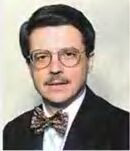
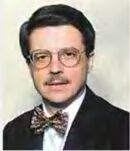
Speaker: If you need a moderator or speaker for an upcoming event, Dr. David E. Marcinko; MBA – Publisher-in-Chief of the Executive-Post – is available for seminar or speaking engagements. Contact: MarcinkoAdvisors@msn.com  or Bio: www.stpub.com/pubs/authors/MARCINKO.htm

Subscribe Now: Did you like this Medical Executive-Post, or find it helpful, interesting and informative? Want to get the latest E-Ps delivered to your email box each morning? Just subscribe using the link below. You can unsubscribe at any time. Security is assured.

Link: http://feeds.feedburner.com/HealthcareFinancialsthePostForcxos

Eight Fallacies of Managed Care

Join Our Mailing List

A Startling iMBA Inc., Report on Small Medical Practices

caduceus

[By Dr. David Edward Marcinko; MBA, CMP™]

[By Hope Rachel Hetico; RN, MHA, CMP™]

[By Ann Miller; RN, MHA]

Webster defines a visionary as: “one who is able to see into the future”. Unlike some pundits, prescience is not a quality we claim to possess. To the purveyors of small medical practice gloom however, the future for physicians is a bleak “fate’ accompli”. If you are of this philosophical Ilk – we politely but firmly disagree. In fact, during a recent brainstorming session at the Institute of Medical Business Advisors www.MedicalBusinessAdvisors.com we arrived at some startling conclusions that challenge contemporary information. Therefore, “ceretas paribus” – all things being equal – these findings impute conventional wisdom and are called: The Eight Myths of Managed Medical Care.

MYTH 1: “Solo and Smaller Private Practitioners Will Die”

Economies of scale and prevailing Health Information Technology (HIT) systems may indeed force some smaller allopathic, podiatric or osteopathic practices, as well as some “surgical” specialists, into group or non-equity based practices.  New “one-stop medical malls” are desirable to HMO’s because of their urgent or emergent care availability, myriad of provider types and quality assurance mechanisms. This will even happen in non-procedure based family practices, with internists and in currently spared rural areas as Integrated Systems Digital Networks (ISDN), Regional Health Information Organizations [RHIOs] and related computer transmission technology becomes more available and less expensive. But, routine medicine is ideally suited for the repetitive task orientation philosophy of many of HMO’s.

MGMT. TIP: If you want to remain a private or solo practitioner, re-engineering one’s office activities (cost drivers) to reduce steps that do not add value to your services is perhaps all that is needed to increase efficiency and net margins. Strive to reduce duplicated activities and redundant data transmissions and people tasks. Delegate responsibility and lower the decision making threshold to a need-to-know basis. Empower appropriate employees and make them accountable for their decisions, but do not give them responsibility without authority. As time progresses, steps to reduce variable and then fixed costs, can be implemented to further increase profit. Additionally, solo office practice is very amenable to out-sourcing onerous chores such as human resource management and accounting needs.

MYTH 2: “All Small Medical Practices Will be Purchased by Larger Companies”

This may be true for some aspects of comprehensive medical care. Fortunately, primary care has never totally been given its due and esteem by the medical community or AMA, and smaller practices do not appear to be corporate “takeover” targets. While this may happen in some exceptionally large practices, equity control or financial compensation should more than remunerate the owner-managers of such behemoth practices. Unfortunately, servitude to Wall Street is another matter to consider. Make no mistake however mere size does not encourage acquisition, just as solo practice does not entice appropriation by all management associations.

MGMT TIP: Use the engineering concept of Project Management (PM) and the Critical Path Method (CPM) to determine pivotal or slack steps in the flow of your office. Then modify your processes accordingly. GANNT charts, PERT graphs and Paretto diagrams are helpful visual and practical aides in this regard.

MYTH 3: “You Must Run Your Practice By the Financial Numbers”

Many so-called business experts preach the concept of financial “number -crunching”. In other words, how much revenue is derived, from how many patients per month, week and day, according to some estimated utilization rate?  With this method, physicians are reduced to hourly “employees” and patients to “encounters”. Actuarial firms may even be hired to legitimize the numbers and suggest care standards. While it is important to consider financial tangibles, we must not forget that “numbers can lie”, and that the information from a computer spreadsheet is only as good as its input (GIGO = “garbage in-garbage out”). This is especially evident when one realizes that such firms are only thinly disguised benefits consultants, with a built in bias to cost reductions and rationed care. Therefore, be aware of the potential negative intangibles of a strict business output mentality and recognize that medicine is an intensively personal experience. Lowering the economic “per unit cost” of a widget may be desirable to a manufacturer, but price is only one aspect of good medical care. Other tangible or intangible concepts are often far more important and the negotiating side that first realizes what constitutes these trigger-points, instantly occupies the stronger competitive bargaining position.

For example, doctors should know the answer to many vital questions before entering into any contract negotiations. These include, but are certainly not limited to the following:

  • Doctor control and expectations
  • Contract exclusivity and inclusively
  • Utilization review, “carve-outs”, gag orders and termination clauses
  • And our personal pet peeve; NPI numbers and organizational fiscal data sharing.

Recall the often used example of selling airplane seats is a good way to illustrate the concept of intangibles. Let’s assume a plane has a capacity of 100 seats, 90 of which are sold at the normal ticket price of one hundred dollars; for a total revenue of $9,000. If total costs represent a break-even point of eight thousand dollars, a one thousand dollar profit is realized. Therefore, if any single remaining seat can be sold at a discount; more profit is generated since the plane will fly anyway.

Now, suppose there was a chance that one of the discounted seats will be bought by a terrorist bomber; would the additional marginal profit still be worthwhile?  Of course not! Extending our analogy to the typical small medical office, some management guru’s might argue that a discounted HMO patient is better than no patient at all. But as a doctor, suppose your empty treatment room was filled by a noncompliant capitated diabetic patient with a foot infection, or a litigious prone patient? Tangible considerations aside, don’t the potential medical, legal and emotional entanglements of these situations exceed their marginal benefits? Of course they do!  Philosophically, one could argue that these possibilities still exist in a fee-for-service environment and be quite correct.

Therefore, rest assured that we are not advocating the wholesale non-treatment or abandonment of patients in need. We are simply noting the capitalistic and very demoralizing human feelings of, “why bother”. Or, shall we accept the Socialistic epistemology of laborers who “pretend to work while the government pretends to pay?” Fortunately, primary care seldom presents with many significant moral challenges. Nevertheless, this tawdry rationing type scenario can, and does happen, in the hallowed halls of medicine; daily.

Need proof?  An anonymous Medical Outcomes Study, a few years ago, from the New England Medical Center claimed that of specialists surveyed, one third believed that they provided worst care to HMO members than fee-for-service patients, not just because of any moral deficiency, but because the HMO reduced their access to medical resources. Now we ask; is anyone surprised?

MGMT. TIP: Running your practice solely by the numbers is insane and the rat race will lead you to an early grave as you try to do more, with less, and in less time. Rather, select your insurance contracts carefully and negotiate aggressively for the best deals, and limit your liability with exclusions and stop-lose parameters. Besides, there is no need to join every panel; be selective in your own favor. Recall, mutual contract concessions should benefit both parties, and a contract so negotiated should be mutually advantageous; but not equally advantageous. Aggressive business consultants do not incorporate the conventional wisdom of a “win-win” negotiated settlement. We negotiate to win for our clients and champion their success.

MYTH 4: “Capitation will Kill Fee-for Service Medicine”

All primary doctors do not have to practice deeply discounted capitated medicine. We estimate that only half of all internists will have to become low cost providers and many, either by design or happenstance already are. The remainder will successfully and profitably provide the specialty or value-added services that much of the public demands. HMO’s that do not offer these quality services will perish. The “cost shifting” to private insurance companies currently prevalent will not accelerate, because the population that chooses to retain traditional indemnity insurance will no longer allow it. Such health and quality conscious patients will revolt against high insurance premiums and refuse to be penalized for desiring comprehensive care and for pursuing a healthy life-style. Similarly, physicians who now bear “financial risk” for providing care to noncompliant patients will decide that the incentive to do so is not enough. Patients will be forced to bear their own financial risk as they become compelled to pay higher premiums, co-pays, surcharges or other penalties for unhealthy habits such as smoking, obesity or inactivity. Health care will come full circle by putting the financial burden back on patients.

A survey in Medical Interface a few years ago, revealed that overall, 21% of all capitated patients in a studied cohort rated their HMO as fair to poor, compared with 14% in traditional indemnity systems. Additionally, allow us to quote from Dr. Alain Einthoven, medical economist and author of the original Jackson Hole Managed Care Assemblage:

“Permutations of managed care will produce a dizzying array of benefit levels at varying price structures. HMO’s however will try to mislead the public, through intense advertising campaigns, into believing that all arrangements provide equal benefits at reduced costs.  Medicine’s job is to prove the contrary to the middle class, since the well educated and affluent are becoming aware of the distinction and the poor have no choice”.

Myth 5: “Managed Care Will Socialize Medicine”

The Nixon administration advocated a type of socialized medicine back in the seventies. Obviously, the concept did not take root.  In the nineties, the Clinton administration’s attempt to establish a national standard in its health reform package ended with similar disastrous results. In fact, about 80% of that reform package consisted of bureaucratic rules and regulations to force equality on a capitalistic system. Now, the Obama Administration may pursue a national healthcare agenda, although others argue that the marketplace has achieved the managed care socialism that politicians could not, thus far. As we see it however, the average American is fiercely competitive and not at all egalitarian. There will always be the “have and have not’s” in our society and strictly socialized medicine is not in our future. In fact, we believe that multilayered care will develop, which is just a little different than contemporary traditional insurance plans.

There will always be a basic level of marginal HMO care for the elderly and indigent sponsored by various local, state, national and charitable foundations. The blue collared working middle class will receive better care through PPO’s, MCO’s and PO’s physician managed plans. The bulk of activity for providers, payers and recipients will take place at this level. Note the caveat, “physician-managed”, since doctors will take back their place as maestro of the medical care symphony. The doctor-manager dichotomy will blur as physicians control their professional and economic lives and obviate the need for broker-middlemen-agents sucking huge profits out of the system at the expense of patient and provider.

MGMT. TIP: Notice how aggressively HMO’s are marketing their services to welfare recipients and aged Medicare patients. Likewise, notice how few managers, professionals, corporate executives, unions and politicians join these same HMO’s. Decide immediately your target market, and act accordingly. Remember, the affluent will always pay top dollar for truly quality care and assume independent personal financial risk for their health. The form of care rendered may be in the guise of a cafeteria benefits plan, FSA, HSA, MSA or some other similar arrangement; but it will undoubtedly occur as long as our tax structure favors the top economic tier through the business deductibility of medical fringe benefits. Therefore, medicine will not become socialized anytime soon.

MYTH 6: “Medicine is an Oversupplied Commodity”

Certain medical specialists are now in slight abundance but this situation will not last for more than the next five-ten years. Medical school admissions are currently up, but will decrease as administration information, and the socialism specter is filtered down to prospective students and the domestic economy improves. Additionally, the population will age and increase utilization rates for the remaining physicians but not reimbursement. More specifically, nurse practitioners, physical therapists and physician’ assistants will not negatively impact us in the long term. These extended care providers do not give the same level of care, nor do they provide the same knowledge and expertise that physicians provide. But, they have been used for more than two decades with positive results that will grow going forward. Moreover, do not confuse physician supply with the “commoditization of medicine”, since no product or service ever need become, or remain, a commodity.

For example, automobile tires have been branded (GoodYear), sneakers have been branded (Nike), microchips and potato chips (Intel-Lays) have all been branded. Water, a classic marketing example, as been re-branded many times in the form of Perrier, Evian, Poland Springs and Calistoga.

Thus, if the marginal benefits of junk food can be branded, the eternal human desire for health and its resulting happiness should not be a hard sell. As doctors and medical professionals, we must strive to promote health, longevity and life as a precious benefit to the public; not simply price.

MGMT. TIP: Either work hard to cultivate fewer, but more lucrative fee-for service patients with true value or service directed activities, or become a discount supplier; but do not attempt to be all things to all people. This mix has never been achieved in corporate America and you will not be the first to achieve it. Rather, chose your niche, be true to your self, and maintain your business strategy. A service mix of 2:1:1 (Discount-Value-Service) among the nation’s primary care providers will not only provide maximum profits for everyone, it will renew a lost sense of personal self-esteem.

“Doctors must create a market driven business strategy. This means to serve and assist the patient in whatever manner possible. HMO’s are absolutely wrong to think of medical care as a commodity–that a doctor is a doctor is a doctor. Patients want a successful treatment outcome, assurance and compassion–and this triad is not provided by commodity suppliers”

Myth 7: “Doctors Will No Longer Keep Patients Waiting”

This is the first true statement in our discussion. The perception that patients have about their medical care is becoming increasingly important. Patient-clients, benefits managers and payers all want prompt service for their employees. If you are not timely now, you are likely inefficient as well as rude. Therefore, scheduling promptness is an important, albeit incorrect, measure of medical quality.

On the other hand, one can hardly argue with any provider who chooses not to wait for habitually late patients who are tardy, impolite, condescending or otherwise inhospitable. A poor demeanor should just not be tolerated by any practitioner. In business verbiage, “the marginal benefit of such patients – do not justify their marginal cost”.

For example, would you rather miss your young son’s theatrical debut awaiting a new fee-for-service patient, or a capitated – or socialized – patient? Again, the prudent human being would choose the former without any real moral dilemma. Bilateral collaborative human respect will always prevail.

MGMT. TIP: Schedule like-patient activities in blocks of time to increase efficiency. Do not be too rigid, but by scheduling similar conditions/procedures together, assembly-line efficiency is achieved without assembly line mentality. Time is then emancipated for more revenue enhancing efforts; or leisure activities. Bundling ‘activity-drivers’ is one of the most efficient methods any organization can use to reduce production time.  It is a concept embraced by producer organizations and deficient in most service organizations.

MYTH 8: HMO’s are the Future of Medical Care in the US?

Highly structured, capitated or full risk HMO’s are already becoming passe’. Their demise will be further accelerated by such growing entities as: Preferred Provider Organizations (PPO’s), personal Medical or Health Savings Accounts (MSA’s and HSAs) and true Medical Provider Service Networks (MPSN’s). By a true MPSN, we mean a medical care organization, run by physician-managers who contract directly with employers, rather than through an intermediary or middleman who take a percentage of the fee for business services.

Need testimony?  In Minneapolis, a bastion of HMO care, there is an employer initiated drive to contract directly with physician groups, since HMO’s there seem no longer very interested in managing either for patient care or company welfare, but only for their own bottom line dollar.

MGMT TIP: First, get out of medical school, get through your residency and get Board certified as soon as possible. Take advantage of technology to achieve these goals. Then, enroll in law school, business school or take management and computer instruction courses to re-educate, re-engineer and retrain yourself with the needed organizational tools of the future. You will not survive without them because the bar to a new level of medical care has been raised in this decade.

“In the very near future, physicians will learn about business, accept its material risks, regain influence and take back their rightful control of the Healthcare complex.”

Although we still need actuarial and accounting data, working capital, organizational skill, marketing techniques and correct product pricing, we believe physicians, employers and patients of the future will look back on 2010 and recognize it as the turning point in the current healthcare imbroglio. Therefore, be forewarned and forearmed.

Assessment

As medical practitioners and healthcare consultants, we face the same managed are issues as you do. And, although we may have a particular economics acumen and business management expertise, we should never loose sight of the facts that, above all, medical care should be delivered in a personal and humane manner, with patient interest rather than self interest, as our guiding standard.

“Fools ignore complexity. Pragmatists suffer it. Geniuses remove it.”
-Alan Perlis
[Creator of ALGOL, an early software programming language].

Conclusion

Your thoughts and comments on this ME-P are appreciated. Feel free to review our top-left column, and top-right sidebar materials, links, URLs and related websites, too. Then, subscribe to the ME-P. It is fast, free and secure.

Speaker: If you need a moderator or speaker for an upcoming event, Dr. David E. Marcinko; MBA – Publisher-in-Chief of the Medical Executive-Post – is available for seminar or speaking engagements. Contact: MarcinkoAdvisors@msn.com

OUR OTHER PRINT BOOKS AND RELATED INFORMATION SOURCES:


Hospital Revenue Cycle Management

Join Our Mailing List

Augmentation thru Technology Adoption

[By Karen White PhD, and Staff ]

Several major hospitals, or healthcare systems, have filed bankruptcy this fiscal quarter. These include a two-hospital system in Honolulu; one in Pontiac, MI; Trinity Hospital in Erin, Tennessee; Century City Doctors Hospital in Beverly Hills, and four hospital system Hospital Partners of America, in Charlotte. 

And so, since cash flow is the life blood of any healthcare revenue cycle management initiative, it is important for physician executives and healthcare administrators to appreciate the impact of modern health information technology systems on this vital function.

Functional Area Targets

Technology plays a key role across all health entity revenue cycle operations. By functional area, the following are key targets:

Patient Access

This is the front-end of a hospital’s revenue cycle. It is made up of all the pre-registration, registration, scheduling, pre-admitting, and admitting functions. Enhancing revenue cycles in this area requires the following:

  • a call center environment with auto dialing, faxing, and Internet connectivity to quickly ensure and verify all pertinent information that is key to correct and timely payment for services rendered;
  • Master Person Index software to eliminate duplicate medical record numbers and assist with achieving of a unique identifier for all patients;
  • registration and admission software that scripts the admission process to assist employees in obtaining required elements and check that insurer-required referrals are documented;
  • denial management definition, including focus on how to obtain all the correct patient information up front while the patient is in-house; and
  • imaging of data up front.

Health Information Management

This is the middle process of a hospital revenue cycle and is often still referred to as “Medical Records.” This area is made up of chart processing, coding, transcription, correspondence, and chart completion. Better control of revenue cycles requires the following recommended technology:

  • chart-tracking software to eliminate manual outguides and decrease the number of lost charts;
  • encoding and grouping software to improve coding accuracy and speed and improve reimbursement;
  • auto printing and faxing capabilities;
  • Internet connectivity for release of information and related document management tasks; and,
  • electronic management of documents.

Patient Financial Services

This is the back-end process of a hospital revenue cycle. The operations include all business office functions of billing, collecting, and follow-up post-patient care. Recommended technology to optimize these functions includes the following:

  • automated biller queues to improve and track the productivity of each biller;
  • claims scrubbing software to ensure that necessary data is included on the claim prior to submission; and
  • electronic claims and reimbursement processing to expedite the payment cycle.

Automation

Automation can lead to decreased paperwork, process standardization, increased productivity, and cleaner claims. In 2004, Hospital & Health Network’s “Most Wired Survey” found that the 100 most wired hospitals — including three out of the four AA+ hospitals in the country — had better control of expenses, higher productivity, and efficient utilization management. Today, these top hospitals tend to be larger and have better access to capital in these times of credit tightening.

Product DetailsProduct Details

Assessment

The positive return on investment in technology increases allocation of funding to technology. This correlation is important because it begins to link the investment in information technology with positive financial returns in all areas of a hospital’s business, including the revenue cycle.

MORE: Rev Cycle Mgmnt

Channel Surfing the ME-P

Have you visited our other topic channels? Established to facilitate idea exchange and link our community together, the value of these topics is dependent upon your input. Please take a minute to visit. And, to prevent that annoying spam, we ask that you register. It is fast, free and secure.

Conclusion

Your thoughts and comments on this ME-P are appreciated. Feel free to review our top-left column, and top-right sidebar materials, links, URLs and related websites, too. Then, subscribe to the ME-P. It is fast, free and secure.

Speaker: If you need a moderator or speaker for an upcoming event, Dr. David E. Marcinko; MBA – Publisher-in-Chief of the Medical Executive-Post – is available for seminar or speaking engagements. Contact: MarcinkoAdvisors@msn.com

OUR OTHER PRINT BOOKS AND RELATED INFORMATION SOURCES:


Product DetailsProduct DetailsProduct Details

What is the SIMPD?

Join Our Mailing List

Promoting a Direct-Medicine Business Model

By Staff Reporters

LibraryThe Society for Innovative Medical Practice Design (SIMPD) is an organization of physicians promoting a direct financial relationship with their patients in order to restore the integrity of the patient-physician relationship.

It is their mission to ensure that physicians and patients retain the right to design and implement practices that enhance the effectiveness, efficiency, service, and value of healthcare www.SIMPD.org


Goals and Objectives

  • Educate individuals, employers, and physicians about why returning to a system where doctors work for patients, not insurance companies nor the government, is the only feasible way to control escalating healthcare costs.
  • Equip established physicians with the means to convert their practice to a direct pay model and help those who already operate a direct practice to grow.
  • Convince lawmakers that the only cure to our broken medical payment system is to redefine health insurance and allow doctors to work for our patients, instead of insurance companies and the government.

Assessment

SIMPD Members believe that direct medical practices are possible in most markets.  Local demographics will dictate the structure of each individual practice. 

Some colleagues call direct medicine the next generation of concierge medical practice. They suggest this is not just healthcare for the rich as portrayed by the media.  But, it is a significant component of the cure to our broken healthcare system. What do you think?

Conclusion

Your thoughts and comments on this ME-P are appreciated. Feel free to review our top-left column, and top-right sidebar materials, links, URLs and related websites, too. Then, subscribe to the ME-P. It is fast, free and secure.

Speaker: If you need a moderator or speaker for an upcoming event, Dr. David E. Marcinko; MBA – Publisher-in-Chief of the Medical Executive-Post – is available for seminar or speaking engagements. Contact: MarcinkoAdvisors@msn.com

OUR OTHER PRINT BOOKS AND RELATED INFORMATION SOURCES:

Product DetailsProduct DetailsProduct Details

Introducing and Explaining “Knol”

Another Not-So New Idea!

By Dr. David Edward Marcinko; MBA, CMP™

[Publisher-in-Chief]

By Hope Rachel Hetico; RN, MHA, CMP™

[Managing Editor]

Just launched in December 2007, Knol is a new online competitor of Wikipedia. And, interestingly, it is becoming a haven for physicians.

According to its Website

A “knoll” is an authoritative article about a specific topic; or “unit of knowledge.”  Knol is limited by invitation to contributors and readers, to-date.

The Wikipedia Difference

In a key departure from Wikipedia’s all-comers sensibility, however, the new service will be edited as a “moderated collaboration”, where any reader can make suggested edits to a knoll, which the author may then choose to accept, reject or modify before becoming visible to the public.

Behemoth Backing

The site is backed by Google®, but the company may not even own its URL.

Our Opinion

As former and current traditional-media publishers, editors, and writers, we love the idea that authors and contributors remain in control of their content. It creates somewhat of a crowd-sourcing buzz to Knol.

And, much like a wiki, there are community tools which allow multiple nodes of interactions between readers and authors; i.e., read, rant, rave or write, etc.

But, the concept and execution is not new, radical or as innovative as its originator’s seem to suggest. And obviously, not so for the healthcare space where doctors, nurses, scientists and researchers, and all sorts of medical providers are used to more stringent peer-review standards.

An Earlier Healthcare Success Story

For example, the Comprehensive Health Dictionary Series was started by email collaboration in 2005.  Its genesis sprang from those who suggested that changes in health and managed care appeared malignant, as many industry segments, professionals and patients suffered because of it. This tumult was so great, that many Americans and the HDS founders realized that they could no longer assume definitional stability of non-clinical health administrative terms. The resulting managerial and business chaos was legion.

And so, since knowledge is power in times of great flux, codified information protects us all from physical, economic, financial and emotional harm!

Coupled with a Collaborative Lexicon Query Serviceand a modified and moderated interactive social network, we maintained continuous subject-matter expertise, professional and user input, with peer-reviewed editors and experts; just like the Knol of today.

In fact, after our internet and email collaboration, three successful printed dictionaries were ultimately released in 2006 and 2007 as a result of the initial successful initiative; and more are to come in 2008 and 2009.

Detailed information, including Tables of Contents, Celebrity Forewords, unique features, reviews and ordering access may be obtained from: www.HealthDictionarySeries.com

Assessment

Moderation is also important to keep posting vandals out of any serious knowledge aggregation effort. This moderated and collaborative Executive-Post blog, for example, is attacked at least a dozen times daily; most are usually repelled automatically, but human intervention is constantly required for its posts and comments.

You just can’t lie and get away with impunity; here.

Conclusion

We certainly congratulate the righteous “new” old-school founders of Knol on its recent launch. It may not replace wikipedia as your search engine of choice, but it is nice to have an alternative.

And, doctor-colleagues sure do seem to like it, although a better medical alternative might be MEDSCAPE, MEDDialog, WebMD, or the new Medpedia service [www.medpedia.com], as previously described on the Executive-Post:

Yet, a singular query remains, considering the educational networking phenomena that are electronic blogs, journals, wikis, online diaries, etc. “What took you so long – seriously?

Moreover, we believe the marketing driven advertising nature of the Knoll beast will make its integrity, highly suspect [vis-a-vie Google’s AdSense program].

In other words, if eyeballs can be reached and /or monetized … they can be slanted.

Link: https://healthcarefinancials.wordpress.com/2008/08/12/

Please opine on this method of edited knowledge aggregation; pro or con. Your comments are appreciated.

Related Information Sources:

Practice Management: http://www.springerpub.com/prod.aspx?prod_id=23759

Physician Financial Planning: http://www.jbpub.com/catalog/0763745790

Medical Risk Management: http://www.jbpub.com/catalog/9780763733421

Healthcare Organizations: www.HealthcareFinancials.com

Health Administration Terms: www.HealthDictionarySeries.com

Physician Advisors: www.CertifiedMedicalPlanner.com

Speaker:If you need a moderator or speaker for an upcoming event, Dr. David E. Marcinko; MBA – Publisher-in-Chief of the Medical Executive-Post – is available for seminar or speaking engagements. Contact: MarcinkoAdvisors@msn.com  or Bio: www.stpub.com/pubs/authors/MARCINKO.htm

Subscribe Now:Did you like this Medical Executive-Post, or find it helpful, interesting and informative? Want to get the latest ME-Ps delivered to your email box each morning? Just subscribe using the link below. You can unsubscribe at any time. Security is assured.

Link: http://feeds.feedburner.com/HealthcareFinancialsthePostForcxos

Copyright 2008 iMBA Inc:All rights reserved, USA, unless otherwise noted. Use is restricted to Medical Executive-Post subscribers only. No redistribution is allowed. To avoid violation of iMBA Inc copyright restrictions and redistribution policy, please register for your own free Medical Executive-Post membership. Detailed information and registration links are available at:

Link: http://feeds.feedburner.com/HealthcareFinancialsthePostForcxos


Referrals: Thank you in advance for your electronic referrals to the Medical Executive-Post.


Product DetailsProduct DetailsProduct Details       


Polish Chiropractic Association

Join Our Mailing List

Alternative Healthcare in Europe

[By Anthony Robert Narushka; DC]

The first Polish Chiropractic Association [PCA] was recognized by the European Chiropractors’ Union (ECU) www.ecunion.eu and founded in June, 2008. The Polish flag is listed on the page of all members. 

New PCA BOD Members

New PCA BOD Members

  • Leszek Majowski DC attended Candadian Memorial.
  • Jane Hajduk DC, attended Parker Chiropractic College, TX.
  • Anthony Narushka DC, from Orlando, attended National University of Health Sciences, Ill.  

Ministry of Health

On July 1st 2008, Dr. Narushka and these Medical Executive-Post readers met with the Ministry of Health to discuss the legalization and regulation of Chiropractic, in Poland. Open discussion of how other European countries have formalized chiropractic health care into their national heath regulations was also discussed. We met with the Department Nauki i Szkolnictwa Wyższego – from the Ministry of Health.

Assessment

Also, a very important message from Mr. Hans-Gert Pöttering’s [President of the European Parliament] supporting the European Chiropractors’ Union was presented along with the recognition of the new members, Poland and Hungary, to the association. The video can be downloaded from the ECU website -Download Page and it is found first on the downloadable link list. http://www.ecuconvention.eu/default.asp?pid=114

Although all members of the nascent PCA are encouraged to visit, read and subscribe to the Medical Executive-Post; some physicians and other domestic medical practitioners are not always enamored with chiropractors or other alternative healthcare providers; despite the Healthcare 2.0 initiative of the modern era.

Conclusion

Your thoughts and comments on this ME-P are appreciated. Feel free to review our top-left column, and top-right sidebar materials, links, URLs and related websites, too. Then, subscribe to the ME-P. It is fast, free and secure.

Link: http://feeds.feedburner.com/HealthcareFinancialsthePostForcxos

Speaker: If you need a moderator or speaker for an upcoming event, Dr. David E. Marcinko; MBA – Publisher-in-Chief of the Medical Executive-Post – is available for seminar or speaking engagements. Contact: MarcinkoAdvisors@msn.com

OUR OTHER PRINT BOOKS AND RELATED INFORMATION SOURCES:

DICTIONARIES: http://www.springerpub.com/Search/marcinko
PHYSICIANS: www.MedicalBusinessAdvisors.com
PRACTICES: www.BusinessofMedicalPractice.com
HOSPITALS: http://www.crcpress.com/product/isbn/9781466558731
CLINICS: http://www.crcpress.com/product/isbn/9781439879900
BLOG: www.MedicalExecutivePost.com
FINANCE: Financial Planning for Physicians and Advisors
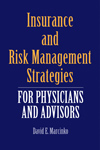
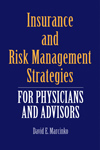
INSURANCE: Risk Management and Insurance Strategies for Physicians and Advisors

Product DetailsProduct DetailsProduct Details

Meet an Executive-Post Sponsor

The Institute of Medical Business Advisors, Inc

July 7, 2008

PRESS RELEASE: iMBA, Inc

Atlanta, Georgia

The Executive-Post at www.HealthcareFinancials.com is now proudly sponsored, in-part, by the Institute of Medical Business Advisors Inc.

Since inception in 2000, iMBA Inc has become one of North America’s leading professional health consulting firms; and focused provider of textbooks, CDs, tools, templates, onsite and distance education for the health economics, administration and financial management policy space. Other consulting services include:

  • Medical Practice Valuations and Appraisals
  • Practice Management Solutions
  • Physician Focused Financial Planning
  • Health Economics and Financial Benchmarking
  • Health Information Technology
  • Wealth Policies and Investment Management
  • Fiduciary Second Opinion Evaluations
  • Litigation Support Services
  • Special Projects, etc.

As competition increases, and the cognitive demands of the global marketplace change, iMBA Inc is well positioned with offices in five states and Europe to meet the needs of medical colleagues, related advisory and corporate health clients today; and into the future.

For more information, please visit: www.MedicalBusinessAdvisors.com

Subscribe Now: Did you like this Executive-Post, or find it helpful, interesting and informative? Want to get the latest E-Ps delivered to your email box each morning? Just subscribe using the link below. You can unsubscribe at any time. Security is assured.

Link: http://feeds.feedburner.com/HealthcareFinancialsthePostForcxos

Referrals: Thank you in advance for your electronic referrals to the Executive-Post.

The “Risky Business” of Web 2.0 Doctor Bloggers

Join Our Mailing List

A Mashed-Up Opinion

By Dr. David Edward Marcinko; MBA, CMP™

[Publisher-in-Chiefdem2]

Today, after personally reviewing far too many blogs, and according to www.NPR.org, there are more than120, 000 health care forums on the Internet with opinions ranging from pharmaceuticals, to sexual dysfunction, to acne.

The same goes for commercial doctor blogs that promote lotions, balms and potions, diets and vitamins, minerals, herbs, drinks and elixirs, or various other ingest-ants, digest-ants or pharmaceuticals, etc. Link: www.MyFootShop.com

And, to other doctors, the blogging craze is a new novelty where there are no rules, protocols, standards or precise figures on how many “medical-doctor” or related physician-blogs are “out there.” Unfortunately, too many recount gory ER scenes, or pictorially illustrate horrific medical conditions, or serious and traumatic injuries. www.physicianspractice.com/index/fuseaction/articles.details/articleID/1136.htm

Of course, others simply are medical practice websites, or those that entice patients into more lucrative plastic surgery or concierge medical practices. Some are from self-serving/credible plaintiff-seeking attorneys wishing to assist patients. Link: www.FootLaw.com

Disgruntled Doctors

But not all physician blogs are geared toward practice information, marketing or medical sensationalism. In fact, just the opposite seems to be the case in extremely candid blogs, like “Ranting Docs”, “White Coat Rants,” “Grunt Docs”, “Cancer Doc,” “The Happy Hospitalist,” “Mom MD”, “Cross-Over Health”, “Angry Docs” and “M.D.O.D.,” which bills itself as “Random Thoughts from a Few Cantankerous American Physicians.” Link: www.thehappyhospitalist.blogspot.com 

According to some of these, they are more like personal journals, or public diaries, where doctors vent about reimbursement rates, difficult cases, medical mistakes, declining medical prestige and control, and/or what a “bummer” it is to have so many patients die; not pay, or who are indigent, noncompliant, etc.www.CrossOverHealth.wordpress.com

We call these the “disgruntled doctor sites.” Some even talk about their own patients, coding issues, or various doctor-patient shenanigans.

Privacy Issues 

But, according to psychiatrist and blogger Dr. Deborah Peel and others, the problem with blogging about patients is the danger that one will be able to identify themselves – the doctor – or that others who know them will be able to identify them.”  Her affiliation, Patient Privacy Rights, rightly worries that patients might tracked back to the individual, and adversely affect their employment, health insurance or other aspects of life.

And, according to Dr. Charles F. Fenton; III, JD and Dr. Jay S. Grife; Esq., MA, both frequent posters to this Executive-Post blog forum, it is certainly true that if a doctor violates a patient’s privacy there could be legal consequences. Under HIPAA, physicians could face fines or even jail time. In some states, patients can file a civil lawsuit if they believe a doctor has violated their privacy. Still, internet privacy issues are an evolving gray-area that if not wrong, may still be morally and ethically questionable. Link: www.patientprivacyrights.org

Opinions May Vary

Our colleague Robert Wachter MD, author of a blog called “Wachter’s World,” says it’s important for doctors to be able to share cases, as long as they change the facts substantially. On the other hand, the author of “Wachter’s World” and a leading expert on patient safety alternately suggests “You might say we as doctors should never be talking about experiences with our patients online or in books or in articles.”

But, he says that “patients shouldn’t take all the information on blogs at face value. Taken for what they are — unedited opinions, and in some cases entertainment — blogs can give readers some useful insight into the good, the bad and the ugly of the medical profession”. Link: http://www.the-hospitalist.org/blogs

Assessment

Well, fair enough! But, the above caveats are a big “if” according to Gene Schmckler of the Institute of Medical Business Advisors, Inc. Link: www.MedicalBusinessAdvisors.com

Eugene Schmuckler, PhD is a behavioral psychologist and stress management expert who opines that “doctors unhappy with their current medical career choice, or its modern evolution, should probably consider counseling or even career change guidance, re-education and re-engineering.” It is very inappropriate to vent career frustrations in a public venue. It’s far better for the blog to be private and/or by invitation only; if at all. Link: www.healthcarefinancials.wordpress.com/2007/12/03/physician-career-development-essay

In My View – Risky Business

I believe that a hybrid mash-up of both views can be wholly appropriate, or grossly inappropriate in some cases. Of course the devil is in the details; linguistics and semantics aside. Nevertheless; what is not addressed in electronic physician “mea-culpas” are the professional liability risks and concerns that are evolving in this quasi-professional, quasi-lay, communication forum.

For example, we have seen medical mistakes, and liability admissions of all sorts, freely and glibly presented. In fact,

“some physicians find that the act of liability blogging as a professional confession that is useful in moving past their malpractice mistakes. And, it is also a useful way to begin a commitment to a better professional life of caring in the future. It helps eliminate the toxic residue and angst of professional liability and guilt. Moreover, as they are unburdened of past acts of omission or commission, doctors should remember to also forgive those who have wronged them. This helps greatly with the process and brings additional peace.”

However, although some may say that this electronic confession is good for the soul, it may not be good for your professional liability carrier, or you, when plaintiff’s attorneys release a legion of IT focused interns, or automated bots, searching online for your self-admissions and scouring for your self-incriminations.

Of course, a direct connection to a specific patient may still not be made and no HIPAA violation is involved. But, a vivid imagination is not need needed to envision this type of blind medical malpractice discovery deposition query even now. www.jbpub.com/detail.cfm?TemplateName=alliedhealth&bc=3342-3&ThisPage=Table%20of%20Contents

Q: “Doctor Smith, I noted all the medical errors admitted on your blog. What other mistakes did you make in the care and treatment of my client?”

And so, the question of plausible deniability, or culpability, is easily raised. 

If you must journalize your thoughts for sanity or stress release; do it in print. And, don’t tell anyone about it so the diary won’t be subpoenaed. Then tear it up and throw it away.

Remember, with risk management, “It is all about credibility.” Don’t trash yours!

These thoughts may be especially important if you covet a medical career as a researcher, editor, educator, medical expert or something other than a working-class or employed physician.

Link: https://healthcarefinancials.wordpress.com/2007/12/07/122

Assessment

Remember, there are all sorts of new fangled risks out-there for the modern medical practitioner to consider; so beware!

Conclusion

Your thoughts and comments on this ME-P are appreciated. Feel free to review our top-left column, and top-right sidebar materials, links, URLs and related websites, too. Then, subscribe to the ME-P. It is fast, free and secure.

Speaker: If you need a moderator or speaker for an upcoming event, Dr. David E. Marcinko; MBA – Publisher-in-Chief of the Medical Executive-Post – is available for seminar or speaking engagements. Contact: MarcinkoAdvisors@msn.com

OUR OTHER PRINT BOOKS AND RELATED INFORMATION SOURCES:

Product DetailsProduct Details


Seeking Chief Medical Officer [CMO]

Award Winning 560-Bed Hospital

By Lois Dister
ldister@cejkasearch.com


St. Luke’s Hospital, a prominent 560-bed hospital in Cedar Rapids, Iowa is seeking a Chief Medical Officer. St. Luke’s Hospital is part of the Iowa Health System, one of the top 25 integrated delivery systems in the United States.

St. Luke’s was named a Top 100 Heart Hospital and Press Ganey named St. Luke’s a 2007 Success Story for outstanding patient satisfaction results. Also in 2007, St. Luke’s received the Iowa Recognition for Performance Excellence silver award. This is Iowa’s premier award recognizing high performance management principles.

A Rich Opportunity

This CMO opportunity is rich with challenging and attainable priorities. As a member of the President’s Council, the CMO will be the liaison with the 400-physician medical staff comprised of employed physicians, private practice physicians, members of the Iowa Health Medical Group and contracted physician groups.

Qualifications include board certification, experience as a physician leader in a hospital environment, quality management, medical staff relations and an excellent clinical background.

This is truly an outstanding opportunity for a strong physician leader.

Learn more about this position; or to nominate a colleague, contact:
Lois Dister
ldister@cejkasearch.com

The Sheffield Group

Candidates for Hire

By Amy Kilcoyne
Director of Placement Services

Sheffield Group                                                  


Candidate 1

Siebel Maintenance Release and Support

Experienced in Siebel Sales, Call Center, eCommunication and eFinance modules. Experienced in Siebel integration with external and legacy applications. Successfully undertaken Siebel eFinance 7.5.3 implementation for Siebel Professional Services. Siebel Batch Integration (EIM) team. Expertise in Data Migration between Siebel 7.5 and Siebel 7.8. Experience in ETL tool like Informatica 7.1 and DTS. Participated in Siebel TAM reviews.

Candidate 2

JD Edwards EnterpriseOne

Technical experience in JD Edwards EnterpriseOne products including product versions including 8.10, 8.9, B7334, B7333 (Xe), B7332 and B733 technologies. Application design experience in JD Edwards World product (VersionA7.3 Cum 12) software with project management experience in Electronic Data Interchange (EDI) configuration and a technical knowledge with the Gentran Server NT, Gentran Integration Suite, Gentran Director, Inovis (Harbinger) TLE, GE Information System. Experience primarily focused in the areas of Design, Development, Implementation, Migration, Maintenance and Production support.

Candidate 3

Lawson ERP Analyst

Conduct discovery sessions of HR and Payroll processes; analyze user functions and publish recommendations for process improvements. Provide documentation and lead training sessions on improved processes. Improvements focused on hiring process, benefits automation rules and job and position audit. Assist organization in cyclical upgrade of Lawson applications 8.02 to 8.03.

Candidate 4

PeopleSoft Financials / SCM / HRMS

PEOPLESOFT: PeopleTools 6.X/7.X/8.X, PeopleCode, SQR, Query/Crystal, nVision, Data Mover, Application Engine, Upgrade assistant, Change assistant, Work flow, EDI, App Messaging, Integration Broker, HRMS (HR, Payroll, Base Benefits, Ben Admin, Time and Labor, e-Applications), Financials (AP, GL, AM), SCM (Purchasing, Inventory).

Candidate 5

Senior Lawson Specialist

Successfully led the technical team for the PeopleSoft to Lawson Human Resources/Payroll (7.2.4) conversion for a large Corporation; Successfully developed numerous in-depth Technical Designs for Lawson Interfaces, Batch Reports, Conversions, and Online programs; Interfaced information between the Technical team and Client department personnel.


The Sheffield Group, 1 Westbrook Corporate Center, Suite 910, Westchester, IL  60154 or 866-539-9497.


About iMBA Inc.

Partners for Health Economics and Financial Planning Solutions 


Meet your partner in the ever-evolving healthcare industrial complex. Whatever aspect of health economics you’re in – personal or organizational – the Institute of Medical Business Advisors, Inc offers the information, education, tools and interactivity you need to help change lives for the better www.MedicalBusinessAdvisors.com

iMBA Inc is an innovative healthcare business communications, publishing and financial education company with five US locations. With have an imprint presence in every aspect of the domestic health economics scene. We produce and license professional designations, managerial texts, administration dictionaries, institutional journals, economic white-papers and related personal financial planning products and services for physicians and consultants. These extensive resources allow us to provide a consistent level of didactic excellence to our clients and colleagues www.HealthcareFinancials.com 

iMBA Inc capabilities extend throughout the financial services and healthcare sectors. We interface with doctors, financial advisors, managed care organizations, hospitals and clinics, RIAs, mutual fund companies and private-banks, etc. Attention to quality and ease of comprehension, together with our experience in delivering specialized information to targeted audiences, has earned us unparalleled trust and respect throughout the non-clinical healthcare space www.HealthDictionarySeries.com 

What’s more, iMBA Inc has forged strategic professional networking partnerships with leading visionaries, CXOs and thought-leaders www.HealthcareFinancials.wordpress.com

These integrated capabilities make iMBA Inc a nationwide healthcare business and financial communications leader, and an exceptional on-ground or online educational partner and consulting resource for your medical practice, clinic, hospital or fiduciary advisory team www.CertifiedMedicalPlanner.com 770.448.0769 [vm] or 775.361.8831 [fax]

email: MarcinkoAdvisors@msn.com

Chief Marketing IMPACT Officer

Join Our Mailing List

About the Medical Executive-Post Weblog

Since inception, we and our sponsoring parent and professional consulting firm www.MedicalBusinessAdvisors.com, has acquired the reputation as one of the most independent and respected voices in the healthcare industrial complex and medical business industry.

And, while we have been praised as well as lambasted; we are never banal and are always pertinent, controversial, cutting-edge and physician compliant. Our related textbooks, CDs, paperbacks and best-selling dictionaries are among the most widely read publications in the field. And, our emerging online health administration professional educational program for physician focused financial advisors and medical business consultants is also growing www.CertifiedMedicalPlanner.org  

Of course, our quarterly print guide companion; Healthcare Organizations [Financial Management Strategies] is a premium 1,200 pages, two volume periodical, that keeps CEOs, CFOs, CXOs, physicians, nurse-leaders and healthcare executive subscribers abreast of the latest institutional health economics, managerial and business developments. It is known as the imperative survival guide in the current era of hospital reform.

 ###

Chief Marketing Officer [CMO] Opportunity  

The CMO will direct all marketing and advertising efforts of the Executive Post at HealthcareFinancials.com and its related communication forums. 

The ideal candidate will have a Marketing / Advertising and English / Journalism background with proven record of performance from the print and dot-com era. However, students and interns of the rich new media communications era are also encouraged to apply. Duties include, but are not limited to the following: 

  • Recruit licensed, degreed and related business, IT, management, economics, financial and healthcare professionals and executives to post, comment, mentor and opine in all subject matter forums
  • Recruit visitors, subscribers, colleagues to post comments in all subject forums
  • Grow our electronic syndicated feed network
  • Recruit personal interviews and professional essays from industry pundits, thought-leaders and other movers-shakers
  • Ideate, develop and launch new blog features and forums that increase visibility, connectivity and professional socialization
  • Develop special projects in a matrix type environment
  • Promote the Executive Post to the nation’s hospitals, clinics and medical offices; physicians, dentists, healthcare practitioners and nurses; healthcare executives, managers and administrators; financial advisors, accountants, attorneys, HIT gurus and all business management consultants working in the healthcare space on a very limited budget.
  • Create marketing buzz, PR and enthusiasm for related hardcover texts, soft cover books and dictionaries, and especially our premium quarterly subscription institutional print-guide Hospitals and Healthcare Organizations [Financial Management Strategies].
  • Craft and executive an electronic marketing plan with new channels of distribution
  • Work virtually at home, school, own office or elsewhere with little supervision

As CMO, you will also oversee the weblog and participate in iMBA’s www.MedicalBusinessAdvisors.com marketing activities; including marketing plans and communications, product marketing, market research, advertising, and public relations. You will establish company-wide marketing plans to attain corporate sales and profitability goals. You will evaluates the effectiveness of marketing programs and initiatives across all of iMBA’s product areas and develop business plans to expand business and keep products in a leadership role.

Reporting directly to the CEO, you will be a key contributor to the leadership and management team of the corporation. Specific start-up experience will be regarded as a definite plus. 

As an emerging e-enterprise, we offer no compensation or benefits program. You work as a 100% commission-based Independent Contractor [IC], anytime and anywhere. But, we do offer exposure, experience and opportunities to launch your professional marketing career, or extend an existing or former one [EOE]. Please contact us today with cover letter and resume!  

Edward: 770.448.0769 (vm) 775.361.8831 (fax)

MarcinkoAdvisors@msn.com

Product DetailsProduct Details

Risk Retention Groups

Join Our Mailing List

RRGs and Medical Malpractice Insurance Companies

[By Dr. David Edward Marcinko; FACFAS, MBA, CMP™]

dr-david-marcinko1

Definition

Risk Retention Groups are owner-controlled insurance companies authorized by the Federal Risk Retention Act of 1986.  An RRG provides liability Insurance to members who engage in similar or related business or activities for all or any portion of the exposures of group members, excluding first party coverage’s, such as property, workers’ compensation and personal lines.  Authorization under the federal statute allows a group to be chartered in one state, but able to engage in the business of insurance in all states, subject to certain specific and limited restrictions.  The Federal Act preempts state law in many significant ways.

RRG Advantages:

Medical RRGs

  • Avoidance of multiple state filing and licensing requirements;
  • Member control over risk and litigation management issues;
  • Establishment of stable market for coverage and rates;
  • Elimination of market residuals;
  • Exemption from countersignature laws for agents and brokers;
  • No expense for fronting fees;
  • Unbundling of services.

Of 130 new medical malpractice liability insurance companies that entered the market between 2002 and 2006, 65 percent were risk-retention groups, according to a study conducted for the National Risk Retention Association by the actuarial consulting company Milliman Inc.

Statistics from the Risk Retention Reporter, a journal that tracks the industry, showed that through September, 43 percent of the 23 risk-retention groups formed this year across various sectors are doctor-owned, while in 2001, no new physician risk-retention groups joined the market.

RRG Disadvantages

Some doctors and industry experts warn about drawbacks of risk-retention groups and question whether the physician-run companies – most of them relatively young – can survive future claims payouts and tough market cycles, while doctors do not have access to state guaranty funds to back up their coverage if a risk-retention group struggles financially or goes out of business. The Risk Retention Reporter noted that, anecdotally, physician self-insurance companies have failed at no greater rate than traditional carriers in recent years. 

Conclusion

Your thoughts and comments on this ME-P are appreciated. Feel free to review our top-left column, and top-right sidebar materials, links, URLs and related websites, too. Then, subscribe to the ME-P. It is fast, free and secure.

Speaker: If you need a moderator or speaker for an upcoming event, Dr. David E. Marcinko; MBA – Publisher-in-Chief of the Medical Executive-Post – is available for seminar or speaking engagements. Contact: MarcinkoAdvisors@msn.com

OUR OTHER PRINT BOOKS AND RELATED INFORMATION SOURCES:

Product Details  Product Details