BOARD CERTIFICATION EXAM STUDY GUIDES Lower Extremity Trauma
[Click on Image to Enlarge]
ME-P Free Advertising Consultation
The “Medical Executive-Post” is about connecting doctors, health care executives and modern consulting advisors. It’s about free-enterprise, business, practice, policy, personal financial planning and wealth building capitalism. We have an attitude that’s independent, outspoken, intelligent and so Next-Gen; often edgy, usually controversial. And, our consultants “got fly”, just like U. Read it! Write it! Post it! “Medical Executive-Post”. Call or email us for your FREE advertising and sales consultation TODAY [678.779.8597] Email: MarcinkoAdvisors@outlook.com
Medical & Surgical e-Consent Forms
ePodiatryConsentForms.com
iMBA Inc., OFFICES
Suite #5901 Wilbanks Drive, Norcross, Georgia, 30092 USA [1.678.779.8597]. Our location is real and we are now virtually enabled to assist new long distance clients and out-of-town colleagues.
ME-P Publishing
SEEKING INDUSTRY INFO PARTNERS?
If you want the opportunity to work with leading health care industry insiders, innovators and watchers, the “ME-P” may be right for you? We are unbiased and operate at the nexus of theoretical and applied R&D. Collaborate with us and you’ll put your brand in front of a smart & tightly focused demographic; one at the forefront of our emerging healthcare free marketplace of informed and professional “movers and shakers.” Our Ad Rate Card is available upon request [678-779-8597].
Posted on May 5, 2024 by Dr. David Edward Marcinko MBA MEd CMP™
By Staff Reporters
***
***
The Food and Drug Administration wants to make sure that if someone is analyzing your blood and urine, it’s worth your time, so the agency just finalized regulations to govern the $10 billion lab test industry. Tests designed by laboratories have long gone without government scrutiny, but the FDA said the time has come to ensure these tests are accurate—though the new standards will be phased in over several years.
There are currently about 80,000 medical tests available from ~1,200 labs, per the FDA, and those will mostly be grandfathered in. Still, the industry has pushed back, saying the regulations will inhibit innovation, and could sue to block the rules from taking effect.
Posted on May 4, 2024 by Dr. David Edward Marcinko MBA MEd CMP™
By Health Capital Consultants LLC
***
***
On April 23rd, 2024, the Federal Trade Commission (FTC) issued a final rule that would ban employers from imposing non-competes on their employees. The FTC asserts that this exploitative practice keeps wages low, and suppresses new ideas. Notably, while the final rule will affect all industries, not just healthcare, this proposal comes at a time when healthcare employers across the U.S. are struggling with staffing shortages.
Existing noncompetes for the majority of workers will no longer be enforceable after the rule goes into effect (i.e., 120 days after publication in the Federal Register); however, the FTC ban appears likely to face a legal challenge, and it could be years before it can take effect.
Under the final rule, noncompetes for senior executives can remain in force under the new ruling, but employers may not enter in or attempt to enforce any new noncompetes, even if that includes a senior executive. The Commission also recognizes that they have no jurisdiction over not-for-profit entities, however they reserve the right to evaluate any entity’s non-profit status. The FTC specifically stated that “some portion of the 58% of hospitals that claim tax-exempt status as nonprofits and the 19% of hospitals that are identified as State or local government hospitals in the data cited by AHA likely fall under the Commission’s jurisdiction and the final rule’s purview.”
While most healthcare employees and workers, including physicians, believe that the ruling is long overdue and that noncompetes “impede patient access to care, limit physicians’ ability to choose their employer, contribute to burnout and stifle competition,” the American Hospital Association (AHA), stated that the “FTC’s final rule banning non-compete agreements for all employees across all sectors of the economy is bad law, bad policy, and a clear sign of an agency run amok.
Look for next month’s (May 2024) Health Capital Topics article that will discuss, in more detail, the final rule, reactions from healthcare industry stakeholders, and potential implications for healthcare valuations (both business and compensation valuations).
Posted on May 3, 2024 by Dr. David Edward Marcinko MBA MEd CMP™
By Dr. David Edward Marcinko MBA MEd CMP
***
***
Medicare [Dis] Advantage Plans [Medicare Part C] commenced in 2003 or so and I have railed against them since then. First, for their low physician payments. And then as a patient advocate for the last decade. And, today, for both reasons. As a doctor and independent health insurance agent myself, believe me when I speak thusly.
Now, while Medicare Advantage plans are undoubtedly not the right choice for everyone, insurance companies still say there are some folks who will get exactly what they need from the plans and at a moderate price.
Nevertheless, Ernesto Jaboneta, the IT Director of California-based Medicare insurance agency Agent Pitstop, acknowledged there are many predatory salespeople who will jump to have you join a plan that doesn’t end up helping you in the long run. Still, there are precautions you can take to make falling into this trap less likely.
“The first thing anyone can do is invite along a family member or trusted friend to any appointments with an insurance agent,” Jaboneta told Newsweek. “Don’t feel pressured to decide right away.”
Before you commit to anything, you should compare plans and find out if your doctors will remain in your network. And if you’re unsure about some of the information you received from an insurance agent, you can also call 1-800-MEDICARE for more assistance.
Jaboneta also said there’s a big difference between captive insurance agents and independent agents, as well, and seniors should take note of this.
“A captive agent is an insurance agent who works directly for an insurance carrier,” Jaboneta said. “They have no incentive to compare options outside their own company, which is different than an independent agent who can compare all the options available. In many cases, when a beneficiary calls into an insurance company to find information, they will be talked into enrolling.”
The open enrollment period lasts from October 15th to December 8th, but there’s another enrollment period from January 1st to March 31st for anyone unhappy with their Medicare Advantage plan who wants to switch or revert to Medicare.
INVESTING UPDATE: Managed-care companies are reporting that seniors on Medicare Advantage Part C plans used far more medical services than expected in the final months of 2023. The announcements have sparked two separate selloffs over the past week: The first came January 12th, when UnitedHealth Group announced its fourth-quarter earnings. The second came after Humana just laid out preliminary fourth-quarter results, and said the high utilization trends would have a material impact on its 2024 performance “if current trends continue.”
Humana said it would be ending some plans and cutting benefits for patients in 2025 as it hopes to boost its financial performance. Altogether, 6 million Americans are insured through Humana’s Medicare Advantage.
Posted on May 2, 2024 by Dr. David Edward Marcinko MBA MEd CMP™
By Health Capital Consultants, LLC
***
***
On February 27, 2024, the Wall Street Journal (WSJ) reported that the Department of Justice (DOJ) has launched an antitrust investigation into UnitedHealth Group (UHG), the owner of the biggest health insurer in the U.S. and the leading manager of drug benefits and one of the largest networks of physician groups. This investigation comes as the Biden administration’s antitrust enforcers have ramped up investigations into some of the biggest U.S. companies, including Amazon, Apple, and Google.
Posted on April 30, 2024 by Dr. David Edward Marcinko MBA MEd CMP™
LAWSUIT
***
Humana Used AI Tool from UnitedHealth to Deny Medicare Advantage Claims
Humana used an artificial intelligence tool owned by UnitedHealth Group to wrongfully deny Medicare Advantage [Part C] members’ medical claims, according to a class-action complaint filed on Dec. 12th. The lawsuit was filed in the U.S. District Court for the Western District of Kentucky and is the latest legal action against major insurers such as UnitedHealthcare and Cigna for allegedly using automated data tools to wrongfully deny members’ claims.
The complaint against Humana, the country’s second-largest Medicare Advantage insurer, accuses the company of using an AI tool called nH Predict to determine how long a patient will need to remain in post-acute care and overrides physicians’ determinations for the patient. The plaintiffs claim Humana set a goal to keep post-acute facility stay lengths for MA members within 1% of nH Predict’s estimations. Employees who deviate from the algorithm’s estimates are “disciplined and terminated, regardless of whether a patient requires more care,” the lawsuit alleges. When decisions made by the algorithm are appealed, they are allegedly overturned 90% of the time.
Source: Jakob Emerson Becker’s Payer Issues [12/13/23]
Posted on April 30, 2024 by Dr. David Edward Marcinko MBA MEd CMP™
By Staff Reporters
***
***
Humana Plans to Leave Some Medicare Advantage Markets in 2025
Humana expects to exit Medicare Advantage (MA) markets in 2025, company executives told investors. The company reported its first quarter earnings April 24th. Humana posted $741 million in net income in the first quarter of 2024, beating investor expectations, but pulled its 2025 earnings guidance.
On an April 24th 2024 call with investors, Humana executives said it will look to pull back benefits and exit some markets, as CMS continues phasing in risk adjustment changes. CMS published its final MA rate notice for 2025 earlier this month. The agency slightly cut benchmark payments and continued phasing in coding changes. Humana previously said the agency’s rates were lower than its expectations.
Other payers have signaled they will likely cut benefits to accommodate the rate notice.
Posted on April 29, 2024 by Dr. David Edward Marcinko MBA MEd CMP™
MEDICAL EXECUTIVE-POST–TODAY’SNEWSLETTERBRIEFING
***
Essays, Opinions and Curated News in Health Economics, Investing, Business, Management and Financial Planning for Physician Entrepreneurs and their Savvy Advisors and Consultants
“Serving Almost One Million Doctors, Financial Advisors and Medical Management Consultants Daily“
A Partner of the Institute of Medical Business Advisors , Inc.
Last week stocks shrugged off the news that the Fed’s favorite inflation gauge ticked up last month as strong earnings reports from Big Tech pushed them higher giving the NASDAQ and the S&P 500 their best weeks since November. Google parent Alphabet had its best day since July 2015 after showing that some of its Artificial Intelligence investments are paying off for its first-ever dividend distribution.
The New York Stock Exchange (NYSE) recently asked market participants to share how they’d feel about trading 24/7.
According to Morning Brew, The tradition-shattering proposal by the world’s busiest stock exchange, which operates from 9:30am to 4pm ET Monday–Friday, would make stocks no different from other assets that never stop trading, like crypto and government bonds.
The NYSE’s curiosity comes as the startup 24 Exchange, backed by Mets owner Steve Cohen, is seeking SEC permission to launch a round-the-clock stock exchange. 24 Exchange wants to cater to the growing contingent of amateur investors, some of whom prefer to trade after their kids go to bed. If the NYSE decides to become an exchange that never sleeps, it’d likely upend the day-to-day of the pros on Wall Street. So, let’s consider what 24/7 trading would look like, who’d be in the green, and who’s kept up at night by the prospect. For example:
The NYSE currently allows people to trade stocks outside regular hours from 4am until the market opens and after the closing bell until 8pm, but there are fewer participants trading, and those transactions often come with higher fees. Meanwhile, brokerages like Robinhood and Interactive Brokers have found success in letting investors put in orders for many stocks and stock indexes overnight.
Robinhood recently said its overnight trading options are a hit, with trading outside of the NYSE’s regular hours accounting for as much as 25% of activity on the platform.
Many customers aren’t used to waiting around for the NYSE to “ding a bell two times a day,” Robinhood’s Chief Brokerage Officer Steve Quirk told Bloomberg.
Many of these nocturnal transactions on brokerage apps happen because of the time difference with the Asia Pacific region, where investors are increasingly eager to tap into the US stock market when most Americans are asleep. The trades are enabled by organizations like Blue Ocean, which are seeing skyrocketing demand for cross-border services. Having the NYSE run 24/7 would make it easier for investors in different time zones to participate in the US stock market.
Proponents also say it could make morning trading less volatile by allowing investors to react to big news (like an Elon Musk tweet about Tesla) as soon as it happens rather than waiting for markets to open.
Meanwhile, stocks popped off last week thanks to Big Tech’s impressive earnings, with the S&P 500 and NASDAQ posting their best weeks since November. Nvidia notched its best weekly gain in almost a year (up 15%), adding nearly $290 billion in market capitalization.
Posted on April 27, 2024 by Dr. David Edward Marcinko MBA MEd CMP™
Was the ADA Complicit?
By D. Kellus Pruitt DDS
If you were to walk into my dental office with a toothache, and I told you that before I relieve your pain, you have to agree not to say bad things about me on the internet, how badly would the tooth have to be hurting to keep you from walking out the door?
The article, “Toothache lawsuit may stifle medical gag orders against online rants”, by JoNel Aleccia, was posted on MSN.com years ago.
[Robert Lee, 42] who had a bad toothache has filed a class-action lawsuit against his New York dentist after she required him to sign a contract promising not to trash-talk her online — and then fined him thousands of dollars trying to enforce it.”
Aleccia adds: “[Dr. Stacy Makhnevich] was among hundreds of medical professionals nationwide in recent years who refused to care for patients unless they signed anti-defamation contracts. In the contracts, the doctors and dentists promised not to evade federal patient privacy protections in exchange for patients’ agreeing not to post public comments about them.”
The Dentist
Other than its obvious ineffectiveness for this particular Manhattan dentist, whose practice is on the 69 th. floor of the Chrysler Building, Lexington Avenue at East 42St., (212) 697-4400, what’s wrong with this business plan?
First of all, aside from the insult, if a dentist required you to sign a contract forfeiting your right to express your opinion about the quality of care even before being seen, how confident would it make you feel about the doctor’s abilities?
The HIPAA Question
Then there’s HIPAA. It’s sad that healthcare providers on the 69th. floor of the Chrysler Building would take advantage of vulnerable Americans who don’t understand that their right to privacy isn’t something that can be withheld – even as part of a twisted “copyright” deal intended to enable a dentist to dodge accountability. It seems to me like the Office of Civil Rights as well as the Attorney General should be alerted. How is threatening a patient’s privacy in return for direly-needed treatment different than extortion?
The Gotcha!
Mr. Lee had forgotten the contract until months later when he allegedly discovered that Dr. Makhnevich had overcharged him by about $4,000, improperly filed the insurance and then refused to provide him with the documents he needed to file the claim himself. That’s when he started posting rants on sites like Yelp and DoctorBase, such as, “Avoid at all cost! Scamming their customers!” and “Honestly, how do you live with yourself? Just try being a decent human being.”
“Within days, Makhnevich demanded that the sites remove the comments and threatened to sue Lee. She also said he was infringing on her copyright provisions and started sending invoices for fines of $100 a day. By October, the total topped $4,600, he said.”
The Service
Since the dentist purchased the right to use Medical Justice Inc. anti-defamation contracts to prevent complaints from dis-satisfied customers from being discussed on the internet, I say she is due a refund. What’s more, if she’s given any trouble about it, she should get on the internet and complain – if she didn’t forfeit that right as part of the agreement.
The ADA
So where did Dr. Stacy Makhnevich learn about Medical Justice Inc.’s ineffective, unethical and probably illegal anti-defamation contract service? Of all places, it may well have been in ADA Headquarters, 211 E. Chicago Ave., Chicago, (312) 440-2500
Dr. Jeffrey Segal [MD, JD], the neurosurgeon and founder of Medical Justice Services Inc. which sold providers like Dr. Makhnevich the right to use his company’s contracts, was a featured speaker at the American Dental Association’s [ADA] annual Benefits Conference last year.
The ADA leadership’s decision to invite Dr. Segal to advertise his product at a benefits conference (?) reveals the old timers’ underlying paranoia that makes them prefer silence from members as well as their own dental patients.
Assessment
Since the ADA effectively put its stamp of approval on Medical Justice’s anti-defamation contracts, don’t you think the ADA News should at least post a warning about the liability to members who attended Dr. Segal’s presentation in ADA Headquarters? Let’s watch dentistry’s leaders ignore the abysmal results of yet another half-baked blunder caused by people too proud to listen.
Conclusion
Your thoughts and comments on this ME-P are appreciated. Feel free to review our top-left column, and top-right sidebar materials, links, URLs and related websites, too. Then, subscribe to the ME-P. It is fast, free and secure.
Speaker: If you need a moderator or speaker for an upcoming event, Dr. David E. Marcinko; MBA – Publisher-in-Chief of the Medical Executive-Post – is available for seminar or speaking engagements. Contact: MarcinkoAdvisors@msn.com
OUR OTHER PRINT BOOKS AND RELATED INFORMATION SOURCES:
Posted on April 26, 2024 by Dr. David Edward Marcinko MBA MEd CMP™
By Staff Reporters
***
***
Microsoft is looking at a broader AI future than just OpenAI
Microsoft has been at the forefront of the AI revolution through its $13 billion stake in the ChatGPT-maker, but recently it showed it’s also making other Artificial Intelligence bets, announcing it will pursue several partnerships and is investing $2.1 billion in French startup Mistral AI. Mistral’s tech will be available to Microsoft Azure users.
And then Microsoft President Brad Smithtold Axios that OpenAI CEO Sam Altman is “brilliant”, but …… Read Axios Story.
Perhaps even to counter Mark Zuckerbergs META Platform.
Your thoughts and comments on this ME-P are appreciated. Feel free to review our top-left column, and top-right sidebar materials, links, URLs and related websites, too. Then, subscribe to the ME-P. It is fast, free and secure.
Speaker: If you need a moderator or speaker for an upcoming event, Dr. David E. Marcinko; MBA – Publisher-in-Chief of the Medical Executive-Post – is available for seminar or speaking engagements. Contact: MarcinkoAdvisors@msn.com
Our Other Print Books and Related Information Sources:
As a young adult, what could you spend money on that would be a wise investment in your financial future? A home? Medical school education? A money management class?
Well, all of these may be good ideas, but there’s something else you can buy that could make an even greater difference in your long-term financial health: counseling.
Behavioral Finance
What does psychological counseling have to do with money? Sometimes; a lot!
For example, I was recently interviewed by a reporter for an article about money disorders. The conversation reminded me just how many problems can result from dysfunctional money beliefs and behaviors. Money disorders can impair people’s functioning and disrupt their lives just as significantly as disorders like alcoholism or other addictions.
Some common money disorders include the following:
Compulsive Spending is a consuming focus on spending. It can include buying things you can’t afford as well as shopping where no money is actually spent
Financial Enabling is a codependent attempt to help others that actually does more harm than good. A pattern of bailing kids out financially is a good example.
Hoarding is compulsively buying and storing things that you don’t need or will never use.
Financial Infidelity is keeping money secrets (such as spending, saving, or investment mistakes) from your partner because you would be ashamed to have them find out.
Financial Incest is inappropriate sharing of worries or financial details in ways that violate the boundaries between children and adults.
Workaholism, especially medical professionals, is a consuming focus on work or earning to a point of damaging your relationships.
Under-spending is frugality taken to extremes, such as inadequate spending on health care, nutrition, shelter, or clothing even when you can afford them.
Not about Money
How many of the above “disorders” are you guilty of?
All these disorders have one thing in common: fundamentally, they aren’t about the money. A given pattern of behavior around money can be someone’s unconscious response to emotional pain, in the same way addiction or anger might be.
For that particular person, the money behavior may just happen to be the medicator that works to cope with deep emotional stress. While one person may find relief in alcohol or drugs and another may find it in work, someone else might use shopping or hoarding as a way to feel better and function in the world.
An Addiction?
Just like addictions, however, money disorders only relieve pain for a short time. In the long term, they only cause more pain. The result is an escalating cycle of destructive behavior that has many negative consequences, including financial ones.
Rag Mags
To see how emotional health and financial health are linked, all you have to do is read a celebrity magazine or look around at the people you know. I’ve seen high-earning doctors and other medical professionals who have a negative self-worth because they can’t control their spending. We all know people who bounce from one financial mess to another, never seeming to learn from their money mistakes. Some very capable and intelligent doctors struggle financially and in their careers because of emotional issues that have nothing directly to do with money.
Counseling
Counseling to resolve emotional issues may seem to be a low-priority expense that comes far down the list after basic needs like housing, food, and transportation. Yet for anyone who struggles to overcome destructive patterns of behavior—even those that aren’t directly about money—counseling can pay off in very real monetary ways.
Assessment
Emotionally healthy and confident people make better choices about relationships, careers, and other major aspects of their lives. They also make better choices about money. This is why counseling is more than an investment in your emotional health. It can also make a measurable difference in your financial health.
Conclusion
Your thoughts and comments on this ME-P are appreciated. Feel free to review our top-left column, and top-right sidebar materials, links, URLs and related websites, too. Then, subscribe to the ME-P. It is fast, free and secure.
Speaker: If you need a moderator or speaker for an upcoming event, Dr. David E. Marcinko; MBA – Publisher-in-Chief of the Medical Executive-Post – is available for seminar or speaking engagements. Contact: MarcinkoAdvisors@msn.com
Posted on April 25, 2024 by Dr. David Edward Marcinko MBA MEd CMP™
MEDICAL EXECUTIVE-POST–TODAY’SNEWSLETTERBRIEFING
***
Essays, Opinions and Curated News in Health Economics, Investing, Business, Management and Financial Planning for Physician Entrepreneurs and their Savvy Advisors and Consultants
“Serving Almost One Million Doctors, Financial Advisors and Medical Management Consultants Daily“
A Partner of the Institute of Medical Business Advisors , Inc.
Otherwise known as “National Prescription Drug Take Back Day,” National Drug Take Back Day on April 25th is sponsored by the Drug Enforcement Agency. Its goal is to keep the public aware of the dangers of prescription drug use and misuse. Many Americans don’t know how to safely dispose of the prescription drugs that have been sitting in the medicine cabinet past their prime. Using these expired drugs, or using someone else’s, is dangerous and puts both the public and the environment at risk.
Spotify made money in Q1. According to Morning Brew, the streaming music giant grew its revenue last quarter by 20% to $3.8 billion on a record $180 million in profit, it announced yesterday. The smash report comes after Spotify cut costs last year, which included laying off more than a quarter of its workforce. The company also raised prices in 2023 for the first time in a decade as it further expanded beyond music into audio books and other categories. Spotify shares soared ~11% following the news.
***
Here’s where the major benchmarks ended:
The S&P 500 index® (SPX) rose 1.08 points (0.02%) to 5,071.63; the Dow Jones Industrial Average® ($DJI) fell 42.77 points (0.1%) to 38,460.92; the NASDAQ Composite® ($COMP) added 16.11 points (0.1%) to 15,712.75.
The 10-year Treasury note yield rose more than 4 basis points to 4.644%.
The CBOE Volatility Index® (VIX) rose 0.28 to 15.97.
Transportation shares were among the market’s weakest performers Wednesday behind a drop of more than 10% in Old Dominion Freight Line (ODFL), which reported lighter-than-expected quarterly revenue. The shipper’s nosedive helped send the Dow Jones Transportation Average ($DJT) down 2.3%. Consumer staples, semiconductors, and utilities posted moderate advances. The Dow Jones Utility Index ($DJU) gained for the sixth straight day and ended at a three-and-a-half-month high.
***
The National Association of Realtors’ $418 million settlement over an alleged conspiracy to inflate commissions received preliminary approval yesterday. It’s a new world order: Sellers won’t have to pay buyers’ agents anymore. There’s been talk of a metaphorical death of real estate agents, or a mass extinction; the jury is still out, but RE/MAX cofounder and chairman Dave Liniger doesn’t seem too concerned.
The Labor Department announced it has finalized its Retirement Security Rule, which aims to protect American workers who are saving for retirement and relying on advice from fiduciaries for it. The new rule will update the definition of an investment advice fiduciary under the Employee Retirement Income Security Act and the Internal Revenue Code.
Clinicians don’t always get it right, and their mistakes can be costly: Studies show misdiagnoses lead to roughly 800,000 patient deaths or permanent disabilities each year in the US and cost the healthcare system an estimated $20 billion annually. Cleveland Clinic is using telehealth to try to combat misdiagnoses via its virtual second opinions program, which has saved an average of $8,705 per patient by avoiding unnecessary treatments, according to an analysis released in March.
Posted on April 22, 2024 by Dr. David Edward Marcinko MBA MEd CMP™
HAPPY EARTH DAY
By Staff Reporters
***
***
Feds Open Online Portal for Reporting AntiCompetitive Practices in Healthcare
Federal agencies want to hear from the public about monopolistic and anticompetitive behavior within the healthcare industry. Last Thursday, the Federal Trade Commission (FTC), the Department of Justice (DOJ) and the Department of Health and Human Services (HHS) unveiled HealthyCompetition.gov, an online portal where anyone can submit a healthcare competition complaint for potential investigation.
These submissions, the agencies said, can help the agencies ensure healthcare organizations provide quality care and pay their employees a fair wage.
The S&P 500 just had its worst week in more than a year, and the NASDAQ is on a four-week losing streak. Blame skepticism that AI will meaningfully boost profits: Since the NASDAQ peaked last month, the largest US tech companies have lost more than $930 billion in market value. NVIDIA alone lost $212 billion in value on Friday, its biggest plunge since March 2020.
PS: Exxon Mobil is worth more than Tesla for the first time in more than a year.
First held on April 22, 1970, it now includes a wide range of events coordinated globally by EARTHDAY.ORG (formerly Earth Day Network) including 1 billion people in more than 193 countries.[ The official theme for 2024 is “Planet vs. Plastics.” 2025 will be the 55th anniversary of Earth Day.
Posted on April 15, 2024 by Dr. David Edward Marcinko MBA MEd CMP™
MEDICAL EXECUTIVE-POST–TODAY’SNEWSLETTERBRIEFING
“Worried about an IRS audit? Avoid what’s called a red flag. That’s something the IRS always looks for. For example, say you have some money left in your bank account after paying taxes. That’s a red flag.“
― Jay Leno
***
Essays, Opinions and Curated News in Health Economics, Investing, Business, Management and Financial Planning for Physician Entrepreneurs and their Savvy Advisors and Consultants
“Serving Almost One Million Doctors, Financial Advisors and Medical Management Consultants Daily“
A Partner of the Institute of Medical Business Advisors , Inc.
Americans are saving less at their lowest pace in more than a year, and are apparently spending more than the growth of their incomes, according to an analysis by Wells Fargo that was shared with Newsweek.
In February, the personal savings rate hit 3.6 percent, “marking the lowest rate at which households saved in 14 months,” Wells Fargo economists noted in the Thursday report, adding that spending outpaced income growth for the month. The savings rate is higher than the below 3 percent level it fell to following the COVID-19 pandemic, but is nevertheless way down from the pre-pandemic rate of 6 percent.
The deadline for most people to file a 2023 tax return with the IRS is fast approaching; returns are due by 11:59 p.m., in your time zone, on Monday, April 15th today, with some exceptions. Taxpayers in Massachusetts and Maine have until April 17th to file and pay taxes because of the Patriots’ Day and Emancipation Day holidays. There are also extensions in some areas impacted by extreme weather. Individuals and businesses impacted by the October 7th attack on Israel have also been given an extension, the IRS announced. There are extensions for certain active-duty military members and citizens living abroad.
Nike announced plans to lay off around 1,600 employees, or about 2% of its global workforce, as part of a $2 billion cost-cutting strategy. CEO John Donahoe said performance has not been the best and took responsibility. Donahoe said, “This is a painful reality and not one that I take lightly.”
Stellantis is the world’s fourth-largest automaker by sales, behind Toyota, Volkswagen Group, and Hyundai Motor Group. The company designs, manufactures, and sells automobiles bearing its 14 brands: Abarth, Alfa Romeo, Chrysler, Citroën, Dodge, DS, Fiat, Jeep, Lancia, Maserati, Opel, Peugeot, Ram, and Vauxhall. Their headquarters is located in Amsterdam, and they have over 300,000 employees in 130 countries.
***
The Biden administration wants to make changes to private Medicare insurance plans that officials say will help seniors find plans that best suit their needs, promote access to behavioral health care and increase use of extra benefits such as fitness and dental plans. “We want to ensure that taxpayer dollars actually provide meaningful benefits to enrollees,” said Health and Human Services Secretary Xavier Becerra. If finalized, the proposed rules rolled out Monday could also give seniors faster access to some lower-cost drugs. Administration officials said the changes, which are subject to a 60-day comment period, build on recent steps taken to address what they called confusing or misleading advertisements for Medicare Advantage [Part C] plans. Just over half of those eligible for Medicare get coverage through a private insurance plan rather than traditional, government-run Medicare.
***
Healthcare varies substantially by state based on dozens of factors. The same is valid for cities. Some of this is due to the availability of medical facilities. Some have to do with health habits. Some have to do with incomes and poverty levels. People who live in poor states, based on income, almost always have unhealthy populations. A new study from Renew Bariatrics shows the “Healthiest (and Unhealthiest) States in the US—2024 Rankings,” and reviews alcohol use, diabetes, drug overdoses, mental health, isolation, tobacco use, exercise, and the presence of heart disease, obesity, and cancer. These, taken together, create an index from 0 to 100, with 100 being the worst possible score. These are the most expensive states to live in.
Posted on April 12, 2024 by Dr. David Edward Marcinko MBA MEd CMP™
Essay on the Eight-Hundred Pound Gorilla in the Medical Treatment Room
By Dr. David E. Marcinko MBA MEd CMP
[Editor-in-Chief]
According to economist Austin Frakt PhD, and others, there is a school of thought that says Congress is incapable of controlling costs in the Medicare and Medicaid System [CMS].
And, then there is the reality known by all practicing medical professionals regardless of specialty orientation or degree designation. That is to say, CMS really can control healthcare costs and with great ferocity and efficiency, and to non-public sectors as well …. PARADOXICAL?
On Getting What You Wish For
Blogger Ezra Klein opines that one of the dirty little secrets of the health-care system is that Medicare has done a much better job controlling costs than private health insurers.
Of course, we doctors know that the real problem is that Medicare seemingly [think Seinfeld’s character George Costanza] controls costs all too well; but not really. It is just that CMS pays doctors too little and thus it appears costs are controlled. What really is happening is that physician fees are being reduced carte’ blanche.
Nevertheless, and regardless of semantics, CMS will never control costs much more efficiently than private insurance companies or doctors will simply abandon Medicare for related payment models like direct reimbursement or concierge medicine. This is happening right now. Physicians, osteopaths and podiatrists etc, are opting out of Medicare in increasingly large numbers. In a world where there’s only Medicare and Medicare to control costs, doctors can either take the pay cut or stop seeing patients, and stop being doctors. “Taking what they are given – because they’re working for a livin.”
So sorry that this seems like a forehead-palm moment for Ezra, but not for healthcare practitioners or the ME-P!
Too Much Demand Elsewhere
And, as we see from other countries, many young bright folks want to be doctors, even if being a doctor doesn’t make one particularly wealthy [high demand and high eventual supply produces lower provider costs in the long term?]. Think medical tourism.
Not so much the case anymore in this country [lower demand and lower eventual supply produces higher reimbursement costs to the doctor survivors in the very long term?].
Our Domestic World
But, we are not elsewhere. In fact, in our present domestic healthcare ecosystem, when Medicare decides to control costs, many doctors can simply stop accepting Medicare patients, and the politicians will lose their jobs. One political party then declares that Medicare is rationing and will hurt senior citizens. The other party capitulates and pays MDs more [SGR]. Then, the federal budget looks bad as it does now. The circle is complete when one party asserts that Medicare actually can’t contain costs but the private insurance companies will. It all fails, in an unending circular Boolean-like loop of illogic.
Listen Up!
So, listen up AARP, politicians, CMS and seniors as I admonish you to be careful what you wish for [medical cost controls]. It might just come true. As Ezra rightly says; rinse, repeat – rinse, repeat – ad nausea. You simply can’t have it both ways. You either choose to spend less and offend certain cohorts, or spend more and offend different factions. Either way, you’re going to piss someone off. A good healthcare reimbursement system would try to make that decision rationally [a-politically]. But, at least it would make an economics driven decision; wouldn’t it?
Assessment
Is CMS really the eight hundred pound cost-controlled gorilla in the increasingly large Medicare treatment room? Why or why not? Now, relative to the ACA of 2010, please read: The Case for Public Plan Choice in National Health Reform [Key to Cost Control and Quality Coverage], by Jacob S. Hacker, PhD. Link:Jacob Hacker Public Plan Choice
Conclusion
And so, your thoughts and comments on this ME-P are appreciated. Do we have a Medicare cost control efficiency paradox? Or, are the economists just reveling in the publication banal? Feel free to review our top-left column, and top-right sidebar materials, links, URLs and related websites, too. Then, subscribe to the ME-P. It is fast, free and secure.
Speaker: If you need a moderator or speaker for an upcoming event, Dr. David E. Marcinko; MBA – Publisher-in-Chief of the Medical Executive-Post – is available for seminar or speaking engagements. Contact: MarcinkoAdvisors@msn.com
Subscribe Now: Did you like this Medical Executive-Post, or find it helpful, interesting and informative? Want to get the latest ME-Ps delivered to your email box each morning? Just subscribe using the link below. You can unsubscribe at any time. Security is assured.
Sponsors Welcomed: And, credible sponsors and like-minded advertisers are always welcomed.
Posted on April 11, 2024 by Dr. David Edward Marcinko MBA MEd CMP™
MEDICAL EXECUTIVE-POST– Today’sNewsletter
***
Essays, Opinions and Curated News in Health Economics, Investing, Business, Management and Financial Planning for Physician Entrepreneurs and their Savvy Advisors and Consultants
“Serving Almost One Million Doctors, Financial Advisors and Medical Management Consultants Daily“
A Partner of the Institute of Medical Business Advisors , Inc.
NEW YORK (Reuters) -The U.S. accounting watchdog on Wednesday said it has hit KPMG Netherlands with a $25 million civil penalty, a record for the regulator, in response to “egregious” and widespread exam cheating at the foreign affiliate of the major audit firm.
As millions of Americans approach age 66, they face the inevitable question, is it time to retire? The physician population is aging alongside the general population—more than 40% of physicians in the U.S. will be 65 years or older within the next decade. In the case of surgeons, there is little guidance on how to best ensure their competency throughout their career and at the same time maintain patient safety while preserving mature physician dignity.
It is a scenario playing out nationwide. From Oregon to Pennsylvania, hundreds of communities have in recent years either stopped adding fluoride to their water supplies or voted to prevent its addition. Supporters of such bans argue that people should be given the freedom of choice. The broad availability of over-the-counter dental products containing the mineral makes it no longer necessary to add to public water supplies, they say. The Centers for Disease Control and Prevention says that while store-bought products reduce tooth decay, the greatest protection comes when they are used in combination with water fluoridation.
More health systems are going to be opting out of Medicare Advantage (MA) plans, George Hill, a managing director at Deutsche Bank in Boston, predicted Monday at a “Wall Street Comes to Washington” webinar hosted by the Brookings Institution. “I think you’re going to see more large provider organizations threaten to opt out of networks, particularly as it relates to MA,” Hill said, adding that there are a number of reasons for this. “Prior authorizations are the problem, claims denials are a huge problem, delayed payments and rates are the problem — barriers in access to care in all varieties are the problem.”
The latest budget update from the nonpartisan Congressional Budget Office (CBO) found that the federal government has spent more on paying interest on the national debt than on the military in fiscal year 2024. The CBO’s budget report for March showed that the U.S. has spent $412 billion on military programs at the Department of Defense through the first half of FY-2024, according to preliminary figures from CBO and the Treasury Department.
Consumer price increases remained high last month, boosted by gas, rents, and car insurance, the government said Wednesday in a report that will likely give pause to the Federal Reserve as it weighs when and by how much to cut interest rates this year. Prices outside the volatile food and energy categories rose 0.4% from February to March, the same accelerated pace as in the previous month. Measured from a year earlier, these core prices were up 3.8%, unchanged from the year-over-year rise in February. The Fed closely tracks core prices because they tend to provide a good read of where inflation is headed.
Here’s where the major benchmarks ended:
The S&P 500® index (SPX) dropped 49.27 points (1.0%) to 5,160.64; the Dow Jones Industrial Average lost 422.16 points (1.1%) to 38,461.51; the NASDAQ Composite® ($COMP) fell 136.28 points (0.8%) to 16,170.36.
The 10-year Treasury note yield (TNX) soared more than 18 basis points to 4.548%.
The CBOE Volatility Index® (VIX) jumped 0.82 to 15.80.
Interest-rate-sensitive sectors like banks, real estate, and utilities led Wednesday’s decliners. The KBW Regional Bank Index (KRX) tumbled 5% to its lowest point since late November. The small-cap Russell 2000® Index (RUT) lost 2.5%. Energy shares were among the few gainers as WTI Crude Oil (/CL) futures rebounded after three-straight losing sessions.
In other markets, the U.S. dollar index (DXY) jumped 1% to a five-month high amid expectations interest rates will remain elevated.
Posted on April 10, 2024 by Dr. David Edward Marcinko MBA MEd CMP™
Is Business Finally Embracing Medical Values?
[By Render S. Davis MHA CHE]
[By David Edward Marcinko MBA MEd]
In the evolutionary shifts in models for medical care, physicians have been asked to embrace business values of efficiency and cost effectiveness, sometimes at the expense of their professional judgment and personal values.
While some of these changes have been inevitable as our society sought to rein in out-of-control costs, it is not unreasonable for physicians to call on payers, regulators and other business parties to the health care delivery system to raise their ethical bar.
Tit-for-Tat
Harvard University physician-ethicist Linda Emmanuel noted that “health professionals are now accountable to business values (such as efficiency and cost effectiveness), so business persons should be accountable to professional values including kindness and compassion.”
***
[Medicine versus Business]
***
Assessment
Within the framework of ethical principles, John La Puma, M.D., wrote in Managed Care Ethics, that “business’s ethical obligations are integrity and honesty.
Medicine’s are those plus altruism, beneficence, non-maleficence, respect, and fairness.”
About the Author
Render Davis was a Certified Healthcare Executive, now retired from Crawford Long Hospital at Emory University, in Atlanta, GA He served as Assistant Administrator for General Services, Policy Development, and Regulatory Affairs from 1977-95. He is a founding board member of the Health Care Ethics Consortium of Georgia and served on the consortium’s Executive Committee, Advisory Board, Futility Task Force, Strategic Planning Committee, and chaired the Annual Conference Planning Committee, for many years.
Your thoughts and comments on this ME-P are appreciated. Feel free to review our top-left column, and top-right sidebar materials, links, URLs and related websites, too. Then, subscribe to the ME-P. It is fast, free and secure.
Speaker: If you need a moderator or speaker for an upcoming event, Dr. David E. Marcinko; MBA – Publisher-in-Chief of the Medical Executive-Post – is available for seminar or speaking engagements. Contact: MarcinkoAdvisors@msn.com
OUR OTHER PRINT BOOKS AND RELATED INFORMATION SOURCES:
Posted on April 10, 2024 by Dr. David Edward Marcinko MBA MEd CMP™
Medical Ethics – Ever on Guard
***
ByAaron Carroll MD, MS
***
I’m a doctor. My father is a doctor. My colleagues are doctors, the people I train are doctors, lots and lots of my friends are doctors.
***
But, that doesn’t meant that doctors sometimes aren’t blind to certain issues like their own financial conflicts of interest. Sometimes we have to poke doctors with a stick. That’s how we show our love.
***
Conflicts of interest are the topic of this Healthcare Triage video.
Dr. Carroll has published some of the seminal work on various types of health care reform, and continues to be a sought after speaker on cost, quality and access-and the Affordable Care Act and its implications for our future. Considered one of the leading pediatric informaticists in the U.S. he has received millions of dollars in grants to explore the use of information technology in health care. Dr. Carroll was the Primary Investigator on a grant from the Agency for Healthcare Research and Quality to study the true impact of malpractice claims on the practice of medicine.
Conclusion
Your thoughts and comments on this ME-P are appreciated. Feel free to review our top-left column, and top-right sidebar materials, links, URLs and related websites, too. Then, subscribe to the ME-P. It is fast, free and secure.
Speaker: If you need a moderator or speaker for an upcoming event, Dr. David E. Marcinko; MBA – Publisher-in-Chief of the Medical Executive-Post – is available for seminar or speaking engagements. Contact: MarcinkoAdvisors@msn.com
OUR OTHER PRINT BOOKS AND RELATED INFORMATION SOURCES:
Posted on April 10, 2024 by Dr. David Edward Marcinko MBA MEd CMP™
By Staff Reporters
***
***
Physicians Received $12 Billion from Drug & Device Makers in Less Than 10 Years
A review of the federal Open Payments database found that the pharmaceutical and medical device industry paid physicians $12.1 billion over nearly a decade. Almost two thirds of eligible physicians — 826,313 doctors — received a payment from a drug or device maker from 2013 to 2022, according to a study published online in JAMA on March 28th. Overall, the median payment was $48 per physician.
Orthopedists received the largest amount of payments in aggregate, $1.3 billion, followed by neurologists and psychiatrists at $1.2 billion, and cardiologists at $1.29 billion. To find out what any physician was paid, click here.
Posted on April 8, 2024 by Dr. David Edward Marcinko MBA MEd CMP™
By Staff Reporters
SAFE SOLAR ECLIPSE DAY
***
***
NVIDIA is accelerating the pace of healthcare innovation! Last week they unveiled a suite of AI microservices for developers, launched cutting-edge healthcare AI tools, and deepened their collaborations with giants like Johnson & Johnson. Plus, they’re ramping up investment in clinical trials and drug design.
Do you ever struggle with finding the best sources of information about healthcare AI? Check out my new video, where I share my favorite newsletters, websites, sub-reddits, and a list of must-follow experts. With this toolkit, you won’t miss anything important. Also, I hope you enjoyed a restful and Happy Spring Break – should you celebrate it!
Last week, several Fed officials said they were in no rush to slash interest rates in 2024, which investors have been banking on this year. Meanwhile, oil prices have risen to five-month highs due to concerns about supply shocks in key areas around the world.
And, Wall Street is preparing for a crammed week, with crucial inflation data dropping on Wednesday and big banks (JPMorgan, Wells Fargo, Citigroup) inaugurating earnings season on Friday. The pressure is on companies to post beefy profits to back up their strong stock performance in Q1.
On August 14, 2023, the Centers for Medicare and Medicaid Services (CMS) announced updates to their Accountable Care Organization Realizing Equity, Access, and Community Health (ACO REACH) model.
In response to feedback from stakeholders, starting in performance year (PY) 2024, the agency expects to increase the predictability for the model and further advance health equity. Only in its first PY, ACO REACH is a revision and replacement of the Global and Professional Direct Contracting (GPDC) model and the Geographic Direct Contracting (Geo Model) model, a subset of the GPDC model. This Health Capital Topics article will discuss the updates to the ACO REACH model and its implications for existing accountable care organizations (ACOs). (Read more…)
In a recent survey by Edelman Financial Engines, 57% of respondents said they’d feel wealthy if they had $1 million in the bank. But for many people, like doctors, that may not be enough.
Among those with $500,000 and $3 million in assets, 53% said it would take over $3 million in the bank for them to feel wealthy, and 33% said it would take over $5 million. Given that these are amounts some people will never even come close to amassing in their lifetimes, it may be hard to wrap your head around these answers.
Posted on April 6, 2024 by Dr. David Edward Marcinko MBA MEd CMP™
By Staff Reporters
***
***
Here’s where the major benchmarks ended:
Markets: Stocks pulled it out for a Friday win after the government dropped encouraging economic data. But all three major indexes were still down for the week, with the Dow enduring its worst of 2024.
Stock spotlight:Tesla took a wild ride, plunging after Reuters reported it had scrapped plans to produce its long-awaited Model 2 affordable EV only to regain some ground after Elon Musk denied it. The company then jumped after hours because Musk said it’ll debut a robotaxi on August 8.
The S&P 500 index gained 57.13 points (1.1%) to 5,204.34, down 1.0% for the week; the Dow Jones Industrial Average added 307.06 points (0.8%) to 38,904.04, down 2.3% for the week; the NASDAQ Composite® ($COMP) rose 199.44 points (1.2%) to 16,248.52, down 0.8% for the week.
The 10-year Treasury note yield (TNX) rose more than 8 basis points to 4.392%.
The CBOE Volatility Index® (VIX) fell 0.32 to 16.03.
Meta Platforms (META) and Netflix (NFLX), two members of the “Magnificent Seven” mega-cap group, both jumped around 3% Friday, helping lift the S&P 500 Communication Services Index ($SP500#50) 1.6% to lead top-performing sectors. Meta shares closed at a record above $527, up 49% for the year.
Posted on April 6, 2024 by Dr. David Edward Marcinko MBA MEd CMP™
THE AMA A.U.I. REPORT
***
By Staff Reporters
Doctors are excited—yet cautious—about the role augmented intelligence (AUI) could play in the future of healthcare. That’s the takeaway from an American Medical Association (AMA) survey released last month.
About two-thirds (65%) of 1,000+ physicians that the AMA surveyed in August 2023 agreed that there was at least some advantage to using AUI-powered tools, particularly when it comes to diagnostic ability (72%), work efficiency (69%), and clinical outcomes (61%). More than half (56%) of doctors said AUI tools could best help address administrative burdens.
Posted on April 5, 2024 by Dr. David Edward Marcinko MBA MEd CMP™
By Staff Reporters
***
***
Ulta and other major beauty companies that thrived during the past few years of economic instability provided good fodder for the “lipstick index”—a duct-tape economic measure that assumes people still buy small indulgences (like lipstick) during tough times, keeping the beauty industry recession-proof.
However…it’s not. Ulta’s full-year sales growth target is just 4% to 5%, which falls below Wall Street’s estimates, and Estée Lauder announced in February it was laying off 3% to 5% of its workforce after some difficult months.
And, other consumer goods powerhouses are bracing for a slowdown, too. The parent company of Calvin Klein and Tommy Hilfiger said this week that it’s preparing for a 6% to 7% revenue drop this year.
The S&P 500 index dropped 64.28 points (1.2%) to 5,147.21; the Dow Jones Industrial Average® ($DJI) tumbled 530.16 points (1.4%) to 38,596.98; the NASDAQ Composite® ($COMP) sank 228.38 points (1.4%) to 16,049.08.
The 10-year Treasury note yield (TNX) fell more than 5 basis points to 4.303.%.
The CBOE Volatility Index® (VIX) surged 2.07 to 16.39.
Semiconductors were among Thursday’s weakest performers as a drop of more than 8% in Advanced Micro Devices (AMD) helped send the Philadelphia Semiconductor Index (SOX) down 3% to a two-week low. Retail shares were also soft. WTI Crude Oil futures rose for the sixth consecutive day and topped $87 per barrel, marking a gain of 4.3% so far this week. Volatility based on the VIX ended at its highest level since early November. Brent Crude Oil (/BZ) futures, the global benchmark, topped $90 for the first time since October.
Posted on April 5, 2024 by Dr. David Edward Marcinko MBA MEd CMP™
By Health Capital Consultants, LLC
On March 5th, 2024, the Department of Justice’s (DOJ’s) Antitrust Division, the Federal Trade Commission (FTC), and the Department of Health and Human Services (HHS), announced the launch of a multi-agency inquiry – in the form of a request for information (RFI) and public workshop – focusing on the increasing control of private equity (PE) and other corporations over the healthcare industry.
This Health Capital Topics article discusses the agencies recent actions and how it appears to be in line with the government’s recent moves to crack down on anti-competitive actions in healthcare. (Read more…)
Posted on April 4, 2024 by Dr. David Edward Marcinko MBA MEd CMP™
By Bertalan Meskó, MDPhD
***
***
What are you going to do 10-20 years from now? We toyed with the idea and came up with a list of healthcare jobs we think will be born in the coming decades. In case you want to become an organ designer or an end-of-life therapist. OR telesurgery VR planner.
And before you say I’m looking too far into the future, let me remind you that researchers are experimenting with a computer made of DNA-coated microbeads, with wireless charging of electronic implants, an Osaka hospital uses smart glasses to connect remote teams, while the FDA cleared an A.I. software automatically flagging cases of pneumothorax.
I hope you will find the newsletter useful!
Best regards, Bertalan Meskó, MD PhD The Medical Futurist
Posted on April 3, 2024 by Dr. David Edward Marcinko MBA MEd CMP™
By Staff Reporters
***
DEFINITION: A safety net hospital is a type of medical center in the United States that by legal obligation or mission provides healthcare for individuals regardless of their insurance status or ability to pay. This legal mandate forces safety net hospitals to serve all populations. Such hospitals typically serve a proportionately higher number of uninsured, Medicaid, Medicare, Children’s Health Insurance Program, low-income, and other vulnerable individuals than their “non-safety net hospital” counterpart.
But, some Safety net hospitals will soon learn how the government plans to reimburse them for nearly $10 billion resulting from underpayments from the federal drug discount program. The question is whether it will come at the expense of other hospitals. The Centers for Medicare and Medicaid Services [CMS] is poised to reveal a repayment plan to facilities in the 340B program, after the Supreme Court found the agency made illegal program cuts from 2018 to September 2022.
Posted on April 3, 2024 by Dr. David Edward Marcinko MBA MEd CMP™
By Staff Reporters
***
Medicare Part C papers, glasses and stethoscope.
***
Humana and other managed-care stocks were down sharply in trading Tuesday after the Centers for Medicare and Medicaid Services announced an average 3.7% increase in revenue for Medicare Advantage plans in 2025. That amount is the same as the proposed increase the government had announced in January, but it came as a shock to investors who were hoping for a slight bump.
Humana (HUM) shares fell sharply in early Tuesday trading, while rivals UnitedHealth UNH and CVS Health (CVS) traded firmly in the red, as the health insurance industry received yet another blow to its 2024 profit forecasts. All three major health insurance groups have trailed the broader market this year, with Humana down nearly 25%, amid concern that profit margins will be hit by a surge in medical costs tied to a rise in elective procedures. Those procedures had been delayed by the Covid pandemic.
The S&P 500 index fell 37.96 points (0.7%) to 5,205.81; the Dow Jones Industrial Average lost 396.61 points (1.0%) to 39,170.24; the NASDAQ Composite slipped 156.38 points (1.0%) to 16,240.45.
The 10-year Treasury note yield was up almost 3 basis points to 4.357%.
The CBOE Volatility Index® (VIX) rose 0.96 to 14.61.
Retailer, biotechnology, and regional bank shares were among the weakest performers Tuesday, leading a broad market slump in which declining stocks outnumber advancers by a greater than three-to-one ratio. The small-cap Russell 2000® Index (RUT) lost 1.8% and settled at a two-week low.
Energy companies, by contrast, extended recent strength behind an ongoing climb in WTI Crude Oil (/CL) futures, which surpassed $85 per barrel for the first time since late October. The Philadelphia Oil Service Index (OSX) advanced 2.1% and ended at a 5-½-month high. Oil prices have surged this year due to OPEC production cuts and concern over supply disruptions stemming from the Middle East conflict.
Posted on April 3, 2024 by Dr. David Edward Marcinko MBA MEd CMP™
PATIENT COMPLICATION RATES
By Staff Reporters
***
***
Hospitals under private equity (PE) ownership reported higher rates of patient complications when compared to other facilities, according to a recent JAMA study—raising questions about how the business model might affect staffing and subsequent quality of care.
The surveyed Medicare beneficiaries saw a 25.4% increase in “hospital-acquired conditions,” which the Centers for Medicare and Medicaid Services defines as falls, infections, and other adverse events, when they received treatment at a PE-acquired hospital compared to those run under other forms of ownership.
On the whole, the study found that Medicare enrollees at hospitals under PE control were not only younger and less likely to additionally qualify for Medicaid but also more likely to experience complications.
Posted on April 2, 2024 by Dr. David Edward Marcinko MBA MEd CMP™
By Staff Reporters
***
***
Quote: “This is a very unusual situation. The stock is pretty much divorced from fundamentals.”—Jay Ritter, finance professor and IPO expert at the University of Florida, on the surging value of the newly public Trump Media. Truth Social,its only active product, has been shedding both users and cash. (CNN)
Shares of Truth Social owner Trump Media & Technology Group plunged Monday after the company disclosed that it lost more than $58 million and generated very little revenue in 2023. Former President Donald Trump is the company’s majority shareholder, and his net worth tumbled by more than $1 billion Monday as a result.
Stocks started Q2 off soft yesterday, as investors continued to fret about inflation. Stock spotlight: Trump Media, the newly public company that owns Truth Social, plunged yesterday after revealing that it lost $58 million last year, generated just $4.1 million in revenue, and had 10 times fewer users than Threads.
The S&P 500 index fell 10.58 points (0.2%) to 5,243.77; the Dow Jones Industrial Average® ($DJI) shed 240.52 points (0.6%) to 39,566.85; the NASDAQ Composite® ($COMP) added 17.37 points (0.1%) to 16,396.83.
The 10-year Treasury note yield jumped 13 basis points to 4.323%.
The CBOE Volatility Index® (VIX) rose 0.64 to 13.65.
Banks were among the market’s weakest performers Monday, likely reflecting concern that elevated interest rates could pinch margins. The KBW Regional Bank Index (KRX) sank 2% after ending at a two-month high last week. The small-cap Russell 2000® Index (RUT) was also soft, dropping 1% after closing at a two-year high last week.
Communication services and semiconductor shares turned in strong performances, as did energy, lifted by WTI Crude Oil (/CL) futures’ extending a rally to its highest level since late October. WTI Crude Oil is up almost 18% so far this year amid concern over supply disruptions stemming from the Russia-Ukraine war and Middle East conflict.
In other markets, the U.S. dollar index ($DXY) strengthened for the fourth straight day and reached its highest point since mid-November behind expectations the Fed will keep interest rates high.
TERMS & DEFINITIONS FOR PHYSICIANSAND ALL INVESTORS:
PRUDENT BUYER: The efficient purchaser of market balance between value and cost.
PRUDENT MAN RULE: An 1830 court case stating that a person in a fiduciary capacity (a trustee, executor, custodian, etc) must conduct him/herself faithfully and exercise sound judgment when investing monies under care. “He is to observe how men of prudence, discretion and intelligence manage their own affairs, not in regard to speculation, but in regard to the permanent distribution of their funds, considering the probable income as well as the probable safety of the capital to be invested.” Allows for mutual funds and variable annuities.
PRUDENT INVESTOR RULE: A fiduciary is required to conduct him/herself faithfully and exercise sound judgment when investing monies and take measured and reasonable investment risks in return for potential future rewards. Allows for mutual funds, stocks, bonds, variable annuities asset allocation & Modern Portfolio Theory.
EDITOR’SNOTE: We interviewed noted authority Ben Aikin AIF® on this topic more than a decade ago. He was ahead of his time regarding fiduciary accountability and we appreciate his insights.
Posted on March 28, 2024 by Dr. David Edward Marcinko MBA MEd CMP™
By Related Influential Thought-Leaders
Dr. Brad Klontz CSAC CFP®
Dr. Ted Klontz PsyD
Dr. Eugene Schmuckler MBA MEd CTS
Dr. Kenneth Shubin-Stein FACP CFA
Dr. David Edward Marcinko MEd MBA CMP™
***
***
James O. Prochaska PhD, Professor of Psychology and Director of the Cancer Prevention Research Center at the University of Rhode Island, developed the Trans-Theoretic Model of Behavior Change [TTM] which has been evolving since in 1977. Nominated as one of the five most influential authors in Psychology, by the Institute for Scientific Information and the American Psychological Society, Dr. Prochaska is author of more than 300 papers on behavior change for health promotion and disease prevention.
TTM Stages of Change
In his Trans-Theoretical Model, behavior change is a “process involving progress through a series of these stages:
Pre-Contemplation (Not Ready) – “People are not intending to take action in the foreseeable future, and can be unaware that their behavior is problematic”
Contemplation (Getting Ready) – “People are beginning to recognize that their behavior is problematic, and start to look at the pros and cons of their continued actions”
Preparation (Ready) – “People are intending to take action in the immediate future, and may begin taking small steps toward behavior change”
Action – “People have made specific overt modifications in changing their problem behavior or in acquiring new healthy behaviors”
Maintenance – “People have been able to sustain action for a while and are working to prevent relapse”
Termination – “Individuals have zero temptation and they are sure they will not return to their old unhealthy habit as a way of coping”
Relapse
In addition, researchers conceptualized “relapse” (recycling) which is not a stage in itself but rather the “return from Action or Maintenance to an earlier stage.” In medical care, these stages of behavior change have applicability to anti-hypertension and lipid lowering medication use, as well as depression prevention, weight control and smoking cessation.
***
***
Uniting Psychology and Financial Behavior
More recently, validating the emerging alliance between psychology (human behavior) and finance (economics) are two Americans who won the Royal Swedish Academy of Science’s 2002 Nobel Memorial Prize in Economic Science. Their research was nothing short of an explanation for the idiosyncrasies incumbent in human financial decision-making outcomes.
Enter Kahneman and Smith
Daniel Kahneman, PhD, professor of psychology at Princeton University, and Vernon L. Smith, PhD, professor of economics at George Mason University in Fairfax, Va., shared the prize for work that provided insight on everything from stock market bubbles, to regulating utilities, and countless other economic activities. In several cases, the winners tried to explain apparent financial paradoxes.
For example, Professor Kahneman made the economically puzzling discovery that most of his subjects would make a 20-minute trip to buy a calculator for $10 instead of $15, but would not make the same trip to buy a jacket for $120 instead of $125, saving the same $5.
in vitro and in-vivo Economics
Initially, in the 1960’s, Smith set out to demonstrate how economic theory worked in the laboratory (in vitro), while Kahneman was more interested in the ways economic theory mis-predicted people in real-life (in-vivo). He tested the limits of standard economic choice theory in predicting the actions of real people, and his work formalized laboratory techniques for studying economic decision making, with a focus on trading and bargaining.
Later, Smith and Kahneman together were among the first economists to make experimental data a cornerstone of academic output. Their studies included people playing games of cooperation and trust, and simulating different types of markets in a laboratory setting. Their theories assumed that individuals make decisions systematically, based on preferences and available information, in a way that changes little over time, or in different contexts.
University of Chicago
By the late 1970’s, Richard H. Thaler, PhD, an economist at the University of Chicago also began to perform behavioral experiments further suggesting irrational wrinkles in standard financial theory and behavior, enhancing the still embryonic but increasingly popular theories of Kahneman and Smith.
Other economists’ laboratory experiments used ideas about competitive interactions pioneered by game theorists like John Forbes Nash Jr., PhD, who shared the Nobel in 1994, as points of reference.
Assessment
But, Kahneman and Smith often concentrated on cases where people’s actions departed from the systematic, rational strategies that Nash envisioned. Psychologically, this was all a precursor to the informal concept of life or holistic financial planning. Kahneman was awarded the Medal of Freedom, by President Barack Obama, on November 20, 2013.
Have you visited our other topic channels? Established to facilitate idea exchange and link our community together, the value of these topics is dependent upon your input. Please take a minute to visit. And, to prevent that annoying spam, we ask that you register. It is fast, free and secure.
Your thoughts and comments on this ME-P are appreciated. Feel free to review our top-left column, and top-right sidebar materials, links, URLs and related websites, too. Then, subscribe to the ME-P. It is fast, free and secure.
Speaker: If you need a moderator or speaker for an upcoming event, Dr. David E. Marcinko; MBA – Publisher-in-Chief of the Medical Executive-Post – is available for seminar or speaking engagements. Contact: MarcinkoAdvisors@msn.com
OUR OTHER PRINT BOOKS AND RELATED INFORMATION SOURCES:
Posted on March 28, 2024 by Dr. David Edward Marcinko MBA MEd CMP™
NOBEL PRIZE WINNER AND FATHER OF BEHAVIORAL ECONOMICS
By Staff Reporters
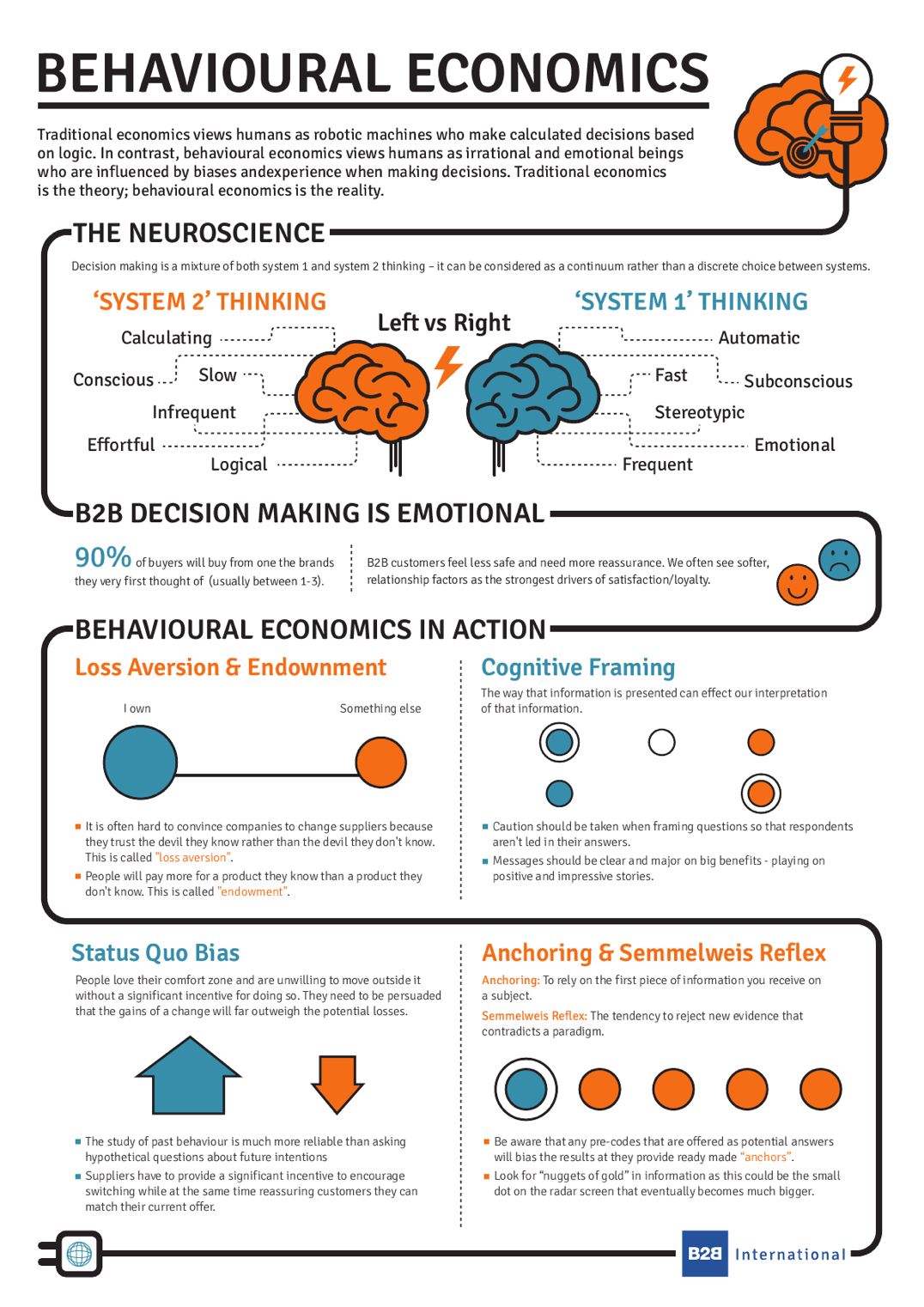
DEFINITION: According to Wikipedia, behavioral economics is the study of the psychological, cognitive, emotional, cultural and social factors involved in the decisions of individuals or institutions, and how these decisions deviate from those implied by classical economic theory.
Behavioral economics is primarily concerned with the bounds of rationality of economic agents. Behavioral models typically integrate insights from psychology, neuroscience and microeconomic theory. The study of behavioral economics includes how market decisions are made and the mechanisms that drive public opinion.
Behavioral economics began as a distinct field of study in the 1970s and ’80s, but can be traced back to 18th-century economists, such as Adam Smith, who deliberated how the economic behavior of individuals could be influenced by their desires.
The status of behavioral economics as a subfield of economics is a fairly recent development; the breakthroughs that laid the foundation for it were published through the last three decades of the 20th century. Behavioral economics is still growing as a field, being used increasingly in research and in teaching.
***
***
Daniel Kahneman PhD, the father of behavioral economics, died yesterday at age 90 years old. He’s best known for applying psychology to economics and uncovering biases and mental shortcuts that make people act irrationally, as he chronicled in his best-selling book Thinking, Fast and Slow.
Kahneman, along with his long-time collaborator and friend Amos Tversky PhD, developed “prospect theory,” or loss-aversion theory, which earned him the Nobel Prize in Economics in 2002 (which he shared with fellow economist Vernon Smith). The idea is that people value losses and gains differently, so we feel more bad about losing $100 than we feel good about making the same amount. He applied this theory to investors, who had previously been considered rational decision-makers. It shows up elsewhere, too—for example, golfers putt better when they’re facing the loss of a stroke than when they might gain one.
Two other biases he identified include:
The “peak-end rule” that people remember an experience primarily based on how they felt at its most intense moment and the final part of it. It’s why you consider a whole vacation good if the last day was good—or the opposite.
The conjunction fallacy where people erroneously think the probability of two things being true is more likely than just one thing, which the famous “Linda the Bank Teller” problem illustrates.
Posted on March 28, 2024 by Dr. David Edward Marcinko MBA MEd CMP™
By Staff Reporters
***
***
Independent pharmacies have struggled in recent years to stay open—and new financial constraints may mean a record number of pharmacy closures in 2024. And, nearly a third of independent pharmacies are at risk of going out of business due in part to a new rule from the Centers for Medicare and Medicaid Services (CMS) that results in lower prescription reimbursements, according to the National Community Pharmacists Association (NCPA), a trade group that represents more than 19,400 US pharmacies.
“This is an emergency,” NCPA CEO B. Douglas Hoey said in a statement. “If Congress fails to act again, thousands of local pharmacies could be closed within months and millions of patients could be stranded without a pharmacy.” The CMS rule, which went into effect on January 1st, requires payers and pharmacy benefit managers (PBMs) to apply what’s called direct and indirect remuneration (DIR) fees at the time a patient picks up a prescription.
The S&P 500 index added 44.91 points (0.9%) to 5,248.49; the Dow Jones Industrial Average climbed 477.75 points (1.2%) to 39,760.08; the NASDAQ Composite added 83.82 points (0.5%) to 16,399.52.
The 10-year Treasury note yield fell four basis points to just under 4.2%.
The CBOE Volatility Index® (VIX) dropped 0.48 to 12.76.
In addition to utility stocks, real estate, industrials, and materials were the strongest sectors. Information technology and communications were the weakest but found late-day strength to finish higher.
Posted on March 27, 2024 by Dr. David Edward Marcinko MBA MEd CMP™
By Staff Reporters
***
***
The European Union isinvestigating Meta, Apple, and Alphabet for potential violations of its Digital Markets Act. And its regulators have started looking into Amazon as well.
The Digital Markets Act is the EU’s law to make the markets in the digital sector fairer and more contestable. In order to do so, the Digital Markets Act (“DMA”) establishes a set of clearly defined objective criteria to identify “gatekeepers”.
And, stocks were headed for a great Tuesday before investors sent stock indexes back down and leaving the Dow largely unchanged. Meanwhile, Donald Trump’s social media company, Truth Social, surged 16% in its first day of trading, just as the former president must pay $175 million as part of his civil fraud trial.
Here’s where the major benchmarks ended:
The S&P 500 index lost 14.61 points (0.3%) to 5,203.58; the Dow Jones Industrial Average dropped 31.31 points (0.1%) to 39,282.33; the NASDAQ Composite tumbled 68.76 points (0.4%) to 16,315.70.
The 10-year Treasury note yield (TNX) fell two basis points to 4.23%.
The CBOE Volatility Index edged up 0.05 to 13.24.
In terms of sector performance, utilities, information technology, and energy were the weakest. Health care and financials saw relative strength.







 Support our online development, and advance our onground research initiatives in free market economics, as we seek to showcase the brightest Next-Gen minds.
THE ME-P DISCLAIMER: Posts, comments and opinions do not necessarily represent iMBA, Inc., but become our property after submission. Copyright © 2006 to-date. iMBA, Inc allows colleges, universities, medical and financial professionals and related clinics, hospitals and non-profit healthcare organizations to distribute our proprietary essays, photos, videos, audios and other documents; etc. However, please review copyright and usage information for each individual asset before submission to us, and/or placement on your publication or web site. Attestation references, citations and/or back-links are required. All other assets are property of the individual copyright holder.
Support our online development, and advance our onground research initiatives in free market economics, as we seek to showcase the brightest Next-Gen minds.
THE ME-P DISCLAIMER: Posts, comments and opinions do not necessarily represent iMBA, Inc., but become our property after submission. Copyright © 2006 to-date. iMBA, Inc allows colleges, universities, medical and financial professionals and related clinics, hospitals and non-profit healthcare organizations to distribute our proprietary essays, photos, videos, audios and other documents; etc. However, please review copyright and usage information for each individual asset before submission to us, and/or placement on your publication or web site. Attestation references, citations and/or back-links are required. All other assets are property of the individual copyright holder.




















































 The Leading Business Education Network for Doctors, Financial Advisors and Health Industry Consultants