How to Avoid Whitney Houston’s Estate Planning Mistakes

Join Our Mailing List

Look at Money Scripts

By Rick Kahler MS CFP® ChFC CCIM

Since the death of singer Whitney Houston, I’ve seen several articles from attorneys and financial advisors about the errors in her estate planning. They have summarized three areas where it was badly flawed:

1. Lack of privacy. Ms. Houston had a simple will that was subject to public probate, rather than a living trust that would have kept her affairs private. Anyone with thumbs and access to the Internet can see a copy of her will.

2. Lack of protection from claims, con artists, and circumstances. The estate, estimated to be worth over 20 million dollars, was left to Ms. Houston’s daughter, Bobbi Kristina Brown. A vulnerable young woman just barely of legal age will receive three huge payouts over the next decade and become a multi-millionaire by the time she’s 30. A trust could have given her some limits and structure, as well as providing for advisors to help her learn how to manage her wealth and protect herself from predators.

3. Lack of tax planning. The federal estate tax of 35% on anything over $5,120,000 will apply to the estate, so Uncle Sam will take around a third of it off the top.

Estate Planning – How Time Flys By

Unfortunately, this lack of skilled estate planning isn’t all that rare among wealthy people; or even some medical professionals. So, here are a few of the money beliefs that may be behind inadequate estate planning:

  1. “Complicated estate planning is for rich people, and I’m not rich.” This may especially apply to owners of small businesses – like some doctors – who don’t have a particularly high income or lifestyle but whose land or businesses may be worth several million dollars. Yet good estate planning advice is especially important for them, because their heirs aren’t necessarily aware of or prepared for a substantial inheritance.
  2. “The financial advice that was good enough when I was just starting out is good enough now that I’m successful.” A tax preparer, accountant, or financial advisor who is highly competent with small individual or business matters may not have the knowledge necessary for more complex estate planning. Seeking out different financial advisors as your income and net worth grow is no different from consulting a specialist rather than a general practitioner if you have specific medical needs.
  3. “When you can afford the best, you’ll get the best.” Trying to save money by hiring bargain-basement financial advisors is almost always a mistake. It can also be a mistake to assume that someone who charges top-tier fees will always have top-tier skills and integrity. Even if a financial planner or other professional has a reputation as an advisor to the wealthy, it’s still essential to verify that the person or firm is right for you. Ask for references and be willing to ask hard questions about compensation, investment philosophy, and services. Make sure you are a client, not a customer. Work only with financial advisors who, like accountants or attorneys, have a fiduciary duty to put your interests first.
  4. “I know how to make money, so of course I know how to manage money.” Many highly educated and skilled professionals are high earners but don’t necessarily have the knowledge to manage their earnings well. In order to know whether the advisors you hire are competent, it’s important to learn the basics of investing and money management. Look for advisors who don’t set themselves up as “gurus” but are willing to teach and to work in partnership with you.

Assessment

When it comes to financial advice, it isn’t enough to find someone who will “make you feel like a million dollar bill.” It’s more important to find advisors who will help you take good care of all your dollars.

Conclusion

Your thoughts and comments on this ME-P are appreciated. Feel free to review our top-left column, and top-right sidebar materials, links, URLs and related websites, too. Then, subscribe to the ME-P. It is fast, free and secure.

Link: http://feeds.feedburner.com/HealthcareFinancialsthePostForcxos

Speaker: If you need a moderator or speaker for an upcoming event, Dr. David E. Marcinko; MBA – Publisher-in-Chief of the Medical Executive-Post – is available for seminar or speaking engagements. Contact: MarcinkoAdvisors@msn.com

Our Other Print Books and Related Information Sources:

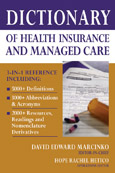
Health Dictionary Series: http://www.springerpub.com/Search/marcinko

Practice Management: http://www.springerpub.com/product/9780826105752

Physician Financial Planning: http://www.jbpub.com/catalog/0763745790

Medical Risk Management: http://www.jbpub.com/catalog/9780763733421

Hospitals: http://www.crcpress.com/product/isbn/9781439879900

Physician Advisors: www.CertifiedMedicalPlanner.org

Product Details  Product Details

Today’s Video for National Healthcare Decisions Day [NHDD]

Join Our Mailing List

Goals and Objectives

By Staff Reporters

www.CertifiedMedicalPlanner.org

Today is the 5th Annual NHDD, April 16th, 2012. The purpose of this day is to inspire, educate & empower the public, estate attorneys, financial advisors & medical providers about the importance of advanced medical care planning. It is a rally for our loved ones and ourselves.

Video Link: http://www.nhdd.org

Conclusion

Your thoughts and comments on this ME-P are appreciated. Feel free to review our top-left column, and top-right sidebar materials, links, URLs and related websites, too. Then, subscribe to the ME-P. It is fast, free and secure.

Link: http://feeds.feedburner.com/HealthcareFinancialsthePostForcxos

Speaker: If you need a moderator or speaker for an upcoming event, Dr. David E. Marcinko; MBA – Publisher-in-Chief of the Medical Executive-Post – is available for seminar or speaking engagements. Contact: MarcinkoAdvisors@msn.com

Our Other Print Books and Related Information Sources:

Health Dictionary Series: http://www.springerpub.com/Search/marcinko

Practice Management: http://www.springerpub.com/product/9780826105752

Physician Financial Planning: http://www.jbpub.com/catalog/0763745790

Medical Risk Management: http://www.jbpub.com/catalog/9780763733421

Hospitals: http://www.crcpress.com/product/isbn/9781439879900

Physician Advisors: www.CertifiedMedicalPlanner.org

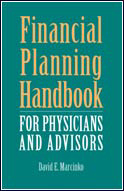
Financial Planning Handbook for Physicians and Advisors

Financial Planning Handbook for Physicians and Advisors

Buy from Amazon

How a Charity Accept Gifts of Copyrights and Related Intangibles?

Join Our Mailing List

Estate Planning Information for Doctor-Donors

[By Children’s Home Society of Florida]

Doctors and other medical professionals are brights folks. Some even have additional degrees and designations like MBA, PhD, CFA, CPA, CFP, CMP, etc. Others hold copyrights, trademarks, servicemarks and patents, etc. Innovators and entrepreneurs, indeed!

So, donors may be surprised to learn that gifts of intellectual property such as copyrights [©], while less common than tangible assets, may nevertheless be valuable and can make wonderful gifts to charity. And, there are some specific considerations that doctors, and other donors and charities should understand when dealing with gifts of copyrights and related intangibles.

For more copyright information, go to http://www.copyright.gov

What is a Copyright?

A copyright is an intangible property right that protects an original artistic or literary work. The protection of copyrights is rooted in the United States Constitution and is among the enumerated powers granted to Congress

Trade Marks and Service Marks

  • A trademark is a word, phrase, symbol or design, or a combination of words, phrases, symbols or designs, that identifies and distinguishes the source of the goods of one party from those of others.
  • A service mark is the same as a trademark, except that it identifies and distinguishes the source of a service rather than a product.


Do Trademarks, Copyrights and Patents Protect the Same Things?

No! Trademarks, copyrights and patents all differ. A copyright protects an original artistic or literary work; a patent protects an invention.

For more patent information, go to http://www.uspto.gov/main/patents.htm

Assessment

Link: Click Here

Conclusion

Your thoughts and comments on this ME-P are appreciated. Feel free to review our top-left column, and top-right sidebar materials, links, URLs and related websites, too. Then, subscribe to the ME-P. It is fast, free and secure.

Speaker: If you need a moderator or speaker for an upcoming event, Dr. David E. Marcinko; MBA – Publisher-in-Chief of the Medical Executive-Post – is available for seminar or speaking engagements. Contact: MarcinkoAdvisors@msn.com

OUR OTHER PRINT BOOKS AND RELATED INFORMATION SOURCES:

Product DetailsProduct DetailsProduct Details

Managing and Mitigating a Doctor’s Risky Life

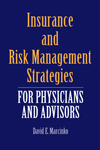
Insurance and Risk Management Strategies for Doctors

and their Advisors

Book Preview 

http://www.amazon.com/Insurance-Management-Strategies-Physicians-Advisors/dp/0763733423/ref=sr_1_4?s=books&ie=UTF8&qid=1328701489&sr=1-4

ORDER HERE

http://www.jblearning.com/catalog/9780763733421/

What Happens to Debt After You Die?

Join Our Mailing List 

It all Depends

Financial advisors know that many clients avoid thinking about what happens to their debt after they die. Understanding what type of debt you have is important because your debts may or may not pass on to other people after you die.

Talking to a financial planner or bankruptcy lawyer may help you prepare and avoid problems for what may happen to your debts after your death.

Assessment

Check out the above visual guide of What Happens to Your Debt after You Die.

Source: totalbankruptcy.com

Channel Surfing the ME-P

Have you visited our other topic channels? Established to facilitate idea exchange and link our community together, the value of these topics is dependent upon your input. Please take a minute to visit. And, to prevent that annoying spam, we ask that you register. It is fast, free and secure.

Conclusion

Your thoughts and comments on this ME-P are appreciated. Feel free to review our top-left column, and top-right sidebar materials, links, URLs and related websites, too. Then, subscribe to the ME-P. It is fast, free and secure.

Speaker: If you need a moderator or speaker for an upcoming event, Dr. David E. Marcinko; MBA – Publisher-in-Chief of the Medical Executive-Post – is available for seminar or speaking engagements. Contact: MarcinkoAdvisors@msn.com

OUR OTHER PRINT BOOKS AND RELATED INFORMATION SOURCES:

Product Details  Product Details

Update on Estate and Gift Taxes for 2012

On IRS Publication 950

By Children’s Home Society of Florida Foundation

Join Our Mailing List 

The IRS recently released Publication 950, Introduction to Estate Gift Taxes. It provides a very general overview for the public, doctors and many professional financial advisors with respect to estate and gift taxes. The publication is a useful and concise description of the changes that apply in 2012.

1. Unified Credit – The unified credit on the basic exclusion for 2012 will be $1,772,800. This will exempt an estate of $5,120,000 from tax.

2. DSUE Amount – Under the principal of marital portability, the basic exclusion amount of $1,772,800 may be augmented by the unused exclusion amount of the last deceased spouse who passes away in 2011 or 2012.

3. Gift Annual Exclusion – The annual exclusion for present interest gifts for 2012 will be $13,000. The exclusion will not apply for gifts of a future interest.

4. Permitted Gifts – There are several categories of gifts that are permitted without payment of gift tax. These include an unlimited transfer for outright gifts to spouse, gifts to a qualified charitable organization, payments of tuition to an educational institution, or payments of qualified medical expenses to a hospital or other medical institution.

5. Gift Splitting – If one spouse of a married couple makes a gift to an individual, the two may file an IRS Form 709 Gift Tax Return and report one-half of the gift.

6. Gift Tax Unified Credit – The gift tax return will require determining taxable gifts and then a reduction by the unified credit. After adding up the amount of the gifts and reducing the amount by a marital deduction, charitable deductions, educational exclusions or medical exclusions, the $13,000 annual exclusion is applied first. This is a per-donor, per-donee exclusion. The remaining amount will be covered by the unified credit. If the full amount of unified credit is exceeded, then gift tax at a rate of 35% will be applicable on the excess.

7. Gift Tax Return Filing – The gift tax return is generally required if there are gifts to a non-spouse that are over the annual exclusion, a married couple are splitting gifts, there is a gift of a future interest or there is a gift to a spouse of an interest in property that will be ended by a future event.

8. Gross Estate – The gross estate generally includes all probate and non-probate assets owned at death. Life insurance payable to the estate or owned by the decedent is included. Most annuities and some property transferred within three years of death are also included.

9. Estate Deductions – On the estate tax return, the executor may deduct funeral expenses, last medical expenses, debts, the marital and charitable deduction and the state death tax deduction. The balance will be subject to the unified credit for the applicable exclusion amount. Any excess estate value over the applicable $5.12 million exclusion in 2012 may be subject to tax at 35%.

10. Filing IRS Form 706 – An estate tax return will be required if the estate exceeds the applicable exclusion amount of $5,120,000 in 2012. It also is required in order to preserve a deceased spousal unused exclusion amount. Therefore, many married couples with fairly modest estates may choose to file IRS Form 706 when the first spouse passes away.

11. Generation Skipping Transfer Tax (GSTT) – An additional transfer tax may be applicable for distributions to a person who is two or more generations below the generation of the donor. A grandchild or great-grandchild is a typical skip person for GSTT purposes. The GSTT of 35% may be applicable if a direct skip, taxable distribution or taxable termination is in excess of the applicable exclusion amount.

12. Income Taxes on an Estate – If an estate has $600 or more of gross income or a beneficiary who is a nonresident alien, then an IRS Form 1041 income tax return is required. In addition, the estate must send Schedule K-1 (Form 1041) to beneficiaries of the estate. These beneficiaries may be required to include income, deductions and credits in their personal IRS Form 1040 Tax Return.

Conclusion

Your thoughts and comments on this ME-P are appreciated. Feel free to review our top-left column, and top-right sidebar materials, links, URLs and related websites, too. Then, subscribe to the ME-P. It is fast, free and secure.

Link: http://feeds.feedburner.com/HealthcareFinancialsthePostForcxos

Speaker: If you need a moderator or speaker for an upcoming event, Dr. David E. Marcinko; MBA – Publisher-in-Chief of the Medical Executive-Post – is available for seminar or speaking engagements. Contact: MarcinkoAdvisors@msn.com

OUR OTHER PRINT BOOKS AND RELATED INFORMATION SOURCES:

DICTIONARIES: http://www.springerpub.com/Search/marcinko
PHYSICIANS: www.MedicalBusinessAdvisors.com
PRACTICES: www.BusinessofMedicalPractice.com
HOSPITALS: http://www.crcpress.com/product/isbn/9781466558731
CLINICS: http://www.crcpress.com/product/isbn/9781439879900
BLOG: www.MedicalExecutivePost.com
FINANCE: Financial Planning for Physicians and Advisors
INSURANCE: Risk Management and Insurance Strategies for Physicians and Advisors

Product Details  Product Details

Of Interest to MD and FA Philanthropists

About The New Center on Philanthropy

By Staff Reporters

Join Our Mailing List 

Major philanthropists and those successful doctors [and their patients], and affluent financial advisors [and their clients], about to join their ranks increasingly want information about which organizations with causes matching their interests are receiving large gifts, where their peers are giving and where gaps in funding may exist.

Now, they have a new tool that can help them decide where, when and why to make gifts of $1 million or more.

Last week, Indiana University’s Center on Philanthropy rolled out a searchable database of more than 60,000 large, publicly reported gifts it has compiled since 2000. The Million Dollar List covers gifts from individuals, foundations and corporations.

What it is – How it works

The Center on Philanthropy at the Indiana University is a leading academic center dedicated to increasing the understanding of philanthropy and improving its practice through research, teaching, public service and public affairs. Founded in 1987, the Center is a part of the Indiana University School of Liberal Arts at Indiana University-Purdue University Indianapolis.

The Center was founded as the result of the convergence of two ideas.

First, some people recognized the need to professionalize fundraising and to create a permanent, university-based home for The Fund Raising School. Second, others were interested in building knowledge about the philanthropy field through an inter-disciplinary approach grounded in the liberal arts. These ideas, and the goal of bringing scholars and practitioners together to learn from each other, are the founding principles that remain the bedrock of their mission.

Today, the Center says it boasts a thriving research program that informs the work of nonprofit professionals throughout the world. Academic programs related to philanthropy and nonprofit management are attracting from a diverse group of highly talented students. And, The Fund Raising School continues to be the premier international university-based education and training program for fundraisers.

Assessment

So, give em’ a click, and tell us what you think?

http://www.philanthropy.iupui.edu/About/center_overview.aspx

Conclusion

And so, your thoughts and comments on this ME-P are appreciated. Feel free to review our top-left column, and top-right sidebar materials, links, URLs and related websites, too. Then, subscribe to the ME-P. It is fast, free and secure.

Link: http://feeds.feedburner.com/HealthcareFinancialsthePostForcxos

Speaker: If you need a moderator or speaker for an upcoming event, Dr. David E. Marcinko; MBA – Publisher-in-Chief of the Medical Executive-Post – is available for seminar or speaking engagements. Contact: MarcinkoAdvisors@msn.com

Our Other Print Books and Related Information Sources:

Health Dictionary Series: http://www.springerpub.com/Search/marcinko

Practice Management: http://www.springerpub.com/product/9780826105752

Physician Financial Planning: http://www.jbpub.com/catalog/0763745790

Medical Risk Management: http://www.jbpub.com/catalog/9780763733421

Healthcare Organizations: www.HealthcareFinancials.com

Physician Advisors: www.CertifiedMedicalPlanner.com

Subscribe Now: Did you like this Medical Executive-Post, or find it helpful, interesting and informative? Want to get the latest ME-Ps delivered to your email box each morning? Just subscribe using the link below. You can unsubscribe at any time. Security is assured.

Link: http://feeds.feedburner.com/HealthcareFinancialsthePostForcxos

Sponsors Welcomed: And, credible sponsors and like-minded advertisers are always welcomed.

Link: https://healthcarefinancials.wordpress.com/2007/11/11/advertise

Product DetailsProduct DetailsProduct Details       

Product Details  Product Details

   Product Details

For Doctors Who Wish to Retire Wealthy [Despite the Economy?]

Financial Planning for Physicians and Advisors


Financial Planning Handbook for Physicians and Advisors


Speaker: If you need a moderator or speaker for an upcoming event, Dr. David E. Marcinko; MBA – Publisher-in-Chief of the Medical Executive-Post – is available for seminar or speaking engagements. Contact: MarcinkoAdvisors@msn.com


“Springing” and “Suspending” Advanced Medical Directives

On Well-Know and Little-Know Provisions

By Dr. David Edward Marcinko MBA CMP™

www.CertifiedMedicalPlanner.org

Financial Advisors and attorneys are well aware of various “immediate” and “springing legal directives”, such as springing power of attorney, springing living wills, etc.

“Springing” Advanced Directives

But, what about springing advanced medical directives? Yep! These too not only spring into place, when needed, but can also be suspended?

For example, suspension of advanced medical directives during surgical procedures is possible. But, once out of surgery [time-limited], they would immediately spring back into effect!

Assessment

Financial Advisors, clients and patients should know – and inquire – about the exact time-frame of springing medical directives and related suspensions.

Learn More:

http://www.latimes.com/health/la-he-health-411-20110613,0,62844.story

Conclusion

Your thoughts and comments on this ME-P are appreciated. Feel free to review our top-left column, and top-right sidebar materials, links, URLs and related websites, too. Then, subscribe to the ME-P. It is fast, free and secure.

Link: http://feeds.feedburner.com/HealthcareFinancialsthePostForcxos

Speaker: If you need a moderator or speaker for an upcoming event, Dr. David E. Marcinko; MBA – Publisher-in-Chief of the Medical Executive-Post – is available for seminar or speaking engagements. Contact: MarcinkoAdvisors@msn.com

OUR OTHER PRINT BOOKS AND RELATED INFORMATION SOURCES:

LEXICONS: http://www.springerpub.com/Search/marcinko
PHYSICIANS: www.MedicalBusinessAdvisors.com
PRACTICES: www.BusinessofMedicalPractice.com
HOSPITALS: http://www.crcpress.com/product/isbn/9781466558731
CLINICS: http://www.crcpress.com/product/isbn/9781439879900
ADVISORS: www.CertifiedMedicalPlanner.org
BLOG: www.MedicalExecutivePost.com

Product Details  Product Details

How to Regain a Charitable Exemption

Provisions of the Pension Protection Act

By Children’s Home Society of Florida Foundation

Join Our Mailing List 

Under provisions of the Pension Protection Act and other statutes, charities that failed to file the required IRS Form 990, Form 990EZ or Form 990-N for three years have lost exempt status. Most organizations impacted by this rule failed to file for years 2007, 2008 and 2009.

Smaller Organizations

Because many smaller organizations did not file the required Form 990-N ePostcard, their exemptions were automatically revoked. As a result of the large number of revocations, the IRS published guidance on methods to reinstate charitable exempt status.

Larger Organizations

Some larger organizations with receipts over $50,000 in 2010 failed to file IRS Form 990 or 990EZ. Rev. Notice 2011-44 explains the steps these organizations must take for reinstatement. The organizations are required to file IRS Form 1023, “Application for Recognition of Exemption Under Sec. 501(c)(c) of the Internal Revenue Code.” If there is a request for a retroactive reinstatement, reinstatement is available by showing reasonable cause for failure to file a return. However, this reasonable cause must exist for all three years of the failure to file.

A reinstatement request is permitted within 15 months after the publication of an IRS revocation letter or the date the IRS posts the organization name on the IRS website.

Lost Exempt Status

For small organizations that have lost exempt status, the requirements are specified in Notice 2011-43. These small organizations typically failed to file Form 990-N ePostcards for years 2007, 2008 and 2009. The small organization also must submit IRS Form 1023. A small organization must write “Notice 2011-43” on the top of the form. The small organization is permitted a reduced user fee of $100 for the application for reinstatement of its tax exemption.

Assessment

The IRS also published Rev. Proc. 2011-36 to specify the $100 reduced fee for small organizations. In addition, it published frequently asked questions (FAQ) on automatic revocation and reinstatement procedures on www.irs.gov.

Conclusion

And so, your thoughts and comments on this ME-P are appreciated. Feel free to review our top-left column, and top-right sidebar materials, links, URLs and related websites, too. Then, subscribe to the ME-P. It is fast, free and secure.

Link: http://feeds.feedburner.com/HealthcareFinancialsthePostForcxos

Speaker: If you need a moderator or speaker for an upcoming event, Dr. David E. Marcinko; MBA – Publisher-in-Chief of the Medical Executive-Post – is available for seminar or speaking engagements. Contact: MarcinkoAdvisors@msn.com

Our Other Print Books and Related Information Sources:

Health Dictionary Series: http://www.springerpub.com/Search/marcinko

Practice Management: http://www.springerpub.com/product/9780826105752

Physician Financial Planning: http://www.jbpub.com/catalog/0763745790

Medical Risk Management: http://www.jbpub.com/catalog/9780763733421

Healthcare Organizations: www.HealthcareFinancials.com

Physician Advisors: www.CertifiedMedicalPlanner.com

Subscribe Now: Did you like this Medical Executive-Post, or find it helpful, interesting and informative? Want to get the latest ME-Ps delivered to your email box each morning? Just subscribe using the link below. You can unsubscribe at any time. Security is assured.

Link: http://feeds.feedburner.com/HealthcareFinancialsthePostForcxos

Sponsors Welcomed: And, credible sponsors and like-minded advertisers are always welcomed.

Link: https://healthcarefinancials.wordpress.com/2007/11/11/advertise

Product Details  Product Details

Financial Planning and Risk Management Strategies for Physicians

Financial Planning Handbook for Physicians and Advisors

Product Details

 • http://www.jblearning.com/catalog/9780763745790/

Insurance Planning and Risk Management Strategies for Physicians and Advisors

Product Details

http://www.jblearning.com/catalog/9780763733421/

ADVERTISEMENT

Speaker: If you need a moderator or speaker for an upcoming event, Dr. David E. Marcinko; MBA – Publisher-in-Chief of the Medical Executive-Post – is available for seminar or speaking engagements. Contact: MarcinkoAdvisors@msn.com and http://www.springerpub.com/Search/marcinko

How Doctors Divvy Up the Estate Money [New Spouse v. Kids]

Join Our Mailing List

The Kids of a New Spouse

Dr. David Edward Marcinko MBA CMP™

[Publisher-in-Chief]

Multiple marriages entail interesting estate planning moves. Why? In these days of multiple marriages, doctor clients and others often can get caught between wanting to provide for their children from a previous marriage and their spouse’s statutory inheritance rights. Depending on the state of residence, the surviving spouse may have a statutory right to a specific share of his or her spouse’s estate. But, states define what constitutes the “augmented estate” in different ways. Some fairly sophisticated estate planning may be appropriate.

States Right’s

Inasmuch as spousal rights of election were codified many decades ago when divorce was not a common occurrence, many states’ statutes do not fairly recognize the economics and family dynamics of married individuals who have children from a prior marriage. In some states, a spousal right of election is limited to those assets that pass through probate. In other states, the right of election is enforceable against not only probate assets but certain assets, such as jointly held property that would otherwise pass via title to the co-owner, gifts the decedent made within a certain time period prior to death, and life insurance benefits. This expanded pool of assets against which the right of election may be assessed is typically referred to as the “augmented estate.” Most states provide that the right of election is charged ratably against the beneficiaries under the decedent’s will and the beneficiaries of any testamentary substitutes.

The UPC

In many states, the same percentage would apply regardless of the length of the marriage. In 1990, the model Uniform Probate Code (UPC) was amended to provide a scaled right of election based on the length of the marriage. It ranges from a minimum of 12% up to a maximum of 50% for marriages of 15 years or more. Only a handful of states have adopted it. Even though the UPC includes pension and profit sharing plan benefits in the augmented estate, the sliding scale is subordinate to federal pension legislation which can result in an inequity in the case of a short-term marriage.

Assessment

While both pre- and post-nuptial agreements can help, life insurance is favored, particularly in the majority of states where it is excluded from the augmented estate. And, in states where life insurance is part of the augmented estate, it could be used to provide the surviving spouse with his or her share, particularly when a closely held business is passed on to children of a prior marriage. Financial planners, doctors and advisors need to be familiar with this area to effectively serve clients.

Note: “Providing for Children from a Prior Marriage: An Estate Planning Entry Point,” George B. Kozol, Journal of the American Society of CLU & ChFC, January 1997, pp. 52–57, American College.

Conclusion

Your thoughts and comments on this ME-P are appreciated. Feel free to review our top-left column, and top-right sidebar materials, links, URLs and related websites, too. Then, subscribe to the ME-P. It is fast, free and secure.

Speaker: If you need a moderator or speaker for an upcoming event, Dr. David E. Marcinko; MBA – Publisher-in-Chief of the Medical Executive-Post – is available for seminar or speaking engagements. Contact: MarcinkoAdvisors@msn.com

OUR OTHER PRINT BOOKS AND RELATED INFORMATION SOURCES:

Product DetailsProduct DetailsProduct Details

Product Details  Product Details

   Product Details 

On the Estate and Gift Law Tax Changes

Update on the New Tax Laws

[By Chris Miller JD and Nicole McNair]

Robinson & Miller, PC

Dear ME-P Readers and Subscribers,

On behalf of attorney J. Christopher Miller of our firm, please find attached a letter summarizing the changes in the estate and gift tax law enacted last month by the Obama Administration. We trust you find it interesting and informative.

Link: 2010 Estate Tax Reform Letter

Assessment

Please call with questions.

  • Robinson & Miller, PC
  • 3460 Preston Ridge Road, Suite 100
  • Alpharetta, GA 30005
  • http://www.robinsonmiller.com
  • Tel: 770-817-4999
  • Fax: 770-817-4994

Conclusion

Your thoughts and comments on this ME-P are appreciated. Feel free to review our top-left column, and top-right sidebar materials, links, URLs and related websites, too. Then, subscribe to the ME-P. It is fast, free and secure.

Link: http://feeds.feedburner.com/HealthcareFinancialsthePostForcxos

Speaker: If you need a moderator or speaker for an upcoming event, Dr. David E. Marcinko; MBA – Publisher-in-Chief of the Medical Executive-Post – is available for seminar or speaking engagements. Contact: MarcinkoAdvisors@msn.com

OUR OTHER PRINT BOOKS AND RELATED INFORMATION SOURCES:

DICTIONARIES: http://www.springerpub.com/Search/marcinko
PHYSICIANS: www.MedicalBusinessAdvisors.com
PRACTICES: www.BusinessofMedicalPractice.com
HOSPITALS: http://www.crcpress.com/product/isbn/9781466558731
CLINICS: http://www.crcpress.com/product/isbn/9781439879900
BLOG: www.MedicalExecutivePost.com
FINANCE: Financial Planning for Physicians and Advisors
INSURANCE: Risk Management and Insurance Strategies for Physicians and Advisors

Product Details  Product Details

Is Medicine Still a Sovereign Profession? [A Voting Opinion Poll]

The Social Transformation of American Medicine

By Dr. David Edward Marcinko MBA CMP™

Historical Review, Book Excerpts and ME-P Survey for Modernity

Join Our Mailing List 

The Social Transformation of American Medicine [The rise of a sovereign profession and the making of a vast industry].

This classic book was written by Paul Starr in 1984. I first read it while in business school back in 1994-96. Here is an excerpt from pages 227 and 232. It is even more relevant for the healthcare industrial complex today.

Quoting Kenneth Arrow PhD

The structural features Arrow[*] discusses have a history. He writes that when the market fails, “society” will make adjustments. […] But, modern day economists like Austin Frakt PhD and others, have to ask: For whom did the market fail, and how did “society” make these adjustments?

Of Failed Markets

The competitive market was failing no one more than the medical profession, and it was the profession that organized to change it. […]. By the 1920s, the medical profession had successfully resolved the most difficult problems confronting it as late as 1900. It had […] won stronger licensing laws; turned hospitals, drug manufacturers and public health from threats to its position into bulwarks of support; and checked the entry into health services of corporations and mutual societies. It has succeeded in controlling the development of technology, organizational forms, and the division of labor. In short, it had helped shape the medical system so that its structure supported professional sovereignty instead of undermining it.

Master over Diseases

Over the next few decades, the advent of antibiotics and other advances gave physicians increased mastery of disease and confirmed confidence in their judgment and skill. The chief threat to the sovereignty of the profession was the result of this success. So valuable did medical care appear that to withhold it seemed deeply unjust. Yet as the felt need for medical care rose, so did its cost, beyond what many families could afford. Some agency to spread the cost was unavoidable. It would have to be a third party, and yet this was exactly what physicians feared. The struggle of the profession to maintain its autonomy then became a campaign of resistance not only to programs of reform but also to the very expectations and hopes that the progress of medicine was constantly arousing. To continue to escape the corporation and the state meant preserving a system that was at war with itself.

Notes: Arrow, Kenneth J. “Uncertainty and the Welfare Economics of Medical Care.” American Economic Review 53 (December 1963), pp. 941–73. Dr. Arrow is my favorite health economist and indeed father of the profession*.

Link: 1963Arrow_AER

The Opinion Poll [Please Vote]

Conclusion

And so, your thoughts and comments on this ME-P are appreciated. Is Medicine Still a Sovereign Profession? Feel free to review our top-left column, and top-right sidebar materials, links, URLs and related websites, too. Then, subscribe to the ME-P. It is fast, free and secure.

Speaker: If you need a moderator or speaker for an upcoming event, Dr. David E. Marcinko; MBA – Publisher-in-Chief of the Medical Executive-Post – is available for seminar or speaking engagements. Contact: MarcinkoAdvisors@msn.com and http://www.springerpub.com/Search/marcinko

Get our Widget: Get this widget!

Our Other Print Books and Related Information Sources:

Health Dictionary Series: http://www.springerpub.com/Search/marcinko 

Practice Management: http://www.springerpub.com/product/9780826105752

Physician Financial Planning: http://www.jbpub.com/catalog/0763745790

Medical Risk Management: http://www.jbpub.com/catalog/9780763733421

Healthcare Organizations: www.HealthcareFinancials.com

Physician Advisors: www.CertifiedMedicalPlanner.com

Subscribe Now: Did you like this Medical Executive-Post, or find it helpful, interesting and informative? Want to get the latest ME-Ps delivered to your email box each morning? Just subscribe using the link below. You can unsubscribe at any time. Security is assured.

Link: http://feeds.feedburner.com/HealthcareFinancialsthePostForcxos

Sponsors Welcomed: And, credible sponsors and like-minded advertisers are always welcomed.

Link: https://healthcarefinancials.wordpress.com/2007/11/11/advertise

Product DetailsProduct DetailsProduct Details       

Product Details  Product Details

   Product Details 

The ME-P Recommends: Financial Planning and Risk Management Handbooks

Product Details  Product Details

ADVERTISEMENT

The Testamentary Letter?

More Emotional than a Will or Trust

By Staff Reporters

Join Our Mailing List 

Many doctors and medical professionals, on drafting their wills or trust documents, feel that these legal documents do not adequately convey the emotional qualities that may be important when assets are passed after death. A testamentary letter can be used to convey such concerns, as they are impacted by the passage of assets. When unequal distributions of estate assets are given to children, a testamentary letter can outline the reasons.

Example:

The oldest daughter may be an established attorney who does not have the financial need for a large bequest, whereas the youngest son is a struggling artist. A testamentary letter might convey a parent’s wishes that the children use a portion of the assets received to continue the charitable giving programs that the parent has started—a desire that may not be a legally enforceable condition through the will.

Conclusion

And so, your thoughts and comments on this ME-P are appreciated. Feel free to review our top-left column, and top-right sidebar materials, links, URLs and related websites, too. Then, subscribe to the ME-P. It is fast, free and secure.

Speaker: If you need a moderator or speaker for an upcoming event, Dr. David E. Marcinko; MBA – Publisher-in-Chief of the Medical Executive-Post – is available for seminar or speaking engagements. Contact: MarcinkoAdvisors@msn.com and http://www.springerpub.com/Search/marcinko

Get our Widget: Get this widget!

Our Other Print Books and Related Information Sources:

Health Dictionary Series: http://www.springerpub.com/Search/marcinko

Practice Management: http://www.springerpub.com/product/9780826105752

Physician Financial Planning: http://www.jbpub.com/catalog/0763745790

Medical Risk Management: http://www.jbpub.com/catalog/9780763733421

Healthcare Organizations: www.HealthcareFinancials.com

Physician Advisors: www.CertifiedMedicalPlanner.com

Subscribe Now: Did you like this Medical Executive-Post, or find it helpful, interesting and informative? Want to get the latest ME-Ps delivered to your email box each morning? Just subscribe using the link below. You can unsubscribe at any time. Security is assured.

Link: http://feeds.feedburner.com/HealthcareFinancialsthePostForcxos

Sponsors Welcomed: And, credible sponsors and like-minded advertisers are always welcomed.

Link: https://healthcarefinancials.wordpress.com/2007/11/11/advertise

Product Details  Product Details

On Medical Practice [Business] Succession Planning

A Process of Financial Steps

By Dr. David Edward Marcinko, MBA CMP™

[Editor-in-Chief]

http://www.CertifiedMedicalPlanner.org

Succession planning is a dynamic process requiring current ownership and management to plan the medical practice or company’s future, and then implement the resulting plan. As a financial planner and advisor myself, I see many doctors and clients approach business [practice] succession planning initially through retirement planning. Once they understand the issues and realities of the tax laws, they are much more amenable to working out a viable succession plan. Many doctors and other clients have not clearly articulated their goals, but have many pieces of the plan that need to be organized and analyzed by the financial planner to meet their objectives, including both personal and financial issues.

A Step-Wise Process

The steps necessary for successful succession planning are as follows:

• Gathering and analyzing data and personal information

• Contacting the doctor [client’s] other advisors

• Valuing the medical practice or business

• Projecting estate and transfer taxes

• Presenting liquidity needs

• Gathering additional corporate information

• Identifying dispositive and financial goals

• Analyzing the needs and desires of nonfamily key employees

• Identifying potential ownership, physician-executive and/or management successors

• Making recommendations, modifying goals, and providing methodologies

• Assisting the doctor-client in implementation

Gathering and Analyzing Data and Personal Information

The first step in data collection is talking to the doctor or client, and explaining the process of gathering data. Most successful financial planners use a questionnaire to be sure to address all important information. The planner should gain an understanding of the interrelationships between the practice, family and the business and address each of these areas as separate parts of the same equation. Finding out how the practice or business operates and why it operates that way can help the planner determine whether change is necessary and how to go about implementing it. Other important elements to address include the environment in which the practice [business] operates, potential flaws in the current structure and operations, appropriate levels of key-person life insurance coverage, investment asset diversification, prior estate planning efforts, and existing legal contracts that may need modification.

A Timely Process

It may take some time, from weeks to months, for the client to gather the required information. The planner should be encouraging and should periodically check on the doctor-client’s progress. If it appears that the client may not be motivated to complete the questionnaires independently, the planner should schedule an appointment to help the doctor-client finish. The client may create obstacles because he or she does not want to talk about death or relinquish control of the practice or business. These are delicate topics, and the financial planner cannot force the client to face them. Still, the consequences of not carrying out personal financial and estate planning can be explained.

Understanding the Practice or Business

To be most helpful to the doctor-client, the financial planner must understand the client’s medical practice or business. Reviewing the history of the company, getting acquainted with its current operations, and becoming familiar with the industry is important. By reviewing financial statements, income tax returns, business plans, and all pertinent legal documents, the planner will be able to identify key areas to focus on during the engagement. Understanding the patient or customer base of the business is also important. For example, exploring the impact of the principal’s death on the patient [customer] base helps the financial planner understand what changes could occur in the business after the physician-owner’s death.

Fair Market Valuation

Next, the planner must translate the balance sheet to current fair market values and analyze the debt, capital structure, and cash flows. A review of accounts receivable, inventory, and any fixed assets should be included to determine whether there is sufficient collateral for a leveraged buy-out or other estate planning technique for succession planning. Also, the cash flow should be reviewed to see if new fixed payments such as debt repayments or dividend distributions could be made.

Contacting the Doctor-Client’s Other Advisors

After gathering the documents, it’s a good idea for the planner to contact the client’s attorney, accountant or tax advisor, bank or trust officer, insurance advisor, investment advisor, stockbroker, and other business advisors. As many key advisers as possible should be contacted early in the engagement to create a spirit of cooperation. A planner will benefit by creating team harmony and establishing himself or herself as the team leader. Additionally, a planner could be engaged by these professionals in the future, and a planner is a valuable source of referrals.

Valuing the Medical practice of Business

The next step in the succession planning process is computing the value of the practice or business. It may surprise the planner to hear what the doctor or client perceives as the value of the [practice] business at the beginning of the engagement. Likewise, the client may be surprised to hear what value could be placed on the business for estate tax purposes. The goal in valuation is determining the price at which the business would change hands between a willing buyer and a willing seller, assuming:

• The buyer is not under any compulsion to buy.

• The seller is not under any compulsion to sell.

• Both parties have reasonable knowledge of the relevant facts.

Revenue Ruling 59-60 (1959-1, CB 237

The IRS issued Revenue Ruling 59-60 (1959-1, CB 237), which lists several factors to be used in valuing a business:

• Nature and history of the practice or business

• Economic outlook and condition of the healthcare industry

• Book value and financial condition of the practice or business

• Earning capacity of the practice or business

• Dividend-paying capacity of the practice or business

• Value of any goodwill or other intangibles

• Value of similar stocks traded on open markets

• Degree of control represented by the size of the block of stock interest

Highest and Best Use

The IRS computes a value based on the “highest and best use” of the practice or business. This means that the business will be valued by the IRS at the highest possible value that can be reasonably justified. Valuation methods include the asset approach, income approaches, and market approach.

• Asset approach:  This is primarily used for a business that is worth more if it is sold in pieces rather than as a whole. The tangible asset value is added to the intangible goodwill value.

• Income approaches:  A business as a going concern has value in its ability to produce profits in the future. These profits represent a return on the investment. The value of the business is a function of expected profits and desired rate of return.

— Discounted future earnings method:  Projected future earnings are discounted to present value.

— Discounted cash flow method:  Cash that the owner can withdraw from the business is discounted to present value.

— Capitalization of earnings method: Expected earnings are divided by the capitalization rate.

— Capitalization of excess earnings method.  Expected earnings that are not needed in the business are divided by the capitalization rate.

• Market approach: A business is worth what similar businesses sell for. Referred to as the comparable method of business valuation, this method should be used only when the comparable business is truly comparable.

Each of these primary methods has numerous variations that may provide a more desirable or justifiable value.

Assessment

When reviewing potentially taxable estates, the planner should analyze the opportunity to use favorable valuation discounts for loss of a key employee, lack of marketability, or possibly a minority discount for lack of control. Alternatively, planning recommendations can be made to avoid exposure to valuation premiums for control. The physician-owner may avail himself or herself of many of these discounts by reducing holdings to less than 50% prior to death.

Conclusion

Your thoughts and comments on this ME-P are appreciated. Feel free to review our top-left column, and top-right sidebar materials, links, URLs and related websites, too. Then, subscribe to the ME-P. It is fast, free and secure.

Link: http://feeds.feedburner.com/HealthcareFinancialsthePostForcxos

Speaker: If you need a moderator or speaker for an upcoming event, Dr. David E. Marcinko; MBA – Publisher-in-Chief of the Medical Executive-Post – is available for seminar or speaking engagements. Contact: MarcinkoAdvisors@msn.com

OUR OTHER PRINT BOOKS AND RELATED INFORMATION SOURCES:

DICTIONARIES: http://www.springerpub.com/Search/marcinko
PHYSICIANS: www.MedicalBusinessAdvisors.com
PRACTICES: www.BusinessofMedicalPractice.com
HOSPITALS: http://www.crcpress.com/product/isbn/9781466558731
CLINICS: http://www.crcpress.com/product/isbn/9781439879900
BLOG: www.MedicalExecutivePost.com
FINANCE: Financial Planning for Physicians and Advisors
INSURANCE: Risk Management and Insurance Strategies for Physicians and Advisors

Product DetailsProduct DetailsProduct Details

Product Details  Product Details

   Product Details 

Financial Planning and Risk Management Handbooks from iMBA, Inc

For Doctors and their Financial Advisors

[By Staff Reporters]

For more on these topics, see the handbooks below:

Product Details  Product Details

Conclusion

Your thoughts and comments on this ME-P are appreciated. Feel free to review our top-left column, and top-right sidebar materials, links, URLs and related websites, too. Then, subscribe to the ME-P. It is fast, free and secure.

Speaker: If you need a moderator or speaker for an upcoming event, Dr. David E. Marcinko; MBA – Publisher-in-Chief of the Medical Executive-Post – is available for seminar or speaking engagements. Contact: MarcinkoAdvisors@msn.com

OUR OTHER PRINT BOOKS AND RELATED INFORMATION SOURCES:

Sponsors WelcomedAnd, credible sponsors and like-minded advertisers are always welcomed.

Product DetailsProduct DetailsProduct Details

Creditor and Asset Protection Strategies for Medical and Other Professionals

IRAs, Education IRA [Coverdell Accounts], 529 Plans, Qualified and Non-Qualified Annuities and Insurance – in the State of Ohio

Join Our Mailing List

By Edwin P. Morrow III, J.D., LL.M., MBA, CFP®, RFC®
Wealth Specialist – Manager, Wealth Strategies Communications
Ohio State Bar Association Certified Specialist, Estate Planning, Probate and Trust Law – Key Private Bank – Wealth Advisory Services
10 W. Second St.
MailCode OH-18-00-2701
Dayton, OH 45402
(937) 285-5343 direct phone
(937) 422-8330 cell phone

Hi Ann and All ME-P Readers

Would you be interested in posting this article on creditor and asset protection and planning for retirement accounts and similar? It is highly useful for physicians and other professionals

[picapp align=”none” wrap=”false” link=”term=retirement+planning&iid=8453241″ src=”http://view.picapp.com/pictures.photo/image/8453241/investments-ira-401k-and/investments-ira-401k-and.jpg?size=500&imageId=8453241″ width=”353″ height=”484″ /]

Assessment

Link: Creditor Protection for IRAs Annuities Insurance August 2010 NBI CLE[1]

Conclusion

And so, your thoughts and comments on this ME-P are appreciated. Feel free to review our top-left column, and top-right sidebar materials, links, URLs and related websites, too. Then, subscribe to the ME-P. It is fast, free and secure.

Get our Widget: Get this widget!

Our Other Print Books and Related Information Sources:

Health Dictionary Series: http://www.springerpub.com/Search/marcinko

Practice Management: http://www.springerpub.com/product/9780826105752

Physician Financial Planning: http://www.jbpub.com/catalog/0763745790

Medical Risk Management: http://www.jbpub.com/catalog/9780763733421

Healthcare Organizations: www.HealthcareFinancials.com

Physician Advisors: www.CertifiedMedicalPlanner.com

Subscribe Now: Did you like this Medical Executive-Post, or find it helpful, interesting and informative? Want to get the latest ME-Ps delivered to your email box each morning? Just subscribe using the link below. You can unsubscribe at any time. Security is assured.

Link: http://feeds.feedburner.com/HealthcareFinancialsthePostForcxos

Sponsors Welcomed: And, credible sponsors and like-minded advertisers are always welcomed.

Link: https://healthcarefinancials.wordpress.com/2007/11/11/advertise

Product Details  Product Details

About LegallyMine.Org

The National Foundation for Asset Protection

[By Staff Reporters]

Join Our Mailing List 

Legally Mine is a new name for a company formally known as The National Foundation for Asset Protection. The name change reflects the fact that they are a for-profit company and always have been.

Company Focus

The focus of the company is the education of professionals on the best tools available in the US for the purpose of asset protection.

Healthcare

Medical practitioners have taken a particularly hard hit from trial attorneys, and for years the firm has been the nation’s largest champion in defending them. However; they are not alone and many other professionals find themselves staring down the barrel of a legal shotgun. According to their website, Legally Mine knows the right tools to use in order to stop the loss of assets to legal pariahs, as well as the tools needed to lower tax bills. They not only know the right tools and how to use them, but reportedly know how to teach these concepts to others.

Assessment

The purpose and goals of Legally Mine is to teach professional associations how and why these tools will work and how to implement them.

Visit: http://www.legallymine.org/index.html 

Conclusion

Your thoughts and comments on this ME-P are appreciated. Feel free to review our top-left column, and top-right sidebar materials, links, URLs and related websites, too. Then, subscribe to the ME-P. It is fast, free and secure.

Link: http://feeds.feedburner.com/HealthcareFinancialsthePostForcxos

Speaker: If you need a moderator or speaker for an upcoming event, Dr. David E. Marcinko; MBA – Publisher-in-Chief of the Medical Executive-Post – is available for seminar or speaking engagements. Contact: MarcinkoAdvisors@msn.com

OUR OTHER PRINT BOOKS AND RELATED INFORMATION SOURCES:

DICTIONARIES: http://www.springerpub.com/Search/marcinko
PHYSICIANS: www.MedicalBusinessAdvisors.com
PRACTICES: www.BusinessofMedicalPractice.com
HOSPITALS: http://www.crcpress.com/product/isbn/9781466558731
CLINICS: http://www.crcpress.com/product/isbn/9781439879900
BLOG: www.MedicalExecutivePost.com
FINANCE: Financial Planning for Physicians and Advisors
INSURANCE: Risk Management and Insurance Strategies for Physicians and Advisors

Product DetailsProduct DetailsProduct Details

Product DetailsProduct Details

Update on the Estate Tax for MDs and Us All

Senate Refuses Repeal

By Children’s Home Society of Florida Foundation

Join Our Mailing List

On July 21, 2010, Sen. Jim DeMint (R-SC) offered an amendment to the unemployment bill that would repeal the estate tax. Sen. DeMint noted that the White House is creating a difficult environment for “small businesses that are already facing higher income taxes and higher investment taxes.”

The Proposal

The proposed amendment was defeated on a vote of 39-59. Democratic Senators Blanche Lincoln (D-AR) and Ben Nelson (D-NE) supported the abolition of the estate tax. Republican Senators Olympia Snowe (R-ME), Susan Collins (R-ME) and George Voinovich (R-OH) opposed the abolition of estate tax.

Assessment

Sen. Lincoln and Sen. Jon Kyl (R-AZ) continue to advocate an estate tax compromise. Under the compromise, the $3.5 million exemption from 2009 would be increased over 10 years to $5 million and the top 45% estate tax rate would be reduced to 35% over that same time frame.

[picapp align=”none” wrap=”false” link=”term=tax&iid=5237623″ src=”http://view4.picapp.com/pictures.photo/image/5237623/tax-dollars/tax-dollars.jpg?size=500&imageId=5237623″ width=”346″ height=”491″ /]

Editor’s Note: The political pressure on the Senate continues to rise. Following the March death of Houston oilman Dan Duncan with a $9 billion estate, the news media noted that the government had lost $2 to $3 billion on that estate alone. When New York Yankees owner George Steinbrenner passed away with an estimated $1.1 billion estate, news media suggested that he hit a “home run” by dying in 2010 with no estate tax. While action is not likely before the election, there now seem to be two general patterns to a potential Senate compromise. First, the estate tax exemption will start at $3.5 million and increase to a higher number over ten years. Second, the estate tax rate will begin at 45% and decrease again over that same decade. The House majority has held strongly to a $3.5 million exemption and 45% top tax rate, so the final compromise would also need to reflect their preferences.

Conclusion

And so, your thoughts and comments on this ME-P are appreciated. Feel free to review our top-left column, and top-right sidebar materials, links, URLs and related websites, too. Then, be sure to subscribe to the ME-P. It is fast, free and secure

Speaker: If you need a moderator or speaker for an upcoming event, Dr. David E. Marcinko; MBA – Publisher-in-Chief of the Medical Executive-Post – is available for seminar or speaking engagements. Contact: MarcinkoAdvisors@msn.com

Get our Widget: Get this widget!

Our Other Print Books and Related Information Sources:

Practice Management: http://www.springerpub.com/prod.aspx?prod_id=23759

Physician Financial Planning: http://www.jbpub.com/catalog/0763745790

Medical Risk Management: http://www.jbpub.com/catalog/9780763733421

Healthcare Organizations: www.HealthcareFinancials.com

Health Administration Terms: www.HealthDictionarySeries.com

Physician Advisors: www.CertifiedMedicalPlanner.com

Subscribe Now: Did you like this Medical Executive-Post, or find it helpful, interesting and informative? Want to get the latest ME-Ps delivered to your email box each morning? Just subscribe using the link below. You can unsubscribe at any time. Security is assured.

Link: http://feeds.feedburner.com/HealthcareFinancialsthePostForcxos

Sponsors Welcomed: And, credible sponsors and like-minded advertisers are always welcomed.

Link: https://healthcarefinancials.wordpress.com/2007/11/11/advertise

Using Charitable Gifts in Business Planning

The “S” Corporation

Join Our Mailing List

By The Children’s Home Society of Florida Foundation

The most common type of corporation is a traditional “C” corporation. All companies whose stock is publicly traded are C corporations. C corporations pay tax on net income at the corporate level. When that income is distributed to shareholders in the form of dividends, the shareholders also pay tax. The result is that C corporation income is taxed twice – once at the corporate level and once at the shareholder level.

“S” Election

“S” corporations resemble C corporations except that they elect to be taxed differently. Not all corporations are eligible to make this election. To make the election, a corporation must have only one class of stock and less than 75 shareholders who are all individuals, estates and certain types of trusts and charities. IRC Sec. 1361. Charitable remainder trusts are not permissible holders of Subchapter S stock.

“Pass-Through” Taxation

An S corporation does not pay tax at the corporate level. Instead, the shareholders of an S corporation must include their share of the S corporation’s income, deductions and credits on the shareholder’s personal tax return – even if that income isn’t actually distributed. This is called “pass-through” taxation because the S corporation “passes” its income, deductions and credits “through” to its shareholders.

Inside and Outside Basis

The concept of tax basis appears regularly in the context of charitable giving. A person’s tax basis in an asset is generally equal to his or her investment in that asset. Often, tax basis is the amount a person paid for an asset (i.e. the asset’s “cost” to the owner). When the fair market value of an asset is more than its tax basis, the asset is appreciated and, if sold, will result in taxable gain to the owner. Charitable giving often allows the owner of an appreciated asset to bypass gain or defer part of the gain.

When working with S corporations, the concept of basis can be confusing. This is because there are two types of basis at issue. The first is the S corporation’s basis in its assets — this is often referred to as inside basis. The second is the shareholder’s basis in his or her S corporation stock – this is often referred to as outside basis.

When a shareholder sells his S corporation stock, the gain or loss on the sale is determined by the difference between the sale price and the outside basis. In the same way, when an S corporation disposes of an asset, the gain or loss to the S corporation is determined by the difference between the sale price and the S corporation’s inside basis in the asset.


Gifts of S Corporation Stock – Issues Relating to the Donor

Certain tax-exempt organizations are permissible shareholders of Subchapter S stock. Sec. 1361(c)(6). Therefore, an owner of S corporation stock can make a gift of the stock to a charitable organization and receive an income tax deduction. There are a few issues the donor needs to be aware of, however, before making a gift of Sub S stock to charity.

First, the donor’s ability to use the charitable deduction from the gift of the Sub S stock will be limited to the donor’s cost basis in his or her S corporation stock. Sec. 1366(d)(1) limits the amount of deductions and losses to the donor’s basis in stock and debt of the Sub S corporation. Often the donor of Sub S stock is also the person who established the business. Generally, the business was started with very little capital. Because of this, it is likely that the donor’s cost basis will be very low. If the donor’s basis in his or her stock is very low, the donor will only have a small charitable deduction.

The second issue for the donor to be aware of is minority discount. Generally, when a donor makes a gift of stock, the amount transferred to the charity represents a minority interest in the corporation. When a minority interest is given, it is very likely that the qualified appraiser will apply a discount to the value of the stock.

Finally, the donor of S corporation stock must be aware that there cannot be a binding agreement with the charity to repurchase the stock. If there is a binding agreement, the donor will have to recognize the income from the redemption of the stock and will not receive the benefit of a bypass of capital gain. Because S corporations are closely-held entities, there generally is not a large market for the sale of the stock. Therefore, it is very likely that the corporation will repurchase the stock. The repurchase is permissible, but a binding agreement before the gift is prohibited. Rev. Rul. 78-197.

Gifts of S Corporation Stock – Issues Relating to the Charity

While it is allowable for a charity to own Subchapter S stock, the tax benefits are not as advantageous as the ownership of C corporation stock. With C corporation stock, the charity is not taxable on any stock dividends, nor is it taxable on the gain when it sells the stock. This is not true with S corporation stock. Any income received by the charity for its ownership of Sub S stock is taxable to the charity as unrelated business taxable income. Sec. 512(e). In addition, when the charity sells the stock the gain from the sale is also taxable to the charity as unrelated business taxable income. Sec. 512(e)(1)(B)(ii). Because a charity is often established as a corporation itself, the tax on the gain will be taxed at corporate income tax rates. (corporations do not have a lower, favorable capital gains rate like individual taxpayers).

It is also important for a charity not to enter into a binding agreement with the donor for the sale of the stock. While there are no adverse tax consequences to the charity if such an agreement is made, there are adverse tax consequences to the donor as discussed above. If the charity is aware of the unfavorable tax consequences to the donor from having a binding agreement, it can prevent having an unhappy donor.

The S Corporation Unitrust

A charitable remainder unitrust or CRUT is not a permissible owner of Subchapter S stock. Therefore, if an S corporation shareholder were to transfer even one share of his or her S stock into a CRT, the S corporation election would be terminated and the corporation would become a C corporation the day after the transfer. This would mean that the corporation would be subject to two layers of tax: one at the corporate level and one at the shareholder level.

It is permissible, however, for the S corporation itself to establish a CRUT. Because the S corporation does not have a life expectancy, the CRUT must be established for a term of years not to exceed 20. The S corporation would fund the CRUT with some of its assets. However, it must be careful not to fund the CRUT with substantially all of its assets as discussed below. Because the S corporation is funding the CRUT, it would receive the charitable deduction and also would be the income beneficiary of the CRUT.

Even though the S corporation is entitled to the income tax deduction, because of its pass-through taxation the charitable deduction will flow through to the S corporation shareholders. As mentioned above, however, the deduction to the shareholders will be limited to the shareholders’ cost basis in their Sub S stock.

Potential Reg. 1.337(d)-4 Gain Recognition

When a corporation is liquidated, there is potential tax payable at the corporate level. If it were permissible for a corporation to distribute all of its assets to charity or to a charitable trust, then this tax could be avoided. In order to limit this type of transaction, Reg. 1.337(d)-4 requires recognition of gain at the corporate level if “substantially all” the assets are given to charity or to a charitable remainder trust.

Even though an S corporation is not subject to tax like a C corporation, if an S corporation liquidates the corporation must recognize gain as if the assets were sold. The S corporation does not pay taxes on the gain, but the gain passes through to the shareholders who must report the taxable gain.

The phrase “substantially all” is not defined in Sec. 337(b)(2) or in Reg. 1.337(d)-4. However, there are several other places in the Code in which the phrase “substantially all” is interpreted to mean 85%. Reg. 1.514(b)-1(b)(1)(ii). Reg. 53.4942(b)-1(c). Reg. 53.4946-1(b)(2). Reg. 1.401(k)-1(d)(1)(ii). While these regulations cover a variety of tax issues, it is significant that they uniformly interpret the phrase “substantially all” to mean 85%.

Since the exception under Sec. 337 refers to “an 80%” subsidiary, some counsel have also expressed the belief that “substantially all” could be interpreted to be 80%. Regardless, it is apparent that a transfer of perhaps 65% of assets to charity or to a charitable trust would be permissible under Sec. 337(b)(2). Cautious counsel would be prudent in remaining at or below that level with transfers to charity.

Financial Planning Strategies

While the use of a CRT is more limited with an S corporation then with a C corporation, there is still the possibility of utilizing a CRT when selling a business. For example, Tom and Suzie started a business years ago creating designer clothing for dogs. Tom and Suzie liked the idea of have a corporation to protect them from potential liabilities, but they did not like the idea of the double tax system. Therefore, they established their business as an S corporation. Tom and Suzie are the sole shareholders and are now planning to retire. Over the years they have supported a number of charities that assist in the prevention of cruelty to animals. Tom and Suzie are hoping to use some of the money they receive from the sale of the business to continue to support such charities.

Recently Tom and Suzie have had a number of inquires for the sale of their business. It seems that designer clothing and accessories for dogs has become a booming business. Tom and Suzie met with the gift planner from their favorite charity and like the idea of a CRUT that would pay them an income stream over their two lives. However, they discovered that because they have an S corporation they cannot transfer the stock to a CRT without losing their S election status. Tom and Suzie do not want to convert their business to a C corporation. Tom and Suzie can, however, have the S corporation use some of its assets to fund a CRUT that would pay for 20 years. However, they must take steps to ensure that the CRT is not disqualified.

First, Tom and Suzie have to carefully choose which assets the S corporation will use to fund the CRUT. The value of those assets cannot be substantially all of the value of the corporation. Further, they have to ensure that there is not any unrelated business taxable income while the assets are in the CRUT. Even $1 of unrelated business taxable income will disqualify the tax-exempt status of the CRUT. If Tom and Suzie decide to use any of the corporation’s equipment or inventory, the deduction of the CRUT will be limited to the corporation’s cost basis in those assets, which is very low. The S corporation does own the building and land on which it operates and the value of the land and building represents about 50% of the S corporation assets.

To make sure that the CRUT will work, Tom and Suzie enter into lease agreements with two of their key employees. Under the first lease, the employees will lease the operating assets of the S corporation. Under the second lease, the two employees will lease the building and land. Both leases are fixed payment leases. By establishing the leases, the S corporation can transfer some of its assets into the CRUT and avoid the unrelated business income tax problem.
Once the leases are established, the S corporation will transfer title of the real estate to the CRUT. To avoid potential self-dealing issues, Tom and Suzie decide to select their local bank to serve as trustee of the CRUT. Once the land is transferred to the CRUT, the trustee, along with Tom and Suzie, will negotiate for the sale of the assets and the land and building. After the sale is completed, the CRUT will receive the proceeds from the sale of the real estate and the S corporation will receive the proceeds from the sale of the operating assets.

The sale of the operating assets will trigger gain for the S corporation that will flow through to Tom and Suzie as the shareholders. It is important for Tom and Suzie to leave this cash in the S corporation. This is because the gain from the sale will increase Tom and Suzie’s cost basis in their S corporation stock. The increase in the cost basis will allow them to use more of the charitable deduction that will flow through to them from the S corporation. Over the years, the S corporation unitrust will make payments to the S corporation. So long as the S corporation was not a prior C corporation, the passive income from the CRUT will not pose any problems for the S corporation.

Tom and Suzie are very happy with the sale of their business and that they are able to provide a very nice gift to their favorite charity. They are also very happy that they now get to take a long needed vacation.

Assessment

There are a number of charitable strategies that can be used when selling a business. Tom and Suzie could have established a charitable gift annuity with their Sub S stock. They also could have used a gift and sale strategy. There are other options available to Tom and Suzie if they chose not to keep the S corporation alive for the 20 year term of the trust. This article is the first in a series that will explore the options of using businesses and business assets to fund charitable gifts. Throughout this series, planning options with C corporations, S corporations, partnerships, LLCs and sole proprietorships will be discussed.

Conclusion

And so, your thoughts and comments on this ME-P are appreciated. Feel free to review our top-left column, and top-right sidebar materials, links, URLs and related websites, too. Then, subscribe to the ME-P. It is fast, free and secure.

Get our Widget: Get this widget!

Our Other Print Books and Related Information Sources:

Practice Management: http://www.springerpub.com/prod.aspx?prod_id=23759

Physician Financial Planning: http://www.jbpub.com/catalog/0763745790

Medical Risk Management: http://www.jbpub.com/catalog/9780763733421

Healthcare Organizations: www.HealthcareFinancials.com

Physician Advisors: www.CertifiedMedicalPlanner.com

Subscribe Now: Did you like this Medical Executive-Post, or find it helpful, interesting and informative? Want to get the latest ME-Ps delivered to your email box each morning? Just subscribe using the link below. You can unsubscribe at any time. Security is assured.

Link: http://feeds.feedburner.com/HealthcareFinancialsthePostForcxos

Sponsors Welcomed: And, credible sponsors and like-minded advertisers are always welcomed.

Link: https://healthcarefinancials.wordpress.com/2007/11/11/advertise

Product DetailsProduct DetailsProduct Details

Understanding the 2010 Estate Tax Basis Problems

AICPA Tax Basis Issues

By Children’s Home Society of Florida Foundation

Join Our Mailing List 

At a July 27, 2010 conference sponsored by the American Institute of Certified Public Accountants, Treasury Representative Catherine Hughes discussed the basis issues that are arising concerning 2010 decedents.

2010 Estate Tax Repeal

While the estate tax is repealed during 2010, under Internal Revenue Code Sec. 1022 there are new and complex rules on basis adjustments. For large estates, a majority of the assets will be transferred with a “flow through” of the basis. That is, the heirs will be able to use the basis of the decedent in any future sales for the purpose of reporting capital gain. Because many decedents have few or no records of the basis, it is quite possible that these heirs will pay capital gains tax on the full value of future sales.

Allowances for Basis “Step-Up”

However, there are allowances for a basis “step-up” of $1.3 million. In addition, for a surviving spouse, the basis step-up can be $3 million. The step-up in basis cannot be greater than the fair market value of the applicable property. Determining how to allocate the adjusted basis step-up in an estate has caused great concern among estate planning attorneys and CPAs. Treasurer Representative Hughes stated, “I anticipate there will be a lot of mistakes where there isn’t an affirmative allocation” of basis. Treasury is studying the situation and may issue guidance with recommended default allocation rules.

Assessment

While Congress continues to debate estate tax law and, therefore, has not made any decision on a potential retroactive estate tax, the nonpartisan Tax Policy Center this week released an estimate of the potential number of 2011 taxable estates. If a $1 million exemption is applicable in 2011, there will be an estimated 43,500 estates subject to tax. If the 2009 exemption amount of $3.5 million per decedent is applicable next year, the number of taxable estates is reduced to $650,000.

Editor’s Note: The discussion in Washington on the practical aspects of allocating the basis step-up now suggests that there may not be a mandatory retroactive estate tax law. With the pending election, it now seems very likely that Congress will not act on the estate tax before December. The Senate continues to have great difficulty developing a plan acceptable to 60 Senators and to the House of Representatives. However, Senators now recognize that a $1 million exemption and tax on 43,500 estates will impact a large number of middle-class children and other beneficiaries. Therefore, it seems quite likely that a compromise should be passed in December. However, as the AICPA basis adjustment discussion suggests, this compromise is now less likely to mandate an extension of the 2009 exemption for 2010. As a result, attorneys and CPAs will need to address the very complex and uncertain basis adjustment problems for 2010 estates.

Conclusion

Your thoughts and comments on this ME-P are appreciated. Feel free to review our top-left column, and top-right sidebar materials, links, URLs and related websites, too. Then, subscribe to the ME-P. It is fast, free and secure.

Link: http://feeds.feedburner.com/HealthcareFinancialsthePostForcxos

Speaker: If you need a moderator or speaker for an upcoming event, Dr. David E. Marcinko; MBA – Publisher-in-Chief of the Medical Executive-Post – is available for seminar or speaking engagements. Contact: MarcinkoAdvisors@msn.com

OUR OTHER PRINT BOOKS AND RELATED INFORMATION SOURCES:

Product Details  Product Details

Personalizing the Doctor or Client’s Living Will

Helping Financial Advisors Plan Future Medical Decisions

By Ann Miller RN, MHA

[Executive Director]

From time to time, our readers send in e-books, files or e-chapters, pamphlets or other material they have created for client, educational or marketing use. Some of it may be worthwhile; some not so.

Nevertheless, these publications are often a good place to start the conversation, or thought-process on related topics. They will be occasionally offered as a complimentary membership feature of the Medical Executive-Post. We trust they are beneficial to you.

Your Life – Your Choices [authors]

  • Robert Perlman MD
  • Helen Starks MPH
  • Kevin Cain PhD
  • William Cole PhD
  • David Rosengren PhD
  • Donald Patrick PhD

Link: Your life – your choices

Disclaimer

No advice is offered. We make no authorship nor copyright claim to these works. Veracity and information should be considered time sensitive. Consult a professional for your situation.

Assessment

Feel free to send in your own material for the benefit of all Medical Executive-Post readers and subscribers. All works will be considered; but not necessarily published.

Conclusion

And so, your thoughts and comments on this ME-P feature appreciated. Feel free to review our top-left column, and top-right sidebar materials, links, URLs and related websites, too. Then, be sure to subscribe. It is fast, free and secure.

Get our Widget: Get this widget!

Our Other Print Books and Related Information Sources:

Practice Management: http://www.springerpub.com/prod.aspx?prod_id=23759

Physician Financial Planning: http://www.jbpub.com/catalog/0763745790

Medical Risk Management: http://www.jbpub.com/catalog/9780763733421

Healthcare Organizations: www.HealthcareFinancials.com

Health Administration Terms: www.HealthDictionarySeries.com

Physician Advisors: www.CertifiedMedicalPlanner.com

Subscribe Now: Did you like this Medical Executive-Post, or find it helpful, interesting and informative? Want to get the latest ME-Ps delivered to your email box each morning? Just subscribe using the link below. You can unsubscribe at any time. Security is assured.

Link: http://feeds.feedburner.com/HealthcareFinancialsthePostForcxos

Sponsors Welcomed

And, credible sponsors and like-minded advertisers are always welcomed.

Link: https://healthcarefinancials.wordpress.com/2007/11/11/advertise

Product DetailsProduct DetailsProduct Details

Product Details  Product Details

Product Details

Will Fiscal Commission Consider a VAT to Reduce the Federal Deficit?

Moro on the National Commission on Fiscal Responsibility and Reform

By Robert Giese
bob.giese@chsfl.org

The National Commission on Fiscal Responsibility and Reform [NCFRR] continues to develop a comprehensive proposal to address the federal deficit. It has invited comments from members of Congress, leaders of all types of American organizations and private individuals.

We invite ME-P contributions, as well.

A Four- Point Proposal

James Q. Riordan, Sr. sent a letter this week to co-chair Alan K. Simpson, the former Senator from Wyoming. Mr. Riordan made four basic points about the fiscal problems and suggested a Value Added Tax (VAT) as a solution.

[picapp align=”none” wrap=”false” link=”term=National+Commission+on+Fiscal+Responsibility+and+R&iid=8643885″ src=”8/6/7/2/Obama_Speaks_On_32c4.jpg?adImageId=13115540&imageId=8643885″ width=”380″ height=”536″ /]

First, he indicated that there is too much “unaffordable spending.” Even with limited spending growth, the income tax cannot be sufficiently increased to pay for current and future proposed spending without doing damage to the economy and increasing unemploymen.

Second, Riordan claims that the only potential solution is a VAT. However, because the VAT is a tax on consumption and would have great impact on middle and lower incomes, it needs to be accompanied by a progressive income tax.

His third point is that the new income tax would need to be very simple. In his view, there would be no deductions for home mortgage interest, charitable gifts or medical expenses.

Fourth, he would tax all income only once. There would presumably not be a corporate-level tax or an estate tax under this theory.

Inadequate Staff Resources

As the fiscal commission considers the options for reducing spending and increasing taxes, it has indicated that the current staff resources are inadequate. In response to a request by the commission, Senate Majority Reid sent a letter this week to the White House and requested additional staff support. The White House indicated that it will be pleased to “work with him” to provide additional assistance.

At a hearing on the financial challenges, Senator George Voinovich (R-OH) noted that the commission is under great pressure to develop an effective plan. He stated, “If we don’t get something out of that commission, we are over the cliff.”

Assessment

Senate Budget Committee Chair Kent Conrad (D-ND) was the prime supporter of the commission. He stated, “This is not a time to impose austerity in my judgment.” However, he indicated that austerity will be necessary in the future, and that budget cuts and tax increases “must be imposed in a way that is convincing.”

Editors Note: For now, we take no specific position on VAT or other tax and spending recommendations by the Fiscal Commission. This information is offered because potential Fiscal Commission plans may affect many of our ME-P physician readers, subscribers, consultants and advisors.

Join Our Mailing List

Conclusion

And so, your thoughts and comments on this ME-P are appreciated. Feel free to review our top-left column, and top-right sidebar materials, links, URLs and related websites, too. Then, be sure to subscribe. It is fast, free and secure.

Get our Widget: Get this widget!

Our Other Print Books and Related Information Sources:

Practice Management: http://www.springerpub.com/prod.aspx?prod_id=23759

Physician Financial Planning: http://www.jbpub.com/catalog/0763745790

Medical Risk Management: http://www.jbpub.com/catalog/9780763733421

Healthcare Organizations: www.HealthcareFinancials.com

Health Administration Terms: www.HealthDictionarySeries.com

Physician Advisors: www.CertifiedMedicalPlanner.com

Subscribe Now: Did you like this Medical Executive-Post, or find it helpful, interesting and informative? Want to get the latest ME-Ps delivered to your email box each morning? Just subscribe using the link below. You can unsubscribe at any time. Security is assured.

Link: http://feeds.feedburner.com/HealthcareFinancialsthePostForcxos

Sponsors Welcomed: And, credible sponsors and like-minded advertisers are always welcomed.

Link: https://healthcarefinancials.wordpress.com/2007/11/11/advertise

”Tremendous Upheaval” Over Estate Tax

An IRS Prediction by Senator Charles Grassley

By Robert Giese
bob.giese@chsfl.org

Senate Charles Grassley (R-IA) is the ranking Republican on the Senate Finance Committee. In a conference call with several reporters on June 2nd, 2010, he discussed the uncertain future of the estate tax.

The Proposal [Kyle-Lincoln Estate Tax Compromise]

Sen. Grassley noted that Sen. Jon Kyle (R-AZ) and Sen. Blanche Lincoln (D-AR) have proposed that the Senate Finance Committee pass an estate tax bill with a $5 million per person exemption and a 35% top estate tax rate.

However, Grassley expressed the opinion that “the Finance Committee would like to take up consideration of legislation, but we aren’t assured by the majority leader that the bill passed out of committee will be taken up on the floor.”

Senate Rules

Under the Senate rules, even if the Finance Committee were to pass the Kyle-Lincoln estate tax compromise, Majority Leader Harry Reid (D-NV) is not obligated to schedule a floor vote and could simply stall the legislation.

Assessment

In December of 2009, the House passed the Permanent Estate Tax Relief for Families, Farmers and Small Businesses Act of 2009. This makes permanent the 2009 estate exemption of $3.5 million and top estate tax rate of 45%. If the House and Senate are not able to take action on estate taxes by the end of 2010 then on January 1, 2011 the estate tax returns with a 55% top rate and an exemption of $1 million (plus indexed increases).

This would affect many medical professionals as well as hardworking Americans.

Conclusion

If this were to happen, Sen. Grassley stated that there will be a “tremendous upheaval at the grassroots of America.”

And so, we invite IRS head Douglas Shulman to respond. Your thoughts and comments on this ME-P are also appreciated. Feel free to review our top-left column, and top-right sidebar materials, links, URLs and related websites, too. Then, be sure to subscribe. It is fast, free and secure.

Subscribe Now: Did you like this Medical Executive-Post, or find it helpful, interesting and informative? Want to get the latest ME-Ps delivered to your email box each morning? Just subscribe using the link below. You can unsubscribe at any time. Security is assured.

Link: http://feeds.feedburner.com/HealthcareFinancialsthePostForcxos

Sponsors Welcomed

And, credible sponsors and like-minded advertisers are always welcomed.

Link: https://healthcarefinancials.wordpress.com/2007/11/11/advertise

Slow, Steady Progress on Estate Tax and Extenders

Increased Exemption Possible?
By Robert Giese
bob.giese@chsfl.org

Senate Finance Chair Max Baucus (D-MT) has been in intensive negotiations with Sen. Jon Kyl (R-AZ) and Sen. Blanche Lincoln (D-AR) over the estate tax. Sen. Kyl and Sen. Lincoln have proposed increasing the $3.5 million exemption that was applicable in 2009 to $5 million per person. In addition, the previous estate tax rate of 45% would be reduced to 35%.

Ongoing Negotiations

Negotiations have been ongoing for several weeks. On May 11, 2010, Sen. Kyl reported, “We have an agreement about how we would like to move forward and an agreement on many of the offsets.” He continued by observing that the offsets are still subject to discussion. It is estimated that the offsets will be from $60 billion to $80 billion.

An Option

While the details of the proposed compromise have not been released, several aides suggested that it may include an estate tax option in 2010. If the option is enacted, lawyers, financial and estate planners could choose either the repeal of estate tax and lose part of the step-up in basis under the 2010 rules or select the new compromise estate exemption and estate tax rate.

Assessment

It may occur that the tax extenders and the estate tax are combined in one legislative bill. Senate Budget Chair Kent Conrad (D-ND) observed this week, “You have got 13 legislative weeks. It seems to me it would be wise to put all the tax measures together.”

Conclusion

The House proposal for the offsets for the tax extenders (including the IRA charitable rollover) is to change the “carried interests” of hedge fund managers from being taxed at capital gain rates to ordinary rates. It now is possible that the change in the law will occur, but it may be phased in over a number of years.

Editor’s Note: The Senate continues to attempt to complete work on the estate tax and the tax extenders by early June. The estate planning community and the charitable community are both hopeful that the Senate will resolve the current great uncertainty in planning by passing compromise legislation in both areas.

And so, your thoughts and comments on this ME-P are appreciated. Feel free to review our top-left column, and top-right sidebar materials, links, URLs and related websites, too. Then, be sure to subscribe. It is fast, free and secure.

Speaker: If you need a moderator or speaker for an upcoming event, Dr. David E. Marcinko; MBA – Publisher-in-Chief of the Medical Executive-Post – is available for seminar or speaking engagements. Contact: MarcinkoAdvisors@msn.com

Get our Widget: Get this widget!

Our Other Print Books and Related Information Sources:

Practice Management: http://www.springerpub.com/prod.aspx?prod_id=23759

Physician Financial Planning: http://www.jbpub.com/catalog/0763745790

Medical Risk Management: http://www.jbpub.com/catalog/9780763733421

Healthcare Organizations: www.HealthcareFinancials.com

Health Administration Terms: www.HealthDictionarySeries.com

Physician Advisors: www.CertifiedMedicalPlanner.com

Subscribe Now: Did you like this Medical Executive-Post, or find it helpful, interesting and informative? Want to get the latest ME-Ps delivered to your email box each morning? Just subscribe using the link below. You can unsubscribe at any time. Security is assured.

Link: http://feeds.feedburner.com/HealthcareFinancialsthePostForcxos

Sponsors Welcomed

And, credible sponsors and like-minded advertisers are always welcomed.

Link: https://healthcarefinancials.wordpress.com/2007/11/11/advertise

Product Details

Selecting an Assisted-Living Facility

Join Our Mailing List

Checklist for Financial Planners

[By Staff Reporters]

Thousands of boarding homes cater to the elderly. Their operators promise to provide at least a place to sleep and food to eat. Beyond that, the services and assistance offered will vary from facility to facility. This checklist will help the financial planner or his or her client find a facility that is appropriate in all respects to the client’s resources and needs. Unlike nursing homes, assisted-living facilities often operate without any scrutiny from public agencies. Furthermore, Medicaid often will not be a source of funds.

The Checklist

The items the financial planner and client should consider when selecting a facility are listed below.

      1.   Determine the client’s willingness to live in a group environment.

      2.   Avoid unlicensed facilities, particularly if Medicaid-provided services may be needed in the future.

      3.   Review the facility’s inspection report.

      4.   Review the facility’s service contract and house rules. Look for answers to the following questions:

            a.         Where will the resident live?

                        Are there any types of ownership rights?

                        What flexibility is there with respect to furnishings?

                        Will the same unit be available after a hospital stay?

            b.         What meals are included?

                        Will the facility provide appropriate meals and a special diet?

            c.         What form of transportation does the resident currently use?

                        What transportation is provided by the facility?

                        Can residents shop, dine, attend services or visit doctors?

            d.         What help does the facility provide during a medical emergency?

                        What type of staff training is provided or required? Is there 24-                        hour-a-day staffing?

            e.         What provisions are there for privacy? When are rooms cleaned and when can staff access the rooms?

            f.          What is the basic cost and what are the costs for extras?

                        What is included in each?

                        What provisions for fee increases are there?

            g.         Can a resident see his or her own doctor?

                        Does the facility offer transportation for appointments?

            h.         Who’s in charge of administering and scheduling medication?

                        Can medication and other supplies be purchased at the facility?

            i.          What happens if the resident’s health begins to fail?

                        Does the facility provide additional services to help with ADLs?

            j.          What is the procedure for transfers from one unit to another?

                        Does the resident have any opportunity to express an opinion?

            k.         What’s required if a contract is terminated by facility or resident?

                        What is the provision with respect to refunded fees?

                        Is there a required minimum stay?

Assessment

What have we missed?

Conclusion

Your thoughts and comments on this ME-P are appreciated. Feel free to review our top-left column, and top-right sidebar materials, links, URLs and related websites, too. Then, subscribe to the ME-P. It is fast, free and secure.

Link: http://feeds.feedburner.com/HealthcareFinancialsthePostForcxos

Speaker: If you need a moderator or speaker for an upcoming event, Dr. David E. Marcinko; MBA – Publisher-in-Chief of the Medical Executive-Post – is available for seminar or speaking engagements. Contact: MarcinkoAdvisors@msn.com

OUR OTHER PRINT BOOKS AND RELATED INFORMATION SOURCES:

DICTIONARIES: http://www.springerpub.com/Search/marcinko
PHYSICIANS: www.MedicalBusinessAdvisors.com
PRACTICES: www.BusinessofMedicalPractice.com
HOSPITALS: http://www.crcpress.com/product/isbn/9781466558731
CLINICS: http://www.crcpress.com/product/isbn/9781439879900
BLOG: www.MedicalExecutivePost.com
FINANCE: Financial Planning for Physicians and Advisors
INSURANCE: Risk Management and Insurance Strategies for Physicians and Advisors

Product DetailsProduct DetailsProduct Details

Product Details  Product Details

How to Select a Nursing Home

Join Our Mailing List

Checklist for Financial Planners

[By Staff Reporters]fp-book6

The following will enable the financial planner to assist the client in choosing a nursing home.

The Checklist

1.   Review the client’s requirements. An assisted-living facility may suffice instead of a true nursing home, which is required by the frail and elderly needing daily medical care.

2.   Pick a location close to home and relatives. Frequent visits are crucial, not only to combat loneliness but also to ensure resident receives proper attention.

3.   Read inspection report (state survey). If the financial planner encounters difficulties in obtaining a current report, he or she should assume that the home has something to hide. Don’t expect perfection. Nursing homes provide a difficult service for difficult residents. If a home is unresponsive to inquiry regarding items in a report, assume a similar response to concerns about the quality of care being provided in the future.

4.   Tour the facility on an unannounced basis at different times on different days. Stroll through corridors and look and listen. Trust senses and instincts. Items to consider should include:

·         Appearance of residents’ rooms. Outward decor of facility can be misleading, so the planner should inspect the residents’ rooms. To what extent can the rooms be personalized? If rooms are shared, how are good roommate matches made?

·         Smells. High-quality homes have no lingering stench of urine or air freshener to cover up bad care and unusually high incidences of incontinence due to lack of attention by staff.

·         Safety hazards. Be especially aware of items in corridors that can be obstacles to those with unsteady gait and poor eyesight.

·         Sufficient staff members who are pleasant and respectful to residents. Are staff members responsive to residents’ needs? Are staff members warm in their interactions with all residents, even those requiring the heaviest supervision? Are aides helping residents with walking or exercise of their arms and legs?

·         Residents’ attitudes toward facility’s service. Talk with residents and staff to determine attitudes toward the facility’s service. Does the facility have a family counsel to provide it with input?

·         Grooming. A clear sign of neglect is failure to keep residents clean, well dressed, and well groomed.

·         Physical restraints. Nursing homes that have eliminated restraints also have improved quality of life and more social contact among residents. Ties, belts, vests, and high bed rails are an easy but unsatisfactory solution to managing residents. Count number of residents that are restrained; ask what percentage are restrained and why.

·         Food. Visit at meal time and sample the food to make sure it is palatable. The setting for meals should be attractive and pleasant, and food should be served at the proper temperature. Staff should be available to help residents who are not able to feed themselves. Review menus and determine the amount of concern for nutrition.

·         Activities. A wide variety of activities should be provided, and the participation level should be high. Bored residents in front of a television may be a sign of a home’s failure to stimulate its residents.

·         Dignity. Residents should be handled in ways that respect their dignity. For example, are residents properly clothed in public?

·         Bed sores. Bed sores are a sign of poor care. Review inspection reports and see if they are mentioned, or talk to residents or their families about this topic.

·         Special care units. Such units are often used as an expensive marketing device. The special care units may not be designed well and may indicate a lack of outdoor facilities.

5.   Review the facility’s policy on medical care. Will residents be seen by their personal doctors or by staff physicians? Does the home have good infection control and immunization plans? What sort of access to dentists and eye doctors is there?insurance-book9

6.   Perform financial analysis. The planner should gain a complete understanding of what the client’s and/or his or her family’s financial commitments are and how they will be met.

·         Determine the financial strength of the nursing home, particularly if client funds are to be advanced.

·         Consider a single lifetime payment in lieu of monthly rental payments.

·         Consider exclusions in contract. For example, nursing home insurance coverage should include loss of personal property and personal injury.

·         Determine what services the client will require, what is covered under the facility’s general fee, and what services are provided for an extra fee. Determine what the extra fee will be for each additional service that will be required. Family members should not agree to pay these charges because this could delay Medicaid funding.

·         Analyze pricing structure in general and what the pattern of increases in fees has been.

·         Determine residents’ rights in eviction proceedings for nonpayment of rent, in returning to nursing home after hospital stay, and in having Medicaid make payments on behalf of resident.

·         Determine residents’ rights to appeal decisions and what the appeal procedures are.

7.   Obtain and check references, including families of current residents, local hospitals, doctors, and government agencies, particularly the ombudsman at state departments for aging.

Assessment

What have we missed?

Conclusion

In any case, early planning is the key to supporting both your kids’ futures and your retirement. Making logical college funding decisions, rather than emotional ones, creates a win/win for everyone.

Your thoughts and comments on this ME-P are appreciated. Feel free to review our top-left column, and top-right sidebar materials, links, URLs and related websites, too. Then, subscribe to the ME-P. It is fast, free and secure.

Link: http://feeds.feedburner.com/HealthcareFinancialsthePostForcxos

Speaker: If you need a moderator or speaker for an upcoming event, Dr. David E. Marcinko; MBA – Publisher-in-Chief of the Medical Executive-Post – is available for seminar or speaking engagements. Contact: MarcinkoAdvisors@msn.com

OUR OTHER PRINT BOOKS AND RELATED INFORMATION SOURCES:

DICTIONARIES: http://www.springerpub.com/Search/marcinko
PHYSICIANS: www.MedicalBusinessAdvisors.com
PRACTICES: www.BusinessofMedicalPractice.com
HOSPITALS: http://www.crcpress.com/product/isbn/9781466558731
CLINICS: http://www.crcpress.com/product/isbn/9781439879900
BLOG: www.MedicalExecutivePost.com
FINANCE: Financial Planning for Physicians and Advisors
INSURANCE: Risk Management and Insurance Strategies for Physicians and Advisors


  Risk Management, Liability Insurance, and Asset Protection Strategies for Doctors and Advisors: Best Practices from Leading Consultants and Certified Medical Planners™8Comprehensive Financial Planning Strategies for Doctors and Advisors: Best Practices from Leading Consultants and Certified Medical Planners™

 ***

The Gay Doctor Dilemma

Join Our Mailing List

Understanding Domestic Partnership Problems

[By Staff Reporters]fp-book16

Legal Strangers

In spite of many changes to state laws and with a few exceptions, for all intents and purposes, unmarried physician couples are still considered strangers to one another. The unmarried partner has no right to make health care decisions, no right to Social Security survivor benefits, and no inheritance rights without proper documentation. An unmarried partner generally has no standing to seek damages for the “wrongful death” of a spouse, nor any standing for any other contractual rights.

Tax Treatment

Unmarried couples do not get the same tax treatment—such as the ability to file a joint tax return—as do married couples. While this may not necessarily mean higher taxes for married couples, it can make deductions difficult to determine for unmarried couples. Nor can an unmarried couple use the spousal Individual Retirement Account deductions for a nonworking spouse. An unmarried couple may not use a family partnership for tax purposes.

Non-Tax Benefits

Unmarried partners do not have the benefits that spouses have when a relationship ends or one partner dies. Domestic partners may not receive alimony or child support, except in special cases. A partner may not receive pension rights, and generally will not receive employer benefits, except in certain companies and municipalities. One partner who is forced to quit practice when the other partner is transferred may not receive unemployment benefits, while a spouse can. Unmarried partners may not qualify to get residency status for a non-citizen partner to avoid deportation.

Estates and Gift Problems

Estate tax law allows married couples an unlimited deduction for estate and gift tax purposes. Unmarried couples do not get this benefit, and may be taxed on what would otherwise be a tax-free transfer. If one partner dies intestate (without a will) the couple’s joint property would not necessarily go to the survivor. A married couple can give away $26,000 per recipient each year without gift tax consequences, but an unmarried individual with a high income is limited to $13,000, per recipient per year, even when living with a partner.

Personal Benefits

Domestic partners may be kept from visiting a partner in a prison or in the hospital or any other place restricted to “immediate family” members. Without specific legal permission, such as a durable power of attorney, the blood relatives of the partner who is ill can keep the domestic partner from seeing his or her mate. Except in a few municipalities and companies, domestic partners may not be eligible for bereavement leave when one partner dies.

Conclusion

Your thoughts and comments on this ME-P are appreciated. Feel free to review our top-left column, and top-right sidebar materials, links, URLs and related websites, too. Then, subscribe to the ME-P. It is fast, free and secure.

Link: http://feeds.feedburner.com/HealthcareFinancialsthePostForcxos

Speaker: If you need a moderator or speaker for an upcoming event, Dr. David E. Marcinko; MBA – Publisher-in-Chief of the Medical Executive-Post – is available for seminar or speaking engagements. Contact: MarcinkoAdvisors@msn.com

OUR OTHER PRINT BOOKS AND RELATED INFORMATION SOURCES:

DICTIONARIES: http://www.springerpub.com/Search/marcinko
PHYSICIANS: www.MedicalBusinessAdvisors.com
PRACTICES: www.BusinessofMedicalPractice.com
HOSPITALS: http://www.crcpress.com/product/isbn/9781466558731
CLINICS: http://www.crcpress.com/product/isbn/9781439879900
ADVISORS: www.CertifiedMedicalPlanner.org
PODIATRISTS: www.PodiatryPrep.com
BLOG: www.MedicalExecutivePost.com
FINANCE: Financial Planning for Physicians and Advisors
INSURANCE: Risk Management and Insurance Strategies for Physicians and Advisors

Product Details  Product Details

Risk Management, Liability Insurance, and Asset Protection Strategies for Doctors and Advisors: Best Practices from Leading Consultants and Certified Medical Planners™8Comprehensive Financial Planning Strategies for Doctors and Advisors: Best Practices from Leading Consultants and Certified Medical Planners™

Asset Allocation Methods for Physician-Investors

What’s Old … is New Again?

By Dr. David Edward Marcinko; MBA, CMP™

Publisher-in-Chiefdem23

Asset allocation policies, incorporating the risk/return fundamental equation, have traditionally been classified under the following approaches: Principal Stability and Income, Income, Income-Oriented, Balanced, Growth, and Aggressive Growth.

Traditional Concepts

In all forms of traditional asset allocation and diversification policy approaches, the physician-investor is presumed to diversify within the chosen asset class in order to reduce the potential for specific or unsystematic risk.

Principal stability and income approach

Objective: Income, liquidity, and stability of principal.

Investment: Shorter-term fixed income securities with a large concentration in money market exposure to enhance liquidity and price stability. Accounts tend to maintain cash equivalent reserve balance of 30–50% of the portfolio.

Income approach

Objective: Maximum income.

Investment: 100% fixed income exposure.

Income portfolios arise from the traditional notion that an investor should spend only income and reinvest capital gains. Sometimes this is a legal requirement, as in a trust that has an income beneficiary distinct from the principal beneficiary.

Income-oriented approach

Objective: Income and some capital growth.

Investment: Accounts tend to maintain 15–35% in equity investments; balance of investment in fixed income.

Income and growth approach

Objective: Capital growth and income using a balanced approach to limit volatility.

Investment:  Accounts tend to maintain 45–65% equity exposure; balance of investment in fixed income.

Income and growth portfolio policies generally refer to both the fixed income and equity portions of the portfolios. Because of the income bias, the overall stock portion of the portfolio will usually have a dividend yield greater than the market yield. This method allows the portfolio manager to invest in some no- or low-dividend yielding issues.

Growth approach

Objective: Capital growth with income as a secondary objective.

Investment: Accounts tend to maintain between 65%–85% equity exposure; balance of investment in fixed income, usually cash reserves.

Aggressive growth approach

Objective: Long-term capital growth.

Investment: Accounts maintain 100% equity exposure. Exposure to variety of equity types normal (small capitalization, international, emerging markets, etc).

fp-book15

Assessment Of course, the above is much more accurate during stable economic times, than it is today; don’t you think? Are newer concepts required today … or is past … prologue.

Link: https://healthcarefinancials.wordpress.com/2008/10/25/new-wave-thoughts-on-investing/

Conclusion

And so, your thoughts and comments on this Medical Executive-Post are appreciated.

Speaker: If you need a moderator or speaker for an upcoming event, Dr. David E. Marcinko; MBA – Publisher-in-Chief of the Executive-Post – is available for seminar or speaking engagements. Contact: MarcinkoAdvisors@msn.com  or Bio: www.stpub.com/pubs/authors/MARCINKO.htm

Get our Widget: Get this widget!

Our Other Print Books and Related Information Sources:

Practice Management: http://www.springerpub.com/prod.aspx?prod_id=23759

Physician Financial Planning: http://www.jbpub.com/catalog/0763745790

Medical Risk Management: http://www.jbpub.com/catalog/9780763733421

Healthcare Organizations: www.HealthcareFinancials.com

Health Administration Terms: www.HealthDictionarySeries.com

Physician Advisors: www.CertifiedMedicalPlanner.com

Subscribe Now: Did you like this Medical Executive-Post, or find it helpful, interesting and informative? Want to get the latest E-Ps delivered to your email box each morning? Just subscribe using the link below. You can unsubscribe at any time. Security is assured.

Link: http://feeds.feedburner.com/HealthcareFinancialsthePostForcxos

About Sharkey, Howes & Javer

Advertisement

Enhanced Listing about Our Practiceshj

At Sharkey, Howes & Javer, we specialize in people, their money and their choices. We offer our clients peace of mind and the guidance to help them make wise lifetime decisions along their path to success.

Team Approach

We are a team, working in partnership with our clients and their other professional advisors to ensure a comprehensive approach to long-lasting financial decisions.

Our History

We were established in Denver, Colorado in 1990, when Eileen M. Sharkey, CFP®, formed the firm of Sharkey, Howes & Javer, a partnership with Lawrence E. Howes, MBA, CFP® and Joel B. Javer, CLU, CFP®. Since then, our team of professional planners and support staff has grown to serve over 1000 clients.

Industry Acknowledged Certifications

Larry Howes, MBA, AIF®, CFP® is a founder and principal of Sharkey, Howes & Javer, Inc., a firm that provides financial planning and portfolio management to individuals and businesses. He received his MBA from Regis University and Bachelor of Science degree in Management from Metropolitan State College in Denver and was admitted to the Registry of Financial Planning Practitioners in 1986. He received his CFP® designation in 1987. Larry was awarded an AIF®, Accredited Investment Fiduciary, in 2004 from the University of Pittsburgh. He is also a Certified Medical Planner™ (Hon).

Fiduciary – Yes

RIA – Yes

Published Authors and Educators

Mr. Howes is an adjunct professor of financial planning at Metropolitan State College – Denver.

Larry teaches the Investment course for the Certified Financial Planning certification program for Metro.

Larry is a featured writer for the Metropolitan Denver Dental Society’s journal entitled Articulator.  Larry is also a featured writer for Colorado Medicine.  In addition, Larry co-authored the Estate Planning and Execution chapter in the book entitled the Financial Planning Handbook for Physicians and Advisors


fp-book14

Clean CRD record – Yes

Clean Criminal record – Yes


More information:

Tammy K. Durnford; MA

Manager of Client Relations

tammy@shwj.com

Sharkey, Howes & Javer, Inc.

720 S. Colorado Blvd.

Suite 600 South Tower

Denver, Colorado 80246

303-639-5100

800-557-9380

Fax 303-759-2335

Website: www.shwj.com

Product Details  Product Details


Independent Medical Practitioner as Solo Primary Care Surrogate

Join Our Mailing List

Doctors Facing a Bleak Future Business and Financial Planning Model

By Dr. David Edward Marcinko; MBA, CMP™

[Publisher-in-Chief]dem2

According to Physicians News, on March 19, 2009, the demand for family physicians is growing. Proposals for health system reform focus on increasing the number of primary care physicians in America. Yet, despite these trends, the number of future physicians who chose family medicine dipped this year, according to the 2009 National Resident Matching Program. What gives?

NRMP

The National Resident Matching Program [NRMP] recently announced that a total of 2,329 graduating medical students matched to family medicine training programs. This is a decrease in total student matches from 2008, when 2,404 family medicine residency positions were filled.

Primary Care Demand Explodes

Meanwhile, demand for primary care physicians continues to skyrocket. For example, in its most recent recruitment survey, Merritt Hawkins, a national physician recruiting company, reported primary care physician search assignments had more than doubled from 341 in 2003 to 848 last year. 

The Decline of Solo Medical Practitioners

Regular readers and subscribers to this Medical Executive- Post are aware of the declining number of solo medical practitioners; we have been sounding the alarm here, in our books, journal, speaking engagements and elsewhere for years now.dhimc-book4

In fact, the statistic that we often cite is that more than 40% of the nation’s physicians are employed doctors; not employers as in the past. This business model shift has occurred over the past decade or so, and has accelerated of late. The decline in solo and independent doctors has occurred elsewhere as well, but much more slowly [i.e., dentistry, podiatry and osteopathy] as these specialties have been somewhat isolated from the traditional allopathic mainstream.

Going forward, this solitary model seems to be a good thing, and a fortunate result of the un-intended consequence of previously keeping these folks out of the healthcare mainstream.

The Decline of Independent Medical Practitioners

Now, in the March 2009 issue of Healthcare Finance News, we learn that the number of hospital owned physician practices has been climbing over the last four years, according to the Medical Group Management Association [MGMA]. Think: PHOs back-in-the-day. ho-journal3

And, while this trend only marginally affects patients and patient care, it is quite disruptive to physicians, their families, personal wealth accumulation, retirement and estate planning endeavors.

For example, according to Professor Hope Rachel Hetico, RN, MHA, CMP™ of our firm www.MedicalBusinessAdvisors.com

“The professional good-will valuation component of a medical practice is being decimated. Today, some practices are being bought and sold for tangible asset value, only.

Assessment

Therefore, allow me to identify this emerging trend which suggests independent medical practice as reflective of solo primary medical care. In other words, as independence goes the way of the “dodo-bird”, so goes primary care practitioners precisely at a time when the later is needed more than the former.

Why? Employed doctors stay that way by making money for their employer and hospital-bosses. Specialists make more money than primary care doctors. So, if you want to stay an employed doctor; which specialty would you pursue?

Answer: The NRMP class this year spoke out loud and clear. Any specialty but primary care!

Channel Surfing the ME-P

Have you visited our other topic channels? Established to facilitate idea exchange and link our community together, the value of these topics is dependent upon your input. Please take a minute to visit. And, to prevent that annoying spam, we ask that you register. It is fast, free and secure.

Conclusion

Your thoughts and comments on this ME-P are appreciated. Feel free to review our top-left column, and top-right sidebar materials, links, URLs and related websites, too. Then, subscribe to the ME-P. It is fast, free and secure.

Speaker: If you need a moderator or speaker for an upcoming event, Dr. David E. Marcinko; MBA – Publisher-in-Chief of the Medical Executive-Post – is available for seminar or speaking engagements. Contact: MarcinkoAdvisors@msn.com

OUR OTHER PRINT BOOKS AND RELATED INFORMATION SOURCES:

Product DetailsProduct Details

Product Details 

Integrating Financial and Medical Practice Succession Planning

Some Steps to Consider

By Dr. David Edward Marcinko; MBA, CMP™

[Publisher-in-Chief]dr-david-marcinko8

Medical practice succession planning is a dynamic process requiring current physician ownership and management to plan for the future and implement the resulting plan. Many doctors approach succession planning initially through retirement planning. Once they understand the issues and realities of the tax laws, they are much more amenable to working out a viable succession plan. At the Institute of Medical Business Advisors Inc, we find that some physician-clients have not clearly articulated their goals, but have many pieces of the plan that need to be organized and analyzed to meet their objectives; including both personal and financial issues.

Link: www.MedicalBusinessAdvisors.com

A Step Wise Process

The steps necessary for successful succession planning are as follows: 

  • Gathering and analyzing data and personal information
  • Contacting the doctor’s other advisors
  • Valuing the practice according to USPAP and IRS guidelines
  • Indentifying the right qualified physician purchaser
  • Projecting estate and transfer taxes
  • Presenting liquidity needs
  • Gathering additional corporate information
  • Identifying dispositive and financial goals
  • Analyzing the needs and desires of non-key employees

An Integrated Approach 

Succession planning can help address financial and nonfinancial issues in a timely manner. Proper planning can also help the doctor accomplish goals with effective, appropriate strategies that satisfy family needs as well as tax issues. Here is a triad approach:

1. First: Address financial and nonfinancial issues in a timely manner

As with other estate planning engagements, there is no due date for succession planning. The owner of a medical practice is busy growing and managing the office. S/he is often not focused on the desirable outcomes in an orderly practice succession. For example, if family members are involved in the practice, there is a good chance that personal issues will need to be addressed. These nonfinancial issues can be just as important as financial concerns when building a comprehensive, workable succession plan.

2. Next: Focus on taxes

Taxes are important because the medical practice probably represents the largest concentration of wealth in the doctor’s estate. When planning for estates with large amounts of wealth, doctors frequently ignore personal issues. It’s important not to make the critical error of maximizing tax savings but destroying the practice through a poor succession plan.

3. Finally: Identify and reach goals

When the physician-owner has addressed succession planning issues in a timely manner, s/he has the opportunity to develop the most effective objectives to accomplish goals. Given enough time, the doctor can even modify goals to reflect changes in the economic environments, as well changes in his or her personal life.

Assessment 

fp-book8

Medical practices exhibit particular strengths and weaknesses not typically found in publicly owned companies or non-professional family businesses. For example, many times the doctor doesn’t realize the type and amount of planning that needs to be done to transfer the business to a new doctor for maximum value. That is why doctors often need the advice of professionals to define goals and formulate medical practice succession strategies.

Conclusion

Your thoughts and comments on this ME-P are appreciated. Feel free to review our top-left column, and top-right sidebar materials, links, URLs and related websites, too. Then, subscribe to the ME-P. It is fast, free and secure.

Link: http://feeds.feedburner.com/HealthcareFinancialsthePostForcxos

Speaker: If you need a moderator or speaker for an upcoming event, Dr. David E. Marcinko; MBA – Publisher-in-Chief of the Medical Executive-Post – is available for seminar or speaking engagements. Contact: MarcinkoAdvisors@msn.com

OUR OTHER PRINT BOOKS AND RELATED INFORMATION SOURCES:

DICTIONARIES: http://www.springerpub.com/Search/marcinko
PHYSICIANS: www.MedicalBusinessAdvisors.com
PRACTICES: www.BusinessofMedicalPractice.com
HOSPITALS: http://www.crcpress.com/product/isbn/9781466558731
CLINICS: http://www.crcpress.com/product/isbn/9781439879900
BLOG: www.MedicalExecutivePost.com
FINANCE: Financial Planning for Physicians and Advisors
INSURANCE: Risk Management and Insurance Strategies for Physicians and Advisors

Product DetailsProduct DetailsProduct Details

Recent Elder Housing Updates

Legal Protections, Home Equity Resources and Housing Options

By Staff Reporters

insurance-book1

Recently, significant updates and expanded coverage of the housing market for the elderly has occurred. Several items include efforts to protect consumers, and senior medical professionals, from current difficulties in the housing market. For example, these include the following three updates:

1. FINRA on Reverse Mortgages

An alert issued by the Financial Industry National Regulatory Authority (FINRA), warns that:

“as more Americans near retirement age, some financial institutions are aggressively marketing reverse mortgages as an easy, cost-free way for retirees to finance lifestyles – or to pay for risky investments  that can jeopardize their financial futures.” 

FINRA’s position is that such vehicles should be used only as a last resort.

2. HECM on Primary Residences

The Home Equity Conversion Mortgage Demonstration (HECM) program, which was first authorized by Congress in 1987, helps elderly homeowners meet their financial needs and provides borrowers with insurance against lender default. Now, homeowners can also use a HECM to purchase a primary residence if they are able to use cash on hand to pay the difference between the HECM proceeds and the sales price plus closing costs for the property they are purchasing.

3. ERA Home-Keeper Program

As a result of the passage of the Housing and Economic Recovery Act of 2008, Fannie Mae announced the discontinuance of its Home Keeper reverse mortgage program, effective as of December 31, 2008.  Some state programs encourage the use of reverse mortgages, in contrast to federal warnings, as a financial tool to help elderly homeowners pay for home and community services so they can “age in place.”

Conclusion

And so, your thoughts and comments on this Medical Executive-Post are appreciated, as we follow-up our four part series on: At Home or Nursing Home Care for Long Term Care. Comments from physicians and LTC insurance agents are especially valued.

Speaker: If you need a moderator or speaker for an upcoming event, Dr. David E. Marcinko; MBA – Publisher-in-Chief of the Executive-Post – is available for seminar or speaking engagements. Contact: MarcinkoAdvisors@msn.com  or Bio: www.stpub.com/pubs/authors/MARCINKO.htm

Our Other Print Books and Related Information Sources:

Practice Management: http://www.springerpub.com/prod.aspx?prod_id=23759

Physician Financial Planning: http://www.jbpub.com/catalog/0763745790

Medical Risk Management: http://www.jbpub.com/catalog/9780763733421

Healthcare Organizations: www.HealthcareFinancials.com

Health Administration Terms: www.HealthDictionarySeries.com

Physician Advisors: www.CertifiedMedicalPlanner.com

Subscribe Now: Did you like this Medical Executive-Post, or find it helpful, interesting and informative? Want to get the latest E-Ps delivered to your email box each morning? Just subscribe using the link below. You can unsubscribe at any time. Security is assured.

Link: http://feeds.feedburner.com/HealthcareFinancialsthePostForcxos


At-Home or Nursing-Home for Long Term Care [Part III]

Cost and Duration of Long-Term Care at Home

By Dr. David Edward Marcinko; FACFAS, M.B.A., CPHQ™, CMP™

By Thomas A. Muldowney; M.S.F.S., CLU, ChFC, CFP® CMP™

By Hope Rachel Hetico; R.N., M.H.A., CPHQ™, CMPdr-david-marcinko1

This is the third post, in an exclusive four part series for the ME-P titled: At-Home or Nursing Home Care for Long-Term.”

Average Nursing Home Stays

It is generally agreed that if short, recuperative stays are excluded, the average stay in a nursing home is about 21/2 years. Nursing home studies show that residents experience four types of stay before death: 12 percent remain for less than 90 days; 21 percent stay between 91 and 365 days; 43 percent stay for up to five years; and 24 percent stay longer than five years. It is not possible to know in advance which type of stay you or your family may experience. But, put in another way, two-thirds stay more than one year and one-quarter stay more than five years. Most seniors also have home care services before entering a nursing home.

Custodial Services 

Custodial nursing home services are paid from the elder’s savings or by Medicaid. The current estimated annual cost for a nursing home resident is about $35-40,000. However, the annual cost for a nursing home in metropolitan areas may be at least twice as much.

Assessment

In the past decade, nursing home charges increased 8 percent a year. At a minimum, these costs may be expected to climb at a 5 percent annual rate in the future.

Conclusion

Your thoughts and comments on this ME-P are appreciated. Feel free to review our top-left column, and top-right sidebar materials, links, URLs and related websites, too. Then, subscribe to the ME-P. It is fast, free and secure.

Link: http://feeds.feedburner.com/HealthcareFinancialsthePostForcxos

Speaker: If you need a moderator or speaker for an upcoming event, Dr. David E. Marcinko; MBA – Publisher-in-Chief of the Medical Executive-Post – is available for seminar or speaking engagements. Contact: MarcinkoAdvisors@msn.com

OUR OTHER PRINT BOOKS AND RELATED INFORMATION SOURCES:

DICTIONARIES: http://www.springerpub.com/Search/marcinko
PHYSICIANS: www.MedicalBusinessAdvisors.com
PRACTICES: www.BusinessofMedicalPractice.com
HOSPITALS: http://www.crcpress.com/product/isbn/9781466558731
CLINICS: http://www.crcpress.com/product/isbn/9781439879900
BLOG: www.MedicalExecutivePost.com
FINANCE: Financial Planning for Physicians and Advisors
INSURANCE: Risk Management and Insurance Strategies for Physicians and Advisors

Product DetailsProduct DetailsProduct Details

Product Details  Product Details

Proposed Disallowance of Fair Market Value for FLPs

On the HR 436 Proposal for FLPs

By Linda Trugman; CPAtrugman, MBA, ABV, ASA, MCBA

On January 9, 2009 the US House of Representatives introduced HR 436. The Bill would establish the federal estate tax exemption at $3,500,000, and set the tax rate for estates exceeding that amount at 45 percent, eliminating the currently scheduled 2010 phase-out and subsequent reversion to pre-Bush tax cut levels with the $1 million exclusion and a 55 percent tax rate.

Estate Planning Technique Elimination

Importantly, the Bill, if enacted as proposed, would remove a popular estate planning technique by eliminating most discounts associated with what is referred to generically as family limited partnerships [FLPs, a general term applied to closely held asset holding companies often holding non-business assets].

FLP Non-Controlling Interests

Currently, when a physician-investor or any other individual transfers a non-controlling interest in a FLP, whether by gift or at death, the interest is valued at the price that a willing buyer would pay for the partnership interest, or fair market value. Since such FLP interests are not publicly traded, and do not represent a controlling interest in the partnership, business appraisers often assign substantial discounts in valuing these interests.

Case Model:

For example, a 10 percent limited partnership interest in a partnership that holds $1 million worth of securities would not be valued at $100,000 under current law. Rather, because a buyer of the partnership interest cannot sell the interest on the open market, nor exert control prerogatives on the partnership, he or she would pay materially less for the interest [perhaps 30 percent to 50 percent less]. 

Elimination of FMV Standards

The Bill as drafted would be effective for transfers occurring after the date of enactment. However, there is always the possibility that any final statute might be applied retroactively. While the fate of this piece of legislation is uncertain, it may reflect the attitude of the new administration towards keeping and strengthening the estate tax. 

If HR 436 becomes law, appraisers would no longer be allowed to apply Fair Market Value standards to valuing these non-control FLP interests; they would not be able to apply any discounts to “non-business” assets held by partnerships or other entities. Instead, those assets would be valued as though they were transferred directly to the recipient. 

Assessment

The Bill as drafted would be effective for transfers occurring after the date of enactment. However, there is always the possibility that any final statute might be applied retroactively. While the fate of this piece of legislation is uncertain, it may reflect the attitude of the new administration towards keeping and strengthening the estate tax. I have attached the proposed legislation to this post.

File:  hr-436 

Conclusion

And so, your thoughts and comments on this Medical Executive-Post are appreciated.

Speaker: If you need a moderator or speaker for an upcoming event, Dr. David E. Marcinko; MBA – Publisher-in-Chief of the Executive-Post – is available for seminar or speaking engagements. Contact: MarcinkoAdvisors@msn.com  or Bio: www.stpub.com/pubs/authors/MARCINKO.htm

Our Other Print Books and Related Information Sources:

Practice Management: http://www.springerpub.com/prod.aspx?prod_id=23759

Physician Financial Planning: http://www.jbpub.com/catalog/0763745790

Medical Risk Management: http://www.jbpub.com/catalog/9780763733421

Healthcare Organizations: www.HealthcareFinancials.com

Health Administration Terms: www.HealthDictionarySeries.com

Physician Advisors: www.CertifiedMedicalPlanner.com

Subscribe Now: Did you like this Medical Executive-Post, or find it helpful, interesting and informative? Want to get the latest E-Ps delivered to your email box each morning? Just subscribe using the link below. You can unsubscribe at any time. Security is assured.

Link: http://feeds.feedburner.com/HealthcareFinancialsthePostForcxos

The Health Dictionary Series

What it is – How it works

By Dr. David Edward Marcinko; MBA, CMP™

By Hope Rachel Hetico; RN, MHA, CMP™

dhimc-book11

Each useful and up-to-date printed reference dictionary in the 3 volume comprehensive “Health Dictionary Series” Wiki project lists and defines more than ten thousand plus words, abbreviations, acronyms, slang-terms, initialisms and specialized non-clinical health terms; alphabetically.

First conceived as an ambitious and much needed project by the Institute of Medical Business Advisors Inc, in 2007, www.MedicalBusinessAdvisors.com, the “Health Dictionary Series” will contain more than 50,000 items upon completion in 2010; to be updated periodically thereafter. Three dictionaries have been released, to date 

For All Medical Specialties

Physicians, dentists, medical practitioners and allied healthcare professionals; clinic, practice and hospital administrators, managers and executives; nurses, business, graduate and medical school students; benefits managers, TPAs, HMOs and payers; financial planners, accountants, insurance agents and IT consultants; government officials, policy and decision makers, and all savvy patient consumers will find a wealth of information in these 4 volumes.

An iMBA Wiki Project

Your contributions are invited as a modern health 2.0 initiative.

Assessment

The series has even been electronically coupled as an interactive Wiki-like Collaborative Lexicon Submission Service; or social network to maintain continuous subject-matter expertise and peer-reviewed user input. And so, you too are invited to submit terms and join us.

Speaker: If you need a moderator or speaker for an upcoming event, Dr. David E. Marcinko; MBA – Publisher-in-Chief of the Executive-Post – is available for seminar or speaking engagements. Contact: MarcinkoAdvisors@msn.com  or Bio: www.stpub.com/pubs/authors/MARCINKO.htm

Subscribe Now: Did you like this Medical Executive-Post, or find it helpful, interesting and informative? Want to get the latest E-Ps delivered to your email box each morning? Just subscribe using the link below. You can unsubscribe at any time. Security is assured.

Link: http://feeds.feedburner.com/HealthcareFinancialsthePostForcxos

Product DetailsProduct DetailsProduct Details       

Living Wills and Advanced Directives

Join Our Mailing List

Differs from HPOA

By Dr. David Edward Marcinko; MBA, CMP™

By Thomas A. Muldowney; MSFS, CLU, ChFC, CFP®, AIF®, CMP™

By Hope Rachel Hetico; RN, MHA, CPHQ™, CMP™

red-cross1

A lay or physician’s living will differs from a healthcare proxy in only one way, but it is a significant one.

The HPOA

A healthcare power of attorney [HPOA] grants the power holder the authority to make all decisions about his/her healthcare. Medical science has advanced remarkably of late; but so far, life still ends in death. The creator of a living will specifically reserves to him/herself the full decision, by advanced directive, all decisions about end of life treatment. If a patient is diagnosed with a condition so grave, such that the benefit of any medical treatment is only to “delay the actual moment of death,” the living will is called an “advanced directive.”  It specifically instructs the medical community to withdraw or withhold such treatment. 

Assessment

You will notice that all healthcare matters are still executed by the holder of the HPOA. The living will DOES NOT transfer these end of life decisions to the HPOA holder. The patient specifically retains this power solely for him/herself with a Living Will.

Conclusion

Your thoughts and comments on this ME-P are appreciated. Feel free to review our top-left column, and top-right sidebar materials, links, URLs and related websites, too. Then, subscribe to the ME-P. It is fast, free and secure.

Speaker: If you need a moderator or speaker for an upcoming event, Dr. David E. Marcinko; MBA – Publisher-in-Chief of the Medical Executive-Post – is available for seminar or speaking engagements. Contact: MarcinkoAdvisors@msn.com

OUR OTHER PRINT BOOKS AND RELATED INFORMATION SOURCES:

Risk Management, Liability Insurance, and Asset Protection Strategies for Doctors and Advisors: Best Practices from Leading Consultants and Certified Medical Planners™

***

The Total Return Trust

Uniform Prudent Investment Standards

ho-journal11

By Dr. David Edward Marcinko; MBA, CMP™

By Tom Muldowney; MSFS, CFP®, AIF®, CMP™

By Hope Rachel Hetico; RN, MHA, CPHQ™, CMP™

The physician-investor dichotomy, income now versus growth for later, is not unique. Trusts; that have the potential to span decades, usually place the interests of the income beneficiary at odds with the remaindermen.

Conflicting Goals

Historically, trustees invested these irrevocable trust assets in bonds so as to generate the necessary income for the income beneficiary.  But this led to conflicts…investing in bonds provides little growth of either the investment asset base or the income generated thereon.  Interestingly, this has also placed the interests of the remaindermen at odds not only with the income beneficiary but with the trustees who have been charged with the duty of stewarding these assets for the benefit of both generations.  This conflict of the generations has led to some surprising results both in practice and in the courts.

“Total Return Trust”

Income beneficiaries want current cash flow, remaindermen want growth and trustees want to minimize the exposure to liability.  Notice the subtle difference … rather than “income” (dividends and interest) income beneficiaries want cash flow. They generally do not care about the source from which the cash flow was generated. Recognition of this subtle but important difference has led to the development of Uniform Prudent Investment Standards and the introduction of the “Total Return Trust.”

Uniform Prudent Investment Standards

The Uniform Prudent Investment Standards (agreed upon by legislatures of all 50 states) identify that for a trustee to be a “prudent investor”, investments that are allocated across a broad spectrum of investment asset classes, provides the greatest protection from investment risk. But; because this allocation across a broad spectrum must – by definition – include stocks, the potential for income in its technical sense (interest and dividends) must be reduced. The use of a “Total Return Trust” addresses and solves this problem.

Combination of Assets

A total return trust thus allows a trustee to manage a portfolio of assets commensurate only with the volatility risk that the trustee identifies is appropriate for the trust.  This gives the trustee the ability to invest in a combination of assets that include stocks, bonds and other investment assets.  The purpose of the total return trust includes safety and protection of the assets with a reasonable growth rate, from which a periodic ‘unitrust’ cash flow may be withdrawn for the income beneficiary.  Unitrust cash flow is based on the recognition that a stated percentage withdrawal from trust corpus, each year, may be made to the income beneficiary without regards to the source of that cash flow, whether it be from income, or from corpus. The Unitrust cash flow recognizes that from time to time volatility in the equity marketplace will cause the trust corpus to fluctuate, sometime below that amount that was originally invested.

Cash Flows

Using this technique, as long as assets of the trust portfolio grow and the long term cash flow withdrawal rate is less than the long term growth rate, several benefits to all of the parties will inure: Cash flow to the income beneficiary will be maintained; cash flow to the income beneficiary will  increase as the asset base increases;  asset growth will satisfy the needs of the remaindermen; the trustee will be secure in knowing that he has satisfied his fiduciary duty to serve both the income beneficiary and the remaindermen.  A substantial side benefit for the income beneficiary is that the cash flow will include not only income (dividends and interest) but will also include distributions of long term capital gains (which enjoy a lower annual tax rate.)

MORE:

https://www.crcpress.com/Comprehensive-Financial-Planning-Strategies-for-Doctors-and-Advisors-Best/Marcinko-Hetico/p/book/9781482240283

Subscribe Now: Did you like this Medical Executive-Post, or find it helpful, interesting and informative? Want to get the latest ME-Ps delivered to your email box each morning? Just subscribe using the link below. You can unsubscribe at any time. Security is assured.

Link: http://feeds.feedburner.com/HealthcareFinancialsthePostForcxos

Re-formatting an Irrevocable Trust

UPIS and the Passage of Timecycle-of-life-2

By Dr. David Edward Marcinko; MBA, CMP™

By Tom Muldowney; MSFS, CFP®, AIF®, CMP™

By Hope Rachel Hetico; RN, MHA, CPHQ™, CMP™

Many trusts, written long ago for physicians, were established when interest rates were substantially higher, certainly higher than they are today. The passage of time and the re-call or maturity of those higher yielding bonds have left bond investors scouring the investment field for anything that will produce a decent income flow … Short of taking a lot of bond risk, they are found lacking.  Thus, these old ‘irrevocable’ income trusts face substantial hurdles in generating the necessary income flow for the income beneficiary and the necessary growth for the remaindermen.

Uniform Prudent Investment Standards [UPIS]

With the acceptance of the Uniform Prudent Investment Standards, many of the several states simultneously implemented trust standards that allow beneficiaries/remaindermen and trustees to request the ‘re-formation’ of these trusts from “Income’ trusts to “total return” trusts on (at least) a statutory basis. By ‘statutory basis’-  we mean that the trustee can reformat the trust and begin making cash flow payments made from total return. This ‘re-formation’ process minimizes or eliminates the problem of ‘income for the beneficiary’ versus ‘growth for the remaindermen.’

Available QTIP Election

How, then, can a physician-investor evaluate a situation in which a QTIP election is available?

The matters to be weighed will include the age and health of the surviving spouse; the projected size of the surviving spouse’s gross estate with and without the inclusion of the QTIP trust corpus; the amount of available unified credit; whether the decedent’s trust includes any precatory language that is intended to guide the trustee in balancing the rights of the surviving spouse with the rights of the trust remaindermen (‘precatory’ language is to provide guidance only…it does not have the force of law) for example, language allowing the trustee to favor the lifetime income beneficiary when making investment decisions); the amount of income that the surviving spouse needs or wants to have generated from the QTIP trust; the relationship between the surviving spouse and the remainderman of the trust (particularly as that relates to the amount of income that the surviving spouse would like to have generated by the QTIP trust and the pressure that would be put on the fiduciary to generate such income); and the likely asset allocation decisions that the trustee would make under the circumstances, given that there is not a single formula that must be applied but that a range of decisions probably are appropriate as the bank or trustee seeks to fulfill its fiduciary duties. In any event, when the long-term view is taken, the most appropriate QTIP election to make is a difficult decision and is best determined by examining a range of alternative outcomes for both the surviving spouse and the remainderman.

Assessment

Of course, this decision is easier if both spouses die before the estate tax return for the spouse who died has been filed (but not all participants are so willing to cooperate.) It has been suggested that with every case, to file an extension of time request for filing the estate tax return in order to delay making the election until the latest possible date.

Conclusion

And so, your thoughts and comments on this Medical Executive-Post are appreciated. 

Speaker: If you need a moderator or speaker for an upcoming event, Dr. David E. Marcinko; MBA – Publisher-in-Chief of the Executive-Post – is available for seminar or speaking engagements. Contact: MarcinkoAdvisors@msn.com  or Bio: www.stpub.com/pubs/authors/MARCINKO.htm

Our Other Print Books and Related Information Sources:

Practice Management: http://www.springerpub.com/prod.aspx?prod_id=23759

Physician Financial Planning: http://www.jbpub.com/catalog/0763745790

Medical Risk Management: http://www.jbpub.com/catalog/9780763733421

Healthcare Organizations: www.HealthcareFinancials.com

Health Administration Terms: www.HealthDictionarySeries.com

Physician Advisors: www.CertifiedMedicalPlanner.com

Subscribe Now: Did you like this Medical Executive-Post, or find it helpful, interesting and informative? Want to get the latest E-Ps delivered to your email box each morning? Just subscribe using the link below. You can unsubscribe at any time. Security is assured.

Link: http://feeds.feedburner.com/HealthcareFinancialsthePostForcxos


A Fresh Look at Annuities

An Often Maligned Insurance-Investment Vehicle

[By Staff Reporters] 

Join Our Mailing List 

Most doctors are familiar with fixed annuities (particularly during periods of high interest rates like two decades ago), which come in two basic varieties—the traditional single or multiple-year initial rate guarantee product or the market value adjusted (MVA) interest rate product.

Once the guaranteed rate ends however, the physician-investor is at the mercy of the insurance company’s renewal rate.

MVAs have offered higher interest rates but function much like bonds if surrendered before the end of the guarantee period. If interest rates have declined, the cash surrender value increases and vice versa. This can be mitigated by “laddering” as one would do with bonds.

Literature Review

In his article “Annuities on the Horizon” (Financial Strategies, Fall 1996, pp. 44–46, Investors Financial Group Inc.), author Clifford Jack acquainted financial advisors and others with a recoup of vintage annuities.

For instance, while variable annuities were historically limited to the most basic of investment portfolios, many now offer portfolios that include international equity, mid-cap equity, high yield bonds, REITS, ETFs, and global bonds with many different fund management companies. Others include multiple guaranteed accounts offering competitive interest rates, which provide the flexibility to make a tax-free transfer into these types of accounts or to dollar cost average into the equity accounts.

Indexed Annuities

The equity indexed annuity product allows participation in the upside of the S&P 500 Index by crediting an interest rate that is tied directly to the performance of the index. Most guarantee a percentage participation rate that varies depending on the current interest rate environment. If the contract is held until the end of the guarantee period, investors can be assured of a return of original premium, plus a minimum guaranteed interest rate of 3%.

An equity indexed-annuity is likely to outperform fixed annuities when interest rates are low and variable annuities when the market is trending downward. They permit participation in stock market-like rates of return with downside protection. And, for retirement age physician investors, look at immediate versions of equity index annuity products, which link income payments to an index and thereby offer an inflation hedge.

Assessment

Faced with a rocky market and unknown interest rate scenarios, annuities may be a consideration to the portfolios of suitable physicians; if costs are appreciated, other qualified retirement plans fully funded and time-line long. Comments on this often contentious topic, are appreciated. Are these annuities an insurance product, investment product, or both; and why not use a “purer-play for same?”

***

critics

***

Conclusion

Your thoughts and comments on this ME-P are appreciated. Feel free to review our top-left column, and top-right sidebar materials, links, URLs and related websites, too. Then, subscribe to the ME-P. It is fast, free and secure.

Speaker: If you need a moderator or speaker for an upcoming event, Dr. David E. Marcinko; MBA – Publisher-in-Chief of the Medical Executive-Post – is available for seminar or speaking engagements. Contact: MarcinkoAdvisors@msn.com

OUR OTHER PRINT BOOKS AND RELATED INFORMATION SOURCES:

Product Details  Product Details

Comprehensive Financial Planning Strategies for Doctors and Advisors: Best Practices from Leading Consultants and Certified Medical Planners(TM)

Fractional Interests in Real-Estate

What is it Really Worth?

Staff Writers

If real-estate constitutes a large portion of your estate, as a mature physician, you should be familiar with how fractional interests are valued. This may be especially true during the current sub-prime mortgage debacle in this country.

It’s all About Control and Marketability

Fractional interests are generally subject to two general categories of valuation adjustments: [1] lack of control and [2] lack of marketability.

Lack of Control Discounts

Typically, appraisers first determine the value of the underlying real-estate asset as a single interest, applying one or a combination of approaches, including (1) the income approach, (2) the replacement cost approach, or (3) the comparable sales approach.

Determining Factors

In analyzing a fractional ownership interest, the appraiser needs to understand what investment risk and return factors change as the physician investor moves from fee-simple ownership to a fractional interest.

And, when the fractional interest is in the form of a partnership or other unincorporated business format, additional analysis will be necessary since these organizational forms are based upon contractual agreements among the investing parties, and upon state statutes that apply to each type.

It is usually somewhat difficult to obtain meaningful valuation data for fractional interests, and the total discounts realized are usually not separable into lack of control and lack of marketability factors. Numerous studies have been conducted by reputable valuation firms; with often ambiguous results.

Probably the most reliable data in determining lack of control discounts are those derived from the sale of minority blocks of stock of a real-estate corporation and those for publicly traded REITs.

Lack of Marketability Discounts

With respect to lack of marketability discounts, the best source appears to be sales of restricted stock, which show larger discounts for OTC stocks versus NYSE or ASE securities. These restricted stock studies cover a span from the late 1960s through today and traditionally indicated an average price discount of 35% until a few years ago. Today of course, this discount has increased with recent events.

Additional evidence comes from studies of IPOs by comparing the IPO stock price with the price at which the company’s stock traded in private transactions prior to the IPO. These studies indicate lack of marketability discounts of 40% to 50%, or more, in some cases today.

Assessment

Data from past studies provided appraisers, and physician-investors, with a solid arsenal of analytical weapons and data to draw from when a fractional ownership interest was to be appraised. Again, the situation has drastically changed in 2008, and into the near-future, at least.

Conclusion

Do you own any other fractional investments; like plans or boats? In today’s environment, how do you value fractional interests in real estate? Please comment and opine; the more experiential the better.

Related Information Sources:

Practice Management: http://www.springerpub.com/prod.aspx?prod_id=23759

Physician Financial Planning: http://www.jbpub.com/catalog/0763745790

Medical Risk Management: http://www.jbpub.com/catalog/9780763733421

Healthcare Organizations: www.HealthcareFinancials.com

Health Administration Terms: www.HealthDictionarySeries.com

Physician Advisors: www.CertifiedMedicalPlanner.com

Speaker: If you need a moderator or speaker for an upcoming event, Dr. David E. Marcinko; MBA – Publisher-in-Chief of the Executive-Post – is available for seminar or speaking engagements. Contact: MarcinkoAdvisors@msn.com  or Bio: www.stpub.com/pubs/authors/MARCINKO.htm

Subscribe Now: Did you like this Executive-Post, or find it helpful, interesting and informative? Want to get the latest E-Ps delivered to your email box each morning? Just subscribe using the link below. You can unsubscribe at any time. Security is assured.

Link: http://feeds.feedburner.com/HealthcareFinancialsthePostForcxos

Copyright 2008 iMBA Inc: All rights reserved, USA, unless otherwise noted. Use is restricted to Executive-Post subscribers only. No redistribution is allowed. To avoid violation of iMBA Inc copyright restrictions and redistribution policy, please register for your own free Executive-Post membership. Detailed information and registration links are available at:

Link: http://feeds.feedburner.com/HealthcareFinancialsthePostForcxos

Referrals: Thank you in advance for your electronic referrals to the Executive-Post.

Who’s a Crummey Power Holder?

IRS Attacks Crummey Powers

Staff Reporters

Join Our Mailing List 

In the [in]famous 1991 case of Cristofani v. Commissioner, the Tax Court ruled that the IRS had improperly disallowed gift-tax exclusions to contingent beneficiary grandchildren while allowing exclusions for withdrawal rights given to the donor’s children. The IRS had reasoned that the withdrawal rights of the contingent beneficiary grandchildren did not constitute gifts of present interests in property.

Literature Review

An article by Lawrence Brody and Stephen B. Daiker, “IRS Questioning Legitimacy of Crummey Powerholders” [Journal of Financial Planning, October 1996, pp. 34–35, Institute of Certified Financial Planners (303) 759-4900], presented the IRS’s position with respect to limited withdrawal powers given to trust beneficiaries to qualify transfers to the trust(s) as annual exclusion gifts.

Technical Advice Memorandum

In a July 1996 Technical Advice Memorandum [TAM], the IRS ruled that none of the withdrawal powers granted in that case were gifts of present interests in property and, therefore, did not entitle the donor to gift-tax annual exclusions. These particular irrevocable trusts did not require that actual notice of the withdrawal rights be given to the beneficiaries, and the powerholders had no beneficial trust interest other than the Crummey power.

Also, notices were given to powerholders only days prior to expiration of the withdrawal period, and the trust bank account was not funded until after expiration of the withdrawal period. The IRS also believed that there was a “prearranged understanding” that the Crummey withdrawal right would not be exercised or that doing so would result in unfavorable consequences—including possible disinheritance.

The IRS position

The IRS position seemed to be that if the powerholder has no economic interest in the trust to provide an incentive to allow the withdrawal right to lapse, the annual exclusion will not, in its view, be available. This common-sense approach to Crummey powerholders unfortunately does not clarify whose rights can or cannot be counted.

Assessment

Most likely, there will be additional litigation or rulings in this area, but it appears that medical practitioners, and their advisors, should ascertain that trusts require actual notice to beneficiaries of limited withdrawal rights; that timely notices and trust funding be provided; and that there be no evidence of a “prearranged understanding” regarding withdrawals.

Conclusion

Your thoughts on Crummey powers are appreciated; please opine and comment. Has the situation changed drastically, if at all, since this ruling?

Related Information Sources:

Practice Management: http://www.springerpub.com/prod.aspx?prod_id=23759

Physician Financial Planning: http://www.jbpub.com/catalog/0763745790

Medical Risk Management: http://www.jbpub.com/catalog/9780763733421

Healthcare Organizations: www.HealthcareFinancials.com

Health Administration Terms: www.HealthDictionarySeries.com

Physician Advisors: www.CertifiedMedicalPlanner.com

Speaker:If you need a moderator or speaker for an upcoming event, Dr. David E. Marcinko; MBA – Publisher-in-Chief of the Medical Executive-Post – is available for seminar or speaking engagements. Contact: MarcinkoAdvisors@msn.com 

Subscribe Now:Did you like this Medical Executive-Post, or find it helpful, interesting and informative? Want to get the latest ME-Ps delivered to your email box each morning? Just subscribe using the link below. You can unsubscribe at any time. Security is assured.

Link: http://feeds.feedburner.com/HealthcareFinancialsthePostForcxos

Copyright 2008 iMBA Inc: All rights reserved, USA, unless otherwise noted. Use is restricted to Medical Executive-Post subscribers only. No redistribution is allowed. To avoid violation of iMBA Inc copyright restrictions and redistribution policy, please register for your own free Medical Executive-Post membership. Detailed information and registration links are available at:

Link: http://feeds.feedburner.com/HealthcareFinancialsthePostForcxos

Referrals: Thank you in advance for your electronic referrals to the Medical Executive-Post.

Product Details  Product Details

Risky Non-Qualified Deferred Compensation Plans

Are They Worth the Risk to Physician Executives?

By Staff Reporters

Join Our Mailing List 

The use of nonqualified deferred compensation plans in corporate healthcare administration has grown substantially in the past 10 years; for several reasons.

Reasons for Popularity

For example, senior physician-executives are becoming subject to lower contribution and benefit limits in qualified plans, are involved in more mid-career change hires, are being subjected to greater emphasis on performance-based compensation, and may experience higher income tax rates in a potential democratic administration in 2009.

Any financial advisor who works with senior physician-executive clients participating in such plans must thoroughly understand how nonqualified plans work and how they can affect every aspect of an executive’s finances.

Advantages

The advantage of tax deferral offered by nonqualified plans may, however, be more than offset by the risks to which the funds in these plans are subjected. Physician-executives should carefully evaluate their exposure to a retirement income shortfall, which may result from having a major portion of one’s retirement nest egg tied to unsecured capital. Individual indemnity insurance may need to be purchased to protect against this risk.

Guidelines

Some useful guidelines for the physician-executive and his/her financial consultant follow:

  • Review nonqualified plan documents, especially when plan provisions require client action or change.
  • Summarize the provisions of previously signed deferral agreements and other nonqualified plan statements, especially amount, timing, and method of payouts.
  • Analyze financial security under various retirement scenarios.
  • Review current estate plan instruments to determine if trusts are funded with nonqualified plan assets.
  • Update the asset allocation model to reflect any constraints imposed by the nonqualified investments.
  • Plan for potential constructive receipt.
  • Modify projected annual cash flows to allow for additional Medicare tax payments.
  • Quantify future payments from all nonqualified plans and the effect on marginal tax rates.

Assessment

The risks involved in the tax deferral offered by nonqualified plans occur because a senior physician-executive may:

  • Bet his or her long-term security on the viability of a single company.
  • Become over-dependent on unsecured funds.
  • Incur extra estate taxes because of failure to properly plan for plan distributions.
  • Fail to diversify because of limited investment alternatives in the plan.
  • Become subject to the constructive receipt problem and possibly to FICA tax at an earlier than expected time.

Conclusion

Please comment and opine on the above relative to the current tax structure, as well as a potential future change by political fiat?

Related Information Sources:

Practice Management: http://www.springerpub.com/prod.aspx?prod_id=23759

Physician Financial Planning: http://www.jbpub.com/catalog/0763745790

Medical Risk Management: http://www.jbpub.com/catalog/9780763733421

Healthcare Organizations: www.HealthcareFinancials.com

Health Administration Terms: www.HealthDictionarySeries.com

Physician Advisors: www.CertifiedMedicalPlanner.com

Speaker: If you need a moderator or speaker for an upcoming event, Dr. David E. Marcinko; MBA – Publisher-in-Chief of the Medical Executive-Post – is available for seminar or speaking engagements. Contact: MarcinkoAdvisors@msn.com  or Bio: www.stpub.com/pubs/authors/MARCINKO.htm

Subscribe Now: Did you like this Medical Executive-Post, or find it helpful, interesting and informative? Want to get the latest ME-Ps delivered to your email box each morning? Just subscribe using the link below. You can unsubscribe at any time. Security is assured.

Link: http://feeds.feedburner.com/HealthcareFinancialsthePostForcxos

Copyright 2008 iMBA Inc: All rights reserved, USA, unless otherwise noted. Use is restricted to Medical Executive-Post subscribers only. No redistribution is allowed. To avoid violation of iMBA Inc copyright restrictions and redistribution policy, please register for your own free Medical Executive-Post membership. Detailed information and registration links are available at:

Link: http://feeds.feedburner.com/HealthcareFinancialsthePostForcxos

Referrals: Thank you in advance for your electronic referrals to the Medical Executive-Post.

Product DetailsProduct DetailsProduct Details       

Product Details  Product Details

   Product Details 

Life Insurance Policies and Trusts

Tax and Estate Planning for Doctors

Staff Writers

All subscribers to the Executive-Post know that carefully crafted arrangements may minimize estate and income taxes.

Life Insurance Policies

The simplest way for a medical or other professional to avoid estate tax on the proceeds from life insurance policy death-benefit, is having a properly drafted trust own the life insurance policy. The best approach is for the trust to purchase the policy, but if you already own it, you can transfer the policy to a trust. If the doctor survives the transfer by no less than three years, the proceeds will escape estate taxation [three year throw-back rule]. The settlor can retain the right to remove the trustee and appoint a successor, who is not related or subordinate to the grantor. Most grantors wish to retain such a right.

Periodic Gifting

Generally, the insured provides funds for the premium payments through periodic gifts to the trust. In most cases, the gift qualifies as a gift of a present interest (rather than future interest), qualifying for the $12,000 exemption.

By using a Crummey withdrawal power, the beneficiary is permitted to withdraw property whenever a contribution is made. The right usually is given each year with a specified period (30–60 days). If an affirmative election is not made, the power will lapse. This notice should provide reasonable time for the election and be in writing. Generally, the withdrawal right must be exercised affirmatively. In any event, if the beneficiary does not take action or respond to the letters, the Tax Court has previously indicated that 15 days is a reasonable period of time.

Minor’s Guardian

The Crummey power can be exercised by a minor’s guardian (parents). However, it is best if someone else can exercise the withdrawal right if the donor is also the parent. An unrelated guardian can always have the right to exercise the Crummey withdrawal power.

Last-to-Die Insurance

A popular use of insurance for physicians is the so called last-to-die insurance policy. Such insurance is payable upon the death of both the donor and his spouse.

For a Family Owned Business [FOB], this permits the owner to bequeath or gift the stock to the spouse free of transfer tax when the second spouse dies the insurance proceeds are paid to the trust and utilized to pay the estate taxes on the FOB stock. The insurance proceeds are free from both estate and income tax.

Conclusion

Your thoughts, opinions and comments are appreciated.

Related Information Sources:

Practice Management: http://www.springerpub.com/prod.aspx?prod_id=23759

Physician Financial Planning: http://www.jbpub.com/catalog/0763745790

Medical Risk Management: http://www.jbpub.com/catalog/9780763733421

Healthcare Organizations: www.HealthcareFinancials.com

Health Administration Terms: www.HealthDictionarySeries.com

Physician Advisors: www.CertifiedMedicalPlanner.com

Speaker: If you need a moderator or speaker for an upcoming event, Dr. David E. Marcinko; MBA – Publisher-in-Chief of the Executive-Post – is available for seminar or speaking engagements. Contact: MarcinkoAdvisors@msn.com  or Bio: www.stpub.com/pubs/authors/MARCINKO.htm

Subscribe Now: Did you like this Executive-Post, or find it helpful, interesting and informative? Want to get the latest E-Ps delivered to your email box each morning? Just subscribe using the link below. You can unsubscribe at any time. Security is assured.

Link: http://feeds.feedburner.com/HealthcareFinancialsthePostForcxos

Referrals: Thank you in advance for your electronic referrals to the Executive-Post.

Financial Advisors Not “Up” on Annuities?

Join Our Mailing List

Results of a New Survey

[By Staff Reporters]

In the interactive June edition of Investment Advisor magazine, Savita Iyer-Ahrestani reported on a new study of annuities.

Of course, subscribers of the Medical Executive-Post already know that more and more Americans are counting on financial advisors to help them prepare for a secure retirement; rightly or wrongly. And, this includes physicians and medical professionals.

But, what if the “advisors” are not up to the task – or even just product salesmen – as reported by Iyer-Ahrestani?

The Spectrem Group Survey

Mitch Politzer, senior VP of Lincoln, Nebraska-based Ameritas Advisor Services, had a suspicion that might be the case, so he teamed up with Chicago-based market research firm Spectrem Group and put together a survey aimed at testing advisor know-how and opinion on the kinds of investment products available on the market today.

Results

“The results of the survey showed that most financial advisors are really very skilled at investing for their clients, as they’re driven by equity markets (and to a lesser degree bond markets) and a desire to outperform industry benchmarks,” Politzer says.

“This works for the accumulation phase of a client’s life, yet advisors are less skilled when they have to shift gears for the phase of a client’s life when they’re interested in income and sustaining their assets.”

Gun-Shy on Annuities

Most advisors, Politzer says, seem to have dated beliefs about various retirement products, are slow to innovate, and most are gun-shy when it comes to annuities. According to the survey, 70% of advisors are concerned about locking their clients into a long-term retirement income product, and if they do, they would prefer the product not be an annuity.

Assessment

This survey of professional advisors shows strength in the “accumulation-phase” that is not matched when it comes to income and asset preservation during the “distribution-phase.” www.MedicalBusinessAdvisors.com

And, are FAs really shy about annuity product sales with their traditionally high commission rates?

Conclusion

Your thoughts and comments on this ME-P are appreciated. Feel free to review our top-left column, and top-right sidebar materials, links, URLs and related websites, too. Then, subscribe to the ME-P. It is fast, free and secure.

Speaker: If you need a moderator or speaker for an upcoming event, Dr. David E. Marcinko; MBA – Publisher-in-Chief of the Medical Executive-Post – is available for seminar or speaking engagements. Contact: MarcinkoAdvisors@msn.com

OUR OTHER PRINT BOOKS AND RELATED INFORMATION SOURCES:

Product Details  Product Details

Economics of Variable Annuities

The “Ups and Downs” of Variable Investments

[By Staff Writers]

Join Our Mailing List 

The chief advantage of variable annuities is that investment income or gains are not currently taxable. However, when distributions are made, all gain is ordinary income, even if substantially all of the gains realized on the investment were capital gains.

Investments made directly by a Family Owned Business [FOB] member, for example, does not achieve tax deferral. But, assuming the dividends and other income are small (e.g., a growth portfolio), and all gains are capital gains taxed at the maximum rate, then direct investment may be a far superior method of investment.

Forbes summed it up, saying, “Don’t be a sucker!”

Despite Forbes’ warning, variable annuities are not necessarily an easy investment decision.

Sales Growth

Sales of variable annuities have continued to grow despite the reduction of capital gain rates in the recent years of the Bush Presidency, and the future is unknown. But, if the deferral is long enough, or if the portfolio throws-off ordinary income (e.g., a bond portfolio), then variable annuities may be desirable. However, doctors and medical professionals should exercise caution about variable annuities.

Fees and Expenses

Variable annuity fees vary widely from carrier to carrier but in many cases they are still high, putting such investments at a competitive disadvantage. If the fees are reasonable, and the medical professional client intends to invest in high yield bonds (also know as junk bonds), then a variable annuity can be attractive.

The same is true for traders who move in and out of funds and earn a large amount of short-term capital gains. In any event, all doctors should check the fees charged by the insurance company because they vary widely. Some funds that charge fees also have outperformed other funds.

Taxation

Investing in traditional equity can give rise to dividends of 1.5% (the average) that is subject to taxation. Variable annuities shelter the dividends, but at a cost often reaching 1.25%. This is not exactly an attractive investment trade-off.

Capital Gains

In addition, all capital gains derived from the portfolio are taxable as ordinary income when distributed; also not a good result.

Distributions upon Death

Assets held outright get a step-up in basis upon death. Variable annuity distributions are income-in-respect-of-a-decedent. Thus, there is no step-up in basis. This is harsh taxation, and the combined estate and income taxes can be 100% (e.g. the decedent’s estate may be is subject to a 5% surtax).

Thus, a 55-60% estate tax and a 35-40% ordinary income tax rate results in 100% taxation and confiscation. Counting the limitation on a deduction, the effective tax rate might be 42%, causing the combined taxes to exceed 100%. If the estate taxes can be deducted from the income taxes, the taxation of variable annuities is lessened.

Moreover, if a family business client has a charitable interest, using income-in-respect-of-a-decedent property to fund a gift to charity is a sound planning idea (the charity pays no income taxes and gifts to charities are not subject to estate taxes). Here, variable annuities may have one big advantage; they can prevent creditors from reaching assets. However, if this is a concern then the same results can be achieved by using an asset protection trust.

globe

Assessment

Tax deferral always appeals to medical and other clients, but in some cases, variable annuity tax deferral may not be a effective tax planning tool. In addition, postmortem planning can help to reduce the tax burden to children.

Variable annuities require clear analysis and discussion. Doctors, and their accountants and financial advisors should discuss this issue before investing in them. The reason, quite simply, is that most doctors do not like to pay current tax and they may leap at a variable annuity which can result in increased taxation. How ironic!

Conclusion

Your thoughts and comments on this ME-P are appreciated. Feel free to review our top-left column, and top-right sidebar materials, links, URLs and related websites, too. Then, subscribe to the ME-P. It is fast, free and secure.

Link: http://feeds.feedburner.com/HealthcareFinancialsthePostForcxos

Speaker: If you need a moderator or speaker for an upcoming event, Dr. David E. Marcinko; MBA – Publisher-in-Chief of the Medical Executive-Post – is available for seminar or speaking engagements. Contact: MarcinkoAdvisors@msn.com

OUR OTHER PRINT BOOKS AND RELATED INFORMATION SOURCES:

DICTIONARIES: http://www.springerpub.com/Search/marcinko
PHYSICIANS: www.MedicalBusinessAdvisors.com
PRACTICES: www.BusinessofMedicalPractice.com
HOSPITALS: http://www.crcpress.com/product/isbn/9781466558731
CLINICS: http://www.crcpress.com/product/isbn/9781439879900
BLOG: www.MedicalExecutivePost.com
FINANCE: Financial Planning for Physicians and Advisors
INSURANCE: Risk Management and Insurance Strategies for Physicians and Advisors

Product Details  Product Details