About the Certified Medical Planner™ Program

Certified Medical Planner

ADVERTISEMENT

The Virtual Certified Medical Planner™ Program, from iMBA Inc.

Our flagship 500 hour Certified Medical Planner™ professional designation program is designed for fiduciary focused FAs, CFPs®, CPAs, RIAs and other financial services professionals and/or doctors, nurses, health entity CXOs, managers and administrators [medical management consultants] and those in career transition looking to enhance their theoretical knowledge and practical experience in the integrated and expanding fields of medical practice management and personal financial planning.

In all our courses, we cover the full spectrum for any given topic.  Best of all, we utilize real-life case studies from the marketplace, either as a financial advisor or medical management consultant, so students can actively participate in a mock “working financial advisory group” or “medical managerial team”.

And, our unique CMP™ teaching methodology uses “live” dedicated instructors to help [adult-learners] students understand how to fully integrate quantitative and qualitative analysis when advising clients.

We offer 24/7/365 classes designed for working professionals with a heavy workload or travel schedule. In addition, our courses can be taken without ever having to leave your desk, home, office, practice, or even your hotel room.

Our training program is internet based so most of our students take the course virtually. Nevertheless, while our service delivery model is virtual – the educational benefits and notoriety you receive are REAL!

More info:

Ann Miller RN MHA

[Executive-Director]

www.CertifiedMedicalPlanner.org

###

Product DetailsProduct DetailsProduct Details

Product Details  Product Details

Product DetailsProduct Details

Product Details

Physicians and Discount or On-Line Brokerages

Join Our Mailing List

Why are Doctors and Investors Eschewing Full Service Brokers?

By Dr. David Edward Marcinko MBA CMP™

[Founder and CEO] www.CertifiedMedicalPlanner.org

There are many studies that show that active trading garners inferior results to a longer term buy and hold type of strategy.

The UC-Davis Study

One of the most publicized recently was conducted by a UC-Davis team led by Dr. Terrance Odean. The study examined the actual tracing activity of thousands of self-directed accounts at a major discount brokerage over a six-year period. The results were clear. Regardless of trading level, most of the accounts underperformed the market and showed that the higher the number of trades, the worse the result.

Link: http://faculty.haas.berkeley.edu/odean/

Ego Driven

In addition to cost savings, discounters appeal to one’s ego for business. Everyone wants to feel like a smart investor. There is also a strong appeal to one’s sense of control. Hiring a professional advisor should not result in losing these feelings, but should solidify them. And, advice to sell has a far greater impact on investment results than the cost of a purchase trade as long as the level of trading is kept at a prudent level.

Avoidance of Sales Pressure

The final reason people turn to discount and on-line brokerages is to avoid sales pressure.  Unlike the stereotypical stockbroker or financial advisor [FA], no one calls to push a particular stock.  Instead, sales pressure is created within the mind of the investor.

Assessment

By maintaining a steady flow of information about stocks and the markets to the account holders, brokerages keep these issues in the forefront of the investor’s minds. This increases the probability that the investor will act on the information and execute a trade. Ironically, this focus on trading is one of the very conflicts investors are trying to avoid by fleeing a traditional full service broker.

Conclusion

Your thoughts and comments on this ME-P are appreciated. Feel free to review our top-left column, and top-right sidebar materials, links, URLs and related websites, too. Then, subscribe to the ME-P. It is fast, free and secure.

Link: http://feeds.feedburner.com/HealthcareFinancialsthePostForcxos

Speaker: If you need a moderator or speaker for an upcoming event, Dr. David E. Marcinko; MBA – Publisher-in-Chief of the Medical Executive-Post – is available for seminar or speaking engagements. Contact: MarcinkoAdvisors@msn.com

OUR OTHER PRINT BOOKS AND RELATED INFORMATION SOURCES:

Product Details  Product Details

Product Details

A Simple Formula For Financial Sobriety

Join Our Mailing List

On Changing Financial Behaviors

By Rick Kahler MS CFP® ChFC CCIM www.KahlerFinancial.com

From time to time I offer financial courses through Community Education of the Black Hills. Classes on the fundamentals of making good investments and how to do your own financial planning usually fill quickly.

But, a class on “financial sobriety”—how to change your psychological behaviors around money and begin making wiser money decisions—had only one person sign up. Based on my 30 years of financial advising, this wasn’t a big surprise.

The Research

Research tells us 70% of US citizens have no savings and live month to month or are insolvent. Only 9% have saved over $100,000 and just 3% over $500,000. The stats for medical professionals are not so transparent.

Why is this? The simple answer is Americans have a significant resistance to saving, including some doctors, according to ME-P Editor-in-Chief, Dr. David Edward Marcinko FACFAS MBA CMP® www.CertifiedMedicalPlanner.org

Mathematically, the solution to this is very simple. Out of every dollar earned, do this: First, pay taxes. Second, save and invest 20% or more. Third, live on the rest. This formula has a high probability of successfully creating financial independence.

So, why are fewer than one in 10 Americans able to follow this simple formula? The answer to that isn’t so simple.

Psychological Responses

The first response to these options is often, “I can’t.” Non-savers tell themselves there is nowhere to cut. When put in context of maintaining their current lifestyle, this is true—and therein lies the problem. When you’re living month to month, becoming a saver inherently means either reducing your lifestyle or increasing your income.

Unfortunately, too many people vaguely intend to start saving when their income goes up. This is backwards. Focusing instead on reducing your lifestyle is what creates the habit of saving.

  • For some people, downsizing a lifestyle can mean switching kids from private to public schools or selling expensive cars and homes.
  • For others, downsizing can mean getting rid of cable TV, buying generic brands, and shopping at garage sales instead of Walmart. Most budgets have room for at least a few small cuts. We just can’t see the options, because our brains tell us that reducing our lifestyle will be a fate worse than death.

It may seem that a lifestyle reduction would be a lot easier for high income earner. Yet I’ve seen those earning $750,000 have as much trouble saving $10,000 a year as those earning $50,000. The self-talk and reasons why it’s impossible to cut spending are exactly the same.

Not about Money

It’s not about the money. It’s never about the money. It’s not that most non-savers don’t know the solution to saving more; it’s that they don’t like the solution. We cannot change what we refuse to confront.

It takes a lot of courage to admit you have to change and then take action to actually put a plan into motion. It can feel overwhelming, embarrassing, and fearful. It’s hard saying goodbye to the old lifestyle and the trappings we come to enjoy.

Adaptable Humans

Fortunately, the difficult times are temporary. Humans are very adaptable. Before long you will settle into the new “normal.” You will discover you can be just as happy with your new lifestyle as you were in the old. The anxiety of losing that lifestyle will be replaced with the satisfaction of watching your savings and investments grow, knowing you will someday be able to support yourself without working.

Assessment

Eventually, you will experience much less anxiety than you did when you were living in denial. Knowing you have enough savings to see you through a job loss or other financial calamity is a real anxiety buster.

You may even choose not to increase your lifestyle as your income increases. You’ll be too busy enjoying the financial serenity, satisfaction, and joy that comes with living on less than you earn and building financial independence.

Conclusion

Your thoughts and comments on this ME-P are appreciated. Feel free to review our top-left column, and top-right sidebar materials, links, URLs and related websites, too. Then, subscribe to the ME-P. It is fast, free and secure.

Speaker: If you need a moderator or speaker for an upcoming event, Dr. David E. Marcinko; MBA – Publisher-in-Chief of the Medical Executive-Post – is available for seminar or speaking engagements. Contact: MarcinkoAdvisors@msn.com

OUR OTHER PRINT BOOKS AND RELATED INFORMATION SOURCES:

Product Details  Product Details

On Hospital Tax-Exempt Debt

Join Our Mailing List

An important means of external financing for hospitals

By Calvin W. Wiese CPA CMA

By Dr. David Edward Marcinko MBA

www.CertifiedMedicalPlanner.org

Tax-exempt debt has become an important means of external financing for hospitals, primarily because its cost is very attractive. Interest rates on tax-exempt financing are lower than interest rates on financing that is not tax-exempt because the interest income earned by the holders is exempt from federal income tax. In some states, it is also exempt from state income tax and in some cities; it is also exempt from city income tax. Thus, the holders of these debt instruments (usually bonds) are willing to accept lower rates of interest.

State and Local Governments Only

Hospitals themselves are not capable of issuing tax-exempt debt. Only state and local governments are. A state or local government issues tax-exempt debt for hospitals and then loans the proceeds to hospitals. This is called “conduit” financing: the state or local government acts as a conduit through which hospitals can access tax-exempt debt markets. State and local governments are authorized to loan proceeds of their bond issues to hospitals through state statutes, and each state statute is different. Some states authorize any state or local government to issue bonds to loan to hospitals. Other states restrict such power to special purpose governmental entities only. And some states restrict this power to a single governmental entity that is specially formed for the sole purpose of issuing tax-exempt bonds on behalf of hospitals.

The IRS

The Internal Revenue Service (IRS) regulates the issuance of tax-exempt financing. While the IRS code nominally provides that debt instruments issued by state and local governments are exempt from federal income tax, it imposes special rules on conduit issues. Thus, tax-exempt issues whose proceeds are loaned to hospitals must comply with special IRS rules. Although very complex, these rules primarily regulate the use of proceeds, restricting the use of tax-exempt proceeds to the acquisition of property, plant components and equipment.

Given state statutes, IRS code and applicable security laws (both state and federal), issuing tax-exempt bonds is legally complex. Many lawyers get paid handsome fees every time tax-exempt debt is issued. The quarterback of the legal team is the bond counsel who represents the interests of the bondholders; the bond counsel issues the critical tax opinion that investors rely upon to claim tax-exemption on the interest from these instruments. Everything revolves around getting this opinion.

The Underwriter’s

Given its critical nature, only highly qualified lawyers are accepted by the market to provide this opinion. Underwriter’s counsel represents the interests of the investment bankers; their primary concern is compliance with security laws. Issuer’s counsel represents the interests of the state or local government, and hospital counsel represents the interests of the hospital; both have relatively minor roles. In the event credit enhancement is involved, credit enhancement counsel represents their interests and has significant influence on the process.

The Trustees

Another unique party to most tax-exempt bond issues is the bond trustee. The bond trustee is usually a bank who performs a fiduciary duty on behalf of the bond holders throughout the life of the bonds. The face of the faceless bond holders, they act on their behalf. And they, too, are represented by counsel in the bond issuance process.

State or local government typically appoints bond counsel. In many cases, they work with only a single firm. Not unusually, these relationships are quite cozy, and often result in fees being paid that are well in excess of what otherwise would be paid.

The Documents

An excess of documents is involved in most tax-exempt financings. The heart of the documents is the indenture, which is the agreement between the bond trustee (on behalf of the bond holders) and the state or local government issuer. It contains the promises made to the bond holders, and it describes the work of the bond trustee. The bond trustee will only perform actions on behalf of bond holders that are explicitly set forth in the bond indenture. The bond indenture is the security given to the bond holders, describing all their recourses.

Assessment

The bond indenture is typically supported by the loan agreement between the state or local government that issues the bonds and the hospital to which the proceeds are loaned. Its terms complement the terms of the bond indenture, which together, form the conduit.

Conclusion

Your thoughts and comments on this ME-P are appreciated. Feel free to review our top-left column, and top-right sidebar materials, links, URLs and related websites, too. Then, subscribe to the ME-P. It is fast, free and secure.

Link: http://feeds.feedburner.com/HealthcareFinancialsthePostForcxos

Speaker: If you need a moderator or speaker for an upcoming event, Dr. David E. Marcinko; MBA – Publisher-in-Chief of the Medical Executive-Post – is available for seminar or speaking engagements. Contact: MarcinkoAdvisors@msn.com

Our Other Print Books and Related Information Sources:

Health Dictionary Series: http://www.springerpub.com/Search/marcinko

Practice Management: http://www.springerpub.com/product/9780826105752

Physician Financial Planning: http://www.jbpub.com/catalog/0763745790

Medical Risk Management: http://www.jbpub.com/catalog/9780763733421

Hospitals: http://www.crcpress.com/product/isbn/9781439879900

Physician Advisors: www.CertifiedMedicalPlanner.org

     From Our Newest Textbook Release

Buy from Amazon

Learn How to Profit and Thrive in the PP-ACA Era

BOOK FOREWORD / TESTIMONIAL

Transitioning and Appraising a Podiatry [Medical] Practice

Join Our Mailing List

A Round Table Fair Market Valuation Discussion of One

By Dr. David Edward Marcinko MBA CMP™

[Former – American Society of Health Economists (ASHE) member]

[Editor-in-Chief]

www.CertifiedMedicalPlanner.org

Recently, I was asked to participate in a roundtable of expert’s discussion on the worth or fair market value [FMV] of a typical podiatric [medical] practice on an “ongoing concern” basis.

Of course, this is the type of engagement we often perform at the www.MedicalBusinessAdvisors.com And, I have written about this topic informally on this blog, and more formally in our white-papers and books: www.BusinessofMedicalPractice.com

So, I was pleased to add my experienced opinion to the discussion sponsored by a trade industry magazine upon the invitation of Editor Dr. Barry H. Block JD.

LINK: Podiatry Mgmt Round Table

Assessment

Due to copyright issues, I posted only my comments to the questions posed to all participants. Nevertheless, they are very representative of most medical practices with the exception of the noted podiatric-specific differences.

Invitation: Letterhead.iMBA_Inc.

Product Details

Conclusion

Your thoughts and comments on this ME-P are appreciated. Feel free to review our top-left column, and top-right sidebar materials, links, URLs and related websites, too. Then, subscribe to the ME-P. It is fast, free and secure.

Link: http://feeds.feedburner.com/HealthcareFinancialsthePostForcxos

Speaker: If you need a moderator or speaker for an upcoming event, Dr. David E. Marcinko; MBA – Publisher-in-Chief of the Medical Executive-Post – is available for seminar or speaking engagements. Contact: MarcinkoAdvisors@msn.com

Our Other Print Books and Related Information Sources:

Health Dictionary Series: http://www.springerpub.com/Search/marcinko

Practice Management: http://www.springerpub.com/product/9780826105752

Physician Financial Planning: http://www.jbpub.com/catalog/0763745790

Medical Risk Management: http://www.jbpub.com/catalog/9780763733421

Hospitals: http://www.crcpress.com/product/isbn/9781439879900

Physician Advisors: www.CertifiedMedicalPlanner.org

Product DetailsProduct DetailsProduct Details

Promoting the ME-P Holistic Physician Lifestyle

Join Our Mailing List

Enter the Certified Medical Planners™

By Ann Miller RN MHA

[Executive-Director]

Life planning and behavioral finance, as proposed by physicians and financial advisors, and as integrated by the Institute of Medical Business Advisors (iMBA), emanates from a holistic union of personal financial planning and medical practice management solely for the healthcare space.

Source: https://www.mapsforthat.com/map.php?m=587

The CMP™ Difference

Unlike pure life planning, pure financial planning, or pure management theory, it is both a quantitative and qualitative “hard and soft” science. It has an ambitious economic, psychological and managerial niche value proposition never before proposed and codified, while still representing an evolving philosophy. Its’ zealous practitioners are called Certified Medical Planners (CMPs).

Assessment

Health 2.0 focused physician baby boomers & modern Gen-X financial advisors can help transition you successfully through medical practice and life changing financial events by exchanging knowledge, experiences and inspiration with industry professionals and peers in the casual and friendly atmosphere of the ME-P. Join us today.

More: https://medicalexecutivepost.com/2009/10/20/understanding-behavioral-finance/

Conclusion

Your thoughts and comments on this ME-P are appreciated. Feel free to review our top-left column, and top-right sidebar materials, links, URLs and related websites, too. Then, subscribe to the ME-P. It is fast, free and secure.

Speaker: If you need a moderator or speaker for an upcoming event, Dr. David E. Marcinko; MBA – Publisher-in-Chief of the Medical Executive-Post – is available for seminar or speaking engagements. Contact: MarcinkoAdvisors@msn.com

OUR OTHER PRINT BOOKS AND RELATED INFORMATION SOURCES:


Product DetailsProduct DetailsProduct Details

Product Details  Product Details

Product Details

The Marcinko Method of Improving Quality while Reducing Medical Errors and Healthcare Costs

Join Our Mailing List

Dr. David Edward Marcinko FACFAS MBA CMP

[Former – Certified Physician in Healthcare Quality]

[Former – Certified Financial Planner]

www.CertifiedMedicalPlanner.org

[Publisher-in-Chief]

THINK TWICE!

Doctor’s Orders

Life Corollaries:

Marcinko’s Rx for Obesity: Eat less – Exercise more – Avoid noxious lifestyles.

Marcinko’s Rx for Practice Success: Treat sick patients – Be humble – Keep faith.

Marcinko’s Rx for Financial Success: Spend less – Earn more – Be a fiduciary. 

Marcinko’s Rx for Wealth & Happiness: Don’t divorce – Love kids – Practice philanthropy.

Professional Medical Corollary:

The Choosing Wisely® list, which is aimed at cutting down on unnecessary testing by doctors and patients.

Assessment  

I am not an oracle. What else can you ad to the list?

Conclusion

Your thoughts and comments on this ME-P are appreciated. Feel free to review our top-left column, and top-right sidebar materials, links, URLs and related websites, too. Then, subscribe to the ME-P. It is fast, free and secure.

Link: http://feeds.feedburner.com/HealthcareFinancialsthePostForcxos

Speaker: If you need a moderator or speaker for an upcoming event, Dr. David E. Marcinko; MBA – Publisher-in-Chief of the Medical Executive-Post – is available for seminar or speaking engagements. Contact: MarcinkoAdvisors@msn.com

OUR OTHER PRINT BOOKS AND RELATED INFORMATION SOURCES:

DICTIONARIES: http://www.springerpub.com/Search/marcinko
PHYSICIANS: www.MedicalBusinessAdvisors.com
PRACTICES: www.BusinessofMedicalPractice.com
HOSPITALS: http://www.crcpress.com/product/isbn/9781466558731
CLINICS: http://www.crcpress.com/product/isbn/9781439879900
BLOG: www.MedicalExecutivePost.com
FINANCE: Financial Planning for Physicians and Advisors
INSURANCE: Risk Management and Insurance Strategies for Physicians and Advisors

Certified Medical Planner

About the Institute of Medical Business Advisors, Inc

Join Our Mailing List

iMBA, Inc

[www.MedicalBusinessAdvisors.com]

Championing the Financial Success of

Doctors and their Consulting Advisors

[Career Development Products and Services]

Comprehensive Financial Planning Strategies for Doctors and Advisors: Best Practices from Leading Consultants and Certified Medical Planners(TM)

Your Personal DR. Invitation: Letterhead.iMBA_Inc.

Do Clients Trust Financial Advisors More than Doctors or CPAs?

Join Our Mailing List

I Think … Not in My Universe

By Dr. David Edward Marcinko MBA CMP™

[Editor-in-Chief]

www.CertifiedMedicalPlanner.org

Survey after survey has shown that the public does not trust the financial services industry; it was – in fact, the least trusted industry in a recent Rick Edelman survey.

John Hancock?

But, perhaps they were looking at the wrong industries, or maybe investors just don’t trust your firm. A new survey by John Hancock shows that investors with assets of $200,000 or more, trust their financial advisor [FA] more than their primary doctor, accountant, contractor/handyman, boss and real estate agent. It was penned by one young staff writer named Diana Britton.

Link: http://wealthmanagement.com/blog/clients-trust-you-more-doctors-cpas?NL=WM-04&Issue=WM-04_20120611_WM-04_597&YM_RID=marcinkoadvisors%40msn.com&YM_MID=1318408

My View Point is Pretty Unique

Now, I am a doctor and board certified surgeon who held Series #7, #63 and #65 securities licenses, and was a Certified Financial Planner® for more than a decade. I was registered with a BD, SEC and NASD/FINRA, and held life, health and PC insurance licenses. This is the so-called “dual registration” to earn commissions and fees.

And, I’ve got a current partner who is a doctor-CPA who has a Master’s Degree in Accounting.  So, I know from whence I speak.

An Insurance Company!

Now, I resigned all of the above financial services monikers because of their lack of education and fiduciary accountability. These are sales licenses, certifications to hold a certification, and related gimmicks, all. Insurance agents have a duty to the company, not the client. Always ask them to put your best interests ahead of their own – in writing before hire – and watch them run.

Assessment

I suspect this study from an insurance company is less than accurate. How do I know? My gut heuristics tell me. Agency law tells me. No surveys needed or damn statistics for me. How about you? OR, are the marketing and PR gurus winning the public opinion battle with their insurance company advertising chicanery? ie., Hancock’s the future is yours!

If really so, here is my razzy for them.

 
Note: It is for the above reasons, and more, that we started the www.CertifiedMedicalPlanner.org online education program for financial advisors and management consultants that truly want to be trusted.

Conclusion

Your thoughts and comments on this ME-P are appreciated. Diana – call me.  Feel free to review our top-left column, and top-right sidebar materials, links, URLs and related websites, too. Then, subscribe to the ME-P. It is fast, free and secure.

Link: http://feeds.feedburner.com/HealthcareFinancialsthePostForcxos

Speaker: If you need a moderator or speaker for an upcoming event, Dr. David E. Marcinko; MBA – Publisher-in-Chief of the Medical Executive-Post – is available for seminar or speaking engagements. Contact: MarcinkoAdvisors@msn.com

OUR OTHER PRINT BOOKS AND RELATED INFORMATION SOURCES:

DICTIONARIES: http://www.springerpub.com/Search/marcinko
PHYSICIANS: www.MedicalBusinessAdvisors.com
PRACTICES: www.BusinessofMedicalPractice.com
HOSPITALS: http://www.crcpress.com/product/isbn/9781466558731
CLINICS: http://www.crcpress.com/product/isbn/9781439879900
BLOG: www.MedicalExecutivePost.com
FINANCE: Financial Planning for Physicians and Advisors
INSURANCE: Risk Management and Insurance Strategies for Physicians and Advisors

Product DetailsProduct DetailsProduct Details

Product Details  Product Details

Product Details

Rating Financial Advisors and Doctors Like Toasters

 Join Our Mailing List 

On Finding a Good Physician and Financial Planner in 2012

[By staff reporters]

What happens when patients and clients are able to compare the performance of primary care physicians and financial advisors? Well, for the first time ever, we’re about to find out.

RATING DOCTORS:

Consumer Reports for Doctors

Consumer Reports, best known for rating the nuts and bolts of cars, household appliances and other electronics, is getting into the business of rating primary care doctors.

The magazine is getting ready to mail out ratings for nearly 500 adult, family and pediatric physician practices in Massachusetts, the first step in a multistate project to evaluate doctors the way it has rated consumer products for decades.

RATING FINANCIAL ADVISORS:

AdviceIQ

www.AdviceIQ.com is an online service that educates all consumers about the need to hire a trusted, local financial advisor, while giving all pre-vetted advisors exposure to local investors. Also, their FAs write insightful articles that inform the public about investing and wealth management, and they syndicate them to top-branded media sites around the country.

BrightScope® for Wealth Managers and Plan Sponsors

BrightScope, Inc. is a financial information company that brings transparency to opaque markets. Delivered through web-based software, BrightScope data drives better decision-making for individual investors, corporate plan sponsors, asset managers, broker-dealers, and financial advisors.

BrightScope primarily operates in two major segments: Retirement Plans and Wealth Management: http://www.brightscope.com/

Assessment

Ultimately, we hope and believe that the reliability of the data, the credibility of the organizations responsible for the research and reporting, and a process based on collaboration and the desire for continuous improvement, will combine to gain the confidence of clients and patients alike and help advance the cause of patient-centered health care and fiduciary focused financial planning.

www.CertifiedMedicalPlanner.org

Conclusion

Your thoughts and comments on this ME-P are appreciated. Feel free to review our top-left column, and top-right sidebar materials, links, URLs and related websites, too. Then, subscribe to the ME-P. It is fast, free and secure.

Link: http://feeds.feedburner.com/HealthcareFinancialsthePostForcxos

Speaker: If you need a moderator or speaker for an upcoming event, Dr. David E. Marcinko; MBA – Publisher-in-Chief of the Medical Executive-Post – is available for seminar or speaking engagements. Contact: MarcinkoAdvisors@msn.com

site

OUR OTHER PRINT BOOKS AND RELATED INFORMATION SOURCES:

DICTIONARIES: http://www.springerpub.com/Search/marcinko
PHYSICIANS: www.MedicalBusinessAdvisors.com
PRACTICES: www.BusinessofMedicalPractice.com
HOSPITALS: http://www.crcpress.com/product/isbn/9781466558731
CLINICS: http://www.crcpress.com/product/isbn/9781439879900
BLOG: www.MedicalExecutivePost.com
FINANCE: Financial Planning for Physicians and Advisors
INSURANCE: Risk Management and Insurance Strategies for Physicians and Advisors

Product Details  Product Details

A Resource For Financial Planners Who Advise Doctors and Medical Professionals

Emerging Education Network with Professional CMPDesignation

Certified Medical Planner

Wealth managers, CPAs, JDs, MBAs, MDs, RNs, CFPs, RIAs and financial advisors etc., with an interest in physician clients, the healthcare space, ecoonomics, practice management and medical social media, can now indulge their tastes in all with a new venture by the Institute of Medical Business Advisors, Inc.

Education and Certification: www.CertifiedMedicalPlanner.org

Professional Network: www.MedicalExecutivePost.com

Invitation to Matriculate: Letterhead CMP

Assessment

CERTIFIED MEDICAL PLANNER™ – Entering a niche market, with focused advice from educated advisors and consultants, is the ‘win-win’ business model of the future.

Conclusion

Your thoughts and comments on this ME-P are appreciated. Feel free to review our top-left column, and top-right sidebar materials, links, URLs and related websites, too. Then, subscribe to the ME-P. It is fast, free and secure.

Link: http://feeds.feedburner.com/HealthcareFinancialsthePostForcxos

Speaker: If you need a moderator or speaker for an upcoming event, Dr. David E. Marcinko; MBA – Publisher-in-Chief of the Medical Executive-Post – is available for seminar or speaking engagements. Contact: MarcinkoAdvisors@msn.com

Our Other Print Books and Related Information Sources:

Health Dictionary Series: http://www.springerpub.com/Search/marcinko

Practice Management: http://www.springerpub.com/product/9780826105752

Physician Financial Planning: http://www.jbpub.com/catalog/0763745790

Medical Risk Management: http://www.jbpub.com/catalog/9780763733421

Hospitals: http://www.crcpress.com/product/isbn/9781439879900

Physician Advisors: www.CertifiedMedicalPlanner.org

Product DetailsProduct DetailsProduct Details

Product Details  Product Details

Product Details

New-Age Physician Risks Courtesy of Health Information Technology

Join Our Mailing List

Issues You May Not Have Considered

By David K. Luke MIM, Certified Medical Planner™

www.CertifiedMedicalPlanner.org

The entire nation continues to experience a medical malpractice liability crisis.

Facing physicians is the concern of frequency and severity of claims that either continues to rise or remains steady. And, much has been written about the impact of the liability crisis on physicians, the medical community, patients and access to care.

But, with health 2.0 connectivity, there are even more risks for doctors, and most all medical professionals, to consider.

So, here are a few fresh liability risks to your medical practice, to you, and to your patients courtesy of the health information age:

  1. Data breech risk. While not a new risk, the higher prevalence is new. The risks of a being fined by OCR due to the privacy rules of HIPAA because a practice had a data-breech with their EHR is becoming more common and very expensive
  2. Risks of telemedicine. As physicians become more technologically enabled in their practice of medicine, some are turning to real-time videoconferencing and other technologies. Some specialties such as psychiatry have been early adopters, but have to make sure they are still employing the same standards of care required by an in office visit (Cash 26). Also, the telephone can facilitate medical care but also result in adverse outcomes leading to telephone-related malpractice suits (Mondor, et al 517).
  3. Risks of new age medicine practices and their regulation. Case in point: Dry needling, which is like acupuncture, is a growing practice in places like Australia but is unregulated. Physicians should understand all regulatory and other risks when implementing new unregulated practices pushed by our new age society (Janz). Home births are on the rise in North America (even in Canada with government provided hospital delivery) but physicians end up dealing with the disasters and associated risks when they occur (Bochove 68).
  4. Reputation Risk. Reputation is a doctor’s most valuable asset. With the new age of internet and instant information, physicians must take great care in managing their reputation on such media sources as they are under increasing public and press scrutiny (Boyd 221).
  5. Communication risks to immigrants with limited non-native language proficiency. With today’s higher immigrant population in the United States, more medical practices are treating patients with limited English language proficiency. Clinicians now run the risk of not properly communicating medical risk information to these populations. A recent study shows that materials that include visual aids are being used by medical practices to effectively communicate with the patient (Garcia-Retamero, Rocio, and Mandeep, K. Dhami 47).
  6. The rise of the informed distrusting patient and related risks. With the ubiquity of medical information on the internet, the risks incurred by a medical practice in properly dealing with the newly informed patients with medical degrees from the University of Google Medical School are on the rise. Physicians must refine their “bed side manner” and improve their communication skills in order to deal with a more questioning patient population. Clinicians should actively discuss what patients have read on the internet when patients refer to their internet diagnoses (Lam-Po-Tang, John, and Diana McKay 130).

Works Cited

  • Bochove, Danielle. “Don’t Try This At Home.” Maclean’s 124.33/34 (2011): 68. MasterFILE Premier. Web. 27 Apr. 2012.
  • Boyd, M. “Managing Risk To Reputation.” Clinical Risk 15.6 (2009): 221-223. CINAHL Plus with Full Text. Web. 27 Apr. 2012.
  • Cash, Charles, D. “Telepsychiatry And Risk Management.” Innovations In Clinical Neuroscience 8.9 (2011): 26-30. CINAHL Plus with Full Text. Web. 27 Apr. 2012.
  • Garcia-Retamero, Rocio, and Mandeep, K. Dhami. “Pictures Speak Louder Than Numbers: On Communicating Medical Risks To Immigrants With Limited Non-Native Language Proficiency.” Health Expectations 14.(2011): 46-57. CINAHL Plus with Full Text. Web. 27 Apr. 2012.
  • Janz, StephenAdams “Acupuncture by Another Name: Dry Needling in Australia.” Australian Journal Of Acupuncture & Chinese Medicine 6, no. 2: 3-11. Alt HealthWatch, EBSCOhost. Web. 27 Apr. 2012
    • Lam-Po-Tang, John, and Diana McKay. “Dr Google, MD: A Survey Of Mental Health-Related Internet Use In A Private Practice Sample.” Australasian Psychiatry 18.2 (2010): 130-133. Academic Search Complete. Web. 27 Apr. 2012.
    • Maureen Mondor, et al. “Patient Safety And Telephone Medicine.” JGIM: Journal Of General Internal Medicine 23.5 (2008): 517-522. Academic Search Complete. Web. 27 Apr. 2012

Conclusion

Your thoughts and comments on this ME-P are appreciated. Feel free to review our top-left column, and top-right sidebar materials, links, URLs and related websites, too. Then, subscribe to the ME-P. It is fast, free and secure.

Speaker: If you need a moderator or speaker for an upcoming event, Dr. David E. Marcinko; MBA – Publisher-in-Chief of the Medical Executive-Post – is available for seminar or speaking engagements. Contact: MarcinkoAdvisors@msn.com

OUR OTHER PRINT BOOKS AND RELATED INFORMATION SOURCES:

Product Details

Ten Ways to Prevent Consumer Financial Fraud Transactions

By Dr. David Edward Marcinko MBA CMP™

[Publisher-in-Chief]

Join Our Mailing List

Avoid Being Ripped-Off in the Modern Era

OK, I grew up on the “mean streets” of Baltimore City and took public transportation to high school through the crack addled neighborhoods, and drug-induced “zombies”, of West Baltimore.

I played stick ball in the parking lot of Johns Hopkins Medical School and Hospital, and watched the gang bangers “groan in – and bail out” of the ER.

Later, I attended Loyola University, daily also via public bus, and then came of age on the streets of South Philadelphia long before attending Temple University. And, I walked to work in the emergency room of Pennsylvania Hospital through it all.

So, as a journalist, doctor and financial advisor today, I guess I’ve got some street credibility or some sort of rep [good or bad]!

Accordingly, it is not unusual for me to be asked to speak or write about modern financial fraud prevention. Simple really … Street smarts!

Assessment

Link: Ten Ways to Prevent Fraud

What else can you add in sanitized form.

Conclusion

Your thoughts and comments on this ME-P are appreciated. Feel free to review our top-left column, and top-right sidebar materials, links, URLs and related websites, too. Then, subscribe to the ME-P. It is fast, free and secure.

Link: http://feeds.feedburner.com/HealthcareFinancialsthePostForcxos

Speaker: If you need a moderator or speaker for an upcoming event, Dr. David E. Marcinko; MBA – Publisher-in-Chief of the Medical Executive-Post – is available for seminar or speaking engagements. Contact: MarcinkoAdvisors@msn.com

OUR OTHER PRINT BOOKS AND RELATED INFORMATION SOURCES:

LEXICONS: http://www.springerpub.com/Search/marcinko
PHYSICIANS: www.MedicalBusinessAdvisors.com
PRACTICES: www.BusinessofMedicalPractice.com
HOSPITALS: http://www.crcpress.com/product/isbn/9781466558731
CLINICS: http://www.crcpress.com/product/isbn/9781439879900
ADVISORS: www.CertifiedMedicalPlanner.org
BLOG: www.MedicalExecutivePost.com

Product Details  Product Details

EHRs – Still Not Ready For Prime Time

Join Our Mailing List 

At Least … Not Yet!

By David K. Luke MIM, Certified Medical Planner™ candidate

www.CertifiedMedicalPlanner.org

Since Feb 17, 2009 when President Obama signed into legislation the Health Information Technology for Economic and Clinical Health Act (HITECH) as a part of the 2009 stimulus package, the incentives were promised for the adoption in health care practices of Electronic Health Records (EHRs).

The Carrot and the Stick

The incentives payments for “meaningful use” range from $63,750 over 6 years by Medicaid to maximum payments of $44,000 over 5 years for Medicare. The penalty for not adopting by Medicare will be 1% of Medicare payments in 2015, increasing to 3% over 3 years. Stimulus money is granted based on meaningful use of an EHR system.

The Reality

Stories are rolling in by early adopters now that give cause for a prudent physician to rethink implementation anytime soon of an EHR for his/her practice. Here is a sampling:

  • EHRs can be hacked and doctors will be held accountable. A total of 385 breaches of protected health information affecting over 19 million records have been reported since August 2009 (Redspin Breach Report 2011). Redspin also reports that industry estimates have put the value of a stolen health record on the black market at about $50 per record. For me, this is the biggest red flag for implementing an EHR now. Vendors are offering solutions in the form of data “masking”, but this could increase the cost of the systems.
  • EHRs have stringent audit requirements under the HITECH Act. Health care organizations are expected to monitor for breaches of PHI. Audit logs must be kept. Audit strategy, process, and implementation tools must be used to meet stage 1 meaningful use criteria. Sanctions to employees for not following protocol. Healthcare facilities leave themselves vulnerable to individual and class action lawsuits when they do not have a strong enforcement and audit program in place for their EHR.
  • EHRs are expensive to implement, both in terms of money and in terms of time. Dollar costs range from free (Practicefusion) to $50,000+ for such EHR vendors as Allscripts or eClinicalWorks + ongoing maintenance costs. But don’t’ forget the time investment. Even small EHR systems can take 2 years to implement. I have just witnessed a client’s large pediatric practice literally crippled with the initial time investment required for staff and physicians to learn the system. Half staffing the front desk and other areas so employees can go to training has caused a drain on both patient and employee morale.
  • Legal concerns are still unanswered regarding EHRs. Currently the debate is still on about who owns the electronic data. The EHR vendor will tell you that you do. HIPPA gives the patient the right to see their record or chart, and the right to have a physical copy of their record based on a reasonably cost for copying and postage. Typically doctors share medical records with other health care providers as a professional courtesy. Empowered patients think they own their records. According to a reference regarding an HIMSS white paper, a patient owns the data in a Continuity of Care Document and has the ability to input and access that information.
  • Obtaining meaningful use stimulus payments is not a given. I met with a physician owner client a few months ago in Arizona that has implemented an EHR for their pediatric practice and was hoping to receive the stimulus payment for stage one by completing the 20 criteria needed. After plowing through the 31-page “Arizona Medicaid EHR Incentive Program” guide provided by The Arizona Health Care Cost Containment System Administration or AHCCCS, which is the Arizona arm of Medicaid he turned in his application, which was denied. His initial reaction was that the program did not have the funding in Arizona, but that seems not to be the case as a number of large payments have been made now in the state. Banner Healthcare, which operates the largest hospital system in the state with thirteen inpatient facilities, reported a total of $12.4 million in Medicaid booty for implementation of its NextGen Healthcare EMR systems in 2011. It appears that there is a learning curve involved here and the smaller practices will catch up while the hospitals currently seem to have better systems in place to capture the stimulus money. An entire MU industry has emerged to help physicians such as my client perfect their stimulus applications.

Risk vs. Reward

In the investment world I am always comparing risk vs. return when managing my client’s portfolios. At times in the marketplace, for various reasons, it just does not make economic sense to make certain investments as the possible risks far outweigh the potential return. An easy example now is the investment in “safe” longer-term treasury bonds. With a near 40-year low in interest rates, the 30-year treasury today yields 3.18 %. Yet if interest rates rise 1% in the marketplace, that 30-year treasury can drop 12%. A 2% rise can result in a fall of 22% in value. It would take 7 years accumulating 3.18% to offset the loss in value caused by a 2% rise in rates. I do not think rates are going up 2% tomorrow, but I just do not like the risk/reward spectrum here. Likewise, the biggest concern currently I have with EHRs is data breeches, as mentioned above, and the stiff penalties involved currently. Paper systems look a whole lot cheaper and safer when considering the ease at which a data breech can occur with electronic data. Fines, criminal sentencing, and disciplinary action by licensing boards are risks not worth taking considering current history on data breeches. Losing your license or your business or personal freedom because of an employee’s careless actions is not worth it. Lest you think I exaggerate, consider the following examples from the past few years enforced by the Office for Civil Rights (OCR), the enforcement side of the US Department of Health and Human Services that enforces HIPAA, and by employers and licensing boards:

Incident: A terminated researcher at UCLA School of Medicine retaliated by accessing UCLA patient records (many celebrities) 323 total times over the next four weeks.

Penalty: 4 years in prison for the terminated researcher for violating HIPAA Privacy Rules

Incident: Thirteen staff members at UCLA hospital accessed Britney Spears’ medical records without authorization.

Penalty: UCLA fired the 13 individuals, suspended another six.

Incident: A doctor and two hospital employees accessed the medical records of a slain Arkansas TV reporter. Details were leaked to the press of her attack.

Penalty: All pled guilty to misdemeanors for violating HIPAA privacy rules and were sentenced to one-year probation. The three all were curious about the case and “peeked” at the patient’s record as employees of the hospital, even though she was not their patient. The doctor’s privileges were suspended by the hospital for two weeks; he was fined $5,000 and ordered to perform 50 hours of community service by speaking to medical workers about the importance of patient privacy. The two other employees were terminated.

Incident: Cignet denied 41 patients, on separate occasions, access to their medical records when requested.

Penalty: Initial violation was $1.3 million. OCR concluded that Cignet committed willful neglect to comply with the Privacy Rule and fined an additional $3 million.

Incident: 57 unencrypted computer hard discs containing PHI of more than one million people was stolen from a storage locker leased by Blue Cross Blue Shield of Tennessee (BCBST).

Penalty: OCR fined BCBST $1.5 million in settlement. The fact that BCBST secured the information in a leased data closet that was secured by biometric and keycard scan in a building with additional security was not enough. BCBST also spent $17 million in investigation, notification and protection efforts and had increased future compliance costs.

Incident: Health Net discovered that nine portable hard drives that contained PHI and personal financial information of approximately 1.5 million people were missing. The hard drives in question went missing from an IBM-operated datacenter in Rancho Cordova, California.

Penalty: The complaint alleged violations of HIPAA. Connecticut Insurance Commissioner wins a $375,000 fine for failing to protect member information and not reporting in a timely manner just months after the Connecticut AG won a $250,000 settlement for the breach. Vermont’s AG jumps in and gets a settlement of $55,000 to the State because 525 Vermonters were on the lost drive.

Incident: WellPoint / Anthem Blue Cross became aware that its customers’ health applications and information website, which contained up to 470,000 applicant’s information, was potentially publicly accessible when an applicant alerted the company that altered URLS after an upgraded authentication code could allow access to other people’s information.

Penalty: WellPoint / Anthem agreed to the terms of a class action lawsuit filed in California that will provide $1.5 million in general settlement, with an additional donation of $250,000 to two non-profit organizations aimed at protecting consumer’s rights, $150,000 donated to Consumer Action and $100,000 donated to the Public Law Center in Orange County. WellPoint / Anthem also agree to pay $100,000 to the state of Indiana for the data breach that exposed 32,000 state residents. A 2009 Indiana law requires companies to notify the state of certain data breaches within a certain period that was not met.

An Investment?

I bring up these examples to make a point. The EHR vendor will talk about your EHR being an “investment”. You cannot have an ROI if you lose money. Notice that most cases were due to careless, innocent lapses of judgment. Also in many cases actual damages either did not occur or were hard to prove. The new HITECH act extends HIPAA to allow the states’ attorney general to also bring actions, which adds more salt to the wound. Some of these cases do not appear to be done yet either as far as the lawyers are concerned. Also, notice that even when the health care provider regarding storing the data exercised extreme care (BCBST with biometric, keyscan leased lockers and Health Net employing IBM’s “secure” datacenter), the health provider was sued and fined. Smaller medical practices I believe are even more susceptible to EHR data breaches, where bad password management practices and website maintenance problems are more common and often protocols and training are not firmly in place.

Assessment

The widespread use and integrated implementation of EHRs are going to happen, no doubt. Your practice will eventually have one. 2015 is still a few years off before the first 1% Medicare penalties hit. Tell the EHR vendor to call back in 2014 once the kinks are worked out. Waiting two more years may not prevent a costly incident due to the vengeful fired employee or due to a careless slip in protocol. Those landmines will always be there.

But, two more years will allow the EHR stakeholders more time to improve their product, namely the security and encryption of the data in case of a breach, and two more years will allow the OCR and the state AG’s to fill up on the low hanging fruit and make their point.

Conclusion

Your thoughts and comments on this ME-P are appreciated. Feel free to review our top-left column, and top-right sidebar materials, links, URLs and related websites, too. Then, subscribe to the ME-P. It is fast, free and secure.

Speaker: If you need a moderator or speaker for an upcoming event, Dr. David E. Marcinko; MBA – Publisher-in-Chief of the Medical Executive-Post – is available for seminar or speaking engagements. Contact: MarcinkoAdvisors@msn.com

OUR OTHER PRINT BOOKS AND RELATED INFORMATION SOURCES:

Product DetailsProduct DetailsProduct Details

Product Details Product Details

Product Details

A Survey to Shape the Definition of Physician-Focused Financial Planning

Join Our Mailing List

Send us Your Thoughts

By Dr. David Edward Marcinko MBA CMP®

[Chairman, Founder and CEO]

www.CertifiedMedicalPlanner.org

The Institute of Medical Business Advisors, Inc is re-defining the role of “physician focused financial planning” and how the concept fits within the financial services industry.

Crowd-Sourcing Insights and Opinions

But, we can’t do it without your help. As a medical provider or seasoned financial professional, our readers can provide valuable input to determine exactly what constitutes a physician focused financial advisor in today’s complex healthcare industrial complex landscape.

For example, is it business as usual for FAs today; does it fall under the auspices of the Certified Medical Planner™ professional rubric, or is it something else?

Be a pioneer and help shape the industry’s definition of medically focused financial advice by sending us your thoughts on competency tasks and areas of subject matter expertise.

Results

The results will enhance iMBA’s Certified Medical Planner designation, which is designed to help financial advisors address the needs of physicians, medical professionals and all allied healthcare personnel; and help define the role of physician focused financial planning in the coming decade.

Learn More

To learn more about this growth specialty and designation, click here: www.CertifiedMedicalPlanner.org

Assessment

Please be assured that if you take the survey, your responses are confidential; we won’t share your contact information with third parties. Thank you for your participation!

Conclusion

Your thoughts and comments on this ME-P are appreciated. Feel free to review our top-left column, and top-right sidebar materials, links, URLs and related websites, too. Then, subscribe to the ME-P. It is fast, free and secure.

Link: http://feeds.feedburner.com/HealthcareFinancialsthePostForcxos

Speaker: If you need a moderator or speaker for an upcoming event, Dr. David E. Marcinko; MBA – Publisher-in-Chief of the Medical Executive-Post – is available for seminar or speaking engagements. Contact: MarcinkoAdvisors@msn.com

Our Other Print Books and Related Information Sources:

Health Dictionary Series: http://www.springerpub.com/Search/marcinko

Practice Management: http://www.springerpub.com/product/9780826105752

Physician Financial Planning: http://www.jbpub.com/catalog/0763745790

Medical Risk Management: http://www.jbpub.com/catalog/9780763733421

Hospitals: http://www.crcpress.com/product/isbn/9781439879900

Physician Advisors: www.CertifiedMedicalPlanner.org

Product DetailsProduct DetailsProduct Details

Product Details  Product Details

Product Details

Variations in Medical Practice Patterns for Financial Advisors

Join Our Mailing List

Lessons Learned for both Physicians and Financial Advisors

By David K Luke MIM, Certified Medical Planner® candidate

[Physician Financial Advisor – Fee-Only]

http://www.NetWorthAdvice.com

http://www.DocFP.com

www.CertifiedMedicalPlanner.org

Physicians are constantly being trained in new techniques and methodologies, learning about new treatments and new drugs as they become available. For example, Elaine Zablocki (Zalocki, Elaine, Changing Physician Practice Patterns: Strategies for Success in a Capitated Health Care System, New York: Aspen Publishers, 1995 Print) gives examples from a physician profiling study done by Blue Cross Blue Shield of Nebraska (p 13-14).

BCBSN circa 1993

In 1993 BCBSN began to analyze data on Nebraska patients and discovered striking variations in practice patterns in different parts of the state.  One observation was that in two small rural areas there was a particularly high hospital surgical admission rates for nonmalignant gynecological conditions. Another observation was of wide variations in physician practice patterns for ENT surgical procedures such as tympanostomy tubes and surgery for nose and sinus problems. Some ENT physicians were performing three times as many procedures per patient as the average. According to medical director David Bouda, MD “our overall approach has been to take this information to the local physician group or area that seems to be different compared to others, present the data, and then have some kind of dialogue with the physicians. We say, ‘Here’s a group of physicians who seem to be exceptional in these ways – – what do you think about this?’”. The effort seems to pay off.  In the case of the high admission rates for hysterectomy cases, BDBSN saw a steady decline over 3 years. In the ENT example, questionable claims dropped markedly. The general approach to changing physician practices patterns was to take an educational approach getting physicians to pay attention to established parameters modified or created by his or her peers which would have a greater impact on health care costs than harassing the physicians over the phone regarding hospital length of stay or procedure questioning.

Defensive Doctors?

Not surprisingly, physicians often became defensive the first time they see this type of data. There is no point challenging an individual at this point. What I found interesting about the study, in spite of it being dated, was the comment that “…after all, educating physicians about practice patterns to promote better health care is a long-term process”. Are you a better doctor today then you were X years ago? Of course! Change is good even though it can be painful. Are you disingenuous because you practice medicine in a better fashion than you did years ago? Of course not! The concern would be if a practitioner doesn’t change (or worse refuses to change) in spite of being enlightened by a different method or approach.

Of the Financial Advisory Business

Enlightenment occurs in the financial advisory business as well. I started in the financial world in May of 1986  as a new recruit with my new graduate business degree working for GM of Canada in the Treasury Department. I spent time managing the foreign currency exposure, assisting the chief investment officer in the daily cash management (taking over for him while he was on vacation) and supervising the Borrowings Department at GMAC of Canada. All of these responsibilities involved making daily multiple transactions with brokers in the million dollars plus territory. In 1989 we moved our small family to Arizona so I could ply my trade as a stockbroker and help people retire successfully. Over the years the business has evolved greatly. When I got started in the trade, pretty much everything was sales commission driven. While “fee-only” existed, it was still very much in the pioneering phase with very fee practitioners. Over the years, especially beginning around 5 years ago, like the physician that observes the data in the above examples, I began to perceive that perhaps there was a better way to give advice to my clients. In the beginning I was defensive and even suspicious that these “fee-only” folks were just a little too bit self-righteous. Changing a few words from the observation of physicians above we could say:

“after all, educating financial advisors about practice patterns to promote better financial advice is a long-term process”

My Own Journey as a Financial Advisor

In 2010 I joined Net Worth Advisory Group as a fee-only advisor and have not looked back.  Am I a hypocrite because now I espouse a view and business model that is in some respects totally different then the views and business model I used 5, 10 or 20 years ago? I don’t think so.  In fact, to NOT have changed would have been the easier thing to do. I believe that following my conscience (yes, I used that self-righteous word “conscience” in this discussion) and changing to a much more client centric model, dropping thousands of dollars in retainer fees, dropping licenses that I had worked so hard to obtain, and really learning how to be a better financial planner was certainly initially a big sacrifice.

The point is … I knew I had to do it … and that was that. I believe the business model I have now is absolutely in the best interest of our clients. I wish I had this model available 23 years ago.

And today, in the medical industry, a better model is patient centered care. What an exciting opportunity, for all physicians, to reduce practice variation and pursue the grail of evidence based medicine [EBM].

NOTES: It should be noted that the “father” of medical variations may be Jack Wennberg MD, who studied prostatectomy, hysterectomy and appendectomy rates in the 1970’s and continues his work today at http://www.dartmouthatlas.org/

Conclusion

Your thoughts and comments on this ME-P are appreciated. Feel free to review our top-left column, and top-right sidebar materials, links, URLs and related websites, too. Then, subscribe to the ME-P. It is fast, free and secure.

Link: http://feeds.feedburner.com/HealthcareFinancialsthePostForcxos

Speaker: If you need a moderator or speaker for an upcoming event, Dr. David E. Marcinko; MBA – Publisher-in-Chief of the Medical Executive-Post – is available for seminar or speaking engagements. Contact: MarcinkoAdvisors@msn.com

Our Other Print Books and Related Information Sources:

Health Dictionary Series: http://www.springerpub.com/Search/marcinko

Practice Management: http://www.springerpub.com/product/9780826105752

Physician Financial Planning: http://www.jbpub.com/catalog/0763745790

Medical Risk Management: http://www.jbpub.com/catalog/9780763733421

Hospitals: http://www.crcpress.com/product/isbn/9781439879900

Physician Advisors: www.CertifiedMedicalPlanner.org

Product DetailsProduct DetailsProduct Details

Product Details  Product Details

Product Details


Welfare Benefit Trust Plans for Physicians?

 Join Our Mailing List

A SPECIAL REPORT FOR THE ME-P

“Hall of Fame” for Egregious Investment Advice

By David K. Luke MIM, Certified Medical Planner™ – candidate

[Physician Financial Advisor – Fee Only]

www.NetWorthAdvice.com

www.CertifiedMedicalPlanner.org

Physicians unfortunately often become unwitting targets of some very egregious investment advice. Usually it involves an investment product with an imbedded fat commission just waiting to be deposited in a “financial advisor’s” bank account.

In the “Hall of Fame” of egregious investment advice is the Welfare Benefit Trust. About 10 years ago, while I was working for a top five national brokerage firm (this was before my fee-only days when I was still on the “dark side”) our internal Insurance Products Department at the brokerage firm’s head office presented an amazing investment product. This “Welfare Benefit Trust” we were told should be shown to our profitable small business owners as a cure for their every ill caused by paying too much taxes. A Welfare Benefit Trust essentially works like this:

  • The business provides a fringe benefit for their employees, such as health insurance and life insurance.
  • The benefit is established in the name of a trust and funded with a cash value life insurance policy
  • Here is the gravy: the entire amount deposited into the trust (insurance policy) is tax deductible to the company, and
  • The owners of the company can withdraw the cash value from the policy in later years tax-free.

Yes, the holy grail of tax avoidance has been achieved: tax deductible up front and tax-free when you withdraw. By the way, if you are not familiar with such investments there is a reason. They are not legal by the tax code. Physician practices, as well as other small and mid-sized businesses, became buyers into these welfare benefit trusts as they were sold as a way for the practice to “protect” a large profit in a certain year from being taxed. We were told it was not uncommon for a single transaction into a welfare benefit trust to be $200,000 to $300,000 dollars or more in a single premium payment, yielding typically a six-figure commission check.

A few years later the gig was up as it became obvious these could not be tax legal. My understanding is that most medical practices that bought these “unrolled” them when the major brokerage firms realized that avarice got the best of them and stopped selling them. In 2007, the IRS and the Treasury Department issued a formal warning cautioning “about certain Trust Arrangements Sold as Welfare Benefit Funds”. The IRS called these “abusive schemes” and made such a transaction what the IRS lovingly calls a “listed transaction”. Essentially, a listed transaction is a transaction that the IRS has determined to be a tax avoidance transaction. The IRS even keeps these Listed Transactions on their website, listed in chronological order from 1 to 34. Welfare Benefit Trusts is #33.

Good Welfare Benefit Trusts

First of all, it is important to mention that “there are many legitimate welfare benefit funds that provide benefits” according to the IRS. Internal Revenue Code Sections 419 and 419A spell out the rules allowing employers to make tax-deductible contributions to Welfare Benefit Plans. There is nothing wrong with these plans and no mystery to them. After all, a medical practice or any business for that matter is allowed to deduct the costs of doing business as an expense. This includes employee salary and benefits.

VEBAs (Voluntary Employee Benefits Association) have been around since 1928 and are used by employers to provide health, life, disability, education and other benefits for their employees and are the original Welfare Benefit Trusts. When properly established and executed, a VEBA can be a legitimate employee benefit structure. In 2007 the United Auto Workers, in order to relieve the Big 3 Automakers from carrying the liability for their health plans on their accounting books, formed the world’s largest VEBA with over $45 billion in assets.

Bad Welfare Benefit Trusts

However, the IRS does have a problem with Welfare Benefit Plans that are promoted to small business owners as a scheme to avoid taxes and provide medical and life insurance benefits to key employees that in substance primarily serve the owner(s) of the business. These 419 Welfare Benefit Plan schemes claim that the employer’s contributions are deductible under IRC section 419 as ordinary and necessary business expenses, allowing the business owner to provide a life insurance policy for his favorite employee, himself, and accumulate cash value in a life insurance policy.

Lest there be any confusion or debate, IRC 264(a)(1) states:

(a) General rule

No deduction shall be allowed for –

(1) Premiums on any life insurance policy, or endowment or

annuity contract, if the taxpayer is directly or indirectly a

beneficiary under the policy or contract.

While VEBAs have been used properly, as in the UAW example above, unfortunately they are often a front for an abusive tax shelter. In the 1970’s VEBAs were being used by the wealthy as a popular tool for tax reduction and asset protection. In 1984 Congress passed the Deficit Reduction Act, which limited the use of VEBAs. In the 1990’s however VEBAs were structured to give business owners tax benefits not allowed and got back on the IRS radar. Two state medical societies along with a neonatology group practice became test cases by the IRS that helped close those VEBAs with abusive tax structures and purporting to be employee welfare benefit plans: Southern California Medical Professionals Association VEBA, New Jersey Medical Profession Association VEBA and Neonatology Associates, PA. Although the VEBAs claimed to have favorable determination letters, the actual execution of the plan did not comply with the law, mainly by allowing the employees to hold term policies in the plan that could be converted into universal life policies at the same insurer and use the conversion credit account to spring cash value in the policy. This then allowed policyholders to borrow against the UL policy as a supposedly nontaxable source of retirement income, with the repayment of the loan paid out of the policy’s death benefits. (“Making Welfare Plans Work”, Advisor Today, September 2000 P 110). This of course is not allowed under the tax code.

Those that think that they may be in the clear with their abusive tax shelter because:

  1. A large passage of time has occurred since they have owned it
  2. They have a favorable determination letter
  3. Other honorable businesses/ Medical Societies also have the same tax shelter
  4. My insurance agent said it was legal

may want to read the 98-page ruling by the United States Tax Court filed on July 31, 2000 in the case of the above-mentioned Neonatology and related cases. The long arm of the IRS reached back 9 years to 1991, 1992, 1993 disallowing hundreds of thousands of dollars and assessing deficiencies and huge “accuracy-related” tax penalties. Even the doctors that had died since then were not given a break either; their estates and surviving widows were assessed the deficiencies and penalties.

In 2002 the IRS talked Congress into passing new laws basically killing the use of multiple employer 419 plans. Some TPAs (third party administrators) that had set up the multiple employer plans discovered that they could use single employer 419 welfare benefit trusts and VEBAs because Congress forgot to include them when they passed the negative laws shutting done the multiple employer plans. This forced the IRS to issue notices 2007-83 and 2007-84, Rev. Ruling 2007-65 and make welfare benefit trusts listed tax transactions now on the listed tax transactions list. (“Negative IRS Notices On 419 and VEBA Plans” Roccy M. Defrancesco Nov 1, 2007)

Ugly Welfare Benefit Trusts

I call these “Ugly” because these Welfare Benefit Trusts were sold to small business owners after the 2007 IRS listed transaction warning, and after the multiple IRS notices and revenue rulings. The major brokerage firms by 2004 had stopped selling Welfare Benefit Trusts to protect their own financial interests, realizing these were compliance and lawsuit time bombs. The 2007 IRS listed transaction notice along with multiple other notices however did not seem to stop some smaller broker dealer firms and life insurance agents from promoting these.

I have become aware of the fact that Welfare Benefit Trusts that are in violation of the basics of the tax code (unlimited full deduction of premium,  100% tax free distribution to owner of cash value) are still being sold even today and even affecting existing clients. These Welfare Benefit Trusts go by many different names and the insurance agents selling them are using a number of different insurance companies to fund the plan. These plans involve the sale of an insurance policy usually with a six-digit premium that often pays the insurance agent a six-digit commission, so perhaps I should not be surprised that individuals (physicians?) are still being victimized

Conversation with IRS Attorney on Welfare Benefit Trusts

On January 20, 2012 I discussed with Betty Clary, an IRS attorney that helped draft the listed transaction #33 on the IRS website, on what exactly the IRS considers an abusive Welfare Benefit Plan. She stated that, once you take out the fact that the trust cannot be offering a collective bargaining element which is covered by another IRS code, there were three elements they look for:

  1. There has to be a Trust that claims to be providing welfare benefits
  2. There is either a cash value policy involved that offers accumulation or a policy in which money is set aside for a future policy in which accumulation occurs, such as a term policy that can then offer a higher accumulated value.
  3. The plan cannot deduct in any year more than the benefit provided. For example if the plan just provides a death benefit, the most that can be deducted in a year is only the term cost of that benefit, not the entire premium. If the plan offers medical benefits, then only the cost (what was paid out to the employee) for that benefit can be deducted in that year.

I found it interesting that the IRS is pursuing this broader definition as an abusive plan. Betty explained that in the case of a discovered abusive Welfare Benefit Plan, the IRS would disallow the deductions, assert income back to the owner as a distribution of profits, and assess penalties. The courts are clear that you cannot get out of penalties by claiming you are relying on the person that sold you the Welfare Benefit Plan.

What if you currently have a Welfare Benefit Trust for your Practice?

Realizing that someone you trusted has financially devastated you, carelessly misguided you and sold you a bogus tax program in order to pay cash for his new 7 series BMW can be a difficult and rude awakening. After accepting the fact that your Welfare Benefit Plan you have for your practice meets the basic criteria as mentioned in this article as an abusive transaction, I would recommend that you consult an attorney that specializes in pursuing promoters of abusive Welfare Benefit Plans and discuss your options. I have had discussions with Lance Wallach, an accountant and expert witness used in a number of Welfare Benefit Trust cases, which has confirmed to me that you must be proactive. You may be advised to file an IRS form 8886, which is a disclosure form related to prohibited tax shelter transactions. The penalties for failure to file a form 8886 can be stiff. Of course, filing this form will open the Pandora’s Box on your Welfare Benefit Trust to the IRS. Lance has told me that many of these 8886 filings are done incorrectly. An incorrectly filed IRS form is an unfiled IRS form, so please consult a CPA who is experienced in this area. Your attorney that has expertise with Welfare Benefit Trusts will be able to guide you with this. Regarding recourse, according to Lance, most all cases are settled out of court, as the insurance company, the agent, and the agency prefer to avoid the publicity.

Conclusion

Your thoughts and comments on this ME-P are appreciated. Feel free to review our top-left column, and top-right sidebar materials, links, URLs and related websites, too. Then, subscribe to the ME-P. It is fast, free and secure.

Speaker: If you need a moderator or speaker for an upcoming event, Dr. David E. Marcinko; MBA – Publisher-in-Chief of the Medical Executive-Post – is available for seminar or speaking engagements. Contact: MarcinkoAdvisors@msn.com

OUR OTHER PRINT BOOKS AND RELATED INFORMATION SOURCES:

Product DetailsProduct DetailsProduct Details

Product Details  Product Details

Product Details

How the ME-P Helps Doctors Become and Remain Professionally and Personally Fiscally Fit

 Sponsored: www.CertifiedMedicalPlanner.com

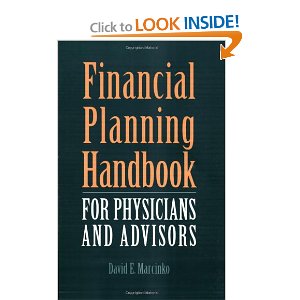
Financial Planning Handbook

Conclusion

And so, your thoughts and comments on this ME-P are appreciated. Please review our top-left column, and top-right sidebar materials, links, URLs and related websites, too. Then, subscribe to the ME-P. It is fast, free and secure.

Link: http://feeds.feedburner.com/HealthcareFinancialsthePostForcxos

Speaker: If you need a moderator or speaker for an upcoming event, Dr. David E. Marcinko; MBA – Publisher-in-Chief of the Medical Executive-Post – is available for seminar or speaking engagements. Contact: MarcinkoAdvisors@msn.com

Our Other Print Books and Related Information Sources:

Health Dictionary Series: http://www.springerpub.com/Search/marcinko

Practice Management: http://www.springerpub.com/product/9780826105752

Physician Financial Planning: http://www.jbpub.com/catalog/0763745790

Medical Risk Management: http://www.jbpub.com/catalog/9780763733421

Healthcare Organizations: www.HealthcareFinancials.com

Physician Advisors: www.CertifiedMedicalPlanner.com

Subscribe Now: Did you like this Medical Executive-Post, or find it helpful, interesting and informative? Want to get the latest ME-Ps delivered to your email box each morning? Just subscribe using the link below. You can unsubscribe at any time. Security is assured.

Link: http://feeds.feedburner.com/HealthcareFinancialsthePostForcxos

Sponsors Welcomed: And, credible sponsors and like-minded advertisers are always welcomed.

Link: https://healthcarefinancials.wordpress.com/2007/11/11/advertise

###

TESTIMONIAL

In his book Financial Planning Handbook for Physicians and Advisors, Dr. David E. Marcinko, MBA CMP® CFP® provides us with a simple and yet very complete view on the basics of financial planning that every physician should know in order to maximize our chances for success in the financial aspect of our medical careers and personal lives.

The book is well structured, organized and easy to read. Divided in ten chapters, it covers important aspects of personal financial planning such as insurance, home mortgages, retirement plans, auto buying, taxes and more. In an era where doctors must have a solid understanding of the basics of financial management, this book is a must-have on every physician’s private book collection.

Although not a substitute for a formal business education, this book will help physicians navigate effectively through the hurdles of day-to-day financial decisions with the help of an accountant, financial and legal advisors.  This book would make an excellent reference for teaching medical students and residents the basics of monetary management.

I highly recommend this book and commend Dr. Marcinko and the Institute of Medical Business Advisors, Inc. on a job well done.

Manuel J. Colón, MD

Product Details

What Did You Do When the Stock Market was Down?

Join Our Mailing List 

Investing Hero or Zero … On Market Timing or NOT!

By Staff Reporters

Here at the ME-P, we believe we have some of the most intelligent and savvy readers in the blog-o-sphere. And – why not?

Most are physicians, nurses and medical specialist of all stripes. Others are CPAs, financial advisors and wealth managers. And, some are medical management and HIT consultants with PhDs and MBAs, etc. More than a few more even have dual and triple degrees and professional designations, like www.CertifiedMedicalPlanner.com

The Question

Accordingly, our friends over at The Finance Buff recently asked:

Q: Do you remember those days last summer when the Dow went down 400 points one day and then it went up 400 points the next day, before it went down another 400 points the following day?

Going Granular

Well – if you do – what did you, or your clients do about it? Did you invest more, stay put, bail out or something else? Go granular on us and your fellow ME-P readers, subscribers and lurkers.

Assessment

Please tell us who you are, what you did during the “flash-crash” a few years ago, or last summer’s mini-meltdown, and how it turned out in hindsight?

Conclusion

And so, your thoughts and comments on this ME-P are appreciated. Please review our top-left column, and top-right sidebar materials, links, URLs and related websites, too. Then, subscribe to the ME-P. It is fast, free and secure.

Link: http://feeds.feedburner.com/HealthcareFinancialsthePostForcxos

Speaker: If you need a moderator or speaker for an upcoming event, Dr. David E. Marcinko; MBA – Publisher-in-Chief of the Medical Executive-Post – is available for seminar or speaking engagements. Contact: MarcinkoAdvisors@msn.com

Our Other Print Books and Related Information Sources:

Health Dictionary Series: http://www.springerpub.com/Search/marcinko

Practice Management: http://www.springerpub.com/product/9780826105752

Physician Financial Planning: http://www.jbpub.com/catalog/0763745790

Medical Risk Management: http://www.jbpub.com/catalog/9780763733421

Healthcare Organizations: www.HealthcareFinancials.com

Physician Advisors: www.CertifiedMedicalPlanner.com

Subscribe Now: Did you like this Medical Executive-Post, or find it helpful, interesting and informative? Want to get the latest ME-Ps delivered to your email box each morning? Just subscribe using the link below. You can unsubscribe at any time. Security is assured.

Link: http://feeds.feedburner.com/HealthcareFinancialsthePostForcxos

Sponsors Welcomed: And, credible sponsors and like-minded advertisers are always welcomed.

Link: https://healthcarefinancials.wordpress.com/2007/11/11/advertise

Product Details  Product Details

Health Industry Collaboration and e-Patients

More on Inter and Intra Healthcare Stakeholder Relationships 

Join Our Mailing List

According to Jennifer Tomasik MS [jtomasik@cfar.com], writing in the soon to be released ME-P textbook from iMBA Inc www.MedicalBusinessAdvisors.com: “Healthcare Organizations” [Management Strategies, Tools, Techniques and Case Studies], now in-process from (c) Productivity Press for 2012:

We are in a time of great change in healthcare. No one is certain how the future landscape will unfold, but it is clear that changes in regulation, reimbursement, technology, the economy, and science will significantly impact the work of those clinicians and administrators who dedicate their careers to improving patient care.

More Collaboration Needed

Experience has shown that better collaboration between patients and among the many different parts of the healthcare delivery system holds great potential to improve the quality of care and the relationships of those delivering it. It has also shown that the opportunities to improve collaboration are widespread.

Our focus, therefore, should be to introduce and share a selected set of tools that can be used to improve collaboration along several dimensions:

  • Clarifying roles and authority through decision charting,
  • Understanding the “give” and the “get” needed to establish effective alliances through the current state, and
  • Working jointly to establish and test a set of refined expectations through a physician-administrator compact.

Assessment

In the end, improved collaboration can help medical institutions with everything from inter professional productivity, to patient satisfaction to the most critical service of all: caring for patients and saving lives.

Link: http://www.crcpress.com/product/isbn/9781439879900

Conclusion

And so, your thoughts and comments on this ME-P are appreciated. Please review our top-left column, and top-right sidebar materials, links, URLs and related websites, too. Then, subscribe to the ME-P. It is fast, free and secure.

Link: http://feeds.feedburner.com/HealthcareFinancialsthePostForcxos

Speaker: If you need a moderator or speaker for an upcoming event, Dr. David E. Marcinko; MBA – Publisher-in-Chief of the Medical Executive-Post – is available for seminar or speaking engagements. Contact: MarcinkoAdvisors@msn.com

Our Other Print Books and Related Information Sources:

Health Dictionary Series: http://www.springerpub.com/Search/marcinko

Practice Management: http://www.springerpub.com/product/9780826105752

Physician Financial Planning: http://www.jbpub.com/catalog/0763745790

Medical Risk Management: http://www.jbpub.com/catalog/9780763733421

Healthcare Organizations: www.HealthcareFinancials.com

Physician Advisors: www.CertifiedMedicalPlanner.com

Subscribe Now: Did you like this Medical Executive-Post, or find it helpful, interesting and informative? Want to get the latest ME-Ps delivered to your email box each morning? Just subscribe using the link below. You can unsubscribe at any time. Security is assured.

Link: http://feeds.feedburner.com/HealthcareFinancialsthePostForcxos

Sponsors Welcomed: And, credible sponsors and like-minded advertisers are always welcomed.

Link: https://healthcarefinancials.wordpress.com/2007/11/11/advertise

Buy from Amazon

Are “Financial Advisors” True Professionals or Employed Sales Representatives for Retail Products?

Join Our Mailing List 

White House Sides With Sales Reps On Overtime

Dr. David Edward Marcinko MBA CMP™

[ME-P Editor-in-Chief]

www.CertifiedMedicalPlanner.org

As the US Supreme Court is preparing to review the contentious debate about overtime pay for sales reps, the US Solicitor General has filed an amicus curaie, or friend of the court brief, and sided with pharma reps. The move is not surprising, given that the US Department of Labor has, several times, taken a similar step in federal courts around the country where cases were heard.

Far Reaching Implications?

The review is expected to have far-reaching implications for the pharmaceutical industry, and I believe the financial services industry, as well. Why?

Both sectors have been fighting a growing number of cases nationwide over the past several years, but has had mixed results as the issue has continually divided the courts. At the same time, drug makers, Wall Street and broker-dealers have been laying off thousands of sales reps – “financial advisors”, “wealth managers” and stock brokers – as they try to cut costs and alter their business models to prepare for some level of fiduciary accountability.

The Issue

At issue is whether drug reps, and FAs by extension, are exempt from overtime provisions of the Fair Labor Standards Act. The FLSA overtime compensation requirement does not apply to employees who work as outside salespeople, but the law does require employers to pay overtime for hours worked beyond 40 hours a week, unless a FLSA exemption applies.

Link: http://www.pharmalot.com/2012/02/white-house-sides-with-sales-reps-on-overtime/?utm_source=feedburner&utm_medium=feed&utm_campaign=Feed%3A+Pharmalot+%28Pharmalot%29

My Issue

And so, does this mean that most “financial advisors” are really stock-brokers and product pushers after all? At least in medicine, we doctors know what a pharmaceutical rep is – and we understand his/ her roll is to push pharma products, DME and drug sales.

Shouldn’t a salesman – be a salesman – and an “advisor” – be an RIA or RIA rep? I don’t often agree with the White House, but I do on this one.

FAs can’t be independent client advocates – and employees – at the same time

Now, isn’t it time for the public to know that the vast majority of FAs are just salesmen [still SBs], too? Just selling retail financial products to doctors and others; not drugs. After all, FAs can’t be independent client advocates – and employees – at the same time.  And, it appears with this potential filing and ruling; that they truly wish to be the later. Now FAs, admit it!

Assessment

Why do you think FAs are licensed as “registered representatives”? Rarely; a fiduciary among them!

Conclusion

Your thoughts and comments on this ME-P are appreciated. Feel free to review our top-left column, and top-right sidebar materials, links, URLs and related websites, too. Then, subscribe to the ME-P. It is fast, free and secure.

Speaker: If you need a moderator or speaker for an upcoming event, Dr. David E. Marcinko; MBA – Publisher-in-Chief of the Medical Executive-Post – is available for seminar or speaking engagements. Contact: MarcinkoAdvisors@msn.com

OUR OTHER PRINT BOOKS AND RELATED INFORMATION SOURCES:

Product Details  Product Details

Comprehensive Financial Planning Strategies for Doctors and Advisors: Best Practices from Leading Consultants and Certified Medical Planners™

Is Malta a Hedge Fund Haven?

Join Our Mailing List 

Island in the Mediterranean Sea – South of Sicily (Italy)

By Dr. David Edward Marcinko MBA CMP

[Editor-in-Chief]

OK; I’ve written about hedge funds before, on this ME-P and in our www.MedicalBusinessAdvisors.com print publications for various textbooks, handbooks, white papers and journal. And, we discuss the concept in our online educational www.CertifiedMedicalPlanner.org program, as well. Some medical professionals love them, and some financial advisors use them in their work; others do not.

Of course, I’ve written frequently about my colleague – the now retired and newly anointed philanthropist  and uber-hedge fund manager Mike Burry MD; ad nauseam.

Link: https://medicalexecutivepost.com/2010/03/24/video-on-hedge-fund-manager-michael-burry-md/

But, now there is a new wrinkle on the island that I first visited about ten years ago, while on a working vacation

Rising Visibility

Malta–yes, Malta–has quietly leveraged the rising transparency imperative to attract hedge funds. There was a time when the quaint island sought to play on the traditional terrain, offering anonymity and a “laissez-faire regulatory regime,” not to mention very low taxes, as in no capital gains taxes and no taxes on dividends; all while English speaking and USD currency denominated.

Maybe back then, no more today, if this essay is to be believed.

Link: http://www.bloomberg.com/news/2012-01-05/malta-lures-connecticut-hedge-funds-with-300-days-of-sun-aided-by-eu-rules.html

Image 1

Why Malta?

Link: http://www.firstgozo.com/maltafacts.htm

Malta

Assessment

While many leading domiciles for offshore hedge funds remain in the Caribbean–notably the Cayman Islands, the British Virgin Islands, Bermuda, and the Bahamas–the island of Mata is drawing attention, especially from European funds.

Conclusion

Your thoughts and comments on this ME-P are appreciated. Feel free to review our top-left column, and top-right sidebar materials, links, URLs and related websites, too. Then, subscribe to the ME-P. It is fast, free and secure.

Link: http://feeds.feedburner.com/HealthcareFinancialsthePostForcxos

Speaker: If you need a moderator or speaker for an upcoming event, Dr. David E. Marcinko; MBA – Publisher-in-Chief of the Medical Executive-Post – is available for seminar or speaking engagements. Contact: MarcinkoAdvisors@msn.com

OUR OTHER PRINT BOOKS AND RELATED INFORMATION SOURCES:

DICTIONARIES: http://www.springerpub.com/Search/marcinko
PHYSICIANS: www.MedicalBusinessAdvisors.com
PRACTICES: www.BusinessofMedicalPractice.com
HOSPITALS: http://www.crcpress.com/product/isbn/9781466558731
CLINICS: http://www.crcpress.com/product/isbn/9781439879900
BLOG: www.MedicalExecutivePost.com
FINANCE: Financial Planning for Physicians and Advisors
INSURANCE: Risk Management and Insurance Strategies for Physicians and Advisors

Product Details  Product Details

Comprehensive Financial Planning Strategies for Doctors and Advisors: Best Practices from Leading Consultants and Certified Medical Planners™

How to Become A Financial Advisor [Learned Profession or Professional Sales Force?]

Join Our Mailing List

A Recent E-mail that I Received

By Dr. David Edward Marcinko MBA, CMP™

www.CertifiedMedicalPlanner.com

[Editor-in-Chief]

As a former certified financial planner for almost 15 years, I was surprised to recently receive the following unedited e-mail correspondence.

Dear Marcinko,

If you are clever, have a way with people, or are a born salesperson, then becoming financial advisor could be your ticket to paradise.

Maybe not exactly paradise, but you could definitely have a ticket to a rewarding career. If you’re thinking about starting out as a new financial advisor – you may already be half the way there.

Why?

Because it’s an occupation where your life challenges will give you the understanding and empathy needed to work with your clients. Have you ever been in the position where you had to figure out a budget for your children’s education? Or manage an over extended credit card? These life situations will aid an individual on the path to become a financial consultant.

Requirements to Be a Financial Advisor

Even though a formal education is not a necessity to become financial adviser, it helps if you’ve taken certain courses.

What degree do you need to become a financial advisor? A bachelor’s degree in Finance, Economics, Accounting, Commerce, Business or Marketing would be a good start. A degree won’t assure you of a startling career but it may help get your foot in the door.

Rumor has it that a degree in psychology is also an asset as financial advising is as much about counseling as it is about advising. There are a plethora of people with all sorts of emotional entanglements around their financial lives.

Licenses

So, what licenses do you need to be a financial advisor? Some companies will assist a newbie in the financial advisory business and place them into a special program that will help them to obtain the required regulatory licenses such as a Series 66, this license permits them to vend annuities and mutual funds. It’s also possible to manage your own training. You can take part-time courses in order to qualify for the CFP (Certified Financial Planner) exam.

There are roughly over 286 universities and colleges that will assist you in preparing for the CFP exam. How long does it take to become a financial advisor? In order to qualify for the exam you will also need three years full-time working experience with a financial planning establishment.

Statistics state that over 40% regularly fail this all important exam. Its worth the time and effort as with this certification you are deemed as a certified financial planner and demand a higher salary.

Assessment

Hot tip: Stay away from insurance companies for financial employment. They’ll insist that you sign everyone including the dog and your grandmother. Then get rid of you if you don’t procure sufficient business. Banks are better they will bring in the clients for you.

Conclusion

And so, your thoughts and comments on this ME-P are appreciated. Are financial advisors true professionals; or a truely professional sales force?

Please review our top-left column, and top-right sidebar materials, links, URLs and related websites, too. Then, subscribe to the ME-P. It is fast, free and secure. Are financial advisors true professionals, or a professional sales force?

Link: http://feeds.feedburner.com/HealthcareFinancialsthePostForcxos

Speaker: If you need a moderator or speaker for an upcoming event, Dr. David E. Marcinko; MBA – Publisher-in-Chief of the Medical Executive-Post – is available for seminar or speaking engagements. Contact: MarcinkoAdvisors@msn.com

Our Other Print Books and Related Information Sources:

Health Dictionary Series: http://www.springerpub.com/Search/marcinko

Practice Management: http://www.springerpub.com/product/9780826105752

Physician Financial Planning: http://www.jbpub.com/catalog/0763745790

Medical Risk Management: http://www.jbpub.com/catalog/9780763733421

Healthcare Organizations: www.HealthcareFinancials.com

Physician Advisors: www.CertifiedMedicalPlanner.com

Subscribe Now: Did you like this Medical Executive-Post, or find it helpful, interesting and informative? Want to get the latest ME-Ps delivered to your email box each morning? Just subscribe using the link below. You can unsubscribe at any time. Security is assured.

Link: http://feeds.feedburner.com/HealthcareFinancialsthePostForcxos

Sponsors Welcomed: And, credible sponsors and like-minded advertisers are always welcomed.

Link: https://healthcarefinancials.wordpress.com/2007/11/11/advertise

Product Details  Product Details

On “Financial Planning for Physicians AND their Advisors”

VOTE-Would You Retain a Bankrupt CFP® for Financial Advice?

Join Our Mailing List

ME-P Readers Respond

Sponsored by: www.CertifiedMedicalPlanner.org

###

According to colleague and financial advisor, Mike Kitces CFP®:

As the difficult economic environment continues, bankruptcy filings in the United States continue to occur at an elevated rate.

And it appears that financial planners are having their share of bankruptcies as well … requiring the CFP Board via their disciplinary process to adjudicate whether a CFP® certificant should receive a public letter of admonition, or has his/her marks suspended or revoked. 

With a rising number of financial planner bankruptcies putting pressure on their disciplinary resources, the CFP Board has proposed a change to how it treats such bankruptcy situations. The upshot: a bankruptcy by a financial planner will no longer bar him/her from getting or keeping the CFP® marks. However, going forward, any bankruptcy by a financial planner will be publicly disclosed for the following 10 years on the CFP Board’s website.

Question: And so, as a doctor, nurse, management consultant or even another financial advisor, would you ever retain a Certified Financial Planner® who had declared bankruptcy?

VOTE AND OPINE

Assessment

Link: http://www.kitces.com/blog/archives/240-CFP-Board-Relaxes-Its-Position-On-Financial-Planner-Bankruptcies…-Sort-Of.html

Conclusion

Your thoughts and comments on this ME-P are appreciated. Feel free to review our top-left column, and top-right sidebar materials, links, URLs and related websites, too. Then, subscribe to the ME-P. It is fast, free and secure.

Link: http://feeds.feedburner.com/HealthcareFinancialsthePostForcxos

Speaker: If you need a moderator or speaker for an upcoming event, Dr. David E. Marcinko; MBA – Publisher-in-Chief of the Medical Executive-Post – is available for seminar or speaking engagements. Contact: MarcinkoAdvisors@msn.com

OUR OTHER PRINT BOOKS AND RELATED INFORMATION SOURCES:

DICTIONARIES: http://www.springerpub.com/Search/marcinko
PHYSICIANS: www.MedicalBusinessAdvisors.com
PRACTICES: www.BusinessofMedicalPractice.com
HOSPITALS: http://www.crcpress.com/product/isbn/9781466558731
CLINICS: http://www.crcpress.com/product/isbn/9781439879900
BLOG: www.MedicalExecutivePost.com
FINANCE: Financial Planning for Physicians and Advisors
INSURANCE: Risk Management and Insurance Strategies for Physicians and Advisors

Product DetailsProduct DetailsProduct Details

Product Details Product Details

Product Details

Are We Finally Lifting the Secret IRS Veil on Un-Paid Taxes?

The Tax Gap Increases to $450 Billion

By Children’s Home Society of Florida Foundation

By Dr. David Edward Marcinko MBA, CMP

Join Our Mailing List

Each year the IRS conducts a survey to determine the amount of unpaid taxes. The “tax gap” is defined as the amount of taxes that are owed by taxpayers but not paid on time.

2006 Results

For the year 2006, revised figures released this week showed that the tax gap increased.  The previous estimate of the 2006 tax gap was $345 billion but it increased to $450 billion. The “net tax gap” is a smaller number that reflects the ability of the IRS to collect some of the unpaid taxes.  When the additional $65 billion in taxes collected later is subtracted from the $450 billion, the net tax gap is $385 billion.  The net tax gap number increased from $290 billion in 2001 to the larger number by 2006.

Tax Compliance Level

The compliance level for taxpayers remains 83.7%.  This indicates that the majority of Americans are continuing to calculate and pay their taxes correctly.

Sen. Max Baucus (D-MT) is Chairman of the Senate Finance Committee.  He responded to the IRS survey by noting,

“This report shows that closing the tax gap needs to be a major focus of tax reform.  An improved tax code that’s simple and fair to all Americans will help close the tax gap, boost our economy and create jobs.”

Editor’s Note: 

Both Sen. Baucus and House Ways and Means Committee Chair Dave Camp (R-MI) have been conducting hearings that will lead to major tax reform in 2013.  For the vast majority of Americans who pay their fair share of taxes, it is beneficial if Baucus and Camp are able to simplify the tax system and reduce the tax gap.  More effective collection of revenue decreases the need to raise taxes on those who are currently paying their fair share.

Conclusion     

And so, your thoughts and comments on this ME-P are appreciated. What is the tax-gap for medical professsionals? Please review our top-left column, and top-right sidebar materials, links, URLs and related websites, too. Then, subscribe to the ME-P. It is fast, free and secure.

Link: http://feeds.feedburner.com/HealthcareFinancialsthePostForcxos

Speaker: If you need a moderator or speaker for an upcoming event, Dr. David E. Marcinko; MBA – Publisher-in-Chief of the Medical Executive-Post – is available for seminar or speaking engagements. Contact: MarcinkoAdvisors@msn.com

Our Other Print Books and Related Information Sources:

Health Dictionary Series: http://www.springerpub.com/Search/marcinko

Practice Management: http://www.springerpub.com/product/9780826105752

Physician Financial Planning: http://www.jbpub.com/catalog/0763745790

Medical Risk Management: http://www.jbpub.com/catalog/9780763733421

Healthcare Organizations: www.HealthcareFinancials.com

Physician Advisors: www.CertifiedMedicalPlanner.com

Subscribe Now: Did you like this Medical Executive-Post, or find it helpful, interesting and informative? Want to get the latest ME-Ps delivered to your email box each morning? Just subscribe using the link below. You can unsubscribe at any time. Security is assured.

Link: http://feeds.feedburner.com/HealthcareFinancialsthePostForcxos

Sponsors Welcomed: And, credible sponsors and like-minded advertisers are always welcomed.

Link: https://healthcarefinancials.wordpress.com/2007/11/11/advertise


Product Details  Product Details

The One-Woman Physician Investors Should Not Trust

Join Our Mailing List

Why We Should “Run” from the SEC’s Mary Schapiro

By Dr. David Edward Marcinko MBA CMP™

[Publisher-in-Chief]

OK, I’ve opined about fiduciary accountability for stock brokers, FAs and FPs – as well as Mary Schapiro [Chairman of the SEC] before – on this ME-P. And usually, in not so glowing terms!

But now, Mary really chaps my ethical and linguistic sensibilities.

Why I’m So P…… Off!

According to Bloomberg, and Advisor One [a financial services industry trade magazine], the chairwoman is considering something called the “business model neutral” rule that retains proprietary financial products, and brokerage sales commissions.

This concept of ‘business neutral’ is the one sought by many in the brokerage and insurance industry in order to redefine the term ‘fiduciary’ as an enhanced form of ‘suitability’ with opt-out provisions.

But, it is not sought by me, and should not be accepted by physicians.

Definitions

Suitability Rule – According to the Free Dictionary:

A stated or implied requirement by a regulatory body that a broker or investment adviser must reasonably believe that a certain investment decision will benefit a client before making a recommendation to him/her. That is, the broker or investment adviser must act in good faith, and may not knowingly recommend bad investments. Different regulators and self-regulating organizations incorporate suitable rules in different places in their bylaws. Two commonly referenced suitability rules are Rule 2310 for the Financial Industry Regulatory Authority and Rule 405 for the NYSE. See also: Due diligence, Prudent-person rule, Twisting.

Fiduciary Rule – According to the Free Dictionary:

A uniform standard for financial advisors that requires them to put retail customer interests ahead of their own financial interests.

This is clearly a higher duty [level of care] than suitability. Insurance agents, stock brokers, BDs and most “financial advisors” hate it.

Link: http://www.advisorone.com/2011/12/09/reaction-to-schapiro-comments-on-fiduciary-rule-ar?ref=hp

“Suitability on Steroids”

Some pundits suggest we think of this new “business model neutral” rule as “suitability on steroids.”

However, as most of us in medicine know, steroids are not a panacea and are typically used as a quick fix for short term gain, only.

Otherwise, the excessive use of anabolic steroids is bad for our physical health. Just like Mary Schapiro is bad for our fiscal health. But, a Certified Medical Planner™ is a fiduciary at all times http://www.CertifiedMedicalPlanner.org

More: Enter the CMPs

Assessment       

And so, your thoughts and comments on this ME-P are appreciated. I was an insurance agent and certified financial planner for almost 15 years [Series 7, 63 and 65] before I resigned all – in disgust over the fiduciary flap.

Doctors are fiduciaries. I am a fiduciary, a doctor, and a financial advisor. Shouldn’t all physician-investors demand same from their own financial advisors [NASD-FINRA, RIAs, RIA-Reps]?

But hey – I’m just a medical provider.

Conclusion

Your thoughts and comments on this ME-P are appreciated. Feel free to review our top-left column, and top-right sidebar materials, links, URLs and related websites, too. Then, subscribe to the ME-P. It is fast, free and secure.

Speaker: If you need a moderator or speaker for an upcoming event, Dr. David E. Marcinko; MBA – Publisher-in-Chief of the Medical Executive-Post – is available for seminar or speaking engagements. Contact: MarcinkoAdvisors@msn.com

OUR OTHER PRINT BOOKS AND RELATED INFORMATION SOURCES:

Product DetailsProduct DetailsProduct Details

Financial Planning MDs 2015

Comprehensive Financial Planning Strategies for Doctors and Advisors: Best Practices from Leading Consultants

Front Matter with Foreword by Jason Dyken MD MBA

[BY DOCTORS – FOR DOCTORS – PEER REVIEWED – NICHE FOCUSED]

***

On Healthcare Collaboration Trends

A Lay Perspective

By David K. Luke MIM CMP

[Investment Advisor]

http://www.CertifiedMedicalPlanner.org

Collaboration within healthcare has sprung from the general body of health communication research; ie., crowd-sourcing, etc..

And, there are a number of other emerging trends, visible to the lay man or woman, in the patient collaboration arena today.

1. Cross-Discipline Communication Teams

One trend is the formation of cross-discipline communication teams among health care professionals.  Different disciplines in pairs, small groups and teams now collaborate directly with each other. This is an important development in improving the healthcare delivery process to the patient.

Typically health care providers tend to identify strongly with their own discipline and likewise cross collaboration may be very difficult. But this trend is developing so that Nurses, Social workers, pharmacists and others work with physicians with a full realm of issues. Likewise we see now the Nurse/Physician collaborative, Nurse Practitioner/Physician Collaborative, Social Worker/Physician, Pharmacist/Physician and even Physician/Physician collaborative groups.

2. Clinical Health Care Teams

A second trend in patient collaboration is Clinical Health Care Teams.  A team approach to care and measurable patient outcomes has shown in studies (Cooke, 1997; Cooley, 1994: Fagin, 1992, et al.) as improving overall care for patients. These multidisciplinary teams facilitate and improve training of students in medicine and nursing and other related fields as well.

3. Informal Backstage Communication

Finally, a third emerging patient collaborative trend is the increase is informal backstage communication.

Typically communication in the healthcare setting regarding the patient has been done among the team members in a team meeting setting for a one to two hour collaboration session.

Now we see the emergence of the backstage regions such as the break rooms, hallways, clinic computer desk, work tables, photocopy rooms, and offices. While these encounters between team members are often fleeting and “messy”, the environment within a practice setting can be consciously created to allow for this increased interaction among team members that will certainly improve the care of the patient.

Of course social media and e-communication facilitates this trend.

Conclusion                

And so, your thoughts and comments on this ME-P are appreciated. Feel free to review our top-left column, and top-right sidebar materials, links, URLs and related websites, too. Then, subscribe to the ME-P. It is fast, free and secure.

Link: http://feeds.feedburner.com/HealthcareFinancialsthePostForcxos

Speaker: If you need a moderator or speaker for an upcoming event, Dr. David E. Marcinko; MBA – Publisher-in-Chief of the Medical Executive-Post – is available for seminar or speaking engagements. Contact: MarcinkoAdvisors@msn.com

Subscribe Now: Did you like this Medical Executive-Post, or find it helpful, interesting and informative? Want to get the latest ME-Ps delivered to your email box each morning? Just subscribe using the link below. You can unsubscribe at any time. Security is assured.

Link: http://feeds.feedburner.com/HealthcareFinancialsthePostForcxos

Sponsors Welcomed: And, credible sponsors and like-minded advertisers are always welcomed.

Link: https://healthcarefinancials.wordpress.com/2007/11/11/advertise

Product Details

***

Invite Dr. Marcinko

***

Financial Services Career Evaluation [An Opinion and Voting Poll]

Would You Continue to Work if Financially Independent?

Join Our Mailing List

By staff reporters

Studs Turkel, in his outstanding book Working, made the comment that work is the mechanism by which many of us get our daily bread and our daily purpose.

If this is to be the case, then the modern financial services sector may need a lift to offer something more than a paycheck. This may especially be true when one considers the recent shenanigans on Wall Street, the slow decline of the broker-dealer business and product model – and considering that RIA, fiduciary and/or niche marketing models are slowly rising http://www.CertifiedMedicalPlanner.org

A General Survey

The Wilson Learning Corporation surveyed 1,500 laypeople, asking “If you had enough money to live comfortably for the rest of your life, would you continue to work?

Seventy percent said that they would continue to work, but 60 percent of those said they would change jobs and seek “more satisfying” work.

But more specifically, regardless of whether you are called a Financial Advisor, Stock-Broker, Wealth Manager or Financial Planner – how about you?

Assessment

If financially independent, would you continue to be a financial consultant [regardless of nomenclature]?

Conclusion

Your thoughts and comments on this ME-P are appreciated. Feel free to review our top-left column, and top-right sidebar materials, links, URLs and related websites, too. Then, subscribe to the ME-P. It is fast, free and secure.

Speaker: If you need a moderator or speaker for an upcoming event, Dr. David E. Marcinko; MBA – Publisher-in-Chief of the Medical Executive-Post – is available for seminar or speaking engagements. Contact: MarcinkoAdvisors@msn.com

OUR OTHER PRINT BOOKS AND RELATED INFORMATION SOURCES:

Product DetailsProduct DetailsProduct Details

Risk Management, Liability Insurance, and Asset Protection Strategies for Doctors and Advisors: Best Practices from Leading Consultants and Certified Medical Planners™8Comprehensive Financial Planning Strategies for Doctors and Advisors: Best Practices from Leading Consultants and Certified Medical Planners™

   Product Details

A Look at Level Life Insurance Commissions!

Join Our Mailing List

Will It Ever Happen?

[By David K. Luke; MIM]

Investment Advisor

www.NetWorthAdvice.com

The current structure of the life insurance industry regarding cash-value life insurance policies with most major insurance companies is to reward the selling agent with the entire commission upfront on a newly issued policy.

The criticism to this practice is that this of course reduces the needed client-agent reviews and interaction and generates more “churning” and “flipping”.

Unscrupulous agents are tempted to sell clients another policy for another commission rather than encourage them to maintain and keep their existing policy, which most likely would have lower costs than any new policy considering the client was younger and most likely in better health with the existing contract. A model in which the insurance agent would have a financial incentive for their client’s continued patronage could create a win-win for both parties. We see this “pay as you” model currently operating successfully with wealth advisors and property/casualty agents, why not life insurance agents?

A Flawed Argument

There are some flaws to this argument. The reality is that the captive life insurance industry and their agents prefer this form of lump compensation. The claim is that selling an individual a life insurance policy (the ultimate intangible product) is hard work, and likewise the 70% – 105% of the first year premium is fair compensation for the efforts.

For existing agents to reduce their current income to a fraction of this commission upfront, but convert it into a trail over a multiyear period is actually quite distasteful. Therefore, this change will likewise not be initiated from the Insurance agent or insurance industry side unless other forces prevail.

Consumers [Even some Doctors] are Un-Aware

The drive by the consumer to change this up front lump form of compensation has not yet presented itself in full force. After all, why does the consumer care about how the agent is paid if the consumer is satisfied with the end result? One must acknowledge that the drive to reduce commissions and up front loads in the investment advisory business was driven by the consumer that insisted on lower fees and costs.

However, the relevant costs of a life insurance policy are not quite as obvious. Only by comparing a quote from different companies can a consumer compare costs, and even then it is unknown and not understood how the pricing mechanisms used by the insurance company work. The advent of non-agent sold policies however is decreasing the cost of life insurance (there is no big commission check written to the selling agent) and is hitting the radar of consumers. The consumer can notice this difference if the consumer compares the proposed agent sold policy premium with one sold directly by a financial institution such as USAA or AARP. These companies have a work force of sales people that are compensated primarily on salary. Likewise the company can structure more competitive pricing, and in effect offers a levelized cost (in place of commission) insurance product.

A Personal Opinion 

Mark Maurer CFP® of Low Load Insurance Services believes that a levelized compensation basis will not occur unless all the insurance companies were to go to such a plan all at once. If an agent can “pick and choose” he/she may use a “levelized compensation” policy when in a competitive situation, as such a policy should in theory make a policy more inexpensive. An agent would then use the higher “front-end” policy when there is a large up-front premium or in a scenario with limited competition.

Mark believes the answer to the whole argument is full disclosure. Both agents and home offices would not want the purchaser to know that 100% or more of their premium is going to sales costs and that products would then get better.

Assessment

The insurance industry has a powerful lobby in Washington. I believe that only market pressure will cause a change in this decades old insurance industry practice that has made many life insurance policies expensive and inefficient. Pricing from non-agent sold life insurance companies will be the impetus that drives the old-line Insurance companies to restructure their commissions to agents.

I remember the days of 8% load mutual fund commissions and minimum $60 dollar commissions on stock trades in the late 1980’s when I first became a stockbroker! That is an inflation equivalent of more than $130 a trade minimum commission. The current investing world would laugh at these costs [charges] today. When the consumer realizes, through full disclosure and outside competitive market pressures, that life insurance protection can be more affordable from other non-traditional channels, then the consumer will insist on a better, more affordable product. Then the big agent driven life insurance companies will have to change their commission structure. The transition is currently in process. Only time will tell now.

Editor’s Note: David K. Luke is currently enrolled in the online http://www.certifiedmedicalplanner.org chartered professional designation program.

More: Can the Hourly FA Survive?

Channel Surfing

Have you visited our other topic channels? Established to facilitate idea exchange and link our community together, the value of these topics is dependent upon your input. Please take a minute to visit. And, to prevent that annoying spam, we ask that you register.

Link: http://feeds.feedburner.com/HealthcareFinancialsthePostForcxos

Conclusion

Your thoughts and comments on this ME-P are appreciated. Feel free to review our top-left column, and top-right sidebar materials, links, URLs and related websites, too. Then, subscribe to the ME-P. It is fast, free and secure.

Speaker: If you need a moderator or speaker for an upcoming event, Dr. David E. Marcinko; MBA – Publisher-in-Chief of the Medical Executive-Post – is available for seminar or speaking engagements. Contact: MarcinkoAdvisors@msn.com

OUR OTHER PRINT BOOKS AND RELATED INFORMATION SOURCES:

Product Details  Risk Management, Liability Insurance, and Asset Protection Strategies for Doctors and Advisors: Best Practices from Leading Consultants and Certified Medical Planners™8Comprehensive Financial Planning Strategies for Doctors and Advisors: Best Practices from Leading Consultants and Certified Medical Planners™Product Details

On Financial Advisors Becomming Certified Medical Planners™

Introducing

CERTIFIED

MEDICAL PLANNER 

  Now accepting matriculation applications from Financial Advisors, MBAs, CPAs and all RIAs!

  Live Online Matriculation Leading to a

Chartered Professional-Designation

Certified Medical Planner 

Attract, retain and better serve physicians and other medical professional clients.

Become a Certified Medical Planner™ –OR- just succeed like one!

 www.CertifiedMedicalPlanner.com

###

My “One” Criterion for Hiring Physician Consultants and Doctor Advisors

More about the Frightening “F” Word

Dr. David Edward Marcinko MBA CMP™

[Publisher-in-Chief]

As you begin to search for a medical practice business advisor or healthcare consultant, be sure to contact the advisor and request a short initial meeting that should be free of charge.

Just as you would select your own physician, you should base your consulting decision on credentials, experience and especially education. Fee schedules are probably of least importance. And, by understanding the “F” word, you stand the best chance of finding an advisor that’s right for your budget, practice and personality.

The Traditional View

The traditional view of medical management consulting, or the financial advisory or financial planning business, is not of a fiduciary. Historically, in the view of many, attorneys, doctors, CPAs and the clergy are proto-typical fiduciaries, as are the small but emerging class of contemporary Certified Medical Planners [CMP™]. They have a clear duty to put the best interests of their clients, patients, congregation, etc., above their own and to disclose conflicts of interest, etc. Too many others who retain this title function as poseurs.

Link: www.CertifiedMedicalPlanner.com

The stock market collapse, SEC debacle, home mortgage and real estate fiascos of the past few years, all highlight the lack of general accounting, financial, business and advisory oversight of Wall Street, the NASD/FINRA and related private and government monitoring agencies. This includes financial and investment advisors, wealth managers and healthcare consultants.

Fiduciary Definition

According to Bennett Aikin, Accredited Investment Fiduciary [AIF®], a fiduciary consultant is someone who offers advice, or manages the assets of another person and stands in a special relationship of trust, confidence, and/or legal responsibility [personal communication].

Link: https://medicalexecutivepost.com/2009/03/01/an-interview-with-bennett-aikin-aif%c2%ae/

Financial designations that indicate fiduciary duty do not exist absent the proto-types mentioned above. Rather, it is function that determines who is a fiduciary; not designations, certifications or licenses to hold a particular trade-mark, service-mark or registration-mark.

So, a fiduciary advisory, according to these definitions can be held accountable for a breach in fiduciary duty, regardless of any expertise they do, or do not have. This underscores the critical nature of understanding the fiduciary standard and delegating certain duties to qualified “professionals” who can fulfill the parts of the process that a non-qualified fiduciary cannot.

Fiduciary? – Get it in Writing!

But, this does not mean it is impossible to find a healthcare consultant who accepts fiduciary responsibility and acknowledges the same. The best way to rectify confusion is to get fiduciary status acknowledged in writing and review all of the necessary steps in the fiduciary process to ensure fulfillment. An acknowledgement of fiduciary status letter can even be a simple checklist to ensure the entire fiduciary process is being covered.

Link: www.CertifiedMedicalPlanner.com

About http://www.fi360.com

Public resources for understanding the fiduciary process and for choosing appropriate consultants include the Department of Labor, the AICPA’s Personal Financial Planning division, and iMBA Inc. Private resources are available from the law firm of Reish Luftman Reicher & Cohen. The firm specializes in employee-benefits law and is considered leading ERISA experts. More resources from www.fi360.com include:

  • Fiduciary Standard of Excellence
  • Safe Steward Document
  • Stewardship Handbook
  • Legal Memorandum Handbook

Conclusion

And so, your thoughts and comments on this ME-P are appreciated. Feel free to review our top-left column, and top-right sidebar materials, links, URLs and related websites, too. Then, subscribe to the ME-P. It is fast, free and secure.

Link: http://feeds.feedburner.com/HealthcareFinancialsthePostForcxos

Speaker: If you need a moderator or speaker for an upcoming event, Dr. David E. Marcinko; MBA – Publisher-in-Chief of the Medical Executive-Post – is available for seminar or speaking engagements. Contact: MarcinkoAdvisors@msn.com

Our Other Print Books and Related Information Sources:

Health Dictionary Series: http://www.springerpub.com/Search/marcinko

Practice Management: http://www.springerpub.com/product/9780826105752

Physician Financial Planning: http://www.jbpub.com/catalog/0763745790

Medical Risk Management: http://www.jbpub.com/catalog/9780763733421

Healthcare Organizations: www.HealthcareFinancials.com

Physician Advisors: www.CertifiedMedicalPlanner.com

Subscribe Now: Did you like this Medical Executive-Post, or find it helpful, interesting and informative? Want to get the latest ME-Ps delivered to your email box each morning? Just subscribe using the link below. You can unsubscribe at any time. Security is assured.

Link: http://feeds.feedburner.com/HealthcareFinancialsthePostForcxos

Sponsors Welcomed: And, credible sponsors and like-minded advertisers are always welcomed.

Link: https://healthcarefinancials.wordpress.com/2007/11/11/advertise


Product DetailsProduct DetailsProduct Details       

Product Details  Product Details

   Product Details

How to Select a Property and Casualty Insurance Agent

Eschewing Conventional Wisdom

[By Dr. David Edward Marcinko MBA CMP™]

http://www.CertifiedMedicalPlanner.org

In my travels, and various consulting engagements, I am often asked how to select a good PC agent. As a former insurance agent myself, I know what is required for my medical colleagues. And, there is no doubt that a good property and casualty (P&C) agent is needed to protect the physicians’ home and medical practice business entity, etc.

No Dedicated Agents

The P&C agent should not be dedicated to a single company, but have an array of carriers with which the home or practice can be placed.  I opine thusly even though most insurance companies will offer a discount if you place multiple coverage with them.

Select “Best of Breed”

However, this may not be as beneficial as insuring each need with a specialist. So, do not hesitate to place different types of coverage with different insurers. Selecting the “best of breed” may be more work; but it also may be more beneficial when a claim is made.

Assessment

Remember, by agency law, and definition, P&C agents are not fiduciaries.

Conclusion

Your thoughts and comments on this ME-P are appreciated. Feel free to review our top-left column, and top-right sidebar materials, links, URLs and related websites, too. Then, subscribe to the ME-P. It is fast, free and secure.

Speaker: If you need a moderator or speaker for an upcoming event, Dr. David E. Marcinko; MBA – Publisher-in-Chief of the Medical Executive-Post – is available for seminar or speaking engagements. Contact: MarcinkoAdvisors@msn.com

OUR OTHER PRINT BOOKS AND RELATED INFORMATION SOURCES:

Product Details  Product Details

Are Health 2.0 and Financial Services 2.0 Organizationally Related?

Similar Business Models Emerging!

By David K. Luke, MIM

Investment Advisor

http://networthadvice.com

Defining Health 2.0

Health 2.0 is healthcare with the full involvement of the patient and the doctor. New web technologies, enabled by information, software, and social networking help increase participation and openness between the players. This will permit health care professionals to work in a more suitable “patient-centric” demand driven environment. Health 2.0 is evolving fast as the technology evolves.

Defining Financial Services 2.0

The same technology deployment changes and increased public involvement are prevalent with Financial Services 2.0, including a quickly morphing investor driven landscape creating a more “investor-centric” atmosphere.

Tribulations and Detractors on Both Sides

The move to 2.0 in healthcare and financial services is proving to be beneficial to all parties, but not without tribulations and some detractors.

In Healthcare

Within healthcare, from the patient’s perspective, the ability for patients to have ready access to their medical records, review doctor’s notes, and engage in the process is refreshing and liberating. Older doctors may be unwilling to adapt their practices, however. Many practices are not equipped as strategic business units, which is required now to deal with the patient and is becoming the new norm. Practices will need to evolve and healthcare providers will need to adapt.

For example, nearly 7 out of 10 physicians in a recent study by The MEDSTAT Group and JD Power and Associates considered themselves “anti-managed care” indicating unhappiness with the financial reimbursement system. Some physicians are packing their bags and moving out of practice, into more lucrative business ventures and other pursuits. One criticism of the new Health 2.0 is that it is one more paradigm, one more monkey on the backs of already exhausted physicians.

Another criticism is that some patients are not equipped with the knowledge or experience to interpret correctly all the newly available information, making it difficult for physicians to implement a proper course of action with the patient.

Nonetheless, early adopting physicians to Health 2.0 are having success and utilize e-mail office visits, video-conference appointments, and matching online patient visits with convenient neighborhood locations. The wise physician realizes that Health 2.0 is here to stay, and must be confronted and dealt with.

In Financial Services

Adoption of the new technologies within Financial Services 2.0 has been rapid. The number of Financial Advisors (FA) in the United States has started to shrink as the end investor is increasing access to information and making more decisions without intermediaries. Advisors that are surviving, indeed thriving in this environment are adapting and implementing new technologies. Interactive websites with video, account and investment option access, and reductions in transactions costs while increasing services all seem to benefit the new consumer in Financial Services 2.0. Advisors that are slow to adapt criticize the ease with which investors can now make investment decisions often at their own peril.

Assessment

Some players on both sides of the issue believe that the transaction cost savings touted by new “do it yourself” investing and medical information websites may not be worth the potential [many fold] losses that await the inexperienced investor or patient.

As with physicians and the new realities of Health 2.0, the wise FA is adapting their practice to Financial Services 2.0 not just to cope but also to thrive.

Editor’s Note: David K. Luke is currently enrolled in the online http://www.CertifiedMedicalPlanner.org chartered professional designation program.

Conclusion

Your thoughts and comments on this ME-P are appreciated. Feel free to review our top-left column, and top-right sidebar materials, links, URLs and related websites, too. Then, subscribe to the ME-P. It is fast, free and secure.

Link: http://feeds.feedburner.com/HealthcareFinancialsthePostForcxos

Speaker: If you need a moderator or speaker for an upcoming event, Dr. David E. Marcinko; MBA – Publisher-in-Chief of the Medical Executive-Post – is available for seminar or speaking engagements. Contact: MarcinkoAdvisors@msn.com

OUR OTHER PRINT BOOKS AND RELATED INFORMATION SOURCES:


Product DetailsProduct DetailsProduct Details

Product Details  Product Details

   Product Details

Is the Mutual Fund Company “Invesco” Dissing Podiatrists?

Attacking One of Us = Attacking all of Us

By Ann Miller RN MHA

[Executive-Director]

Join Our Mailing List 

Dear ME-P Readers, Subscribers and Visitors,

As you know, here at the Medical Executive-Post, we champion all hard working, honest and ethical medical professionals, regardless of specialty or degree designation. From the ME-P corporate executive suite, to the mailroom, we appreciate their laborious ministrations under increasingly difficult cultural, political and financial conditions on behalf of the US citizenry.

And so, it was with much dismay when this new advertisement from the behemoth mutual fund company Invesco, headquartered right here in Atlanta GA, was brought to our attention. Rest assured. We are not amused and request your input!

You Input Requested

Do you agree with the Ad? Is it an attack on one medical specialty – or on all of us? Would your opinion differ if the ad mentioned a proctologist – or a dentist? How about a brain surgeon or a nurse? Is the dated impression of doctors being on the golf-course still accurate?

More importantly, does the ad affect your impression of Invesco as a contemporaneous company aware of the modern Health 2.0 culture, or a backward thinking dinosaur resting on its [glorious or in-glorious] past?

Is it Time to Close the Door on Invesco?

Are they Aware?

Do you think that the huge and costly marketing department at Invesco is is even aware that our iMBA Inc sponsored, and ME-P promoted textbooks and handbooks, dictionaries, white papers and CD-ROMs on investing, financial planning, insurance, and risk and wealth management for physicians, was largely written by medical professionals of all stripes? Many holding dual degrees and designations like MBA, CFP®, CMP™, JD, MHA, CFA, etc.

Link: http://www.CertifiedMedicalPlanner.org

Or, that they have been used in [non-clinical] continuing education programs for medical professionals, for more than a decade?

Of course, this includes allopaths, osteopaths, podiatrists, nurses, physical therapists and other related members of the healthcare ecosystem? After all, it often takes a team to treat a poly-systemically ill patient.

Link: www.BusinessofMedicalPractice.com

Assessment

Feel free to contact Invesco directly and tell em’ what you think about their new ad campaign [positive or negative]:

Inveso Client Services:

  • Calls within the United States 800.959.4246
  • Calls outside of the United States 713.626.1919 (Call Collect)

Hours of Service – Monday-Friday, 7:00am-6:00pm CST; subject to change due to NYSE holidays or early market closings.

Contact Link: https://www.invesco.com/portal/site/us/menuitem.33e9ce03dea2c250a83af864f14bfba0/

Industry Indignation Index: 65/100 [probably smelly]

Conclusion

Over the next few weeks we will aggregate your thoughts and may report back to you, and Invesco, about the results. Till then, be sure to also tell us what you think. right here? Feel free to review our top-left column, and top-right sidebar materials, links, URLs and related websites, too. Then, subscribe to the ME-P. It is fast, free and secure.

Link: http://feeds.feedburner.com/HealthcareFinancialsthePostForcxos

Speaker: If you need a moderator or speaker for an upcoming event, Dr. David E. Marcinko; MBA – Publisher-in-Chief of the Medical Executive-Post – is available for seminar or speaking engagements. Contact: MarcinkoAdvisors@msn.com

OUR OTHER PRINT BOOKS AND RELATED INFORMATION SOURCES:


Product DetailsProduct DetailsProduct Details

Product Details  Product Details

   Product Details 

What is the Point of Financial Planning [Pod Cast]?

A Video and Audio Survey

By Staff Reporters

Join Our Mailing List

Question

What’s the point of financial planning?

One Answer

Read WSJ’s post from Richard Reyes and comment below to share what you think the point is.

Assessment

PodCast link: http://www.vimeo.com/22892025?ab

Conclusion

And so, your thoughts and comments on this ME-P are appreciated.

Is financial planning different for doctors, as we contend here at the ME-P? Do we need a separate educational track and designation for healthcare, like: www.CertifiedMedicalPlanner.com ?

Feel free to review our top-left column, and top-right sidebar materials, links, URLs and related websites, too. Then, subscribe to the ME-P. It is fast, free and secure.

Link: http://feeds.feedburner.com/HealthcareFinancialsthePostForcxos

Speaker: If you need a moderator or speaker for an upcoming event, Dr. David E. Marcinko; MBA – Publisher-in-Chief of the Medical Executive-Post – is available for seminar or speaking engagements. Contact: MarcinkoAdvisors@msn.com

Our Other Print Books and Related Information Sources:

Health Dictionary Series: http://www.springerpub.com/Search/marcinko

Practice Management: http://www.springerpub.com/product/9780826105752

Physician Financial Planning: http://www.jbpub.com/catalog/0763745790

Medical Risk Management: http://www.jbpub.com/catalog/9780763733421

Healthcare Organizations: www.HealthcareFinancials.com

Physician Advisors: www.CertifiedMedicalPlanner.com

Subscribe Now: Did you like this Medical Executive-Post, or find it helpful, interesting and informative? Want to get the latest ME-Ps delivered to your email box each morning? Just subscribe using the link below. You can unsubscribe at any time. Security is assured.

Link: http://feeds.feedburner.com/HealthcareFinancialsthePostForcxos

Sponsors Welcomed: And, credible sponsors and like-minded advertisers are always welcomed.

Link: https://healthcarefinancials.wordpress.com/2007/11/11/advertise

Product DetailsProduct DetailsProduct Details       

Product Details  Product Details

   Product Details 

Mike Kitces asks: What Can Financial Planners Learn from Suze Orman and Dave Ramsey?

Join Our Mailing List

Follow Paretto’s Law – or Learn Something Unique and Compete?

By Dr. David Edward Marcinko; FACFAS, MBA, CMP™

[Publisher-in-Chief]

Michael Kitces is an industry pundit, and well known certified financial planner [CFP], who writes for a financial advisory and financial planner audience at thewebsite Nerd’s Eye View:

http://www.kitces.com

He is a bright guy, who holds the following professional degrees and designations:

  • MSFS – Master of Science in Financial Services
  • MTAX – Master’s in Taxation
  • CFP – Certified Financial Planner
  • CLU – Chartered Life Underwriter
  • ChFC – Chartered Financial Consultant
  • RHU – Registered Health Underwriter
  • REBC – Registered Employee Benefits Consultant
  • CASL – Chartered Advisor of Senior Living
  • CWPP – Chartered Wealth Preservation Planner

Yet, in a recent essay, he laments that all the CFPs® in the country added together don’t have as much reach, or impact, as three mass marketing gurus: Suze Orman, David Bach, and Dave Ramsey. And, he is correct.

Markets Vary

These gurus, and the CFPs®, serve different markets for sure. The gurus’ products are free or inexpensive. Their messages are simple and actionable. Once you go beyond the simple messages, however, you will find the gurus no longer satisfying. So, it’s no coincidence that the three gurus focus on controlling spending and getting out of debt. Why?

Eighty percent of us do need to get out of debt and control our spending, period!

Link: Do Financial Planners Have Something To Learn From Suze Orman and Dave Ramsey?

Pareto’s Law

Here is where the mass market is located, said economist V. Pareto PhD more than a century ago. The Pareto principle (also known as the 80-20 rule, the law of the vital few, or the principle of scarsity) states that, for many events, roughly 80% of the effects come from 20% of the causes. It is a common thumb-rule in business; e.g., “80% of your sales come from 20% of your clients”.

Look, most clients can’t control their income but they can be taught to control spending and debt habits [needs versus wants]. Most patients need a family doctor; not a brain surgeon.  And, most of us do not have Einstein’s intelligence, Gate’s wealth, or Hercules’s strength.

But, our lives can vastly be improved by 80%, with just 20% more effort and cost. This is what the gurus know – most of us are average – not so the CFPs® who believe we all need a comprehensive financial plan and have the ability to pay for it and the time to execute and monitor it.

Assessment

And so, CFPs® can’t charge an 80% premium – to 80% of the population – when clients don’t need or want a comprehensive financial plan. Or, when clients can be better off by 80%, and such success can be had for 20% of the cost and effort offered by the CFPs®.

Basic supply-demand economics 101! Ford autos are fine – we all don’t need or want a Mercedes.

More confusing is the fact that even the CFPs® themselves are suspect since prior to 2008 a college degree was not required for the certification mark. And, having same allows the practitioner no additional diagnostic or interventional tools.

IOW: Whatever a CFP® can do – a non-CFP® can do.  And, it is increasingly considered by the well-informed …. to be a marketing mark …. to hold a marketing mark. This is akin to being famous; for being famous.  That’s why I resigned my CFP® mark years ago.

Full Disclosure: I am the Founder of the: http://www.CertifiedMedicalPlanner.org online program. CMP™ certificants – like doctors – hold fiduciary accountability at all times and with unique healthcare industry specificity.

Conclusion

Your thoughts and comments on this ME-P are appreciated. Feel free to review our top-left column, and top-right sidebar materials, links, URLs and related websites, too. Then, subscribe to the ME-P. It is fast, free and secure.

Speaker: If you need a moderator or speaker for an upcoming event, Dr. David E. Marcinko; MBA – Publisher-in-Chief of the Medical Executive-Post – is available for seminar or speaking engagements. Contact: MarcinkoAdvisors@msn.com

OUR OTHER PRINT BOOKS AND RELATED INFORMATION SOURCES:


Product DetailsProduct Details

  Product Details

   Product Details 

Financial Life Planning Defined for Physicians and Advisors

Integrating Financial Planning, Practice Management and Life

By Dr. David Edward Marcinko MBA, CMP™

www.CertifiedMedicalPlanner.com

Life planning has many detractors and defenders. Formally, it has been defined by Mitch Anthony, Gene R. Lawrence and Roy T. Diliberto of the Financial Life Institute, in the following trinitarian way.

Financial Life Planning is an approach to financial planning that places the history, transitions, goals, and principles of the client at the center of the planning process.  For the financial advisor or planner, the life of the client becomes the axis around which financial planning develops and evolves.

Other definitions are: 

  • Financial Life Planning is about coming to the right answers by asking the right questions. This involves broadening the conversation beyond investment selection and asset management to exploring life issues as they relate to money.
  • Financial Life Planning is a process that helps advisors move their practice from financial transaction thinking, to life transition thinking. The first step aiming to help clients “see” the connection between their financial lives and the challenges and opportunities inherent in each life transition.

But, for informed physicians, life planning’s quasi-professional and informal approach to the largely isolate disciplines of financial planning and medical practice management is inadequate. Today’s practice environment is incredibly complex, as compressed economic stress from HMOs, financial insecurity from Wall Street, liability fears from attorneys, criminal scrutiny from government agencies, IT mischief from malicious hackers, economic benchmarking from hospitals and lost confidence from patients all converge to inspire a robust new financial planning approach for medical professionals. Now, add politics and the ACA of 2010.

Our Approach

The iMBA approach to financial planning, as championed by the Certified Medical Planner, integrates the traditional concepts of financial life planning, with the increasing complex business concepts of medical practice management. The former are presented in our textbook on financial planning for doctors. And, the later is in our companion book: “The Business of Medical Practice” www.BusinessofMedicalPractice.com

Others on risk management and insurance; accounting, tax and investing; retirement, practice succession and estate planning, are planned in our future iMBA Handbook series for physicians and their advisors www.MedicalBusinessAdvisors.com

Example

For example, views of medical practice, personal lifestyle, investing and retirement, both what they are and how they may look in the future, are rapidly changing as the retail mentality of medicine is replaced with a wholesale philosophy. Or, how views on maximizing current practice income might be more profitably sacrificed for the potential of greater wealth upon eventual practice sale and disposition. Or, how the ultimate fear represented by Yale University economist Robert J Shiller, in “The New Financial Order”: Risk in the 21st Century, warns that the risk for choosing the wrong profession or specialty, might render physicians obsolete by technological changes, managed care systems or fiscally unsound demographics.

Assessment

Yet, the opportunity to re-vise the future at any age through personal re-engineering, exists for all of us, and allows a joint exploration of the meaning and purpose in life. To allow this deeper and more realistic approach, the advisor and the doctor must build relationships based on trust, greater self-knowledge and true medical business and financial enhancement acumen.

Conclusion

And so, your thoughts and comments on this ME-P are appreciated. Feel free to review our top-left column, and top-right sidebar materials, links, URLs and related websites, too. Then, subscribe to the ME-P. It is fast, free and secure.

Speaker: If you need a moderator or speaker for an upcoming event, Dr. David E. Marcinko; MBA – Publisher-in-Chief of the Medical Executive-Post – is available for seminar or speaking engagements. Contact: MarcinkoAdvisors@msn.com and http://www.springerpub.com/Search/marcinko

Our Other Print Books and Related Information Sources:

Health Dictionary Series: http://www.springerpub.com/Search/marcinko

Practice Management: http://www.springerpub.com/product/9780826105752

Physician Financial Planning: http://www.jbpub.com/catalog/0763745790

Medical Risk Management: http://www.jbpub.com/catalog/9780763733421

Healthcare Organizations: www.HealthcareFinancials.com

Physician Advisors: www.CertifiedMedicalPlanner.com

Subscribe Now: Did you like this Medical Executive-Post, or find it helpful, interesting and informative? Want to get the latest ME-Ps delivered to your email box each morning? Just subscribe using the link below. You can unsubscribe at any time. Security is assured.

Link: http://feeds.feedburner.com/HealthcareFinancialsthePostForcxos

Sponsors Welcomed: And, credible sponsors and like-minded advertisers are always welcomed.

Link: https://healthcarefinancials.wordpress.com/2007/11/11/advertise

Product DetailsProduct DetailsProduct Details       

Product Details  Product Details

   Product Details

Meet Speaker Dr. David Edward Marcinko MBA

Management Expert, Social Media Pioneer, Journalist and Financial Advisor

www.BusinessofMedicalPractice.com

I am available for a limited number of speaking engagements each year. As social media’s leading integrated voice for medical and financial service professionals, the ME-P voice was noted by the WSJ.com in 2009, which said thatThis website is packed with great information.” And, medical information technology  and eMR guru Alberto Borges MD recently opined You do have an exceptional website”. 

The ME-P’s Reach

With over 250,000 visitors, the ME-P is among the web’s most influential and prominent platforms. I frequently discuss the precarious intersection among medical practice management, financial services, health economics and related social media in keynote speeches, panel discussions, and media interviews. 

Journalist

I also use my two decade long medical, surgical, business management and financial advisory practice and journalistic experiences to engage the private practice community, culminating in the third edition of our book: The Business of Medical Practice [Transformational Health 2.0 Skills for Doctors].

Locale

I am based near Atlanta, GA, so travel for speaking opportunities is not problematic and very inexpensive.

Curriculum Vitae

Here is my CV: DEM Formal CV

Please contact me if you’re interested in having me engage your divese audience: MarcinkoAdvisors@msn.com

Sincerely,

Dr. David Edward Marcinko; MBA

Certified Medical Planner™
www.CertifiedMedicalPlanner.com

My Other Print Books and Related Information Sources:

Health Dictionary Series: http://www.springerpub.com/Search/marcinko

Practice Management: http://www.springerpub.com/product/9780826105752

Physician Financial Planning: http://www.jbpub.com/catalog/0763745790

Medical Risk Management: http://www.jbpub.com/catalog/9780763733421

Healthcare Organizations: www.HealthcareFinancials.com

Physician Advisors: www.CertifiedMedicalPlanner.com

Subscribe Now: Did you like this Medical Executive-Post, or find it helpful, interesting and informative? Want to get the latest ME-Ps delivered to your email box each morning? Just subscribe using the link below. You can unsubscribe at any time. Security is assured.

Link: http://feeds.feedburner.com/HealthcareFinancialsthePostForcxos

Sponsors Welcomed: And, credible sponsors and like-minded advertisers are always welcomed.

Link: https://healthcarefinancials.wordpress.com/2007/11/11/advertise

Product DetailsProduct DetailsProduct Details       

Product Details  Product Details

   Product Details 

The Uniform Prudent Investor Act versus Fiduciary Accountability

Join Our Mailing List

A Primer and Review for Financial Advisors

By Dr. David Edward Marcinko MBA, CMP™

www.CertifiedMedicalPlanner.org

More than a decade ago Charles L. Stanley, CFP™ gave an overview of the legislation and highlights areas of change for financial advisors and planners and to the financial services industry. To date, the Uniform Prudent Investor Act (UPIA) has been enacted in most states. Essentially, the act changed the legal criteria for “prudent investing” for trusts. All assets owned by a trust are considered “investments” for purposes of the Uniform Prudent Investor Act. Consequently, if a trust owns a life insurance policy or an annuity, it is considered an “investment” for purposes of the UPIA. Trustees and their advisors are subject to the act.

Background Review

The UPIA (California Probate Code Article 2.5) was adopted by the Uniform Conference of Commissioners on Uniform State Laws in 1994. When determining whether or not certain investing is “prudent,” the standard is applied to the whole portfolio rather than to individual investments.

The UPIA radically changes the analysis of risk. The UPIA considers that risk is unavoidable. For example, fixed income instruments carry the risk of loss of purchasing power, even though the principal may not be reduced in terms of real numbers. Risk is often desirable so long as it is sufficiently compensated. The UPIA seeks to compel the trustees to analyze the trade-offs between risks and returns, taking into consideration the needs and objectives of the trust.

Restrictions Reduced

The restrictions on what type of investments can be held in trust have been eliminated. The trustee can invest in anything that plays an appropriate role in achieving the risk/return objectives of the trust and that meets the other requirements of prudent investment. The trustee’s duty to diversify trust assets is codified in the UPIA. It is now recognized that proper effective diversification may enhance returns and/or reduce risk at the same time.

The UPIA rejected the traditional trust rule that generally prohibited “delegation of duty” by trustees, especially the duty of investment of trust assets. Delegation is now permitted, subject to safeguards. Agents are now made liable if they do not follow the new law.

What Must a Trustee Do to Comply with the Act?

According to Stanley, to comply with the UPIA, trustees must review trust assets and make and implement decisions to either keep or discard assets in order to bring the trust portfolio into compliance with the purposes, terms, distribution requirements, and other circumstances of the trust:

  • The trustee must diversify the assets of the trust unless it is prudent not to do so (16048). For example, it would not be acceptable for the trust to hold all municipal bonds.
  • The trustee must either comply with the Act in full or have the trust amended to restrict the requirements to diversify trust assets.
  • The trustee must delegate if he or she believes that he or she doesn’t the expertise to perform certain functions, this is particularly anticipated in the area of investment management. The trustee is expected to document all of the above to be available for review either by beneficiaries and/or courts should they become involved. This includes a written Investment Policy Statement. The act doesn’t specifically require this, but how would one prove they had been acting as a prudent trustee without documentation?
  • The trustee must periodically review the circumstances, assets and any professional delegates whom he or she has retained to assist him or her. The portfolio must be periodically rebalanced to maintain the established risk/reward characteristics identified in the Investment Policy Statement. This is not specifically stated, but is implied in ¤16047(b) and is a part of proper portfolio management under Modern Portfolio Theory. The act requires the costs of management to be “reasonable.”
  • The trustee must deal impartially with beneficiaries when there are two or more beneficiaries and must invest impartially, taking into account the differing interests of the beneficiaries.

Note: In most states, trust language can draft the trustee out of any and all requirements of the Uniform Prudent Investor Act. Many attorneys are doing this. So check trust language carefully.

Assessment

This essay is not a “final answer” in regard to compliance with the Uniform Prudent Investor Act. Financial advisors should consult with a competent attorney if you have any questions about a specific application with a specific physician investor or other client.

http://www.amazon.com/Financial-Planning-Handbook-Physicians-Advisors/dp/0763745790/ref=sr_1_1?ie=UTF8&s=books&qid=1276795609&sr=1-1

Conclusion

And so, your thoughts and comments on this ME-P are appreciated. How has the fiduciary standard altered the above Act; or the current Dodd-Frank Act [Wall Street Reform and Consumer Protection Act]? Feel free to review our top-left column, and top-right sidebar materials, links, URLs and related websites, too. Then, subscribe to the ME-P. It is fast, free and secure.

Speaker: If you need a moderator or speaker for an upcoming event, Dr. David E. Marcinko; MBA – Publisher-in-Chief of the Medical Executive-Post – is available for seminar or speaking engagements. Contact: MarcinkoAdvisors@msn.com

OUR OTHER PRINT BOOKS AND RELATED INFORMATION SOURCES:

Product Details  Product Details

Do Physician Investors and/or their Financial Advisors Use and Abuse Modern Portfolio Theory?

Join Our Mailing List

The Cultural Clash of Passivity versus Activity

By Dr. David Edward Marcinko MBA CMP™

www.CertifiedMedicalPlanner.org

[Publisher-in-Chief]

Ninety-three year old Professor Harry Markowitz PhD, coined the phrase “modern portfolio theory” [MPT] and concluded that investors are rewarded for taking certain risks but may not get rewarded for taking others. He developed the notion of an “efficient frontier” for different groups of asset classes and the idea that the higher the expected return, the higher the risk.

The Brinson, Hood, Beebower Study

In their 1986 study, Brinson, Hood, and Beebower attempted to measure three investment activities: (1) asset class selection, (2) market timing, and (3) security selection. They concluded that asset class selection had, by far, the greatest effect on the risk/return characteristics of a portfolio (some 93.6% of performance). But the most startling conclusion was that, if left alone, investment policy would have produced a higher average return than when market timing and security selection were taken into account. These latter factors actually reduced the average return over a 10-year period.

The Fama & French Study

In 1982, Fama and French found that three factors—market exposure, company size, and “value”—were systematic risks that explained the vast majority of equity market returns. “U.S. small-cap value stocks” is therefore a discreet asset class possessing all three of these systematic risks.

Most physicians and financial advisors are aware of modern portfolio theory but some fail to apply the principles to actual investor situations. Three examples: (1) using erroneous asset-class definitions, (2) using actively managed funds, and (3) relying on market timing. The abuse of modern portfolio theory can create portfolios loaded with latent risks that, on the surface, appear benign.

Not all Agree

Not everyone is in agreement with modern portfolio theory. Some detractors agree in principle, recognizing, for example, that “value” stocks have had higher returns than “growth” issues but they cite the cause as “mispricing” rather than risk.

Assessment

Institutional investors have gradually increased their commitment to passive strategies from virtually zero 20 years ago to 30% or more in the last decade [Think: Vanguard].

Individual and physician investors, on the other hand, have less than a 5% commitment.

Note: “Modern Portfolio Theory: Fact or Fiction?,” Gerard F. Stellwagen and Robin P. LaCouture, NAPFA Advisor, July 1997, pp. 1–7, National Association of Personal Financial Advisors for Fee-Only Financial Advisors.

Conclusion

Your thoughts and comments on this ME-P are appreciated. Feel free to review our top-left column, and top-right sidebar materials, links, URLs and related websites, too. Then, subscribe to the ME-P. It is fast, free and secure.

Link: http://feeds.feedburner.com/HealthcareFinancialsthePostForcxos

Speaker: If you need a moderator or speaker for an upcoming event, Dr. David E. Marcinko; MBA – Publisher-in-Chief of the Medical Executive-Post – is available for seminar or speaking engagements. Contact: MarcinkoAdvisors@msn.com

OUR OTHER PRINT BOOKS AND RELATED INFORMATION SOURCES:

DICTIONARIES: http://www.springerpub.com/Search/marcinko
PHYSICIANS: www.MedicalBusinessAdvisors.com
PRACTICES: www.BusinessofMedicalPractice.com
HOSPITALS: http://www.crcpress.com/product/isbn/9781466558731
CLINICS: http://www.crcpress.com/product/isbn/9781439879900
ADVISORS: www.CertifiedMedicalPlanner.org
PODIATRISTS: www.PodiatryPrep.com
BLOG: www.MedicalExecutivePost.com
FINANCE: Financial Planning for Physicians and Advisors
INSURANCE: Risk Management and Insurance Strategies for Physicians and Advisors

Product DetailsProduct DetailsProduct Details

Product Details  Product Details

   Product Details 

A Doctor-Financial Advisor Makes the Case for Stock-Market Timing

Do a Growing Number of Stock-Market Timers Outperform?

By Dr. David Edward Marcinko MBA CMP™

www.CertifiedMedicalPlanner.com

[Publisher-in-Chief]

Money management styles tend to fall in and out of favor in cycles. When the market goes through a sustained bull market, buy-and-hold becomes the proclaimed path to investing success as I have opined previously. But, when the market enters a bear phase, like the flash crash of 2008-09, there is renewed belief in market timing as I now try to explain.

The Studies

And yet, studies of actual results of professional money managers using market-timing techniques reveal that the average timer’s results, like the average mutual fund, slightly lag behind the market indexes. But a growing number of timers consistently outperform the market over a full market cycle. When risk-adjusted return is used as the standard to measure performance, even the average market timer outperforms the market by a notable margin. A study of 25 market timers by Wagner, Shellans, and Paul (1992) during the period 1985–1990 (both bull and bear) shows that the level of risk assumed by the average timer was 40–60% below the S&P 500, even after subtracting fees, and the returns were comparable to the S&P 500.

Marketplace Phases

History has shown that starting from the market’s last high water mark, the market typically goes through three phases: (1) a correction, (2) a recovery to breakeven, and (3) a move to new highs. A study of the 108-year period from 1885 to 1993 reveals that the average correction phase consumed 32% of the time period and the return to breakeven exhausted an additional 44%. The market spent only 24% of the time moving to new highs. This is the only time that typical buy-and-hold investors saw their investments appreciate. This makes the stock market an extremely inefficient money-making vehicle.

Since the market timer who sold at the top will have more money at the bear market bottom than the buy-and-hold investor, the study indicates that the timer may have between 26% and 54% more to invest on the upswing. The study also shows that a timer does not have to be perfect in discerning entry and exit points. In fact, he or she can miss 20% of the advance, participate in 20% of the decline, and lose money as much as 47% of the time and still have an average gain equal to the net average gain for the buy-and-hold investor.

Assessment

Of course, it is quite a feat to obtain all the returns attributable from the buy-and-hold strategy while being in the market about half the time. 

Note: “Why Market Timing Works,” Jerry C. Wagner; The Journal of Investing; Summer of 1997, pp. 78–81, Institutional Investor, Inc.

Conclusion

And so, your thoughts and comments on this ME-P are appreciated. Did I make my case? Are you a market timer or buy-hold strategist; and why? Did this strategy work until the market meltdown of 2008-09; how about since then? Feel free to review our top-left column, and top-right sidebar materials, links, URLs and related websites, too. Then, subscribe to the ME-P. It is fast, free and secure.

Speaker: If you need a moderator or speaker for an upcoming event, Dr. David E. Marcinko; MBA – Publisher-in-Chief of the Medical Executive-Post – is available for seminar or speaking engagements. Contact: MarcinkoAdvisors@msn.com and http://www.springerpub.com/Search/marcinko

Our Other Print Books and Related Information Sources:

Health Dictionary Series: http://www.springerpub.com/Search/marcinko

Practice Management: http://www.springerpub.com/product/9780826105752

Physician Financial Planning: http://www.jbpub.com/catalog/0763745790

Medical Risk Management: http://www.jbpub.com/catalog/9780763733421

Healthcare Organizations: www.HealthcareFinancials.com

Physician Advisors: www.CertifiedMedicalPlanner.com

Subscribe Now: Did you like this Medical Executive-Post, or find it helpful, interesting and informative? Want to get the latest ME-Ps delivered to your email box each morning? Just subscribe using the link below. You can unsubscribe at any time. Security is assured.

Link: http://feeds.feedburner.com/HealthcareFinancialsthePostForcxos

Sponsors Welcomed: And, credible sponsors and like-minded advertisers are always welcomed.

Link: https://healthcarefinancials.wordpress.com/2007/11/11/advertise

Product DetailsProduct DetailsProduct Details       

Product Details  Product Details

   Product Details 

Do SPDRs Yield Tax Advantages?

How about Trading Efficiency?

By Dr. David Edward Marcinko; MBA CMP™

www.CertifiedMedicalPlanner.com

[Publisher-in-Chief]

The bull market generated large mutual fund capital gains distributions at the end of 2007; and maybe again for 2011. Accordingly, tax efficient mutual funds are getting more attention as a result. Also growing in popularity is Standard & Poor’s Depository Receipts (SPDRs), sponsored by and traded on the American Stock Exchange (AMEX). SPDRs are trusts that own stock positions that match a particular index, like the S&P 500. Investors then buy shares of the trust.

The Facts about SPDRs

Investors sell their shares of SPDRs on the Exchange rather than redeeming shares through the mutual fund. The trust does not sell stock to make cash redemptions. This avoids most of the capital gain distributions that annoy long-term investors. As a prospectus from the American Stock Exchange notes:

In-Kind Redemptions

While no unequivocal statement can be made as to the net tax impact on a conventional mutual fund resulting from the purchases and sales of its portfolio stocks over a period of time, conventional funds that have accumulated substantial unrealized capital gains, if they experience net redemptions and do not have sufficient available cash, may be required to make taxable capital gains distributions that are generated by changes in such fund’s portfolio. In contrast, the ‘in kind’ redemption mechanism of SPDRs may make them more tax efficient investments under most circumstances than comparable conventional mutual fund shares.

Fund Trading and AMEX Insight

The AMEX prospectus not only provides a detailed look at the in-kind redemption mechanism of the SPDRs, which is important to their tax efficiency, it also offers analysis of the economics of intraday SPDRs fund trading. Unlike mutual funds, for which prices are determined at the end of each trading day, SPDRs can be bought or sold at anytime during the day at the spot price. SPDRs trade like a stock, so the account does not need futures approval and shares can be sold short or margined. The SPDRs shares track the futures closely.

Assessment

The reservation that physicians and all investors, as well as we financial advisors, have is simply “Are the SPDRs expensive to trade?” The AMEX prospectus does not answer that question in so many words, but it provides the data needed to make a cost calculation. In 1996, the bid/asked spread on the SPDRs was 1/16 or less more than 62% of the time and 1/8 or less about 95% of the time. Each investor can make his or her own commission assumptions, but the range on the S&P 500 exceeded 0.5% more than 75% of the time and was greater than 1% approximately 25% of the time. With such a narrow bid/asked spread relative to the average move in the shares and a reasonable level of commissions, it is often easy to get in or out of the fund at a price appreciably better than closing NAV.

Assessment

What are these spreads today? Copies of the prospectus and other information on SPDRs are available by calling 1-800 THE AMEX

Conclusion

And so, your thoughts and comments on this ME-P are appreciated. Do you use SPDRs; why or why not? Feel free to review our top-left column, and top-right sidebar materials, links, URLs and related websites, too. Then, subscribe to the ME-P. It is fast, free and secure.

Speaker: If you need a moderator or speaker for an upcoming event, Dr. David E. Marcinko; MBA – Publisher-in-Chief of the Medical Executive-Post – is available for seminar or speaking engagements. Contact: MarcinkoAdvisors@msn.com and http://www.springerpub.com/Search/marcinko

Our Other Print Books and Related Information Sources:

Health Dictionary Series: http://www.springerpub.com/Search/marcinko

Practice Management: http://www.springerpub.com/product/9780826105752

Physician Financial Planning: http://www.jbpub.com/catalog/0763745790

Medical Risk Management: http://www.jbpub.com/catalog/9780763733421

Healthcare Organizations: www.HealthcareFinancials.com

Physician Advisors: www.CertifiedMedicalPlanner.com

Subscribe Now: Did you like this Medical Executive-Post, or find it helpful, interesting and informative? Want to get the latest ME-Ps delivered to your email box each morning? Just subscribe using the link below. You can unsubscribe at any time. Security is assured.

Link: http://feeds.feedburner.com/HealthcareFinancialsthePostForcxos

Sponsors Welcomed: And, credible sponsors and like-minded advertisers are always welcomed.

Link: https://healthcarefinancials.wordpress.com/2007/11/11/advertise

Product DetailsProduct DetailsProduct Details       

Product Details  Product Details

Why Classic Retirement Planning Often Fails Doctor Colleagues?

Monitor the Money – Not the Returns

Dr. David Edward Marcinko MBA CMP™

http://www.CertifiedMedicalPlanner.org

[Publisher-in-Chief]

While taking my certified financial planner courses to earn the CFP® designation, almost two decades ago at Oglethorpe University in Atlanta, I learned that in classic retirement planning engagements the financial planner or advisor determines the client’s retirement income needs, the assets already earmarked for the retirement portfolio, the desired retirement date, how distributions will need to be made, the assumed inflation rate, and life expectancy, etc.

Then, if a shortage develops, the advisor changes the asset allocation, increases the savings rate, proposes postponing retirement, or suggests reducing retirement income expectations, etc.

However, later in business school I learned that even when the inflation rate and investment returns prove to be accurate; this approach often fails doctors and all investors.

Geometry not Arithmetic

Why? Most planners focus on the wrong thing when monitoring portfolios. Possibly, there is confusion between compounding investment returns and compounding wealth. Planners tend to compound the arithmetical average return in projecting ending wealth over multi-period horizons. But, the accumulation of wealth is determined by the geometric compounding of actual returns.

Law of Large [Small]  Numbers

Still later on in B-school, I learned of the LoLN [normal distributions, parametric equations and cohorts], as well as Poisson distributions [non-normal or asymmetric distributions, and non-parametric equations and cohorts] or Law of Small Numbers.

Planners and Advisors often believe in the former Law of Large Numbers, and eschew [or are unaware of] the later — that is, that over time, average annual returns will approach ever more closely the expected return. The longer the investment horizon, the further the portfolio can wander from its expected dollar value despite the fact that it is approaching its expected return. The future value of each portfolio is determined by the unique and unpredictable pattern of compounded returns and inflation it suffers.

IOW: The longer the period over which this pattern can exercise its effects, the greater the potential divergence from its required return. In fact, while the expected range for the annualized rate of return narrows over time, the expected range for the terminal value of the portfolio diverges over time.

Assessment

Today, forward thinking advisors use “portfolio sufficiency monitoring” to adjust nominal performance results for inflation by establishing benchmarks for performance objectives, setting triggers for reevaluation of the portfolio when it wanders too far from established benchmarks, and monitoring and adjusting portfolio risk to maximize the probability of meeting retirement portfolio objectives.

It answers the question: “Will I have sufficient assets to meet my retirement income needs?” while investment performance monitoring answers the question, “Is my retirement portfolio performing well relative to other portfolios?” My doctor clients retire; not others!

Note: Monitoring Retirement Portfolio Sufficiency,” by Patrick J.Collins, Kristor J. Lawson, and Jon C. Chambers, Journal of Financial Planning, February 1997, pp. 66–74, Institute of Certified Financial Planners.

Conclusion

And so, your thoughts and comments on this ME-P are appreciated. How do you monitor your portfolio? And, how do FAs perform same for their physician and other clients. Feel free to review our top-left column, and top-right sidebar materials, links, URLs and related websites, too. Then, subscribe to the ME-P. It is fast, free and secure.

Speaker: If you need a moderator or speaker for an upcoming event, Dr. David E. Marcinko; MBA – Publisher-in-Chief of the Medical Executive-Post – is available for seminar or speaking engagements. Contact: MarcinkoAdvisors@msn.com

Practice Management: http://www.springerpub.com/product/9780826105752

Subscribe Now: Did you like this Medical Executive-Post, or find it helpful, interesting and informative? Want to get the latest ME-Ps delivered to your email box each morning? Just subscribe using the link below. You can unsubscribe at any time. Security is assured.

Link: http://feeds.feedburner.com/HealthcareFinancialsthePostForcxos

Product DetailsProduct DetailsProduct Details

Product Details  Product Details

   Product Details

Risk Management, Liability Insurance, and Asset Protection Strategies for Doctors and Advisors: Best Practices from Leading Consultants and Certified Medical Planners™8Comprehensive Financial Planning Strategies for Doctors and Advisors: Best Practices from Leading Consultants and Certified Medical Planners™

***

Invite Dr. Marcinko

***

On the Rise and Fall of Limited Partnerships

Taking A Historical Look at this Investment Vehicle

By Dr. David Edward Marcinko MBA CMP™

www.CertifiedMedicalPlanner.com

[Publisher-in-Chief]

Back in the 1980s – a time I am loathe admitting that I remember well – limited partnerships (LPs) were all the rage and often touted as the investment vehicle of the future; especially to tax-averse physicians and high income medical professionals and investors.

Oil and gas and real estate LPs dominated the market. But, there were also cattle feeding, master recording disks, equipment and aircraft leasing, and cable TV investments. The LP heyday was 1983 through 1989, and most early LPs were private or non-publicly traded.

Popularity Rising

Why were they so popular? LPs provided the benefits of direct ownership (income potential and tax benefits) without management responsibility and personal liability. Losses were limited to one’s original investment. Brokerage firms pushed them hard, paying their sales representatives [financial advisors?] the highest commissions and often characterizing these risky investments as “safe” and a “means of capital preservation.”

Early ’80s

In the early 80s, investors could use depreciation, interest, and investment tax credits to offset not only LP income but ordinary income from salary and other investments. This was a huge incentive for high income earning doctors. In 1981, the Tax Act allowed accelerated depreciation for real estate, and non-recourse debt was treated as depreciable cost (partners bore no risk of economic loss). Soon, the IRS began to attack LPs. Both real estate and oil and gas values declined. LPs soon became illiquid investments, producing little or no return.

’86 Tax Act

Then came the Tax Reform Act of 1986 (TRA), which brought with it “at risk” limitations to real estate tax shelters and the new passive loss provisions. LP sales then spiraled downward. The ’86 Tax Law provided that limited partners could not increase their basis in the LP for their share of partnership debt unless they were personally liable for repayment or if the lender had an interest other than as a creditor (unless “qualified non-recourse debt” was used).

1990s

In the ’90s, investors either hung on to – or sold – their LP investments in the secondary market. Investors were subject to substantial discounts upon sale and they had to recapture tax benefits previously received (including those from non-recourse financing).

Assessment

Simply abandoning these investments did not avoid unfavorable tax consequences, such as the decrease in a partner’s share of partnership liabilities being treated as a cash distribution. Capital gains were recognized to the extent that a partner’s share of partnership liabilities exceeds the adjusted basis of the partner’s interest.

Note: “What Happened to Limited Partnerships?” Lee Knight and Ray Knight Journal of Accountancy, July 1997, pp. 37–42, American Institute of Certified Public Accountants.

Conclusion

And so, your thoughts and comments on this ME-P are appreciated. Were you burned by LPs back in the day, or have a LP story to tell us? Please opine. Feel free to review our top-left column, and top-right sidebar materials, links, URLs and related websites, too. Then, subscribe to the ME-P. It is fast, free and secure.

Speaker: If you need a moderator or speaker for an upcoming event, Dr. David E. Marcinko; MBA – Publisher-in-Chief of the Medical Executive-Post – is available for seminar or speaking engagements. Contact: MarcinkoAdvisors@msn.com and http://www.springerpub.com/Search/marcinko

Our Other Print Books and Related Information Sources:

Health Dictionary Series: http://www.springerpub.com/Search/marcinko

Practice Management: http://www.springerpub.com/product/9780826105752

Physician Financial Planning: http://www.jbpub.com/catalog/0763745790

Medical Risk Management: http://www.jbpub.com/catalog/9780763733421

Healthcare Organizations: www.HealthcareFinancials.com

Physician Advisors: www.CertifiedMedicalPlanner.com

Subscribe Now: Did you like this Medical Executive-Post, or find it helpful, interesting and informative? Want to get the latest ME-Ps delivered to your email box each morning? Just subscribe using the link below. You can unsubscribe at any time. Security is assured.

Link: http://feeds.feedburner.com/HealthcareFinancialsthePostForcxos

Sponsors Welcomed: And, credible sponsors and like-minded advertisers are always welcomed.

Link: https://healthcarefinancials.wordpress.com/2007/11/11/advertise

Product DetailsProduct DetailsProduct Details       

Product Details  Product Details

How Doctors Divvy Up the Estate Money [New Spouse v. Kids]

Join Our Mailing List

The Kids of a New Spouse

Dr. David Edward Marcinko MBA CMP™

[Publisher-in-Chief]

Multiple marriages entail interesting estate planning moves. Why? In these days of multiple marriages, doctor clients and others often can get caught between wanting to provide for their children from a previous marriage and their spouse’s statutory inheritance rights. Depending on the state of residence, the surviving spouse may have a statutory right to a specific share of his or her spouse’s estate. But, states define what constitutes the “augmented estate” in different ways. Some fairly sophisticated estate planning may be appropriate.

States Right’s

Inasmuch as spousal rights of election were codified many decades ago when divorce was not a common occurrence, many states’ statutes do not fairly recognize the economics and family dynamics of married individuals who have children from a prior marriage. In some states, a spousal right of election is limited to those assets that pass through probate. In other states, the right of election is enforceable against not only probate assets but certain assets, such as jointly held property that would otherwise pass via title to the co-owner, gifts the decedent made within a certain time period prior to death, and life insurance benefits. This expanded pool of assets against which the right of election may be assessed is typically referred to as the “augmented estate.” Most states provide that the right of election is charged ratably against the beneficiaries under the decedent’s will and the beneficiaries of any testamentary substitutes.

The UPC

In many states, the same percentage would apply regardless of the length of the marriage. In 1990, the model Uniform Probate Code (UPC) was amended to provide a scaled right of election based on the length of the marriage. It ranges from a minimum of 12% up to a maximum of 50% for marriages of 15 years or more. Only a handful of states have adopted it. Even though the UPC includes pension and profit sharing plan benefits in the augmented estate, the sliding scale is subordinate to federal pension legislation which can result in an inequity in the case of a short-term marriage.

Assessment

While both pre- and post-nuptial agreements can help, life insurance is favored, particularly in the majority of states where it is excluded from the augmented estate. And, in states where life insurance is part of the augmented estate, it could be used to provide the surviving spouse with his or her share, particularly when a closely held business is passed on to children of a prior marriage. Financial planners, doctors and advisors need to be familiar with this area to effectively serve clients.

Note: “Providing for Children from a Prior Marriage: An Estate Planning Entry Point,” George B. Kozol, Journal of the American Society of CLU & ChFC, January 1997, pp. 52–57, American College.

Conclusion

Your thoughts and comments on this ME-P are appreciated. Feel free to review our top-left column, and top-right sidebar materials, links, URLs and related websites, too. Then, subscribe to the ME-P. It is fast, free and secure.

Speaker: If you need a moderator or speaker for an upcoming event, Dr. David E. Marcinko; MBA – Publisher-in-Chief of the Medical Executive-Post – is available for seminar or speaking engagements. Contact: MarcinkoAdvisors@msn.com

OUR OTHER PRINT BOOKS AND RELATED INFORMATION SOURCES:

Product DetailsProduct DetailsProduct Details

Product Details  Product Details

   Product Details 

On FAs Working with Terminal Clients

Unique Challenges Financial Planners Face when Advising Dying Clients

By Dr. David Edward Marcinko MBBS DPM MBA MEd CMP™

http://www.CertifiedMedicalPlanner.org

[Publisher-in-Chief]

We doctors are comfortable – or at least familiar – in dealing with death; financial advisors and planners are not!

Although many financial planners attend conferences to keep current on sophisticated planning techniques, most are not emotionally equipped to service terminally-ill clients. Others claim that there’s intensity and an intimacy that comes with working with dying clients that can be deeply rewarding. Such clients are usually grateful for having their affairs put in order before death. The few FAs in the industry that are both physicians and advisors concur.

Myriad of Issues

The many issues that need to be addressed in these situations include:

1. How the client wants to spend their final months, what it will cost, and what impact it may have on the estate;

2. Whether to spend money [health insurance navigation] on expensive and also experimental medical treatments;

3. If there is an existing life insurance policy; the pros and cons of accelerated benefits or viatical settlements;

4. Spending down or gifting assets to reduce estate taxes;

5. How long to keep working;

6. Taking important actions while still competent to do so;

7. Deciding whether to transfer assets to the dying client (one year survival) in order to get a step-up in basis at death;

8. Helping clients decide what type of funeral or final arrangements are preferred;

9. Working with the surviving spouse to restructure final financial affairs.

Rules-of-Thumb

Financial rules of thumb are often reversed in these situations. Instead of maximizing gains, the goal is to minimize losses. Macro-planning gives way to micro-planning and crisis management. Surviving spouses may be torn between wanting to pay for treatments to save his or her spouse and to protect the funds available in the event of the spouse’s death.

Assessment

Emotional turmoil does not necessarily end with the client’s death. As the financial advisor, you may take long, tearful phone calls from a surviving spouse whose grief and anxiety has been transformed into fears about their finances. Sometimes their fear can result in irrational anger, which they may take out on you. This type of work is not for the weak-spirited.

Note: “Final Plans,” Anita J. Slomski, Dow Jones Investment Advisor, March 1997, pp. 76–82, Dow Jones Financial Publishing Corp.

Conclusion

And so, your thoughts and comments on this ME-P are appreciated. As a FA, do you work with the terminally ill? Feel free to review our top-left column, and top-right sidebar materials, links, URLs and related websites, too. Then, subscribe to the ME-P. It is fast, free and secure.

Speaker: If you need a moderator or speaker for an upcoming event, Dr. David E. Marcinko; MBA – Publisher-in-Chief of the Medical Executive-Post – is available for seminar or speaking engagements. Contact: MarcinkoAdvisors@msn.com and http://www.springerpub.com/Search/marcinko

Subscribe Now: Did you like this Medical Executive-Post, or find it helpful, interesting and informative? Want to get the latest ME-Ps delivered to your email box each morning? Just subscribe using the link below. You can unsubscribe at any time. Security is assured.

Link: http://feeds.feedburner.com/HealthcareFinancialsthePostForcxos

Sponsors Welcomed: And, credible sponsors and like-minded advertisers are always welcomed.

Risk Management, Liability Insurance, and Asset Protection Strategies for Doctors and Advisors: Best Practices from Leading Consultants and Certified Medical Planners™8Comprehensive Financial Planning Strategies for Doctors and Advisors: Best Practices from Leading Consultants and Certified Medical Planners™

***

The Living Legacy of Dr. Harry Markowitz

Creating Diversified Portfolios of Uncorrelated Assets

By Dr. David Edward Marcinko MBA CMP™

[Publisher-in-Chief]

More than a half century ago, a paper appeared in The Journal of Finance written by a 24-year-old doctoral candidate in economics at the University of Chicago—Harry Markowitz. It was called “Portfolio Selection” and suggested that investors take into account risk in pursuit of the highest return—a concept that we take for granted today [Modern Portfolio Theory].

Markowitz drew a trade-off curve between risk and reward and called it the “efficient frontier.” A rational physician executive or other investor who knew his or her risk tolerance could choose an appropriate portfolio from a point on this curve. Markowitz led investors to diversified portfolios of uncorrelated investments.

Dissertation Follow-up

Markowitz followed up his dissertation in 1959 with a book entitled Portfolio Selection [Efficient Diversification of Investment]. His many contributions to finance earned him the Nobel Prize in Economic Science in 1990 along with William Sharpe and Merton Miller. He reasoned that diversification is about avoiding the covariance.

If risks are uncorrelated, you can reduce the risk of a portfolio to practically zero by sufficient diversification. This doesn’t work if risks are correlated. If one invests in a very large number of securities that are correlated, risk does not approach zero but rather the average covariance, which is a very substantial amount of risk.

Where It All Started

It was at the RAND Corporation that Markowitz met William [Bill] Sharpe who was working on his PhD at UCLA. Markowitz takes issue with Sharpe’s Capital Asset Pricing Model (CAPM), which claims that the expected return of a security depends only on its beta—ignoring fundamental analysis.

CAPM also implies that the market portfolio is efficient, even though investors in the market may not act rationally. It says that the market portfolio is a mean-variance efficient portfolio. Markowitz disputes this conclusion. He points to Fama and French and others who have found that expected returns are more closely related to book-to-price or size—not to beta.

hm

Assessment

The still living Markowitz fends off criticism of mean-variance analysis only being valid when probability distributions are normal by stating that he realizes that probability distributions are not normal in the real world.

But, if they are similar to a normal distribution, mean variance does a good job at approximating expected utility. He admits that when they are too dispersed, mean variance doesn’t work well.

Note: Travels along the Efficient Frontier,” an interview with Harry Markowitz by Jonathan Burton, Dow Jones Asset Management, May/June 1997, pp. 21–28, Dow Jones Financial Publishing Corp.

Conclusion

And so, your thoughts and comments on this ME-P are appreciated. Do you use MPT when investing, or CAP-M? Feel free to review our top-left column, and top-right sidebar materials, links, URLs and related websites, too. Then, subscribe to the ME-P. It is fast, free and secure.

OUR OTHER PRINT BOOKS AND RELATED INFORMATION SOURCES:

Product DetailsProduct DetailsProduct Details

Product Details  Product Details

Comprehensive Financial Planning Strategies for Doctors and Advisors: Best Practices from Leading Consultants and Certified Medical Planners™

***

Let’s Consider Two New Emerging Medical Delivery Models

Join Our Mailing List

Entrepreneurial, New-Wave and Outside-the-Box Competitive Models

Dr. David Edward Marcinko MBA CMP™

www.CertifiedMedicalPlanner.com

[Publisher-in-Chief]

I travel quite a bit in my professional and personal life. And, have been told possess an above-average curiosity in all things medical management. I look – see and report. So, what have I noted recently?

There are a number of new-wave health care delivery models now being explored to improve the manner in which medical care can be delivered. Let’s take a quick look at two emerging options at both the individual and institutional levels.

1. The Micro Medical Practice [MMP]

A micro medical practice [MMP] is a low overhead, high-tech, labor reduced and often mobile office model that allows more physician control and patient face-time [i.e., Dr. Ramona Seidel, Annapolis, Maryland]. This concept can be extended to those patients who want or need to pay cash for their health care; high deductible health insurance, health insurance with high co pays and residuals, etc.

Or, the concept may include that seen with the practice of physician-assistant Cheryl DeMonner PA-C at the Micro Medical Practice of Santa Cruz County. William Morris MD is her supervising physician.

Source: www.micromedsc.com

2. Satisfaction Guaranteed Medical Care

At the Detroit Medical Center, patient focused medical care is taken to a competitive extreme with this promise:

“If our patients are not absolutely satisfied with any aspect of their inpatient service or overnight stay in a DMC hospital, we will credit their patient pay balance up to $100.”

Guarantee applies to all inpatient (or overnight) stays and all surgery services provided at a DMC hospital. Adjustment/Refund is dependent upon the nature of dissatisfaction as follows:

  • Tier 1 ($25) Problems with physical facilities
  • Tier 2 ($50) Inadequate communication
  • Tier 3 ($75) Excessive wait issues
  • Tier 4 ($100) Poor service from employees

And, they have the twenty-nine minute emergency room guarantee.

Source: http://doctorandpatient.blogspot.com/2007/01/29-minute-er-guarantee.html

Assessment

If you were to take a good guess as to what sort of new healthcare delivery business model will spring up next, you would be well served by looking at smaller private and more entrepreneurial entities [personal and primary care], rather than behemoth organizations [secondary or tertiary care].

Conclusion

Your thoughts and comments on this ME-P are appreciated. Feel free to review our top-left column, and top-right sidebar materials, links, URLs and related websites, too. Then, subscribe to the ME-P. It is fast, free and secure.

Speaker: If you need a moderator or speaker for an upcoming event, Dr. David E. Marcinko; MBA – Publisher-in-Chief of the Medical Executive-Post – is available for seminar or speaking engagements. Contact: MarcinkoAdvisors@msn.com

OUR OTHER PRINT BOOKS AND RELATED INFORMATION SOURCES:


Product Details

***

Why Doctors Must Take Care When Swapping Insurance Policies and Annuities

Understanding Section 1035 Treatment of Exchanges

By Dr. David Edward Marcinko MBA CMP™

www.CertifiedMedicalPlanner.org

[Publisher-in-Chief]

With the passage of the Tax Equity and Fiscal Responsibility Act, back in 1982 (TEFRA), insurance companies were required to report the payment of all surrender proceeds, forcing physicians and all individuals to be more compliant in reporting gains on the surrender of an old policy. As a result, insureds took advantage of IRC Section 1035 and made tax-free exchanges of insurance, endowment, and annuity contracts. If the exchange is structured properly, gains (and losses) on the surrender of an old policy must be deferred beyond the life of the policyholder.

Section 1035 Treatment

The following types of exchanges qualify for tax-free treatment:

1. A life insurance contract for another life insurance, annuity, or endowment contract

2. An endowment contract for an annuity contract or for another endowment contract in which the payments begin at a date no later than the date that payment would have begun under the original contract

3. An annuity contract for another annuity contract

However, to the extent that money or other property (“boot”) is received by the insured in a 1035 exchange, gain may be recognized to the extent of the “boot.” The new policy received takes the basis of the old contract exchanged, decreased by the value of boot received, and increased by any gain required to be recognized.

Limits

Unlike exchanges subject to Section 1031, in which there is a 180-day limit, there is apparently no statutory time limit for completing an exchange under Section 1035. However, be careful in the case of an exchange of immediate annuity contracts in which the annuity starting date must begin no later than one year from the date of the purchase of the annuity. When an exchange has occurred, the holding period of the original contract attaches to the new contract. Therefore, the insured may not have begun to receive the annuity within one year from the date of the annuity’s purchase, and therefore, the 10% premature withdrawal penalty may apply.

Section 403(b) Annuities

The IRS has even allowed tax-free exchange of Section 403(b) annuities provided the new contract’s distribution restrictions are at least as stringent as those of the old contract. And, distributions from financially troubled life insurance companies, if reinvested within 60 days of receipt, can qualify for 1035 treatment. But, in most cases, a doctor or taxpayer should undertake a direct exchange whenever possible.

Note: “Nontaxable Exchanges of Insurance Contracts and Annuities Under Section 1035,” John C. Zimmerman and Tamara K. Kowalczyk, Journal of Taxation of Investments, Summer 1997, pp. 307–315, Warren, Gorham & Lamont, (800) 950-1205.

Conclusion

And so, your thoughts and comments on this ME-P are appreciated. Have you ever made this sort of exchange; successful or not? Feel free to review our top-left column, and top-right sidebar materials, links, URLs and related websites, too. Then, subscribe to the ME-P. It is fast, free and secure.

Link: http://feeds.feedburner.com/HealthcareFinancialsthePostForcxos

Speaker: If you need a moderator or speaker for an upcoming event, Dr. David E. Marcinko; MBA – Publisher-in-Chief of the Medical Executive-Post – is available for seminar or speaking engagements. Contact: MarcinkoAdvisors@msn.com

OUR OTHER PRINT BOOKS AND RELATED INFORMATION SOURCES:

DICTIONARIES: http://www.springerpub.com/Search/marcinko
PHYSICIANS: www.MedicalBusinessAdvisors.com
PRACTICES: www.BusinessofMedicalPractice.com
HOSPITALS: http://www.crcpress.com/product/isbn/9781466558731
CLINICS: http://www.crcpress.com/product/isbn/9781439879900
BLOG: www.MedicalExecutivePost.com
FINANCE: Financial Planning for Physicians and Advisors
INSURANCE: Risk Management and Insurance Strategies for Physicians and Advisors

Product DetailsProduct DetailsProduct Details

Product Details  Product Details

   Product Details