HAPPY NEW YEAR: From All of Us at the ME-P

***

www.CERTIFIEDMEDICALPLANNER.org

www.MARCINKOASSOCIATES.com

***

***

EDUCATION: https://marcinkoassociates.com/textbooks-academic-catalog/

***

 From us all to you and yours.
Here’s to making a difference and paying it forward today, in 2024, and beyond. 

THANK YOU

***

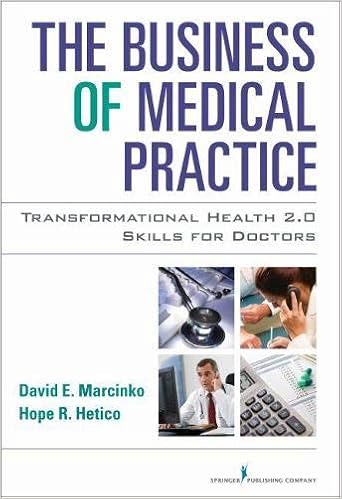
The Perfect Holiday Gift [The “Business of Medical Practice”]

Third Edition of Classic Text Now Available

[Transformational Health 2.0 Skills for Savvy Doctors]

By Ann Miller RN MHA [Executive-Director]

Product Details

For the first time anywhere, we offer our loyal ME-P readers and subscribers an exclusive first look at the new book: The “Business of Medical Practice” from the Institute of Medical Business Advisors Inc, in Atlanta, GA www.MedicalBusinessAdvisors.com

Synopsis

Now in its 3rd edition, the book explores a variety of issues and seeks to answer these questions:

  • Does Health 2.0 enhance or detract from traditional medical care delivery, and can private practice business models survive?
  • How does transparent business information and reimbursement data impact the modern competitive healthcare scene?
  • How are medical practices, clinics, and physicians evolving as a result of rapid health- and non-health-related technology change?
  • Does transparent quality information affect the private practice ecosystem?

A Tool for all Stakeholders

Answering these questions and more, this newly updated and revised edition is an essential tool for doctors, nurses, and healthcare administrators; management and business consultants; accountants; and medical, dental, business, and healthcare administration graduate, doctoral students and virtually all stakeholders of the healthcare industrial complex.

Management and Operational Strategies for Private Practice

Written in plain language using nontechnical jargon, the text presents a progressive discussion of management and operation strategies. It incorporates prose, news reports, and regulatory and academic perspectives with Health 2.0 examples, and blog and internet links, as well as charts, tables, diagrams, and Web site references, resulting in an all-encompassing resource. It integrates various medical practice business disciplines-from finance and economics to marketing to the strategic management sciences-to improve patient outcomes and achieve best practices in the healthcare administration field. With contributions by a world-class team of expert authors, the third edition covers brand-new information, including:

  • The impact of Web 2.0 technologies on the healthcare industry
  • Internal office controls for preventing fraud and abuse
  • Physician compensation with pay-for-performance trend analysis
  • Healthcare marketing, advertising, CRM, and public relations
  • eMRs, mobile IT systems, medical devices, and cloud computing
  • and much more!

Front Matter: Front Matter BoMP – 3

Assessment

Please send any question/and or comments directly to us at: MarcinkoAdvisors@msn.com

Conclusion

Your thoughts and comments on this ME-P are appreciated. Feel free to review our top-left column, and top-right sidebar materials, links, URLs and related websites, too. Then, subscribe to the ME-P. It is fast, free and secure.

Speaker: If you need a moderator or speaker for an upcoming event, Dr. David E. Marcinko; MBA – Publisher-in-Chief of the Medical Executive-Post – is available for seminar or speaking engagements. Contact: MarcinkoAdvisors@msn.com

OUR OTHER PRINT BOOKS AND RELATED INFORMATION SOURCES:

HOSPITALS: http://www.crcpress.com/product/isbn/9781466558731
CLINICS: http://www.crcpress.com/product/isbn/9781439879900
BLOG: www.MedicalExecutivePost.com
FINANCE: Financial Planning for Physicians and Advisors
INSURANCE: Risk Management and Insurance Strategies for Physicians and Advisors

Product DetailsProduct DetailsProduct Details

Our iMBA e-Book Sales and Service

The Institute of Medical Business Advisors is a leading national scope provider of healthcare economics, finance, investing, managerial accounting, policy, management and business administration education and medical practice management textbooks, reports, hand-books, dictionaries, journals, white-papers, fair-market valuations [FMV] and legal advisory opinions using multi-platform and traditional seminars and channels of knowledge distribution. iMBA helps the nation’s financial, healthcare and education professionals make decisive improvements in their direction and performance by empowering them through unbiased information, consultants and proprietary tools, books, templates and B-school styled case models.A virtuous “win-win” situation for all concerned.

Link: https://medicalexecutivepost.com/me-pr-a-new-feature/

The firm serves universities, medical, business, graduate and nursing schools; physicians, dentists, attorneys and legal societies – accountants, financial service providers, stock brokers, RIAs, wealth and hedge fund managers – emerging entities, hospitals, clinics, outpatient centers, CXOs and their BODs – the press, media and related academic entities.

Link: http://www.MarcinkoAssociates.com

***

AT YOUR SERVICE

***

Our iMBA e-Book Sales and Service

The Institute of Medical Business Advisors is a leading national scope provider of healthcare economics, finance, investing, managerial accounting, policy, management and business administration education and medical practice management textbooks, reports, hand-books, dictionaries, journals, white-papers, fair-market valuations [FMV] and legal advisory opinions using multi-platform and traditional seminars and channels of knowledge distribution. iMBA helps the nation’s financial, healthcare and education professionals make decisive improvements in their direction and performance by empowering them through unbiased information, consultants and proprietary tools, books, templates and B-school styled case models.A virtuous “win-win” situation for all concerned.

Link: https://medicalexecutivepost.com/me-pr-a-new-feature/

The firm serves universities, medical, business, graduate and nursing schools; physicians, dentists, attorneys and legal societies – accountants, financial service providers, stock brokers, RIAs, wealth and hedge fund managers – emerging entities, hospitals, clinics, outpatient centers, CXOs and their BODs – the press, media and related academic entities.

Link: http://www.MarcinkoAssociates.com

***

AT YOUR SERVICE

***

Hospital Capital Structure

Understanding the Cost of Capital

[By Calvin W. Wiese; MBA, CPA]

[By David Edward Marcinko MBA]

[Staff Writers]

It is critical to understand and to measure the total cost of capital. Lack of understanding and appreciation of the total cost of capital is widespread, particularly among not-for-profit hospital executives.

Capital Structure Defined

The capital structure includes long-term debt and equity; total capital is the sum of these two. Each of these components has cost associated with it. For the long-term debt portion, this cost is explicit: it is the interest rate plus associated costs of placement and servicing. For the equity portion, the cost is not explicit and is widely misunderstood.

Capital Structure of Hospitals

In many cases, hospital capital structures include significant amounts of equity that has accumulated over many years of favorable operations. Too many physician and healthcare executives wrongly attribute zero cost to the equity portion of their capital structure. Although it is correct that generally accepted accounting principles continue to assign a zero cost to equity, there is opportunity cost associated with equity that needs to be considered. This cost is the opportunity available to utilize that capital in alternative ways.

Cost of Capital

In general, the cost attributed to equity is the return expected by the equity markets on hospital equity. This can be observed by evaluating the equity prices of hospital companies whose equity is traded on public stock exchanges. Usually the equity prices will imply cost of equity in the range of 10% to 14%; at least prior to the recent Wall Street meltdown.

Cost of Equity Exceeds Long-Term Debt

Almost always, the cost of equity implied by hospital equity prices traded on public stock exchanges will substantially exceed the cost of long-term debt. Thus, while many hospital executives will view the cost of equity to be substantially less than the cost of debt (i.e., to be zero), in nearly all cases, the appropriate cost of equity will be substantially greater than the cost of debt.

Weighted Average Cost of Capital

Hospitals need to measure their weighted average cost of capital. WACC is the cost of long-term debt multiplied by the ratio of long-term debt to total capital plus the cost of equity multiplied by the ratio of equity to total capital (where total capital is the sum of long-term debt and equity).

Hospital

Assessment

WACC is then used as the basis for capital charges associated with all capital investments. Capital investments should be expected to generate positive returns after applying this capital charge based on the WACC.

Conclusion

Your thoughts and comments on this ME-P are appreciated. Feel free to review our top-left column, and top-right sidebar materials, links, URLs and related websites, too. Then, subscribe to the ME-P. It is fast, free and secure.

Link: http://feeds.feedburner.com/HealthcareFinancialsthePostForcxos

Speaker: If you need a moderator or speaker for an upcoming event, Dr. David E. Marcinko; MBA – Publisher-in-Chief of the Medical Executive-Post – is available for seminar or speaking engagements. Contact: MarcinkoAdvisors@msn.com

OUR OTHER PRINT BOOKS AND RELATED INFORMATION SOURCES:

DICTIONARIES: http://www.springerpub.com/Search/marcinko
PHYSICIANS: www.MedicalBusinessAdvisors.com
PRACTICES: www.BusinessofMedicalPractice.com
HOSPITALS: http://www.crcpress.com/product/isbn/9781466558731
CLINICS: http://www.crcpress.com/product/isbn/9781439879900
BLOG: www.MedicalExecutivePost.com
FINANCE: Financial Planning for Physicians and Advisors
INSURANCE: Risk Management and Insurance Strategies for Physicians and Advisors

Product DetailsProduct DetailsProduct Details     

Product Details


HEALTH INSURANCE: Impact of Insurance on Lower ExtremityAmputations

By Staff Reporters

***

***

A significant study recently published in the Annals of Vascular Surgery has uncovered a troubling correlation between loss of health insurance coverage and increased risk of amputation. Led by Dr. Tze Woei Tan, a vascular surgeon and associate professor, the research team from the University of Arizona and Keck School of Medicine of USC, which includes co-senior author Dr. David G. Armstrong, a podiatric surgeon and professor of surgery, brings attention to this important issue. Titled “The Impact of Health Insurance Loss on Amputation Rates in the United States,” the study highlights the consequences of losing insurance coverage. 

CITE: https://www.r2library.com/Resource/Title/0826102549

Researchers examined a large cohort of patients at risk of peripheral artery disease (PAD) and diabetic foot complications, noting that those without insurance were more likely to experience amputation. The study found that individuals who lost their insurance coverage were 2.5 times more likely to undergo a major amputation compared to those with continuous coverage. This striking difference emphasizes the importance of consistent access to healthcare and the potential consequences of gaps in insurance.

***

COMMENTS APPRECIATED

Thank You

***

ORDER: https://www.amazon.com/Infections-Foot-David-Edward-Marcinko/dp/0801670187/ref=sr_1_8?crid=33JOZEBQ5OXIQ&keywords=david+marcinko&qid=1681335246&sprefix=david+marcinko%2Caps%2C90&sr=8-8

***

***

HOW: The ME-P Helps Your Financial Advisory Business or Medical Practice Grow?

All about the Medical Executive-Post Business Model

imba inc

***

One of the questions we receive most often from readers of the Medical Executive-Post is how can we “afford” to give away so much content for free. Or stated another way, “how do we get paid for all of this?”

The simple answer is that we know many (or even most) of you will simply take the ideas that we share and implement them yourself. Do-It-YourSelfers can always simply purchase our texts, books and peer reviewed handbooks redacted in more than a thousand, medical, law, business and graduate schools, as well as the Library of Congress, Institute of Health and Library of Congress.

LINK: https://medicalexecutivepost.com/2021/10/22/why-are-certified-medical-planner-textbooks-so-darn-popular/

On the other hand, some of you will realize you need some additional help.

For example:

Maybe as a financial advisor you’re “stuck” in your financial planning business and recognize that some outside assistance is necessary to help you get to the next level of niche specificity thru our Certified Medical Planner™ chartered certification program designation. Helping physicians of all specialty types in a fiduciary focused manner is the proverbial Win-Win for all concerned.

LINK: http://www.CertifiedMedicalPlanner.org

CMP

CMP logo

OR, perhaps you are seeking a glossary of terms and definitions in heath economics, finance, accounting, insurance, managed care, health information technology and security; found in our Health Dictionary Series Wiki Project? Free and print versions are available.

LINK: http://www.HealthDictionarySeries.org

LINK: https://medicalexecutivepost.com/2011/09/17/order-our-three-newest-best-selling-dictionaries/

HDS

OR, as a doctor maybe your medical practice is growing so much you just hit a wall where you don’t have time to do it all for your patients. After all, with only “so much” time available every day and week, it’s vital to delegate or outsource anything that isn’t really core to your practice and management skill set.

LINK: http://www.MedicalBusinessAdvisors.com

OR, maybe you are even starting, buying or selling your medical practice and need our financial and valuation services. Part (1) – Part (2) – Part (3) Financial, estate, investing and retirement planning services are also available.

OR, you may just need a second informed opinion about a topic not listed; there are a myriad of issues to consider in the competitive ecosystem today.

LINK: https://medicalexecutivepost.com/schedule-a-consultation/

Regardless, we may have solutions to help!


So, in the meantime, I hope that the ME-P content continues to be helpful food for thought, and perhaps we’ll have an opportunity to cross paths soon at a future conferences or podcasts. Feel free to invite us to speak at your own seminar/podcast online V-log, as well.

INVITATION LINK: https://medicalexecutivepost.com/dr-david-marcinkos-bookings/

With warm regards.

Fraternally.
Ann Miller RN MHA CMP

[Managing Director]

email: MarcinkoAdvisors@msn.com

Phone: 770-448-0769

***

***

RISK MANAGEMENT & LIABILITY PROTECTION FOR PHYSICIANS

And … Their Insurance Agents and Financial Advisors

INVITE DR. MARCINKO: https://medicalexecutivepost.com/dr-david-marcinkos-

DEM avatar

By DR. DAVID EDWARD MARCINKO MBA CMP®

CMP logo

SPONSOR: http://www.CertifiedMedicalPlanner.org

***

https://images.routledge.com/common/jackets/amazon/978149872/9781498725989.jpg

***

BOOK REVIEW

It is not uncommon for practicing physicians to have more than a dozen separate insurance policies to protect their medical practice and personal assets. Yet, most doctors understand very little about their policies.BOOK REVIR

Risk Management, Liability Insurance, and Asset Protection Strategies for Doctors and Advisors: Best Practices from Leading Consultants and Certified Medical Planners™explains to physicians and insurance professionals the background, theory, and practicalities of medical risk management, asset protection methods, and insurance planning.

The book presents information in a manner that is convenient and highly useful for busy medical practitioners. It discusses the medical records revolution and addresses concerns regarding cloud computing, data security, and technological threats.

The book covers modern health law and policy, including fraud and abuse, workplace-violence, Medicare compliance, HIPAA regulations, AR protection strategies with internal controls, P4P and value based care, insurance and reputation management, and how the ARA legislation is impacting physician practices. It also includes case models and examples that provide you with a real-world understanding of how to recognize and reduce personal and medical practice risks.

With time at a premium for all, and so much information packed into one well-organized resource, this book is a must-read for every physician and financial advisor that serves the health care sector. The book will help physicians make better decisions about the risks they face and will help financial advisors improve the value they provide to their clients who are doctors.

MORE = ORDER HERE: https://www.routledge.com/Risk-Management-Liability-Insurance-and-Asset-Protection-Strategies-for/Marcinko-Hetico/p/book/9781498725989

THANK YOU

***

PODCAST: Hedge Fund Manager Michael Burry MD

In The Subprime of His Life – My Story

By Dr. David Edward Marcinko MBA, CMP™

[Editor-in-Chief]

I am a long time fan of financial industry journalist Michael Lewis [Liars’ Poker, Moneyball and others] who just released a new book. The Big Short is a chronicle of four players in the subprime mortgage market who had the foresight [and testosterone] to short the diciest mortgage deals: Steve Eisner of FrontPoint, Greg Lippmann at Deutsche Bank, the three partners at Cornwall Capital, and most indelibly, Wall Street outsider Michael Burry MD of Scion Capital.

They all walked away from the disaster with pockets full of money and reputations as geniuses.

About Mike

Now, I do not know the first three folks, but I do know a little something about my colleague Michael Burry MD; he is indeed a very smart guy. Mike is a nice guy too, who also has a natural writing style that I envy [just request and read his quarterly reports for a stylized sample]. He gave me encouragement and insight early in my career transformation – from doctor to “other”.

And, he confirmed my disdain for the traditional financial services [retail sales] industry, Wall Street and their registered representatives and ‘training’ system, and sad broker-dealer ethos [suitability versus fiduciary accountability] despite being a hedge fund manager himself.

I mentioned him in my book: “Insurance and Risk Management Strategies” [For Physicians and their Advisors].

http://www.amazon.com/Insurance-Management-Strategies-Physicians-Advisors/dp/0763733423/ref=sr_1_2?ie=UTF8&s=books&qid=1269254153&sr=1-2

He ultimately helped me eschew financial services organizations, “certifications”, “designations” and ”colleges”, and their related SEO rules, SEC regulations and policy wonks; and above all to go with my gut … and go it alone!

And so, I rejected my certified financial planner [marketing] designation status as useless for me, and launched the www.CertifiedMedicalPlanner.org on-line educational program for physician focused financial advisors and management consultants interested in the healthcare space … who wish to be fiduciaries.

And I thank Mike for the collegial good will. By the way, Mike is not a CPA, nor does he posses an MBA or related advanced degree or designation. He is not a middle-man FA. He is a physician. Unlike far too many other industry “financial advisors” he is not a lemming.

IOW: We are not salesman. We are out-of-the-box thinkers, innovators and contrarians by nature. www.MedicalBusinessAdvisors.com

From a Book Review

According to book reviewer Michael Osinski, writing in the March 22-29 issue of Businessweek.com, Lewis is at his best working with characters and Burry is rendered most vividly.

A loner from a young age, in part because he has a glass eye that made it difficult to look people in the face, Burry excelled at topics that required intense and isolated concentration. Originally, investing was just a hobby while he pursued a career in medicine. As a resident neurosurgeon at Stanford Hospital in the late 1990s, Burry often stayed up half the night typing his ideas onto a message board. Unbeknownst to him, professional money managers began to read and profit from his freely dispensed insight, and a hedge fund eventually offered him $1 million for a quarter of his investment firm, which consisted of a few thousand dollars from his parents and siblings. Another fund later sent him $10 million”.

“Burry’s obsession with finding undervalued companies eventually led him to realize that his own home in San Jose, Calif., was grossly overpriced, along with houses all over the country. He wrote to a friend: “A large portion of the current [housing] demand at current prices would disappear if only people became convinced that prices weren’t rising. The collateral damage is likely to be orders of magnitude worse than anyone now considers.” This was in 2003.

“Through exhaustive research, Burry understood that subprime mortgages would be the fuse and that the bonds based on these mortgages would start to blow up within as little as two years, when the original “teaser” rates expired. But Burry did something that separated him from all the other housing bears—he found an efficient way to short the market by persuading Goldman Sachs (GS) to sell him a CDS against subprime deals he saw as doomed. A unique feature of these swaps was that he did not have to own the asset to insure it, and over time, the trade in these contracts overwhelmed the actual market in the underlying bonds”.

“By June 2005, Goldman was writing Burry CDS contracts in $100 million lots, “insane” amounts, according to Burry. In November, Lippmann contacted Burry and tried to buy back billions of dollars of swaps that his bank had sold. Lippmann had noticed a growing wave of subprime defaults showing up in monthly remittance reports and wanted to protect Deutsche Bank from potentially massive losses. All it would take to cause major pain, Lippmann and his analysts deduced, was a halt in price appreciation for homes. An actual fall in prices would bring a catastrophe. By that time, Burry was sure he held winning tickets; he politely declined Lippmann’s offer”

And the rest, as they say, is history.

Link: http://www.businessweek.com/magazine/content/10_12/b4171094664065.htm

My Story … Being a Bit like Mike

I first contacted Mike, by phone and email, more than a decade ago. His hedge fund, Scion Capital, had no employees at the time and he outsourced most of the front and back office activities to concentrate on position selection and management. Early investors were relatives and a few physicians and professors from his medical residency days. Asset gathering was a slosh, indeed. And, in a phone conversation, I remember him confirming my impressions that doctors were not particularly astute investors. For him, they generally had sparse funds to invest as SEC “accredited investors” and were better suited for emerging tax advantaged mutual funds. ETFs were not significantly on the radar screen, back then, and index funds were considered unglamorous. No, his target hedge-fund audience was Silicon Valley.

And, much like his value-hero Warren Buffett [also a Ben Graham and David Dodd devotee], his start while from the doctor space, did not derive its success because of them.

Moreover, like me, he lionized the terms “value investing”, “margin of safety” and “intrinsic value”.

Co-incidentally, as a champion of the visually impaired, I was referred to him by author, attorney and blogger Jay Adkisson www.jayadkisson.com Jay is an avid private pilot having earned his private pilot’s license after losing an eye to cancer.

Join Our Mailing List

Mike again re-entered my cognitive space while doing research for the first edition of our successful print book: “Financial Planning Handbook for Physicians and Advisors” and while searching for physicians who left medicine for alternate careers!

In fact, he wrote the chapter on hedge funds in our print journal and thru the third book edition before becoming too successful for such mundane stuff. We are now in our fourth edition, with a fifth in progress once the Obama administration stuff [healthcare and financial services industry “reform” and new tax laws] has been resolved

http://www.amazon.com/Financial-Planning-Handbook-Physicians-Advisors/dp/0763745790/ref=sr_1_1?ie=UTF8&s=books&qid=1269211056&sr=1-1

Assessment

News: Dr. Burry appeared on 60 Minutes Sunday March 14th, 2010. His activities with Scion Capital are portrayed in Michael Lewis’s newest book, The Big Short.  An excerpt is available in the April 2010 issue of Vanity Fair magazine, and at VanityFair.com 

Video of Dr. Burry: http://www.cbsnews.com/video/watch/?id=6298040n&tag=contentBody;housing

Video of Dr. Burry: http://www.cbsnews.com/video/watch/?id=6298038n&tag=contentBody;housing

PS: Michael Osinski retired from Wall Street and now runs Widow’s Hole Oyster Co. in Greenport, NY http://www.widowsholeoysters.com

And, our www.MedicalBusinessAdvisors.com related books can be reviewed here: http://www.amazon.com/s/ref=nb_sb_noss?url=search-alias%3Dstripbooks&field-keywords=david+marcinko

Assessment

Visit Scion Capital LLC and tell us what you think http://www.scioncapital.com.

And to Mike himself, I say “Mazel Tov” and congratulations? I am sure you will be a good and faithful steward. The greatest legacy one can have is in how they treated the “little people.” You are a champ. Call me – let’s do lunch. And, I am still writing: www.BusinessofMedicalPractice.com for the conjoined space we both LOVE.

Conclusion

Your thoughts and comments on this ME-P are appreciated. Feel free to review our top-left column, and top-right sidebar materials, links, URLs and related websites, too. Then, subscribe to the ME-P. It is fast, free and secure.

Link: http://feeds.feedburner.com/HealthcareFinancialsthePostForcxos

Speaker: If you need a moderator or speaker for an upcoming event, Dr. David E. Marcinko; MBA – Publisher-in-Chief of the Medical Executive-Post – is available for seminar or speaking engagements. Contact: MarcinkoAdvisors@msn.com

OUR OTHER PRINT BOOKS AND RELATED INFORMATION SOURCES:

Product DetailsProduct DetailsProduct Details

Product Details  Product Details

   Product Details 

[PHYSICIAN FOCUSED FINANCIAL PLANNING AND RISK MANAGEMENT COMPANION TEXTBOOK SET]

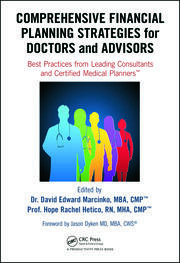
  Risk Management, Liability Insurance, and Asset Protection Strategies for Doctors and Advisors: Best Practices from Leading Consultants and Certified Medical Planners™  Comprehensive Financial Planning Strategies for Doctors and Advisors: Best Practices from Leading Consultants and Certified Medical Planners™

[Dr. Cappiello PhD MBA] *** [Foreword Dr. Krieger MD MBA]

***

Two Books VITAL to ALL Doctor’s Financial Succes!

SPONSORED

http://www.CertifiedMedicalPlanner.org

PHYSICIAN FOCUSED FINANCIAL PLANNING AND RISK MANAGEMENT COMPANION TEXTBOOK SET

***

 Risk Management, Liability Insurance, and Asset Protection Strategies for Doctors and Advisors: Best Practices from Leading Consultants and Certified Medical Planners™           Comprehensive Financial Planning Strategies for Doctors and Advisors: Best Practices from Leading Consultants and Certified Medical Planners™

[Dr. Cappiello PhD MBA] *** [Foreword Dr. Krieger MD MBA]

Front Matter with Foreword by Jason Dyken MD MBA

Enter the CMPs

***

PODCAST: Never Pay Your First Medical Bill?

Marshall Allen Has a New Healthcare Book Out Called Never Pay the First Bill.”

***

***

Your thoughts are appreciated.

THANK YOU

***

BUSINESS MEDICINE: https://www.amazon.com/Business-Medical-Practice-Transformational-Doctors/dp/0826105750/ref=sr_1_9?ie=UTF8&qid=1448163039&sr=8-9&keywords=david+marcinko

***

Understanding the “Language” of Healthcare Finance, IT, Economics, Investing and Insurance

By Ann Miller RN MHA CMP

Courtesy: http://www.CertifiedMedicalPlanner.org

The ME-P is Doing Its’ Part with Comprehensive Dictionaries and Glossaries

Product DetailsProduct DetailsProduct Details

[Click on each icon for a larger view]

CITE: https://www.r2library.com/Resource/Title/082610254

***

How to THRIVE in Private Independent Medical Practice, Today?

ORDER TEXTBOOK: https://www.amazon.com/Business-Medical-Practice-Transformational-Doctors/dp/0826105750/ref=sr_1_9?ie=UTF8&qid=1448163039&sr=8-9&keywords=david+marcinko

INVITE DR. MARCINKO: https://medicalexecutivepost.com/dr-david-marcinkos-

THANK YOU

***

Challenging the 10,000 Hours to Mastery Rule?

Outliers: The Story of Success

[By staff reporters]

This book was the third non-fiction book written by Malcolm Gladwell and published by Little, Brown and Company on November 18, 2008.

In Outliers, Gladwell examined the factors that contribute to high levels of success.

***

***

To support his thesis, he examined why the majority of Canadian ice hockey players are born in the first few months of the calendar year, how Microsoft co-founder Bill Gates achieved his extreme wealth, how the Beatles became one of the most successful musical acts in human history, how Joseph Flom built Skadden, Arps, Slate, Meagher & Flom into one of the most successful law firms in the world, how cultural differences play a large part in perceived intelligence and rational decision making, and how two people with exceptional intelligence, Christopher Langan and J. Robert Oppenheimer, end up with such vastly different fortunes.

Throughout the publication, Gladwell repeatedly mentions the “10,000-Hour Rule“, claiming that it is the key to achieving world-class expertise in any skill.

But, is he correct?

***

MORE: https://www.businessinsider.com/expert-rule-10000-hours-not-true-2017-8

Assessment

Your thoughts and comments on this ME-P are appreciated. Feel free to review our top-left column, and top-right sidebar materials, links, URLs and related websites, too. Then, subscribe to the ME-P. It is fast, free and secure.

Speaker: If you need a moderator or speaker for an upcoming event, Dr. David E. Marcinko; MBA – Publisher-in-Chief of the Medical Executive-Post – is available for seminar or speaking engagements.

Book Marcinko: https://medicalexecutivepost.com/dr-david-marcinkos-bookings/

Subscribe: MEDICAL EXECUTIVE POST for curated news, essays, opinions and analysis from the public health, economics, finance, marketing, IT, business and policy management ecosystem.

HOSPITALS:

“Financial Management Strategies for Hospitals” https://tinyurl.com/yagu567d

“Operational Strategies for Clinics and Hospitals” https://tinyurl.com/y9avbrq5

***

Product Details

What is a DIVIDEND ARISTOCRAT Stock?

By Dr. David Edward Marcinko MBA CMP®

SPONSOR: http://www.CertifiedMedicalPlanner.org

CMP logo

A Dividend Aristocrat is a stock that has exhibited a remarkable level of consistency, measured by the fact that only those S&P 500 companies that have increased their annual dividend for 25 straight years — or more — can be called one. The name was coined by cable TV personality and investor Jim Cramer

These companies have raised their dividends through good times and bad, including recessions, crashes, and pandemics. Being able to continue doing so is a tribute to their stability and strength. Now, the past 18 months have been a particularly difficult economic environment to operate in, and some companies were forced to slash or hold the line on their dividends as a result.

CITE: https://www.r2library.com/Resource/Title/0826102549

But others are just fine, like investment manager T. Rowe Price (NASDAQ: TROW), which increased its dividend for the 35th straight year in 2022. It is located in Baltimore Maryland not far from where I grew up. In fact, I used to play stick ball, as a kid, in the parking lot.

UPDATE: https://www.msn.com/en-us/money/markets/down-between-15-and-53-3-top-dividend-aristocrats-that-are-too-cheap-to-ignore/ar-AA10oFN9?cvid=962479fd28494731a0cd106028a00940

YOUR COMMENTS ARE APPRECIATED.

CITE: https://www.r2library.com/Resource/Title/0826102549

FOREWORD: https://medicalexecutivepost.com/wp-content/uploads/2007/10/dr-getzen.pdf

FINANCE: https://www.amazon.com/Comprehensive-Financial-Planning-Strategies-Advisors/dp/1482240289/ref=sr_1_1?ie=UTF8&qid=1418580820&sr=8-1&keywords=david+marcinko

****

DICTIONARY: Health Economics and Finance

BY DR. DAVID E. MARCINKO MBA

Designated a Doody’s Core Title!

“”Medical economics and finance is an integral component of the health care industrial complex. Its language is a diverse and broad-based concept covering many other industries: accounting, insurance, mathematics and statistics, public health, provider recruitment and retention, Medicare, health policy, forecasting, aging and long-term care, are all commingled arenas.

The Dictionary of Health Economics and Finance will be an essential tool for doctors, nurses and clinicians, benefits managers, executives and health care administrators, as well as graduate students and patients? With more than 5,000 definitions, 3,000 abbreviations and acronyms, and a 2,000 item oeuvre of resources, readings, and nomenclature derivatives? it covers the financial and economics language of every health care industry sector.””
– From the Preface by David Edward Marcinko

RELATED TEXTS: https://medicalexecutivepost.com/2021/04/29/why-are-certified-medical-planner-textbooks-so-darn-popular/

INVITE DR. MARCINKO: https://medicalexecutivepost.com/dr-david-marcinkos-

THANK YOU!

Product Details

ORDER HERE: https://www.r2library.com/Resource/Title/0826102549

***

“Best” Physician Focused Financial Planning and Medical Practice Management Books for 2022

[Doctor-Advisor]

CAREER DEVELOPMENT

Buy from Amazon

Learn How to Profit and Thrive in the PP-ACA Era

BOOK FOREWORD / TESTIMONIAL

Best Sellers

Product Details

Product DetailsProduct Details

Product DetailsProduct DetailsProduct Details

###

Comprehensive Financial Planning Strategies for Doctors and Advisors: Best Practices from Leading Consultants and Certified Medical Planners(TM)

Comprehensive Financial Planning Strategies for Doctors and Advisors: Best Practices from Leading Consultants

***

site

***

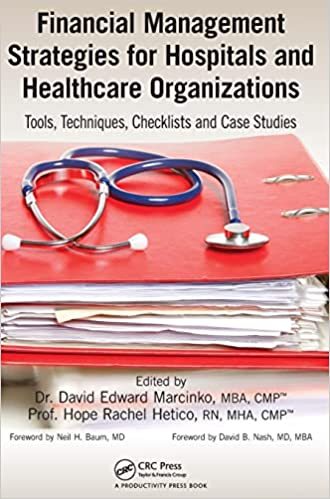
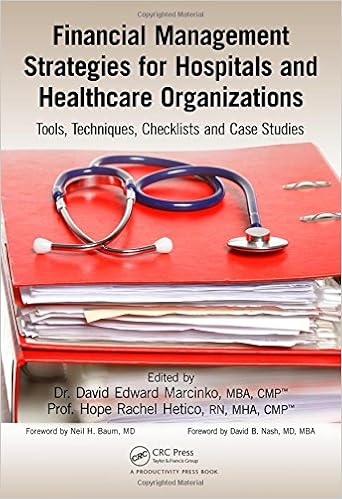
FINANCIAL MANAGEMENT STRATEGIES: For Hospitals and Healthcare Organizations

Managerial Accounting

TOOLS, TECHNIQUES, CHECKLISTS AND CASE STUDIES

***

TEXT: https://www.amazon.com/Financial-Management-Strategies-Healthcare-Organizations/dp/1466558733/ref=sr_1_3?ie=UTF8&qid=1380743521&sr=8-3&keywords=david+marcinko

Reviews

Navigating a course where sound organizational management is intertwined with financial acumen requires a strategy designed by subject-matter experts. Fortunately, Financial Management Strategies for Hospital and Healthcare Organizations: Tools, Techniques, Checklists and Case Studies provides that blueprint.
David B. Nash, MD, MBA, Jefferson Medical College, Thomas Jefferson University

It is fitting that Dr. David Edward Marcinko, MBA, CMP™ and his fellow experts have laid out a plan of action in Financial Management Strategies for Hospital and Healthcare Organizations that physicians, nurse-executives, administrators, institutional CEOs, CFOs, MBAs, lawyers, and healthcare accountants can follow to help move healthcare financial fitness forward in these uncharted waters.
Neil H. Baum, MD, Tulane Medical School

ORDER: https://www.amazon.com/Financial-Management-Strategies-Healthcare-Organizations/dp/1466558733/ref=sr_1_3?ie=UTF8&qid=1380743521&sr=8-3&keywords=david+marcinko

***

PODCAST: Peter Thiel on “Zero to One”

Join Our Mailing List

Product Details

Conclusion

Your thoughts and comments on this ME-P are appreciated. Feel free to review our top-left column, and top-right sidebar materials, links, URLs and related websites, too. Then, subscribe to the ME-P. It is fast, free and secure.

Speaker: If you need a moderator or speaker for an upcoming event, Dr. David E. Marcinko; MBA – Publisher-in-Chief of the Medical Executive-Post – is available for seminar or speaking engagements. Contact: MarcinkoAdvisors@msn.com

OUR OTHER PRINT BOOKS AND RELATED INFORMATION SOURCES:

David Cummings on Startups

After reading Peter Thiel’s book Zero to OneI was interested in hearing him talk and his presentation at UT Austin doesn’t disappoint.

From YouTube: Thiel is hailed as one of the most successful investors in the world. After co-founding PayPal, he went on to co-found Palantir Technologies and invest in Facebook, where he still serves on the board. He’s played major roles in dozens of successful companies and continually strives toward the next big thing. In “Zero to One,” he emphasizes the need for entrepreneurs to grasp for the ideas that nobody else has in order to truly innovate. This new way of thinking about innovation encourages burgeoning business leaders to carve their own lane in a heavily saturated race toward success.

“Zero to One,” based on a course Thiel taught in 2012 at Stanford University, urges readers to see the broad picture and look past traditional boundaries between…

View original post 12 more words

About “Non-Profits” for Entrepreneurs

Join Our Mailing List

[PRIVATE MEDICAL PRACTICE BUSINESS MANAGEMENT TEXTBOOK – 3rd. Edition]

Product Details

[Foreword Dr. Hashem MD PhD] *** [Foreword Dr. Silva MD MBA]

David Cummings on Startups

Back in college I’d routinely jump in my old Jeep Wrangler and make the 10 mile drive down the Durham Freeway to RTP for events and programs at the Council for Entrepreneurial Development (CED). CED bills itself as “the network that helps Triangle entrepreneurs build successful companies” and has 700+ member companies with 4,000 members. In Atlanta, we have a number of strong entrepreneurial non-profits:

Only, we don’t have a central entrepreneur organization that encompasses both tech and non-tech startups. As expected, there are a tremendous number of non-tech entrepreneurs in town. EO has a strong Atlanta chapter with over 100 members, but that’s limited to companies with at least $1 million in revenue. Where do non-tech entrepreneurs go?

Last week I had the chance to learn…

View original post 101 more words

PODCAST: How Healthcare Policy Sausage is Made

‘America’s Bitter Pill’ by Steven Brill … Contemporary History of Healthcare in America

BY ERIC BRICKER MD

***

***
YOUR COMMENTS ARE APPRECIATED.

***

MANAGED CARE: https://www.amazon.com/Dictionary-Health-Insurance-Managed-Care/dp/0826149944/ref=sr_1_4?ie=UTF8&s=books&qid=1275315485&sr=1-4

Thank You

***

HOSPITALS: https://www.amazon.com/Hospitals-Healthcare-Organizations-Management-Operational/dp/1439879907/ref=sr_1_4?s=books&ie=UTF8&qid=1334193619&sr=1-4

***

PODCASTS: The “Long Fix” for America’s Healthcare Crisis

By Vivian Lee MD PhD MBA

Politics and Prose

***

***

YOUR COMMENTS AND THOUGHTS ARE APPRECIATED.

Thank You

***

ERIC BRICKER MD PODCAST: https://www.youtube.com/watch?v=fbXM44YSBfs

***

***

COMMENTS ARE APPRECIATED.

Thank You

***

Product Details

ORDER: https://www.springerpub.com/the-business-of-medical-practice-9780826105752.html

***

DICTIONARY: Health Insurance and Managed Care

Designated a Doody’s CORE TITLE

To keep up with the ever-changing field of health care, we must learn new and re-learn old terminology in order to correctly apply it to practice. By bringing together the most up-to-date abbreviations, acronyms, definitions, and terms in the health care industry, the Dictionary offers a wealth of essential information that will help you understand the ever-changing policies and practices in health insurance and managed care today. For Further Information.

Review

The Dictionary of Health Insurance and Managed Care lifts the fog of confusion surrounding the most contentious topic in the health care industrial complex today. My suggestion therefore is to ‘read it, refer to it, recommend it, and reap’.”
Michael J. Stahl,PhD, Physician Executive MBA Program, William B. Stokely Distinguished Professor of Business, The University of Tennessee, College of Business Administration

DHIMC: https://www.amazon.com/Dictionary-Health-Insurance-Managed-Care/dp/0826149944/ref=sr_1_4?ie=UTF8&s=books&qid=1275315485&sr=1-4

INVITE DR. MARCINKO: https://medicalexecutivepost.com/dr-david-marcinkos-bookings/

Thank You

***

YOUR THOUGHTS are appreciated.

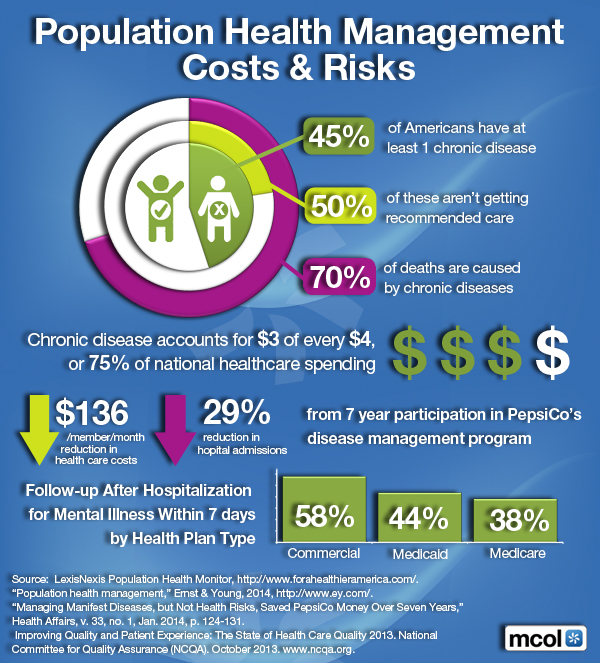
Enter “Population Health” Management

Join Our Mailing List

Understanding the Costs and Risks

Dr. DEM

[By Dr. David Edward Marcinko MBA]

Gratefully, our book, Financial Management Strategies of Hospitals and Healthcare Organizations [Tools, Techniques, Case Studies and Checklists] has become an academic best seller.

It contains a chapter on Wellness and Population Health 2.0; included here for your review [By Jennifer Tomasik, Carey Huntington, and Fabian Poliak].                 .

Population Health

I am especially proud of this work.  This managerial book mimics the popular style of colleague Atul Gawande MD in his acclaimed work The Checklist Manifesto.

Why? All hospitals are still subject to the imperative: No Margin – No Mission.

***

Pop Health

 ***

Assessment

In an example of population health management and policy leadership, another colleague, David B. Nash MD MBA of the Wharton School, and Endowed Dean of Jefferson University Medical School [father of population health], even wrote the “Foreword”.

Click on this link to read it entirely.

Link: Foreword.Nash

More:

Conclusion

Your thoughts and comments on this ME-P are appreciated. Feel free to review our top-left column, and top-right sidebar materials, links, URLs and related websites, too. Then, subscribe to the ME-P. It is fast, free and secure.

Speaker: If you need a moderator or speaker for an upcoming event, Dr. David E. Marcinko; MBA – Publisher-in-Chief of the Medical Executive-Post – is available for seminar or speaking engagements. Contact: MarcinkoAdvisors@msn.com

OUR OTHER PRINT BOOKS AND RELATED INFORMATION SOURCES:

Product DetailsProduct Details

***

Invite Dr. Marcinko

***

HEALTHCARE POLICY: Blog and Internet Sources of Gravitas

BY DR. DAVID E. MARCINKO MBA CMP®

CMP logo

SPONSOR: http://www.CertifiedMedicalPlanner.org

REFERENCES

https://mises.org/library/mayo-clinic-and-free-market

http://www.kevinmd.com/blog/2017/08/problem-free-market-health-care.html

http://www.healthsharetv.com/content/dr-zeke-emanuel-history-healthcare-reform-us

https://www.pointnurse.com/blog/do-you-have-a-healthcare-blockchain-strategy/

Not Really Insurance: The Pre-Existing Condition Debate

Learn More about Concierge Medicine

http://www.kevinmd.com/blog/2017/04/health-care-right-privilege-cant-answer.html

http://www.healthissocial.com/

http://www.msn.com/en-us/money/markets/brave-new-world-of-bitcoins-what-they-are-and-how-to-buy-them/ar-AAoWUza?li=BBnbfcN

https://www.pointnurse.com/blog/do-you-have-a-healthcare-blockchain-strategy/

http://www.kevinmd.com/blog/2017/06/golden-era-medicine-never-coming-back.html

http://mdwhistleblower.blogspot.com/2016/02/concierge-medicine-is-it-ethical-or.html

http://www.msn.com/en-us/money/healthcare/americas-health-care-crisis-is-a-gold-mine-for-crowdfunding/ar-BBCxjbU?li=BBnbfcN

http://www.msn.com/en-us/money/companies/the-company-behind-many-surprise-emergency-room-bills/ar-AAoKYCK?li=BBnbfcN

https://studymatescom.wordpress.com/

Is Healthcare a Right? A Privilege? Something Entirely Different?

http://www.kevinmd.com/blog/2017/07/moral-assassination-physicians-must-stop.html

http://www.kevinmd.com/blog/2017/01/emphasize-public-health-medical-education.html

Hobson’s Wrong Answer

Is Health Privacy a Human Right?

http://www.kevinmd.com/blog/2016/12/must-temper-unregulated-free-market-philosophy-health-care.html

http://www.kevinmd.com/blog/2017/06/slow-death-private-practices.html

A Primer For Conservatives: Health Insurance is not Really Insurance

http://www.kevinmd.com/blog/2017/06/doctors-pr-problem.html

http://www.kevinmd.com/blog/2017/06/doctors-cops-can-fight-mistrust-way.html

http://www.msn.com/en-us/health/healthtrending/did-a-1980-letter-help-spark-the-us-opioid-crisis/ar-BBBKkM4?li=BBnb7Kz

http://alertandoriented.com/

http://www.sheknows.com/health-and-wellness/articles/1030383/crowdsourcing-health-care

DIY Textbooks: https://medicalexecutivepost.com/2021/04/29/why-are-certified-medical-planner-textbooks-so-darn-popular/

INVITE DR. MARCINKO: https://medicalexecutivepost.com/dr-david-marcinkos-

CONTACT: Ann Miller RN MH

[Executive Director]

MarcinkoAdvisors@msn.com

***

A Glimpse into Lean Medical Management Tools and Techniques

Join Our Mailing List

A Very Brief Review

By Dr. Mark Matthews with Dr. David Marcinko MBA

As most medical and healthcare executives and consultants are aware, there are a few tools and techniques that are unique to the world of Lean process improvement and management.

These  include: Kaizen Events, The 5-S Technique, Standard Work, Visual Controls and Human Factors Engineering.

We will review the first two techniques in this ME-P. Of course, the last three are reviewed in much greater detail in our new book complete with checklists, figures, tables, drawings, graphs and other illustrations.

Kaizen Events

Kaizen is one of the most powerful tools in the Lean methodology. These events involve intense work sessions aimed at making concrete decisions in a short time period without the need for much data collection. Kaizen events are fairly narrow in scope, ideally concentrating on making one or two decisions at the most.

For example, there may be competing improvement ideas that require more exploration. Using a Kaizen event can provide the necessary structure to make the decision needed to move forward with implementation. The steps in a typical Kaizen Event often include:

  • Determine and define the objectives
  • Determine the current state of the process
  • Determine the requirements of the process
  • Create a plan for implementation
  • Implement the improvements
  • Check the effectiveness of the improvements
  • Document and standardize the improved process
  • Continue the cycle

The 5-S Technique

This technique was developed to allow employees to visually control their work area around visual management techniques. The principles involved in visual management include:

  • Improving workspace efficiency and productivity
  • Helping people share workstations by providing standard layouts
  • Reducing the time required to look for needed supplies or tools
  • Improving the work environment

Each “S” in 5S stands for a step in the process:

  • Sort – classify every item in the designated area as either needed or not needed
  • Set (Straighten) – put “everything in its place”
  • Shine (Sweep) – clean all work environments for order and organization
  • Standardize  – document what goes where, who will clean and who will inspect and on what schedule
  • Sustain-design a system for monitoring process, providing feedback, and rewarding good outcomes

Assessment

Prior to conducting a 5S event, a significant amount of planning is vital. It is important to scope the target area as something that is manageable, draw a physical map of the area under consideration [hospital, ED, OR, clinic, office, etc], and assemble a list of current items in that area. This is usually accomplished by taking photographs (both before and after) of the area.

Conclusion

Your thoughts and comments on this ME-P are appreciated. Feel free to review our top-left column, and top-right sidebar materials, links, URLs and related websites, too. Then, subscribe to the ME-P. It is fast, free and secure.

Link: http://feeds.feedburner.com/HealthcareFinancialsthePostForcxos

Speaker: If you need a moderator or speaker for an upcoming event, Dr. David E. Marcinko; MBA – Publisher-in-Chief of the Medical Executive-Post – is available for seminar or speaking engagements. Contact: MarcinkoAdvisors@msn.com

Our Other Print Books and Related Information Sources:

Health Dictionary Series: http://www.springerpub.com/Search/marcinko

Practice Management: http://www.springerpub.com/product/9780826105752

Physician Financial Planning: http://www.jbpub.com/catalog/0763745790

Medical Risk Management: http://www.jbpub.com/catalog/9780763733421

Hospitals: http://www.crcpress.com/product/isbn/9781439879900

Physician Advisors: www.CertifiedMedicalPlanner.org

Buy from Amazon

Learn How to Profit and Thrive in the PP-ACA Era

BOOK FOREWORD / TESTIMONIAL

What is Financial Portfolio “DI-WORSIFICATION”

Versus Di-Versification

BUSINESS MANAGEMENT: The term “diworsification” was coined by legendary investor Peter Lynch in his book, One up on Wall Street, to describe the over-expansion of a company into new growth projects and businesses they do not fully understand and which do not align with the company’s core competencies.

See the source image

PORTFOLIO MANAGEMENT: The term diworsification has since grown to also refer to over-diversifying an investment portfolio in such a way that it reduces the overall risk-return characteristics.

ORDER CITATION: https://www.r2library.com/Resource/Title/0826102549

INVESTOPEDIA: https://www.investopedia.com/terms/d/diworsification.asp

RELATED: https://medicalexecutivepost.com/2021/05/29/modern-portfolio-theory-and-asset-correlation-not-allocation/

MORE: https://medicalexecutivepost.com/2014/11/12/the-negative-short-term-implications-of-diversification/

YOUR COMMENTS ARE APPRECIATED.

Thank You

***

DICTIONARY: Health Economics and Finance

By Dr. David Edward Marcinko MBA CMP

CMP logo

COURTESY: http://www.CertifiedMedicalPlanner.org

***

FOREWORD

***

***
ORDER: https://www.r2library.com/Resource/Title/0826102549

***

Transformational Business Skills for Doctor Entrepreneurs

THE BUSINESS OF MEDICAL PRACTICE [Health 2.0]

Textbook Review

***

SECOND OPINIONS: https://medicalexecutivepost.com/schedule-a-consultation/

INVITE DR. MARCINKO: https://medicalexecutivepost.com/dr-david-marcinkos-bookings/

SPONSOR: http://www.CertifiedMedicalPlanner.org

***

RECAST: An Interview with Fiduciary Bennett Aikin AIF®

On Financial Fiduciary Accountability

[By Dr. David E. Marcinko MBA CMP™]

[By Ann Miller; RN, MHA]

Currently, there is a growing dilemma in the financial sales and services industry. It goes something like this:

  • What is a financial fiduciary?
  • Who is a financial fiduciary?
  • How can I tell if my financial advisor is a fiduciary?

Now, in as much as this controversy affects laymen and physician-investors alike, we went right to the source for up-to-date information regarding this often contentious topic, for an email interview and Q-A session, with Ben Aikin.ben-aikin

About Bennett Aikin AIF® and fi360.com

Bennett [Ben] Aikin is the Communications Coordinator for fi360.com. He oversees all communications for fi360. His responsibilities include messaging, brand management, copyrights and trademarks, and publications. Mr. Aikin received his BA in English from Virginia Tech in 2003 and is currently an MS candidate in Journalism from Ohio University.

Q. Medical Executive Post 

You have been very helpful and gracious to us. So, let’s get right to it, Ben. In the view of many; attorneys, doctors, CPAs and the clergy are fiduciaries; most all others who retain this title seem poseurs; sans documentation otherwise.

A. Mr. Aikin

You are correct. Attorneys, doctors and clergy are the prototype fiduciaries. They have a clear duty to put the best interests of their clients, patients, congregation, etc., above their own. [The duty of a CPA isn’t as clear to me, although I believe you are correct]. Furthermore, this is one of the first topics we address in our AIF training programs, and what we call the difference between a profession and an industry.  The three professions you name have three common characteristics that elevate them from an industry to a profession:

  1. Recognized body of knowledge
  2. Society depends upon practitioners to provide trustworthy advice
  3. Code of conduct that places the clients’ best interests first

Q. Medical Executive Post 

It seems that Certified Financial Planner®, Chartered Financial Analysts, Registered Investment Advisors and their representatives, Registered Representative [stock-brokers] and AIF® holders, etc, are not really financial fiduciaries, either by legal statute or organizational charter. Are we correct, or not? Of course, we are not talking ethics or morality here. That’s for the theologians to discuss.

A. Mr. Aikin

One of the reasons for the “alphabet soup”, as you put it in one of your white papers [books, dictionaries and posts] on financial designations, is that while there is a large body of knowledge, there is no one recognized body of knowledge that one must acquire to enter the financial services industry.  The different designations serve to provide a distinguisher for how much and what parts of that body of knowledge you do possess.  However, being a fiduciary is exclusively a matter of function. 

In other words, regardless of what designations are held, there are five things that will make one a fiduciary in a given relationship:

  1. You are “named” in plan or trust documents; the appointment can be by “name” or by “title,” such as CFO or Head of Human Resources
  2. You are serving as a trustee; often times this applies to directed trustees as well
  3. Your function or role equates to a professional providing comprehensive and continuous investment advice
  4. You have discretion to buy or sell investable assets
  5. You are a corporate officer or director who has authority to appoint other fiduciaries

So, if you are a fiduciary according to one of these definitions, you can be held accountable for a breach in fiduciary duty, regardless of any expertise you do, or do not have. This underscores the critical nature of understanding the fiduciary standard and delegating certain duties to qualified “professionals” who can fulfill the parts of the process that a non-qualified fiduciary cannot.

Q. Medical Executive Post 

How about some of the specific designations mentioned on our site, and elsewhere. I believe that you may be familiar with the well-known financial planner, Ed Morrow, who often opines that there are more than 98 of these “designations”? In fact, he is the founder of the Registered Financial Consultants [RFC] designation. And, he wrote a Foreword for one of our e-books; back-in-the-day. His son, an attorney, also wrote as a tax expert for us, as well. So, what gives?

A. Mr. Aikin

As for the specific designations you list above, and elsewhere, they each signify something different that may, or may not, lend itself to being a fiduciary: For example:

• CFP®: The act of financial planning does very much imply fiduciary responsibility.  And, the recently updated CFP® rules of conduct does now include a fiduciary mandate:

• 1.4 A certificant shall at all times place the interest of the client ahead of his or her own. When the certificant provides financial planning or material elements of the financial planning process, the certificant owes to the client the duty of care of a fiduciary as defined by CFP Board. [from http://www.cfp.net/Downloads/2008Standards.pdf]

•  CFA: Very dependent on what work the individual is doing.  Their code of ethics does have a provision to place the interests of clients above their own and their Standards of Practice handbook makes clear that when they are working in a fiduciary capacity that they understand and abide by the legally mandated fiduciary standard.

• FA [Financial Advisor]: This is a generic term that you may find being used by a non-fiduciary, such as a broker, or a fiduciary, such as an RIA.

• RIA: Are fiduciaries.  Registered Investment Advisors are registered with the SEC and have obligations under the Investment Advisers Act of 1940 to provide services that meet a fiduciary standard of care.

• RR: Registered Reps, or stock-brokers, are not fiduciaries if they are doing what they are supposed to be doing.  If they give investment advice that crosses the line into “comprehensive and continuous investment advice” (see above), their function would make them a fiduciary and they would be subject to meeting a fiduciary standard in that advice (even though they may not be properly registered to give advice as an RIA).

• AIF designees: Have received training on a process that meets, and in some places exceeds, the fiduciary standard of care.  We do not require an AIF® to always function as a fiduciary. For example, we allow registered reps to gain and use the AIF® designation. In many cases, AIF designees are acting as fiduciaries, and the designation is an indicator that they have the full understanding of what that really means in terms of the level of service they provide.  We do expect our designees to clearly disclose whether they accept fiduciary responsibility for their services or not and advocate such disclosure for all financial service representatives.

Q. Medical Executive Post 

Your website, http://www.fi360.com, seems to suggest, for example, that banks/bankers are fiduciaries. We have found this not to be the case, of course, as they work for the best interests of the bank and stockholders. What definitional understanding are we missing?

A. Mr. Aikin

Banks cannot generally be considered fiduciaries.  Again, it is a matter of function. A bank may be a named trustee, in which case a fiduciary standard would generally apply.  Banks that sell products are doing so according to their governing regulations and are “prudent experts” under ERISA, but not necessarily held to a fiduciary standard in any broader sense.

Q. Medical Executive Post 

And so, how do we rectify the [seemingly intentional] industry obfuscation on this topic. We mean, our readers, subscribers, book and dictionary purchasers, clients and colleagues are all confused on this topic. The recent financial meltdown only stresses the importance of understanding same.

For example, everyone in the industry seems to say they are the “f” word. But, our outreach efforts to contact traditional “financial services” industry pundits, CFP® practitioners and other certification organizations are continually met with resounding silence; or worse yet; they offer an abundance of parsed words and obfuscation but no confirming paperwork, or deep subject-matter knowledge as you have kindly done. We get the impression that some FAs honesty do-not have a clue; while others are intentionally vague.

A. Mr. Aikin

All of the evidence you cite is correct.  But that does not mean it is impossible to find an investment advisor who will manage to a fiduciary standard of care and acknowledge the same. The best way to rectify confusion as it pertains to choosing appropriate investment professionals is to get fiduciary status acknowledged in writing and go over with them all of the necessary steps in a fiduciary process to ensure they are being fulfilled. There also are great resources out there for understanding the fiduciary process and for choosing professionals, such as the Department of Labor, the SEC, FINRA, the AICPA’s Personal Financial Planning division, the Financial Planning Association, and, of course, Fiduciary360.

We realize the confusion this must cause to those coming from the health care arena, where MD/DO clearly defines the individual in question; as do other degrees [optometrist, clinical psychologist, podiatrist, etc] and medical designations [fellow, board certification, etc.]. But, unfortunately, it is the state of the financial services industry as it stands now.

Q. Medical Executive Post 

It is as confusing for the medical community, as it is for the lay community. And, after some research, we believe retail financial services industry participants are also confused. So, what is the bottom line?

A. Mr. Aikin

The bottom line is that lay, physician and all clients have a right to expect and demand a fiduciary standard of care in the managing of investments. And, there are qualified professionals out there who are providing those services.  Again, the best way to ensure you are getting it is to have fiduciary status acknowledged in writing, and go over the necessary steps in a fiduciary process with them to ensure it is being fulfilled.

Q. Medical Executive Post 

The “parole-evidence” rule, of contract law, applies, right? In dealing with medical liability situations, the medics and malpractice attorneys have a rule: “if it wasn’t written down, it didn’t happen.”  

A. Mr. Aikin

An engagement contract accepting fiduciary status should trump a subsequent attempt to claim the fiduciary standard didn’t apply. But, to reiterate an earlier point, if someone acts in one of the five functional fiduciary roles, they are a fiduciary whether they choose to acknowledge it or not.  I have attached a sample acknowledgement of fiduciary status letter with copies of our handbook, which details the fiduciary process we instruct in our programs, and our SAFE, which is basically a checklist that a fiduciary should be able to answer “Yes” to every question to ensure the entire fiduciary process is being covered.

Q. Medical Executive Post 

It is curious that you mention checklists. We have a post arguing that very theme for doctors and hospitals as they pursue their medial error reduction, and quality improvement, endeavors. And, we applaud your integrity, and wish only for clarification on this simple fiduciary query?

A. Mr. Aikin

Simple definition: A fiduciary is someone who is managing the assets of another person and stands in a special relationship of trust, confidence, and/or legal responsibility.

Q. Medical Executive Post 

Who is a financial fiduciary and what, if any, financial designation indicates same?

A. Mr. Aikin

Functional definition: See above for the five items that make you a fiduciary.

Financial designations that unequivocally indicate fiduciary duty: Short answer is none, only function can determine who is a fiduciary. 

Q. Medical Executive Post 

Please repeat that?

A. Mr. Aikin

Financial designations that indicate fiduciary duty: none. It is the function that determines who is a fiduciary.  Now, having said that, the CFP® certification comes close by demanding their certificants who are engaged in financial planning do so to a fiduciary standard. Similarly, other designations may certify the holder’s ability to perform a role that would be held to a fiduciary standard of care.  The point is that you are owed a fiduciary standard of care when you engage a professional to fill that role or they functionally become one.  And, if you engage a professional to fill a non-fiduciary role, they will not be held to a fiduciary standard simply because they have a particular designation.  One of the purposes the designations serve is to inform you what roles the designation holder is capable of fulfilling.

It is also worth keeping in mind that just being a fiduciary doesn’t equate to a full knowledge of the fiduciary standard. The AIF® designation indicates having been fully trained on the standard.

Q. Medical Executive Post 

Yes, your website mentions something about fiduciaries that are not aware of same! How can this be? Since our business model mimics a medical model, isn’t that like saying “the doctor doesn’t know he is doctor?” Very specious, with all due respect!

A. Mr. Aikin

I think it is first important to note that this statement is referring not just to investment professionals.  Part of the audience fi360 serves is investment stewards, the non-professionals who, due to facts and circumstances, still owe a fiduciary duty to another.  Examples of this include investment committee members, trustees to a foundation, small business owners who start 401k plans, etc.  This is a group of non-sophisticated investors who may not be aware of the full array of responsibilities they have. 

However, even on the professional side I believe the statement isn’t as absurd as it sounds.  This is basically a protection from both ignorant and unscrupulous professionals.  Imagine a registered representative who, either through ignorance or design, begins offering comprehensive and continuous investment advice.  Though they may deny or be unaware of the fact, they have opened themselves up to fiduciary liability. 

Q. Medical Executive Post 

Please clarify the use of arbitration clauses in brokerage account contracts for us. Do these disclaim fiduciary responsibility? If so, does the client even know same?

A. Mr. Aikin

By definition, an engagement with a broker is a non-fiduciary relationship.  So, unless other services beyond the scope of a typical brokerage account contract are specified, fiduciary responsibility is inherently not applicable.  Unfortunately, I do imagine there are clients who don’t understand this. Furthermore, AIF® designees are not prohibited from signing such an agreement and there are some important points to understand the reasoning.

First, by definition, if you are entering into such an agreement, you are entering into a non-fiduciary relationship. So, any fiduciary requirement wouldn’t apply in this scenario.

Second, if this same question were applied into a scenario of a fiduciary relationship, such as with an RIA, this would be a method of dispute resolution, not a practice method. So, in the event of dispute, the advisor and investor would be free to agree to the method of resolution of their choosing. In this scenario, however, typically the method would not be discussed until the dispute itself arose.

Finally, it is important to know that AIF/AIFA designees are not required to be a fiduciary. It is symbolic of the individuals training, knowledge and ongoing development in fiduciary processes, but does not mean they will always be acting as a fiduciary.

Q. Medical Executive Post 

Don’t the vast majority of arbitration hearings find in favor of the FA; as the arbitrators are insiders, often paid by the very same industry itself?

A. Mr. Aikin

Actual percentages are reported here: http://www.finra.org/ArbitrationMediation/AboutFINRADR/Statistics/index.htm However, brokerage arbitration agreements are a dispute resolution method for disputes that arise within the context of the securities brokerage industry and are not the only means of resolving differences for all types of financial advisors.  Investment advisers, for example, are subject to respond to disputes in a variety of forums including state and federal courts.  Clients should look at their brokerage or advisory agreement to see what they have agreed to. If you wanted to go into further depth on this question, we would recommend contacting Brian Hamburger, who is a lawyer with experience in this area and an AIFA designee. Bio page: http://www.hamburgerlaw.com/attorneys/BSH.htm.

Q. Medical Executive Post 

What about our related Certified Medical Planner® designation, and online educational program for financial advisors and medical management consultants? Is it a good idea – reasonable – for the sponsor to demand fiduciary accountability of these charter-holders? Cleary, this would not only be a strategic competitive advantage, but advance the CMP™ mission to put medical colleagues first and champion their cause www.CertifiedMedicalPlanner.org above all else. 

A. Mr. Aikin

I think it is a good idea for any plan sponsor to demand fiduciary status be acknowledged from anyone engaged to provide comprehensive and continuous investment advice.  I also think it is a good idea to be proactive in verifying that the fiduciary process is being followed.

Q. Medical Executive Post 

Is there anything else that we should know about this topic?

A. Mr. Aikin

Yes, a further note about fi360’s standards. I wrote generically about the fiduciary standard, because there is one that is defined by multiple sources of regulation, legislation and case law.  The process defined in our handbooks, we call a Fiduciary Standard of Excellence, because it covers that minimum standard and also best practice standards that go above and beyond.  All of our Practices, which comprise that standard, are legally substantiated in our Legal Memoranda handbook, which was written by Fred Reish’s law firm, who is considered a leading ERISA attorney.

Additional resources:

Q. Medical Executive Post 

Thank you so much for your knowledge and willingness to frankly share it with the Medical-Executive-Post.

Assessment

All are invited to continue the conversation with Mr. Aikin, asynchronously online, or thru this contact information:

fi360.com
438 Division Street
Sewickley, PA 15143
412-741-8140 Phone
866-390-5080 Toll-free phone
412-741-8142 Fax

Conclusion

Your thoughts and comments on this ME-P are appreciated. Feel free to review our top-left column, and top-right sidebar materials, links, URLs and related websites, too. Then, subscribe to the ME-P. It is fast, free and secure.

Link: http://feeds.feedburner.com/HealthcareFinancialsthePostForcxos

Speaker: If you need a moderator or speaker for an upcoming event, Dr. David E. Marcinko; MBA – Publisher-in-Chief of the Medical Executive-Post – is available for seminar or speaking engagements. Contact: MarcinkoAdvisors@msn.com

OUR OTHER PRINT BOOKS AND RELATED INFORMATION SOURCES:

LEXICONS: http://www.springerpub.com/Search/marcinko
PRACTICES: www.BusinessofMedicalPractice.com
HOSPITALS: http://www.crcpress.com/product/isbn/9781466558731
CLINICS: http://www.crcpress.com/product/isbn/9781439879900
ADVISORS: www.CertifiedMedicalPlanner.org
BLOG: www.MedicalExecutivePost.com

Product DetailsProduct DetailsProduct Details

Product Details  Product Details

Product DetailsProduct Details

Product Details

Risk Management, Liability Insurance, and Asset Protection Strategies for Doctors and Advisors: Best Practices from Leading Consultants and Certified Medical Planners™8Comprehensive Financial Planning Strategies for Doctors and Advisors: Best Practices from Leading Consultants and Certified Medical Planners™

The BUSINESS of Medical Practice

“NO MARGIN – NO MISSION”

Within Reason

***

BY DR. DAVID E. MARCINKO MBA CMP®

SPONSOR: http://www.CertifiedMedicalPlanner.org

CMP logo

INVITE DR. MARCINKO: https://medicalexecutivepost.com/dr-david-marcinkos-

Your thoughts are appreciated.

THANK YOU

***

List of Healthcare IT Trade Associations

Advancing Medical Practice Success with Strategic Relationships

By Staff ReportersHDS

To be efficient in healthcare delivery today, doctors must partner and understand the resources and affiliations that are available to them. Here is a brief list of several healthcare trade associations and leading industry vendors submitted for your review.

AHIMA
The American Health Information Management Association (AHIMA) is the premier association of health information management professionals. AHIMA’s 51,000 members are dedicated to the effective management of personal health information needed to deliver quality healthcare to the public. Founded in 1928 to improve the quality of medical records, AHIMA is committed to advancing the health information management profession in an increasingly electronic and global environment through leadership in advocacy, education, certification, and lifelong learning.

EHRA
HIMSS EHRA is a trade association of Electronic Health Record (EHR) vendors that addresses national efforts to create interoperable EHRs in hospital and ambulatory care settings. HIMSS EHRA operates on the premise that the rapid, widespread adoption of EHRs will help improve the quality of patient care and the productivity of the healthcare system. The primary mission of the association is to provide a forum for the EHR vendor community relative to standards development, the EHR certification process, interoperability, performance and quality measures, and other EHR issues that may become the subject of increasing government, insurance and physician association initiatives and requests.

HIMSS
HIMSS (Healthcare Information and Management Systems Society) is the healthcare industry’s membership organization exclusively focused on providing leadership for the optimal use of healthcare information technology and management systems for the betterment of human health. Founded in 1961 with offices in Chicago, Washington D.C., and other locations across the country, HIMSS represents approximately 17,000 individual members and some 275 member corporations that employ more than 1 million people. HIMSS frames and leads healthcare public policy and industry practices through its advocacy, educational and professional development initiatives designed to promote information and management systems’ contributions to ensuring quality patient care.

HITSP
The Healthcare Information Technology Standards Panel serves as a cooperative partnership between the public and private sectors for achieving a widely accepted and useful set of standards specifically to enable and support widespread interoperability among healthcare software applications, as they will interact in a local, regional, and national health information network for the United States. Comprised of a wide range of stakeholders, the Panel will assist in the development of the U.S. Nationwide Health Information Network (NHIN) by addressing issues such as privacy and security within a shared healthcare information system. The Panel is sponsored by the American National Standards Institute (ANSI) in cooperation with strategic partners such as the Healthcare Information and Management Systems Society (HIMSS), the Advanced Technology Institute (ATI), and Booz Allen Hamilton. Funding for the Panel is being provided via the ONCHIT contract award from the U.S. Department of Health and Human Services.

HL7
Health Level Seven is an American National Standards Institute (ANSI)-accredited Standards Developing Organization (SDO) operating in the healthcare clinical and administrative data arena. It is a not-for-profit volunteer organization made up of providers, vendors, payers, consultants, government groups, and others who develop clinical and administrative data standards for healthcare. Health Level Seven develops specifications; the most widely used being a messaging standard that enables disparate healthcare applications to exchange keys sets of clinical and administrative data.

MSHUG
Microsoft Healthcare Users Group (MS-HUG) unified with the Healthcare Information and Management Systems Society (HIMSS) as part of the HIMSS Users Group Alliance Program in October 2003. The unification strengthens the commitment of HIMSS and MS-HUG to better serve their members and the industry through a shared strategic vision to provide leadership and healthcare information technology solutions that improve the delivery of patient care.

WEDI
The Workgroup for Electronic Data Interchange [WEDI’s] goal is to improve the quality of healthcare through effective and efficient information exchange and management. They aim to provide leadership and guidance to the healthcare industry on how to use and leverage the industry’s collective knowledge, expertise, and information resources to improve the quality, affordability, and availability of healthcare.

Assessment

As the health information technology industry evolves, we will continue to contribute our expertise to foster ideas that shape the future of healthcare by offering more examples similar to the above.

Conclusion

And so, your thoughts and comments on this Medical Executive-Post are appreciated. Who did we miss? Feel free to review our top-left column, and top-right sidebar materials, links, URLs and related websites, too. Then, be sure to subscribe

Speaker: If you need a moderator or speaker for an upcoming event, Dr. David E. Marcinko; MBA – Publisher-in-Chief of the Medical Executive-Post – is available for seminar or speaking engagements. Contact: MarcinkoAdvisors@msn.com

OUR OTHER PRINT BOOKS AND RELATED INFORMATION SOURCES:

Product DetailsProduct DetailsProduct Details

Lifelong Learning for Entrepreneurs: 5 Books For Business Success — Jolly Innopreneur

The great vizier of Persia, Abdul Qassim Ismail (who lived in the 10th century), never parted with his library. If he went anywhere, the library “followed” him. The library was made up of 117,000 volumes of books and was transported by 400 camels. And the books (together with the camels) were arranged in alphabetical order. […]
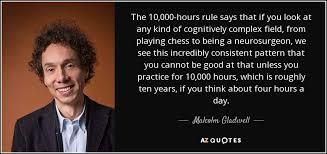
Lifelong Learning for Entrepreneurs: 5 Books For Business Success — Jolly Innopreneur

INDUSTRIAL ORGANIZATION: For Hospitals, Clinics and Healthcare CXOs, CEOs, CMOs and CTOs, etc.

MANAGEMENT STRATEGIES, TOOLS TEMPLATES AND CASE STUDIES

***

Reviews:

Hospitals and Health Care Organizations is a must-read for any physician and other health care provider to understand the multiple, and increasingly complex, interlocking components of the U.S. health care delivery system, whether they are employed by a hospital system, or manage their own private practices.

The operational principles, methods, and examples in this book provide a framework applicable on both the large organizational and smaller private practice levels and will result in better patient care. Physicians today know they need to better understand business principles and this book by Dr. David E. Marcinko and Professor Hope Rachel Hetico provides an excellent framework and foundation to learn important principles all doctors need to know.
―Richard Berning, MD, Pediatric Cardiology

… Dr. David Edward Marcinko and Professor Hope Rachel Hetico bring their vast health care experience along with additional national experts to provide a health care model-based framework to allow health care professionals to utilize the checklists and templates to evaluate their own systems, recognize where the weak links in the system are, and, by applying the well-illustrated principles, improve the efficiency of the system without sacrificing quality patient care. … The health care delivery system is not an assembly line, but with persistence and time following the guidelines offered in this book, quality patient care can be delivered efficiently and affordably while maintaining the financial viability of institutions and practices.
―James Winston Phillips, MD, MBA, JD, LLM

***

***

***

PURCHASE: https://www.amazon.com/dp/B00BC9IIUM?ref_=k4w_oembed_faGUzLlJ9ojLIx&tag=kpembed-20&linkCode=kpd

***

Doctors “Pay Up” OR ELSE “Don’t Work”

Physicians Suspected of Mental Health Issues

J. Wesley Boyd M.D., Ph.D.

I used to be an Associate Director in a state physician health program (PHP) and I served as a consultant when the state of North Carolina audited its PHP. Now, roughly twice a month I am contacted by a physician somewhere in the U.S. who is, effectively, being extorted.

How are they being extorted? These physicians are forced to either pay tens of thousands of dollars to for-profit evaluation/treatment centers or else lose their ability to practice medicine.

LINK: https://www.psychologytoday.com/us/blog/almost-addicted/201912/doctors-pay-or-else-dont-work#=

MD Mental CARE: https://www.psychologytoday.com/us/blog/almost-addicted/201904/why-physicians-who-need-psychiatric-care-go-kansas

MEDICAL BOARDS: https://medicalexecutivepost.com/2016/07/14/a-brief-history-of-medical-boards/

EDITOR’S NOTE: Colleague J. Wesley Boyd, M.D., Ph.D., is a professor of psychiatry and medical ethics at Baylor College of Medicine. He is also a lecturer on global health and social medicine at Harvard Medical School. He writes on issues of social justice, human rights, immigration and asylum, access to care, and substance use disorders. And, he is the author of the book, Almost Addicted, which won the Will Solemine Award for Excellence in Medical Writing from the New England American Medical Writer’s Association. Dr. Boyd also contributed to our major textbook on Risk Management, Liability Insurance and Asset Protection Strategies for Doctors and Advisors. We appreciate his work and contributions.

Dr. David E. Marcinko MBA

***

Risk Management, Liability Insurance, and Asset Protection Strategies for Doctors and Advisors: Best Practices from Leading Consultants and Certified Medical Planners™

ORDER TEXTBOOK: https://www.routledge.com/Risk-Management-Liability-Insurance-and-Asset-Protection-Strategies-for/Marcinko-Hetico/p/book/9781498725989

INVITE DR. MARCINKO: https://medicalexecutivepost.com/dr-david-marcinkos-

THANK YOU

***

“Dictionary of Health Economics and Finance”

CMP logo

SPONSOR: http://www.CertifiedMedicalPlanner.org

Product Details

ORDER HERE: https://www.r2library.com/Resource/Title/0826102549

THANK YOU

***

R.I.P. Paul Edward Farmer MD PhD

***

By Dr. David Edward Marcinko MBA

[Editor-in-Chief]

***

Paul Edward Farmer MD PhD

***

Paul Edward Farmer (October 26, 1959 – February 21, 2022) was an American medical anthropologist and physician. Farmer held an MD and PhD from Harvard University, where he was the Kolokotrones University Professor and the chair of the Department of Global Health and Social Medicine at Harvard Medical School. He was the co-founder and chief strategist of Partners In Health (PIH), an international non-profit organization that since 1987 has provided direct health care services and undertaken research and advocacy activities on behalf of those who are sick and living in poverty. He was professor of medicine and chief of the Division of Global Health Equity at Brigham and Women’s Hospital.

Paul and his colleagues in the U.S. and abroad have pioneered novel community-based treatment strategies that demonstrate the delivery of high-quality health care in resource-poor settings in the U.S. and abroad. Their work is documented in the Bulletin of the World Health Organization, The Lancet, The New England Journal of Medicine, Clinical Infectious Diseases, British Medical Journal, and Social Science and Medicine.

Dr. Farmer had written extensively on health and human rights, the role of social inequalities in the distribution and outcome of infectious diseases, and global health.

He was known as “the man who would cure the world,” as described in the book Mountains Beyond Mountains by Tracy Kidder. The story of Partners In Health is also told in the 2017 documentary Bending the Arc. He was a proponent of liberation theology.

***

MORE: https://www.msn.com/en-us/news/world/paul-farmer-global-health-care-pioneer-dies-at-62/ar-AAU8wJj?li=BBnb7Kz

HARVARD: https://ghsm.hms.harvard.edu/faculty-staff/paul-farmer

***

Rest in Peace

***

PODCAST: 15 Metrics for Successful Healthcare Companies

Phil Fisher Was One of the Greatest Entrepreneurial Investors of the 20th Century and a Source of Wisdom for Warren Buffett

By Eric Bricker MD

****

***

Related: https://thehealthcareblog.com/blog/2022/02/03/after-the-crash/?utm_campaign=THCB%20Reader&utm_medium=email&utm_source=Revue%20newsletter

***

COMMENTS APPRECIATED

Thank You

Subscribe to the Medical Executive-Post

***

***

***

Product Details

CITE: https://www.r2library.com/Resource/Title/0826102549

***

Informal Money SLANG TERMS to Avoid

NOT PROFESSIONAL BUSINESS SCHOOL LINGUISTICS – BUT FAR TOO OFTEN USED

***

Invite Dr. Marcinko | The Leading Business Education Network for Doctors,  Financial Advisors and Health Industry Consultants

By Dr. David Edward Marcinko MBA CMP®

SPONSOR: http://www.CertifiedMedicalPlanner.org

CMP logo

***

Another Word for “Money” | 100+ Different Forms of Money You Should Know •  7ESL

People really love money since it is needed to buy just about everything. In fact, we actually published a formal print dictionary on health economics and finance terms that is very popular with physician investors and medical colleagues; it is a favorite of economic students as well!

Product Details

CITE: https://www.r2library.com/Resource/Title/0826102549

And, money is by far one of those words that has more slang or terms for it than any others. This proves that cash or money, does not have be boring when speaking about it. Just keep in mind that these slang synonyms are in plural form. They are also words mostly used for US currency.

Perhaps the fact that money is so important may help to explain why there are so many different ways to say it. These 95 slang words for money and their meanings are really worth taking a look at. This list not only contains the countless ways to speak, write or say the word money, but also what are the meanings behind each phrase or term.

LINK: https://blog.online-spellcheck.com/english/95-slang-words-money-meanings/

***
COMMENTS APPRECIATED

Thank You

Subscribe to the Medical Executive-Post

***

***

ASSESSMENT: Lastly, remember to never use any of these slang terms for money if you are doing formal writing or publishing; especially for me!

YOUR FURTHER COMMENTS ARE APPRECIATED.

Thank You Again!

Subscribe to the Medical Executive-Post

***

PODCAST: Health Insurance Costs Have Risen 55% in the Last Decade

***

By Eric Bricker MD

***

Health Insurance Cost Has Risen 55% in the last 10 Years. The Annual Health Insurance Cost for Family Coverage is Now $21,000 Per Year

***

Dysfunctional Employee Benefits Article in Journal of the American Medical Association

***

***

COMMENTS APPRECIATED

Thank You

Subscribe to the Medical Executive-Post

***

***

***

CITE: https://www.r2library.com/Resource/Title/082610254

***

Financial Management Strategies for Hospitals and Healthcare Organizations

SPONSOR: http://www.CertifiedMedicalPlanner.org

CMP logo

TEXTBOOK ORDER: https://www.amazon.com/Financial-Management-Strategies-Healthcare-Organizations/dp/1466558733/ref=sr_1_3?ie=UTF8&qid=1380743521&sr=8-3&keywords=david+marcinko

SECOND OPINIONS: https://medicalexecutivepost.com/schedule-a-consultation/

INVITE DR. MARCINKO: https://medicalexecutivepost.com/dr-david-marcinkos-bookings/

THANK YOU

***

Medical FINANCIAL PLANNING “Holistic” STRATEGIES

BY AND FOR PHYSICIANS AND THEIR ADVISORS

INVITE DR. MARCINKO: https://medicalexecutivepost.com/dr-david-marcinkos-

***

SPONSOR: http://www.CertifiedMedicalPlanner.org

CMP logo

***

Personal Financial Planning for Physicians and Medical Colleagues

ME Inc = Going it Alone but with a Team

BY DR. DAVID EDWARD MARCINKO MBA CMP®

CMP logo

SPONSOR: http://www.CertifiedMedicalPlanner.org

The physician, nurse, or other medical professional should easily recognize that there are a vast array of opportunities, obstacles, and pitfalls when it comes to managing one’s finances.  Still, with some modicum of effort, the basic aspects of insurance, investments, taxes, accounting, portfolio management, retirement and estate planning, debt reduction, asset protection and practice management can be largely self-taught. Yet, it is realized that nuances and subtleties can make a well-intentioned financial plan fall short.  The devil truly is in the details.  Moreover, none of these areas can be addressed in isolation. It is common for a solution in one area to cause a new set of problems in another. 

Accordingly, most health care practitioners would be well served to hire [independent, hourly compensated and prn] financial help. Unlike some medical problems, financial issues may not cause any “pain” or other obvious symptoms.  Medical professionals tend to have far more complex financial situations than most lay people. Despite the complexities of the new world of health reform, far too many either do nothing; or give up all control totally, to an external advisor. This either/or mistake can be costly in many ways, and should be avoided. 

In reality, and at various time in their careers, the medical professional needs a team comprised of at least a financial analyst, lawyer, management consultant, risk manager [actuary, mathematician or insurance counselor] and accountant. At various points in time, each member of the team, or significant others, will properly assume a role of more or less importance, but the doctor must usually remain the “quarterback” or leader; in the absence of a truly informed other, or Certified Medical Planner™.

This is necessary because only the doctor has the personal self-mandate with skin in the game, to take a big picture view.  And, rightly or wrongly, investments dominate the information available regarding personal finance and the attention of most physicians.  One is much more likely to need or want to discuss the financial markets with their financial advisor than private letter rulings by the IRS, or with their estate planning attorney or tax accountant. While hiring for expertise is a good idea, there is sinister way advisors goad doctors into using all their retail services; all of the time. That artifice is – the value of time. 

True integrated physician focused and financial planning is at its core a service business, not a product or sales endeavor. And, increasingly money is more likely to be at the top of the list for providers as the healthcare environment is contracting.

So, eschewing the quarterback model of advice, and choosing to self-educate thru this book and elsewhere, may be one of the best efforts a smart physician can make.

ASSESSMENT: Your thoughts are appreciated.

Comprehensive Financial Planning Strategies for Doctors and Advisors: Best Practices from Leading Consultants and Certified Medical Planners™

ORDER TEXTBOOK: https://www.routledge.com/Comprehensive-Financial-Planning-Strategies-for-Doctors-and-Advisors-Best/Marcinko-Hetico/p/book/9781482240283

RELATED TEXTS: https://medicalexecutivepost.com/2021/04/29/why-are-certified-medical-planner-textbooks-so-darn-popular/

INVITE DR. MARCINKO: https://medicalexecutivepost.com/dr-david-marcinkos-

THANK YOU!

*****

How to READ and UNDERSTAND a Scientific Paper!

A Guide for non-scientists


By Jennifer Raff

Via Bert Mesko MD PhD  

***

***

How to read and understand a scientific paper: a guide for non-scientists

****

RELATED: https://getpocket.com/explore/item/3-questions-to-ask-yourself-next-time-you-see-a-graph-chart-or-map?utm_source=pocket-newtab

Conclusion

Your thoughts and comments on this ME-P are appreciated. Feel free to review our top-left column, and top-right sidebar materials, links, URLs and related websites, too. Then, subscribe to the ME-P. It is fast, free and secure.

Speaker: If you need a moderator or speaker for an upcoming event, Dr. David E. Marcinko; MBA – Publisher-in-Chief of the Medical Executive-Post – is available for seminar or speaking engagements. Contact: MarcinkoAdvisors@msn.com

OUR OTHER PRINT BOOKS AND RELATED INFORMATION SOURCES:

 Product DetailsProduct DetailsProduct Details

***

COMPREHENSIVE FINANCIAL PLANNING STRATEGIES

For Doctors and Advisors

BOOK REVIEWS WITH FOREWORD

Reviews

Written by doctors and healthcare professionals, this textbook should be mandatory reading for all medical school students―highly recommended for both young and veteran physicians―and an eliminating factor for any financial advisor who has not read it. The book uses jargon like ‘innovative,’ ‘transformational,’ and ‘disruptive’―all rightly so! It is the type of definitive financial lifestyle planning book we often seek, but seldom find.
LeRoy Howard MA CMPTM,Candidate and Financial Advisor, Fayetteville, North Carolina

I taught diagnostic radiology for over a decade. The physician-focused niche information, balanced perspectives, and insider industry transparency in this book may help save your financial life.
Dr. William P. Scherer MS, Barry University, Ft. Lauderdale, Florida

This book was crafted in response to the frustration felt by doctors who dealt with top financial, brokerage, and accounting firms. These non-fiduciary behemoths often prescribed costly wholesale solutions that were applicable to all, but customized for few, despite ever-changing needs. It is a must-read to learn why brokerage sales pitches or Internet resources will never replace the knowledge and deep advice of a physician-focused financial advisor, medical consultant, or collegial Certified Medical Planner™ financial professional.
―Parin Khotari MBA,Whitman School of Management, Syracuse University, New York

In today’s healthcare environment, in order for providers to survive, they need to understand their current and future market trends, finances, operations, and impact of federal and state regulations. As a healthcare consulting professional for over 30 years supporting both the private and public sector, I recommend that providers understand and utilize the wealth of knowledge that is being conveyed in these chapters. Without this guidance providers will have a hard time navigating the supporting system which may impact their future revenue stream. I strongly endorse the contents of this book.

―Carol S. Miller BSN MBA PMP,President, Miller Consulting Group, ACT IAC Executive Committee Vice-Chair at-Large, HIMSS NCA Board Member

This is an excellent book on financial planning for physicians and health professionals. It is all inclusive yet very easy to read with much valuable information. And, I have been expanding my business knowledge with all of Dr. Marcinko’s prior books. I highly recommend this one, too. It is a fine educational tool for all doctors.

―Dr. David B. Lumsden MD MS MA,Orthopedic Surgeon, Baltimore, Maryland

There is no other comprehensive book like it to help doctors, nurses, and other medical providers accumulate and preserve the wealth that their years of education and hard work have earned them.
―Dr. Jason Dyken MD MBA, Dyken Wealth Strategies, Gulf Shores, Alabama

I plan to give a copy of this book written
by doctors and for doctors’ to all my prospects, physician, and nurse clients. It may be the definitive text on this important topic.
―Alexander Naruska CPA, Orlando, Florida

Health professionals are small business owners who need to apply their self-discipline tactics in establishing and operating successful practices. Talented trainees are leaving the medical profession because they fail to balance the cost of attendance against a realistic business and financial plan. Principles like budgeting, saving, and living below one’s means, in order to make future investments for future growth, asset protection, and retirement possible are often lacking. This textbook guides the medical professional in his/her financial planning life journey from start to finish. It ranks a place in all medical school libraries and on each of our bookshelves.
―Dr. Thomas M. DeLauro DPM, Professor and Chairman – Division of Medical Sciences, New York College of Podiatric Medicine

Physicians are notoriously excellent at diagnosing and treating medical conditions. However, they are also notoriously deficient in managing the business aspects of their medical practices. Most will earn $20-30 million in their medical lifetime, but few know how to create wealth for themselves and their families. This book will help fill the void in physicians’ financial education. I have two recommendations: 1) every physician, young and old, should read this book; and 2) read it a second time!
―Dr. Neil Baum MD, Clinical Associate Professor of Urology, Tulane Medical School, New Orleans, Louisiana

I worked with a Certified Medical Planner™ on several occasions in the past, and will do so again in the future. This book codified the vast body of knowledge that helped in all facets of my financial life and professional medical practice.
Dr. James E. Williams DABPS, Foot and Ankle Surgeon, Conyers, Georgia

***

Comprehensive Financial Planning Strategies for Doctors and Advisors: Best Practices from Leading Consultants and Certified Medical Planners™

***

YOUR THOUGHTS ARE APPRECIATED.

SECOND OPINIONS: https://medicalexecutivepost.com/schedule-a-consultation/

INVITE DR. MARCINKO: https://medicalexecutivepost.com/dr-david-marcinkos-bookings/

Thank You

PODCAST: Virtual Primary Care

Article of Dr. Marshall Chin in the NEJM

By Eric Bricker MD

***

***

YOUR COMMENTS ARE APPRECIATED.

Thank You

***

***

OVERVIEW: Healthcare Finance and Insurance Terms & Definitions

Produced FROM Merck Manual

By Roger I. Schreck

***

Health care in the US is technologically advanced but expensive, costing about $3.6 trillion in 2018, which was 16.9% of gross domestic product (GDP) (1). This percentage is significantly higher than in any other nation.

According to the Organization for Economic Cooperation and Development (OECD), in 2018 the next highest spending countries were Switzerland (12.2% of GDP) and France, Germany, Sweden, and Japan (each about 11%), while the average of the 35 OECD countries (OECD35) was 8.8% (2).

ASSESSMENT: Of course, the absolute amount and the rate of increase of health care spending in the US are widely regarded as unsustainable. Consequences of increased US spending on health care include the following:

LINK: https://www.merckmanuals.com/professional/special-subjects/health-care-financing/overview-of-health-care-financing

CMS GLOSSARY: https://www.cms.gov/CCIIO/Resources/Files/Downloads/dwnlds/uniform-glossary-final.pdf

GOVERNMENT: https://www.bls.gov/ncs/ebs/sp/healthterms.pdf

Product Details

CITE: https://www.r2library.com/Resource/Title/0826102549

YOUR COMMENTS ARE APPRECIATED.

Thank You

***

Benefits of Healthcare Participation in Multiple Medical Payment Models

BY HEALTH CAPITAL CONSULTANTS, LLC

New Research Explores Benefits of Participation in Multiple Payment Models


An August 2021 study published in the Journal of the American Medical Association (JAMA) analyzed medical and surgical episodes of care in U.S. hospitals to determine whether outcomes differed in hospitals that participated in Medicare’s Bundled Payments for Care Improvement (BPCI) Initiative depending on whether the patient being treated was attributed to a Medicare Shared Savings Program (MSSP) accountable care organization (ACO).

This Health Capital Topics article will discuss the study’s findings and potential policy implications. (Read more…)

***

YOUR COMMENTS ARE APPRECIATED

Thank You

****

Comprehensive Financial Planning Strategies for Doctors and Advisors: Best Practices from Leading Consultants and Certified Medical Planners™

ORE: https://www.routledge.com/Comprehensive-Financial-Planning-Strategies-for-Doctors-and-Advisors-Best/Marcinko-Hetico/p/book/9781482240283

***

PODCAST: “The Hospital” Book Review

By Brian Alexander

If You Like Michael Lewis Books, You’ll Love This

****

YOUR COMMENTS ARE APPRECIATED.

Thank You

***

***