Investors are allowed to change their minds

Join Our Mailing List 
The Markets
Art

By Arthur Chalekian GEPC

[Financial Consultant]

***

They’re investors. They’re allowed to change their minds.
*** 
Just a few weeks ago, on September 17, the Federal Reserve Open Market Committee (FOMC) decided to leave the fed funds rate unchanged. In part, this was because, “Recent global economic and financial developments may restrain economic activity somewhat and are likely to put further downward pressure on inflation in the near term.”
 
The next day, September 18, stock markets tumbled. By the time September was over, many markets had closed on their worst quarter in four years, according to the BBC. The Dow Jones Industrial Average fell by almost 8 percent, Britain’s FTSE 100 was down 7 percent, Germany’s Dax was off by almost 12 percent, and the Shanghai Composite lost more than 24 percent.
 
Last week, on Thursday, the minutes of the FOMC meeting were released. Investors’ response was quite different. Barron’s reported many believe a rate hike during 2015 is less likely than it once was, and that reinvigorated investor optimism:
 
“Going into Friday’s session, global equity markets’ valuations were enriched by some $2.5 trillion, according to Bloomberg calculations. As for U.S. stocks, Wilshire Associates reckons that they tacked on 3.44 percent, or approximately $800 billion, over the full week, based on the gain in the Wilshire 5000 index, their biggest weekly gain in nearly 12 months.”
 
Why does the same news elicit two very different responses? There are many reasons. Foremost among them is the fact a lot of elements influence markets – investor confidence, company valuations, central bank actions, automated trading, and many others.
***
Stock_Market
***
Assessment
 
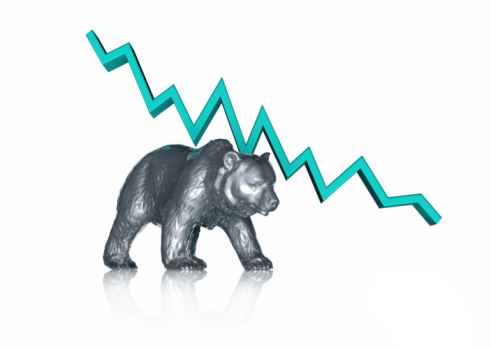
What does last week’s upward push mean? One analyst cited by Barron’s suggested we’re seeing a bear market rally, but only time will tell.
***
Conclusion

Your thoughts and comments on this ME-P are appreciated. Feel free to review our top-left column, and top-right sidebar materials, links, URLs and related websites, too. Then, subscribe to the ME-P. It is fast, free and secure.

Speaker: If you need a moderator or speaker for an upcoming event, Dr. David E. Marcinko; MBA – Publisher-in-Chief of the Medical Executive-Post – is available for seminar or speaking engagements. Contact: MarcinkoAdvisors@msn.com

OUR OTHER PRINT BOOKS AND RELATED INFORMATION SOURCES:

Risk Management, Liability Insurance, and Asset Protection Strategies for Doctors and Advisors: Best Practices from Leading Consultants and Certified Medical Planners™8Comprehensive Financial Planning Strategies for Doctors and Advisors: Best Practices from Leading Consultants and Certified Medical Planners™

***

How Companies Value Body Parts?

Join Our Mailing List
A ProPublica Price Check
By Lena Groeger and Michael Grabell
   ***
             

        ProPublica

                                                                      ***

Injured workers are entitled to compensation for permanent disabilities under state workers’ comp laws.

More:

***

body

Price Check: How Companies Value Body Parts

***

But – Texas has long allowed companies to opt out and write their own benefit plans.

More:

Assessment

Benefits for the same body part can differ dramatically depending on which company you work for.

Related Story »

Conclusion

Your thoughts and comments on this ME-P are appreciated. Feel free to review our top-left column, and top-right sidebar materials, links, URLs and related websites, too. Then, subscribe to the ME-P. It is fast, free and secure.

Speaker: If you need a moderator or speaker for an upcoming event, Dr. David E. Marcinko; MBA – Publisher-in-Chief of the Medical Executive-Post – is available for seminar or speaking engagements. Contact: MarcinkoAdvisors@msn.com

OUR OTHER PRINT BOOKS AND RELATED INFORMATION SOURCES:

 ***

[HEALTH INSURANCE, MANAGED CARE, ECONOMICS, FINANCE AND HEALTH INFORMATION TECHNOLOGY COMPANION DICTIONARY SET]

Product DetailsProduct DetailsProduct Details

[Mike Stahl PhD MBA] *** [Foreword Dr.Mata MD CIS] *** [Dr. Getzen PhD]

***

Medicine: A Lesson In Efficient Markets

Join Our Mailing List

MEDICINE: A Lesson In Efficient Markets

dan-snapshot

[By Dan Ariely PhD] http://danariely.com

The market for medicine is incredibly interesting. Almost every day we learn something new about a treatment that we thought would work but does not, or about a treatment that we didn’t think would work but does.

Beyond the particular fascination, I think that the medicine market can also teach us important lessons about rationality … read more:

Medicine: A Lesson In Efficient Markets

More:

Conclusion

Your thoughts and comments on this ME-P are appreciated. Feel free to review our top-left column, and top-right sidebar materials, links, URLs and related websites, too. Then, subscribe to the ME-P. It is fast, free and secure.

***

medical-cartoon

***

Speaker: If you need a moderator or speaker for an upcoming event, Dr. David E. Marcinko; MBA – Publisher-in-Chief of the Medical Executive-Post – is available for seminar or speaking engagements. Contact: MarcinkoAdvisors@msn.com

OUR OTHER PRINT BOOKS AND RELATED INFORMATION SOURCES:

[PRIVATE MEDICAL PRACTICE BUSINESS MANAGEMENT TEXTBOOK – 3rd.  Edition]

Product Details

http://www.BusinessofMedicalPractice.com

  [Foreword Dr. Hashem MD PhD] *** [Foreword Dr. Silva MD MBA]

***

It’s open enrollment season for health insurance – Now What!

Join Our Mailing List

How do I compare my health insurance options during open enrollment?

Daniel J. Antokal MBA
[Financial Advisor]

daniel

The decisions you make during open enrollment season regarding health insurance are especially important, since you generally must stick with the options you choose until the next open enrollment season, unless you experience a “qualifying” event such as marriage or the birth of a child. As a result, you should take the time to carefully review the types of plans offered by your employer and consider all the costs associated with each plan.

With most health insurance plans, your employer will pay a portion of the premium and require you to pay the remainder through payroll deductions. When comparing different plans, keep in mind that even though a plan with a lower premium may seem like the most attractive option, it could have higher potential out-of-pocket costs.

You’ll want to review the copayments, deductibles, and coinsurance associated with each plan. This is an important step because these costs can greatly affect what you end up paying out-of-pocket.

When reviewing the costs of each plan, consider the following:

  • Does the plan have an individual or family deductible? If so, what is the amount that will have to be satisfied before your insurance coverage kicks in?
  • Are there copayments? If so what amounts are charged for doctor visits, specialists, hospital visits, and prescription drugs?
  • Will you have to pay any coinsurance once you’ve satisfied the deductible?

Specific features

You should also assess each plan’s coverage and specific features. For example, are there coverage exclusions or limitations that apply? Which expenses are fully or partially covered? Do you have the option to go to doctors who are outside your plan’s provider network? Does the plan offer additional types of coverage for vision, dental, or prescription drugs?

***

healthcare

***

Assessment

In the end, when reviewing your options, you’ll want to balance the coverage and features offered under each plan against the plan’s overall cost to determine which plan offers you the best value for your money. 

Conclusion

Your thoughts and comments on this ME-P are appreciated. Feel free to review our top-left column, and top-right sidebar materials, links, URLs and related websites, too. Then, subscribe to the ME-P. It is fast, free and secure.

Speaker: If you need a moderator or speaker for an upcoming event, Dr. David E. Marcinko; MBA – Publisher-in-Chief of the Medical Executive-Post – is available for seminar or speaking engagements. Contact: MarcinkoAdvisors@msn.com

OUR OTHER PRINT BOOKS AND RELATED INFORMATION SOURCES:

***

[PHYSICIAN FOCUSED FINANCIAL PLANNING AND RISK MANAGEMENT COMPANION TEXTBOOK SET]

  Risk Management, Liability Insurance, and Asset Protection Strategies for Doctors and Advisors: Best Practices from Leading Consultants and Certified Medical Planners™Comprehensive Financial Planning Strategies for Doctors and Advisors: Best Practices from Leading Consultants and Certified Medical Planners™

***

Finally – Why the Healthcare.gov Site Failed?

Join Our Mailing List

No … Really!

By Robert E.H. Khoo MD FRCS(C) FACS

http://www.colondoc.com

***

health care gov

Why the Healthcare.gov Site Failed

***

Conclusion

Your thoughts and comments on this ME-P are appreciated. Feel free to review our top-left column, and top-right sidebar materials, links, URLs and related websites, too. Then, subscribe to the ME-P. It is fast, free and secure.

Speaker: If you need a moderator or speaker for an upcoming event, Dr. David E. Marcinko; MBA – Publisher-in-Chief of the Medical Executive-Post – is available for seminar or speaking engagements. Contact: MarcinkoAdvisors@msn.com

OUR OTHER PRINT BOOKS AND RELATED INFORMATION SOURCES:

***

Product Details

***

EHR Meaningful Use Rules Finalized

Join Our Mailing List 

The CMS Modifications

[By staff reporters]

Source: Joseph Goedert, Health Data Management [10/7/15]
***
Centers for Medicare and Medicaid Services
***
The Centers for Medicare and Medicaid Services has issued a 752-page final rule covering three components of the electronic health records meaningful use program. The rule finalizes modifications to Stages 1 and 2; the 2015 edition of electronic health records certification criteria; and Stage 3 of meaningful use.
Modifications
Under the modifications to Stages 1 and 2, eligible professionals have 10 meaningful use objectives, down from 18 previously. In Stage 3, there are 8 objectives for eligible professionals and hospitals, and more than 60 percent of measures require interoperability.
Assessment
The entire rule is available here.
***
MD with eHR
***
Conclusion
Your thoughts and comments on this ME-P are appreciated. Feel free to review our top-left column, and top-right sidebar materials, links, URLs and related websites, too. Then, subscribe to the ME-P. It is fast, free and secure.
Speaker: If you need a moderator or speaker for an upcoming event, Dr. David E. Marcinko; MBA – Publisher-in-Chief of the Medical Executive-Post – is available for seminar or speaking engagements. Contact: MarcinkoAdvisors@msn.com

EHRs in the News – GAG!

Join Our Mailing List

A Recent Round-Up

1-darrellpruitt[By D. Kellus Pruitt DDS]

“Feds push forward with controversial health rule – The Obama administration is moving ahead with controversial new rules that require doctors to switch to electronic health records or face fees, resisting calls from both parties to delay implementation.”

By Sarah Ferris for The Hill, October 6, 2015

http://thehill.com/policy/healthcare/256120-feds-push-forward-with-controversial-health-it-rule?utm_content=buffer9cd4b&utm_medium=social&utm_source=twitter.com&utm_campaign=buffer

“The Gag Clause is Killing Us – Doctors are barred from discussing safety glitches in software…  And what if doctors — your doctor — is unable to make problems with EHR programs public, due to a so-called ‘gag clause’ written into the contract with the software company, which forbids sharing and publishing, in any form, of potentially dangerous flaws in the IT systems? This is already happening.”

By Deirdre Reilly for HealthZette, October 6, 2015

http://www.lifezette.com/healthzette/gag-clause-is-killing-us/

 “Hackers target Australian health sector, selling records for A$1,000 – Hackers are targeting the Australian health sector, with fully populated digital health records sold on the black market for up to A$1,000 each [$720 US].”

By Beverley Head for ComputerWeekly.com, October 7, 2015

http://www.computerweekly.com/news/4500254986/Hackers-target-Australian-health-sector-selling-records-for-A1000 

 “Electronic health records software often written without doctors’ input – The reason why many doctors find electronic health records (EHR) difficult to use might be that the software wasn’t properly tested, researchers suggests.”

By Kathryn Doyle for Reuters, October 7, 2015

http://www.reuters.com/article/2015/10/07/us-health-software-ehr-idUSKCN0S11OY20151007

 “EHRs provide long-term savings, convenience.”

(no byline), American Dental Association, ADA News, December 6, 2013

http://www.ada.org/en/publications/ada-news/2013-archive/december/ehrs-provide-long-term-savings-convenience

 ***EHR

***

More:

  1. The Percentage of Office-Based Doctors with EHRs
  2. Do Nurses like EHRs?
  3. EHRs – Still Not Ready For Prime Time
  4. The “Price” of eHRs

Conclusion

Your thoughts and comments on this ME-P are appreciated. Feel free to review our top-left column, and top-right sidebar materials, links, URLs and related websites, too. Then, subscribe to the ME-P. It is fast, free and secure.

Speaker: If you need a moderator or speaker for an upcoming event, Dr. David E. Marcinko; MBA – Publisher-in-Chief of the Medical Executive-Post – is available for seminar or speaking engagements. Contact: MarcinkoAdvisors@msn.com

OUR OTHER PRINT BOOKS AND RELATED INFORMATION SOURCES:

***

[HOSPITAL OPERATIONS, ORGANIZATIONAL BEHAVIOR, HIT AND FINANCIAL MANAGEMENT COMPANION TEXTBOOK SET]

Product DetailsProduct Details

[Foreword Dr. Phillips MD JD MBA LLM] *** [Foreword Dr. Nash MD MBA FACP]

***

The third quarter for 2015 was a REAL humdinger!

 Join Our Mailing List
The Markets – Update
Art

By Arthur Chalekian GEPC

[Financial Consultant]

Well, the third quarter for 2015 was a REAL humdinger!
                                            ***
It began with the first International Monetary Fund (IMF) default by a developed country (Greece) and finished with Hurricane Joaquin possibly headed toward the east coast. In between, China’s stock market tumbled, the Federal Reserve tried to interpret conflicting signals, and trade growth slowed globally. After such a stressful quarter, we may see an uptick in the quantity of alcoholic beverages consumed per person around the world. That number had declined (along with economic growth in China) between 2012 and 2014, according to The Economist.
***
No Grexit – for now
Despite defaulting on its IMF loan, rejecting a multi-billion-euro bailout plan, and closing its banks for more than two weeks, Greece was not forced out of the Eurozone. Instead, Europe cooked up a deal that left the IMF unhappy and analysts shaking their heads. The Economist reported the new deal for Greece was an exercise in wishful thinking. The problem is the deal relies on “the same old recipe of austerity and implausible assumptions. The IMF is supposed to be financing part of the bailout. Even it thinks the deal makes no sense.” It’s a recipe we’re familiar with in the United States: When in doubt, defer the problem to the future.
***
A downturn in China
Despite reports from the Chinese government that it hit its economic growth target (7 percent) on the nose during the first two quarters of the year, The Economist was skeptical about the veracity of those claims. During the first quarter.
***
“Growth in industrial production was the weakest since the depths of the financial crisis; the property market, a pillar of the economy, crumbled. China reported real growth (i.e., after accounting for inflation) of 7 percent year-on-year in the first quarter, but nominal growth of just 5.8 percent.”
***
That statistical sleight of hand implies China experienced deflation early in the year. It did not.
On a related note, from mid-June through the end of the third quarter, the Shenzhen Stock Exchange Composite Index fell from 3,140 to about 1,716, according to BloombergBusiness. That’s about a 45 percent decline in value.
***
Red light, green light at the Federal Reserve
Green light: employment numbers. Red light: consumer prices, inflation expectations, wages, and global growth. Late in the quarter, the Federal Reserve decided not to begin tightening monetary policy.
According to Reuters, voting members of the Federal Open Market Committee (FOMC) decided uncertainty in global markets had the potential to negatively affect domestic economic strength. They may have been right. The Wall Street Journal reported, although unemployment remained at 5.1 percent, just 142,000 jobs were added in September. That was significantly below economists’ expectations that 200,000 jobs would be created. The Journal suggested the labor market has downshifted after 18 months of solid jobs creation.
***
Global trade in the doldrums
The global economy isn’t as robust as many expected it to be. According to the Business Standard, the World Trade Organization (WTO) lowered its forecast for global trade growth during 2015 from 3.3 percent to 2.8 percent. Falling demand for imports in developing nations and low commodity prices are translating into less global trade. Expectations are trade growth will be 3.9 percent in 2016, which could help support global economic growth.
***
Coming Change
America’s share of the global economy is potent. Our country accounts for 16 percent (after being adjusted for currency differences) of the world’s gross domestic product (GDP) and 12 percent of merchandise trade.
Again, according to The Economist, we dominate “the brainiest and most complex parts of the global economy.” Our presence is strong in social media, cloud computing, venture capital, and finance. In addition, the dollar is the world’s dominant currency. While the view from the top is pleasing, we may not be there forever. The Economist explained:
***
“In the first change in the world economic order since 1920-45, when America overtook Britain, [America’s] dominance is now being eroded. As a share of world GDP, America and China (including Hong Kong) are neck and neck at 16 percent and 17 percent respectively, measured at purchasing-power parity. At market exchange rates, a fair gap remains with America at 23 percent and China at 14 percent … But any reordering of the world economy’s architecture will not be as fast or decisive as it was last time…the Middle Kingdom is a middle-income country with immature financial markets and without the rule of law. The absence of democracy, too, may be a serious drawback.”
***
It may be hard to believe, in light of recent economic and market events in China, but change is on its way. Regardless, the influence of the United States should continue to be powerful well into the future.

Conclusion

Your thoughts and comments on this ME-P are appreciated. Feel free to review our top-left column, and top-right sidebar materials, links, URLs and related websites, too. Then, subscribe to the ME-P. It is fast, free and secure.

Speaker: If you need a moderator or speaker for an upcoming event, Dr. David E. Marcinko; MBA – Publisher-in-Chief of the Medical Executive-Post – is available for seminar or speaking engagements. Contact: MarcinkoAdvisors@msn.com

OUR OTHER PRINT BOOKS AND RELATED INFORMATION SOURCES:

***

Comprehensive Financial Planning Strategies for Doctors and Advisors: Best Practices from Leading Consultants and Certified Medical Planners(TM)

Front Matter with Foreword by Jason Dyken MD MBA

logos

“BY DOCTORS – FOR DOCTORS – PEER REVIEWED – FIDUCIARY FOCUSED”

***

About DocGraph.Org

Join Our Mailing List

Discover, Create and Analyze Open Healthcare Data
[By staff reporters]
 ***
DocGraph is a community composed of data journalists, scientists, and advocates; with three core iniatives:

I. Community Collaboration 

The DocGraph community includes academics, journalists, doctors, entrepreneurs, statisticians and more. Our members have used DocGraph datasets to restructure provider networks, teach classes, start companies, and report on quality metrics. We welcome anyone with passion for healthcare improvement to join us.

If you write about healthcare data and would like to be featured on our blog, or if you are a data scientist interested in publishing research using DocGraph data, please give us a holler too!

II. Open Healthcare Data Advocacy 

Our efforts led to the first national Provider Referral data release by the US government. The original “DocGraph Data” has helped researchers, journalists, and companies around the nation to provide data-backed healthcare solutions.

We continue to work with federal, state, private, non-profit, and public entities to create and open healthcare datasets. We believe the release of reliable and current data is vital to the improvement of the healthcare system.

III. The DocGraph Alliance 

The DocGraph Alliance is a group of organizations committed to supporting data journalism and data science community efforts.

Its community mission is to encourage an ecosystem of innovators to collaborate and share tools and research methodologies around open healthcare datasets.Support from the Alliance members means the DocGraph Journal can continue providing support for the growing community of data scientists focused on leveraging initiatives of transparency in healthcare.

***

gears

***

Assessment

Visit http://www.docgraph.org today. And, for the premier analytical software built on DocGraph data, visit CareSet.com

Conclusion

Your thoughts and comments on this ME-P are appreciated. Feel free to review our top-left column, and top-right sidebar materials, links, URLs and related websites, too. Then, subscribe to the ME-P. It is fast, free and secure.

Speaker: If you need a moderator or speaker for an upcoming event, Dr. David E. Marcinko; MBA – Publisher-in-Chief of the Medical Executive-Post – is available for seminar or speaking engagements. Contact: MarcinkoAdvisors@msn.com

OUR OTHER PRINT BOOKS AND RELATED INFORMATION SOURCES:

***

[HEALTH INSURANCE, MANAGED CARE, ECONOMICS, FINANCE AND HEALTH INFORMATION TECHNOLOGY COMPANION DICTIONARY SET]

      Product DetailsProduct DetailsProduct Details

[Mike Stahl PhD MBA] *** [Foreword Dr.Mata MD CIS] *** [Dr. Getzen PhD]

***

New Tools for A Healthy Future

Join Our Mailing List

By Terri D. Wright, PhD, MPH                   

***

ImageProxy

***

APHA’s Policy Center Creates Tools for A Healthy Future

DEAR DAVID – The central challenge of the American Public Health Association is to create the healthiest nation in one generation. APHA’s Center for Public Health Policy was established almost 10 years ago to bring together analytical public health expertise and infuse the public health field with expert materials and tools in response to this challenge.

The Center embraces the public health issues that threaten population health. Our work is done through national and state partnerships and by leveraging resources across multiple sectors, including government, philanthropy and non-profit. Fundamental to all that we do: strategies to ensure health equity for all.

We invite you to learn about our work and stay abreast of our progress on producing resources for our members and constituents. The following priorities represent our core work to create a healthy nation:

  • Assuring health equity for all.
  • Promoting systems transformation to integrate public health and health care and improve population health.
  • Improving the natural and built environments to support health and create environmental justice.

We will keep you updated on our priority issues and encourage you to connect with our team.

We invite your feedback as we embark on this journey – phpolicycenter@apha.org

Sincerely,
Terri D Wright Signature

***

[HOSPITAL OPERATIONS, ORGANIZATIONAL [BEHAVIOR AND FINANCIAL MANAGEMENT COMPANION TEXTBOOK SET]

Product DetailsProduct Details

[Foreword Dr. Phillips MD JD MBA LLM] *** [Foreword Dr. Nash MD MBA FACP]

***

How Your Hospital Can Avoid Nomination as a Great Place to Work 

Join Our Mailing List

Are hospitals ranked according to employee happiness?

By Robert EH Khoo MD FRCS FACS  http://www.colondoc.com

SOAR

Earlier this month I read a Wall Street Journal article about Zeynep Ton’s Good Jobs Index. Who is Zeynep Ton? She is a professor at the Massachusetts Institute of Technology’s Sloan School of Management who has ranked retailers on employee happiness. This was so positive. It was good to hear about businesses concerned about employee happiness and not just about profits and shareholders.

Two weeks later I was dismayed to read about the bruising work environment at Amazon in the New York Times. The article described a work environment toxic to workers overseen by a CEO who has blind to this view.

I was curious. I work in a hospital. Are hospitals ranked according to employee happiness? My health system is recognized as a Great Place to Work and the Fortune 100 Best Companies to Work For.

Last year I left a hospital that was an ideal model of health care in the President’s eyes. Time Magazine had published two articles about that hospital. Yet my experience there as an employee was closer to the abusive atmosphere the New York Times detailed about Amazon.

I imagine that my old workplace could continue avoiding accolades from its employees by following these 14 steps:

***

Hospital with paper MRs

How Your Hospital Can Avoid A Nomination as a Great Place to Work 

***

Conclusion

Your thoughts and comments on this ME-P are appreciated. Feel free to review our top-left column, and top-right sidebar materials, links, URLs and related websites, too. Then, subscribe to the ME-P. It is fast, free and secure.

Speaker: If you need a moderator or speaker for an upcoming event, Dr. David E. Marcinko; MBA – Publisher-in-Chief of the Medical Executive-Post – is available for seminar or speaking engagements. Contact: MarcinkoAdvisors@msn.com

OUR OTHER PRINT BOOKS AND RELATED INFORMATION SOURCES:

***

[HOSPITAL OPERATIONS, ORGANIZATIONAL BEHAVIOR AND FINANCIAL MANAGEMENT COMPANION TEXTBOOK SET]

Product DetailsProduct Details

[Foreword Dr. Phillips MD JD MBA LLM] *** [Foreword Dr. Nash MD MBA FACP]

***

An MD’s Venture Back to Microsoft Windows 10

Join Our Mailing List

A Review

By Robert E.H. Khoo MD FRCS(C) FACS

http://www.colondoc.com.

***

disruptive

***

My Venture Back to Microsoft – a Review of Windows 10

Conclusion

Your thoughts and comments on this ME-P are appreciated. Feel free to review our top-left column, and top-right sidebar materials, links, URLs and related websites, too. Then, subscribe to the ME-P. It is fast, free and secure.

Speaker: If you need a moderator or speaker for an upcoming event, Dr. David E. Marcinko; MBA – Publisher-in-Chief of the Medical Executive-Post – is available for seminar or speaking engagements. Contact: MarcinkoAdvisors@msn.com

OUR OTHER PRINT BOOKS AND RELATED INFORMATION SOURCES:

***

[HEALTH INSURANCE, MANAGED CARE, ECONOMICS, FINANCE AND HEALTH INFORMATION TECHNOLOGY COMPANION DICTIONARY SET]

      Product DetailsProduct DetailsProduct Details

[Mike Stahl PhD MBA] *** [Foreword Dr.Mata MD CIS] *** [Dr. Getzen PhD]

***

Racial Disparities in Health Insurance Coverage

Join Our Mailing List

For 2013

By http://www.MCOL.com

***

ImageProxy

***

Conclusion

Your thoughts and comments on this ME-P are appreciated. Feel free to review our top-left column, and top-right sidebar materials, links, URLs and related websites, too. Then, subscribe to the ME-P. It is fast, free and secure.

Speaker: If you need a moderator or speaker for an upcoming event, Dr. David E. Marcinko; MBA – Publisher-in-Chief of the Medical Executive-Post – is available for seminar or speaking engagements. Contact: MarcinkoAdvisors@msn.com

OUR OTHER PRINT BOOKS AND RELATED INFORMATION SOURCES:

[HEALTH INSURANCE, MANAGED CARE, ECONOMICS, FINANCE AND HEALTH INFORMATION TECHNOLOGY COMPANION DICTIONARY SET]

      Product DetailsProduct DetailsProduct Details

[Mike Stahl PhD MBA] *** [Foreword Dr.Mata MD CIS] *** [Dr. Getzen PhD]

***

The Economic Impact of UnHealthy Bio-Metrics

Join Our Mailing List

For 20102 – 2014

http://www.MCOL.com

***

ImageProxy

***

Conclusion

Your thoughts and comments on this ME-P are appreciated. Feel free to review our top-left column, and top-right sidebar materials, links, URLs and related websites, too. Then, subscribe to the ME-P. It is fast, free and secure.

Speaker: If you need a moderator or speaker for an upcoming event, Dr. David E. Marcinko; MBA – Publisher-in-Chief of the Medical Executive-Post – is available for seminar or speaking engagements. Contact: MarcinkoAdvisors@msn.com

OUR OTHER PRINT BOOKS AND RELATED INFORMATION SOURCES:

***

[HEALTH INSURANCE, MANAGED CARE, ECONOMICS, FINANCE AND HEALTH INFORMATION TECHNOLOGY COMPANION DICTIONARY SET]

      Product DetailsProduct DetailsProduct Details

[Mike Stahl PhD MBA] *** [Foreword Dr.Mata MD CIS] *** [Dr. Getzen PhD]

***

Ben Bernanke: Buy One Suit, Get Three Free

Join Our Mailing List

Linear thinking is dangerous

vitaly[By Vitaliy Katsenelson, CFA]

Linear thinking is dangerous. It is the easiest form of reasoning, lying on the path of least resistance. The simpler the path, the more readily people will march along it. Linear arguments are easy to make, as they require the least amount of evidence — past data points with a straight line drawn through them.However, the larger the crowd that follows the wrong line of reasoning, the more people pile in, and the greater the consequences if they are proved wrong.

A lot of things in nature, and thus in investing, are not linear. A past trend may or may not persist into the future. Events don’t happen in a vacuum; they are observed, studied and capitalized on — which in the case of investing may preclude a company’s future from resembling its past. As I write this, I think of successful companies whose achievements attracted competition, which then marginalized them.

Some things are inherently nonlinear, their behavior reminiscent of a pendulum’s: The further they swing in one direction, the harder they’ll go in the opposite direction. It is very dangerous to default to linearity with such nonlinear phenomena, as the more confident we become in the swing (the more linearity we observe), the closer we are to the pendulum’s reversing course.

Price-earnings ratios often follow a pendulum behavior. If you look at high-quality dividend-paying stocks — the Coca-Colas and Procter & Gambles of the world — they are now changing hands at more than 20 times earnings. Their recent performance has driven linear thinkers to pile into them, expecting more of the same in the future. Don’t! These stocks were beneficiaries of a swing in the P/E pendulum as it went from low to average and then to above-average levels.

Pattern recognition is an important contributor to success in investing. Mark Twain once said that history doesn’t repeat itself, but it rhymes. If you can identify a rhyme (that is, see a pattern) relating to the current situation, then you can develop a framework to analyze and forecast it. But what if the current situation is very different — if it doesn’t rhyme with anything in the past? This is where the ability to draw parallels becomes helpful. It allows you to overlay rhymes (patterns) from other companies, industries or even fields. Building analogous frameworks is a cure for linear thinking; it helps us see nonlinearity and facilitates the creation of nonlinear mental models.

Then there is pseudolinearity: things that seem to be linear but are forced into linearity by extrinsic factors. This was a subtopic of my presentation at the Valuex Vail investing conference in June. I drew a parallel between two entities that suddenly looked analogous: Jos. A. Bank Clothiers, a Hampstead, Maryland–based retailer of men’s apparel, and the Federal Reserve.

***

rote

***

Jos. A. Bank

Jos. A. Bank has always been a very promotional retailer. It would jack up prices, then run sales for consumers happy to be deceived — a typical American retail tale. But sometime in 2008, Jos. A. Bank went promotional on steroids. You could not watch CNBC for an hour without seeing one of its ads. The company started out by encouraging you to buy one suit and get one free. Then you got two free suits. Finally, it started giving away Android phones with suit purchases. For a while this past March, Jos. A. Bank offered consumers the opportunity to buy one suit and get three free.

There are several problems with the strategy: It does not emphasize the quality of the suits or the company’s great service, and the ads aren’t helping to build a brand but are intended just to pimp sales at Jos. A. Bank, as if it were a grocery store with USDA choice beef on sale.

This brings us to the latest quarter. Jos. A. Bank’s same-store sales dropped 8 percent, but what really piqued my interest was this explanation by its CEO, R. Neal Black, during its earnings call in June: “Since 2008, at the beginning of the financial crisis and the recession, the overall sales picture has been one of volatility, and strong promotional activity has been consistently and effectively driving our sales increases. This strategy was designed with 18 to 24 months of effectiveness in mind, and we stuck with it for more than 60 months since — as the economy remained weak. Now the strategy has become less effective.”

What Jos. A. Bank has really been doing since the financial crisis is running its own version of quantitative easing. The company had a temporary strategy that was supposed to get people into its stores during the recession — much like the Fed’s original QE, which was designed to provide liquidity in a time of crisis — but the recovery that ensued was not to Jos. A. Bank’s liking. So just as the Fed implemented QE2, and then QE3 when the economy did not improve to its satisfaction, the retailer followed with more QE.

It is understandable why Jos. A. Bank’s management did what it did. The company was being responsible to its employees — it didn’t want to close stores or have layoffs — and it had to report quarterly to shareholders. The focus shifted from building a long-term sustainable franchise to using short-term measures to grow earnings the next quarter and the quarter after that.

There are many lessons that one can draw from the parallels between Jos. A. Bank’s behavior and the Fed’s handling of our economy. First, it is very hard to challenge someone who has a linear argument. Let’s say that a year ago you talked to Jos. A. Bank’s management and raised the question of the sustainability of their advertising strategy. They’d have pointed to four years of success, and they’d have been right, at least up to that moment. They would have had four years of data points and a bulletproof linear argument, and you would have had your common sense and little else.

***

suit-869380__180

***

Ben Bernanke

Right now Ben Bernanke looks like a genius. He can show you all the data points in the recovery, but so could Jos. A. Bank, and this leads us to a second lesson: Pain is postponable, but it is cumulative. During Jos. A. Bank’s quarterly call, its CEO also said: “The decline in traffic is because existing customers are returning slightly less frequently. . . . It makes sense when you consider the saturating effect of our intense promotional activity over the past several years.”

With every sale Jos. A. Bank stole its future purchases, because when you buy one suit and get three for free, you may not need to buy another one for a while.But there is also a snowball effect that you cannot ignore: Every ad chipped away at the company’s brand. Now when you show someone that you wear a Jos. A. Bank suit, they don’t think about its quality, just that you have two or three more suits in your closet.

There is a cost to our recovery — a bloated Federal Reserve balance sheet and our addiction to low interest rates. Of course, we spread that addiction globally.

According to Hugh Hendry, founding partner and CIO of London-based hedge fund firm Eclectica Asset Management, rising U.S. bond yields have driven global yields higher. “In Brazil for instance, the biggest emerging debt market, no company has been able to raise debt abroad since mid-May as borrowing costs soared to a four-year high in June, at 7.1 percent,” he wrote in a recent investment letter.

The Fed is betting on George Soros’ theory of reflexivity, in which people’s biases and actions can change the economy: Instead of the wagon being towed by the horse, the wagon, in expectation that it will be towed by the horse, starts moving on its own, thereby motivating the horse to start towing the wagon.Lower interest rates drive people to riskier assets, and as asset values go up, people feel confident and spend money, and the economy grows. But this policy puts us on very shaky ground, because reflexivity cuts both ways: If asset prices start to decline, confidence declines — and so will the economy. Now there are a lot more savers owning riskier assets than they otherwise would have, and their wealth is at risk of getting wiped out.

The third lesson from the parallels between the Fed and Jos. A. Bank: We are in the midst of a game of musical chairs, and when the music stops, no one wants to be left standing around holding risky assets. Everyone is focused on the Fed’s tapering, and they are right to do so. Just as we saw with Jos. A. Bank, economic promotions cannot go on forever. With every sale the company had to increase the ante, giving away more and more to get people to come into its stores. The Fed may continue to buy Treasuries and mortgage securities, but the purchases will be less and less effective. And the music may stop on its own, without the Fed doing anything about it.

Last, pseudolinearity eventually leads to high uncertainty and thus lower valuations. Put yourself in the shoes of an investor analyzing Jos. A. Bank today. Before buying the stock, you’d have to answer the following questions: What is the company’s earnings power? How much did its promotional strategy damage the brand? And how much in future sales did that strategy steal?

Assessment

In the wake of Jos. A. Bank’s own five-year, nonstop version of QE, it is difficult to answer these questions with confidence. The company’s earnings power is uncertain, and investors will be willing to pay less for a dollar of uncertain earnings, thus resulting in a lower P/E. At some point, when U.S. economic activity weakens, investors will have to answer similar questions about the U.S. and global economies. And as they look for answers, they’ll be putting a lower P/E on U.S. stocks.

ABOUT

Vitaliy N. Katsenelson CFA is Chief Investment Officer at Investment Management Associates in Denver, Colo. He is the author of Active Value Investing (Wiley 2007) and The Little Book of Sideways Markets (Wiley, 2010).  His books were translated into eight languages.  Forbes Magazine called him “The new Benjamin Graham”.  

Conclusion

Your thoughts and comments on this ME-P are appreciated. Feel free to review our top-left column, and top-right sidebar materials, links, URLs and related websites, too. Then, subscribe to the ME-P. It is fast, free and secure.

Speaker: If you need a moderator or speaker for an upcoming event, Dr. David E. Marcinko; MBA – Publisher-in-Chief of the Medical Executive-Post – is available for seminar or speaking engagements. Contact: MarcinkoAdvisors@msn.com

OUR OTHER PRINT BOOKS AND RELATED INFORMATION SOURCES:

***

[WHERE LEARNING IS A plus+]

Career Development, Products and Services

“The informed voice of a new generation of fiduciary advisors for healthcare”

CMP logo

http://www.CertifiedMedicalPlanner.org 

 Our New Text – “Take a Peek Inside – Now Available

Comprehensive Financial Planning Strategies for Doctors and Advisors: Best Practices from Leading Consultants and Certified Medical Planners(TM)

                              logos

“BY DOCTORS – FOR DOCTORS – PEER REVIEWED – FIDUCIARY FOCUSED”

***

Got a Beef With Your EHR?

Join Our Mailing List

So – Go Tell the Feds; Already!

[Staff reporters]

Are you a doctor or medical provider unhappy with your electronic health records system, or unable to share health data because of the actions of other organizations?

Or, are you a healthcare consumer who can’t access your EHRs? The feds want to hear from you.

The Office of the National Coordinator for Health Information Technology has a new online complaint website, healthit.gov/healthitcomplaints. It is the first formal complaint process that ONC has had throughout the journey to EHR meaningful use.

***

Source: Joseph Goedert, Health Data Management [9/18/15]

Conclusion

Your thoughts and comments on this ME-P are appreciated. Feel free to review our top-left column, and top-right sidebar materials, links, URLs and related websites, too. Then, subscribe to the ME-P. It is fast, free and secure.

Speaker: If you need a moderator or speaker for an upcoming event, Dr. David E. Marcinko; MBA – Publisher-in-Chief of the Medical Executive-Post – is available for seminar or speaking engagements. Contact: MarcinkoAdvisors@msn.com

OUR OTHER PRINT BOOKS AND RELATED INFORMATION SOURCES:

[PRIVATE MEDICAL PRACTICE BUSINESS MANAGEMENT TEXTBOOK – 3rd.  Edition]

Product Details

  [Foreword Dr. Hashem MD PhD] *** [Foreword Dr. Silva MD MBA]

***

On Socially Responsible Investing

Join Our Mailing List

Balancing profits, people and the planet

Rick Kahler MS CFP

By Rick Kahler MS CFP®  http://www.KahlerFinancial.com

Balancing profits, people, and the planet can be tricky. Many physicians and other investors prefer to put their funds into companies that not only make money, but that also reflect the investors’ values. Some take this concept, often described as “socially conscious” or “socially responsible” investing, very seriously. There are also financial advisors who specialize in this niche.

Yet investing in companies whose values align with your own is not as simple as it may seem.

Business owners and corporate executives

In my experience with business owners and corporate executives, most of them take an interest in bettering the people who work with them, the planet, and their own lives. They run their companies with integrity. They don’t break the law. They respect their customers and don’t take advantage of them, but give them fair value in exchange for their money. They offer compensation and working conditions that will attract and retain good employees. Ultimately, they understand that ethical business practices are not only the right thing to do, but the best way to run profitable businesses.

But, how do you as an investor know whether a company is bettering  people and the planet while it is making a profit? One method is to choose companies in which to invest by using some type of socially responsible screening. Such screening looks to exclude companies producing products that harm people or the earth, or companies judged to have poor corporate cultures.

The challenges

One challenge with using such screens is that we don’t all have the same definitions of what may be socially or morally offensive. Investor A may not want to own stock in oil or mining companies. Investor B may be concerned about goods produced in unsafe working conditions. Investor C may not want to support companies that sell tobacco or alcohol.

A second challenge is that companies change. They may expand, diversify, or merge with other companies until it’s difficult to pinpoint their values, products, and company culture. A company may sell a lot of great products that do a lot of good for people, but have one division that produces a product some investors may find offensive. And it’s even harder to screen for companies that have good cultures—especially since there’s no clear definition of a “good” culture.

Choices

Investors can choose mutual funds that include only socially responsible companies, but any such fund is almost guaranteed to include companies that you would otherwise exclude.

If you are serious about investing only in companies that support your values, it’s essential to research them before you invest and monitor them regularly to ensure their practices or products don’t change. You also may find it necessary to give companies or SRI funds a little leeway—settling for perhaps 95% compliance with your values rather than insisting on 100%.

But sadly, even if you could invest your money in the shares of companies that totally support your values, doing so may not have much impact on that company, its people, or the planet. One reason for this is that your investment is likely to be a miniscule fraction of the company’s stock.

In addition, most often when we invest in stocks, we do not buy shares directly from the company. We buy shares, through a stock exchange, that are being sold by other investors. The profits or losses involved in trading those stocks accrue to the third-party buyers and sellers. They don’t directly affect the company’s bottom line.

***

gv

***

Assessment

For most small investors, making a difference through socially responsible investing may be an illusory goal. Its only real impact may be to help us feel better about ourselves.

Conclusion

Your thoughts and comments on this ME-P are appreciated. Feel free to review our top-left column, and top-right sidebar materials, links, URLs and related websites, too. Then, subscribe to the ME-P. It is fast, free and secure.

Speaker: If you need a moderator or speaker for an upcoming event, Dr. David E. Marcinko; MBA – Publisher-in-Chief of the Medical Executive-Post – is available for seminar or speaking engagements. Contact: MarcinkoAdvisors@msn.com

OUR OTHER PRINT BOOKS AND RELATED INFORMATION SOURCES:

***

[WHERE LEARNING IS A plus+]

Career Development, Products and Services

“The informed voice of a new generation of fiduciary advisors for healthcare”

CMP logo

http://www.CertifiedMedicalPlanner.org 

 Our New Text – “Take a Peek Inside – Now Available

Comprehensive Financial Planning Strategies for Doctors and Advisors: Best Practices from Leading Consultants and Certified Medical Planners(TM)

Front Matter with Foreword by Jason Dyken MD MBA

logos

“BY DOCTORS – FOR DOCTORS – PEER REVIEWED – FIDUCIARY FOCUSED”

***

APHA – National Preparedness Month

Join Our Mailing List

AMERICAN PUBLIC HEALTH ASSOCIATION [APHA]

Prepare for Disasters with Get Ready’s 2016 Calendar

***

Ready, Pet, Go! Prepare for disasters with Get Ready’s 2016 calendar
Emergency preparedness tips brought to you by cute animals? The wild winners of Ready, Pet, Go!, APHA’s Get Ready Photo Contest, have got you covered.
 ***
To celebrate National Preparedness Month, APHA’s Get Ready campaign has released its 2016APHA's Ready, Pet, Go! Get Ready Calendar calendar featuring adorable animals and tips to keep you and your loved ones safe during disasters. Each month features a different animal sharing helpful safety advice, including protecting yourself from disease, where to take shelter during a storm and what to include in your emergency stockpile.
***
***
Check out the winning photos in our animal photo gallery and share them with your friends and family on Facebook and Twitter. And while you’re there, browse some of our favorite runners-up photos and vote for your favorite!
***
For more emergency preparedness resources you can use in your community or organization, visit the Get Ready website.
***

Get Ready logo   APHA logo

APHA’s Get Ready campaign helps Americans prepare themselves, their families and their communities for all disasters and hazards, including pandemic flu, infectious disease, natural disasters and other emergencies.

***

Product DetailsProduct Details

[Foreword Dr. Phillips MD JD MBA LLM] *** [Foreword Dr. Nash MD MBA FACP]

***

The Future of Doctors

Join Our Mailing List

The Future of Doctors

By Robert E.H. Khoo, M.D., F.R.C.S.(C), F.A.C.S.

http://www.colondoc.com

More:

Conclusion

Your thoughts and comments on this ME-P are appreciated. Feel free to review our top-left column, and top-right sidebar materials, links, URLs and related websites, too. Then, subscribe to the ME-P. It is fast, free and secure.

Speaker: If you need a moderator or speaker for an upcoming event, Dr. David E. Marcinko; MBA – Publisher-in-Chief of the Medical Executive-Post – is available for seminar or speaking engagements. Contact: MarcinkoAdvisors@msn.com

OUR OTHER PRINT BOOKS AND RELATED INFORMATION SOURCES:

***

[PRIVATE MEDICAL PRACTICE BUSINESS MANAGEMENT TEXTBOOK – 3rd.  Edition]

Product Details

  [Foreword Dr. Hashem MD PhD] *** [Foreword Dr. Silva MD MBA]

***

[HOSPITAL OPERATIONS, ORGANIZATIONAL BEHAVIOR AND FINANCIAL MANAGEMENT COMPANION TEXTBOOK SET]

Product DetailsProduct Details

[Foreword Dr. Phillips MD JD MBA LLM] *** [Foreword Dr. Nash MD MBA FACP]

***

About “Comments” on the Medical Executive-Post

Join Our Mailing List

One of Just Many Ways to Interact with Us

By Ann Miller RN MHA

[Executive-Director]

If you are not reading our subscriber “comments”, you are not getting all you can from each Medical Executive-Post. And, if you are not reading the links in each post, you are not getting all you can from the ME-P.

Industry Specificity

Then, purchase our textbooks, white-papers, handbooks, dictionaries and CDs for deeper integrated and peer-reviewed industry specificity.

Consulting Too!

And, we are now scheduling private consultations, events and corporate engagements, too. Online and on-ground seminars and private appointments are also available! But for now, read and learn from the comments  tab. It’s fast, free and secure!

Conclusion

So, there are several ways to interact with the ME-P, and more are scheduled in the future.

Speaker: If you need a moderator or speaker for an upcoming event, Dr. David E. Marcinko; MBA – Publisher-in-Chief of the Medical Executive-Post – is available for seminar or speaking engagements. Contact: MarcinkoAdvisors@msn.com

OUR OTHER PRINT BOOKS AND RELATED INFORMATION SOURCES:

***

Product DetailsProduct DetailsProduct Details

Product Details

Product DetailsProduct Details

Risk Management, Liability Insurance, and Asset Protection Strategies for Doctors and Advisors: Best Practices from Leading Consultants and Certified Medical Planners™8Comprehensive Financial Planning Strategies for Doctors and Advisors: Best Practices from Leading Consultants and Certified Medical Planners™

***


Revelations on Consumer Driven Healthcare Plans

Join Our Mailing List

A 2015 Snapshot for HSAs

By http://www.MCOL.com

***

ImageProxy

***

Conclusion

Your thoughts and comments on this ME-P are appreciated. Feel free to review our top-left column, and top-right sidebar materials, links, URLs and related websites, too. Then, subscribe to the ME-P. It is fast, free and secure.

Speaker: If you need a moderator or speaker for an upcoming event, Dr. David E. Marcinko; MBA – Publisher-in-Chief of the Medical Executive-Post – is available for seminar or speaking engagements. Contact: MarcinkoAdvisors@msn.com

OUR OTHER PRINT BOOKS AND RELATED INFORMATION SOURCES:

***

Career Development, Products and Services

“The informed voice of a new generation of fiduciary advisors for healthcare”

CMP logo

http://www.CertifiedMedicalPlanner.org 

 Our New Text – “Take a Peek Inside – Now Available

Comprehensive Financial Planning Strategies for Doctors and Advisors: Best Practices from Leading Consultants and Certified Medical Planners(TM)

logos

“BY DOCTORS – FOR DOCTORS – PEER REVIEWED – FIDUCIARY FOCUSED”

***

The IGs [Ig® Nobel Prize Ceremony] are In!

Join Our Mailing List

IT’S OFFICIAL …. THE IGs ARE IN … Really!

ImageProxy

By Arthur Chalekian GEPC  www.elitefinancialpartners.com

Ignoble is a word rarely heard in everyday conversation. Merriam-Webster defines it as meaning, “of low birth or common origin, or characterized by baseness, lowness, or meanness.” 

***

The 25th First Annual Ig® Nobel Prize Ceremony was held last week at Harvard University. Improbable.com reported, “Winners traveled to the ceremony, at their own expense, from around the world to receive their prizes from a group of genuine, genuinely bemused Nobel Laureates…”  Winners completed research that made people laugh and then caused them to think.
  • The Management Prize went to Gennaro Bernile, Vineet Bhagwat, and P. Raghavendra Rau, authors of ‘What Doesn’t Kill You Will Only Make You More Risk-Loving: Early-Life Disasters and CEO Behavior.’ They examined the link between CEOs’ early-life exposure to major fatal disasters and the financial and investment policies adopted by their companies. They found, “CEOs who experience fatal disasters without extremely negative consequences lead firms that behave more aggressively, whereas CEOs who witness the extreme downside of disasters behave more conservatively.”
  • The Economics Prize was awarded to the Bangkok Metropolitan Police, which implemented a new policy in an effort to reduce bribery. They pay a bonus to police officers who refuse to accept bribes, even though the officers are required by law not to accept bribes. (It’s a concept that may resonate with parents.)
  • The Literature Prize went to Mark Dingemanse, Francisco Torreira, and Nick J. Enfield, who presented evidence and arguments supporting the idea that ‘huh?’ is a word, and that it “is found in roughly the same form and function in spoken languages across the globe.”
Assessment
If you’re interested in learning about the ignoble undertakings of other winners (who documented chicken walking like dinosaurs, created bee sting pain indices, and completed other thought-provoking experiments), visit www.Improbable.com

Conclusion

Your thoughts and comments on this ME-P are appreciated. Feel free to review our top-left column, and top-right sidebar materials, links, URLs and related websites, too. Then, subscribe to the ME-P. It is fast, free and secure.

Speaker: If you need a moderator or speaker for an upcoming event, Dr. David E. Marcinko; MBA – Publisher-in-Chief of the Medical Executive-Post – is available for seminar or speaking engagements. Contact: MarcinkoAdvisors@msn.com

OUR OTHER PRINT BOOKS AND RELATED INFORMATION SOURCES:

***

[HEALTH INSURANCE, MANAGED CARE, ECONOMICS, FINANCE AND HEALTH INFORMATION TECHNOLOGY COMPANION DICTIONARY SET]

      Product DetailsProduct DetailsProduct Details

[Mike Stahl PhD MBA] *** [Foreword Dr.Mata MD CIS] *** [Dr. Getzen PhD]

***

The Changing State of Patient Collections

Join Our Mailing List

Getting a Handle on this Vital Task

[By staff reporters and KAREO]

***

Screen Shot 2015-09-03 at 2.20.16 PM

http://bit.ly/1Qb8XiN

[Click Link to Open]

***

More:

Conclusion

Your thoughts and comments on this ME-P are appreciated. Feel free to review our top-left column, and top-right sidebar materials, links, URLs and related websites, too. Then, subscribe to the ME-P. It is fast, free and secure.

Speaker: If you need a moderator or speaker for an upcoming event, Dr. David E. Marcinko; MBA – Publisher-in-Chief of the Medical Executive-Post – is available for seminar or speaking engagements. Contact: MarcinkoAdvisors@msn.com

OUR OTHER PRINT BOOKS AND RELATED INFORMATION SOURCES:

***

[PRIVATE MEDICAL PRACTICE BUSINESS MANAGEMENT TEXTBOOK – 3rd.  Edition]

Product Details

  [Foreword Dr. Hashem MD PhD] *** [Foreword Dr. Silva MD MBA]

***

[HOSPITAL OPERATIONS, ORGANIZATIONAL BEHAVIOR AND FINANCIAL MANAGEMENT COMPANION TEXTBOOK SET]

Product DetailsProduct Details

[Foreword Dr. Phillips MD JD MBA LLM] *** [Foreword Dr. Nash MD MBA FACP]

 ***

Eye on the Economy

Join Our Mailing List
The Federal Reserve Resists Change

[By staff reporters]

DJIA: 16,330.47  -179.72  -1.09%

What to watch

The Federal Reserve [FOMC] announced last week that it will leave the federal funds rate unchanged. Unease concerning the domestic implications of international weakness, particularly with regard to inflation, contributed to the Fed’s decision to delay changing its policy right now.

Why it’s important

The Fed’s decision to stay put indicates that policymakers are not as “reasonably confident” that inflation is heading towards their target of 2% as they’d like to be.

For example, Core Inflation [CI], one key economic measure the Fed is watching, is heading into a third year of running below the Fed’s long-run 2% target rate. While the labor market portion of the Fed’s dual mandate appears in good shape, in part indicated by an unemployment rate within their estimate of full employment, policymakers decided to postpone a decision to raise their policy rate for the first time in nearly a decade, citing concerns around the impact that global economic and financial developments could have on domestic conditions.

****

euro

****

Assessment

According to the Vanguard Group, despite the attention given to the timing of when the Fed starts raising rate, some believe the more important questions are how quickly rates will go up and where they stop. Whether liftoff happens in the coming months or even next year, we expect the Fed to make more measured, staggered rate increases than in previous tightening cycles, especially given the fragility in global economic growth.

This “dovish tightening” will gradually normalize policy in a global environment not yet ready for a positive real fed funds rate.

Conclusion

Your thoughts and comments on this ME-P are appreciated. Feel free to review our top-left column, and top-right sidebar materials, links, URLs and related websites, too. Then, subscribe to the ME-P. It is fast, free and secure.

Speaker: If you need a moderator or speaker for an upcoming event, Dr. David E. Marcinko; MBA – Publisher-in-Chief of the Medical Executive-Post – is available for seminar or speaking engagements. Contact: MarcinkoAdvisors@msn.com

OUR OTHER PRINT BOOKS AND RELATED INFORMATION SOURCES:

***

Comprehensive Financial Planning Strategies for Doctors and Advisors: Best Practices from Leading Consultants and Certified Medical Planners(TM)

Front Matter with Foreword by Jason Dyken MD MBA

logos

“BY DOCTORS – FOR DOCTORS – PEER REVIEWED – FIDUCIARY FOCUSED”

***

ARE WE SEEING THE BIG PICTURE ON ECONOMIC GROWTH?

Join Our Mailing List 

On changing monetary policy   

Art

By Arthur Chalekian, GEPC

[Financial Consultant – Elite Financial Partners]

Economic Growth

It’s safe to say many people – like doctors ad medical professionals – are worried about whether economic growth – in the United States and abroad – will be stifled by changing monetary policy in the United States. As a result, all eyes have been on the Federal Reserve, which is expected to begin raising the Fed funds rates sometime soon. But, it didn’t happen on 9/17/15.

However, the Federal Reserve’s monetary policy isn’t the only game in town. Fiscal policy – the actions taken by our government – can also have a profound effect on economic growth. A July Brookings’ blog post ‘Fiscal Headwinds are Abating,’ reported:

“Tight fiscal policy by local, state, and federal governments held down economic growth for more than four years, but that restraint finally appears to be over….Fiscal policy is no longer a source of contraction for the economy, but neither is it a source of strength.”

The blog post discusses the reasons that government spending has held back economic growth. At the federal level, contraction was attributed to “… tight caps on annually appropriated spending and the automatic spending cuts known as sequestration.” The organization’s Federal Impact Measure (FIM), which estimates the effect of federal, state, and local spending (and taxes) on gross domestic product growth, suggests federal spending caused economic growth to be 0.35 percentage points lower per year, on average, between 2011 and 2013.

There is talk of a government shutdown at the end of September. If it happens, it could have an effect on economic growth. The last time the government shut down was in 2013. Experts cited by the BBC reported the 2013 shutdown cost the U.S. economy about $24 billion and reduced quarterly economic growth by 0.6 percent. That shutdown lasted 16 days.

***

stock-exchange-

***

Assessment

It is possible economic growth may slow for some period of time. It’s also possible monetary policy, fiscal policy, and other factors may be responsible.

Conclusion

Your thoughts and comments on this ME-P are appreciated. Feel free to review our top-left column, and top-right sidebar materials, links, URLs and related websites, too. Then, subscribe to the ME-P. It is fast, free and secure.

Speaker: If you need a moderator or speaker for an upcoming event, Dr. David E. Marcinko; MBA – Publisher-in-Chief of the Medical Executive-Post – is available for seminar or speaking engagements. Contact: MarcinkoAdvisors@msn.com

OUR OTHER PRINT BOOKS AND RELATED INFORMATION SOURCES:

 Our New Text – “Take a Peek Inside – Now Available

Comprehensive Financial Planning Strategies for Doctors and Advisors: Best Practices from Leading Consultants and Certified Medical Planners(TM)

Front Matter with Foreword by Jason Dyken MD MBA

logos

“BY DOCTORS – FOR DOCTORS – PEER REVIEWED – FIDUCIARY FOCUSED”

***

Practitioners, Prognosticators and Portfolio Pain

Join Our Mailing List

Are recent U.S. equity market highs creating “altitude sickness?

vitaly

By Vitaliy N. Katsenelson CFA

 “Asphyxiation is a condition in which the body doesn’t receive enough oxygen.”

That’s how I started a column a while back, in which I explained how the recent U.S. equity market highs have been creating “altitude sickness,” or value asphyxiation, for investors. If you look down from 30,000 feet, the market is trading at a significant premium to its average long-term valuation, especially if you normalize earnings for sky-high profit margins.

The view from the trenches is not much different. I spend a lot of time looking for new stocks, either by screen or by reading or talking to other value investors. We are all having a hard time finding many stocks of interest. In fact, we’ve been doing a lot more selling than buying.

A Bubble?

I often get asked a question: Are we in a bubble? Bubble is a word that has been thrown around a lot lately. There may be an academic definition of what a bubble is — probably something to do with valuations at least a few standard deviations from the mean — but I don’t really care what it is. (Only academics believe in normal distributions.)

From the practitioner’s perspective, a bubbly valuation occurs when the price-earnings ratio of a company is so high that its earnings will have a hard time growing into investors’ expectations. In other words, the stock is so expensive that investors holding it will find it difficult to realize a positive return for a long time (think of Cisco Systems, Microsoft and Sun Microsystems in 2000). There are some bubbly stocks in the market today. Most years you see some, but today there are probably a few more than usual.

A murky line

We see a lot of overvalued or fully valued stocks. Expectations (valuations) of those stocks have already more than priced in rosy earnings growth scenarios. If these scenarios play out, investors will likely make very little money, as earnings growth will merely offset P/E compression. But, here is where it gets interesting: The line between overvalued and bubbly stocks is often very murky. If the economy’s growth is lower than expected or corporate profit margins revert toward the mean (or, in the situation we have today, decline), the return profiles of these stocks will not be substantially different from those of the bubbly ones. Unfortunately for the value-asphyxiated investor, there are a lot of stocks that fall into this overvalued bucket.

It is very hard for investors to remain disciplined and stick to an investment process. Selling overvalued stocks is hard, because every sell decision brings consequent pain as overvalued stocks that are not aware you’ve sold them keep on marching higher. Just as Pavlov’s dog responded to a bell, the pain of selling teaches us not to sell.

***

free

 ***

More pain

If that pain were not enough, cash keeps burning a hole in our portfolios. Cash doesn’t rise in value when everything else is rising; thus investors feel forced to buy. When you are forced into a buy or sell decision, the outcome will usually not be good. Forced buy decisions are usually bad buy decisions. Just because a stock looks less bad than the rest of the market doesn’t make it a good stock. Maybe its peer is trading at 23 times earnings and your pick is trading at “only” 19. Such relative logic is dangerous today, because it anchors you to a transitory environment that may or may not be there for you in the future (most likely not).

An annoying phase

We are in the most annoying phase of the investing calendar: the month when every market strategist and his dog have to make a prediction as to what the market will do next year. To be right in forecasting, you have to predict often. And market strategists do. In fact, they predict so often that no one remembers how often their predictions worked out. I am not knocking the prognosticators: That is their job. They predict and sound smart doing it — just like it’s the barber’s job to cut your hair and pretend he is concentrating on not cutting off your ear.

It is your job, however, not to pay attention to the predictors. They simply don’t know. They may have a gut feeling, but that feeling is worth as much as you pay for it — very little. To time the market, you have to forecast what the economy will do, which is also very difficult. The Fed has 450 economists working full time on that (half of them are Ph.D.s, but I am not going to hold it against them), and they have an amazingly poor track record. Then you have to figure out how other market participants will respond to the economics news — and that is incredibly difficult. Let’s say you nailed both of these tasks. You still need to predict the multitude of random events — a few of which may be very large black swans — that will show up in the next 12 months. There is a reason why they are called “random.”

Assessment

Though it is dangerous to drink the market’s Kool-Aid and celebrate, it is not time to be gloomy either. There is good news for all of us: Cyclical bull markets are here to absolve us from our “buy” sins. Not every stock in your portfolio is marching in rhythm to its fundamentals. Indeed, this market has lifted many stocks while divorcing them from their weak fundamentals. This absolution is temporary: Take advantage of it. 

ABOUT

Vitaliy N. Katsenelson CFA is Chief Investment Officer at Investment Management Associates in Denver, Colo. He is the author of Active Value Investing (Wiley 2007) and The Little Book of Sideways Markets (Wiley, 2010).  His books were translated into eight languages.  Forbes Magazine called him “The new Benjamin Graham”.  

Conclusion

Your thoughts and comments on this ME-P are appreciated. Feel free to review our top-left column, and top-right sidebar materials, links, URLs and related websites, too. Then, subscribe to the ME-P. It is fast, free and secure.

Speaker: If you need a moderator or speaker for an upcoming event, Dr. David E. Marcinko; MBA – Publisher-in-Chief of the Medical Executive-Post – is available for seminar or speaking engagements. Contact: MarcinkoAdvisors@msn.com

OUR OTHER PRINT BOOKS AND RELATED INFORMATION SOURCES:

***

Comprehensive Financial Planning Strategies for Doctors and Advisors: Best Practices from Leading Consultants and Certified Medical Planners(TM)

Front Matter with Foreword by Jason Dyken MD MBA

logos

“BY DOCTORS – FOR DOCTORS – PEER REVIEWED – FIDUCIARY FOCUSED”

***

Average Advance Payment of HIE Tax Credit Amounts

Join Our Mailing List

By Individual State [June 30, 2015]

http://www.MCOL.com

***

ImageProxy

***

Conclusion

Your thoughts and comments on this ME-P are appreciated. Feel free to review our top-left column, and top-right sidebar materials, links, URLs and related websites, too. Then, subscribe to the ME-P. It is fast, free and secure.

Speaker: If you need a moderator or speaker for an upcoming event, Dr. David E. Marcinko; MBA – Publisher-in-Chief of the Medical Executive-Post – is available for seminar or speaking engagements. Contact: MarcinkoAdvisors@msn.com

OUR OTHER PRINT BOOKS AND RELATED INFORMATION SOURCES:

***

[HOSPITAL OPERATIONS, ORGANIZATIONAL BEHAVIOR AND FINANCIAL MANAGEMENT COMPANION TEXTBOOK SET]

Product DetailsProduct Details

[Foreword Dr. Phillips MD JD MBA LLM]     [Foreword Dr. Nash MD MBA FACP]

***

New AIDS Data in America

Join Our Mailing List

What the Atlanta HIV Data Tells Us About Public Health in America

BY MAITHRI VANGALA

Maithri Vangala is a former editor with The Health Care Blog.

This article was initially published in Georgia Health News.

***

ImageProxy2

National HIV Testing Day

ImageProxy3

By muttermuseum on Instagram

***

More:

Conclusion

Your thoughts and comments on this ME-P are appreciated. Feel free to review our top-left column, and top-right sidebar materials, links, URLs and related websites, too. Then, subscribe to the ME-P. It is fast, free and secure.

Speaker: If you need a moderator or speaker for an upcoming event, Dr. David E. Marcinko; MBA – Publisher-in-Chief of the Medical Executive-Post – is available for seminar or speaking engagements. Contact: MarcinkoAdvisors@msn.com

OUR OTHER PRINT BOOKS AND RELATED INFORMATION SOURCES:

Product DetailsProduct DetailsProduct Details

[Mike Stahl PhD MBA] *** [Foreword Dr.Mata MD CIS] *** [Dr. Getzen PhD]

Do You Have a “Stomach of Steel” in this Stock Market Environment?

Join Our Mailing List 

The Wall Street Journal Called

Rick Kahler MS CFP

By Rick Kahler CFP® CLU MS http://www.KahlerFinancial.com

[FOMC Holds Steady Today]

A few weeks ago, when the US markets started dropping dramatically, a reporter for The Wall Street Journal called. He asked me if I had received any calls from worried clients. I told him I had heard from 5% of my clients. “What changes in their portfolios are you making?” he asked.

“I’m not making any changes to my investment strategy.”

He expressed amazement that I was not “doing something.” Most investors and their advisors he was speaking with were making “adjustments” to their portfolios. He told me I must have a “stomach of steel.”

Hardly. My gut is certainly not immune to those fearful sinking feelings that go along with market plunges. What I do have is enough experience to trust my long-term investment strategy.

The time most investors and advisors decide an investment strategy doesn’t work is when their portfolios lose value, usually due to a decline in US stocks. This confuses me.

Here’s why:

First, I’m confused that so many investors believe it’s possible to move in and out of markets in such a way that their portfolios will rarely, if ever, suffer a negative return.

This is magical or delusional thinking. The only investor I’m aware of who consistently produced positive returns, year after year, was a fellow by the name of Bernie Madoff. If you have never heard of this investment wizard, he’s the one who is now serving a life sentence in a federal prison for propagating a Ponzi scheme that robbed billions of dollars from investors.

Short-term or moderate-term losses are inevitable in any portfolio that seeks to earn returns above those offered by a bank Certificate of Deposit. Usually, in the long run, markets recover and so does your portfolio.

Sadly, too many investors turn short-term losses into long-term losses by abandoning their investment strategy when the US markets turn down. This locks in their losses, never to be recovered.

If your portfolio is widely diversified among many markets—like bonds, emerging markets, commodities, real estate, TIPs, and various investment strategies—you will almost always have an asset class losing money. You will also almost always have an asset class making money. If not, you probably don’t have a diversified portfolio.

Here’s the second reason I’m confused.

Most investment strategies assume that the US market will decline, and they have a strategy in place for dealing with those declines. For a buy-and-hold investor, the strategy is to do absolutely nothing. For a strategic asset allocator like myself, it’s to rebalance frequently by selling appreciating asset classes and buying into those in decline. By not making changes to clients’ portfolios during a market decline, I am not “doing nothing;” I am simply continuing to follow an investment strategy.

Because most of my clients have learned over time to trust this strategy, relatively few of them make panicky calls to my office during downturns. Yet I have noticed a direct correlation between US stock market declines and my daily phone call volume. Many of the calls are from reporters wanting to know what I am doing and am telling clients. My response—that I’m not doing anything different—is the same thing I told them when the markets last declined in 2011 and before that in 2009, 2008, 2002, 2001, 2000, 1997, etc.

***

untitled

***

Assessment

This isn’t the response an anxious client or a concerned reporter wants to hear. When the emotional center of the brain is overcome with panic and fear, taking action helps relieve anxiety. If that short-term action is selling into volatile stock markets, however, it often turns out to be a long-term mistake.

Conclusion

Your thoughts and comments on this ME-P are appreciated. Feel free to review our top-left column, and top-right sidebar materials, links, URLs and related websites, too. Then, subscribe to the ME-P. It is fast, free and secure.

Speaker: If you need a moderator or speaker for an upcoming event, Dr. David E. Marcinko; MBA – Publisher-in-Chief of the Medical Executive-Post – is available for seminar or speaking engagements. Contact: MarcinkoAdvisors@msn.com

OUR OTHER PRINT BOOKS AND RELATED INFORMATION SOURCES:

Comprehensive Financial Planning Strategies for Doctors and Advisors: Best Practices from Leading Consultants and Certified Medical Planners(TM)

Front Matter with Foreword by Jason Dyken MD MBA

logos

“BY DOCTORS – FOR DOCTORS – PEER REVIEWED – FIDUCIARY FOCUSED”

***

APPRECIATING PHYSICIAN EMPLOYEE BUSINESS CREDENTIALING RISKS

Join Our Mailing List 

LIABILITY FOR PHYSICIAN-EXECUTIVES AND MEDICAL EMPLOYERS

IKE[By Ike Devji  JD]

Many medical practice employees, including doctors, nurses, and various clinical assistants must be very specifically credentialed based on both the specifics of your practice and third-party payer contracts.

This additional condition of employment requires a variety of credentialing compliance best practices.

Why is This Such a Big Deal, What’s the Worst that Could Happen?

  • Once an error is identified in any one area of your billing practices, you should expect other areas, even non-related ones with lower compliance burdens, to be examined;
  • You face potential civil and criminal liability for billing third-party payers that contractually require specific credentialed care providers;
  • Your practice may face a loss of revenue due to failure to comply and substantial disruption of practice cash flow if an audit or questions arise;
  • You are subject to reputational damage, stress, and substantial legal fees easily in the six-figure or seven figure range;
  • Increased medical malpractice risk for potentially not providing the required reasonable standard of care if a non-credentialed employee is in the chain of treatment for an affected patient;
  • It may also potentially induce your liability insurance carriers to either completely exclude an event or reduce applicable coverage.

Although this process can be managed internally with the right training and by a variety of existing administrative staff, there is professional help available at nearly every scale, from small practices to hospitals. Many practices, especially smaller ones that don’t have full time HR managers, find that outsourcing this issue is a time and cost efficient form of risk management of this important issue. Outside professional resources are generally known as credentialing organizations (COs), which operate under the wider banner of HR and employee background-check services. Many of these services have accredited certified provider credentialing specialists that can work with your office and staff as outsourced compliance experts.

The biggest benefit a CO can offer is that the best of them go beyond providing just a snapshot of your current credentialing; they also offer a long-range plan to help you implement and maintain it.

***

Niche

***

Some Advantages of Outsourcing this Issue to a Credentialing Organization

  1. They manage credentialing proactively instead of reactively and can help avoid loss of time, efficiency and revenue when, for instance, doctors or staff are taken out of the office to complete massive amounts of CME all at once on a short deadline;
  2. COs are typically better equipped to respond quickly to staff changes including the on-boarding of new staff or doctors, and can help identify and verify what is required to bring any new staff into compliance;
  3. They typically have software systems that are more consistent and reliable than the self-created systems implemented by most practices internally, typically Excel spreadsheets that need to be manually updated and checked;
  4. Using CO software systems is often time and cost efficient in related areas, like insurance credentialing and can help manage a variety of functions including background check compliance, immunizations and hospital privilege policy compliance, as just a few examples.

Risk management in this area again requires that your practice is proactive and discovers and corrects any credentialing gaps in your office before they are an unwelcome surprise discovered by a third party. The liability and financial jeopardy is ultimately that of the practice owners and managers regardless of whether you outsource to a CO or not.

Proactively addressing this serious issue starts with a few simple steps:

  • Have a specific written plan to determine and verify all the required credentialing compliance of each employee and to maintain their compliance status. This applies to both statutory compliance required by law and any other credentialing required as a provider that bills third parties under specific and enforceable contractual requirements;
  • Make a specific person accountable for managing this process and check on that management at least quarterly;
  • Implement appropriate specialty insurance coverage where possible to help protect against any gaps or errors including RAC audit insurance.

  ***industry

***

Conclusion

Your thoughts and comments on this ME-P are appreciated. Feel free to review our top-left column, and top-right sidebar materials, links, URLs and related websites, too. Then, subscribe to the ME-P. It is fast, free and secure.

ABOUT

Mr. Ike Devji is Of-Counsel with Lodmell & Lodmell PC and is the firm’s former managing attorney. He is the Executive Vice-President of the Wealthy 100 ™, a Phoenix Arizona based wealth management and wealth strategy firm with a network of advisors across the United States.  Mr. Devji selectively consults and provides asset protection services to high-net worth, high liability clients nationwide. Ike has spoken to literally thousands of physicians, allied medical professionals and other high-net worth clients across the country. He provides continuing legal education on this subject to other attorneys and regularly lectures at the request of leading medical practice management and investment management groups, including most recently; MultiFinancial Securities, Greenbook Financial, ING, ING TRUST, Comprehensive Wealth Management, CFO Advisors, numerous banks, and both Lorman and the National Business Institute, among others.

Speaker: If you need a moderator or speaker for an upcoming event, Dr. David E. Marcinko; MBA – Publisher-in-Chief of the Medical Executive-Post – is available for seminar or speaking engagements. Contact: MarcinkoAdvisors@msn.com

OUR OTHER PRINT BOOKS AND RELATED INFORMATION SOURCES:

***

[PHYSICIAN FOCUSED FINANCIAL PLANNING AND RISK MANAGEMENT COMPANION TEXTBOOK SET]

  Risk Management, Liability Insurance, and Asset Protection Strategies for Doctors and Advisors: Best Practices from Leading Consultants and Certified Medical Planners™ Comprehensive Financial Planning Strategies for Doctors and Advisors: Best Practices from Leading Consultants and Certified Medical Planners™

***

“The Wisdom of the Blogs”

Join Our Mailing List

Have a Health Care Prediction for 2016?

rote

Send them in. There’s still time.

Want to know what the crystal ball holds in store?

Register for athenahealth’s “The Future of Healthcare: Predictions for 2016.

***

[PRIVATE MEDICAL PRACTICE BUSINESS MANAGEMENT TEXTBOOK – 3rd.  Edition]

Product Details

  [Foreword Dr. Hashem MD PhD] *** [Foreword Dr. Silva MD MBA]

***

EMERGING THOUGHTS ON “AGE-BANDING”

Join Our Mailing List

A Retirement Planning Model for Doctors

[By Staff Reporters]

What it is?

Age Banding is a model for retirement planning developed by Somnath Basu PhD MBA CFP™ that may provide a new approach to retirement needs.

How it works!

The model reduces errors in estimating expenses, provides an algorithm to calculate replacement ratio, allows easier incorporation of long term care insurance benefits and significantly reduces funding needs.

Example:

For example, rather than doing a simple ratio of expected future expenses as compared to current living expenses and lumping 30 to 40 years of retirement into one big event, Dr. Basu breaks down retirement age into various groups or “bands”. It is intuitive that the more active retirement years will be early on, and that more funds allocated to spending and enjoyment should be made for the beginning retirement years.

***

Three Reasons Doctors Are Ditching Insurance And Offering Care For Cash

***

Assessment

The current investment environment of low interest rates does not favor traditional retirement advice of moving more funds into bonds because they are “safe” money.

So, coupled with Dr. Basu’s age banding approach, physicians might consider more dividend paying equities, in their portfolio, as an alternative [personal communication].

ABOUT

Dr. Basu

Somnath Basu PhD is Professor of Finance at California Lutheran University and Director of its California Institute of Finance.

Basu is involved in the National Endowment for Financial Education (NEFE), the CFP™ Board of Standards, International CFP™ Board of Standards, and the FPA.

More:

Conclusion

Your thoughts and comments on this ME-P are appreciated. Feel free to review our top-left column, and top-right sidebar materials, links, URLs and related websites, too. Then, subscribe to the ME-P. It is fast, free and secure.

Speaker: If you need a moderator or speaker for an upcoming event, Dr. David E. Marcinko; MBA – Publisher-in-Chief of the Medical Executive-Post – is available for seminar or speaking engagements. Contact: MarcinkoAdvisors@msn.com

OUR OTHER PRINT BOOKS AND RELATED INFORMATION SOURCES:

 Our New Text – “Take a Peek Inside – Now Available

Comprehensive Financial Planning Strategies for Doctors and Advisors: Best Practices from Leading Consultants and Certified Medical Planners(TM)

Front Matter with Foreword by Jason Dyken MD MBA

logos

“BY DOCTORS – FOR DOCTORS – PEER REVIEWED – FIDUCIARY FOCUSED”

***

The Hearst Health Prize for Excellence in Population Health

Join Our Mailing List

Call for Applications

David NashBy David B. Nash, MD, MBA

[Dean, Jefferson College of Population Health]

Dear Colleagues:

We are excited to announce that we are now accepting applications for the Hearst Health Prize for Excellence in Population Health. The winner will receive a $100,000 cash prize in recognition of outstanding achievement in managing or improving population health.

Hearst Health Prize

The Hearst Health Prize, in partnership with the Jefferson College of Population Health (JCPH), was created to help identify and promote promising new ideas in the field that will help to improve health outcomes. Our goal is to discover, support and showcase the work of an individual, group, or institution that has successfully implemented a population health program or intervention that has made a measurable difference. image The competition is open to individuals, groups, organizations or institutions, except those employed JCPH, Hearst Corporation, or their respective affiliates.

For more details, click here. Finalists will be invited to present their project at a special poster session at the Population Health Colloquium in Philadelphia on March 7, 2016. The winner of the prize will be announced during the opening session of the Population Health Colloquium on March 8, 2016.

***

Jefferson

***

Assessment

Click here to apply or learn more about the Hearst Health Prize. The deadline to apply is October 23, 2015. If you have questions, please email HearstHealthPrize@jefferson.edu. We hope that you share this amazing opportunity with your colleagues!

More:

We are pleased that Dr. Nash wrote the Foreword to our newest book. Read it here: [Foreword Dr. Nash MD MBA FACP

Conclusion

Your thoughts and comments on this ME-P are appreciated. Feel free to review our top-left column, and top-right sidebar materials, links, URLs and related websites, too. Then, subscribe to the ME-P. It is fast, free and secure.

Speaker: If you need a moderator or speaker for an upcoming event, Dr. David E. Marcinko; MBA – Publisher-in-Chief of the Medical Executive-Post – is available for seminar or speaking engagements. Contact: MarcinkoAdvisors@msn.com

OUR OTHER PRINT BOOKS AND RELATED INFORMATION SOURCES:

[HOSPITAL OPERATIONS, ORGANIZATIONAL BEHAVIOR AND FINANCIAL MANAGEMENT COMPANION TEXTBOOK SET]

Product Details

[Foreword Dr. Phillips MD JD MBA LLM]

Product Details

[Foreword Dr. Nash MD MBA FACP]

 ***

Medical Provider Billing Facts for 2014

Join Our Mailing List 

A Look at Medicare Spending

By http://www.MCOL.com

***

billing

***

Conclusion

Your thoughts and comments on this ME-P are appreciated. Feel free to review our top-left column, and top-right sidebar materials, links, URLs and related websites, too. Then, subscribe to the ME-P. It is fast, free and secure.

Speaker: If you need a moderator or speaker for an upcoming event, Dr. David E. Marcinko; MBA – Publisher-in-Chief of the Medical Executive-Post – is available for seminar or speaking engagements. Contact: MarcinkoAdvisors@msn.com

OUR OTHER PRINT BOOKS AND RELATED INFORMATION SOURCES:

[HOSPITAL OPERATIONS, ORGANIZATIONAL BEHAVIOR AND FINANCIAL MANAGEMENT COMPANION TEXTBOOK SET]

Product DetailsProduct Details

[Foreword Dr. Phillips MD JD MBA LLM] *** [Foreword Dr. Nash MD MBA FACP]

***

The Need for Anti-Trust and OIG Investigation of Physician Health Programs

Join Our Mailing List

Sunshine is the Best Disinfectant!

Langan MD

By Michael Lawrence Langan, M.D.

***

The Need for Anti-Trust and OIG Investigation of Physician Health Programs—Sunshine is the Best Disinfectant!

***

Mutter

***

Conclusion

Your thoughts and comments on this ME-P are appreciated. Feel free to review our top-left column, and top-right sidebar materials, links, URLs and related websites, too. Then, subscribe to the ME-P. It is fast, free and secure.

Speaker: If you need a moderator or speaker for an upcoming event, Dr. David E. Marcinko; MBA – Publisher-in-Chief of the Medical Executive-Post – is available for seminar or speaking engagements. Contact: MarcinkoAdvisors@msn.com

OUR OTHER PRINT BOOKS AND RELATED INFORMATION SOURCES:

[HOSPITAL OPERATIONS, ORGANIZATIONAL BEHAVIOR AND FINANCIAL MANAGEMENT COMPANION TEXTBOOK SET]

Product DetailsProduct Details

[Foreword Dr. Phillips MD JD MBA LLM] *** [Foreword Dr. Nash MD MBA FACP]

***

“Welcome to Health: Population 1” the PHA Forum

Join Our Mailing List

[By staff reporters]

This years PHA Forum has The Great Debate during the Executive Institute between Al Lewis and Ron Goetzel on Wellness Programs and ROI, but the PHA Forum also has incredible keynotes, programming and networking.

***

men

***

Read More: “Welcome to Health: Population 1” the PHA Forum

Conclusion

Your thoughts and comments on this ME-P are appreciated. Feel free to review our top-left column, and top-right sidebar materials, links, URLs and related websites, too. Then, subscribe to the ME-P. It is fast, free and secure.

Speaker: If you need a moderator or speaker for an upcoming event, Dr. David E. Marcinko; MBA – Publisher-in-Chief of the Medical Executive-Post – is available for seminar or speaking engagements. Contact: MarcinkoAdvisors@msn.com

OUR OTHER PRINT BOOKS AND RELATED INFORMATION SOURCES:

[HOSPITAL OPERATIONS, ORGANIZATIONAL BEHAVIOR AND FINANCIAL MANAGEMENT COMPANION TEXTBOOK SET]

Product DetailsProduct Details

[Foreword Dr. Phillips MD JD MBA LLM] *** [Foreword Dr. Nash MD MBA FACP]

***

Top Ten Child Health Problems for 2015

Join Our Mailing List

Rated by Adults

By http://www.MCOL.com

****

ImageProxy

****

Conclusion

Your thoughts and comments on this ME-P are appreciated. Feel free to review our top-left column, and top-right sidebar materials, links, URLs and related websites, too. Then, subscribe to the ME-P. It is fast, free and secure.

Speaker: If you need a moderator or speaker for an upcoming event, Dr. David E. Marcinko; MBA – Publisher-in-Chief of the Medical Executive-Post – is available for seminar or speaking engagements. Contact: MarcinkoAdvisors@msn.com

OUR OTHER PRINT BOOKS AND RELATED INFORMATION SOURCES:

 Sponsors Welcomed: Credible sponsors and like-minded advertisers are always welcomed.

[HOSPITAL OPERATIONS, ORGANIZATIONAL BEHAVIOR AND FINANCIAL MANAGEMENT COMPANION TEXTBOOK SET]

Product DetailsProduct Details

[Foreword Dr. Phillips MD JD MBA LLM] *** [Foreword Dr. Nash MD MBA FACP]

***

Family Budget Factsheets

Join Our Mailing List

By the Economic Policy Institute

EPI’s Family Budget Calculator measures the income a family needs in order to attain a secure yet modest standard of living in 618 areas across the country.

Compared with the federal poverty line, EPI’s family budgets provide a more accurate and complete measure of economic security in America.

These factsheets offer a full picture of what it costs to live in a given area and how family size affects these costs.

budget

http://www.epi.org/resources/budget/budget-factsheets/

Assessment

So doctor – how does your budget rate relative to the above for this Labor Day Weekend?

Conclusion

Your thoughts and comments on this ME-P are appreciated. Feel free to review our top-left column, and top-right sidebar materials, links, URLs and related websites, too. Then, subscribe to the ME-P. It is fast, free and secure.

Speaker: If you need a moderator or speaker for an upcoming event, Dr. David E. Marcinko; MBA – Publisher-in-Chief of the Medical Executive-Post – is available for seminar or speaking engagements. Contact: MarcinkoAdvisors@msn.com

OUR OTHER PRINT BOOKS AND RELATED INFORMATION SOURCES:

Sponsors Welcomed: Credible sponsors and like-minded advertisers are always welcomed.

Comprehensive Financial Planning Strategies for Doctors and Advisors: Best Practices from Leading Consultants and Certified Medical Planners(TM)

Front Matter with Foreword by Jason Dyken MD MBA

logos

“BY DOCTORS – FOR DOCTORS – PEER REVIEWED – FIDUCIARY FOCUSED”

Some Cost Ranges for Common Medical Procedures

Join Our Mailing List 

A Price Transparency Survey in MASSACHUSETTS

By http://www.MCOL.com

***

ImageProxy

***

More: FAIR Health Dental Cost Look Up

Conclusion

Your thoughts and comments on this ME-P are appreciated. Feel free to review our top-left column, and top-right sidebar materials, links, URLs and related websites, too. Then, subscribe to the ME-P. It is fast, free and secure.

Speaker: If you need a moderator or speaker for an upcoming event, Dr. David E. Marcinko; MBA – Publisher-in-Chief of the Medical Executive-Post – is available for seminar or speaking engagements. Contact: MarcinkoAdvisors@msn.com

OUR OTHER PRINT BOOKS AND RELATED INFORMATION SOURCES:

Sponsors Welcomed: Credible sponsors and like-minded advertisers are always welcomed.

Product Details

[HEALTH INSURANCE, MANAGED CARE, ECONOMICS, FINANCE AND HEALTH INFORMATION TECHNOLOGY COMPANION DICTIONARY SET]

      Product DetailsProduct DetailsProduct Details

[Mike Stahl PhD MBA] *** [Foreword Dr.Mata MD CIS] *** [Dr. Getzen PhD]

***

Why There Has To Be Occasional Market Corrections

Join Our Mailing List 

Why Invest … At all!

DJIA plummets 470 today!

By Lon Jefferies CFP MBA lon@networthadvice.com | http://www.networthadvice.com 

Lon JefferiesWhy do we invest in the stock market? To make money so we can improve our standard of living, right?

Notice that we aren’t investing just to get our money back. If we simply wanted our money back, we would place the money in a savings account at a bank where we would likely be able to access it any time and know that we could redeem it at full value.

However, making money is better than simply getting our invested dollars back, so there has to be a trade off for receiving that additional benefit.

Market Corrections

Of course, the trade off is that investing in the market involves more risk than simply depositing money in a bank account. The additional return that is required by investors for investing in an asset that could potentially lose money is called the equity risk premium. There must be a potential downside in exchange for the larger reward that can be obtained by investing in the stock market. Otherwise, no one would ever deposit money into the more secure bank accounts and people would always invest in the stock market generating superior returns. Unfortunately, this would make things too easy, and as we have learned our whole lives, the easier a goal is the less reward we get for achieving that goal. That is why positions that can only be filled by a select few individuals with rare talents (CEOs, doctors, Lebron James) are handsomely compensated.

By now, most people know that over a sufficiently lengthy period of time, the stock market has historically produced returns of approximately 10% per year. This seems like a simple and easy way to make money, so why don’t all investors buy stocks and hold them for extended periods of time? The fact that we aren’t all rich suggests that buying stocks and allowing the market time to do its thing isn’t easy. This is because enduring risk and suffering losses creates negative emotions that get the best of many investors, causing them to sell at the wrong time and stop investing new dollars.

Yet, when we refer back to the concept that the tougher the task the greater the reward, we should be happy that buying and holding stocks isn’t easy because it makes the strategy more profitable.

For this reason, the next time the market goes through a correction or even a crash, wise investors should be grateful. Market volatility causes unsuccessful investors to sell when prices are down and increases the rewards for those who can stick with their investment strategy by holding their assets or even buying new positions.

***

coffee

[Publisher Dr. DE Marcinko’s Grateful Bear Market ReSet and ReLaxation Time]

***

Supply and Demand

Supply and demand suggests that when the markets are decreasing in value, more people are selling assets than buying. The people who are selling their investments at a loss create an equity risk premium for those who can endure market volatility. This increases the reward for successful investors by both providing an opportunity to buy assets when they are inexpensive, and reminding the marketplace that investing in volatile positions is unpleasant. Of course, things that are unpleasant aren’t easy to accomplish, which means there is a large benefit for achieving those things.

Thus, market corrections are great for successful investors because it is volatility and easily-rattled buy-and-sell investors that enable buy-and-hold investors to make significant profits over the long term. In fact, it wouldn’t be possible for stock market investors to make money without periodic intervals of unpleasantness as it is this discomfort which causes some investors to sell and creates an equity risk premium for the rest of us.

***

Japan and world markets tumbling - dollar stronger

[Japanese Markets]

***

Great Fall of China

Until the Great Fall of China recently, it has been easy for investors to buy and hold for the last six years as the market has been nothing but accommodating since early 2009.

However, when things get too easy, it reduces our reward for being a long-term investor because everyone can do it. For this reason, we need the market to experience a correction at some point to shake out the unsuccessful investors, causing them to sell assets and create an equity risk premium once more.

Assessment

When the next correction occurs, you can either sell assets and create a risk premium for others, or you can stay invested and take advantage of the money unsuccessful investors leave on the table. Successful investors with a sufficiently lengthy investment time horizon remind themselves of this concept frequently so that when the market experiences a decline they aren’t overcome by fear but grateful for the opportunity provided by the short-sighted. 

Conclusion

Your thoughts and comments on this ME-P are appreciated. Feel free to review our top-left column, and top-right sidebar materials, links, URLs and related websites, too. Then, subscribe to the ME-P. It is fast, free and secure.

Speaker: If you need a moderator or speaker for an upcoming event, Dr. David E. Marcinko; MBA – Publisher-in-Chief of the Medical Executive-Post – is available for seminar or speaking engagements. Contact: MarcinkoAdvisors@msn.com

OUR OTHER PRINT BOOKS AND RELATED INFORMATION SOURCES:

Sponsors Welcomed: Credible sponsors and like-minded advertisers are always welcomed.

Comprehensive Financial Planning Strategies for Doctors and Advisors: Best Practices from Leading Consultants and Certified Medical Planners(TM)

Front Matter with Foreword by Jason Dyken MD MBA

logos

“BY DOCTORS – FOR DOCTORS – PEER REVIEWED – FIDUCIARY FOCUSED”

Warren Buffet: Fighting Income Inequality with the EITC

Join Our Mailing List

By Prof. Chris House PhD
Ann Arbor Michigan

[Associate Professor of Economics at the University of Michigan]

***

Comprehensive Financial Planning Strategies for Doctors and Advisors: Best Practices from Leading Consultants and Certified Medical Planners(TM)

***

Orderstatistic

Warren Buffet’s article in the Wall Street Journal reminds me of some postsI wrotea while backon fighting income inequality. His article contains a lot of wisdom. Some excerpts:

The poor are most definitely not poor because the rich are rich. Nor are the rich undeserving. Most of them have contributed brilliant innovations or managerial expertise to America’s well-being. We all live far better because of Henry Ford, Steve Jobs, Sam Walton and the like.

He writes that an expansion of the minimum wage to 15 dollars per hour

would almost certainly reduce employment in a major way, crushing many workers possessing only basic skills. Smaller increases, though obviously welcome, will still leave many hardworking Americans mired in poverty. […]  The better answer is a major and carefully crafted expansion of the Earned Income Tax Credit (EITC).

I agree entirely and so would Milton Friedman.

Unlike the…

View original post 212 more words

ME-P News Stories Wrap-Up for August 2015

Join Our Mailing List

[By ME-P Staff Reporters]

Latest News

Editor’s Pick: 

Daily Round-Up of Headlines for August 2015

BREAKING-EVENTS AND AGGREGATED STORIES 

[Editor’s Pick: A Daily Round-Up of Headlines for August 2015]

Risk Management, Liability Insurance, and Asset Protection Strategies for Doctors and Advisors: Best Practices from Leading Consultants and Certified Medical Planners™8Comprehensive Financial Planning Strategies for Doctors and Advisors: Best Practices from Leading Consultants and Certified Medical Planners™

Editor’s Pick: 

Daily Round-Up of Headlines for July 2015

BREAKING-EVENTS AND AGGREGATED STORIES 

Product DetailsProduct Details

Editor’s Pick: 

Daily Round-Up of Headlines for May 2015

BREAKING-EVENTS AND AGGREGATED STORIES 

Comprehensive Financial Planning Strategies for Doctors and Advisors: Best Practices from Leading Consultants and Certified Medical Planners(TM)  

Editor’s Pick: 

Daily Round-Up of Headlines for April 2015

Comprehensive Financial Planning Strategies for Doctors and Advisors: Best Practices from Leading Consultants and Certified Medical Planners(TM)  

***

Editor’s Pick: 

Daily Round-Up of Headlines for March 2015

Comprehensive Financial Planning Strategies for Doctors and Advisors: Best Practices from Leading Consultants and Certified Medical Planners(TM)

***

Editor’s Pick: 

Daily Round-Up of Headlines for February 2015

Comprehensive Financial Planning Strategies for Doctors and Advisors: Best Practices from Leading Consultants and Certified Medical Planners(TM)* 8

***

Editor’s Pick: 

Daily Round-Up of Headlines for January 2015

Comprehensive Financial Planning Strategies for Doctors and Advisors: Best Practices from Leading Consultants and Certified Medical Planners(TM)* 8

Editor’s Pick: 

Daily Round-Up of Headlines for December 2014

 ***

Comprehensive Financial Planning Strategies for Doctors and Advisors: Best Practices from Leading Consultants and Certified Medical Planners(TM)

***

Editor’s Pick: 

Daily Round-Up of Headlines for November 2014

Channel Surfing the ME-P

Have you visited our other topic channels? Established to facilitate idea exchange and link our community together, the value of these topics is dependent upon your input. Please take a minute to visit. And, to prevent that annoying spam, we ask that you register. It is fast, free and secure.

Conclusion

Your thoughts and comments on this ME-P are appreciated. Feel free to review our top-left column, and top-right sidebar materials, links, URLs and related websites, too. Then, subscribe to the ME-P. It is fast, free and secure.

Speaker: If you need a moderator or speaker for an upcoming event, Dr. David E. Marcinko; MBA – Publisher-in-Chief of the Medical Executive-Post – is available for seminar or speaking engagements. Contact: MarcinkoAdvisors@msn.com

OUR OTHER PRINT BOOKS AND RELATED INFORMATION SOURCES:

Product DetailsProduct DetailsProduct Details

Product Details  Product Details

Product DetailsProduct Details

Comprehensive Financial Planning Strategies for Doctors and Advisors: Best Practices from Leading Consultants and Certified Medical Planners(TM)  

Product Details

What is a Hedge Fund and I’m Here to Help?

Join Our Mailing List

What is a Hedge Fund? – You’re a Moron and I’m Here to Help.

***

***

investmentcenter5

More:

Conclusion

Your thoughts and comments on this ME-P are appreciated. Feel free to review our top-left column, and top-right sidebar materials, links, URLs and related websites, too. Then, subscribe to the ME-P. It is fast, free and secure.

Speaker: If you need a moderator or speaker for an upcoming event, Dr. David E. Marcinko; MBA – Publisher-in-Chief of the Medical Executive-Post – is available for seminar or speaking engagements. Contact: MarcinkoAdvisors@msn.com

OUR OTHER PRINT BOOKS AND RELATED INFORMATION SOURCES:

Comprehensive Financial Planning Strategies for Doctors and Advisors: Best Practices from Leading Consultants and Certified Medical Planners(TM)

Front Matter with Foreword by Jason Dyken MD MBA

logos

“BY DOCTORS – FOR DOCTORS – PEER REVIEWED – FIDUCIARY FOCUSED”

***

NEW REPORT HIGHLIGHTS DELAYED DIAGNOSIS AND CAREGIVER BURDEN IN LEWY BODY DEMENTIAS

Join Our Mailing List

By the Lewy Body Dementia Association http://www.lbda.org/

Nearly 80% of people with Lewy body dementias (LBD) received a diagnosis for a different cognitive, movement or psychiatric disorder before ultimately learning they had LBD, according to the Lewy Body Dementia Association’s Caregiver Burden in Lewy Body Dementias, released recently.

This new report reveals people with LBD and their caregivers face barriers to obtaining an early LBD diagnosis. Caregivers rate specialists and general practitioners as inadequate in discussing disease progression. Additionally, caregivers experience moderate to severe emotional burden, and most experience a sense of isolation because so few people know about LBD.

***

ST19

***

NEW REPORT HIGHLIGHTS DELAYED DIAGNOSIS AND CAREGIVER BURDEN IN LEWY BODY DEMENTIAS

More:

Conclusion

Your thoughts and comments on this ME-P are appreciated. Feel free to review our top-left column, and top-right sidebar materials, links, URLs and related websites, too. Then, subscribe to the ME-P. It is fast, free and secure.

Speaker: If you need a moderator or speaker for an upcoming event, Dr. David E. Marcinko; MBA – Publisher-in-Chief of the Medical Executive-Post – is available for seminar or speaking engagements. Contact: MarcinkoAdvisors@msn.com

OUR OTHER PRINT BOOKS AND RELATED INFORMATION SOURCES:

[HEALTH INSURANCE, MANAGED CARE, ECONOMICS, FINANCE AND HEALTH INFORMATION TECHNOLOGY COMPANION DICTIONARY SET]

      Product DetailsProduct DetailsProduct Details

***

More on Options Trading

Join Our Mailing List

By Dunham & Tate

Two business school students telling you how it is.

Options Trading (for Morons Like You).

Photo of hands of businesspeople during discussing

Physician-executives during options trade discussion!

More:

Conclusion

Your thoughts and comments on this ME-P are appreciated. Feel free to review our top-left column, and top-right sidebar materials, links, URLs and related websites, too. Then, subscribe to the ME-P. It is fast, free and secure.

Speaker: If you need a moderator or speaker for an upcoming event, Dr. David E. Marcinko; MBA – Publisher-in-Chief of the Medical Executive-Post – is available for seminar or speaking engagements. Contact: MarcinkoAdvisors@msn.com

OUR OTHER PRINT BOOKS AND RELATED INFORMATION SOURCES:

Comprehensive Financial Planning Strategies for Doctors and Advisors: Best Practices from Leading Consultants and Certified Medical Planners(TM)

Front Matter with Foreword by Jason Dyken MD MBA

logos

“BY DOCTORS – FOR DOCTORS – PEER REVIEWED – FIDUCIARY FOCUSED”

***

How [Physician] Investors Should Deal With The Overwhelming Problem Of Understanding The World Economy

Join Our Mailing List

“What the —- do I do now?”

By Vitaliy N. Katsenelson CFA

vitaly This was the actual subject line of an e-mail I received that really summed up most of the correspondence I got in response to an article I published recently. To be fair, I painted a fairly negative macro picture of the world, throwing around a lot of fancy words, like “fragile” and “constrained system.” I guess I finally figured out the three keys to successful storytelling: One, never say more than is necessary; two, leave the audience wanting more; and three … Well, never mind No. 3, but here is more.

Domestic / Global Economy

Before I go further, if you believe the global economy is doing great and stocks are cheap, stop reading now; this column is not for you. I promise to write one for you at some point when stocks are cheap and the global economy is breathing well on its own — I just don’t know when that will be. But if you believe that stocks are expensive — even after the recent sell-off — and that a global economic time bomb is ticking because of unprecedented intervention by governments and central banks, then keep reading.

Today, after the stock market has gone straight up for five years, investors are faced with two extremes: Go into cash and wait for the market crash or a correction and then go all in at the bottom, or else ride this bull with both feet in the stirrups, but try to jump off before it rolls over on you, no matter how quickly that happens.

Of course, both options are really nonoptions. Tops and bottoms are only obvious in the rearview mirror. You may feel you can time the market, but I honestly don’t know anyone who has done it more than once and turned it into a process.

***

sad

[INSANITY]

Psychology

Those little gears spinning but not quite meshing in your so-called mind — will drive you insane. It is incredibly difficult to sit on cash while everyone around you is making money. After all, no one knows how much energy this steroid-maddened bull has left in him. This is not a naturally raised farm animal but a by-product of a Frankenstein-like experiment by the Fed. This cyclical market (note: not secular; short-term, not long-term) may end tomorrow or in five years. Riding this bull is difficult because if you believe the market is overvalued and if you own a lot of overpriced stocks, then you are just hoping that greater fools will keep hopping on the bull, driving stock prices higher. More important, you have to believe that you are smarter than the other fools and will be able to hop off before them (very few manage this). Good luck with that — after all, the one looking for a greater fool will eventually find that fool by looking in the mirror.
As I wrote in an article last spring, “As an investor you want to pay serious attention to ‘climate change’ — significant shifts in the global economy that can impact your portfolio.” There are plenty of climate-changing risks around us — starting with the prospect of higher, maybe even much higher, interest rates — which might be triggered in any number of ways: the Fed withdrawing quantitative easing, the Fed losing control of interest rates and seeing them rise without its permission, Japanese debt blowing up. Then we have the mother of all bubbles: the Chinese overconsumption of natural and financial resources bubble.

Of course, Europe is relatively calm right now, but its structural problems are far from fixed. One way or another, the confluence of these factors will likely lead to slower economic growth and lower stock prices. So “what the —-” is our strategy? Read on to find out. I’ll explain what we’re doing with our portfolio, but first let me tell you a story.

My Story

When I was a sophomore in college, I was taking five or six classes and had a full-time job and a full-time (more like overtime) girlfriend. I was approaching finals, I had to study for lots of tests and turn in assignments, and to make matters worse, I had procrastinated until the last minute. I felt overwhelmed and paralyzed. I whined to my father about my predicament. His answer was simple: Break up my big problems into smaller ones and then figure out how to tackle each of those separately. It worked. I listed every assignment and exam, prioritizing them by due date and importance. Suddenly, my problems, which together looked insurmountable, one by one started to look conquerable. I endured a few sleepless nights, but I turned in every assignment, studied for every test and got decent grades.

[Physician] investors need to break up the seemingly overwhelming problem of understanding the global economy and markets into a series of small ones, and that is exactly what we do with our research. The appreciation or depreciation of any stock (or stock market) can be explained mathematically by two variables: earnings and price-earnings ratio. We take all the financial-climate-changing risks — rising interest rates, Japanese debt, the Chinese bubble, European structural problems — and analyze the impact they have on the Es and P/Es of every stock in our portfolio and any candidate we are considering. Let me walk you through some practical applications of how we tackle climate-changing risks at my firm.

When China eventually blows up, companies that have exposure to hard commodities, directly or indirectly (think Caterpillar), will see their sales, margins and earnings severely impaired. Their P/Es will deflate as well, as the commodity supercycle that started in the early 2000s comes to an end. Countries that export a lot of hard commodities to China will feel the aftershock of the Chinese bubble bursting. The obvious ones are the ABCs: Australia, Brazil and Canada.

However, if China takes oil prices down with it, then Russia and the Middle East petroleum-exporting mono-economies that have little to offer but oil will suffer. Local and foreign banks that have exposure to those countries and companies that derive significant profits from those markets will likely see their earnings pressured. (German automakers that sell lots of cars to China are a good example.) Japan is the most indebted first-world nation, but it borrows at rates that would make you think it was the least indebted country. As this party ends, we’ll probably see skyrocketing interest rates in Japan, a depreciating yen, significant Japanese inflation and, most likely, higher interest rates globally. Japan may end up being a wake-up call for debt investors. The depreciating yen will further stress the Japan-China relationship as it undermines the Chinese low-cost advantage.

So paradoxically, on top of inflation, Japan brings a risk of deflation as well. If you own companies that make trinkets, their earnings will be under assault. Fixed-income investors running from Japanese bonds may find a temporary refuge in U.S. paper (driving our yields lower, at least at first) and in U.S. stocks. But it is hard to look at the future and not bet on significantly higher inflation and rising interest rates down the road.

***

confirmation-bias

[Inflation / Deflation Paradox]

***

A Side Note

Economic instability will likely lead to political instability. We are already seeing some manifestations of this in Russia. Waltzing into Ukraine is Vladimir Putin’s way of redirecting attention from the gradually faltering Russian economy to another shiny object — Ukraine. Just imagine how stable Russia and the Middle East will be if the recent decline in oil prices continues much further. Defense industry stocks may prove to be a good hedge against future global economic weakness. Inflation and higher interest rates are two different risks, but both cause eventual deflation of P/Es. The impact on high-P/E stocks will be the most pronounced.

I am generalizing, but high-P/E growth stocks are trading on expectations of future earnings that are years and years away. Those future earnings brought to the present (discounted) are a lot more valuable in a near-zero interest rate environment than when interest rates are high. Think of high-P/E stocks as long-duration bonds: They get slaughtered when interest rates rise (yes, long-term bonds are not a place to be either). If you are paying for growth, you want to be really sure it comes, because that earnings growth will have to overcome eventual P/E compression. Higher interest rates will have a significant linear impact on stocks that became bond substitutes. High-quality stocks that were bought indiscriminately for their dividend yield will go through substantial P/E compression.

These stocks are purchased today out of desperation. Desperate people are not rational, and the herd mentality runs away with itself. When the herd heads for the exits, you don’t want to be standing in the doorway. Real estate investment trusts (REITs) and master limited partnerships (MLPs) have a double-linear relationship with interest rates: Their P/Es were inflated because of an insatiable thirst for yield, and their earnings were inflated by low borrowing costs. These companies’ balance sheets consume a lot of debt, and though many of them were able to lock in low borrowing costs for a while, they can’t do so forever. Their earnings will be at risk.

As I write this, I keep thinking about Berkshire Hathaway vice chairman Charlie Munger’s remark at the company’s annual meeting in 2014, commenting on the then-current state of the global economy: “If you’re not confused, you don’t understand things very well.” A year later the state of the world is no clearer. This confusion Munger talked about means that we have very little clarity about the future and that as an investor you should position your portfolio for very different future economies. Inflation? Deflation? Maybe both? Or maybe deflation first and inflation second? I keep coming back to Japan because it is further along in this experiment than the rest of the world.

The Japanese real estate bubble burst, the government leveraged up as the corporate sector deleveraged, interest rates fell to near zero, and the economy stagnated for two decades. Now debt servicing requires a quarter of Japan’s tax receipts, while its interest rates are likely a small fraction of what they are going to be in the future; thus Japan is on the brink of massive inflation. The U.S. could be on a similar trajectory. Let me explain why. Government deleveraging follows one of three paths. The most blatant option is outright default, but because the U.S. borrows in its own currency, that will never happen here. (However, in Europe, where individual countries gave the keys to the printing press to the collective, the answer is less clear.) The second choice, austerity, is destimulating and deflationary to the economy in the short run and is unlikely to happen to any significant degree because cost-cutting will cost politicians their jobs.

***

Japan and world markets tumbling - dollar stronger

[Nikkei Index]

***

Last, we have the only true weapon government can and will use to deleverage: printing money. Money printing cheapens a currency — in other words, it brings on inflation. In case of either inflation or deflation, you want to own companies that have pricing power — it will protect their earnings. Those companies will be able to pass higher costs to their customers during a time of inflation and maintain their prices during deflation. On the one hand, inflation benefits companies with leveraged balance sheets because they’ll be paying off debt with inflated (cheaper) dollars.

IRs

However, that benefit is offset by the likely higher interest rates these companies will have to pay on newly issued debt. Leverage is extremely dangerous during deflation because debt creates another fixed cost. Costs don’t shrink as fast as nominal revenues, so earnings decline. Therefore, unless your crystal ball is very clear and you have 100 percent certainty that inflation lies ahead, I’d err on the side of owning underleveraged companies rather than ones with significant debt. A lot of growth that happened since 2000 has taken place at the expense of government balance sheets. It is borrowed, unsustainable growth that will have to be repaid through higher interest rates and rising tax rates, which in turn will work as growth decelerators. This will have several consequences:

First, it’s another reason for P/Es to shrink. Second, a lot of companies that are making their forecasts with normal GDP growth as the base for their revenue and earnings projections will likely be disappointed. And last, investors will need to look for companies whose revenues march to their own drummers and are not significantly linked to the health of the global or local economy. The definition of “dogma” by irrefutable Wikipedia is “a principle or set of principles laid down by an authority as incontrovertibly true.” On the surface this is the most dogmatic columns I have ever written, but that was not my intention. I just laid out an analytical framework, a checklist against which we stress test stocks in our portfolio. Despite my speaking ill of MLPs, we own an MLP. But unlike its comrades, it has a sustainable yield north of 10 percent and, more important, very little debt. Even if economic growth slows down or interest rates go up, the stock will still be undervalued — in other words, it has a significant margin of safety even if the future is less pleasant than the present.

There are five final bits of advice I want to leave you

First, step out of your comfort zone and expand your fishing pool to include companies outside the U.S. That will allow you to increase the quality of your portfolio without sacrificing growth characteristics or valuation. It will also provide currency diversification as an added bonus.

Second, disintermediate your buy and sell decisions. The difficulty of investing in an expensive market that is making new highs is that you’ll be selling stocks that hit your price targets. (If you don’t, you should.) Of course, selling stocks comes with a gift — cash. As this gift keeps on giving, your cash balance starts building up and creates pressure to buy. As parents tell their teenage kids, you don’t want to be pressured into decisions. In an overvalued market you don’t want to be pressured to buy; if you do, you’ll be making compromises and end up owning stocks that you’ll eventually regret.

Assessment

Margin of safety, margin of safety, margin of safety — those are my last three bits of advice. In an environment in which the future of Es and P/Es is uncertain, you want to cure some of that uncertainty by demanding an extra margin of safety from stocks in your portfolio.

ABOUT

Vitaliy N. Katsenelson CFA is Chief Investment Officer at Investment Management Associates in Denver, Colo. He is the author of Active Value Investing (Wiley 2007) and The Little Book of Sideways Markets (Wiley, 2010).  His books were translated into eight languages.  Forbes Magazine called him “The new Benjamin Graham”.  

Conclusion

Your thoughts and comments on this ME-P are appreciated. Feel free to review our top-left column, and top-right sidebar materials, links, URLs and related websites, too. Then, subscribe to the ME-P. It is fast, free and secure.

Speaker: If you need a moderator or speaker for an upcoming event, Dr. David E. Marcinko; MBA – Publisher-in-Chief of the Medical Executive-Post – is available for seminar or speaking engagements. Contact: MarcinkoAdvisors@msn.com

OUR OTHER PRINT BOOKS AND RELATED INFORMATION SOURCES:

 Sponsors Welcomed: Credible sponsors and like-minded advertisers are welcomed.

Comprehensive Financial Planning Strategies for Doctors and Advisors: Best Practices from Leading Consultants and Certified Medical Planners(TM)

Front Matter with Foreword by Jason Dyken MD MBA

logos

“BY DOCTORS – FOR DOCTORS – PEER REVIEWED – FIDUCIARY FOCUSED”

Tools for Navigating the Market Pullback

Join Our Mailing List

On Stock market uncertainty?

By Lon Jefferies CFP MBA lon@networthadvice.com | http://www.networthadvice.com 

Lon JefferiesOn August 24th 2015, the Dow Jones Industrial Average opened the day decreasing in value by more than 1,000 points, equating to a -6.42% decline. One of the most volatile days in memory continued, with the DOW fighting back to nearly even by mid-day, down only 98 points or about -0.60%.

Unfortunately, the bounce couldn’t be maintained through the market close with the DOW ending the day down 588 points, off about -3.6%.

How are investors to deal with this level of uncertainty?

First and foremost, remember that this is what diversification is for. It is easy to look at a major market index like the DOW or the S&P 500 and equate the performance of those assets to the performance of your portfolio. However, the first thing investors should remind themselves is that they don’t have a portfolio consisting of only large cap stocks, which is what is measured by both the DOW and S&P 500 index.

In fact, most investors don’t have a portfolio consisting of just stocks. Many investors who are nearing or enjoying retirement may have a portfolio that is closer to only 50% or 60% stocks. If an investor only has 50% of his portfolio invested in stocks, only 50% of the portfolio is invested in the asset that declined in value by -3.6% on August 24th, meaning the individual’s portfolio likely only decreased by about -1.80%. While a -1.80% decline is not pleasant, it is hardly catastrophic.

The next step is to remind ourselves that temporary sharp market declines are common. Morgan Housel, one of my favorite financial writers, noticed that the correction the market is currently experiencing is still not nearly as bad as the correction that took place in the summer of 2011 when the DOW lost 2,000 points in 14 days (a loss of about -15.5%). Mr. Housel points out that no one now remembers or cares about that short-term correction. These market pullbacks will always come and go, and the world will continue to turn.

Additionally, it is useful to acknowledge that while we tend to remember dramatic and shocking market decreases, stocks tends to be an efficient investment over time. Another one of my favorite financial journalists, Ben Carlson, pointed out in his blog that when investors think of the ‘80s the first thing that comes to mind is usually the Crash of ’87 when the Dow lost -22% in one day (Black Monday). However, U.S. stocks were up over 400% during the decade. Similarly, even though stocks are up 200% since March of 2009, many investors have spent the last five years trying to anticipate the next 10% – 20% correction. In retrospect, an investor would have clearly been better off riding the equities rollercoaster during both the good and bad times and ending with a 200% gain rather than being out of the market in an attempt to avoid a small temporary decline. Given a long enough investment time frame, this has always been true and I believe this will continue to be the case.

Finally, as I pointed out in a previous article, it is useful to recall that market corrections are actually a good thing for long-term investors. Fear among investors is what creates the equity risk premium that enables stocks to produce superior investment results when compared to investments with no risk such as CDs and money markets, which essentially experience no growth after accounting for inflation. When investors forget that equities can go both up and down in value, everyone wants to invest their money in stocks. This excess demand inflates asset purchase prices to the point that owning equities is no longer profitable. Market declines reintroduce risk to the investing public, and it is the presence of risk that makes stocks an appreciating asset. Thus, for those who don’t intend to sell their investments for 10+ years, short periods of volatility are a positive because they recreate the equity risk premium which raises rates of return over time.

***

Bear + A Falling Stock Chart

***

Logical steps

These are all logical steps for mentally dealing with market corrections. For those who need it, Josh Brown from CBNC proposes a less logical step for tricking your mind into embracing the market pullback. During scary market environments, Mr. Brown proposes that you identify a couple of stocks you’ve always felt you missed out on. Have you always wished you got in earlier on Apple, Google, Netflix, Chipotle, etc? A market correction like we are experiencing might be the perfect opportunity to become an owner of a great stock at an attractive price. Why not set a number for each of these stocks – say, if they drop in value by 20% – and if those targets are met you commit to buying some shares?

This strategy truly enables you to use lemons to make lemonade. It provides an opportunity to buy shares of companies that you have always wanted without overpaying for them. This mental trick can actually cause you to hope that the market correction continues because you are now hoping for a chance to buy. Rooting for a further correction can certainly make volatile market periods more tolerable.

As I mentioned, this mentality isn’t completely logical because the rest of your portfolio will likely need to decline in value in order to afford you the opportunity to purchase those coveted stocks. However, implementing this strategy is a bit of a mental hedge that enables you to get something good out of whichever direction the market turns. Think of promising yourself a fancy dinner if your favorite sports team loses – of course you don’t want your team to lose, but even if they do you still get something positive out of it.

Assessment

I’m confident that most of my clients already know that selling in the middle of a market correction is not a good idea. Still, I acknowledge that doing nothing as the market seems to be collapsing around you can be nerve-racking – even though it has historically been an appropriate response. Hopefully these mental strategies and tricks enable you to stick to your long-term buy-and-hold investment strategy which has always proved to be profitable given a long enough time frame.

NOTE:

–On a side note, I had zero clients call or email expressing a desire to sell positions yesterday. This enabled everyone to participate in today’s market bounce. Smart clients rule. 

Conclusion

Your thoughts and comments on this ME-P are appreciated. Feel free to review our top-left column, and top-right sidebar materials, links, URLs and related websites, too. Then, subscribe to the ME-P. It is fast, free and secure.

Speaker: If you need a moderator or speaker for an upcoming event, Dr. David E. Marcinko; MBA – Publisher-in-Chief of the Medical Executive-Post – is available for seminar or speaking engagements. Contact: MarcinkoAdvisors@msn.com

OUR OTHER PRINT BOOKS AND RELATED INFORMATION SOURCES:

Sponsors Welcomed: Credible sponsors and like-minded advertisers are always welcomed.

Comprehensive Financial Planning Strategies for Doctors and Advisors: Best Practices from Leading Consultants and Certified Medical Planners(TM)

Front Matter with Foreword by Jason Dyken MD MBA

logos

“BY DOCTORS – FOR DOCTORS – PEER REVIEWED – FIDUCIARY FOCUSED”

Five facts about the world’s largest pension funds

Join Our Mailing List

An Infographic 

[By Towers Watson]

The Pensions & Investments / Towers Watson 300 infographic illustrates the top five facts arising from the joint research of the largest global pension funds in 2013.

*** pension-funds

 ***

Editor’s Note:

The healthcare industry relevance of this info-graphic lies in these back-of-envelope statistics for traditional hospital, health pension and related 403[b] retirement plans, as follows:

  • $15-Trillion pension plan investment, worldwide.
  • USA representing 40% of the above for about $6 trillion.
  • Now, as healthcare represents about 20% domestic GDP = $1.2 trillion.  

Assessment

So, can you now appreciate the massive amount of potential fees [range 1-8%] generated by Wall Street investment bankers and fund management gurus?

More: Pension funds linger, even make comeback, among healthcare providers

Conclusion

Your thoughts and comments on this ME-P are appreciated. Feel free to review our top-left column, and top-right sidebar materials, links, URLs and related websites, too. Then, subscribe to the ME-P. It is fast, free and secure.

Speaker: If you need a moderator or speaker for an upcoming event, Dr. David E. Marcinko; MBA – Publisher-in-Chief of the Medical Executive-Post – is available for seminar or speaking engagements. Contact: MarcinkoAdvisors@msn.com

OUR OTHER PRINT BOOKS AND RELATED INFORMATION SOURCES:

Comprehensive Financial Planning Strategies for Doctors and Advisors: Best Practices from Leading Consultants and Certified Medical Planners(TM)

Front Matter with Foreword by Jason Dyken MD MBA

logos

“BY DOCTORS – FOR DOCTORS – PEER REVIEWED – FIDUCIARY FOCUSED”