Irish Health Minister For Health (Leo Varadkar) Slams Greedy Drug Companies.. Plus.. Pharma CEO, Martin Schkreli Is Arrested For Fraud..

Pharma CEO Martin Schkreli is Arrested For Fraud

***

pills+many+colors+mrc

***

Conclusion

Your thoughts and comments on this ME-P are appreciated. Feel free to review our top-left column, and top-right sidebar materials, links, URLs and related websites, too. Then, subscribe to the ME-P. It is fast, free and secure.

Speaker: If you need a moderator or speaker for an upcoming event, Dr. David E. Marcinko; MBA – Publisher-in-Chief of the Medical Executive-Post – is available for seminar or speaking engagements. Contact: MarcinkoAdvisors@msn.com

OUR OTHER PRINT BOOKS AND RELATED INFORMATION SOURCES:

On Criminal Penalties for Acts Involving Federal Healthcare Programs

Join Our Mailing List

“Knowingly and Willfully”

Carol S. Miller

[By Carol S. Miller RN MBA]

Individuals and entities are prohibited from “knowingly and willfully” making false statements or presentations in applying for benefits or payments under all federal and state healthcare programs. Individuals also are prohibited from fraudulently concealing or failing to disclose knowledge of an event relating to an initial or continued right to payments.

There is also prohibition against knowingly and willingly soliciting or receiving any remuneration (including any kickbacks, bribes, or rebates) directly or indirectly, in cash or in kind, in exchange for referrals. Violations may result in felony convictions with penalties including imprisonment and fines.

Individuals or entities can be excluded from Medicare and Medicaid and more than 200 other federal healthcare programs for a minimum of five years if there is one prior fraud or abuse conviction. Thee exclusions last for ten years and if there are two prior convictions, the exclusion can become permanent. The minimum period of discretionary exclusion is three years, unless DHHS determines that a different period is appropriate.

It is just as important to communicate to the employees when laws or regulations do not impact your organization, such as the Family Medical Leave Act (FMLA), the employment provisions of the Americans with Disabilities Act (ADA) or continuation of health benefits under the Consolidated Omnibus Budget Reconciliation Act (COBRA). These benefits apply only to organization with a specific number of employees, so smaller organizations are not necessarily required to offer these benefits.

***

business-valuation

***

However, the Patient Protection and Affordable Care Act (PPACA) provides a slightly different situation for the provider’s practice. PP-ACA mandated coverage, penalizing employers who failed to provide it, and creating mechanisms for people to pool risk and buy insurance collectively.

Further the Act stated: 1) all individuals not covered by an employer sponsored health plan, Medicare or Medicaid or other public insurance programs such as Tricare to secure an approved private-insurance policy or pay a penalty, unless the individual has a financial hardship or is a member of a recognized religious sect exempted by the Internal Revenue Service and 2) businesses, including larger medical practices which employ 50 or more people but do not offer health insurance to their full-time employees will pay a tax penalty if the government has subsidized a full-time employee’s healthcare through tax deductions or other means.

This is known as the employer mandate. What this means for the provider’s practice is that if the provider is offering healthcare benefits to their staff, the coverage needs to be comparable with the requirements stated in the PP-ACA and if the practice is not offering healthcare benefits, then the practice must direct the individual to one of the Health Insurance Exchanges that are offering individual coverage plans.

More:

Conclusion

Your thoughts and comments on this ME-P are appreciated. Feel free to review our top-left column, and top-right sidebar materials, links, URLs and related websites, too. Then, subscribe to the ME-P. It is fast, free and secure.

Speaker: If you need a moderator or speaker for an upcoming event, Dr. David E. Marcinko; MBA – Publisher-in-Chief of the Medical Executive-Post – is available for seminar or speaking engagements. Contact: MarcinkoAdvisors@msn.com

OUR OTHER PRINT BOOKS AND RELATED INFORMATION SOURCES:

***

[PHYSICIAN FOCUSED FINANCIAL PLANNING AND RISK MANAGEMENT COMPANION TEXTBOOK SET]

 Risk Management, Liability Insurance, and Asset Protection Strategies for Doctors and Advisors: Best Practices from Leading Consultants and Certified Medical Planners™  Comprehensive Financial Planning Strategies for Doctors and Advisors: Best Practices from Leading Consultants and Certified Medical Planners™

***

Doctor-Patient RELATIONSHIPS in the MODERN Health 2.0 ERA

Join Our Mailing List 

[Can We Talk? – A Collaborative Shift in Bedside Manner]

By Mario Moussa PhD MS

By David E. Marcinko MBBS MBA CMP

By Jennifer Tomasik PhD MS

Jennifer Tomasik

“The single biggest problem in communication is the illusion that it has taken place.”

George Bernard Shaw 

Star Trek fans have seen the future of medicine.

Leonard McCoy, also known as “Bones,” describes himself as a “simple country doctor,” although he plies his trade using 23rd. century medical technology. A deeply caring humanist, Bones often spars with the hyper-logical Spock—half human, half Vulcan. But as the Star Trek saga unfolds through The Next Generation, Deep Space Nine, and finally Voyager, Star Fleet physicians become increasingly rational and less recognizably human. The Voyager’s “Doctor” is no person at all. “He” is an infallible computer program designed to mimic compassion, self-assurance, and other soulful qualities.[i]

Health/Web 2.0

Today, when patients communicate through instant messaging, Twitter, Facebook, and other Health/Web 2.0 electronic mediums, they might feel that health providers are already more like the virtual “Doctor” than the all-too-human “Bones.” Before long, according to one technology expert, 20% – 50% of all doctor-patient communication will be virtual.[ii] But we suggest you pause before rocketing ahead into this brave new future that advocates call Health 2.0—the application of social media tools to the health care environment.

Electronic technology

Electronic technology in all of its forms has obviously had a profound impact on medicine. We focus here on just one of its most notable effects: the changing doctor-patient relationship. We believe Health 2.0 has the potential to deepen this relationship—or not. It depends on how you use it.

There are an almost overwhelming number of social media tools for managing the doctor-patient relationship. How do you choose the right ones? We offer some guidance in this essay by focusing on three issues:

The issues

  1. What matters most in the doctor-patient relationship?
  2. What counts as a good relationship?
  3. How should you use social media tools to build a relationship?

We have found that there is no one best way to use Health 2.0 technology. But there is just one rule. As the novelist E.M. Forster said, “Only connect.”

***

masks

***

Conclusion

Your thoughts and comments on this ME-P are appreciated. Feel free to review our top-left column, and top-right sidebar materials, links, URLs and related websites, too. Then, subscribe to the ME-P. It is fast, free and secure.

Speaker: If you need a moderator or speaker for an upcoming event, Dr. David E. Marcinko; MBA – Publisher-in-Chief of the Medical Executive-Post – is available for seminar or speaking engagements. Contact: MarcinkoAdvisors@msn.com

  • Petrany, Stephen M. “Star Trek and the Future of Family Medicine.” Family Medicine 40.2 (2008): 132 – 133.
  • Silverman, Jennifer. “Impact of Virtual Visits on Doctor-Patient Relationship Unclear: an end to ‘true medicine’?” Ob.Gyn. News 38.21 (2003): 29.

***

[PRIVATE MEDICAL PRACTICE BUSINESS MANAGEMENT TEXTBOOK – 3rd.  Edition]

Product DetailsProduct Details

  [Foreword Dr. Hashem MD PhD] *** [Foreword Dr. Silva MD MBA]

***

Does organic food cause autism? Could Nicolas Cage movies make you more likely to drown? Six ways to misuse statistics

Join Our Mailing List

***

Biostatistics Model

***

The “Perfect” Holiday Gift for your Favorite Doctor – YES REALLY!

http://www.CertifiedMedicalPlanner.org

Now, is the perfect time of year to consider one, or all, of these texts as the perfect holiday gift for your favorite doctor, or allied health care professional.

Also, may be used as a client-prospecting tool for Financial Advisors, Wealth and Practice Managers, and CPAs, etc.

Smile, learn and prosper with iMBA in 2016.

***holiday_gift***

Last Generation Holiday Gift for MDs

***

RECENT BOOKS FROM iMBA, Inc.

Comprehensive Financial Planning Strategies for Doctors and Advisors: Best Practices from Leading Consultants and Certified Medical Planners(TM)      

Product DetailsProduct Details

Product DetailsProduct DetailsProduct Details

    Product Details

  Next Generation Holiday Gifts for MDs

***

Newer Thoughts on Long Term Care Insurance

Join Our Mailing List

Most LTCI policies are SOLD… not Bought!

DEM white shirt

By Dr. David Edward Marcinko MBA CMP

To be sure, physicians and Financial Advisors are aware that there is a sometime need to recommend a LTCI policy to clients. Of course, in such cases, it is a good idea to work with a low load provider (or the physician or client’s agent).

The Need?

Yet, most LTCI policies are sold by insurance agents for big commissions; not bought, and that most statistics used to sell LTCI policies are fear-based and half-truths. I know, as I was a licensed insurance agent for more than a decade.

Even the Department of Health and Human Services [DHHS] gets into the fear mongering on their website quoting that “about 70 percent of people over age 65 require some type of long-term care services during their lifetime”

Source: http://www.longtermcare.gov/LTC/Main_Site/Planning/Index.aspx

Department of Health and Human Services

This may be a deceptive statistic as it omits the length of long-term care needed in these 70% of cases. And, it is not 3+ years in all these cases [our estimate is closer to 2.5]. With the stamp of approval by the Supreme Court of the United States SCOTUS on the PP-ACA, we may be looking at social LTCI in the US like other social medicine countries and give up on private LTCI insurance altogether.

Other Countries

Germany introduced mandatory long-term care insurance in 1995. Japan and France also have a LTCI tax funded insurance plan. And, the poor utilization and growing risks associated with long-term care insurance, are leading a growing number of insurance agents, financial advisors and Certified Medical Planners™ to recommend alternatives to their clients.

***

elderly

***

Assessment

To be a thought-leader ahead of the curve, the newest aging trend is away from LTCI and toward sheltering at home – living at home and dying at home. Perhaps, this is the way it should be.

Dying should not be a for-profit industry.

http://www.CertifiedMedicalPlanner.org

More:

Conclusion

Your thoughts and comments on this ME-P are appreciated. Feel free to review our top-left column, and top-right sidebar materials, links, URLs and related websites, too. Then, subscribe to the ME-P. It is fast, free and secure.

Speaker: If you need a moderator or speaker for an upcoming event, Dr. David E. Marcinko; MBA – Publisher-in-Chief of the Medical Executive-Post – is available for seminar or speaking engagements. Contact: MarcinkoAdvisors@msn.com

OUR OTHER PRINT BOOKS AND RELATED INFORMATION SOURCES:

***

[PHYSICIAN FOCUSED FINANCIAL PLANNING AND RISK MANAGEMENT COMPANION TEXTBOOK SET]

  Risk Management, Liability Insurance, and Asset Protection Strategies for Doctors and Advisors: Best Practices from Leading Consultants and Certified Medical Planners™    Comprehensive Financial Planning Strategies for Doctors and Advisors: Best Practices from Leading Consultants and Certified Medical Planners™

[Dr. Cappiello PhD MBA] *** [Foreword Dr. Krieger MD MBA]

***

Peri-Operative MEs and ADEs

Join Our Mailing List

One in Twenty [1/20]

By http://www.MCOL.com

***

ImageProxy

***

Conclusion

Your thoughts and comments on this ME-P are appreciated. Feel free to review our top-left column, and top-right sidebar materials, links, URLs and related websites, too. Then, subscribe to the ME-P. It is fast, free and secure.

Speaker: If you need a moderator or speaker for an upcoming event, Dr. David E. Marcinko; MBA – Publisher-in-Chief of the Medical Executive-Post – is available for seminar or speaking engagements. Contact: MarcinkoAdvisors@msn.com

OUR OTHER PRINT BOOKS AND RELATED INFORMATION SOURCES:

[HEALTH INSURANCE, MANAGED CARE, ECONOMICS, FINANCE AND HEALTH INFORMATION TECHNOLOGY COMPANION DICTIONARY SET]

Product DetailsProduct DetailsProduct Details

[Mike Stahl PhD MBA] *** [Foreword Dr.Mata MD CIS] *** [Dr. Getzen PhD]

***

Deception in the Financial Service Industry

Join Our Mailing List

ME-P Special Report

Continue reading

Healthcare Costs for 7 Primary Care Consumer Markets

Join Our Mailing List

Total Annual Spending / Per Capita

By http://www.MCOL.com

***

ImageProxy

***

More:

Conclusion

Your thoughts and comments on this ME-P are appreciated. Feel free to review our top-left column, and top-right sidebar materials, links, URLs and related websites, too. Then, subscribe to the ME-P. It is fast, free and secure.

Speaker: If you need a moderator or speaker for an upcoming event, Dr. David E. Marcinko; MBA – Publisher-in-Chief of the Medical Executive-Post – is available for seminar or speaking engagements. Contact: MarcinkoAdvisors@msn.com

OUR OTHER PRINT BOOKS AND RELATED INFORMATION SOURCES:

***

[PRIVATE MEDICAL PRACTICE BUSINESS MANAGEMENT TEXTBOOK – 3rd.  Edition]

Product DetailsProduct Details

  [Foreword Dr. Hashem MD PhD] *** [Foreword Dr. Silva MD MBA]

***

Three common misunderstandings and reality checks about the ACA’s Cadillac tax

Join Our Mailing List

Beginning in 2018

[By Grant Thornton]

***

3-misconceptions-about-the-affordable-care-acts-cadillac-tax-1-638

***

Conclusion

Your thoughts and comments on this ME-P are appreciated. Feel free to review our top-left column, and top-right sidebar materials, links, URLs and related websites, too. Then, subscribe to the ME-P. It is fast, free and secure.

Speaker: If you need a moderator or speaker for an upcoming event, Dr. David E. Marcinko; MBA – Publisher-in-Chief of the Medical Executive-Post – is available for seminar or speaking engagements. Contact: MarcinkoAdvisors@msn.com

OUR OTHER PRINT BOOKS AND RELATED INFORMATION SOURCES:

[PRIVATE MEDICAL PRACTICE BUSINESS MANAGEMENT TEXTBOOK – 3rd.  Edition]

Product DetailsProduct Details

  [Foreword Dr. Hashem MD PhD] *** [Foreword Dr. Silva MD MBA]

***

Core Universal Concepts about Wealth Preservation and Asset Protection for Doctors

Join Our Mailing List 

IKE

 By Ike Devji JD PC

Understanding these Four Core Concepts 

Think of asset protection they way you teach patients about wellness.

It’s a system and lifestyle that requires some discipline and good habits in four core areas:

  1. A culture of good habits, procedures, accountability and compliance

Avoiding or eliminating higher risk behavior often starts with having good, professionally drafted, legally compliant policies and procedures on a variety of risk management issues and consistently implementing and enforcing them uniformly. There is no more dangerous and ineffective manager than one who is conflict averse or who wants to be everyone’s friend. Leadership requires that you help everyone be and do their best by managing them actively and creating expectations and boundaries.

  1. Proactively managing all your predictable risks, not just those related to medical malpractice

We won’t dwell on this issue beyond noting that medical malpractice lawsuits are still a real threat and no matter what various experts tell you about statistics, how many actually go trial, or future reductions due to the PP-ACA, etc.; we all have seen the devastating first hand effects of these claims. And, no matter how remote a risk may be;: what if it is you? Are you emotionally, legally and financially prepared[i] for a adverse claim or judgment that could potentially stop your income, cost you your hospital privileges or practice, trigger a payer audit and/or take seven figures off your life’s work and net worth? Most physicians are not.

That said, malpractice liability is not the only, or even the most predictable and recurring exposure you face. You are a physician, but you are also potentially an executive, a parent, a business owner, a compliance officer, a breadwinner, the driver of vehicle, the owner of a home; and wear a variety of other hats you may not even think about. Having experienced help in properly identifying as many of these other, non profession liability risks as possible, and addressing them proactively both personally and professionally is a key part of any defensive strategy.

  1. Insurance, all the right kinds and in the right amounts

Insurance needs to be thought of as an “insurance program”, not a line item, and works as a system of overlapping coverage. Most physicians have an overly simplified vision of what they should have in place, mainly some form of professional liability insurance typically a “1-3” policy meaning $1-MM per occurrence policy with a $3-MM aggregate. Many attorneys advise physicians to buy, “Every dollar you can afford, then have a back-up plan.” This goes far beyond your professional liability or malpractice insurance and includes half a dozen or more varieties of specialty insurance that can be well covered with the help of a top-notch property and casualty (P&C) insurance agent. A word of caution, having an asset protection plan consisting of putting defensive legal tools in place without the complimentary insurance, commonly known as “going bare”, is never the best idea and if nothing else, subjects you to the exposure of massive legal fees for defense costs which are easily six figures.

  1. Defensive legal structures

There will inevitably be gaps in the number of things that can be covered or the dollar limit to which you can insure yourself. Do not ever rely on your “umbrella” policy alone as effective universal coverage. This is where all the trusts, LLCs, partnerships, corporate structures and estate-planning techniques attorneys are fond of and come into play. You must have good policies and procedures with insurance against instances in case those fail, and have a backup plan if the first two layers fail.

Remember that asset protection is fact specific and use your facts. Every doctor seeking asset protection must have a thorough review of his/her own assets, have his/her personal and professional risks identified and have tools and solutions implemented by a qualified and experienced professional.

In other words, the familiar pattern of examination, diagnosis and then personalized treatment. There may be a reasonable and proven course of treatment for any particular problem, but your advisors should always know what the problems are before they start proposing specific solutions.

[i]  The Physician’s (and Business Owner’s) Asset Protection Self Exam: http://www.proassetprotection.com/2012/05/the-physicians-simple-asset-protection-self-exam/

***

207_1

***

Conclusion

Your thoughts and comments on this ME-P are appreciated. Feel free to review our top-left column, and top-right sidebar materials, links, URLs and related websites, too. Then, subscribe to the ME-P. It is fast, free and secure.

Speaker: If you need a moderator or speaker for an upcoming event, Dr. David E. Marcinko; MBA – Publisher-in-Chief of the Medical Executive-Post – is available for seminar or speaking engagements. Contact: MarcinkoAdvisors@msn.com

OUR OTHER PRINT BOOKS AND RELATED INFORMATION SOURCES:

[PHYSICIAN FOCUSED FINANCIAL PLANNING AND RISK MANAGEMENT COMPANION TEXTBOOK SET]

  Risk Management, Liability Insurance, and Asset Protection Strategies for Doctors and Advisors: Best Practices from Leading Consultants and Certified Medical Planners™ Comprehensive Financial Planning Strategies for Doctors and Advisors: Best Practices from Leading Consultants and Certified Medical Planners™

[Dr. Cappiello PhD MBA] *** [Foreword Dr. Krieger MD MBA]

***

More on Texting in Medicine and HIPAA

Join Our Mailing List

Clarifying the Confusion about HIPAA

Carol S. Miller

A Special ME-P Report

[By Carol S. Miller RN MBA PMP]

millerconsultgroup@gmail.com

© iMBA Inc. All rights reserved. USA.

Texting is Ubiquitous

Text Messing (or SMS) Messaging has become nearly ubiquitous on mobile devices. According to one survey, approximately 72 percent of mobile phone users send text messages. Clinical care is not immune from the trend, and in fact physicians appear to be embracing texting on par with the general population. Another survey found that 73 percent of physicians text other physicians about work.

(Source:  Journal of AHIMA, “HIPAA Compliance for Clinician Texting”, by Adam Green, April 2012)

Texting can offer providers numerous advantages for clinical care. It may be the fastest and most efficient means of sending information in a given situation, especially with factors such as background noise, spotty wireless network coverage, lack of access to a desktop or laptop, and a flood of e-mails clogging inboxes. Further, texting is device neutral—it will work on personal or provider-supplied devices of all shapes and sizes. Because of these advantages, physicians may utilize texting to communicate clinical information, whether authorized to do so or not.

Risk Levels

All forms of communication involve some level of risk. Text messaging merely represents a different set of risks that, like other communication technologies, needs to be managed appropriately to ensure both privacy and security of the information exchanged.

Text messages may reside on a mobile device indefinitely, where the information can be exposed to unauthorized third parties due to theft, loss, or recycling of the device. Text messages often can be accessed without any level of authentication, meaning that anyone who has access to the mobile phone may have access to all text messages on the device without the need to enter a password.

Texts also are generally not subject to central monitoring by the IT department. Although text messages communicated wirelessly are usually encrypted by the carrier, interception and decryption of such messages can be done with inexpensive equipment and freely available software (although a substantial level of sophistication is needed.  If text messages are used to make decisions about patient care, then they may be subject to the rights of access and amendment. There is a risk of noncompliance with the privacy rule if the covered entity cannot provide patients with access to or amend such text messages.

According to 2012 data from CTIA–The Wireless Association, U.S. citizens alone exchange nearly 200 billion text messages every month. So it’s not surprising that an increasing number of clinicians are using text messaging to exchange clinical information, along with a wide range of other modes — smartphones, pagers, computerized physician order entry, emails, etc. Electronic communication is certainly faster, can be more efficient, enhances clinical collaboration and enables clinicians to focus on patient care. But with these benefits comes an increased risk of security breaches.

(Source:  Clarifying the Confusion about HIPAA – Compliant Texting, by Megan Hardiman and Terry Edwards, May 2013)

***

cell

***

Hype over the Health Insurance Portability and Accountability Act

Unfortunately, vendor hype about the Health Insurance Portability and Accountability Act is causing many hospitals and health systems to implement stop-gap measures that address part — but not all — of a problem. To identify all vulnerabilities, health care leaders need to consider not only text messaging, but all mechanisms by which protected health information in electronic form is transmitted — as well as the security of those mechanisms.

Mobile device-to-mobile device SMS text messages are generally not secure because they lack encryption.  The sender does not know with certainty that his or her message is indeed received by the intended recipient.  In addition, telecommunications vendor/wireless carrier may store the text messages.  Recent HHS guidance indicates text messaging, as a means of communicating PHI, can be permissible under HIPAA depending in large part on the adequacy of the controls used.  A hospital or provider may be approved for texting after performing a risk analysis or implementing a third-party messaging solution that incorporates measures to establish a secure communication platform that will allow texting on approved mobile devices.

A study reported in Computer World in May 2013 by the Ponemon Institute with 577 healthcare and It professional in facilities that ranged from fewer than 100 beds to over 500 beds stated that fifty-one percent of the respondents felt HIPAA compliance requirements can be a barrier to providing effective patient care.  Specifically HIPAA reduces time available for patient care (85% of the respondents), makes access to electronic patient information difficult (79% of the respondents) and restricts the use of electronic mobile communications (56% of the respondents).

The study stated “respondents agreed that the deficient communications tools currently in use decrease productivity and limit the time doctors have to spend with patients. “ They also stated “they recognized the value of implementing smartphones, text messaging and other modern forms of communications, but cited overly restrictive security policies as a primary reason why these technologies were not used.”  Clinicians in the survey stated that only 45% of each workday is spent with patients; the remaining 55% is spent communicating and collaborating with other clinicians and using the electronic medical record and other clinical IT systems.

Several other statements:

  • Because of the need for security, hospitals and other healthcare organizations continue to use older, outdate technology such as pagers, email and facsimile machines. The use of older technology can also delay patient discharges – now taking an average of 102 minutes.
  • The Ponemon Institute estimated that the lengthy discharge process costs the U.S. hospital industry more than $3.189 billion a year in lost revenue, with another $5 billion lost through decrease doctor productivity and use of outdated technology. Secure text messaging could cut discharge time by 50 minutes.

(Source:  Computer World, “HIPAA rules, outdate tech cost U.S. hospitals $3.38 B a year”, by Lucas Mearian, May, 2013)

***

Mobile-Security

***

Suggestions

Several suggestions offered for these preferred mobile devises are:  1) ensure encryption and access to individuals who need to have access; 2) use secure texting applications; and 3) even consider alerting employees with warnings before they send an email or share files that lets them know they are liable for the information sent. 

More:

About 

Ms. Carol S. Miller has an extensive healthcare background in operations, business development and capture in both the public and private sector. Over the last 10 years she has provided management support to projects in the Department of Health and Human Services, Veterans Affairs, and Department of Defense medical programs. In most recent years, Carol has served as Vice President and Senior Account Executive for NCI Information Systems, Inc., Assistant Vice President at SAIC, and Program Manager at MITRE. She has led the successful capture of large IDIQ/GWAC programs, managed the operations of multiple government contracts, interacted with many government key executives, and increased the new account portfolios for each firm she supported. She earned her MBA from Marymount University; BS in Business from Saint Joseph’s College, and BS in Nursing from the University of Pittsburgh. She is a Certified PMI Project Management Professional (PMP) (PMI PMP) and a Certified HIPAA Professional (CHP), with Top Secret Security clearance issued by the DoD in 2006. Ms. Miller is also a HIMSS Fellow.

Conclusion

Your thoughts and comments on this ME-P are appreciated. Feel free to review our top-left column, and top-right sidebar materials, links, URLs and related websites, too. Then, subscribe to the ME-P. It is fast, free and secure.

Speaker: If you need a moderator or speaker for an upcoming event, Dr. David E. Marcinko; MBA – Publisher-in-Chief of the Medical Executive-Post – is available for seminar or speaking engagements. Contact: MarcinkoAdvisors@msn.com

OUR OTHER PRINT BOOKS AND RELATED INFORMATION SOURCES:

[PHYSICIAN FOCUSED FINANCIAL PLANNING AND RISK MANAGEMENT COMPANION TEXTBOOK SET]

  Risk Management, Liability Insurance, and Asset Protection Strategies for Doctors and Advisors: Best Practices from Leading Consultants and Certified Medical Planners™  Comprehensive Financial Planning Strategies for Doctors and Advisors: Best Practices from Leading Consultants and Certified Medical Planners™

***

Update on the FOMC and Interest Rates

Join Our Mailing List

What if the Fed DOESN’T Raise Rates?

Michael-Gayed-sepia


 By Michael A. Gayed CFA

***

With odds high for the Federal Reserve’s first rate hike in nearly a decade, and seemingly everyone predicting that rising rates are coming in the next few weeks, why in the world is the yield curve not steepening aggressively?

Something curious is happening

There is a mistaken notion out there that if the Fed raises rates, the cost of capital on everything is going to rise.  This is far too simplistic a way of viewing the bond market.  If the Fed raises rates and the market perceives it as being too early, then longer duration bond yields likely would actually fall and credit spreads likely would widen.  In other words, some rates could fall because the Fed is raising short rates.

***

gv

***

In a healthy environment, Fed hiking would coincide with a steepening yield curve, as growth and inflation expectations become more aggressively priced in. As of late, it seems as though the bond market vastly disagree with the Fed’s December timing.

Of course all this could change, as probabilities continuously change

So, if the Fed decides not to raise rates, and the yield curve continues to flatten, then something very serious may be underway in terms of 2016 economic expectations.  It does seem plausible that from a cycle perspective, the era for passive buy and hold investing in large-cap stocks is nearing its end, allowing for more active alpha opportunities to present themselves.

This would likely translate into more volatility in equities, which we believe our alternative Morningstar 4 Star overall rated ATAC Inflation Rotation Fund (Ticker: ATACX, rating as of 9/30/15 among 234 Tactical Allocation Funds derived from a weighted average of the fund’s 3-year risk-adjusted return measures) is distinctly qualified to handle given our focus on being defensive in Treasuries at the right time.

Having said that, despite my own personal believe the Fed will raise rates, it is concerning to see how longer duration bonds are behaving.

The key needs to be a comeback in commodities and emerging market stocks

For the yield curve in the United States to steepen, and for the Federal Reserve to “get it right,” likely a surprise recovery is needed in cyclical growth sentiment.  Commodities and emerging markets are among the most sensitive areas of the investable landscape to that, so it stands to reason that their movement would show the whites of the eyes of that happening.  The issue however is that every time is looks like budding momentum is about to become more entrenched, that momentum quickly reverses and creates a false positive on rising growth expectations.

***

gears

***

Recent manufacturing data confirms that not much has changed on the growth side of the equation.  So far, broader equities seem to not care given historically favorable December seasonality.  That doesn’t mean one should not be considering this in an overall asset allocation policy.

Complicating-The European Central Bank

In many ways, crushing the Euro through more stimulus has the same effect as Federal Reserve tightening precisely because a rising Dollar is a contractionary force to exports.  European stimulus is Fed tightening IF it results in a Dollar super-spike.  Should that occur, the Fed would be more likely that not to not raise rates and actually do another round of stimulus.

Assessment

Insane sounding?  Maybe.  But; so is an environment where no amount of money printing seems to be accelerating the economy.

ABOUT

The ATAC Rotation Mutual Funds are managed by Pension Partners, LLC, an independent registered investment advisor.  The strategies were developed by Co-Portfolio Managers Edward M. Dempsey, CFP® and Michael A. Gayed, CFA. The Funds rotate offensively or defensively based on historically proven leading indicators of volatility, with the goal of taking less risk at the right time.

Conclusion

Your thoughts and comments on this ME-P are appreciated. Feel free to review our top-left column, and top-right sidebar materials, links, URLs and related websites, too. Then, subscribe to the ME-P. It is fast, free and secure.

Speaker: If you need a moderator or speaker for an upcoming event, Dr. David E. Marcinko; MBA – Publisher-in-Chief of the Medical Executive-Post – is available for seminar or speaking engagements. Contact: MarcinkoAdvisors@msn.com

OUR OTHER PRINT BOOKS AND RELATED INFORMATION SOURCES:

Risk Management, Liability Insurance, and Asset Protection Strategies for Doctors and Advisors: Best Practices from Leading Consultants and Certified Medical Planners™8Comprehensive Financial Planning Strategies for Doctors and Advisors: Best Practices from Leading Consultants and Certified Medical Planners™

****

Proposing a Possible [San Bernardino CA] Medical Work Place Violence Prevention Initiative?

Join Our Mailing List

The Haddon Matrix for Health Place Injury Prevention and Workplace Violence

By

[Eugene Schmukler; PhD MBA MEd – Certified Trauma Specialist]

***

An invaluable tool for healthcare violence prevention program establishment is the Haddon Matrix. In 1968, William Haddon, Jr., a public health physician with the New York State Health Department, developed a matrix of categories to assist researchers trying to address injury prevention systematically. The idea was to look at injuries in terms of causal factors and contributing factors, rather than just using a descriptive approach. It is only recently that this model has been put to use in the area of workplace violence.

The Matrix Framework

The matrix is a framework designed to apply the traditional public health domains of host, agent, and disease to primary, secondary, and tertiary injury factors. When applied to workplace violence, the “host” is the victim of workplace violence, such as a nurse. The “agent” is a combination of the perpetrator and his or her weapon(s) and the force with which an assault occurs. The “environment” is divided into two sub domains: the physical and the social environments. The location of an assault such as the ER, the street, an examining room, or hospital ward is as important as the social setting in patient interaction, presence of co-workers, and supervisor support.

Modifications

Subsequent versions of the matrix divide the environment into Physical environment and Social, Socio-economic, or Sociocultural environment. Each factor is then considered a pre-event phase, an event phase, and a post-event phase.

***

sad

***

Medical / Healthcare Setting

The Haddon Matrix lends itself to a medical setting in that it uses a classical epidemiological framework to categorize “pre-event,” “event,” and “post-event” activities according to the infectious disease vernacular, host (victim), vector (assailant or weapon), and environment. The strength of the Haddon Matrix is that it includes the ability to assess “pre-events” or precursors in order to develop primary preventive measures.


Phases

Host

Agent

Physical Environment

Social Environment

Pre-event (prior to assault)

Knowledge

Self-efficacy

Training

History of prior violence communicated

Assess objects that could become weapons, actual weapons, egress (means of escape)

Visit in pairs or with escort

Event (assault)

De-escalation

Escape techniques

Alarms/2-way phones

Reduce lethality of patient via increasing your distance

Egress, alarm, cell phone

Code and security procedures

Post-event (post-assault)

Medical care/counseling

Post-event debriefing

Referral

Law enforcement

Evaluate role of physical environment

All staff debrief and learn

Modify plan if appropriate


Policy?

From the perspective of administration, the Haddon Matrix does not implicate policy. This means that the matrix does not necessarily guide policy. When implemented, the Haddon Matrix can be a “politically” neutral, trans-or multi-disciplinary, objective tool that identifies opportunities for intervention. Furthermore, it outlines sensible “targets of change” for the physical and social environment.


Phase

Affected individual and population

Agent used

Environment

Pre-event

Psychological first aid

Communicate efforts to limit action

Have plans in place detailing agency roles in prevention and detection

Event

Population uses skills

Mobilize trauma workers

Communicate that response systems are in place

Post-event

Assessment, triage, and psychological treatment

Communicate, establish outreach centers

Adjust risk communication

End results

Limit distress responses, negative behavior changes and psychological illness

Minimize loss of life and impact of attack

Minimize disruption in daily routines


More: Was the San Bernardino CA Massacre Work Place Violence?

***

Risk Management, Liability Insurance, and Asset Protection Strategies for Doctors and Advisors: Best Practices from Leading Consultants and Certified Medical Planners™    8Risk Management, Liability Insurance, and Asset Protection Strategies for Doctors and Advisors: Best Practices from Leading Consultants and Certified Medical Planners™

***

Assessment

And so, was San Bernardino workplace violence – or not; please opine?

Conclusion

Your thoughts and comments on this ME-P are appreciated. Feel free to review our top-left column, and top-right sidebar materials, links, URLs and related websites, too. Then, subscribe to the ME-P. It is fast, free and secure.

Link: http://feeds.feedburner.com/HealthcareFinancialsthePostForcxos

Speaker: If you need a moderator or speaker for an upcoming event, Dr. David E. Marcinko; MBA – Publisher-in-Chief of the Medical Executive-Post – is available for seminar or speaking engagements. Contact: MarcinkoAdvisors@msn.com

OUR OTHER PRINT BOOKS AND RELATED INFORMATION SOURCES:

***

Product DetailsProduct Details

   8

***

Was the San Bernardino CA Massacre Work Place Violence?

Join Our Mailing List 

ASSESSMENT OF WORKPLACE VIOLENCE … A HEALTHCARE P.O.V.

  • By Eugene Schmuckler PhD MBA MEd CTS
  • By Dr. David Edward Marcinko MBA MBBS

What Really Is Workplace Violence?

Workplace violence is more than physical assault — it is any act in which a person is abused, threatened, intimidated, harassed, or assaulted in his or her employment. Swearing, verbal abuse, playing “pranks,” spreading rumors, arguments, property damage, vandalism, sabotage, pushing, theft, physical assaults, psychological trauma, anger-related incidents, rape, arson, and murder are all examples of workplace violence.

Registered Nurses Association of Nova Scotia

The Registered Nurses Association of Nova Scotia defines violence as “any behavior that results in injury whether real or perceived by an individual, including, but not limited to, verbal abuse, threats of physical harm, and sexual harassment.” As such, workplace violence includes:

  • threatening behavior — such as shaking fists, destroying property, or throwing objects;
  • verbal or written threats — any expression of intent to inflict harm;
  • harassment — any behavior that demeans, embarrasses, humiliates, annoys, alarms, or verbally abuses a person and that is known or would be expected to be unwelcome. This includes words, gestures, intimidation, bullying, or other inappropriate activities;
  • verbal abuse — swearing, insults, or condescending language;
  • muggings — aggravated assaults, usually conducted by surprise and with intent to rob; or
  • physical attacks — hitting, shoving, pushing, or kicking.

 Non-work Related Situations

Workplace violence can be brought about by a number of different actions in the workplace. It may also be the result of non-work related situations such as domestic violence or “road rage.” Workplace violence can be inflicted by an abusive employee, a manager, supervisor, co-worker, customer, family member, or even a stranger.

University of Iowa Injury Prevention Research Center

The University of Iowa Injury Prevention Research Center classifies most workplace violence into one of four categories.[1]

  • Type I Criminal Intent — Results while a criminal activity (e.g., robbery) is being committed and the perpetrator had no legitimate relationship to the workplace.
  • Type II Customer/Client — The perpetrator is a customer or client at the workplace (e.g., healthcare patient) and becomes violent while being assisted by the worker.
  • Type III Worker on Worker — Employees or past employees of the workplace are the perpetrators.
  • Type IV Personal Relationship — The perpetrator usually has a personal relationship with an employee (e.g., domestic violence in the workplace).

***

workplace-violence

***

Assessment

And so, was San Bernardino workplace violence – or not; please opine?

More:

ABOUT

Dr. Eugene Schmuckler was Coordinator of Behavioral Sciences at a Public Training Center before accepting his current position as Academic Dean for iMBA, Inc. He is an international expert on personal re-engineering and coaching whose publications have been translated into Dutch and Russian. He now focuses on career development, change management, coaching and stress reduction for physicians and financial professionals. Behavioral finance, life planning and economic risk tolerance assessments are additional areas of focus. Formerly, Dr. Schmuckler was a senior adjunct faculty member at the Keller Graduate School of Management, Atlanta. He taught courses in Organizational Behavior and Leadership, Strategic Staffing, Training and Development, and the capstone course in human resources management. He is a member of a number of professional organizations including the American Psychological Association, the Academy of Management, and the Society for Human Resource Management. A native of Brooklyn New York, he received his BS degree in Psychology from Brooklyn College. He earned his MBA and PhD degrees in Industrial and Organizational Psychology from Louisiana State University. Currently, he serves on the executive BOD for:  www.MedicalBusinessAdvisors.com  and is the Dean of Admissions for www.CertifiedMedicalPlanner.org

Conclusion

Your thoughts and comments on this ME-P are appreciated. Feel free to review our top-left column, and top-right sidebar materials, links, URLs and related websites, too. Then, subscribe to the ME-P. It is fast, free and secure.

Speaker: If you need a moderator or speaker for an upcoming event, Dr. David E. Marcinko; MBA – Publisher-in-Chief of the Medical Executive-Post – is available for seminar or speaking engagements. Contact: MarcinkoAdvisors@msn.com

OUR OTHER PRINT BOOKS AND RELATED INFORMATION SOURCES:

[1]   Cal/OSHA, 1995; UIIPRC, 2001. For an upcoming event, Dr. David E. Marcinko; MBA – Publisher-in-Chief of the Medical Executive-Post – is available for seminar or speaking engagements. Contact: MarcinkoAdvisors@msn.com

***

  Risk Management, Liability Insurance, and Asset Protection Strategies for Doctors and Advisors: Best Practices from Leading Consultants and Certified Medical Planners™  Risk Management, Liability Insurance, and Asset Protection Strategies for Doctors and Advisors: Best Practices from Leading Consultants and Certified Medical Planners™

***

About the lack of ePHI encryption in transmission and at rest?

Join Our Mailing List 

 e-Patient Health Information is Vulnerable!

Shahid N. Shah MS[By Shahid N. Shah MS]

ePHI is vulnerable to be compromised in all the states it is in. Whether it is at rest (in databases and files), or in motion (being transmitted through networks), or in use (being updated, or read), or is disposed (discarded paper files or electronic storage media).

An extra layer of security

Using encryption puts an extra layer of security to ePHI because even if someone gains access or reads ePHI, if it is encrypted then the chances of ePHI getting compromised diminishes. It makes the data unreadable and unusable by unauthorized persons. When ePHI is transmitted through networks, it is possible that it will be accessed by unauthorized persons, thus compromising ePHI. These type of unauthorized access hacking may not be immediately known, but can cause many damages.

Major Mitigation

ePHI should be encrypted and there must also be reasonable and appropriate mechanisms in place to prevent access to ePHI so that it is not accessed by persons or software programs that have not been granted access rights.

There are many different encryption methods and technologies to encrypt data in motion (SSL, VPN) or at rest.

So, choose the methods and technologies that best meet the physician’s office requirements.

***

  Risk Management, Liability Insurance, and Asset Protection Strategies for Doctors and Advisors: Best Practices from Leading Consultants and Certified Medical Planners™

***

Success criteria

A risk analysis/assessment reports will provide a clear indication of whether these type of risks exists or has been mitigated with appropriate controls.

Assessment

Auditing logs that track access to ePHI can be verified periodically to check if there has been unauthorized access by persons or software programs that have not been granted access rights.

More:

About: Meet Shahid N. Shah MS [Our Newest IT Thought-Leader]

Conclusion

Your thoughts and comments on this ME-P are appreciated. Feel free to review our top-left column, and top-right sidebar materials, links, URLs and related websites, too. Then, subscribe to the ME-P. It is fast, free and secure.

Speaker: If you need a moderator or speaker for an upcoming event, Dr. David E. Marcinko; MBA – Publisher-in-Chief of the Medical Executive-Post – is available for seminar or speaking engagements. Contact: MarcinkoAdvisors@msn.com

OUR OTHER PRINT BOOKS AND RELATED INFORMATION SOURCES:

[HEALTH INSURANCE, MANAGED CARE, ECONOMICS, FINANCE AND HEALTH INFORMATION TECHNOLOGY COMPANION DICTIONARY SET]

      Product DetailsProduct DetailsProduct Details

[Mike Stahl PhD MBA] *** [Foreword Dr.Mata MD CIS] *** [Dr. Getzen PhD]

***

APHA – Giving Tuesday

Join Our Mailing List

ImageProxy

Dear Dr. David Marcinko,

#GivingTuesday is the global movement dedicated to giving back. It kicks off the holiday giving season and I hope you will join me by making a contribution to APHA.

Please consider making a donation in two areas where we need your help the most:

Your donation makes you part of Generation Public Health, APHA’s movement to create the healthiest nation in one generation. With your generous contribution we can continue to support the groundbreaking work of public health professionals and help turn today’s students into tomorrow’s leaders.

After you make your donation, please share on Facebook, Twitter, Instagram and other social media that you donated on #GivingTuesday and joined #GenerationPublicHealth.

Thank you for all that you do to support APHA!

Sincerely,
Dr. B Signature
Georges C. Benjamin, MD
[Executive Director]
Georges C. Benjamin, MD

Common Asset Protection Risk Factors for Physicians

Join Our Mailing List

The “Issues” LIST

IKE

By Ike Devji JD

CHECKLIST

This check list is simple and by no means complete, but it helps explain the detail and variety of issues and exposures involved in preserving the assets you have at risk.

List of Exposures

• Do you and or any family members drive a vehicle?
Do you have employees?
• Do you have a professional malpractice exposure?
• Do you have a legal responsibility to protect medical and financial data?
• Are you married and do you have assets not protected by a pre-nuptial agreement?
• Do you have a current tax obligation?
Do you have children?
• Do you own a business?
• Are you a board member, officer, or director of a corporation?
• Do you have hobbies or engage in activities like hunting, flying, boating, etc?
• Do you have partners whose actions create joint and several liabilities for you?
• Do you have personal guarantees on real estate or for business loans?
• Do you have tail liability for professional services performed in the past?
• Have you made specific legal or financial representations that others have relied upon in a business context?
What kind and what dollar amount of insurance and legal planning have you implemented against these exposures?

Assessment

Knowledge is power, so use the links above to continue your exploration and act on these issues before an exposure threatens, while the widest and most effective array of options can be implemented to protect your success.

***

IRA Cecklists

***

Conclusion

Your thoughts and comments on this ME-P are appreciated. Feel free to review our top-left column, and top-right sidebar materials, links, URLs and related websites, too. Then, subscribe to the ME-P. It is fast, free and secure.

Speaker: If you need a moderator or speaker for an upcoming event, Dr. David E. Marcinko; MBA – Publisher-in-Chief of the Medical Executive-Post – is available for seminar or speaking engagements. Contact: MarcinkoAdvisors@msn.com

OUR OTHER PRINT BOOKS AND RELATED INFORMATION SOURCES:

[PHYSICIAN FOCUSED RISK MANAGEMENT TEXTBOOK]

Risk Management, Liability Insurance, and Asset Protection Strategies for Doctors and Advisors: Best Practices from Leading Consultants and Certified Medical Planners™

***

The Impact of Inaccurate Patient Data Analytics

Join Our Mailing List

The Cost of Poor Quality

By http://www.MCOL.com

***

ImageProxy

***

Conclusion

Your thoughts and comments on this ME-P are appreciated. Feel free to review our top-left column, and top-right sidebar materials, links, URLs and related websites, too. Then, subscribe to the ME-P. It is fast, free and secure.

***

The-Psychology-of-Analytics-When-Working-is-Not-Working

***

Speaker: If you need a moderator or speaker for an upcoming event, Dr. David E. Marcinko; MBA – Publisher-in-Chief of the Medical Executive-Post – is available for seminar or speaking engagements. Contact: MarcinkoAdvisors@msn.com

OUR OTHER PRINT BOOKS AND RELATED INFORMATION SOURCES:

***

[HOSPITAL OPERATIONS, ORGANIZATIONAL BEHAVIOR AND FINANCIAL MANAGEMENT COMPANION TEXTBOOK SET]

Product DetailsProduct Details

[Foreword Dr. Phillips MD JD MBA LLM]  [Foreword Dr. Nash MD MBA FACP]

***

Walking Around the Financial District in New York

Join Our Mailing List

SPECIAL REPORT

USA Wanderings: Walking Around the Financial District in New York

PHOTOGRAPHY

By

***

Comprehensive Financial Planning Strategies for Doctors and Advisors: Best Practices from Leading Consultants and Certified Medical Planners(TM)

***

Cars and Houses Roar the Economy Back to Life?

 Join Our Mailing List 

On cars and houses

josh[By Josh Velazquez CMPS]

jvelazquez@bankingunusual.com

The US economy is roaring back to life as measured by the two largest purchases that people make: cars and houses. The interesting thing is that the uptick in sales is not being driven by artificial government incentives.

Instead, consumer demand is the main driver. It’s also interesting to note the impact of housing on your local economy.

***

untitled-1

***

According to data compiled by the Bureau of Economic Analysis (BEA) and the National Association of Realtors (NAR), the value of construction as well as real estate and rental and leasing represents approximately 16.8% of the US economy, but the impact is much larger in some states.

More:

Click here to check out the impact of housing in your state.

***

untitled-2

***

Conclusion

Your thoughts and comments on this ME-P are appreciated. Feel free to review our top-left column, and top-right sidebar materials, links, URLs and related websites, too. Then, subscribe to the ME-P. It is fast, free and secure.

Speaker: If you need a moderator or speaker for an upcoming event, Dr. David E. Marcinko; MBA – Publisher-in-Chief of the Medical Executive-Post – is available for seminar or speaking engagements. Contact: MarcinkoAdvisors@msn.com

***

Jaguar V8

***

OUR OTHER PRINT BOOKS AND RELATED INFORMATION SOURCES:

Comprehensive Financial Planning Strategies for Doctors and Advisors: Best Practices from Leading Consultants and Certified Medical Planners(TM)

***

Health Plan Premium Increases for 2016

Join Our Mailing List

Projections for 2016

By http://www.MCOL.com

***

ImageProxy

***

Conclusion

Your thoughts and comments on this ME-P are appreciated. Feel free to review our top-left column, and top-right sidebar materials, links, URLs and related websites, too. Then, subscribe to the ME-P. It is fast, free and secure.

***

dollar-1029742_640

***

Speaker: If you need a moderator or speaker for an upcoming event, Dr. David E. Marcinko; MBA – Publisher-in-Chief of the Medical Executive-Post – is available for seminar or speaking engagements. Contact: MarcinkoAdvisors@msn.com

OUR OTHER PRINT BOOKS AND RELATED INFORMATION SOURCES:

 ***

[PHYSICIAN FOCUSED FINANCIAL PLANNING AND RISK MANAGEMENT COMPANION TEXTBOOK SET]

  Risk Management, Liability Insurance, and Asset Protection Strategies for Doctors and Advisors: Best Practices from Leading Consultants and Certified Medical Planners™   Comprehensive Financial Planning Strategies for Doctors and Advisors: Best Practices from Leading Consultants and Certified Medical Planners™

***


ALL ABOUT HEALTH TURNUP

Join Our Mailing List

[By Staff Reporters]

http://www.MCOL.com

ABOUT HEALTH TURNUP

[Healthcare news that’s not quite right]

***
Health Turnup is published monthly via email. Subscriptions are free. Subscribers also receive weekly e-Bulletins and announcements. Detailed information is available at www.HealthTurnup.com, including the subscriber privacy policy, advertising information and disclaimers that all articles contained in this newsletter are fictitious in nature, and are provided for satirical purposes.

Inquiries can directed to info@healthturnup.com or 209.577.4888.

HealthTurnup is a service of MCOL. Copyright 2015, MCOL, Inc.

All Rights Reserved.    

***

ImageProxy***

[HEALTH INSURANCE, MANAGED CARE, ECONOMICS, FINANCE AND HEALTH INFORMATION TECHNOLOGY COMPANION DICTIONARY SET]

      Product DetailsProduct DetailsProduct Details

[Mike Stahl PhD MBA] *** [Foreword Dr.Mata MD CIS] *** [Dr. Getzen PhD]

***

Housing Wealth Continues to Rise

Join Our Mailing List

Back to pre-financial-crisis levels?

josh

[By Josh Velazquez CMPS]

jvelazquez@bankingunusual.com

The amount of equity that Americans have in their homes has risen back up to pre-financial-crisis levels.

The interesting thing is that it still seems like there is room to grow because housing affordability is still very comfortably above its historical average (see chart below).

This is partly due to the fact that mortgage rates remain low and home ownership is still very affordable relative to renting a house.

***

untitled-1

***

Bottom line: if you or someone you know missed the opportunity to purchase a home a few years ago, it may not be too late to ride this wave higher!

 *** untitled-2

***

Conclusion

Your thoughts and comments on this ME-P are appreciated. Feel free to review our top-left column, and top-right sidebar materials, links, URLs and related websites, too. Then, subscribe to the ME-P. It is fast, free and secure.

***

Drs. Home

***

Speaker: If you need a moderator or speaker for an upcoming event, Dr. David E. Marcinko; MBA – Publisher-in-Chief of the Medical Executive-Post – is available for seminar or speaking engagements. Contact: MarcinkoAdvisors@msn.com

OUR OTHER PRINT BOOKS AND RELATED INFORMATION SOURCES:

[PHYSICIAN FOCUSED FINANCIAL PLANNING AND RISK MANAGEMENT COMPANION TEXTBOOK SET]

  Risk Management, Liability Insurance, and Asset Protection Strategies for Doctors and Advisors: Best Practices from Leading Consultants and Certified Medical Planners™ Comprehensive Financial Planning Strategies for Doctors and Advisors: Best Practices from Leading Consultants and Certified Medical Planners™

***

14 Smart Things to Consider for Your 2015 Year-End Financial Checklist

Join Our Mailing List

Be Ready for a Great 2016!

pat

[By Patrick Bourbon CFA]

1. IRA – 401(k) / 403(b) retirement accounts – Are you on track for a comfortable retirement?   You could increase the funding of your IRA and company retirement plan like a 401(k) or 403(b) accounts.   401(k) and 403(b) accounts allow individuals younger than 50 to contribute $18,000 each year, and individuals 50 and older to contribute $24,000. Some plans allow workers to make additional contributions of after-tax money.

For those under 50, the maximum is $53,000 for 2015. Doing so does not reduce your taxable income, but taxes are deferred on any earnings that the after-tax money makes. Later, some people roll these contributions into a Roth IRA, tax-free so the money would then grow tax-free.   Traditional and Roth IRAs allow individuals younger than 50 to contribute $5,500 each year and individuals 50 and older to contribute $6,500. Even if you earn too much to contribute to a Roth IRA directly, you can open a traditional nondeductible IRA and convert it to a Roth; there is no income limit on traditional nondeductible IRAs or conversions.    Returns generated in IRA and 401(k) / 403(b) accounts compound tax-free over their entire life.

2. Start tax planning! It’s not too early to think about taxes. Asset location & Tax efficiency   Review your taxable and non-taxable accounts to ensure they are optimized for tax efficiency. If you have foreign bank accounts, make sure you comply with FATCA and FBAR (forms FinCEN 114, 8938, 8621…). If you have forgotten, you may look into the Offshore Voluntary Disclosure Program (OVDP) or Streamlined procedures.

3. Portfolio rebalancing   Make sure you have rebalanced your portfolios to keep them in line with your goals, time horizon and risk tolerance. The market movements this summer may have thrown off your portfolio balance between stocks and bonds.   David Swensen, the Chief Investment Officer at the Yale Endowment, performed an analysis that showed optimal rebalancing could add 0.4% to your annual return.

4. Harvest your capital losses   Maybe it is time to sell some funds, ETF, stocks to generate some capital losses?   Tax-loss harvesting is a method of reducing your taxes by selling an investment that is trading at a significant loss.  Find out if you have any loss carryovers from prior years to be applied against capital gains (from sale of funds, ETF, stocks… in your taxable/brokerage accounts). If your current year’s capital losses exceed your capital gains, you have a net capital loss. You can use up to $3,000 of that loss ($1,500 if you are married filing separately) to offset other taxable income such as your salaries, wages, interest and dividends. If the capital loss is more than $3,000, you can carry over the excess and apply it against capital gains next year.

5. Emergency fund   Don’t forget to establish or tune up your emergency fund. This is a good time to set aside money for next year’s cash needs. It is an account that is used to set aside funds to be used in an emergency, such as the loss of a job, an illness or a major expense.

6. Review your insurance policies   Do you have a life, disability and long term care insurance? Make sure you and your loved ones are well protected if something happens to you. Your life may have changed (birth, marriage …). If you do have enough coverage it is also a good time simply to review the different types of coverage you have. Whole life or Variable Universal Life may help you reduce your taxes.

7. Health Spending Account   Did you maximize your contribution to your healthcare HSA? The interest and earnings in this account are tax free! The maximum contribution for 2015 is $3,350 for an individual and $6,650 for a family ($1,000 catch-up over 55). The contributions are tax deductible and withdraws are non-taxable if they are used for medical expenses. Over the age of 65 you can withdraw funds at your ordinary tax rate (if the distribution is not used for unreimbursed medical expenses). Fidelity estimates that a 65-year-old couple retiring in 2014 will need $220,000 for health care costs in retirement, in addition to expenses covered by Medicare. The HSA can be a great source of tax-free money to pay those bills.

8. Required Minimum Distribution   If you are age 70.5 or older, remember to take your required minimum distribution to avoid a potential 50% penalty.

9. 529 Plan   Did you contribute to your 529 educational plan for your child/children?   You can contribute $14,000 per year (annual limit) for each parent or you can pre-fund in a single instance up to five years’ worth of contributions, up to $70,000 (5 x $14,000). Together, that means a married couple can open a 529 plan with $140,000.   Money saved in a 529 plan grows tax-free when used for eligible educational expenses, and some states have additional tax benefits for residents who contribute to a plan in that state.

10. Determine your net worth   Add up what you own (home, car, savings, investments…) and subtract what you owe (mortgage, loans, credit cards, …).   This will allow you to track your progress year to year. It may also give you some incentive to save more and create a better budget for next year.

11. Check your credit score Go to annualcreditreport.com and request a free credit report from each of the three nationwide credit reporting agencies. You’re entitled to one free report from each agency every 12 months.

12. Check your beneficiaries   You can check the beneficiaries on your retirement accounts or insurance policies at any time, but it’s a good idea to do this at least annually.

13. Update your estate plan   New baby? Newly married or divorced? Make sure your beneficiary designations reflect any changes. Don’t yet have an estate plan? Make that a new year’s resolution!  Estate planning may include updating or establishing a “will” or trust that can help avoid public disclosure of assets in probate.

14. Spending and automated savings – You want to look ahead   Did you review your budget and set up automated savings?   You may have started the year with a clear budget, but did you to stick to it?    Fall can be a good time of the year for your financial checkup and to reflect on your spending and develop a budget for next year.  It is also a very good time to put whatever you can on automatic. Bills, recurring payments, even savings—the more you can put on auto pay now, the easier your financial life will be next year.   With this year’s facts and figures in front of you, it will be easier to plan and prioritize your expenditures for next year.

Assessment

198174

Conclusion

Your thoughts and comments on this ME-P are appreciated. Feel free to review our top-left column, and top-right sidebar materials, links, URLs and related websites, too. Then, subscribe to the ME-P. It is fast, free and secure.

Speaker: If you need a moderator or speaker for an upcoming event, Dr. David E. Marcinko; MBA – Publisher-in-Chief of the Medical Executive-Post – is available for seminar or speaking engagements. Contact: MarcinkoAdvisors@msn.com

OUR OTHER PRINT BOOKS AND RELATED INFORMATION SOURCES:

 ***

Comprehensive Financial Planning Strategies for Doctors and Advisors: Best Practices from Leading Consultants and Certified Medical Planners(TM)

Front Matter with Foreword by Jason Dyken MD MBA

logos

“BY DOCTORS – FOR DOCTORS – PEER REVIEWED – FIDUCIARY FOCUSED

***

Are Interest Rates expected to increase in December?

Join Our Mailing List

And, the Bureau of Labor Statistics (BLS) said …

Art

By Arthur Chalekian GEPC
[Financial Consultant]

U.S. job growth surpassed expectations in October. About 271,000 jobs were created across diverse industries: professional and business services, health care, retail, construction, and others. That was a significantly higher number than predicted by economists who participated in a survey conducted by The Wall Street Journal. They expected to see 183,000 new jobs for October.

BLS revised

The BLS revised August and September jobs numbers higher overall and reported improvement on the wage front, too. Average hourly earnings increased by nine cents during October. For the year, hourly earnings are up 2.5 percent. Rising wages and a 5 percent unemployment rate “appear to indicate the labor market has reached full employment,” reported Barron’s.

Strong employment data supports the idea the Fed will begin to lift the Fed funds rate this year. On Friday, former Chairman of the Federal Reserve Ben Bernanke wrote in his blog:

“Wednesday was something of a trifecta for Fed watchers: Chair Yellen, Board Vice-Chair Stanley Fischer, and Federal Reserve Bank of New York president Bill Dudley (who is also the vice chair of the Federal Open Market Committee) all made public appearances. Moreover, the comments by all three members of the Fed’s leadership explicitly or implicitly supported the idea that a December rate increase by the FOMC is a distinct possibility. (The possibility of a rate increase is even more distinct with this morning’s strong job market report.)”

Markets responded swiftly, according to The Wall Street Journal, as investors repositioned their portfolios in anticipation of a rate hike. While stock market indices remained relatively steady, there was considerable volatility within certain sectors. An expert cited by the publication commented:

“…one of the big rotation trades on Friday was investors taking money out of companies such as utilities and real-estate-investment trusts, and putting it into those that are expected to benefit from higher rates, such as financial companies.”

Conclusion

Your thoughts and comments on this ME-P are appreciated. Feel free to review our top-left column, and top-right sidebar materials, links, URLs and related websites, too. Then, subscribe to the ME-P. It is fast, free and secure.

Speaker: If you need a moderator or speaker for an upcoming event, Dr. David E. Marcinko; MBA – Publisher-in-Chief of the Medical Executive-Post – is available for seminar or speaking engagements. Contact: MarcinkoAdvisors@msn.com

OUR OTHER PRINT BOOKS AND RELATED INFORMATION SOURCES:

***

Comprehensive Financial Planning Strategies for Doctors and Advisors: Best Practices from Leading Consultants and Certified Medical Planners(TM)

***

On the lack of encryption of ePHI in transmission and at rest

Join Our Mailing List 

Shahid N. Shah MS[By Shahid N. Shah MS]

ePHI is vulnerable to be compromised in all the states it is in. Whether it is at rest (in databases and files), or in motion (being transmitted through networks), or in use (being updated, or read), or is disposed (discarded paper files or electronic storage media).

Using encryption puts an extra layer of security to ePHI because even if someone gains access or reads ePHI, if it is encrypted then the chances of ePHI getting compromised diminishes. It makes the data unreadable and unusable by unauthorized persons. When ePHI is transmitted through networks, it is possible that it will be accessed by unauthorized persons, thus compromising ePHI. These type of unauthorized access hacking may not be immediately known, but can cause many damages.

Major Mitigation

ePHI should be encrypted and there must also be reasonable and appropriate mechanisms in place to prevent access to ePHI so that it is not accessed by persons or software programs that have not been granted access rights.

There are many different encryption methods and technologies to encrypt data in motion (SSL, VPN) or at rest. Choose the methods and technologies that best meet the physician’s office requirements.

Success criteria

The risk analysis/assessment reports will provide a clear indication of whether these type of risks exists or has been mitigated with appropriate controls.

***

secret

***

Assessment

Auditing logs that track access to ePHI can be verified periodically to check if there has been unauthorized access by persons or software programs that have not been granted access rights.

More

ABOUT 

Mr. Shahid N. Shah is an internationally recognized healthcare thought-leader across the Internet. He is a consultant to various federal agencies on technology matters and winner of Federal Computer Week’s coveted “Fed 100″ Award, in 2009. Over a twenty year career, he built multiple clinical solutions and helped design-deploy an electronic health record solution for the American Red Cross and two web-based eMRs used by hundreds of physicians with many large groupware and collaboration sites. As ex-CTO for a billion dollar division of CardinalHealth, he helped design advanced clinical interfaces for medical devices and hospitals. Mr. Shah is senior technology strategy advisor to NIH’s SBIR/STTR program helping small businesses commercialize healthcare applications. He runs four successful blogs: At http://shahid.shah.org he writes about architecture issues; at http://www.healthcareguy.com he provides valuable insights on applying technology in health care; at http://www.federalarchitect.com he advises senior federal technologists; and at http://www.hitsphere.com he gives a glimpse of HIT as an aggregator. Mr. Shah is a Microsoft MVP (Solutions Architect) Award Winner for 2007, and a Microsoft MVP (Solutions Architect) Award Winner for 2006. He also served as a HIMSS Enterprise IT Committee Member. Mr. Shah received a BS in computer science from the Pennsylvania State University and MS in Technology Management from the University of Maryland. 

Conclusion

Your thoughts and comments on this ME-P are appreciated. Feel free to review our top-left column, and top-right sidebar materials, links, URLs and related websites, too. Then, subscribe to the ME-P. It is fast, free and secure.

Speaker: If you need a moderator or speaker for an upcoming event, Dr. David E. Marcinko; MBA – Publisher-in-Chief of the Medical Executive-Post – is available for seminar or speaking engagements. Contact: MarcinkoAdvisors@msn.com

OUR OTHER PRINT BOOKS AND RELATED INFORMATION SOURCES:

***

  Risk Management, Liability Insurance, and Asset Protection Strategies for Doctors and Advisors: Best Practices from Leading Consultants and Certified Medical Planners™

***

Congrats to Dr. Angus Stewart Deaton

Join Our Mailing List

[Staff reporters]

Angus Deaton – Princeton University

The Princeton University economist Angus Deaton won this year’s Nobel Prize in economic sciences.

https://en.wikipedia.org/wiki/Angus_Deaton

Nobel Prize Medal

***

ME-P Health Economics, Financial Planning & Investing, Medical Practice, Risk Management and Insurance Textbooksfor Doctors and Advisors

ME-P At Your Service!

***

[PHYSICIAN FOCUSED FINANCIAL PLANNING AND RISK MANAGEMENT COMPANION TEXTBOOK SET]

  Risk Management, Liability Insurance, and Asset Protection Strategies for Doctors and Advisors: Best Practices from Leading Consultants and Certified Medical Planners™Comprehensive Financial Planning Strategies for Doctors and Advisors: Best Practices from Leading Consultants and Certified Medical Planners™

[HOSPITAL OPERATIONS, ORGANIZATIONAL BEHAVIOR AND FINANCIAL MANAGEMENT COMPANION TEXTBOOK SET]

Product DetailsProduct Details

[Foreword Dr. Phillips MD JD MBA LLM] *** [Foreword Dr. Nash MD MBA FACP]

[HEALTH INSURANCE, MANAGED CARE, ECONOMICS, FINANCE AND HEALTH INFORMATION TECHNOLOGY COMPANION DICTIONARY SET]

      Product DetailsProduct DetailsProduct Details

[Mike Stahl PhD MBA] *** [Foreword Dr.Mata MD CIS] *** [Dr. Getzen PhD]

***

Product Details

http://www.BusinessofMedicalPractice.com

***

Dr. David Edward Marcinko, editor-in-chief, is a next-generation apostle of Nobel Laureate Kenneth Joseph Arrow, PhD, as a health-care economist, insurance advisor, financial advisor, risk manager, and board-certified surgeon from Temple University in Philadelphia. In the past, he edited eight practice-management books, three medical textbooks and manuals in four languages, five financial planning yearbooks, dozens of interactive CD-ROMs, and three comprehensive health-care administration dictionaries. Internationally recognized for his clinical work, he is a distinguished visiting professor of surgery and a recipient of an honorary Bachelor of Medicine–Bachelor of Surgery (MBBS) degree from Marien Hospital in Aachen, Germany. He provides litigation support and expert witness testimony in state and federal court, with medical publications archived in the Library of Congress and the Library of Medicine at the National Institutes of Health.

***

Why we build [business and/or valuation] investment models?

Join Our Mailing List 

Qualitatively and quantitatively intensive!

By Vitaliy N. Katsenelson CFA 

vitalyOur investment process at IMA is both qualitatively and quantitatively intensive. Throughout the course of a year we look at hundreds of companies. Most of them receive only a cursory look – we don’t like the business, the valuation is too stretched, or we simply have no insight into the business. We usually glance at them and move on.

But, if we really like the business and/or its valuation, we build a model. Often, just from a cursory look we know that the stock is not cheap enough, but if we really (really!) like the business we’ll invest the time to model it so we can understand it better and set a price at which we want to buy it (and then wait).

***

We build models

***

We build a lot of models. We built over a hundred models last year (we bought only a handful of stocks). Building models is important for us. Models help us to understand businesses better. They provide insights as to which metrics matter and which don’t. They allow us stress test the business: we don’t just look at the upside but spend a lot of times looking at the downside – we try to “kill” the business. We usually try to drill down to essential operating metrics. If it is a convenience store retailer, we’ll look into gallons of gas sold and profit per gallon. If it is a driller (see our Helmerich & Payne analysis), we look at utilization rates, rigs in service, average revenue per rig per day, etc.

***

In the past, when we owned Joseph A. Banks, a model helped us understand the impact maturation of its new stores had on same-store sales (PDF, see slide 49). Half of Joseph A. Banks stores were less than five years old, and their maturation drove significant same-store sales increase for years.

***

We looked at American Express before the crisis, which gave us insight into inflated profit margins of the financial sector, and thus we avoided for the most part the carnage in the financials. We thought American Express stock was not cheap enough at the time, but we learned that Amex’s high swipe-fee revenue provided an important buffer to help the company absorb significant loan losses. Amex could have withstood over 10% loan losses on its credit card portfolio and still have remained profitable. This insight gave us the confidence to buy Amex during the crisis.

***

value

***

Models are important because they help us remain rational. It is only the matter of time before a stock we own will “blow up” (or, in layman’s terms, decline). We can go back to our model and assess whether the decline is warranted. The model then gives us the confidence to make a rational (very key word) decision: buy more, do nothing, or sell.

***

Assessment

***

Models are frameworks that help us think about the businesses we analyze. We are always aware of John Maynard Keynes’ expression, “I’d rather be vaguely right than precisely wrong.” Models are not a panacea, but they are an important and often invaluable tool. However, models are only as good as their builders and the inputs to them.

***

ABOUT

Vitaliy N. Katsenelson, CFA, is Chief Investment Officer at Investment Management Associates in Denver, Colo. He is the author of Active Value Investing (Wiley 2007) and The Little Book of Sideways Markets (Wiley, 2010).  His books have been translated into eight languages.  Forbes called him – the new Benjamin Graham.

***

Conclusion

Your thoughts and comments on this ME-P are appreciated. Feel free to review our top-left column, and top-right sidebar materials, links, URLs and related websites, too. Then, subscribe to the ME-P. It is fast, free and secure.

Speaker: If you need a moderator or speaker for an upcoming event, Dr. David E. Marcinko; MBA – Publisher-in-Chief of the Medical Executive-Post – is available for seminar or speaking engagements. Contact: MarcinkoAdvisors@msn.com

OUR OTHER PRINT BOOKS AND RELATED INFORMATION SOURCES:

Comprehensive Financial Planning Strategies for Doctors and Advisors: Best Practices from Leading Consultants and Certified Medical Planners(TM)

Front Matter with Foreword by Jason Dyken MD MBA

logos

“BY DOCTORS – FOR DOCTORS – PEER REVIEWED – FIDUCIARY FOCUSED”

***

About the “Surface Transportation and Veterans Health Care Choice Improvement Act of 2015”

Join Our Mailing List

Changes and Updates in Tax Return Due Dates

By Bobby Whirley CPA, Alpharetta, GA

[Whirley & Associates, LLC + Proactive Advisory]

On July 31st, 2015, President Obama signed into law P.L. 114-41, the “Surface Transportation and Veterans Health Care Choice Improvement Act of 2015.”

Although this new law was primarily designed as a 3-month stopgap extension of the Highway Trust Fund and related measures, it includes a number of important tax provisions, including revised due dates for partnership and C corporation returns and revised extended due dates for some returns. This letter provides an overview of these provisions, which may have an impact on you, your family, or your business.

Revised Due Dates for Partnership and C Corporation Returns

Domestic corporations (including S corporations) currently must file their returns by the 15th day of the third month after the end of their tax year. Thus, corporations using the calendar year must file their returns by March 15 of the following year. The partnership return is due on the 15th day of the fourth month after the end of the partnership’s tax year. And, partnerships using a calendar year must file their returns by April 15th of the following year. Since the due date of the partnership return is the same date as the due date for an individual tax return, individuals holding partnership interests often must file for an extension to file their returns because their Schedule K-1s may not arrive until the last minute.

***

ImageProxy

***

Under the new law, in a major restructuring of entity return due dates, effective generally for returns for tax years beginning after December 31st, 2015:

  • Partnerships and S corporations will have to file their returns by the 15th day of the third month after the end of the tax year. Thus, entities using a calendar year will have to file by March 15th of the following year. In other words, the filing deadline for partnerships will be accelerated by one month; the filing deadline for S corporations stays the same. By having most partnership returns due one month before individual returns are due, taxpayers and practitioners will generally not have to extend, or scurry around at the last minute to file, the returns of individuals who are partners in partnerships.
  • C corporations will have to file by the 15th day of the fourth month after the end of the tax year. Thus, C corporations using a calendar year will have to file by April 15th of the following year. In other words, the filing deadline for C corporations will be deferred for one month.
  • Keep in mind that these important changes to the filing deadlines generally won’t go into effect until the 2016 returns have to be filed. Under a special rule for C corporations with fiscal years ending on June 30th, the change is deferred for ten years — it won’t apply until tax years beginning after December 31st, 2025.

***

Veterans Day 2015

***

Revised Extended Due Dates for Various Returns

  • Taxpayers who can’t file a tax form on time can ask the IRS for an extension to file the form. Effective for tax returns for tax years beginning after December 31st, 2015, the new law directs the IRS to modify its regulations to provide for a longer extension to file a number of forms, including the following:
  • Form 1065 (U.S. Return of Partnership Income) will have a maximum extension of six-months (currently, a 5-month extension applies). The extension will end on September 15th for calendar year taxpayers.
  • Form 1041 (U.S. Income Tax Return for Estates and Trusts) will have a maximum extension of five and a half months (currently, a 5-month extension applies). The extension will end on Sept. 30th for calendar year taxpayers.
  • The Form 5500 series (Annual Return/Report of Employee Benefit Plan) will have a maximum automatic extension of three and a half months (under currently law, a 2½ month period applies). The extension will end on November 15 for calendar year filers.

FinCEN Report Due Date Revised

  • Taxpayers with a financial interest in or signature authority over certain foreign financial accounts must file FinCEN Form 114, Report of Foreign Bank and Financial Accounts (FBAR). Currently, this form must be filed by June 30 of the year immediately following the calendar year being reported, and no extensions are allowed.

***

rote

***

Assessment

Under the new law, for returns for tax years beginning after December 31, 2015, the due date of FinCEN Report 114 will be April 15 with a maximum extension for a 6-month period ending on October 15th. The IRS may also waive the penalty for failure to timely request an extension for filing the Report, for any taxpayer required to file FinCEN Form 114 for the first time.

Conclusion

Your thoughts and comments on this ME-P are appreciated. Feel free to review our top-left column, and top-right sidebar materials, links, URLs and related websites, too. Then, subscribe to the ME-P. It is fast, free and secure.

Speaker: If you need a moderator or speaker for an upcoming event, Dr. David E. Marcinko; MBA – Publisher-in-Chief of the Medical Executive-Post – is available for seminar or speaking engagements. Contact: MarcinkoAdvisors@msn.com

OUR OTHER PRINT BOOKS AND RELATED INFORMATION SOURCES:

[PHYSICIAN FOCUSED FINANCIAL PLANNING AND RISK MANAGEMENT COMPANION TEXTBOOK SET]

Risk Management, Liability Insurance, and Asset Protection Strategies for Doctors and Advisors: Best Practices from Leading Consultants and Certified Medical Planners™

 Front Matter with Foreword by Jason Dyken MD MBA

Comprehensive Financial Planning Strategies for Doctors and Advisors: Best Practices from Leading Consultants and Certified Medical Planners™

logos

“BY DOCTORS – FOR DOCTORS – PEER REVIEWED – FIDUCIARY FOCUSED”

***

Consumer Experience with Drug Advertisements

Join Our Mailing List

On D-2-C Ads?

By http://www.MCOL.com

***

ImageProxy

***

Conclusion

Your thoughts and comments on this ME-P are appreciated. Feel free to review our top-left column, and top-right sidebar materials, links, URLs and related websites, too. Then, subscribe to the ME-P. It is fast, free and secure.

Speaker: If you need a moderator or speaker for an upcoming event, Dr. David E. Marcinko; MBA – Publisher-in-Chief of the Medical Executive-Post – is available for seminar or speaking engagements. Contact: MarcinkoAdvisors@msn.com

OUR OTHER PRINT BOOKS AND RELATED INFORMATION SOURCES:

[PRIVATE MEDICAL PRACTICE BUSINESS MANAGEMENT TEXTBOOK – 3rd.  Edition]

Product Details

  [Foreword Dr. Hashem MD PhD] *** [Foreword Dr. Silva MD MBA]

***

Year End Tax Planning for Physicians

Join Our Mailing List

And … Business Owners

By Robert Whirley CPA

[Alpharetta, GA 30009]

As the end of the year approaches, it is a good time to think of planning moves that will help lower your tax bill for this year and possibly the next. Factors that compound the challenge include turbulence in the stock market, overall economic uncertainty, and Congress’s failure to act on a number of important tax breaks that expired at the end of 2014. Some of these tax breaks ultimately may be retroactively reinstated and extended, as they were last year, but Congress may not decide the fate of these tax breaks until the very end of 2015 (or later). These breaks include, for individuals: the option to deduct state and local sales and use taxes instead of state and local income taxes; the above-the-line-deduction for qualified higher education expenses; tax-free IRA distributions for charitable purposes by those age 70- 1/2 or older; and the exclusion for up-to-$2 million of mortgage debt forgiveness on a principal residence. For businesses, tax breaks that expired at the end of last year and may be retroactively reinstated and extended include: 50% bonus first-year depreciation for most new machinery, equipment and software; the $500,000 annual expensing limitation; the research tax credit; and the 15-year writeoff for qualified leasehold improvements, qualified restaurant buildings and improvements, and qualified retail improvements.

Higher-income earners have unique concerns to address when mapping out year-end plans. They must be wary of the 3.8% surtax on certain unearned income and the additional 0.9% Medicare (hospital insurance, or HI) tax. The latter tax applies to individuals for whom the sum of their wages received with respect to employment and their self-employment income is in excess of an unindexed threshold amount ($250,000 for joint filers, $125,000 for married couples filing separately, and $200,000 in any other case).

The surtax is 3.8% of the lesser of: (1) net investment income (NII), or (2) the excess of modified adjusted gross income (MAGI) over an unindexed threshold amount ($250,000 for joint filers or surviving spouses, $125,000 for a married individual filing a separate return, and $200,000 in any other case). As year-end nears, a taxpayer’s approach to minimizing or eliminating the 3.8% surtax will depend on his estimated MAGI and NII for the year. Some taxpayers should consider ways to minimize (e.g., through deferral) additional NII for the balance of the year, others should try to see if they can reduce MAGI other than NII, and other individuals will need to consider ways to minimize both NII and other types of MAGI.

The 0.9% additional Medicare tax also may require year-end actions. Employers must withhold the additional Medicare tax from wages in excess of $200,000 regardless of filing status or other income. Self-employed persons must take it into account in figuring estimated tax. There could be situations where an employee may need to have more withheld toward the end of the year to cover the tax. For example, if an individual earns $200,000 from one employer during the first half of the year and a like amount from another employer during the balance of the year, he would owe the additional Medicare tax, but there would be no withholding by either employer for the additional Medicare tax since wages from each employer don’t exceed $200,000. Also, in determining whether they may need to make adjustments to avoid a penalty for underpayment of estimated tax, individuals also should be mindful that the additional Medicare tax may be overwithheld. This could occur, for example, where only one of two married spouses works and reaches the threshold for the employer to withhold, but the couple’s combined income won’t be high enough to actually cause the tax to be owed.

We have compiled a checklist of additional actions based on current tax rules that may help you save tax dollars if you act before year-end. Not all actions will apply in your particular situation, but you (or a family member) will likely benefit from many of them. We can narrow down the specific actions that you can take once we meet with you to tailor a particular plan. In the meantime, please review the following list and contact us at your earliest convenience so that we can advise you on which tax-saving moves to make. 

***

IRS

***

Year-End Tax Planning Moves for Individuals

  • Realize losses on stock while substantially preserving your investment position. There are several ways this can be done. For example, you can sell the original holding, then buy back the same securities at least 31 days later. It may be advisable for us to meet to discuss year-end trades you should consider making.
  • Postpone income until 2016 and accelerate deductions into 2015 to lower your 2015 tax bill. This strategy may enable you to claim larger deductions, credits, and other tax breaks for 2015 that are phased out over varying levels of adjusted gross income (AGI). These include child tax credits, higher education tax credits, and deductions for student loan interest. Postponing income also is desirable for those taxpayers who anticipate being in a lower tax bracket next year due to changed financial circumstances. Note, however, that in some cases, it may pay to actually accelerate income into 2015. For example, this may be the case where a person’s marginal tax rate is much lower this year than it will be next year or where lower income in 2016 will result in a higher tax credit for an individual who plans to purchase health insurance on a health exchange and is eligible for a premium assistance credit.
  • If you believe a Roth IRA is better than a traditional IRA, consider converting traditional-IRA money invested in beaten-down stocks (or mutual funds) into a Roth IRA if eligible to do so. Keep in mind, however, that such a conversion will increase your AGI for 2015.
  • If you converted assets in a traditional IRA to a Roth IRA earlier in the year and the assets in the Roth IRA account declined in value, you could wind up paying a higher tax than is necessary if you leave things as is. You can back out of the transaction by recharacterizing the conversion—that is, by transferring the converted amount (plus earnings, or minus losses) from the Roth IRA back to a traditional IRA via a trustee-to-trustee transfer. You can later reconvert to a Roth IRA.
  • It may be advantageous to try to arrange with your employer to defer, until 2016, a bonus that may be coming your way.
  • Consider using a credit card to pay deductible expenses before the end of the year. Doing so will increase your 2015 deductions even if you don’t pay your credit card bill until after the end of the year.
  • If you expect to owe state and local income taxes when you file your return next year, consider asking your employer to increase withholding of state and local taxes (or pay estimated tax payments of state and local taxes) before year-end to pull the deduction of those taxes into 2015 if you won’t be subject to the alternative minimum tax (AMT) in 2015.
  • Take an eligible rollover distribution from a qualified retirement plan before the end of 2015 if you are facing a penalty for underpayment of estimated tax and having your employer increase your withholding is unavailable or won’t sufficiently address the problem. Income tax will be withheld from the distribution and will be applied toward the taxes owed for 2015. You can then timely roll over the gross amount of the distribution, i.e., the net amount you received plus the amount of withheld tax, to a traditional IRA. No part of the distribution will be includible in income for 2015, but the withheld tax will be applied pro rata over the full 2015 tax year to reduce previous underpayments of estimated tax.
  • Estimate the effect of any year-end planning moves on the AMT for 2015, keeping in mind that many tax breaks allowed for purposes of calculating regular taxes are disallowed for AMT purposes. These include the deduction for state property taxes on your residence, state income taxes, miscellaneous itemized deductions, and personal exemption deductions. Other deductions, such as for medical expenses of a taxpayer who is at least age 65 or whose spouse is at least 65 as of the close of the tax year, are calculated in a more restrictive way for AMT purposes than for regular tax purposes. If you are subject to the AMT for 2015, or suspect you might be, these types of deductions should not be accelerated.
  • You may be able to save taxes this year and next by applying a bunching strategy to “miscellaneous” itemized deductions, medical expenses and other itemized deductions.
  • You may want to pay contested taxes to be able to deduct them this year while continuing to contest them next year.
  • You may want to settle an insurance or damage claim in order to maximize your casualty loss deduction this year.
  • Take required minimum distributions (RMDs) from your IRA or 401(k) plan (or other employer-sponsored retirement plan). RMDs from IRAs must begin by April 1 of the year following the year you reach age 70- 1/2. That start date also applies to company plans, but non-5% company owners who continue working may defer RMDs until April 1 following the year they retire. Failure to take a required withdrawal can result in a penalty of 50% of the amount of the RMD not withdrawn. If you turned age 70- 1/2 in 2015, you can delay the first required distribution to 2016, but if you do, you will have to take a double distribution in 2016—the amount required for 2015 plus the amount required for 2016. Think twice before delaying 2015 distributions to 2016, as bunching income into 2016 might push you into a higher tax bracket or have a detrimental impact on various income tax deductions that are reduced at higher income levels. However, it could be beneficial to take both distributions in 2016 if you will be in a substantially lower bracket that year.
  • Increase the amount you set aside for next year in your employer’s health flexible spending account (FSA) if you set aside too little for this year.
  • If you can make yourself eligible to make health savings account (HSA) contributions by Dec. 1, 2015, you can make a full year’s worth of deductible HSA contributions for 2015.
  • Make gifts sheltered by the annual gift tax exclusion before the end of the year and thereby save gift and estate taxes. The exclusion applies to gifts of up to $14,000 made in 2015 to each of an unlimited number of individuals. You can’t carry over unused exclusions from one year to the next. The transfers also may save family income taxes where income-earning property is given to family members in lower income tax brackets who are not subject to the kiddie tax.

***

Tax


***

Year-End Tax-Planning Moves for Medical Practices, & Business Owners 

  • Businesses should buy machinery and equipment before year end and, under the generally applicable “half-year convention,” thereby secure a half-year’s worth of depreciation deductions in 2015.
  • Although the business property expensing option is greatly reduced in 2015 (unless retroactively changed by legislation), making expenditures that qualify for this option can still get you thousands of dollars of current deductions that you wouldn’t otherwise get. For tax years beginning in 2015, the expensing limit is $25,000, and the investment-based reduction in the dollar limitation starts to take effect when property placed in service in the tax year exceeds $200,000.
  • Businesses may be able to take advantage of the “de minimis safe harbor election” (also known as the book-tax conformity election) to expense the costs of inexpensive assets and materials and supplies, assuming the costs don’t have to be capitalized under the Code Sec. 263A uniform capitalization (UNICAP) rules. To qualify for the election, the cost of a unit of property can’t exceed $5,000 if the taxpayer has an applicable financial statement (AFS; e.g., a certified audited financial statement along with an independent CPA’s report). If there’s no AFS, the cost of a unit of property can’t exceed $500. Where the UNICAP rules aren’t an issue, purchase such qualifying items before the end of 2015.
  • A corporation should consider accelerating income from 2016 to 2015 if it will be in a higher bracket next year. Conversely, it should consider deferring income until 2016 if it will be in a higher bracket this year.
  • A corporation should consider deferring income until next year if doing so will preserve the corporation’s qualification for the small corporation AMT exemption for 2015. Note that there is never a reason to accelerate income for purposes of the small corporation AMT exemption because if a corporation doesn’t qualify for the exemption for any given tax year, it will not qualify for the exemption for any later tax year.
  • A corporation (other than a “large” corporation) that anticipates a small net operating loss (NOL) for 2015 (and substantial net income in 2016) may find it worthwhile to accelerate just enough of its 2016 income (or to defer just enough of its 2015 deductions) to create a small amount of net income for 2015. This will permit the corporation to base its 2016 estimated tax installments on the relatively small amount of income shown on its 2015 return, rather than having to pay estimated taxes based on 100% of its much larger 2016 taxable income.
  • If your business qualifies for the domestic production activities deduction (DPAD) for its 2015 tax year, consider whether the 50%-of-W-2 wages limitation on that deduction applies. If it does, consider ways to increase 2015 W-2 income, e.g., by bonuses to owner-shareholders whose compensation is allocable to domestic production gross receipts. Note that the limitation applies to amounts paid with respect to employment in calendar year 2015, even if the business has a fiscal year.
  • To reduce 2015 taxable income, if you are a debtor, consider deferring a debt-cancellation event until 2016.
  • To reduce 2015 taxable income, consider disposing of a passive activity in 2015 if doing so will allow you to deduct suspended passive activity losses.
  • If you own an interest in a partnership or S corporation, consider whether you need to increase your basis in the entity so you can deduct a loss from it for this year. These are just some of the year-end steps that can be taken to save taxes. Again, by contacting us, we can tailor a particular plan that will work best for you. We also will need to stay in close touch in the event that Congress revives expired tax breaks to assure that you don’t miss out on any resuscitated tax-saving opportunities.  

***

Tax

***

Conclusion

Your thoughts and comments on this ME-P are appreciated. Feel free to review our top-left column, and top-right sidebar materials, links, URLs and related websites, too. Then, subscribe to the ME-P. It is fast, free and secure.

Speaker: If you need a moderator or speaker for an upcoming event, Dr. David E. Marcinko; MBA – Publisher-in-Chief of the Medical Executive-Post – is available for seminar or speaking engagements. Contact: MarcinkoAdvisors@msn.com

OUR OTHER PRINT BOOKS AND RELATED INFORMATION SOURCES:

***

Comprehensive Financial Planning Strategies for Doctors and Advisors: Best Practices from Leading Consultants and Certified Medical Planners(TM)

Front Matter with Foreword by Jason Dyken MD MBA

logos

“BY DOCTORS – FOR DOCTORS – PEER REVIEWED – FIDUCIARY FOCUSED”

***

More Practitioners, Prognosticators and Portfolio Pain

Join Our Mailing List

 “Altitude Sickness,” or Value Asphyxiation?

vitaly[By Vitaliy N. Katsenelson CFA]

“Asphyxiation is a condition in which the body doesn’t receive enough oxygen.”

That’s how I started another column awhile back , in which I explained how the recent U.S. equity market highs have been creating “altitude sickness,” or value asphyxiation, for investors. If you look down from 30,000 feet, the market is trading at a significant premium to its average long-term valuation, especially if you normalize earnings for sky-high profit margins.

The Trench View

The view from the trenches is not much different. I spend a lot of time looking for new stocks, either by screen or by reading or talking to other value investors. We are all having a hard time finding many stocks of interest. In fact, we’ve been doing a lot more selling than buying.

I often get asked a question: Are we in a bubble? Bubble is a word that has been thrown around a lot lately. There may be an academic definition of what a bubble is — probably something to do with valuations at least a few standard deviations from the mean — but I don’t really care what it is. (Only academics believe in normal distributions.)

The Practitioner’s View

From the practitioner’s perspective, a bubbly valuation occurs when the price-earnings ratio of a company is so high that its earnings will have a hard time growing into investors’ expectations. In other words, the stock is so expensive that investors holding it will find it difficult to realize a positive return for a long time (think of Cisco Systems, Microsoft and Sun Microsystems in 2000). There are some bubbly stocks in the market today. Most years you see some, but today there are probably a few more than usual.

We see a lot of overvalued or fully valued stocks. Expectations (valuations) of those stocks have already more than priced in rosy earnings growth scenarios. If these scenarios play out, investors will likely make very little money, as earnings growth will merely offset P/E compression. But here is where it gets interesting: The line between overvalued and bubbly stocks is often very murky. If the economy’s growth is lower than expected or corporate profit margins revert toward the mean (or, in the situation we have today, decline), the return profiles of these stocks will not be substantially different from those of the bubbly ones. Unfortunately for the value-asphyxiated investor, there are a lot of stocks that fall into this overvalued bucket.

It is very hard for investors to remain disciplined and stick to an investment process. Selling overvalued stocks is hard, because every sell decision brings consequent pain as overvalued stocks that are not aware you’ve sold them keep on marching higher. Just as Pavlov’s dog responded to a bell, the pain of selling teaches us not to sell.

More Pain

If that pain were not enough, cash keeps burning a hole in our portfolios. Cash doesn’t rise in value when everything else is rising; thus investors feel forced to buy. When you are forced into a buy or sell decision, the outcome will usually not be good. Forced buy decisions are usually bad buy decisions. Just because a stock looks less bad than the rest of the market doesn’t make it a good stock. Maybe its peer is trading at 23 times earnings and your pick is trading at “only” 19. Such relative logic is dangerous today, because it anchors you to a transitory environment that may or may not be there for you in the future (most likely not).

***

investmentcenter5

***

An Annoying Phase

We are in the most annoying phase of the investing calendar: the month when every market strategist and his dog have to make a prediction as to what the market will do next year. To be right in forecasting, you have to predict often. And market strategists do. In fact, they predict so often that no one remembers how often their predictions worked out. I am not knocking the prognosticators: That is their job. They predict and sound smart doing it — just like it’s the barber’s job to cut your hair and pretend he is concentrating on not cutting off your ear.

It is your job, however, not to pay attention to the predictors. They simply don’t know. They may have a gut feeling, but that feeling is worth as much as you pay for it — very little. To time the market, you have to forecast what the economy will do, which is also very difficult. The Fed has 450 economists working full time on that (half of them are Ph.D.s, but I am not going to hold it against them), and they have an amazingly poor track record. Then you have to figure out how other market participants will respond to the economics news — and that is incredibly difficult. Let’s say you nailed both of these tasks. You still need to predict the multitude of random events — a few of which may be very large black swans — that will show up in the next 12 months. There is a reason why they are called “random.”

Assessment

Though it is dangerous to drink the market’s Kool-Aid and celebrate, it is not time to be gloomy either. There is good news for all of us: Cyclical bull markets are here to absolve us from our “buy” sins. Not every stock in your portfolio is marching in rhythm to its fundamentals. Indeed, this market has lifted many stocks while divorcing them from their weak fundamentals. This absolution is temporary: Take advantage of it.

ABOUT

Vitaliy N. Katsenelson, CFA, is Chief Investment Officer at Investment Management Associates in Denver, Colo. He is the author of Active Value Investing (Wiley 2007) and The Little Book of Sideways Markets (Wiley, 2010).  His books have been translated into eight languages.  Forbes called him – the new Benjamin Graham.

Conclusion

Your thoughts and comments on this ME-P are appreciated. Feel free to review our top-left column, and top-right sidebar materials, links, URLs and related websites, too. Then, subscribe to the ME-P. It is fast, free and secure.

Speaker: If you need a moderator or speaker for an upcoming event, Dr. David E. Marcinko; MBA – Publisher-in-Chief of the Medical Executive-Post – is available for seminar or speaking engagements. Contact: MarcinkoAdvisors@msn.com

OUR OTHER PRINT BOOKS AND RELATED INFORMATION SOURCES:

Comprehensive Financial Planning Strategies for Doctors and Advisors: Best Practices from Leading Consultants and Certified Medical Planners(TM)

***

Don’t Forget About Year-End Investment Planning

Join Our Mailing List

danielBy Daniel J. Antokal MBA
[Financial Advisor]

As the year draws to a close, there might be a slew of tasks on your to-do list. One task to consider is setting up a meeting with your financial professional to review your investments. If you take the time to get organized now, it may help you accomplish your long-term goals more efficiently.

Here are some steps that might help:

Evaluate your investment portfolio

During the meeting with your financial professional, review how your overall investment portfolio fared over the past year and determine whether adjustments are needed to keep it on track.

Here are some questions to consider:

  • How did your investments perform during the year? Did they outperform, match, or underperform your expectations?
  • What caused your portfolio to perform the way it did? Was it due to one or multiple factors?
  • Were there any consistencies or anomalies compared to past performance?
  • Does money need to be redirected in order to pursue your short-term and long-term goals?
  • Is your portfolio adequately diversified, and does your existing asset allocation still make sense?

Addressing these issues might help you determine whether your investment strategy needs to change in the coming year.

Aim for balance

During the portfolio review process, look at your current asset allocation among stocks, bonds, and cash alternatives. You might determine that one asset class has outperformed the others and now represents a larger proportion of your portfolio than desired. In this situation, you might want to rebalance your portfolio.

The process of rebalancing typically involves buying and selling securities to restore your portfolio to your targeted asset allocation based on your risk tolerance, investment objectives, and time frame. For example, you might sell some securities in an overweighted asset class and use the proceeds to purchase assets in an underweighted asset class; of course, this could result in a tax liability.

***

statistics

***

Tax losses

If you own taxable investments that have lost money, consider selling shares of losing securities before the end of the year to recognize a tax loss on your tax return. Tax losses, in turn, could be used to offset any tax gains. When attempting to realize a tax loss, remember the wash sale rule, which applies when you sell a security at a loss and repurchase the same security within 30 days of the sale. When this happens, the loss is disallowed for tax purposes.

If you don’t want to sell any of your current investments but want to change your asset allocation over time, you might adjust future investment contributions so that more money is directed to the asset class you want to grow. Once your portfolio’s asset allocation reaches your desired balance, you can revert back to your previous strategy, if desired. Keep in mind that asset allocation and diversification do not guarantee a profit or protect against loss; they are methods used to help manage investment risk.

Your financial professional can help you understand how your investments may be affected by capital gains and other taxes. You can learn more about current tax laws and rates by visiting www.irs.gov.

Set goals for the coming year

After your year-end investment review, you might resolve to increase contributions to an IRA, an employer-sponsored retirement plan, or a college fund next year. With a fresh perspective on where you stand, you may be able to make better choices next year, which could potentially benefit your investment portfolio over the long term.

Conclusion

Your thoughts and comments on this ME-P are appreciated. Feel free to review our top-left column, and top-right sidebar materials, links, URLs and related websites, too. Then, subscribe to the ME-P. It is fast, free and secure.

Speaker: If you need a moderator or speaker for an upcoming event, Dr. David E. Marcinko; MBA – Publisher-in-Chief of the Medical Executive-Post – is available for seminar or speaking engagements. Contact: MarcinkoAdvisors@msn.com

OUR OTHER PRINT BOOKS AND RELATED INFORMATION SOURCES:

***

[PHYSICIAN FOCUSED FINANCIAL PLANNING AND RISK MANAGEMENT COMPANION TEXTBOOK SET]

  Risk Management, Liability Insurance, and Asset Protection Strategies for Doctors and Advisors: Best Practices from Leading Consultants and Certified Medical Planners™ Comprehensive Financial Planning Strategies for Doctors and Advisors: Best Practices from Leading Consultants and Certified Medical Planners™

***

Social Security Update

Join Our Mailing List

Congress to curtail two useful benefits

Rick Kahler MS CFPBy Rick Kahler MS CFP http://www.KahlerFinancial.com

Congress is about to curtail two little-known, but very useful, benefits of Social Security. These are the ability to file-and-suspend and to file a restricted application. At the time of this writing, Congress had not formally passed the bill but it was expected to pass within days.

Background

Remember when Paul Ryan proposed we extend the full retirement age for Social Security from age 67 to 69 over a 40-year time period? The media went ballistic. Senior citizen groups sponsored TV ads of Paul Ryan dumping grandma over the cliff. His proposal never saw the light of day.

Fast forward to the current Bipartisan Budget Act of 2015, a bill that will cost Social Security recipients far more in benefits in the near future than Ryan’s proposal. Yet there has been nowhere near the outcry from the media, either political party, or the President.

Why?

The benefits that the budget bill strips from the Social Security program are little known by the average American and a bit complex, even though they can add up to tens of thousands of dollars of immediate cash benefits for nearly all Social Security recipients.

What Congress passed, and the President says he will sign, ends a benefit called file-and-suspend. This applies to married couples. It allows the higher-earning spouse to file for Social Security at full retirement age (currently 66), but to suspend taking the benefit so it can increase by 8% a year until age 70. This enables the lower-earning spouse to begin receiving spousal benefits.

The legislation will disallow that benefit and restrict the lower-earning spouse from receiving the spousal benefit until the higher-earning spouse actually starts receiving payments. This means if you wait until 70 to take the highest monthly Social Security benefit possible, your spouse will also have to wait until you turn 70 to receive spousal benefits.

e1c4e4b6-7e92-415c-9af3-74c8f31dc42b

Example:

As an example, assume Dr. Tyler’s full retirement age benefit is $3,000 per month. Her spouse Dana, the same age, has a full retirement benefit of $500. Under the current program, Dana could receive three times more, or $1,500 a month, at age 66, even though Tyler suspends her right to begin receiving her monthly benefit. By waiting until age 70, she would see her benefit grow to closer to $4,000 a month. Under this legislation, Dana would have to wait until age 70 to take the $1,500 spousal benefit. This costs the couple $1,500 a month for four years, or $72,000.

The second benefit stripped under this act affects everyone covered under the Social Security program, whether married or not. It is known as filing a restricted application. Currently, when you hit full retirement age and decide to suspend taking your benefit, you have the option to change your mind at any time before age 70 and retroactively receive your benefits.

Example:

This benefit is incredibly valuable in certain cases. Suppose, for example, Dr. Edgar has decided to wait until age 70 to begin receiving benefits but, at age 69, he becomes terminally ill. He could file to retroactively claim all three years of lost benefits. If Edgar’s full benefit amount were $3000 a month, the total retroactive benefit would be $108,000. This option is wiped out under the legislation.

Those currently receiving these benefits will become grandfathered under the legislation and continue to receive them. However, anyone currently qualifying for file-and-suspend benefits but not receiving them has until six months after Congress passes the Budget Act to complete the filing process.

More:

Assessment

While not all Social Security recipients will be affected by these changes, for those who are the impact will be significant.

 Conclusion

Your thoughts and comments on this ME-P are appreciated. Feel free to review our top-left column, and top-right sidebar materials, links, URLs and related websites, too. Then, subscribe to the ME-P. It is fast, free and secure.

Speaker: If you need a moderator or speaker for an upcoming event, Dr. David E. Marcinko; MBA – Publisher-in-Chief of the Medical Executive-Post – is available for seminar or speaking engagements. Contact: MarcinkoAdvisors@msn.com

OUR OTHER PRINT BOOKS AND RELATED INFORMATION SOURCES:

    [PHYSICIAN FOCUSED FINANCIAL PLANNING AND RISK MANAGEMENT COMPANION TEXTBOOK SET]

  Risk Management, Liability Insurance, and Asset Protection Strategies for Doctors and Advisors: Best Practices from Leading Consultants and Certified Medical Planners™Comprehensive Financial Planning Strategies for Doctors and Advisors: Best Practices from Leading Consultants and Certified Medical Planners™

***

The Central Banks are at it Again!

Join Our Mailing List
Central banks were at it again – and markets loved it!
Art
 ***
By Arthur Chalekian GEPC [Elite Financial Partners]
 ***
Several weeks ago, European Central Bank (ECB) President Mario Draghi surprised markets when he indicated the ECB’s governing council was considering cutting interest rates and engaging in another round of quantitative easing.
The Economist explained European monetary policy was heavily tilted toward growth before the announcement:
 ***
“The ECB is already delivering a hefty stimulus to the Euro area, following decisions taken between June 2014 and early 2015. It has introduced a negative interest rate, of minus 0.2%, which is charged on deposits left by banks with the ECB. It has also been providing ultra-cheap, long-term funding to banks provided that they improve their lending record to the private sector. And, most important of all, in January it announced a full-blooded program of quantitative easing (QE) – creating money to buy financial assets – which got under way in March with purchases of €60 billion ($68 billion) of mainly public debt each month until at least September 2016.”
***
Despite these hefty measures, recovery in the Euro area has been anemic, and deflation remains a significant issue. According to Draghi, Euro area QE is expected to continue until there is “a sustained adjustment in the path of inflation.” Europe is shooting for 2 percent inflation, just like the United States.
***
The People’s Bank of China (PBOC) eased monetary policy last week, too. On Monday, data showed the Chinese economy grew by 6.9 percent during the third quarter, year-over-year. Projections for future growth remain muted, according to BloombergBusiness. On Friday, the PBOC indicated it was cutting interest rates for the sixth time in 12 months.
***
stock-exchange
 ***
U.S. markets thrilled to the news. The Dow Jones Industrial Average, Standard & Poor’s 500 Index, and NASDAQ were all up more than 2 percent for the week. Many global markets delivered positive returns for the week, as well.
***
Conclusion
Your thoughts and comments on this ME-P are appreciated. Feel free to review our top-left column, and top-right sidebar materials, links, URLs and related websites, too. Then, subscribe to the ME-P. It is fast, free and secure.

Speaker: If you need a moderator or speaker for an upcoming event, Dr. David E. Marcinko; MBA – Publisher-in-Chief of the Medical Executive-Post – is available for seminar or speaking engagements. Contact: MarcinkoAdvisors@msn.com

OUR OTHER PRINT BOOKS AND RELATED INFORMATION SOURCES:

***

[PHYSICIAN FOCUSED FINANCIAL PLANNING AND RISK MANAGEMENT COMPANION TEXTBOOK SET]

  Risk Management, Liability Insurance, and Asset Protection Strategies for Doctors and Advisors: Best Practices from Leading Consultants and Certified Medical Planners™ Comprehensive Financial Planning Strategies for Doctors and Advisors: Best Practices from Leading Consultants and Certified Medical Planners™

 ***

The Most Common Health Complaints in the USA

Join Our Mailing List

The Top  Five [5] Complaints – 2015

By http://www.MCOL.com

ImageProxy

Conclusion

Your thoughts and comments on this ME-P are appreciated. Feel free to review our top-left column, and top-right sidebar materials, links, URLs and related websites, too. Then, subscribe to the ME-P. It is fast, free and secure.

Speaker: If you need a moderator or speaker for an upcoming event, Dr. David E. Marcinko; MBA – Publisher-in-Chief of the Medical Executive-Post – is available for seminar or speaking engagements. Contact: MarcinkoAdvisors@msn.com

OUR OTHER PRINT BOOKS AND RELATED INFORMATION SOURCES:

***

[HEALTH INSURANCE, MANAGED CARE, ECONOMICS, FINANCE AND HEALTH INFORMATION TECHNOLOGY COMPANION DICTIONARY SET]

      Product DetailsProduct DetailsProduct Details

[Mike Stahl PhD MBA] *** [Foreword Dr.Mata MD CIS] *** [Dr. Getzen PhD]

***

Our Brain, Computer Operating Systems and Financial Decision Making

Join Our Mailing List

Our default brain operating system is programmed to make poor financial decisions?

Rick Kahler MS CFPBy Rick Kahler MS CFP® http://www.KahlerFinancial.com

If you’ve ever struggled to learn new software or unravel a computer problem, you know that part of the frustration of dealing with technology is its logic. Computers respond according to their default operating systems. If we want them to do something different, they need to be reprogrammed.

In the same way, the default operating systems of our brains are actually programmed to make poor financial decisions. This is normal. Making good financial decisions actually takes a deliberate reprogramming of your internal operating system. Here is why.

Our brains are divided into three sections: the reptilian brain, the mammalian brain, and the prefrontal cortex.

The reptilian brain is the oldest, most primitive part. In a talk at the Financial Therapy Association’s annual conference in July 2015 in San Jose del Cabo, Mexico, Dr. Ted Klontz explained that the reptilian brain continually scans for threats. It is waiting for death to come walking through the doorway, so it lives in anxiety. Since anything positive is not a threat, it’s oblivious to the positive. It also doesn’t understand the concept of the future, but lives only in this moment.

Left to its own programming, then, of course the reptilian brain might have a problem making monthly contributions to a retirement account. Saving for the future isn’t a concept it even understands. Further, it sees taking money out of the checkbook as a threat because that leaves fewer resources to battle death when it comes through the doorway. Making things even worse, the reptilian brain is nearly impossible to change. The best most of us can do is manage it.

***

Brain view

***

This brings us to the mammalian brain, whose only job is to manage the anxiety of the reptilian brain. It does so in three ways:

  1. Remove the threat (fight),
  2. Run away from the threat (flight),
  3. Get small and disappear to hide from the threat (freeze).

Most of us favor one of these three responses to threats, and according to Dr. Klontz we select our preferred response by the age of six. When the mammalian brain responds, it processes exponentially faster than the thinking part of our brain, the prefrontal cortex. Because of the ease with which the mammalian brain responds to threats, 90% of all decisions—including financial ones—are made here.

With the mammalian brain managing the anxiety of the reptilian brain, we have a more sophisticated response to our potential retirement plan contribution. Some of us will verbally fight and defeat any messenger (article, employer, financial advisor, spouse) that suggests we drain our current resources to send money into a black hole. Others will simply flee the messenger by diverting our attention to the Monday night football game or any task at hand. A portion of us will just freeze into a glassy-eyed stare. Nobody is home.

That leaves us with our only hope, the understanding and thinking part of the brain, the prefrontal cortex. This part of our brain doesn’t fully come on line until the mid-twenties. It functions as the parent of the other two brains, but unfortunately it processes information very slowly and with great effort.

***

brain

***

More:

Assessment

Fortunately, this is the brain that is easiest to change. By training it to become aware when the lower parts of the brain are about to make a hair-trigger decision, we can stop the ensuing action long enough to add logic as well as emotion to the process.

More:

Reprogramming the brain takes time, practice, and using resources like education, mentors, advisors, and counseling. Eventually, wise financial choices like saving for retirement can become the new default programming, even in spite of the reptilian brain.

Conclusion

Your thoughts and comments on this ME-P are appreciated. Feel free to review our top-left column, and top-right sidebar materials, links, URLs and related websites, too. Then, subscribe to the ME-P. It is fast, free and secure.

Speaker: If you need a moderator or speaker for an upcoming event, Dr. David E. Marcinko; MBA – Publisher-in-Chief of the Medical Executive-Post – is available for seminar or speaking engagements. Contact: MarcinkoAdvisors@msn.com

OUR OTHER PRINT BOOKS AND RELATED INFORMATION SOURCES:

***

Comprehensive Financial Planning Strategies for Doctors and Advisors: Best Practices from Leading Consultants and Certified Medical Planners(TM)

***

A primer to tonight’s GOP debate

Join Our Mailing List

Health Entitlements & the Deficit

By Nancy Chockley PhD

NIHCM.org

Congress is poised to pass a budget plan that will raise funding levels for the next two years. While these changes are paid for, the plan does not include structural changes to the health entitlement programs that are a leading driver of our budget deficits and mounting debt.

The GOP presidential candidates are likely to discuss a variety of proposals for structural reforms to these programs during tonight’s debate.

As a primer to this important conversation, this chart story presents essential facts about spending for Medicare, Medicaid and the Affordable Care Act and the impact of these programs on the deficit.

http://www.nihcm.org/health-entitlement-spending-a-growing-threat#one

business-valuation1

See the rest of the story

***

[HEALTH INSURANCE, MANAGED CARE, ECONOMICS, FINANCE AND HEALTH INFORMATION TECHNOLOGY COMPANION DICTIONARY SET]

      Product DetailsProduct DetailsProduct Details

[Mike Stahl PhD MBA] *** [Foreword Dr.Mata MD CIS] *** [Dr. Getzen PhD]

***

On Value Investor Guy Spier

Join Our Mailing List

What I Learned from Value Investor Guy Spier 

By Vitaliy N. Katsenelson CFA

***

A few months ago I was asked by the CFA Institute to give talks to CFA societies in London (October 27), Zurich (October 29) and Frankfurt (November 3). I enjoy giving occasional talks (but only a few a year, otherwise they become a chore). I also love Europe — history, old buildings and cultures, museums, sometimes a mild adventure. But this offer was much more interesting — I was asked to give a joint presentation with Guy Spier.

About  Guy

Guy Spier is a tremendous value investor who happens to be a good friend whose company I truly enjoy. He is the most cosmopolitan person I know. He was born in South Africa, spent his childhood in Iran and Israel, received his bachelor’s degree from Oxford and MBA from Harvard, lived in New York and in 2008 got sick of the New York hedge fund rat race and moved with his family to Zurich. His wife, Lory, is Mexican, so in addition to being fluent in languages of all the above-mentioned countries, he romances in Spanish.

Last year Guy published a book, The Education of a Value Investor: My Transformative Quest for Wealth, Wisdom, and Enlightenment. It is not a traditional investing book. In fact, I’ll say that differently: This is the most untraditional book on investing you’re likely to run into. It is a self-effacing memoir of Guy’s transformation from a Gordon Gekko wannabe who believes that his Ivy League education entitles him to Wall Street riches to a committed follower of Warren Buffett and his sidekick, Charlie Munger.

It must have taken a lot of guts and self-confidence (overcoming a lot of self-doubt) to write this book. To be honest, I am not sure I could have written it. It is one thing to strive for intellectual honesty; it is another to unearth and expose one’s own greed, arrogance and envy. Many of us are trying to hide such character traits in plain sight, never mind telling the world about them in a popular book.

After all, Guy is not writing about a fictional character; he is writing about himself. The humility he displays is what makes the book so effective — you can clearly follow the deliberate transformation of a cockroach (the Wall Street version of a caterpillar) into a butterfly.

This memoir is able to achieve something that many other investments books don’t (including my own): It reveals the real, practical, behavioral side of investing, not the way you read about it in behavioral finance textbooks but the raw emotions every investor experiences.

There are a lot of lessons we can learn from Guy. The first one — and, for me, the most important one — is that environment matters.

***

value

[Eye for Value]

Enter Dan Ariely PhD

Dan Ariely PhD, the well-known behavioral economist, was interviewed on Bloomberg Television and asked, What can one do to lose weight? He said, Start with the environment around you. If you come to work and there is a box of doughnuts on your desk, losing weight is going to be difficult. Also, look in your fridge: All the stuff that is probably not good for your diet is staring you in the face, whereas the fruits and vegetables that are essential to healthy eating are buried in the hard-to-access bottom drawers.

The same applies to investing: We may not notice it, but the environment around us impacts our ability to make good decisions. Guy writes, “We like to think that we change our environment, but the truth is that it changes us. So we have to be extraordinarily careful to choose the right environment — to work with, and even socialize with, the right people.”

I have found that checking the prices of stocks I own throughout the day shrinks my time horizon, impacts my mood and wastes my brain cells as I try to interpret data that have very little information. I am getting better; I am already down checking prices only once a day. My goal is to do it just once every few days.

Guy is ahead of me: He checks them once a week. Recently, I put in price alerts for stocks my firm owns or follows. If a stock price changes more than 10 percent or crosses a certain important (buy or sell) point, I’ll get an e-mail alert.

Guy finds that he isn’t effective when he gets to the office because of external distractions. In his Zurich office he has a quiet room that he calls the library. It doesn’t have phones or computers, and this is where he reads, thinks and naps. Here in Denver, I have a lawn chair (bought at Costco for $50) that I take outside to sit on, put on headphones, and listen to music and read. My friend Chris goes to Starbucks or the local library in the morning for four hours before he goes to his office, and that’s where he does his reading. The key is to figure out what works for you and try not to fight your external environment.

Another lesson I have learned is that misery loves company. I was talking to Guy about his book, and he told me that people who love the book appreciate the fact that he is so honest about the emotions that consume him when he is struggling in the stock market. As investors, we often put on a brave face, but if we aren’t emotionally honest, our opinion of ourselves, our self-worth, may fluctuate with the performance of our portfolio.

Personally, I can really relate to this. When I read Guy’s book the first time (I’ve read it twice), I was going through a tough time with my portfolio. I found this book extremely therapeutic. In fact, I recommended it to a friend of mine who was going through a similar rough patch.

Another lesson:

Surround yourself with the right people. Friendships matter. I’ve been blatantly plagiarizing Guy on this for years. Guy created a conference called VALUEx Zurich, a gathering of like-minded people who get together and share investment ideas. I attended the very first one in 2010, and since then I have hosted a very similar event, VALUEx Vail, every year in June.

Guy has a latticework group of eight investors that meets every quarter and discusses the stock market, the investment process and personal issues. I’ve copied that, too. Four of us got together in Atlanta in October. We visited a few companies and debated stocks, industry trends, diets, women . . . okay, you get the point. That was our first latticework event, but I hope we’ll meet a few times a year.

Attending Guy’s conference in Zurich and organizing VALUEx Vail have resulted in enduring friendships. These conferences allowed me to create a large network of like-minded investors I talk to regularly. Every member of my latticework group I met at VALUEx Vail.

(A short side note: One of the most important things we can do as parents of teenage kids is to make sure they have good friends. That’s paramount. We as parents lose influence on our kids when they become teenagers. Their friends have a disproportionately larger impact on their choices than we do. We can influence the environment around our kids by helping them select friends.)

And then there are thank-you cards. Over the years Guy has written tens of thousands of them. He is indiscriminate about them — at one point he wrote to every employee at a boutique hotel he stayed in. All right, maybe he took it too far that time. But, writing a thank-you card to value investor Mohnish Pabrai changed his life. He attended Pabrai Investment Funds’ annual meeting in Chicago. After the meeting he sent Pabrai a thank-you note. A few months later Pabrai came to New York and invited Guy to dinner. This was the start of the Spier-Pabrai bromance. Thank-you cards work because so few people write them. They leave a lasting impression on the receiver because they say, “I like you. You are important to me.”

***

stock-exchange

[Stock-Exchanges]

Mentors

The last point is, Be yourself. Having mentors is important. For many value investors, Buffett and Munger are our north stars. There are lots of things we can learn from them. But we also have to realize that we must be ourselves, because we are not them. I remember reading a long time ago that Buffett did not do spreadsheets. That impacted me for a few months — I stopped building models and creating spreadsheets. I thought, If Buffett doesn’t do it, I shouldn’t do it either. Wrong.

Buffett is a lot smarter than I am; he is able to analyze companies in his head. He is Buffett. I have found that spreadsheets work for me because they help me think. When Buffett and I look at a company philosophically, we are looking for the same things, but I need a computer to assist me, and he doesn’t.

Mohnish Pabrai owns just a handful of stocks. Guy, on the other hand, knows that he would not be able to be a rational decision maker if he had only a handful of stocks. There will be a significant overlap between Guy’s and Pabrai’s portfolios, but Guy’s will have two or three times as many stocks.

Assessment

Dear ME-P Readers, I spoke with your Editor-in-Chief Dr. Dave Marcinko a few weeks ago, and as you can tell from this ME-P essay, I am a very biased book reviewer. I am not even sure this qualifies as a book review. Despite my biases, I can safely say that The Education of a Value Investor is one of the best books I’ve read in 2015. (I promise you that it is not the only book I’ve read this year.) Before you commit your time and money to this book, watch Guy’s presentation on Talks at Google.

ABOUT

Vitaliy N. Katsenelson, CFA, is Chief Investment Officer at Investment Management Associates in Denver, Colo. He is the author of Active Value Investing (Wiley 2007) and The Little Book of Sideways Markets (Wiley, 2010).  His books have been translated into eight languages.  Forbes called him – the new Benjamin Graham.

Conclusion

Your thoughts and comments on this ME-P are appreciated. Feel free to review our top-left column, and top-right sidebar materials, links, URLs and related websites, too. Then, subscribe to the ME-P. It is fast, free and secure.

Speaker: If you need a moderator or speaker for an upcoming event, Dr. David E. Marcinko; MBA – Publisher-in-Chief of the Medical Executive-Post – is available for seminar or speaking engagements. Contact: MarcinkoAdvisors@msn.com

OUR OTHER PRINT BOOKS AND RELATED INFORMATION SOURCES:

***

Comprehensive Financial Planning Strategies for Doctors and Advisors: Best Practices from Leading Consultants and Certified Medical Planners(TM)

***


Knowing the Difference Between Stock Value and Price

Join Our Mailing List

A Motley Fool Interview

vitaly

ABOUT

Vitaliy N. Katsenelson CFA is Chief Investment Officer at Investment Management Associates in Denver, Colo. He is the author of Active Value Investing (Wiley 2007) and The Little Book of Sideways Markets (Wiley, 2010).  His books were translated into eight languages.  Forbes Magazine called him “The new Benjamin Graham”.  

The Motley Fool,

Our own Editor Dr. Dave Marcinko recently spoke with Vitaliy, as well as The Motley Fool’s James Early and Rana Pritanjali. Vitaliy explained how he helps investors see the difference between a stock’s value and its price, as well how he assesses macroeconomic trends when investing.

Assessment

Plus, Vitaliy predicted the next category Apple will disrupt: the automotive industry.

You can listen and read the full interview here.

PS: You can read Manifesto – The Values of Value Investing, here.

I hope you enjoy it  – Ann Miller RN MHA [Managing Editor]

Conclusion

Your thoughts and comments on this ME-P are appreciated. Feel free to review our top-left column, and top-right sidebar materials, links, URLs and related websites, too. Then, subscribe to the ME-P. It is fast, free and secure.

Speaker: If you need a moderator or speaker for an upcoming event, Dr. David E. Marcinko; MBA – Publisher-in-Chief of the Medical Executive-Post – is available for seminar or speaking engagements. Contact: MarcinkoAdvisors@msn.com

OUR OTHER PRINT BOOKS AND RELATED INFORMATION SOURCES:

Risk Management, Liability Insurance, and Asset Protection Strategies for Doctors and Advisors: Best Practices from Leading Consultants and Certified Medical Planners™                    Comprehensive Financial Planning Strategies for Doctors and Advisors: Best Practices from Leading Consultants and Certified Medical Planners™

Seeking Comments on iMBA Inc’s New Financial Planning and Medical Risk Management Textbooks for Doctors

For DOCTORS Only!

Tell us What You Think?

***

http://www.BusinessofMedicalPractice.com

Join Our Mailing List

***

[PHYSICIAN FOCUSED FINANCIAL PLANNING AND RISK MANAGEMENT COMPANION TEXTBOOK SET]

 Risk Management, Liability Insurance, and Asset Protection Strategies for Doctors and Advisors: Best Practices from Leading Consultants and Certified Medical Planners™Comprehensive Financial Planning Strategies for Doctors and Advisors: Best Practices from Leading Consultants and Certified Medical Planners™

http://www.CertifiedMedicalPlanner.org

[Education and Certification Program for Financial Advisors]

***

Healthcare Costs During Retirement

Join Our Mailing List

Estimations ….

By http://www.MCOL.com

***

ImageProxy.mvc

***

Conclusion

Your thoughts and comments on this ME-P are appreciated. Feel free to review our top-left column, and top-right sidebar materials, links, URLs and related websites, too. Then, subscribe to the ME-P. It is fast, free and secure.

Speaker: If you need a moderator or speaker for an upcoming event, Dr. David E. Marcinko; MBA – Publisher-in-Chief of the Medical Executive-Post – is available for seminar or speaking engagements. Contact: MarcinkoAdvisors@msn.com

OUR OTHER PRINT BOOKS AND RELATED INFORMATION SOURCES:

[HEALTH INSURANCE, MANAGED CARE, ECONOMICS, FINANCE AND HEALTH INFORMATION TECHNOLOGY COMPANION DICTIONARY SET]

      Product DetailsProduct DetailsProduct Details

[Mike Stahl PhD MBA] *** [Foreword Dr.Mata MD CIS] *** [Dr. Getzen PhD]

***

How quickly market Emotions have changed since August – Worry?

Join Our Mailing List

It’s already priced into the markets … according to some experts!

By Arthur Chalekian GEPC [Elite Financial Partners]

ArtThe Markets UPDATE

***
How quickly emotions have changed since August. Worry? Angst? It’s already priced into the markets, according to some experts.
 
Last week, Barron’s published the results of its Big Money Poll, a biannual survey of professional investors and money managers. A majority of those surveyed (55 percent) were bullish about U.S. markets’ prospects through June 2016, 29 percent were neutral, and 16 percent were bearish. That’s a big shift. Last spring, just 45 percent of those polled were bullish and nearly one-half were neutral. This time around, things are different:
 
“After a wild and crazy summer for U.S. stocks, marked by an 11 percent correction in August, Wall Street’s bulls are showing conviction again…the pros expect stocks to rise by as much as 7 percent through the middle of 2016, propelled by a growing economy and gains in corporate profit. The Big Money investors see fresh value in beaten-up energy stocks and financials, as well as dividend-paying blue chips. And, they don’t expect a likely interest-rate hike – when it comes – to break the bull’s stride for long.”
 
Investors who participated in the American Association of Individual Investors’ October 14 Sentiment Survey weren’t quite so optimistic. The survey showed just 34 percent of investors were bullish, 39 percent were neutral, and 27 percent were bearish. The bulls were down 3 percent from the previous week, and the bears gained a percent. Uncertainty seemed to be the name of the game, though, as the number of investors who held neutral opinions increased by 4 percent.
 
As an interesting side note, the professionals surveyed by Barron’s estimated the number of investors who weren’t sure where markets are headed was much larger – 76 percent!
***
businessmen-384741_640
 ***
Assessment
If you’re a contrarian – an investor who does not subscribe to popular opinion – there are a lot of opinions to consider.
***
Conclusion

Your thoughts and comments on this ME-P are appreciated. Feel free to review our top-left column, and top-right sidebar materials, links, URLs and related websites, too. Then, subscribe to the ME-P. It is fast, free and secure.

Speaker: If you need a moderator or speaker for an upcoming event, Dr. David E. Marcinko; MBA – Publisher-in-Chief of the Medical Executive-Post – is available for seminar or speaking engagements. Contact: MarcinkoAdvisors@msn.com
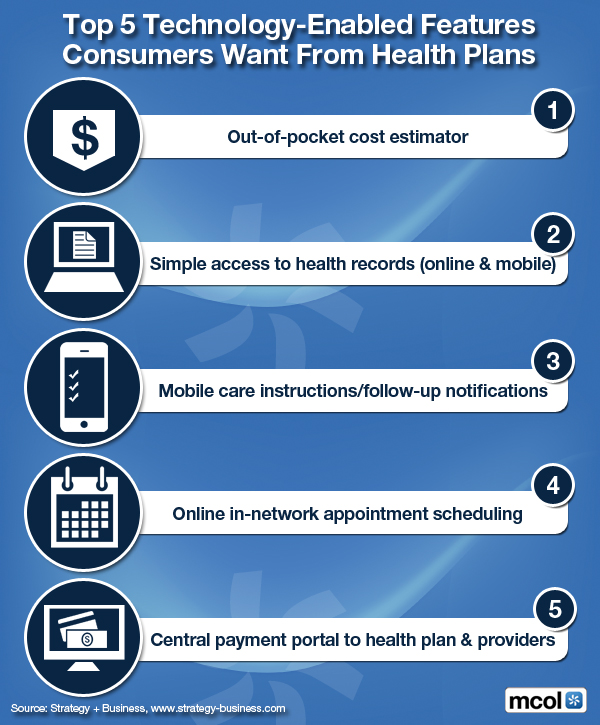
OUR OTHER PRINT BOOKS AND RELATED INFORMATION SOURCES:

Comprehensive Financial Planning Strategies for Doctors and Advisors: Best Practices from Leading Consultants and Certified Medical Planners(TM)

***

What is the Glass-Steagall Act?

Join Our Mailing List

[Staff reporters]

According to NEIL IRWIN; it is the 82-Year-Old Banking Law That Stirred a Debate!

What is the Glass-Steagall Act [Banking Act of 1933]?

When people talk about banking, they are talking about two broad classes of activities.

Commercial banking is what happens at your neighborhood branch: You deposit money in a checking or savings account, and the bank uses those deposits to make loans to consumers or small businesses.

Investment banking refers to the kind of banking activity more common on Wall Street, like helping large companies issue stock or bonds in order to fund themselves, and trading securities in hope of making a profit.

The government’s response was the Banking Act of 1933, commonly known as the Glass-Steagall Act (for the bill’s sponsors, Senator Carter Glass of Virginia and Representative Henry Steagall of Alabama), which required that commercial banking and securities activities be separated, not to take place within the same financial institution.

More: The Three Types of Banks

***

Bank

***

More:

Assessment

So, here is a look at why the Democratic presidential candidates Bernie Sanders and Martin O’Malley want to reinstate it.

TERMS: Investment Banking DR. MARCINKO

Conclusion

Your thoughts and comments on this ME-P are appreciated. Feel free to review our top-left column, and top-right sidebar materials, links, URLs and related websites, too. Then, subscribe to the ME-P. It is fast, free and secure.

Speaker: If you need a moderator or speaker for an upcoming event, Dr. David E. Marcinko; MBA – Publisher-in-Chief of the Medical Executive-Post – is available for seminar or speaking engagements. Contact: MarcinkoAdvisors@msn.com

OUR OTHER PRINT BOOKS AND RELATED INFORMATION SOURCES:

***

Comprehensive Financial Planning Strategies for Doctors and Advisors: Best Practices from Leading Consultants and Certified Medical Planners(TM)

***

The Case for Value Based Medical Care

Join Our Mailing List

Migrating from Volume to … Value

By http://www.MCOL.com

***

ImageProxy

***

Assessment

Conclusion

Your thoughts and comments on this ME-P are appreciated. Feel free to review our top-left column, and top-right sidebar materials, links, URLs and related websites, too. Then, subscribe to the ME-P. It is fast, free and secure.

Speaker: If you need a moderator or speaker for an upcoming event, Dr. David E. Marcinko; MBA – Publisher-in-Chief of the Medical Executive-Post – is available for seminar or speaking engagements. Contact: MarcinkoAdvisors@msn.com

OUR OTHER PRINT BOOKS AND RELATED INFORMATION SOURCES:

***

[PRIVATE MEDICAL PRACTICE BUSINESS MANAGEMENT TEXTBOOK – 3rd.  Edition]

Product Details

  [Foreword Dr. Hashem MD PhD] *** [Foreword Dr. Silva MD MBA]

***

FREE! In Swedish Medicine

Join Our Mailing List

An Interesting Innovation

dan-snapshot

[By Dan Ariely PhD]

I recently learned of an interesting innovation in medical pricing coming from Sweden.

This pamphlet from the healthcare authority states (translated):

“If you have a respiratory problem and you don’t take antibiotics for it during your first visit to the doctor, you have the right to a second visit within five days free of charge”.

Read more about this approach here …

FREE! In Swedish Medicine

More:

Conclusion

Your thoughts and comments on this ME-P are appreciated. Feel free to review our top-left column, and top-right sidebar materials, links, URLs and related websites, too. Then, subscribe to the ME-P. It is fast, free and secure.

***

198174

***

Speaker: If you need a moderator or speaker for an upcoming event, Dr. David E. Marcinko; MBA – Publisher-in-Chief of the Medical Executive-Post – is available for seminar or speaking engagements. Contact: MarcinkoAdvisors@msn.com

OUR OTHER PRINT BOOKS AND RELATED INFORMATION SOURCES:

***

[HEALTH INSURANCE, MANAGED CARE, ECONOMICS, FINANCE AND HEALTH INFORMATION TECHNOLOGY COMPANION DICTIONARY SET]

      Product DetailsProduct DetailsProduct Details

[Mike Stahl PhD MBA] *** [Foreword Dr.Mata MD CIS] *** [Dr. Getzen PhD]

***

Are the ME-P and Ashley Madison Related?

Join Our Mailing List

On Ransom-Ware, Black-Hat Hackers, the Gullible, Guilty … and Personal Cyber Security

A-Special ME-P Report

*** 

DEM white shirt

By Dr. David E. Marcinko MBA MBBS [Hon]

[Publisher-in-Chief]

Your Ashley Madison Account
[Paul recommends to read this email]‏
But … don’t fall for it!

I just received this email message from sharingservices@aol.com: In this time of medical information and financial advisory data cyber security breaches, here is a warning about personal security, too!

If it can happen to me, it can happen to anyone!

*********************************************************************************************************

Unfortunately your data was leaked in the recent hacking of Ashley Madison and I know have your information. I have also used your user profile to find your Facebook page, using this I can now message all of your friends and family members.

If you would like to prevent me from sharing this dirt info with all of your friends and family members (and perhaps even your employers too?) then you need to send 1 bitcoin to the following BTC address.

Bitcoin Address:
1AEJiZFnELwRZVjmVSvDSwUaXNZy4X9bQN

You may be wondering why should you and what will prevent other people from doing the same, in short you now know to change your privacy settings in Facebook so no one can view your friends/family list. So go ahead and update that now (I have a copy if you don’t pay) to stop any future emails like this.

You can buy bitcoin using online exchanges easily. If the bitcoin is not paid within 3 days of 23 Sep 2015 then my system will automatically message all of your friends and family members. The bitcoin address is unique to you.

Consider how expensive a divorce lawyer is. If you are no longer in a committed relationship then think about how this will affect your social standing amongst family and friends. What will your friends and family think about you?

Sincerely,
Paul

***

hackers

*******************************************************************************************************************

An Object lesson to all ME-P readers and subscribers

After review, I noted the following faults with this blast message:

* No sender last name.
* Sender blast email service
* Multiple email addresses
* Poor grammar
* I do not have – or ever had – a Facebook account
* I do not have – or ever had – an AM account

Assessment

Note any other “give-aways“? Don’t fall for this ploy. And, don’t be Gullible or GuiltyForewarned is forearmed.

More:

Conclusion

Your thoughts and comments on this ME-P are appreciated. Feel free to review our top-left column, and top-right sidebar materials, links, URLs and related websites, too. Then, subscribe to the ME-P. It is fast, free and secure.

Speaker: If you need a moderator or speaker for an upcoming event, Dr. David E. Marcinko; MBA – Publisher-in-Chief of the Medical Executive-Post – is available for seminar or speaking engagements. Contact: MarcinkoAdvisors@msn.com

OUR OTHER PRINT BOOKS AND RELATED INFORMATION SOURCES:

***

Product DetailsProduct DetailsProduct Details

Product Details

Product DetailsProduct Details

Risk Management, Liability Insurance, and Asset Protection Strategies for Doctors and Advisors: Best Practices from Leading Consultants and Certified Medical Planners™8Comprehensive Financial Planning Strategies for Doctors and Advisors: Best Practices from Leading Consultants and Certified Medical Planners™

***

R U A Genius?


Join Our Mailing List

Well – Are You?

[By staff reporters]

Assessment

Or – just average?

Conclusion

Your thoughts and comments on this ME-P are appreciated. Feel free to review our top-left column, and top-right sidebar materials, links, URLs and related websites, too. Then, subscribe to the ME-P. It is fast, free and secure.

Speaker: If you need a moderator or speaker for an upcoming event, Dr. David E. Marcinko; MBA – Publisher-in-Chief of the Medical Executive-Post – is available for seminar or speaking engagements. Contact: MarcinkoAdvisors@msn.com

OUR OTHER PRINT BOOKS AND RELATED INFORMATION SOURCES:

Sponsors Welcomed

Credible sponsors and like-minded advertisers are always welcomed.

Advertising Info:

all together