WHAT EVERY DOCTOR MUST APPRECIATE … Liability?

Join Our Mailing List

About our litigation system for 2019-2020

[By Dr. David Edward Marcinko MBA]

LINK: https://medicalexecutivepost.com/dr-david-marcinkos-bookings/

Dr. Marcinko MBADoctors depend on their trusted advisors to be a source of information on a wide variety of complex topics.

As we have seen, one of the areas in which physicians are increasingly seeking guidance from their attorney, accountant, consultant or financial advisor is in the area of risk management, insurance planning and asset protection.

Risk management

The best experts and consultants seek to create safe steady growth and avoid losses and exposures to things like malpractice judgments integrated with asset protection. A natural extension of this stewardship is making sure that the growth and balance of assets are safe from exposure to an increasingly predatory and hostile litigation system. Most doctors have obvious daily risks like malpractice exposures.

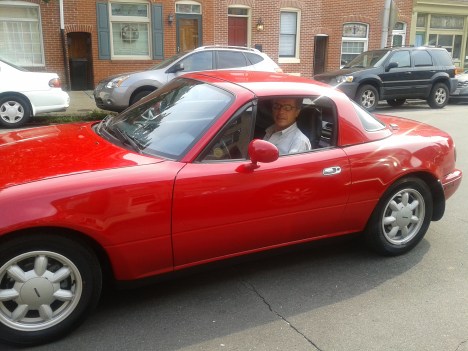
Other sources of exposure are more insidious, such as merely being affluent and visible, owning income property, or something as simple as owning and driving a car every day. The numbers are staggering; we are at a point in our litigation system where we have 70,000 lawsuits filed per day in the United States alone, many without any real merit.

Unfortunately being “right” is not enough to keep physicians safe.

Why doctors are concerned?

As illustrated by the numbers above and below, awards continue to spiral out of control, fueled by litigation attorneys who have become partners in lawsuits and who are economically incentivized to create and magnify adversarial relations between parties who might otherwise reach some reasonable, if not amicable, settlement.

So, here are additional facts about our litigation system to consider, for 2015-16:

  • The average medical malpractice award is now $3.9 MM, and some authorities put this number substantially higher;
  • The average legal costs of settling a frivolous lawsuit is $91,000 – plus the actual settlement amount itself.

The average sexual harassment suit against a small medical practice produces a verdict of $530,000. Employees are suing more often, winning more often and winning proportionally larger judgments. They win 75% of the time. Moreover, only the top 5% of Americans has a net worth of over $1MM. Using this baseline, it’s pretty easy to see where even a doctor who is worth only a few million dollars fits in on the food chain.

Here is more proof why doctors and allied medical providers are sued:

  • MDs are high net-worth, high liability, or they will be soon (i.e. new practitioners)
  • DOs have assets that would be difficult to replace if lost or reduced
  • DPMs have professional surgical liability
  • DDSs have employees and own their own practice
  • CRNs are highly visible, traceable, and or collectible
  • ODs own liability generating assets, i.e. rental property
  • NPs and ANPs have a spouse and/or children.

***

meeting-room-

***

Assessment

What doctors and all medical professionals must take to heart is that litigation attorneys are in business. Just like any business, including a medical practice, they have weekly meetings in which they examine growth, cash flow, revenue goals and new leads or opportunities. This economic motivation is a key and explains in part why we see awards rising and why plaintiffs’ attorneys regularly seek and obtain awards above the limits of applicable liability insurance policies.

Conclusion

Your thoughts and comments on this ME-P are appreciated. Feel free to review our top-left column, and top-right sidebar materials, links, URLs and related websites, too. Then, subscribe to the ME-P. It is fast, free and secure.

Speaker: If you need a moderator or speaker for an upcoming event, Dr. David E. Marcinko; MBA – Publisher-in-Chief of the Medical Executive-Post – is available for seminar or speaking engagements. Contact: MarcinkoAdvisors@msn.com

OUR OTHER PRINT BOOKS AND RELATED INFORMATION SOURCES:

Comprehensive Financial Planning Strategies for Doctors and Advisors: Best Practices from Leading Consultants and Certified Medical Planners(TM) 

John F. Nash Jr., 86, dies in car accident

Join Our Mailing List

John Nash, subject of ‘A Beautiful Mind,’ Dies in Crash

[By staff reporters]

Famed mathematician John Nash, whose accomplished life inspired the movie “A Beautiful Mind” was killed in a crash on the New Jersey Turnpike.

***

nash

***

Assessment

R.I.P. [requiescat in pace]

Conclusion

Your thoughts and comments on this ME-P are appreciated. Feel free to review our top-left column, and top-right sidebar materials, links, URLs and related websites, too. Then, subscribe to the ME-P. It is fast, free and secure.

Speaker: If you need a moderator or speaker for an upcoming event, Dr. David E. Marcinko; MBA – Publisher-in-Chief of the Medical Executive-Post – is available for seminar or speaking engagements. Contact: MarcinkoAdvisors@msn.com

OUR OTHER PRINT BOOKS AND RELATED INFORMATION SOURCES:

Product DetailsProduct Details

Cyber-Security Considerations for “Mission-Critical” Medical Devices

Join Our Mailing List 

Understanding the balance between new regulations (almost none) and guidance (in the form of non-binding recommendations)

By Shahid N. Shah MS

Shahid N. ShahTHEN …

In 2013, the Food and Drug Administration (FDA) issued its first cybersecurity safety communication, followed in 2014 by final guidance.

It struck a reasonable balance between new regulations (almost none) and guidance (in the form of non-binding recommendations).

NOW …

In 2015, the Federal Trade Commission (FTC) released a staff report entitled Internet of Things: Privacy & Security in a Connected World, in which it recommend that Internet of Things (IoT) style devices, which of course include medical and clinical devices, need to maintain a good security posture. It’s worth noting that the FDA, FTC, and other government regulators are centering on a few key guidelines.

Six Recommendations

The following six recommendations come directly from the FTC report:

  1. Companies should build security into their devices at the outset, rather than as an afterthought. As part of the security by design process, companies should consider:
  • Conducting a privacy or security risk assessment
  • Minimizing the data they collect and retain
  • Testing their security measures before launching their products
  1. Companies should train all employees about good security, and ensure that security issues are addressed at the appropriate level of responsibility within the organization
  2. Companies should retain service providers that are capable of maintaining reasonable security and provide reasonable oversight for these service providers.
  3. When companies identify significant risks within their systems, they should implement a defense-in-depth approach, in which they consider implementing security measures at several levels.
  4. Companies should consider implementing reasonable access control measures to limit the ability of an unauthorized person to access a consumer’s device, data, or even the consumer’s network.
  5. Companies should continue to monitor products throughout the life cycle and, to the extent feasible, patch known vulnerabilities

The FTC report and FDA guidelines are remarkably consistent. When thinking of cybersecurity and data privacy, engineers tend to think about authentication, authorization, and encryption. Those are the relatively easy topics.

*** circuit***

Mission Critical Medical Devices

For “mission-critical” medical safety devices, however, things are much more difficult and need to encompass a larger surface of questions, including but not limited to:

  • Asset Inventory: Is the device discoverable, and can it associate itself with standard IT inventory systems so that revision management, software updates, and monitoring can be automated?
  • Cyber Insurance: Does the device have enough security documentation to allow it to be insured by standard cyber insurance riders?
  • Patching: How is the firmware, operating system (OS), or application going to be patched by IT staff within hospitals (or the home for remote devices)?
  • Internal Threats: Has the device been designed to circumvent insider (hospital staff, network participants, etc.) threats?
  • External Threats: Has the device been designed to lock down the device from external threats?
  • Embedded OS Security: Is the device sufficiently hardened at the operating system level, such that no extraneous software components, which increase the attack surface, are present?
  • Firmware and Hardware Security: Are the firmware and hardware components sourced from reputable suppliers and free of state-sponsored spying?
  • Application Security: Is the Microsoft Security Development Lifecycle (SDL) or similar software security assurance process integrated into the engineering process?
  • Network Security: Have all network protocols not in use by the device been turned off so that they are not broadcasting?
  • Data Privacy: What data segmentation, logging, and auditing is being done to ensure appropriate data privacy?
  • HIPAA Compliance: Have proper steps been followed to ensure Health Insurance Portability and Accountability Act (HIPAA) compliance?
  • FISMA Compliance: If you’re selling to the federal government, have proper steps, such as use of Federal Information Processing Standard (FIPS) certified encryption, been followed to ensure Federal Information Security Management Act (FISMA) compliance?
  • Data Loss Prevention (DLP): Is there monitoring in place to ensure data leakage outside of the device doesn’t occur?
  • Vulnerabilities: Have common vulnerabilities such as the Open Web Application Security Project (OWASP) Top 10 been reviewed?
  • Data Sharing: Are proper data sharing agreements in place to allow sharing of data across devices and networks?
  • Password Management: Are passwords hardcoded into the device or made configurable?
  • Configuration Protection: Are configuration files properly check-summed and protected against malicious changes?

Conclusion

Your thoughts and comments on this ME-P are appreciated. Feel free to review our top-left column, and top-right sidebar materials, links, URLs and related websites, too. Then, subscribe to the ME-P. It is fast, free and secure.

ABOUT

Mr. Shahid N. Shah is an internationally recognized healthcare thought-leader across the Internet. He is a consultant to various federal agencies on technology matters and winner of Federal Computer Week’s coveted “Fed 100″ Award, in 2009. Over a twenty year career, he built multiple clinical solutions and helped design-deploy an electronic health record solution for the American Red Cross and two web-based eMRs used by hundreds of physicians with many large groupware and collaboration sites. As ex-CTO for a billion dollar division of CardinalHealth, he helped design advanced clinical interfaces for medical devices and hospitals. Mr. Shah is senior technology strategy advisor to NIH’s SBIR/STTR program helping small businesses commercialize healthcare applications. He runs four successful blogs: At http://shahid.shah.org he writes about architecture issues; at http://www.healthcareguy.com he provides valuable insights on applying technology in health care; at http://www.federalarchitect.com he advises senior federal technologists; and at http://www.hitsphere.com he gives a glimpse of HIT as an aggregator. Mr. Shah is a Microsoft MVP (Solutions Architect) Award Winner for 2007, and a Microsoft MVP (Solutions Architect) Award Winner for 2006. He also served as a HIMSS Enterprise IT Committee Member. Mr. Shah received a BS in computer science from the Pennsylvania State University and MS in Technology Management from the University of Maryland. 

Speaker: If you need a moderator or speaker for an upcoming event, Dr. David E. Marcinko; MBA – Publisher-in-Chief of the Medical Executive-Post – is available for seminar or speaking engagements. Contact: MarcinkoAdvisors@msn.com

OUR OTHER PRINT BOOKS AND RELATED INFORMATION SOURCES:

Product Details

Product DetailsProduct DetailsProduct Details

Help US Make the ME-P even Better 4-U

Join Our Mailing List

Dear Medical Providers, Financial Services Professionals, and Related Management Consultants and ME-P Colleagues,

By Dr. David Edward Marcinko MBA

DEM blue[Editor-in-Chief]

As a professional in the ME-P ecosystem, you have a lot of sources for news, analysis, and insights.

So, we’d like to know which are the best for you.

Please share your opinion about information outlets you value, and what additional information you’d like to receive that you can’t find anywhere else.

We are asking you to take a brief survey about your preferred sources for medical news and related health economics, financial planning and business information. Your input can make a real difference.

Please use the contact-form below. This open-ended online survey will take just a few minutes to complete. Tell us whatever you like!

invite

Thanks for your help – your input really matters!

← Back

Thank you for your response. ✨

The Checklist Itself Doesn’t Matter

 Join Our Mailing List

More on the The Checklist Manifesto

By: Mark is an MD/MPH candidate at Columbia University who is interested in the intersection between medicine and public policy, especially as it relates to chronic disease prevention (such as for diabetes, heart disease, and obesity).

***

Anyone who understands systems will know immediately that optimizing parts is not a good route to system excellence.…We connect the engine of a Ferrari, the brakes of a Porsche, the suspension of a BMW, the body of a Volvo. What we get, of course, is nothing close to a great car; we get a pile of very expensive junk.

Chapter 8

london

                                                            Conclusion

Your thoughts and comments on this ME-P are appreciated. Feel free to review our top-left column, and top-right sidebar materials, links, URLs and related websites, too. Then, subscribe to the ME-P. It is fast, free and secure.

Speaker: If you need a moderator or speaker for an upcoming event, Dr. David E. Marcinko; MBA – Publisher-in-Chief of the Medical Executive-Post – is available for seminar or speaking engagements. Contact: MarcinkoAdvisors@msn.com

OUR OTHER PRINT BOOKS AND RELATED INFORMATION SOURCES:
• PRACTICES: http://www.BusinessofMedicalPractice.com
• HOSPITALS: http://www.crcpress.com/product/isbn/9781466558731
• CLINICS: http://www.crcpress.com/product/isbn/9781439879900
• ADVISORS: http://www.CertifiedMedicalPlanner.org

Product DetailsProduct Details

markmdmph

Anyone who understands systems will know immediately that optimizing parts is not a good route to system excellence.…We connect the engine of a Ferrari, the brakes of a Porsche, the suspension of a BMW, the body of a Volvo. What we get, of course, is nothing close to a great car; we get a pile of very expensive junk.” – Chapter 8.

I just finished reading Atul Gawande’s The Checklist Manifesto, which was first published in 2009 and spent some well-deserved time on the New York Times Bestseller List. Written by an attending general surgeon at Brigham & Women’s Hospital in Boston, this book tells the admittedly “unsexy” story of how a simple tool such as a checklist can improve the quality and consistency of outcomes in a wide range of fields: aviation, building construction, venture capital, and (even) medicine. All of these fields are complex systems –…

View original post 820 more words

How Do Medical Students See Future Technologies?

Join Our Mailing List

Disruptive Technologies in Medicine

[By Dr. Bertalan Meskó]

Bert Mesko

Recently, I gave a talk to medical students about what kind of trends and technologies might shape the future and I was very curious what they think about these.

The Question

I asked them to give a score between 1 and 3 about how beneficial or advantageous those can be for society; and a score between 1 and 3 about how big threats they will pose to us.

They also gave a score between 1 and 10 about how much they look forward to using a technology in action. See the full size infographics here.

The Answer

So, I just wrote about how our Disruptive Technologies in Medicine university course prepares medical students for the coming waves of change. I also recently published an infographic related to new technologies in medicine.

***

ScreenShot2

***

Assessment

Preparing them for the future is a real challenge but I remain confident that we need to to that and it is still possible.

***

future

***

More:

***

FUTURISTIC MEDICAL INTERFACE

Interactive Touch Screen Application
***
This interactive touch screen presentation is an outstanding example for the importance of nice interfaces. With them you are able to show information in a whole new way and exploring data is an adventure every time!We created a vertical interactive touch screen presentation that was controlled by a mobile device. We only focused on the futuristic design and the beautiful interfaces . Our aim – the future is here and now!

Our touch screen presentations bring the future directly to your exhibition stand, shop, museum, hospital or even your tv show or movie! No prerendered elements!

It’s realtime!

LINK: https://www.behance.net/gallery/14374555/FUTURISTIC-MEDICAL-INTERFACE

***

Conclusion

Your thoughts and comments on this ME-P are appreciated. Feel free to review our top-left column, and top-right sidebar materials, links, URLs and related websites, too. Then, subscribe to the ME-P. It is fast, free and secure.

Speaker: If you need a moderator or speaker for an upcoming event, Dr. David E. Marcinko; MBA – Publisher-in-Chief of the Medical Executive-Post – is available for seminar or speaking engagements. Contact: MarcinkoAdvisors@msn.com

OUR OTHER PRINT BOOKS AND RELATED INFORMATION SOURCES:

Product DetailsProduct Details

Product Details

The ASAM/ABAM Diploma Mill

The ASAM/ABAM Diploma Mill

Wesley Boyd; MD PhD MA

[Harvard Medical School]

anguish

***
OUR OTHER PRINT BOOKS AND RELATED INFORMATION SOURCES:
• PRACTICES: http://www.BusinessofMedicalPractice.com
• HOSPITALS: http://www.crcpress.com/product/isbn/9781466558731
• CLINICS: http://www.crcpress.com/product/isbn/9781439879900
• ADVISORS: http://www.CertifiedMedicalPlanner.org

Disrupted Physician

“In a time of universal deceit, telling the truth is a revolutionary act.”
— George Orwell

IMG_6274 2

I can think of no other specialty or subspecialty in the profession of medicine where non-existent expertise can be incontestably announced and implemented.  If I claimed to be an ace neurosurgeon or an expert otolaryngologist and started practicing my claimed skills in the hospital I would be called on it pretty quick by both colleagues and patients–deemed a delusional fraud and run out on a rail within a week.  Both law enforcement, attorneys and psychiatry would be called in short order.

Yet doctors who have not met the usual and customary standards for professional and educational quality that have been identified for medical specialties and subspecialties are able to claim expertise in “addiction medicine” and everybody just lets them.

To make this point I sat for the 2010 American Board of Addiction Medicine Certification Examination.  I did this…

View original post 574 more words

The Preventing and Reducing Improper Medicare and Medicaid Expenditures Act

Join Our Mailing List 

The PRIME Act

[By Carol Miller RN MBA PMP]

Carol S. Miller

First there was Amazon PRIME; now there is another PRIME.

The Act

This Act was introduced into congress in 2013 and contains a number of provisions that would increase rewards and incentives for those who uncover healthcare fraud, as well as heighten penalties for those who commit it.

What it is

The PRIME  Act would enact stronger penalties for Medicare and Medicaid fraud; curb improper or mistaken payments made by Medicare and Medicaid; establish stronger fraud and waste prevention strategies with Medicare and Medicaid to help phase out the practice of “pay and chase” (i.e., recouping monies already erroneously paid to providers instead of detecting problems on the front end); curb the theft of physician identities; expand the fraud identification and reporting work of the Senior Medicare patrol; take steps to help states identify and prevent Medicaid overpayments; and improve the sharing of fraud data across state and federal agencies and programs.

***

199H

***

HIPAA

The law directs the Secretary to develop a plan to revise the incentive program under HIPAA for the reporting of fraud and abuse to encourage greater participation by individuals reporting Medicare fraud and abuse.

Assessment

The law also requires the plan to include certain recommendations for ways to enhance rewards for individuals reporting and an extension of the incentive program to the Medicaid program.

Conclusion

Your thoughts and comments on this ME-P are appreciated. Feel free to review our top-left column, and top-right sidebar materials, links, URLs and related websites, too. Then, subscribe to the ME-P. It is fast, free and secure.

ABOUT

Ms. Carol S. Miller has an extensive healthcare background in operations, business development and capture in both the public and private sector. Over the last 10 years she has provided management support to projects in the Department of Health and Human Services, Veterans Affairs, and Department of Defense medical programs. In most recent years, Carol has served as Vice President and Senior Account Executive for NCI Information Systems, Inc., Assistant Vice President at SAIC, and Program Manager at MITRE. She has led the successful capture of large IDIQ/GWAC programs, managed the operations of multiple government contracts, interacted with many government key executives, and increased the new account portfolios for each firm she supported. She earned her MBA from Marymount University; BS in Business from Saint Joseph’s College, and BS in Nursing from the University of Pittsburgh. She is a Certified PMI Project Management Professional (PMP) (PMI PMP) and a Certified HIPAA Professional (CHP), with Top Secret Security clearance issued by the DoD in 2006. Ms. Miller is also a HIMSS Fellow.

Speaker: If you need a moderator or speaker for an upcoming event, Dr. David E. Marcinko; MBA – Publisher-in-Chief of the Medical Executive-Post – is available for seminar or speaking engagements. Contact: MarcinkoAdvisors@msn.com

OUR OTHER PRINT BOOKS AND RELATED INFORMATION SOURCES:

Comprehensive Financial Planning Strategies for Doctors and Advisors: Best Practices from Leading Consultants and Certified Medical Planners(TM) 

Product DetailsProduct Details

Do Commisson-Based Fiduciary Financial Advisors EVEN Exist?

Join Our Mailing List

Sometimes the Case?

By Rick Kahler MS CFP http://www.KahlerFinancial.com

Rick Kahler MS CFPCan a financial advisor represent your best interests and still earn a commission? Surprisingly, this can sometimes be the case.

But … It’s up to you to find out.

Fiduciary

Being required to put the consumer’s interest first, which means representing a client rather than selling products and services to a customer is called having a fiduciary duty. While fee-only planners are inherently fiduciaries, they don’t exclusively own the fiduciary domain. The definition of a fiduciary duty does not inherently ban receiving commissions. Numerous statutes and applications of common law can require someone receiving a commission from selling a financial product to act in a fiduciary capacity.

One such circumstance was discussed in a blog post at http://www.kitces.com by Duane Thompson, president of Potomac Strategies, LLC, a legislative and public relations consulting firm.

Registered Investment Advisor

Those registered with the SEC as Registered Investment Advisors (RIA) under the Investment Advisers Act of 1940 are required to uphold a fiduciary standard of care. Advisors must register as RIAs if they, “for compensation, engage in the business of advising others” about investing in securities and as a central part of the business.

The 1940 Act has almost nothing to say about linking compensation to fiduciary responsibility. While large firms selling financial products can argue whether they must register as RIAs, it is clear that anyone registered as an RIA is held to a fiduciary standard, regardless of their compensation structure.

That said, the chances are an advisor who is compensated 100% by commissions is not an RIA and not held to a fiduciary standard. Of the 11,475 adviser firms registered with the SEC, only four are commission only, according to Thompson. Of the remainder, those that receive  a commission also charge some type of fee.

The Odds

The overwhelming odds are that, if you don’t pay a fee to a company giving investment advice or selling a financial product, they are not legally required to look after your best interests.

Even though an RIA who is totally or in part compensated by commissions has a legal obligation to put your interests first, they may still have a conflict of interest, which the SEC requires them to disclose. The size of that conflict of interest depends on the percentage of an adviser’s revenue derived from selling financial products.

Example:

For example, a RIA receiving 90% of their revenue from the sale of financial products has a large conflict of interest. The sustainability of the company and advisers’ careers depends upon sales. Arguably it’s going to be very difficult for an adviser to remain unbiased, especially if what may be in the client’s best interest is a no-load, low cost index mutual fund or variable annuity; which pay no commission.

Conversely, an advisor receiving 99% of their revenue from fees and 1% from commissions on the sale of low-cost term life insurance has almost no conflict. The sale of the insurance is most likely a convenience for clients and has an insignificant financial impact to the adviser.

face-off

[Fiduciary Advisor versus Sales Man/Woman] 

In order to find out the likelihood of advisers upholding a fiduciary standard, first ask whether they are a RIA with the SEC. If not, they owe you no fiduciary responsibility. You are a customer.

Assessment

If an adviser is an RIA, however, don’t assume there is no conflict of interest that may taint the fiduciary relationship. Ask how much of the firm’s gross revenue comes from commissions on the sale of financial products and how much comes from fees paid directly by clients. The higher the percentage of revenue that comes from fees, the lower the conflict of interest and the greater the chance you will receive unbiased, client-centered advice.

Conclusion

Your thoughts and comments on this ME-P are appreciated. Feel free to review our top-left column, and top-right sidebar materials, links, URLs and related websites, too. Then, subscribe to the ME-P. It is fast, free and secure.

Speaker: If you need a moderator or speaker for an upcoming event, Dr. David E. Marcinko; MBA – Publisher-in-Chief of the Medical Executive-Post – is available for seminar or speaking engagements. Contact: MarcinkoAdvisors@msn.com

OUR OTHER PRINT BOOKS AND RELATED INFORMATION SOURCES:

Comprehensive Financial Planning Strategies for Doctors and Advisors: Best Practices from Leading Consultants and Certified Medical Planners(TM)

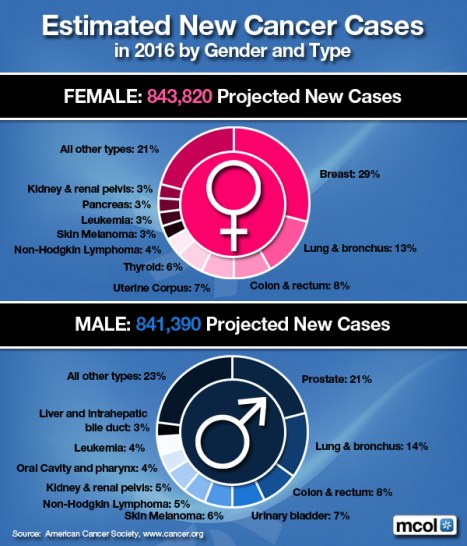
USA Cancer Survival Rate Trends

Join Our Mailing List

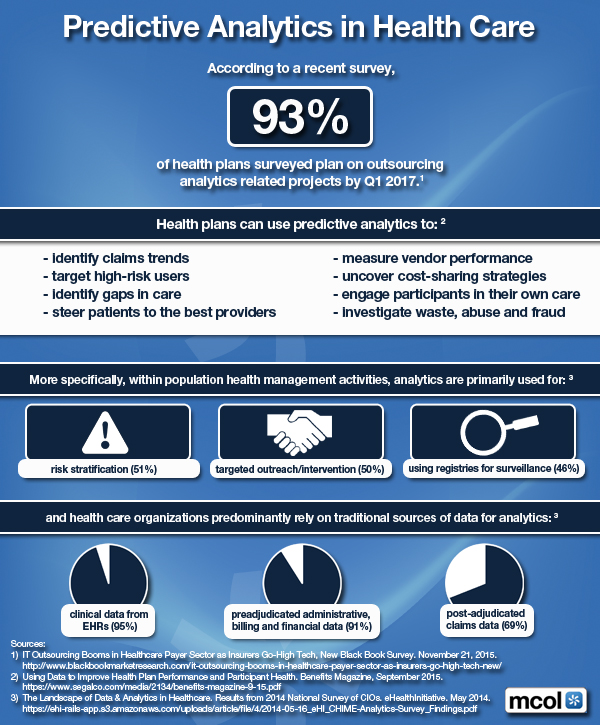
USA: 1990-2010

By http://www.MCOL.com

ImageProxy

Conclusion

Your thoughts and comments on this ME-P are appreciated. Feel free to review our top-left column, and top-right sidebar materials, links, URLs and related websites, too. Then, subscribe to the ME-P. It is fast, free and secure.

Speaker: If you need a moderator or speaker for an upcoming event, Dr. David E. Marcinko; MBA – Publisher-in-Chief of the Medical Executive-Post – is available for seminar or speaking engagements. Contact: MarcinkoAdvisors@msn.com

OUR OTHER PRINT BOOKS AND RELATED INFORMATION SOURCES:

Product DetailsProduct Details

What NOT to Do When You Launch Medical Initiatives

Join Our Mailing List

A time of medical reinvention

[By Vicki Rackner MD]

vickiFor many hospitals, clinics and medical practices, this is a time of reinvention.

This episode of Shark Tank offers insights about what NOT to do as you launch new medical initiatives.

A doctor entrepreneur entered the Shark Tank to secure funding to grow his medical device company.  He painted the picture of an ideal investment opportunity, complete with an innovative product, a huge proven market and $10 million in sales.

As I listened, I thought, “He could get a five-Shark deal!”

Things quickly fell apart during Q&A. Here are snippets from the exchange sparked by the Sharks’ inquiries about his sales:

Doctor: “We could be making quite a bit of money if I wanted to.  I’m not all that interested in the money.  It’s a tool I use to hire people.”

Lori Greiner: “You’re not interested in making money?”

Doctor: “It’s not my motivation. Medical training is very important.  It’s a way of saving lives. “

Kevin O’Leary: “What about profits?  Do you care about this?”

Doctor: “I will at some point.”

Kevin: “Not encouraging words to an investor.”

Robert Herjavec: “Why aren’t people beating a path to your door?  

Barbara Corcoran: “He’s missing a business man.  You need a business man to make money. You’re not him.  You cannot build a business unless you’re interested in making a profit. I’m out.”

Doctor: “I don’t agree with your statement that I’m not interested in a profit.  It’s not what I’m interested in right now.” 

Kevin: “Think of how that sounds to an investor.  How will I get my money back?“

Lori: “You don’t have the passion about driving the business.  I understand you’re a scientist.  That’s what drives you.  But for me to invest, I have to feel that you will protect my investment and make it thrive.  I don’t hear that here today, and for that reason, I’m out.”

Robert: “I think you’re onto something.  I think what is missing is an avenue for sales and distribution and marketing.  You seem hesitant about taking advantage of that.”

Doctor: “I’m a scientist. I’m not that guy.”

By the end of the pitch, four Sharks were out.

One Shark decided to invest.

This entrepreneur’s inability to speak the Sharks’ language and see the world through their eyes cost him the buy-in of four Sharks.   That’s what NOT to do.

***

cyber

***

Here are the Shark Tank lessons to help you successfully launch new medical initiatives.

White Coats are wired differently than Suits.  The painful exchange in the Shark Tank highlights the fundamentally different priorities of business-minded people (let’s call them Suits) and clinicians (let’s call them White Coats).  For a Suit, profits drive and measure success.  A White Coat measures clinical outcomes.

Medicine is a team sport. Successful medical organizations must deliver quality medical care and generate a profit.  Neither Suits nor White Coats accomplish this in isolation; each must cross the cultural divide and meet on collaborative ground.

Identify who is persuading whom. Sometimes the White Coats persuade the Suits to invest in a new diagnostic or therapeutic direction.  That’s the essence of the Shark Tank pitch; the doctor was the seller and the Sharks were the buyers.

White Coats are much more likely to get buy-in for their proposed operating room redesign or purchase of new imaging equipment if they show the Suits how this investment will make the hospital more profitable.

Other times, the Suits want to persuade the White Coats to adopt more cost-effective practices.  In this case the Suits are the sellers and the White Coats are the buyers.  Show the White Coats how the initiative allows them to serve in a bigger way, deliver better care or enrich the doctor-patient relationship.

You are most likely to get buy-in when you speak the language of the buyer.  This is much like World Series in which the use of the designated hitter is determined by the rules of the home team.

Persuade respectfully. The entrepreneur’s dismissive comments about profits—the things Sharks value most— struck me as disrespectful.

Persuade respectfully.

Respect in Latin means “to see someone’s actions and hold them in esteem.”  To enhance your powers of persuasion, see the world through the eyes of the person you are trying to influence.

Test your message. If you were scheduled to go on national TV, wouldn’t you set up a mock Shark Tank and have your mock Sharks throw you every possible objection?

Why did no one on the doctor’s team say, “Look, you can’t tell an investor that you don’t care about profits.  Here’s a better answer.”

Run ideas by members of the group you are trying to persuade.

Patients are wired differently than White Coats and Suits. Perhaps the most profound force driving healthcare transformation is the evolving role of the patient.  More and more of your true buyers, either influencing or driving purchasing choices.

How do you persuade them to seek care at your facility?  If they were in the Shark Tank chairs, what argument would offer?

In truth we have a limited understanding of what drives patients’ choices. What do they want? What do they value?

Clinicians know what questions patients should ask.  The innovators answer the important questions patients really ask.  These are the questions that matter.

Further, patients are not a homogenous group.  Some patients gladly pay concierge fees to have an elite medical experience; others travel internationally to get rock-bottom prices on medical procedures.

Restaurants, airlines and department stores do not try to be all things to all customers; they focus. So can you.  Successful medical organizations identify the patients whom they want to serve, describe the medical transformation they facilitate and deliver a patient-centered experience. Some call this branding; I call this positioning.  You position, and the market’s response is your brand.

***

doctors

Other stakeholders are wired differently than White Coats and Suits 

***

You manage complex, triangulated relationships with other stakeholders, including:

  • The Payers (the parties who write checks to pay for the care your deliver) The Senders (the parties who refer patients to your organization)
  • The Employers (the party that employees your patients
  • The Family Caregivers (the unpaid member of the healthcare team)
  • The Risk Managers (the organization that assumes the risk of insuring patient populations)
  • Each stakeholder brings in a different perspective and agenda.

Invest in smart marketing. Marketing is nothing more than engaging a buyer in a conversation.  Successful hospitals, clinics and physicians are finding ethical, professional ways to reach their ideal patients and communicate their positioning.

Invest in selling skills to promote better clinical outcomes.  You may think of selling as the act of persuading a buyer to make a purchasing choice.

Let’s reframe selling as the act of inspiring the buyer to take action.

Imagine what would happen if clinicians developed better selling skills.  They could “sell” patients on the idea of taking medication as prescribed, following up at appointed times and adopting healthier lifestyle choices.

Compliance failures are like the disconnect in the Shark Tank; patients hear the doctor’s pitch, and say to themselves, “I’m out.”

Marketing and selling fall outside of most physicians’ comfort zone.  Evaluating a patient fell outside of every medical student’s comfort zone. Skills and knowledge can be acquired.

The key to success.  Collaboration is the key to success.  Get buy-in from stakeholders.  Understand their perspective; this leads you to their “buy button.”  Invest in selling skills and persuade more effectively.  Integrate patient-centered approaches.

These are the keys to help medical organizations make a bigger profit and a bigger impact.

ABOUT

Vicki Rackner MD is an author, speaker and consultant who offers a bridge between the world of medicine and the world of business. She helps businesses acquire physician clients, and she helps physicians run more successful practices. Contact her at (425) 451-3777

Conclusion

Your thoughts and comments on this ME-P are appreciated. Feel free to review our top-left column, and top-right sidebar materials, links, URLs and related websites, too. Then, subscribe to the ME-P. It is fast, free and secure.

Speaker: If you need a moderator or speaker for an upcoming event, Dr. David E. Marcinko; MBA – Publisher-in-Chief of the Medical Executive-Post – is available for seminar or speaking engagements. Contact: MarcinkoAdvisors@msn.com

OUR OTHER PRINT BOOKS AND RELATED INFORMATION SOURCES:

Product DetailsProduct Details

Product Details

Attention Physician Investors [Don’t Get Soft]

Join Our Mailing List 

On “Easy” … Investing

By Lon Jefferies MBA CFP®

Lon JeffriesDo you realize how easy physicians, and most all investors, have had it lately? There is almost always something happening in the world that can serve as justification for selling investment positions or not investing new dollars.

Yet, there hasn’t been many spooky events impacting the markets during the last several months.

So, let’s examine the investment environment we’ve recently enjoyed.

Geo-political Current Events

There is almost always geopolitical current events that are capable of scaring investment markets. While this generation will always have concern about ISIS, North Korea, Iran, Afghanistan, and terrorism, we haven’t recently experienced the kind of negative political event that has immediately sent the stock market into a tailspin.

Even stories regarding missile strikes in Gaza have been few and far between. The most relevant international political event of late is the United States’ increased cooperation with Raul Castro and Cuba — a positive event.

Global economic situations also have the ability to increase volatility in the stock market. Yet, we haven’t recently been bombarded with headlines about excessive debt in Argentina or other countries on the doorstep of financial collapse.

Actually, international markets are the big investment story thus far in 2015, with Europe, Asia, and emerging markets outperforming U.S. stocks.

Social Tragedies

Social tragedies also have the ability to move the markets. I believe the most dominant story regarding social issues of late has been the horrific stories of potential racism and excessive police violence.

Of course, these events are shocking and unfortunate, but they aren’t usually the type of stories that impact investment markets.

Fortunately, I’m not aware of any school shootings, mass suicides, or broad violent attacks on U.S. soil that have caused a national mourning in 2015.

Natural Disasters

Further, there have been relatively few natural disasters such as hurricanes, earthquakes, or tornados that have significantly set back a geographic area or the nation as a whole.

In fact, the Weather Channel announced that the tornado count is 59 percent below average year-to-date. There were some large snow storms in the North-East earlier this year, but they had a nominal impact on the direction of the stock market.

US Economy

Even the U.S. economy hasn’t produced any data that has been particularly frightening to investors. It was all the way back in October that the Federal Reserve announced the ending of its quantitative easing (QE) program, which caused some to wonder if the economy would start to dry up (it hasn’t…). The concern about potentially higher interest rates has been present for so long that it is now old news, and people seem less and less convinced that higher interest rates would significantly stall the economy. Meanwhile, the unemployment rate continues to decline.

***

statistics ***

Lastly, the stock market itself has hardly provided reason for heartburn. The total return of the S&P 500 has been positive every year since 2008. The index hasn’t even had a temporary pullback of more than -7.27% (9/18/14 – 10/16/14) since 2011, even though the market historically goes through a -10% correction approximately once per year, on average. In fact, the biggest investment concern of 2014 was that small cap and international stocks didn’t make as much as large cap stocks, causing most diversified portfolios to underperform the larger market indexes such as the S&P 500 and Dow Jones Industrial Average. If your largest investing disappointment is that every part of your diversified portfolio didn’t perform as well as the best performing asset category in the market, you should really focus less on your portfolio and more on enjoying life as a whole.

Volatility

When we examine the factors that typically lead to volatility in the market, we’ve had a relatively tame past couple of months. My purpose in pointing out this fact is not to imply that the market is in a prime position to continue to do well nor on the verge of dropping drastically when the next sign of uncertainty appears. I simply hope to remind investors that the stock market is not always such a smooth ride.

Adverse Actions

The most counter-productive action an investor can take is to liquidate their positions after the market drops. I believe the best way to avoid this mistake is to constantly remind yourself that you are investing for long-term results and that short-term (and potentially drastic) volatility is certain to occur.

Reminding yourself of this fact now, before the volatility arrives, is likely to increase the probability that you will be able to stick to your long-term investment strategy during both the good and bad periods of market performance.

Enter Carl Richards

As Carl Richards points out in his new book The One-Page Financial Plan, no skydiver would try to figure out how a parachute works after jumping out of a plane. Sooner or later, an unfortunate event that will negatively impact the stock market is certain to occur. At that time, remember that just as it always has, the world will continue to turn.

Furthermore, remember that the longer you allow the world to turn, the more positive your investment results are likely to be.

Assessment

Don’t let this unusually quite investment period make you more susceptible to short-term instability once it returns.

Editor’s Note: Since writing this article, the world has experienced the catastrophic earthquake in Nepal on April 25th as well as the horrific riots in Baltimore, which started on April 27th. While these are certainly not the type of events that make the world a better place, the negative impact these occurrences have had on the stock market have again been relatively small, with the S&P 500 decreasing by a total of only 0.50% during the three days following these events [4/27 – 4/29]. Still, I would encourage investors to view these recent events as a reminder that investing and life in general is not always a smooth ride.)

More: 

Conclusion

Your thoughts and comments on this ME-P are appreciated. Feel free to review our top-left column, and top-right sidebar materials, links, URLs and related websites, too. Then, subscribe to the ME-P. It is fast, free and secure.

Speaker: If you need a moderator or speaker for an upcoming event, Dr. David E. Marcinko; MBA – Publisher-in-Chief of the Medical Executive-Post – is available for seminar or speaking engagements. Contact: MarcinkoAdvisors@msn.com

OUR OTHER PRINT BOOKS AND RELATED INFORMATION SOURCES:

Comprehensive Financial Planning Strategies for Doctors and Advisors: Best Practices from Leading Consultants and Certified Medical Planners(TM)

Talking about Retirement to Doctors with Caution!

Join Our Mailing List 

Instead … Talk Revenue Generation

By Vicki Rackner MD

vicki

As a financial advisor, wealth manager, stock-broker or financial planner, do you want to engage more doctor prospects?

Well, think twice about approaching them with educational content about retirement.

So, in this video presentation, I explain how and why this is not your best hook.

Assessment

Instead, talk to them about revenue generation.

***

pension

***

 https://www.youtube.com/watch?v=vyZ3cI9PKQA

ABOUT

Vicki Rackner MD is an author, speaker and consultant who offers a bridge between the world of medicine and the world of business. She helps businesses acquire physician clients, and she helps physicians run more successful practices. Contact her at (425) 451-3777

Conclusion

Your thoughts and comments on this ME-P are appreciated. Feel free to review our top-left column, and top-right sidebar materials, links, URLs and related websites, too. Then, subscribe to the ME-P. It is fast, free and secure.

Speaker: If you need a moderator or speaker for an upcoming event, Dr. David E. Marcinko; MBA – Publisher-in-Chief of the Medical Executive-Post – is available for seminar or speaking engagements. Contact: MarcinkoAdvisors@msn.com

OUR OTHER PRINT BOOKS AND RELATED INFORMATION SOURCES:

Comprehensive Financial Planning Strategies for Doctors and Advisors: Best Practices from Leading Consultants and Certified Medical Planners(TM)

Automated Medical Office Access Management Systems

Join Our Mailing List 

Patient check-in Kiosks

By Dr. David Edward Marcinko MBA

Dr. MarcinkoAccording to a McLean report published in InfoTech:

“Today’s patients demand the same level of self-service convenience in healthcare that they do in other industries. Medical kiosks save money, reduce wait times, and significantly enhance the patient experience. The payback period for medical kiosks is often as short as 180 days”

 Automated medical office access management [AM] or patient self check-in solutions provide a wide range of functionality including patient registration, insurance verification, and demographic-validation, electronically consent form completion, back-end scheduling, financial systems integration, real-time appointment re-scheduling, direction text mapping and way finding; and more.  Often, solutions can be individualized and integrated with HIT systems using HL7, XML, web and other standard data exchange protocols.

Open Access Patient Scheduling

A sub variant of the above is open-access patient self-scheduling, either in full or part. Benefits include reduced patient appointment wait times, matching and scheduling patients with physician, improved continuity of care, increased productivity per patient visits, higher physician compensation and higher net gains for medical offices and clinics.

Real Time Claim Adjudication

Real Time Claim Adjudication [RTCA] or expecting payment at the time of service is becoming the rule, not the exception, in the modern AM era. RTCA makes a medical practice more like other businesses.

Benefit of Automated Medical Office Access Management

  • Streamlines patient flow with focus on improved patient care
  • Real-time insurance verification
  • Capture credit/debit card information with funds verification
  • Improves office cash flow and collections
  • Provides patient payment receipts
  • Decrease accounts receivable [ARs]
  • Save time and office staff resources
  • Increases office return on investment [ROI]
  • Demographic capture and validation improve marketing
  • Continually improve office operations.

Vendors for the above AM processes include: Phreesia.com, KioHealth.com, MediSolve.Ca; VecnaMedical.com; MeridianKiosks.com; AppointmentDesk.com; and KioskMarketPlace.com; etc.

***

Guy

***

More: Simple Steps to a Patient Registry: Ticket to Care Coordination, Quality Reporting and Pay for Performance

http://store.hin.com/Simple-Steps-to-a-Patient-Registry-Ticket-to-Care-Coordination-Quality-Reporting-and-Pay-for-Performance_p_0-3855.html#

Conclusion

Your thoughts and comments on this ME-P are appreciated. Feel free to review our top-left column, and top-right sidebar materials, links, URLs and related websites, too. Then, subscribe to the ME-P. It is fast, free and secure.

Speaker: If you need a moderator or speaker for an upcoming event, Dr. David E. Marcinko; MBA – Publisher-in-Chief of the Medical Executive-Post – is available for seminar or speaking engagements. Contact: MarcinkoAdvisors@msn.com

OUR OTHER PRINT BOOKS AND RELATED INFORMATION SOURCES:

Product DetailsProduct Details

Morningstar Expense Ratio Study Shows Fund Costs Falling

Join Our Mailing List

Asset-Weighted Expense Ratios and Market Share

By Morningstar

***

tumblr_nnzc1ahE8I1u8swf1o1_1280

[Click to Enlarge]

Conclusion

Your thoughts and comments on this ME-P are appreciated. Feel free to review our top-left column, and top-right sidebar materials, links, URLs and related websites, too. Then, subscribe to the ME-P. It is fast, free and secure.

Speaker: If you need a moderator or speaker for an upcoming event, Dr. David E. Marcinko; MBA – Publisher-in-Chief of the Medical Executive-Post – is available for seminar or speaking engagements. Contact: MarcinkoAdvisors@msn.com

OUR OTHER PRINT BOOKS AND RELATED INFORMATION SOURCES:

Comprehensive Financial Planning Strategies for Doctors and Advisors: Best Practices from Leading Consultants and Certified Medical Planners(TM)

Crowd-Sourcing Financial Advice?

Join Our Mailing List 

By Dr. David E. Marcinko MBA

If you have some eggs about to expire, or a car that has problems, you can turn to an online community to find some solutions. But, what if you have a financial issue, like what to do with a windfall or how to invest for a kids’ college tuition, and need help?

Can you crowdsource financial advice? 

Ramon Ramirez writes on the Daily Dot’s The Kernel about the personal finance section of Reddit, where people ask for, and receive, all types of advice on personal financial matters; The subreddit has 2.7 million subscribers.

Ramirez finds that “for the armchair experts … weighing in on these questions pro bono is all in a day’s work. They are generally affable, seemingly trustworthy, and largely convincing.” But, one professor of personal finance sees a problem: “Six people suggest six different things to do—now what do I do?

Professor Speak

First of all, who are these people that are answering this plea? Are they professionals? Are they certified financial planners? Do they have any idea what they’re talking about?”

Others say the peer-review part of crowdsourced advice is its most valuable aspect.

“Compare this to a traditional financial advisor. If you’re in here asking about what to invest your retirement into, and I’m suggesting funds that personally enrich me, I’ll get called out on it.”

Left unsaid, but surely true, is how investors will increasingly turn to sites like this to validate their advisors’ advice, or learn why they should change advisors.

***

Soldiers

 ***

***

Assessment

First we had crowd sourced funding, then crowd sourced medicine … and now crowd sourced investing! Prudent, or NOT?

More:

Crowd-Funding:

MORE: P2P

Conclusion

Your thoughts and comments on this ME-P are appreciated. Feel free to review our top-left column, and top-right sidebar materials, links, URLs and related websites, too. Then, subscribe to the ME-P. It is fast, free and secure.

Speaker: If you need a moderator or speaker for an upcoming event, Dr. David E. Marcinko; MBA – Publisher-in-Chief of the Medical Executive-Post – is available for seminar or speaking engagements. Contact: MarcinkoAdvisors@msn.com

OUR OTHER PRINT BOOKS AND RELATED INFORMATION SOURCES:

Comprehensive Financial Planning Strategies for Doctors and Advisors: Best Practices from Leading Consultants and Certified Medical Planners(TM)

Largest global m-Health research study reveals top five m-Health countries in Europe

Join Our Mailing List

More than 5,000 participate in landmark study for m-health app companies

[By Ralf Jahns]ralph

RIGA, Latvia, 12 May 2015:

Denmark, Finland, The Netherlands, Sweden and the UK are the top five countries offering the best market conditions for mobile health app companies in Europe, according to a survey conducted by research2guidance in collaboration with HIMSS Europe. As part of the largest global mHealth research programme, research2guidance and HIMSS Europe have come together to analyse the market readiness of the 28 EU member states through “The EU Countries’ mHealth App Market Ranking” survey.

Over 5,000 app developers, healthcare professionals and mHealth practitioners were asked to rank European countries based on their experience and provide reasons for their ranking. The practitioners view is combined with facts based evaluation for each country, based on five dimensions and 26 market condition criteria such as eHealth adoption, level of digitalization, market size and health expenditure, ease of starting a business and the mHealth regulatory framework.

Denmark, Finland, The Netherlands, Sweden and UK proved to have the highest market readiness and most mature market conditions, providing the best starting points for mHealth companies to succeed. Out of these five countries though, the UK emerged as the leader according to 55% of mHealth practitioners. The study revealed that this is primarily due to the openness and positive attitude many doctors in the UK have when it comes to new technology and integrating mHealth solutions into patient treatments.

***

EU-segments

[Click to enlarge]

***

Ralf Jahns, Managing Director at research2guidance, who announced the survey findings at the mHealth Summit Europe, said: “The survey is now in its sixth year and the response this time has been overwhelming becoming increasingly evident that the momentum around mHealth is growing at a rapid pace. The report is extremely valuable for anyone thinking about starting an mHealth company, as well as for government organisations in European countries that want to benefit from a flourishing mHealth ecosystem through creating highly qualified jobs, reducing national healthcare costs and ensuring high levels of quality of care.” Germany and France emerged with mixed results: on the one hand these two markets have enormous potential when it comes to the amount which has been invested in patients, doctors, hospitals and healthcare on a whole.

However, rankings for eHealth and mHealth adoption in Germany and France were extremely low, showing these countries are more reluctant to embrace the digitalisation of healthcare, thus classifying themselves as “average” countries to invest in mHealth. Rainer Herzog, General Manager at HIMSS Europe added: “The timing of the report is particularly important as it coincides with the mHealth Summit Europe which will bring together the most important stakeholders in the mHealth industry in Europe. The survey results will provide a great platform for discussion and give us an insight into how ready European countries really are to adopt mHealth and the challenges that some countries are yet to overcome, meanwhile giving entrepreneurs a head-start when deciding which country would be best to start an mHealth business.”

To view the full report please click here: About research2guidance:

ABOUT

Research2guidance is a strategy advisory and market research company. Research2guidance concentrates on the mobile app eco-system and are convinced that mobile health solutions will make a difference to people’s lives and that the impact on the healthcare industry will be significant. The organisation provides insights to make it happen and to successfully lead a business.

Link to full report Link to blog post Link to image

Conclusion

Your thoughts and comments on this ME-P are appreciated. Feel free to review our top-left column, and top-right sidebar materials, links, URLs and related websites, too. Then, subscribe to the ME-P. It is fast, free and secure.

Speaker: If you need a moderator or speaker for an upcoming event, Dr. David E. Marcinko; MBA – Publisher-in-Chief of the Medical Executive-Post – is available for seminar or speaking engagements. Contact: MarcinkoAdvisors@msn.com

OUR OTHER PRINT BOOKS AND RELATED INFORMATION SOURCES:

Product Details

Product DetailsProduct Details

The 2015 – 18 Physician Pay Check-Up

Join Our Mailing List

Annual Medscape Findings

[By Staff Reporters]

***

Medscape2015Report

***

iMBA Inc., Historical Review

[By Hope R. Hetico RN MHA CMP™]

[By Dr. David Edward Marcinko MBA CMP™]

dave-and-hope9

http://www.CertifiedMedicalPlanner.org

SOAR

***

Other MEDICAL Professional SALARIES 

Dentists are Different

A 2003 Survey of Dental Practices reported net income from dentistry-related sources. Dentists differ from physicians in that 90% are in private practice.

In 2002, the average practitioner’s net income was $174,350. The average dental specialist’s net was $291,250. These figures represent a 0.7% and a 5.8% increase over 2001, respectively. Net income rose steadily since 1986, when general dentists made an average of $69,920 and specialists an average of $97,920.

But, by 2010, according to PayScale.com, the average general dentist earned $98,276 – $157,437; a decreasing trend allocated as follows.

Salary $92,689 – $147,682
Bonus $1,996 – $19,727
Profit Sharing $1,038 – $27,514
Commissions $480.74 – $32,500

Source: http://www.ada.org/prof/resources/pubs/dbguide/newdent/income.asp#private

Source: http://www.payscale.com/research/US/Job=Dentist/Salary

dental

So Are Chiropractors

According to Salary.com, the median salary for strictly office-based chiropractors was $78,994 in 2005; while Collegegrad.com reported the median annual earnings of a salaried chiropractor as $65,330 in 2002; with the middle 50% earning between $44,140 and $102,400.

The U.S. Bureau of Labor Statistics estimated chiropractors earned an average salary of $84,020 in 2004. A Chiropractic Economics survey in 2005 suggested mean salary at $104,363.

Another survey, for 2007, in Chiropractic Economics is available here: http://www.chiroeco.com/article/2007/Issue8/images/CES&ESurvey2007.pdf

And, a range of $44,511 – $82,826 was reported in 2010 by PayScale.com, allocated as follows:

Salary $42,106 – $78,129
Bonus $1,008 – $10,205
Profit Sharing $973 – $8,139
Commission $750 – $10,113
Total PayXTotal Pay combines base annual salary or hourly wage, bonuses, profit sharing, tips, commissions, overtime pay and other forms of cash earnings, as applicable for this job. It does not include equity (stock) compensation, cash value of retirement benefits, or the value of other non-cash benefits (e.g. healthcare). $44,511 – $82,826

Source: http://www.payscale.com/research/US/Job=Chiropractor/Salary

Future Doc!

Podiatrist’s Potential Rising

The salary range for a podiatrist, or Doctor of Podiatric Medicine, in 2006 was reported as $128,000 to $292,000 according to http://www.allied-physicians.com/salary_surveys/physician-salaries.htm.

This robust growth was likely due to expanded education, training, and general allopathic and osteopathic acceptance by the medical community, as well as by insurance companies, employers, patients and various governmental agencies and third party payers.

Increased surgical sub-specialization, in-patient hospital and ambulatory out-patient surgical center activity were also positive compensation factors.

***

Ankle-Leg Trauma

***

Conclusion

Your thoughts and comments on this ME-P are appreciated. Feel free to review our top-left column, and top-right sidebar materials, links, URLs and related websites, too. Then, subscribe to the ME-P. It is fast, free and secure.

Speaker: If you need a moderator or speaker for an upcoming event, Dr. David E. Marcinko; MBA – Publisher-in-Chief of the Medical Executive-Post – is available for seminar or speaking engagements. Contact: MarcinkoAdvisors@msn.com

OUR OTHER PRINT BOOKS AND RELATED INFORMATION SOURCES:

Comprehensive Financial Planning Strategies for Doctors and Advisors: Best Practices from Leading Consultants and Certified Medical Planners(TM)

Product DetailsProduct Details

Product Details

More Ideas to Help [Medical] Entrepreneurs

David Cummings on Startups

After giving a tour of the Atlanta Tech Village last week to a C-level executive of a local Fortune 500 company, he asked, enthusiastically, how he could help out. I cited the normal ways like mentoring, hearing curated pitches from startups (see One Way Government Can Help Startups), and spreading the word about the innovation taking place in their own backyard. Then, he asked something else that stuck with me: what are some other ideas you’re considering to help entrepreneurs?

Here are a few more ideas to help entrepreneurs and startups:

  • Host a weekly/monthly AMA (ask me anything) in-person where a successful entrepreneur answers questions (straight Q&A)
  • Lead a regular webinar that’s open to anyone with a different entrepreneurship topic each week (e.g. product management, engineering, sales, marketing, fundraising, etc.)
  • Facilitate an entrepreneur bootcamp program
  • Run more programs to help founders meetup, internship fairs, and domain expert roundtables

Ultimately, increasing the…

View original post 20 more words

An Investor’s Guide to Better Writing

Join Our Mailing List

Seriously?

[By Vitaliy N. Katsenelson, CFA]

ImageProxyI never thought I’d be giving writing advice. I was always the worst student in my literature class in Russia. I never received a grade higher than a C on any Russian essay I ever wrote. I have a theory that my teachers got sick of reading and grading my horrible essays, so they stopped and automatically gave me a passing grade out of pity. I don’t blame them.

When I came to the U.S., my grades in English class in college were not spectacular either; in fact, English was the only class I failed in college and actually had to retake my senior year.

My writing has improved slightly since then – and you, my loyal readers, get to be the judge of my scribbles. However, if the prequalification for giving writing advice was based solely on quantity – on how many words have blackened a perfectly fine white screen or besmirched innocent paper – then I am more than qualified. I have been at it for exactly a decade.

My writing “career” started in 2004 when I was hired as a writer by TheStreet.com. I was not hired because I was good – I wasn’t. But I had an investing background, and TheStreet.com was not very picky; it needed warm bodies (ideally with CFA next to their names) to comment on the markets and stocks. TheStreet.com paid almost nothing, and it was overpaying me.

I had zero experience, but I was ambitious. I took writing very seriously, and therefore my articles were serious. They were filled with big words, and, quite frankly, they were enormously boring. In addition, I was extremely self-conscious about grammar. Sentence structure and punctuation drove me nuts, and I was afraid of confusing words that were spelled similarly but had unrelated meanings (like comma and coma).

***

Typewriter

***

LESSONS LEARNED

This brings me to the first lesson that I want to impart about writing, and it’s one that will drive English teachers insane: Don’t worry about grammar.

Once I stopped worrying about grammar, I felt a huge weight lifted from my shoulders (as all those little punctuation marks emptied themselves from my brain). I completely gave up on a, an and the (my 12-year-old son, who was born here, does a great job fixing those for me), I stopped obsessing about commas (and comas), and I stopped trying to ferret out all the other marvelous secrets of English grammar. I let copy editors – who are very talented and oh so skilled at this – catch me out in all my little peccadilloes. Instead I channel my energy into making writing interesting and funny (if appropriate); this is Lesson No. 2.There are a lot of smart investors, and a lot of them write (just visit the web site Seeking Alpha), but only a small fraction manage to make their writing interesting (again, just visit Seeking Alpha) – and those are the ones who are read more than once.

As I mentioned, when I started writing, my articles were technical and boring. I still feel sorry for the people who read them and especially for my dear friends who felt an obligation to read them.

Then an accident happened. Six months into writing for TheStreet.com, I wrote about the digital video recorder company TiVo. In that article I dared to use a little bit of humor to describe a painful experience I had when I called TiVo’s automated telephone customer service, which did not seem to understand my “slight” Russian accent. To my embarrassment, I had to ask my three-year-old son, who by that time had already acquired a perfect “Disney” accent, to talk to the machine instead, and of course it understood him just fine.

That article was not brilliant – it contained as many or as few insights as my previous articles did – but it was not “proper,” and it was not boring. Suddenly, the feedback from readers was much different – I received a ton of e-mail. Then I understood the power of humor. But it was not just humor: I was able to deliver my otherwise boring message in an interesting way.

I realized that knowing what you want to say is not enough; you need to figure out how to say it.

To this day, I spend hours staring at the computer, trying to come up with an interesting analogy or a compelling angle on how to say something I already know. I often use analogies to tell a story, especially if the topic is complex. They help me relate complex ideas through simple examples.

Let me illustrate. I have a very smart investor friend of German ancestry. True to his roots, he is very efficient in everything he does. (I am stereotyping here, but why not?) He has written a very smart investment book. If you read the whole thing, you’d learn a lot. But that is a big if. His book is as efficient and properly structured as you would expect from a well-engineered German car or an instruction manual for that car. It doesn’t have an extra word or a superfluous sentence. But unfortunately, in the process of making it efficient, he sterilized his book. I was excited to read it but could not get past Chapter 3. I got terminally bored, and I do investments for a living.

Oh, and while we’re on the subject of boredom: Follow novelist Elmore Leonard’s advice when he said, “I try to leave out the parts that people skip.” Don’t try to be descriptive for the sake of being descriptive.

Andrew Blum in 2012 wrote a terrific book called Tubes: A Journey to the Center of the Internet . However, in his other life Andrew is a reporter who covers architecture. His job is to describe inanimate objects. In Tubes he often goes into “descriptive mode,” telling us all about things that do not need to be described. For example, at one point he falls into an exhaustive description of the hotel he stayed in near the Los Angeles International Airport. The hotel room had nothing to do with the story, but he went on and on, describing bars of soap, their colors, the plate they were on and how the sunlight bounced off each one of them.

After making it through the third chapter, I gave up and downloaded the audiobook of Tubes. So maybe Andrew succeeded after all, since I ended up buying two versions of his book. (And I do highly recommend listening to his book if you want to learn about the Internet.)

It took a while for my writing style to develop. A big part of its development came through reading great writers. The two people who had the most impact on me were John Mauldin and Cliff Asness.

John needs no introduction, as his economics newsletter (Mauldin Economics) is read by millions. He has a gift for explaining complex investment topics simply, but he also invites you into his life. He shares stories about the trips he takes and the people he meets; he talks about his kids and their travails, his lack of time for the gym and his penchant for cooking mushrooms. When you read him, you feel as if he’s writing for you – just you. This is different from fiction writing, in which the author’s fingerprints are hidden.

Cliff Asness has had a tremendous impact on me as well. Cliff is a hedge fund manager; he runs the large quant firm AQR Capital Management in Greenwich, Connecticut. Cliff has an incredible gift for being witty. Back in 2005 I read a paper by Cliff discussing the most boring topic on earth: the expensing of employee stock options. At the time, companies did not consider them an expense. Cliff argued that the companies were wrong and needed to show the options on their income statements, just like any other expense.

I had written on the same topic just a few months before, making a similar point. But after I read his paper, I sent Cliff an e-mail with the subject line “I am not worthy.” Cliff’s paper was published in the most boring finance magazine in the whole universe: Financial Analysts Journal (every article in it is full of geeky Greek symbols). To my astoundment, Cliff was able to inject humor where I thought it was not possible. I wrote a very boring, unmemorable article on stock options; Cliff wrote a great, funny article on the same topic that I still remember today.

John Mauldin showed me through his writing that it’s okay to be personal, and Cliff proved it is okay to be funny. No, Cliff proved that you must be funny when you discuss boring topics – this is how you make the reader stick with it. Lesson No. 3: Identify your favorite writers, the ones whose voices you can really relate to, and learn from them.

I could relate to John’s and Cliff’s writings because they fit my personality and my natural writing style. They liberated me from being sanitized, impersonal and boring.

A sublesson here is, Read to write. When you read, always have your writer’s hat on, and pay attention not just to content but to the quality of the writing as well. That is not something that comes automatically to most of us; we have to manually hit the “on” switch.

Lesson No. 4: Be respectful of your environment. This is not an ecological statement; I am talking about your writing environment. If you write long enough, you start to appreciate the importance of your external and internal environment. Stephen King, in his terrific book On Writing: A Memoir on the Craft , said that he listens to heavy metal band AC/DC when he writes; he feels it walls him off from the external world and helps him build his own worlds. I listen to classical music, and if I am really stuck, I start listening to opera.

And if that weren’t weird enough, I write only in italics. This little trick makes my letters look a bit friendlier to me. If you find that you like your font to be pink, go for it. We writers need any edge we can get, and you can always change back to a color and format that is acceptable to society when you are done.

The final lesson: Be prepared for pain – or maybe not. Writing is a very personal process. Some of us are great thinkers, able to puzzle through very complex ideas in our heads and lay them out logically on paper. I have tremendous respect for those lucky ones. For most of us, present company included, writing is usually a painful endeavor that involves staring at a blank screen for hours on end and writing and rewriting multiple times.

In fact, let me take it a step farther: I think through writing. A quote from George Bernard Shaw comes to mind: “Few people think more than two or three times a year; I have made an international reputation for myself by thinking once or twice a week.”

If you ask me a question about something I have not thought about before, even if you give me a minute to think about it, my answer will usually, well … suck. I have not written about that topic yet, and so I may not have thought it through, and the logical links may not have been made. That’s just how my mind operates.

Quite frankly, I am embarrassed for my brain. It’s like the dirty apartment of a confirmed bachelor, with unwashed clothes, empty pizza boxes and beer bottles all over the floor. For an idea to be developed to the point at which it can leave the room, I have to clean it up, organize it, put things in their rightful place. That is why I write – sorry, dear reader, it’s not about you; it’s about me, me and me again.

***

money

***

More:

ASSESSMENT

Writing is not a linear process, and when you sit down to write, your thoughts may not be quite ready to come out – it’s okay if they just haven’t come to a boil yet. Don’t blame it on writer’s block. Author Tom Clancy once said, “Writer’s block is just an official term for being lazy, and the way to get through it is work.” Just take some time off, do something fun and then get back on the writing horse.

ABOUT

Vitaliy N. Katsenelson, CFA, is Chief Investment Officer at Investment Management Associates in Denver, Colo. He is the author of The Little Book of Sideways Markets (Wiley, December 2010). To receive Vitaliy’s future articles by email or read his articles click here.

Investment Management Associates Inc. is a value investing firm based in Denver, Colorado. Its main focus is on growing and preserving wealth for private investors and institutions while adhering to a disciplined value investment process, as detailed in Vitaliy’s book Active Value Investing (Wiley, 2007).

Conclusion

Your thoughts and comments on this ME-P are appreciated. Feel free to review our top-left column, and top-right sidebar materials, links, URLs and related websites, too. Then, subscribe to the ME-P. It is fast, free and secure.

Speaker: If you need a moderator or speaker for an upcoming event, Dr. David E. Marcinko; MBA – Publisher-in-Chief of the Medical Executive-Post – is available for seminar or speaking engagements. Contact: MarcinkoAdvisors@msn.com

OUR OTHER PRINT BOOKS AND RELATED INFORMATION SOURCES:

Comprehensive Financial Planning Strategies for Doctors and Advisors: Best Practices from Leading Consultants and Certified Medical Planners(TM)

What’s Fueling the Demand for Tele-Health Today?

Join Our Mailing List

The Four Key Factors

By http://www.MCOL.com

tele health

Conclusion

Your thoughts and comments on this ME-P are appreciated. Feel free to review our top-left column, and top-right sidebar materials, links, URLs and related websites, too. Then, subscribe to the ME-P. It is fast, free and secure.

Speaker: If you need a moderator or speaker for an upcoming event, Dr. David E. Marcinko; MBA – Publisher-in-Chief of the Medical Executive-Post – is available for seminar or speaking engagements. Contact: MarcinkoAdvisors@msn.com

OUR OTHER PRINT BOOKS AND RELATED INFORMATION SOURCES:

Product DetailsProduct Details

Healthcare Use Among High-Cost Patients

Join Our Mailing List

In the VA Healthcare System

By http://www.MCOL.com

***

VA

***

More: Is the VA Worth Saving?

Conclusion

Your thoughts and comments on this ME-P are appreciated. Feel free to review our top-left column, and top-right sidebar materials, links, URLs and related websites, too. Then, subscribe to the ME-P. It is fast, free and secure.

Speaker: If you need a moderator or speaker for an upcoming event, Dr. David E. Marcinko; MBA – Publisher-in-Chief of the Medical Executive-Post – is available for seminar or speaking engagements. Contact: MarcinkoAdvisors@msn.com

OUR OTHER PRINT BOOKS AND RELATED INFORMATION SOURCES:

Product DetailsProduct Details

Moving the Goalpost [Criminal Violations of HIPAA by PHS, Quest and USDTL]

Join Our Mailing List

clinical drug trials

Disrupted Physician

imgres-22

Information obtained under HIPAA Privacy Rule

1.August 6, 2014 to Langan with health materials   2. Quest-Clinical

PastedGraphic-1

The elements of a criminal offense under HIPAA are fairly straightforward.  To commit a “criminal offense” under HIPAA, a person must knowingly and in violation of the HIPAA rules do one (or more) of the following three things.:  use or cause to be used a unique health identifier, obtain individually identifiable health information relating to an individual or disclose individually identifiable health information to another  person.   Criminal penalties under HIPAA, tiered in accordance with the seriousness of the offense, range from a fine of up to $50,000 and/or imprisonment up to a year for a simple violation to a fine up to $100,000 and/or imprisonment up to five years for an offense committed under a false pretense and a fine up to $250000 and/or imprisonment up to ten years for an…

View original post 3,591 more words

The Quality of Life Structured Resident Interview and Care Plan

Join Our Mailing List

Creating person-centered care plans in the nursing home

[By Staff Reporters]

About

The Quality of Life Structured Resident Interview and Care Plan is a system for creating individualized, person-centered care plans in the nursing home.

This interview-based approach to care planning generates the information staff need to tailor a resident’s care plan to their preferences, as well as quantitative measurement of individual and facility-level outcomes.

Funding was provided through a seed money grant by the University of Pittsburgh Institute on Aging. For further information about the University of Pittsburgh Institute on Aging please visit http://www.aging.pitt.edu/

***

woman

***

More: Superannuation Demographics for Financial Advisors

Assessment

The major funding for the Improving Quality of Life in Nursing Homes Through Use of Structured Resident Interviews project was also provided by a grant through The Commonwealth Fund. More information about The Commonwealth Fund can be found at their website here: http://thecommonwealthfund.net/

Contact

Howard Degenholtz, PhD Prinicpal Investigator Department of Health Policy and Management Center for Bioethics and Health Law University of Pittsburgh 130 DeSoto St., A616 Pittsburgh, PA 15213

Link: http://www.improvingqol.pitt.edu/home

Conclusion

Your thoughts and comments on this ME-P are appreciated. Feel free to review our top-left column, and top-right sidebar materials, links, URLs and related websites, too. Then, subscribe to the ME-P. It is fast, free and secure.

Speaker: If you need a moderator or speaker for an upcoming event, Dr. David E. Marcinko; MBA – Publisher-in-Chief of the Medical Executive-Post – is available for seminar or speaking engagements. Contact: MarcinkoAdvisors@msn.com

OUR OTHER PRINT BOOKS AND RELATED INFORMATION SOURCES:

Product Details

Comprehensive Financial Planning Strategies for Doctors and Advisors: Best Practices from Leading Consultants and Certified Medical Planners(TM) 

Video on Six Costly Investment Behaviors

Join Our Mailing List

Pathetic results compared to the markets

[Principal of MZ Capital Management]

[Contributor to Morningstar and Physicians Practice]

Most investors are very good at hurting themselves financially. According to latest release of Dalbar’s Quantitative Analysis of Investor Behavior (QAIB), the average investor has a return of only 2.6% over the last ten years. That’s pathetic compared to what the markets gave. See the chart below, over the same period, the S&P 500 gave an annualized return of 7.4% and the bond market gave 4.6%.

***

ImageProxy

[Click to Enlarge]

***

Investor behaviors are such a big drag on investment returns that Nobel Prize winner Daniel Kahneman, an Israeli American, advised Israel’s Pension Authority to send out statements once a quarter instead of once a month. Since when Israel’s pensioners don’t get their statements, they don’t do stupid things to their accounts.

So what are those behaviors that are so costly to investment returns? Please watch this five minute long video produced by Independence Advisors.

In a nutshell, the emotional reactions (such as herding) that had helped our hunter-gatherer forebears survive so well and thus are hard-wired into our brains are literally hazardous to successful investing. In a way, the value of an advisor like myself is to separate your emotions from your money.

Assessment

So, how does this relate to physicians and other medical professionals; better or worse?

Conclusion

Your thoughts and comments on this ME-P are appreciated. Feel free to review our top-left column, and top-right sidebar materials, links, URLs and related websites, too. Then, subscribe to the ME-P. It is fast, free and secure.

Speaker: If you need a moderator or speaker for an upcoming event, Dr. David E. Marcinko; MBA – Publisher-in-Chief of the Medical Executive-Post – is available for seminar or speaking engagements. Contact: MarcinkoAdvisors@msn.com

OUR OTHER PRINT BOOKS AND RELATED INFORMATION SOURCES:

Comprehensive Financial Planning Strategies for Doctors and Advisors: Best Practices from Leading Consultants and Certified Medical Planners(TM)

Living and Dying on Financial Planning Averages

Join Our Mailing List

Too simplest … Too manageable?

By Lon Jeffries MBA CFP CMP®

Lon JeffriesNever forget the story of the six-foot tall man who drowned crossing the stream that was only five feet deep, on average.

We want to abide by averages because they make our lives simple and manageable. A couple on a date night assumes a movie will be an average of two hours long so they know when to schedule dinner with friends.

The entrepreneur wants to think in terms of making an average profit of $100,000 per year so he has a guideline regarding the standard of living he can enjoy.

The 65-year old retiree wants to assume he will live to the average age of 84.3 so he knows at what pace he can enjoy his nest egg.

Planning Gone Awry

However, when we rely too heavily on averages, our planning can go awry. If the movie runs longer than two hours, the couple will be late for their dinner date. If the entrepreneur has a slow year and earns less than $100,000, he may end up taking out short term debt to pay his bills. If the retiree lives past age 84.3, he may outlive his money.

Financial Planning Averages

The use of averages is essential in financial planning. A range of assumptions is required in the development of a financial plan – how long will you live, how much will you spend each year, what rate of return will your investments achieve, how much will you pay in taxes, what will the rate of inflation be, etc. Without these assumptions, retirement projections can’t be constructed. Further, the best method for making these assumptions is to use averages – an average life expectancy, an historical average rate of return, an historical average inflation rate, etc.

So, how do we prevent the use of averages from destroying us? The answer is by allowing enough time and repetitions for the law of averages to come into effect. Just because a basketball player shoots free throw shots at a 90% success rate doesn’t mean he will necessarily make the next free throw he takes. It does, however, mean that if he shoots 100 free throws he is likely to make 90 of them.

Beware Assumptions

A financial plan may assume you achieve an average annual rate of return of 7% per year. Of course, this doesn’t mean it is impossible that your portfolio will actually lose 10% over the next 12 months. It is critical to remember that the financial plan assumes you achieve a 7% return over the entirety of your retirement, which may be 30 years. Consequently, if a loss of 10% occurs in the first year of retirement, your portfolio still has another 29 years to achieve returns that average out to 7% per year. Thus, a 10% loss is far from catastrophic to your retirement projections.

In fact, the primary way a 10% loss could become catastrophic to your portfolio is if it motivates you to make changes to your investments that would prevent the law of averages from applying. If an investor sold their portfolio after suffering the 10% loss, it would essentially guarantee that the anticipated average rate of return won’t be achieved, and consequently, the financial plan would be likely to fail.

***

Bell Curve

***

For this reason, while it is true that over an extended period of time the stock market has averaged an annual return of 10%, we should always remember that there is a significant chance of the market taking a loss during any given year (or three-year) period, and it is possible that the market could endure a decade without any significant gains (similar to the 2000’s).

Still, if the financial plan requires an average investment return over an extended period of time such as a 30-year retirement, even these setbacks are far from certain to dislodge your secure retirement as long as time is granted for the average to work itself out.

Enter Howard Marks

As famed writer and investor Howard Marks said,

“We can’t live by the averages. We can’t say ‘well, I’m happy to survive, on average.’ We gotta survive on the bad days. If you’re a decision maker, you have to survive long enough for the correctness of your decision to become evident. You can’t count on it happening right away.”

Assessment

The use of averages has a purpose in financial planning, and in other aspects of life. We simply need to be confident that the figures we use for our averages are achievable over time, and allow time the opportunity to prove us right.

Pareto’s Law or Principle

The Pareto principle (also known as the 80–20 rule, the law of the vital few, and the principle of factor sparsity) states that, for many events, roughly 80% of the effects come from 20% of the causes Management consultant Joseph M. Juran suggested the principle and named it after Italian economist Vilfredo Pareto, who, while at the University of Lausanne in 1896, published his first paper “Cours d’économie politique.” Essentially, Pareto showed that approximately 80% of the land in Italy was owned by 20% of the population; Pareto developed the principle by observing that 20% of the pea pods in his garden contained 80% of the peas.

It is a common rule of thumb in business; e.g., “80% of your sales come from 20% of your clients.” Mathematically, the 80–20 rule is roughly followed by a power law distribution (also known as a Pareto distribution) for a particular set of parameters, and many natural phenomena have been shown empirically to exhibit such a distribution.[2]

The Pareto principle is only tangentially related to Pareto efficiency. Pareto developed both concepts in the context of the distribution of income and wealth among the population.

More: 

Conclusion

Your thoughts and comments on this ME-P are appreciated. Feel free to review our top-left column, and top-right sidebar materials, links, URLs and related websites, too. Then, subscribe to the ME-P. It is fast, free and secure.

Speaker: If you need a moderator or speaker for an upcoming event, Dr. David E. Marcinko; MBA – Publisher-in-Chief of the Medical Executive-Post – is available for seminar or speaking engagements. Contact: MarcinkoAdvisors@msn.com

OUR OTHER PRINT BOOKS AND RELATED INFORMATION SOURCES:

Comprehensive Financial Planning Strategies for Doctors and Advisors: Best Practices from Leading Consultants and Certified Medical Planners(TM)

Doctors – Rethink Selling!

Join Our Mailing List

Are You Averting Success?

[By Vicki Rackner MD]

vickiAs a Doctor – Does your aversion to selling get in the way of your success?

It did for me!  Here are some “heal thyself” lessons that might help you get better business outcomes.

My old beliefs about selling

When I entered medical school thirty years ago, I believed, “Doctors shouldn’t sell; it’s unprofessional.”

Further, I believed that I didn’t have to sell.  If I just took good care of patients, my practice would grow.

It was a different story when I traded my scalpel for a pen and a microphone and launched a career writing and speaking and consulting. I had to sell.

And almost every day as an entrepreneur I said to myself, “I hate selling!”

My new beliefs about selling

Here’s how I made peace with selling.

I reframed marketing as the process of engaging a prospect in a conversation; I reframed selling as the process of inspiring someone to take action.

Selling is the process of inspiring someone to take action.

You sell every day.  You sell when you persuade your kids to practice the piano, help a colleague see things your way or get the raise you want and deserve.

To generate revenue, you must persuade your prospects to take a very specific action step: exchange their hard-earned dollars for your value.  You generate more revenue when more prospects make more purchasing choices.

Two ways to inspire prospects to make purchasing choices

Imagine the late Billy Mays doing an infomercial for a surgeon who wanted to remove more gallbladders.

“Are you tired of getting pain every time you eat a French fry? Do you dread another gallbladder attack that’s worse than the pain of childbirth? Leave your gallbladder worries behind you! Come on in and have your gallbladder removed. Take advantage of our special promotional offer. Bring your mother and we’ll remove two gallbladders for the price of one. But, wait; there’s more.  Schedule your procedure this week and we’ll throw in a free appendectomy.”

As silly as this sounds, you may have a picture like this in your head when you think about selling.

That’s not how I helped patients say yes to a surgical procedure.  I created an experience of “facilitated buying.”  

If you’ve ever had an operation, you made a choice at the end of a process called informed consent.   Your doctors with whom you establish a relationship:

  • Gather information
  • Make a diagnosis
  • Make treatment recommendations.

Then your doctors fulfill a duty to help you understand what the treatment involves, the likely benefit you would enjoy and the risks. You were given alternatives, including the option of doing nothing.

Then out of respect for your autonomy, you were asked to make the choice that worked best for you. Many patients chose to delegate the decision to the doctor.

Could you reproduce this informed consent process in your business?  Could you engage a prospect in a conversation, build a relationship, understand where it hurts, render a diagnosis and offer a treatment plan?

My experience with tens of thousands of patients leads me to conclude that most people make good choices once they understand the risks, benefits and alternatives.

My selling lessons

Here are the lessons I learned:

  • Think of your sales funnel as a series of small “yeses” that guide prospects to the facilitated buying conversation.
  • The first yes is the hardest.  Make it easy.  Ask your prospects to accept a free sample of the result you deliver.  Invite them to sign up to get something they want.  Then think about how you can engage more prospects in conversations, and inspire more of them to take that first step.
  • The first sale is the hardest.  Can you go back to your existing clients with a second, third or fourth purchasing option?
  • Respect your buyers’ autonomy.  Don’t push; offer your prospects the opportunity to buy.  If you have correctly identified and clearly explained your value, the right clients will say yes.  If they don’t say yes, consider changing your value proposition to align with something the buyer really wants, or tweaking the way you frame your offer.
  • You can enhance your power to persuade.  This is a skill that can be developed.  You will see a significant ROI whether you want to generate more revenue, inspire more patients to take medication as prescribed or get more of what you want in your relationships.

***

crisis

***

Changing my mindset about selling was transformative. I recognized that the doctor-patient relationship could be a model guiding my interactions with prospects and clients.  All I had to do as an entrepreneur was conduct myself like a doctor.  I was selling all along, even in my surgical practice!

You may not have attended medical school, but you know how you like to be treated by your doctor. What if you treated your prospects and clients the same way you wanted to be treated as a patient?

Prospecting is much easier–and much more fun–when you see yourself like the doctor reaching out to the clients who value the result you help them get. That translates to better business outcomes.

Assessment

Rethinking selling worked for me and for my clients.  It can work for you, too.

What do you think?

About

Vicki Rackner MD is an author, speaker and consultant who offers a bridge between the world of medicine and the world of business. She helps businesses acquire physician clients, and she helps physicians run more successful practices. Contact her at (425) 451-3777.

Conclusion

Your thoughts and comments on this ME-P are appreciated. Feel free to review our top-left column, and top-right sidebar materials, links, URLs and related websites, too. Then, subscribe to the ME-P. It is fast, free and secure.

Speaker: If you need a moderator or speaker for an upcoming event, Dr. David E. Marcinko; MBA – Publisher-in-Chief of the Medical Executive-Post – is available for seminar or speaking engagements. Contact: MarcinkoAdvisors@msn.com

OUR OTHER PRINT BOOKS AND RELATED INFORMATION SOURCES:

Product Details

Product DetailsProduct Details

The True Cost of Car Ownership

Join Our Mailing List

HINT … It’s More Than You Think!

[By insurancequotes.org]

[By Dr. David Edward Marcinko MBA]

Dr David E Marcinko MBA

Anyone looking to buy a car should be well aware that the cost of a car doesn’t end at the purchase price.

You must consider additional concerns such as: depreciation, fuel costs, insurance, maintenance and repair, and sales tax.

This is especially important for doctors and new medical practitioners who may have many other financial responsibilities.

***

Dave's Jaguar Sedan

Jaguar Sedan

Classic Jaguar

***

True Costs

To help potential buyers with their purchases, we’ve put together an infographic that outlines the real cost of ownership for various types of cars. So, buyers beware!

***

Cost-Car-Ownership-800-550x2206

***

More:

Conclusion

Your thoughts and comments on this ME-P are appreciated. Feel free to review our top-left column, and top-right sidebar materials, links, URLs and related websites, too. Then, subscribe to the ME-P. It is fast, free and secure.

Speaker: If you need a moderator or speaker for an upcoming event, Dr. David E. Marcinko; MBA – Publisher-in-Chief of the Medical Executive-Post – is available for seminar or speaking engagements. Contact: MarcinkoAdvisors@msn.com

OUR OTHER PRINT BOOKS AND RELATED INFORMATION SOURCES:

Comprehensive Financial Planning Strategies for Doctors and Advisors: Best Practices from Leading Consultants and Certified Medical Planners(TM) 

Self-Directed IRA Rules Every Physician-Investor Should Know

Join Our Mailing List

Self Directed IRA investments

By Safeguard advisors

When considering Self Directed IRA investments, it’s important to understand the regulations. These include prohibited transactions and people, among other rules. Often, immediate family members are excluded in participating in transactions, including living in property purchased by your IRA.

There are also heavy restrictions on the investments your IRA can invest in, including collectibles and life insurance. Before making decisions surrounding your retirement account, be sure to consult an expert who can help you plan your investment. Safeguard advisors can answer your questions about Self Directed IRA regulations to make sure your retirement account grows as a result of your investments.

***

IRA

***

Conclusion

Your thoughts and comments on this ME-P are appreciated. Feel free to review our top-left column, and top-right sidebar materials, links, URLs and related websites, too. Then, subscribe to the ME-P. It is fast, free and secure.

More:

Even More:

Speaker: If you need a moderator or speaker for an upcoming event, Dr. David E. Marcinko; MBA – Publisher-in-Chief of the Medical Executive-Post – is available for seminar or speaking engagements. Contact: MarcinkoAdvisors@msn.com

OUR OTHER PRINT BOOKS AND RELATED INFORMATION SOURCES:

Comprehensive Financial Planning Strategies for Doctors and Advisors: Best Practices from Leading Consultants and Certified Medical Planners(TM)

Will you receive a tax credit to help you purchase health insurance?

Join Our Mailing List

An Infographic

By Healthinsurance.org

This infographic helps Americans determine whether they will be eligible for a health insurance premium subsidy under the Affordable Care Act aka Obamacare.

The infographic accompanies a story by blogger Maggie Mahar, who explains not only how eligibility for health insurance tax credits is determined, but also how much recipients should expect to receive.

The article also includes a chart with federal poverty level (FPL) numbers and links to a Kaiser Family Foundation premium subsidy calculator

Link: Healthinsurance.org

The graphic was created by Mahar, HIO editor Steve Anderson, and designer Barb Etzkorn. It was posted on the Blog of the Health Insurance Resource Center, one of the longest running sources of consumer health insurance information on the Web.

***

obamacare-and-premium-subsidies-590x371

[Click to Enlarge]

Assessment

All healthcare and medical professionals should be aware of the information in this info-graphic; all FAs, too!

More:

Conclusion

Your thoughts and comments on this ME-P are appreciated. Feel free to review our top-left column, and top-right sidebar materials, links, URLs and related websites, too. Then, subscribe to the ME-P. It is fast, free and secure.

Speaker: If you need a moderator or speaker for an upcoming event, Dr. David E. Marcinko; MBA – Publisher-in-Chief of the Medical Executive-Post – is available for seminar or speaking engagements. Contact: MarcinkoAdvisors@msn.com

OUR OTHER PRINT BOOKS AND RELATED INFORMATION SOURCES:

Product DetailsProduct Details

Using mHealth to facilitate end-of-life care

Join Our Mailing List

An Infographic

Last week was National Healthcare Decisions Day (NHDD), “a day devoted to encouraging the completion of advance directives.”

When discussing end-of-life care, it’s a delicate issue that has to be handled carefully – and one in which mHealth can play an important role.

SOAR

***

“There are serious communication challenges around advance care planning and they contribute to the emotional and financial burdens on patients, their families and their caretakers,” Geri Lynn Baumblatt, executive director of patient engagement for Emmi Solutions, said in a press release.

“Empowering people to make decisions about their own care before reaching a point where they can no longer speak for themselves can shift that experience from one of stress and confusion to one where everyone involved including the family and care team is readily prepared to follow the person’s wishes.”

“In a study of ICU patients with terminal conditions, only 12 percent of patients with an advance directive had received input from their physician in its development while another study showed that between 65 and 76 percent of physicians whose patients had an advance directive were not aware that it existed,” Nathan Kottkamp, founder of NHDD, in the release.

“These findings show that there is a huge communication gap between patients and their doctors around end of life care, NHDD’s mission is to help close that gap while Emmi Solutions’ program is a useful tool for doing so.”

For a closer look at how mHealth figures into advance directives, take a look at this infographic from Emmi Solutions.

***

end

[Click image to enlarge]

Conclusion

Your thoughts and comments on this ME-P are appreciated. Feel free to review our top-left column, and top-right sidebar materials, links, URLs and related websites, too. Then, subscribe to the ME-P. It is fast, free and secure.

Speaker: If you need a moderator or speaker for an upcoming event, Dr. David E. Marcinko; MBA – Publisher-in-Chief of the Medical Executive-Post – is available for seminar or speaking engagements. Contact: MarcinkoAdvisors@msn.com

OUR OTHER PRINT BOOKS AND RELATED INFORMATION SOURCES:

Product DetailsProduct Details

Why Health Insurance Companies Fail To Generate Significant Reach with Their App Portfolio

Join Our Mailing List

The “Health Insurance App Benchmarking Report for 2015”

***

AN ME-P SPECIAL REPORT

By Ralf Gordon Jahns

rgj@research2guidance.com

The majority of health insurance companies can be described as hesitant in their app publishing activities, even those that have a larger app portfolio fail to have a significant impact. A new report from research2guidance analyses global app publishing activities of the leading health insurance companies.

***

Some of the reasons are that health insurance companies are not leveraging their assets, their apps are not compliant with state-of-the-art app publishing rules and missing cross promotion.

The vast majority of health insurance companies have failed to generate a significant reach with their app portfolio, with 67% of health insurance companies having achieved less than 100,000 downloads. The majority of apps in the portfolio of healthcare payers belong to the long-tail:

  • 70% of health insurance companies can be described as hesitant publishing only 1 or 2 apps. However, if health insurance companies were to publish more apps they wouldn’t necessarily generate higher download numbers.
  • 77% of health insurance companies belong to the low impact category having published less than average apps with less than average download numbers. Only 9% of health insurance app publishers could be described as active with above average impact.

AETNA

Aetna is the one health insurance company that stands out. Having published 28 apps across both iOS and Android Aetna have achieved more than 14million downloads, significantly more than any other health insurance company. That being said 85% of those download come from just on app within their app portfolio, iTriage. This is not uncommon amongst those health insurance companies that have generated a large number of downloads.

For example, 7 of the top 10 biggest health insurance companiesapp portfolios generate more than 50% of downloads from the top performing app. What are the reasons for the little impact the traditional payers of the healthcare systems have in the app economy?

RESULTS

These are some findings from research2guidance’s latest report “Health Insurance App Benchmarking 2015”. The report provides information on app categories health insurance companies concentrate on, the number of apps they have published, target user groups and the organization of their app business model.

***

cell

***

The study results indicate that:

  • Most health insurance companies fail to produce ‘state of the art’ apps – Apps in most cases do not incorporate the 6 key elements of best practice: Tracking and coaching, automated input, remote consultation, secure use of mHealth data, integrating their solutions into the current IT healthcare infrastructure and beautiful design and usability.
  • Companies fail to realize the potential of app integrated incentive schemes – Health insurance companies are best positioned to link financial rewards via incentive schemes to healthy and cost saving behavior of their members. However, currently there are only a few companies that link healthy behavior to financial rewards with the help of an app.
  • Health insurance companies fail to successfully cross-promote their app portfolio– Companies do not successfully leverage their app portfolio through cross-promotion. Best practice mHealth app publishers manage to have almost equally successful apps in their portfolio by cross promotion using for example, “more apps” screens, pop-ups and push notifications. This is not being done at all by health insurance companies.

More:

Conclusion

Your thoughts and comments on this ME-P are appreciated. Feel free to review our top-left column, and top-right sidebar materials, links, URLs and related websites, too. Then, subscribe to the ME-P. It is fast, free and secure.

Speaker: If you need a moderator or speaker for an upcoming event, Dr. David E. Marcinko; MBA – Publisher-in-Chief of the Medical Executive-Post – is available for seminar or speaking engagements. Contact: MarcinkoAdvisors@msn.com

OUR OTHER PRINT BOOKS AND RELATED INFORMATION SOURCES:

Product DetailsProduct Details

On Urgent Care Centers and Retail Medical Clinics

Join Our Mailing List 

And the Convenient Care Association

[By Dr. David Edward Marcinko MBA]

DEM blueThe Convenient Care Association [CCA] is comprised of companies, medical providers and healthcare systems that provide patients and consumers with accessible, [urgent], affordable and quality healthcare in retail-based locations.

The CCA works primarily to enhance and sustain the growth of the convenient care industry through sharing of best practices and common standards of operation.

urgent urgent

The CCA was founded in October 2006 and the first Convenient Care Clinics [CCCs] opened in 2000. The industry grew quickly since then.

Today there are approximately 1,060 clinics in operation, and CCA member clinics represent more than 95% of the industry.

To date, CCCs have served more than 3.5 million patients with its nurse practitioners [NPs] and physician assistants [PAs]. With this rapid expansion, and projected continued growth, it quickly became clear that the shared concerns and needs of both providers and patients could best be served through an association that allowed for:

  • Sharing best practices, common standards of operation, experiences and ideas.
  • Developing common standards of operation to ensure the highest quality of care.
  • A united voice to advance the needs of CCCs and their customers
  • A unified effort to promote the concept of CCCs, and to respond to questions about this evolving industry.
  • Reaching out to the existing medical community and creating new partnerships.
  • Building synergies with traditional medical service providers.

Assessment

The Public Health Management Corporation [PHMC], a nonprofit public health institute, provides executive management and administrative support for the Convenient Care Association.

urg 2

Conclusion

Your thoughts and comments on this ME-P are appreciated. Feel free to review our top-left column, and top-right sidebar materials, links, URLs and related websites, too. Then, subscribe to the ME-P. It is fast, free and secure.

Speaker: If you need a moderator or speaker for an upcoming event, Dr. David E. Marcinko; MBA – Publisher-in-Chief of the Medical Executive-Post – is available for seminar or speaking engagements. Contact: MarcinkoAdvisors@msn.com

OUR OTHER PRINT BOOKS AND RELATED INFORMATION SOURCES:

Product Details

Product DetailsProduct Details

The Evolution of Care Bundles for Sepsis

Join Our Mailing List 

Latest complimentary resource reviews the rationale for bundled interventions

WH

[By Winifred Hayes RN PhD]

Sepsis is a deadly condition with a high mortality rate.

In an effort to improve survival in patients with sepsis, clinicians have adopted care bundles—sets of clear evidence-based practices that, when reliably performed together, result in better patient outcomes than when they are implemented individually. The Evolution of Care Bundles for Sepsis, the latest white paper from Hayes, Inc., reviews how and why sepsis care bundles came to be and discusses how they may evolve in the future.

“Sepsis may lead to death in a large percentage of patients who come to the hospital for treatment,” says David Wade, MD, FACS, Chief Medical Officer at Hayes, Inc., and the author of the white paper. “Rapid treatment within the first few hours of diagnosis is the key to reducing mortality and morbidity.”

Studies

Many studies have reinforced the importance of early diagnosis and rapid treatment. Dr. Wade explains, “In thinking about this, I am struck by a phrase that comes from the world of fighter pilots and aerial combat. When you talk to fighter pilots about dog fighting, a phrase repeatedly rises to top as the most important thing. That phrase is Speed is Life. Sepsis is similar; the sooner you realize what is going on and start doing something about it, the better chance the patient will have of surviving.”

Care Bundles

Care bundles enable clinicians to act quickly and strategically. In the United States, the most widely known sepsis care bundles are those published by the Surviving Sepsis Campaign. Interesting developments in sepsis management also are coming out of the United Kingdom, where clinicians have embraced the Sepsis Six 1-hour bundle, a set of 6 interventions to be performed within 1 hour of diagnosis.

Download your complimentary copy of The Evolution of Care Bundles for Sepsis today to learn more about how these practices are improving survival for patients with sepsis.

About Hayes, Inc.

ImageProxy

Achieving best patient outcomes by using proven medical technologies is the basis on which Hayes was founded. Our team of analysts and clinicians is a trusted resource for unbiased and timely research, evidence analysis, and guidance that drive effective health care and contribute to cost management. For over 25 years, Hayes has been empowering clinicians, health plan policymakers, and government agencies in their mission to make sound evidence-based decisions that balance cost, quality and patient outcomes.

More:

Conclusion

Your thoughts and comments on this ME-P are appreciated. Feel free to review our top-left column, and top-right sidebar materials, links, URLs and related websites, too. Then, subscribe to the ME-P. It is fast, free and secure.

Speaker: If you need a moderator or speaker for an upcoming event, Dr. David E. Marcinko; MBA – Publisher-in-Chief of the Medical Executive-Post – is available for seminar or speaking engagements. Contact: MarcinkoAdvisors@msn.com

OUR OTHER PRINT BOOKS AND RELATED INFORMATION SOURCES:

Product DetailsProduct Details

The Disability Insurance Disconnect

Join Our Mailing List

An Infographic

By DisabilityCanHappen.org

Think you’re invincible? You’re not alone. Most working Americans, and even some physicians, drastically underestimate the odds of experiencing an income-interrupting injury or illness that will last an extended period of time.

***

acccidents

***

Now consider that more than one in four of today’s 20-year-olds will have their income interrupted by a disability before they retire. That’s because some top causes of long-term disabilities aren’t catastrophic accidents, but common, everyday health issues like back pain, heart disease, arthritis, cancer, even pregnancy.

Yet; no matter how healthy, everybody has a risk that is too high to ignore.

***

Ankle-Leg Trauma

[Copyright David Edward Marcinko and iMBA Inc., All rights reserved. USA]

***

Assessment

You’ve probably protected your most prized possessions from damages and accidents, but what about the resource that makes all others possible — your paycheck? Learn more about the causes of disability and how you can defend your income from them at DisabilityCanHappen.org

***

disability

[Click to Enlarge]

More:

Conclusion

Your thoughts and comments on this ME-P are appreciated. Feel free to review our top-left column, and top-right sidebar materials, links, URLs and related websites, too. Then, subscribe to the ME-P. It is fast, free and secure.

Speaker: If you need a moderator or speaker for an upcoming event, Dr. David E. Marcinko; MBA – Publisher-in-Chief of the Medical Executive-Post – is available for seminar or speaking engagements. Contact: MarcinkoAdvisors@msn.com

OUR OTHER PRINT BOOKS AND RELATED INFORMATION SOURCES:

Comprehensive Financial Planning Strategies for Doctors and Advisors: Best Practices from Leading Consultants and Certified Medical Planners(TM) 

Children with NO Healthcare Visits within 12 Months

Join Our Mailing List

Regional Distribution 2012

By http://www.MCOL.com

ImageProxy

Speaker: If you need a moderator or speaker for an upcoming event, Dr. David E. Marcinko; MBA – Publisher-in-Chief of the Medical Executive-Post – is available for seminar or speaking engagements. Contact: MarcinkoAdvisors@msn.com

OUR OTHER PRINT BOOKS AND RELATED INFORMATION SOURCES:

Product DetailsProduct Details

The Financial Crisis

Join Our Mailing List

And – Cultural Capture

j kwak

I was asked to write something about an idea that I had slipped into 13 Bankersalmost in passing, about the cultural prestige of the financial industry and the political and regulatory benefits the industry derived from that prestige. My chapter turned into a discussion of the various mechanisms by which status and social networks can influence regulators, creating the equivalent of regulatory capture even without traditional materialist incentives (cash under the table, promises of future jobs, etc.).

Two weeks ago, an investigation by ProPublica and This American Life illustrated the culture of deference, risk aversion, and general sucking-upitude among New York Fed bank examiners that effectively resulted in the capture of regulators by the banks they were supposed to be regulating. As David Beim wrote in a confidential report about the New York Fed, the core problem was “what the culture expected of people and what the culture induced people to do.”

I wrote about the story for the Atlantic and referred to my book chapter, but at the time the chapter was not available for free on the Internet (at least not legally). The good people at the Tobin Project have since put it up on the book’s website, from which you can download it (legally!). Note that they are only allowed to put up one chapter at a time and they rotate them, so this is a limited-time offer.

Link: Cultural Capture and the Financial Crisis

free_278647

More: http://jameskwak.net/

Conclusion

Your thoughts and comments on this ME-P are appreciated. Feel free to review our top-left column, and top-right sidebar materials, links, URLs and related websites, too. Then, subscribe to the ME-P. It is fast, free and secure.

Speaker: If you need a moderator or speaker for an upcoming event, Dr. David E. Marcinko; MBA – Publisher-in-Chief of the Medical Executive-Post – is available for seminar or speaking engagements. Contact: MarcinkoAdvisors@msn.com

OUR OTHER PRINT BOOKS AND RELATED INFORMATION SOURCES:

Comprehensive Financial Planning Strategies for Doctors and Advisors: Best Practices from Leading Consultants and Certified Medical Planners(TM)

How Secure Is Your Password – Doctor?

Join Our Mailing List

Tips on using strong passwords 

[Securing yourself from a world of hackers]

By Shahid N. Shah MS

Shahid N. Shah MS

What is at Risk?

Here are some specific tools, gadgets, cloud servers, EHRs and other reasons you should secure your PWs:

  • Fax Server – a fax server allows you to centrally manage all incoming and outgoing faxes. Since most medical practices live on fax, this is one of the fastest investments you can recoup.
  • Shared drives – start using shared drives either using your existing software or you can purchase inexpensive “network disks” for a few hundred dollars to share business forms, online directories, reports, scanned charts, and many other files.
  • Online backups and Internet PACS storage – there are online tools like JungleDisk.com that allow you to store gigabytes of encrypted data into the Internet “cloud” for just a few dollars a month.
  • E-mail (beware of HIPAA, though) – internal office messaging and email is a great place to start. If you haven’t started your office automation journey here you should. If you’re going to use it for patient communications you’ll need to make sure you have patient approvals and appropriate encryption. If you’re on Gmail today and you want to have customers immediately be able to communicate with you on Gmail, that’s generally HIPAA compliant because communications between two Gmail accounts stays within the Google data center and is not sent unencrypted over the Internet.
  • E-Prescribing – e-prescribing is a great place to start your automation journey because it’s a fast way to realize how much slower the digital process is in capturing clinical data. If e-prescribing alone makes you slower in your job, EMRs will likely affect you even more. If you’re productive with e-prescribing then EMRs in general will make you more productive too.
  • Office Online and Google Apps (scheduling, document sharing) – Google and Microsoft® have some very nice online tools for managing contacts (your patients are contacts), scheduling (appointments), dirt simple document management, and getting everyone in the office “on the same page”. Before you jump into full-fledged EMRs see if these basic free tools can do the job for you.
  • Modular clinical groupware – this is a new category of software that allows you to collaborate with colleagues on your most time-consuming or most-needy patients and leave the remainder of them as-is. By automating what’s taking the most of your time you don’t worry about the majority of patients who aren’t.
  • Patient registry and CCR bulletin boards – if you’re just looking for basic patient population management and not detailed office automation then patient registries and CCR databases are a great start. These don’t help with workflow but they do manage patient summaries.
  • Document imaging – scanning and storing your paper documents is something that affects everyone; all scanners come with some basic imaging software that you can use for free. Once you’re good at scanning and paper digitization you can move to “medical grade” document managements that can improve productivity even more.

eHRs

  • Clinical content repository (CMS) – open source systems like DrupalModules.com and Joomla.org do a great job of content management and they can be adapted to do clinical content management.
  • Electronic lab reporting – if labs are taking up most of your time, you can automate that pretty easily with web-based lab reporting systems.
  • Electronic transcription – if clinical note taking is taking most of your time, you can automate that by using electronic transcribing.
  • Speech recognition – another “point solution” to helping with capturing clinical notes; you can get a system up and running for under $250.
  • Instant Messaging (IM) – IM gives you the ability to connect directly with multiple rooms within your office using free software; if you want, you can also connect with patients and other physicians during work hours.

How to avoid the most common and dangerous passwords?

***

password

***

More:

Conclusion

Your thoughts and comments on this ME-P are appreciated. Feel free to review our top-left column, and top-right sidebar materials, links, URLs and related websites, too. Then, subscribe to the ME-P. It is fast, free and secure.

Speaker: If you need a moderator or speaker for an upcoming event, Dr. David E. Marcinko; MBA – Publisher-in-Chief of the Medical Executive-Post – is available for seminar or speaking engagements. Contact: MarcinkoAdvisors@msn.com

OUR OTHER PRINT BOOKS AND RELATED INFORMATION SOURCES:

Product DetailsProduct DetailsProduct Details

Understanding 1031 Exchanges

Join Our Mailing List

The Ultimate Infographic Guide

By 1031 Gateway

In this infographic you will learn how to defer your capital gains taxes utilizing a 1031 exchange, what kinds of properties qualify for 1031, what the basic 1031 rules and time limits are, and how to benefit your heirs by stepping up your basis.

***

1031Exchange

***

Conclusion

Your thoughts and comments on this ME-P are appreciated. Feel free to review our top-left column, and top-right sidebar materials, links, URLs and related websites, too. Then, subscribe to the ME-P. It is fast, free and secure.

More:

Speaker: If you need a moderator or speaker for an upcoming event, Dr. David E. Marcinko; MBA – Publisher-in-Chief of the Medical Executive-Post – is available for seminar or speaking engagements. Contact: MarcinkoAdvisors@msn.com

OUR OTHER PRINT BOOKS AND RELATED INFORMATION SOURCES:

Comprehensive Financial Planning Strategies for Doctors and Advisors: Best Practices from Leading Consultants and Certified Medical Planners(TM)


Syphilis Is Surging!

Join Our Mailing List 

Public Health Officials Aren’t Sure Why?

[By Staff Reporters]

Nationwide, the CDC reports that primary and secondary syphilis rates increased by 10 percent between 2012 and 2013—an infection rate more than twice as high as figures from 2001.

Geography

The Atlanta, Baltimore, Detroit, Los Angles, Miami, Orlando, Portland, San Antonio, San Diego and San Francisco metro areas have some of the highest syphilis rates, according to the CDC.

In the San Francisco Bay area, reported cases rose from 438 in 2009 to 814 in 2013. In Washington, D.C., Dr. Raymond C. Martins, senior director of clinical education at Whitman-Walker Health,says that the clinic saw a 32 percent increase in syphilis cases among patients between 2011 and 2014.

And, in recent months, at least 15 cases of ocular syphilis, a serious complication of the disease that can cause blindness, have been reported in California and Washington state, according to an alert released earlier this month by the CDC.

***

PCN

***

Assessment

Most of these infections have occurred among HIV-positive men who have sex with men.

Link: http://www.msn.com/en-us/news/us/syphilis-is-surging-and-us-public-health-officials-arent-sure-why/ar-AAb3qBf?ocid=iehp

More:

Even More: Antibiotic Shortages on the Rise in US

Conclusion

Your thoughts and comments on this ME-P are appreciated. Feel free to review our top-left column, and top-right sidebar materials, links, URLs and related websites, too. Then, subscribe to the ME-P. It is fast, free and secure.

Speaker: If you need a moderator or speaker for an upcoming event, Dr. David E. Marcinko; MBA – Publisher-in-Chief of the Medical Executive-Post – is available for seminar or speaking engagements. Contact: MarcinkoAdvisors@msn.com

OUR OTHER PRINT BOOKS AND RELATED INFORMATION SOURCES:

Product DetailsProduct DetailsProduct Details

Fatigue and its Effect on Doctor’s & Prescriptions

Join Our Mailing List

Fatigue Matters 

[By Staff Reporters]

First we had slow medicine, then fast medicine, and now it’s … fatigued medicine.

According to Aaron Carroll MD; fatigue matters even when it comes to doctors … especially when it comes to doctors.

Here is the data link in Healthcare Triage News.

Assessment

For those of you who want to read more, here is the paper we’re discussing!

***

free

***

Conclusion

Your thoughts and comments on this ME-P are appreciated. Feel free to review our top-left column, and top-right sidebar materials, links, URLs and related websites, too. Then, subscribe to the ME-P. It is fast, free and secure.

Speaker: If you need a moderator or speaker for an upcoming event, Dr. David E. Marcinko; MBA – Publisher-in-Chief of the Medical Executive-Post – is available for seminar or speaking engagements. Contact: MarcinkoAdvisors@msn.com

OUR OTHER PRINT BOOKS AND RELATED INFORMATION SOURCES:

Product DetailsProduct Details

Developing New Medical Practice 2.0 “People” Skills

Join Our Mailing List 

The Times are Changing in …. 2015 and Beyond

[By Render S. Davis MHA CHE]

[By Dr. David Edward Marcinko MBA CMP™]

DEM white  shirtMedical practice today is vastly different from a generation ago, and physicians need new skills to be successful, and reduce liability risks while improving care delivery at lower costs.

In order to balance their obligations to both individual patients and to larger groups, physicians now must become more than competent clinicians.

Bedside Manner?

Traditionally, the physician was viewed as the “captain of the ship,” in charge of nearly all the medical decisions, but this changed with the dynamics of managed care and the health reform of the PP-ACA.

Today, the physician’s role may be more akin to the ship’s navigator, utilizing his or her clinical skills and knowledge of the health care environment to chart the patient’s course through a confusing morass of insurance requirements, care choices, and regulations to achieve the best attainable outcome.

Some of these new 2.0 “People” skills include:

  1. Negotiation – working to optimize the patient’s access to appropriate services and facilities;
  2. Being a team player – working in concert with other care givers, from generalist and specialist physicians, to nurses and therapists, to coordinate care delivery within a clinically appropriate and cost-effective framework;
  3. Working within the limits of professional competence – avoiding the pitfalls of payer arrangements that may restrict access to specialty physicians and facilities, by clearly acknowledging when the symptoms or manifestations of a patient’s illness require this higher degree of service; then working on behalf of the patient to seek access to them;
  4. Respecting different cultures and values – inherent in the support of the Principle of Autonomy is acceptance of values that may differ from one’s own. As the United States becomes a more culturally heterogeneous nation, health care providers are called upon to work within and respect the socio-cultural and/or spiritual framework of patients and their families;
  5. Seeking clarity on what constitutes marginal care – within a system of finite resources, physicians will be called upon to carefully and openly communicate with patients regarding access to marginal and/or futile treatments. Addressing the many needs of patients and families at the end of life will be an increasingly important challenge in both communications and delivery of appropriate, yet compassionate care;
  6. Supporting evidence-based practice – physicians should utilize outcomes data to reduce variation in treatments and achieve higher efficiencies and effectiveness of care delivery;
  7. Fostering transparency and openness in communications – physicians should be willing and prepared to discuss all aspects of care and treatment, especially when disclosing problems or issues that may arise;
  8. Exercising decision-making flexibility – treatment algorithms and clinical pathways are extremely useful tools when used within their scope, but physicians must follow the case managed patient closely and have the authority to adjust the plan if clinical circumstances warrant;
  9. Fostering “patient and family centered care – whenever possible, medical treatments should be undertaken in a way that respects the patient’s values and preferences, and recognizes the important role to be played by family in supporting the patient’s care and well-being. For details on engaging families in this process, visit the website for the Institute for Family-Centered Care at www.familycenteredcare.org.;
  10. Becoming skilled in the art of listening and interpreting — In her ground-breaking book, Narrative Ethics: Honoring the Stories of Illness, Rita Charon, MD Ph.D., a professor of Clinical Medicine at Columbia University’s College of Physicians and Surgeons, writes of the extraordinary value of utilizing the patient’s narrative, or personal story, in the care and treatment process. She notes that, “medicine practiced with narrative competence will more ably recognize patients and diseases, convey knowledge and regard, join humbly with colleagues, and accompany patients and their families through ordeals of illness.” In many ways, attention to narrative returns medicine full circle to the compassionate and caring foundations of the patient-physician relationship.

***

Masks

[The Masks of Change]

Courtesy SplitShire

*** 

Assessment

These represent only a handful of examples to illustrate the myriad of new skills that today’s savvy physicians must master in order to meet their timeless professional obligation of compassionate patient care; coupled with risk avoidance, assumption, transference and reduction mechanisms.

*NOTE: Health 2.0 is information exchange plus technology. It employs user-generated content, social networks and decision support tools to address the problems of inaccessible, fragmentary or unusable health care information. Healthcare 2.0 connects users to new kinds of information, fundamentally changing the consumer experience (e.g., buying insurance or deciding on/managing treatment), clinical decision-making (e.g., risk identification or use of best practices) and business processes (e.g., supply-chain management or business analytics.

About the Author

Render Davis was a Certified Healthcare Executive, now retired from Crawford Long Hospital at Emory University, in Atlanta, GA He served as Assistant Administrator for General Services, Policy Development, and Regulatory Affairs from 1977-95.  He is a founding board member of the Health Care Ethics Consortium of Georgia and served on the consortium’s Executive Committee, Advisory Board, Futility Task Force, Strategic Planning Committee, and chaired the Annual Conference Planning Committee, for many years.

MORE:

Channel Surfing the ME-P

Have you visited our other topic channels? Established to facilitate idea exchange and link our community together, the value of these topics is dependent upon your input. Please take a minute to visit. And, to prevent that annoying spam, we ask that you register. It is fast, free and secure.

Conclusion

Your thoughts and comments on this ME-P are appreciated. Feel free to review our top-left column, and top-right sidebar materials, links, URLs and related websites, too. Then, subscribe to the ME-P. It is fast, free and secure.

Speaker: If you need a moderator or speaker for an upcoming event, Dr. David E. Marcinko; MBA – Publisher-in-Chief of the Medical Executive-Post – is available for seminar or speaking engagements. Contact: MarcinkoAdvisors@msn.com

OUR OTHER PRINT BOOKS AND RELATED INFORMATION SOURCES:

Comprehensive Financial Planning Strategies for Doctors and Advisors: Best Practices from Leading Consultants and Certified Medical Planners(TM)* 8

On Medical Provider Network Referral Leakage

Join Our Mailing List

Understanding the Referral Relationship

[By Dr. David Edward Marcinko MBA]

[By http://www.MCOL.com]

DEM blueDeveloping and cultivating a steady stream of referrals involves good planning, an investment of time and energy in the referral relationship, and a keen understanding of referring physicians’ needs and priorities.

Enhancing the referral relationship is a step-by-step process, not unlike the clinical process, that begins by identifying target physicians and their needs, prioritizing the list of referral contacts and then determining the best way to reach them.

A physician may routinely refer patients to a particular specialist because he or she has an out­standing reputation for medical expertise and competence, is more accessible than comparable practitioners or has a convenient location for the referring physician’s patients. The physician may have a relationship with the specialist because of marketing by a local hospital or the specialist’s own practice. And, in some cases the two physicians have a social relationship. Once again, there are many ways to create and maintain the relationship. Physicians should choose the approach that works best for them, put together a plan and stay consistent. Look for ways to make the relationship a win-win for both practices or for the referring hospital or outpatient facility.

If you are not comfortable with developing referral relationships for your practice, seek out partners, office staff or hospital partners who can appropriately assist, train or support you in this effort. Many hospitals have staff focused on physician sales and service.

The Society for Healthcare Strategy and Market Development (SHSMD) recently reported that 41% of hospitals had dedicated sales staff support, with more than half of those using their sales staff to support cardiology and radiology.[i] Often, hospitals are seeking physician speakers for community seminars, wellness programs and other outreach efforts. Ask about participating in these venues. Offer to write articles for newsletters, the Web site or local media outlets. All of these expose the physician and the practice to referral sources as well as the public.

Six Root Causes of Leakage

***

ImageProxy

***

Communication is Key

It really comes down to the age-old golden rule of doing unto others as you would want them to do unto you. Not surprisingly, referral relationships are built on mutual respect, trust and courtesy. Focusing on the needs of the referring physician is the best way for both relationships to thrive.

Communication is especially important in not only nurturing the referral relationship, but also improving the quality of care.

A recent study that examines the attitudes primary care physicians have regarding communication with hospitalists found that 3% of primary care physicians reported being involved in discussions about discharge and 17% to 20% reported always being notified about discharges.[ii]

The study suggests that delayed or inaccurate communication at discharge may negatively effect continuity of care and contribute to adverse events. Communication tools such as computer-generated summaries and standardized formats may result in a more timely transfer of information, making discharge summaries more consistently available during follow-up care.

Many physicians indicate a preference for quick voice mail updates on patients they’ve referred supported by the electronic or faxed record. This type of proactive communication is the basis of a strong and lasting referral relationship. In fact, the relationship can be further strengthened by tailoring communication to individual primary care doctors, according to their preferences.

Indeed, the most responsive specialists ask the referring physician how best to stay in touch because one size does not fit all. Some physicians prefer face-to-face contact, others phone or facsimile and still others e-mail.  The use of electronic medical records and other electronic communication devices can help the physician enhance the consistency, speed and real time level of their physician-to-physician communication.

Primary care doctors want to work with specialists who recognize their role in treating the patient on an ongoing basis. Many want frequent communication about the plan of care and status. At the very least, tertiary specialists should always pay the courtesy of discharge communication—a phone call, e-mail, timely letter or fax when they return the patient to the community physician. The specialist should include the diagnosis, any issues that he or she may have identified; any changes in treatment and medication, follow-up recommendations and a phone or pager number if the referring physician has questions or concerns.

Both sides should keep each other informed of changes within their respective practice including new partnerships, expanded services, staff changes and insurance plan participation. Paying close attention to these relationship and communication basics builds trust and respect among colleagues and improves care to patients.

***

Healthcare Center

***

Systems Can Help With Communication

A cardiac surgeon in the Northeast with a very busy practice dictates immediately following each case, and then at the end of the day calls to update the referring physician even if he just leaves a voice mail with his pager number. The referring physician has 24/7 access to the cardiac surgeon, who, two weeks later, has his practice administrator send a thank-you note for the referral. At a conference of specialists who were questioning their own ability to commit to this level of time, he simply stated “how can you not afford to pay attention to this part of your practice?”

Another example involves a large specialty practice that was challenged with communication back to the referring physician. They hired a clinician to support them as patient/practice case manager, with a primary job focus on communicating about the patient, ensuring discharge information was forwarded and conducting a personal office call with the referring physician. This ensured it was received, understood and if not, helping the referring physician to gain quick access to the specialist.

Citations:

[i] “By the Numbers, 2008.”  Society for Healthcare Strategy and Market Development of the American Hospital Association.

[ii] Sunil Kripalani, M.D., et al., “Deficits in Communication and Information Transfer Between Hospital-Based and Primary Care Physicians,” The Journal of the American Medical Association, Feb. 28 2007, 297; 831-841.

More:

Conclusion

Your thoughts and comments on this ME-P are appreciated. Feel free to review our top-left column, and top-right sidebar materials, links, URLs and related websites, too. Then, subscribe to the ME-P. It is fast, free and secure.

Speaker: If you need a moderator or speaker for an upcoming event, Dr. David E. Marcinko; MBA – Publisher-in-Chief of the Medical Executive-Post – is available for seminar or speaking engagements. Contact: MarcinkoAdvisors@msn.com

OUR OTHER PRINT BOOKS AND RELATED INFORMATION SOURCES:

Product Details

Product DetailsProduct Details

Product DetailsProduct DetailsProduct Details

On Domestic Healthcare Access Disparities

Join Our Mailing List

Most Populous US States

By http://www.MCOL.com

***

Disparity

***

More:

Conclusion

Your thoughts and comments on this ME-P are appreciated. Feel free to review our top-left column, and top-right sidebar materials, links, URLs and related websites, too. Then, subscribe to the ME-P. It is fast, free and secure.

Speaker: If you need a moderator or speaker for an upcoming event, Dr. David E. Marcinko; MBA – Publisher-in-Chief of the Medical Executive-Post – is available for seminar or speaking engagements. Contact: MarcinkoAdvisors@msn.com

OUR OTHER PRINT BOOKS AND RELATED INFORMATION SOURCES:

Product Details

Product DetailsProduct DetailsProduct Details

On Getting Health Insurance [A Personal Journey]

 Join Our Mailing List 

A Former Teacher Engages Reality

[By Jeffrey M. Hartman]                   

jhIn late 2014, I did something many teachers never have to consider doing. I sought my own health insurance. After leaving my teaching career, I opted to work for myself. My plan was to live off my savings while getting started. This meant I was going to have to buy insurance rather than rely on a school to provide it. The misadventure that unfolded provided unsurprising but unsettling insights.

Bubble-Boy

I lived in a bubble during my teaching career. The comforts my job afforded me affected my perspective. How did people in other fields work so late each day? Why did anyone agree to work during the summer? I had a salary that kept me more than comfortable and health insurance that most people would have envied. Although I frequently reminded myself how fortunate I was, I still took too much of my situation for granted. When I decided to up and leave, reality poured into my bubble.

Great Coverage

Health insurance had never concerned me. Working in schools my entire adult life, I didn’t fret over having coverage. It was a given; an amount taken out of each check. If anything, I felt guilty for having such great coverage. I rarely used it. I happened to be a healthy person and I infrequently visited my doctor. Being so cavalier about my coverage while other people suffered without it made me feel like some kind of heel. My wife used it occasionally, so it wasn’t completely wasted.

A Career Abandoned

By abandoning my career, I forced myself to face a sudden and real need for coverage. I’ll admit resenting the need to have something I wasn’t likely to use, but I accepted the situation and proceeded. I had left other teaching jobs. After each departure, I replaced the job quickly, moving to a better job each time. This was another example of my chosen field distorting reality. Not many people enjoy that kind of mobility. Benefits had come along with each new job. With no intention of taking a new job last fall and no immediate income from working for myself, I was on deck to try HealthCare.gov.

****

Healthcare Gov Search

****

Enter HealthCare.gov

Prior to any of this, most of my experience in dealing with health insurance involved my mother. I helped her get Supplemental Security Income and Medical Assistance. The process was arduous, but after an appeal, she got what she needed. More recently, I assisted my grandmother in connecting with a home health care aide through her insurance. This was tricky as well, but perseverance paid off. Having to deal with these systems gave me a notion of what to expect when navigating a massive health insurance bureaucracy.

Experienced as I was, working through HealthCare.gov tested my patience. The site achieved infamy in early 2014 following its beleaguered launch. I expected the site administrators to have fixed most of the bugs for the second year. Perhaps they had. What I found was convoluted, nonetheless. I managed, but not without incident.

Registration

The first hiccup came during registration. I followed the directions on the screen and provided the requested information, but the site couldn’t verify my identification. I’d never had a problem like this registering for anything else. It prompted me to upload registration documents, but I found no way to do this. I called customer service and a helpful but disaffected person verified my identification simply by asking for my address and Social Security number.

I completed the application and was eager to see my results. Before I registered, I had investigated what coverage might be available. I expected to be eligible for one of several seemingly suitable plans. Upon seeing my results, I was shocked to find my wife and I only qualified for Medicaid. Nothing else was available. I knew Medicaid had a resource limit in my state. I also knew my savings were approximately thirty times that limit. The site never asked about resources. It only asked for income, which was zero at the time. My wife’s income didn’t put us over the Medicaid income limit, but this was irrelevant.

I realized my situation was an anomaly. Most people don’t go from my former income to nothing by choice while not having any solid replacement. At the time, I was paying a high premium for continuing coverage from my former employer. I was determined to get something less costly through the Marketplace for the start of 2015. My state was going to deny me Medicaid. I had to appeal.

Non-Appeals

I couldn’t find a way to appeal online, at least not in my state. I had to mail the completed appeal form. After several weeks, I got no response. The deadline approached for having coverage by the first of the year. I called customer service. The representative told me I’d have to apply for Medicaid and get rejected before appealing. This was going to take too long. I called my state Department of Health and Welfare. A representative confirmed I’d be denied. He urged me to call HealthCare.gov again and simply state I’d been denied instead of going through the process. I did. I handled the appeal over the phone. An hour later, I had new insurance. I had even paid my first premium, which definitely stung.

Over the next month, HealthCare.gov sent me three letters and called me twice to remind me my identification had yet to be verified and my appeal had been denied. I politely informed them I had handled each issue. No one I spoke with could tell that I had, nor could they tell I’d selected and paid for coverage, even though I had.

****

doctors

****

New Coverage

Dealing with the new coverage was almost comical. I’d selected the same provider I had while teaching, but a different plan. My wife and I selected the same physicians we had seen for years. Despite our history with each, making appointments or filling prescriptions required us to provide detailed proof of our existence and needs through phone calls, faxes, and emails. This was necessary for the first several interactions. Inquiries and referrals were much more tedious than what we had known. Over four months, the provider sent us a total of ten new insurance cards. All the inefficiency with both systems prompted some reflection.

One could expect such confusion within large systems. However, I’ve thought of what difficulty others users might face. I’d like to think I’m relatively literate, tech-savvy, and patient. I have family members who would have been stumped after the first few screens of the on-line HealthCare.gov site. The parents of some of the students I taught would have had similar difficulty. People in such situations might have the greatest need for coverage. The complicated and buggy nature of Healthcare.gov requires a small army of customer service operators to help befuddled applicants through problems. I shiver thinking about the resources spent maintaining this backup system in lieu of having a more functional interface, but I guess this creates jobs. Similarly, my actual provider requires a maddening degree of redundancy that might strain the coping skills of needy clients. I wonder how many people just give up when pursing complicated but necessary claims.

Assessment

Perhaps by 2016 HealthCare.gov will be streamlined and smart enough to not confound its users. My provider might be as streamlined and smart as it’s going to get. I’ve rarely seen such bloated systems. Maybe I’ve been ignorant to what other people endure. Having outstanding coverage handed to me while teaching and being healthy my whole life kept me out of touch. My new experiences were mild inconveniences, but I fear how similar complications could stifle those really needing help. I suppose I’ve emerged from my bubble.

More:

ABOUT

Jeffrey M. Hartman is a former teacher who blogs at http://jeffreymhartman.com/

Conclusion

Your thoughts and comments on this ME-P are appreciated. Tell us YOUR story. Feel free to review our top-left column, and top-right sidebar materials, links, URLs and related websites, too. Then, subscribe to the ME-P. It is fast, free and secure.

Speaker: If you need a moderator or speaker for an upcoming event, Dr. David E. Marcinko; MBA – Publisher-in-Chief of the Medical Executive-Post – is available for seminar or speaking engagements. Contact: MarcinkoAdvisors@msn.com

OUR OTHER PRINT BOOKS AND RELATED INFORMATION SOURCES:

Comprehensive Financial Planning Strategies for Doctors and Advisors: Best Practices from Leading Consultants and Certified Medical Planners(TM)

Death in the Digital Age

Join Our Mailing List

On Digital Assets

By co-operativefuneralcare.co.uk

An infographic to show the key statistics from our recent report which highlights how the growing use of digital channels in our daily lives can cause additional stress for bereaved loved ones.

***

Death-in-the-digital-age-infographic-the-co-operative-funeralcare-1024

Enter the ROBO Financial & Medical Advisors

Join Our Mailing List 

Machines will Rule … Soonest?

[By Dr. David Edward Marcinko MBA CMP™]

DEM white  shirtMachines beat humans at chess. Machines can pilot airplanes to land at O’Hare; or on Mars. There is now a machine that beats the best of us at Jeopardy.

And, many predict that an Artificial Intelligent medical clinician is ten years away.

Just think tele-medicine and tele-health.

And, no one will use a biological doctor in twenty five years. Then, of course, enter the singularity*.

Innovation

I’m not sure who said it first, but this quote has been floating around Twitter lately:

“In 2015 Uber, the world’s largest taxi company owns no vehicles, Facebook the world’s most popular media owner creates no content, Alibaba, the most valuable retailer has no inventory, and Airbnb, the world’s largest accommodation provider owns no real estate.”

Assessment

Fundamental assumptions about what is needed to be a successful doctor, financial advisor, or other business has changed in just the last few years.

So – I ask MD and FA colleagues – will you keep up professionally, or fall behind? What are the ethical implications of these technology innovations; if any?

***

robot

[Vanguard’s “Robo Advisor” – Good for Clients but Bad for Advisors?] 

***

More:

Even More:

Note: From Wikipedia, the free encyclopedia.

The Singularity

The technological singularity is the hypothesis that accelerating progress in technologies will cause a runaway effect wherein artificial intelligence will exceed human intellectual capacity and control, thus radically changing civilization in an event called “the singularity”.[1] Because the capabilities of such an intelligence may be impossible for a human to comprehend, the technological singularity is an occurrence beyond which events may become unpredictable, unfavorable, or even unfathomable.[2]

The first use of the term “singularity” in this context was by mathematician John von Neumann. In 1958, regarding a summary of a conversation with von Neumann, Stanislaw Ulam described “ever accelerating progress of technology and changes in the mode of human life, which gives the appearance of approaching some essential singularity in the history of the race beyond which human affairs, as we know them, could not continue”.[3] The term was popularized by science fiction writer Vernor Vinge, who argues that artificial intelligence, human biological enhancement, or brain–computer interfaces could be possible causes of the singularity.[4] Futurist Ray Kurzweil cited von Neumann’s use of the term in a foreword to von Neumann’s classic The Computer and the Brain.

Proponents of the singularity typically postulate an “intelligence explosion”,[5][6] where superintelligences design successive generations of increasingly powerful minds, that might occur very quickly and might not stop until the agent’s cognitive abilities greatly surpass that of any human.

Kurzweil predicts the singularity to occur around 2045[7] whereas Vinge predicts some time before 2030.[8] At the 2012 Singularity Summit, Stuart Armstrong did a study of artificial general intelligence (AGI) predictions by experts and found a wide range of predicted dates, with a median value of 2040. Discussing the level of uncertainty in AGI estimates, Armstrong said in 2012, “It’s not fully formalized, but my current 80% estimate is something like five to 100 years.”[9]

***

eye

***

Conclusion

Your thoughts and comments on this ME-P are appreciated. Feel free to review our top-left column, and top-right sidebar materials, links, URLs and related websites, too. Then, subscribe to the ME-P. It is fast, free and secure.

Speaker: If you need a moderator or speaker for an upcoming event, Dr. David E. Marcinko; MBA – Publisher-in-Chief of the Medical Executive-Post – is available for seminar or speaking engagements. Contact: MarcinkoAdvisors@msn.com

OUR OTHER PRINT BOOKS AND RELATED INFORMATION SOURCES:

Comprehensive Financial Planning Strategies for Doctors and Advisors: Best Practices from Leading Consultants and Certified Medical Planners(TM) 

Taxing the Rich … and Doctors?

Join Our Mailing List

The Effect of Taxing America’s Wealthy

By blog.turbotax.intuit.com.

The wealth difference between states demonstrates that certain states had much stronger increases in affluent taxpayers.

For example, Warren Buffett recently called to raise tax rates on taxpayers making more than $1 million and proposed an additional increase on taxpayers whose income exceeds $10 million.

So, where do the “super-rich live and what would it look like if they were given additional taxes?”

 ***

rich

[Click to Enlarge]

Assessment

But, what about the “rich” doctors? Are they even rich, merely affluent or new members of the holloi polloi working class? Do tell.

More:

Even More:

Conclusion

Your thoughts and comments on this ME-P are appreciated. Feel free to review our top-left column, and top-right sidebar materials, links, URLs and related websites, too. Then, subscribe to the ME-P. It is fast, free and secure.

Speaker: If you need a moderator or speaker for an upcoming event, Dr. David E. Marcinko; MBA – Publisher-in-Chief of the Medical Executive-Post – is available for seminar or speaking engagements. Contact: MarcinkoAdvisors@msn.com

OUR OTHER PRINT BOOKS AND RELATED INFORMATION SOURCES:

Comprehensive Financial Planning Strategies for Doctors and Advisors: Best Practices from Leading Consultants and Certified Medical Planners(TM) 

The Best National Public Health Weeks Ever!

Join Our Mailing List

Georges C. Benjamin MD
[APHA Executive Director]

Dear David,

Thank you! This was one of the best National Public Health Weeks ever! Millions of people around the country were involved and learned about Healthiest Nation 2030. More people celebrated the benefits of public health, read about public health, attended events, sent letters to Congress or interacted on social media than we’ve seen in years.

To cap it off, the U.S. Senate passed a resolution supporting our vision of creating the healthiest nation in one generation!

ImageProxy

Let’s build on the momentum!

We need everyone to understand the challenges we face in creating the healthiest nation and the role we all play in getting there. Please, let’s all take one more step to keep the conversation going.

View and share the webcast “Raising the Grade”
View a recording of APHA President Shiriki Kumanyika, Dr. Gail Christopher and our panel of experts as they discuss opportunities that exist and challenges we need to overcome to create the healthiest nation.

Share the healthiest nation infographic
Do your friends and family know that the U.S. is far from the best in most measures of health when compared to other high-income countries? We’ve created a simple infographic that shows our challenges and what we all need to do to improve it. Share it today!

Now’s the time to submit your NPHW news to The Nation’s Health!
We know that held great events during National Public Health Week 2015. So how about letting the rest of the nation know?

The Nation’s Health will feature coverage of events held around the nation in its July issue, and your news and photos could be part of it. See The Nation’s Health website for full submission details. The deadline has been extended to April 20. Don’t delay!

Inspire people to take action
Are you doing something to help create the healthiest nation? Enter our “We Can Do Better” contest. Show us what you are doing to create the healthiest nation with a photo, video, meme or just describing an activity. You can win $100, and we’ll share your entries on APHA’s website to inspire others.

Lead by example
Thousands of people have taken the first step on the path to the healthiest nation by pledging to “create a healthier me” and “create a healthier we.” Have you signed the healthiest nation pledge yet? Have you shared it family, friends and colleagues?

To be successful, we need to focus on the social determinants of health, form broader partnerships and build a movement for change. Together, we can become the healthiest nation!

Sincerely,
Georges C. Benjamin MD

Conclusion

Your thoughts and comments on this ME-P are appreciated. Feel free to review our top-left column, and top-right sidebar materials, links, URLs and related websites, too. Then, subscribe to the ME-P. It is fast, free and secure.

Speaker: If you need a moderator or speaker for an upcoming event, Dr. David E. Marcinko; MBA – Publisher-in-Chief of the Medical Executive-Post – is available for seminar or speaking engagements. Contact: MarcinkoAdvisors@msn.com

OUR OTHER PRINT BOOKS AND RELATED INFORMATION SOURCES:

Product DetailsProduct Details