BOARD CERTIFICATION EXAM STUDY GUIDES Lower Extremity Trauma
[Click on Image to Enlarge]
ME-P Free Advertising Consultation
The “Medical Executive-Post” is about connecting doctors, health care executives and modern consulting advisors. It’s about free-enterprise, business, practice, policy, personal financial planning and wealth building capitalism. We have an attitude that’s independent, outspoken, intelligent and so Next-Gen; often edgy, usually controversial. And, our consultants “got fly”, just like U. Read it! Write it! Post it! “Medical Executive-Post”. Call or email us for your FREE advertising and sales consultation TODAY [678.779.8597] Email: MarcinkoAdvisors@outlook.com
Medical & Surgical e-Consent Forms
ePodiatryConsentForms.com
iMBA Inc., OFFICES
Suite #5901 Wilbanks Drive, Norcross, Georgia, 30092 USA [1.678.779.8597]. Our location is real and we are now virtually enabled to assist new long distance clients and out-of-town colleagues.
ME-P Publishing
SEEKING INDUSTRY INFO PARTNERS?
If you want the opportunity to work with leading health care industry insiders, innovators and watchers, the “ME-P” may be right for you? We are unbiased and operate at the nexus of theoretical and applied R&D. Collaborate with us and you’ll put your brand in front of a smart & tightly focused demographic; one at the forefront of our emerging healthcare free marketplace of informed and professional “movers and shakers.” Our Ad Rate Card is available upon request [678-779-8597].
Posted on March 14, 2024 by Dr. David Edward Marcinko MBA MEd CMP™
By Staff Reporters
***
***
Each Pi Day, we recall Akira Haraguchi, who in 2016 set the unofficial world record for reciting the most digits of pi: 100,000 over more than 16 hours. He did it by mentally linking each digit with a syllable and creating a collection of epic stories from the words those syllables formed.
Posted on March 14, 2024 by Dr. David Edward Marcinko MBA MEd CMP™
By Staff Reporters
***
***
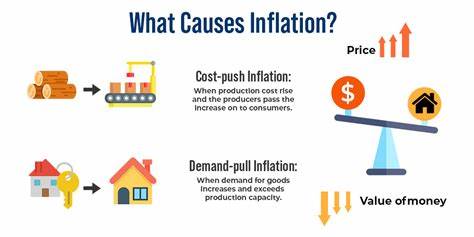
DEFINITION: Creeping, or mild, inflation occurs when prices rise slowly. According to the Federal Reserve, when prices increase by 2% or less, it benefits economic growth. This kind of mild inflation makes consumers expect that prices will keep going up, which boosts demand.
And so, inflation was a bit warmer last month as consumer prices rose 3.2% in February, the Labor Department just reported, up from the 3.1% that economists expected. That marks the second straight month that inflation came in higher than forecast. The data reinforces the Fed’s position to wait until inflation is tamed before cutting interest rates. Still, the central bank is widely expected to cut rates sometime later this year despite yesterday’s less-than-ideal report. It will meet next week to continue deliberations on a potential rate reduction.
The S&P 500® index (SPX) fell 9.96 points (0.2%) to 5,165.31; the Dow Jones Industrial Average gained 37.83 points (0.1%) to 39,043.32; the NASDAQ Composite® (COMP) declined 87.87 points (0.5%) to 16,177.77.
The 10-year Treasury note yield (TNX) rose almost 4 basis points to 4.192%.
The CBOE Volatility Index® (VIX) fell slightly to 13.75.
Energy shares were among the market’s strongest performers Wednesday behind gains in crude oil prices. Brent crude futures (/BZ), the global benchmark, rose above $84 to end at their highest level since early November after Ukrainian strikes on oil refineries in Russia stirred concern over supply disruptions. The S&P Energy Index ($SP500#10) jumped 1.5% and reached its highest level since late October, while the S&P 500 Materials Index ($SP500#15) rose almost 1% and ended at a record high.
Posted on March 14, 2024 by Dr. David Edward Marcinko MBA MEd CMP™
THE PARADOX OF self-reference
DEFINITION: The Epimenides paradox reveals a problem with self-reference in logic. It is named after the Cretan philosopher Epimenides of Knossos who is credited with the original statement.
A paradox of self-reference arises when one considers whether it is possible for Epimenides to have spoken the truth.
Posted on March 14, 2024 by Dr. David Edward Marcinko MBA MEd CMP™
***
***
As tax season kicks off, the Internal Revenue Service is warning taxpayers and administrators of health spending plans that personal expenses for general health and wellness are not legally considered medical expenses, as it fears some may be misled.
In a press release published Wednesday, the IRS reminded individuals filing their taxes that medical expenses for areas such as weight loss are not deductible or reimbursable under health flexible spending arrangements, health savings accounts, health reimbursement arrangements or medical savings accounts, and that they should beware of companies suggesting otherwise.
“Legitimate medical expenses have an important place in the tax law that allows for reimbursements,” said Danny Werfel, the IRS commissioner, in a statement. “But taxpayers should be careful to follow the rules amid some aggressive marketing that suggests personal expenditures on things like food for weight loss qualify for reimbursement when they don’t qualify as medical expenses.”
According to the IRS, while some companies claim that a doctor’s note based on self-reported health information is enough to qualify a non-medical nutritional, wellness or exercise program as a reimbursable medical expense, that’s not the case. Legally, such a note does not back a targeted diagnosis-specific activity or treatment that would qualify as a medical expense, but simply a personal expense. Cite: Newsweek Giulia Carbonaro
Did you know that the American Medical Association is calling on medical schools and residency programs to include specific information about healthcare economics and financing in their curricula.
But, is health economics heterodoxic, or not? And; what about demand-derived economics in medicine?
Posted on March 13, 2024 by Dr. David Edward Marcinko MBA MEd CMP™
By Staff Reporters
***
***
Pharmaceutical companies have filed a slew of suits around the country to get federal judges to invalidate a government program aimed at lowering drug costs for seniors by allowing Medicare to negotiate prices, as is the norm in many other countries, according to the Washington Post. The companies argue it’s unconstitutional and would inhibit their ability to develop new treatments.
The Federal Reserve is looking for steady, reliable signs that inflation is simmering down before it cuts interest rates this year. So far, 2024 has not delivered. Data released by the Bureau of Labor Statistics on Tuesday showed prices rose 3.2 percent over last year, slightly outpacing forecasts of 3.1 percent. Prices also rose 0.4 percent in February over the previous month — in line with expectations, but still hotter than economists would like to discern.
Stocks swung up on Tuesday as investors shrugged off a middling inflation report and looked ahead to next week’s Fed meeting. Meanwhile, Oracle went sky-high, posting its best day since 2021 after demand for AI prompted a huge increase in sales for its cloud computing business.
Here’s where the major benchmarks ended:
The S&P 500® index (SPX) gained 57.33 points (1.1%) to 5,175.27; the Dow Jones Industrial Average® ($DJI) added 235.83 points (0.6%) to 39,005.49; the NASDAQ Composite® (COMP) climbed 246.36 points (1.5%) to 16,265.64.
The 10-year Treasury note yield (TNX) rose about 5 basis points to 4.155%.
The CBOE Volatility Index® (VIX) fell 1.38 to 13.84.
Chip makers’ bounce-back helped boost the Philadelphia Semiconductor Index (SOX) more than 2%, as it recovered part of a 5% drop the previous two trading days. Industry leader Nvidia (NVDA) jumped over 7%. Consumer discretionary and communications services shares were also among the strongest areas. Regional banks and real estate were among the weakest sectors as the CPI data spurred an upturn in Treasury yields.
Posted on March 12, 2024 by Dr. David Edward Marcinko MBA MEd CMP™
By Staff Reporters
***
***
Stocks were mixed yesterday as investors looked ahead to what today’s government inflation data will bring. Boeing took a dive and the stock is down 24% this year.
Here’s where the major benchmarks ended:
The S&P 500® index (SPX) fell 5.75 points (0.1%) to 5,117.94; the Dow Jones Industrial Average® ($DJI) gained 46.97 points (0.1%) to 38,769.66; the NASDAQ Composite® (COMP) declined 65.84 points (0.4%) to 16,019.27.
The 10-year Treasury note yield (TNX) was up almost 1 basis point to 4.096%.
The CBOE Volatility Index® (VIX) rose 0.45 to 15.19.
Chip maker weakness sent the Philadelphia Semiconductor Index (SOX) down 1.36% Monday following a 3.5% drop Friday, when the benchmark initially set a record intra-day high above 5,217. The index is still up 17% this year.
Other sectors outside of tech extended recent strength, including the Dow Jones Utility Index ($DJU), which gained for the fourth straight day and ended at its highest level since February 1. The S&P Energy Index ($SP500#10) reached its highest level since late October, while the S&P 500 Materials Index ($SP500#15) advanced over 1% to its highest post in nearly two years.
Posted on March 12, 2024 by Dr. David Edward Marcinko MBA MEd CMP™
By Health Capital Consultants, LLC
***
***
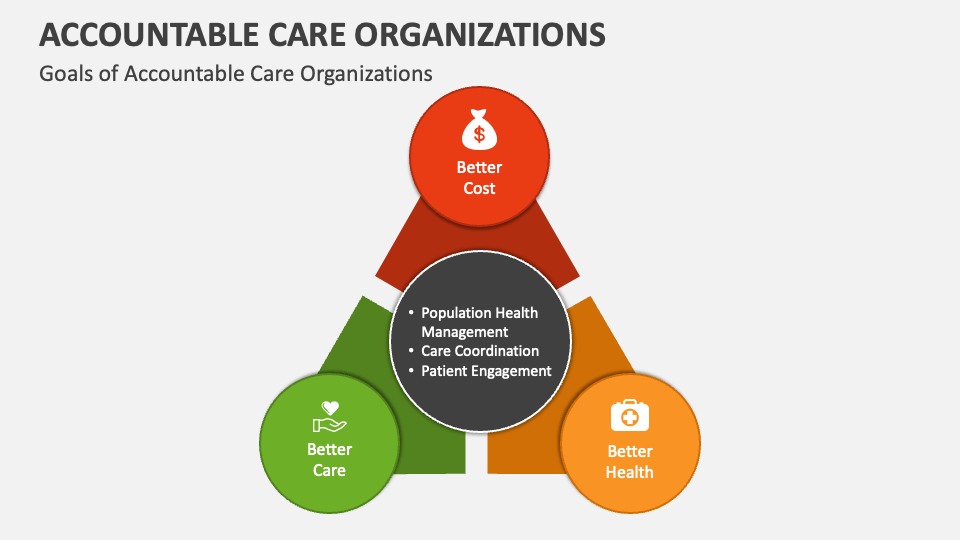
On January 29, 2024, the Centers for Medicare and Medicaid Services (CMS) announced that Performance Year 2024 participation increased in their various accountable care organization (ACO) initiatives. Specifically, 50 new ACOs joined the Medicare Shared Savings Program (MSSP), and 71 ACOs renewed their contracts, bringing the total participation in the MSSP to 480 ACOs.
Additionally, 245 organizations chose to continue participation in two other CMS models – the ACO Realizing Equity, Access, and Community Health (REACH) Model and the Kidney Care Choice (KCC) Model.
Posted on March 11, 2024 by Dr. David Edward Marcinko MBA MEd CMP™
By Staff Reporters
***
***
Key inflation data incoming: February’s consumer price index report on Tuesday will provide fresh data to help the Fed decide when to lower interest rates. Last week, Chair Jerome Powell said he needed “just a bit more evidence” that inflation was coming back down to normal levels before reducing rates, though “we’re not far from it,” he acknowledged.
Posted on March 11, 2024 by Dr. David Edward Marcinko MBA MEd CMP™
Indications for 2024
By Health Capital Consultants, LLC
***
***
After healthcare mergers and acquisitions (M&A) activity began to regain momentum in 2022, following the slowing of deals in the wake of the COVID-19 pandemic, transactional activity continued to accelerate in 2023. While the healthcare sector continued to be impacted by factors such as valuation gaps, higher-for-longer interest rates, general macroeconomic risks, and increased state and federal regulatory concerns in 2023, the outlook for 2024 remains cautiously optimistic.
This Health Capital Topics article reviews the U.S. healthcare industry’s 2023 M&A activity and discusses what these trends may mean for 2024. (Read more…)
Posted on March 10, 2024 by Dr. David Edward Marcinko MBA MEd CMP™
By Staff Reporters
***
***
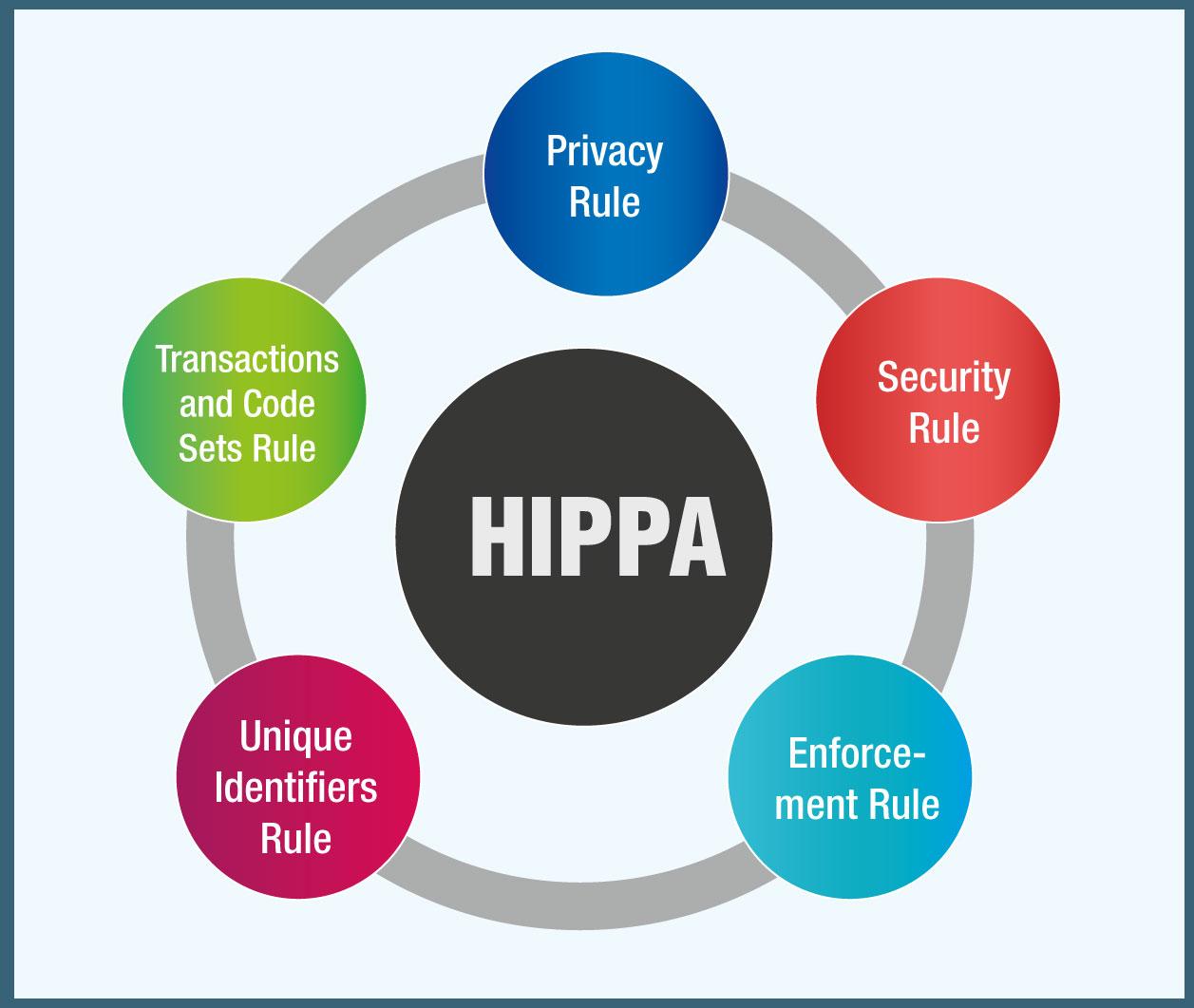
Stat: According to HIPPA, and the cyberattack on Change Healthcare, there were 725 “large” reported healthcare security breaches in the US last year. Experts say health organizations suffer from a lack of basic security measures, and are being targeted by “increasingly sophisticated cyberattacks.” (The HIPAA Journal)
Quote: “Having a [doctor] who can coordinate your healthcare and is willing to do so on a personal basis was very important to me. And I really feel like that is completely gone, and I feel like it happened overnight.”—Deborah Wood, an older adult patient at primary care provider Iora Health, where some patients say care quality has worsened after Amazon acquired its parent company One Medical in 2022 (the Washington Post)
Posted on March 9, 2024 by Dr. David Edward Marcinko MBA MEd CMP™
By Staff Reporters
Tomorrow is the start of daylight saving time. Enjoy the extra hour of evening light.
***
***
UnitedHealth Group is laying out a timeline to restore its systems as a cyberattack on its Change Healthcare subsidiary continues to disrupt the health care industry for nearly a third week. The company said Thursday it’s still working “aggressively” to restore its services after the attack Feb. 21st caused it to shut down its insurance claims and payment platforms, leaving health care providers and pharmacies across the nation unable to process prescriptions or pay employees, but as of now, its electronic prescribing is back to being “fully functional.”
***
Stocks tumbled yesterday, giving the Dow its worst week since October as Nvidia’s seemingly unstoppable rally…stopped. Meanwhile, bitcoin notched another record, hitting $70,000 for the first time before the volatile cryptocurrency retreated.
Government: The Senate passed vital funding bills just barely ahead of a shutdown deadline, ensuring the government can stay open—at least for now. But they still need to pass more before March 22nd.
Here’s where the major benchmarks ended:
The S&P 500 index (SPX) fell 33.67 points (0.7%) to 5,123.69, down 0.3% for the week; the Dow Jones Industrial Average® ($DJI) lost 68.66 points (0.2%) to 38,722.69, down 0.9% for the week; the NASDAQ Composite (COMP) dropped 188.26 points (1.2%) to 16,085.11, down 1.2% for the week.
The 10-year Treasury note yield (TNX) fell more than 1 basis point to 4.079%.
The CBOE Volatility Index® (VIX) rose 0.30 to 14.74.
The Philadelphia Semiconductor Index (SOX) sank 3.5% Friday but still gained 0.6% for the week, its third straight weekly advance. Bank and utility shares were among the market’s few areas of strength, and small-cap stocks held up relatively well. The Russell 2000® Index (RUT) fell 0.1% after earlier climbing to a two-year high but still added 0.3% for the week, its fourth weekly gain in the past five.
Posted on March 8, 2024 by Dr. David Edward Marcinko MBA MEd CMP™
TO FIX THE FDA APPROVAL’S FLAW
By Staff Reporters
***
***
DEFINITION: Right-to-try laws are United States state laws and a federal law that were created with the intent of allowing terminally ill patients access to experimental therapies (drugs, biologics, devices) that have completed Phase I testing but have not been approved by the Food and Drug Administration (FDA).
This law would allow patients suffering from rare and genetic diseases to try personalized treatments not yet approved by the FDA, as long as they have the support of their physician and have exhausted other treatment options. This policy would have an outsized impact on patients with rare diseases. Although rare diseases have small patient pools by definition, collectively, about 30 million Americans are estimated to have a rare disease.
Posted on March 8, 2024 by Dr. David Edward Marcinko MBA MEd CMP™
By Staff Reporters
***
***
Stocks surged yesterday, once again pushing the S&P 500 and NASDAQ to record highs, after Fed Chair Jerome Powell said he expects interest rates to come down this year. It was also a big day for Rivian which zoomed 13% after it revealed three new vehicles.
Here’s where the major benchmarks ended:
The S&P 500 index rallied 52.60 points (1.0%) to 5,157.36; the Dow Jones Industrial Average gained 130.30 points (0.3%) to 38,791.35; the NASDAQ Composite climbed 241.83 points (1.5%) to 16,273.38.
The 10-year Treasury note yield (TNX) lost almost 2 basis points to 4.085%.
The CBOE Volatility Index® (VIX) fell 0.06 to 14.44.
Chip-maker strength boosted the Philadelphia Semiconductor Index (SOX) 3.4% to its fourth record close in the past five trading days. The index has gained 9.3% so far this month and 24% for the year. Oilfield services and communication services companies were also among the market’s strongest sectors. Small-cap shares joined the rally, boosting the Russell 2000® Index (RUT) 0.8% to a two-year high.
In other markets, the U.S. dollar index (DXY) slipped 0.5%, its fifth consecutive daily decline, and touched a five-week low. The dollar has been under pressure from expectations for lower U.S. interest rates.
Posted on March 7, 2024 by Dr. David Edward Marcinko MBA MEd CMP™
STATE OF THE UNION EVENING
***
Markets: Stocks rose yesterday as investors watched Jerome Powell tell lawmakers that he still expects to cut interest rates this year, just not right away.
Stock spotlight: Troubled regional lender New York Community Bancorp, which fell 40% before soaring back up after announcing it’s getting $1 billion from investors, including ex-Treasury Secretary Steven Mnuchin’s firm.
***
***
Meanwhile, Stocks tumbled on Tuesday as several of the “Magnificent Seven” tech giants shed some of their gains from earlier this year, dragging the entire market with them. One of those companies was Apple, which fell about 3% after a report suggested that iPhone sales in China have plunged in the first six weeks of 2024.
And, Bitcoin set a new record yesterday, briefly jumping past $69k before falling back down to ~$62k. The rally highlighted the crypto’s seemingly rapid recovery from the nail-in-the-coffin that was FTX’s demise in 2022.
Posted on March 7, 2024 by Dr. David Edward Marcinko MBA MEd CMP™
By Staff Reporters
***
***
American Express Co. has told an undisclosed number of cardholders that their account information may have been breached in a recent hacking of a merchant processor. Current and previously issued American Express Card account numbers, expiration dates and customer names may have been compromised, AmEx stated in a notice filed last week with Massachusetts regulators.
The S&P 500® index (SPX) rose 26.11 points (0.5%) to 5,104.76; the Dow Jones Industrial Average® (DJI) gained 75.86 points (0.2%) to 38,661.05; the NASDAQ Composite® (COMP) added 91.95 points (0.6%) to 16,031.54.
The 10-year Treasury note yield (TNX) dropped about 3 basis points to 4.108%, near a four-week low.
The CBOE Volatility Index® (VIX) rose 0.04 to 14.50
Semiconductor shares were among the market’s strongest performers Wednesday, and utilities and consumer staples were also firm. Banks shares took pressure despite further declines in Treasury yields. In other markets, the U.S. dollar index (DXY) fell near a five-week low and Gold (/GC) futures extended a rally to a record above $2,160 per ounce, reflecting expectations for lower U.S. interest rates.
Posted on March 6, 2024 by Dr. David Edward Marcinko MBA MEd CMP™
By Staff Reporters
***
***
According to Fidelity, in documents filed with the Maine attorney general’s office, miscreants “likely acquired” information about 28,268 people’s life insurance policies after infiltrating Infosys.
***
***
Criminals have probably stolen nearly 30,000 Fidelity Investments Life Insurance customers’ personal and financial information — including bank account and routing numbers, credit card numbers and security or access codes — after breaking into Infosys’ IT systems.
***
***
Healthcare providers across the United States are struggling to get paid following the week-long ransomware outage at a key tech unit of UnitedHealth Group, with some smaller medical providers saying they are already running low on cash.
And, the nation’s health-care system continues to reel from a cyberattack that has crippled payments for tens of thousands of organizations as Daniel Gilbert writes in The Post.
The S&P 500® index (SPX) dropped 52.30 points (1.0%) to 5,078.65; the Dow Jones Industrial Average decreased 404.64 points (1.0%) to 38,585.19; the NASDAQ Composite fell 267.92 points (1.7%) to 15,939.59.
The 10-year Treasury note yield (TNX) fell about 8 basis points to 4.137%.
The CBOE Volatility Index® (VIX) rose 0.97 to 14.46.
With chip makers under pressure, the Philadelphia Semiconductor Index (SOX) fell 2.1%, reversing part of a recent surge to a record high. Consumer discretionary and real estate shares also ranked among the weakest performers Tuesday. Banks were one of the few industries to buck the broader weakness, perhaps supported by further declines in Treasury yields. The 10-year Treasury note yield (TNX) almost fell to a four-week low near 4.11%. The KBW Regional Banking Index (KRX) jumped 4.3%.
In other markets, bitcoin plunged almost 10% after climbing earlier Tuesday to a record above $69,000. The cryptocurrency had rallied as much as 36% over the last week of February.
Posted on March 5, 2024 by Dr. David Edward Marcinko MBA MEd CMP™
***
***
Rallies from Artificial Intelligence related companies weren’t enough to keep the major indexes from falling yesterday. Meanwhile, bitcoin continued its journey toward the sky, getting close to an all-time record.
And it wasn’t the only cryptocurrency having a banner day: memecoins like dogecoin, pepe, and dogwifhat all soared.
Users found themselves unable to load the apps or websites as normal. On Facebook, affected users found they had been logged out and were unable to get on, while Instagram refused to work at all.
Posted on March 5, 2024 by Dr. David Edward Marcinko MBA MEd CMP™
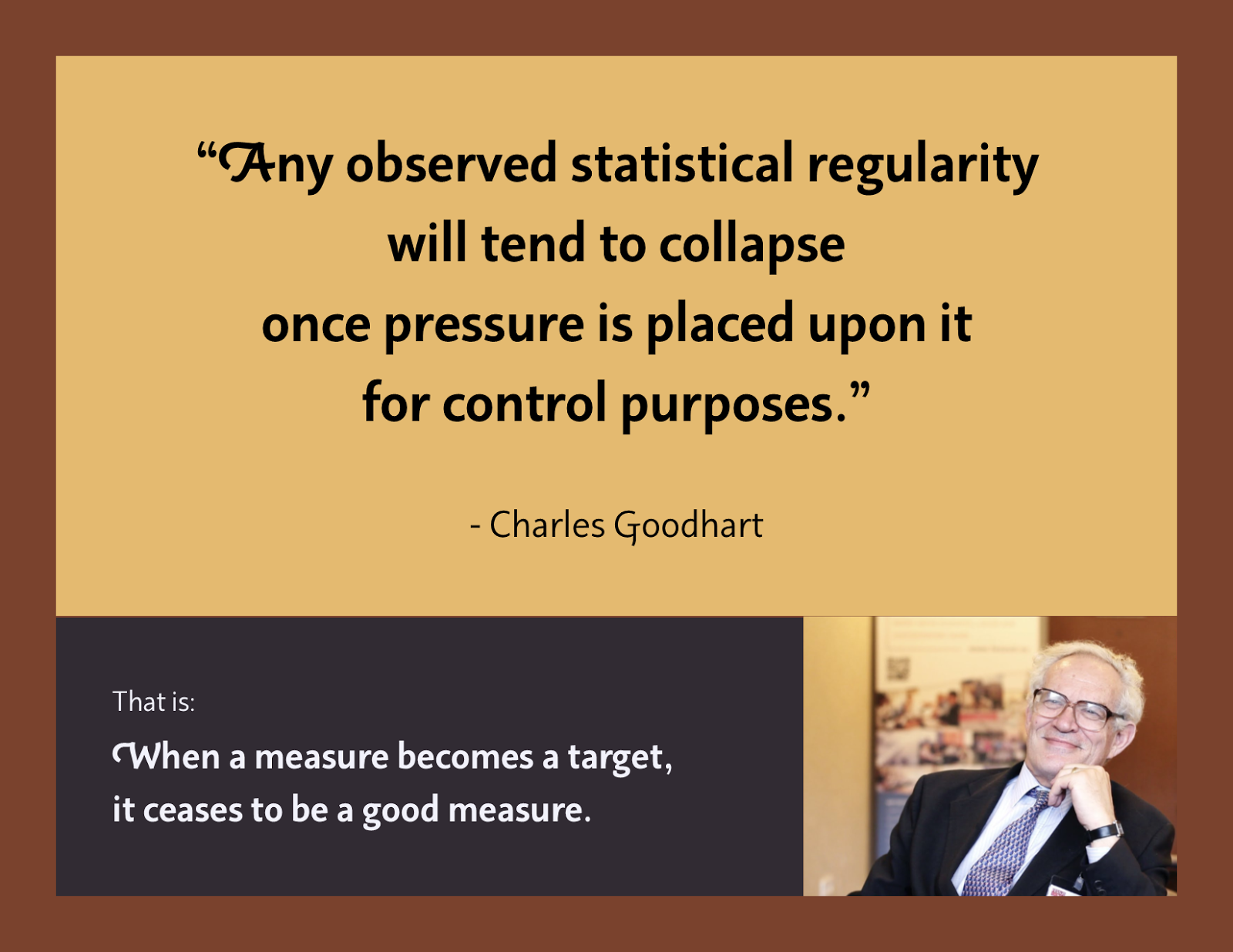
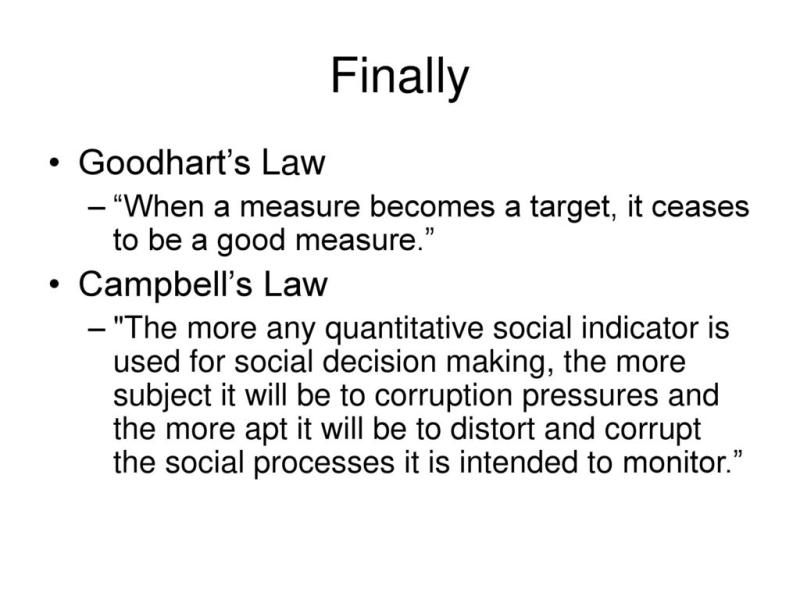
The Goodhart Principle, and related
[By staff reporters]
***
Goodhart’s law is a sociological analogue of Heisenberg’s uncertainty principle in quantum mechanics. Measuring a system usually disturbs it. The more precise the measurement, and the shorter its timescale, the greater the energy of the disturbance and the greater the unpredictability of the outcome.
***
***
***
CAMPBELL’S LAW:
“The more any quantitative social indicator is used for social decision-making, the more subject it will be to corruption pressures and the more apt it will be to distort and corrupt the social processes it is intended to monitor.”
Posted on March 5, 2024 by Dr. David Edward Marcinko MBA MEd CMP™
By Staff Reporters
***
***
Stat: 125,000+. That’s how many high-income people the IRS is targeting for not filing their taxes. The IRS started sending letters last week to folks with over $400,000 in income who haven’t filed between 2017 and 2022 (Journal of Accountancy)
The S&P 500 index fell 6.13 points (0.1%) to 5,130.95; the Dow Jones Industrial Average lost 97.55 points (0.3%) to 38,989.83; the NASDAQ Composite declined 67.43 points (0.4%) to 16,207.51.
The 10-year Treasury note yield (TNX) rose about 4 basis points to 4.219%.
The CBOE Volatility Index® (VIX) increased 0.38 to 13.49.
Ongoing strength in chip makers propelled a 1.1% advance in the Philadelphia Semiconductor Index (SOX), which posted a record high for the third-straight trading day. Banks were also among the strongest performers. Small-cap shares eased, with the Russell 2000® Index (RUT) ending with a marginal loss after rising earlier to a two-year high.
As fellow doctors, we understand better than most the more complex financial challenges physicians can face when it comes to their financial planning. Of course, most physicians ultimately make a good income, but it is the saving, asset and risk management tolerance and investing part that many of our colleagues’ struggle with. Far too often physicians receive terrible guidance, have no time to properly manage their own investments and set goals for that day when they no longer wish to practice medicine.
For the average doctor or healthcare professional, the feelings of pride and achievement at finally graduating are typically paired with the heavy burden of hundreds of thousands of dollars in student loan debt.
You dedicated countless hours to learning, studying, and training in your field. You missed birthdays and holidays, time with your families, and sacrificed vacations to provide compassionate and excellent care for your patients. Amidst all of that, there was no time to give your finances even a second thought.
Between undergraduate, medical school, and then internship and residency, most young physicians do not begin saving for retirement until late into their 20s, if not their 30s. You’ve missed an entire decade or more of allowing your money and investments to compound and work for you. When it comes to addressing your financial health and security, there’s no time to waste.
And you may be misled by unscrupulous “advisors”.
For example:
Question: Do you know the difference between a “Fee-Only” and a “Fee-Based financial advisor? Not knowing may cost you tens of thousands of dollars, or more, in excessive advisory fees.
Posted on March 4, 2024 by Dr. David Edward Marcinko MBA MEd CMP™
By Staff Reporters
***
***
Another record-high to start Monday.
The S&P 500 closed Friday at its highest level ever, having posted gains in 16 out of the last 18 weeks for the first time since 1971. And the index is getting a flashy new stock today: the server-maker Super Micro. Super Micro is the AI all-star you’ve never heard of, jumping over 20x in the past two years and more than 200% in 2024 alone.
Posted on March 4, 2024 by Dr. David Edward Marcinko MBA MEd CMP™
Spiked in 2023
By Staff Reporters
***
***
Healthcare company bankruptcies spiked in 2023 amid high interest rates, rising labor and supply costs, and an uptick in denials from payers, according to a January report from healthcare restructuring firm Gibbins Advisors.
For example, Seventy-nine healthcare companies filed for bankruptcy in 2023—the highest number since 2019, which saw 51 bankruptcies, according to the report. The volume of bankruptcies last year was nearly 2x as high as 2022 and over 3x the level seen in 2021.
“We saw a dramatic increase in healthcare bankruptcy filings in 2023, continuing the trend which began in mid-2022,” Clare Moylan, co-founder and principal at Gibbins Advisors, said in a statement. “Key observations from 2023 are the return of large bankruptcy cases with over $100 million in liabilities, and a spike in hospital filings, both of which appear to primarily be a result of Covid-19 pandemic-related protections ending.”
Our virtual consulting model at DE MARCINKO & ASSOCIATES offer services to their clients primarily or entirely online, by phone or video-conference.
This means that no matter where you are or choose to live, you’re always just an email, telephone call or Zoom® conference away from a face-to-face meeting.
THE CONSULTATION IS VIRTUAL – THE INFORMATIONAL ADVICE IS REAL !
Posted on March 3, 2024 by Dr. David Edward Marcinko MBA MEd CMP™
By Staff Reporters
***
***
Stocks were ripping last week, with the NASDAQ notching an all-time high and the S&P 500 closing above 5,100 for the first time. Tech stocks led the way, especially Nvidia, which closed with a market cap over $2 trillion. But trouble may be brewing at regional banks:New York Community Bancorpplummeted after swapping out its CEO and revealing it had found weaknesses in its risk controls.
The IRS is going after people who earned between $400,000 and $1 million but failed to file tax returns as far back as 2017.
***
Elon Musksued OpenAI and its co-founders, CEO Sam Altman and President Greg Brockman, Friday, alleging that they breached the organization’s founding agreement by letting it become too profit-motivated.
***
The CDC says you no longer need to isolate for five days if you have COVID-19 as long as you’re fever-free and your symptoms are improving.
Posted on March 2, 2024 by Dr. David Edward Marcinko MBA MEd CMP™
RETIREMENT PLANNING
By Staff Reporters
***
***
A PEP is a defined contribution plan, such as a 401(k), in which multiple employers can participate. When employers join a PEP, they delegate their named fiduciary role to a third-party pooled plan provider (PPP). PEP fiduciary oversight falls on the PPP rather than the employer. And although each PPP may set its own eligibility requirements, businesses joining a PEP benefit plan needn’t operate in the same industry or geographical area.
PEP plans provide viable 401(k) alternatives for small business owners who may otherwise struggle to compete for talent against large organizations with comprehensive benefits packages.
Other advantages include: Less in-house administration: The PPP assumes responsibility for much of the plan administration, handling all plan documentation, governmental filings and ongoing compliance. Employee payroll deductions are left to the employer, but these can be efficiently managed with the help of a payroll service provider that integrates payroll and benefits.
Tax credits can help offset PEP start-up costs. For the first three years of participation, employers may be eligible for a tax credit of $5,000 annually, with an additional $500 available to those who set up automatic enrollment. Under Secure Act 2.0, an additional credit of up to $1,000 per employee for eligible employer contributions may apply to employers with up to 50 employees for the preceding taxable year. This credit phases out from 51 to 100 employees.
Businesses participating in single-employer retirement plans (SEP) must independently communicate and coordinate with their record-keeper, custodian, investment advisor, trustee and auditor. With PEP, all these tasks and services are bundled into one, saving employers time and money.
Despite its advantages, a PEP does have some drawbacks, particularly when compared to an SEP. Unlike a PEP, an SEP gives employers more of the following:
Flexibility: Employers can customize the design of their plan to meet their retirement goals and the needs of their employees.
Control: Employers are not dependent on the actions or decisions of others and can access information and resolve problems directly without the need of a third party.
Choice: Employers have the unilateral freedom to choose a different service provider, move their plan or negotiate better pricing if they are unsatisfied with the cost or quality of service.
Posted on March 2, 2024 by Dr. David Edward Marcinko MBA MEd CMP™
By Staff Reporters
***
***
Welcome back to the Gregorian calendar. Along with being a leap day, yesterday was Rare Disease Day—bringing visibility to the 7,000 conditions that each affect fewer than 200,000 people in the US. Combined, around 10% of US residents have one, per the National Institute of Health.
***
Rite Aid is planning to close 77 stores in 2024 as part of its Chapter 11 bankruptcy.
That makes 431 stores that the drugstore chain has decided to close since October.
Rite Aid has been shrinking its store count for years, losing ground to rivals Walgreens and CVS.
The S&P 500 index added 40.81 points (0.8%) to 5,137.08, up 0.95% for the week and its seventh weekly gain in the past eight; the Dow Jones Industrial Average® (DJI) gained 90.99 points (0.2%) to 39,087.38, down 0.1% for the week; the NASDAQ Composite rose 183.02 points (1.1%) to 16,274.94, up 1.7% for the week.
The 10-year Treasury note yield fell about 7 basis points to 4.182%.
The CBOE Volatility Index® (VIX) dropped 0.29 to 13.11.
Chipmaker strength drove a 4.3% advance in the Philadelphia Semiconductor Index (SOX), which ended at a record high. The NASDAQ-100®(NDX), which includes the NASDAQ’s largest non-financial companies, also ended at a record high. Small-cap shares finished the week strong. The Russell 2000® Index (RUT) rose 1.1% to settle at a 23-month high and notched a 3% gain for the week.
Banks were among the weakest performers as concerns over regional lenders flared up, underscored by another nosedive in shares of troubled New York Community Bancorp (NYCB).
Posted on March 1, 2024 by Dr. David Edward Marcinko MBA MEd CMP™
By Staff Reporters
***
***
Cyber villains have struck again, and they’re going after the US health system. Pharmacies and hospitals nationwide are coping with a debilitating cyberattack against the prescription processor Change Healthcare, owned by America’s biggest health insurer, UnitedHealth.
The health tech company noticed the breach last week and rushed to disconnect its systems, throwing a wrench into pharmacies’ ability to dispense pills. Change Healthcare said some of its services were still on pause, and it’s unclear if any patient info was stolen.
Posted on March 1, 2024 by Dr. David Edward Marcinko MBA MEd CMP™
By Staff Reporters
***
***
The Bumble dating app said this week that it plans to lay off 30% of its staff (about 350 employees) after a Q4 earnings report highlighted that profits are ghosting the company and Gen Z considers dating apps a turnoff. Bumble CEO Lidiane Jones, who took over in November when founder Whitney Wolfe Herd stepped down, said the cuts would save the company around $55 million. The company plans to invest in relaunching the app next quarter with new safety and AI features to entice all those looking for love.
The S&P 500 index rose 26.51 points (0.5%) to 5,096.27, up 5.2% for the month; the Dow Jones Industrial Average® (DJI) added 47.37 points (0.1%) to 38,996.39, up 2.2% for the month; the NASDAQ Composite gained 144.18 points (0.9%) to 16,091.92, up 6.1% for the month.
The 10-year Treasury note yield (TNX) fell about 3 basis points to 4.244%.
The CBOE Volatility Index® (VIX) dropped 0.44 to 13.40.
Chipmaker shares were among the strongest performers Thursday, helping lift the Philadelphia Semiconductor Index (SOX) 2.7% to a record high close. Banks and food and beverage industries were also firm. Small-cap stocks also extended a recent upswing. The Russell 2000® Index (RUT) erased much of an initial surge to a 22-month high but still finished with a 0.7% advance, gaining 5.5% for the month.
***
***
Hackers that allegedly caused the UnitedHealth Group cyberattack reportedly posted on the dark web that they stole personal data and the records of “millions” of patients.
In a now-deleted post, the Blackcat ransomware group – also known as ALPHV or Noberus – said it stole several terabytes of data from UnitedHealth, which includes medical insurance and health data, Reuters reported, citing screenshots of the post.







 Support our online development, and advance our onground research initiatives in free market economics, as we seek to showcase the brightest Next-Gen minds.
THE ME-P DISCLAIMER: Posts, comments and opinions do not necessarily represent iMBA, Inc., but become our property after submission. Copyright © 2006 to-date. iMBA, Inc allows colleges, universities, medical and financial professionals and related clinics, hospitals and non-profit healthcare organizations to distribute our proprietary essays, photos, videos, audios and other documents; etc. However, please review copyright and usage information for each individual asset before submission to us, and/or placement on your publication or web site. Attestation references, citations and/or back-links are required. All other assets are property of the individual copyright holder.
Support our online development, and advance our onground research initiatives in free market economics, as we seek to showcase the brightest Next-Gen minds.
THE ME-P DISCLAIMER: Posts, comments and opinions do not necessarily represent iMBA, Inc., but become our property after submission. Copyright © 2006 to-date. iMBA, Inc allows colleges, universities, medical and financial professionals and related clinics, hospitals and non-profit healthcare organizations to distribute our proprietary essays, photos, videos, audios and other documents; etc. However, please review copyright and usage information for each individual asset before submission to us, and/or placement on your publication or web site. Attestation references, citations and/or back-links are required. All other assets are property of the individual copyright holder.










































 The Leading Business Education Network for Doctors, Financial Advisors and Health Industry Consultants