VOLATILITY INDICES: In Financial Markets

By Dr. David Edward Marcinko MBA MEd

SPONSOR. http://www.MarcinkoAssociates.com

***

***

The Role of Volatility Indices in Financial Markets

Volatility is often described as the pulse of financial markets, reflecting the collective emotions of investors as they respond to uncertainty, risk, and opportunity. Among the many tools designed to measure this phenomenon, the CBOE Volatility Index, or VIX, stands out as the most widely recognized. Dubbed the “fear gauge,” the VIX captures market expectations of near-term volatility in the S&P 500, derived from options pricing. Its movements often mirror investor sentiment: rising sharply during periods of crisis and falling when confidence returns. Yet, the VIX is not alone. A family of volatility indices exists across global markets, each offering unique insights into sector-specific or regional risk.

The importance of volatility indices lies in their ability to quantify uncertainty. Traditional measures such as historical volatility look backward, analyzing past price fluctuations. In contrast, indices like the VIX are forward-looking, reflecting implied volatility based on options markets. This distinction makes them invaluable for traders, portfolio managers, and policymakers. For example, a sudden spike in the VIX often signals heightened fear, prompting investors to hedge positions or reduce exposure to equities. Conversely, a low VIX suggests complacency, though it can also precede unexpected shocks.

Beyond the VIX, other indices provide complementary perspectives. The VXN tracks volatility in the Nasdaq-100, often dominated by technology stocks. Because the tech sector is highly sensitive to innovation cycles and regulatory changes, the VXN can diverge significantly from the VIX, highlighting sector-specific risks. Similarly, the RVX measures volatility in the Russell 2000, offering a window into small-cap stocks that are more vulnerable to domestic economic conditions. Internationally, indices such as the VSTOXX in Europe and India VIX extend this framework globally, allowing investors to compare risk sentiment across regions. Together, these indices form a mosaic of market psychology, enabling a more nuanced understanding of global financial stability.

Volatility indices also play a crucial role in risk management. Derivatives linked to these indices, such as futures and exchange-traded products, allow investors to hedge against sudden downturns. For instance, during the 2008 financial crisis, demand for VIX futures surged as investors sought protection from extreme market swings. More recently, volatility products have become popular among retail traders, though their complexity and tendency to lose value over time make them risky for long-term holding.

Critics argue that volatility indices can be misleading. A low VIX does not guarantee stability, and a high VIX does not always signal disaster. Moreover, the rise of volatility-linked products has occasionally amplified market stress, as seen during the “Volmageddon” event of February 2018, when inverse volatility ETFs collapsed. These episodes underscore the need for caution: volatility indices are powerful tools, but they must be used with a clear understanding of their limitations.

In conclusion, volatility indices such as the VIX serve as vital instruments for gauging investor sentiment and managing risk. They provide a forward-looking measure of uncertainty, complementing traditional metrics and offering insights across sectors and regions. While not infallible, their role in modern finance is undeniable.

For traders, analysts, and policymakers alike, these indices are more than numbers on a screen—they are reflections of the market’s collective psyche, guiding decisions in times of both calm and crisis.

COMMENTS APPRECIATED

EDUCATION: Books

SPEAKING: Dr. Marcinko will be speaking and lecturing, signing and opining, teaching and preaching, storming and performing at many locations throughout the USA this year! His tour of witty and serious pontifications may be scheduled on a planned or ad-hoc basis; for public or private meetings and gatherings; formally, informally, or over lunch or dinner. All medical societies, financial advisory firms or Broker-Dealers are encouraged to submit an RFP for speaking engagements: CONTACT: Ann Miller RN MHA at MarcinkoAdvisors@outlook.com -OR- http://www.MarcinkoAssociates.com

Like, Refer and Subscribe

***

***

DAILY UPDATE: Mayo Clinic Operating Margin Up as Domestic Stocks Crushed Down!

MEDICAL EXECUTIVE-POST TODAY’S NEWSLETTER BRIEFING

***

Essays, Opinions and Curated News in Health Economics, Investing, Business, Management and Financial Planning for Physician Entrepreneurs and their Savvy Advisors and Consultants

Serving Almost One Million Doctors, Financial Advisors and Medical Management Consultants Daily

A Partner of the Institute of Medical Business Advisors , Inc.

http://www.MedicalBusinessAdvisors.com

SPONSORED BY: Marcinko & Associates, Inc.

***

http://www.MarcinkoAssociates.com

Daily Update Provided By Staff Reporters Since 2007.
How May We Serve You?
© Copyright Institute of Medical Business Advisors, Inc. All rights reserved. 2025

REFER A COLLEAGUE: MarcinkoAdvisors@outlook.com

SPONSORSHIPS AVAILABLE: https://medicalexecutivepost.com/sponsors/

ADVERTISE ON THE ME-P: https://tinyurl.com/ytb5955z

Your Referral Count -0-

CITE: https://www.r2library.com/Resource

Stat: 6.5%. That was the size of Mayo Clinic’s operating margin in 2024, with an operating income of $1.3 billion. (Becker’s Hospital CFO Report)

CITE: https://tinyurl.com/2h47urt5

US stocks plunged on Monday as investors processed growing concerns about the health of the US economy after President Trump and his top economic officials acknowledged the possibility of a potential rough patch.

The Dow Jones Industrial Average (^DJI) fell nearly 900 points, or over 2%, while the benchmark S&P 500 (^GSPC) dropped around 2.7% after the index posted its worst week since September. The tech-heavy NASDAQ Composite (^IXIC) fell 4% in its worst day since 2022, as the “Magnificent Seven” stocks led the sell-off. Tesla’s (TSLA) rout continued, plunging 15% and officially wiping out the gains it had made in the wake of Trump’s election win. Nvidia (NVDA), Apple (AAPL), Google parent Alphabet (GOOG), and Meta (META) all each lost more than 4%.

Key inflation data includes the Consumer Price Index (CPI) and Producer Price Index (PPI) on Wednesday and Thursday could help set the tone, though economic growth concerns seem to have replaced inflation as the prime concern. The S&P 500 index (SPX) dropped more than 3% last week, the worst performance since September.

However, the U.S. economy “is in a good place” despite recent policy uncertainty, Federal Reserve Chairman Jerome Powell said Friday. He sees no need to hurry rate cuts until there’s more policy clarity, Bloomberg reported. Stocks rallied on Powell’s words late Friday, but Monday’s early action indicates that rallies continue being sold, and the Cboe Volatility Index (VIX) rose above 26 as investors piled into risk-off assets like bonds. The 200-day moving average of 5,734 for the SPX remains a key technical support area, and the SPX was on pace to open below that Monday, now more than 6% off of all-time highs but not yet in –10% correction territory.

CITE: https://tinyurl.com/tj8smmes

Visualize: How private equity tangled banks in a web of debt, from the Financial Times.

COMMENTS APPRECIATED

PLEASE SUBSCRIBE: MarcinkoAdvisors@outlook.com

Thank You

***

***

***

***

EDUCATIONAL TEXTBOOKS: https://tinyurl.com/4zdxuuwf

***

DAILY UPDATE: Companies and Stocks Dip as Job Growth Rises

MEDICAL EXECUTIVE-POST TODAY’S NEWSLETTER BRIEFING

***

Essays, Opinions and Curated News in Health Economics, Investing, Business, Management and Financial Planning for Physician Entrepreneurs and their Savvy Advisors and Consultants

Serving Almost One Million Doctors, Financial Advisors and Medical Management Consultants Daily

A Partner of the Institute of Medical Business Advisors , Inc.

http://www.MedicalBusinessAdvisors.com

SPONSORED BY: Marcinko & Associates, Inc.

***

http://www.MarcinkoAssociates.com

Daily Update Provided By Staff Reporters Since 2007.
How May We Serve You?
© Copyright Institute of Medical Business Advisors, Inc. All rights reserved. 2024

REFER A COLLEAGUE: MarcinkoAdvisors@msn.com

SPONSORSHIPS AVAILABLE: https://medicalexecutivepost.com/sponsors/

ADVERTISE ON THE ME-P: https://tinyurl.com/ytb5955z

***

Bank of America analysts recently looked back at the last 100 years of stock market data, searching for asset bubbles and what indicated their approach. The nine historical bubbles they found all had one thing in common ahead of their bursting: rising volatility. But, right now the Volatility Index, or VIX, is nowhere near the highs seen before the dot-com bubble burst, which should soothe investor concerns.

CITE: https://www.r2library.com/Resource

What’s up

  • Jazz Pharmaceuticals rose 5.39% today thanks to RBC Capital reiterating its outperform rating of the stock, highlighting the potential of the company’s forthcoming essential tremor treatment.
  • CarGurus popped 4.05% after receiving a shiny new outperform rating from JMP Securities, which likes the company’s online marketplace business model.
  • Las Vegas Sands rose 3.11% today on no particular news, as did Cedar Fair, which rose 3.27%. Both are beneficiaries of the vacation season, and likely enjoyed a boost today due to nothing more than the fact that it was a sunny summer Friday.

What’s down

CITE: https://tinyurl.com/2h47urt5

Here’s where the major benchmarks ended:

  • The S&P 500 index declined 5.97 points (0.1%) to 5,346.99, up 1.3% for the week; the Dow Jones Industrial Average® ($DJI) lost 87.18 points (0.2%) to 38,798.99, up 0.3% for the week; the NASDAQ Composite® ($COMP) shed 39.99 points (0.2%) to 17,133.13, up 2.4% for the week.
  • The 10-year Treasury note yield (TNX) jumped about 15 basis points to 4.432%.
  • The CBOE Volatility Index® (VIX) fell 0.36 to 12.22.

Interest-rate-sensitive sectors including banking, real estate, and utilities were among this week’s poorest performers amid expectations the Fed is unlikely to lower rates from historically high levels. The Dow Jones Utility Average ($DJU) dropped 2.8% this week. Retailers also posted a down week. Semiconductors still clocked a firm week despite declines the past two days. The PHLX Semiconductor Index (SOX) advanced 3.2% for the week. 

CITE: https://tinyurl.com/tj8smmes

COMMENTS APPRECIATED

PLEASE SUBSCRIBE: MarcinkoAdvisors@msn.com

Thank You

***

***

***

***

EDUCATIONAL TEXTBOOKS: https://tinyurl.com/4zdxuuwf

***

What is VIX Stock Market Volatility?

What it is – How it works
[Courtesy Wikipedia and staff reporters]

AKA “The Fear Gauge”

The CBOE Volatility Index, known by its ticker symbol VIX, is a popular measure of the stock market’s expectation of volatility implied by S&P 500 index options, calculated and published by the Chicago Board Options Exchange (CBOE). It is colloquially referred to as the fear index or the fear gauge.

******

According to Wikipedia, the formulation of a volatility index, and financial instruments based on such an index, were developed by Menachem Brenner and Dan Galai in 1986 and described in academic papers. The authors stated the “volatility index, to be named Sigma Index, would be updated frequently and used as the underlying asset for futures and options. … A volatility index would play the same role as the market index play for options and futures on the index.”

In 1986, Brenner and Galai proposed to the American Stock Exchange the creation of a series of volatility indices, beginning with an index on stock market volatility, and moving to interest rate and foreign exchange rate volatility. In 1987, Brenner and Galai met with Joseph Levine and Deborah Clayworth at the Chicago Board of Options Exchange to propose various structures for a tradeable index on volatility; those discussions continued until 1991.

The current VIX concept formulates a theoretical expectation of stock market volatility in the near future. The current VIX index value quotes the expected annualized change in the S&P 500 index over the next 30 days, as computed from the options-based theory and current options-market data.

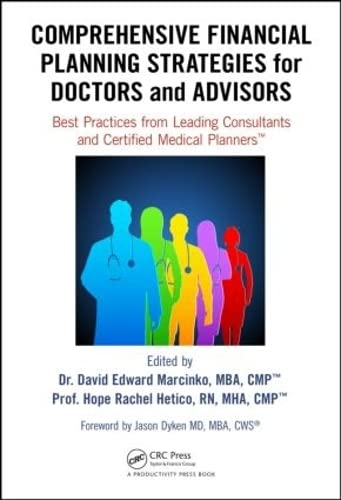
MORE: https://www.amazon.com/Comprehensive-Financial-Planning-Strategies-Advisors/dp/1482240289/ref=sr_1_1?ie=UTF8&qid=1418580820&sr=8-1&keywords=david+marcinko

Assessment

The CBOE retained consultant Robert Whaley in 1992 to develop a tradable volatility instrument based on index option prices.[4] Since 1993, CBOE has published VIX real-time data. Based on historical index option prices, Whaley has computed a data series of retrospective daily VIX levels from January 1986 onward.

Conclusion

Your thoughts and comments on this ME-P are appreciated. Feel free to review our top-left column, and top-right sidebar materials, links, URLs and related websites, too. Then, subscribe to the ME-P. It is fast, free and secure.

Speaker: If you need a moderator or speaker for an upcoming event, Dr. David E. Marcinko; MBA – Publisher-in-Chief of the Medical Executive-Post – is available for seminar or speaking engagements.

Book Marcinko: https://medicalexecutivepost.com/dr-david-marcinkos-bookings

Subscribe: MEDICAL EXECUTIVE POST for curated news, essays, opinions and analysis from the public health, economics, finance, marketing, IT, business and policy management ecosystem.

***

Invite Dr. Marcinko

DAILY UPDATE: Big Bank Earnings and the Markets

By Staff Reporters

***

***

The biggest U.S. banks presented a picture of a resilient economy on Friday, with consumers and businesses continuing to spend and borrow even after a lightning-fast rise in interest rates.

JPMorgan Chase’s profit soared 67% in the second quarter from a year earlier and Wells Fargo’s jumped 57%, lifted by the income they earned lending out money at higher rates. Citigroup’s net interest income was a bright spot, though profit fell 36%. All three banks beat analysts’ expectations for profit and revenue.

***

Here is where the major benchmarks ended:

  • The S&P 500 Index was down 4.62 points (0.1%) at 4,505.42, up 2.4% for the week; the Dow Jones Industrial Average (DJIA) was up 113.89 points (0.3%) at 34,509.03, up 2.3% for the week; the NASDAQ Composite was down 24.87 points (0.2%) at 14,113.70, up 3.3% for the week.
  • The 10-year Treasury note yield (TNX) was up about 7 basis points at 3.828%.
  • CBOE’s Volatility Index (VIX) was down 0.29 at 13.32.

Energy shares were among the weakest performers Friday after crude oil futures retreated nearly 2% from 2½-month highs posted Thursday. Regional banks were also lower despite stronger-than-expected quarterly results from their larger peers.

Health care and Consumer Staples were among the strongest performers. The U.S. dollar gained slightly but remained near a 17-month low against the euro.

***

ORDER: https://www.routledge.com/Risk-Management-Liability-Insurance-and-Asset-Protection-Strategies-for/Marcinko-Hetico/p/book/9781498725989

ORDER: https://www.routledge.com/Comprehensive-Financial-Planning-Strategies-for-Doctors-and-Advisors-Best/Marcinko-Hetico/p/book/9781482240283

***

COMMENTS APPRECIATED

Thank You

***

DAILY UPDATE: RIP OceanGate Titan as Stocks Rise a Bit

By Staff Reporters

***

***

The marine mystery that captivated the world this week had a tragic conclusion: Authorities confirmed yesterday that they found broken pieces of the OceanGate Titan submersible near the Titanic wreckage it was en route to explore, meaning its five passengers are dead.

They are OceanGate CEO Stockton Rush, British explorer Hamish Harding, Titanic expert Paul-Henri Nargeolet, British-Pakistani businessman Shahzada Dawood, and his son, Suleman Dawood (who, according to his aunt, was “terrified” of the trip but ultimately went to please his dad for Father’s Day).

***

Here is where the major benchmarks ended yesterday

The S&P and NASDAQ found their way back into the green after a three-day losing streak, though the market overall has been a little sleepy this week.

Yesterday’s winner goes to Overstock which jumped after the online retailer agreed to buy Bed Bath & Beyond’s IP, name and digital assets for $21.5 million. But BB&B, which went bankrupt in April, won’t be able to keep its stores open as part of the deal.

And, the 10-year Treasury note yield (TNX) was little changed at 3.727%.

While, CBOE’s Volatility Index (VIX) was  was down 0.68 at 13.19.

Technology shares were among the weakest performers Wednesday, with the Philadelphia Semiconductor Index (SOX) dropping nearly 2% to near a two-week low.

Regional banks were also lower. Energy stocks led sector gainers as crude oil futures jumped nearly 2% to a two-week high on hopes for stronger demand from China.

Volatility based on the VIX sank to its lowest level since January 2020.

***

ORDER: https://www.routledge.com/Risk-Management-Liability-Insurance-and-Asset-Protection-Strategies-for/Marcinko-Hetico/p/book/9781498725989

ORDER: https://www.routledge.com/Comprehensive-Financial-Planning-Strategies-for-Doctors-and-Advisors-Best/Marcinko-Hetico/p/book/9781482240283

***

COMMENTS APPRECIATED

Thank You

***

DAILY UPDATE: Stocks Up, Again!

By Staff Reporters

***

***

  • Markets: Stocks climbed for the second straight day as a last-minute deal to raise the debt ceiling begins to take shape. GOP House Speaker Kevin McCarthy and Democratic Senate Majority Leader Chuck Schumer signaled their chambers could vote next week on an agreement that would avert the US’ first-ever default.
  • Stock spotlight: Netflix shares popped after the streamer said its cheaper ad-supported plan is off to a hot start. Earlier this week, Netflix said that 25% of its new subscribers opted for the ad tier in regions where it’s available.

***

Here is where the major benchmarks ended yesterday:

  • The S&P 500 Index was up 39.28 points (0.9%) at 4198.05; the Dow Jones industrial average was up 115.14 (0.3%) at 33,535.91; the NASDAQ Composite was up 188.27 (1.5%) at 12,688.84.
  • The 10-year Treasury yield was up about 7 basis point at 3.65%.
  • CBOE’s Volatility Index was down 0.78 at 16.09.

The tech sector continued to be one of the market’s strongest performers, with the Philadelphia Semiconductor Index jumping nearly 3% and the Nasdaq-100 closing at a 13-month high. Real estate led decliners among S&P 500 sectors.

Also, the U.S. dollar index surged near a two-month high amid growing confidence the Fed won’t be lowering rates any time soon.

***

ORDER: https://www.routledge.com/Risk-Management-Liability-Insurance-and-Asset-Protection-Strategies-for/Marcinko-Hetico/p/book/9781498725989

ORDER: https://www.routledge.com/Comprehensive-Financial-Planning-Strategies-for-Doctors-and-Advisors-Best/Marcinko-Hetico/p/book/9781482240283

***

COMMENTS APPRECIATED

Thank You

***

DAILY UPDATE: About the Markets

By Staff Reporters

***

***

Major U.S. stock indexes ended mixed, after the announcement of a surprise OPEC+ production cut sent crude oil prices to two-month highs and fueled inflation concerns that could keep the Federal Reserve in policy-tightening mode. This weekend, several OPEC+ members, including Saudi Arabia, announced production cuts totaling nearly 1.2 million barrels a day that are slated to start in May. In response, WTI crude futures soared above $80 a barrel. Word of the planned cuts also boosted expectations that the Fed could raise its benchmark interest rate again in May as the central bank extends efforts to tamp down inflation. The OPEC+ cuts “suggest more headline inflation pressure in the near-term,” says Jeffrey Kleintop, chief global investment strategist at Charles Schwab & Co. The potential for further waves of inflation will “keep central banks from declaring victory over excessive price gains,” he adds. “That’s another headwind for tech stocks and other ‘long duration’ equities that get more of their cash flow in the future than in the near term.”

CITE: https://www.r2library.com

The following is a round-up of today’s market activity:

  • The S&P 500® Index was up 15.2 (0.4%) at 4124.51, the highest close since Feb. 15; the Dow Jones industrial average was up 327 (1.0%) at 33601.15; the NASDAQ Composite was down 32.45 (0.3%) at 12189.45.
  • The 10-year Treasury yield was down about 7 basis points at 3.417%.
  • CBOE’s Volatility Index was down 0.14 at 18.56.

Oil producers and other energy companies led gainers Monday. Health care stocks also outperformed. Consumer discretionary and real estate were among the laggards.

Among individual stocks, Tesla (TSLA) shares tumbled over 6% following reports the electric car-maker delivered just 423,000 vehicles in the first quarter. Analysts had expected 430,000, according to research firm FactSet.

Looking ahead, medical companies, especially vaccine makers, may be worth watching this week with the World Vaccine Congress taking place in Washington, D.C. Some well-known vaccine makers include Moderna (MRNA), Johnson & Johnson (JNJ), and GlaxoSmithKline (GSK). Late last month, Walgreens Boots Alliance (WBA) reported a steep year-over-year decline in demand for COVID-19 vaccinations.

The U.S. dollar index fell slightly, while gold futures climbed above $2,000 per ounce to post their highest close in over two years.

CITE: https://www.amazon.com/Dictionary-Health-Information-Technology-Security/dp/0826149952/ref=sr_1_5?ie=UTF8&s=books&qid=1254413315&sr=1-5

***

ORDER: https://www.routledge.com/Comprehensive-Financial-Planning-Strategies-for-Doctors-and-Advisors-Best/Marcinko-Hetico/p/book/9781482240283

***

COMMENTS APPRECIATED

Thank You

***

DAILY UPDATE: Charles Schwab and the Major Market Indices

By Staff Reporters

***

***

Analysts at Morgan Stanley downgraded Charles Schwab Corp (NYSE: SCHW) on Tuesday, citing concerns over cash sorting and regulatory changes. But, Schwab CEO Walt Bettinger recently said that the company’s banking unit had enough liquidity to cover if 100% of its bank deposits ran off without having to sell a single security — Morgan Stanley says otherwise. Schwab’s recent performance has not been up to Morgan Stanley’s expectations, with customers moving cash out of sweep accounts into money market funds at a rate twice that which the bank had been modeling.

CITE: https://www.r2library.com/Resource/Title/082610254

***

Here’s how the major indexes performed Thursday.

  • The S&P 500® Index rose 23 points (0.57%) to 4050.84; the Dow Jones industrial average was up 141 points (0.43%) at 32859.03; the NASDAQ Composite was up 87 points (0.73%) at 12013.47.
  • The 10-year Treasury yield slipped 2 basis points to 3.555%.
  • CBOE’s Volatility Index was little changed at 19.14.

***

ORDER: https://www.routledge.com/Comprehensive-Financial-Planning-Strategies-for-Doctors-and-Advisors-Best/Marcinko-Hetico/p/book/9781482240283

***

COMMENTS APPRECIATED

Thank You

***

Recent Weekend Stock Market Volatility

By Staff Reporters

***

WHAT A WEEK!

  • Markets: Stocks ended a topsy-turvy week with another stinker yesterday, dragged netherward (big word alert) by the tech sector. Meta shares nearly entered a bear market, falling almost 20% from a closing record in September. Still, the S&P was down less than 1% for the week.
  • CITE: https://www.r2library.com/Resource/Title/0826102549
  • Covid: The first bits of solid Omicron data are starting to trickle out. One study from South Africa showed that the new variant may cause a higher rate of reinfection in people who already got Covid. Critical information on the effectiveness of current vaccines against Omicron could come in a few days, a WHO scientist said.

COMMENTS APPRECIATED.

Thank You

***

***