BOARD CERTIFICATION EXAM STUDY GUIDES Lower Extremity Trauma
[Click on Image to Enlarge]
ME-P Free Advertising Consultation
The “Medical Executive-Post” is about connecting doctors, health care executives and modern consulting advisors. It’s about free-enterprise, business, practice, policy, personal financial planning and wealth building capitalism. We have an attitude that’s independent, outspoken, intelligent and so Next-Gen; often edgy, usually controversial. And, our consultants “got fly”, just like U. Read it! Write it! Post it! “Medical Executive-Post”. Call or email us for your FREE advertising and sales consultation TODAY [678.779.8597] Email: MarcinkoAdvisors@outlook.com
Medical & Surgical e-Consent Forms
ePodiatryConsentForms.com
iMBA Inc., OFFICES
Suite #5901 Wilbanks Drive, Norcross, Georgia, 30092 USA [1.678.779.8597]. Our location is real and we are now virtually enabled to assist new long distance clients and out-of-town colleagues.
ME-P Publishing
SEEKING INDUSTRY INFO PARTNERS?
If you want the opportunity to work with leading health care industry insiders, innovators and watchers, the “ME-P” may be right for you? We are unbiased and operate at the nexus of theoretical and applied R&D. Collaborate with us and you’ll put your brand in front of a smart & tightly focused demographic; one at the forefront of our emerging healthcare free marketplace of informed and professional “movers and shakers.” Our Ad Rate Card is available upon request [678-779-8597].
Posted on October 28, 2025 by Dr. David Edward Marcinko MBA MEd CMP™
By Dr. David Edward Marcinko MBA MEd
***
***
In the evolving landscape of digital health care, Amazon Pharmacy and GoodRx have emerged as two leading platforms offering consumers affordable and convenient access to prescription medications. While both aim to simplify the process of obtaining prescriptions, they differ significantly in their approach, pricing models, and user experience.
Amazon Pharmacy, launched in 2020, is a full-service online pharmacy that allows customers to order medications directly through Amazon. It offers fast, free delivery for Prime members and integrates with most insurance plans. One of its standout features is RxPass, a subscription service available to Prime members for $5 per month, which covers unlimited eligible generic medications. This model is particularly attractive to individuals who take multiple generics regularly, as it can significantly reduce out-of-pocket costs.
In contrast, GoodRx, founded in 2011, operates primarily as a price comparison and discount platform. It does not dispense medications itself but partners with local and mail-order pharmacies to help users find the lowest prices. GoodRx provides coupons that can be used at thousands of pharmacies nationwide, often resulting in substantial savings—especially for those without insurance. It also offers GoodRx Gold, a paid membership that unlocks deeper discounts and telehealth services.
***
***
When comparing the two, pricing transparency is a key differentiator. GoodRx excels in showing users a range of prices across different pharmacies, empowering them to choose the most cost-effective option. Amazon Pharmacy, while competitive, typically offers fixed prices and focuses more on convenience and integration with its broader ecosystem.
Convenience is another area where Amazon Pharmacy shines. With its streamlined ordering process, automatic refills, and integration with Amazon’s delivery network, it appeals to users who prioritize ease and speed. GoodRx, while convenient in its own right, requires users to present coupons at the pharmacy or use mail-order services, which may involve more steps.
Insurance compatibility also varies. Amazon Pharmacy accepts most major insurance plans, making it a viable option for insured individuals. GoodRx, on the other hand, is often used by those without insurance or with high deductibles, as its discounts can sometimes beat insurance copays.
However, both platforms have limitations. Amazon Pharmacy’s RxPass is restricted to generic medications and excludes certain states due to regulatory issues. GoodRx’s discounts may not apply to all medications, and prices can fluctuate depending on location and pharmacy.
In terms of user experience, Amazon offers a seamless, tech-driven interface with customer support and medication management tools. GoodRx provides educational resources, price alerts, and a mobile app that helps users track savings and prescriptions.
Ultimately, the choice between Amazon Pharmacy and GoodRx depends on individual needs. For those seeking a one-stop solution with predictable costs and fast delivery, Amazon Pharmacy may be ideal. For users who want to shop around for the best deal or lack insurance, GoodRx offers unmatched flexibility and savings.
As digital health continues to grow, both platforms are reshaping how Americans access medications—making prescriptions more affordable, transparent, and accessible than ever before.
SPEAKING: Dr. Marcinko will be speaking and lecturing, signing and opining, teaching and preaching, storming and performing at many locations throughout the USA this year! His tour of witty and serious pontifications may be scheduled on a planned or ad-hoc basis; for public or private meetings and gatherings; formally, informally, or over lunch or dinner. All medical societies, financial advisory firms or Broker-Dealers are encouraged to submit an RFP for speaking engagements: CONTACT: Ann Miller RN MHA at MarcinkoAdvisors@outlook.com
Posted on July 31, 2025 by Dr. David Edward Marcinko MBA MEd CMP™
***
On July 14, 2025, the Centers for Medicare & Medicaid Services (CMS) released its proposed Medicare Physician Fee Schedule (MPFS) for calendar year (CY) 2026.
In addition to the agency’s suggested increase to physician payments, the proposed rule also announces a new payment model and more tele-health flexibilities.
According to CMS, the “proposed rule is one of several proposed rules that reflect a broader Administration-wide strategy to create a health care system that results in better quality, efficiency, empowerment, and innovation for all Medicare beneficiaries.” (Read more…)
Posted on March 22, 2025 by Dr. David Edward Marcinko MBA MEd CMP™
MEDICAL EXECUTIVE-POST–TODAY’SNEWSLETTERBRIEFING
***
Essays, Opinions and Curated News in Health Economics, Investing, Business, Management and Financial Planning for Physician Entrepreneurs and their Savvy Advisors and Consultants
“Serving Almost One Million Doctors, Financial Advisors and Medical Management Consultants Daily“
A Partner of the Institute of Medical Business Advisors , Inc.
The S&P 500 edged up 0.1%. The index finished with a 0.5% gain for the week. It’s still down 4.8% so far this month. The Dow Jones Industrial Average eked out a 0.1% gain, while the NASDAQ composite rose 0.5%.
It appears Medicare coverage for tele-health is here to stay—at least for the next six months. When the House of Representatives and Senate passed a budget on March 11t and 14th, respectively, they not only avoided a government shutdown, but also extended a resolution for Medicare to cover non-behavioral health tele-health appointments until September 30th.
Visualize: How private equity tangled banks in a web of debt, from the Financial Times.
Posted on December 27, 2024 by Dr. David Edward Marcinko MBA MEd CMP™
MEDICAL EXECUTIVE-POST–TODAY’SNEWSLETTERBRIEFING
***
Essays, Opinions and Curated News in Health Economics, Investing, Business, Management and Financial Planning for Physician Entrepreneurs and their Savvy Advisors and Consultants
“Serving Almost One Million Doctors, Financial Advisors and Medical Management Consultants Daily“
A Partner of the Institute of Medical Business Advisors , Inc.
Absent Congressional action, beginning January 1sy, 2025, the statutory limitations that were in place for Medicare telehealth services prior to the COVID-19 PHE will retake effect for most telehealth services.
This means most telehealth visits will not be covered by Medicare in 2025, unless Congress acts by the end of December 2024.
***
(Reuters) -The Dow Jones Industrial Average closed fractionally higher on Thursday, stretching its winning streak to five sessions despite light trading volumes and rising U.S. Treasury yields weighing on some of the dominant technology megacaps.
While the NASDAQ Composite and the S&P 500 were broadly unchanged, the indexes both finished slightly in negative territory. This snapped the NASDAQ’s four-session run of higher closes, and ended the S&P 500’s own run at three sessions.
On a day of few catalysts, investors responded to yields on U.S. government bonds inching higher, including the yield on the benchmark 10-year Treasury note hitting its highest since early May at 4.64% earlier in the session. And, a strong auction of seven-year notes early in the afternoon though helped yields come off slightly, with the 10-year note at 4.58% in late-afternoon trade.
Higher yields are traditionally seen as negative for growth stocks, as it raises the cost of their borrowing to fund expansion. With markets increasingly dominated by the megacap technology stocks known as the Magnificent Seven, crimping their performance – especially in lieu of other market catalysts – will put downward pressure on benchmark indexes.
The S&P 500 slipped 2.45 points, or 0.04%, to 6,037.59 points, while the NASDAQ Composite lost 10.77 points, or 0.05%, to 20,020.36. The Dow Jones Industrial Average rose 28.77 points, or 0.07%, to 43,325.80.
Six of the megacaps fell, with Tesla leading decliners with a 1.8% fall. The outlier was Apple, rising 0.3% and continuing to edge closer to becoming the first company in the world to hit a market value of $4 trillion.
Posted on November 12, 2024 by Dr. David Edward Marcinko MBA MEd CMP™
By Staff Reporters
***
***
Doctors, Facing Another Pay Cut, Call for Permanent Medicare Payment Reform
The Centers for Medicare and Medicaid Services (CMS) is moving forward with a 2.9% cut to physician payments in 2025 despite protest from major industry groups. CMS has finalized the calendar year 2025 Medicare Physician Fee Schedule rule that sets payment rates for next year and also outlines new policies focused on primary care, preserved telehealth flexibilities, and a strengthened Medicare Shared Savings Program (MSSP).
But, provider groups were quick to condemn CMS’ decision to go ahead with the pay cut, which was proposed in the draft rule released in July. In a statement, Bruce Scott, MD, president of the American Medical Association (AMA), pointed out that that while physicians are receiving a 2.8% payment cut next year, medical practice costs for physicians will increase by 3.5% in 2025. After adjusted for inflation, Medicare reimbursement to physicians has decreased 29% since 2001, the AMA says.
Posted on September 7, 2024 by Dr. David Edward Marcinko MBA MEd CMP™
MEDICAL EXECUTIVE-POST–TODAY’SNEWSLETTERBRIEFING
***
Essays, Opinions and Curated News in Health Economics, Investing, Business, Management and Financial Planning for Physician Entrepreneurs and their Savvy Advisors and Consultants
“Serving Almost One Million Doctors, Financial Advisors and Medical Management Consultants Daily“
A Partner of the Institute of Medical Business Advisors , Inc.
Telehealth has become all the rage following the Covid-19 pandemic, with about 17% of appointments going virtual, up from 1% in February 2020.
Stat: 350. That’s about how many small and rural US hospitals—out of roughly 1,800—are using free and cheap cybersecurity resources the White House rolled out this summer. (Nextgov/FCW)
Quote: “We’re being blinded.”—Meghan Curry O’Connell, chief public health officer for the Great Plains Tribal Leaders’ Health Board, on the reported lack of access Native American tribal epidemiology centers have to federal government health data (KFF Health News)
Read: Race is used in clinical algorithms that determine patient diagnoses and care for everything from kidney transplants to lung function. A growing number of health professionals argue it shouldn’t be. (Stat)
Bowlero climbed 6.68% after announcing impressive revenue growth and a positive fourth-quarter forecast.
Guidewire Software gained 12.36% thanks to a strong quarter for the insurance software provider.
Big Lots soared 8.73% after it faked out the market and delayed the announcement of its latest quarterly earnings for another week. Management is probably trying to find some loose change between the couch cushions to stave off bankruptcy.
What’s down
Broadcom sank 10.36% after beating earnings but failing to impress investors with revenue guidance for next quarter.
Super Micro Computer just can’t catch a break, and fell another 6.79% after a JP Morgan analyst downgraded the stock due to the sense of uncertainty hanging around it.
UIPath shed 6.04% even though the AI software provider beat top and bottom line expectations, forecast solid growth ahead, and increased its share buyback program.
Semiconductor stocks sank as a group, pulled lower by fears of slowing growth. ASML Holding dropped 5.38%, MarvellTechnology slid 5.28%, and KLACorporation stumbled 3.47%.
The S&P 500® index (SPX)dropped 95points (–1.73%) to 5,408.42, down 4.3% for the week; the Dow Jones Industrial Average® ($DJI) fell 410.34 points (–1.01%) to 40,345.41, down 2.9% on the week; NASDAQ Composite® ($COMP)declined 436.82 points (–2.55%) to 16,690.83, down 5.8% for the week.
The 10-year Treasury note yield (TNX) fell two basis points to 3.71%and was down 20 basis points for the week, but now, it has a six-basis point premium to the 2-year Treasury note yield, which fell 28 basis points this week.
The CBOE Volatility Index® (VIX) hopped to 22.21 after hitting 23.76 intraday, the highest since August 8.
Posted on August 25, 2024 by Dr. David Edward Marcinko MBA MEd CMP™
MEDICAL EXECUTIVE-POST–TODAY’SNEWSLETTERBRIEFING
***
Essays, Opinions and Curated News in Health Economics, Investing, Business, Management and Financial Planning for Physician Entrepreneurs and their Savvy Advisors and Consultants
“Serving Almost One Million Doctors, Financial Advisors and Medical Management Consultants Daily“
A Partner of the Institute of Medical Business Advisors , Inc.
Telehealth has taken more hits lately than a piñata at a birthday party. For example:
In April, UnitedHealth Group announced it was shutting down its Optum Virtual Care program. Days later, Walmart announced it would shutter both Walmart Health and Walmart Health Virtual Care.
And in July, Teladoc posted a net loss of $838 million in Q2. The drop was largely driven by an impairment charge of ~$800 million for BetterHelp, the virtual mental health platform it acquired in 2015, Fierce Healthcare reported. Executives attributed the decline to increased customer acquisition costs, among other factors.
The Justice Department and the attorneys general of eight states sued RealPage, an apartment-pricing tool widely used by corporate landlords, alleging that it lowers competition by allowing property owners to coordinate higher rents.
Posted on August 18, 2024 by Dr. David Edward Marcinko MBA MEd CMP™
MEDICAL EXECUTIVE-POST–TODAY’SNEWSLETTERBRIEFING
***
Essays, Opinions and Curated News in Health Economics, Investing, Business, Management and Financial Planning for Physician Entrepreneurs and their Savvy Advisors and Consultants
“Serving Almost One Million Doctors, Financial Advisors and Medical Management Consultants Daily“
A Partner of the Institute of Medical Business Advisors , Inc.
In April, UnitedHealth Group announced it was shutting down its Optum Virtual Care program. Days later, Walmart announced it would shutter both Walmart Health and Walmart Health Virtual Care.
And in July, Teladoc posted a net loss of $838 million in Q2. The drop was largely driven by an impairment charge of ~$800 million for BetterHelp, the virtual mental health platform it acquired in 2015, Fierce Healthcare reported. Executives attributed the decline to increased customer acquisition costs, among other factors.
Finally, Stocks are way out of whack with reality, the WSJ argues. Nevertheless, a slew of encouraging economic data helped propel the S&P 500 to its best week of the year—a welcome change from the whiplash volatility of the week before. Bayer jumped after scoring an appeals court victory in a case over claims its Roundup weed killer causes cancer.
Visualize: How private equity tangled banks in a web of debt, from the Financial Times.
Posted on July 4, 2024 by Dr. David Edward Marcinko MBA MEd CMP™
MEDICAL EXECUTIVE-POST–TODAY’SNEWSLETTERBRIEFING
***
Essays, Opinions and Curated News in Health Economics, Investing, Business, Management and Financial Planning for Physician Entrepreneurs and their Savvy Advisors and Consultants
“Serving Almost One Million Doctors, Financial Advisors and Medical Management Consultants Daily“
A Partner of the Institute of Medical Business Advisors , Inc.
The S&P 500 broke above 5,500 yesterday and stayed there for the first time in market history, notching yet another all-time high for the index—its 32nd this year alone. With so much bullishness it’s understandable that investors may be wondering if we’re at the top yet, but chartists suggests gains tend to beget gains. The bulls have too much momentum to stop now—and if/when the FOMC cuts rates later this year, it seems likely that we’ll see more all-time highs in 2024? Any thoughts.
The Biden administration has awarded $206.3 million of funding to clinician training programs across 42 universities and provider organizations to bolster the nation’s geriatrics care workforce. Programs will be able to integrate geriatrics training into primary care and will work to educate older adults’ families on their care needs. Health and Human Services, in its announcement, noted that primary care providers are a crucial source of care for much of the aging population.
As Walmart shutters its primary care clinics, the retail giant inked a deal to sell its MeMD telehealth business to health tech startup Fabric. Fabric provides a telemedicine platform for a range of customers, including provider groups, with the goal of improving the clinician and patient experience, as well as operational efficiency. The acquisition will expand its provider network, add virtual behavioral health to the company’s services and build on Fabric’s employer and payer solutions.
And…The U.S. Supreme Court has overturned the Chevron deference, stripping power from federal agencies to interpret and enforce regulations. Courts no longerhave to defer to reasonable agency interpretations. One healthcare attorney told Fierce Healthcare he predicts the Centers for Medicare & Medicaid Services will be under a microscope from the courts going forward, and there will be more scrutiny towards provider reimbursement cuts, drug pricing regulation and the Inflation Reduction Act.
The S&P 500 index®(SPX)rose 28.01 points (0.51%) to 5,537.02; the Dow Jones Industrial Average® ($DJI) fell 23.85 points (-0.1%) to 39,308.00; the NASDAQ Composite® ($COMP) gained 159.54 points (0.9%) to 18,188.30.
The 10-year Treasury note yield (TNX) dropped seven basis points to 4.36%.
The CBOE Volatility Index® (VIX) held steady at 12.09.
What’s up
Tesla rose yet another 6.54% as investors continue to celebrate stronger-than-expected delivery numbers. Much like the company’s self-driving mode, this stock can’t stop.
Nvidia rose 4.57%, with the bulls seemingly beating profit-taking bears heading into the holiday.
MGM Resorts popped 2.24% after BTIG analysts gave the company a “buy” rating and a price target 20% higher than shares trade for today.
Quest Diagnostics rose 3.11% after announcing it will acquire fellow laboratory service provider LifeLabs for $985 million.
What’s down
First Foundation plummeted 23.81% after the bank announced it will raise $225 million to shore up a balance sheet burdened by commercial real estate loans.
Constellation Brands fell 3.76% after the alcoholic beverage maker reported stronger than expected earnings but missed Wall Street’s expectations on revenue.
Simulations Plus slid 14.87% after it reported strong third-quarter earnings but announced it’s cutting its dividend.
CureVac popped then dropped 6.59% after GSKbought the rights to the smaller pharma company’s Covid-19 and flu vaccines for $1.6 billion.
Posted on June 17, 2024 by Dr. David Edward Marcinko MBA MEd CMP™
MEDICAL EXECUTIVE-POST–TODAY’SNEWSLETTERBRIEFING
***
Essays, Opinions and Curated News in Health Economics, Investing, Business, Management and Financial Planning for Physician Entrepreneurs and their Savvy Advisors and Consultants
“Serving Almost One Million Doctors, Financial Advisors and Medical Management Consultants Daily“
A Partner of the Institute of Medical Business Advisors , Inc.
The NASDAQ nabbed its fifth-straight record close last week, and the S&P 500 snapped its four-day streak. Both were up for the week as investors digested data that showed inflation cooling. Adobe became the latest company to soar thanks to AI, spiking after delivering better-than-expected earnings and forecasts.
Those who rely on ADHD medication got some bad news last week when the CDC issued a health advisory alerting patients that there may be possible “increased risks for injury and overdose,” after two executives at Done Global, a telehealth company, were arrested for fraud linked to allegedly selling Adderall over the internet. The CDC warned that as many as 30,000 to 50,000 adult patients could be affected. https://tinyurl.com/3rf5py6c
Posted on June 11, 2024 by Dr. David Edward Marcinko MBA MEd CMP™
MEDICAL EXECUTIVE-POST–TODAY’SNEWSLETTERBRIEFING
***
Essays, Opinions and Curated News in Health Economics, Investing, Business, Management and Financial Planning for Physician Entrepreneurs and their Savvy Advisors and Consultants
“Serving Almost One Million Doctors, Financial Advisors and Medical Management Consultants Daily“
A Partner of the Institute of Medical Business Advisors , Inc.
The end has come for the Covid-19-era federal Affordable Connectivity Program, which some critics say will make telehealth access challenging for millions in rural and tribal areas. (NPR/KFF Health News)
Here’s where the major benchmarks ended yesterday:
The S&P 500 index rose 13.80 points (0.3%) to 5,360.79; the Dow Jones Industrial Average® ($DJI) gained 69.05 points (0.2%) to 38,868.04; the NASDAQ Composite added 59.40 points (0.4%) to 17,192.53.
The 10-year Treasury note yield (TNX) rose almost 4 basis points to 4.467%.
The CBOE Volatility Index® (VIX) rose 0.52 to 12.74.
What’s up
Diamond Offshore Drilling rose 10.91% after fellow offshore drilling company NobleCorp. announced it would acquire Diamond in a cash and stock deal worth $1.6 billion total. Noble shares rose 6.08% on the news as well.
Crowdstrike, GoDaddy, and KKR will be added to the S&P 500 when the index rebalances at the end of the quarter. Crowdstrike rose 7.29%, GoDaddy rose 1.94%, and KKR was up 11.22% on the news.
Texas Pacific Land Corporation shares also rose 24.57% on the news that the company will be inducted into the S&P MidCap 400.
GameStop shares fell 12.04% today, after plummeting about 40% last Friday when the company announced earnings early and hundreds of thousands of people watched Roaring Kitty ramble about the stock.
French stocks sagged today on the news that pressure from the far-right opposition party have forced a snap national parliamentary election on June 30. Societe Generale fell 7.46%, and BNP Paribas fell 4.76%.
Stat: 42. That’s how many healthcare industry companies were named on the latest Fortune 500, which lists the largest corporations in the US based on revenue for fiscal year 2023. (Advisory Board)
Posted on May 2, 2024 by Dr. David Edward Marcinko MBA MEd CMP™
MEDICAL EXECUTIVE-POST–TODAY’SNEWSLETTERBRIEFING
***
Essays, Opinions and Curated News in Health Economics, Investing, Business, Management and Financial Planning for Physician Entrepreneurs and their Savvy Advisors and Consultants
“Serving Almost One Million Doctors, Financial Advisors and Medical Management Consultants Daily“
A Partner of the Institute of Medical Business Advisors , Inc.
Here’s where the major stock market benchmarks ended:
The S&P 500® index (SPX) fell 17.30 points (0.3%) to 5,018.39; the Dow Jones Industrial Average® ($DJI) gained 87.37 points (0.2%) to 37,903.29; the NASDAQ Composite® ($COMP) lost 52.34 points (0.3%) to 15,605.48.
The 10-year Treasury note yield (TNX) dropped more than 5 basis points to 4.63%.
The CBOE Volatility Index® (VIX) decreased 0.28 to 15.37.
Banks and other financial shares led the market’s afternoon upswing, reflecting renewed optimism over the outlook for interest rates. The KBW Regional Bank Index (KRX) jumped 2.4% and posted its first gain in five days. Biotechnology and communication services were also strong.
Energy shares were among the weakest performers as WTI Crude Oil (/CL) futures extended a week-long nosedive and dropped under $80 per barrel for the first time since mid-March. Crude futures sank over 3% after the Energy Information Administration reported U.S. oil inventories surged 1.6% last week.
Among top companies, Amazon (AMZN) gained 2.2% after reporting stronger-than-expected earnings and revenue late Tuesday. Starbucks (SBUX) tumbled 16% following unexpectedly soft quarterly results. Apple (AAPL) eased 0.6% ahead of its quarterly results, expected after Thursday’s close.
Speaking of stock companies, however big you think UnitedHealth is, it’s bigger than that. For example:
With a market cap of nearly $450 billion, it’s the fourth-largest company in the US by revenue this year, beating out Alphabet and Microsoft.
The company is eyeing a $24.7 billion profit in 2024.
One analyst estimated that more than 5% of US GDP flows through UnitedHealth’s systems daily.
And so, lawmakers in Washington are prepared to grill UnitedHealth CEO Andrew Witty in two congressional hearings today, months after a cyberattack on a subsidiary of the healthcare giant, Change Healthcare, rattled the industry and left pharmacies, doctors, and hospitals in the dark. Change processes roughly half of all Americans’ medical claims. Congress wants Witty to clarify how UnitedHealth handled the breach of patient data. But beyond that, it wants to investigate whether the company—the nation’s largest private health insurer—has grown too big and taken on too much risk.
Retailer Walmart announced plans Tuesday to shutter its network of 51 health clinics in five states, along with its telehealth business. The impending closures signify that Walmart is scuttling its initial plans to expand the services, citing escalating operation costs and “challenging reimbursement environment,” the company said in a news release.
Finally – Happy Women’s Health Month! Women and people assigned female at birth are disproportionately affected by a range of health conditions, including autoimmune diseases, chronic pain, and dementia. The month of May is intended to raise awareness of these disparities and educate women on steps they can take to improve their health, such as getting annual breast exams. For all our woman-identifying readers, take some time to prioritize your health this month!
Posted on April 25, 2024 by Dr. David Edward Marcinko MBA MEd CMP™
MEDICAL EXECUTIVE-POST–TODAY’SNEWSLETTERBRIEFING
***
Essays, Opinions and Curated News in Health Economics, Investing, Business, Management and Financial Planning for Physician Entrepreneurs and their Savvy Advisors and Consultants
“Serving Almost One Million Doctors, Financial Advisors and Medical Management Consultants Daily“
A Partner of the Institute of Medical Business Advisors , Inc.
Otherwise known as “National Prescription Drug Take Back Day,” National Drug Take Back Day on April 25th is sponsored by the Drug Enforcement Agency. Its goal is to keep the public aware of the dangers of prescription drug use and misuse. Many Americans don’t know how to safely dispose of the prescription drugs that have been sitting in the medicine cabinet past their prime. Using these expired drugs, or using someone else’s, is dangerous and puts both the public and the environment at risk.
Spotify made money in Q1. According to Morning Brew, the streaming music giant grew its revenue last quarter by 20% to $3.8 billion on a record $180 million in profit, it announced yesterday. The smash report comes after Spotify cut costs last year, which included laying off more than a quarter of its workforce. The company also raised prices in 2023 for the first time in a decade as it further expanded beyond music into audio books and other categories. Spotify shares soared ~11% following the news.
***
Here’s where the major benchmarks ended:
The S&P 500 index® (SPX) rose 1.08 points (0.02%) to 5,071.63; the Dow Jones Industrial Average® ($DJI) fell 42.77 points (0.1%) to 38,460.92; the NASDAQ Composite® ($COMP) added 16.11 points (0.1%) to 15,712.75.
The 10-year Treasury note yield rose more than 4 basis points to 4.644%.
The CBOE Volatility Index® (VIX) rose 0.28 to 15.97.
Transportation shares were among the market’s weakest performers Wednesday behind a drop of more than 10% in Old Dominion Freight Line (ODFL), which reported lighter-than-expected quarterly revenue. The shipper’s nosedive helped send the Dow Jones Transportation Average ($DJT) down 2.3%. Consumer staples, semiconductors, and utilities posted moderate advances. The Dow Jones Utility Index ($DJU) gained for the sixth straight day and ended at a three-and-a-half-month high.
***
The National Association of Realtors’ $418 million settlement over an alleged conspiracy to inflate commissions received preliminary approval yesterday. It’s a new world order: Sellers won’t have to pay buyers’ agents anymore. There’s been talk of a metaphorical death of real estate agents, or a mass extinction; the jury is still out, but RE/MAX cofounder and chairman Dave Liniger doesn’t seem too concerned.
The Labor Department announced it has finalized its Retirement Security Rule, which aims to protect American workers who are saving for retirement and relying on advice from fiduciaries for it. The new rule will update the definition of an investment advice fiduciary under the Employee Retirement Income Security Act and the Internal Revenue Code.
Clinicians don’t always get it right, and their mistakes can be costly: Studies show misdiagnoses lead to roughly 800,000 patient deaths or permanent disabilities each year in the US and cost the healthcare system an estimated $20 billion annually. Cleveland Clinic is using telehealth to try to combat misdiagnoses via its virtual second opinions program, which has saved an average of $8,705 per patient by avoiding unnecessary treatments, according to an analysis released in March.
Posted on April 23, 2024 by Dr. David Edward Marcinko MBA MEd CMP™
MEDICAL EXECUTIVE-POST–TODAY’SNEWSLETTERBRIEFING
***
Essays, Opinions and Curated News in Health Economics, Investing, Business, Management and Financial Planning for Physician Entrepreneurs and their Savvy Advisors and Consultants
“Serving Almost One Million Doctors, Financial Advisors and Medical Management Consultants Daily“
A Partner of the Institute of Medical Business Advisors , Inc.
The March Consumer Price Index, which the Bureau of Labor Statistics released last week, revealed that core inflation hit 3.8% Year over Year in March, rising for the first time in 12 months. That’s moving in the wrong direction for the Fed, whose goal is to bring inflation down to 2%.
The S&P 500 index rose 43.37 points (0.9%) to 5,010.60; the Dow Jones Industrial Average® ($DJI) gained 253.58 points (0.7%) to 38,239.98; the NASDAQ Composite advanced 169.30 points (1.1%) to 15,451.31.
The 10-year Treasury note yield (TNX) was little changed at 4.617%.
The CBOE Volatility Index® (VIX) fell 1.41 to 16.39.
Chipmaker strength lifted the Philadelphia Semiconductor Index (SOX) up 1.7% Monday, partially reclaiming last week’s 9.2% tumble. Banking shares were also among the strongest sectors, while the Russell 2000® Index (RUT) advanced 1%. WTI crude futures earlier dropped to just a few cents above $82 per barrel, the lowest intraday price since late March.
“Telemedicine has a lot of potential to bridge barriers and make it convenient for people to access healthcare. But it’s limited by lack of tools. Your doctor can’t reach through the computer screen.”—Akshaya Anand, co-founder of Korion Health, on the startup’s efforts to create an electronic stethoscope for clinicians to record heart and lung movement (Maryland Today)
Posted on April 4, 2024 by Dr. David Edward Marcinko MBA MEd CMP™
By Bertalan Meskó, MDPhD
***
***
What are you going to do 10-20 years from now? We toyed with the idea and came up with a list of healthcare jobs we think will be born in the coming decades. In case you want to become an organ designer or an end-of-life therapist. OR telesurgery VR planner.
And before you say I’m looking too far into the future, let me remind you that researchers are experimenting with a computer made of DNA-coated microbeads, with wireless charging of electronic implants, an Osaka hospital uses smart glasses to connect remote teams, while the FDA cleared an A.I. software automatically flagging cases of pneumothorax.
I hope you will find the newsletter useful!
Best regards, Bertalan Meskó, MD PhD The Medical Futurist
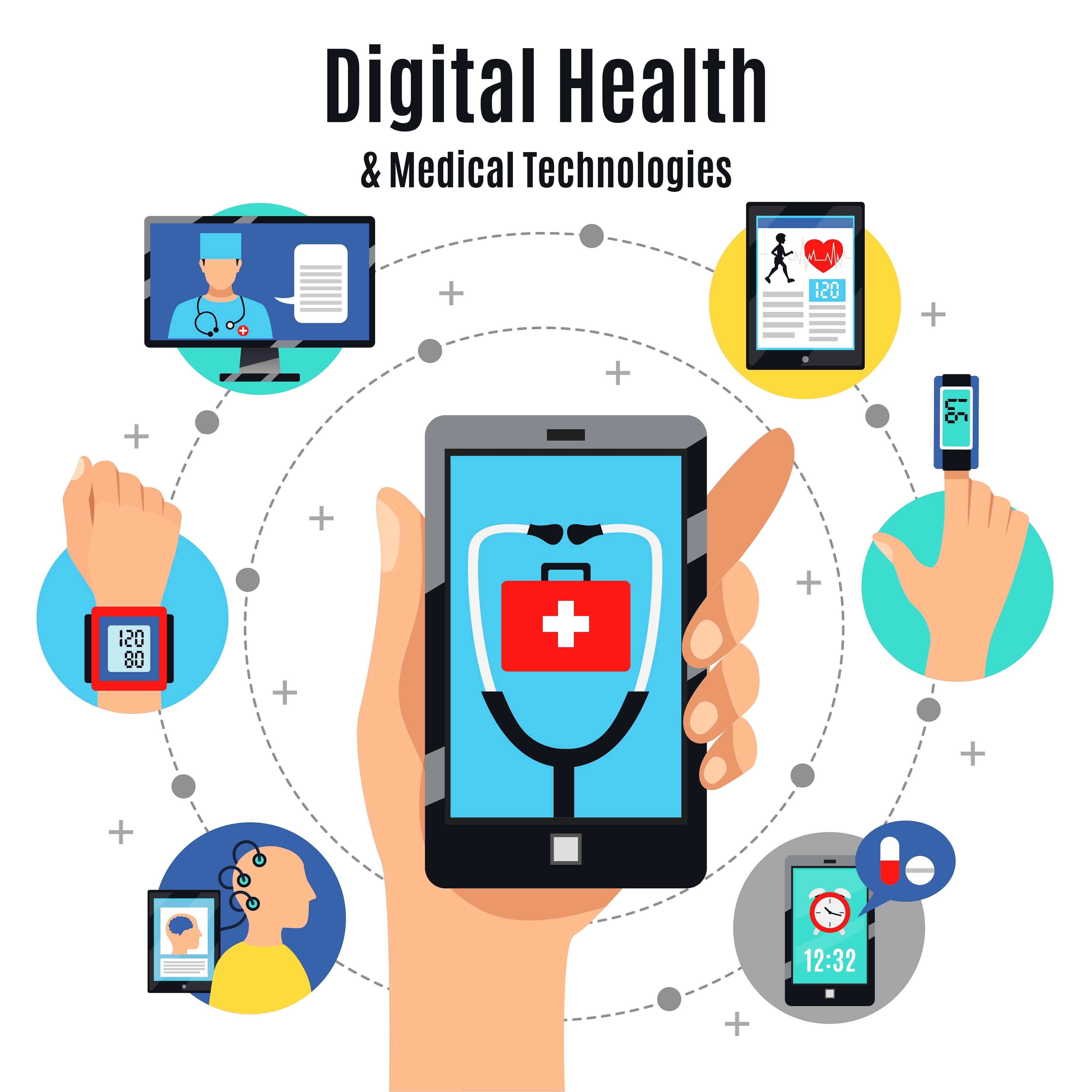
DEFINITION: According to the Food and Drug Administration [FDA], the broad scope of digital health includes categories such as mobile health (mHealth), health information technology (IT), wearable devices, tele-health and tele-medicine, and personalized medicine. From mobile medical apps and software that support the clinical decisions doctors make every day to artificial intelligence and machine learning, digital technology has been driving a revolution in health care. Digital health tools have the vast potential to improve our ability to accurately diagnose and treat disease and to enhance the delivery of health care for the individual. Digital health technologies use computing platforms, connectivity, software, and sensors for health care and related uses. These technologies span a wide range of uses, from applications in general wellness to applications as a medical device. They include technologies intended for use as a medical product, in a medical product, as companion diagnostics, or as an adjunct to other medical products (devices, drugs, and biologics). They may also be used to develop or study medical products.
As many investors predicted, digital health funding took a dive in 2023, according to Rock Health’s year-end funding report. Startups got creative to stay afloat but many digital health founders will have to “face the music” in 2024, the VC firm’s analysts say.
Editor’s Note: I am on the Advisory Board of Medblob™a start-up based in Boston, MA. The digital mission of Medblob™ is to improve community and national health by allowing patients to better manage their health, providers to better treat their patients, and researchers to have the best information to discover cures to the most prevalent and pernicious diseases.
Posted on December 21, 2022 by Dr. David Edward Marcinko MBA MEd CMP™
By Staff Reporters
***
***
The Winter Solstice, or the December Solstice, is the point at which the path of the sun in the sky is farthest south. At the Winter Solstice, the sun travels the shortest path through the sky resulting in the day of the year with the least sunlight and therefore, the longest night.
Telehealth extension: Tucked in the new Congress’ spending bill is an extension of HHS rules that made telehealth more accessible during the pandemic. But the provision, which extends the flexibility through the end of 2024, falls far short of a push from some lawmakers who wanted to make that flexibility permanent.
Traditional guidance says not to spend more than 4% of your retirement savings in the first year to protect yourself from running out of money in your golden years. A new recommendation puts that figure at 3.8% with a 30-year time horizon, according to researchers at Morningstar Inc., a half-point higher than the 3.3% withdrawal they recommended in 2022 due to expectations for lower future investment returns. That means if you retire this year with a $640,000 portfolio invested 50% in stocks and 50% in bonds, you should take out no more than $24,320 in 2023.
U.S. equities finished higher in choppy action, posting the first gains in four sessions, as investors digested a host of monetary policy decisions from central banks in Asia. The Bank of Japan and People’s Bank of China kept their respective benchmark interest rates unchanged, but the former surprisingly tweaked its yield curve control policy.
Equity news was on the light side today, as General Mills beat earnings estimates and raised its full-year guidance, and shares of Steel Dynamics gained ground after it was announced that it would replace ABIOMED in the S&P 500.
On the economic front, housing starts declined less than anticipated, while building permits fell much more than expectations. Treasury yields rose, particularly on the long end of the curve, while the U.S. dollar fell, crude oil prices saw a modest increase, and gold prices rallied.
Asian stocks finished broadly lower and market in Europe diverged amid the host of monetary policy decisions.
Posted on May 24, 2022 by Dr. David Edward Marcinko MBA MEd CMP™
By Staff Reporters
***
***
Clinician of the Future Study – 5 Key Findings
• 62% of clinicians agreed the role of the clinician will change to be more of a partnership with the patient in 10 years’ timer. • 51% of clinicians agreed tele-health will negatively impact their ability to demonstrate empathy with patients. • 56% agreed patients will be more empowered to take care of their own health. • 77% of clinicians expect real-time patient analytics to be critical to personalized care in the future. • 43% expect every individual will have their genome sequenced to support illness prevention.
Posted on May 17, 2022 by Dr. David Edward Marcinko MBA MEd CMP™
***
By Staff Reporters
***
***
4 Takeaways from HIMSS
• 84% of respondents say their organizations require them to use digital health tools and most clinicians see the value in digital transformation. • 99% of leaders in U.S.-based health systems say it is important for their organizations to invest in digital transformation and 95% of international health system leaders agree. • 93% of international payer respondents and 74% of U.S. payers say their organizations have a team focused on digital transformation. • 80% of health system leader respondents in the U.S. think that a physician visit deserves to be reimbursed at the same or higher levels than an in-person visit.
NOTE: The Healthcare Information and Management Systems Society is an American not-for-profit organization dedicated to improving health care in quality, safety, cost-effectiveness and access through the best use of information technology and management systems.
Your thoughts and comments on this ME-P are appreciated. Feel free to review our top-left column, and top-right sidebar materials, links, URLs and related websites, too. Then, subscribe to the ME-P. It is fast, free and secure.
Speaker: If you need a moderator or speaker for an upcoming event, Dr. David E. Marcinko; MBA – Publisher-in-Chief of the Medical Executive-Post – is available for seminar or speaking engagements. Contact: MarcinkoAdvisors@msn.com
OUR OTHER PRINT BOOKS AND RELATED INFORMATION SOURCES:
Posted on April 17, 2022 by Dr. David Edward Marcinko MBA MEd CMP™
By staff Reporters
***
39% of Providers Conduct Covid-19 Screens Via Telehealth
In a recent survey providers were asked what types of patient care they deliver via telehealth. The survey found:
• Conduct primary care visits (75%) • Conduct chronic care visits (72%) • Order prescription refills (64%) • Conduct COVID-19 screenings (39%) • Conduct urgent care visits (38%) • Address mental health concerns (36%) • Conduct follow-up after a procedure or surgery care (28%)
Posted on February 10, 2022 by Dr. David Edward Marcinko MBA MEd CMP™
By Staff Reporters
***
SYNOPSIS: The home office deductionallows qualified taxpayers to deduct certain home expenses when they file taxes. And, now that some doctors and many of us are working remotely, you may be wondering whether working from home will yield any tax breaks. If your small medical or healthcare consulting or other business qualifies you for a home office tax deduction, should you be concerned about triggering an audit? How does a business qualify in the first place; etc?
Well, to claim the home office deduction on their 2021 tax return, taxpayers generally must exclusively and regularly use part of their home or a separate structure on their property as their primary place of business.
***
If I work from home, do I qualify for a home office tax deduction?
If you’re an employee working remotely rather than an employer or business owner, you unfortunately don’t qualify for the home office tax deduction (however, please note that it is still available to some as a state tax deduction). Prior to the Tax Cuts and Job Acts (TCJA) tax reform passed in 2017, employees could deduct unreimbursed employee business expenses, which included the home office deduction. However, for tax years 2018 through 2025, the itemized deduction for employee business expenses has been eliminated.
If I’m self-employed, should I take the home office tax deduction?
You may have heard that taking the home office deduction sends a red flag to the IRS and ups your chances of being audited. Although there may have been some merit to this advice in the past, changes in the tax rules in the late 1990s made it easier for people who work out of their homes to qualify for these write-offs. So if you qualify, by all means, take it.
Do I qualify for the home office tax deduction?
Generally speaking, to qualify for the home office deduction, you must meet one of these criteria:
Exclusive and regular use: You must use a portion of your house, apartment, condominium, mobile home, boat or similar structure for your business on a regular basis. This also includes structures on your property, such as an unattached studio, barn, greenhouse or garage. It doesn’t include any part of a taxpayer’s property used exclusively as a hotel, motel, inn, or similar business.
Principal place of business: Your home office must be either the principal location of your business or a place where you regularly meet with customers or clients. Some exceptions to this rule include day care and storage facilities.
What is “exclusive use”?
The biggest roadblock to qualifying for these deductions is that you must use a portion of your home exclusively and regularly for your business.
The law is clear and the IRS is serious about the exclusive-use requirement. Say you set aside a room in your home for a full-time business and you work in it ten hours a day, seven days a week. If you let your children use the office to do their homework, you violate the exclusive-use requirement and forfeit the chance for home office deductions.
The exclusive-use rule doesn’t mean:
You’re forbidden to make a personal phone call from the office.
You have to rush outside whenever a family member needs a moment of your time.
Although individual IRS auditors may be more or less strict on this point, some advisers say you meet the spirit of the exclusive-use test as long as personal activities invade the home office no more than they would be permitted to in an office building. The office can also be a section of a room if the division is clear — thanks to a partition, for example — and you can show that personal activities are excluded from the business section.
What is “regular use”?
There’s no specific definition of what constitutes regular use. Clearly, if you use an otherwise empty room only occasionally and its use is incidental to your business, you’d fail this test. If you work in the home office a few hours or so each day, however, you might pass. This test is applied to the facts and circumstances of each case the IRS challenges.
What does “principal place of business” mean?
In addition to passing the exclusive- and regular-use tests, your home office must be either the principal location of that business or a place for regular customer or client meetings.
If your home office is in a separate, unattached structure — a detached garage converted into an office, for example — you don’t have to meet the principal-place-of-business or the deal-with-clients test. As long as you pass the exclusive- and regular-use tests, you can qualify for home business write-offs.
What if your business has just one home office, but you do most of your work elsewhere?
Remember that the requirement is that your home office is your principal place of business, not your principal workplace. As long as you use the home office to conduct your administrative or management chores and you don’t make substantial use of any other fixed location to conduct those tasks, you can pass this test.
If you’re an employee of another company but also have your own part-time business based in your home, you can pass this test even if you spend much more time at the office where you work as an employee.
This rule makes it much easier to claim home office deductions for individuals who conduct most of their income-earning activities somewhere else (such as outside salespeople or tradespeople).
***
***
What qualifies as a business?
As with the regular-use test, whether your endeavors qualify as a business depends on the facts and circumstances. The more substantial the activities, in terms of time and effort invested and income generated, the more likely you are to pass the test.
Making money from your efforts is a prerequisite, but for purposes of this tax break, profit alone isn’t necessarily enough. If you use your den solely to take care of your personal investment portfolio, for example, you can’t claim home office deductions because your activities as an investor don’t qualify as a business.
Taxpayers who use a home office exclusively to manage rental properties may qualify for home office tax status but as property managers rather than investors.
What if I operate a child care or storage facility?
The exclusive-use test doesn’t apply if you use part of your house to:
Provide day care services for children, older adults or individuals with disabilities. If you care for children in your home between 7 a.m. and 6 p.m. each day, for example, you can use that part of the house for personal activities the rest of the time and still claim business deductions. To qualify for the tax break, your home care business must meet any applicable state and local licensing requirements.
Store product samples or inventory you sell in your business. Assume your home-based business is the retail sale of home-cleaning products and that you regularly use half of your basement to store inventory. Occasionally using that part of the basement to store personal items wouldn’t cancel your home office deduction. To qualify for this exception, your home must be the principal location of your business.
How do I calculate the home office tax deduction?
Your home office business deductions are based on either the percentage of your home used for the business or a simplified square footage calculation.
The most exact way to calculate the business percentage of your house is to measure the square footage devoted to your home office as a percentage of the total area of your home. If the office measures 150 square feet, for example, and the total area of the house is 1,200 square feet, your business percentage would be 12.5%.
An easier calculation is acceptable if the rooms in your home are all about the same size. In that case, you can figure out the business percentage by dividing the number of rooms used in your business by the total number of rooms in the house.
Special rules apply if you qualify for home office deductions under the day care exception to the exclusive-use test.
Your business-use percentage must be reduced because the space is available for personal use part of the time.
To do that, you compare the number of hours the child care business is operated, including preparation and cleanup time, to the total number of hours in the year (8,760).
Assume you use 40% of your house for a nursing daycare business that operates 12 hours a day, five days a week for 50 weeks of the year.
12 hours x 5 days x 50 weeks = 3,000 hours per year.
3,000 hours ÷ 8,760 total hours in the year = 0.34 (34%) of available hours.
34% of available hours x 40% of the house used for business = 13.6% business write-off percentage.
Simplified square footage method
Beginning with 2013 tax returns, the IRS began offering a simplified option for claiming the deduction. This new method uses a prescribed rate multiplied by the allowable square footage used in the home.
For 2021, the prescribed rate is $5 per square foot with a maximum of 300 square feet.
If the office measures 150 square feet, for example, then the deduction would be $750 (150 x $5).
The space must still be dedicated to business activities.
With either method, the qualification for the home office deduction is determined each year. Your eligibility may change from one year to the next. Finally, please note that only certain expenses such as rent, mortgage interest and property taxes qualify for the deduction, and the deduction is limited to $10,000.
Posted on February 6, 2022 by Dr. David Edward Marcinko MBA MEd CMP™
***
Guide to Telehealth – Then, Now, Tomorrow? By Rebecca Chi
Healthcare providers have employed various forms of telehealth since long before the start of the coronavirus pandemic. Telehealth delivers knowledge and expertise to people and places that need it. A movement that largely began as a way to improve access to healthcare in rural communities saw explosive growth in 2020. Today, telehealth is in wide use and here to stay.
***
What is telehealth? The US Health Resources and Services Administration defines telehealth as any electronic information and telecommunications technology that is used to support and promote long-distance clinical healthcare, patient and professional health-related education, public health and health administration. Telehealth technologies benefit providers, healthcare organizations and patients.
The importance of telehealth The key to maintaining population health and lowering expenditures is delivering timely access to high-quality care.
The US is struggling to improve the quality of healthcare and make the needed shift to value-based models. Innovative telehealth solutions that addressed our country’s worsening healthcare access problem reached the point of widespread adoption in 2020, when the pandemic pushed the healthcare system to its limits.
Telehealth increases convenience of care and access while decreasing costs and maximizing physician time. Providers, payers and employers are increasingly adopting various and connected types of telehealth solutions to improve healthcare operations and patient outcomes. Patients embrace the convenience, safety, accessibility and flexibility of telehealth options.
On July 13, 2021, the Centers for Medicare & Medicaid Services (CMS) released its proposed Medicare Physician Fee Schedule (MPFS) for calendar year (CY) 2022.
In addition to numerous payment updates in the MPFS, such as significant updates to the Merit-based Incentive Payment System (MIPS), new policies may preserve expanded telemedicine services through 2023 and clinicians may incur more difficulty earning bonuses under the Quality Payment Program (QPP) eligibility threshold. CMS also includes in the proposed rule a request for information to address COVID-19 vaccine reimbursement proposals. (Read more...)
Posted on June 6, 2021 by Dr. David Edward Marcinko MBA MEd CMP™
Executive Order Expands Tele-Medicine to Ease Burden
By Health Capital Consultants, LLC
On August 3, 2020, President Donald Trump signed an executive order aimed at expanding access to care through two avenues: telemedicine and eased financial burdens on rural providers.
And so, our colleagues for this Health Capital Topics article will discuss the executive rule and the subsequent agency actions on these fronts.
Posted on May 14, 2021 by Dr. David Edward Marcinko MBA MEd CMP™
BENTONVILLE, Ark., and PHOENIX, Ariz
[By Staff Reporters]
Walmart Health and MeMD, a multi-specialty telehealth provider, announced they have entered into an agreement for Walmart Health to acquire MeMD.
This reinforces Walmart’s commitment to integrated, omni-channel health delivery that leverages data and technology to improve engagement, health equity and outcomes.
The Journal of the American Medical Association not long ago published an online editorial by two physicians at NewYork-Presbyterian that called for the creation of a new medical specialty focused on virtual care.
Others expanded on this idea in a blog post last month on the Health Affairs website, calling for a “virtualist movement” that involves not just physician specialists but whole care teams devoted to virtual care. This virtual team would include nurses, pharmacists, medical social workers, psychologists, nutritionists and physical therapists.
Posted on February 11, 2018 by Dr. David Edward Marcinko MBA MEd CMP™
FY 2017
[Staff reporters]
Zebra Technologies recently released survey results from nurse managers and IT executives on clinical mobility. Here are some key findings from the report:
• 65% of hospitals had a mobile device policy in 2017.
• By 2022, 98% of hospitals will expect to have a mobile device policy.
• Half of hospitals have had a predictive data analytics policy for 3+ years.
• 42% of hospitals have had a predictive data analytics policy for < 1 year.
• 3 in 4 IT executives say clinical mobility investments will increase by 2022.
• 97% expect workflow notifications to be sent to mobile devices by 2022.
Your thoughts and comments on this ME-P are appreciated. Feel free to review our top-left column, and top-right sidebar materials, links, URLs and related websites, too. Then, subscribe to the ME-P. It is fast, free and secure.
Speaker: If you need a moderator or speaker for an upcoming event, Dr. David E. Marcinko; MBA – Publisher-in-Chief of the Medical Executive-Post – is available for seminar or speaking engagements. Contact: MarcinkoAdvisors@msn.com
OUR OTHER PRINT BOOKS AND RELATED INFORMATION SOURCES:
Your thoughts and comments on this ME-P are appreciated. Feel free to review our top-left column, and top-right sidebar materials, links, URLs and related websites, too. Then, subscribe to the ME-P. It is fast, free and secure.
Speaker: If you need a moderator or speaker for an upcoming event, Dr. David E. Marcinko; MBA – Publisher-in-Chief of the Medical Executive-Post – is available for seminar or speaking engagements. Contact: MarcinkoAdvisors@msn.com
OUR OTHER PRINT BOOKS AND RELATED INFORMATION SOURCES:







 Support our online development, and advance our onground research initiatives in free market economics, as we seek to showcase the brightest Next-Gen minds.
THE ME-P DISCLAIMER: Posts, comments and opinions do not necessarily represent iMBA, Inc., but become our property after submission. Copyright © 2006 to-date. iMBA, Inc allows colleges, universities, medical and financial professionals and related clinics, hospitals and non-profit healthcare organizations to distribute our proprietary essays, photos, videos, audios and other documents; etc. However, please review copyright and usage information for each individual asset before submission to us, and/or placement on your publication or web site. Attestation references, citations and/or back-links are required. All other assets are property of the individual copyright holder.
Support our online development, and advance our onground research initiatives in free market economics, as we seek to showcase the brightest Next-Gen minds.
THE ME-P DISCLAIMER: Posts, comments and opinions do not necessarily represent iMBA, Inc., but become our property after submission. Copyright © 2006 to-date. iMBA, Inc allows colleges, universities, medical and financial professionals and related clinics, hospitals and non-profit healthcare organizations to distribute our proprietary essays, photos, videos, audios and other documents; etc. However, please review copyright and usage information for each individual asset before submission to us, and/or placement on your publication or web site. Attestation references, citations and/or back-links are required. All other assets are property of the individual copyright holder.






































 The Leading Business Education Network for Doctors, Financial Advisors and Health Industry Consultants