BOARD CERTIFICATION EXAM STUDY GUIDES Lower Extremity Trauma
[Click on Image to Enlarge]
ME-P Free Advertising Consultation
The “Medical Executive-Post” is about connecting doctors, health care executives and modern consulting advisors. It’s about free-enterprise, business, practice, policy, personal financial planning and wealth building capitalism. We have an attitude that’s independent, outspoken, intelligent and so Next-Gen; often edgy, usually controversial. And, our consultants “got fly”, just like U. Read it! Write it! Post it! “Medical Executive-Post”. Call or email us for your FREE advertising and sales consultation TODAY [678.779.8597] Email: MarcinkoAdvisors@outlook.com
Medical & Surgical e-Consent Forms
ePodiatryConsentForms.com
iMBA Inc., OFFICES
Suite #5901 Wilbanks Drive, Norcross, Georgia, 30092 USA [1.678.779.8597]. Our location is real and we are now virtually enabled to assist new long distance clients and out-of-town colleagues.
ME-P Publishing
SEEKING INDUSTRY INFO PARTNERS?
If you want the opportunity to work with leading health care industry insiders, innovators and watchers, the “ME-P” may be right for you? We are unbiased and operate at the nexus of theoretical and applied R&D. Collaborate with us and you’ll put your brand in front of a smart & tightly focused demographic; one at the forefront of our emerging healthcare free marketplace of informed and professional “movers and shakers.” Our Ad Rate Card is available upon request [678-779-8597].
Posted on September 27, 2025 by Dr. David Edward Marcinko MBA MEd CMP™
By Staff Reporters
***
***
A paradox is a statement that appears at first to be contradictory, but upon reflection then makes sense. This literary device is commonly used to engage a reader to discover an underlying logic in a seemingly self-contradictory statement or phrase. As a result, paradox allows readers to understand concepts in a different and even non-traditional
***
***
GOVERNMENT HEALTH INFORMATION IS TRUSTED?
Classic Definition: Despite the PP-ACA, there is ambivalence about the role of the US Government as a source of quality healthcare information.
Modern Circumstance: Of brands presented to respondents in a Consumer Reports (50 percent), and AARP (37 percent) survey, they outpolled the “US Government Healthcare Quality Reporting Website” (36 percent) and Medicare Website (32 percent).
Paradox Example: The focus groups expressed “mixed reactions and raised doubts about government involvement in quality ratings information. At least one participant in each group expressed skepticism about trusting ‘the government’ to compile information.”
Younger consumers especially questioned the relevance of Medicare measures to the non-elderly population. Yet participants gravitated to “.gov” websites over “.org” websites as a more authoritative source.
CITE: Williams, Jason: Health Affairs, December 28, 2016
A Johns Hopkins University study, by Michael J. Klag MD in 1997, found that physicians in some specialties — chiefly psychiatry and surgery — are at higher risk for divorce than their medical brethren in other fields. But, the results did not support the common view that job-related anxiety and depression are linked to marital breakup. Alerting medical students to the risks of divorce in some specialties may influence their career choices and strengthen their marriages whatever field they choose. The study, supported by the National Institutes of Health [NIH], was published in the March 13th issue of The New England Journal of Medicine. Results also strongly suggested that the high divorce risk in some specialties may result from the inherent demands of the job as well as the emotional experiences of physicians who enter those fields.
For example, the Hopkins team assessed the specialty choices, marriage histories, psychological characteristics, and other career and personal factors of 1,118 physicians who graduated from The Johns Hopkins University School of Medicine from 1948 through 1964. Over 30 years of follow-up, the divorce rate was 51 percent for psychiatrists, 33 percent for surgeons, 24 percent for internists, 22 percent for pediatricians and pathologists, and 31 percent for other specialties. The overall divorce rate was 29 percent after three decades of follow-up and 32 percent after nearly four decades of follow-up.
Physicians who married before medical school graduation had a higher divorce rate than those who waited until after graduation (33 percent versus 23 percent). The year of first marriage was linked with divorce rates: 11 percent for marriages before 1953, 17 percent for those from 1953 to 1957, 24 percent for those from 1958 to 1962 and 21 percent for those after 1962. Those who had a parent die before medical school graduation had a lower divorce rate.
Female physicians had a higher divorce rate (37 percent) than their male colleagues (28 percent). Physicians who were members of an academic honor society in medical school had a lower divorce rate, although there was no difference in divorce rates according to class rank. Religious affiliation, being an only child, having a parent who was a physician and having a divorced parent were not associated with divorce rates. Physicians who reported themselves to be less emotionally close to their parents and who expressed more anger under stress also had a significantly higher divorce rate, but anxiety and depression levels were not associated with divorce rates.
*Cite: Co-authors of the study, which was part of the Johns Hopkins Precursors Study, an ongoing, prospective study of physicians from the Hopkins medical school graduating classes of 1948 through 1964, were lead author Bruce L. Rollman, M.D., Lucy A. Mead, Sc.M., and Nae-Yuh Wang, M.S.
***
***
The Painful Truth
In their article “The Painful Truth: Physicians Are Not Invincible” [1] Miller and McGowen state that divorce rates among physicians have been reported to be 10% to 20% higher than those in the general population. They explain that for many years in pre-med college, medical school, and residency, physicians focus on getting through the next hurdle. They may postpone the pleasures of life that others enjoy. Compulsive traits that allow them to postpone enjoyment may have the unwanted consequence of leading to more distant relationships., thus placing strain on intimate relationships.
A 2002 study looking at dual physician marriages found they have a relatively low divorce rate of 11%. “They’re a happily married cohort,” says Dr Wayne Sotile of the Sotile Cetner for Resilience (www.sotile.com). “They’re more compassionate about the passion for the career — they understand the calling because they share it.”
A study published in The New England Journal of Medicine in 1997 with Bruce L. Rollman as the lead researcher [2] found that physicians in some specialties — chiefly psychiatry and surgery — are at higher risk for divorce than their medical brethren in other fields. Alerting medical students to the risks of divorce in some specialties may influence their career choices and strengthen their marriages whatever field they choose.
The study suggested that the high divorce risk in some specialties may result from the inherent demands of the job as well as the emotional experiences of physicians who enter those fields. The divorce rate was 51 percent for psychiatrists, 33 percent for surgeons, 24 percent for internists, 22 percent for pediatricians and pathologists, and 31 percent for other specialties.
The overall divorce rate was 29 percent after three decades of follow-up and 32 percent after nearly four decades of follow-up. Physicians who married before medical school graduation had a higher divorce rate than those who waited until after graduation (33 percent versus 23 percent). Female physicians had a higher divorce rate (37 percent) than their male colleagues (28 percent).
***
***
References:
Miller, M. N., McGowen, R., 2000, “The painful truth: Physicians are not invincible,” Southern Medical Journal, 93: 966-973.
Rollman BL, Mead LA, Wan NY, Klag MJ. Medical specialty and the incidence of divorce. N Engl J Med. 1997;336:800–3
SPEAKING: Dr. Marcinko will be speaking and lecturing, signing and opining, teaching and preaching, storming and performing at many locations throughout the USA this year! His tour of witty and serious pontifications may be scheduled on a planned or ad-hoc basis; for public or private meetings and gatherings; formally, informally, or over lunch or dinner. All medical societies, financial advisory firms or Broker-Dealers are encouraged to submit an RFP for speaking engagements: CONTACT: Ann Miller RN MHA at MarcinkoAdvisors@outlook.com -OR-http://www.MarcinkoAssociates.com
Posted on March 29, 2025 by Dr. David Edward Marcinko MBA MEd CMP™
MEDICAL EXECUTIVE-POST–TODAY’SNEWSLETTERBRIEFING
***
Essays, Opinions and Curated News in Health Economics, Investing, Business, Management and Financial Planning for Physician Entrepreneurs and their Savvy Advisors and Consultants
“Serving Almost One Million Doctors, Financial Advisors and Medical Management Consultants Daily“
A Partner of the Institute of Medical Business Advisors , Inc.
Dr. Jay Bhattacharya is officially the new NIH director. The Senate voted to confirm the Stanford University professor’s appointment on March 26 in a 53–47 vote. Marty MakaryMD was also confirmed as FDA commissioner in the same hearing in a 56–44 vote. The appointments come as additional “healthcare disruptors,” alongside Robert F. Kennedy Jr.’s confirmation as HHS secretary and Mehmet Oz’s nomination as head of the Centers for Medicare and Medicaid Services. The nominees have faced backlash from the medical community following their controversial stances on topics like vaccinations and alternative medical practices.
The Dow Jones Industrial Average (^DJI) dropped more than 700 points or nearly 1.7%, while the benchmark S&P 500 (^GSPC) fell almost 2%. The NASDAQ Composite (^IXIC) dropped 2.7% as tech stocks led the declines.
As noted above, the major averages fell on Friday after the release of a hotter-than-expected Personal Consumption Expenditures index reading, which includes the Federal Reserve’s preferred inflation gauge of “core” PCE. The reading showed prices increased more than expected last month, rising 0.4% month over month and 2.8% year over year, continuing a stubborn plateau on the path to the Fed’s 2% target.
Visualize: How private equity tangled banks in a web of debt, from the Financial Times.
Posted on January 28, 2025 by Dr. David Edward Marcinko MBA MEd CMP™
MEDICAL EXECUTIVE-POST–TODAY’SNEWSLETTERBRIEFING
***
Essays, Opinions and Curated News in Health Economics, Investing, Business, Management and Financial Planning for Physician Entrepreneurs and their Savvy Advisors and Consultants
“Serving Almost One Million Doctors, Financial Advisors and Medical Management Consultants Daily“
A Partner of the Institute of Medical Business Advisors , Inc.
Federal health agencies are canceled—well, their meetings are at least. In the days following his inauguration, President Donald Trump’s administration asked officials within the Department of Health and Human Services (HHS)—which has a $1.7 trillion budget and includes the FDA, the CDC, and the National Institutes of Health (NIH)—to stop all external communication, according to an internal memo. This means no new health advisories, social media posts, or website posts.
“As the new administration considers its plan for managing the federal policy and public communications processes, it is important that the president’s appointees and designees have the opportunity to review and approve any regulations, guidance documents, and other public documents and communications (including social media),” the memo read. The pause began on Jan. 21st, and according to the memo, will remain in effect until Feb. 1st
The FTC’s second interim staff report on consolidated pharmacy benefit managers (PBMs) found that the three largest of these middlemen—CVS Health’s Caremark Rx, Cigna Group’s Express Scripts, and UnitedHealth Group’s OptumRx—”marked up two specialty generic cancer drugs by thousands of percent and then paid their affiliated pharmacies hundreds of millions of dollars of dispensing revenue in excess of estimated acquisition costs for each drug annually.”
The NASDAQ tanked on Monday as a Chinese startup rattled faith in US leadership and profitability in AI, taking a hammer to Nvidia (NVDA), wiping out a record $589 billion in market value. The NASDAQ Composite (^IXIC) sank more than 3%, while the S&P 500 (^GSPC) dropped nearly 1.5%. The blue-chip Dow Jones Industrial Average (^DJI), which is less dependent tech stocks gained more than 0.6% as investors flocked to defensive sectors. Shares of Apple (AAPL) and software giant Salesforce (CRM) also bucked the tech rout.
Posted on November 8, 2023 by Dr. David Edward Marcinko MBA MEd CMP™
By Staff Reporters
***
***
The Senate on Tuesday confirmed Dr. Monica M. Bertagnolli, a cancer surgeon who currently leads the National Cancer Institute, as the next director of the National Institutes of Health, overriding the objections of Senator Bernie Sanders of Vermont, the chairman of the Senate health committee.
***
The U.S. regulator charged with overseeing the Federal Home Loan Bank system said in a report on Tuesday the system is overdue for an update in terms of its structure and operation. The Federal Housing Finance Agency emphasized in the report there needs to be a clearer distinction between the purpose of those banks, which is to aid liquidity needs at banks in a bid to facilitate mortgage lending, with the Federal Reserve, which should serve as a source of emergency liquidity for banks.
Here is where the major stock market benchmarks ended:
The S&P 500 Index was up 12.40 points (0.3%) at 4,378.38; the Dow Jones Industrial Average was up 56.74 points (0.2%) at 34,152.60; the NASDAQ Composite (COMP) was up 121.08 points (0.9%) at 13,639.86.
The 10-year Treasury note yield (TNX) was down about 9 basis points at 4.571%.
CBOE’s Volatility Index (VIX) was down 0.08 at 14.81.
The small-cap-focused Russell 2000 Index (RUT) fell a second day, reflecting concerns about the economy tipping over into recession.
Energy stocks fell as WTI crude oil futures tumbled more than 4% to a 3½-month low on concerns about softening demand from China.
Posted on August 3, 2023 by Dr. David Edward Marcinko MBA MEd CMP™
By Staff Reporters
***
***
Jeanne M. Marrazzo MD, a University of Alabama at Birmingham infectious-disease expert, will succeed Anthony S. Fauci this fall as director of the National Institute of Allergy and Infectious Diseases, federal officials announced yesterday.
The $6.3 billion research institute is among the largest of the 27 institutes and centers that constitute the National Institutes of Health, America’s flagship biomedical agency. NIAID is also particularly prominent given its involvement in the response to the coronavirus pandemic and other diseases; it has also received attention because of Dr. Tony Fauci’s own high profile and Republicans’ ongoing efforts to investigate the institute’s workings.
Marrazzo, an infectious-disease physician and epidemiologist who has been a principal investigator on NIH grants since 1997, has focused her research on the human microbiome and the prevention of HIV and infections in the female reproductive tract. She emerged as a frequent commentator during the pandemic, appearing on national television and urging Americans to get vaccinated and take other steps to protect themselves from the virus.
An openly gay physician, Marrazzo has studied barriers to care for LGBTQ patients and advocated to address them.
Posted on May 17, 2023 by Dr. David Edward Marcinko MBA MEd CMP™
By Staff Reporters
President Joe Biden said Monday he intends to nominate a new director for the National Institutes of Health. Dr. Monica Bertagnolli, a surgical oncologist and cancer researcher, was picked by Biden as the successor to Francis Collins.
“Dr. Bertagnolli has spent her career pioneering scientific discovery and pushing the boundaries of what is possible to improve cancer prevention and treatment for patients, and ensuring that patients in every community have access to quality care,” Biden said in a statement. “As Director of the National Cancer Institute, Dr. Bertagnolli has advanced my Cancer Moonshot to end cancer as we know it.”
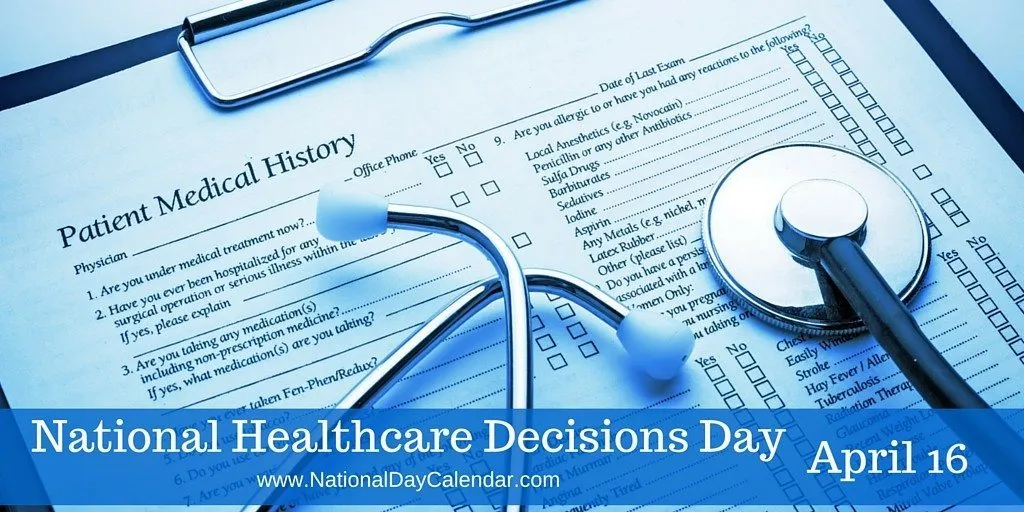
National Healthcare Decisions Day (NHDD) exists to inspire, educate and empower the public and providers about the importance of advance care planning. NHDD is an initiative to encourage patients to express their wishes regarding healthcare and for providers and facilities to respect those wishes, whatever they may be.
NHDD was founded in 2008 by Nathan Kottkamp, a Virginia-based health care lawyer, to provide clear, concise, and consistent information on healthcare decision-making to both the public and providers/facilities through the widespread availability and dissemination of simple, free, and uniform tools (not just forms) to guide the process.
NHDD is a series of independent events held across the country, supported by a national media and public education campaign. In all respects, NHDD is inclusive and brings a variety of players in the larger healthcare, legal, and religious community together to work on a common project, to the benefit of patients, families, and providers. A key goal of NHDD is to demystify healthcare decision-making and make the topic of advance care planning inescapable. Among other things, NHDD helps people understand that advance healthcare decision-making includes much more than living wills; it is a process that should focus first on conversation and choosing an agent.
As of June 2016, The Conversation Project has been responsible for the management, finances, and structure of NHDD. NHDD’s founder, Nathan Kottkamp, continues to be involved in NHDD and provides leadership by ensuring the maintenance of NHDD’s high quality resources and support for the community.
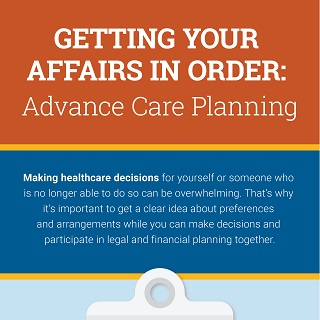
DEFINITION: What is advance care planning for financial advisors and lawyers?
Advance care planning involves discussing and preparing for future decisions about your medical care if you become seriously ill or unable to communicate your wishes with your estate planning attorney or financial advisor. Having meaningful conversations with your loved ones is the most important part of advance care planning. Many people also choose to put their preferences in writing by completing legal documents called advance directives.
What are advance directives?
Advance directives are legal documents that provide instructions for medical care and only go into effect if you cannot communicate your own wishes.
The two most common advance directives for health care are the living will and the durable power of attorney for health care.
Living will: A living will is a legal document that tells doctors how you want to be treated if you cannot make your own decisions about emergency treatment. In a living will, you can say which common medical treatments or care you would want, which ones you would want to avoid, and under which conditions each of your choices applies. Learn more about preparing a living will.
Durable power of attorneyfor health care: A durable power of attorney for health care is a legal document that names your health care proxy, a person who can make health care decisions for you if you are unable to communicate these yourself. Your proxy, also known as a representative, surrogate, or agent, should be familiar with your values and wishes. A proxy can be chosen in addition to or instead of a living will. Having a health care proxy helps you plan for situations that cannot be foreseen, such as a serious car accident or stroke. Learn more about choosing a health care proxy.
Think of your advance directives as living documents that you review at least once each year and update if a major life event occurs such as retirement, moving out of state, or a significant change in your health.
Advance care planning is not just for people who are very old or ill. At any age, a medical crisis could leave you unable to communicate your own health care decisions. Planning now for your future health care can help ensure you get the medical care you want and that someone you trust will be there to make decisions for you.
Advance care planning for people with dementia. Many people do not realize that Alzheimer’s disease and related dementias are terminal conditions and ultimately result in death. People in the later stages of dementia often lose their ability to do the simplest tasks. If you have dementia, advance care planning can give you a sense of control over an uncertain future and enable you to participate directly in decision-making about your future care. If you are a loved one of someone with dementia, encourage these discussions as early as possible. In the later stages of dementia, you may wish to discuss decisions with other family members, your loved one’s health care provider, or a trusted friend to feel more supported when deciding the types of care and treatments the person would want.
What happens if you do not have an advance directive?
If you do not have an advance directive and you are unable to make decisions on your own, the state laws where you live will determine who may make medical decisions on your behalf. This is typically your spouse, your parents if they are available, or your children if they are adults. If you are unmarried and have not named your partner as your proxy, it’s possible they could be excluded from decision-making. If you have no family members, some states allow a close friend who is familiar with your values to help. Or they may assign a physician to represent your best interests. To find out the laws in your state, contact your state legal aid office or state bar association.
Will an advance directive guarantee your wishes are followed?
An advance directive is legally recognized but not legally binding. This means that your health care provider and proxy will do their best to respect your advance directives, but there may be circumstances in which they cannot follow your wishes exactly. For example, you may be in a complex medical situation where it is unclear what you would want. This is another key reason why having conversations about your preferences is so important. Talking with your loved ones ahead of time may help them better navigate unanticipated issues.
There is the possibility that a health care provider refuses to follow your advance directives. This might happen if the decision goes against:
The health care provider’s conscience
The health care institution’s policy
Accepted health care standards
In these situations, the health care provider must inform your health care proxy immediately and consider transferring your care to another provider.
Other advance care planning forms and orders from doctors
You might want to prepare documents to express your wishes about a single medical issue or something else not already covered in your advance directives, such as an emergency. For these types of situations, you can talk with a doctor about establishing the following orders:
Do not resuscitate (DNR) order: A DNR becomes part of your medical chart to inform medical staff in a hospital or nursing facility that you do not want CPR or other life-support measures to be attempted if your heartbeat and breathing stop. Sometimes this document is referred to as a do not attempt resuscitation (DNR) order or an allow natural death (AND) order. Even though a living will might state that CPR is not wanted, it is helpful to have a DNR order as part of your medical file if you go to a hospital. Posting a DNR next to your hospital bed might avoid confusion in an emergency. Without a DNR order, medical staff will attempt every effort to restore your breathing and the normal rhythm of your heart.
Do not intubate (DNI) order: A similar document, a DNI informs medical staff in a hospital or nursing facility that you do not want to be on a ventilator.
Do not hospitalize (DNH) order: A DNH indicates to long-term care providers, such as nursing home staff, that you prefer not to be sent to a hospital for treatment at the end of life.
Out-of-hospital DNR order: An out-of-hospital DNR alerts emergency medical personnel to your wishes regarding measures to restore your heartbeat or breathing if you are not in a hospital.
Physician orders for life-sustaining treatment (POLST) and medical orders for life-sustaining treatment (MOLST) forms:These forms provide guidance about your medical care that health care professionals can act on immediately in an emergency. They serve as a medical order in addition to your advance directive. Typically, you create a POLST or MOLST when you are near the end of life or critically ill and understand the specific decisions that might need to be made on your behalf. These forms may also be called portable medical orders or physician orders for scope of treatment (POST). Check with your state department of health to find out if these forms are available where you live.
At enrollment, Medicare in the future could offer three advancedirectives with goals of care: DirectiveA: CONSENT to treat — inpatient medical treatment DirectiveB: CONSENT to comfort — home bound holistic care DirectiveC: CHOOSE against medical advice — outpatient palliative resources.
Recent advances in biomedical and health sciences—from immunotherapy to treat cancer, to the highly effective COVID-19 vaccines—demonstrate the strengths and successes of the U.S. biomedical enterprise. Such advances present an opportunity to revolutionize how to prevent, treat, and even cure a range of diseases including cancer, infectious diseases, Alzheimer’s disease, and many others that together affect a significant number of Americans.
To improve the U.S. government’s capabilities to speed research that can improve the health of all Americans, President Biden is proposing the establishment of the Advanced Research Projects Agency for Health (ARPA-H). Included in the President’s FY2022 budget as a component of the National Institutes of Health (NIH) with a requested funding level of $6.5B available for three years, ARPA-H will be tasked with building high-risk, high-reward capabilities (or platforms) to drive biomedical breakthroughs—ranging from molecular to societal—that would provide transformative solutions for all patients.
Posted on August 3, 2010 by Dr. David Edward Marcinko MBA MEd CMP™
Bill Gates Named Keynote Speaker
By Staff Reporters
High-level conference to explore role of research, technology & innovation in mobile health
Dear Ann —
Washington, D.C., August 3, 2010 – Bill Gates, Co-Chair and Trustee of the Bill & Melinda Gates Foundation, will provide a keynote address on the opportunity of mobile technologies to improve health outcomes in the developing world at the 2010 mHealth Summit, the summit organizers announced today. The summit, organized by the Foundation for the National Institutes of Health in partnership with the National Institutes of Health (NIH) and the mHealth Alliance, will be held November 8-10 in Washington, DC.
“We are honored to have Bill Gates join the mHealth Summit. The event has quickly become the premier meeting place for leaders focused on research and the delivery of health services through the implementation of mobile technologies,” said Richard Scarfo, Director of the mHealth Summit and Director of Strategic Alliances at the Foundation for the National Institutes of Health.
Gates will be keynoting an interactive discussion on November 9 at 1:00 p.m. EST during the 2010 mHealth Summit. The event will connect leaders in health, government, academia, philanthropic organizations and the private sector to advance discussion and decision making on the intersection of mobile technology, health practice, research, and policy in the United States and abroad, with a particular focus on low and middle income countries.
Mobile Health, or “mHealth,” is rapidly becoming a transformative solution for improving quality healthcare services in poor and remote regions around the world. With over 5 billion mobile subscriptions globally, cell phones are becoming a tool to help close the digital divide and increase access to a range of services, including healthcare.
“We are delighted that Bill Gates is joining the mHealth Summit to advance the discussion on how modern mobile and computing technologies can save lives and promote healthier communities in even the world’s poorest places,” said David Aylward, Executive Director of the mHealth Alliance, whose founding partners include the Rockefeller, United Nations, and Vodafone Foundations, PEPFAR and the GSM Association.
Verizon Wireless, the partnering sponsor, will be joined by other sponsors including Abbott Labs, American Telemedicine Association, CTIS, McKesson Foundation, Microsoft Research, Pfizer, Qualcomm, Robert Wood Johnson Foundation, Skype and the West Wireless Health Institute.
The event is expected to attract more than 2,000 attendees from around the globe, feature over 150 exhibitors and will be held November 8-10, 2010 at the Walter E. Washington Convention Center in Washington, D.C.
Visit the official 2010 mHealth Summit website for registration and conference details: www.mhealthsummit.org
About the mHealth Summit
The 2010 mHealth Summit, a partnership of the Foundation for the National Institutes of Health (FNIH), the National Institutes of Health and the mHealth Alliance, is the leading U.S. conference advancing cross-sector collaboration in the use of wireless technology to improve health outcomes. The 2010 mHealth Summit, to be held November 8-10 at the Walter E. Convention Center, will connect leaders in government, private sector/industry, academia and not-for-profit organizations to advance discussion and decision-making related to the intersection of mobile technology, health research, and policy in the United States and abroad. For more information, visit www.mhealthsummit.org.
Subscribe Now:Did you like this Medical Executive-Post, or find it helpful, interesting and informative? Want to get the latest ME-Ps delivered to your email box each morning? Just subscribe using the link below. You can unsubscribe at any time. Security is assured.
Posted on February 2, 2010 by Dr. David Edward Marcinko MBA MEd CMP™
Seeking Real Results; not Empty Rhetoric
By Dr. David Edward Marcinko; MBA, CMP™
[Publisher-in-Chief]
All our ME-P readers and subscribers are aware of the ‘National Summit on Health Care Fraud’, at the National Institutes of Health (NIH), held on January 28, 2010 in Bethesda, Maryland. The much publicized summit discussed ways to eliminate fraud, waste and abuse in the US health care system.
A major speaker, of course, was US Secretary of Health and Human Services [DHSS] Kathleen Sebelius.
In My Opinion
IMHO, the summit was more political posturing and “nibbling at the margins”, than innovative thought leadership. Much like a hawkish politician with a platform against crime; who can argue with the proposition?
But, how do we actually reduce fraud and abuse? In other words, how can we achieve real results, and not just more anti-fraud rhetoric?
Here are two considerations, currently on the books, that need hard enforcement:
1. Medicare Integrity Program
The MP-P allows the DHHS to contract with non-governmental organizations, known as Medicare Program Safeguard Contractors, to carry out fraud and abuse detection, cost report audits, utilization review, provider payment determinations, and provider education, and to create a list of durable medical equipment subject to prior authorization for reimbursement.
Under this program, the Centers for Medicare and Medicaid Services (CMS) must implement regulations for contracting procedures.
2. Beneficiary Incentive Program
Under the BIP, Medicare beneficiaries are encouraged to report any suspicious billing activities. When a claim results in collection of funds of at least $100, the beneficiary may be paid a portion of the collections, up to $1,000 for each occurrence. Since this process does not require the same amount of time and resources associated with whistleblowing actions, there has been activity generated by senior groups leading to various enforcement actions.
This program has allowed the Medicare carriers to send notices to patients, which encourages them to call, report, and possibly be rewarded if the report results in action.
Assessment
The first step in fighting healthcare fraud and abuse is to know which laws apply in specific cases.
The next step is formulating policies and procedures to ensure that all workforce members understand how to comply and what their individual responsibilities are in maintaining a sound healthcare business organization.
The third step is enforcement and punishment; less talk and more action!
Assessment
The most effective way to accomplish all of this is through the implementation of a medical practice compliance program, and more specifically, the augmentation of the above two programs currently in existence.
Channel Surfing the ME-P
Have you visited our other topic channels? Established to facilitate idea exchange and link our community together, the value of these topics is dependent upon your input. Please take a minute to visit. And, to prevent that annoying spam, we ask that you register. It is fast, free and secure.
Conclusion
Your thoughts and comments on this ME-P are appreciated. Feel free to review our top-left column, and top-right sidebar materials, links, URLs and related websites, too. Then, subscribe to the ME-P. It is fast, free and secure.
Speaker: If you need a moderator or speaker for an upcoming event, Dr. David E. Marcinko; MBA – Publisher-in-Chief of the Medical Executive-Post – is available for seminar or speaking engagements. Contact: MarcinkoAdvisors@msn.com
OUR OTHER PRINT BOOKS AND RELATED INFORMATION SOURCES:
Posted on January 6, 2010 by Dr. David Edward Marcinko MBA MEd CMP™
And Textbook Contributor, Too!
By Ann Miller; RN, MHA
[Executive Director]
Shahid N. Shah is an internationally recognized healthcare thought-leader across the Internet. He is a consultant to various federal agencies on technology matters and winner of Federal Computer Week’s coveted “Fed 100” Award, in 2009.
Professional Career
Over a twenty year career, Shahid built multiple clinical solutions and helped design-deploy an electronic health record solution for the American Red Cross and two web-based eMRs used by hundreds of physicians with many large groupware and collaboration sites. As ex-CTO for a billion dollar division of CardinalHealth, he helped design advanced clinical interfaces for medical devices and hospitals. Mr. Shah is senior technology strategy advisor to NIH’s SBIR/STTR program helping small businesses commercialize healthcare applications.
Mr. Shah is a Microsoft MVP (Solutions Architect) Award Winner for 2007, and a Microsoft MVP (Solutions Architect) Award Winner for 2006. He also served as a HIMSS Enterprise IT Committee Member. Mr. Shah received a BS in computer science from the Pennsylvania State University and MS in Technology Management from the University of Maryland.
Assessment
Shahid is also contributing the chapter on HIT in the third edition of our book “Business of Medical Practice” [Transformational Health 2.0 Profit Maximization for Savvy Doctors], now in-progress www.BusinessofMedicalPractice.com
Channel Surfing
Have you visited our other topic channels? Established to facilitate idea exchange and link our community together, the value of these topics is dependent upon your input. Please take a minute to visit. And, to prevent that annoying spam, we ask that you register.
Your thoughts and comments on this ME-P are appreciated. Feel free to review our top-left column, and top-right sidebar materials, links, URLs and related websites, too. Then, subscribe to the ME-P. It is fast, free and secure.
Speaker: If you need a moderator or speaker for an upcoming event, Dr. David E. Marcinko; MBA – Publisher-in-Chief of the Medical Executive-Post – is available for seminar or speaking engagements. Contact: MarcinkoAdvisors@msn.com
OUR OTHER PRINT BOOKS AND RELATED INFORMATION SOURCES:







 Support our online development, and advance our onground research initiatives in free market economics, as we seek to showcase the brightest Next-Gen minds.
THE ME-P DISCLAIMER: Posts, comments and opinions do not necessarily represent iMBA, Inc., but become our property after submission. Copyright © 2006 to-date. iMBA, Inc allows colleges, universities, medical and financial professionals and related clinics, hospitals and non-profit healthcare organizations to distribute our proprietary essays, photos, videos, audios and other documents; etc. However, please review copyright and usage information for each individual asset before submission to us, and/or placement on your publication or web site. Attestation references, citations and/or back-links are required. All other assets are property of the individual copyright holder.
Support our online development, and advance our onground research initiatives in free market economics, as we seek to showcase the brightest Next-Gen minds.
THE ME-P DISCLAIMER: Posts, comments and opinions do not necessarily represent iMBA, Inc., but become our property after submission. Copyright © 2006 to-date. iMBA, Inc allows colleges, universities, medical and financial professionals and related clinics, hospitals and non-profit healthcare organizations to distribute our proprietary essays, photos, videos, audios and other documents; etc. However, please review copyright and usage information for each individual asset before submission to us, and/or placement on your publication or web site. Attestation references, citations and/or back-links are required. All other assets are property of the individual copyright holder.


























 The Leading Business Education Network for Doctors, Financial Advisors and Health Industry Consultants