A SPECIAL FEATURE


Share this:

Filed under: iMBA, Inc. | Tagged: AJPH, Alfredo Morabia, MD, PhD, Pubic Health | Leave a comment »
ME-P SYNDICATIONS:
WSJ.com,
CNN.com,
Forbes.com,
WashingtonPost.com,
BusinessWeek.com,
USNews.com, Reuters.com,
TimeWarnerCable.com,
e-How.com,
News Alloy.com,
and Congress.org


BOARD CERTIFICATION EXAM STUDY GUIDES
Lower Extremity Trauma
[Click on Image to Enlarge]
The “Medical Executive-Post” is about connecting doctors, health care executives and modern consulting advisors. It’s about free-enterprise, business, practice, policy, personal financial planning and wealth building capitalism. We have an attitude that’s independent, outspoken, intelligent and so Next-Gen; often edgy, usually controversial. And, our consultants “got fly”, just like U. Read it! Write it! Post it! “Medical Executive-Post”. Call or email us for your FREE advertising and sales consultation TODAY [678.779.8597] Email: MarcinkoAdvisors@outlook.com



 ePodiatryConsentForms.com
 “Providing Management, Financial and Business Solutions for Modernity”
 Support our online development, and advance our onground research initiatives in free market economics, as we seek to showcase the brightest Next-Gen minds.
THE ME-P DISCLAIMER: Posts, comments and opinions do not necessarily represent iMBA, Inc., but become our property after submission. Copyright © 2006 to-date. iMBA, Inc allows colleges, universities, medical and financial professionals and related clinics, hospitals and non-profit healthcare organizations to distribute our proprietary essays, photos, videos, audios and other documents; etc. However, please review copyright and usage information for each individual asset before submission to us, and/or placement on your publication or web site. Attestation references, citations and/or back-links are required. All other assets are property of the individual copyright holder.
Support our online development, and advance our onground research initiatives in free market economics, as we seek to showcase the brightest Next-Gen minds.
THE ME-P DISCLAIMER: Posts, comments and opinions do not necessarily represent iMBA, Inc., but become our property after submission. Copyright © 2006 to-date. iMBA, Inc allows colleges, universities, medical and financial professionals and related clinics, hospitals and non-profit healthcare organizations to distribute our proprietary essays, photos, videos, audios and other documents; etc. However, please review copyright and usage information for each individual asset before submission to us, and/or placement on your publication or web site. Attestation references, citations and/or back-links are required. All other assets are property of the individual copyright holder.


Filed under: iMBA, Inc. | Tagged: AJPH, Alfredo Morabia, MD, PhD, Pubic Health | Leave a comment »
Financial Experts Share Tips on Obtaining Loans to Start or Expand a Medical Practice
By Michael Gibbons
Editor: ADVANCE Newsmagazines
Maybe you’re a young dermatologist or plastic surgeon who dreams of starting your own practice. Or maybe you’re an established professional but want to expand your palette of anti-aging services. Either way, you’ve probably made an unpleasant discovery: Banks are leery about lending today. Global recessions with seemingly no end in sight tend to give loan officers sticky fingers.
Dermatologists and Plastic Surgeons
We have it on good authority that dermatologists and plastic surgeons as a group are less affected by this problem than physicians in some other branches of medicine. Still, there’s no better time than now to absorb some sound advice on how to approach banks for loans—whether you’re a fresh-faced newcomer to the fresh-face business or a wrinkled veteran at eliminating wrinkles.
Start Small
There’s no soft-soaping it: Starting a healthy aging practice is much harder than expanding an existing practice, even in the flushest of times.
“For young dermatologists starting out, I recommend you start small,” advises Jerome Potozkin, MD, who offers facial rejuvenation, liposuction, body contouring and dermatological care through his practice in Walnut Creek, CA. “You can always expand. Keep your overhead low. Know what your credit score is and do everything you can to improve it. Pay your bills on time.”
Lasers aren’t cheap. Besides the initial acquisition costs, a service contract can cost $7,000 to $12,000 a year, according to Dr. Potozkin. “Don’t feel you have to buy every new laser under the sun,” he says. “In fact, renting rather than purchasing is an option many companies offer. When your volume is low you can rent and schedule laser days—although the pitfall there is you don’t have lasers available whenever patients come in.”
Also, young dermatologists “will probably have an easier time getting a loan if they go to a relatively underserved area, as opposed to an area that has a large number of dermatologists per capita,” says Dr. Potozkin, who began practicing 10 years ago. “There are two schools of thought on this: Go where you want to live to start a practice or go to where there’s a need and be instantly successful. I chose the former. It took me longer to get started but I’m very happy where I am.”
Patience, Prudence and Passion
Be patient, prudent, passionate—and start with a spare office and as little debt as possible, advises Dr. David E. Marcinko MBA, a financial advisor and Certified Medical Planner™. Marcinko, a health economist, is CEO of the Institute of Medical Business Advisors Inc., a national physician and medical practice consulting firm based in Norcross, GA www.MedicalBusinessAdvisors.com
“Patients are looking for passion from you, not lavish trappings,” Dr. Marcinko says. “When a banker or a loan officer sees $175,000 or more of debt they are loath to give a loan—and it’s hard to blame them. Purchase a home after you become a private practitioner. You need to be as close to debt-free as you can be.
Exit Strategy
“Another thing bankers want to know is, ‘If we give you a loan and you start a practice and it fails, how will we be paid back?’ They want an exit strategy.”
The good news is dermatology “remains a very lucrative specialty, and in most parts of the country they are in a shortage position, particularly with the aging population,” says Sandra McGraw, JD, MBA, principal and CEO of the Health Care Group, a financial and legal consulting firm based in Plymouth Meeting, PA., that advises the American Academy of Dermatology, among other groups.
“I would start with a realistic business plan for why you think this practice can succeed, in the specific location,” McGraw says. “How many patients do you expect to see? How will they know you are there and available? Remember that banks lend to all kinds of people, so keep your numbers realistic. Overestimating expenses is as bad as underestimating them. Then determine how you want the money—usually a fixed loan for a period of time and then a line of credit as you get your practice going and sometimes need the cash flow.”
Expanding a Practice
Established dermatologists should have an easier time getting loans to expand their practices. They have, one hopes, a track record of success and assets to put up as collateral.
Mid-career physicians “have cash flow, physician assets and equity to some degree in a house and personal assets,” Dr. Marcinko observes. “Banks can attach loans to personal assets and savings accounts. Ninety-nine percent of times you must sign a personal asset guarantee. Mid-lifers have assets young ones don’t, so mid-lifers aren’t quite the risk. They have businesses that have value and cash flow. Banks like cash flow.”
However, even veterans must do some homework before approaching a bank. “You still want to establish why you want the money and how the expansion will increase your income,” McGraw says.
Another tip: If the bank has loans out with reputable vendors, you might ask the loan officer to recommend them to you as potential contractors. “Sometimes keeping it local and supporting others with loans at the bank can be helpful,” she says.
Assessment
Dr. Marcinko adds, “Bankers today want you to come in with a well-reasoned, well-thought-out and well-written business plan. Give bankers a 30-second elevator speech on why you are different. It’s really important to ask yourself, ‘What can I offer the community as a doctor in my specialty that nobody else can?’ If you bill yourself as the first dermatologist to do laser surgery, that’s a perceived advantage. You purchased the equipment and learned to use it. But anyone can do that. If you can come up with something that nobody else has or can do, that’s how you’re successful in anything.”
Link: Dr. Marcinko Interview
Link: https://medicalexecutivepost.com/wp-content/uploads/2009/08/dr-marcinko-interview.pdf
Conclusion
And so, your thoughts and comments on this Medical Executive-Post are appreciated. Tell us what you think. Feel free to review our top-left column, and top-right sidebar materials, links, URLs and related websites, too. Then, be sure to subscribe to the ME-P. It is fast, free and secure.
Link: http://feeds.feedburner.com/HealthcareFinancialsthePostForcxos
Speaker: If you need a moderator or speaker for an upcoming event, Dr. David E. Marcinko; MBA – Publisher-in-Chief of the Executive-Post – is available for seminar or speaking engagements. Contact: MarcinkoAdvisors@msn.com
Sponsors Welcomed
And, credible sponsors and like-minded advertisers are always welcomed.
Link: https://healthcarefinancials.wordpress.com/2007/11/11/advertise
Filed under: "Doctors Only", Book Reviews, Career Development, CMP Program, Experts Invited, iMBA, Inc., Interviews, Managed Care, Practice Management, Practice Worth, Recommended Books, Research & Development | Tagged: ADVANCE Newsmagazines, bankers, business plan, certified medical planner, CMP, credit, credit crunch, david marcinko, dermatologists, Health Care Group, Jerome Potozkin, loans, MD, Michael Gibbons, plastic surgeons, Sandra McGraw, www.certifiedmedicalplanner.com, www.medicalbusinessadvisors.com | 2 Comments »
Leading a Revolution
[By staff reporters]
Healthcare Bluebook was founded on a simple, yet powerful idea: create fairness in the healthcare marketplace.
The healthcare system makes it difficult to find information on quality and cost of care; this hidden information is putting patients at risk. This secrecy puts everyone from consumers to corporations at an unfair disadvantage — leading to gaps in quality of care and much higher costs.
***

***
Where it all began
For CEO, Jeff Rice, MD, bridging the gap and bringing transparency to healthcare is personal.
When Jeff’s son was 12 years old, he needed foot surgery. As Jeff was setting up the surgery, he found out that the facility costs were going to be over $15,000.
In discussing the surgery with his son’s doctor, he determined that the surgeon also operated at another facility that had excellent quality and that facility’s price was only $1,500.
Same surgery, same surgeon, vastly different price — a realization that started a revolution!
Assessment
So, check em’ out and tell us what you think?
Link: https://healthcarebluebook.com
Conclusion
Your thoughts and comments on this ME-P are appreciated. Feel free to review our top-left column, and top-right sidebar materials, links, URLs and related websites, too. Then, subscribe to the ME-P. It is fast, free and secure.
Speaker: If you need a moderator or speaker for an upcoming event, Dr. David E. Marcinko; MBA – Publisher-in-Chief of the Medical Executive-Post – is available for seminar or speaking engagements. Contact: MarcinkoAdvisors@msn.com
OUR OTHER PRINT BOOKS AND RELATED INFORMATION SOURCES:

***
Filed under: Health Economics, Health Insurance, Healthcare Finance | Tagged: foot surgery, Healthcare Bluebook, Jeff Rice, MD | 2 Comments »


Dear Dr. David Marcinko,
#GivingTuesday is the global movement dedicated to giving back. It kicks off the holiday giving season and I hope you will join me by making a contribution to APHA.
Please consider making a donation in two areas where we need your help the most:
Your donation makes you part of Generation Public Health, APHA’s movement to create the healthiest nation in one generation. With your generous contribution we can continue to support the groundbreaking work of public health professionals and help turn today’s students into tomorrow’s leaders.
After you make your donation, please share on Facebook, Twitter, Instagram and other social media that you donated on #GivingTuesday and joined #GenerationPublicHealth.
Thank you for all that you do to support APHA!
Sincerely,

Georges C. Benjamin, MD
[Executive Director]

Filed under: Career Development, Ethics | Tagged: APHA - Giving Tuesday, Generation Public Health, Georges C. Benjamin, MD | Leave a comment »
Call for Applications
 By David B. Nash, MD, MBA
[Dean, Jefferson College of Population Health]
Dear Colleagues:
We are excited to announce that we are now accepting applications for the Hearst Health Prize for Excellence in Population Health. The winner will receive a $100,000 cash prize in recognition of outstanding achievement in managing or improving population health.
Hearst Health Prize
The Hearst Health Prize, in partnership with the Jefferson College of Population Health (JCPH), was created to help identify and promote promising new ideas in the field that will help to improve health outcomes. Our goal is to discover, support and showcase the work of an individual, group, or institution that has successfully implemented a population health program or intervention that has made a measurable difference. image The competition is open to individuals, groups, organizations or institutions, except those employed JCPH, Hearst Corporation, or their respective affiliates.
For more details, click here. Finalists will be invited to present their project at a special poster session at the Population Health Colloquium in Philadelphia on March 7, 2016. The winner of the prize will be announced during the opening session of the Population Health Colloquium on March 8, 2016.
***

***
Assessment
Click here to apply or learn more about the Hearst Health Prize. The deadline to apply is October 23, 2015. If you have questions, please email HearstHealthPrize@jefferson.edu. We hope that you share this amazing opportunity with your colleagues!
More:
We are pleased that Dr. Nash wrote the Foreword to our newest book. Read it here: [Foreword Dr. Nash MD MBA FACP
Conclusion
Your thoughts and comments on this ME-P are appreciated. Feel free to review our top-left column, and top-right sidebar materials, links, URLs and related websites, too. Then, subscribe to the ME-P. It is fast, free and secure.
Speaker: If you need a moderator or speaker for an upcoming event, Dr. David E. Marcinko; MBA – Publisher-in-Chief of the Medical Executive-Post – is available for seminar or speaking engagements. Contact: MarcinkoAdvisors@msn.com
OUR OTHER PRINT BOOKS AND RELATED INFORMATION SOURCES:
[Foreword Dr. Phillips MD JD MBA LLM]
[Foreword Dr. Nash MD MBA FACP]
***
Filed under: Career Development, Research & Development | Tagged: David B. Nash, Hearst Health Prize, MBA, MD, Population Health | 1 Comment »

How did you get to work today? Did it improve your health?
When I asked a traffic engineer those questions, we ended up having a fascinating conversation. She was someone used to focusing on safety and was thrilled to consider the broader impact she could have on her community’s health.
In our quest to become the healthiest nation, these are the types of discussions we need to have more often. Today in America, your zip code can mean a 15 year difference in life expectancy. We can’t fix this in a doctor’s office. We need to work far upstream with housing, transportation, education, parks & recreation, energy, employment, criminal justice – all the areas of our society that unfortunately are not giving people an equal opportunity for a long and healthy life.
That’s why this year’s Annual Meeting theme is “Health in All Policies.” Now more than ever we need to explore new ways to build partnerships. Our opening session will feature Dr. Freeman A. Hrabowski, president of the University of Maryland Baltimore County, who will discuss improving education, especially for minorities. He will be joined by actor Ed Begley Jr., a passionate environmentalist who will share his current initiatives in the environment field. Our closing session with health officials from Baltimore, St. Louis and Chicago will focus on building healthy and just communities.
Don’t miss this opportunity to join more than 12,000 of the brightest minds in public health. We’ll celebrate everything public health is doing right, and explore how we need to evolve to meet tomorrow’s challenges. Register now to take advantage of early-bird discounts.
I look forward to seeing you in Chicago.
Sincerely,
Georges C. Benjamin MD
***
[Foreword Dr. Phillips MD JD MBA LLM] *** [Foreword Dr. Nash MD MBA FACP]
***
Filed under: Alerts Sign-Up, Career Development | Tagged: APHA, Georges C. Benjamin, MD, public health | 1 Comment »
How doctors can protect their online reputation
A continuing series on physician online reputation. Created in partnership with The Doctors Company as part of their social media resources for physicians.
Conclusion
Your thoughts and comments on this ME-P are appreciated. Feel free to review our top-left column, and top-right sidebar materials, links, URLs and related websites, too. Then, subscribe to the ME-P. It is fast, free and secure.
Speaker: If you need a moderator or speaker for an upcoming event, Dr. David E. Marcinko; MBA – Publisher-in-Chief of the Medical Executive-Post – is available for seminar or speaking engagements. Contact: MarcinkoAdvisors@msn.com
OUR OTHER PRINT BOOKS AND RELATED INFORMATION SOURCES:
Filed under: Career Development, Information Technology, Risk Management | Tagged: By Kevin Pho, MD, Online MD Reputation Management, The Doctors Company | 2 Comments »
Blurring the Line between Medical Professionalism … and Mercantilism
By Dr. David Edward Marcinko; MBA, CMP™
[Publisher-in-Chief]
Concerns and complaints about pushy dentists are apparently becoming more numerous among consumers, as elective cosmetic treatments and marginally effective tests and modalities are increasingly available from the same providers that patients formerly turned to for unbiased dental advice and oral healthcare. All for a price!
http://www.msnbc.msn.com/id/37198272/ns/health-oral_health
So, enter the cosmetic [rank-and-file] dentists and the elective renaissance of the profession – at least economically. An entire industry has even sprung up teaching dentists how to sell various products, and up-sell related services and procedures.
[picapp align=”none” wrap=”false” link=”term=dentists&iid=166771″ src=”0163/1731b859-b744-4a0e-b055-a9e985ad8673.jpg?adImageId=12959860&imageId=166771″ width=”372″ height=”459″ /]
Root-Cause [pun intended]
Why is this happening? Economics of course! Dental profession success in eradicating cavities, caries and other common mouth disorders – which used to comprise 80% of dental procedures and income – is now a two-edge sword working against their financial self interests … damn!
In fact, I recall about three decades ago when the situation first became acute, as more than a few of our nation’s dental schools closed for lack of interest in matriculation. Right here in Atlanta, the prestigious Emory University School of Dentistry closed its doors while I myself was a patient there; and employed as a surgical resident at a nearby acute care hospital. Contemporaneous cocktail party talk and medical gossip centered on the “death of dentistry” as I exhaled a sigh of relief at my career choice.
Going forward, years later, far too many managed care contracts reimbursed so poorly that they became a loss-leader [access portal to a patient population] for dental practitioners. In other worlds, lose money or break-even on the covered services contract, but profit handsomely by offering [pushing] non-covered services to cohort contract members … and their sphere of influence.
One Word from Mrs. Robinson – Plastics
Plastic surgeons, of course, are still the doctors most commonly associated with non-covered and purely cosmetic and elective treatments such as Botox injections, facelifts and tummy tucks. But, similar elective procedures — which generally aren’t covered by insurance — are being offered by a wide variety of medical specialists.
For example, many dermatologists, who treat patients for skin cancer and other diseases, also promote treatments to smooth wrinkles, lighten age spots and remove hair. Otolarnygologists, who care for patients with conditions of the ear, nose and throat, commonly perform nose jobs, brow lifts and eyelid surgery. And, podiatrists, who are often experts at foot reconstructive, diabetic and ankle surgery, sell shoes, shoe-inserts, laser beam treatments for fungus toenails and various cosmetic and prosthetic devices for deformed toenails and crooked digits.
Medicare Limits – Privates Don’t
At least Medicare requires an ABN [advanced beneficiary notice] for non-covered medical services, and limits non-participating doctors to 115% of the Medicare fee schedule for all providers. Increasingly, some private health plans are doing and proposing, same.
Practice Management Guru
Now, I have no issue with efficient medical practice management operations, for any specialty. In this era of managed care and health 2.0, governmental intervention is onerous, competition is fierce and patient empowerment is reversing the aging command-control medical establishment. Nor, do I have a problem with offering the entire range of therapeutic and/or elective options to any patient. This is a “good – better – best” elective marketing concept.
In fact, the third edition of our best-selling book, the Business of Medical Practice [Transformational Health 2.0 Skills for Doctors] will soon be released this autumn www.BusinessofMedicalPractice.com. In it, we seek to educate doctors about modern business, management and economics practices; as well as the emerging participatory health 2.0 philosophy and information technology skills. Our goal is enhancing the survival potential of the independent practicing medical professional.
But, the ever expanding menu of treatment options – promoted by a trusted medical professional – should include procedural risks and complications, period of recovery and alternatives, including benign neglect [watchful waiting], marginal benefit and marginal utility, as well as price transparency.
Call this new-wave litany, a type of “informed patient business consent”.
[picapp align=”none” wrap=”false” link=”term=doctor+money&iid=182012″ src=”0178/66353b45-9776-48b9-9bdd-2993a48f32bf.jpg?adImageId=12959922&imageId=182012″ width=”372″ height=”459″ /]
Aphorisms of the Past
Over the years, we have heard phrases like the following from all sorts of independent specialists. I know I have, and so have you. Many are the butt of “insider” jokes:
MD: I’m sure that appendix is hot – I have a car payment to make
DPM: Even the normal foot can be surgically improved
DO: Now, I can bill like a real MD
DDS: We can straighten out – the straightest teeth
DC: I’ll crack your back in only forty sessions … and I finance
But, these are aphorisms of the last-generation. Today we are responsible adults. Let’s grow up and become medical professionals and “DOCTORS” again … not healthcare merchants, sales sharks or equipment shills that offer strategic competitive advantages; but not real patient benefits.
Assessment
The old practice management business adage of yesteryear – to work longer hours, see more patients quicker, up-sell marginally effective procedures, or do more treatments in order to realize more income – will not necessarily hold true in the modern era.
http://www.washingtonpost.com/wp-dyn/content/article/2010/05/17/AR2010051703034.html
According to colleague, financial advisor and ME-P thought leader Brian J. Knabe MD – a primary care physician and current www.CertifiedMedicalPlanner.com matriculant – and textbook chapter 27 co-author on physician compensation and salary:
In the environment of Healthcare 2.0, those doctors who embrace efficiency, innovation and appropriate business models will be better positioned to optimize their incomes.
http://businessofmedicalpractice.com/chapter-27-salary-compensation-2/
Conclusion
Comments from our dental – and other – physician readers are requested. And, so are your general or specific thoughts on this ME-P. Feel free to review our top-left column, and top-right sidebar materials, links, URLs and related websites, too. Then, be sure to subscribe. It is fast, free and secure.
Speaker: If you need a moderator or speaker for an upcoming event, Dr. David E. Marcinko; MBA – Publisher-in-Chief of the Medical Executive-Post – is available for seminar or speaking engagements. Contact: MarcinkoAdvisors@msn.com
Get our Widget: Get this widget!
Our Other Print Books and Related Information Sources:
Practice Management: http://www.springerpub.com/prod.aspx?prod_id=23759
Physician Financial Planning: http://www.jbpub.com/catalog/0763745790
Medical Risk Management: http://www.jbpub.com/catalog/9780763733421
Healthcare Organizations: www.HealthcareFinancials.com
Health Administration Terms: www.HealthDictionarySeries.com
Physician Advisors: www.CertifiedMedicalPlanner.com
Subscribe Now: Did you like this Medical Executive-Post, or find it helpful, interesting and informative? Want to get the latest ME-Ps delivered to your email box each morning? Just subscribe using the link below. You can unsubscribe at any time. Security is assured.
Link: http://feeds.feedburner.com/HealthcareFinancialsthePostForcxos
Sponsors Welcomed
And, credible sponsors and like-minded advertisers are always welcomed.
Link: https://healthcarefinancials.wordpress.com/2007/11/11/advertise
Filed under: "Doctors Only", CMP Program, Ethics, Op-Editorials, Quality Initiatives | Tagged: ABN, DDS, DMD, DO, DPM, MD, medicare, osteopaths, Otolarnygologists, podiatrists, Practice Management, www.BusinessofMedicalPractice.com, www.certifiedmedicalplanner.com, www.healthcarefinancials.com, www.healthdictionaryseries.com, www.medicalbussinessadvisors.com | 2 Comments »
Regrets and Recriminations – or Joy and Bliss?
By Eugene Schmuckler PhD, MBA
http://www.CertifiedMedicalPlanner.org
By Dr. David E. Marcinko MBA
www.MedicalBusinessAdvisors.com
Jimmy’s mother called out to him at seven in the morning, “Jimmy, get up. It’s time for school.” There was no answer. She called again, this time more loudly, “Jimmy, get up! It’s time for school!” Once more there was no more answer. Exasperated, she went to his room and shook him saying, “Jimmy, it’s time to get ready for school.”
He answered, “Mother, I’m not going to school. There are fifteen hundred kids at that school and every one of them hates me. I’m not going to school.”
“Get to school!” she replied sharply.
“But, Mother, all the teachers hate me, too. I saw three of them talking the other day and one of them was pointing his finger at me. I know they all hate me so I’m not going to school,” Jimmy answered.
“Get to school!” his mother demanded again.
“But mother, I don’t understand it. Why would you want to put me through all of that torture and suffering?” he protested.
“Jimmy, for two good reasons,” she fired back. “First, you’re forty-two years old. Secondly, you’re the principal.”
Similar Physician Sentiments
Many of us have had conversations with medical colleagues at which time sentiments of those expressed by Jimmy have been voiced. The career choice that was made many years ago is now, for some reason, no longer as exciting, interesting and enjoyable, as it was when we first began in the field. The career that was undertaken with great anticipation is now something to dread.
The reason for this is occurrence is not that difficult to understand. Two of the most important decisions individuals are asked to make are ones for which the least amount of training is offered: choice of spouse and choice of career. How many college students receive a degree in the field they identified when they first enrolled at the college or university? In fact, how many entering freshmen list their choice of major as undecided? It is only during the sophomore year when a major must be declared is the choice actually made. So, career choices made at the age of 19 might be due to having taken a course that was interesting or easy, appeared to have many entry level jobs, did not require additional educational or professional training requirements, or was a form of the “family business.” Now as an adult, the individual is functioning in a career field that was selected for him or her by an eighteen-year-old.
Judging Career Success
How do we judge career success? A career represents more than just the job or sequence of jobs we hold in a lifetime. The typical standard for a successful career is by judging how high the individual goes in the organization, how much money is earned, or one’s standing attained in the medical profession.
Yet, career success actually needs to be judged on several dimensions. Career adaptability refers to the willingness and capacity to change occupations and/or the work setting to maintain a standard of career progress. Many of you did not anticipate the managed care, Health 2.0, or political changes in your chosen medical profession, or specialty, when you began your training.
A second factor is career attitudes. These are your own attitudes about the work itself, our place of work, your level of achievement, and the relationship between work and other parts of your life.
Medical Career Identity
Career identity is that part of your life related to occupational and organizational activities. This is the unique way in which we believe that we fit into the world. Our career is only one part of our being. We play many roles in life each of which combine to make up or totality. At any point in time one role may be more important than another [life saving physicians versus retail sales clerk]. The importance of the roles will generally change over time. Thus at some point you may choose to identify more with your career, and at other times, with your family.

Career Performance
A final factor is career performance, a function of both the level of objective career success and the level of psychological success. How much you earn and your reputation factor into, and reflect, objective career success. To be recognized as a “leader” in a medical field and asked to submit chapters for inclusion in text-books, medical journals or new-wave blogs such as this may be a more important indicator of career success than money.
Psychological success is the second measure of career performance. It is achieved when your self-esteem, the value you place on yourself, increases. As you can see, there is a direct relationship between psychological success and objective success. It may increase as you advance in pay and status at work or decrease with job disappointment and failure. Self-esteem may also increase as one begins to sense personal worth in other ways such as family involvement or developing confidence and competence in a particular field, such as consistently shooting par on the golf course. At that point, objective career success may be secondary in your life. This is why many people choose to become active in their church or in politics. Even though one may have slowed down on the job, or in their professional career they can be extremely content with their life.
Case Model Scenario
Consider the following situation.
You are traveling on business. Although you are on a direct flight, you have a one-hour layover before the second leg of the flight and your final destination. Leaving the plane, after having placed the “occupied” card on your seat you walk down the concourse. On the way, you encounter a friend that you knew in high school. The two of you sit to have a cup of coffee and then you realize that your departure time is rapidly approaching. In fact, you will be cutting it quite close. Running down the concourse you return to the gate only to find that the door has been closed, the jetway is being retracted and the plane is being backed away from the gate. You stare out the window watching the plane go to the end of the runway and then begin its takeoff. Something goes horrible wrong and the plane crashes on takeoff, bursting into flames. It is apparent that there will be no survivors.
Assessment
To the world you are on that plane (remember the occupied card). Traveling on business your generous insurance policy will be activated. In anticipation of being in a location where they may not have ATM machines you have a good deal of cash, sufficient for at least a month.
Conclusion
Your thoughts and comments on this ME-P are appreciated. Feel free to review our top-left column, and top-right sidebar materials, links, URLs and related websites, too. Then, subscribe to the ME-P. It is fast, free and secure.
Link: http://feeds.feedburner.com/HealthcareFinancialsthePostForcxos
Speaker: If you need a moderator or speaker for an upcoming event, Dr. David E. Marcinko; MBA – Publisher-in-Chief of the Medical Executive-Post – is available for seminar or speaking engagements. Contact: MarcinkoAdvisors@msn.com
OUR OTHER PRINT BOOKS AND RELATED INFORMATION SOURCES:
DICTIONARIES: http://www.springerpub.com/Search/marcinko
PHYSICIANS: www.MedicalBusinessAdvisors.com
PRACTICES: www.BusinessofMedicalPractice.com
HOSPITALS: http://www.crcpress.com/product/isbn/9781466558731
CLINICS: http://www.crcpress.com/product/isbn/9781439879900
BLOG: www.MedicalExecutivePost.com
FINANCE: Financial Planning for Physicians and Advisors
INSURANCE: Risk Management and Insurance Strategies for Physicians and Advisors
McNally, D. Even Eagles Need A Push, New York, NY: Delacorte Press, 1991.


***
Filed under: "Doctors Only", Career Development, CMP Program, Ethics, iMBA, Inc., Op-Editorials | Tagged: CMP, CMP www.CertifiedMedicalPlanner.com, DDS, DO, Eugene Schmuckler, HMOs, job performance, job self esteem, MD, medical career, medical career identity, medical jobs, medical students, P4P, pre-med students, www.certifiedmedicalplanner.com, www.healthcarefinancials.com, www.medicalbusinessadvisors.com | 3 Comments »
By Dr. David Edward Marcinko; MBA, CMP™
[Publisher-in-Chief] 
The Premise
In the summer [2008], we sent a random email blast to the first 200 Certified Financial Planners® on our list-serve. These were folks who had previously contacted us, and/or purchased our textbooks, handbooks, tools and/or dictionaries that assist accountants, financial advisors, attorneys, medical management consultants and all those working to assist physicians and medical professionals on business and economics matters.
The “Straw-Poll” Query
Our email blast asked the simple question:
“Did you ever voluntarily resign your license to use the CFP® mark?”
First Round Results
We received four positive responses [2%]. We then followed up to learn that 2 of the 4 were CPAs, one was a CFA and another was an MBA. Now, what do these results signify – probably nothing – or maybe an emerging trend?
Repeat
So, last summer [2009], after the continuing Wall Street collapse, and the Somnath Basu PhD article on “CFP Trust” in Financial Advisor magazine and this blog, we sent out a follow-up email to the exact same 200 Certified Financial Planners® as before; but carved-out and replaced the 4 CFPs who had resigned the mark, with 4 others.
Link: I Jealously “Shake my Fist” at Somnath Basu PhD
This time we asked the question:
“Have you recently considered allowing your CFP mark to lapse; or resigning it?”
Second Round Results
This time we received exactly eight positive replies [4%] or double the number from the first round. One CFP® said:
“I am rethinking my entire business and marketing philosophy. This includes separation from any taint left over from recent industry scandals – and yes – even including my CFP® mark”

http://www.CertifiedMedicalPlanner.org
Assessment
This little experiment was not statistically significant by any means. And, again it probably is indicative of nothing. Yet, these types of questions must be boldly asked today; even if they were not even timidly asked yesterday.
Nevertheless, cited plausible reasons for the increased negative CFP® mark response may be:
It is interesting to note that no CFP® resigned their mark who did not hold either another graduate degree [MBA, MSFS, MA, MS, PhD], or more rigorous industry [CFA and CPA] certification.
Assessment
So, is CFP mark allegiance just a union-like mentality of “united we stand – divided we fall”, by those with little to no gravitation pull of their own – or something else; ie., industry group think? You decide; and do tell us what you think.
Note: I am the founder of the CMP™ online education and certification program for financial advisors and consultants interested in the health economics, finance and medical practice management space, and a former [resigned] certified financial planner www.CertifiedMedicalPlanner.org
Update 2013:
Conclusion
Your thoughts and comments on this ME-P are appreciated. Feel free to review our top-left column, and top-right sidebar materials, links, URLs and related websites, too. Then, subscribe to the ME-P. It is fast, free and secure.
Link: http://feeds.feedburner.com/HealthcareFinancialsthePostForcxos
Speaker: If you need a moderator or speaker for an upcoming event, Dr. David E. Marcinko; MBA – Publisher-in-Chief of the Medical Executive-Post – is available for seminar or speaking engagements. Contact: MarcinkoAdvisors@msn.com
OUR OTHER PRINT BOOKS AND RELATED INFORMATION SOURCES:
Filed under: "Advisors Only", Career Development, Ethics, Financial Planning, iMBA, Inc., Marketing & Advertising, Media Mentions and PR, Op-Editorials, Research & Development, Surveys and Voting | Tagged: certified financial planner, certified medical planner, CFA, CFP, CMP, CPA, david marcinko, DDS, Financial Adviosr, financial fiduciary, financial planning association, FINR, FPA, investment advisor, MBA, MD, PhD, registered invesment advisor, Registered Rep, RIA, SEC, Somnath Basu | 17 Comments »
Aggregating Content – Disseminating Knowledge
By Ann Miller; RN, MHA
[Executive Director] 
Here are five interesting new articles on the healthcare reform debates from colleauge Kevin Pho, MD.
Kevin practices at the Nashua Medical Group near the Massachusetts border. He is board certified in internal medicine and provides both comprehensive adult and primary care services.
Related posts:
Give them a click, read em’ and comment now.
Assessment
Remember, how we put things together – sets us apart!
Channel Surfing
Have you visited our other topic channels? Established to facilitate idea exchange and link our community together, the value of these topics is dependent upon your input. Please take a minute to visit. And, to prevent that annoying spam, we ask that you register.
Link: http://feeds.feedburner.com/HealthcareFinancialsthePostForcxos
Our Other Print Books and Related Information Sources:
Practice Management: http://www.springerpub.com/prod.aspx?prod_id=23759
Physician Financial Planning: http://www.jbpub.com/catalog/0763745790
Medical Risk Management: http://www.jbpub.com/catalog/9780763733421
Healthcare Organizations: www.HealthcareFinancials.com
Health Administration Terms: www.HealthDictionarySeries.com
Physician Advisors: www.CertifiedMedicalPlanner.com
Subscribe Now: Did you like this Medical Executive-Post, or find it helpful, interesting and informative? Want to get the latest ME-Ps delivered to your email box each morning? Just subscribe using the link below. You can unsubscribe at any time. Security is assured.
Link: http://feeds.feedburner.com/HealthcareFinancialsthePostForcxos
Sponsors Welcomed
And, credible sponsors and like-minded advertisers are always welcomed.
Link: https://healthcarefinancials.wordpress.com/2007/11/11/advertise
Filed under: Health Economics, Health Insurance, Health Law & Policy, Healthcare Finance, Op-Editorials, Research & Development | Tagged: barack obama, DPM, Health Insurance, healthcare reform, kevin pho, Max Baucus, MD, pho, podiatrist, podiatry, primary care, Uwe Reinhardt | 1 Comment »
Seeking Collegial Input
 [By Joshua T. Goldman]
MD/MBA Candidate, 2010
President & Founder, The Franklin Society
President, Associated Students of the Keck School of Medicine
University of Southern California | Marshall School of Business|Keck School of Medicine [760.409.4531]
Dr. Marcinko and ME-P Readers,
My name is Joshua Goldman and I am a 5th year MD/MBA student at the University of Southern California. The MD/MBA department at USC is conducting a study investigating the utility of the MD/MBA combined degree. People always ask, “What can you do with an MD/MBA?” We hope to better answer that question through a comprehensive look at MD/MBA graduates now working in industry. And, we would love to include and the experiences of your ME-P readership in our research.
Online Survey
We have designed a simple online survey that takes about 5-10 minutes to complete. The link to the survey is included below. If you have any colleagues or ME-P readers who have completed an MD and an MBA, it would be wonderful if you could forward them this e-mail, as well. We hope to publish our findings in a number of journals this spring and have been asked to present our results at this year’s Annual MD/MBA Conference. If you would like to receive a copy of our final manuscript, let us know and we will ensure you receive a copy in the spring jtgoldman@gmail.com
Take the Survey
Thank you for your help and support and we look forward to hearing from you!
Survey Here: MD/MBA Survey
Conclusion
Your thoughts and comments on this ME-P are appreciated. Feel free to review our top-left column, and top-right sidebar materials, links, URLs and related websites, too. Then, subscribe to the ME-P. It is fast, free and secure.
Speaker: If you need a moderator or speaker for an upcoming event, Dr. David E. Marcinko; MBA – Publisher-in-Chief of the Medical Executive-Post – is available for seminar or speaking engagements. Contact: MarcinkoAdvisors@msn.com
OUR OTHER PRINT BOOKS AND RELATED INFORMATION SOURCES:
Filed under: Alerts Sign-Up, Career Development, Managed Care, Practice Management, Research & Development, Surveys and Voting | Tagged: david marcinko, Franklin Society, Joshua Goldman, Keck School of Medicine, Marshall School of Business, MBA, MD, USC | 6 Comments »
Politically Involved Physicians
By Staff Reporters
Docs4PatientCare is a grassroots organization of concerned physicians committed to the establishment of a health care system that preserves the sanctity of the doctor-patient relationship, promotes quality of care, supports affordable access to all Americans, and protects patients’ freedom of choice.
Mission
According to their website, Docs4PatientCare urges patients and physicians to get involved in the current healthcare debates in order to preserve the good qualities of our healthcare system, address the problems, while preventing their bureaucratic destruction.
Board Members
President: Hal Scherz, MD
Vice President: Fred Shessel, MD
Secretary: Tod Rubin, MD
Treasurer: Joanne Thurston CPA
Scott Barbour, MD
Carl Capelouto, MD
Ron Anglade, MD
Terry Murphy, MD
Mike Koriwchak, MD
Barry Zisholtz, MD
Assessment
D4PC is a group of practicing physicians uniting to represent the interests and concerns of both patients and doctors in the healthcare reform debate. D4PC endorses the concept of needed healthcare reform, but recognizes it can only be accomplished by proceeding in a cautious and responsible manner. Their recommendations seek to enable them to reach this goal without requiring the nationalization of the entire American healthcare system.
But, should medical professionals be involved in such political organizations?
Link: http://docs4patientcare.org
Conclusion
And so, your thoughts and comments on this Medical Executive-Post are appreciated. Are these sorts of organizations a form of self-aggrandizement; or not? Can you cite any others? Feel free to review our top-left column, and top-right sidebar materials, links, URLs and related websites, too. Then, be sure to subscribe to the ME-P. It is fast, free and secure.
Link: http://feeds.feedburner.com/HealthcareFinancialsthePostForcxos
Speaker: If you need a moderator or speaker for an upcoming event, Dr. David E. Marcinko; MBA – Publisher-in-Chief of the Executive-Post – is available for seminar or speaking engagements. Contact: MarcinkoAdvisors@msn.com
Get our Widget: Get this widget!
Our Other Print Books and Related Information Sources:
Practice Management: http://www.springerpub.com/prod.aspx?prod_id=23759
Physician Financial Planning: http://www.jbpub.com/catalog/0763745790
Medical Risk Management: http://www.jbpub.com/catalog/9780763733421
Healthcare Organizations: www.HealthcareFinancials.com
Health Administration Terms: www.HealthDictionarySeries.com
Physician Advisors: www.CertifiedMedicalPlanner.com
Filed under: Career Development, Ethics, Health Insurance, Health Law & Policy, Quality Initiatives | Tagged: Barry Zisholtz MD, Carl Capelouto, D4PC, Docs4PatientCare, Fred Shessel MD, Hal Scherz MD, healthcare reform, HR 3200, HR 3400, Joanne Thurston CPA, MD, Mike Koriwchak MD, ObamaCare, Ron Anglade MD, Scott Barbour MD, Terry Murphy MD, Tod Rubin MD | 1 Comment »
Join Us!
By Ann Miller; RN, MHA
[Executive Director]
Perhaps you have a great idea for a short article to promote the integration of personal financial planning and medical practice management, including expert posts, humorous stories or interesting news; but don’t want to maintain a blog? We have more than 50 topic channels to consider.
Contact me at MarcinkoAdvisors@msn.com and be a guest blogger!
Conclusion
Be sure to subscribe to the ME-P. It is fast, free and secure.
Link: http://feeds.feedburner.com/HealthcareFinancialsthePostForcxos
Speaker: If you need a moderator or speaker for an upcoming event, Dr. David E. Marcinko; MBA – Publisher-in-Chief of the Executive-Post – is available for seminar or speaking engagements. Contact: MarcinkoAdvisors@msn.com
Get our Widget: Get this widget!
Our Other Print Books and Related Information Sources:
Practice Management: http://www.springerpub.com/prod.aspx?prod_id=23759
Physician Financial Planning: http://www.jbpub.com/catalog/0763745790
Medical Risk Management: http://www.jbpub.com/catalog/9780763733421
Healthcare Organizations: www.HealthcareFinancials.com
Health Administration Terms: www.HealthDictionarySeries.com
Physician Advisors: www.CertifiedMedicalPlanner.com
Subscribe Now: Did you like this Medical Executive-Post, or find it helpful, interesting and informative? Want to get the latest ME-Ps delivered to your email box each morning? Just subscribe using the link below. You can unsubscribe at any time. Security is assured.
Link: http://feeds.feedburner.com/HealthcareFinancialsthePostForcxos
Sponsors Welcomed
And, credible sponsors and like-minded advertisers are always welcomed.
Link: https://healthcarefinancials.wordpress.com/2007/11/11/advertise
Filed under: "Advisors Only", "Doctors Only", Career Development, Op-Editorials | Tagged: bloggers, CFA, CFP, CMA, CMP, DDS, experts, financial blogers, MBA, MD, medical bloggers, PhD | Leave a comment »
What Gripes You?
By Ann Miller; RN, MHA
[Executive Director]
The Medical Executive-Post is among the web’s most influential and well-read health economics and financial blogs, with more than 100,000 subscribers. But, we refrain from Twitter triteness on our more than 50 topic channels with deep experienced gravitas.
Reach our Audience and be Heard
You can have the opportunity to reach this target audience by submitting a guest opinion piece or post on anything related to health care economics, medical practice management and physician focused financial planning. Articles of about 500 words in length, free of grammatical and spelling errors are preferred. Accepted pieces will not only be published on the blog, but may be syndicated on affiliated networks, as well as an e-newsletter distributed to thousands.
Professional Organization Members
Members of professional organizations, such as the American Medical and Dental Association, and the Financial Planning Association, already contribute as individual readers and subscribers. Other writers refuse to join these organizations for various reasons. They too are welcomed. There is also an opportunity to become a regular contributor to the blog if several, quality, guest posts have been accepted and published.
Assessment
Articles for consideration can be e-mailed directly to me.
Conclusion
And so, your thoughts and comments on this Medical Executive-Post are appreciated. Tell us what you think. Feel free to review our top-left column, and top-right sidebar materials, links, URLs and related websites, too. Then, be sure to subscribe to the ME-P. It is fast, free and secure.
Link: http://feeds.feedburner.com/HealthcareFinancialsthePostForcxos
Speaker: If you need a moderator or speaker for an upcoming event, Dr. David E. Marcinko; MBA – Publisher-in-Chief of the Executive-Post – is available for seminar or speaking engagements. Contact: MarcinkoAdvisors@msn.com
Get our Widget: Get this widget!
Our Other Print Books and Related Information Sources:
Practice Management: http://www.springerpub.com/prod.aspx?prod_id=23759
Physician Financial Planning: http://www.jbpub.com/catalog/0763745790
Medical Risk Management: http://www.jbpub.com/catalog/9780763733421
Healthcare Organizations: www.HealthcareFinancials.com
Health Administration Terms: www.HealthDictionarySeries.com
Physician Advisors: www.CertifiedMedicalPlanner.com
Subscribe Now: Did you like this Medical Executive-Post, or find it helpful, interesting and informative? Want to get the latest ME-Ps delivered to your email box each morning? Just subscribe using the link below. You can unsubscribe at any time. Security is assured.
Link: http://feeds.feedburner.com/HealthcareFinancialsthePostForcxos
Sponsors Welcomed
And, credible sponsors and like-minded advertisers are always welcomed.
Link: https://healthcarefinancials.wordpress.com/2007/11/11/advertise
Filed under: Alerts Sign-Up, CMP Program, Experts Invited, iMBA, Inc., Op-Editorials | Tagged: ADA, AMA, APMA, CFP, CMP www.CertifiedMedicalPlanner.com, CPA, DDS, DO, DPM, financial advisors, financial planners, health care economcis, Health Insurance, Healthcare Finance, iMBA, Inc., MD, medical pratice management, twitter, wealth managers | Leave a comment »
Back in 2005, we published the second edition of our popular textbook: the Business of Medical Practice. And, we are now working on the third edition. At the time however, I was fortunate to have a colleague from the Microsoft Corporation pen our Foreword, now reprinted below for your review.
Link: http://www.springerpub.com/prod.aspx?prod_id=23759
What a Family Tradition!
My favorite story came from Dr. Thomas Schwieterman, a fourth-generation physician working in the same medical office his great grandfather established in 1896 in the town of Mariastein, Ohio. From those same historic environs, Schwieterman has used Microsoft Access to create his own physician assistant application.
The Schwieterman Family Physicians practice kept him so busy that he was wondering how he could keep up with his patient caseload. Schwieterman wanted a faster way to handle prescriptions, provide medical information, and record data for his patient records. He walked into a McDonald’s restaurant one day and had an idea.
The Epiphany
“I ordered a cheeseburger and fries and watched the person at the counter touch the screen of the cash register a few times, and realized the order was getting transferred back to the food preparation area, and that by the time I paid, my order was ready,” he said. “I thought to myself: ‘That’s what I need!’” He searched for commercially available solutions, but when he couldn’t find an exact match for his needs, and when he found prices steep for a small private practice, he decided to create his own – using Access. He also called upon a friend with a Master’s Degree in electrical engineering to help on the coding. His creation boosted his income by 20 percent – “Which was important because we pay more than $60,000 a year for malpractice insurance even though our clinic has never been sued since it was founded 107 years ago.”
Assessment
What my friends at Microsoft especially like about this story is that when Dr. Schwieterman’s colleagues tried his program, liked it, and suggested he try to sell it, he put together a PowerPoint presentation – and landed a partnership agreement with a major healthcare supply and services corporation to market his ChartScribe solution.
Conclusion
So, the pressures facing physicians are great, but so are their resources. Information technology is one resource, this book is another, but the greatest of all is the innate curiosity and drive to discover and create that seems to be so much a part of those who are drawn to this noble profession.
Ahmad Hashem; MD, PhD
Global Healthcare Productivity Manager
Microsoft’s Healthcare Industry Solutions Group
Microsoft Corporation
Redmond, Washington
Conclusion
And so, your thoughts and comments on this Medical Executive-Post are appreciated. Tell us what you think. Feel free to review our top-left column, and top-right sidebar materials, links, URLs and related websites, too. Then, be sure to subscribe to the ME-P. It is fast, free and secure.
Link: http://feeds.feedburner.com/HealthcareFinancialsthePostForcxos
Speaker: If you need a moderator or speaker for an upcoming event, Dr. David E. Marcinko; MBA – Publisher-in-Chief of the Executive-Post – is available for seminar or speaking engagements. Contact: MarcinkoAdvisors@msn.com
Get our Widget: Get this widget!
Our Other Print Books and Related Information Sources:
Practice Management: http://www.springerpub.com/prod.aspx?prod_id=23759
Physician Financial Planning: http://www.jbpub.com/catalog/0763745790
Medical Risk Management: http://www.jbpub.com/catalog/9780763733421
Healthcare Organizations: www.HealthcareFinancials.com
Health Administration Terms: www.HealthDictionarySeries.com
Physician Advisors: www.CertifiedMedicalPlanner.com
Subscribe Now: Did you like this Medical Executive-Post, or find it helpful, interesting and informative? Want to get the latest ME-Ps delivered to your email box each morning? Just subscribe using the link below. You can unsubscribe at any time. Security is assured.
Link: http://feeds.feedburner.com/HealthcareFinancialsthePostForcxos
Sponsors Welcomed
And, credible sponsors and like-minded advertisers are always welcomed.
Link: https://healthcarefinancials.wordpress.com/2007/11/11/advertise
Filed under: Book Reviews, iMBA, Inc., Information Technology, Media Mentions and PR, Practice Management, Recommended Books | Tagged: Access, Ahmad Hashem, Business Medical Practice, ChartScribe, david marcinko, DO, eHs, EMRs, Mariastein, MD, medical records, microsoft, Ohio, PhD, PowerPoint, Schwieterman, Thomas Schwieterman | Leave a comment »
Advertise on the Medical Executive-Post

Reach out and impress more than 100,000 physician and nurse-executives, financial advisors, CEOs and medical management consultants in the health 2.0 space. Our premium institutional e-journal: www.HealthcareFinancials.com and complimentary companion newsletter blog: www.HealthcareFinancials.wordpress.com has limited sponsorship and advertising opportunities available; So, act now!?
Advertise with us!
Reserve your space today.
For more information please contact: Edward
Speaker: If you need a moderator or speaker for an upcoming event, Dr. David E. Marcinko; MBA – Publisher-in-Chief of the Medical Executive-Post – is available for seminar or speaking engagements.

Filed under: Alerts Sign-Up, Breaking News, Career Development, iMBA, Inc., Marketing & Advertising, Sponsors | Tagged: advertise, ASCs, CFA, CFP, CMP, david marcinko, DDS, DO, DPM, financial advisors, hope hetico, hospitals, iMBA, Inc., MD, medical clinics, medical executive post, PhD, sponsor, www.certifiedmedicalplanner.com, www.healthcarefinancials.com, www.healthdictionaryseries.com, www.medicalbusinessadvisors.com | Leave a comment »
Physicians Must Appreciate the Differences
By Daniel B. Moisand; CFP® and the ME-P Staff
Here are a few questions for all physician-investors to consider in 2009:
1. True or False?
The key to investment success is to pay as little for a trade as possible.
2. True or False?
The higher the number of trades in an investment account, the better the investment results.
3. True or False?
The majority of revenue of a discount or on-line brokerage comes from trades.
A: The answers should be crystal clear! False, False and True. It is almost entirely that simple.
Cost Control
Much like a medical practice, keeping costs down is an important objective of personal finance but, it is certainly not the key to success. There are many studies that show that active trading garners inferior results compared to a longer term buy and hold type of strategy. One of the most publicized recently was conducted by a UC-Davis team led by Dr. Terrance Odean. The study examined the actual tracing activity of thousands of self-directed accounts at a major discount brokerage over a six-year period. The results were clear. Regardless of trading level, most of the accounts underperformed the market and showed that the higher the number of trades, the worse the result.
Of Bulls and Bears
While the U.S. markets were on a dramatic upswing a decade ago, the general interest level in them increased as well. More households owned financial assets than ever before. Demographics drive much of this surge. The older edge of the baby boom generation is finding that as the children leave home, they have more income than ever before and saving for retirement becomes a higher priority. The proliferation of defined contribution [401-k, 403-b] retirement plans has also forced more people to take responsibility for their long-term security. When, the US stock market was on a tear; one would have be wise to remember an old Wall Street saying – “Don’t confuse brains with a bull market.” Unfortunately today, far too many self-directed investors did not heed the warnings. The media is full of stories about investors whose portfolios were decimated by the recent bear market. While this loss of wealth is somewhat tragic, in almost all cases the losses were made possible by poor planning and/or poor execution that a mediocre advisor would have avoided.
The Business of Advice
One also cannot conclude that everyone is acting as his or her own investment advisor. The advice business continues to thrive. Sales of load mutual funds have continued to grow, as has commission revenue at full-service firms. No-load funds have continued to grow as well and gain market share from the load funds. However, it would be inaccurate to tie that growth to do-it-yourselfers. Much of the growth of no-load funds can be attributed to the advice of various types of advisors who are recommending the funds. In addition, several traditionally no-load fund families have begun to offer funds through brokers for a load.
The Discounters
For physicians and all clients, the primary attraction to a discounter is cost. Everyone loves a bargain. Once it is determined that it is a good idea to buy say 100 shares of IBM, the trade needs to get executed. When the trade settles one owns 100 shares of IBM, regardless of what was paid for the trade. There is no harm in saving a few bucks. However, the decision to buy the IBM shares and when to sell those shares will have a far greater impact on the investment results than the cost of the trade as long as the level of trading is kept at a prudent level. The fact is that most good advisors use discount firms for custodial and transaction services. The leading providers to advisors are Schwab, Fidelity, and Waterhouse.
Ego Driven
In addition to cost savings, discounters appeal to one’s ego for business. Everyone wants to feel like a smart investor; especially doctors. Often, marketing materials will cite the IBM example and portray the cost difference as an example of how the investor is either stupid or being ripped off. There is also a strong appeal to one’s sense of control. An investor is made to feel like they are the masters of their own destiny. All of this is a worthy goal. One should feel confident, in control, and smart about financial issues. Hiring a professional should not result in losing any of these feelings, rather solidify them. Getting one’s affairs in order is smart. The advisor works for the client so a client should maintain control by only delegating tasks to the extent one is comfortable. Knowing that the particular circumstances are being addressed effectively should yield enhanced confidence.
Sales Pressure Release
The final reason people turn to discount and on-line brokerages is to avoid sales pressure. Unlike the stereotypical stockbroker, no one calls to push a particular stock. Instead, sales pressure is created within the mind of the investor. By maintaining a steady flow of information about stocks and the markets to the account holders, brokerages keep these issues in the forefront of the investor’s minds. This increases the probability that the investor will act on the information and execute a trade. Add some impressive graphics and interfaces and the brokerage can keep an investor glued to the screen. The Internet has made this flow easier and cheaper for the brokerages, lowering costs and increasing the focus on trade volume to achieve profitability.
Assessment
The pressurized information flow however, does little to protect investors during a bear market. Ironically, this focus on trading is one of the very conflicts investors are trying to avoid by fleeing a traditional full service broker.
Conclusion
And so, your thoughts and comments on this Medical Executive-Post are appreciated. What are your feelings on discount and internet brokers? Tell us what you think. Feel free to review our top-left column, and top-right sidebar materials, links, URLs and related websites, too. Then, be sure to subscribe to the ME-P. It is fast, free and secure.
Link: http://feeds.feedburner.com/HealthcareFinancialsthePostForcxos
Speaker: If you need a moderator or speaker for an upcoming event, Dr. David E. Marcinko; MBA – Publisher-in-Chief of the Executive-Post – is available for seminar or speaking engagements. Contact: MarcinkoAdvisors@msn.com
Get our Widget: Get this widget!
Our Other Print Books and Related Information Sources:
Practice Management: http://www.springerpub.com/prod.aspx?prod_id=23759
Physician Financial Planning: http://www.jbpub.com/catalog/0763745790
Medical Risk Management: http://www.jbpub.com/catalog/9780763733421
Healthcare Organizations: www.HealthcareFinancials.com
Health Administration Terms: www.HealthDictionarySeries.com
Physician Advisors: www.CertifiedMedicalPlanner.com
Subscribe Now: Did you like this Medical Executive-Post, or find it helpful, interesting and informative? Want to get the latest ME-Ps delivered to your email box each morning? Just subscribe using the link below. You can unsubscribe at any time. Security is assured.
Link: http://feeds.feedburner.com/HealthcareFinancialsthePostForcxos
Sponsors Welcomed
And, credible sponsors and like-minded advertisers are always welcomed.
Link: https://healthcarefinancials.wordpress.com/2007/11/11/advertise
Filed under: "Doctors Only", Book Reviews, CMP Program, Financial Planning, Portfolio Management, Recommended Books, Risk Management | Tagged: certified financial planner, certified medical planner, CFP, CMP, common stock, daniel moisand, david marcinko, DDS, discount broker, DO, DPM, Dr. Terrance Odean, Fidelity, financial advisors, Financial Planning, internet broker, Investing, load funds, MD, Mutual Funds, no-load funds, online broker, Schwab, stock broker, stock shares, Waterhouse, www.certifiedmedicalplanner.com | 2 Comments »
Journal of Financial Management Strategies **

Beginning in August 2009, we are pleased to inform you of two new milestones reached by Healthcare Organizations [e-Journal of Financial Management Strategies].
First, we have achieved journal status with our periodical publication. From a nomenclature perspective, we will no longer be known as a guide, but more rightly as the comprehensive journal we envisioned at inception.
Second, we have ceased our print-only existence and migrated to a CD-ROM format, via Adobe Reader, with quarterly email updates. This transition illustrates our collaborative philosophy in the modern health 2.0 participatory era. Of course, all chapter files are still printable at your own discretion.
“Bridging the Intersection of Medical Mission and Profit Margin”
All hospitals, healthcare systems and organizations use a variety of teaching, educational and didactic techniques to bring value to patients, payers, providers, governments and third-party intermediaries. This Intellectual Capital is the sum total of all knowledge and expertise used to serve society and stakeholders. Leaders, CXOs and employees provide almost all of this Intellectual Capital.
We believe that Healthcare Organizations [e-Journal of Financial Management Strategies] adds to this Intellectual Capital by guiding you, empowering your organization, and creating value for your patients, employees, investors and clients by bridging the intersection of medical mission and profit margin.
* Unlimited non-transferabl license; not for redistribution or resale.
** Embossable binder available at slight surcharge
Letter: Publisher’s Letter
Conclusion
And so, your thoughts and comments on this Medical Executive-Post are appreciated. Feel free to review our top-left column, and top-right sidebar materials, links, URLs and related websites, too. Then, be sure to subscribe to the ME-P. It is fast, free and secure.
Link: http://feeds.feedburner.com/HealthcareFinancialsthePostForcxos
Speaker: If you need a moderator or speaker for an upcoming event, Dr. David E. Marcinko; MBA – Publisher-in-Chief of the Executive-Post – is available for seminar or speaking engagements. Contact: MarcinkoAdvisors@msn.com or Bio: www.stpub.com/pubs/authors/MARCINKO.htm
Get our Widget: Get this widget!
Our Other Print Books and Related Information Sources:
Practice Management: http://www.springerpub.com/prod.aspx?prod_id=23759
Physician Financial Planning: http://www.jbpub.com/catalog/0763745790
Medical Risk Management: http://www.jbpub.com/catalog/9780763733421
Healthcare Organizations: www.HealthcareFinancials.com
Health Administration Terms: www.HealthDictionarySeries.com
Physician Advisors: www.CertifiedMedicalPlanner.com
Subscribe Now: Did you like this Medical Executive-Post, or find it helpful, interesting and informative? Want to get the latest ME-Ps delivered to your email box each morning? Just subscribe using the link below. You can unsubscribe at any time. Security is assured.
Link: http://feeds.feedburner.com/HealthcareFinancialsthePostForcxos
Sponsors Welcomed
And, credible sponsors and like-minded advertisers are always welcomed.
Link: https://healthcarefinancials.wordpress.com/2007/11/11/advertise
Filed under: Alerts Sign-Up, Breaking News, Career Development, iMBA, Inc., Marketing & Advertising, Practice Management | Tagged: ASCs, CD-ROM, clinics, david marcinko, DC, DDS, DMD, DO, DPM, economc journal, financial journal, health 2.0, Healthcare Organizations, hope hetico, hospitlas, MD, medical clinics, medical offices, medical practices, OD, www.healthcarefinancials.com, www.medicalbusinessadvisors.com | Leave a comment »
 Defining Terms and Concepts
By Staff Writers
An HMO is a legal corporation that offers health insurance and medical care. It is a health care delivery system that provides comprehensive services for subscribing members in a particular geographic area. Most HMO care is provided through a managed network made up of MD/DOs, hospitals, and other allopathic/osteopathic professionals selected by the HMO. HMO enrollees are required to obtain care from this network of providers in order for their care to be covered, except in cases of emergency. All the care the members may need is paid for by the single monthly fee, plus nominal co-payments. HMOs typically offer a range of health care services at a fixed price (capitation).
Different Types
The types of HMOs are:
1. STAFF MODEL: Organization owns its clinics and employs its doctors.
2. GROUP MODEL: Contract with medical groups for services.
3. INDEPENDENT PHYSICIAN ASSOCIATION (IPA) MODEL: IPA contract that in turn contracts with individual physicians.
4. DIRECT CONTRACT or NETWORK MODEL: Contracts directly with individual physicians.
5. MIXED MODEL: Members get options ranging from staff to IPA models.
6. OPEN-PANEL MODEL: A managed care plan or HMO where members can see any provider for an extra premium cost.
Assessment
Link: www.HealthDictionarySeries.com
Conclusion
And so, your thoughts and comments on this Medical Executive-Post are appreciated?
Link: http://feeds.feedburner.com/HealthcareFinancialsthePostForcxos
Speaker: If you need a moderator or speaker for an upcoming event, Dr. David E. Marcinko; MBA – Publisher-in-Chief of the Executive-Post – is available for seminar or speaking engagements. Contact: MarcinkoAdvisors@msn.com or Bio: www.stpub.com/pubs/authors/MARCINKO.htm
Get our Widget: Get this widget!
Our Other Print Books and Related Information Sources:
Practice Management: http://www.springerpub.com/prod.aspx?prod_id=23759
Physician Financial Planning: http://www.jbpub.com/catalog/0763745790
Medical Risk Management: http://www.jbpub.com/catalog/9780763733421
Healthcare Organizations: www.HealthcareFinancials.com
Health Administration Terms: www.HealthDictionarySeries.com
Physician Advisors: www.CertifiedMedicalPlanner.com
Subscribe Now: Did you like this Medical Executive-Post, or find it helpful, interesting and informative? Want to get the latest ME-Ps delivered to your email box each morning? Just subscribe using the link below. You can unsubscribe at any time. Security is assured.
Link: http://feeds.feedburner.com/HealthcareFinancialsthePostForcxos
Filed under: "Ask-an-Advisor", Book Reviews, Career Development, Glossary Terms, Health Insurance, iMBA, Inc., Managed Care | Tagged: david marcinko, Dctionary of Health Insurance and Managed Care, DDS, DO, DPM, Group Model HMO, health maintenance organization, HMO, hope hetico, IPA, Managed Care, MD, medical network, mixed model HMO, open panel HMO, staf model HMO, www.healthdictionaryseries.com | 1 Comment »
Our Print-Journal Preface
By Hope Rachel Hetico; RN, MHA, CMP™
As Managing Editor of a two volume – 1,200 pages – premium quarterly print journal, I am often asked about our Preface.
A Two-Volume Guide
As so, our hope is that Healthcare Organizations: [Financial Management Strategies] will shape the hospital management landscape by following three important principles.
What it is – How it works
1. First, we have assembled a world-class editorial advisory board and independent team of contributors and asked them to draw on their experience in economic thought leadership and managerial decision making in the healthcare industrial complex. Like many readers, each struggles mightily with the decreasing revenues, increasing costs, and high consumer expectations in today’s competitive healthcare marketplace. Yet, their practical experience and applied operating vision is a source of objective information, informed opinion, and crucial information for this manual and its quarterly updates.
2. Second, our writing style allows us to condense a great deal of information into each quarterly issue. We integrate prose, applications and regulatory perspectives with real-world case models, as well as charts, tables, diagrams, sample contracts, and checklists. The result is a comprehensive oeuvre of financial management and operation strategies, vital to all healthcare facility administrators, comptrollers, physician-executives, and consulting business advisors.
3. Third, as editors, we prefer engaged readers who demand compelling content. According to conventional wisdom, printed manuals like this one should be a relic of the past, from an era before instant messaging and high-speed connectivity. Our experience shows just the opposite. Applied healthcare economics and management literature has grown exponentially in the past decade and the plethora of Internet information makes updates that sort through the clutter and provide strategic analysis all the more valuable. Oh, it should provide some personality and wit, too! Don’t forget, beneath the spreadsheets, profit and loss statements, and financial models are patients, colleagues and investors who depend on you.
Assessment
Rest assured, Healthcare Organizations: [Financial Management Strategies] will become an important peer-reviewed vehicle for the advancement of working knowledge and the dissemination of research information and best practices in our field. In the years ahead, we trust these principles will enhance utility and add value to your subscription. Most importantly, we hope to increase your return on investment [ROI] in some small increment.
Visit and Order Now
Specialty Technical Publishers
8 – 14th Street
Blaine, WA 98230
1-800-251-0381
http://www.stpub.com/pubs/ho.htm
TOC: http://www.stpub.com/pdfs/toc_ho.pdf
Conclusion
And so, your thoughts and comments on this Medical Executive-Post, complimentary e-companion are appreciated. If you would like to contribute material or suggest topics for a future update, please contact me. Subscribers, have we attained our goals and objectives, as a work-in-progress in this preface statement?
Link: http://feeds.feedburner.com/HealthcareFinancialsthePostForcxos
Speaker: If you need a moderator or speaker for an upcoming event, Dr. David E. Marcinko; MBA – Publisher-in-Chief of the Executive-Post – is available for seminar or speaking engagements. Contact: MarcinkoAdvisors@msn.com or Bio: www.stpub.com/pubs/authors/MARCINKO.htm
Get our Widget: Get this widget!
Our Other Print Books and Related Information Sources:
Practice Management: http://www.springerpub.com/prod.aspx?prod_id=23759
Physician Financial Planning: http://www.jbpub.com/catalog/0763745790
Medical Risk Management: http://www.jbpub.com/catalog/9780763733421
Healthcare Organizations: www.HealthcareFinancials.com
Health Administration Terms: www.HealthDictionarySeries.com
Physician Advisors: www.CertifiedMedicalPlanner.com
Subscribe Now: Did you like this Medical Executive-Post, or find it helpful, interesting and informative? Want to get the latest E-Ps delivered to your email box each morning? Just subscribe using the link below. You can unsubscribe at any time. Security is assured.
Link: http://feeds.feedburner.com/HealthcareFinancialsthePostForcxos
Filed under: "Advisors Only", "Doctors Only", Accounting, Book Reviews, Career Development, Ethics, Experts Invited, Health Economics, Health Insurance, Health Law & Policy, Healthcare Finance, iMBA, Inc., Information Technology, Managed Care, Media Mentions and PR, Practice Management, Practice Worth, Professional Liability, Quality Initiatives, Recommended Books, Research & Development, Risk Management, Sponsors, Taxation | Tagged: ARs, ASC, asset management, capitation, CEO, CFO, claims management, clinics, competitive healthcare strategies, COO, cost management, CPT codes, CXO, david marcinko, DDS, dentists, DO, doctors, DPM, EHRs, EMRs, EMTALA, endowments, EOQ, ePHRs, health fraud, health information technology, Healthcare Organizations, HIPPA, hope hetico, hospitals, IBNRs, ICD-10, ICD-9, inventory management, MD, Medicaid, medical compliance, medical practices, medicare, MedPAC, nurse executives, nurses, OSHA, osteopath, Patriot Act, physician-executives, physicians, podiatrist, Sarbox, social medicine, workplace violence | Leave a comment »
Our Print Mission Statement
[By Dr. David Edward Marcinko; MBA, CMP™]
Publisher-in-Chief
 As Editor-in-Chief of a two volume – 1,200 pages – premium quarterly print journal, I am often asked about our mission statement; or the journal’s raison d’etra.
A Two-Volume Guide
As so, Healthcare Organizations: [Financial Management Strategies], with its quarterly updates, will promote and integrate academic and applied research, and serve as a multi-disciplined communications forum for the dissemination of financial, managerial, business and related economic information to decision makers in hospitals, outpatient centers, clinics, medical practices and all mature and emerging healthcare organizations.
Target Market and Ideal Reader
Healthcare Organizations [Financial Management Strategies] and its quarterly updates should be in the hands of all:
* CFOs, CEOs, COOs, CTOs, VPs and CIOs from every type of hospital and healthcare organization including: public, federal, state, Veteran’s Administration and Indian Health Services hospitals; district, rural, long-term care and community hospitals; specialty, children’s and rehabilitation hospitals; diagnostic imaging centers and laboratories; private, religious-sponsored, and psychiatric institutions.
* Physician Hospital Organizations, Management Services Organizations (MSOs), Independent Practice Associations (IPAs), Group Practices Without Walls (GPWWs), Integrated Delivery Systems (IDSs) and their administrators, comptrollers, cost accountants, budget directors, cash managers, auditors, healthcare attorneys and consultants, and actuaries, and all endowment fund directors, executives, consultants and strategic financial managers.
* Ambulatory care centers, hospices, and outpatient clinics; skilled nursing facilities, integrated networks and group practices; academic medical centers, nurses and physician executives; business school and health administration students, and all economic decision-makers and directors of allopathic, dental, podiatric and osteopathic healthcare organizations.
Assessment
After publication, my suggestion is to read, study and act upon the guide in this way:
1. First, browse through the entire text.
2. Next, slowly read those chapters and sections that are of specific interest to your professional efforts.
3. Then, extrapolate portions that can be implemented in specific strategies helpful to your healthcare setting.
4. Finally, use its’ ME-P updates as a reference manual to return to time and time again; and enjoy!
Conclusion
Your thoughts and comments on this ME-P are appreciated. Feel free to review our top-left column, and top-right sidebar materials, links, URLs and related websites, too. Then, subscribe to the ME-P. It is fast, free and secure.
Speaker: If you need a moderator or speaker for an upcoming event, Dr. David E. Marcinko; MBA – Publisher-in-Chief of the Medical Executive-Post – is available for seminar or speaking engagements. Contact: MarcinkoAdvisors@msn.com
OUR OTHER PRINT BOOKS AND RELATED INFORMATION SOURCES:
Filed under: Accounting, Book Reviews, Career Development, Drugs and Pharma, Ethics, Experts Invited, Health Economics, Health Insurance, Health Law & Policy, Healthcare Finance, iMBA, Inc., Information Technology, Managed Care, Practice Management, Practice Worth, Professional Liability, Recommended Books, Research & Development, Risk Management, Sponsors | Tagged: administrators, ASCs, CEO, CFO, children’s hospitals, clinics, community hospitals, COO, CXO, david marcinko, diagnostic imaging centers, DO, doctors, DPM, healthcare administration, Healthcare Organizations, hospital management, hospitals, Indian Health Services, laboratories, long term care, MD, medical journals, medical practice management, medical practices, nurse executives, nurses, oasteopaths, OD, office managers, outpatient centers, physicians, physisician executives, podiatrists, practice managers, psychiatric institutions, rehabilitation hospitals, RNs, rural hospitals, specialty hospitals, Veterans Administration | 1 Comment »
Vital Information for Doctors to Consider
[By Dr. David Edward Marcinko; FACFAS, MBA, CMP™]
[By Professor Hope Rachel Hetico; RN, MHA, CMP™]
The actual size of a mutual or index fund, in terms of amount of assets, and the growth rate of a fund are the two aspects of size to consider. The impact of size on mutual fund performance varies—it can be negative, neutral, or positive. Size affects different types of funds differently; it also affects the manager’s ability to achieve objectives. Monitor size changes and make investment decisions accordingly.
Economies of Scale
A relatively large amount of assets available to a portfolio manager presents various economies. The costs at most funds (e.g., expense ratios) are reduced as a percentage of net asset value as the fund grows. Expense ratios can have a major impact on performance. In addition to being an effect of size, low fees can cause size changes. Funds do at times waive some fees to attract assets.
Asset Base
A larger asset base provides more liquidity to a fund. With more assets, the manager can buy more shares and more stocks. Transaction costs are reduced if higher trading volumes are achieved. A larger asset base also can reduce relative tax costs. Realized but undistributed capital gain can be spread over more shares at the time of year-end distribution. A larger asset base and manager success attracts higher-caliber managers to the management team.

Fund Growth
Growth of fund assets impairs certain funds more than others. Generally, bond funds are less affected by asset growth and size than equity funds. Growth may have a positive impact on bond funds because buying bonds of similar characteristics further diversifies credit, event, and other risks. Equity funds that invest in larger capitalization stocks can be less affected than funds buying less liquid small-cap stocks. (This is so because funds usually limit their investments in a single company, i.e., many funds will not buy more than 5% of a specific company. Five percent of a small company uses up less cash than 5% of a large company. Therefore, a small-cap fund is more likely to exhaust its choice of available companies sooner than a large-cap fund. A large-cap fund could increase its investment to a 5% level, whereas a small-cap fund may already be fully invested in the companies the manager likes to own.)
Growth Rate
The rate of growth can affect performance. Rapid growth may mean that a large portion of the portfolio remains un-invested. A rapidly growing growth-type equity fund with a high percentage of cash earns lower returns in a rising market than a fully invested fund. With rapid growth, the fund may not provide pure exposure to the desired asset class. At a certain point, however, fund asset growth impairs the manager’s ability to achieve objectives. For this reason, funds often close to new investors or to new investment once they have reached a certain size. Growth affects managers in many ways. Many fund managers or teams of managers direct a number of funds and possibly even private accounts. As the fund grows, managers are spread thin and may have difficulty in reacting quickly or efficiently to changing market conditions. Managers may need to hire assistant portfolio managers or delegate work to analysts or other employees. As a result, the manager manages people, administration, or internal quality control systems rather than studying companies or investment strategies. Also, a manager may become complacent in periods of rapid asset growth. Such growth can mean their own compensation is substantially greater, which may in turn change the manager’s motivation. Rapid growth often changes a fund because there are not enough opportunities to invest in the targeted securities. For example, a fund can change from aggressive to conservative, small cap to large cap. Managers may have to slow trading or increase liquidity in the portfolio to prevent this occurrence.
Meaningful Positions Difficult
Rapid growth or a large asset base can prevent managers from taking meaningful positions in market sectors they believe will outperform others. Smaller funds are more flexible and may take advantage of opportunities or liquidate unwanted positions faster than larger funds. A large fund that owns a significant position will negatively affect a security’s market price if it unloads shares all at one time. Rapid growth also impairs research of funds, affecting an investor’s choice of funds. A fund with outstanding performance over the past 5 years and a $150 million asset base may be much different when its base grows to $1 billion; at that point, it may no longer be the “right choice” for an investor.
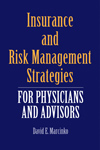 Asset Declinations
Just as rapid asset growth affects performance, a rapid decline of fund assets also may impact performance. Significant quantities of redemptions over short periods force managers to liquidate security positions, often at the wrong time (i.e., they would rather be buying in a declining market than selling to accommodate redemptions). To prevent this scenario, some funds have redemption charges to discourage investors from such short-term decisions. Such environments can negatively impact bond funds as easily as equity funds. Large redemptions compound the effect of declining fund net asset values.
What a Doctor-Investor Can Do?
What can physician-investors do to avoid negative effects on investment? Avoid overloading a portfolio with hot, rapidly growing funds, if possible. Generally, size should be a neutral factor for most bond funds. Small and/or aggressive equity funds can be affected by growth, however. Emphasize funds that promise to close to new investors after assets reach a certain size. Once a fund becomes large, monitor it closely for problems caused by the growth. If there is a better, smaller fund, it may be wise to change. Also, closed-end funds are always a possibility. These funds have a major advantage in that their asset base is a factor of growth in security values, not new investment (unless the fund makes a secondary stock offering). Closed-end managers work with a finite portfolio, which reduces the problem of sudden asset growth.
Assessment
To the extent that a lack of SEC and FINRA over-sight, and the recent financial, insurance and banking meltdown has affected the above; such investing is left up to the doctor’s discretion and personal situation. When it comes to the financial services product sales industry; always remember “caveat emptor” or “buyer-beware.”
Disclaimer: Both contributors are former licensed insurance agents and financial advisors.
Conclusion
Your thoughts and comments on this ME-P are appreciated. Feel free to review our top-left column, and top-right sidebar materials, links, URLs and related websites, too. Then, subscribe to the ME-P. It is fast, free and secure.
Link: http://feeds.feedburner.com/HealthcareFinancialsthePostForcxos
Speaker: If you need a moderator or speaker for an upcoming event, Dr. David E. Marcinko; MBA – Publisher-in-Chief of the Medical Executive-Post – is available for seminar or speaking engagements. Contact: MarcinkoAdvisors@msn.com
OUR OTHER PRINT BOOKS AND RELATED INFORMATION SOURCES:
DICTIONARIES: http://www.springerpub.com/Search/marcinko
PHYSICIANS: www.MedicalBusinessAdvisors.com
PRACTICES: www.BusinessofMedicalPractice.com
HOSPITALS: http://www.crcpress.com/product/isbn/9781466558731
CLINICS: http://www.crcpress.com/product/isbn/9781439879900
BLOG: www.MedicalExecutivePost.com
FINANCE: Financial Planning for Physicians and Advisors
INSURANCE: Risk Management and Insurance Strategies for Physicians and Advisors
Filed under: Experts Invited, Financial Planning, iMBA, Inc., Insurance Matters, Investing, Media Mentions and PR, Op-Editorials, Portfolio Management, Recommended Books, Risk Management, Taxation | Tagged: CFP, CMP, CPA, david marcinko, DDS, DO, DPM, financial advisors, Financial Planning, fund assets, fund costs, fund expenses, fund growth, fund managers, fund size, hope hetico, index fund, index fund size, Investing, MD, mutual fund expenses, mutual fund performance, mutual fund size, OD, physician investors | 2 Comments »
On our Ethics and Advertising Policy
By Dr. David Edward Marcinko; FACFAS, MBA, CMP™
[Publisher-in-Chief]
Thanks to the internet, doctors and medical professionals have direct access to potential patients, while financial advisors and management consultants have direct access to potential clients. So, linking these inter-related factions on the Medical Executive-Post is our raison d’etra. Throw in their penchant to opine, act as citizen journalists and compete free-lance style; and you get a lively and novel kind of business formed around these free-labor reporters, experts and new-media entrepreneurs.
www.MedicalBusinessAdvisors.com
What we Do
The ME-P provides an unbiased forum, exposure platform, and voice for our contributors. We are a healthcare consulting grid, with a new media collective intelligence publishing network for industry professionals seeking brand name exposure, test market acceptance and concept validation. We offer industry essays, insider columnists, interviews, case models, news reportage, and gossip; and moderated business forums with comments. We also aggregate niche articles and pertinent videos across the web, in a limited fashion. We have three part-time employees, ICs, and a host of dedicated volunteers.
New Media
Moving into new media may seem an odd step given the collapse of the print publishing business today, and the carnage inflicted on both the healthcare space and financial services sector. But, as a privately held subsidiary, we are not after media business. We don’t sell ads on the site. You won’t see any Google references, automated Adsense or other electronically generated classifieds, here. However, we may run promotions for selected business and strategic alliance partners. We do offer our own consulting services, and sell our own textbooks, handbooks, dictionaries and institutional print guide. We also promote our online education certification program – Certified Medical Planner™ – for financial advisors interested in the healthcare niche space. THINK: Doctor-Advisor-Administrator-Journalist-Consultant. But, all of these activities of course, predate the blog site.
Not Profit Driven
In other words, we are not a profit generating enterprise. Rather, we want to lead the professional discourse concerning the myriad of issues our business subsidiaries revolve around. To avoid issues of favoritism, we draw the line at product news and reviews. But, we do blog, opine, rant and rave to draw business to our portfolio of companies, and encourage other professionals and experts to do the same.
Assessment
Rest assured – our loyalties are clear. First to medical professional and the healthcare space; then to physician focused and fiduciary financial advisors; and finally to medical practice management and business consultants; in that prioritized order.
Conclusion
And so, your thoughts and comments on this Medical Executive-Post are appreciated? Feel free to review our top-left column, and top-right sidebar materials, links, URLs and related websites. Then, subscribe to the ME-P. It is fast, free and secure.
Speaker: If you need a moderator or speaker for an upcoming event, Dr. David E. Marcinko; MBA – Publisher-in-Chief of the Executive-Post – is available for seminar or speaking engagements. Contact: MarcinkoAdvisors@msn.com
Our Other Print Books and Related Information Sources:
Conclusion
Your thoughts and comments on this ME-P are appreciated. Feel free to review our top-left column, and top-right sidebar materials, links, URLs and related websites, too. Then, subscribe to the ME-P. It is fast, free and secure.
Link: http://feeds.feedburner.com/HealthcareFinancialsthePostForcxos
Speaker: If you need a moderator or speaker for an upcoming event, Dr. David E. Marcinko; MBA – Publisher-in-Chief of the Medical Executive-Post – is available for seminar or speaking engagements. Contact: MarcinkoAdvisors@msn.com
Our Other Print Books and Related Information Sources:
Health Dictionary Series: http://www.springerpub.com/Search/marcinko
Practice Management: http://www.springerpub.com/product/9780826105752
Physician Financial Planning: http://www.jbpub.com/catalog/0763745790
Medical Risk Management: http://www.jbpub.com/catalog/9780763733421
Hospitals: http://www.crcpress.com/product/isbn/9781439879900
Physician Advisors: www.CertifiedMedicalPlanner.org
Subscribe Now:Did you like this Medical Executive-Post, or find it helpful, interesting and informative? Want to get the latest ME-Ps delivered to your email box each morning? Just subscribe using the link below. You can unsubscribe at any time. Security is assured.
Link: http://feeds.feedburner.com/HealthcareFinancialsthePostForcxos
Filed under: Alerts Sign-Up, Ethics, iMBA, Inc., Marketing & Advertising, Media Mentions and PR, Op-Editorials, Sponsors | Tagged: Certified Financial Planners, david marcinko, DO, DPM, executives, hope hetico, MD, Medical Executve-Post, nurses, OD, physicians, www.certifiedmedicalplanner.com, www.healthcarefinancials.com, www.healthdictionaryseries.com, www.medicalbusinessadvisors.com | Leave a comment »
Current Status of Hospitals and the Economy [Op-Ed]
[By Steve Brawner]
 What: An exclusive telephonic and email interview.
Who: Dr. David Edward Marcinko; FACFAS, MBA [Editor, administrator and health economist]
Topic: The recession and economy, hospital operations, and the Obama administration.
Where: The telephone and internet virtual ME-P ether.
Why: To forecast informed opinions and pontifications on the healthcare industrial complex.
Among the dilemmas in healthcare, we seek answers to queries like:
• When will the recession end, and how will it affect hospitals and physicians?
• What operations and organizational policies can hospitals pursue to survive?
• How will the Obama stimulus affect hospitals and healthcare organizations?
Now, in as much as this controversy affects patients, administrators, politicians, Wall Street, nurse-executives and physicians alike, we went right to the source for up-to-date information regarding this current topic.
Assessment
Get ready for this controversial [unedited] interview and Q-A session, with Dr. David Edward Marcinko; Publisher-in-Chief, of this ME-P.
Arkansas Medical News Interviews Dr. Marcinko
Read it Here: interview-dr-marcinko1
Sponsored Link: www.MedicalBusinessAdvisors.com
Conclusion
Your thoughts and comments on this ME-P are appreciated. Feel free to review our top-left column, and top-right sidebar materials, links, URLs and related websites, too. Then, subscribe to the ME-P. It is fast, free and secure.
Speaker: If you need a moderator or speaker for an upcoming event, Dr. David E. Marcinko; MBA – Publisher-in-Chief of the Medical Executive-Post – is available for seminar or speaking engagements. Contact: MarcinkoAdvisors@msn.com
OUR OTHER PRINT BOOKS AND RELATED INFORMATION SOURCES:
***
Filed under: "Advisors Only", "Ask-an-Advisor", "Doctors Only", Breaking News, Interviews, Point-Counter Point, Sponsors | Tagged: david marcinko, DO, doctors, DPM, economy, healthcare industrial complex, Healthcare Organizations, healthcare stakeholders, hospitals, MD, Medical News of Arkansas, obama, patients, recession, steve brawner, Wall Street | 5 Comments »
Doctors Facing a Bleak Future Business and Financial Planning Model
By Dr. David Edward Marcinko; MBA, CMP™
[Publisher-in-Chief]
According to Physicians News, on March 19, 2009, the demand for family physicians is growing. Proposals for health system reform focus on increasing the number of primary care physicians in America. Yet, despite these trends, the number of future physicians who chose family medicine dipped this year, according to the 2009 National Resident Matching Program. What gives?
NRMP
The National Resident Matching Program [NRMP] recently announced that a total of 2,329 graduating medical students matched to family medicine training programs. This is a decrease in total student matches from 2008, when 2,404 family medicine residency positions were filled.
Primary Care Demand Explodes
Meanwhile, demand for primary care physicians continues to skyrocket. For example, in its most recent recruitment survey, Merritt Hawkins, a national physician recruiting company, reported primary care physician search assignments had more than doubled from 341 in 2003 to 848 last year.
The Decline of Solo Medical Practitioners
Regular readers and subscribers to this Medical Executive- Post are aware of the declining number of solo medical practitioners; we have been sounding the alarm here, in our books, journal, speaking engagements and elsewhere for years now.
In fact, the statistic that we often cite is that more than 40% of the nation’s physicians are employed doctors; not employers as in the past. This business model shift has occurred over the past decade or so, and has accelerated of late. The decline in solo and independent doctors has occurred elsewhere as well, but much more slowly [i.e., dentistry, podiatry and osteopathy] as these specialties have been somewhat isolated from the traditional allopathic mainstream.
Going forward, this solitary model seems to be a good thing, and a fortunate result of the un-intended consequence of previously keeping these folks out of the healthcare mainstream.
The Decline of Independent Medical Practitioners
Now, in the March 2009 issue of Healthcare Finance News, we learn that the number of hospital owned physician practices has been climbing over the last four years, according to the Medical Group Management Association [MGMA]. Think: PHOs back-in-the-day. 
And, while this trend only marginally affects patients and patient care, it is quite disruptive to physicians, their families, personal wealth accumulation, retirement and estate planning endeavors.
For example, according to Professor Hope Rachel Hetico, RN, MHA, CMP™ of our firm www.MedicalBusinessAdvisors.com
“The professional good-will valuation component of a medical practice is being decimated. Today, some practices are being bought and sold for tangible asset value, only.
Assessment
Therefore, allow me to identify this emerging trend which suggests independent medical practice as reflective of solo primary medical care. In other words, as independence goes the way of the “dodo-bird”, so goes primary care practitioners precisely at a time when the later is needed more than the former.
Why? Employed doctors stay that way by making money for their employer and hospital-bosses. Specialists make more money than primary care doctors. So, if you want to stay an employed doctor; which specialty would you pursue?
Answer: The NRMP class this year spoke out loud and clear. Any specialty but primary care!
Channel Surfing the ME-P
Have you visited our other topic channels? Established to facilitate idea exchange and link our community together, the value of these topics is dependent upon your input. Please take a minute to visit. And, to prevent that annoying spam, we ask that you register. It is fast, free and secure.
Conclusion
Your thoughts and comments on this ME-P are appreciated. Feel free to review our top-left column, and top-right sidebar materials, links, URLs and related websites, too. Then, subscribe to the ME-P. It is fast, free and secure.
Speaker: If you need a moderator or speaker for an upcoming event, Dr. David E. Marcinko; MBA – Publisher-in-Chief of the Medical Executive-Post – is available for seminar or speaking engagements. Contact: MarcinkoAdvisors@msn.com
OUR OTHER PRINT BOOKS AND RELATED INFORMATION SOURCES:
Filed under: "Doctors Only", Career Development, Estate Planning, Financial Planning, iMBA, Inc., Managed Care, Op-Editorials, Practice Management, Practice Worth, Retirement and Benefits | Tagged: ADA, allopath, AMA, APMA, david marcinko, DDS, dentist, DO, doctor, DPM, family practitioner, hope hetico, iMBA, Inc., internist, MD, National Resident Matching Program, OD, optometrist, osteopath, pho, physician, podiatrist, primary care, residency match, www.healthcarefinancials.com, www.healthdictionaryseries.com, www.medicalbusinessadvisors.com | 15 Comments »


 The Leading Business Education Network for Doctors, Financial Advisors and Health Industry Consultants