Understanding Stockbrokers: Roles and Responsibilities

DEFINITION

By Staff Reporters

SPONSOR: http://www.MarcinkoAssociates.com

***

***

Buying or selling stocks requires access to one of the major exchanges, such as the New York Stock Exchange (NYSE) or the National Association of Securities Dealers Automated Quotations (NASDAQ). To trade on these exchanges, you must be a member of the exchange or belong to a member firm. Member firms and many individuals who work for them are licensed as brokers or broker-dealers by the Financial Industry Regulatory Authority (FINRA). 

INSURANCE AGENT: https://medicalexecutivepost.com/2025/04/27/insurance-agents-v-brokers/

And so, a stockbroker executes orders in the market on behalf of clients. A stockbroker may also be known as a registered representative or investment advisor. Most stockbrokers work for a brokerage firm and handle transactions for several individual and institutional customers. Stockbrokers are often paid on commission, although compensation methods vary by employer.

Remember: SBs work for their firm and not the client. Stock brokers are not fiduciaries.

FINANCIAL ADVISOR: https://medicalexecutivepost.com/2025/04/01/financial-advisors-vital-critical-thinking-skills-to-master/

COMMENTS APPRECIATED

The Medical Executive-Post is a  news and information aggregator and social media professional network for medical and financial service professionals.

Feel free to submit education content to the site as well as links, text posts, images, opinions and videos which are then voted up or down by other members. Comments and dialog are especially welcomed.

Daily posts are organized by subject. ME-P administrators moderate the activity. Moderation may also conducted by community-specific moderators who are unpaid volunteers.

Like and Refer

Invite Dr. Marcinko

***

***

OAK STREET HEALTH: Agrees to Pay $60M to Resolve Alleged False Claims Act Liability for Paying Kickbacks to Insurance Agents in Medicare Advantage Patient Recruitment Scheme

By Staff Reporters

***

***

Oak Street Health, headquartered in Chicago and a wholly-owned subsidiary of CVS Health since 2023, has agreed to pay $60 million to resolve allegations that it violated the False Claims Act by paying kickbacks to third-party insurance agents in exchange for recruiting seniors to Oak Street Health’s primary care clinics.

Part C: https://medicalexecutivepost.com/2024/05/03/eschew-medicare-advantage-part-c-plans-now/

The Anti-Kickback Statute prohibits anyone from offering or paying, directly or indirectly, any remuneration — which includes money or any other thing of value — to induce referrals of patients or to provide recommendations of items or services covered by Medicare, Medicaid and other federally funded programs. Under the Medicare Advantage (MA) Program, also known as Part C, Medicare beneficiaries have the option to obtain their health care through privately-operated insurance plans known as MA plans. Some MA Plans contract with health care providers, including Oak Street Health, to provide their plan members with primary care services.

Medicare Advantage Rates: https://medicalexecutivepost.com/2025/04/28/medicare-advantage-plan-rates-substantially-increased-for-2026/

The United States alleged that, in 2020, Oak Street Health developed a program to increase patient membership called the Client Awareness Program. Under the Program, third-party insurance agents contacted seniors eligible for or enrolled in Medicare Advantage and delivered marketing messages designed to generate interest in Oak Street Health. Agents then referred interested seniors to an Oak Street Health employee via a three-way phone call, otherwise known as a “warm transfer,” and/or an electronic submission.

In exchange, Oak Street Health paid agents typically $200 per beneficiary referred or recommended. These payments incentivized agents to base their referrals and recommendations on the financial motivations of Oak Street Health rather than the best interests of seniors. The settlement resolves allegations that, from September 2020 through December 2022, Oak Street Health knowingly submitted, and caused the submission of, false claims to Medicare arising from kickbacks to agents that violated the Anti-Kickback Statute.

US Department of Justice: https://www.justice.gov/archives/opa/pr/oak-street-health-agrees-pay-60m-resolve-alleged-false-claims-act-liability-paying-kickbacks

COMMENTS APPRECIATED

Like and Refer

***

***

OSTRICH BIAS: Negative Information

SPONSOR: http://www.CertifiedMedicalPlanner.org

Financial Advisor, Planner and Insurance Agent Information

By Staff Reporters

***

***

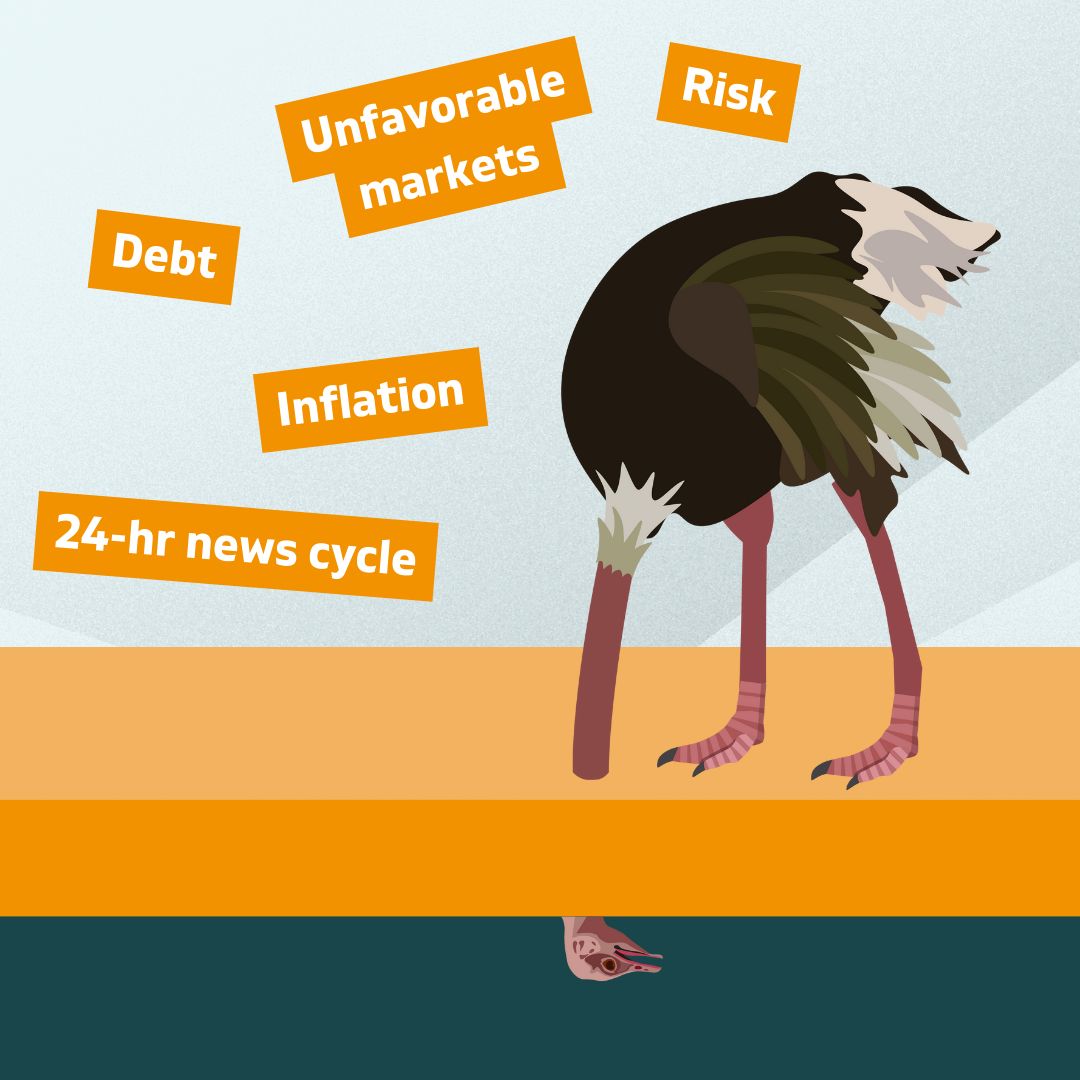
Ostrich Bias is a behavioral phenomenon describing the tendency of individuals to avoid or ignore information that they perceive as negative or threatening. This term is derived from the popular but inaccurate belief that ostriches bury their heads in the sand when faced with danger, even though they do not exhibit such behavior.

Evidence: There is neuro-scientific evidence of the ostrich effect. Sharot et al. (2012) investigated the differences in positive and negative information when updating existing beliefs. Consistent with the ostrich effect, participants presented with negative information were more likely to avoid updating their beliefs; wills, estate plans, investment portfolios, and insurance policies, etc..

Moreover, they found that the part of the brain responsible for this cognitive bias was the left IFG – inferior frontal gyrus – by disrupting this part of the brain with TMS – transcranial magnetic stimulation – participants were more likely to accept the negative information provided.

EXAMPLE: The Ostrich Bias can cause someone to avoid looking at their bills, because they’re worried about seeing how far behind they are on home mortgage payments, credit cards, education or auto loans, etc.

COMMENTS APPRECIATED

The Medical Executive-Post is a  news and information aggregator and social media professional network for medical and financial service professionals.

Feel free to submit education content to the site as well as links, text posts, images, opinions and videos which are then voted up or down by other members. Comments and dialog are especially welcomed.

Daily posts are organized by subject. ME-P administrators moderate the activity. Moderation may also conducted by community-specific moderators who are unpaid volunteers.

Invite Dr. Marcinko

Refer and Like

***

***

INFINITE BANKING: Life Insurance Defined

By Staff Reporters

***

***

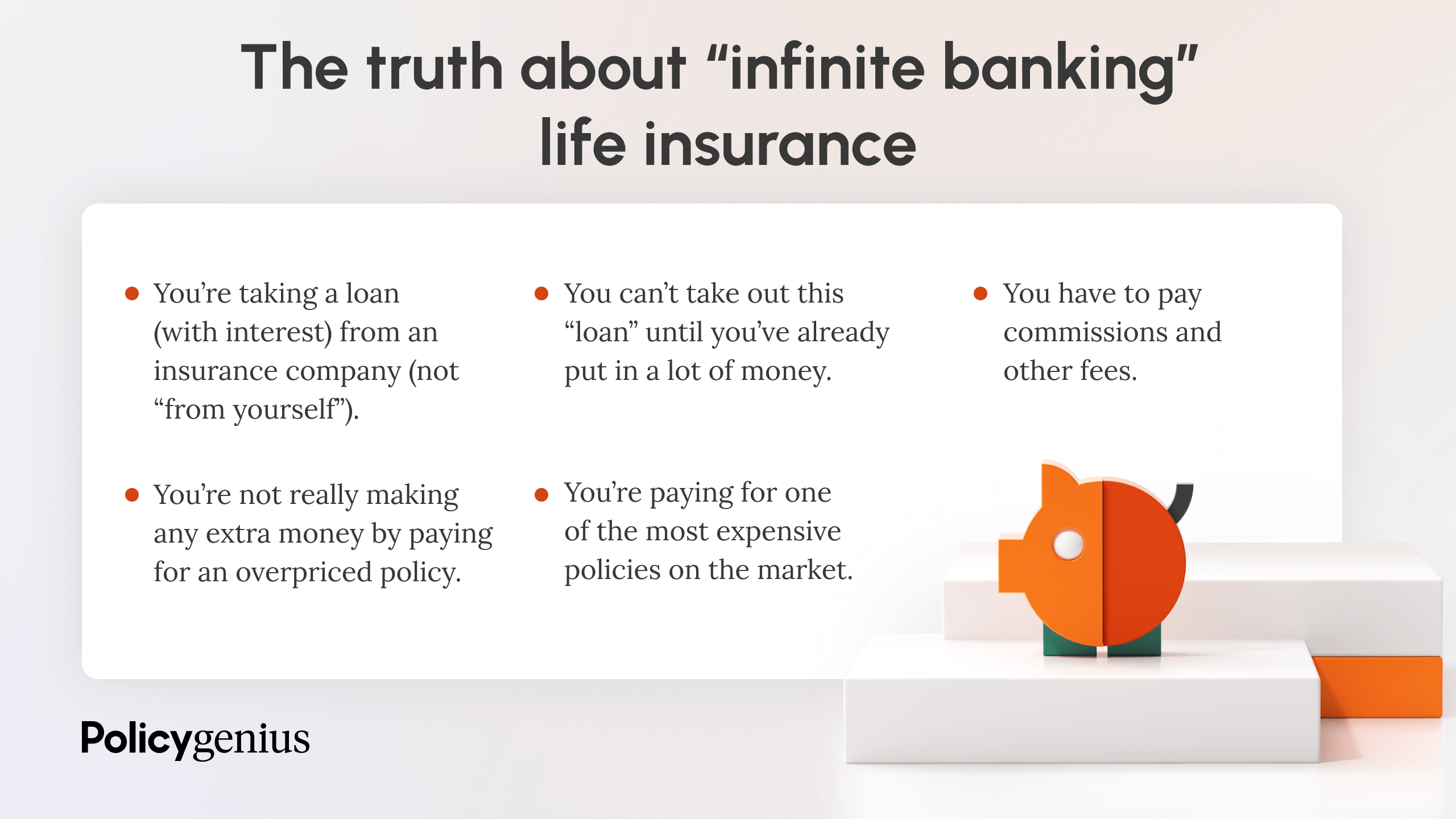
Infinite banking is not a product or service offered by a specific institution. It’s a concept promoted as a way you can “be your own bank” to have more control over your money. 

Infinite banking is a strategy in which you buy a life insurance policy that accumulates interest-earning cash value and take out loans against it, “borrowing from yourself” as a source of capital. Then eventually pay back the loan and start the cycle all over again. To whit:

  1. Buy a cash value life insurance policy, which you own and control.
  2. Pay policy premiums, a portion of which builds cash value.
  3. Cash value earns compounding interest.
  4. Take a loan out against the policy’s cash value, tax-free.
  5. Repay loans with interest.
  6. Cash value accumulates again, and the cycle repeats.

If you use this concept as intended, you’re taking money out of your life insurance policy to purchase everything you’d need for the rest of your life. Cars. Houses. Airplane tickets. Netflix.

So, when you pay back the policy loan, just as you’d have to pay back any mortgage, auto loan, or credit card, you’re paying yourself back.

Nelson Nash popularized this concept in his book Becoming Your Own Banker.

COMMENTS APPRECIATED

Refer and Subscribe

***

***

2025 MEDICARE: Agent & Broker Pay Day Changes

How insurance agents will be compensated for helping seniors?

By Staff Reporters

***

***

Health insurance agents offering support to seniors signing up for healthcare coverage will be compensated differently starting in 2025. For example:

The government will pay $100 more per enrollment to agents who sign seniors up for Medicare Advantage Plans or Medicare Part D for the first time — a significant increase from the proposed $31 pay increase for agents.

And, Medicare is ending sales incentives for agents who currently receive bonuses, including volume-based bonuses, for signing people up for Medicare Advantage Plans, Medigap Supplement Plans or Part D. Medicare is also putting a stop to agents and brokers collecting “administrative fees” above the fixed compensation cap the government has put in place.

The hope is that providing agents with fair initial compensation will no longer incentivize them to steer seniors towards plans that may not be a good fit.

CITE: https://www.r2library.com/Resource/Title/0826102549

PS: Medicare open enrollment ended December 7th, 2024. New plans commence January 1st, 2025

COMMENTS APPRECIATED

Subscribe and Refer!

Thank You

***

***

On Poor Financial “Specialist” Advice

Dubious Financial Specialists?


By Rick Kahler MS CFP®

Even if you work with a financial planner, there are times you may also need the services of a financial specialist such as an attorney, accountant, or insurance agent.

Conflicted

In a situation where the specialist’s advice may seem to conflict with the suggestions of your financial planner, as a rule the specialist always has the last word. After all, they are the experts. Their particular knowledge is the reason your generalist financial planner recommended consulting them in the first place.

Occasionally, however, a specialist’s recommendations may not be in your best interest. Most are skilled professionals who are very good at their jobs and provide a great service to their clients in moving the financial planning process forward.

However, as in any profession, there are exceptions.

  • One example of this is when a specialist’s knowledge doesn’t adequately cover the particular needs of a client’s situation.
  • Another example is a specialist who has a conflict of interest because of receiving commissions for the sale of financial products.

Both of these may be more likely to occur when specialists are chosen less because of their skills and more because of a prior relationship with the client.

While most specialists are open to listening to another point of view, acknowledging errors, or learning new information, some are not. It’s those specialists who lack needed knowledge and are unwilling to admit errors that cause financial planners to lose sleep.

A Choice

If a planner disagrees with the client’s specialist and says so, this can put the client in a difficult and unenviable position of having to choose between two trusted professionals, one of whom may have some incorrect information.

Unfortunately, the client usually doesn’t have the training or knowledge to know which. If the client is forced to side with one professional against the other, at best this damages the ongoing ability of the professionals to work together and at worst it finds the client firing one or both.

Planners who choose to keep silent about the disagreement and defer to the specialist can save face as well as retain working relationships with both the client and the specialist. They can only hope that the apparent poor advice the specialist has given the client works out in the long run.

Most planners I know will weigh the severity of the issue, as well as the strength of the client’s relationships with them and the specialist, when deciding how forcefully to oppose poor advice. If the consequences are significant, many financial planners will risk losing their relationship with the client to point out a specialist’s error.

***

***

To Do List

What can you do to encourage your planner to level with you if one of your specialists is giving you advice that doesn’t serve you well?

I don’t have a definitive answer to this difficult question.

  • One thing I can suggest is that communication is essential. It’s important that you fully and openly explore any disagreement a planner expresses, no matter how insignificant it sounds.
  • My second suggestion is to minimize the chances of getting poor advice in the first place. Avoid anyone who might have a conflict of interest, especially if they receive commissions for selling you something. Don’t assume a professional you’ve worked with in other areas is qualified for this particular concern.

Assessment

Make sure your planner has thoroughly researched the specialist’s expertise, and don’t be afraid to ask questions about anything you don’t fully understand. Partner with your financial planner to choose a specialist carefully in the beginning, and you increase the likelihood that all of you will be able to work effectively as a team. 

Conclusion

Your thoughts and comments on this ME-P are appreciated. Feel free to review our top-left column, and top-right sidebar materials, links, URLs and related websites, too. Then, subscribe to the ME-P. It is fast, free and secure.

Speaker: If you need a moderator or speaker for an upcoming event, Dr. David E. Marcinko; MBA – Publisher-in-Chief of the Medical Executive-Post – is available for seminar or speaking engagements. Contact: MarcinkoAdvisors@msn.com

OUR OTHER PRINT BOOKS AND RELATED INFORMATION SOURCES:

Risk Management, Liability Insurance, and Asset Protection Strategies for Doctors and Advisors: Best Practices from Leading Consultants and Certified Medical Planners™        8Comprehensive Financial Planning Strategies for Doctors and Advisors: Best Practices from Leading Consultants and Certified Medical Planners™

***

What is Term Life Insurance and How Does it Work?

Insurance Basics for Medical Professionals

By Jeffrey H. Rattiner, CPA, CFP®, MBA

Join Our Mailing List 

After determining the need for insurance and the amount to purchase, the doctor-client and financial planner’s next task is to match those needs to the client’s objectives to determine what type of policy the client should purchase. The life insurance industry features more products today than ever before. One reason for this change is that, clearly, the insurance industry has expanded its product base to become more competitive. Another reason is that clients’ needs are constantly changing and the insurance companies must keep up with those needs or run the risk of having funds withdrawn from their companies. New and different types of life insurance products are here to stay. Since life insurance represents a significant part of a client’s risk-management program, planners have to be versed in the specifics of the varied product base.

Term Insurance

Term insurance provides protection against financial loss resulting from death during a specified time. Term insurance is often characterized as providing “pure” protection because it pays only death benefits and does not contain any cash value features. Coverage stops at the end of the policy period. Term insurance comes in two forms: nonrenewable term and annual renewable term.

Nonrenewable Term Insurance

Nonrenewable term insurance offers the client the poorest quality because the insured has to requalify or prove evidence of insurability for coverage every year. As a result, its cost is the lowest since the insurance company annually re-underwrites the individual applying for coverage. This allows the insurance company to be selective and avoid adverse risks.

Risk Management, Liability Insurance, and Asset Protection Strategies for Doctors and Advisors: Best Practices from Leading Consultants and Certified Medical Planners™8

Annual Renewable Term Insurance

Annual renewable term insurance is a quality term product. Under this type of term insurance, the policyholder may continue coverage on an annual basis. The rates are higher than nonrenewable term since the insurance company must continue to renew the policy at the insured’s option. The premiums generally increase as the policy matures, and the policy offers no flexibility. Coverage automatically stops if the premiums are not paid.

Conversion Provisions

Term insurance may offer a conversion provision that allows the insured to convert the term policy into a cash value policy without evidence of insurability, providing the insured with a guaranteed hedge against future un-insurability. The insured can convert the policy to a whole life policy at a later date. This can be done in one of two ways:

1. The insured can go back to the original policy date of issue and pay premiums on the basis of the younger age. All back premiums, including interest, must be paid to date.

2. The insured can pay premiums at the attained age (or at the age of the insured at the time of conversion).

Advantages of term insurance policies include a lower initial cost, allowing dollars to be invested elsewhere, and pure death protection. Disadvantages include the lack of permanence, the absence of a savings element, the expiration of the policy after a specified period, and a periodic increase in cost. The increasing premium structure of term insurance results from the decreased life expectancies of an individual’s later years.

Comprehensive Financial Planning Strategies for Doctors and Advisors: Best Practices from Leading Consultants and Certified Medical Planners™

Assessment

Term insurance is most appropriate for young couples who have children or who otherwise may need a large amount of insurance. It is also appropriate for people who do not want to invest in a cash value insurance vehicle, who cannot afford the higher premiums of cash surrender policies, whose insurance needs will decrease over time, or who have temporary needs. Term insurance consists of mortality charges and policy expense. Because term insurance is quite expensive at the older ages, an alternative product was developed.

Conclusion

Your thoughts and comments on this ME-P are appreciated. Feel free to review our top-left column, and top-right sidebar materials, links, URLs and related websites, too. Then, subscribe to the ME-P. It is fast, free and secure.

Link: http://feeds.feedburner.com/HealthcareFinancialsthePostForcxos

Speaker: If you need a moderator or speaker for an upcoming event, Dr. David E. Marcinko; MBA – Publisher-in-Chief of the Medical Executive-Post – is available for seminar or speaking engagements. Contact: MarcinkoAdvisors@msn.com

OUR OTHER PRINT BOOKS AND RELATED INFORMATION SOURCES:

Product DetailsProduct DetailsProduct Details

  Risk Management, Liability Insurance, and Asset Protection Strategies for Doctors and Advisors: Best Practices from Leading Consultants and Certified Medical Planners™
Comprehensive Financial Planning Strategies for Doctors and Advisors: Best Practices from Leading Consultants and Certified Medical Planners™

   Product Details 

Financial Advisory Reform Going Down in Flames

A [False] Hobson’s Choice*

By Staff Reporters

In political Washington DC, according to Ian Salisbury, almost anything will fly if you can make an argument it will benefit the middle class. It worked in the fight against requiring advisors to act in clients’ best interests … Say what?

Is this the case of a classic Hobson’s choice?

[picapp align=”none” wrap=”false” link=”term=bank+reform&iid=8227139″ src=”c/3/0/3/Sen_Dodd_Discusses_655e.jpg?adImageId=12270785&imageId=8227139″ width=”380″ height=”570″ /]

The Strategy

Yep, its true! At least, this strategy worked for the National Association of Insurance and Financial Advisors [NAIFA], which fought a recent proposal that would have made all financial advisors act in clients’ best interests … you know – the “F” word.

Assessment

It seems that there are few protections for the public from unscrupulous FAs, stockbrokers, and insurance agents. And, few wish to become fiduciaries.

http://www.fa-mag.com/online-extras/5406-a-phony-argument.html

*A Hobson’s choice is a free, usually economic, choice in which only one option is offered.

Conclusion

And so, your thoughts and comments on this ME-P are appreciated. Please visit: www.CertifiedMedicalPlanner.com

As former certified financial planner, insurance agent, stockbroker, surgeon and this ME-P publisher Dr. David Edward Marcinko MBA, CMP™ has always opined to physician colleagues: it is “buyer-beware” out there!

Feel free to review our top-left column, and top-right sidebar materials, links, URLs and related websites, too. Then, be sure to subscribe to the ME-P. It is fast, free and secure.

Speaker: If you need a moderator or speaker for an upcoming event, Dr. David E. Marcinko; MBA – Publisher-in-Chief of the Medical Executive-Post – is available for seminar or speaking engagements. Contact: MarcinkoAdvisors@msn.com

Get our Widget: Get this widget!

Our Other Print Books and Related Information Sources:

Practice Management: http://www.springerpub.com/prod.aspx?prod_id=23759

Physician Financial Planning: http://www.jbpub.com/catalog/0763745790

Medical Risk Management: http://www.jbpub.com/catalog/9780763733421

Healthcare Organizations: www.HealthcareFinancials.com

Health Administration Terms: www.HealthDictionarySeries.com

Physician Advisors: www.CertifiedMedicalPlanner.com

Subscribe Now: Did you like this Medical Executive-Post, or find it helpful, interesting and informative? Want to get the latest ME-Ps delivered to your email box each morning? Just subscribe using the link below. You can unsubscribe at any time. Security is assured.

Link: http://feeds.feedburner.com/HealthcareFinancialsthePostForcxos

Sponsors Welcomed

And, credible sponsors and like-minded advertisers are always welcomed.

Link: https://healthcarefinancials.wordpress.com/2007/11/11/advertise

Off-Road Touring with Dr. Marcinko [Part I]

“Using-Up” Health Insurance

By Dr. David Edward Marcinko; MBA, CMP™

[Publisher-in-Chief]

Dateline: June 18-19th, 2009dem24          

I flew into Marquette Michigan last night on a puddle jumper from Chicago, Illinois. Marquette will be the home base on my current book promotion and public/private  speaking tour. This second leg of our trip, from Atlanta, was delayed for mechanical reasons. So, rather than follow directions from American Airlines regarding new arrangements, and rushing to wait in a long line of humanity for a new boarding pass on a much later flight, I simply called the travel assistance number on my cell phone. We were re-routed by computer from American, to a Delta Airlines flight, that caused no additional time lag as we later learned the other passengers boarded their American flight three hours late. Many of the elderly and slower moving folks even missed connecting flights which necessitated overnight hotel stays, in some cases.

THINK: outside the box independently, and don’t follow directions mindlessly.  

About Marquette, Michigan

The City of Marquette is located in the central region of Michigan’s Upper Peninsula. With a population of 20,714, it is the UP’s largest community. In addition to being a population center, it serves as the regional center for education, health care, recreation, and retail. This regional draw is particularly evident due to Northern Michigan University and Marquette General Hospital, both of which are located in the City of Marquette. Of course, I visited both.

Quality Healthcare for the Upper PeninsulaUPHC

So, the next morning I called some friends who suggested we head over to the Marquette Upper Peninsula  Healthcare Network System, on Washington Street, for an unplanned and unofficial stop on our current “signing and opining” tour. It seemed very busy for a Friday morning; so we gathered some colleagues and ambled over to Viering’s Restaurant where we discussed the local economy, current state of the healthcare industry and the Obama Administration’s ideas for healthcare reform. When I expressed my surprise at the number of patients in the clinic waiting room areas, I was informed that an unexpected corporate layoff resulted in patients “wanting to use their health insurance, before being RIFed [Reduced-in-Force].” Now, as a doctor, and insurance agent, I find this attitude both very strange; yet not uncommon.

“Using-Up” Health Insurance

I can honestly say that after more than three-decades in the business, I have never heard a single soon-to-be unemployed client say,” I need to use up my life insurance”, or “auto insurance”, or “homeowner’s insurance”, etc. So, what gives with health insurance?

Health Insurance IS Different

Insurance of all types is sold to economically protect against catastrophic events like pre-mature death, auto accidents, or home destruction. But life insurance doesn’t pay for non-lethal issues; auto insurance doesn’t pay for new tires, tune-ups or oil changes; and home owner’s insurance doesn’t pay for regular upkeep and maintenance, etc. So, why do some patients believe that health insurance necessarily needs to be used-up? Were they not healthy before the lay-off announcement; or did they suddenly become ill, thereafter? What do you think? Is this just a local phenomenon, or would it be [is it] pandemic in any community given the same or similar circumstances?

AssessmentUPHC-DEM

For me, this scenario clearly demonstrates two things. First, that Health Insurance is thought of as a personal right and/or corporate fringe-benefit; rather than true financial indemnification. Second, it demonstrates the ability of patients to think ahead; unlike the airline customers on my initial trip here. So, if patients can be forward thinking about their health insurance needs, why don’t they think ahead about their personal health care needs? Why don’t more of us exercise regularly, watch our blood pressure and weight, and/or avoid drugs, alcohol and promiscuous sex, etc.  If we can monitor and pay for routine auto and home maintenance ourselves; why not our routine health needs?  Isn’t good health our most important personal asset? Aren’t we worth it? Do we really want to abrogate our very lives to others? Do we want to concede our responsibilities to a third party, ie, a national [single-payer] governmental controlled healthcare? Those patients wanting to “use their health insurance”, before unemployment, certainly seem to think so.

About Off Road with Dr. Marcinko

These sporadic off-road segments will continue through-out my 2009 summer promotional tour. On the one hand, formal attendance at several engagements was initially a bit sparse because of the death of several recent celebrities and entertainer types. On the other hand, local book stores and sponsors noted a spike in our CD and book sales, as well as interest in our online www.CertifiedMedicalPlanner.com program and premier quarterly guide: Healthcare Organizations [Journal of Financial Management Strategies] www.HealthcareFinancials.com

Conclusion

And so, your thoughts and comments on this Medical Executive-Post are appreciated. Tell us what you think. Feel free to review our top-left column, and top-right sidebar materials, links, URLs and related websites, too. Then, be sure to subscribe to the ME-P. It is fast, free and secure.

Link: http://feeds.feedburner.com/HealthcareFinancialsthePostForcxos

Speaker: If you need a moderator or speaker for an upcoming event, Dr. David E. Marcinko; MBA – Publisher-in-Chief of the Executive-Post – is available for seminar or speaking engagements. Contact: MarcinkoAdvisors@msn.com 

Get our Widget: Get this widget!

Our Other Print Books and Related Information Sources:

Practice Management: http://www.springerpub.com/prod.aspx?prod_id=23759

Physician Financial Planning: http://www.jbpub.com/catalog/0763745790

Medical Risk Management: http://www.jbpub.com/catalog/9780763733421

Healthcare Organizations: www.HealthcareFinancials.com

Health Administration Terms: www.HealthDictionarySeries.com

Physician Advisors: www.CertifiedMedicalPlanner.com

Subscribe Now: Did you like this Medical Executive-Post, or find it helpful, interesting and informative? Want to get the latest ME-Ps delivered to your email box each morning? Just subscribe using the link below. You can unsubscribe at any time. Security is assured.

Link: http://feeds.feedburner.com/HealthcareFinancialsthePostForcxos

Sponsors Welcomed

And, credible sponsors and like-minded advertisers are always welcomed.

Link: https://healthcarefinancials.wordpress.com/2007/11/11/advertise

Securing Medical Professional Liability Insurance Coverage

Tips for Doctors Looking for Malpractice Insurance

By Dr. David Edward Marcinko; MBA, CMP™

[Publisher-in-Chief]

dem2The following are buying tips for healthcare professionals who are shopping for medical professional liability insurance coverage:

** Shop well in advance of your renewal or expiration date. Your agent should have all of the necessary information to the insurer at least six to eight weeks before your coverage expires.  See below for more tips and  the type of information your agent will need.

** If you do not know an agent who can place your coverage, the Bureau of Insurance has a list of agencies that are licensed and appointed with at least one of the insurers on the Bureau’s list of “Insurers Writing New Business for Physicians and Surgeons.”

  • Contact one or two agents and be sure to ask each agent which insurer will be contacted for a quote. Ask the agent if an application will also be submitted to a surplus lines broker.  If so, ask for the name of the surplus lines broker and ask which surplus lines insurers will be contacted.  Provide this information to the other agent to avoid multiple applications being submitted to one insurer from different agents.  If the application is being submitted to a surplus lines broker, be sure to ask the agent for information on the coverage provided and specifically request information on exclusions.
  • If the agent recommends coverage through an unlicensed company (such as a surplus lines insurer or a risk retention group), be aware that, in the case of insolvency, the insured will not have coverage through the [State] Property and Casualty Insurance Guaranty Association.  However, if the healthcare professional has had several claims or an open claim, they may only be able to obtain coverage through a company not licensed in their state.
  • Ask the agent for information on the financial rating of the company and if the surplus lines insurer has its own guaranty fund.  Also, if shopping, the medical professional should feel free to check with the Insurance Bureau of their respective state to see if the company and agent are licensed or authorized to do business.
  • The agent should fully understand the healthcare professional’s business.  If incorporated, ask the agent what coverage is needed to protect the corporation as well as any individual doctors.
  • Ask the agent about the availability of “tail coverage” or if the new insurer will provide coverage for “prior acts.”  If coverage is offered with two insurers, ask the agent what each insurer charges for “tail coverage.”  This information may help in deciding which insurer has the most competitive price.
  • Complete the application for coverage in its entirety.  Don’t omit any information and be sure to provide as much detail as possible, especially about prior claims.  Many insurance companies want 10 years of information.  They may also request information about any risk management practices and procedures.
  • Discuss deductible options with your agent.  These may help lower your premium.
  • Find out if the insurance company offers any risk management or loss prevention programs.  Such programs may lower the premium and help reduce exposure to losses.

insurance-book

Assessment

The author has been an expert medical witness in both state and federal court. He is a former licensed insurance agent and certified financial planner, advisor and consultant.

Conclusion

And so, your thoughts and comments on this Medical Executive-Post are appreciated. Have you ever considered a more modern liability coverage method, such as an RRG, etc?

Speaker: If you need a moderator or speaker for an upcoming event, Dr. David E. Marcinko; MBA – Publisher-in-Chief of the Executive-Post – is available for seminar or speaking engagements. Contact: MarcinkoAdvisors@msn.com

Our Other Print Books and Related Information Sources:

Practice Management: http://www.springerpub.com/prod.aspx?prod_id=23759

Physician Financial Planning: http://www.jbpub.com/catalog/0763745790

Medical Risk Management: http://www.jbpub.com/catalog/9780763733421

Healthcare Organizations: www.HealthcareFinancials.com

Health Administration Terms: www.HealthDictionarySeries.com

Physician Advisors: www.CertifiedMedicalPlanner.org

Subscribe Now: Did you like this Medical Executive-Post, or find it helpful, interesting and informative? Want to get the latest E-Ps delivered to your email box each morning? Just subscribe using the link below. You can unsubscribe at any time. Security is assured.

Link: http://feeds.feedburner.com/HealthcareFinancialsthePostForcxos

Product Details  Product Details

Advetising in “Worth” and “Bloomberg” Magazines

Advertisers – Give Me a Break!

By Dr. David Edward Marcinko; MBA, CMP™dr-david-marcinko16

Did you know that financial advisor Judith Zabalaoui, age 71, considered a pioneer of the fee-only business-model of financial services sales, pleaded guilty to using a Ponzi scheme to embezzle more than $3 million from her New Orleans area clients between 1993 and 2007? Yep, it’s true, but this is not really noteworthy to many pundits considering the current financial meltdown on Wall Street. But, do you know … the rest of the story?

Resource Management Inc.

Most of Zabalaoui’s clients came from Resource Management Inc. in Metairie, La., which she founded in 1974, according to the Times Picayune. Apparently, she became a Certified Financial Planner® in 1979, but the certification expired in 1999.

Link: http://www.nola.com/business/t-p/index.ssf?/base/money-1/1233728420253000.xml&coll=1

Assessment

So, here’s the rub. According to reports, Resource Management Inc. was the only firm in the country where each of the principals were allegedly “selected” by Worth [1996 to present], Money [1987] and/or both magazines as one of the top financial consultants in the country. The company also made Bloomberg Wealth Manager’s list of top wealth managers in 2004.

Industry Indignation Index: 55

Now, with all due respect and humility, I have been asked several times by Worth and Bloomberg to “promote yourself” in their “advertiser-driven” publications as a top financial consultant; but never Money magazine. I have always refused their selection charges for same of $12-18,000.

Full disclosure: I am the Founder of www.CertifiedMedicalPlanner.com and a reformed insurance agent, registered investment advisor and Certified Financial Planner™.

Conclusion

And so, your thoughts and comments on this Medical Executive-Post are appreciated. Was Judith Zabalaoui a fiduciary and what about these magazine “best-of” awards? Are they worthwhile monikers or worthless sales advertisements? What about all the so-called financial certifications, designations and charters; meaningful or meaningless? What is your opinion?

Speaker: If you need a moderator or speaker for an upcoming event, Dr. David E. Marcinko; MBA – Publisher-in-Chief of the Executive-Post – is available for seminar or speaking engagements. Contact: MarcinkoAdvisors@msn.com  or Bio: www.stpub.com/pubs/authors/MARCINKO.htm

Our Other Print Books and Related Information Sources:

Practice Management: http://www.springerpub.com/prod.aspx?prod_id=23759

Physician Financial Planning: http://www.jbpub.com/catalog/0763745790

Medical Risk Management: http://www.jbpub.com/catalog/9780763733421

Healthcare Organizations: www.HealthcareFinancials.com

Health Administration Terms: www.HealthDictionarySeries.com

Physician Advisors: www.CertifiedMedicalPlanner.com

Subscribe Now: Did you like this Medical Executive-Post, or find it helpful, interesting and informative? Want to get the latest E-Ps delivered to your email box each morning? Just subscribe using the link below. You can unsubscribe at any time. Security is assured.

Link: http://feeds.feedburner.com/HealthcareFinancialsthePostForcxos

Upcoming Health Economics Interview with Dr. David Marcinko

Coming Soon from Medical Business News, Inc

By Ann Miller; RN, MHA

ME-P Executive-Directordr-david-marcinko22

Medical Business News, Inc., the publisher of Medical News of Arkansas, is a leading source for healthcare industry news that is truly useful. With a professional readership comprised of physicians and key industry decision makers, Medical News publications are devoted entirely to healthcare issues that impact both clinical and administrative best practices. Written and edited specifically for healthcare professionals, MBN writers work with experts at the local, regional and national level to keep stakeholders informed about the ever-evolving healthcare system.

Out Reach

It is no wonder then, why local market MNA editor Jennifer Boulden recently contacted us to arrange an interview with Dr. David Edward Marcinko, our Publisher-in-Chief, who is also a former insurance agent, registered investment advisor, health economist and Certified Financial Planner™

Link: www.MedicalBusinessAdvisors.com  

Interview Topics

The wide open topic in this environment of medically specific lethargy and macro economic insecurity – personal and business planning for physicians. Of course, since this is a broad field, we will use the rating and ranking system of this blog to help Jennifer and her staff, winnow down categories to top-of-mind concerns of our ME-P subscribers and her MNA readers.

Link: www.HealthcareFinancials.com

Assessment

But, we also ask you to send in any particular issues that you may have in order to make the interview helpful and exciting for all concerned.

Link: www.HealthDictionarySeries.com

Conclusion

And so, your thoughts and comments on this Medical Executive-Post are appreciated.

Link: www.CertifiedMedicalPlanner.com

Speaker: If you need a moderator or speaker for an upcoming event, Dr. David E. Marcinko; MBA – Publisher-in-Chief of the Executive-Post – is available for seminar or speaking engagements. Contact: MarcinkoAdvisors@msn.com  or Bio: www.stpub.com/pubs/authors/MARCINKO.htm

Get our Widget: Get this widget!

Subscribe Now: Did you like this Medical Executive-Post, or find it helpful, interesting and informative? Want to get the latest E-Ps delivered to your email box each morning? Just subscribe using the link below. You can unsubscribe at any time. Security is assured.

Link: http://feeds.feedburner.com/HealthcareFinancialsthePostForcxos